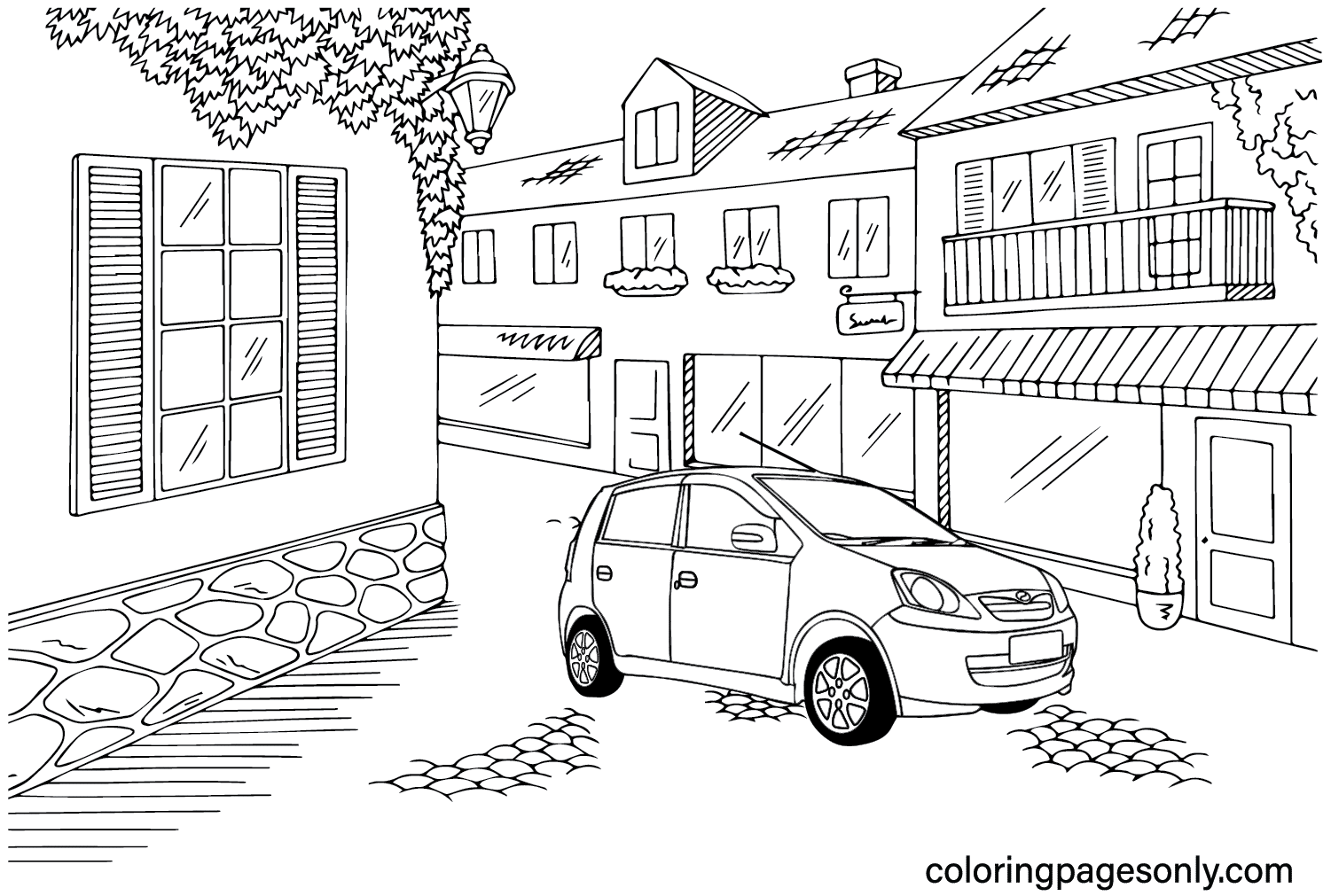
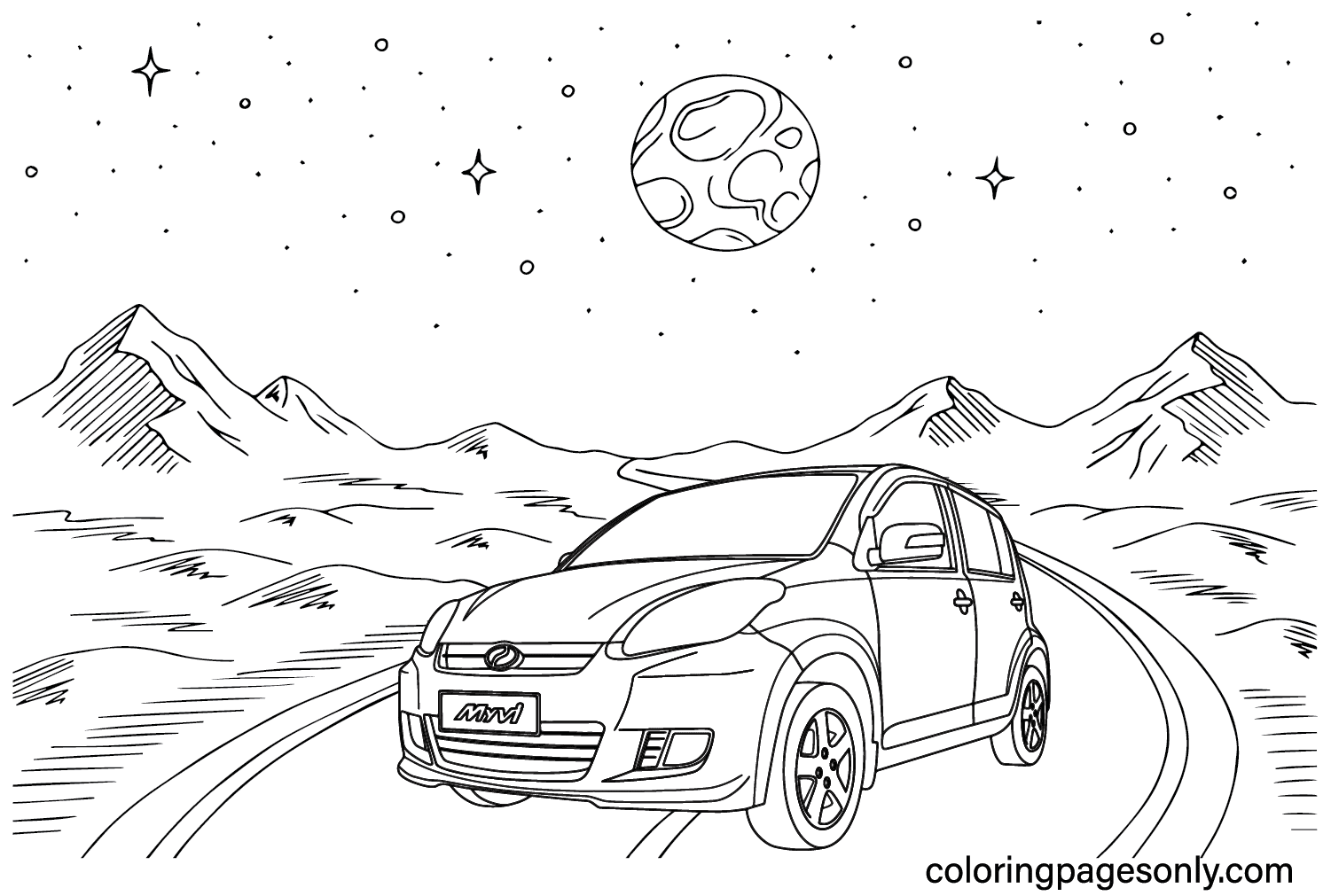
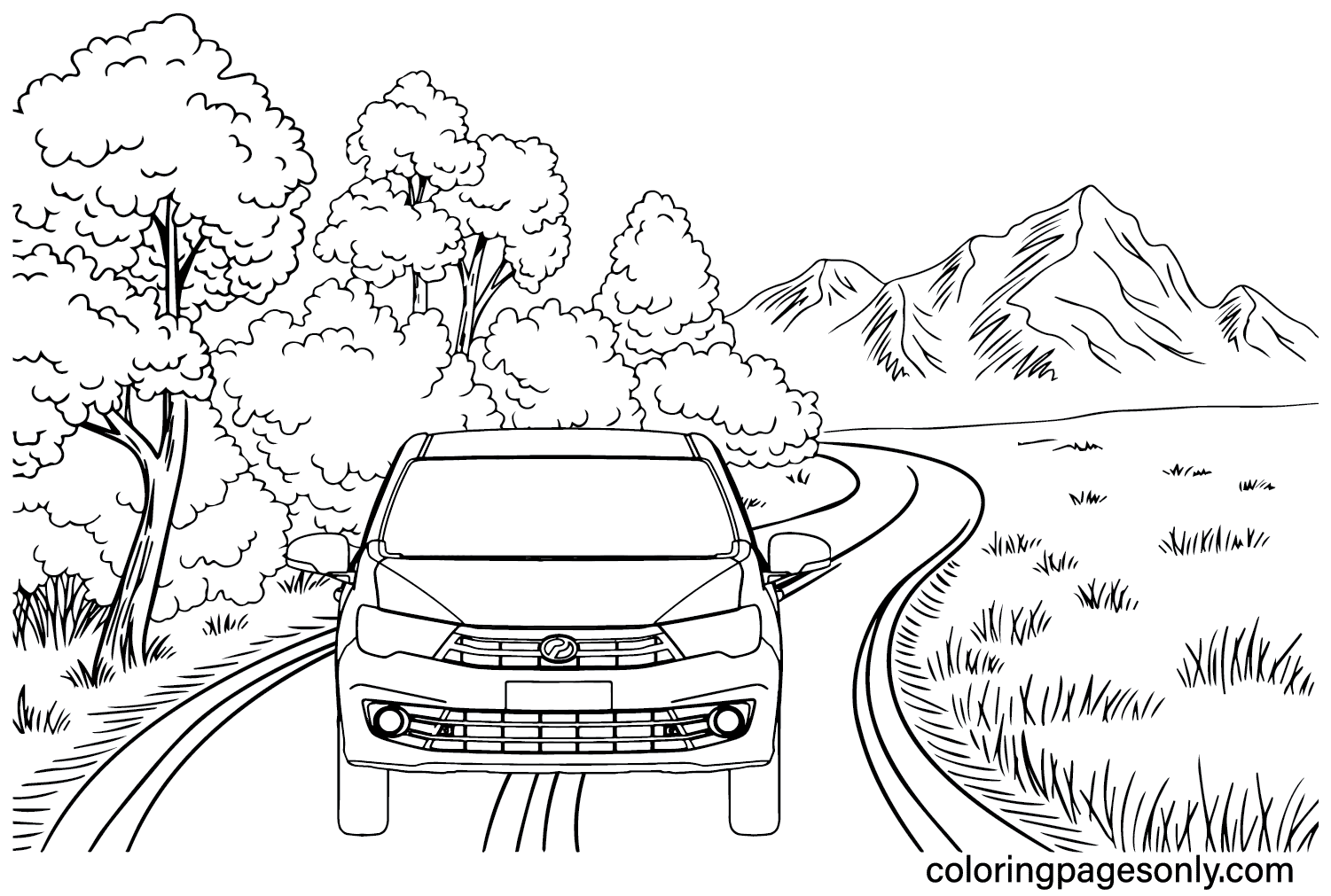
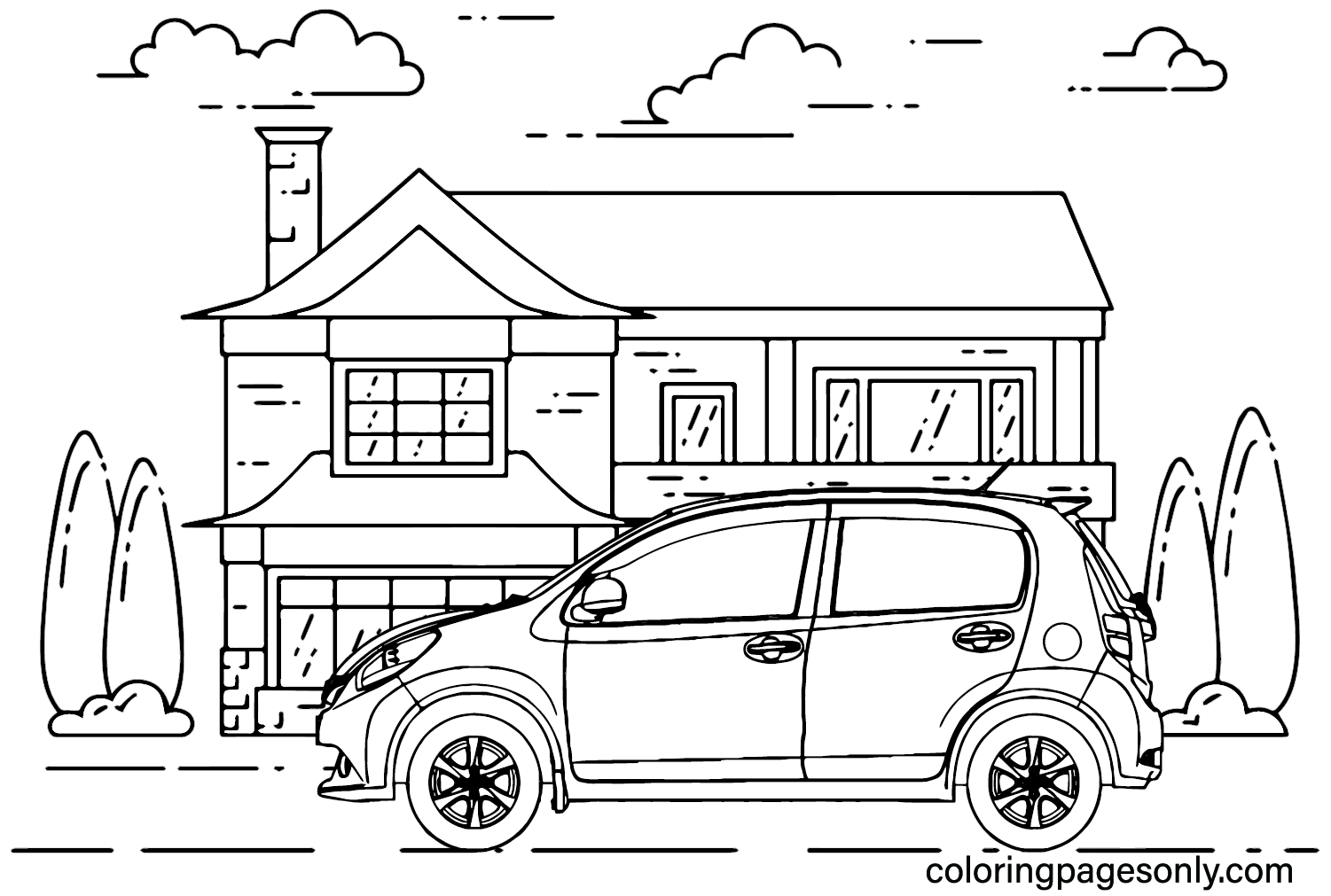
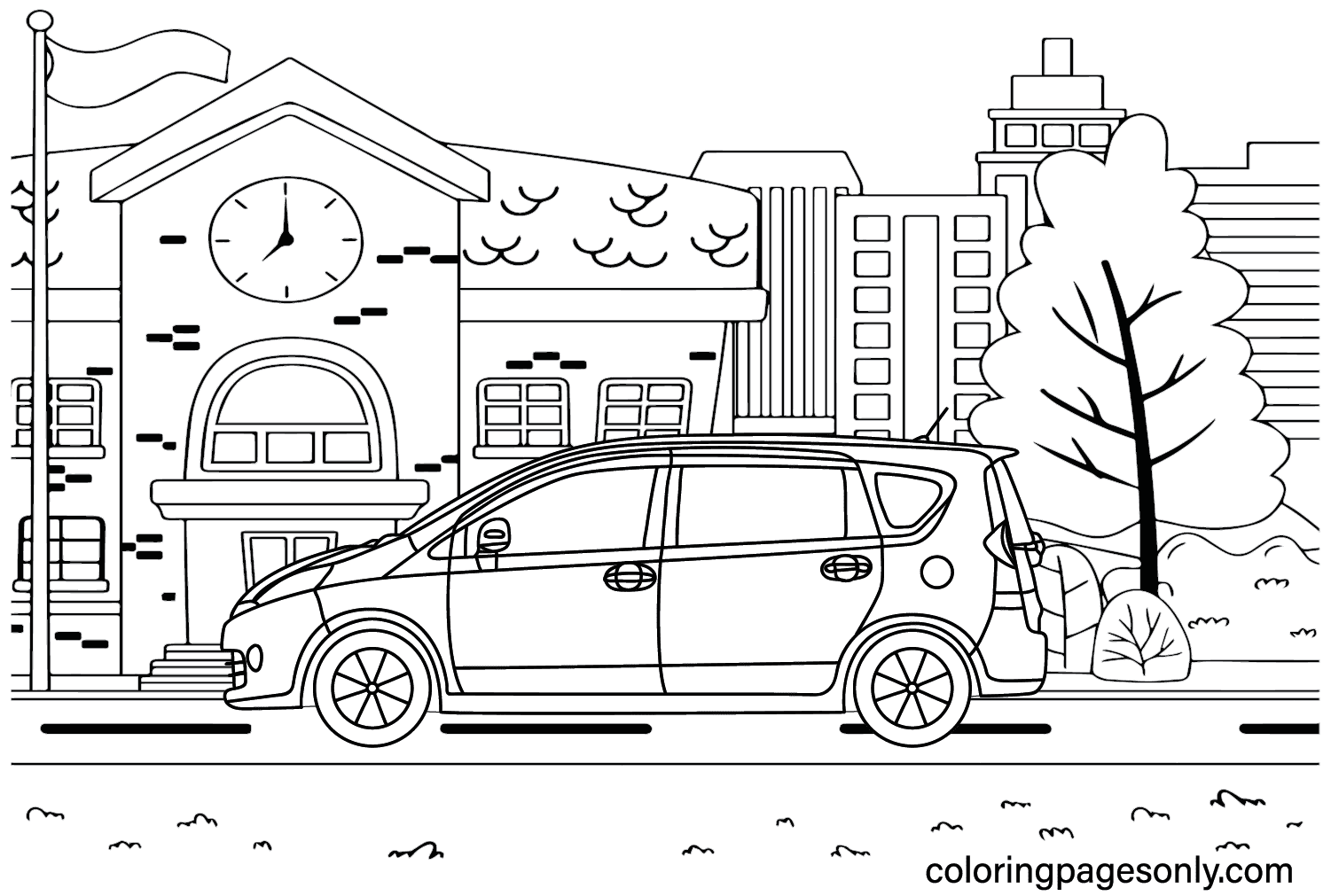
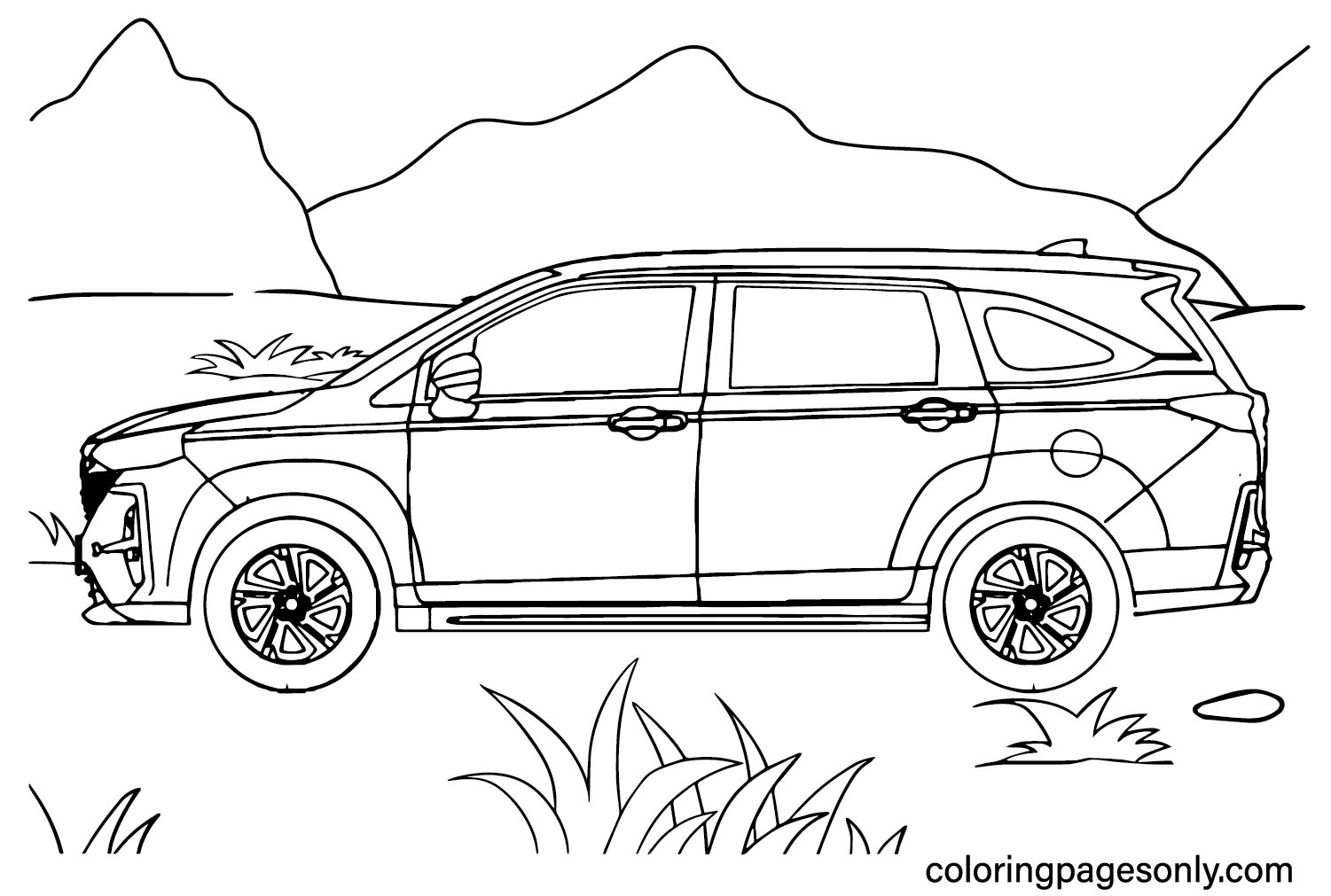
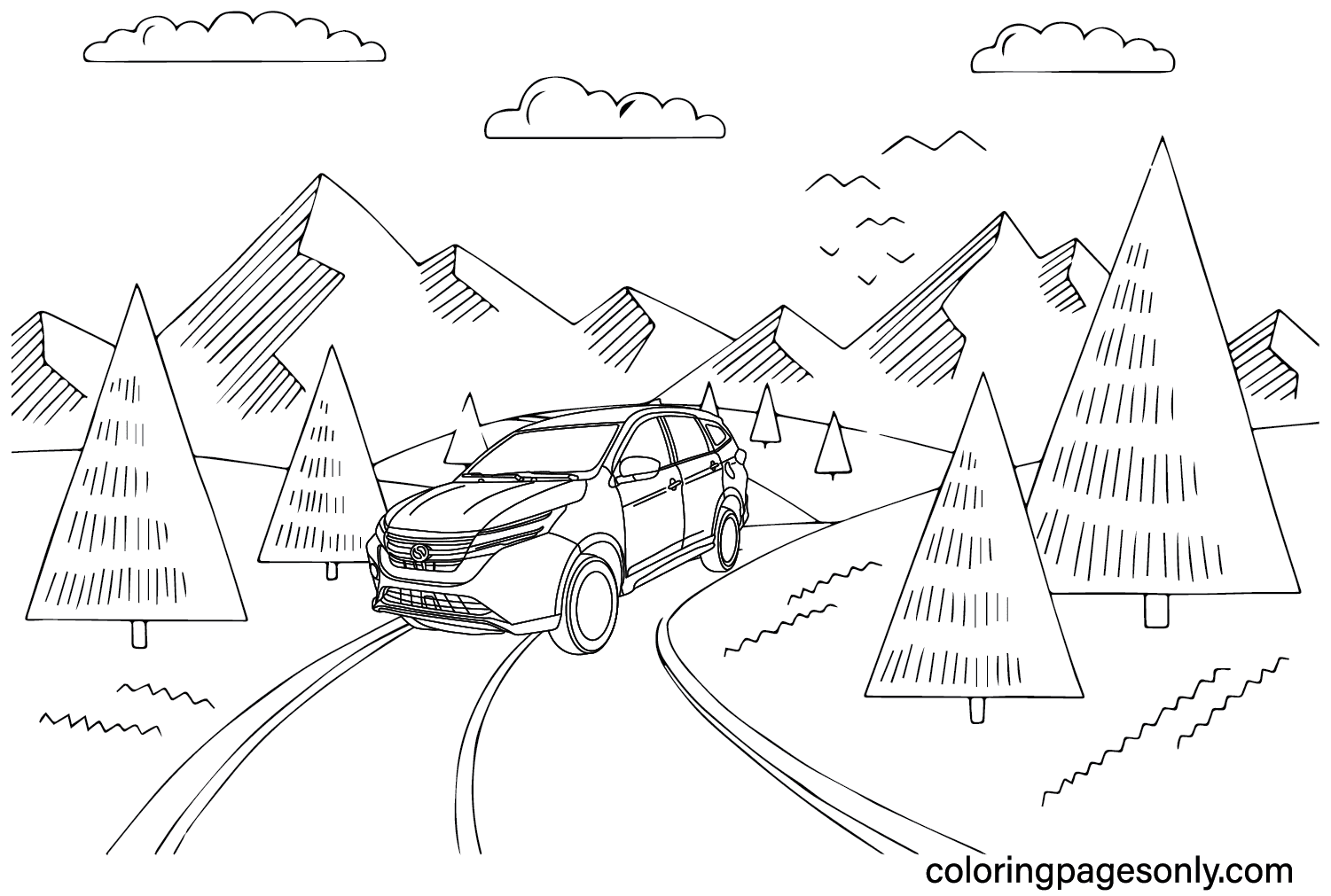
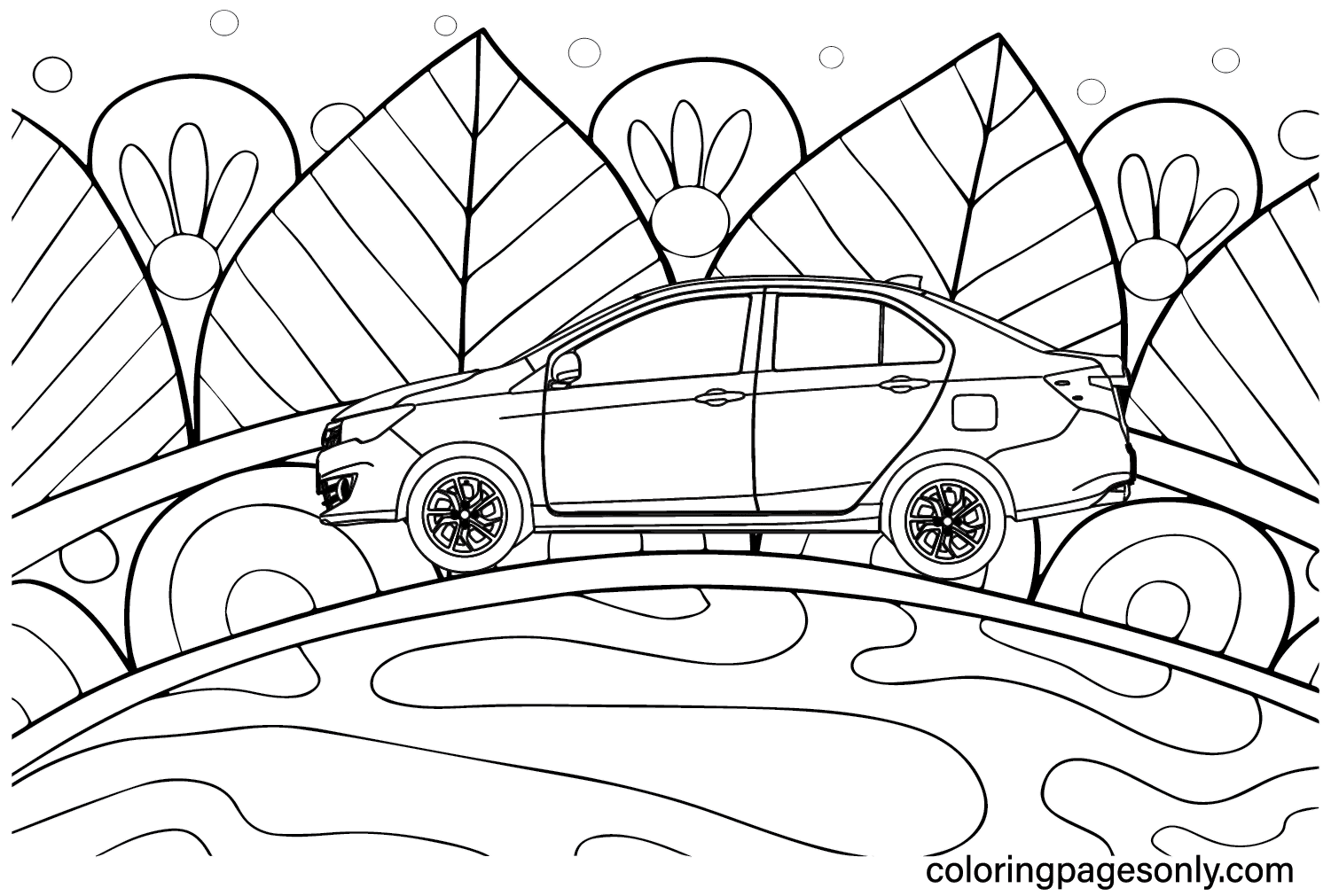
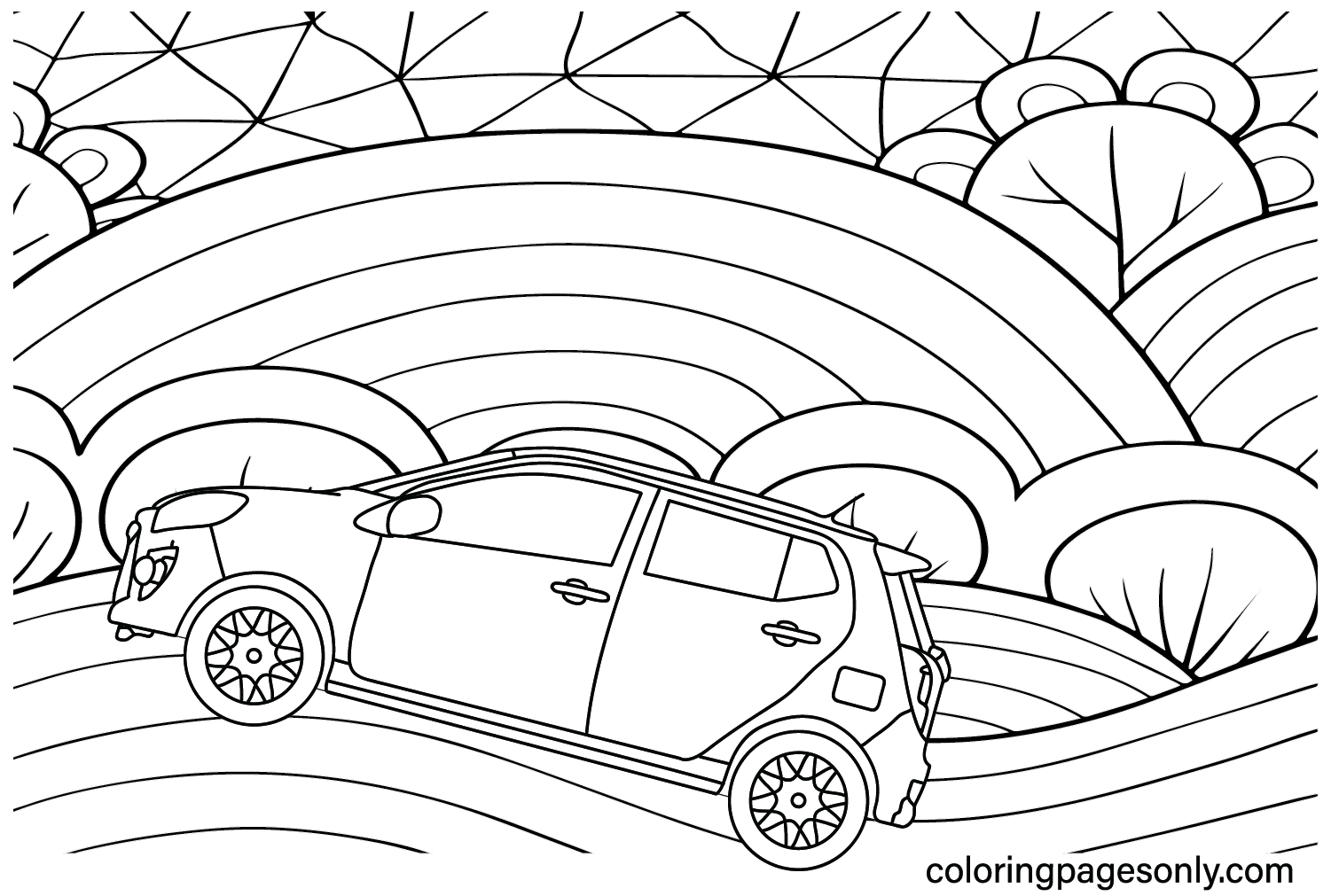
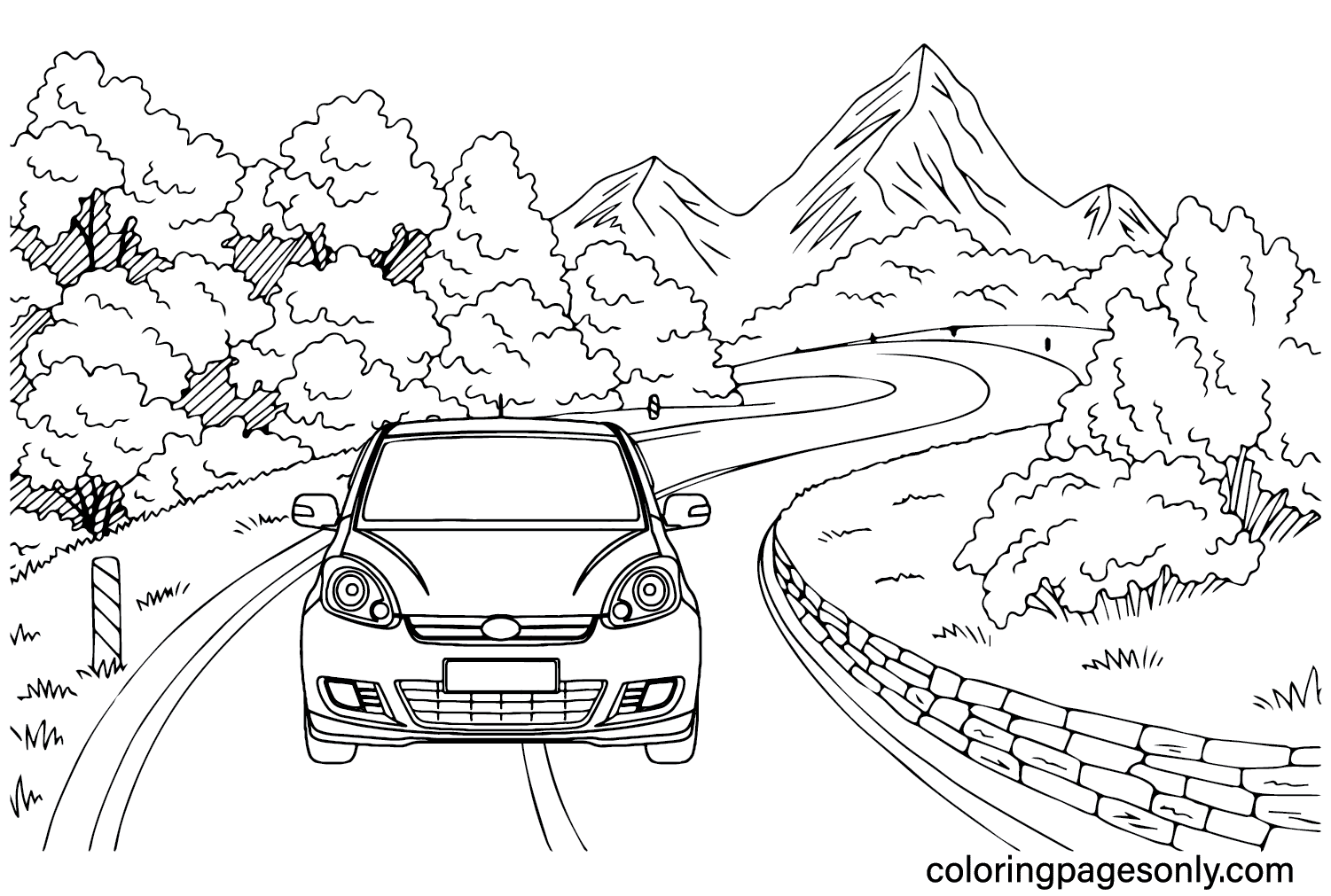
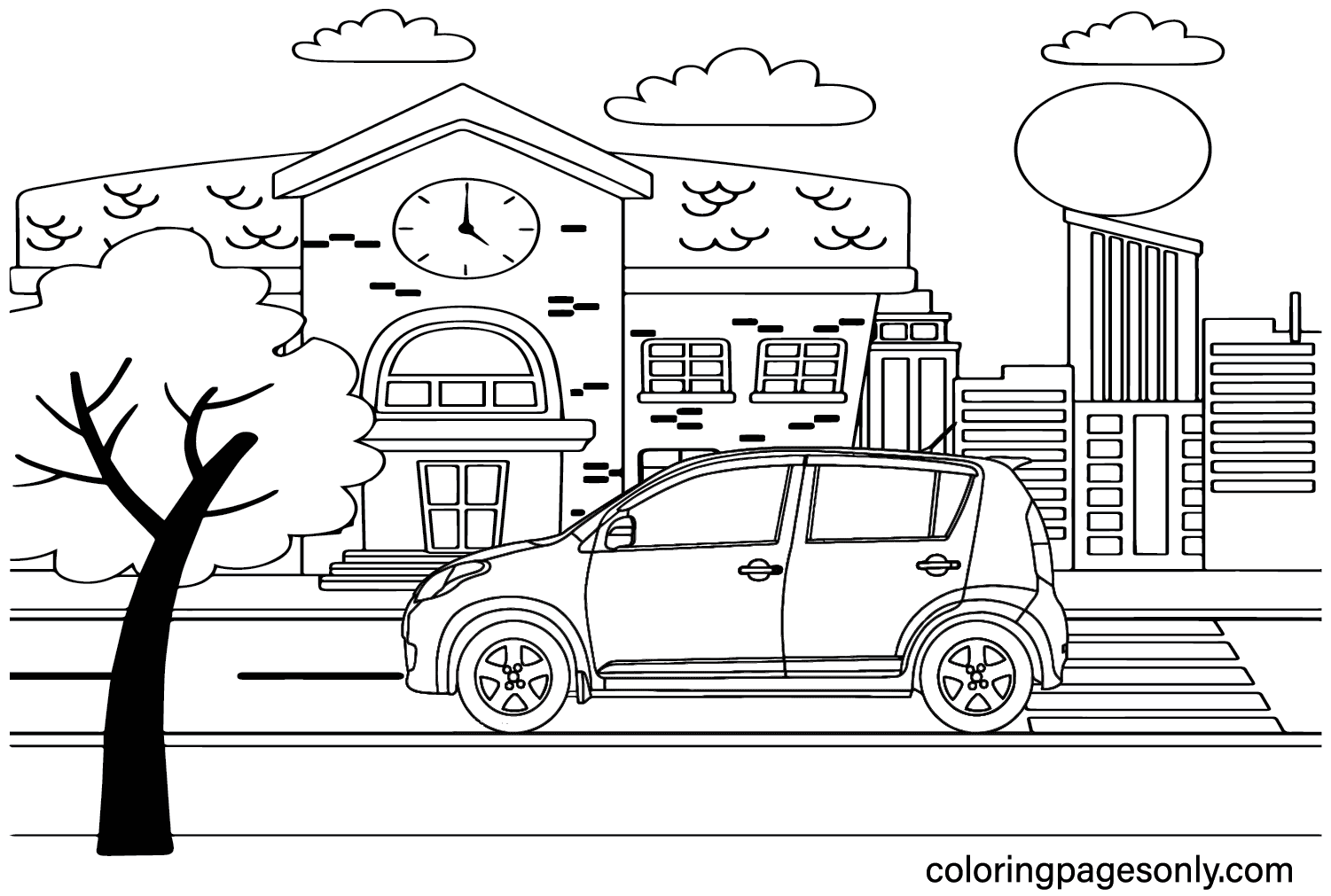
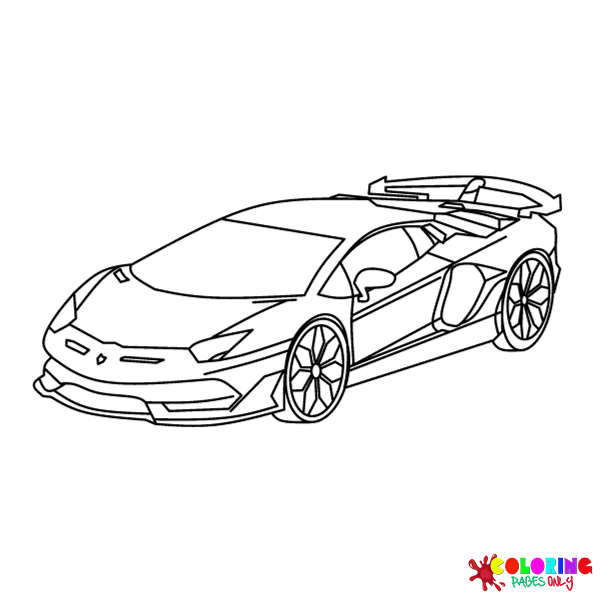
Free Perodua coloring pages – 20+ pages featuring the Myvi, Axia, Bezza, Ativa, Alza, Aruz, the iconic Kancil, and models from across Malaysia’s best-selling car brand – free printable PDF and online coloring for automotive fans and anyone who grew up riding in, learning to drive in, or buying their first car from Perusahaan Otomobil Kedua.

Perodua – Perusahaan Otomobil Kedua Sdn Bhd, meaning “Second Automobile Company” – was incorporated in January 1992 and began vehicle production in 1994. It was established as Malaysia’s second national automaker, following Proton, with Daihatsu Motor Co. as a significant technical partner. The collaboration with Daihatsu – itself a Toyota subsidiary – gave Perodua access to platform engineering, engine technology, and manufacturing processes that enabled competitive vehicles at prices specifically calibrated for the Malaysian market.

The first car was the Kancil – “mouse deer” in Malay, the small, quick forest animal that features in traditional Malay folklore as the clever one who outwits larger creatures. The name was precise. The Kancil was small, affordable, and quick enough to make car ownership achievable for a generation of Malaysians who had previously traveled by motorcycle. It was produced for fifteen years, ending in 2009, and remains one of the most nostalgically significant vehicles in Malaysian automotive memory.

What followed was the Kancil, which built Malaysia’s best-selling car brand. Perodua holds approximately 40% of the Malaysian passenger car market by volume. The Myvi has been, for years, the single best-selling vehicle in the country – a hatchback so consistently dominant that “Myvi” has entered Malaysian internet culture as cultural shorthand in ways that most car models never achieve.

These 20+ free pages at ColoringPagesOnly.com cover the full Perodua range. All free, PDF or PNG, print or color online.

What’s Inside

Perodua Myvi – Malaysia’s Most Beloved Car

The Myvi has been produced since 2005 across three generations and has spent most of those years at or near the top of Malaysia’s monthly vehicle sales charts. Its name derives from “My Vision” – a name chosen to position it as forward-looking at the time of its launch. Its visual history is the clearest record of how Perodua’s design ambition has evolved: the first generation (2005) was a competent, rounded compact hatchback that represented a significant step up from the smaller Kelisa it partly replaced; the second generation (2011) introduced more mature, European-influenced proportions; the third generation (2018) brought genuinely contemporary styling alongside Advanced Safety Assist (ASA) technology – making it one of the first affordable Malaysian cars to offer ADAS as standard across the range.

The third-generation Myvi’s design – sharper creases, more prominent character lines, a front fascia with clear contemporary influence – is the Myvi that most current owners know. Its specification, offering lane departure warning, forward collision warning, and auto emergency braking at a price point accessible to first-time buyers, represented a shift in what Malaysian consumers could reasonably expect from an affordable car.

Coloring the Myvi: The third-generation Myvi’s design has stronger character lines than earlier generations – the body crease that runs from the front lights through the door panels is the primary feature line and should receive the standard edge-highlight treatment: a slightly lighter tone along the crease’s peak, a darker shadow tone on the lower side of the crease. The front fascia’s distinctive lower air intake and slim LED daytime running lights define the face – render these clearly to establish the generation’s identity. Passion Red and Electric Blue are the two colors most strongly associated with the current Myvi in Malaysian advertising and social media.

Perodua Axia – The Affordable Entry

The Axia is Perodua’s most affordable model – the entry point into new car ownership for buyers at the lowest accessible price point. It replaced the Viva in 2014 and has been updated to a third generation (G3) in 2023, each time significantly upgrading the specification and safety equipment while maintaining its position as Malaysia’s most affordable new car.

The G3 Axia’s 2023 launch brought a comprehensive redesign that moved the model firmly into contemporary compact car design language: bolder front fascia, wider body, improved safety specification, including dual airbags and reverse cameras as standard across the range. It also moved from a conventional 5-speed manual to a new CVT automatic, addressing one of the most consistent requests from Axia buyers.

Coloring the Axia: The G3 Axia has a wider, more assertive stance than its predecessors – the body has been broadened,d and the wheel arches are more pronounced. Its front grille is a prominent, bold element that should be rendered in either the body color (on lower specification variants) or in a dark chrome-effect treatment on higher specifications. Lemon Zest Yellow – a vivid, warm yellow specific to the G3 Axia launch – became one of the model’s most-photographed colors and reads immediately well in coloring pages.

Perodua Ativa – The Turbocharged First

The Ativa, launched in 2021, holds a specific place in Perodua history: it was the company’s first turbocharged vehicle, its first model featuring a 1.0-liter three-cylinder turbo engine producing 98 PS – a significant departure from the naturally aspirated engines that had characterized the Perodua lineup for its first twenty-seven years. Based on the Daihatsu Rocky platform (sold elsewhere as the Toyota Raize), it brought the compact crossover SUV format – the segment driving global car market growth – to Perodua’s accessible price point.

Demand at launch exceeded supply significantly. Waiting lists are extended for months. The Ativa established that Perodua’s customers were ready for a more premium, more technically sophisticated product when offered at a price consistent with the brand’s accessible positioning.

Coloring the Ativa: The Ativa’s SUV proportions – raised ride height, pronounced wheel arches, cladding around the lower body – distinguish it immediately from the hatchbacks in the collection. The wheel arch cladding is dark grey plastic – this contrast between body color and dark grey cladding is the design element that communicates the SUV identity and should be applied consistently around all four wheel arches. The front fascia has a more aggressive character than the Axia or Myvi – the grille’s horizontal slats and the integrated lower intake give it a width and assertiveness appropriate to an SUV.

Perodua Alza – The Family MPV

The second-generation Alza, launched in 2022, was one of the most anticipated Perodua launches in years. The original Alza (2009) had served Malaysian families as a 7-seater MPV for over a decade; the new model was built on a completely revised platform (Toyota Avanza/Daihatsu Xenia underpinning) with significantly updated safety specifications, a more mature exterior design, and a 360-degree camera system that was remarkable for its price point.

The new Alza’s launch demand exceeded supply so substantially that waiting times stretched to several months – a pattern that had also characterized the Ativa’s launch and that reflected the pent-up demand for updated models that Perodua’s consistent sales leadership creates.

Coloring the Alza: The second-generation Alza’s design has a more wagon-like quality than a conventional MPV – it sits lower than the original Alza, has a more contemporary, SUV-influenced rear design, and has lost some of the boxy MPV visual language of its predecessor. Its rear pillar design – dark-tinted C-pillar creating a floating roof effect – is a specific visual detail worth rendering carefully. The new Alza’s most distinctive color is Celestite Grey, a light metallic grey that reads as contemporary and contrasts well with the black floating roof pillar effect.

Perodua Bezza – The Sedan

The Bezza is Perodua’s only sedan – a compact, three-box body style built on an extended version of the Axia’s platform. Launched in 2016, it serves the specific need of buyers who prefer the sedan body style – either for the practical advantage of a closed boot, or for the social association of a three-box car as a more formal choice than a hatchback – at an accessible price point. A facelift in 2020 updated the front fascia and added safety features.

Coloring the Bezza: The Bezza’s three-box sedan form is the most conventional automotive silhouette in the Perodua collection – long-hood, passenger cabin, separate boot. The proportions are compact but clearly sedan rather than hatchback. Its most distinctive coloring element is the treatment of the boot lid’s relationship to the rear bumper – the color transition between body and bumper should reflect whether the bumper is body-colored (higher specifications) or plastic-grey (lower specifications).

The Kancil – The Original

The Kancil is the collection’s most historically significant vehicle – the car that began Perodua. Launched in August 1994, produced until 2009, it was the first car for hundreds of thousands of Malaysian families and the vehicle in which a generation of Malaysian drivers learned to navigate city traffic. Its 660cc and 850cc engines were small enough for efficiency but adequate for Malaysian urban conditions, and its price – significantly below any competitor – made it the practical choice for first-time buyers with limited budgets.

The Kancil’s design is unmistakably its era: rounded in the way of 1990s small cars, with headlights that appear large relative to its compact body, short overhangs at both ends, and the upright windshield of a city car designed to maximize interior volume within minimum exterior dimensions.

Coloring the Kancil: The rounded 1990s proportions translate to warm, gentle shading with gradual transitions rather than the sharp character-line treatments that suit contemporary designs. The most nostalgically resonant Kancil colors are the warm hues of the 1990s color palette – metallic greens, warm reds, and the specific turquoise-green that appeared in early Kancil advertising. The headlights are large, round, and clear – render them in a pale blue-grey to suggest the clear lens, with a bright white highlight at the upper corner of each lens.

What These Pages Do

Perodua’s commercial dominance in Malaysia is a documented story of accessible industrial policy succeeding. The company was established to create affordable vehicles for the Malaysian market. Thirty years later, it holds approximately 40% of that market by volume. The Myvi is the best-selling car in the country it was designed for. The Kancil gave car ownership to a generation. These are specific, measured outcomes of a specific decision to build a national automotive industry.

The “Myvi driver” cultural phenomenon is one of Southeast Asia’s most specific automotive internet references. In Malaysian online culture, “Myvi driver” became shorthand – in a specific affectionate way – for a type of aggressive urban driving associated with the model’s dominance on Malaysian roads. That a car became a meme is a specific measure of cultural penetration that most vehicles never achieve. Coloring the Myvi while knowing this is coloring a cultural object as much as a vehicle.

The progression from Kancil to Ativa is a visible record of thirty years of improvement. The Kancil’s 660cc naturally aspirated engine, basic safety specification, and simple design versus the Ativa’s 1.0-liter turbocharged engine, ADAS safety systems, and contemporary crossover design – the two vehicles are thirty years apart, built by the same company, for the same market. The coloring pages that span this range make that progress legible as a direct visual comparison.

Fine motor development. The American Academy of Pediatrics identifies fine motor skill development as a key childhood milestone throughout early childhood. The wheel arch cladding details, the grille textures, and the LED light signatures of modern Perodua models – all provide motivated, sustained fine motor practice. The 2005 Art Therapy Journal study on structured coloring and anxiety reduction applies throughout this collection.

How to Color These Pages Well

Modern Perodua models have stronger character lines than earlier ones – treat generations differently. The Kancil and early Myvi (2005-2010) have rounded, smooth surfaces with gentle transitions – apply gradual three-zone shading. The current Myvi (2018+), Ativa, and Alza have sharper creases and more angular character lines – apply the crease-edge highlight and shadow technique: lighter tone along the top edge of each character line, darker in the shadow below it. Using the same shading approach across all generations will make the older models look too sharp, and the newer ones look too soft.

Malaysian market colors lean warm and vivid. Perodua’s color ranges have consistently offered more warm and vivid options than many equivalent brands in European or American markets – Passion Red, Electric Blue, Lemon Zest Yellow, and  Pristine White. These are saturated, confident colors appropriate for a market where vehicles are expected to be visible and expressive rather than neutral and restrained. When choosing a body color, push toward saturation rather than toward muted tones: the most common Perodua on Malaysian roads is Passion Red or Pristine White – both at maximum chromatic confidence.

The floating roof effect on modern Peroduas requires a two-step application. Several current Perodua models (Alza, Ativa, higher-specification Myvi variants) offer a contrast roof or dark-tinted C-pillar that creates the visual effect of a floating roof. On pages that show this design detail, apply the body color to the main body panels first. Then apply a very dark grey or near-black to the C-pillar area, creating a clean boundary where the body color meets the dark pillar. The contrast between these two elements is the visual effect’s entire argument.

Wheel arch cladding is SUV-specific – apply dark grey consistently. The Ativa and Aruz have plastic wheel arch cladding. This dark grey unpainted plastic surrounds each wheel opening and communicates off-road capability through material contrast with the painted body. This cladding should be rendered in a consistent dark grey across all four arches – not the same tone as the shadow areas of the body panels, but a specific, flat, matte-reading grey that communicates a different material from the painted body above it.

The Kancil’s round headlights are the most important design element. For any Kancil page, the two large round headlights are the car’s most recognizable feature. Their size relative to the small body is what makes the Kancil’s face immediately charming – large lights on a small car produce the same visual relationship as large eyes on a small animal. Render the lens area in pale blue-grey with a bright white highlight at the upper-right of each circle. The chrome or body-colored surround around each light should be clearly differentiated from the lens.

5 Creative Craft Ideas

Perodua Family Car Timeline

Print one page representing each decade of Perodua production: the Kancil (1994 era), the first-generation Myvi (2005 era), the second-generation Myvi or Bezza (2011-2016 era), and the current Ativa or Alza (2021+ era). Color all four in warm Malaysian market colors – apply a different color to each decade to help differentiate them while keeping the palette in the warm, vivid range.

Mount in chronological order on a long backing sheet. Below each: the model name, launch year, and one line about its significance – “Malaysia’s first affordable car,” “Malaysia’s best-selling hatchback,” “Malaysia’s first turbocharged Perodua.” The finished timeline is a visual record of thirty years of accessible Malaysian motoring.

My First Car Memory Card

For many Malaysians, a Perodua was the first car they or their family owned. Print the Kancil or first-generation Myvi page – the models most likely to represent that first-car memory for Malaysian families. Color it in whatever color the remembered car actually was.

On the back of the card or on an attached note, write one memory: the first time the car was parked in the family driveway, the trips that car made, the smell of the interior. The finished card is a personal memory artifact – the specific car that a specific family remembers – made physical through the coloring activity.

Myvi Generation Comparison

Print one page each representing the three generations of the Myvi: the rounded first-gen (2005-2010), the more refined second-gen (2011-2017), and the sharp-lined third-gen (2018-present). Color all three in Passion Red – the same color across all generations – so the design evolution is the only variable.

Arrange side by side: Gen 1, Gen 2, Gen 3. Add the model year below each. The finished display shows twenty years of the same car becoming more angular, more sophisticated, and more safety-equipped while remaining recognizably a Myvi.

Kereta Pertama – The First Car Project

“Kereta pertama” means “first car” in Malay. This project is for children learning what cars are and how families use them. Print the simplest, most accessible Perodua page in the collection – likely an Axia or first-generation Myvi. Color it with the child, letting them choose any color they want rather than a canonical color.

After coloring, have the child answer (verbally or written, depending on age): what color is their kereta pertama? Where would they drive it? Who would ride with them? The coloring activity becomes a language and imagination activity that uses the car as the prompt.

Perodua Safety Then and Now

The most striking comparison in the Perodua range is the safety specification gap between the 1994 Kancil and the 2022 Alza. Print the Kancil page and the new Alza page. Color both in similar warm colors to keep the comparison focused on the design rather than the palette.

Beside each car, hand-letter its key safety specifications. Kancil: “No airbags. No ABS. Drum brakes.” Alza: “6 airbags. ABS. ADAS. ASA. 360-degree camera.” Mount both on a backing sheet with the title: “Perodua Safety: 1994 → 2022.” The display makes thirty years of safety engineering progress visible and specific – the most important improvement in the range presented as a direct visual comparison.

Frequently Asked Questions

What is Perodua and where is it from? Perodua – Perusahaan Otomobil Kedua Sdn Bhd, meaning “Second Automobile Company” – is a Malaysian national automobile manufacturer incorporated in January 1992 and producing vehicles since 1994. It is headquartered in Rawang, Selangor, Malaysia. Perodua was established as Malaysia’s second national automaker following Proton, with Daihatsu Motor Co. (a Toyota subsidiary) as a major technical partner holding a 25% stake. The company is currently Malaysia’s largest-selling car brand by volume, consistently holding approximately 40% of the Malaysian passenger car market and selling approximately 240,000 to 260,000 vehicles annually.

What was the Perodua Kancil, and why is it historically important? The Perodua Kancil was the company’s first vehicle, launched in August 1994 and produced until 2009 – a production run of fifteen years, making it one of Malaysia’s longest-running models. “Kancil” is the Malay word for mouse deer, the small, clever forest animal prominent in traditional Malay folklore. The Kancil was based on the Daihatsu Mira and available with 660cc and 850cc engines. Its importance lies in its accessibility: priced lower than any other new car available in Malaysia at its launch, it made car ownership achievable for a generation of Malaysian buyers who had previously relied on motorcycles. The Kancil holds deep nostalgic significance for Malaysians who learned to drive in one or whose family’s first car it was.

What is the Perodua Myvi, and why is it culturally significant in Malaysia? The Perodua Myvi is a compact hatchback that has been produced since 2005 across three generations and has spent most of its production run as Malaysia’s single best-selling vehicle. Its name is derived from “My Vision.” The Myvi’s cultural significance in Malaysia extends beyond its sales figures: it is the car that defined urban Malaysian motoring for two decades, and “Myvi driver” entered Malaysian internet culture as a specific, affectionate cultural shorthand. The third generation, launched in 2018, introduced Advanced Safety Assist (ASA) technology – making it among the first affordable cars in Malaysia to offer ADAS as standard. Multiple Malaysian Car of the Year awards across its generations confirm its position within the domestic automotive market.

What makes the Perodua Ativa historically significant within the Perodua lineup? The Ativa, launched in 2021, was Perodua’s first turbocharged vehicle – ending the company’s twenty-seven-year reliance on naturally aspirated engines. Its 1.0-liter three-cylinder turbocharged engine, producing 98 PS, represented a significant engineering step for the brand. The Ativa is based on the Daihatsu Rocky platform (sold as the Toyota Raize in some markets) and was Perodua’s entry into the compact crossover SUV segment – the fastest-growing segment globally. Demand at launch significantly exceeded supply, with waiting periods extending several months. The Ativa also brought advanced safety features – including ADAS – to a price point previously below where such equipment was typically offered in Malaysia.

How does Perodua’s relationship with Daihatsu and Toyota work? Daihatsu Motor Co., Ltd. holds a 25% stake in Perodua and serves as the company’s primary technical partner. Daihatsu itself is a wholly owned subsidiary of Toyota Motor Corporation. Through this relationship, Perodua accesses vehicle platforms, powertrain technology, and engineering expertise that it adapts for the Malaysian market. Several Perodua models are closely related to Daihatsu and Toyota products sold in other markets: the Ativa shares its platform with the Daihatsu Rocky and Toyota Raize, the Alza (second generation) shares its platform with the Daihatsu Xenia and Toyota Avanza, and the Myvi was historically based on the Daihatsu Sirion. Perodua adapts these platforms with specifications, features, and pricing calibrated for Malaysian buyer preferences and income levels.

What is ASA, and what does it mean for Perodua’s safety reputation? ASA – Advanced Safety Assist – is Perodua’s branded Advanced Driver Assistance System (ADAS), developed with Daihatsu. The system includes Pre-Collision Warning (PCW), which alerts the driver to potential frontal collisions; Pre-Collision Braking (PCB), which automatically applies the brakes if the driver does not respond; and Pedal Misapplication Mitigation (PMM), which prevents unintended acceleration in certain situations. ASA was introduced on the third-generation Myvi in 2018 and has since been rolled out across Perodua’s model range, including the Ativa, Alza, Axia G3, and Bezza facelift. The inclusion of ADAS on Malaysia’s most affordable vehicles – at price points where such technology is typically unavailable in most markets – is Perodua’s most significant recent contribution to Malaysian road safety.

Browse the full collection at ColoringPagesOnly.com. All 20+ pages free, no sign-up, PDF or PNG, print or color online.

Perodua was incorporated in 1992 and launched the Kancil in 1994. The name means mouse deer – the small, quick, clever one from Malay folklore who wins against larger opponents through intelligence rather than size. The metaphor holds: a second national automaker, dependent on a partner’s platform engineering, in a market dominated by an established first national brand, became the country’s best-selling car manufacturer.

Thirty years later, the Myvi is the best-selling vehicle in Malaysia. The Ativa’s turbocharged engine broke a twenty-seven-year naturally aspirated streak. The new Axia offers ADAS at the entry price point.

From Kancil to Ativa. The mouse deer grew up.

Pick up your Passion Red. The Myvi is waiting.

Share your work on Facebook and Pinterest and tag #Coloringpagesonly. We especially want to see the family car timelines and the Myvi generation comparisons.

Color the kereta. Honor the Kancil. Malaysia’s road runs through these pages.

These related coloring collections will help you explore the wonderful world of colors. Let’s choose, be creative, and show us your great pictures!

Mantasstonys Allen – Designer

Hello! I'm Mantasstonys Allen, a web designer at Coloringpagesonly.com. My passion is bringing creativity to life through beautiful and user-friendly designs. I'm here to make your experience on our site smooth, fun, and inspiring—so you can focus on what matters most: coloring and unleashing your imagination!