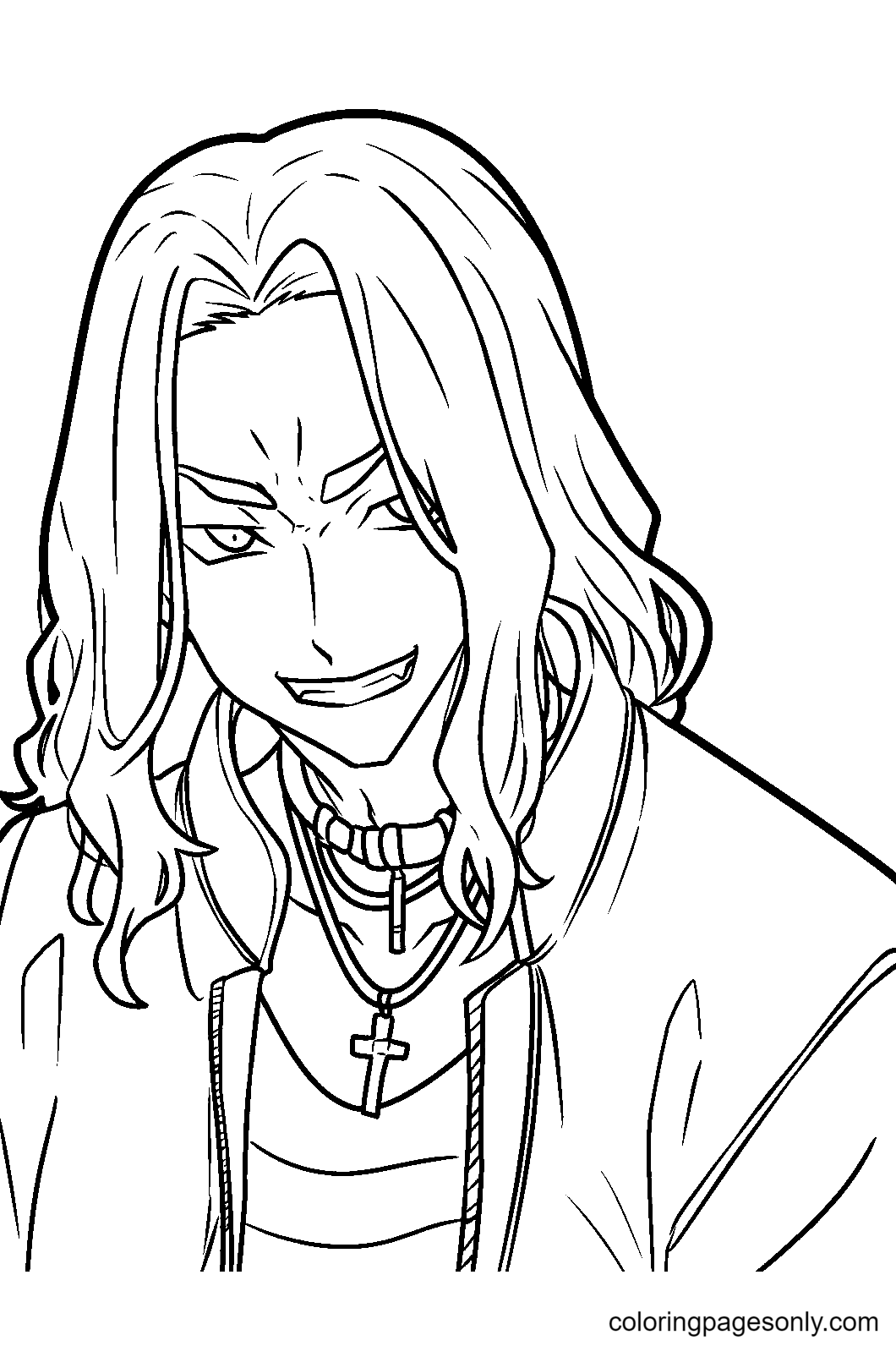
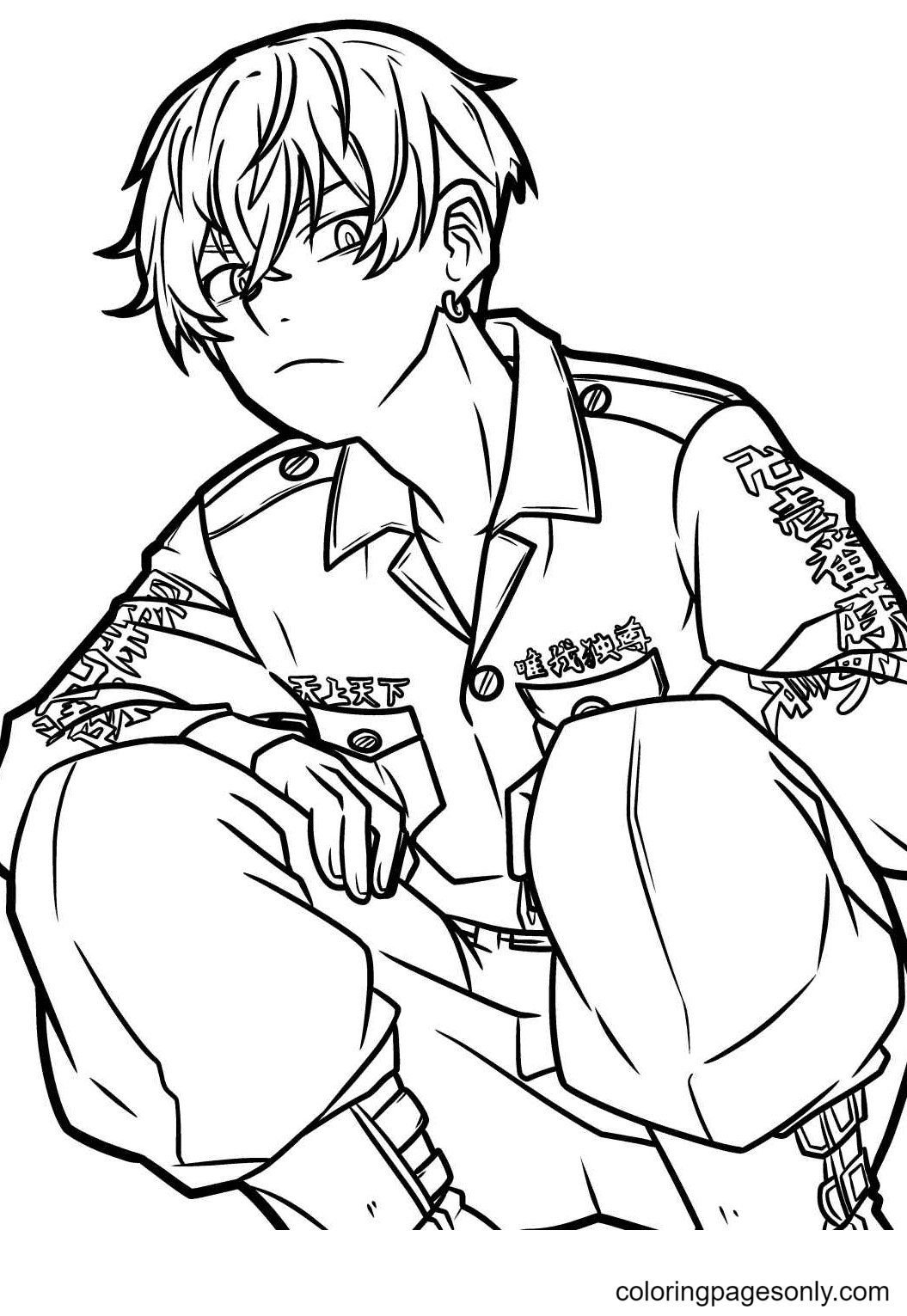
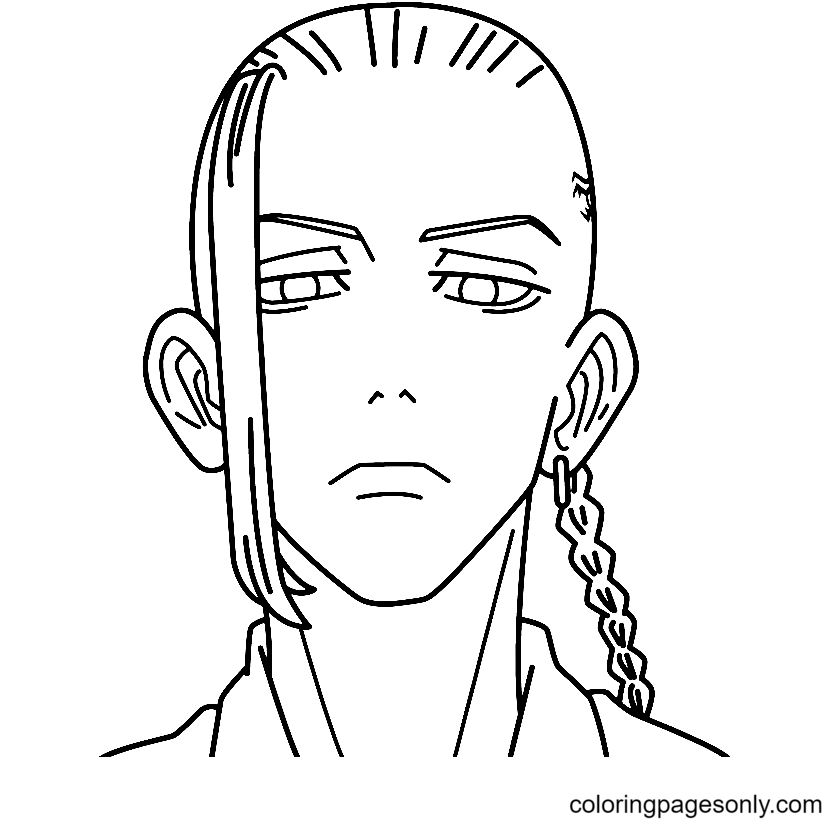
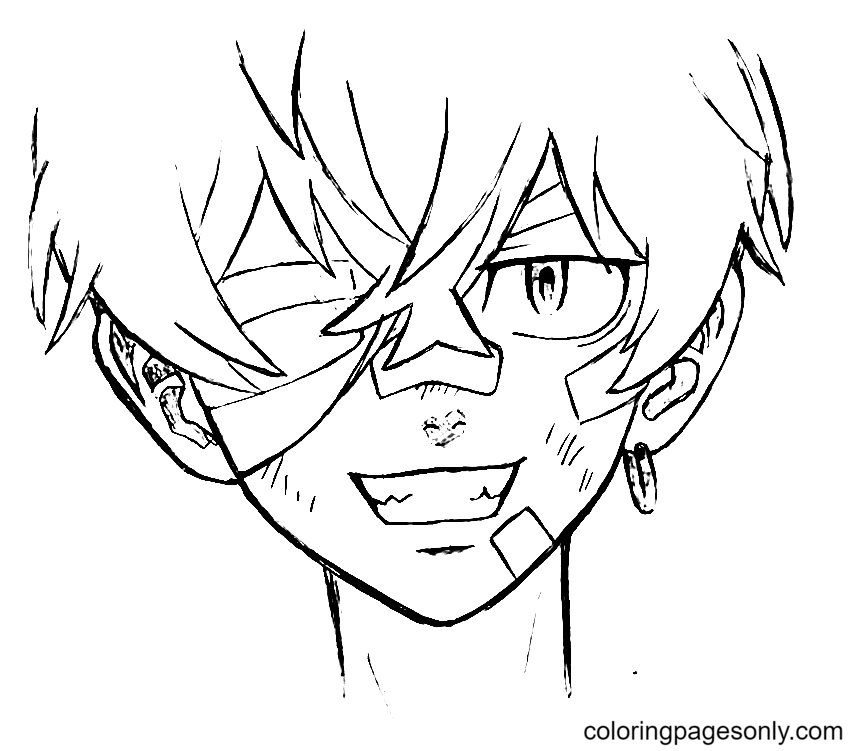
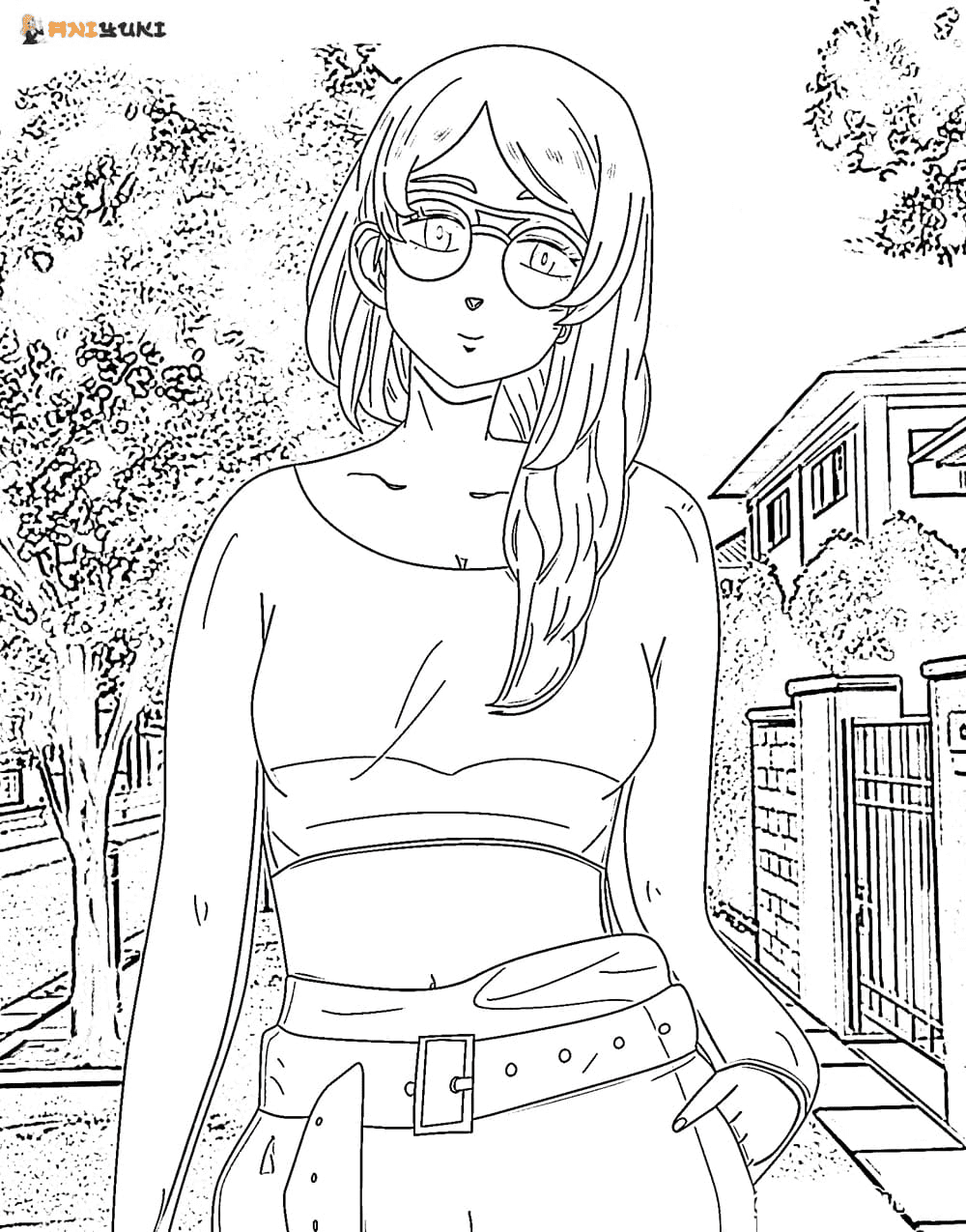
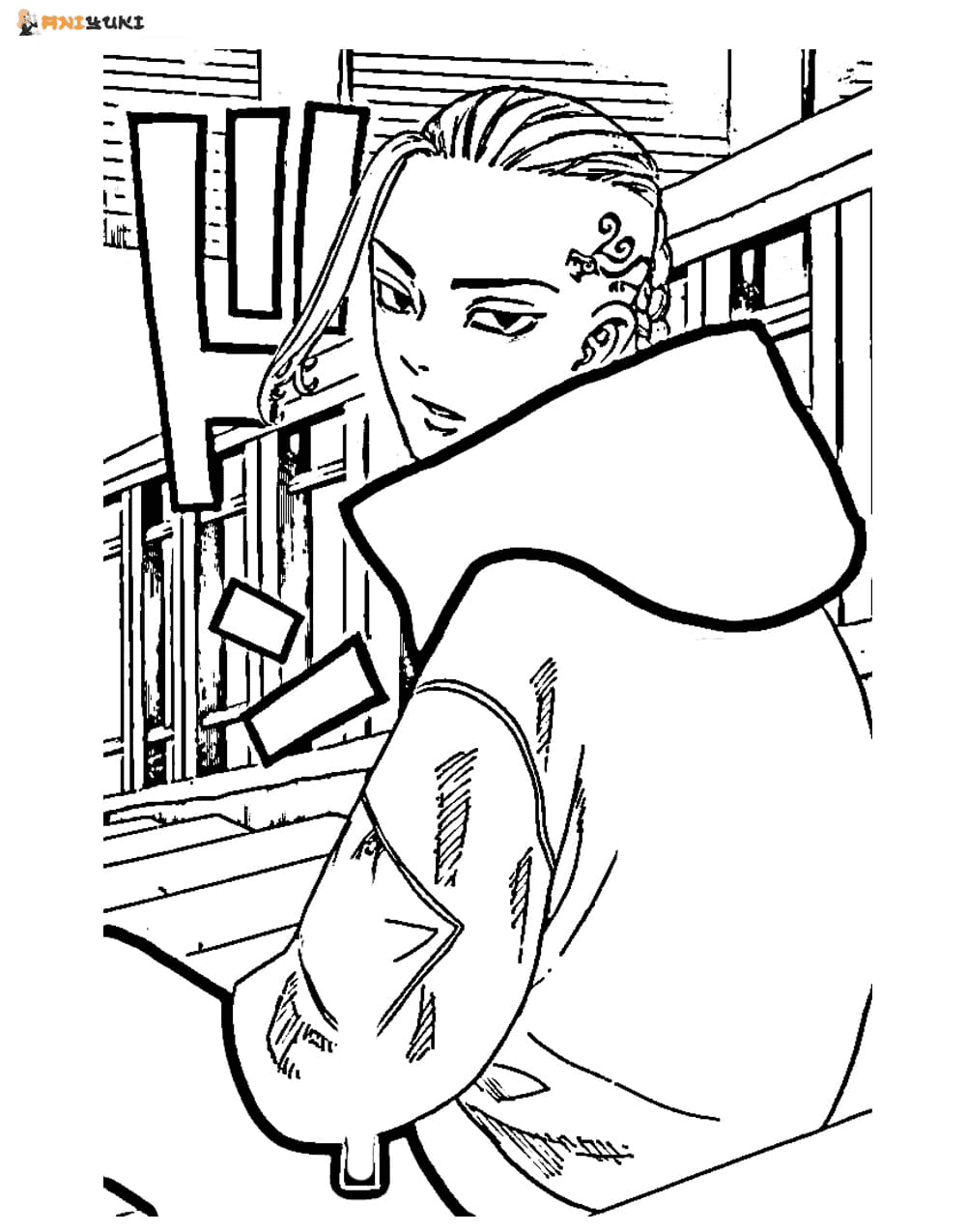
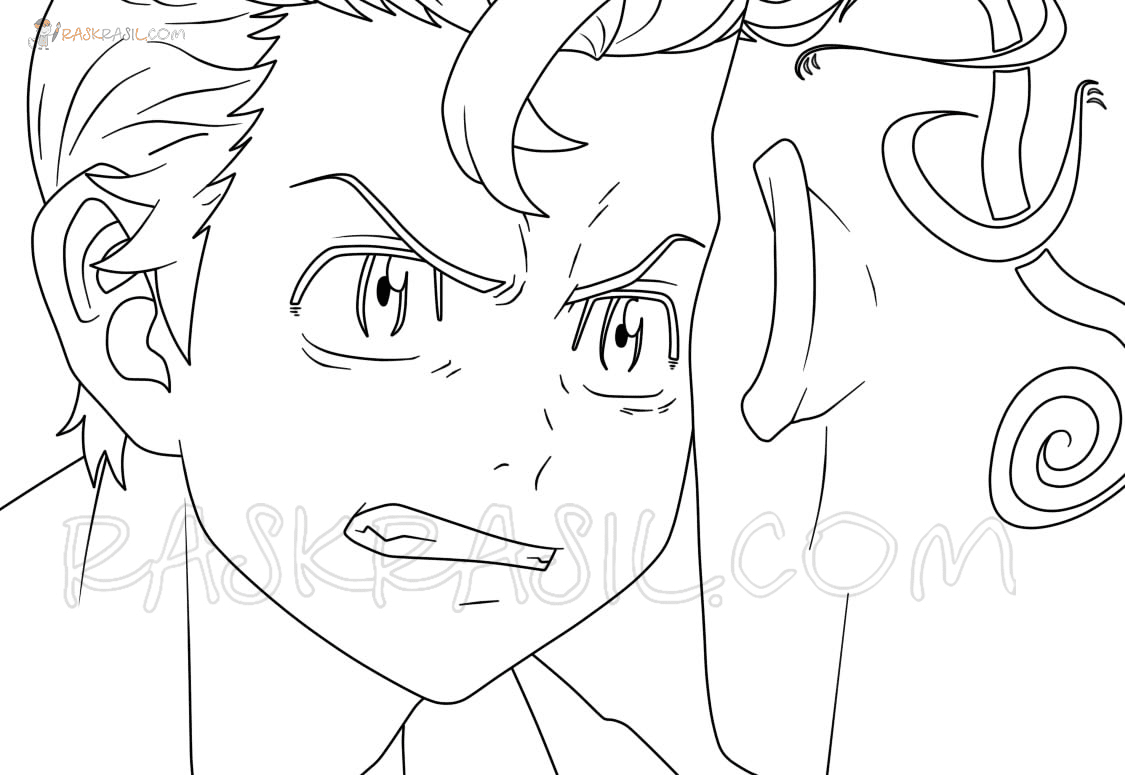
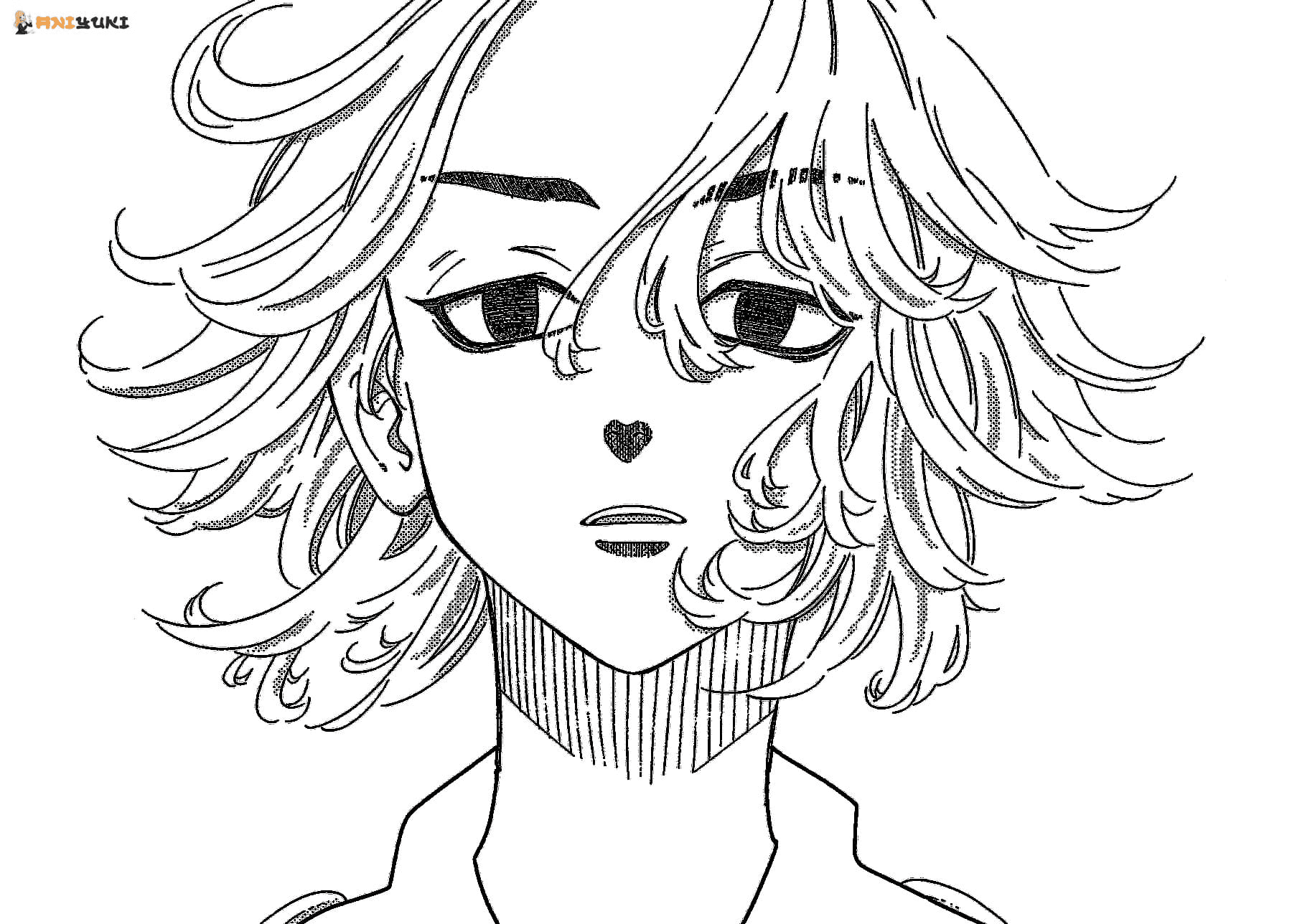
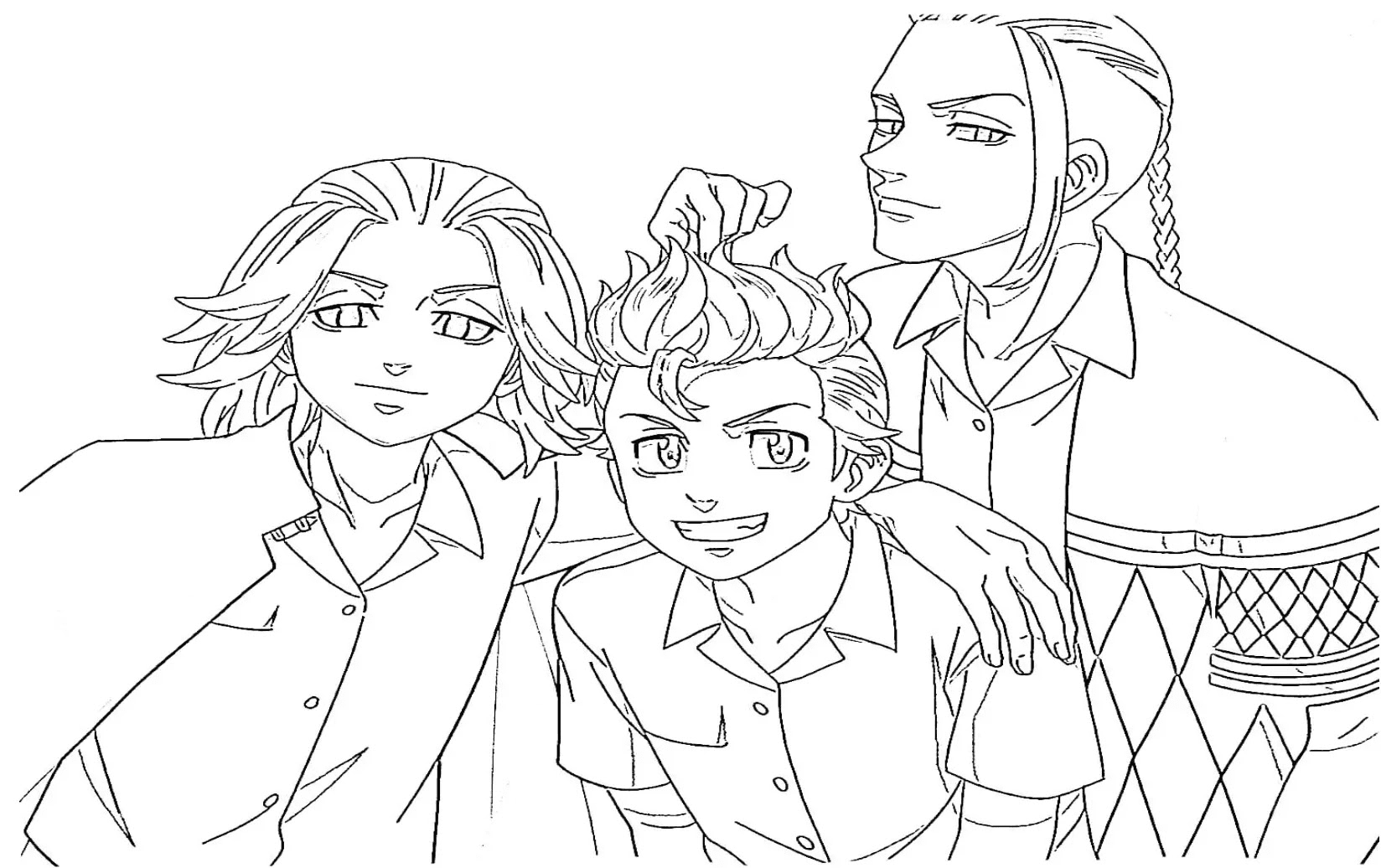
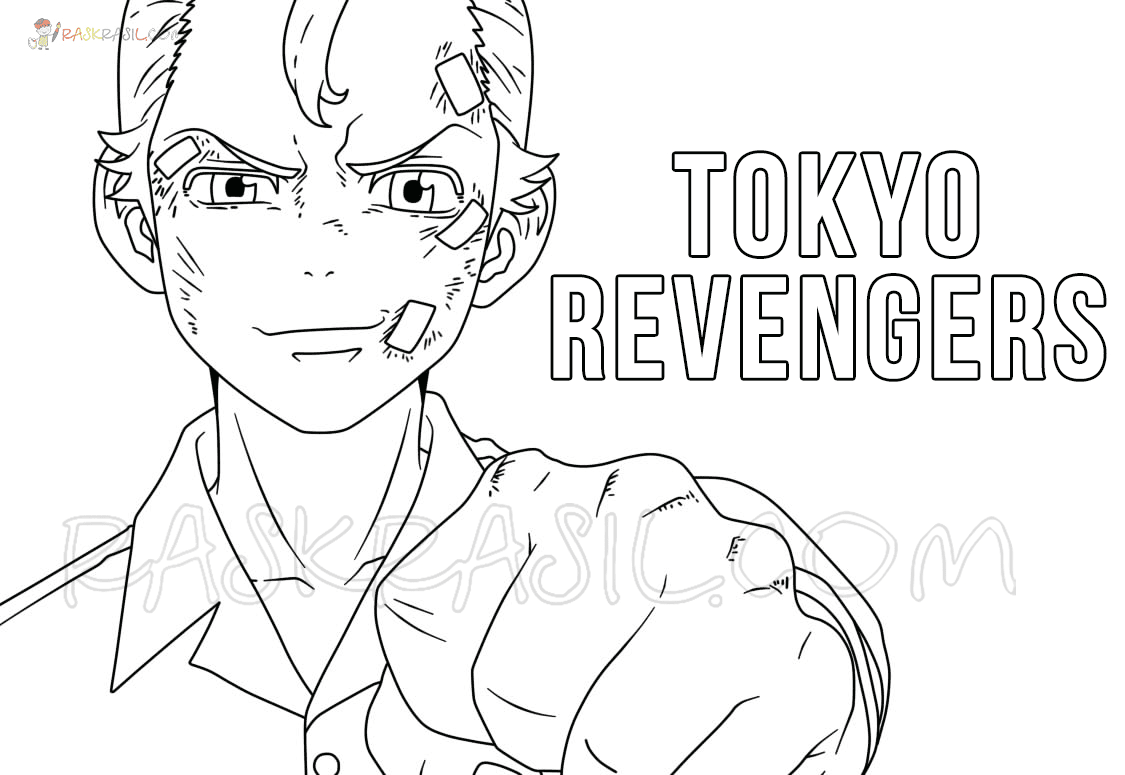
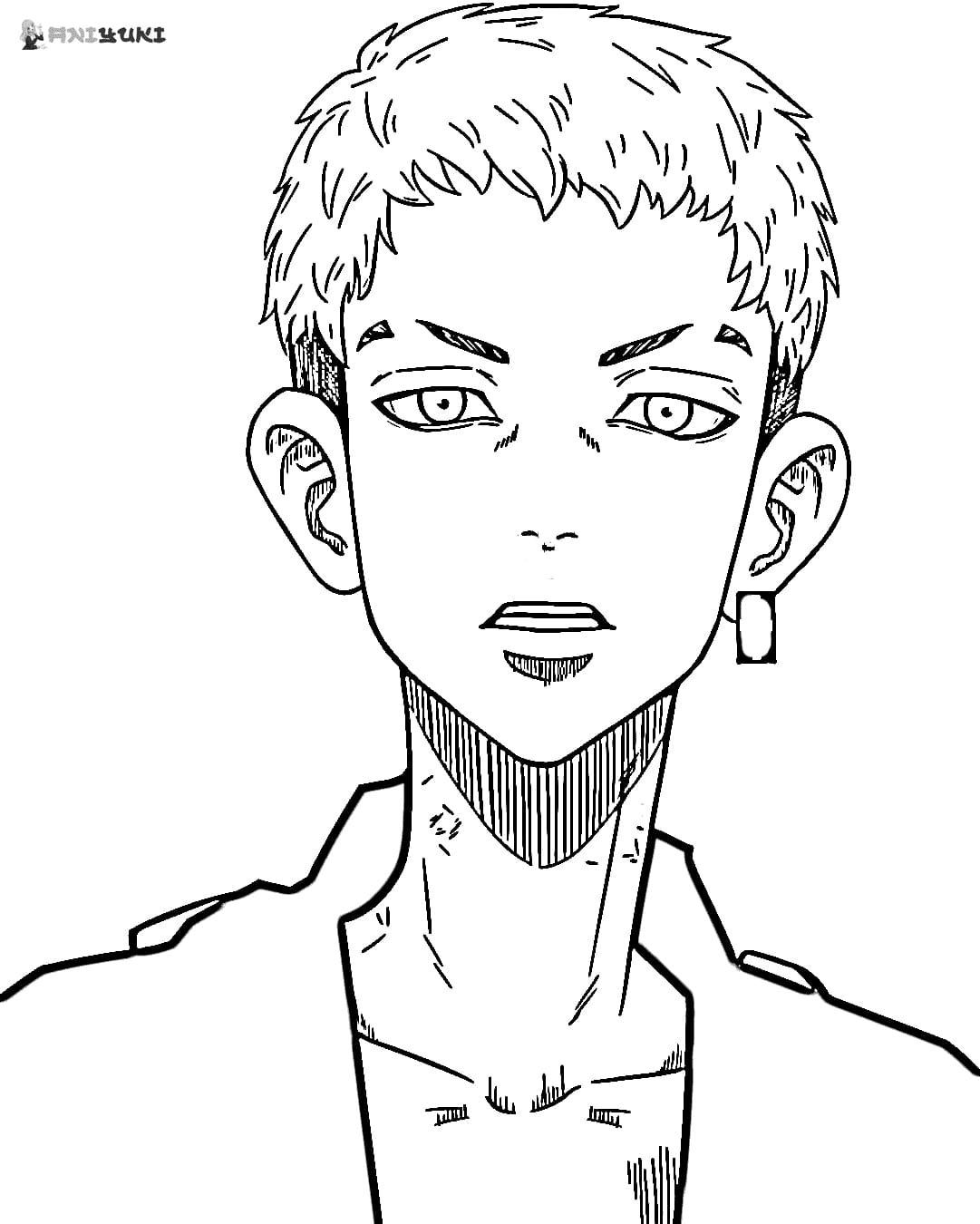
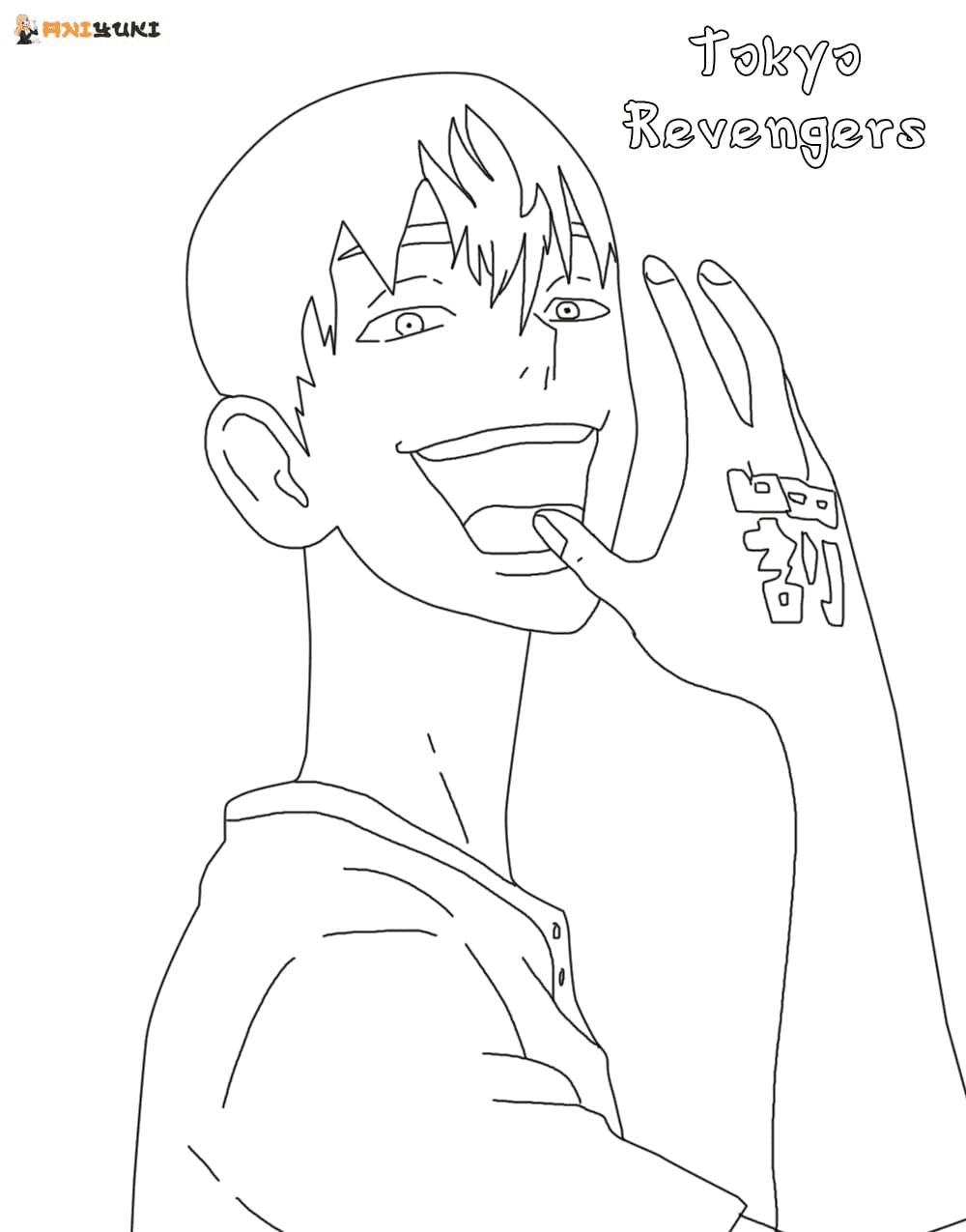
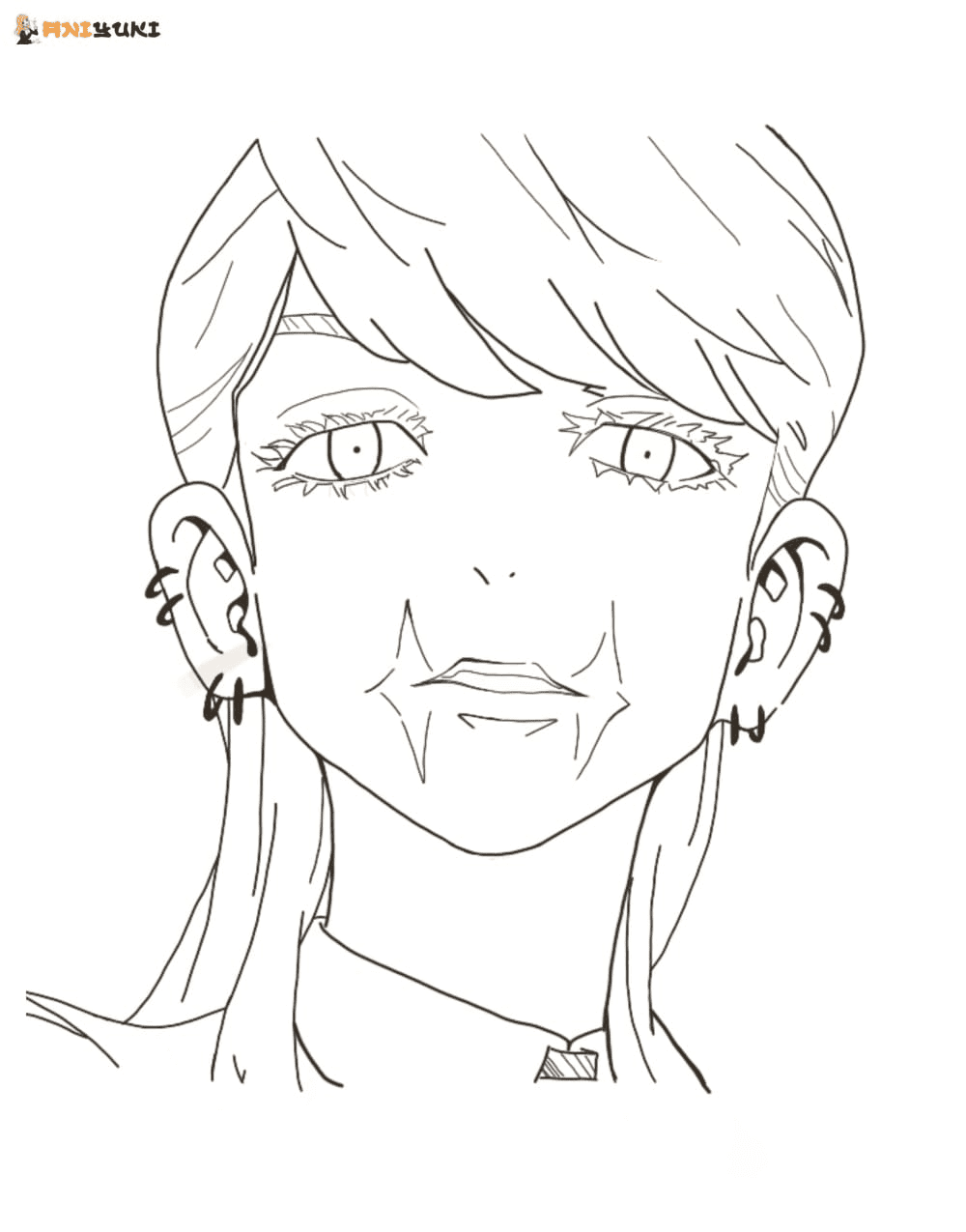
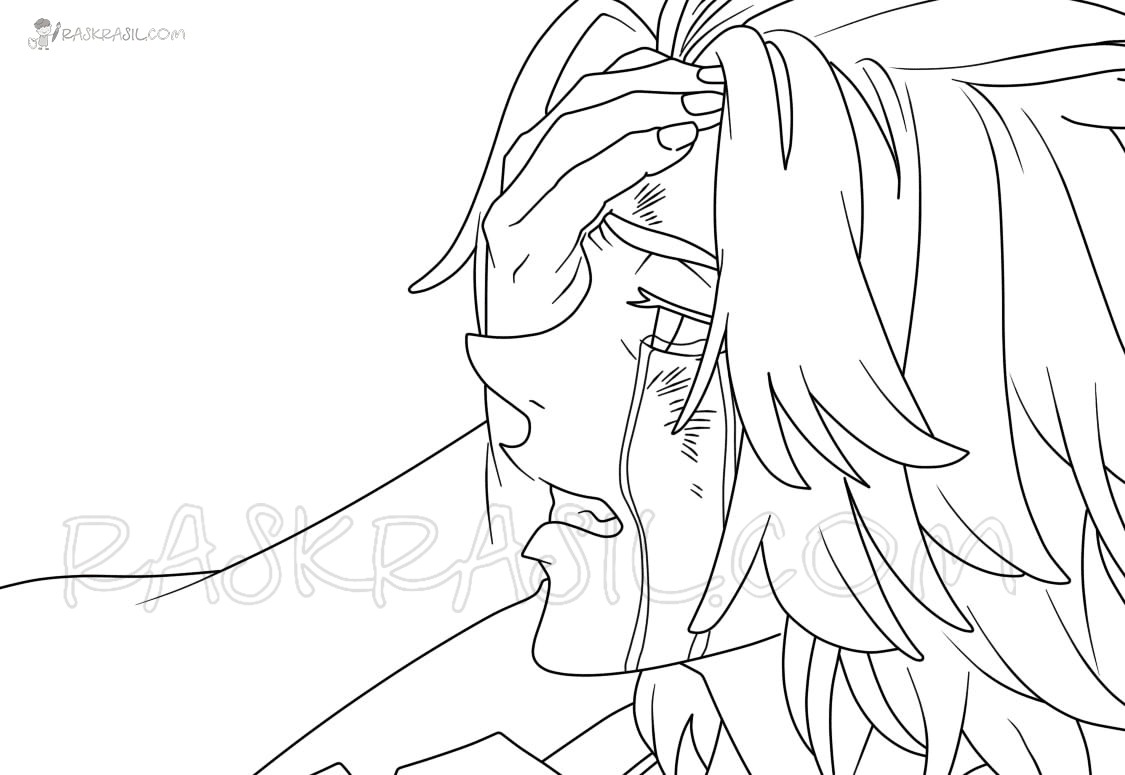
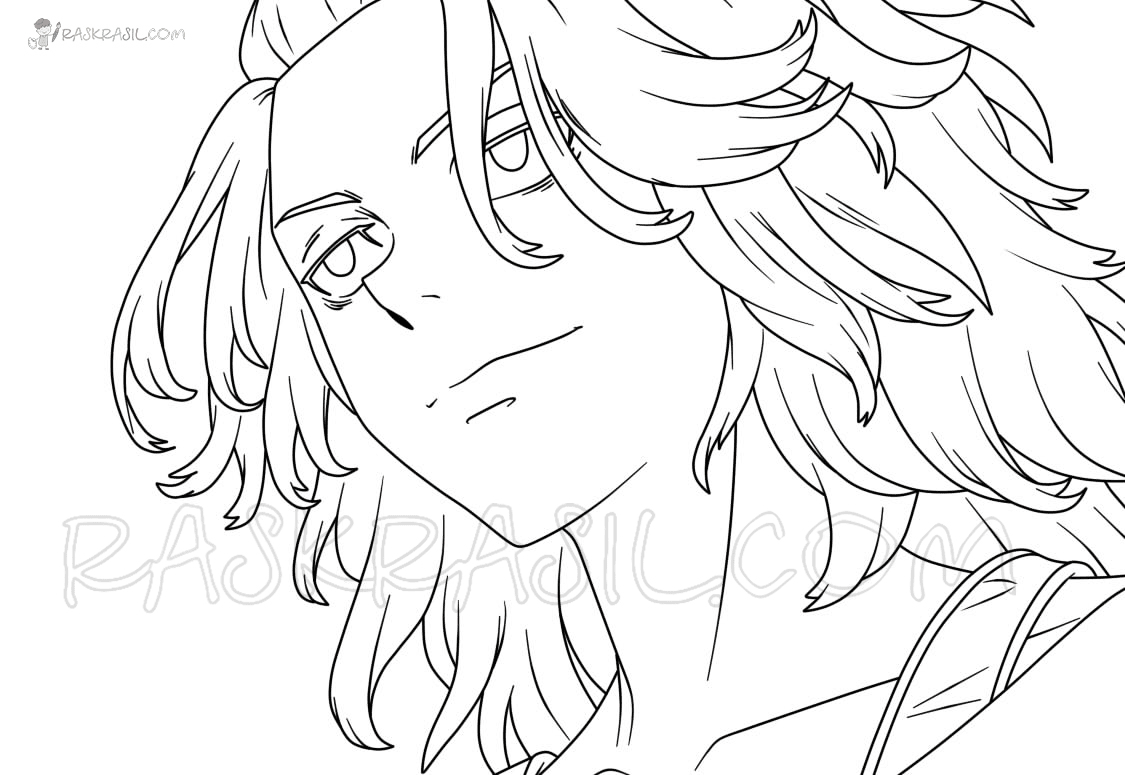
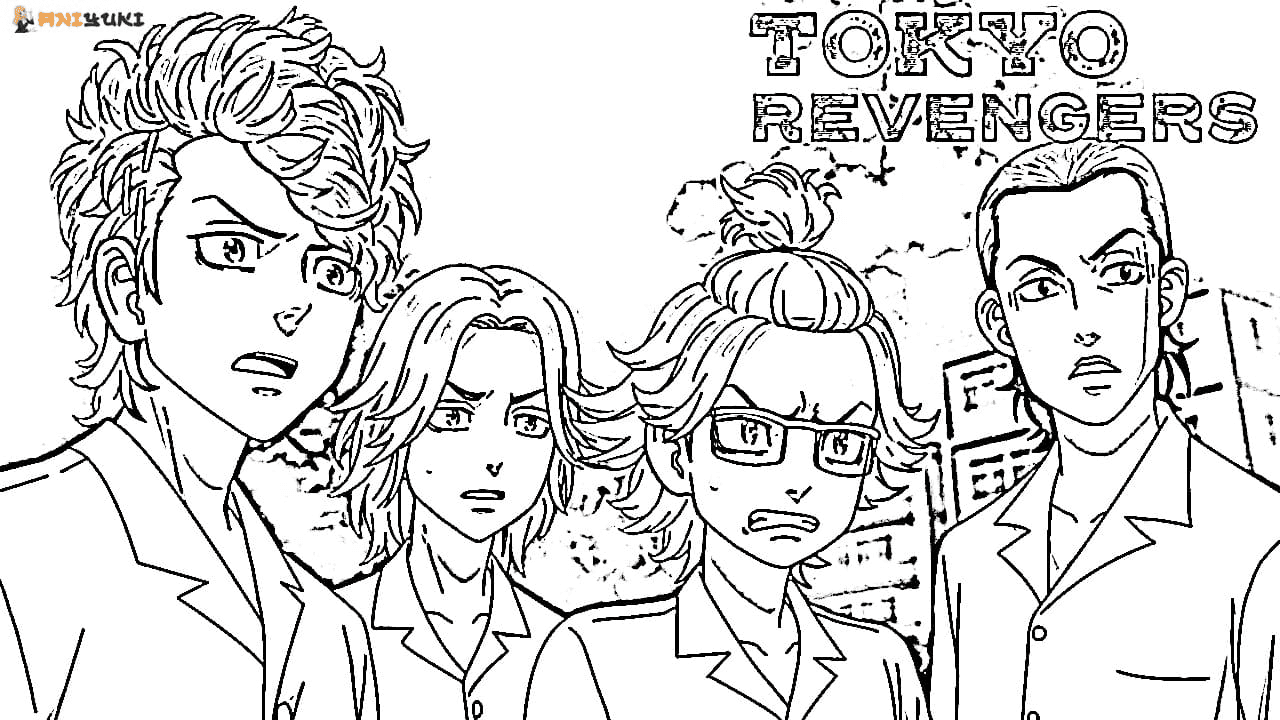
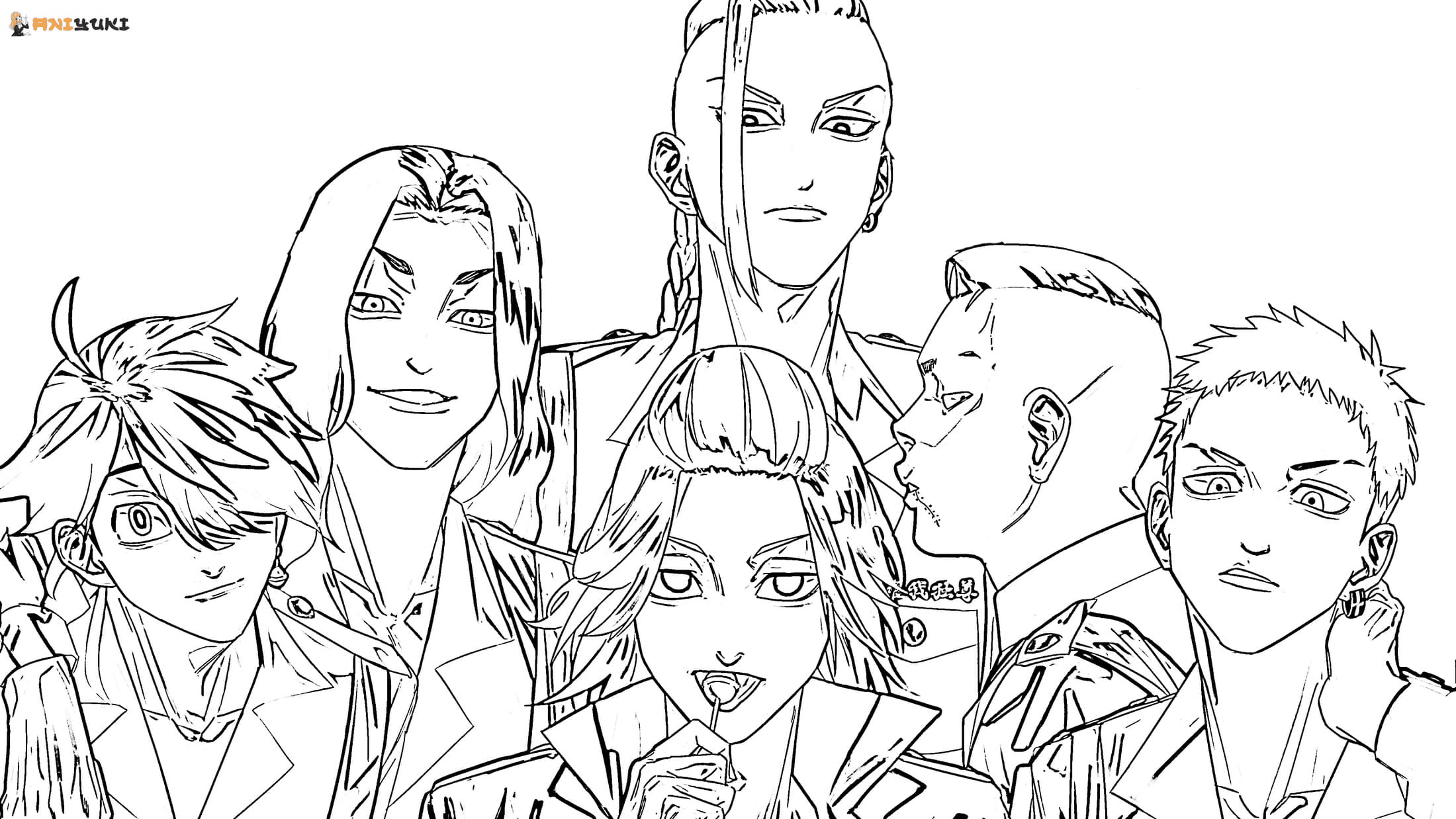
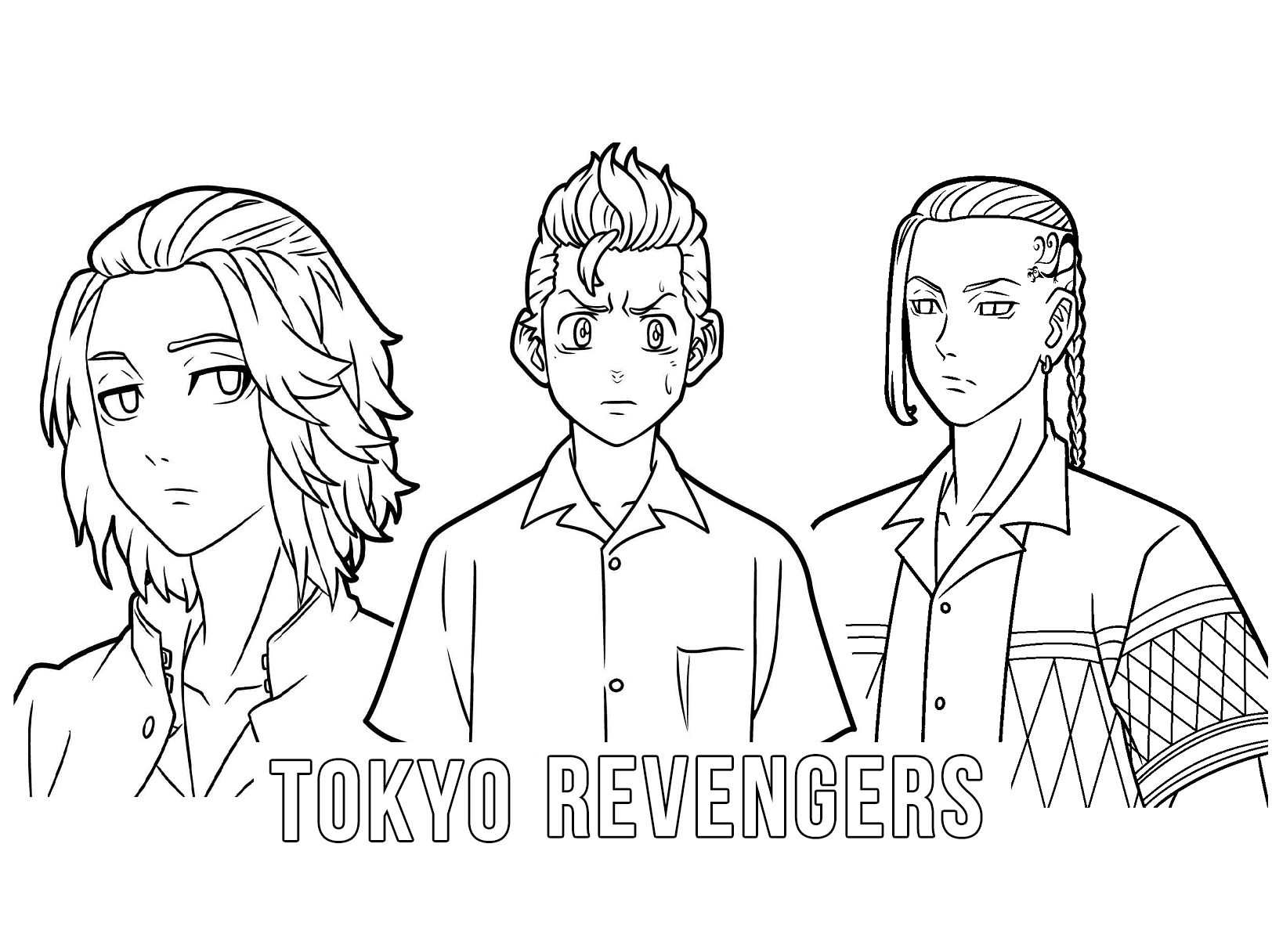
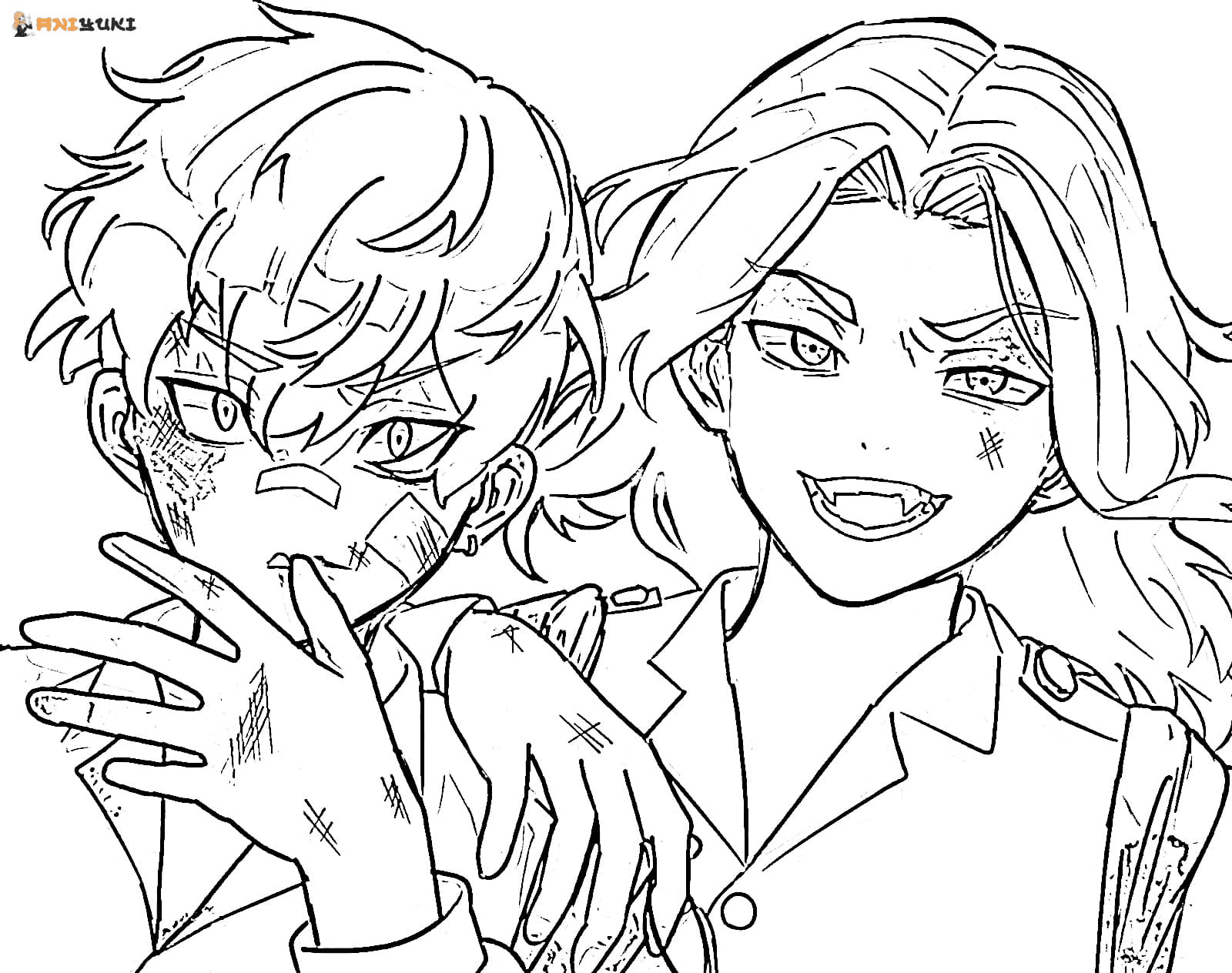
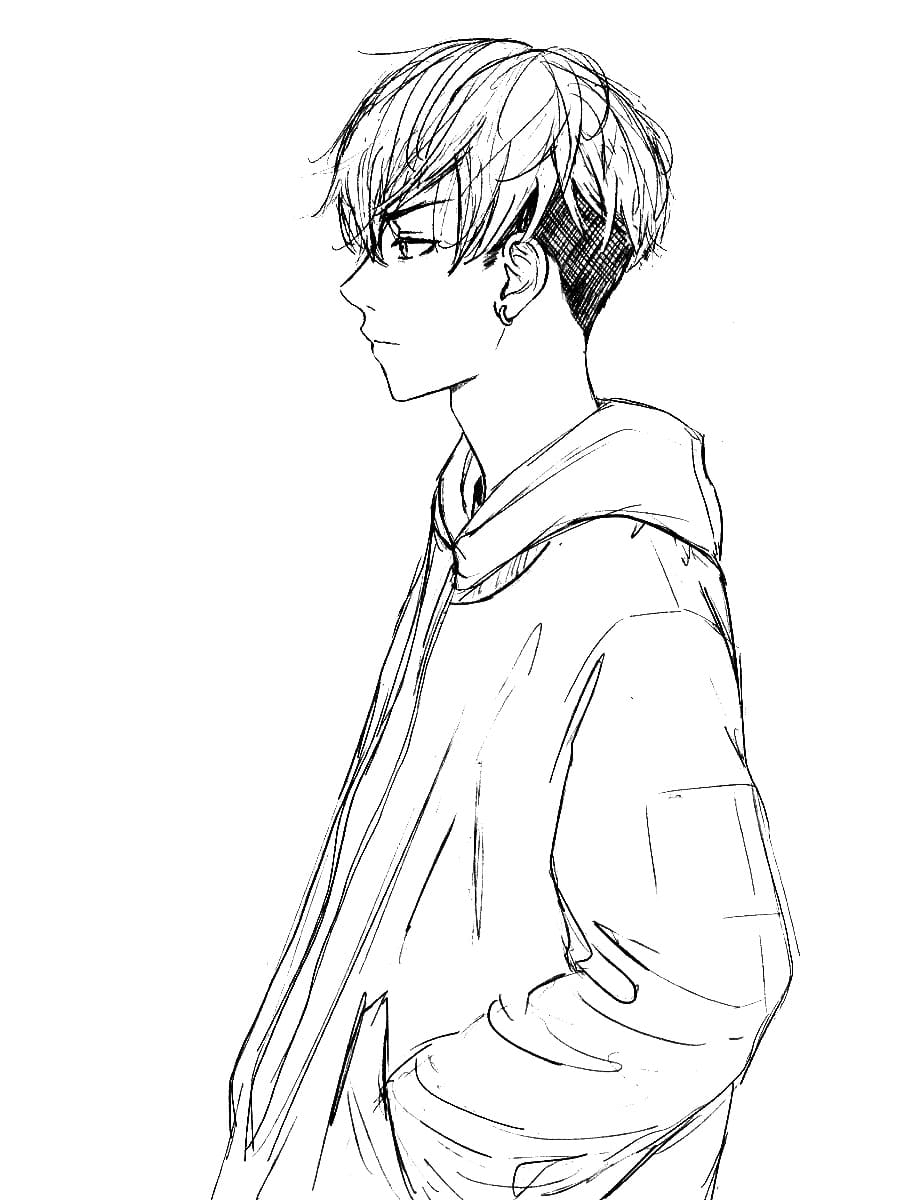
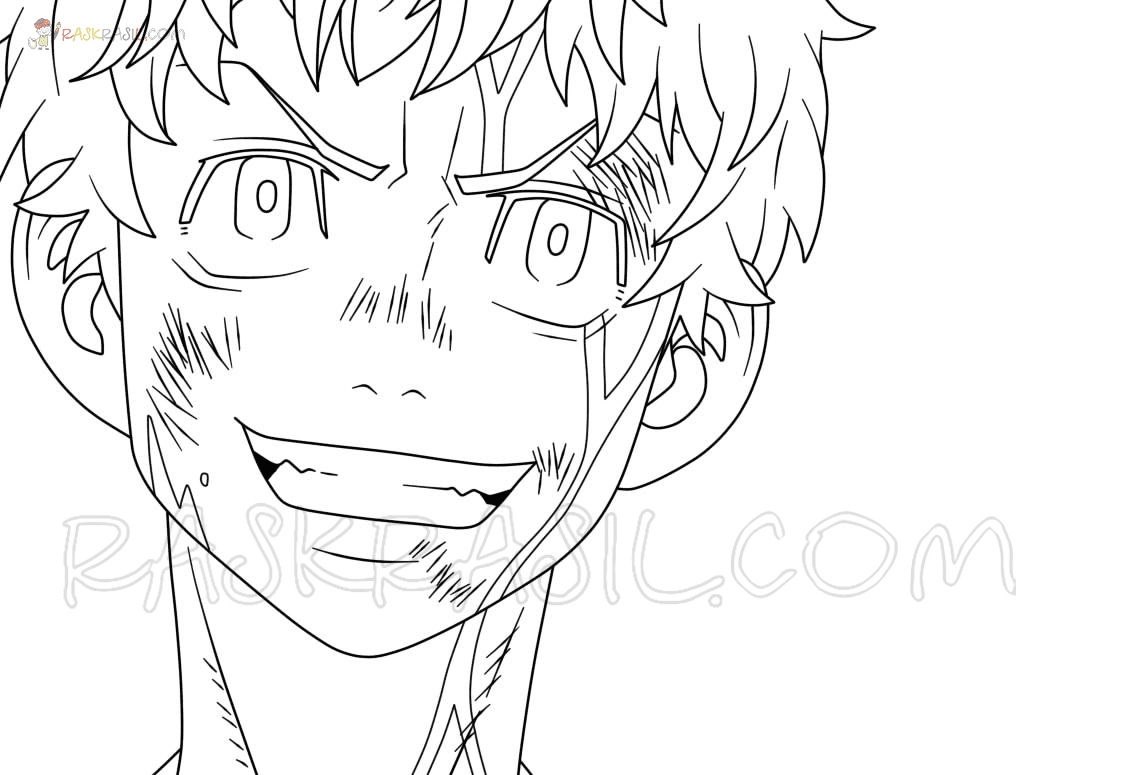
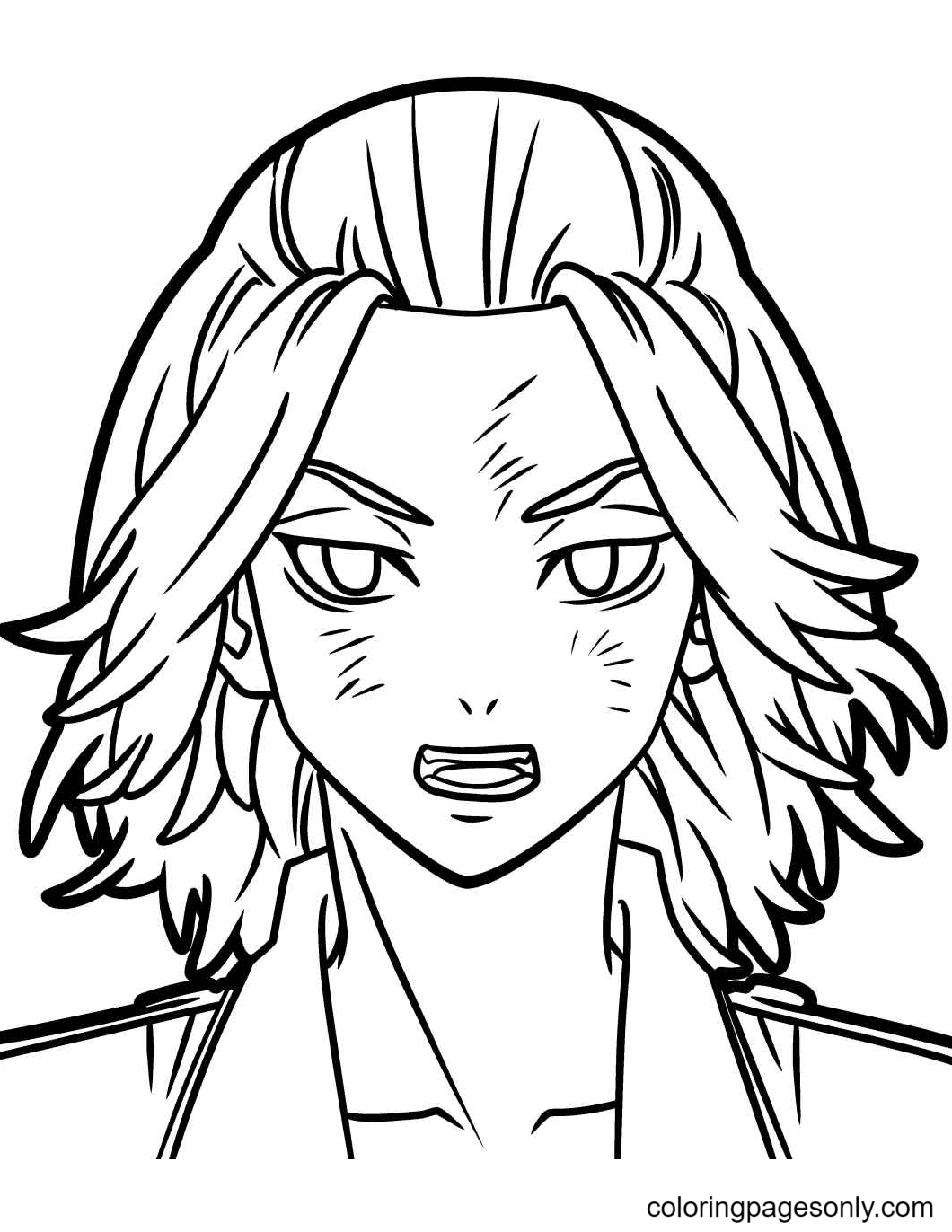
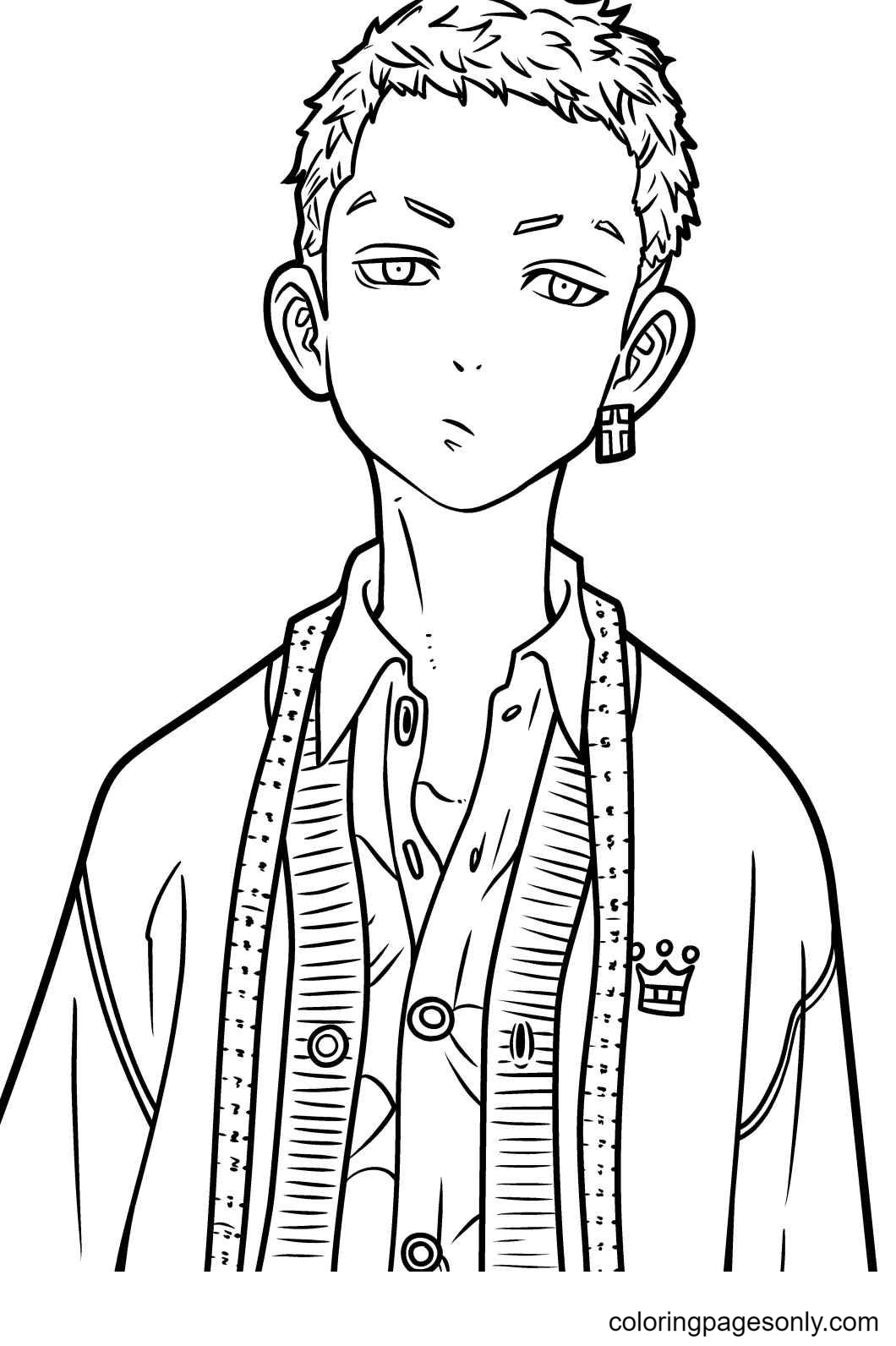
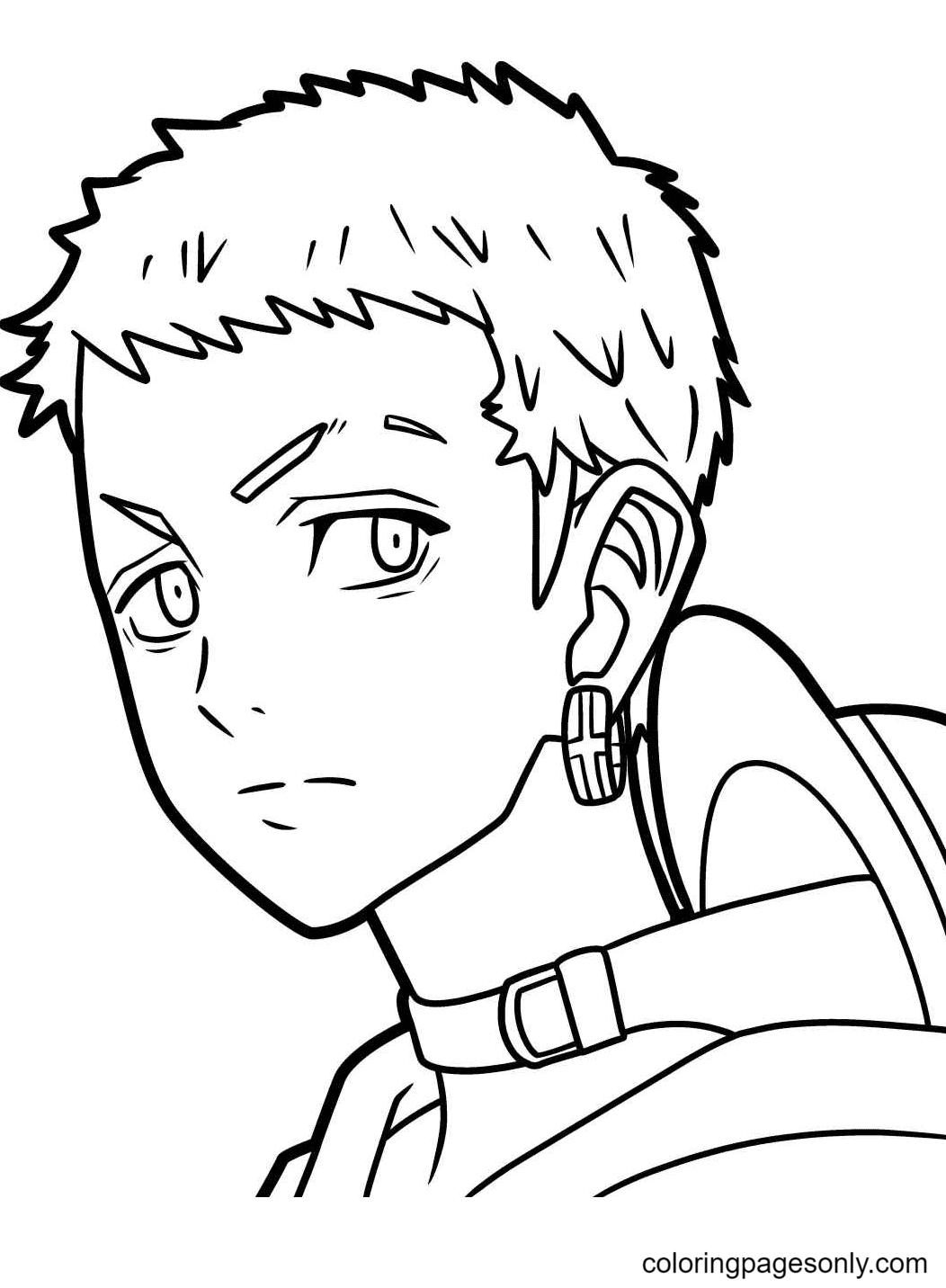
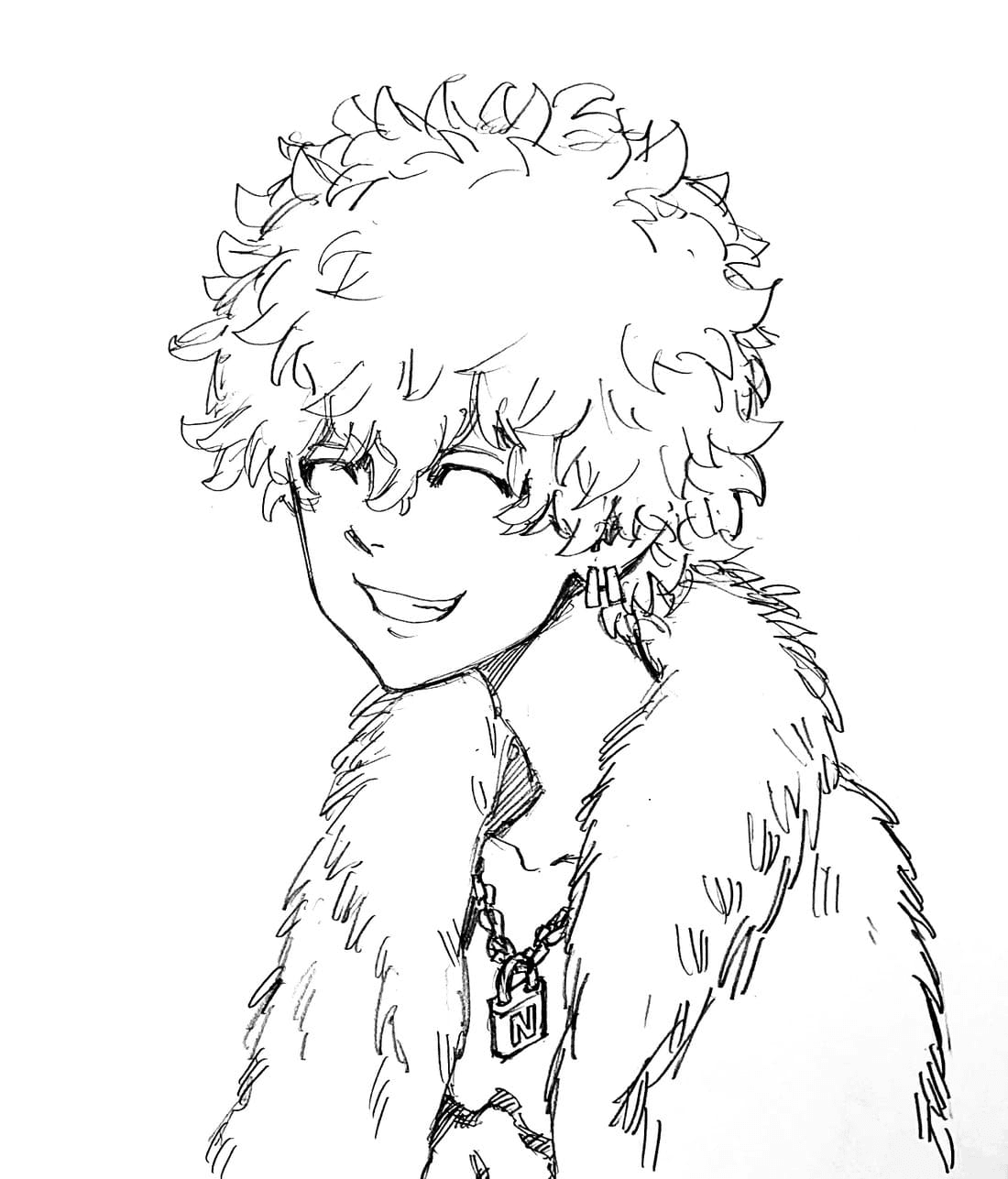
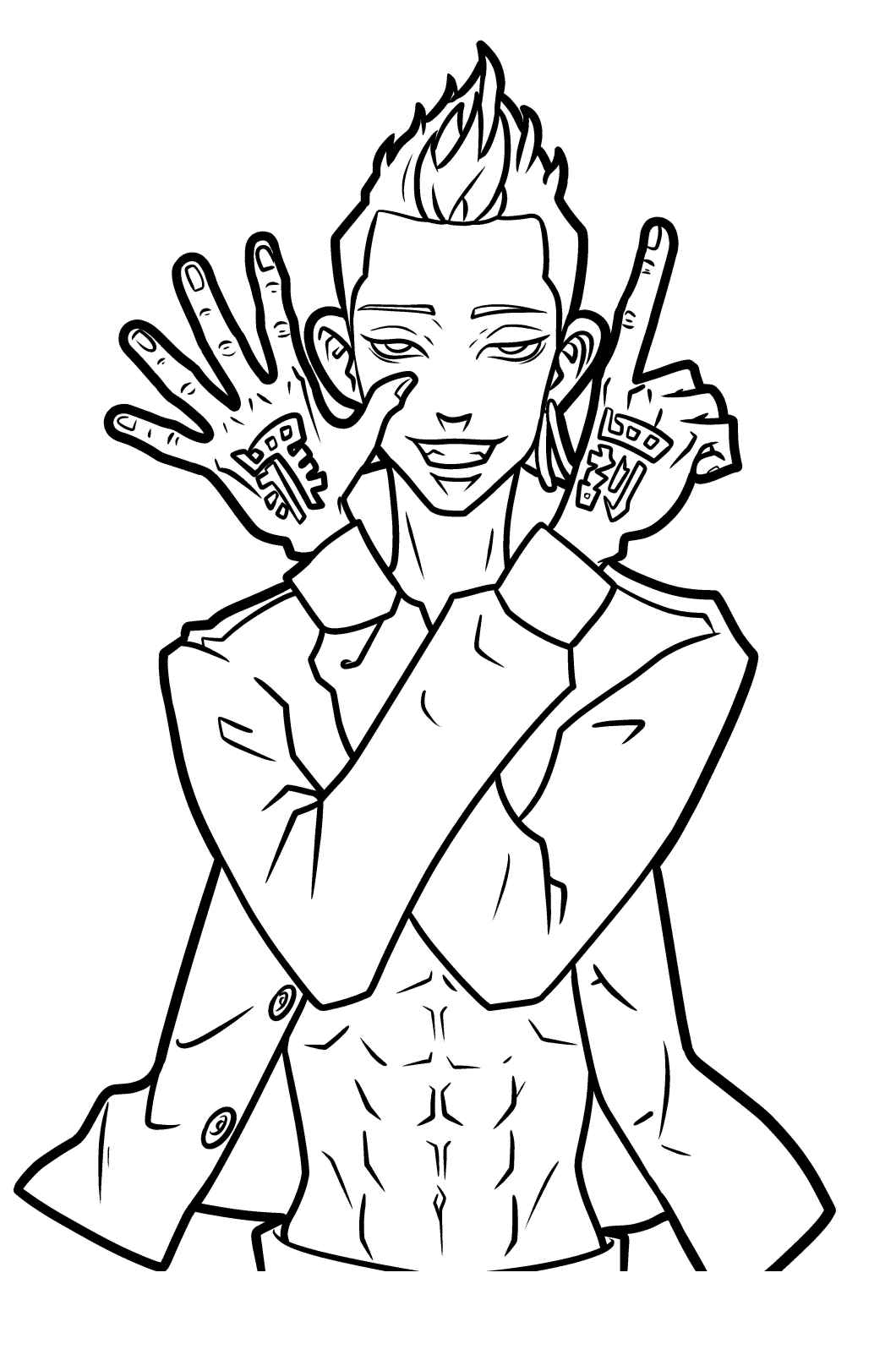
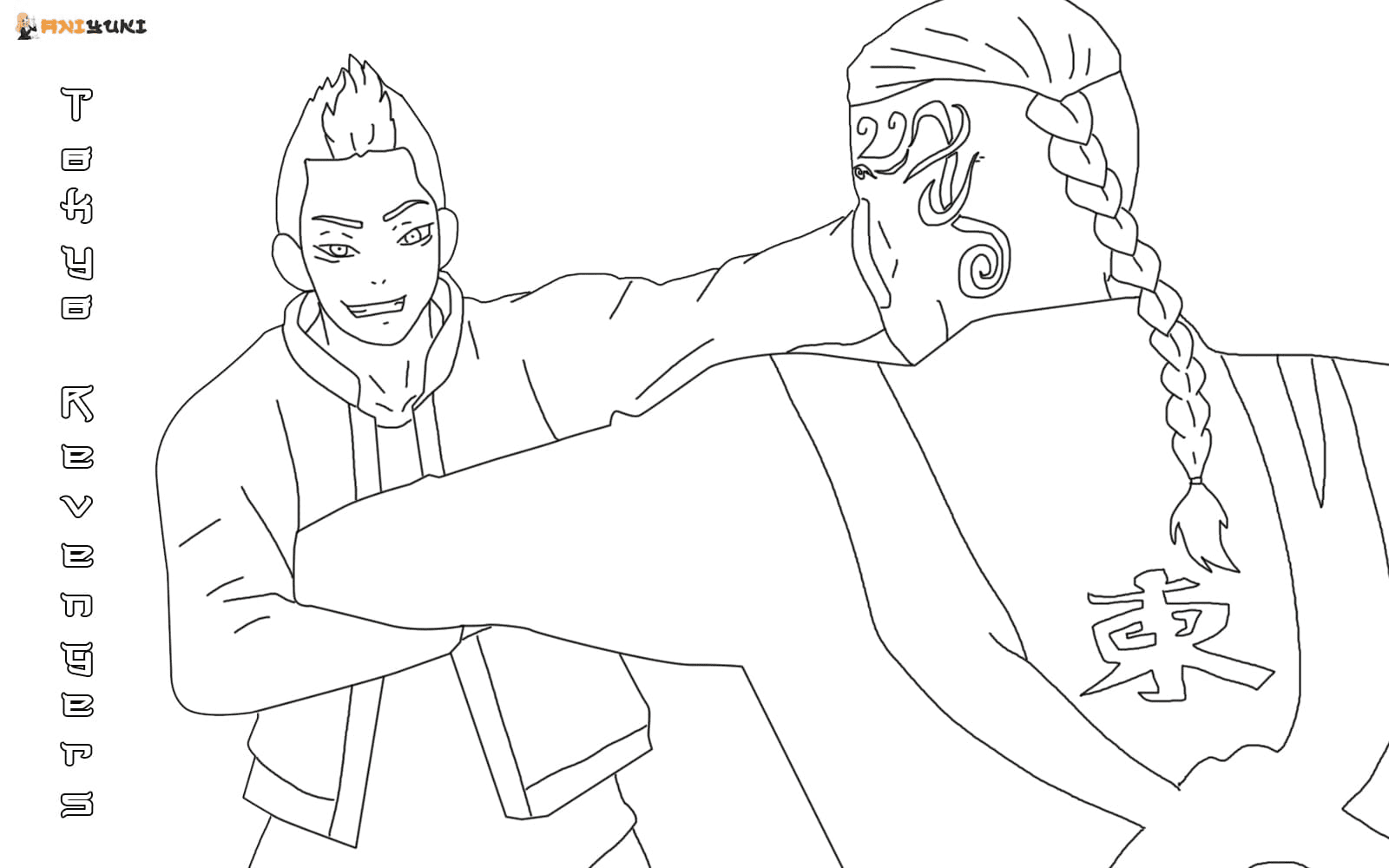
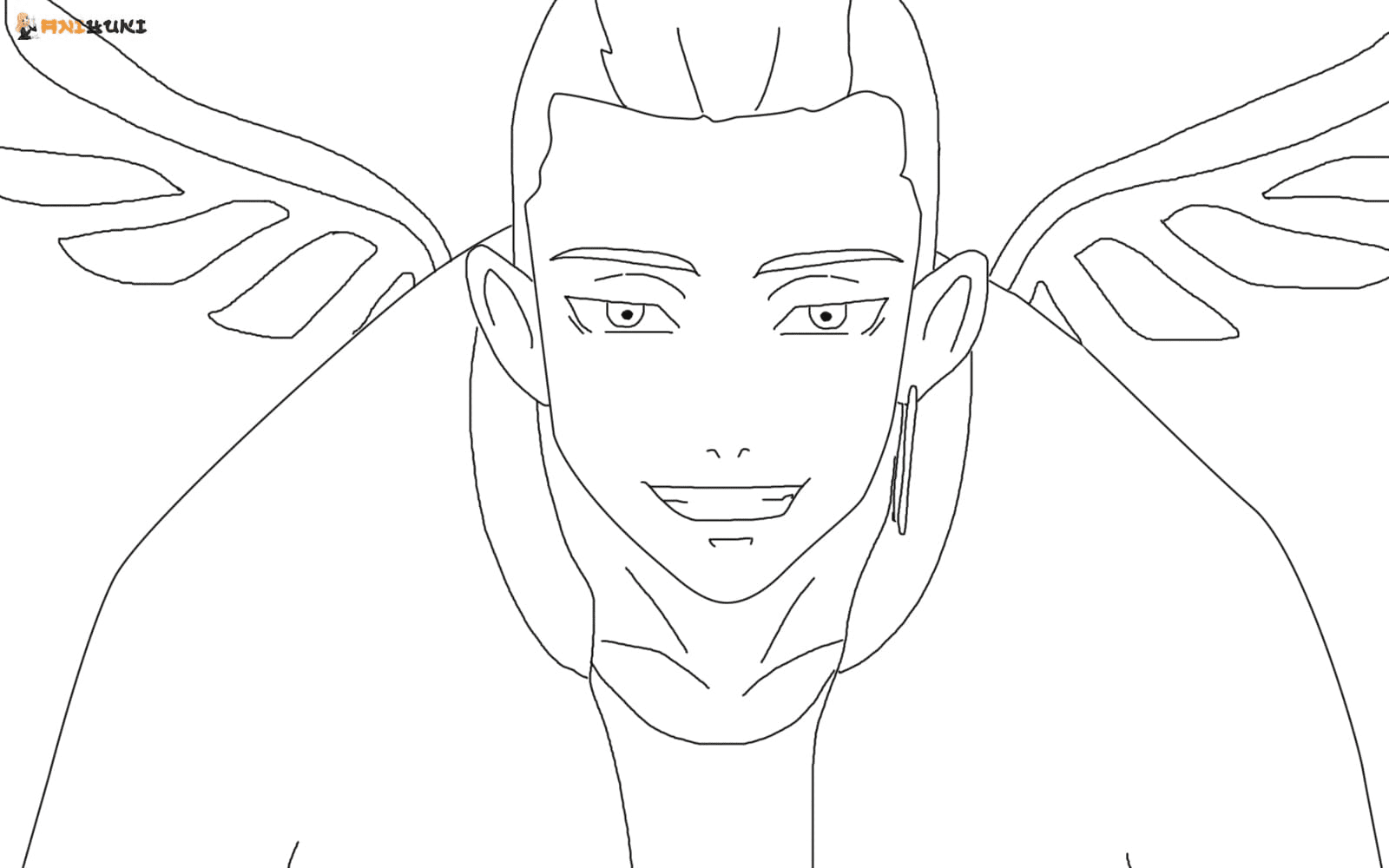
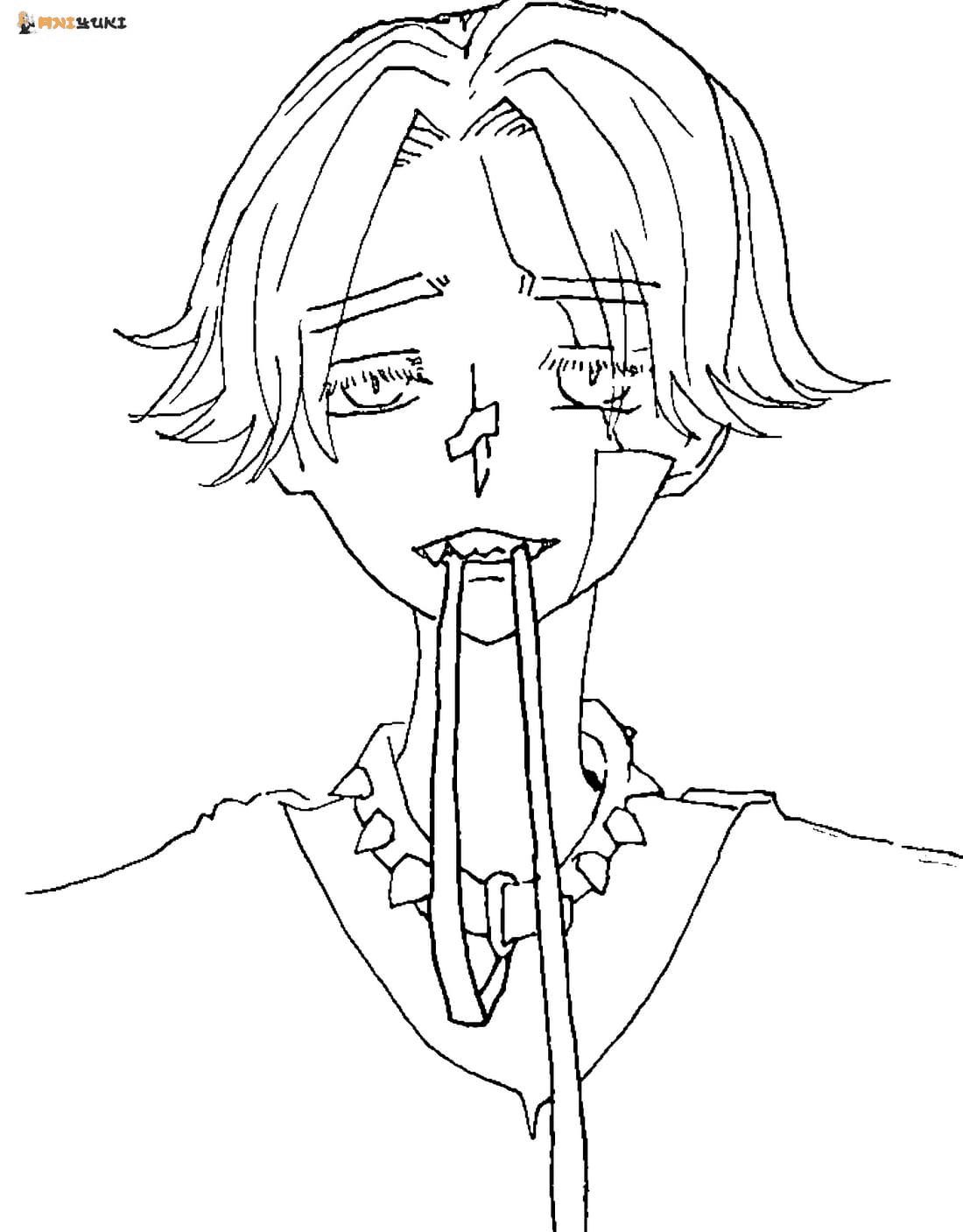
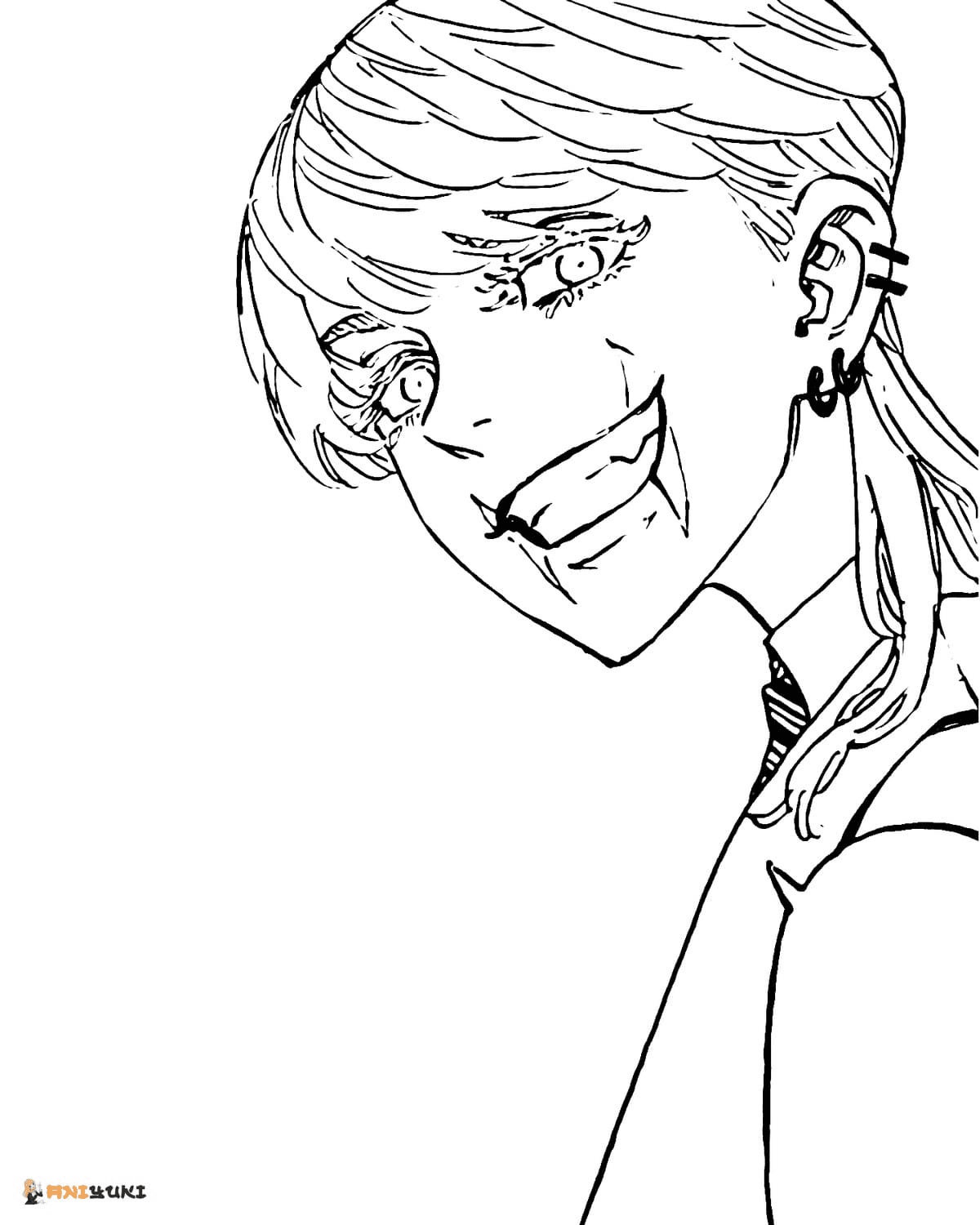
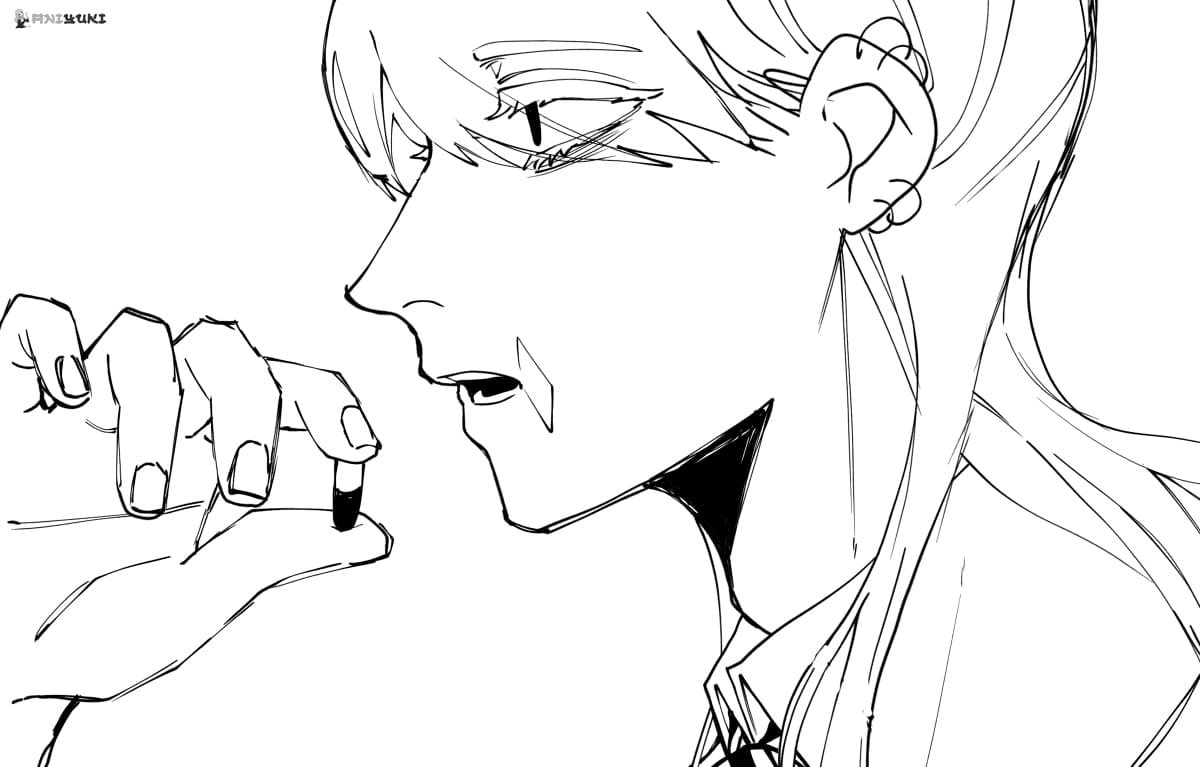
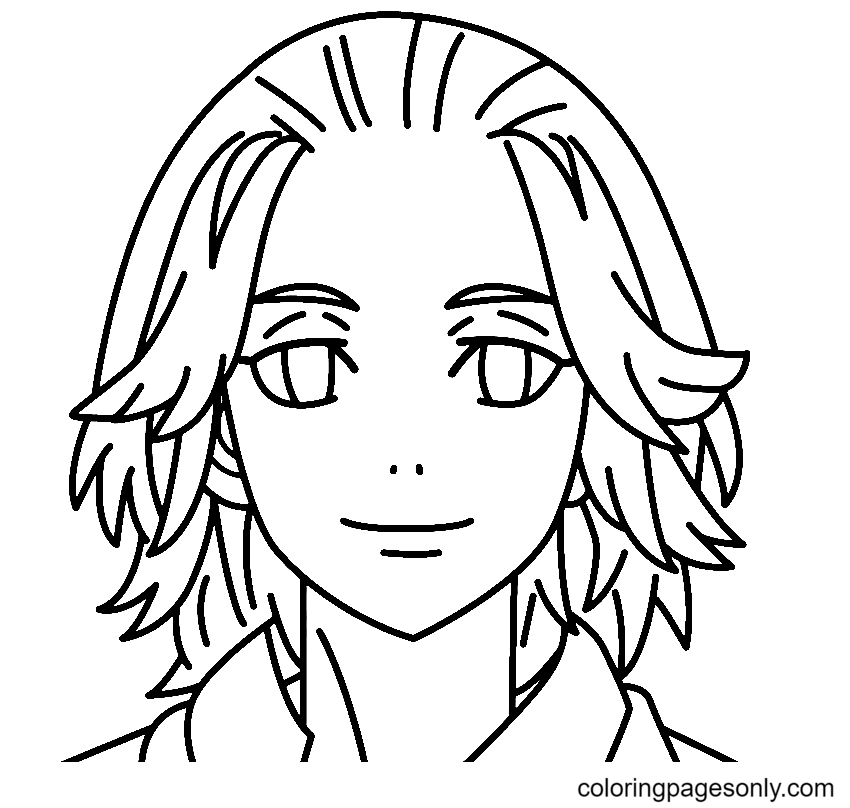
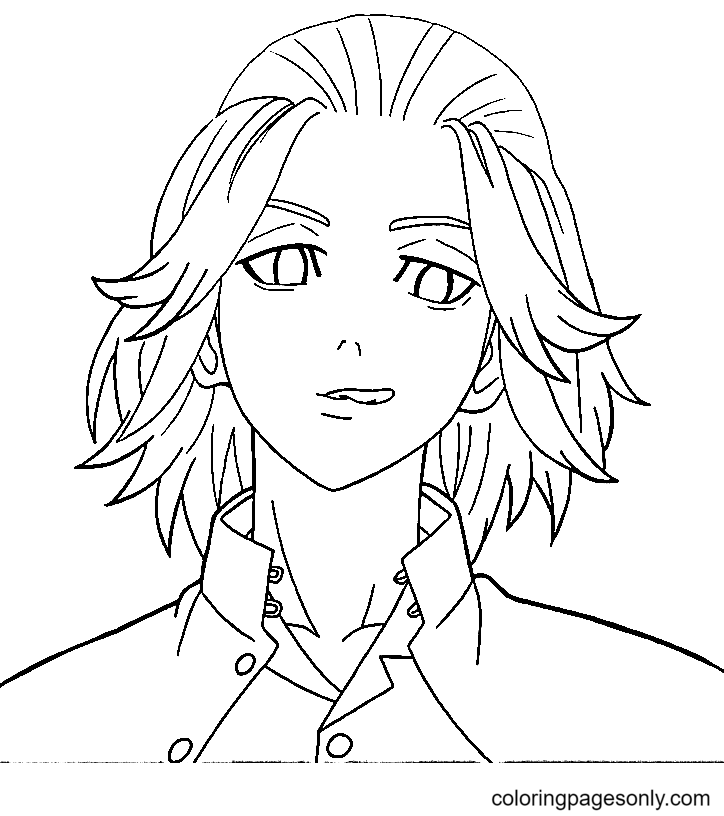
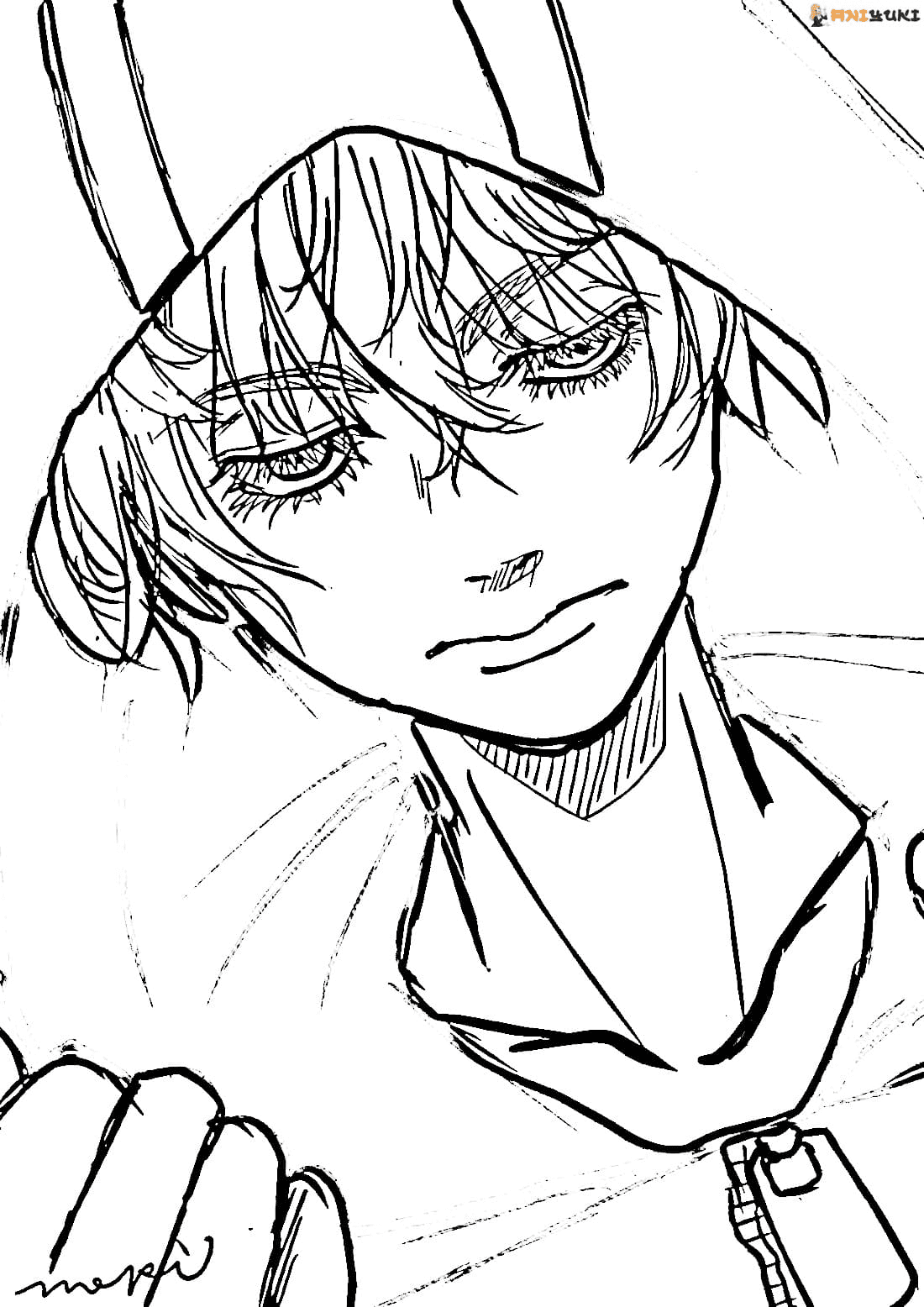
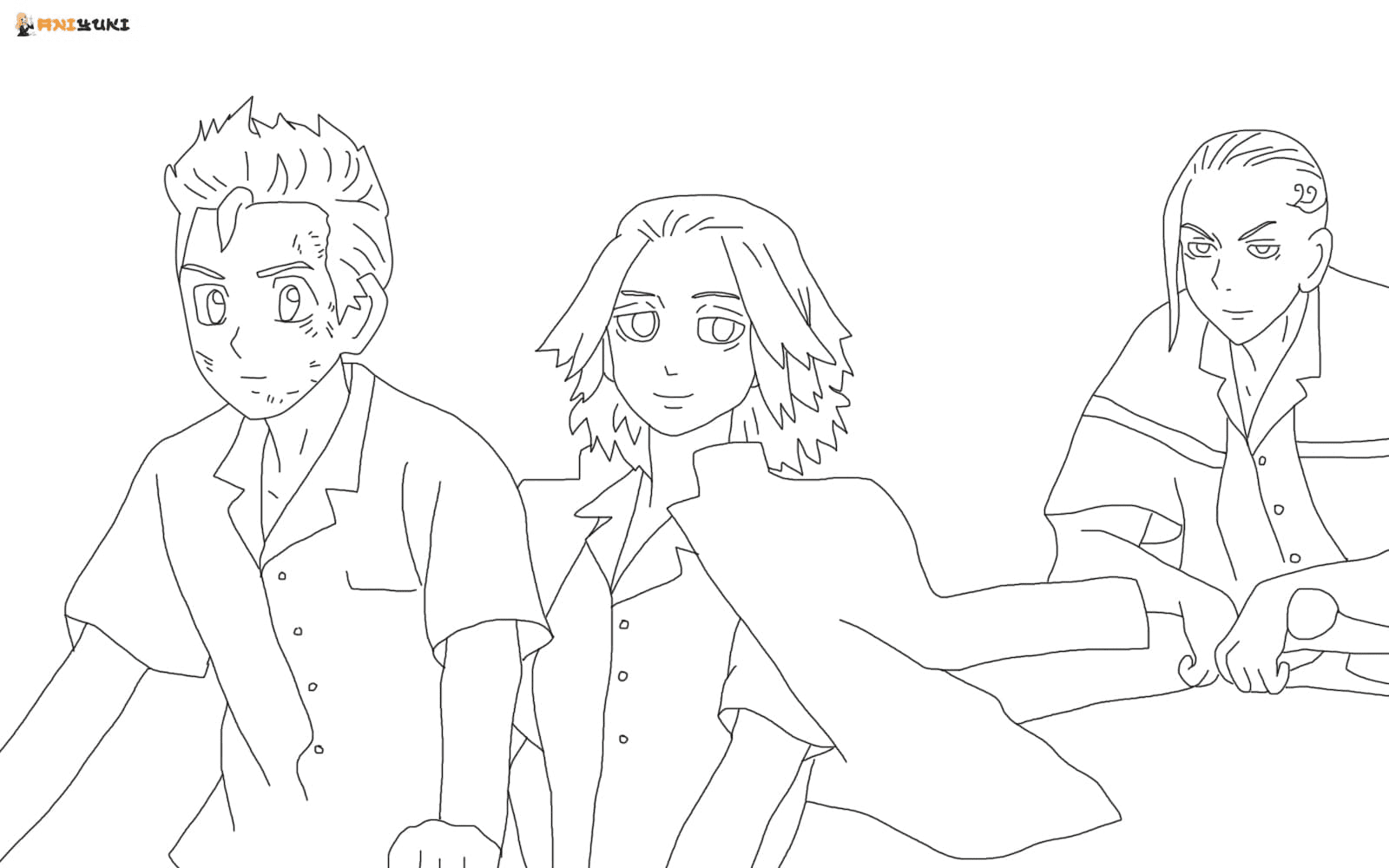
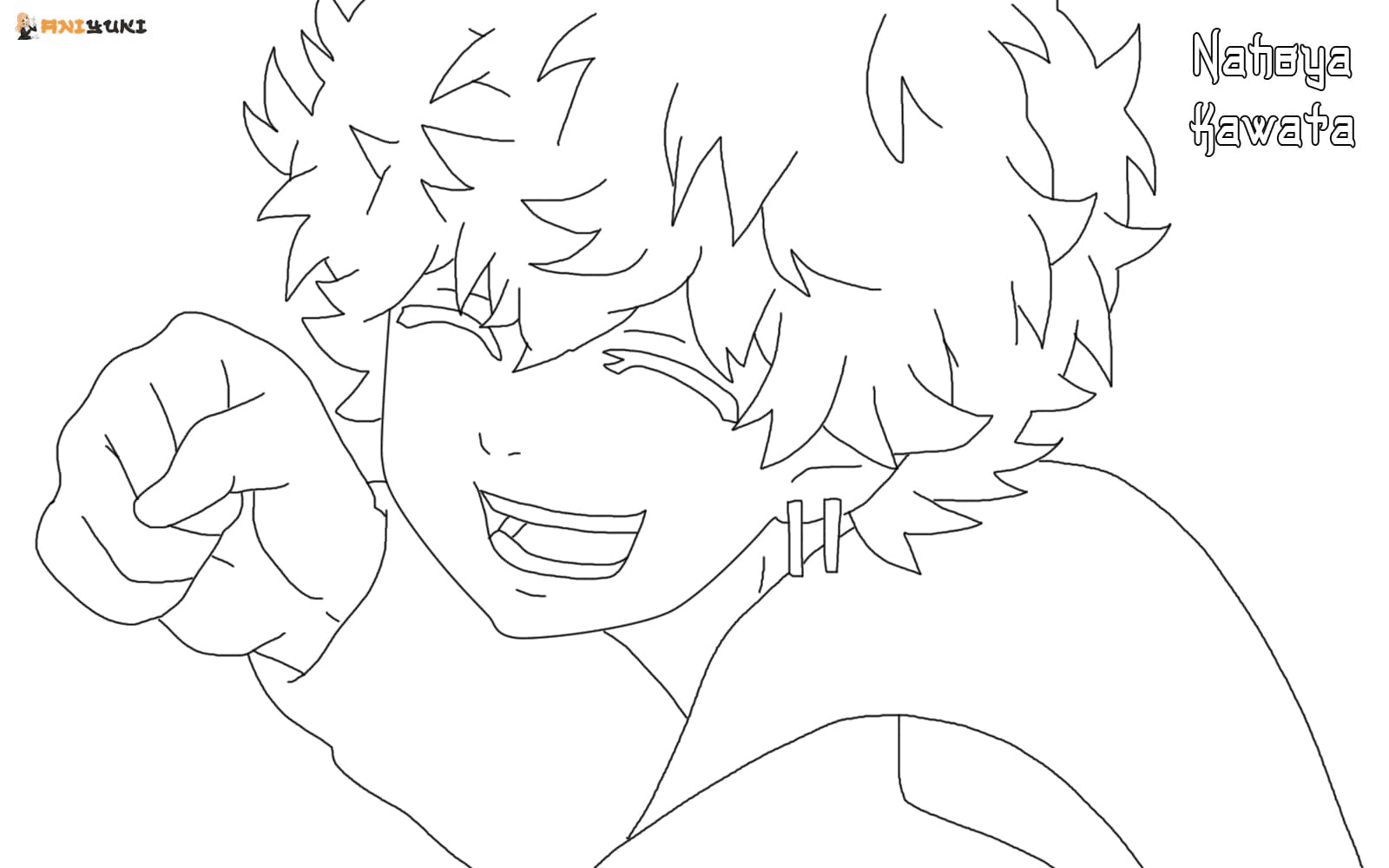
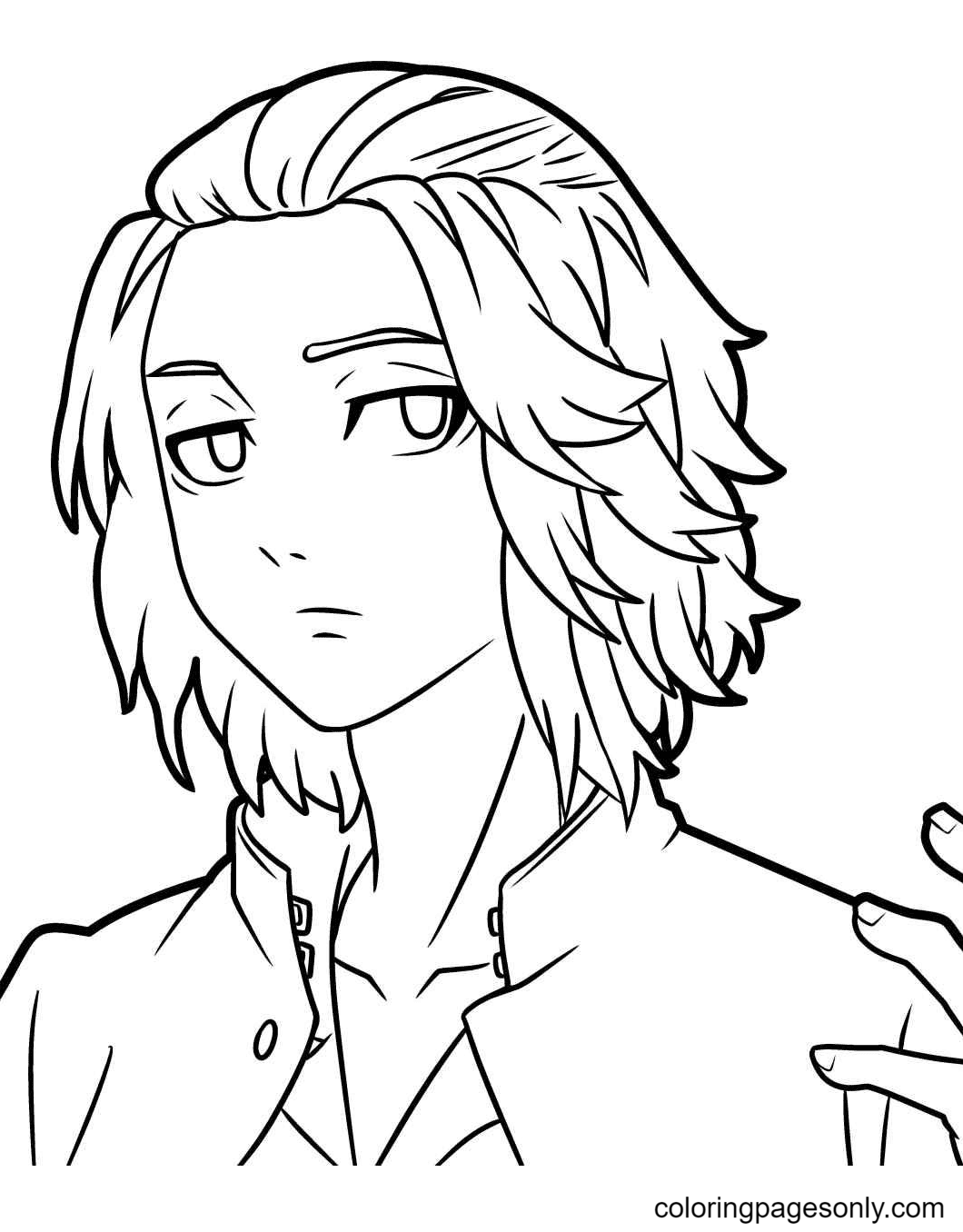
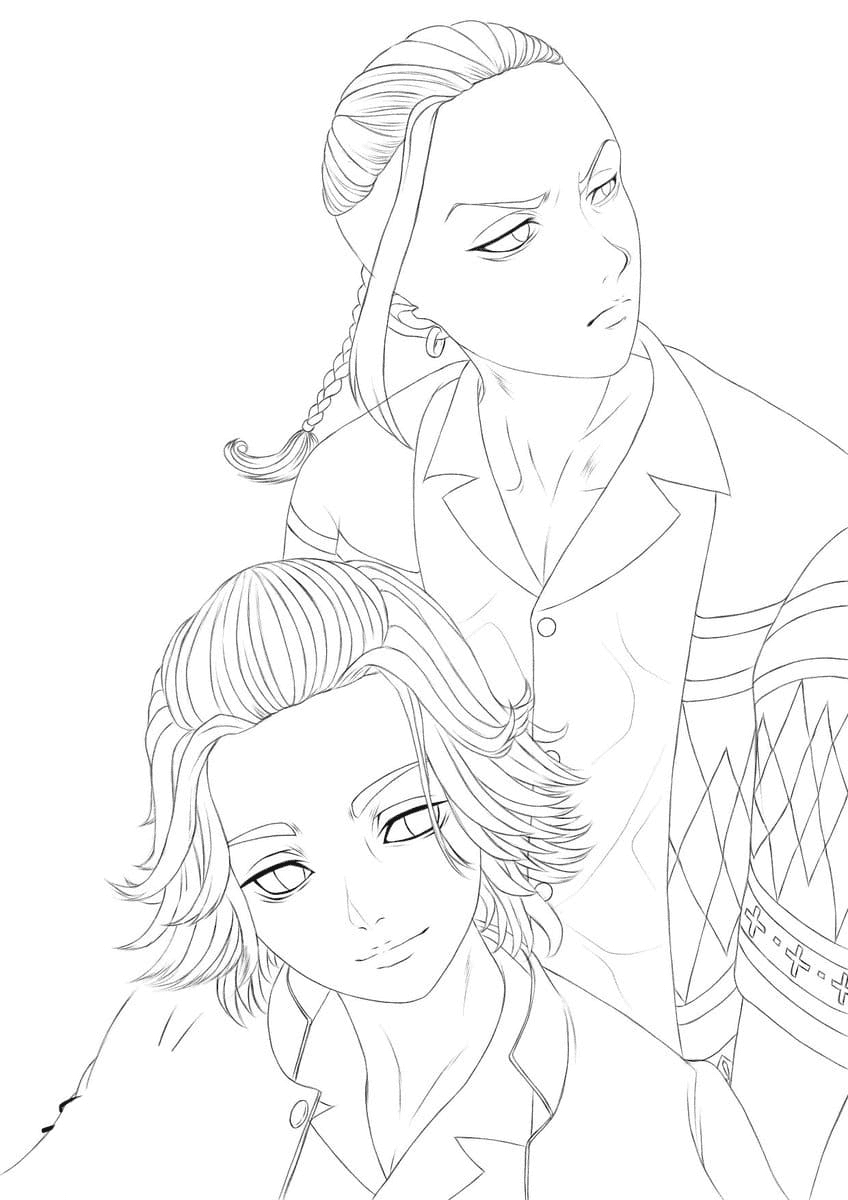
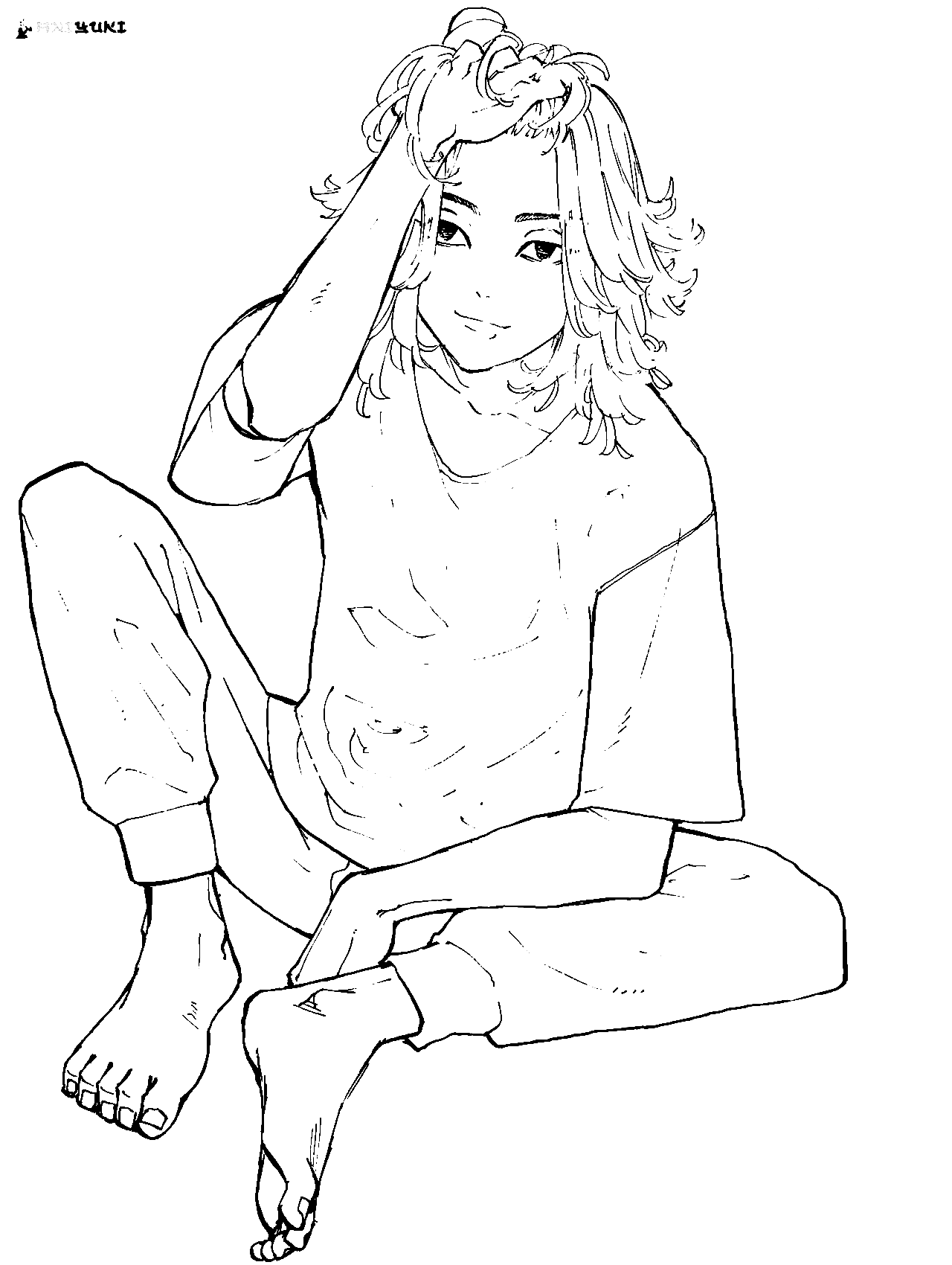
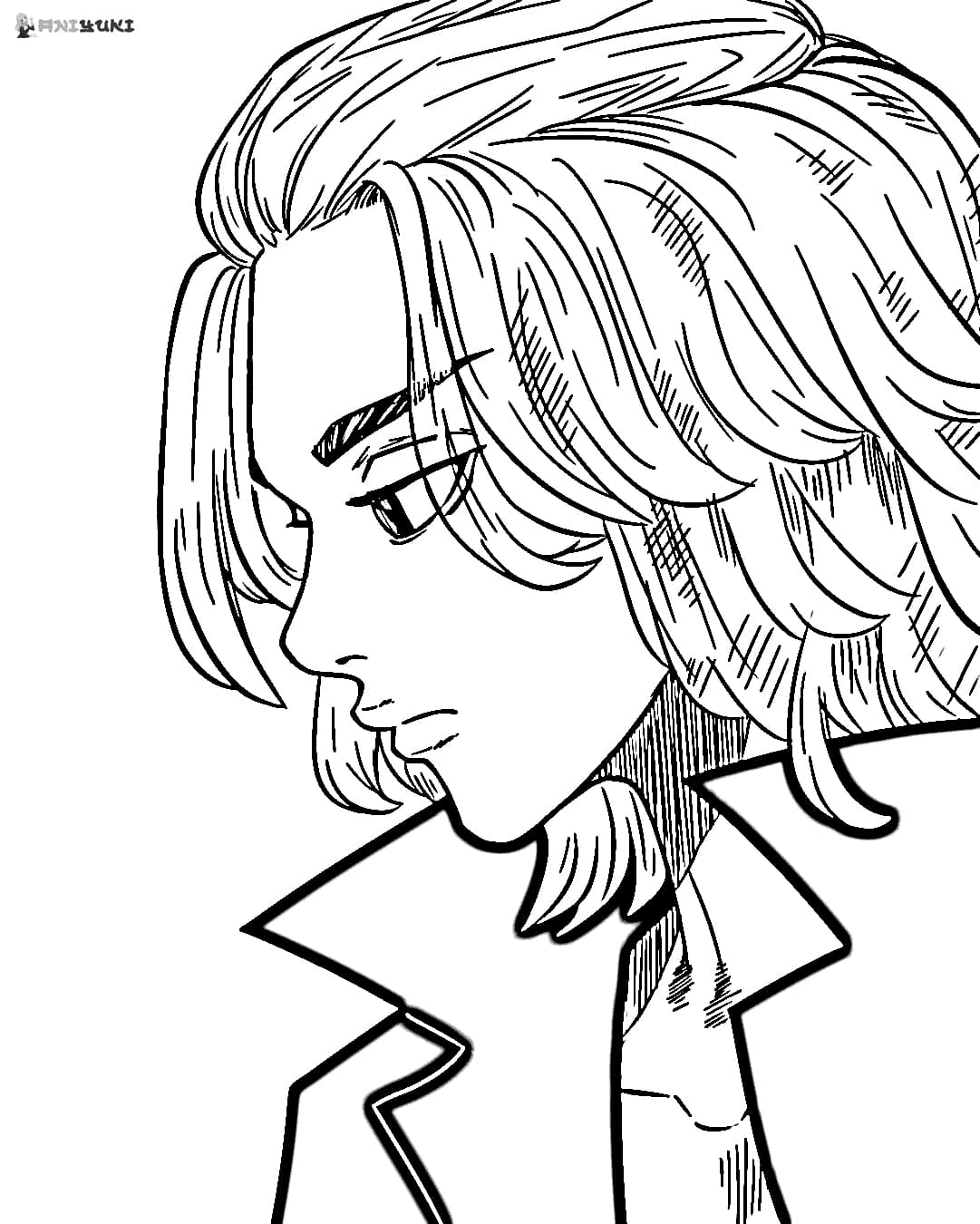
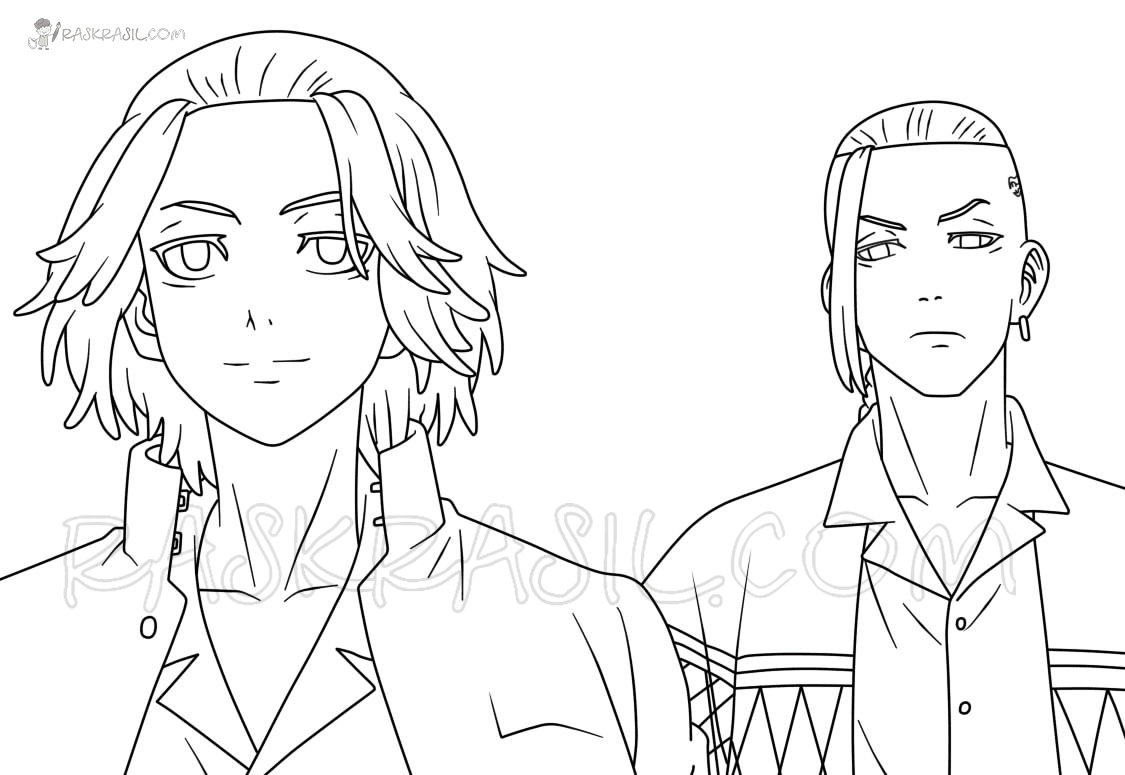
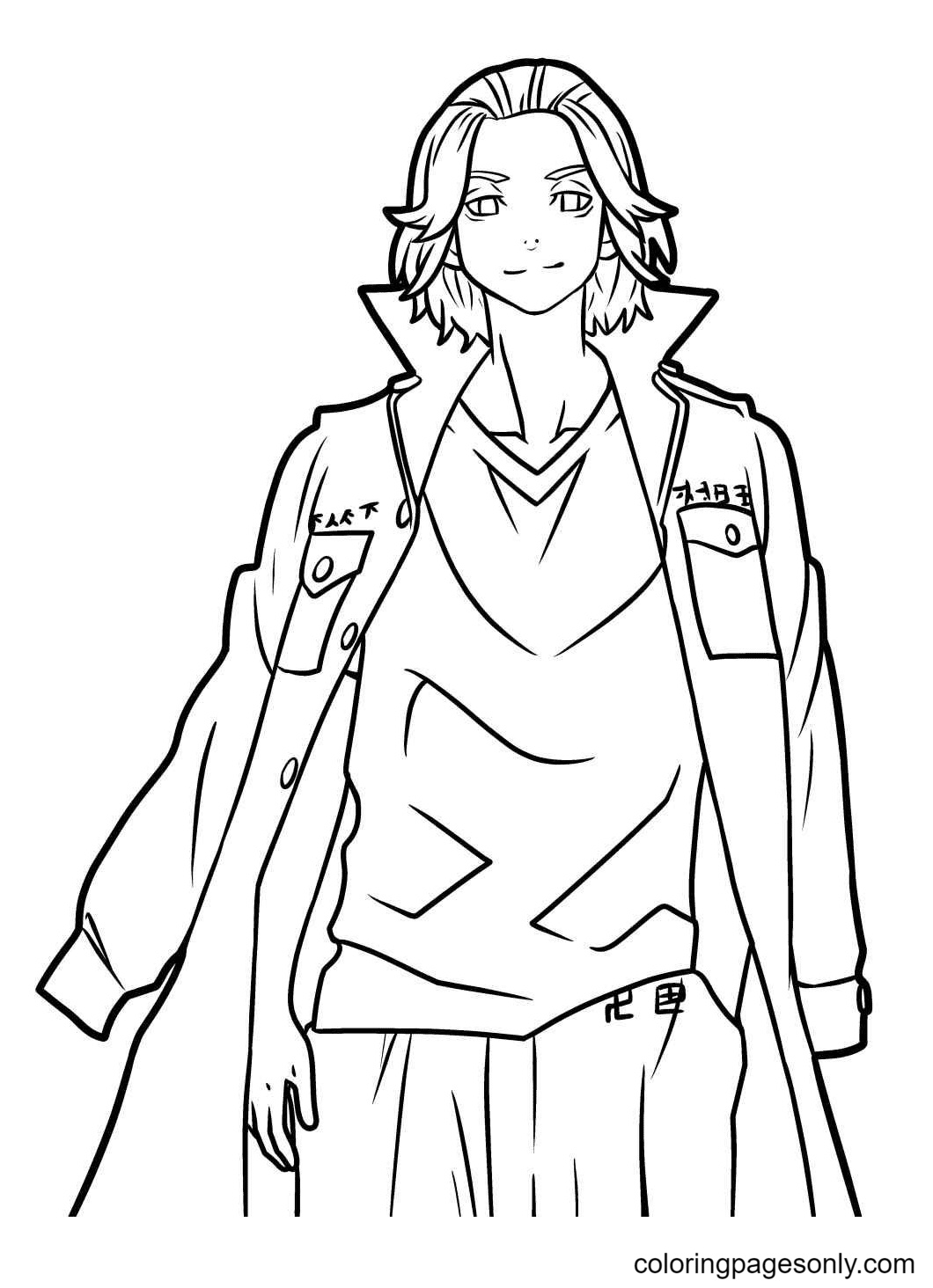
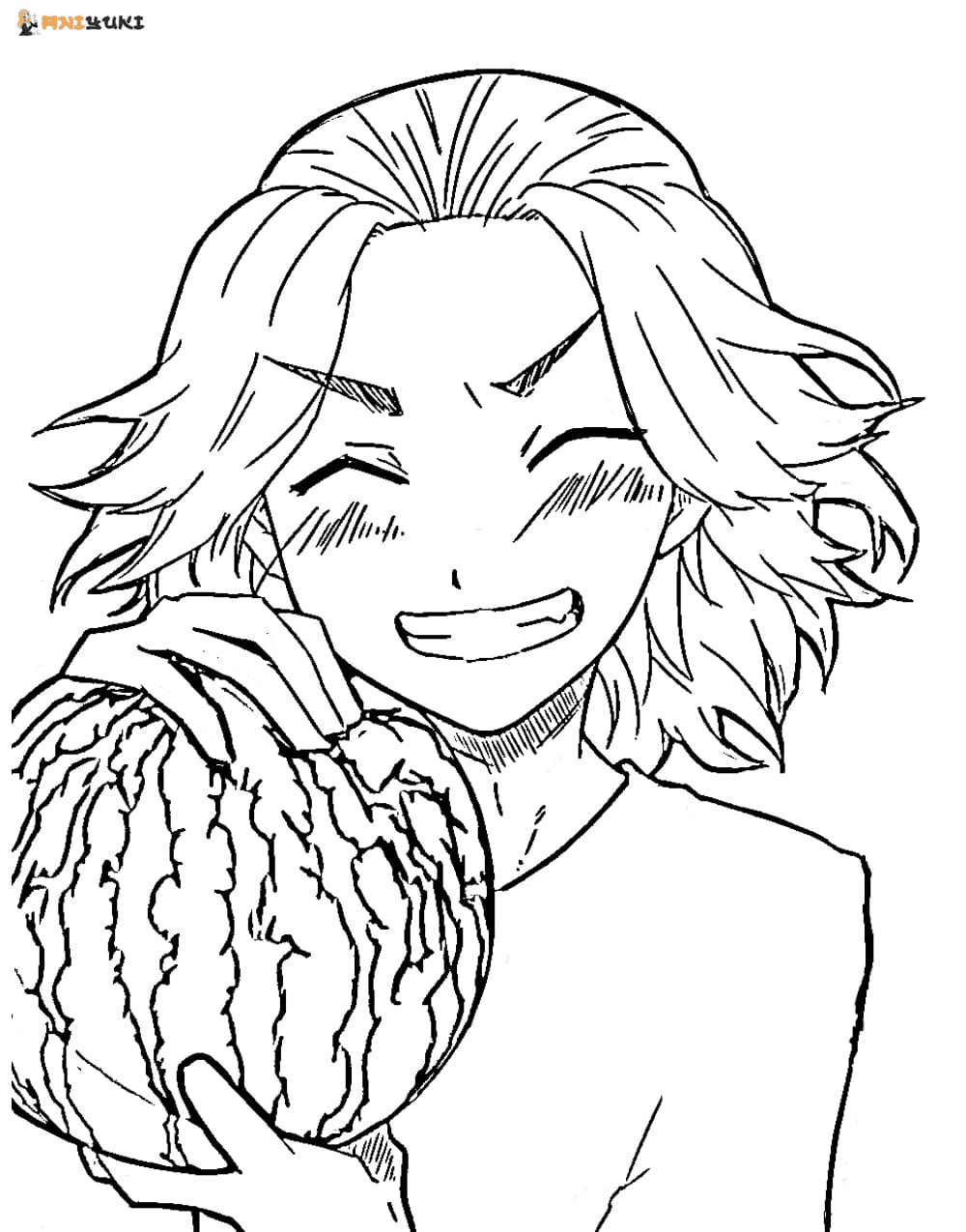
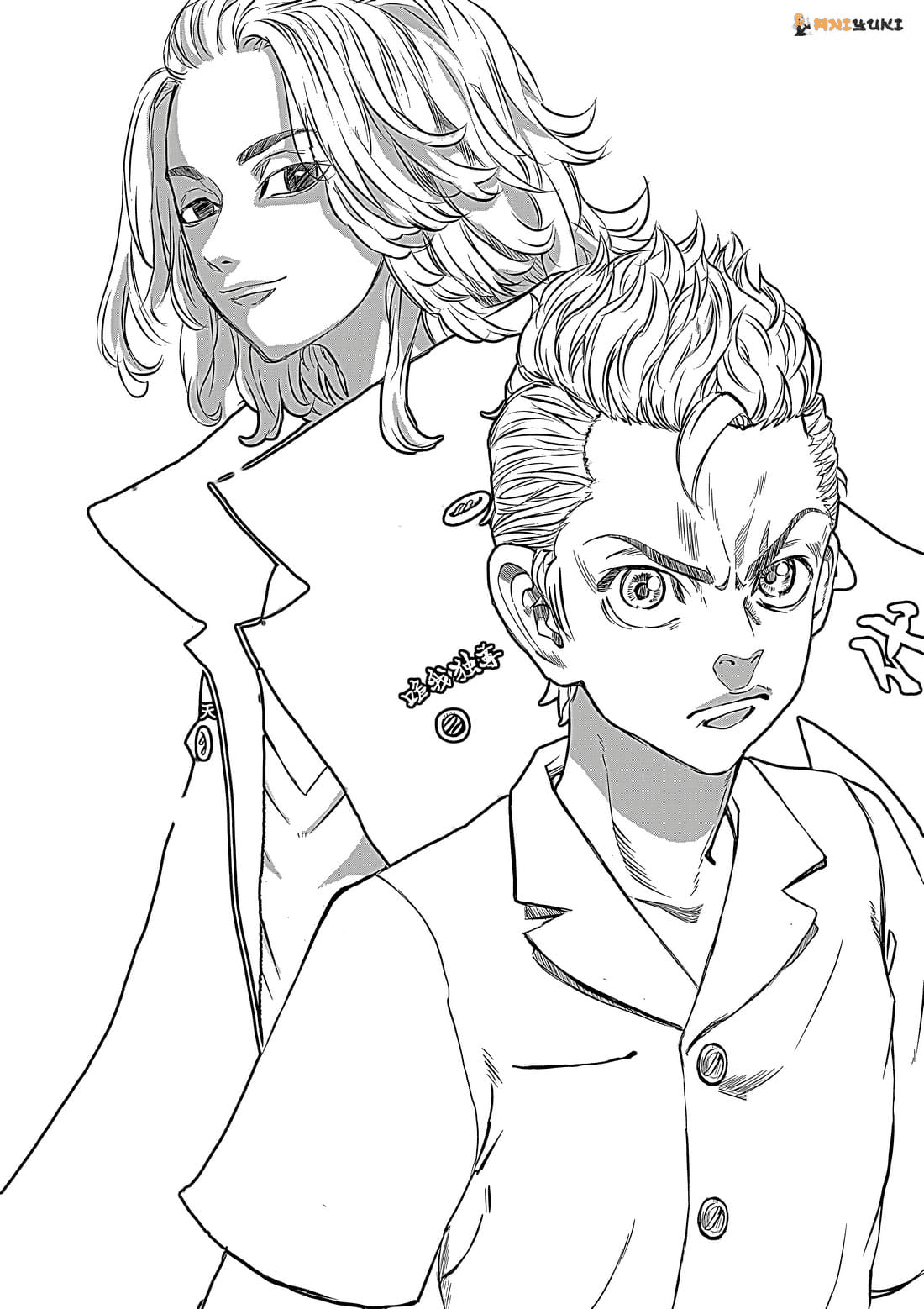
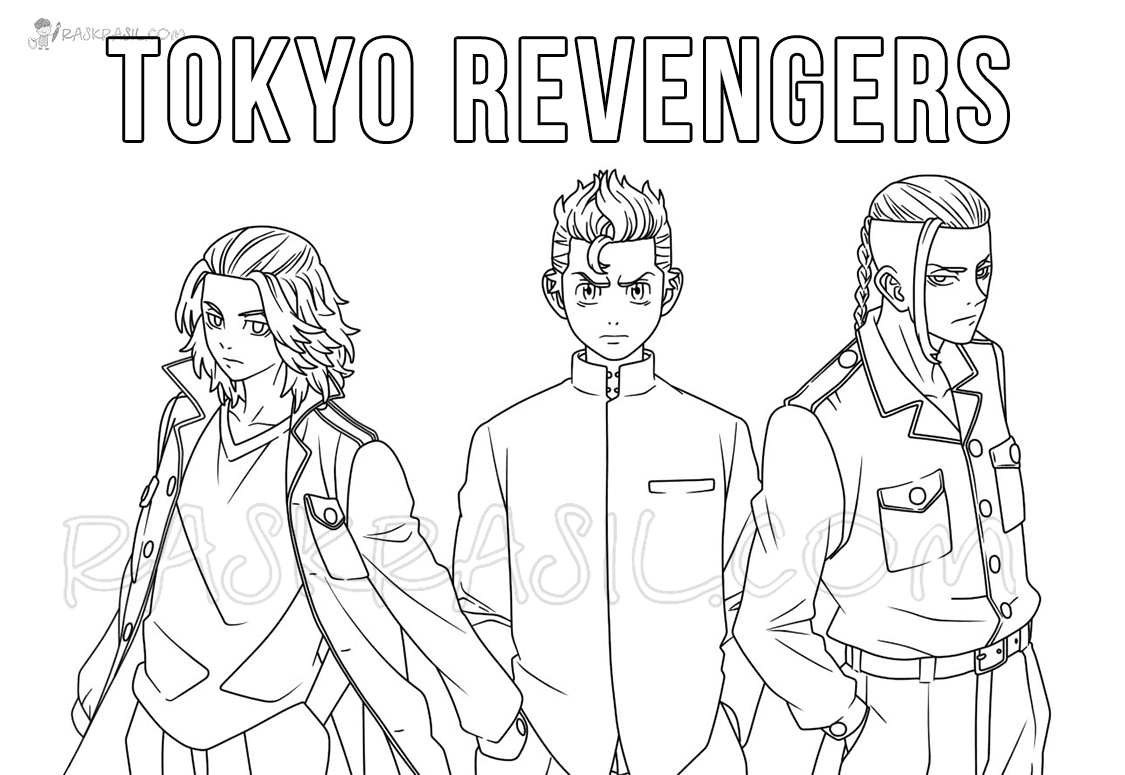
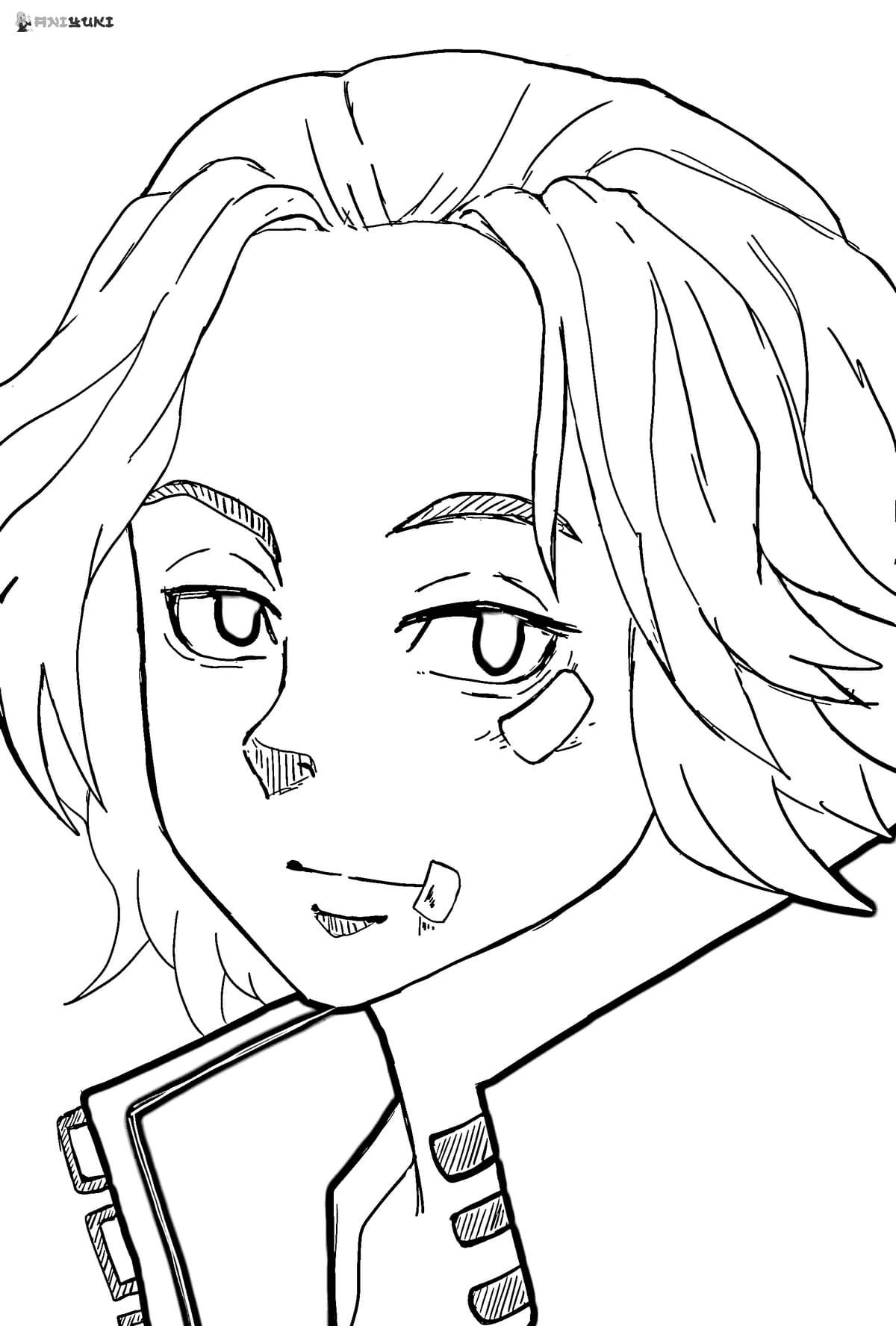
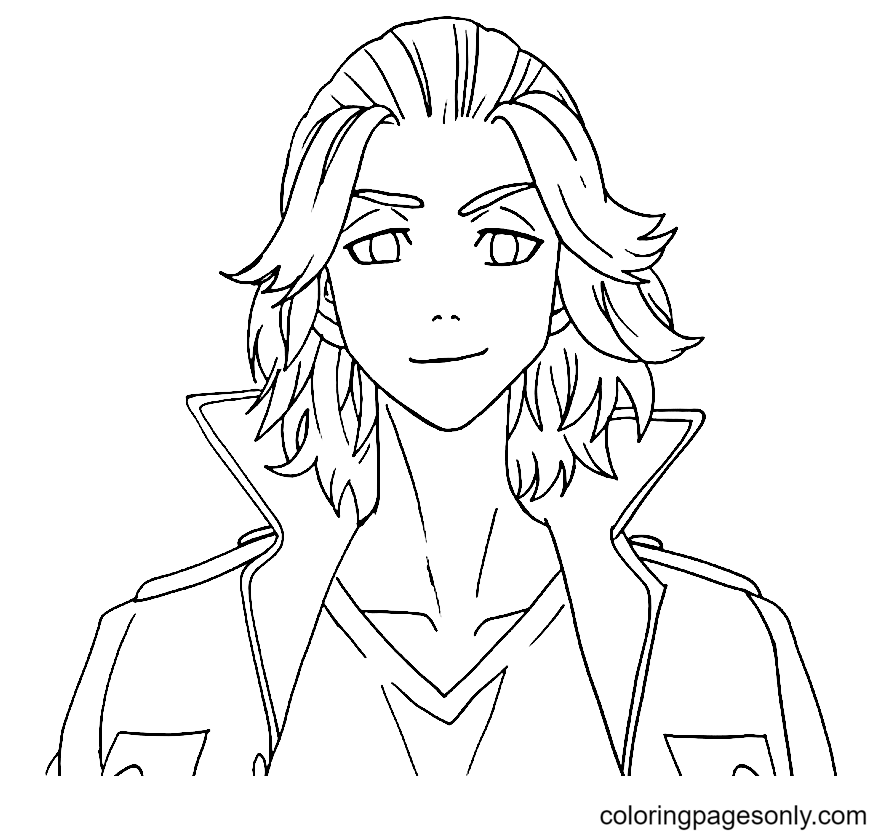
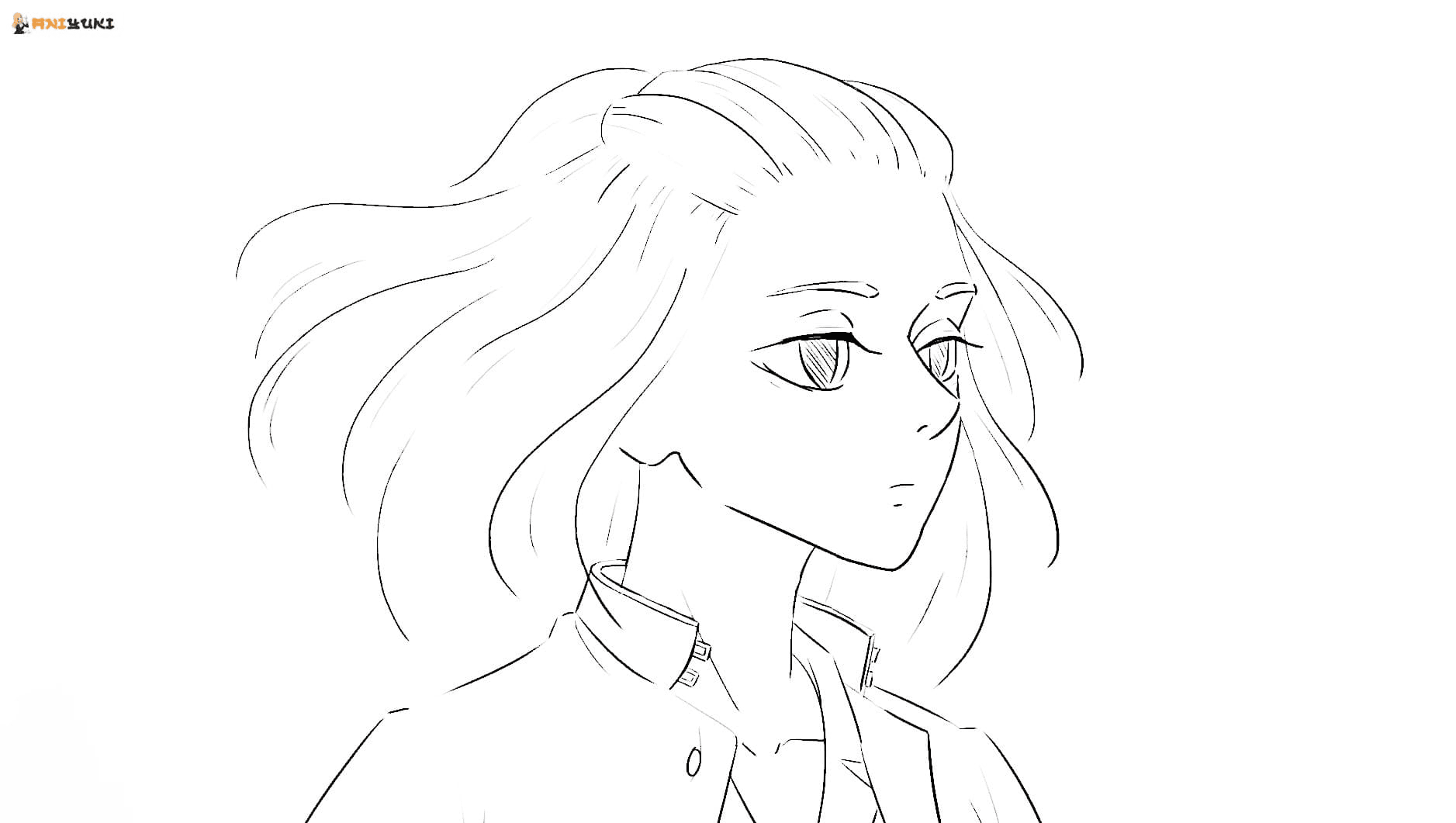
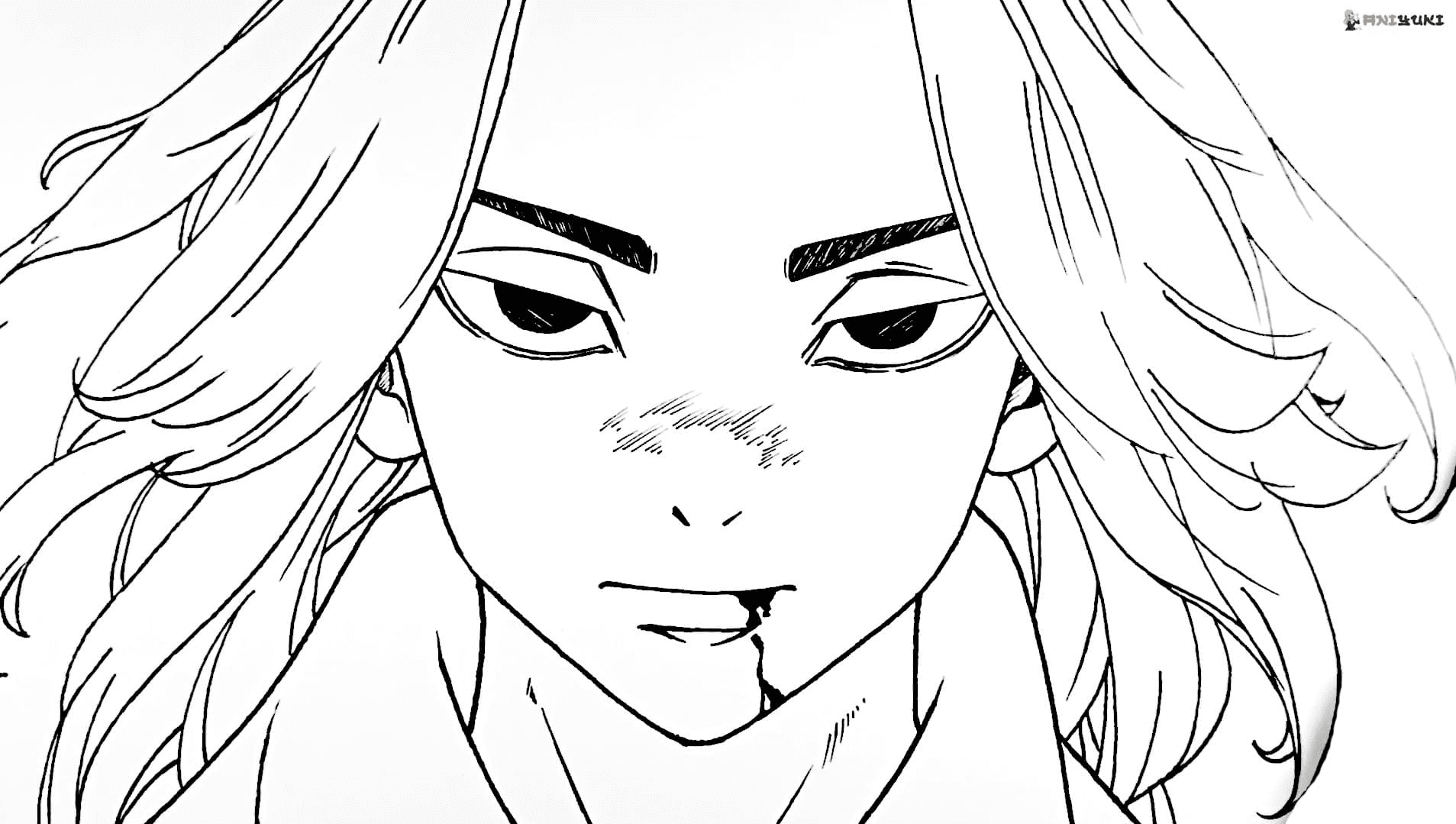
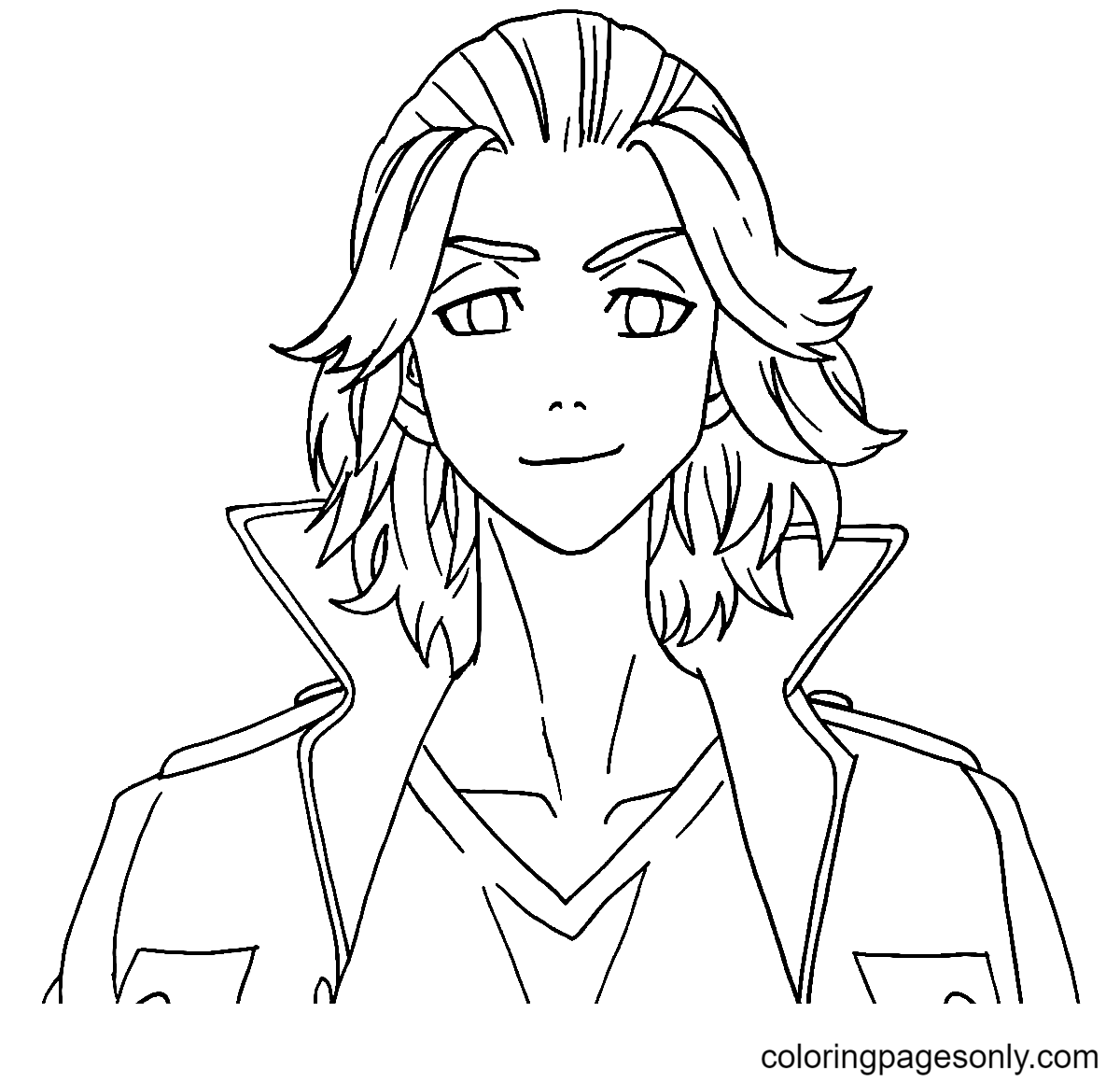
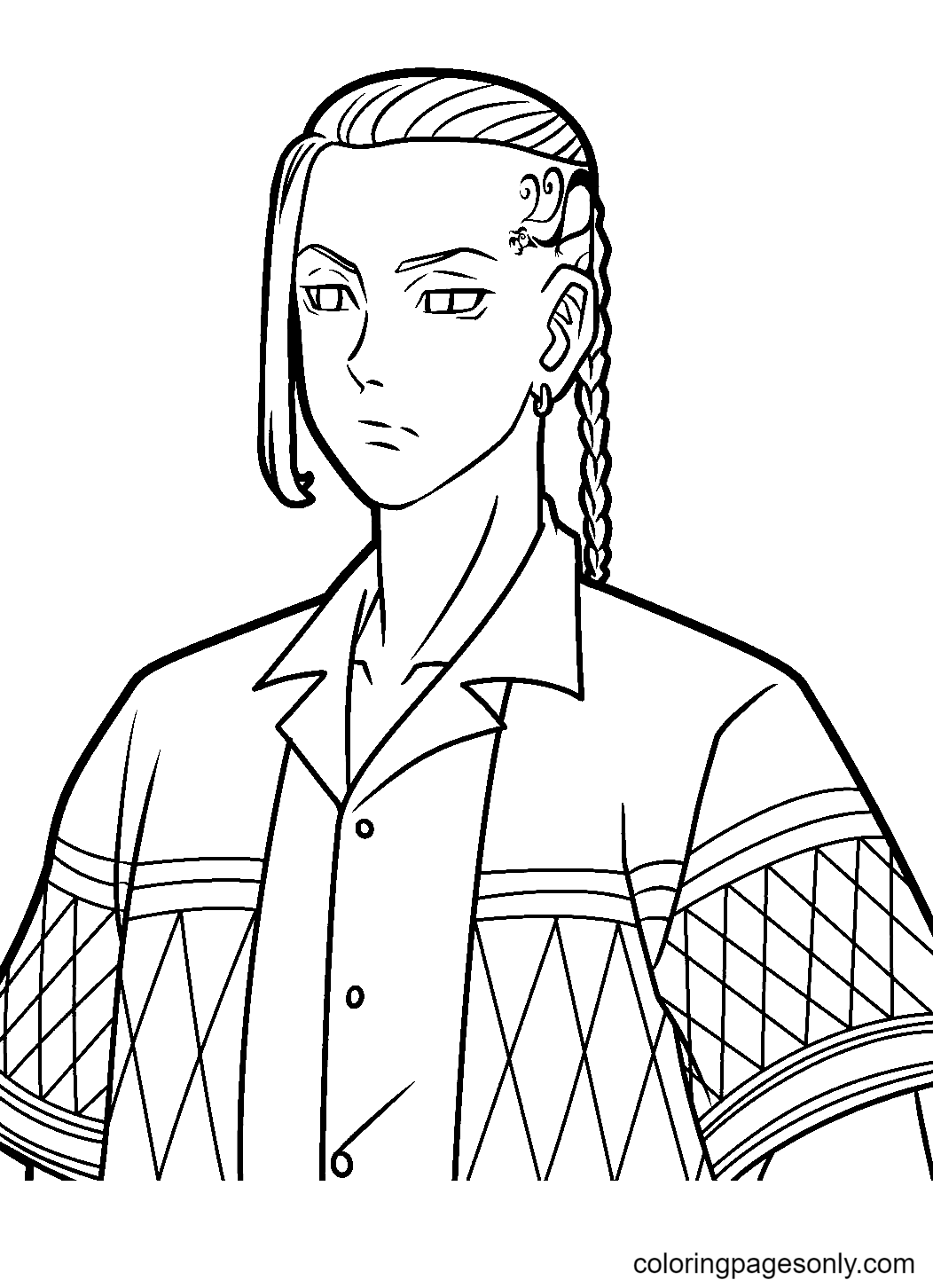
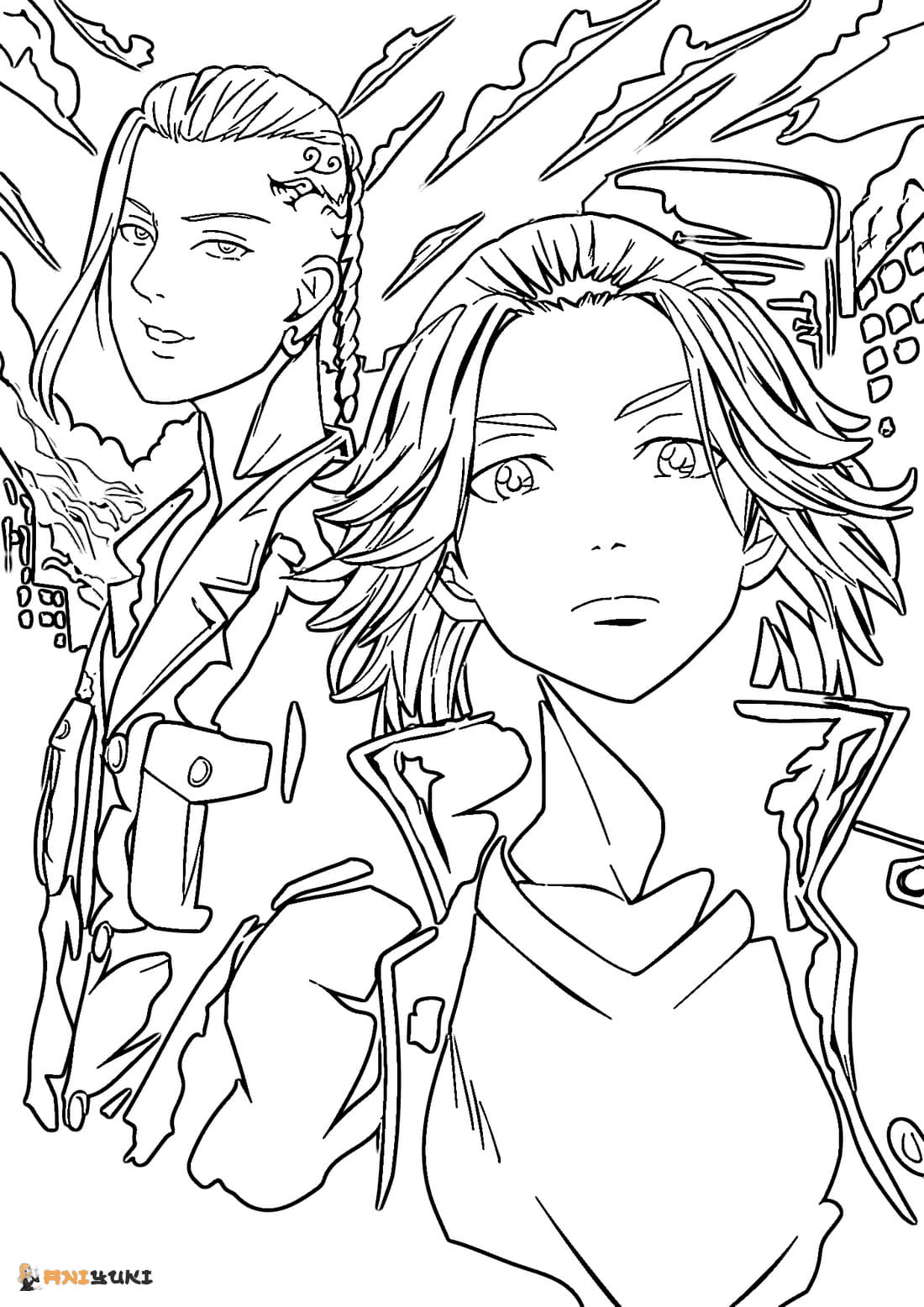
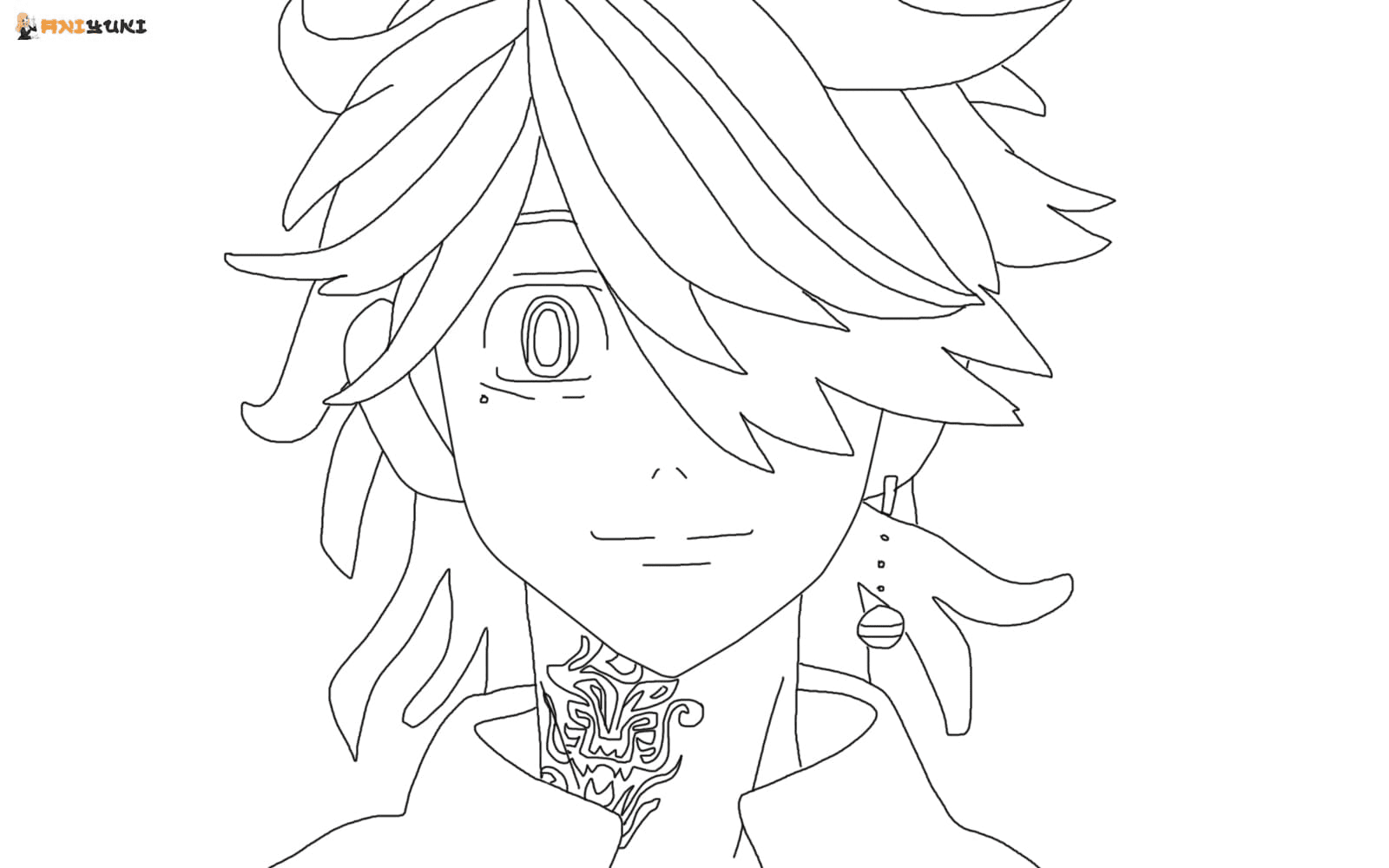
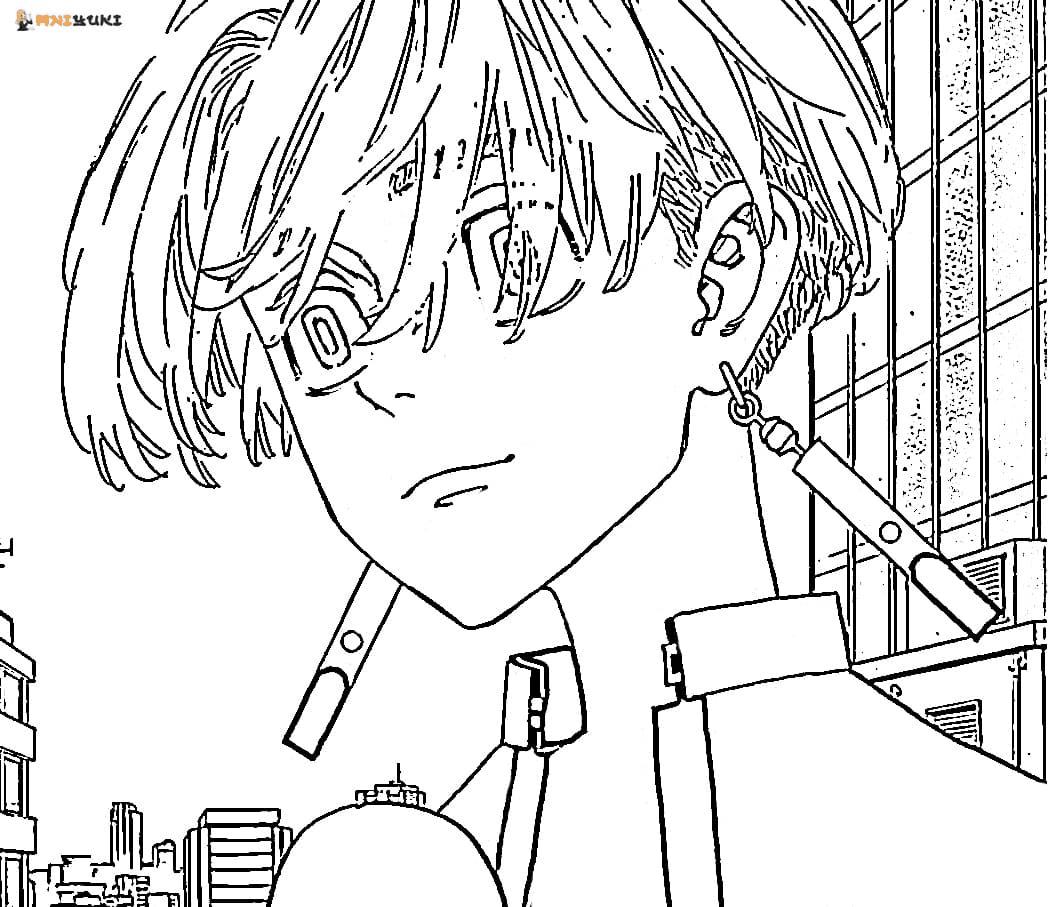
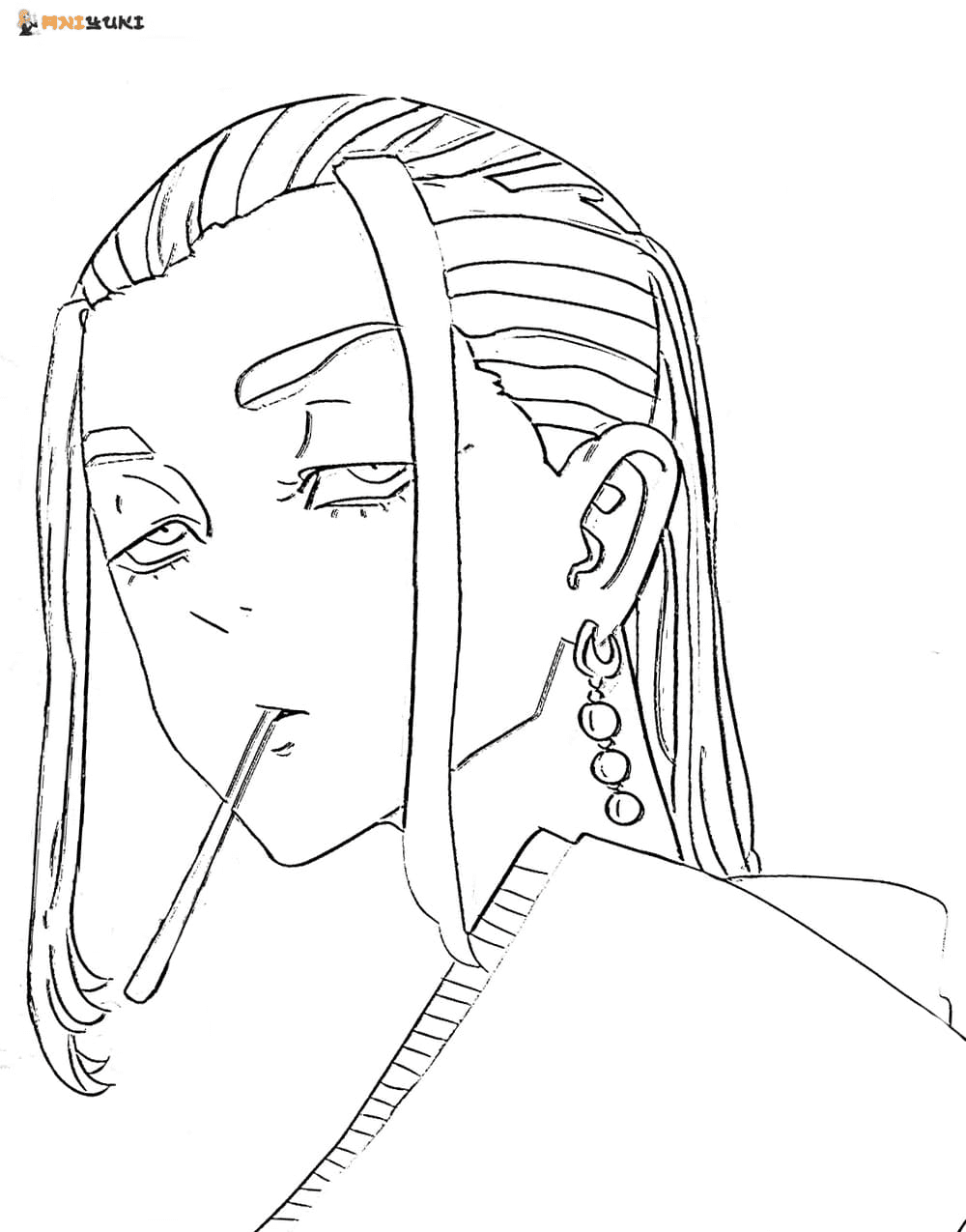
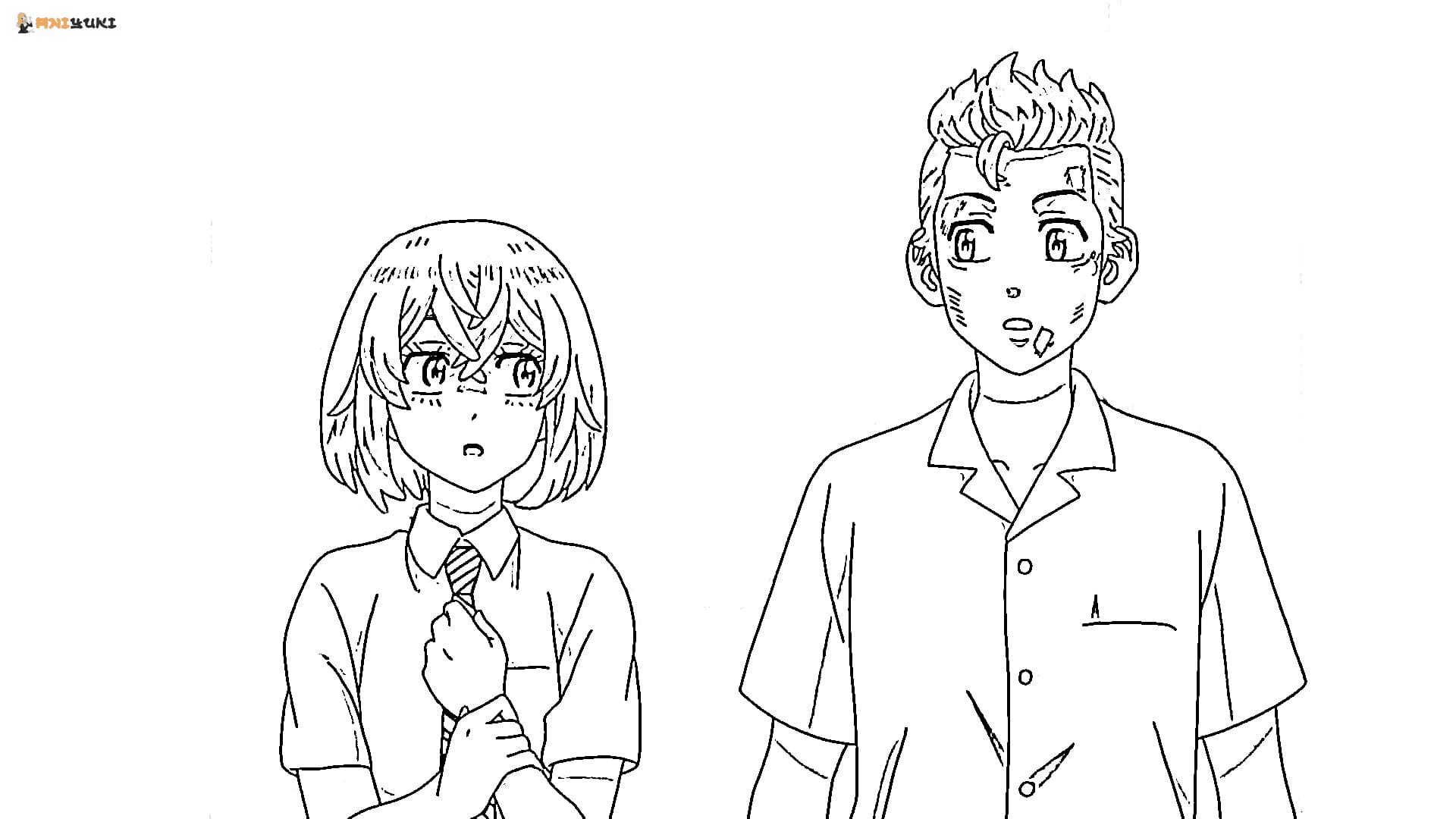
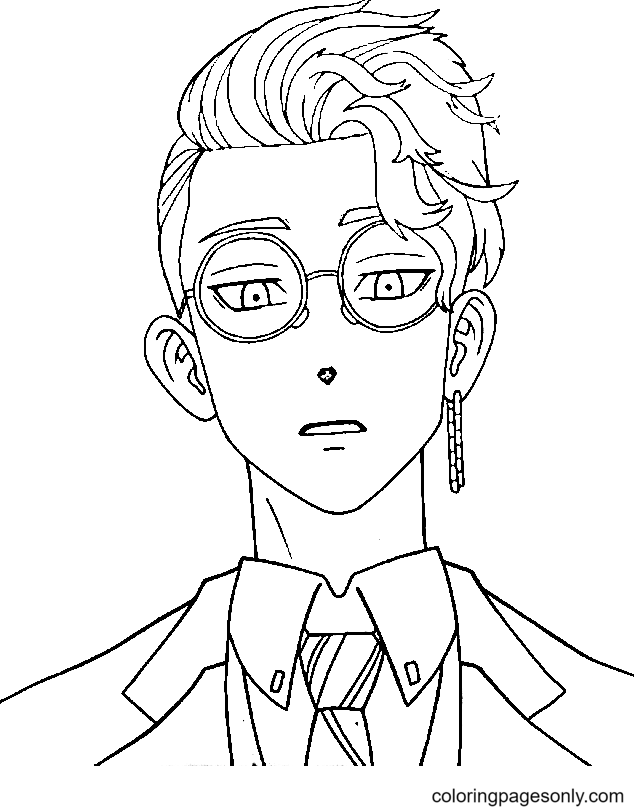
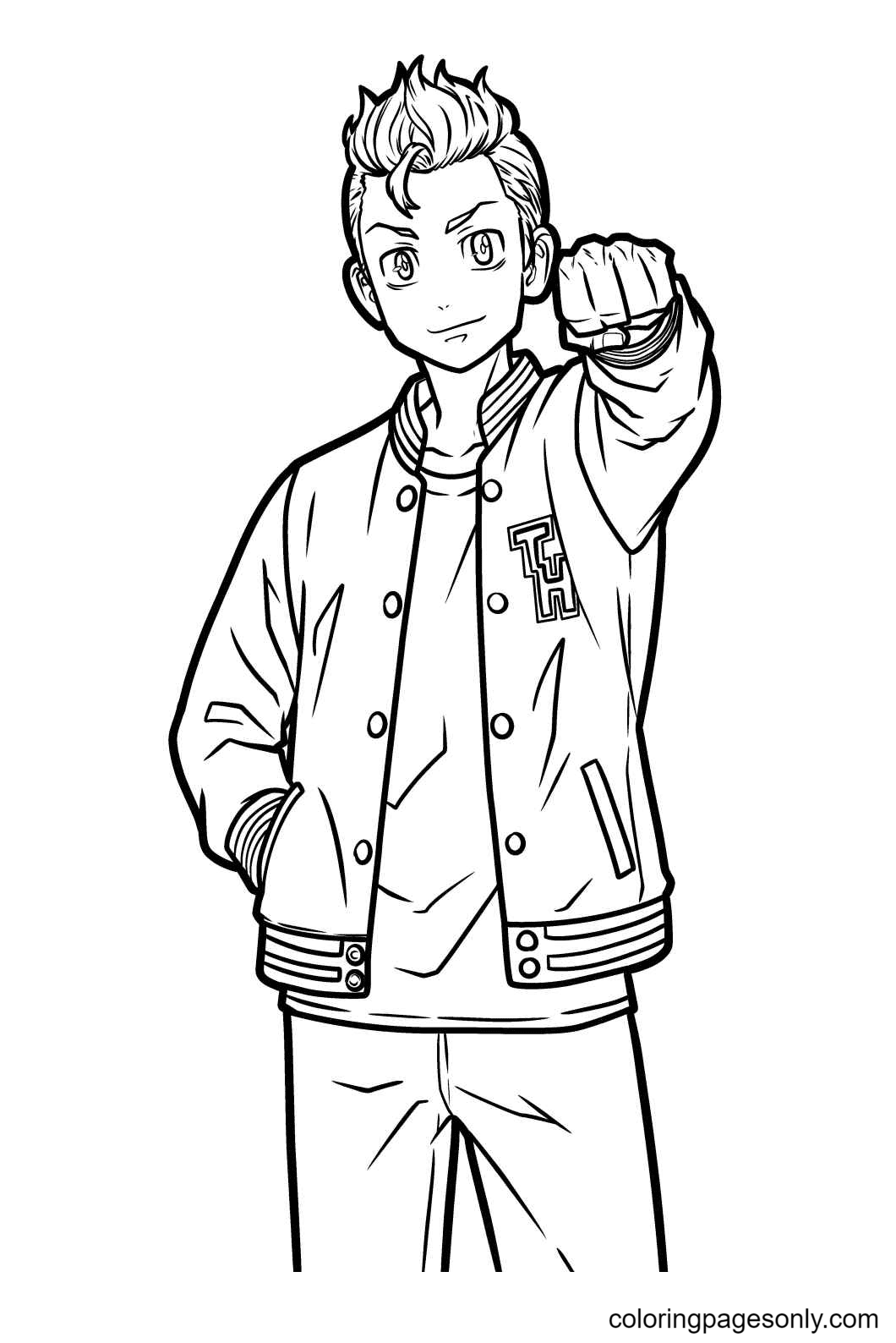
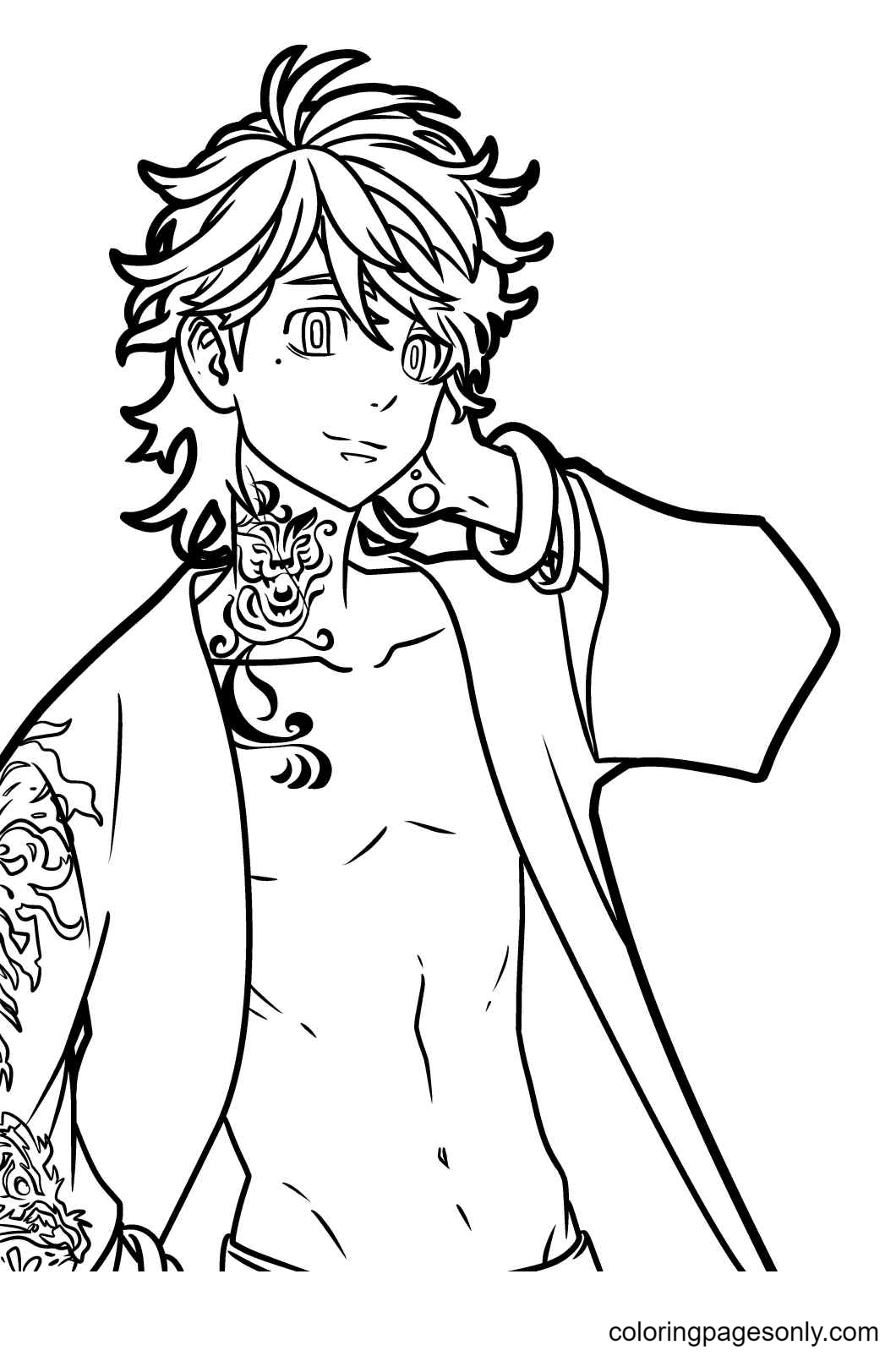
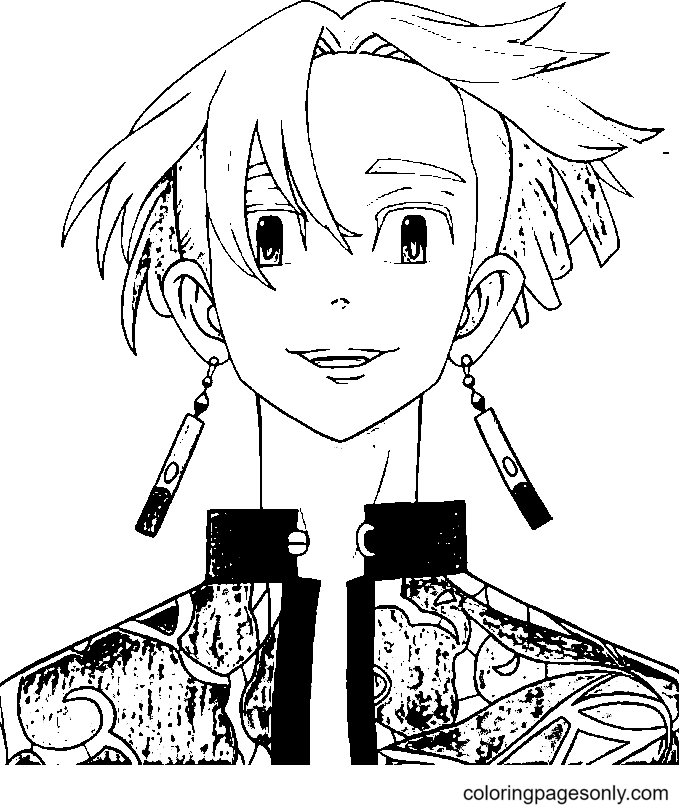
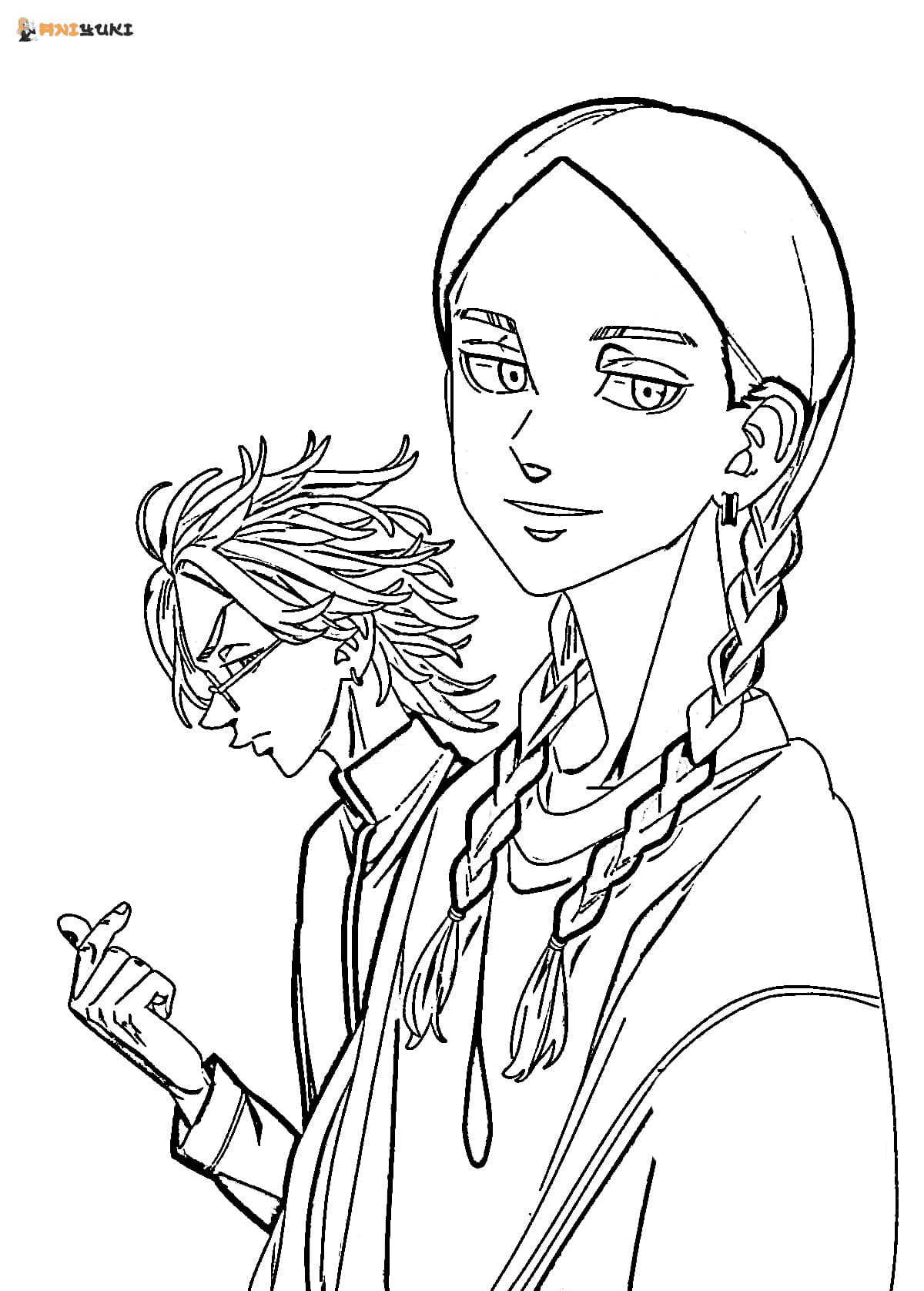
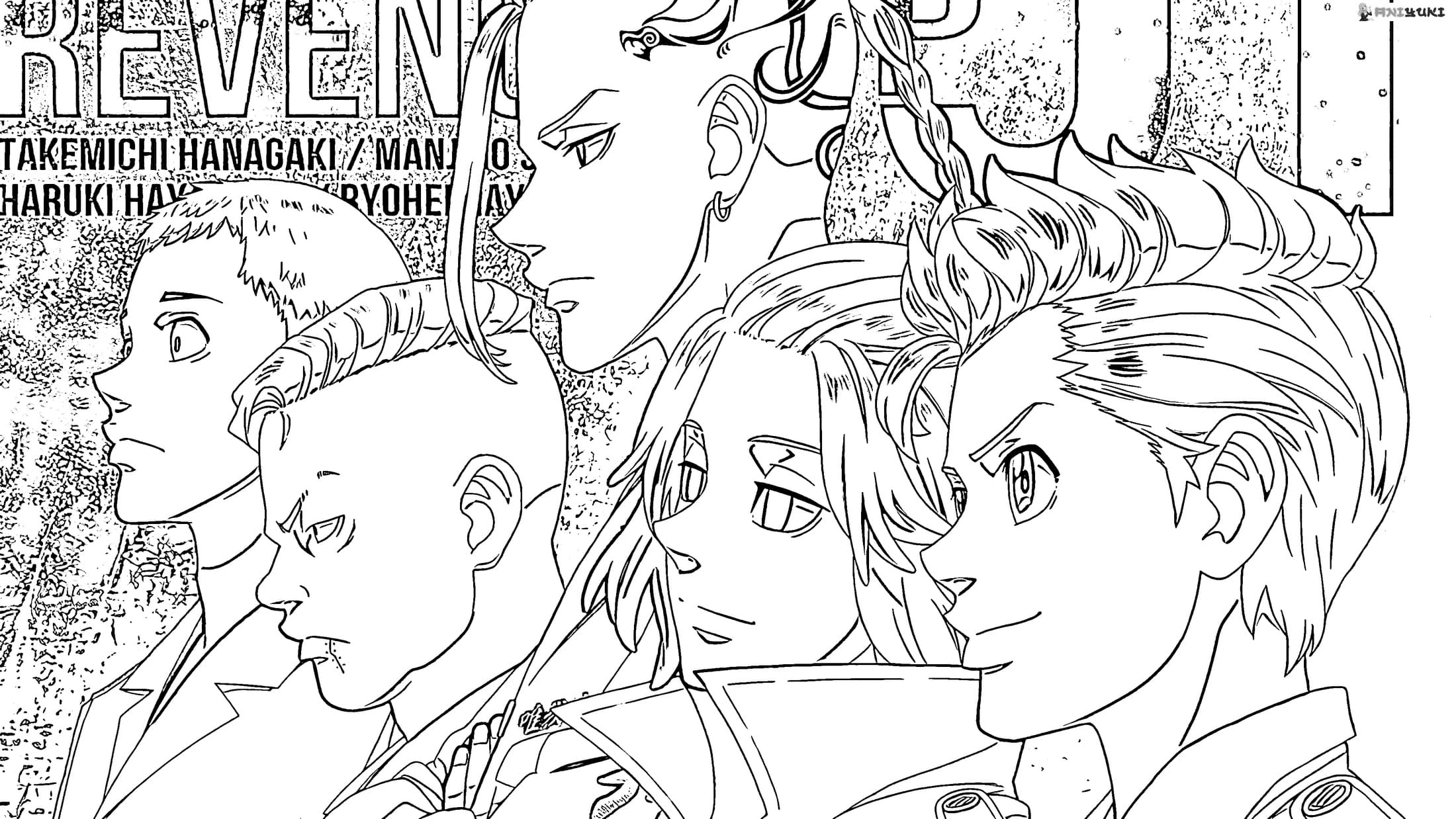
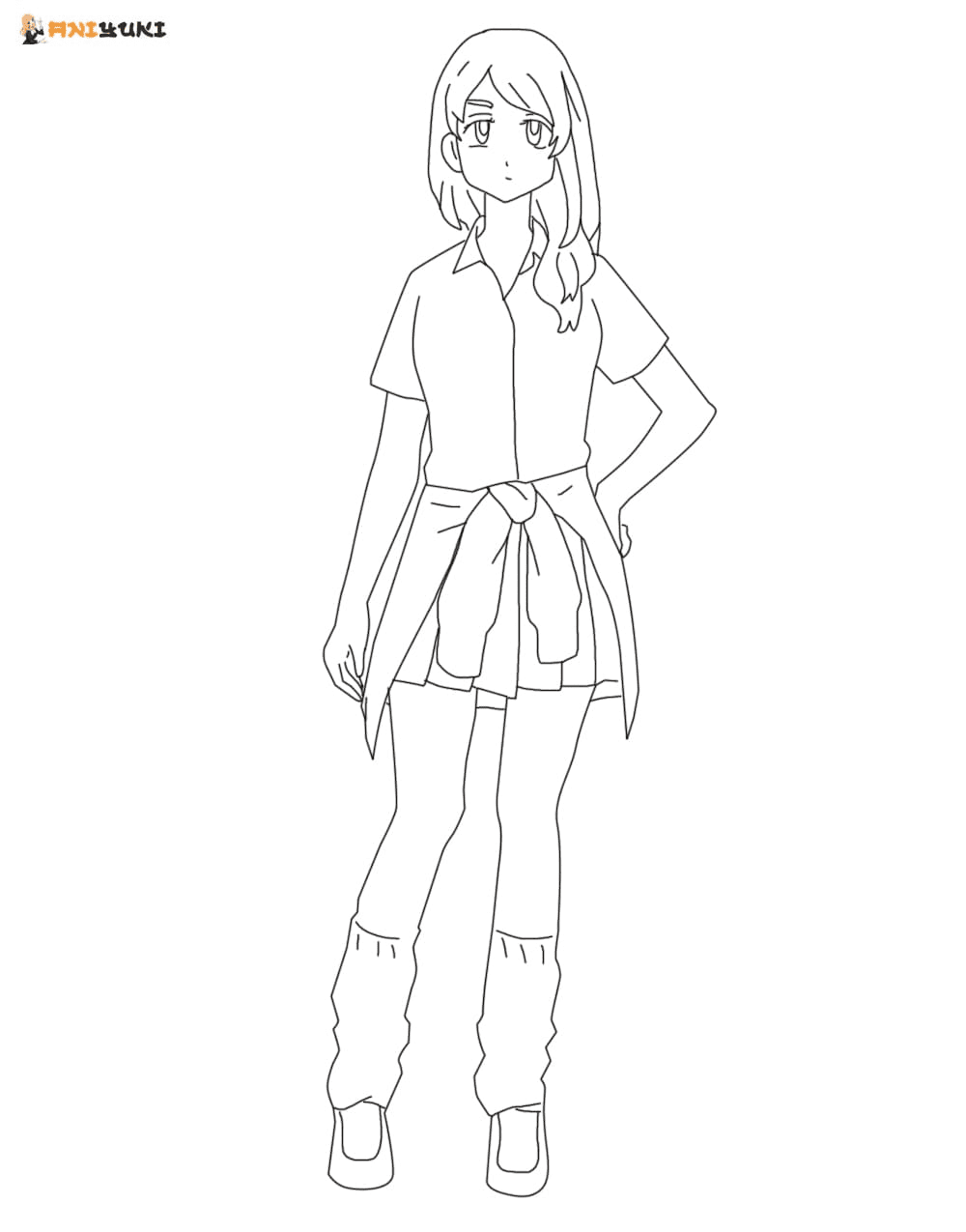
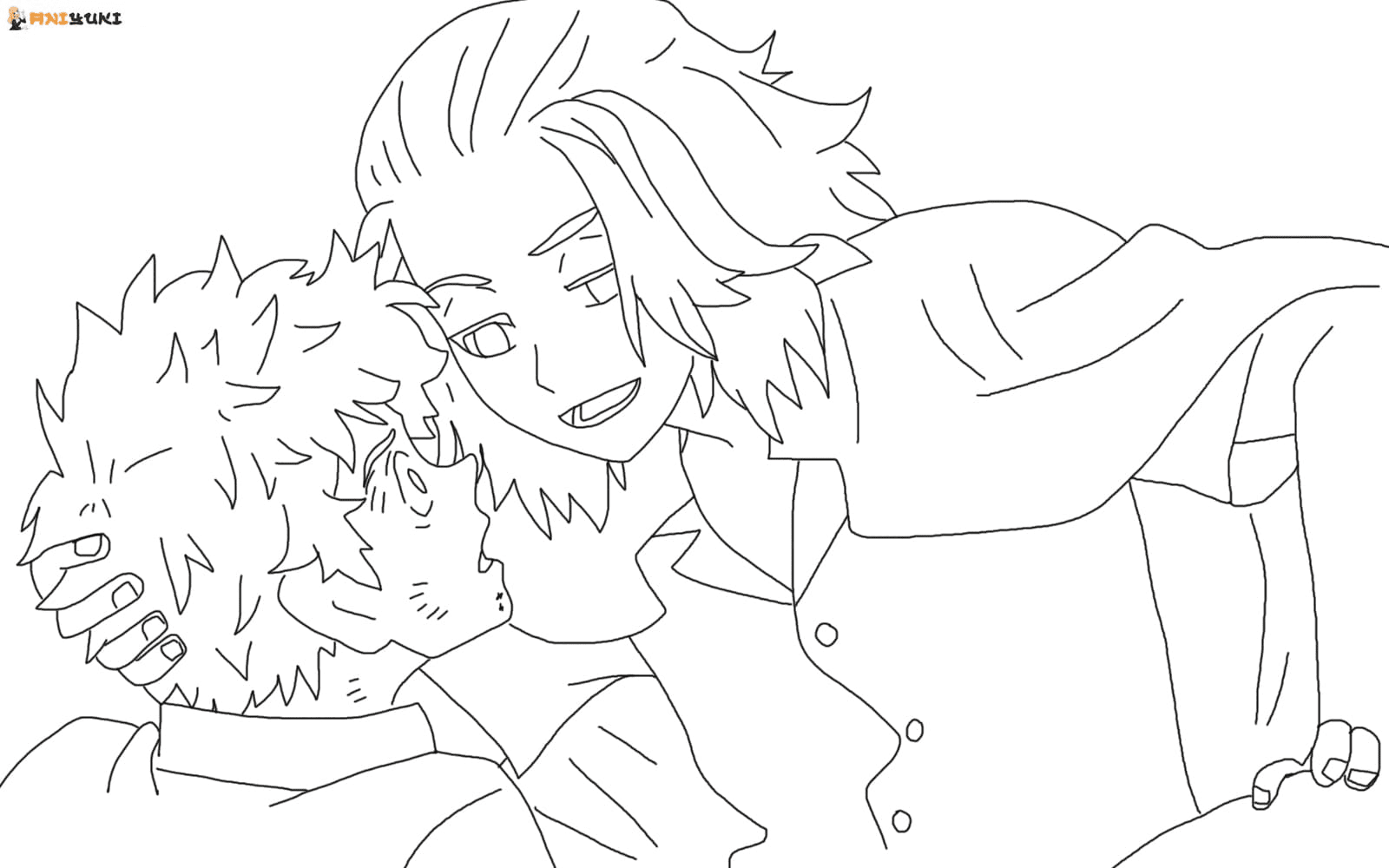
Free Tokyo Revengers coloring pages – 90+ pages featuring Takemichi Hanagaki, Mikey, Draken, Baji, Chifuyu, Kazutora, the Tokyo Manji Gang, action and battle scenes, portrait pages, group compositions, and character studies from all three anime arcs – free printable PDF and online coloring for anime fans.

Tokyo Revengers (東京卍リベンジャーズ) is a Japanese manga series written and illustrated by Ken Wakui, serialized in Weekly Shōnen Magazine (Kodansha) from March 2017 to November 2022 across 31 volumes and 278 chapters. The series won the 44th Kodansha Manga Award in the shōnen category in 2020. They were adapted into an anime by Liden Films across three seasons – Season 1 (April–September 2021), the Christmas Showdown Arc (January–April 2023), and the Tenjiku Arc (October 2023–January 2024). A live-action film adaptation was released in Japan in July 2021.

The premise combines two genres that have never been combined in quite this way before: the Japanese delinquent (yankee) gang drama, with its specific visual vocabulary of uniformed fighters, territorial conflicts, and loyalty hierarchies, and the time-travel narrative, with its loops, paradoxes, and the particular weight of knowing what is going to happen to people you have come to care about. The result is a series in which the protagonist – a 26-year-old man who has never been the best at anything – discovers that his one ability is to travel twelve years into his past, and uses that ability not for personal gain but to try to keep one person alive.

Hinata Tachibana. His middle school girlfriend. The series begins with her death. Everything that follows is Takemichi’s attempt to undo it.

These 90+ free pages at ColoringPagesOnly.com cover the full cast of the series across all three arcs. All free, PDF or PNG, print or color online.

What’s Inside

Takemichi Hanagaki – The Crybaby Hero

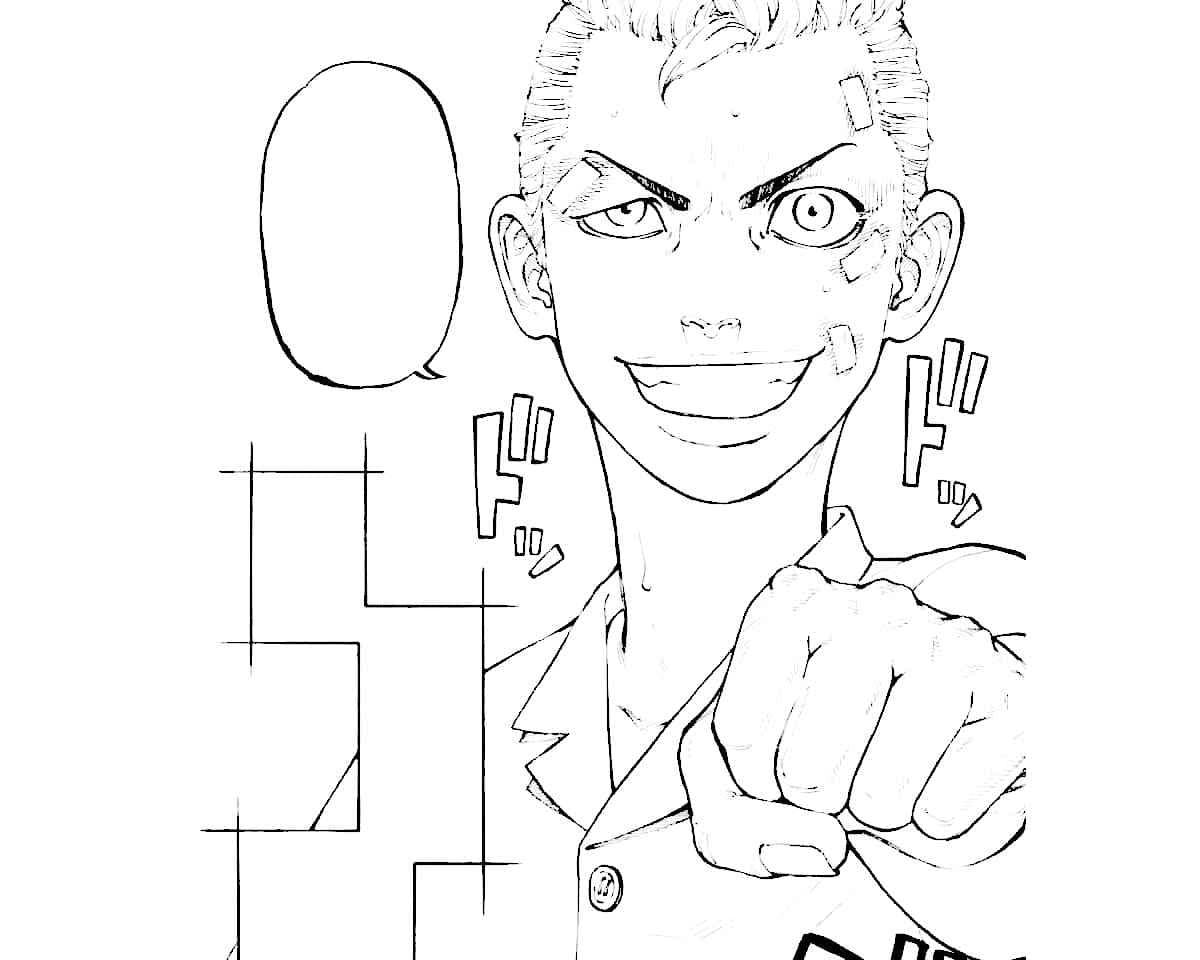
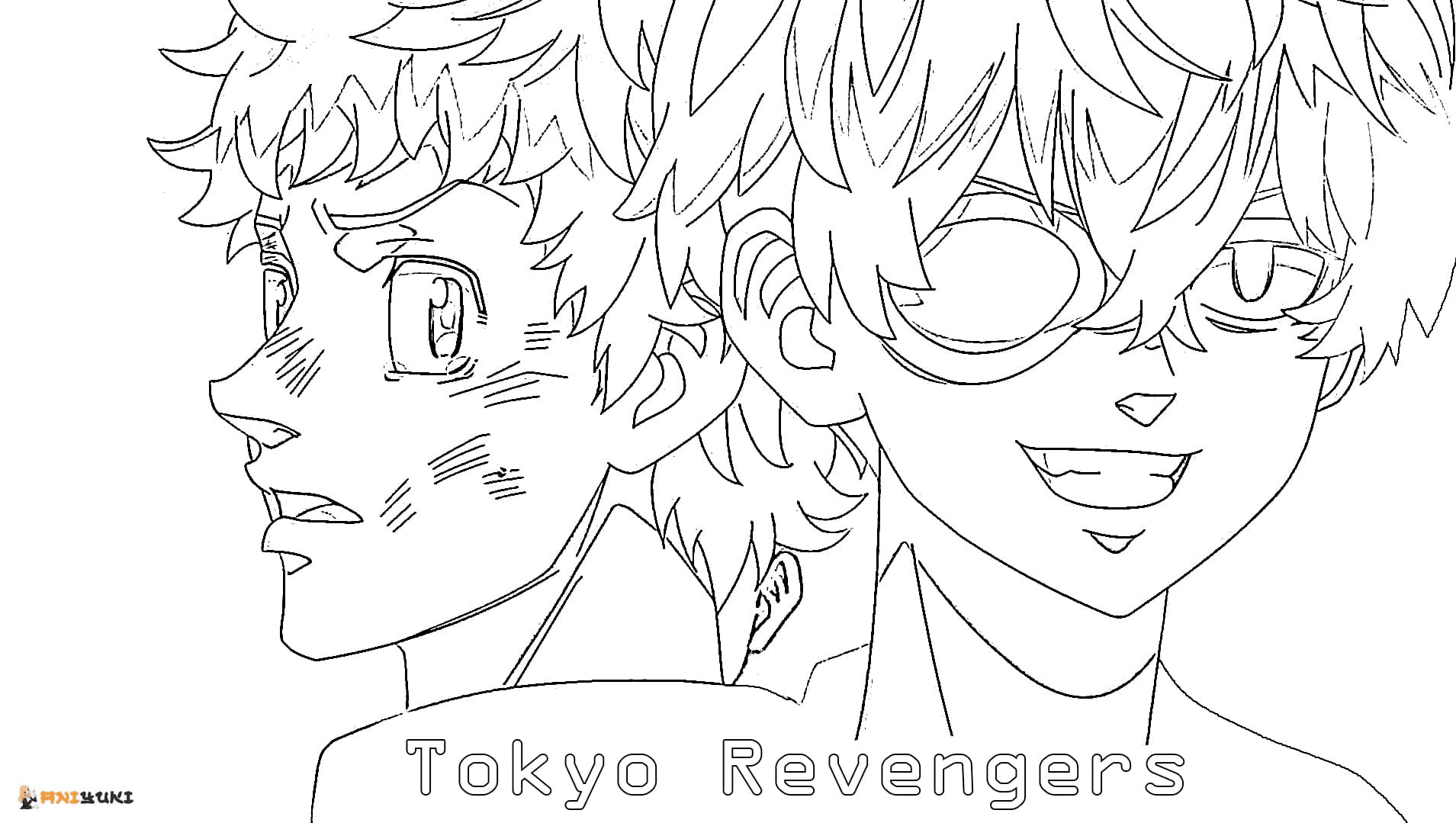
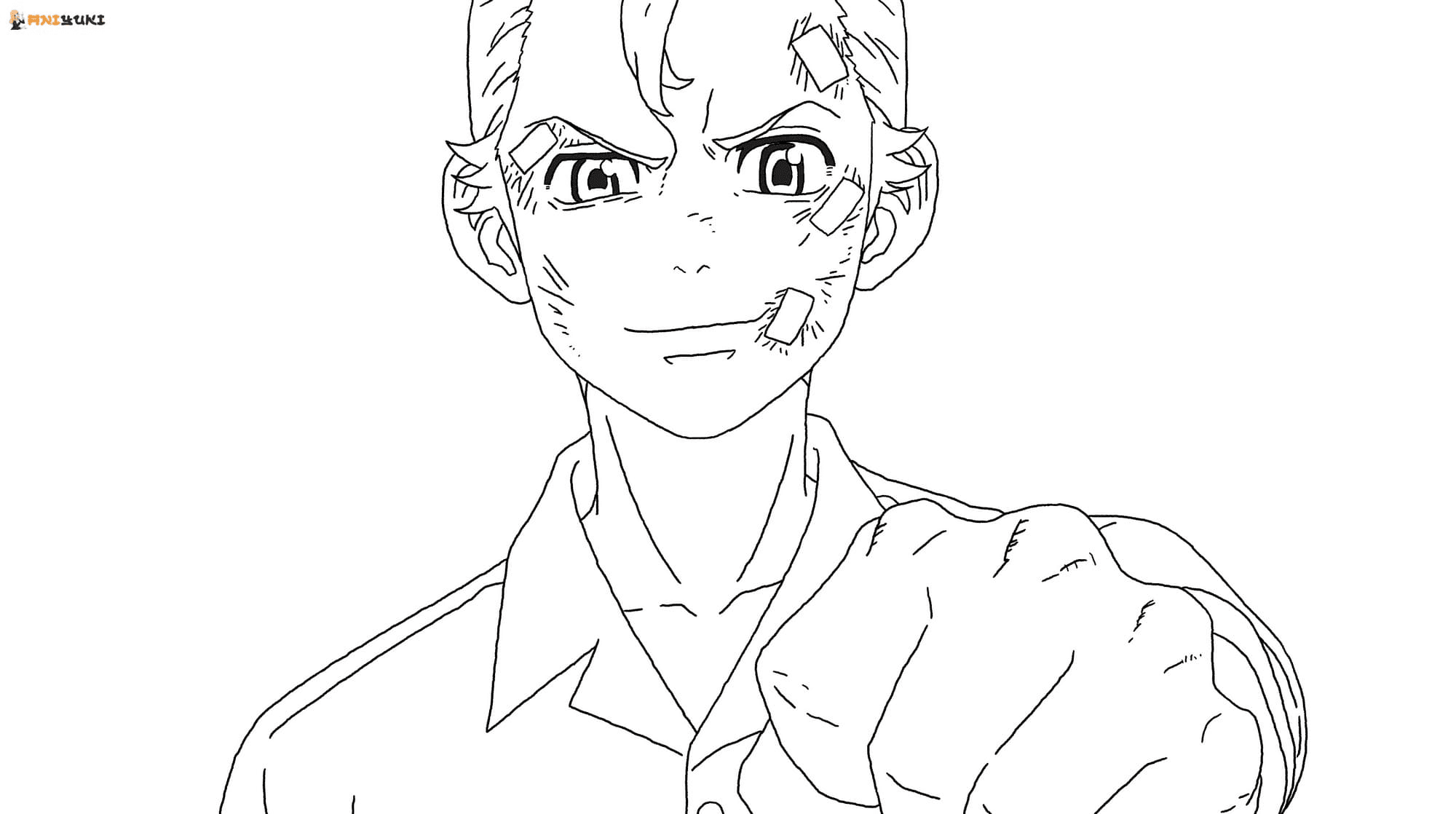
Takemichi is the series’s most carefully constructed protagonist because he is, by most measurable standards, the least impressive person in every scene he appears in. In 2017, when the story begins, he is twenty-six, working dead-end jobs, living without ambition, and described by the series as having failed to hold onto anything he ever had. He is not strong. He is not strategic. He does not have a special ability that makes him dangerous to his enemies.

What he has is the willingness to take another hit. The series calls this quality by several names across its run, and the characters around him call it different things. Still, the operational definition is consistent: when Takemichi reaches the point where any reasonable person would stop, he does not stop. He cries – frequently, openly, without apparent embarrassment – and then continues. His tears are not weakness disguised as emotion; they are the acknowledgment of how much the situation costs him and the refusal to let that cost determine the outcome.

In the past, 2005, middle school – he is fourteen, smaller, and wearing the light-streaked hair of a kid trying to look tougher than he is. In the Toman uniform that comes to define his visual identity in the series, he is physically indistinguishable from any other member. The distinction, which the series earns slowly across its run, is that he is the only one whose presence in every critical moment of the past is driven entirely by love for a specific person.

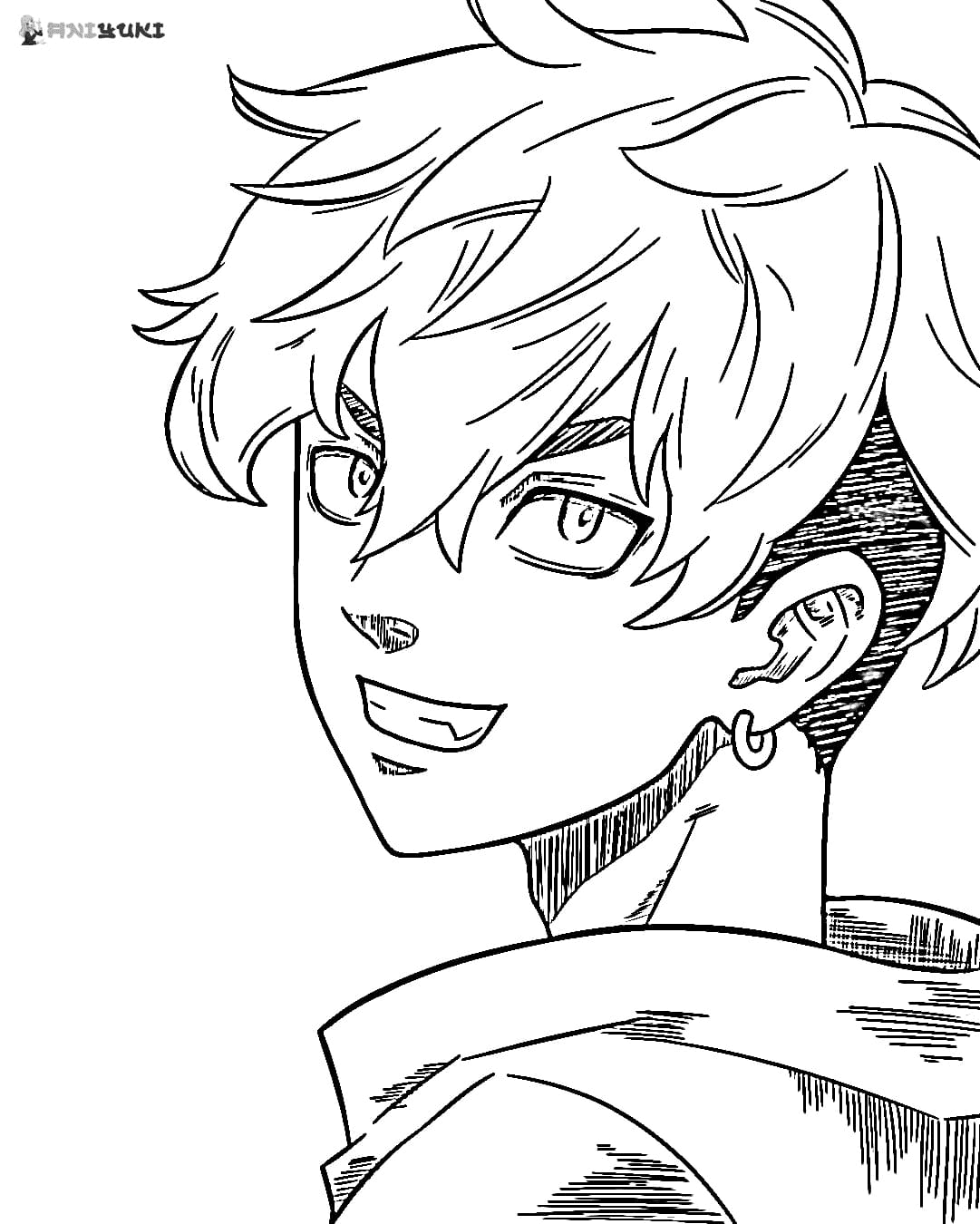
Coloring Takemichi: His past-timeline hair is a warm brown with lighter, slightly bleached streaks – the yankee delinquent style of early-2000s Japan, where students bleached portions of their hair as a declaration of attitude. The streaks should read as lighter than the base hair but not blond – a warm, slightly golden lightening of the brown base. His Toman jacket is black with gold trim. His skin tone is a warm medium-light – the most human, accessible skin tone in the cast, deliberately ordinary.

Manjiro “Mikey” Sano – The Invincible

Mikey is the figure the entire series circles around – the person whose future Takemichi most needs to change, the friend whose corruption in every timeline represents the mission’s failure, and the fighter whose combat capability establishes the upper bound of what is possible in the series’ physical world.

He is short. This is the first and most consistent visual fact about him: Mikey is shorter than almost every other significant character in the series, and the series uses this deliberately. He does not look like the most dangerous person in any room he enters. He looks, especially in the casual moments between conflicts – eating taiyaki, falling asleep in inappropriate places, making jokes that land unexpectedly – like a teenager who happens to be the founder of one of Tokyo’s most feared delinquent gangs. The contrast between his appearance in rest and his appearance in combat is one of the series’ most consistent visual pleasures.

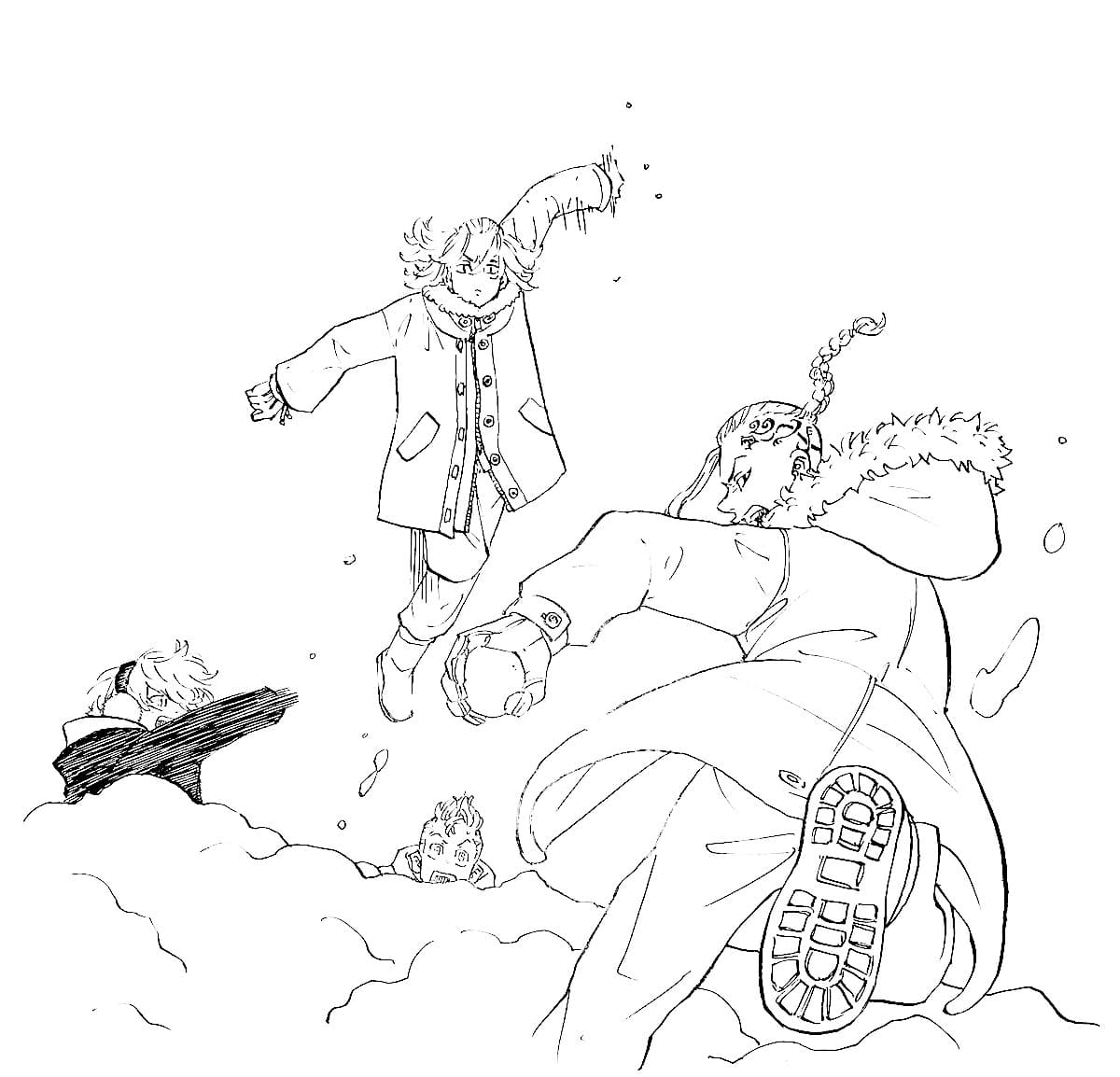
His combat ability is built around a single devastating kick – the Atomic Kick or Nuclear Kick, depending on translation – delivered from a stance that is low, balanced, and entirely committed. Pages showing Mikey mid-kick capture the specific visual of a small person producing force that should not be possible from their frame.

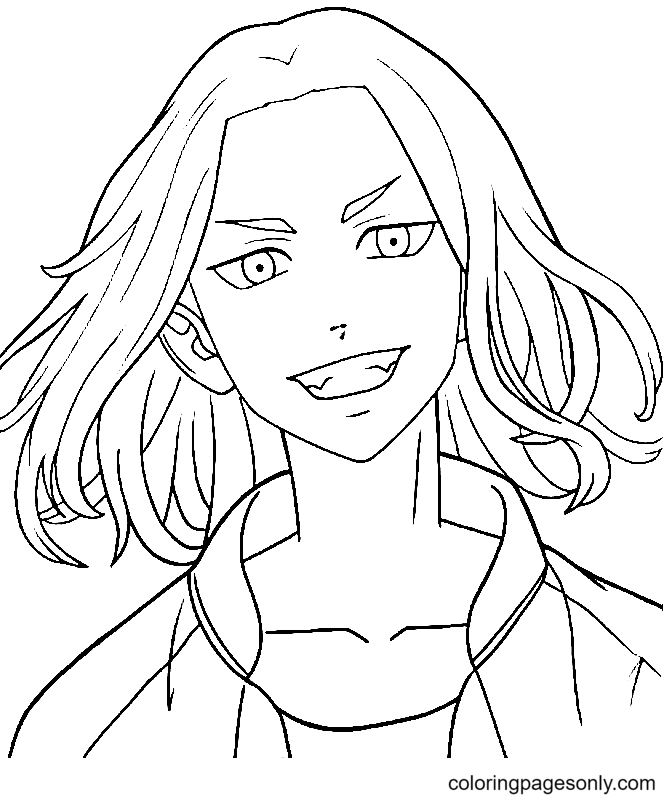
His design: blond hair in a distinctive style (shorter on top with a single long strand at the back that functions as a visual signature), dark eyes that carry a specific emptiness when the “dark impulse” the series references is close to the surface, and the Toman uniform that he makes canonical through his consistent presence in it.

Coloring Mikey: His blond hair is the collection’s most important color decision – a vivid, warm yellow-gold that reads as bleached rather than naturally blond, consistent with the Yankee delinquent aesthetic of the period. His dark eyes are a very deep blue-grey – the series consistently uses a slightly unsaturated, dark tone for his irises that gives them the emptiness the narrative describes. His black Toman jacket should be rendered with cool blue-grey highlights along the shoulders and lapel edges.

Ken “Draken” Ryuguji – The Dragon

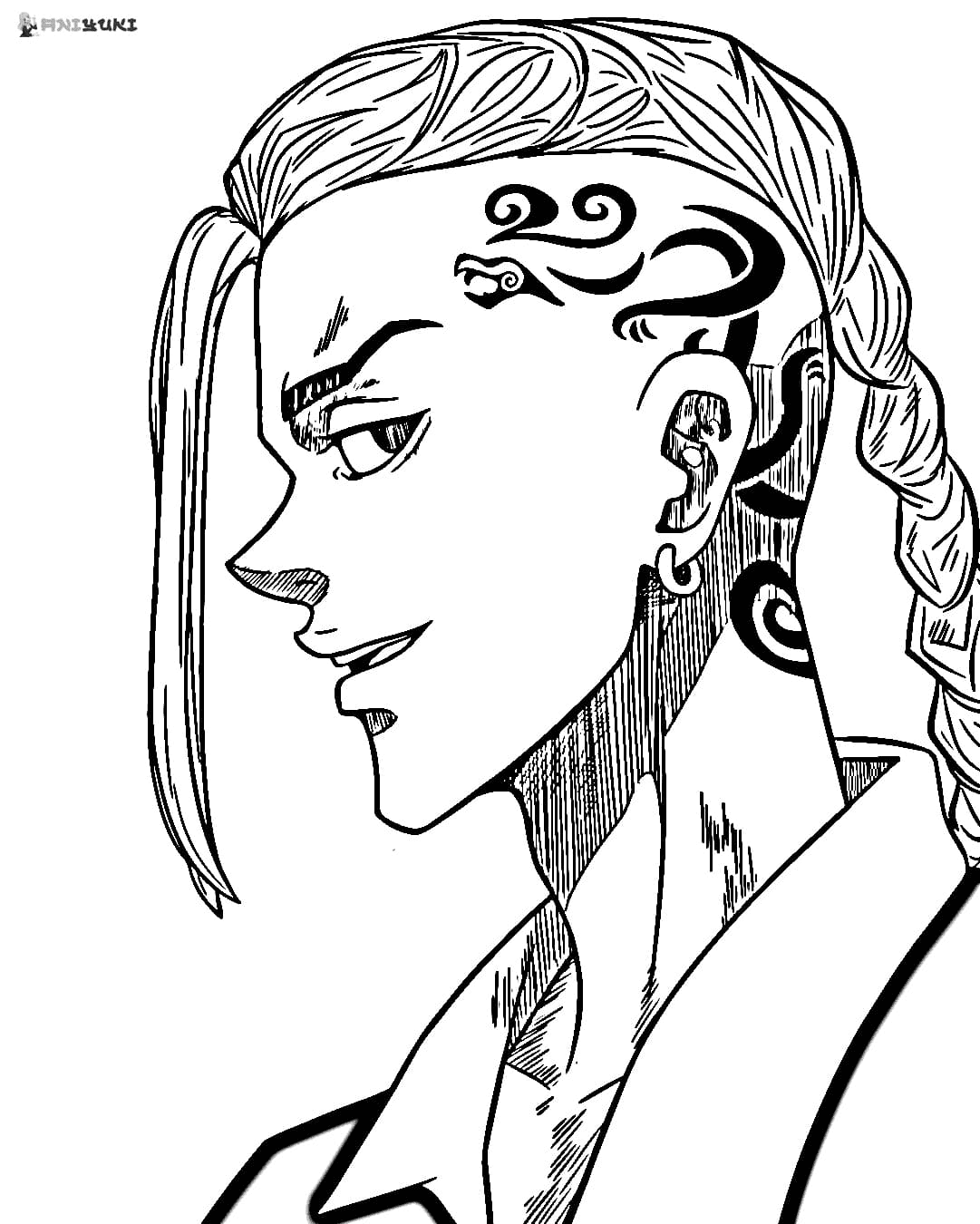
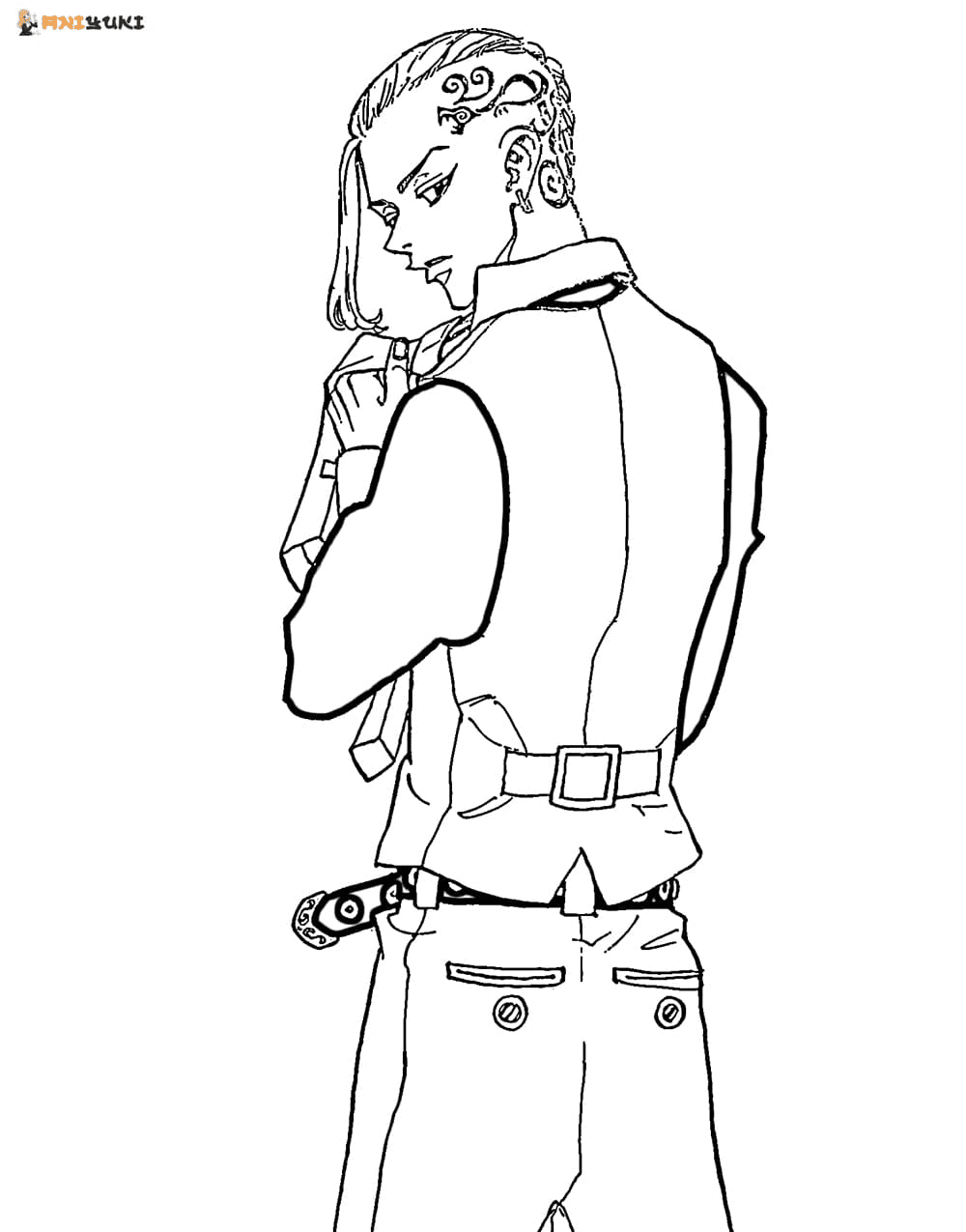
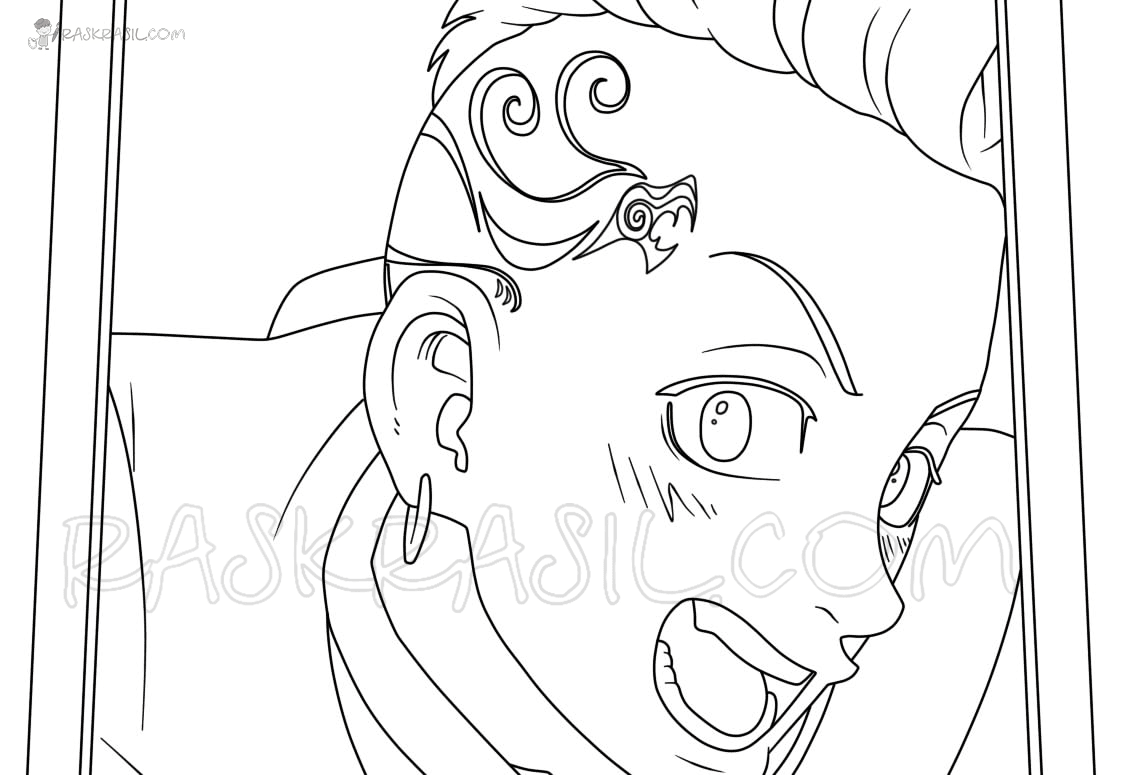
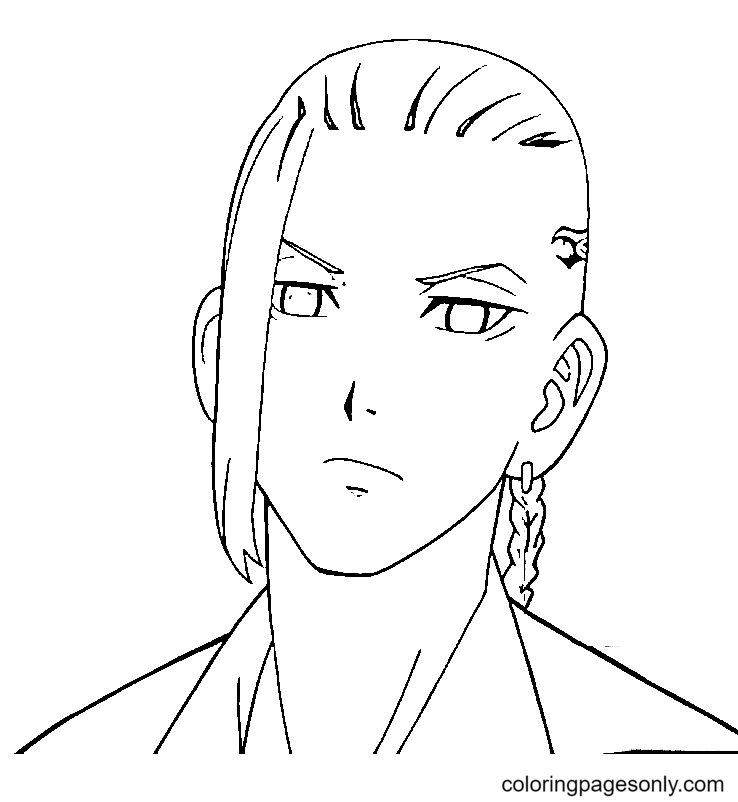
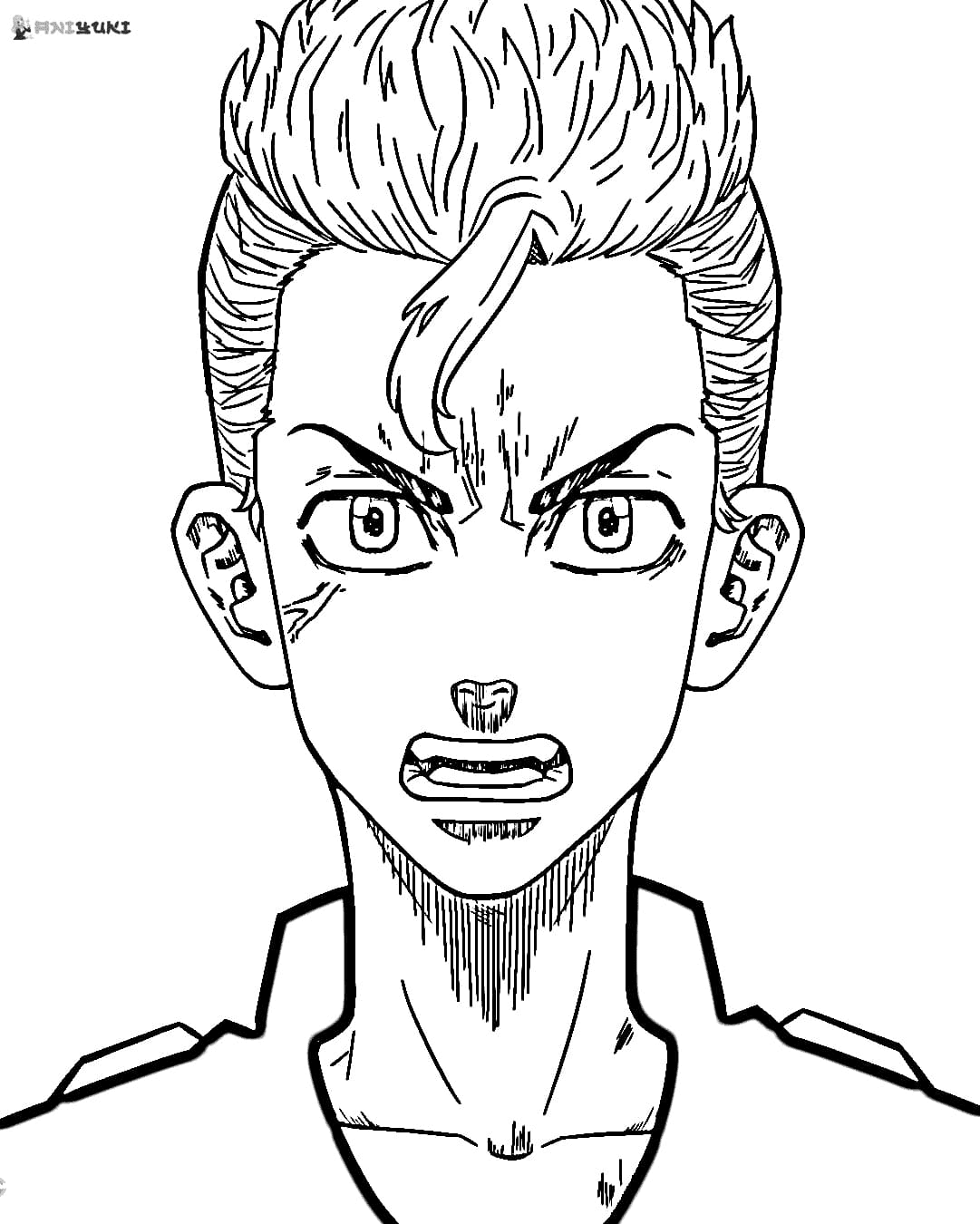
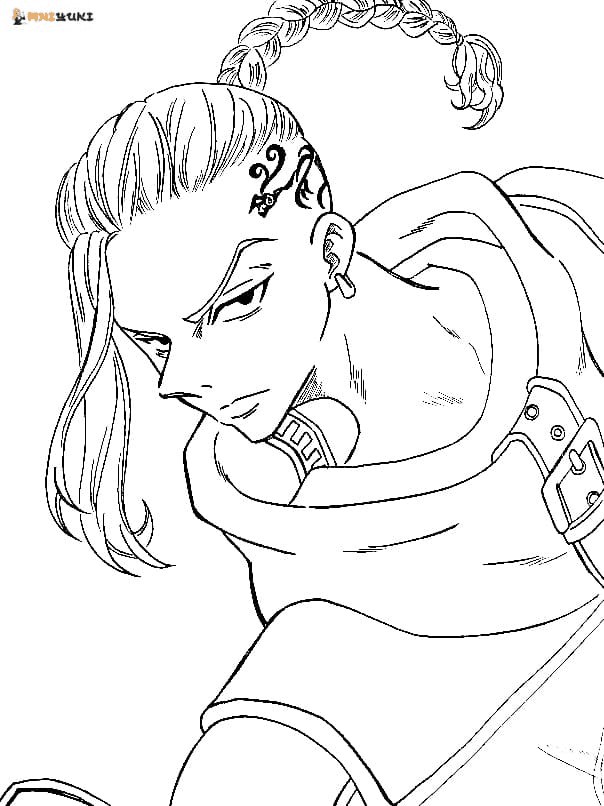
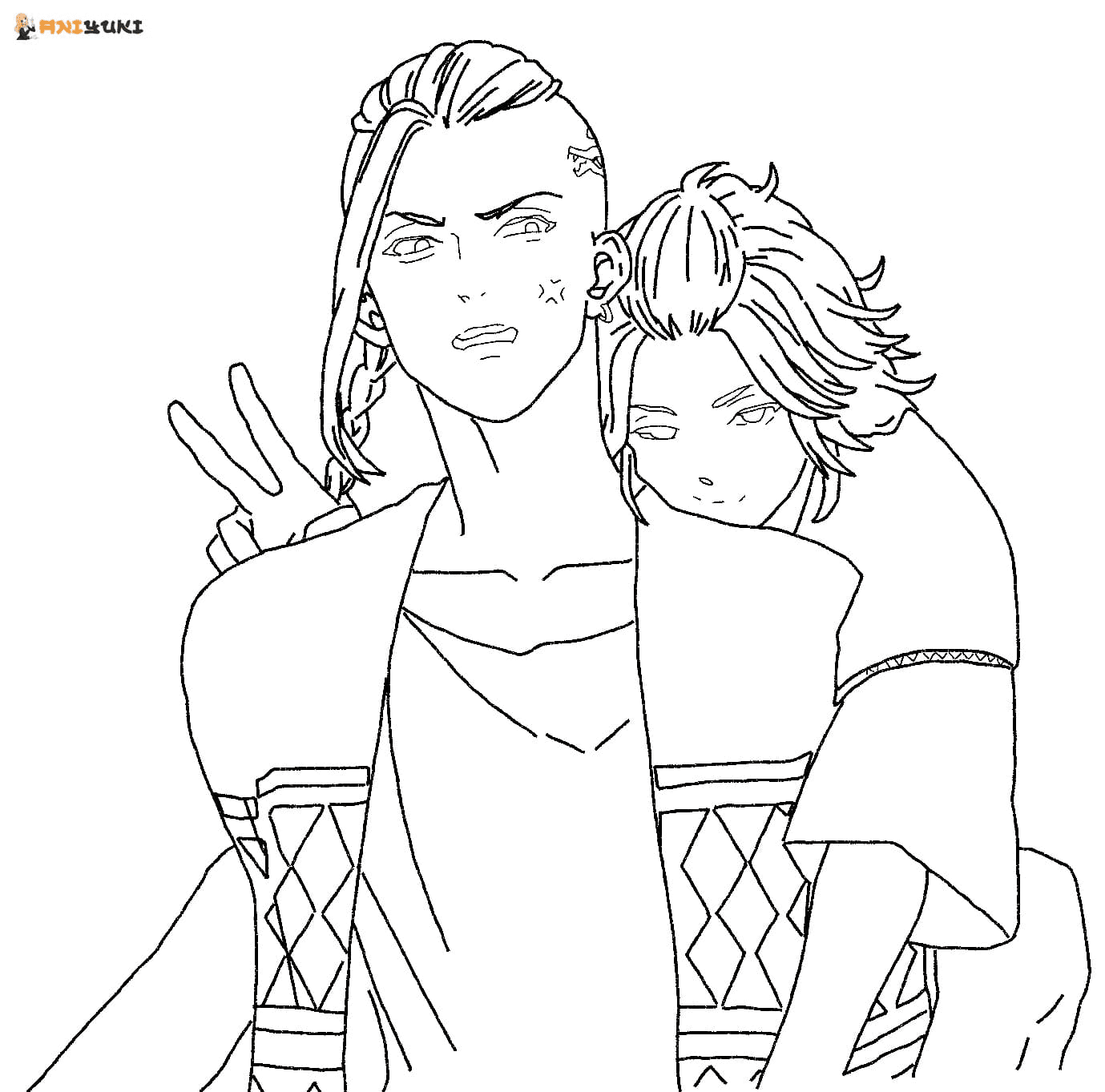
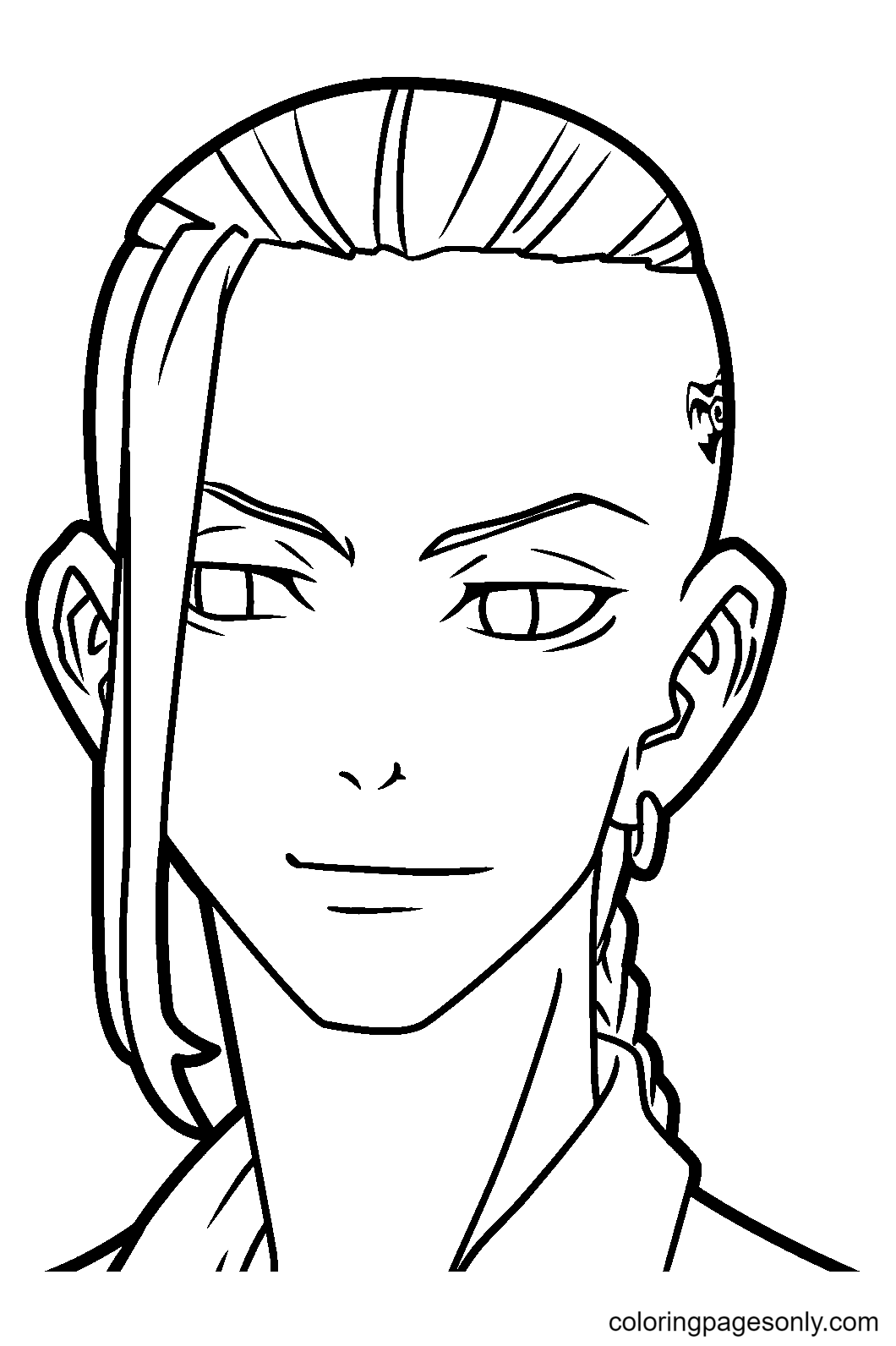
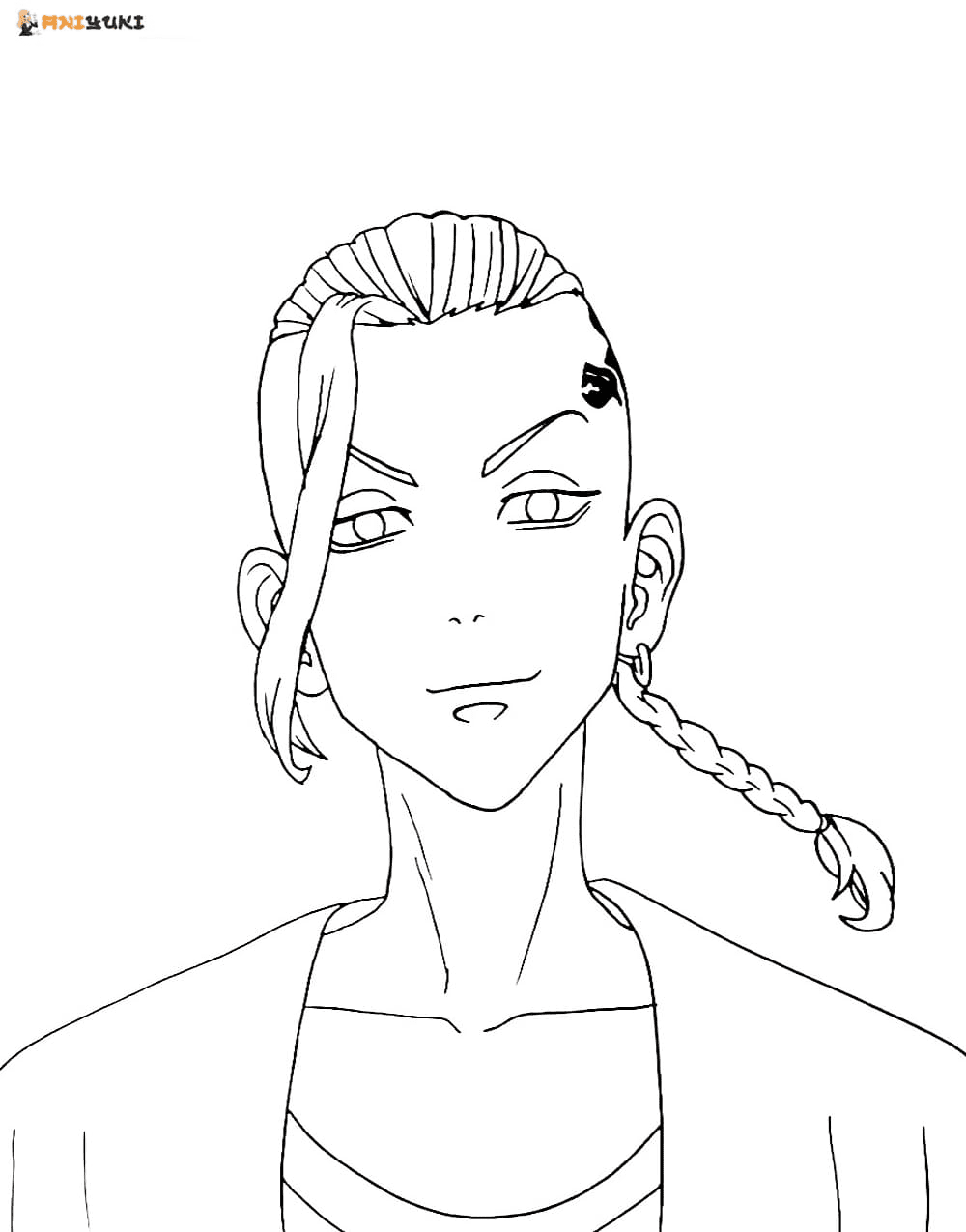
Draken is Mikey’s best friend, vice-captain of Toman, and the person whose presence – or absence – in each timeline functions as a barometer for how well Takemichi’s interventions are working. He is tall, muscular, blond in a different style from Mikey (a distinctive long mohawk-style), and carries a tattoo of the kanji 龍 (dragon) on his left temple – a detail that makes him immediately visually identifiable in any context.

His relationship with Mikey is the series’s most important secondary relationship – they have been friends since childhood, and Draken functions as both Mikey’s moral anchor and his physical peer, the one person who can speak to him directly. When Draken is absent or lost, Mikey’s dark impulse has nothing to balance against it.

His personality is serious, direct, and pragmatic. He is not interested in performing toughness – he simply is tough, in the specific way of someone who has never needed to advertise it. His interactions with Takemichi move from skepticism to genuine respect over the series’ run.

Coloring Draken: His long blond mohawk is the collection’s most structurally distinctive hair – a tall vertical strip of styled hair running from the front of his head to the back, bleached blond against a shaved or closely cropped sides. The dragon tattoo on his left temple is a kanji character – bold black brushstroke-style characters that should be rendered in near-black with the careful attention their specific strokes require. His Toman jacket is the same black as the other members’.

Keisuke Baji – The Founding Member

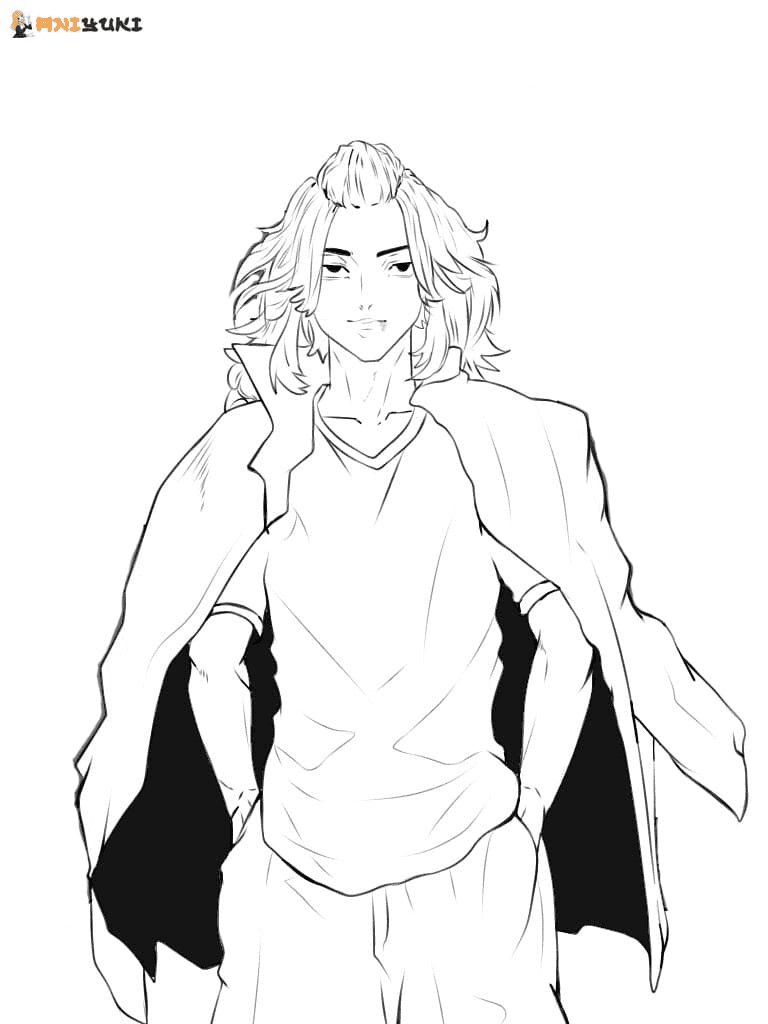
Baji is one of the six founders of Toman and the captain of its First Division – a character whose arc in the Valhalla chapters is the series’ first major emotional peak. His design reads as wilder and more unkempt than most of the Toman leadership: long black hair that falls loose around his face, a more aggressive physical posture, and the expression of someone who is always ready for whatever the next moment brings.

His relationship with Chifuyu – his vice-captain, who is loyal to him with the specific depth of someone who understands their captain better than most people understand anyone – is the series’s most direct statement that loyalty in this context is something that must be earned and then honored. Baji earns it, and the series honors it in the most costly way possible.

Coloring Baji: Long, straight black hair – the very dark brown-black of natural Japanese hair, rendered with subtle blue highlights along the outer surface where light catches it. His Toman jacket is black with the standard gold trim. His expression in most pages reads as aggressive or alert – the eyebrows define this quality and should be rendered with clear, defined line work.

Chifuyu Matsuno – The Vice-Captain

Chifuyu is Baji’s vice-captain and, after the Valhalla Arc, Takemichi’s closest ally within Toman – the character who shares the most scenes with the protagonist and who becomes the human through-line in Takemichi’s experience of the gang. He is shorter and lighter-featured than most of the male cast: light brown hair, a less physically imposing frame, and a personality that is warmer and more openly emotional than the Toman leadership’s general register.

He is perceptive – consistently among the first characters to understand what Takemichi is actually doing – and his loyalty, once given, is absolute. His arc from Baji’s devoted lieutenant to Takemichi’s co-conspirator is built carefully across the series.

Coloring Chifuyu: Light brown hair – a warm, medium-light brown that reads as significantly lighter than Baji’s black and distinguishes him immediately in group pages. His skin tone is warm and relatively light, consistent with his softer overall design register. His Toman jacket follows the standard black-and-gold.

Kazutora Hanemiya – The Complex Antagonist

Kazutora is one of the series’ most carefully written antagonist characters – a founding member of Toman whose actions in a single past moment create consequences that structure the entire first major story arc. His design marks his complexity: long dark hair with lighter streaks or blonde sections, a face that carries both the aggression of someone who has survived very bad situations and the specific damage of someone who has not been able to process those situations.

His role in the Valhalla Arc is the series’s first real test of whether Takemichi’s emotional approach to changing people can work on someone who has genuinely done terrible things.

Coloring Kazutora: His hair is dark with lighter sections – a striped or two-tone effect, darker roots with lighter body, that reads as both bleached and somewhat chaotic, consistent with his character’s instability. His expressions in most pages carry tension – the brows and jaw define this and should be carefully rendered.

The Toman Uniform and Group Pages

The Tokyo Manji Gang’s uniform – black jacket with the distinctive Toman emblem (a stylized version of the 卍 symbol surrounded by the full gang name) on the back – is the series’ most recognized visual element and the one that appears most extensively across the collection’s group pages.

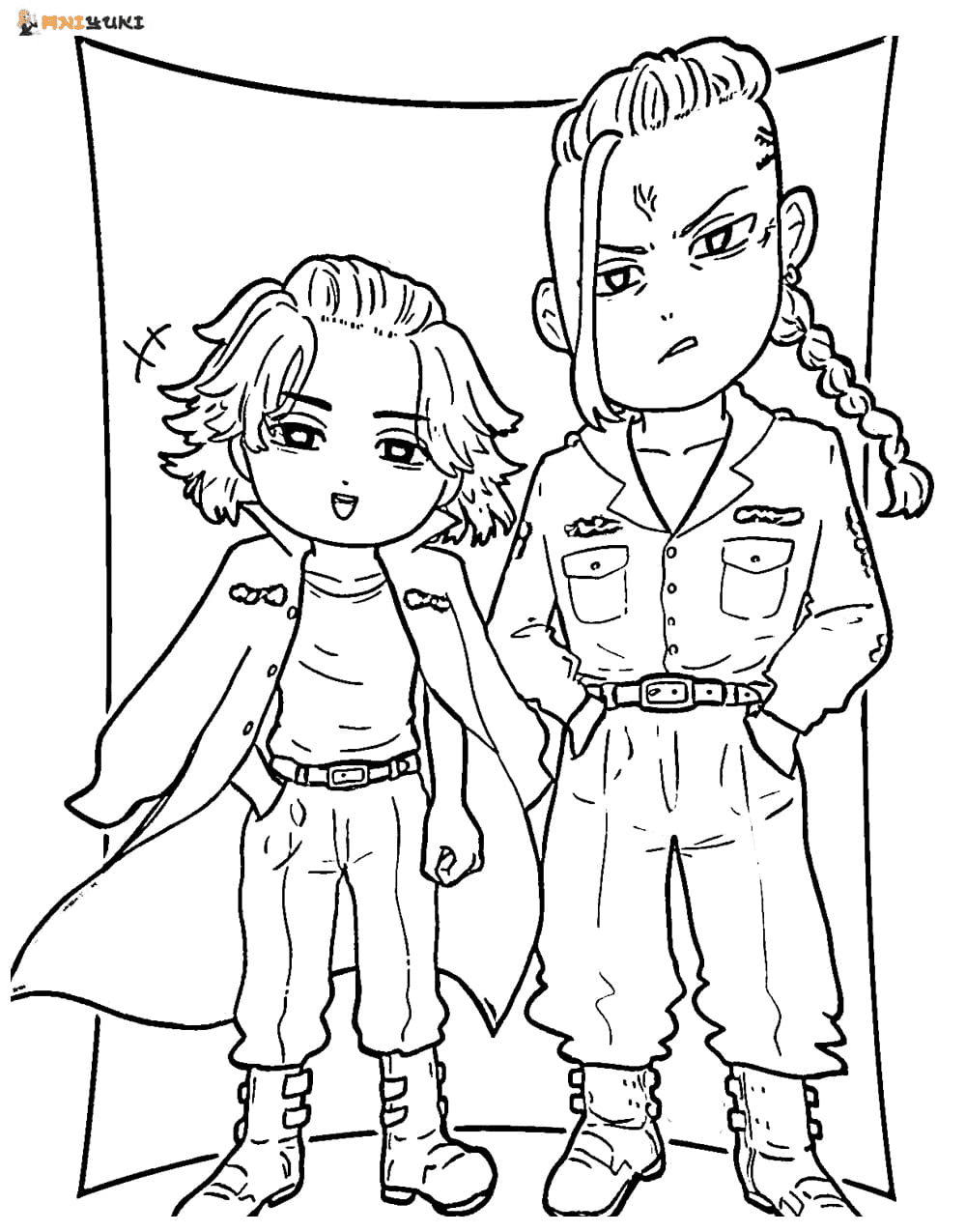
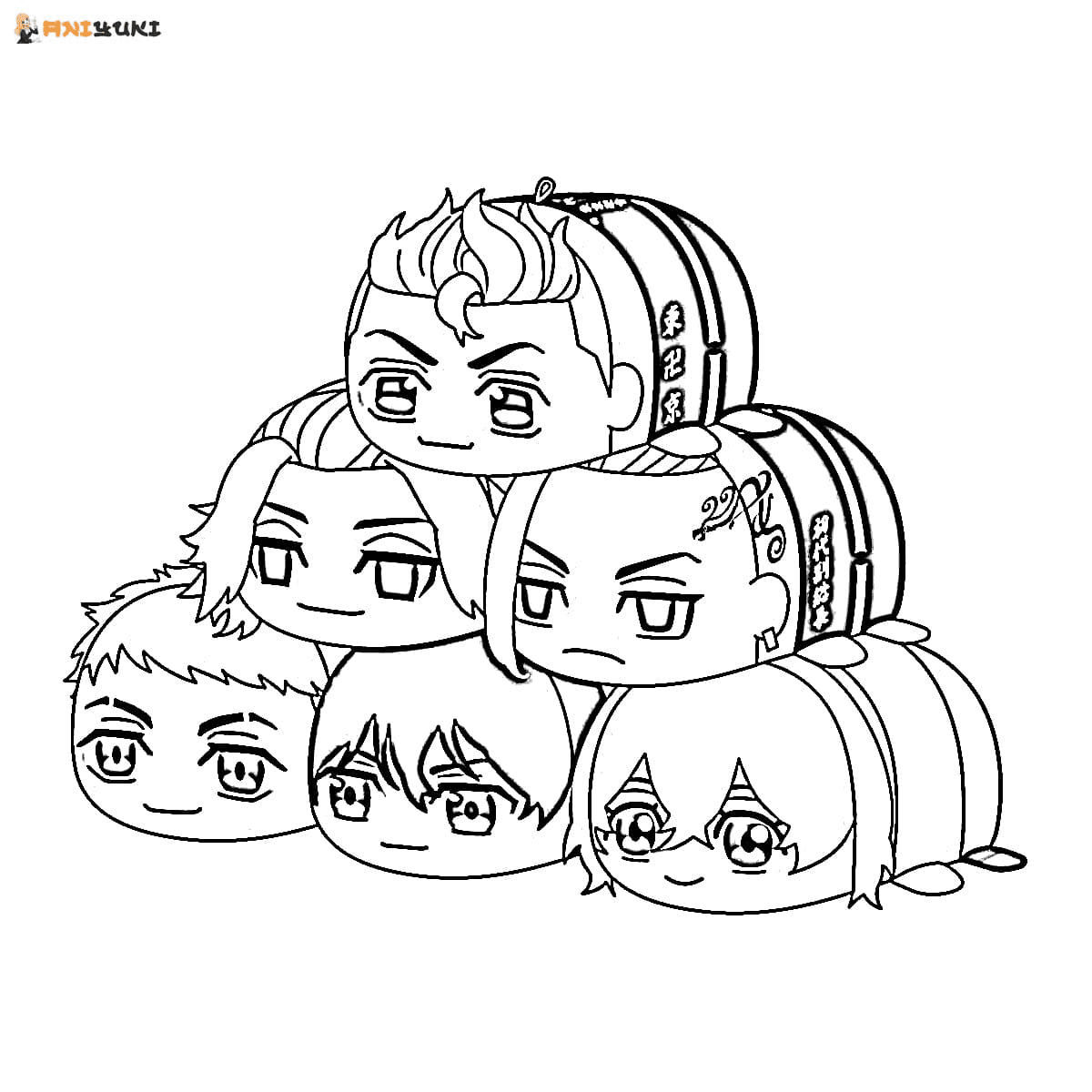
The group pages showing multiple Toman members together are the collection’s most compositionally ambitious – many characters, multiple uniforms, the visual challenge of maintaining each character’s individual design while establishing the group’s visual coherence through the shared uniform.

Coloring the Toman uniform: The jacket is black, rendered with cool blue-grey highlights at the shoulder, lapel, and pocket edges to give the fabric dimensional form. The Toman emblem on the back, where visible, is typically gold on the black jacket – a warm, vivid gold that reads as metallic without requiring metallic coloring tools. The emblem’s linework is dense enough to require careful attention to its specific structure.

What These Pages Do

Tokyo Revengers uses the time-travel premise to ask a specific question about determination. If you knew what was going to happen to someone you loved, and you had one chance to change it, would you? And if the first change did not work, would you try again? And again? The series spends 278 chapters finding out that Takemichi’s answer is yes, every time, regardless of personal cost. Coloring the pages while knowing this context gives the character portraits additional weight.

The Yankee aesthetic of early-2000s Japan is itself a specific cultural document. The bleached hair, the specific uniform styles, the territorial gang structure, the honor codes around loyalty and conflict – these are documented elements of a specific moment in Japanese youth culture, filtered through Ken Wakui’s personal experience and transformed into manga. The series is simultaneously action entertainment and cultural record.

Character design differentiation through hair and posture. The Tokyo Revengers cast is unusually large – even within Toman alone, six founding members plus dozens of division members create a cast that challenges visual memory. The series solves this through extreme differentiation in hair style and color (bleached, long, mohawk, dyed) and posture (Mikey’s low-center-gravity stance, Draken’s height, Chifuyu’s more relaxed posture). Coloring through the cast develops the visual literacy to read these differences quickly.

The 2005 Art Therapy Journal study applies throughout. Structured coloring reduces anxiety through focused, sustained attention. The detailed character pages – hair work, uniform detailing, expression precision – produce exactly the calm, absorbed state the research identifies as most beneficial.

How to Color These Pages Well

Black uniforms are the collection’s most important consistent challenge. Every Toman member wears the same black jacket. Black rendered as flat black is a hole in the page. Black rendered with cool blue-grey highlights is fabric. The standard technique: apply near-black across the entire uniform. Add cool blue-grey highlights along the shoulder line, the lapel edge, the sleeve cuffs, and any surface that directly faces the light source. The jacket should read as dark fabric in light rather than as an absence of color.

Each character’s hair is their primary identifier. In group pages where multiple characters appear, the reader identifies each character primarily through hair – Mikey’s blond with the distinctive long strand, Draken’s mohawk, Baji’s long black, Chifuyu’s light brown, Kazutora’s striped dark. Getting each character’s hair color and style correct is more important than any other design element for readability. Establish all hair colors first before moving to any other element.

The dragon tattoo on Draken’s temple requires brush-stroke rendering. The 龍 kanji is a complex character with multiple strokes. Render it in near-black – slightly softer than pure black – with the stroke width varying as actual brushwork would: thicker at the beginning of each stroke, tapering toward the end. If the page shows it at sufficient scale, the individual stroke structure should be visible rather than a uniform-weight outline.

Expression rendering defines character. Mikey’s emptiness, Draken’s seriousness, Chifuyu’s warmth, Baji’s aggression, Takemichi’s open emotion – all are communicated through eyebrow position and eye shape in the page’s line drawing. The coloring decisions that most affect expression: the darkness of the iris (darker = more intense), the prominence of the upper eyelid line (stronger = more defined expression), and the treatment of eyebrow lines (clear definition preserves expressiveness, soft application loses it).

Night and urban background pages want cool, desaturated palettes. Many of the series’ confrontation scenes take place at night in urban environments – under streetlights, in parking lots, on bridges. Night scenes in manga-based coloring should use cool blue-grey shadows rather than warm ones, with the skin tones of the characters reading slightly cooler than they would in daylight. The contrast between the characters’ warm skin tones and the cool night environment creates the visual tension that night scenes require.

5 Creative Craft Ideas

Timeline Display – Past and Present

The series’ central visual concept is the gap between 2005 and 2017 – the past where change is possible and the future where consequences are visible. Print a Takemichi page representing his past appearance (middle school, the Toman uniform, the bleached-streak hair) and one representing his present (2017, older, worn down).

Color the past page with vivid, saturated colors – the world of the past is where everything important is happening, where the energy is. Color the present page with slightly more muted, desaturated tones – the world of the present is where the consequences have already settled. Mount both side by side: “2005” on the left, “2017” on the right. The color treatment difference carries the emotional content of the time-travel premise without needing words.

Toman Six Founders Display

The six founders of Tokyo Manji Gang – Mikey, Draken, Baji, Kazutora, Mitsuya, and Pah-chin – represent the series’ foundational relationships and the core of its mythology. Print one portrait page for each founder that the collection includes. Color each in their canonical hair color and the shared black Toman uniform.

Mount all six in a row or two rows on a black backing sheet, each character’s name hand-lettered below their figure. Add the Toman emblem (drawn by hand or adapted from the page) at the center top, with “Tokyo Manji Gang – Six Founders” below it. The display honors the group that the series builds its entire plot around.

Mikey and Draken – The Pillars

Print the most dramatic Mikey portrait available and the most dramatic Draken portrait. Color Mikey in his canonical blond and black, Draken in his blond mohawk and black. Cut both out carefully.

Mount both on a dark navy or black backing sheet, facing each other from opposite sides of the page. Between them, hand-letter: “Mikey and Draken – Two pillars. One gang. One future.” The display captures the series’s most important friendship at the moment when it is most visually impactful.

Baji and Chifuyu Loyalty Card

Print one Baji page and one Chifuyu page. Color Baji in his long black hair and Toman jacket; color Chifuyu in his lighter brown hair and matching uniform. Mount both on a single card-format backing.

On the back or on an attached card, write the specific moment from the Valhalla Arc that defines their relationship – not dialogue, but a description of what each chose and what it cost. This is not spoilers delivered carelessly; it is a memorial of a specific story beat rendered as a personal artifact by a fan who made it by hand.

The Crybaby Hero’s Journey

Print five Takemichi pages that can represent five distinct moments in his arc – his initial appearance, his first moment in the past, a moment of defeat, a moment of recovery, and his most determined pose. Color all five with consistent skin tone and clothing colors, allowing the expression and posture of each page to carry the narrative rather than any color change.

Arrange in chronological sequence on a backing sheet. Below each, hand-letter one word representing that moment’s emotional content: “Lost.” “Returned.” “Broken.” “Rising.” “Undefeated.” The five-word sequence is the character’s arc compressed into the visual language of a coloring page display.

Frequently Asked Questions

What is Tokyo Revengers, and who created it? Tokyo Revengers is a Japanese manga series written and illustrated by Ken Wakui, serialized in Weekly Shōnen Magazine (Kodansha) from March 2017 to November 2022 across 31 volumes and 278 chapters. The series won the 44th Kodansha Manga Award in the shōnen category in 2020. The anime adaptation was produced by Liden Films across three seasons – the main series (2021), the Christmas Showdown Arc (2023), and the Tenjiku Arc (2023–2024). A live-action film was released in Japan in July 2021. The series combines the Japanese yakuza delinquent genre with a time-travel narrative.

What is the time-travel mechanic in Tokyo Revengers? Takemichi Hanagaki, the protagonist, discovers that he can travel twelve years into his past – from 2017 to 2005, when he was in middle school – by shaking hands with Naoto Tachibana (the younger brother of his ex-girlfriend Hinata). Each handshake sends him back in time; another handshake with Naoto in the past sends him forward to 2017. Crucially, Naoto retains memories of what happened in each version of the timeline, allowing him to give Takemichi information about what has changed. The mechanic is not explained scientifically – it is simply present, a given of the story’s world, and the series focuses on its emotional and narrative consequences rather than its mechanism.

Who is Mikey, and why is he central to the story? Manjiro “Mikey” Sano is the founder and leader of Tokyo Manji Gang (Toman) and the character whose future Takemichi most needs to change. In every timeline Takemichi visits, Mikey’s fate is the measure of whether the intervention has worked – in the original 2017, Mikey leads a corrupt criminal organization responsible for Hinata’s death. The series establishes early that Mikey’s decline into corruption is driven by accumulated loss – the death of people he loves – and that each of Takemichi’s interventions is, in part, an attempt to prevent those losses or to give Mikey something to hold onto when they happen anyway. His combat ability is presented as the strongest in the series.

What is the Tokyo Manji Gang, and what does its symbol mean? The Tokyo Manji Gang, abbreviated to Toman, is the delinquent gang founded by Mikey, Draken, Baji, Kazutora, Mitsuya, and Pah-chin in 2003, when its members were in middle school. Its name incorporates the manji symbol (卍), a Buddhist and Hindu symbol representing eternity and prosperity, which was reclaimed in the series’ fictional context as the gang’s emblem. The symbol appears on Toman members’ jackets and throughout the series’ visual design. The gang’s hierarchy includes a commander (Mikey), vice-commander (Draken), and six divisions, each led by a captain and vice-captain.
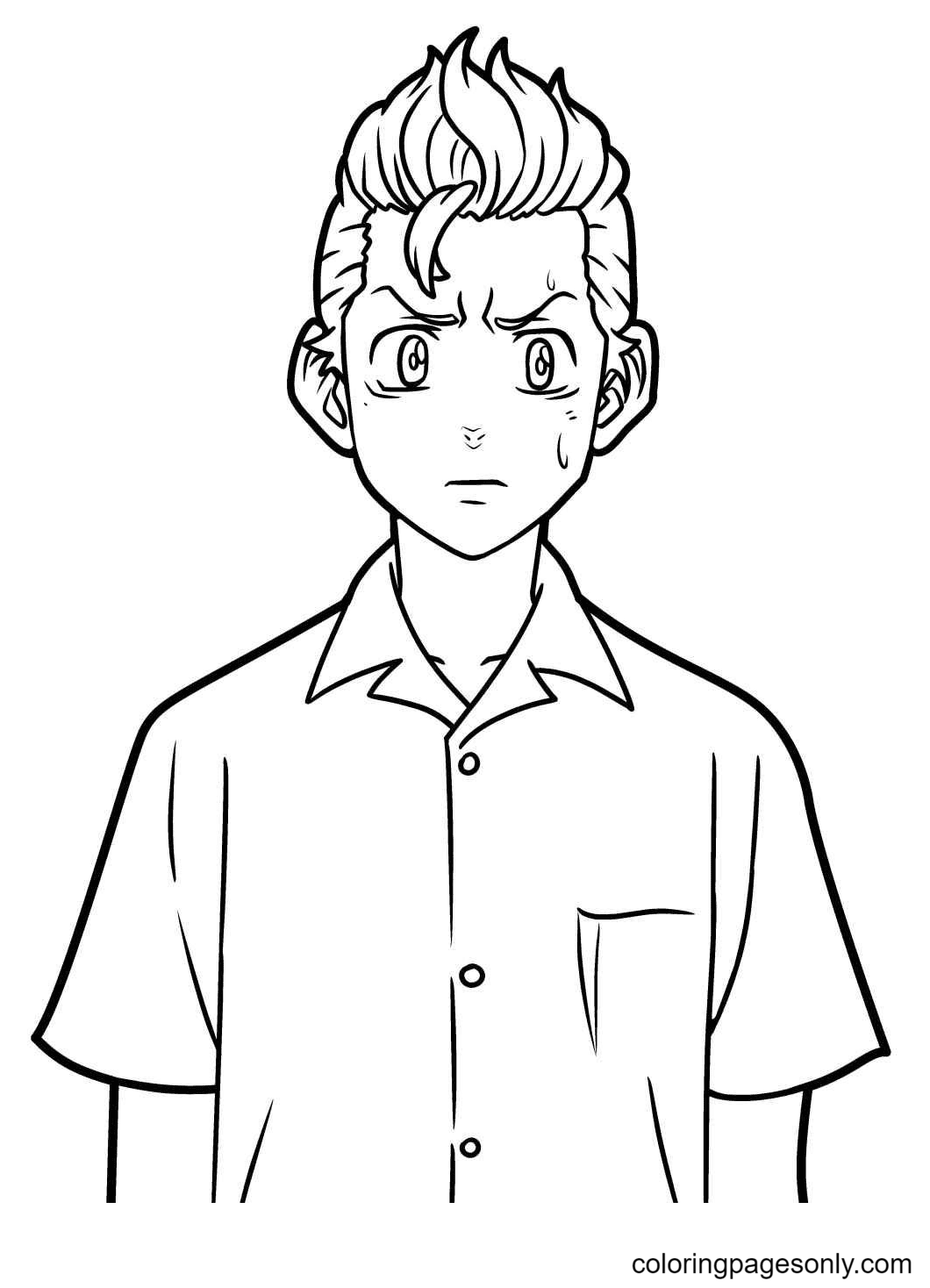
What is the age rating for Tokyo Revengers? Tokyo Revengers is rated for older teenagers and adults – approximately age thirteen and up for the manga, with the anime typically rated TV-14 in the United States. The series contains significant gang violence, themes of death and loss, and emotionally intense content, including the death of teenage characters. The coloring pages in this collection present the series’ character designs and visual aesthetic without the violent content of the source material, making them more accessible than the series itself for younger fans who have encountered the characters through merchandise, social media, or fan communities.

How many arcs does the Tokyo Revengers anime cover? The Tokyo Revengers anime covers three major arcs across its three seasons. Season 1 (2021, 24 episodes) covers the introduction, the Moebius Arc (Takemichi’s first mission to save Draken), and the Valhalla Arc (the battle centered on Baji and Kazutora). Season 2 (2023, 13 episodes) covers the Christmas Showdown Arc, which involves the Black Dragon gang. Season 3 (2023–2024, 13 episodes) covers the Tenjiku Arc, which introduces the antagonist Izana Kurokawa and is widely regarded as the most emotionally significant arc of the anime adaptation. The manga’s later arcs – the Bonten Arc, the Three Deities Arc, and the Kanto Manji Arc – were not adapted in the anime’s three-season run.

Browse the full collection at ColoringPagesOnly.com. All 90+ pages free, no sign-up, PDF or PNG, print at home or color online.

Ken Wakui serialized Tokyo Revengers across five years in Weekly Shōnen Magazine and built a story about a man who fails by almost every external measure and whose one capability – the refusal to stop trying – turns out to be exactly enough. Takemichi cries constantly. He loses constantly. He gets back up every time, for one reason, toward one goal, twelve years in the past, when the person he loves is still alive.

The character is a specific kind of inspiration because he does not succeed through power, intelligence, or strategy. He succeeds through persistence and emotional honesty, and the decision to keep going past the point where stopping would be understandable.

The blondness of Mikey’s hair. The dragon tattoo on Draken’s temple. The black of the Toman jacket with its gold trim.

Pick up your black. Build the uniform from dark to darker. Takemichi is already back in 2005, making the same decision one more time.

Share your work on Facebook and Pinterest and tag #Coloringpagesonly. We especially want to see the timeline displays and the Toman Six Founders projects.

Color the past. Change what matters. Never stop running.

More from our anime collections:

Mantasstonys Allen – Designer

Hello! I'm Mantasstonys Allen, a web designer at Coloringpagesonly.com. My passion is bringing creativity to life through beautiful and user-friendly designs. I'm here to make your experience on our site smooth, fun, and inspiring—so you can focus on what matters most: coloring and unleashing your imagination!