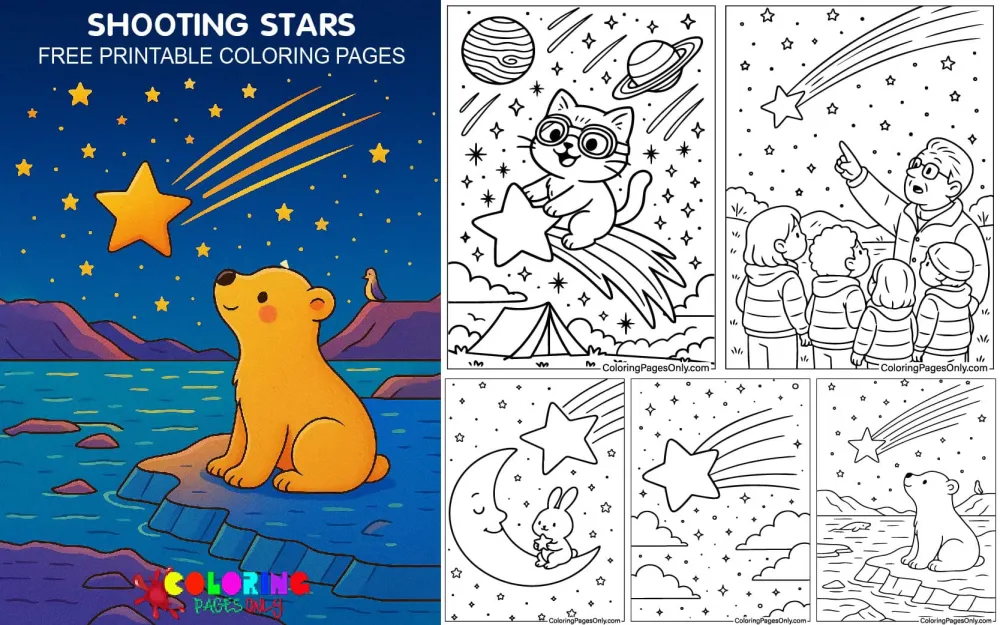
Free Shooting Stars Coloring Pages: 32 printable PDF designs covering wishing moments, animals watching the night sky, kids discovering shooting stars, and space and fantasy scenes. Each page can be downloaded as a PDF to print or colored online in the browser, with no account required.
A shooting star is not actually a star at all. It is a meteor, a tiny piece of comet or asteroid debris, usually no bigger than a grain of sand or a pea, that burns up from friction as it enters Earth’s atmosphere at high speed. The bright streak people wish on comes from that burning debris and the heated air around it, not from a star falling out of the sky.
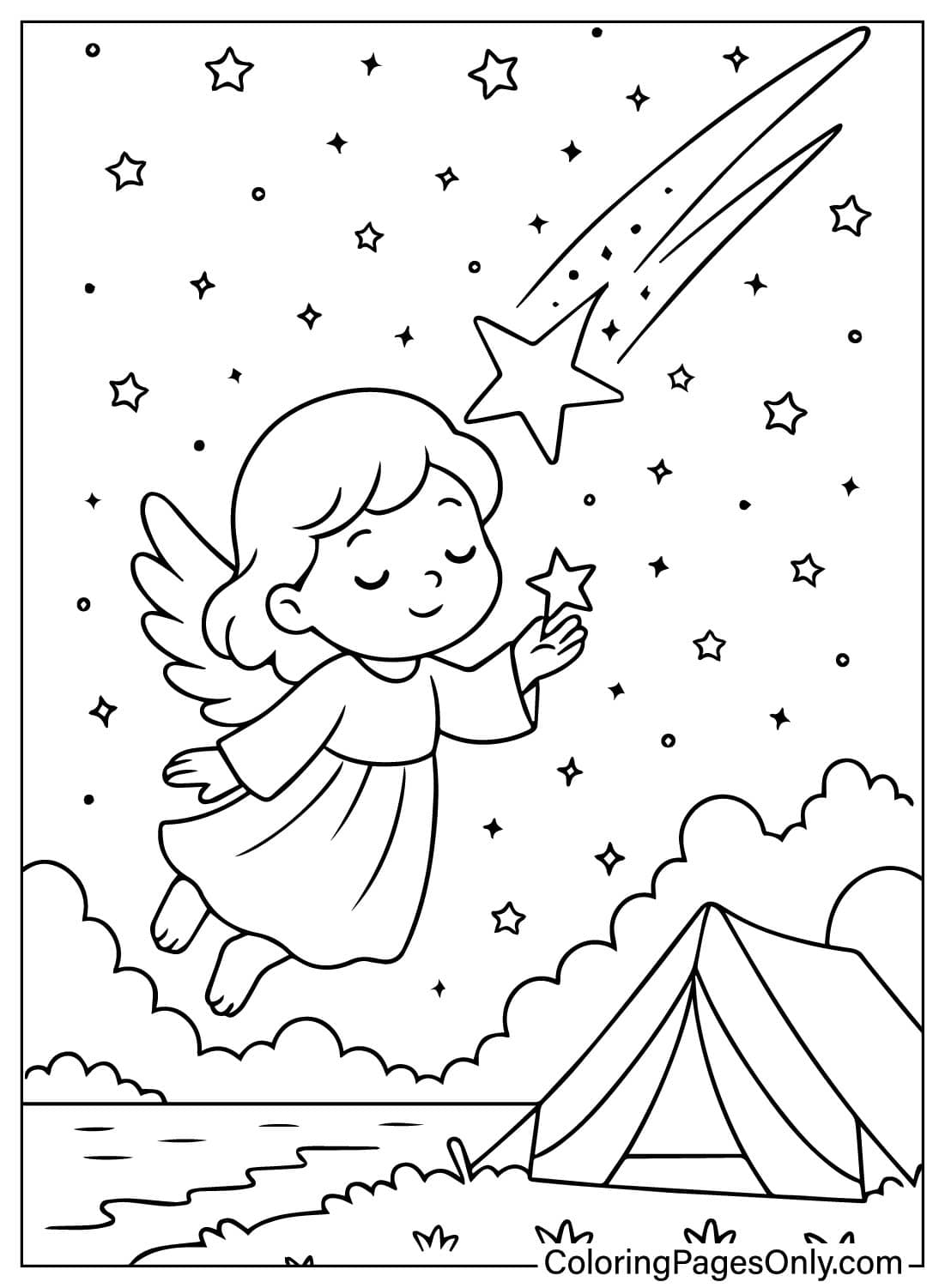
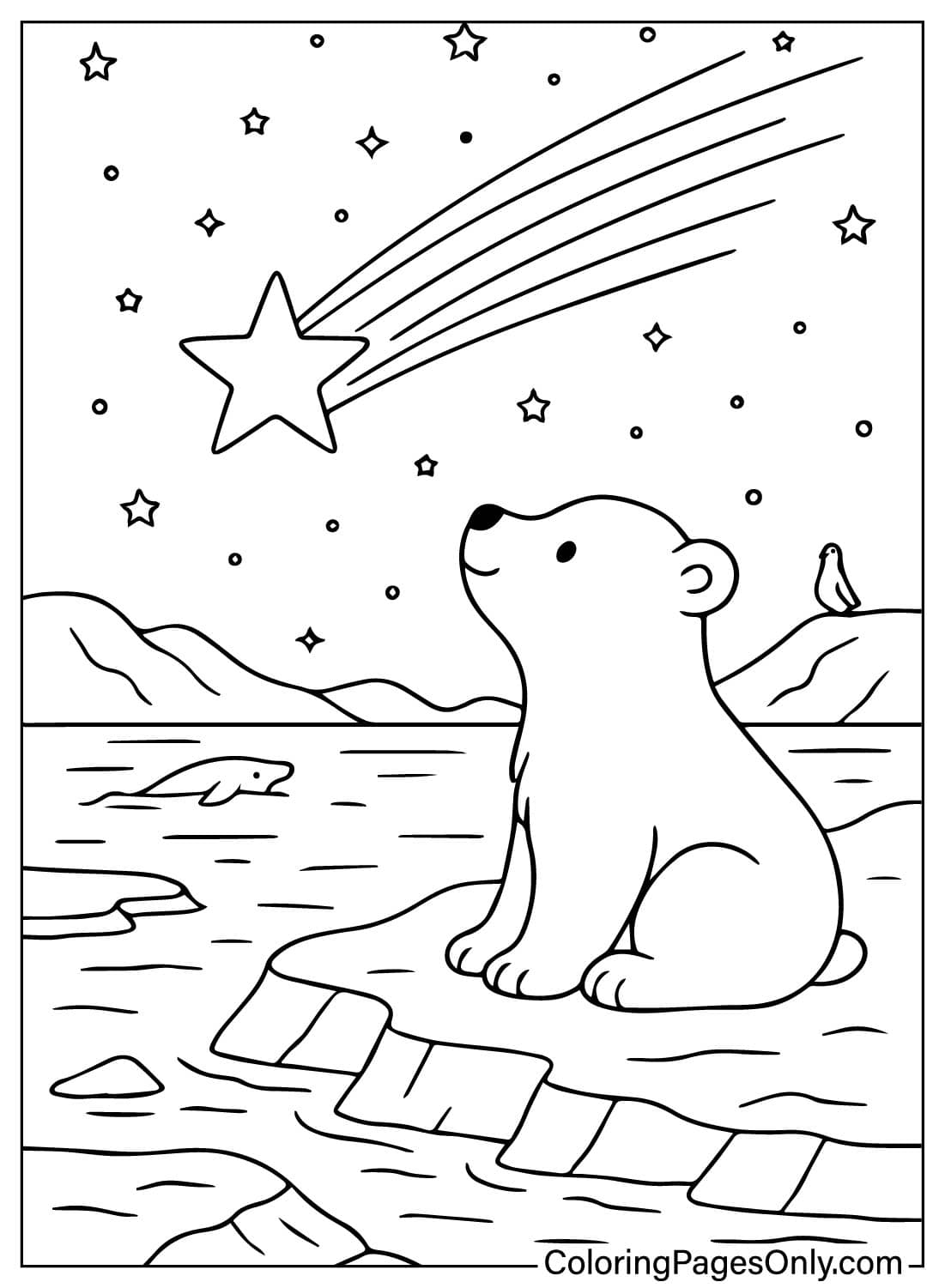
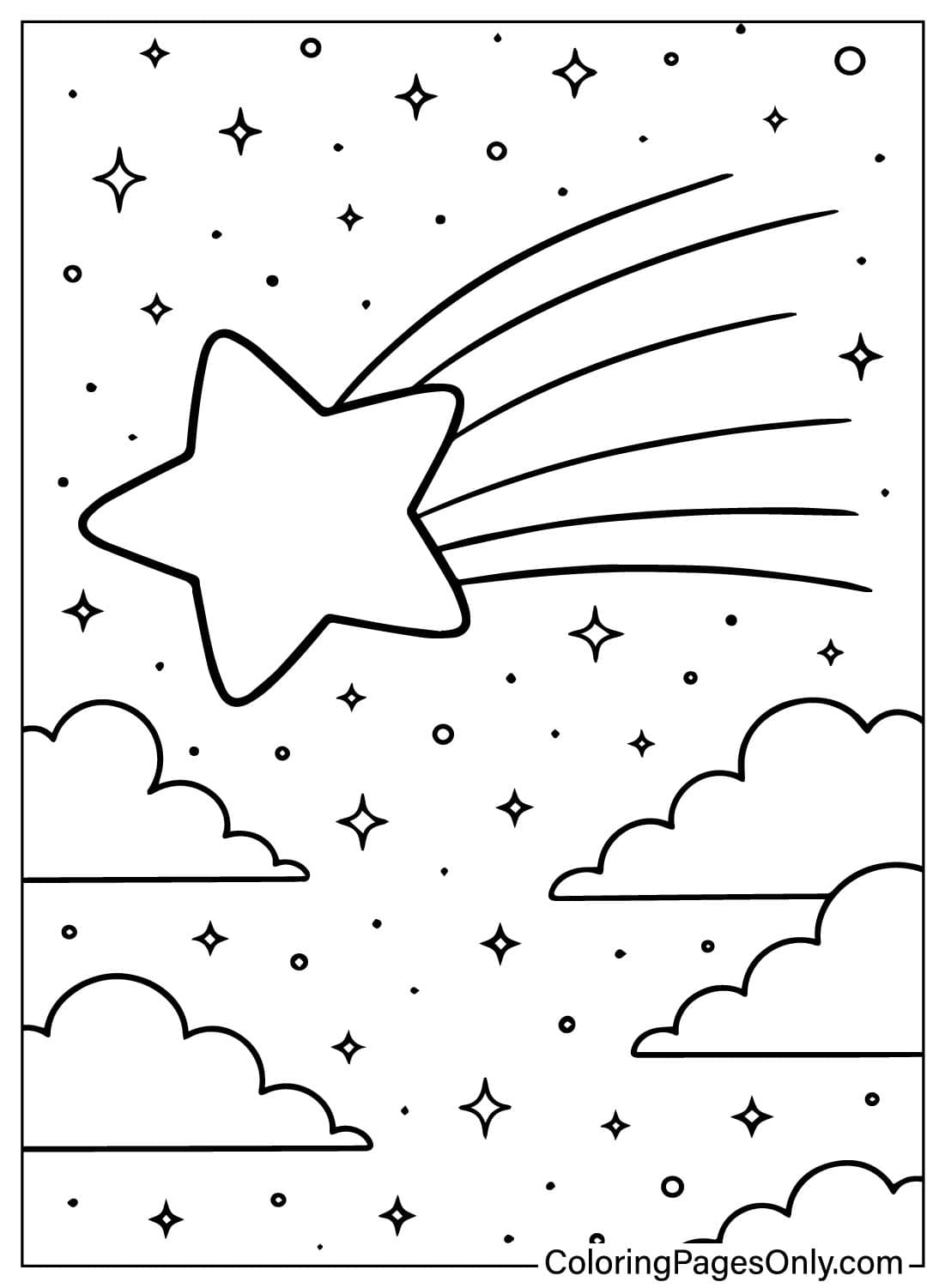
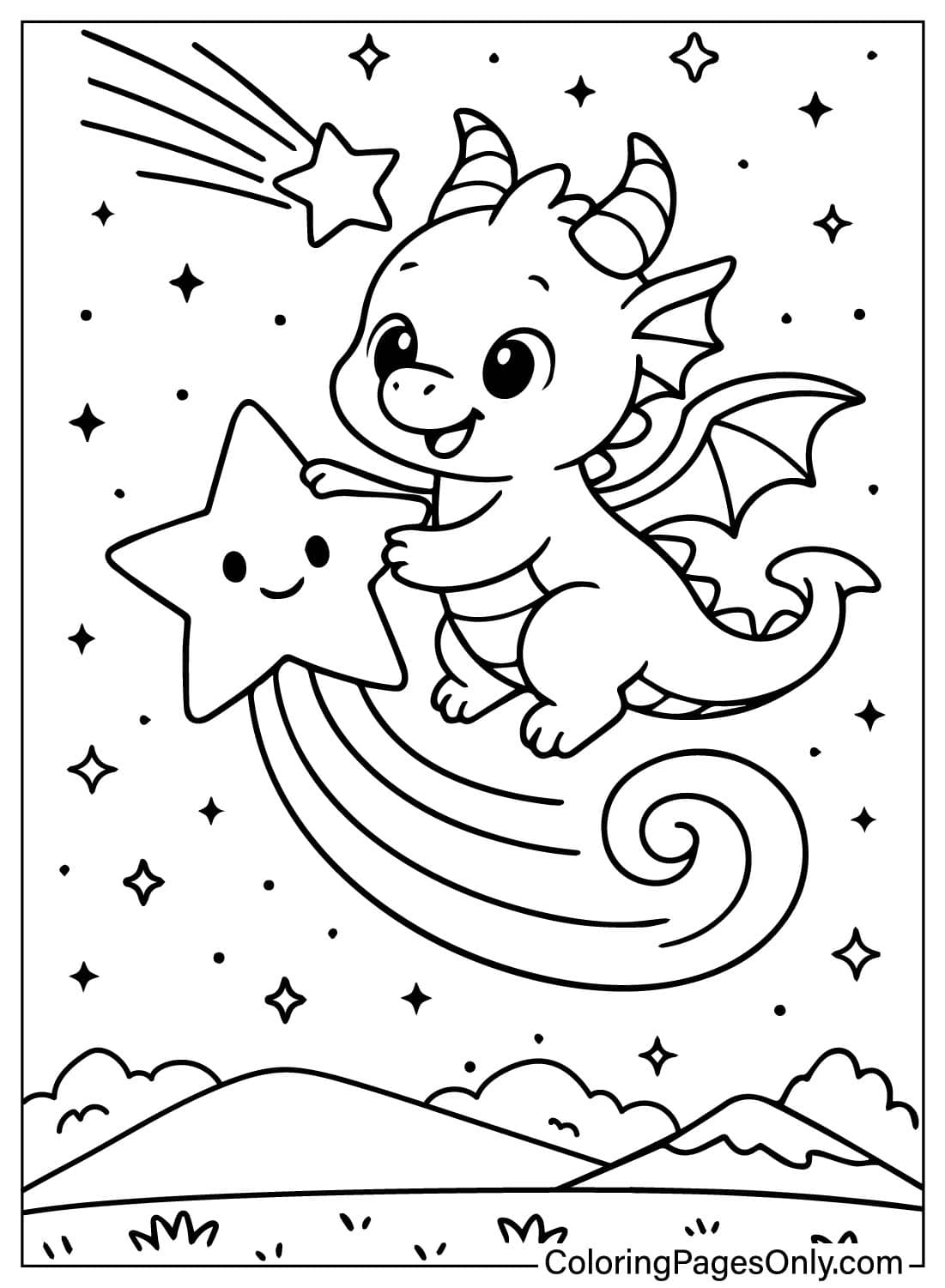
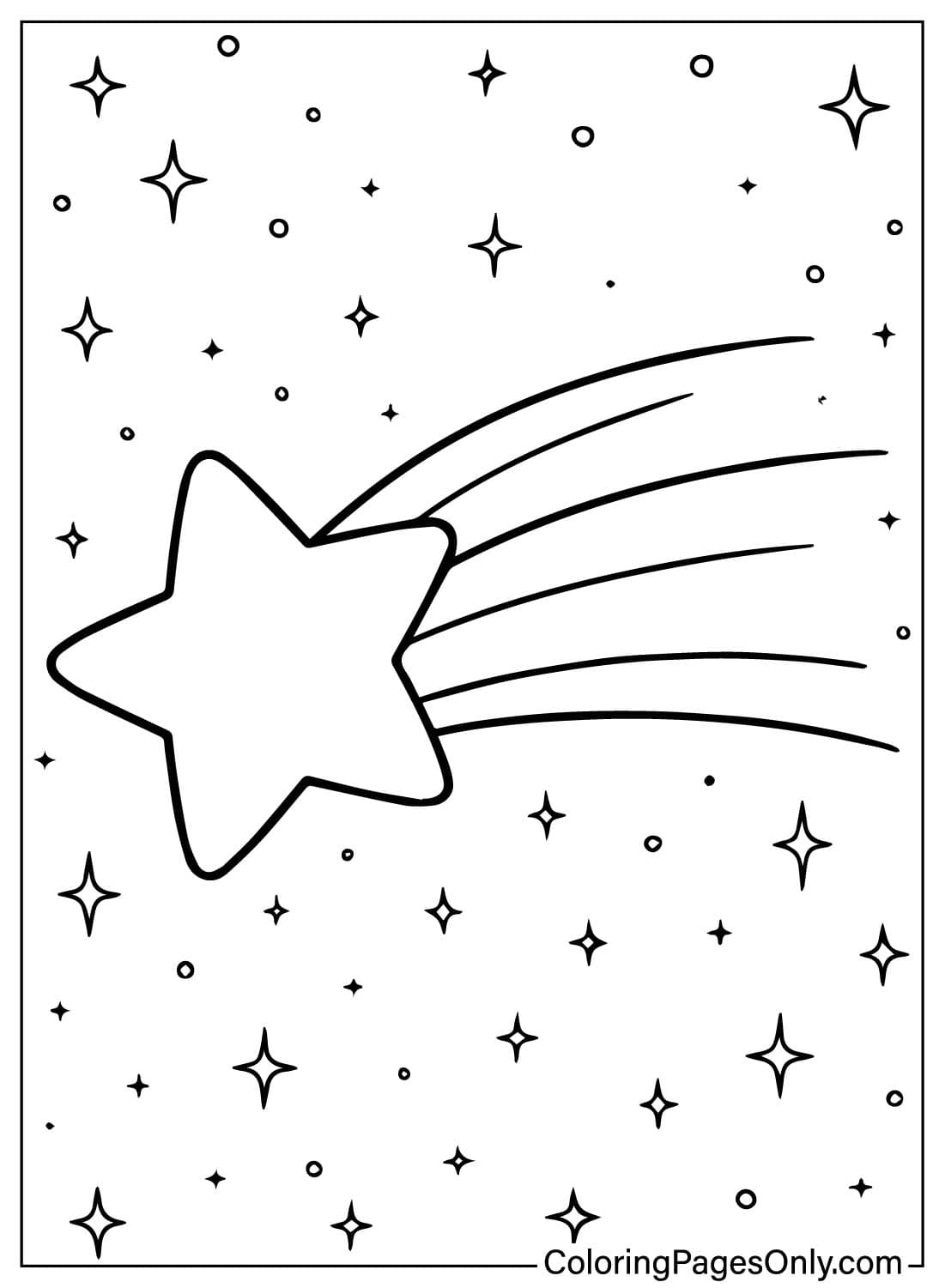
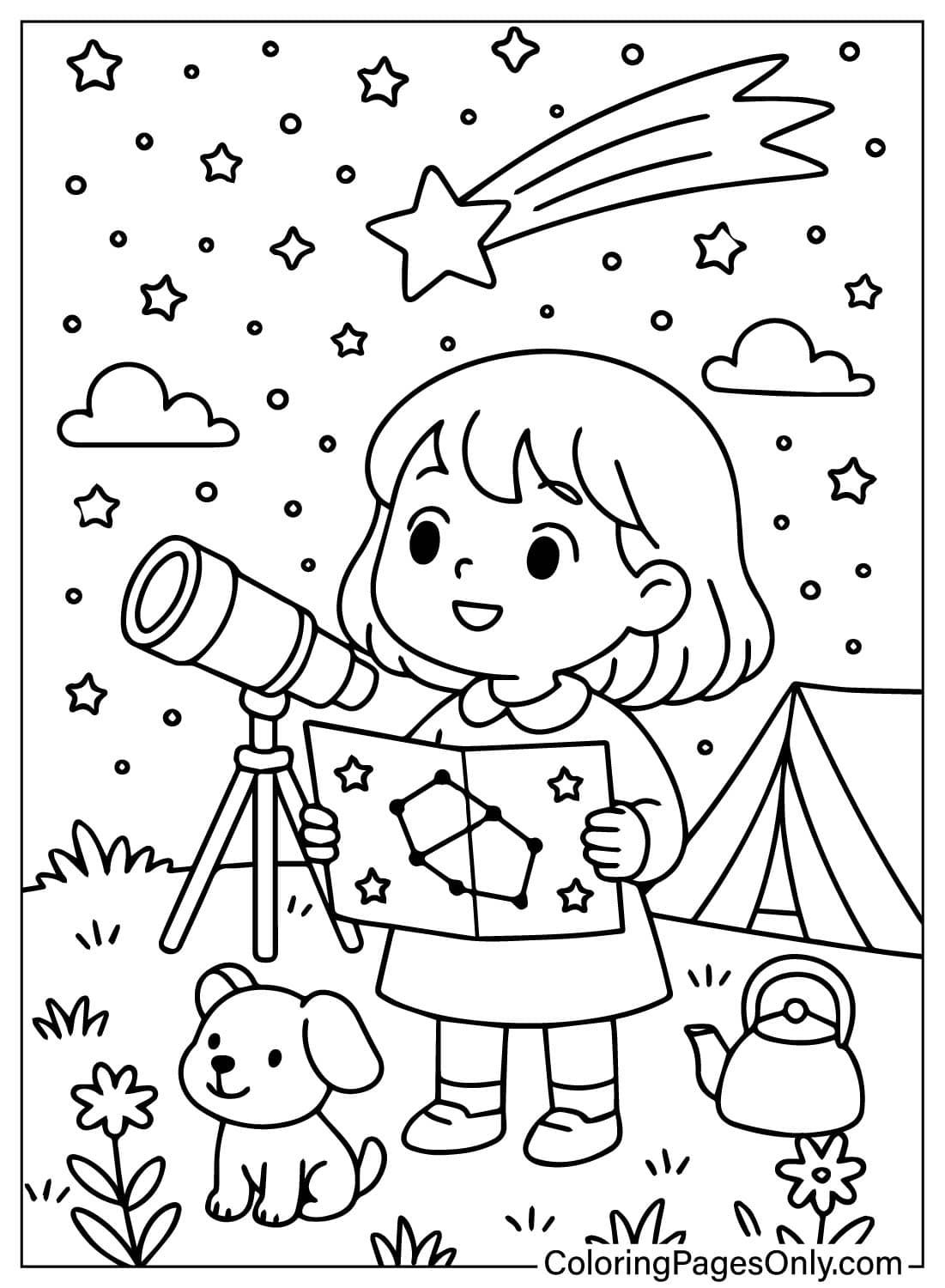
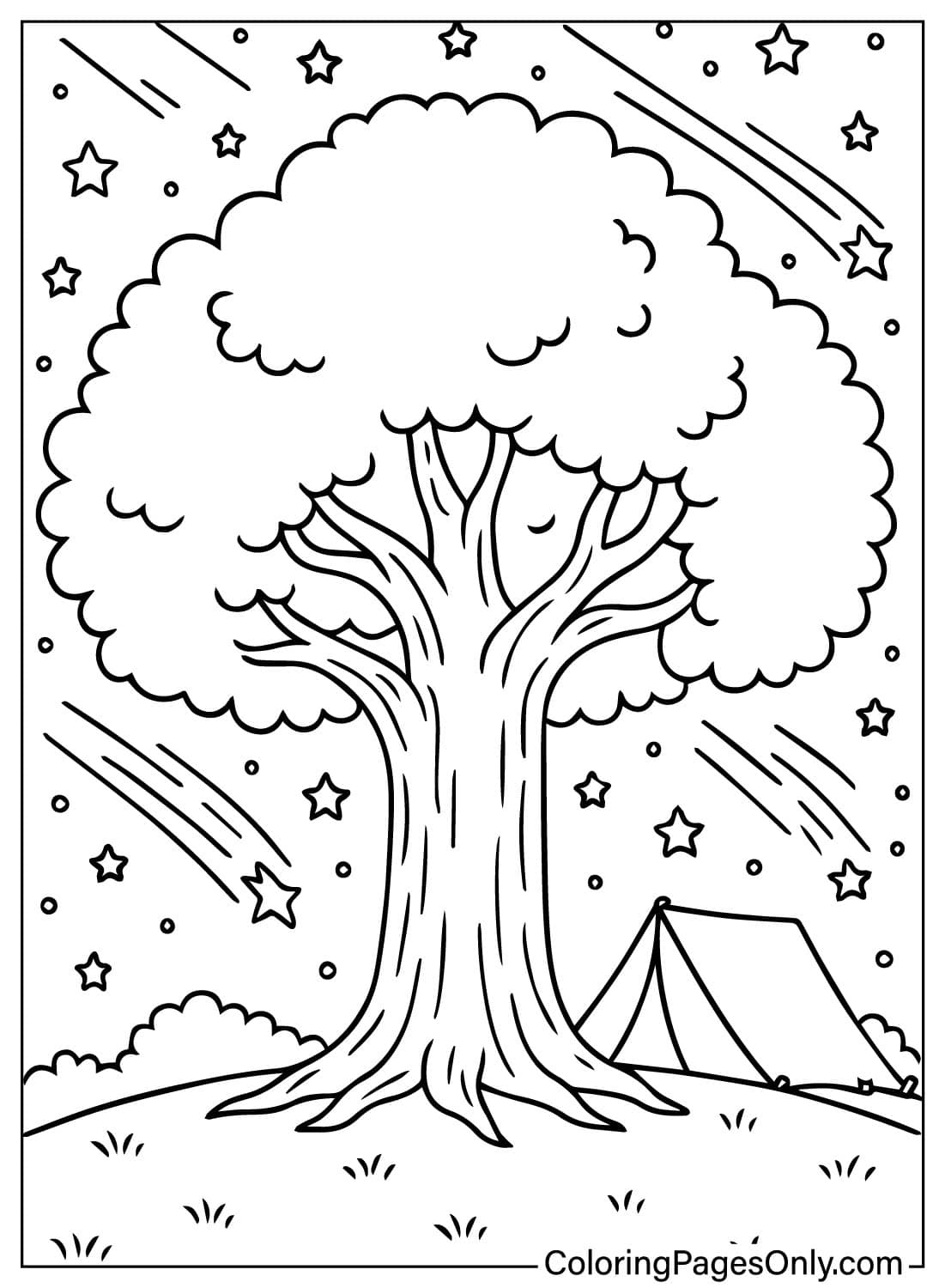
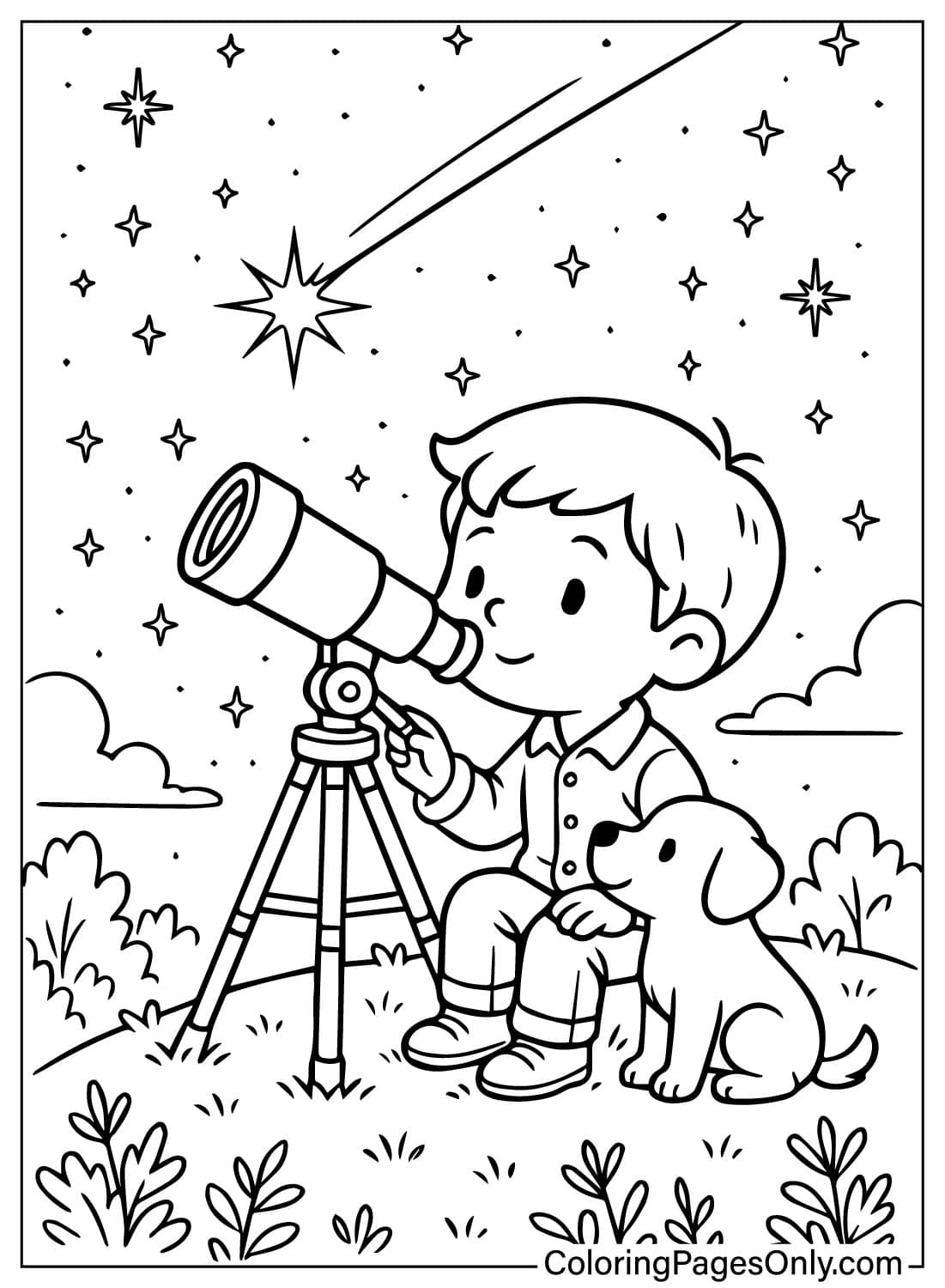
The 32 pages in this set are split into wishing and meaningful moments, animals watching shooting stars, kids and people discovering the night sky, space and sky scenes, and a smaller fantasy and general portrait group, giving colorists a wide range of moods built around the same night-sky moment.
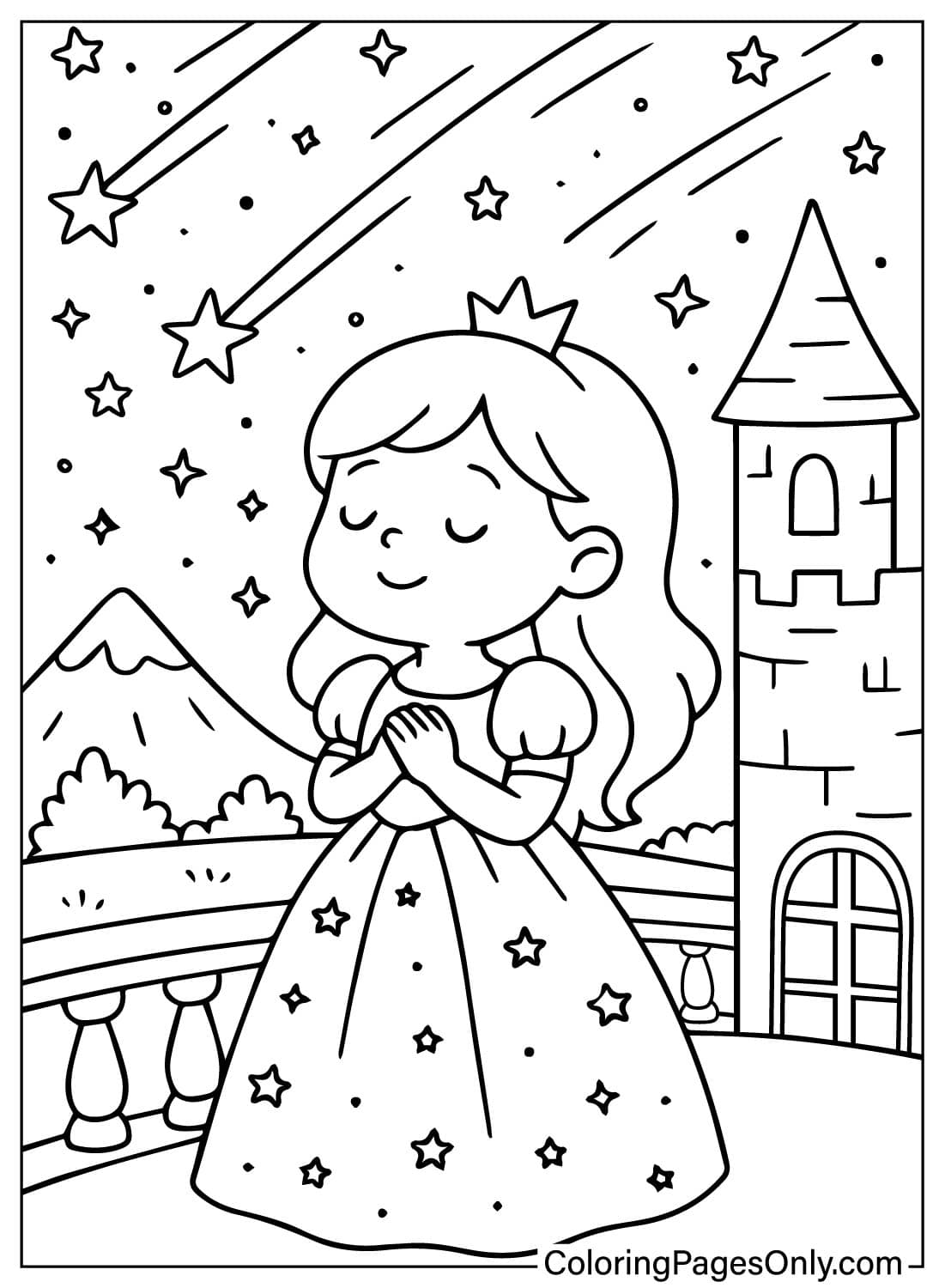
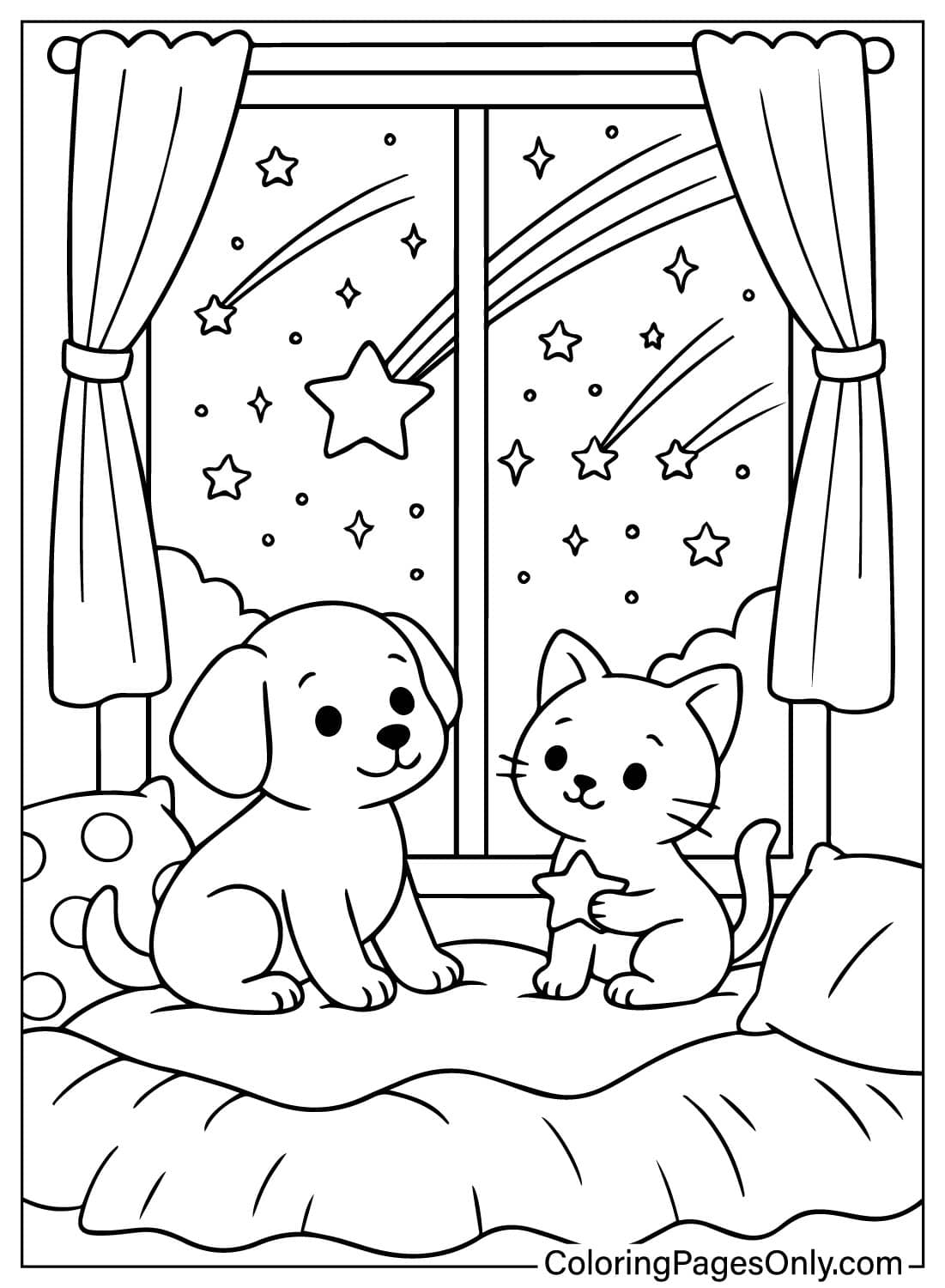
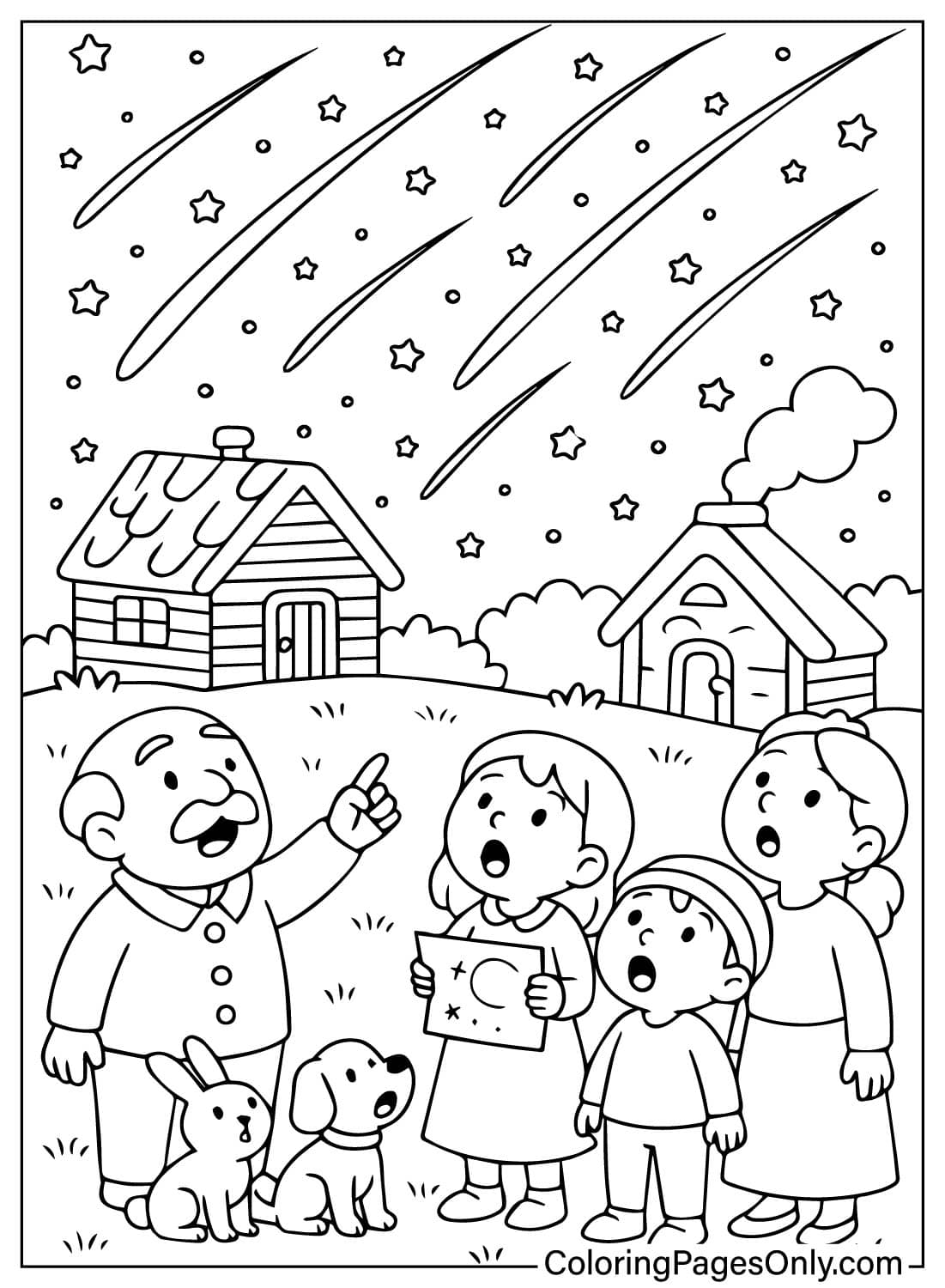
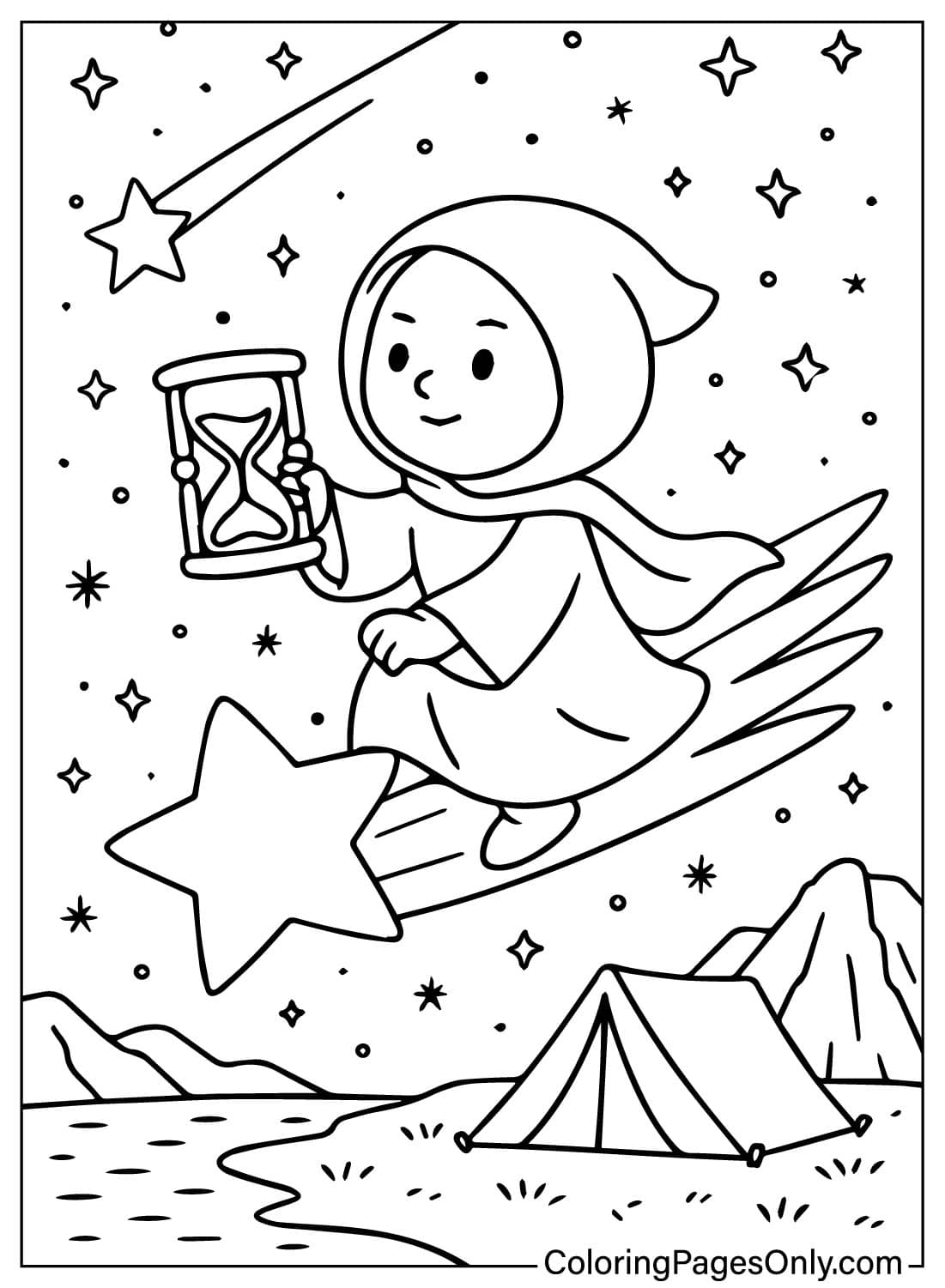
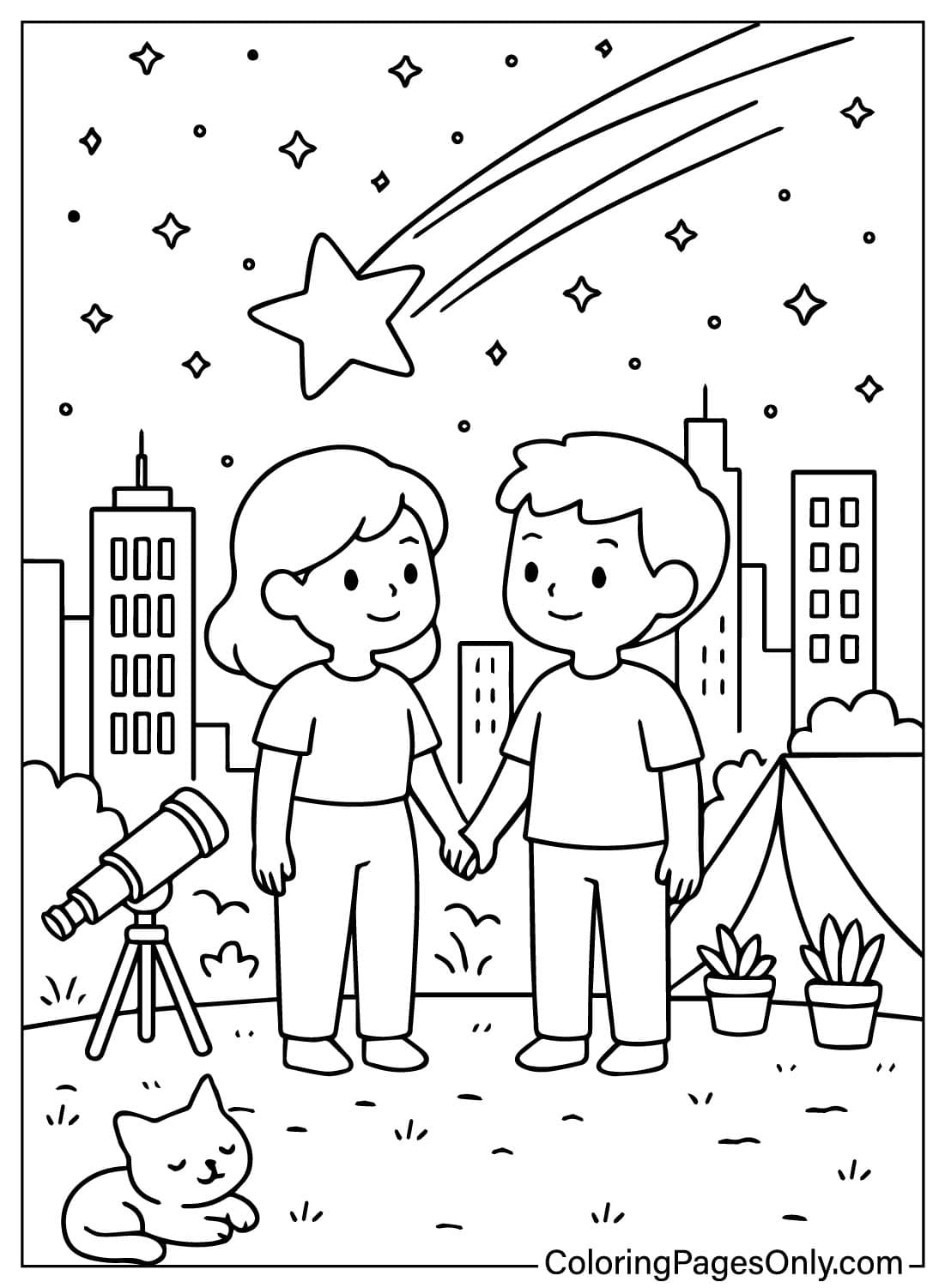
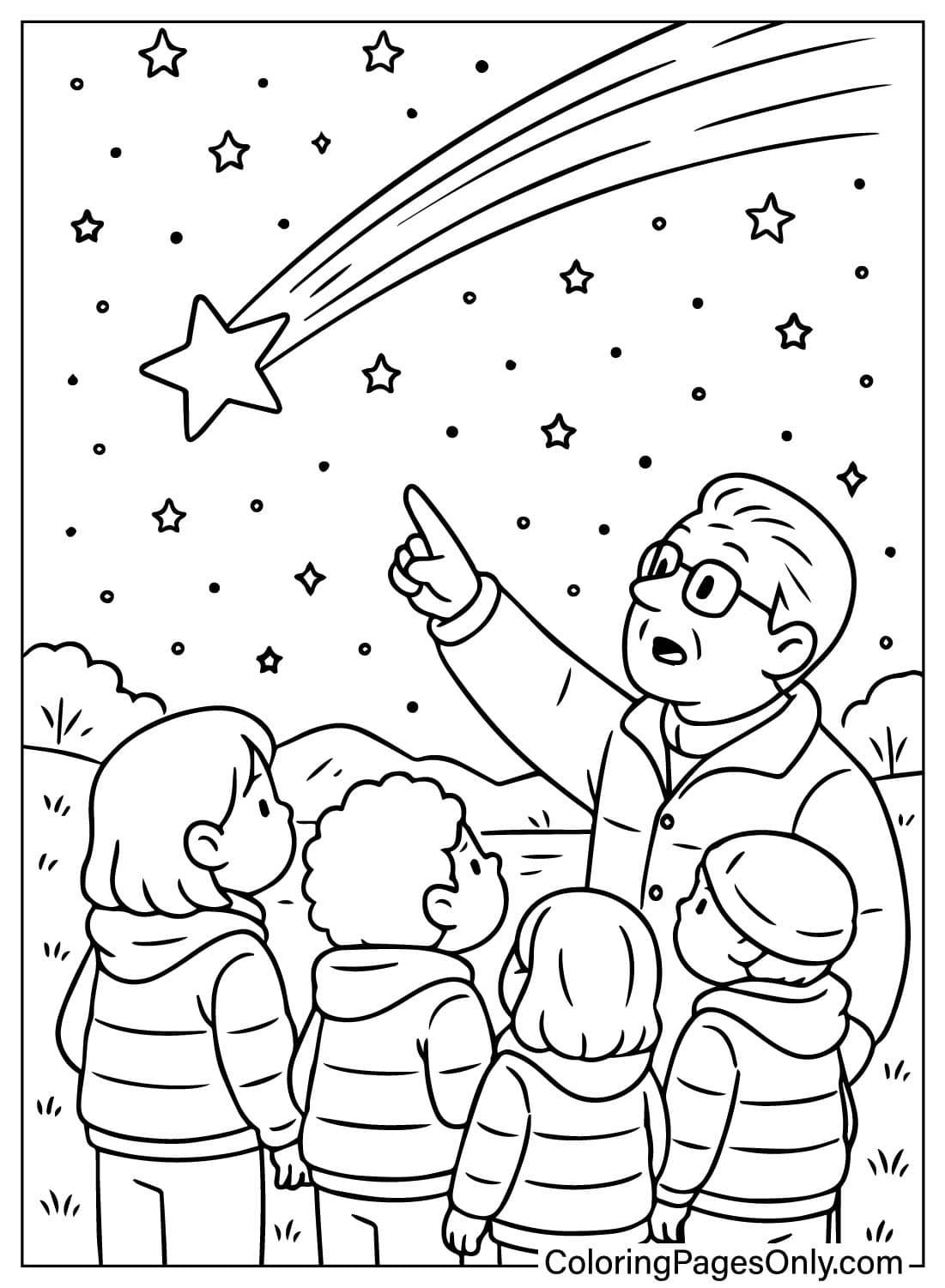
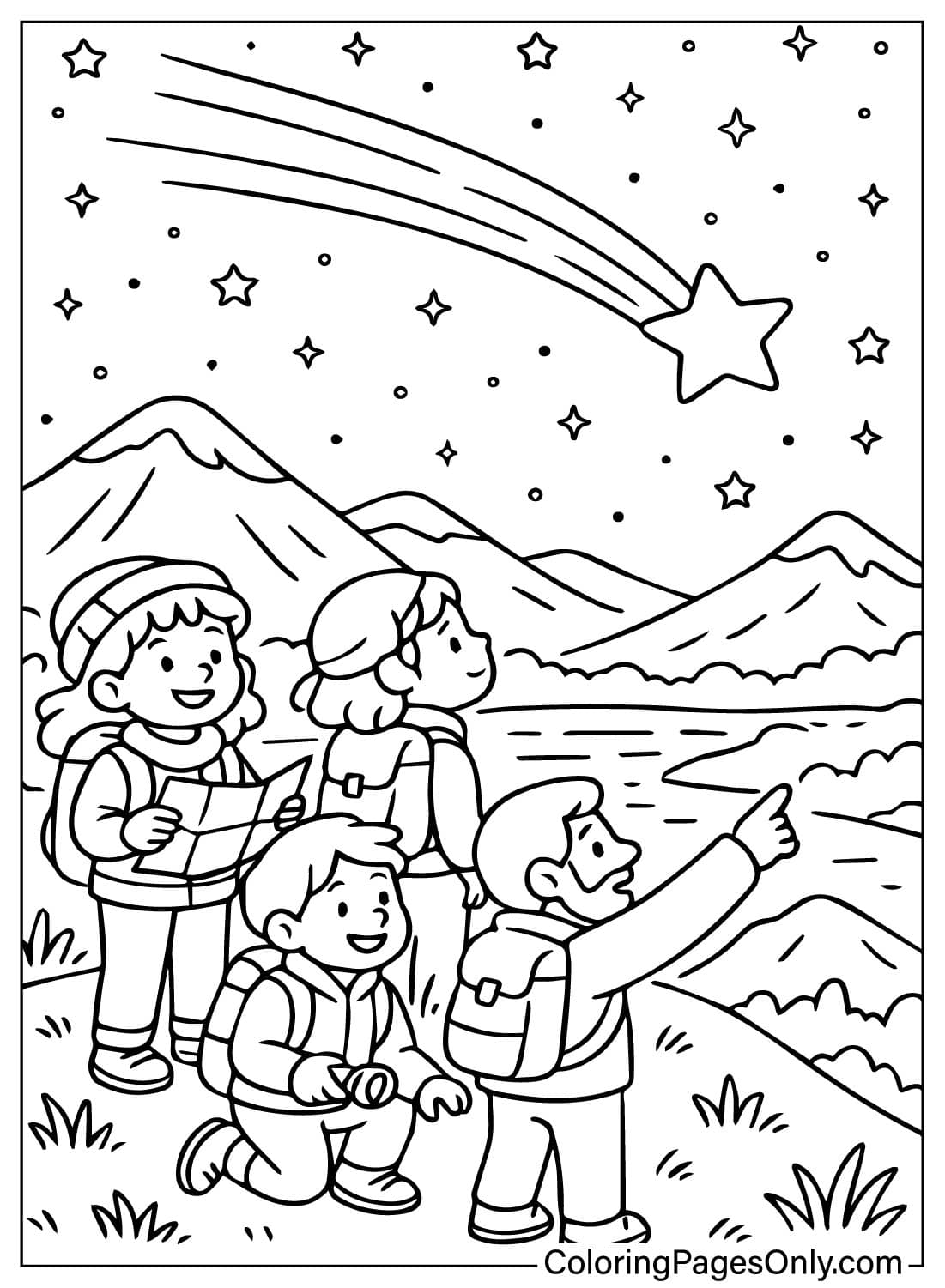
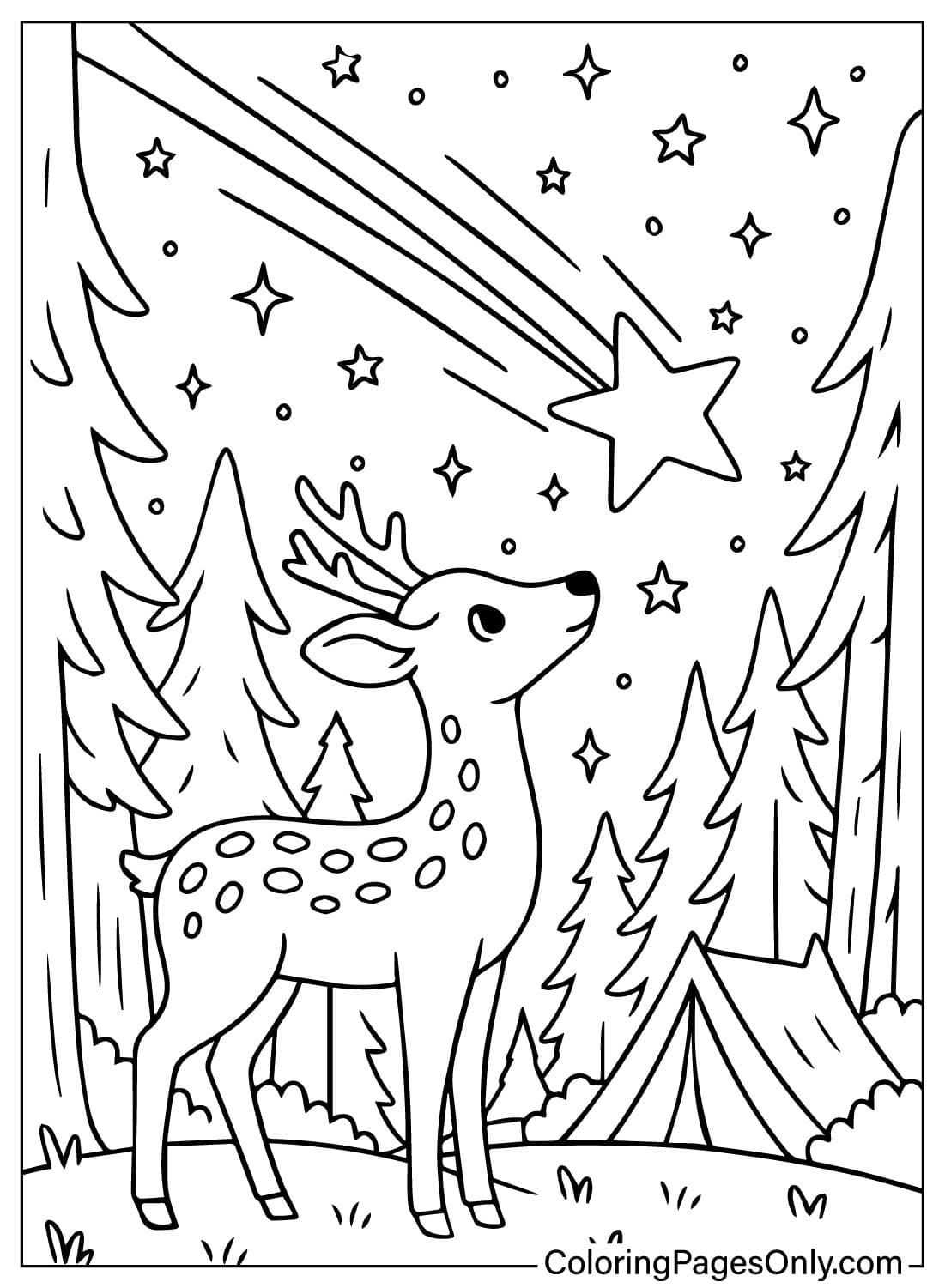
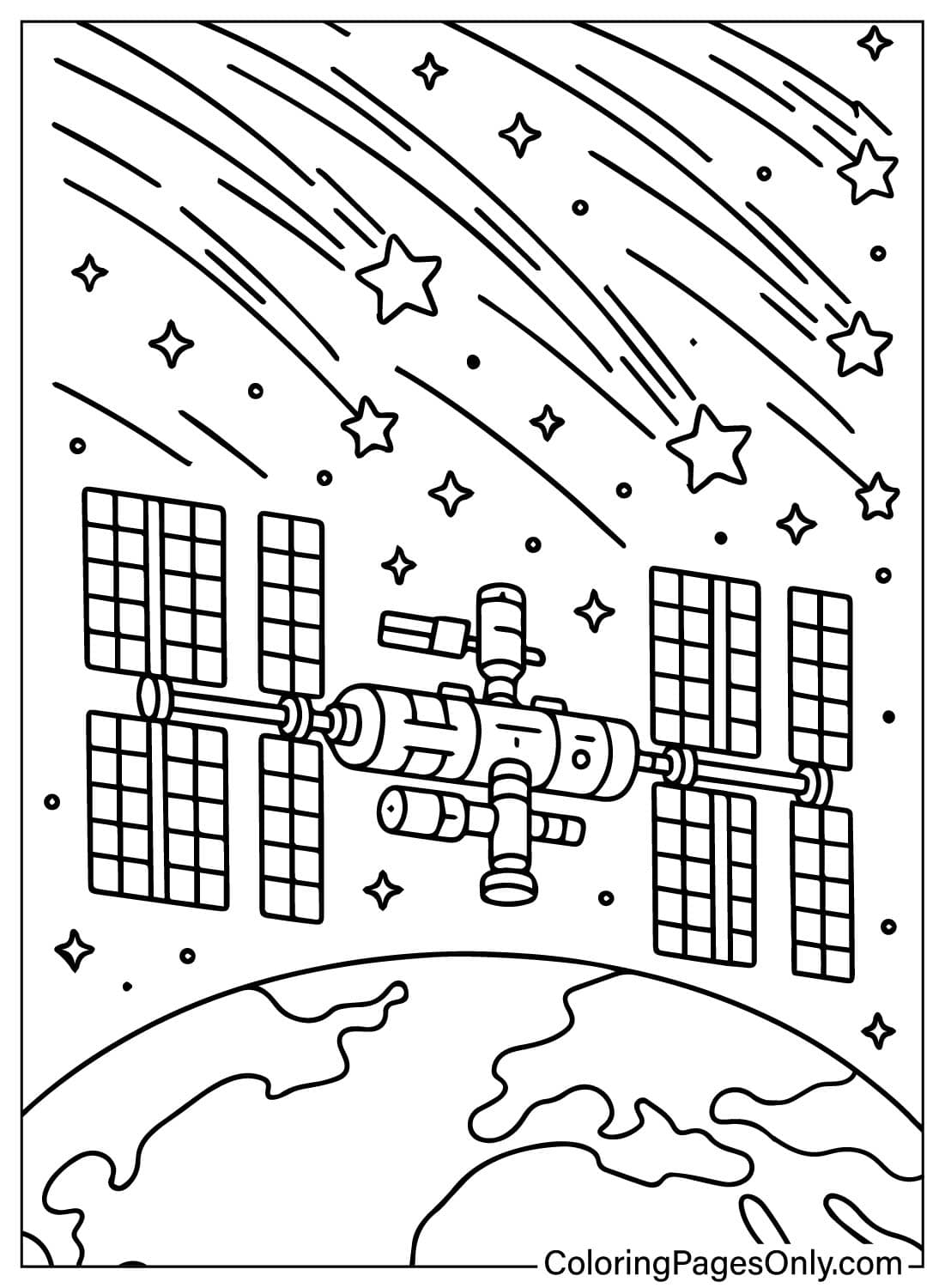
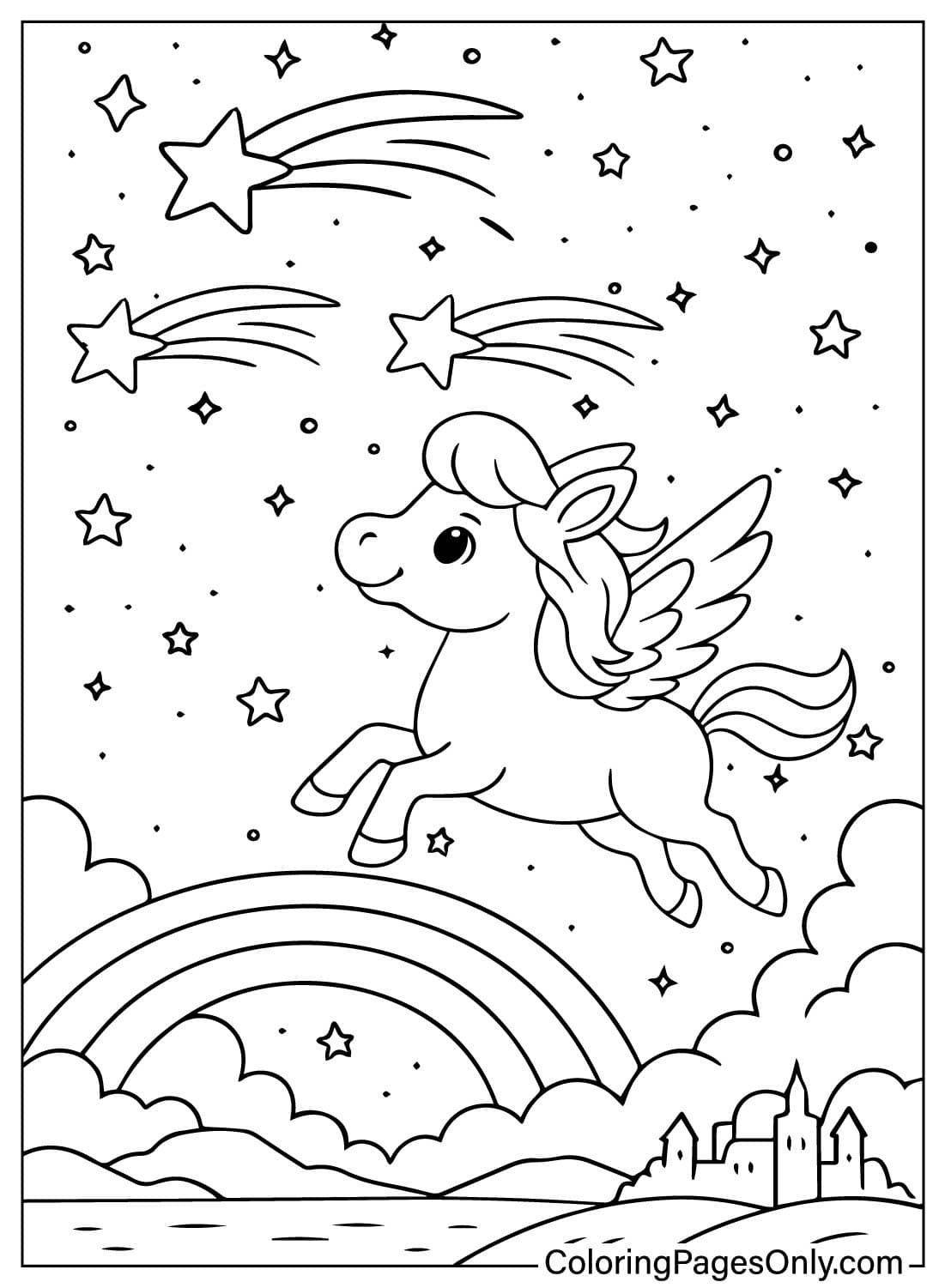
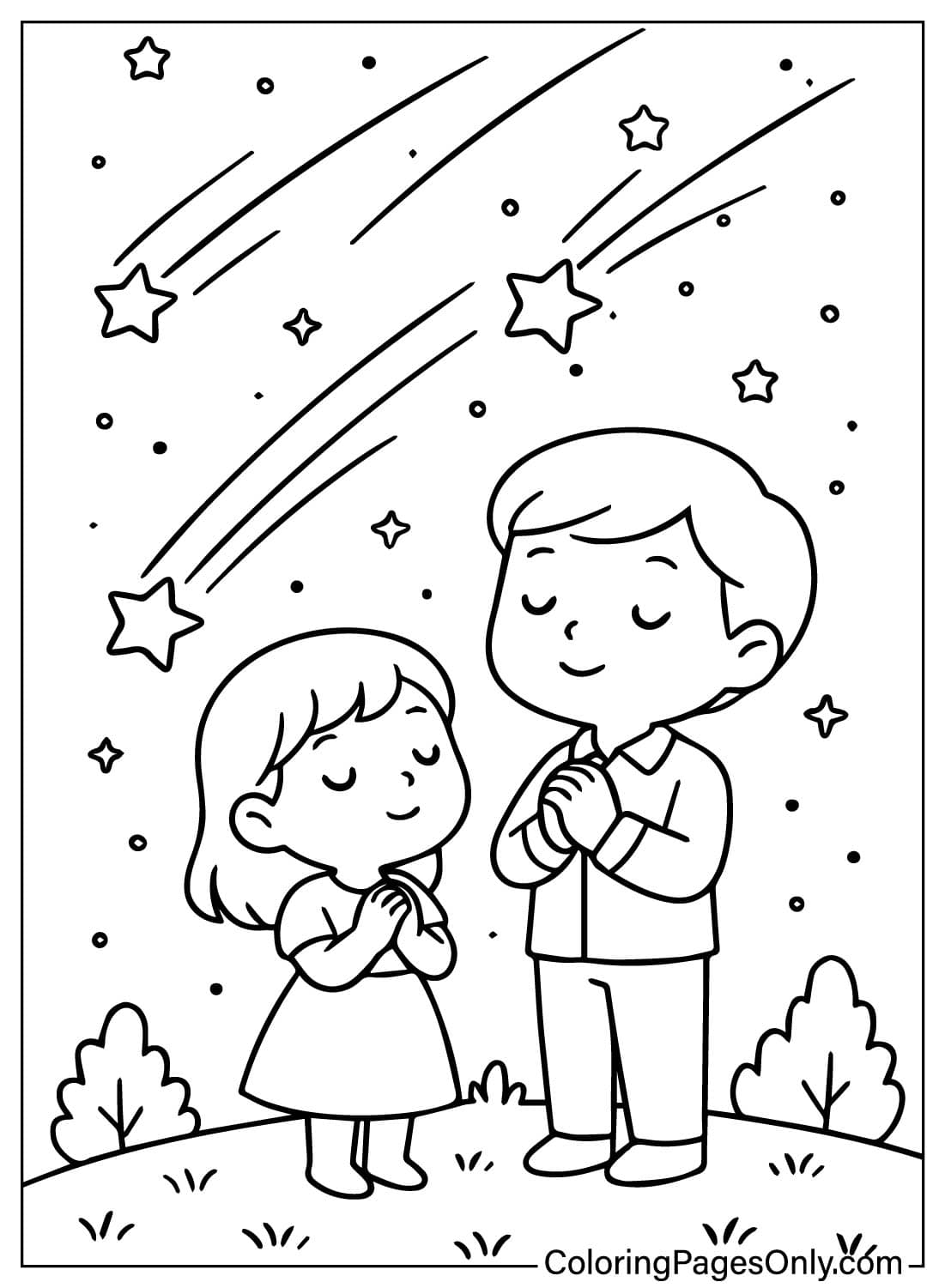
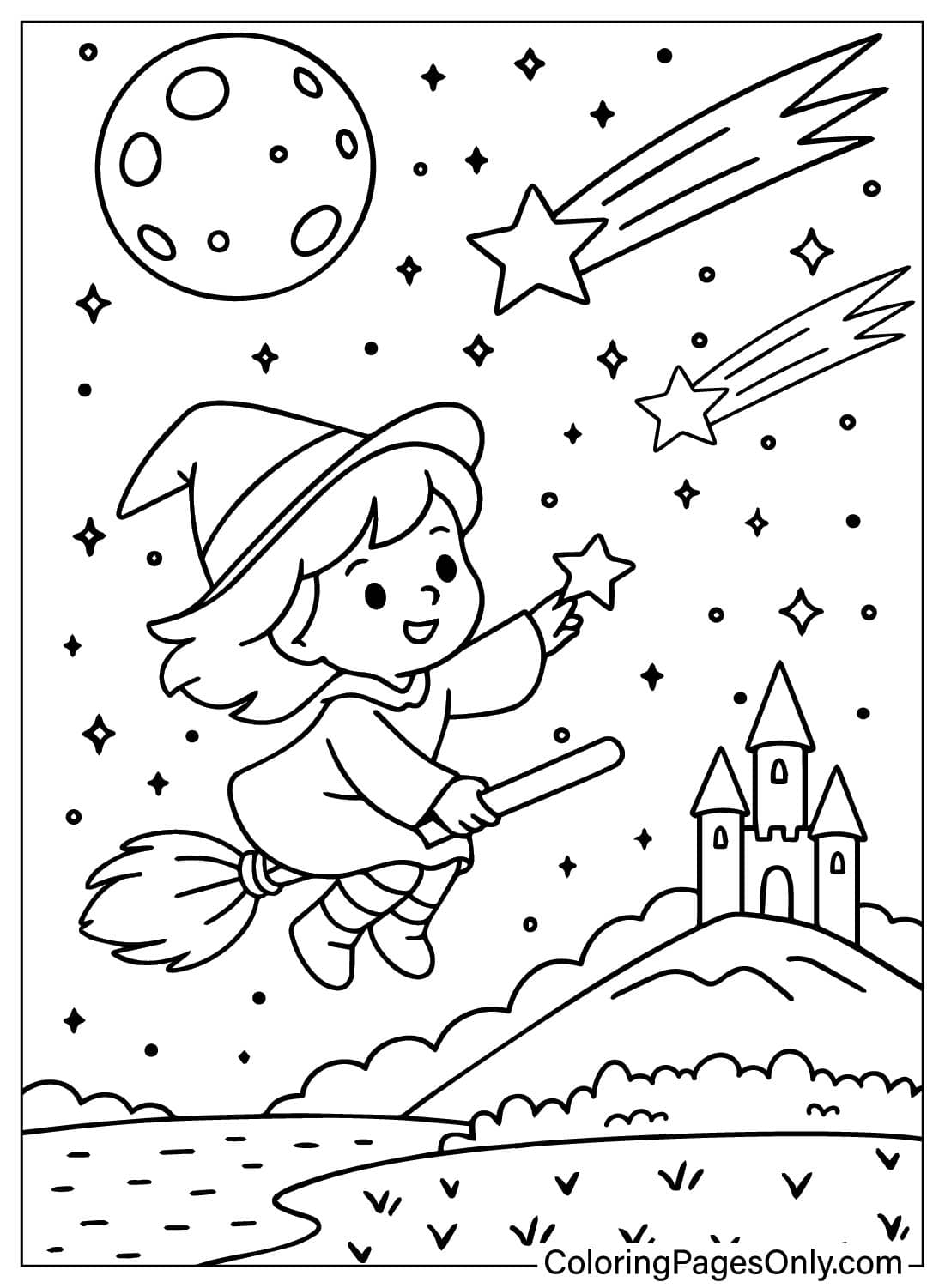
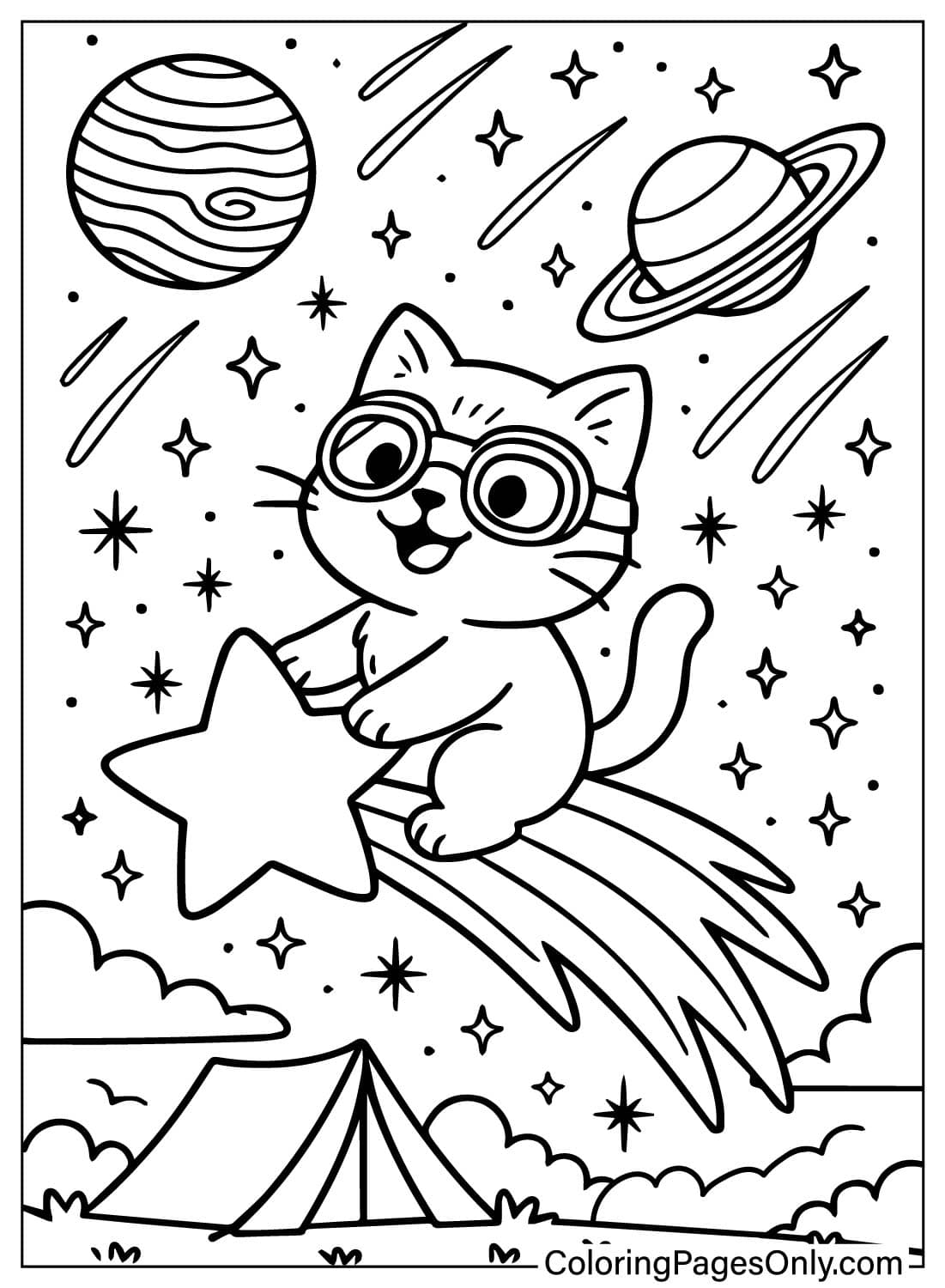
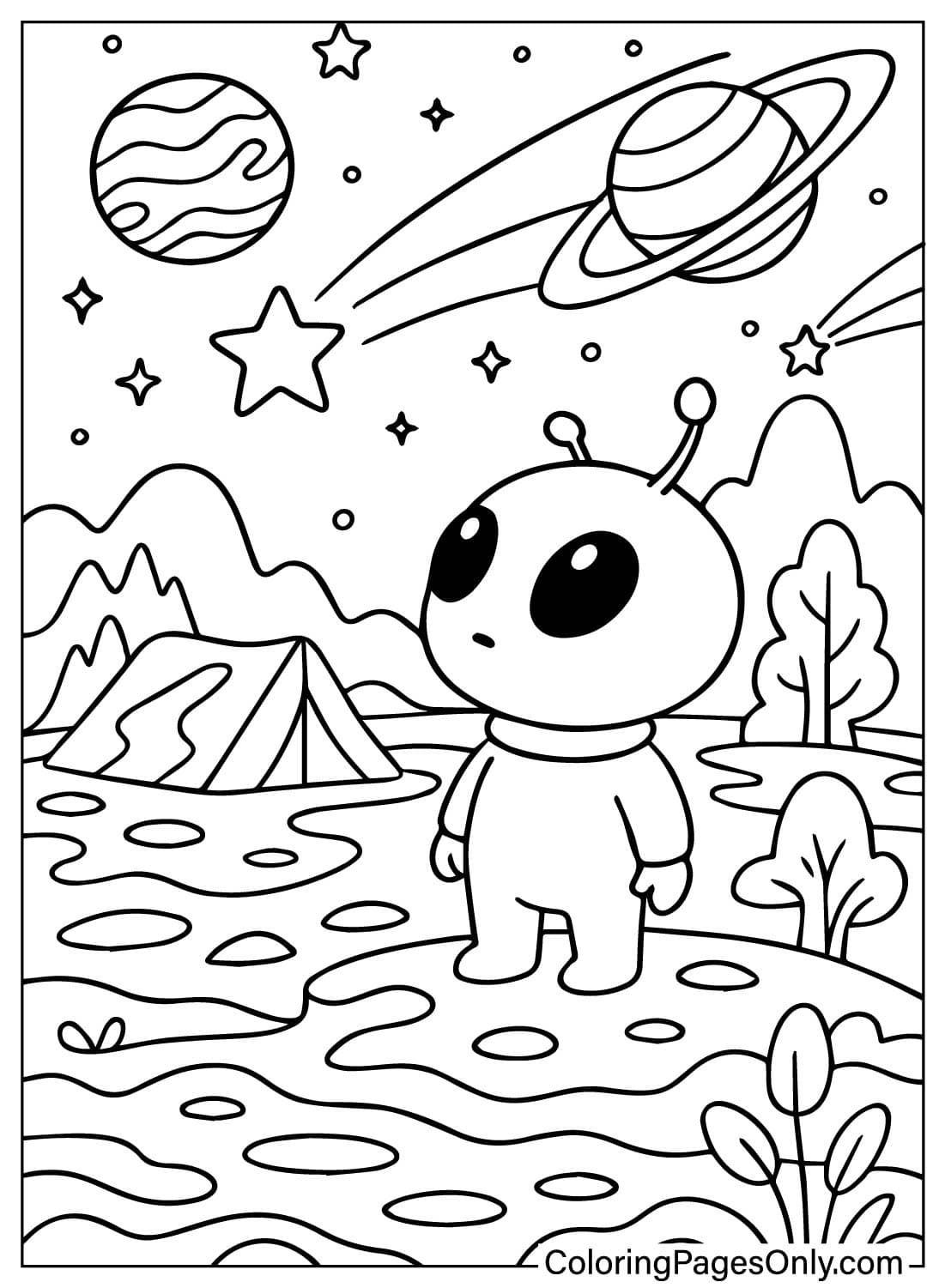
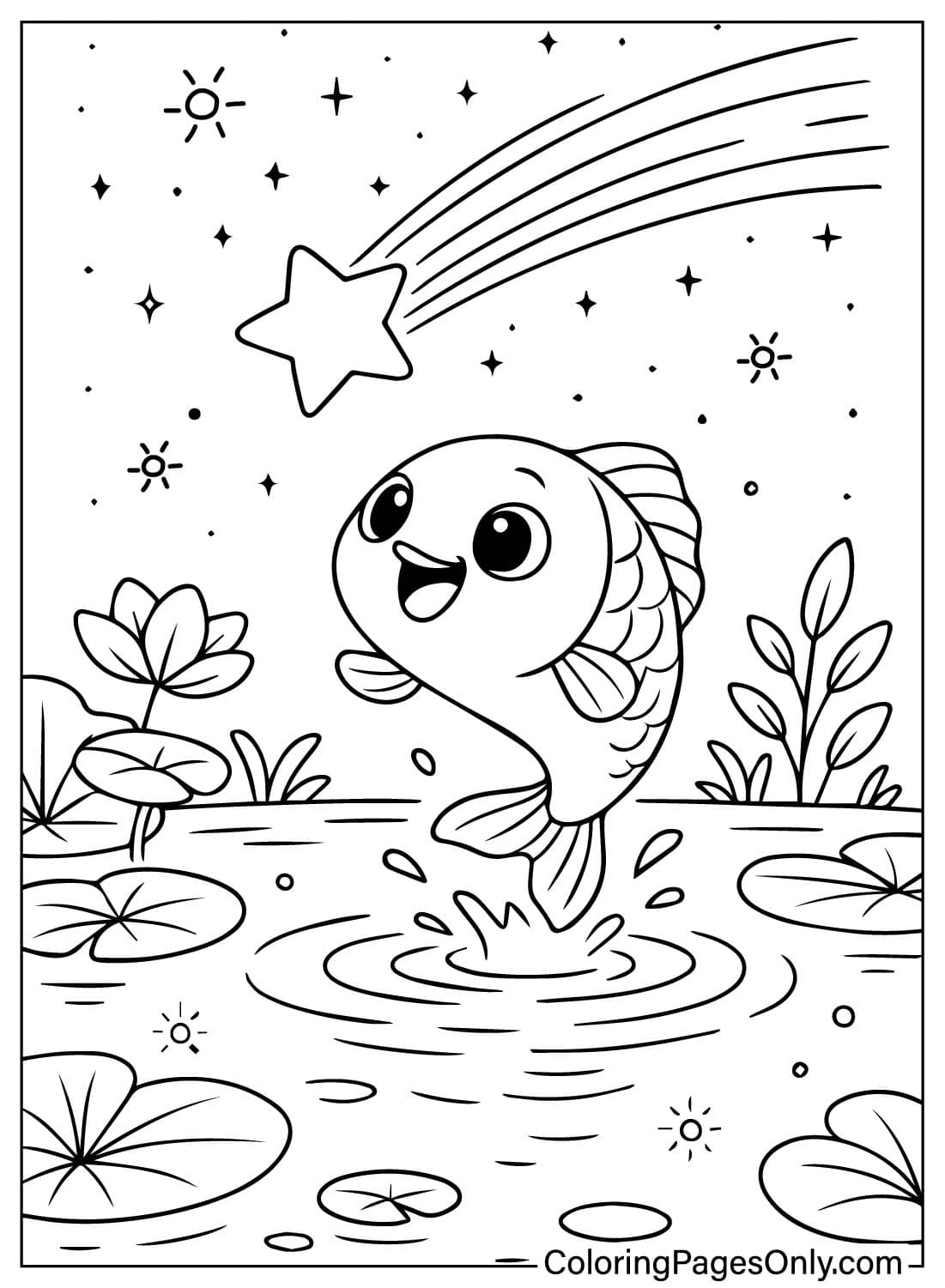
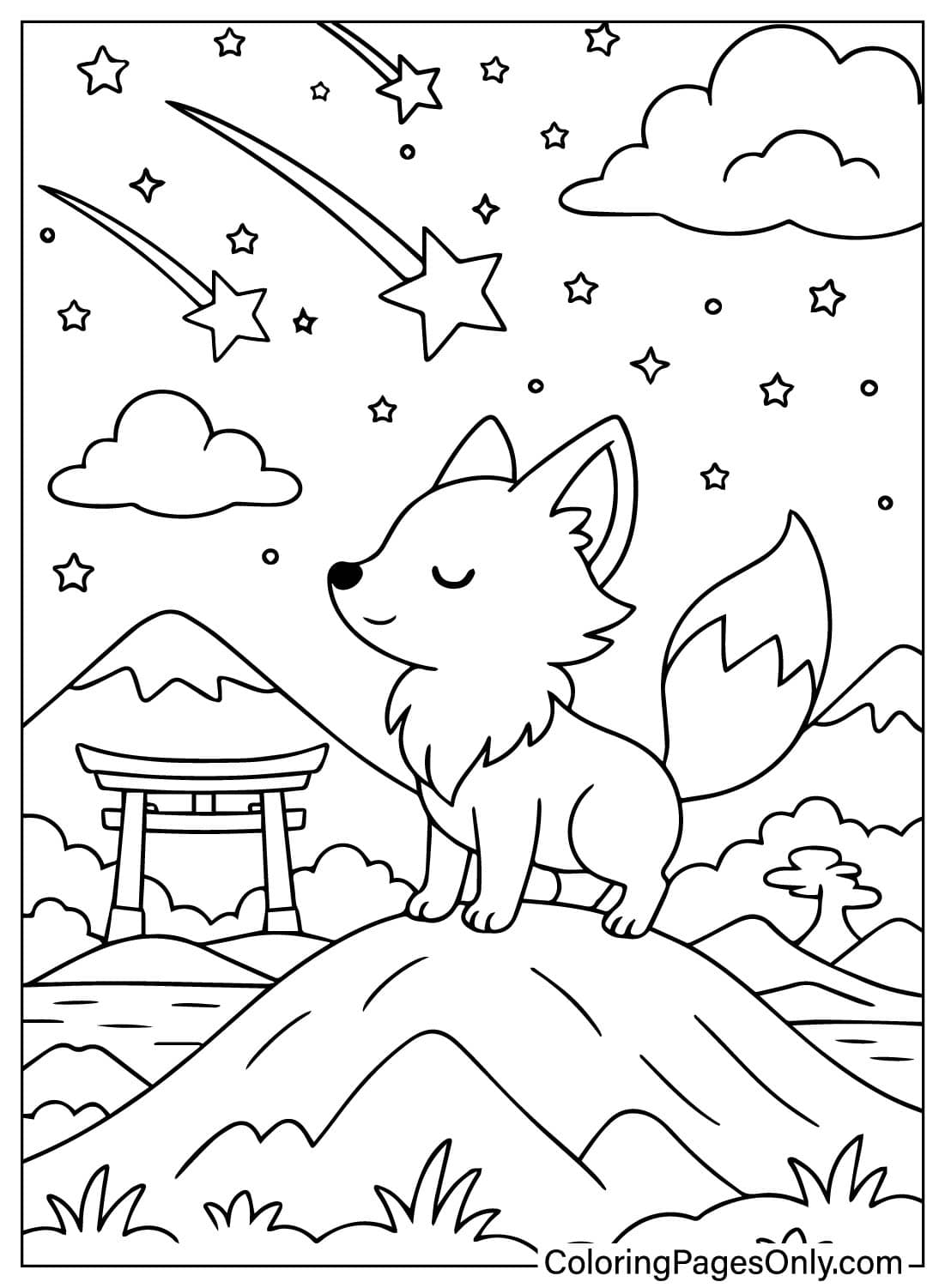
What Is Inside This Collection
The 32 pages are grouped by who is watching the shooting star and what mood the scene carries, rather than by a single repeated design.
Wishing and Meaningful Moments
A group of pages leans into the tradition of wishing on a shooting star, including quiet, reflective scenes. These suit soft Lavender and deep Midnight Blue for the sky, with a bright Golden Yellow streak for the star itself.
Animals Watching Shooting Stars
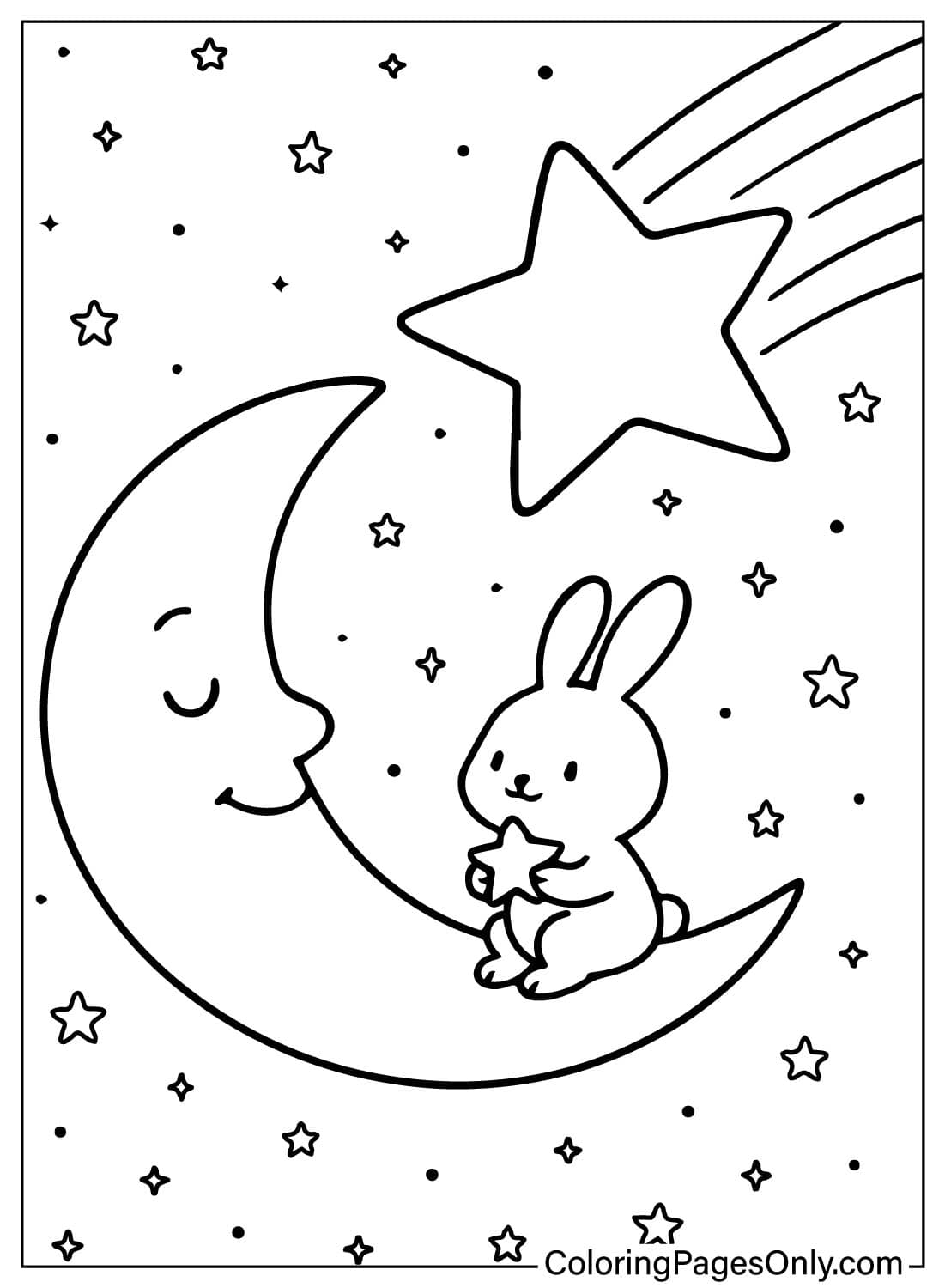
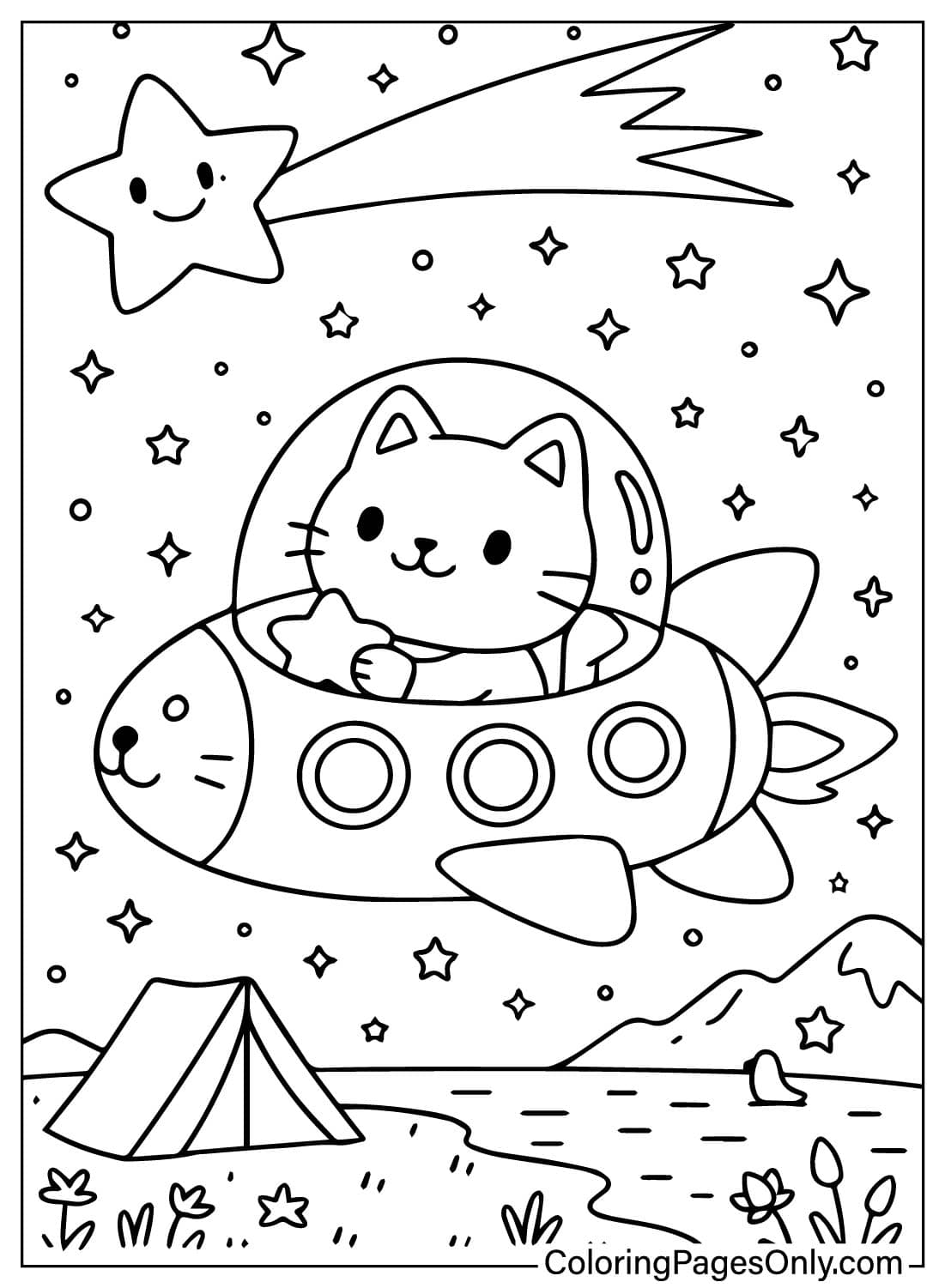
A large group gives the night sky to animals instead of people, including a bunny, a cat, a fox, and a fish. These work well with each animal’s natural coloring first, set against a simple night-sky background so the animal stays the visual focus.
Kids and People Discovering the Night Sky
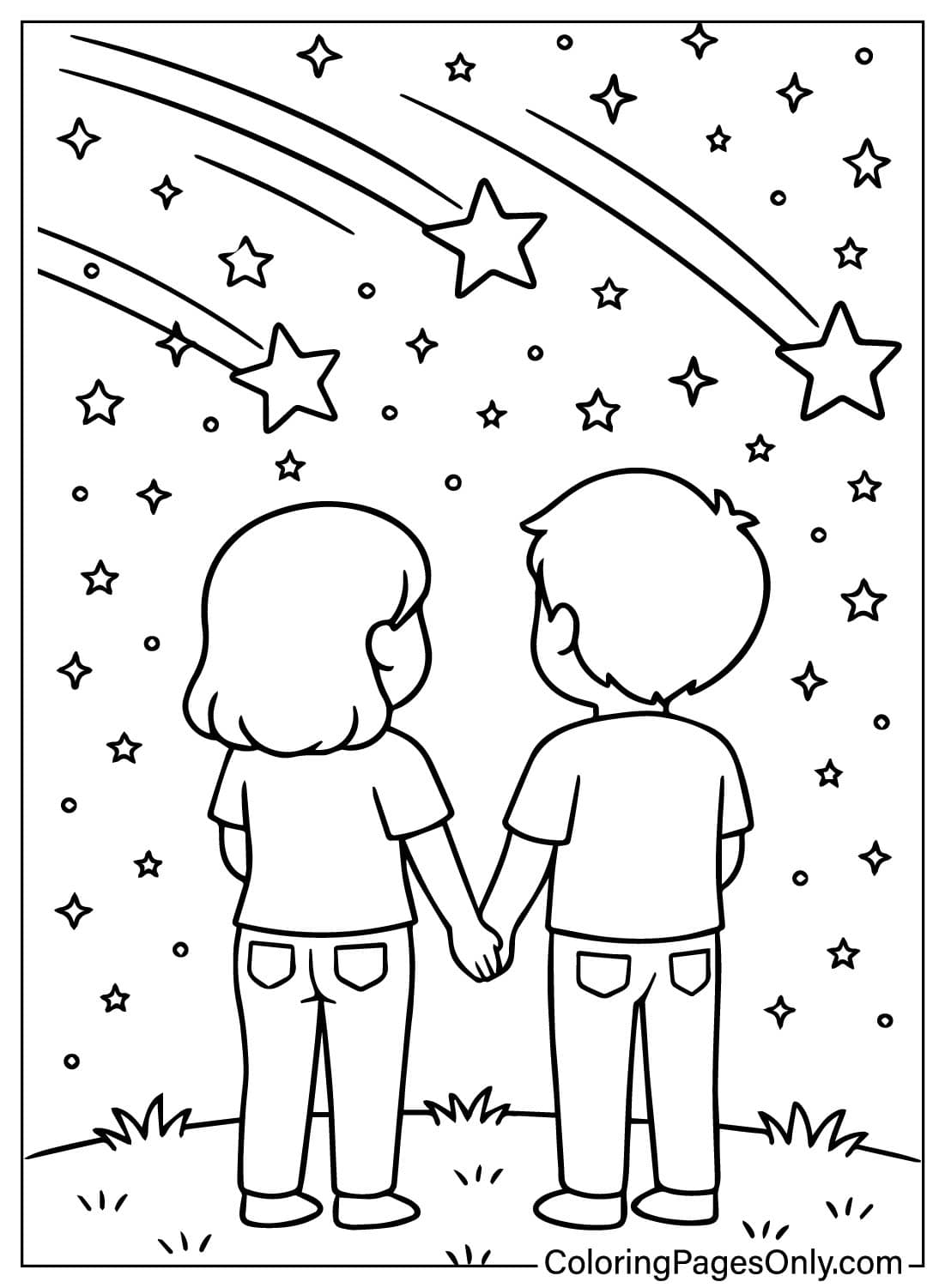
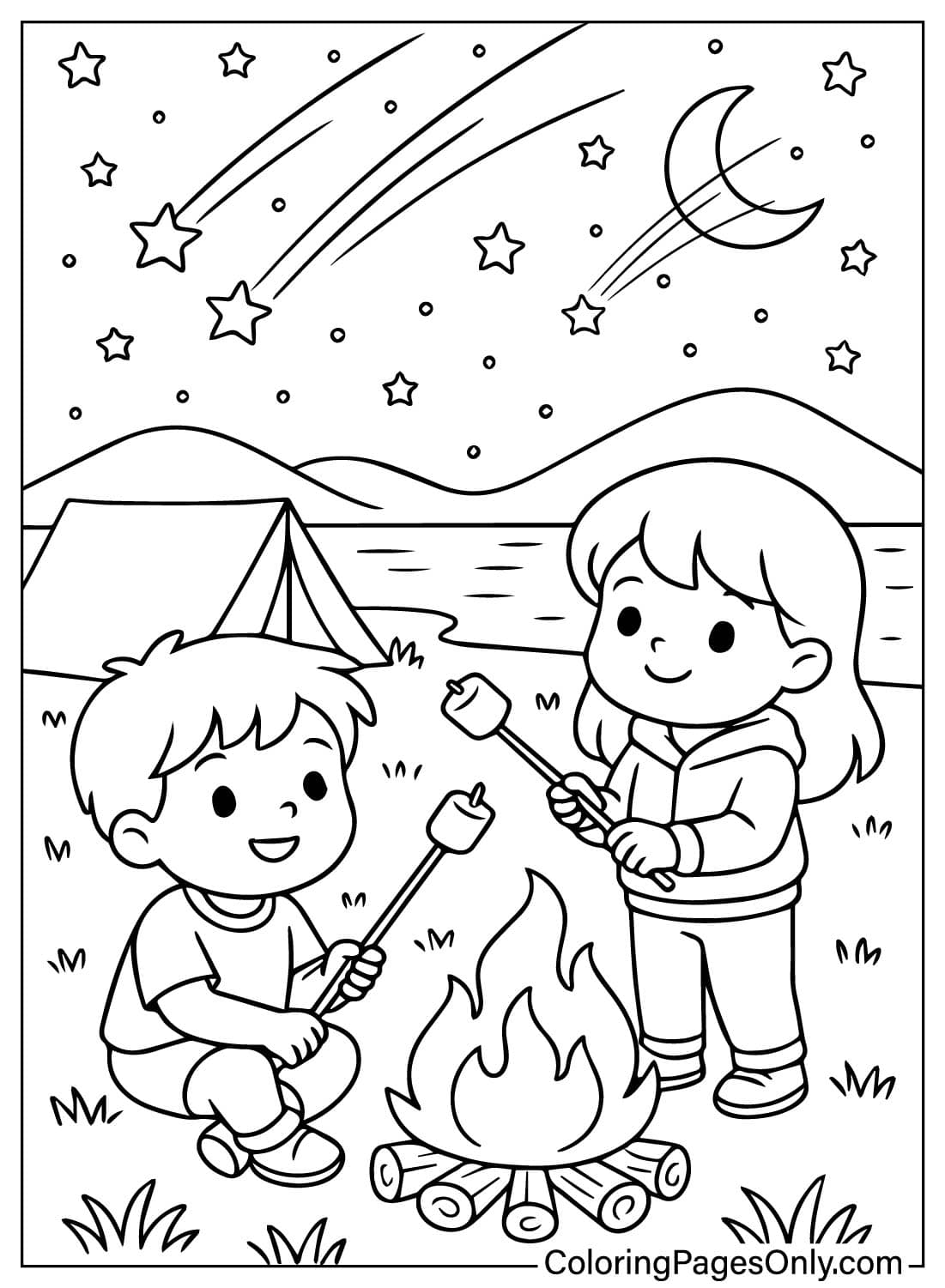
Another large group shows children or adults noticing a shooting star for the first time, often while camping or looking out a window. These suits warm skin and clothing tones set against the cooler blues and purples of the sky.
Space and Sky Scenes
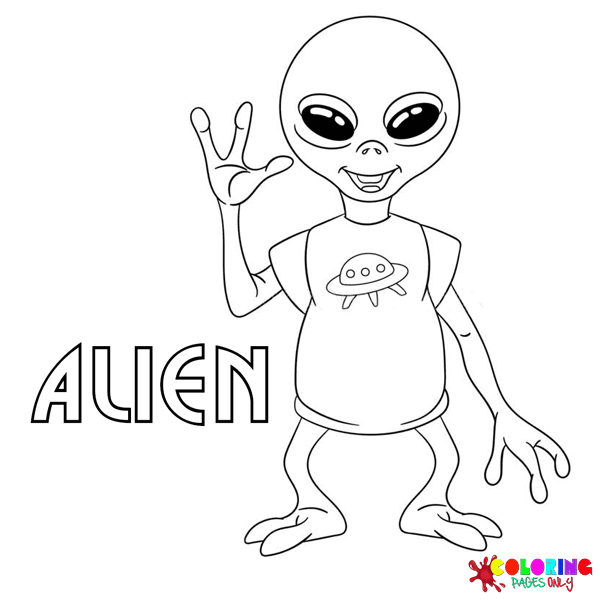
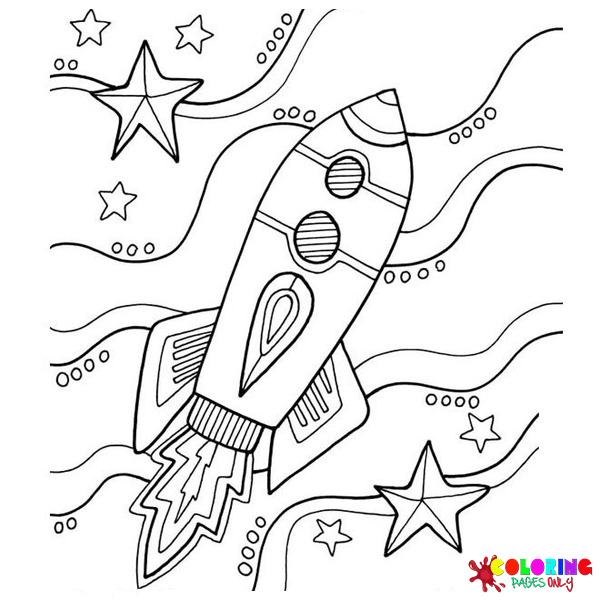
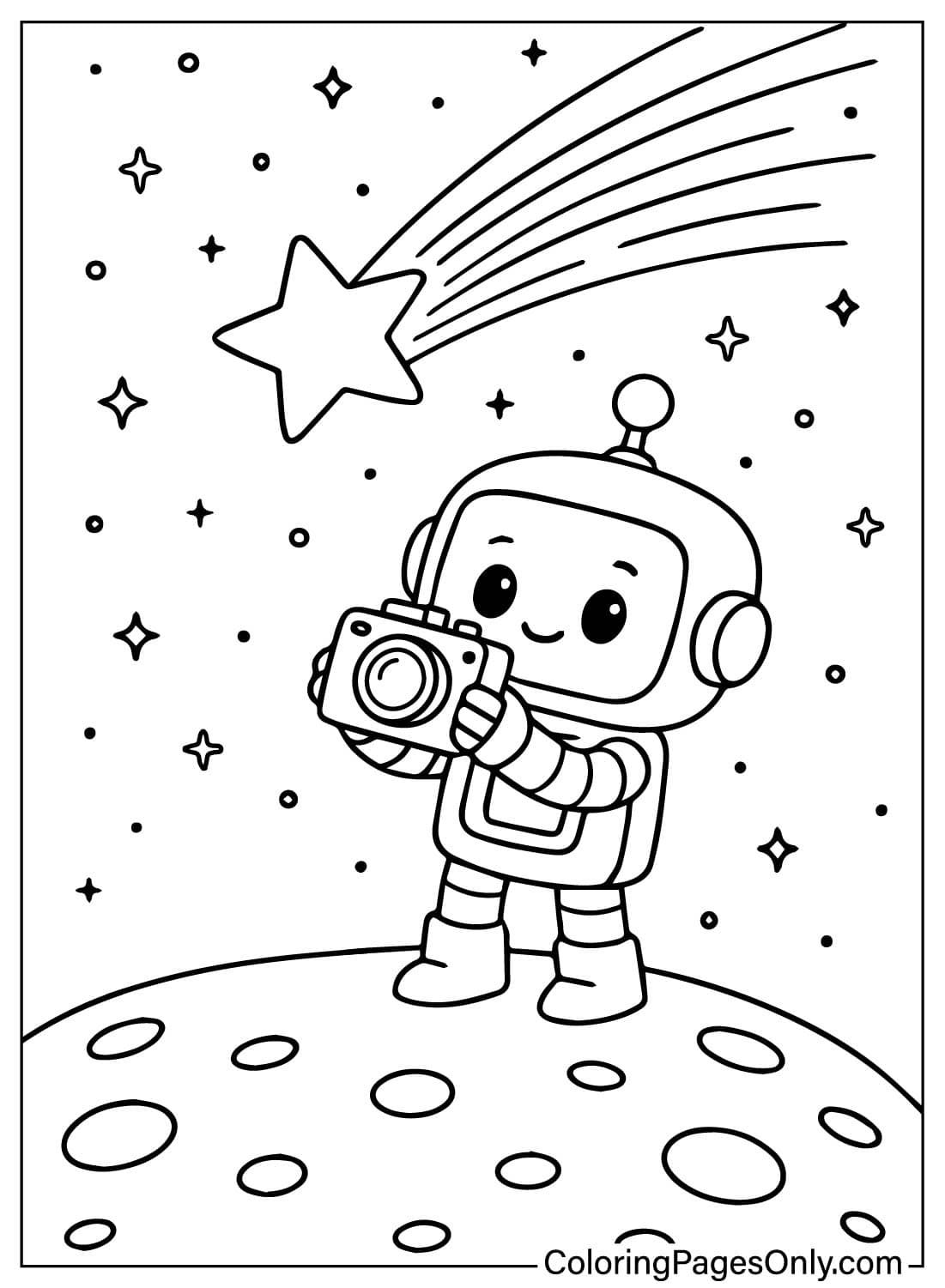
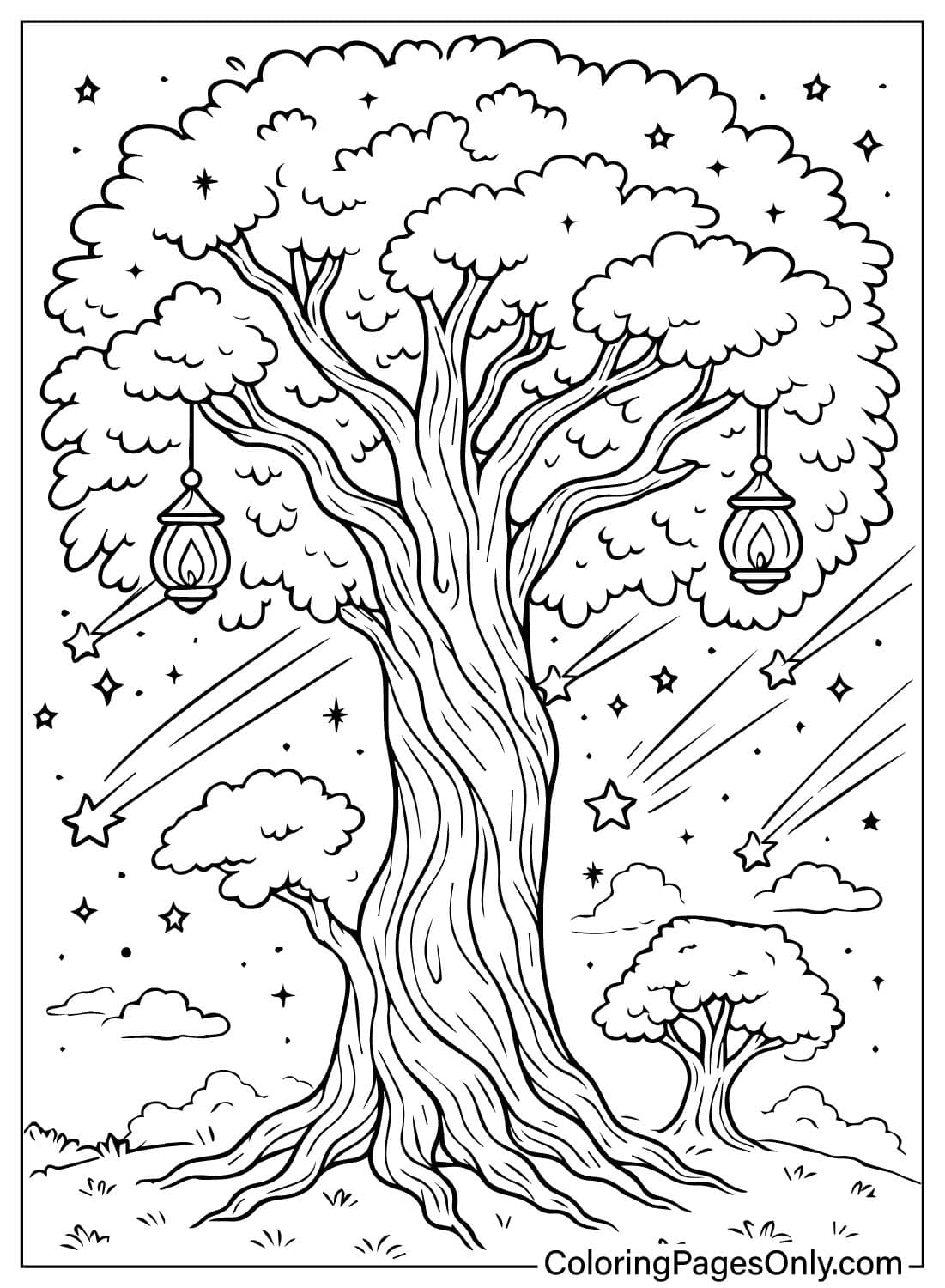
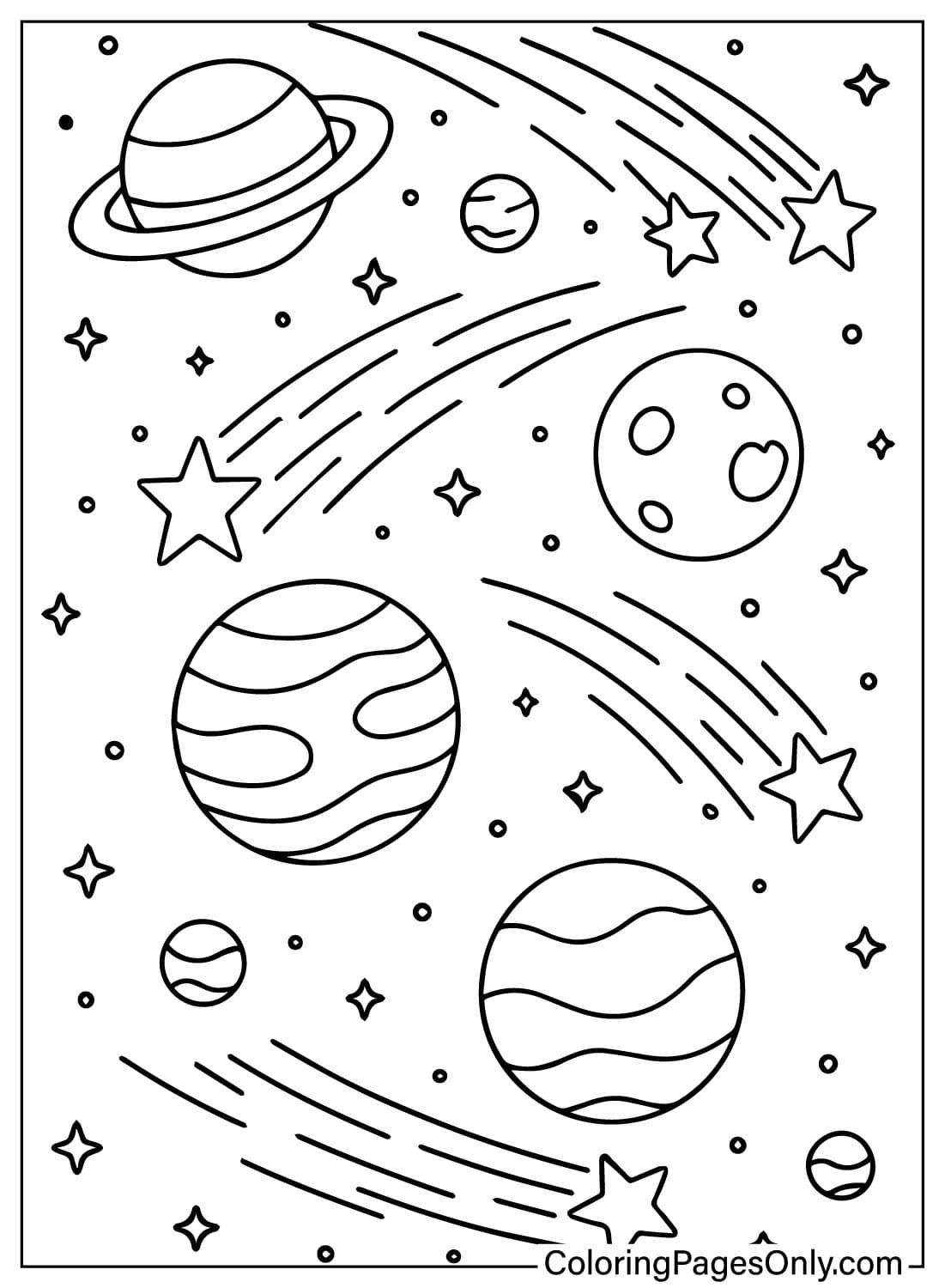
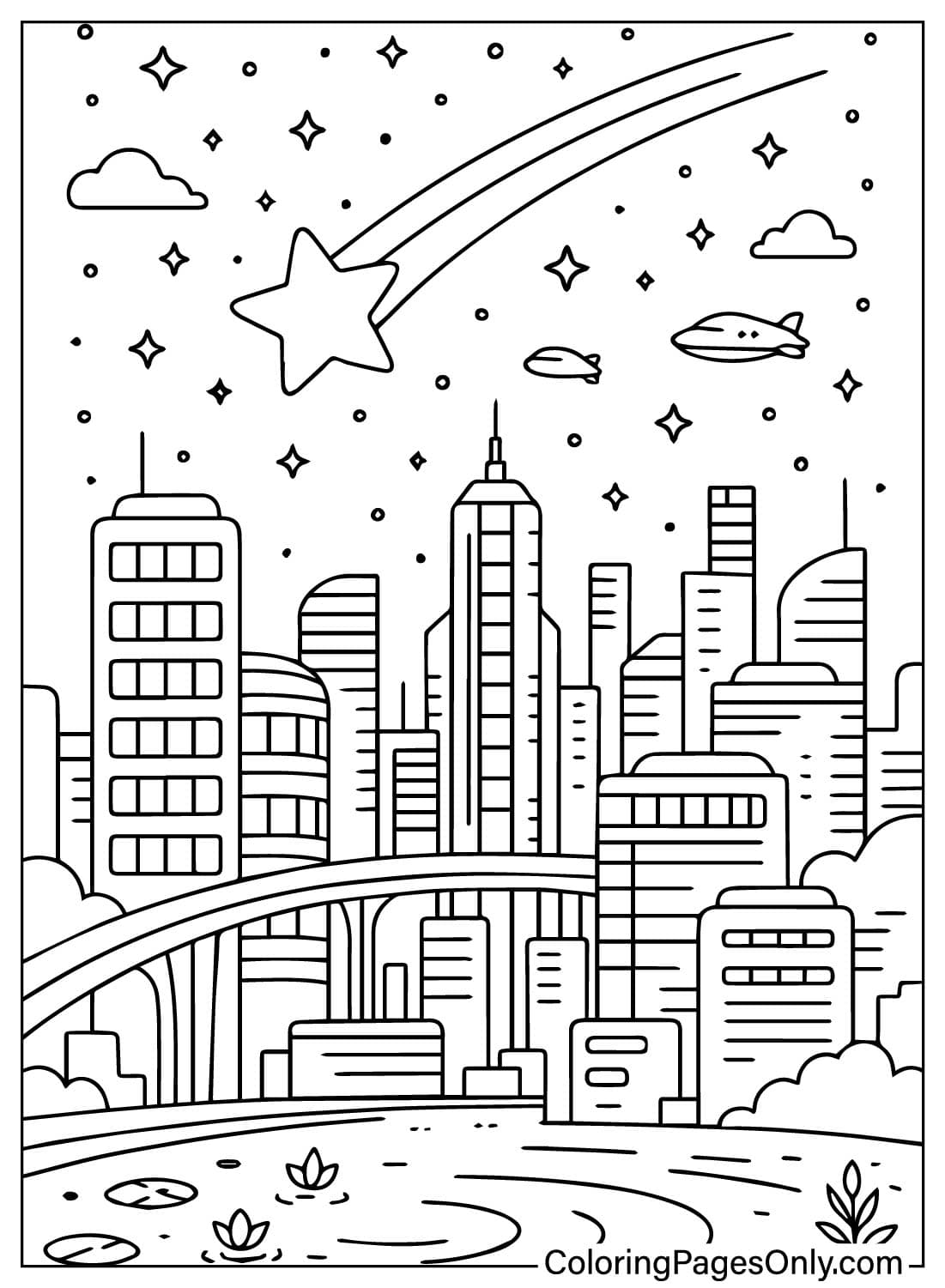
A group of pages moves the shooting star into a specific setting, from a city skyline to a forest, a space scene with an astronaut, or an alien watching from afar. These suit a background palette matched to the setting, with the star’s trail kept a consistent bright accent color throughout.
Fantasy and General Portraits
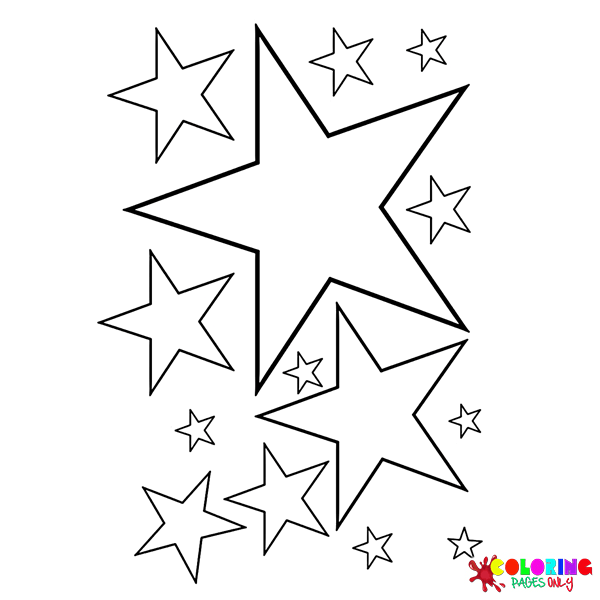
The remaining pages take a more playful approach, including a unicorn and a witch alongside simpler, single-subject shooting star designs. These support brighter, less realistic color choices, since these pages lean into imagination rather than a specific scene.
What Shooting Stars Coloring Pages Do
Fine motor development through a long, curved trail. The American Academy of Pediatrics identifies fine motor skill development as a core benefit of structured coloring for children ages 2 through 7, and a shooting star’s long, tapering trail gives that practice a specific curved line to control, different from the closed shapes most coloring subjects use.
A real science fact behind a common misconception. Many people grow up believing a shooting star is an actual star falling from the sky. Still, it is really a small piece of comet or asteroid debris burning up in the atmosphere, a genuine astronomical event that happens because Earth passes through trails of dust left behind by comets like Swift-Tuttle. Coloring these pages is a natural opening to share that real explanation.
Calm, repetitive shading through a night sky. A 2005 study in the Art Therapy Journal documented measurable reductions in anxiety following structured coloring sessions, and filling in a large, night sky with small variations of Midnight Blue and Indigo calls for the same slow, unhurried shading the study associated with that calming effect.
A single moment shared across very different scenes. Because this collection places the same brief night-sky event in front of animals, children, astronauts, and fantasy characters alike, it gives colorists a chance to see how one simple, real phenomenon can anchor a wide range of very different moods and stories.
How to Color These Pages Well
- The star’s trail: Shade from a bright Golden Yellow or White at the head of the streak into a softer Pale Yellow or Cream as it tapers off, since a real meteor’s glow fades rather than stopping abruptly.
- Night sky: Blend Midnight Blue into Indigo or deep Purple, adding small White or pale Yellow dots for background stars scattered unevenly rather than in a uniform grid.
- Animals: Use each animal’s natural coloring first, Tan or Sepia for foxes and bunnies, Black or Orange for cats, and add the night sky as a simple backdrop afterward.
- People and kids: Keep clothing in warm, grounded tones like Tan or Rust so the person stands out clearly against the cooler night sky.
- Space scenes: Use Silver and White for spacesuits or rockets, keeping the surrounding sky a deep Black or Midnight Blue for contrast.
- Fantasy pages: Feel free to use brighter, less realistic colors, such as Pink or Turquoise, for the unicorn and witch pages, since these are meant as playful rather than scientifically accurate designs.
5 Creative Craft Ideas With Shooting Stars Coloring Pages
1. Meteor Streak Glitter Painting
Color a shooting star page, then trace along the star’s trail with a thin line of craft glue and sprinkle fine glitter over it before shaking off the excess. Let the glue dry completely for a shimmering, textured streak.
2. Wish Jar Scroll
Color a small shooting star page, cut it down to a narrow strip, and write a real wish on the back. Roll the strip into a small scroll and place it inside a clear jar to keep as a simple keepsake.
3. Glow-in-the-Dark Star Map
Color a night-sky scene using regular colors for most of the page, then add the background stars using a glow-in-the-dark paint pen. Turn off the lights after the paint dries to see the stars appear.
4. Meteor Fact vs. Wish Card
Color a shooting star page and glue it to a folded card, then write the real science explanation for a shooting star on one side and the traditional idea of wishing on the other. Use the finished card to compare folklore with fact.
5. Star Trail Window Streamers
Color several of the smaller shooting star pages, cut around each trail, and hang them at different lengths from a string taped along the top of a window. Let the finished streamers catch the light as they move.
Frequently Asked Questions
What are shooting stars coloring pages?
A free set of 32 printable PDF and online coloring designs covering wishing moments, animals watching the night sky, kids discovering shooting stars, and space and fantasy scenes. Every page downloads free or opens for online coloring, with no account required.
Are shooting stars actually stars?
No. A shooting star is a meteor, a small piece of comet or asteroid debris that burns up from friction as it enters Earth’s atmosphere at high speed, creating the bright streak of light people see.
What causes the streak of light in a shooting star?
The streak comes from the intense heat generated as a small piece of space debris moves through Earth’s atmosphere at very high speed, vaporizing the debris and the surrounding air enough to glow brightly for a moment.
Why do meteor showers happen at the same time every year?
Meteor showers occur when Earth’s orbit carries it through a trail of dust left behind by a comet, and since Earth passes through the same point in its orbit at the same time each year, the same shower appears annually.
What is the best-known meteor shower?
The Perseid meteor shower, which peaks in mid-August, is one of the most well-known, produced by debris from the comet Swift-Tuttle and named for the constellation Perseus, where the meteors appear to originate.
Is it true that wishing on a shooting star works?
Wishing on a shooting star is a long-standing tradition rather than something with any real effect on outcomes. Still, it remains a popular, meaningful custom that several pages in this collection reflect.
Are shooting stars coloring pages appropriate for young children?
Yes. The simple animal and general portrait pages suit toddlers and preschoolers, while the more detailed space and night-sky scenes work well for older children who want more to color.
Can this collection be used for a classroom lesson on astronomy?
Yes. The pages pair well with a lesson correcting the common idea that shooting stars are real stars, along with a simple explanation of meteors, comets, and why meteor showers repeat on a yearly schedule.
Start Coloring
Download any page by clicking the design. No account, email, or payment is required. Pages print directly from the browser at full resolution or open in the online coloring tool for screen use. Share finished pages on Facebook or Pinterest using the share buttons at the top of each design page.