Tiny Forest Cafe Coloring Pages
 By:
Jennifer Thoa - Content Editor & Designer
Updated:
By:
Jennifer Thoa - Content Editor & Designer
Updated:
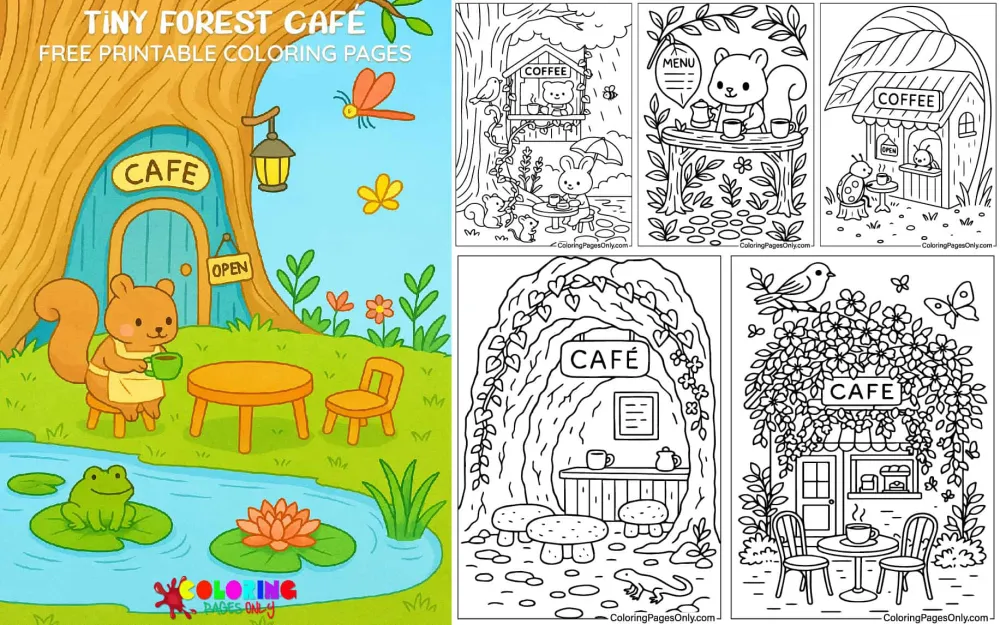
Free Tiny Forest Cafe Coloring Pages: 37 printable PDF designs built around a single invented setting, a small cafe tucked into tree stumps, mushrooms, and hollow trunks, staffed and visited by woodland animals. Print any design straight from its PDF, or stay on screen and finish it inside the site’s online coloring tool.
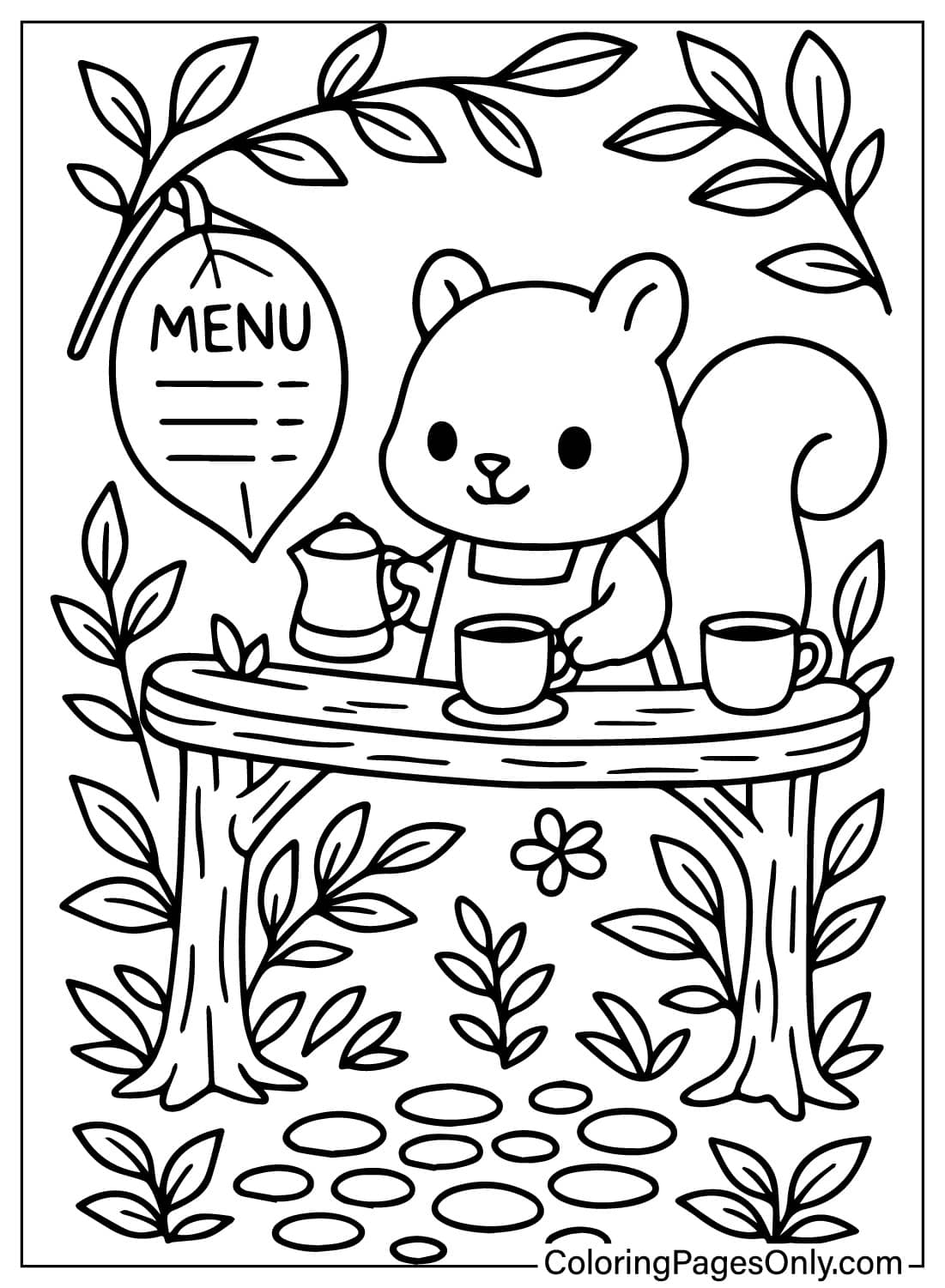
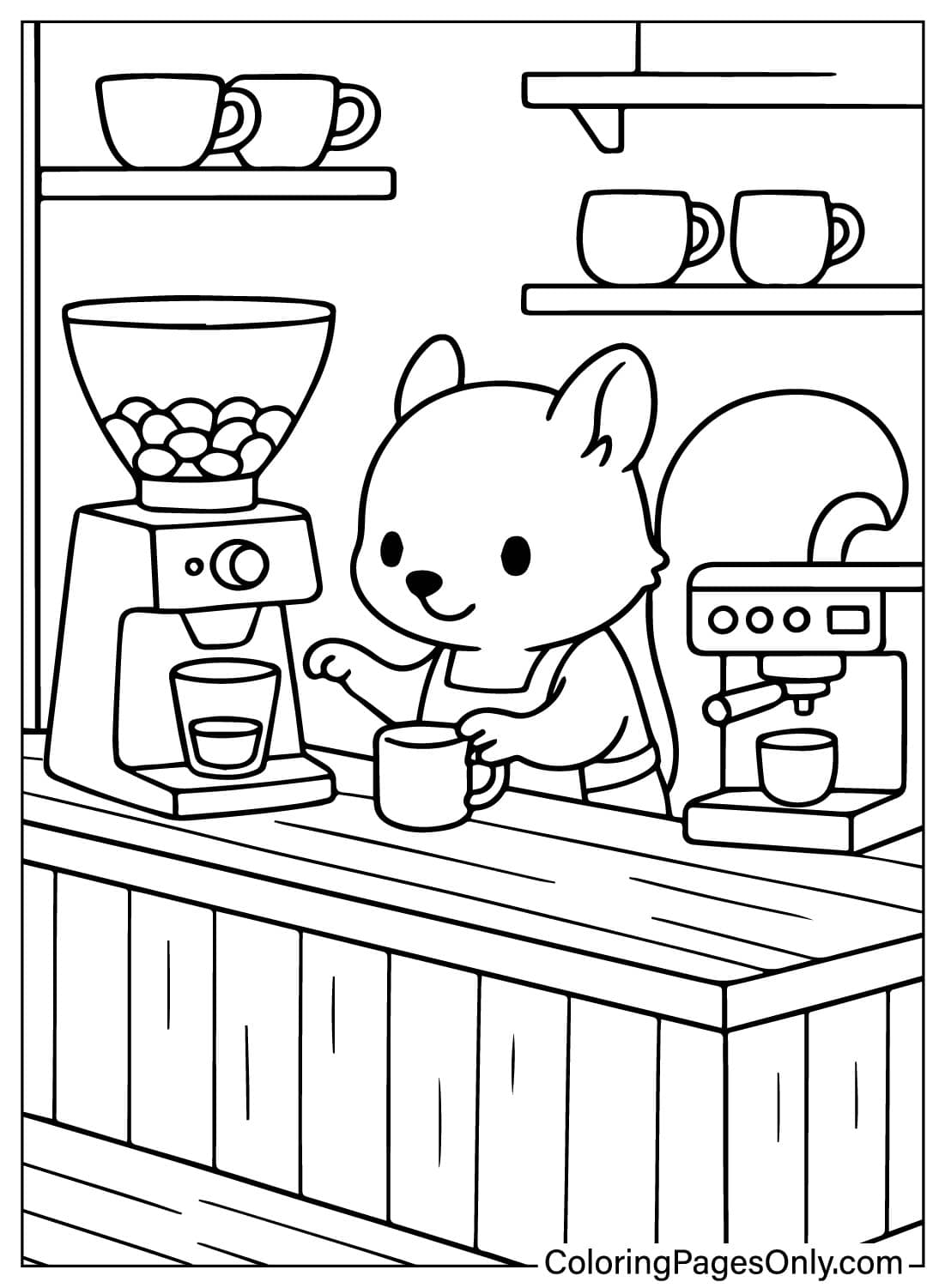
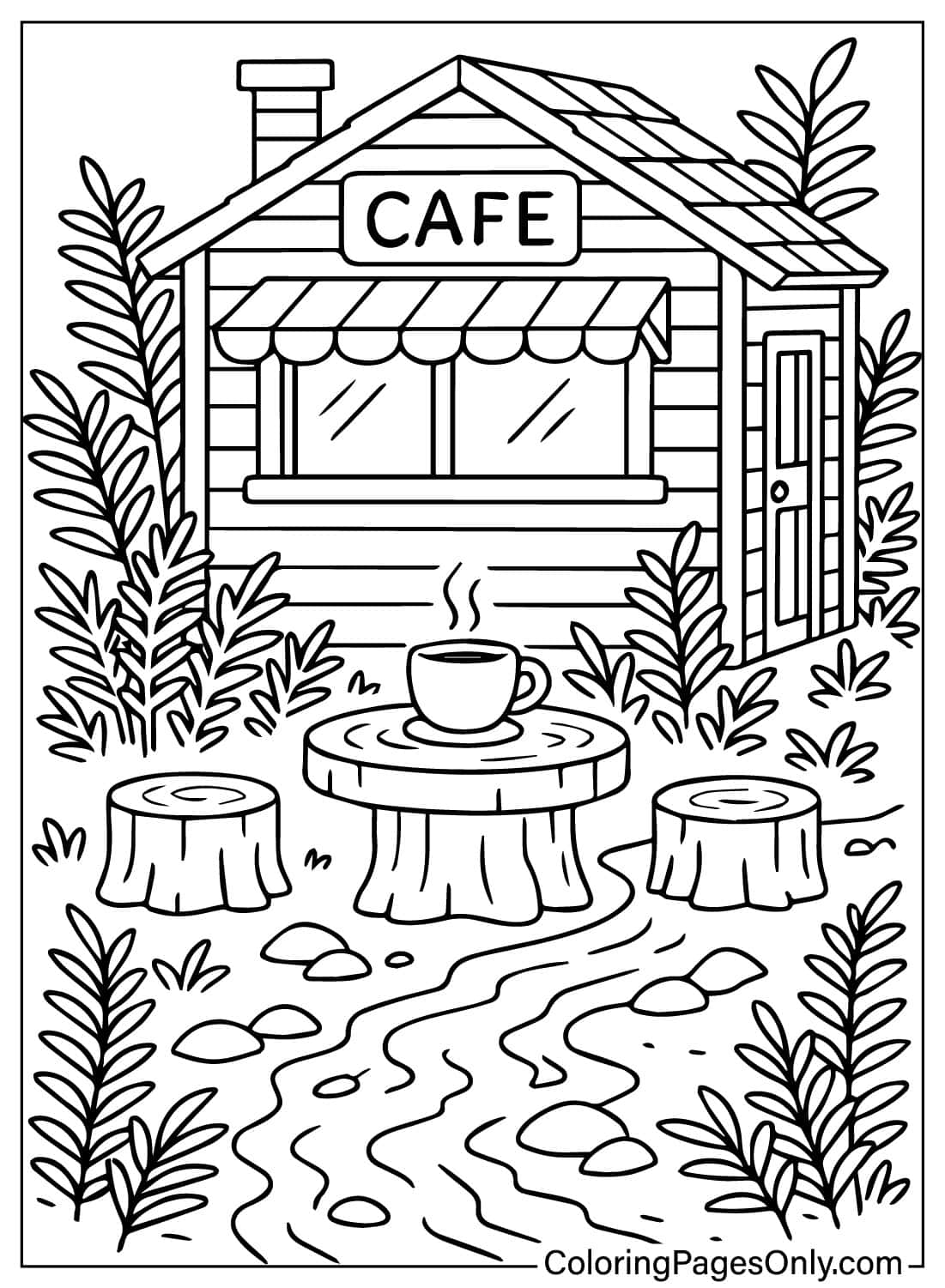
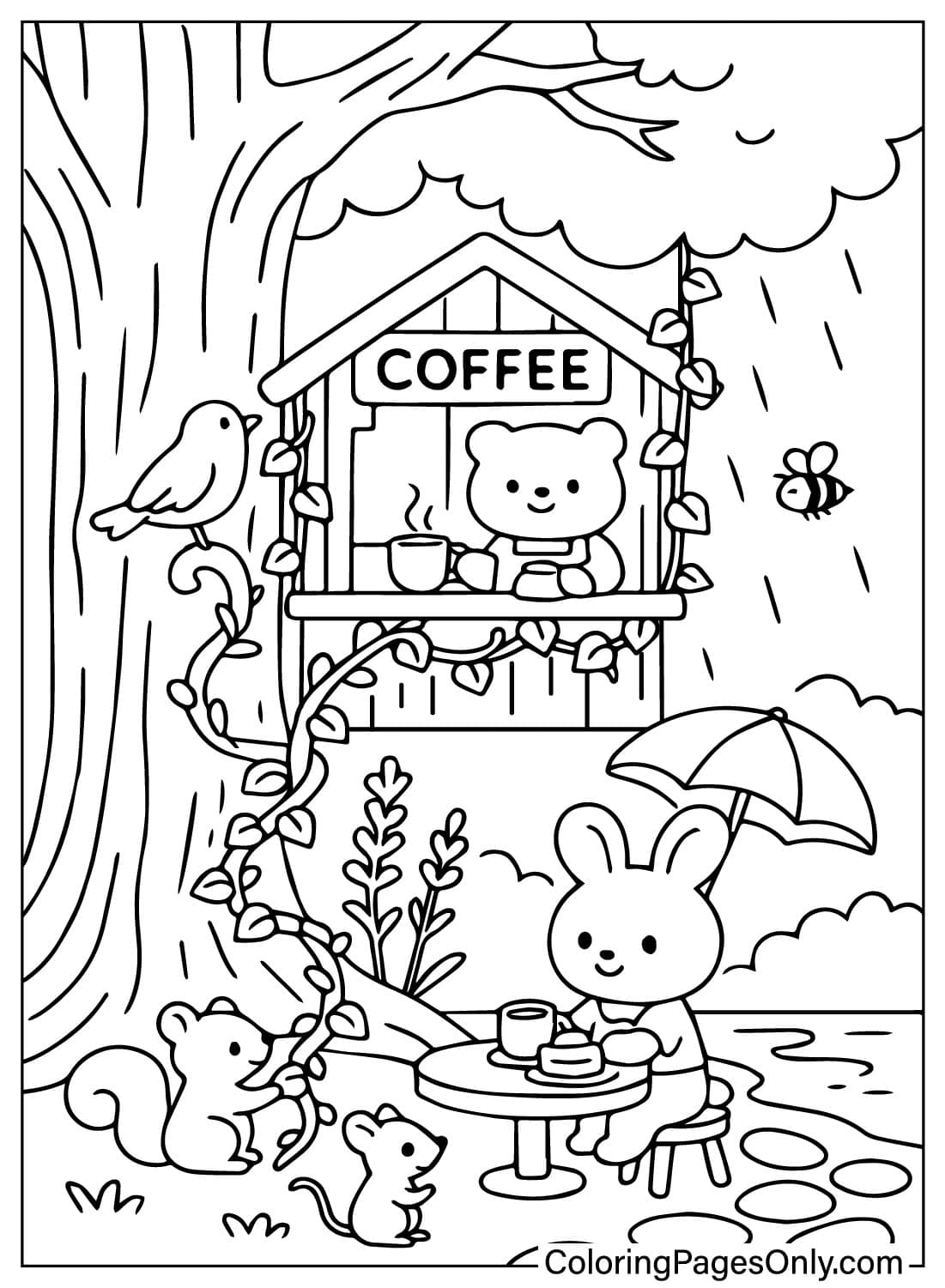
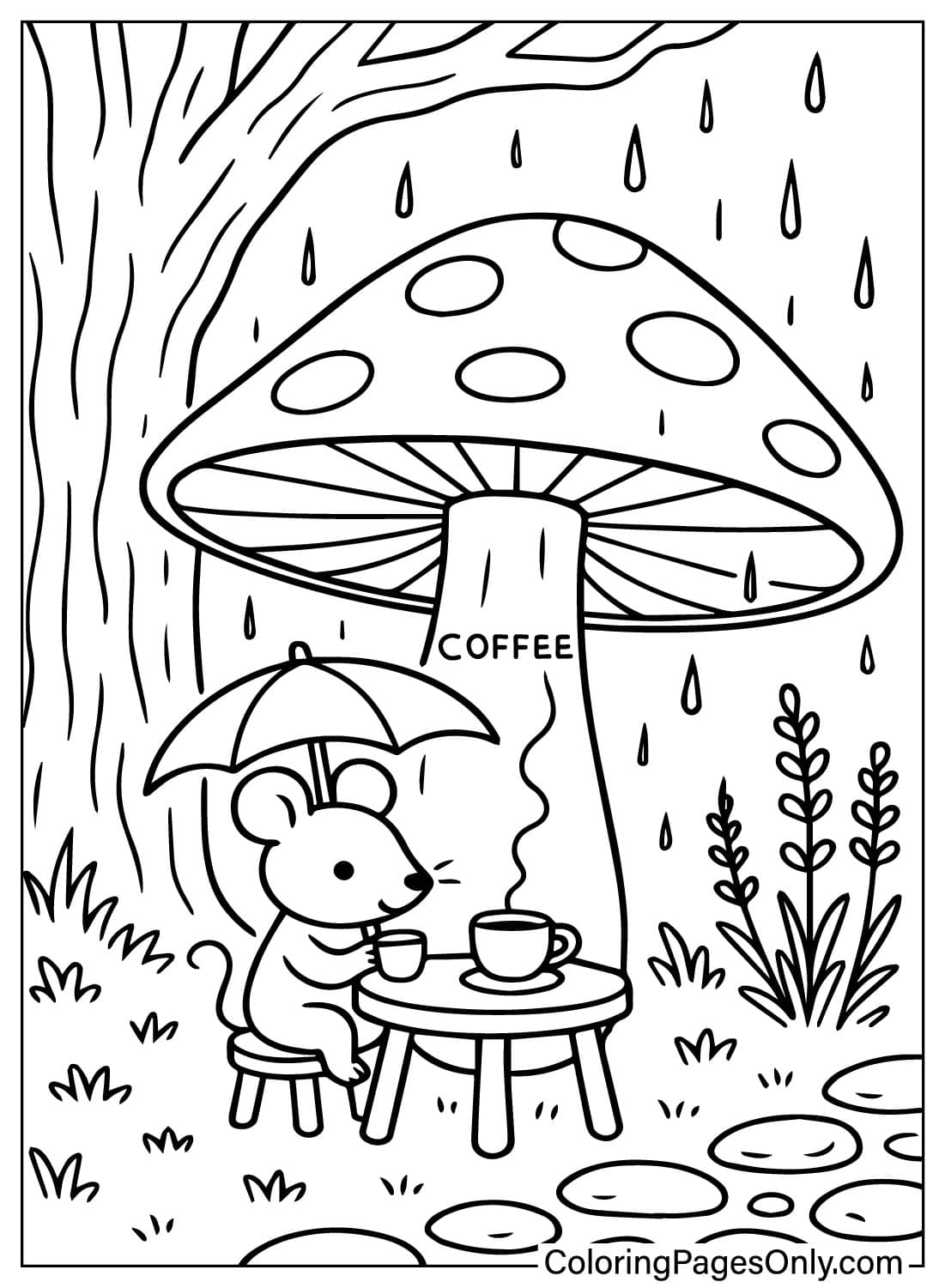
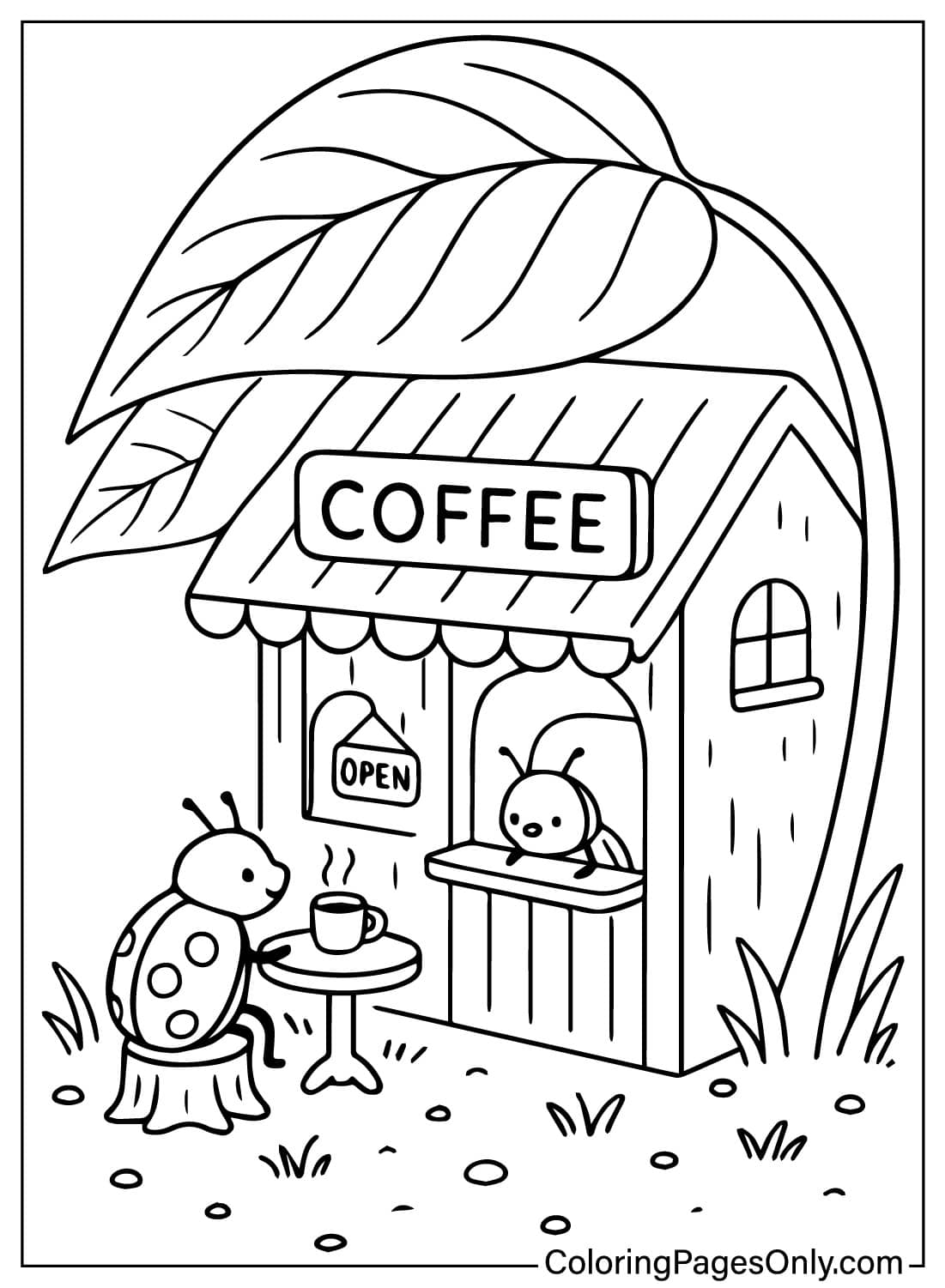
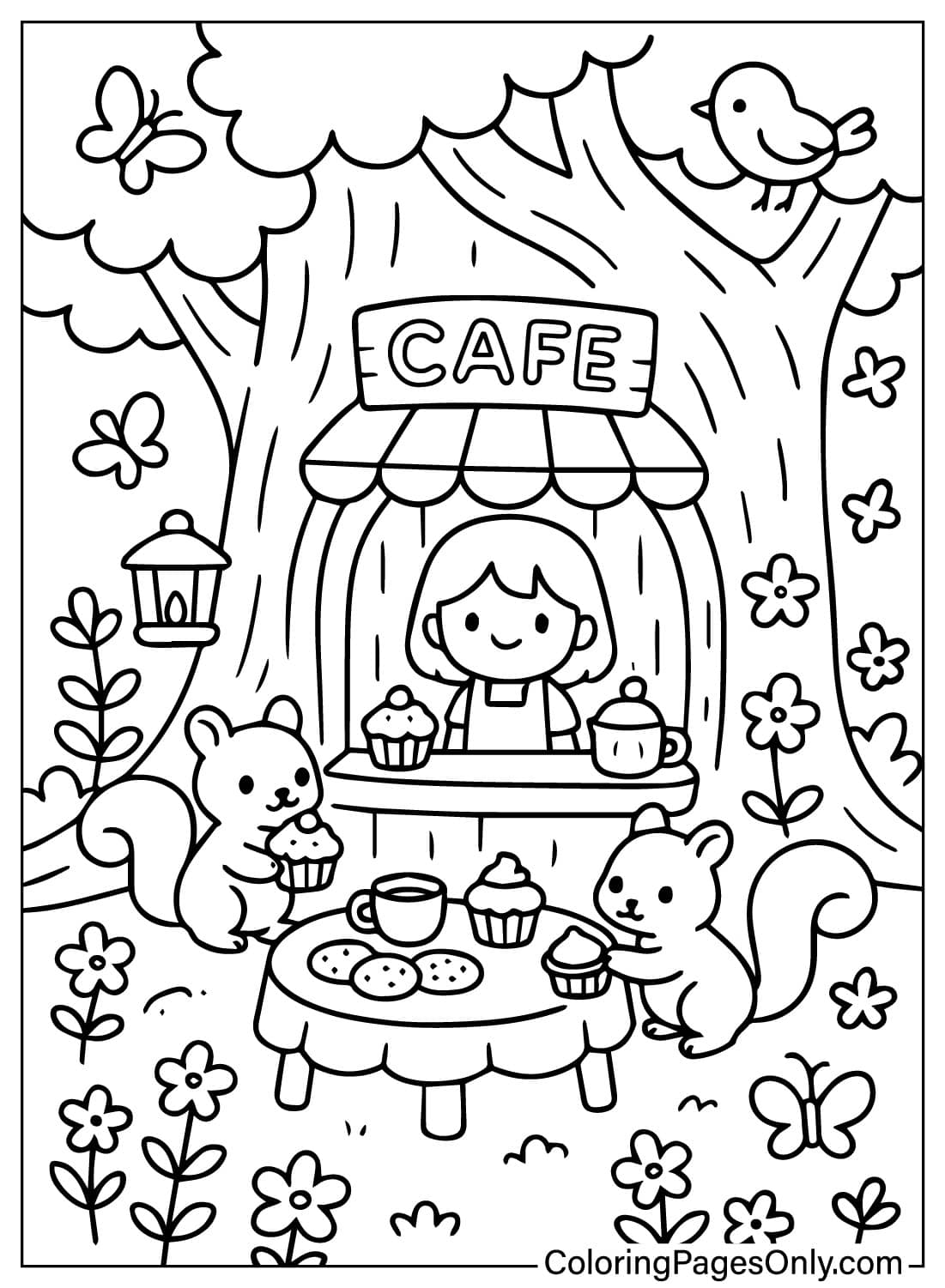
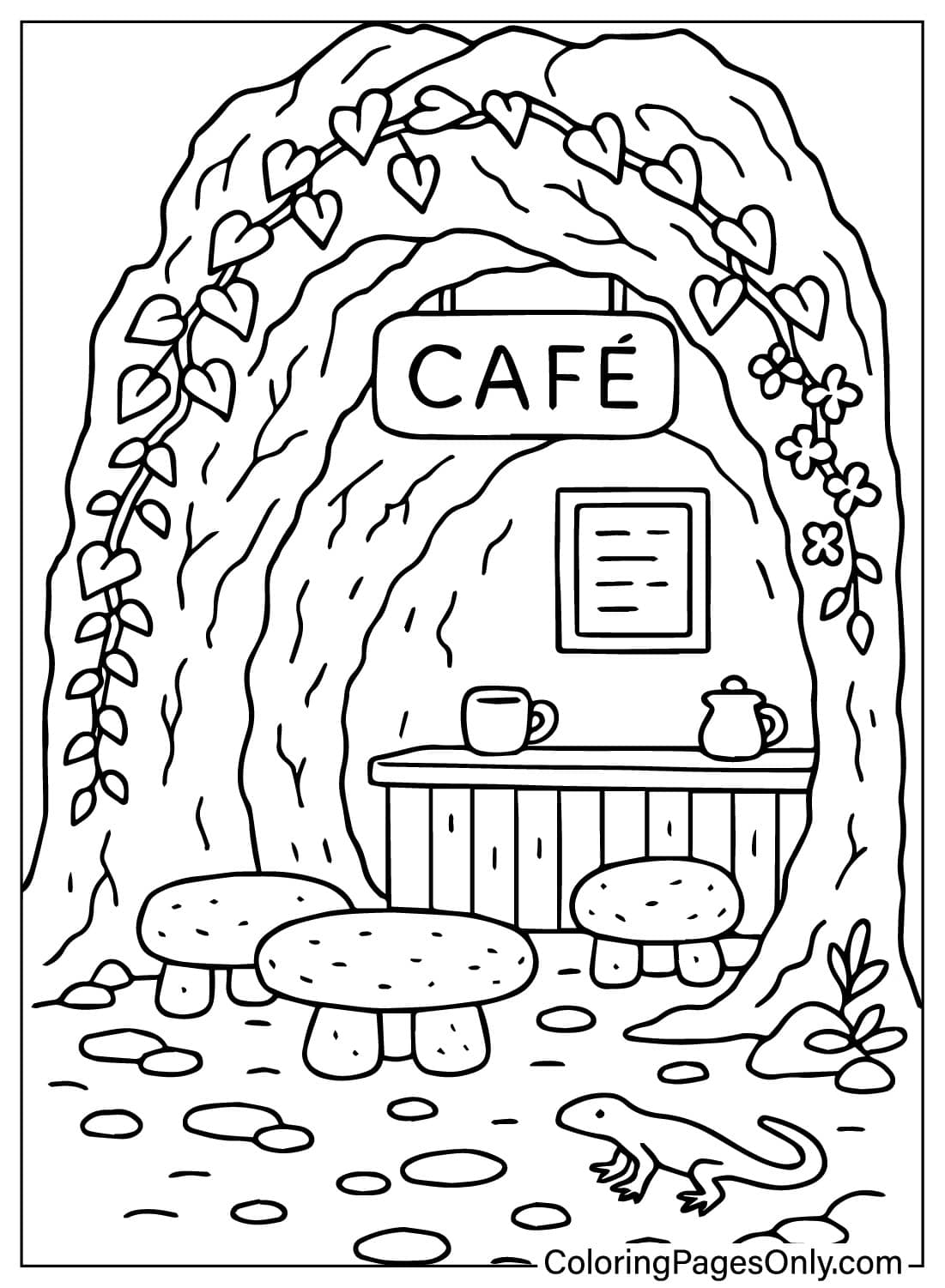
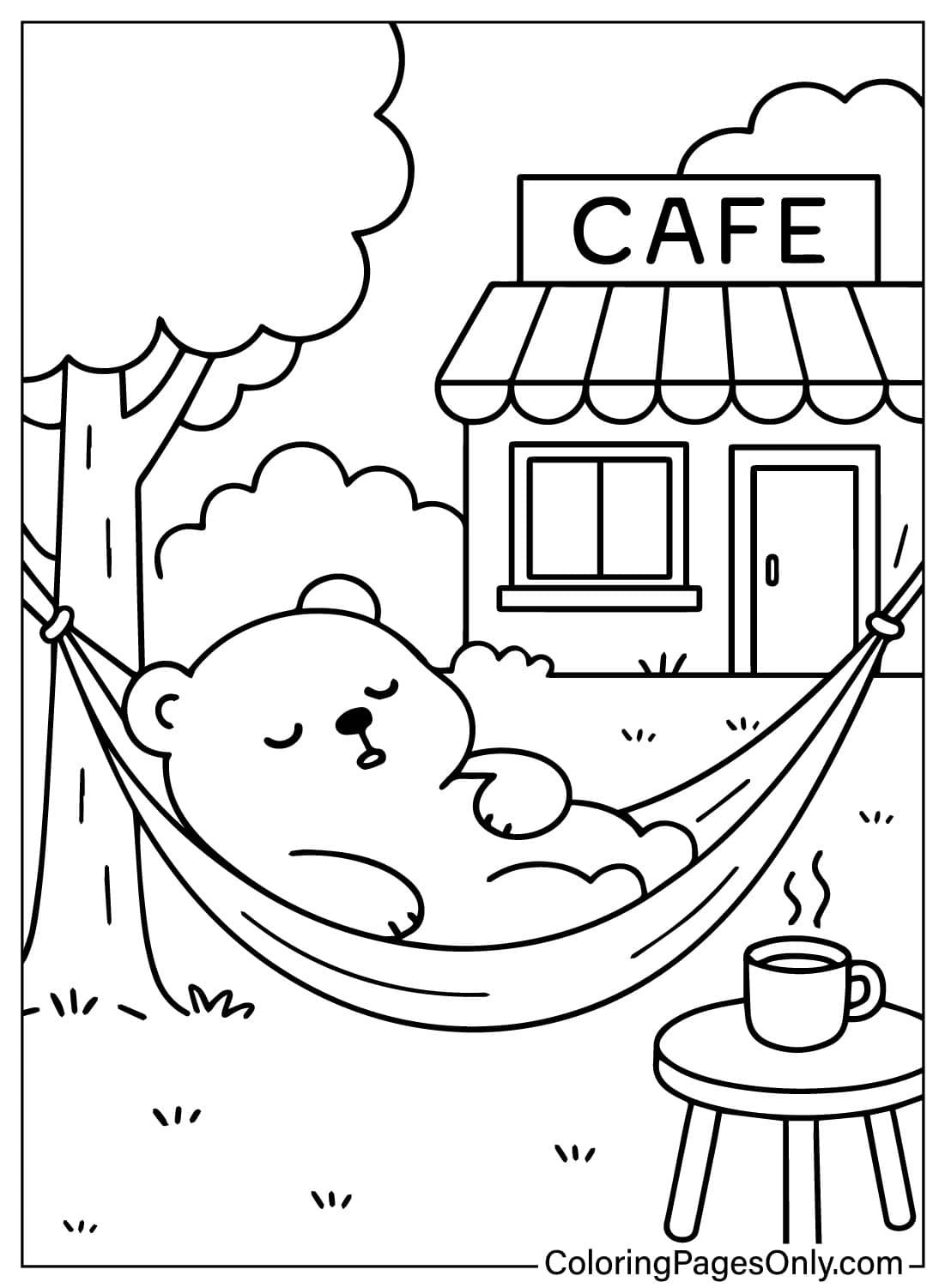
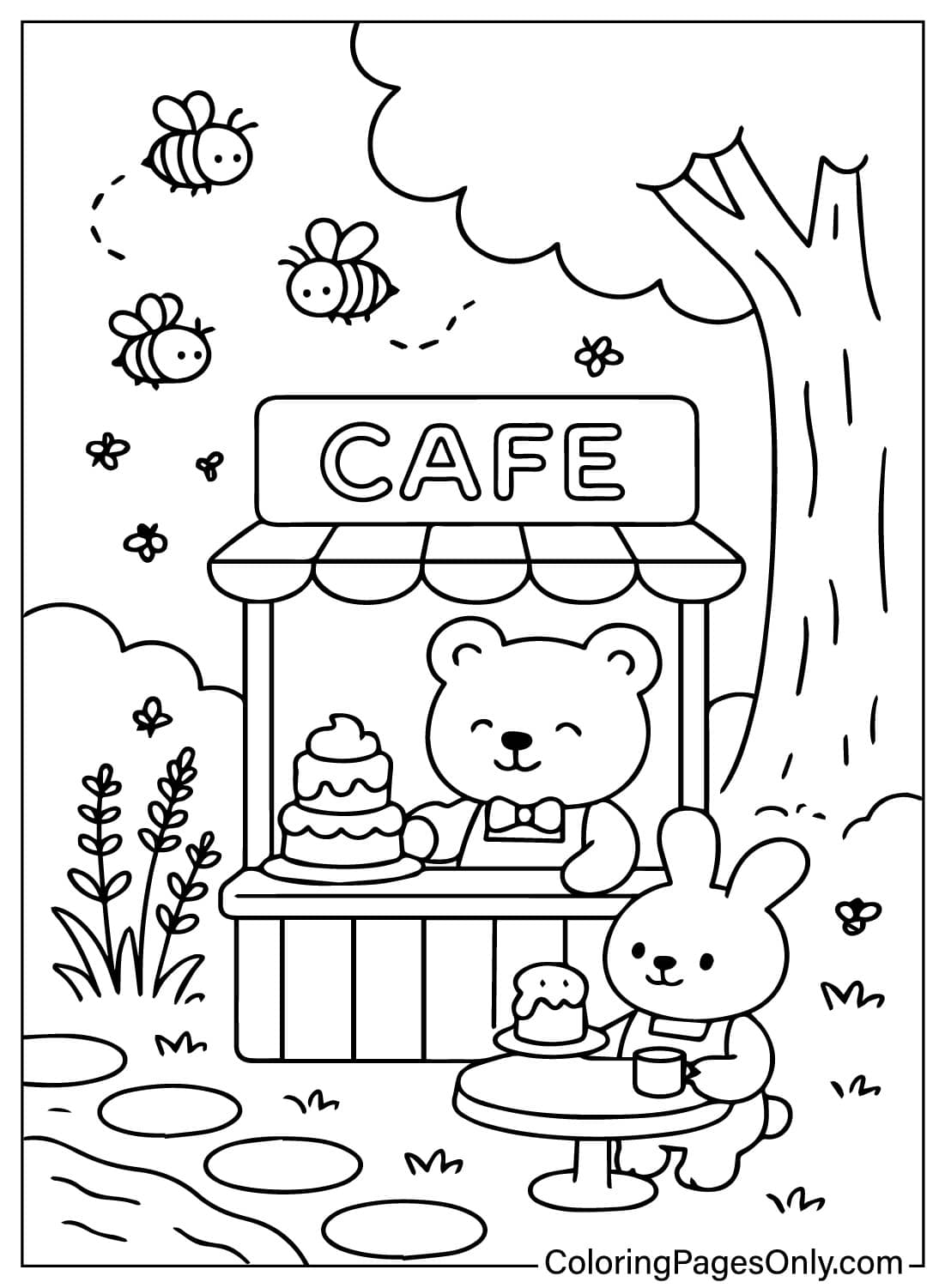
Nothing about this setting exists in nature. A squirrel does not really pour coffee, and a mushroom does not really hold a serving window, which is what makes the set read as pure invented storytelling rather than a realistic nature scene. Some pages put an animal to work behind a counter. Others show a customer settled in with a book or a warm drink. A third group focuses on the cafe building itself, wedged into a stump, a cave mouth, or a giant leaf, and a last group widens out to a full cozy scene, indoors or out, rain or shine. The setting stays consistent across all 37 pages, even though the animal cast, the weather, and the architecture keep changing.
With that much variation packed into one imagined place, the set rewards browsing rather than committing to a single favorite animal or building style up front.
What Is Inside This Collection
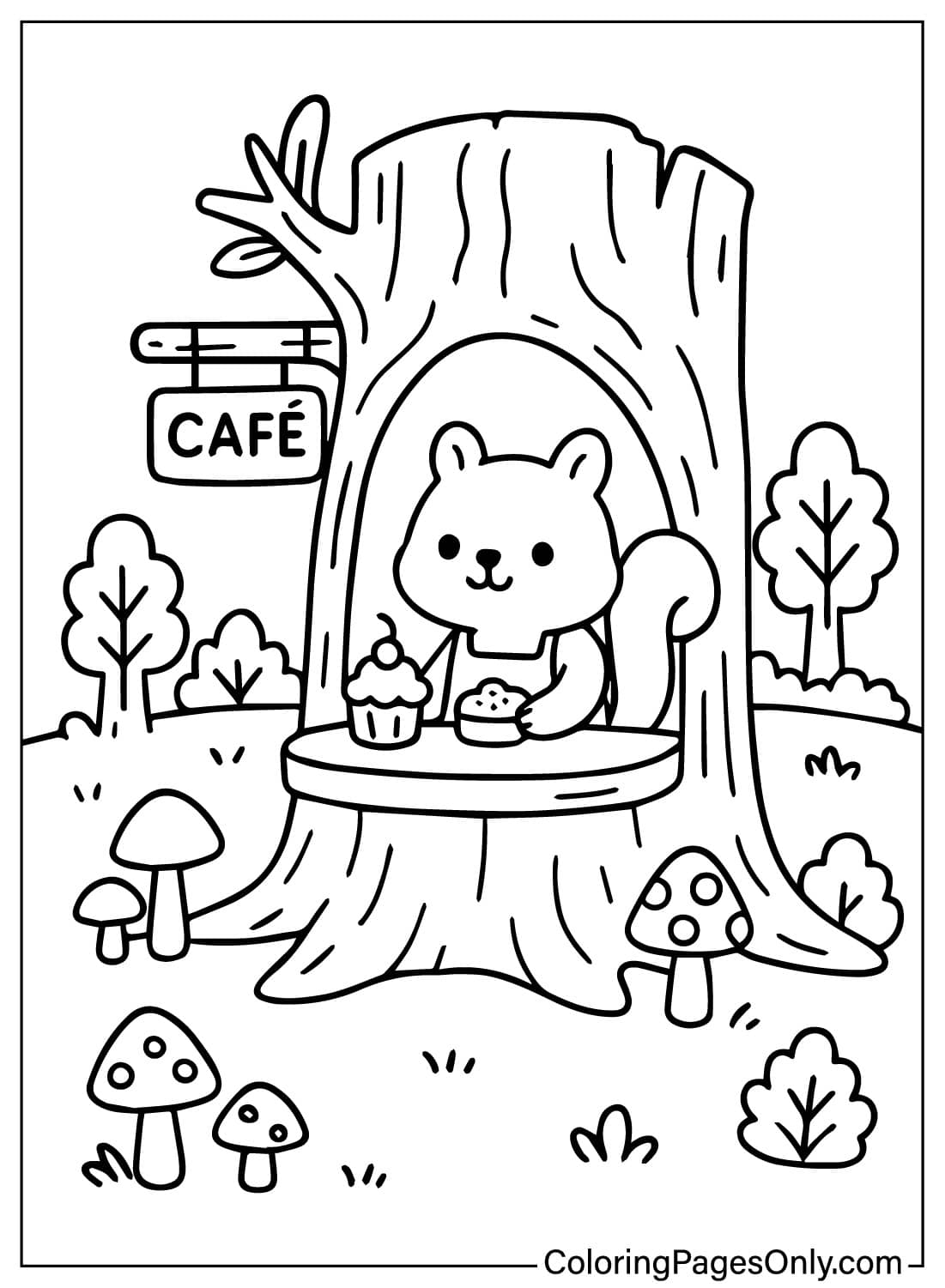
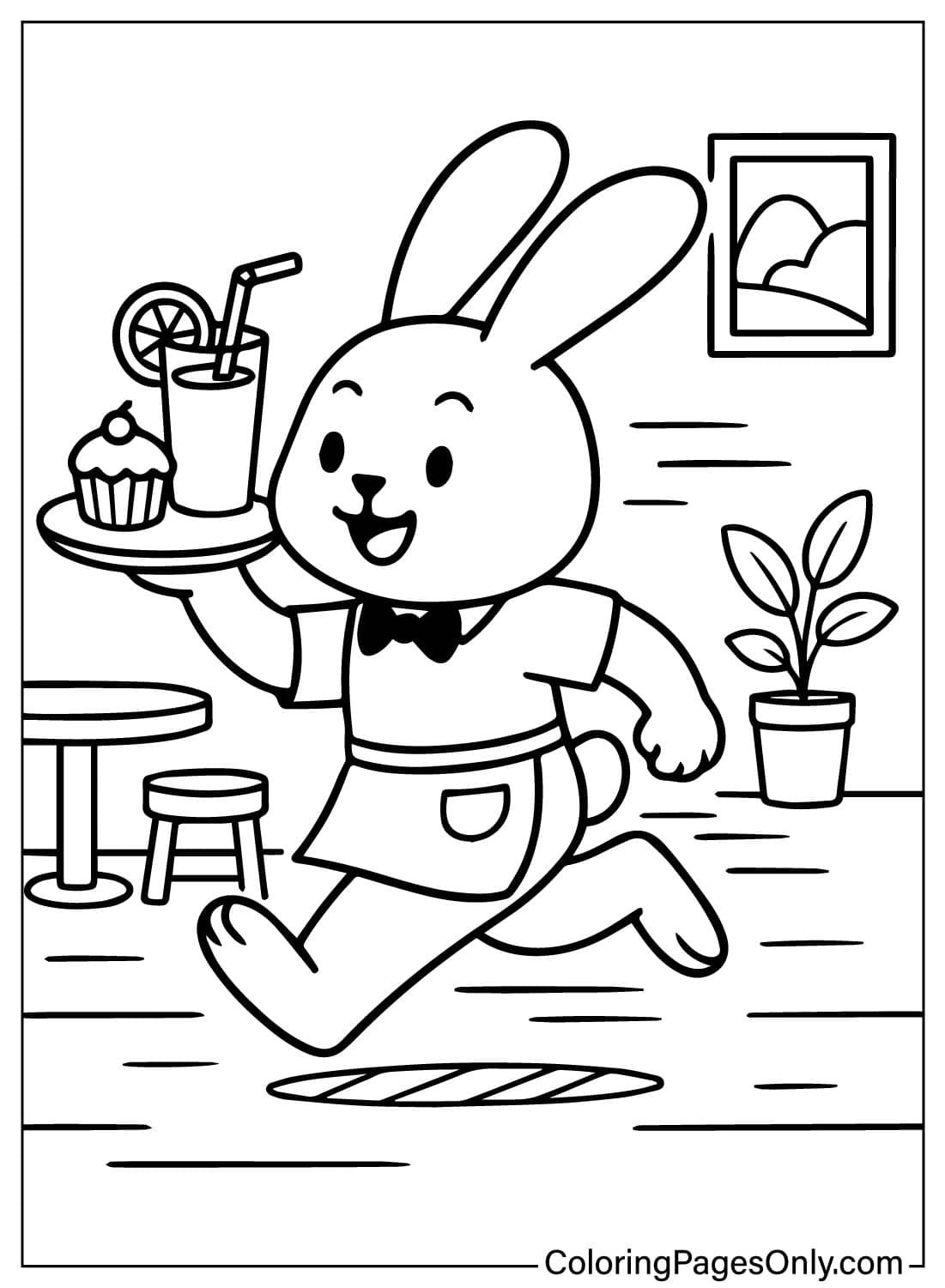
Animal Baristas and Cafe Workers
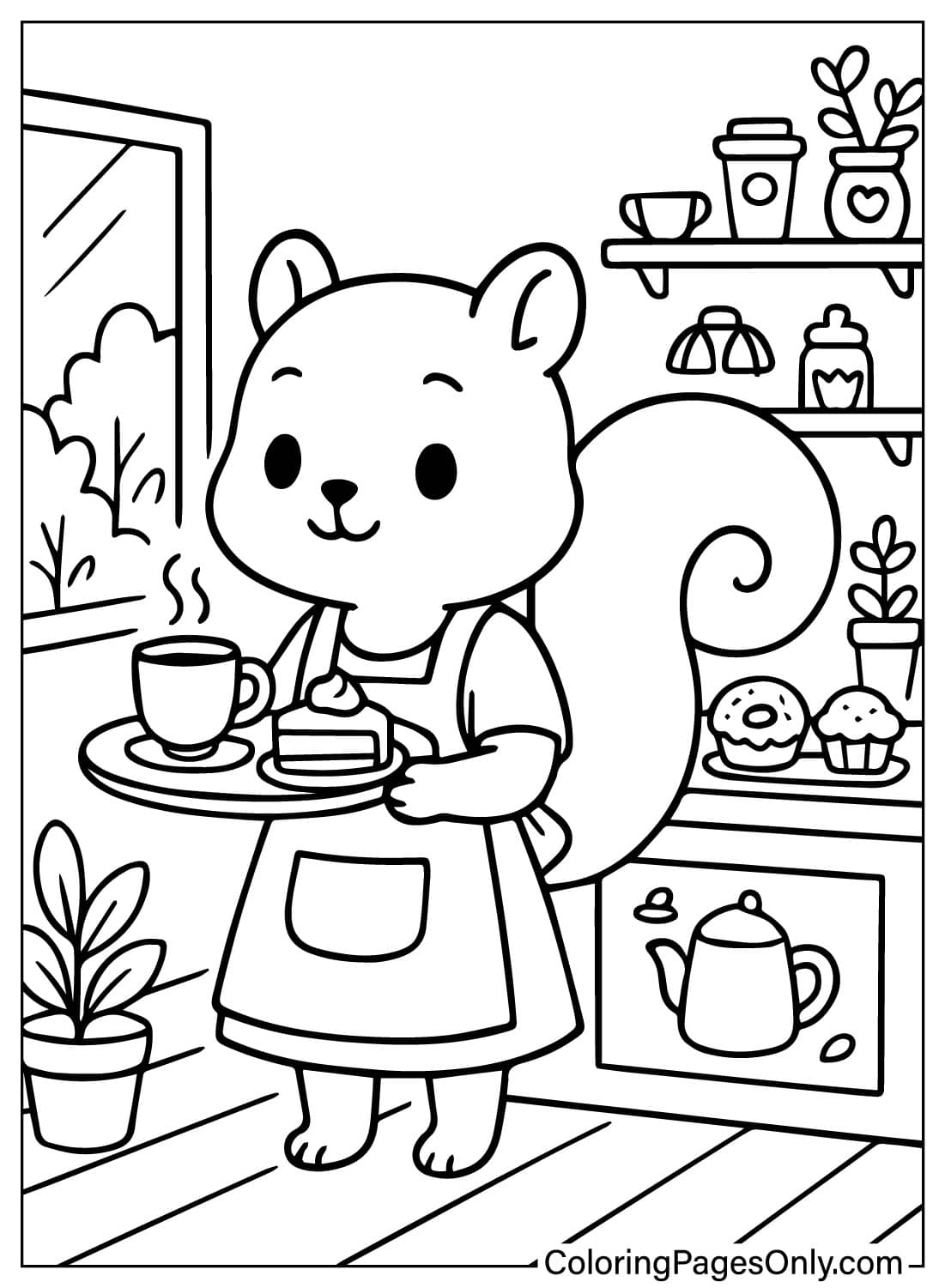
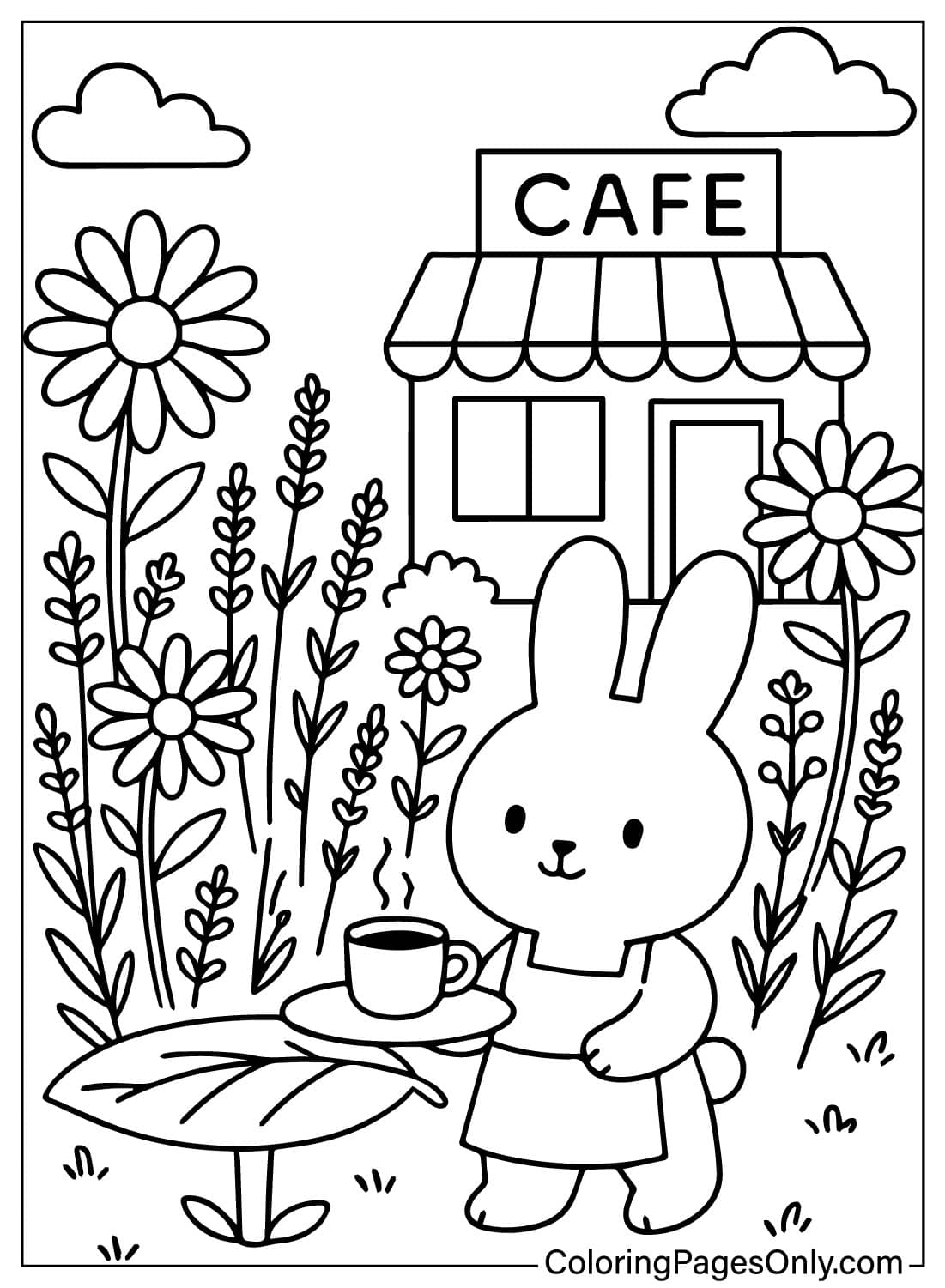
A group of pages puts an animal behind the counter, pouring, serving, or otherwise running the cafe rather than sitting at a table.
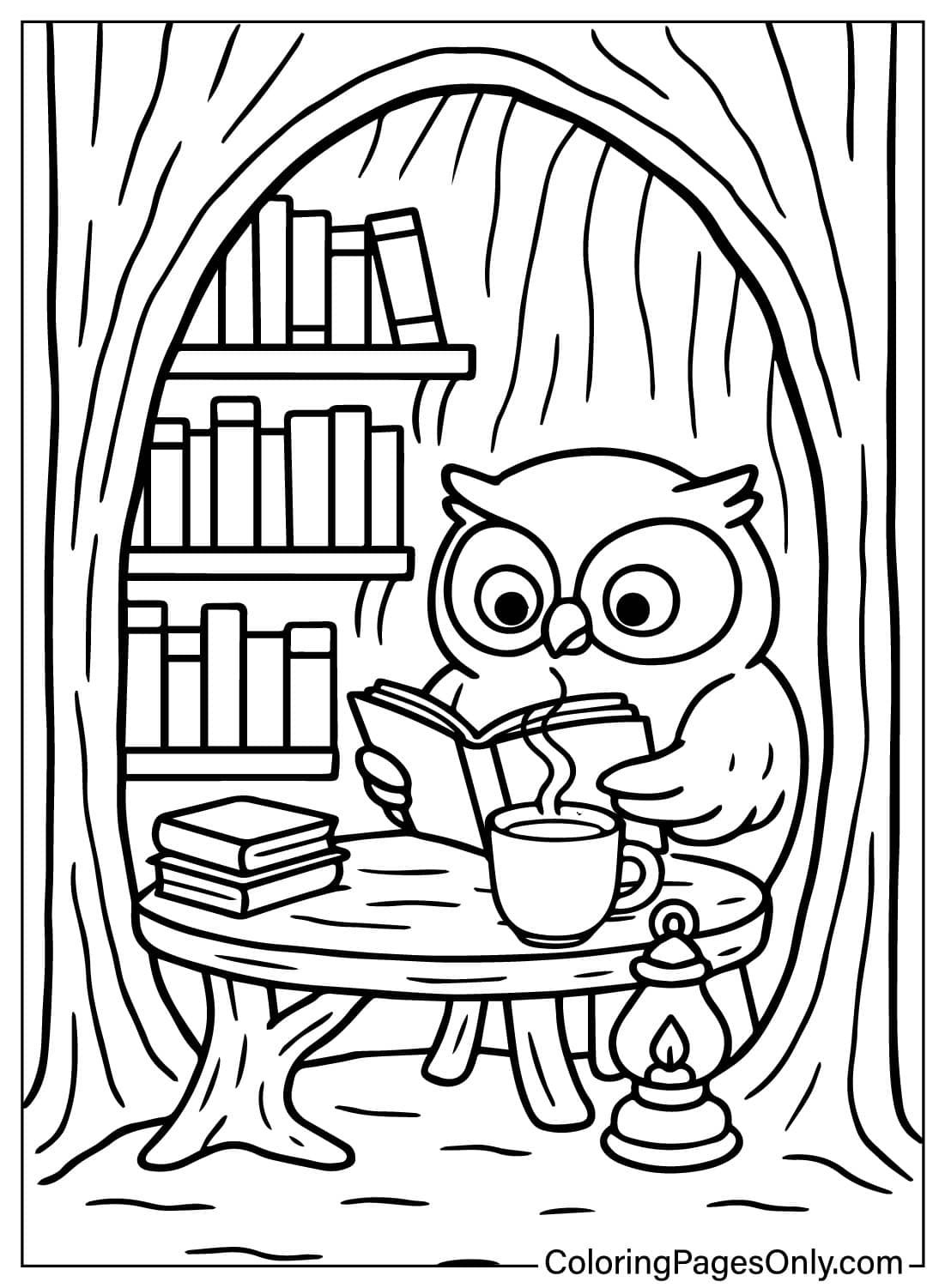
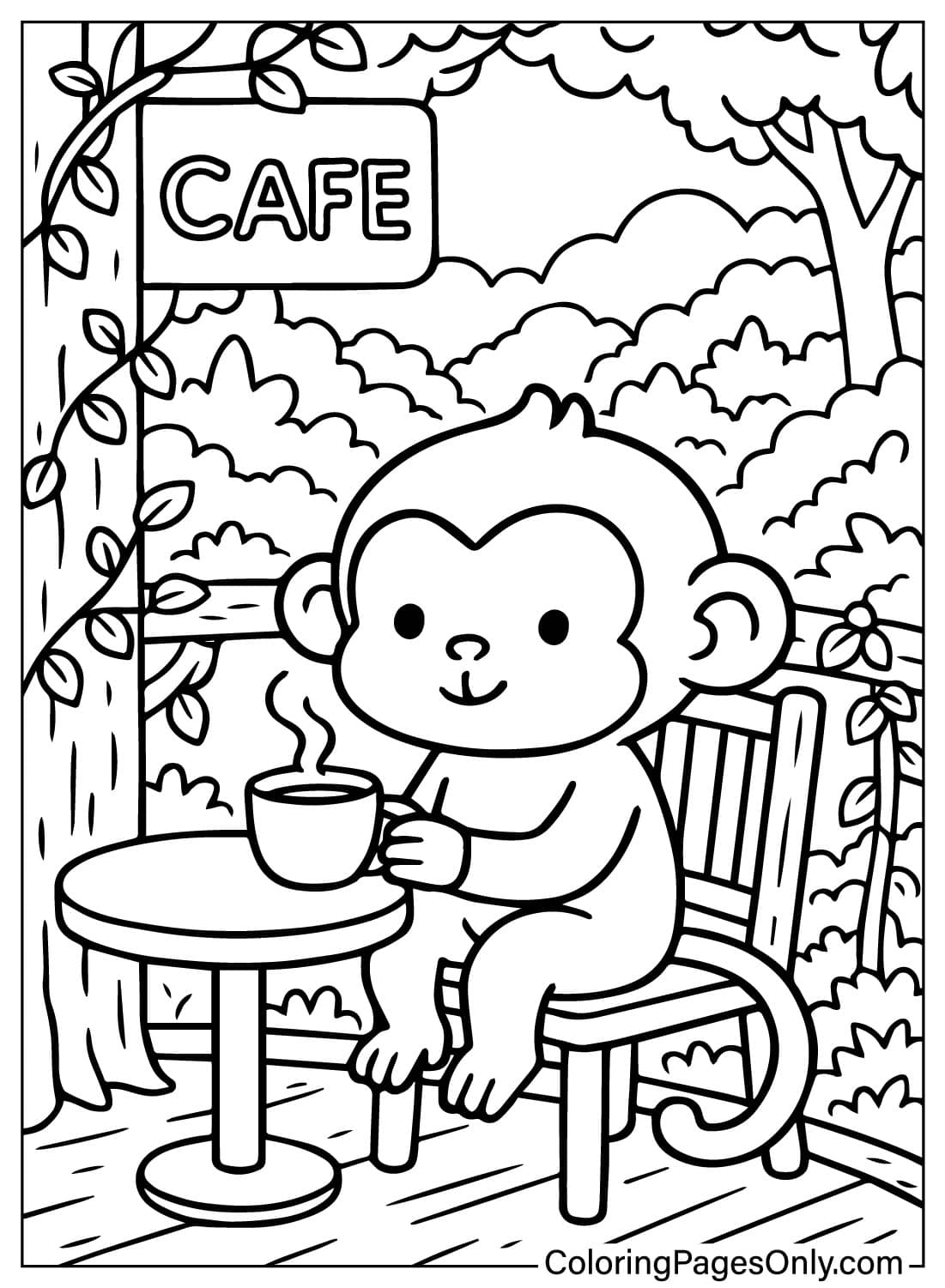
Woodland Cafe Patrons
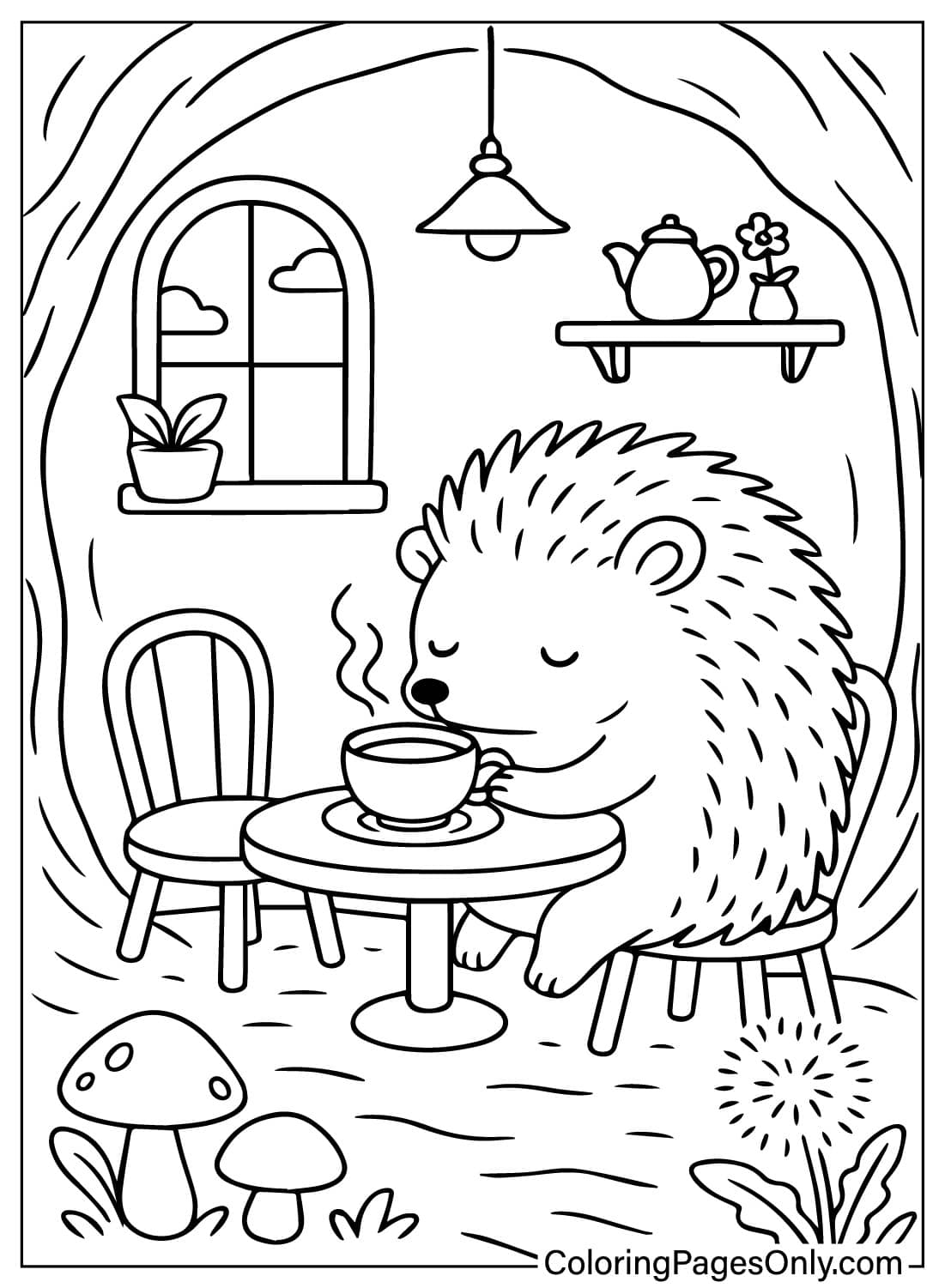
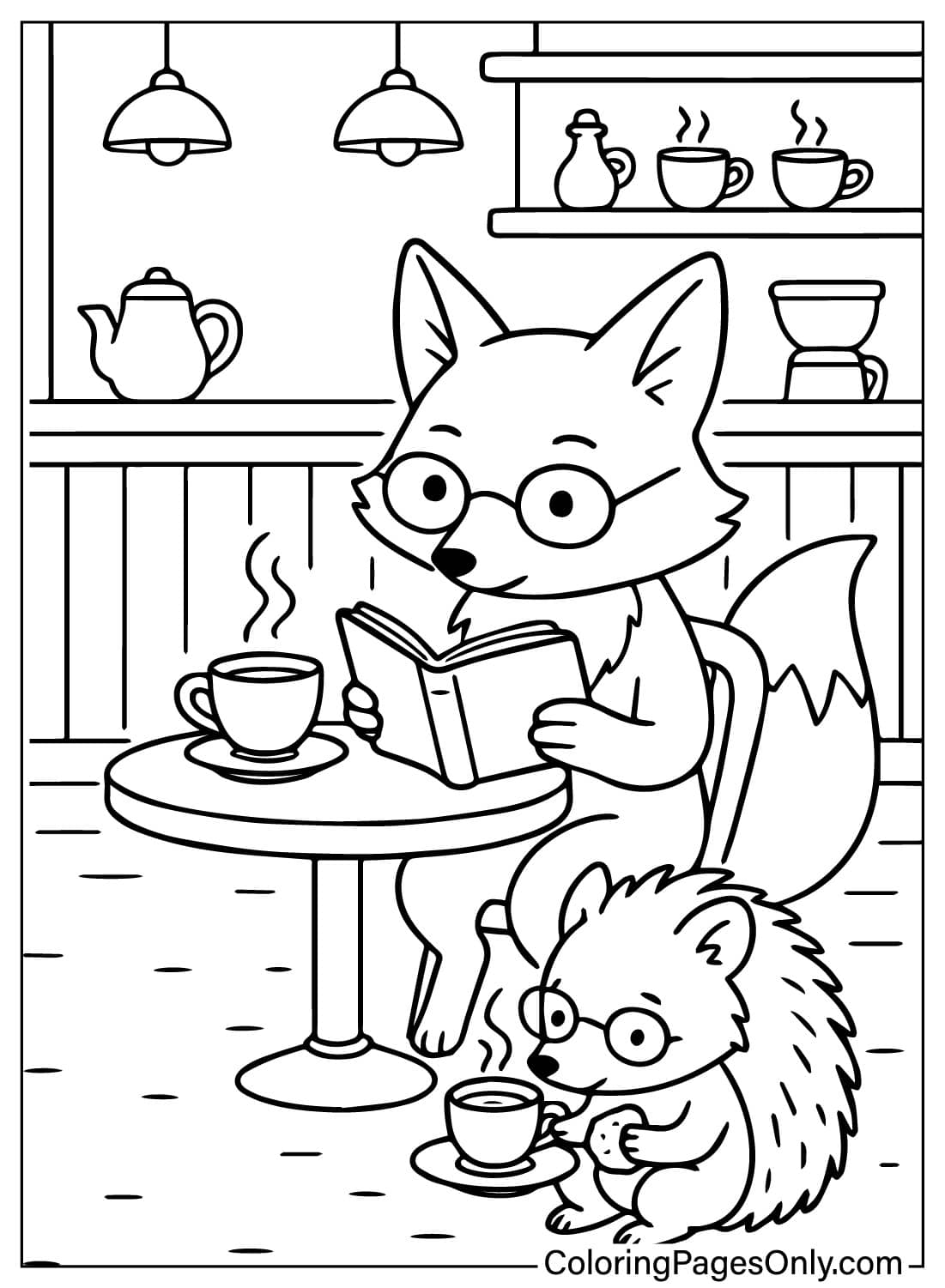
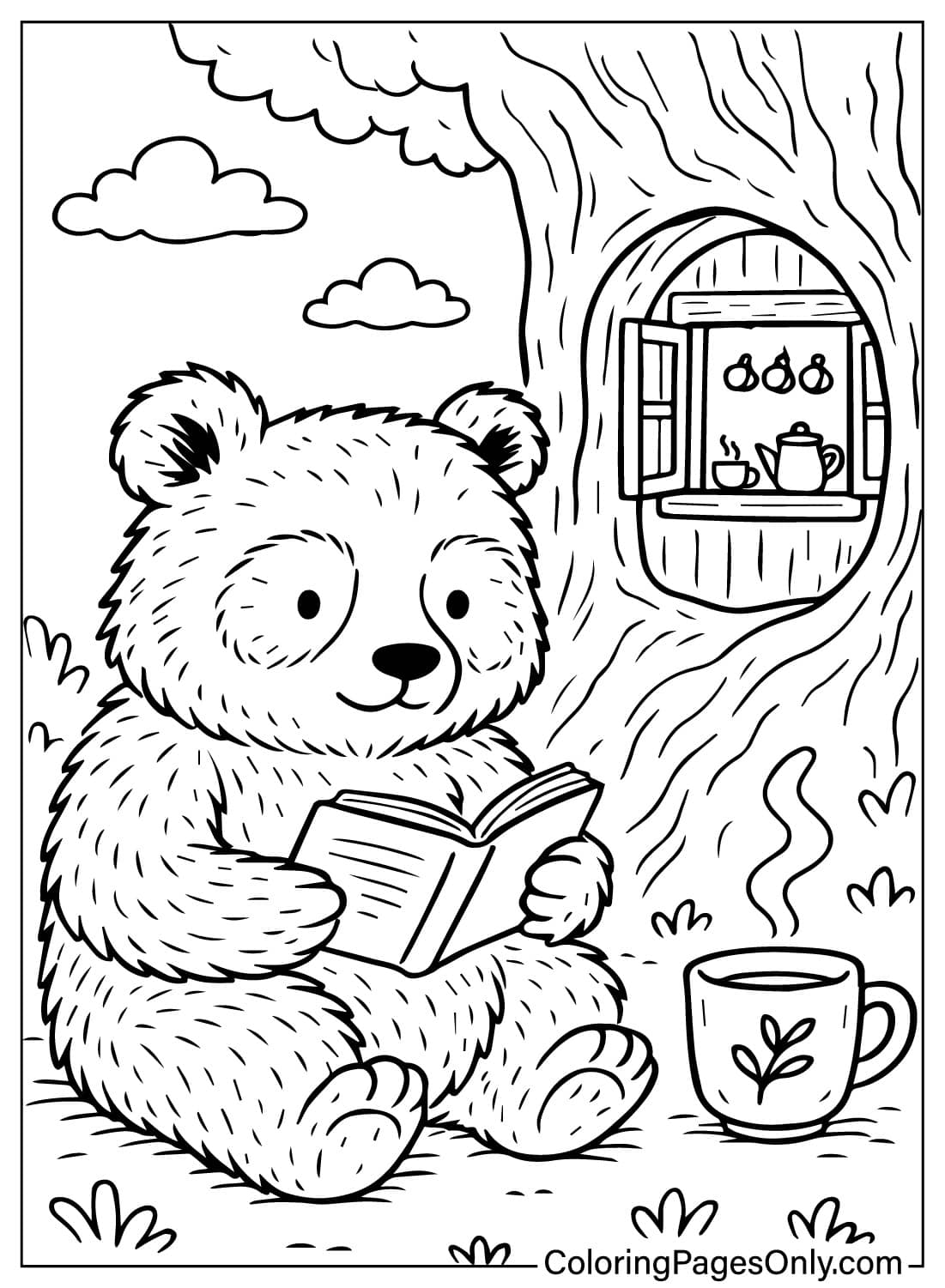
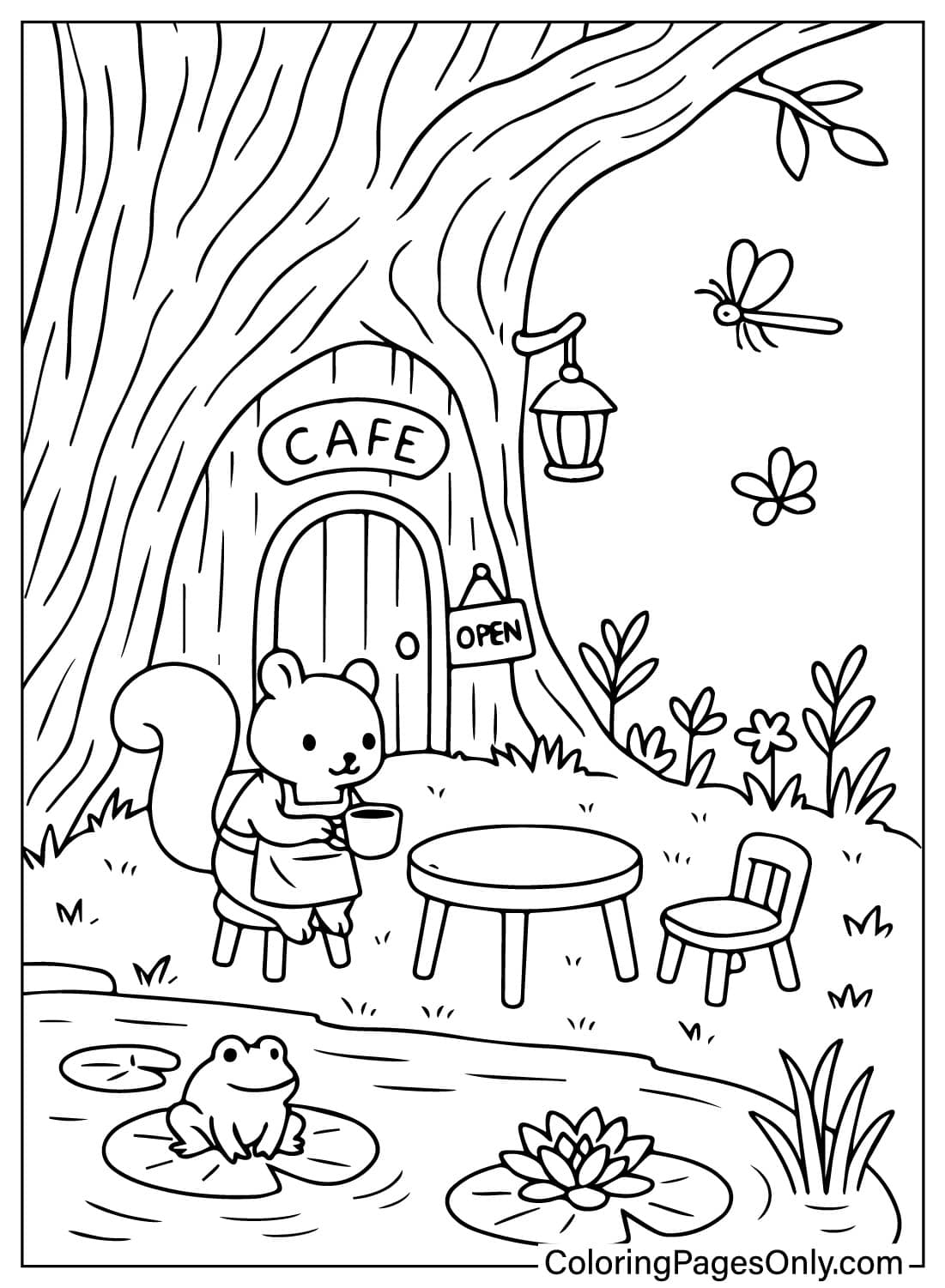
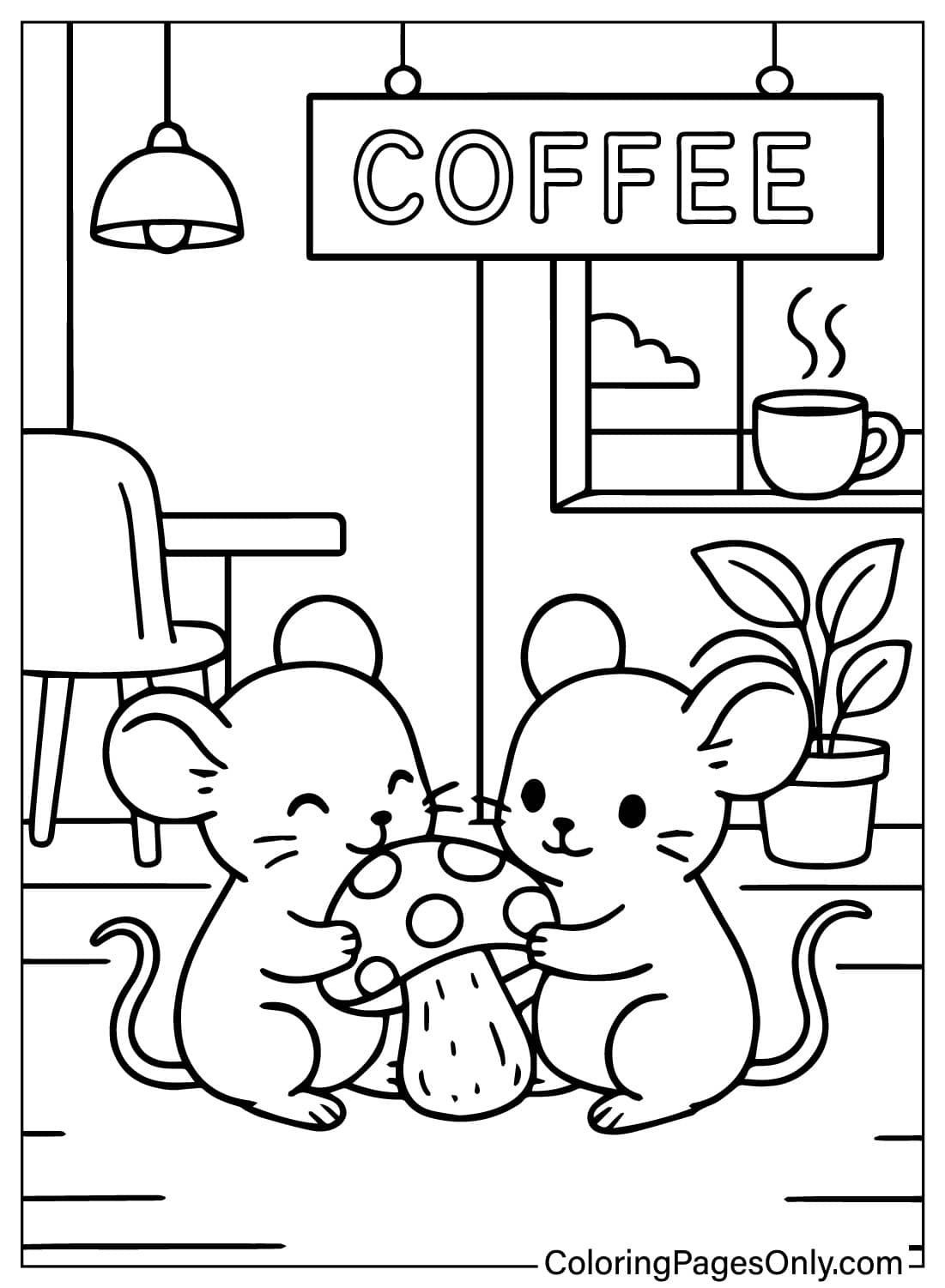
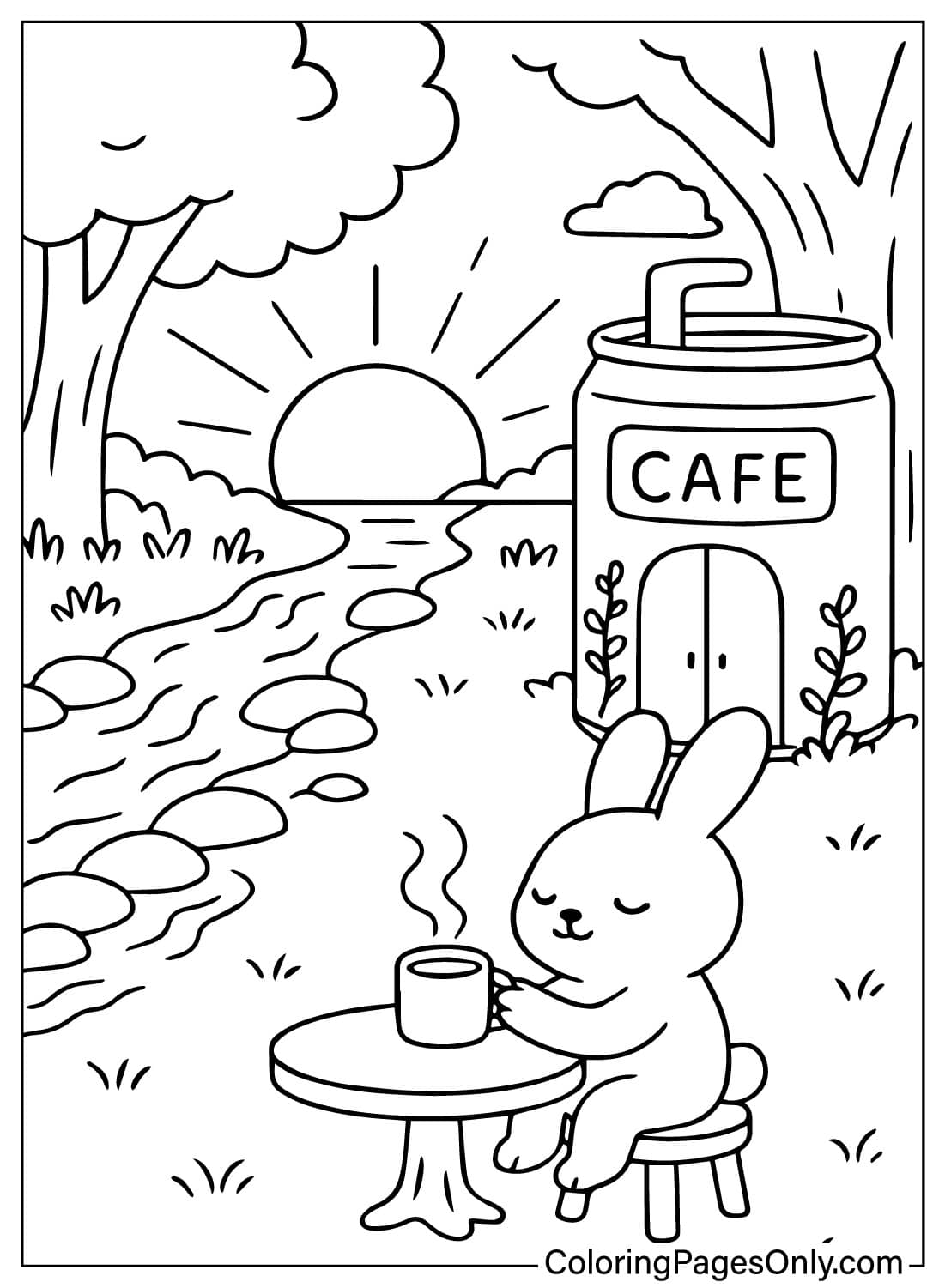
Another group shows animals as customers, reading, drinking, resting, or simply passing the time in and around the cafe.
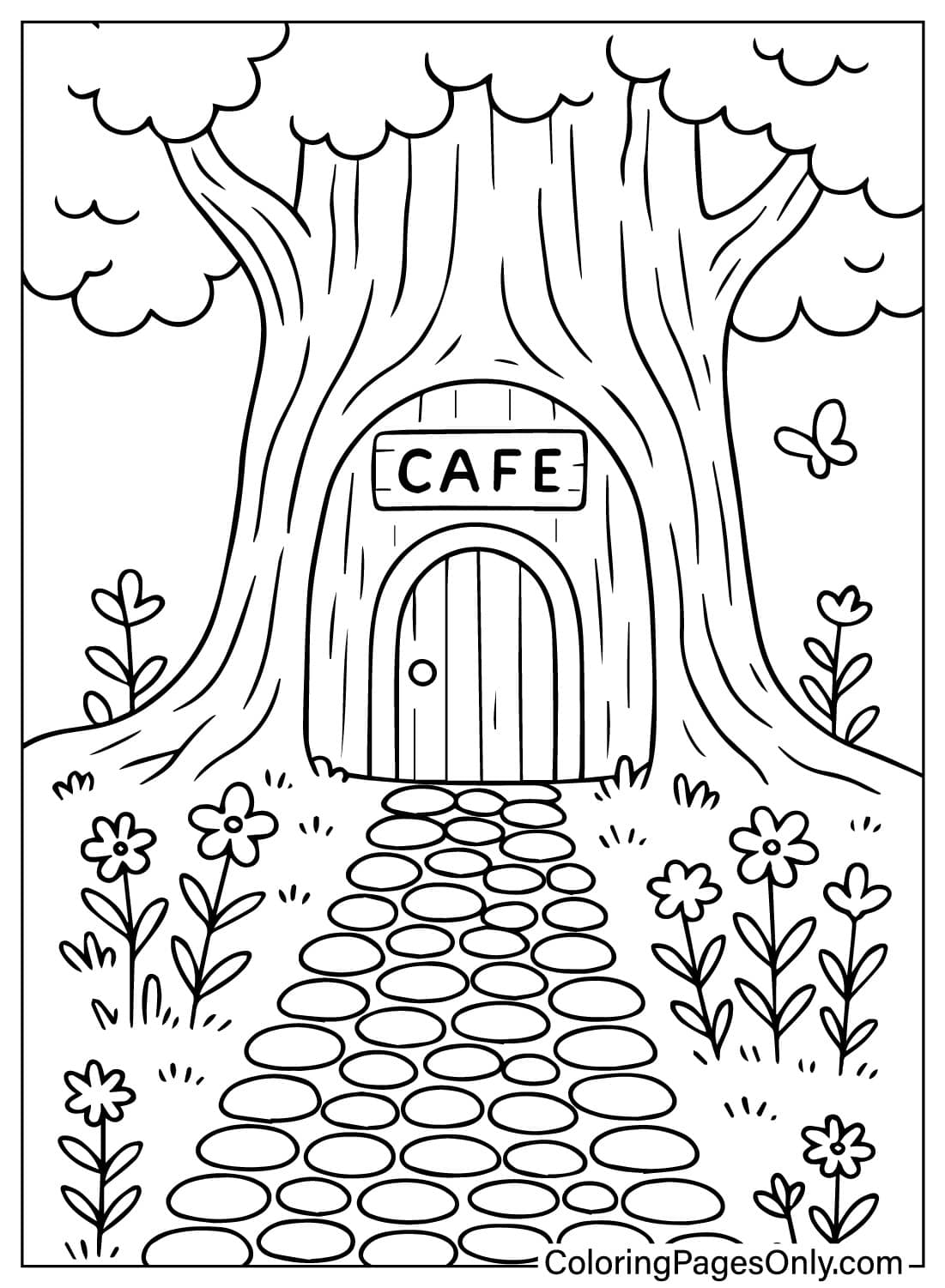
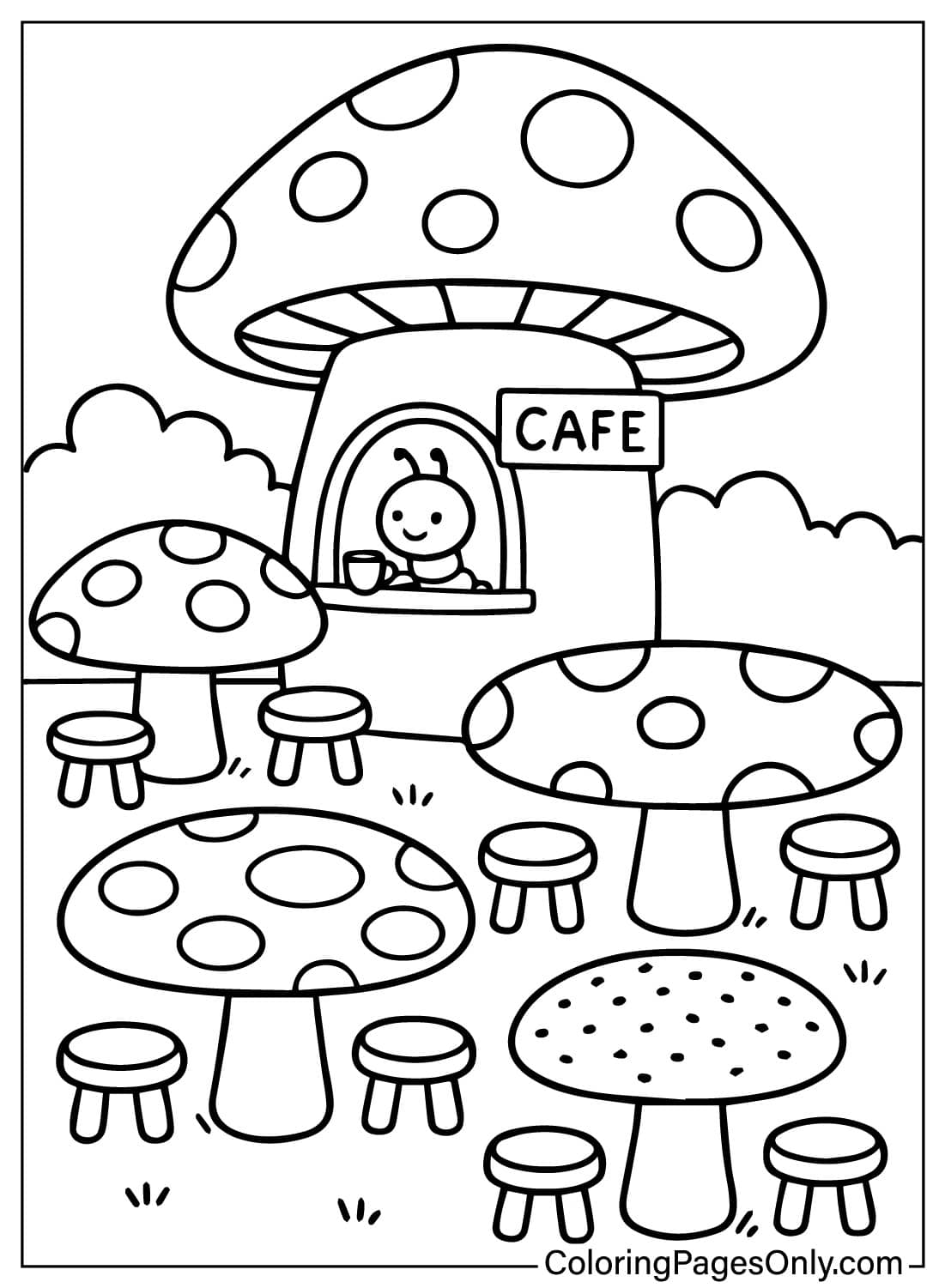
Tiny Cafe Architecture
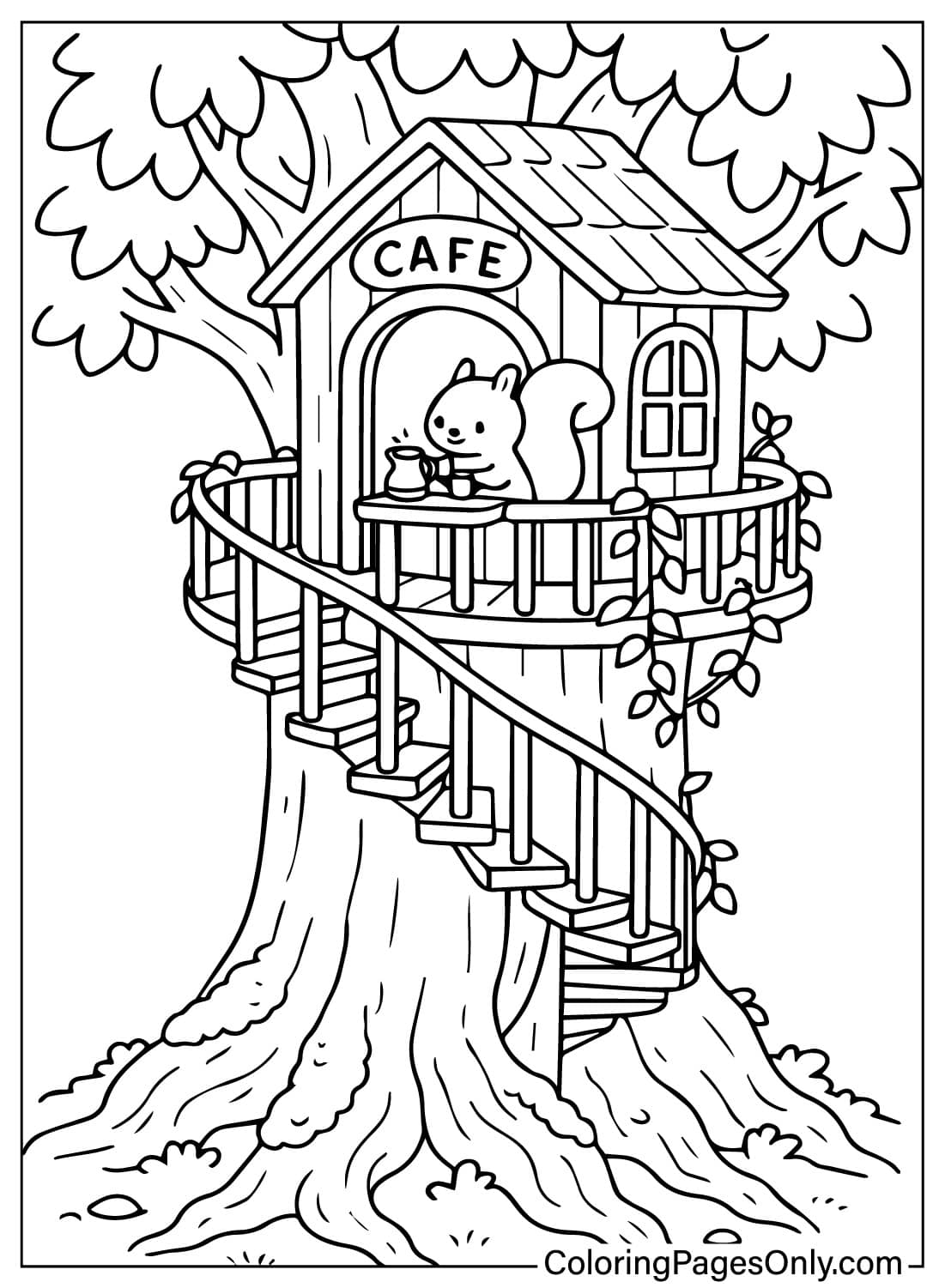
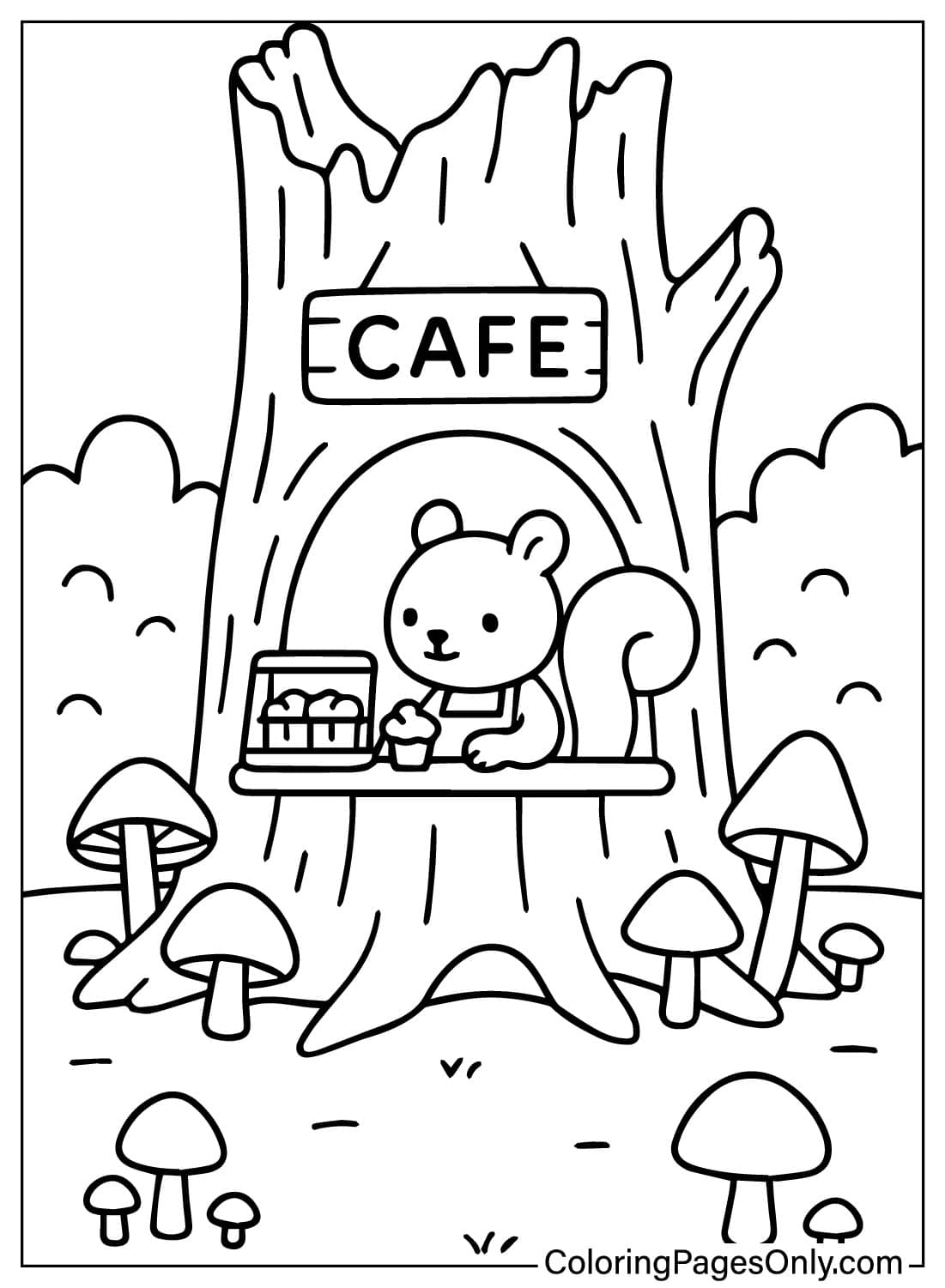
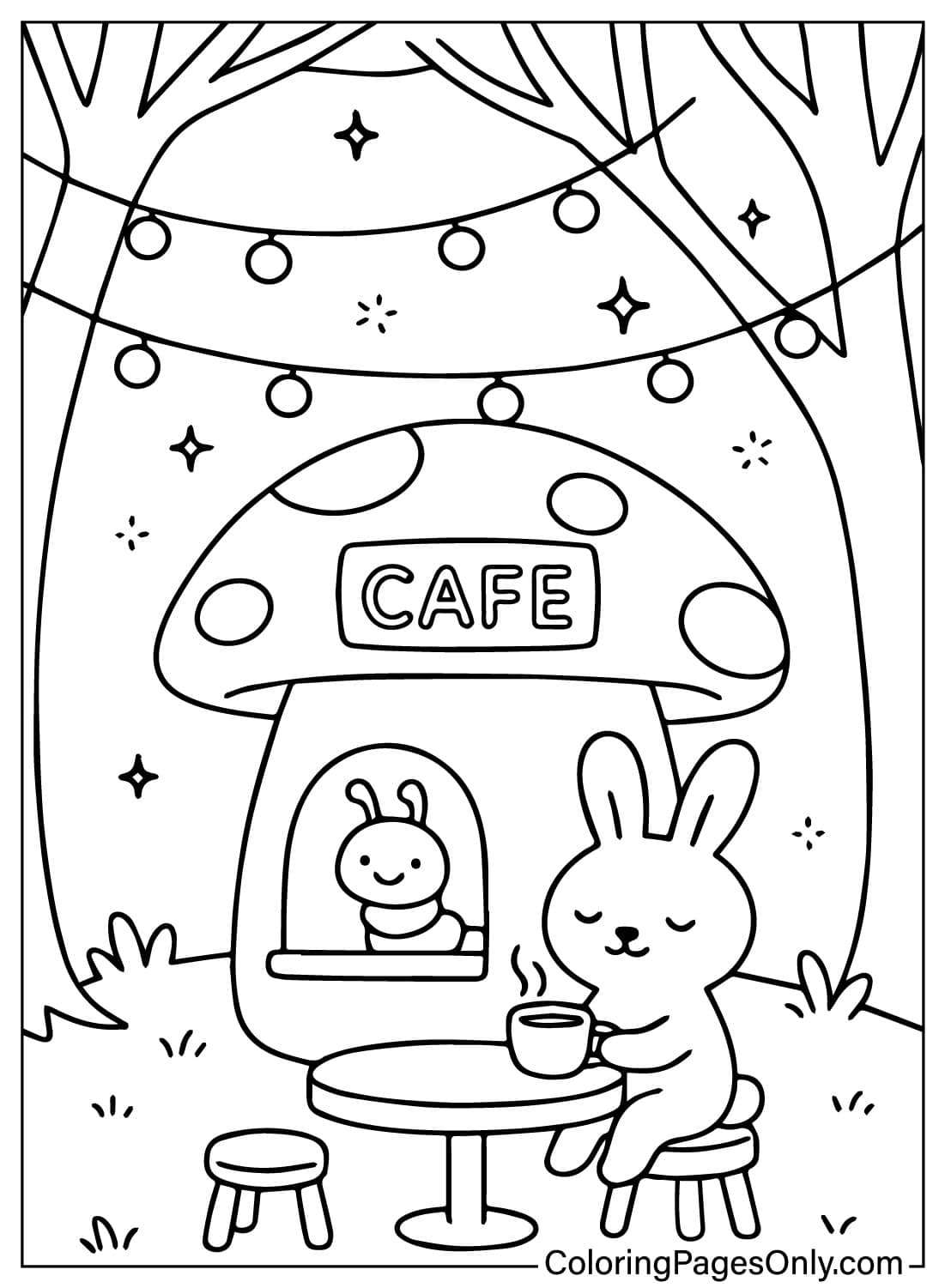
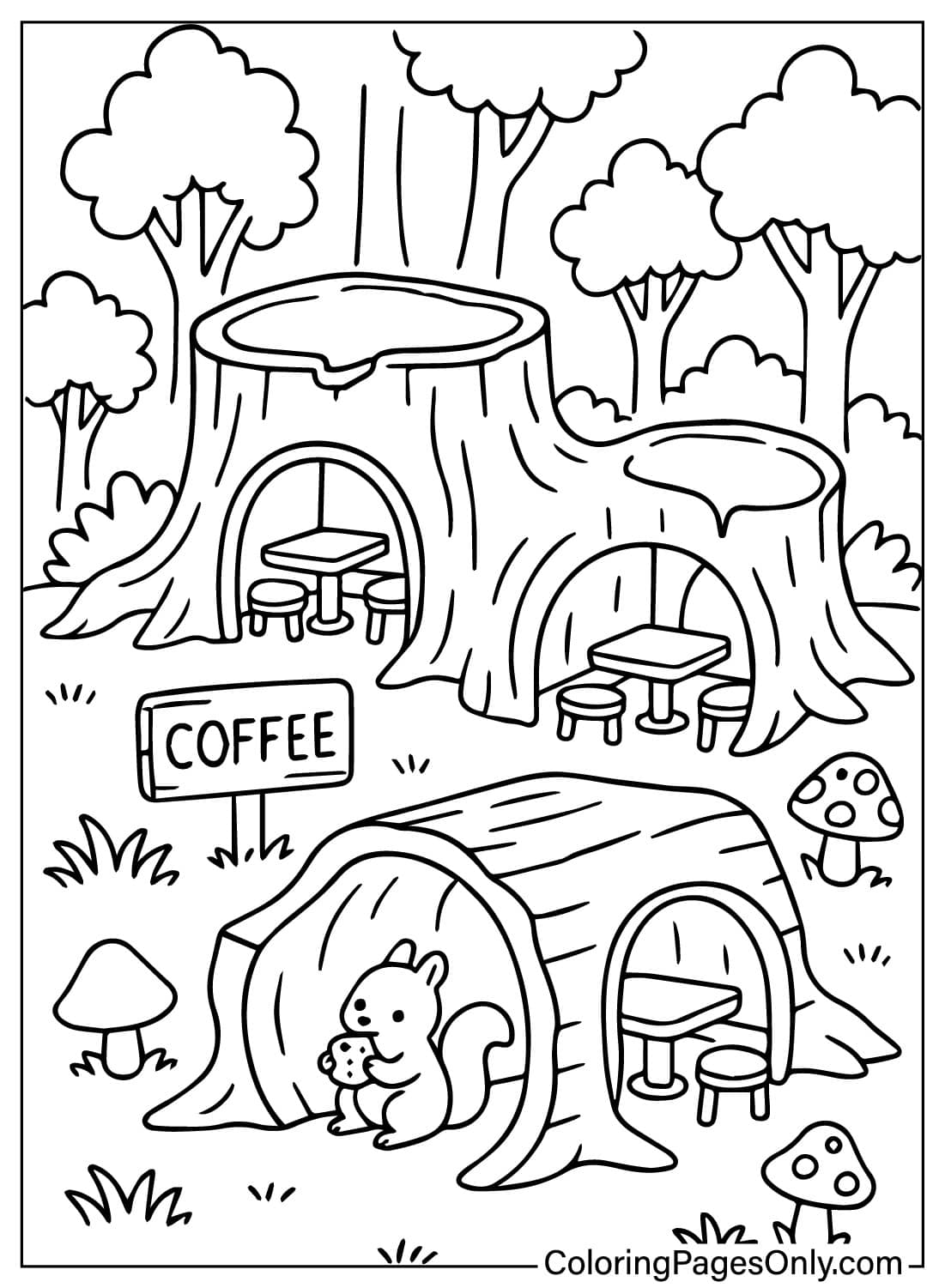
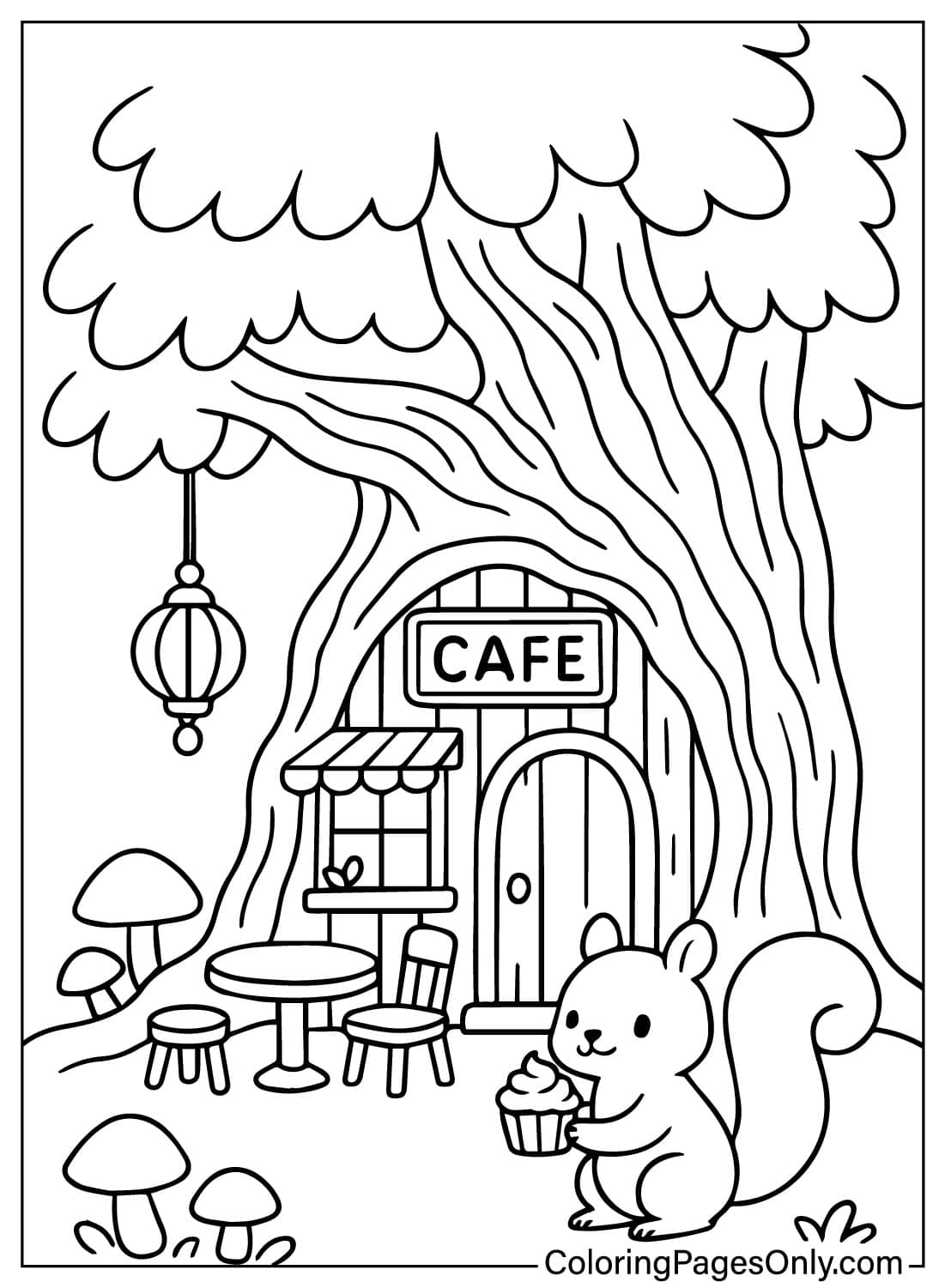
Several pages focus on the cafe building itself, built into a tree stump, a mushroom, a cave, or another unexpected forest structure.
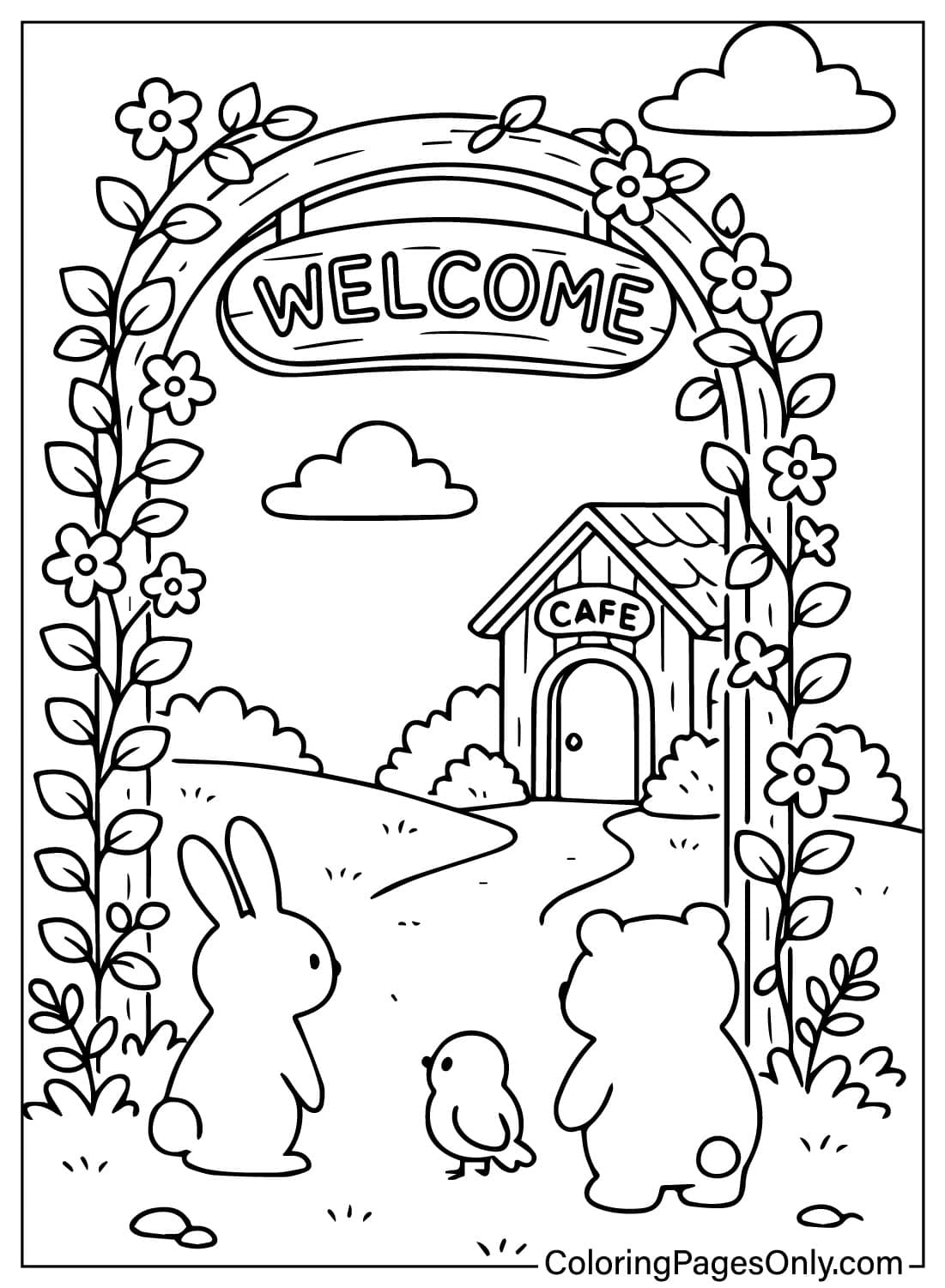
Cozy Cafe Scenes and Weather Moments
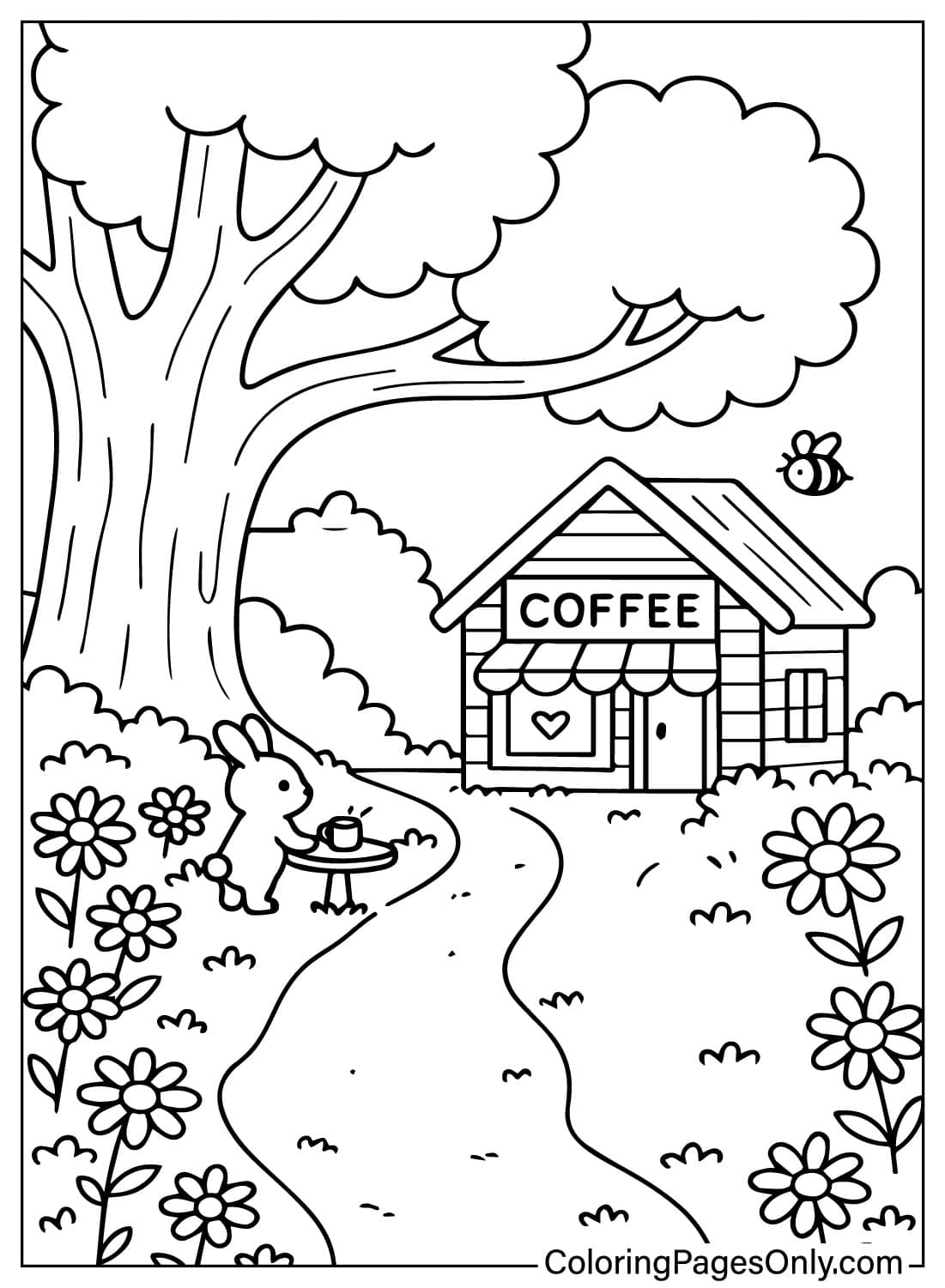
The remaining pages widen out to a fuller scene, indoor or outdoor seating, rain, sunset, or garden surroundings framing the cafe.
What Tiny Forest Cafe Coloring Pages Do
Fine motor development. Children ages 2 through 7 build fine motor skills through structured coloring, a benefit the American Academy of Pediatrics points to directly, and the mix of small character details and larger background shapes in this set gives that skill room to develop at more than one scale.
Imaginative world-building. Because the cafe setting does not exist anywhere in the real world, a colorer has to invent it fresh with every color choice, which gives the set more open-ended creative range than a page based on a real, already-familiar place.
A calming, repeatable routine. A 2005 study in the Art Therapy Journal found that structured coloring sessions measurably reduced participants’ anxiety, and a set built around one consistent, gentle setting like this one supports returning to the same calming activity page after page.
Character and narrative thinking. Naming the animals, imagining what they might say to each other, or inventing a short story around a page brings a narrative skill into what would otherwise be a purely visual activity.
How to Color Tiny Forest Cafe Pages Well
- Squirrel characters: Color the fur in Crayola Brown or Crayola Red Orange with a lighter Crayola Tan underside, and keep the tail a shade darker than the body so it reads as a separate, fluffier shape.
- Bunny and rabbit characters: Use Crayola White or Crayola Gray for the coat, adding Crayola Pink to the inner ears for warmth against an otherwise cool-toned character.
- Tree stump and log structures: Base the wood in Crayola Raw Sienna, then ring the cut surface with Crayola Sepia growth rings to suggest age and texture.
- Mushroom cafe buildings: Color the cap in Crayola Scarlet or Crayola Red with white polka dots left unshaded, and keep the stem in a soft Crayola Tan to contrast against the bright cap.
- Steam and warm drinks: Leave a thin white gap between the cup and a light Crayola Gray steam swirl above it, since a hard outline on steam makes it read as solid rather than rising.
- Rain and sunset scenes: Use short diagonal lines of light Crayola Sky Blue for rain, or blend Crayola Orange into Crayola Violet Red for a sunset sky, keeping the cafe itself in warmer tones. Hence, it still reads as the cozy focal point.
5 Creative Craft Ideas With Tiny Forest Cafe Coloring Pages
1. Tiny Cafe Storybook
Color several pages in an order that makes sense as a sequence, and staple them together along one edge. Add a short caption under each page describing what that animal is doing. The finished booklet turns individual pages into a single woodland story.
2. Woodland Cafe Menu Board
Color one of the cafe building pages and mount it on cardstock. Write a short, invented menu of forest-themed treats on a separate card taped beside it. The pairing turns a coloring page into a small display piece for a room or a classroom corner.
3. Animal Character Garland
Color four or five of the animal character pages and trim around each figure. Punch a hole at the top of each and string them together with twine. The finished garland strings the cast of characters into one hanging display.
4. Forest Cafe Diorama Backdrop
Color one of the wider cozy scene pages and stand it upright inside a shoebox with the open side facing out. Add small paper cutouts of extra characters or objects in front of it. The backdrop turns a flat page into a small three-dimensional scene.
5. Rainy Day Window Card
Color one of the rain-themed pages and glue it inside a folded card with a small cutout window on the front. The window reveals a piece of the rainy scene before the card is even opened, giving a simple greeting card an extra visual layer.
Frequently Asked Questions
What are Tiny Forest Cafe coloring pages?
A free set of 37 printable designs built around an invented woodland cafe setting, including animal characters working and visiting the cafe, close-up views of the cafe buildings themselves, and wider cozy or weather-based scenes.
Is Tiny Forest Cafe based on an existing show or book?
No. It is an original theme created for this collection, not tied to any existing series, so the characters and setting are not drawn from an outside source.
Which animals appear in the collection?
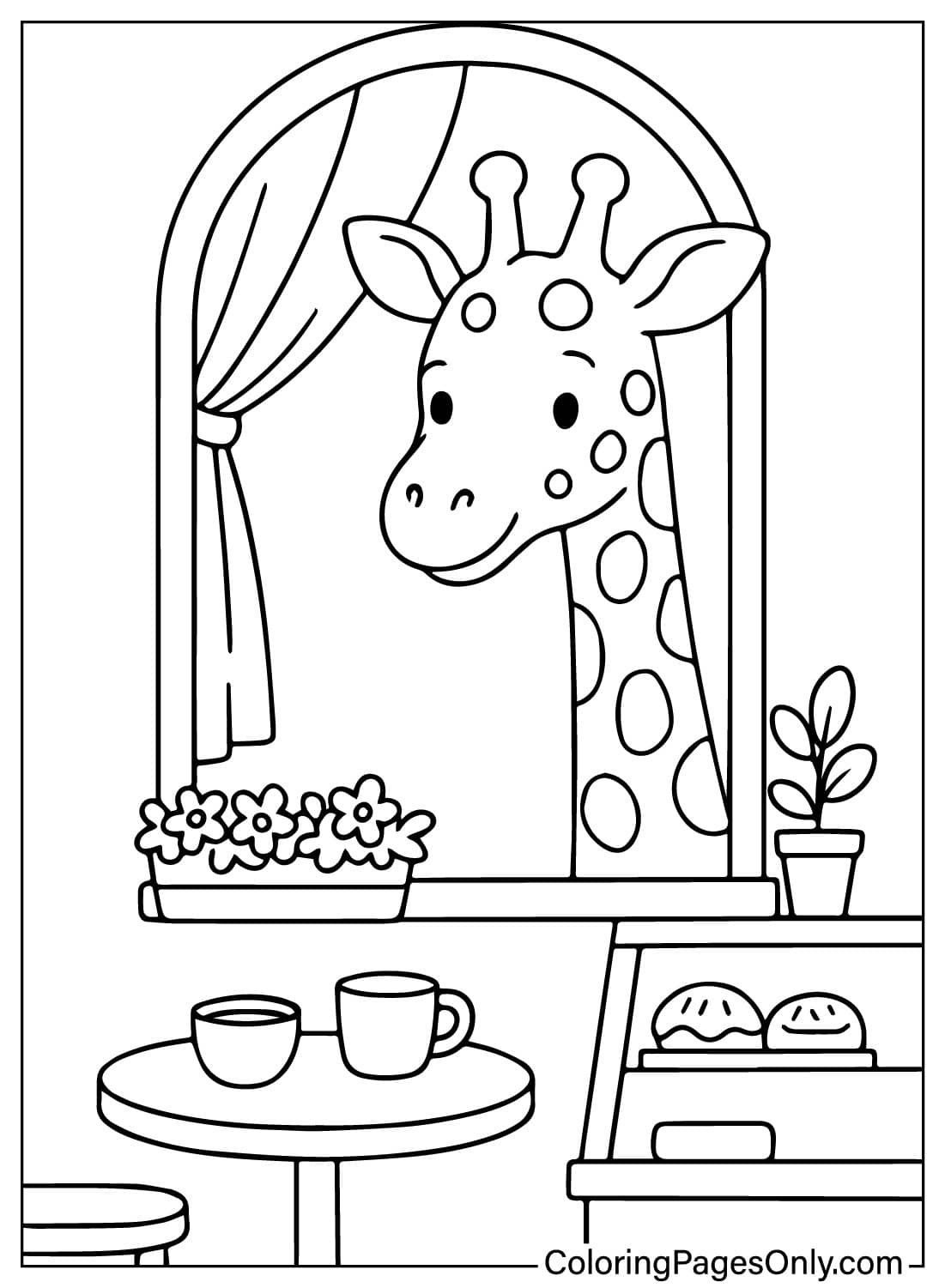
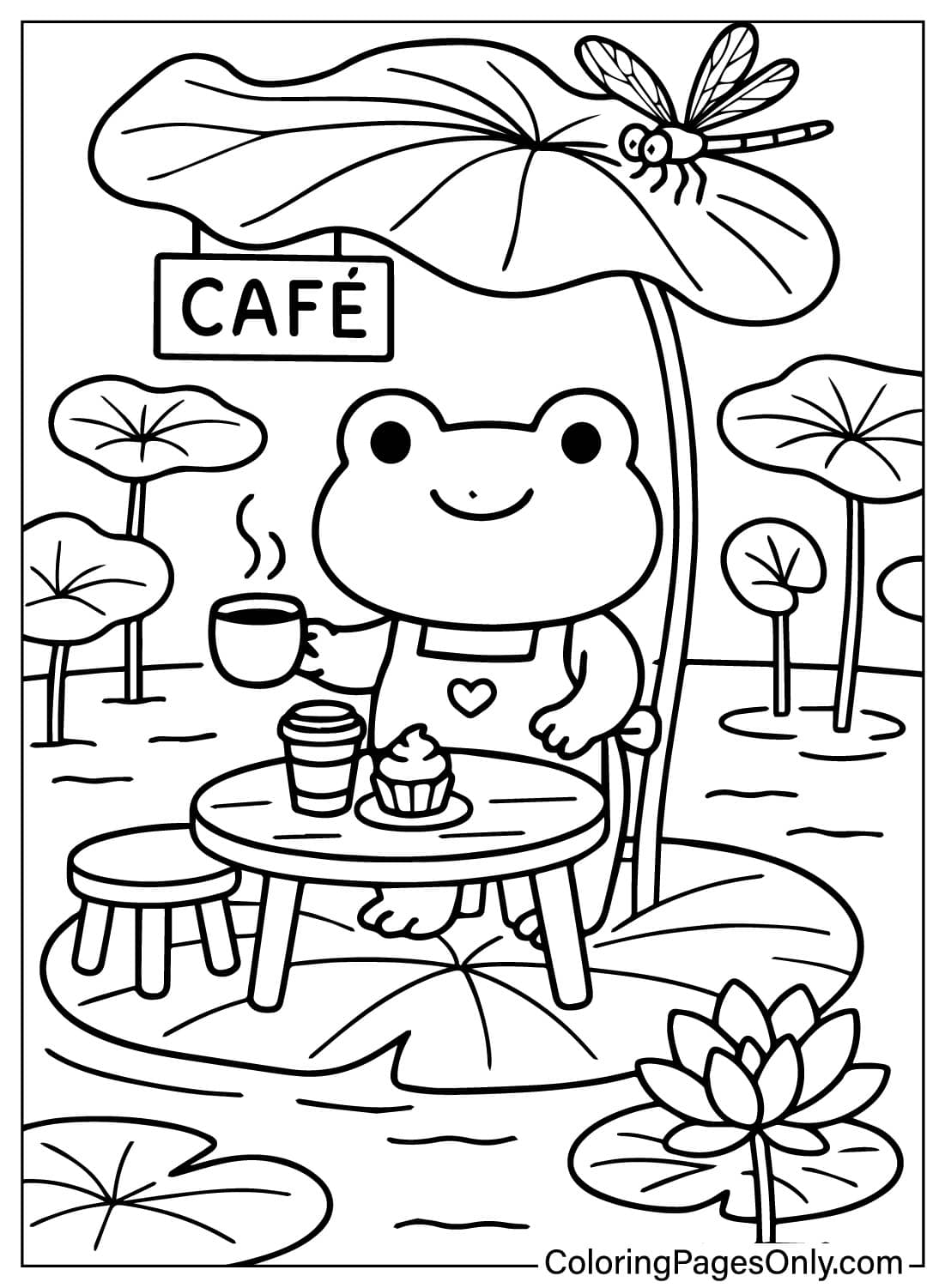
The cast includes squirrels, bunnies, a bear, a fox, a hedgehog, an owl, a frog, a giraffe, mice, a monkey, a cat, and a ladybug, each shown in a different role around the cafe.
What kinds of cafe buildings show up in the set?
The buildings take the form of hollow tree trunks, tree stumps, mushrooms, a cave entrance, and a treehouse, along with a few more traditional standalone cafe structures.
What colors work best for this woodland setting?
Warm wood tones like Crayola Raw Sienna and Sepia for the structures, bright Crayola Scarlet for mushroom caps, and soft natural fur tones for the animal characters keep the palette grounded in a forest feel.
Can these pages be colored online instead of being printed?
Yes. Every design in the set opens in the browser-based coloring tool, so a page can be finished on a tablet or computer without printing anything first.
Are Tiny Forest Cafe coloring pages suitable for young children?
Most of the character and cafe-building pages use large, simple shapes that suit children around age four and up. A handful of the wider, more detailed cozy scenes fit better with children six and older.
Can this set be used for a creative writing or storytelling activity?
Yes. Because the setting and characters are invented rather than tied to an existing story, the pages work well as prompts for a child to build their own dialogue or short story around a chosen animal.
Start Coloring
Every design in this set is free the moment it is clicked, with no account, email, or payment required first. The browser handles full-resolution printing directly, or a page can be finished inside the online coloring tool instead. When a design is done, the share buttons above it send the finished page to Facebook or Pinterest.