Tiny World Coloring Pages
 By:
Jennifer Thoa - Content Editor & Designer
Updated:
By:
Jennifer Thoa - Content Editor & Designer
Updated:
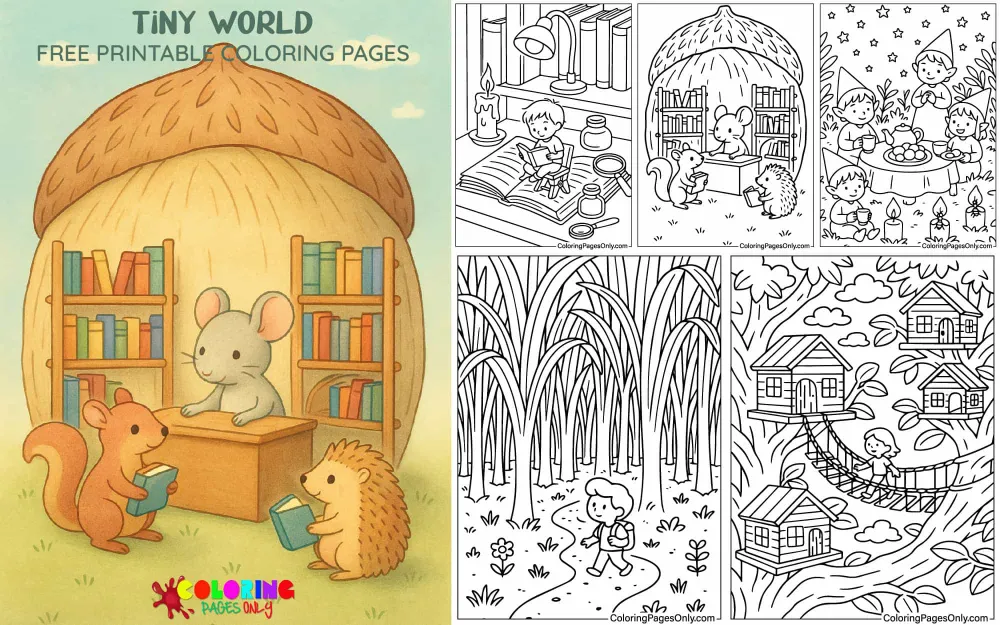
Free Tiny World Coloring Pages: 36 printable PDF designs where everyday objects become homes and tiny characters live full, busy lives inside walnut shells, teacups, and mushroom houses. Each page can be downloaded as a PDF to print or colored online in the browser, with no account required.
The idea of a person small enough to sleep in a walnut shell has a real literary root: Hans Christian Andersen’s 1835 fairy tale Thumbelina describes its tiny heroine sleeping in a polished walnut shell cradle, with violet leaves for a bed and a rose petal for a blanket. This collection borrows that same core idea, turning ordinary objects into tiny-scale furniture and architecture, and applies it across a much wider cast of characters than just one fairy tale heroine.
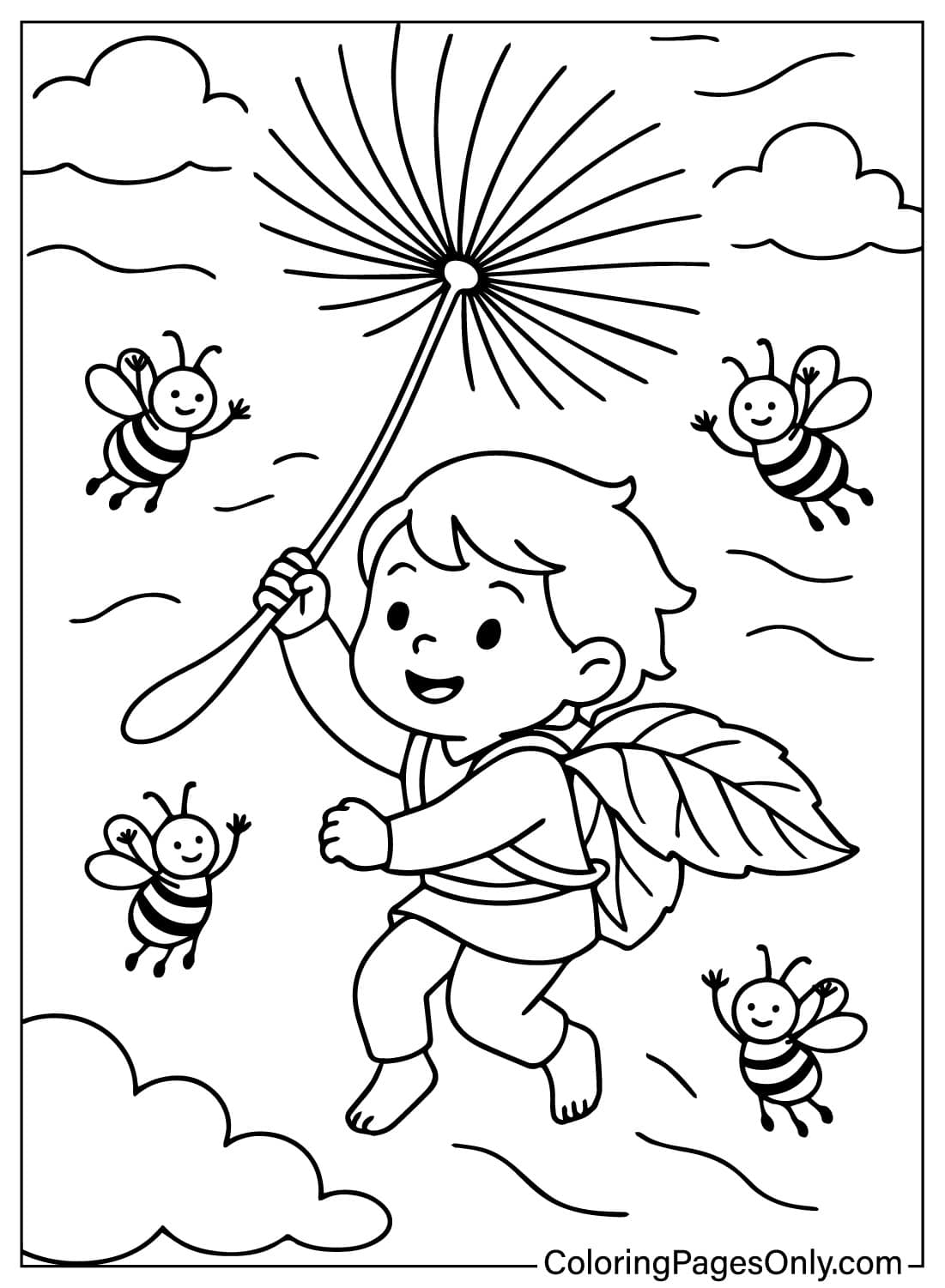
The 36 pages in this set are split into miniature homes and hideouts, tiny people living inside everyday objects, bug and animal communities, fairies and elves, and a smaller group of nature-scale adventures, giving colorists a wide range of miniature worlds to explore.
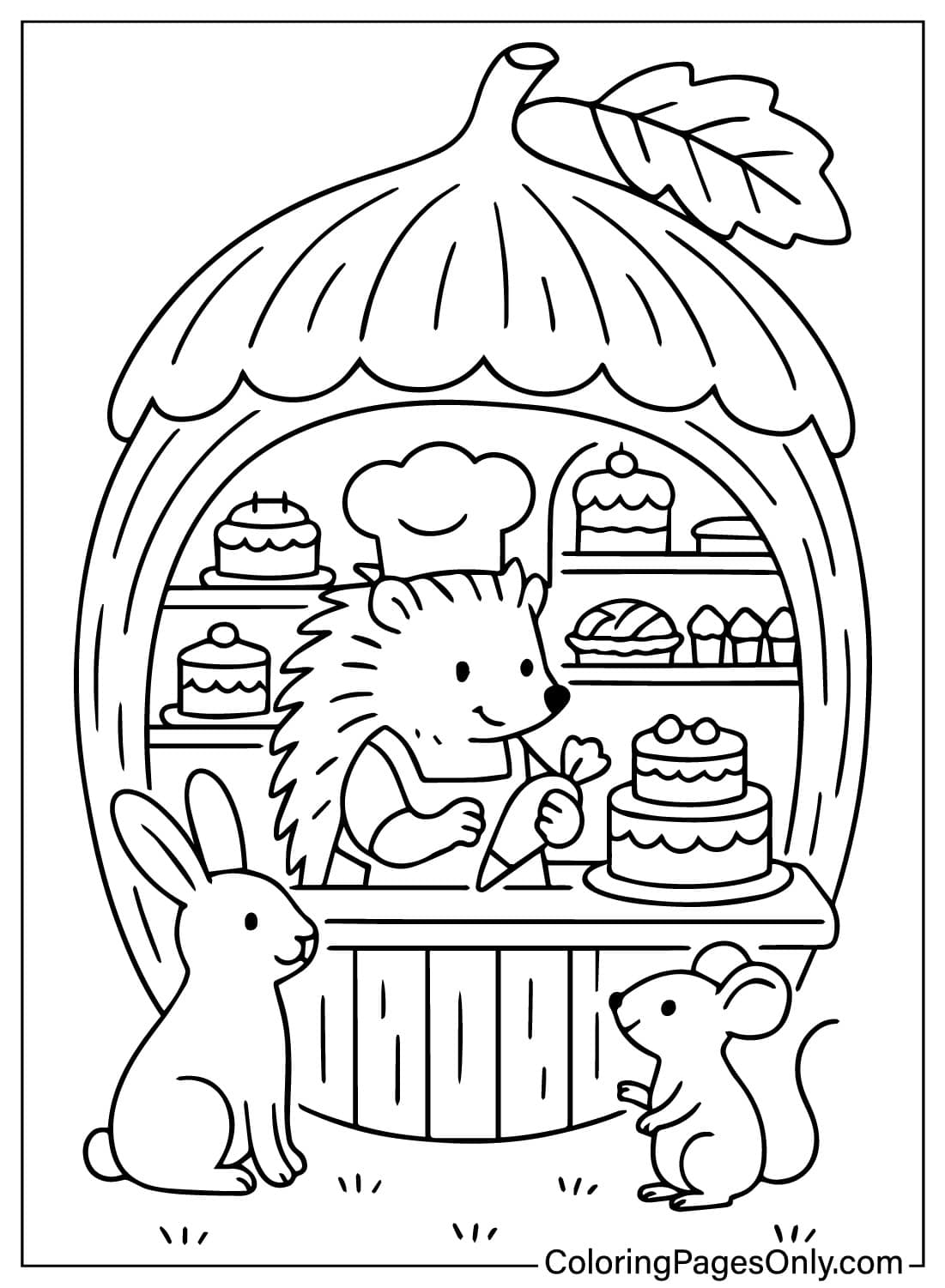
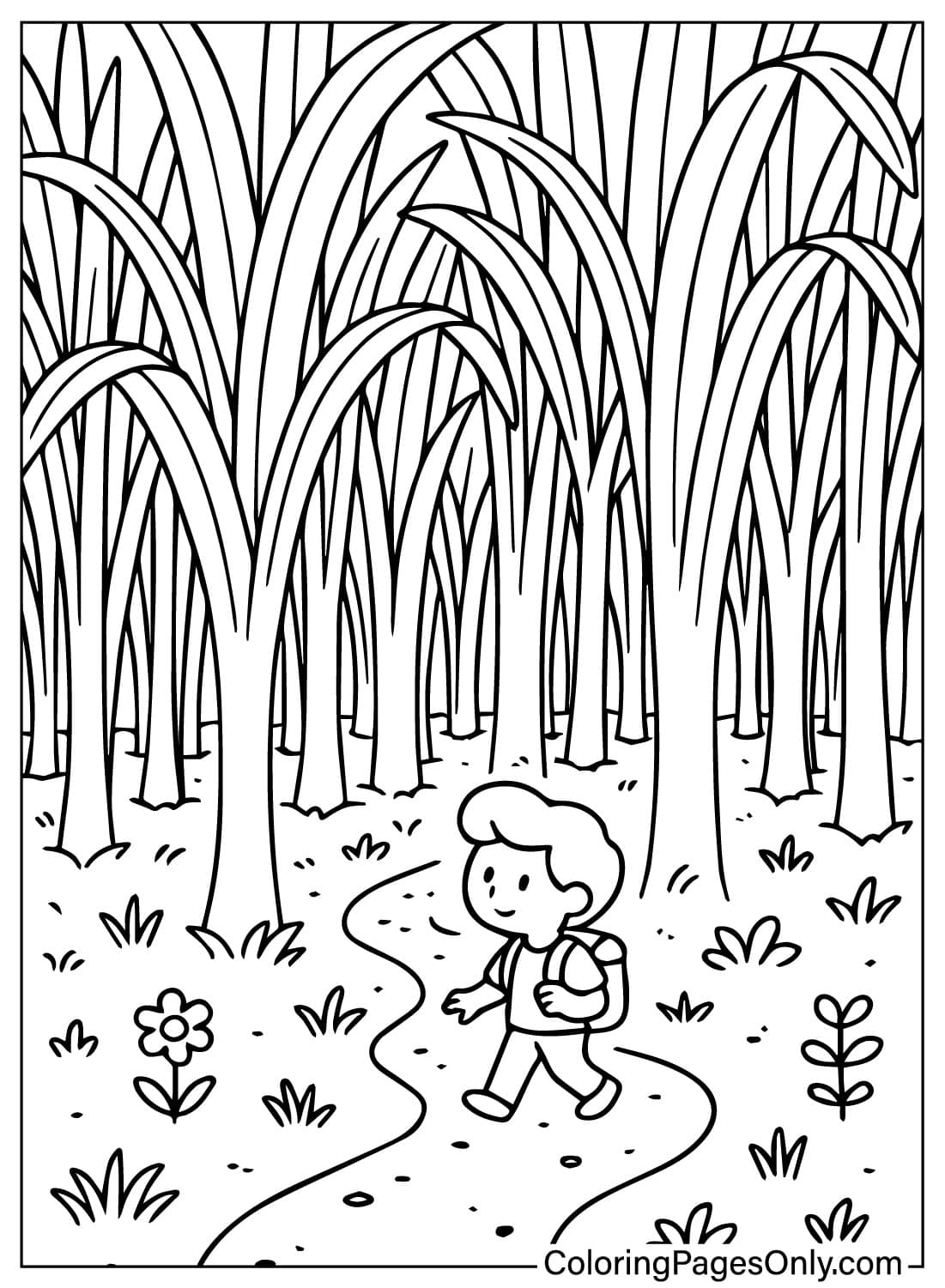
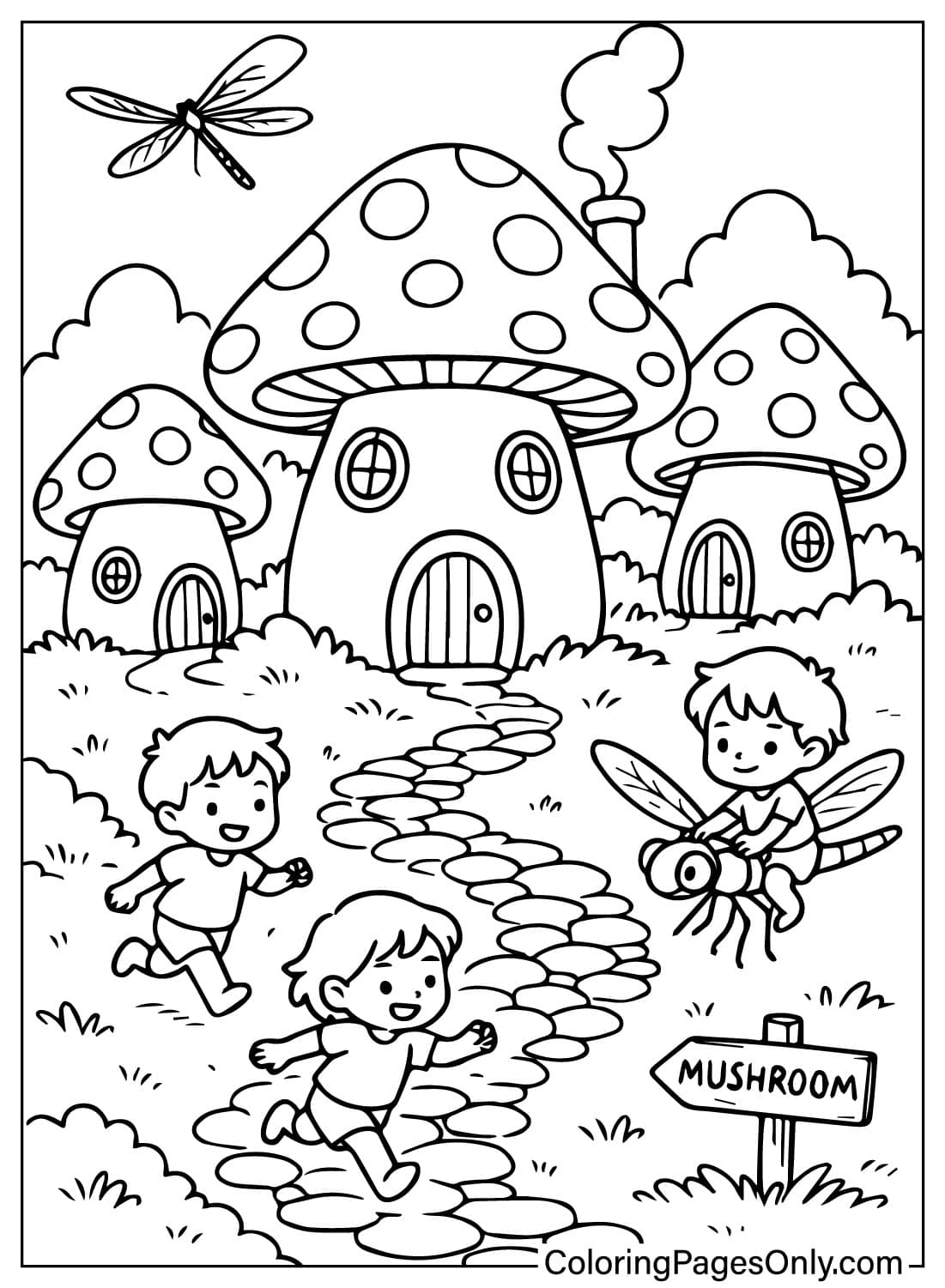
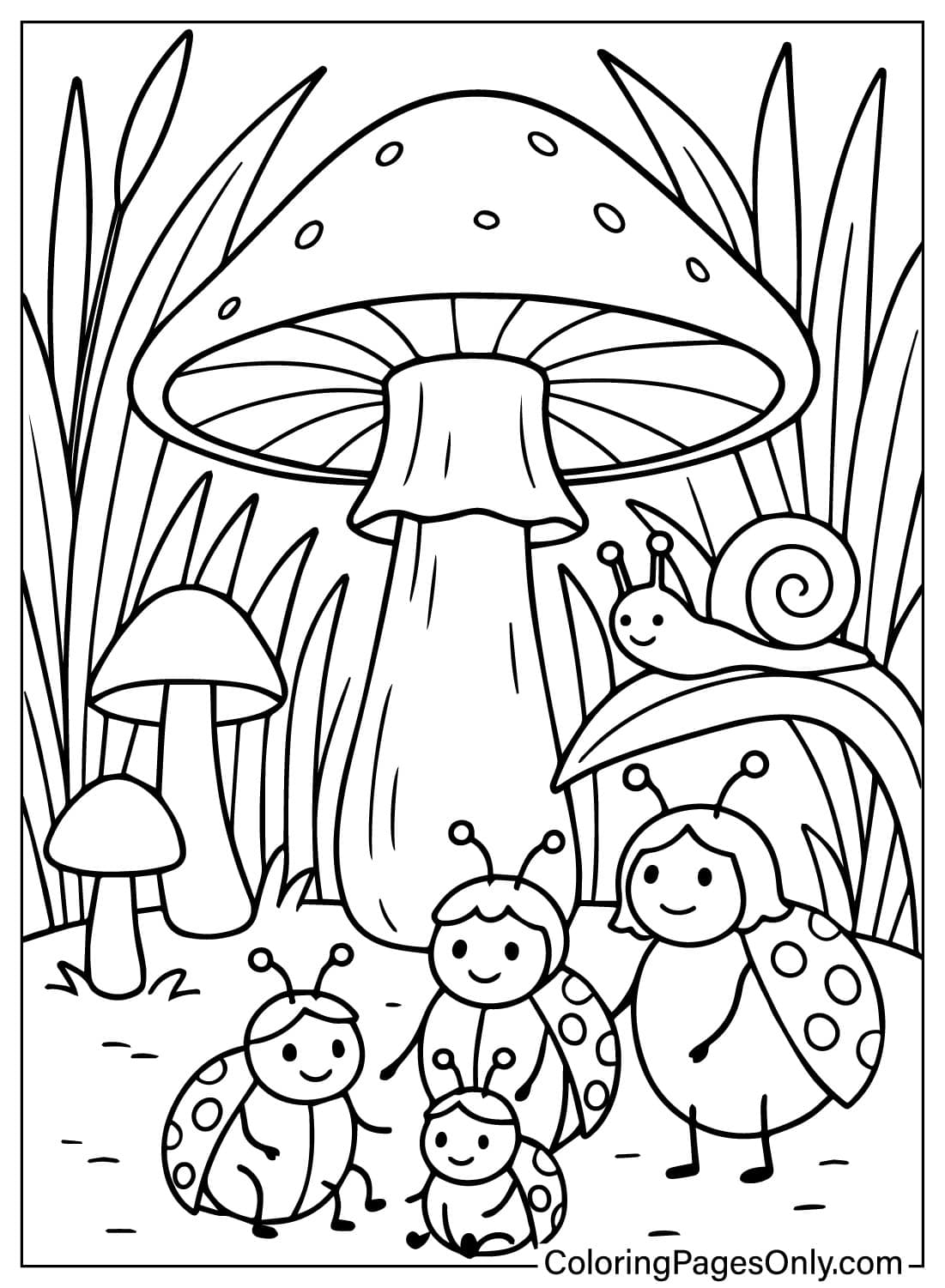
What Is Inside This Collection
The 36 pages are grouped by who lives in the tiny world and what kind of space they occupy, rather than by a single repeated scene.
Miniature Homes and Hideouts
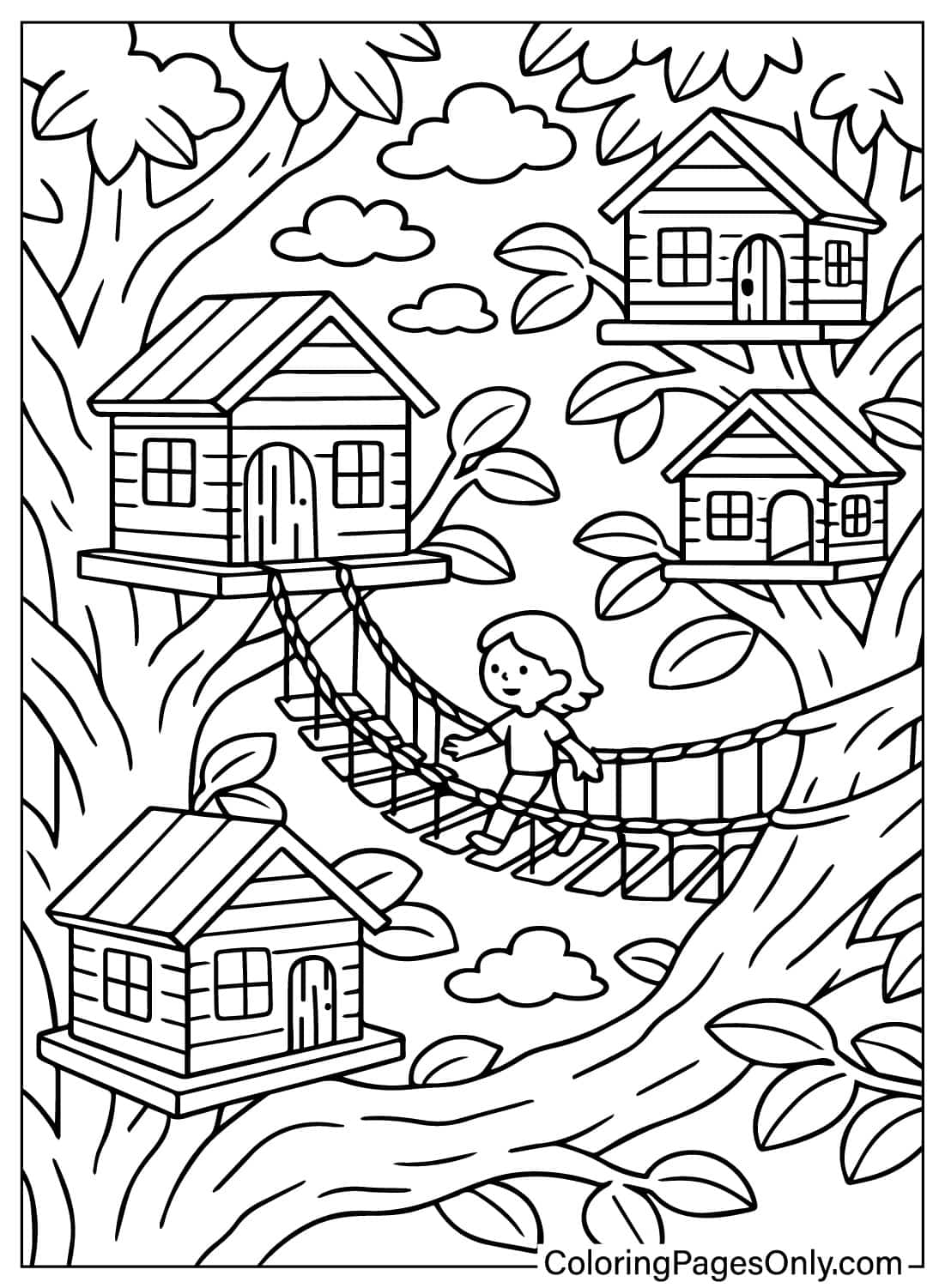
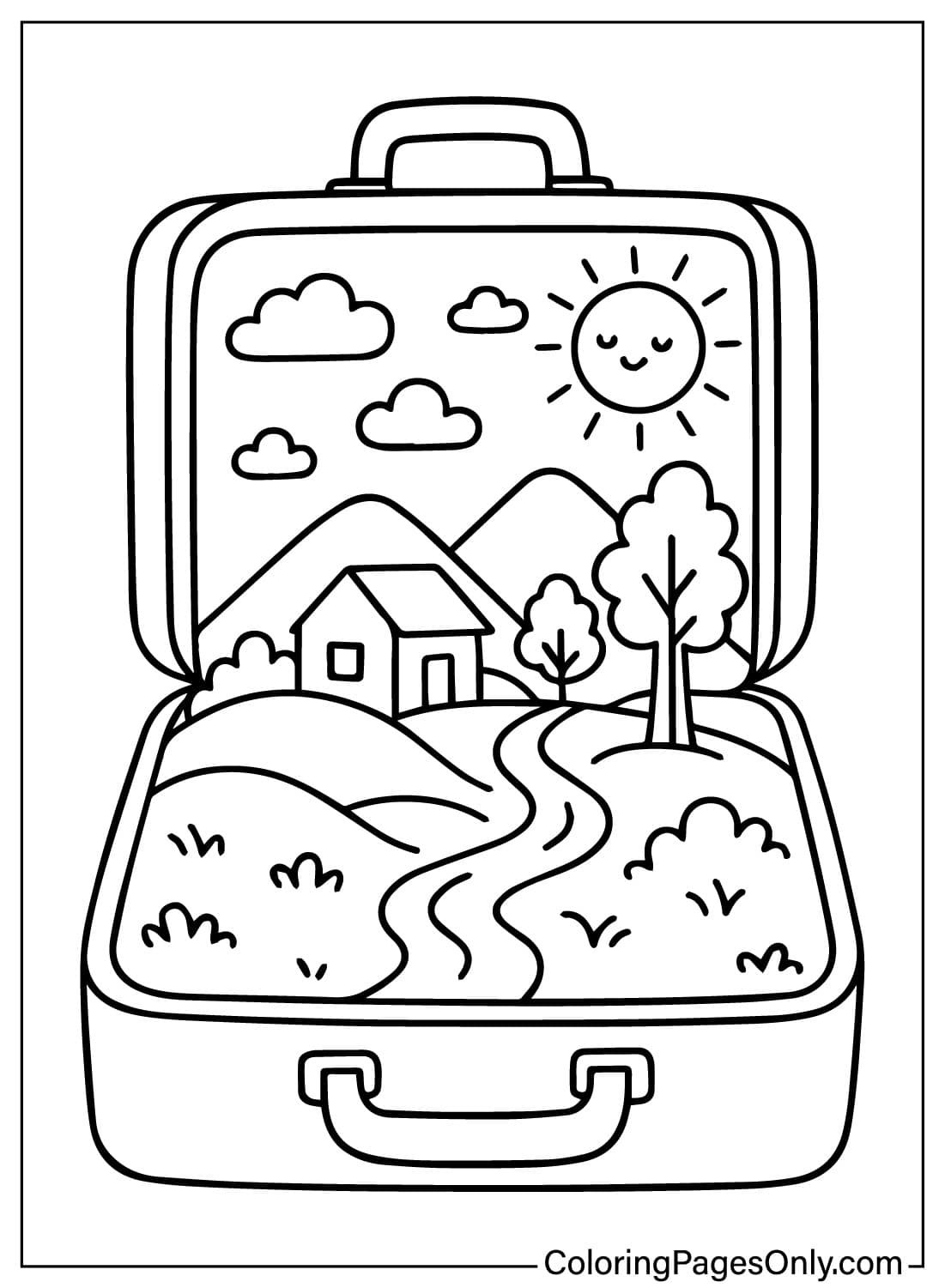
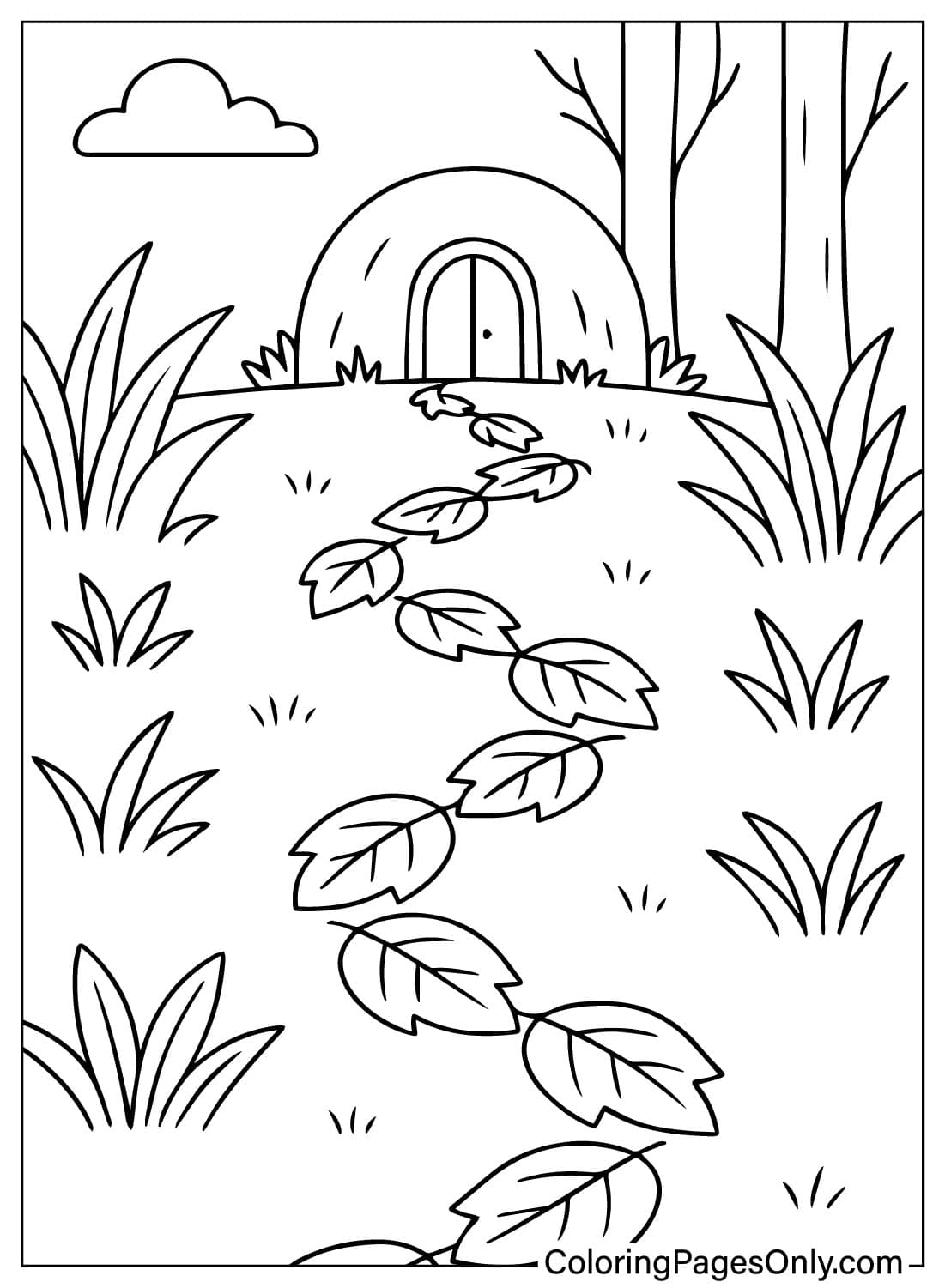
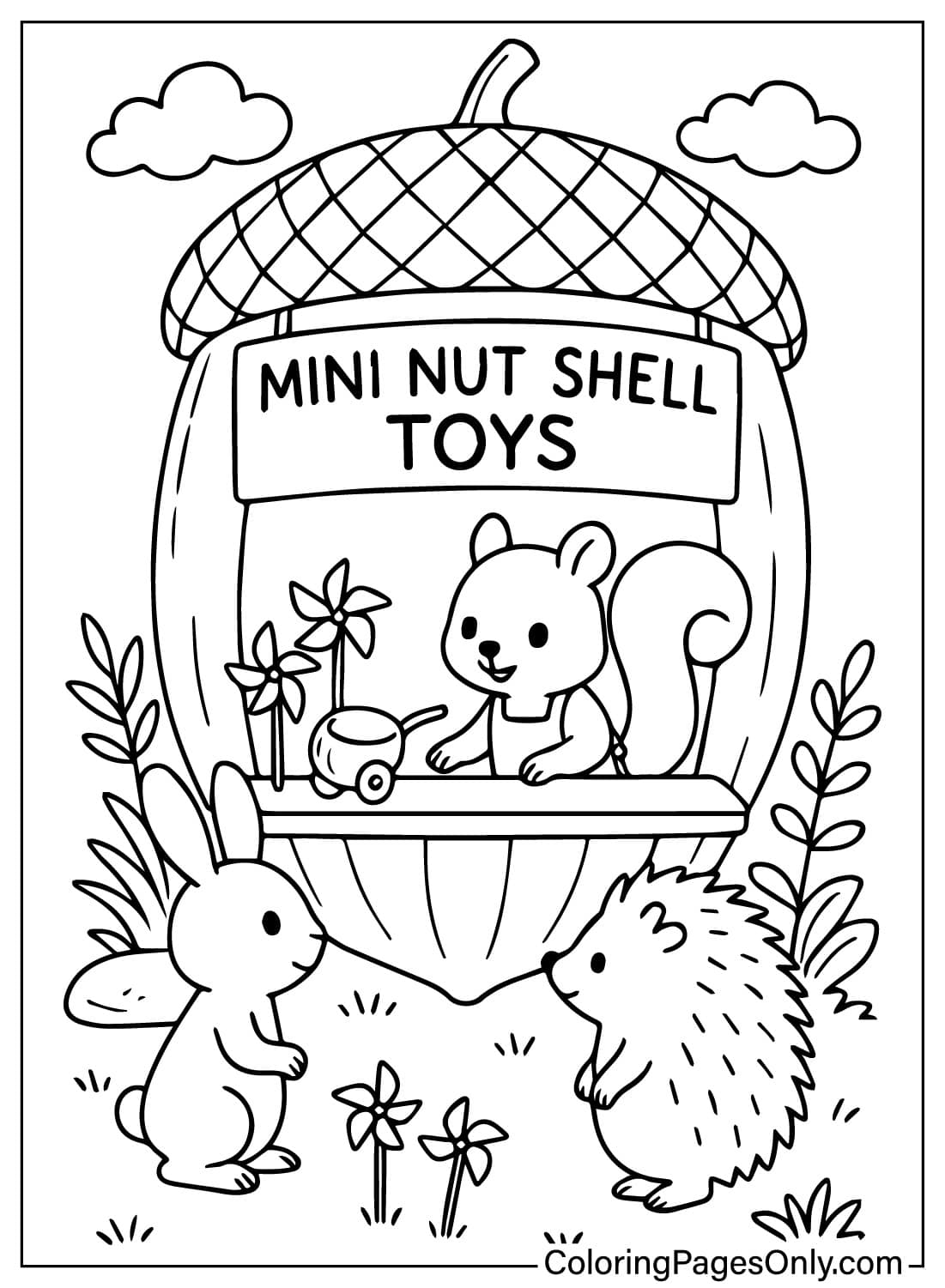
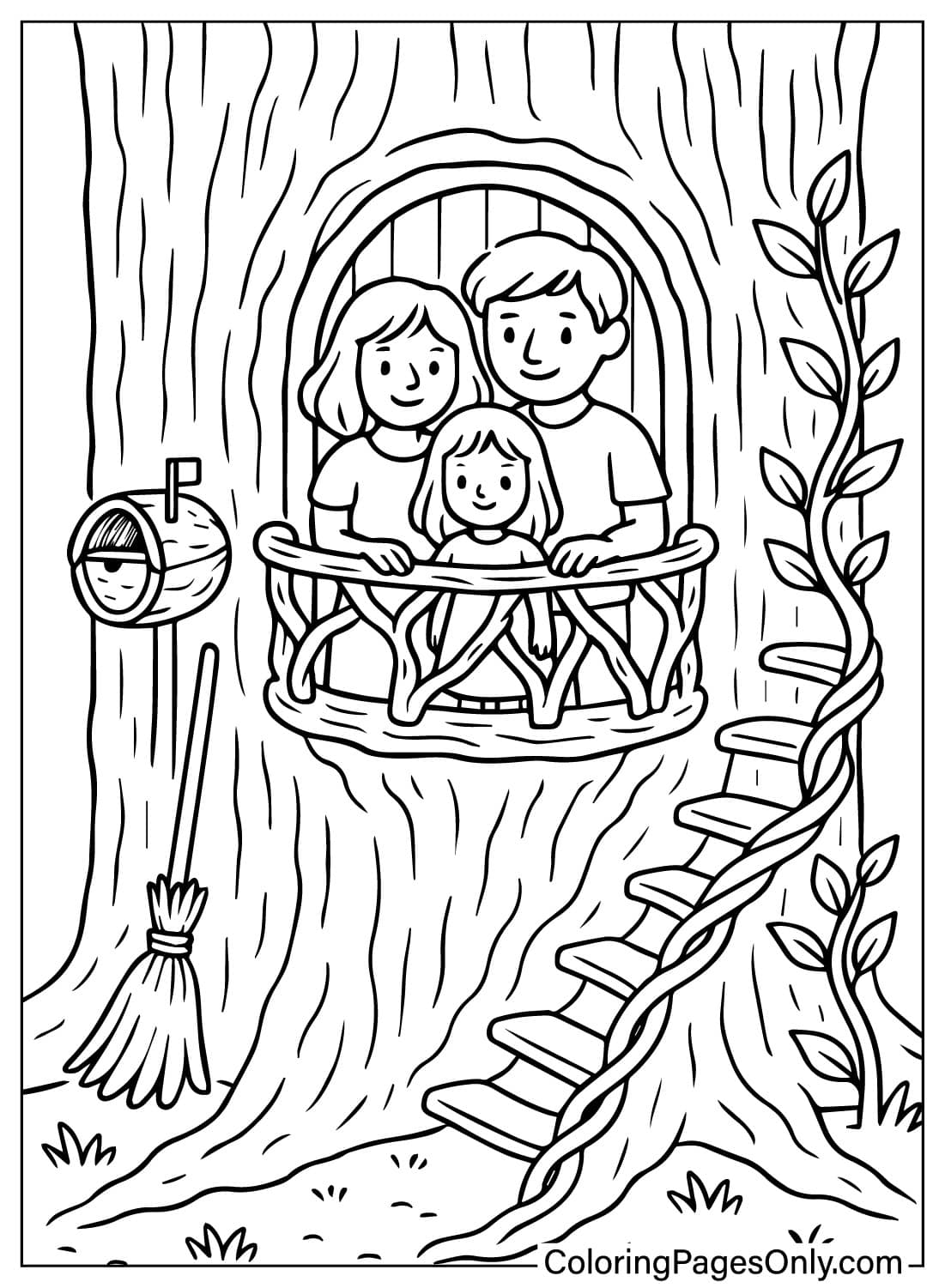
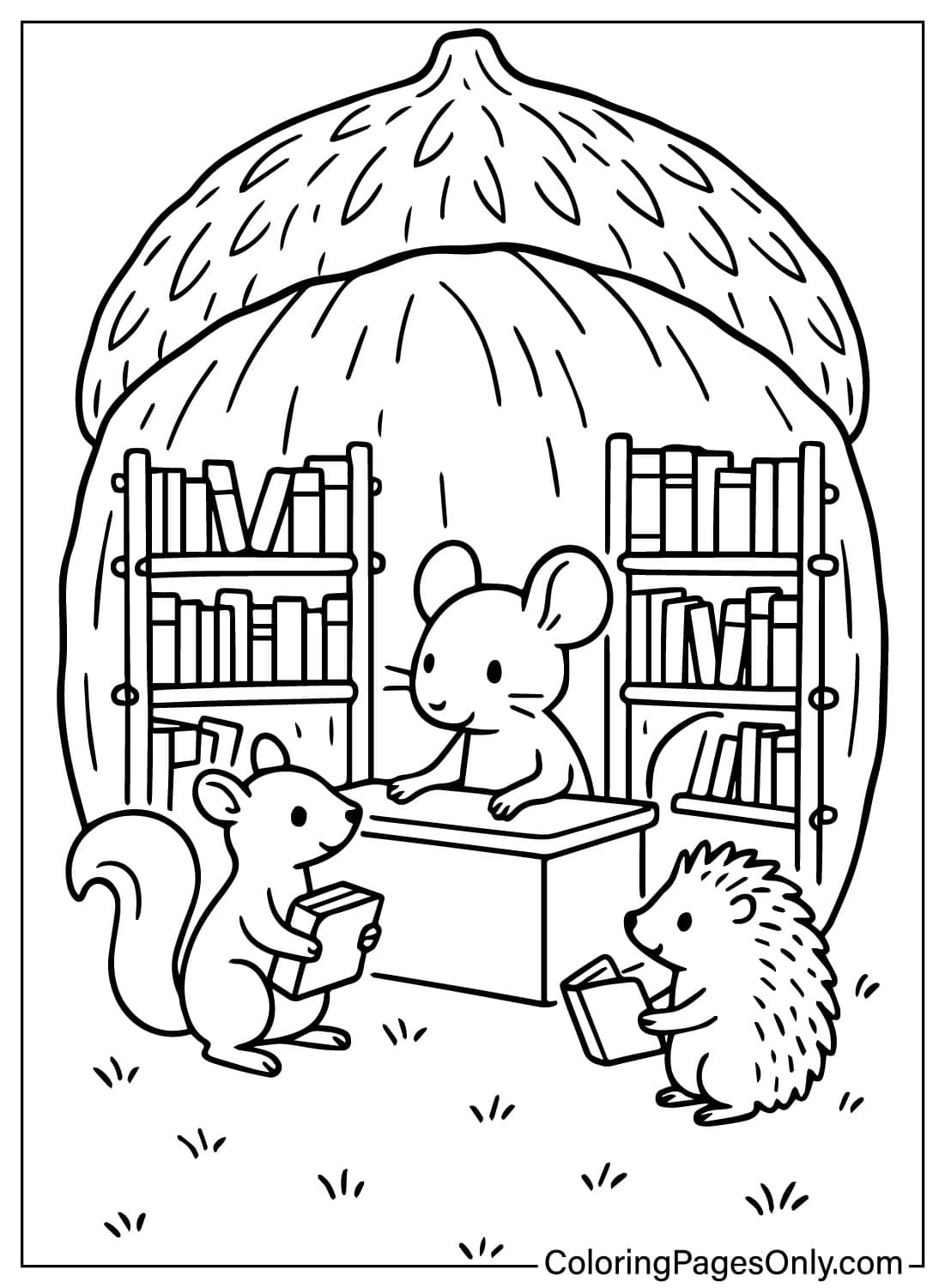
A group of pages shows the architecture of this tiny world, including treehouse villages, a suitcase turned into a landscape, and an acorn library. These suit warm, natural building tones, Burnt Sienna and Tan for wood and shell structures, with small accent colors for windows and doors.
Tiny People in Everyday Objects
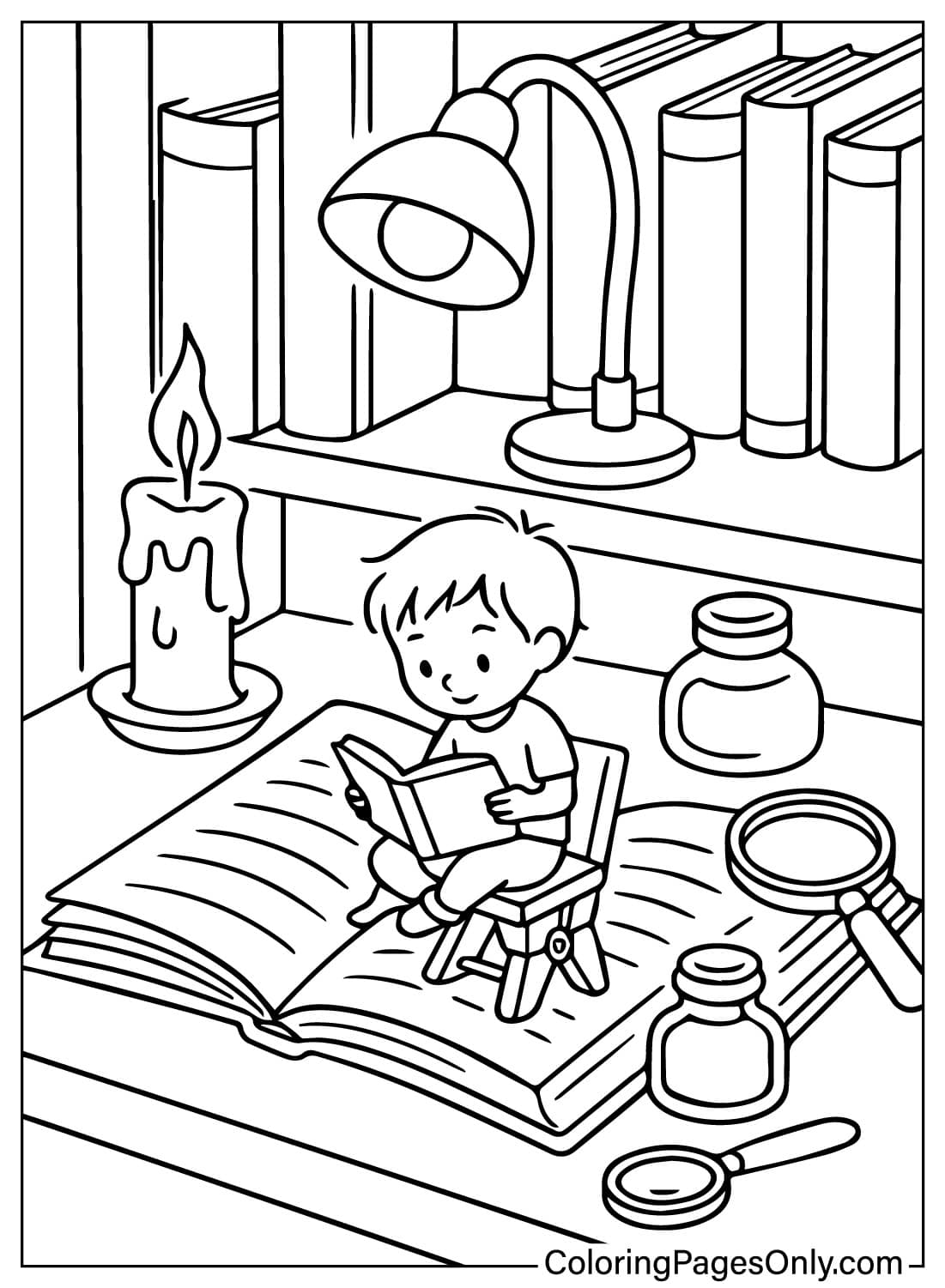
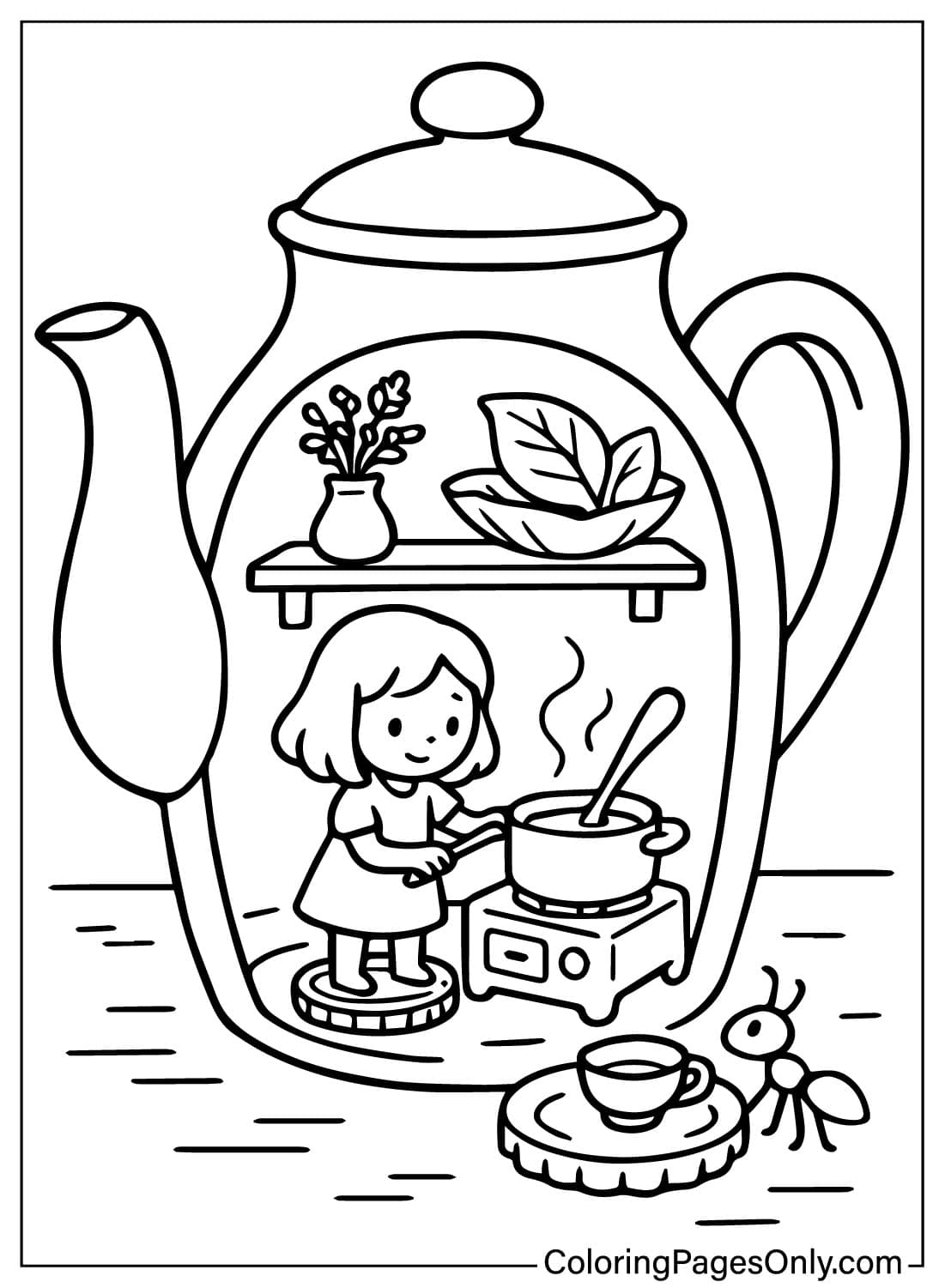
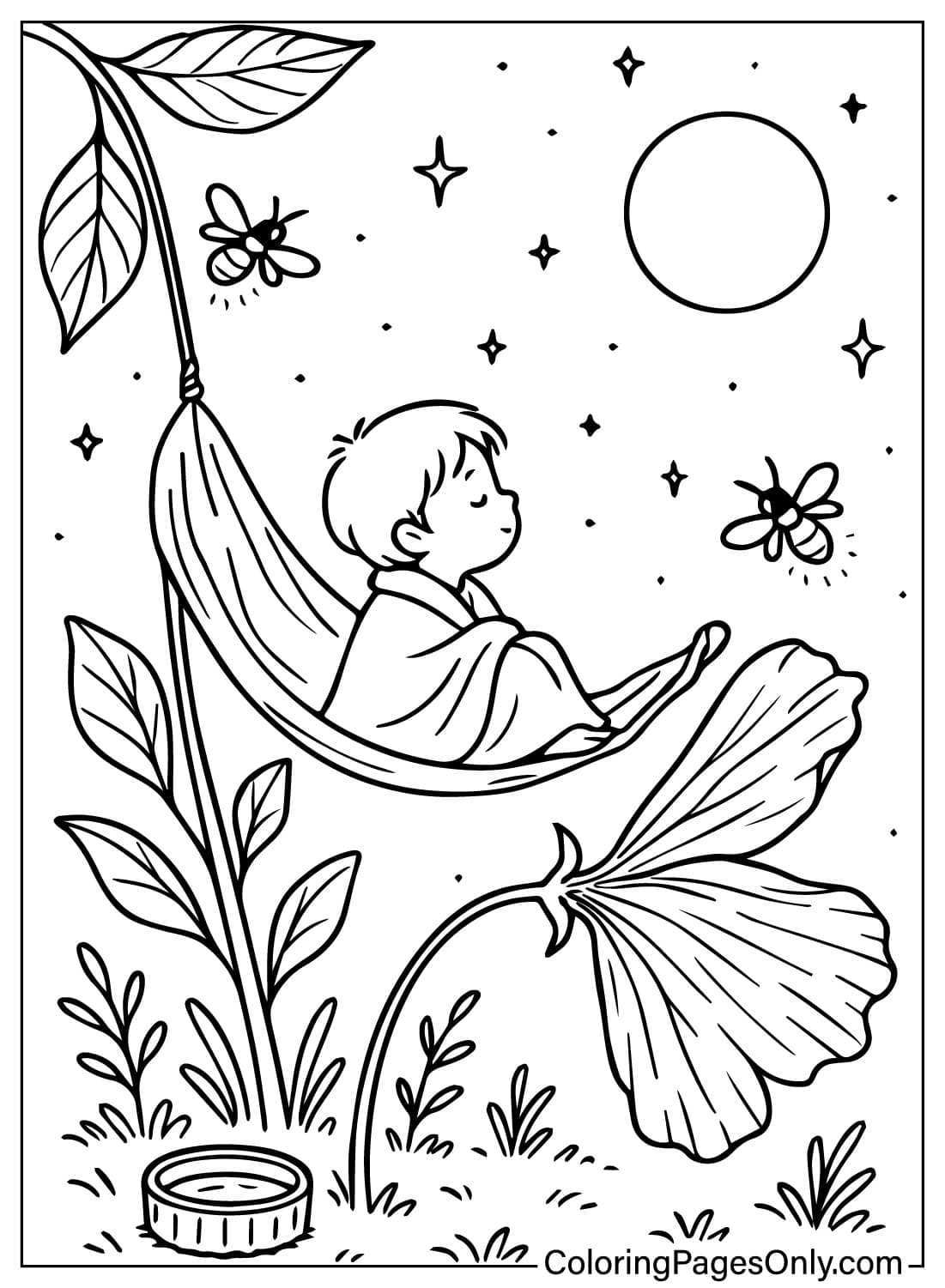
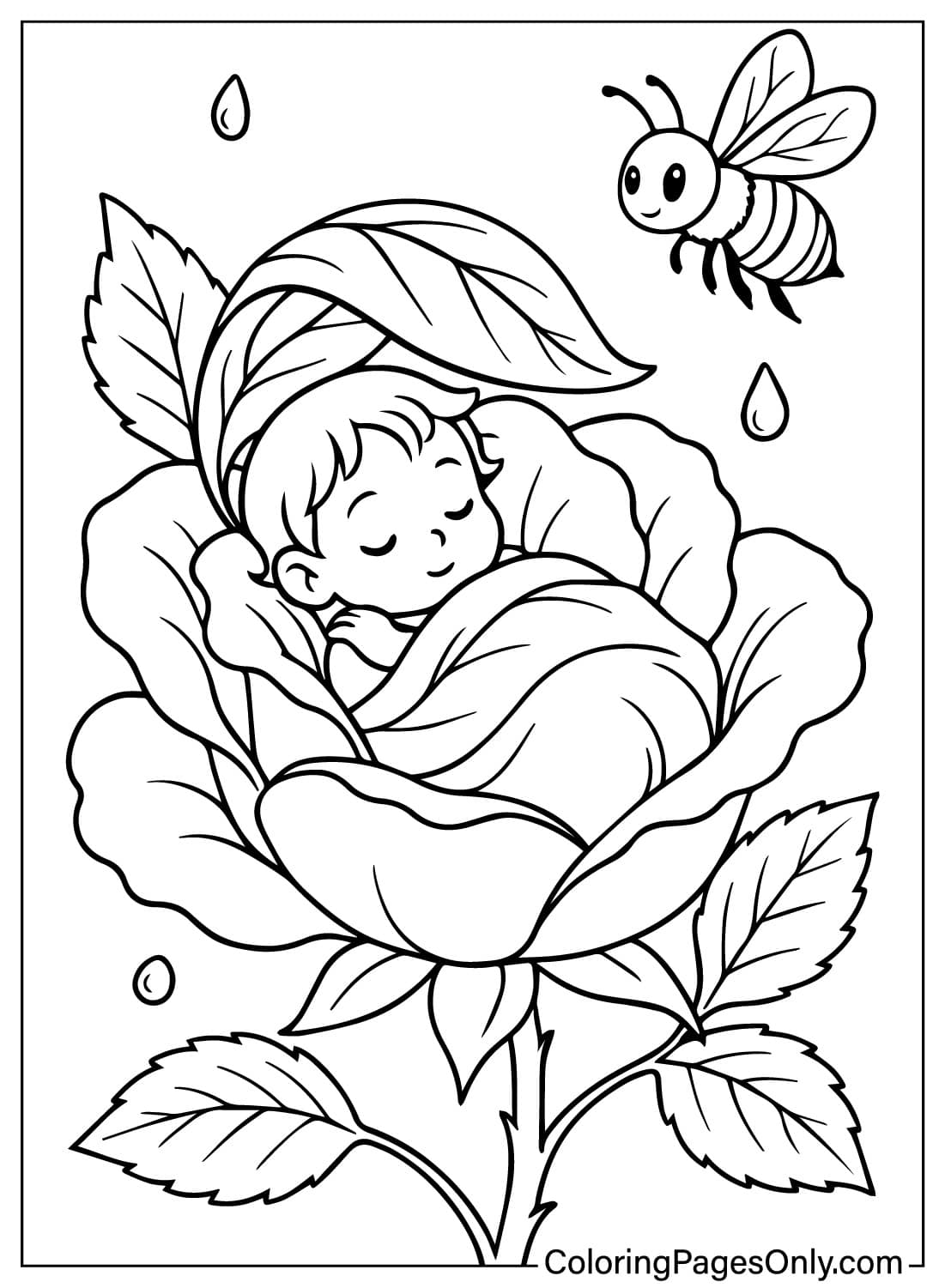
A second group follows small human characters using ordinary objects as furniture, a teapot as a kitchen, a giant book as a reading nook, and a flower as a cradle. These suit soft, story-book skin and clothing tones, with the everyday object itself rendered at a much larger, more detailed scale than usual.
Bug and Animal Communities
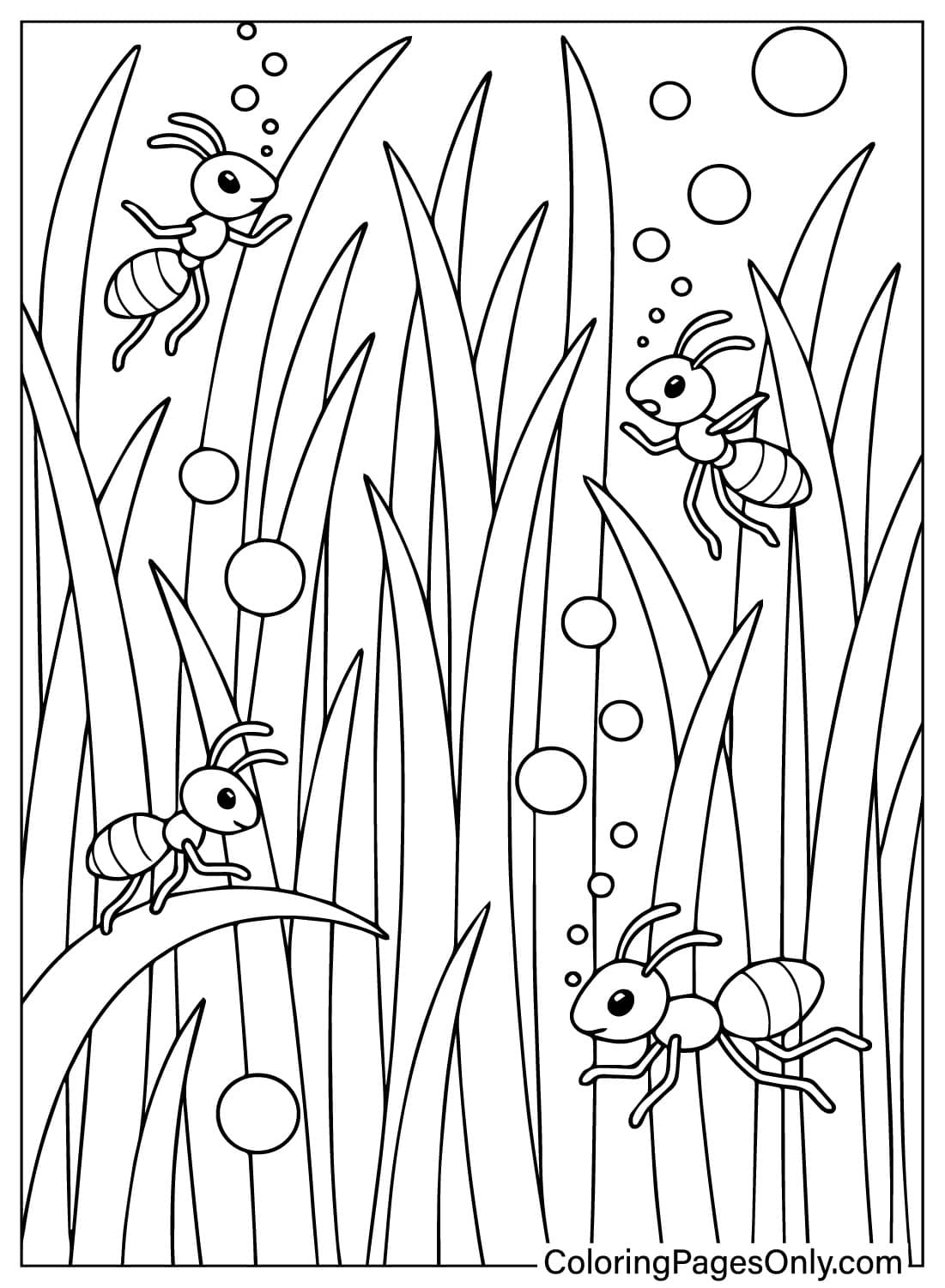
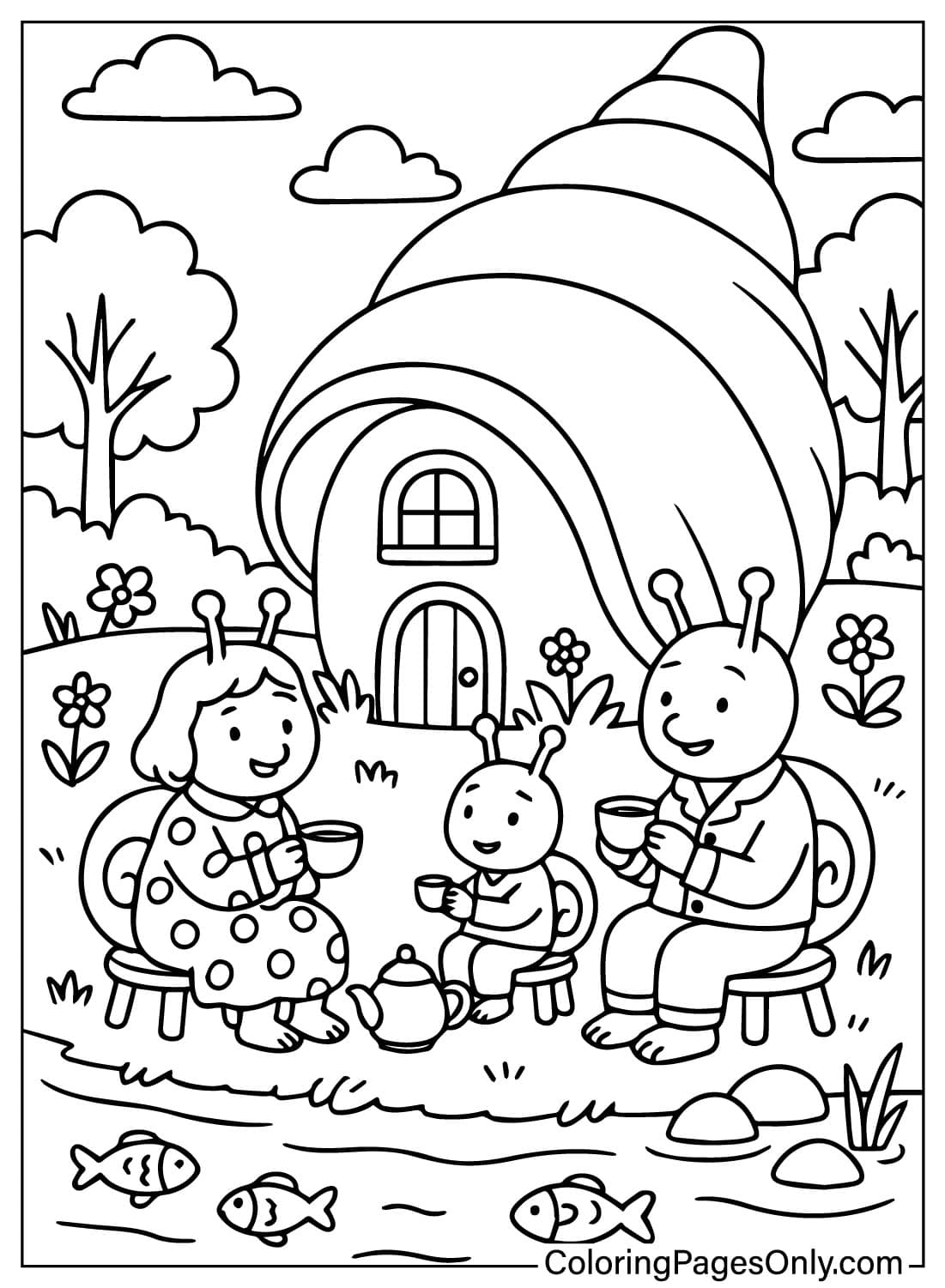
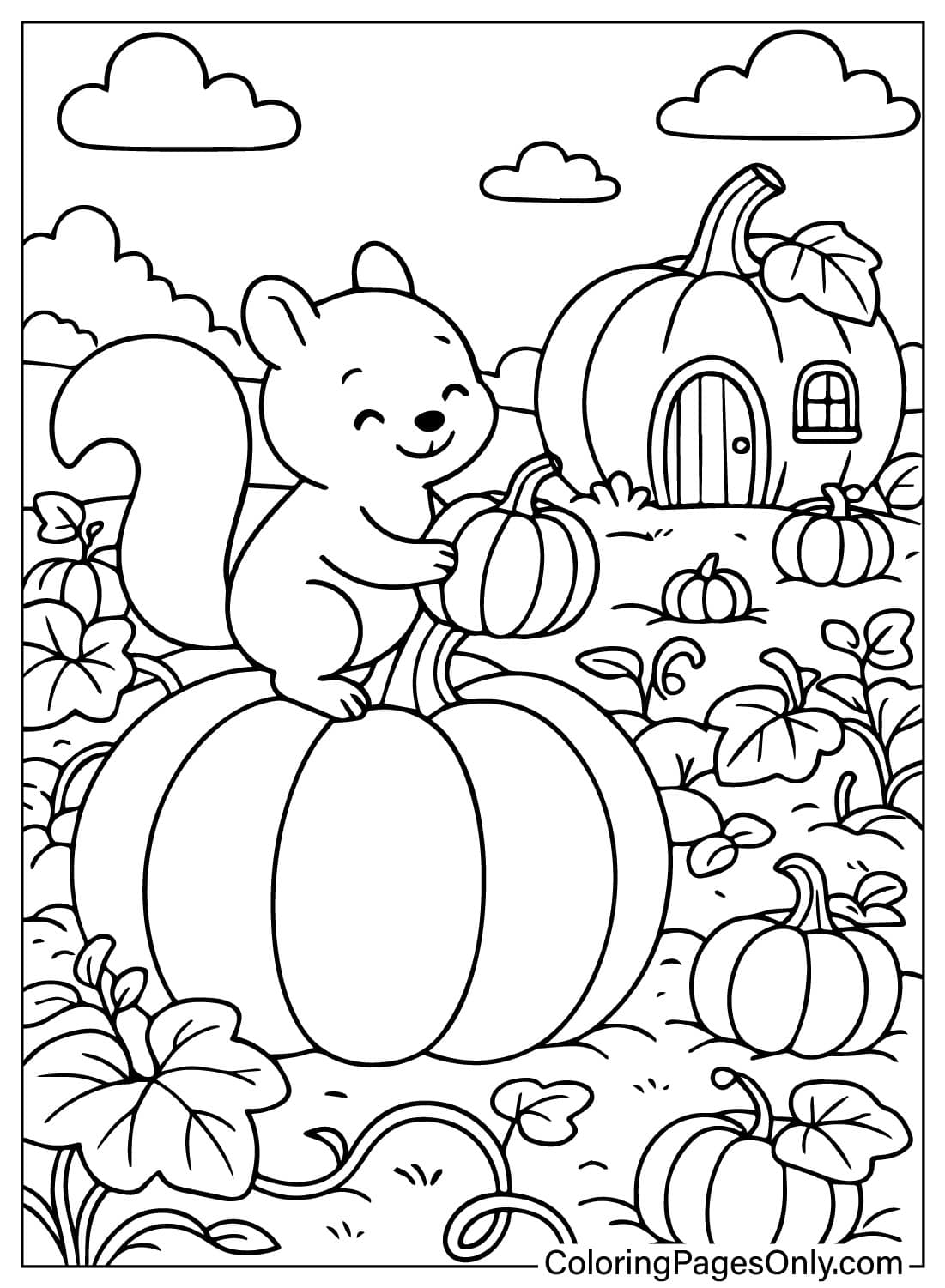
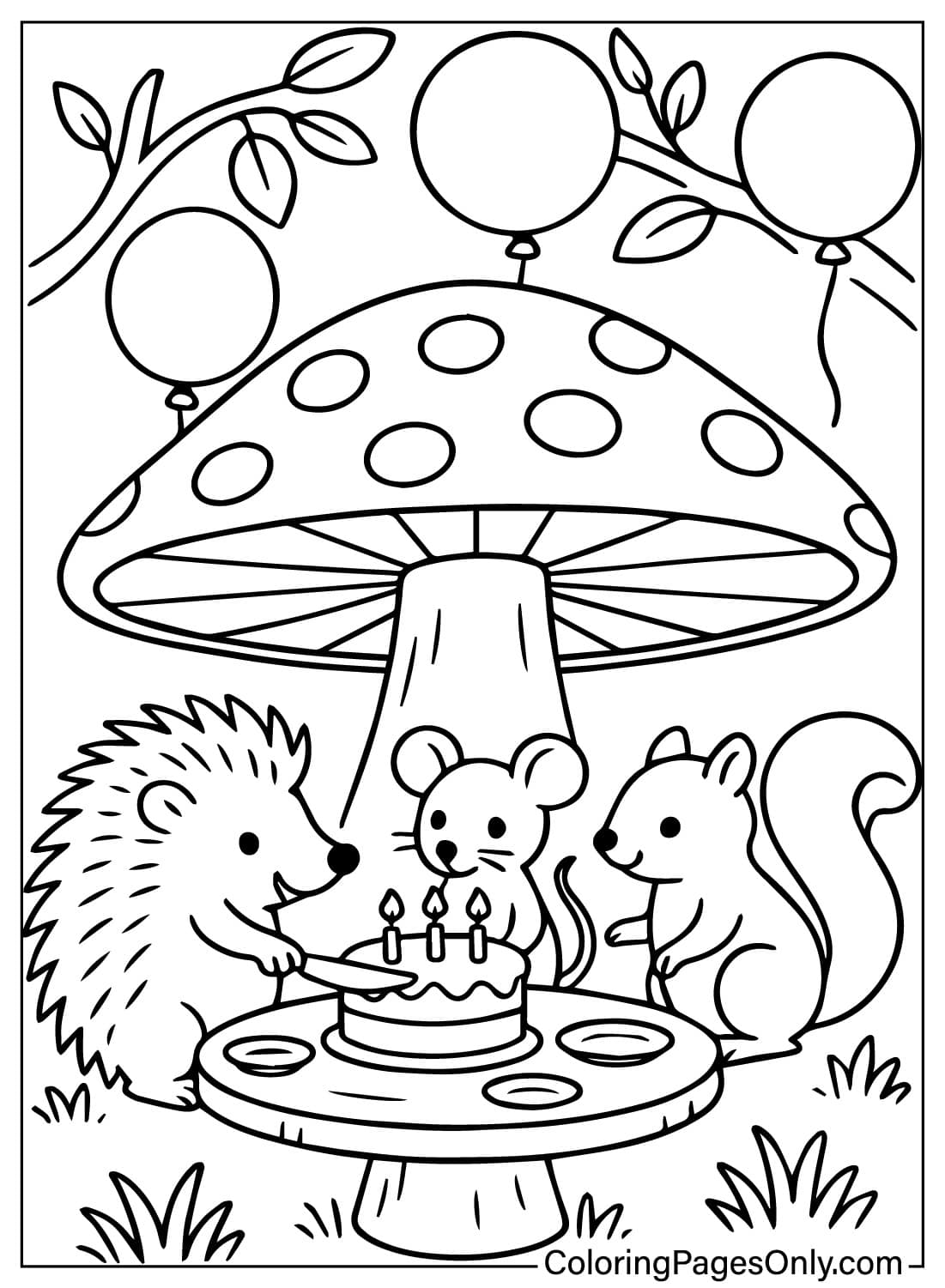
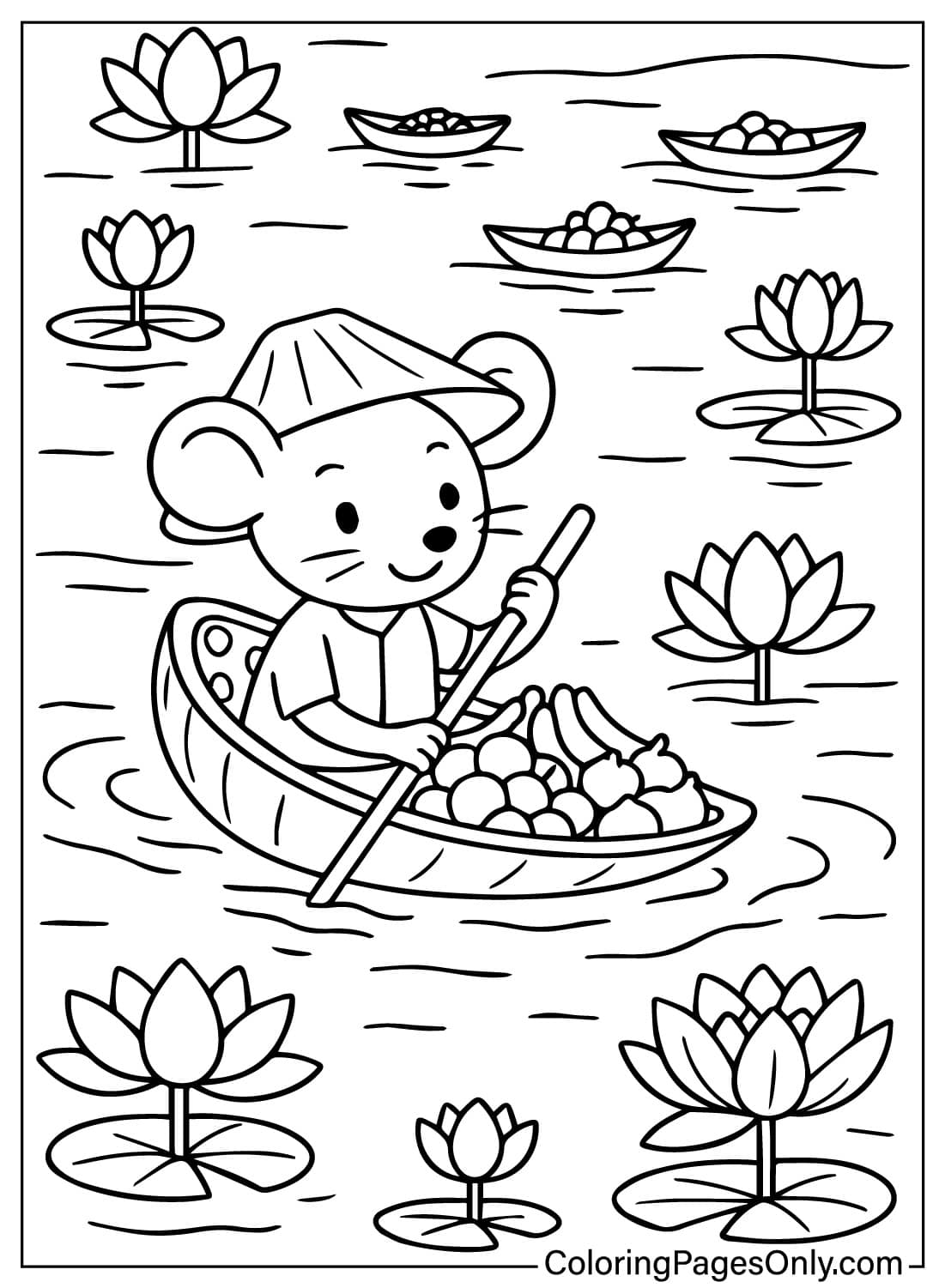
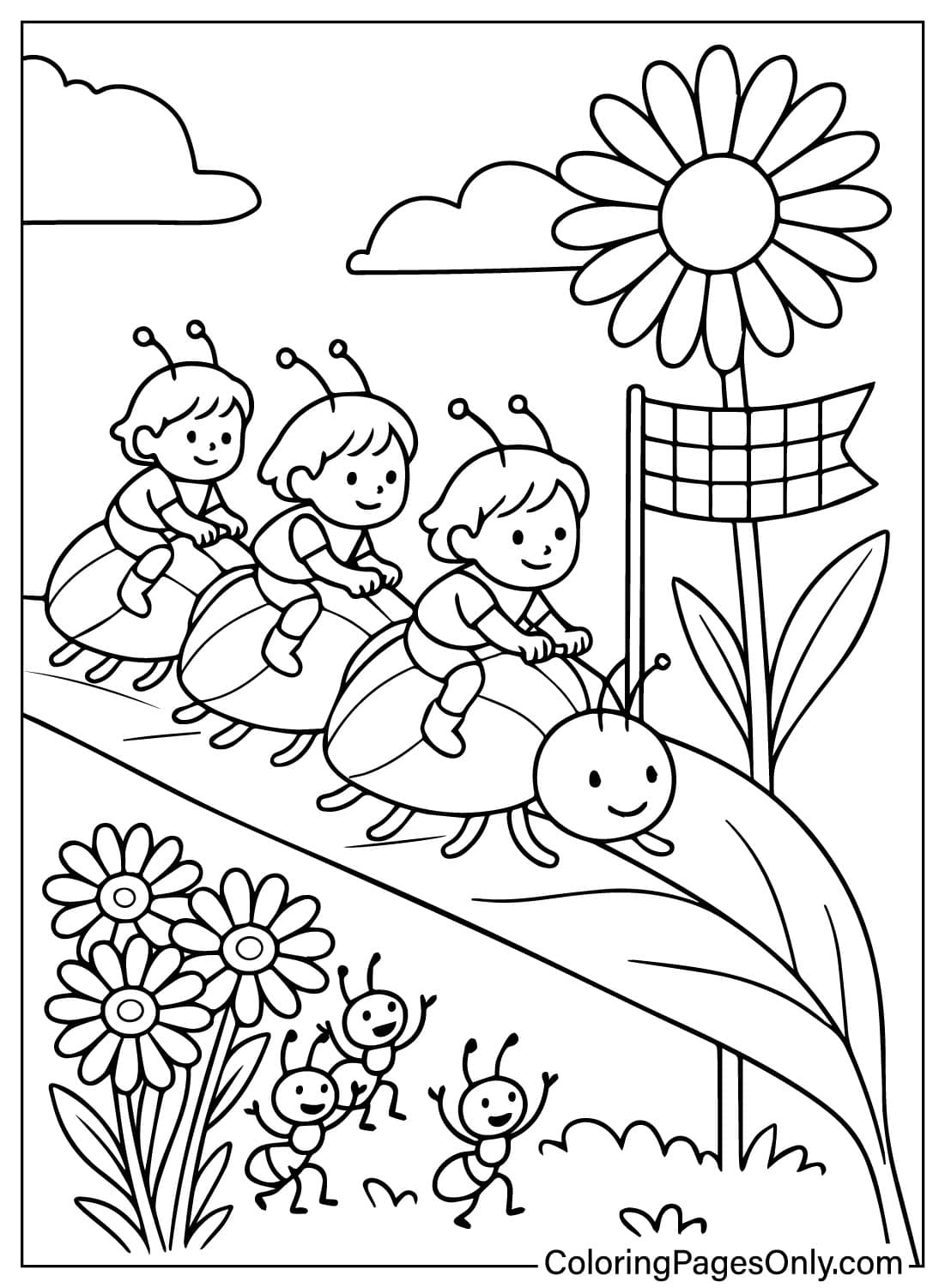
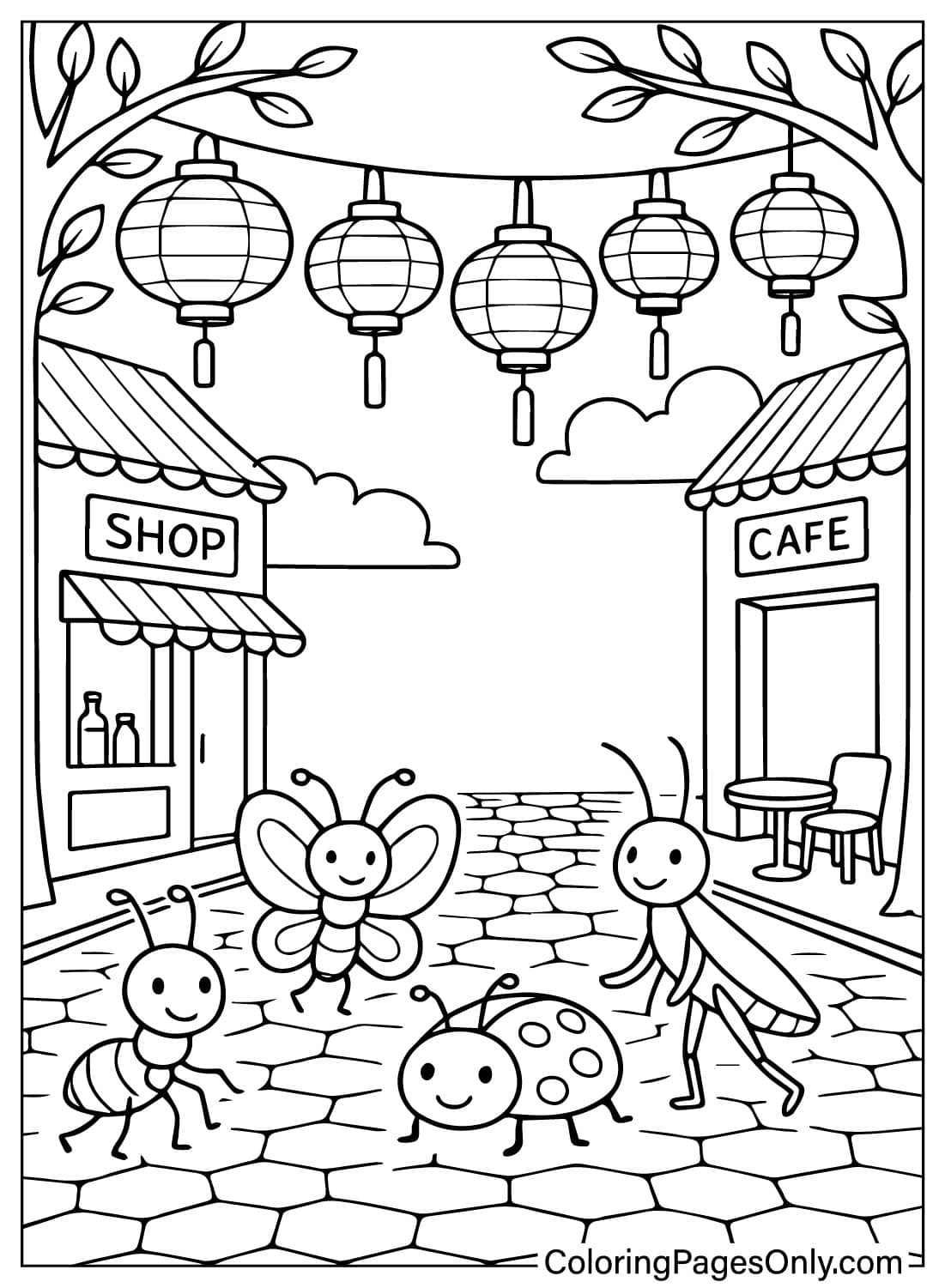
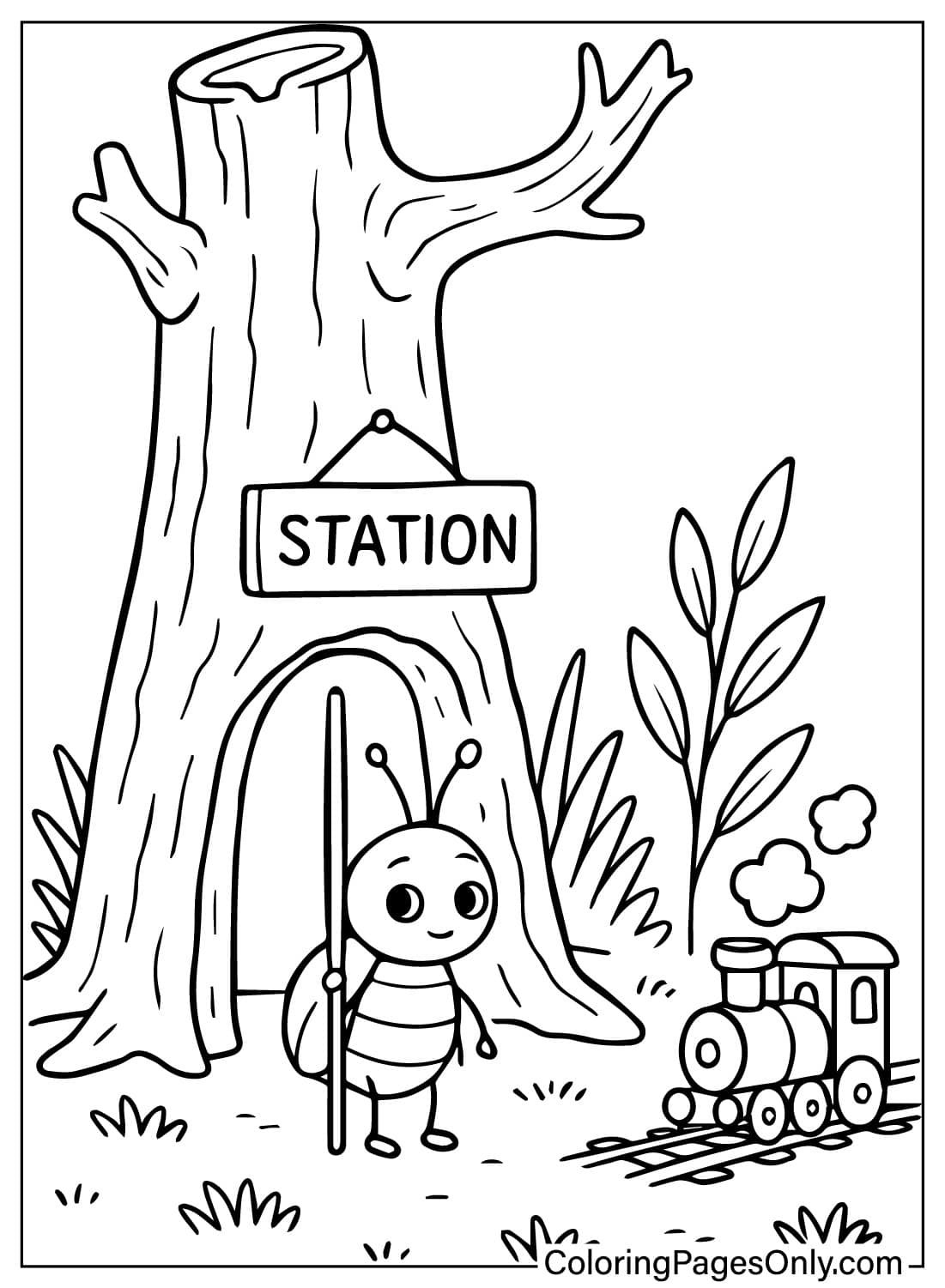
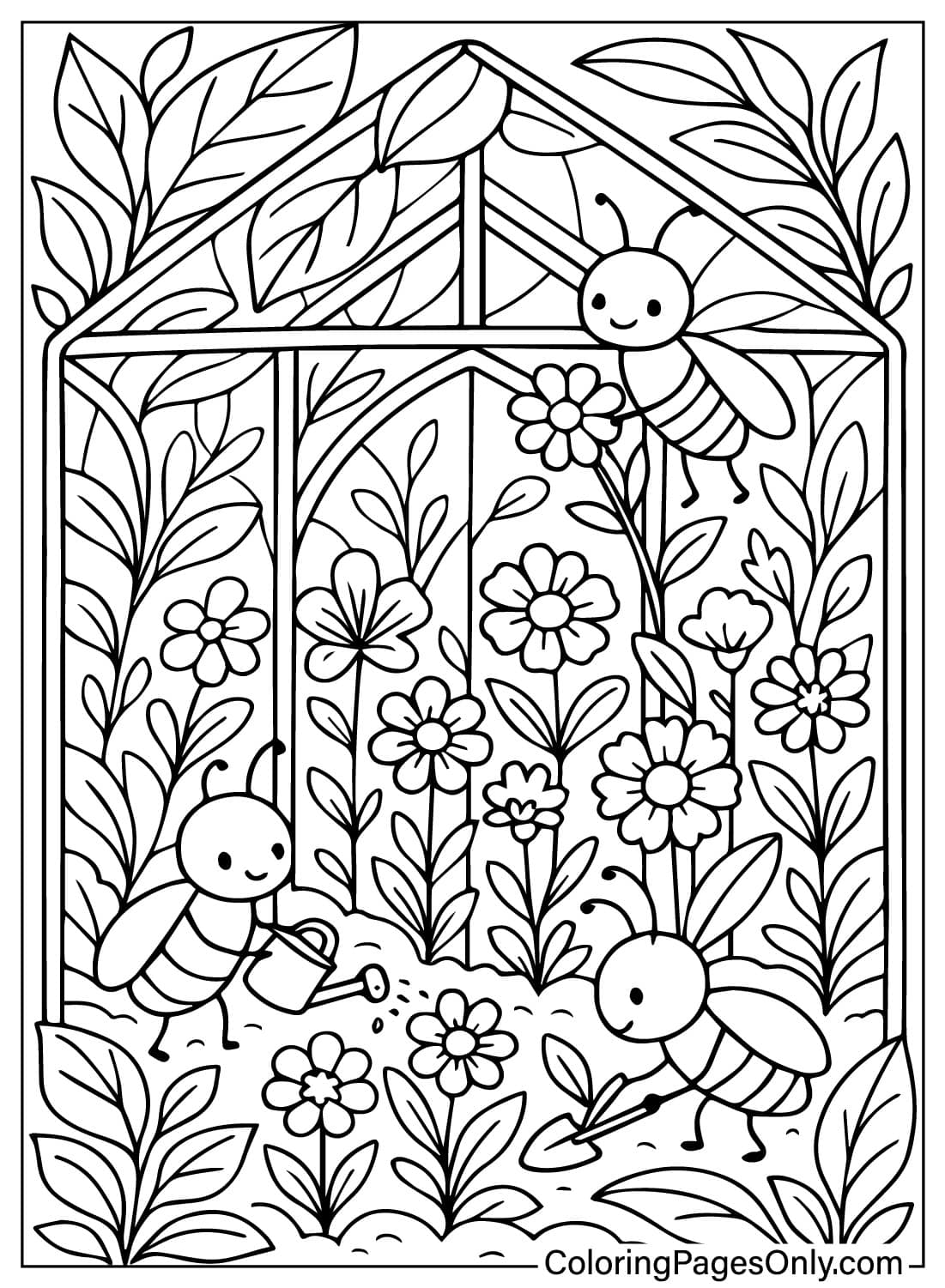
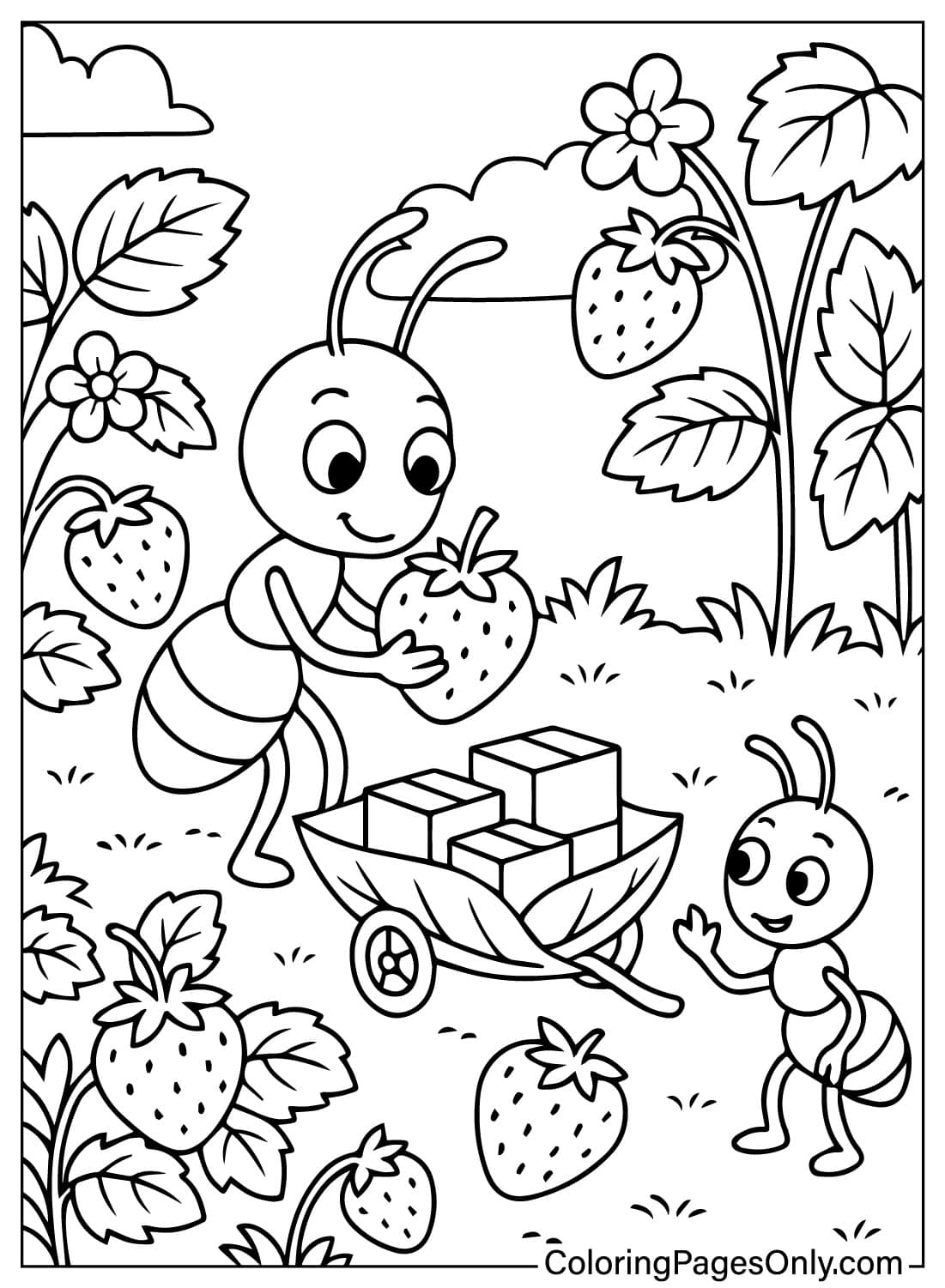
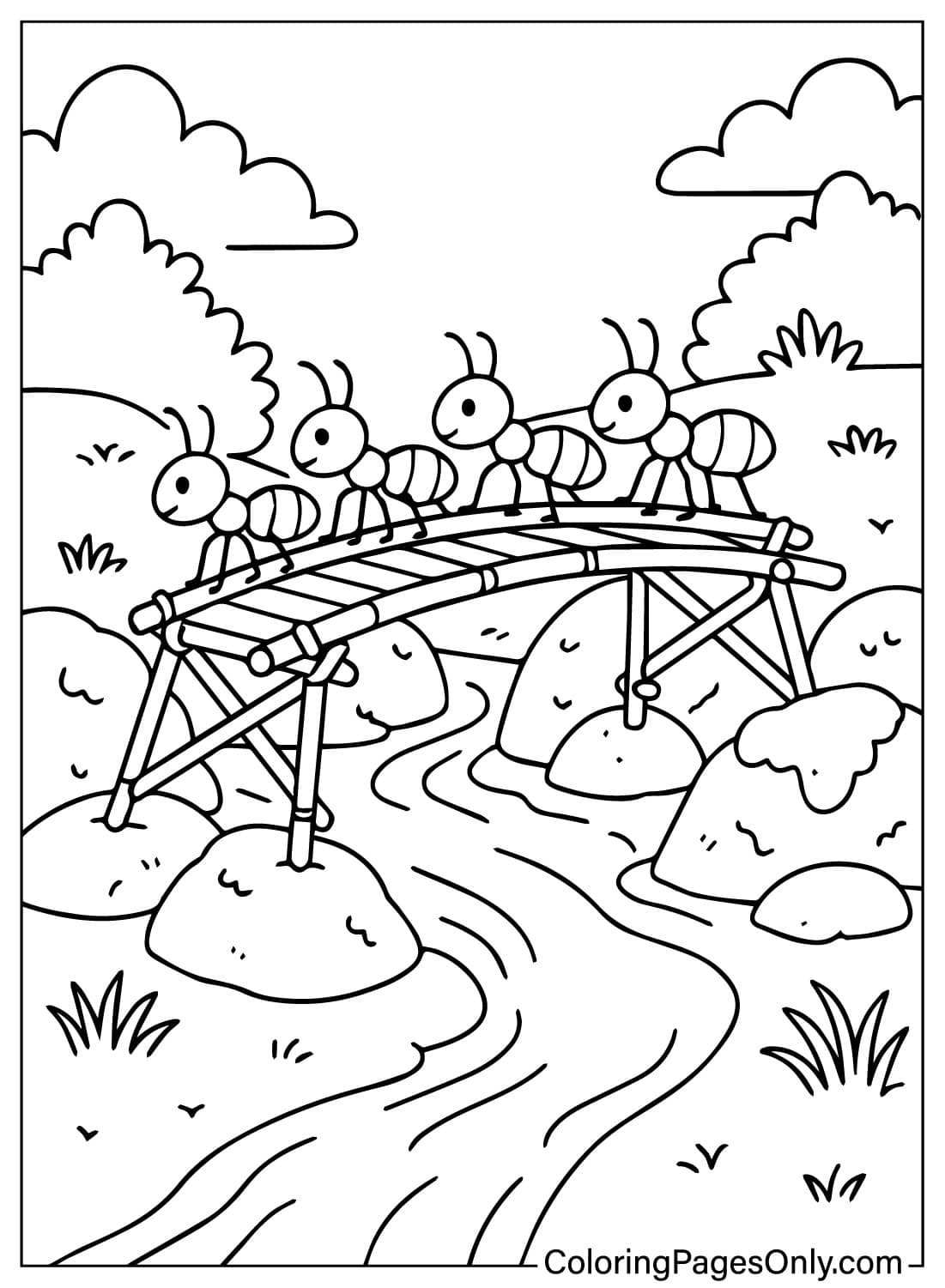
The largest group gives the tiny world to bugs and small animals living out full daily lives, running shops, riding trains, and celebrating birthdays. These suit each creature’s natural coloring first, with small human-scale props like shop signs or party decorations added as a secondary layer of color.
Fairies and Elves
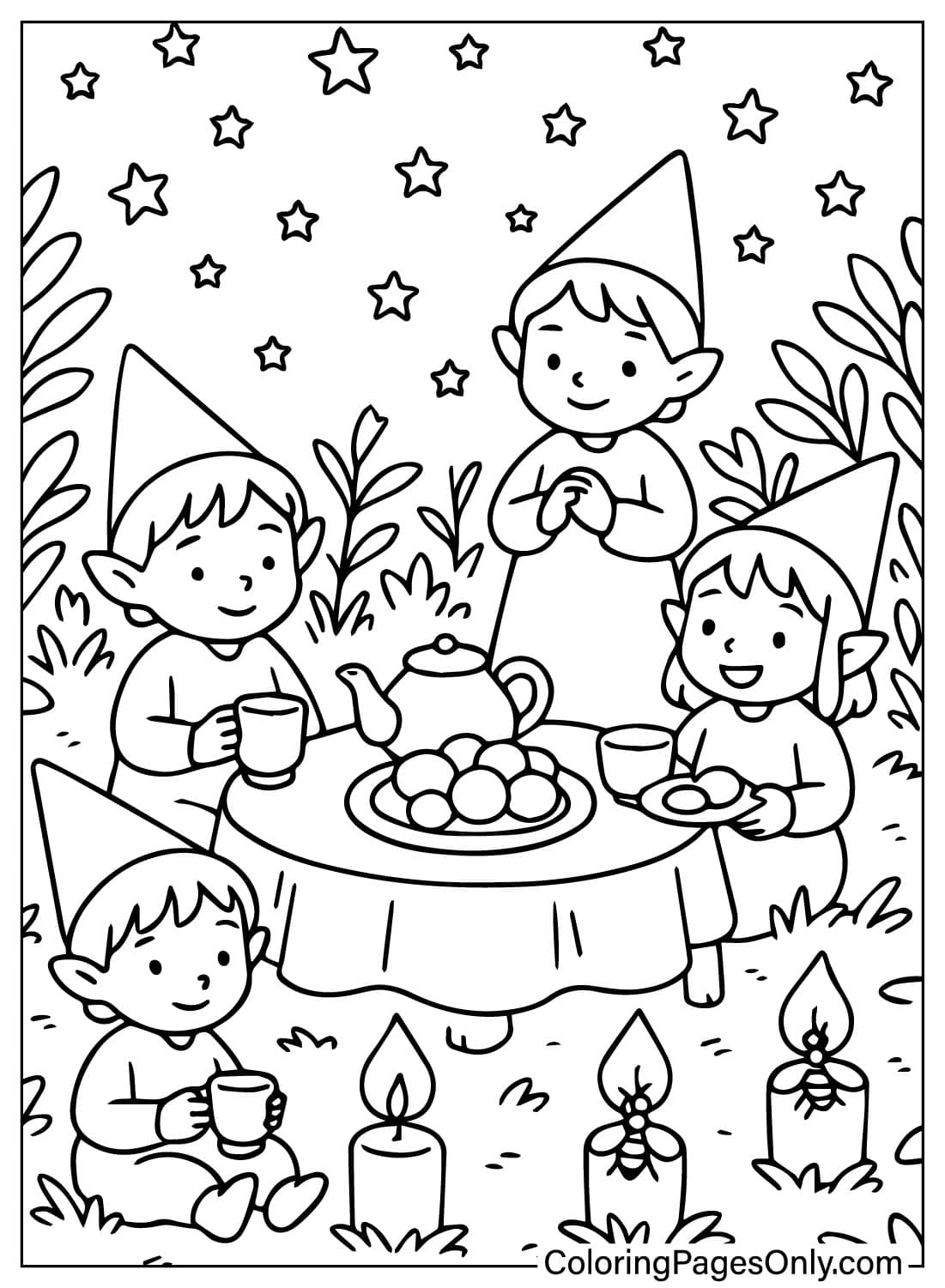
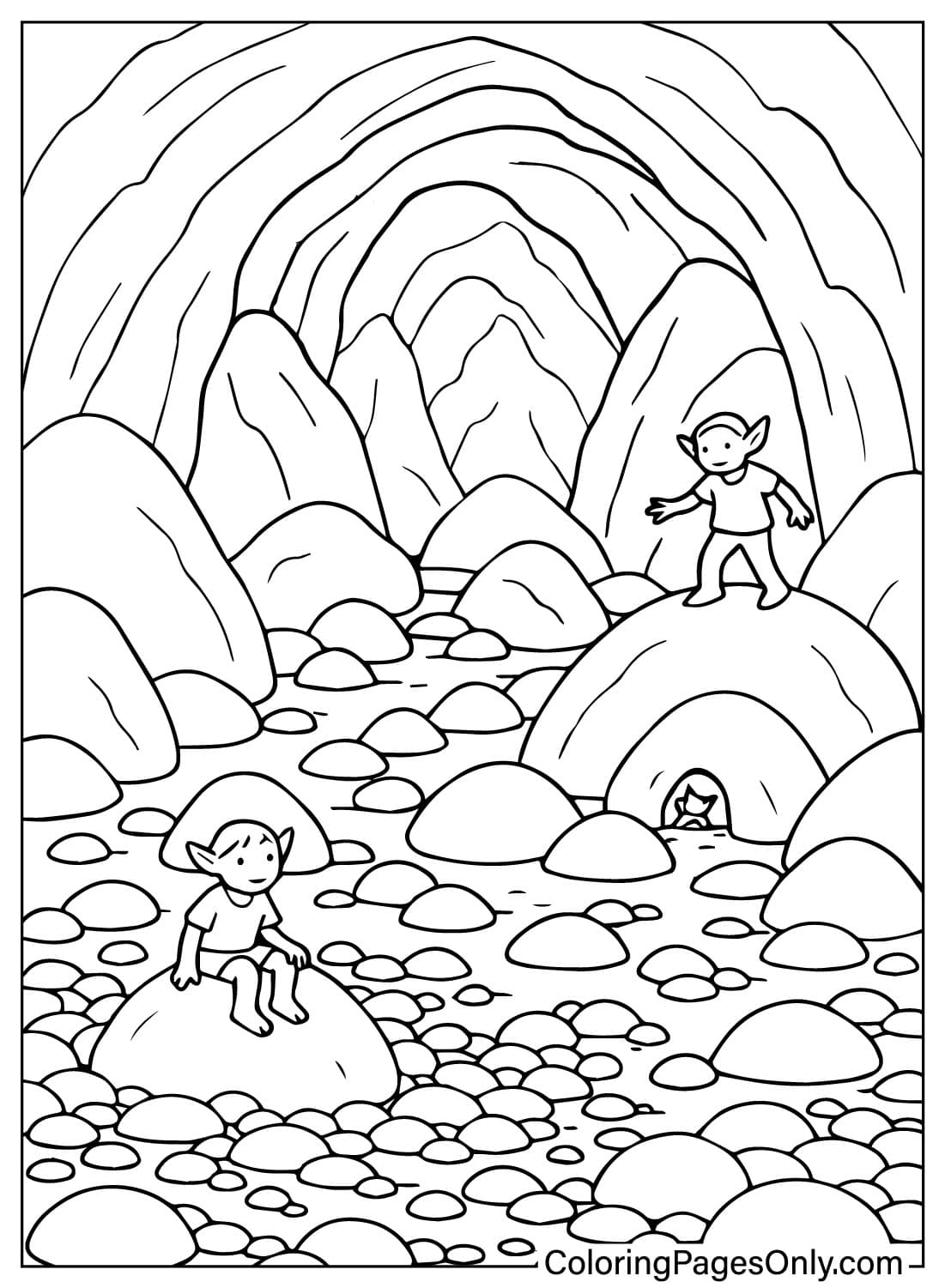
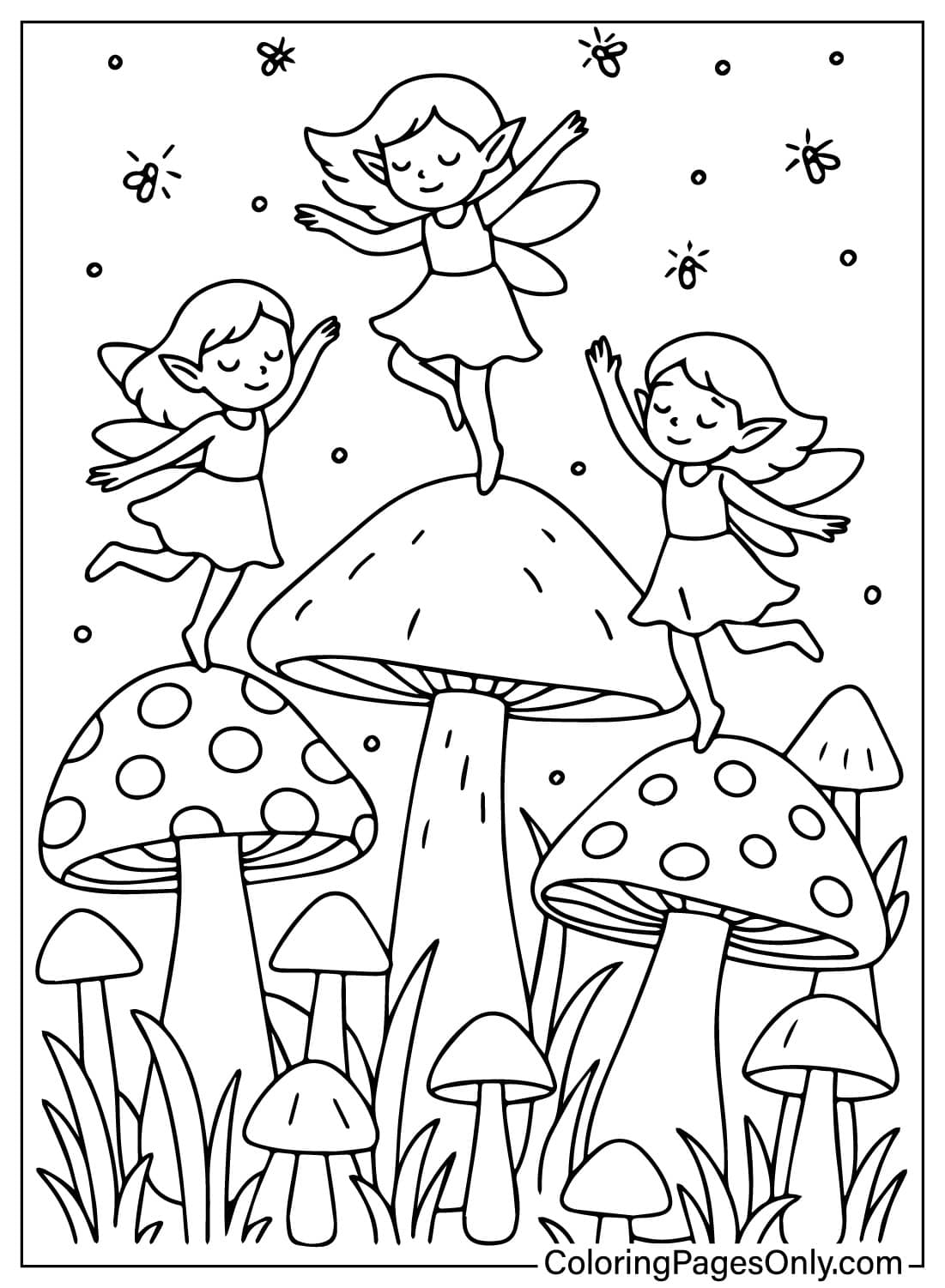
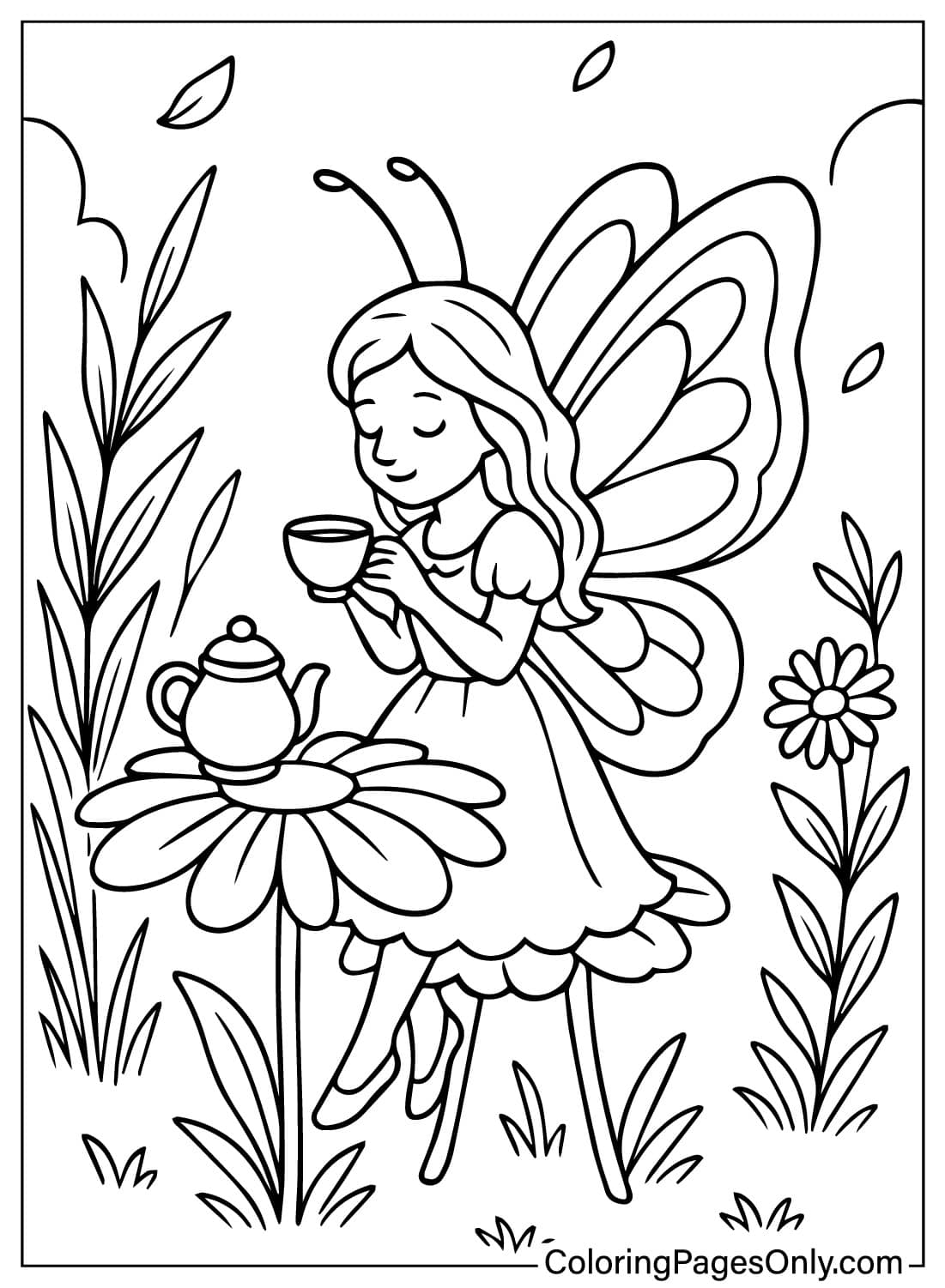
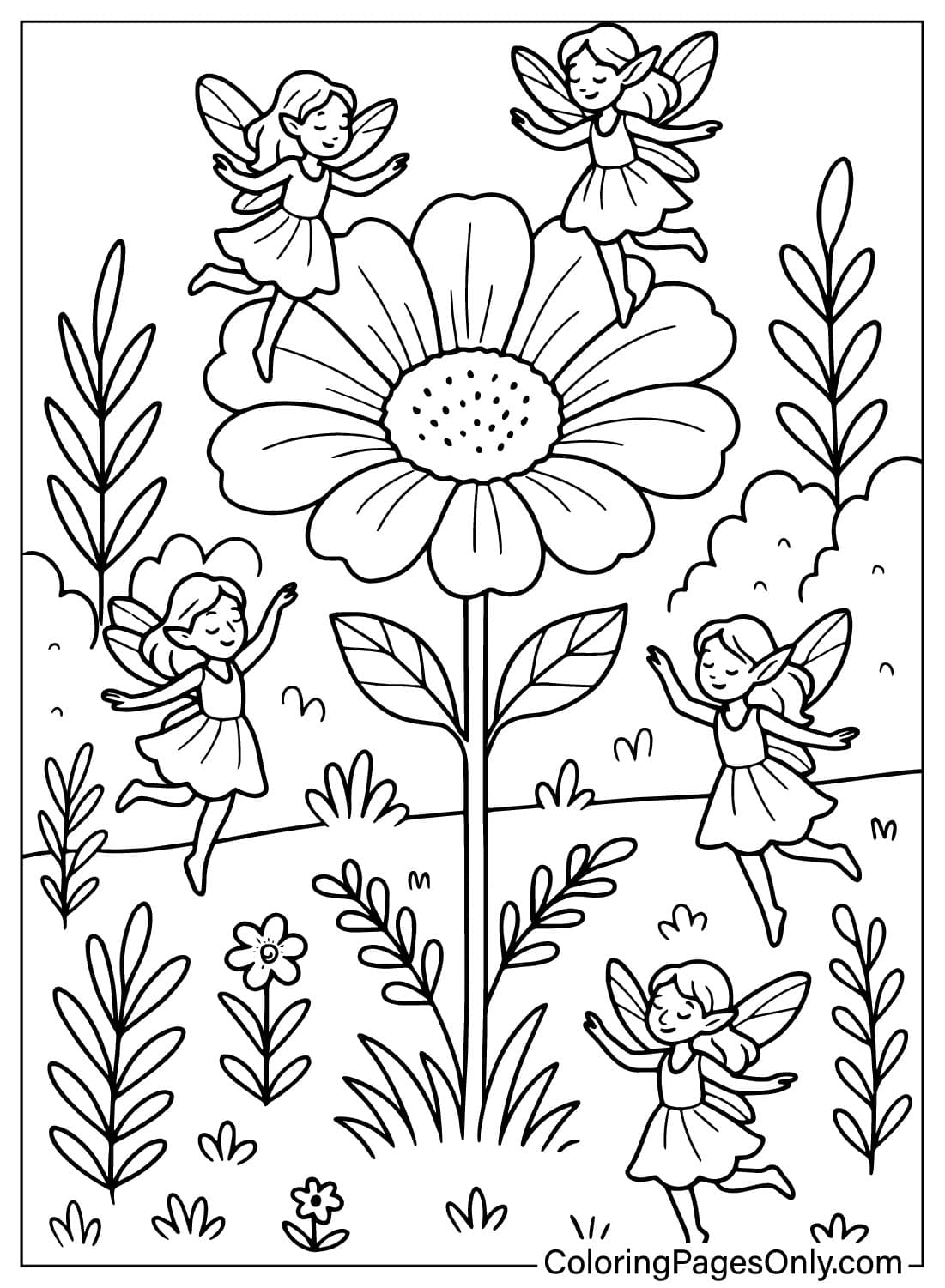
A group of pages brings in fairy and elf characters, dancing on mushrooms, having tea under the stars, or playing in a rock cave. These support brighter, more magical color choices than the rest of the set, since these characters are meant to feel a step further into fantasy.
Nature-Scale Adventures
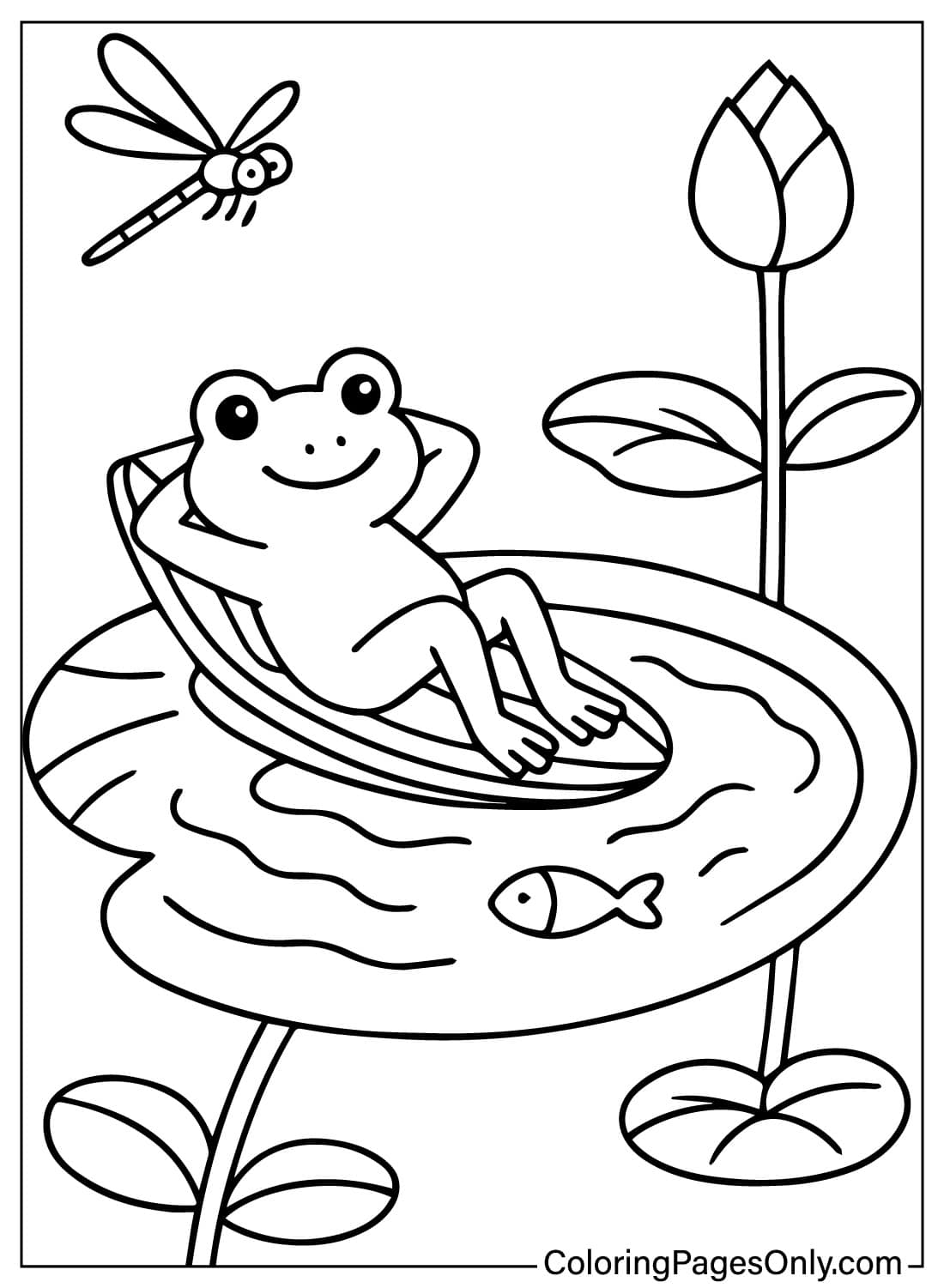
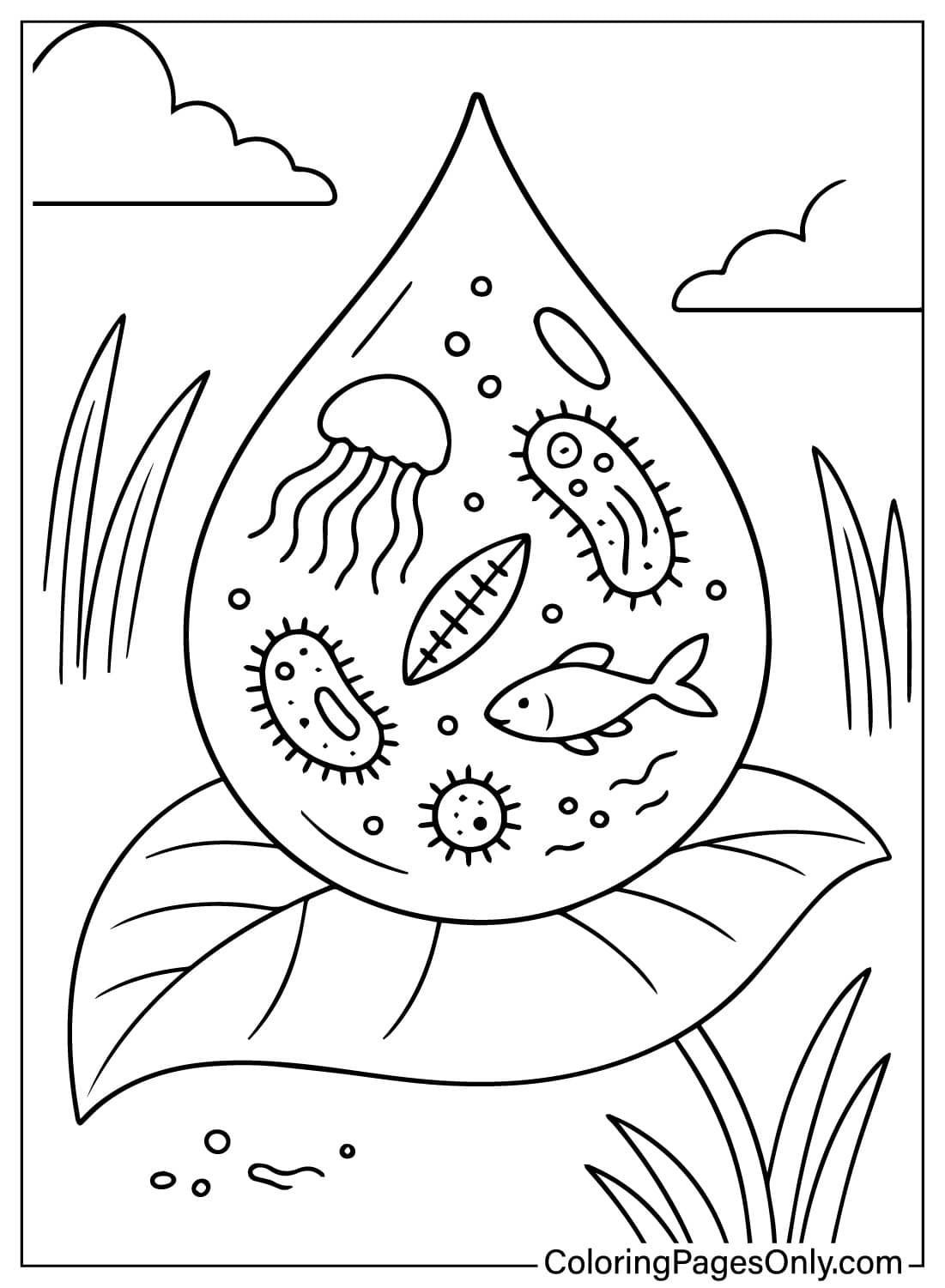
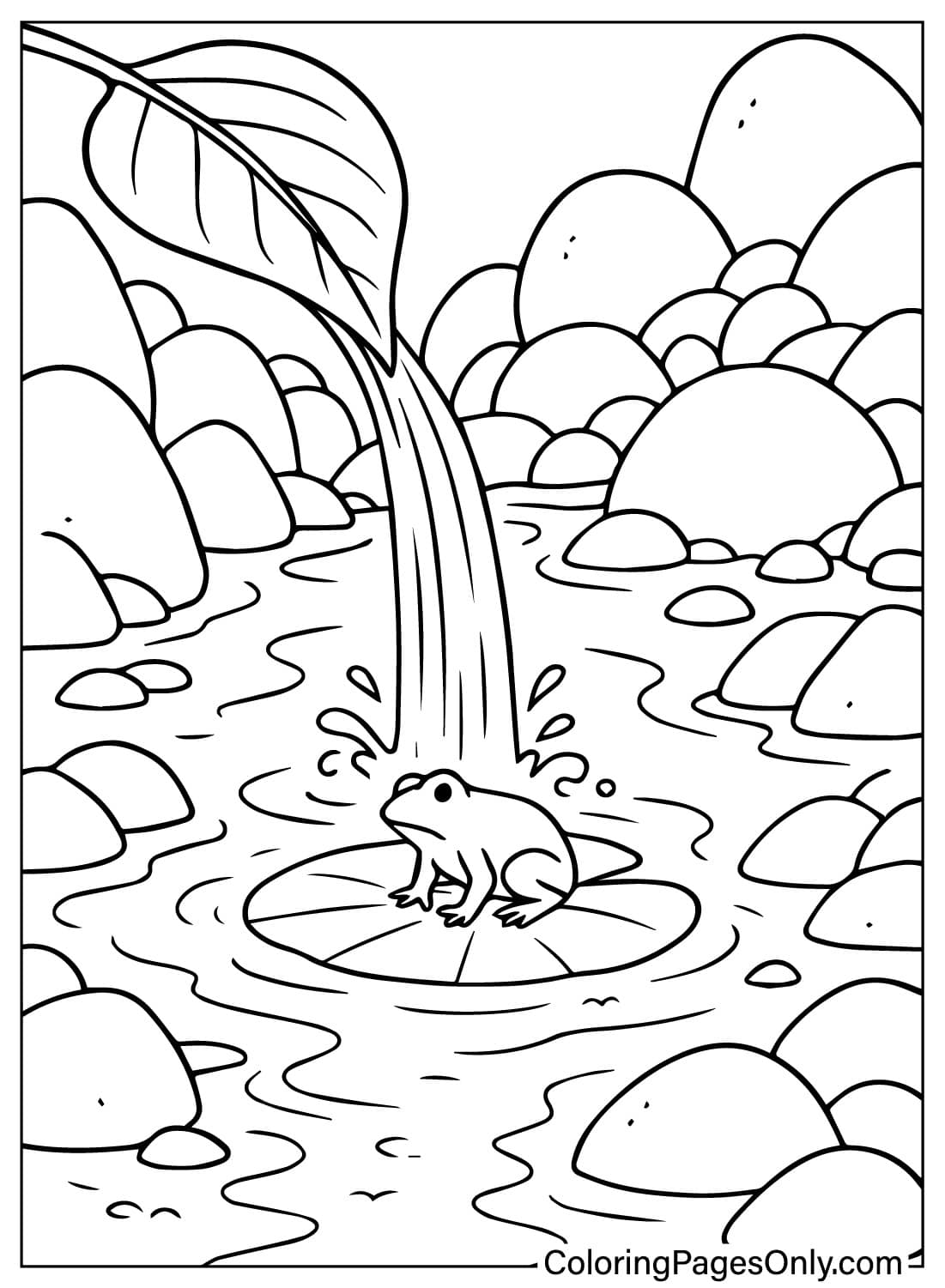
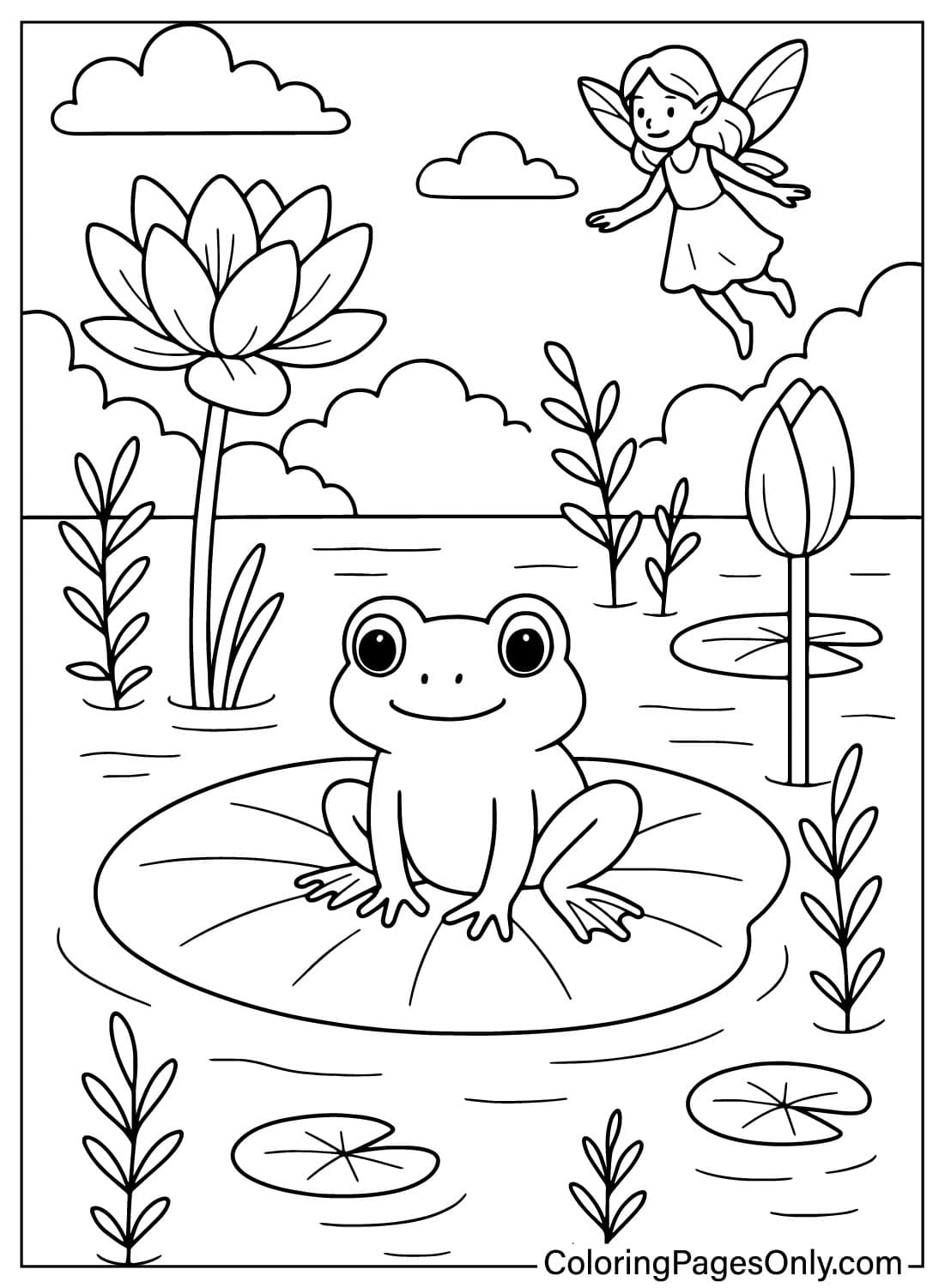
The remaining pages zoom into nature itself, a frog on a lily pad, a walk through tall jungle grass, or tiny life inside a single water droplet. These suits naturalistic greens and blues, since the wonder in these pages comes from scale rather than fantasy elements.
What Tiny World Coloring Pages Do
Fine motor development through genuinely small-scale detail. The American Academy of Pediatrics identifies fine motor skill development as a core benefit of structured coloring for children ages 2 through 7. Because every object in this set is reimagined at a tiny scale, the pages are packed with small, specific details, such as a teacup’s handle, a mushroom’s spots, that ask for more precise control than a single large shape would.
A real literary tradition behind the theme. The tiny-person concept in this collection connects to a genuine story tradition, most famously Hans Christian Andersen’s Thumbelina, first published in 1835, which described its heroine’s walnut-shell cradle and flower-leaf bedding in exactly the kind of detail this collection reimagines across dozens of different scenes.
Calm, repetitive shading through densely detailed small scenes. A 2005 study in the Art Therapy Journal documented measurable reductions in anxiety following structured coloring sessions, and the many small, separate elements packed into a single tiny-world page, each requiring its own color decision, call for the same slow, one-section-at-a-time attention the study associated with that calming effect.
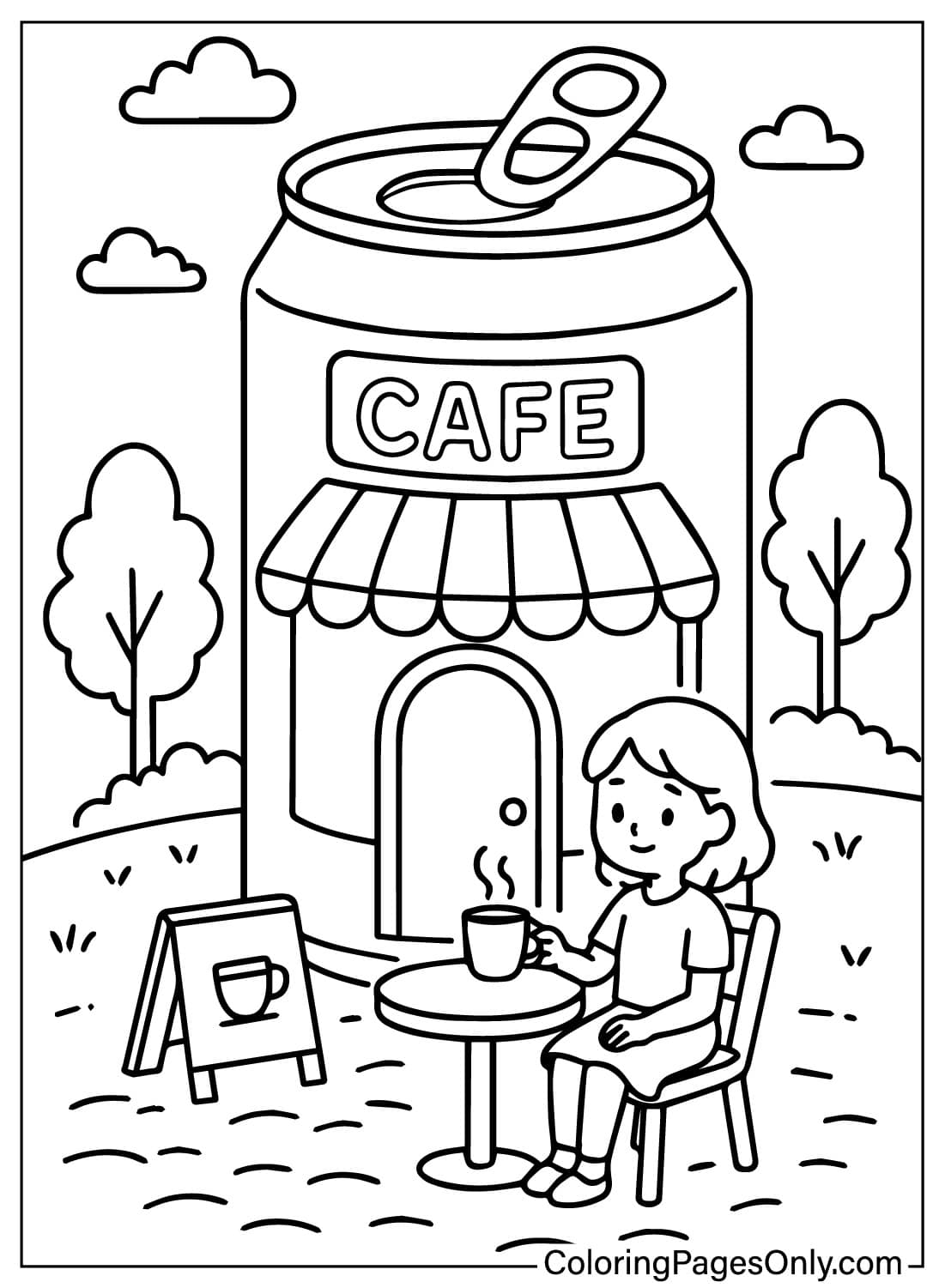
A chance to reconsider the scale of ordinary objects. Because this collection repeatedly turns familiar items, a suitcase, a teacup, an acorn, into homes and vehicles, it gives colorists a genuinely different way to look at everyday objects, rather than presenting a fixed, already-imagined fantasy setting.
How to Color These Pages Well
- Tiny homes: Use Burnt Sienna and Tan for wood-shell and acorn structures, with small pops of color reserved for doors, windows, and signage.
- Everyday objects as furniture: Color the everyday object itself, the teapot, the book, the suitcase, in a slightly more detailed and layered way than a normal-scale version, since its size and detail are what make the scene work.
- Bugs and small animals: Keep each creature’s natural coloring accurate first, Black and Red for ladybugs, warm Brown for mice, before adding any clothing or prop details in a separate color.
- Fairies and elves: Use brighter, more saturated colors and metallic-feeling accents, Gold or Silver, for wings and magical details, since these characters are meant to read as a step beyond the more grounded bug and animal pages.
- Water and nature scenes: Layer Sky Blue and Turquoise for water droplets and streams, keeping the tiny creatures inside a slightly different shade so they stand out against the water itself.
- Scale contrast: On any page pairing a tiny character with a normal-sized object, exaggerate the object’s detail level compared to the character, since that contrast in detail is part of what sells the size difference.
5 Creative Craft Ideas With Tiny World Coloring Pages
1. Walnut Shell Cradle Pairing
Color one of the sleeping or resting tiny-character pages, then find a real, cleaned walnut shell half and line it with a small scrap of soft fabric. Display the colored page next to the real walnut shell cradle.
2. Everyday Object Scale Match
Color several of the tiny-people-in-objects pages, then set each one next to the real object it depicts, a real teacup, a real matchbox. Compare how the printed tiny world matches or differs from the real object’s actual size.
3. Tiny Town Collaborative Mural
Color several pages from different groups in this set, cut around each scene, and arrange them together on one large sheet of butcher paper to build a single, shared tiny town. Add hand-drawn paths or bridges connecting each scene.
4. Bug Character Trading Cards
Color several of the bug and animal community pages, trim each into a card shape, and write a short made-up job title underneath each character: baker, shopkeeper, train conductor. Collect the finished cards into a small deck.
5. Tiny Shop Window Display
Color one of the shop or market pages and mount it inside a small box with a cutout front, like a shop window. Display the finished piece on a shelf as a miniature storefront scene.
Frequently Asked Questions
What are Tiny World coloring pages?
A free set of 36 printable PDF and online coloring designs where everyday objects become tiny homes and small characters, bugs, animals, fairies, and people, live full lives inside them. Every page downloads free or opens for online coloring, with no account required.
What inspired the “tiny world” theme?
The theme draws on a long literary tradition of miniature characters, most notably Hans Christian Andersen’s 1835 fairy tale Thumbelina, which described its tiny heroine sleeping in a walnut shell cradle with a rose petal for a blanket.
Is this collection based on Thumbelina specifically?
No. These are original designs inspired by the broader tiny-person storytelling tradition rather than a direct retelling of Thumbelina or any other single story.
What kinds of everyday objects become homes in this collection?
The set reimagines a teapot, a giant book, a suitcase, an acorn, a flower, and a matchbox-style leaf hammock, among other ordinary objects, as homes, vehicles, or furniture for the tiny characters.
What bug and animal characters appear in this collection?
Ants, ladybugs, snails, squirrels, hedgehogs, frogs, and mice each appear running shops, celebrating events, or going about daily routines throughout the collection.
Are Tiny World coloring pages appropriate for young children?
Yes. The simpler bug and animal pages suit toddlers and preschoolers, while the more densely detailed home and fairy pages work well for older children and adults who want a longer, more absorbing coloring project.
Can this collection be used for a creative writing activity?
Yes. The wide range of tiny characters and settings pairs well with a simple creative writing prompt asking a child to invent a short story about what a chosen character’s day looks like.
What art supplies work well for the more detailed pages?
Fine-tip markers or colored pencils work especially well for the smaller, more densely packed scenes in this set, since the level of detail benefits from more precise tools than broad crayons.
Start Coloring
Download any page by clicking the design. No account, email, or payment is required. Pages print directly from the browser at full resolution or open in the online coloring tool for screen use. Share finished pages on Facebook or Pinterest using the share buttons at the top of each design page.