Treasure Map Coloring Pages
 By:
Jennifer Thoa - Content Editor & Designer
Updated:
By:
Jennifer Thoa - Content Editor & Designer
Updated:
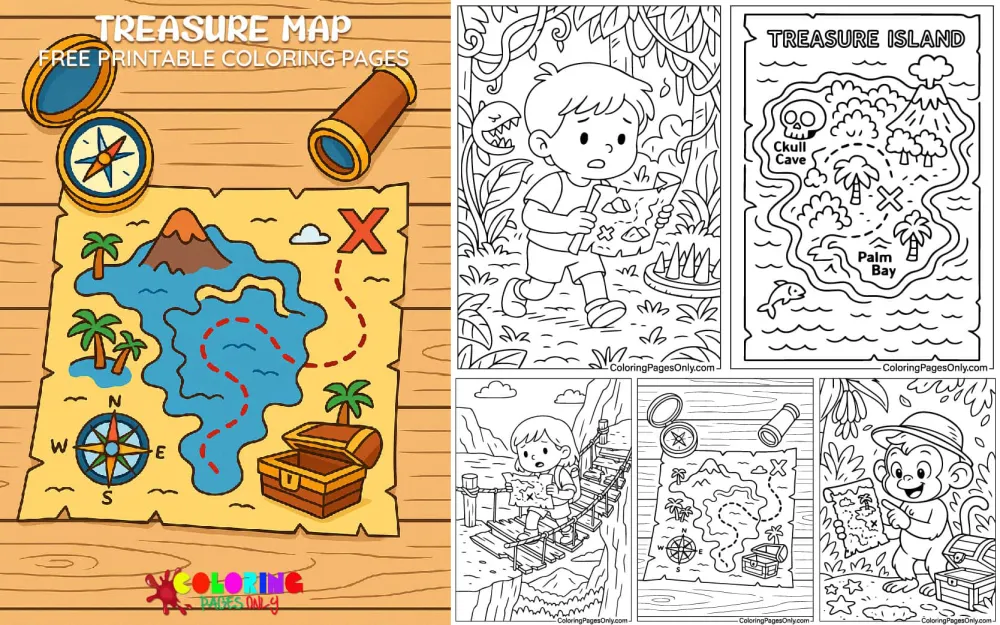
Free Treasure Map Coloring Pages: 32 printable PDF designs of pirate adventures, treasure hunts, and kids on the trail of hidden gold. Every design here downloads as a free PDF or opens for online coloring, with no account required either way.
The idea of pirates burying treasure and marking it with an X is almost entirely fiction. Real pirate crews rarely trusted each other enough to leave loot buried and unguarded, and most divided their haul immediately rather than hiding it. The legend largely traces back to Captain William Kidd, who claimed before his 1701 execution to have buried treasure to save himself, a story that later inspired Robert Louis Stevenson’s 1883 novel Treasure Island and cemented the trope for good.
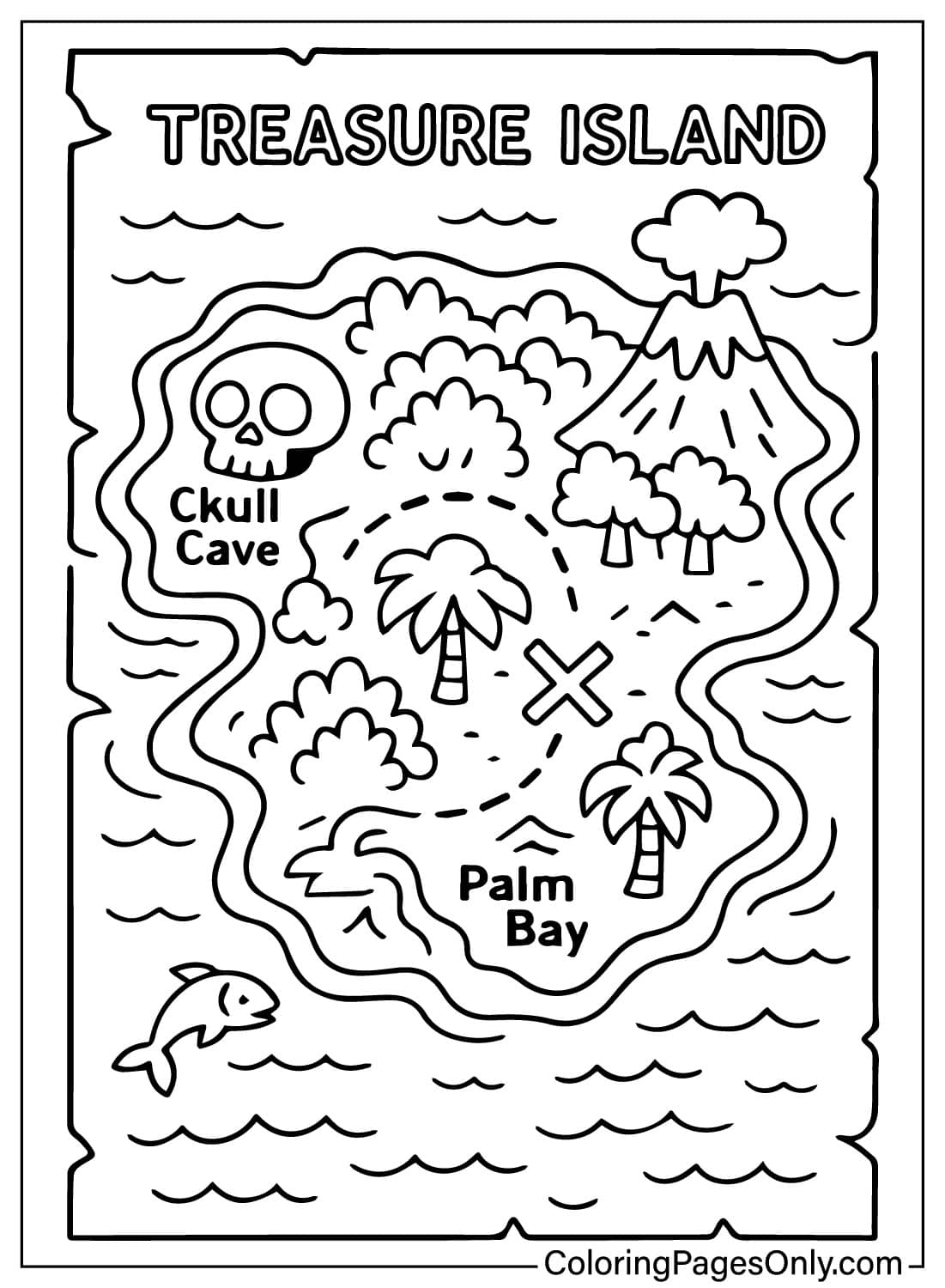
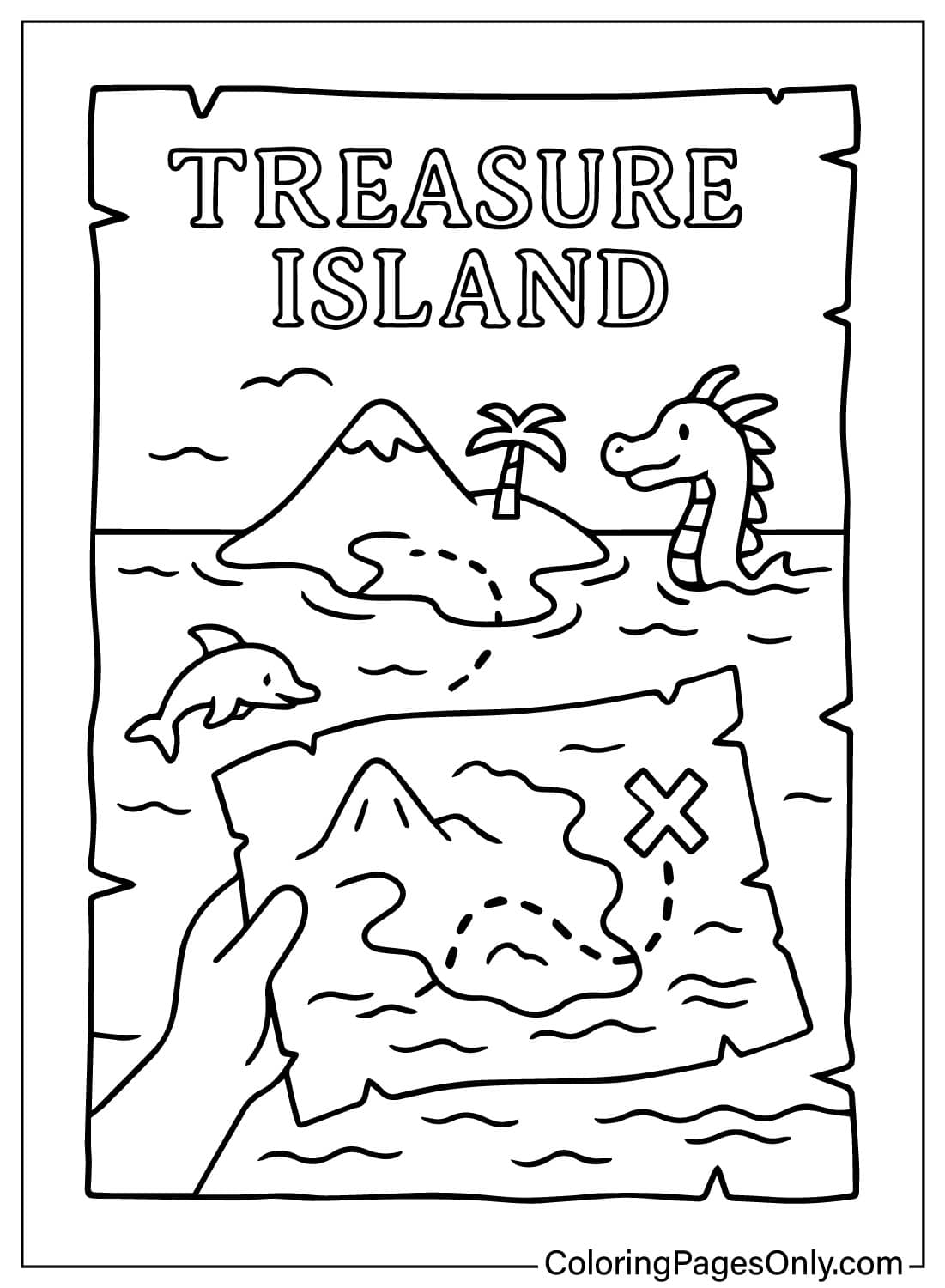
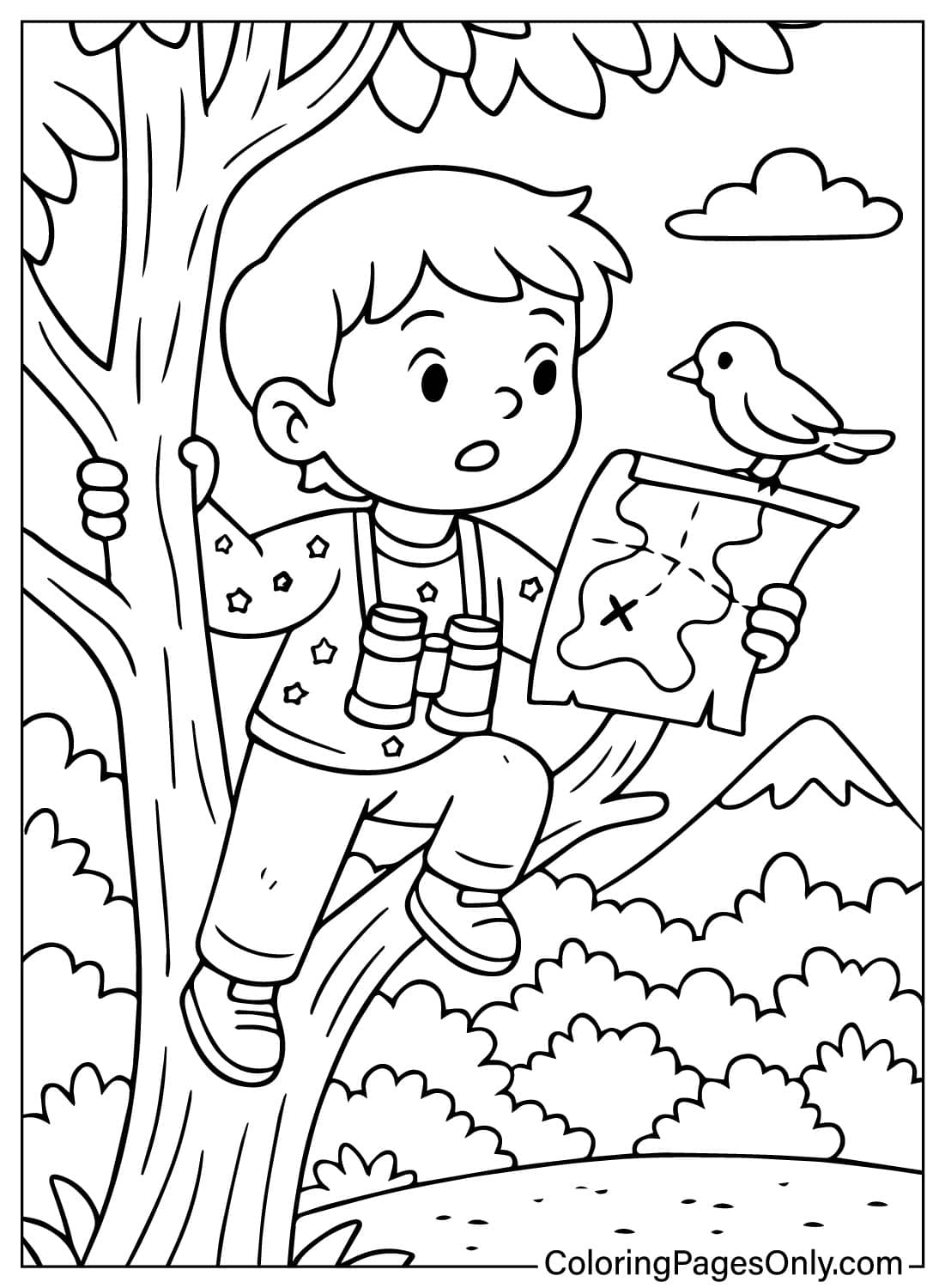
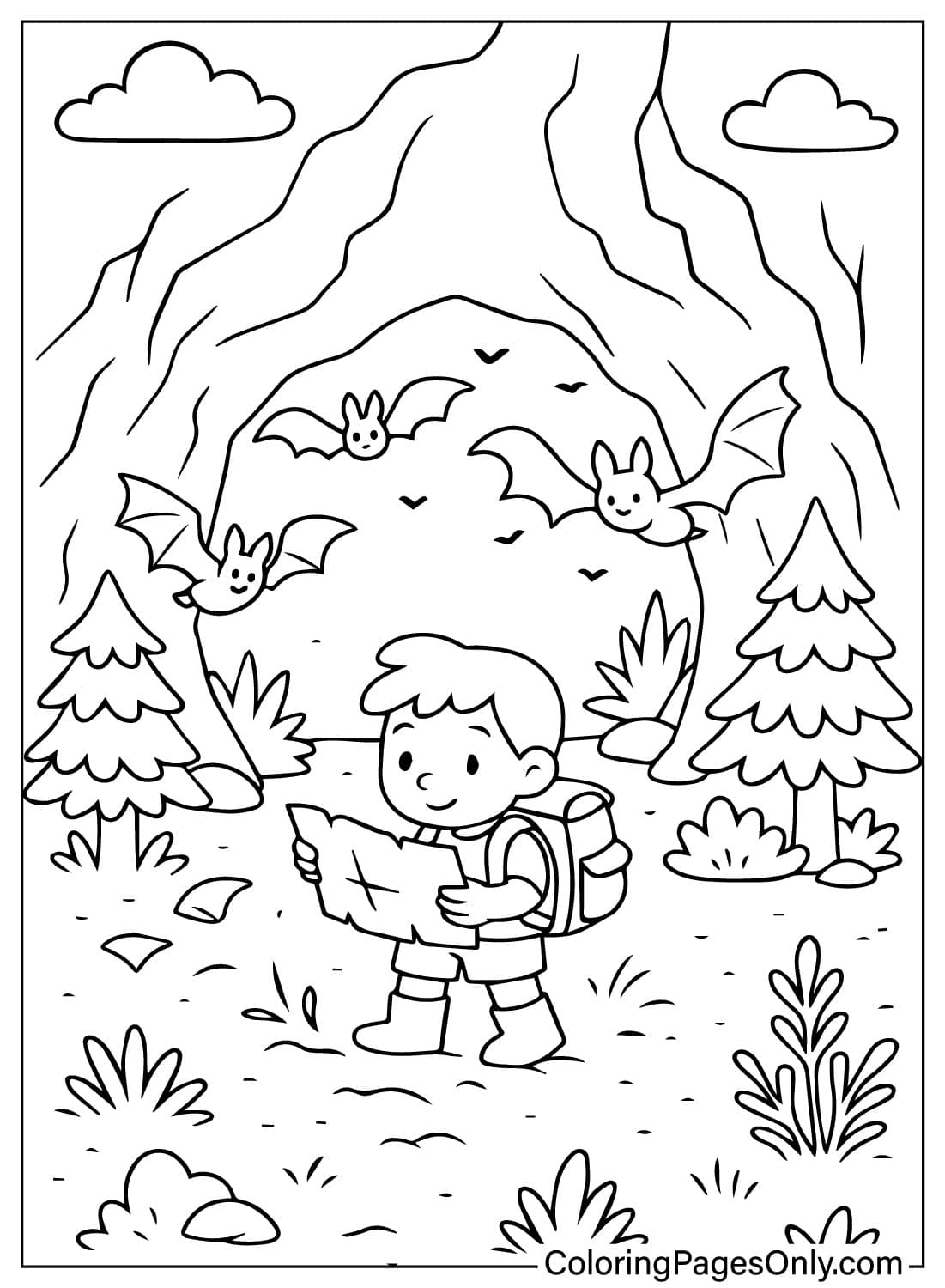
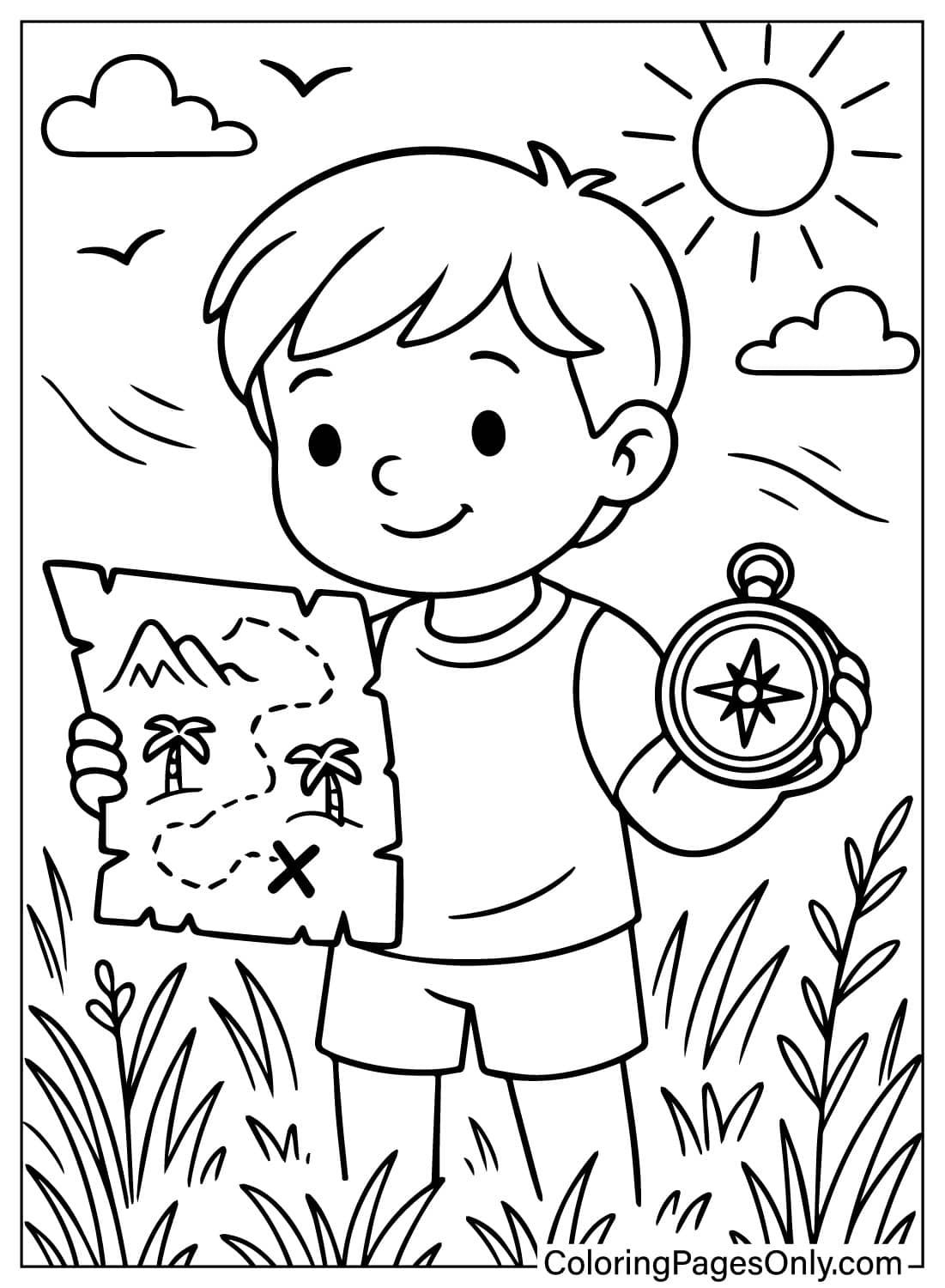
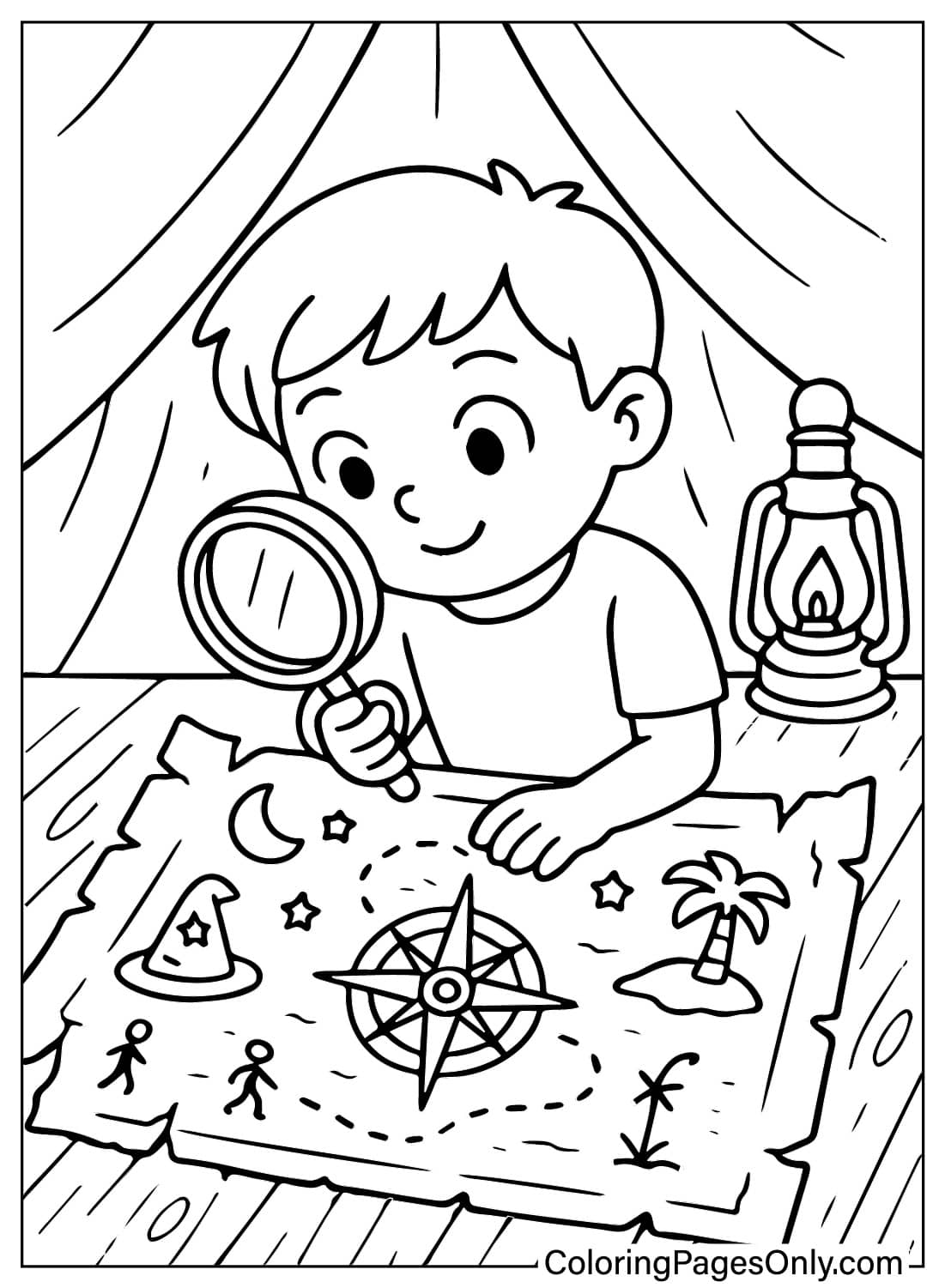
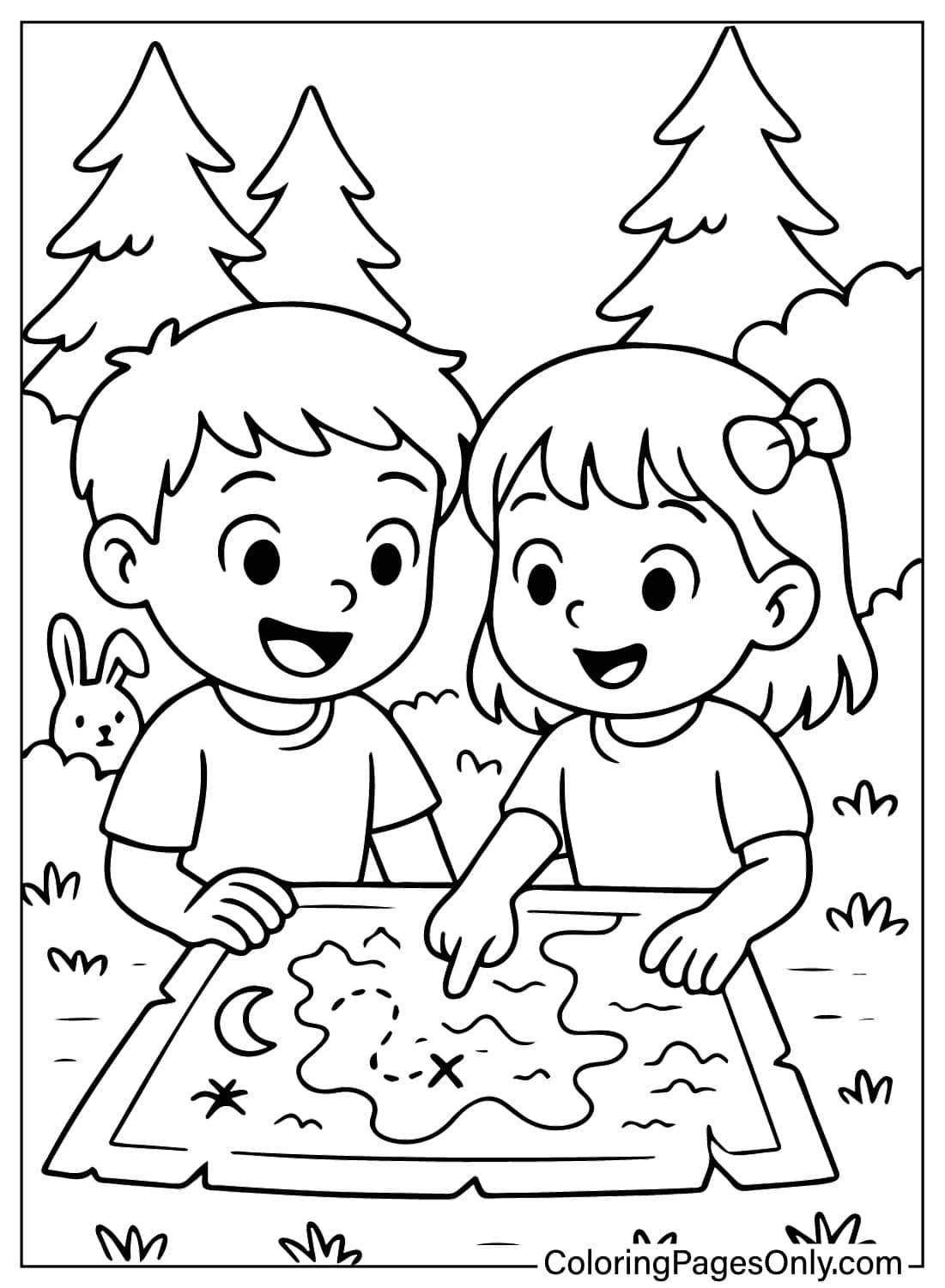
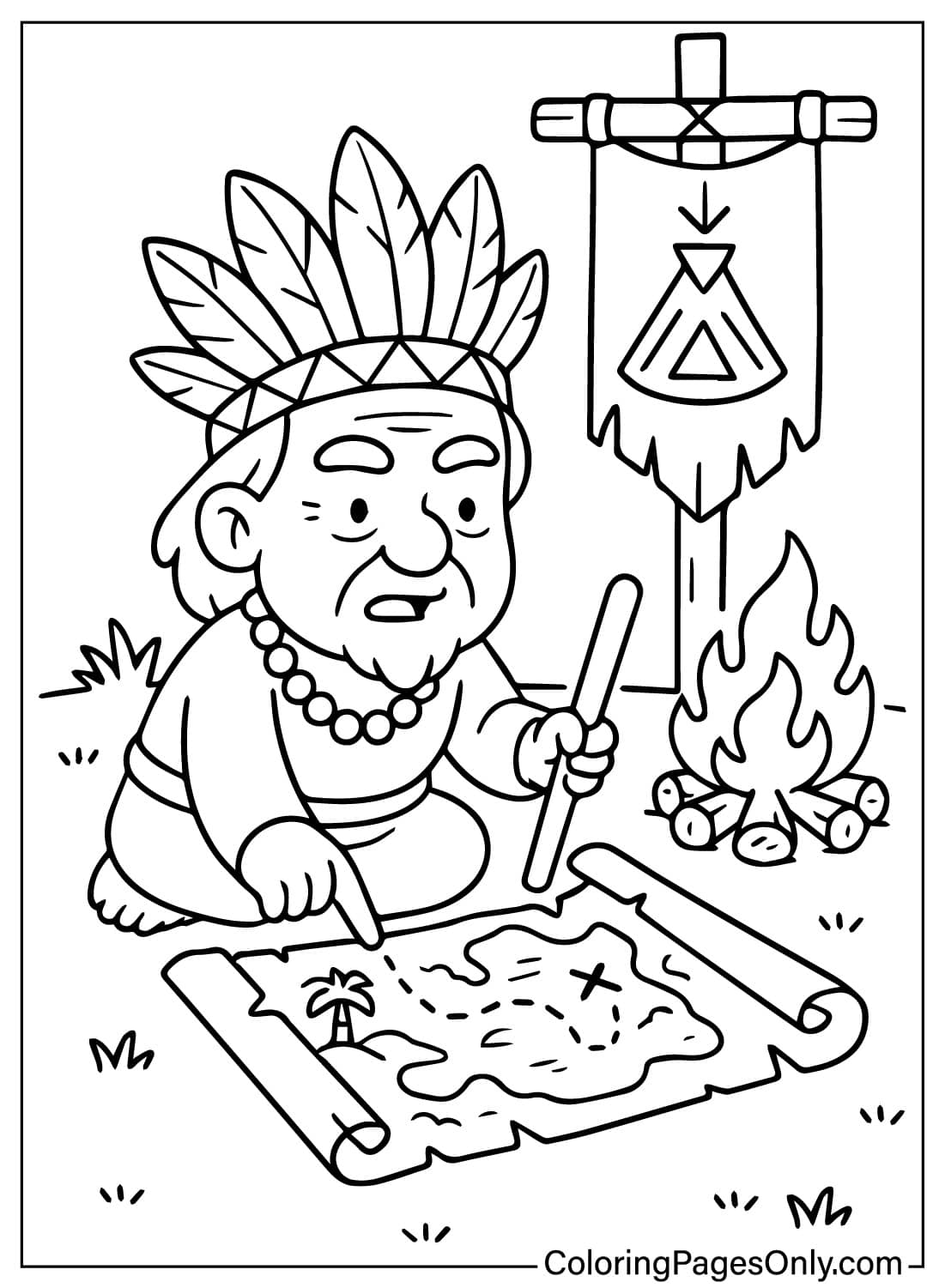
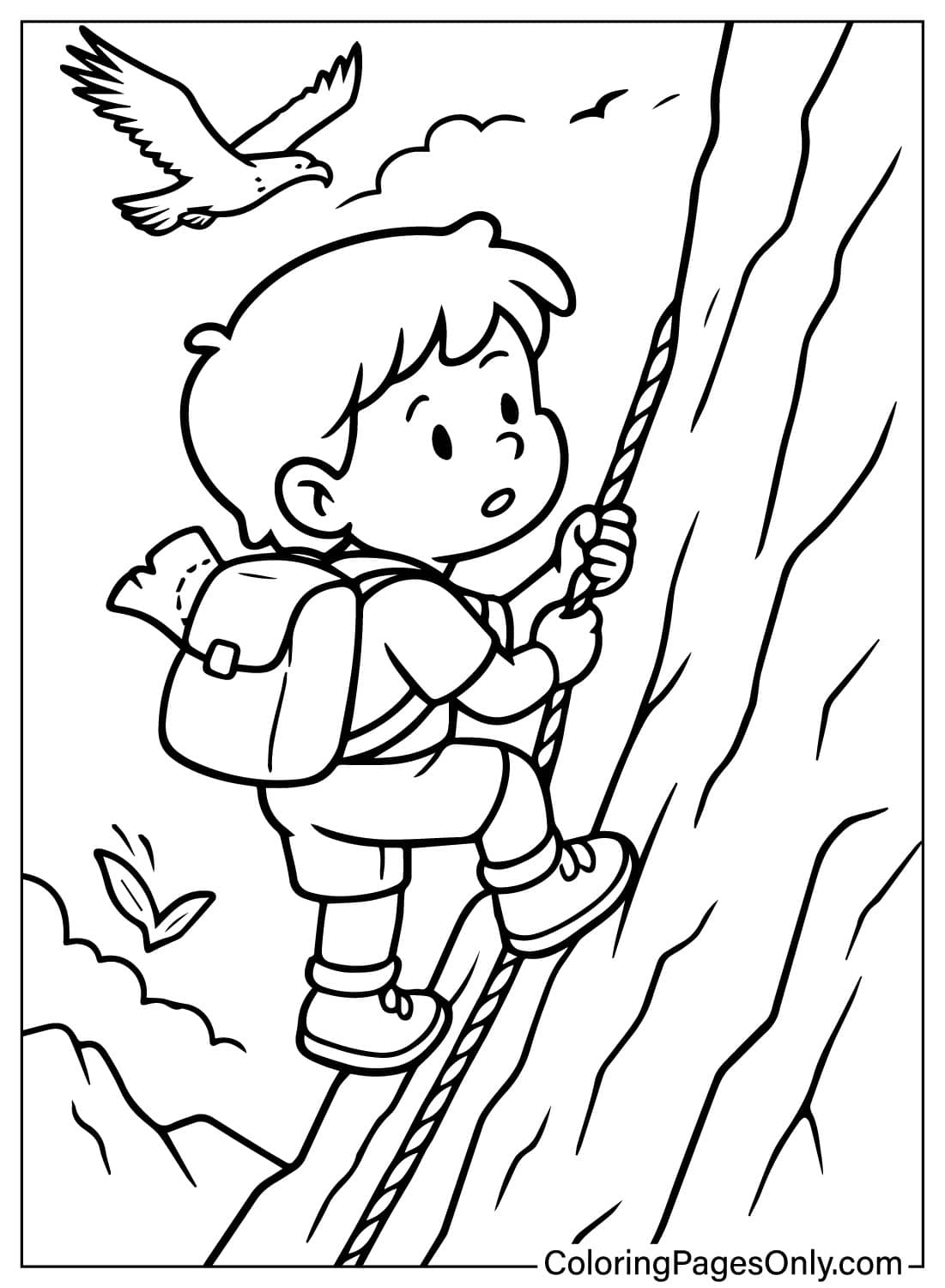
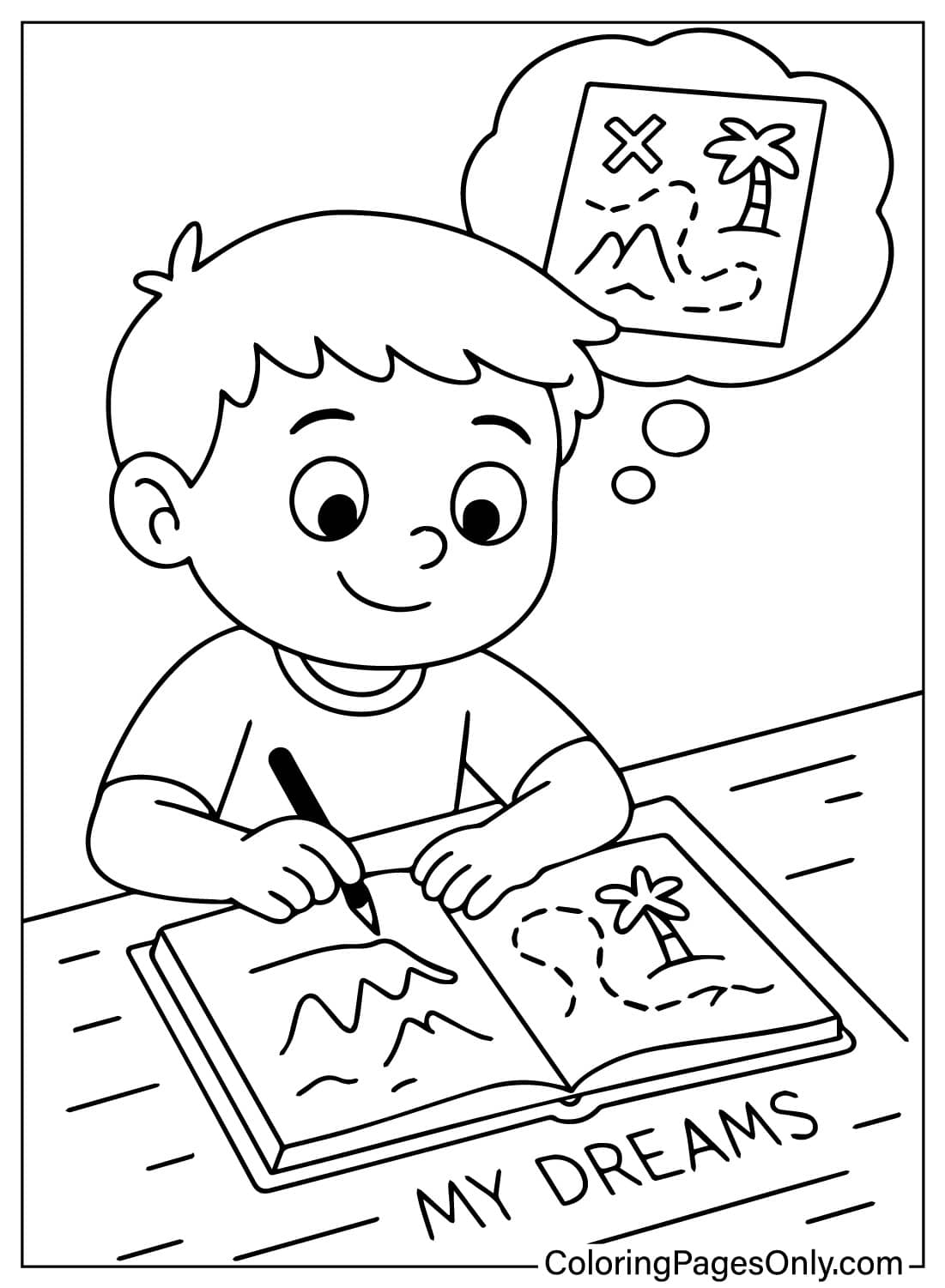
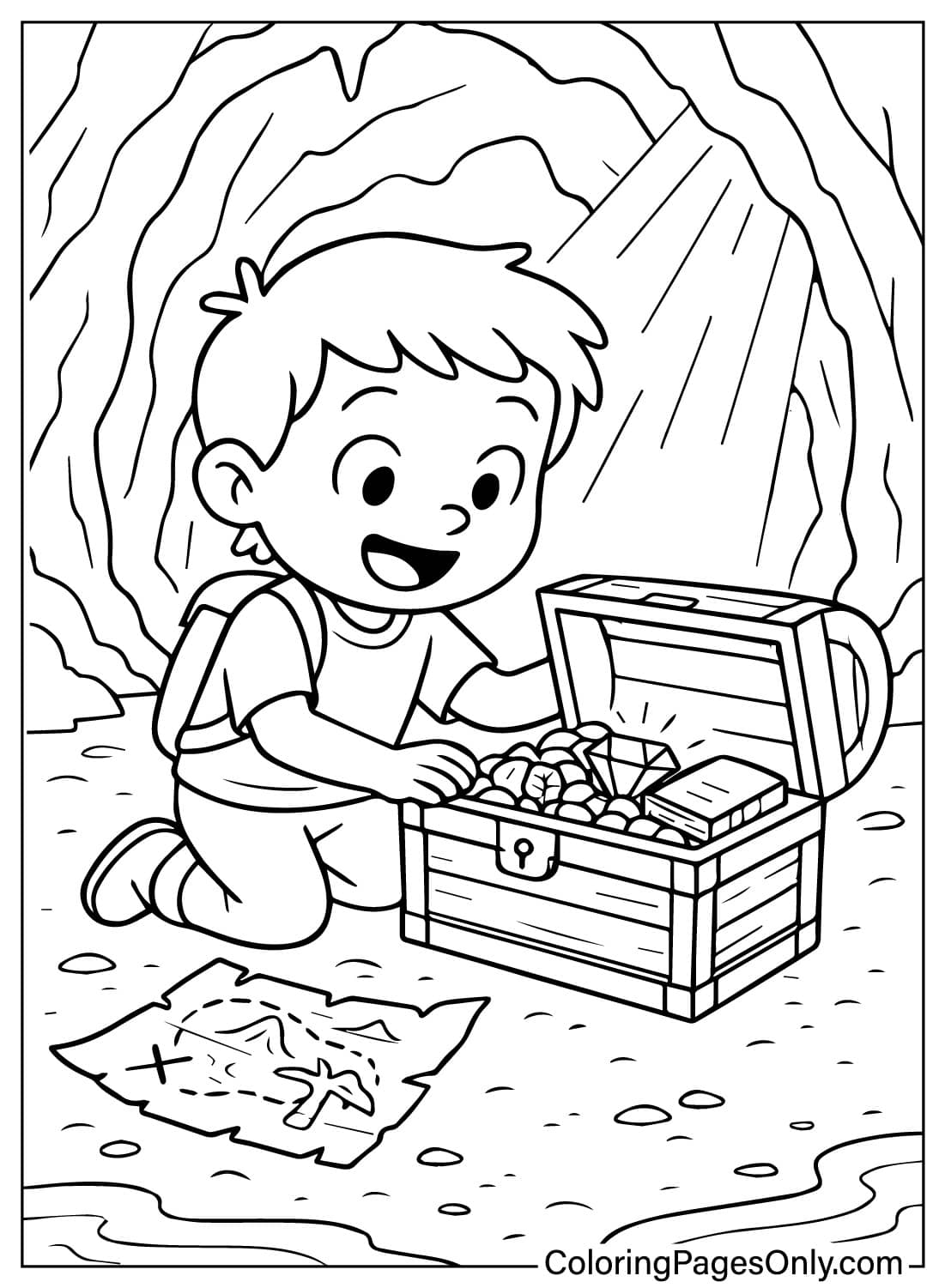
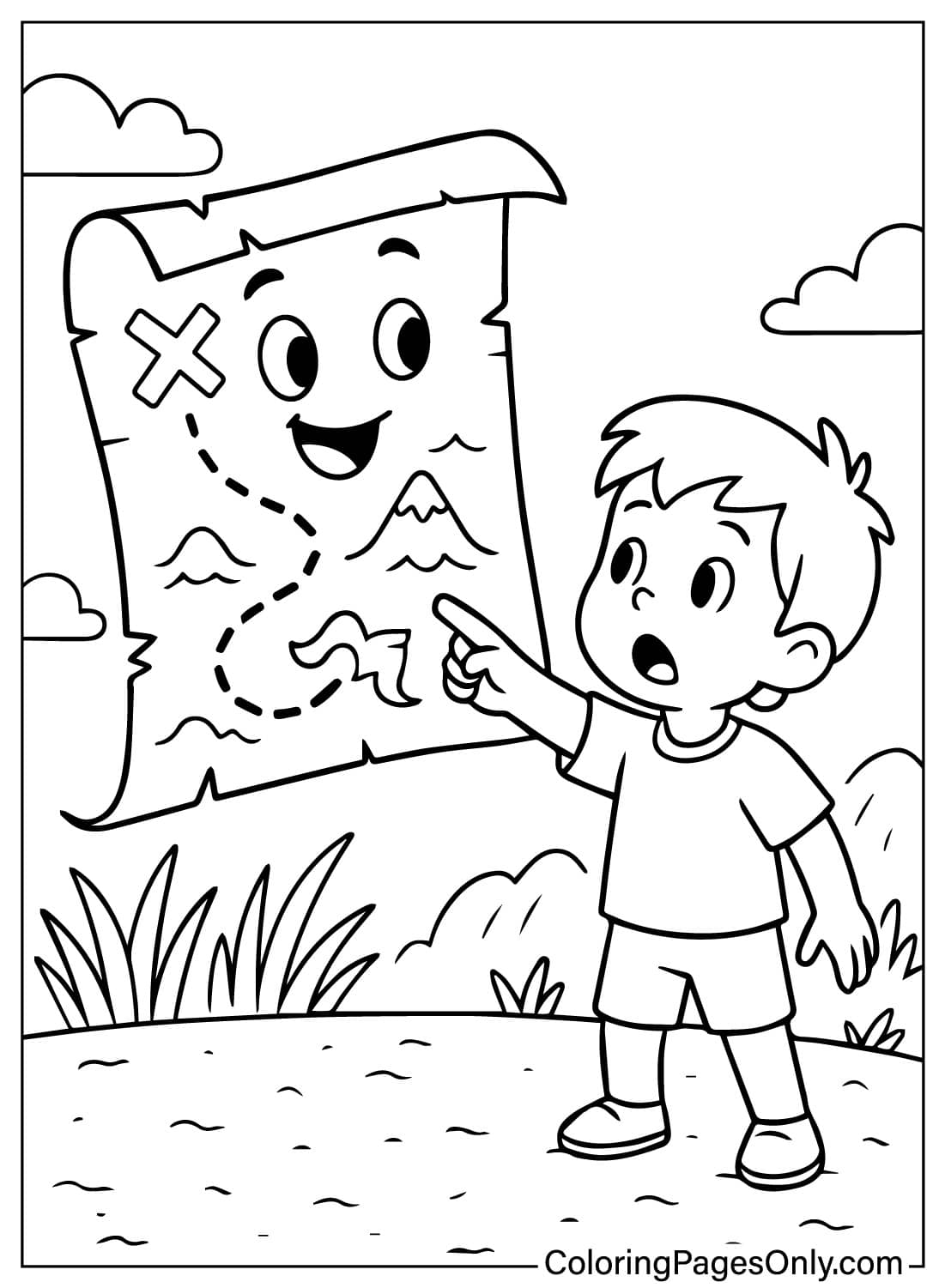
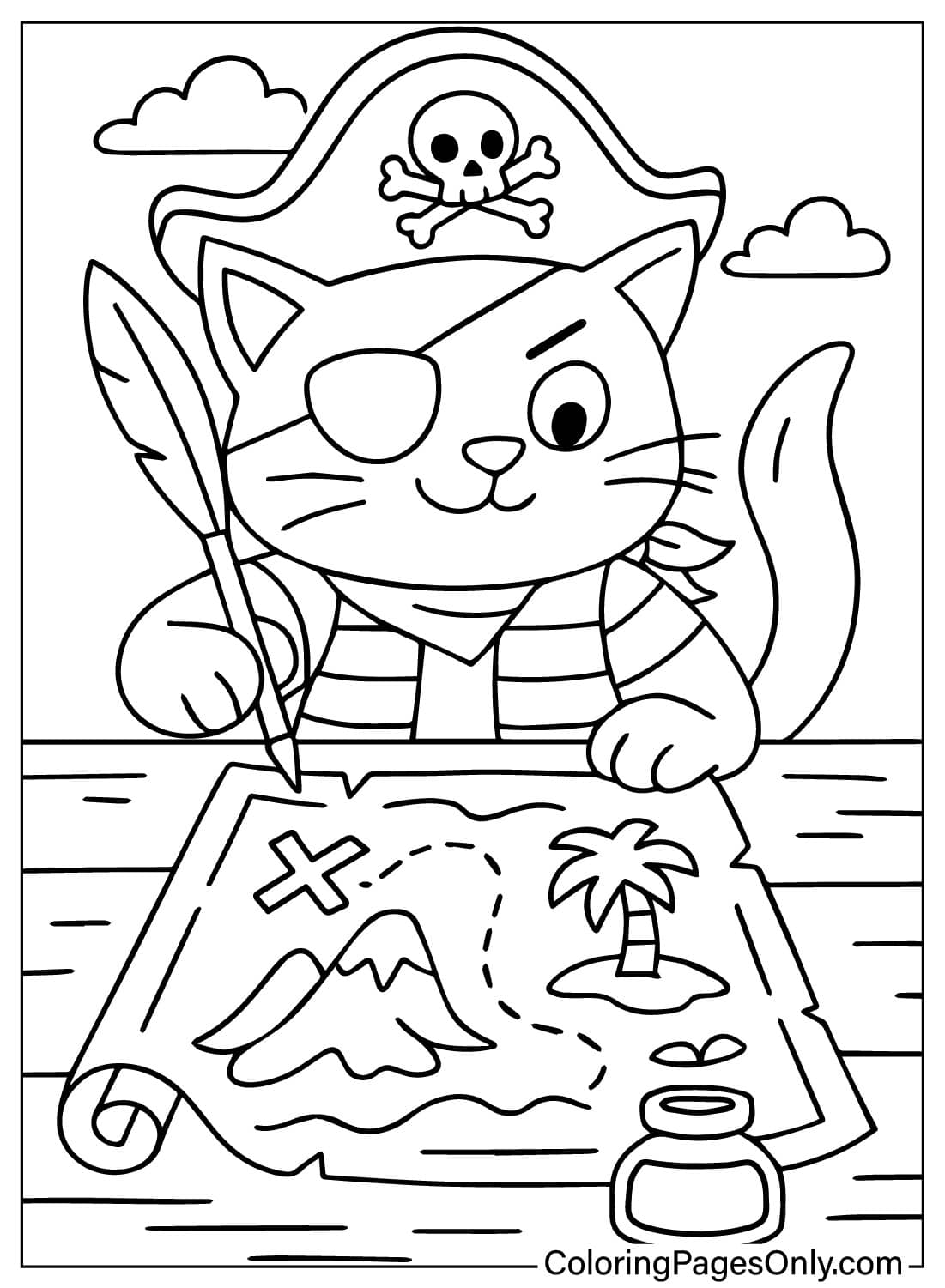
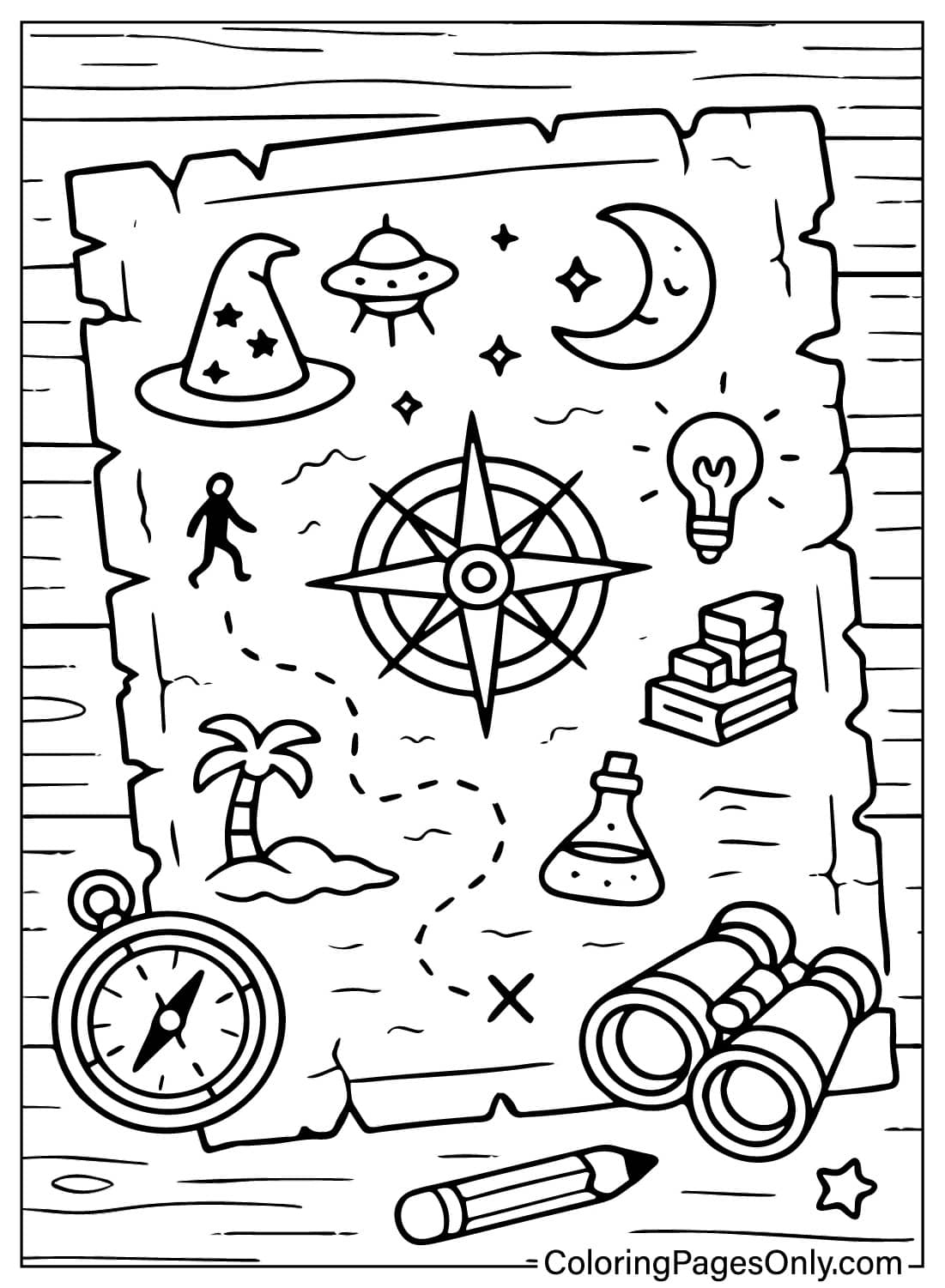
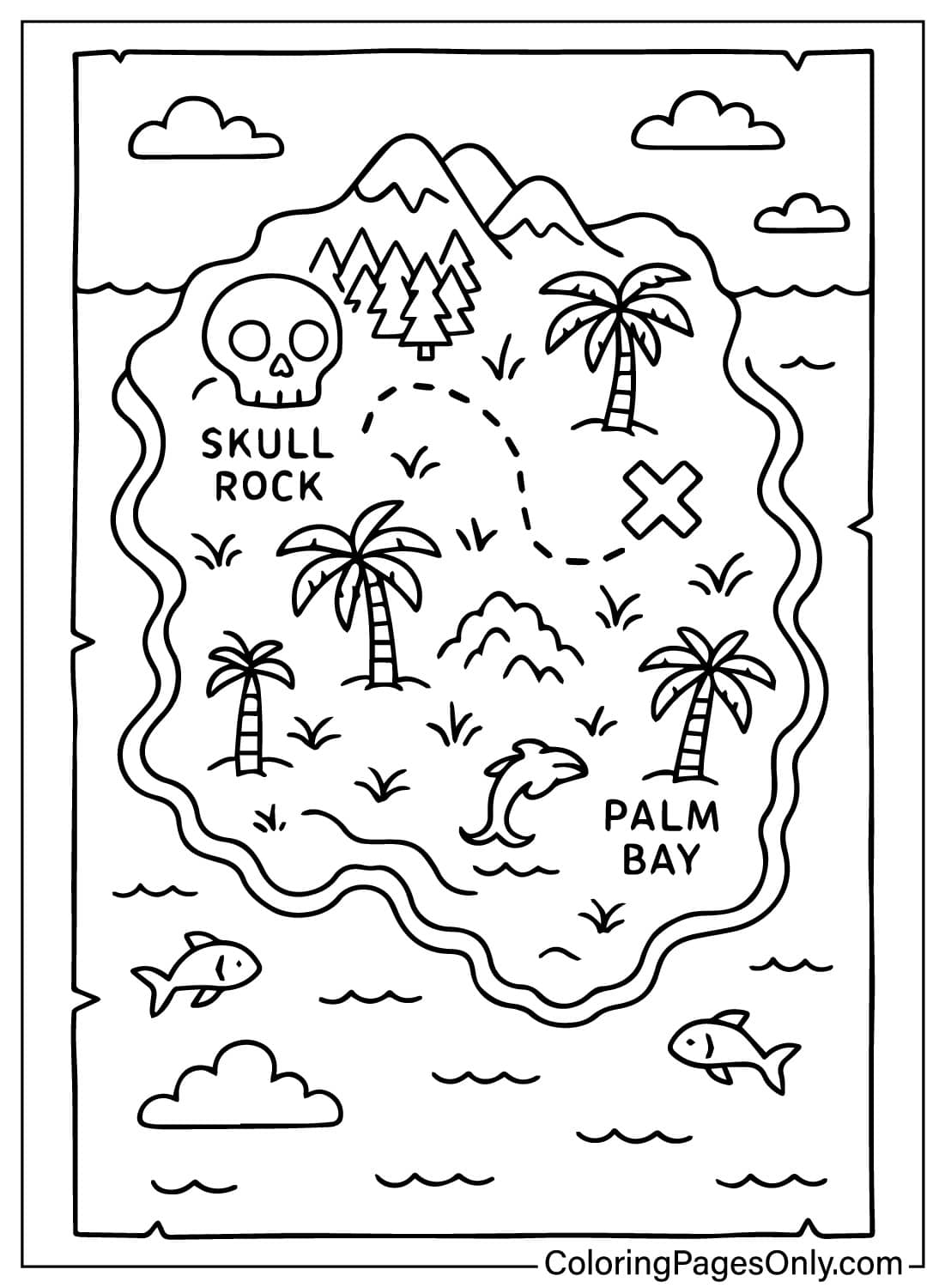
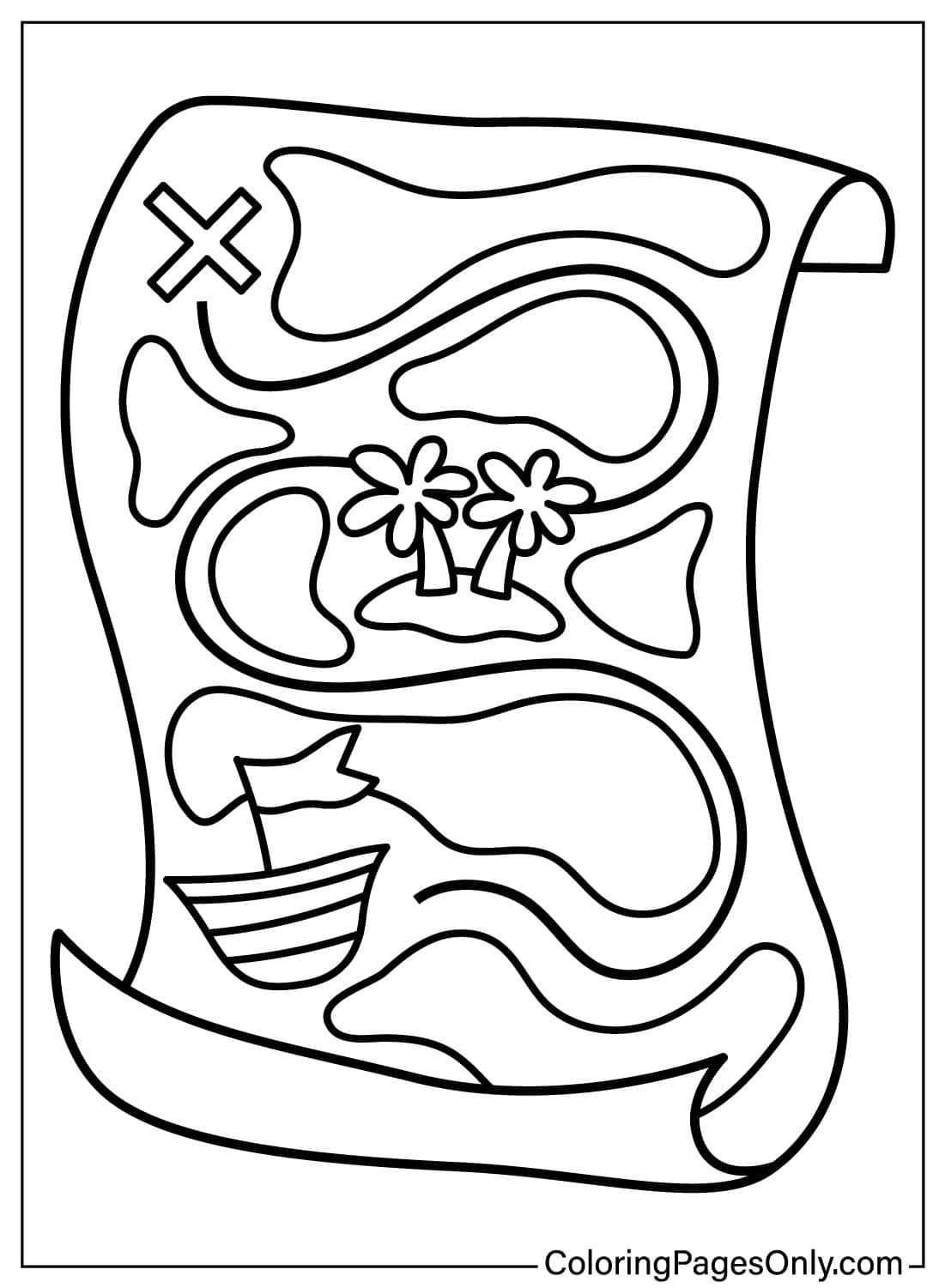
The 32 pages are split into five groups: simple map portraits, kids on a treasure hunt, pirate and adventure characters, animals with maps, and treasure islands. Since a map’s basic shape stays fairly consistent, the coloring variety comes mostly from who’s holding it and what’s happening around it.
What’s Inside This Collection
Five groups organize the 32 pages, and while the map itself stays a steady anchor, the story around it changes considerably from page to page.
Simple Map Portraits
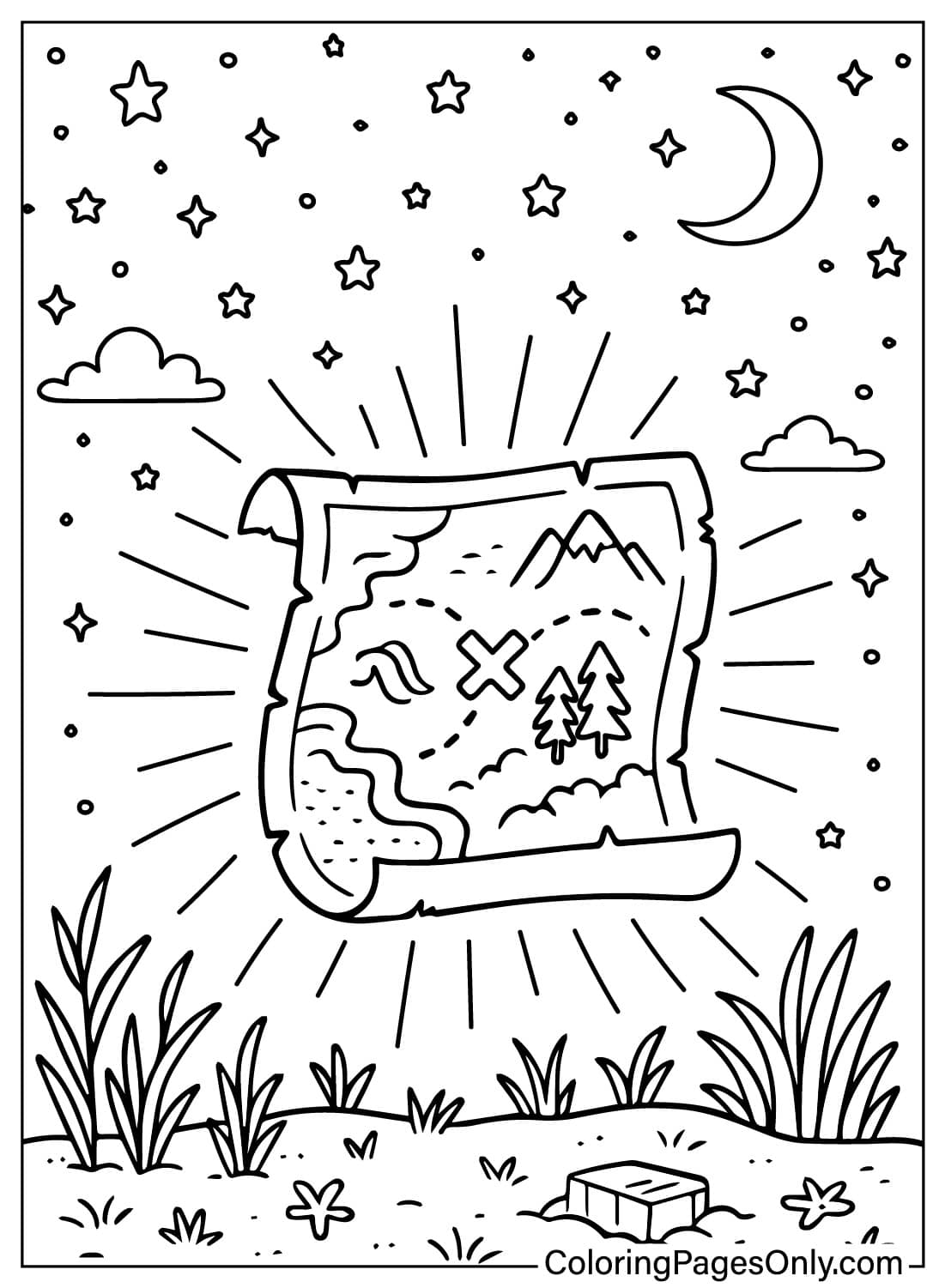
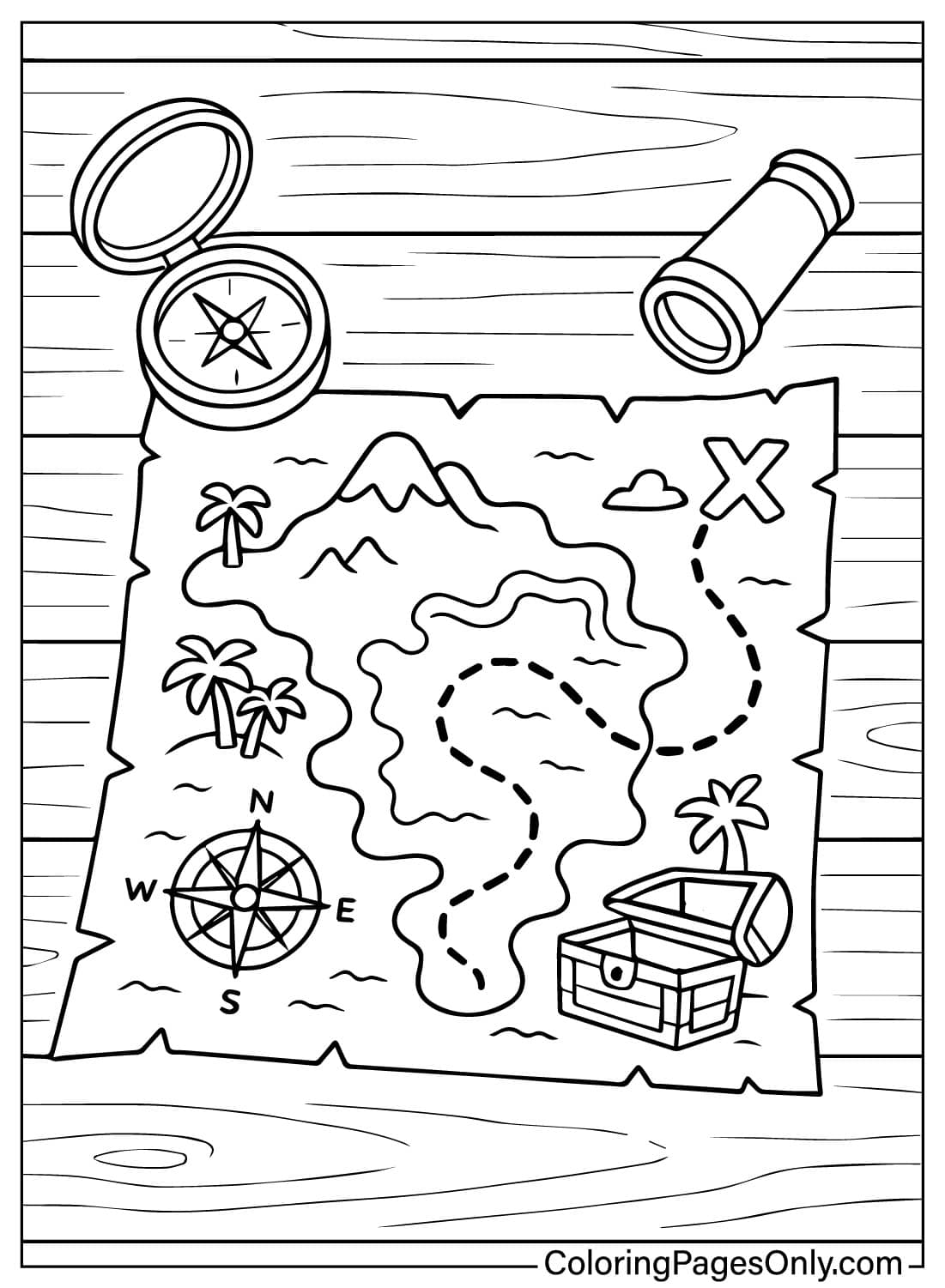
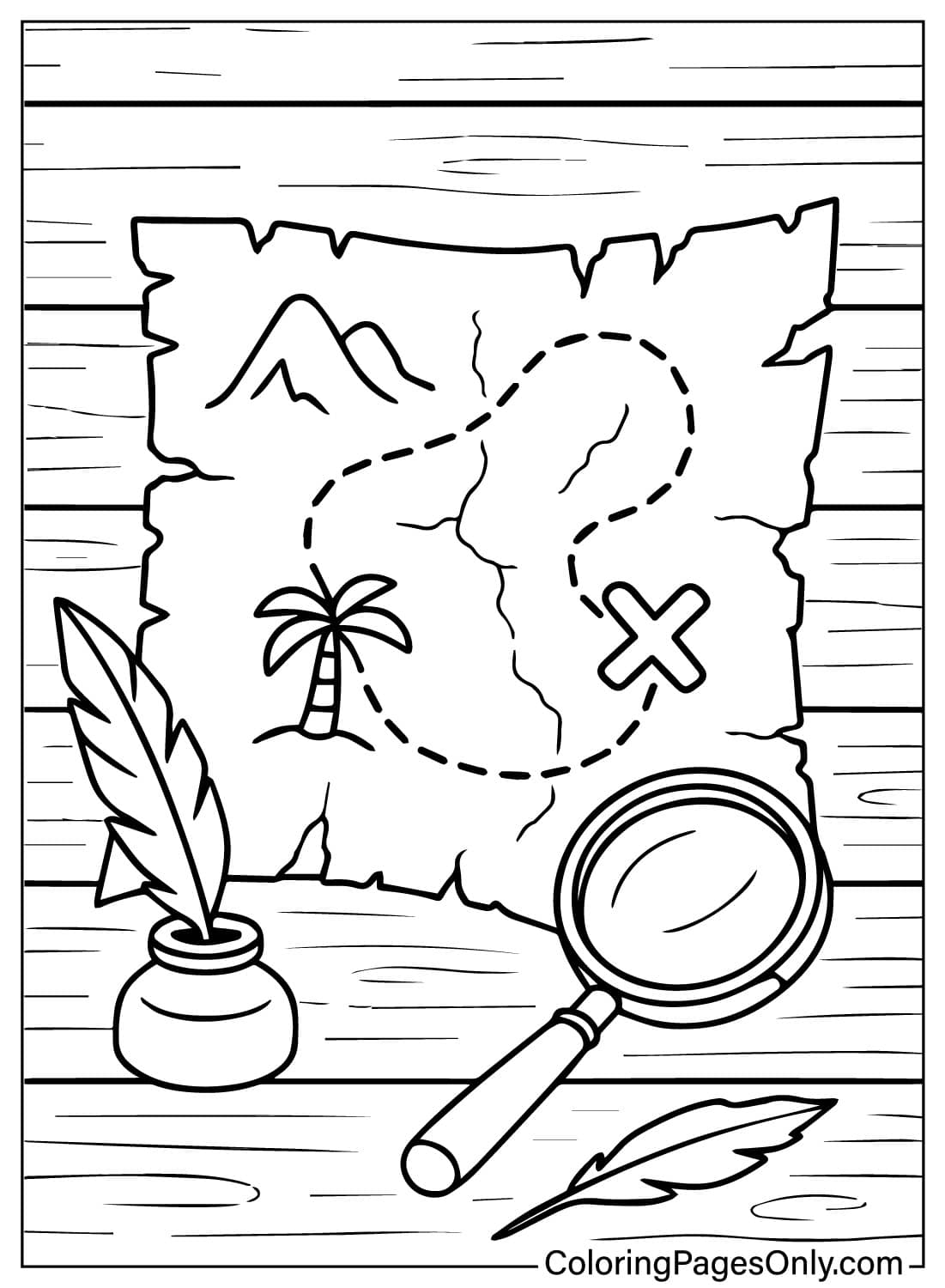
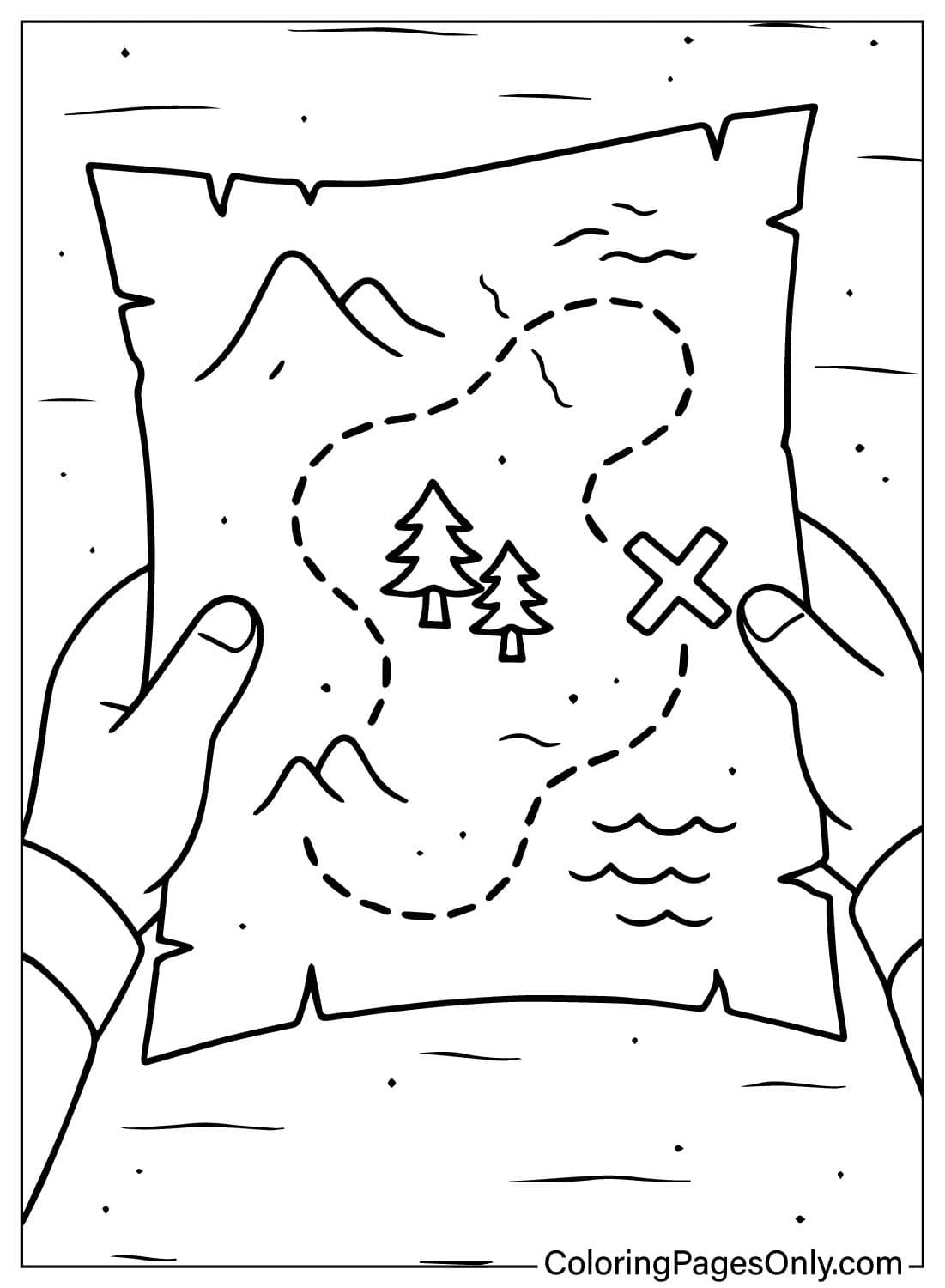
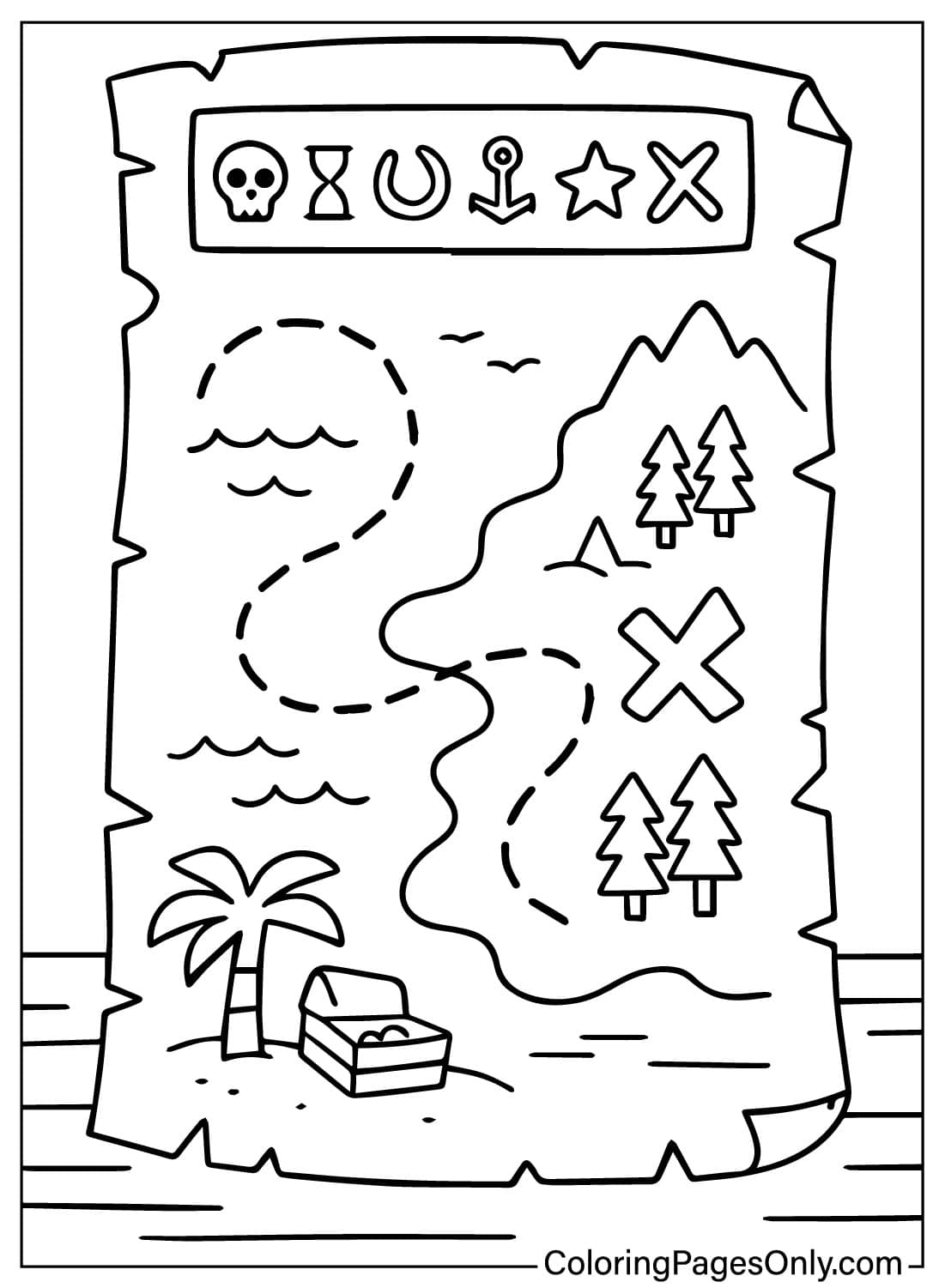
The largest group shows a treasure map on its own, repeated across several pages under different file names. Coloring suggestion: Use aged tan and brown tones for the paper itself, saving bold red for the X and any dotted trail leading to it.
Kids on a Treasure Hunt
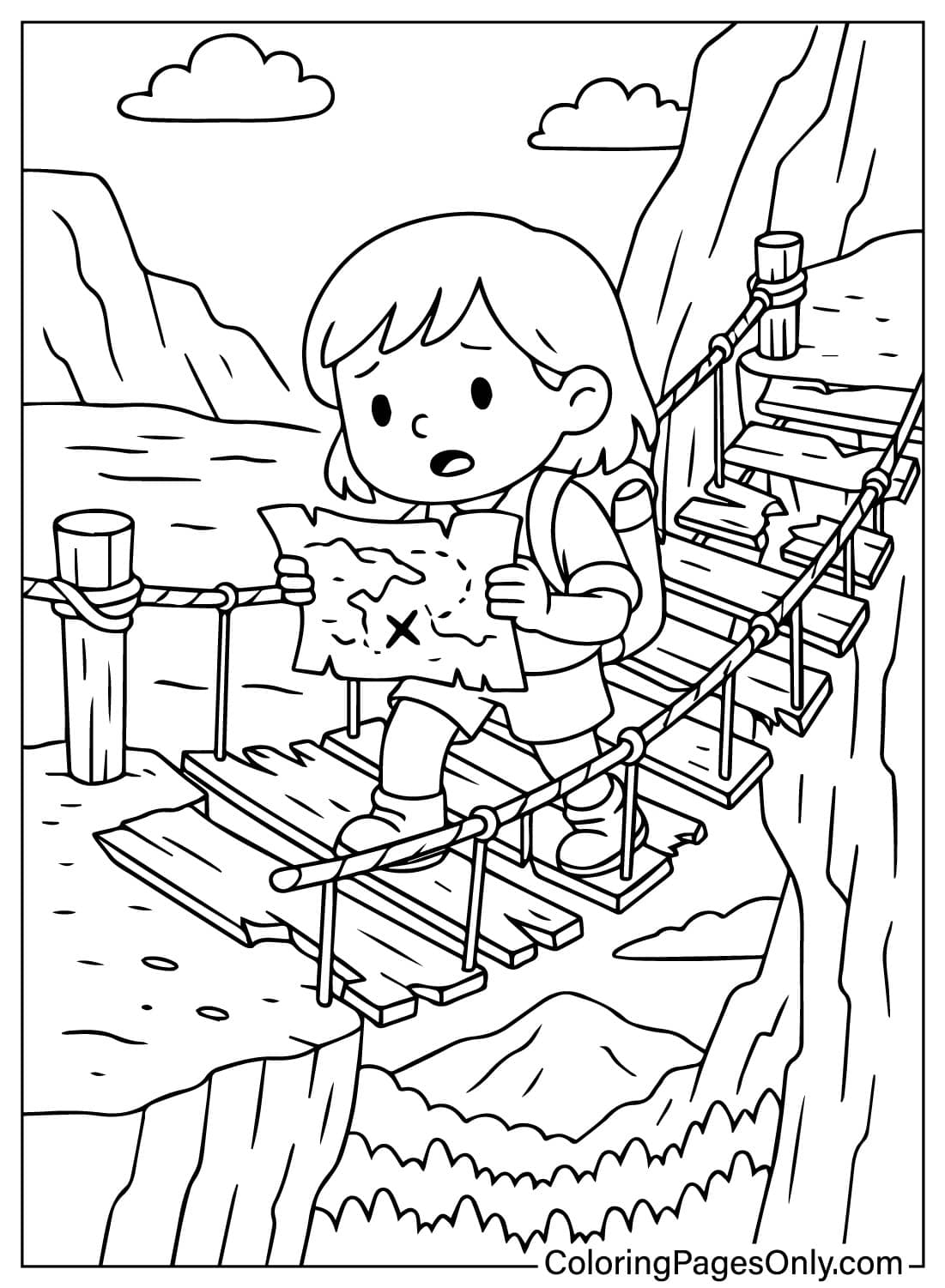
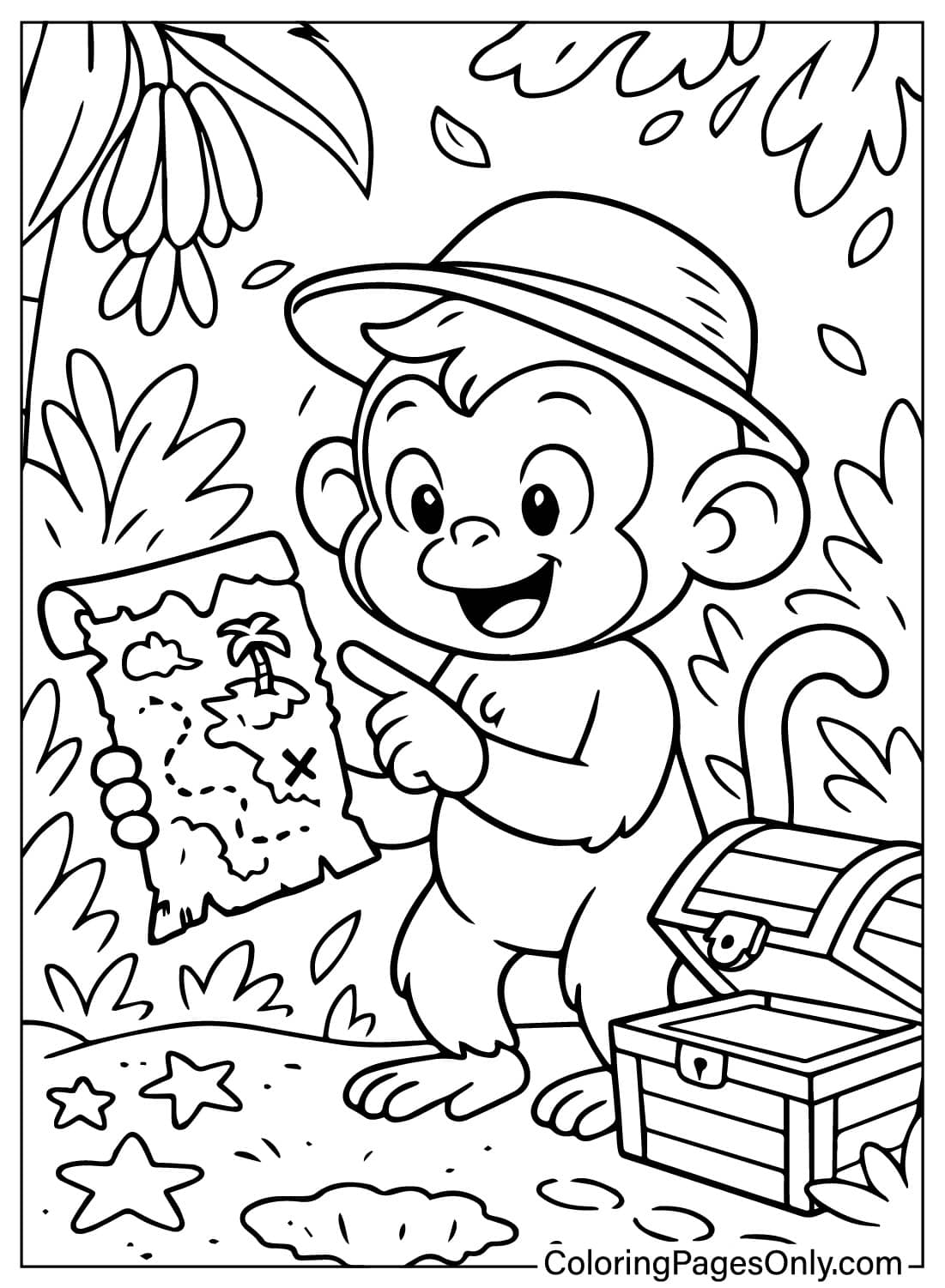
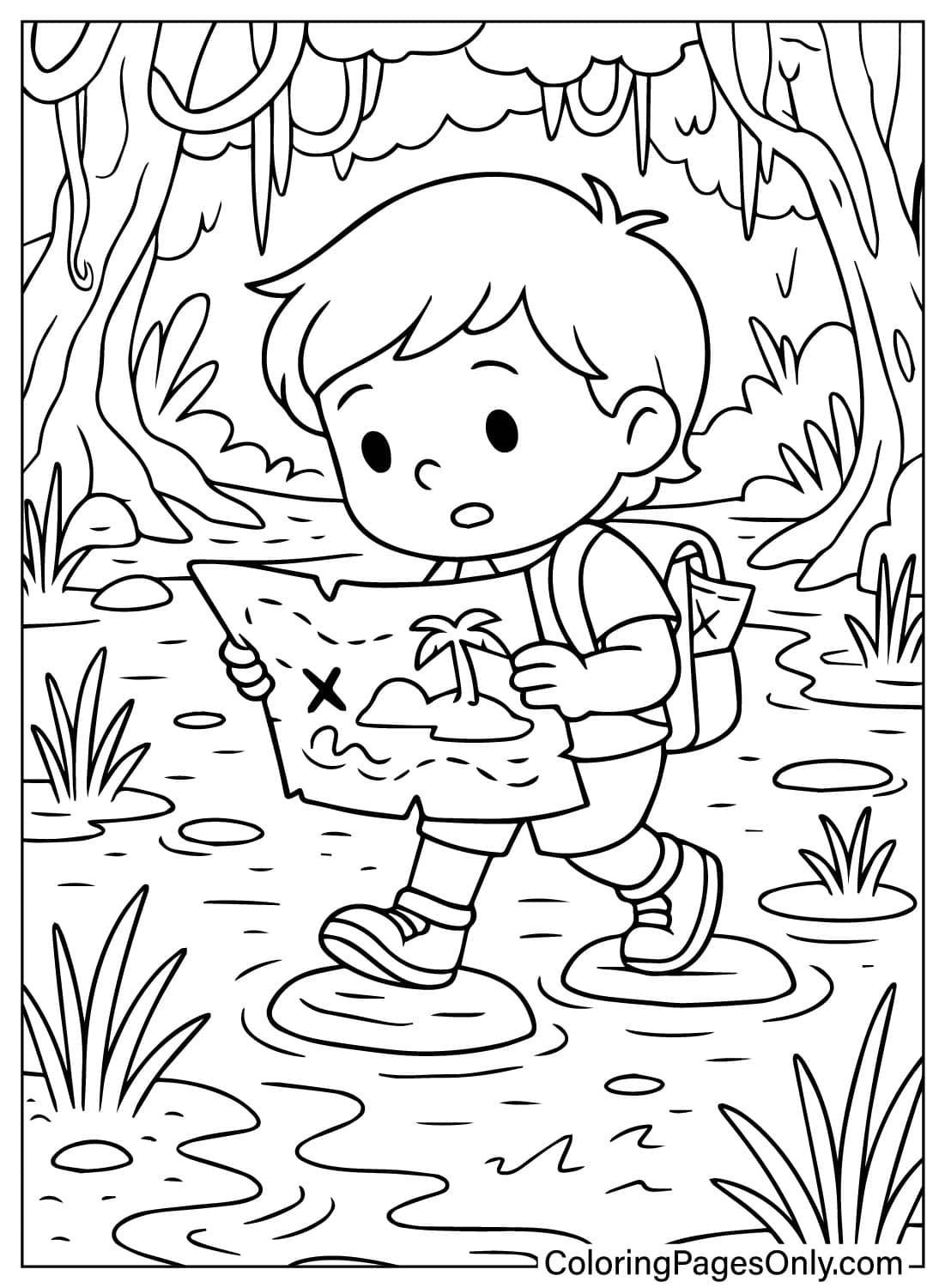
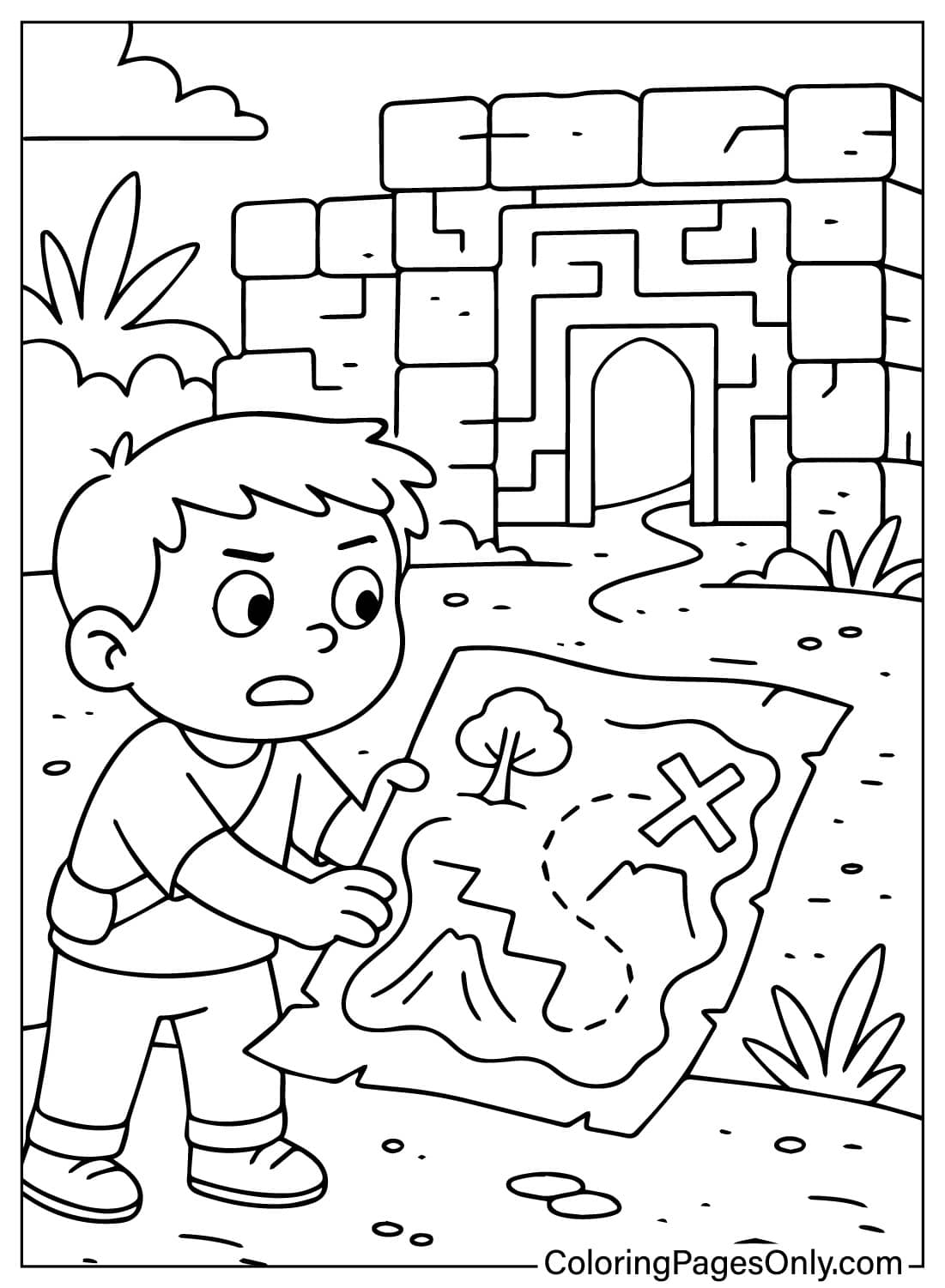
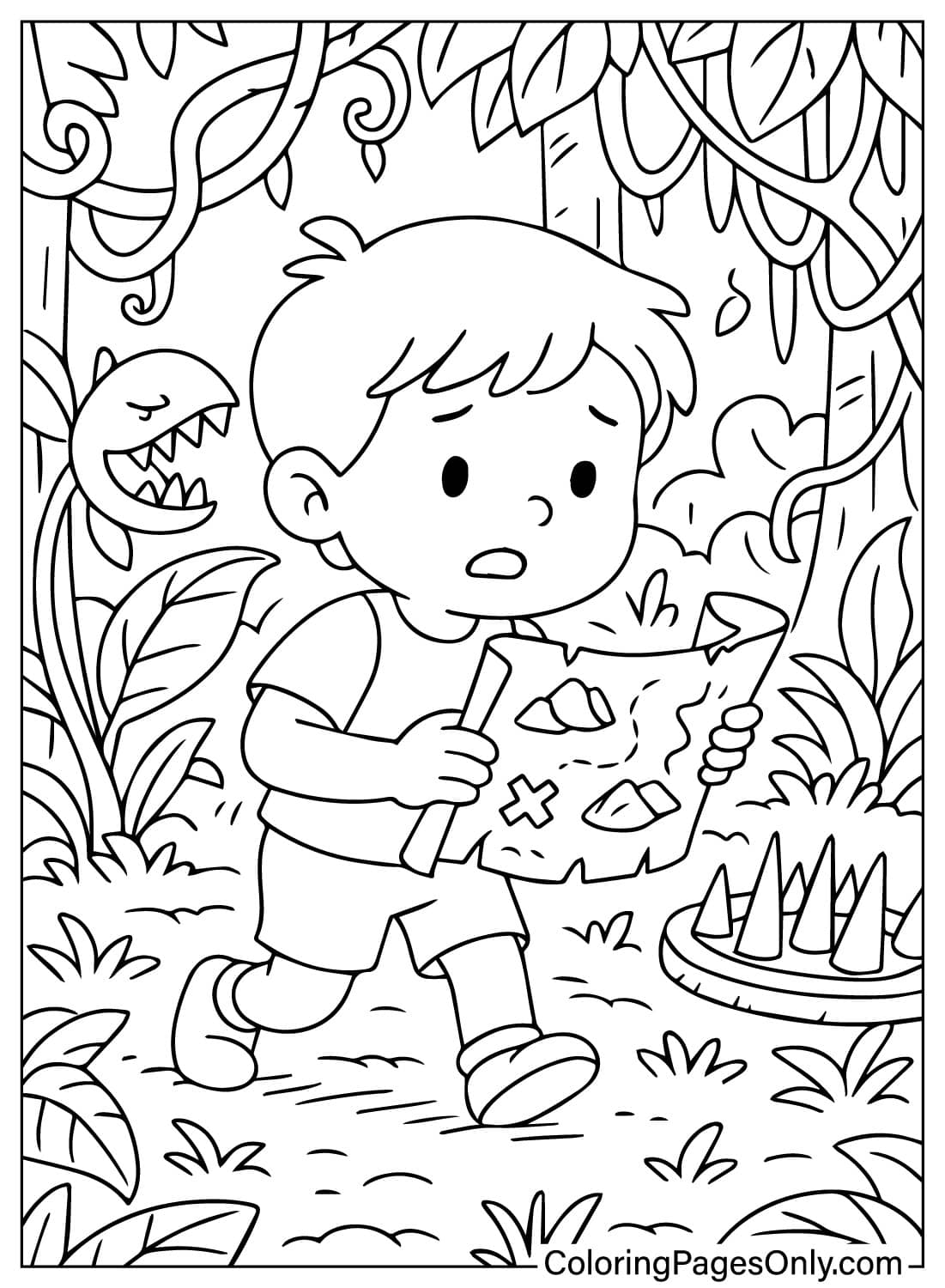
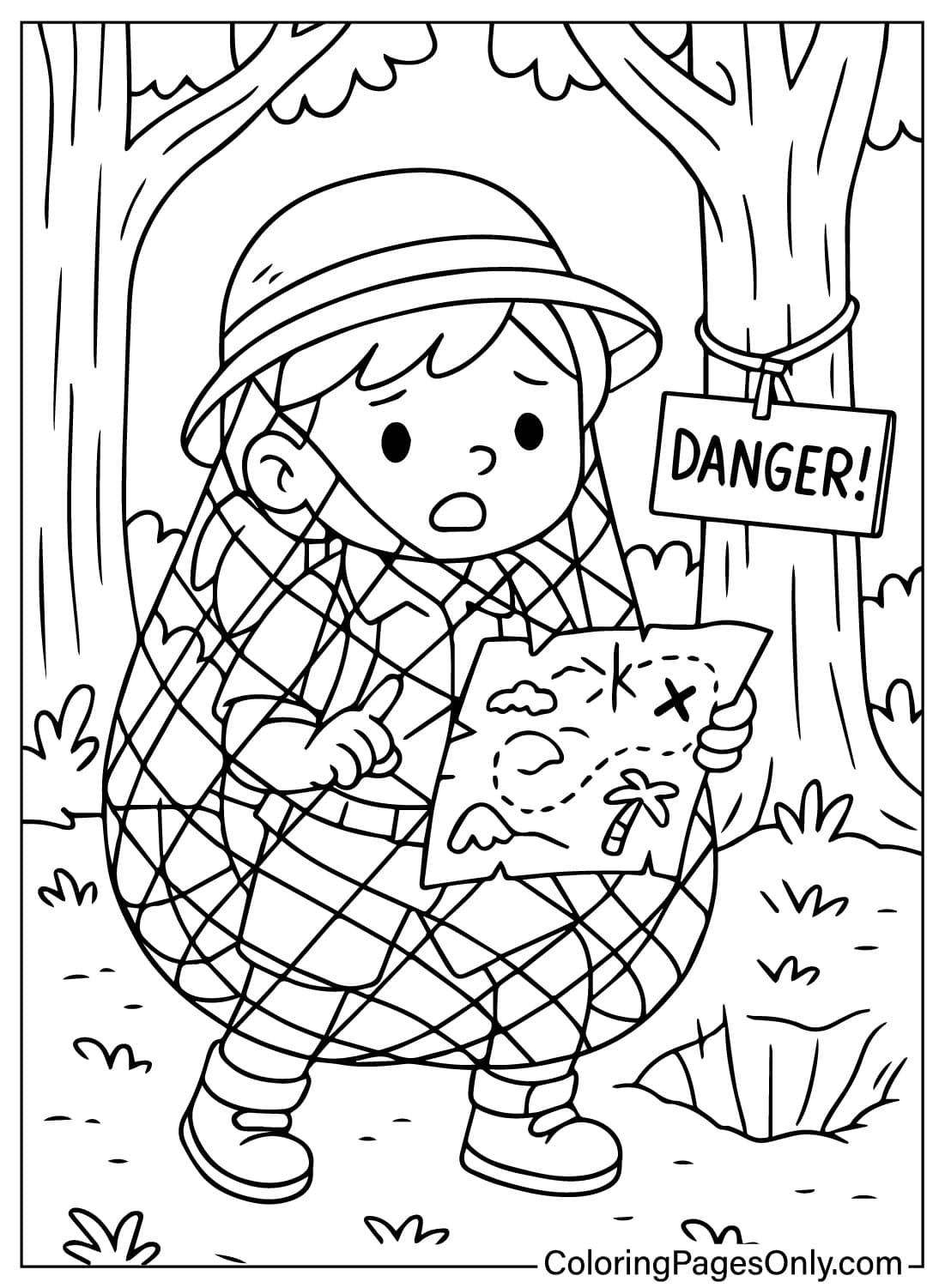
This is the biggest group by far, showing children searching, climbing, and following a map through forests and caves. Coloring suggestion: keep clothing bright and varied so each child reads as a distinct character, while the map and setting stay in earthier, more muted tones.
Pirate and Adventure Characters
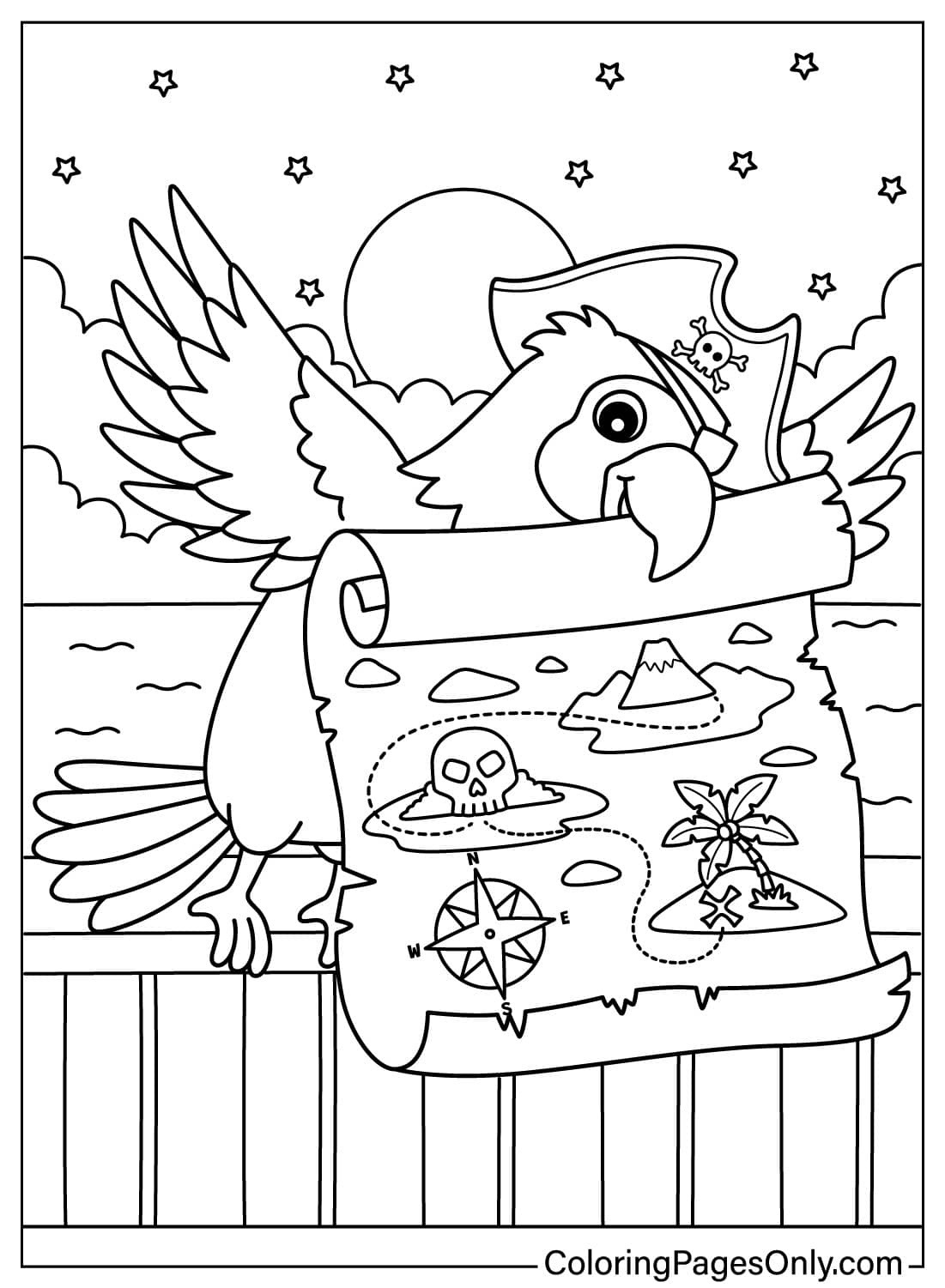
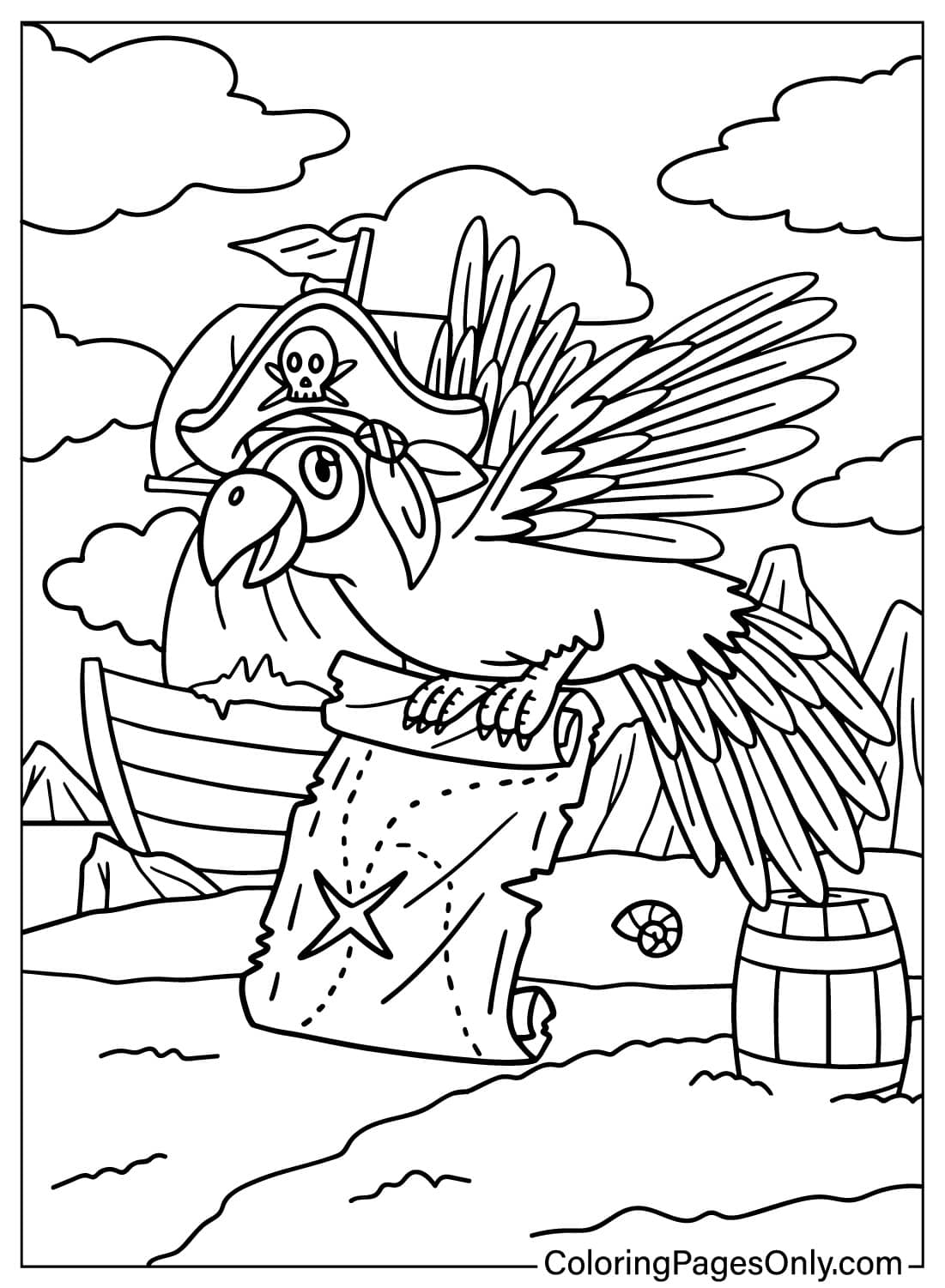
These pages bring in a parrot, a cat, and other characters dressed for adventure. Coloring suggestion: use classic pirate colors, deep reds, blacks, and gold accents, for costume details like hats and bandanas.
Animals with Maps
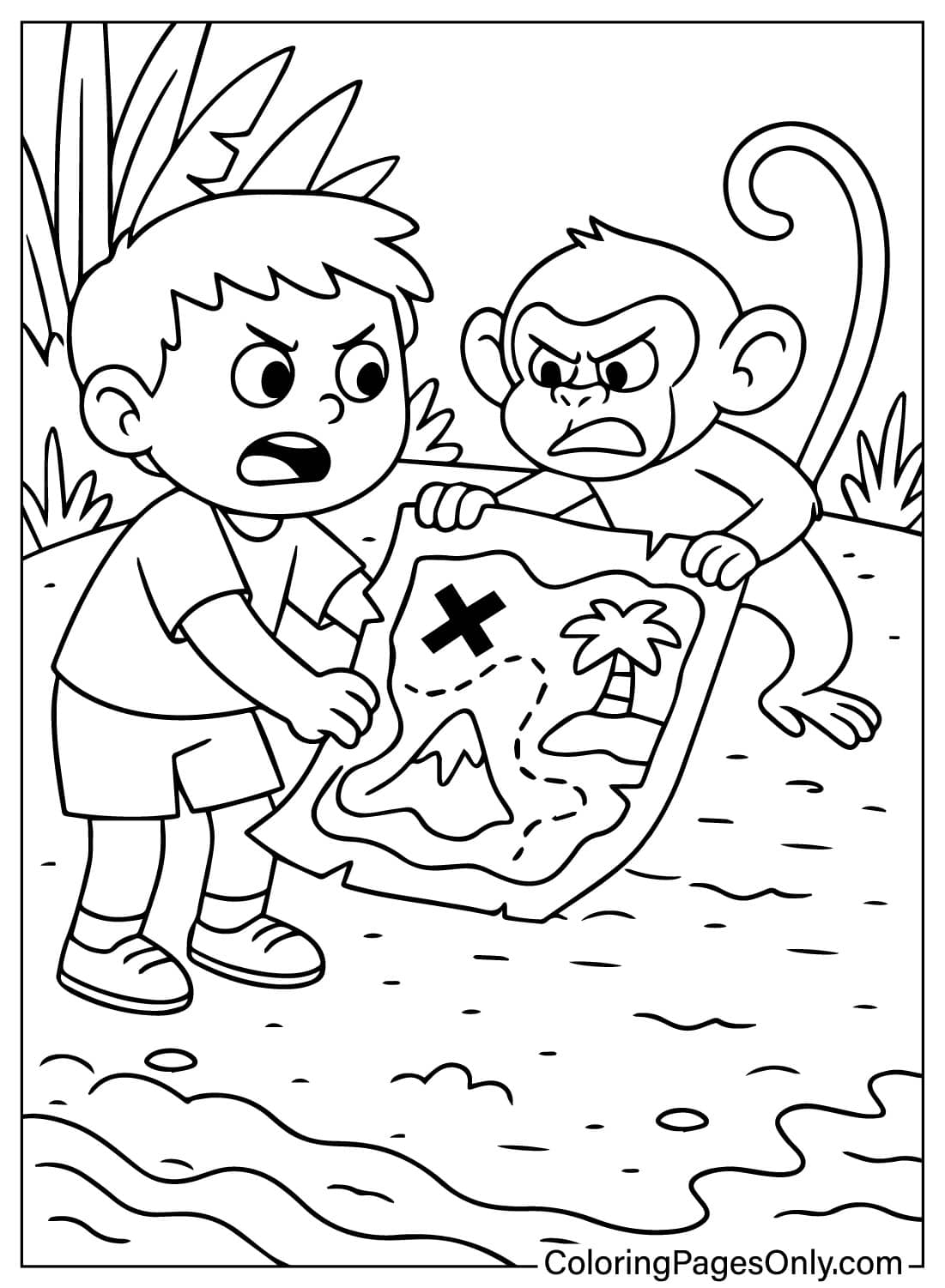
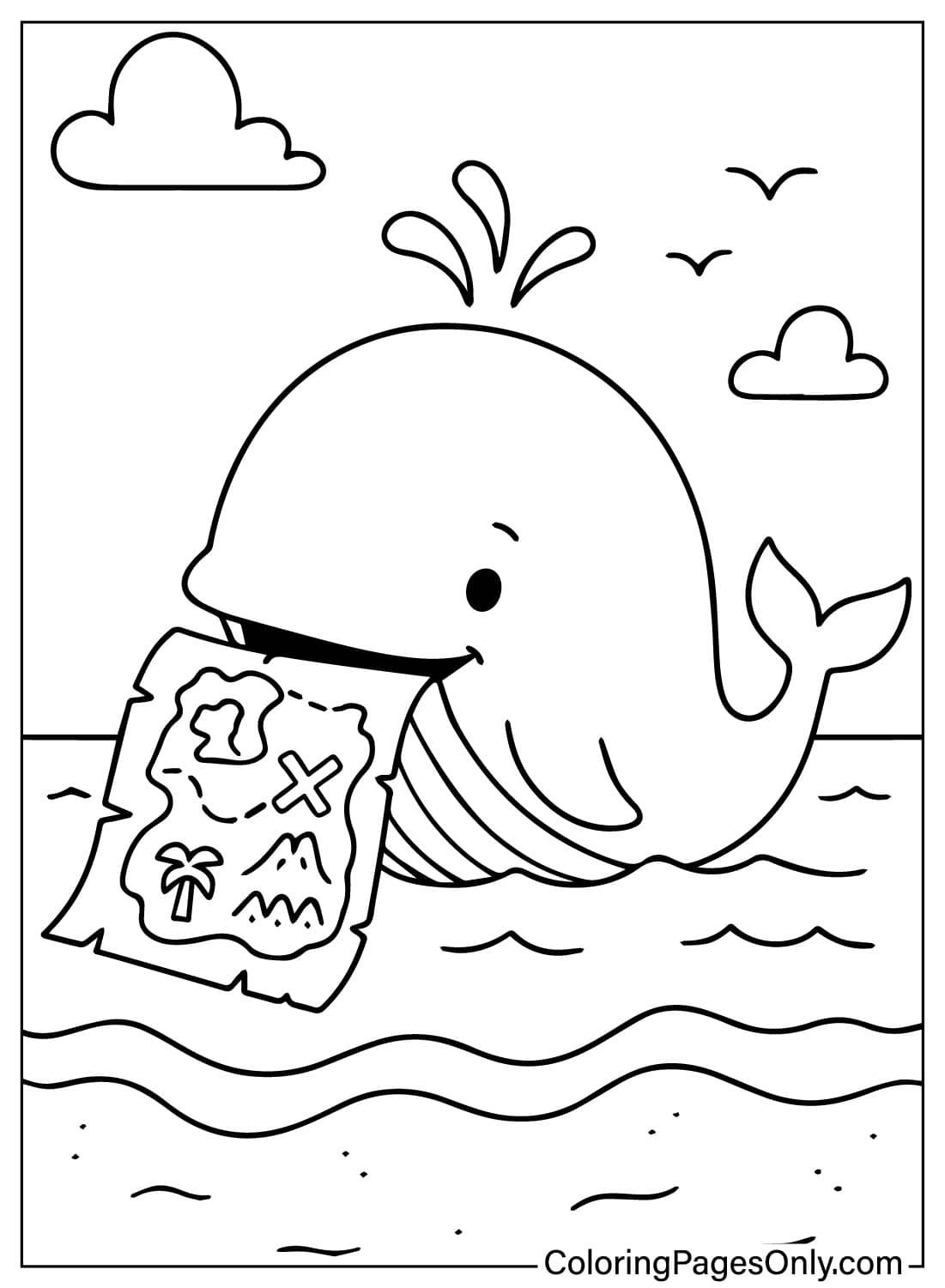
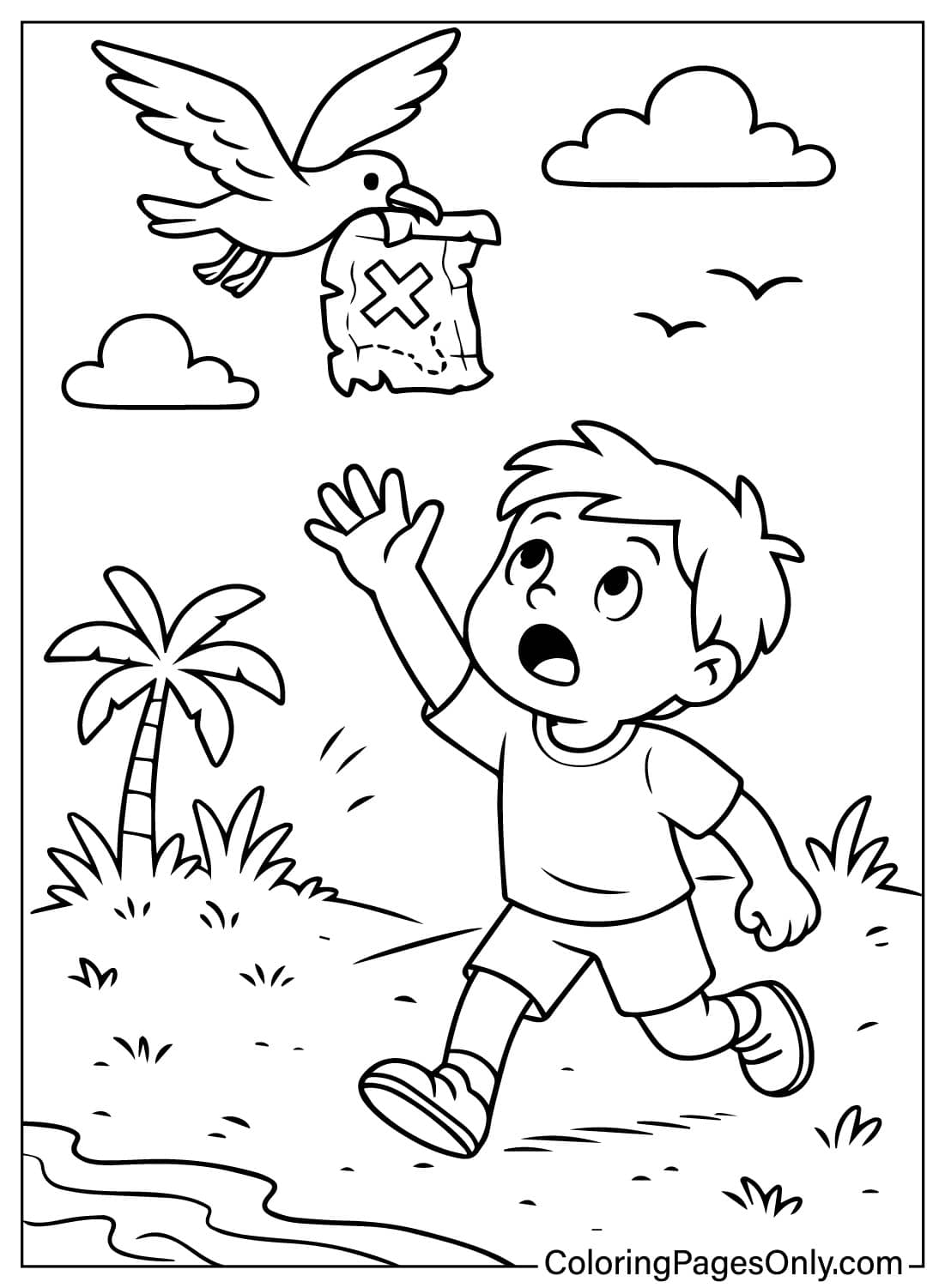
A smaller group shows animals like a monkey, a bird, or a whale interacting with a map. Coloring suggestion: keep each animal in its natural or classic color, and let the map stay a neutral tan so the animal remains the clear focal point.
Treasure Islands
Two pages step back to show a full island setting rather than just the map itself. Coloring suggestion: use warm sandy tones for the beach, layered greens for palm trees, and a bright blue for the surrounding water.
What Treasure Map Coloring Pages Do
One continuous trail, carefully traced. A treasure map’s dotted trail winds across the page in a single continuous path, and coloring or tracing it carefully from start to finish takes controlled, precise line work, the kind of fine motor practice the American Academy of Pediatrics associates with structured coloring in children ages two through seven.
A legend built on one man’s lie. The whole idea of buried pirate treasure largely traces back to Captain William Kidd, who claimed before his 1701 execution that he’d hidden a fortune, likely just to buy himself more time, a desperate story that somehow outlived the truth behind it.
A clear destination, on the map and on the page. A treasure map promises one clear, marked destination to work toward, and a coloring page offers something similar. This defined endpoint turns a blank sheet into a finished result, the kind of structured, goal-oriented activity a 2005 Art Therapy Journal study linked to reduced anxiety.
Fiction that became the whole idea. Robert Louis Stevenson’s 1883 novel Treasure Island took Kidd’s claim. It turned it into the version of pirate treasure most people picture today, proving how much a single well-told story can shape an idea that never actually happened.
How to Color Treasure Map Pages Well
- Map paper: Use aged tan and brown tones, adding small torn or singed edges in a darker shade for an authentic weathered look.
- X and trail: use a bold red for the X marking the spot, with a dotted brown or black line tracing the path leading to it.
- Children on the hunt: keep clothing bright and varied for each character, while the map and setting stay in earthier, more muted tones.
- Pirate characters: use classic deep reds, blacks, and gold accents for hats, bandanas, and costume details.
- Animals: keep each one in its natural or classic color, letting the map stay a neutral tan so the animal remains the focal point.
- Island scenes: use warm sandy tones for the beach, layered greens for palm trees, and a bright blue for the surrounding water.
5 Creative Craft Ideas With Treasure Map Coloring Pages
1. Aged Map Effect
Color a map page, then lightly crumple the paper and dab it with a damp tea bag to give it an authentic weathered look.
2. Real Treasure Hunt
Color a map page, then use it as inspiration to draw a real map leading to a small hidden prize at home.
3. Map Puzzle
Color a detailed map page, cut it into several pieces, and reassemble it like a simple puzzle.
4. Treasure Chest Box
Decorate a small box with a colored map cutout glued to the lid for a simple treasure chest craft.
5. Pirate Fact Card
Color a page and write the real story behind Captain William Kidd’s treasure legend on the back.
Frequently Asked Questions
What are Treasure Map coloring pages?
A free set of 32 printable designs of treasure maps, pirate characters, and kids on the hunt for hidden gold. Every page downloads as a PDF or opens in the online coloring tool without an account.
Did pirates really bury treasure and mark it with an X?
Almost never. Most pirate crews divided their loot immediately since they didn’t trust each other to leave it buried, and the popular image of a buried treasure map is largely a myth.
Where did the buried treasure legend come from?
It traces mainly to Captain William Kidd, who claimed before his 1701 execution to have hidden treasure, a story that later inspired Robert Louis Stevenson’s 1883 novel Treasure Island.
Why do so many pages show a child on a treasure hunt?
This is the largest group in the collection, showing children searching, climbing, and following a map through forests and caves, which is the main storytelling angle the set is built around.
What kinds of characters appear in this collection?
Mostly children on a hunt, alongside pirate-styled characters, animals like a monkey and a bird, and a couple of full island scenes.
Can these pages be colored without printing them?
Yes. Every page in the set opens directly in the site’s browser-based coloring tool, so a page can be finished on screen before deciding whether to print it.
Are Treasure Map coloring pages suitable for young children?
The simpler map portraits and single-character pages work well for a young child. The more detailed maps and multi-figure scenes suit an older child with more coloring experience.
What made real pirate “treasure” different from gold and jewels?
Real plunder was often perishable or practical goods like spices, textiles, or wine rather than chests of gold, which is part of why burying it for later made little practical sense.
Start Coloring
The map’s ready, the X is waiting, only the color is missing: pick a page above, download the PDF, or fill it in online, free and without an account. Share the finished piece through the Facebook or Pinterest buttons at the top of the design.