Walrus Coloring Pages
 By:
Jennifer Thoa - Content Editor & Designer
Updated:
By:
Jennifer Thoa - Content Editor & Designer
Updated:
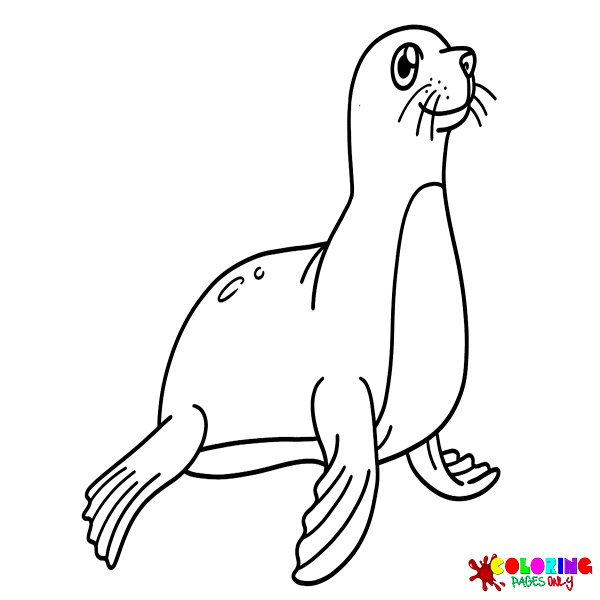
Free Walrus Coloring Pages: 23 printable PDF designs of walruses hauled out on Arctic ice, cartoon walrus characters, and realistic close-up faces. A walrus’s scientific name, Odobenus rosmarus, translates to roughly “tooth-walking sea horse,” a nod to how walruses use their long tusks to help pull themselves up onto ice and rocky shores. Each page can be downloaded as a PDF to print or colored online in the browser.
Both male and female walruses grow tusks, which are actually long canine teeth that can reach up to three feet in adult males, and are also used in fights and dominance displays within a group. A walrus’s skin can shift color depending on temperature, turning pale gray in cold water and a warmer pink or brown once the animal hauls out and its blood vessels near the skin widen. Walruses find most of their food, mainly clams and other shellfish, by feeling along the dark seafloor with their sensitive whiskers.
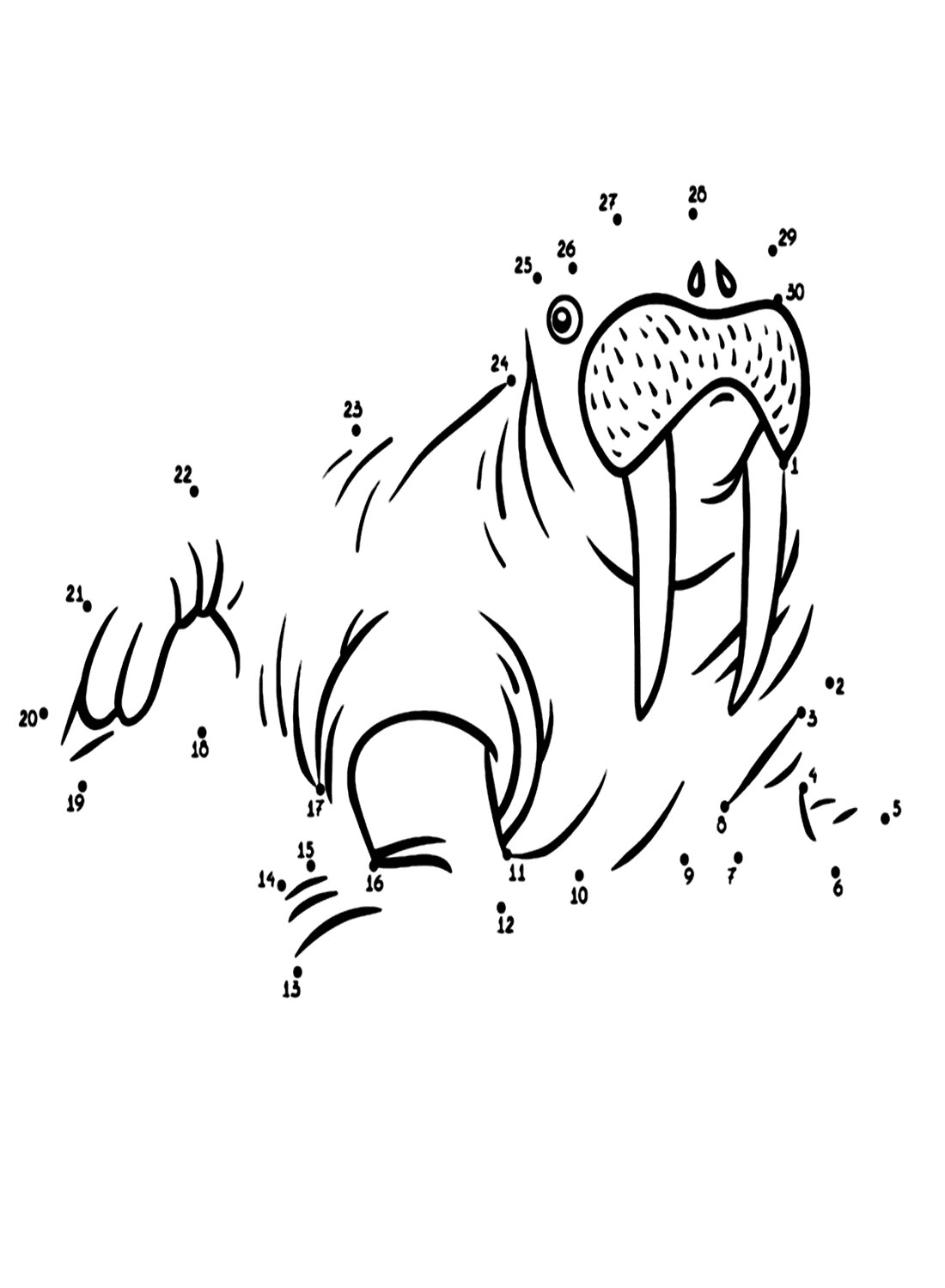
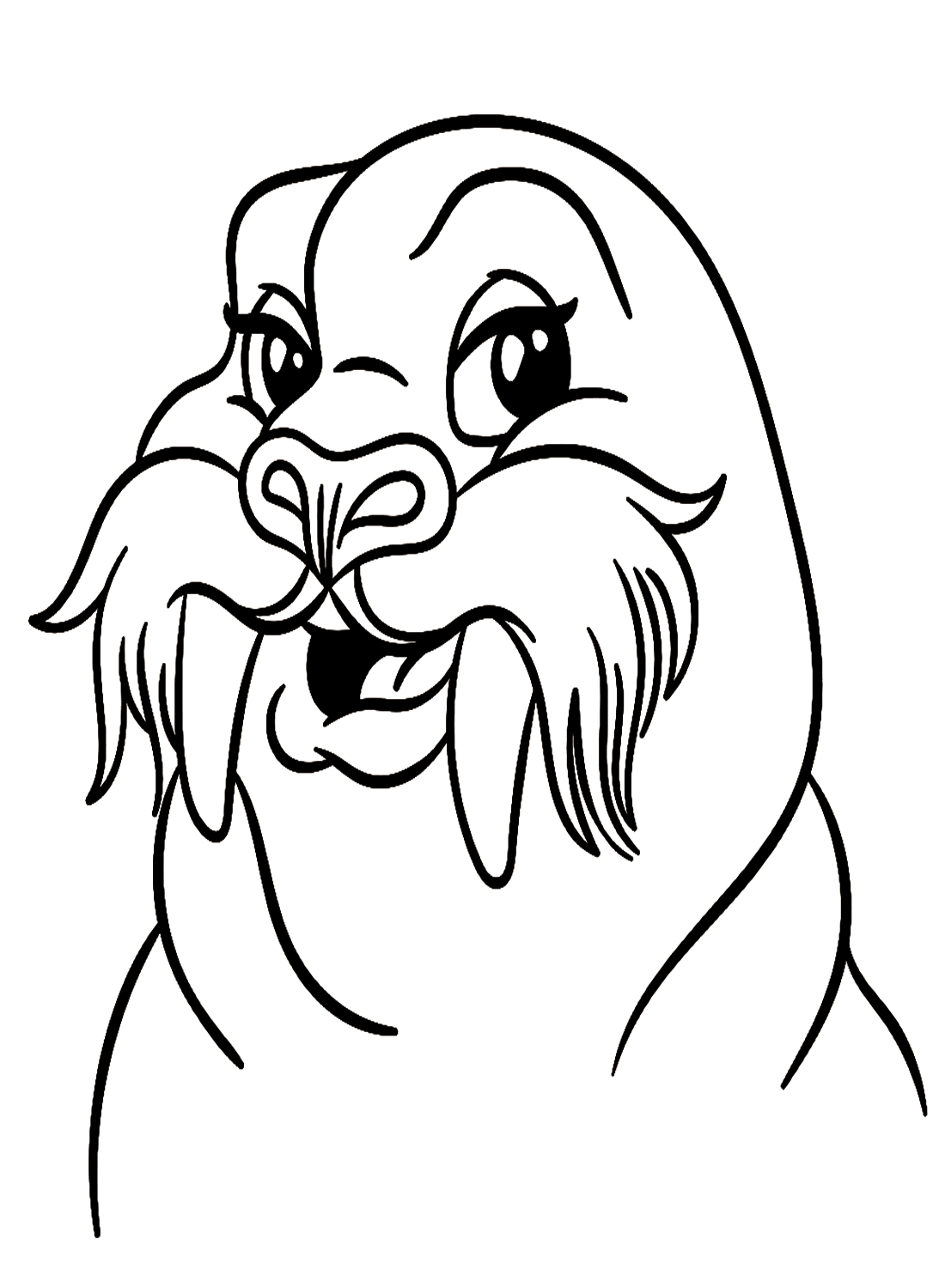
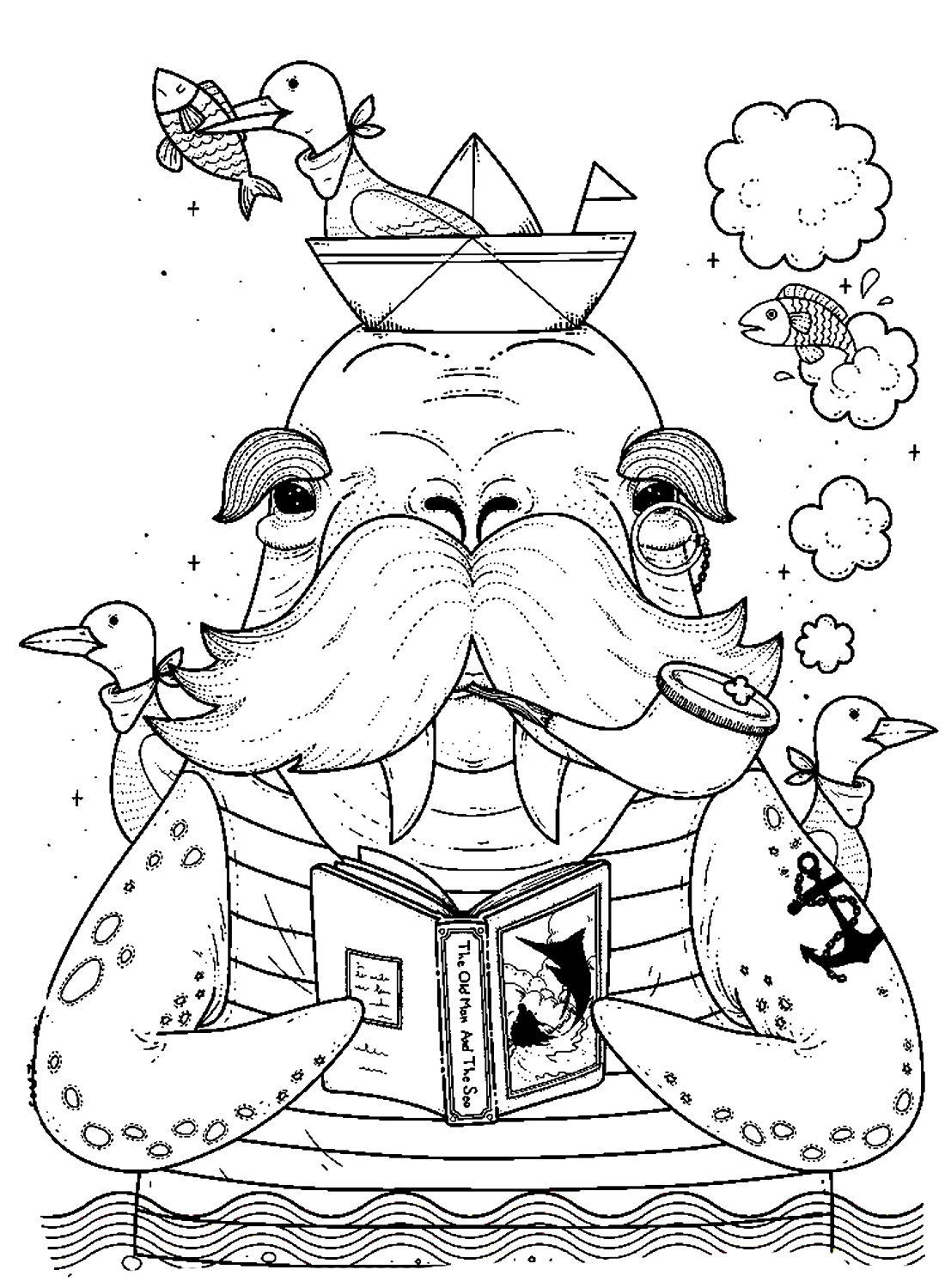
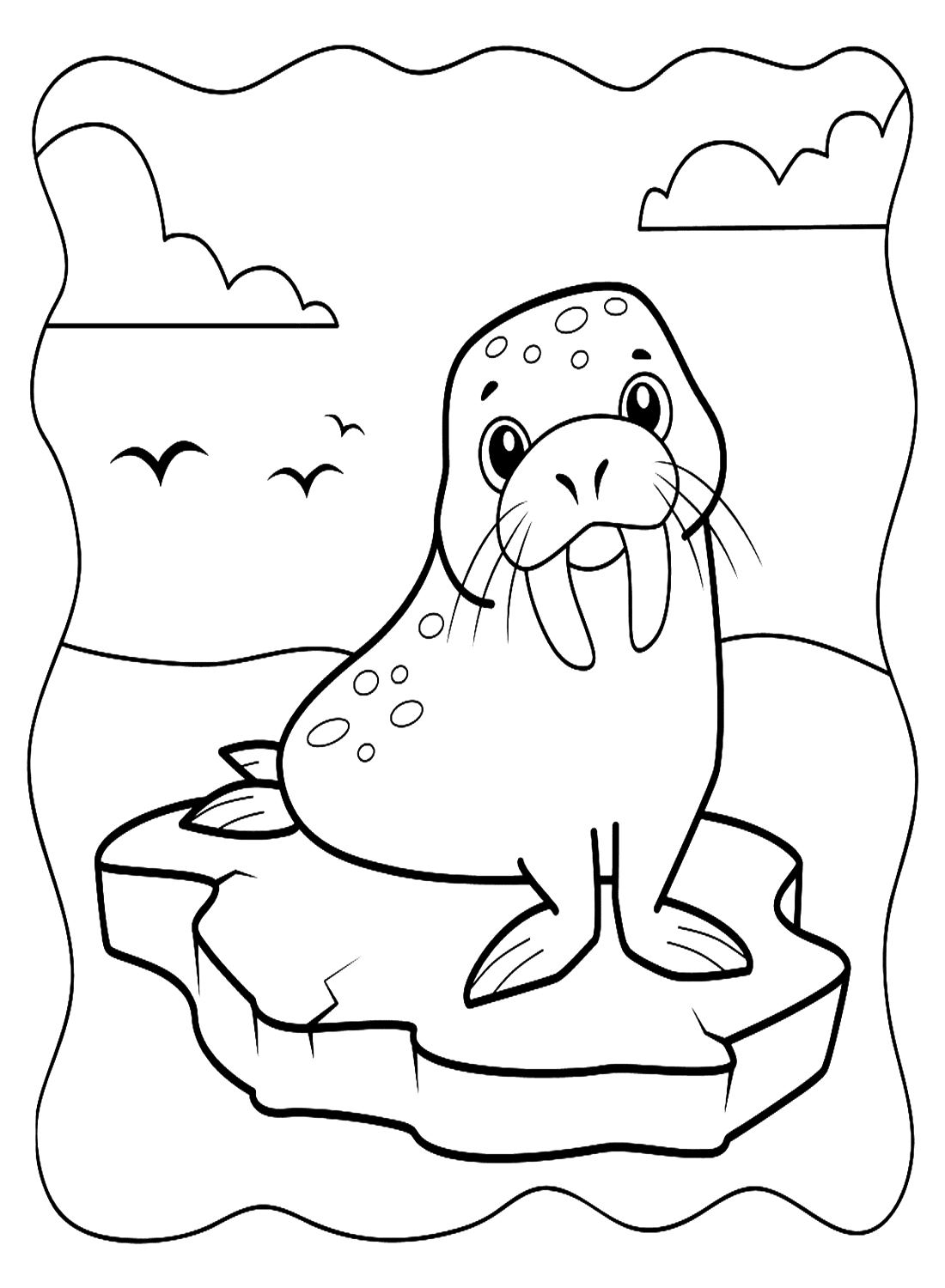
This collection spans 23 pages, split between Arctic and icy scenes, cartoon and character walruses, realistic designs, family pages, and a few simple or activity sheets. The coloring angle ranges from a single outline to fuller Arctic landscapes.
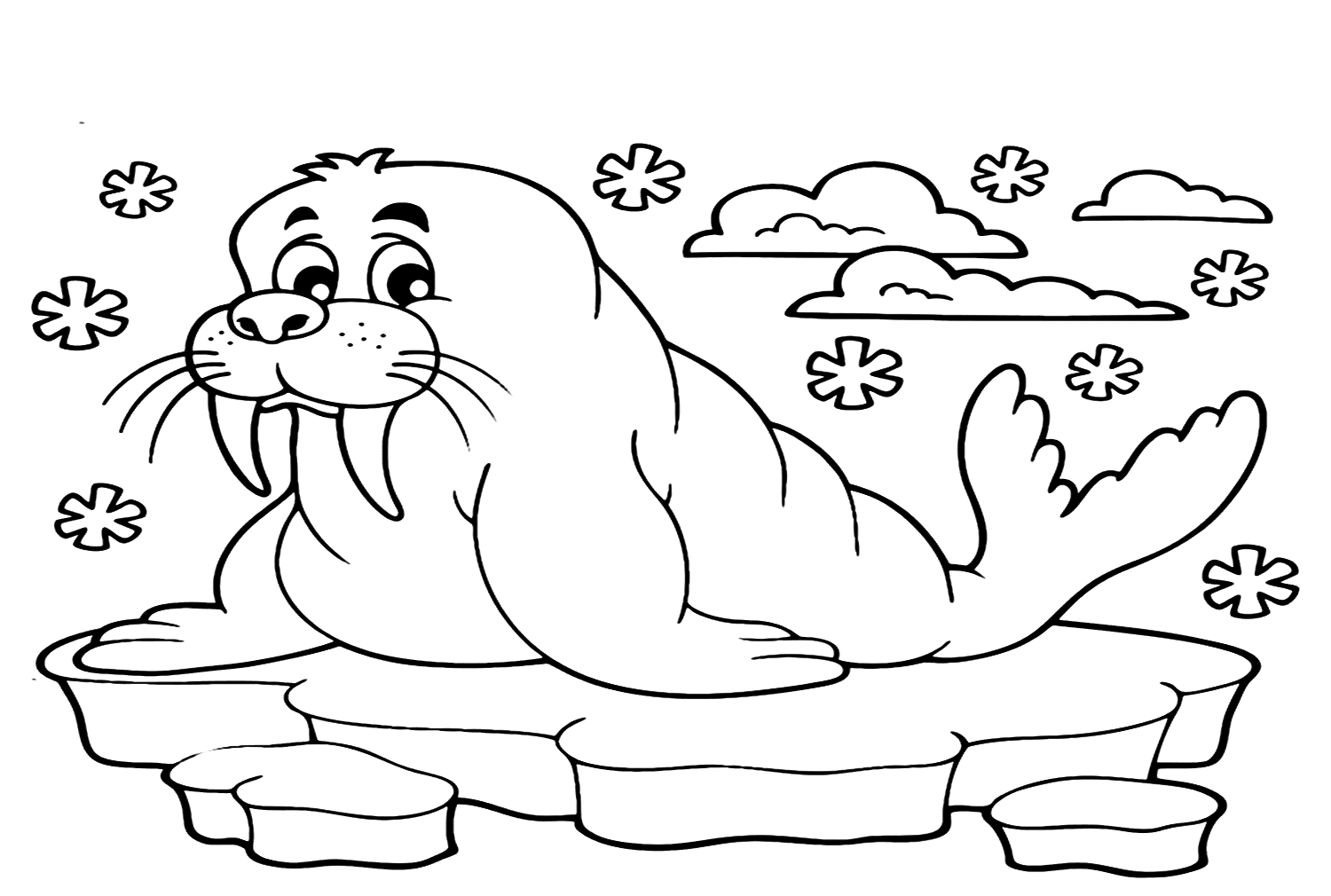
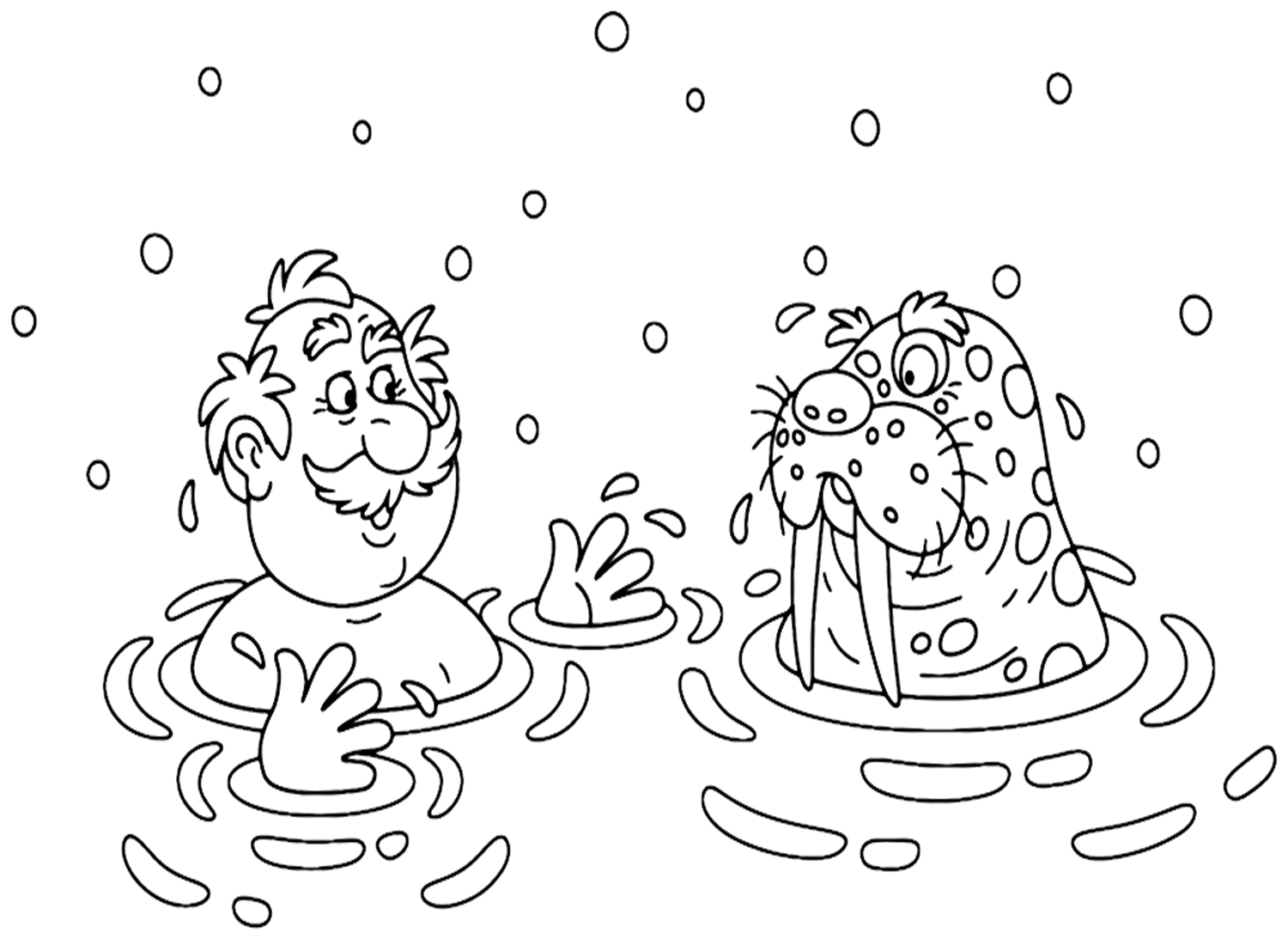
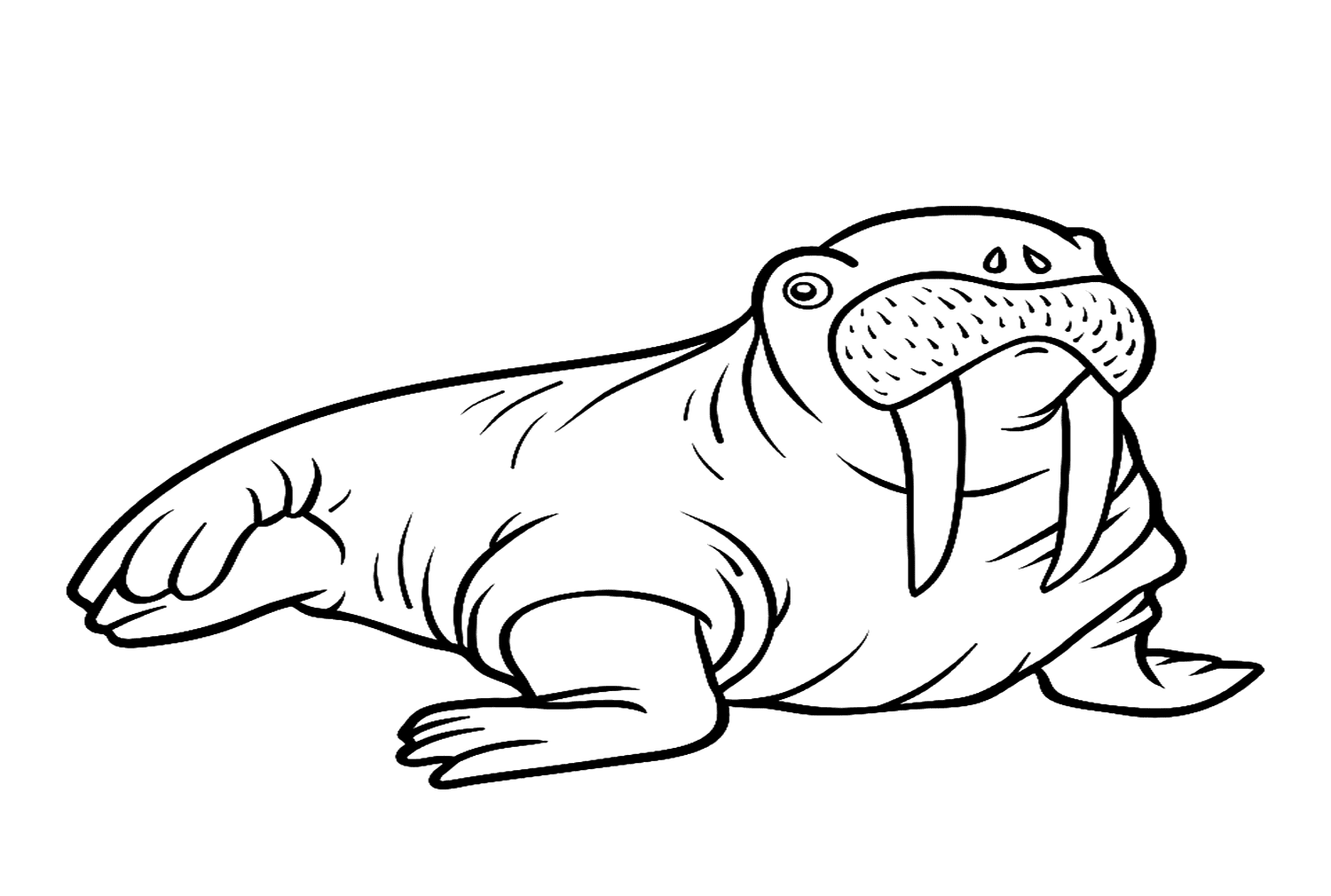
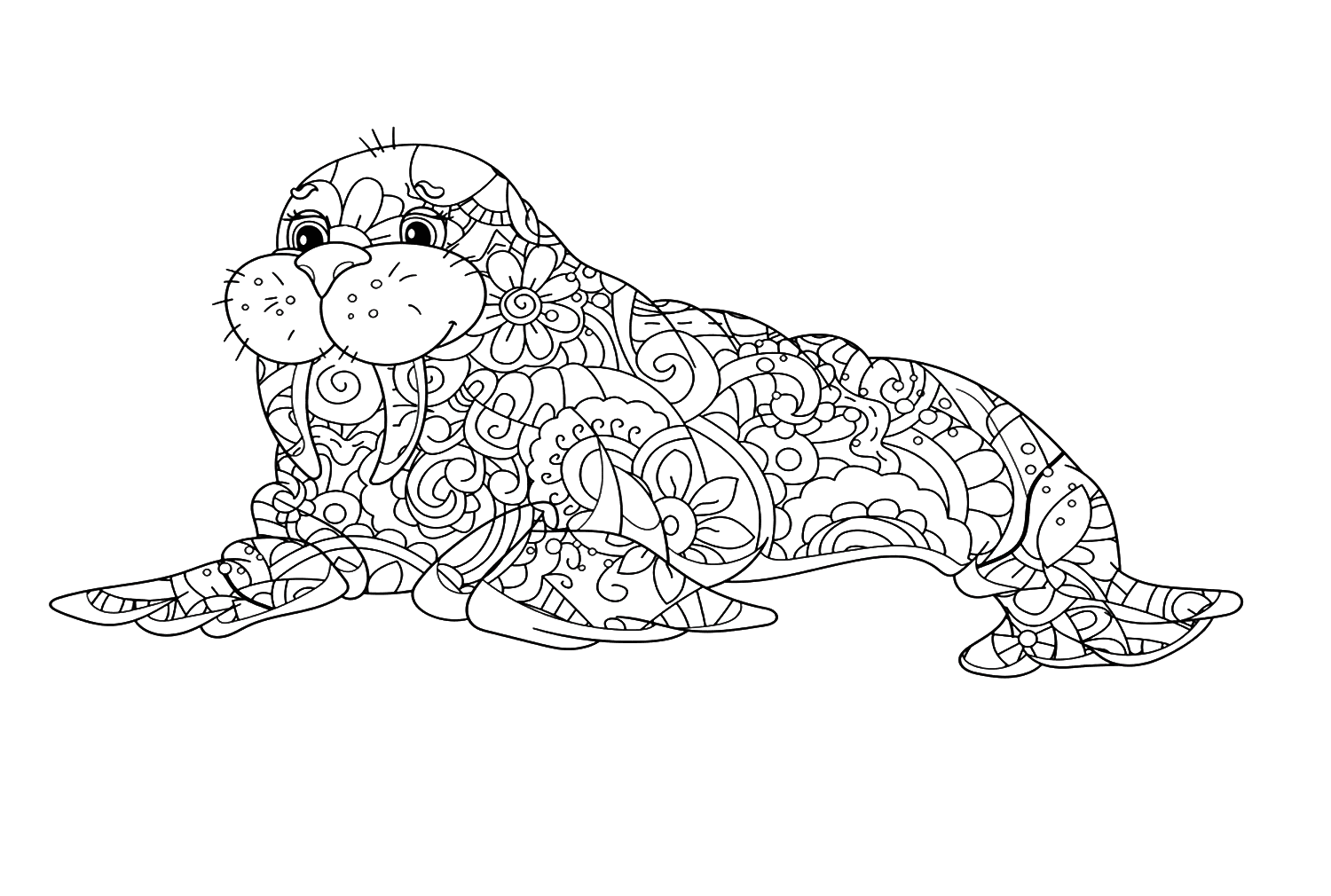
What’s Inside This Collection
The 23 designs group into five categories, from Arctic ice scenes to simple activity sheets.
Arctic and Icy Scenes
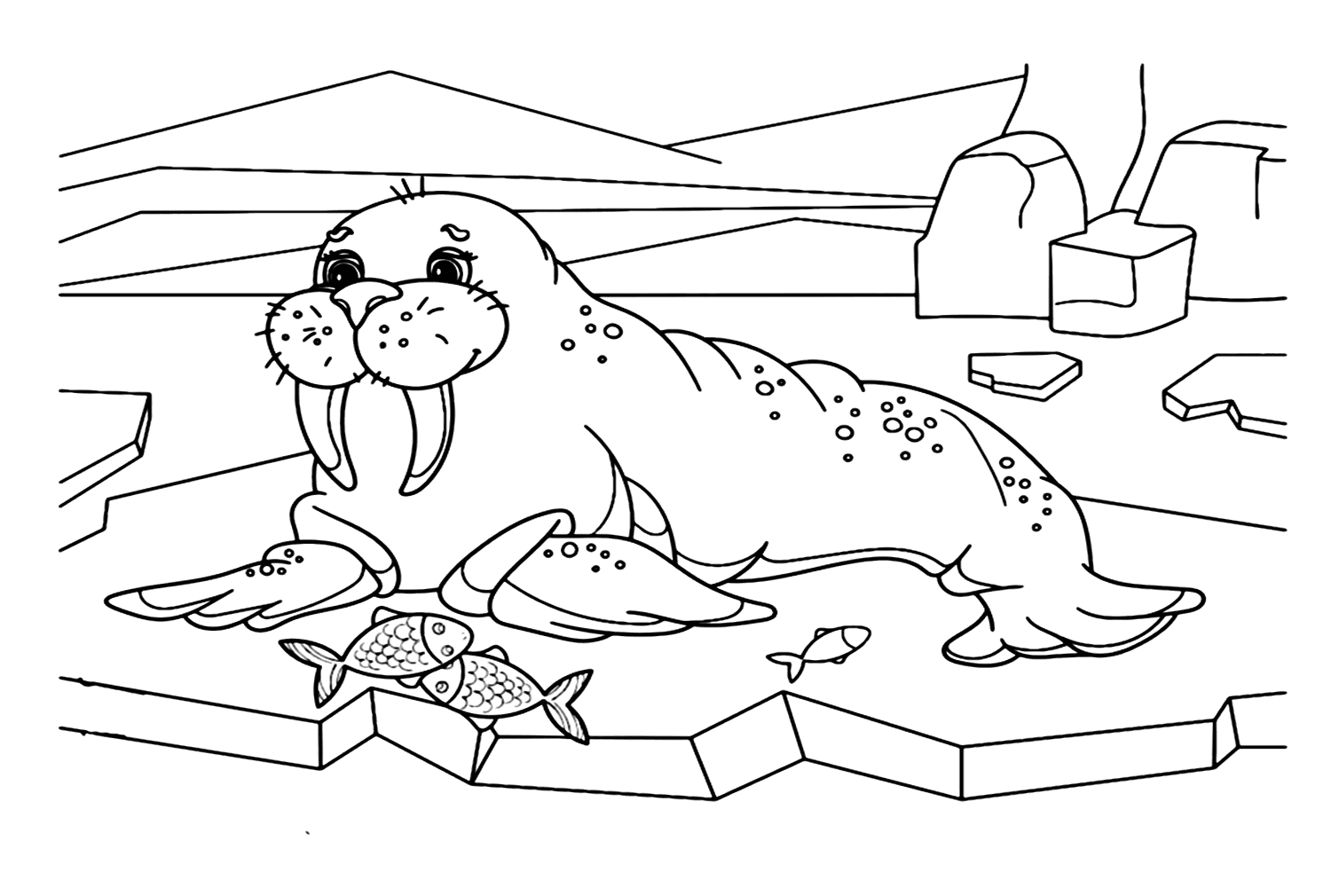
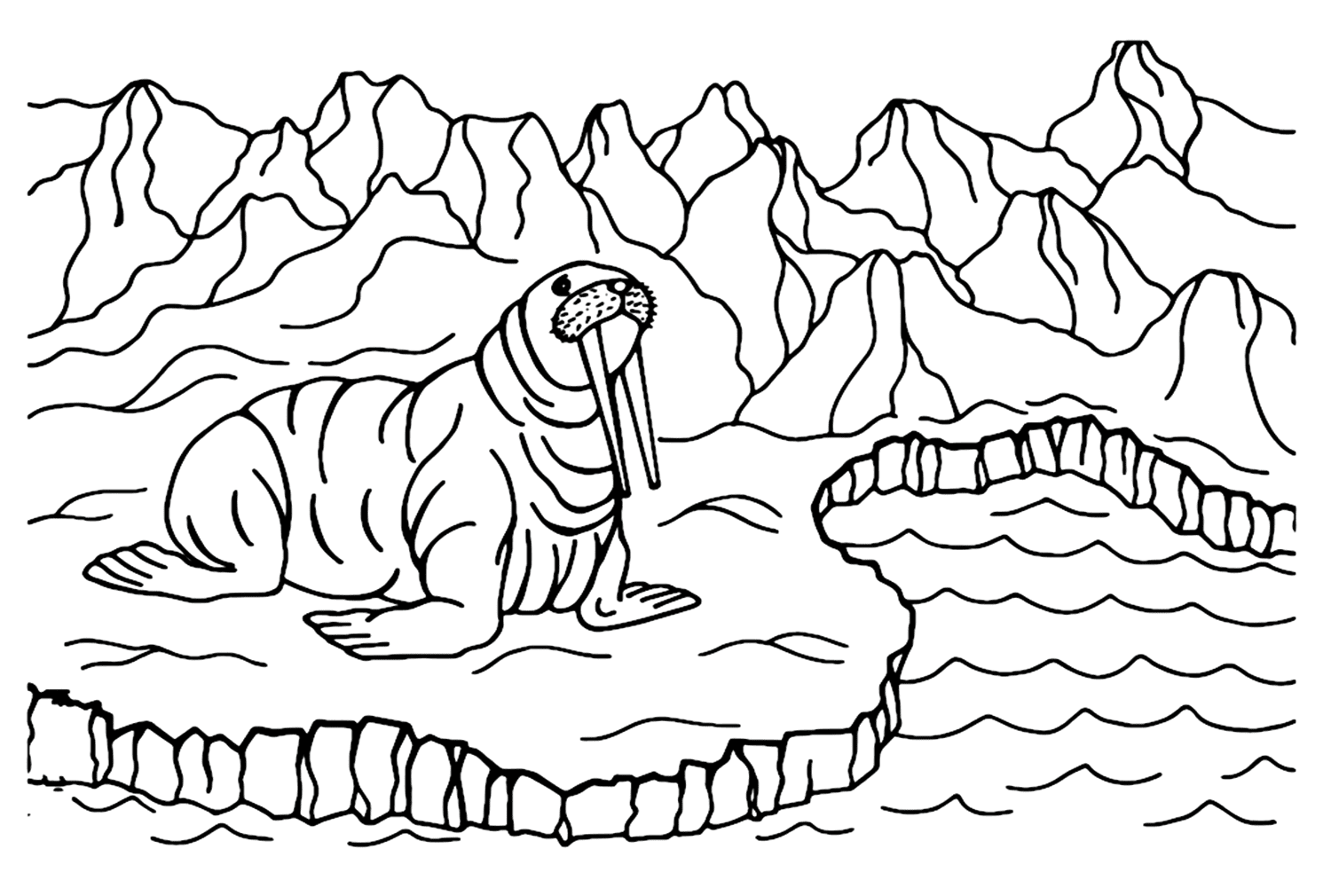
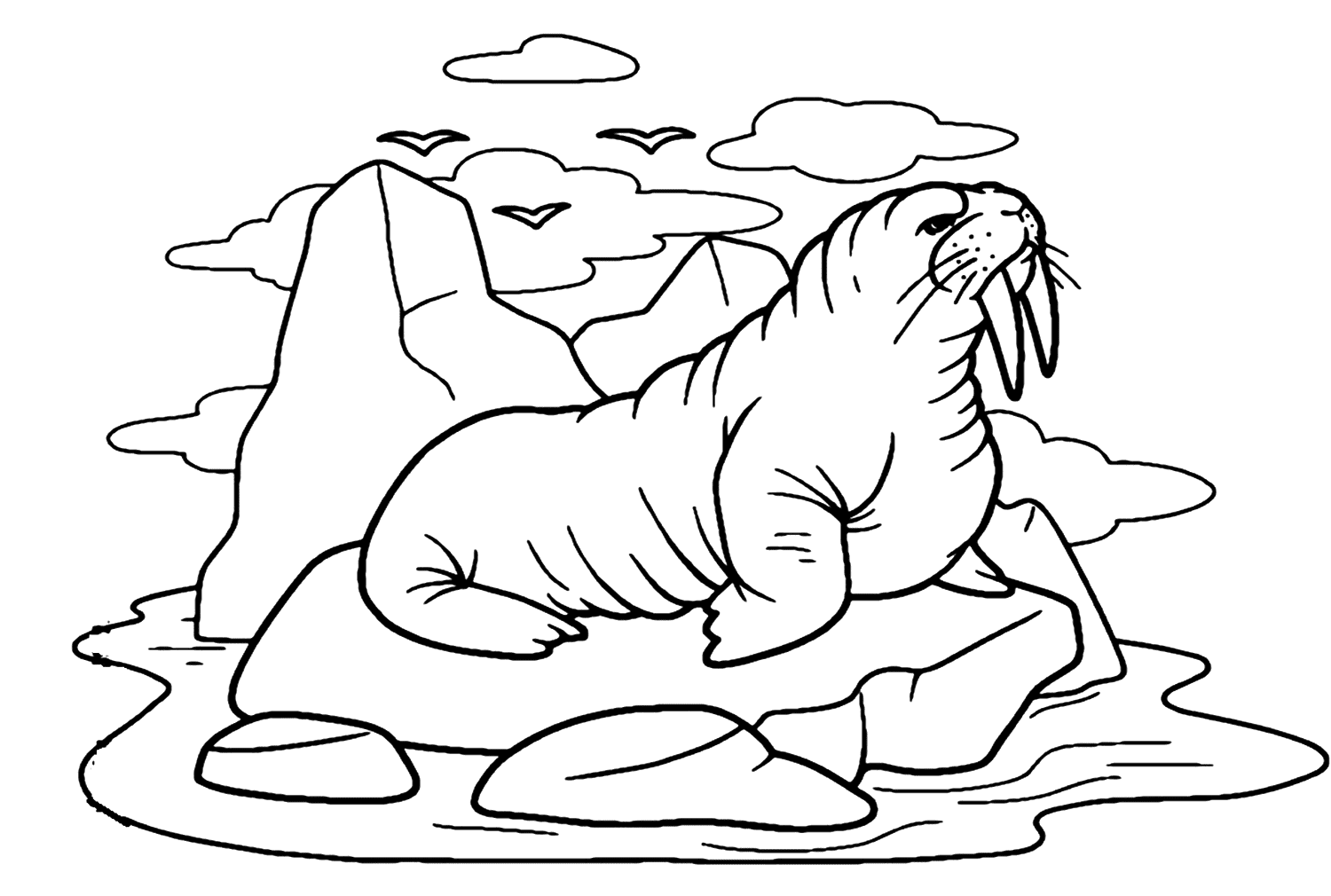
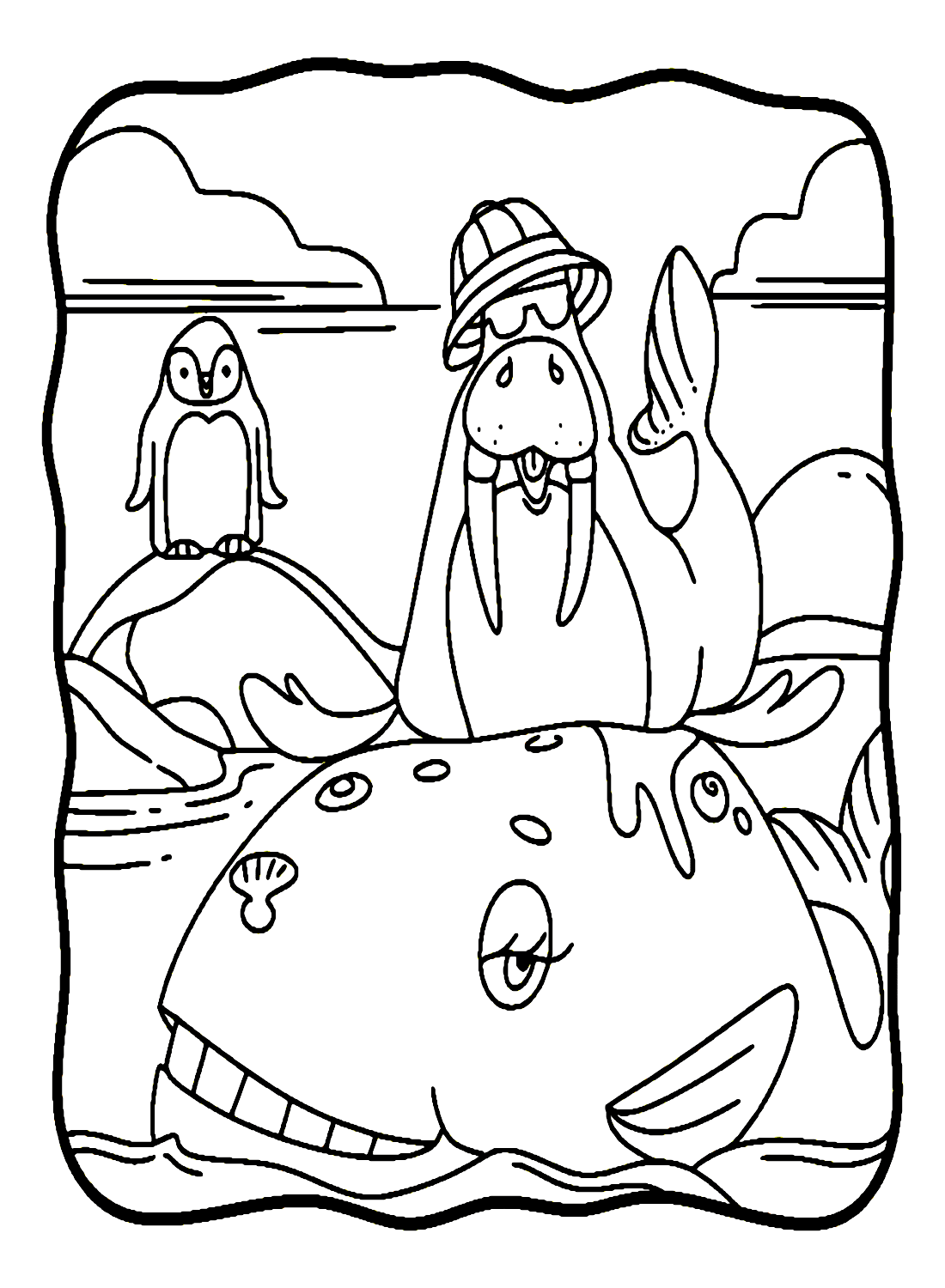
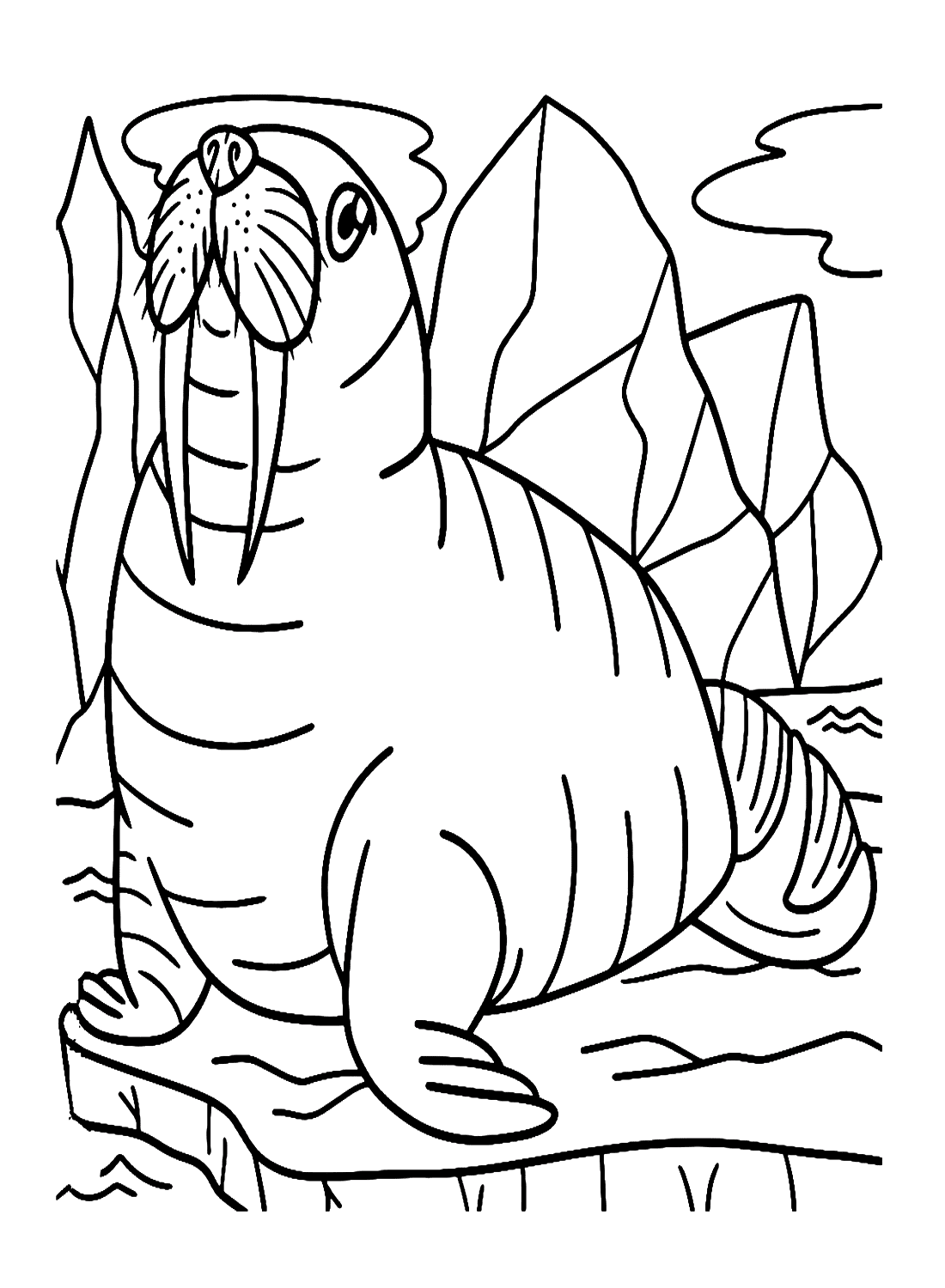
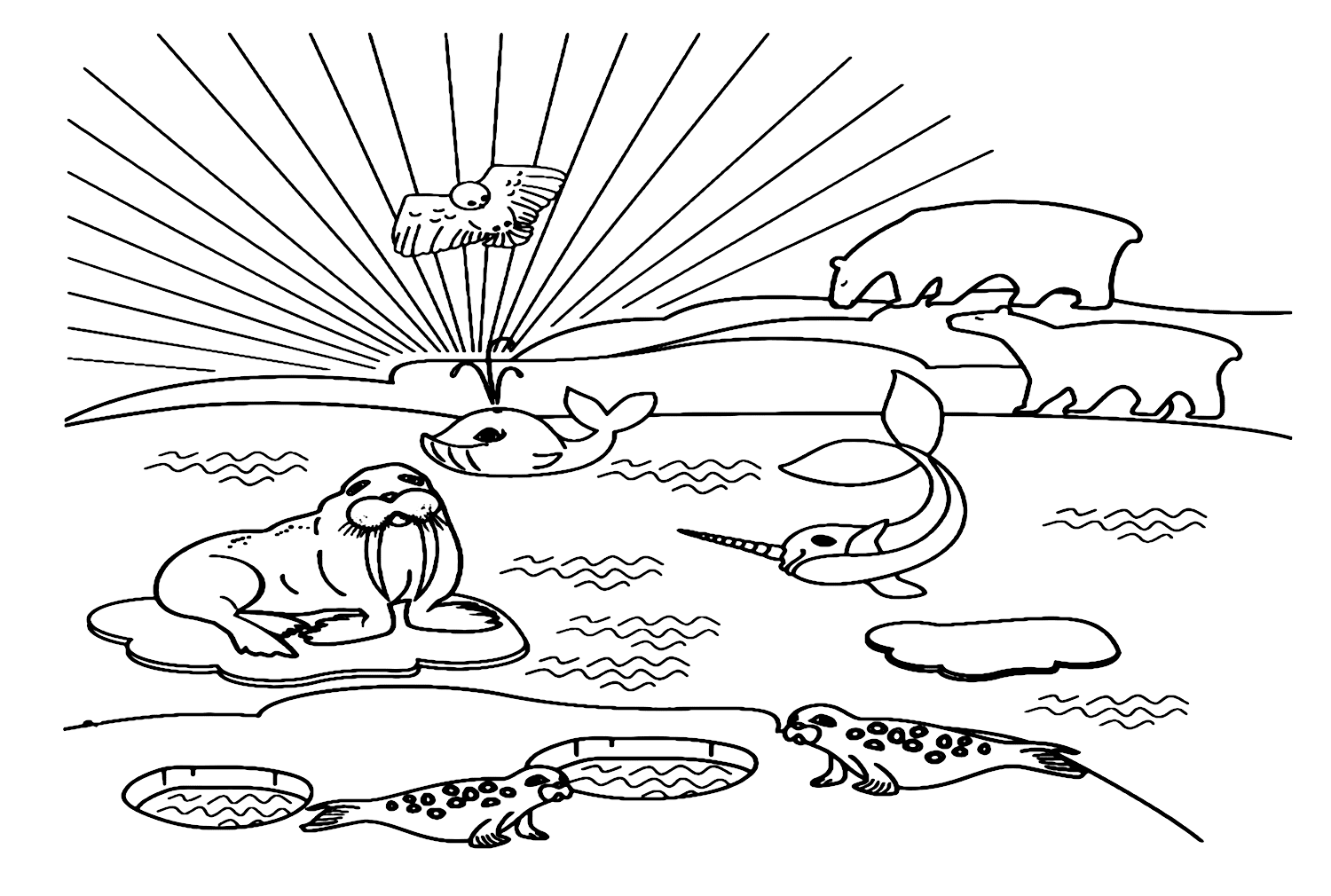
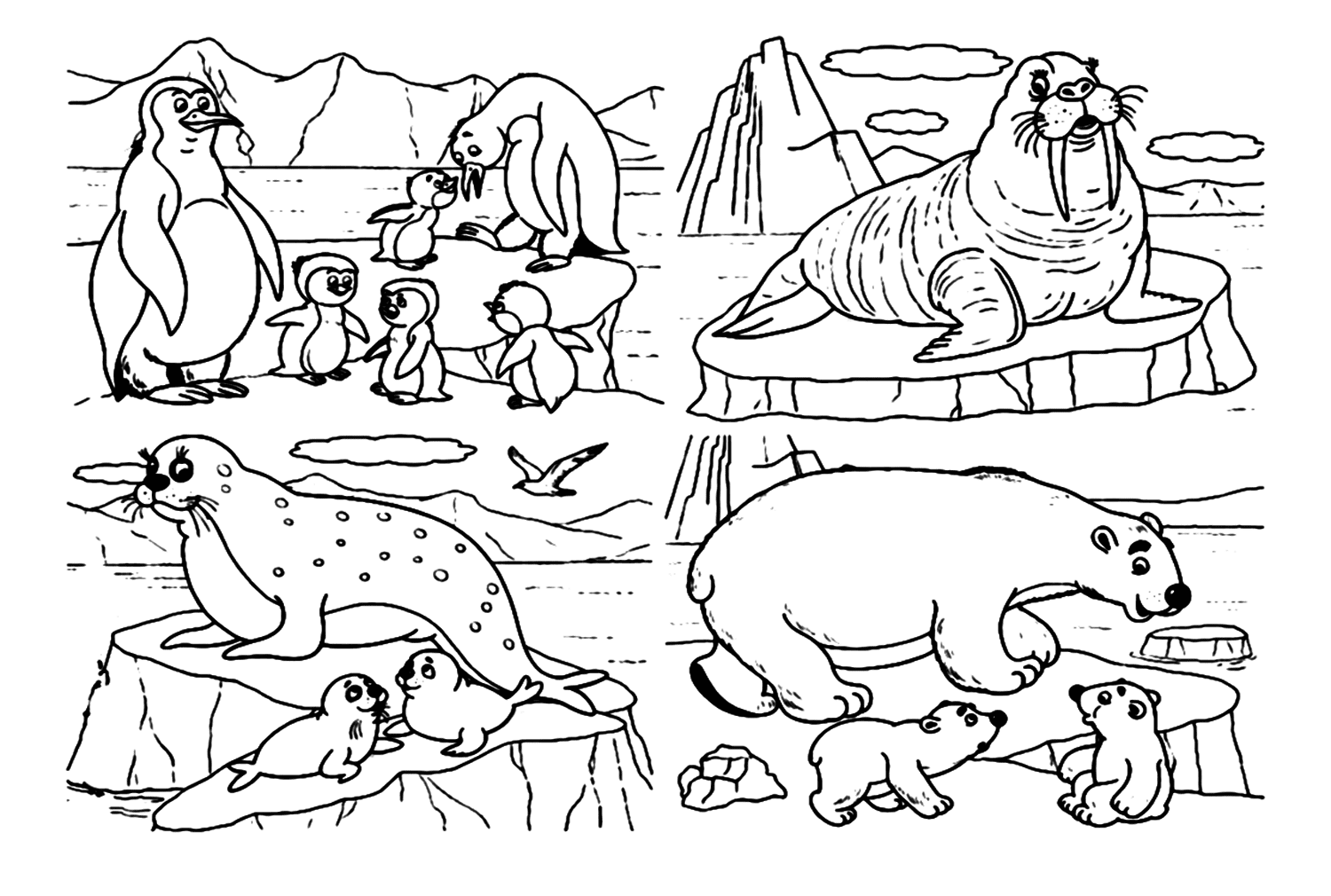
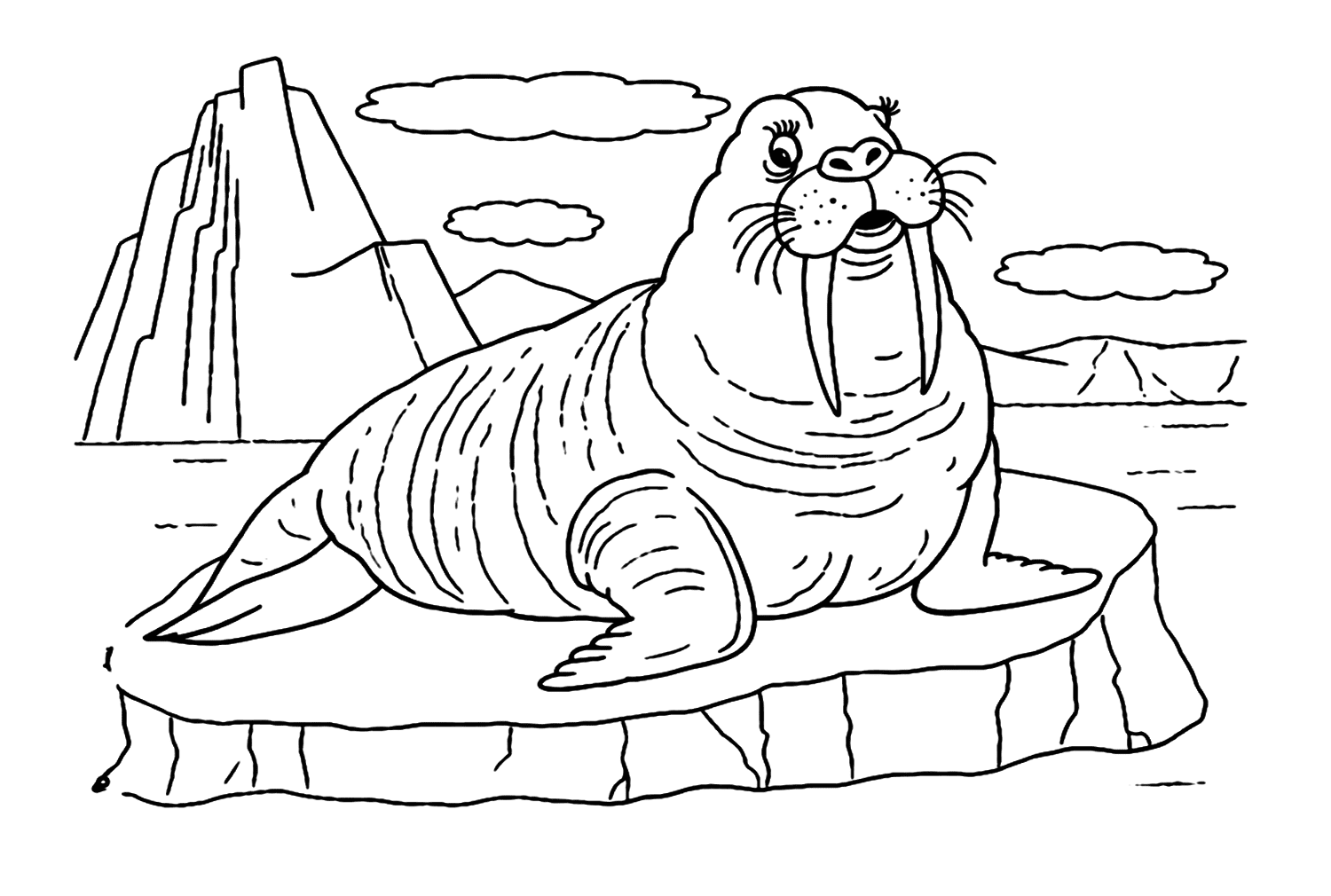
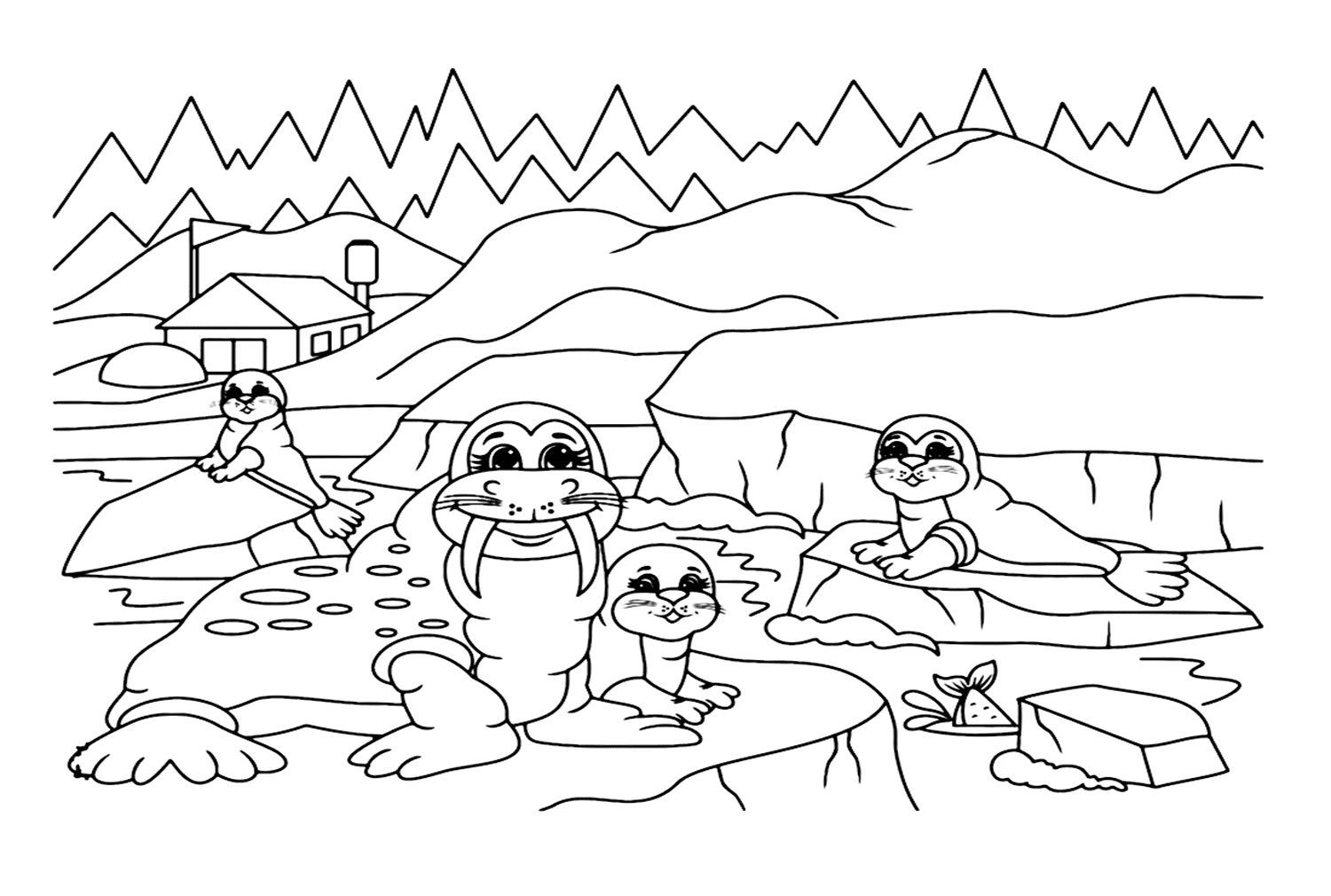
About 7 pages set a walrus on an iceberg, in a northern landscape, near the North Pole, or alongside other Arctic mammals, giving colorists a cold, open backdrop to fill in around the walrus itself.
Cartoon and Character Walruses
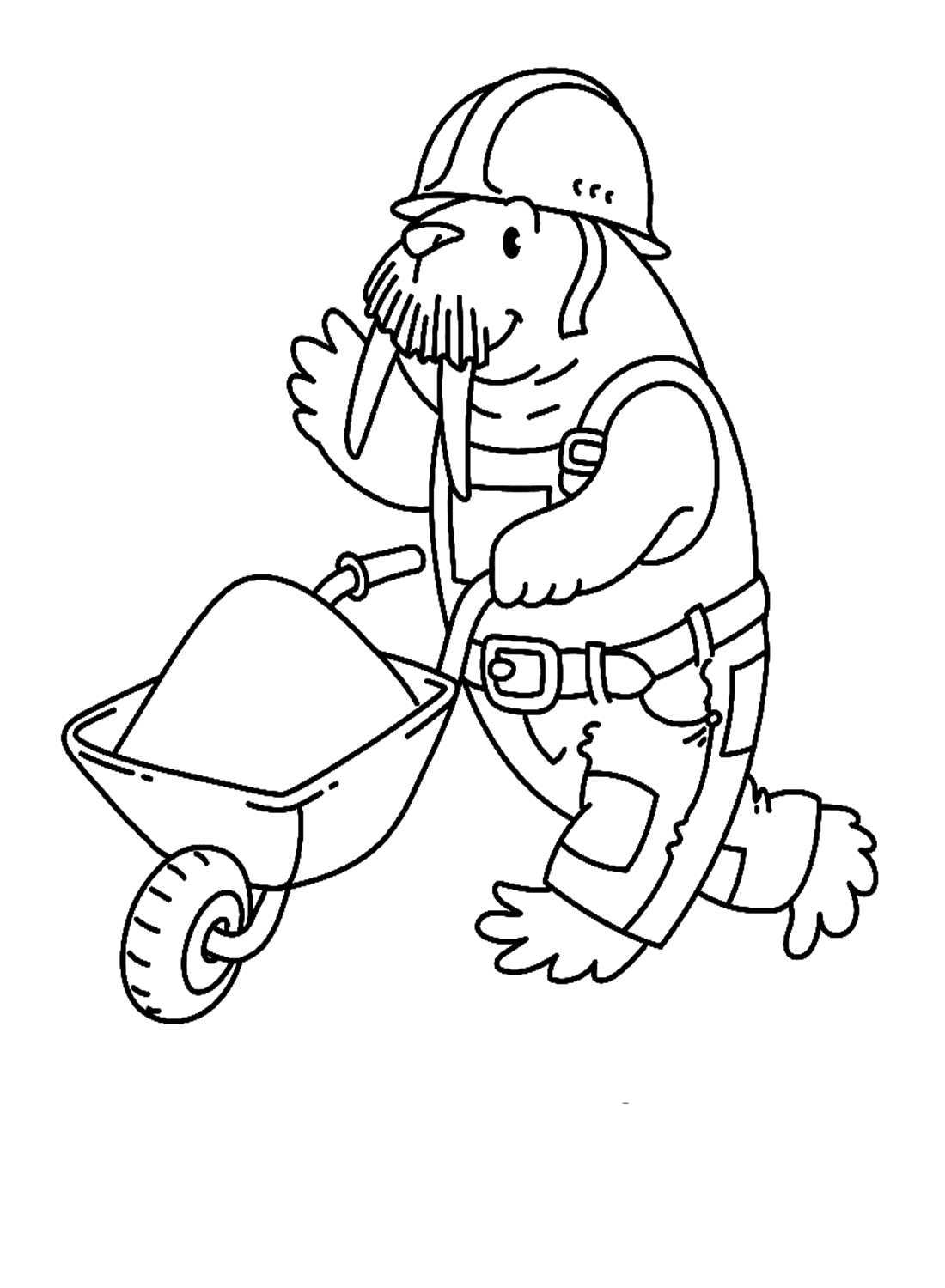
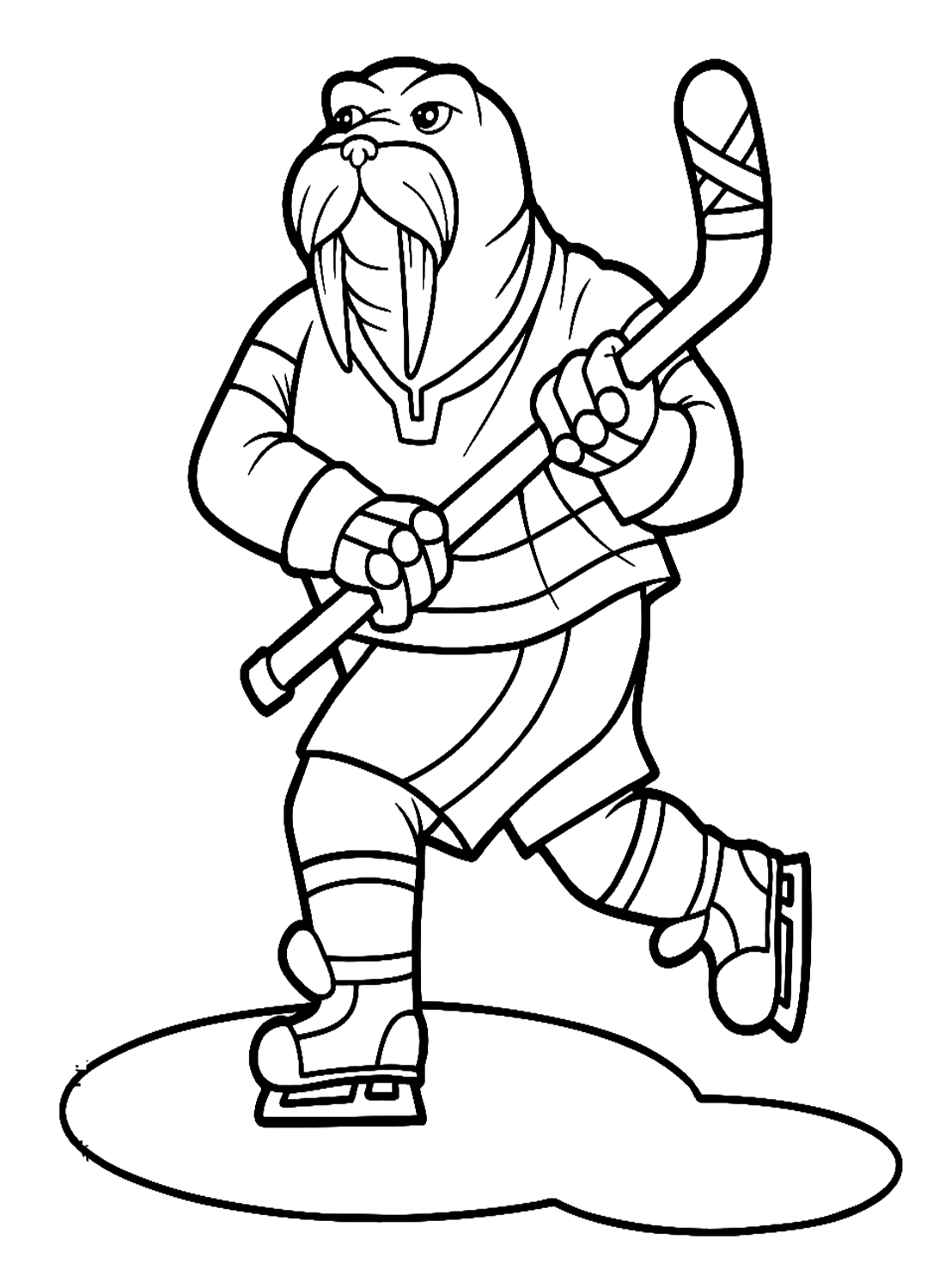
About 8 pages give a walrus a cartoon personality, including a sailor walrus, a walrus playing hockey, a worker walrus, and a few happy or sad expressions. These playful designs work well with bright, non-realistic colors.
Realistic Walruses
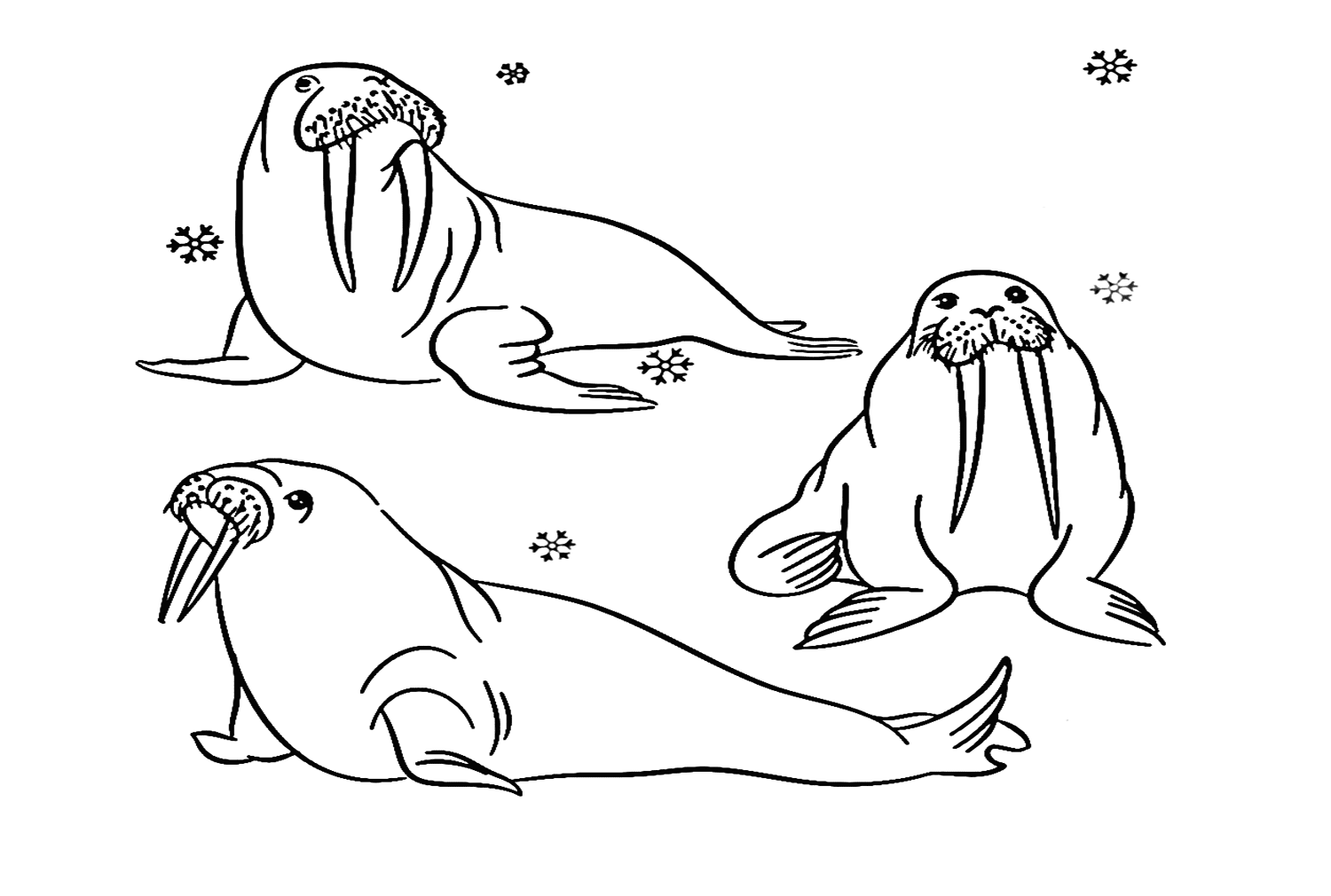
A few pages, including a design with fish and one showing several different poses, stick closer to how a real walrus looks, with a rounder body, visible tusks, and a whiskered snout.
Family and Everyday Designs
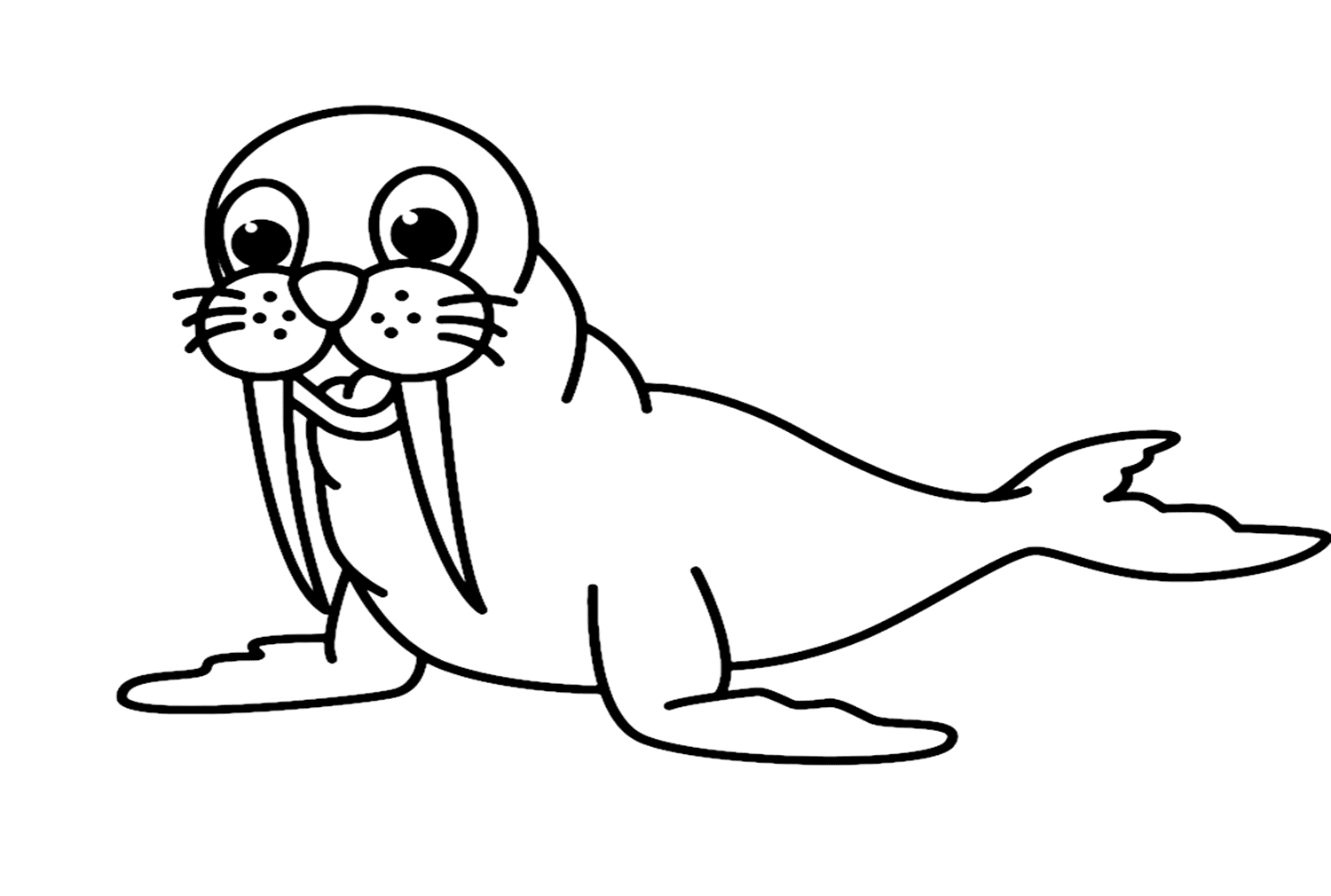
A couple of pages show a walrus family together or a friendly walrus made for younger colorists.
Simple and Activity Pages
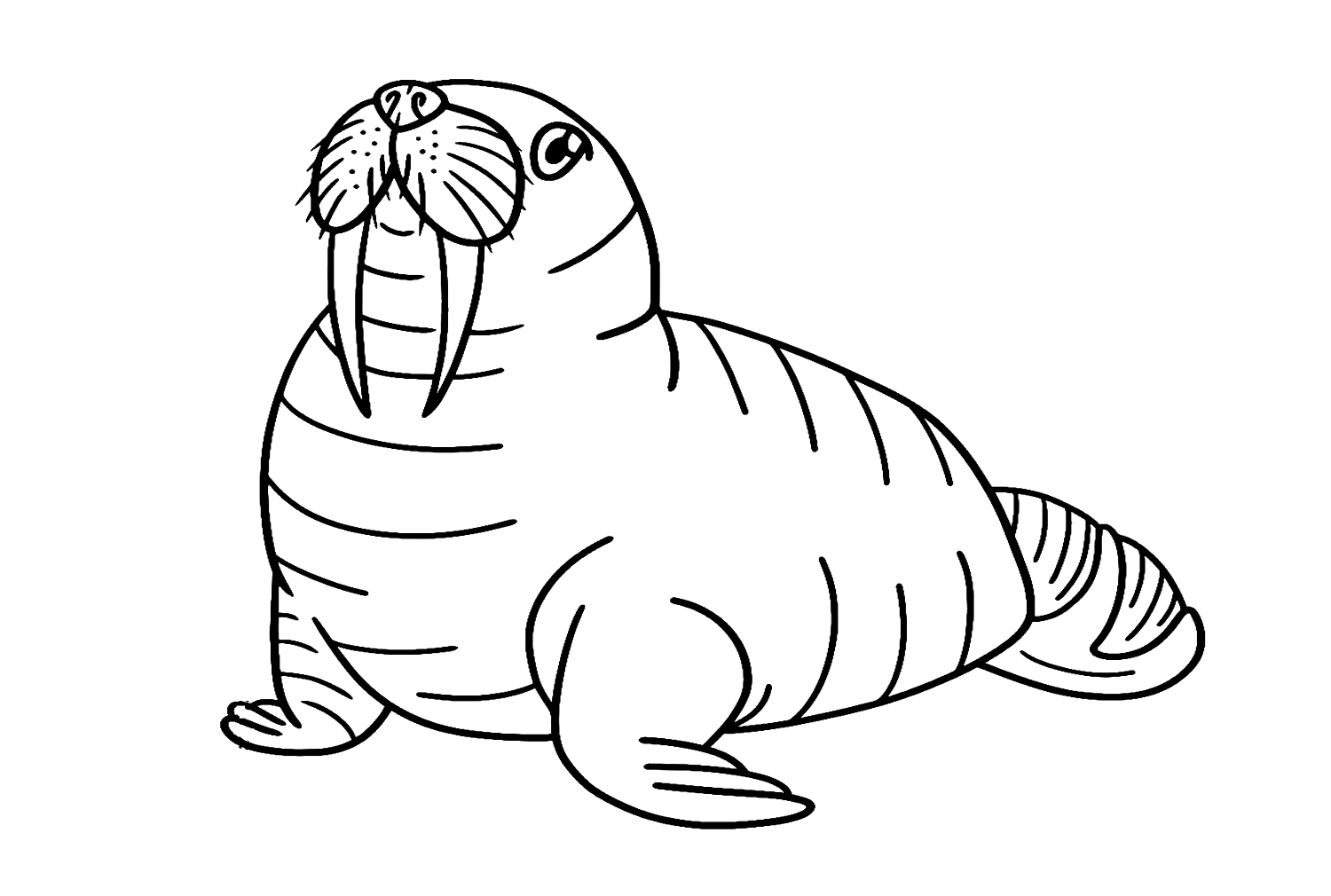
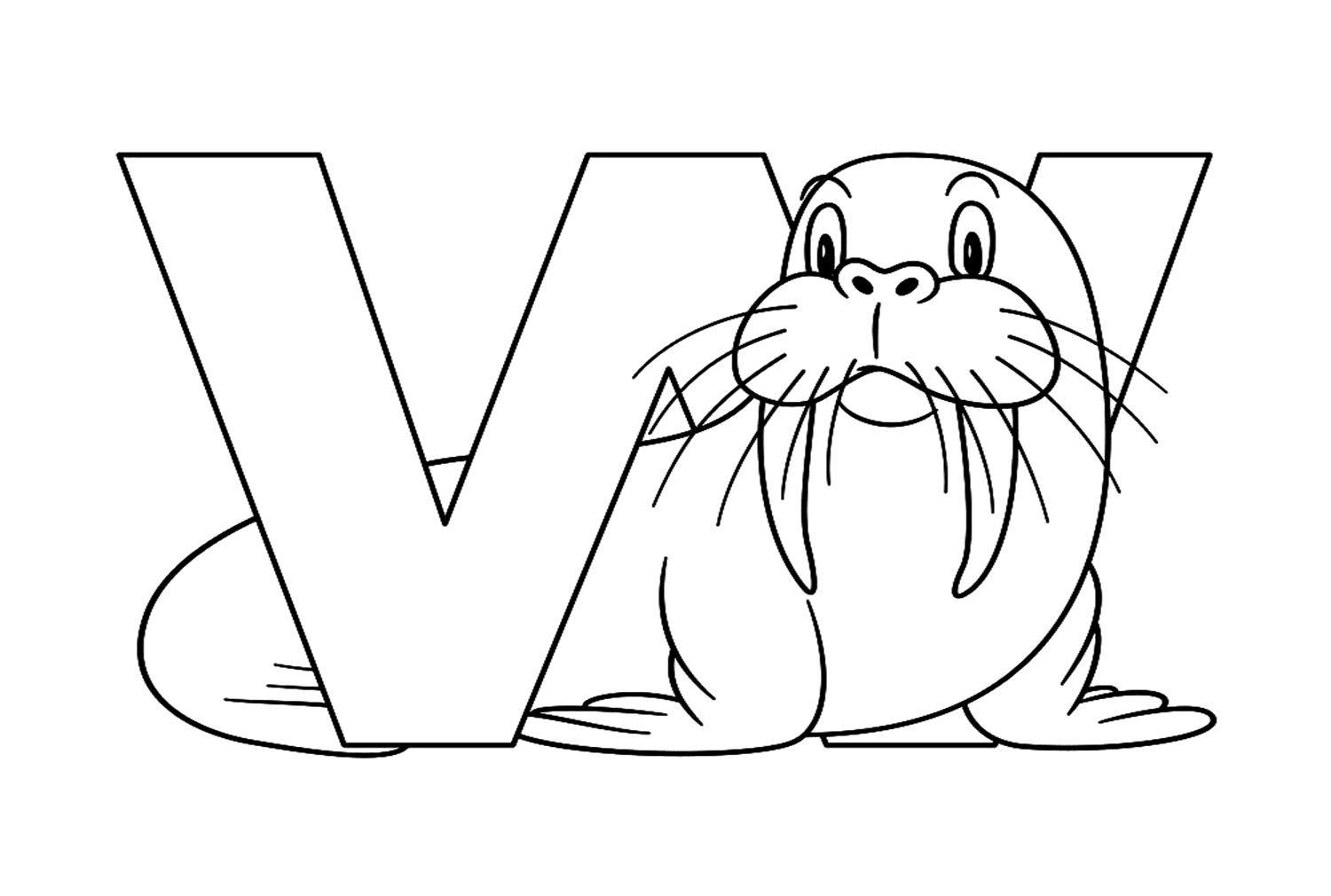
A few pages offer a plain outline, a dot-to-dot walrus, and a Letter W design connecting the animal to the alphabet.
What Walrus Coloring Pages Do
Careful strokes for long, curved tusks. Keeping color inside a walrus’s long, curved tusks without crossing the lines calls for controlled, contained pencil movement, and the American Academy of Pediatrics identifies fine motor skill development as a core benefit of structured coloring for children ages 2 through 7.
A surprising fact to open a conversation. Since a walrus’s skin actually changes color between cold water and warm land, coloring a page gives families and classrooms an easy, memorable fact to start a conversation about how animals adapt to their environment.
A steady, repeatable rhythm. A 2005 study in the Art Therapy Journal documented measurable reductions in anxiety following structured coloring sessions, and the dot-to-dot and letter-themed pages in this collection add that same steady, low-pressure rhythm through a simple, repeatable task.
A window into Arctic wildlife. Because most designs place the walrus on ice or in a northern landscape, coloring these pages gives colorists a natural opening to learn about the Arctic and the animals that live there.
How to Color Walrus Coloring Pages Well
- Walrus body in water: Use a cool Gray for a walrus shown swimming or just out of cold water, reflecting how its skin looks paler when chilled.
- Walrus body on land or ice: A warmer Pink-Brown or Tan suits a walrus hauled out and warming up, showing the real color change that happens as blood flow near the skin increases.
- Tusks: Off-white or Cream works best for the long tusks, avoiding a pure White so they stand out against a lighter body color.
- Whiskers: Keep whiskers White or uncolored, since they are a fine, sensitive feature rather than a bold visual element.
- Ice and snow: Light Blue or White with a touch of Gray in the shadows keeps icy backgrounds looking cold without overwhelming the page.
- Cartoon walruses: Brighter accent colors, like Red for a sailor’s cap or Blue for a hockey jersey, work well against a Gray or Brown walrus body in the character-style designs.
5 Creative Craft Ideas With Walrus Coloring Pages
1. Arctic Scene Diorama
Color a walrus-on-iceberg page, mount it inside a shoebox, and add white paper snow and blue paper water for a simple Arctic diorama.
2. Walrus Standee
Color a walrus page, mount it on cardstock, and fold a small tab at the base so the finished walrus can stand upright on a shelf or desk.
3. Letter W Flashcard
Color the Letter W walrus page, mount it on cardstock, and use it as a flashcard for practicing the letter W alongside other animal-letter pages.
4. Walrus Bookmark
Color a small walrus design, mount it on cardstock, and attach a ribbon or tassel at the top for a bookmark that clips over the corner of a page.
5. Classroom Arctic Animals Display
Color several walrus pages as a group, cut out the finished designs, and arrange them on a classroom bulletin board alongside other Arctic animal pages.
Frequently Asked Questions
What are walrus coloring pages?
Walrus coloring pages are printable line-art designs of walruses on Arctic ice, cartoon walrus characters, and realistic tusked faces. This collection includes 23 free designs available as PDFs or online coloring.
What is a walrus?
A walrus is a large Arctic marine mammal known for its long tusks, thick whiskers, and thick layer of blubber, and is closely related to seals and sea lions.
Why do walruses have tusks?
Walrus tusks are long canine teeth used to help the animal pull itself up onto ice and rocky shores, along with fighting and displaying dominance within a group.
Do both male and female walruses have tusks?
Yes. Both males and females grow tusks, though the tusks on adult males tend to grow longer, reaching up to about three feet.
Why do walruses change color?
A walrus’s skin can look pale gray in cold water and shift to a warmer pink or brown once the animal hauls out onto land or ice, as blood vessels near the skin widen to help release heat.
What do walruses eat?
Walruses mainly eat clams and other shellfish, which they find by feeling along the dark seafloor with their sensitive whiskers rather than by sight.
Are walrus coloring pages suitable for young children?
Yes. The simple outline, letter, and dot-to-dot designs in this collection suit preschool and early elementary colorists, while the realistic and Arctic scene pages work well for older children and classroom use.
Where do walruses live?
Walruses live in the cold coastal waters of the Arctic, split into Atlantic and Pacific populations, and are often seen gathered in large groups on ice or rocky shores.
Start Coloring
Download any page by clicking the design. No account, email, or payment is required. Pages print directly from the browser at full resolution or open in the online coloring tool for screen use. Share finished pages on Facebook or Pinterest with the share buttons at the top of each design page.