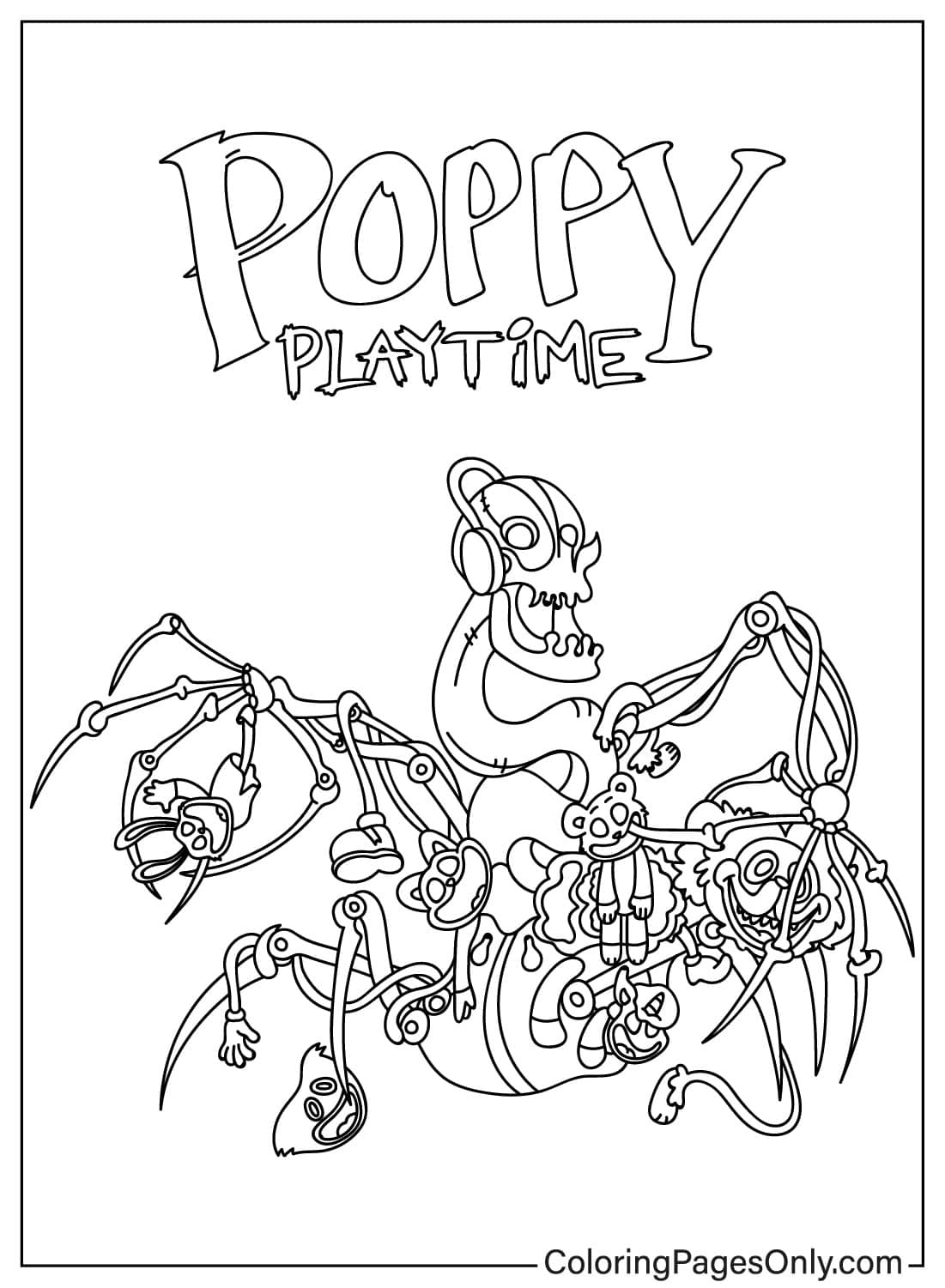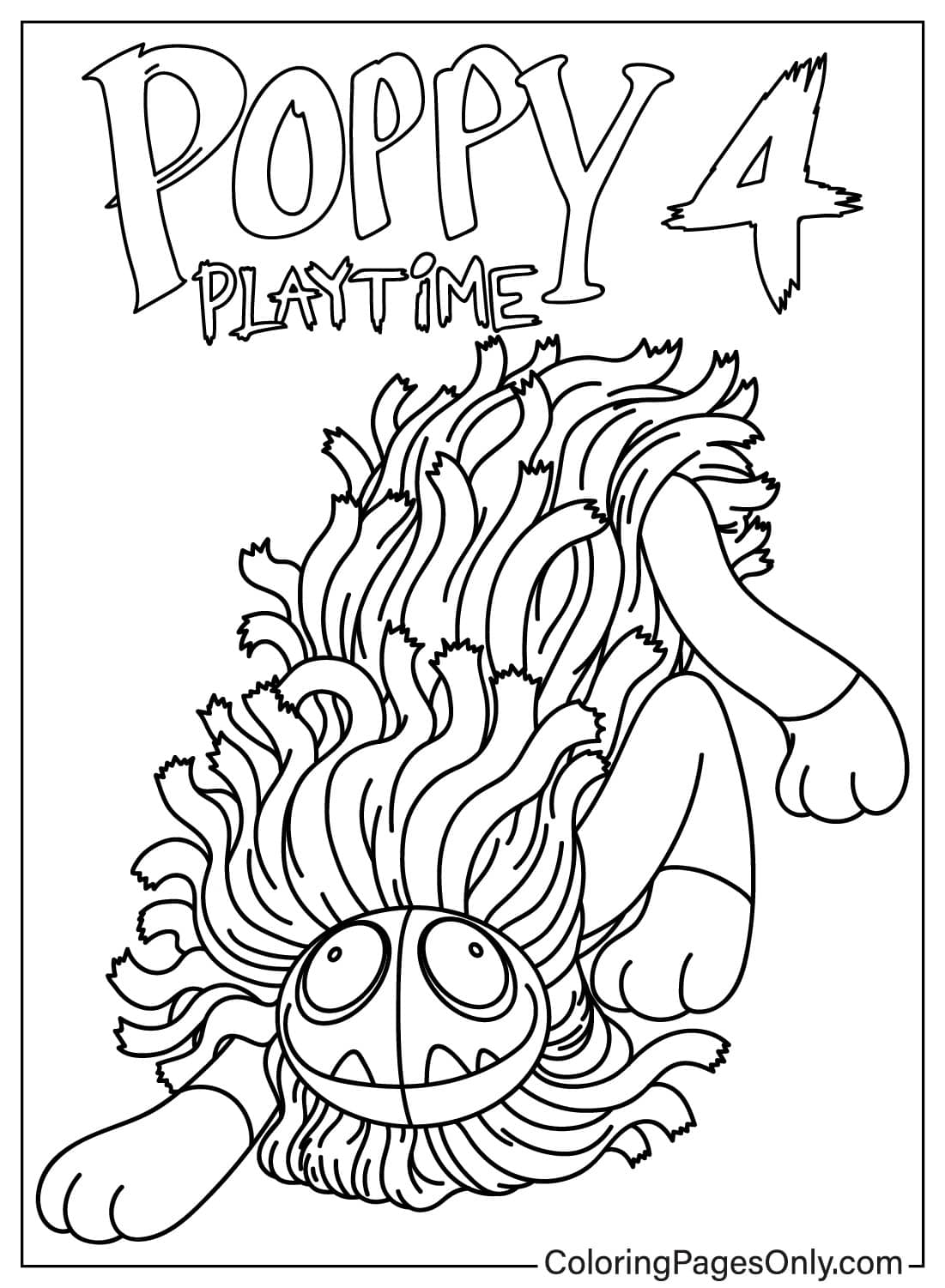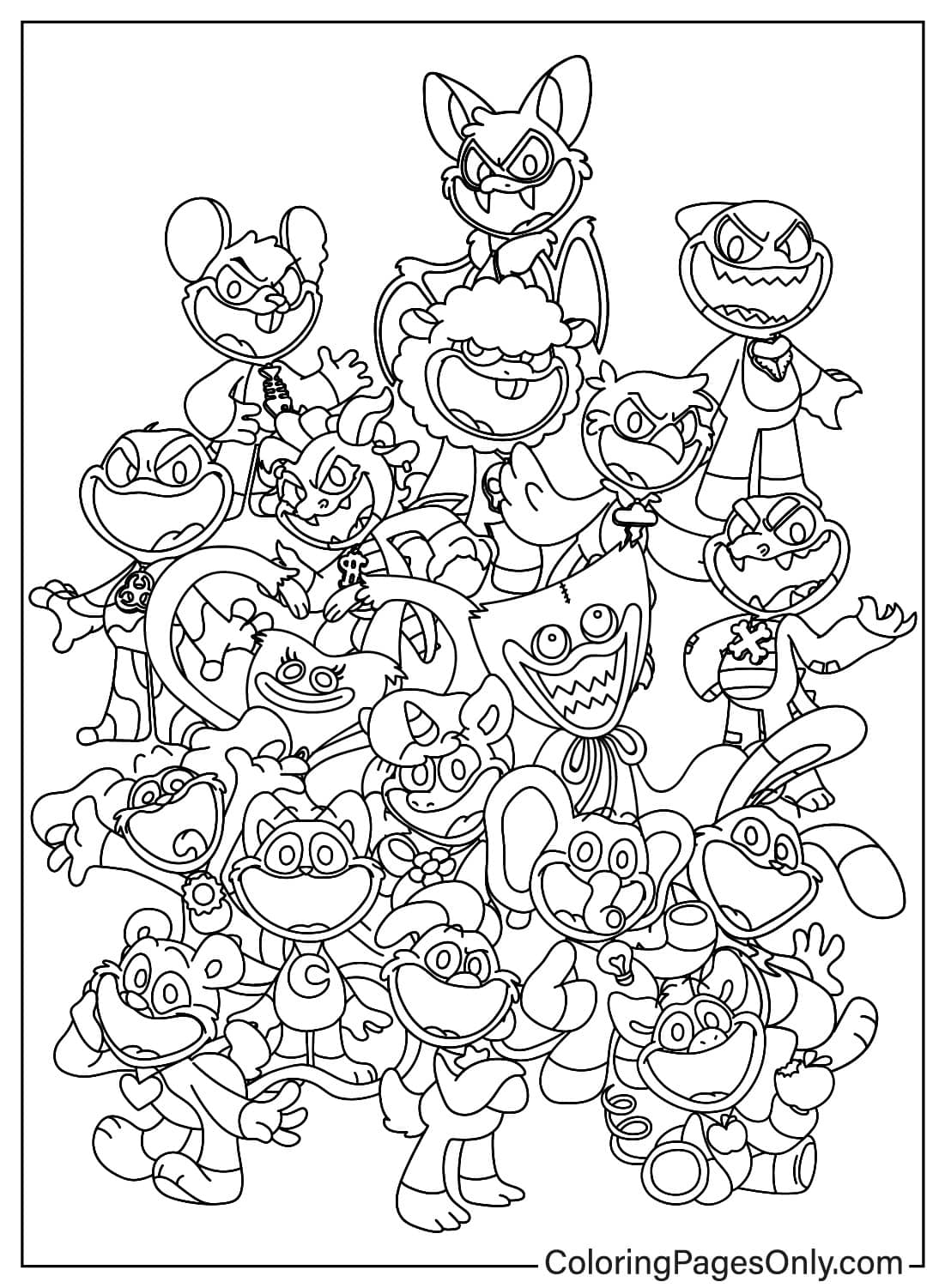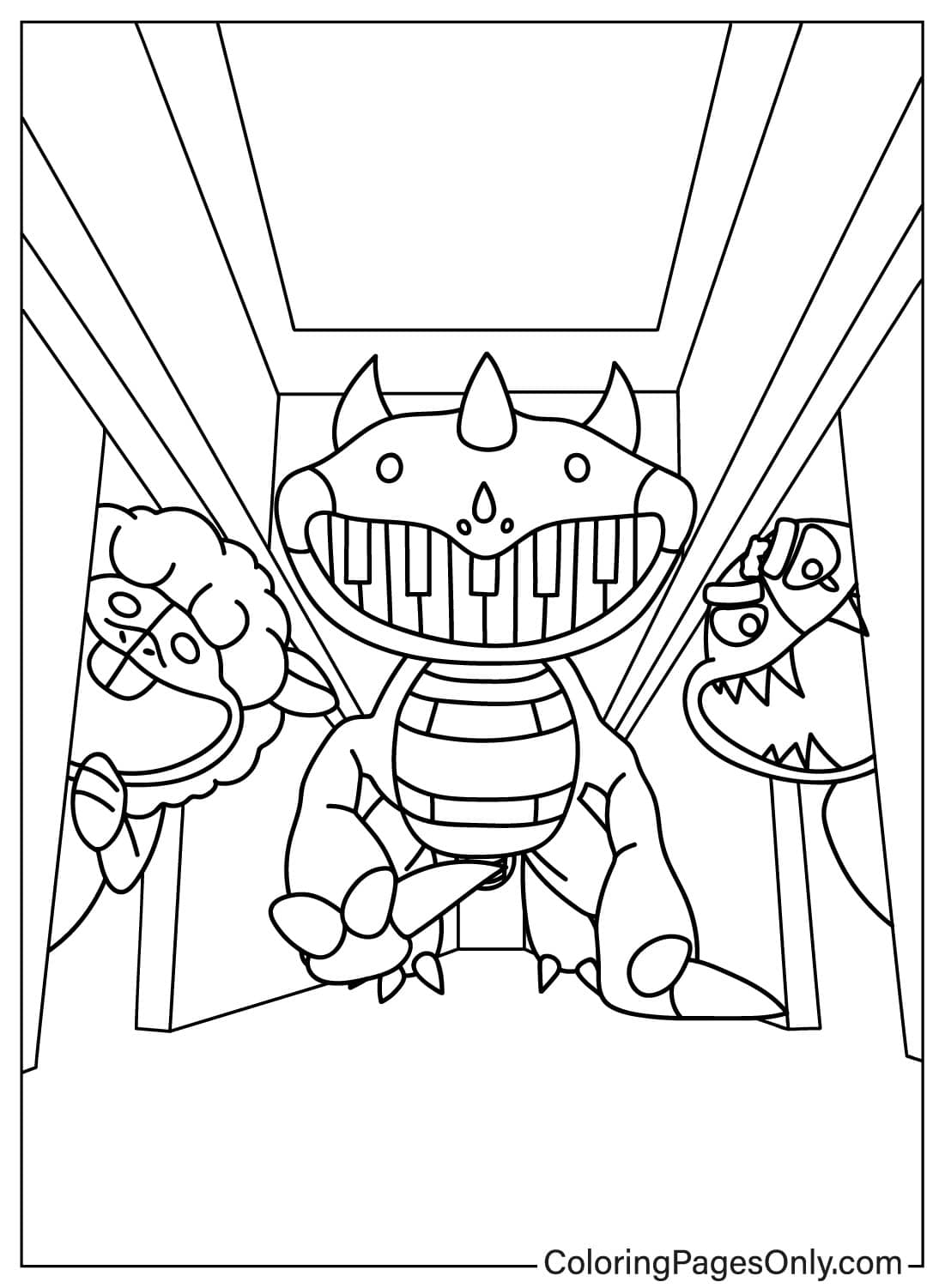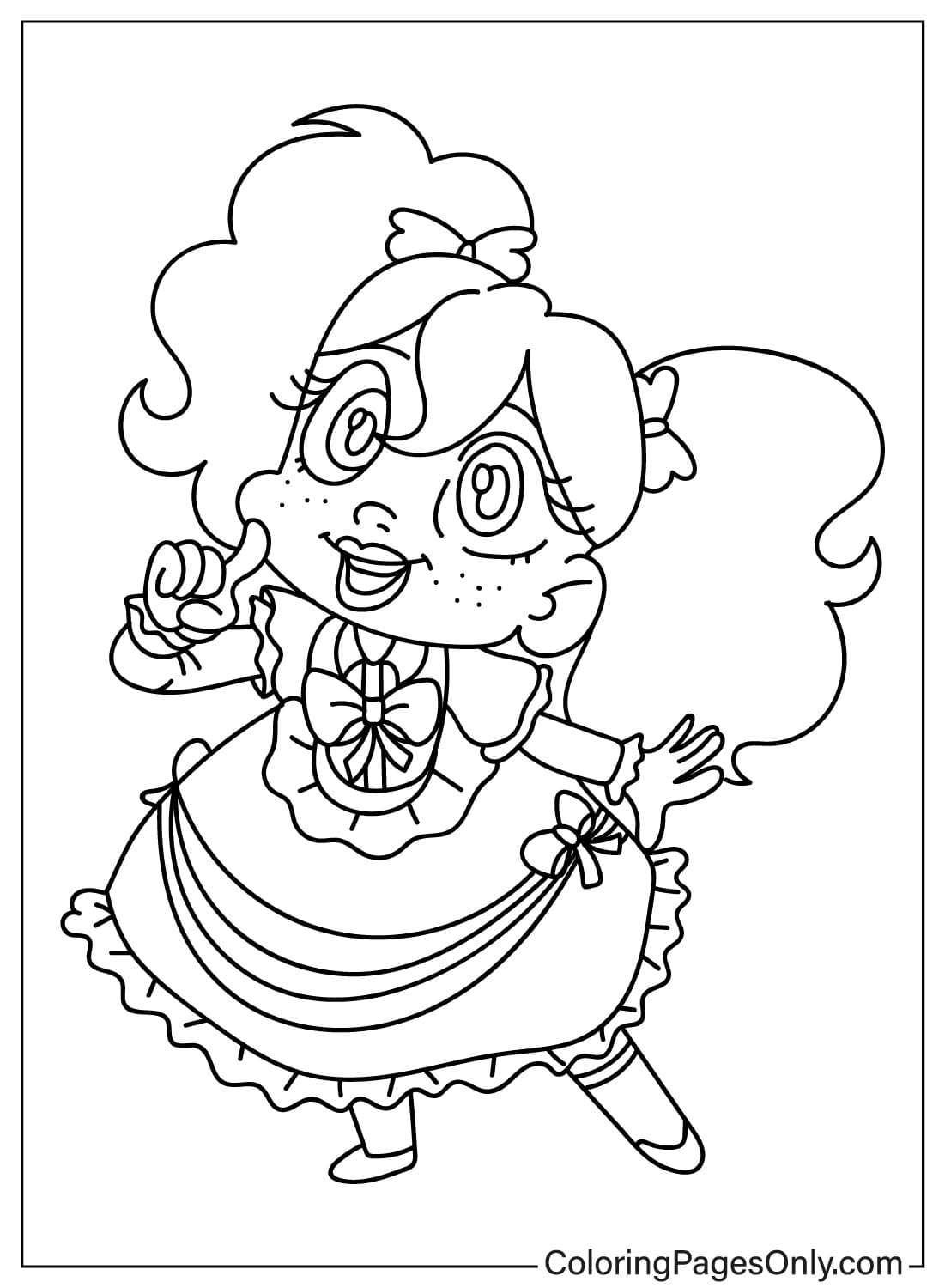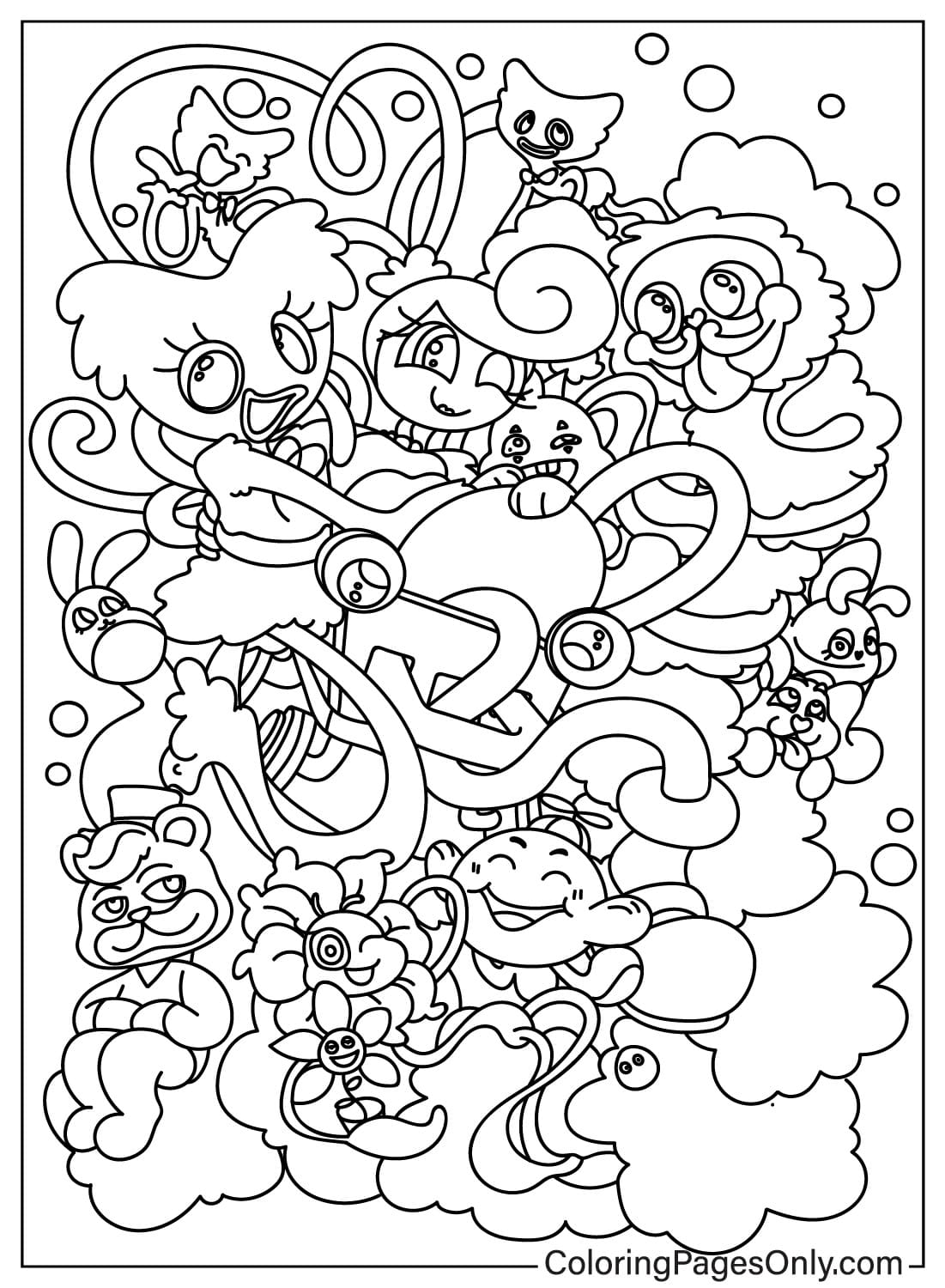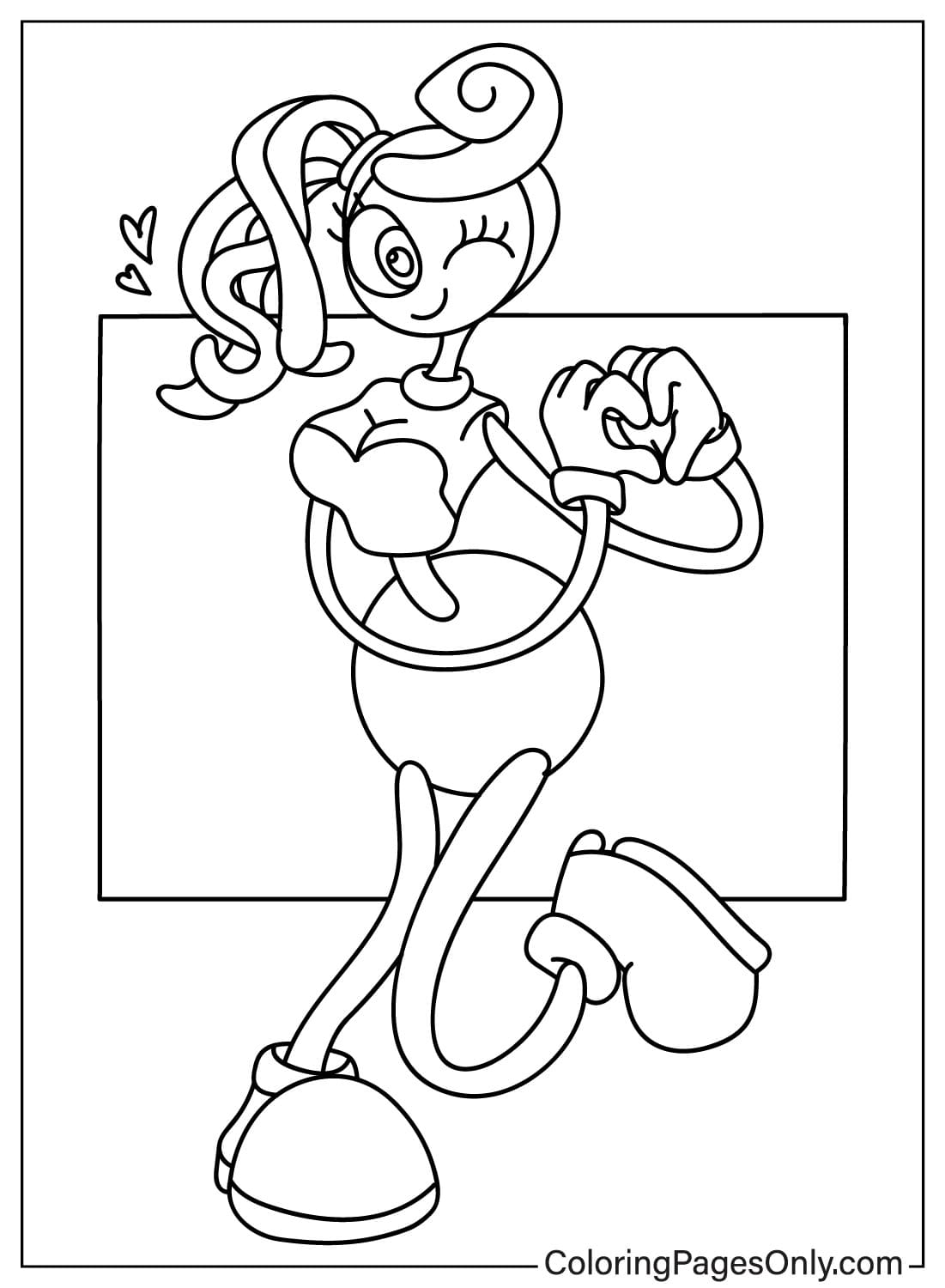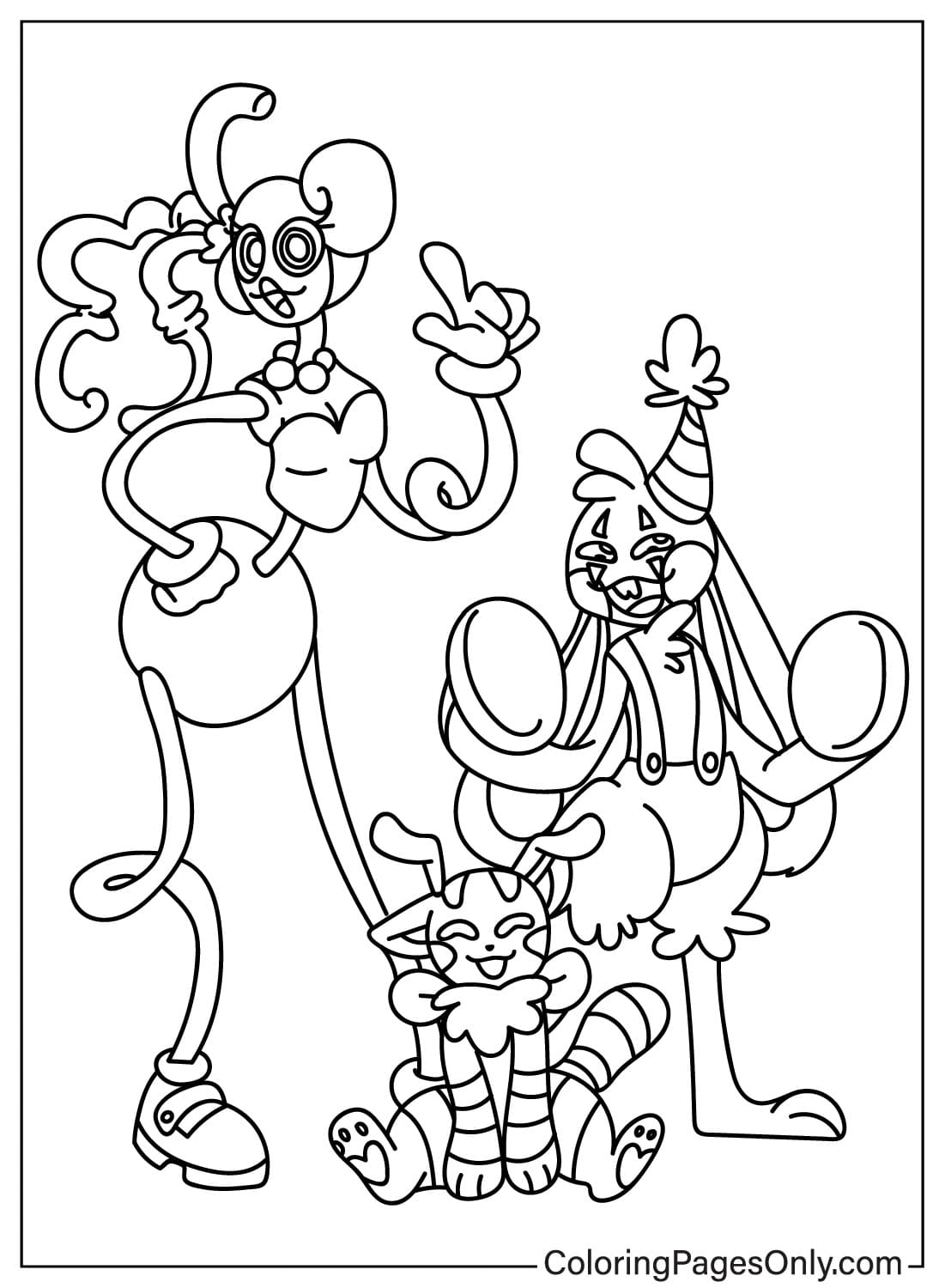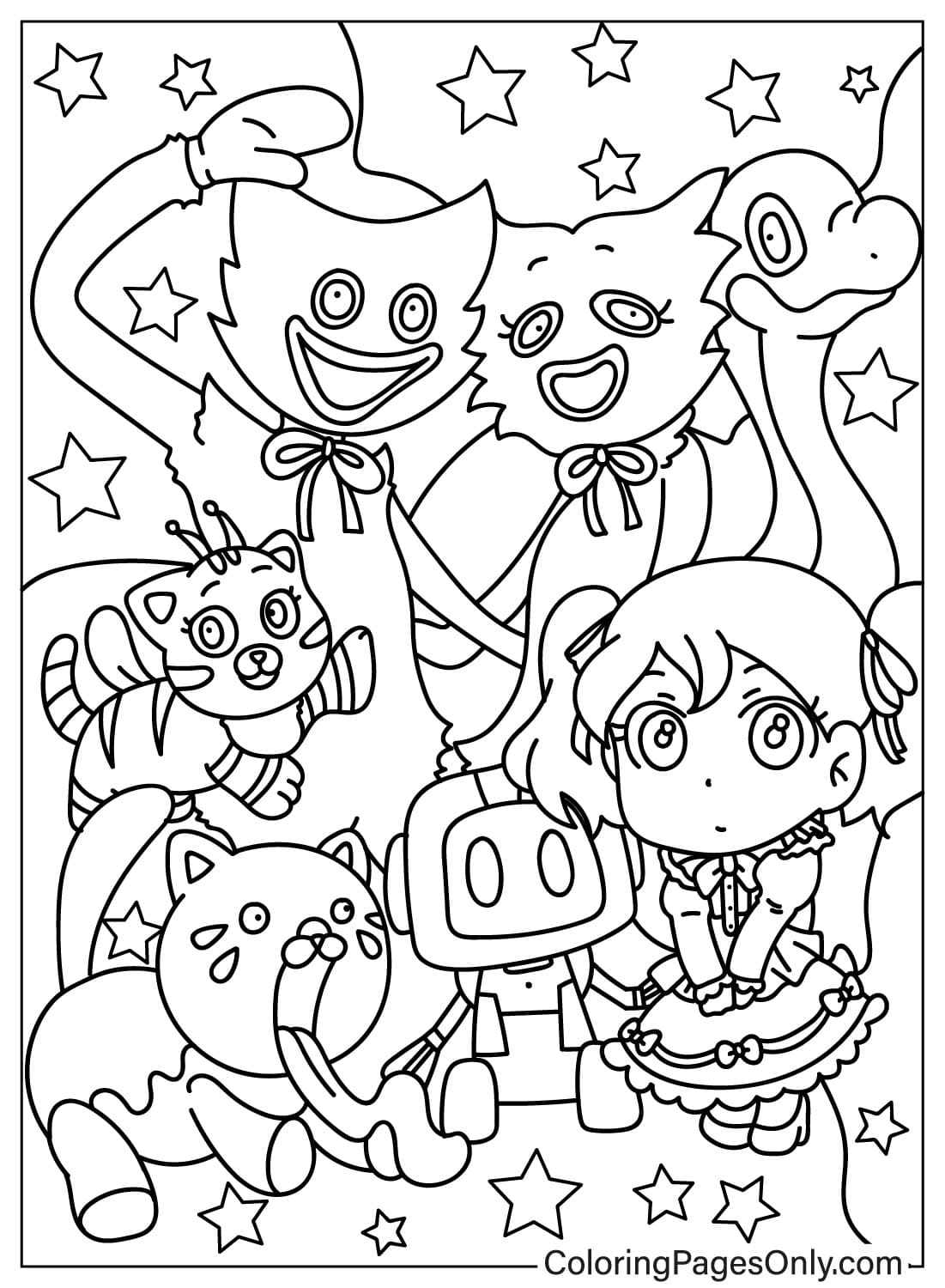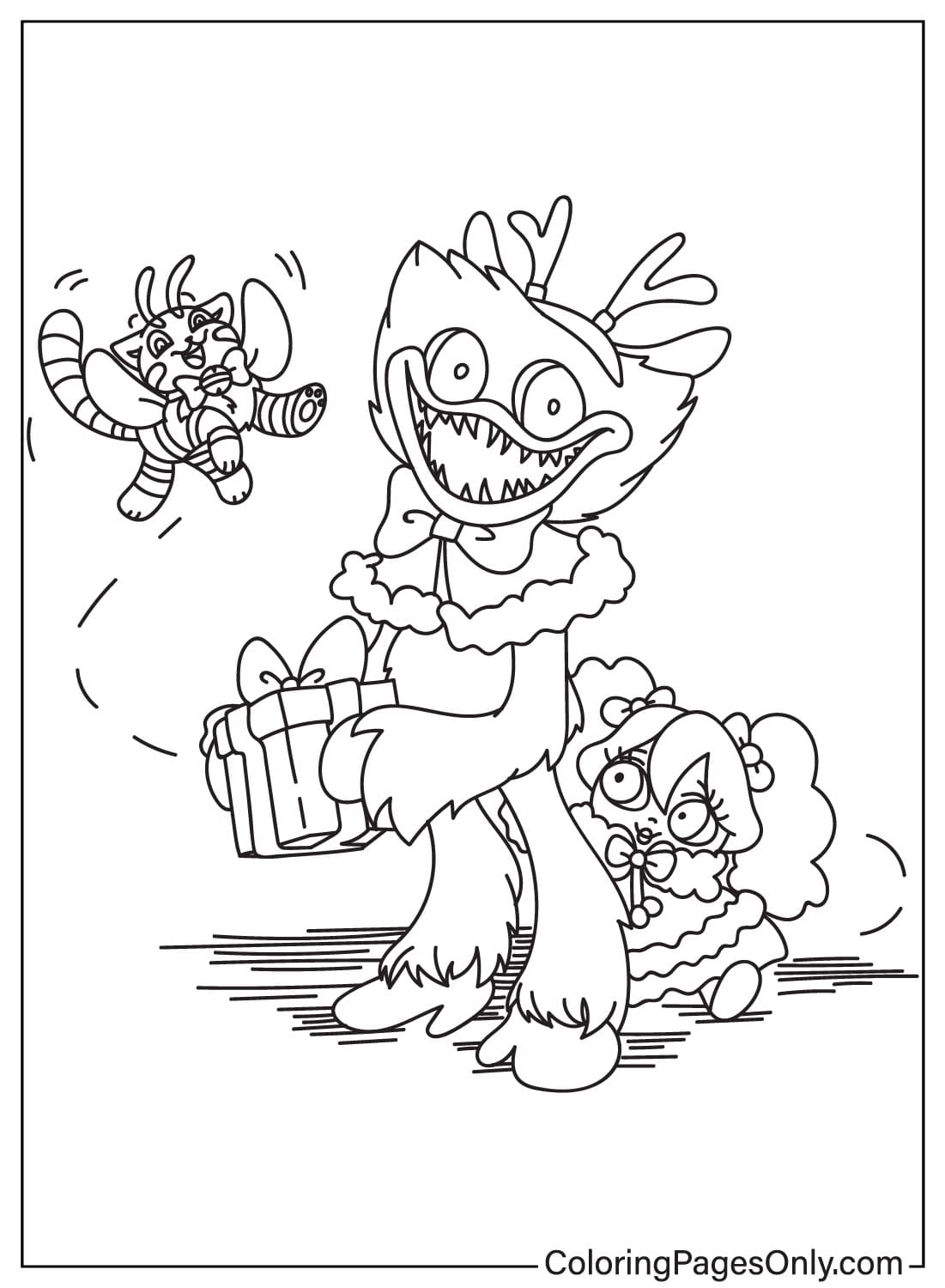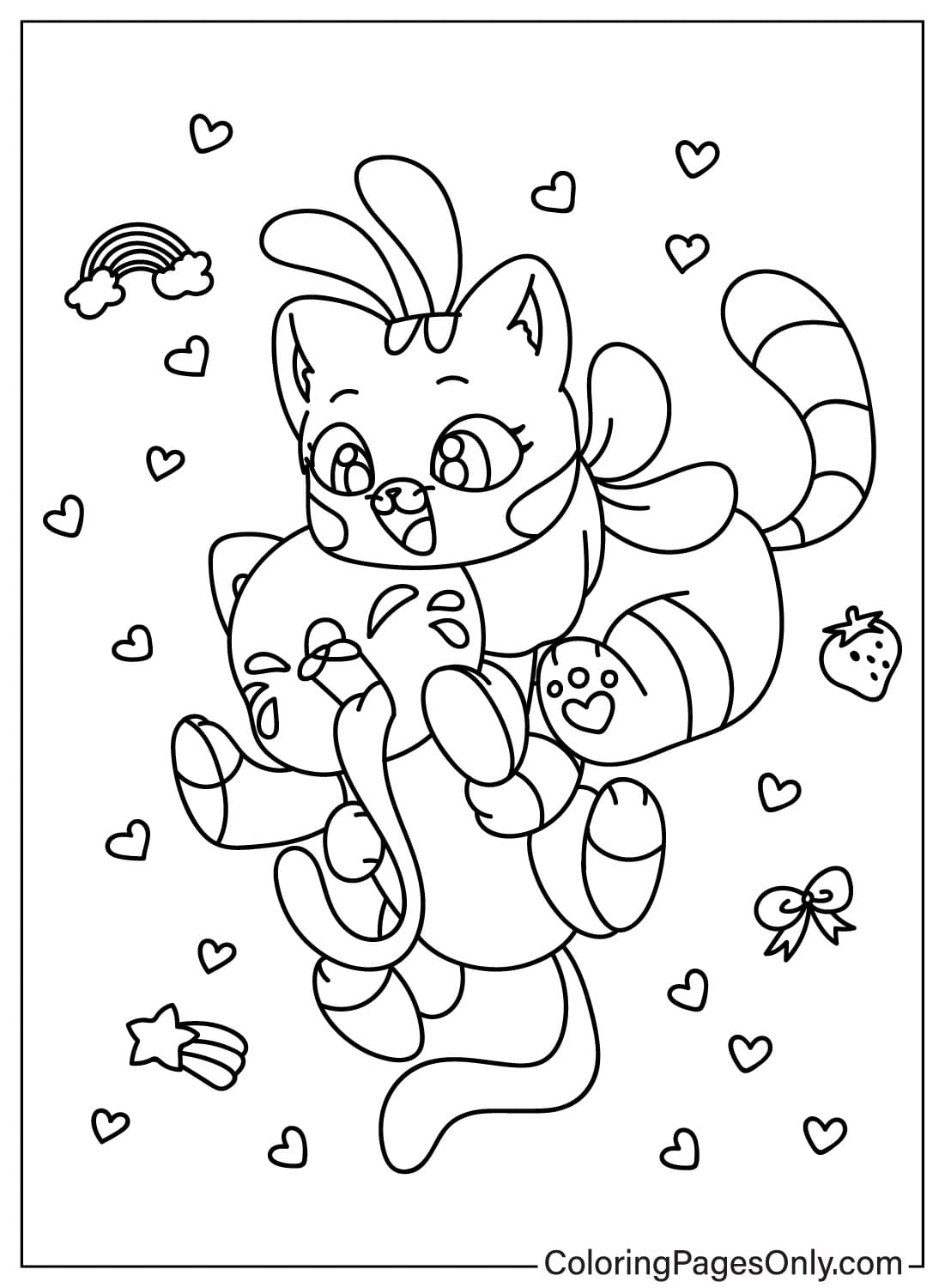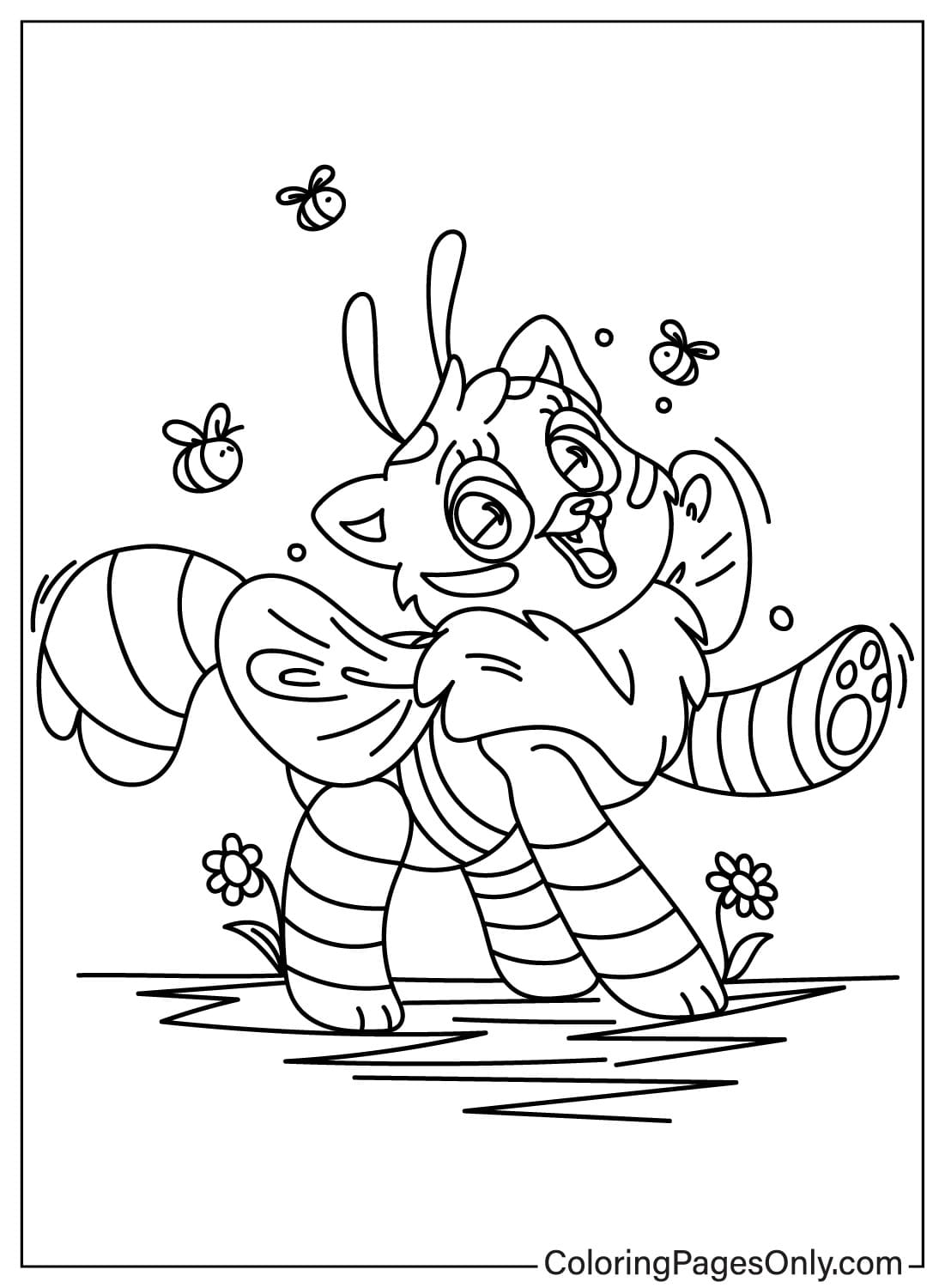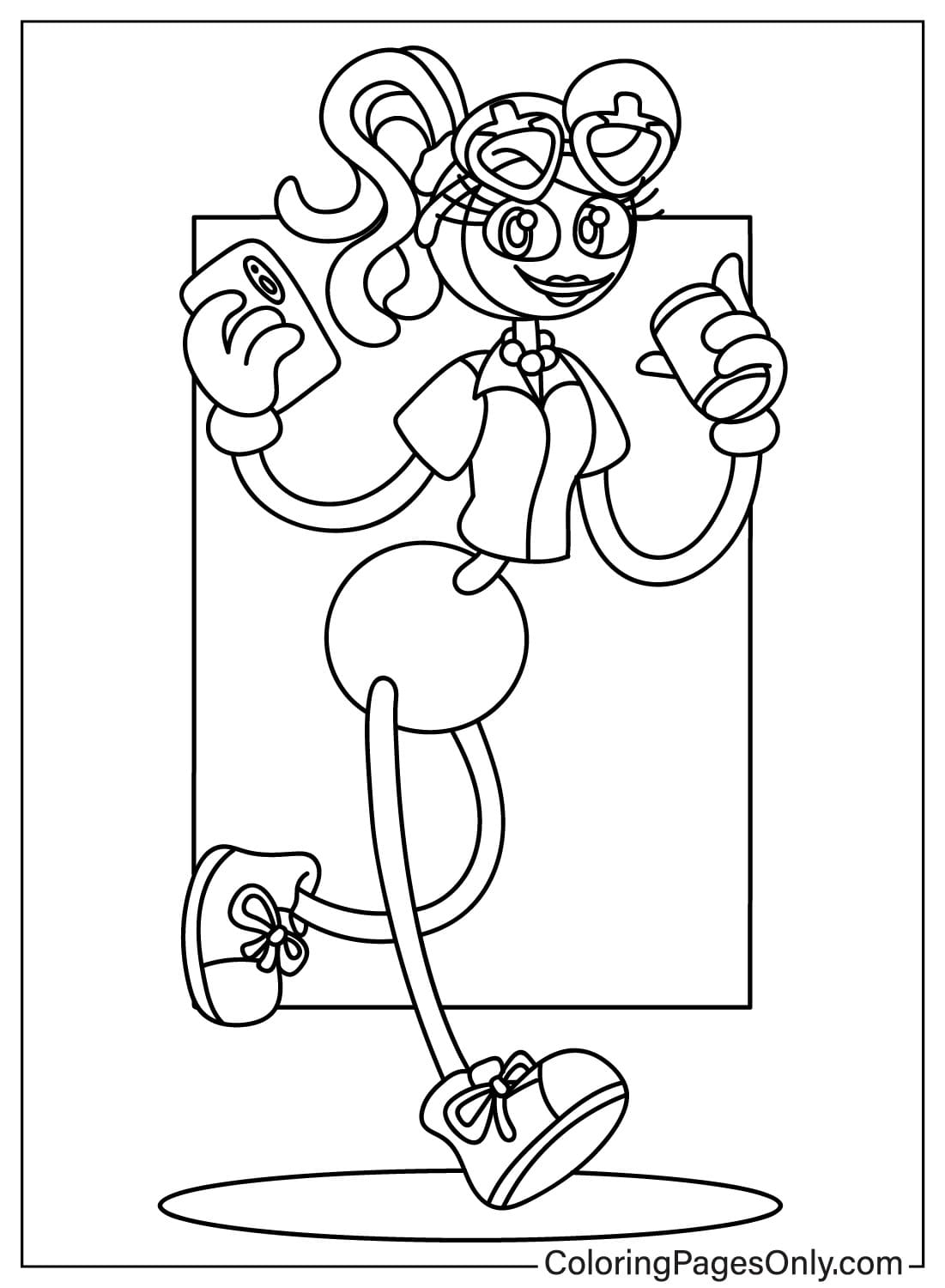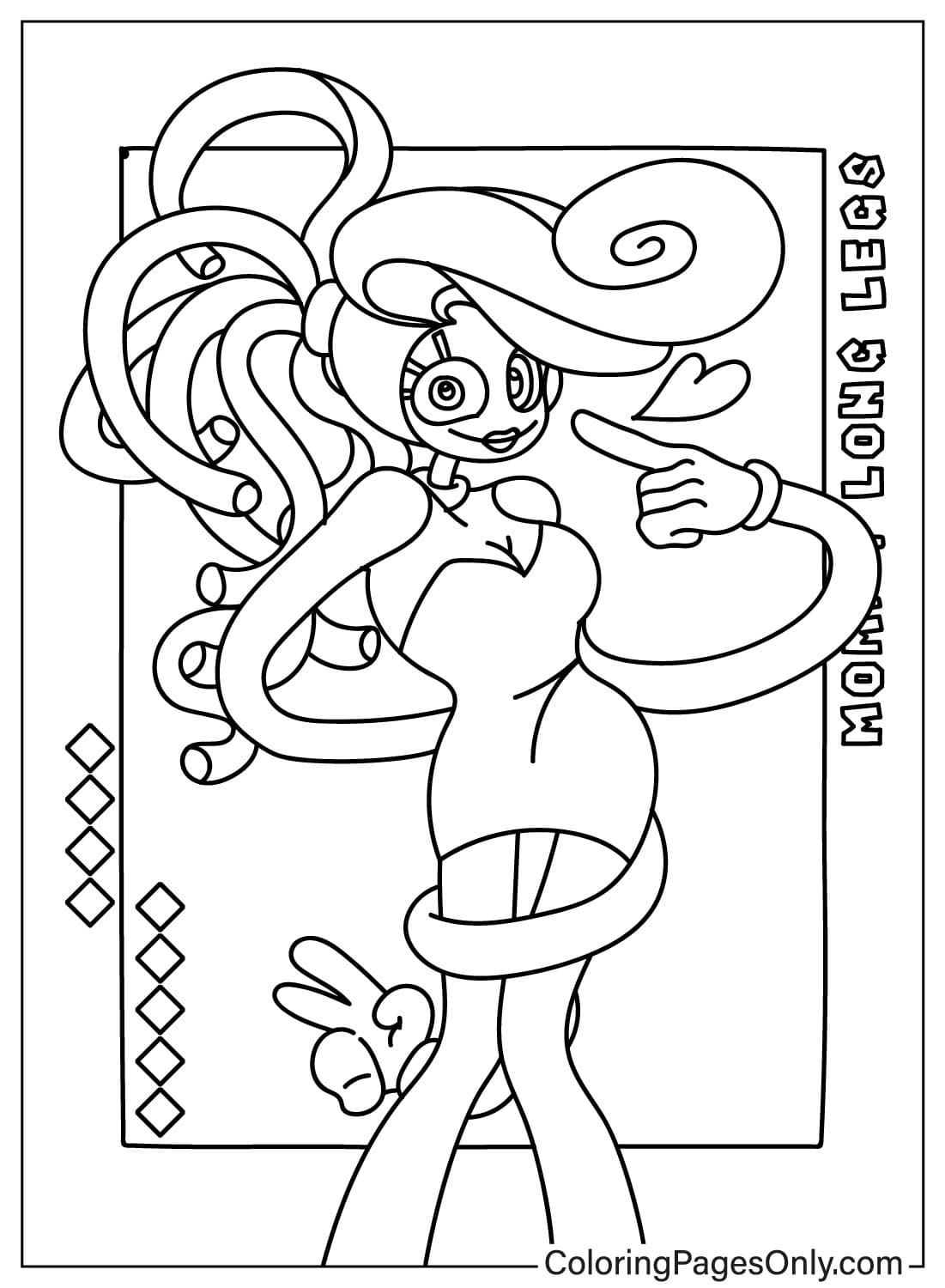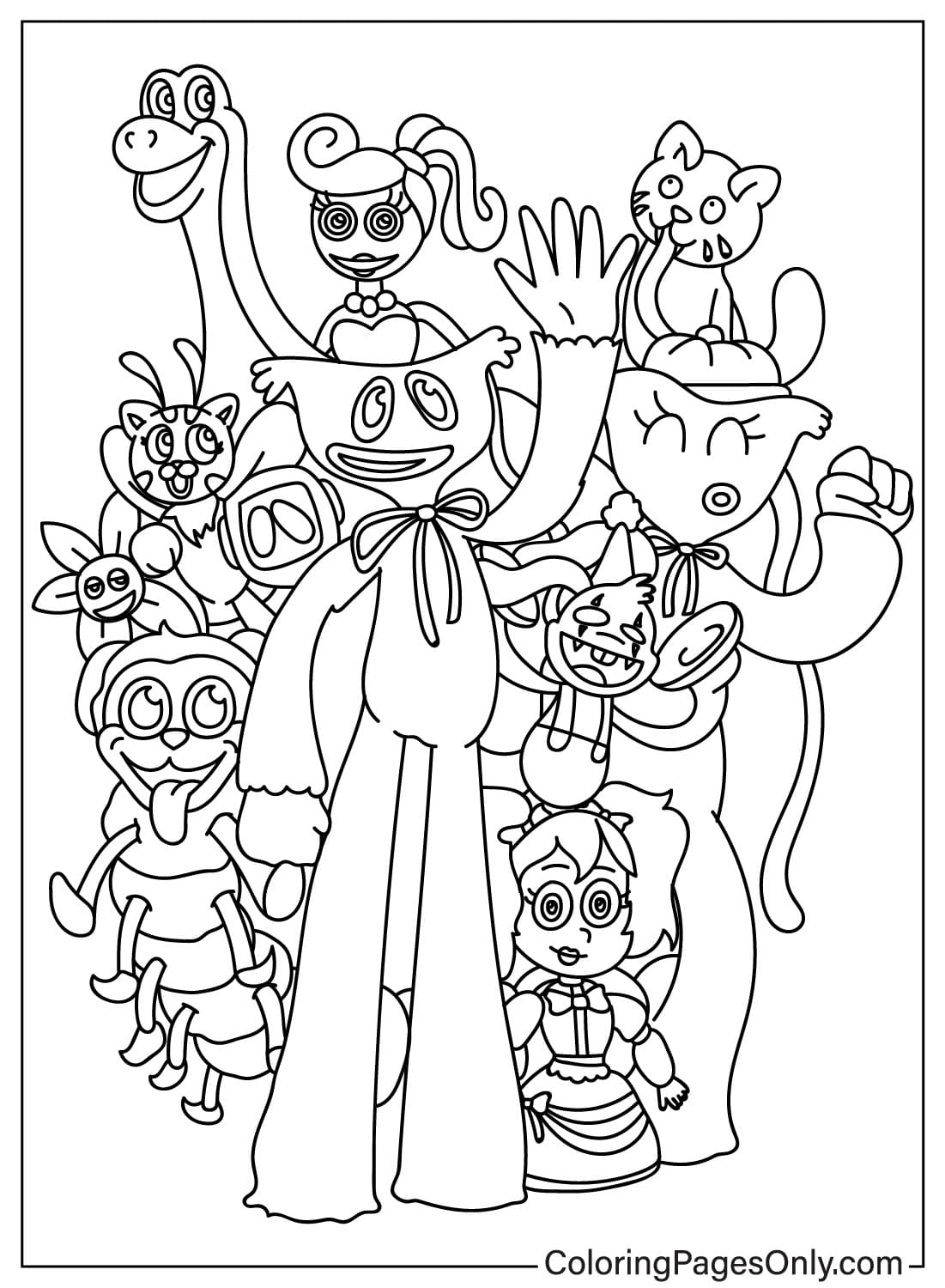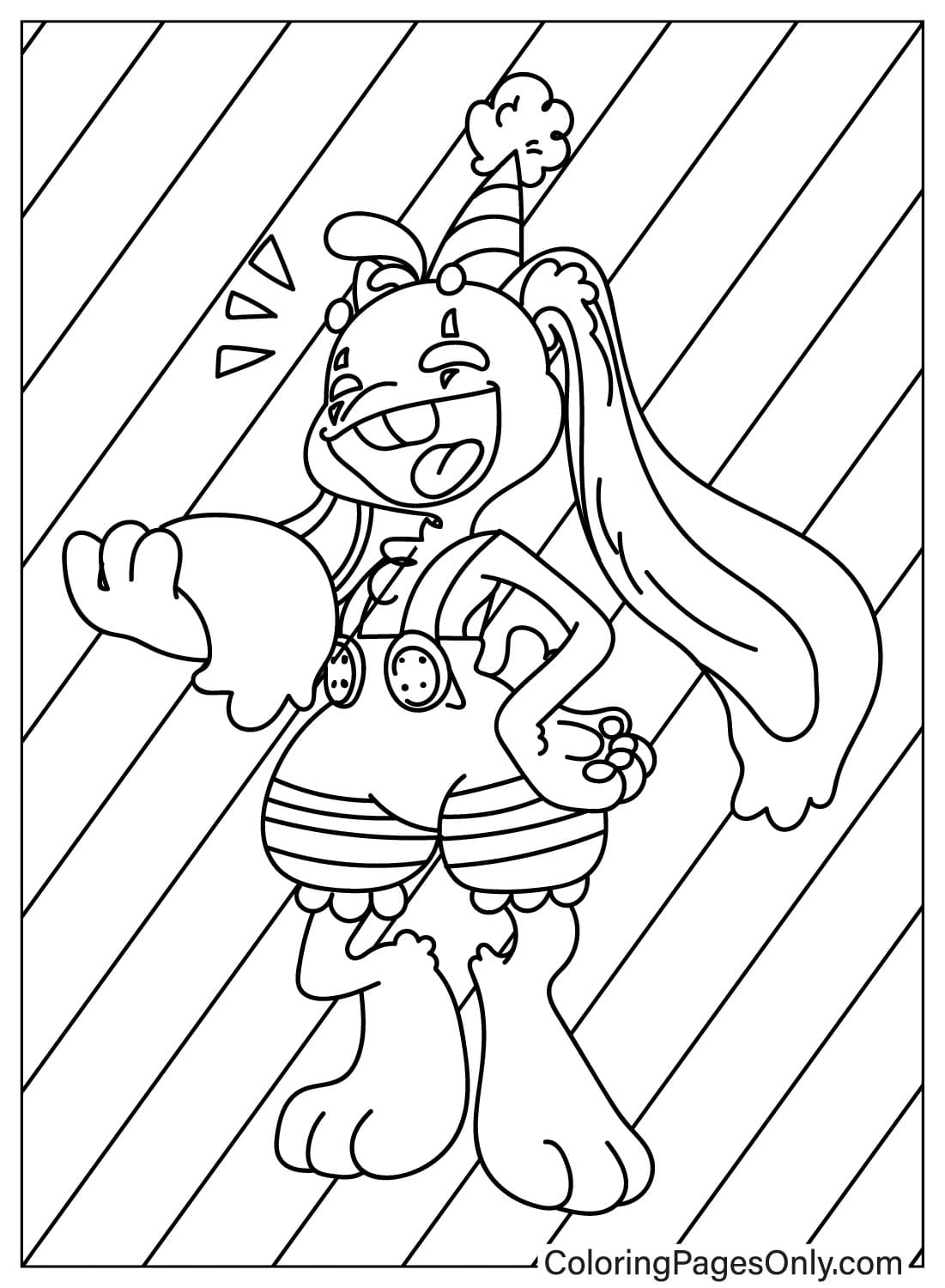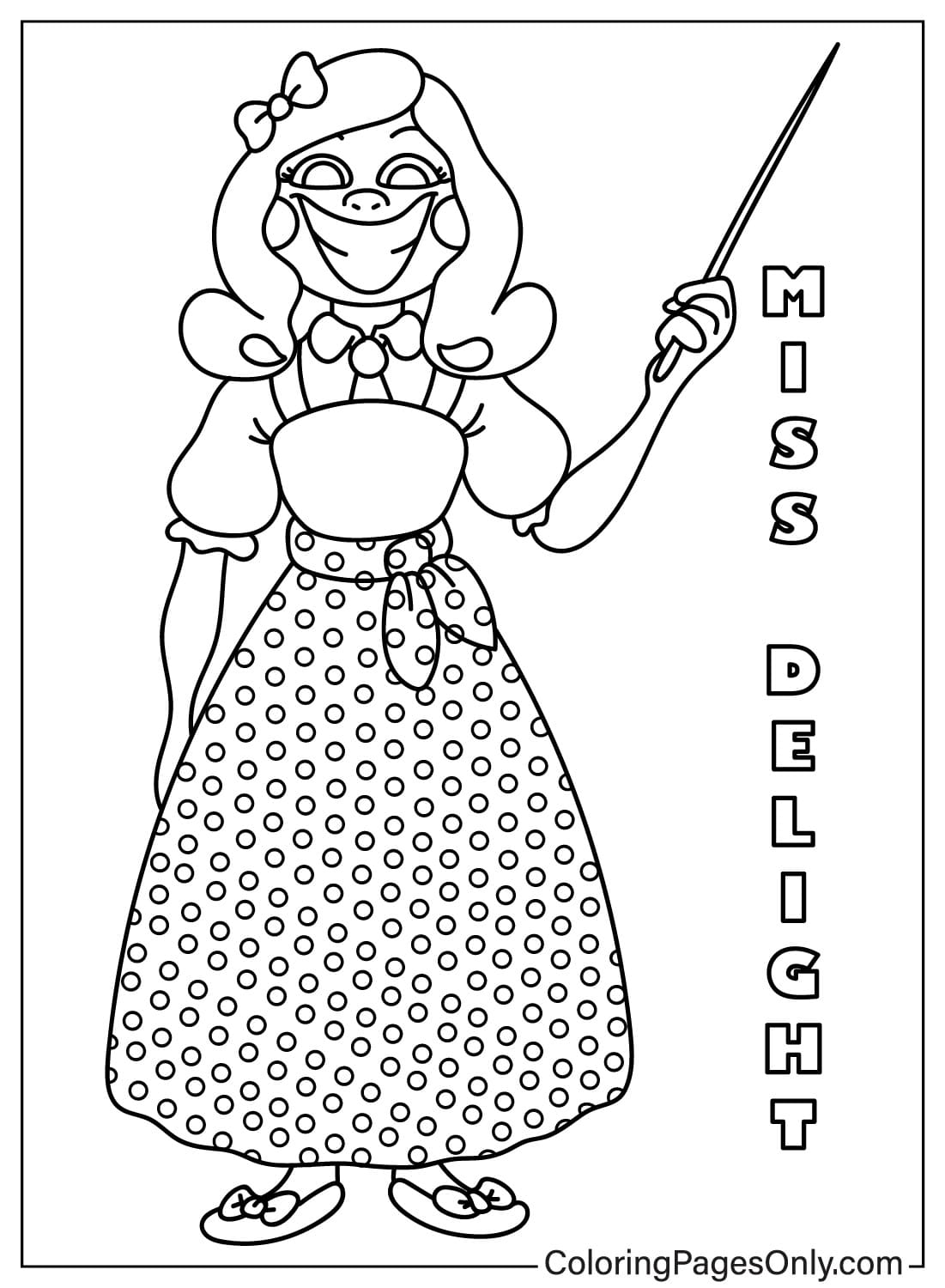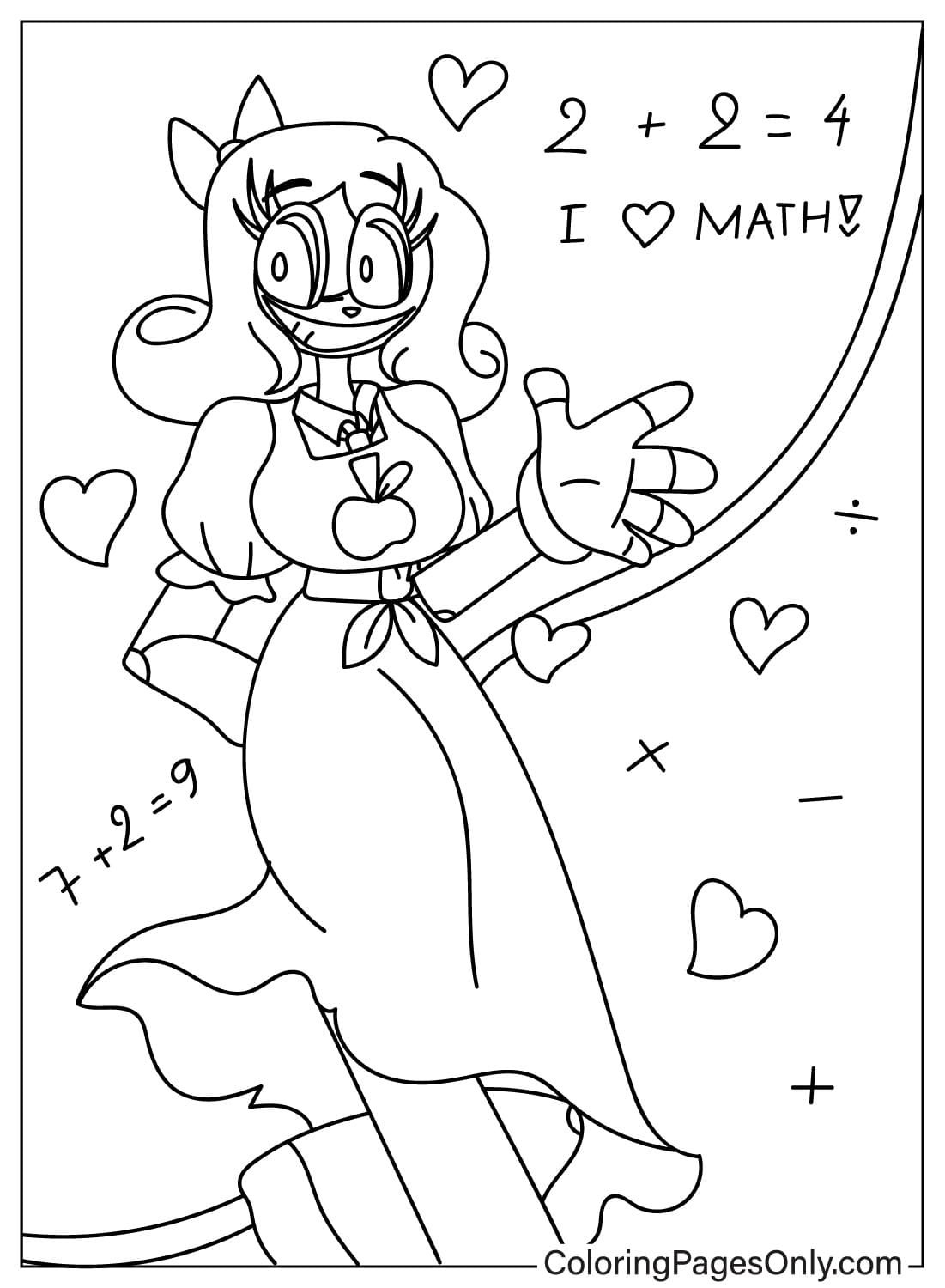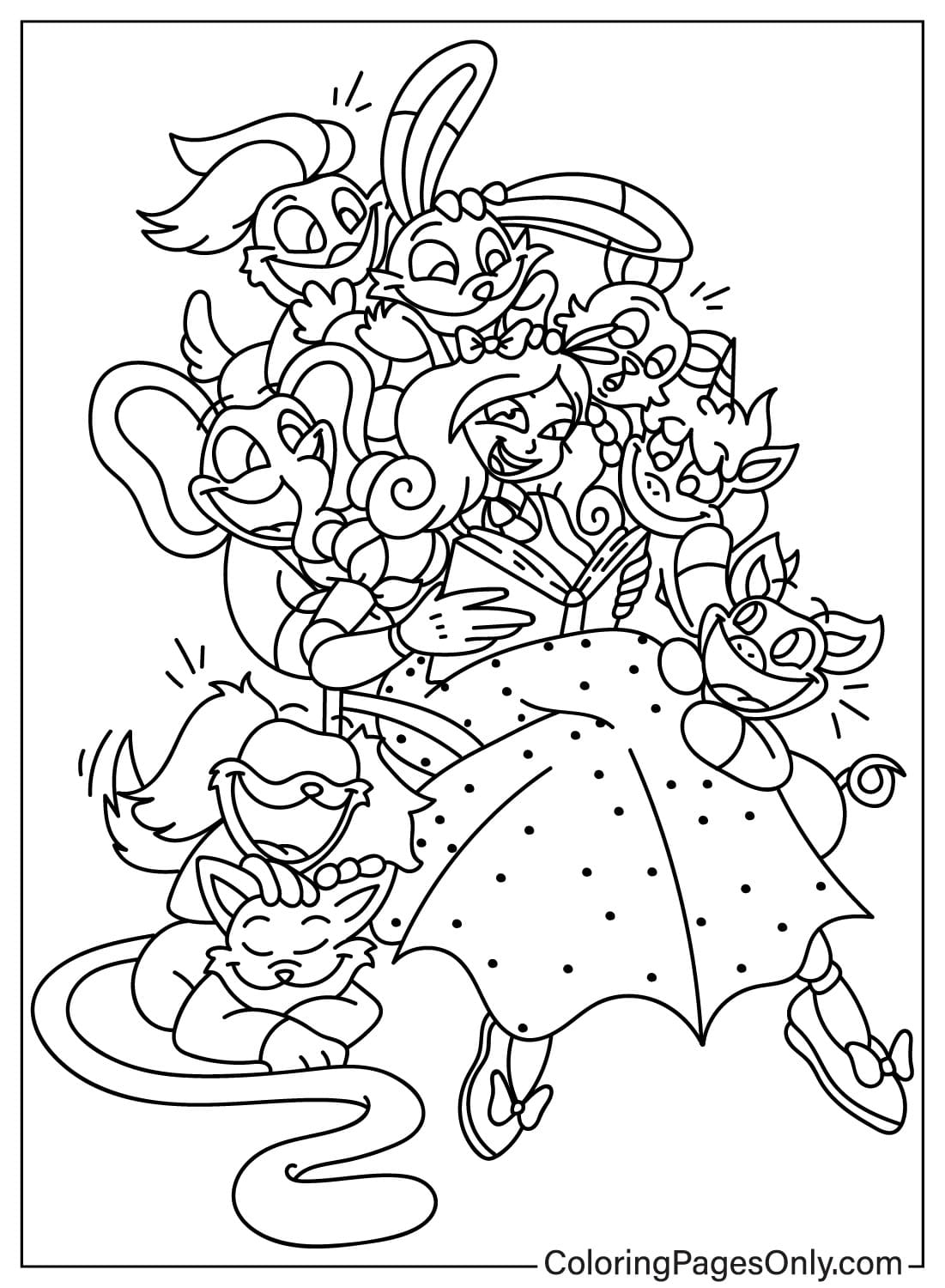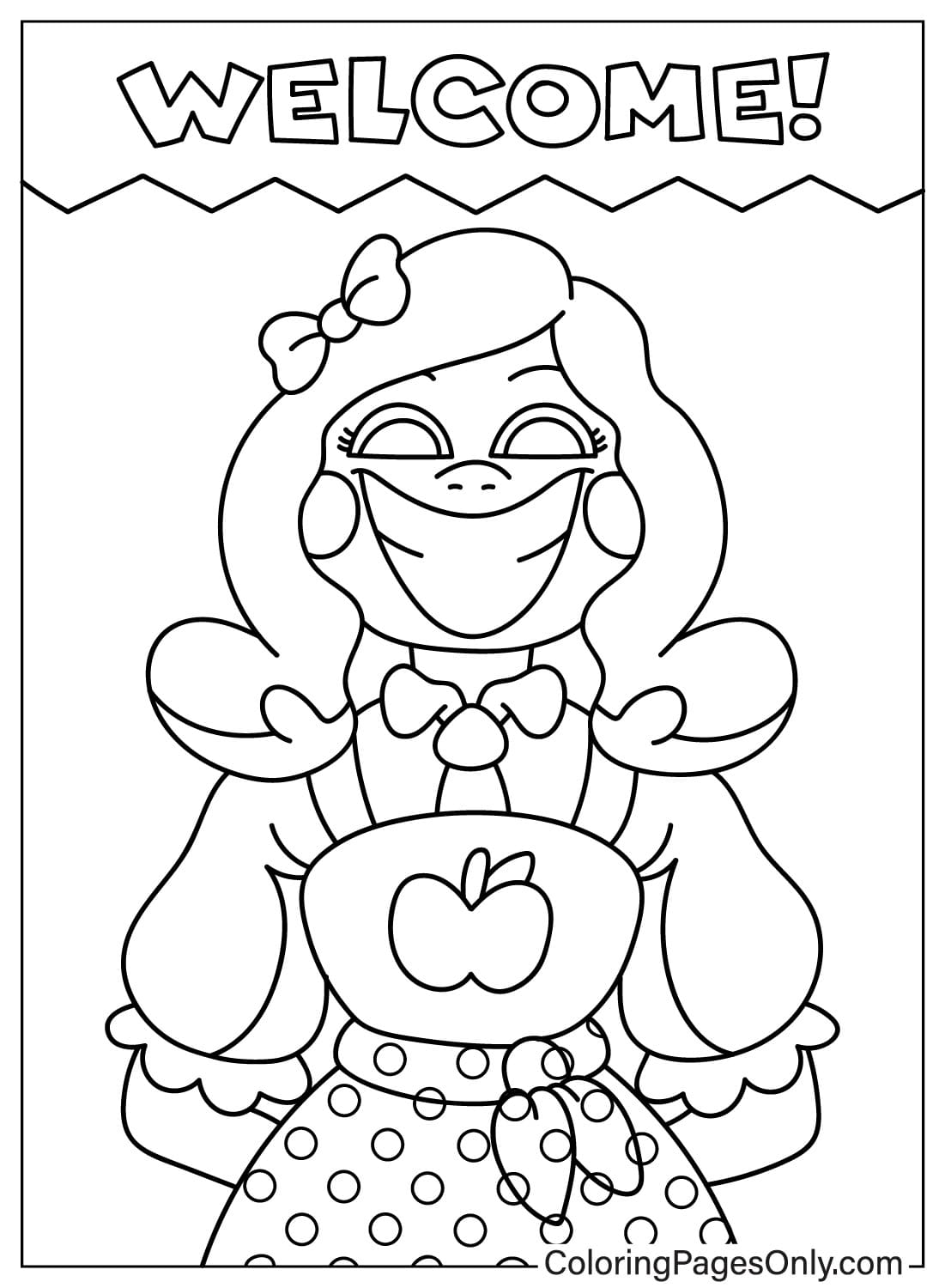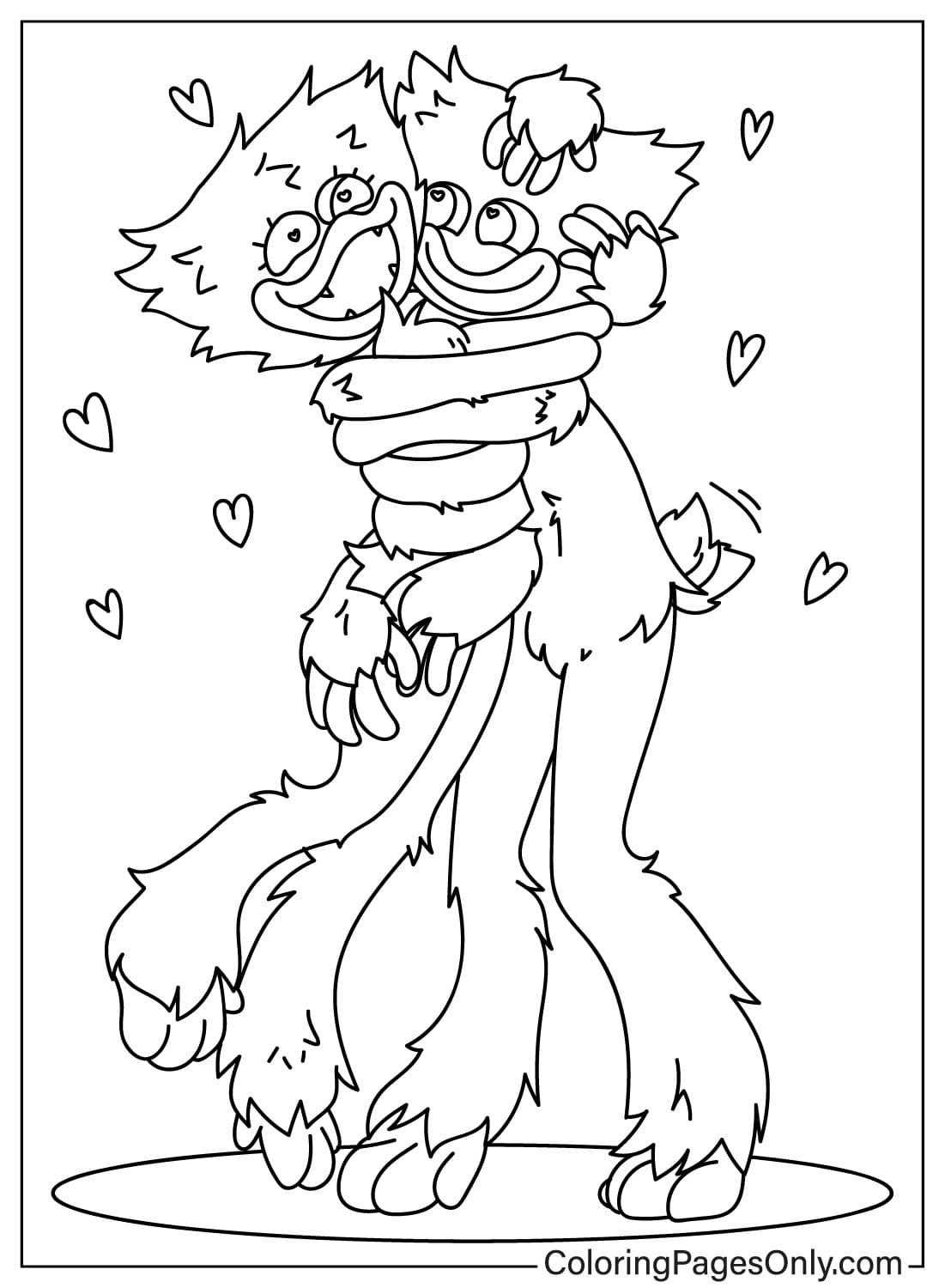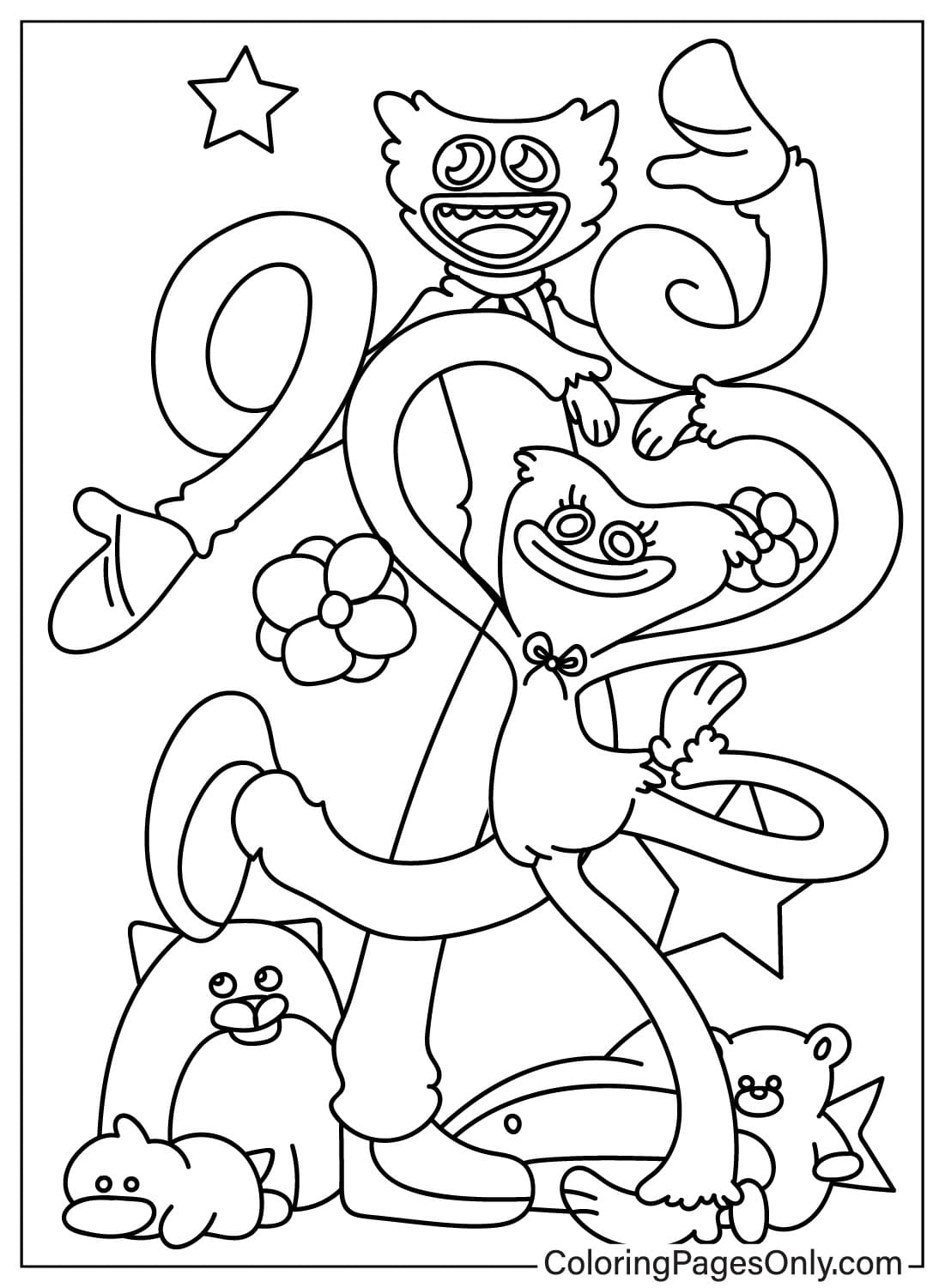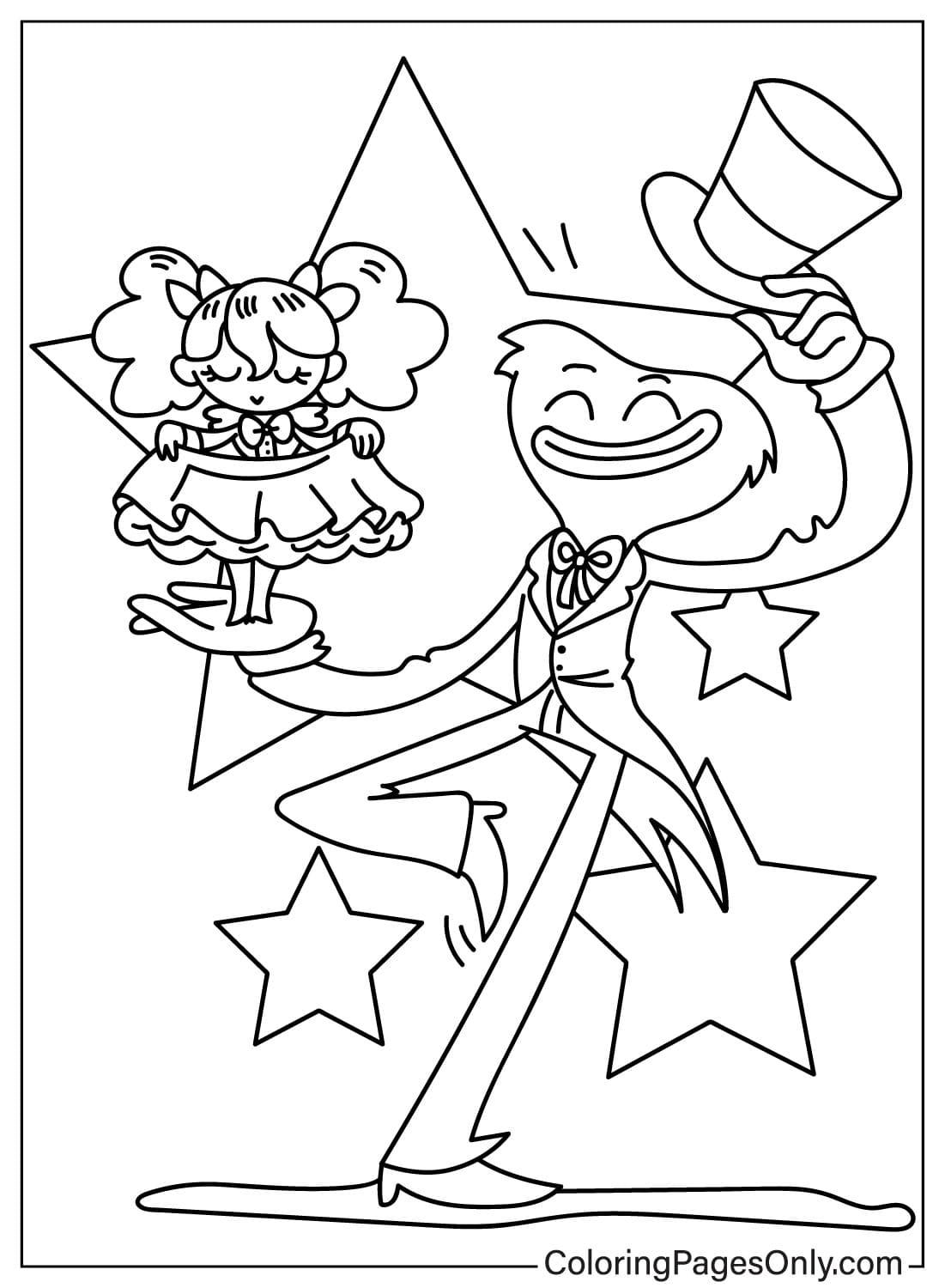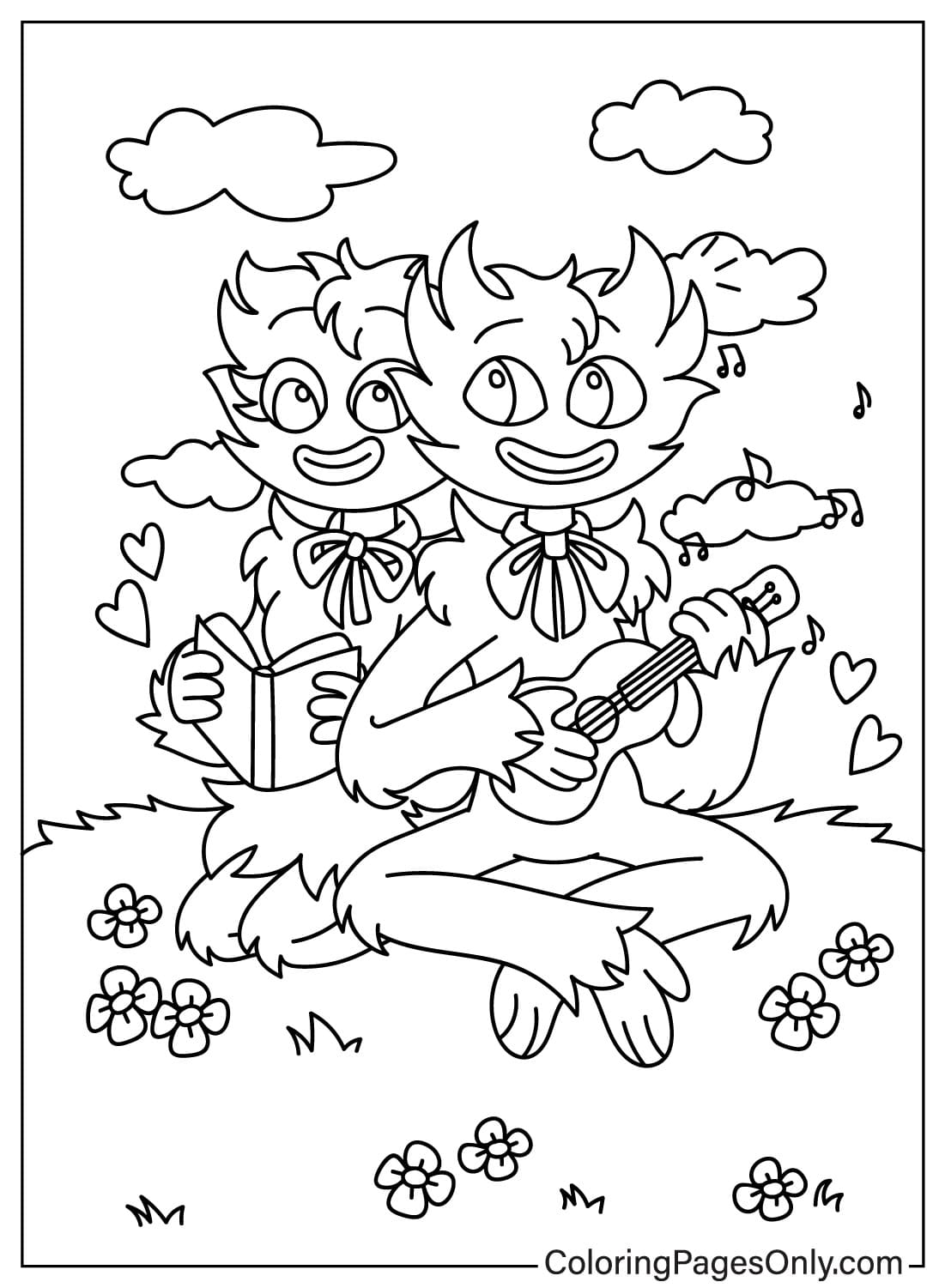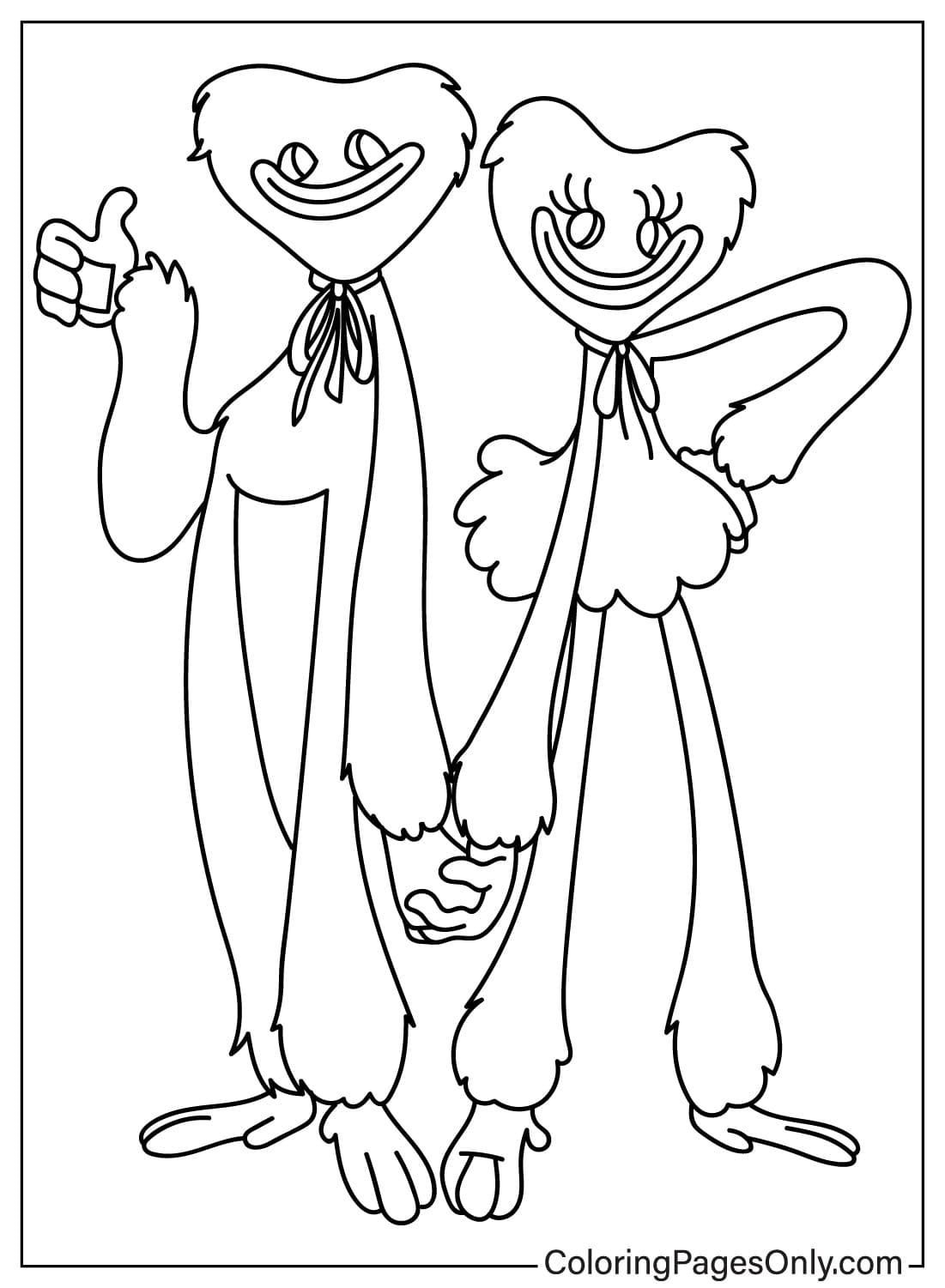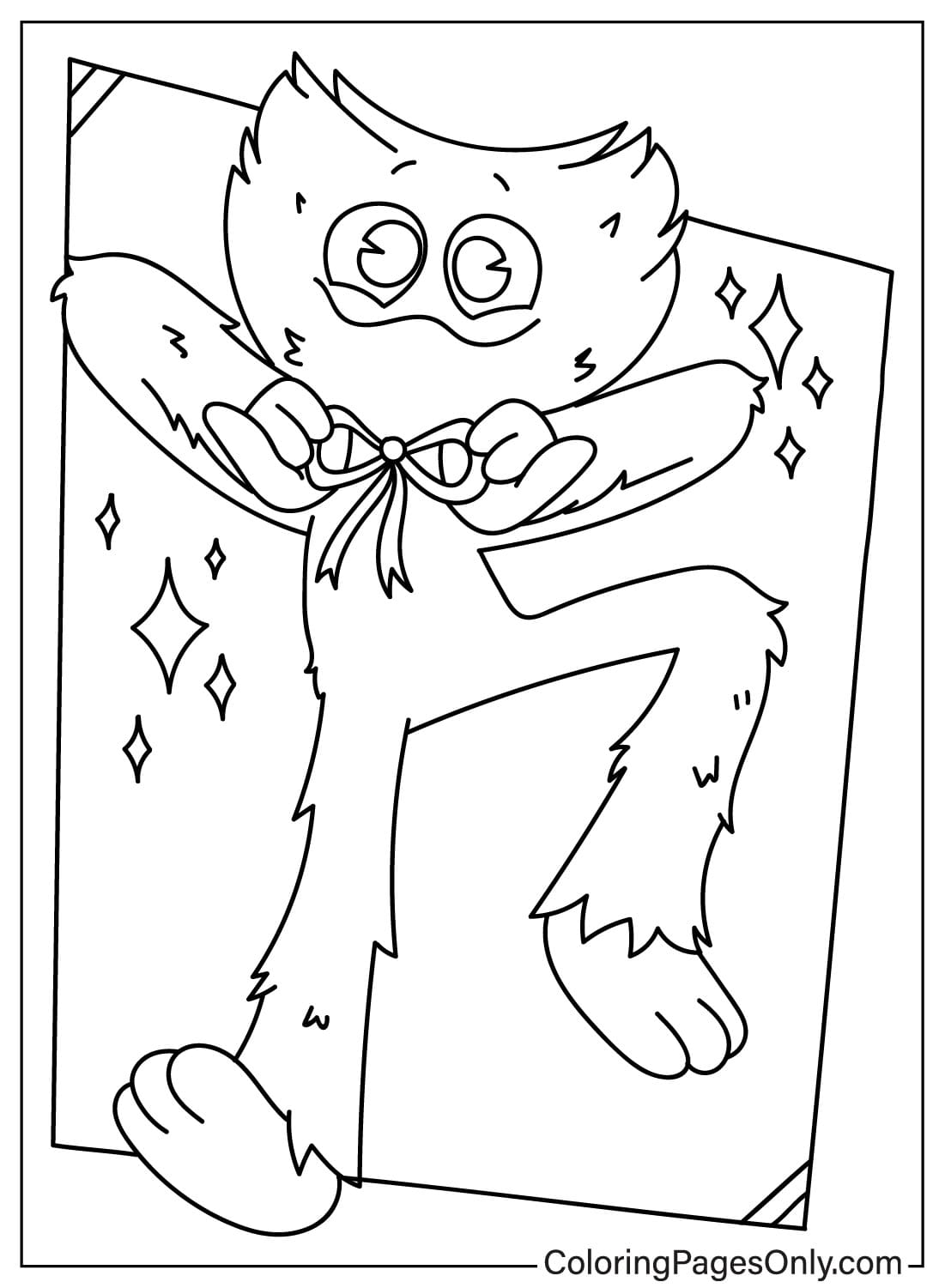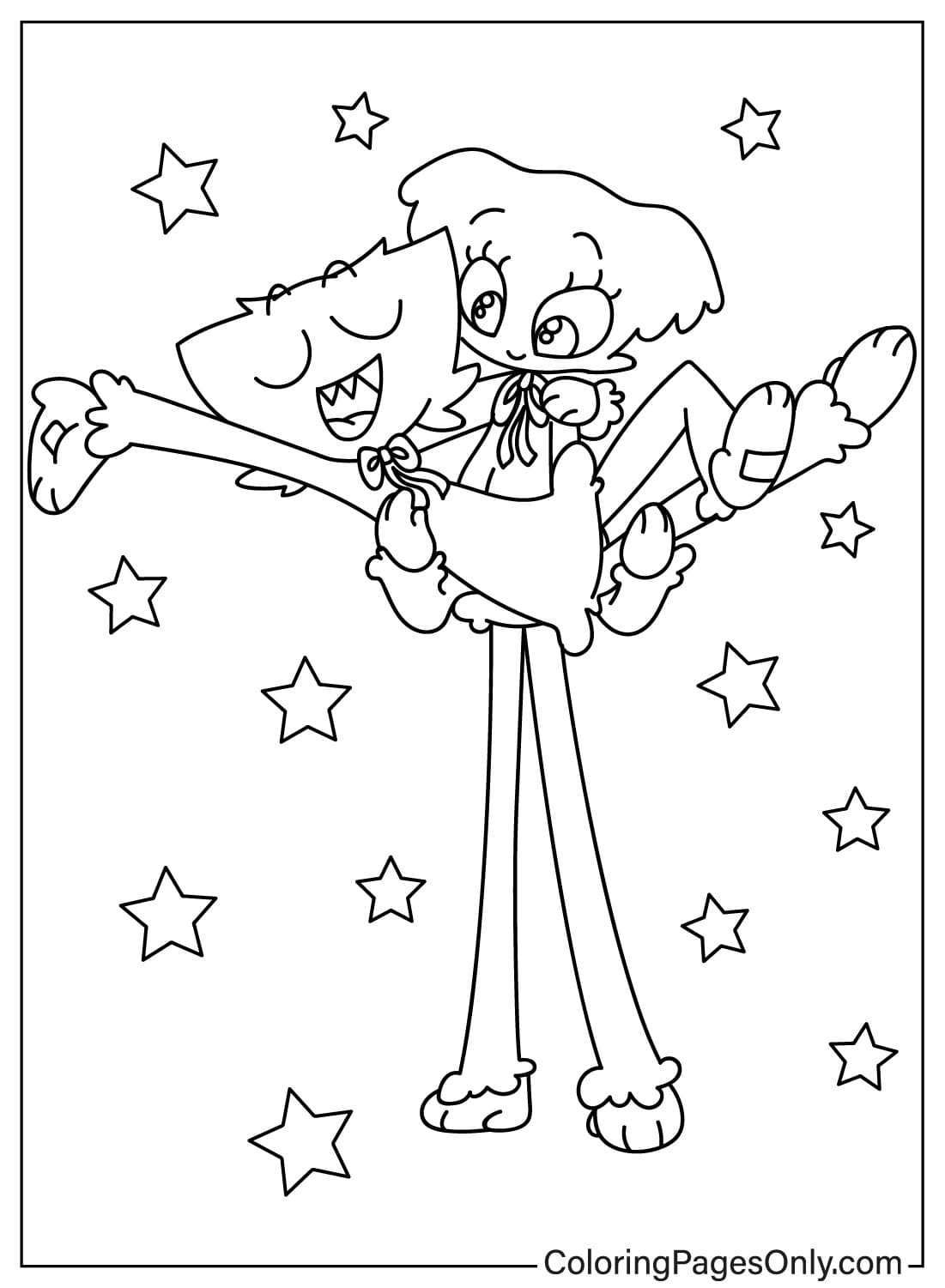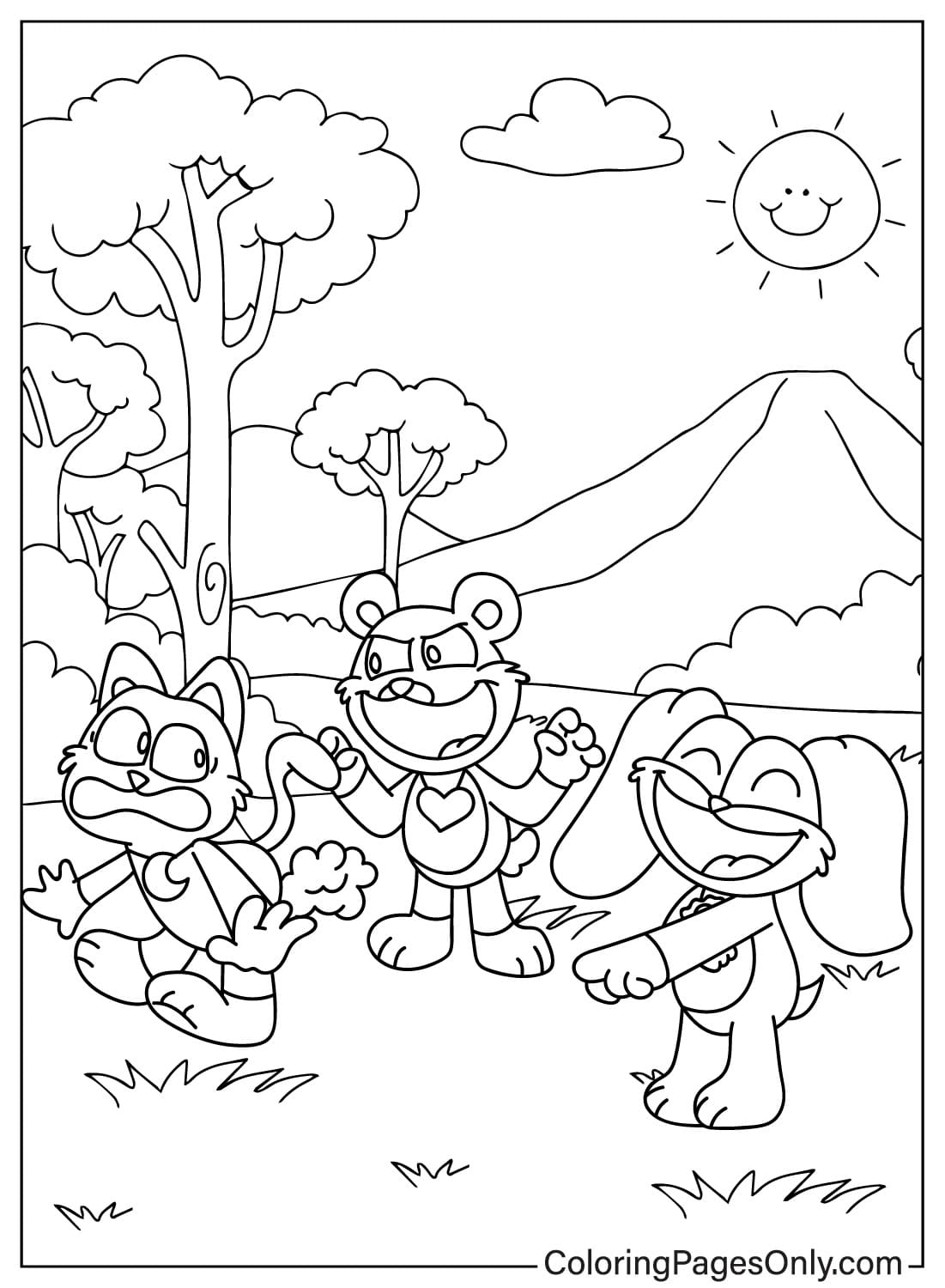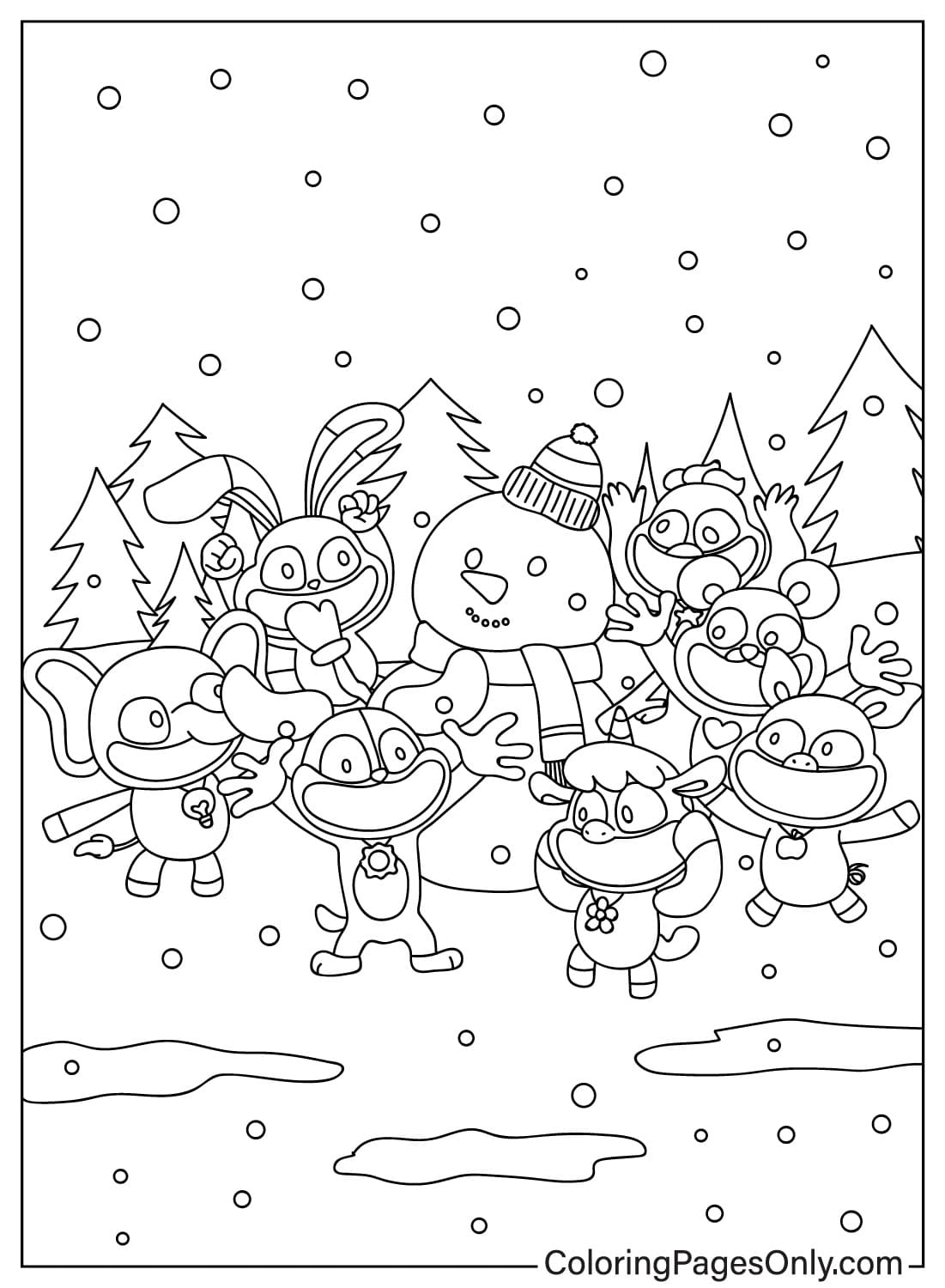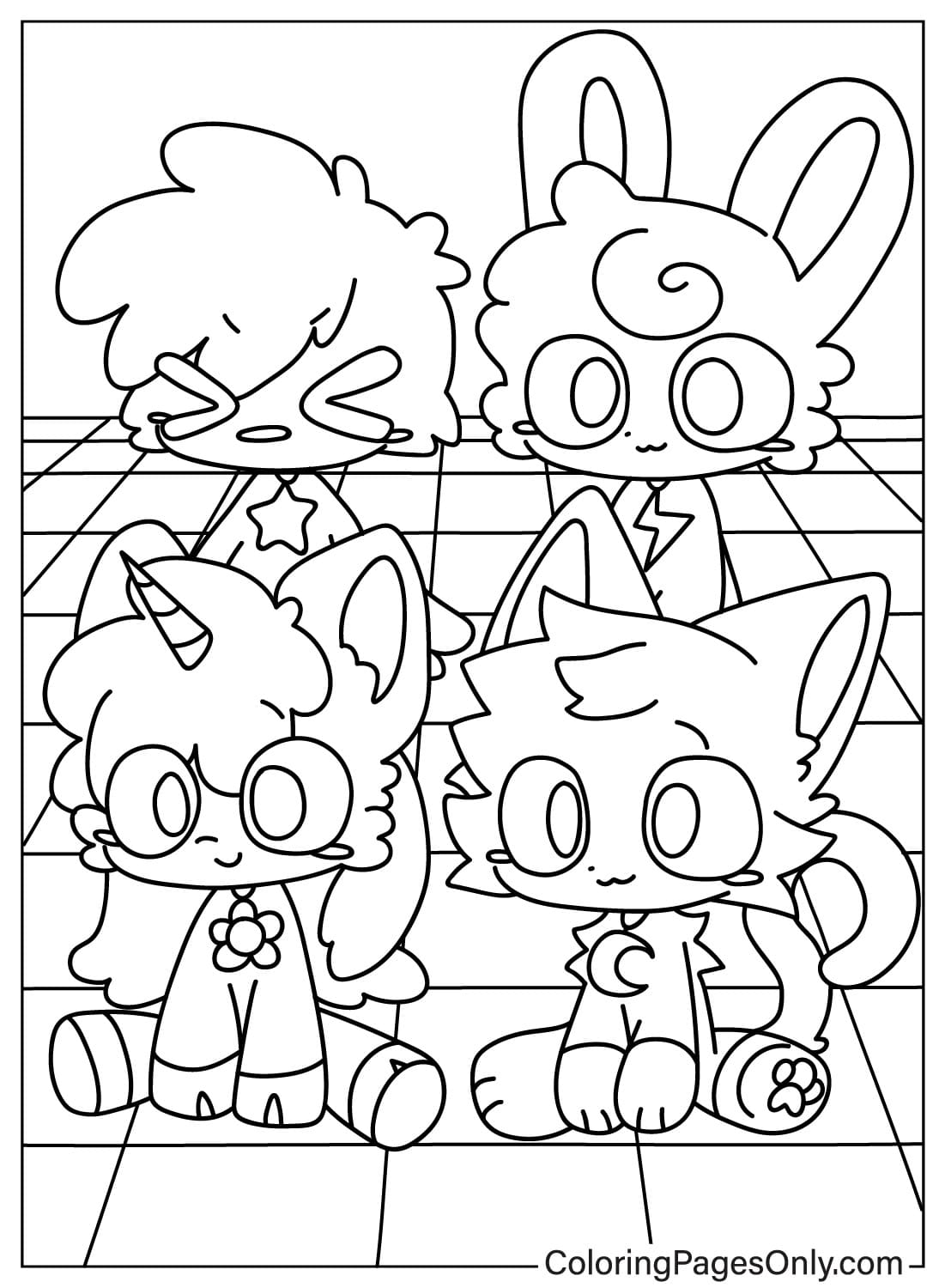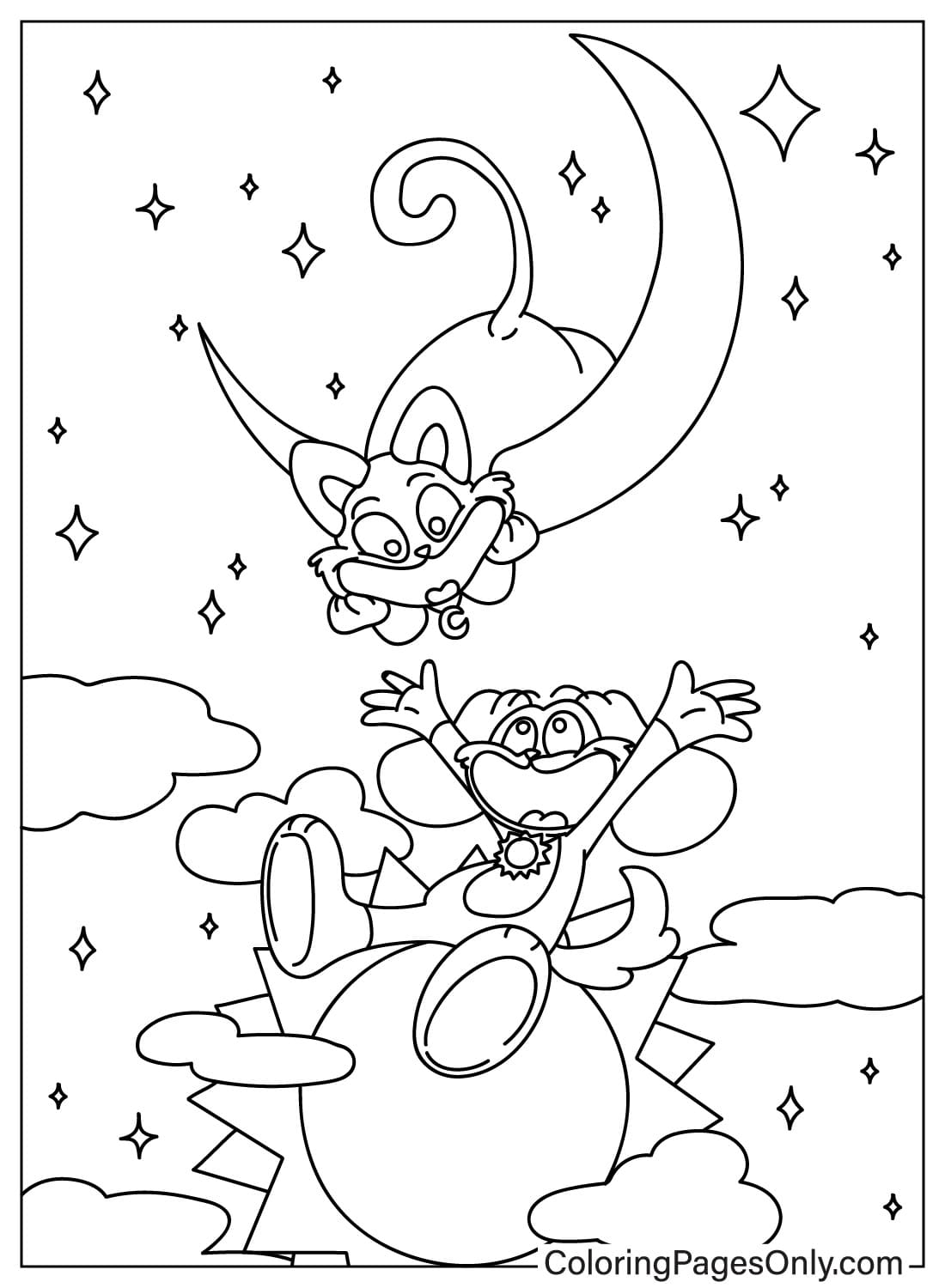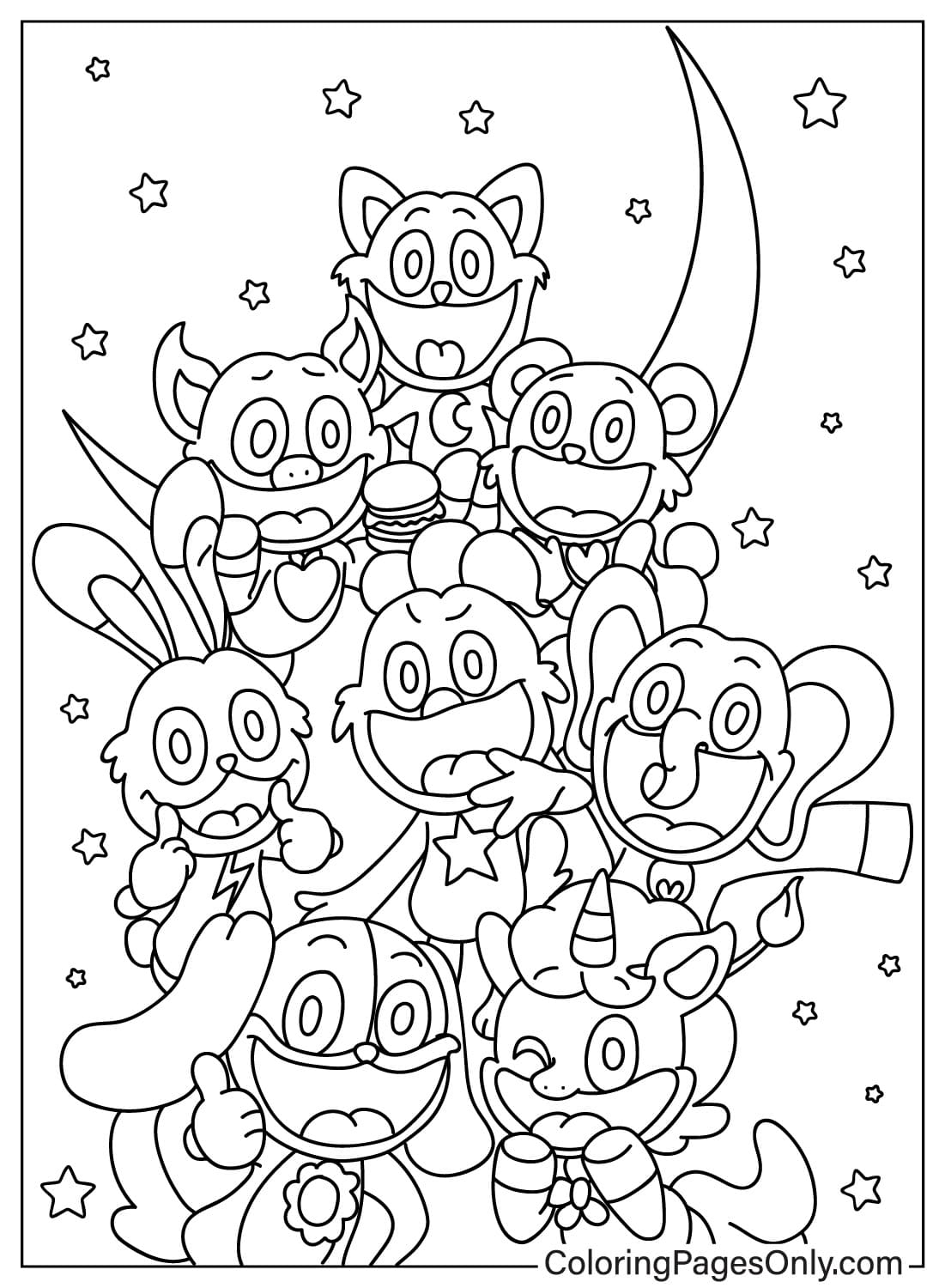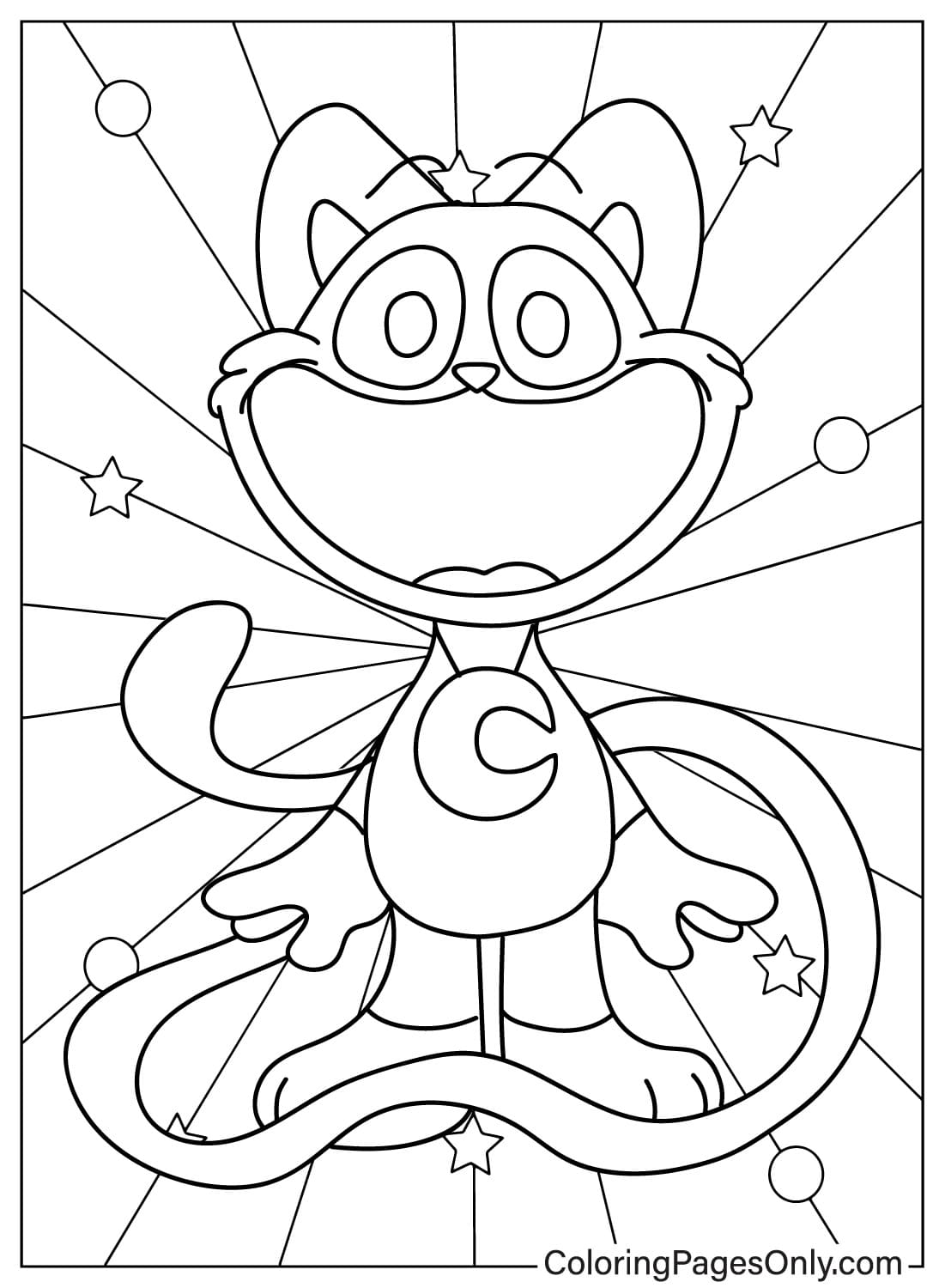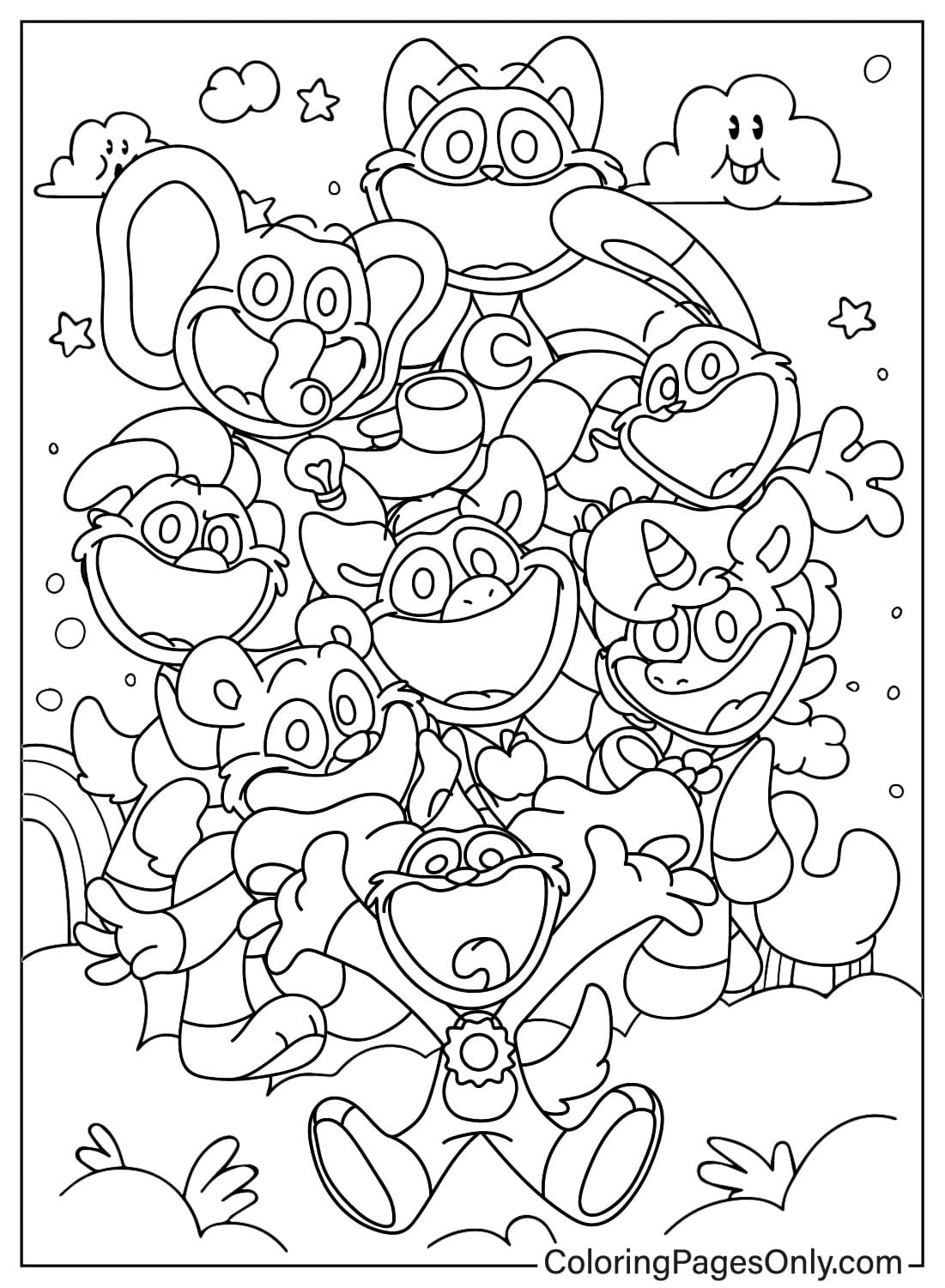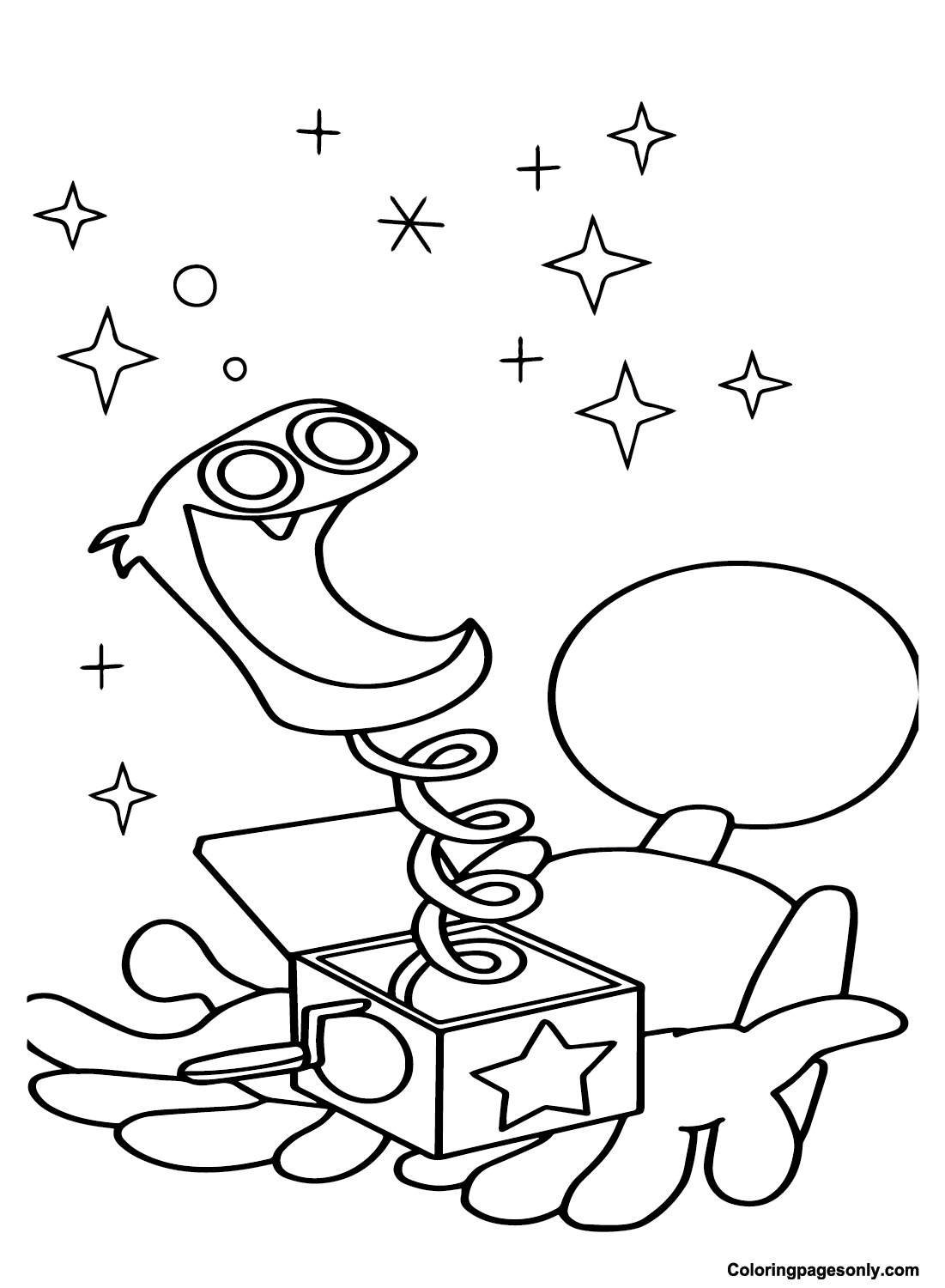
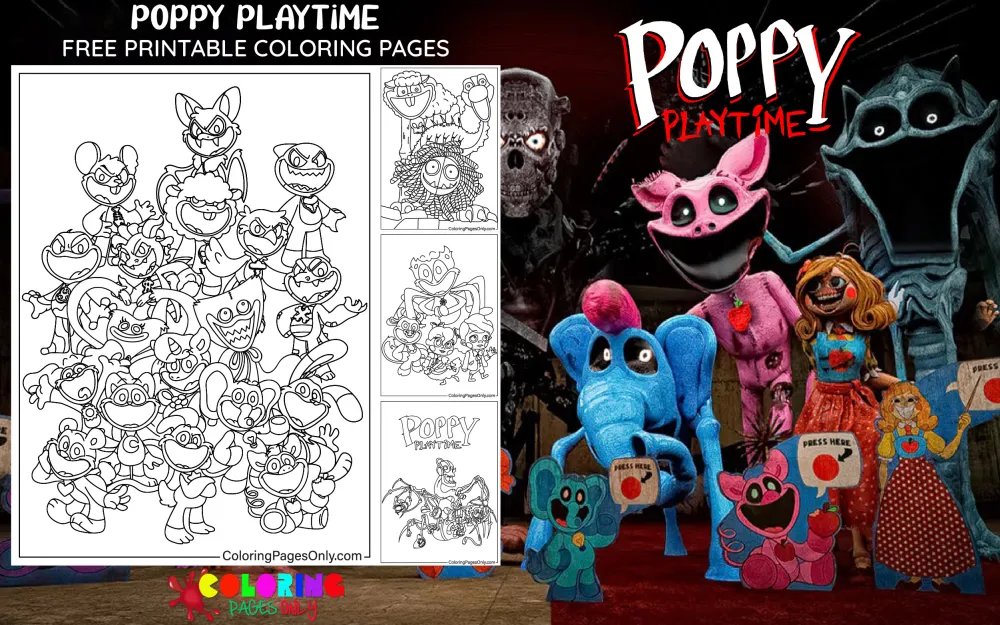
Poppy Playtime Coloring Pages at ColoringPagesOnly.com brings together 57+ free pages covering the full character roster across all four released chapters – from Chapter 1’s Huggy Wuggy to Chapter 4’s Yarnaby, Pianosaurus, Nightmare Critters, and Doey the Doughman – alongside group scenes, the Smiling Critters lineup, and individual character pages for Mommy Long Legs, Kissy Missy, CatNap, DogDay, Poppy, and more. Download any page as a PDF to print, or color online in your browser. Individual character collections for Huggy Wuggy and Miss Delight are available separately. The full Games collection is at Games Coloring Pages.
What is Poppy Playtime?
Poppy Playtime is a first-person horror puzzle game developed by Mob Entertainment, set inside an abandoned toy factory called Playtime Co. – once the most successful toy manufacturer in the United States, known for its line of giant interactive plush toys. The player character is a former Playtime Co. employee who returns to the factory ten years after all staff mysteriously vanished, drawn back by a cryptic letter. Inside, the toys are alive – and hostile.
The game is structured in chapters, each released separately, with each chapter taking the player deeper into the factory’s history and uncovering increasingly disturbing secrets about what happened to the workers, the children who lived in the factory’s on-site orphanage called Playcare, and the experiments Playtime Co. conducted on both.
Chapter 1: A Tight Squeeze (October 2021) introduced the factory’s entrance and the first encounter with Huggy Wuggy – the factory’s mascot toy, a giant blue creature with yellow hands and a permanent wide grin of sharp teeth. The player escapes using the GrabPack, a backpack-mounted tool with extendable cable hands used to pull objects and traverse the factory’s infrastructure. Chapter 1 established the game’s core atmosphere: colorful, toy-themed environments concealing genuine horror underneath.
Chapter 2: Fly in a Web (May 2022) moved the player deeper into the Game Station, where Mommy Long Legs – a pink spider-like creature with extremely long stretchy limbs – serves as the primary threat. Chapter 2 expanded the game’s roster with the Wack-A-Wuggy machines, Bunzo Bunny, PJ Pug-a-Pillar, and the toy dinosaur Bron.
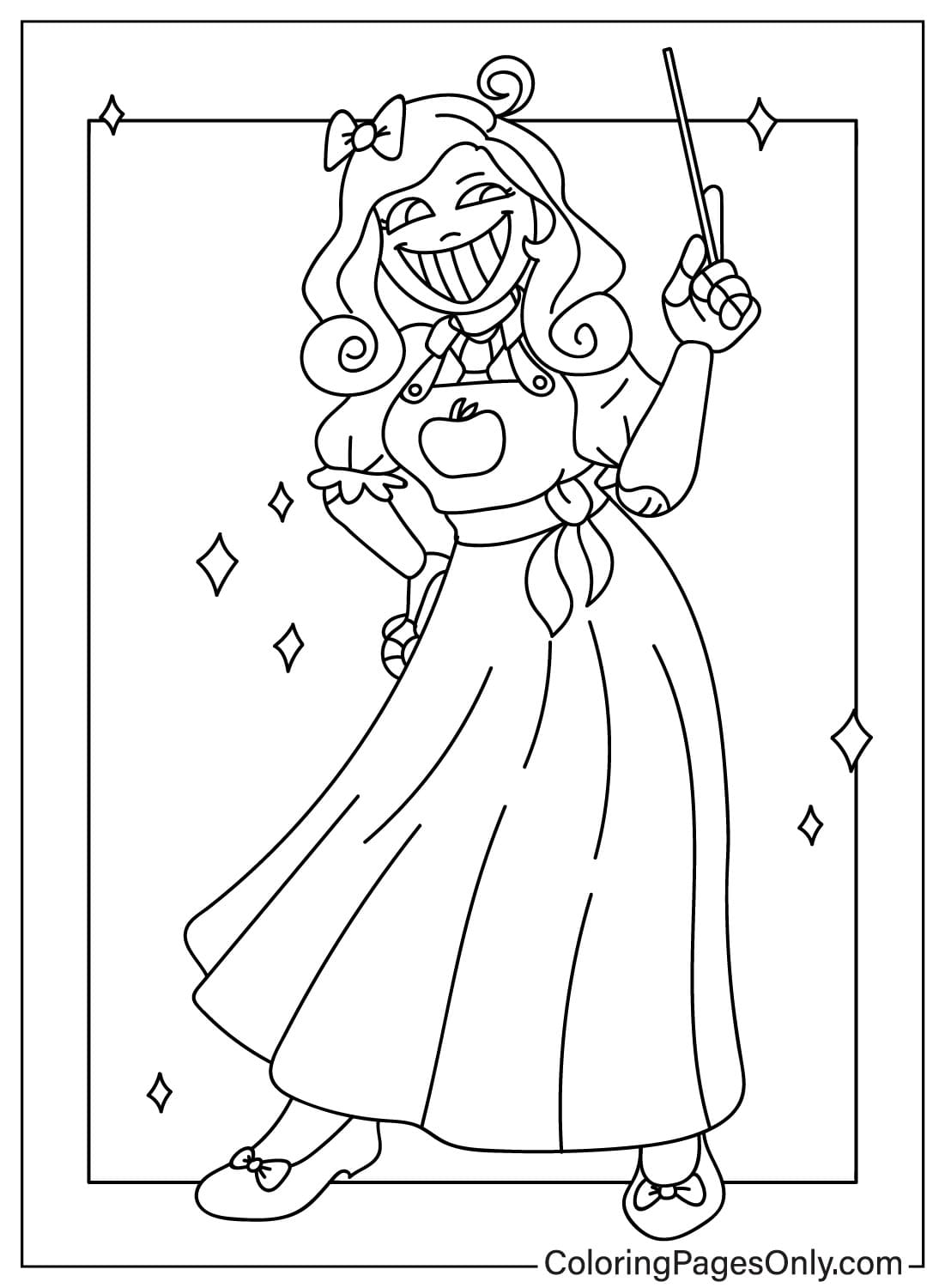
Chapter 3: Deep Sleep (January 2024) introduced Playcare, the factory’s underground orphanage, and the Smiling Critters – a line of nine scented plush animal toys originally designed to comfort the orphanage’s children. In Chapter 3, the Smiling Critters are revealed to be experiments: former orphans transformed into monsters by the factory’s scientists. CatNap, the purple-red cat of the group, serves as the chapter’s primary antagonist, capable of producing a hallucinogenic gas called the Red Smoke. Chapter 3 also introduced Miss Delight, a humanoid teacher doll, and DogDay, the golden dog of the Smiling Critters who defied the Prototype and was mutilated by CatNap as punishment.
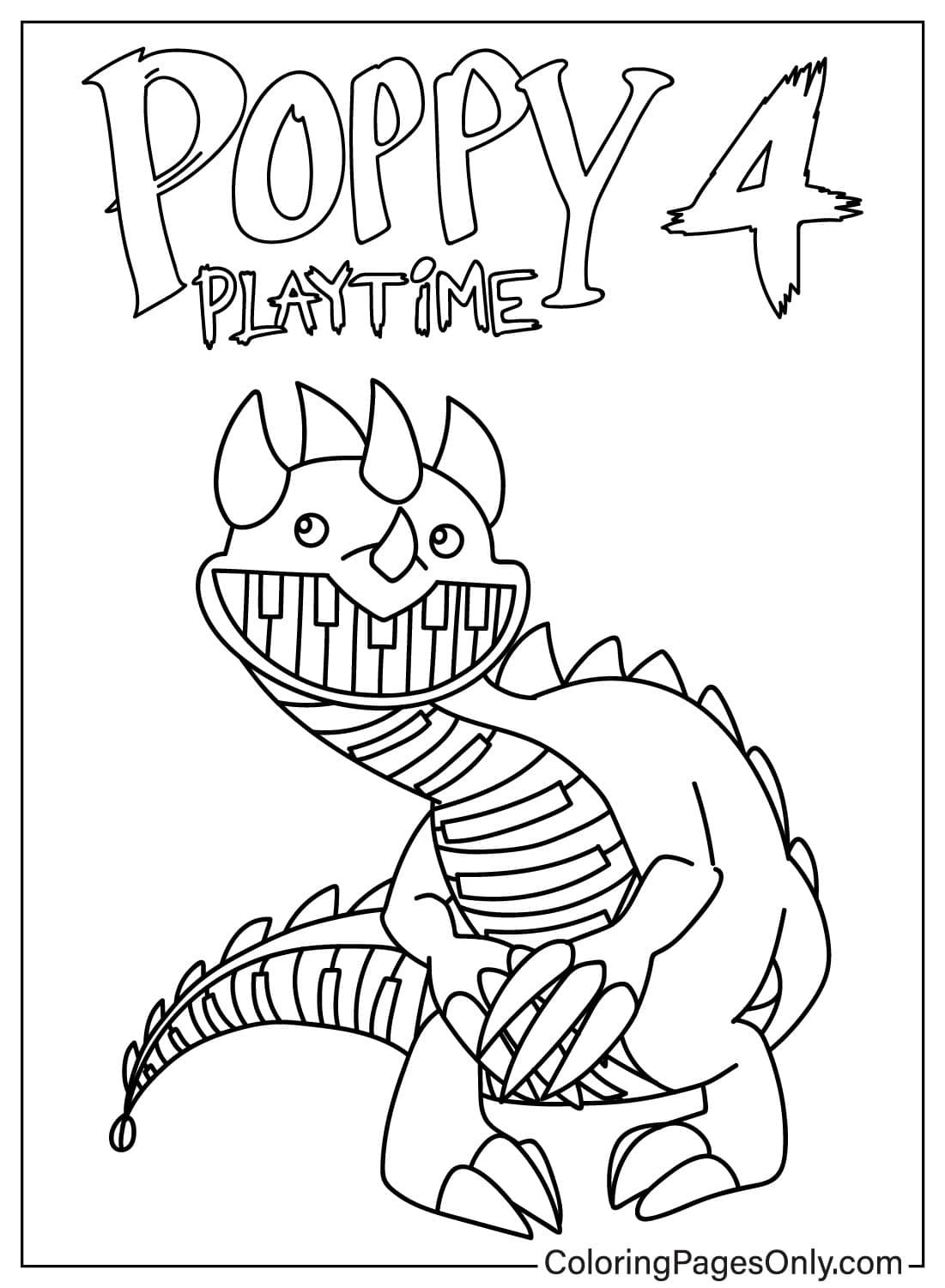
Chapter 4: Safe Haven (January 30, 2025 – PC/Steam) takes the player to the factory’s underground prison and sub-basement, revealing that the factory extends far deeper than any previous chapter suggested. New characters include Yarnaby, a leonine monster made of rainbow-colored yarn with a yellow head that splits open to reveal rows of sharp teeth; Pianosaurus, a green dinosaur whose teeth are piano keys; Doey the Doughman, a clay-like ally made from multiple children merged in an industrial accident; and The Doctor, the computer-controlled identity of Dr. Harley Sawyer, the scientist responsible for creating the factory’s monster experiments. Chapter 4 also reveals the true identity of the mysterious voice “Ollie” – and ends on the most significant cliffhanger in the series.
At the time of writing (April 2026), Chapter 5 has not been announced with a release date. Mob Entertainment’s pattern has been roughly annual releases: Chapter 3 in January 2024, Chapter 4 in January 2025.
Character Guide – By Chapter
Chapter 1 Characters
Huggy Wuggy is the factory mascot – a towering figure with mid-blue fur across his entire body, yellow hands and yellow feet, and a wide permanent grin full of sharp teeth. His fur is a warm, saturated blue – not navy, not teal, but the clear mid-blue of a classic crayon. His hands and feet are clean, medium yellow. The contrast between the friendly blue-and-yellow color palette and the teeth is intentional: Huggy Wuggy’s design is built on the mismatch between toy-safe colors and predator anatomy. The pages showing Huggy Wuggy in the dark factory corridors call for particularly careful background treatment – deep shadow blues and blacks behind the bright character create the lurking-in-darkness effect the game is famous for.
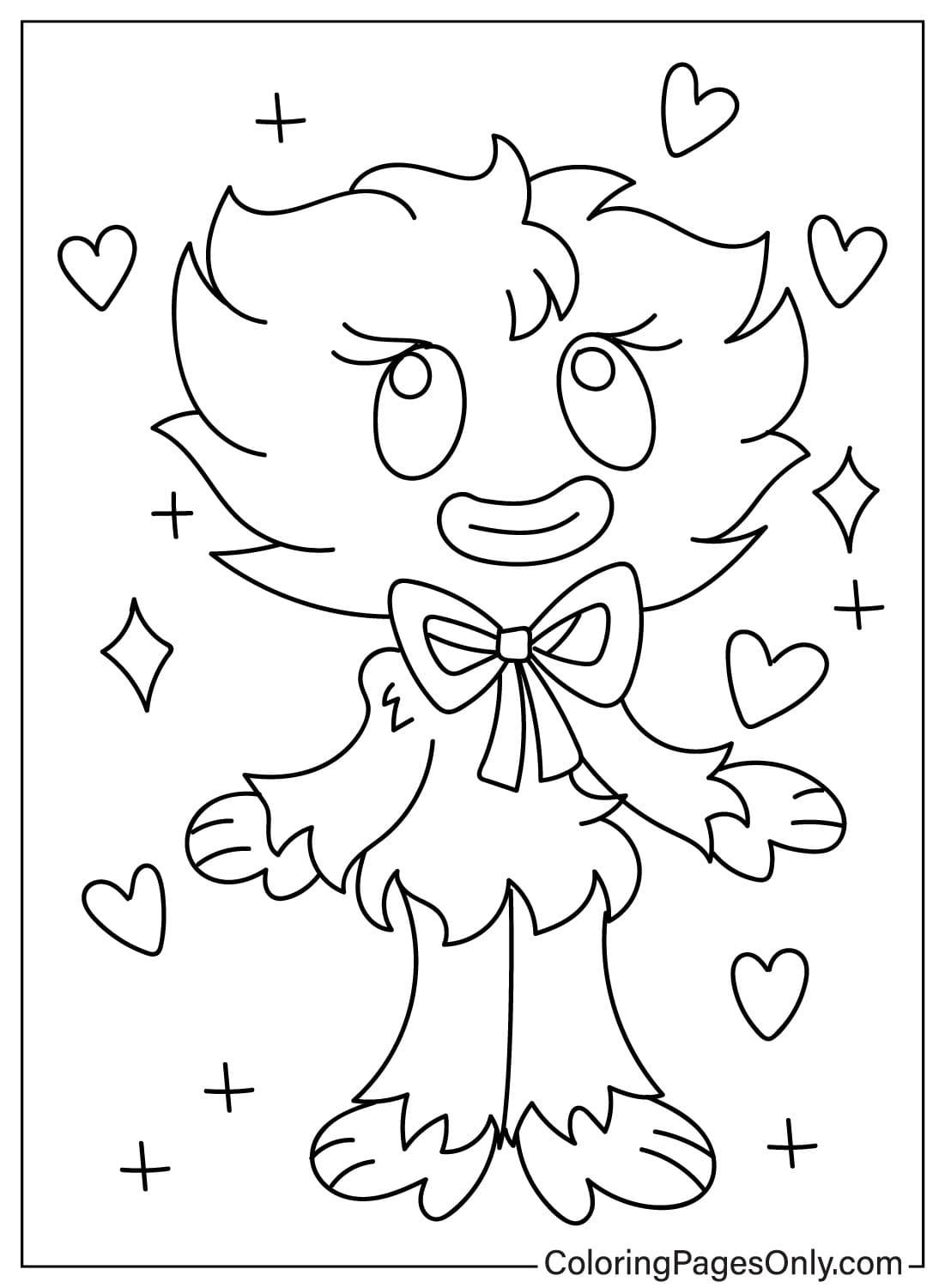
Kissy Missy shares Huggy Wuggy’s body type exactly – the same giant proportions, the same long arms, the same wide grin – but her fur is hot pink rather than blue, and she is considered by the lore to be less aggressive. She appears in Chapter 1 briefly and in Chapter 4 as an injured ally. Her canonical pink is a vivid, warm hot pink – not pastel, not salmon, but the clear bright pink of a toy package.
Poppy is the porcelain doll who gives the game its title – discovered in a glass case in Chapter 1. She has porcelain doll features: pale skin, red-auburn curly hair, and a pink dress with white accents. Her coloring requires careful handling of the dress’s layered white-and-pink elements and the skin tone, which sits between peach and true white.
Chapter 2 Characters
Mommy Long Legs is entirely pink – but a different pink from Kissy Missy. Where Kissy is a saturated hot pink, Mommy Long Legs’ pink is slightly warmer and more muted, closer to the pink of a flamingo or a classic “baby pink” toy. Her extremely long, stretchy limbs are her defining visual feature. Pages showing her in stretched positions require commitment to consistent color value across the full length of the limbs – rushing the color toward the extremities breaks the visual continuity.
Bunzo Bunny is a yellow bunny character with a green jester’s hat – a clean, warm primary yellow for the body and a mid-green for the hat, which makes for one of the cleaner complementary color pairs in the Poppy Playtime roster. His appearance in Chapter 2’s Musical Memory sequence ends in one of the game’s more disturbing moments, which fan art and coloring pages often acknowledge through his expression rather than his color palette.
PJ Pug-a-Pillar is a centipede-pug hybrid – multiple connected round segments, each with pug-like features. His color is a warm brown-tan. The segmented body is one of the most interesting coloring challenges in the collection because each segment is essentially the same shape repeated, making it ideal for gradient or alternating color experiments.
Bron is a red dinosaur toy with yellow accents – the most straightforward dinosaur design in the factory’s toy line. His red is a clear toy-red, not brick or maroon.
Chapter 3 Characters – The Smiling Critters
The Smiling Critters are nine plush animal toys, each a different animal species and a different color. Their individual identities are defined entirely by their colors – lose the color and you lose the character.
CatNap is a maroon-red/dark purple-red cat – the darkest, most desaturated member of the Smiling Critters. His color is somewhere between maroon and a muted deep purple-red, referencing the Red Smoke he produces. He is the most serious coloring challenge in the Smiling Critters lineup because his shade requires mixing – a pure red is wrong, a pure purple is wrong, and a pure maroon reads as too warm. The target is a cool, slightly grayed deep red.
DogDay is the sunshine-yellow dog with a face design that references a sunflower – warm yellow throughout, with a radial element to his face frame. His yellow should be warm and clear, the most cheerful color in the Smiling Critters lineup, which makes the contrast with his Chapter 3 fate particularly striking.
Bobby BearHug is an orange bear – a warm, medium orange similar to a classic teddy bear but fully saturated in the Smiling Critters’ toy-bright palette.
Hoppy Hopscotch is a green frog character – a clear, bright frog-green, the most immediately readable animal-to-color mapping in the entire lineup.
KickinChicken is an orange-yellow chicken – warm and slightly more yellow-toned than Bobby BearHug’s orange, appropriate for a chicken character.
CraftyCorn is a purple-teal unicorn – one of the more visually complex Smiling Critters because the purple and teal elements must read as belonging to the same character while remaining clearly distinct from each other.
Bubba Bubbaphant is a blue elephant – a lighter, more pastel-adjacent blue than Huggy Wuggy’s saturated mid-blue.
PickyPiggy is a pink pig – a lighter, more pastel pink than Mommy Long Legs or Kissy Missy, appropriate for a piglet-inspired toy.
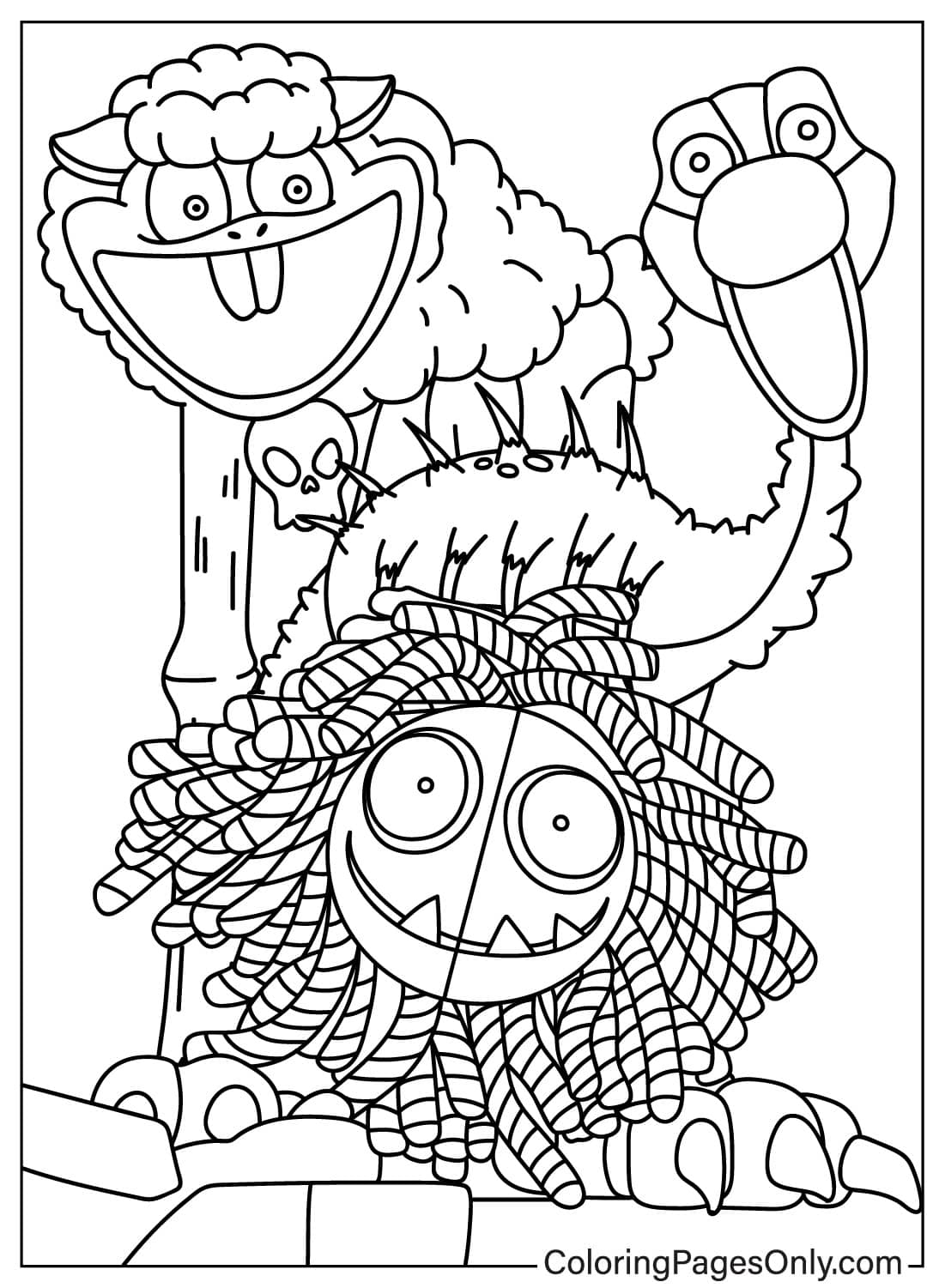
The Nightmare Critters are horror mode transformations of the Smiling Critters – darker, more distorted, with additional unsettling features. The coloring approach for Nightmare Critters follows the same desaturation-plus-darkening principle as Sprunki’s horror mode: keep each character’s canonical color recognizable, but push it darker and cooler until it reads as the same hue with the life drained out of it.
Chapter 4 Characters
Yarnaby is a leonine creature made entirely of rainbow-colored yarn – the most visually complex canonical character in the collection because his body references multiple colors simultaneously. His head is a round yellow. His mane and body incorporate the full spectrum of yarn-weight colors – red, orange, yellow, green, blue, purple – woven together in the texture pattern of yarn. The key coloring challenge is maintaining the yarn texture feel: each color section should read as a strand of yarn, not a flat block of color, which means visible direction in the color application and texture.
Pianosaurus is a green dinosaur with piano keys for teeth – the green is a clear, mid-bright green (not forest green, not neon green), and the piano keys follow their canonical pattern: white naturals, black sharps, in standard keyboard order if visible on the page.
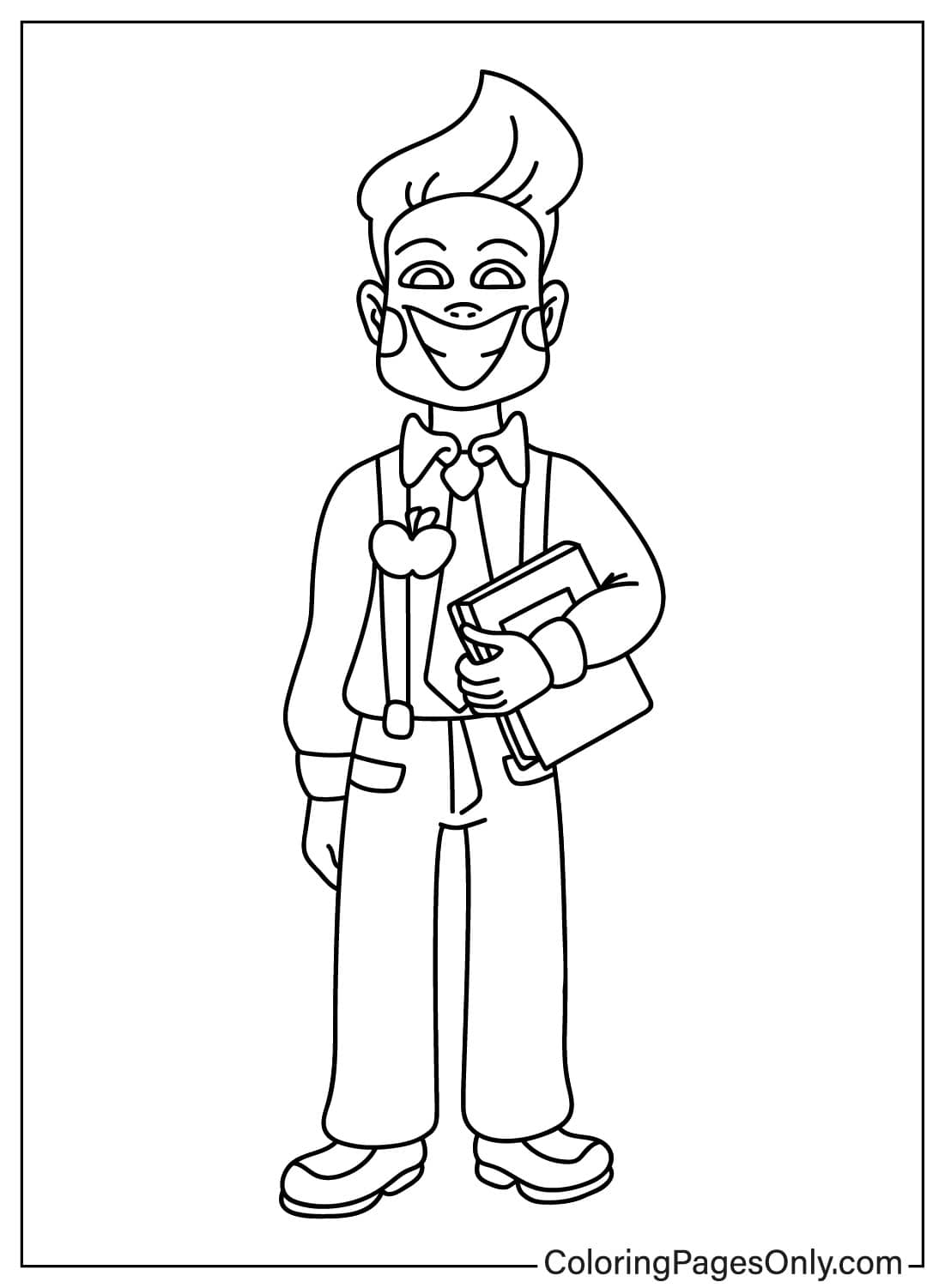
Doey the Doughman is a clay/dough-textured creature with a warm, slightly pink-beige skin tone appropriate for raw dough. He wears a hat. His texture is the defining coloring element – he should read as soft and pliable, not hard, which means avoiding harsh value contrasts in favor of gradual, smooth transitions.
The Prototype appears as a towering metallic skeletal figure – a muted metal grey throughout, with dark shadows at structural joints and a slightly cooler tone in the shadow areas. He is the final antagonist of the series, and his pages are the most complex architectural coloring challenge in the collection.
Coloring Tips
The Poppy Playtime palette is built on the contrast between toy-bright primary colors and dark industrial environments. The characters themselves use saturated, clean colors – blues, pinks, yellows, reds, greens – that would look at home in a toy store catalog. The factory backgrounds are the opposite: rusted metal, stained concrete, dim lighting, and shadow. The most effective coloring pages in this collection leverage that contrast directly. When a character page includes background elements – factory walls, vents, corridors – keeping those backgrounds in low-saturation, dark, cool tones makes the character’s canonical bright colors pop against them with maximum visual impact.
For Huggy Wuggy pages in dark corridors: The mid-blue fur should be rendered at its full, clear saturation. The background should go as dark as you can push it – near-black for the deepest shadow zones, with the lightest areas of the background still staying well below the character’s blue in brightness. The teeth are white-to-cream: the inside of the mouth recedes to dark grey or black, making the teeth read against both the blue exterior and the dark interior simultaneously.
For the Smiling Critters group pages: The challenge is managing nine characters each with a distinct canonical color, all in one composition, without any character losing their individual identity. Before starting, map out the position of each character and confirm you have a distinct color for each. The nine canonical colors – maroon-red (CatNap), sunshine yellow (DogDay), orange (Bobby BearHug), green (Hoppy), orange-yellow (KickinChicken), purple-teal (CraftyCorn), blue (Bubba), pink (PickyPiggy), and whatever color applies to the remaining critters – must be kept clearly distinct at all times. Any two adjacent characters who are in similar color families (orange and orange-yellow, pink and pink-purple) need the most deliberate value and saturation management.
For Mommy Long Legs pages showing her in stretched positions: Her pink is the same throughout every section of her body, including the stretched-out limbs that extend across the composition. A common error is applying the color more lightly toward the extremities of the limbs – this makes them read as fading out rather than stretching. Maintain consistent saturation from the torso to the fingertips.
For Yarnaby: His rainbow yarn body is one of the most ambitious coloring projects in the collection. The key is thinking in strands, not blocks. Each color area should have visible directionality – the colors run in the direction of the yarn fibers. Apply each color in parallel strokes following the implied yarn direction. Where colors meet, allow a small zone of intentional blending rather than a hard edge, because yarn fibers interweave at their boundaries.
For the Prototype pages: The skeletal metallic structure calls for a specific grey palette: warm grey is wrong (reads as aged bone), pure cool grey is wrong (reads as flat plastic). The target is a slightly bluish steel grey – neutral but cool, with sharp highlight points at the most exposed metal surfaces and deep cool-black in the recessed areas between structural elements. If you have a metallic silver pencil or marker, this is one of the few pages where metallic medium makes a genuine material difference.
For Nightmare Critters pages: Follow the same desaturation-plus-darkening approach as Sprunki horror mode. The Nightmare versions of each Smiling Critter should use the same hue as the normal version, but pushed darker and less saturated – the viewer should be able to identify which Smiling Critter is which, but the color should feel wrong. CatNap’s already-dark maroon requires the least adjustment for the Nightmare version; DogDay’s sunshine yellow requires the most dramatic shift, as Nightmare DogDay’s sickly yellow needs to feel very far from the cheerful original while remaining recognizably yellow.
5 Activities
Color the full Chapter 3 Smiling Critters lineup as a complete set. Print every individual Smiling Critter page in the collection. Research each character’s canonical color before beginning – the wiki confirms: CatNap (maroon-red), DogDay (sunshine yellow), Bobby BearHug (orange), Hoppy Hopscotch (green), KickinChicken (orange-yellow), CraftyCorn (purple-teal), Bubba Bubbaphant (blue), PickyPiggy (pink). Color each character in its exact canonical color. When all nine are finished, arrange them in a row and compare the colors. The Smiling Critters lineup demonstrates one of the most deliberately designed character color systems in recent horror gaming – nine characters, nine clearly distinct colors, no two easily confusable in peripheral vision at the scale of a plush toy on a shelf. The design intent was legibility at toy store display distance, and the finished lineup makes this visible.
The canonical vs. corrupted version study. Print any Smiling Critter page twice – DogDay is the most striking choice because his sunshine yellow is the most dramatic canonical color in the lineup. Color the first copy in full canonical palette: clear sunshine yellow, playful expression, the most cheerful version possible. Color the second copy as the Nightmare Critter version: push the yellow darker and cooler until it reads as sickly – a slightly green-cast, desaturated yellow-grey rather than the warm, clear original. Display both pages side by side. The contrast demonstrates the specific technique Mob Entertainment uses to transform cute into disturbing: not a complete redesign, not a different character, but the same design with its color register systematically corrupted.
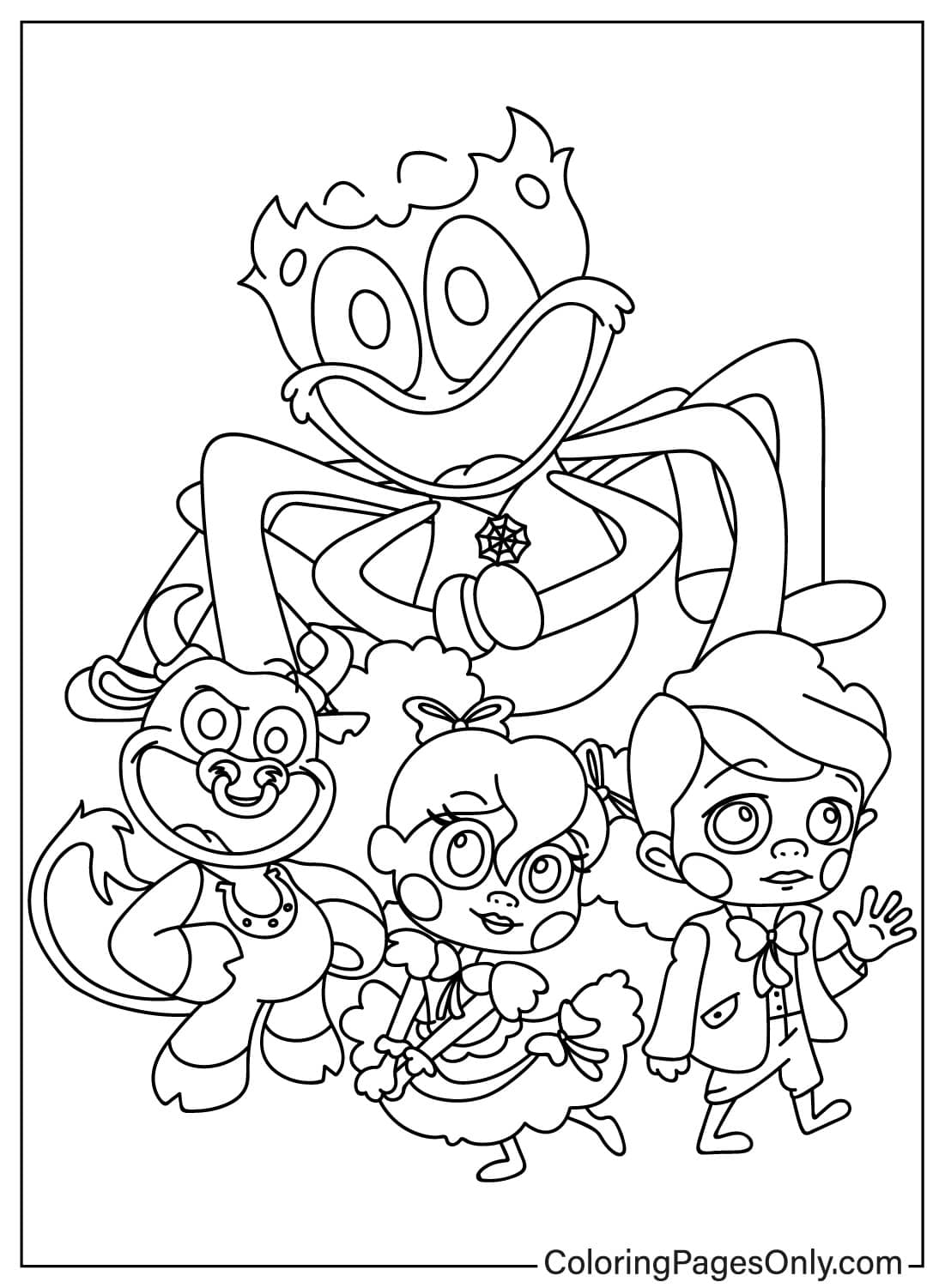
Color the Chapter 4 group pages as a lore-accurate composition. Print the Poppy Playtime 4 Characters and Nightmare Critters, and Yarnaby pages. Before starting, review the Chapter 4 story: Yarnaby is the primary antagonist for most of the chapter, Nightmare Critters are the corrupted Smiling Critters, and the underground prison of Safe Haven is the setting. Color each character in the canonical palette, then add background elements that reference the Chapter 4 environment – the underground prison’s rusted metal, the dim lighting, the industrial architecture of the sub-basement. The goal is a composition that reads like a Chapter 4 promotional image: character colors vivid against a dark, oppressive environment.
Yarnaby’s rainbow yarn challenge. Print the Yarnaby page. Before touching the page, plan the full color sequence for his yarn body – decide where each color of the rainbow spectrum begins and ends across his form, and in which direction the yarn strands run on each section. Then execute the plan using directional strokes that follow the yarn direction, allowing intentional blending at color boundaries rather than hard edges. This activity develops two specific coloring skills simultaneously: planning color placement before application (which separates experienced colorists from beginners) and using stroke direction to convey texture (one of the most transferable techniques in any coloring medium).
Build a chapter-by-chapter display. This is the longest-term project in the collection. Print one or two character pages from each chapter: Huggy Wuggy for Chapter 1, Mommy Long Legs for Chapter 2, CatNap and DogDay for Chapter 3, Yarnaby for Chapter 4. Color each character in the canonical palette. Arrange the finished pages in order and label them with the chapter number and release date (Chapter 1: Oct 2021, Chapter 2: May 2022, Chapter 3: Jan 2024, Chapter 4: Jan 2025). Notice how the character designs escalate across chapters: the relatively simple Huggy Wuggy gives way to the more complex Mommy Long Legs, then to the Smiling Critters’ nine-character system, then to Yarnaby’s multi-color yarn construction. The visual progression of the franchise’s character design ambition is readable in the lineup.