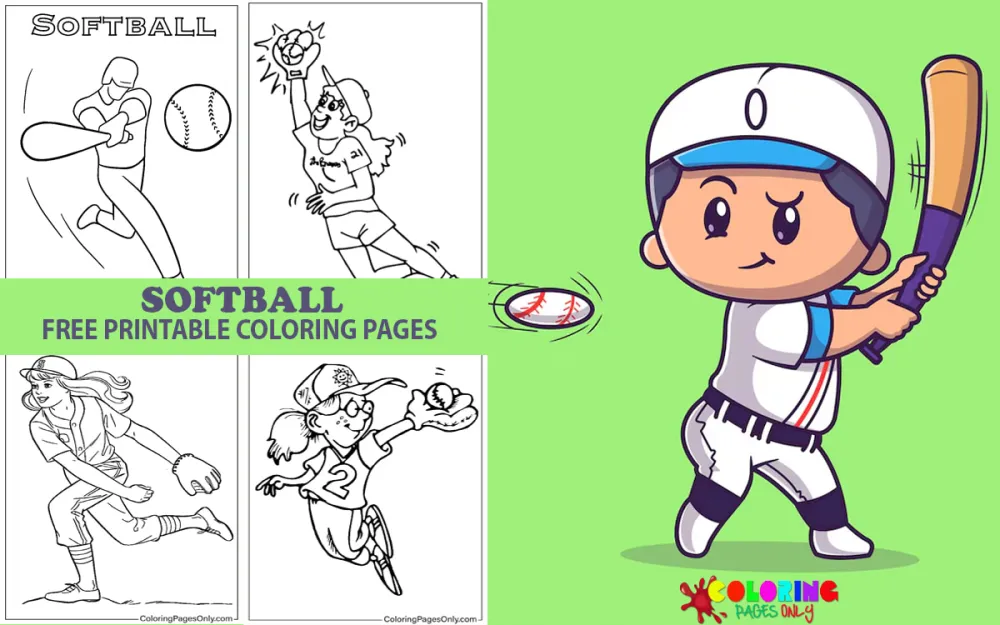
Softball Coloring Pages at ColoringPagesOnly.com brings together 24 free printable pages dedicated to one of America’s most widely played team sports – a game with deep roots in women’s and girls’ athletics at every level, from backyard play to the Olympics. The collection covers the full cast of softball positions and action moments: the pitcher in her underhand delivery, the batter at the plate, the outfielder tracking a fly ball, and the catcher in position – alongside female player portraits, girl player tiles, character crossovers (Hello Kitty Playing Softball), animal crossovers (Dog Playing Softball, Happy Dog Playing Softball), and object tiles including the dramatically titled Flaming Softball. The full Sports collection is available through our Sports Coloring Pages hub, with additional bat-and-ball coverage at Baseball Coloring Pages.
Every page is completely free – download as PDF to print or color online in your browser. No sign-up, no cost.

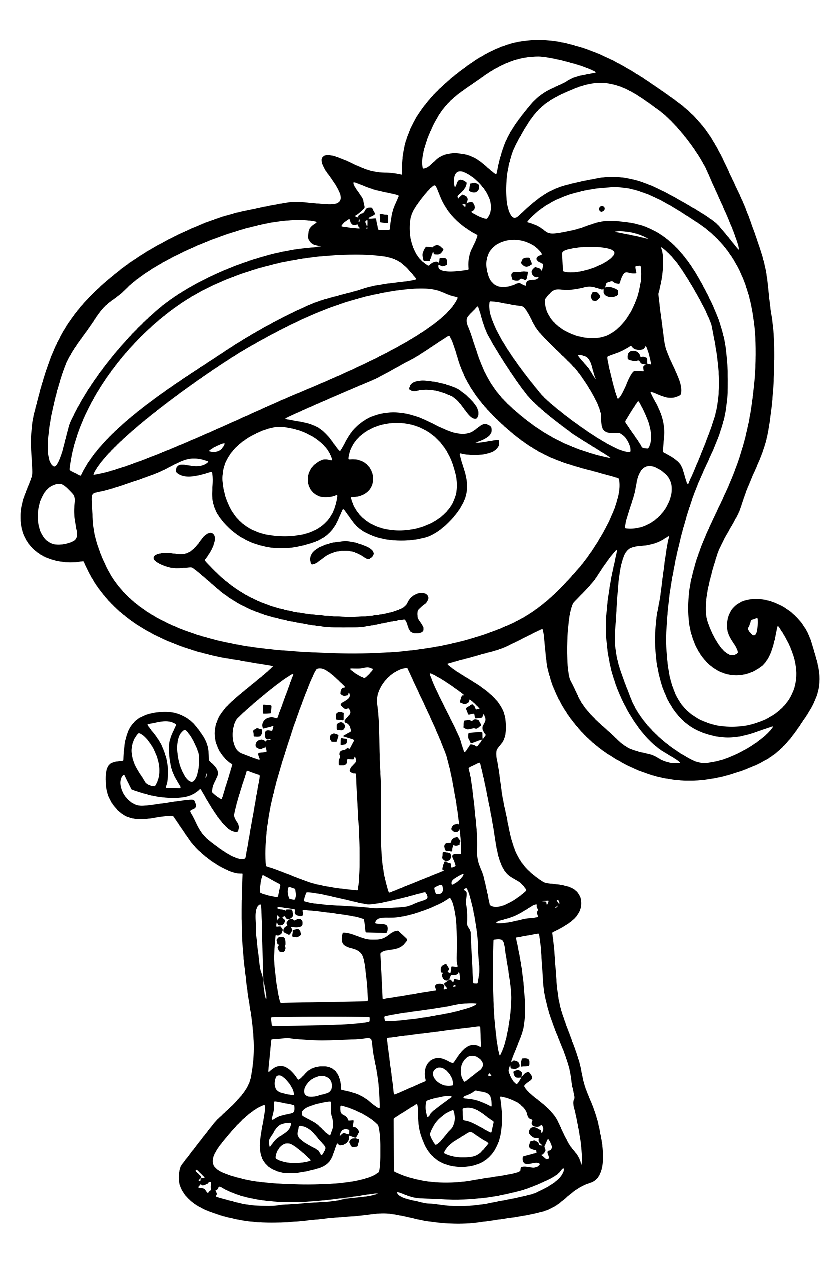
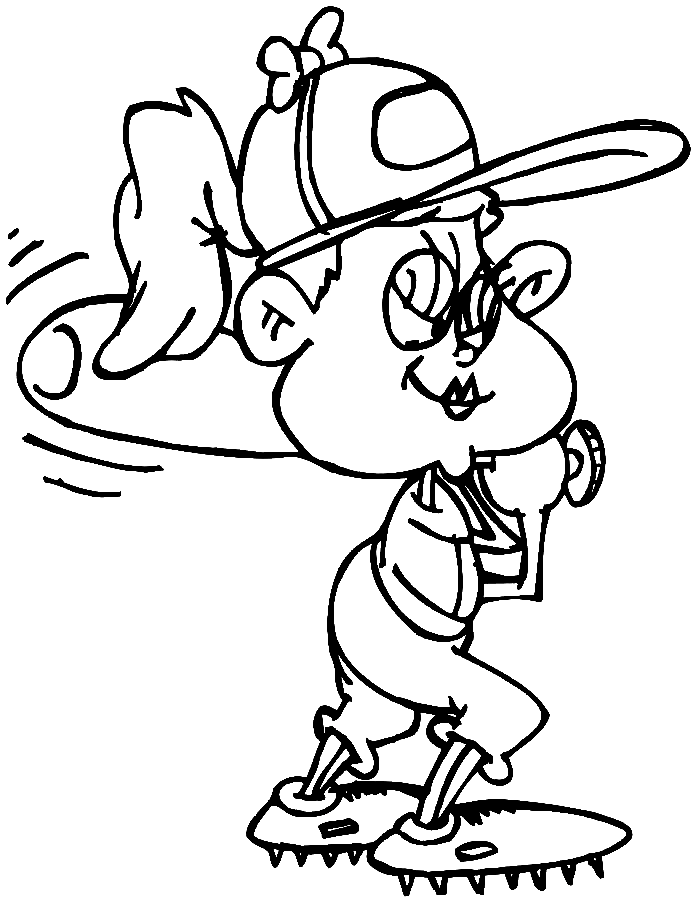
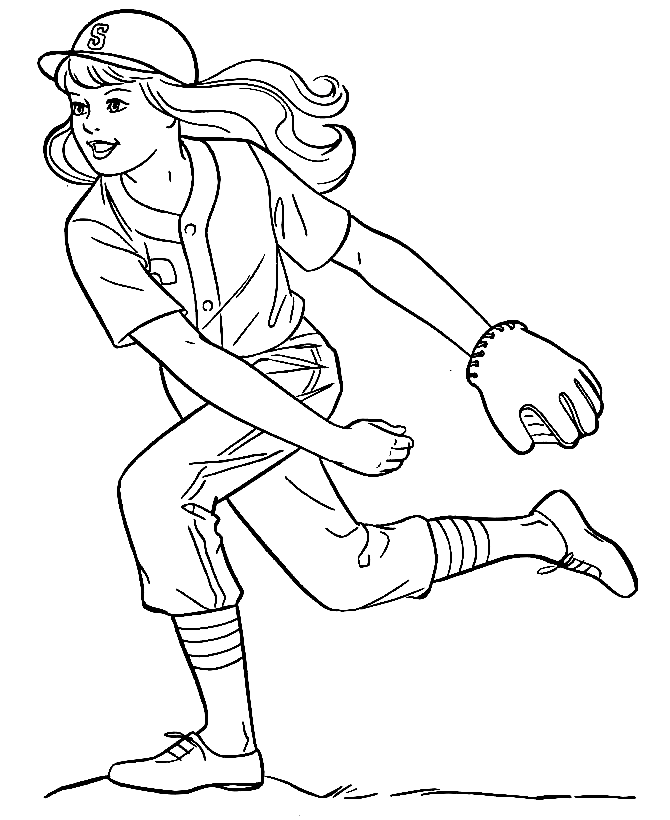
About Softball
Softball is a bat-and-ball team sport played between two teams of nine players on a diamond-shaped infield with four bases – home plate, first base, second base, and third base – at 60-foot intervals. Like baseball, teams alternate between batting and fielding over a set number of innings, scoring runs by advancing baserunners around the diamond to cross home plate. The fundamental difference between softball and baseball lies in the pitching: softball pitchers throw underhand from a flat pitcher’s circle (not an elevated mound), using a windmill or slingshot delivery motion that generates significant speed despite the downward arc of the pitch.
Softball was invented in 1887 by George Hancock in Chicago, initially as an indoor game played with a broomstick and a boxing glove in the Farragut Boat Club during a Yale-Harvard football game. The original ball was considerably larger and softer than a baseball, giving the game its eventual name. The sport moved outdoors over the following years and spread rapidly across the United States, eventually splitting into two distinct forms: fastpitch softball (the competitive, Olympic-recognized version, with highly skilled underhand pitching that can reach speeds of 70+ miles per hour) and slowpitch softball (the recreational version, with an arcing pitch that travels more slowly and lands in a defined strike zone).
The softball most commonly used in women’s fastpitch play measures 12 inches in circumference and is yellow-green in color (a change from the original white that was adopted in the 1990s for improved visibility). The bat is slightly shorter and lighter than a baseball bat. The pitching distance in fastpitch softball is 43 feet for women and 46 feet for men – compared to 60 feet 6 inches in baseball – but the faster reaction time required combined with the underhand delivery creates a pitching environment that many hitters consider as or more challenging than baseball hitting.
Softball is particularly significant in the history of women’s athletics in the United States. The sport has been a primary vehicle for girls’ and women’s competitive athletic participation since the early 20th century, predating the widespread availability of most other organized women’s sports at the school and collegiate level. Title IX (1972), the federal law prohibiting sex discrimination in educational programs receiving federal funding, dramatically expanded women’s collegiate softball programs and established the sport as one of the defining venues of women’s athletics in America. Team USA Women’s Softball is one of the most dominant programs in the history of any Olympic sport – winning gold medals at the Atlanta (1996), Sydney (2000), and Athens (2004) Olympics, silver at Beijing (2008), and gold again when softball returned to the Olympic program at Tokyo (2020/2021).
What’s in This Collection
Player Action Tiles
The collection’s most technically informative tiles depict softball players in the sport’s fundamental athletic positions and action moments.
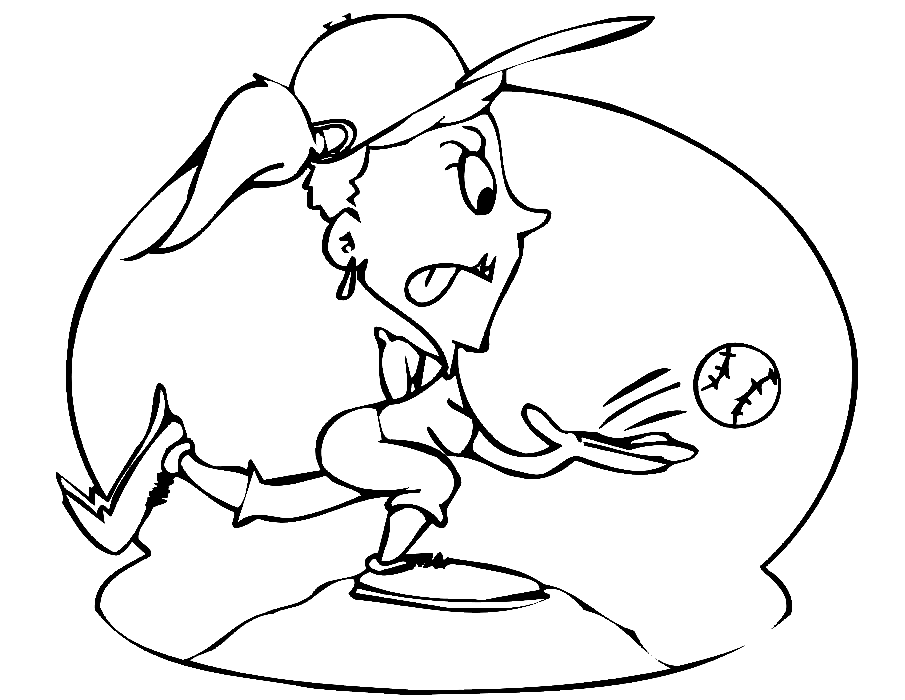
Softball Pitcher captures the pitcher in the underhand windmill or slingshot delivery – the most unique and visually distinctive athletic motion in softball relative to other ball sports. The pitcher’s motion in fastpitch softball generates tremendous rotational power through the shoulder and hip despite the downward arc of the pitch. Elite fastpitch pitchers regularly reach pitching speeds of 60-70+ miles per hour from a distance of 43 feet – which, adjusted for the shorter pitching distance, gives the batter comparable or less reaction time than a baseball hitter facing a 90+ miles per hour fastball.
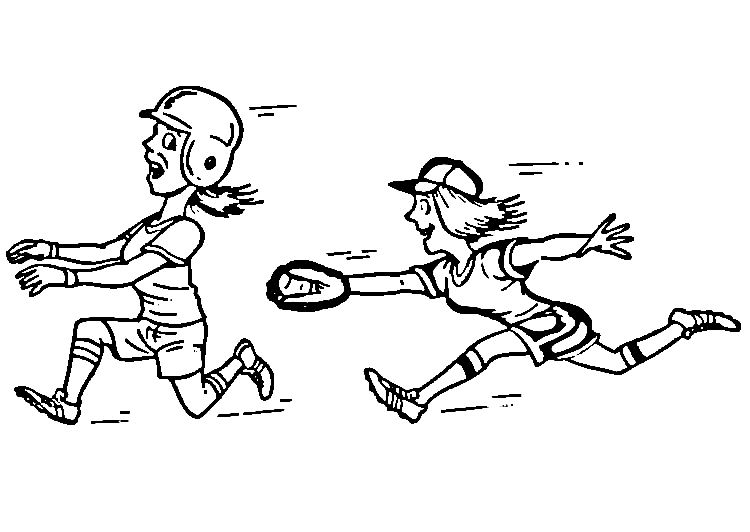
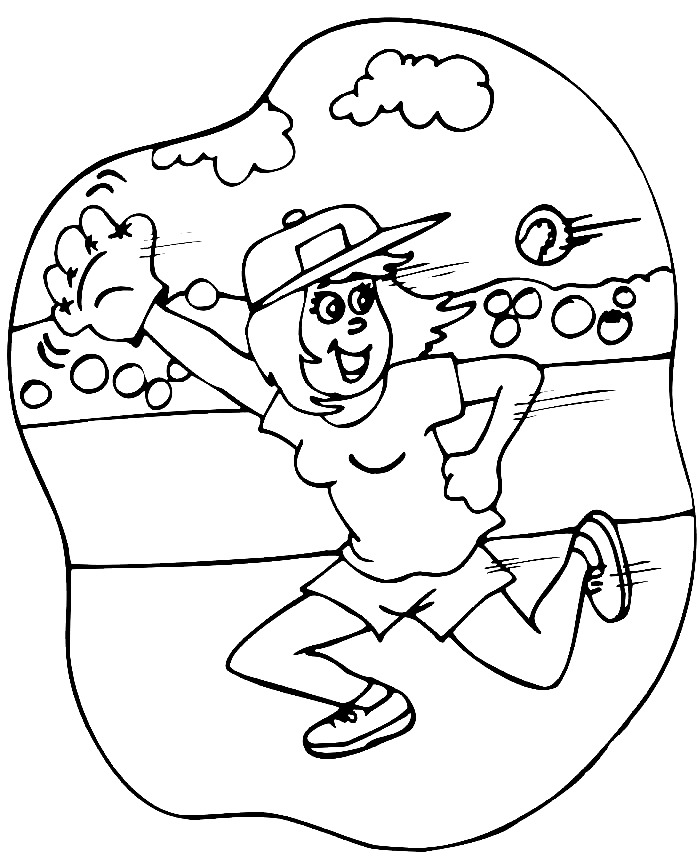
Softball Outfielder depicts a fielder in the outfield – the three defensive positions (left field, center field, right field) responsible for catching balls hit into the deeper reaches of the field. The outfielder’s tile captures the characteristic tracking posture – glove raised, eyes up, body positioned under the ball’s projected landing point.
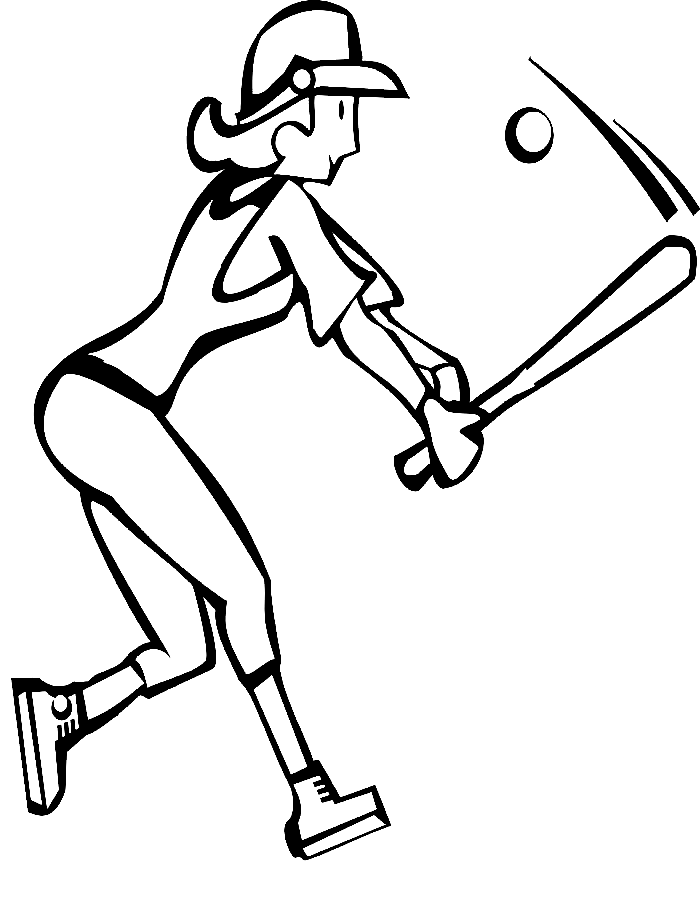
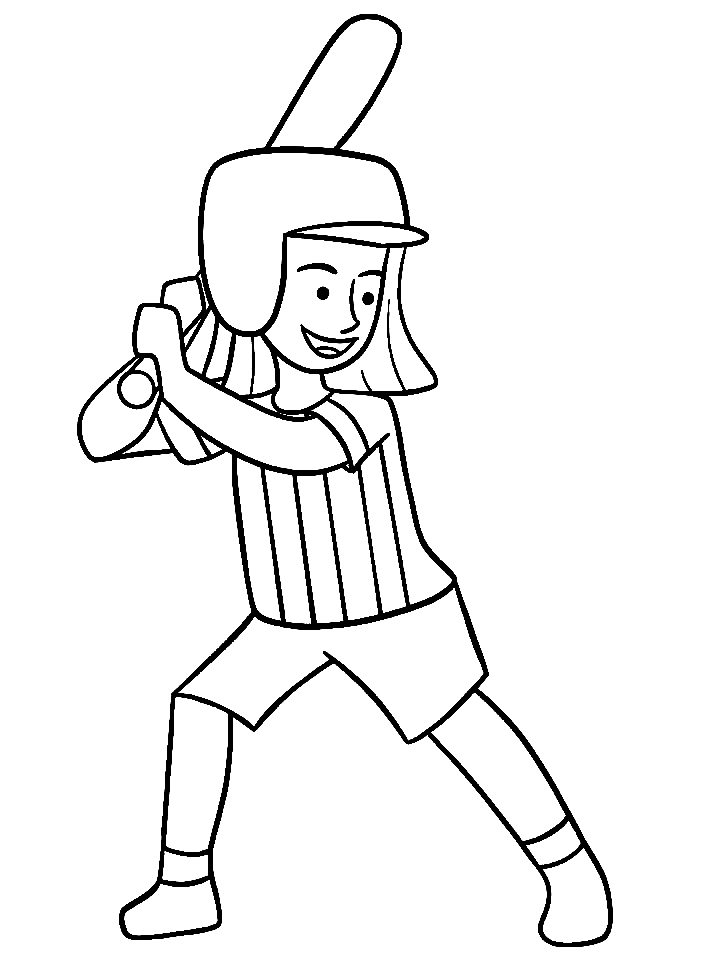
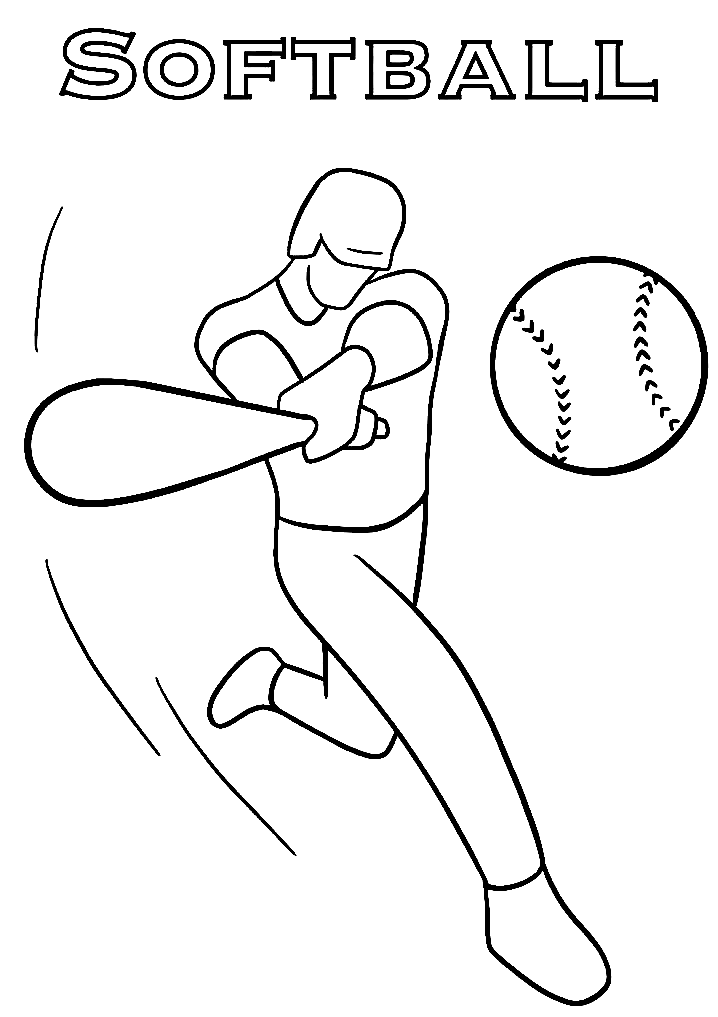
Softball Batter depicts the batter at the plate in stance or swing – the most visually powerful position in any bat-and-ball sport coloring page, with the full-body torque of the swing creating dynamic diagonal lines across the composition.
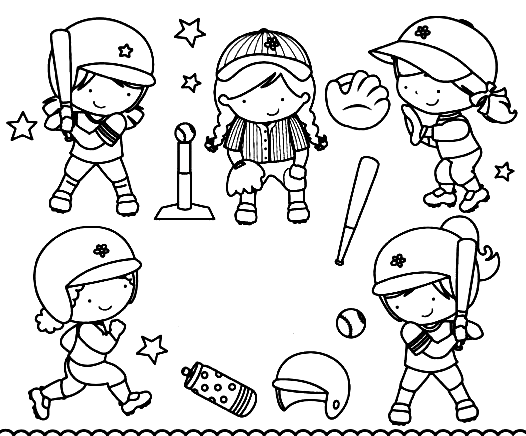
Softball Players is an ensemble tile depicting multiple players in a team or competitive context – the most compositionally complex page in the action cluster.
Female Player Tiles
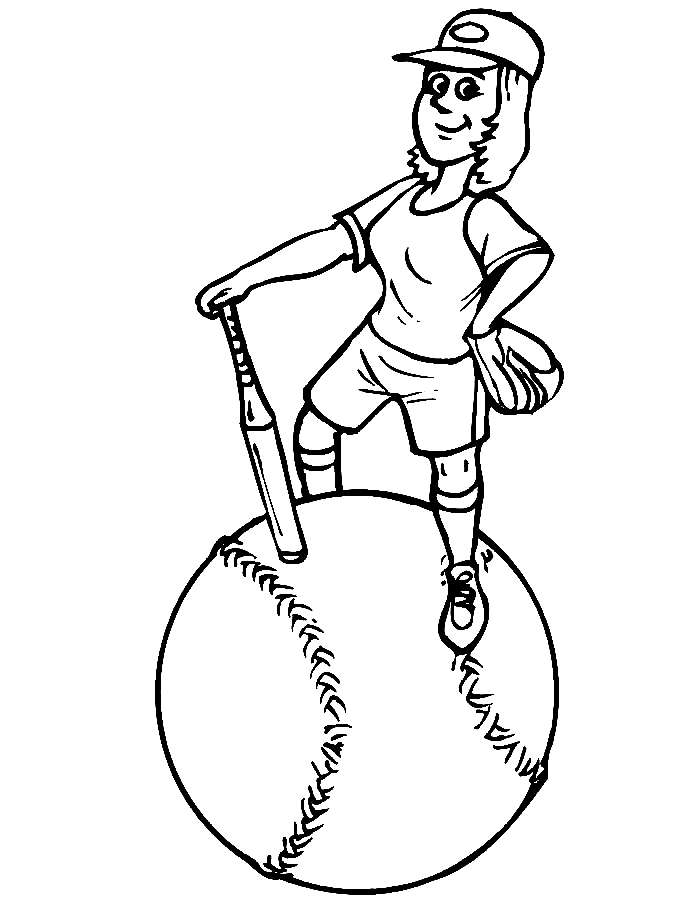
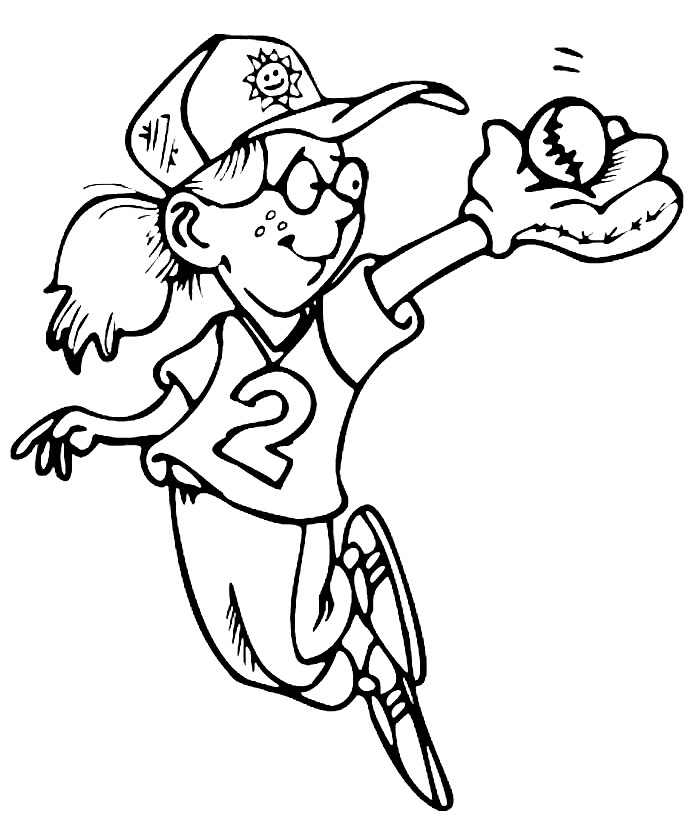
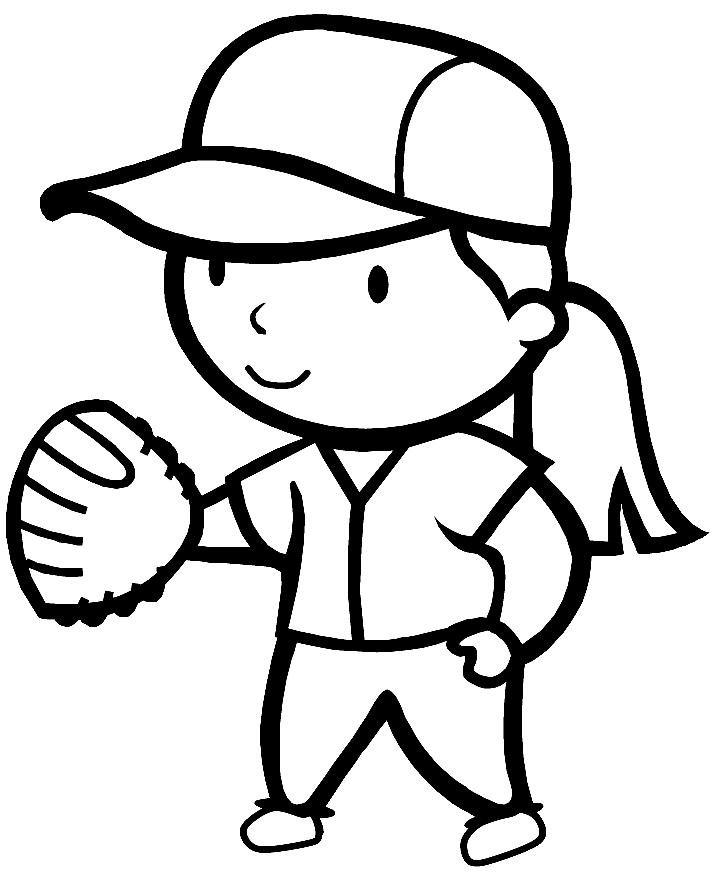
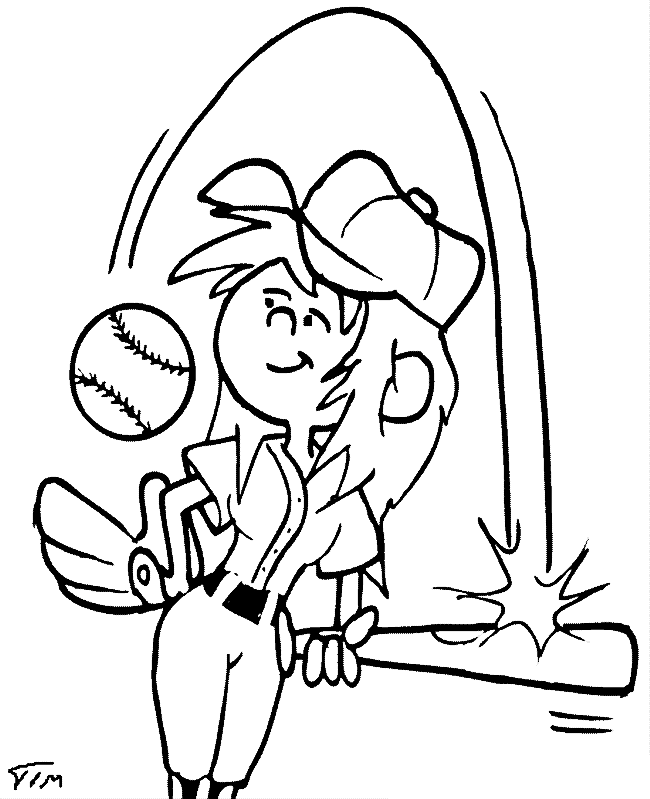
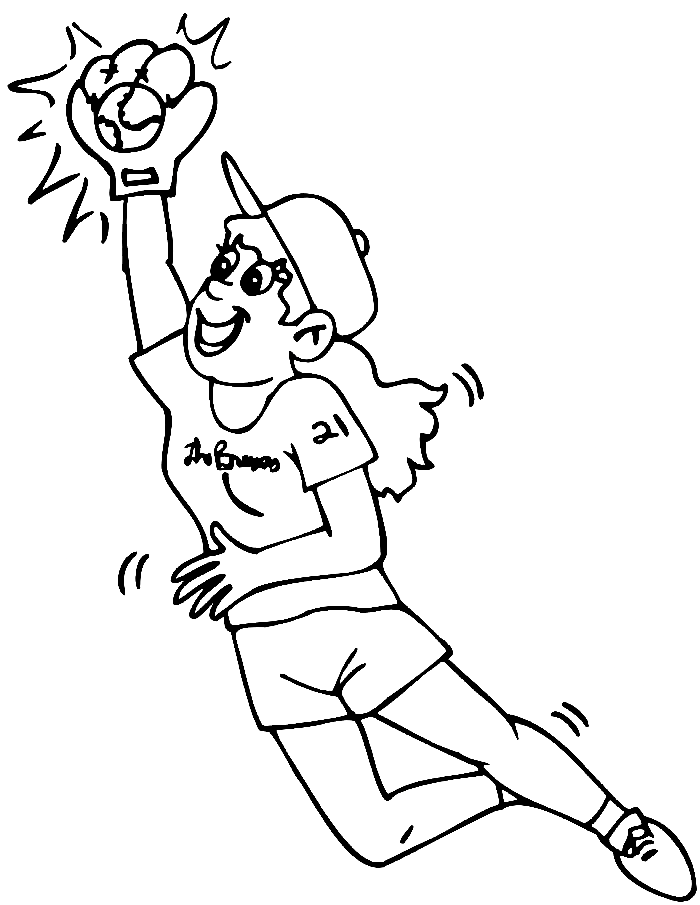
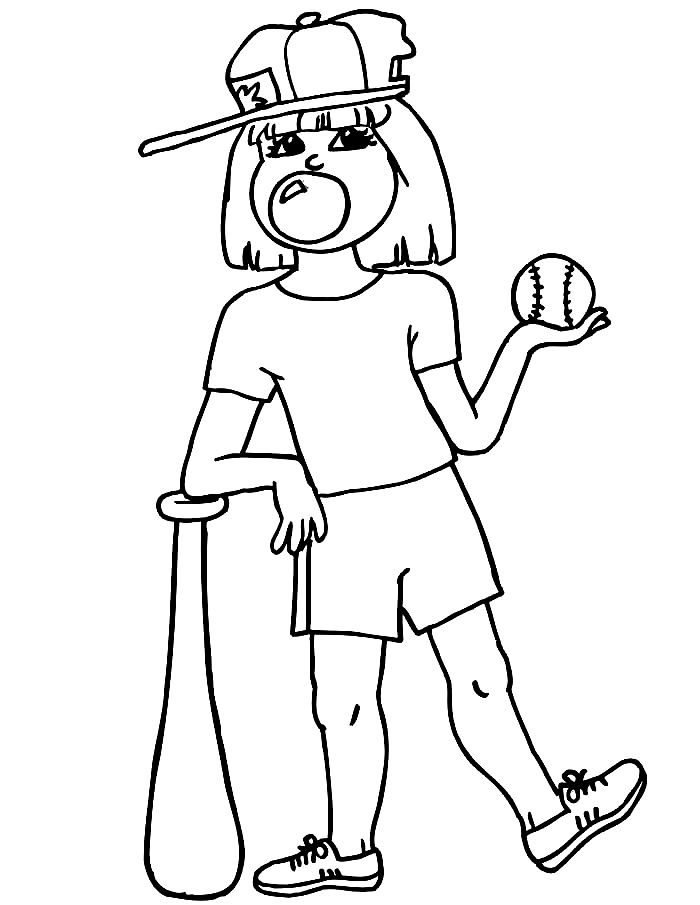
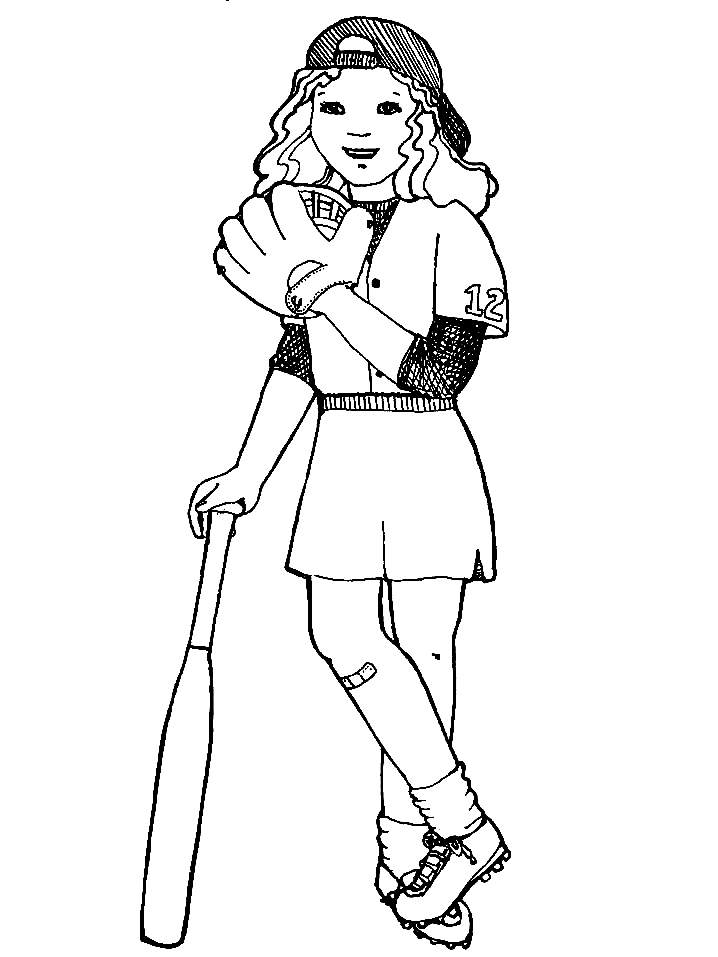
The collection reflects softball’s central importance in women’s athletics through a substantial female player cluster: Woman Playing Softball, Softball Girl, Girl Playing Softball, Little Girl Playing Softball, Girl with Softball Bat, Girl Catching Softball, Cute Girl Playing Softball, Cute Softball Player, and Beautiful Softball Player. These tiles range from portrait-style compositions showing female players in full uniform to action scenes depicting catching, batting, and fielding from the female perspective.
This emphasis on female representation is both historically appropriate and culturally significant – softball has been a defining sport for girls’ and women’s athletic participation in America for more than a century, and the collection’s female player tiles honor that tradition.
Male Player Tile
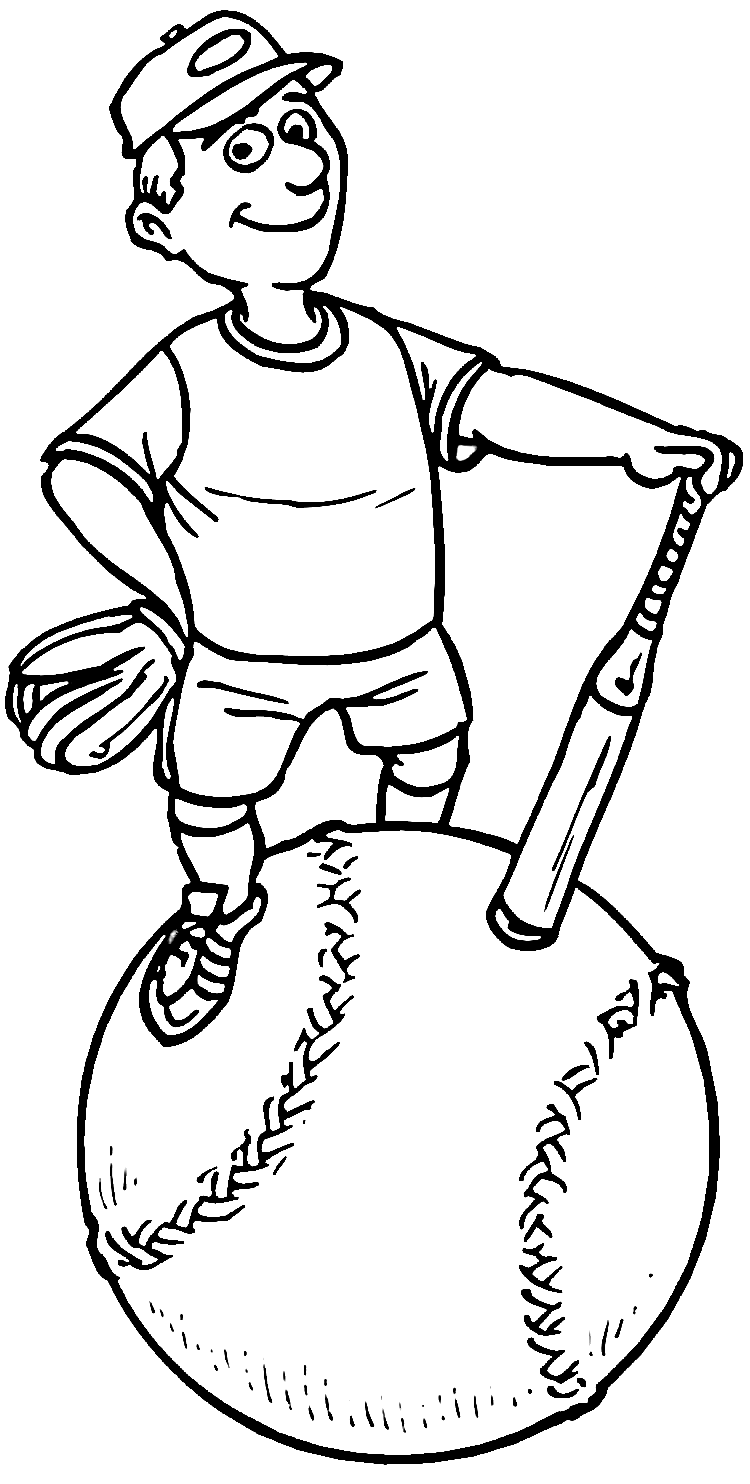
Man Playing Softball depicts a male softball player – reflecting the sport’s substantial men’s recreational leagues, which primarily use the slowpitch format. Slowpitch softball has a massive recreational player base among adult men in the United States, played in company leagues, community leagues, and municipal recreation programs across the country.
Cartoon and Character Tiles
Softball Cartoon and Cartoon Softball Player use simplified, stylized character designs to depict softball players in a more accessible, younger-audience-friendly format than the realistic player tiles. These cartoon-style tiles are the most appropriate starting points for younger children who want to engage with the sport thematically without the detailed complexity of the realistic action tiles.
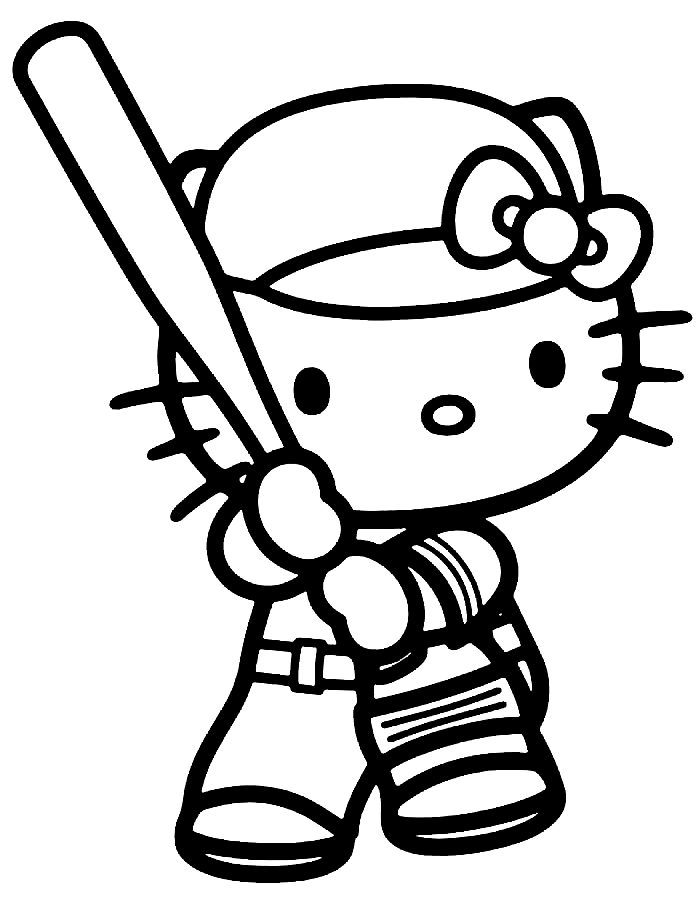
Hello Kitty Playing Softball brings Sanrio’s most iconic character into the softball context – Hello Kitty in a softball uniform with bat or glove, combining the sport with one of the most recognized children’s character aesthetics worldwide.
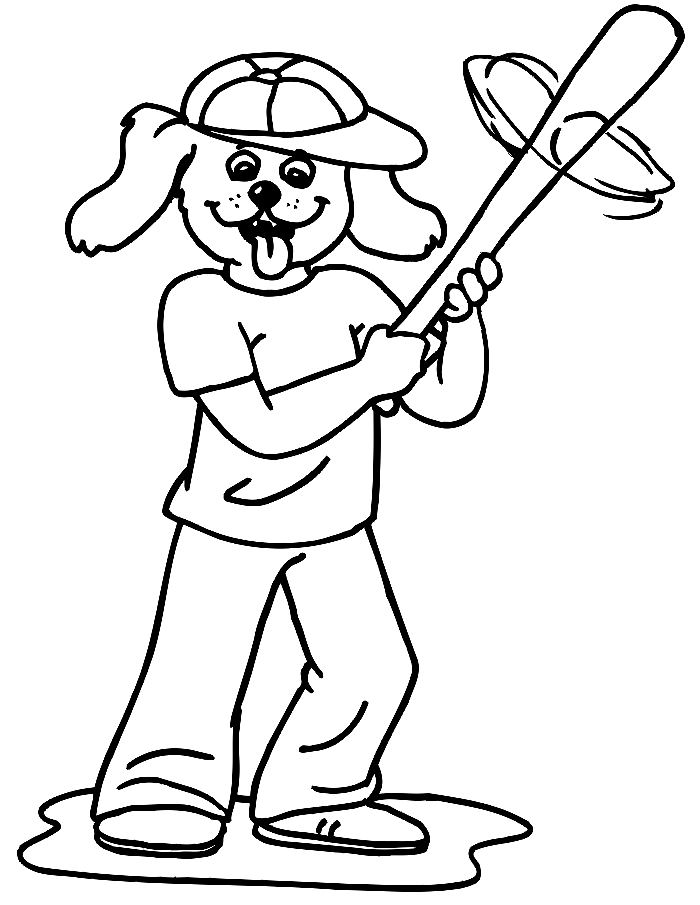
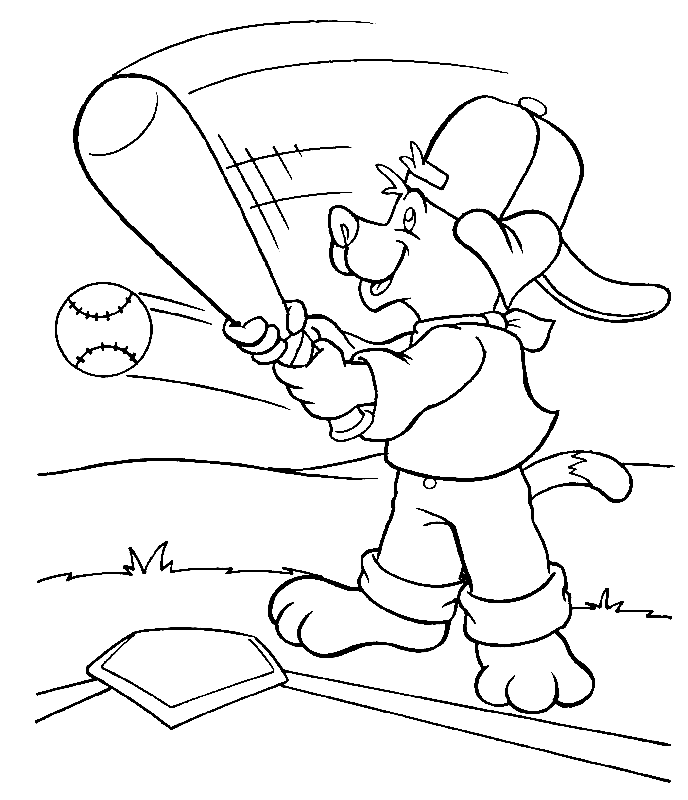
Happy Dog Playing Softball and Dog Playing Softball (two separate dog-player tiles with different compositions) extend the softball theme to animal characters – a dog in softball equipment, capturing the lighthearted, playful register of the sport’s recreational dimension.
Equipment and Object Tiles
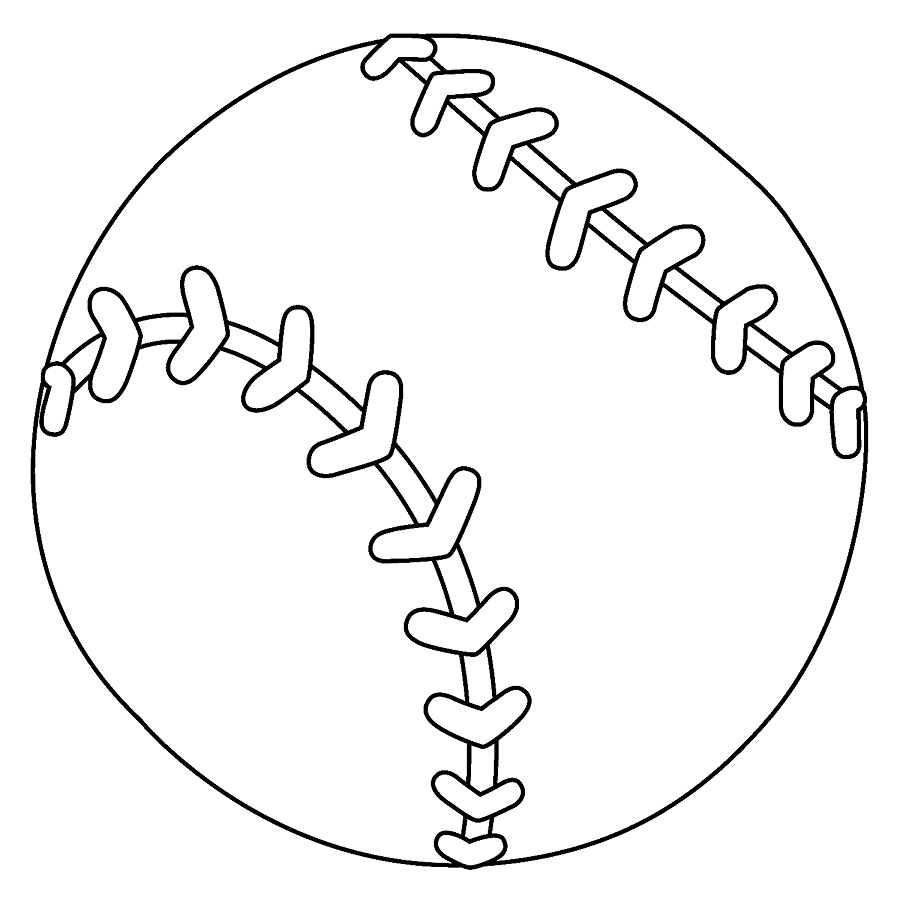
Softball (the ball alone) is the collection’s simplest tile – the softball itself as a standalone object, showing the ball’s characteristic large-diameter shape, yellow-green color, and prominent seam stitching. This is the most appropriate page for very young children who are just beginning to develop color-filling skills.
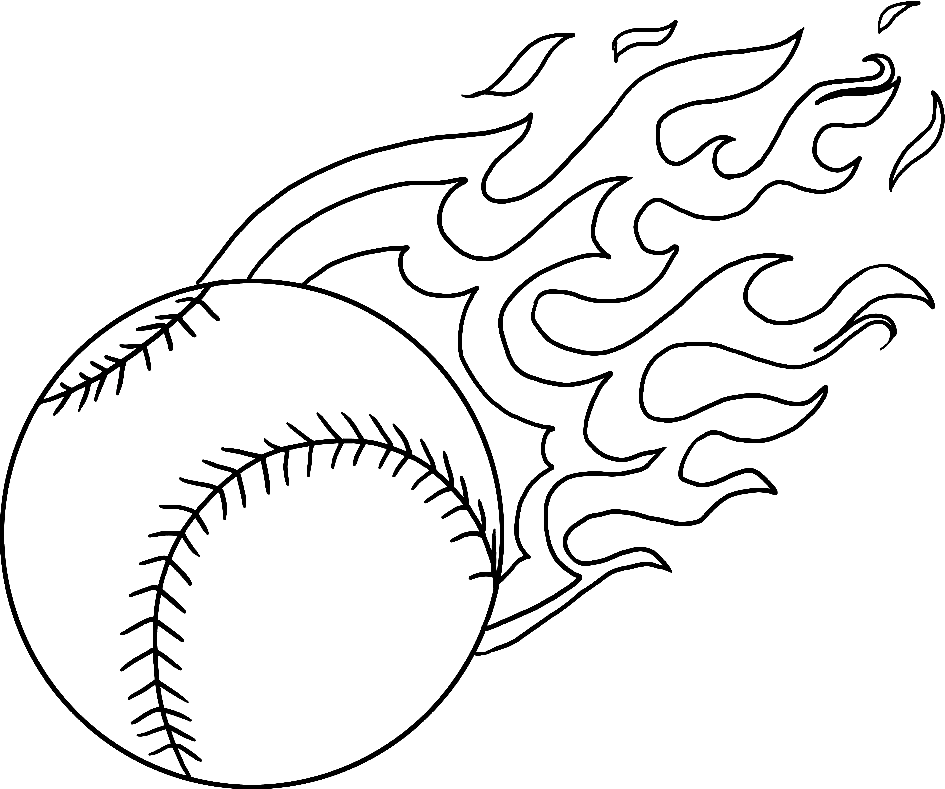
Flaming Softball is the collection’s most visually dramatic tile – a softball depicted with flame effects, suggesting extreme speed or power. Flaming ball imagery is a common graphic convention in sports illustration to convey velocity and intensity. This tile is particularly popular with children who enjoy the dramatic, action-hero register of sports imagery.
Coloring Guide: The Softball Palette
The Softball Itself
The modern fastpitch and slowpitch softball uses a specific color that distinguishes it from baseball: optic yellow or bright yellow-green – the same vivid yellow-green used in tennis balls and adopted for softball in the 1990s for improved visibility. This is not the warm golden-yellow of a school bus but a distinctly cool, slightly green-tinged, vivid yellow. The seam stitching on a softball is typically red – the same vivid red as baseball stitching, following the same curved seam pattern but on a larger ball circumference.
For the Flaming Softball tile, the flame effects use the full warm fire spectrum: deep red at the outer flame edges, transitioning through orange in the mid-flame to vivid yellow-orange at the brightest inner flame, with a near-white core at the hottest center point. The ball itself, under the flames, uses the same yellow-green as a standard softball.
The Softball Uniform
Softball uniforms at the competitive level use team-specific color schemes – there is no single canonical uniform color as there is for some other sports. However, certain color conventions are common: white or cream jerseys at home, gray jerseys on the road for most organized leagues, with team colors on lettering, numbers, and accent elements. The helmet is typically a solid team color.
For player tiles where the uniform color is at the colorist’s discretion, several approaches produce satisfying results. Navy blue and gold is one of the most classic softball color combinations, associated with many high school and collegiate programs. Red and white is the most American-flag-associated combination, appropriate for national team imagery. Purple and gold is another popular high school and collegiate choice. Green and white evoke a clean, fresh athletic look well-suited to girls’ player tiles.
Softball gloves (mitts) use the natural leather tan-brown palette – a warm, medium tan for new gloves, darkening through amber-brown to deep dark tan as the leather breaks in over use. The lacing that connects glove panels is typically a slightly different tan shade from the main glove body.
Cleats in softball use a white or team-color dominant color with metal or rubber cleats at the sole. Batting helmets are typically a solid team color – one of the most expressive single color decisions available in a player tile, since the helmet occupies significant visual space.
Diamond and Field Environment
For tiles that include any suggestion of the playing field environment, softball fields use a characteristic palette. The infield dirt uses a warm, slightly orange-red clay – similar to the baseball field dirt but generally maintained on smaller diamonds. The grass uses warm, well-maintained medium green. The bases are white canvas squares at first, second, and third; the home plate is the distinctive five-sided rubber home plate in white.
Softball and Girls’ Athletic Development
Softball occupies a unique position in the landscape of girls’ sports in America. For many girls, recreational and school-based softball is the first competitive team sport experience – the first introduction to organized teamwork, strategic thinking under competitive pressure, and the physical and psychological demands of athletic competition.
The collection’s emphasis on female player tiles makes it particularly relevant for girls who play or aspire to play the sport – coloring pages depicting girls and women in athletic roles provide a visible representation of female athletic achievement that supports young players’ sense of belonging in the sport.
The physical skills developed through softball – throwing accuracy, catching, batting timing, base-running agility – require sustained practice and provide genuine developmental benefits in hand-eye coordination, spatial awareness, and reaction time. For more on the research-backed developmental benefits of sports-adjacent activities, see our benefits of coloring for children guide, which covers how creative activities complement physical development.
FAQs
What is the difference between softball and baseball? The primary differences are: softball pitchers throw underhand (baseball uses overhand); the softball is larger (12 inches circumference vs 9 inches for baseball) and yellow-green in color; the bases are closer together (60 feet vs 90 feet); the pitching distance is shorter (43 feet for women’s fastpitch vs 60 feet 6 inches); and games are typically 7 innings rather than 9. Softball also uses a flat pitcher’s circle rather than an elevated mound.
Who invented softball? Softball was invented by George Hancock in Chicago in 1887, initially as an indoor game played with a broomstick and a boxing glove at the Farragut Boat Club. The game moved outdoors over the following years and spread nationally, eventually formalizing into the fastpitch and slowpitch versions played today.
What color is a softball? Modern fastpitch and slowpitch softballs are optic yellow (a vivid yellow-green) with red stitching. This color replaced white as the standard in the 1990s for improved visibility. Some recreational softballs and certain specific-use balls may still use white.
Is softball an Olympic sport? Softball was part of the Summer Olympics from 1996 (Atlanta) through 2008 (Beijing), then removed from the program for 2012 and 2016. It returned for the 2020 Tokyo Olympics (held in 2021). Its inclusion in future Games has varied by host city decision.
What is the difference between fastpitch and slowpitch softball? Fastpitch softball uses a high-speed underhand pitching delivery (60-70+ mph) and is the competitive, Olympic-recognized version of the sport. Slowpitch softball uses a slower, arcing pitch that travels at reduced speed and must land within a defined strike zone – it is primarily the recreational version, popular in adult leagues. Fastpitch typically uses stricter rules, a smaller field, and requires more advanced pitching and catching skills.
What position is considered most important in softball? The pitcher is the most impactful individual position in fastpitch softball – an elite pitcher can dominate opposing batting lineups in a way few single players can in any other team sport. However, the catcher, who works directly with the pitcher, manages the pitching staff, and controls the pace of play, is considered by many softball coaches to be the most technically demanding position overall.
At what age should girls start playing softball? Many recreational youth softball leagues accept players as young as 5-6 years old in tee-ball or coach-pitch formats. Competitive fastpitch softball typically begins at ages 8-10. High school and collegiate fastpitch competition represents the highest organized level of amateur play.
All 24 Softball Coloring Pages are free – download as PDF or color online. Share your finished pages on Facebook and Pinterest.