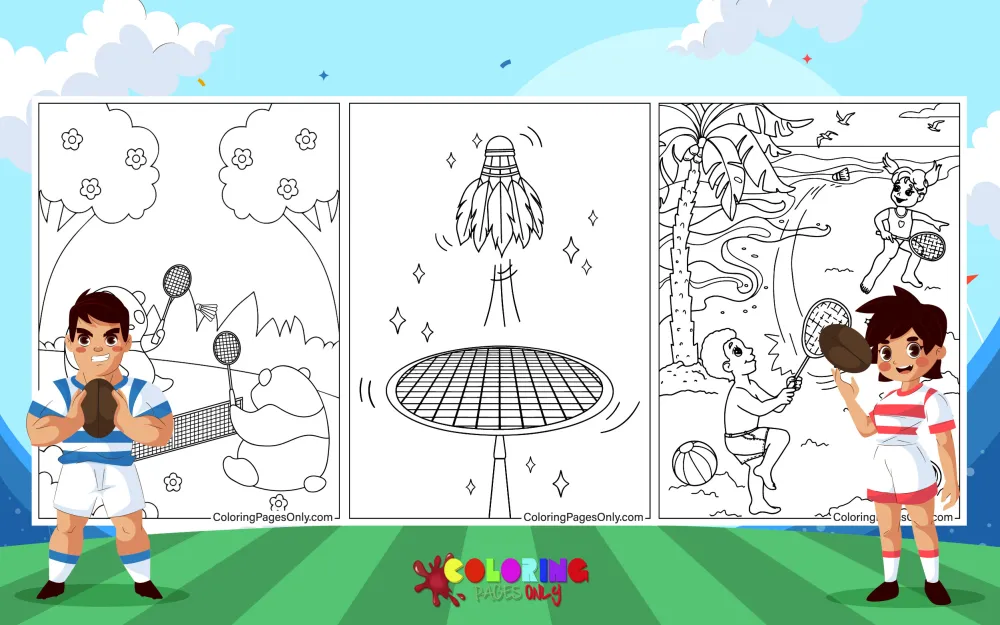
Explore 52 free badminton coloring pages featuring player action, the shuttlecock, rackets, kids playing, wheelchair badminton, Olympic scenes, cartoon characters, and animals – free printable PDF and online coloring for all ages.

The shuttlecock is the fastest-moving object in racket sports. At the professional level, a smash can send it traveling at over 490 kilometers per hour – a record set by Malaysian player Tan Boon Heong in 2013 during an unofficial test. By comparison, the fastest tennis serve ever recorded was 263 km/h. Badminton is not a slow game played in backyards. At the elite level, it is one of the most physically demanding racket sports in existence, with players covering up to 6 kilometers per match in a series of explosive multi-directional movements.

The sport has its documented roots in British India, where officers played a game called “Poona” in the 1860s. When the Duke of Beaufort introduced it to English guests at his estate – Badminton House in Gloucestershire – in 1873, the name stuck. Badminton became an Olympic sport at the 1992 Barcelona Games and has been dominated ever since by players from China, Indonesia, South Korea, Malaysia, and, more recently, Denmark and Japan.

These 52 free pages at ColoringPagesOnly.com cover all of it – players in action, the equipment, cartoon characters who apparently have strong opinions about smash technique, and pandas who compete with genuine intensity. All free, PDF, JPG, or PNG. Step onto the court.

What’s Inside

Player Action Pages

The action pages are the collection’s technical core – illustrations of the real physical positions badminton demands and rewards.

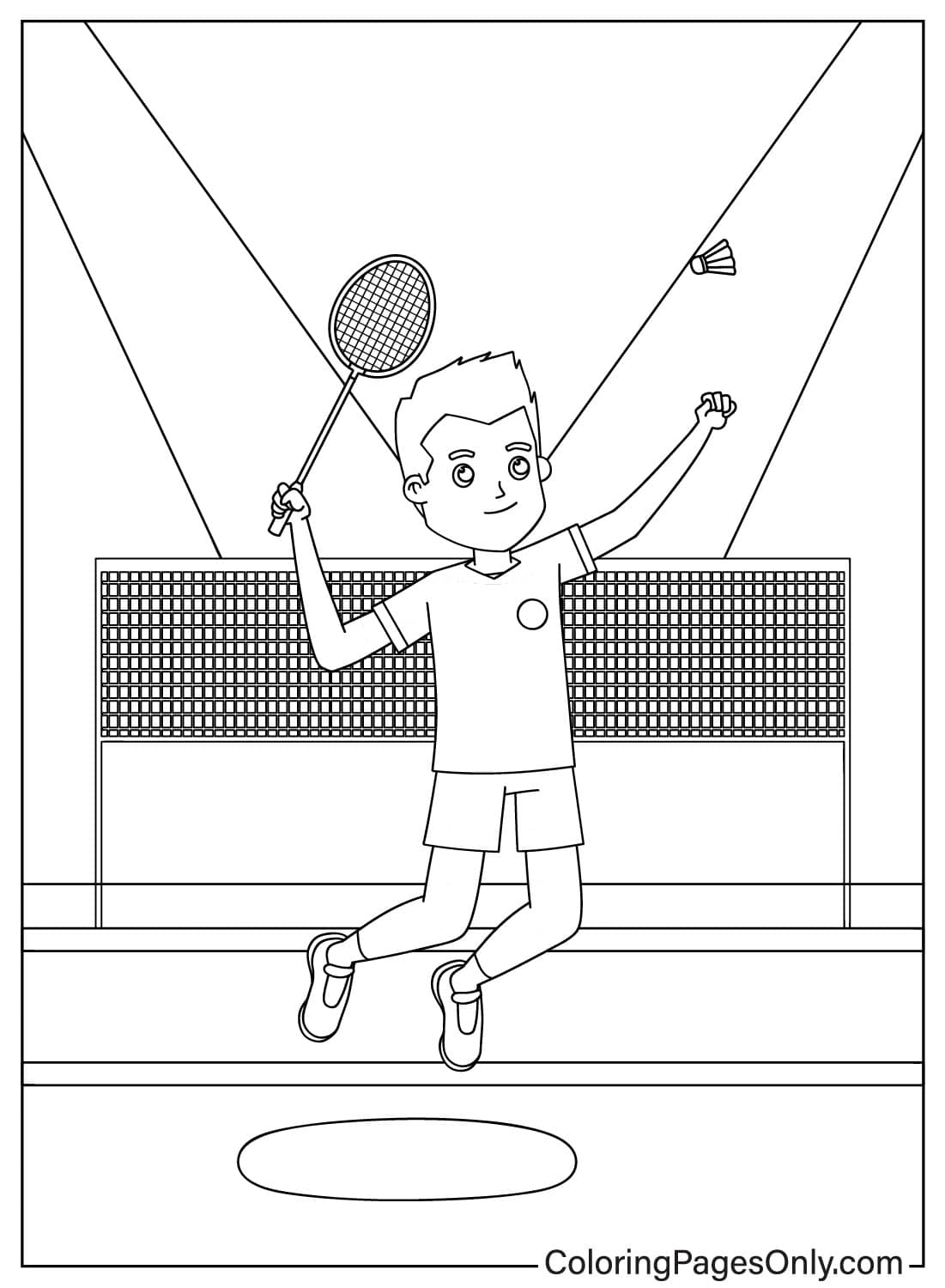
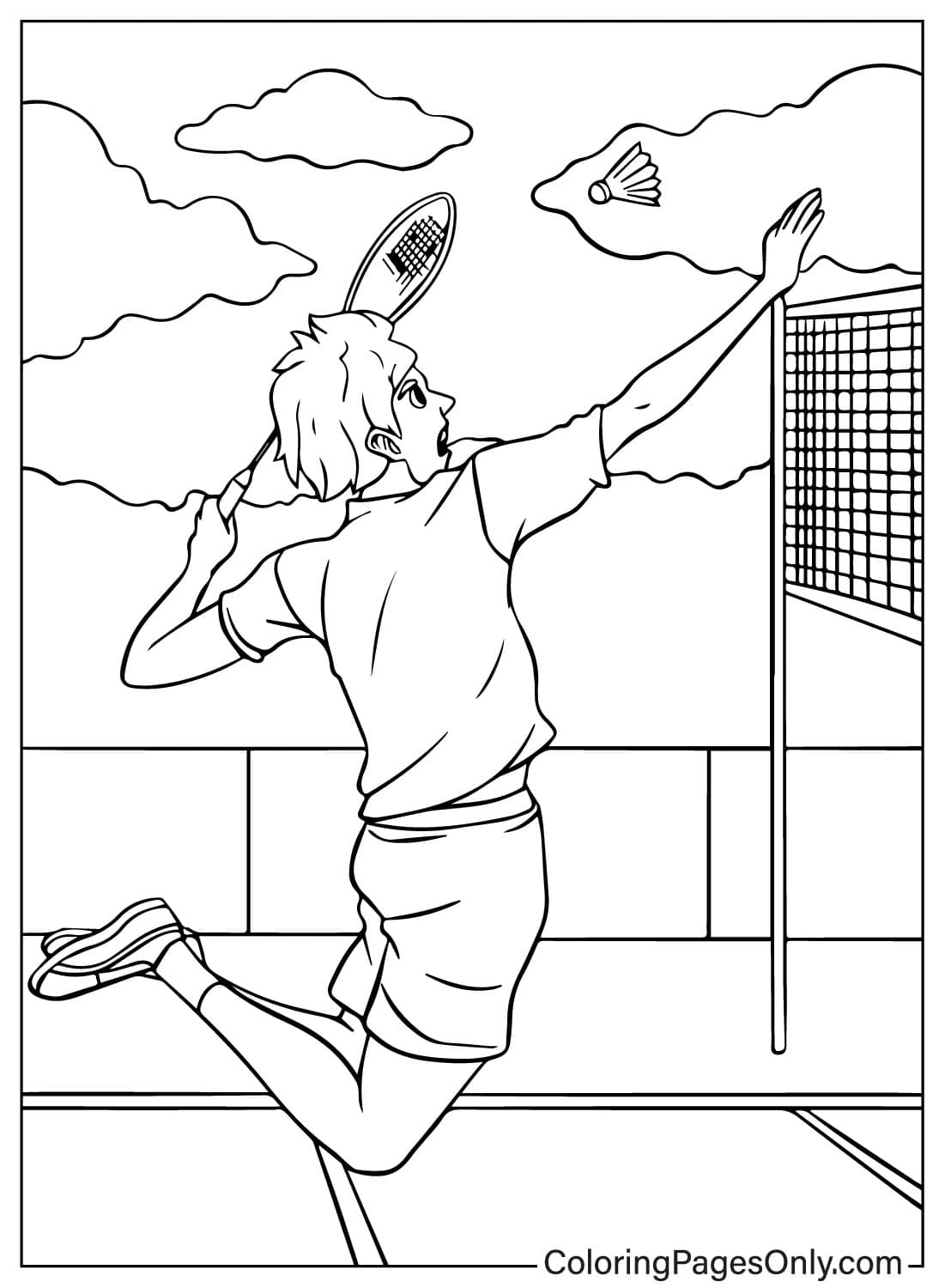
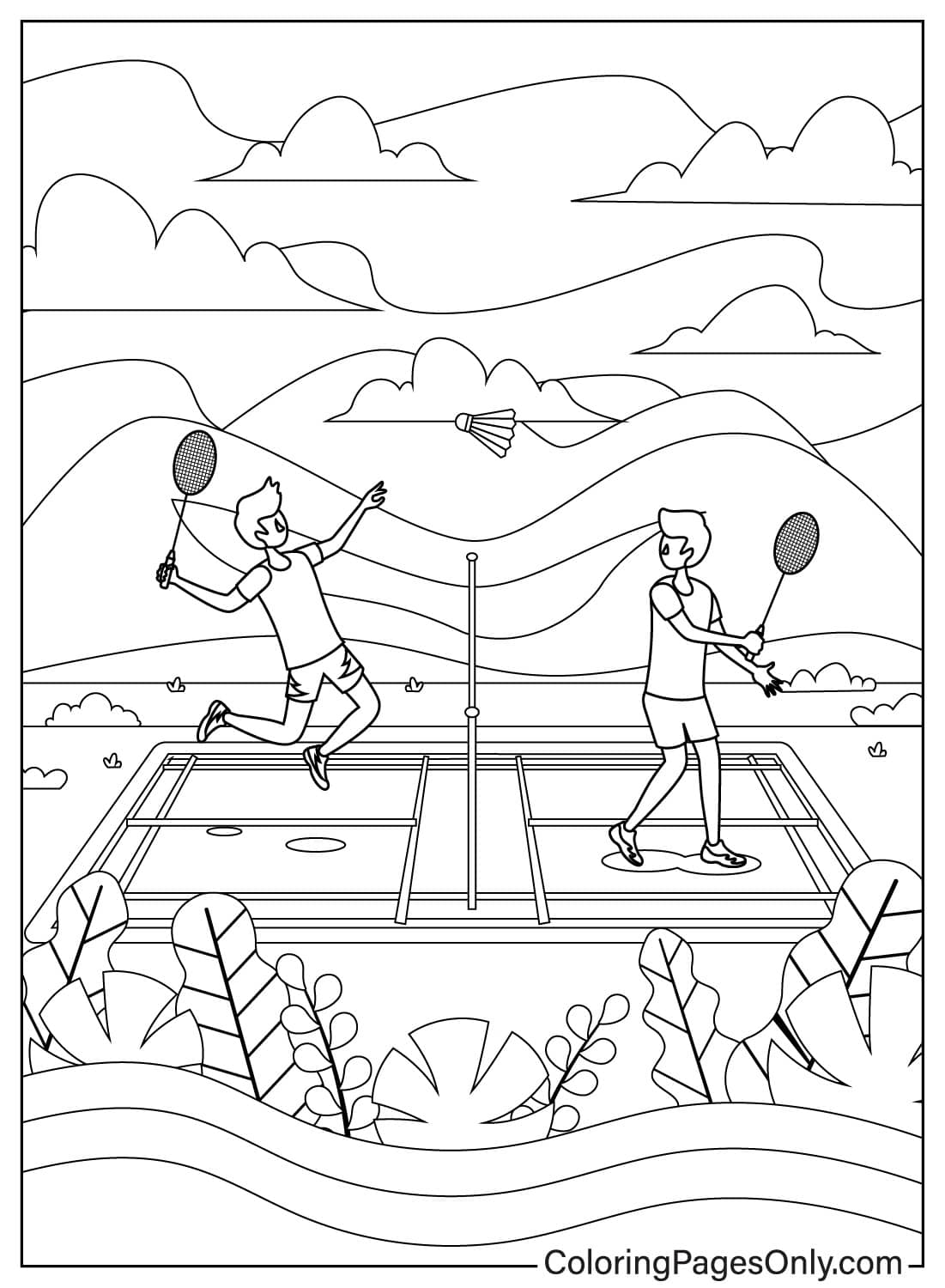
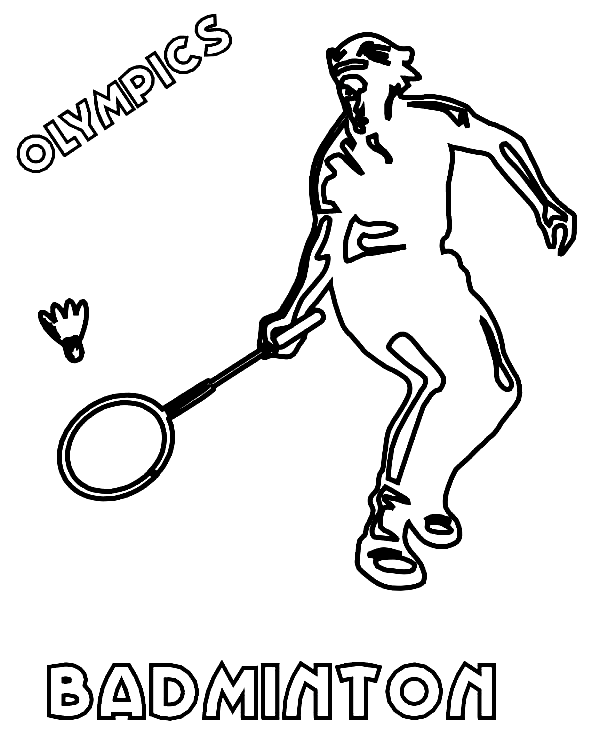
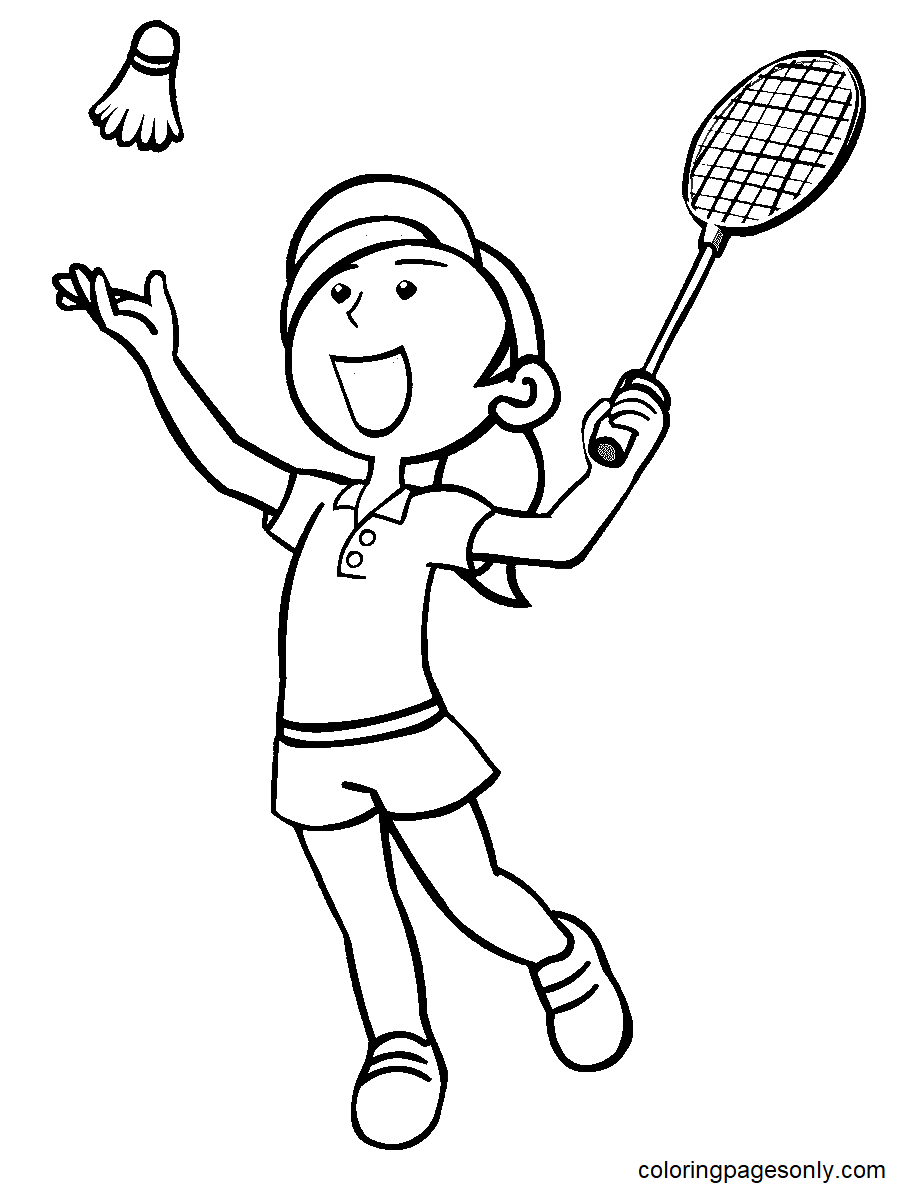
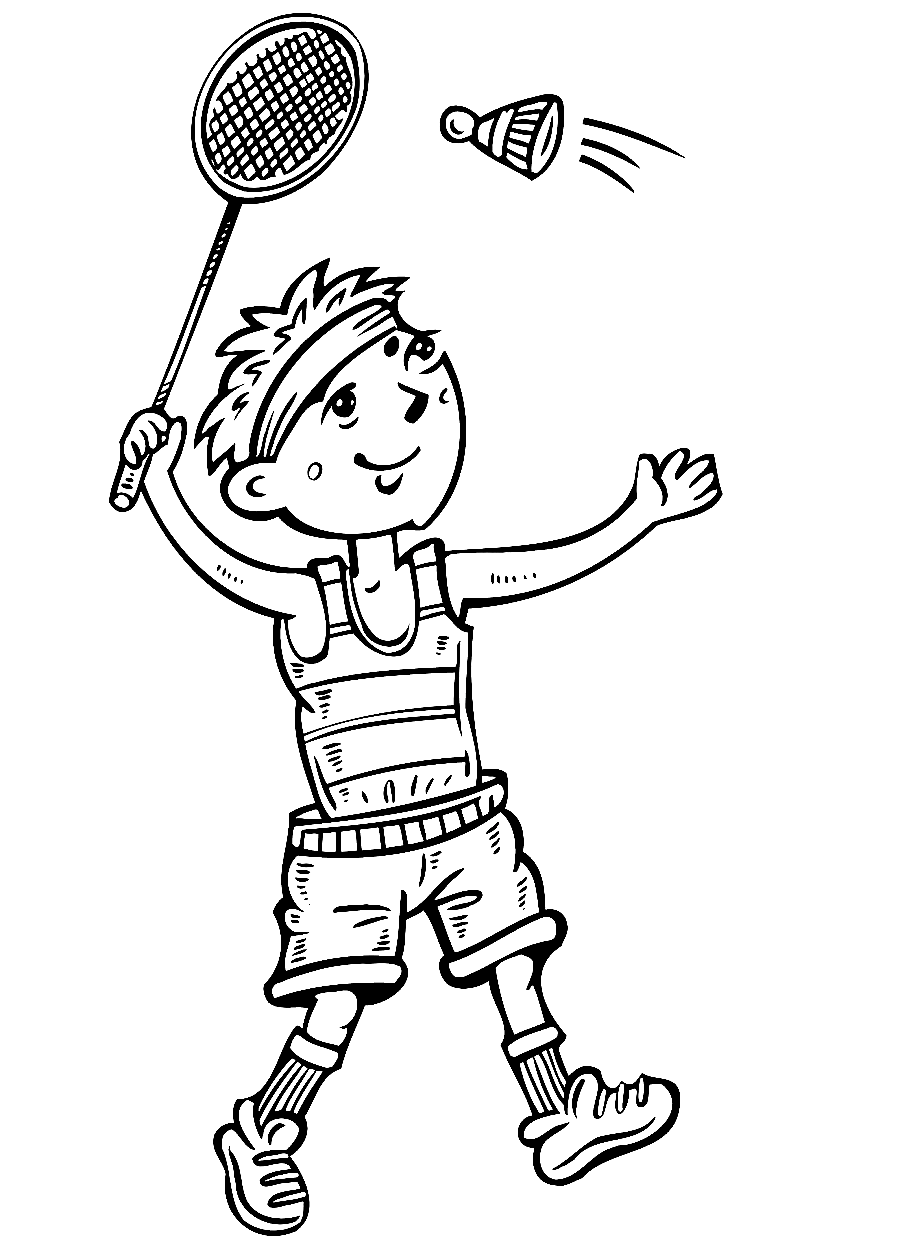
Playing Badminton, Play Badminton, Two People Playing Badminton, Double Badminton, Happy Badminton Player, Badminton Player, Famous Badminton Player, and Olympic Badminton capture the game in competitive and recreational contexts. The overhead smash – body rotated sideways, racket arm extended fully above the head, the moment of maximum leverage before the downward strike – is one of sport’s most recognizable action poses and appears across multiple pages.

What makes these pages technically interesting is that badminton movement is unlike almost any other racket sport. Because the shuttlecock decelerates so rapidly in flight, the feathers create significant drag the moment it leaves the strings – players rarely hit the shuttle hard from the back of the court and wait. Every point is built on rapid repositioning, recovery to center court after each shot, and the ability to change direction in fractions of a second. The player pages capture specific moments in that continuous movement: the jumping smash, the low serve position, the net kill, the defensive clear.

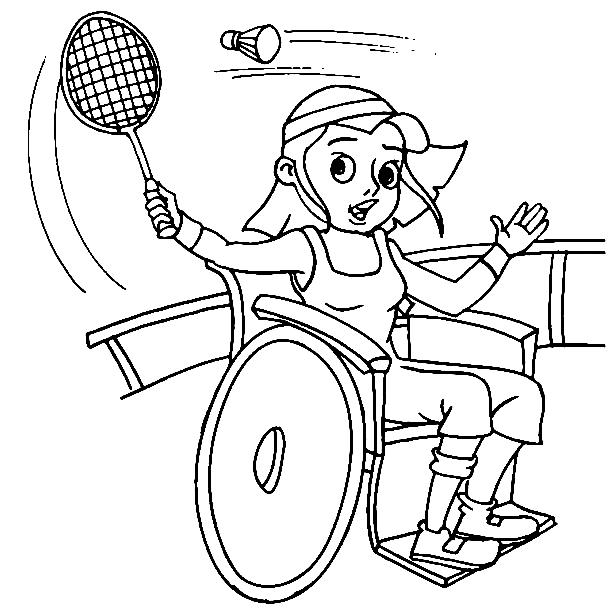
Badminton on Wheelchair is among the most important pages in the collection. Para badminton – contested across six sport classes based on type and degree of impairment – became a Paralympic sport at the Tokyo 2020 Games, the first time badminton had appeared at the Paralympics. The inclusion reflects decades of organized para badminton competition at national and international levels. Coloring this page alongside the standard player pages places it exactly where it belongs: as part of the same sport, not a separate category.

Kids, Boys, and Girls Playing

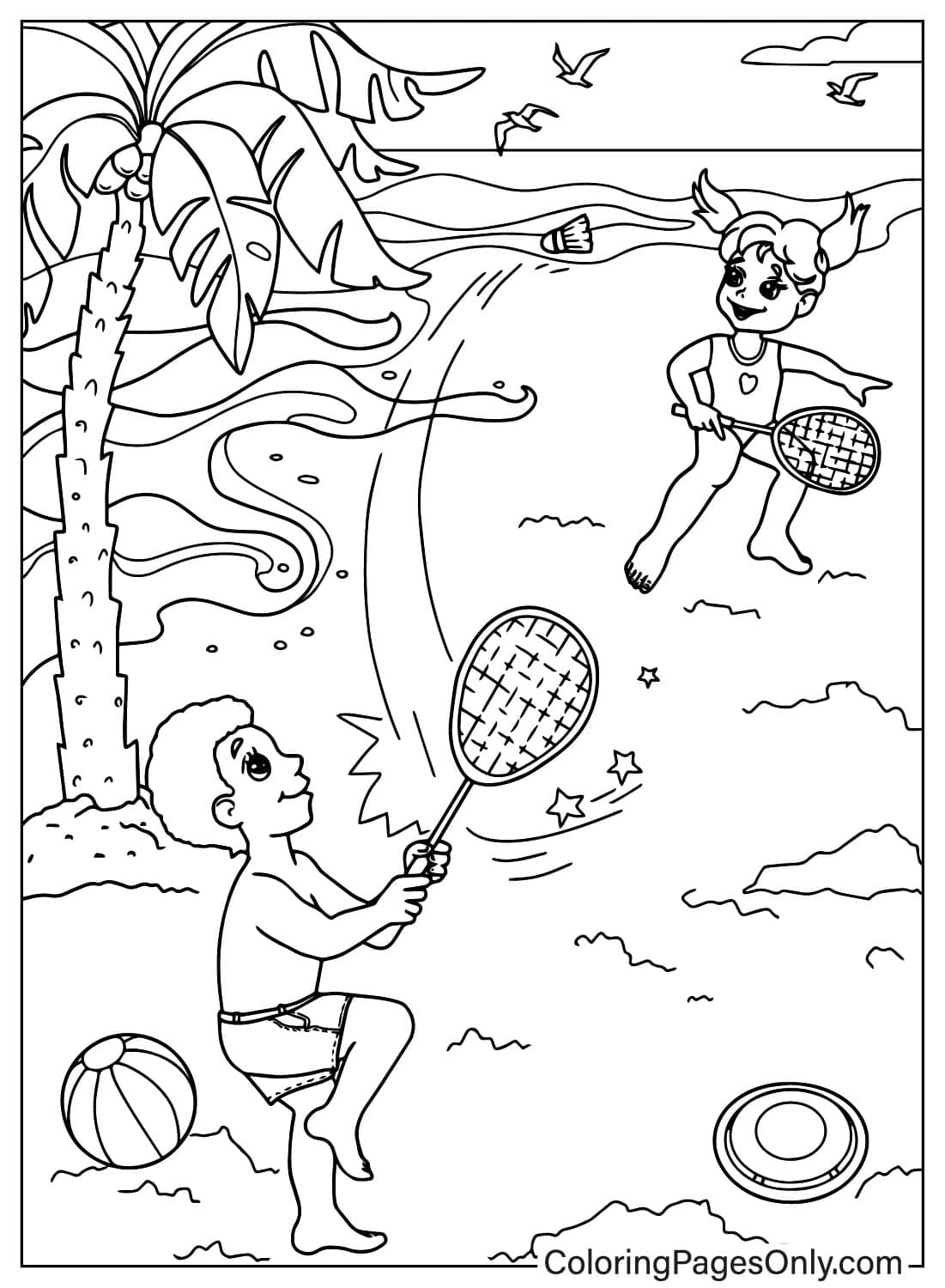
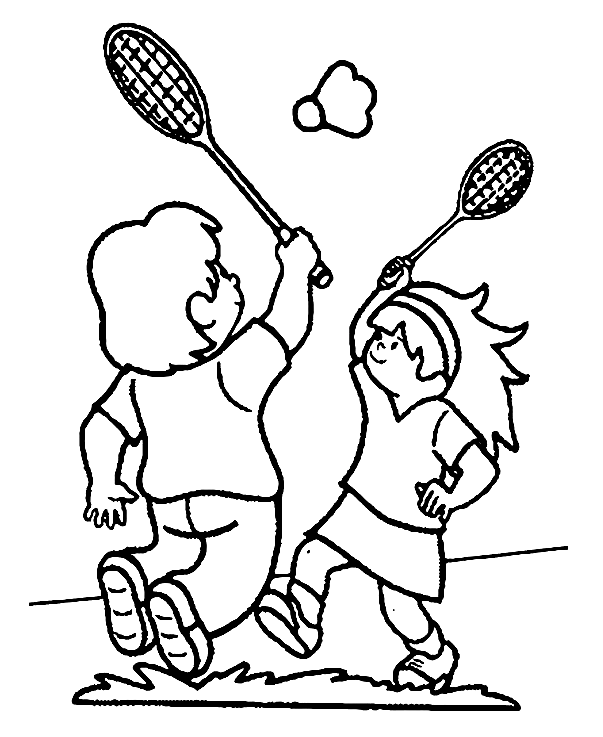
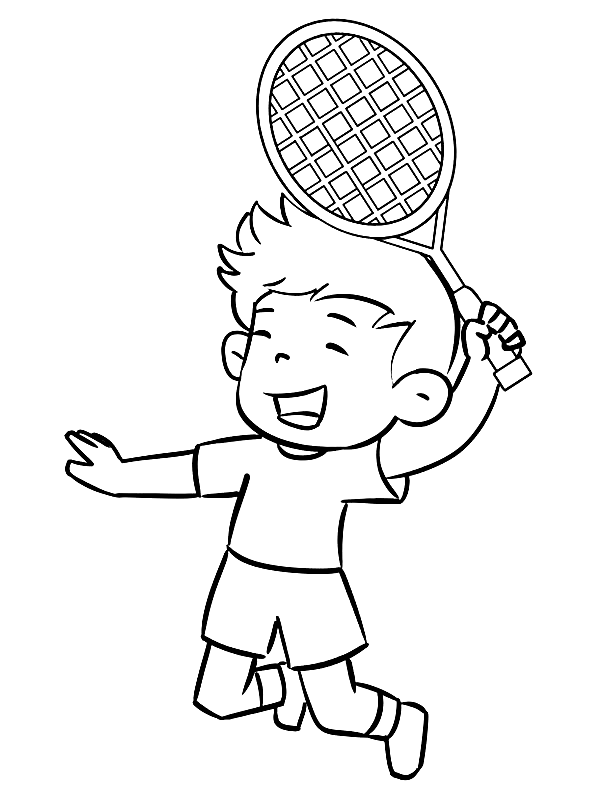
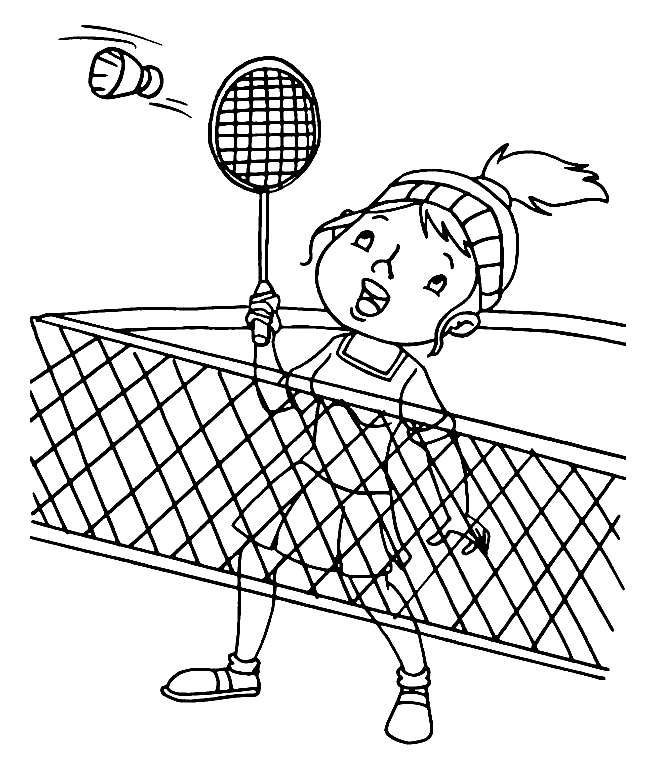
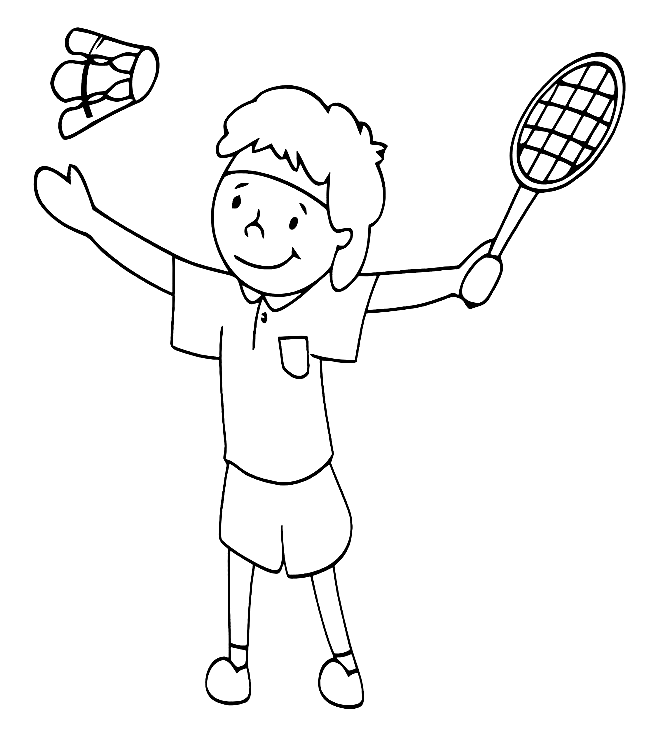
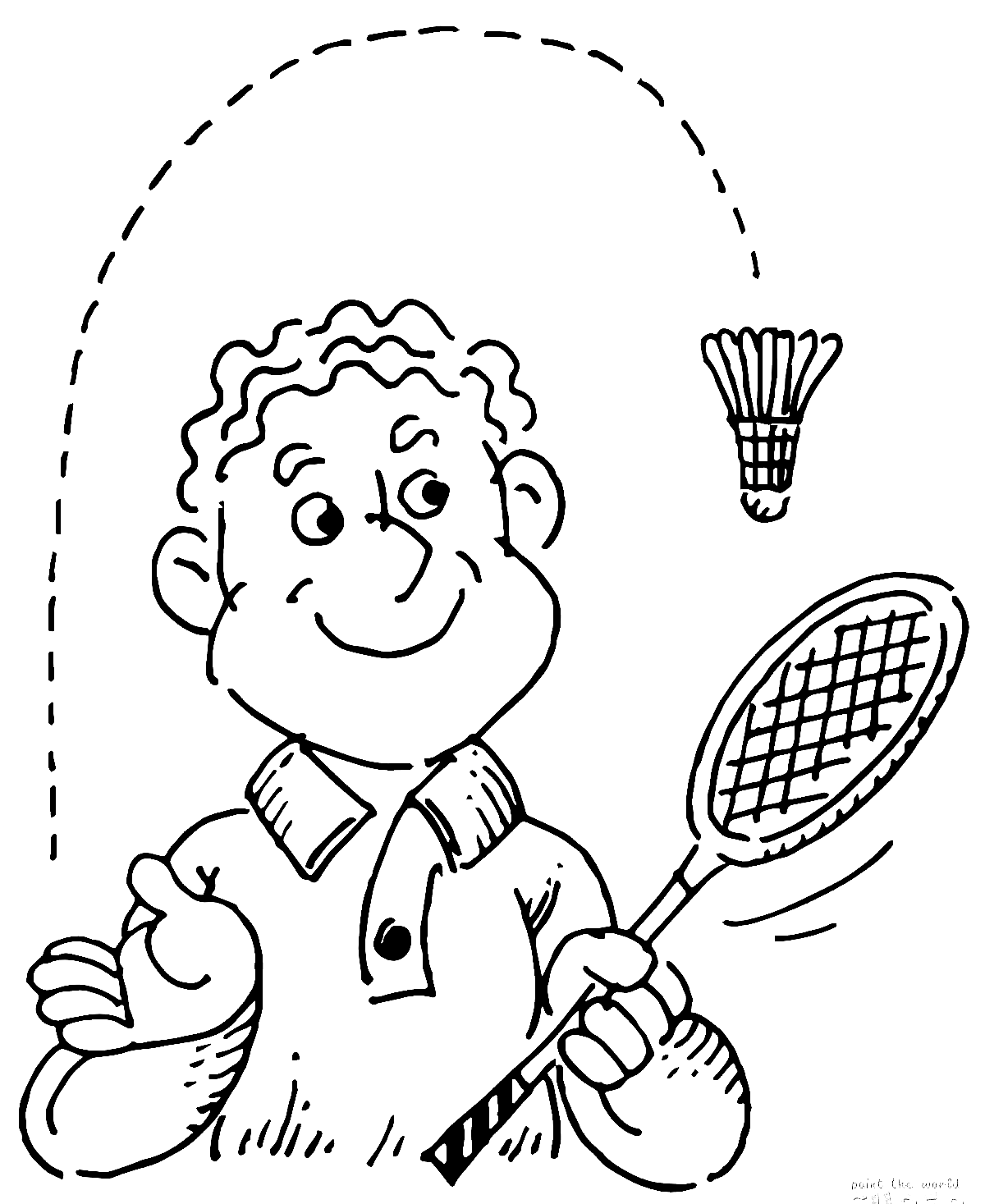
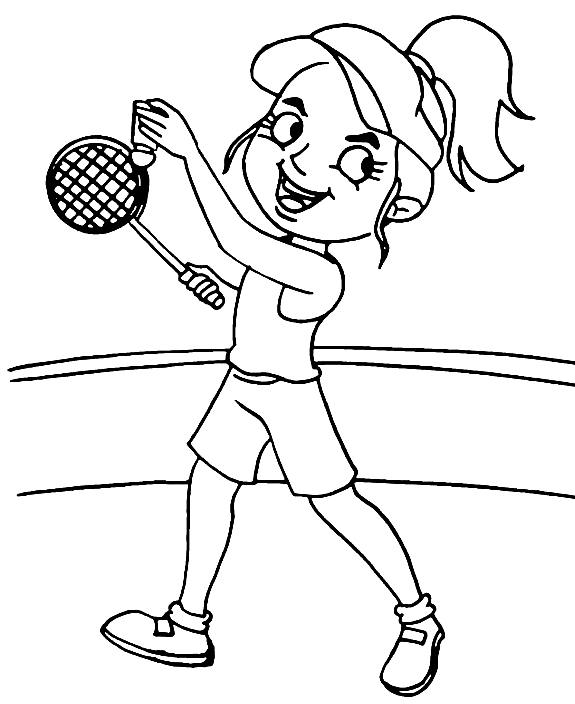
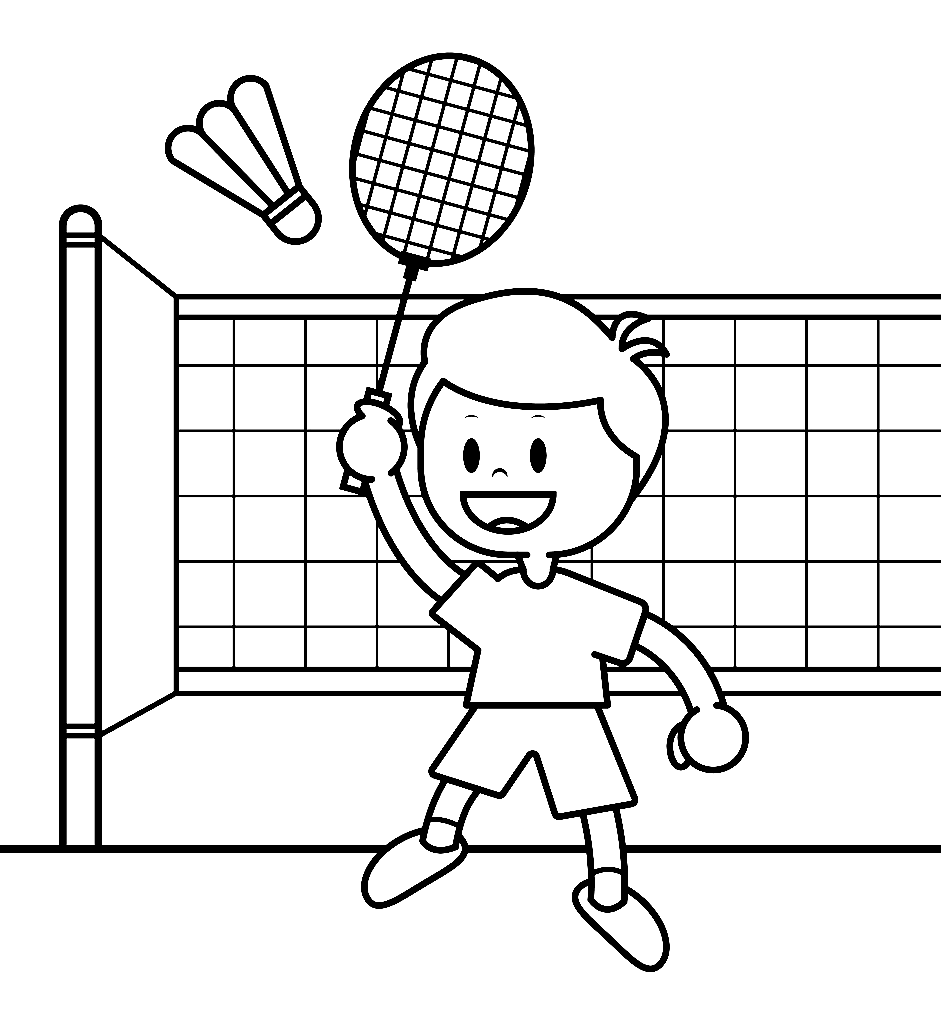
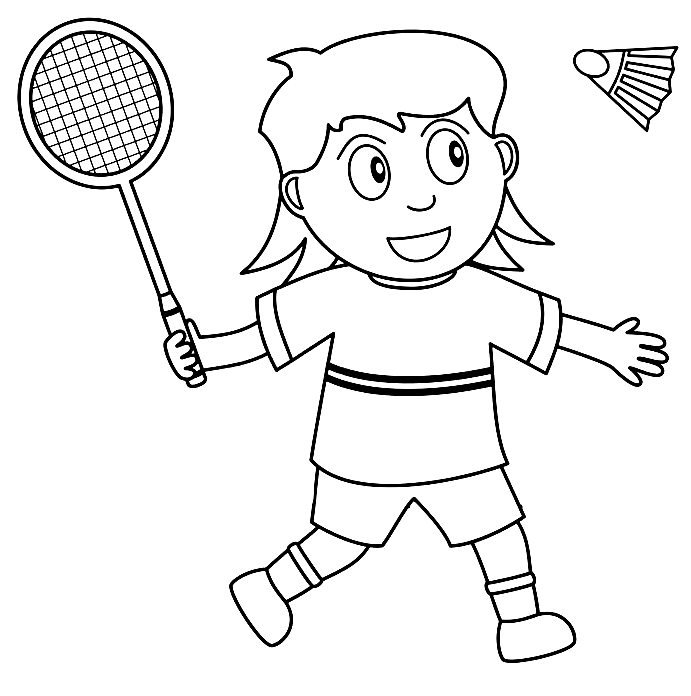
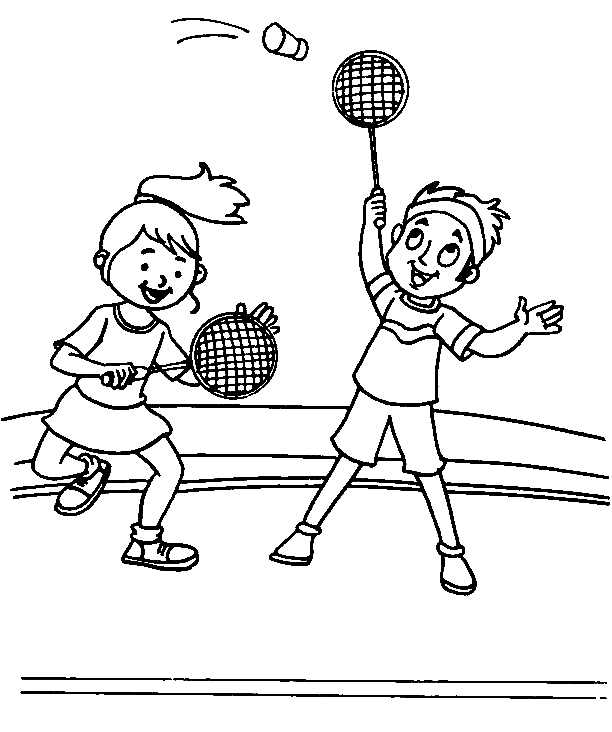
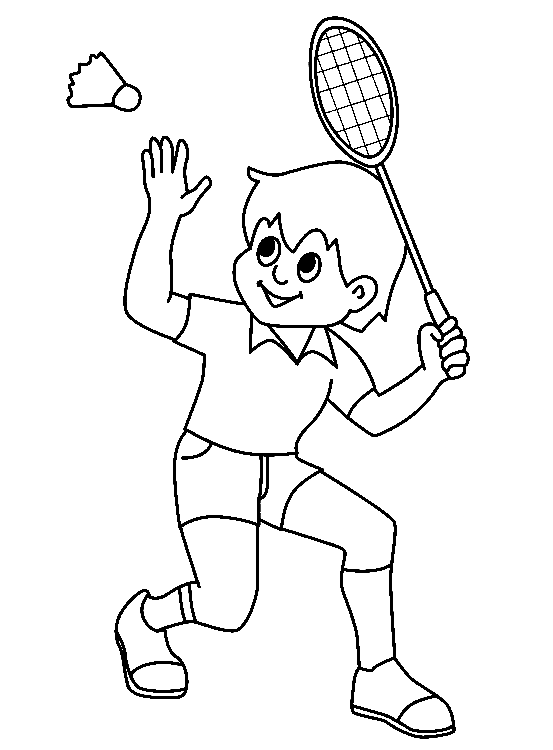
The Boy Playing Badminton, Boy Playing Badminton, Boy Play Badminton, Cute Boy Playing Badminton, Girl Playing Badminton, Girl Play Badminton, Girl With Badminton, Kid playing Badminton, Kids Playing Badminton On The Beach, Children playing Badminton, and Badminton for Children represent the full range of childhood badminton – from the backyard game with a plastic shuttle to the beach game that requires constant adjustments for wind, to the first serious lesson where someone shows you how to hold the racket correctly.

Kids Playing Badminton On The Beach is worth specific mention because beach badminton is its own genuinely different experience from indoor play. Wind changes the shuttle’s trajectory unpredictably. Sand slows movement and makes court coverage more exhausting. The informal setting removes the pressure of score-keeping and allows children to focus entirely on just hitting the shuttle back, which is, for most beginners, the entire point.

Equipment Pages

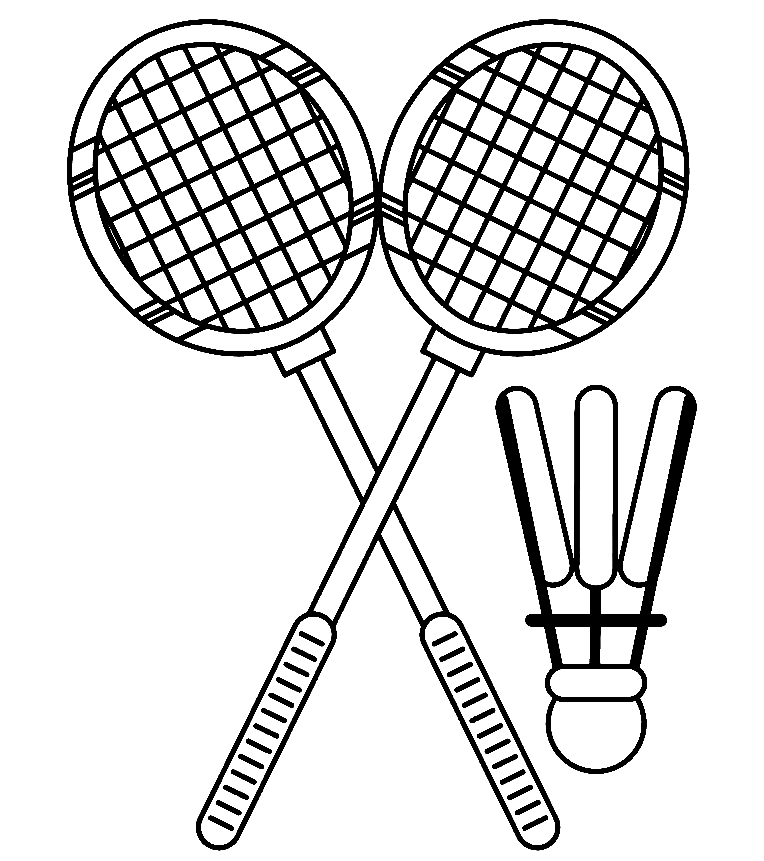
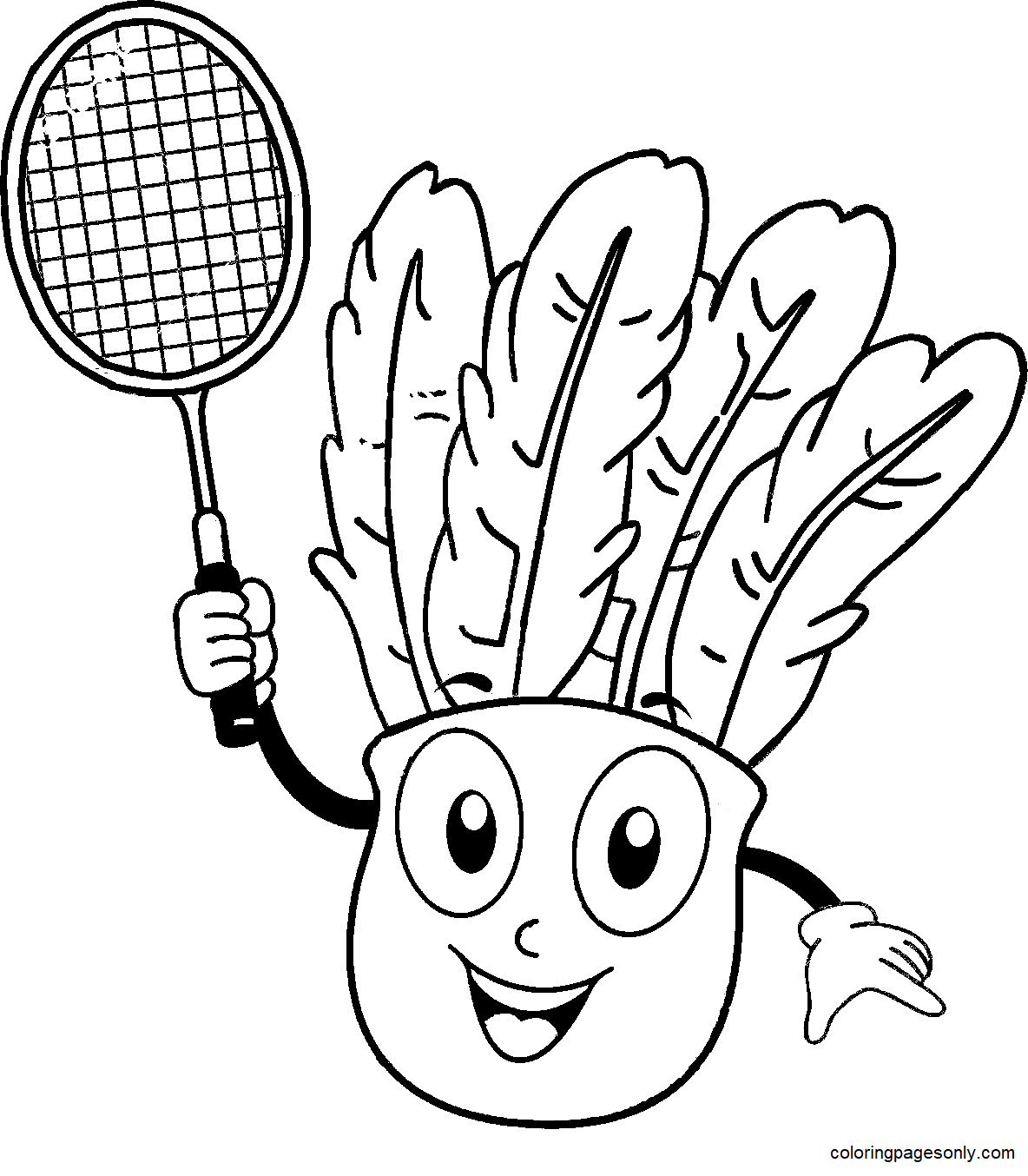
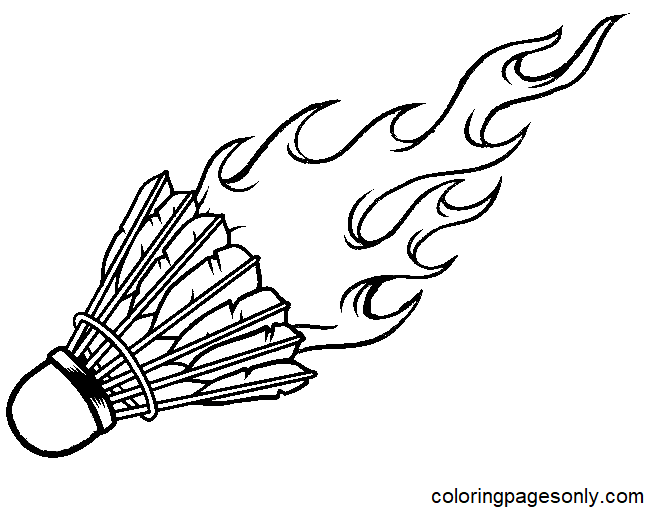
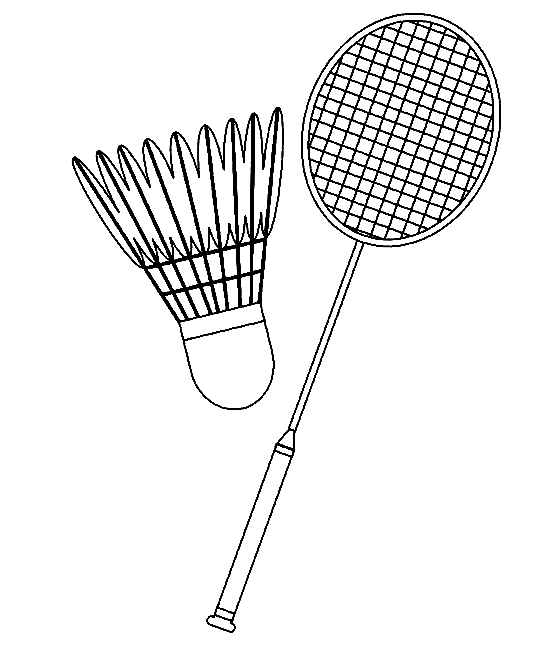
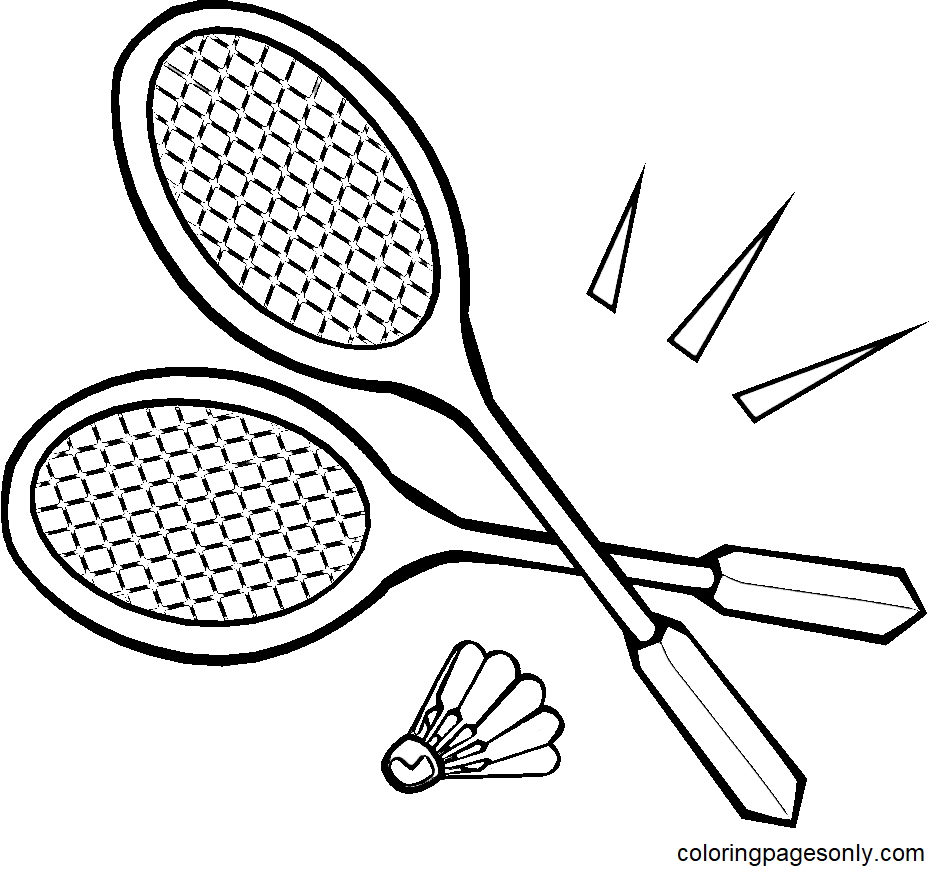
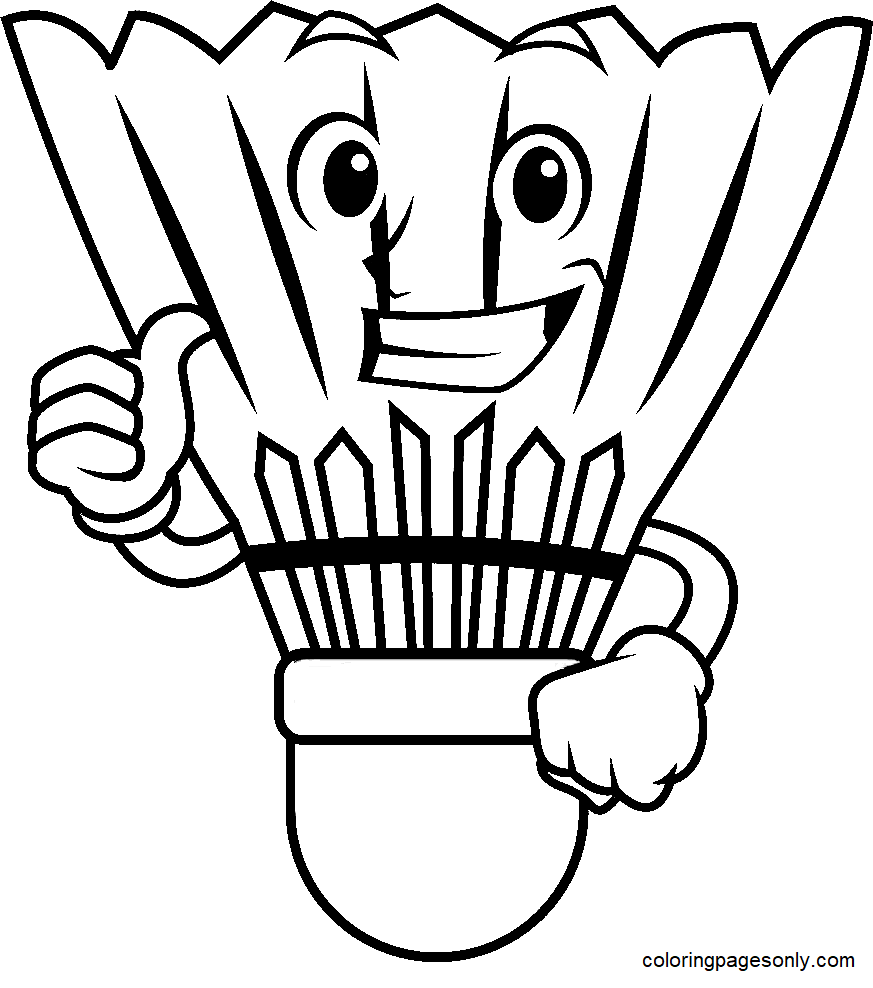
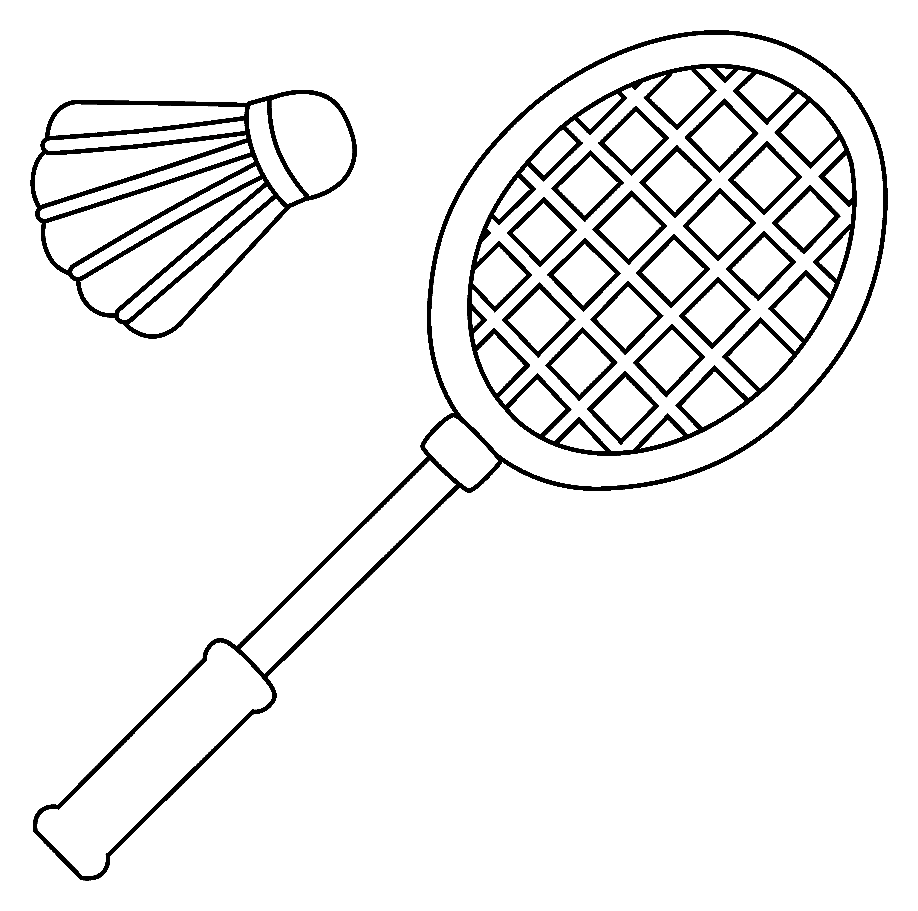
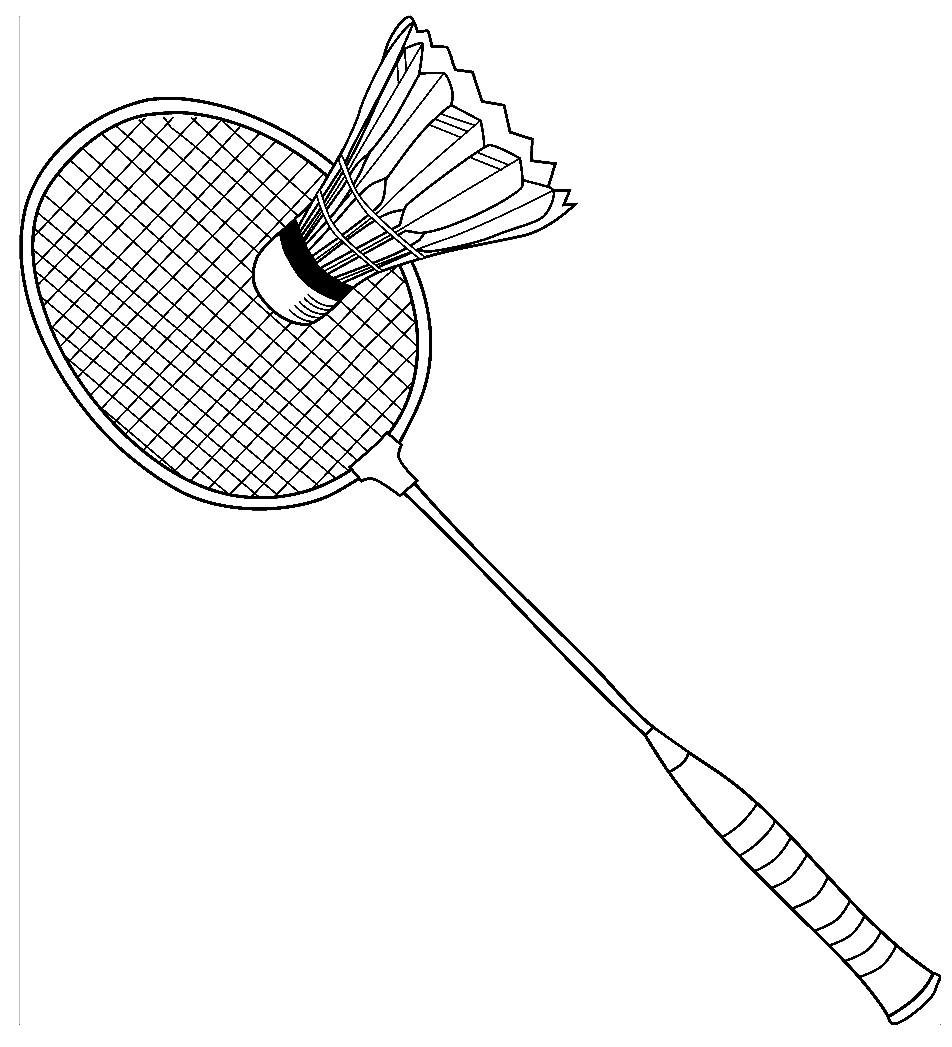
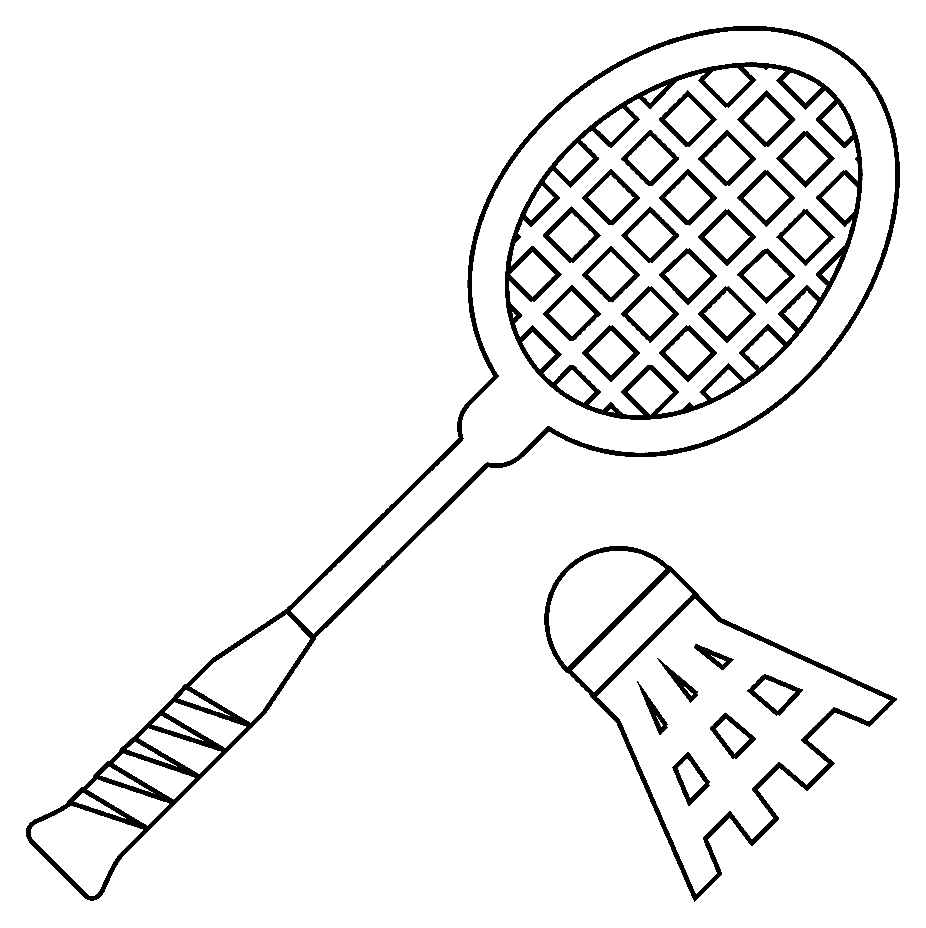
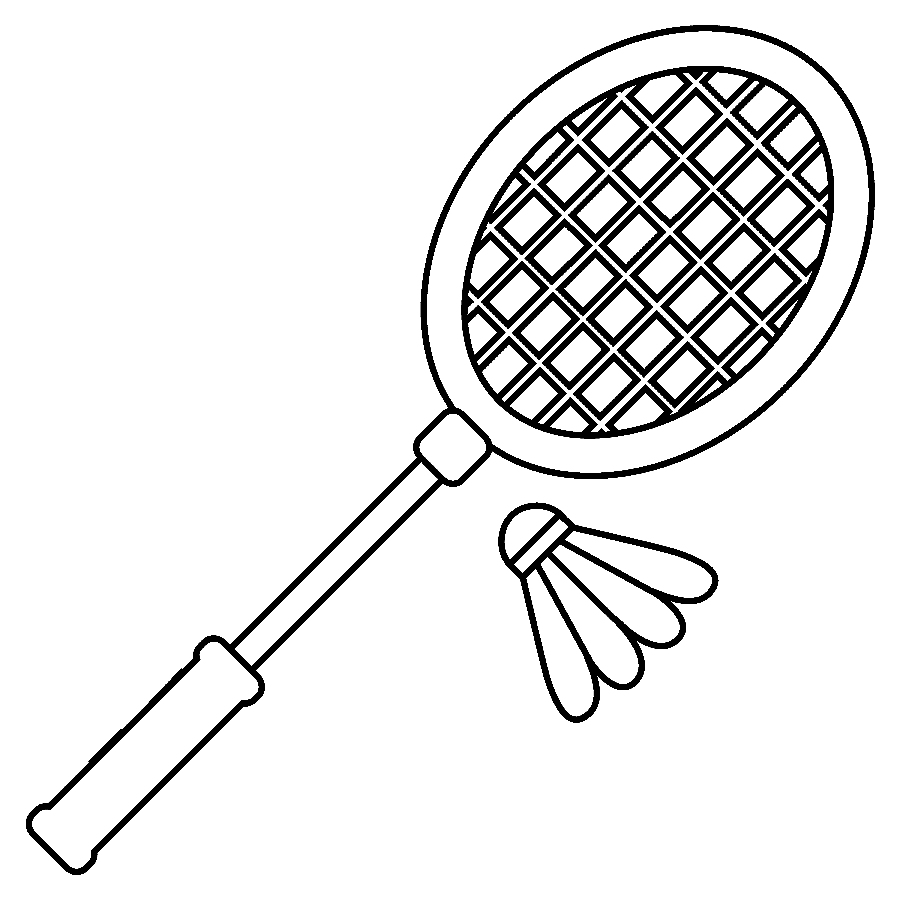
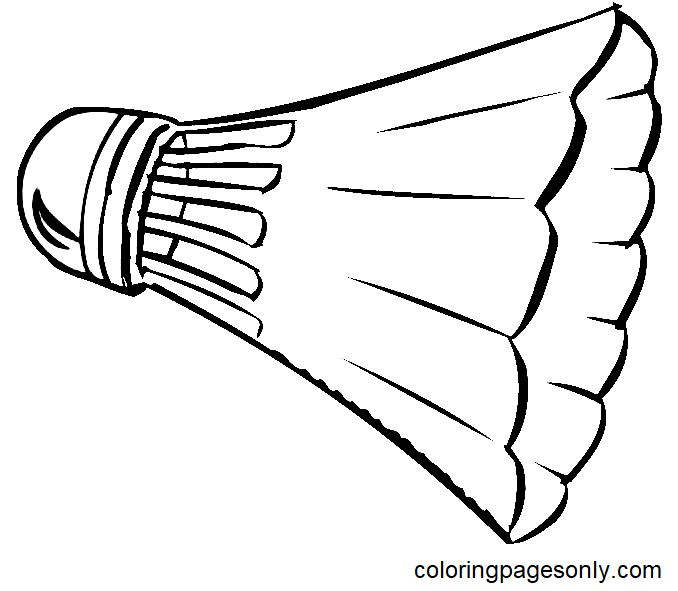
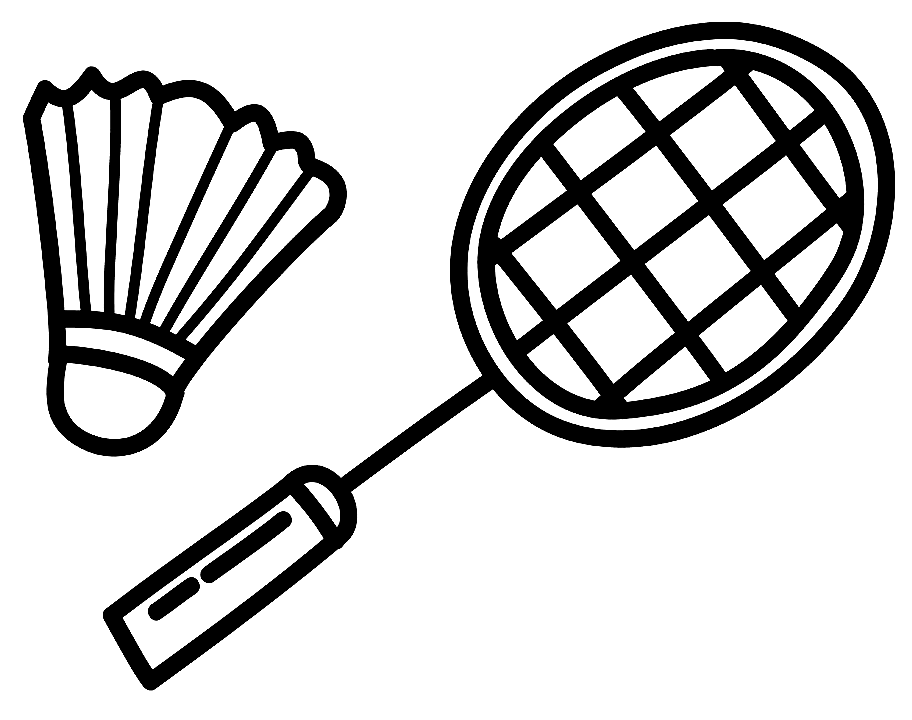
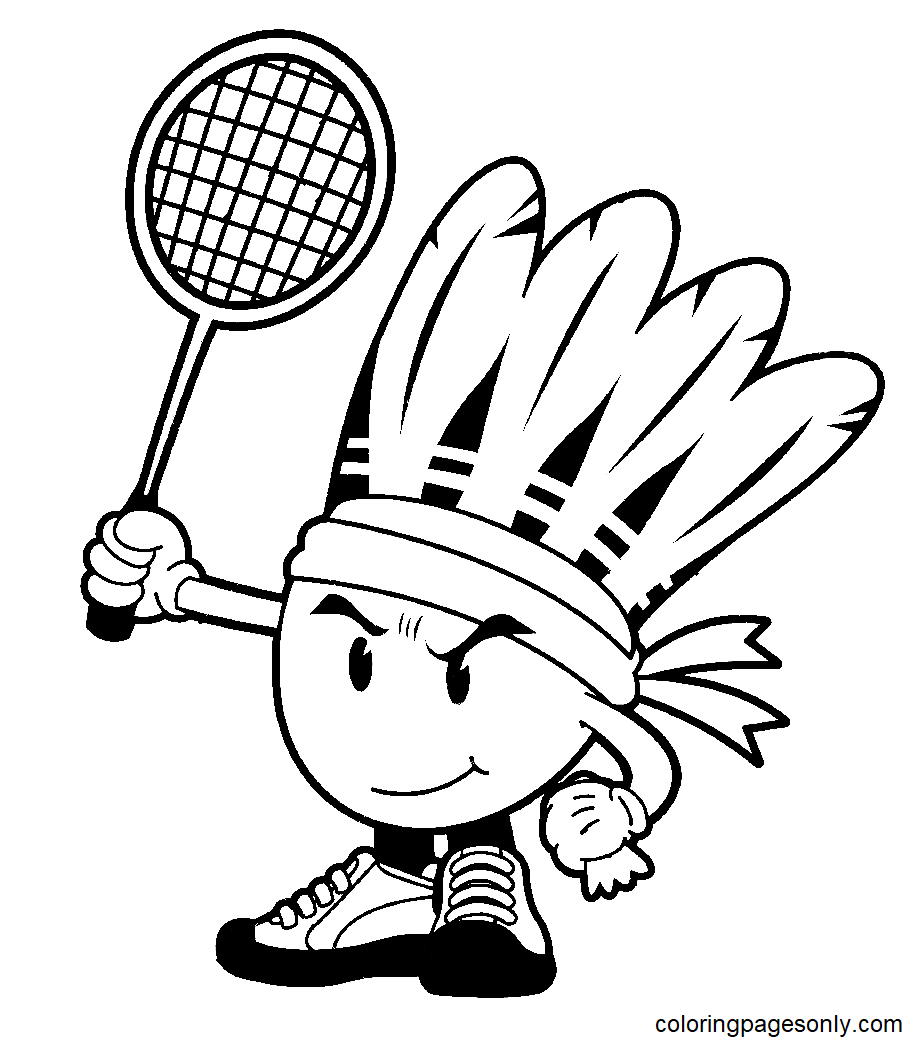
Shuttlecock Badminton, Badminton Shuttlecock, Badminton Shuttlecock Cartoon, Cartoon Shuttlecock, Badminton Birdie, Free Printable Shuttlecock, Shuttlecock Fire, Shuttlecock Mascot holding a Badminton Racket, Shuttlecock and Badminton Racket, Badminton Racket with Shuttlecock, Badminton Racket And Shuttle, Badminton Racket And Birdie, Badminton And Rackets, Birdie with Badminton Racket, and Birdie and Badminton Racket isolate the two objects at the center of the game.

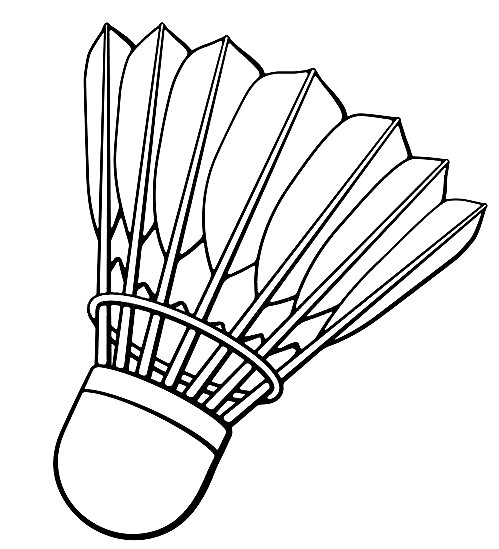
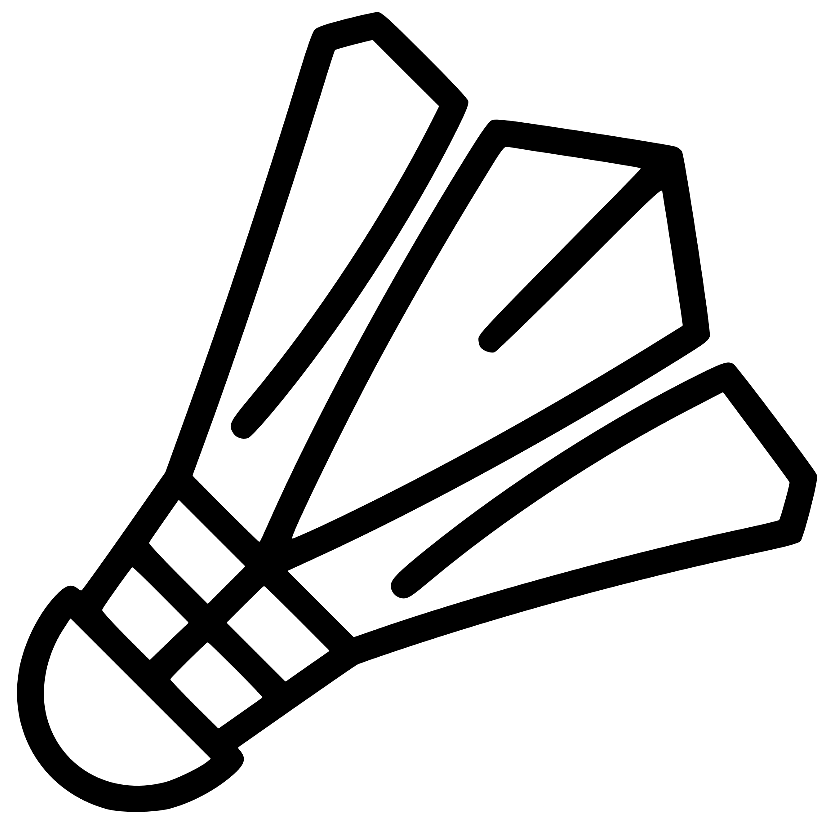
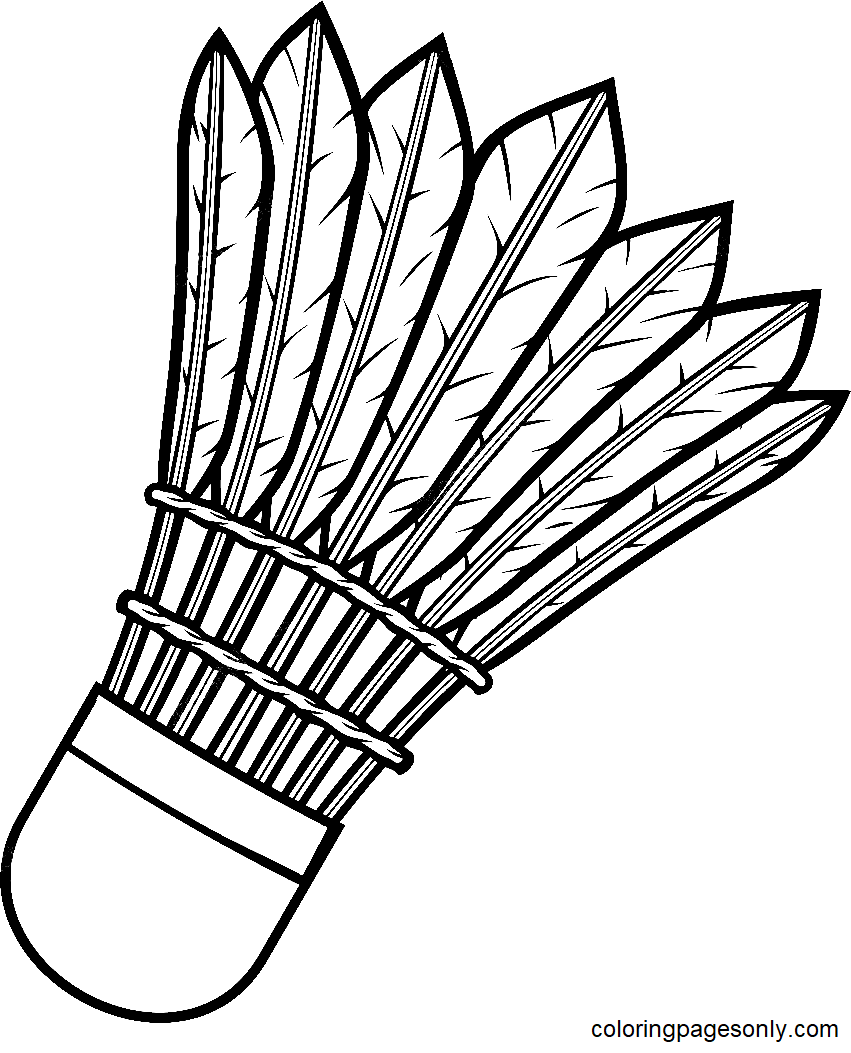
The shuttlecock is one of sport’s most unusual projectiles. Competition-grade shuttlecocks use 16 goose feathers inserted into a cork base covered with thin leather. The feathers must be taken from the same wing of the goose – they all curve in the same direction, which gives the shuttle its aerodynamic stability and its characteristic rotation in flight. A top-tier professional shuttlecock can cost more than $3 per unit. In a best-of-three match, a professional pair might go through 12–15 shuttlecocks. The Shuttlecock Fire page extends the equipment into graphic territory – rendering the shuttle with flames in the way the Flaming Basketball page does for basketball – and rewards the same fire-coloring technique: white at the core, yellow, orange, deep red at the tips.

The racket: a modern competition badminton racket weighs between 70 and 95 grams. The strings are tensioned between 18 and 30 pounds of pressure – significantly higher tension than a tennis racket. The frame is typically carbon fiber or a carbon-fiber composite. The string bed is an oval measuring approximately 28cm by 22cm. Despite being lighter than most smartphones, a good badminton racket generates extraordinary power through the combination of player technique, frame stiffness, and string tension working together.

Cartoon Characters, Animals, and Special Pages

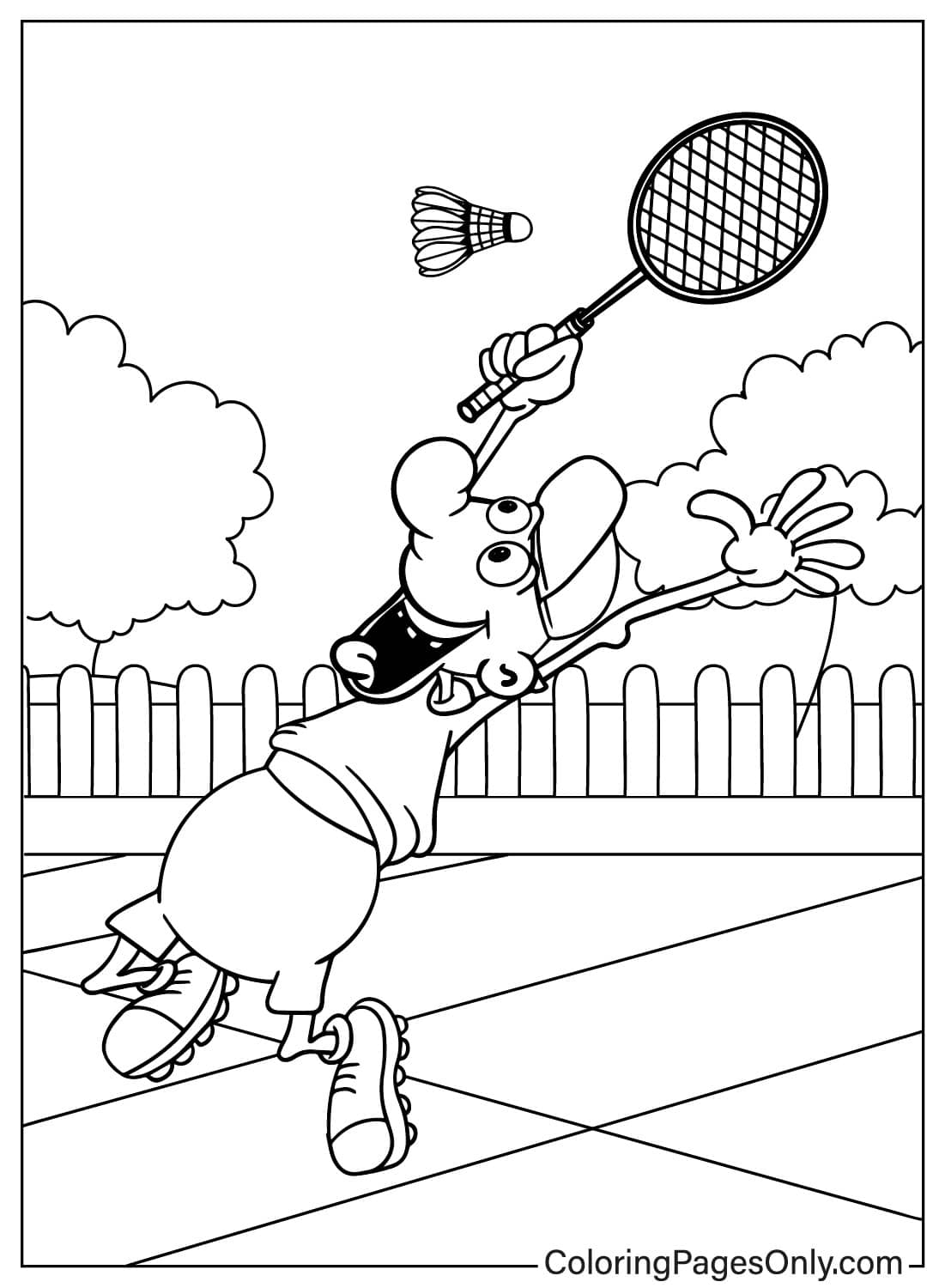
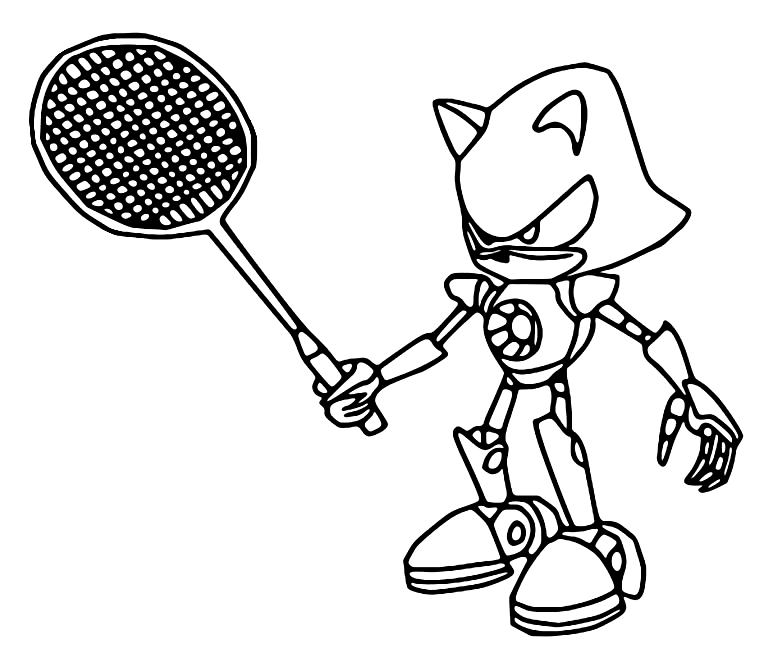
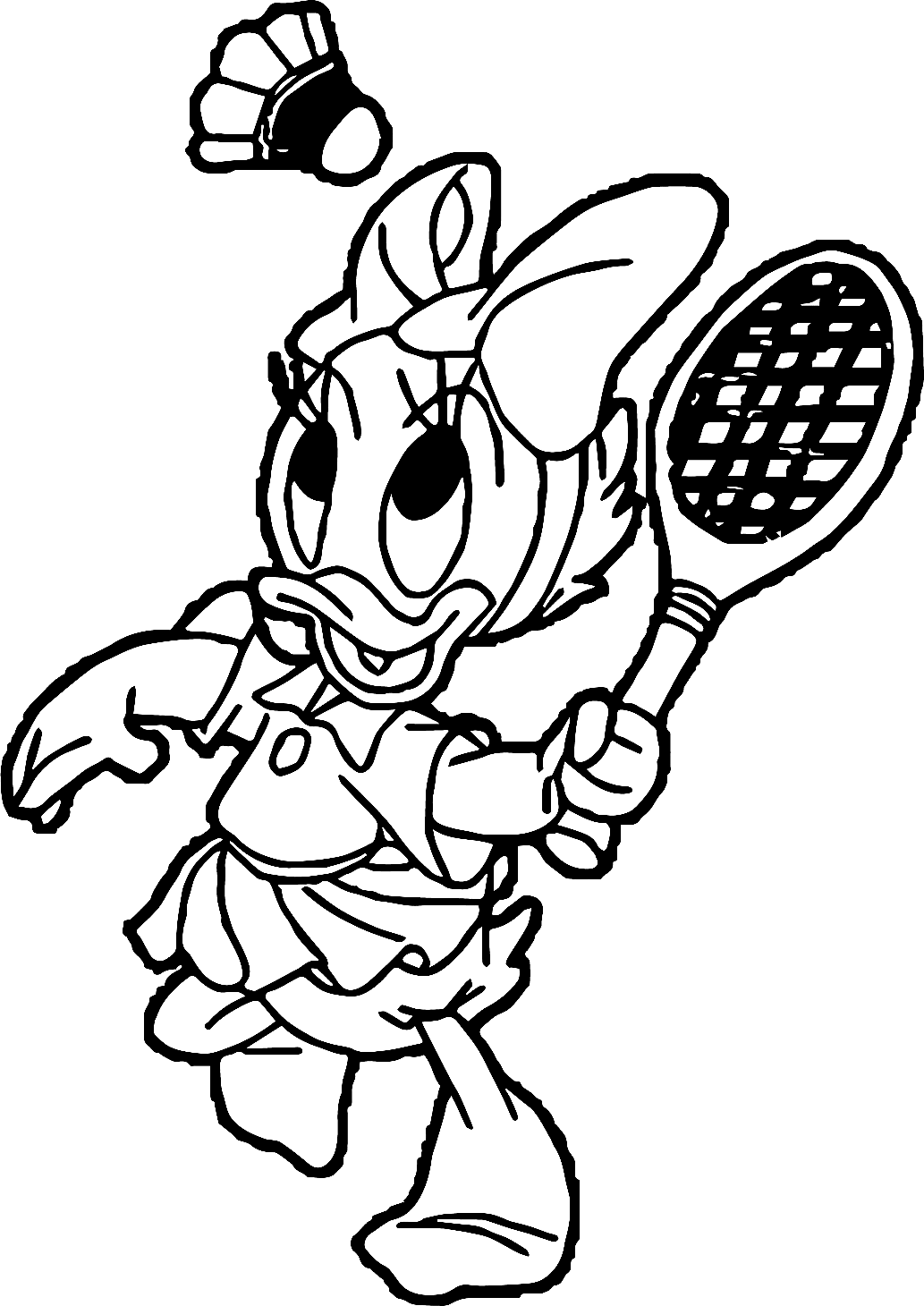
Baby Daisy Duck Playing Badminton – Daisy approaches the game with the elegant composure and fashionable coordination that characterize everything she does. Her backhand is impeccable. Sonic Playing Badminton – Sonic’s footwork is statistically the best in any sport at any level. His court coverage is flawless. Whether his smash speed exceeds the 490 km/h record is a matter of physics that remains unresolved.

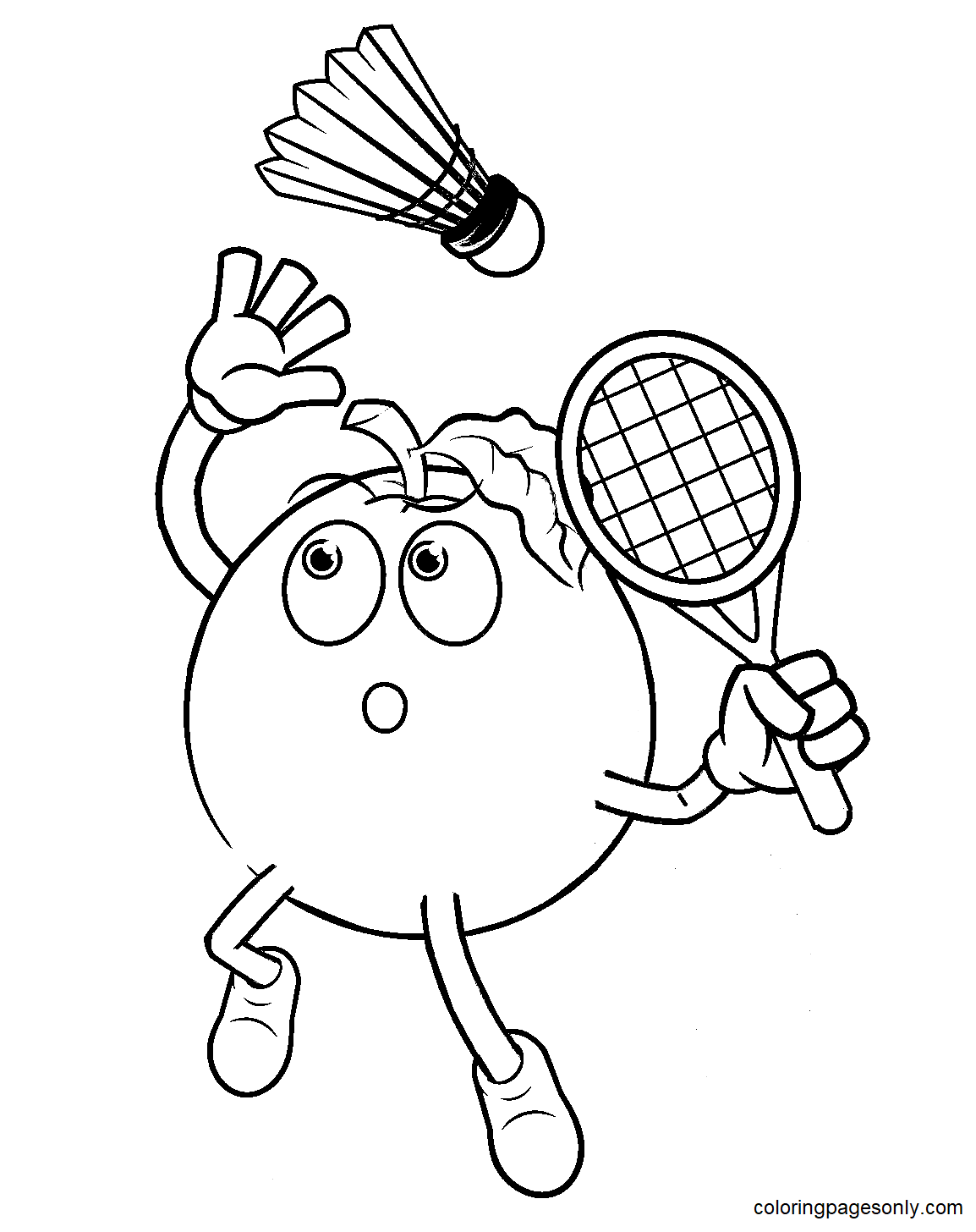
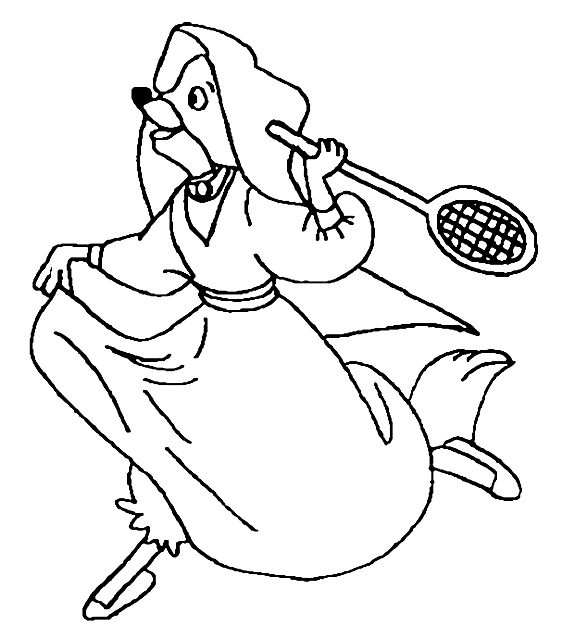
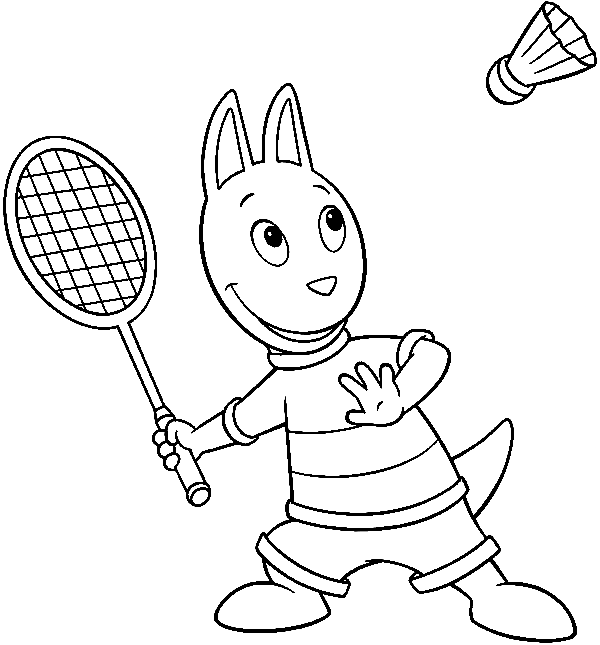
Maid Marian Playing Badminton places the Robin Hood character from Disney’s 1973 animated film on the badminton court – an image that is charming and specific in a way that children who know the film will immediately recognize. Austin Playing Badminton, Orange playing Badminton, and Cartoon Character Playing Badminton round out the character section.

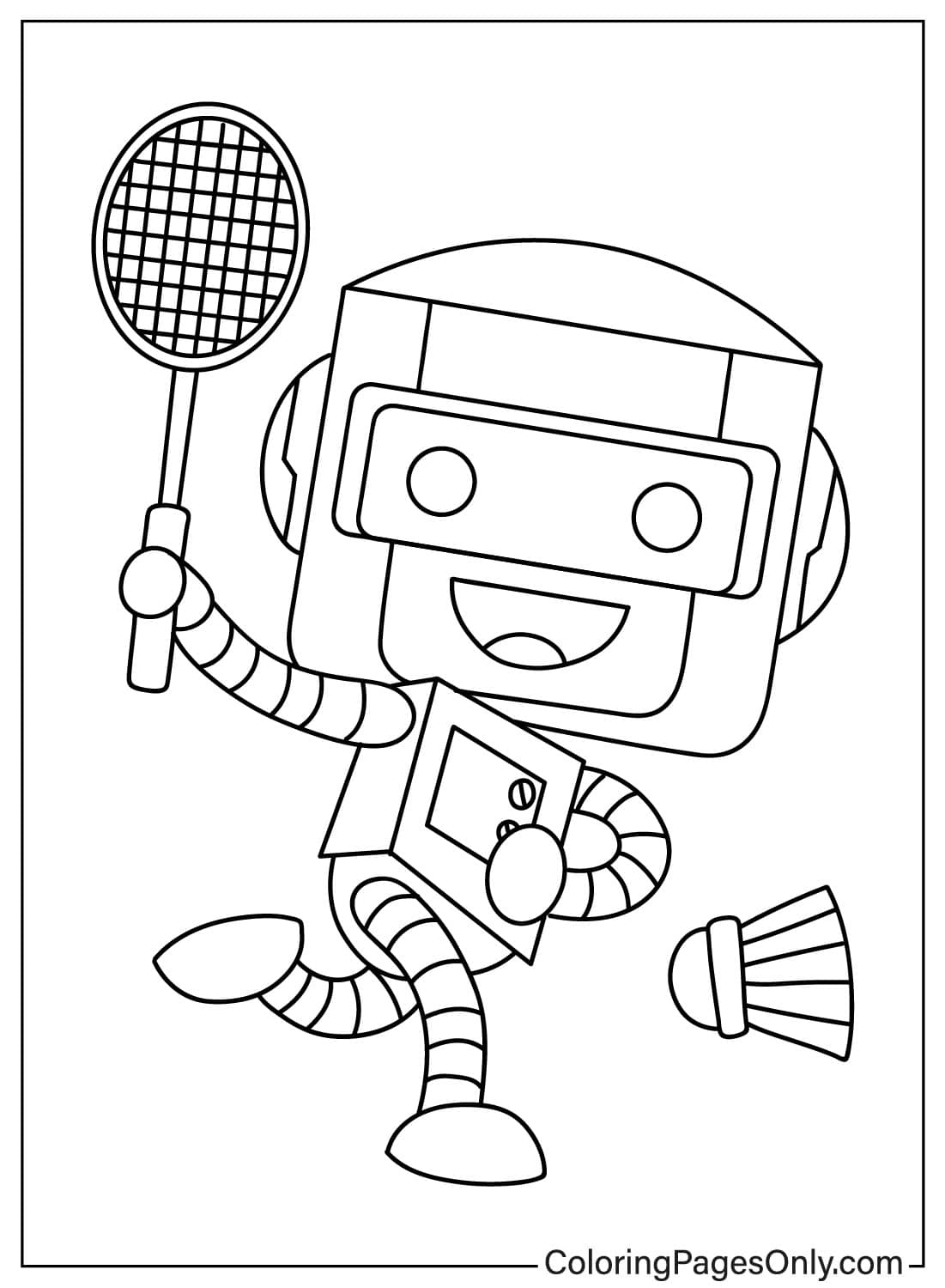
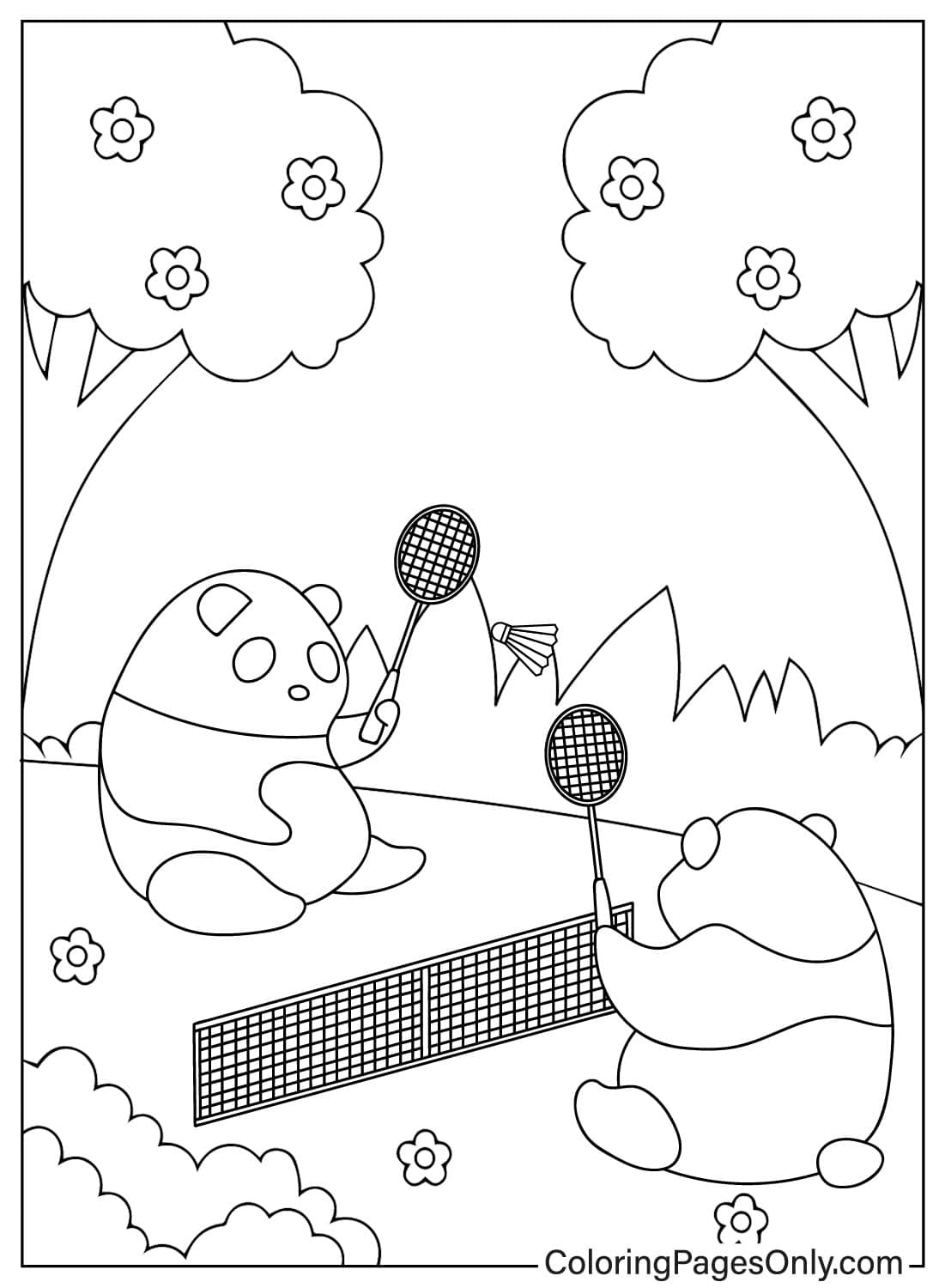
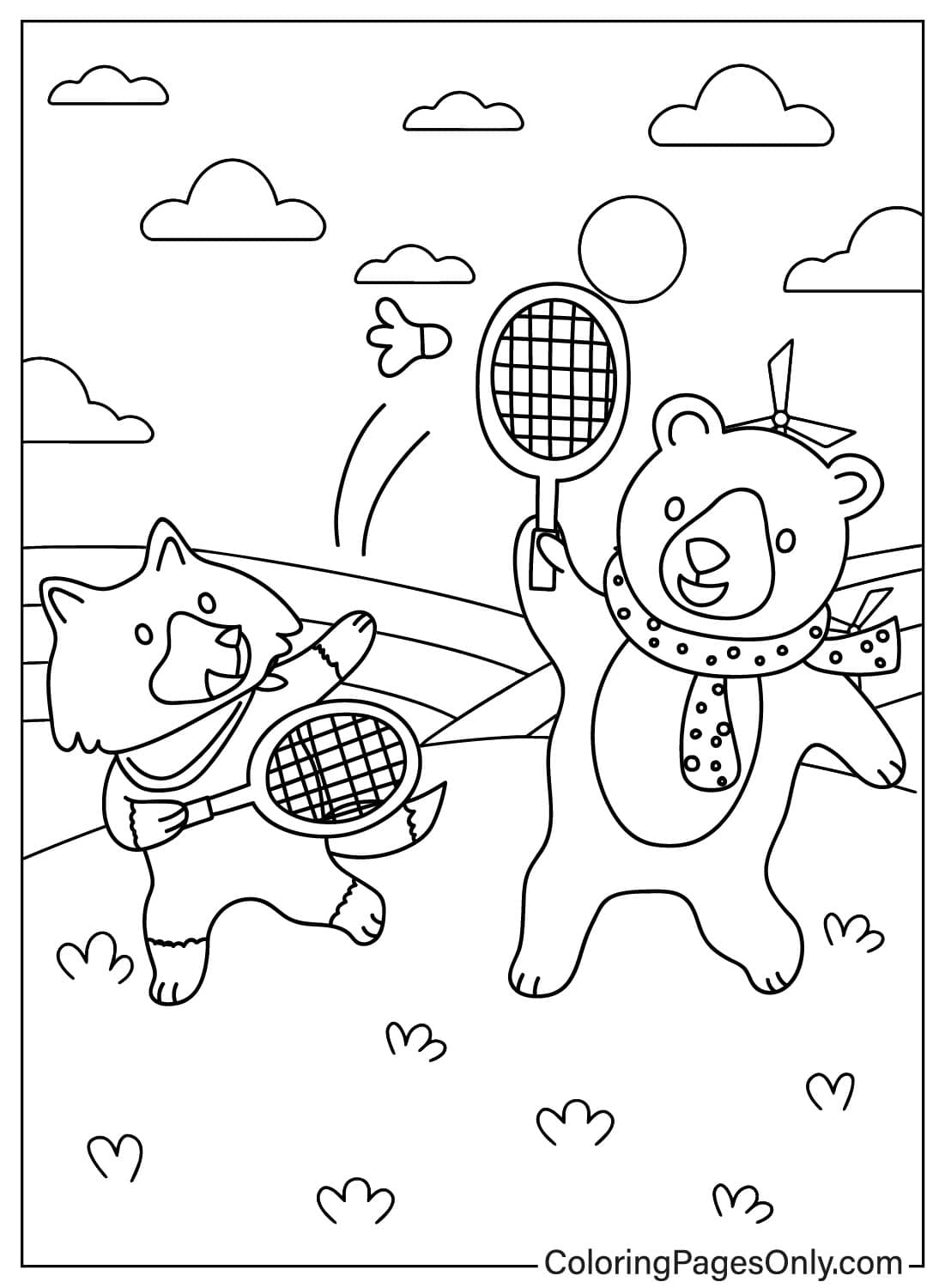
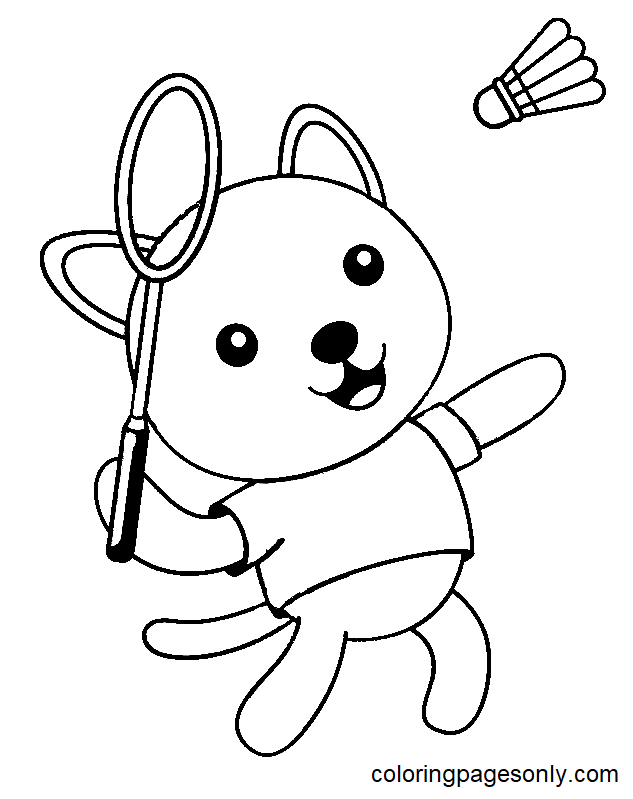
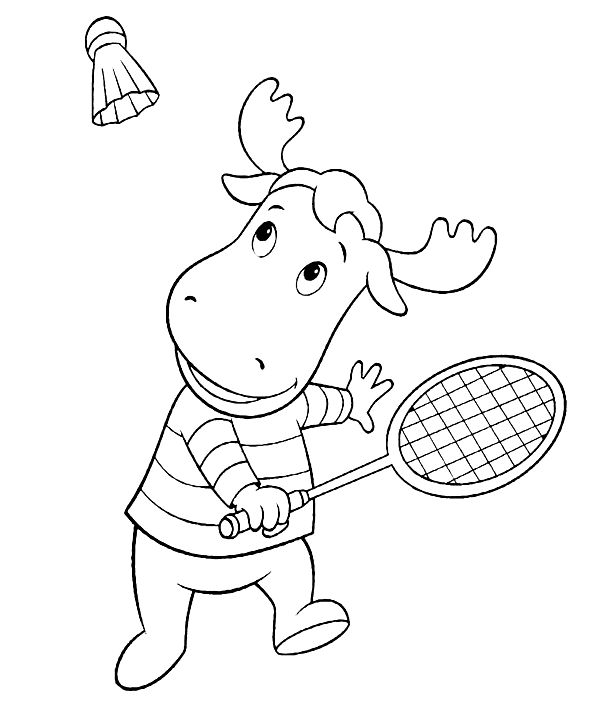
Cute Pandas Playing Badminton – Two pandas with rackets is objectively excellent. Giant pandas have pseudo-thumbs that allow a surprisingly good grip and would theoretically do well with a racket handle. The scientific literature on the giant panda’s badminton technique is unfortunately sparse. Bears Playing Badminton, Shiba Dog Playing Badminton, Moose Playing Badminton, and Robot Playing Badminton complete a roster of players who would each present unique officiating challenges.

Badminton Playground, Badminton Label, and Badminton Logo round out the decorative and graphic design pages – the logo page in particular makes a satisfying coloring project for anyone who wants to practice clean, precise lettering and graphic reproduction.

What These Pages Actually Do

Badminton is legitimately underrated as a physical activity. Research published in the British Journal of Sports Medicine found that recreational badminton significantly improved cardiovascular fitness, flexibility, and body composition in adult participants after eight weeks of twice-weekly play. It requires agility, reflexes, aerobic endurance, and explosive power simultaneously – a combination that few sports achieve with the same efficiency at the recreational level. Coloring pages that depict the game with physical accuracy communicate this reality to children before they ever pick up a racket.

The equipment pages build genuine understanding. A child who has colored the shuttlecock page and learned that competition shuttles use 16 goose feathers from the same wing, or that the racket weighs less than a smartphone, arrives at their first lesson with a level of curiosity and preparedness that coaches notice. Contextual familiarity with a sport’s equipment and vocabulary – established through visual engagement before first participation – consistently predicts faster early skill development in research on youth sports participation.

The wheelchair badminton page matters more than its size suggests. Including adaptive athletes in a coloring collection alongside standard players sends a message without stating it explicitly: the sport belongs to everyone who plays it, and the person in the wheelchair is a badminton player, not a special category. Research in inclusive education consistently shows that visual normalization of adaptive sport – seeing wheelchair athletes depicted as athletes first – significantly improves children’s attitudes toward disability inclusion in physical activity and daily life.

Fine motor demands are specific and valuable. The badminton pages require careful rendering of the racket’s string grid – dozens of small parallel lines crossing at right angles within the oval frame – which is one of the most demanding fine motor coloring exercises in any sports collection. The shuttlecock’s feathers require similarly precise parallel lines, suggesting the individual quill structure. These details reward patience and develop exactly the hand control precision the American Academy of Pediatrics identifies as a key developmental milestone in childhood.

The 2005 Art Therapy Journal finding applies here, too. Structured coloring reduces anxiety. The specific quality of badminton pages – the clean lines of court geometry, the elegant mechanical simplicity of racket and shuttle, the repetition of feather or string details – makes them particularly effective for calm, absorbing focus work.

How to Color These Pages Well

The racket string grid rewards consistency above all else. When coloring the string bed of a racket, choose your string color before you start – most competition strings are white, natural gut (a very pale cream-yellow), or occasionally neon yellow, green, or orange for synthetic strings. Apply each string line as one continuous stroke rather than starting and stopping. The horizontal strings first, all the way across, then the vertical strings on top. If the strings cross cleanly at consistent right angles, the finished racket looks professional. If the crossings are irregular, no amount of careful coloring elsewhere will fix it.

The shuttlecock’s feathers have a direction. Each feather curves slightly – when coloring the feather skirt of the shuttlecock, apply strokes that follow the length of each individual feather from base to tip. The feathers on a competition shuttle overlap each other slightly from left to right, so the left edge of each feather is partially hidden under the right edge of the feather to its left. Suggesting this overlapping structure – by leaving the left edge of each feather slightly lighter than the center and tip – gives the shuttle a three-dimensional quality that flat coloring misses.

Court colors for the indoor badminton pages. BWF (Badminton World Federation) international competition courts use a green or blue playing surface with white lines. The net is white with a dark top band. If the page includes court background, use a medium-to-deep teal green or a court blue for the surface – not a grass green, which is associated with outdoor courts rather than the synthetic indoor surfaces where professional badminton is played.

For the shuttlecock fire page, the same technique as the flaming basketball. White at the core of each flame, yellow-white to lemon yellow, orange, and deep red at the tips. The cork base of the shuttle should be a rich tan or warm brown. The feather skirt, surrounded by fire, works best in a stark near-white or pale grey so it reads clearly against the orange flames.

Animals and cartoon characters want bold, committed color. The pandas: black ears, eye patches, and limbs against a white torso and face – the color contrast is already built into the design. Lean into it. The Shiba: warm, vivid orange-red with cream chest and face markings. Sonic: the specific bright cobalt blue that is his canonical color, not navy, not turquoise. Baby Daisy Duck: white feathers, purple bows, a yellow bill, and feet.

5 Creative Activity Ideas

Badminton Greeting Card

Print one or two player action pages and one equipment page – the racket and shuttlecock combination works best as the central visual. Color all pages carefully, using accurate court sport colors: white kit for the players, a vibrant racket color of your choice (carbon fiber rackets come in virtually any color at the recreational level, so full creative freedom here).

Cut out the central figures and arrange them on a folded cardstock base. The overhead smash player works well as the main figure – place them at a slight angle on the card face so the motion reads diagonally. Add the racket and shuttlecock as secondary elements below and beside the player. Glue everything in place, add a colored border using the dominant color of your player’s kit, and write the occasion message inside.

The finished card works for birthdays, congratulations on a tournament win, a coach’s end-of-season thank you, or any occasion involving someone who loves the game.

Badmidtion coloring pages craft AliExpress 1

Image source: AliExpress.

Shuttlecock and Racket Sticker Set

Print the shuttlecock and racket pages at approximately 30–40% of full size – the reduced scale is essential for stickers to read correctly on bags, notebooks, and water bottles. Color each design carefully with fine-tip markers rather than colored pencils at this scale; the precision is easier to control.
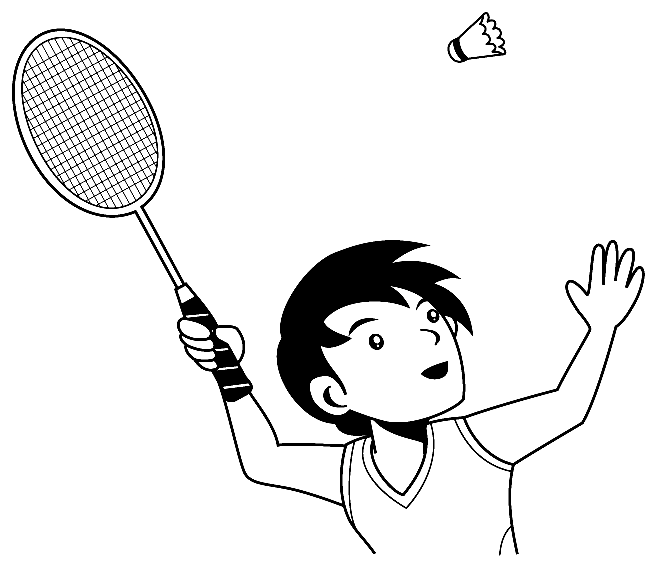
Once colored, apply clear contact paper (sticky side down) over each colored page, pressing firmly from the center outward. Cut each design out along its outline, leaving a 2mm border of clear contact paper as a protective edge. For the back adhesive, either use sticker paper originally (print the reduced images on sticker paper, then color) or apply double-sided tape to the back of each cutout.

A complete set of ten to twelve stickers – various shuttlecocks, rackets, player silhouettes, and the badminton logo – makes a personalized gift for a teammate, a coach, or any badminton player who needs to identify their equipment bag at a tournament where every other player’s bag looks identical.
Badmidtion coloring pages craft Esty 2

Image source: Etsy.
Court Wall Decal

Print the largest badminton player action pages at A3 size if your printer handles it, or take the files to a print shop for A2 or A1 output. Color each one with bold, confident choices – this is going on a wall, so restraint is the wrong approach. The player should pop. The shuttle should be clearly visible. The background should be deep enough to create contrast.

After coloring and cutting out the figures, mount them on the wall of a bedroom, playroom, or school badminton changing room using repositionable adhesive strips (the kind that come off walls cleanly). Arrange multiple pages at different heights and angles to suggest motion across the wall – a player jumping at upper left, a racket and shuttle at center right, a pair playing at lower left.

The finished wall installation looks like custom sports art. It cost the price of printing and an afternoon’s coloring to create.

Badmidtion coloring pages craft 3

Photo Booth Props

Print five to six pages – the overhead smash player, a shuttlecock, a racket, the logo, the mascot holding a racket. Color all of them with the boldest palette you have. Cut each one out, glue it to a piece of cardboard for rigidity, then cut the cardboard to match the figure. Attach a wooden skewer or craft stick to the back of each with several strips of strong tape, leaving 15–20cm of handle below the figure.

A set of photo booth props takes about an hour to make and works for: end-of-season badminton club parties, school sports days, birthday parties with a sports theme, or any event where a photograph station would benefit from having a set of badminton-themed props people can hold up in front of them. Children consistently pick up sports props at photo booths and hold them in exactly the wrong way, which is funnier than holding them correctly.

Badmidtion coloring pages craft 4

Birthday Cake Toppers

Print the shuttlecock, the racket, and optionally a player action figure at a small size – approximately 5–8cm tall for the central elements. Color them with full attention, since at this size any inconsistency is visible. Cut each out cleanly. Glue each cutout to a small piece of cardstock backing. Attach a cake pop stick or thin wooden skewer to the back of each with tape. Allow the glue to set completely before use.

Insert the finished toppers into a frosted cake in a small arrangement: the player in the center, the racket and shuttlecock flanking. For a team party, make one topper per team member – the player figure is the same for all, but write each person’s name on the cardstock backing. Every player gets their own topper, and the cake becomes a team trophy of sorts.

Badmidtion coloring pages craft 5

Frequently Asked Questions

Where did badminton originate, and how did it get its name? The modern game of badminton descended from a game called “Poona” played by British Army officers in India during the 1860s, which itself derived from much older traditional games played in India, China, and Greece involving hitting a feathered projectile with a paddle. When British officers returned home, they brought the game with them. In 1873, the Duke of Beaufort introduced it to guests at his country estate – Badminton House in Gloucestershire, England – and the sport took its name from the location. The Bath Badminton Club formalized the first rules in 1877. The Badminton Association of England was founded in 1893, and the first All-England Championship was held in 1899.

When did badminton become an Olympic sport? Badminton was first played as an Olympic demonstration sport at the 1972 Munich Games. It became a full Olympic medal sport at the 1992 Barcelona Games, with five events: men’s singles, women’s singles, men’s doubles, women’s doubles, and mixed doubles. The five events remain the same today. China has been the most dominant nation in Olympic badminton history, followed by South Korea, Indonesia, Denmark, and Malaysia.

What is the fastest recorded shuttlecock speed? The fastest smash speed ever recorded in an official context was 426 km/h, set by Chinese player Fu Haifeng during the 2005 Sudirman Cup. Malaysian player Tan Boon Heong recorded 493 km/h during an unofficial test session in 2013. In regular match play, professional smashes typically travel between 300 and 400 km/h. For context, the fastest tennis serve ever recorded was 263 km/h, and the fastest cricket delivery was 161 km/h.

What is a shuttlecock made of? Competition-grade shuttlecocks use 16 goose feathers inserted into a rounded cork base wrapped in thin leather. The feathers must come from the same wing of the same goose species – typically white goose – because feathers from different wings curve in opposite directions, which affects flight stability. High-quality shuttlecocks are hand-crafted and can cost $3–5 per unit. Recreational shuttlecocks typically use nylon or plastic skirts over a cork or rubber base, which are significantly more durable but behave somewhat differently in flight. Professional players use feather shuttlecocks exclusively in competition.

What are the main shots in badminton? The primary shots in badminton are the clear (a high shot to the back of the opponent’s court), the smash (a fast, downward-angled attacking shot), the drop shot (a soft shot that falls just over the net), the net shot (a gentle touch at the net to force the opponent to lift the shuttle), the drive (a flat, fast shot at mid-court level), and the lift or lob (a defensive shot that sends the shuttle high to the back of the court when under pressure). The serve is the only shot governed by specific rules in terms of angle and height: in competition badminton, the racket head must be below the server’s waist, and the shuttle must be struck below the lowest rib at the moment of contact.

What is para badminton, and when did it become a Paralympic sport? Para badminton – also known as wheelchair badminton and standing badminton for athletes with physical impairments – has been organized at a competitive level since the 1990s. The Badminton World Federation (BWF) took over governance of para badminton from the International Wheelchair and Amputee Sports Federation (IWAS) in 2011. Para badminton made its Paralympic debut at the Tokyo 2020 Games (held in 2021), contested across six sport classes: WH1 and WH2 for wheelchair users, SL3 and SL4 for standing athletes with lower limb impairments, SU5 for standing athletes with upper limb impairments, and SS6 for athletes with short stature.

What age group are these pages best suited for? The cartoon character pages – Baby Daisy Duck, Sonic, Maid Marian, the orange character, the robot – work well from age 3 upward. The animal pages (pandas, bears, Shiba, moose) suit ages 4–9. The kids playing pages work for ages 4–10. The technical equipment pages (racket string grid, shuttlecock feather structure) and the competitive player action pages reward the fine motor patience that develops around age 7 or 8, and are genuinely satisfying for adult colorists who enjoy precise, detail-oriented work. The wheelchair badminton page has educational value across all ages.

How does badminton scoring work? Badminton uses rally point scoring: a point is scored on every rally, regardless of which side served. Matches are played to the best of three games, with each game played to 21 points. A side must win by 2 points clear. If the score reaches 29–29, the next point wins the game (a “setting” provision). At 20-all, play continues until one side leads by 2 points or until one side reaches 30 points. Between the second and third games, players have a 2-minute rest interval. Service alternates based on who wins each point rather than rotating on a fixed schedule.

Browse the full collection at ColoringPagesOnly.com. All free, no sign-up, PDF, JPG, or PNG, print or color online.

The shuttlecock travels faster than almost anything else in racket sport and decelerates to almost nothing before it hits the floor. Between those two moments – the smash and the drop – there is a game that moves at a speed most people never get to see unless they’re watching it live or playing it themselves. The pages in this collection are a quiet version of that: nothing moves, nothing travels at 490 km/h, and you have as long as you need with each one.

Pick up your colors. Step to the service line. Play your game.

Share your work on Facebook and Pinterest and tag #Coloringpagesonly. We especially want to see the shuttlecock fire page and whatever people do with the pandas.

Color the shuttle. Own the court. Keep your racket up.

These related coloring collections will help you explore the wonderful world of colors. Let’s choose, be creative, and show us your great pictures!


Charlotte Taylor – Writer

I'm Charlotte Taylor, a former preschool teacher turned content creator at Coloringpagesonly.com. Fueled by my love for children and a deep passion for exploring the world through colors, I’m dedicated to inspiring creativity and spreading a vibrant, positive artistic spirit to all.