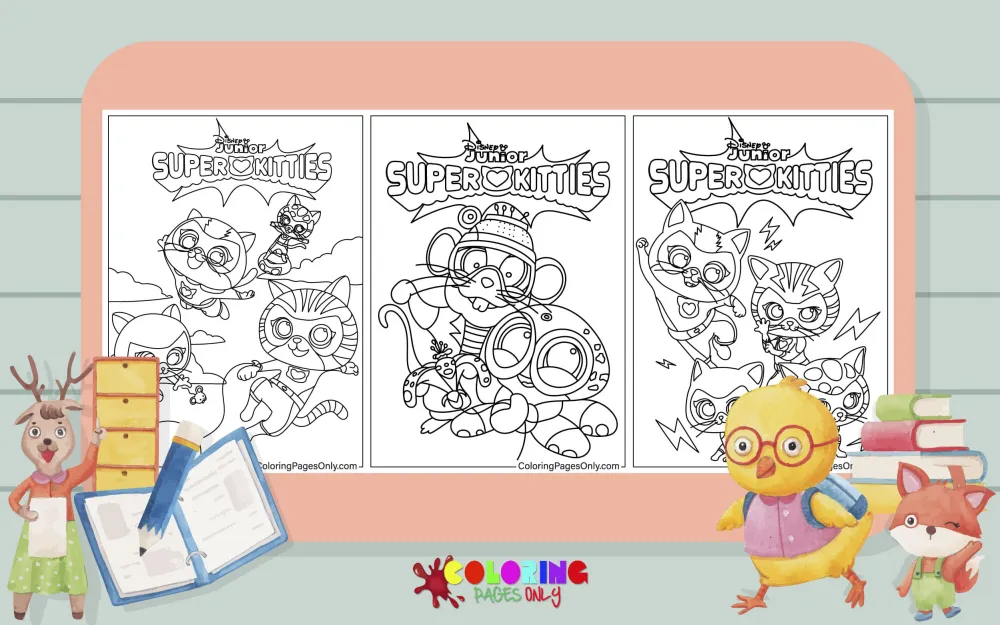
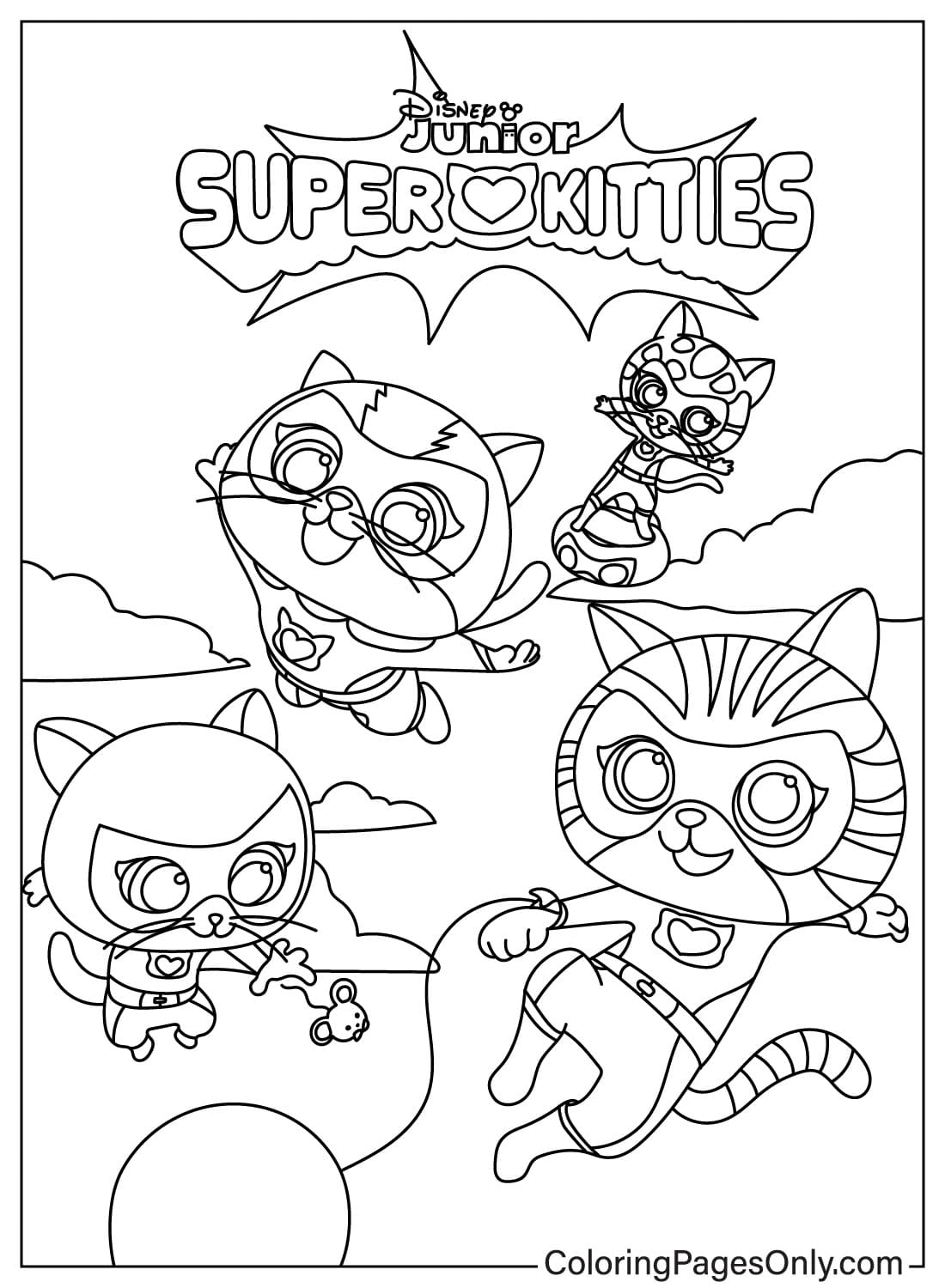
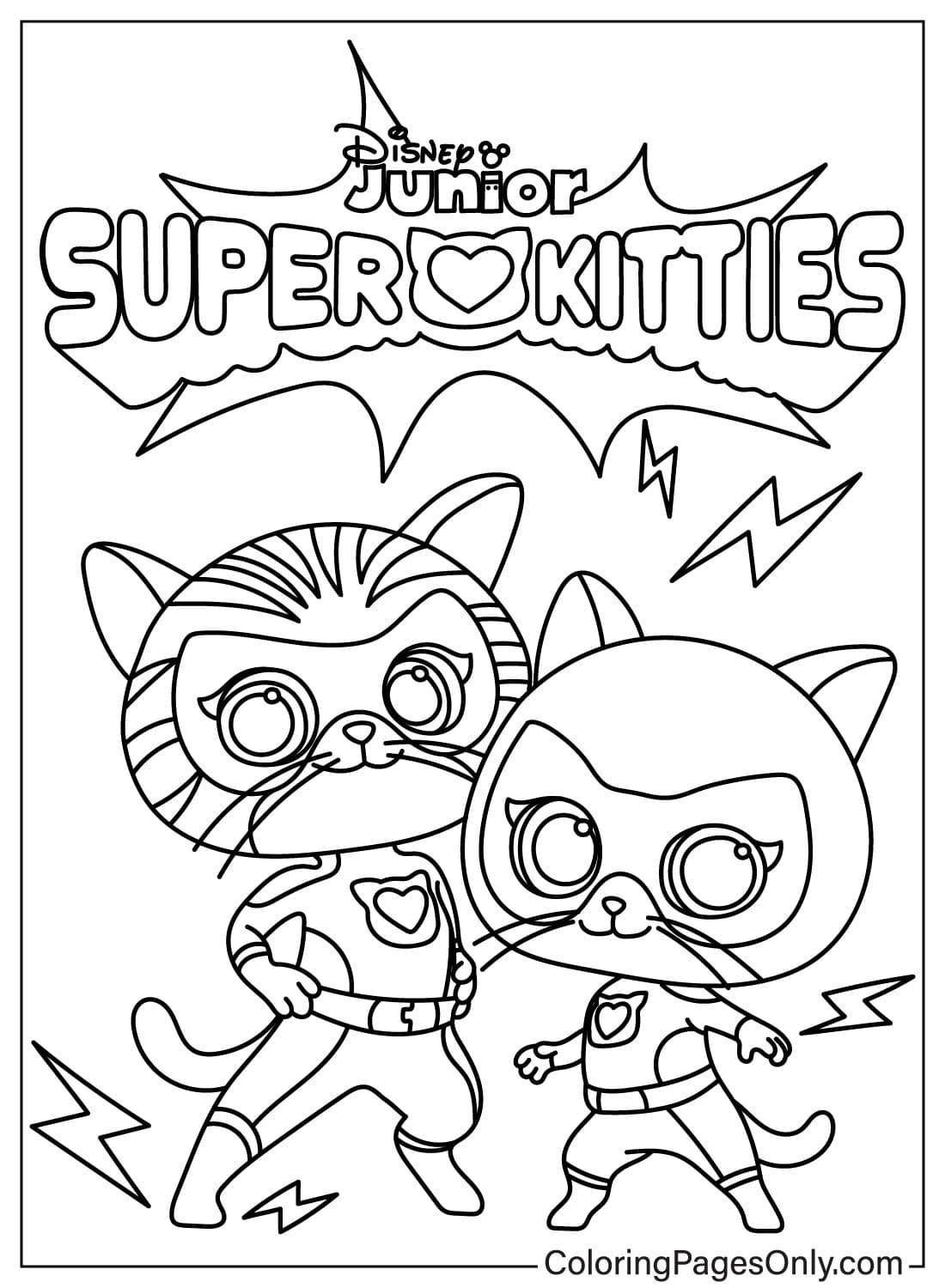
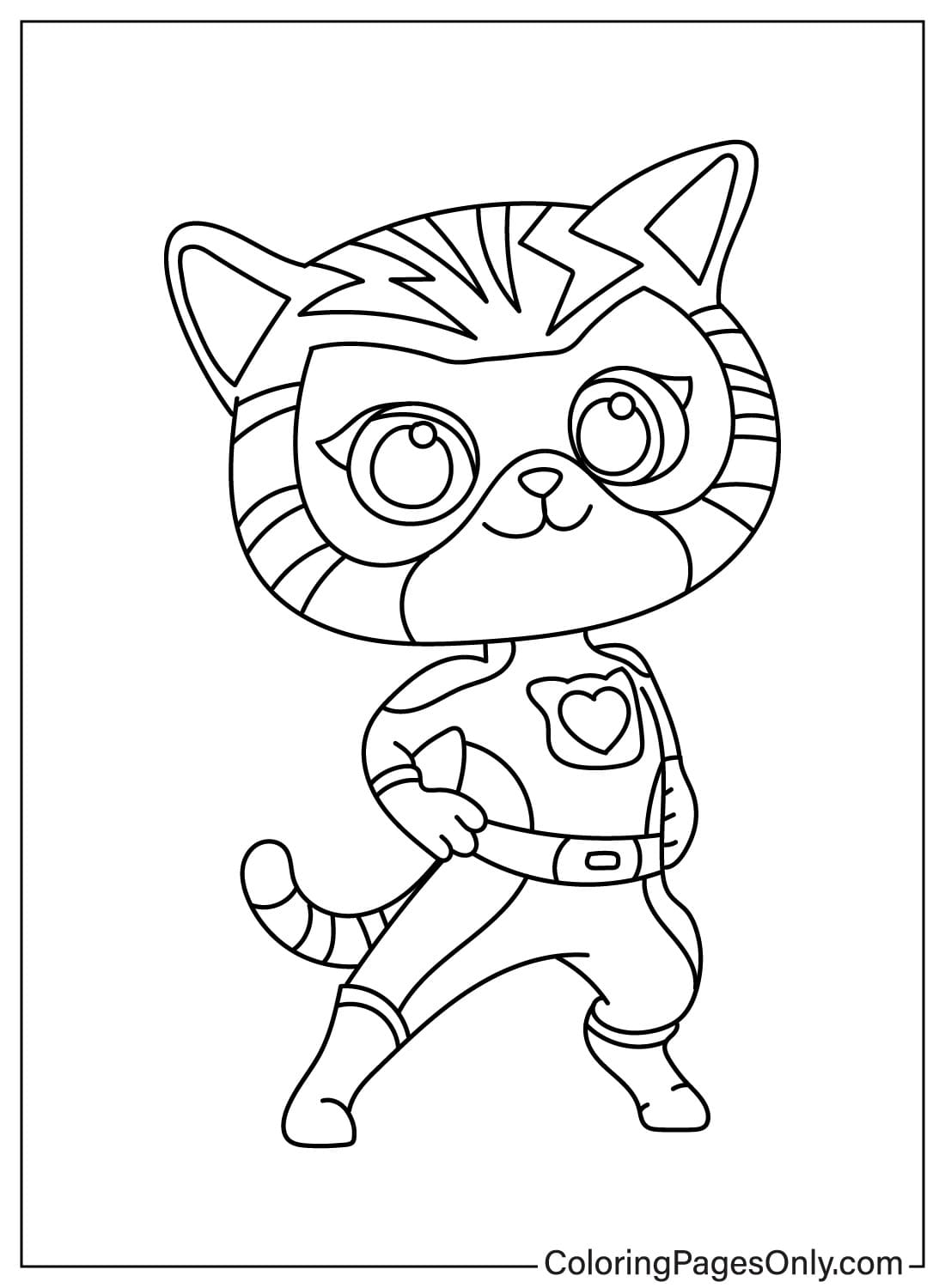
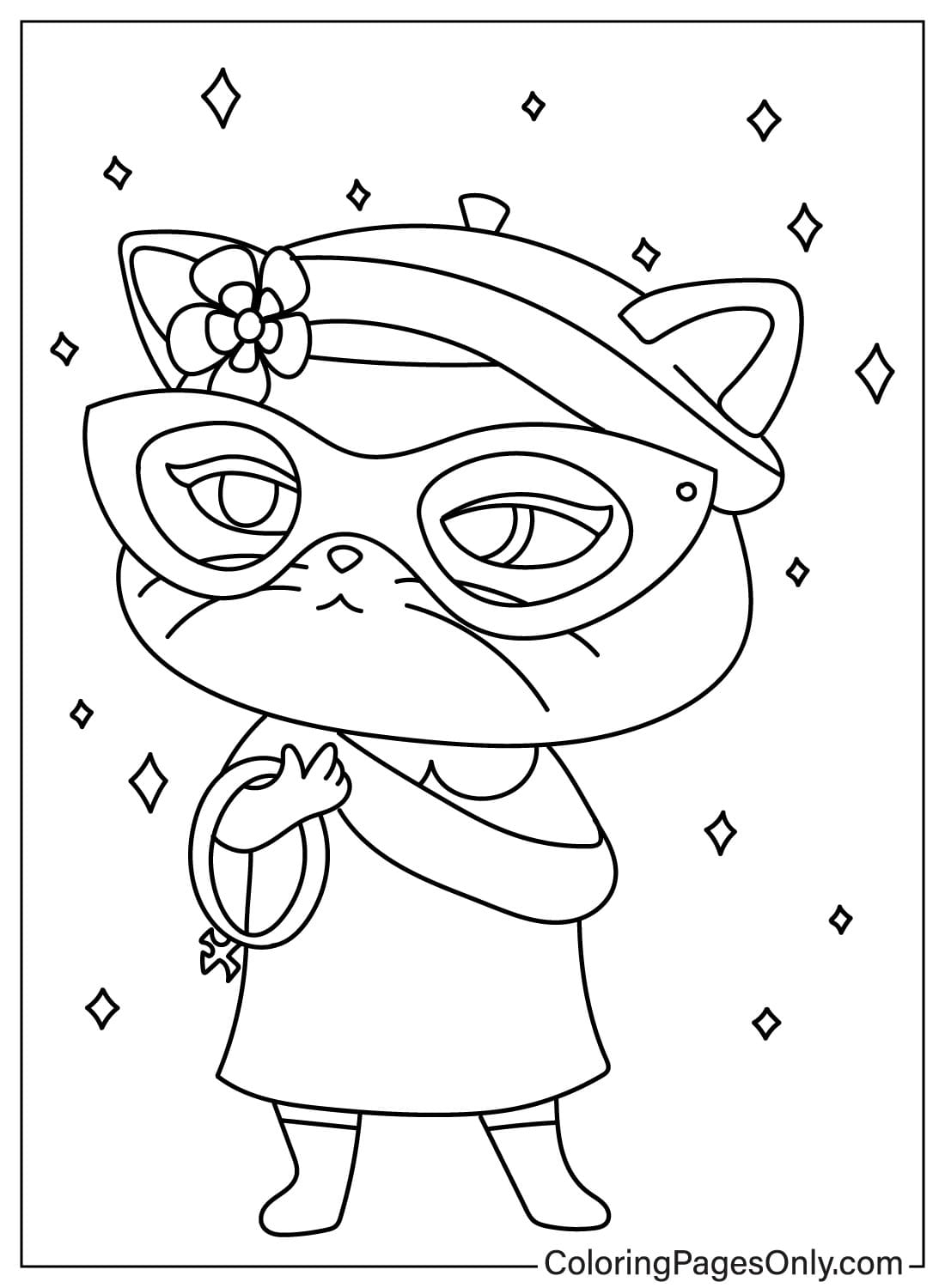
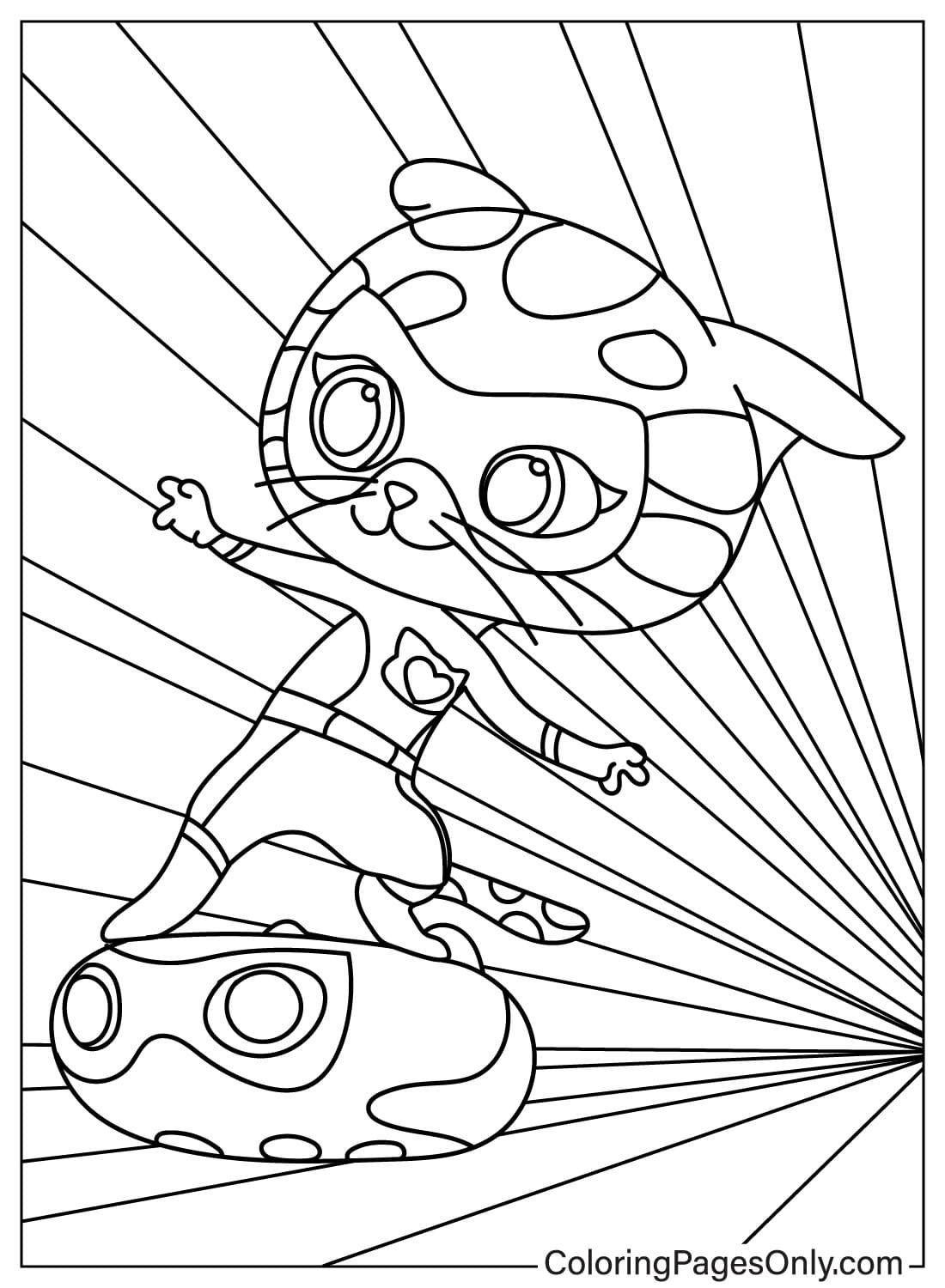
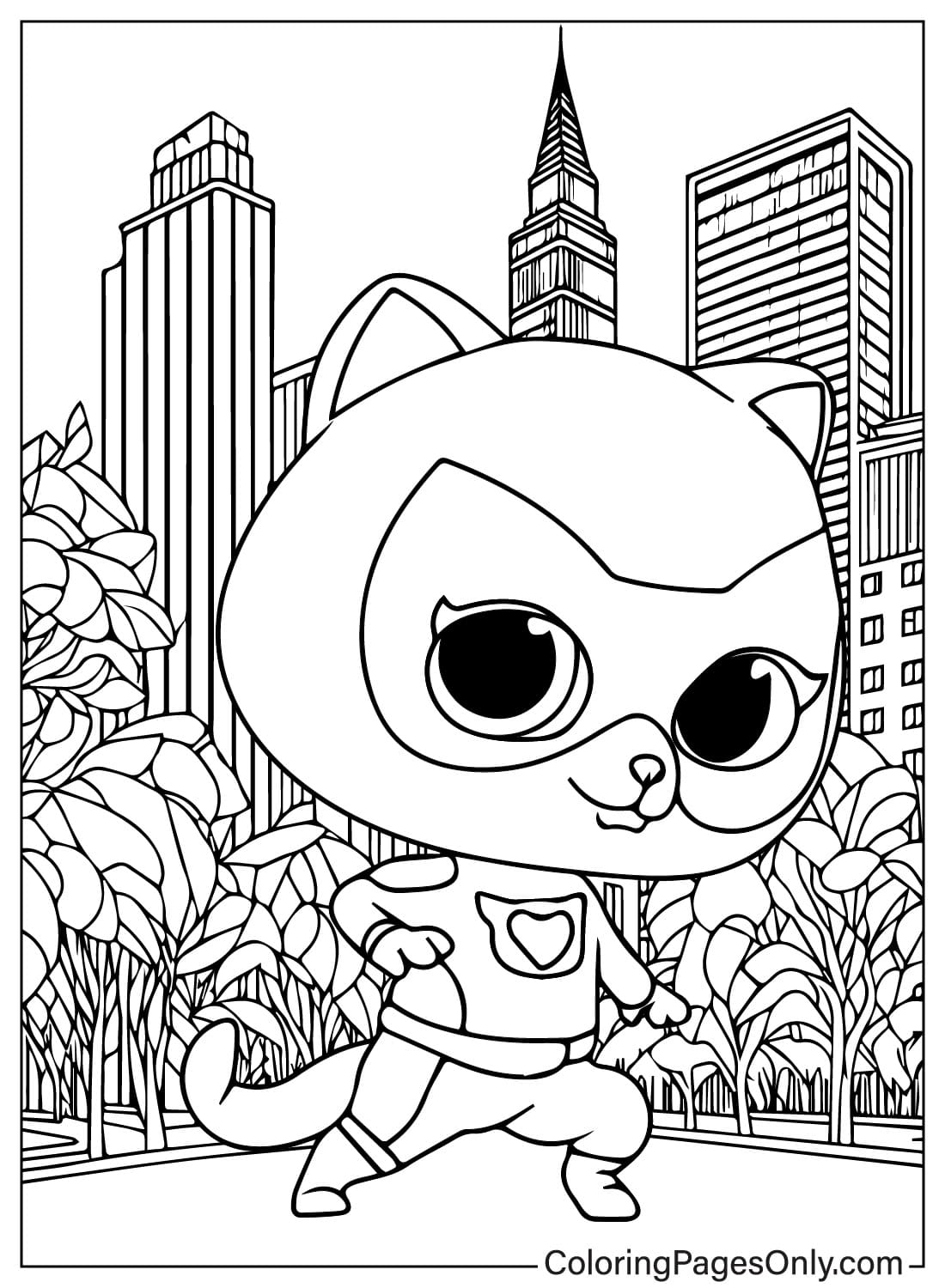
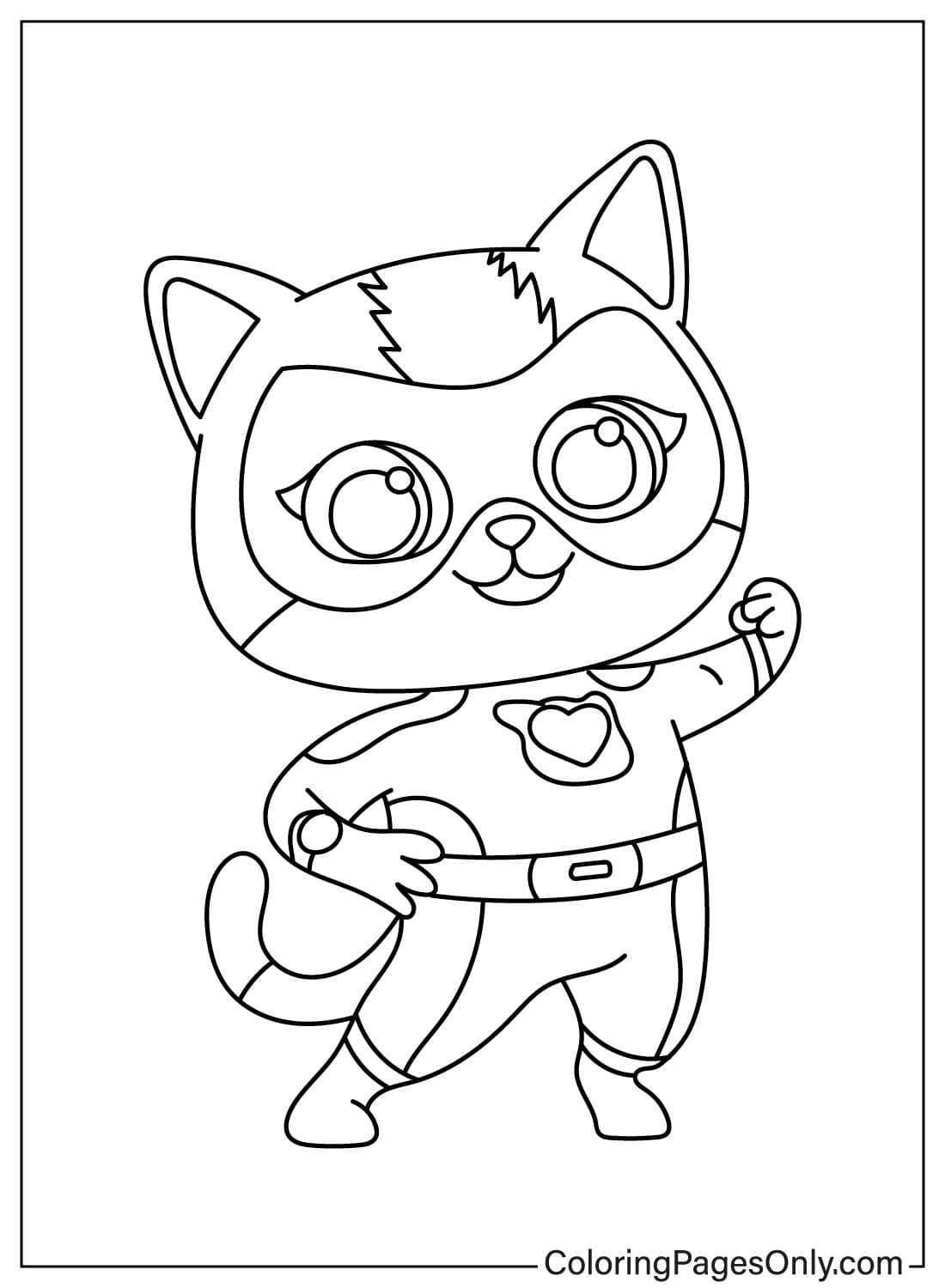
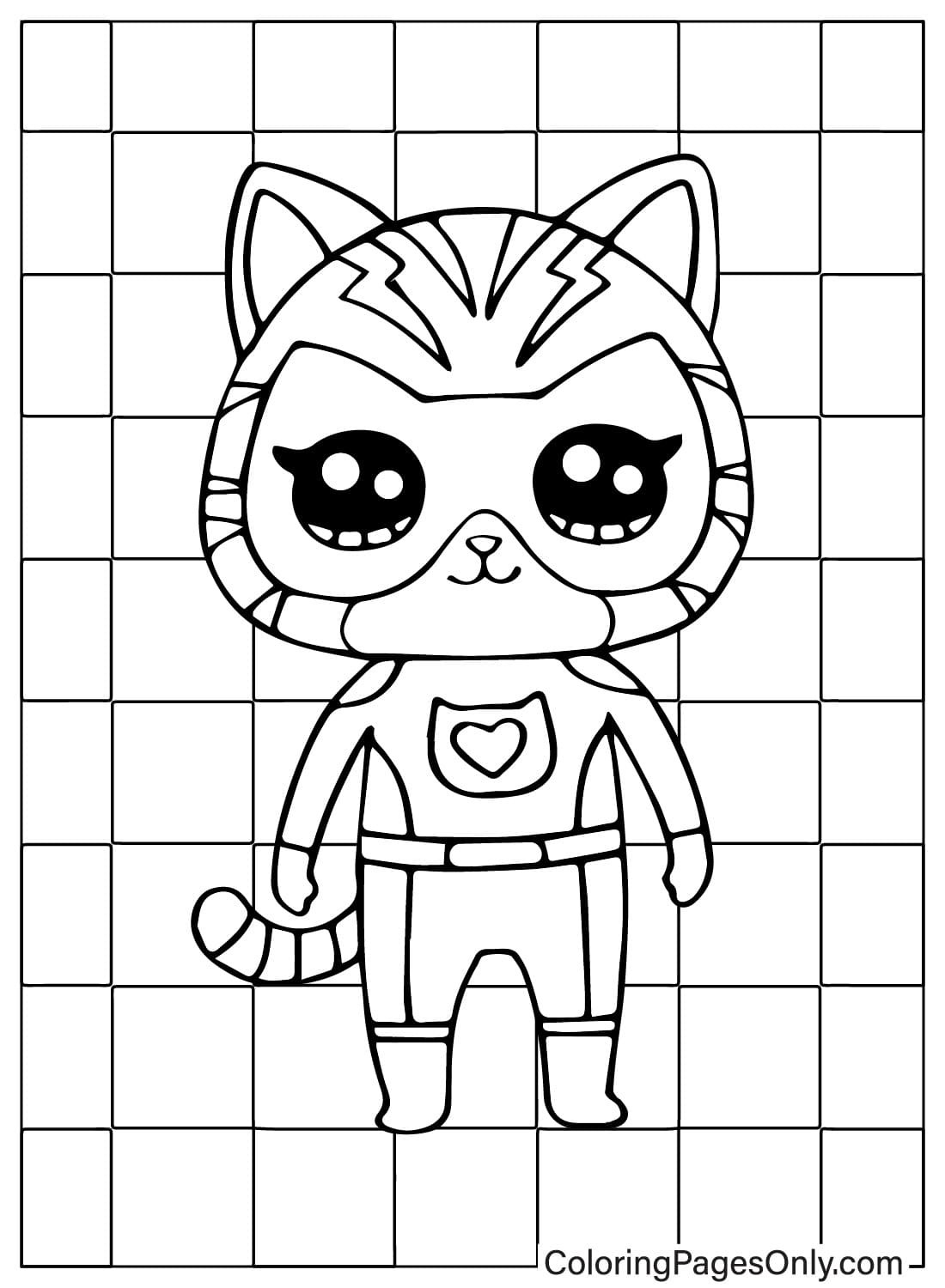
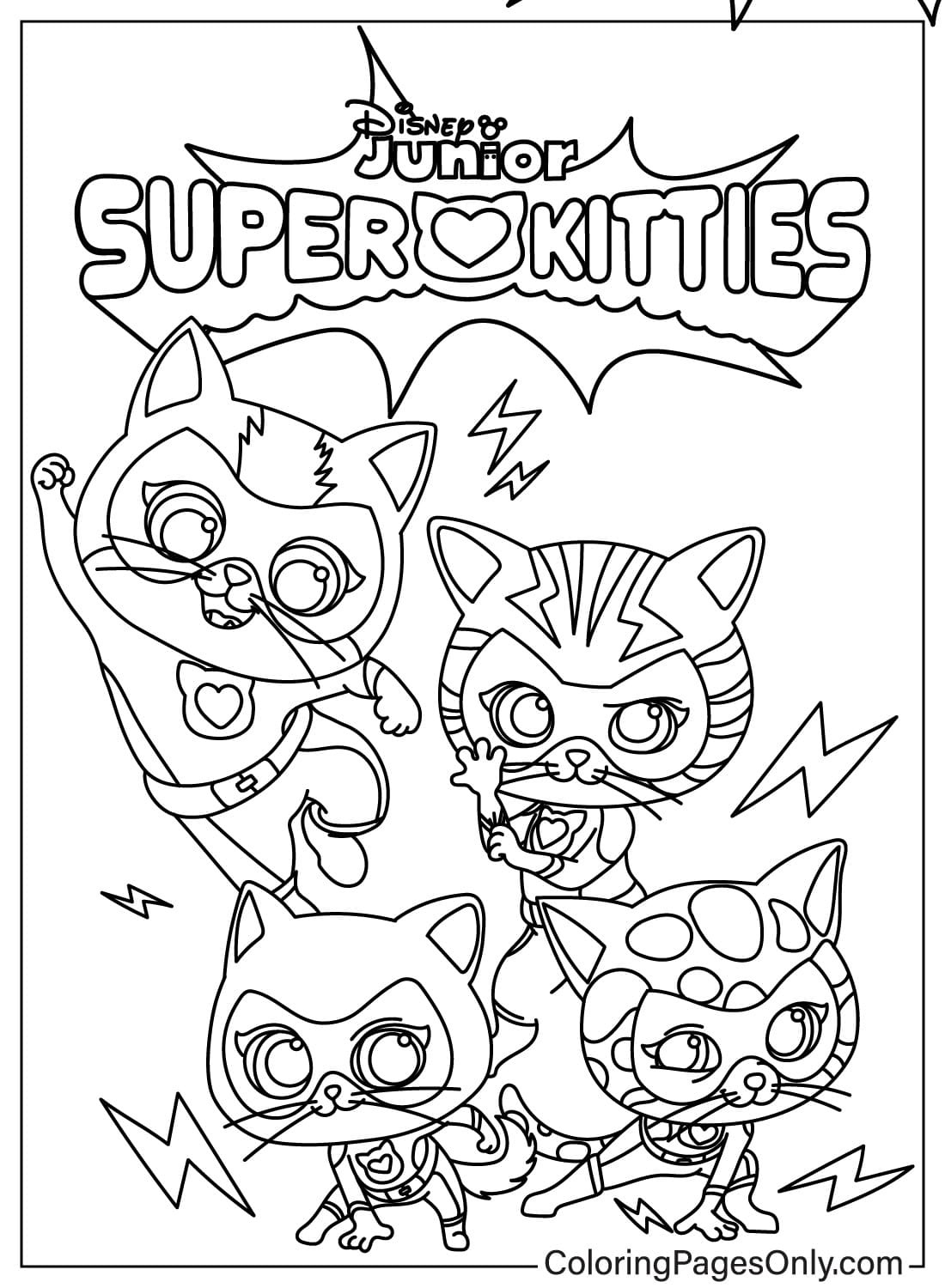
SuperKitties Coloring Pages at ColoringPagesOnly.com brings together 20+ free pages from Disney Junior’s superhero musical series – all four heroes in individual portraits and team action poses, villains including Cat Burglar, Lab Rat, Mr. Puppypaws, and Zsa-Zsa, fan-favorite supporting characters Granny Catarina and Otto, the Season 3 wildcat Willa, the Season 2 Pamster and Champster Glamster duo, and themed seasonal scenes. Download any page as a free PDF to print, or color online directly in your browser.
SuperKitties is part of Disney Junior’s lineup – explore more at Disney Coloring Pages and find similar shows at Paw Patrol Coloring Pages, PJ Masks Coloring Pages, and the full Cartoons Coloring Pages hub.
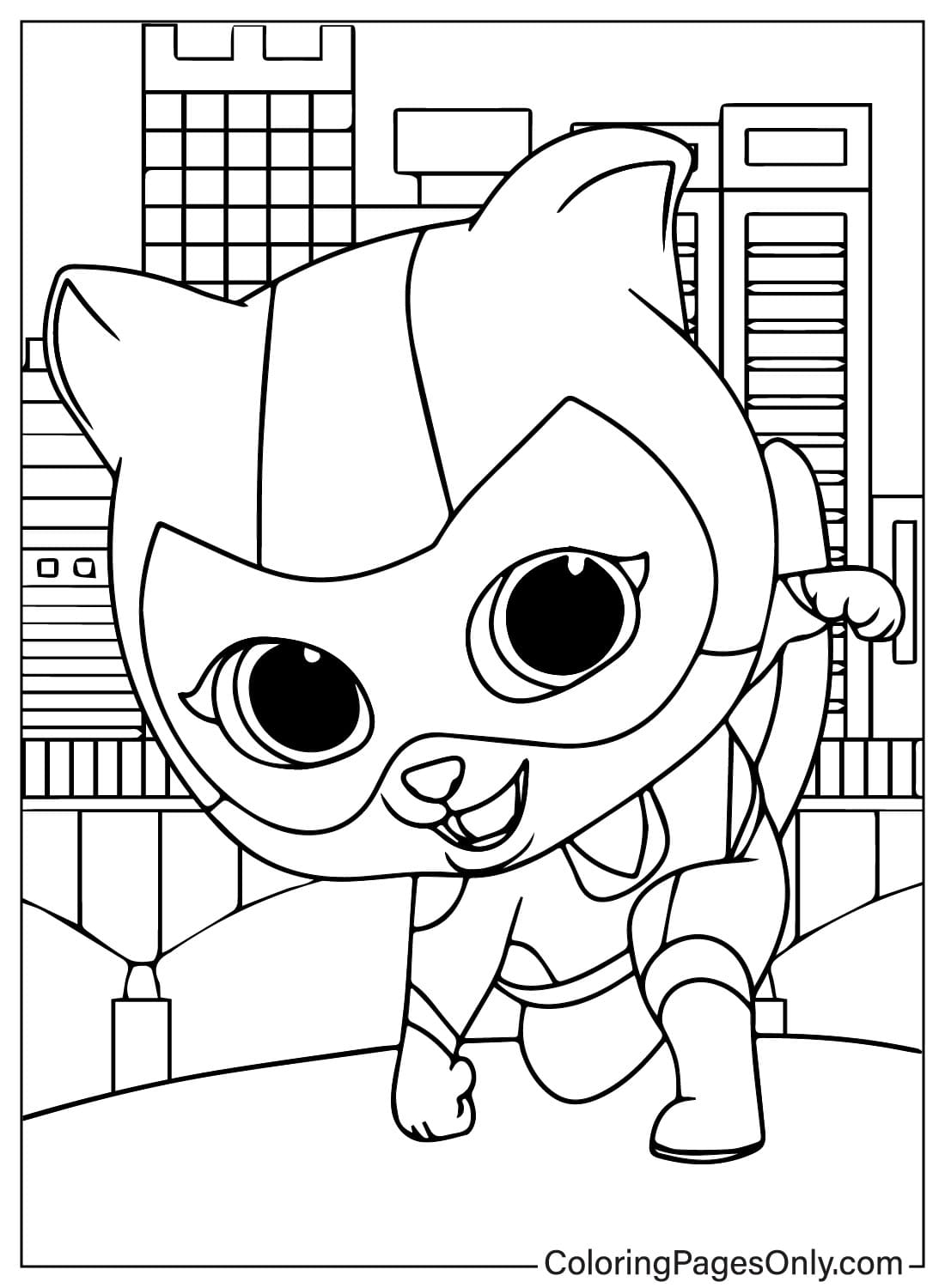
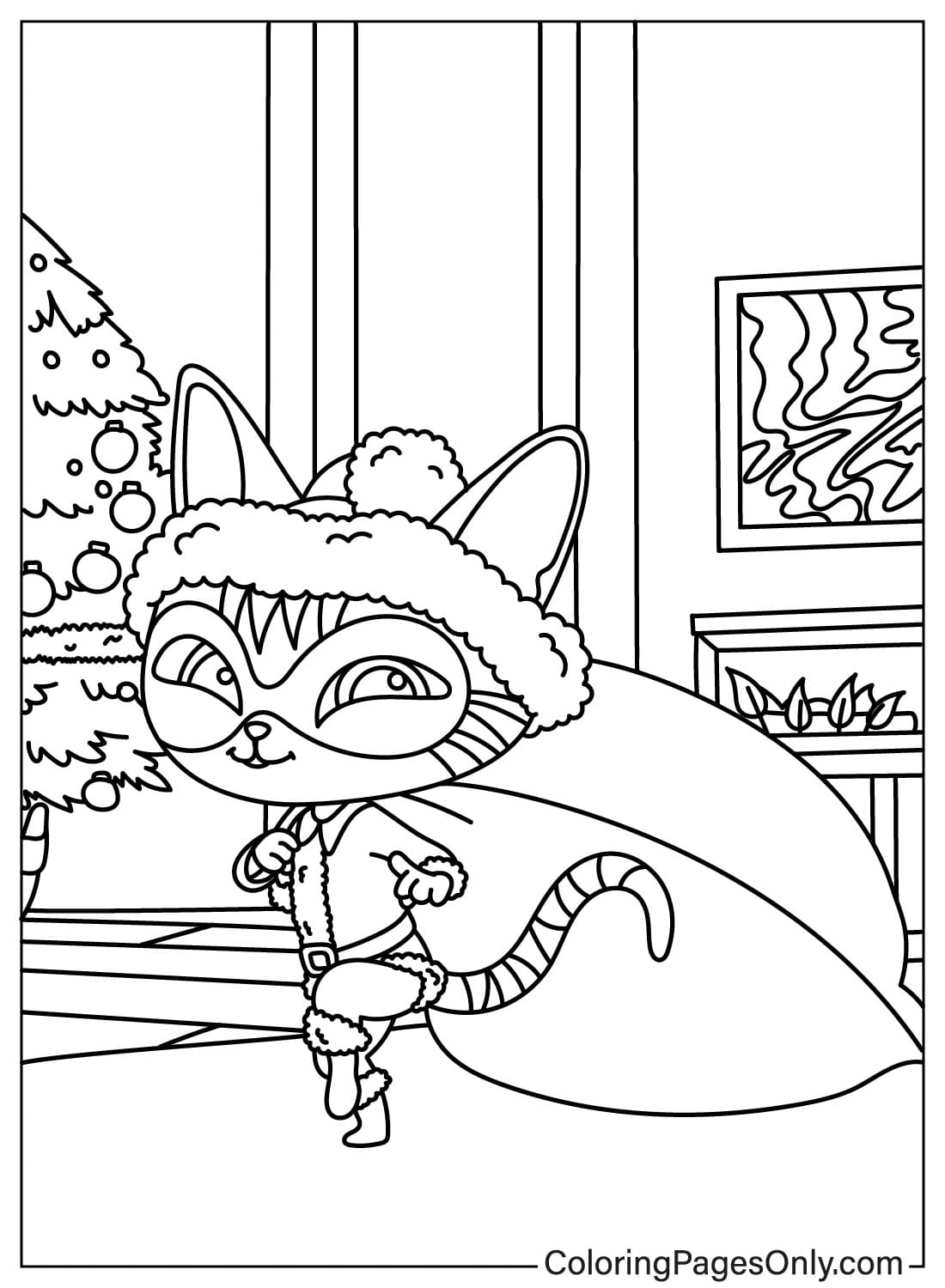
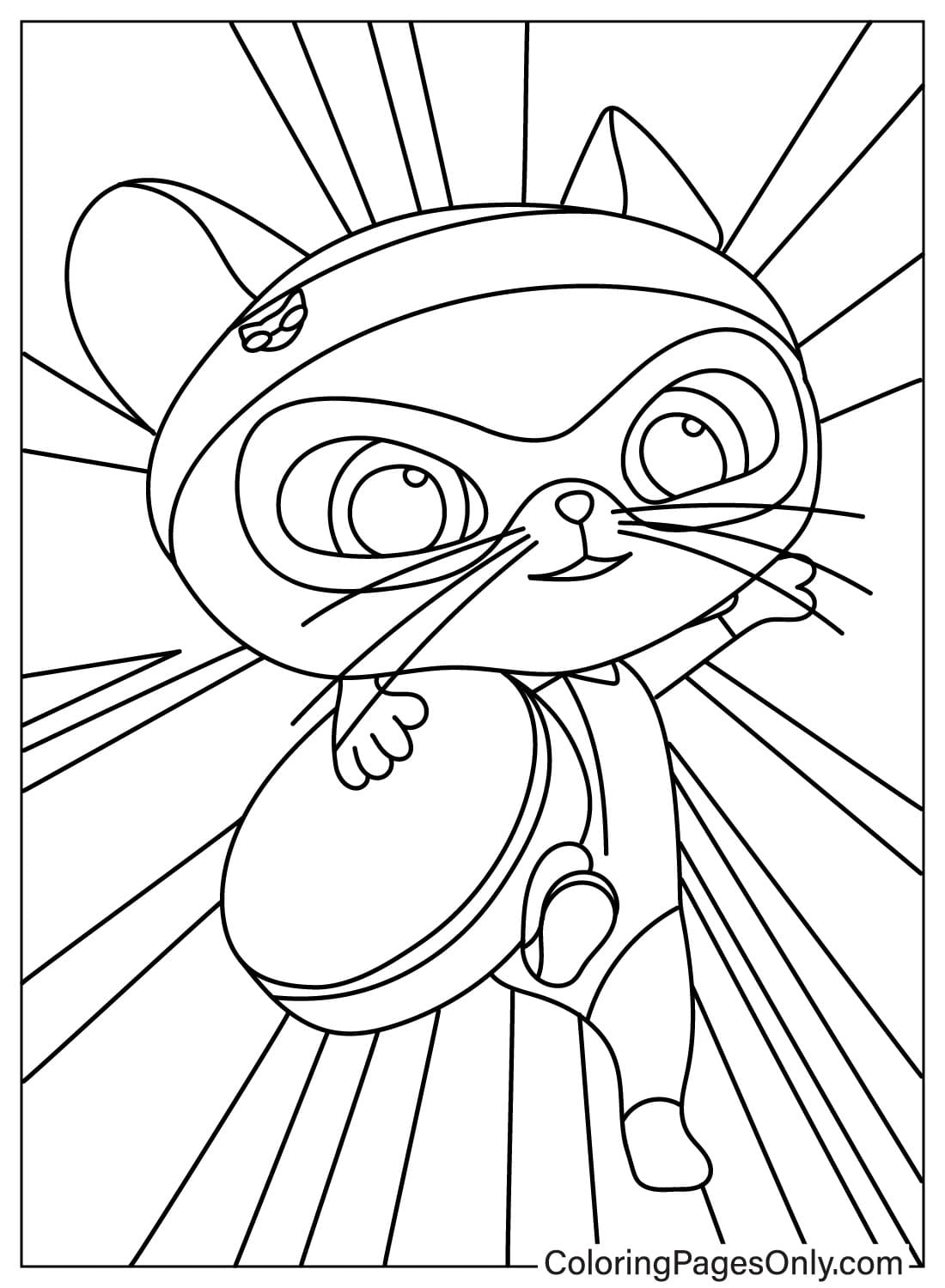
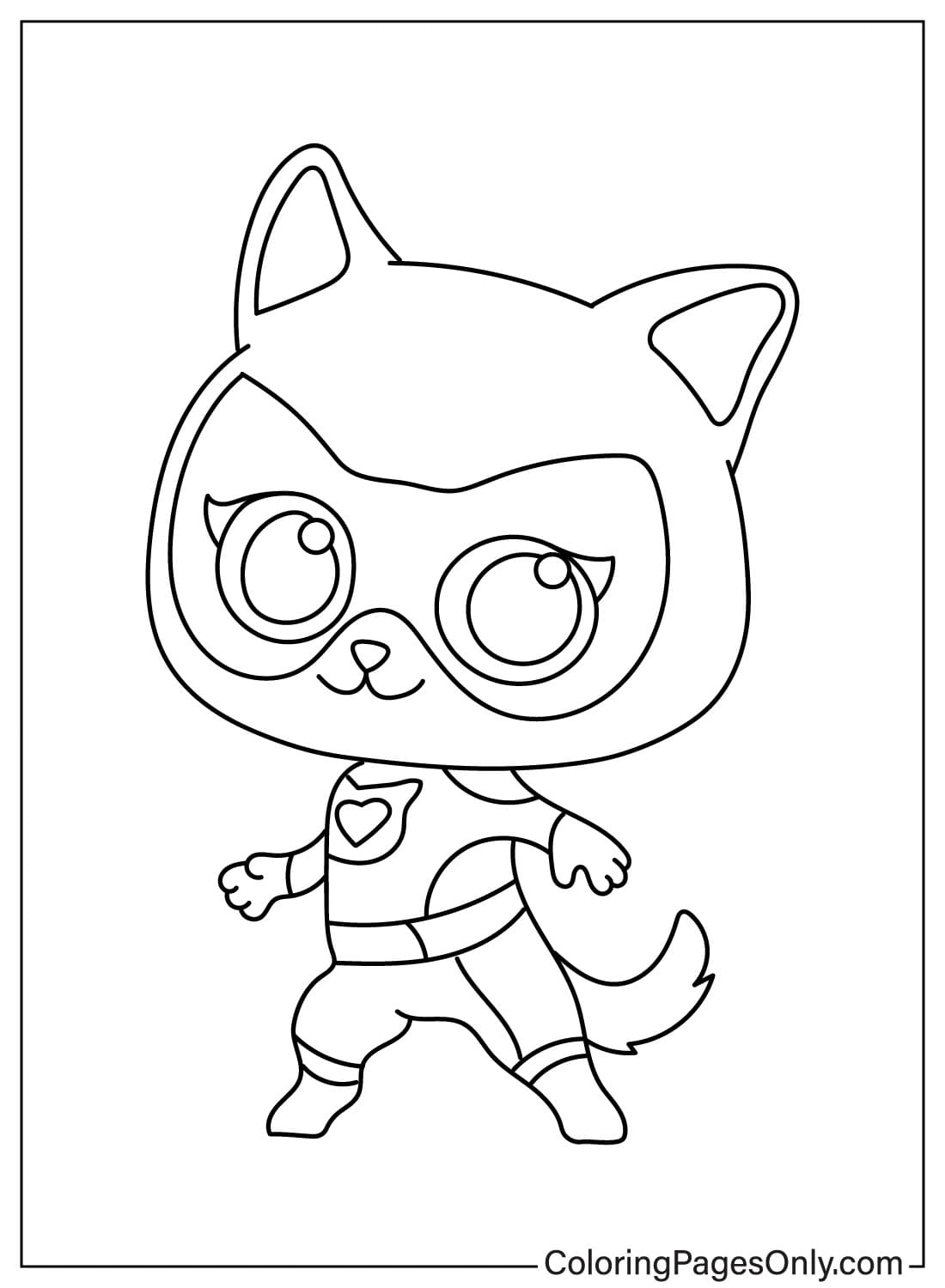
What Is SuperKitties?
SuperKitties is an American animated superhero musical series created by Paula Rosenthal for Disney Junior, premiering on January 11, 2023, with a simultaneous broadcast on Disney Channel, Disney Junior, and Disney+. The series is produced by Sony Pictures Television Kids in partnership with Silvergate Media – the same studio behind Octonauts and the animated Peter Rabbit – giving it a distinctively polished CGI look that sets it apart from most preschool animation.
The show follows four small kittens who live as ordinary residents of the Purr ‘N’ Play, a cat daycare space in the city of Kittydale. To everyone in Kittydale, they look like regular, adorable kittens. But when trouble strikes – when a villain disrupts the city or a problem needs solving – they slide down secret tubes, suit up in their superhero gear, and emerge as the SuperKitties. The transformation from quiet playspace kitten to suited-up hero is the show’s central mechanical delight, and the Purr ‘N’ Play’s owner, Amara, manages operations without knowing the kittens’ secret.
The series was renewed for a second season (SuperKitties: Su-Purr Charged, premiered April 5, 2024) and a third season (SuperKitties: Su-Purr Wild, ordered February 2024). Paula Rosenthal conceived the show from her love of both cats and superheroes: “There are many shows that pay homage to one or the other, but I noticed there was a void to pay homage to both,” she told D23. She reportedly watched dozens of cat videos while developing the show’s humor and the personality of each character. Unintentionally, Ginny ended up bearing a strong resemblance to Rosenthal’s first real cat, Daisy, a ginger tabby with orange stripes.
Good Housekeeping ranked SuperKitties 7th in their “13 Best Toddler TV Shows” list, praising its social-emotional focus and the way the show empathizes with even its villains. The show is also notable for being only the second superhero musical series produced by Disney, following Hamster & Gretel.
The SuperKitties – Character and Color Guide
Ginny – The Leader
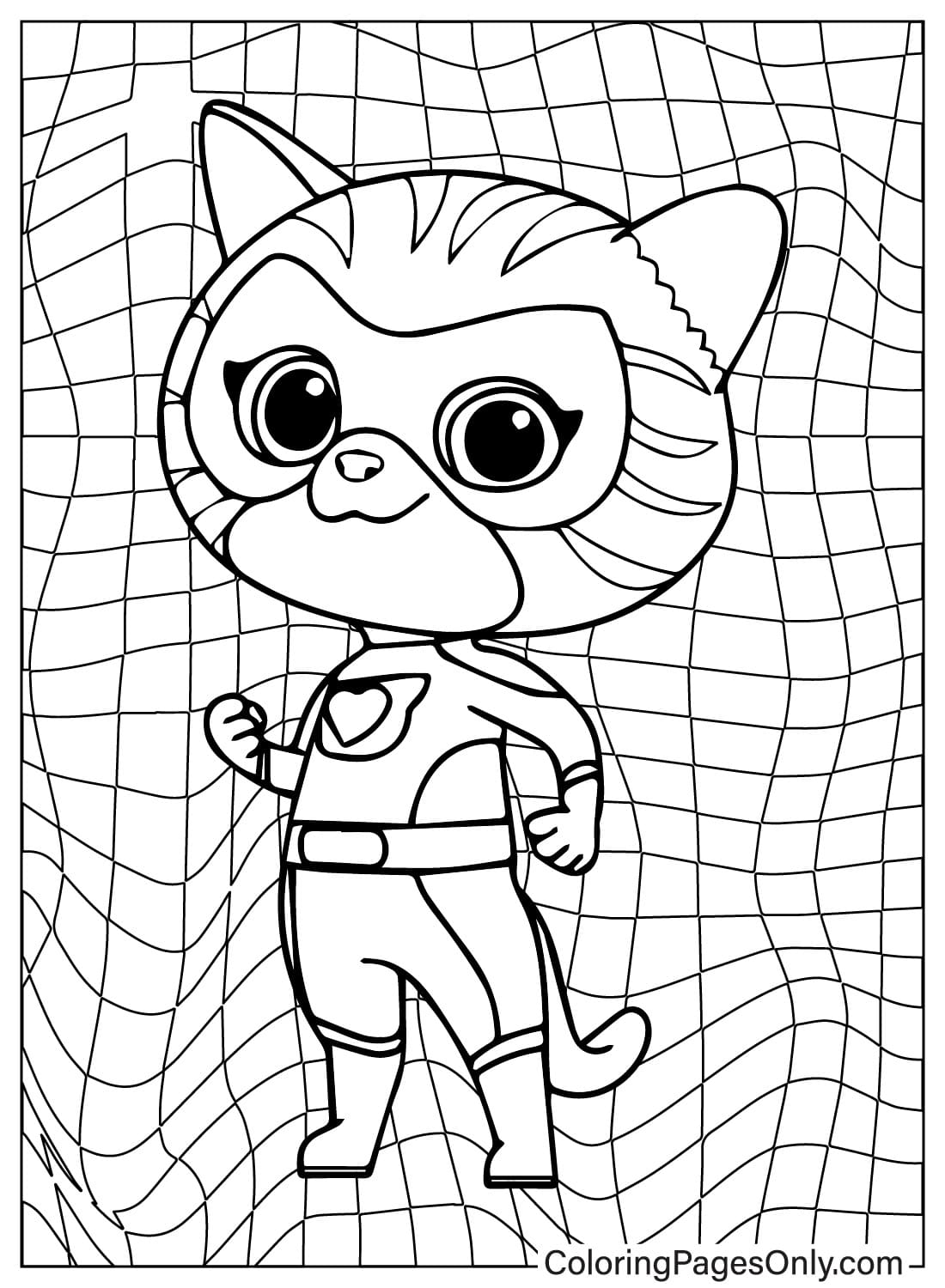
Ginny (voiced by Emma Berman) is a ginger tabby cat – the classic orange-and-cream striped domestic cat. Her super suit is pink: a warm, clear pink rather than hot pink or pale pastel. Her signature power is climbing claws that allow her to scale walls and poke through objects, upgraded to faster and more agile claws in the Season 2 Su-Purr Charged form. As the team leader, Ginny represents bravery. Rosenthal designed Ginny’s coloring around real tabby markings: warm orange-ginger fur with lighter cream on the muzzle, chest, and underside. When coloring Ginny, the key contrast is between the warm orange-ginger fur and the pink super suit – both warm tones, but clearly distinct.
Sparks – The Brains
Sparks (voiced by Cruz Flateau) is a yellow Bengal cat – a lighter, golden-toned yellow rather than the saturated lemon yellow of a cartoon. His super suit is purple, a medium jewel-toned purple that complements the yellow fur beautifully. Sparks is the team’s inventor and gadget-maker, Buddy’s older brother, and the most emotionally sensitive of the four. He was designed with the cheetah as a visual reference, giving him a leaner, more streamlined look than Buddy. In the Su-Purr Charged form, his tools work faster. For coloring, the yellow fur and purple suit create a warm/cool complementary contrast that gives Sparks the most visually dynamic color scheme on the team.
Buddy – The Muscle
Buddy (voiced by JeCobi Swain in Seasons 1–2, Landon Chase DuBois from Season 3) is an orange tabby cat – a richer, more saturated orange than Ginny’s ginger, reading as solid orange without the tabby stripe pattern being as prominent. His super suit is orange – specifically, the suit matches his orange fur more closely than any other character’s suit matches theirs, creating a unified warm palette. Buddy’s power is super strength: he can curl into a furball and knock things down. He represents the power of friendship and bonds. The orange-on-orange suit-and-fur combination means colorists need to create distinction between suit material and fur texture rather than relying on color contrast.
Bitsy – The Heart
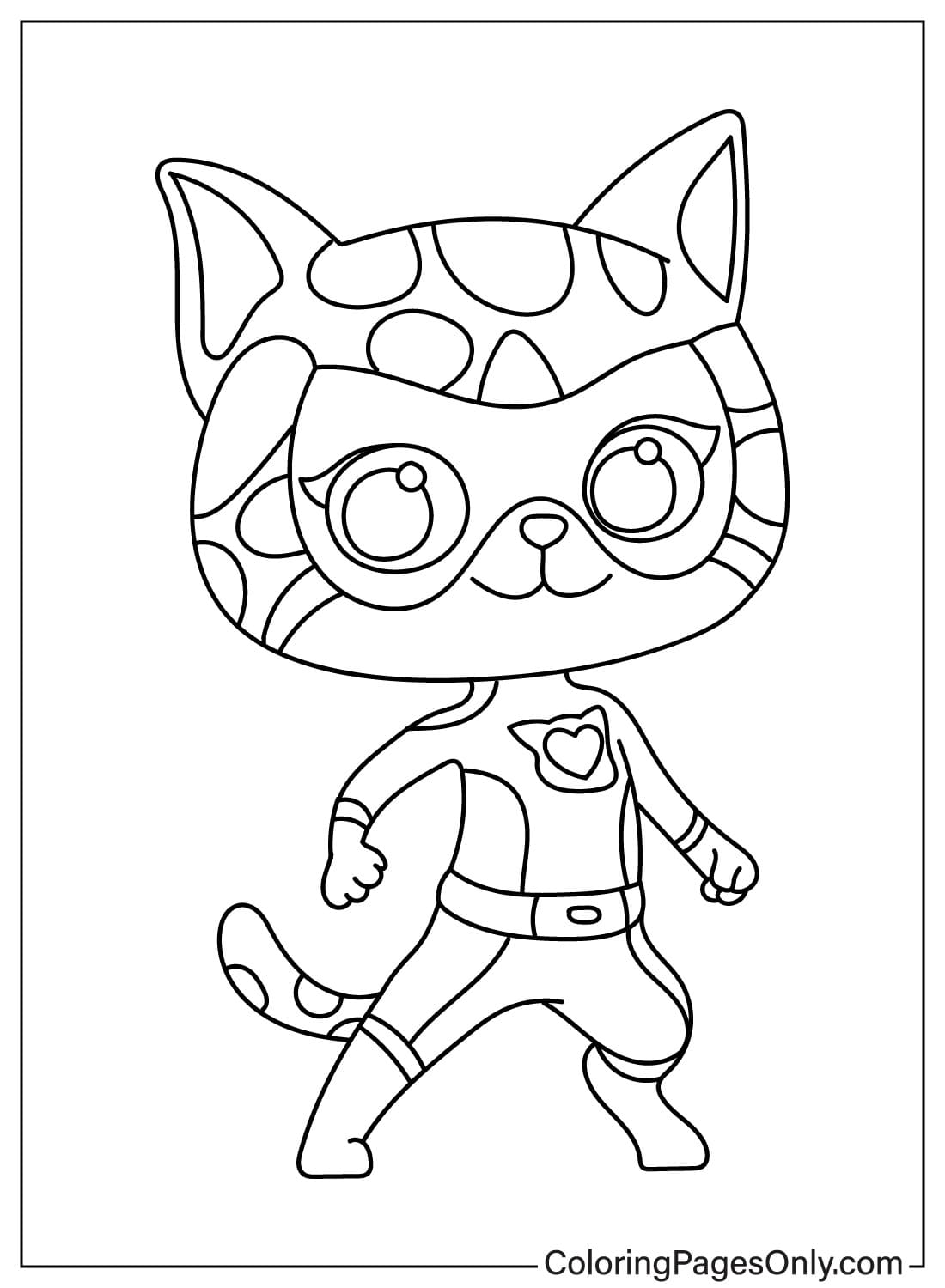
Bitsy (voiced by Pyper Braun) is the newest and smallest member of the team. Her fur is lighter and her overall design more delicate than the others. Her super suit is turquoise/light blue – a clear, cool teal-to-light-blue that immediately reads as distinct from all the warmer tones of her teammates. Bitsy’s power is speed – when she puts her boots on, she can move at extraordinary velocity. She records lessons and observations in vlogs on a tablet and carries a mouse doll named Mr. Greenie. She functions as the audience’s eyes into the team: “She’s learning the way our audience will learn,” Rosenthal said. For coloring: the cool turquoise suit against lighter fur is the simplest color scheme on the team – clean, fresh, and ideal for younger colorists.
The Villains – Sympathetic Troublemakers
SuperKitties distinguishes itself from most preschool superhero shows in how it treats its villains. Every episode’s villain is revealed to have been acting out in an attempt to solve their own legitimate problem – a structural storytelling choice that teaches empathy over victory. The SuperKitties don’t just defeat the villain; they solve the villain’s underlying problem, too. By the end of each episode, the heroes and villains are typically shown playing together.
Cat Burglar (voiced by Justin Guarini) is an anthropomorphic gray tabby cat who loves to swipe items. He wears a classic burglar’s black jumpsuit and eye mask – the most immediately visually recognizable villain design in the show. He was the first villain introduced in Episode 1 (“The Great Yarn Caper”) and has a Christmas episode that shows considerable heart beneath his thieving exterior. Despite his name and costume, he is one of the more sympathetic recurring antagonists.
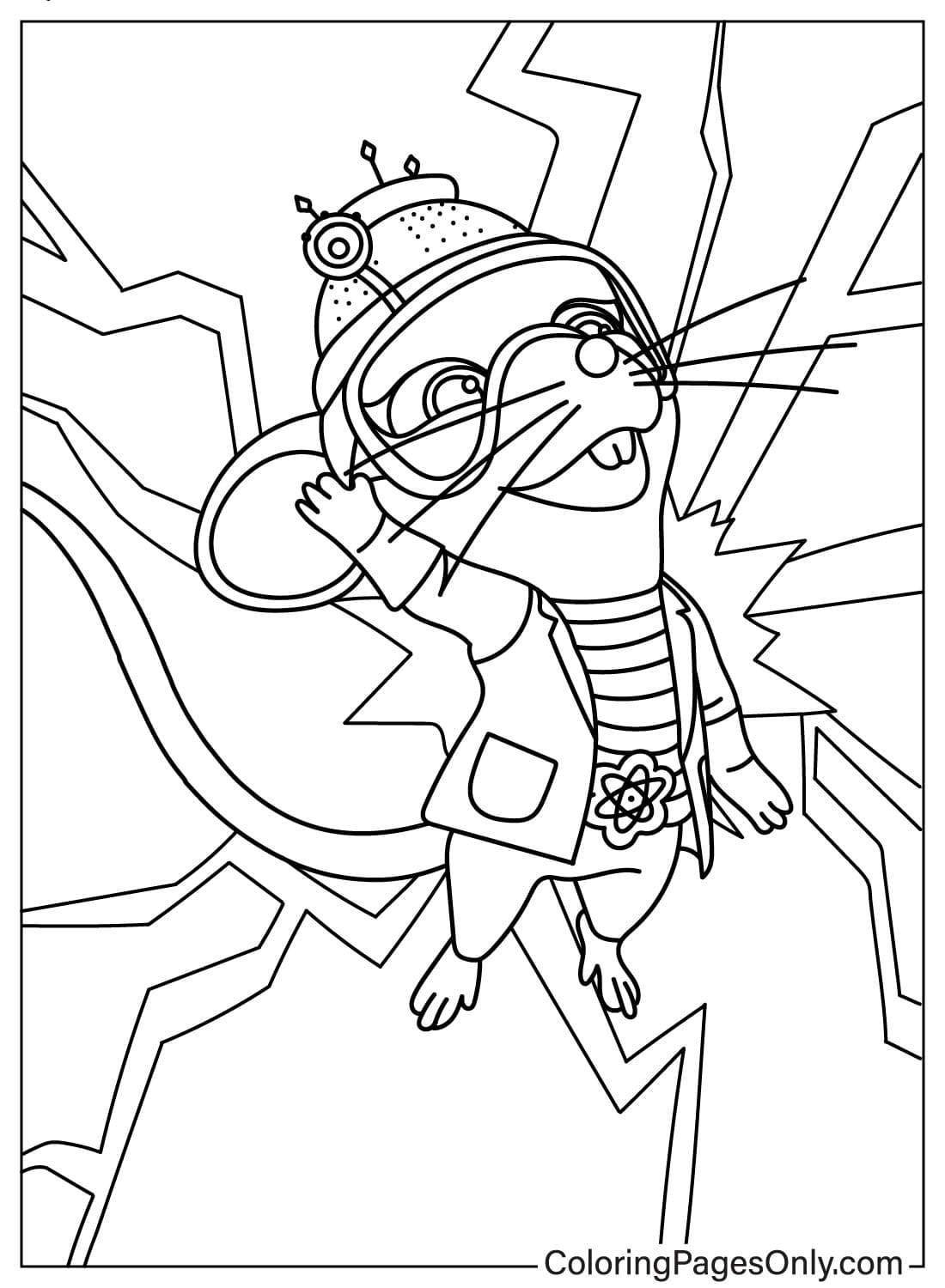
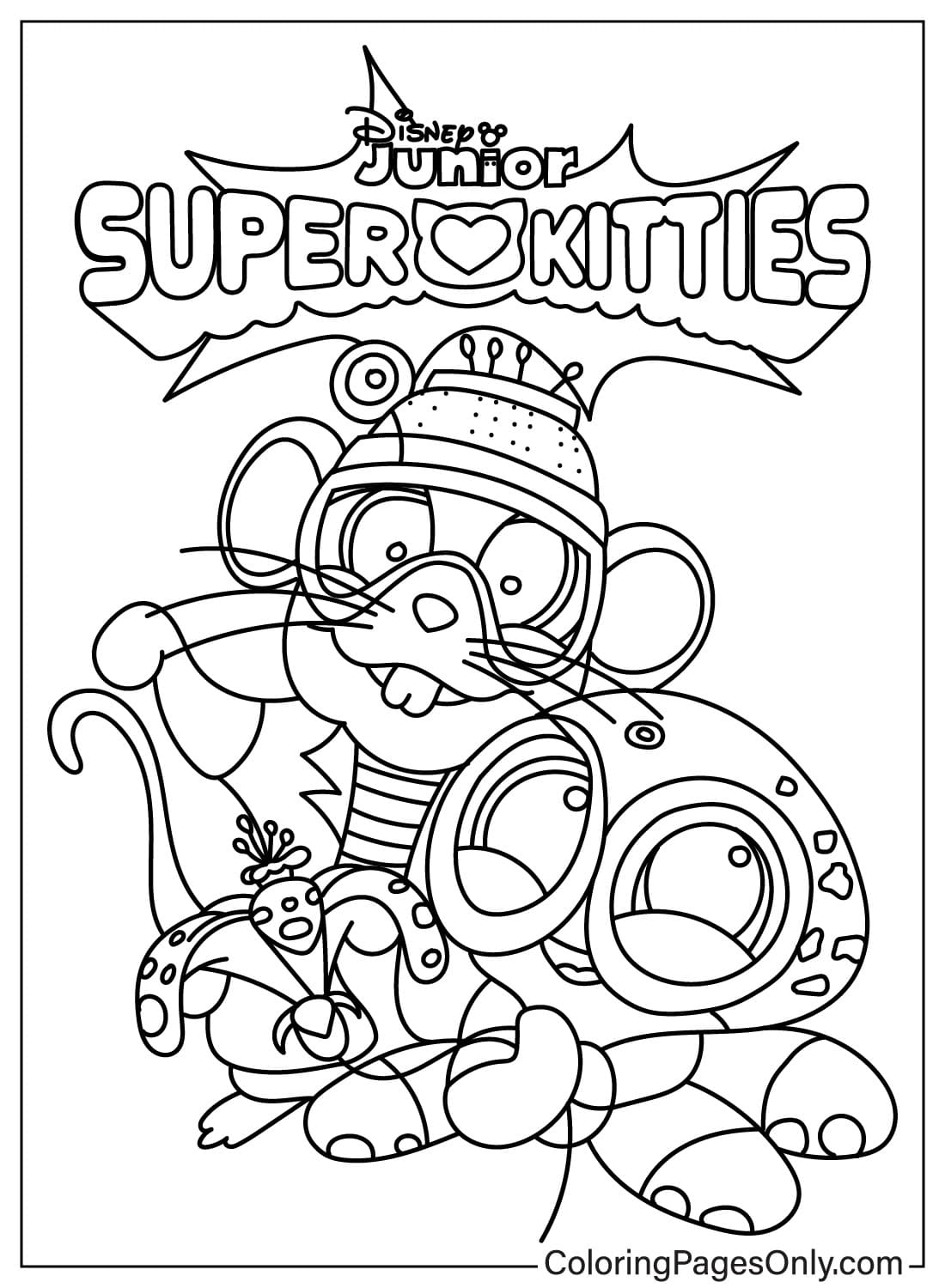
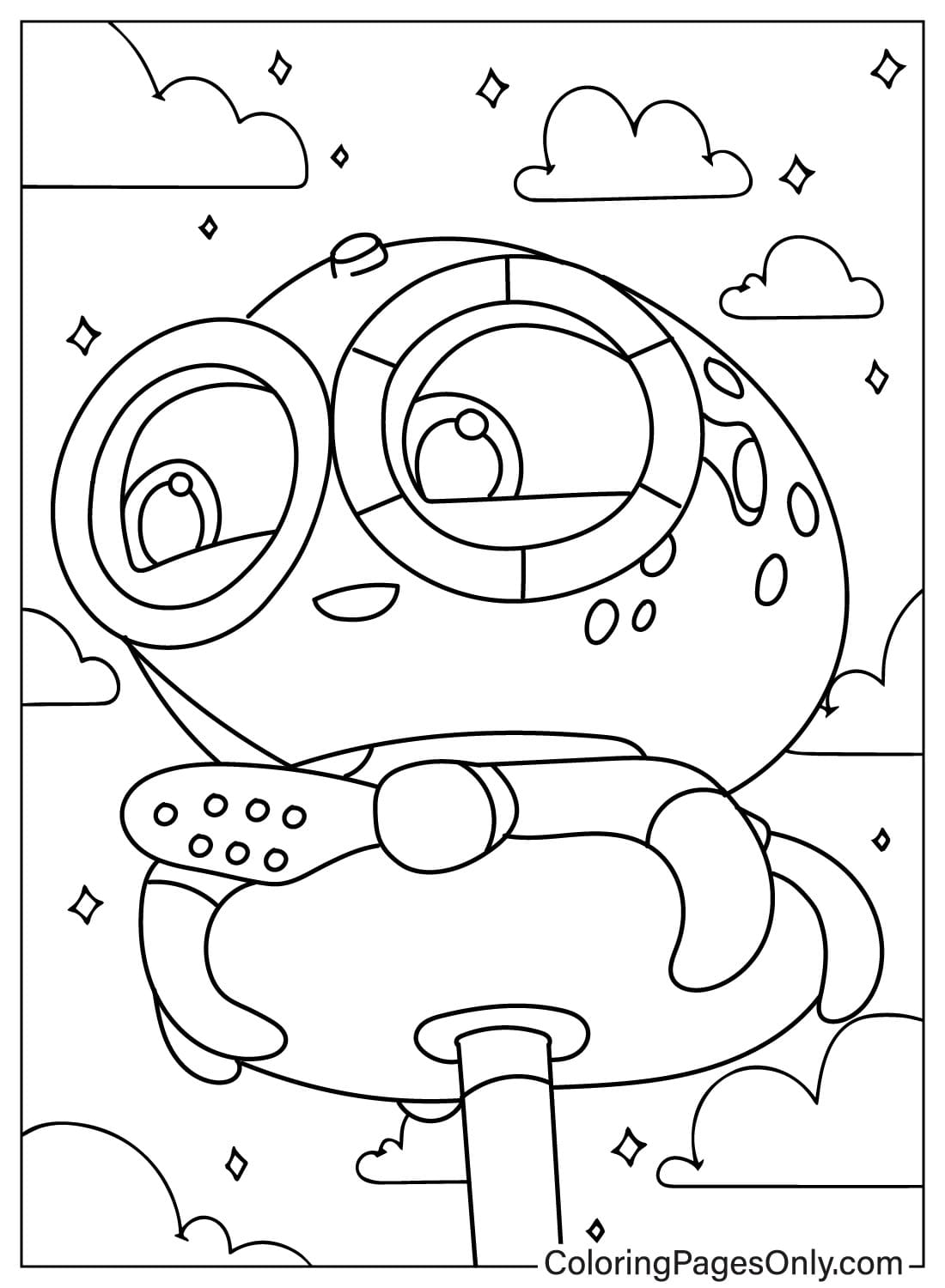
Lab Rat (voiced by Ruth Pferdehirt) is a female rat scientist with her companion Otto, a white lab rat who is her devoted friend. Lab Rat has the appearance of a classic mad scientist and typically causes trouble through scientific inventions gone wrong (giant boots, super-slippery substances, cheese-volcanoes). Otto, who appears separately in the collection tile “Otto Cute with the Clouds,” is round, white, and endearing.
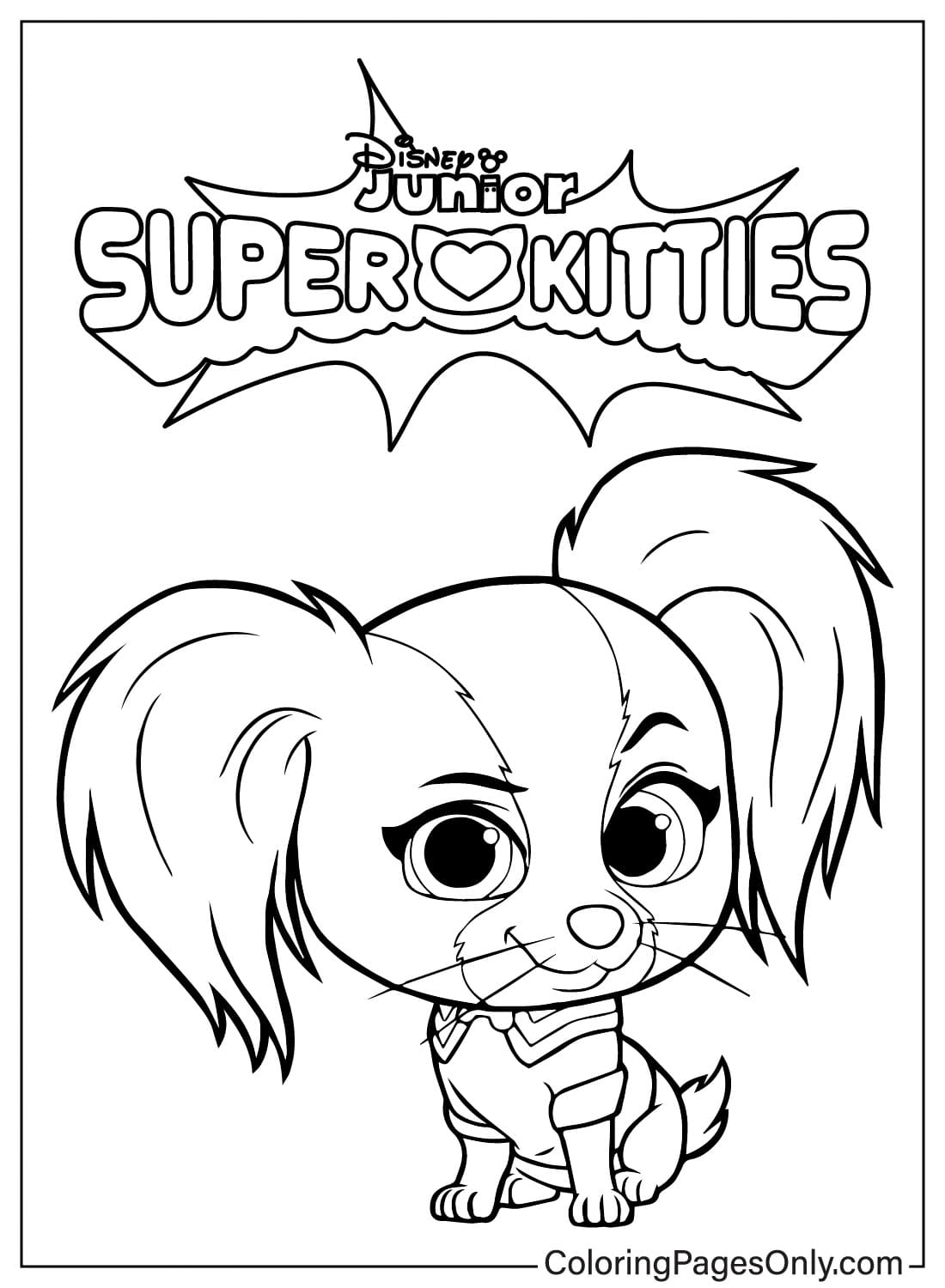
Mr. Puppypaws (voiced by James Monroe Iglehart) is a dog villain who appears in seasonal and recurring episodes. Zsa-Zsa (voiced by Isabella Crovetti) is a cockatoo villain. Pamster Glamster and Champster Glamster (voiced by Ginnifer Goodwin and Utkarsh Ambudkar), introduced in Season 2, are sibling Syrian hamsters obsessed with glamour and sparkle who travel in a high-tech hamster ball.
Season Guide – What Changed in Each Season
Season 1 establishes the core setup: Ginny, Sparks, Buddy, and Bitsy operating from the Purr ‘N’ Play, facing Cat Burglar, Lab Rat, Mr. Puppypaws, and Zsa-Zsa. The first episode, “The Great Yarn Caper,” introduces Cat Burglar stealing all the yarn in Kittydale.
Season 2 – Su-Purr Charged (April 5, 2024) upgrades the team with new suits, granting enhanced powers. Ginny’s claws become more agile, Sparks’s tools work faster, Buddy’s strength increases, and Bitsy’s boots reach new speeds. The robot pig Wiggles is introduced – built by Sparks, later gaining retractable wings that give him the appearance of a flying pig. The Pamster and Champster Glamster duo arrive as new recurring villains.
Season 3 – Su-Purr Wild introduces Willa (voiced by Thea Gallagher), a magenta wildcat who lives in the Wild Jungle outside Kittydale and becomes the team’s ally. Willa learns the kittens’ true identities at the start of the season. The SuperKitties take on wildcat outfits when operating in Willa’s jungle environment.
Coloring Tips
Color-code by character – it’s a team show. The four heroes are designed with a deliberate color-coding system: pink for Ginny (passion/bravery), purple for Sparks (intelligence/emotional sensitivity), orange for Buddy (warmth/friendship), turquoise for Bitsy (kindness/speed). Before starting any multi-character page, decide which character gets which color and apply it consistently. On group pages where all four heroes appear, this color discipline is what makes the composition readable – each character anchors their own color area.
Bitsy’s turquoise is the composition’s cool anchor. On any page showing multiple SuperKitties together, Bitsy’s turquoise suit provides the only cool tone in the group. The warm pink, purple, and orange of the other three suits all read as the same temperature family. Placing Bitsy’s cool turquoise in the composition creates a natural focal point – the eye goes there first because it’s different. Keep Bitsy’s suit in a clean, clear turquoise rather than teal-heavy or blue-heavy to preserve this visual function.
Villain pages need darker, more saturated base tones. Cat Burglar’s defining design elements are his black jumpsuit and eye mask – they should be rendered in true, deep black rather than dark grey. The black costume reads as menacing even on an otherwise cute anthropomorphic cat, and that visual contrast (cute face, sinister outfit) is exactly the show’s tonal approach to its villains. If you render the black as grey, the costume loses its visual authority.
For Buddy’s orange-on-orange pages – where fur and suit are similar orange tones, use texture and value rather than hue to create distinction. Apply the suit as a clean, flat, slightly darker orange. Apply the fur with slightly more variation (a lighter cream for the chest and muzzle, slightly deeper orange for the back and tail). The suit reads as constructed and smooth; the fur reads as soft and varied. This is a subtle distinction that rewards patient coloring.
For seasonal and themed pages – the Christmas-themed Cat Burglar page works best when the holiday context colors dominate the background (reds, greens, golds, whites) while Cat Burglar himself stays in his canonical black-and-grey. The contrast between the festive environment and the sinister costume is funnier and more visually interesting than recoloring Cat Burglar in seasonal tones.
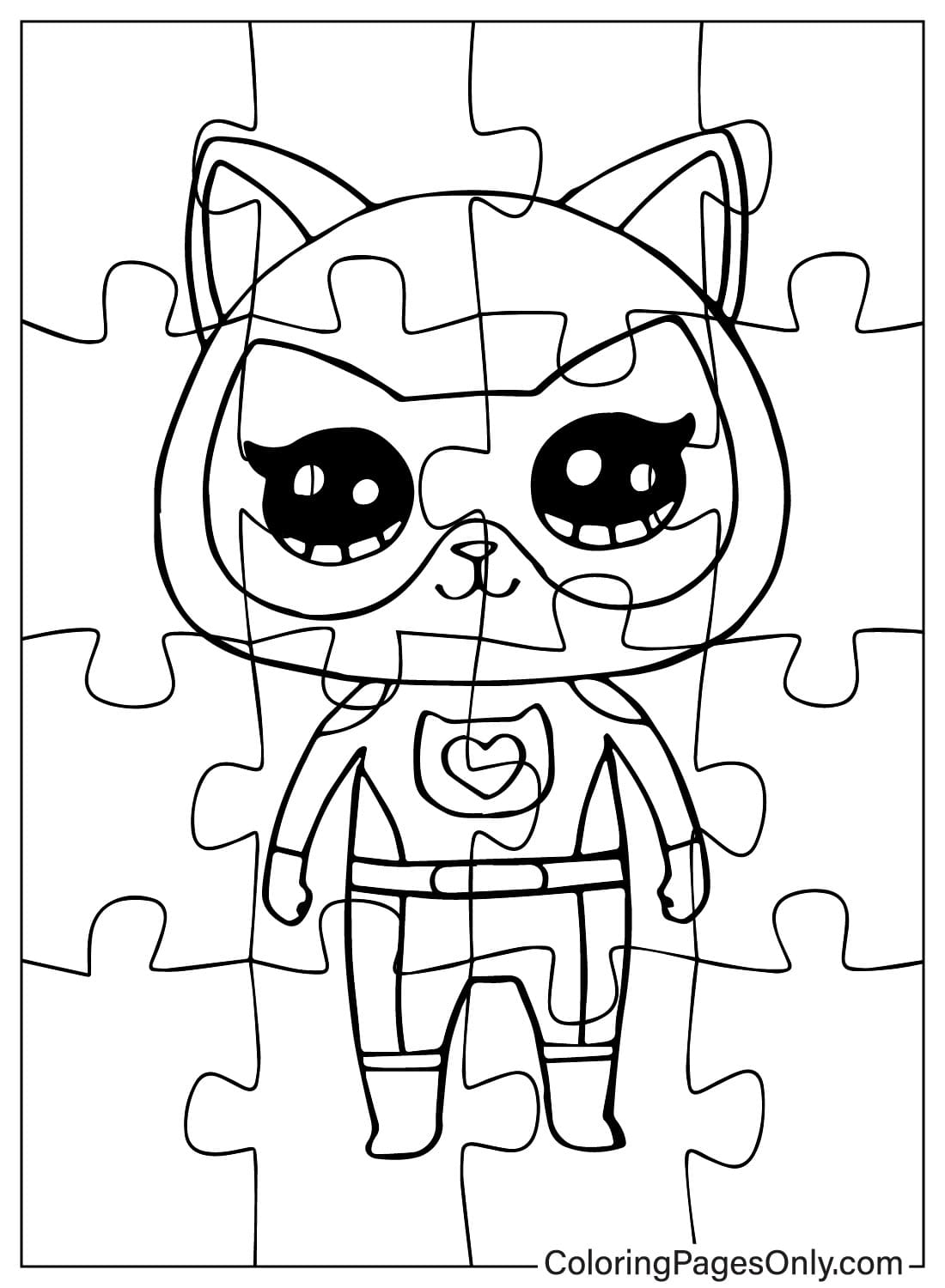
For the Jigsaw Puzzle page (Bitsy Jigsaw Puzzle) – this is compositionally unique: a character portrait broken into puzzle-piece shapes. Consider coloring each puzzle section as if it were a standalone piece, with slightly different background tones behind each piece to suggest the assembled-but-separate nature of a jigsaw. This technique creates visual depth that flat coloring across the whole page does not.
5 Activities
The “hero color” identification game. Print the SuperKitties team page (Ginny and Bitsy, or any multi-character page). Before any coloring begins, each person in the group picks one of the four heroes as “their” hero and announces their pick. They then color that hero in their canonical suit color and the rest of the page in supporting tones. After everyone finishes, compare all the completed pages: even with identical starting outlines, the pages should look distinctly different based on which hero each person anchored. The activity builds color decision-making skills and teaches how a single dominant color can define an entire composition – the same principle that makes SuperKitties’ color-coded team design work so clearly on screen.
The empathy coloring project. SuperKitties is built around a specific teaching idea: every villain has a legitimate problem they’re trying to solve badly. Print the Cat Burglar coloring page (the solo Cat Burglar tile). While coloring, make up a reason Cat Burglar is stealing something today – a reason that makes him sympathetic. Write one sentence below the finished page explaining his motivation. Examples: “Cat Burglar is stealing yarn to knit a sweater for his sick grandmother.” “Cat Burglar took the cookies because he forgot to buy ingredients for the party he’s hosting.” Compare with other people’s motivations if coloring in a group. This activity teaches the show’s core empathy lesson and develops narrative thinking – two things that apply directly beyond the coloring page.
The super suit design challenge. The SuperKitties’ suits follow a clear design grammar: each suit shares the color of its hero’s personality trait (pink/bravery, purple/intelligence, orange/friendship, turquoise/kindness). On blank paper, design your own super suit for a new SuperKitty member: choose a cat breed, a personality trait, and then choose a color that communicates that trait. Draw a simple outline of a suited-up kitten and color it. Give your kitten a hero name and write one sentence describing their power. This activity extends the show’s character design philosophy into original creation – and produces a personal artifact that can go up alongside the official pages.
The Purr ‘N’ Play scene. The SuperKitties’ secret headquarters is the Purr ‘N’ Play playspace, a cat daycare where the kittens live their civilian lives. Print any single character portrait page and color it canonically. Then, on a separate piece of paper, draw a simple room scene (shelves of toys, cat beds, a tube or slide) and place a cut-out of your colored page character into it. The activity builds understanding of how characters exist within environments – a compositional skill – while engaging with the show’s specific world-building. If coloring as a group, each person colors a different character and contributes them to the same shared scene.
The villain redemption arc. The show regularly ends with heroes and villains playing together after the problem is solved. Print one hero page and one villain page – for example, Ginny and Cat Burglar. Color both canonically. Then, draw a simple third scene on blank paper showing both characters doing something friendly together: sharing food, playing a game, decorating for a holiday. This activity engages directly with the show’s most unusual structural choice – that villains are redeemable – and produces a three-part story told in coloring pages. It’s particularly effective as a holiday activity, given the show has multiple seasonal episodes that end with exactly this kind of hero-villain collaboration.