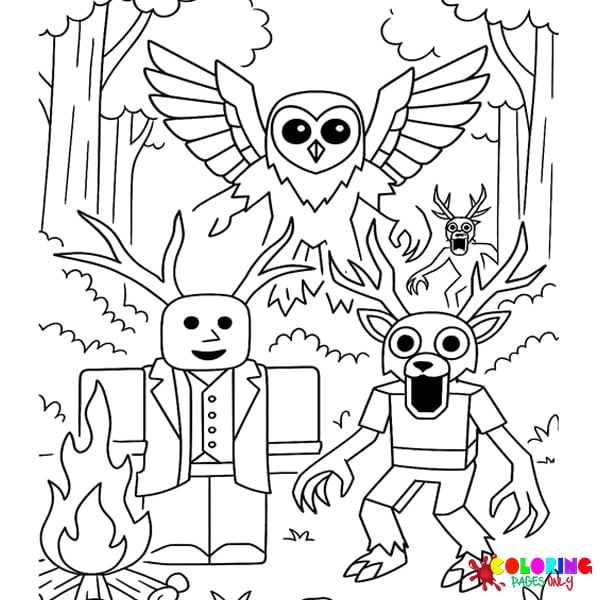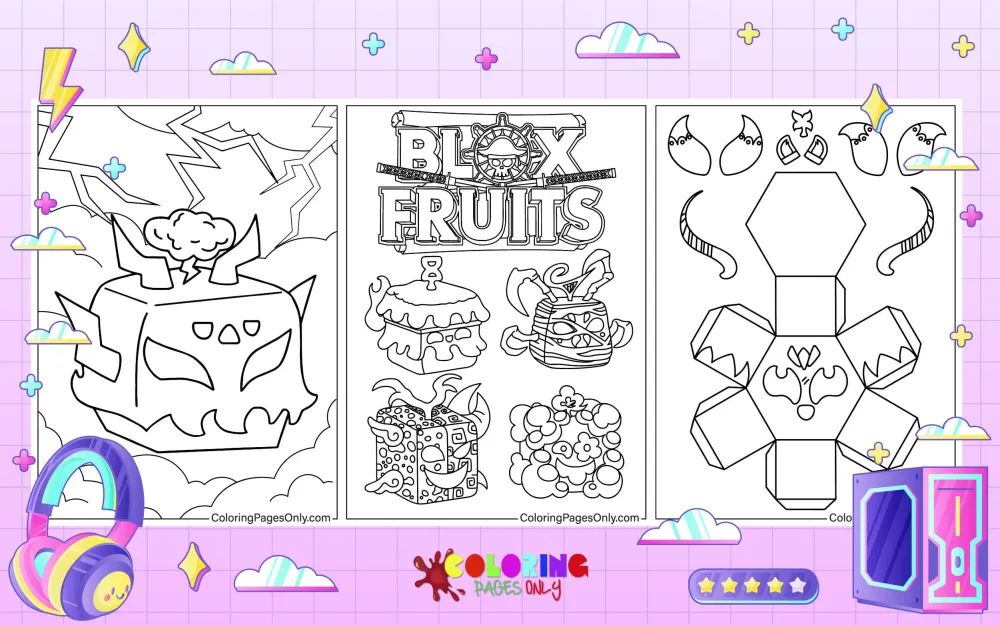
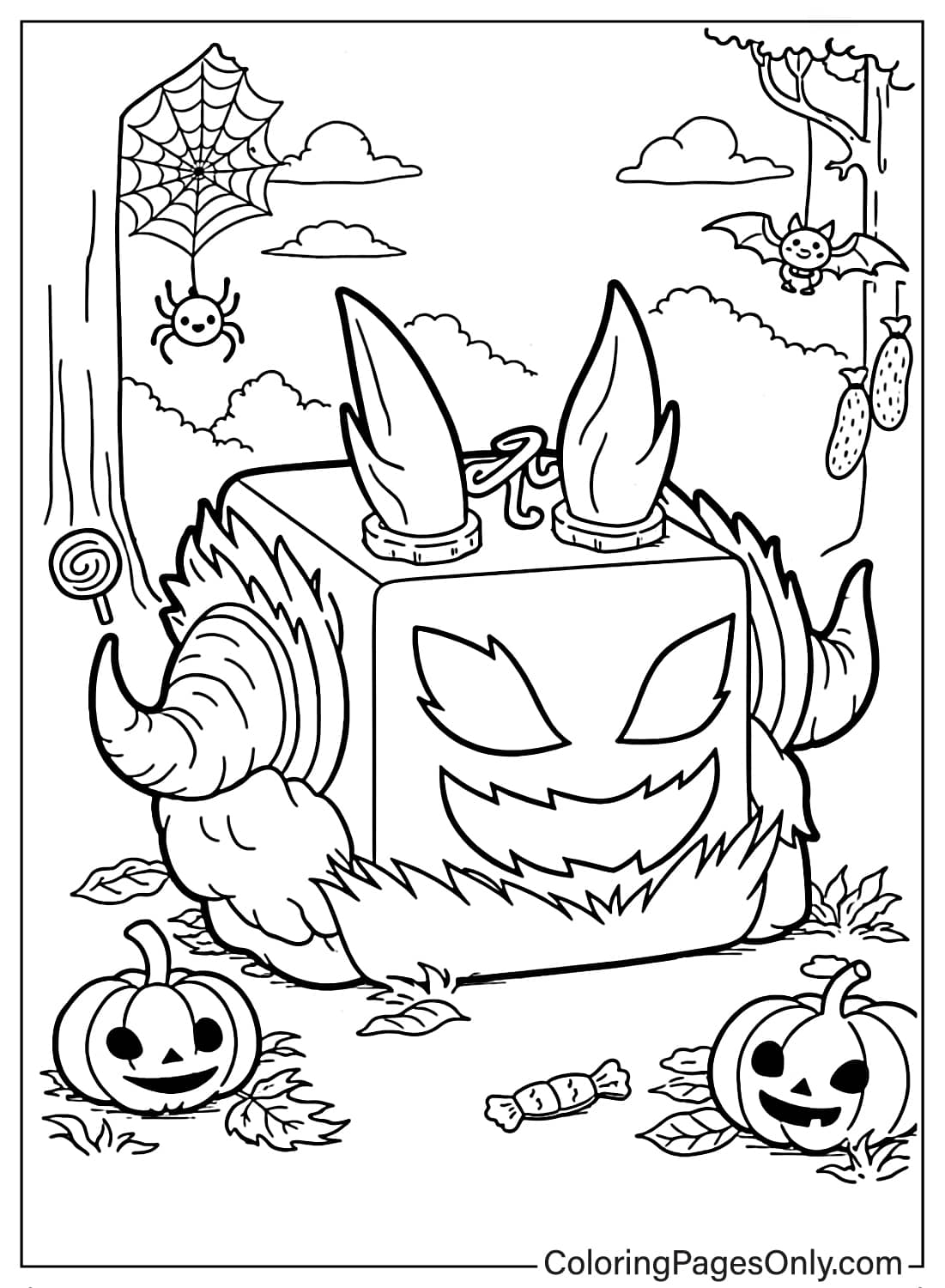
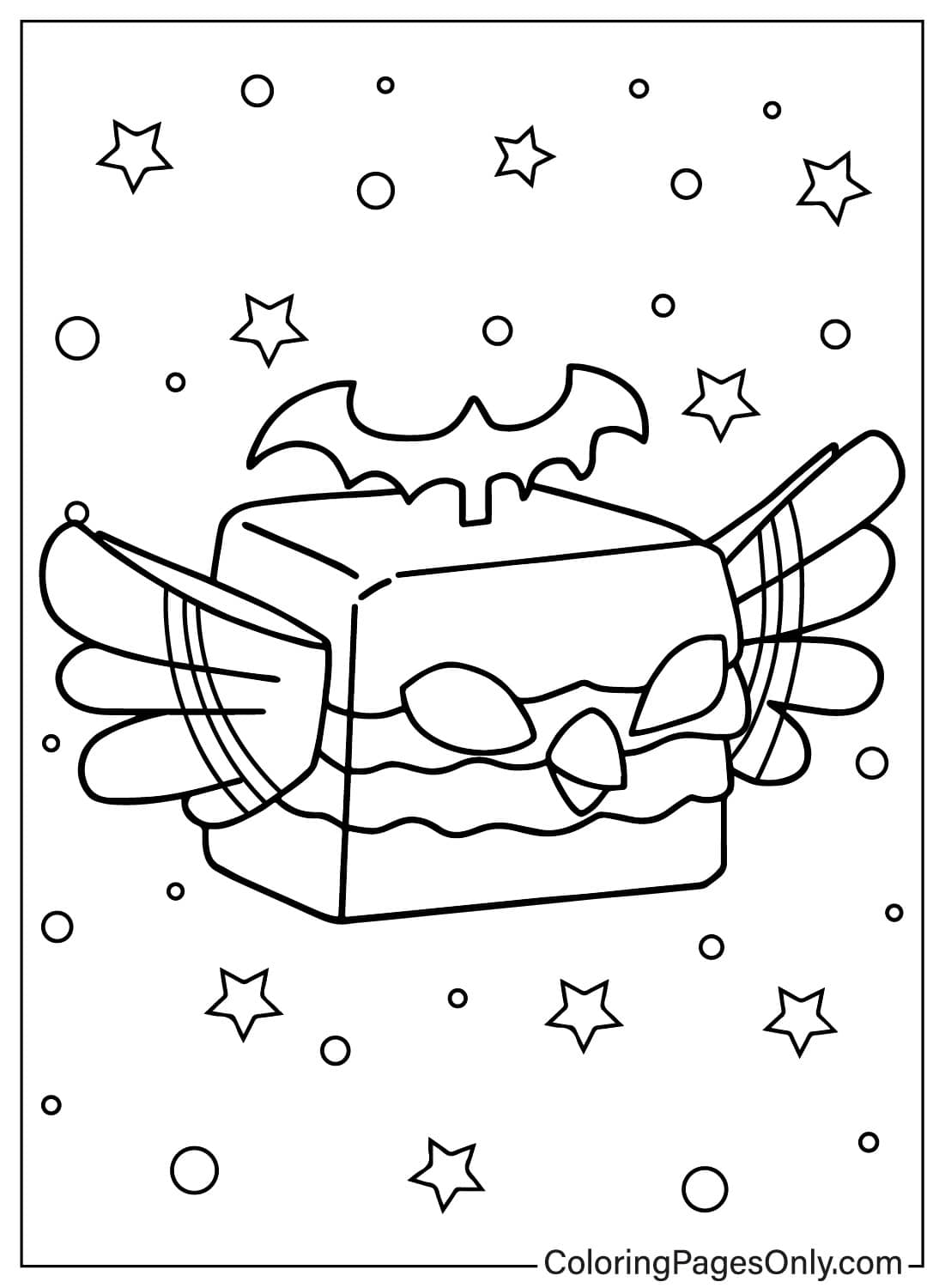
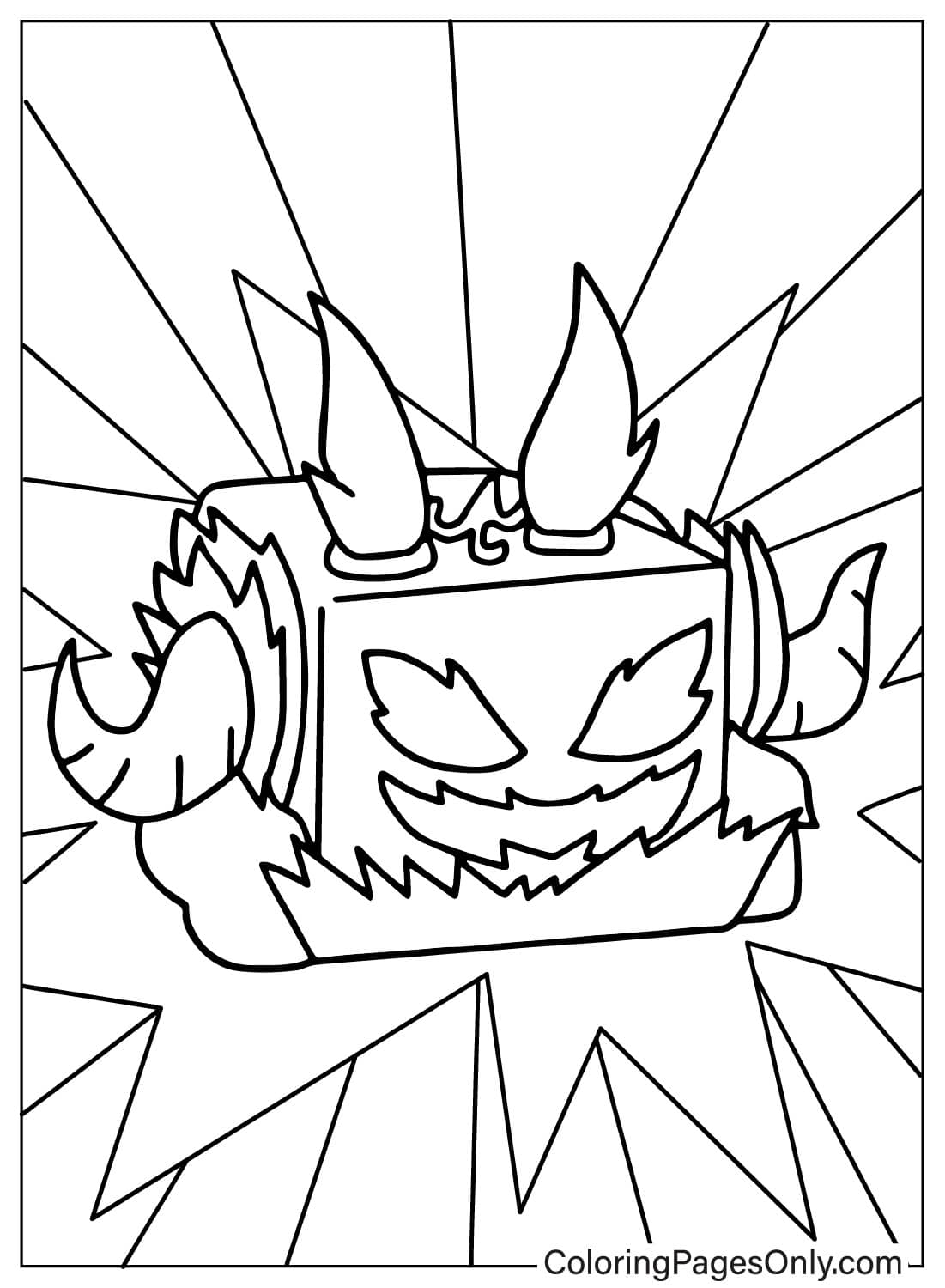
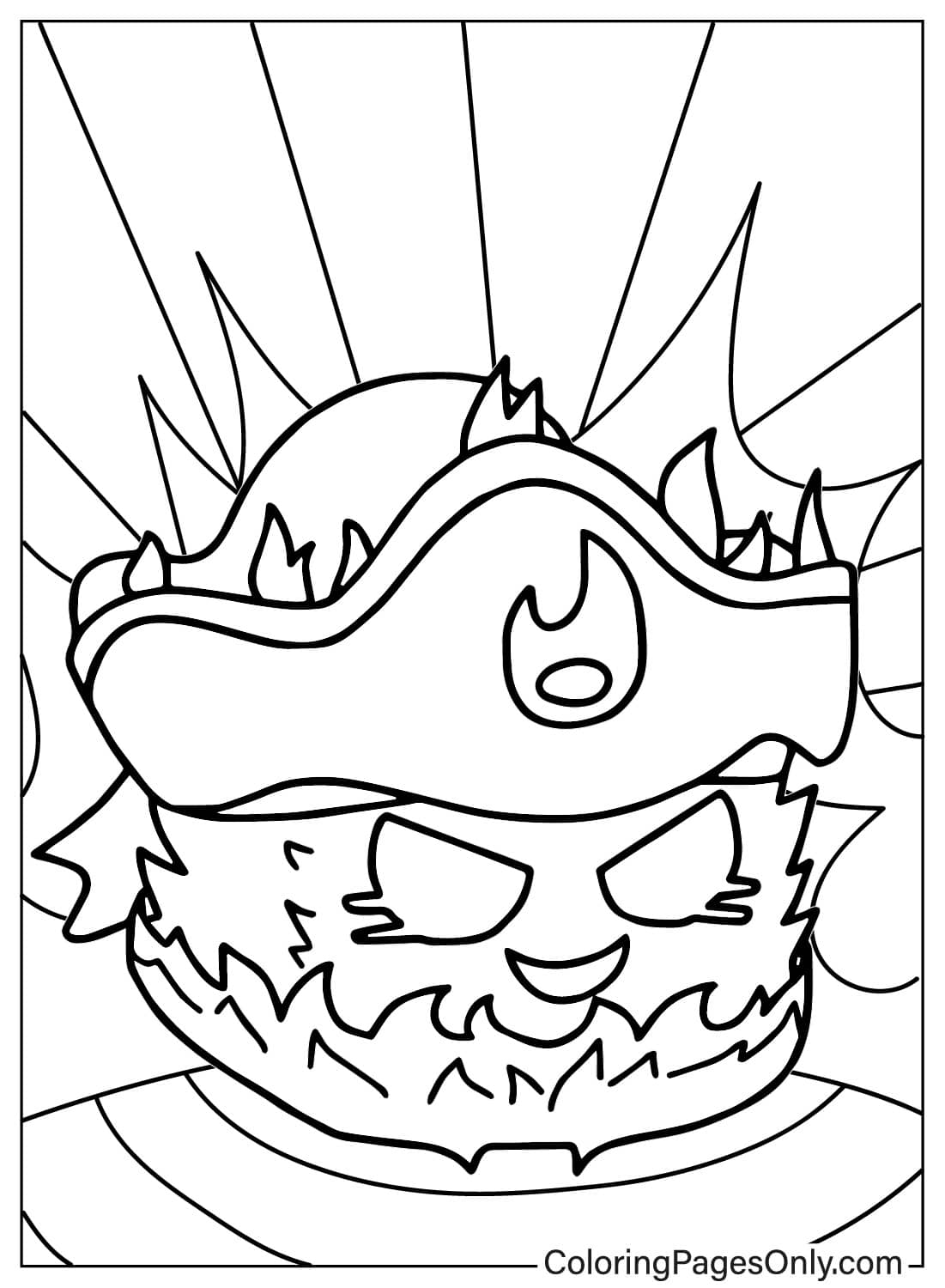
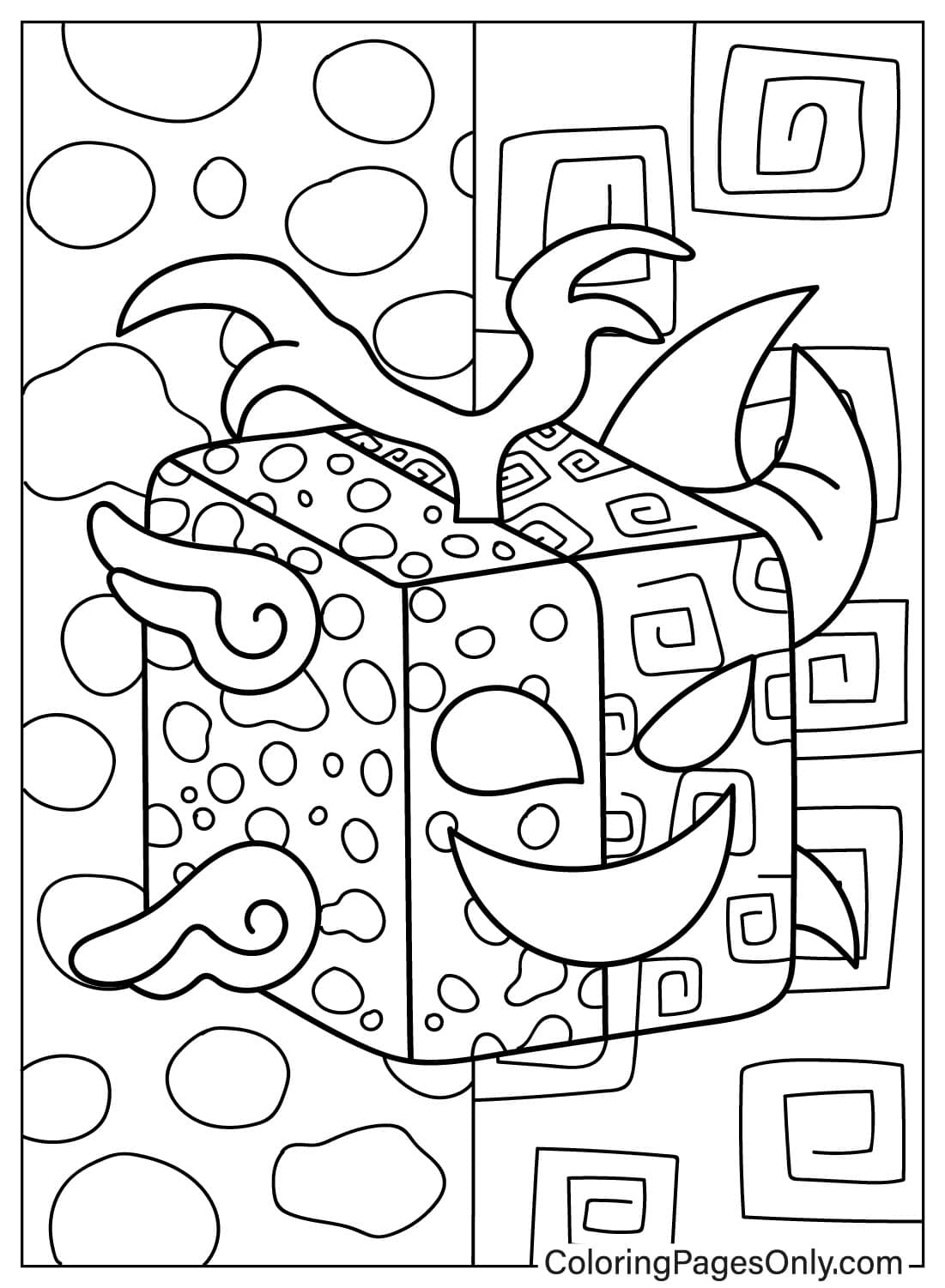
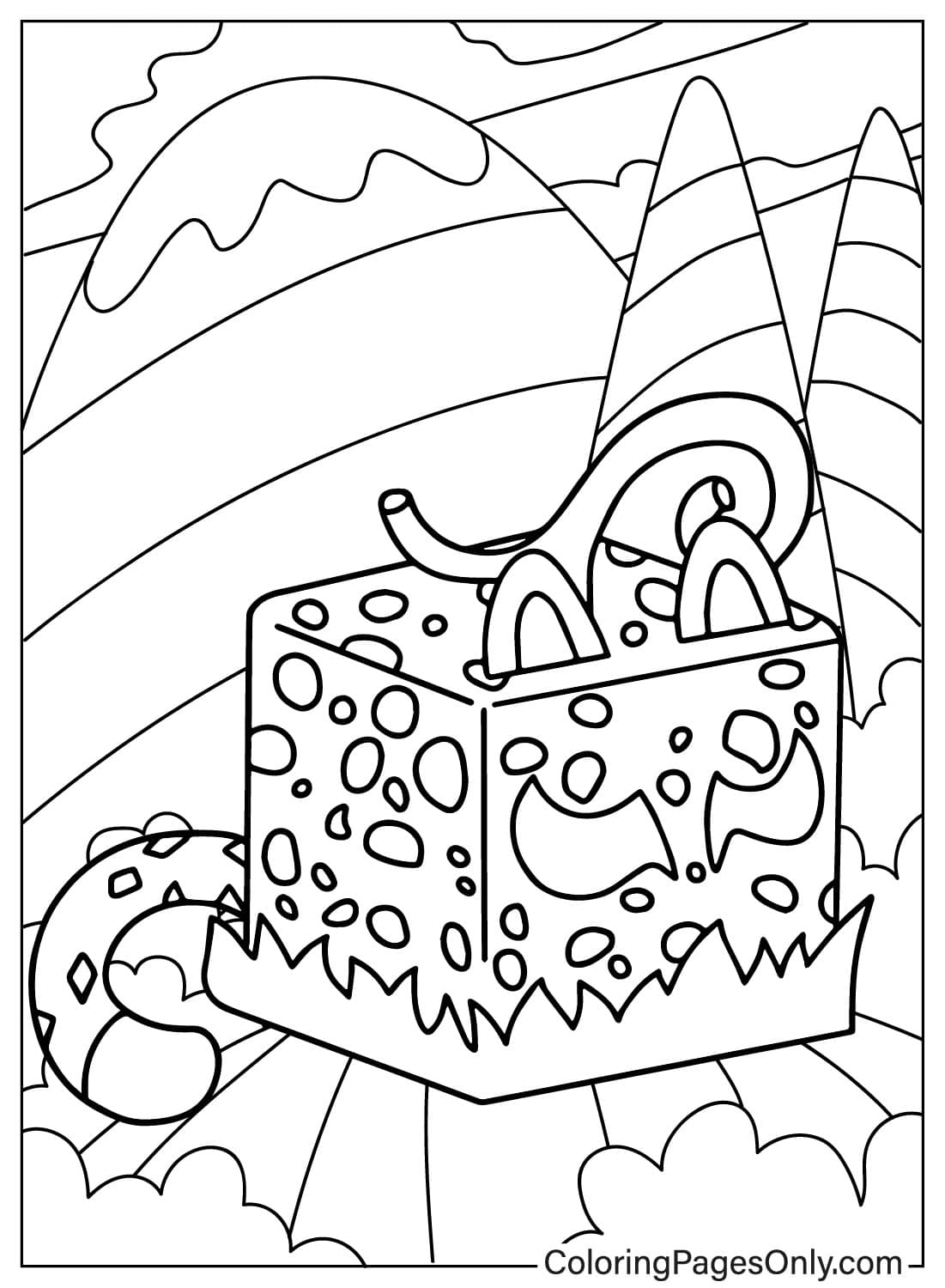
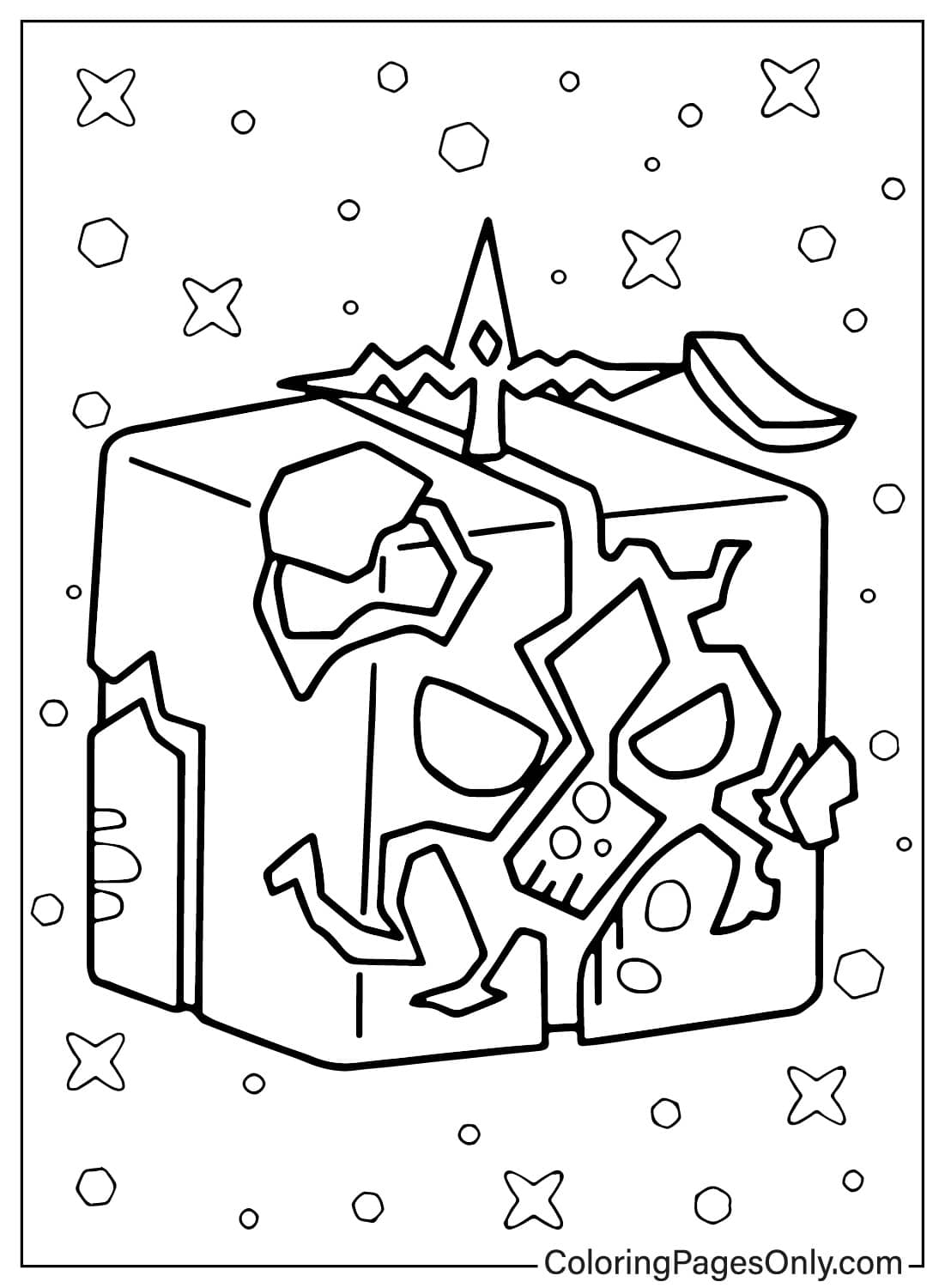
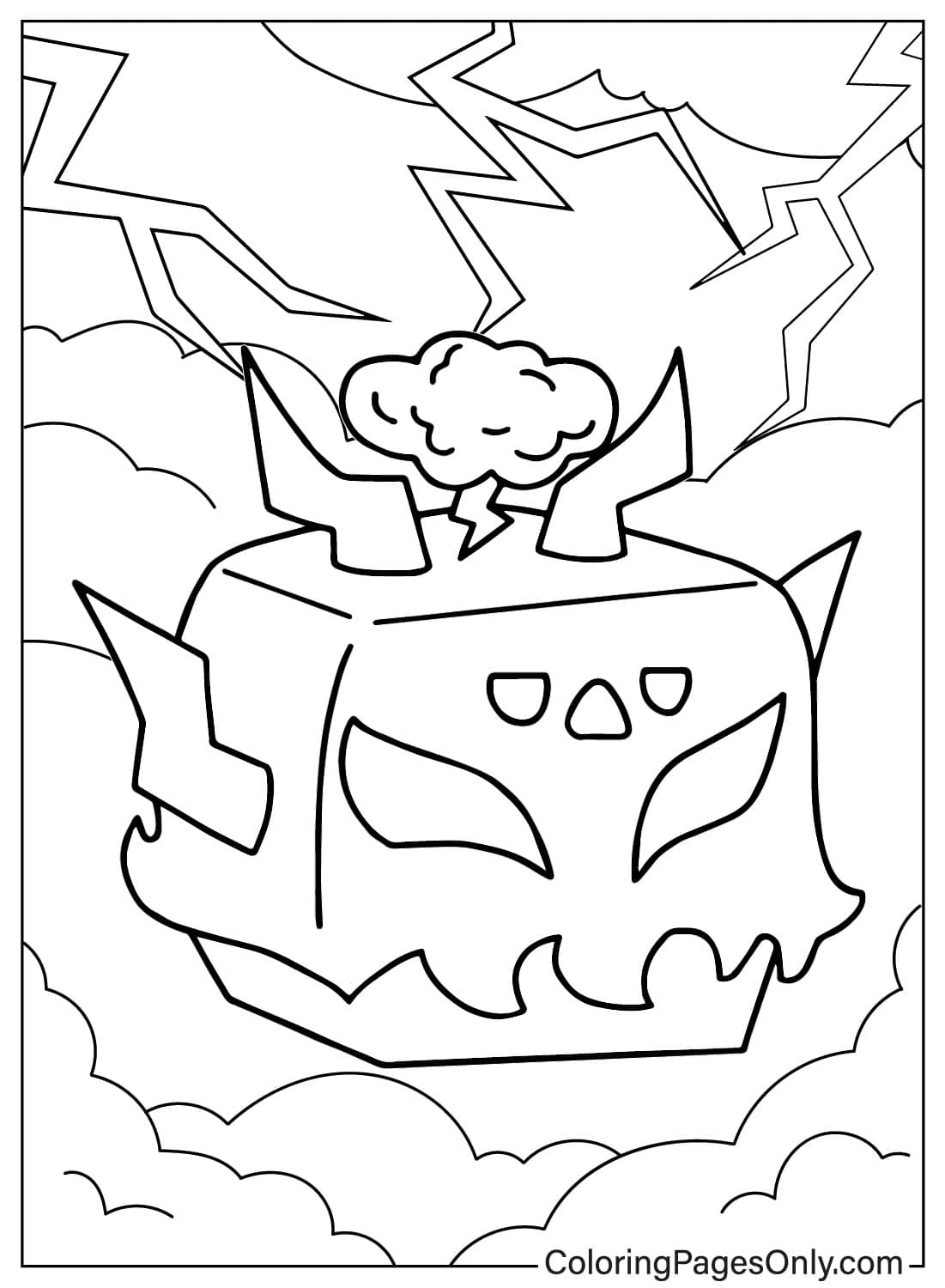
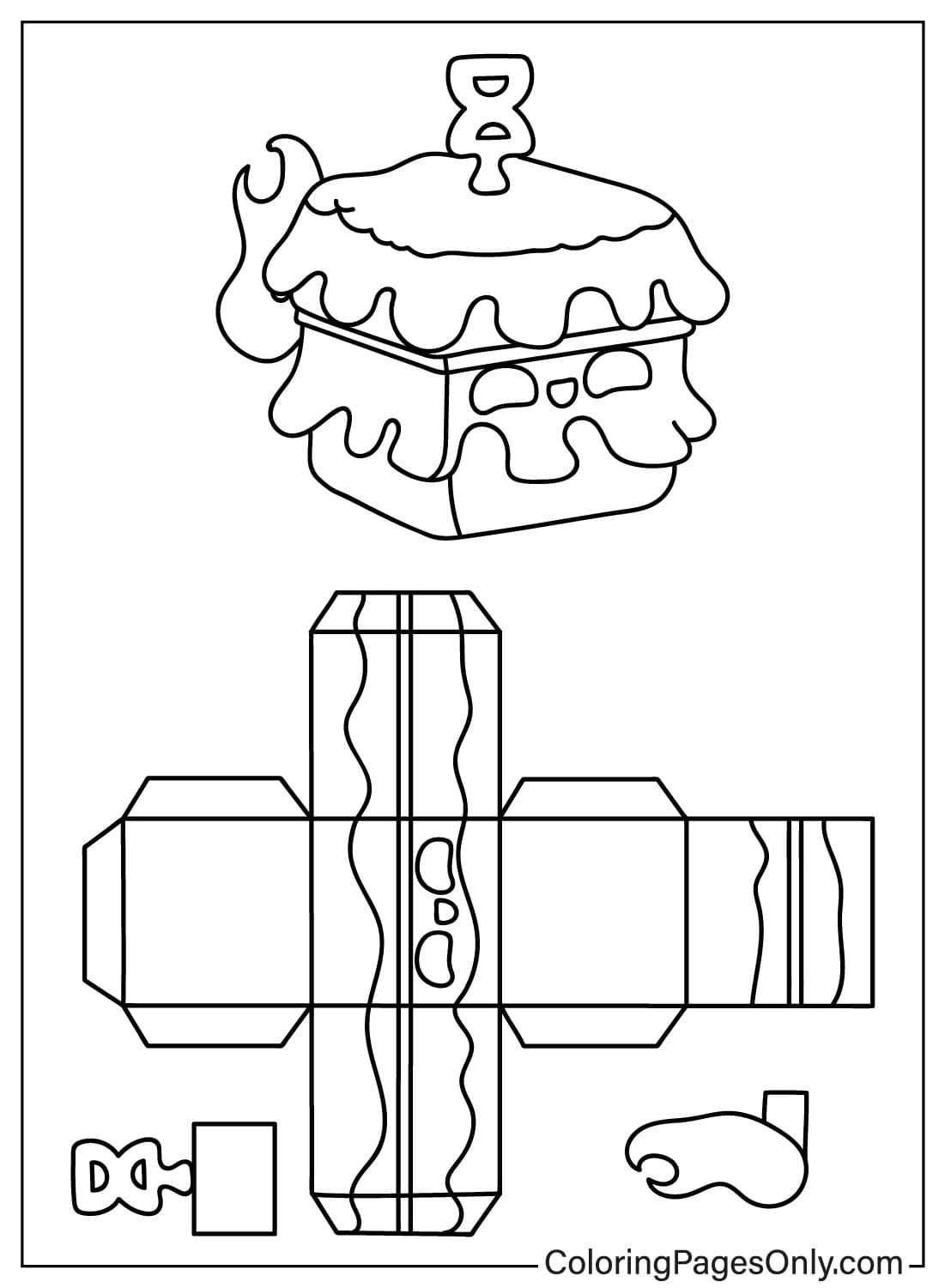
Blox Fruits Coloring Pages brings one of Roblox’s most-played games to life with color, and this collection of 30+ free pages at ColoringPagesOnly.com covers the fruits that every Blox Fruits player knows by heart. From the elemental Natural-type fruits that newer players grind for in the First Sea (Flame, Smoke, Sand, Rumble, Quake) through the powerful Beast transformations of mid-game (Falcon, Eagle, Spider, T-Rex, Mammoth) and all the way up to the rarest and most coveted fruits in the game – Dragon, Leopard, Kitsune, Dough, Venom, Shadow – this collection is built for players who want to color the powers they spend hours chasing in the game. The full world of Roblox coloring pages on this site is available through our Games Coloring Pages hub.
Every page is completely free – download as PDF to print or color online in your browser with one click. No sign-up, no cost.
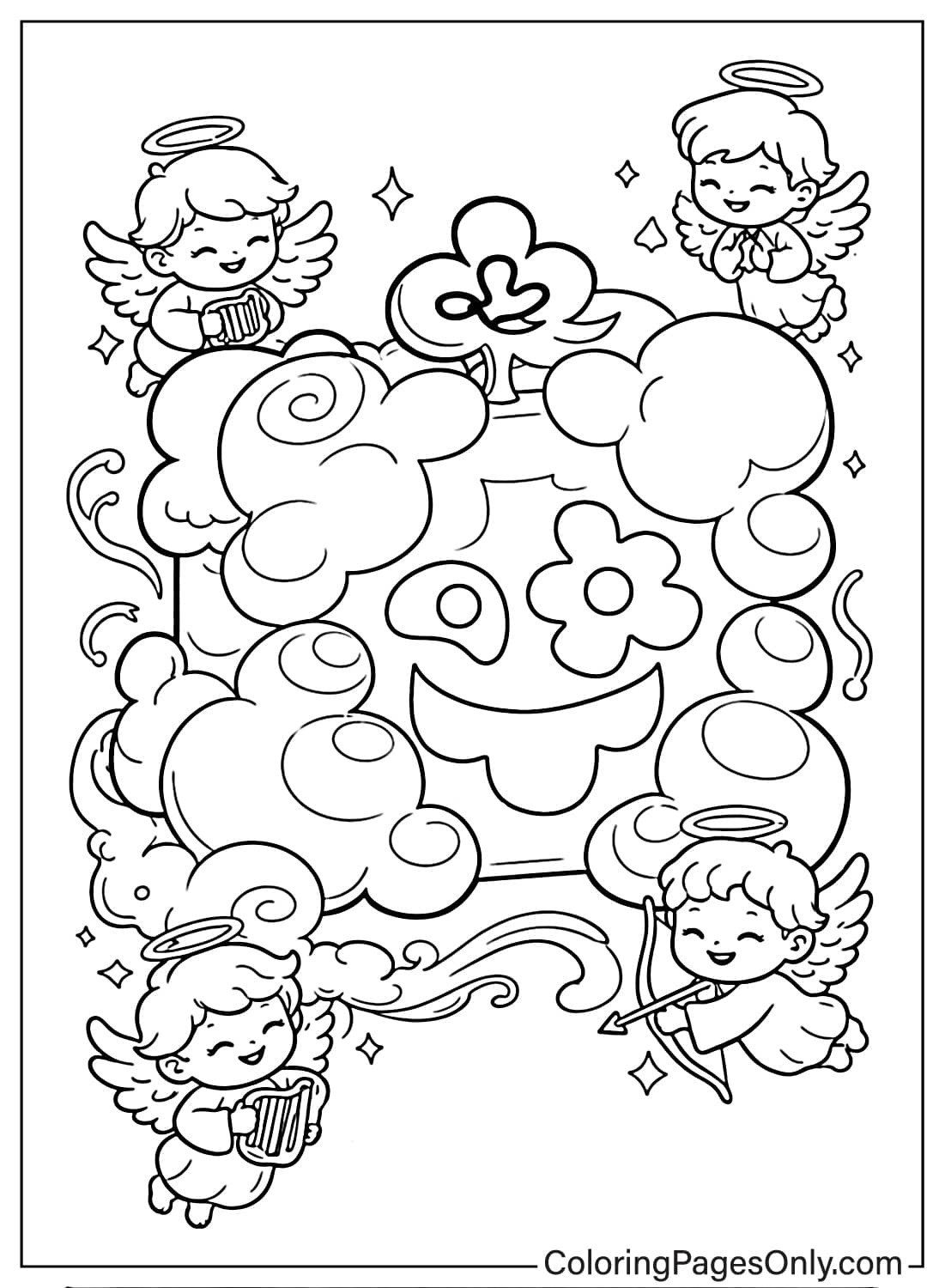

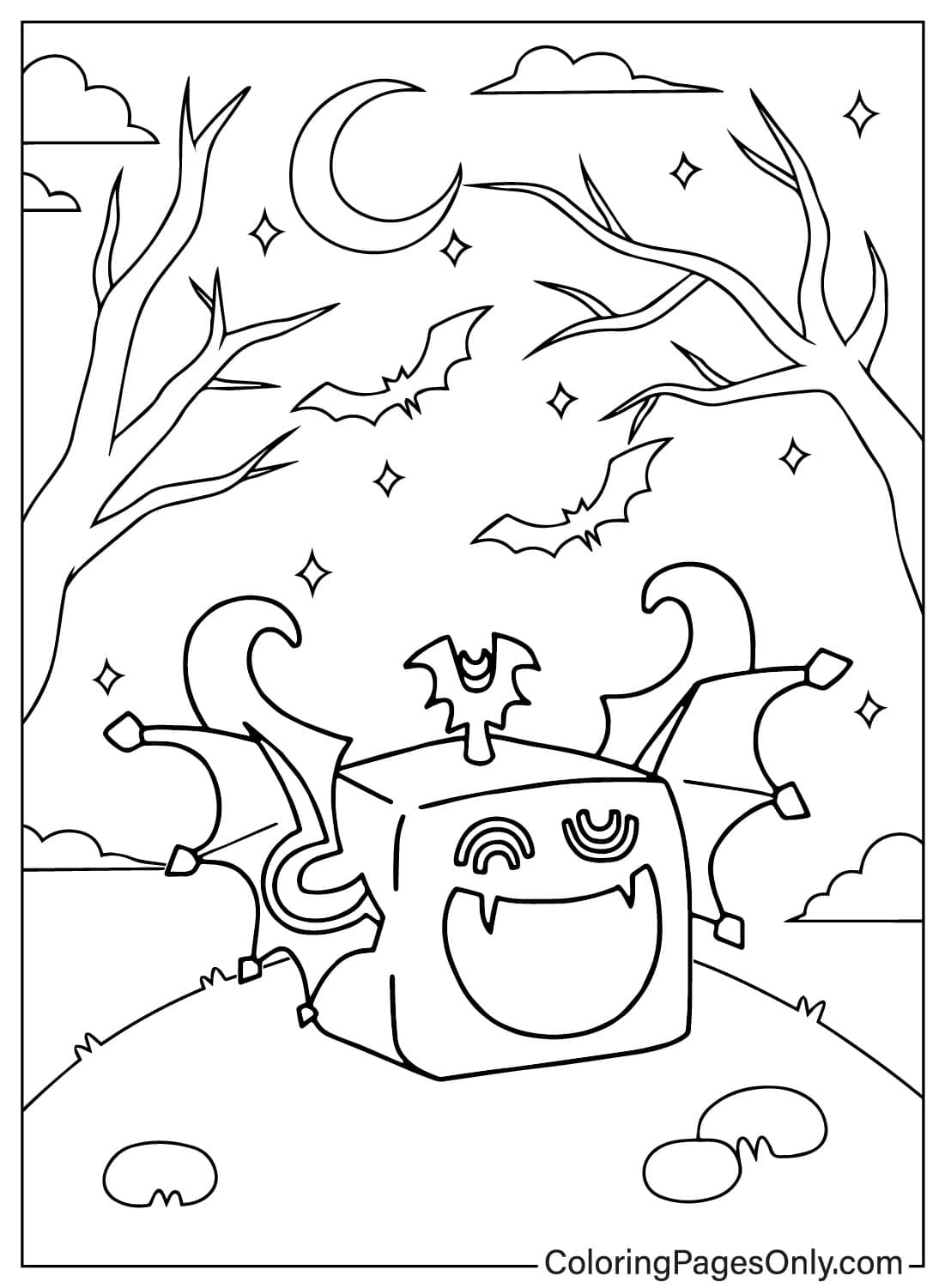

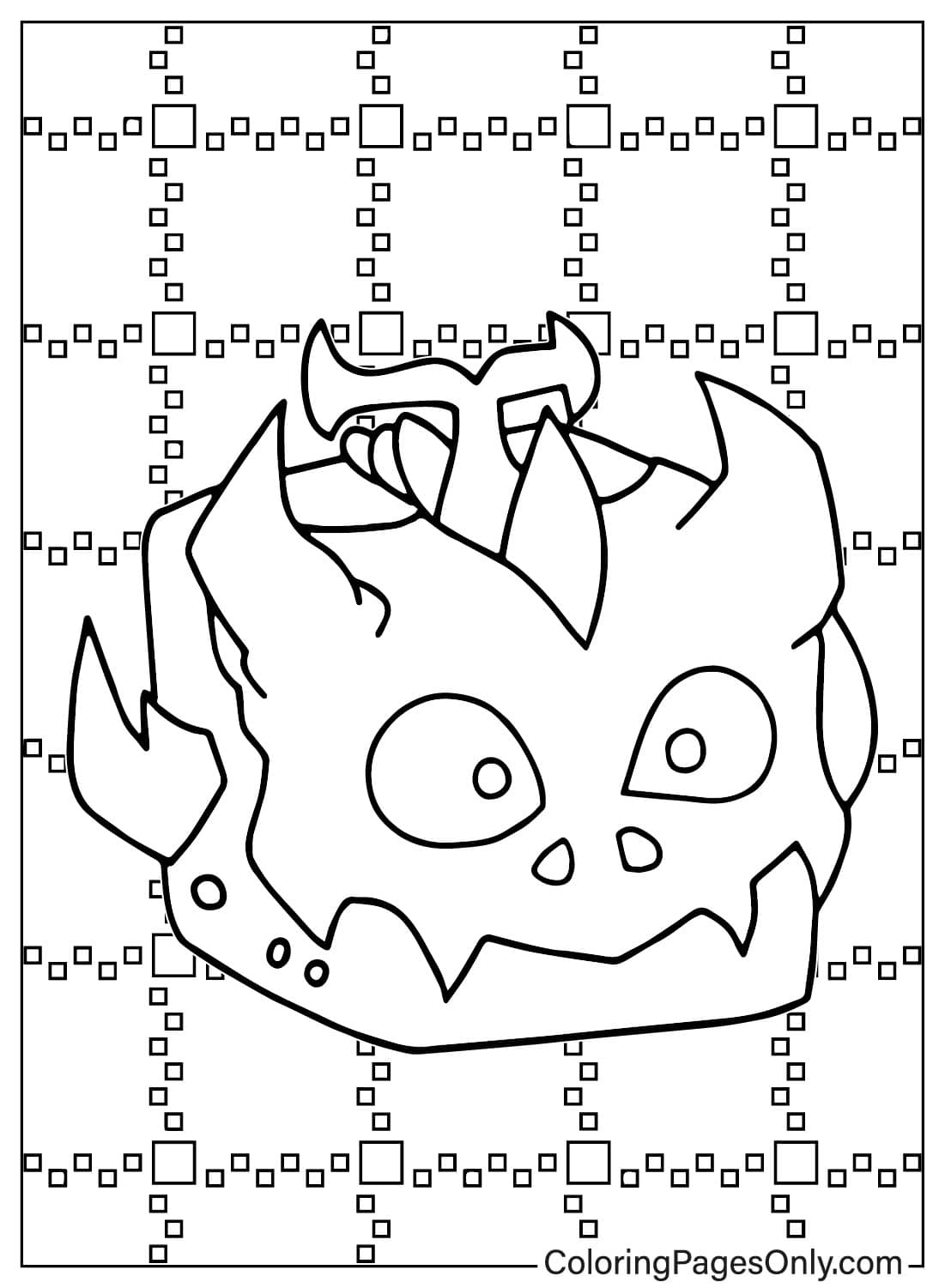
What Is Blox Fruits?
Blox Fruits is a Roblox game created by the developer group Go Play Eclipsis, directly inspired by the world of the manga and anime One Piece by Eiichiro Oda. It is consistently one of the most-visited games on the entire Roblox platform, with hundreds of millions of visits recorded and an active player community in the tens of millions worldwide.
The game’s core mechanic is simple to understand and endlessly deep in execution: players explore a world of islands spread across three seas – the First Sea, Second Sea, and Third Sea – leveling up their characters, defeating enemies and bosses, completing quests, and most importantly, hunting for and consuming Blox Fruits. Each fruit grants its user a unique set of powers at the cost of being permanently unable to swim – the user sinks in deep water and quickly loses health. This trade-off is taken directly from the Devil Fruits of One Piece and creates the same strategic tension that defines that series: a fruit user is devastatingly powerful on land or in the air and almost completely helpless in the ocean.
The game has three major combat systems – Fruit (devil fruit powers), Sword (melee weapon mastery), and Gun (ranged combat) – and players can specialize in one or distribute their stats across all three depending on their preferred playstyle. But it is the fruits that define Blox Fruits culture. Players spend hours farming Beli (the in-game currency), hunting fruit spawns across islands, grinding bosses and Sea Beasts, and trading with other players in the game’s active economy – all in pursuit of the best possible fruit for their build. Knowing the current fruit tier list is as essential to serious Blox Fruits play as knowing the map itself.
The game receives regular updates that introduce new fruits, rebalance existing ones, and add new areas, bosses, and mechanics – which means the tier list shifts over time and the community conversation about which fruits are currently worth grinding for is always active.
The Fruits: What They Are and Why They Matter
The fruits in this collection span the full range of the game’s power system – from the accessible elemental fruits that form the foundation of every new player’s early experience, through the dramatic Beast transformations of the mid-tier collection, to the rarest and most powerful Special fruits that define high-level competitive play. Understanding each fruit’s type, visual identity, and position in the game’s power hierarchy makes these pages coloring subjects rather than just line art – every fruit here has a specific story and a specific place in the Blox Fruits world.
Natural Elemental Fruits
The Natural-type elemental fruits are the most accessible fruit category – the user’s body becomes partially or fully suffused with their element, with the element visually replacing or overlaying their form in attack animations.
Flame is one of the first truly good fruits players work toward and one of the most reliably useful throughout the game. It grants fire control and is an excellent all-around fruit for leveling. Its visual identity is the classic fire palette – bright yellow at the core of flame effects, transitioning through vivid orange to deep red at the edges.
Smoke is one of the very first fruits many new players encounter – a beginner Natural elemental fruit that generates and controls smoke. Its gray-and-white palette is understated compared to the dramatic top-tier fruits, but it carries genuine nostalgia for long-time players who remember discovering it early in their First Sea grind.
Sand is a mid-tier elemental fruit with sweeping area-of-effect attacks and a warm desert palette of gold, beige, and tan. Its visual identity is the flowing, dust-cloud quality of sand in motion – a softer, more organic energy than fire or lightning.
Rumble grants control over lightning and electricity – fast, crackling attacks with a dramatic yellow-and-white electrical palette that makes these pages some of the most visually energetic in the collection. Lightning effects give natural structure to the coloring: the brightest, near-white at the bolt’s core, vivid electric yellow in the mid-range, cooler blue at the outermost edges.
Quake generates shockwaves and seismic energy – inspired directly by the Gura Gura no Mi from One Piece, which grants the same power to one of that series’ most powerful characters. It is one of the most devastating area-of-effect fruits in Blox Fruits, creating visible ripples and crack effects in the air around the user. Its palette runs in blue-white shock energy against whatever environment it disrupts.
Shadow grants control over shadows and darkness – the user can merge with shadows, summon shadow soldiers, and attack through shadow-based techniques. It is a high-tier fruit with a dramatic, dark visual identity built on deep blacks and dark purples, with the shadowy tendrils of its attacks extending outward from a near-black core.
Control is one of the most unusual fruits in the game – it grants the user the ability to manipulate objects and opponents telekinetically, creating a levitating, reality-bending visual identity. Its coloring pages capture the energy-field aesthetic of telekinesis: crackling purple energy fields and the eerie suspension of objects in motion.
Beast Transformation Fruits
The Beast-type fruits transform the user into – or partially into – a creature form, with each Beast fruit producing a distinct animal transformation with its own visual identity and attack set.
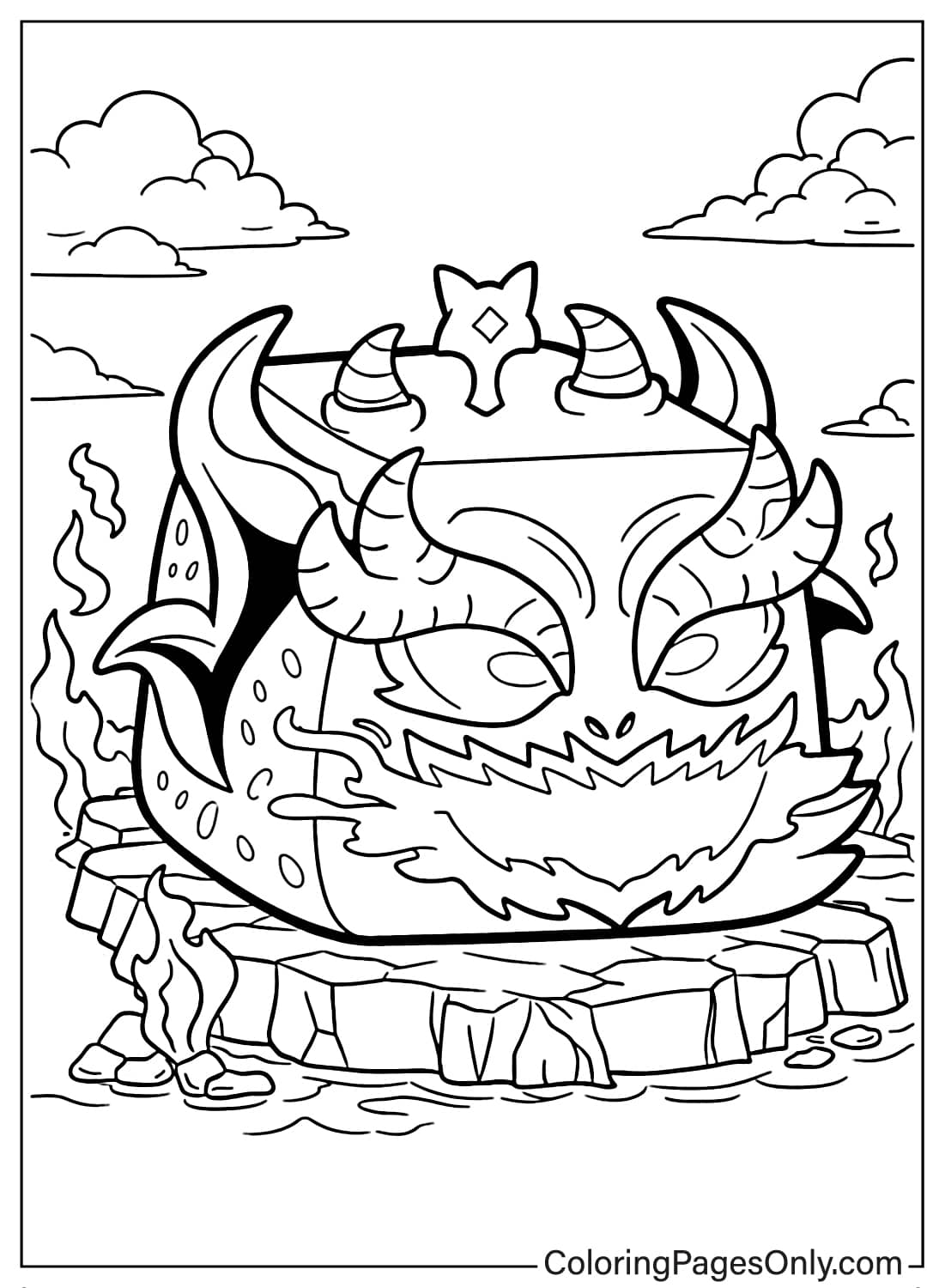
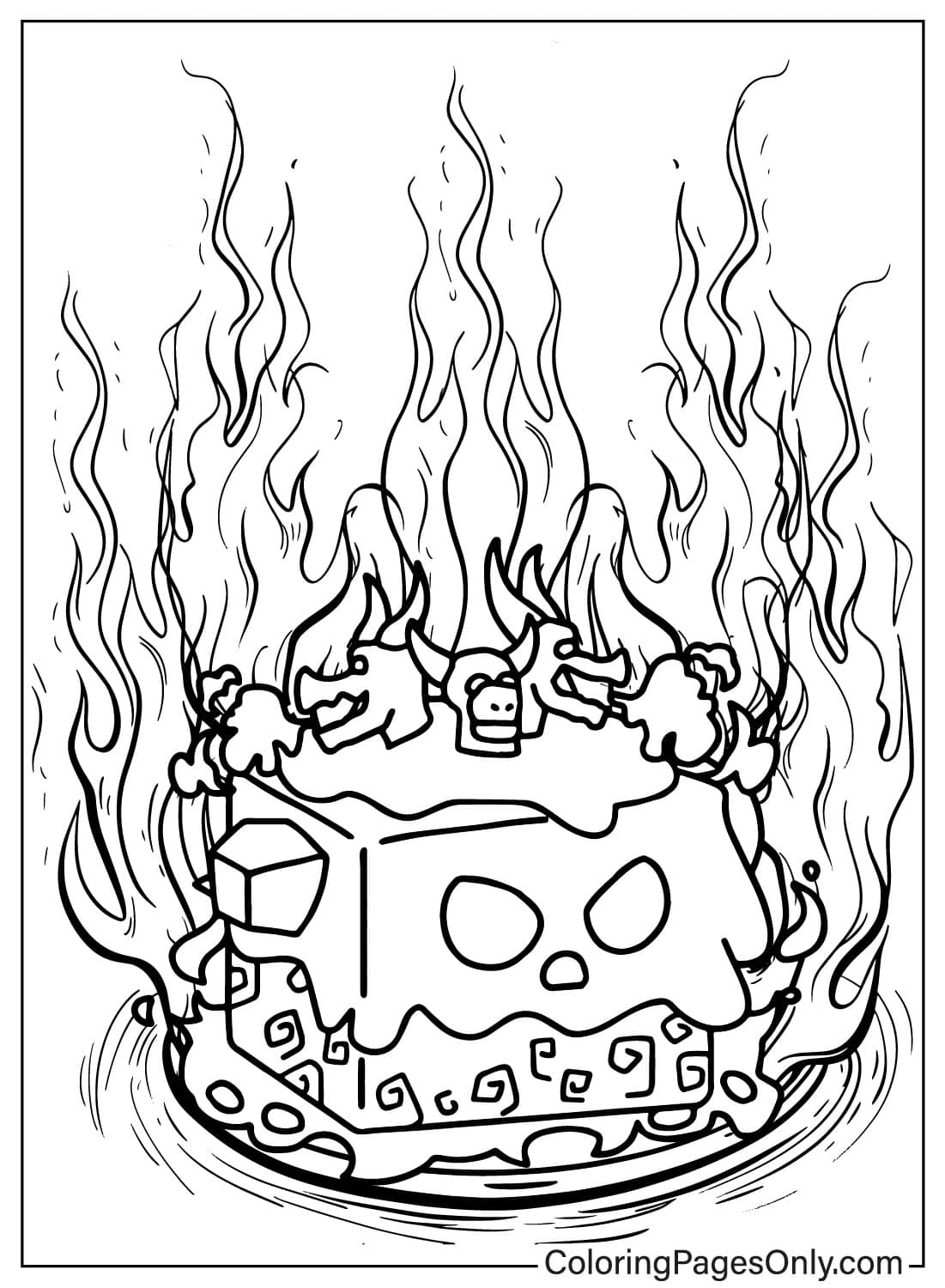
Dragon is the most iconic Beast fruit in the game and one of the most consistently top-tier fruits overall. It transforms the user into a full dragon form with an enormous range, serious damage output, and the ability to fly. The Dragon pages in this collection – including both the standard Dragon Blox Fruits page and the Dragon Awakening page – are the most visually ambitious in the collection: scales, horns, wings, and the full swept form of a dragon in combat, with the fire-breath attack effects that define Dragon’s most powerful moves. The Dragon Awakening form represents the enhanced state unlocked through the in-game Awakening system, with more intense fire effects and enhanced visual drama compared to the base form.
Leopard sits alongside Dragon at the very top of the competitive tier list and is widely considered the strongest fruit specifically for PvP combat. It transforms the user into a leopard form with incredibly fast, high-combo attacks and exceptional mobility – players who have Leopard are immediately recognizable by the speed and aggressiveness of their combat style. The Leopard page captures the sleek, predatory aesthetic: spotted fur, powerful limbs in motion, and the low, fast profile of a big cat at full speed.
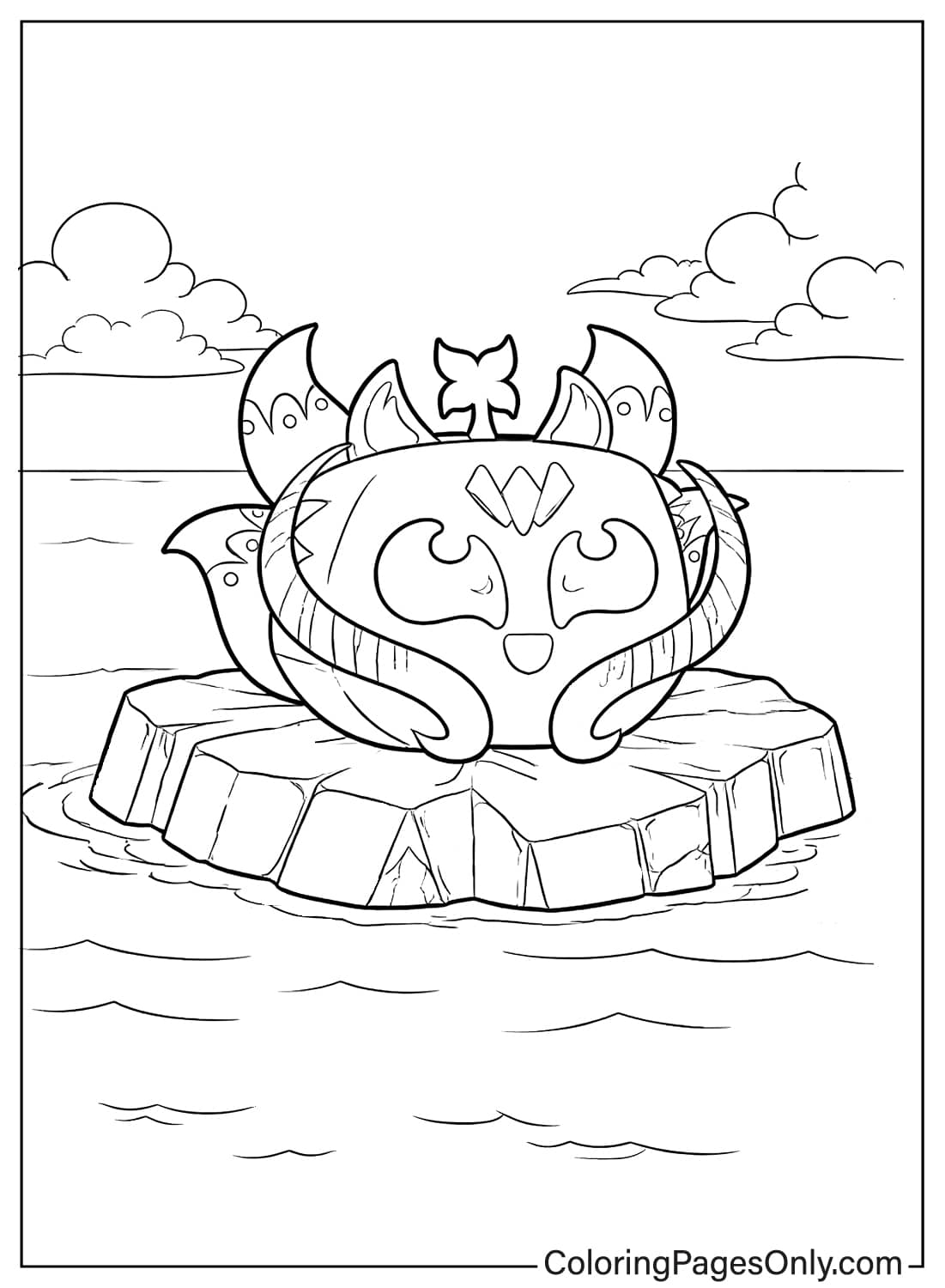
Kitsune is one of the rarest and most sought-after fruits in the game – a Mythical Beast-type fruit that transforms the user into a multi-tailed fox form. Its rarity makes it a status symbol within the player community as much as it is a combat tool, and the game’s market value for Kitsune reflects this. The Kitsune pages in this collection – both the newer scene-based Kitsune Coloring Page and the Fruit Du Kitsune page – capture the distinctive fox silhouette and multiple trailing tails that define the Kitsune aesthetic.
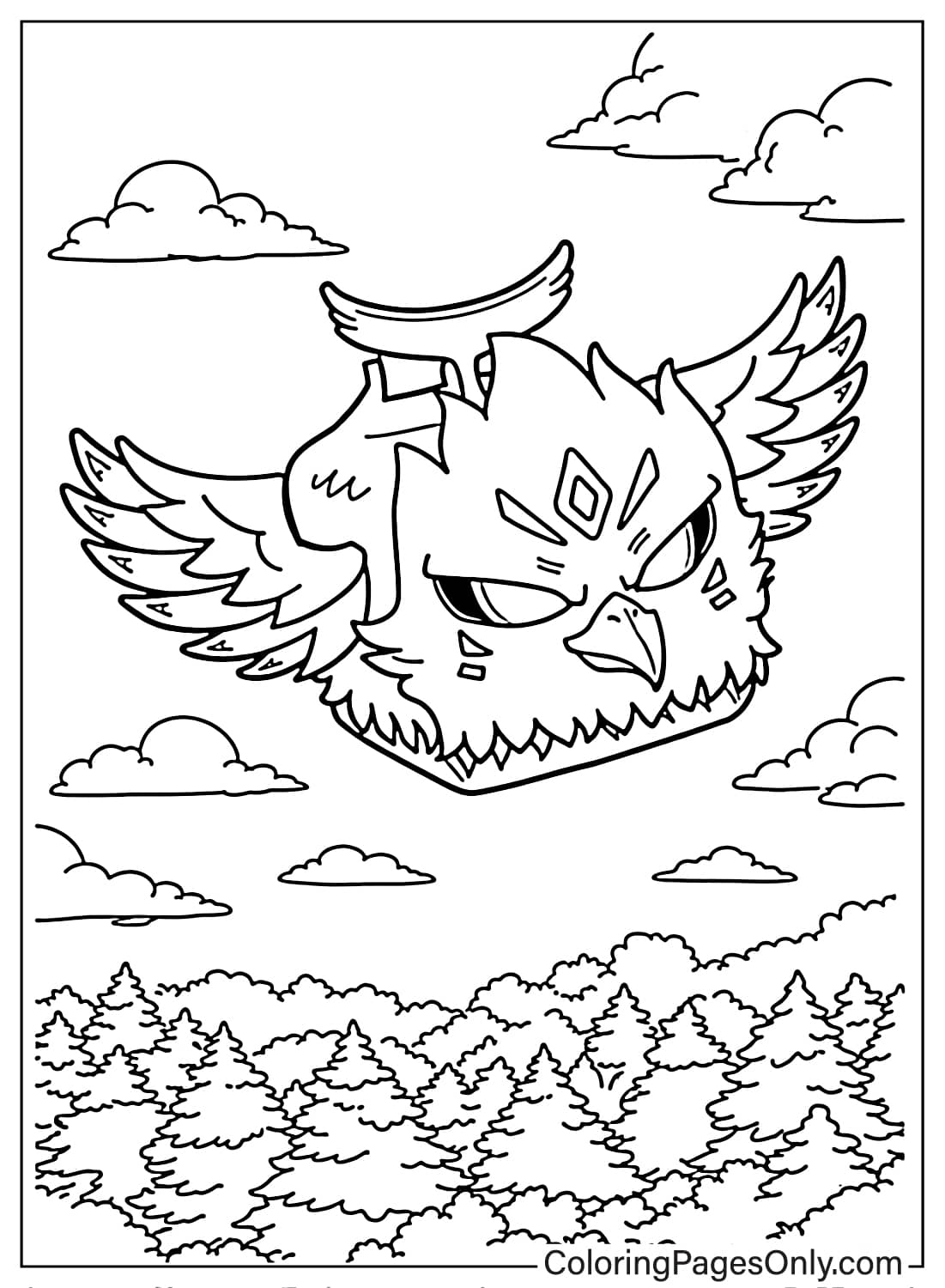
Eagle and Falcon are both avian Beast fruits with flight capability and aerial combat focus – Falcon being an earlier, more accessible bird transformation, while Eagle represents a more powerful aerial fighter. Their pages capture the angular, speed-focused visual identity of birds of prey: spread wings, sharp silhouettes, the sense of height and velocity built into their compositions.
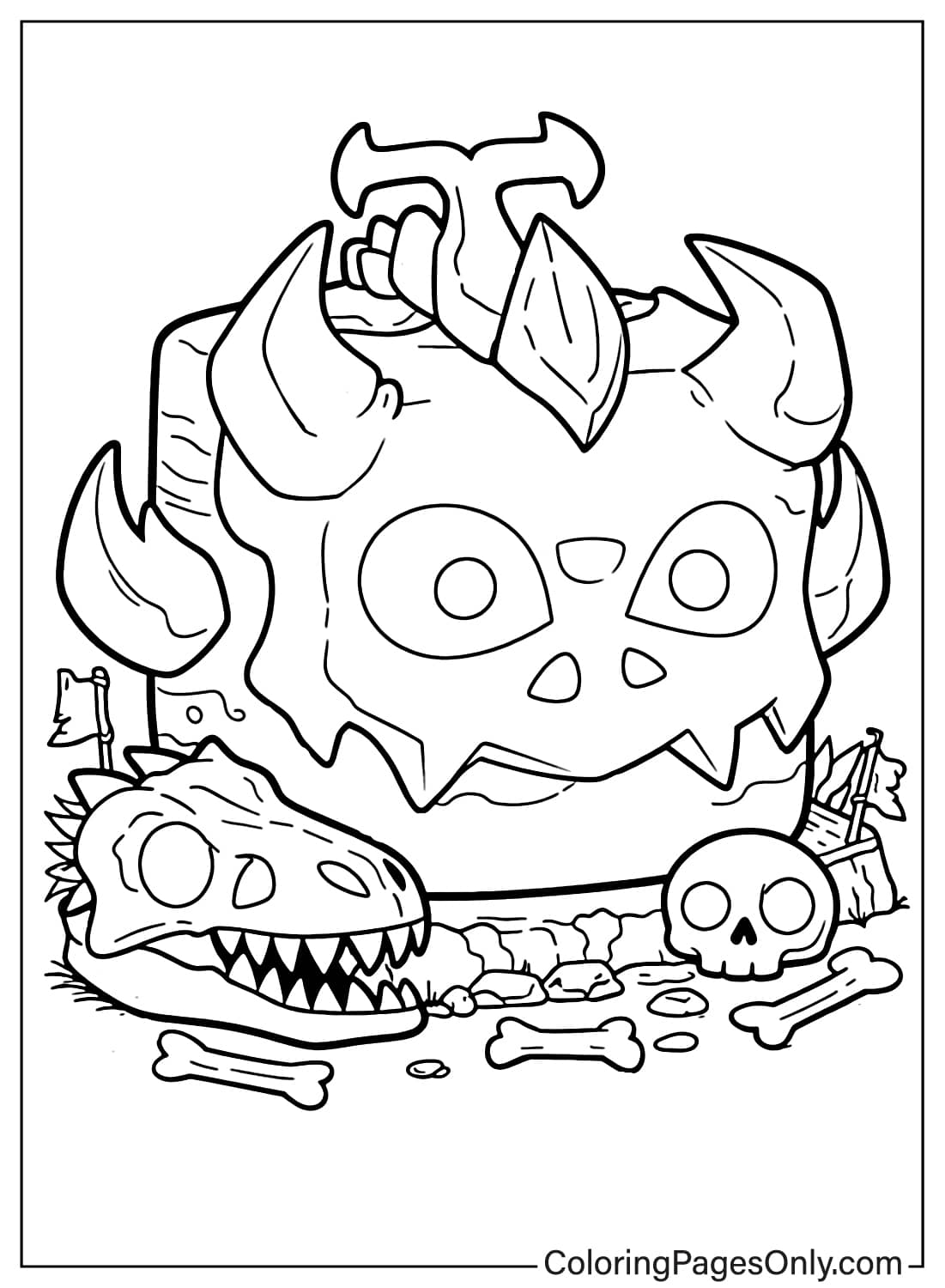
T-Rex transforms the user into a Tyrannosaurus Rex – one of the most massive and physically imposing transformations in the game. The sheer scale of the T. rex form is the defining visual of these pages: the enormous body, the powerful forelimbs despite their comparative shortness, and the weight and solidity of something genuinely prehistoric. Both the T. rex Coloring Page (2026 version with skull and bones scene) and the older T. rex Roblox Blox Fruits page are in the collection, giving two distinct visual approaches to the same fruit.
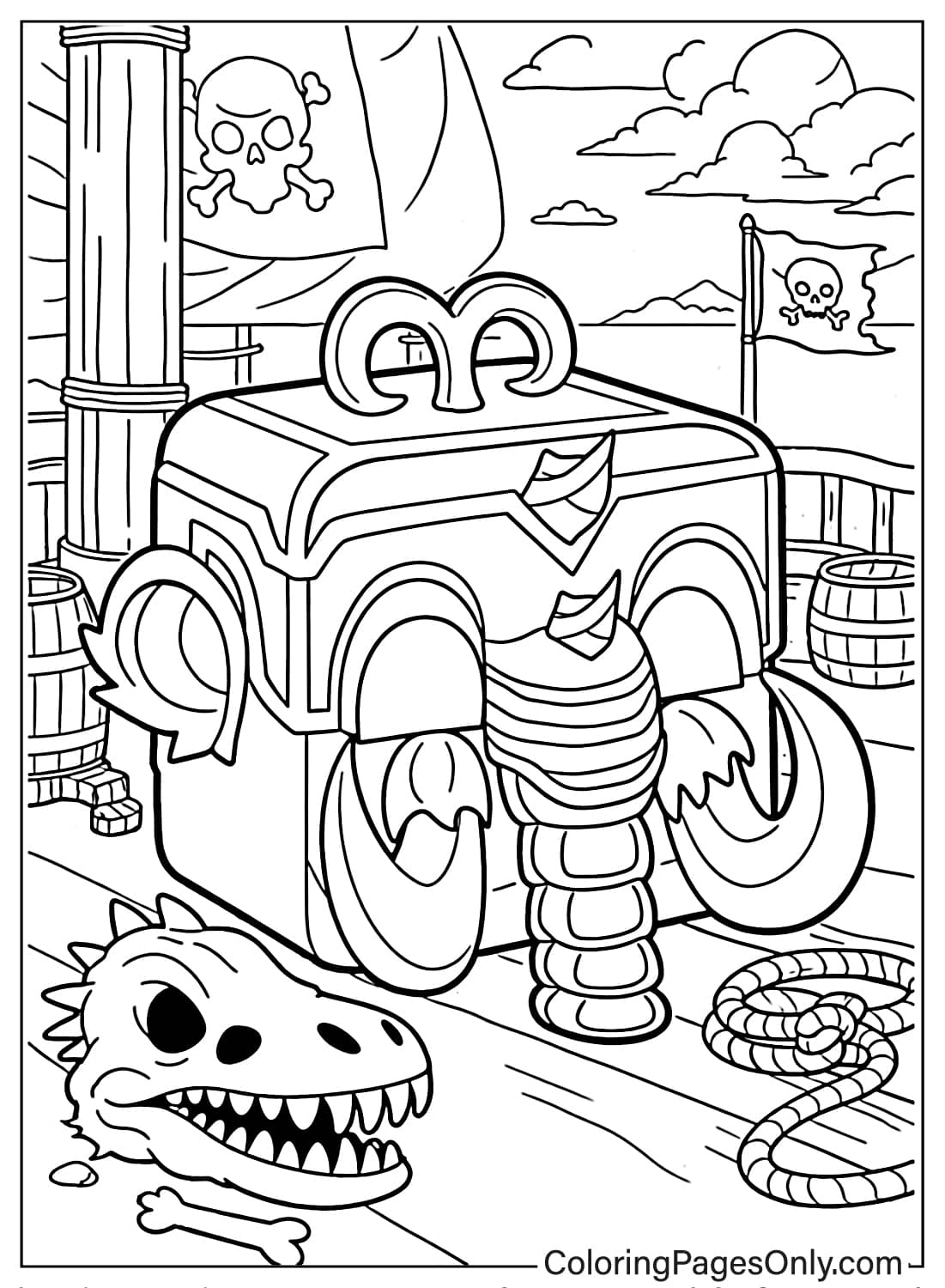
Mammoth is the most recently added Beast fruit in this collection’s 2026 batch – a massive woolly mammoth transformation with tusk attacks and imposing physical presence. Its page captures the prehistoric heaviness of the mammoth form in a pirate ship scene context.
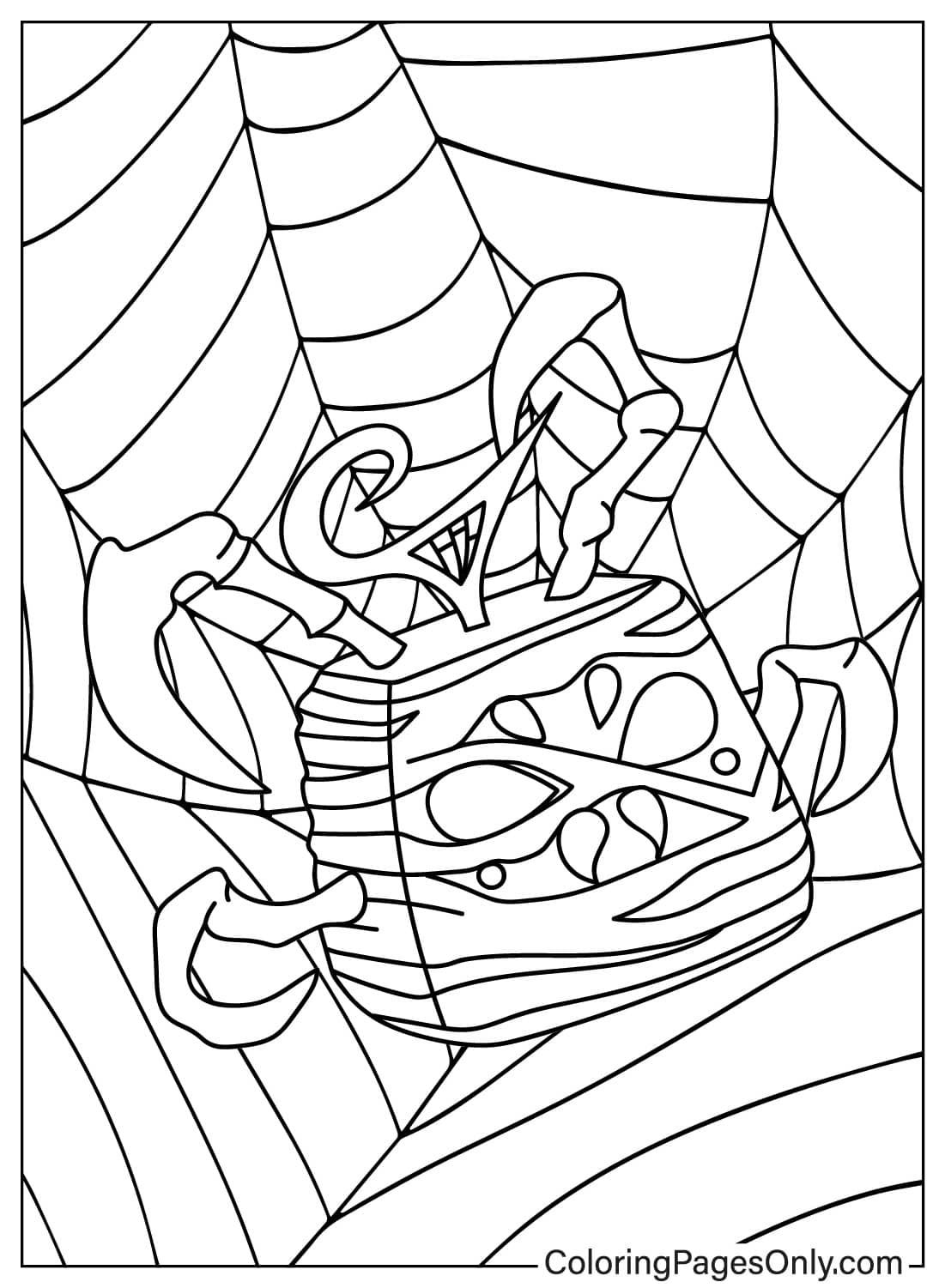
Spider grants spider-like abilities – web projection, wall-climbing, and multi-hit close-range attacks with a dark, atmospheric aesthetic. Its web patterns and dark coloring make it one of the more moody pages in the collection.
Special and Rare Fruits
The Special-type fruits are where the most distinctive and mechanically unusual powers in Blox Fruits live – fruits that do not fit the elemental or Beast categories and that have unique visual identities as a result.
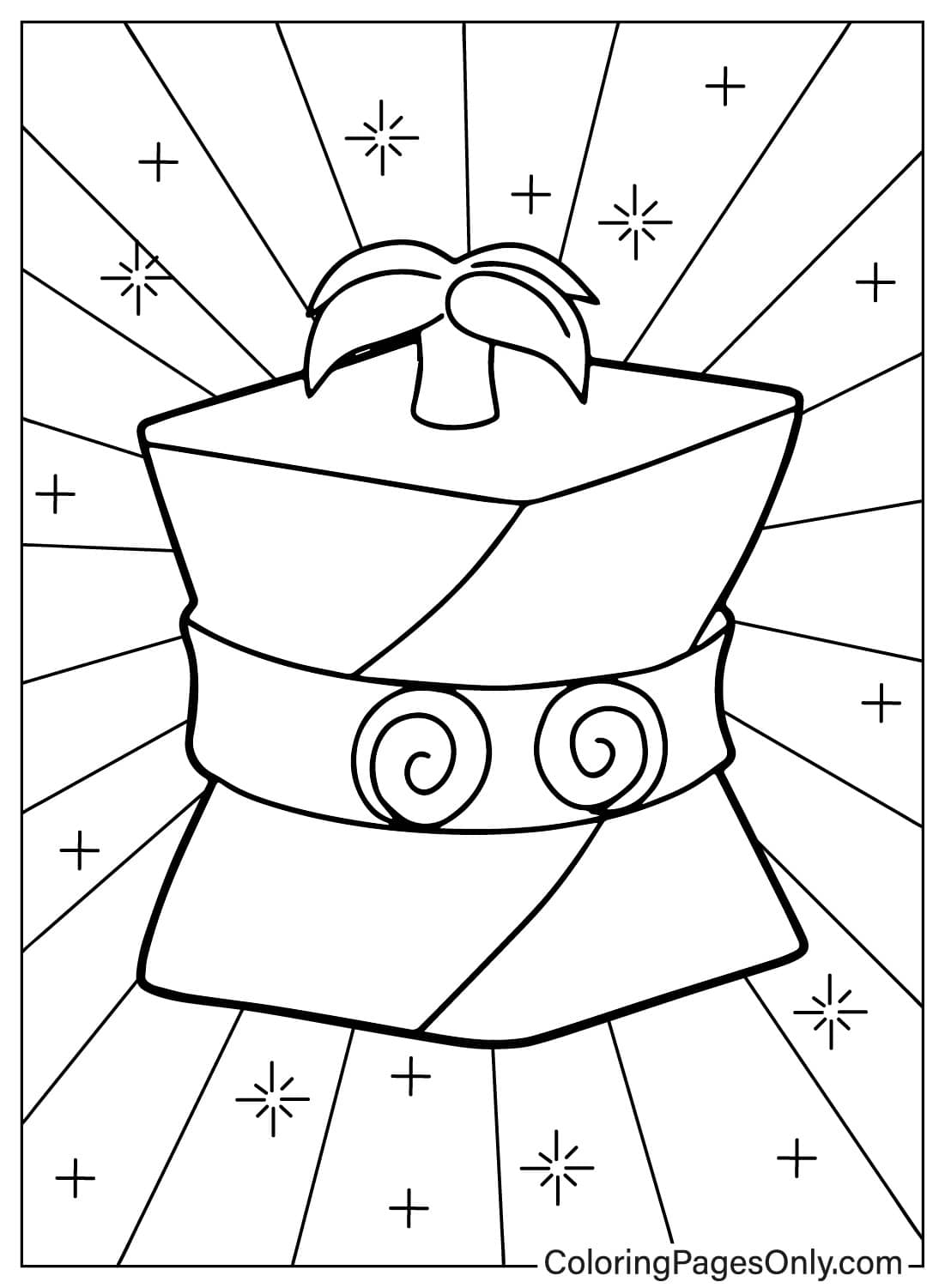
Dough is the fruit that defined a generation of Blox Fruits competitive play – one of the most powerful defensive and offensive fruits in the game’s history and still a consistent top-tier choice. It gives the user stretchy, doughy body properties and one of the most visually distinctive attack aesthetics in the game: soft pink-and-cream stretched limbs, doughy projectiles, and the pliable, elastic quality of someone whose body has the consistency of bread dough. The Dough page is one of the more nuanced coloring challenges in the collection – the soft pink-cream of Dough should look pliable and slightly shiny, like actual uncooked dough, which means soft gradients and subtle highlights.
Venom is a consistently high-damage Special fruit that gives the user control over a corrosive, toxic substance. Its visual identity is one of the darkest and most saturated in the game: deep purple as the primary color, near-black for the deepest pools of venom, and a sickly yellow-green for the toxic glow at the edges where the venom is most concentrated and most dangerous. The Venom page rewards a dark, layered coloring approach more than almost any other page in the collection.
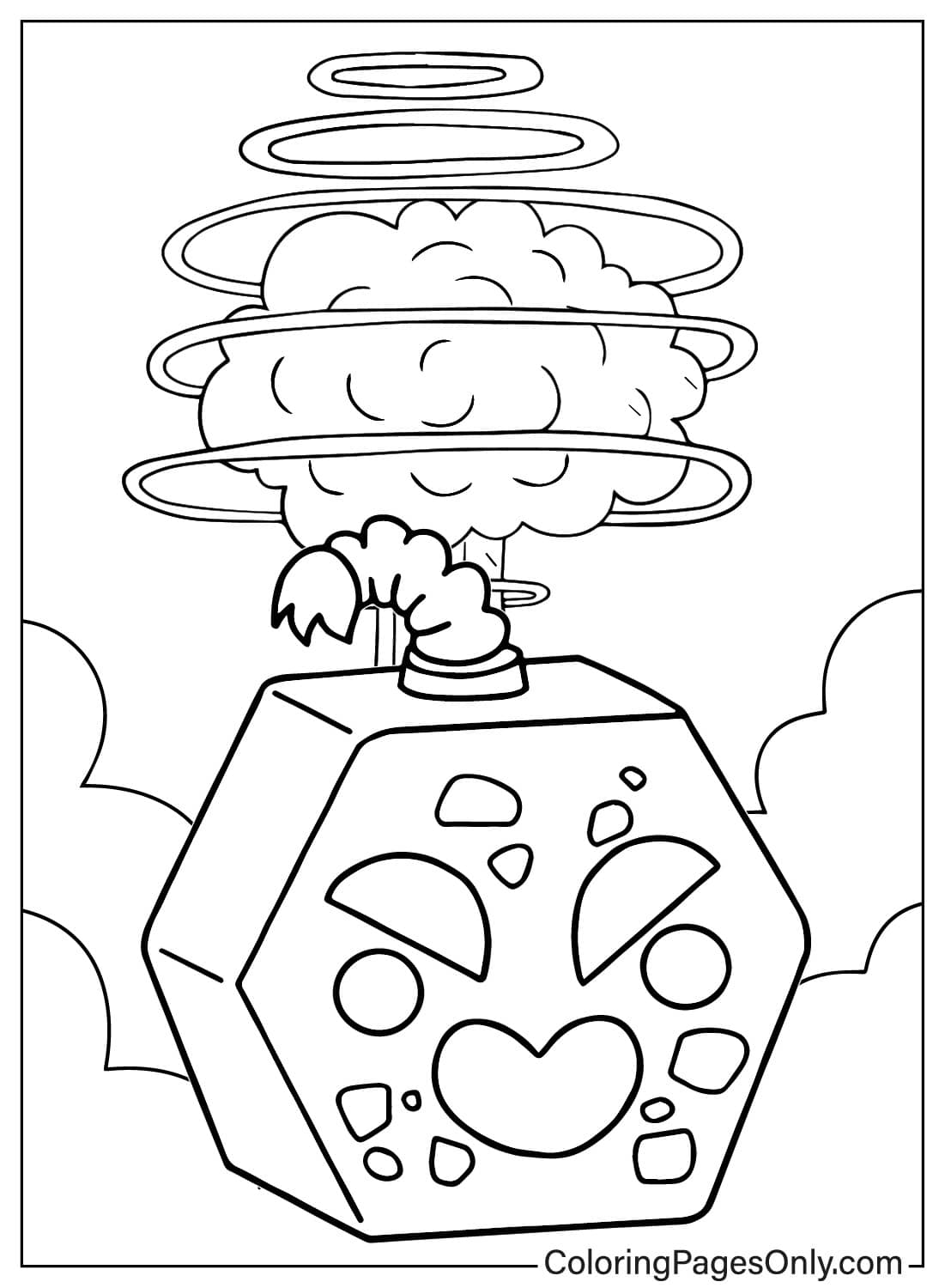
Diamond covers the user’s body in diamond plating – one of the most defensive fruits in the game, sacrificing mobility for near-invulnerability. Its palette is crystalline: cold blues, bright whites, and the prismatic quality of a cut diamond’s refractive surfaces. Bomb is a straightforward but visually bold fruit – the user generates explosions, and the page’s round bomb imagery and bold red-and-black scheme make it one of the most graphic and immediately readable in the collection.
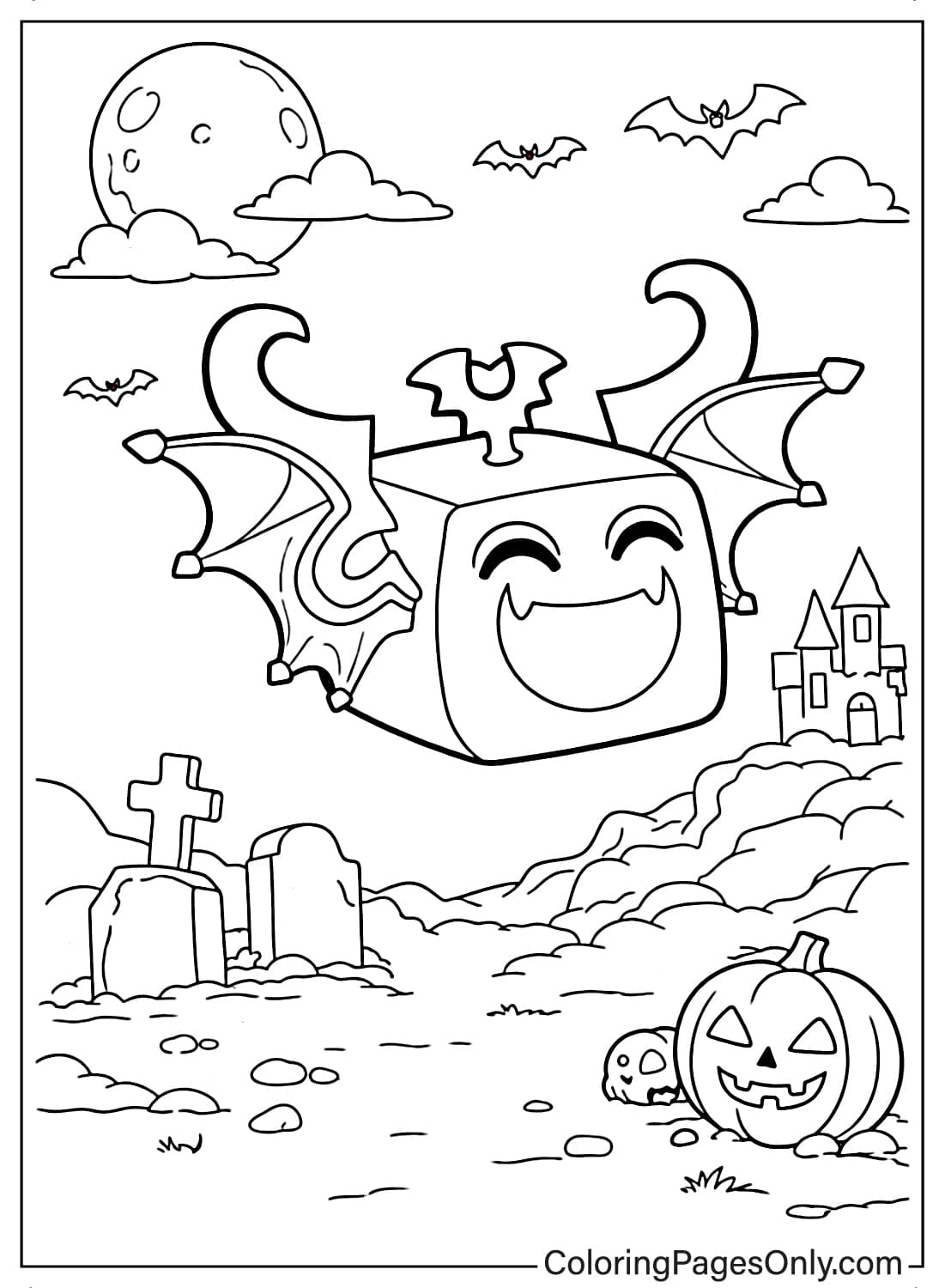
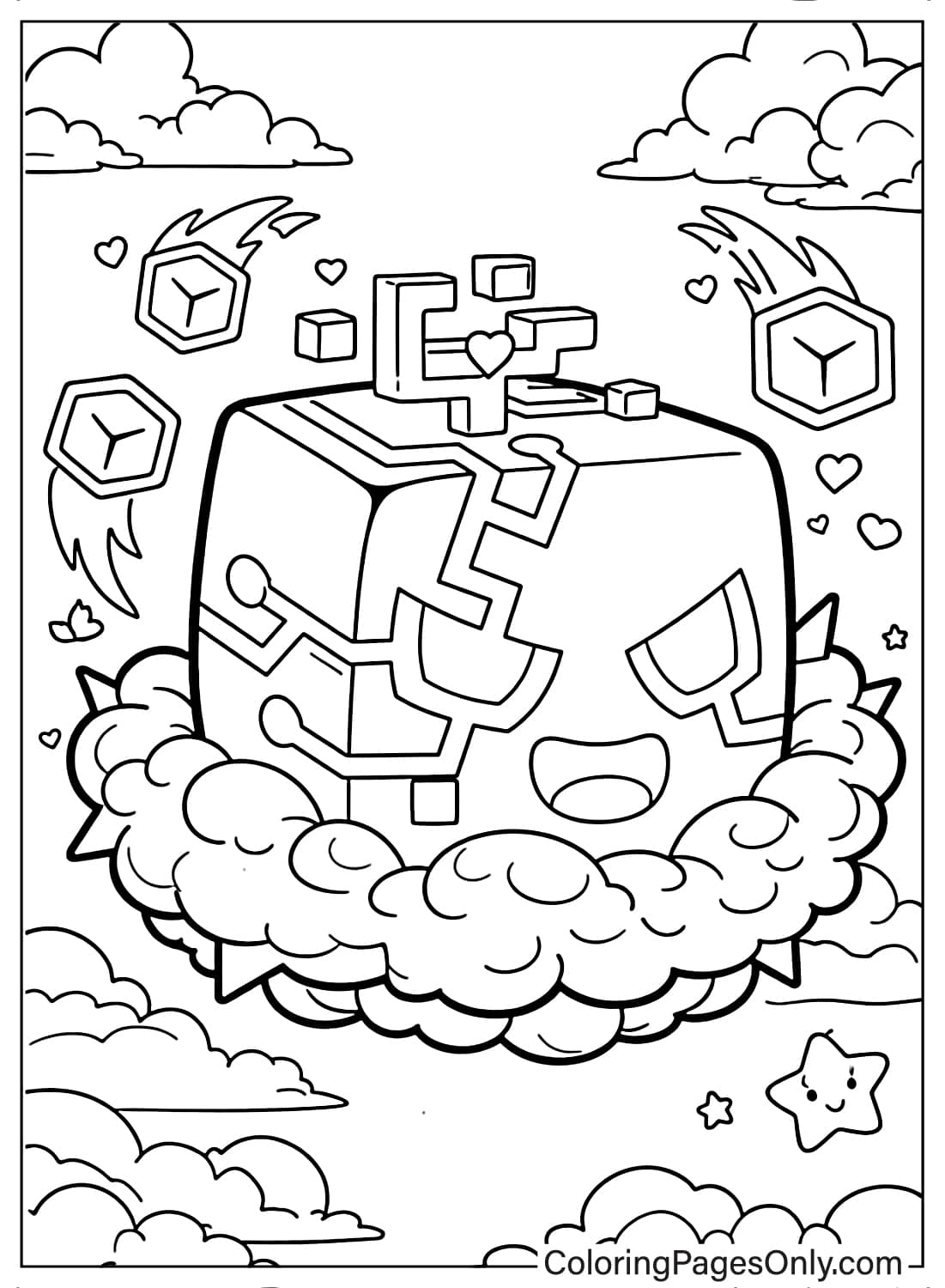
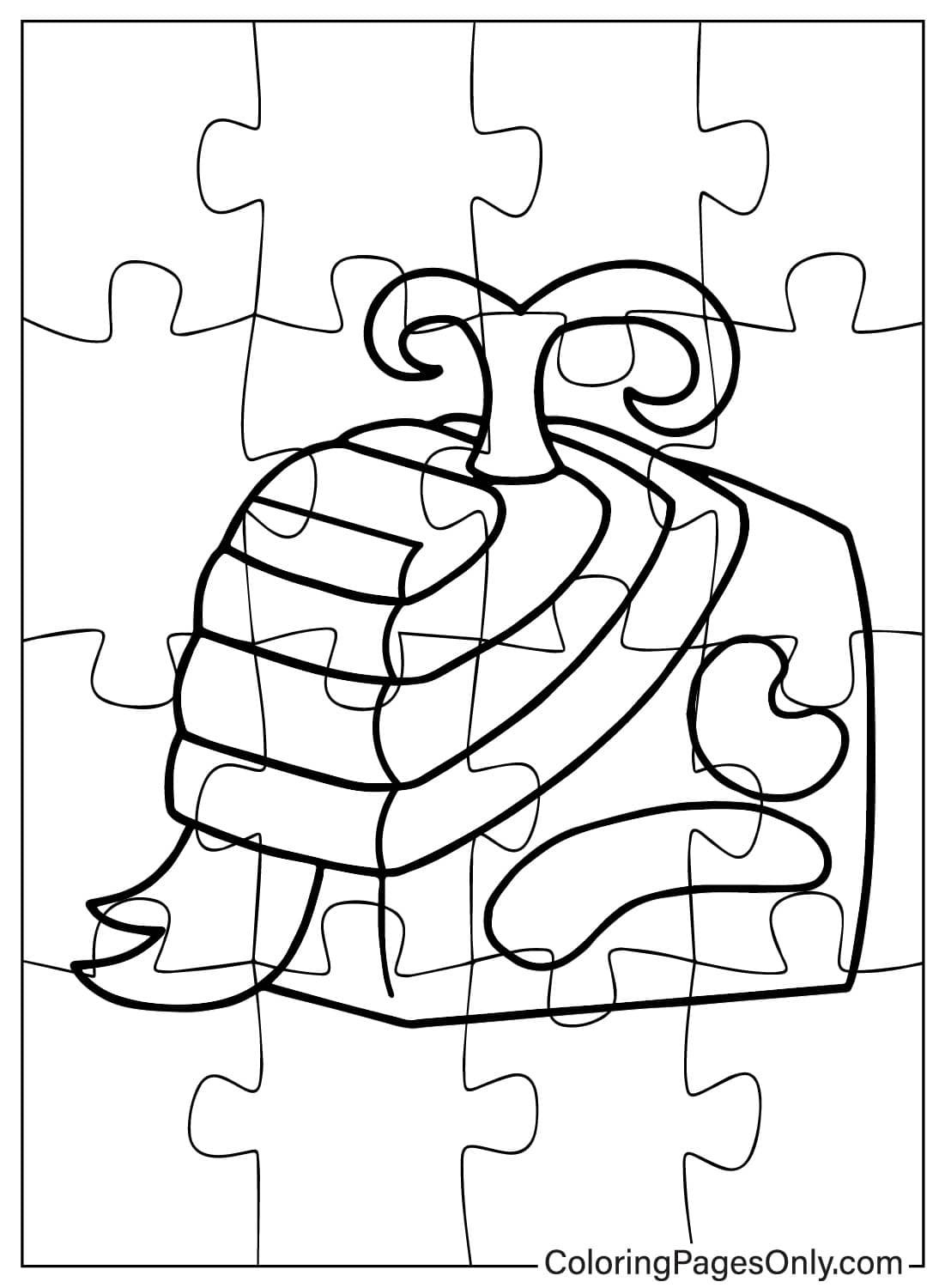
Jigsaw / Pain – the “Jigsaw Puzzle Pain” page – has one of the most distinctive visual identities in the entire collection: the puzzle-piece fragmentation aesthetic of this fruit’s attack patterns, with geometric shapes separating from and rejoining the user’s form, creates one of the most unusual coloring page compositions in the gaming category.
Fruit Spirit is a special entity in Blox Fruits related to fruit awakening and mastery – an ethereal, energy-based form that represents the awakened spiritual essence of a fruit’s power. The page captures this abstract, light-filled quality.
Spin is one of the very first fruits many new players pick up – a basic Natural fruit that generates spinning attacks. It is objectively a beginner fruit, but it has genuine nostalgic value for long-time players as the starting point of their Blox Fruits journey, and it appears in the collection as part of the full spectrum from first fruit to end-game.
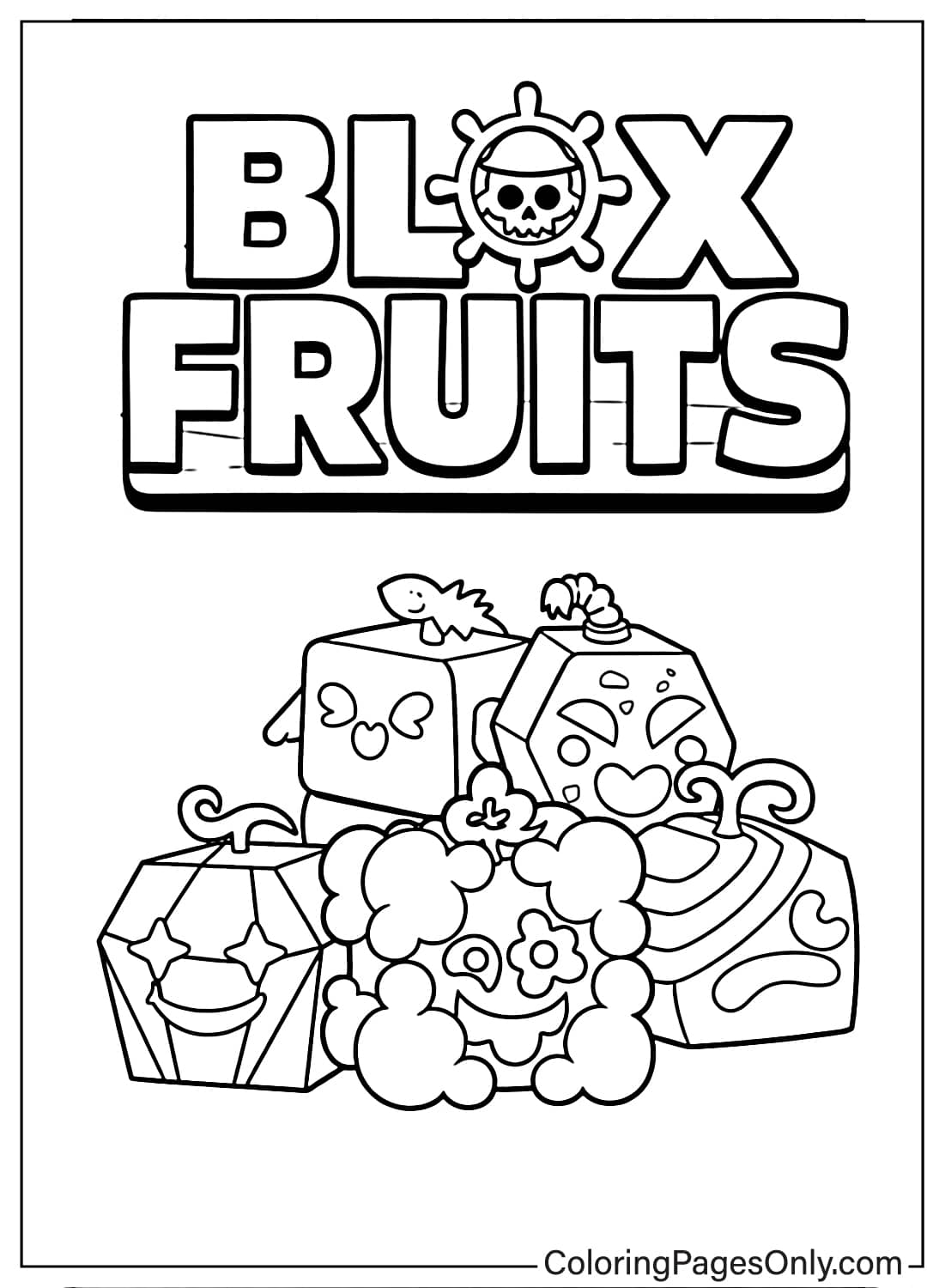
The Multiple Fruits Coloring Page is the most compositionally ambitious page in the collection – a single page showing multiple fruit characters together, which requires managing several distinct fruit color palettes simultaneously within a single composition.
Coloring Tips for Blox Fruits Pages
Blox Fruits has a very specific visual language built around the idea that the fruit type determines the user’s visual identity – the element or creature they wield is not just their weapon but their color palette, their texture, and their atmosphere. Getting the fruit type right in coloring makes each page feel genuinely connected to the game rather than generically illustrated.
For Natural elemental fruits (Flame, Smoke, Sand, Rumble, Quake, Shadow, Control), the key principle is that the element replaces or overlays the user’s form rather than appearing as a separate effect alongside it. The edges between the character’s body and the elemental energy should blend rather than have a hard outline – the user’s arm doesn’t end, and the fire begins; they transition into each other. For Flame: warm near-white at the innermost core of flame effects, vivid yellow in the main flame body, orange in the mid-range of the flame, and deep red-orange at the outermost feathered edges. For Shadow: never use pure black – deep purple as the base shadow color, near-black for the most concentrated areas, and a slightly cooler, very dark blue-purple at the absolute darkest points. Pure black reads as flat; deep purple reads as shadow with depth. For Rumble lightning: white is the most important color in the entire composition – a pure bright white at each bolt’s core, transitioning quickly to electric yellow, then a cooler electric blue at the outermost fringe of each bolt. Darken the background areas immediately surrounding lightning bolts slightly to make the white cores pop.
For Beast-type fruits (Dragon, Leopard, Eagle, Falcon, Spider, T-Rex, Mammoth), the coloring should feel organic and textured in a way that elemental fruits do not require – these are transformations into living creatures, and living creatures have surface variation, texture, and the specific quality of biological material rather than elemental energy. Dragon scales should have individual tonal variation – not every scale the same green-gray, but slight variations in shade across the scale field that suggest the overlapping, individually slightly differently-angled nature of real scale armor. Leopard’s spots work best with the background fur in a warm cream-to-tan range, and the rosette spots in a deep, rich brown rather than pure black – the specific spotted pattern of a leopard is one of nature’s most precisely patterned surface designs, and following it carefully produces a result that is immediately recognizable. T-Rex should read at a glance as ancient and massive – earthy mid-greens and warm grays with the weight and texture of something that genuinely lived 66 million years ago, not a bright, cartoon dinosaur green.
For Special fruits (Dough, Venom, Diamond, Kitsune), the most distinctive palettes reward the most patient and layered coloring approaches. Dough’s soft pink-and-cream should look pliable – slightly shiny where the dough surface is smooth, with soft gradient transitions between the lighter highlights on raised surfaces and the slightly deeper pink in the recessed areas. The stretched, distorted shapes of Dough’s attack animations should feel like actual elastic material being pulled: the thinnest, most stretched parts lightest, the thicker, more compressed parts slightly deeper in tone. Venom requires three separate color zones working together – the deep base purple for the main body of venom, the near-black shadow zone where venom pools most densely, and the sickly yellow-green that appears at the toxic highlights and glowing edges where the venom’s corrosive energy is most active. Kitsune’s multiple tails are the defining coloring challenge of those pages: each tail should read as light, ethereal, and slightly luminous – a pale golden-cream or silver-white with cool blue-gray shadows and bright near-white highlights at the tip of each tail.
For the Dragon Awakening page specifically, the Awakened Dragon form should be visually distinct from the base Dragon form, even if colored with the same overall palette. The key difference is intensity – the Awakening should have more vivid, more saturated flame effects, brighter highlights on the scale surface, and a more intense glow at the edges of the dragon’s body where awakened energy radiates outward. If the base Dragon is colored in deep forest greens with orange-red fire, the Awakening version should be those same colors but pushed: more saturated green on the scales, brighter orange approaching yellow at the hottest fire points, and a visible aura of warm gold-orange light emanating from the body itself.
For the Multiple Fruits page, the coloring challenge is managing multiple distinct palettes within a single composition without any one fruit dominating or any two adjacent fruits having colors that clash unpleasantly. The most effective approach is to establish the darkest and lightest fruit in the composition first – typically Shadow or Venom as the darkest, and Diamond or Smoke as the lightest – and then place the intermediate-toned fruits (Flame, Sand, Rumble) in positions that create a natural transition between the extremes.
5 Activities to Do With Your Blox Fruits Pages
Build a personal fruit tier list display. Color all the fruit pages in the collection using each fruit’s canonical game palette – the orange-red of Flame, the gray-white of Smoke, the deep purple of Venom, the dark green of Dragon, the spotted cream of Leopard – then cut out each colored page and arrange them on a large sheet in tier list format: S+ at the top, then S, A, B, and C tiers below. Position each fruit in the tier you believe it belongs based on your personal game experience. The result is simultaneously a coloring display and a game knowledge document – a personalized tier list that reflects both artistic work and gameplay understanding, and a perfect conversation starter with other Blox Fruits players who will immediately want to debate your placements.
Color the same fruit in base and awakened form. Many of the top-tier fruits in Blox Fruits have Awakened forms available through the in-game Awakening system, with enhanced visual effects and intensified color palettes compared to the base form. Print two copies of any single fruit page – Dragon and Venom work best for this exercise because of how dramatically their visual effects scale with Awakening. Color the first copy in the standard game palette at normal intensity. Color the second with deliberately enhanced, more saturated, more vivid versions of the same colors: brighter highlights, deeper shadows, more pronounced glow, and energy effects at the edges of the figure. The Awakened version should look like the same fruit turned up to its maximum power output – the same identity, unmistakably intensified.
Create a Three Seas fruit progression display. Use three large sheets of paper as sea backgrounds – one warm and bright blue for the First Sea, one deeper and more intense ocean blue for the Second Sea, one darkest and most dramatic for the Third Sea, suggesting increasing depth and difficulty. Color the beginner and early-game fruits (Spin, Bomb, Smoke, Flame) and place them on the First Sea background. Color the solid mid-tier fruits (Sand, Diamond, Rumble, Quake, Shadow, Falcon) on the Second Sea. Color the elite end-game fruits (Dragon, Leopard, Kitsune, Dough, Venom) on the Third Sea. The result is a visual map of the game’s power progression from start to finish – the same journey that takes new players hundreds of hours to travel, rendered in color across three sheets of paper.
Make a Blox Fruits fruit identification card set. Color each fruit page, then cut the colored pages down to trading card size – roughly the dimensions of a standard card game card. On the back of each, write the fruit’s name, its type (Natural/Beast/Special), its approximate position in the current tier list, the one move or ability it is most known for, and one sentence about the strategic situation in which that fruit is most effective. This creates a personal Blox Fruits reference deck that combines the coloring activity with genuine game knowledge documentation, and that functions as a useful teaching tool for newer players who are still learning which fruits are worth the grind and why.
Design a complete player build card. After coloring all the individual fruit pages, choose your ideal personal build – the fruit, the sword style, and the combat approach that represents how you actually play or want to play Blox Fruits. Create a “player card” on a blank sheet of paper showing your chosen fruit (cut from the colored collection), your preferred sea and island base of operations, your chosen sword style, and your playstyle description (PvP aggressor, grinding specialist, bounty hunter, support player). This is one of the most popular fan activities in the Blox Fruits community, and the colored pages make the fruit element of it a genuinely personal and visually distinctive artifact rather than a screenshot or generic icon.
Download Your Free Blox Fruits Pages Today!
All 30+ Blox Fruits Coloring Pages are completely free – download as PDF to print or color online in your browser with one click. No sign-up, no cost. Whether you main Dragon and have the Awakening mastered, are still grinding toward your first Kitsune, or just want to color the fruit that started your entire Blox Fruits journey – this collection covers the game from First Sea beginnings to Third Sea endgame.
Share your finished pages with us on Facebook and Pinterest at ColoringPagesOnly.com!