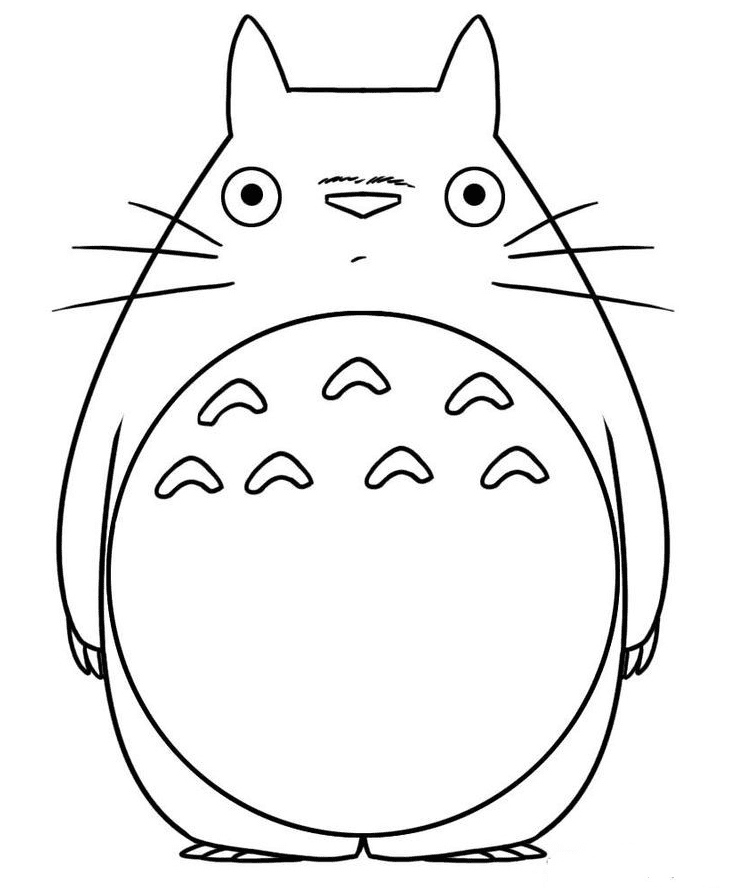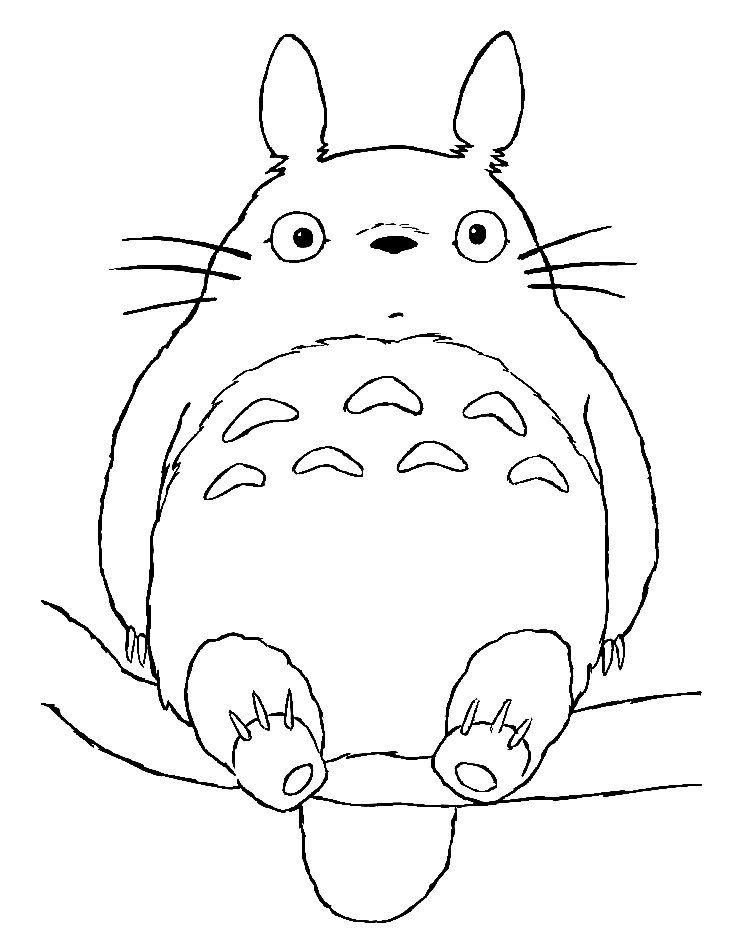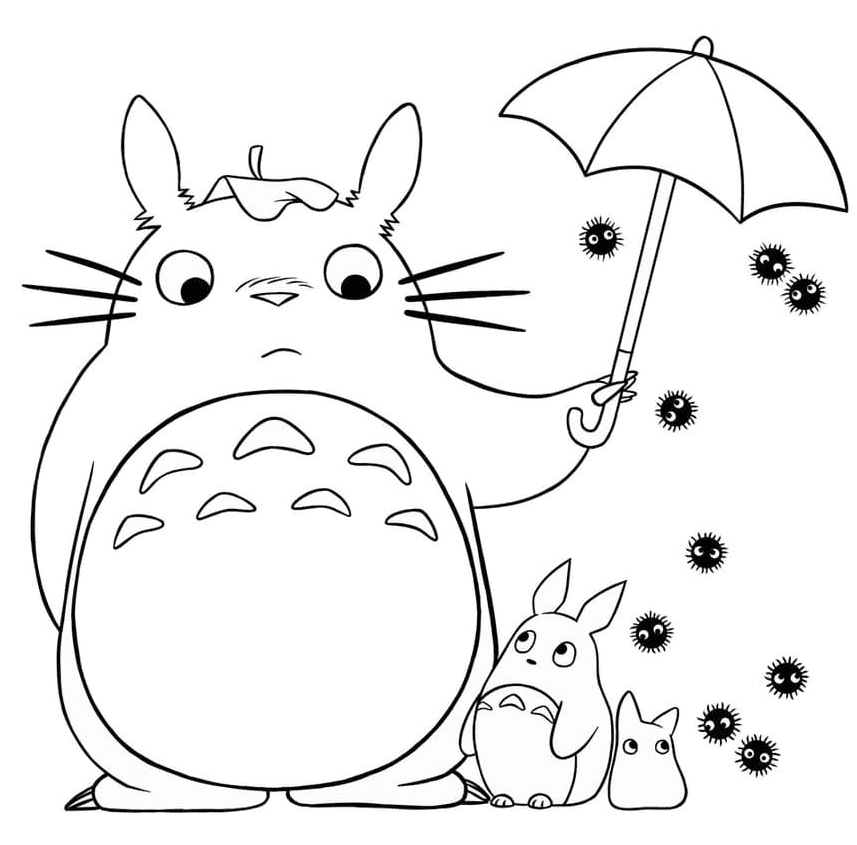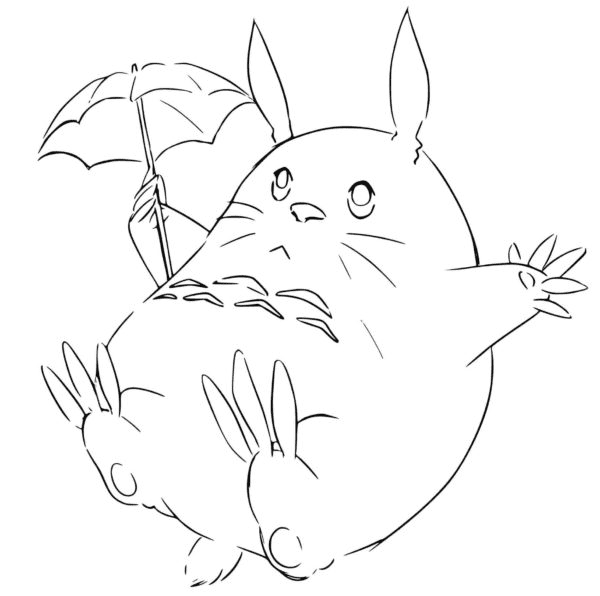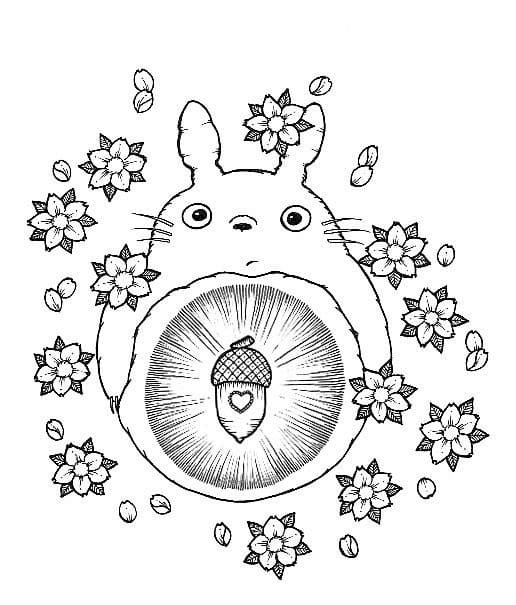
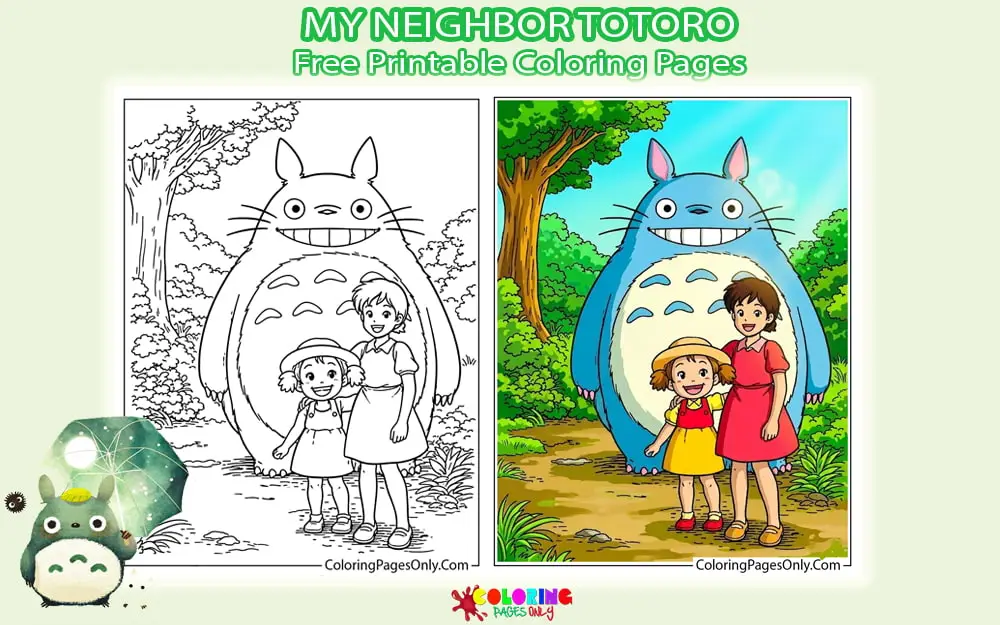
Free My Neighbor Totoro coloring pages: 30+ pages featuring Totoro standing in the forest, holding an umbrella at the rainy bus stop, resting on branches, jumping with joy, appearing with Catbus, sitting with small Totoros, meeting soot sprites, standing beside Mei and Satsuki, carrying acorns, and moving through the quiet visual language of Studio Ghibli’s most comforting forest story.
All free, printable PDF and online coloring for Studio Ghibli fans, children, parents, teachers, anime fans, and anyone who wants a gentle coloring collection built around rain, trees, soft creatures, quiet discovery, and childhood wonder.
My Neighbor Totoro was directed by Hayao Miyazaki and released by Studio Ghibli in 1988. The story follows two sisters, Satsuki and Mei, after they move with their father to the countryside and begin discovering a hidden world of forest spirits near their new home. The film’s emotional structure is unusually quiet: there is no central villain, no tournament, no battle system, and no complicated fantasy rulebook. Its power comes from ordinary places becoming slightly magical.
A roadside bus stop becomes unforgettable because Totoro stands there in the rain. A large tree becomes important because it feels like something ancient is living inside it. A dusty old house becomes alive because soot sprites move through it. A child running through the grass becomes a moment of discovery because the grass may be hiding small forest spirits. A strange bus with a cat’s face becomes believable because the film has already taught the viewer that the forest follows its own logic.
That is why Totoro coloring pages need a different treatment from superhero, game, or action pages. The goal is not maximum brightness or heavy contrast everywhere. The goal is soft recognition. Totoro’s round body must remain readable. The belly markings must stay clear. Catbus must feel warm and strange. Soot sprites need light backgrounds. Rainy pages need restraint. Forest pages need layered greens, browns, and open space.
These 30+ free pages at ColoringPagesOnly.com cover the strongest visual subjects in the Totoro world: classic Totoro portraits, umbrella and rainy bus stop scenes, Catbus, Mei and Satsuki, small Totoros, acorns, soot sprites, forest paths, giant leaves, and more detailed Studio Ghibli-inspired pages. All free, PDF, or online coloring, print, or color directly in your browser.
What’s Inside
Totoro Portrait and Close-Up Pages
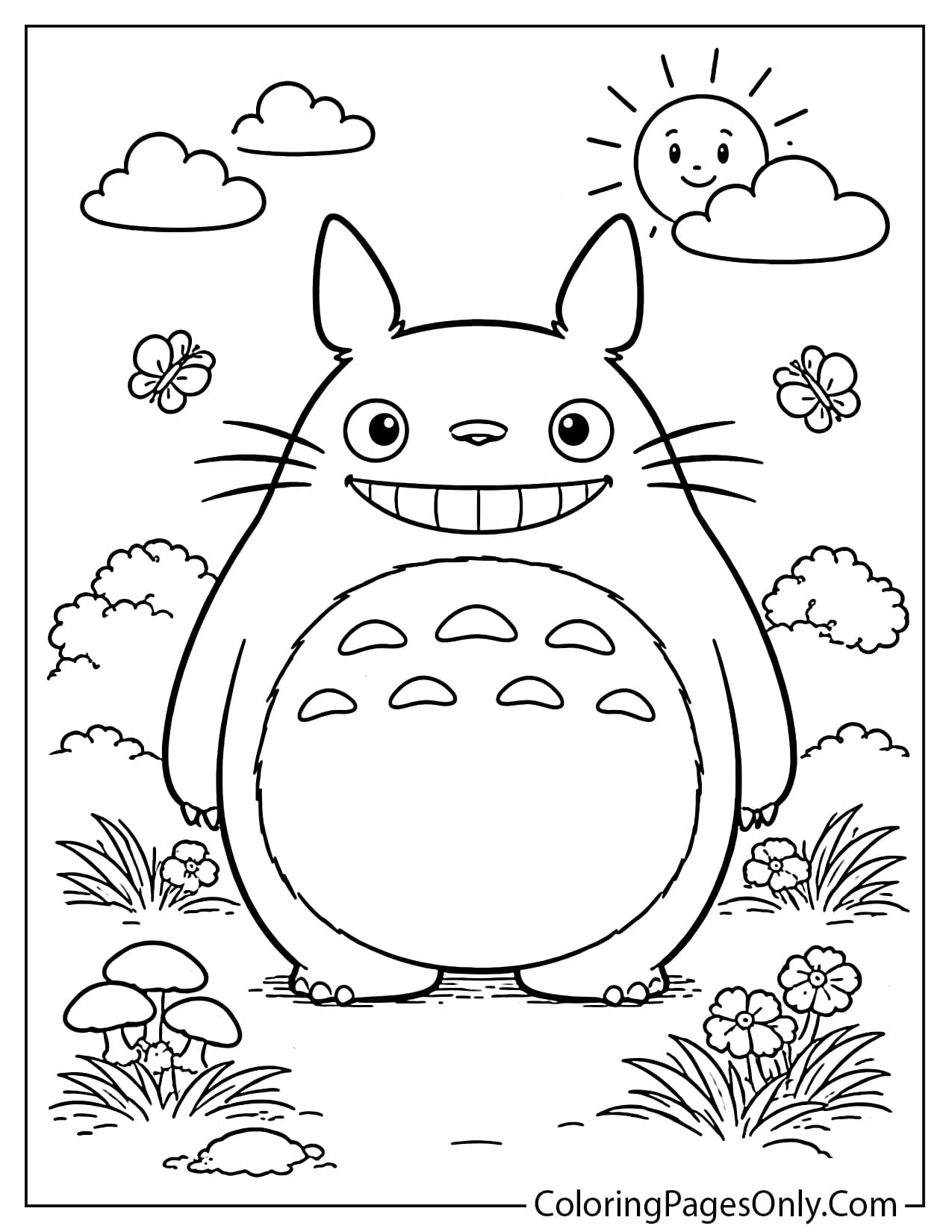
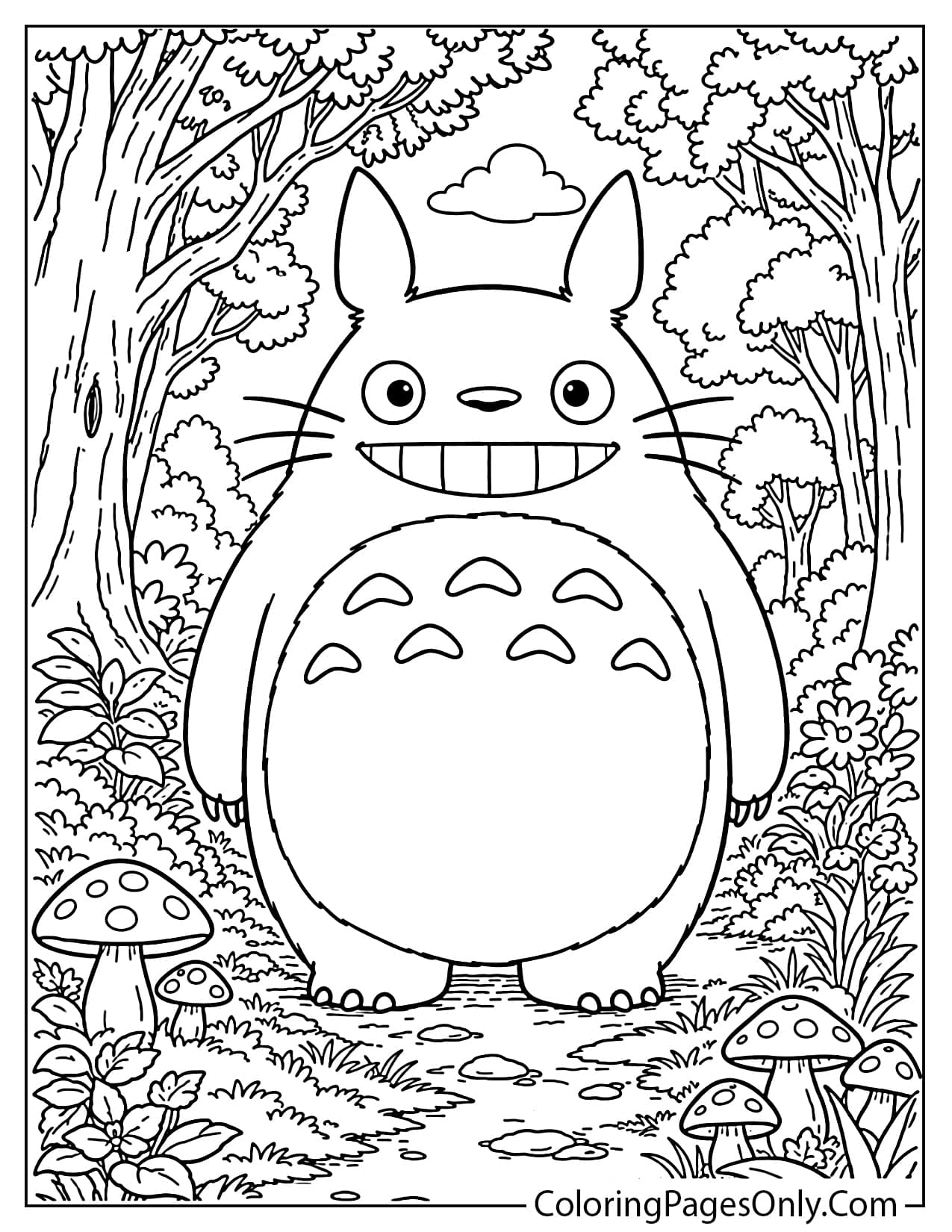
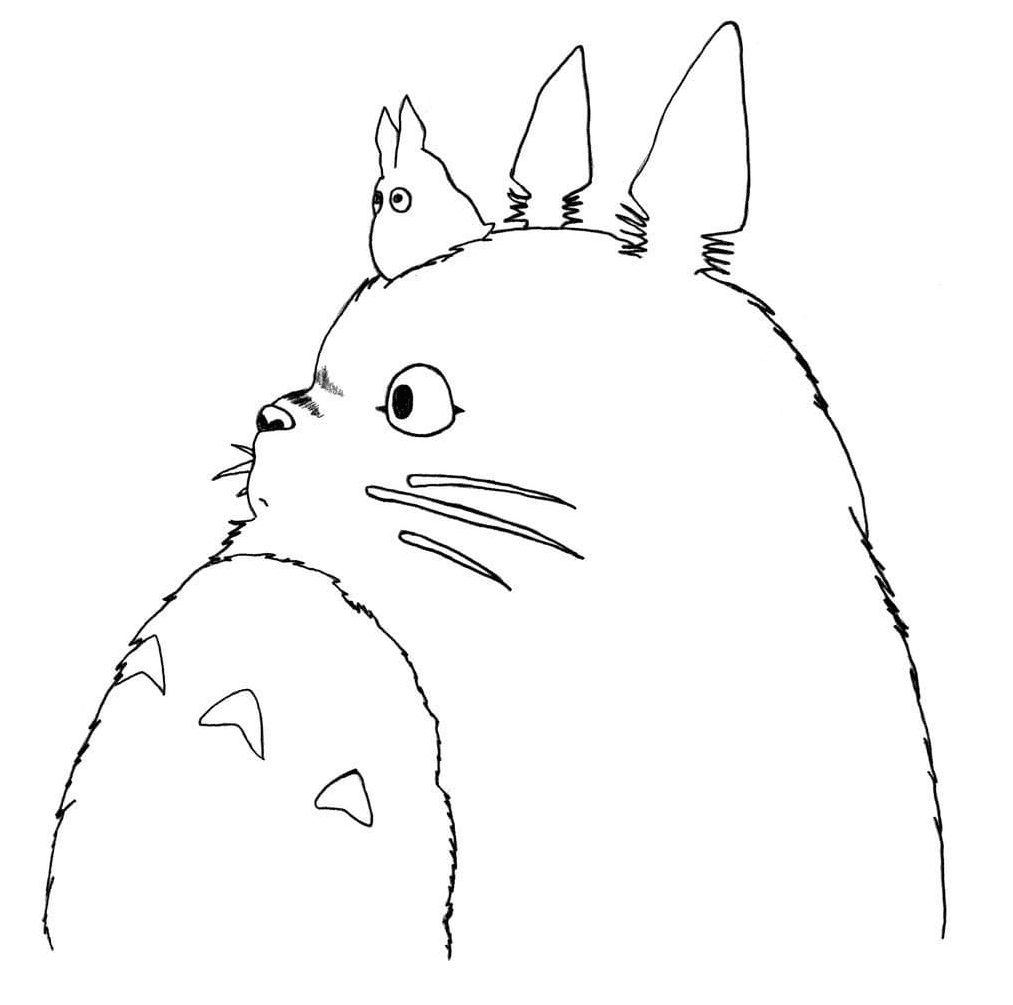
Totoro’s design communicates his role before he takes a single action: the large, rounded body, oversized ears, wide eyes, small nose, soft belly, and repeated chest markings all establish him as a forest spirit who is enormous but gentle. He is not designed around speed, weapons, armor, or sharp angles. He is designed around weight, silence, and roundness.
The design’s visual logic is consistent. Every element communicates a creature that belongs to the forest rather than a character wearing a costume. His body is one large soft mass. His ears point upward like part of an animal silhouette. His arms are small compared to his body. His feet are simple. His expression is open and unreadable in a peaceful way.
His belly markings are the design’s most distinctive single decorative element. They are small, repeated, and easy to lose if the belly area is colored too heavily. In any portrait or full-body page, the belly markings function as Totoro’s visual anchor. Without them, Totoro can become a generic gray creature. With them, the character becomes immediately specific.
Coloring portrait pages: The body uses soft gray, warm gray, or muted blue-gray across the main fur area. The belly stays cream, white, or very pale gray. The nose, eyes, claws, and belly markings use dark gray or black, but the darkest elements should be small. Totoro should never look harsh. His softness is part of the character design.
The belly must be planned before the body is filled. Color around the markings carefully. If the gray spreads too far into the belly, restore the shape with clean white or cream. The belly should remain the lightest large area on the character.
Older children can add soft shading under the ears, around the arms, near the feet, and along the belly edge. Younger children can keep the page simple: gray body, pale belly, dark markings, and a light background.
Rainy Bus Stop and Umbrella Pages
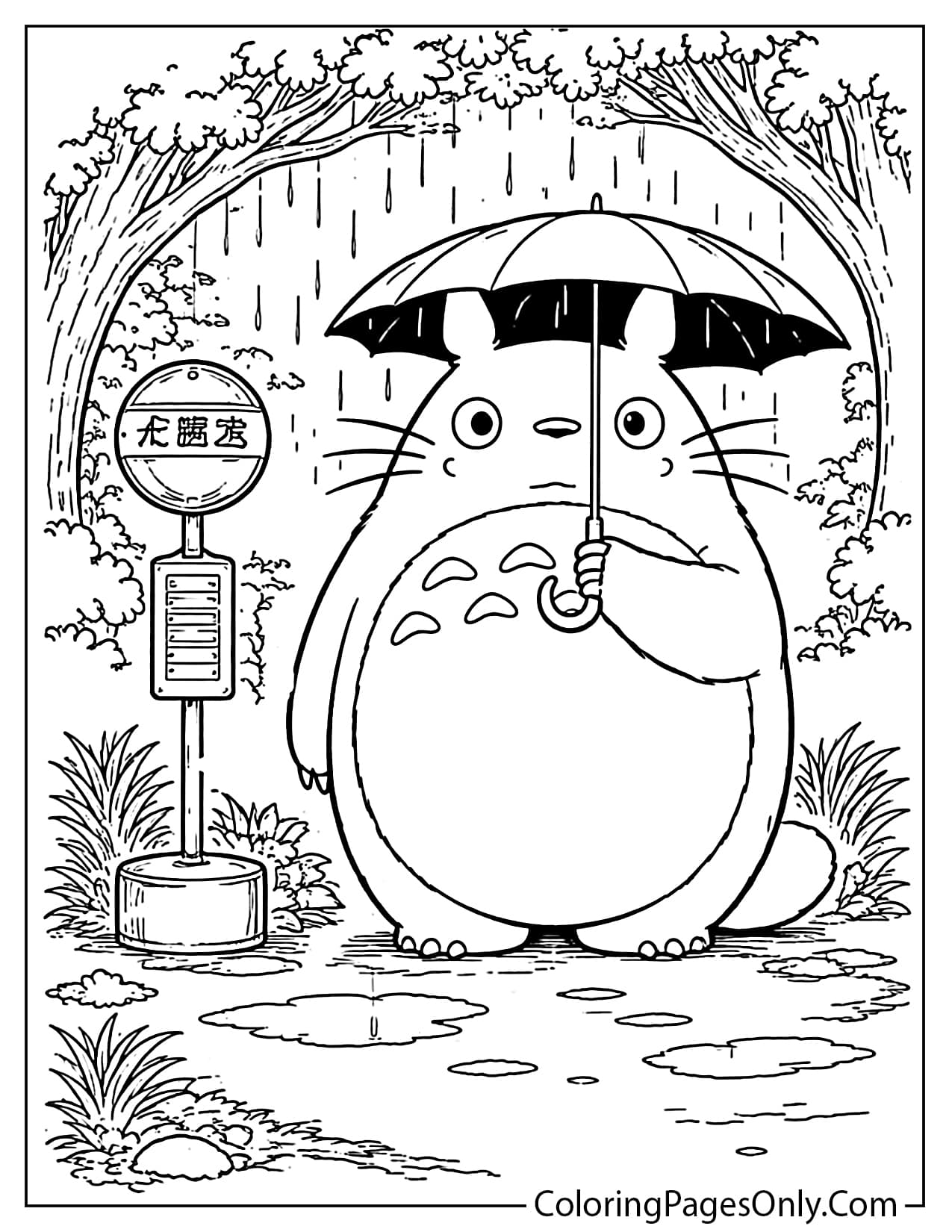
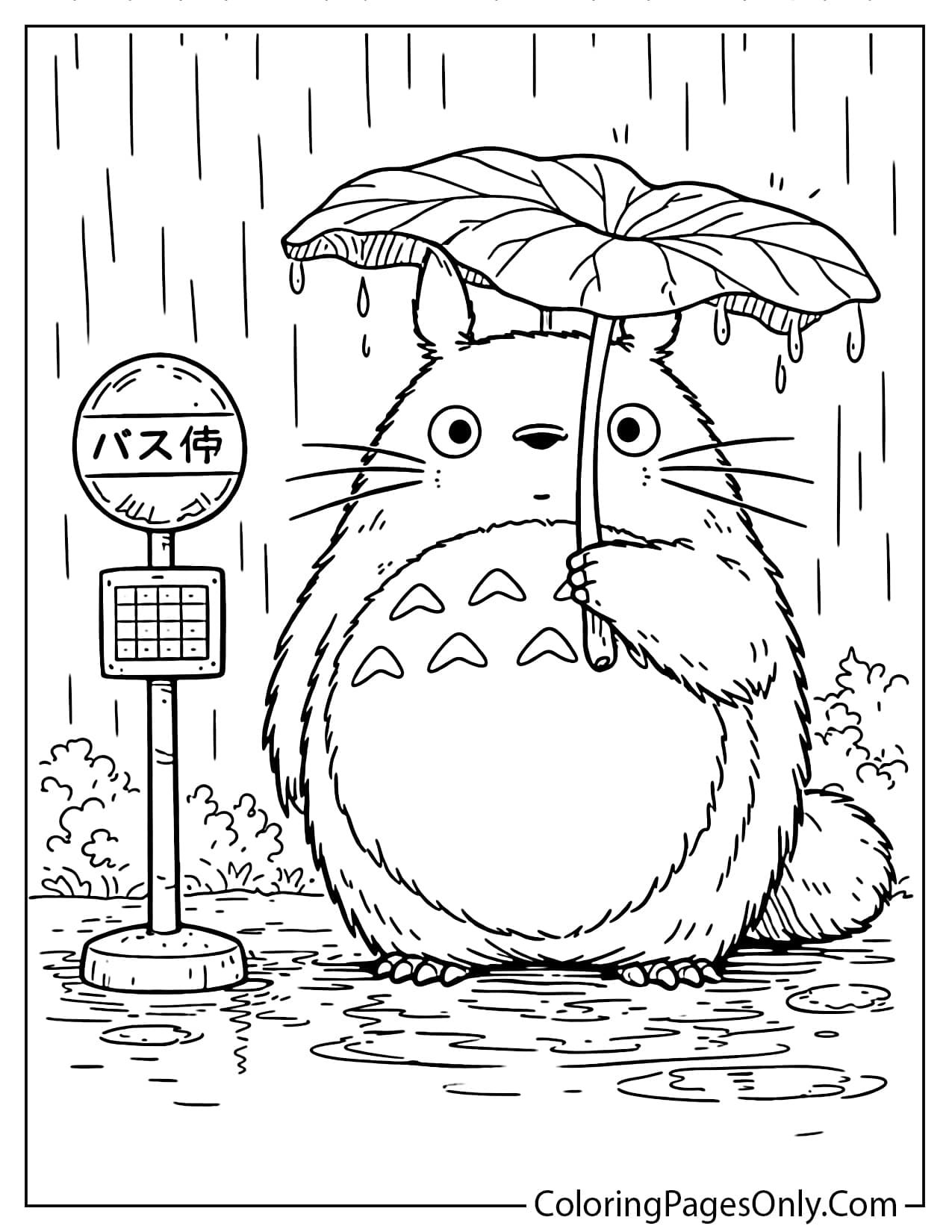
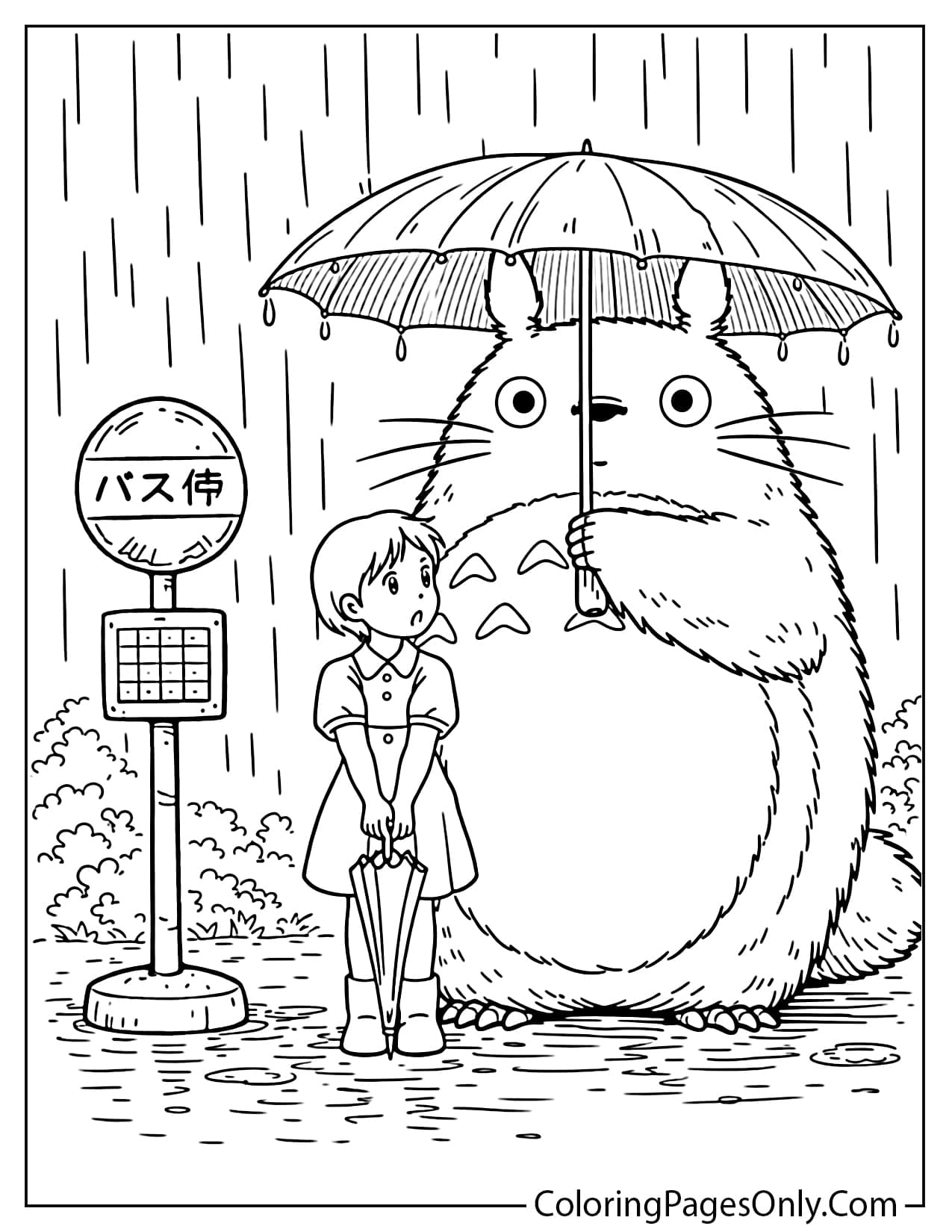
The rainy bus stop scene is the collection’s most important visual structure: a road, a bus stop sign, falling rain, a child waiting, and Totoro standing quietly beside her with an umbrella. It is one of the clearest examples of how My Neighbor Totoro turns an ordinary moment into a magical one without making it loud.
The scene works because it is built around stillness. Totoro is not attacking, running, or performing. Satsuki is not shouting. The rain is not violent. The composition asks the viewer to notice something impossible inside a quiet, everyday setting: a giant forest spirit waiting for a bus.
Coloring rainy bus stop pages: The rain uses cool gray-blue, pale blue, or very light gray. The road can be muted gray or brown-gray. Trees use deep green, moss, and brown, but not so dark that Totoro disappears. The sky should feel wet and quiet rather than bright and sunny.
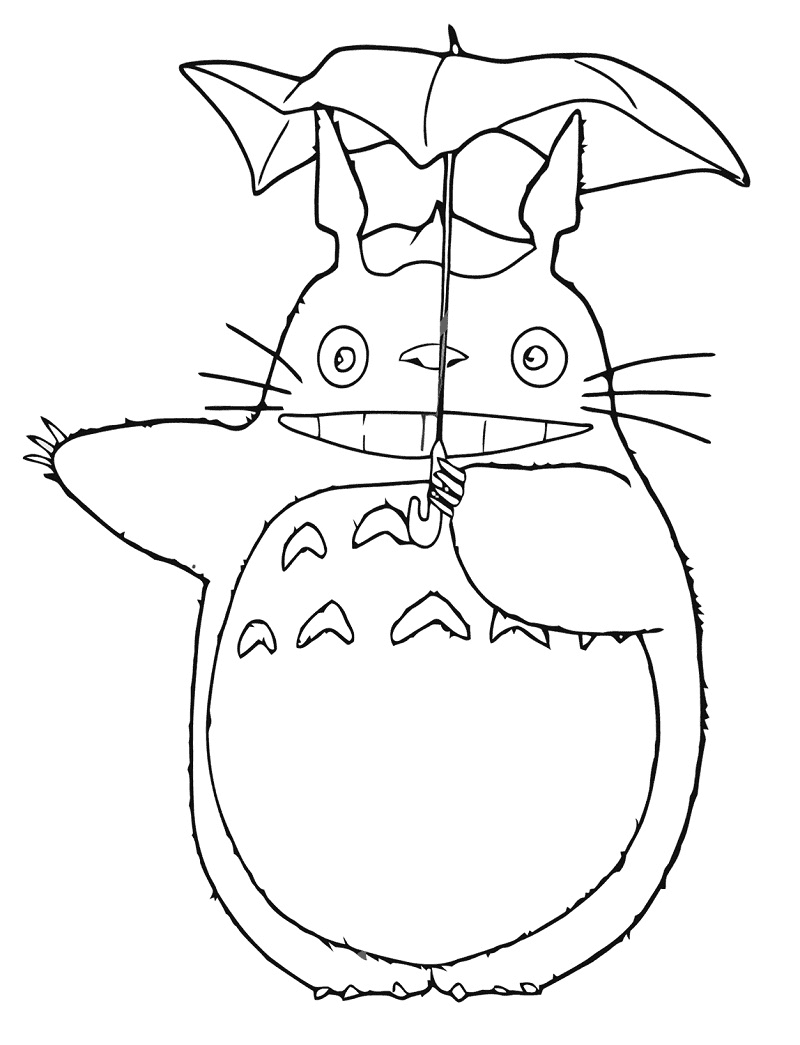
The umbrella is the visual anchor. A dark green, muted red, deep blue, brown, or warm yellow umbrella can hold the composition together. If the whole page uses cool rainy colors, one warmer umbrella color creates emotional focus. It tells the eye where to rest.
For night rain scenes, avoid filling the whole page with heavy black. Use dark blue or muted purple only in selected background areas. Leave a softer gray space around Totoro, Satsuki, or the umbrella. The scene should feel rainy and quiet, not heavy and closed.
The best rainy pages keep the characters readable. Color Satsuki first, if she appears, then Totoro, then the umbrella, then the rain, and the background. This keeps the story clear before the atmosphere is added.
Catbus Pages
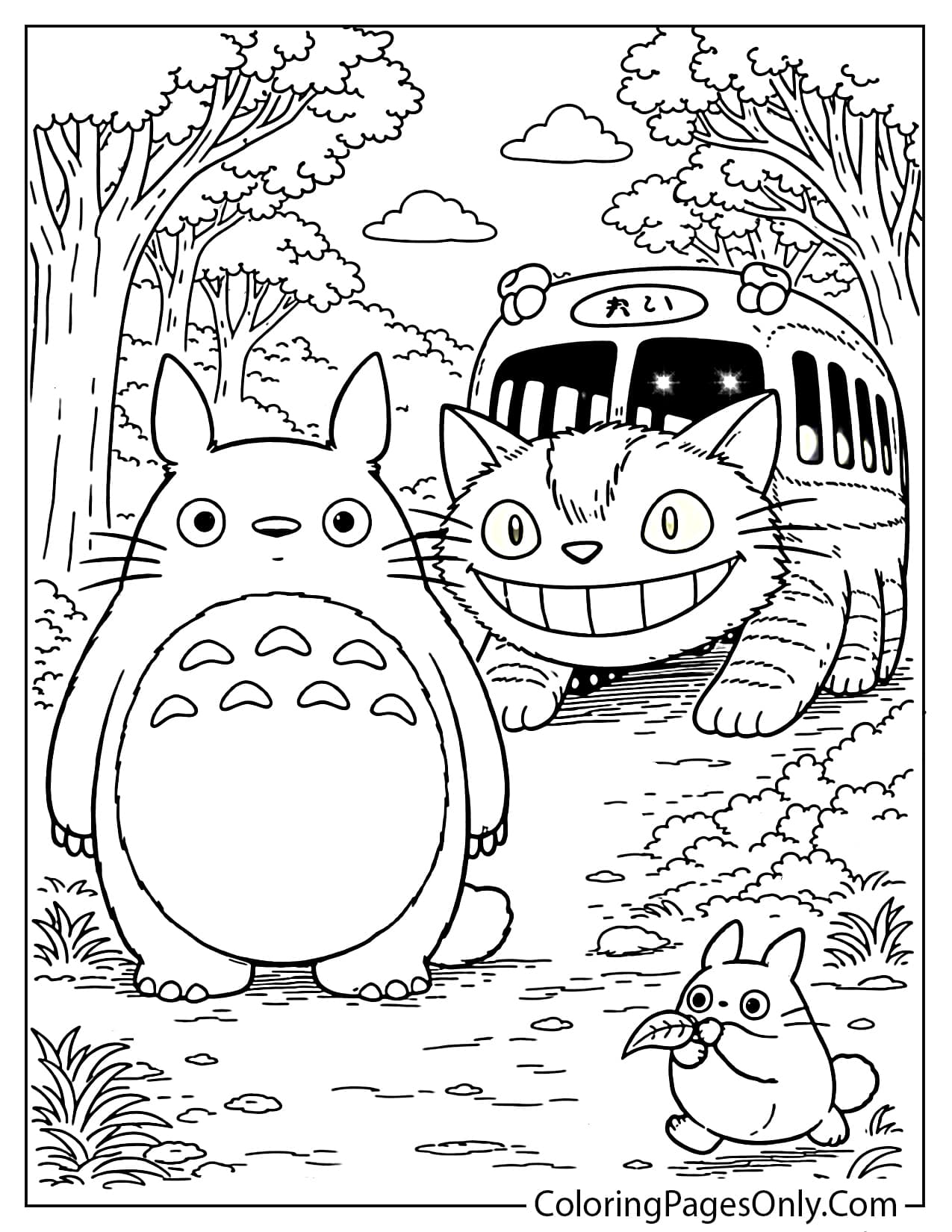
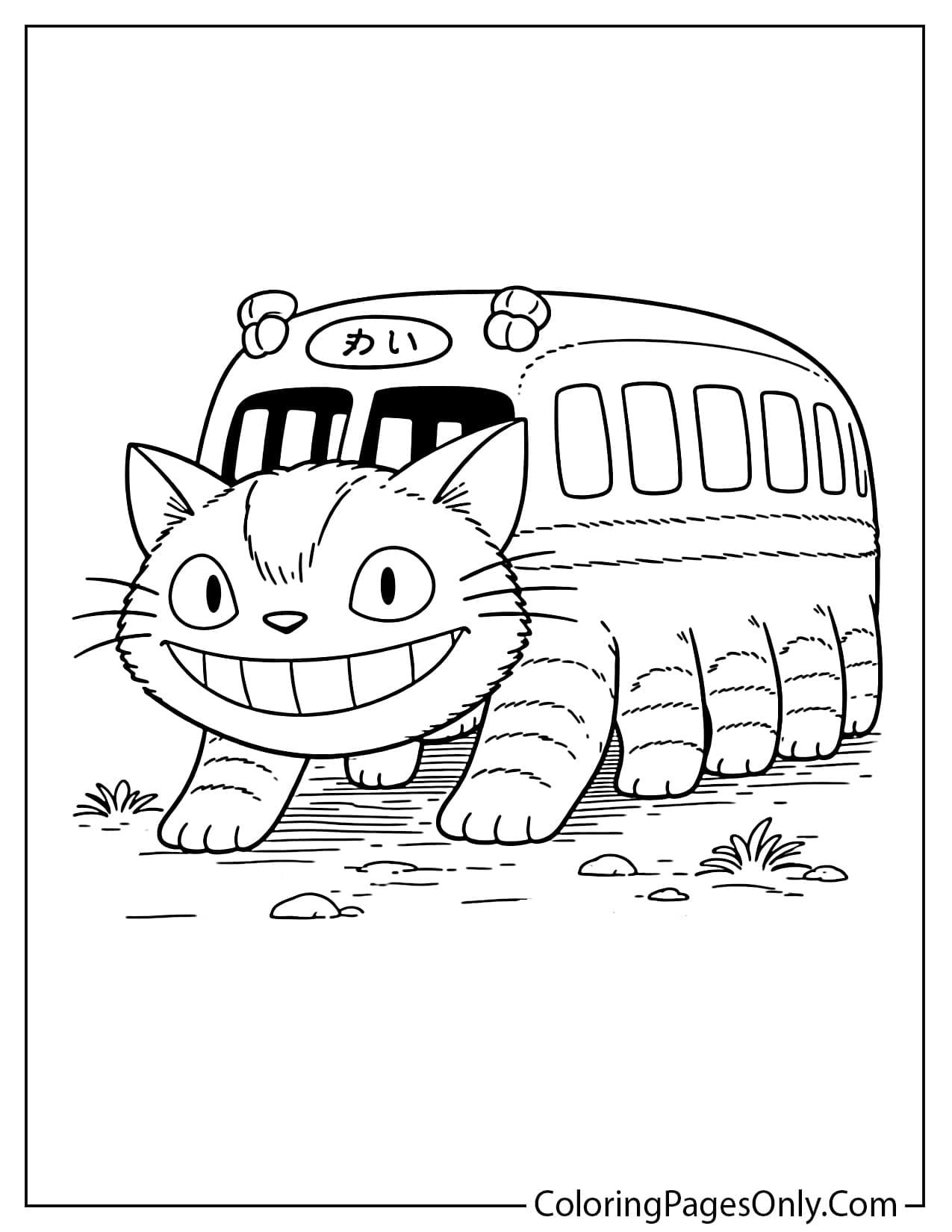
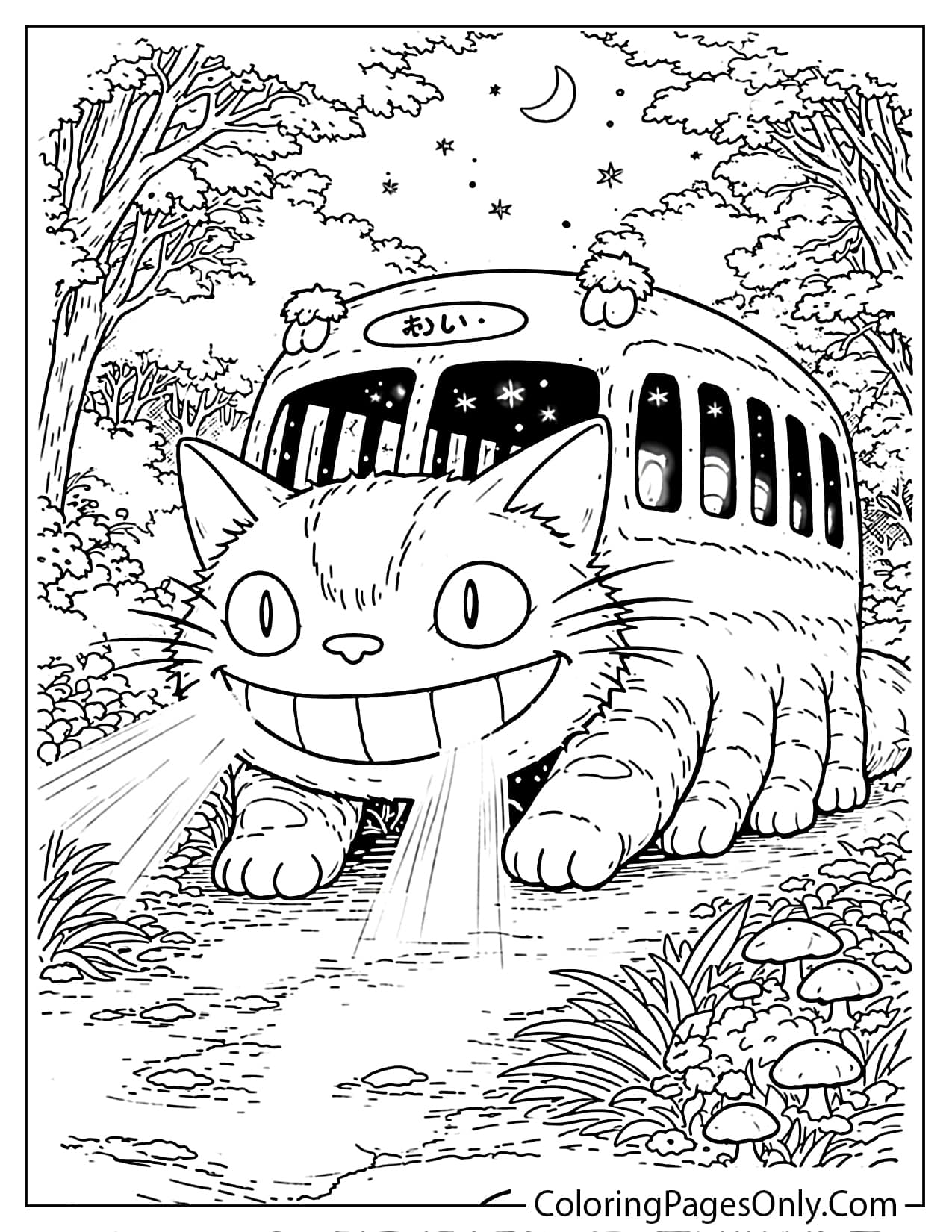
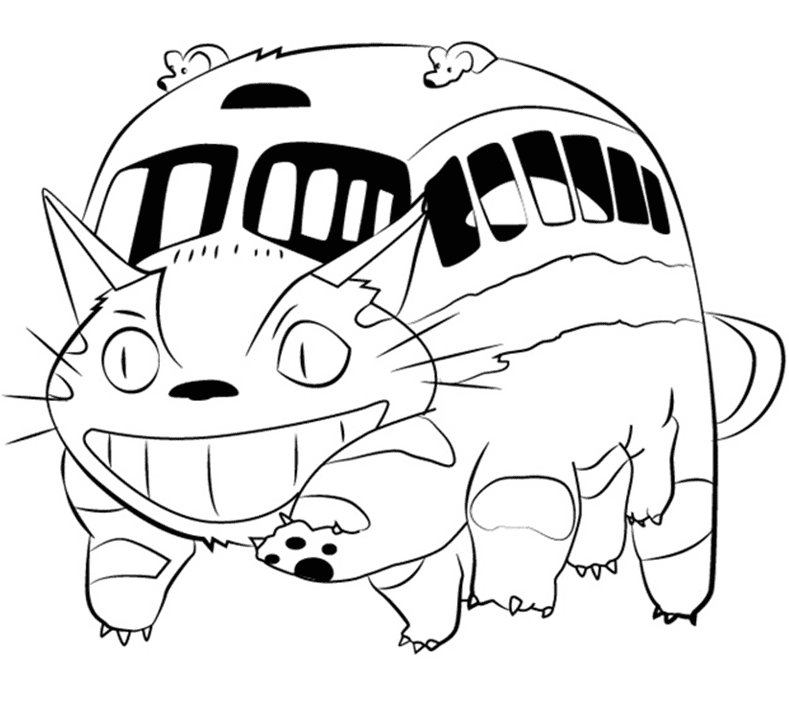
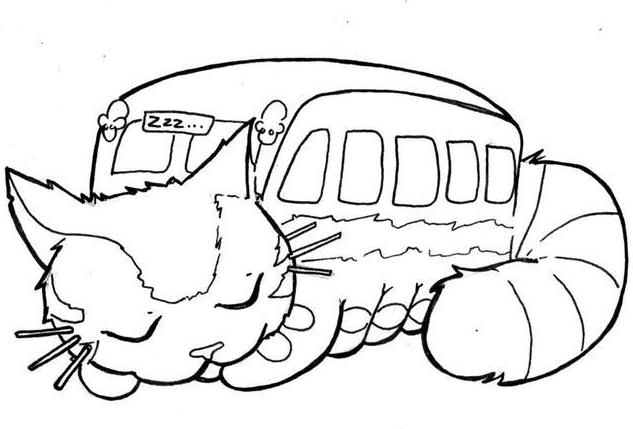
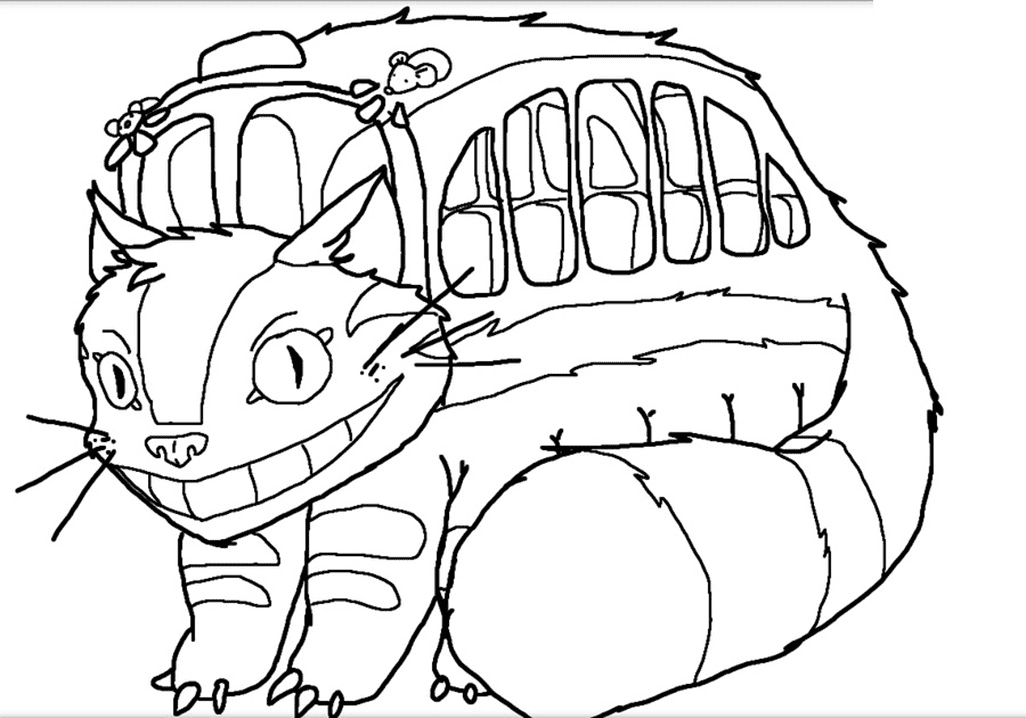
Catbus is one of Studio Ghibli’s strangest and most successful designs: part cat, part vehicle, part dream logic. The long body, grinning face, glowing windows, striped fur, many legs, and bus-like structure make him instantly different from Totoro. Totoro is stillness. Catbus is movement.
The design’s visual logic is playful but precise. The face carries the cat’s identity. The windows carry the bus’s identity. The many legs create rhythm and speed. The long body suggests that Catbus can stretch through the forest in a way ordinary vehicles cannot.
Coloring Catbus pages: The body works best in warm yellow, orange, tan, and brown. Stripes should be darker than the base fur but not so dark that they flatten the body. The eyes and grin must remain clear because they carry most of the character’s expression.
For Catbus at night, the windows should feel like light sources. Use pale yellow, cream, or warm orange inside the windows. The surrounding forest can use dark blue, purple, or deep green, but Catbus should stay warm enough to stand out.
A front-view Catbus page is useful for younger children because the face is large and expressive. A full-body Catbus page with many legs and windows is better for older children because it requires more patience and organization.
When coloring a detailed Catbus page, finish the face first, then the body, stripes, windows, legs, and forest. If the forest is colored first, the warm shape of Catbus may lose impact.
Mei and Satsuki Story Pages
Mei and Satsuki are the human center of My Neighbor Totoro. Totoro is magical, but the sisters make the magic emotional. Pages showing Mei, Satsuki, or both girls with Totoro are not only character pages. They are story pages.
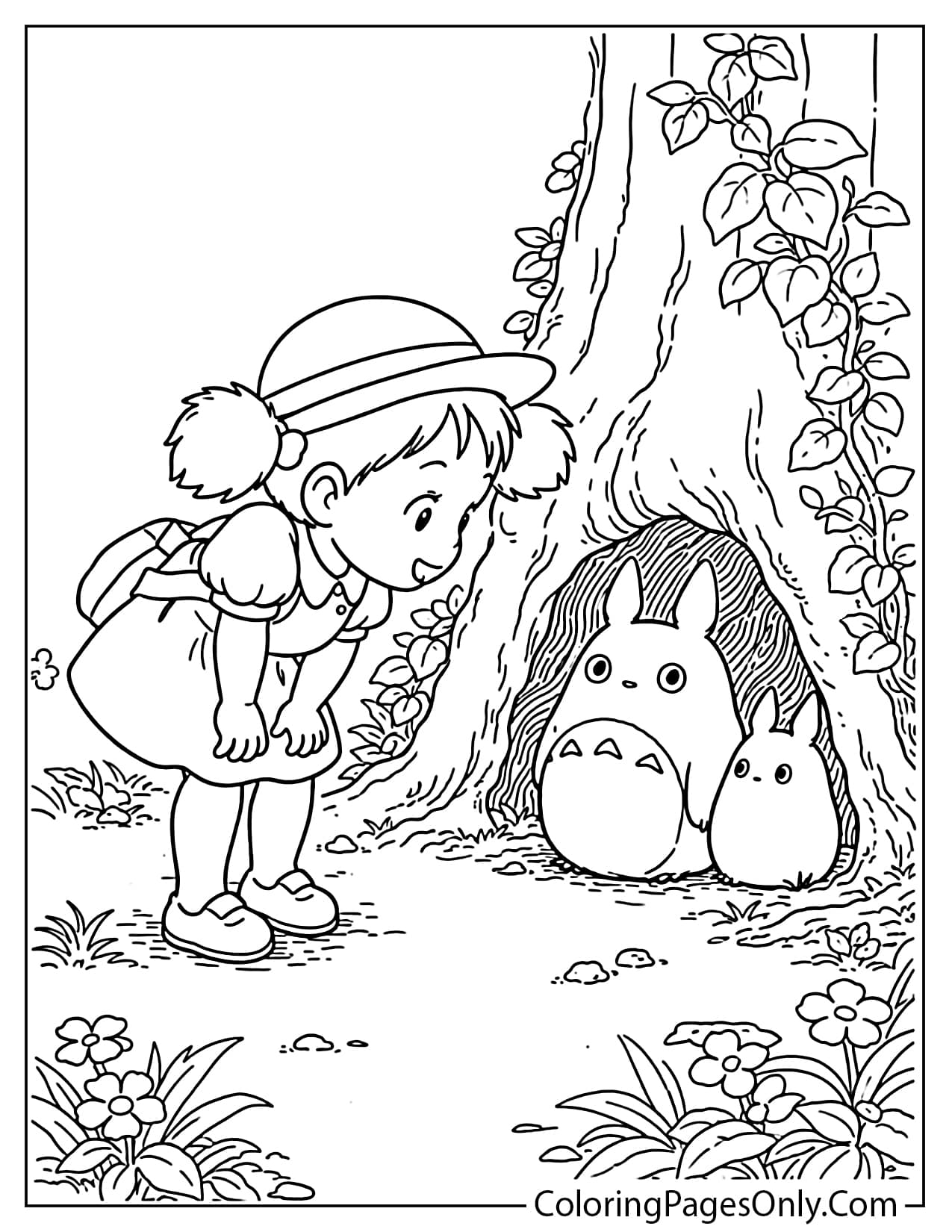
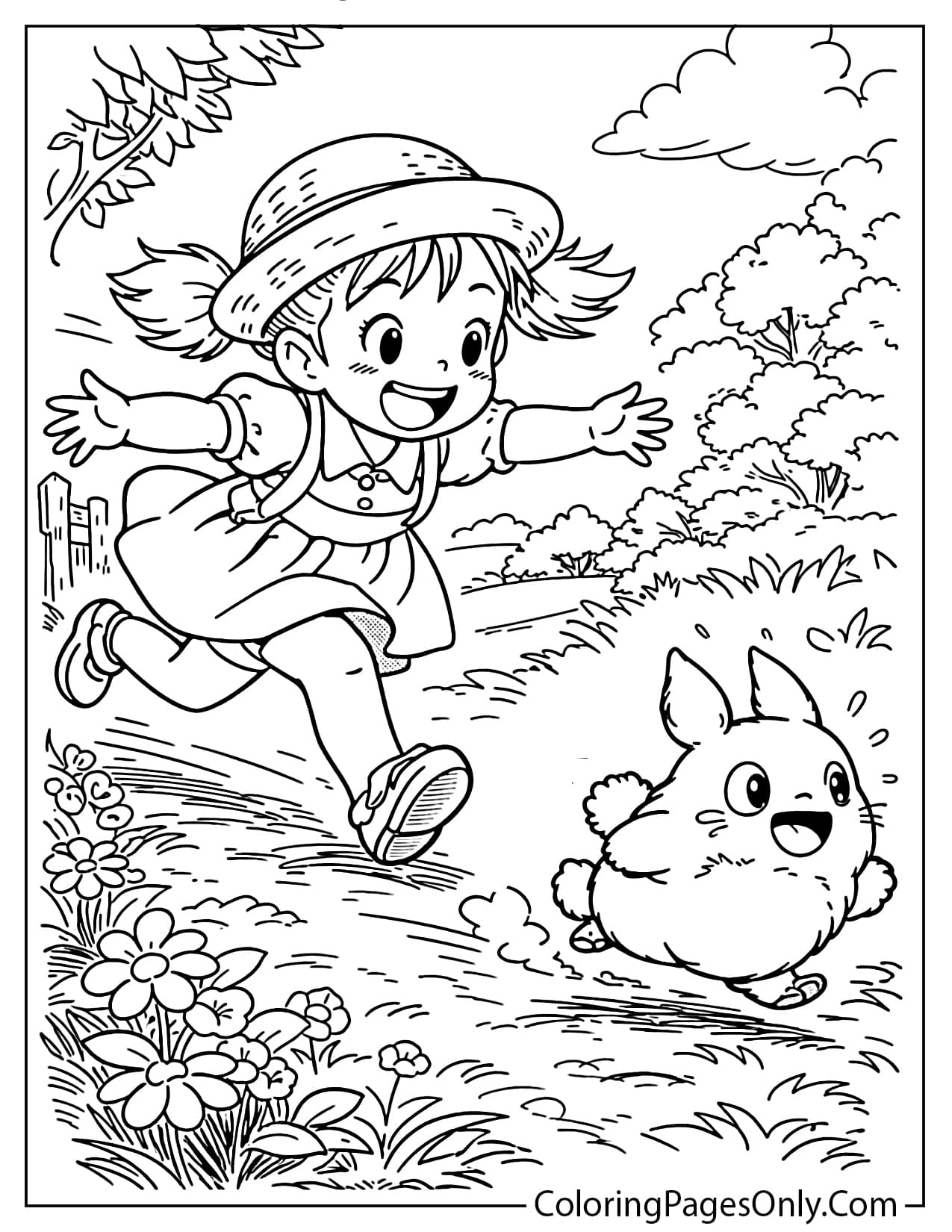
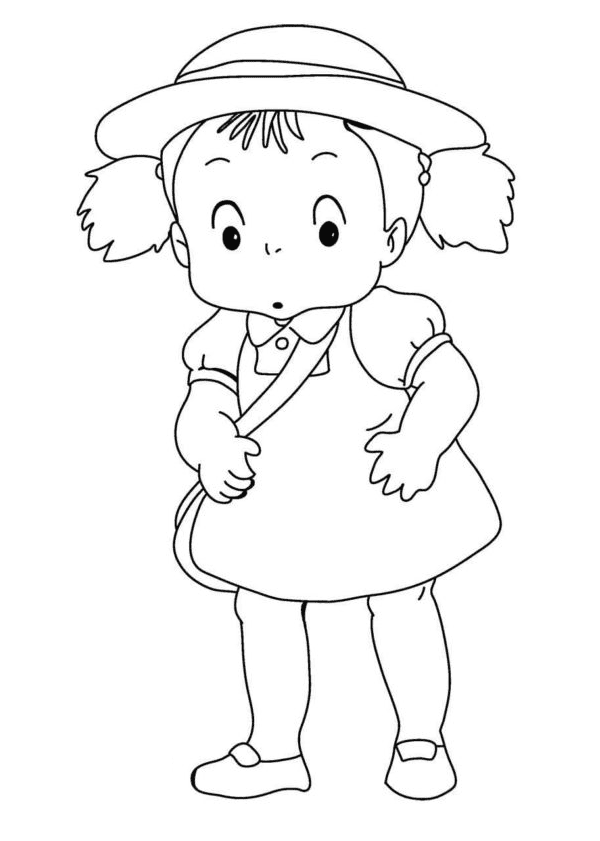
Mei’s design and posture usually communicate curiosity. She is small, direct, and often moving toward something. She may be smiling outdoors, chasing a small Totoro, discovering a forest spirit, or standing close to Totoro with the confidence only a child would have. Her pages should feel bright, curious, and immediate.
Satsuki’s pages often feel different. She is older, more responsible, and more protective. At the rainy bus stop, her presence gives the scene emotional weight. She is waiting, worrying, holding an umbrella, and standing between ordinary responsibility and the strange world of Totoro.
Coloring Mei and Satsuki pages: Keep the faces clean. The emotional tone depends on the eyes, mouth, and posture. Hair can be black or dark brown. Clothing should be bright enough to separate the girls from the forest but not so saturated that they feel disconnected from the soft mood of the film.
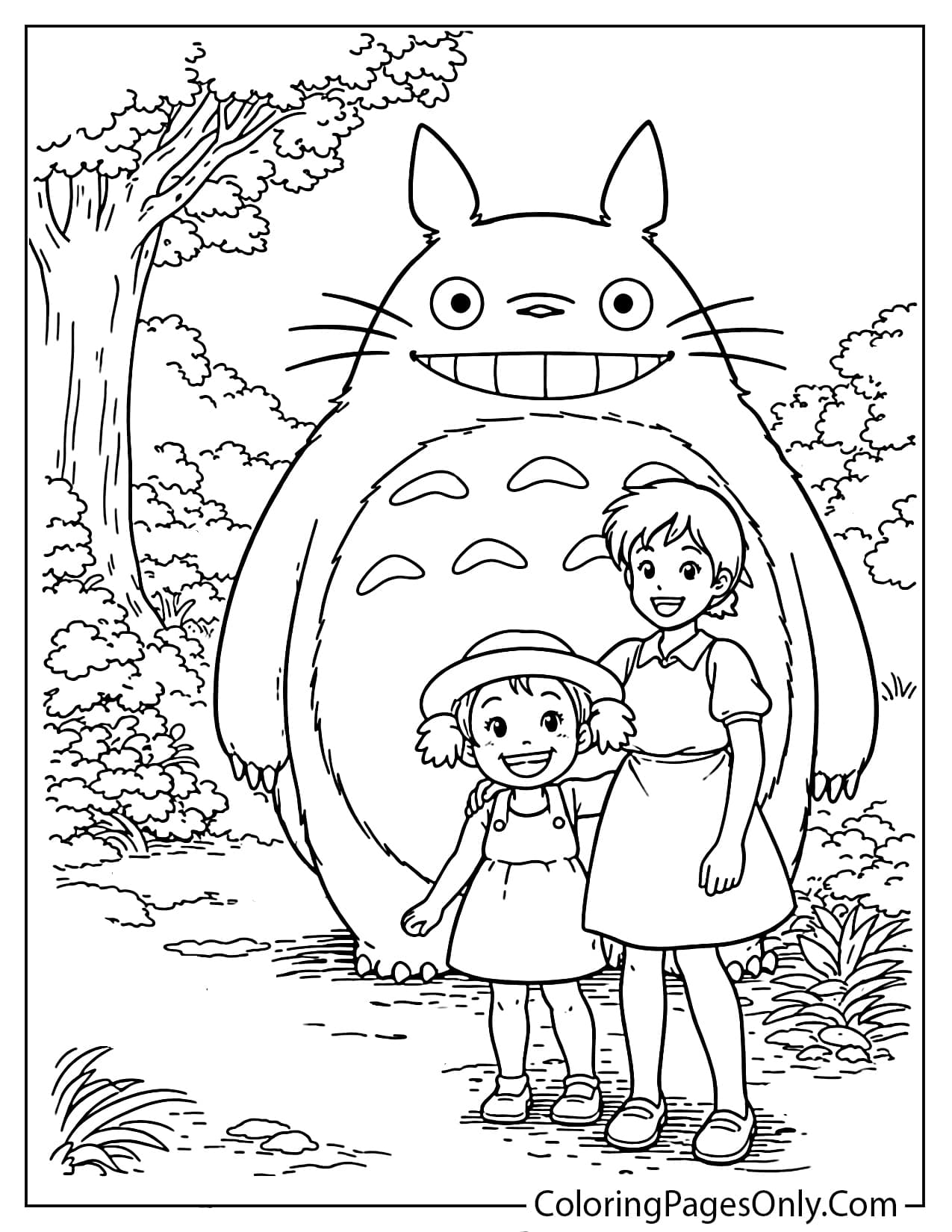
When the sisters appear with Totoro, color the human characters first, then Totoro, then the background. This keeps the story readable. If the forest becomes too dark too early, the children can disappear inside the scene.
These pages are the best choice when the goal is not just coloring but storytelling. A child can explain what Mei found, what Satsuki is waiting for, why Catbus appeared, or what Totoro might do next.
Small Totoros and Acorn Pages
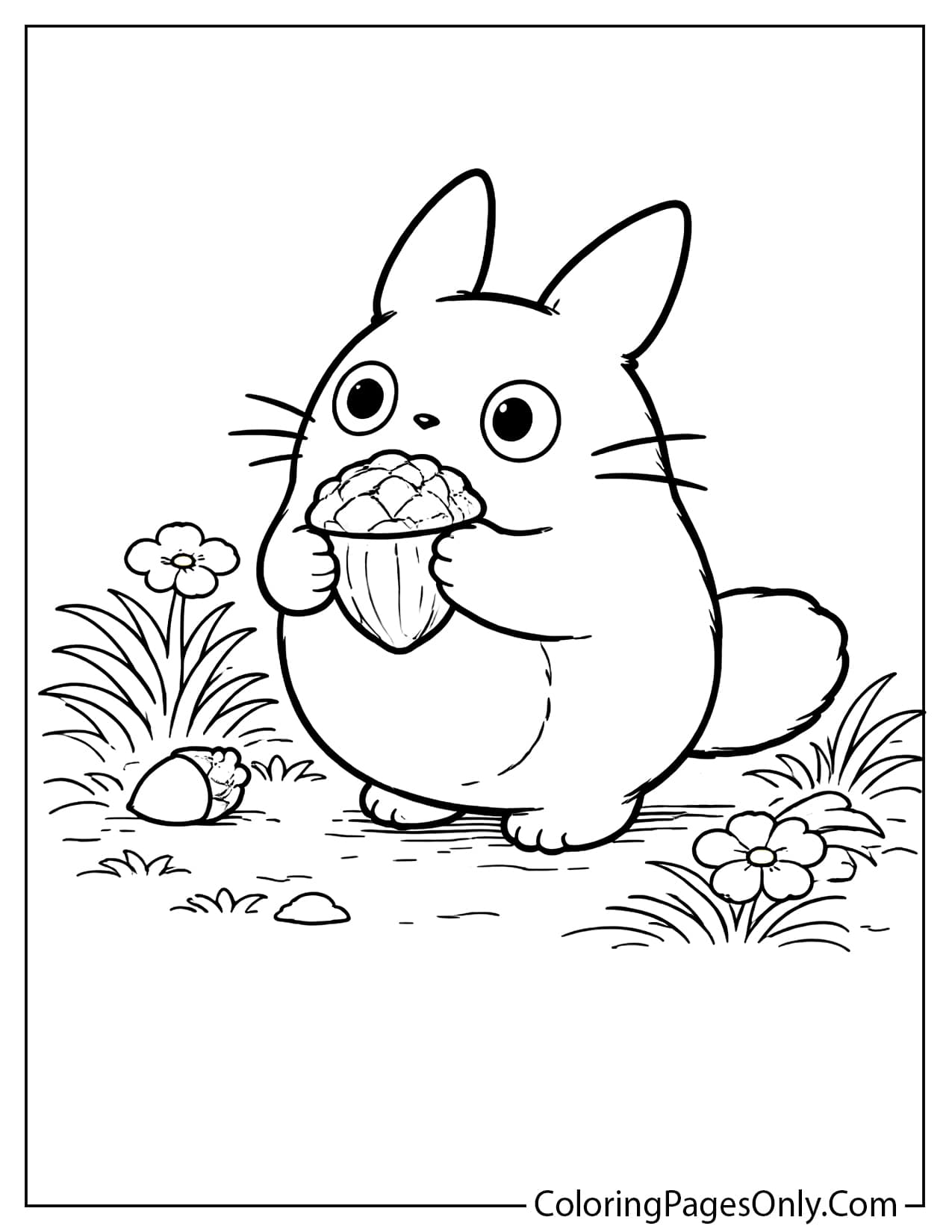
The small Totoros show the forest world in miniature. They are tiny, quick, quiet, and connected to acorns, leaves, grass, and hidden paths. They make the forest feel alive without needing a large, dramatic scene.
Small Totoro pages are visually simple but important. Their rounded bodies, tiny ears, and pale coloring create a contrast with Big Totoro’s mass and Catbus’s movement. They are the collection’s best subject for pages that feel cute, light, and secretive.
Coloring small Totoro pages: Use white, cream, pale gray, or light blue-gray for the small spirits. Acorns use warm brown caps and tan bodies. Leaves can be green, yellow, orange, or brown, depending on the season the child wants to create.
The acorns are not a random decoration. They are part of the film’s forest logic: seeds, gifts, clues, and proof that something small and magical has passed through. A page with a small Totoro carrying acorns should feel like a quiet secret rather than a big event.
To make the page stronger, keep the background light and earthy. Too much dark green can hide the small characters. Pale grass, tan paths, and soft leaves help the small Totoros stay visible.
Soot Sprite and House Detail Pages
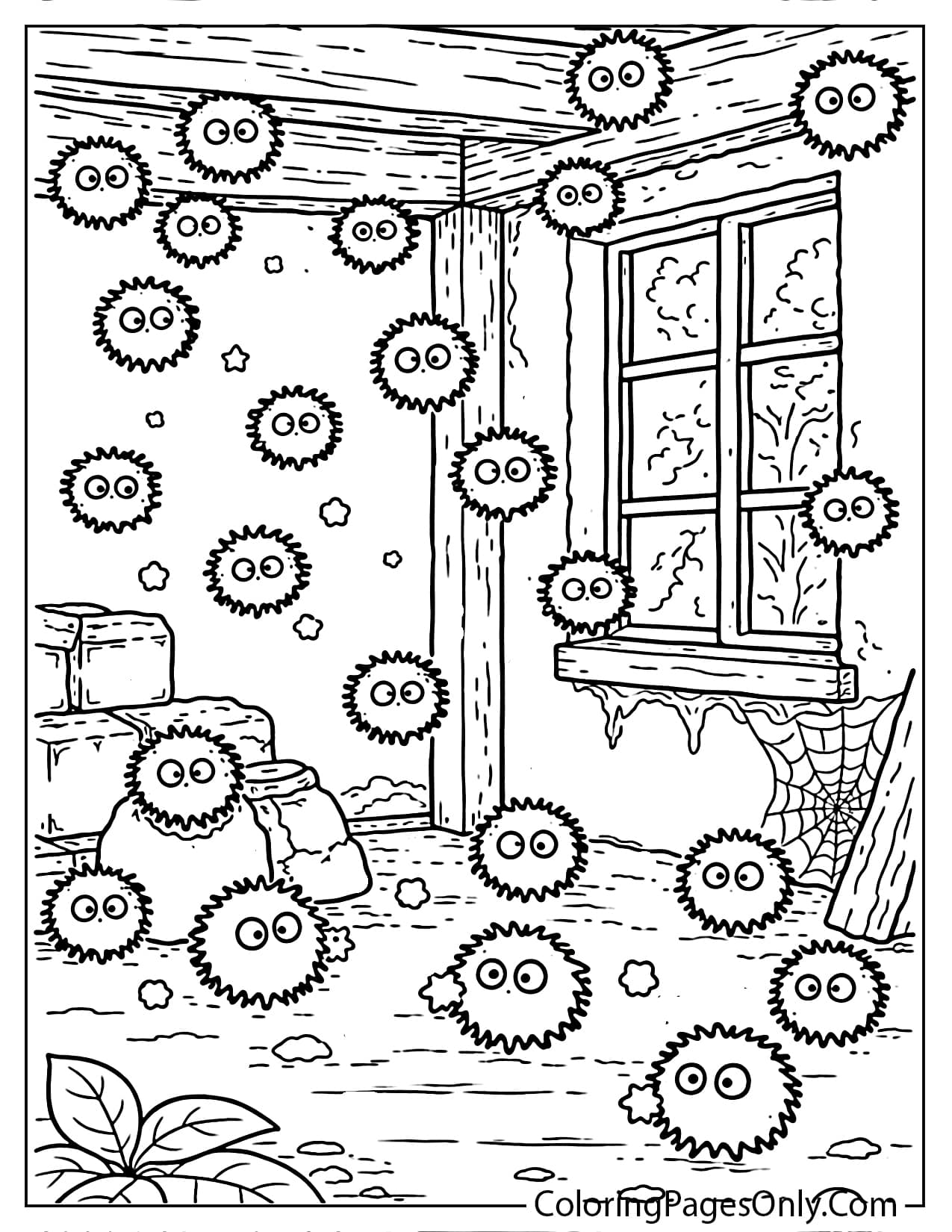
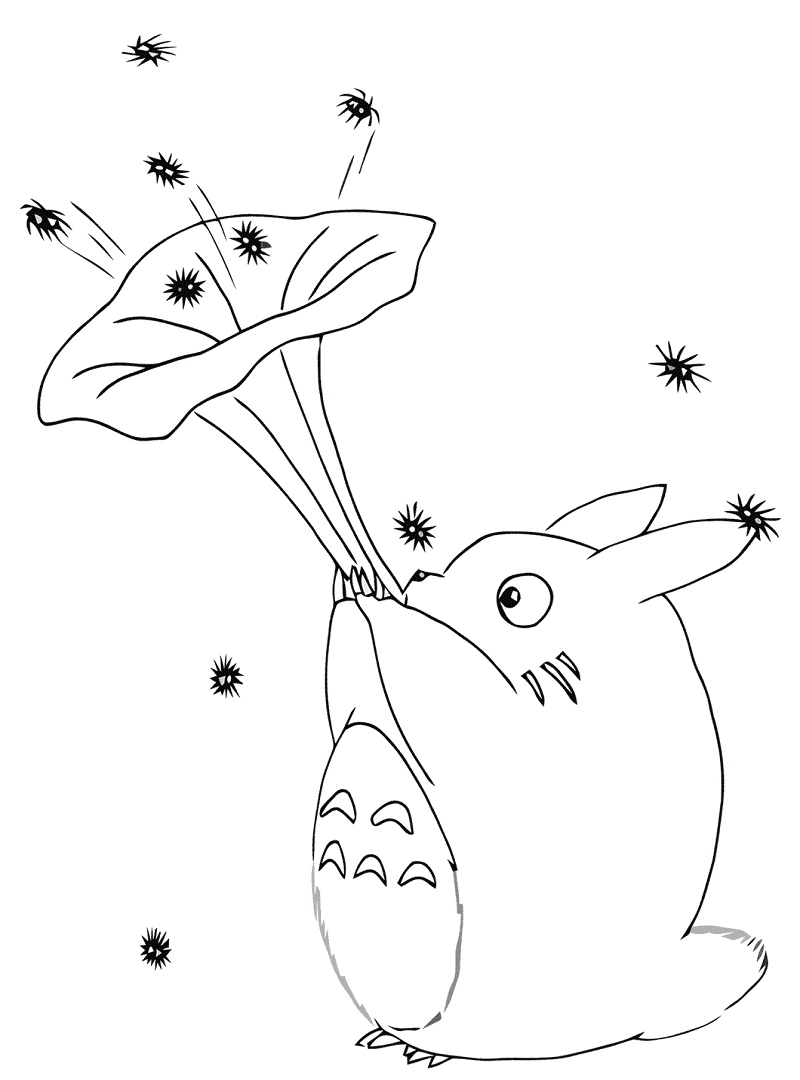
Soot sprites are simple in shape but powerful in mood. They are tiny, round, dark, and mysterious, with bright eyes that make them feel alive. Their design depends on contrast: dark bodies against a lighter room, wall, floor, or forest space.
Soot sprite pages are good for children because the shapes are easy, but they also teach an important coloring principle: dark characters need light backgrounds. If the background is too dark, the soot sprites disappear.
Coloring soot sprite pages: Use black, charcoal, or dark gray for the bodies, but keep the eyes white or very pale. The background should use cream, pale yellow, light brown, soft gray, or light wood tones if the scene is indoors. In forest scenes, use lighter greens or tan ground colors around the sprites.
Because soot sprites are small, children can add more of them around the page. They can draw tiny footprints, dust trails, hiding corners, little boxes, or small glowing specks.
These pages work especially well as classroom or home storytelling prompts. A child can decide whether the soot sprites are hiding, cleaning, escaping, exploring, or watching Totoro from a secret place.
Forest, Tree, Leaf, and Countryside Pages
The forest is not background decoration in My Neighbor Totoro. It is part of the story. Trees, paths, grass, seeds, rain, clouds, shadows, and roots all help create the feeling that the natural world is awake.
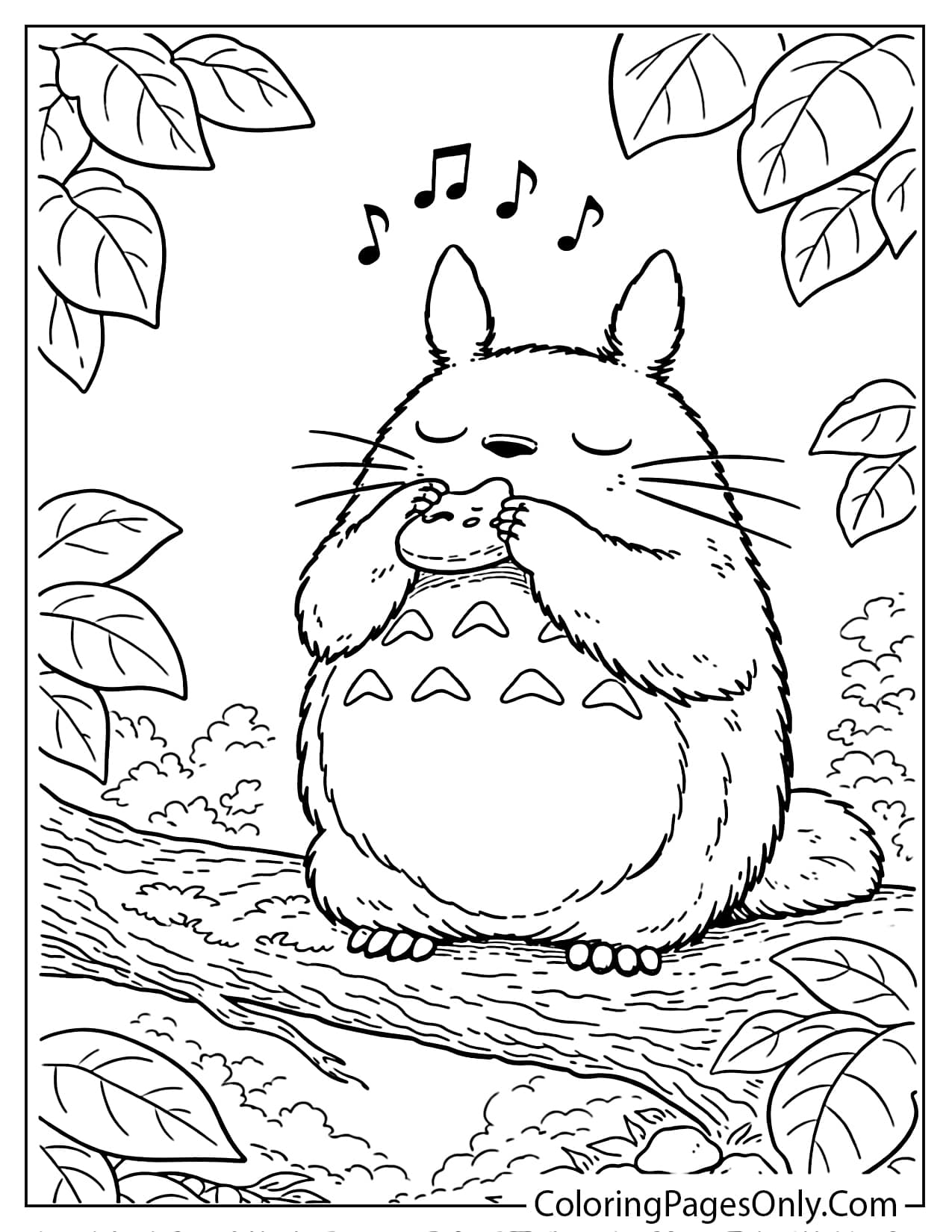
Forest pages may show Totoro standing among trees, resting on a branch, walking through grass, sitting near mushrooms, holding a giant leaf, or appearing with small forest spirits. The mood is usually quiet, watchful, and slightly magical.
Coloring forest pages: Do not use one flat green for everything. Use layered greens. The far background can be pale green or blue-green. Middle trees can be stronger green and brown. Foreground leaves can use deeper green or warmer yellow-green. This creates depth without making the page crowded.
Tree trunks should not all be the same brown. Use tan, gray-brown, reddish brown, or dark brown, depending on the scene. Mushrooms, acorns, and flowers can add small warm accents.
The most important rule is contrast. Totoro should stay readable against the forest. If the background becomes too heavy, lighten the space around his body or keep his belly area clean.
Totoro Group and Family Pages
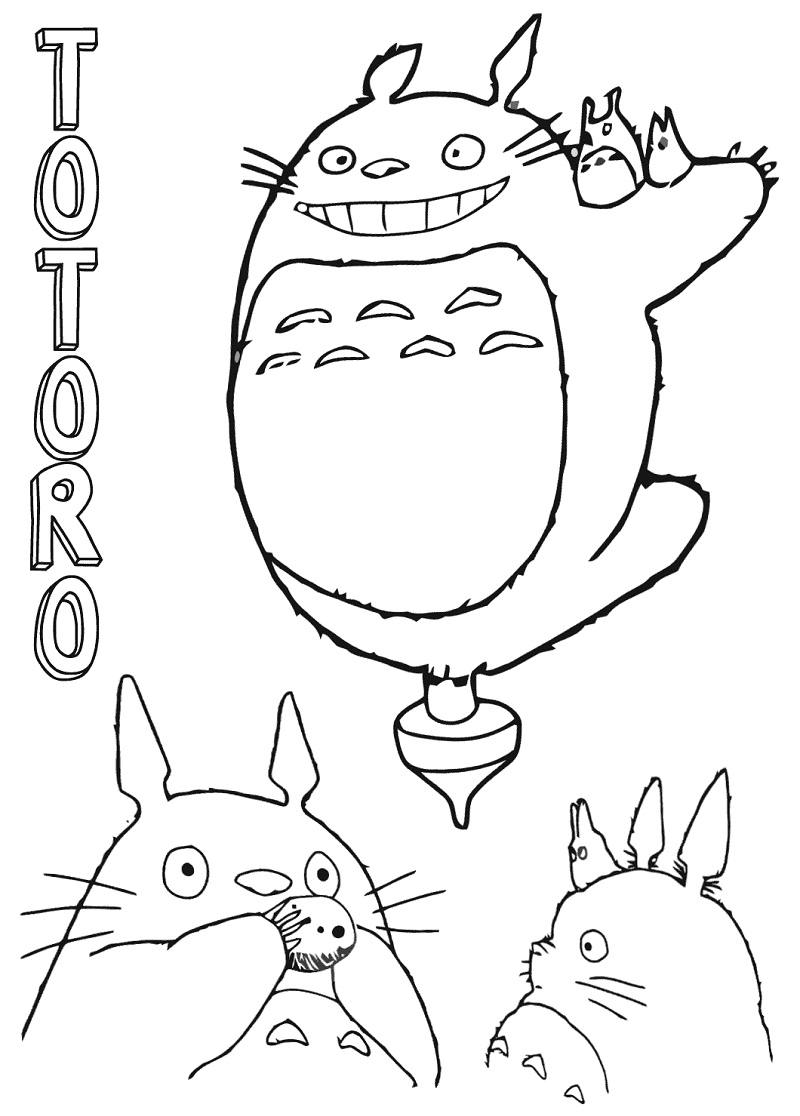
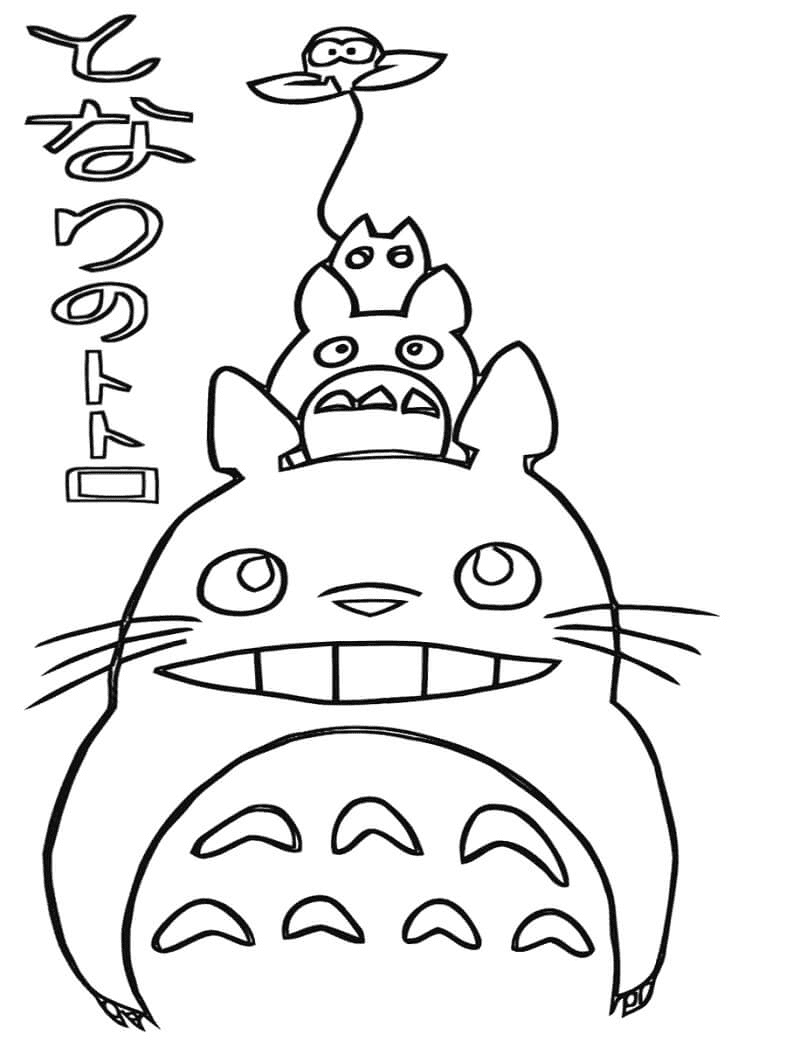
Group pages show the warmth of the Totoro world. Three Totoros together, stacked Totoro family scenes, Totoro with tiny forest spirits, Totoro with soot sprites, or Satsuki and Mei hugging Totoro all create a sense of connection.
These pages work because they show scale. Big Totoro feels huge beside the small Totoros. Mei and Satsuki feel tiny beside Totoro. Soot sprites feel like little sparks of movement around larger characters.
Coloring group pages: Give each character a slightly different value or tone. Big Totoro can be soft gray. Medium Totoro can be blue-gray or muted blue. Small Totoro can be cream, white, or very pale gray. This keeps the group clear without needing overly bright colors.
When Satsuki and Mei appear with Totoro, keep their clothing colors distinct from the forest. Human characters should not blend into the background. A small red, yellow, or blue clothing area can help the viewer find them quickly.
Group pages are especially useful for siblings, classrooms, and shared coloring activities because each child can color a different character or section.
Easy Totoro Pages for Kids
Easy Totoro pages usually have one large subject, simple outlines, fewer background details, and wide spaces. They are ideal for younger children who are still developing control with crayons, markers, or colored pencils.
The best easy Totoro page has a clear body, a clear face, and only one or two extra details: an umbrella, a leaf, an acorn, a small Totoro, or a simple forest shape. Too many background elements can make the page harder than it needs to be.
Coloring easy pages: Start with the face, then body, then belly, then feet, then any small objects. This order gives children a simple plan and helps them finish the page with less frustration.
An easy page can still feel special. Children can add rain, stars, grass, clouds, flowers, or a short path after the main character is finished. This gives them creative freedom without overwhelming the original design.
Detailed Totoro Pages for Older Kids and Studio Ghibli Fans
Detailed Totoro pages are not difficult because they are loud. They are difficult because they require patience. Leaves, mushrooms, raindrops, tree bark, Catbus windows, soot sprites, acorns, branches, and forest shadows all need careful color decisions.
Older kids and Studio Ghibli fans often enjoy these pages because they feel closer to the film’s atmosphere. A detailed Catbus at night, a rainy bus stop scene, or Mei discovering small Totoros is more than a character image. It is a small scene with mood, direction, and memory.
Coloring detailed pages: Choose the main focus first. If the page is about Totoro, keep him soft and readable. If the page is about Catbus, make Catbus warmer and brighter than the forest. If the page is about rain, use cool colors and keep highlights subtle.
Colored pencils work best for detailed Totoro pages because they allow soft shading and gentle textures. Markers can work for large flat areas, but heavy marker use can overpower the gentle mood if every color is too saturated.
What These Pages Do
My Neighbor Totoro coloring pages do more than give children a cute character to fill in. They create a calm visual activity built around soft shapes, nature, stillness, gentle emotion, and small story details.
Totoro’s body gives younger children a large, clear shape to color. The ears, face, belly, and feet are easy to separate. That makes the page approachable for children who are still practicing hand control.
The smaller details add fine motor practice without turning the page into a worksheet. Belly markings, acorns, soot sprites, raindrops, Catbus windows, mushrooms, and leaves all encourage careful coloring. Children practice pressure, direction, patience, and attention because the details are part of a familiar world.
These pages also teach mood. A rainy bus stop page is not colored the same way as a Catbus page. A soot sprite page is not colored the same way as a sunny forest page. Children begin to understand that color choices can create quiet, warmth, mystery, playfulness, or peace.
Nature observation is another benefit. Totoro pages invite children to notice trees, leaves, rain, paths, grass, mushrooms, and sky. They can decide whether the forest is bright, misty, rainy, autumnal, or nighttime. That choice makes the page more personal.
The collection’s emotional value is also important. Many character pages are built around motion, power, victory, or competition. Totoro pages are built around waiting, noticing, and feeling safe inside a strange world. That makes them especially useful for calmer coloring sessions.
For parents, these pages work well for bedtime wind-down, rainy-day activities, weekend coloring, travel folders, family movie nights, and screen-free breaks.
For teachers, Totoro pages can support art time, nature units, reading extensions, quiet classroom corners, and creative writing. A child can color a page and write one sentence: “Catbus is going to the forest,” “Mei found a small Totoro,” or “Totoro is waiting in the rain.”
The value of the collection is not speed. It is slowness. A good Totoro page gives children time to notice, choose, color gently, and imagine what happens next.
How to Color These Pages Well
Totoro should stay soft, readable, and light enough for the belly markings to remain clear. Use soft gray for the body, cream or white for the belly, dark gray for the nose and markings, and light shadow near the arms, ears, feet, and belly edge. Keep the belly clean so the markings stay visible.
Catbus depends on warmth and contrast, especially when the page includes a night forest. Use warm yellow, orange, tan, and brown for the body. Keep the face expressive. The windows can use pale yellow, cream, or light blue. In night scenes, use a darker blue or purple behind Catbus so the warm body stands out.
Mei and Satsuki should remain clear before the forest is filled in. Keep the faces natural and readable. Hair can be black or dark brown. Clothing can use simple bright colors, but avoid making every part of the page equally bright. The girls should be visible, not lost inside the trees.
Small Totoros need pale colors and light surroundings. Use white, cream, pale gray, or light blue-gray. Acorns should be brown and tan. Leaves can be green, yellow, orange, or brown, depending on the mood of the scene.
Soot sprites need dark bodies and light backgrounds. Use black or charcoal for the bodies, but leave the eyes white. Keep the surrounding background lighter so the soot sprites remain visible.
Rainy scenes should feel cool and quiet, not heavy. Choose gray-blue, soft green, muted brown, and pale blue. Add one warmer color, such as a yellow light or deep umbrella color, to keep the page from feeling flat.
Forest scenes need layered greens and browns rather than one flat green. Use lighter colors in the distance and deeper colors in the foreground. Leave enough contrast around Totoro so he stays visible.
The best Totoro coloring usually avoids extreme brightness everywhere. The world of the film feels softer than a superhero page or a video game page. Use bright colors carefully, as an accent, not as the entire palette.
5 Creative Craft Ideas
The Rainy Bus Stop Mood Page
The rainy bus stop scene is the most emotionally recognizable Totoro image: a child waiting in the rain, a giant forest spirit standing beside her, and the sense that something impossible is happening quietly.
Print a Totoro umbrella or bus stop page. Color Totoro in soft gray and keep the rain cool and pale. Use gray-blue for the sky, muted green for trees, and a darker tone for the road.
On the backing card, write: “Rainy Bus Stop. Totoro waits quietly. The rain is soft. The forest is awake. The umbrella is the brightest object in the scene.”
Add extra raindrops, puddles, a small sign, or a warm yellow light. This craft works well for rainy-day classroom displays or calm home coloring.
The Catbus Night Journey
Catbus is a transportation creature, but it does not feel mechanical. It belongs to the forest more than to the road.
Print a Catbus page. Color Catbus in warm yellow, orange, and tan. Make the windows glow with pale yellow or cream. Use dark blue, purple, or deep green for the surrounding night.
On a larger sheet, draw a forest road, stars, moonlight, and small trees. Add the sentence: “Catbus does not drive on roads. Catbus arrives where the forest decides.”
This craft helps children build a full scene around one character instead of only coloring the figure.
The Small Totoro Acorn Study
The small Totoros are connected to acorns, seeds, paths, and hidden forest movement. This craft treats the acorn not as a decoration but as a story object.
Print a page with small Totoros or acorns. Color the small Totoros in cream, white, pale gray, or soft blue-gray. Color acorns with brown caps and tan bodies.
On the backing card, draw three extra acorns and label them: seed, gift, forest clue. Then write one sentence about where the small Totoro is going.
This craft connects coloring with nature observation and storytelling.
The Soot Sprite Hidden House Page
Soot sprites belong to corners, shadows, old rooms, and places that feel quiet before someone notices them. The goal is contrast: dark creatures, light room.
Print a soot sprite page. Keep the soot sprites dark, but make the room or background light enough for their eyes to stand out.
On the backing sheet, draw floorboards, boxes, corners, windows, and tiny footprints. Add more soot sprites hiding in small places.
Write: “Soot sprites live where dust, silence, and old houses meet.”
This activity works well for children who enjoy small creatures and hidden details.
The Totoro Forest Story Page
The forest is the emotional setting of the film. It is not simply scenery. It is where the ordinary world becomes open to something strange and kind.
Print any Totoro forest page with Mei, Satsuki, Catbus, small Totoros, soot sprites, or trees. After coloring, mount the page on a larger sheet.
Add a short story box with these prompts:
Where is Totoro?
Who found him?
What sound is in the forest?
What happens after this moment?
This turns a coloring page into a short writing activity for home, homeschool, classroom art, or Studio Ghibli-themed projects.
Frequently Asked Questions
Are these My Neighbor Totoro coloring pages free to print? Yes. These My Neighbor Totoro coloring pages are free to print and use for personal, family, classroom, and creative activities. Parents can print a simple Totoro page for quiet time, while teachers can use a rainy bus stop page or forest scene for art time, indoor recess, or a calm classroom activity.
Can I download Totoro coloring pages as PDF files? Yes. Many pages in the collection can be downloaded as PDF files, making them easier to save, organize, and print later. PDF pages are useful for classroom folders, rainy-day activity packs, family movie nights, or travel coloring sets. A PDF also keeps the page layout more stable when printing, so the line art stays clean and centered.
Can I color these Totoro pages online? Yes. The online coloring option lets children color directly in the browser without printing. This is helpful for quick activities, classroom computers, tablets, or screen-based creative time. Online coloring also gives kids a low-pressure way to test color ideas before printing the page and coloring it by hand.
Do these pages include Catbus, Mei, Satsuki, soot sprites, and small Totoros? Yes. The collection includes Totoro, Catbus, Mei, Satsuki, soot sprites, small Totoros, acorns, umbrellas, rainy scenes, forest details, and other familiar elements from the Totoro world. That variety helps the page feel like a full Studio Ghibli coloring collection rather than only a set of single-character Totoro poses.
What colors should I use for Totoro? Totoro usually works best with soft gray, warm gray, cream, white, and dark gray details. The body can be gray or blue-gray, while the belly should stay light so the markings remain visible. Children can also create a custom Totoro with blue, brown, pastel, or rainbow colors. The most important thing is to keep the round body, ears, belly, and markings clear.
What colors work best for Catbus? Catbus usually looks best with warm yellow, orange, tan, brown, and dark stripe details. The windows can use pale yellow or cream so they look like they are glowing. If the page shows Catbus at night, use dark blue, purple, or deep green in the background and keep Catbus warm and bright. That contrast helps Catbus feel magical instead of flat.
Are there easy Totoro pages for preschoolers? Yes. Easy Totoro pages, simple Catbus pages, small Totoro pages, and large outline designs are good for preschoolers because they have fewer tiny details and larger spaces to color. Young children can start with Totoro’s face, body, belly, and feet before adding small items like leaves, acorns, or raindrops. These pages help children practice hand control without making the activity frustrating.
Which Totoro pages are best for older kids and Studio Ghibli fans? Older kids and Studio Ghibli fans usually enjoy scene-based pages, such as rainy bus stop scenes, Catbus at night, Mei meeting the small Totoros, soot sprites inside the house, and detailed forest pages. These pages offer more room for shading, mood, background color, and storytelling. They also feel closer to the film because they include setting, atmosphere, and emotional context.
Do kids need to know the movie to enjoy these pages? No. Totoro is round, friendly, and easy to recognize even for children who have not seen the film. Catbus, soot sprites, acorns, trees, and rainy scenes also work as gentle fantasy coloring subjects on their own. Knowing the movie makes the scenes more meaningful, but the pages still work well as calm nature, forest, and character coloring designs.
Can Totoro coloring pages be used in classrooms? Yes. Teachers can use Totoro pages for art time, indoor recess, nature-themed lessons, creative writing prompts, reading extensions, or calm classroom displays. A rainy bus stop page can support a mood discussion. A forest page can connect to nature observation. A Catbus page can become a creative writing prompt about where a magical bus might travel.
What paper and coloring tools work best? Regular printer paper works well for crayons and colored pencils. Colored pencils are especially good for Totoro pages because they allow soft shading, gentle gradients, and layered forest colors. If children use markers, place a blank sheet underneath to prevent bleed-through. Thicker paper is better for posters, handmade cards, classroom displays, and craft projects.
Can finished Totoro pages become crafts? Yes. Finished pages can become rainy-day posters, Catbus night scenes, acorn studies, soot sprite house scenes, story pages, handmade cards, classroom displays, bedroom wall art, or a homemade My Neighbor Totoro coloring book. Totoro pages work especially well as crafts because the scenes already feel calm, story-based, and connected to nature.
Browse the full collection at ColoringPagesOnly.com. All 30+ pages are free, PDF or online coloring, print, or color directly in your browser.
Hayao Miyazaki built a film around two sisters, an old house, a huge tree, a rainy road, and creatures who appear only when the world is quiet enough. That is the correct way to color Totoro: softly, patiently, and with enough space for the forest to keep breathing.
Pick up your soft gray first. Protect the belly markings. Keep the rain pale. Keep Catbus warm. Keep the soot sprites visible. The forest should not shout. Totoro works best when the silence remains.
Share your work on Facebook and Pinterest and tag #Coloringpagesonly. The rainy bus stop pages, Catbus night scenes, and small Totoro acorn pages are particularly worth sharing.
These related coloring collections will help you explore the wonderful world of colors. Let’s choose, be creative, and show us your great pictures!