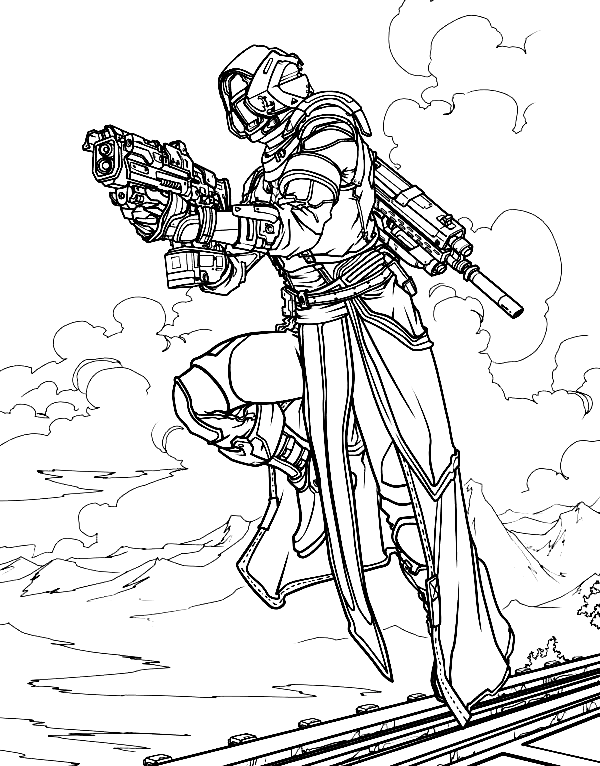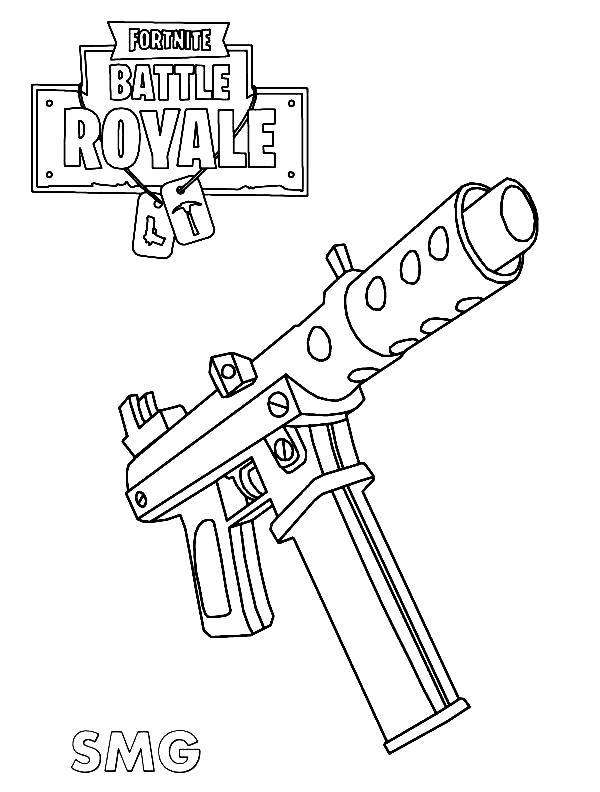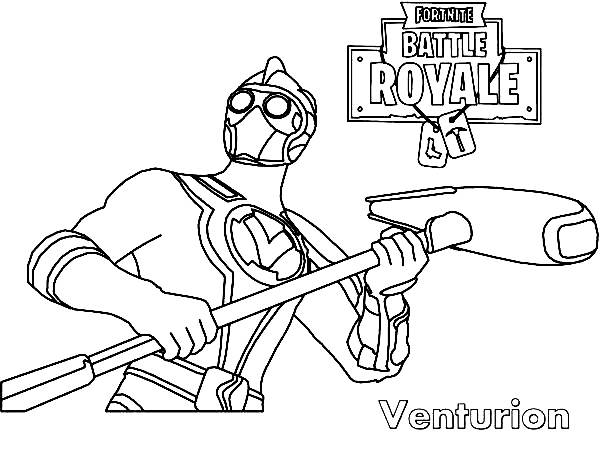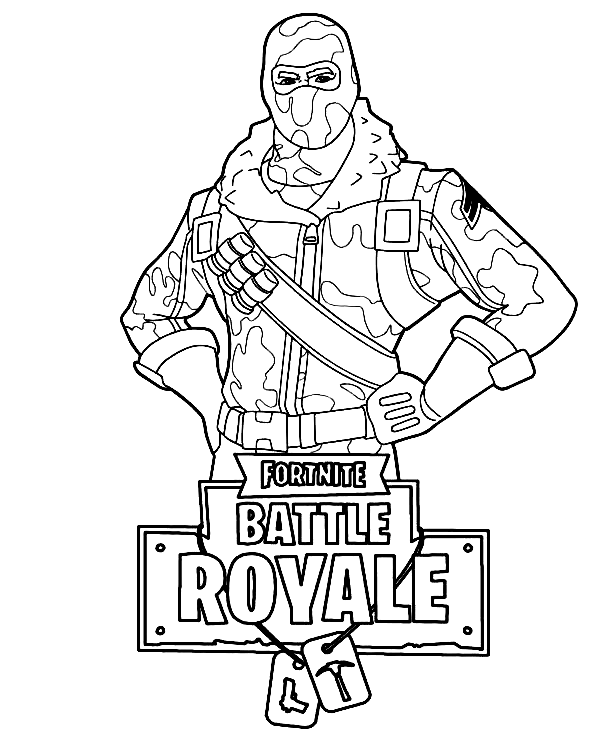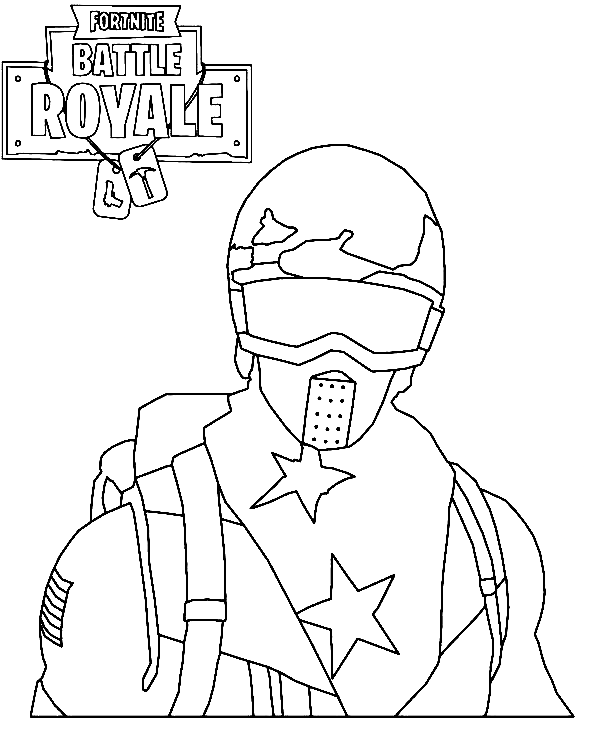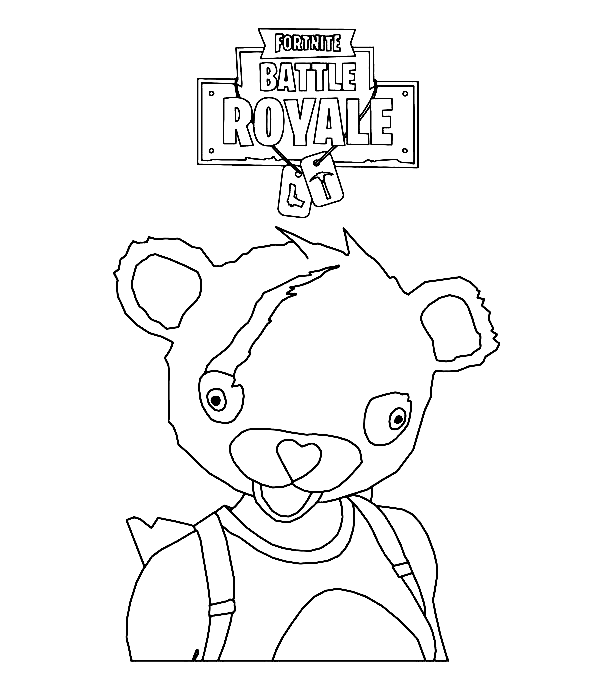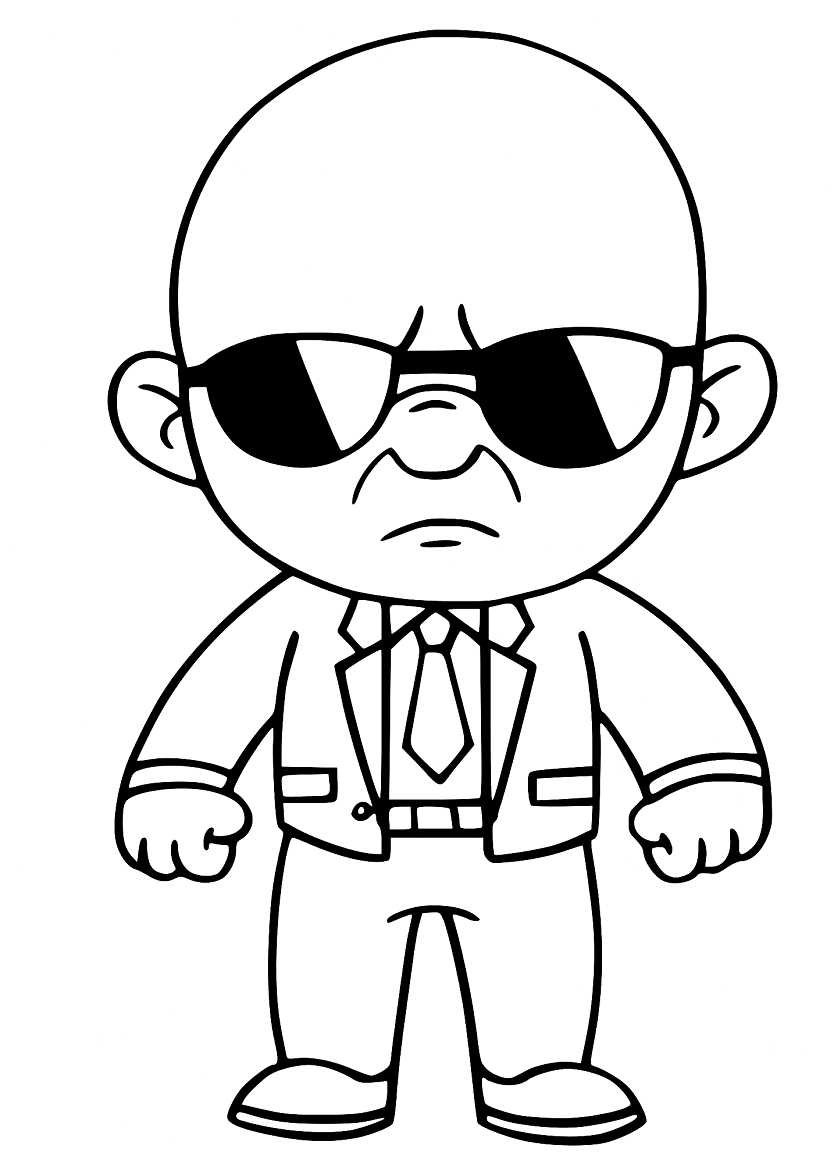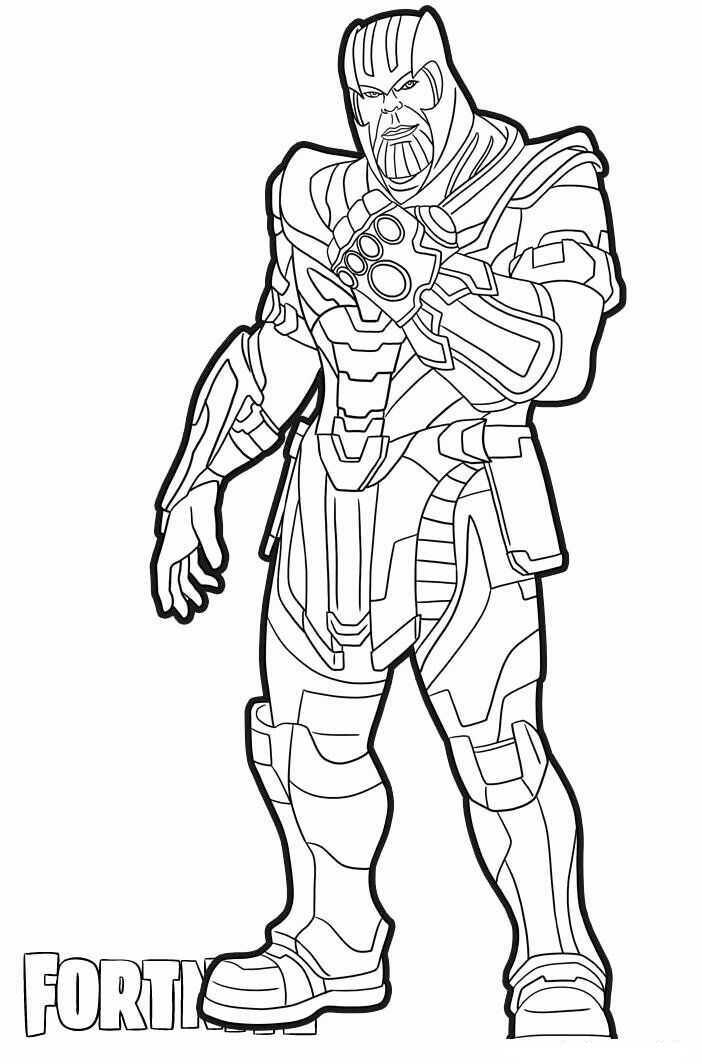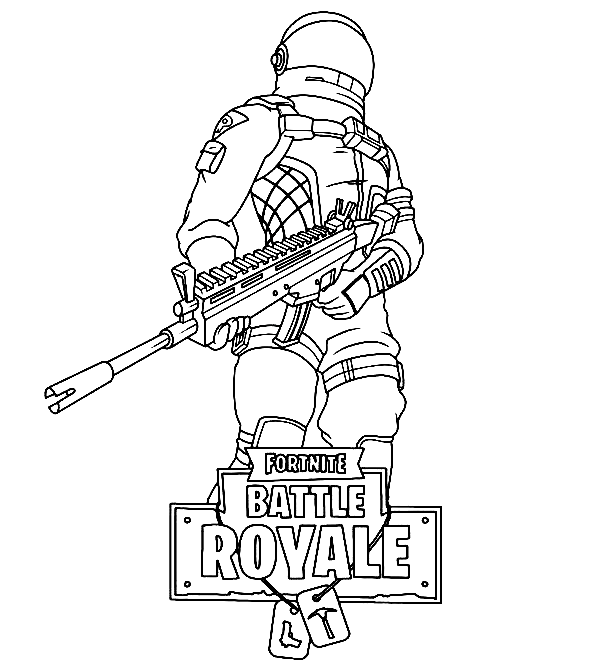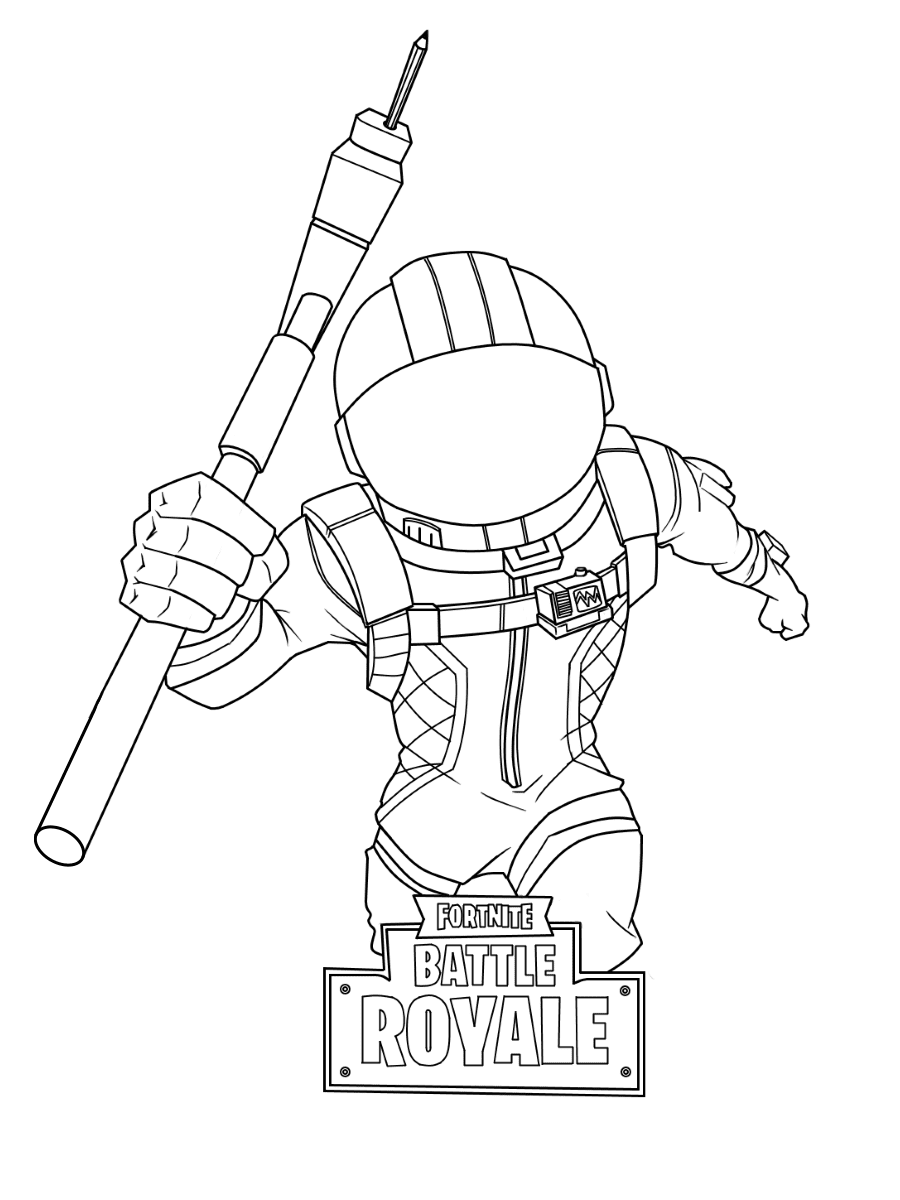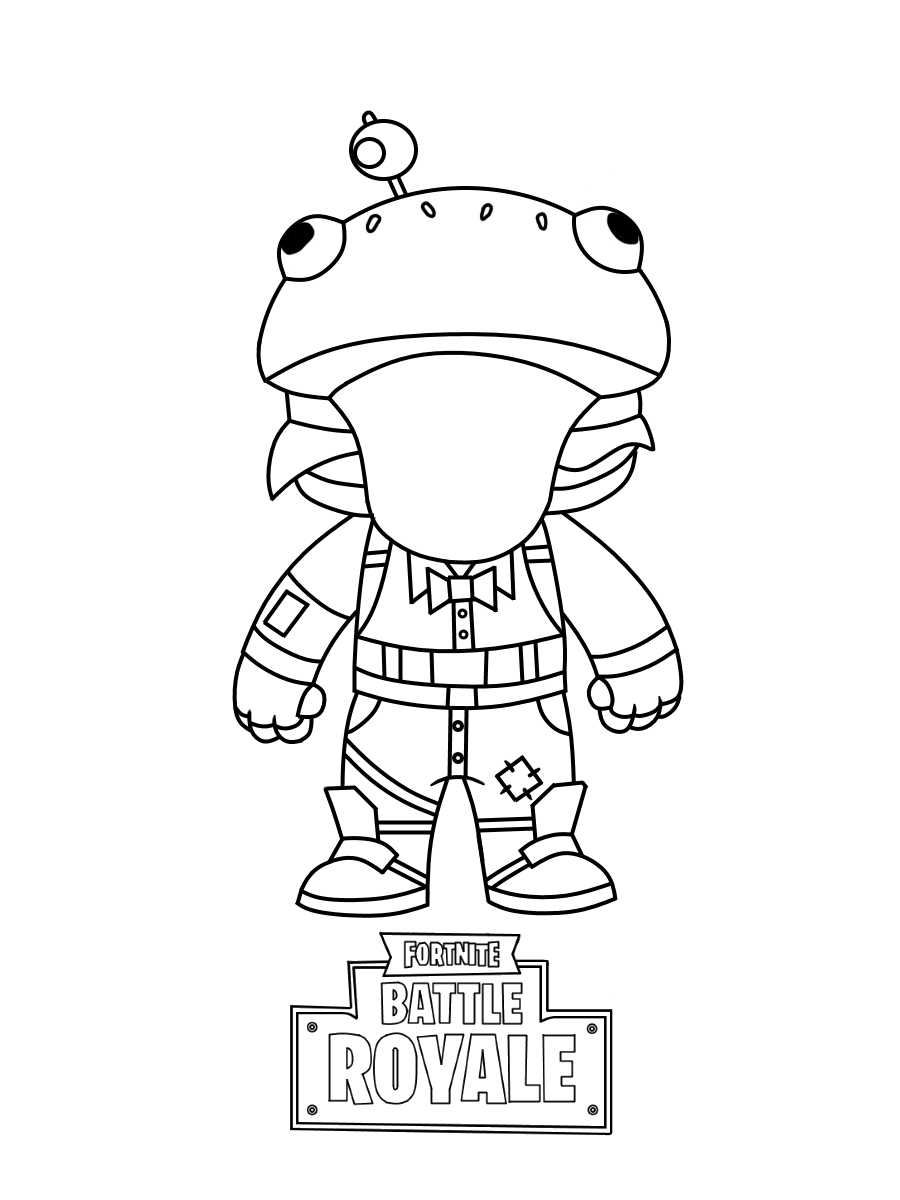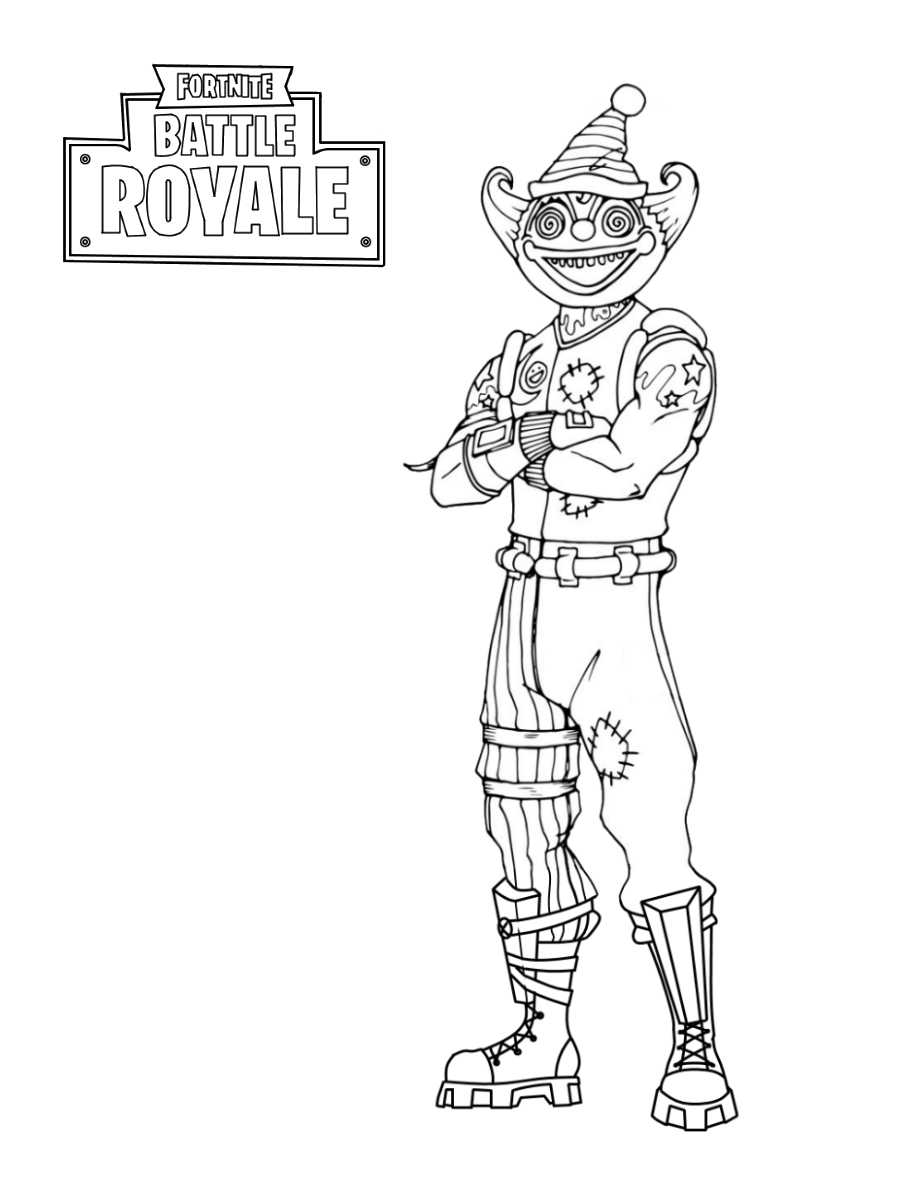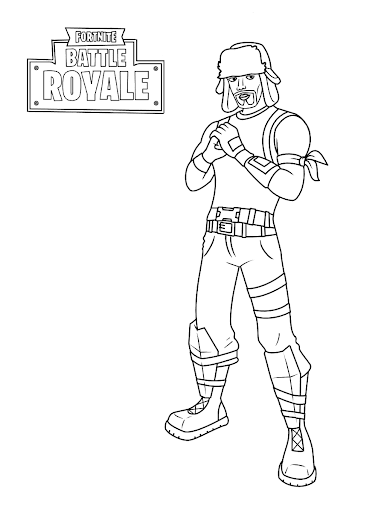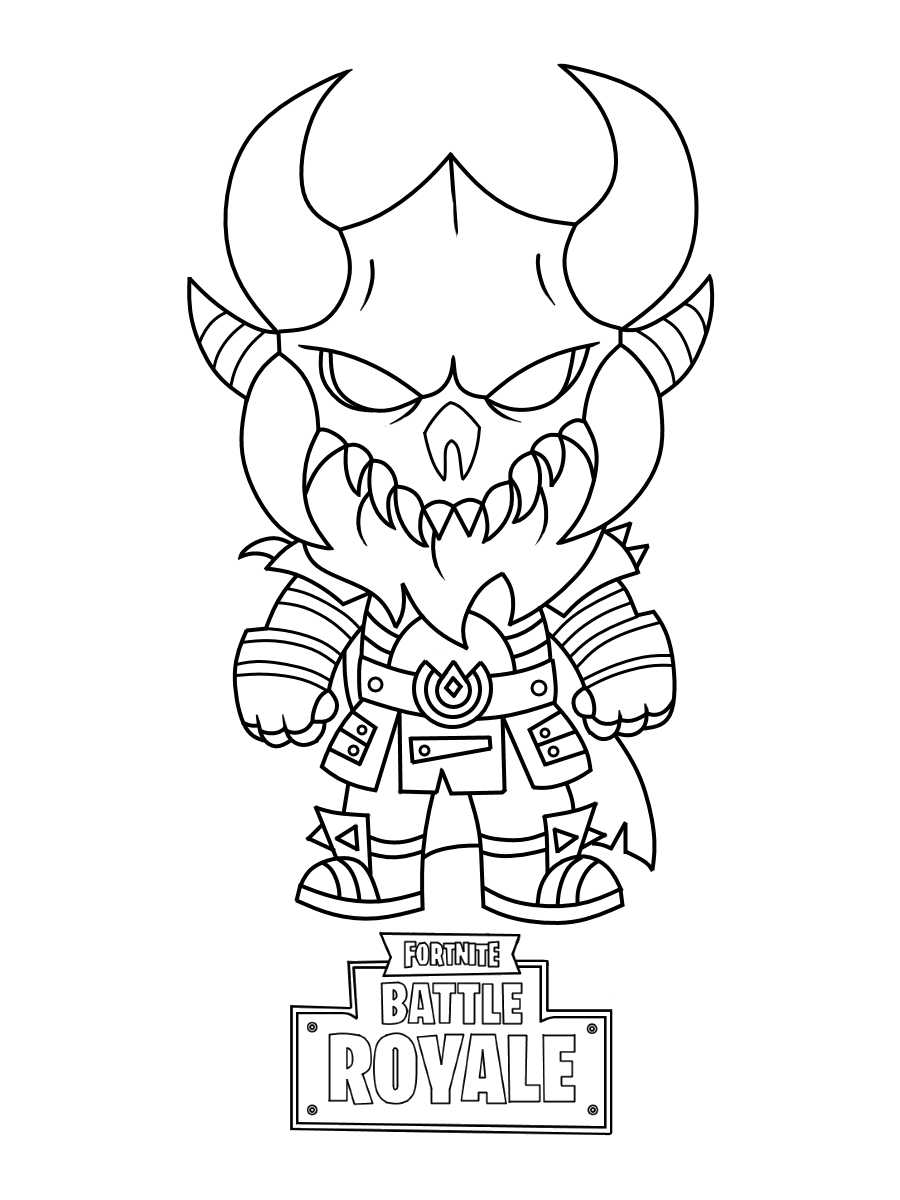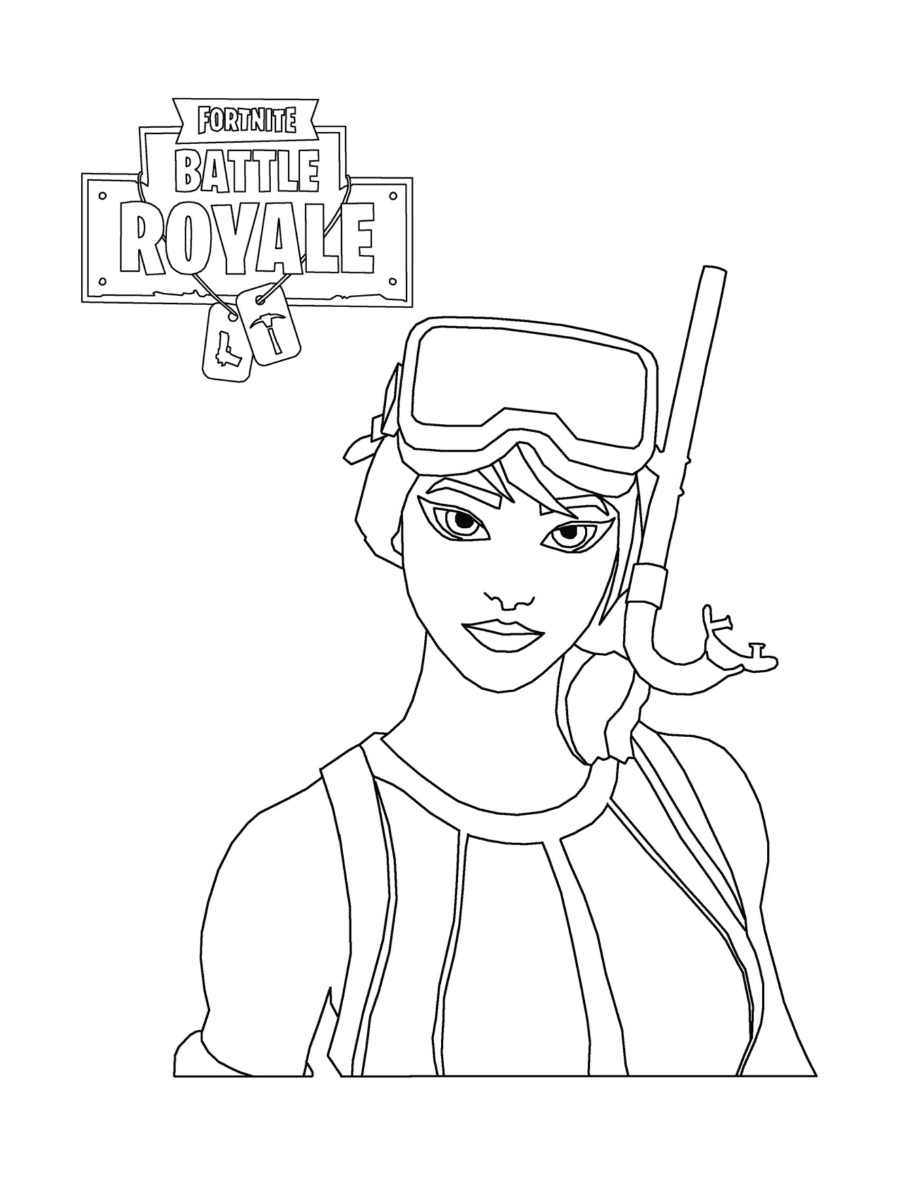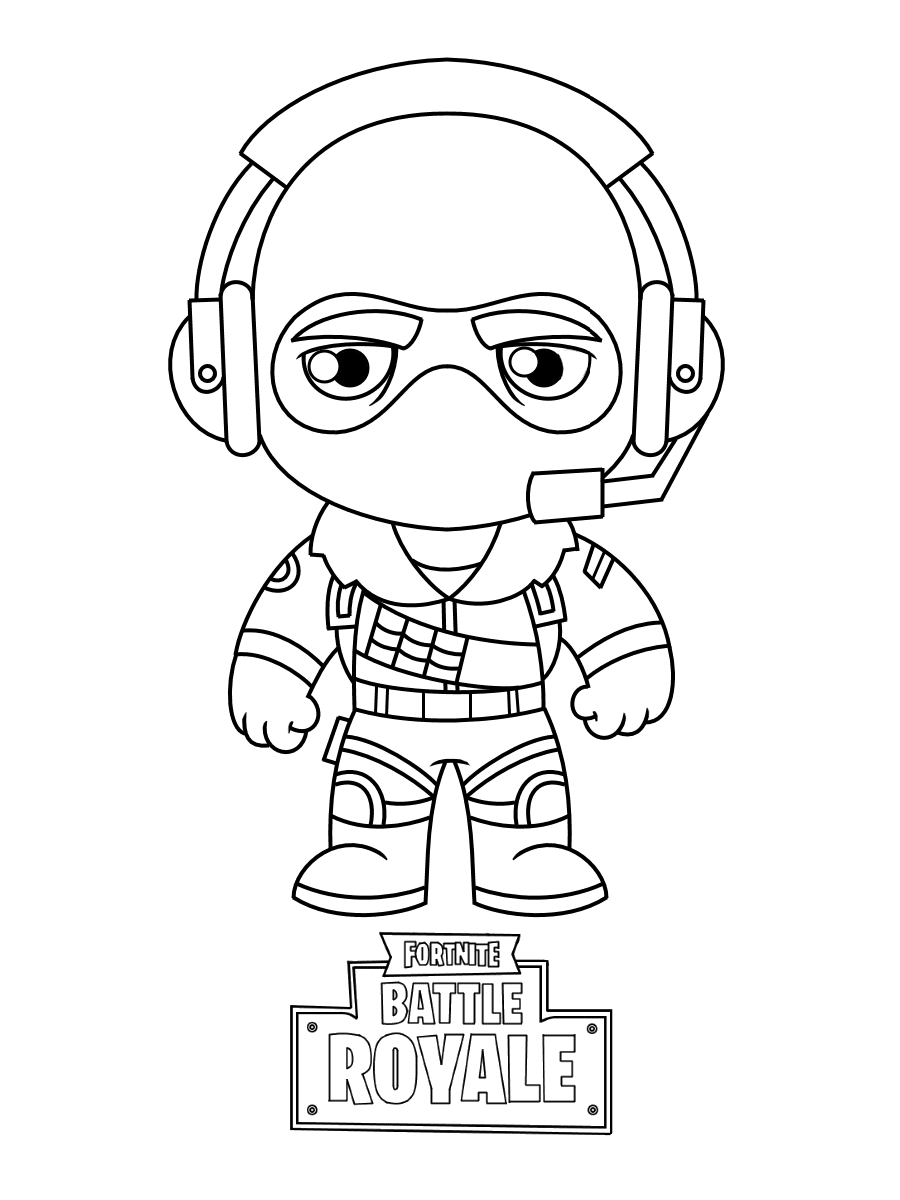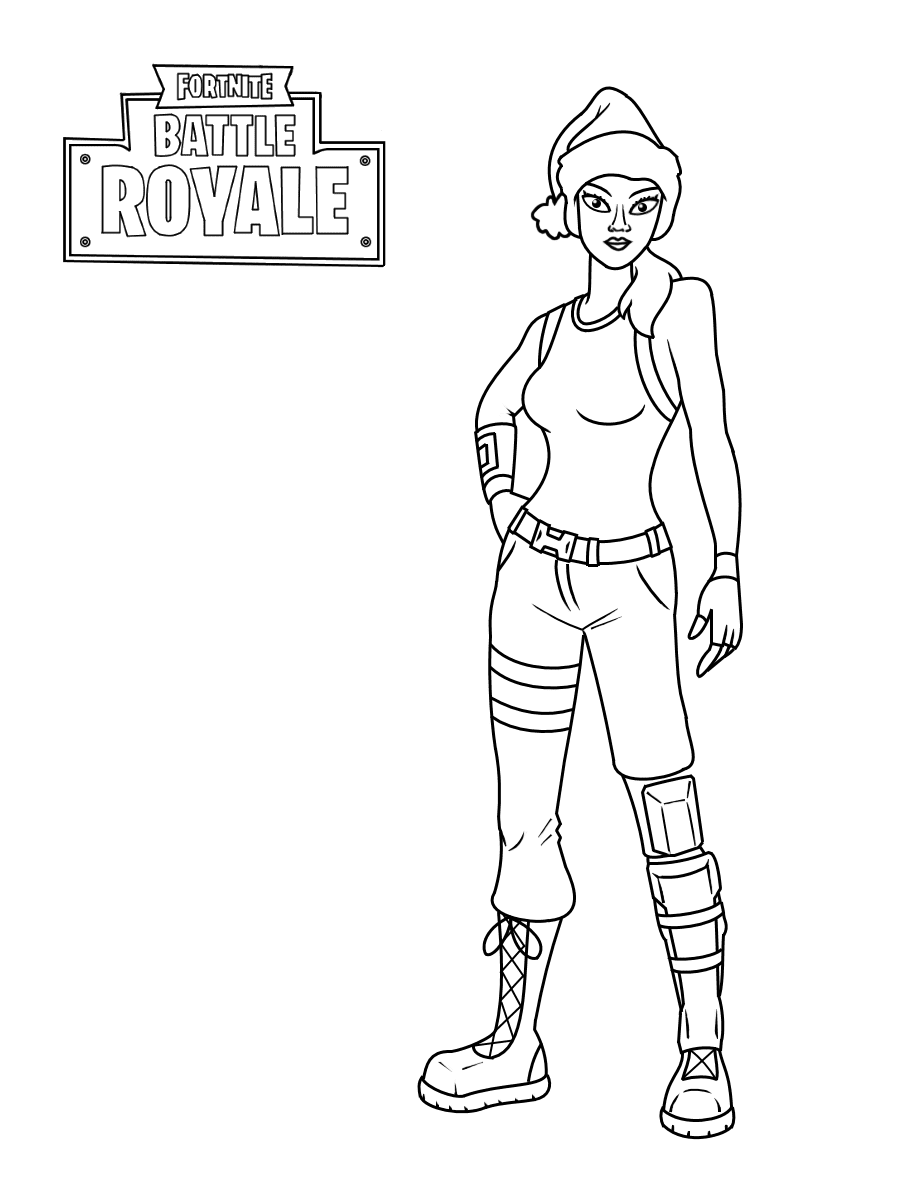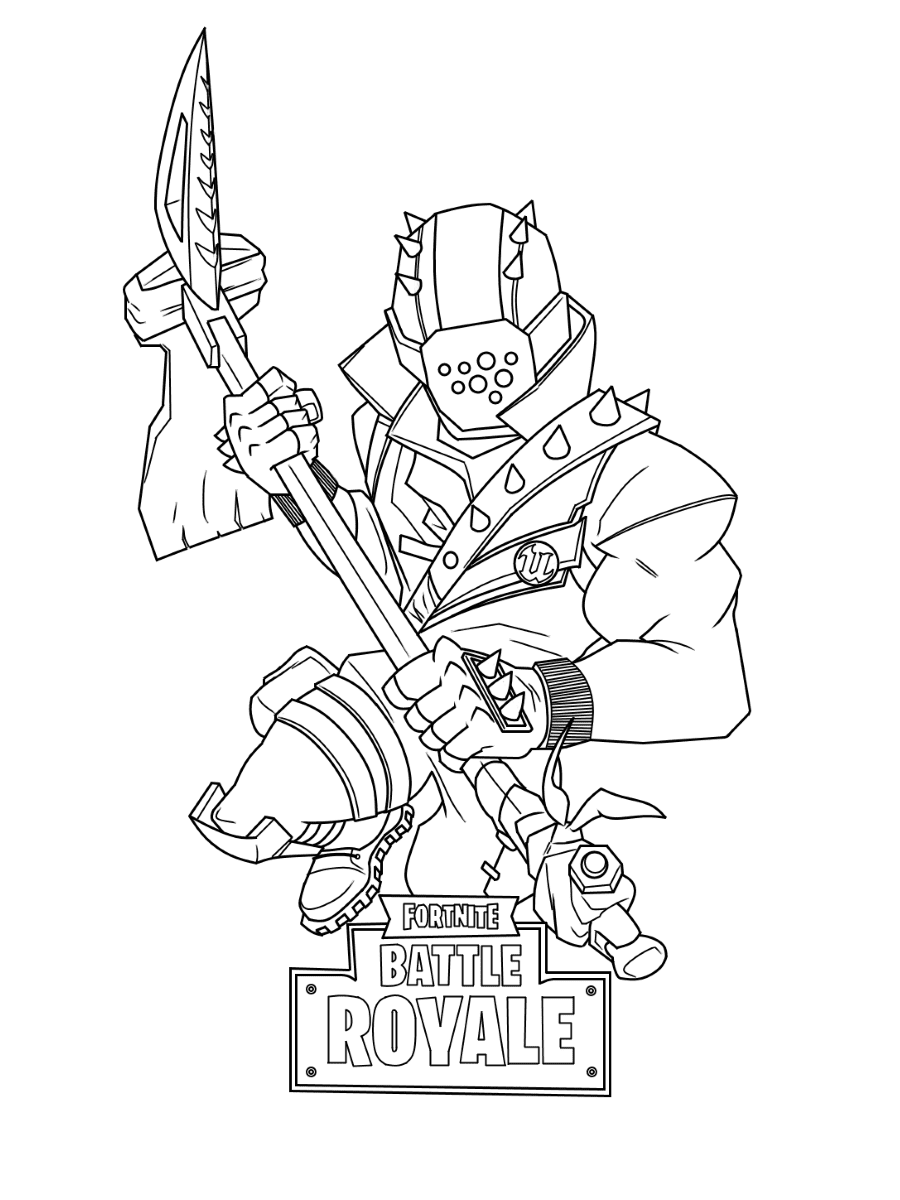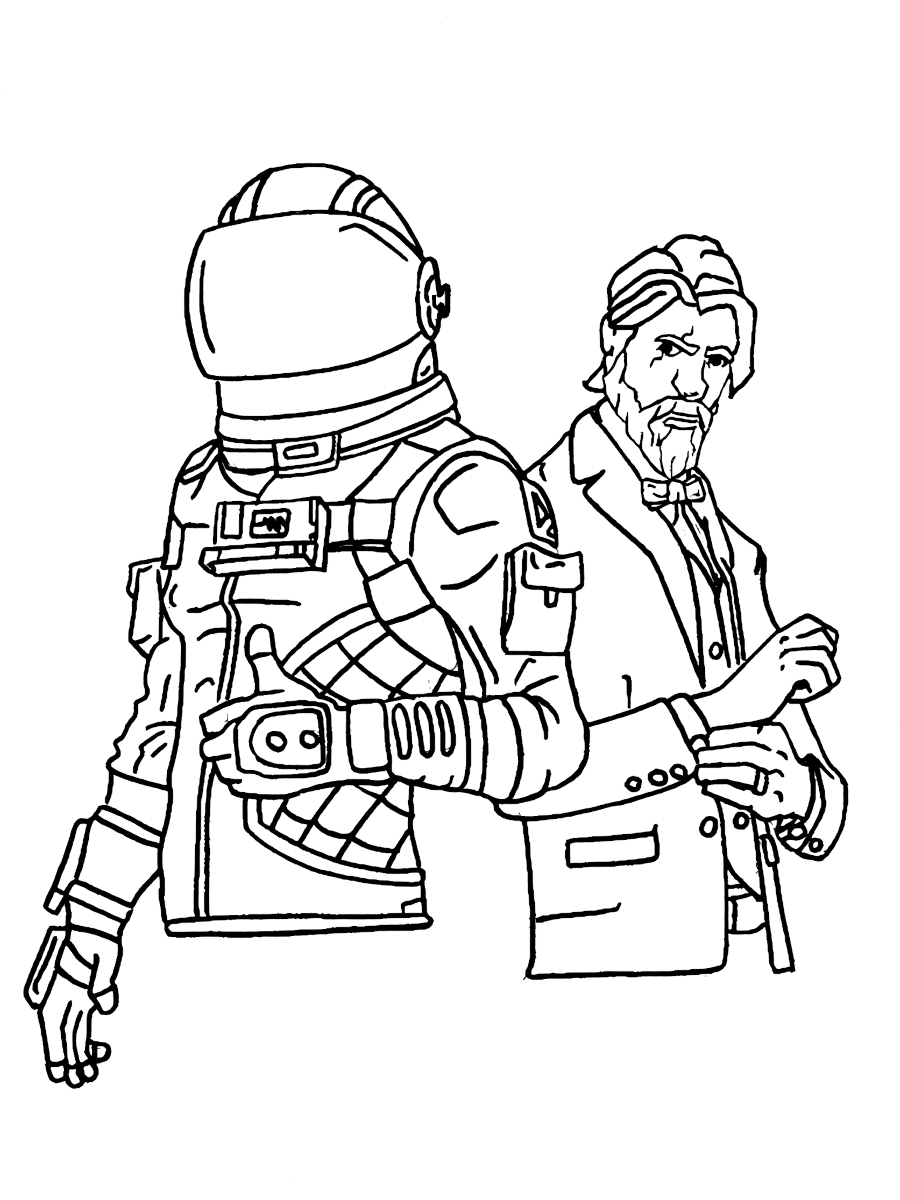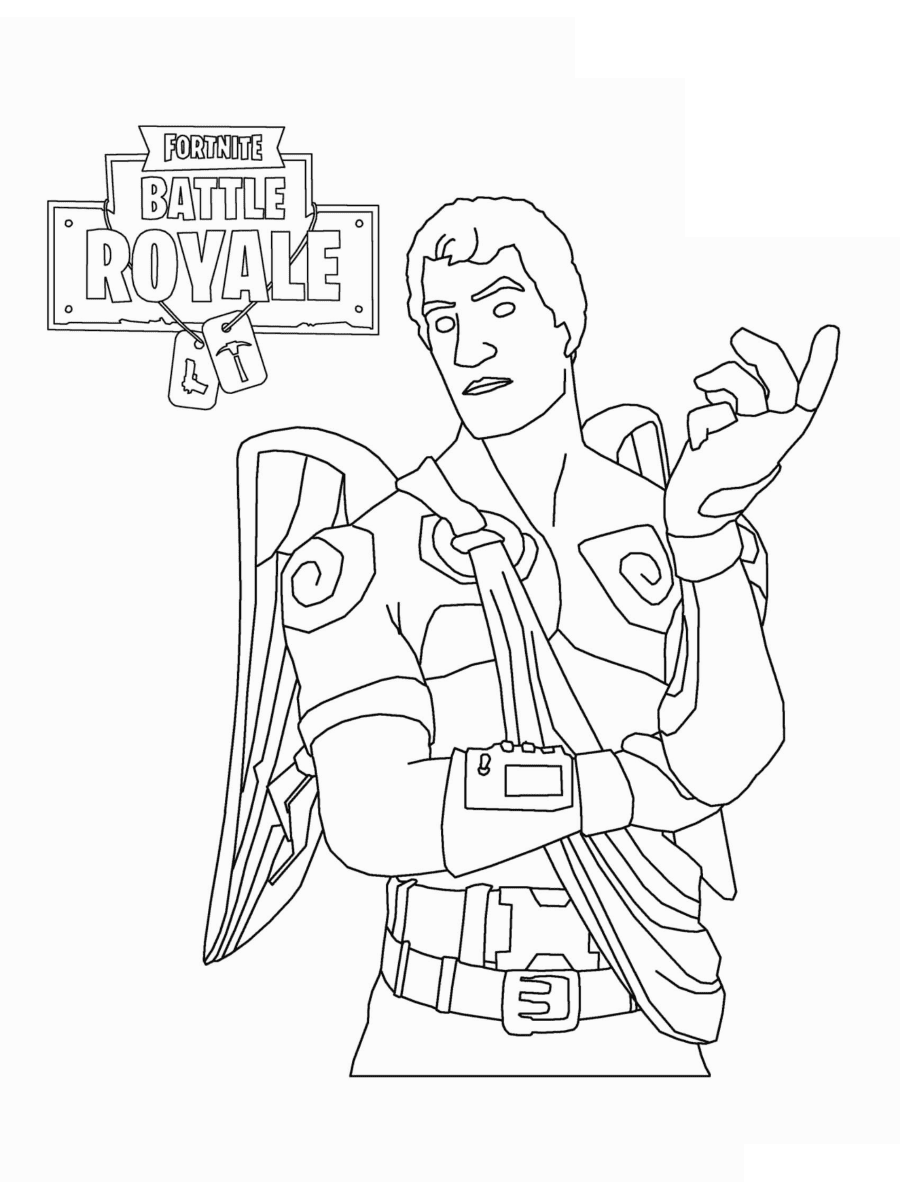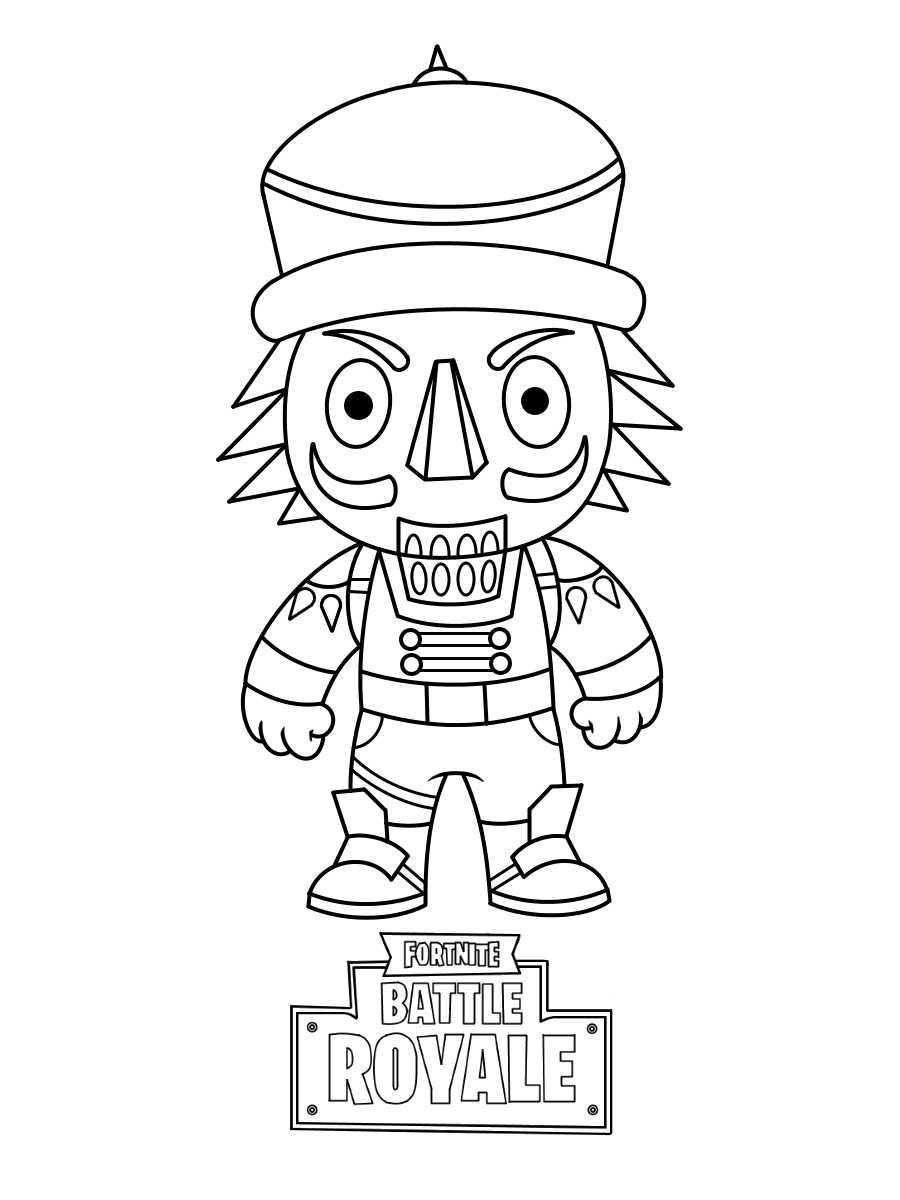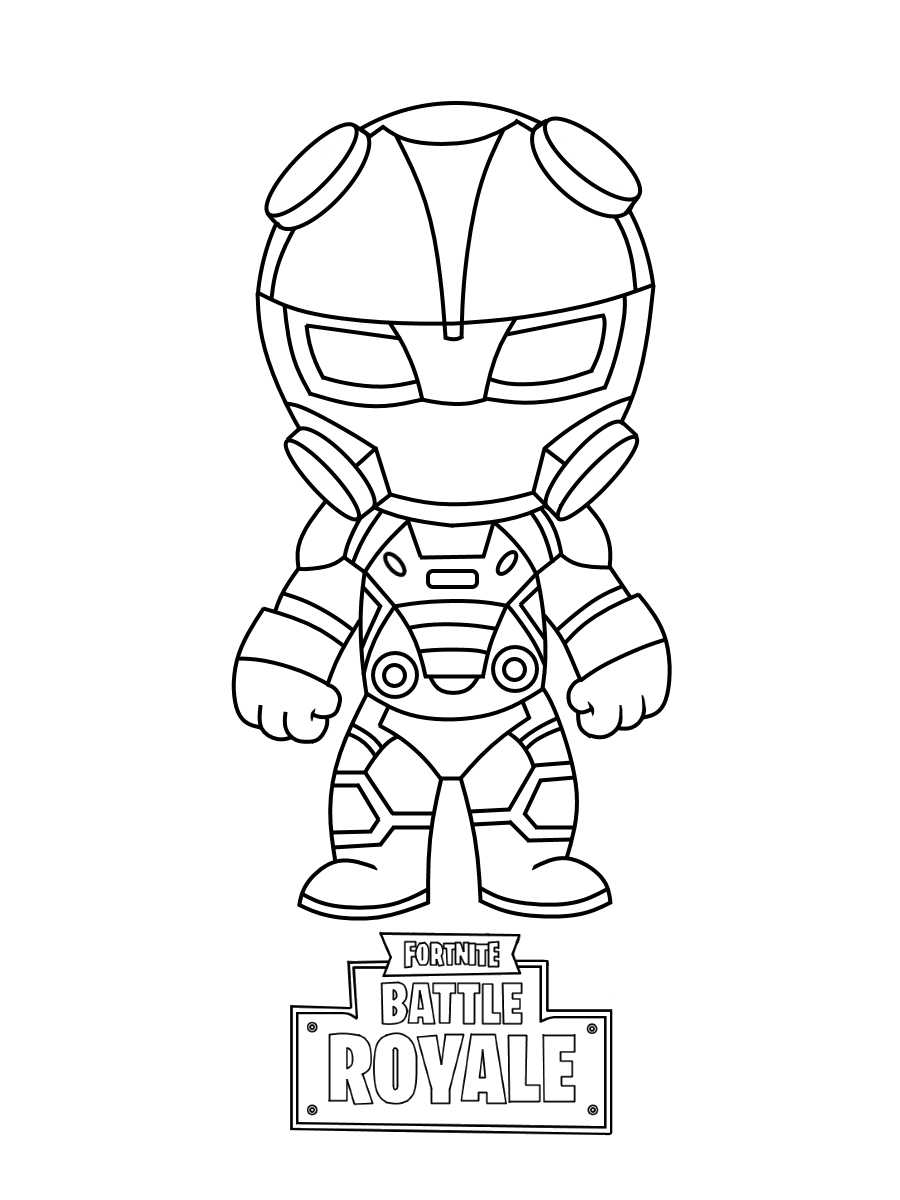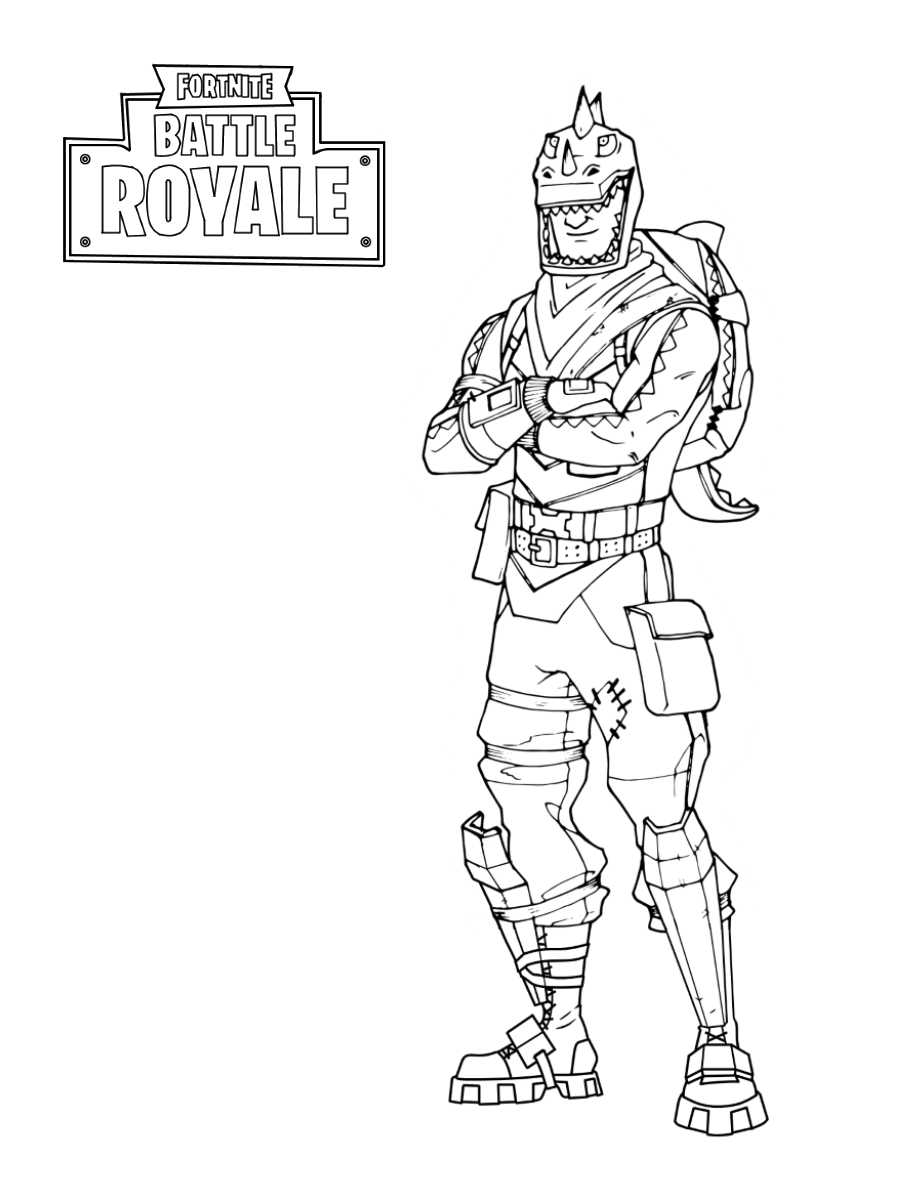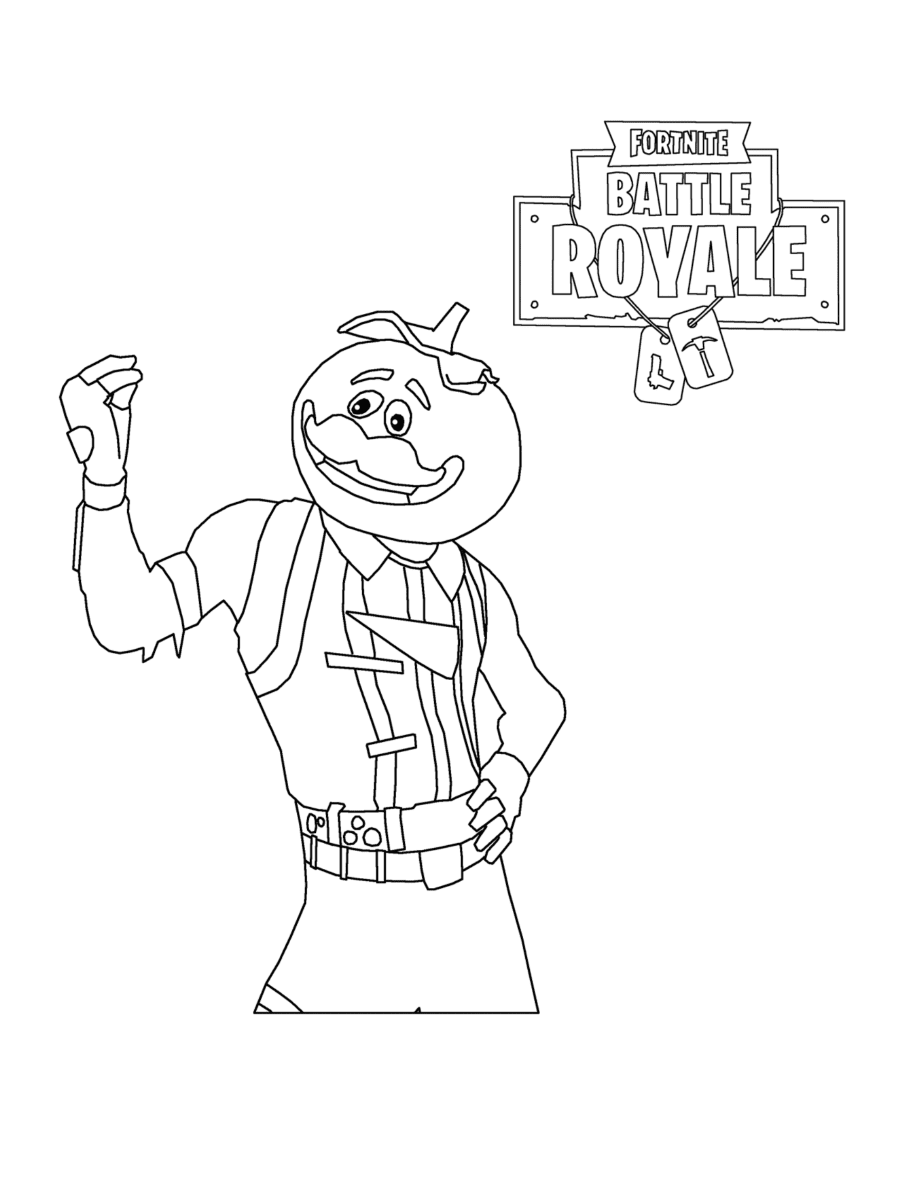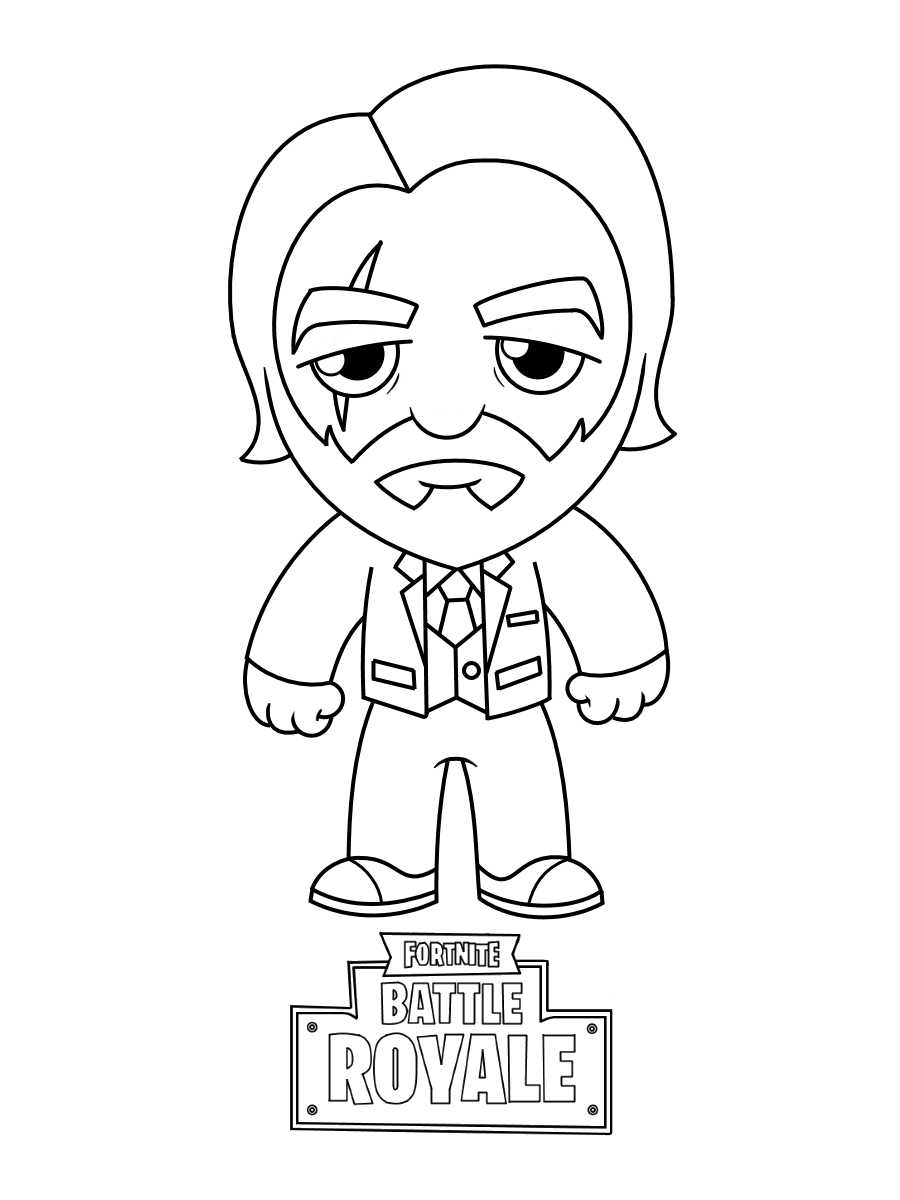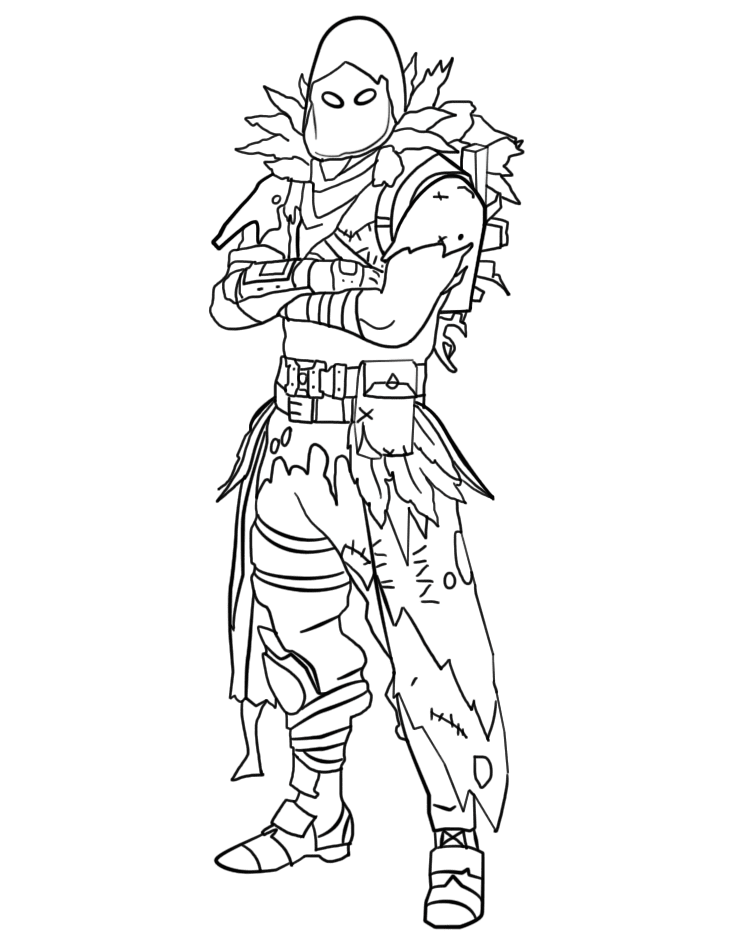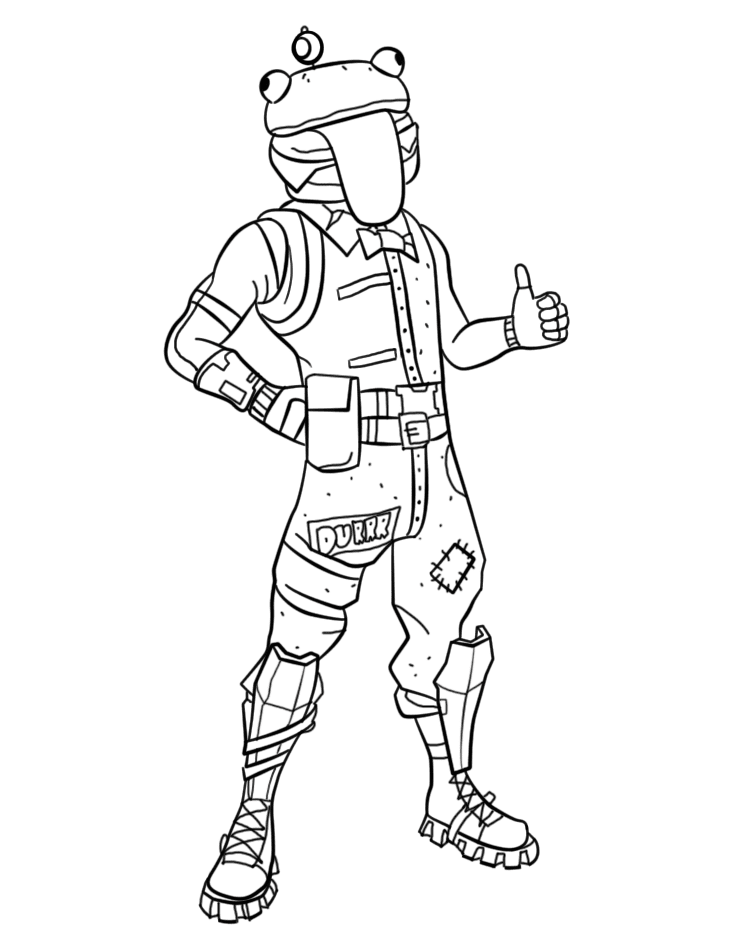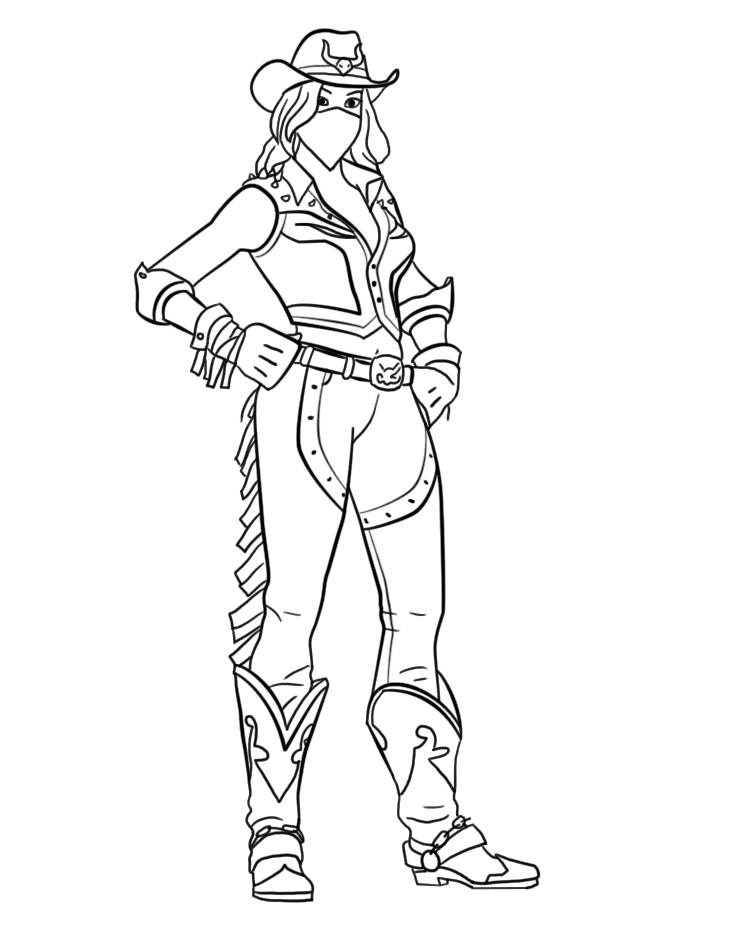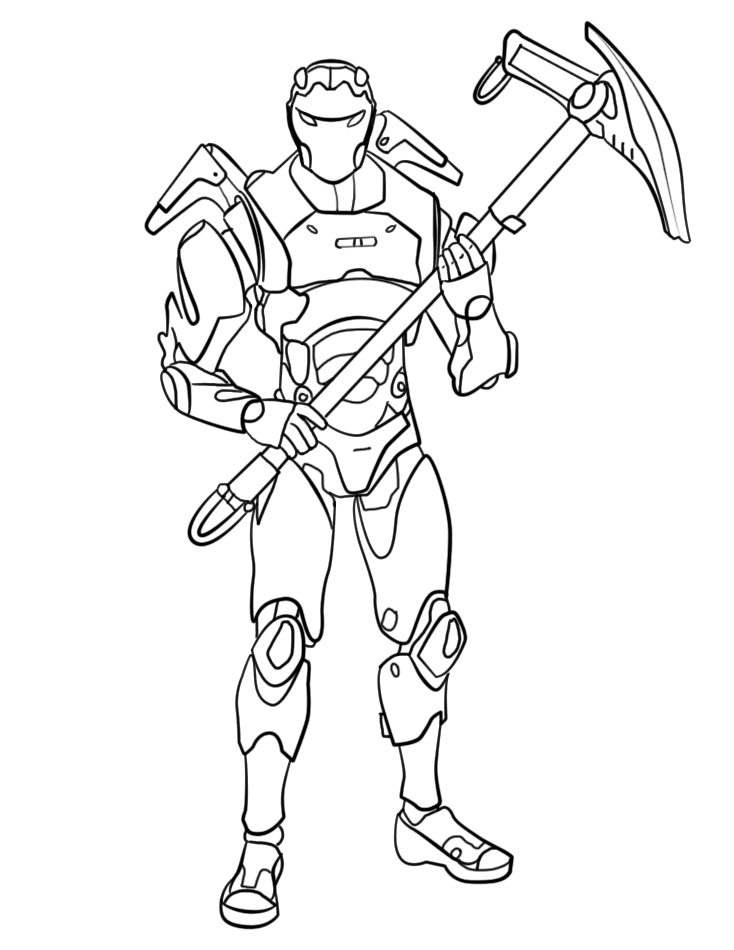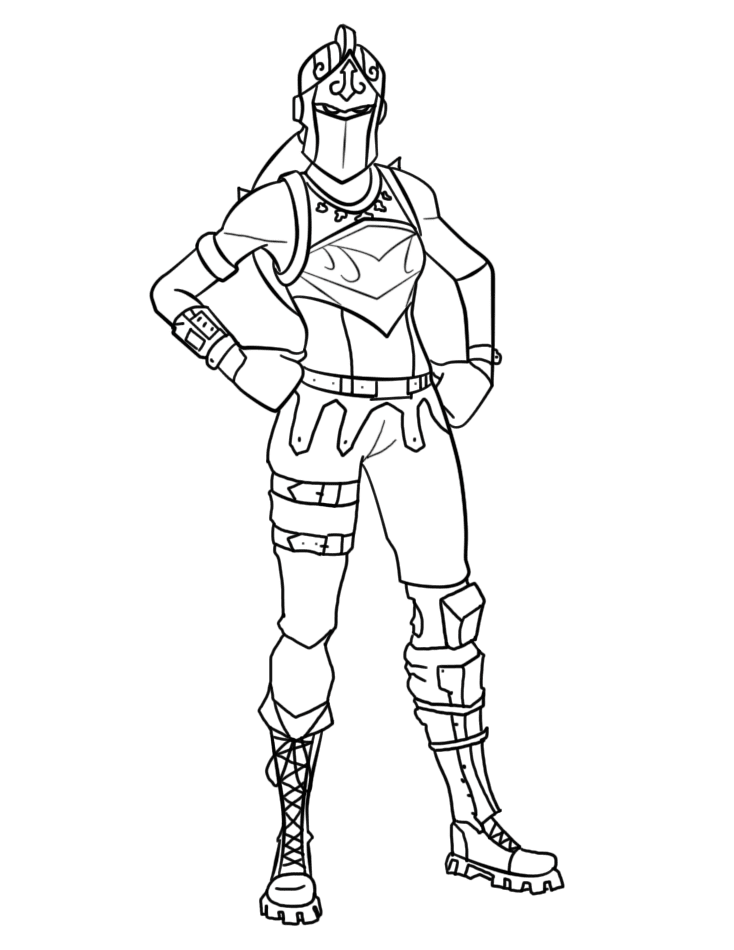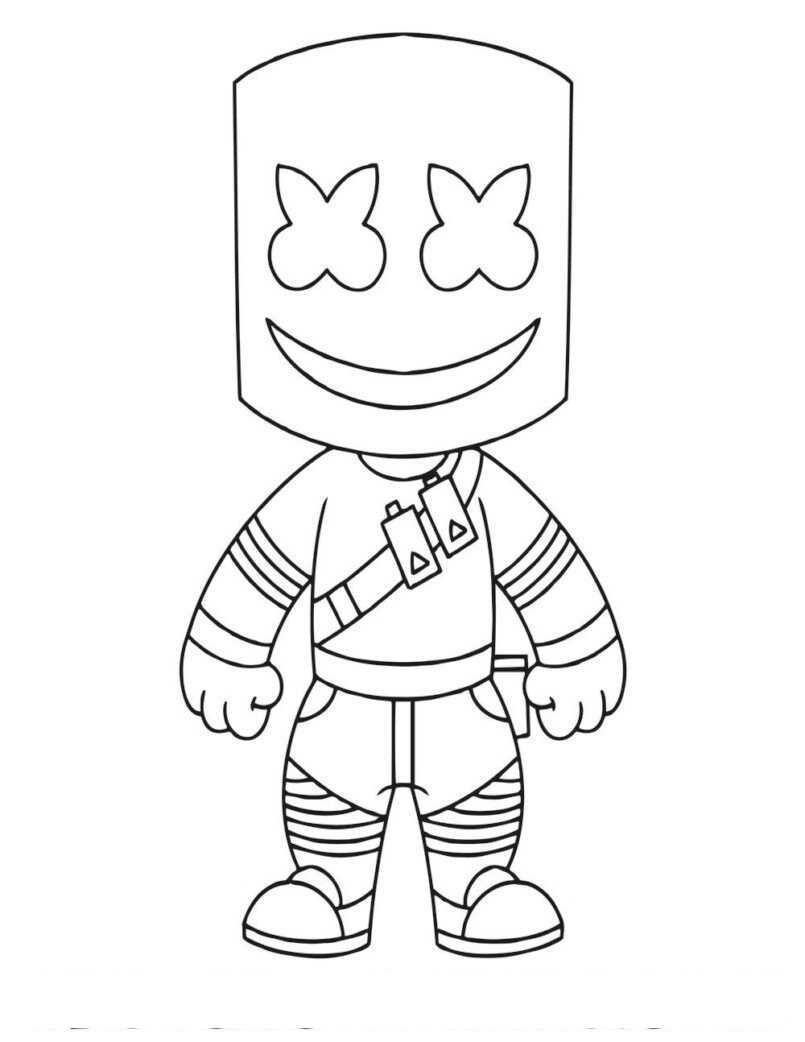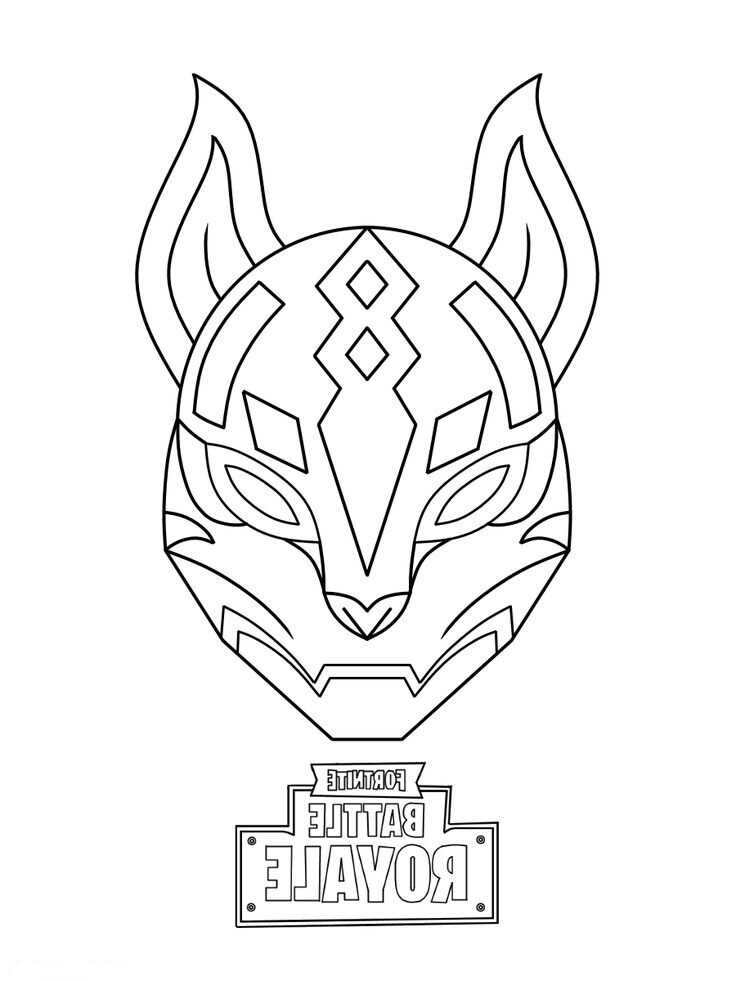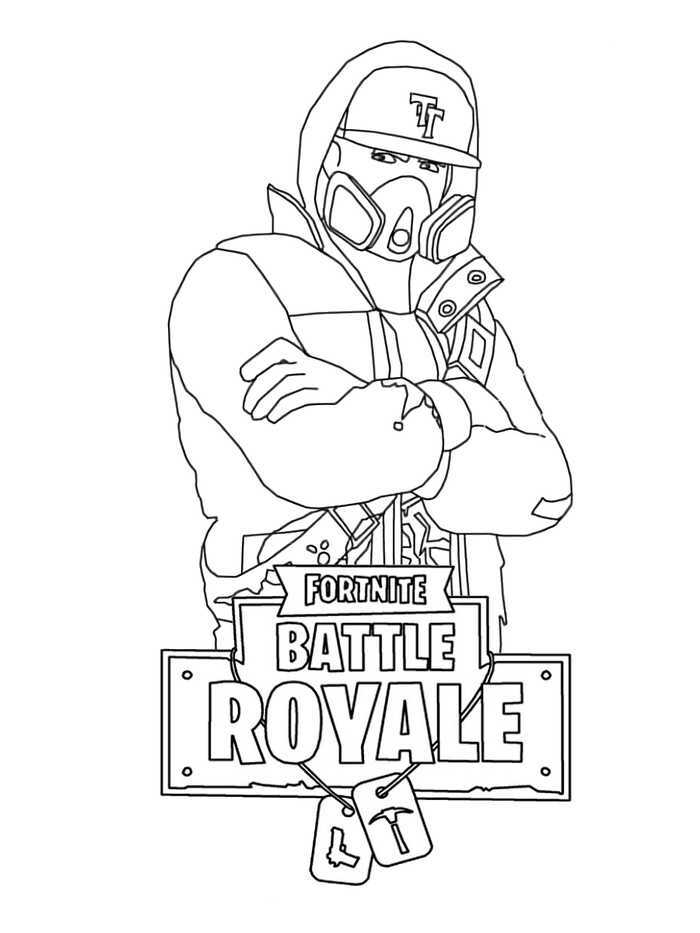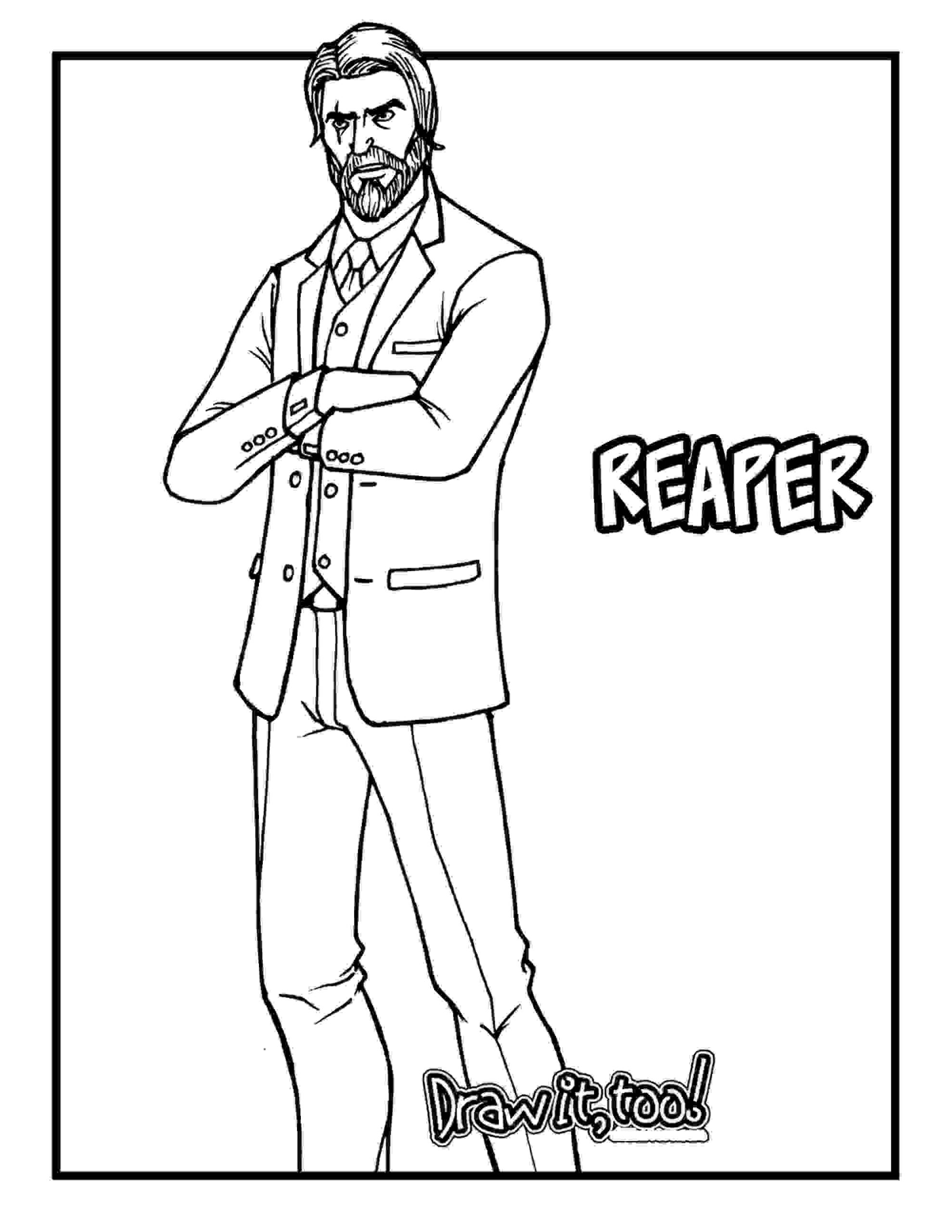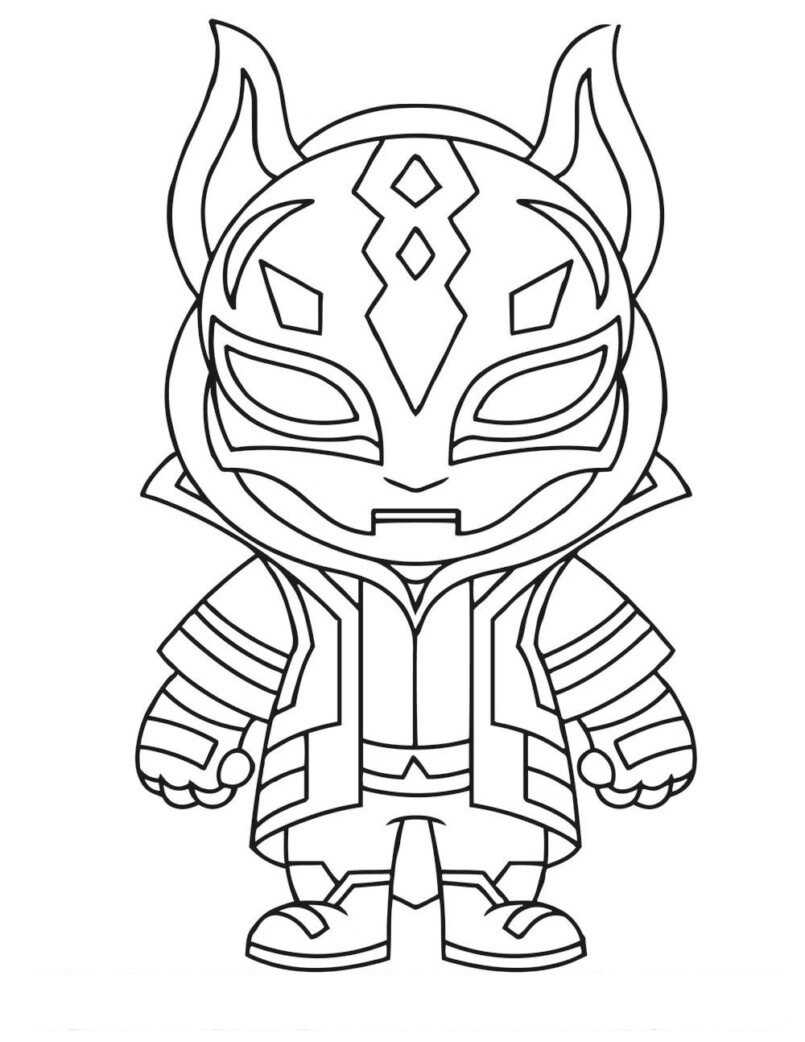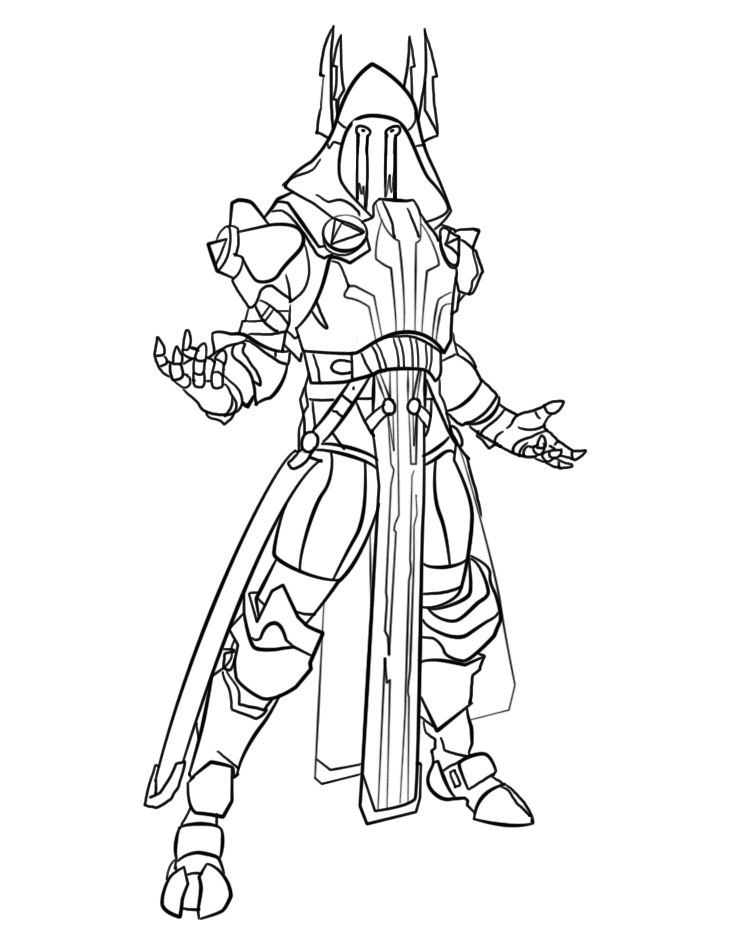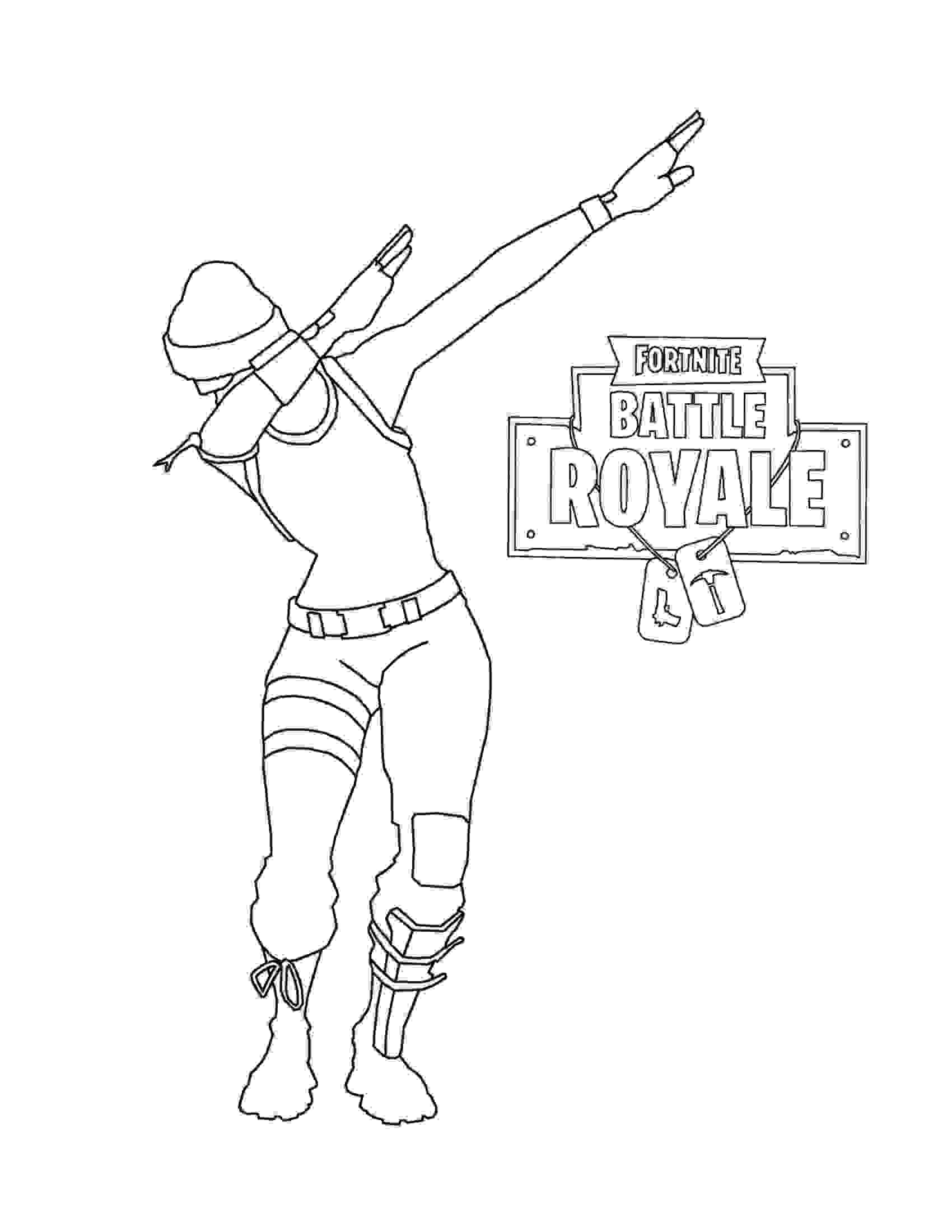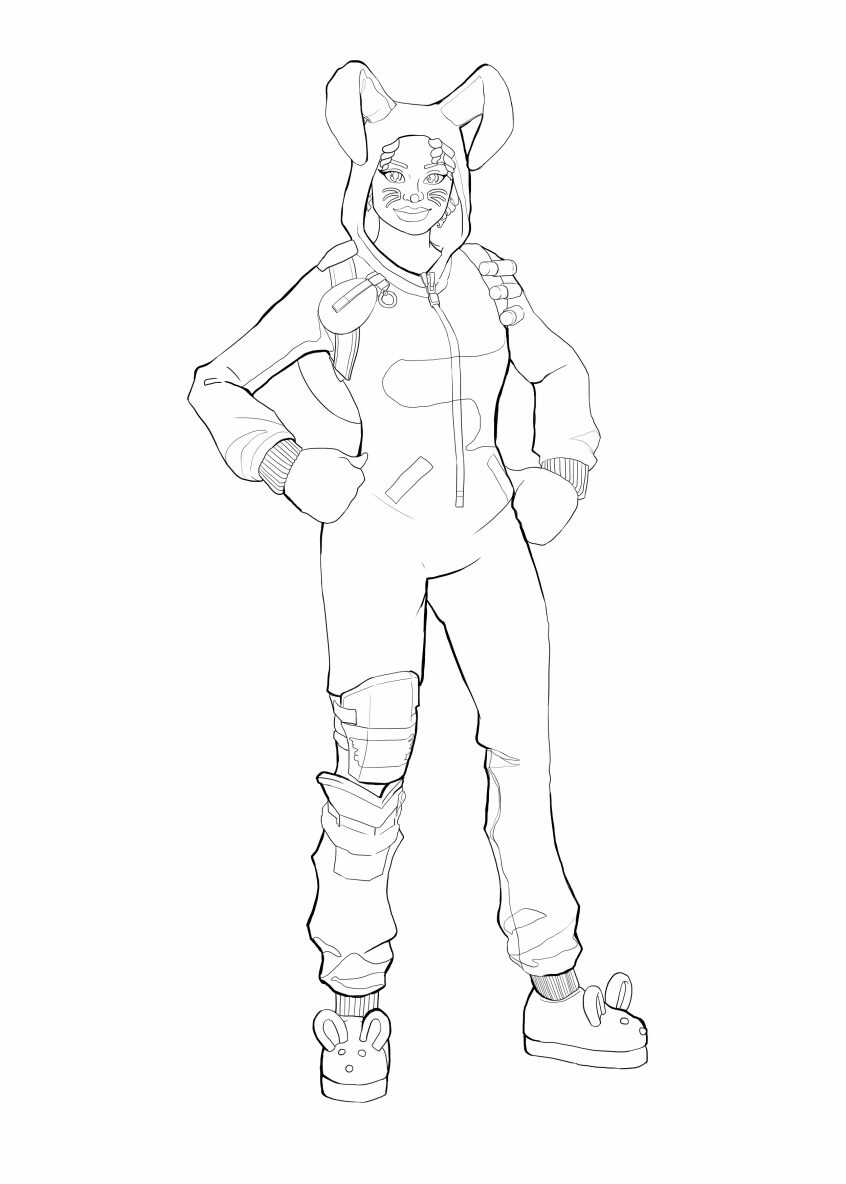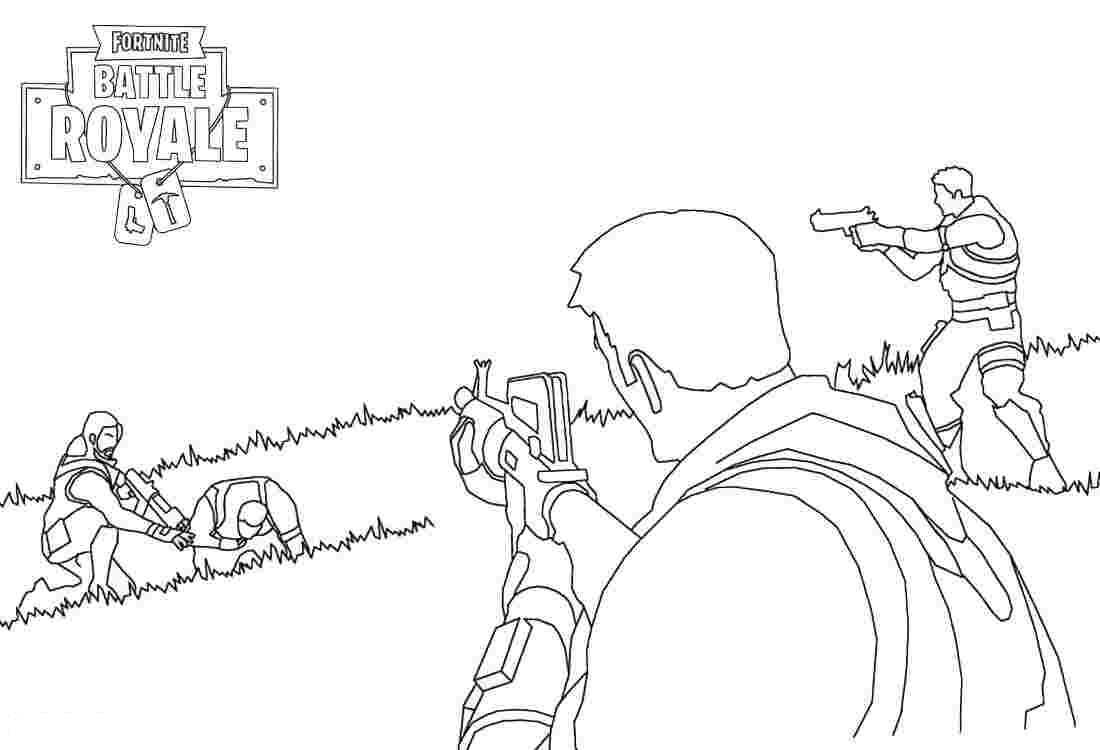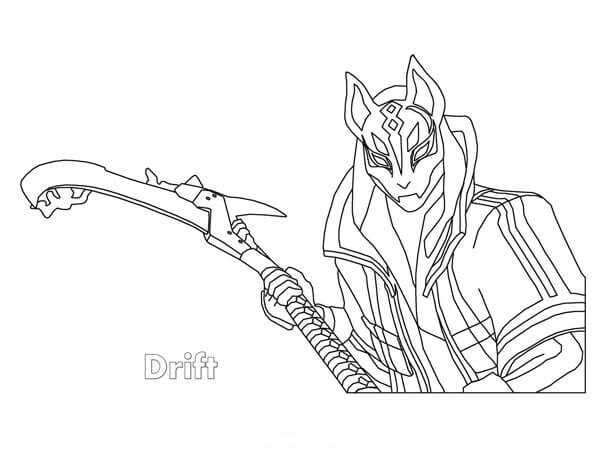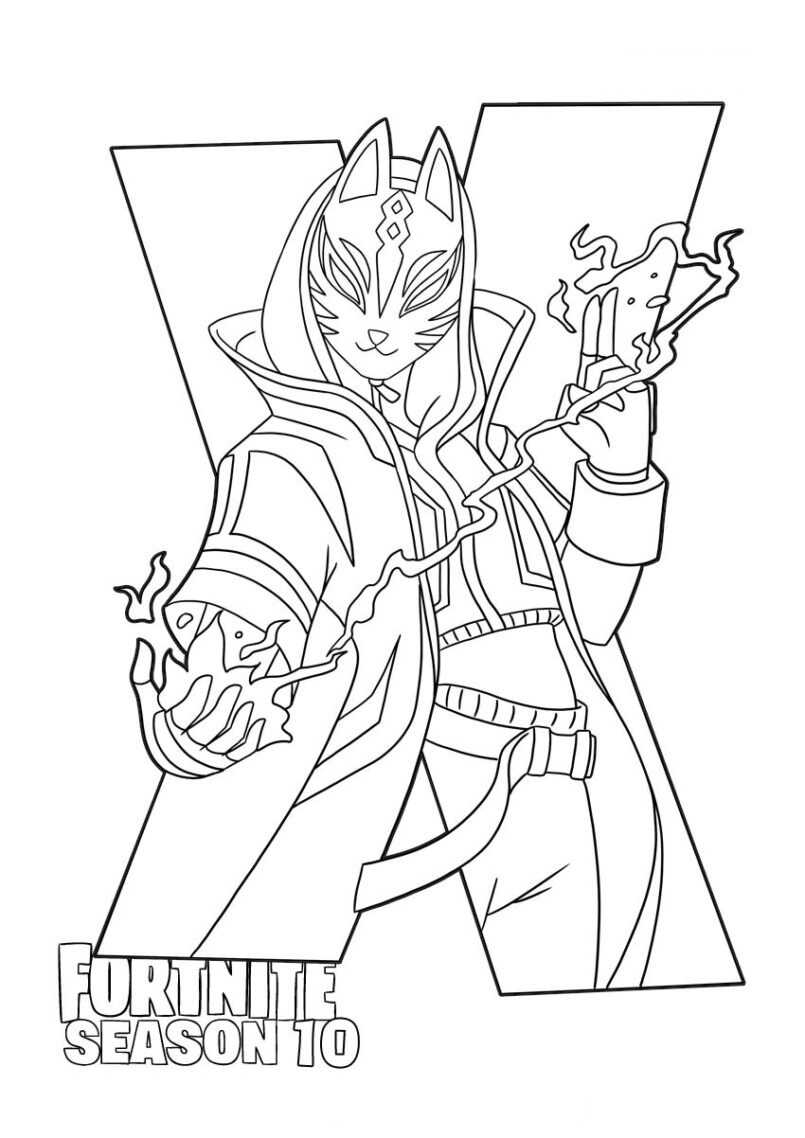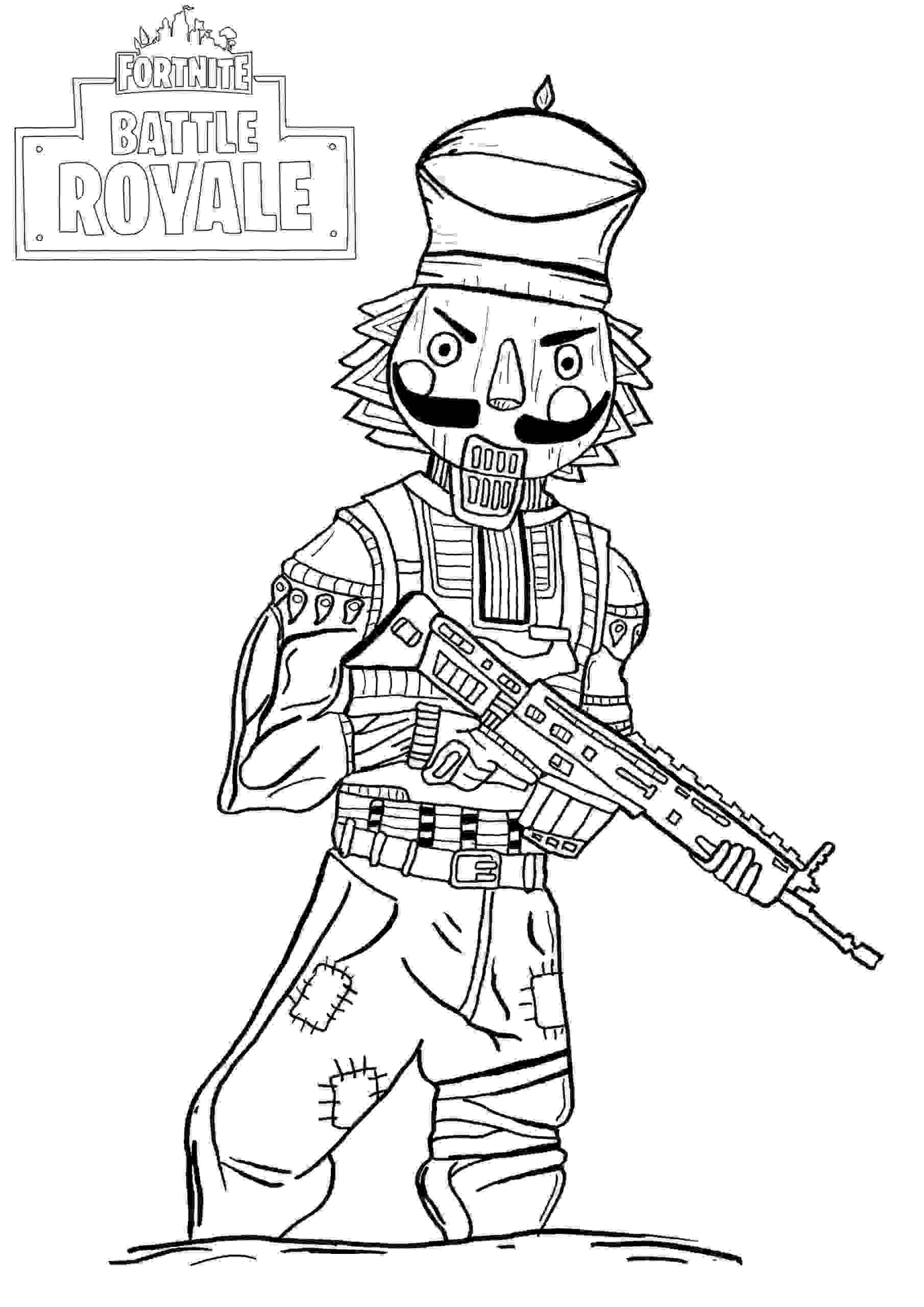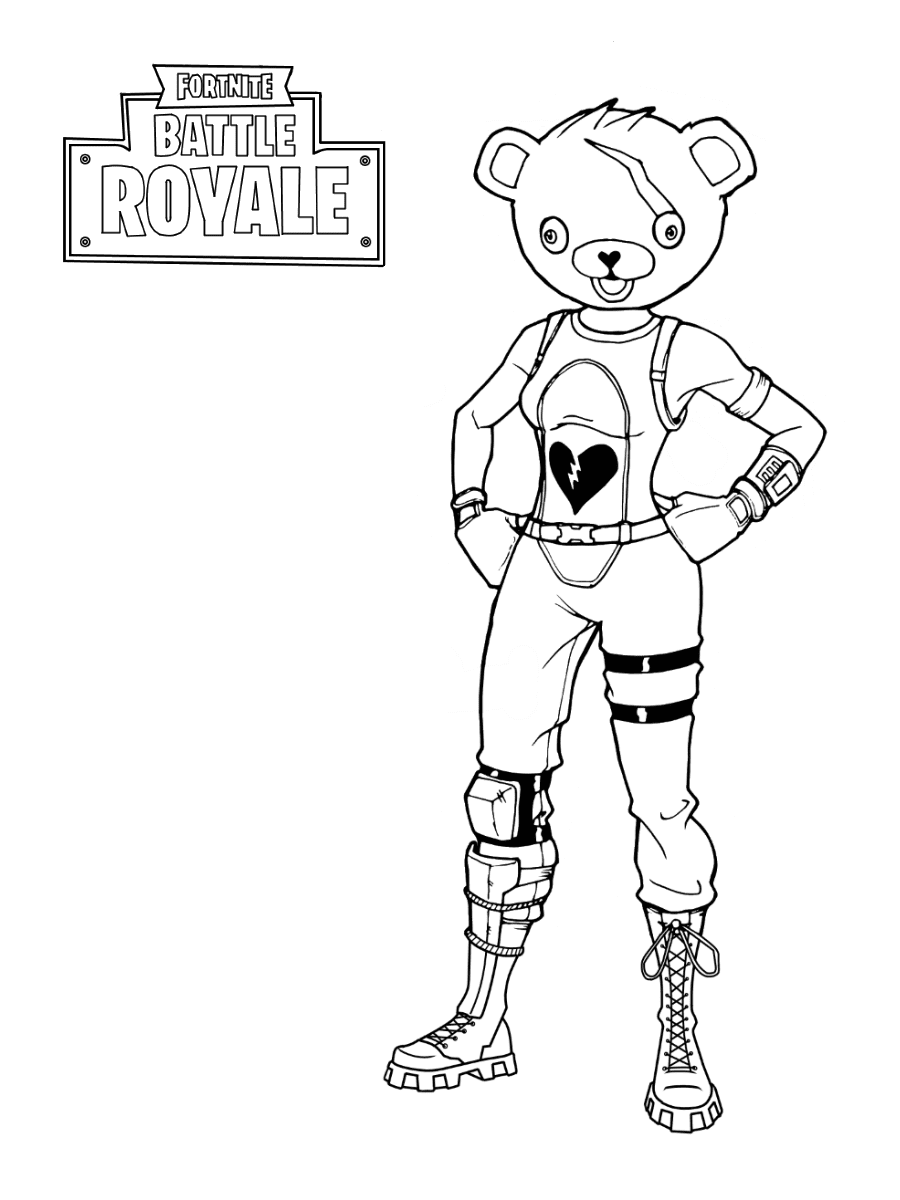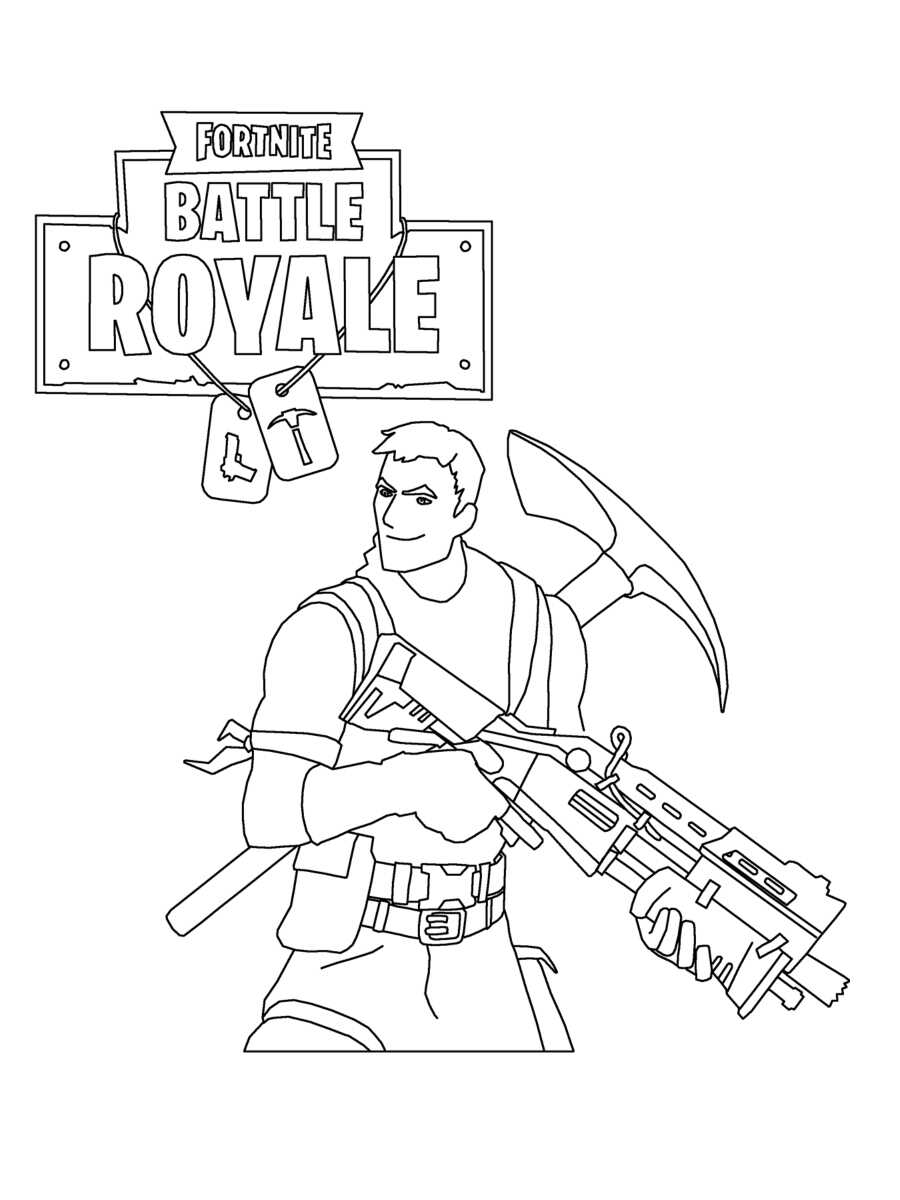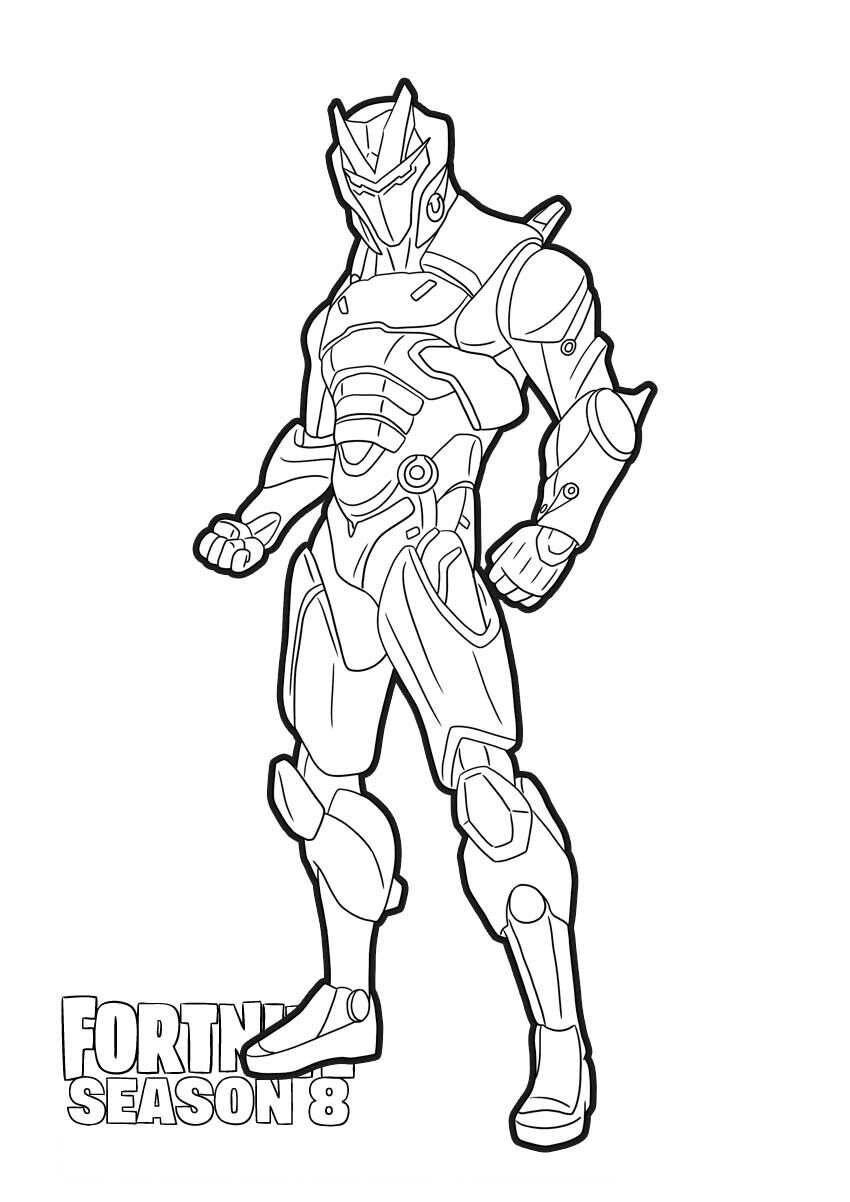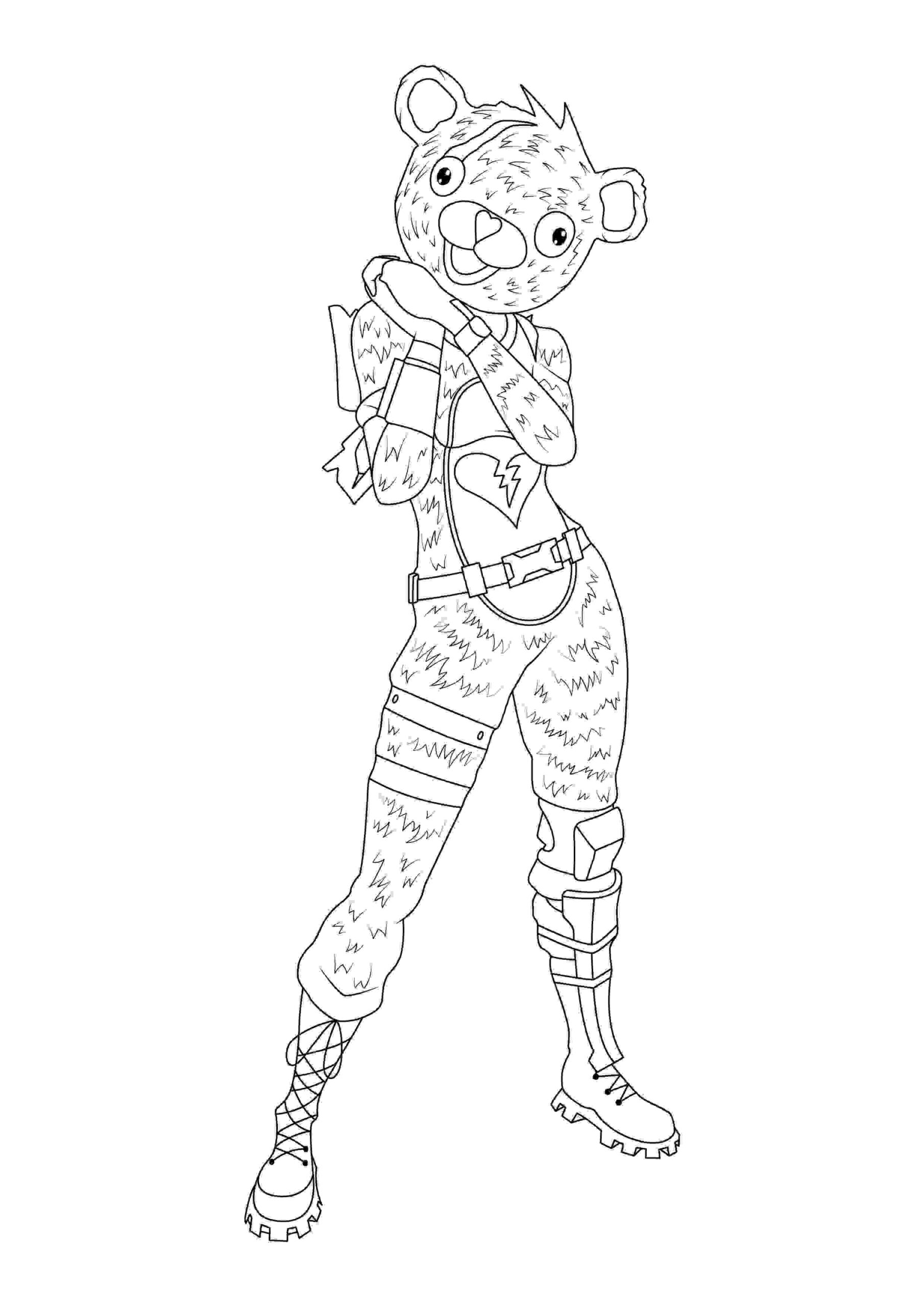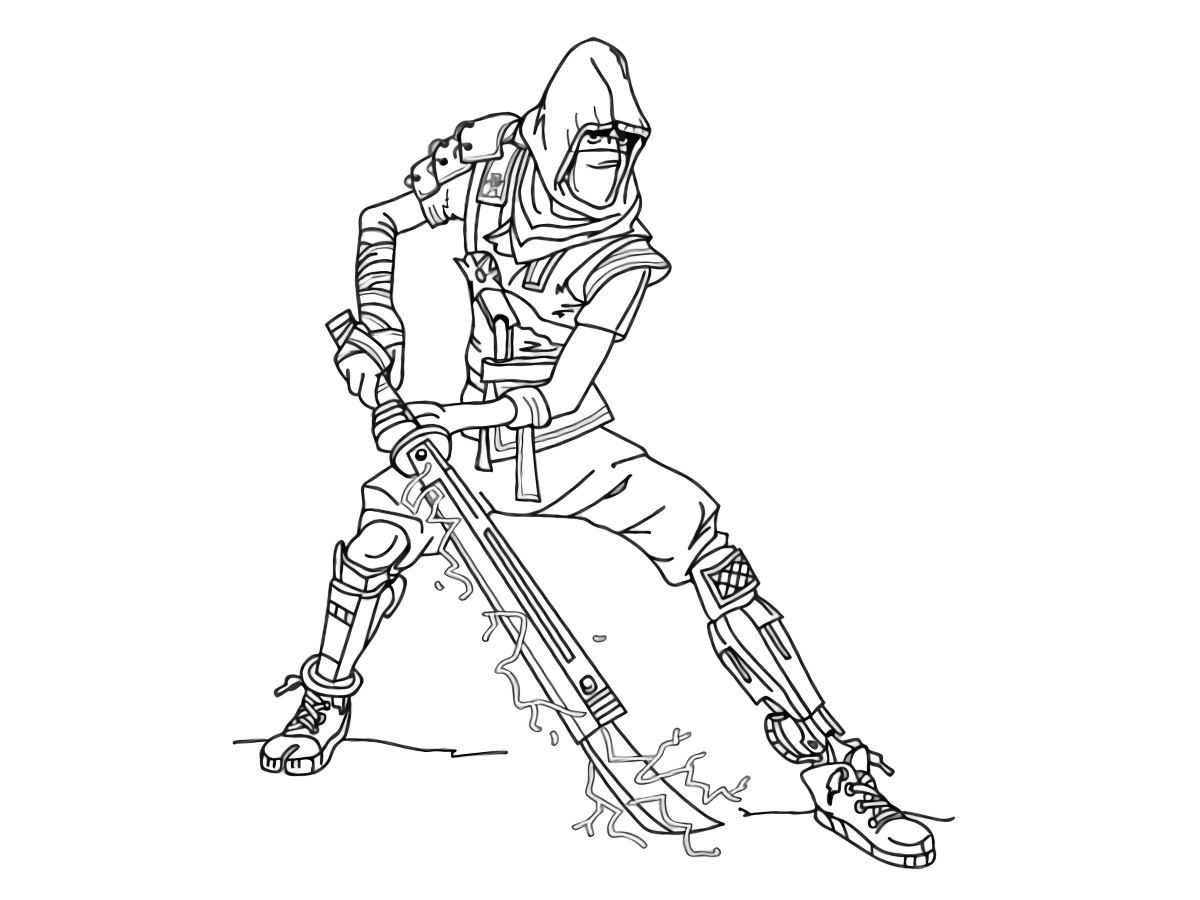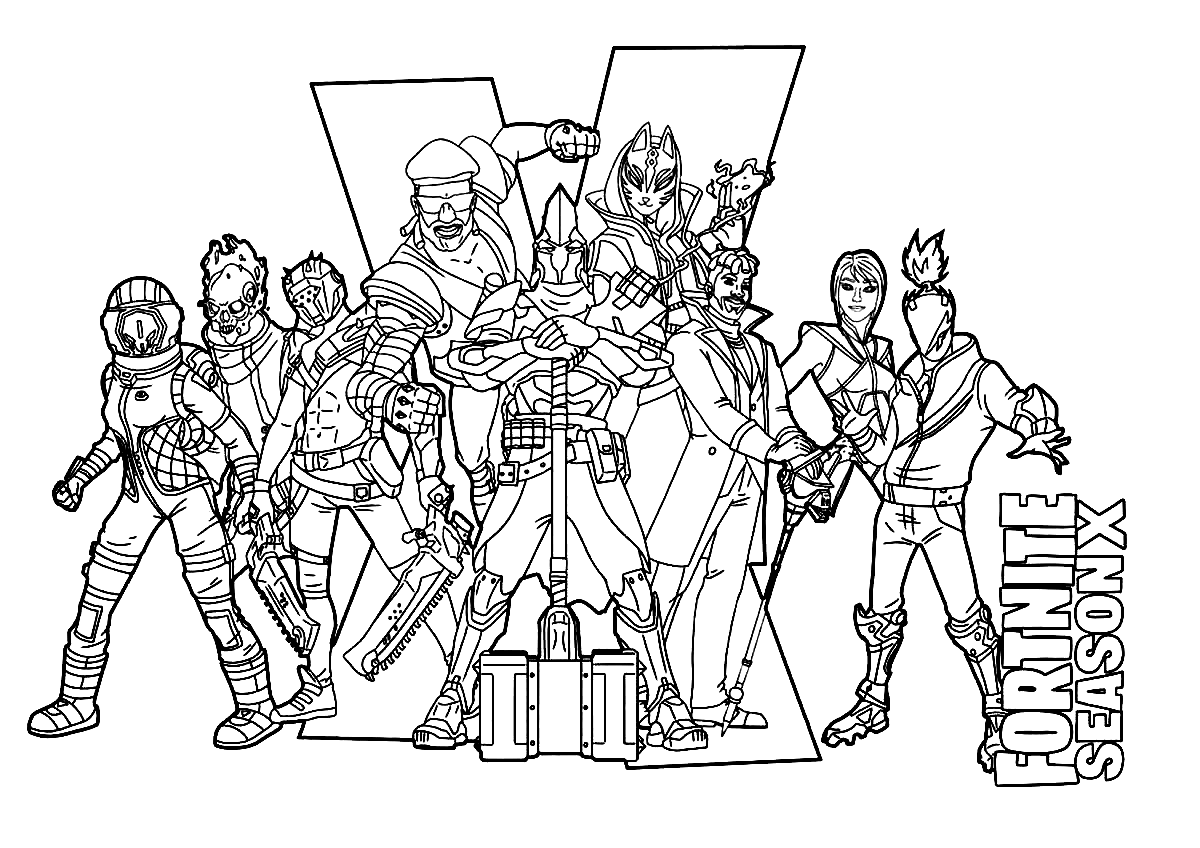
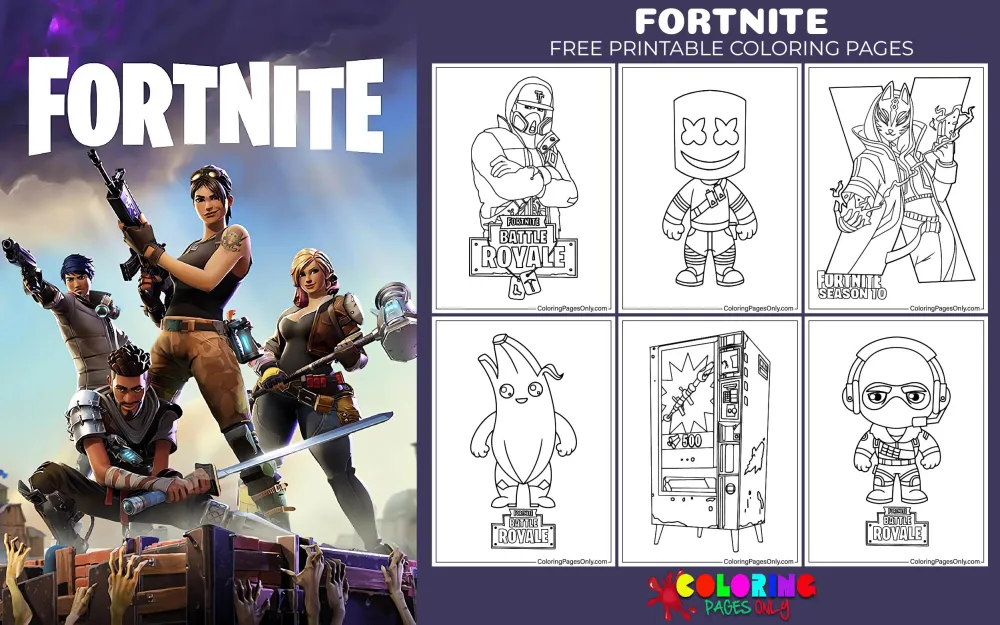
Free Fortnite coloring pages: 80+ pages featuring the iconic Battle Bus launching players toward the island, default Jonesy skins in action poses, popular named skins including Peely, Skull Trooper, and fan-favorite collaborative characters, pickaxe harvesting sequences, Victory Royale celebration screens, Supply Drop balloon crates descending from the sky, Storm circles closing on the final zone, building construction sequences, emote and dance poses, weapon silhouette pages, and the full visual vocabulary of Epic Games’ Battle Royale phenomenon across its first seven years of play. All free, printable PDFs and online coloring for fans of the game.
Fortnite: Battle Royale was released as a free-to-play game by Epic Games on September 26, 2017, seven weeks after the early access launch of the cooperative survival mode Fortnite: Save the World on July 25, 2017. The Battle Royale mode was developed rapidly by Epic Games following the commercial success of PlayerUnknown’s Battlegrounds (PUBG), which popularized the “last player standing” battle royale format in early 2017. Epic Games, headquartered in Cary, North Carolina, was founded in 1991 by Tim Sweeney.
By June 2018, nine months after the Battle Royale mode’s launch, Fortnite had registered 125 million players. By 2019, Epic Games reported approximately 350 million registered accounts. The Travis Scott in-game concert event “Astronomical,” held April 23 to 25, 2020, drew 12.3 million concurrent players at its peak: the largest single simultaneous audience in the game’s history. Fortnite has generated an estimated $26 billion in revenue from its 2018 peak through 2023, making it one of the most commercially successful free-to-play games ever produced.
Epic Games vs. Apple Inc. began in August 2020 when Epic deliberately circumvented Apple’s in-app payment system. Apple removed Fortnite from the App Store on August 13, 2020. The resulting litigation reshaped discussions of platform monopoly in digital distribution.
These 80+ free pages at ColoringPagesOnly.com cover the full Fortnite visual vocabulary. All free, PDF or PNG, print or color online.
What’s Inside
The Battle Bus Pages
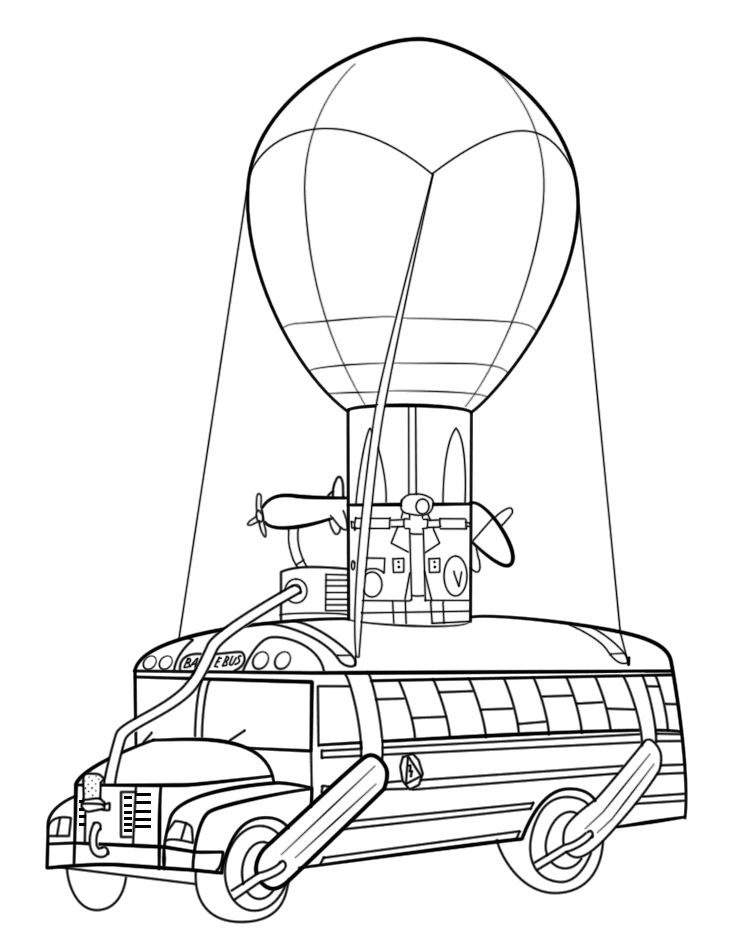
The Battle Bus is Fortnite’s most immediately recognizable visual symbol outside of the game’s character skins: a yellow school bus suspended beneath a blue hot air balloon, flying across the island at the start of each match. At the same time, players decide where to skydive from. The moment of jumpBus from the Bus, the parachute-glider deployment, and the descent toward chosen landing locations are the match’s opening ritual, repeated by every player at the beginning of every game.
The design is one of gaming’s most effective visual metaphors for a game’s core premise: a school bus, the vehicle associated with children’s daily travel and group transport, repurposed as the delivery system for a competitive last-player-standing survival match. The contrast between the bus’s mundane utility vehicle origin and its current role communicates the game’s overall tone, somewhere between cartoon and intense, familiar and strange, accessible and competitive.
The balloon component references the history of observation balloons and hot air balloon travel. Still, in the vivid blue of the Battle Bus’s specific shade, it reads primarily as a Fortnite graphic element rather than as a historical reference. The bus’s yellow body and the balloon’s blue create the color combination most directly associated with the game’s opening sequence.
Coloring Battle Bus pages: The bus body is school bus yellow: the specific, vivid, warm yellow of American school transportation, applied at full saturation. The balloon above is a specific vivid medium blue, the same blue that defines the Storm’s circle and several other Fortnite visual elements. The rope or cable connecting the balloon to the bus is dark grey. Any visible wires on the bus are dark grey to near-black, suggesting the interior. The overall composition should feel energetic and slightly surreal: the yellow and blue together at full saturation create the visual excitement the image is meant to communicate.
Default Skin and Jonesy Pages
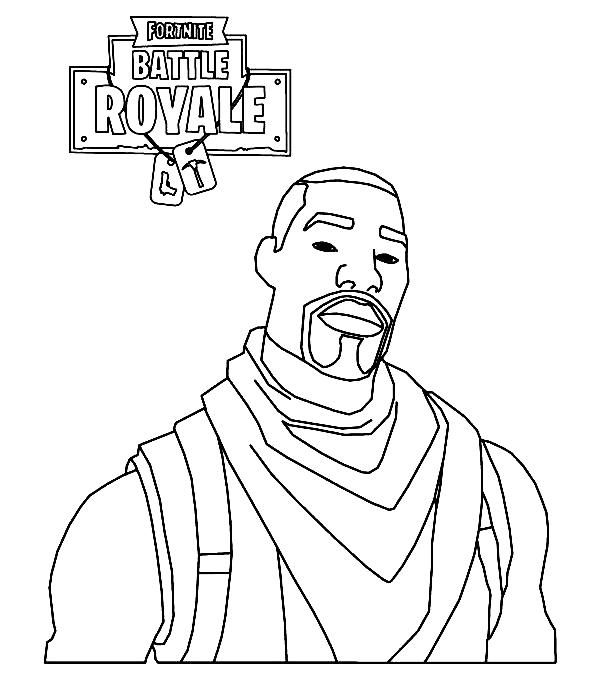
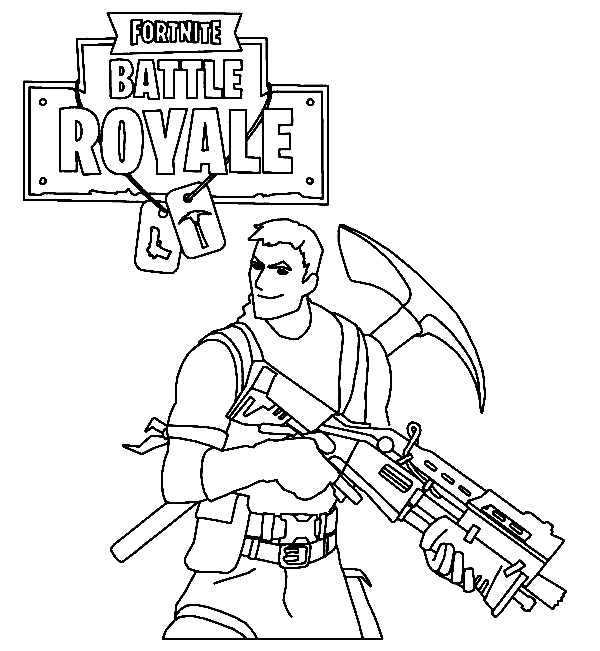
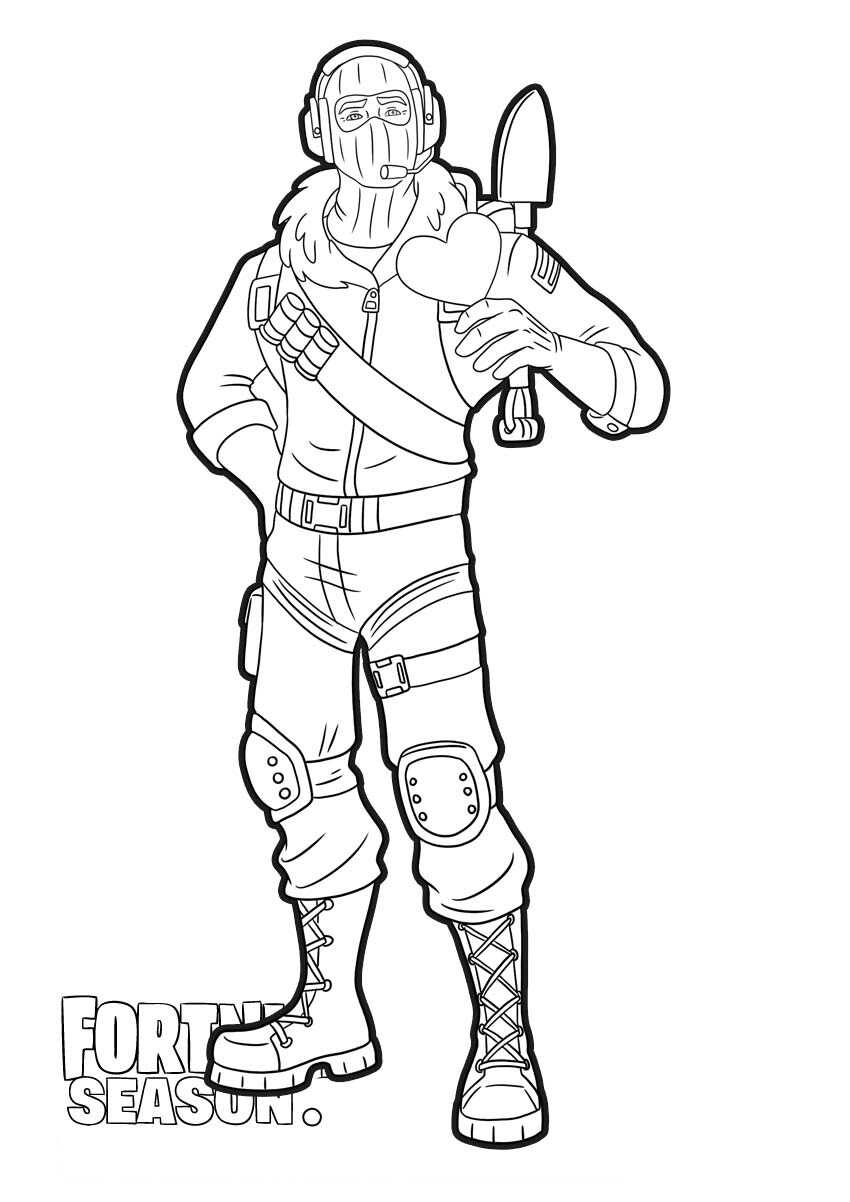
The “default skin” or “Jonesy” is the name collectively applied to the generic male player character that new players received before acquiring cosmetic skins. The default appearance, a vaguely military-casual outfit in muted greens and browns, became culturally significant precisely because of what it communicated in the game’s social hierarchy: players in default skins were assumed to be new, unskilled, or unable to afford the game’s cosmetic items. Being called a “default” was an insult within the Fortnite player community.
This cultural weight made the default skin simultaneously the most mocked and most philosophically interesting character in the game. Within Epic’s actual fiction, “Jonesy” has been developed as a specific character across multiple seasons with his own narrative arc related to the game’s ongoing story about the Zero Point, the island’s mystical energy source. The character has appeared in multiple variants as the game’s story expanded: Agent Jonesy, Jonesy the First, Doctor Slone, and several others.
Coloring Jonesy/default pages: The default outfit uses muted, military-casual tones: medium olive-green for the jacket, medium grey-green for the pants, tan-brown for any visible undershirt, and medium grey for the boots and gloves. The overall palette is intentionally un-flashy: the default was specifically designed to be the visual opposite of the game’s most elaborate paid cosmetics. Skin tone is warm medium for the face. The character has dark brown or medium brown hair, styled.
Popular Character Skins Pages
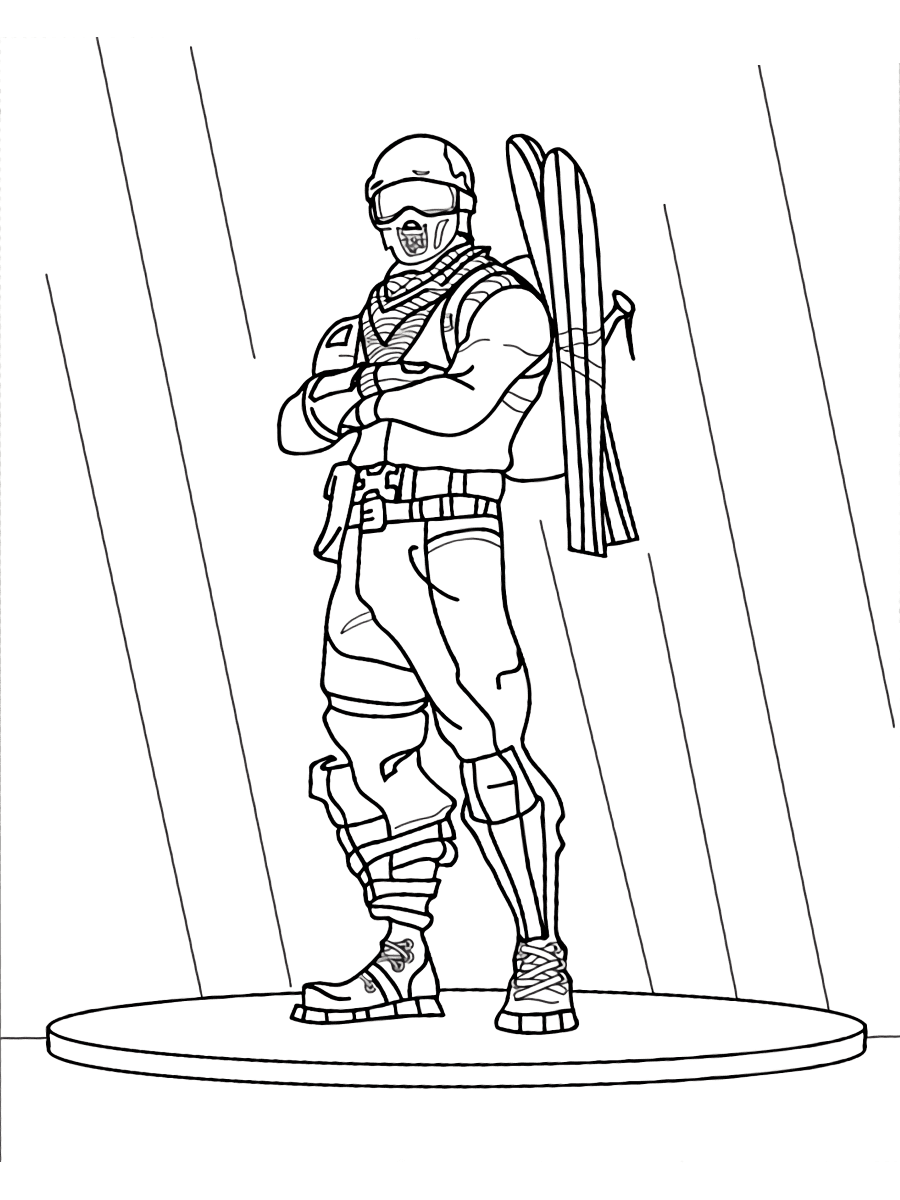
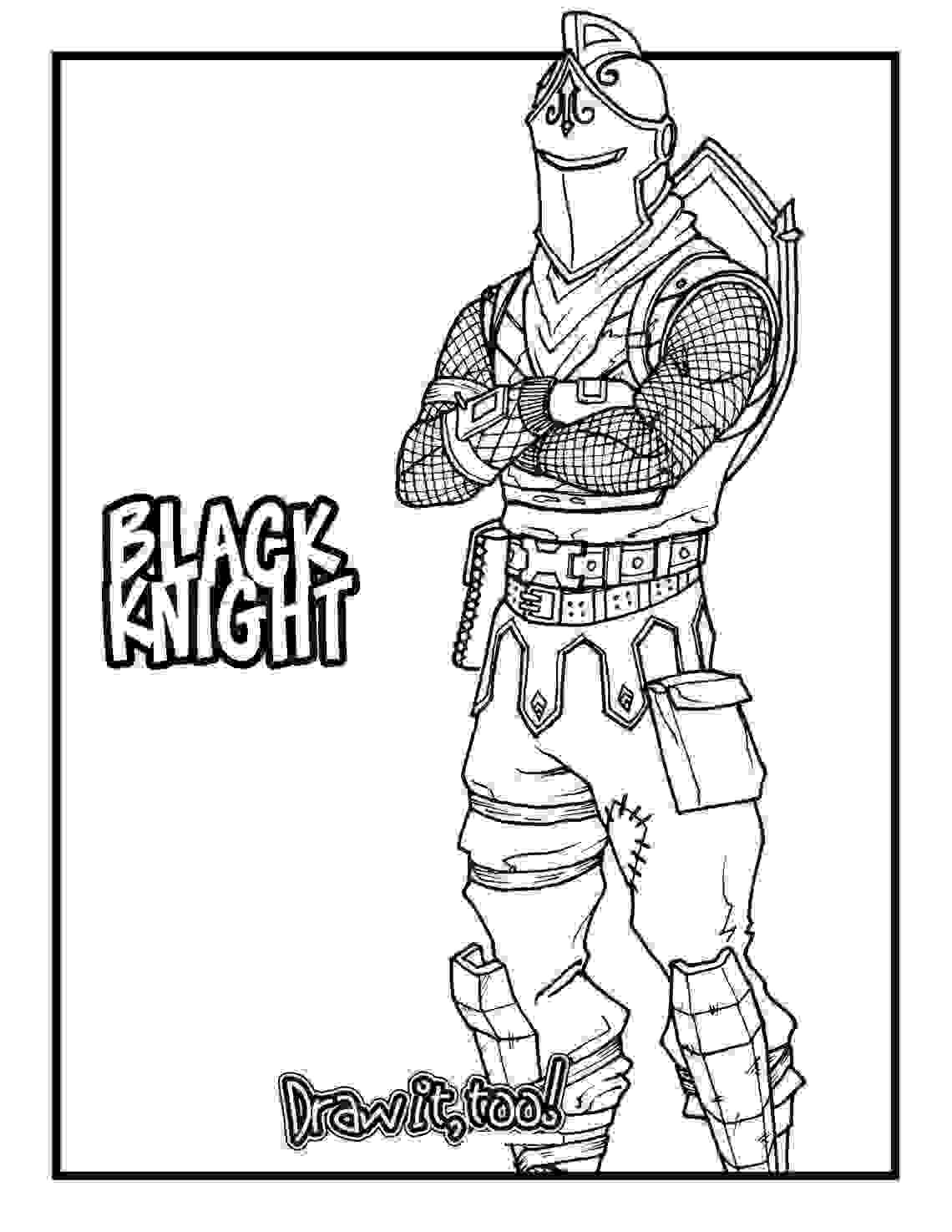
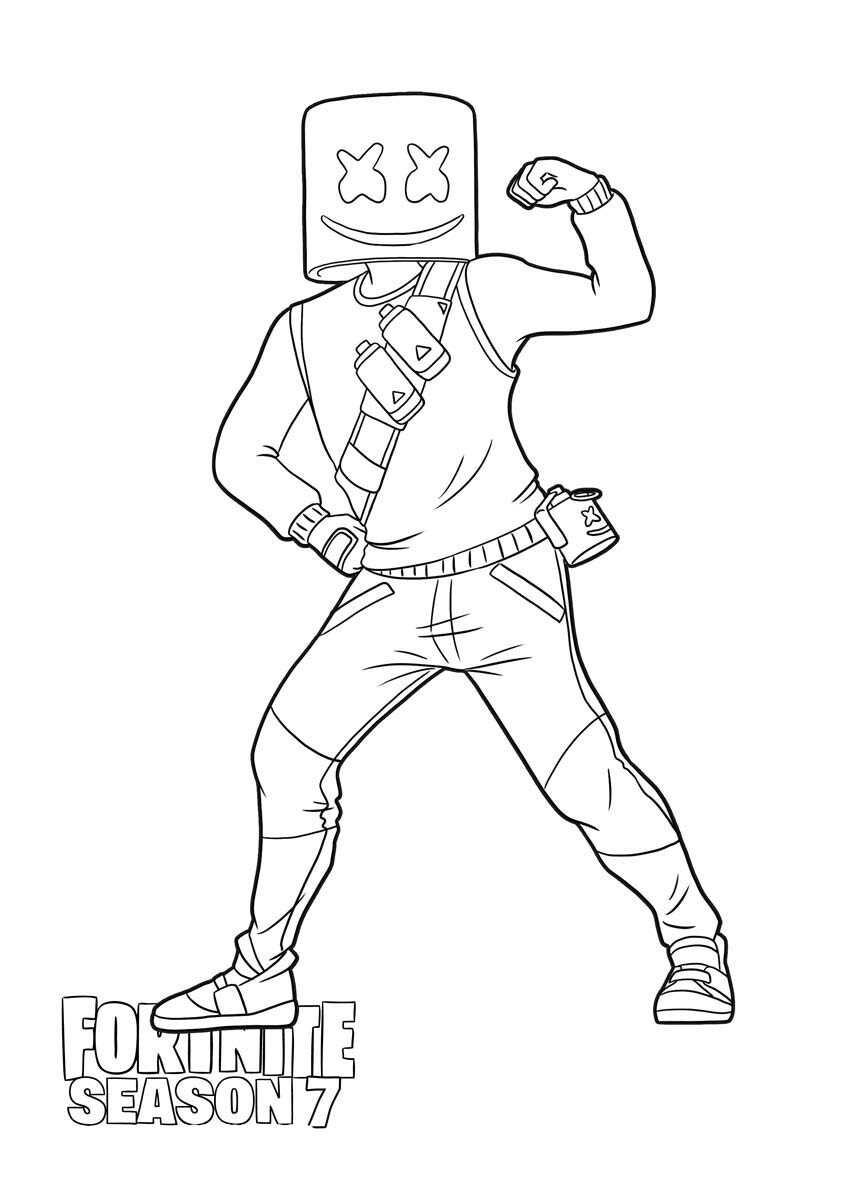
Fortnite’s cosmetic skin system has produced thousands of distinct character designs across its seven-year run, ranging from original Epic creations to licensed collaborations with major intellectual properties from Marvel, DC, Star Wars, and numerous other franchises.
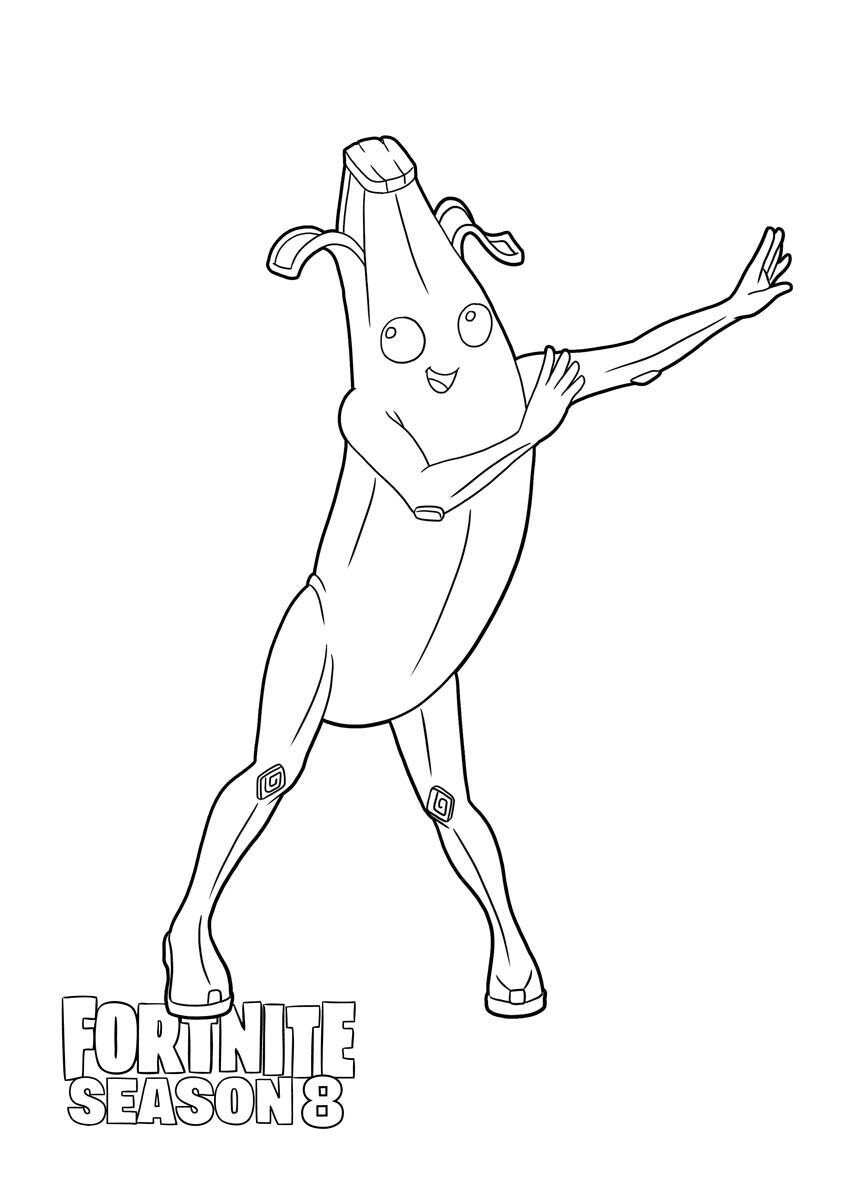
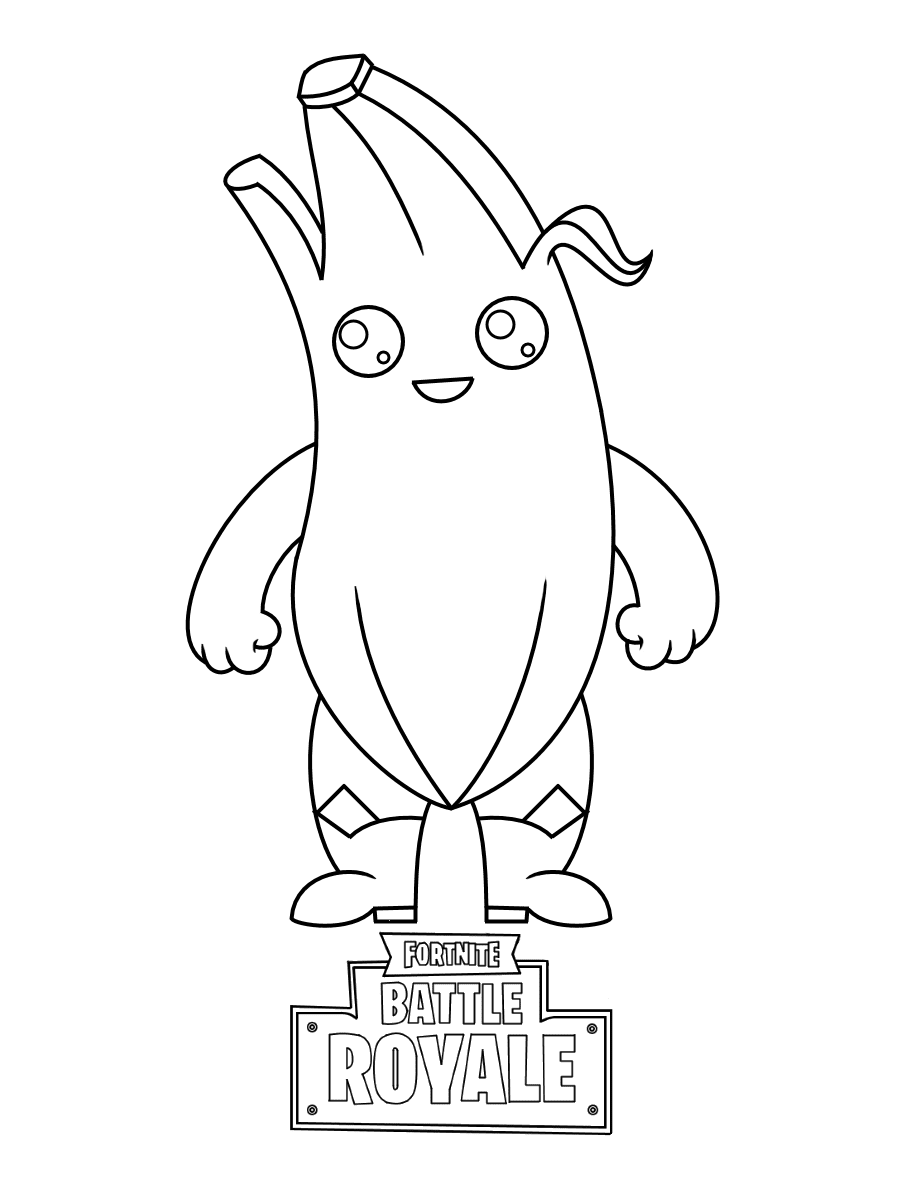
Peely is an anthropomorphized banana with warm yellow skin (literally a banana peel body), small dark eyes, and the specific cheerful absurdity of a character whose existence the game never explains or justifies. Introduced in Chapter 1, Season 8, Peely became one of the most beloved and most meme-generating skins in Fortnite history. The Peely variants include Agent Peely (in a suit), Peely Bone (skeletal), and others. His coloring challenge is precisely defined: he is banana yellow with a warm undertone, and any deviation makes him unrecognizable.
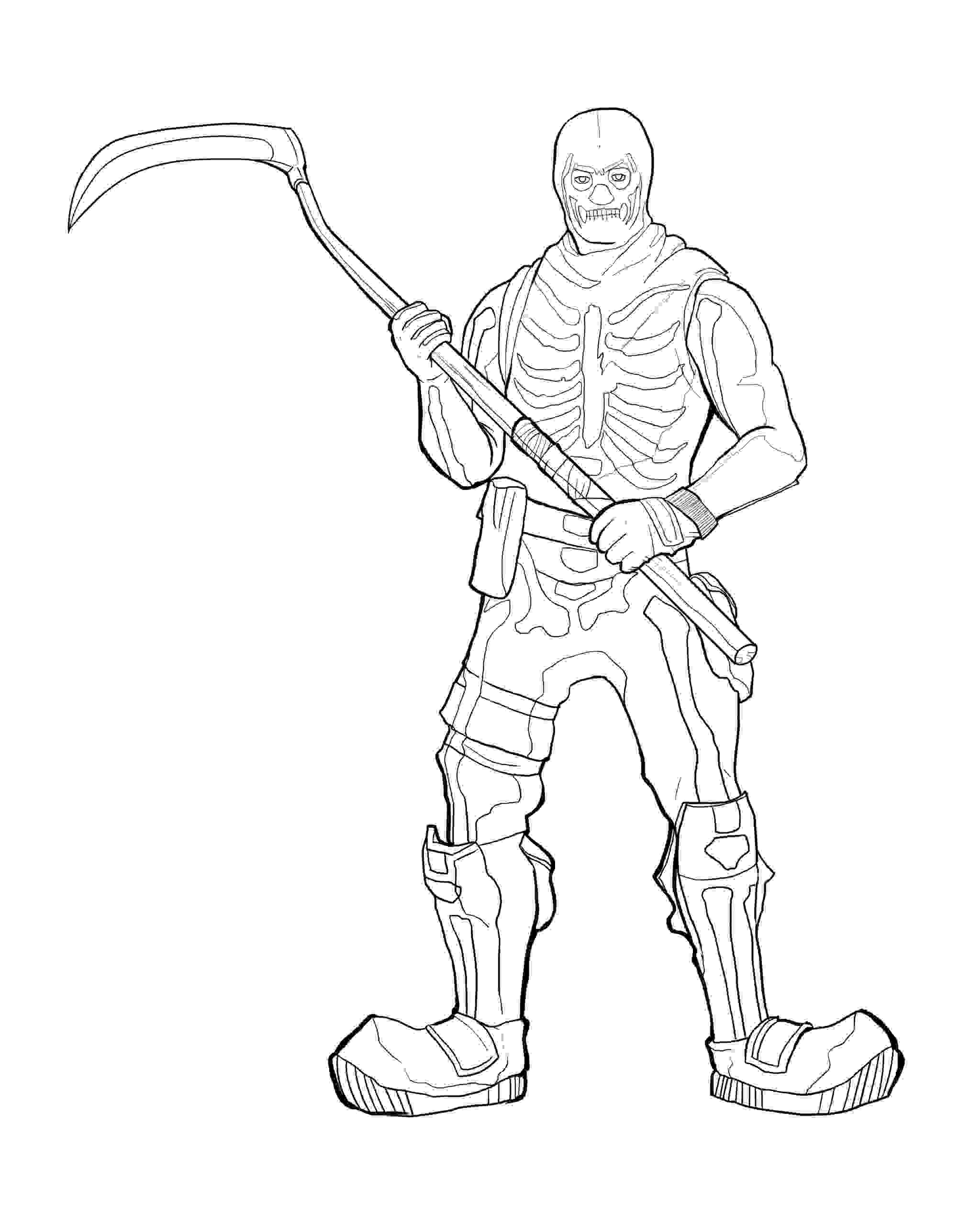
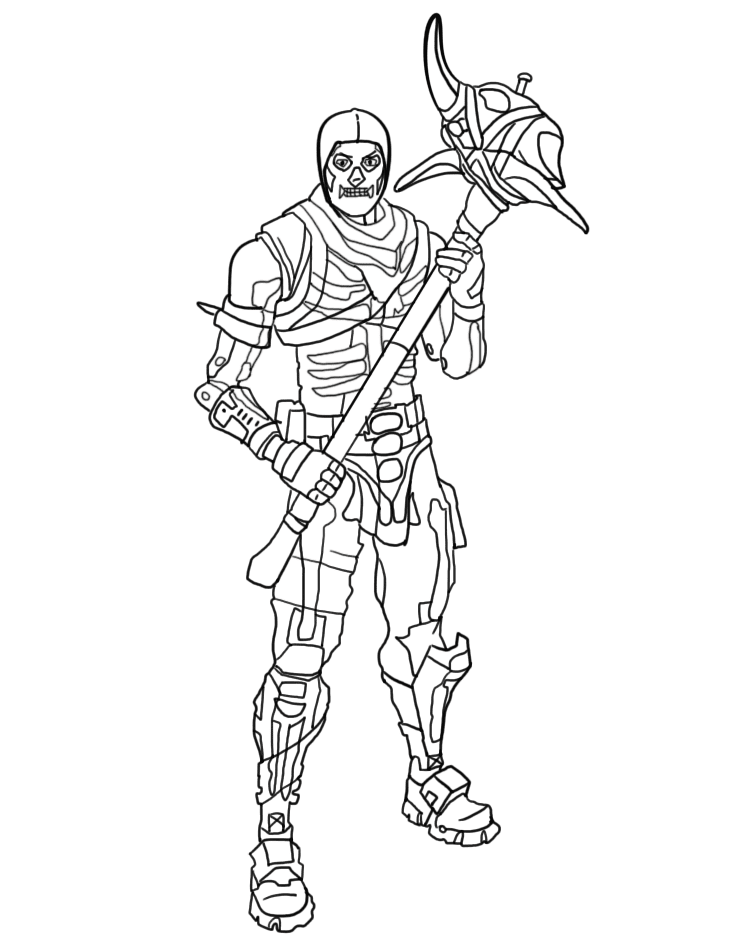
Skull Trooper, introduced in the first Fortnite Halloween event in October 2017, is one of the earliest named skins and one of the most enduring: a skeleton-themed character with a black bodysuit featuring painted white bone markings across the entire suit. The skeleton design gives the character a high-contrast black-and-white palette that provides one of the most visually striking options in the coloring collection.
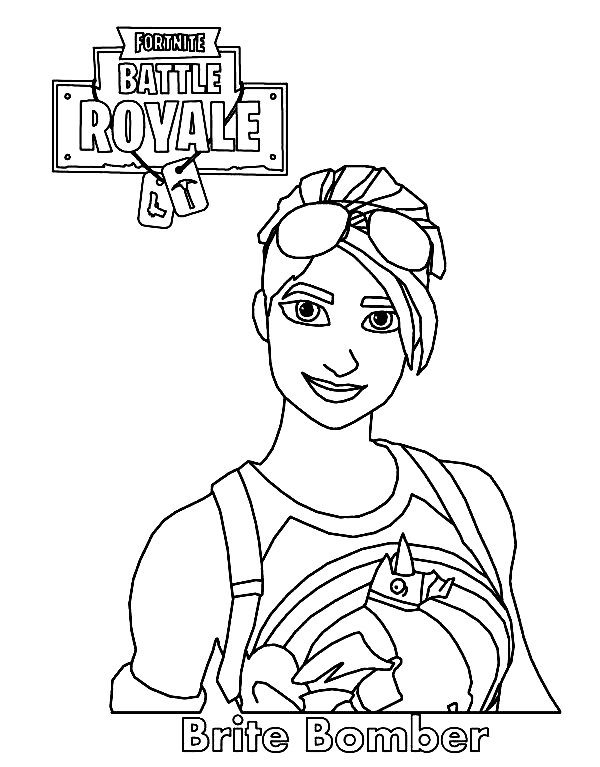
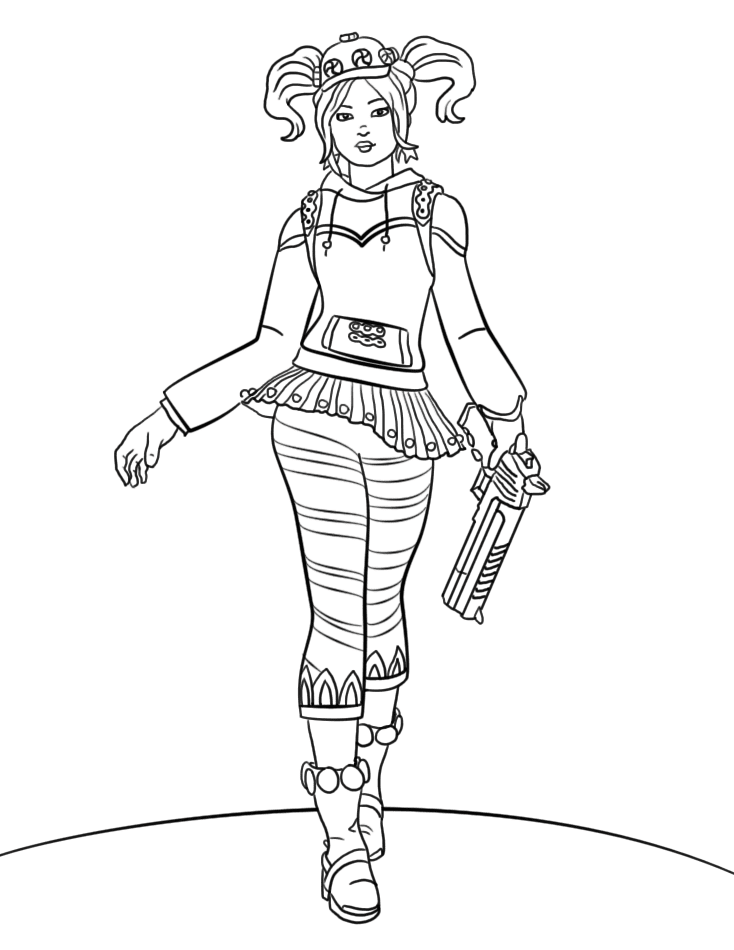
Brite Bomber is one of the most vivid and rainbow-themed skins: a female character in a bright multicolored outfit with a unicorn-themed design, representing the playful, colorful end of Fortnite’s cosmetic spectrum.
Coloring Peely pages: Vivid warm banana yellow as the primary body color at full saturation. The banana peel ridges visible along the head use slightly darker yellow-olive. Eyes are very small and dark—Coloring Skull Trooper pages: Near-black for the entire bodysuit. White bone markings were applied carefully over the black: spine along the torso, rib pattern on the chest, and simplified limb bone markings on the arms and legs. The contrast between near-black and clean white bone designs gives the character its entire visual impact.
Victory Royale Pages
“Victory Royale” is the text displayed when a player or team wins a Fortnite match, appearing over a celebratory graphic with fireworks or confetti. It is one of gaming’s most widely recognized win-screen messages and one of the few pieces of game text that has entered general cultural vocabulary: players outside of Fortnite understand what “Victory Royale” means.
The victory screen’s visual typically shows a dramatic sky background, the text in large bold lettering with a distinctive visual style, and the winning character in a triumphant pose. Pages referencing this moment are the collection’s most emotionally charged: they depict the specific moment of winning in a game where 99 players lose for every single winner.
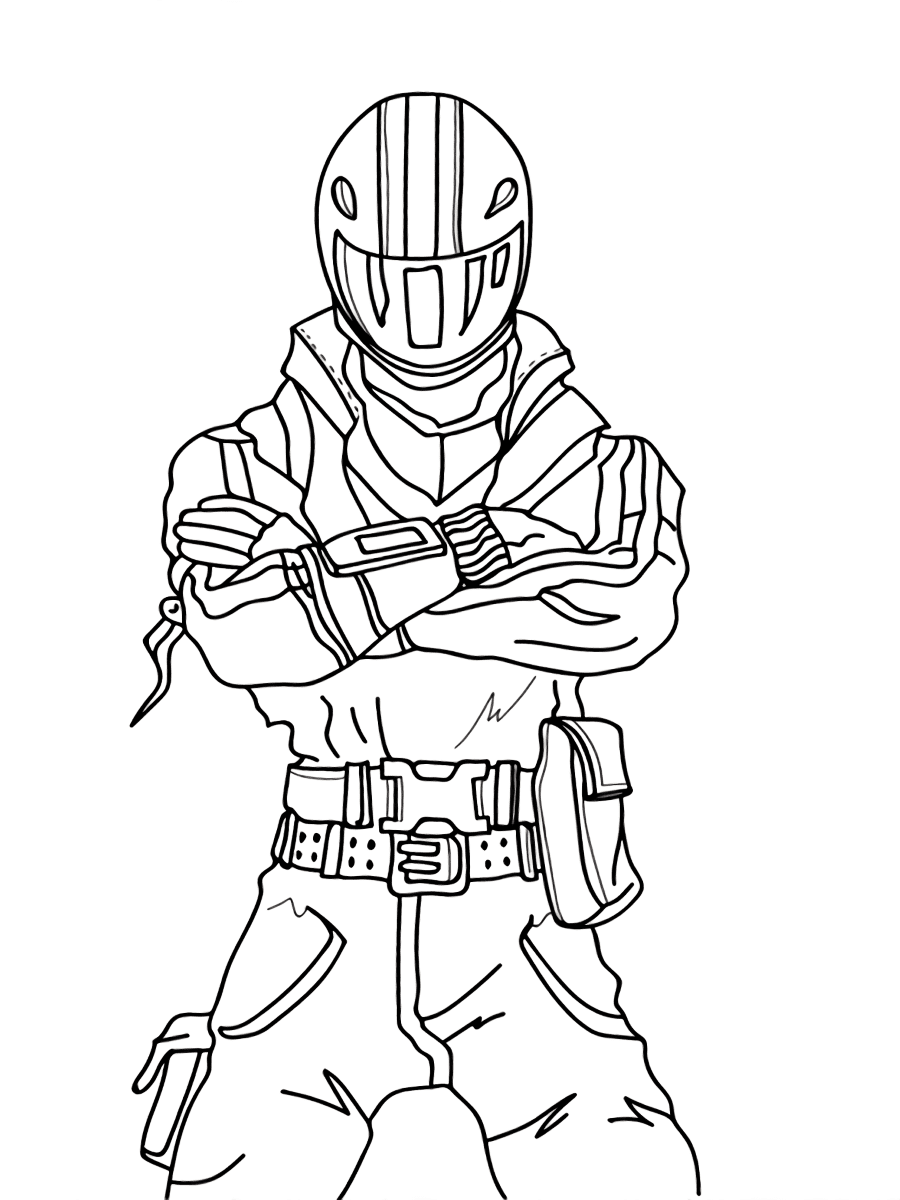
Coloring Victory Royale pages: The background sky uses deep warm sunset tones or dramatic dark blue to create the celebratory atmosphere. The “Victory Royale” text itself is typically rendered in warm gold or vivid metallic yellow, the color of winning in Fortnite’s visual vocabulary. Confetti or firework elements use the full range of vivid colors. The character in the victory pose should be rendered in the full canonical colors of their specific skin.
The Storm and Gameplay Environment Pages
The Storm, the shrinking blue-purple zone that forces all players toward the center of the map over the course of a match, is the game mechanic that gives Fortnite its fundamental tension: players cannot simply hide indefinitely, because the Storm continuously narrows the safe zone and deals damage to anyone caught outside it. Pages referencing the Storm show the dramatic blue-purple energy wall closing in, the safe zone circle visible on the landscape, and the visual urgency of the match’s final stages.
Supply Drop pages show the blue balloons descending from the sky, each carrying a reinforced crate with high-tier weapons and items. The balloon-and-crate combination is one of Fortnite’s most directly visual game events: players see the balloon from a distance, converge on the landing zone, and compete for the contents.
Coloring Storm pages: The Storm’s energy wall uses deep, slightly purple-shifted blue at the inner edge of the storm cloud, transitioning to slightly lighter blue-purple as it extends outward. The safe zone inside the Storm boundary is rendered in warmer, more natural landscape tones. Coloring Supply Drop pages: The balloon is vivid medium blue, matching the Battle Bus balloon. The crate below is medium grey or dark brown with metallic hardware details. Any light effects from the crate’s value should suggest warmth.
Weapon and Pickaxe Pages
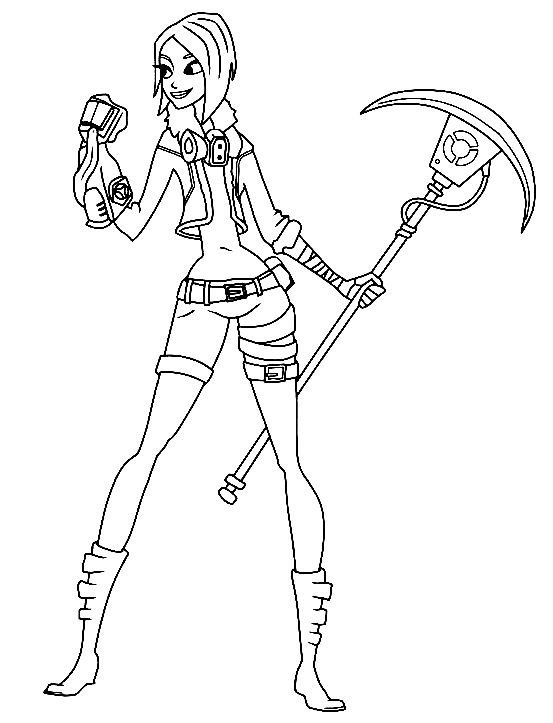
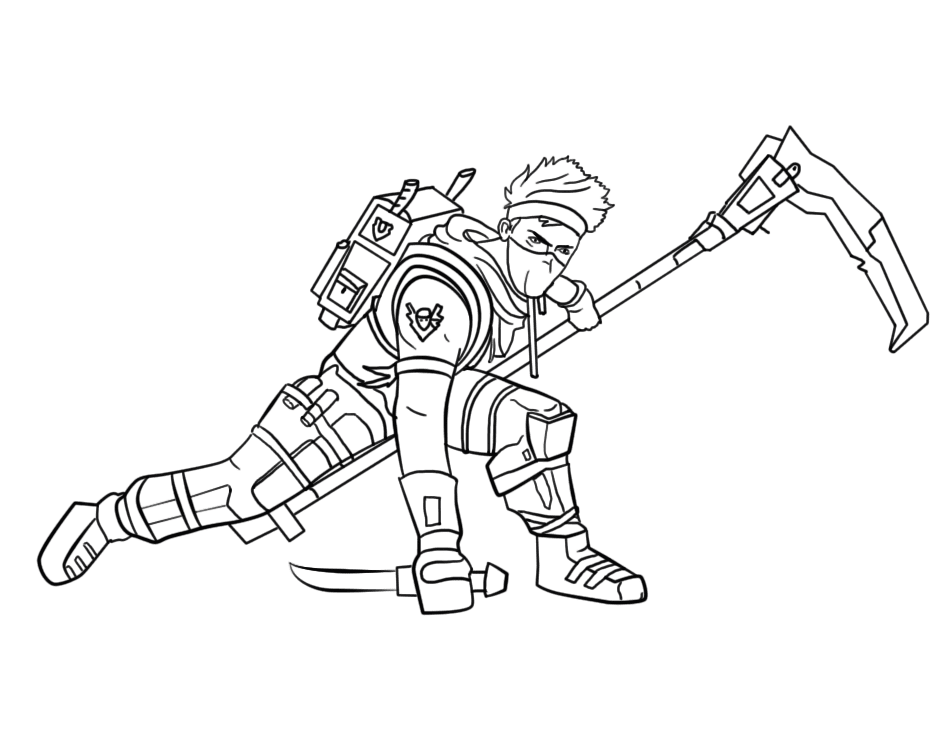
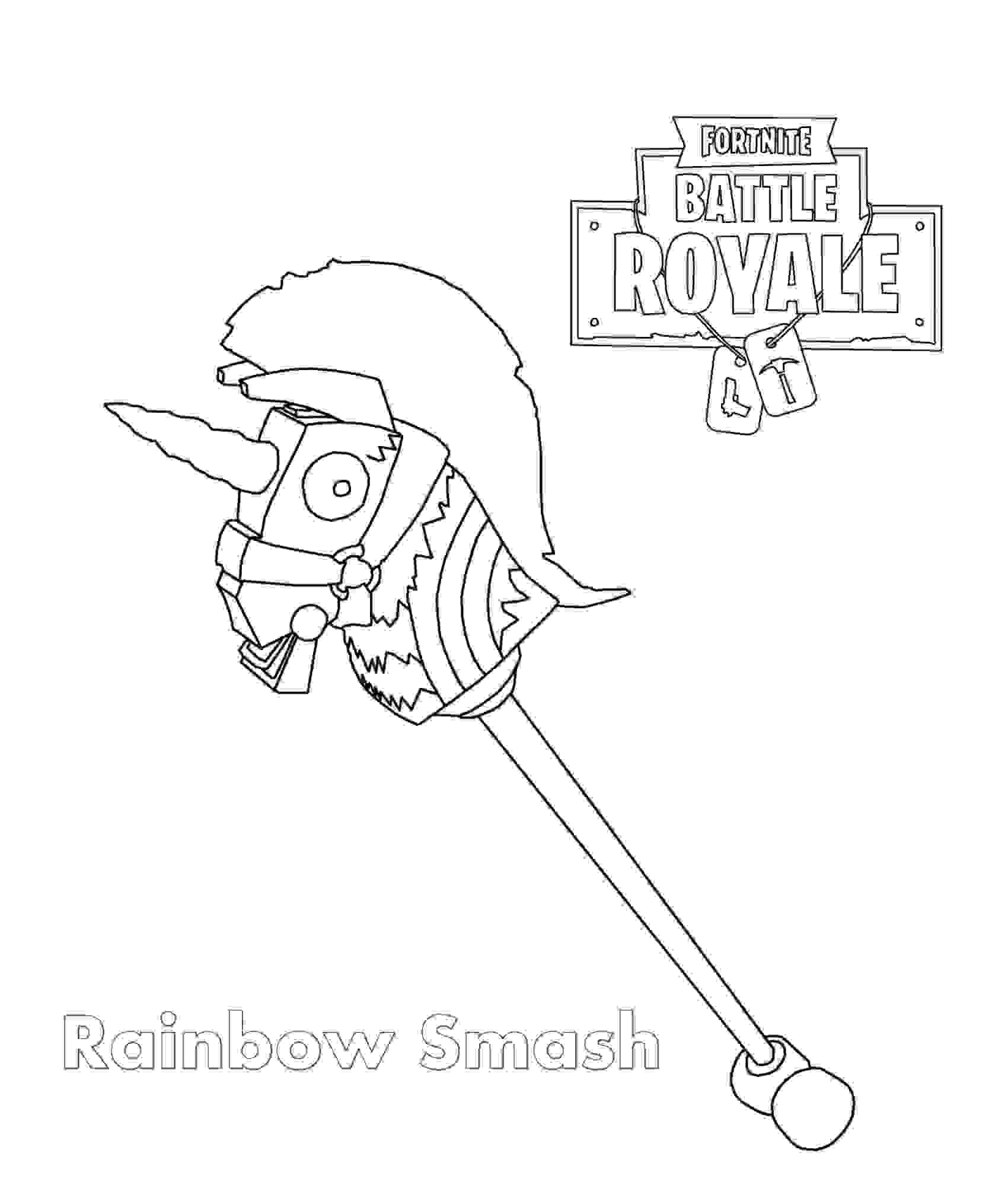
The pickaxe (technically the “harvesting tool”) is the one item every player carries from the beginning of every match: it is used to break down environmental structures (trees, rocks, walls, buildings) to collect wood, stone, and metal for building, and it serves as a melee weapon of last resort. The pickaxe is the game’s most universal item, the only tool guaranteed in every player’s inventory, and it comes in hundreds of cosmetic variants that range from simple to elaborate.
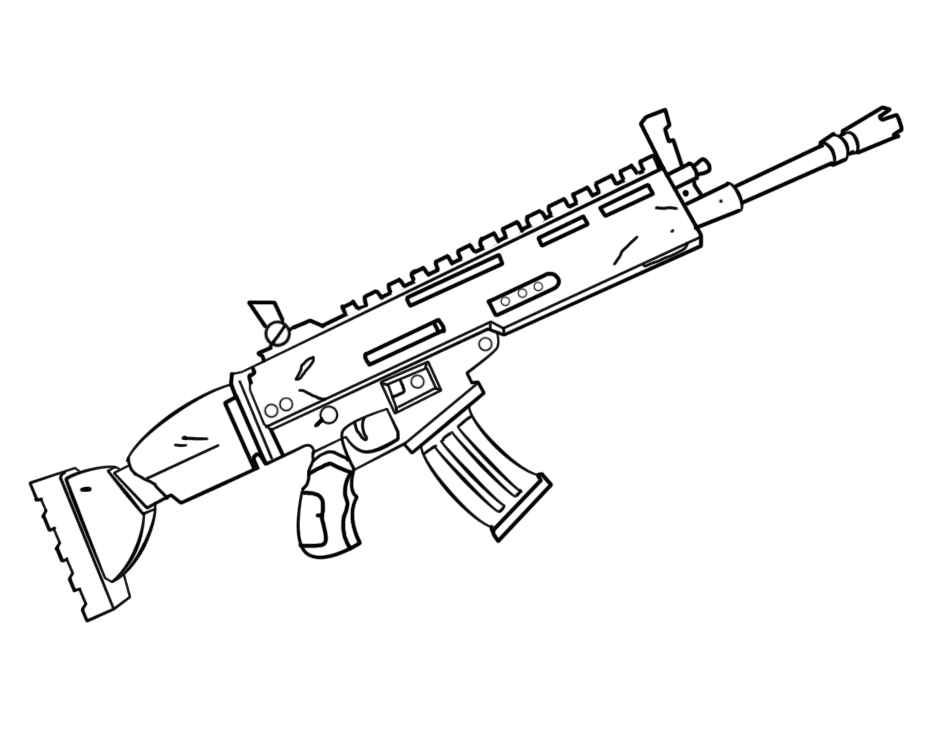
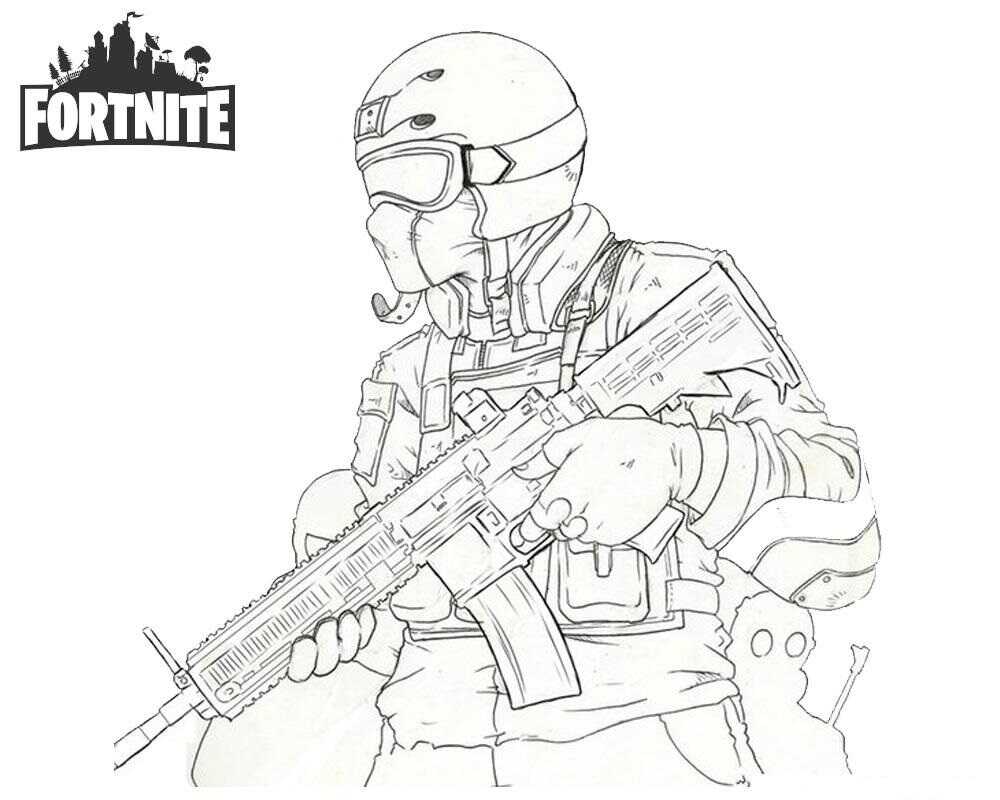
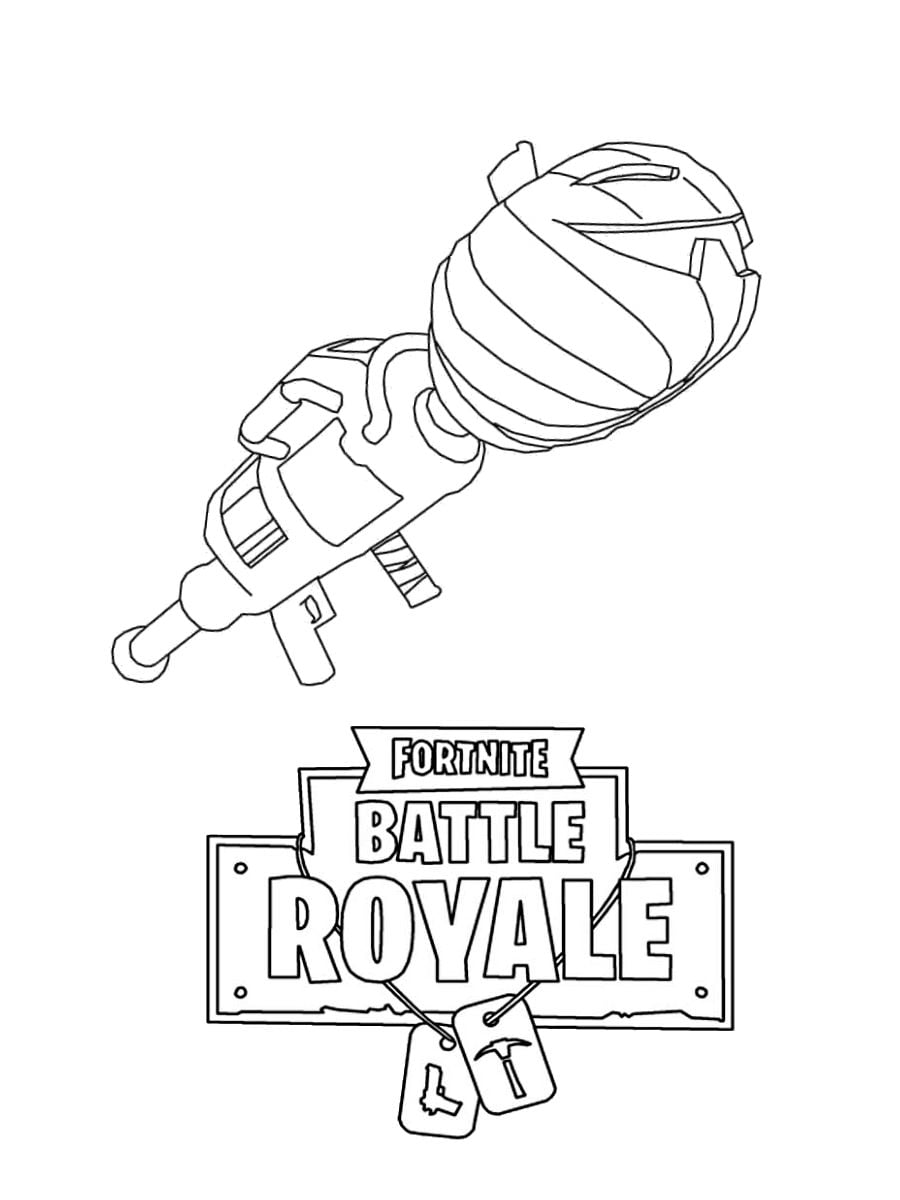
The SCAR (a styled assault rifle), the pump shotgun, and the rocket launcher are among the most frequently depicted weapon types in Fortnite fan art and, by extension, coloring pages. Weapons are color-coded by rarity: grey (common), green (uncommon), Epicblue (rare), purple (epic), and gold (legendary), with higher-rarity weapons providing better performance.
Coloring weapon pages: The rarity color-coding system provides natural palette guidance: a legendary-tier weapon is rendered in warm gold. An epic weapon uses vivid purple. A rare weapon is medium blue. Standard weapons use the tactical dark greens, browns, and blacks of military equipment aesthetics.
What These Pages Do
Fortnite’s development history includes a specific creative decision that significantly shaped its cultural impact: the choice to make Battle Royale free-to-play and generate revenue exclusively through cosmetic item sales. This business model, which Epic Games adopted and executed more successfully than any prior example, established a template for free-to-play game monetization that influenced the entire gaming industry. The decision meant that any player with a compatible device could access the full gameplay experience without spending money. In contrast, players who chose to spend could purchase cosmetics that affected only appearance, not gameplay performance. This structure is specifically credited with Fortnite’s unusually broad demographic reach: the game attracted players across an age range far wider than most competitive games, from elementary school children to adults in their 30s and 40s.
The Travis Scott “Astronomical” in-game concert event (April 23 to 25, 2020) drew 12.3 million concurrent players and has been analyzed extensively in music industry and gaming industry publications as a new model for live performance in digital spaces. The event, which replaced the game’s island with a surreal animated environment featuring a giant Travis Scott avatar, introduced live music performance into a game context in a way that exceeded the scale of any physical concert venue.
The American Academy of Pediatrics identifies fine motor skill development as a key childhood milestone throughout early childhood. The elaborate costume detail of named character skins, the Storm circle’s gradient edge rendering, the weapon rarity color-coding work, and the Victory Royale screen’s typographic and confetti elements all provide motivated fine motor practice across the collection’s age range. The 2005 Art Therapy Journal study on structured coloring and anxiety reduction applies throughout.
The Fortnite coloring pages are most appropriate for players who are already familiar with the game, which carries an ESRB rating of T (Teen) for Violence, recommending the game for ages 13 and older.
How to Color These Pages Well
The Battle Bus blue and the Storm blue are the same specific medium blue and must remain consistent across any page that shows both. Fortnite uses a very specific medium blue, vivid and clearly blue, rather than teal or navy, as its primary brand color. This blue appears on the Battle Bus balloon, on the Storm wall’s inner edge, on rare-tier weapon color coding, and in various other brand elements. When this specific blue appears in any context, apply the same fully saturated medium blue at maximum pressure.
Character skin pages require planning the full outfit palette before beginning. Fortnite skins range from the simple (the default Jonesy’s muted military palette) to the extremely elaborate (multiple colors, textures, and decorative elements across every part of the costume). Before applying any color to a named character’s skin page, identify every distinct costume element and its associated color from the skin’s canonical design. Applying colors systematically from largest to smallest area prevents color bleeding at boundaries between costume sections.
Peely’s banana yellow must be specific and warm. The most common error on Peely pages is using a yellow that reads as lemon or citrus rather than the warm, vivid yellow of a ripe banana. Banana yellow leans slightly toward orange-gold rather than toward green or white. Apply the most vivid warm yellow available at full saturation across the entire body. If the available yellow reads as too pale or too green-shifted, apply a very light application of warm orange over it.
The Skull Trooper’s bone markings require a clean sequence: black first, white second. Apply the full near-black bodysuit for complete coverage before adding any bone marking details. The bone markings (spine, ribs, limb bones) are applied as the second layer in clean white or very pale ivory over the black base. Working in this sequence prevents the near-black from contaminating the white bone areas. The markings should read as painted-on body art rather than as structural elements of the costume.
Victory Royale text pages use the warmest available gold rather than yellow. The “Victory Royale” text is rendered in a warm, metallic gold that reads as genuinely precious rather than as school-bus yellow. Apply a warm amber-gold across the full text. Then add very pale yellow-white as a secondary highlight along the upper edge of each letterform (where light catches the face of the letter) to suggest the metallic, slightly three-dimensional quality of the official text treatment.
5 Creative Craft Ideas
The Rarity Color Tier Display
Fortnite’s weapon rarity system uses a specific five-tier color code that has become one of the most widely understood quality gradients in gaming. Grey indicates a Common item: the most basic version, lowest performance. Green indicates an Uncommon item. Blue indicates a Rare item. Orange indicates an Epic item. Gold/Orange indicates a Legendary item: the most powerful version, highest performance.
Print five copies of the same weapon silhouette page. Color each in a different rarity tier: grey for Common, medium green for Uncommon, vivid blue for Epic, vivid purple for Epic, warm gold-orange for Legendary.
Mount all five in order from Common (grey) to Legendary (gold) on a backing sheet with labels: “Fortnite loot rarity system. Five tiers. Common (grey): lowest performance. Uncommon (green). Rare (blue). Epic (purple). Legendary (gold): highest performance. The same weapon type performs differently at each tier. The color tells you everything before you pick it up.”

The 12.3 Million Moment
On April 23 to 25, 2020, Epic Games hosted Travis Scott’s “Astronomical” concert inside Fortnite. At its peak, 12.3 million players were simultaneously present in the game’s concert space. The event replaced the island with a surreal animated environment featuring a giant avatar of Travis Scott performing. The music industry and gaming publications analyzed it as a new model for live digital performance.
Print a dramatic sky-and-landscape Fortnite scene page or a Battle Bus page. Color it with the vivid blues and purples of the Fortnite environment at dusk.
On the backing card: “Travis Scott ‘Astronomical’ concert event. Fortnite. April 23-25, 2020. Concurrent players at peak: 12,300,000. The world’s largest concert venue (Madison Square Garden): approximately 20,000 capacity. The event was not held in a venue. It was held inside a video game. 12.3 million people were present at the same time. This has not been done before or since at that scale.”

The Battle Bus to Victory Royale: A Match in Four Pages
A Fortnite match has a specific visual narrative arc: the Battle Bus launch, the landing and early game, the mid-game, and the Victory Royale or elimination. Print four pages representing each stage: the Battle Bus (opening), a character with a pickaxe harvesting resources (early game), a character in a building or combat stance with the Storm visible (mid-game), and the Victory Royale screen (final stage).
Color all four in sequence: the Battle Bus in yellow and blue, the early-game character in default colors with natural landscape, the mid-game character with the Storm’s blue-purple wall visible at the composition’s edge, and the Victory Royale screen in gold text and celebratory colors.
Mount all four in sequence: “One match. FourBusages. The Bus drops you anywhere. The Storm finds you eventually. Victory Royale finds one player. 100 players. One winner.”

The Peely Family Portrait
Peely, an anthropomorphized banana introduced in Chapter 1 Season 8 (2019), has generated more skin variants than almost any other Fortnite character: the original Peely, Agent Peely (in a suit), Peely Bone (skeletal), P-1000 (cyborg), and others. The character’s absurdity, the specific quality of a banana having a personal history and a career arc, made Peely the franchise’s most consistently beloved recurring character.
Print one page for each Peely variant available in the collection. Color all in their canonical designs: standard Peely in vivid warm banana yellow, Peely Bone in white bone on black bodysuit, Agent Peely in dark suit with banana-yellow face visible.
Mount all available variants: “Peely. Introduced Chapter 1, Season 8, 2019. A banana. Has had [number] variants, including Agent Peely (intelligence operative), Peely Bone (skeletal), P-1000 (cyborg). No official explanation for why a banana is a person has been provided. None appears to be forthcoming.”
Fortnite Gift Tags
The Free-to-Play Model Study
Fortnite Battle Royale has been free to play since September 26, 2017. Its revenue comes entirely from the sale of cosmetic items that affect appearance but not gameplay performance. From 2018 through 2023, Fortnite generated an estimated $26 billion in this way.
Print a Victory Royale page. Color it in gold and celebratory tones.
On the backing card: “Fortnite: Battle Royale. Released: September 26, 2017. Cost to play: $0.00. Revenue model: voluntary purchase of cosmetic items (skins, emotes, pickaxes, gliders). Estimated revenue 2018-2023: approximately $26 billion. The model: anyone can play the full game for free. Players who want their character to look different can pay. The gameplay is identical regardless of spending. This model changed the game industry’s understanding of how to make money from a free product.”

Frequently Asked Questions
What is Fortnite, and what are its main game modes? Fortnite is a free-to-play video game developed and published by Epic Games, headquartered in Cary, North Carolina. It launched in two modes: Fortnite: Save the World, a cooperative survival game released July 25, 2017, and Fortnite: Battle Royale, the massively popular free-to-play mode released September 26, 201,7 in which 100 players compete to be the last survivor on a shrinking island. Additional modes introduced since include Fortnite Creative (December 2018), LEGO Fortnite (December 2023), Rocket Racing (December 2023), and Fortnite Festival (December 2023). The Zero Build variant of Battle Royale, introduced permanently in March 2022, removes the building mechanic and has attracted significant numbers of players who found building difficult.
How does Fortnite Battle Royale work? Each Fortnite Battle Royale match begins with all 100 players aboard the Battle Bus, a yellow school bus suspended beneath a blue hot air balloon, which crosses the island at the start of the match. Players choose when to jump from the Bus and glide to their chosen landing location on the island. After landing, players gather weapons and materials, and the “Storm” (a damaging energy zone) begins shrinking the available play area, forcing all players progressively closer together. Players must fight each other and avoid the Storm until only one player or team remains: that survivor wins and receives the “Victory Royale” screen. In the standard mode, players can gather wood, stone, and metal to construct walls, floors, stairs, and roofs during combat.
What are Fortnite skins, and how are they obtained? Fortnite skins are cosmetic character appearances that change how a player’s character looks without affecting gameplay performance. Players in different skins have no gameplay advantage over players in the default skin. Skins are obtained primarily by purchasing them from the Fortnite Item Shop using V-Bucks (the game’s virtual currency), which are purchased with real money. Some skins are earned through the Battle Pass, a seasonal progression system available for a small fee. Battle Pass skins are exclusive to the season in which they were offered. Some skins have been available only through special promotions, device purchases, or limited-time events, making certain early skins (like the Renegade Raider from Season 1) extremely rare. Fortnite’s item shop has offered thousands of distinct skins since 2017.
What was the Travis Scott Astronomical event? The Travis Scott “Astronomical” in-game concert event was held in Fortnite from April 23 to 25, 2020. During the event, the game’s island was replaced with a surreal animated environment featuring a giant avatar of the rapper Travis Scott performing original and existing music while visual effects transformed the space. The event was not a video playing within the game but a real-time synchronized experience for all concurrent players. At its peak, 12.3 million players were simultaneously present during a single show. The event was held in multiple showings to accommodate different time zones and was widely analyzed in music industry publications as a new model for live performance in digital spaces. Ariana Grande held a similar in-game concert event in August 2021, drawing 7.9 million concurrent players.
Why was Fortnite removed from the Apple App Store? On August 13, 2020, Apple removed Fortnite from its App Store after Epic Games deliberately added a direct payment option within the Fortnite app that bypassed Apple’s payment system, which charges a 30% commission on in-app purchases. Epic Games had specifically designed this action as a provocation intended to challenge Apple’s commission structure and platform policies in court. Epic Games filed a lawsuit against Apple the same day. Google similarly removed Fortnite from Google Play. The resulting legal case, Epic Games v. Apple, was extensively litigated with decisions and appeals continuing through multiple years. Fortnite remained unavailable on iOS devices in many regions as a result of the dispute through the mid-2020s.
What makes Fortnite’s dance emotes culturally significant? Fortnite’s cosmetic emote system, which allows characters to perform dance moves and other animations, popularized the concept of in-game dance purchases to a mass audience and connected video game animation to real-world dance culture in a specifically documented way. Several emotes became viral real-world dances performed by young people outside the game. The “Floss” (the backpack kid dance performed by Russell Horning) and the “Carlton” dance (from the television series “The Fresh Prince of Bel-Air”) both generated legal disputes when their creators (or the creators’ representatives) sued Epic Games for using the dances without compensation. Alfonso Ribeiro, who performed the Carlton on television, filed a lawsuit. The resulting legal debates about whether dance moves can be copyrighted and who owns a performed motion were extensively covered in intellectual property law publications.
What age group is Fortnite and its coloring pages best suited for? Fortnite: Battle Royale carries an ESRB rating of T (Teen), recommended for players ages 13 and older, for Violence. The game’s content includes combat between players and the elimination of player characters, delivered in a stylized, cartoonish visual style that minimizes realistic depictions of harm. The coloring pages in this collection, which primarily depict character designs, the Battle Bus, weapons, and game environment elements, are most appropriate for players who are already familiar with the game and the context these pages reference. Children who play the game with parental permission (younger than 13) will also find the pages engaging and contextually meaningful. The coloring pages themselves do not depict violent content and are appropriate for children aged seven and up who are familiar with the Fortnite character designs.
Browse the full collection at ColoringPagesOnly.com. All 80+ pages free, no sign-up, PDF or PNG, print or color online.
Epic Games released Fortnite: Battle Royale as a free-to-play game on September 26, 2017. By June 2018, 125 million players had registered. By 2019, approximately 350 million accounts existed.
On April 23, 2020, 12.3 million people stood inside a video game together and watched a concert. They could not touch each other. They shared the same space. This had not happened before at that scale.
Peely is a banana. He has had multiple careers. No explanation has been provided.
Pick up your school bus yellow for the Battle Bus. Apply at full saturation. The balloon is the same vivid medium blue as the Storm wall. Pick up your warmest gold for the Victory Royale text. Apply at full coverage.
Share your work on Facebook and Pinterest and tag #Coloringpagesonly. The rarity color tier displays and the match narrative four-page sequences are particularly worth sharing.
Color the Bus yellow. Apply Storm blue at the edges. Victory Royale goes last, in gold, when everyone else is gone.