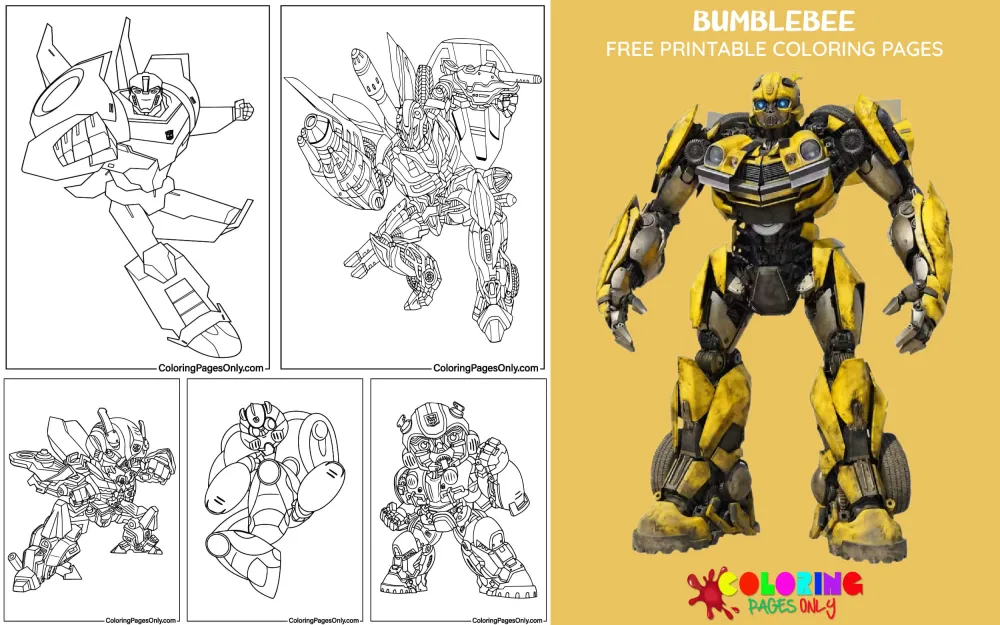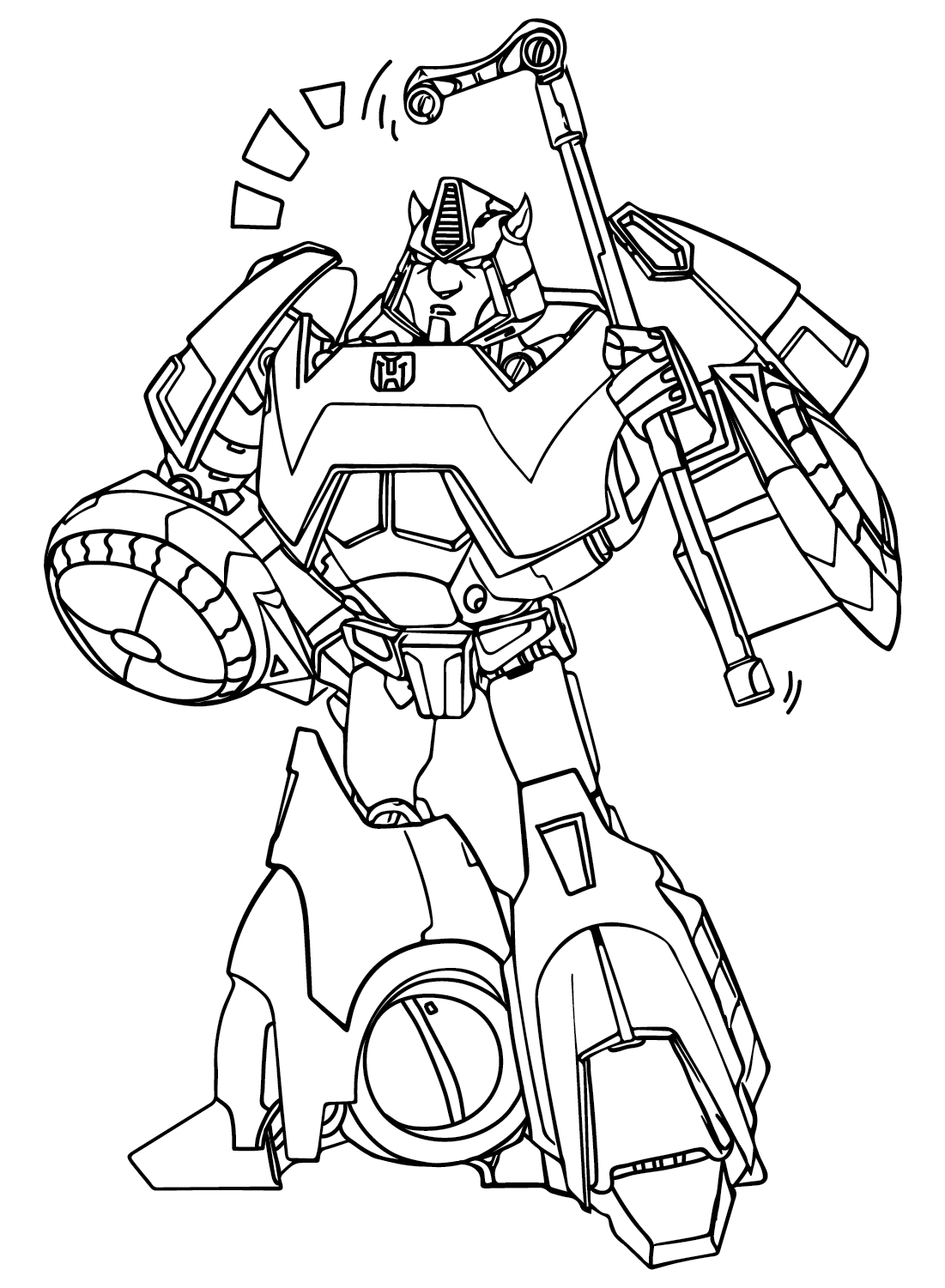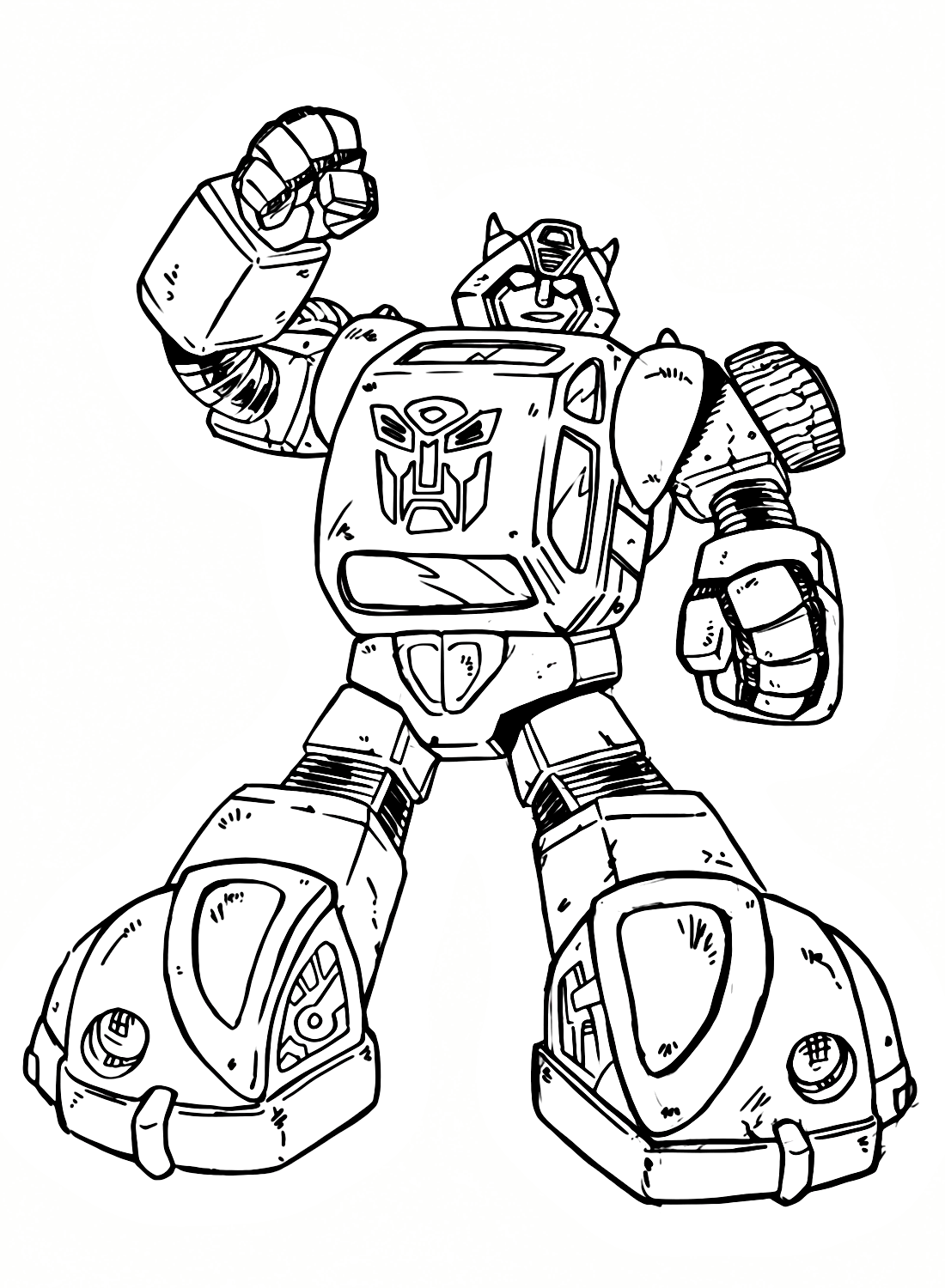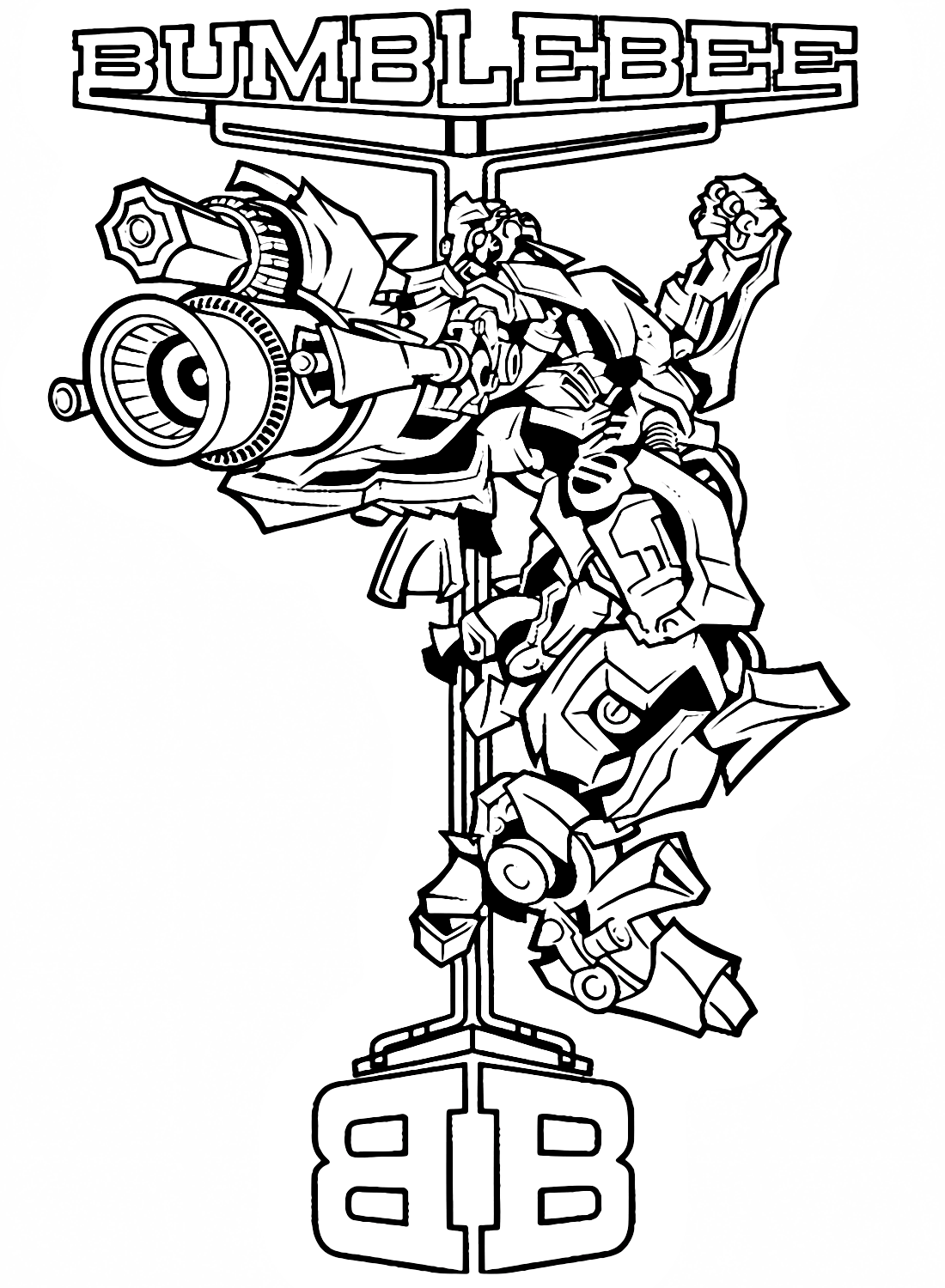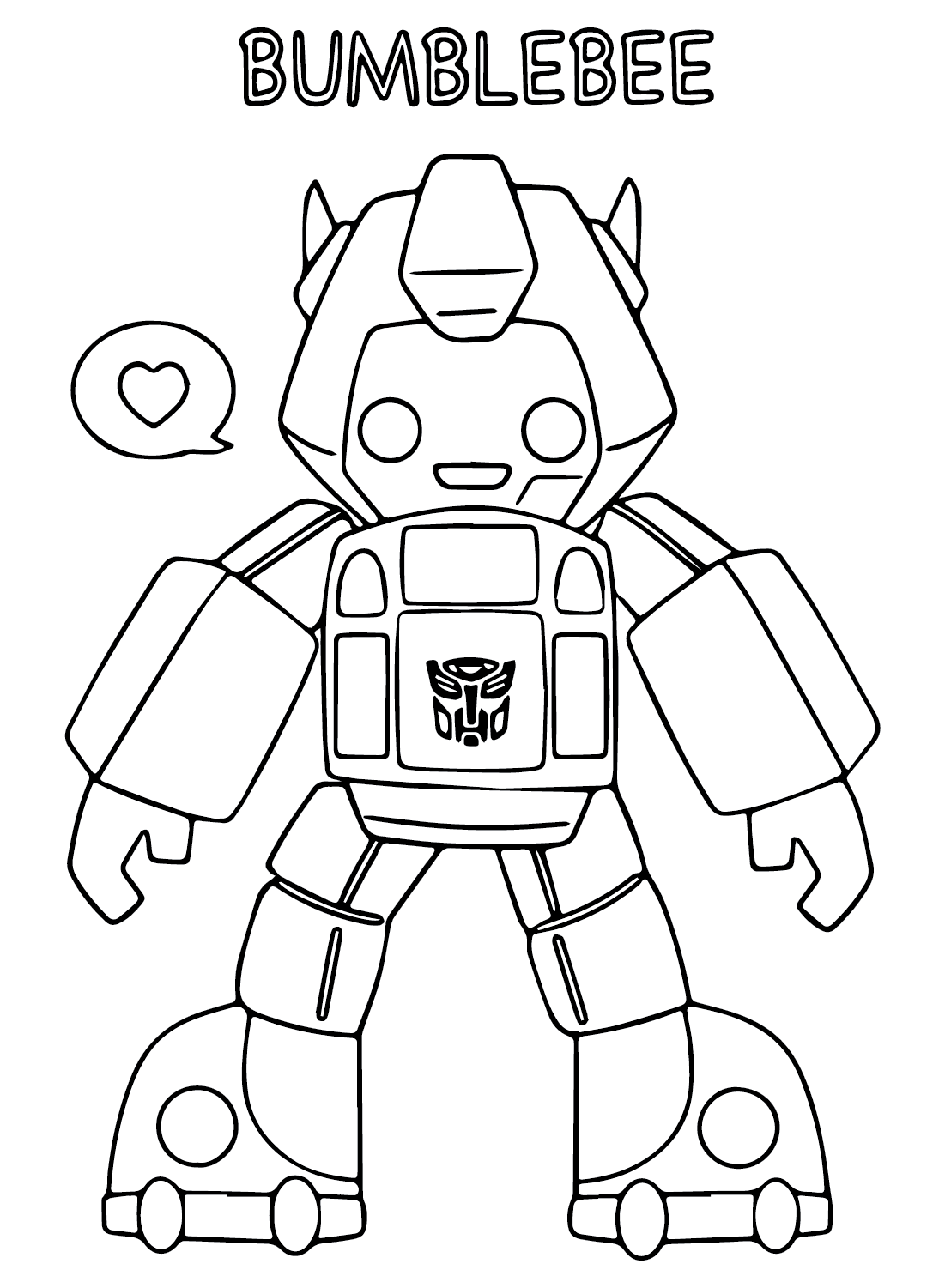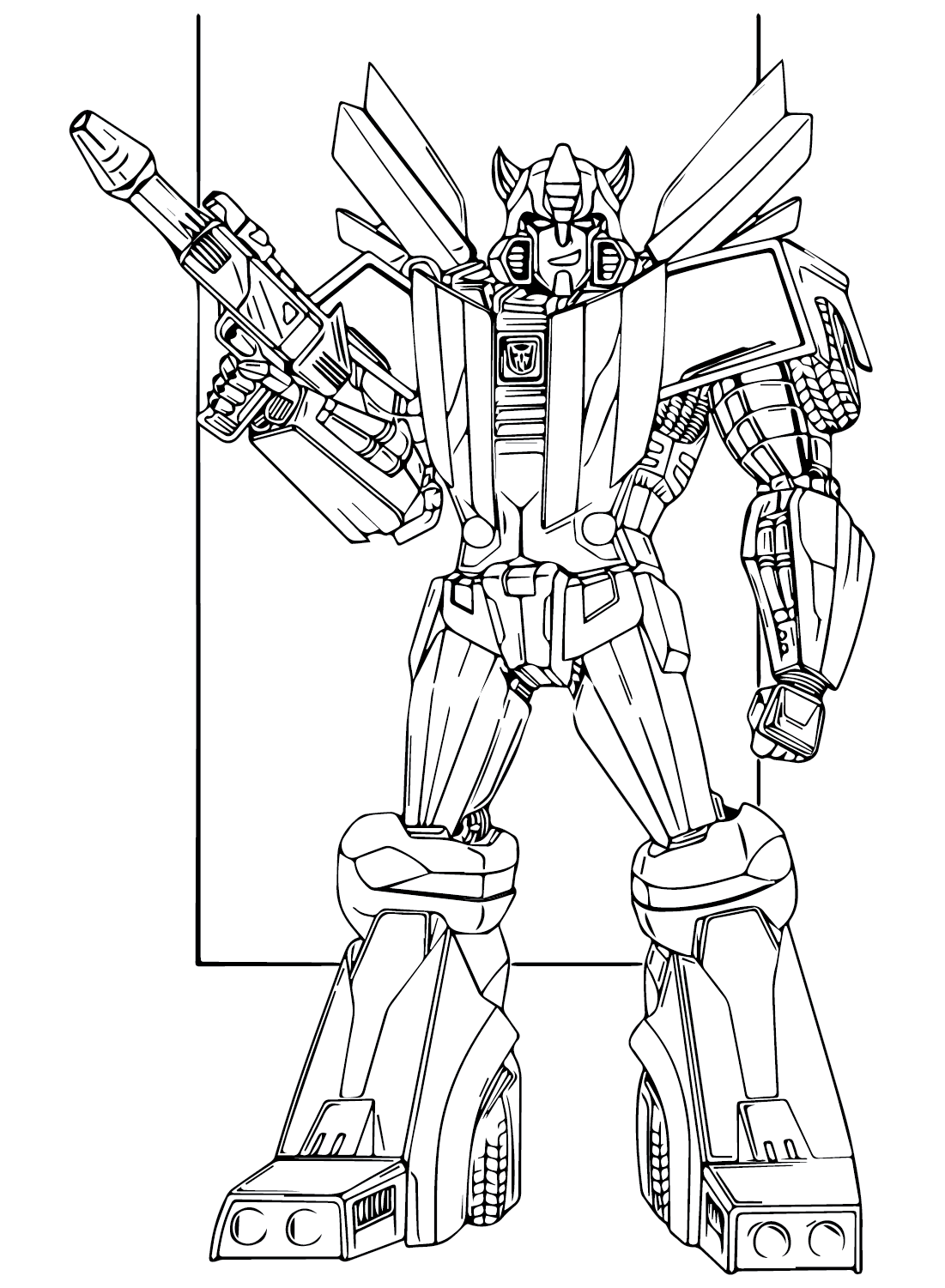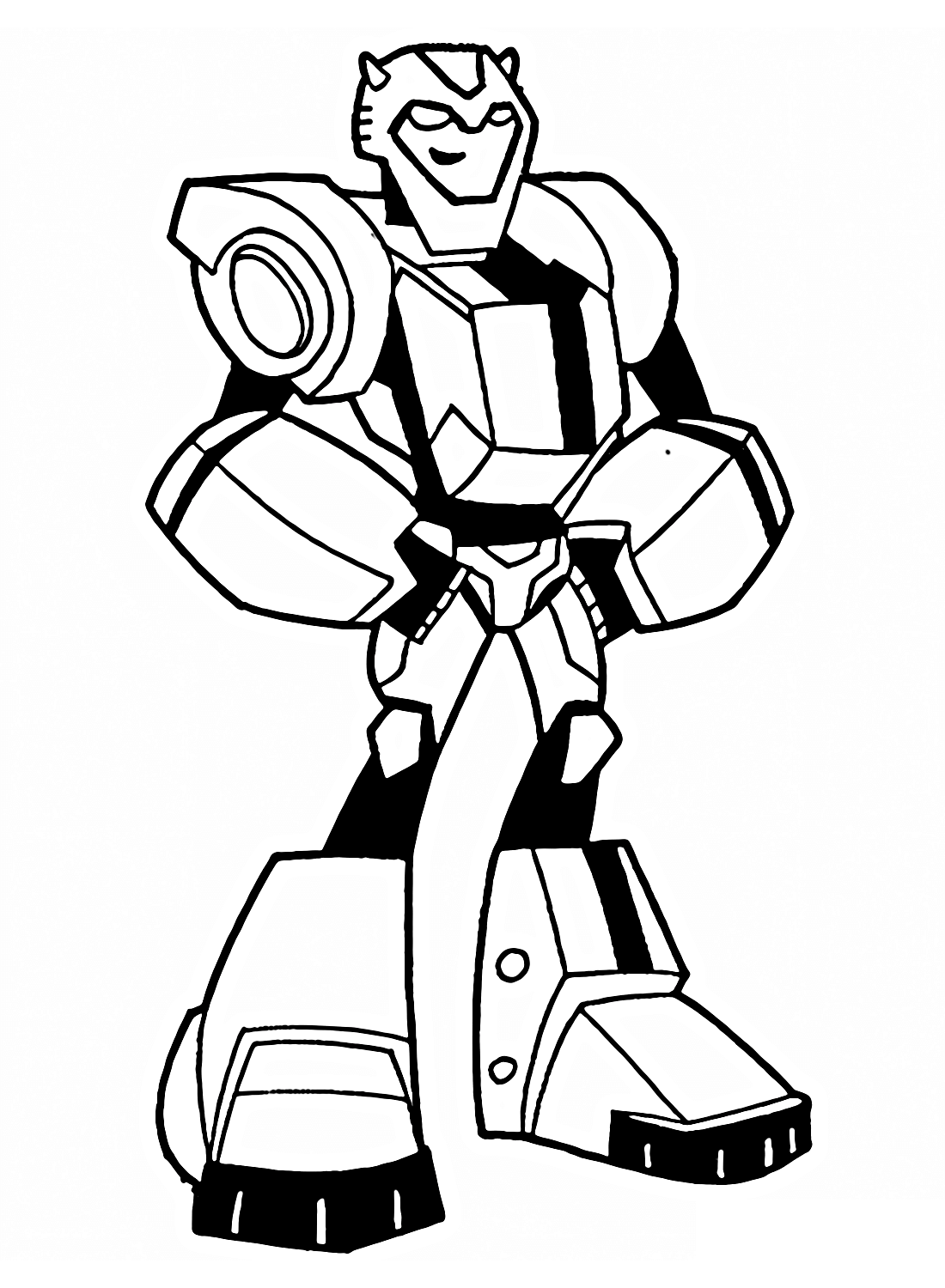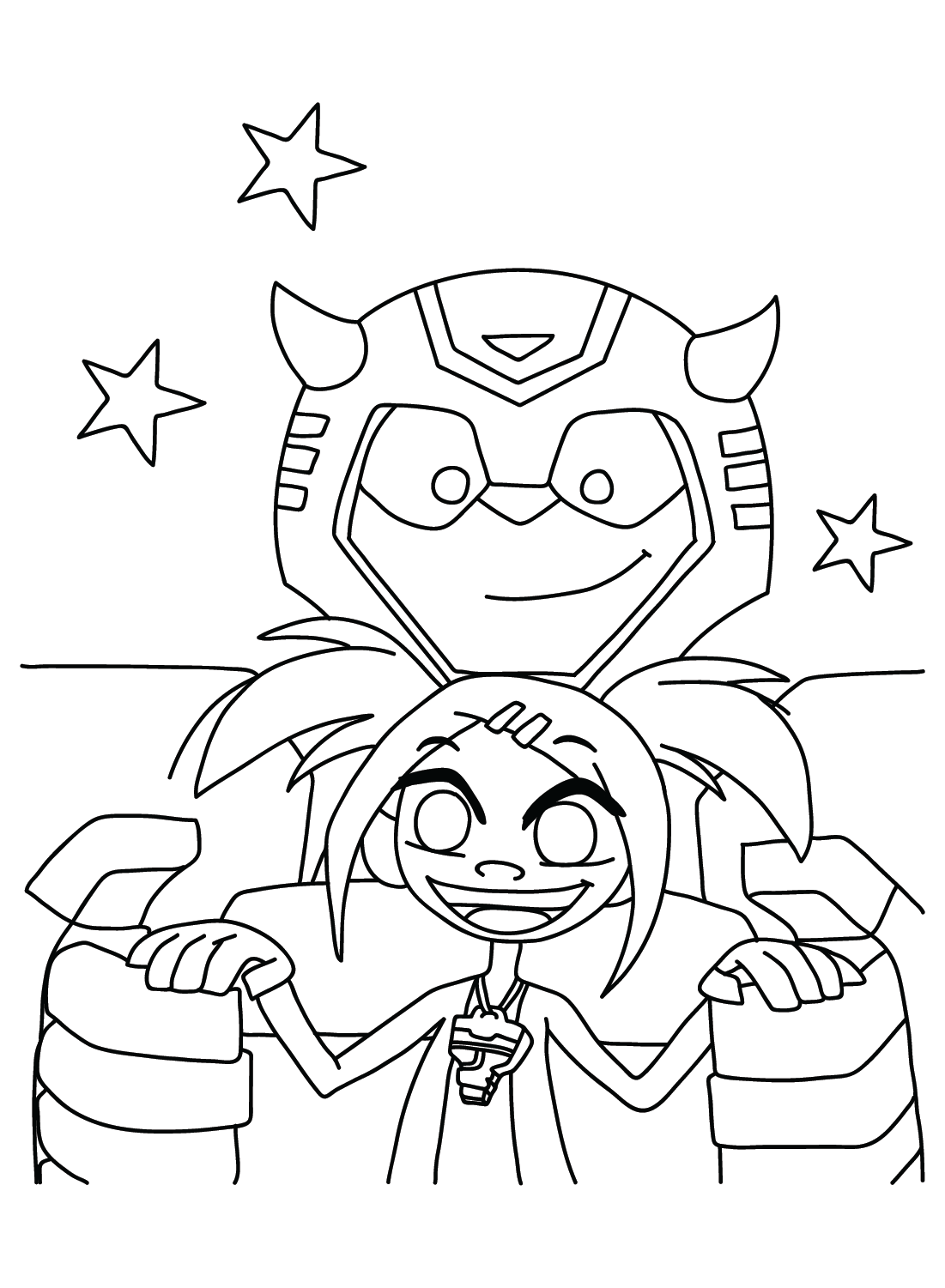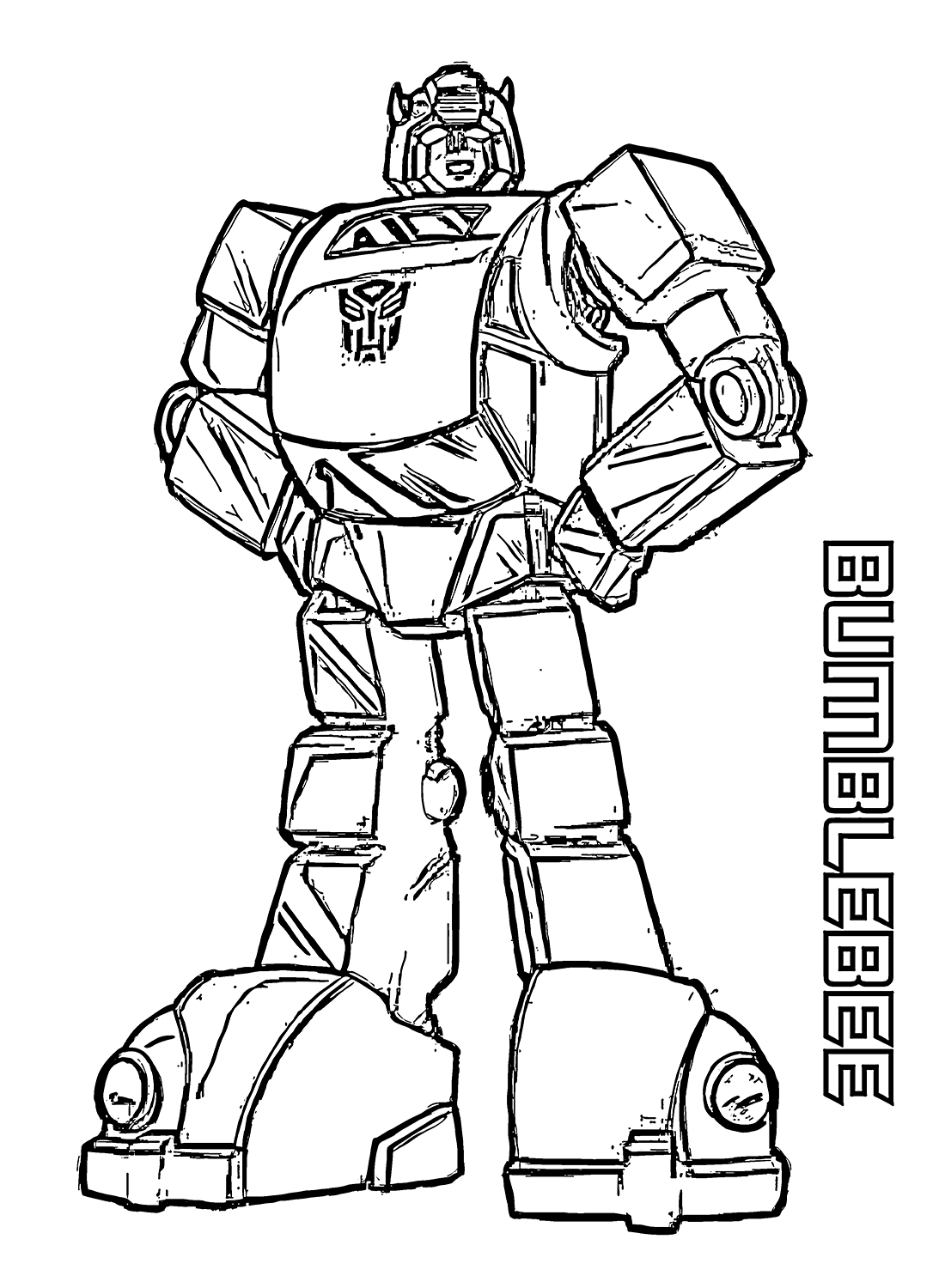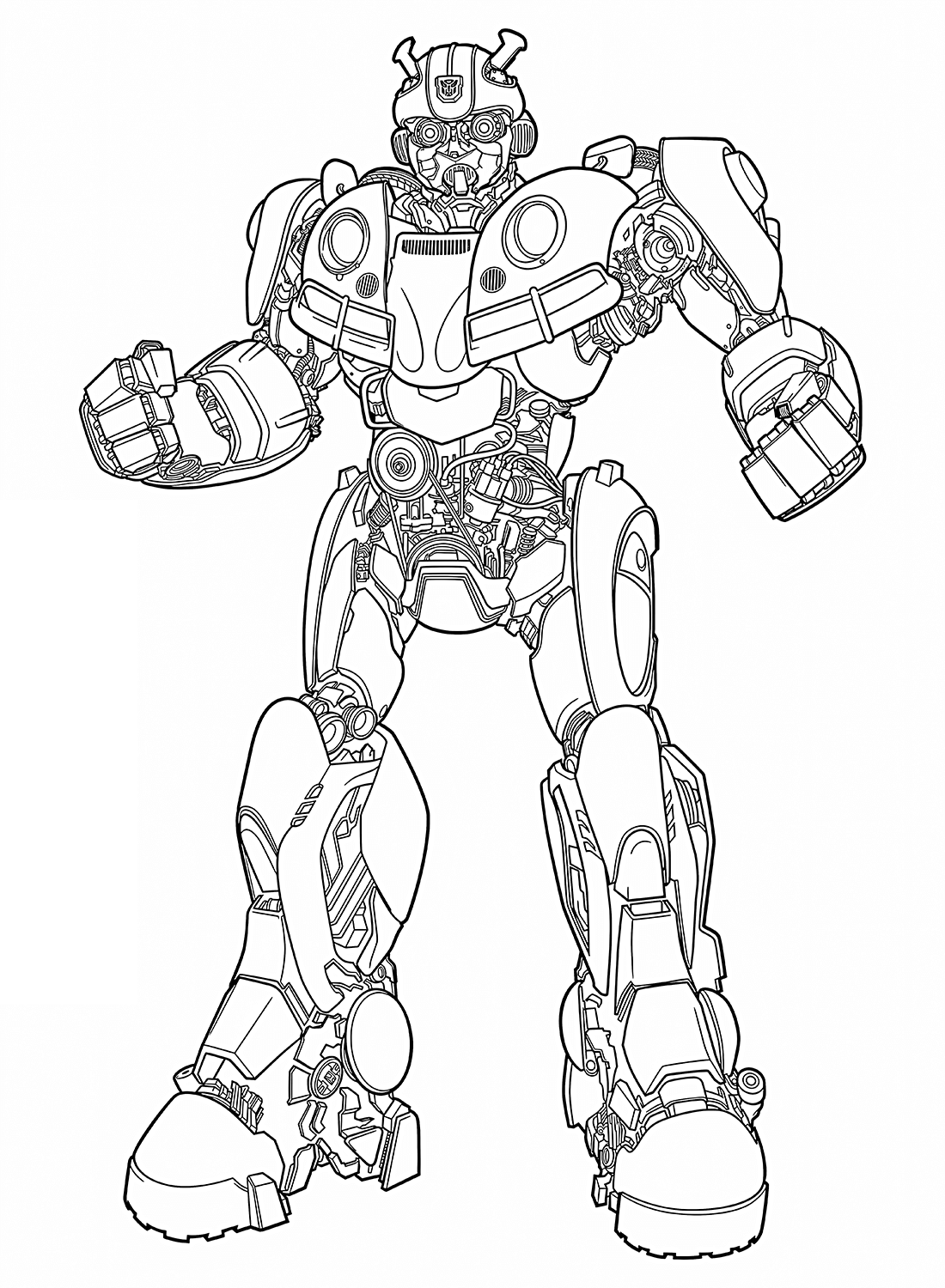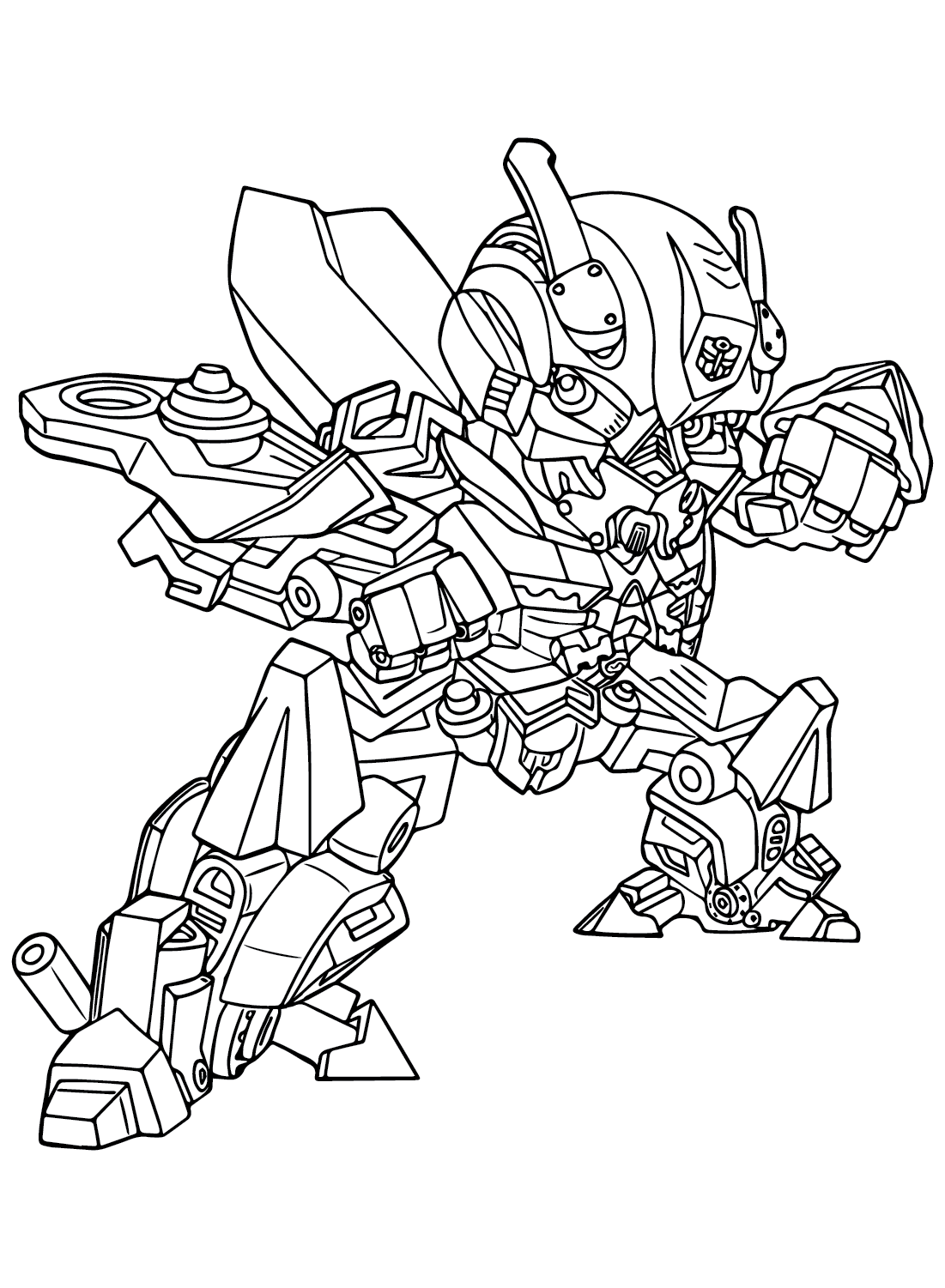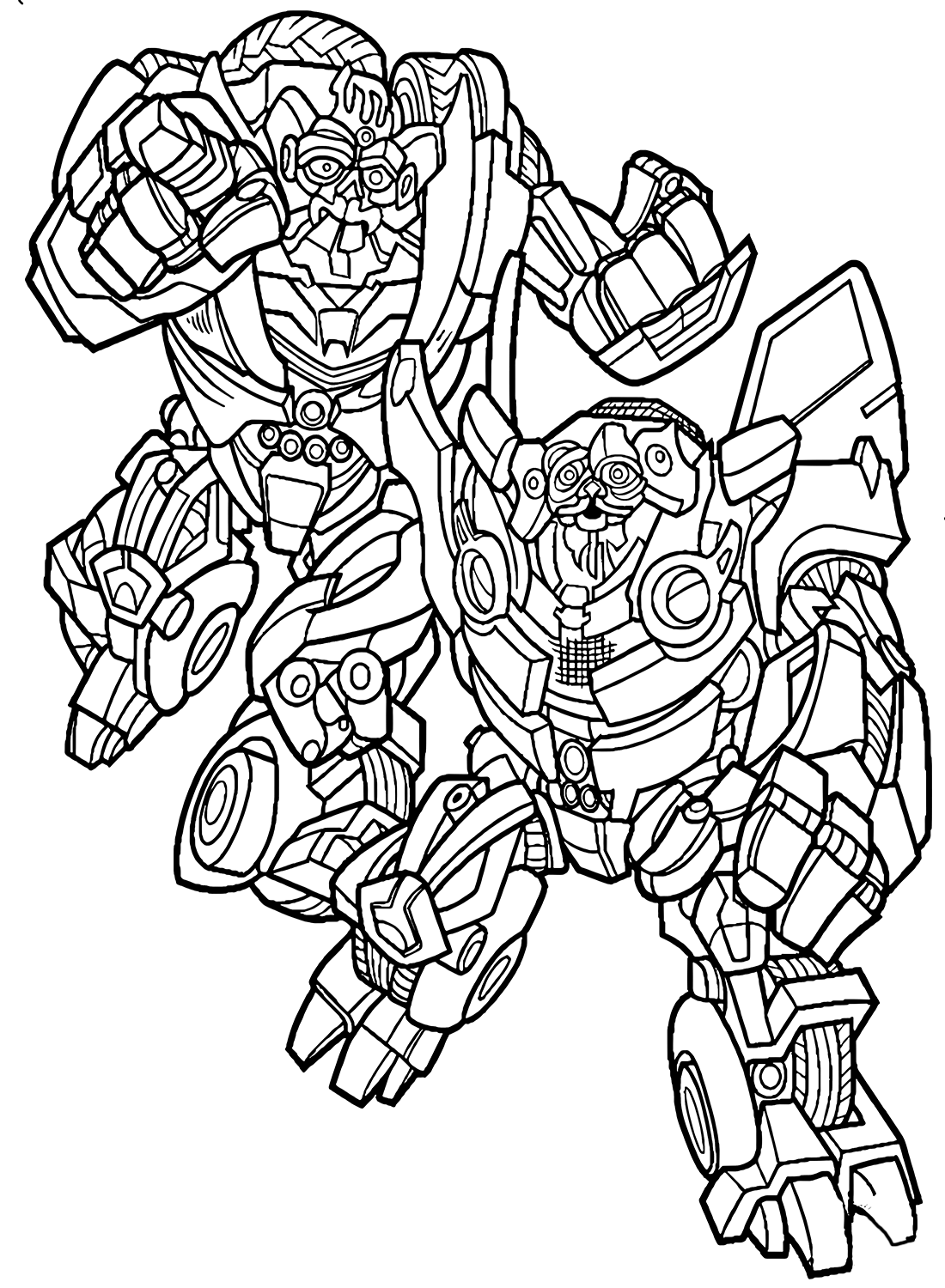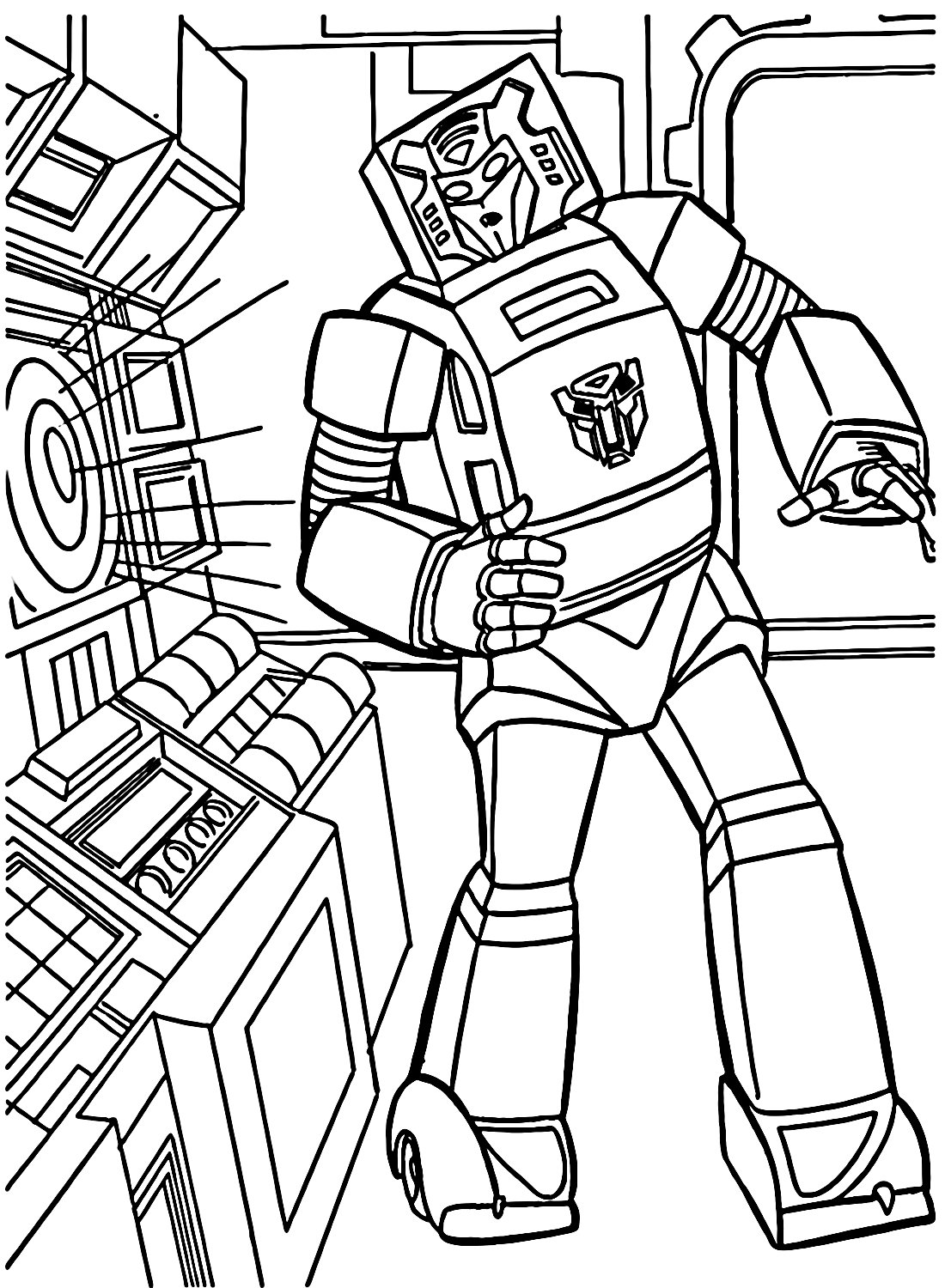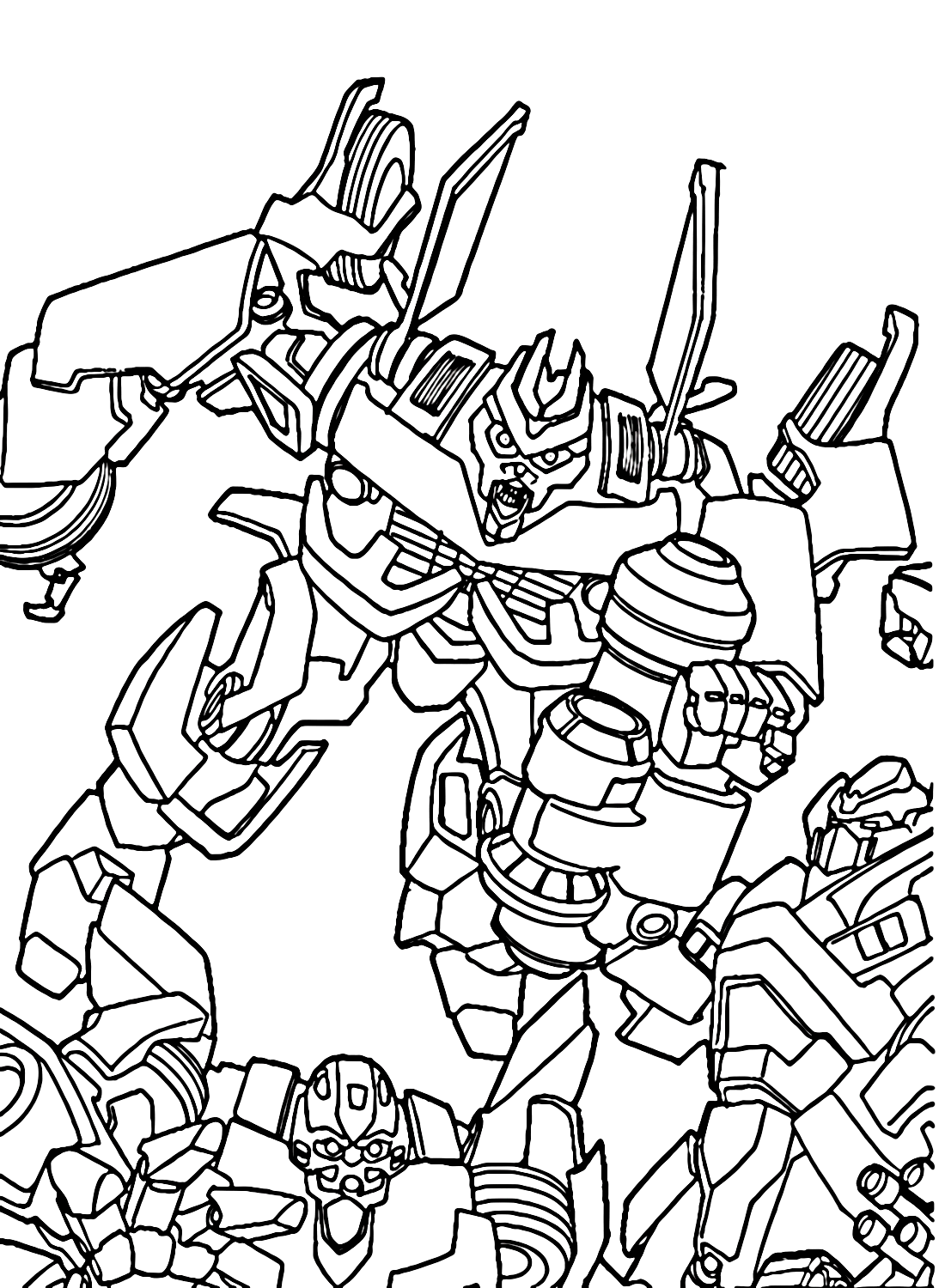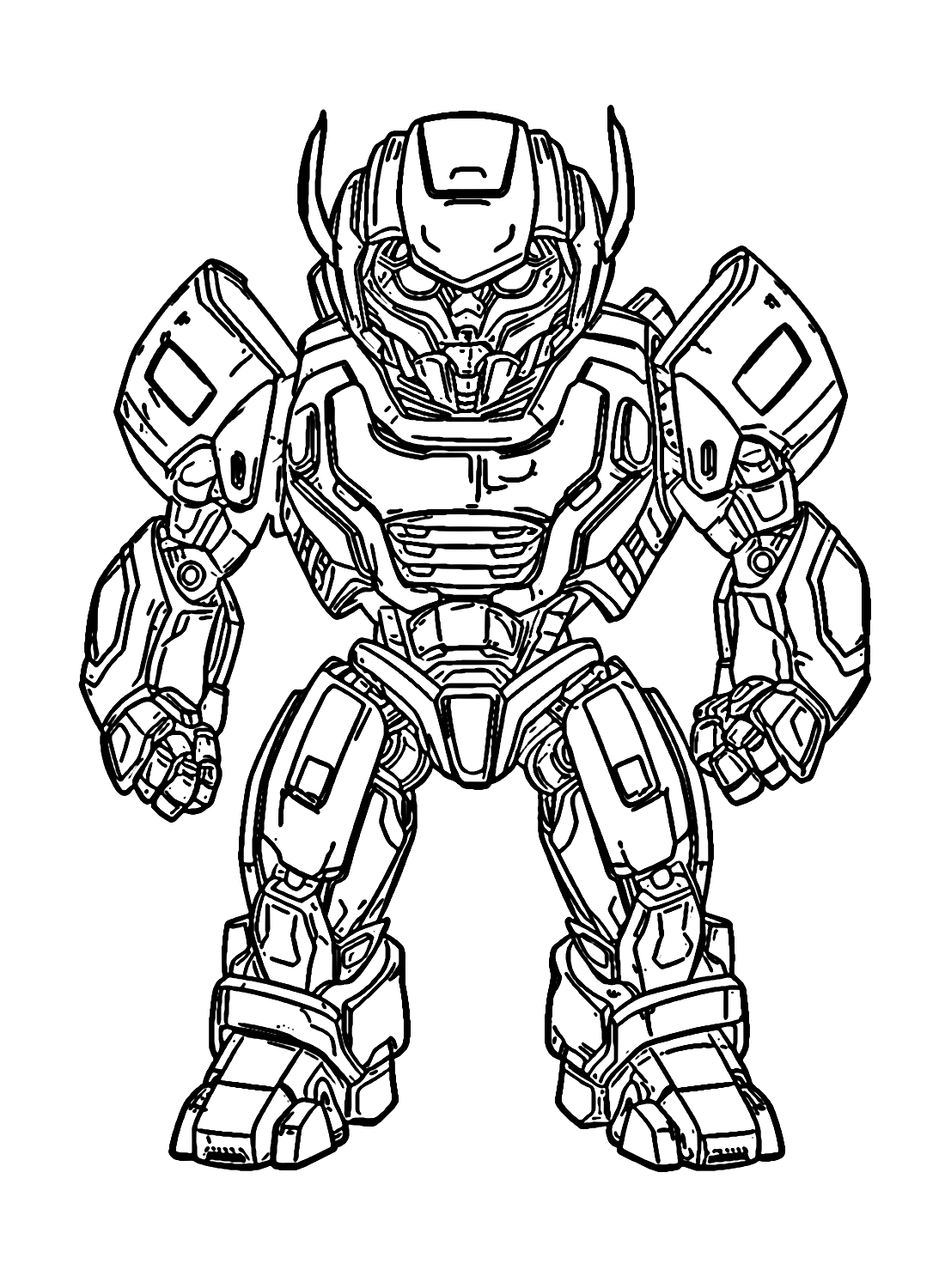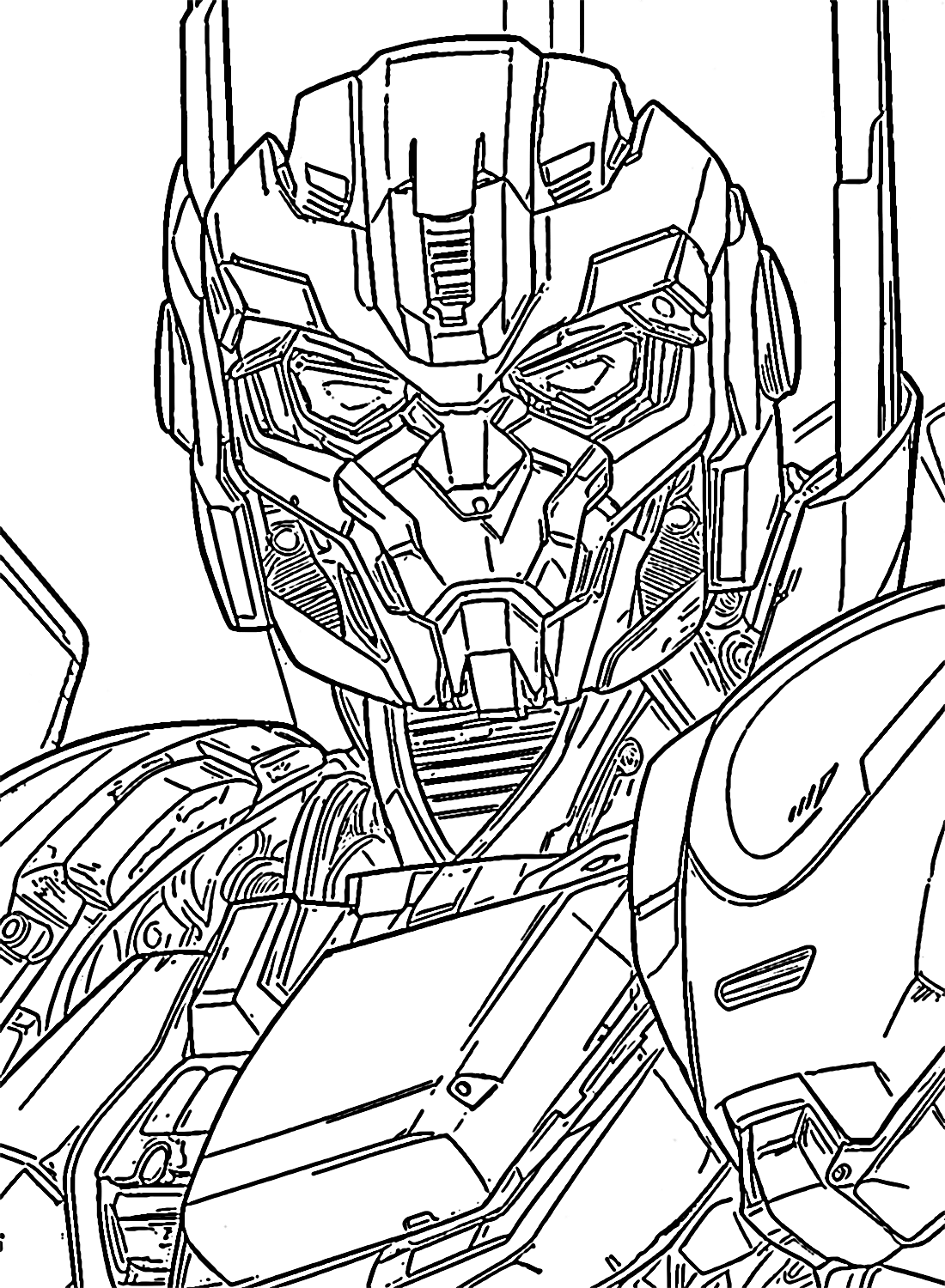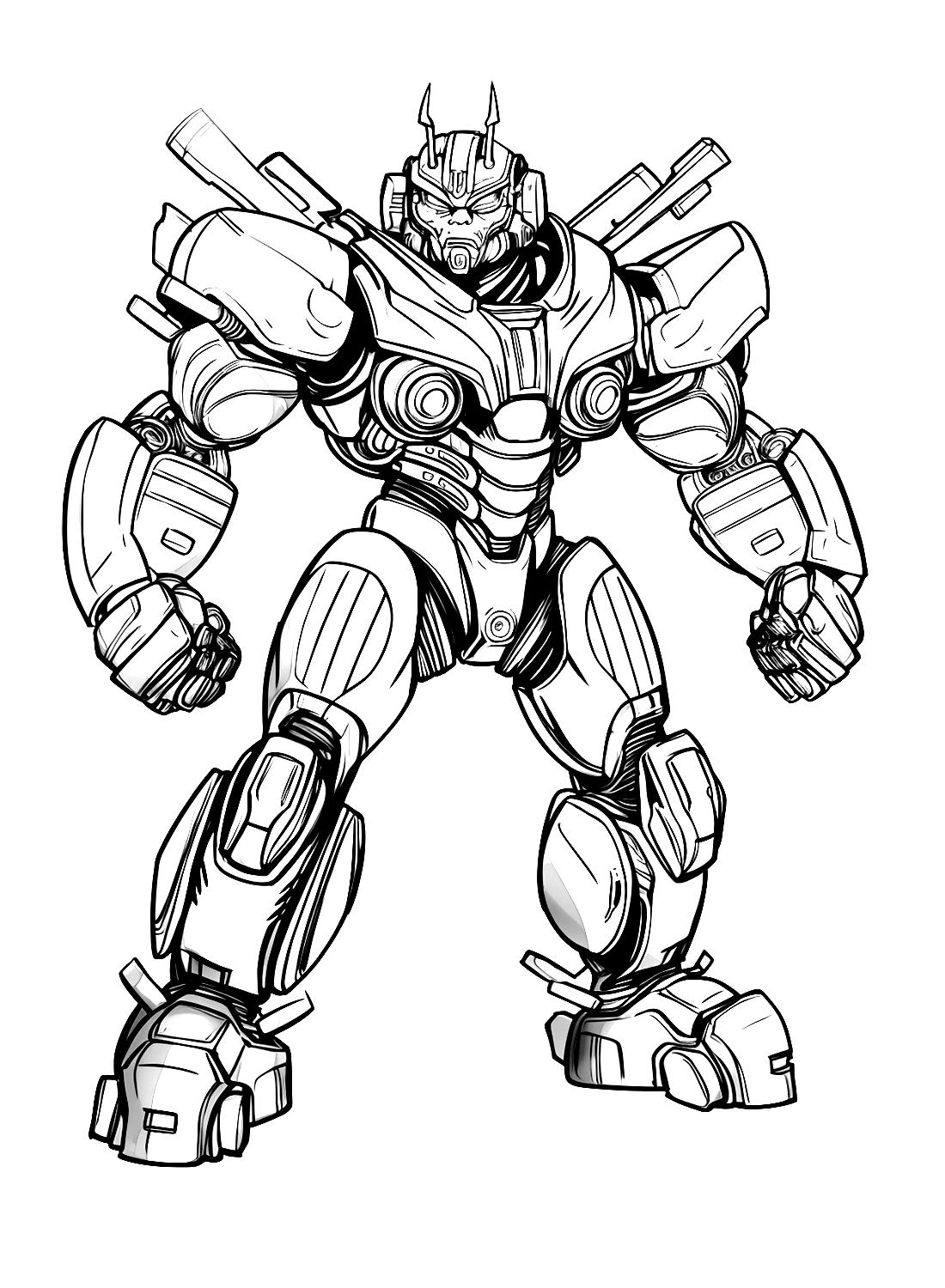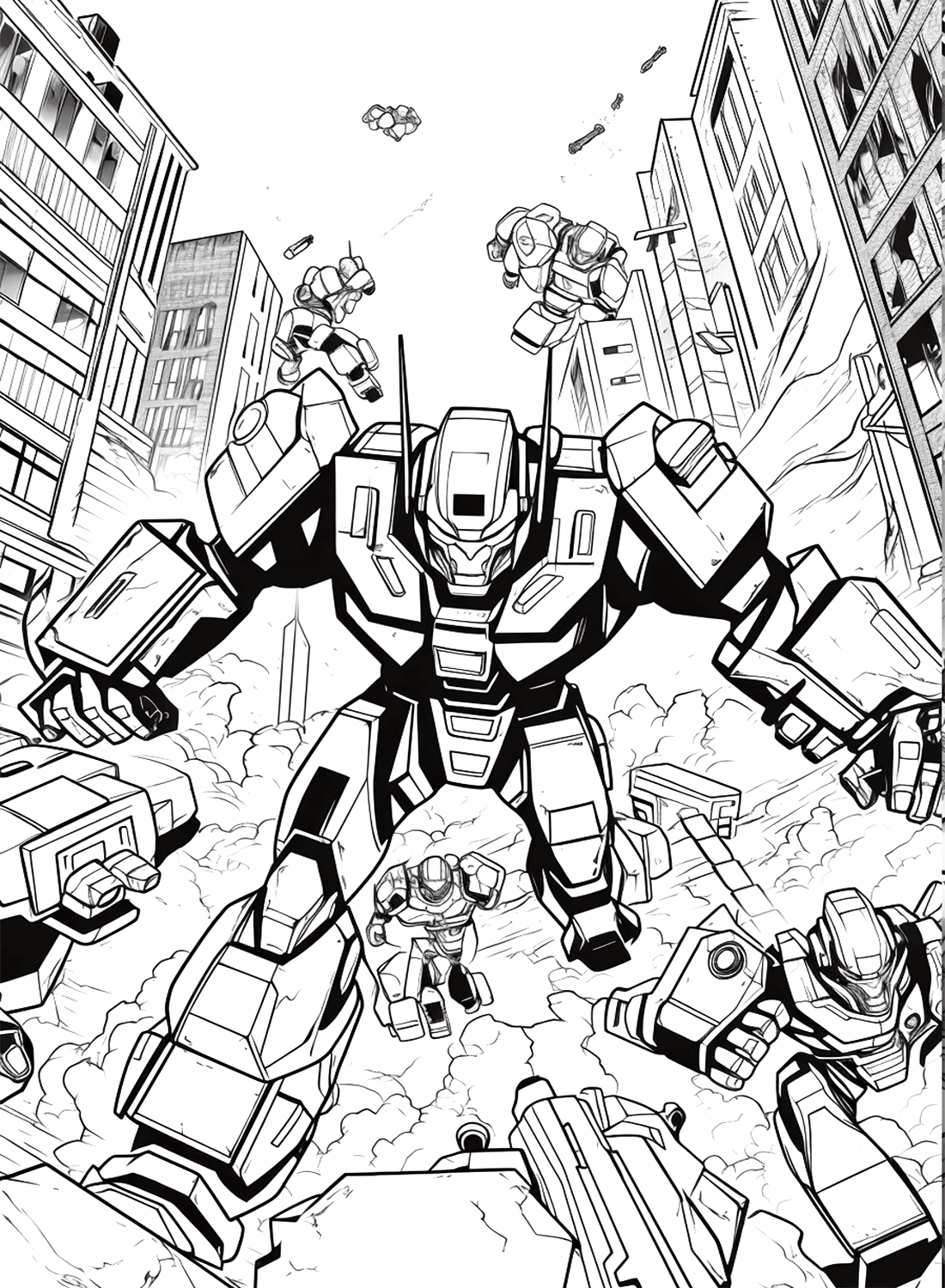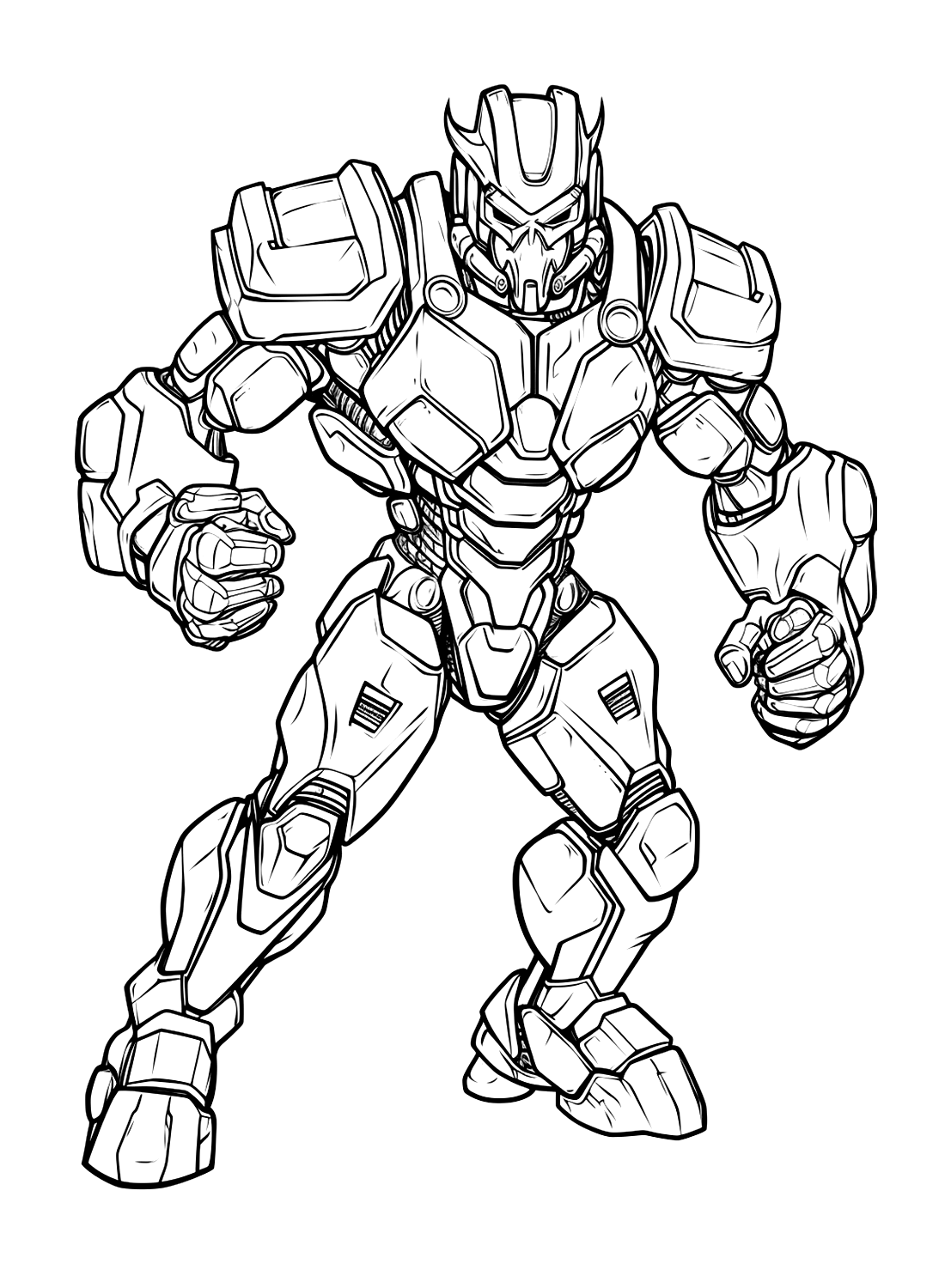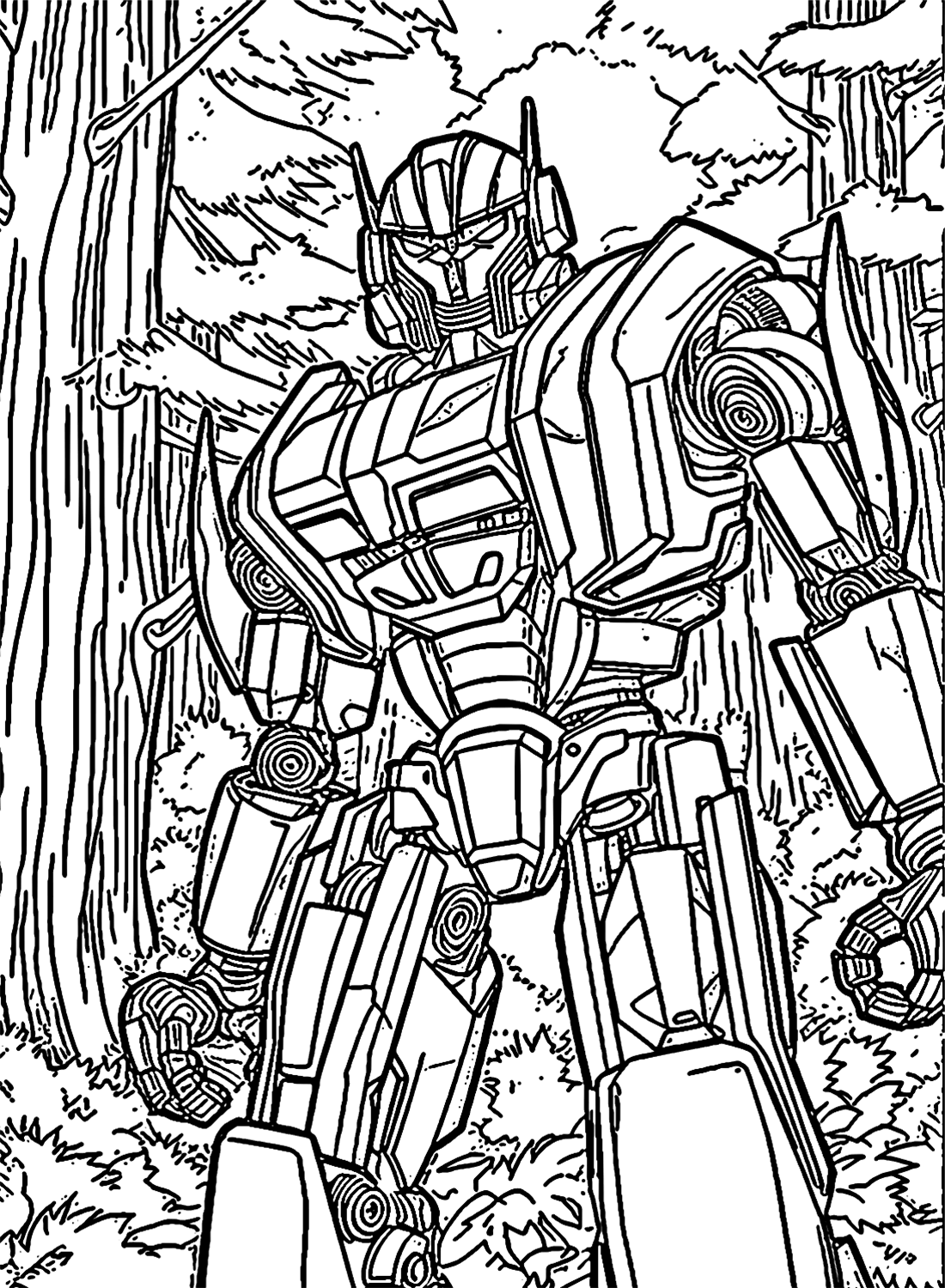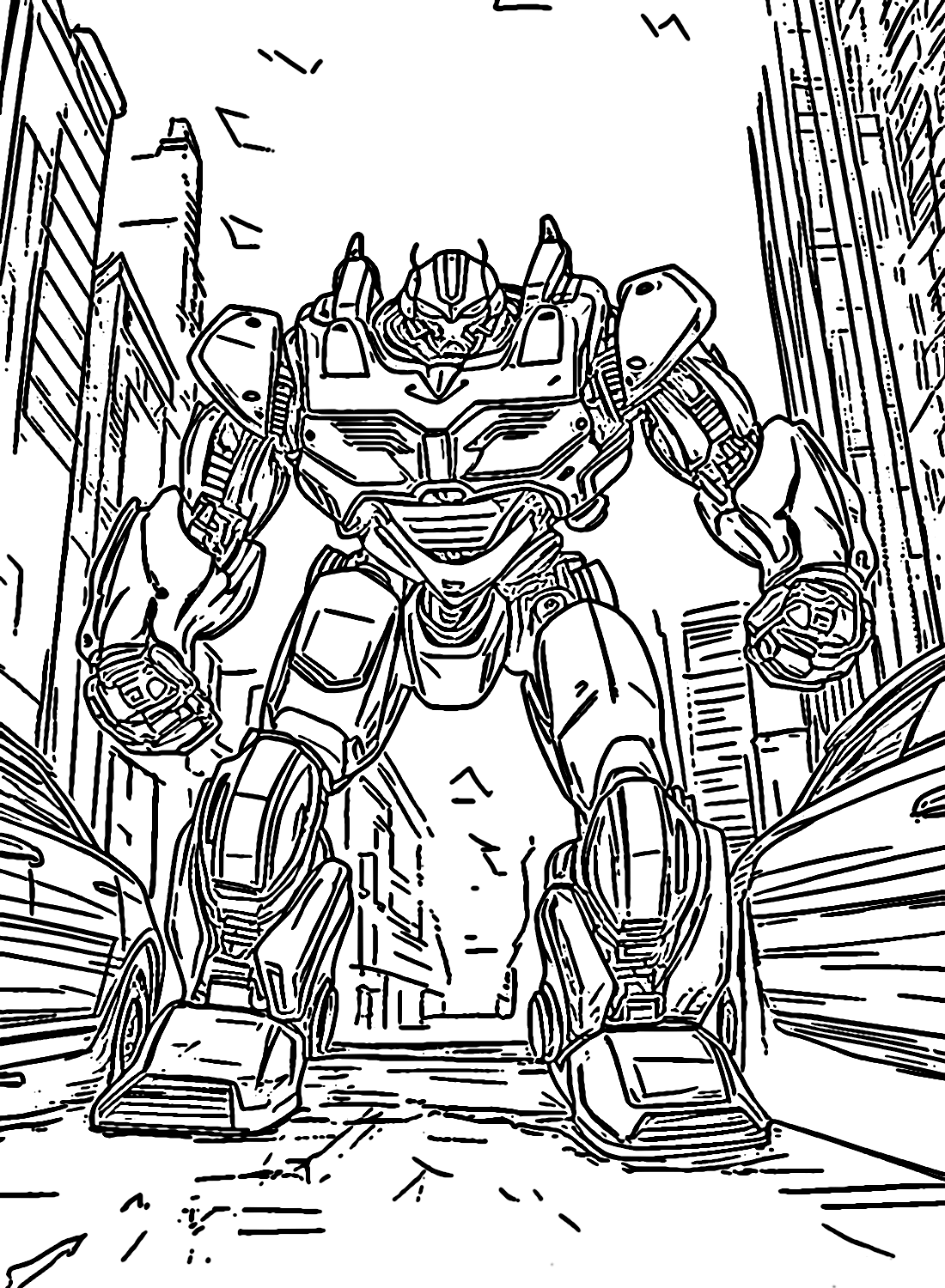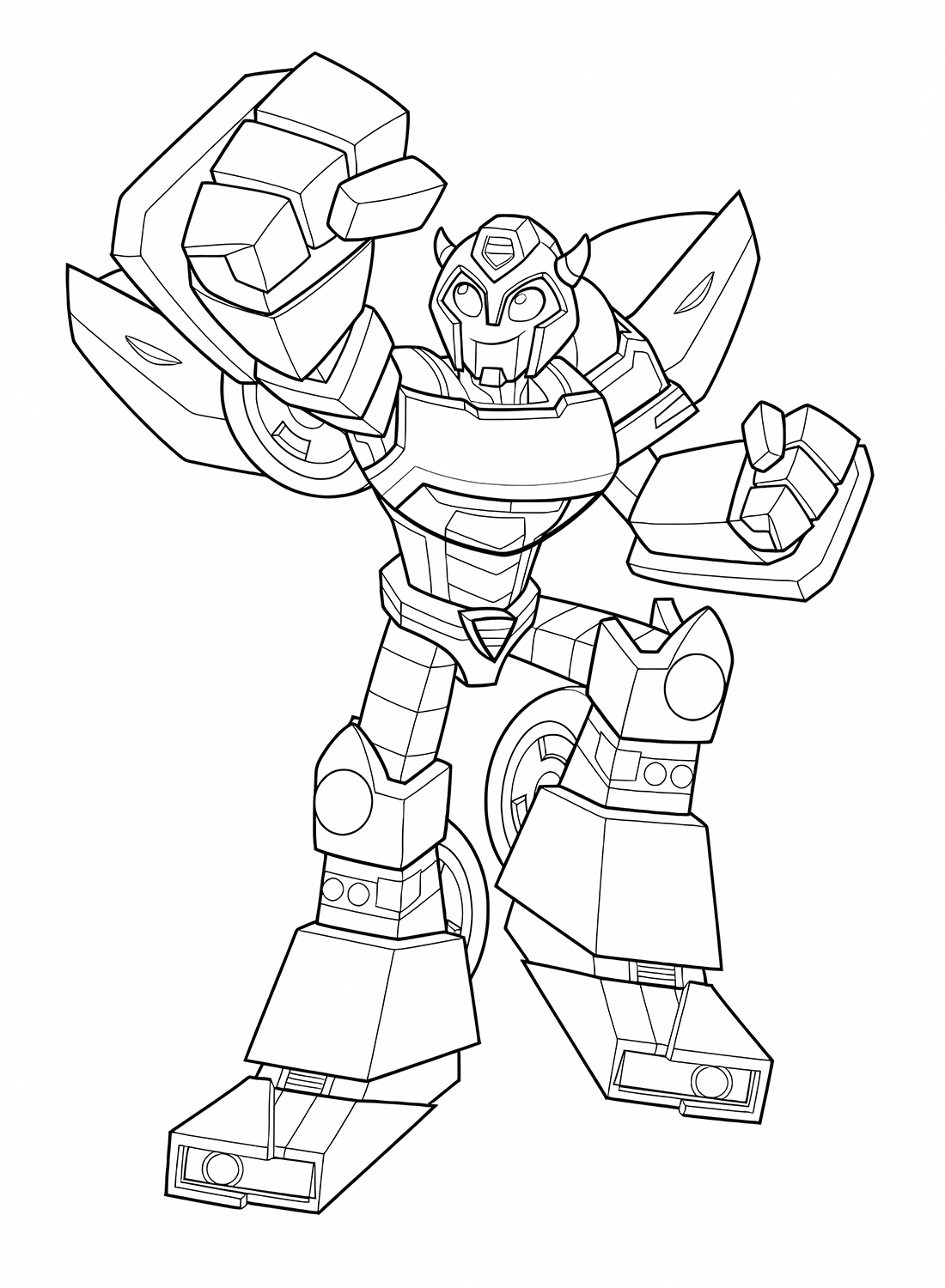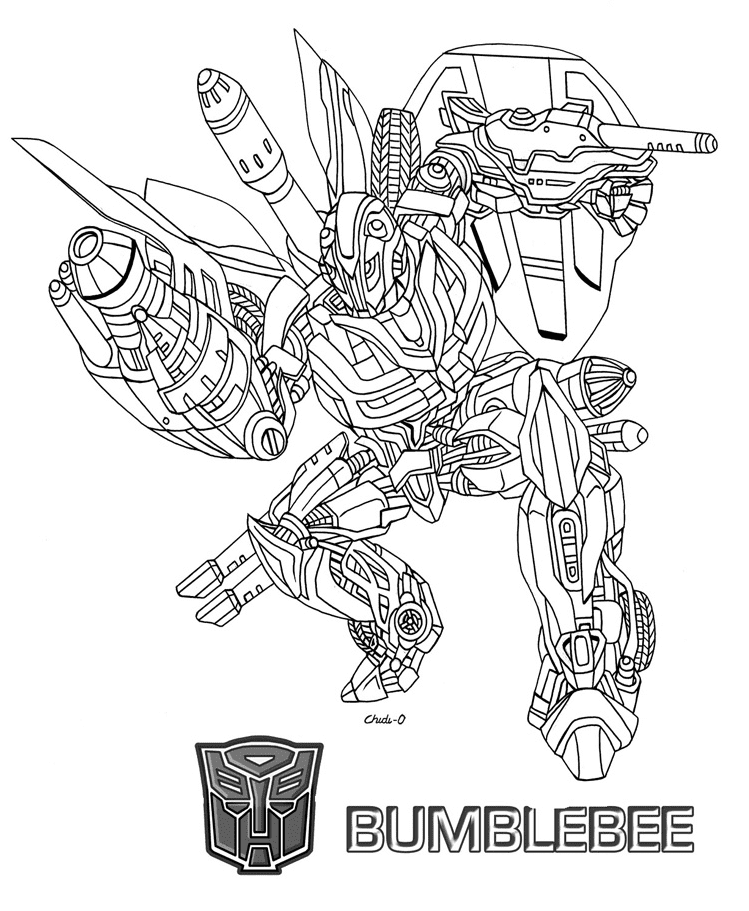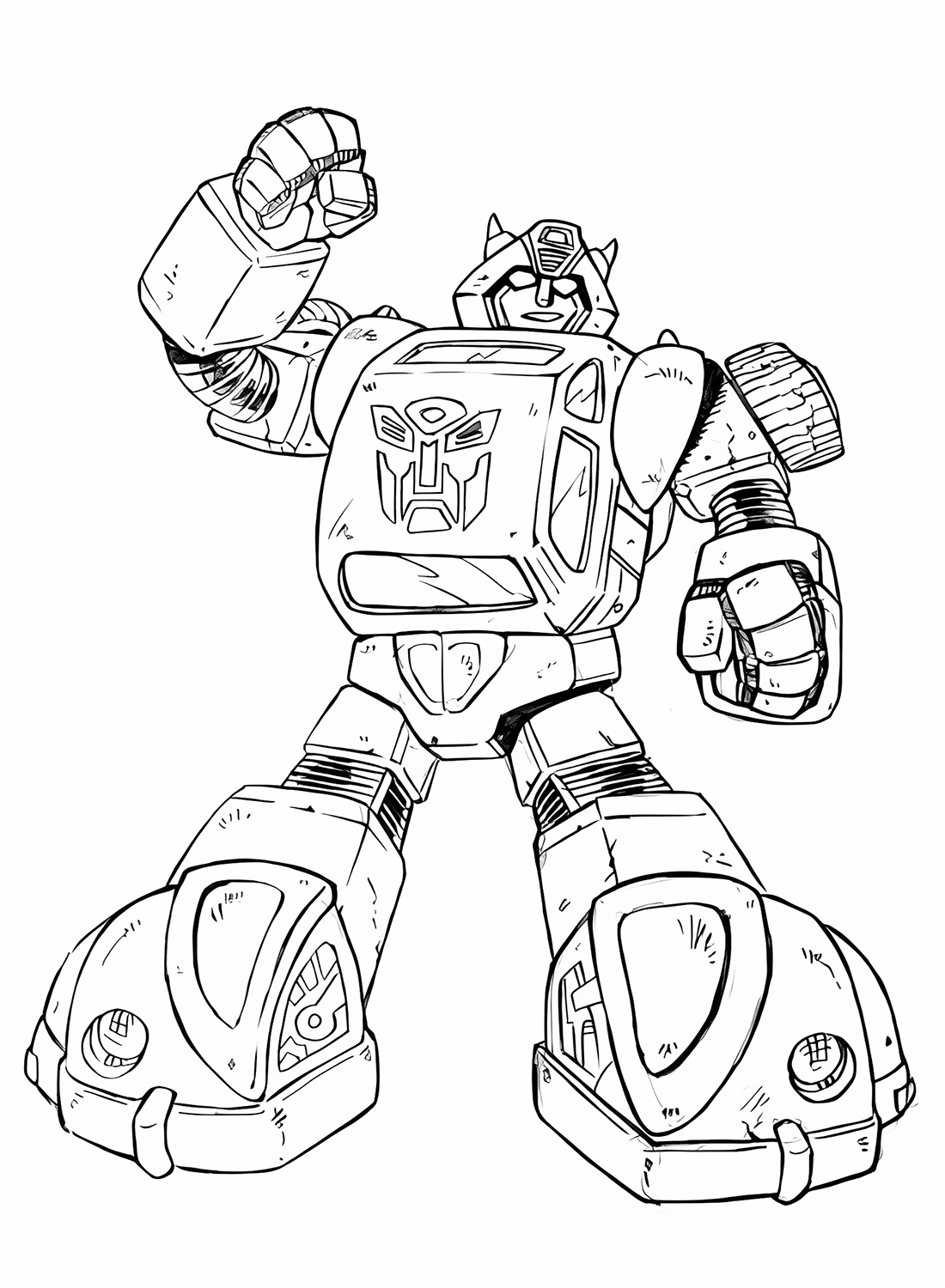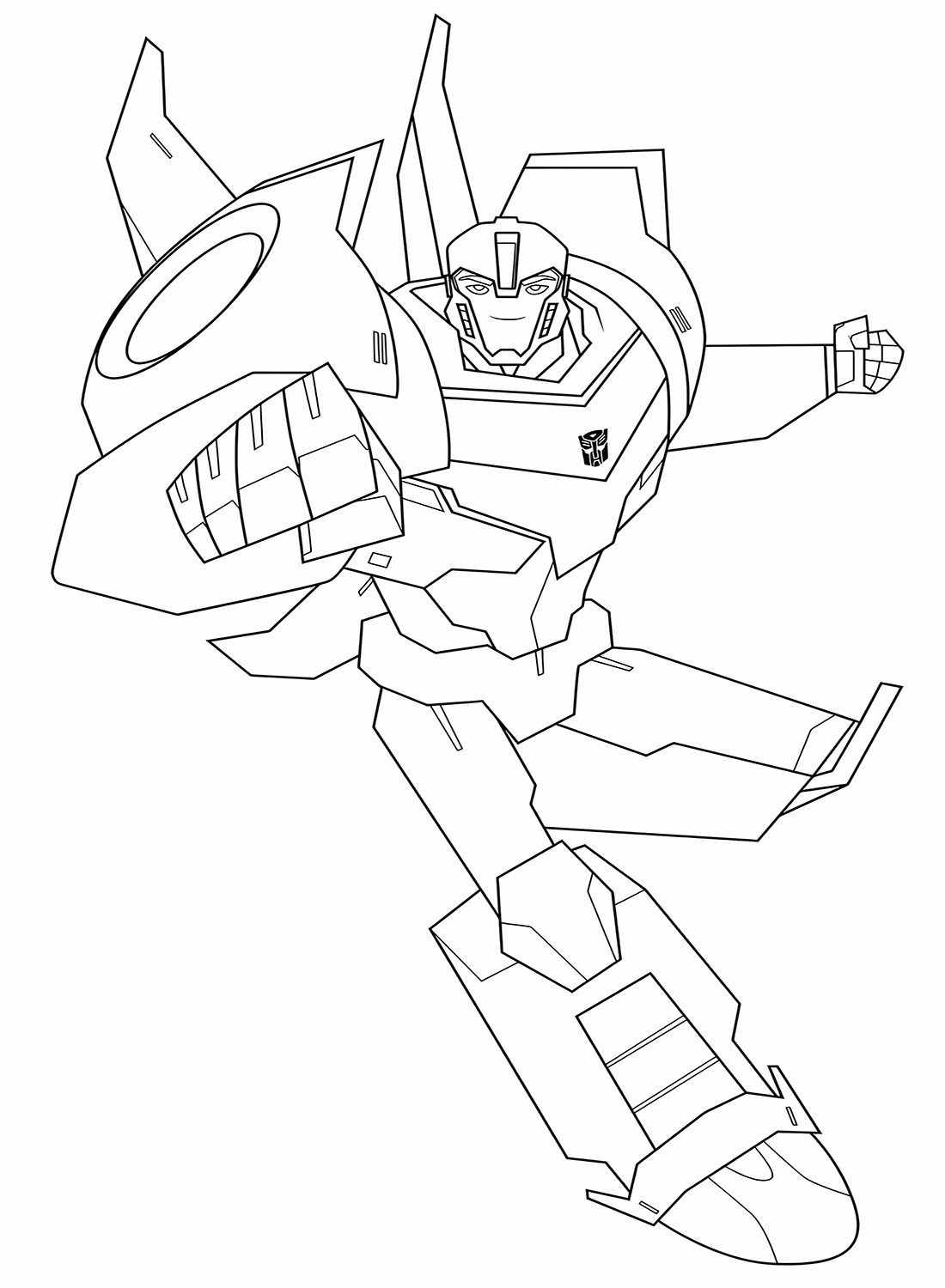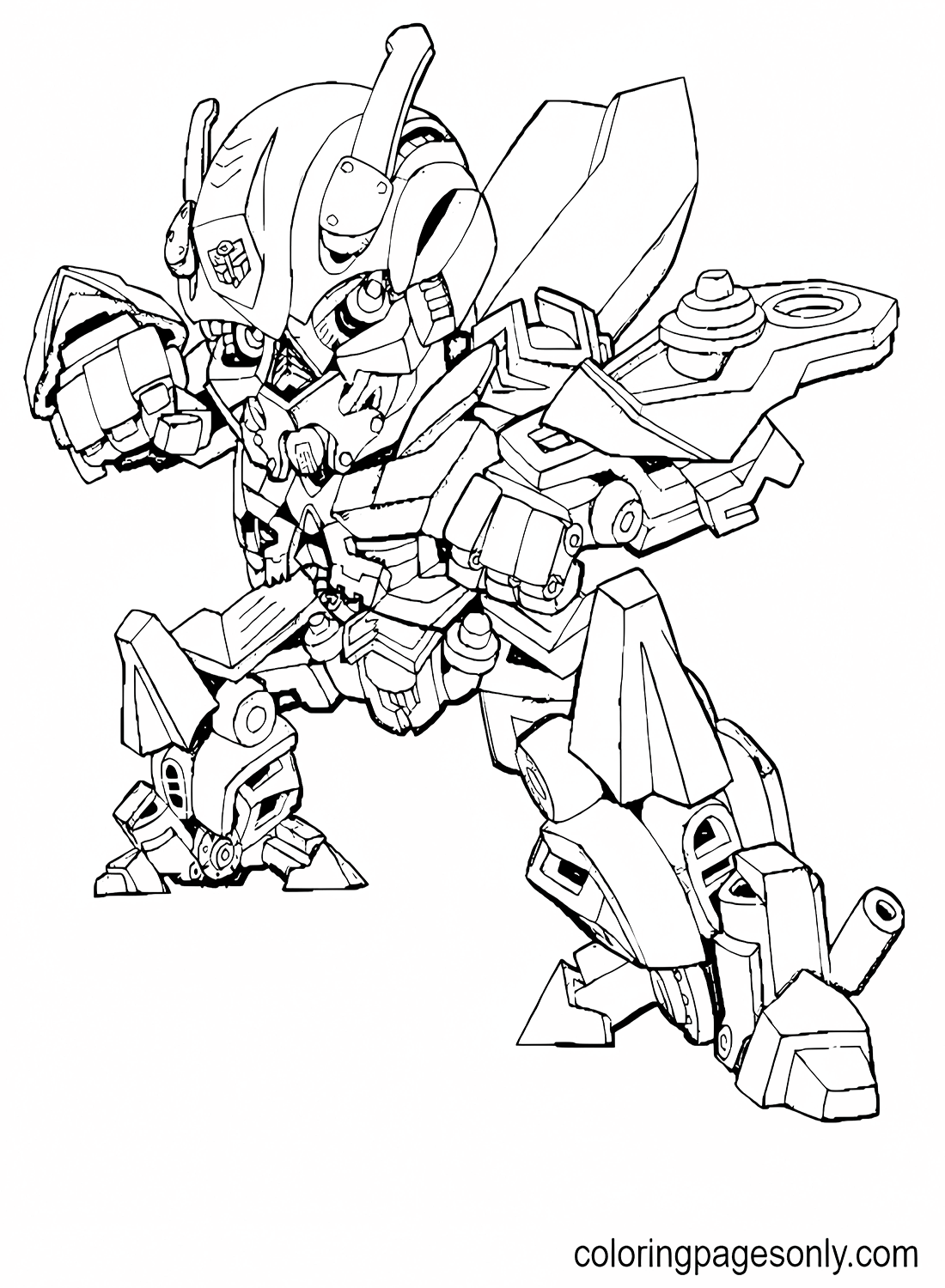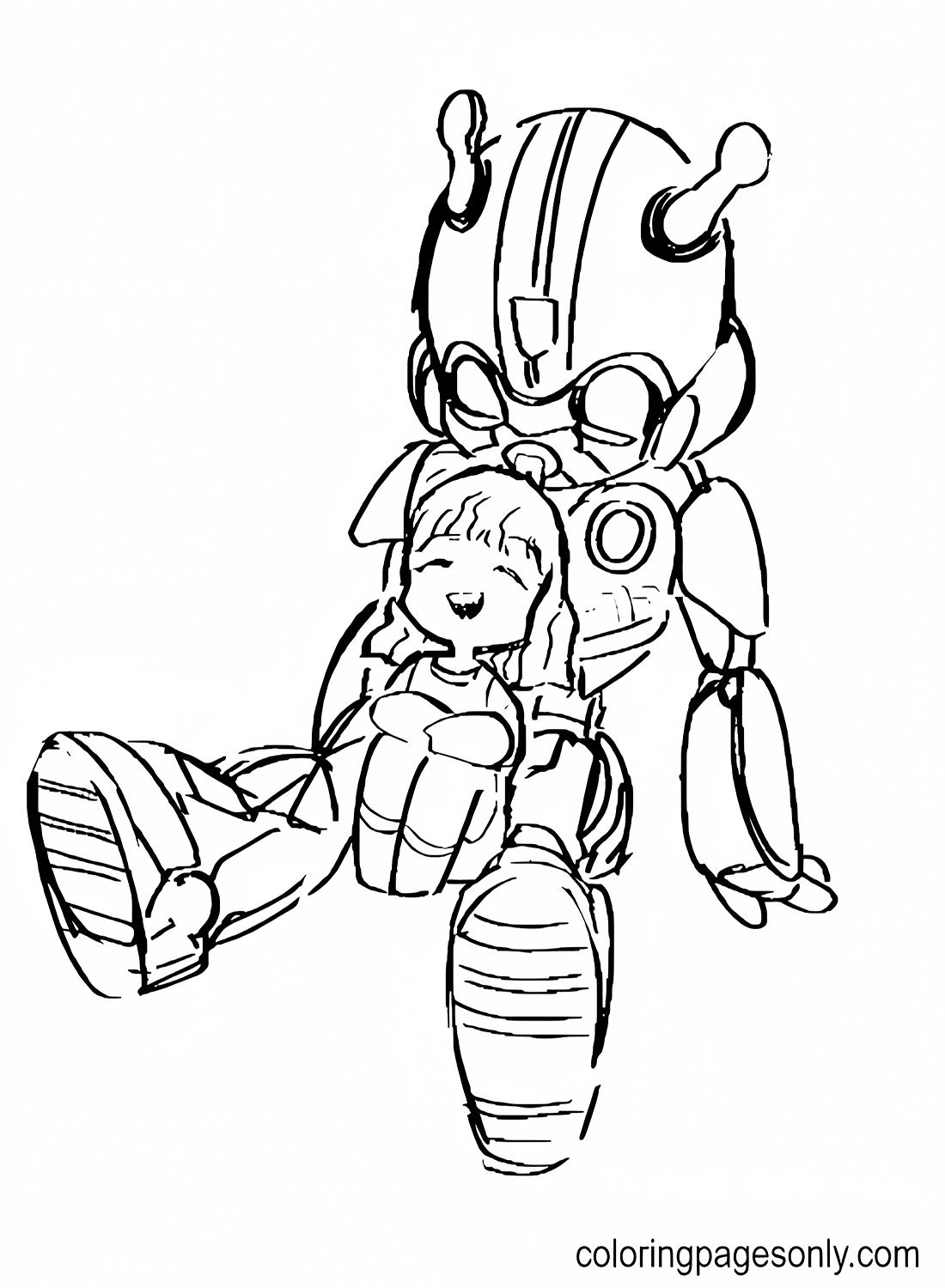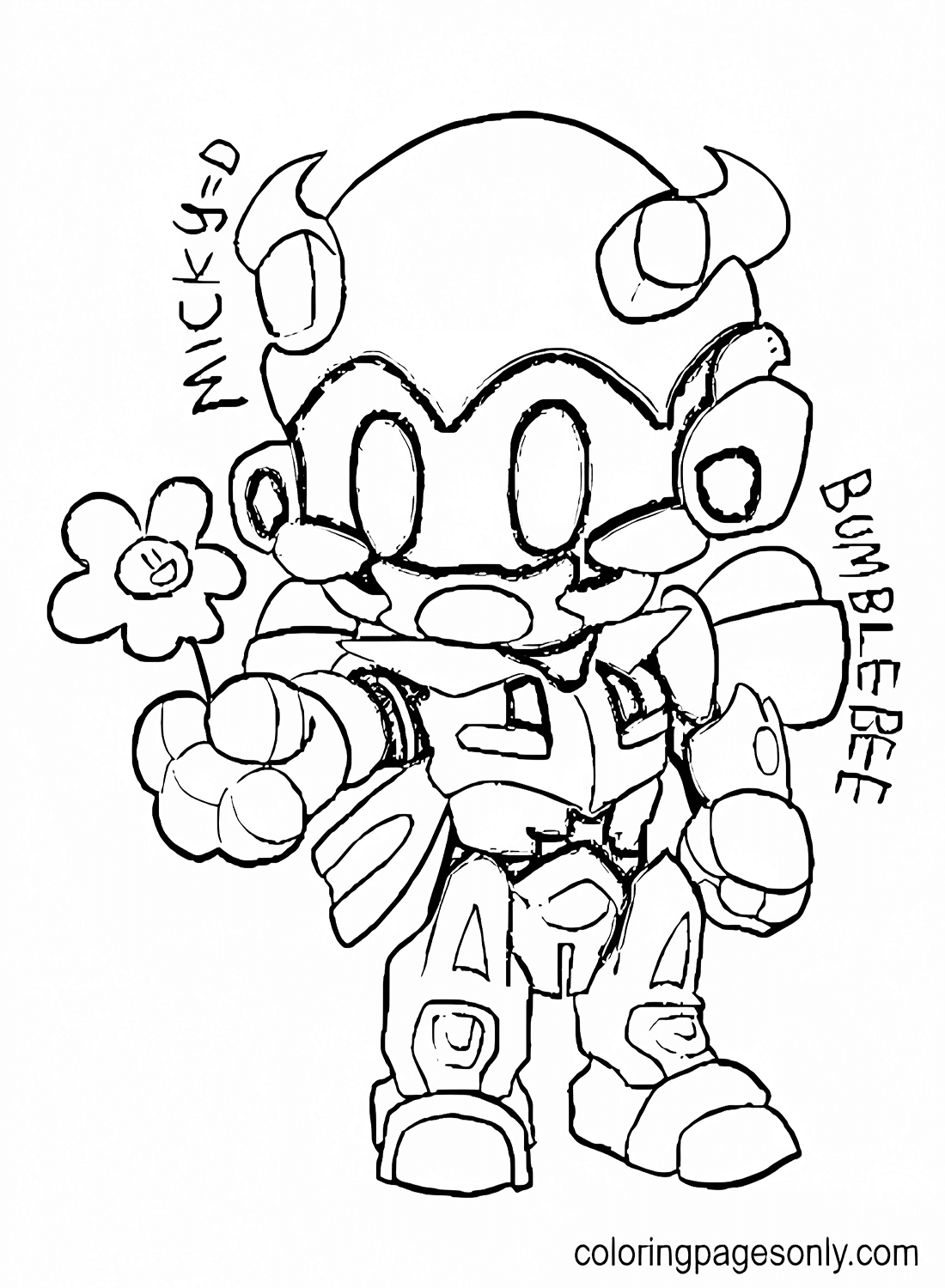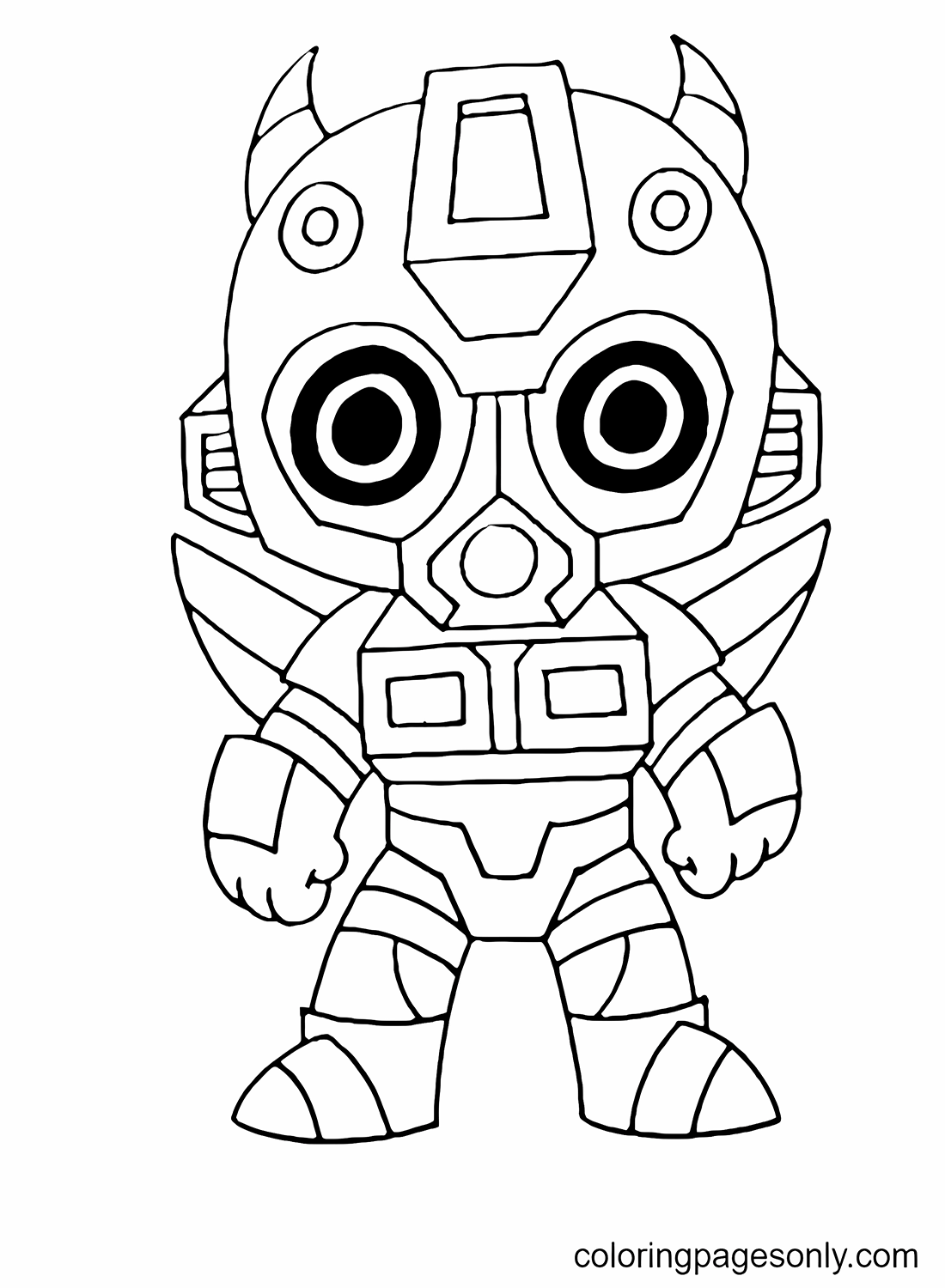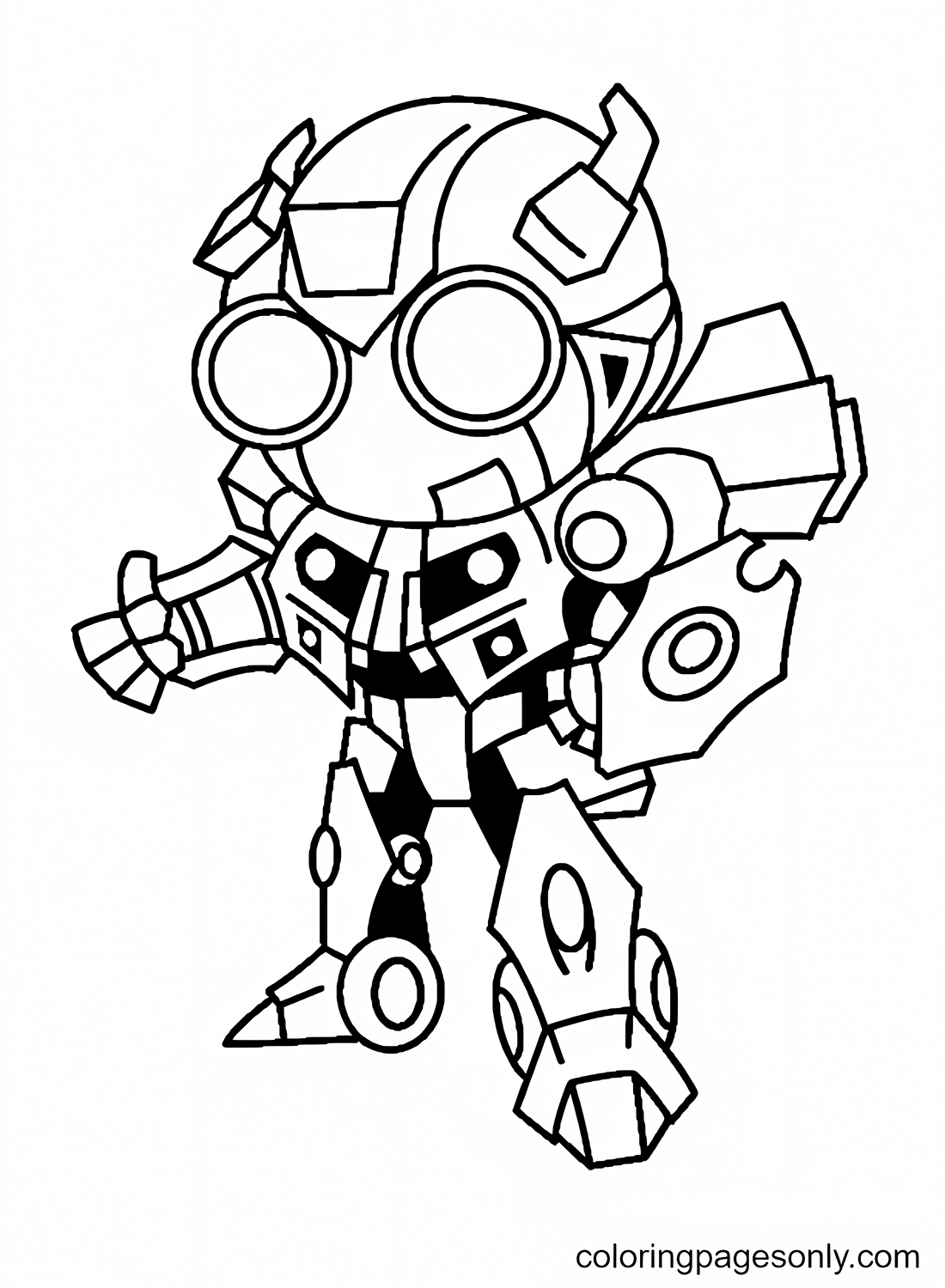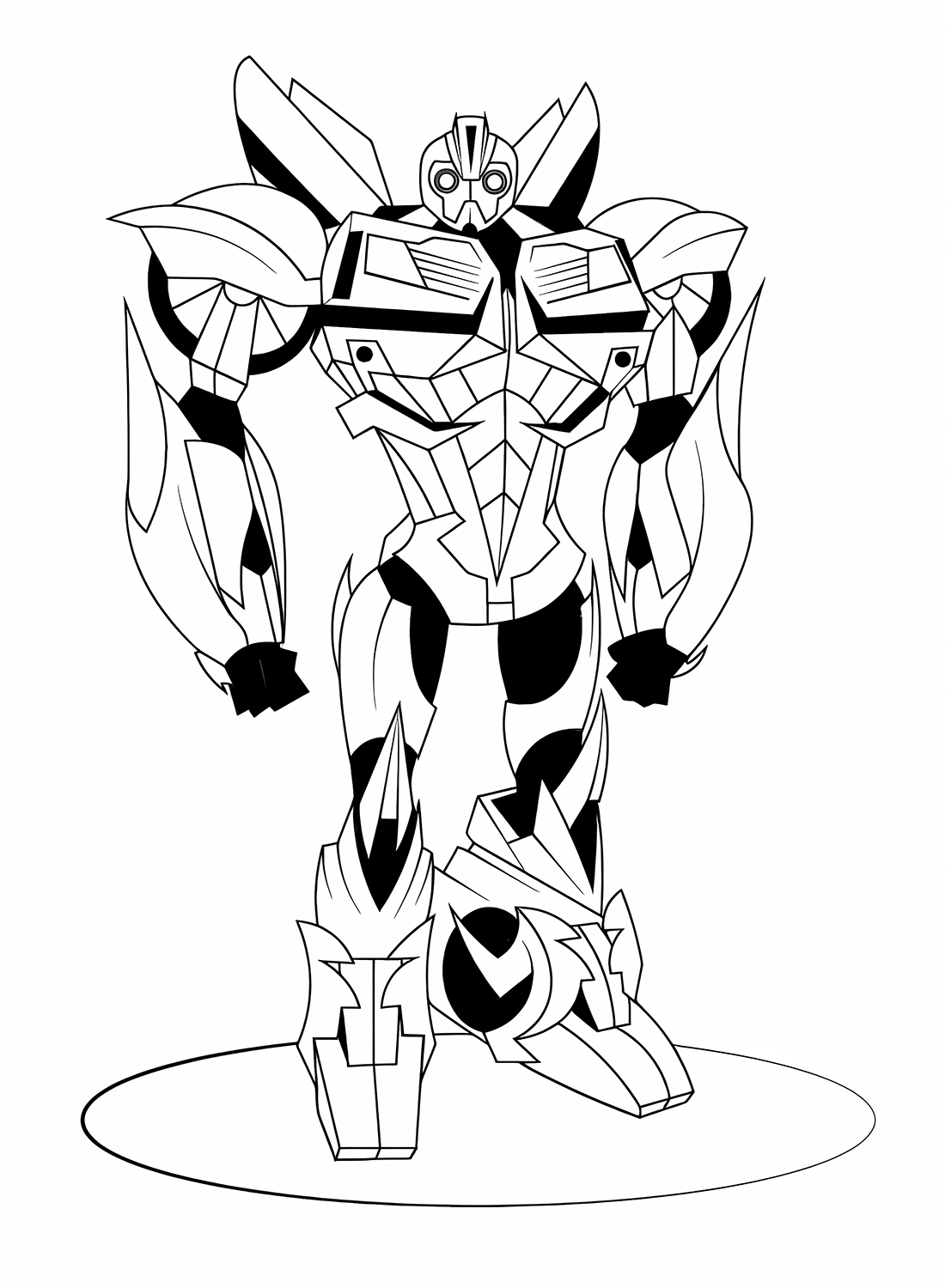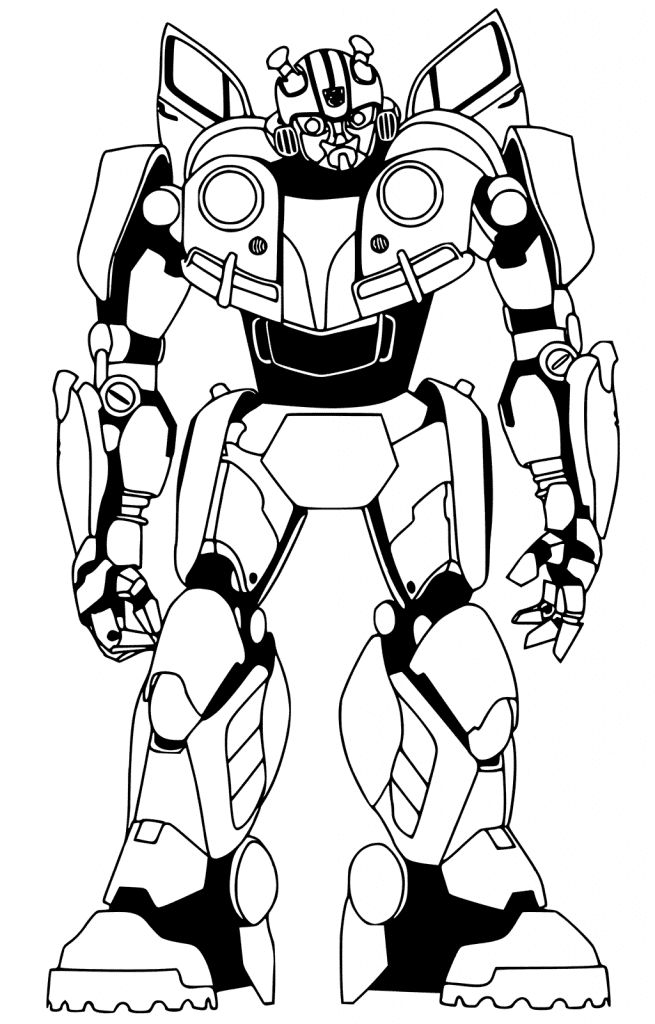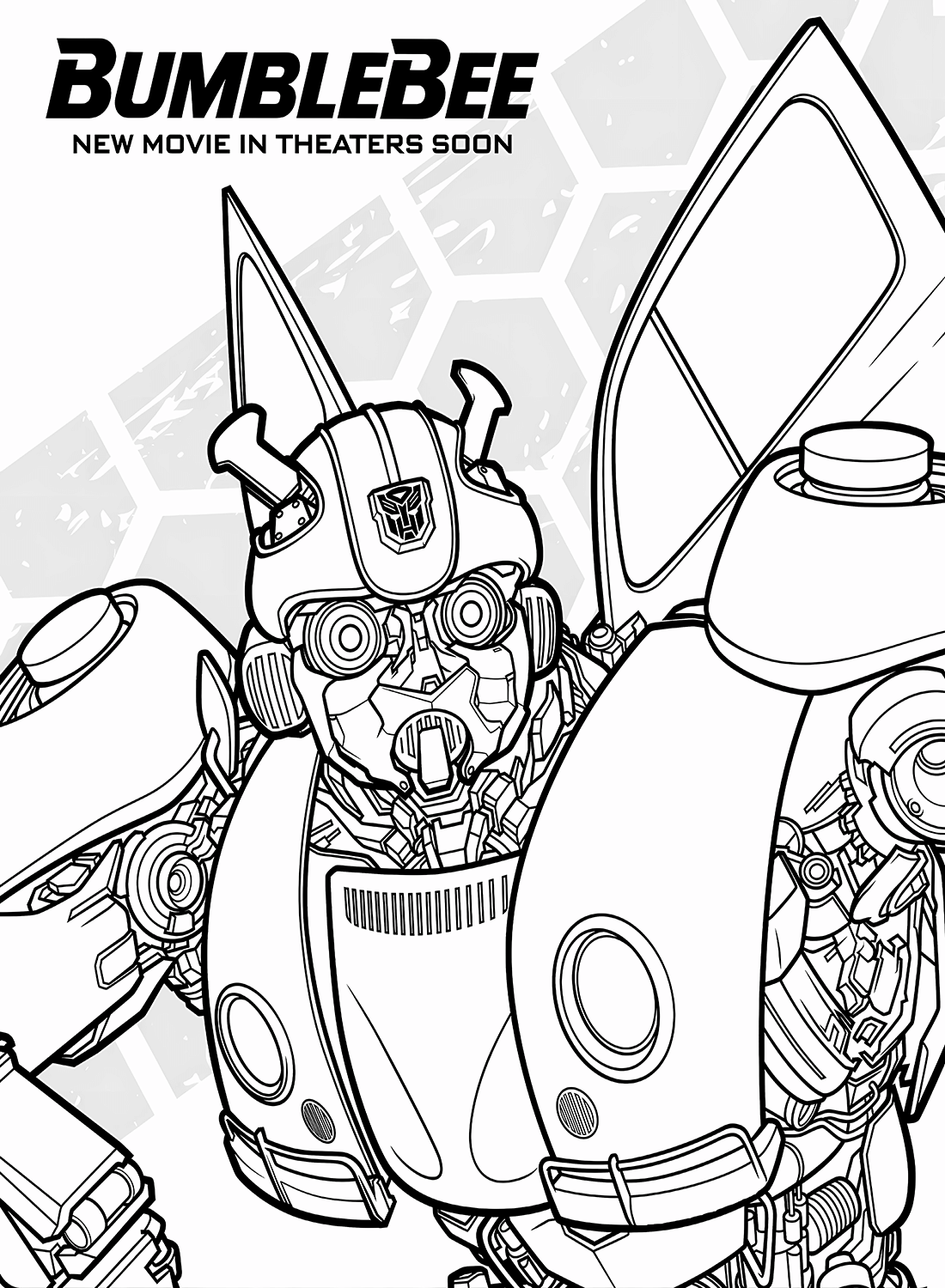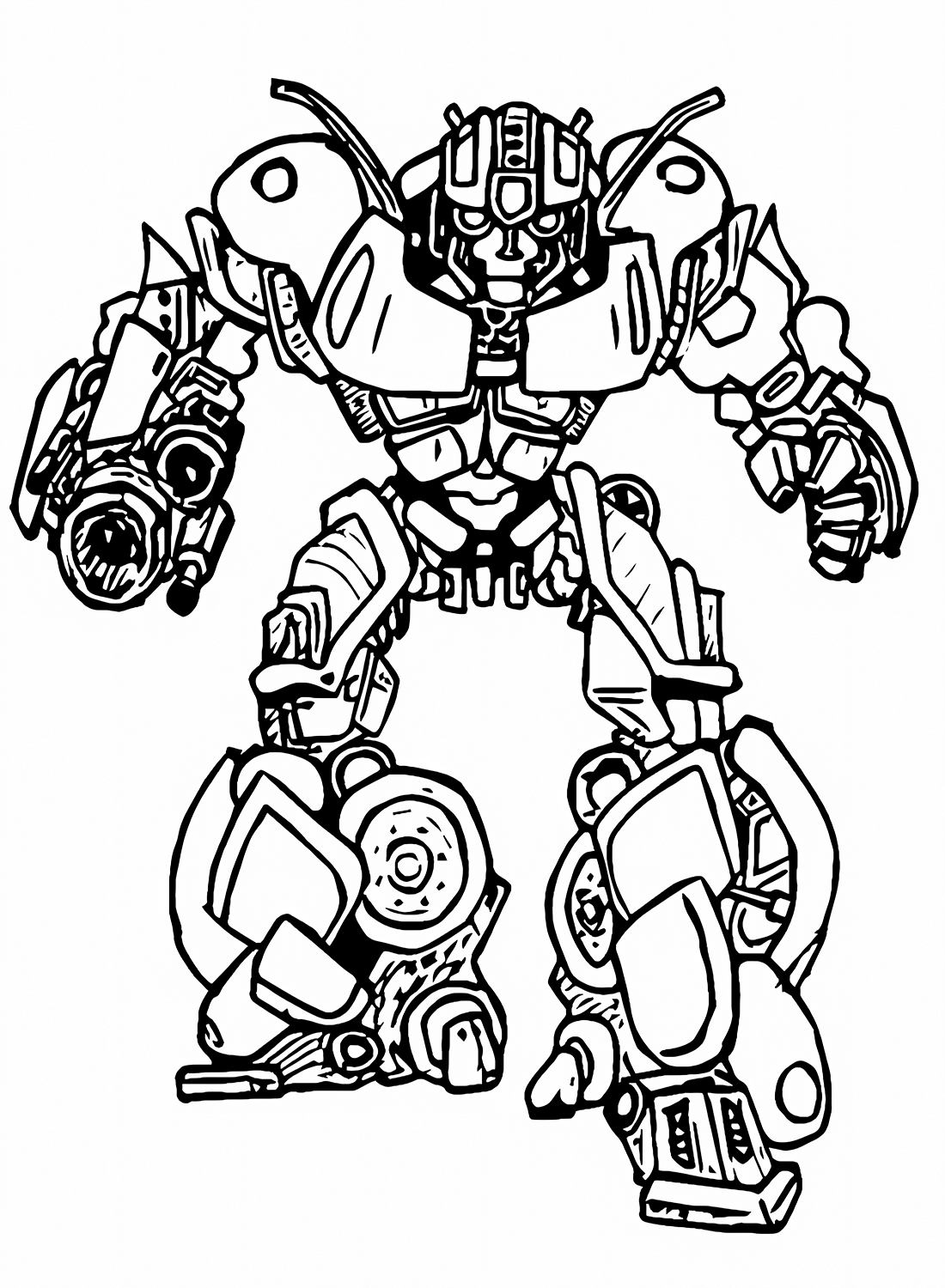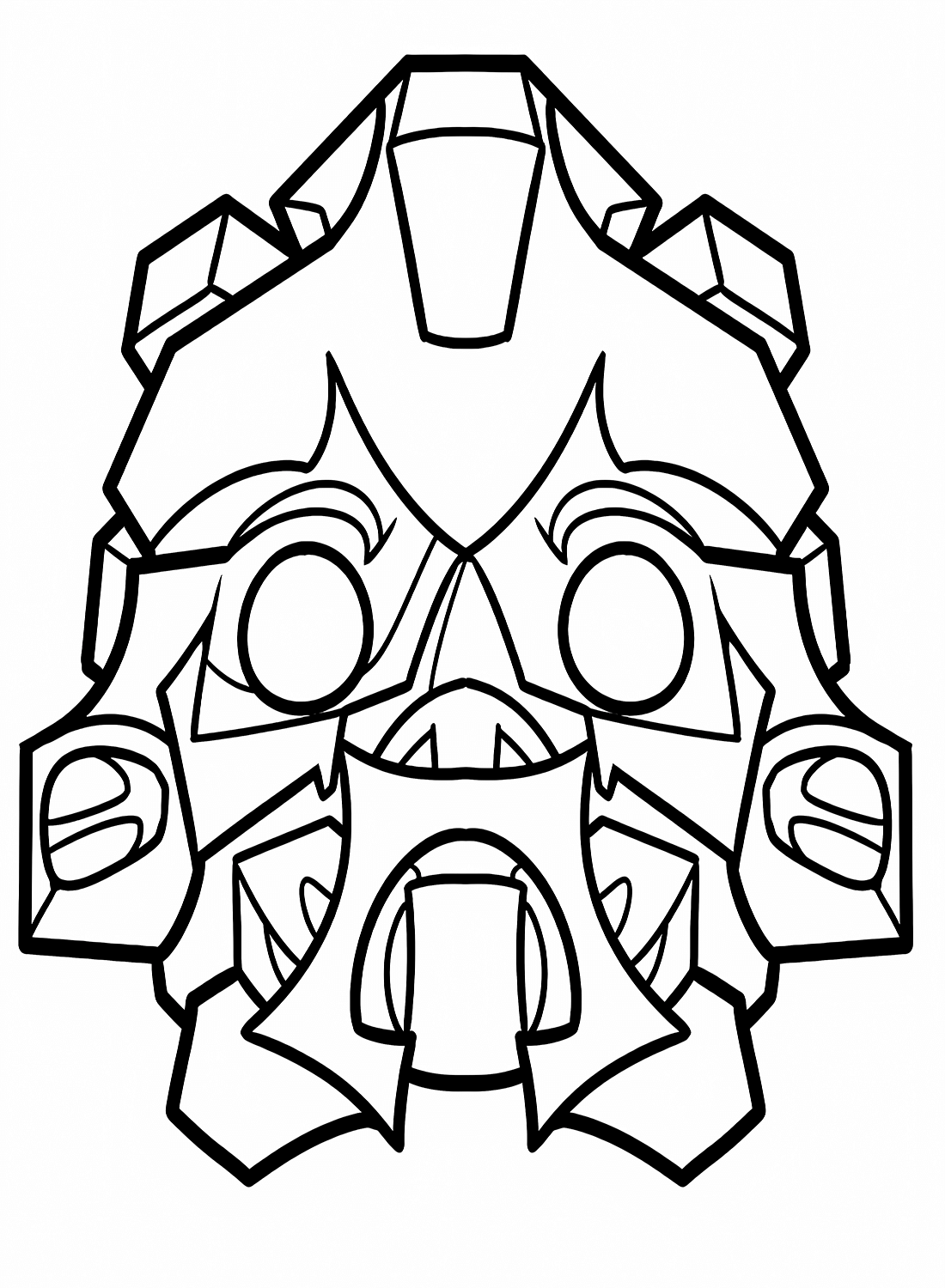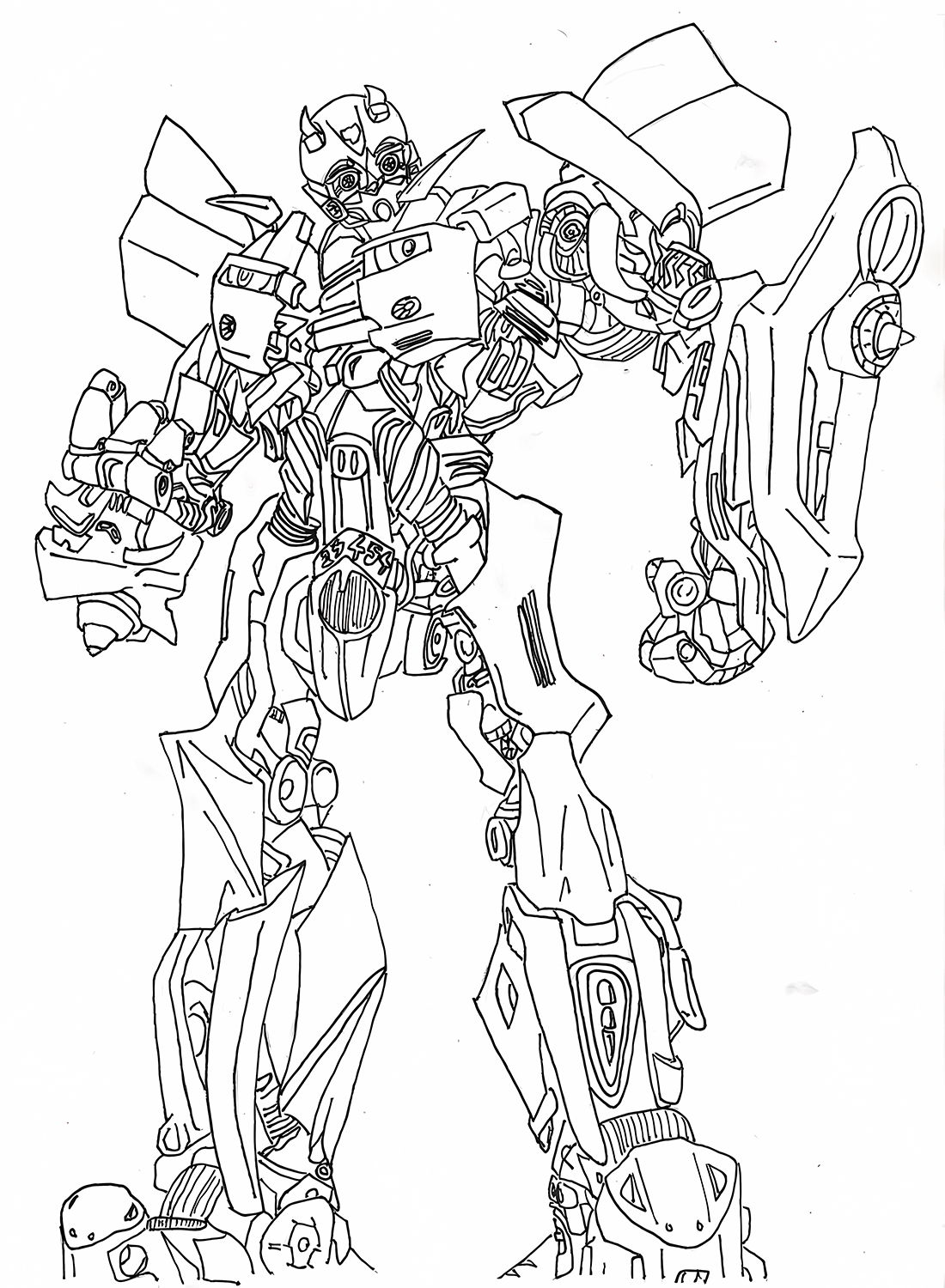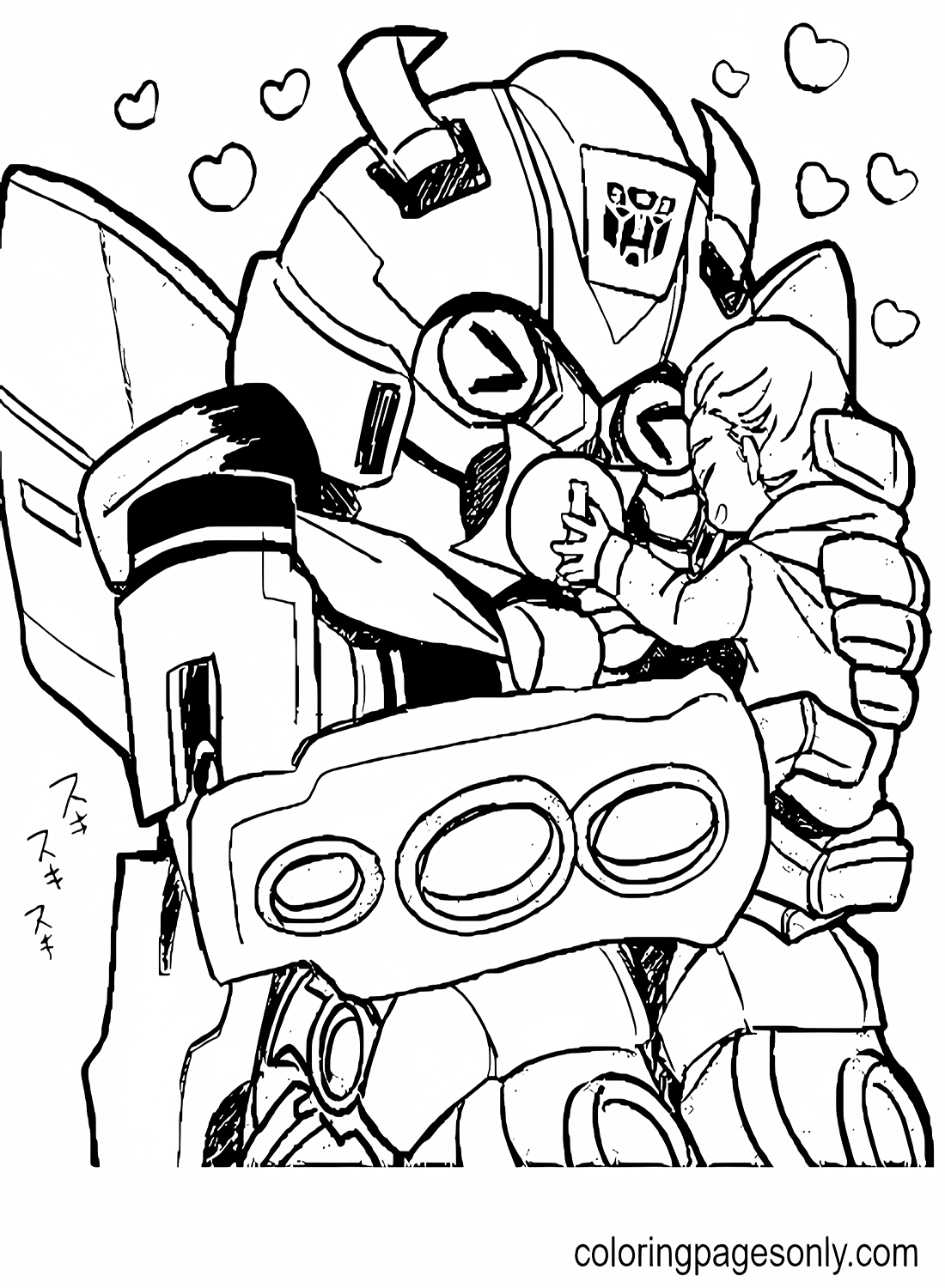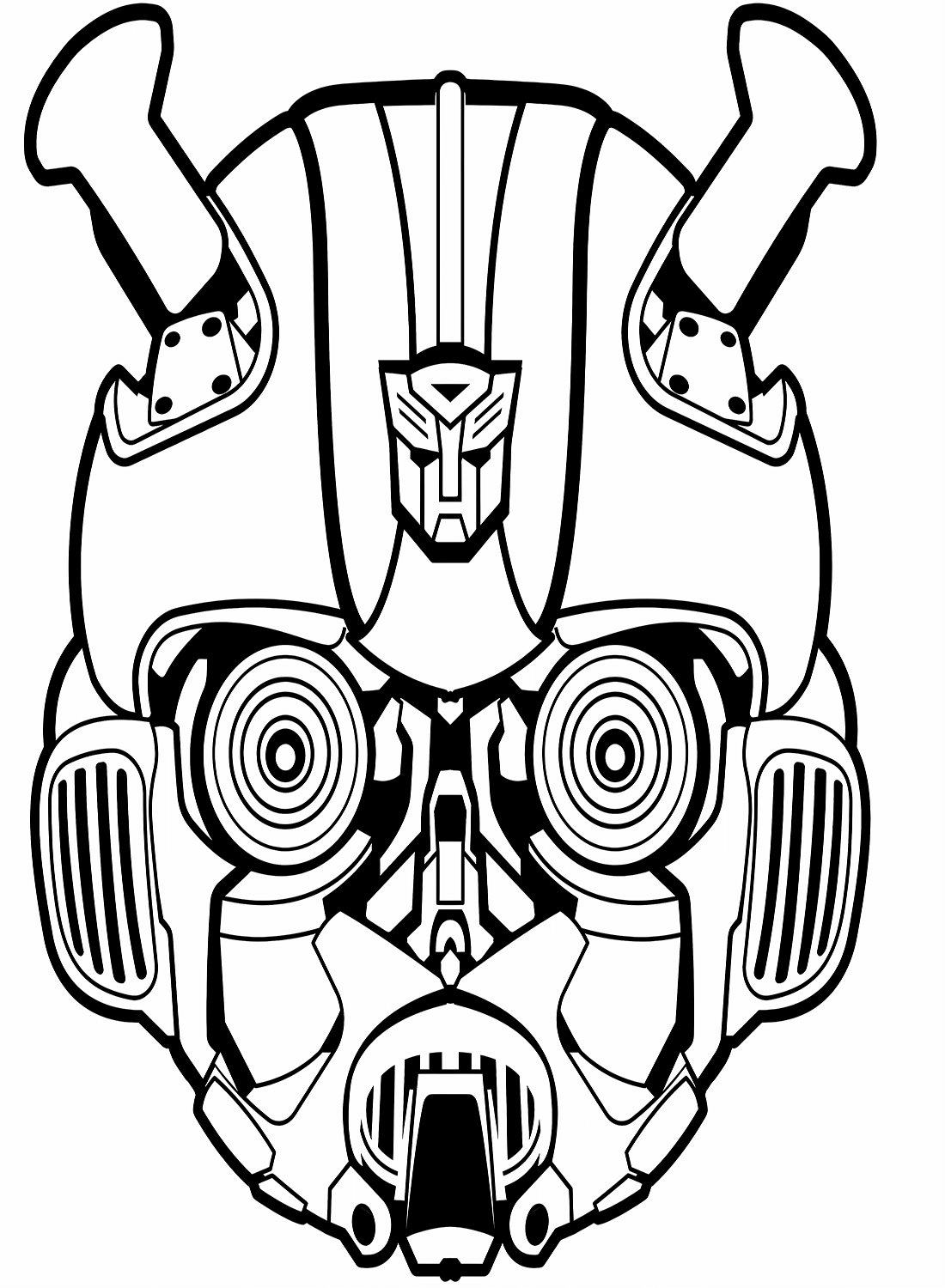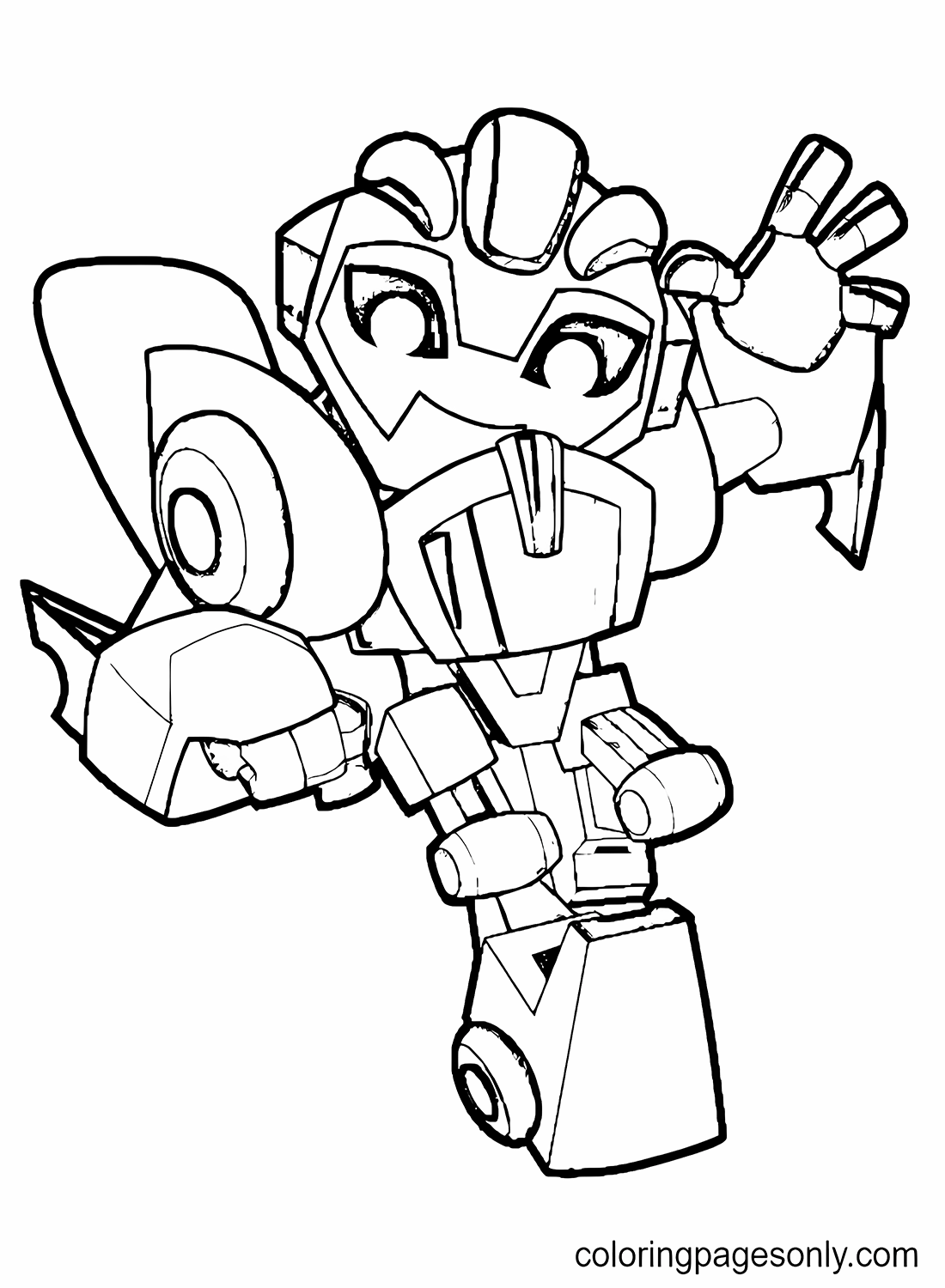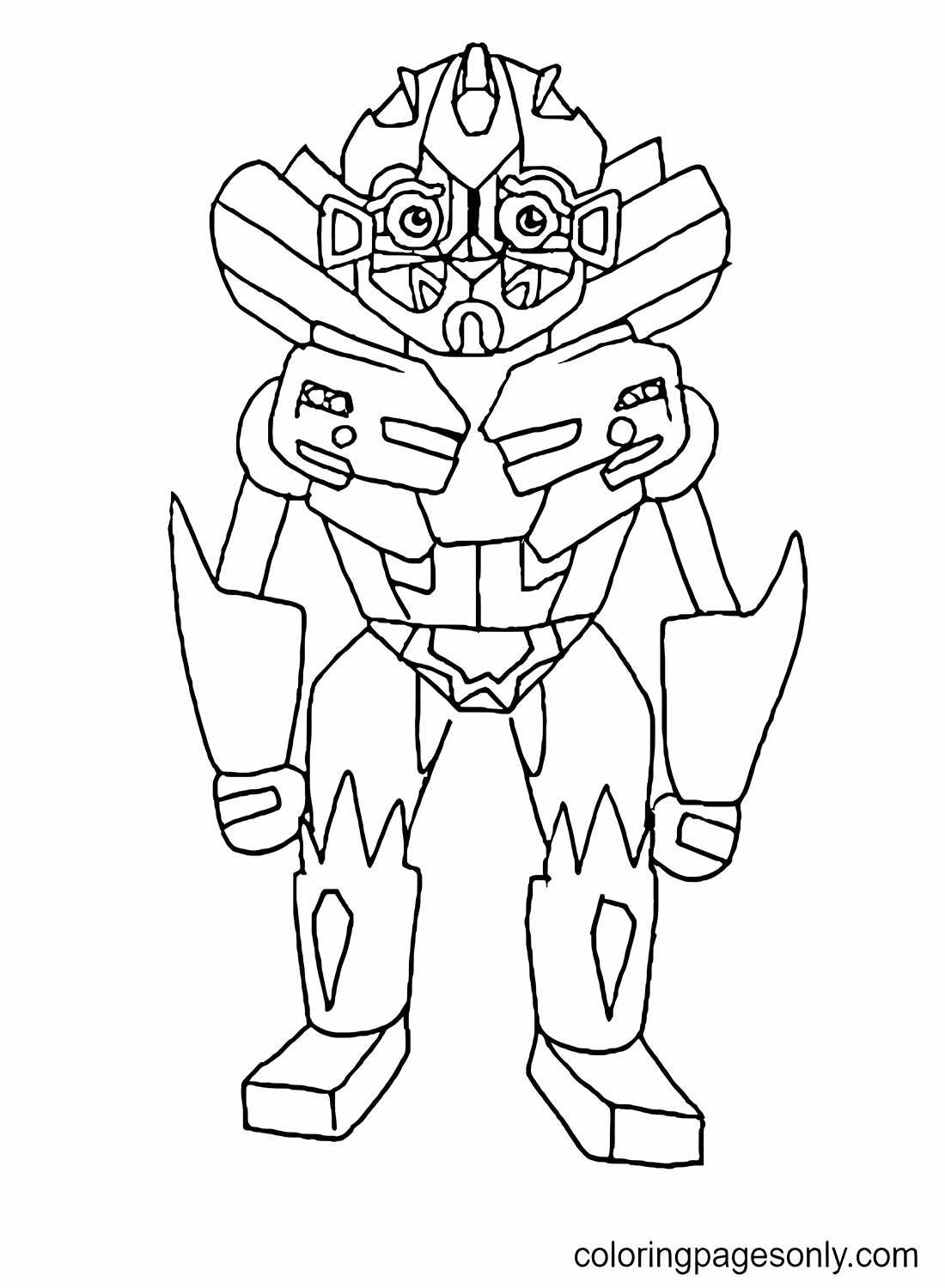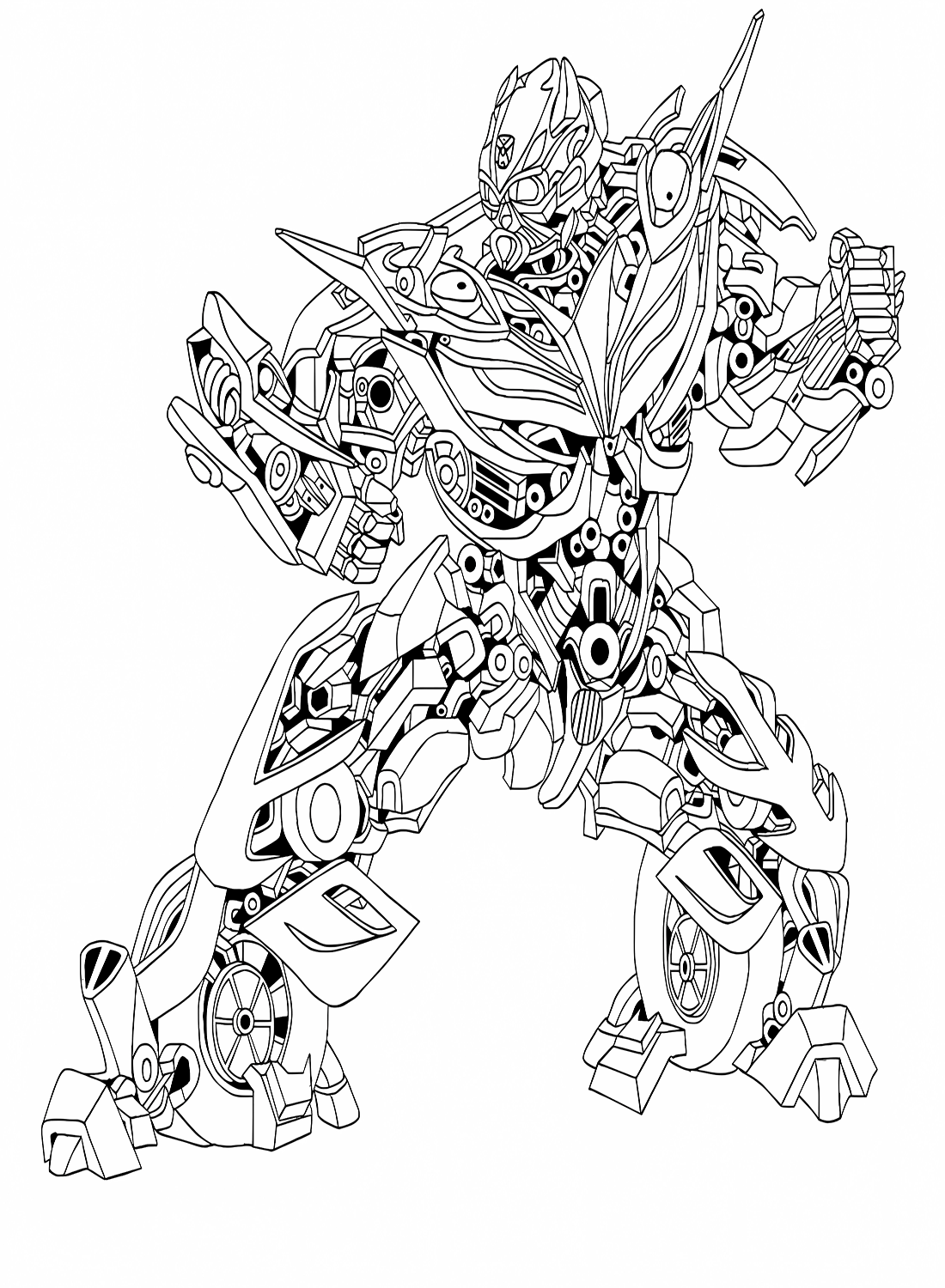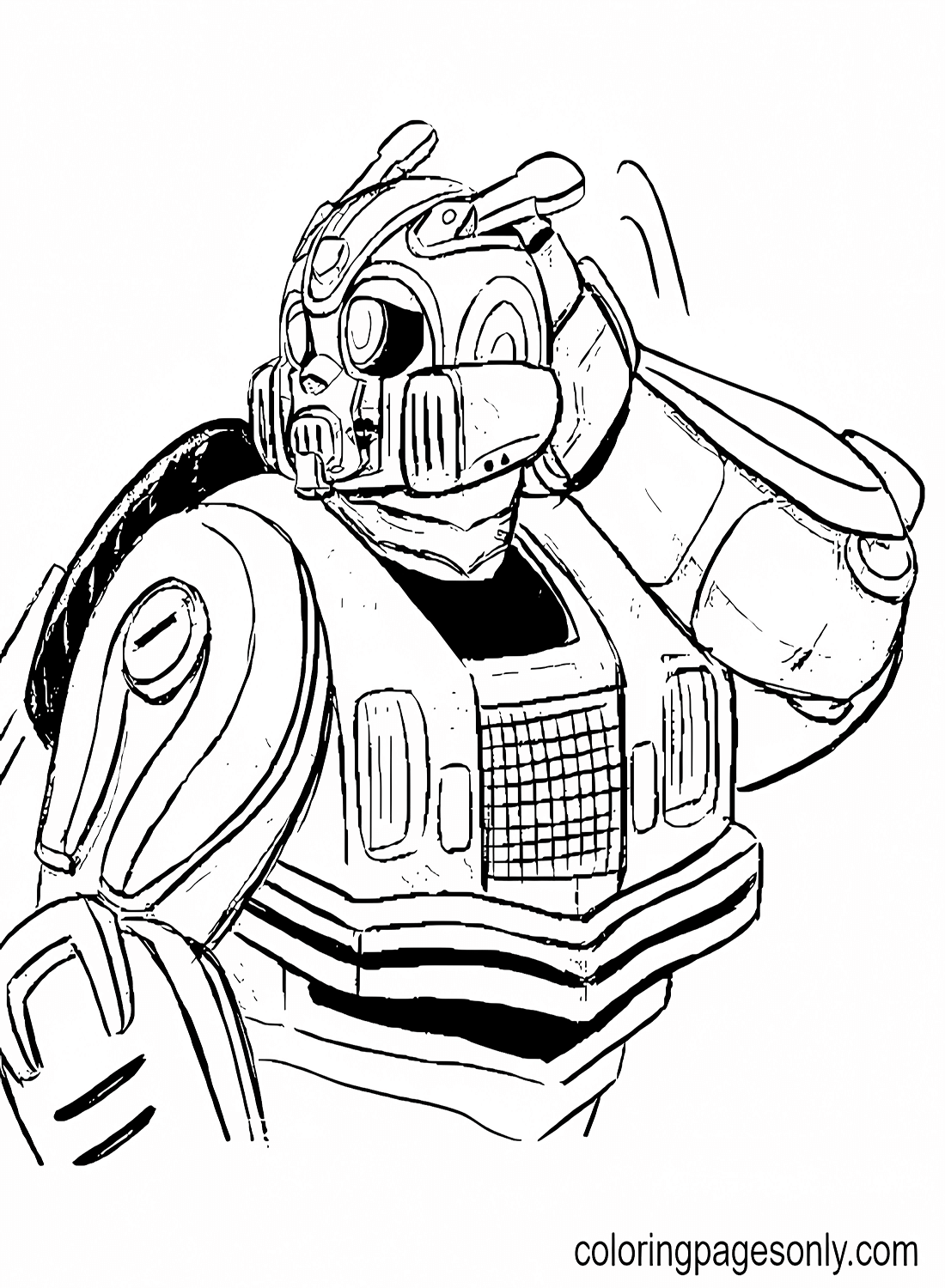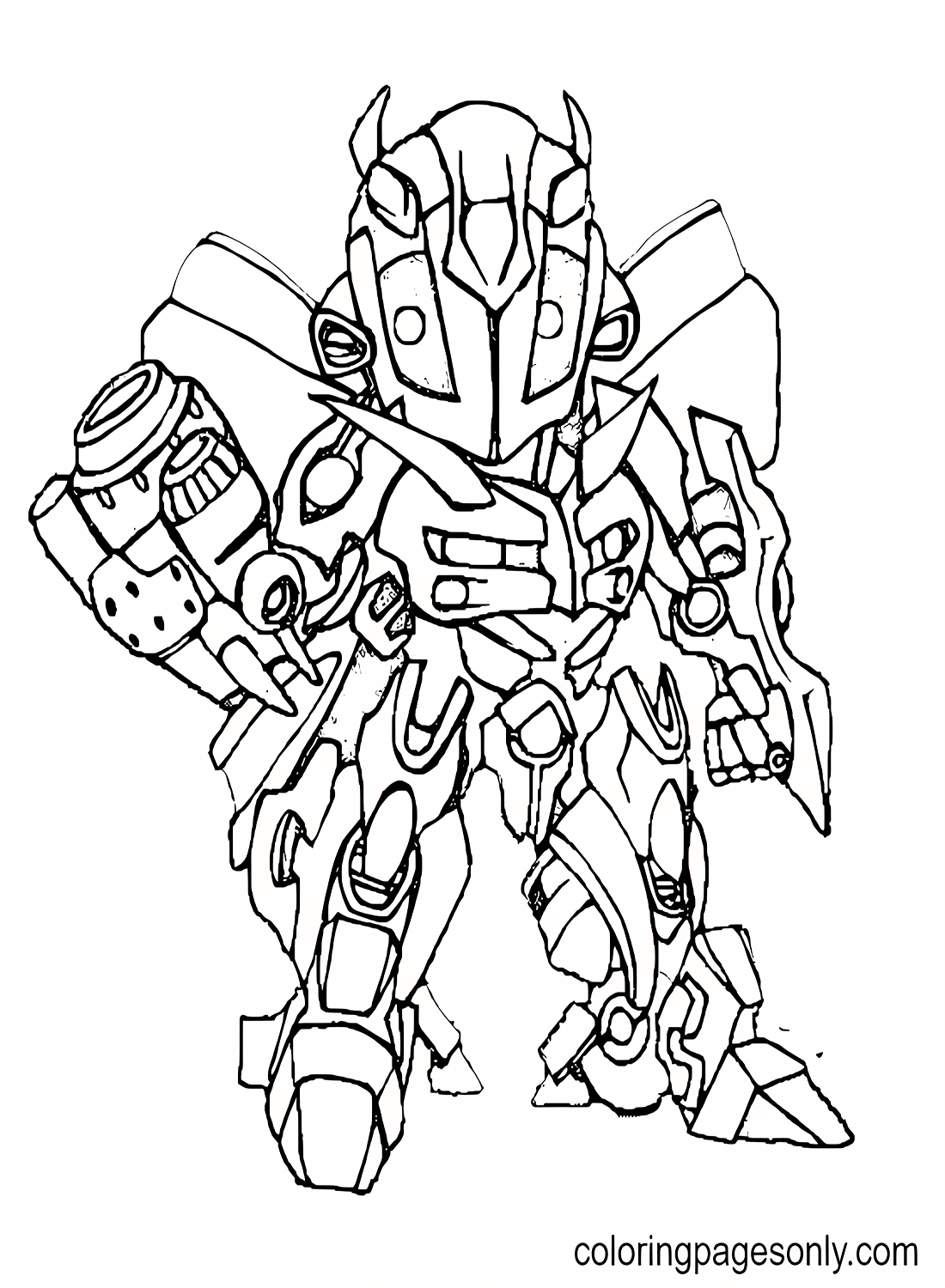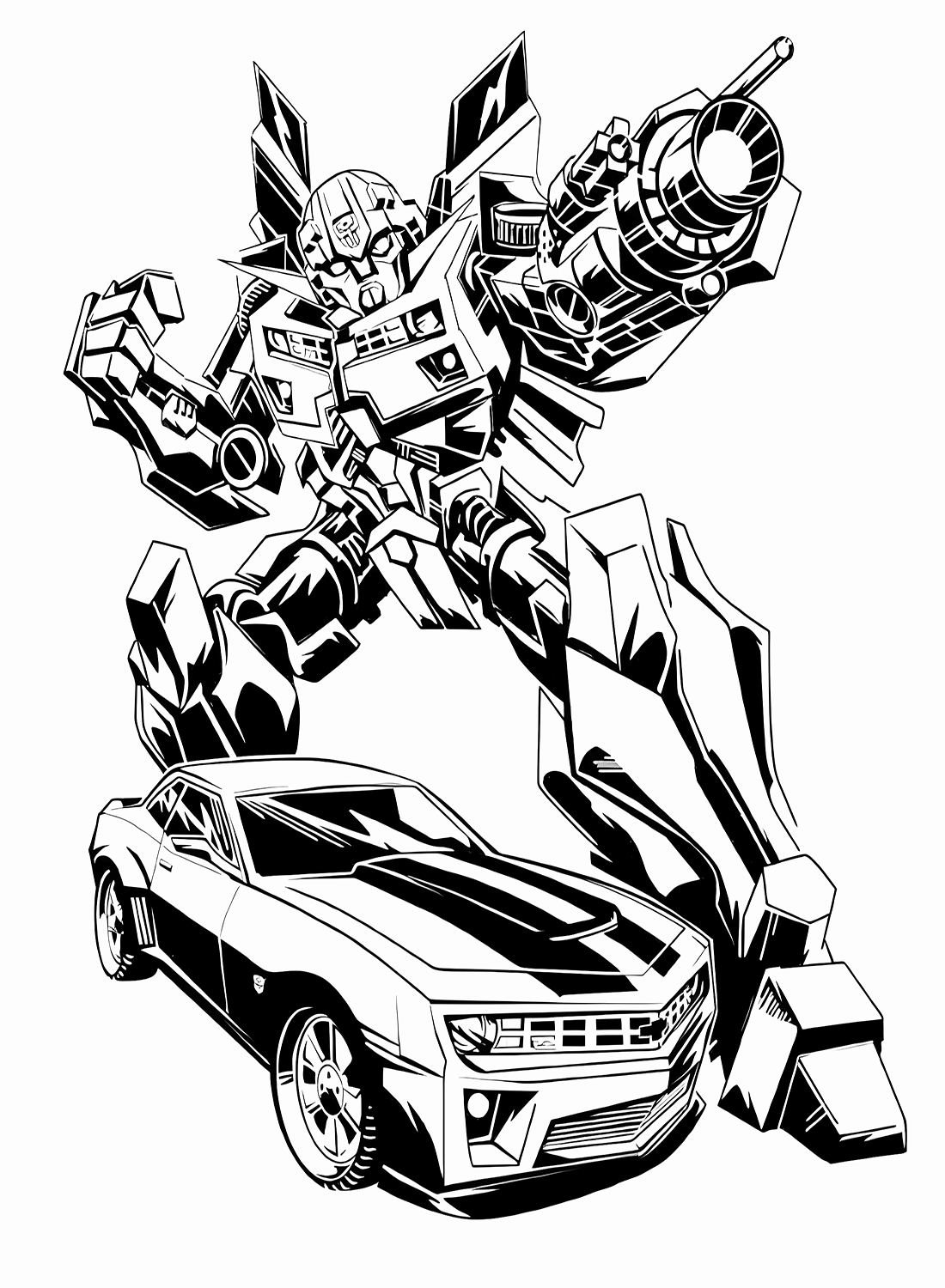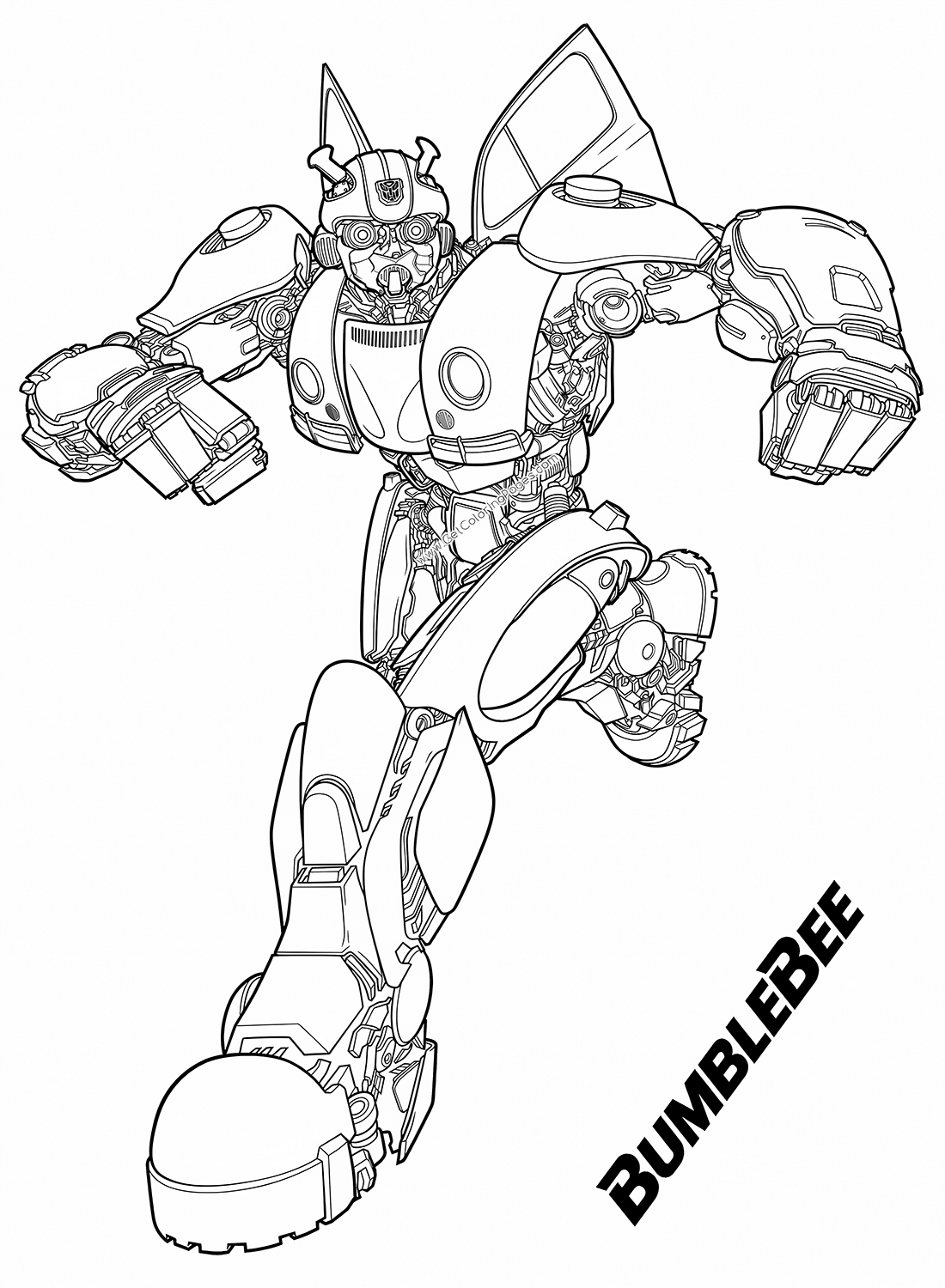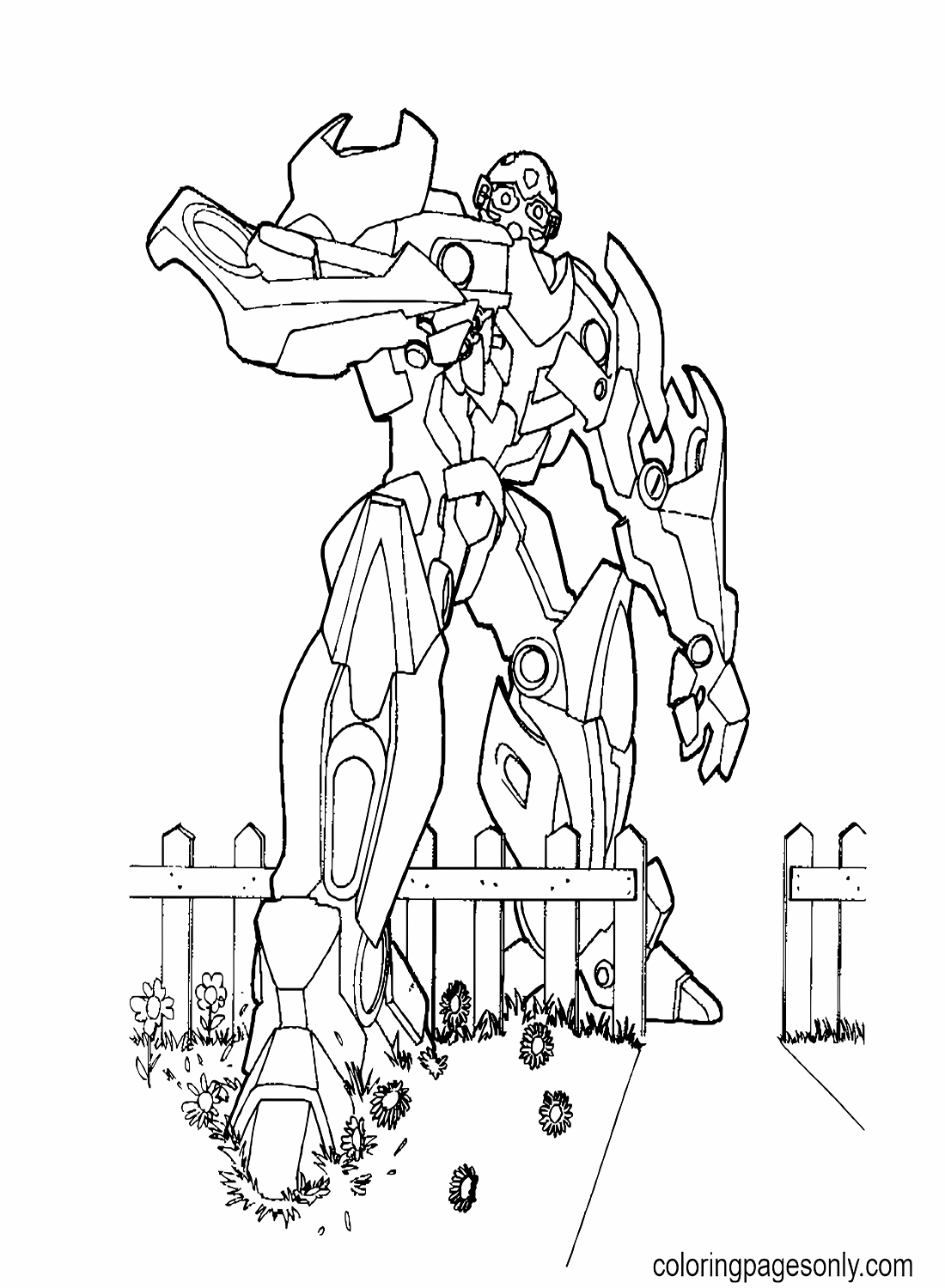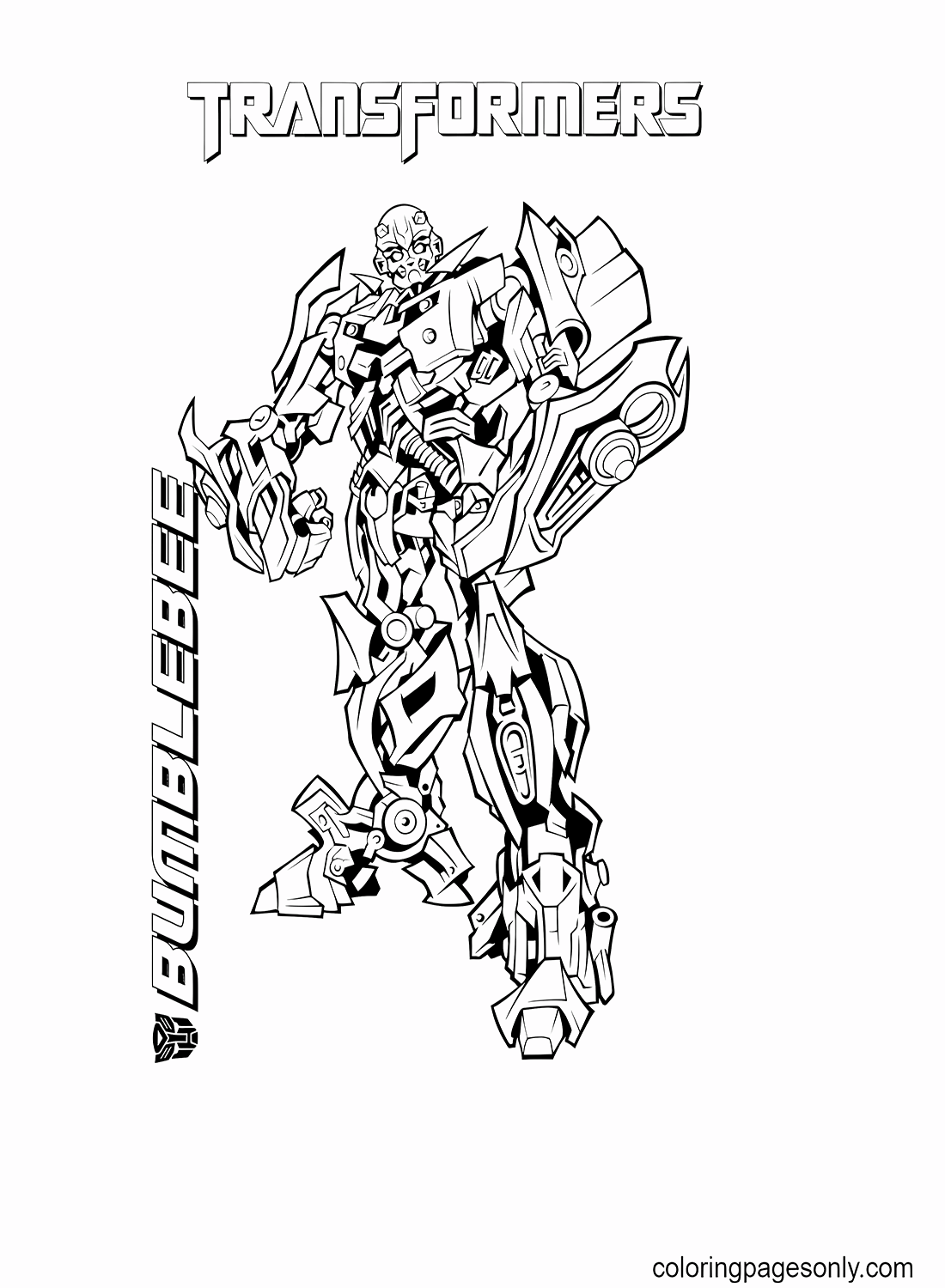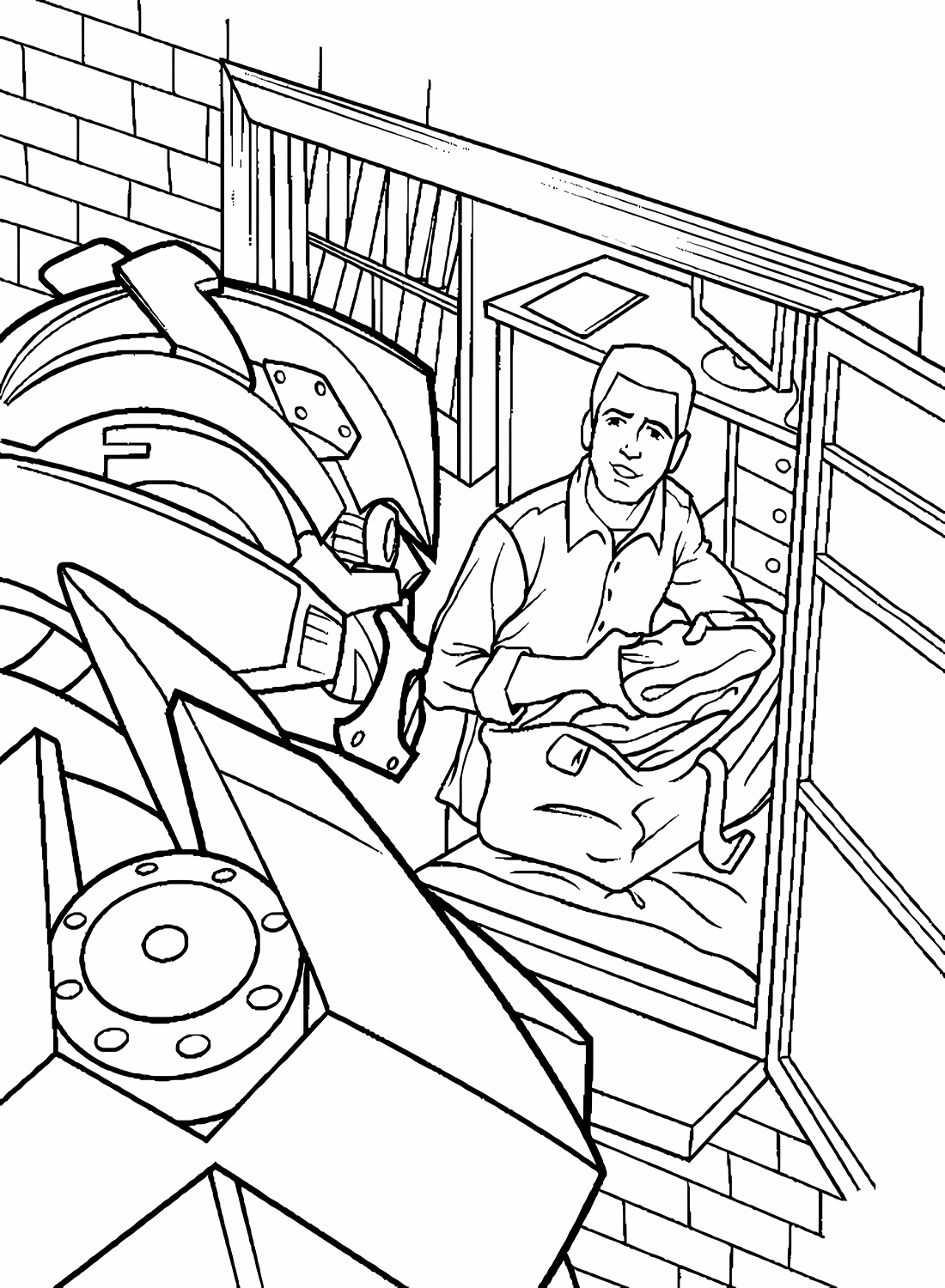
Free Bumblebee coloring pages: 60+ pages featuring the yellow-and-black Autobot scout in full robot form combat stances, vehicle mode pages showing the Chevrolet Camaro and Volkswagen Beetle alternate forms, transformation sequence pages showing the robot mid-convert, close-up head and face studies with blue eyes and distinctive battle mask, Bumblebee alongside Optimus Prime and other Autobots, battle scenes against Decepticons, the G1 classic design, the Michael Bay film design, the 2018 solo film design directed by Travis Knight, and the full visual vocabulary of the Transformers franchise’s most beloved and most immediately recognizable character across forty years of animated series, theatrical films, and merchandise. All free, printable PDFs and online coloring for Transformers fans of all generations.
Bumblebee originated as part of the Transformers toy line introduced by Hasbro in 1984. The original Transformers toy line was developed through a collaboration between Hasbro (United States) and Takara Tomy (Japan), using toys from the Japanese “Diaclone” and “Micro Change” lines repurposed and renamed for the American market. The animated television series The Transformers, now commonly called Generation 1 or G1, premiered on September 17, 1984, produced by Sunbow Productions and Marvel Productions with animation by Toei Animation in Japan. The series ran from September 17, 1984, to November 11, 1987.
In the G1 animated series, Bumblebee was one of the smallest and youngest Autobots: a yellow Volkswagen Beetle in vehicle mode, the primary human liaison for the Autobot team, and the partner of human teenager Spike Witwicky. His voice in the original series was provided by Dan Gilvezan. His small size, friendly personality, and role as the character most connected to the human characters gave him a specific warmth among the Autobot ensemble that established his status as the franchise’s most emotionally central character.
These 60+ free pages at ColoringPagesOnly.com cover Bumblebee across every major design era. All free, PDF or PNG, print or color online.
What’s Inside
G1 Classic Design Pages
The G1 Bumblebee design, established in the 1984 animated series, is the character’s foundational visual: a compact, relatively small robot form in vivid yellow with black accents, blue eyes in the Autobot tradition (all Autobots have blue eyes; all Decepticons have red eyes), and the specific proportional relationships of the series’ animation style. His vehicle mode in G1 is the Volkswagen Beetle, a choice that directly inspired his name: the yellow-with-black-accents aesthetic matches the actual bumblebee insect’s warning coloration.
The G1 design is significantly simpler and more stylized than the later Bay film designs: cleaner lines, larger flat color areas, and the specific cel-animation aesthetic of 1980s Japanese animation production. Pages referencing the G1 design are the collection’s most immediately accessible and most directly connected to the original franchise’s visual language.
In the G1 continuity, Bumblebee later received an upgrade to become Goldbug, a sleeker, more polished form that appeared in the later seasons of the animated series. Some pages may reference this upgraded design, which maintains the yellow color scheme but with a more streamlined robot mode.
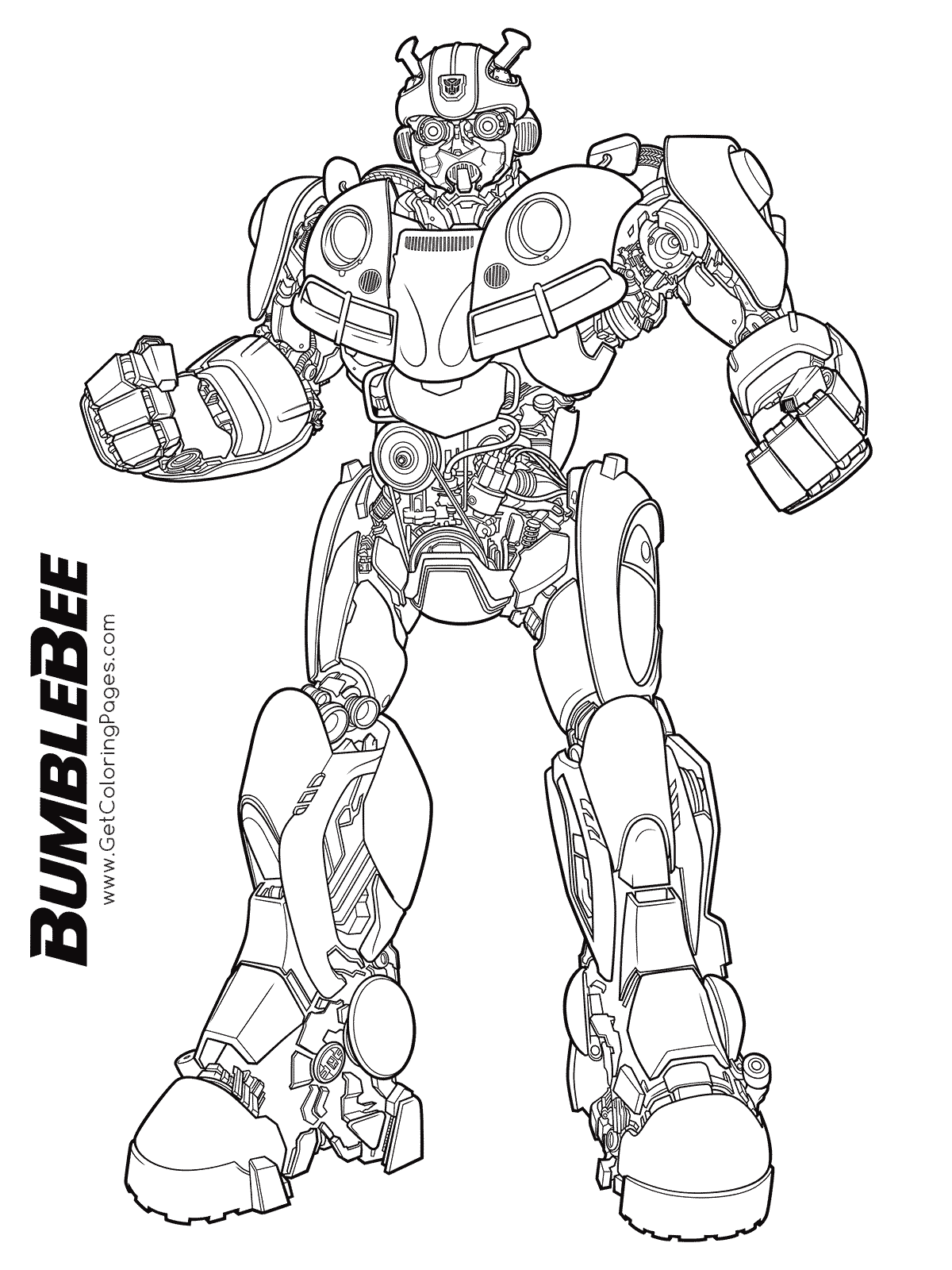

Coloring G1 design pages: The robot body is vivid, with flat yellow applied at full saturation across all yellow surfaces, consistent with the flat color approach of the G1 animation. Black accents appear at specific structural positions: the wheel arches from the vehicle mode visible on the body, panel lines, and detail elements. The eyes are vivid blue. The Autobot symbol (a red stylized face design) appears on the chest or shoulder. The G1 coloring approach uses clean, flat colors without complex shadow gradients.
Michael Bay Film Design Pages
The 2007 Michael Bay Transformers film redesigned Bumblebee as a Chevrolet Camaro rather than the Volkswagen Beetle of G1, a change made partly at General Motors’ request for brand integration and partly because the production team wanted a more dramatically imposing vehicle form for the theatrical context. The initial vehicle appearance in the film is a damaged 1977 Camaro that Sam Witwicky (played by Shia LaBeouf) purchases at a used car lot, which subsequently upgrades itself to a 2009 Camaro model through Cybertronian technology.
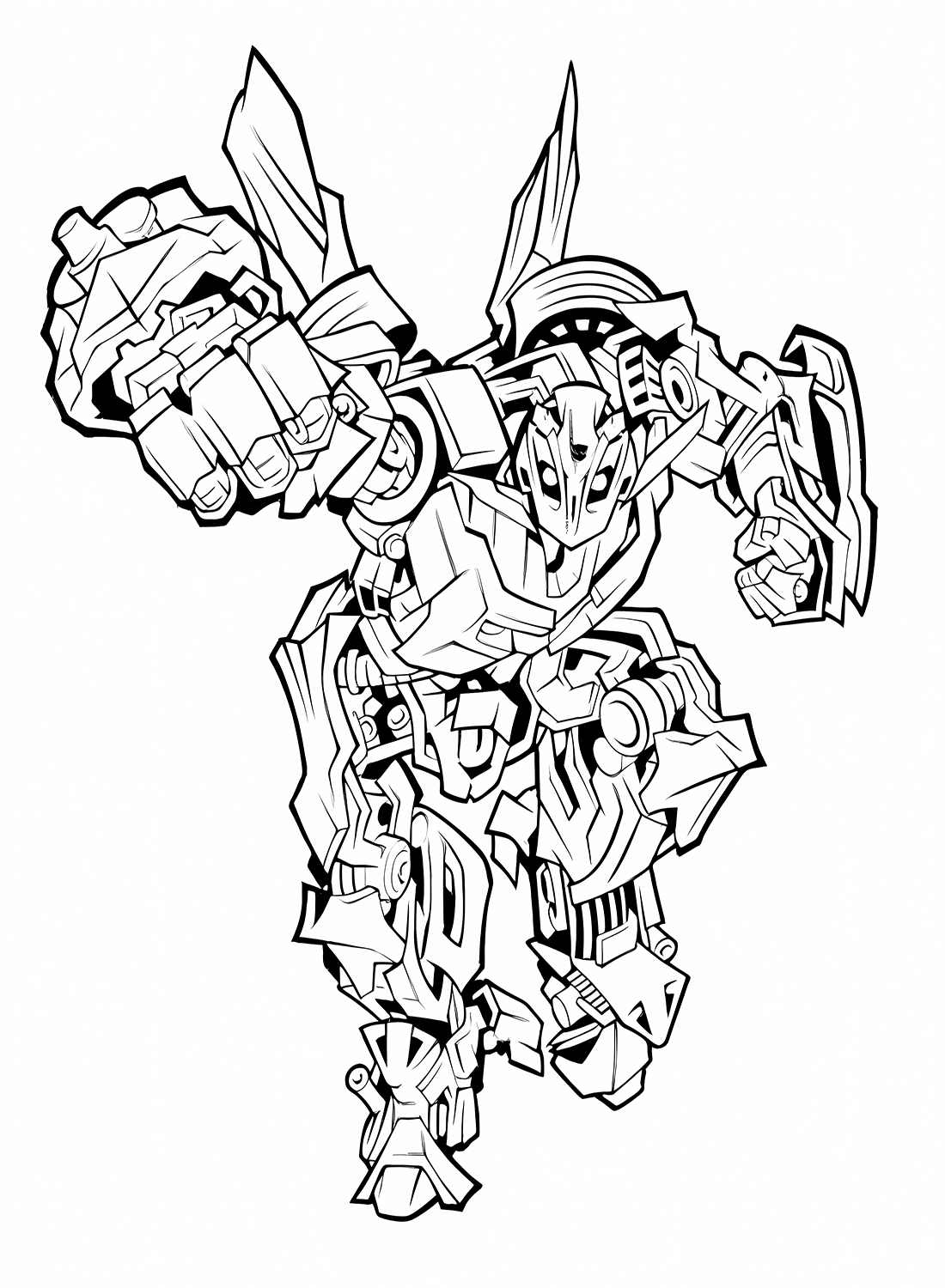
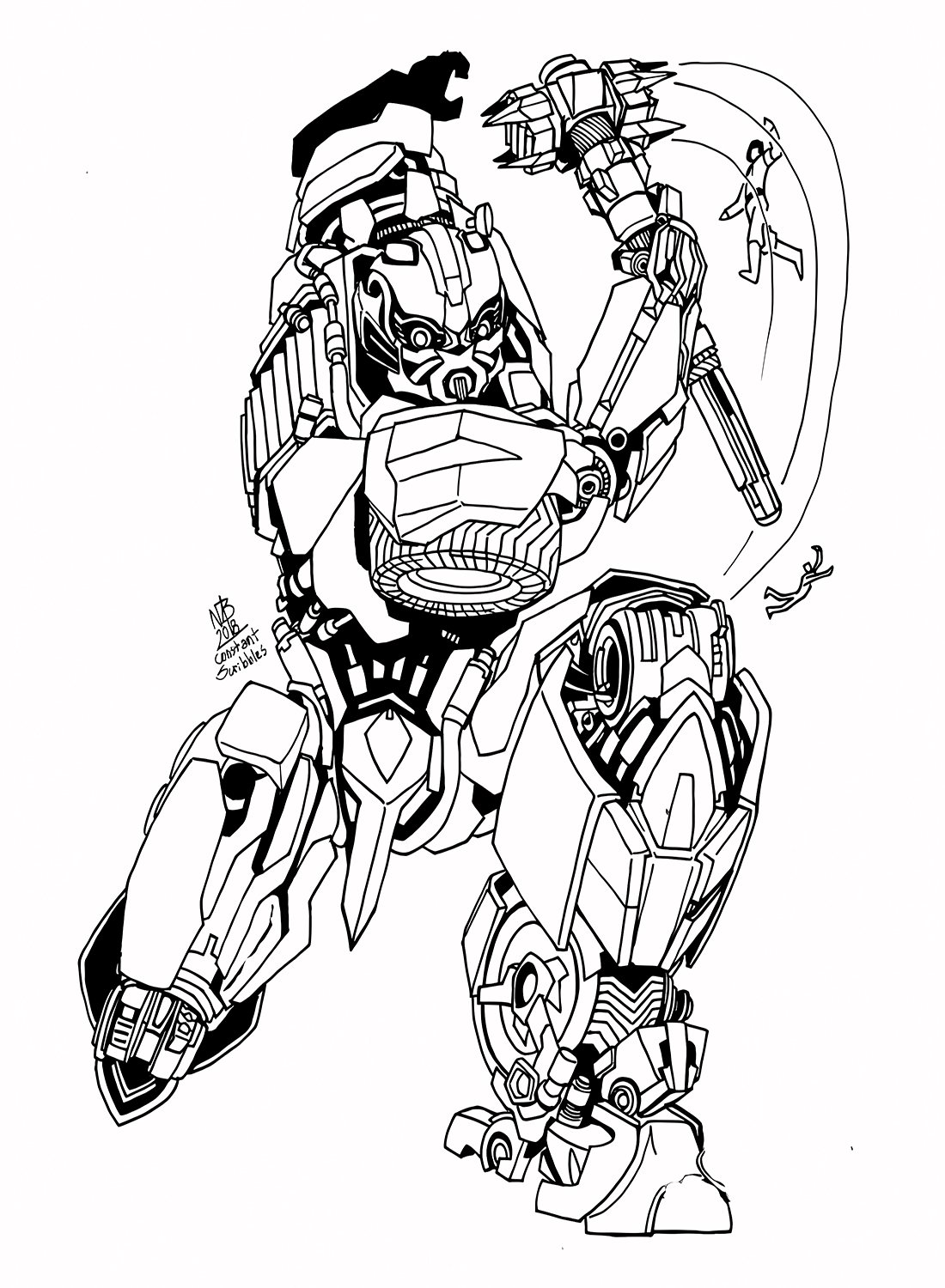
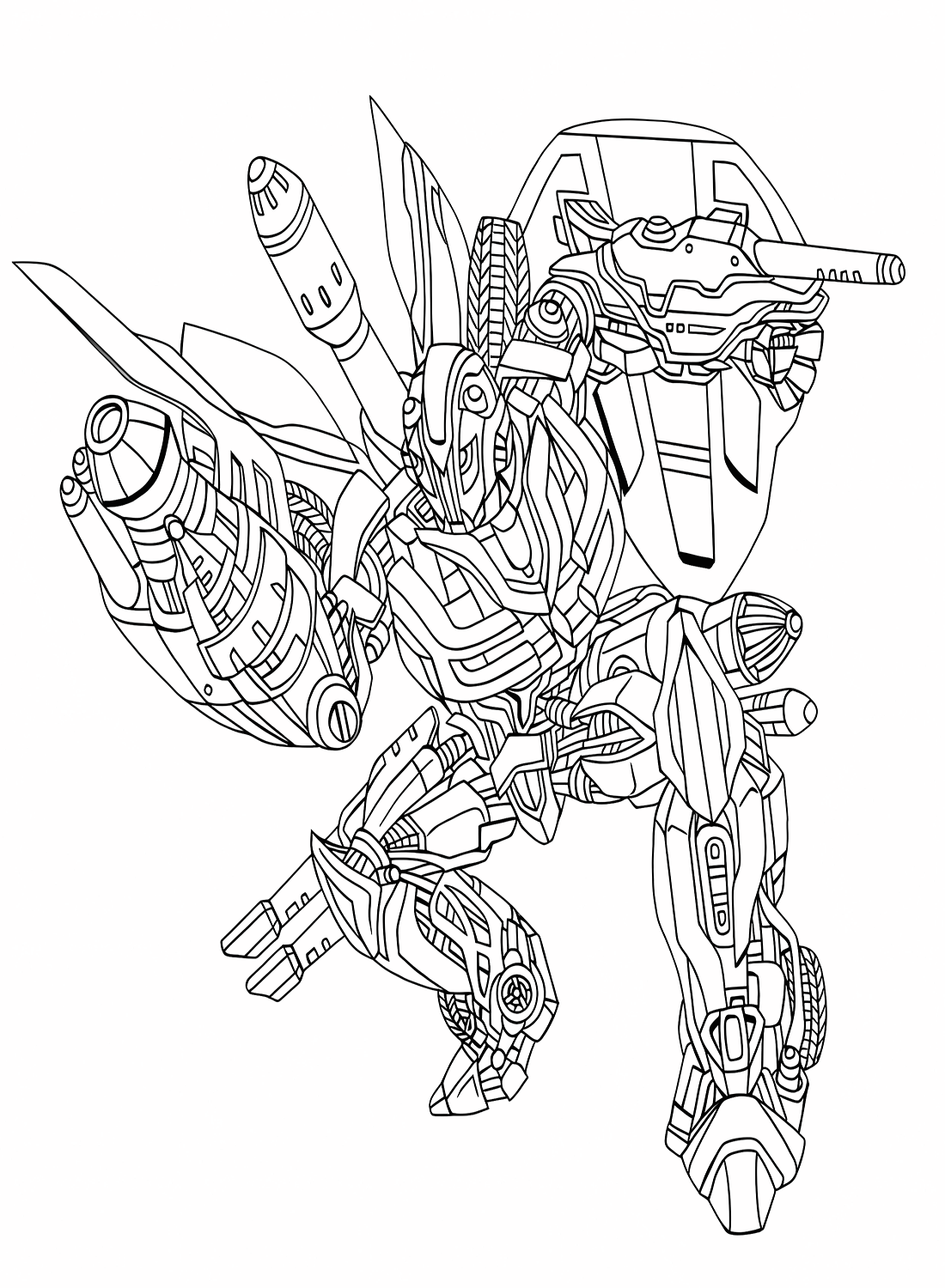
The Bay film robot design is dramatically more complex than G1: the body is covered in highly detailed mechanical surface elements, angular panel arrangements, exposed mechanical joints, and the specific texture of the film’s industrial aesthetic. The yellow is maintained as the primary color but becomes less flat and more metallic in quality, with complex shadow and highlight interactions across the mechanical surface detail.
The Bay film Bumblebee’s most memorable character trait is his damaged voice synthesizer: unable to speak, he communicates through radio clips, music, and selected audio fragments, a constraint that became one of the character’s most beloved features. The image of Bumblebee selecting specific songs to express his meaning gave the character a form of emotional communication that was simultaneously funny and touching.
The Bay film franchise produced five films between 2007 and 2017, with Bumblebee appearing in all five as a primary Autobot. The first film earned $709.7 million worldwide. Transformers: Dark of the Moon (2011) earned $1.123 billion worldwide.
Coloring Bay film design pages: The complex mechanical surface detail of the Bay design requires a different approach from the flat G1 coloring. Apply vivid yellow as the base across all main body surfaces. Then apply slightly darker yellow-gold in the deeper recessed areas between panel elements. The metallic quality comes from applying light grey or silver-white along the most directly lit surfaces (the edges and raised faces of each panel). Black or near-black for the deepest mechanical recesses. The eyes are vivid blue with an internal luminosity: apply bright teal-blue at the center of each eye, slightly darker blue at the eye’s outer edge, suggesting an illuminated optical element.
The 2018 Standalone Film Design Pages
Bumblebee (2018), directed by Travis Knight and starring Hailee Steinfeld as Charlie Watson, set a new visual direction for the franchise by returning Bumblebee to his G1-inspired Volkswagen Beetle form and adopting a robot design that combined the G1 character’s classic simplicity with the mechanical detail standards of the film series. The film is set in 1987 and follows a damaged, amnesiac Bumblebee who arrives on Earth and is befriended by Charlie, a teenage girl who repairs cars in her garage.
The 2018 film was significantly more critically praised than the Bay sequels, earning 91% on Rotten Tomatoes, and its design choices were specifically noted by critics and fans as a successful return to the character’s emotional core. The VW Beetle alternate form reconnected the character to his G1 origin in a way that resonated with long-term fans, while the film’s character-focused storytelling reached a broader family audience.
The robot design in the 2018 film is cleaner than the Bay films but more detailed than G1: a middle ground that maintains recognizable proportional relationships to the G1 character while adding the material depth expected of contemporary CGI production.
Coloring 2018 film design pages: The VW Beetle vehicle mode uses vivid warm yellow across the full body, with black rubber tires and silver-grey chrome trim elements. The robot mode uses the same vivid yellow as the dominant body color with black and grey structural details, and the face design is closer to the G1 character’s expressive proportions than the Bay film’s more angular design.
Bumblebee Vehicle Mode Pages
Bumblebee’s vehicle forms across the franchise’s history are among its most documented changes: each redesign communicates something about the era of production and the creative decisions made for that context.
The G1 VW Beetle (1984): the smallest, most modest vehicle in the Autobot lineup, matching Bumblebee’s role as the youngest and least imposing Autobot. The rounded, cheerful proportions of the Beetle match the character’s friendly, approachable personality.
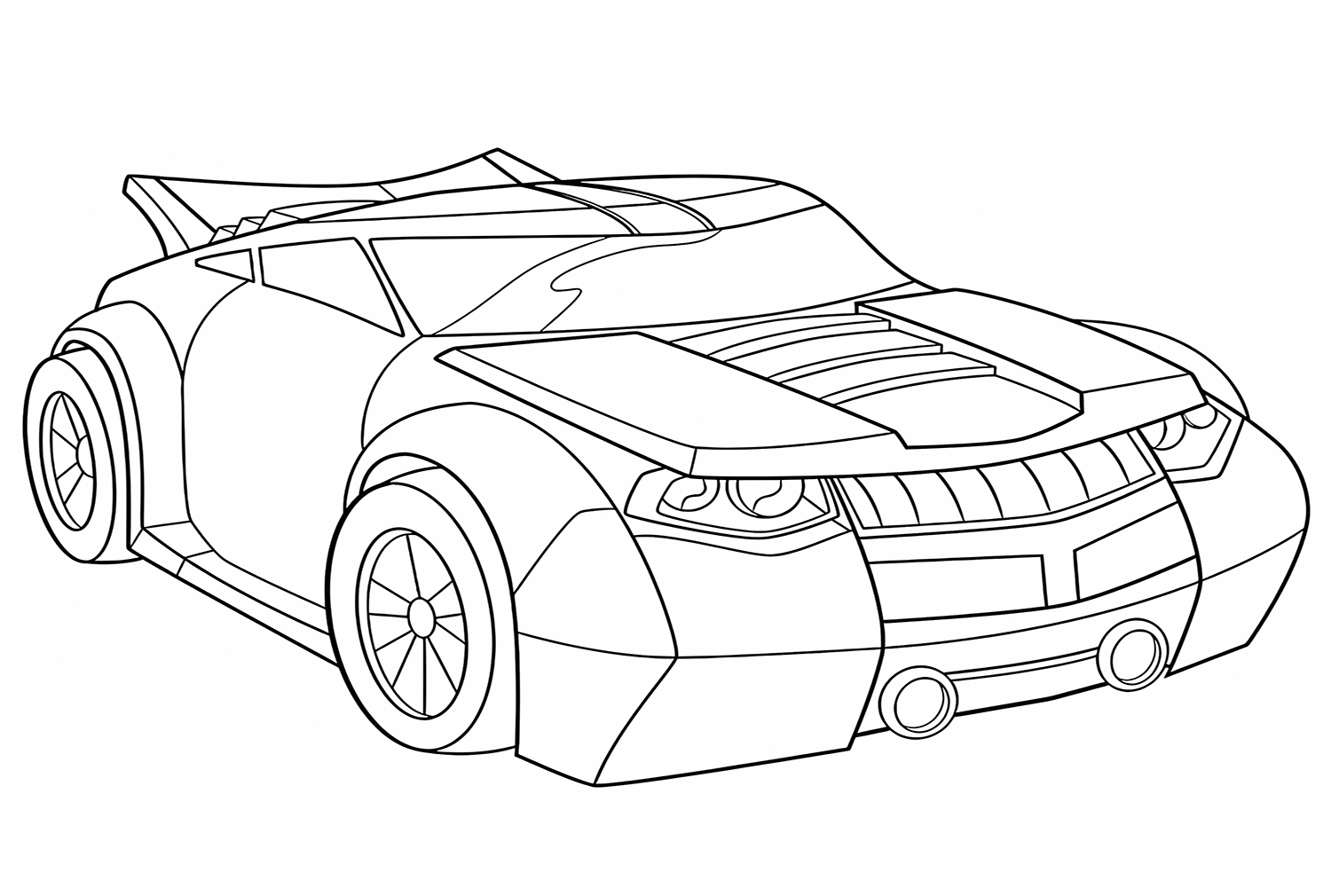
The Bay film Chevrolet Camaro (2007-2017): a powerful, stylish American muscle car that elevated the character from the modest Beetle to a dramatically more imposing vehicle form. The yellow racing stripe on the Camaro maintained the character’s yellow identity while transforming the vehicle’s cultural register.
The 2018 film VW Beetle (1987-era): the return to the Beetle in a period-appropriate 1967 version, slightly rougher and more worn than the pristine G1 version, fitting the film’s more grounded, personal tone.
Coloring vehicle mode pages: The VW Beetle is a smooth, rounded shape: apply vivid warm yellow at full coverage across the full body surface. Silver-grey for the chrome bumpers and window trim. Black for the tires. The Camaro has a more angular, muscular body shape: the same vivid yellow with any black racing stripe elements applied at full near-black coverage.
Battle and Action Scene Pages
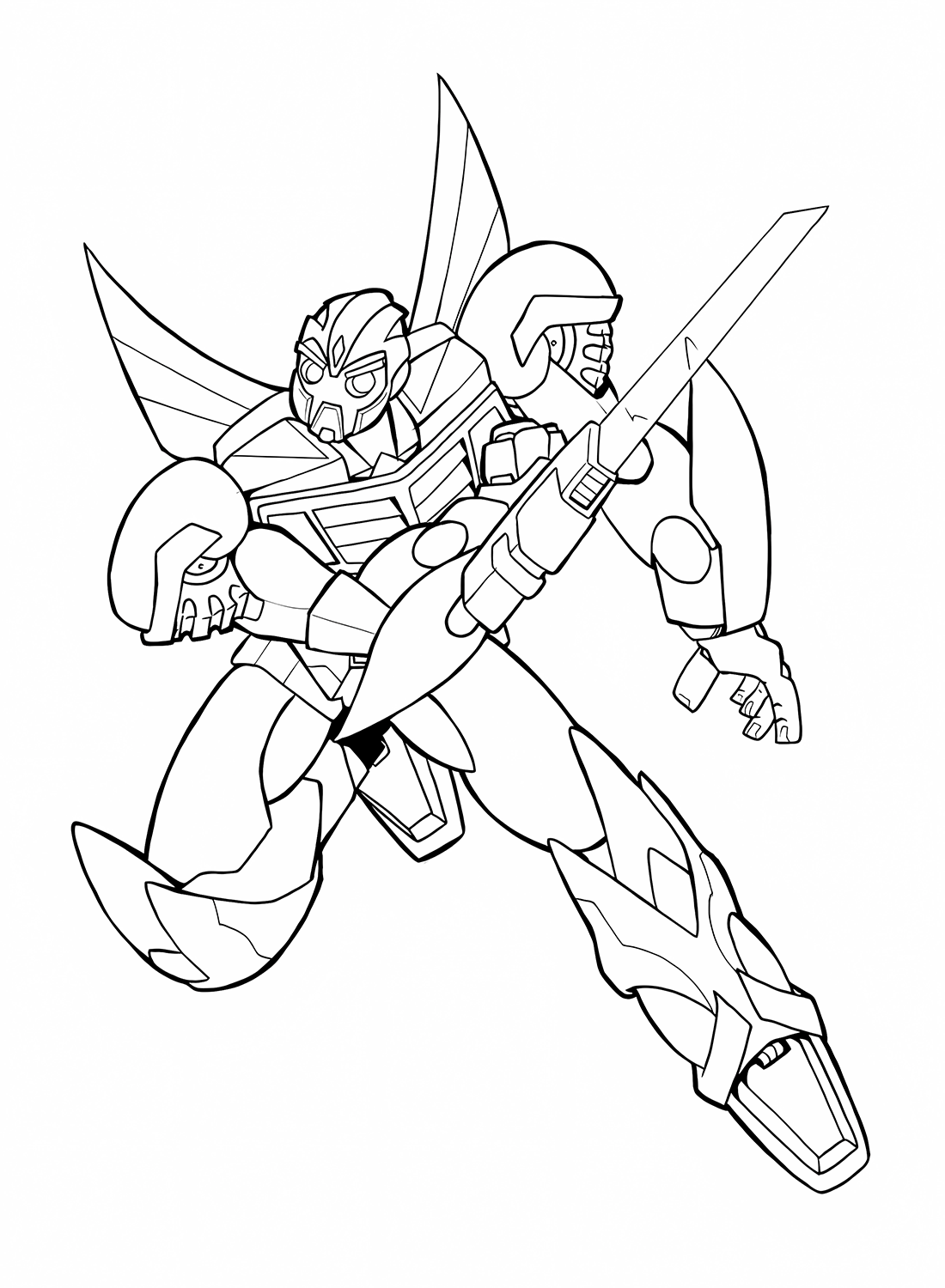
Battle scene pages show Bumblebee in combat contexts: his plasma cannon (a transformation of his right arm in many depictions), energy blast effects, confrontations with Decepticons, and the specific compositional language of Transformers action sequences. Bumblebee’s size relative to other Transformers (smaller than most Autobots and most Decepticons) gives his action scenes a specific quality: he fights characters physically larger than himself, using speed and agility where others use mass.
Energy blast and weapon effect pages show the distinctive teal-blue energy that Bumblebee fires in the Bay films, which contrasts with his weapon effects from the yellow of his body and gives the action compositions their most vivid color accent.
Coloring battle pages: The energy weapon effects use vivid teal-blue or electric blue at the center of each blast, graduating to pale blue-white at the outer edge. Impact effects where the blast strikes an opponent use vivid orange-yellow for the heat of the impact center, graduating outward. The background of battle scenes uses the specific dark blue-grey of night-time urban environments (many Transformers battles take place in cities at night) with the warm light of fires and energy weapons as accent colors.
Bumblebee with Optimus Prime Pages
Group pages showing Bumblebee alongside Optimus Prime are the collection’s most scale-demonstrating compositions: the contrast between Bumblebee’s compact yellow form and Optimus Prime’s much larger red-and-blue form establishes the size hierarchy of the Autobot team while communicating the specific relationship between the team’s leader and his most trusted scout. Despite being significantly smaller, Bumblebee is consistently depicted as one of Optimus’s most trusted and most emotionally central companions.
Optimus Prime’s design across all eras uses vivid red and vivid blue as the primary body colors, with silver-grey for structural elements: the color contrast between his red-and-blue and Bumblebee’s yellow creates a compositional warmth that reflects the characters’ relationship.
Coloring Optimus and Bumblebee group pages: Apply Bumblebee’s vivid yellow first, as the smaller but more vivid color element in the composition. Apply Optimus’s vivid red and vivid blue to the larger figure. The two characters’ color palettes should be at full saturation to create the specific visual energy of the Autobots’ distinctive red, blue, and yellow ensemble.
What These Pages Do
The Transformers franchise is one of the most commercially successful entertainment properties in history, with global toy sales estimated at over $7 billion and a theatrical film franchise that has earned over $4 billion worldwide across the Bay film series alone. The franchise’s longevity from 1984 to the present, across multiple animated series, theatrical films, comic books, and toy generations, reflects the specific endurance of its central concept: vehicles that transform into robots, a concept that engages children’s spatial reasoning and mechanical imagination in a way that purely action-based entertainment does not.
Bumblebee’s specific role within the franchise, the friendly, approachable, human-connecting Autobot who is smaller than his companions but no less courageous, has given him a consistent emotional function across forty years of storytelling. He is the character most clearly designed for the child audience to identify with: his size, his warmth, his role as the bridge between the alien Transformer world and the human characters, and (in the Bay films) his communication via music give him qualities that resonate across age ranges without requiring the specific gravity of Optimus Prime’s leadership role.
The American Academy of Pediatrics identifies fine motor skill development as a key childhood milestone throughout early childhood. The complex mechanical surface detail of the Bay and 2018 film designs, the vehicle mode’s smooth form-rendering, the battle scene energy effect gradient work, and the Autobot symbol’s precise geometric form all provide sustained fine motor challenge across the collection’s age range. The 2005 Art Therapy Journal study on structured coloring and anxiety reduction applies throughout.
How to Color These Pages Well
Bumblebee’s yellow must be vivid, warm, and fully saturated in every design era. The most important color decision on any Bumblebee page is the yellow: it must read as clearly, unmistakably vivid yellow rather than as pale yellow, golden-amber, or warm tan. Apply the most vivid warm yellow available at full pressure across every yellow surface. The vibrancy of this yellow is the character’s single most defining visual element: a muted or pale yellow reads as wrong before any other element is considered.
The black accents require confident, clean application to read as structural panels rather than dirt. Black markings on Bumblebee’s yellow body (racing stripes, panel lines, wheel arch elements, structural details) should be applied at full near-black pressure within their designated areas, with clean boundaries at the yellow-to-black transition. Any bleeding of the black into the yellow, or feathering at the boundaries, makes the design read as damaged rather than as a deliberate two-tone design.
Blue eyes are the critical expression element in robot face pages. Bumblebee’s eyes in Autobot tradition are vivid blue, and they are the primary expression element in the robot’s face. Apply vivid electric blue within the eye shape. The interior luminosity of the mechanical eye can be suggested by applying a slightly lighter, more teal-shifted blue at the eye’s center and the canonical deeper blue at the outer edge. A bright white or pale blue-white highlight at the upper corner of each eye is mandatory: without it, the eyes read as flat painted shapes rather than as illuminated optical elements.
The Bay film’s mechanical surface complexity rewards a three-zone value approach. For the most detailed Bay-era pages: apply the base vivid yellow at full coverage across all main body surfaces. Then identify the most recessed areas (deep crevices between mechanical panels) and apply a slightly darker gold-orange there. Finally, apply light grey or silver-white along the most directly lit edges (the sharp edges where one panel face meets another). These three zones give the mechanical complexity its dimensional quality without requiring individual rendering of every surface detail.
Vehicle mode pages use the vehicle’s body color for complete, even coverage. The VW Beetle or Camaro in vehicle mode should have its yellow body color applied as evenly and completely as possible across the full body surface: no uneven application, no streaking, no graduated pressure variation that suggests shadows. Vehicle paint is reflective and even; apply the yellow accordingly. The wheel wells, window areas, and trim elements then receive their specific colors: black for tires, very dark grey or near-black for window glass, silver-grey for chrome trim.
5 Creative Craft Ideas
The Design Evolution Study
Bumblebee’s visual design has evolved significantly across four decades: from the simple, flat-color VW Beetle of 1984 to the complex Camaro of the 2007 Bay film to the 2018 film’s return to the Beetle. Each design reflects the technical capabilities and creative priorities of its era.
Print three pages representing the three major design eras. Color the G1 design in flat, vivid yellow with clean black accents (no complex shadows). Color the Bay film design in vivid yellow with the three-zone metallic technique for mechanical depth. Color the 2018 film design in vivid yellow at a complexity level between the two.
Mount all three: “Bumblebee: three eras. G1 (1984): VW Beetle, flat color, cel animation. Bay films (2007-2017): Chevrolet Camaro, mechanical detail, CGI. 2018 film (Travis Knight): VW Beetle returns, G1-inspired, CGI. The yellow: unchanged across all three. The complexity: the only thing that changed.”

The Transformers Origin Story
The Transformers toy line was not originally a Hasbro creation. Hasbro and Takara Tomy of Japan developed it together by combining two existing Japanese toy lines: Diaclone (cars that converted into robots) and Micro Change (small robots disguised as everyday objects). The American partnership transformed these toys into a narrative universe with a cartoon series, comic books, and a mythology about the war between Autobots and Decepticons on the planet Cybertron.
Print the most iconic Bumblebee page in the collection. Color it in full vivid yellow.
On the backing card: “The Transformers origin. 1984. Hasbro (United States) + Takara Tomy (Japan). Source material: Diaclone toy line (Japan) + Micro Change toy line (Japan). The concept: vehicles that transform into robots. The American addition: a narrative universe. Animated series debut: September 17, 1984. Bumblebee’s first appearance: September 17, 1984. His vehicle form: a Volkswagen Beetle. His color: yellow. His partner: Spike Witwicky. 40 years later: still yellow, still the most beloved Autobot, still the one the humans trust first.”

The Radio Communication Page
In the 2007 Transformers film, Bumblebee communicates through radio clips and music because his voice synthesizer has been damaged. He selects specific songs and audio fragments to express his meaning, feelings, and intentions. This constraint became one of the character’s most beloved traits across the Bay film series: the moment when he finds “Baby, come back” to apologize to Sam, or uses a specific song to set a mood, became consistently cited examples of character writing through limitation.
Print an action or portrait Bumblebee page. Color in full Bay film design with vivid yellow and mechanical detail.
On the backing card, design a “Bumblebee Radio Playlist” for different situations: “To say hello: [song]. To apologize: ‘Baby Come Back.’ To say he’s ready for battle: [song]. To say he is happy: [song]. To say something important he cannot express otherwise: [song].” The playlist is a creative writing activity connected to the coloring page.

The Autobot Symbol Study
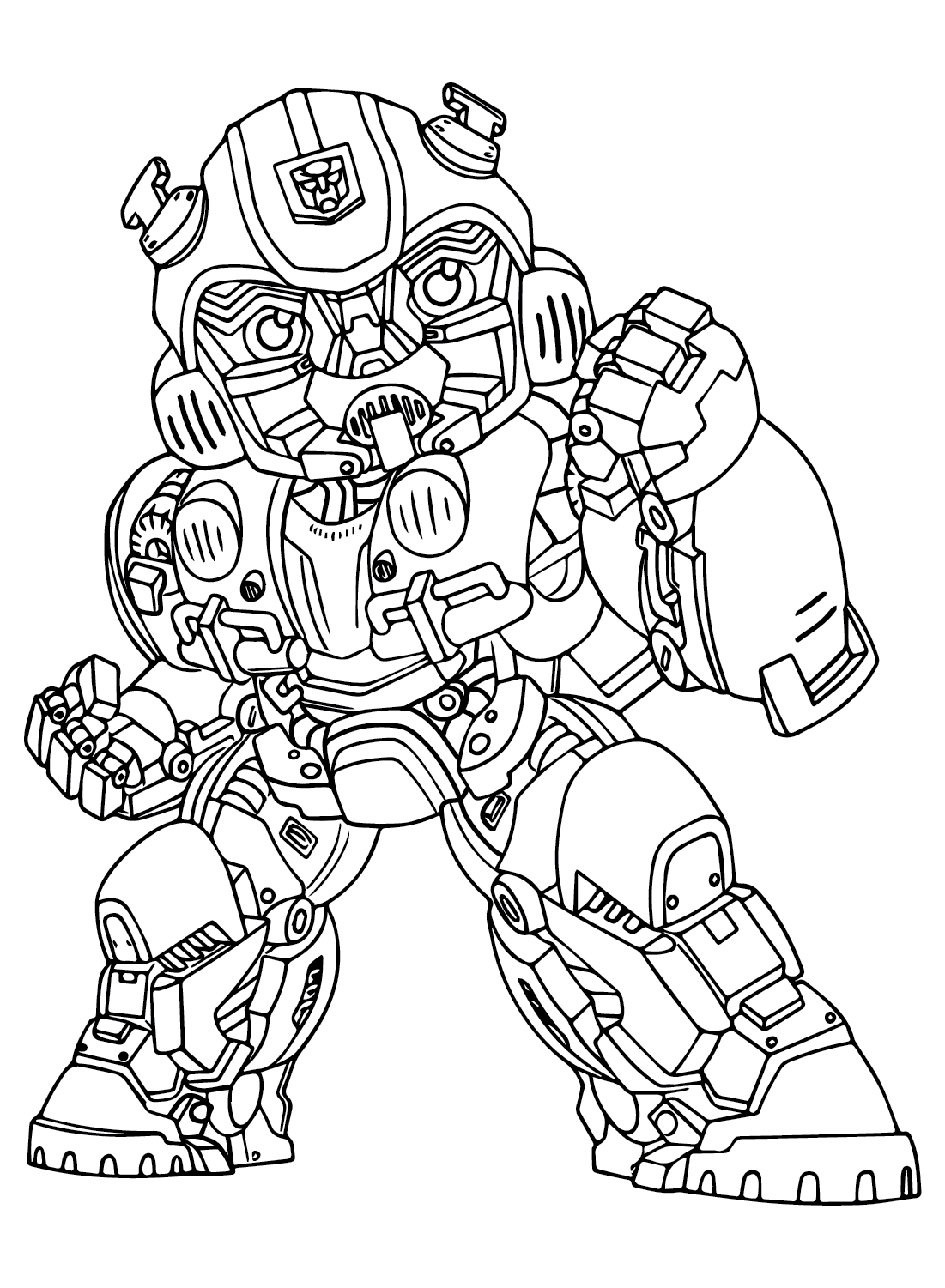
The Autobot symbol (a stylized robotic face, officially called the Autobot insignia) is one of pop culture’s most recognizable faction symbols, alongside the Decepticon purple insignia. Both have appeared consistently on toys, packaging, animation, and merchandise since 1984.
Print a Bumblebee page showing the Autobot symbol on his body. Color the full Bumblebee in canonical yellow. Color the Autobot symbol in vivid red (its canonical color).
On the backing card: “The Autobot symbol. Introduced: 1984. Color: red. Represents: the Autobot faction, the protectors of Cybertron and Earth. Design origin: the face of the first Autobot to fall in the war (in some canon). On Bumblebee’s body since 1984. The Decepticons have a purple symbol. Blue eyes: Autobots. Red eyes: Decepticons. The symbols are the fastest way to tell whose side anyone is on.”

The Bee Film Comparison
Two Transformers films specifically focused on Bumblebee’s character: the 2007 Transformers (Michael Bay), which introduced the character to theatrical audiences through the lens of Sam Witwicky’s first car, and Bumblebee (2018, Travis Knight), which took Bumblebee back to 1987 and the VW Beetle and refocused the franchise on character connection.
Print one Bay film design page and one 2018 film design page. Color both in their appropriate design styles.
Mount both: “Transformers (2007). Director: Michael Bay. Budget: $150 million. Box office: $709.7 million. Bumblebee’s car form: Chevrolet Camaro. Human partner: Sam Witwicky (Shia LaBeouf). Bumblebee (2018). Director: Travis Knight. Budget: $135 million. Box office: $467.9 million. Bumblebee’s car form: Volkswagen Beetle. Human partner: Charlie Watson (Hailee Steinfeld). Rotten Tomatoes: 91%. The car changed. The yellow stayed. The character came back.”

Frequently Asked Questions
Who is Bumblebee, and where did the character come from? Bumblebee is a fictional character from the Transformers franchise, introduced as part of the original Transformers toy line in 1984. The toy line was developed through a collaboration between Hasbro (United States) and Takara Tomy (Japan), using toys from the Japanese Diaclone and Micro Change lines. The Transformers animated television series (now called Generation 1 or G1) premiered on September 17, 1984, produced by Sunbow Productions and Marvel Productions with animation by Toei Animation in Japan. Bumblebee was one of the original Autobots introduced in that series: a yellow Volkswagen Beetle who served as the primary human liaison for the Autobot team. In the original series, he was voiced by Dan Gilvezan and partnered with human teenager Spike Witwicky.
What vehicles does Bumblebee transform into? Bumblebee’s vehicle forms have changed across the franchise’s different continuities. In the original 1984 G1 animated series, he transforms into a yellow Volkswagen Beetle. In the Michael Bay theatrical film series (2007-2017), he transforms into a Chevrolet Camaro (initially a beaten-up 1977 model, later updated to a 2009 model, and subsequently a 1967 classic muscle car version in Age of Extinction). In the 2018 standalone film directed by Travis Knight, he returns to the Volkswagen Beetle form, set in 1987 and using a period-appropriate version of the classic car. In Transformers: Rise of the Beasts (2023), he appears in a version continuing from the 2018 film.
Why does Bumblebee communicate through music and radio clips in the films? In the Michael Bay Transformers film series, beginning with the 2007 film, Bumblebee’s voice synthesizer has been damaged, preventing him from speaking normally. He communicates instead through radio clips, song lyrics, and selected audio fragments that he uses to express his meaning, emotions, and intentions. This limitation, which could have made the character less expressive, became one of his most beloved traits: his selection of specific songs to convey specific feelings gave him a form of emotional communication that was simultaneously creative and characterful. The trait was carried into the 2018 Bumblebee film, where his voice is similarly restricted, and his use of audio to communicate became a central storytelling element.
What are the major Transformers theatrical films, and how did Bumblebee feature in them? The Michael Bay directed Transformers films include: Transformers (2007, $709.7 million worldwide), Transformers: Revenge of the Fallen (2009, $836.3 million worldwide), Transformers: Dark of the Moon (2011, $1.123 billion worldwide), Transformers: Age of Extinction (2014, $1.104 billion worldwide), and Transformers: The Last Knight (2017, $605 million worldwide). Bumblebee appeared as a primary Autobot in all five films, partnered primarily with Sam Witwicky (Shia LaBeouf) in the first three and with Cade Yeager (Mark Wahlberg) in the fourth and fifth. The standalone Bumblebee (2018), directed by Travis Knight and starring Hailee Steinfeld, earned $467.9 million worldwide and earned a 91% score on Rotten Tomatoes. Transformers: Rise of the Beasts (2023) continued the franchise.
What is the difference between Autobots and Decepticons? Autobots and Decepticons are the two factions of the Transformers, the alien robotic beings native to the planet Cybertron. The Autobots, led by Optimus Prime, are the protagonists: they seek to protect both Cybertron and the intelligent life of other planets (including Earth) from destruction. The Decepticons, led by Megatron, are the antagonists: they seek conquest, power, and the subjugation of other species. A straightforward visual distinction separates the factions: Autobots have blue eyes and display the Autobot insignia (a stylized robotic face in red); Decepticons have red eyes and display the Decepticon insignia (a stylized face in purple). Bumblebee is an Autobot, identifiable by his blue eyes and the Autobot symbol on his body.
What is the Transformers franchise’s overall history and scope? The Transformers franchise began in 1984 with the Hasbro/Takara toy line and the accompanying animated television series. It has since expanded into one of the most commercially successful entertainment properties in history: global toy sales estimated at over $7 billion, a theatrical film franchise earning over $4 billion worldwide across the Bay series alone, multiple additional animated television series (Beast Wars, Armada, Animated, Prime, Cyberverse, and others), an extensive comic book continuity (originally by Marvel Comics, later by IDW Publishing), video games, and a 2024 theatrical animated film (Transformers: One). The franchise spans multiple “generations” of continuity, with G1 (the original 1984 continuity) remaining the most culturally influential.
What age group are these pages best suited for? Bumblebee coloring pages serve the Transformers franchise’s broad audience range. The simplest vehicle mode pages and G1-style flat-color designs with large, clearly defined color areas are accessible from ages three and four, where the vivid yellow and the instantly recognizable robot or car form provide clear, achievable coloring targets. The Bay film robot design pages, with their complex mechanical surface detail, are most rewarding for ages six to twelve, where developing fine motor control allows for the more precise three-zone value technique these pages require. Battle scene pages with energy effect gradient work and multi-character compositions are most engaging for ages eight and up. Adult fans of the G1 series who grew up with the original 1984 cartoon find both the G1-faithful pages and the design comparison projects most personally meaningful.
Browse the full collection at ColoringPagesOnly.com. All 60+ pages free, no sign-up, PDF or PNG, print or color online.
Hasbro and Takara Tomy introduced the Transformers toy line in 1984 using designs from two Japanese toy lines: Diaclone and Micro Change. Vehicles that became robots. One of them was a yellow Volkswagen Beetle. His name was Bumblebee. He was the smallest Autobot and the one closest to the humans.
Forty years later, he is still the most beloved Autobot. He has been a Camaro and a VW Beetle, and both at different points in different continuities. His color has not changed. His relationship to the humans has not changed. His eyes have always been blue.
He cannot speak, in many versions. He uses the radio. He chooses the song carefully. This is how he tells you what he means.
Pick up your most vivid warm yellow. The body goes first at full saturation. The black accents go second, applied cleanly with confident boundaries. The blue eyes go last: vivid electric blue, bright teal at the center, white highlight at the corner.
Share your work on Facebook and Pinterest and tag #Coloringpagesonly. The design evolution displays and the radio communication playlist pages are particularly worth sharing.
Color the vivid yellow. Apply the black accents clean. The eyes go blue. He has been yellow since September 17, 1984. He is not changing.