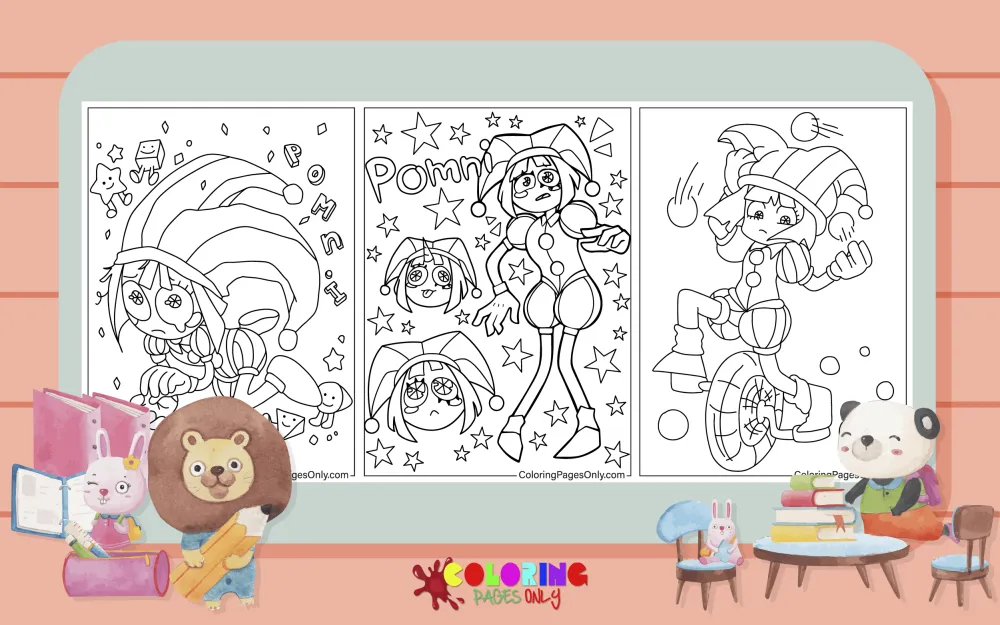
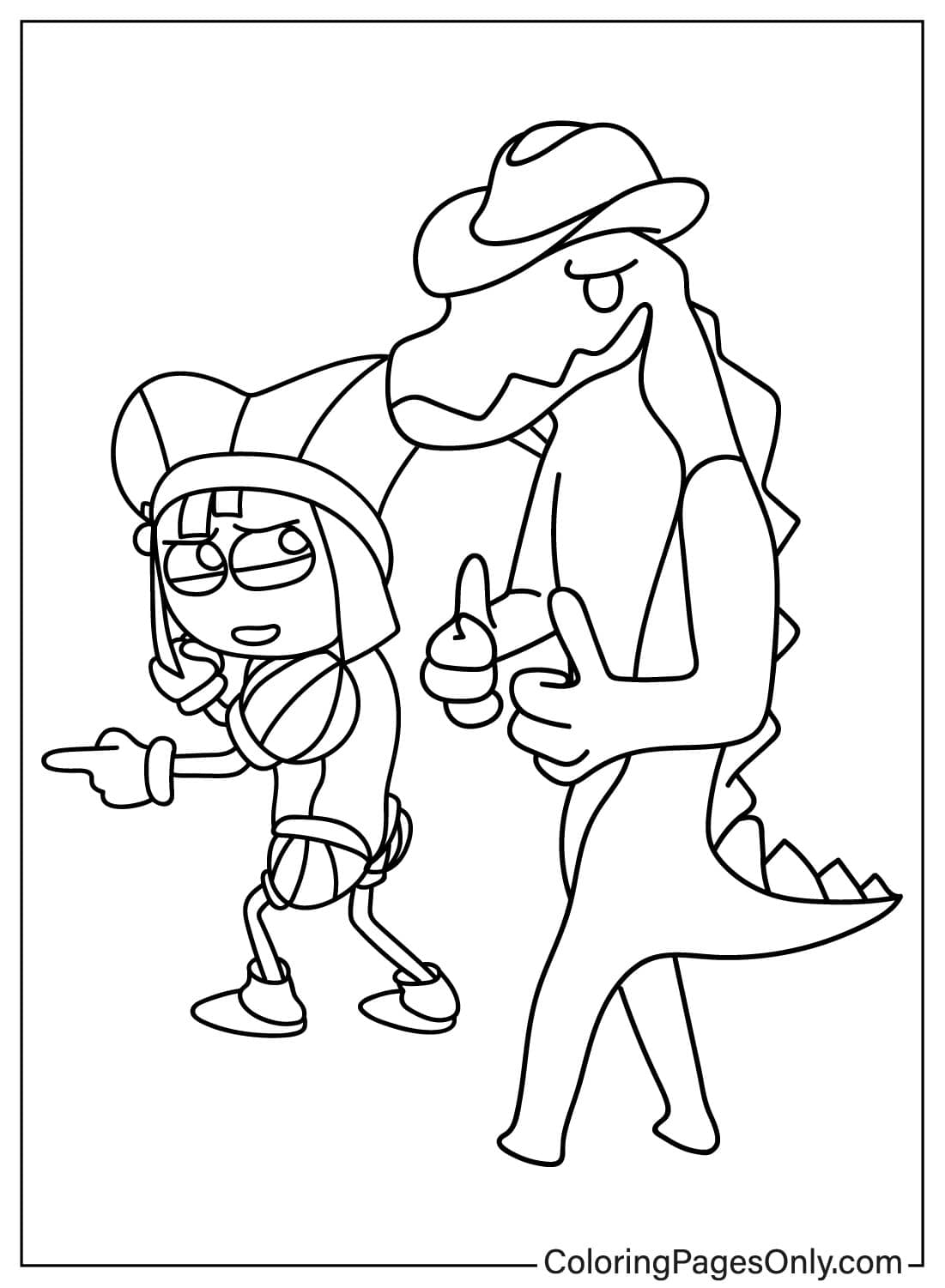
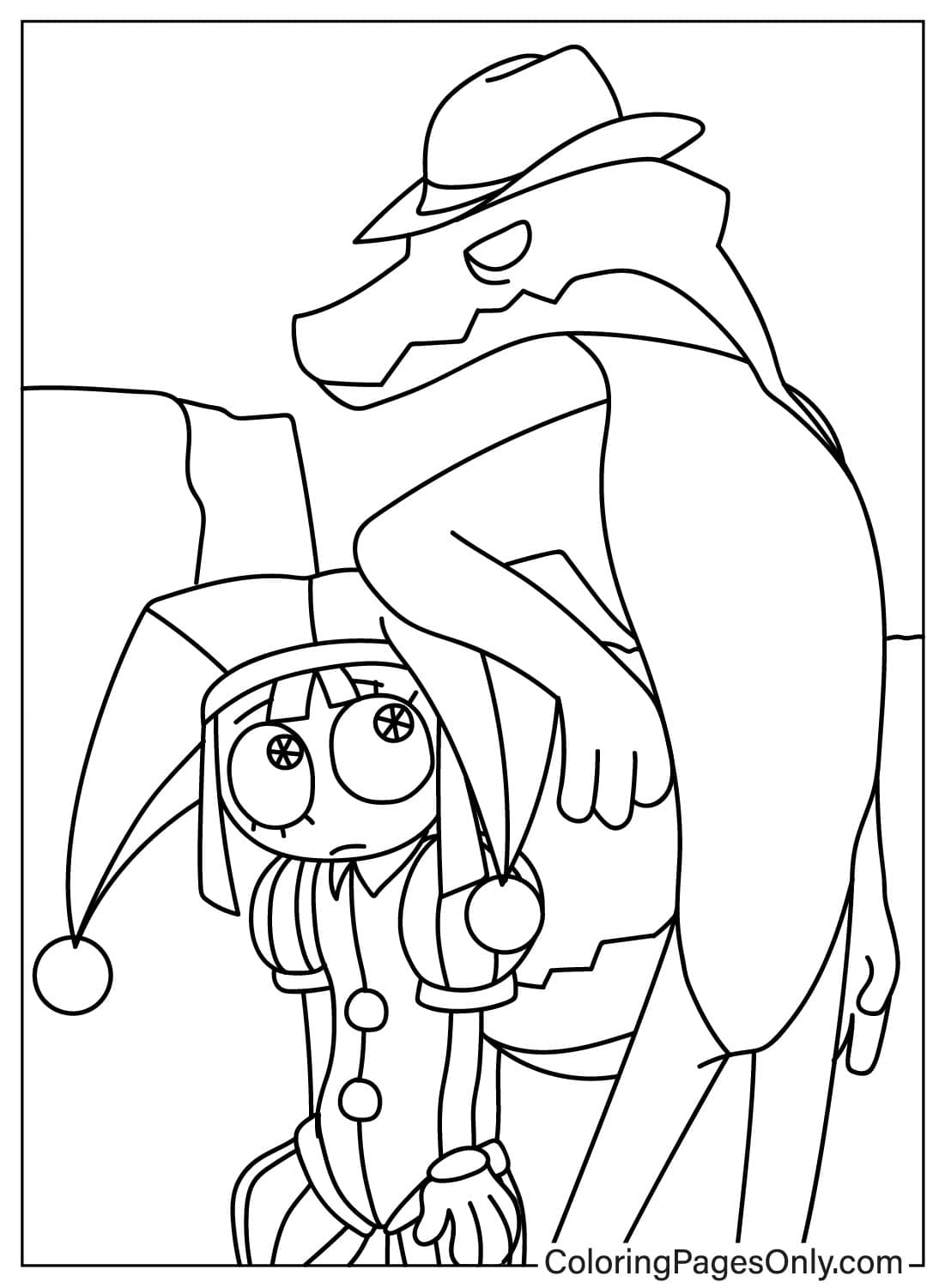
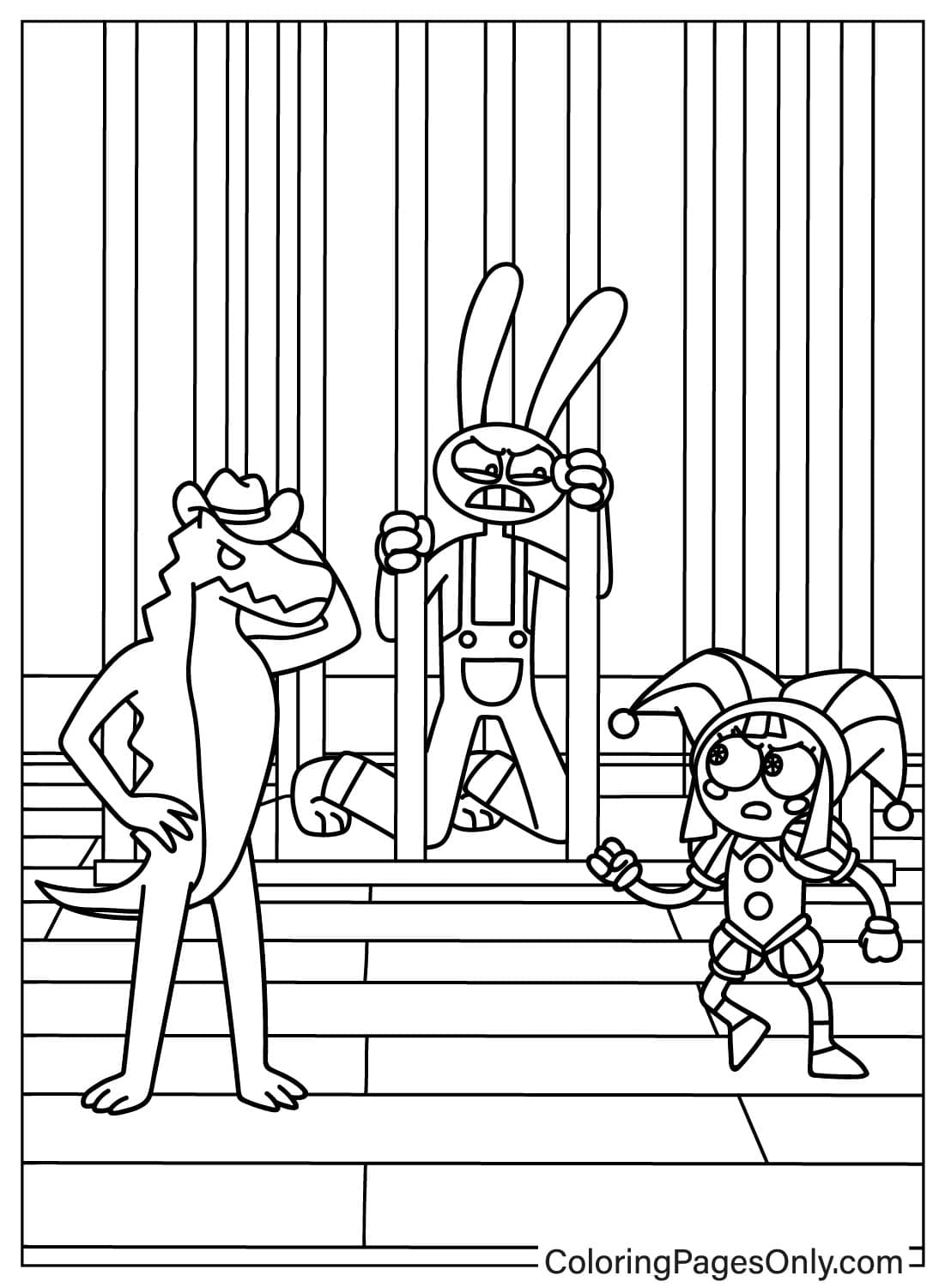
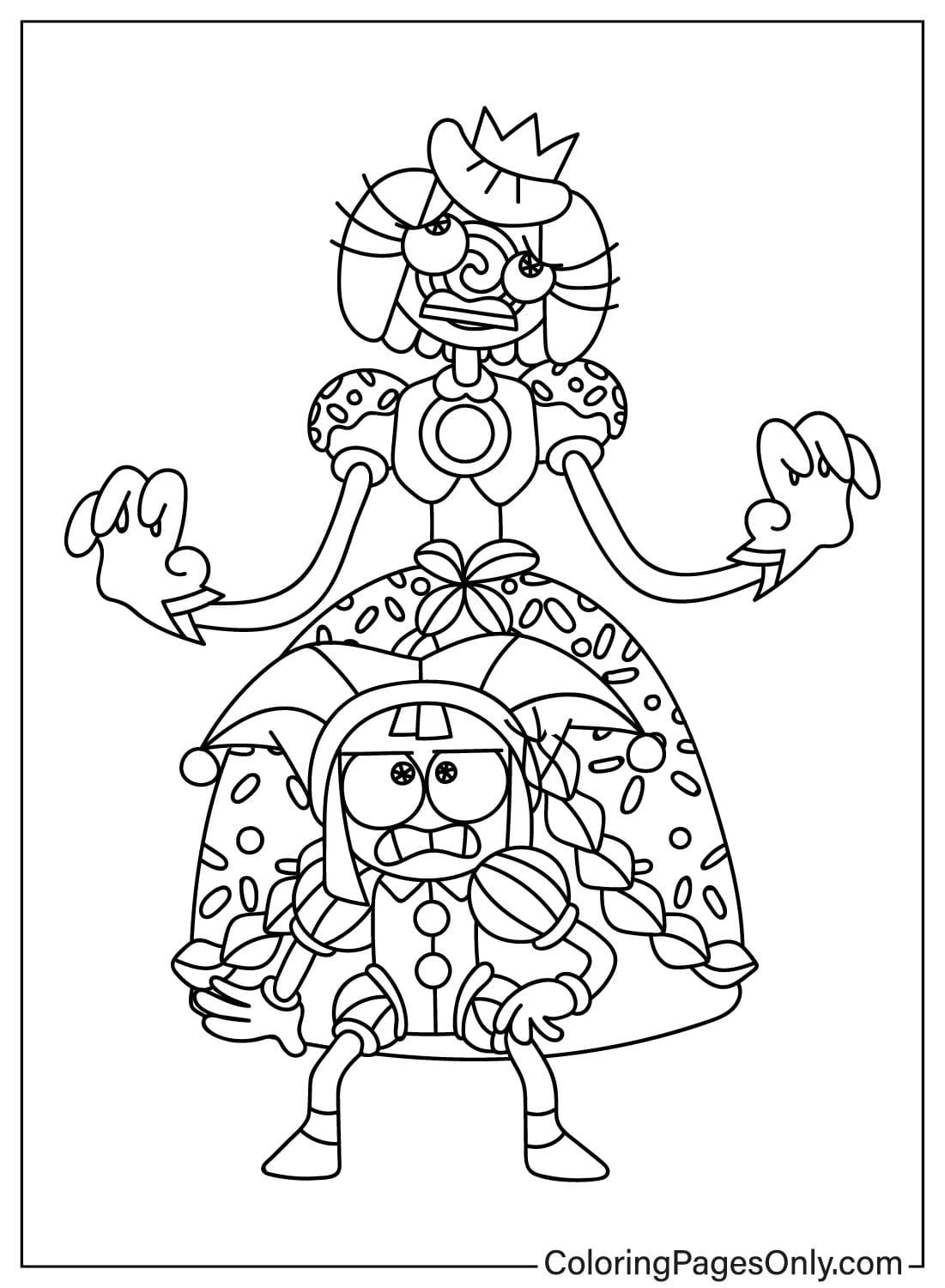
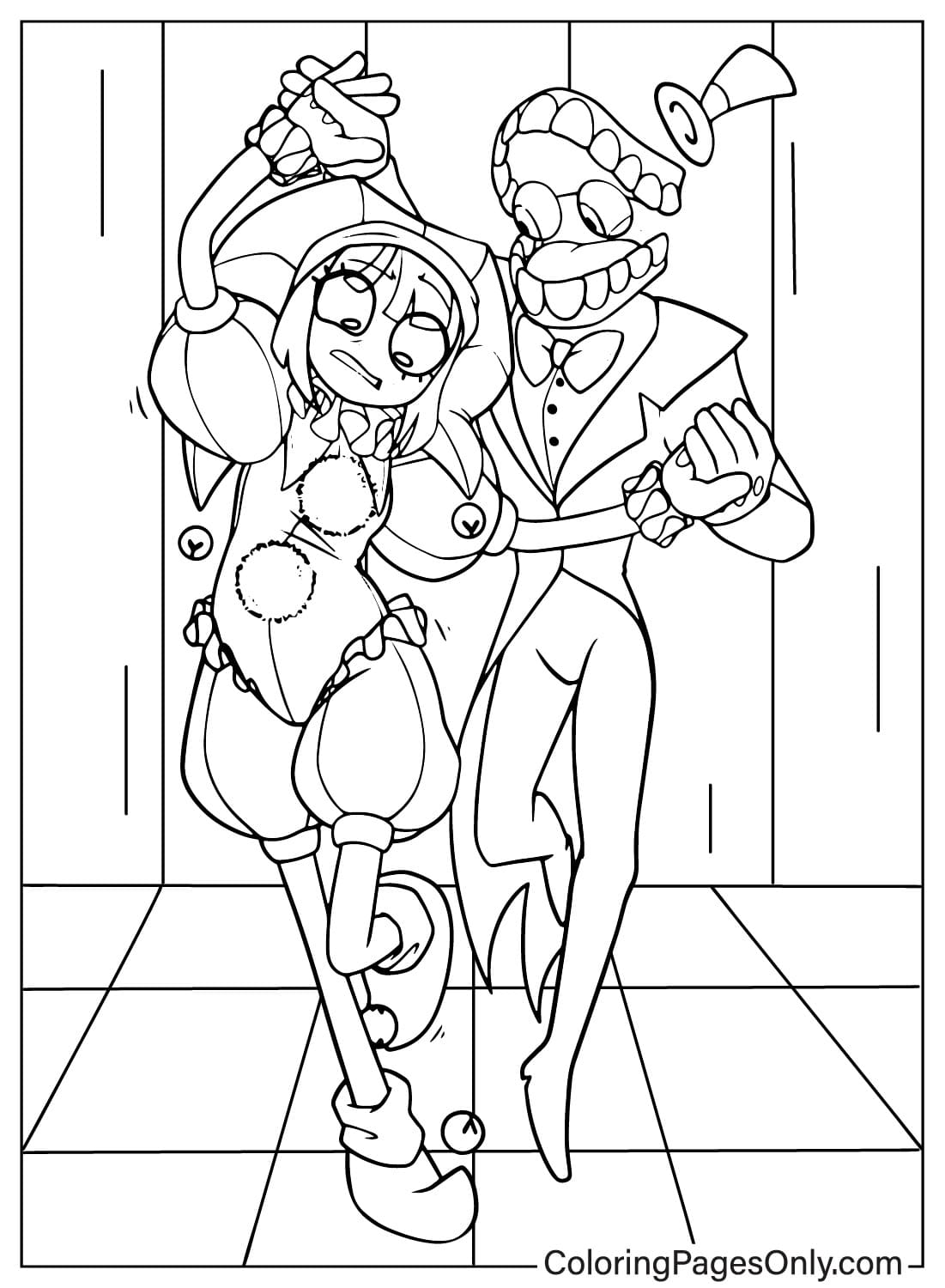
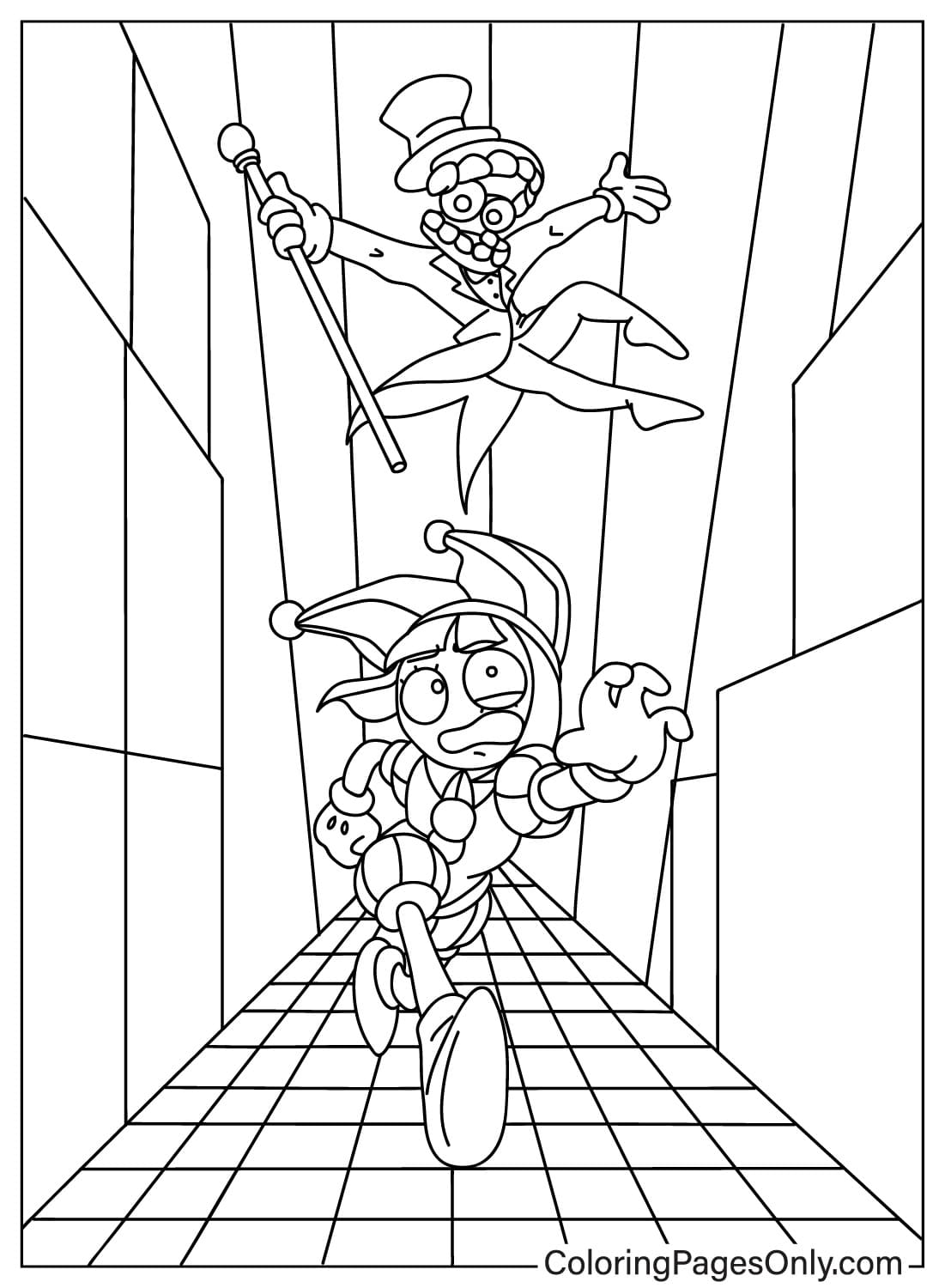
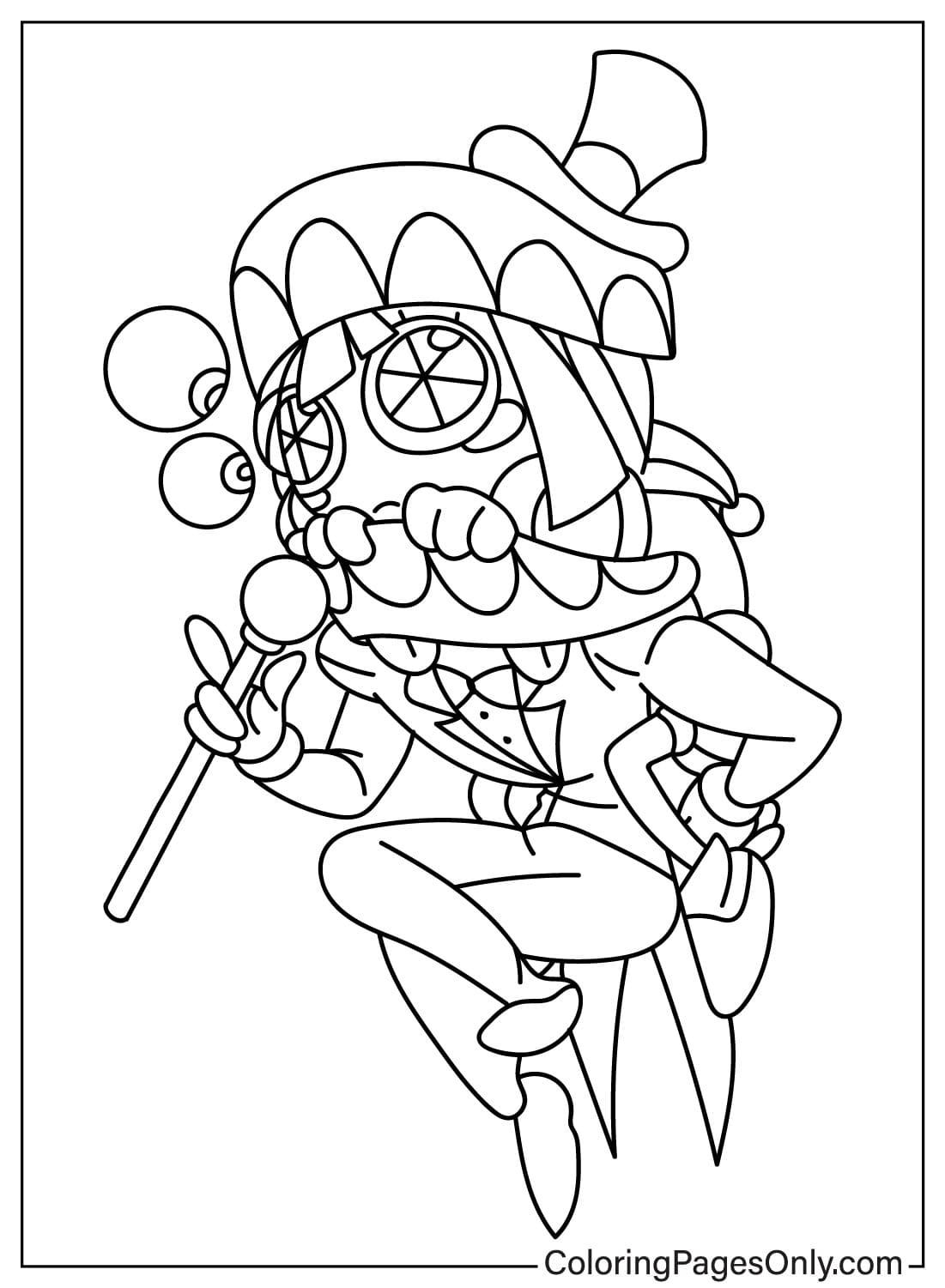
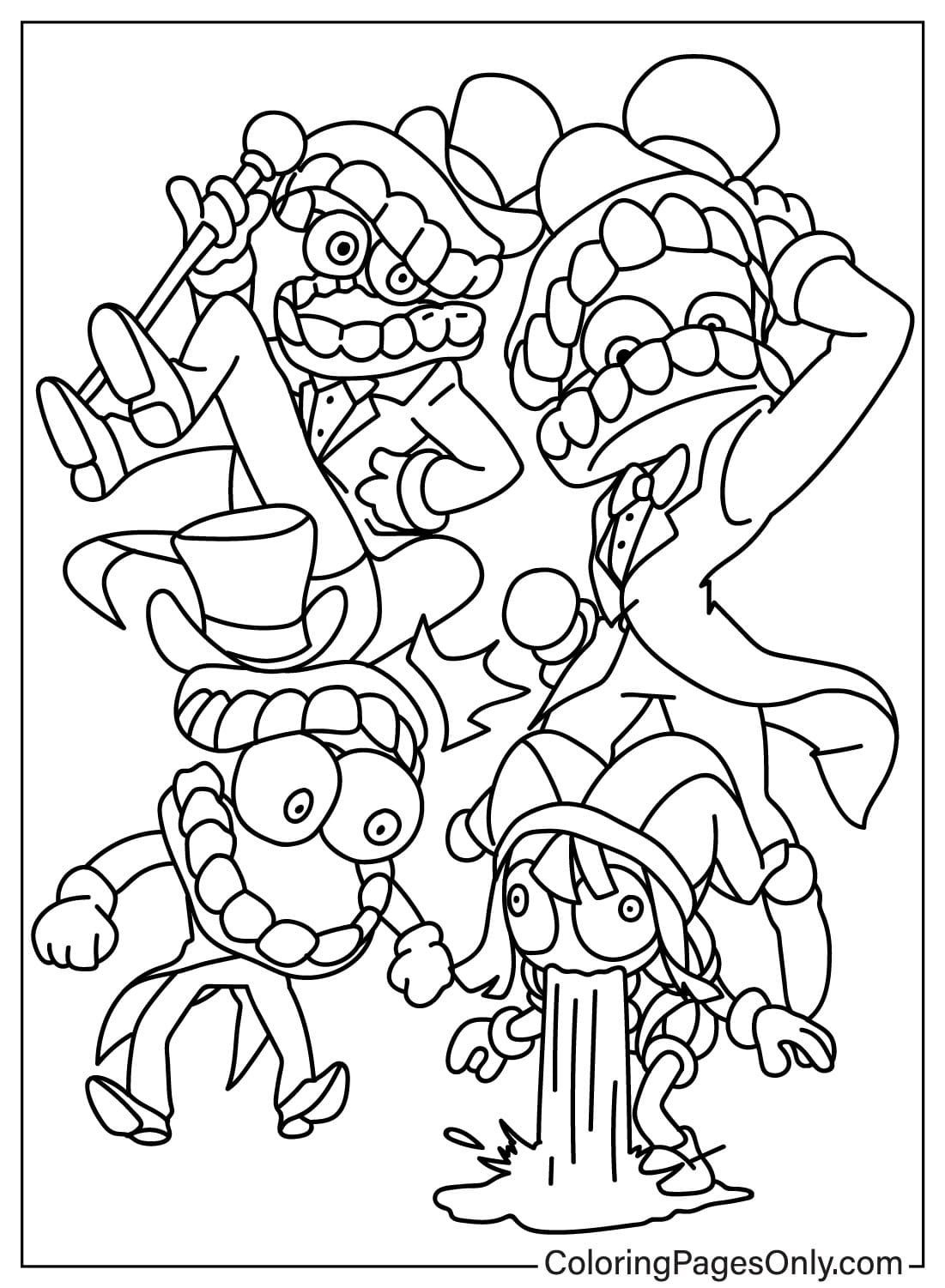
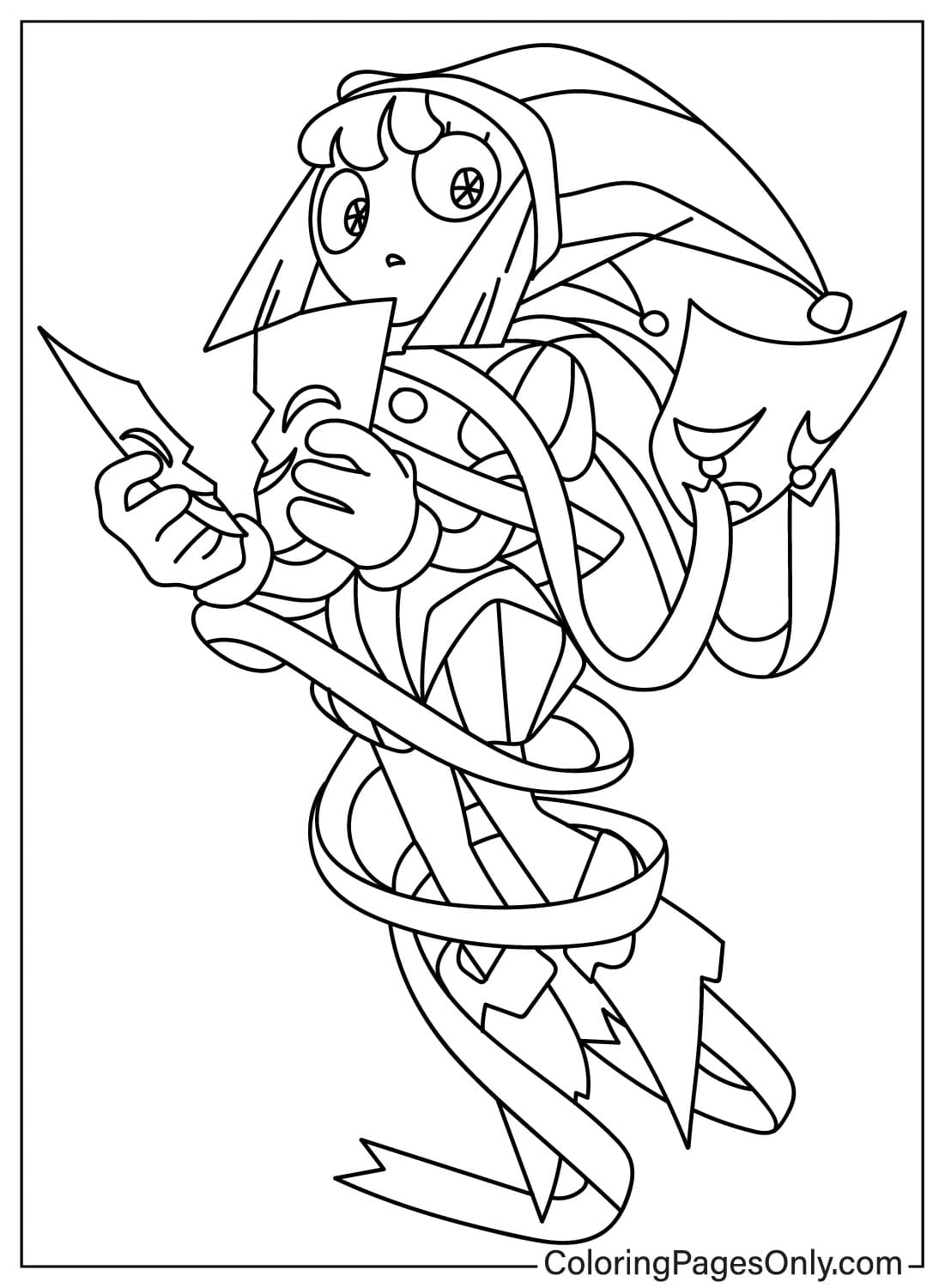
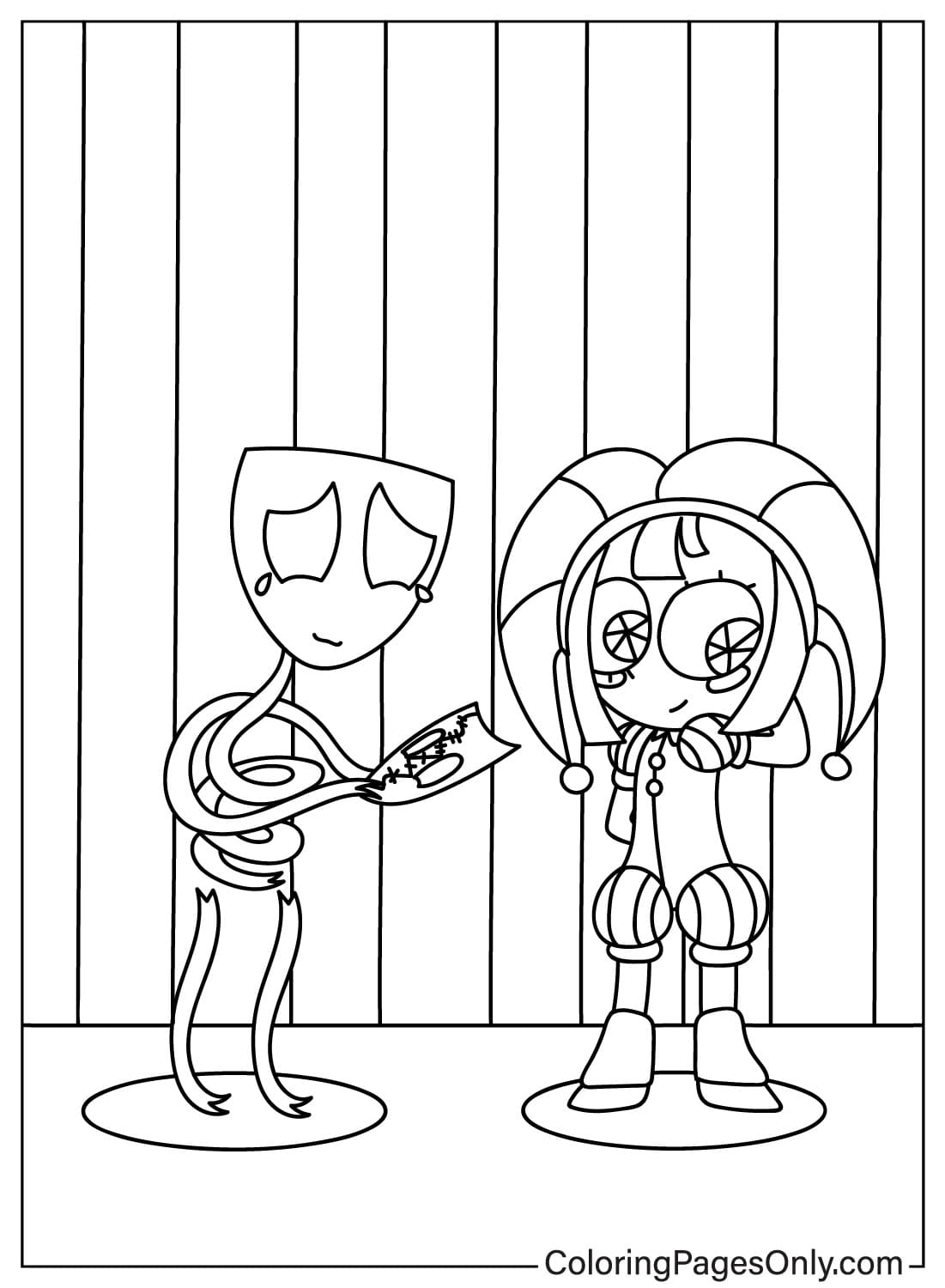
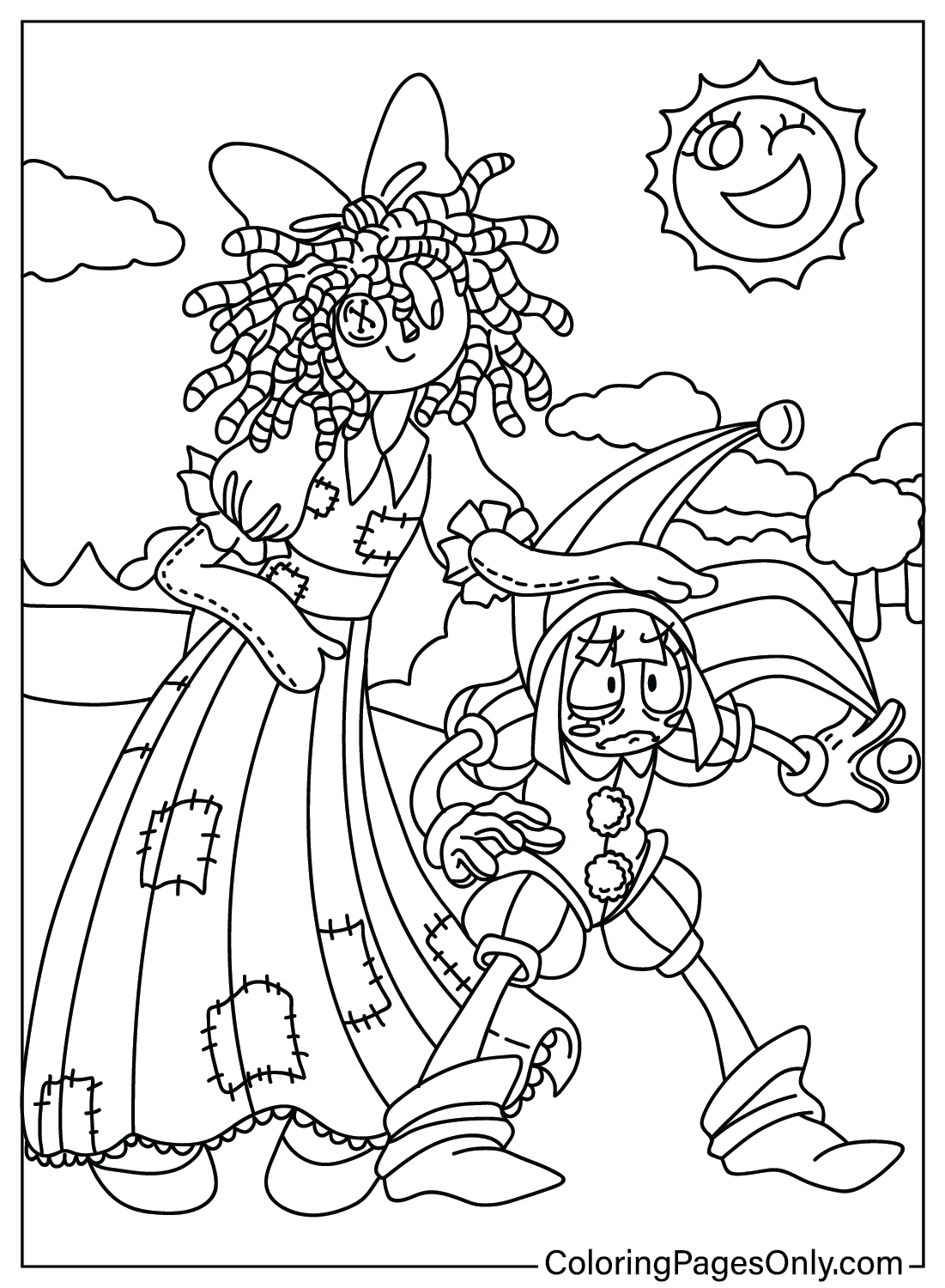
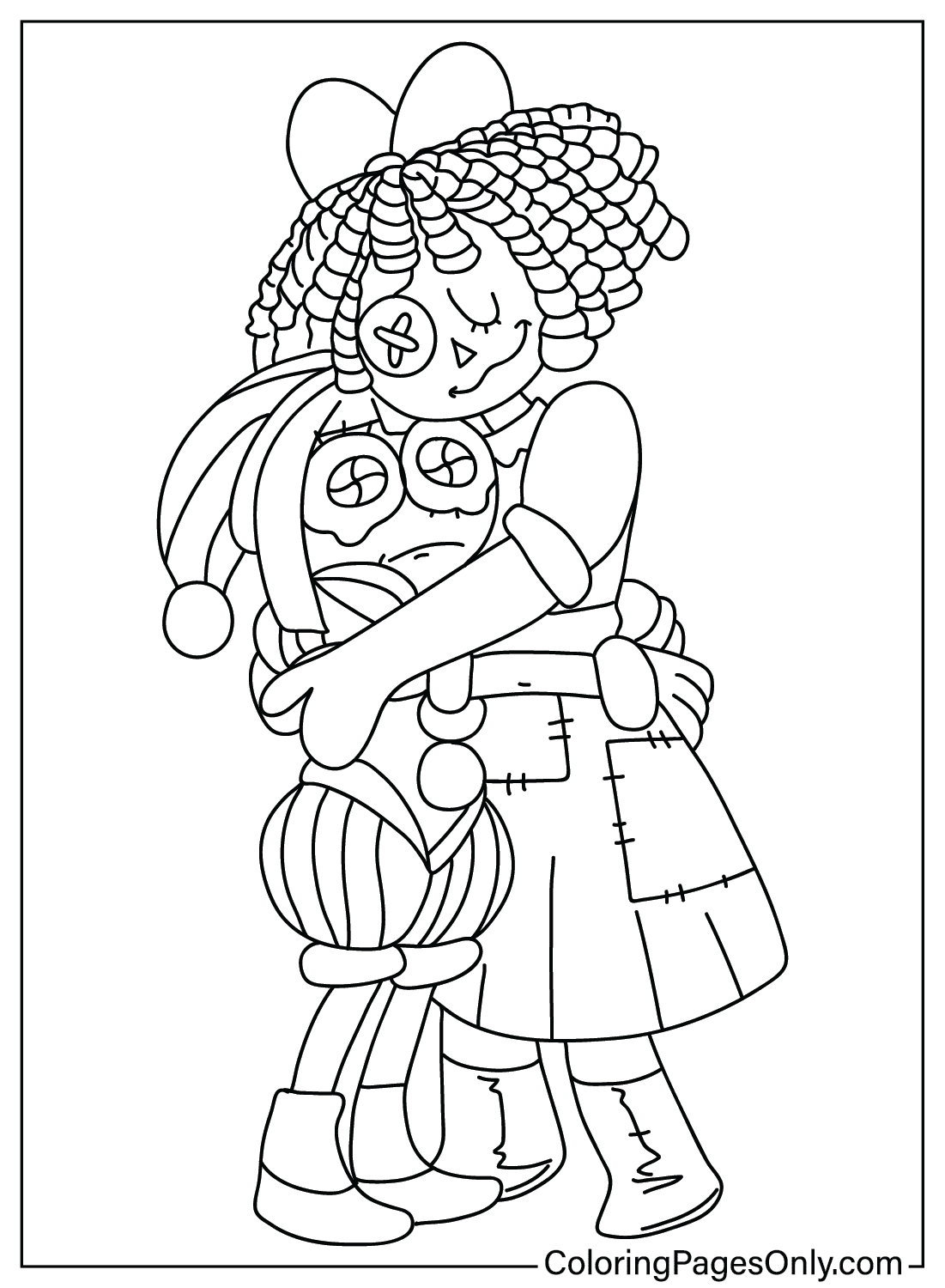
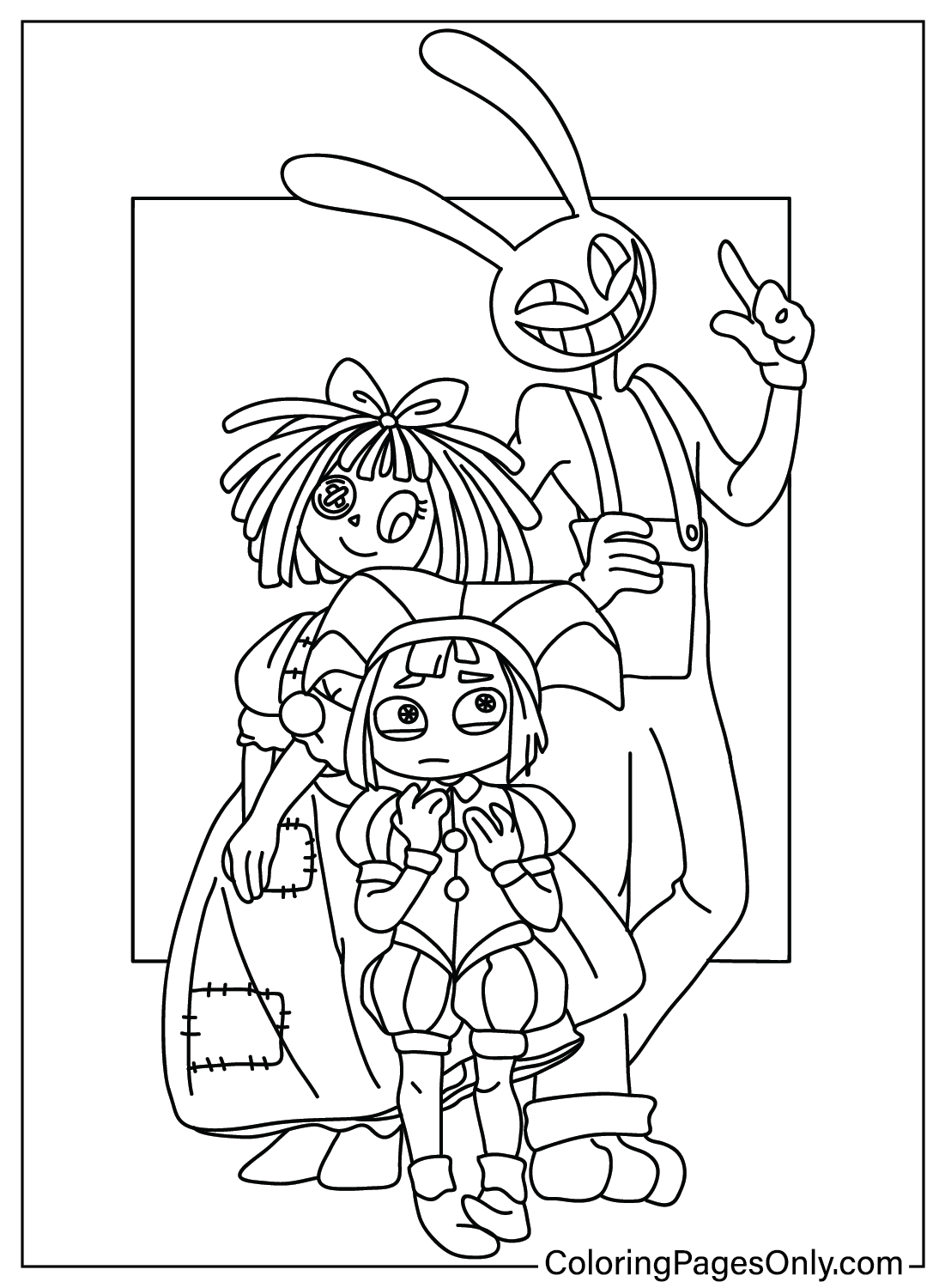
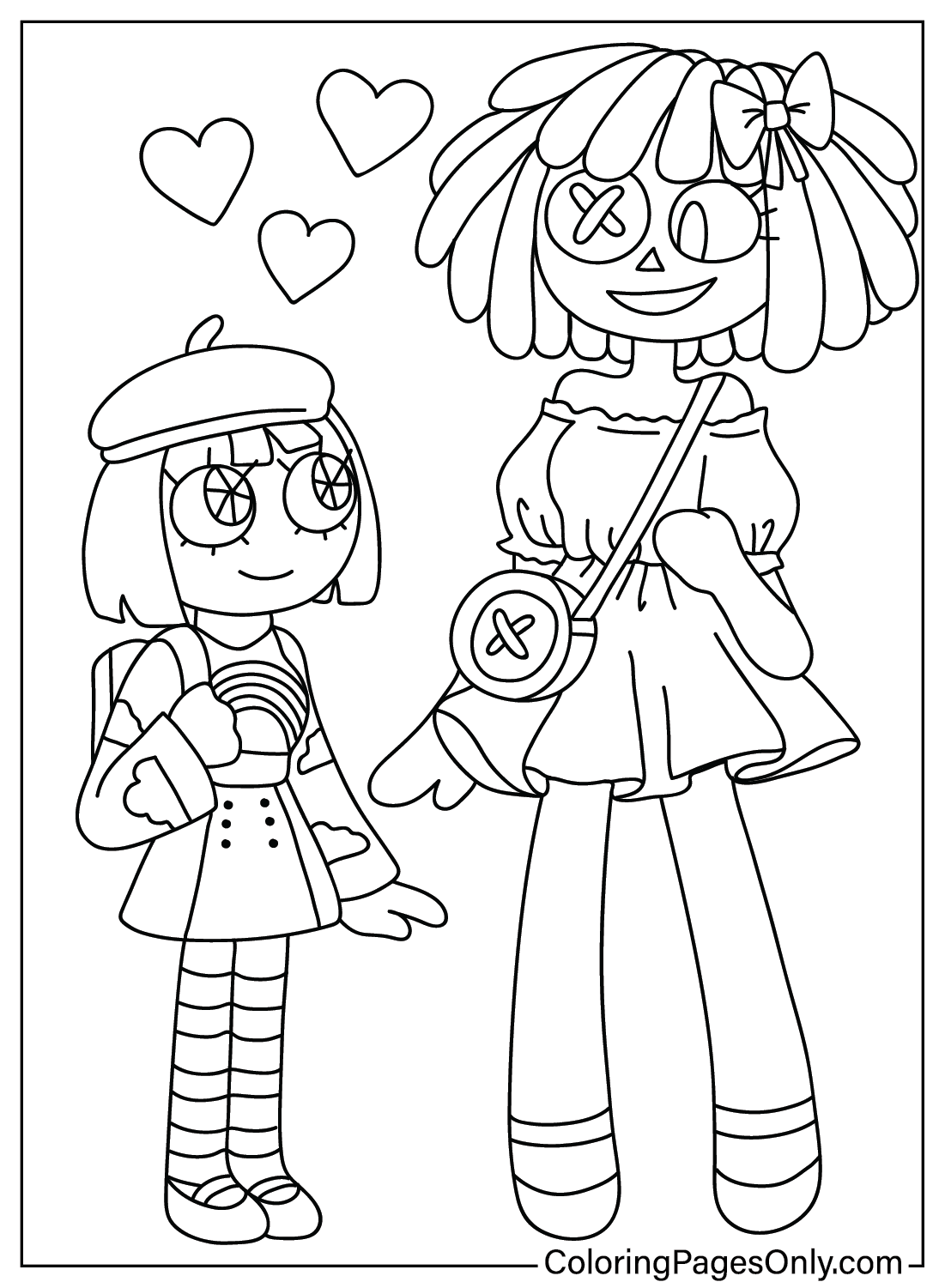
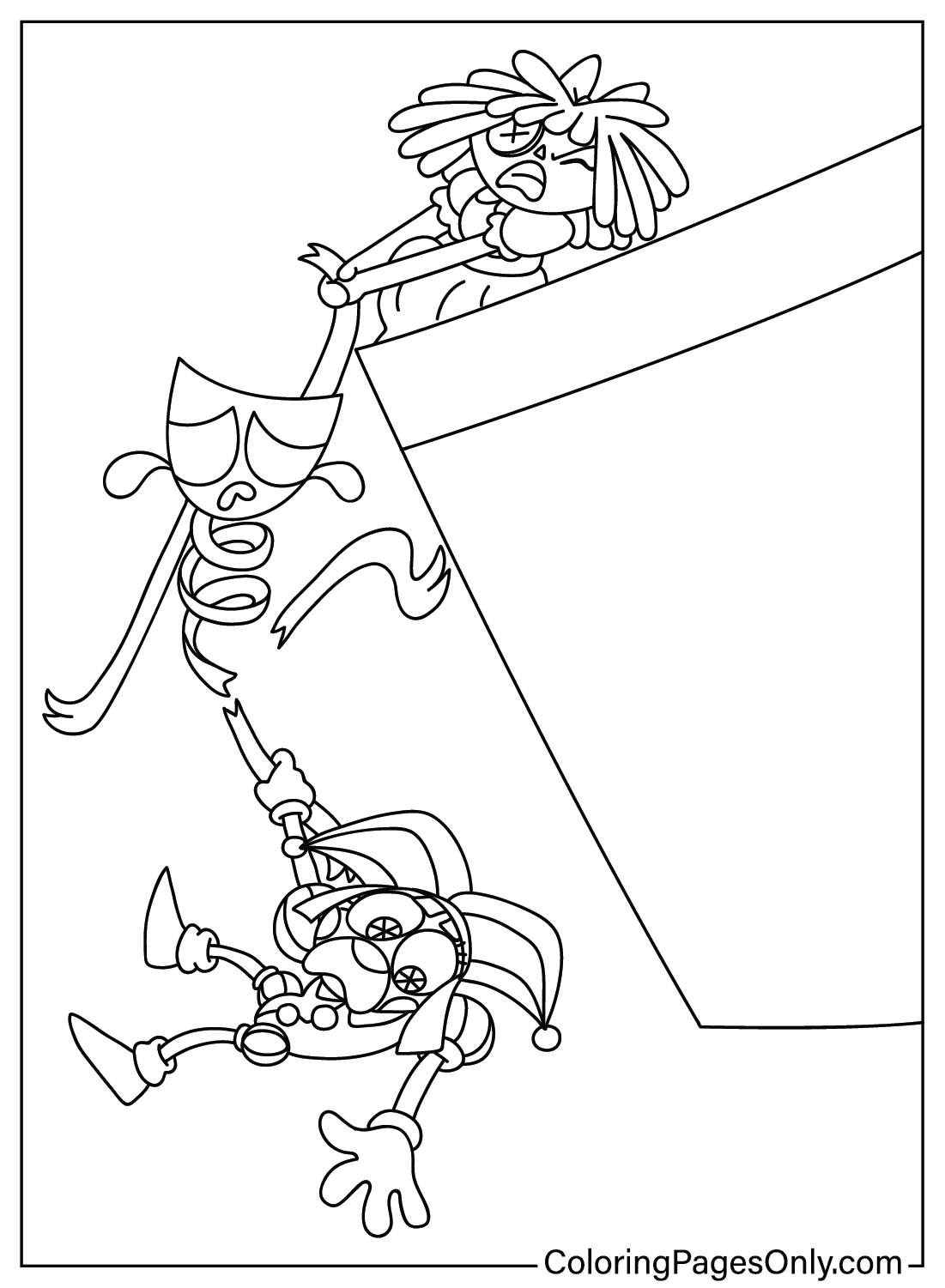
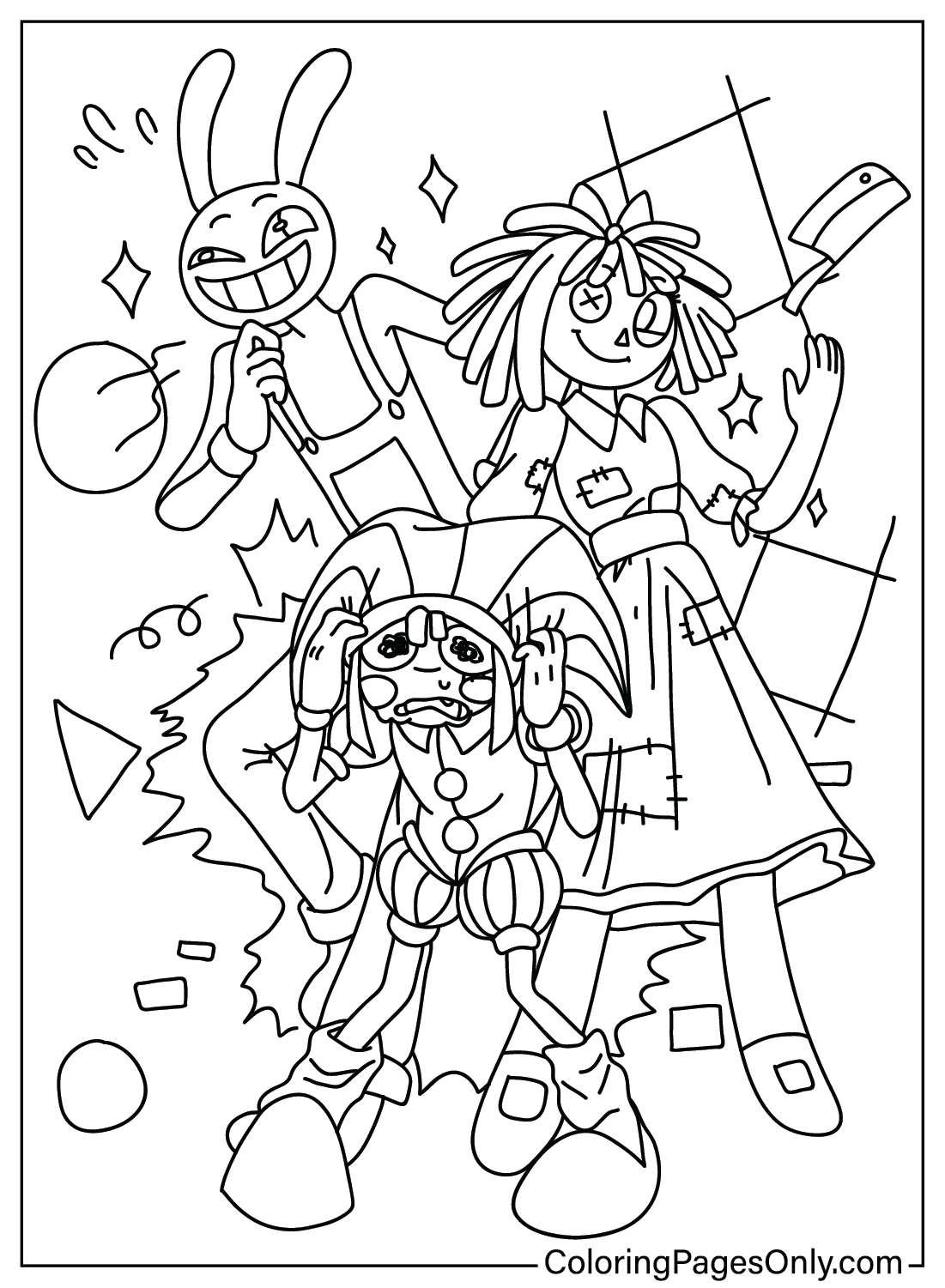
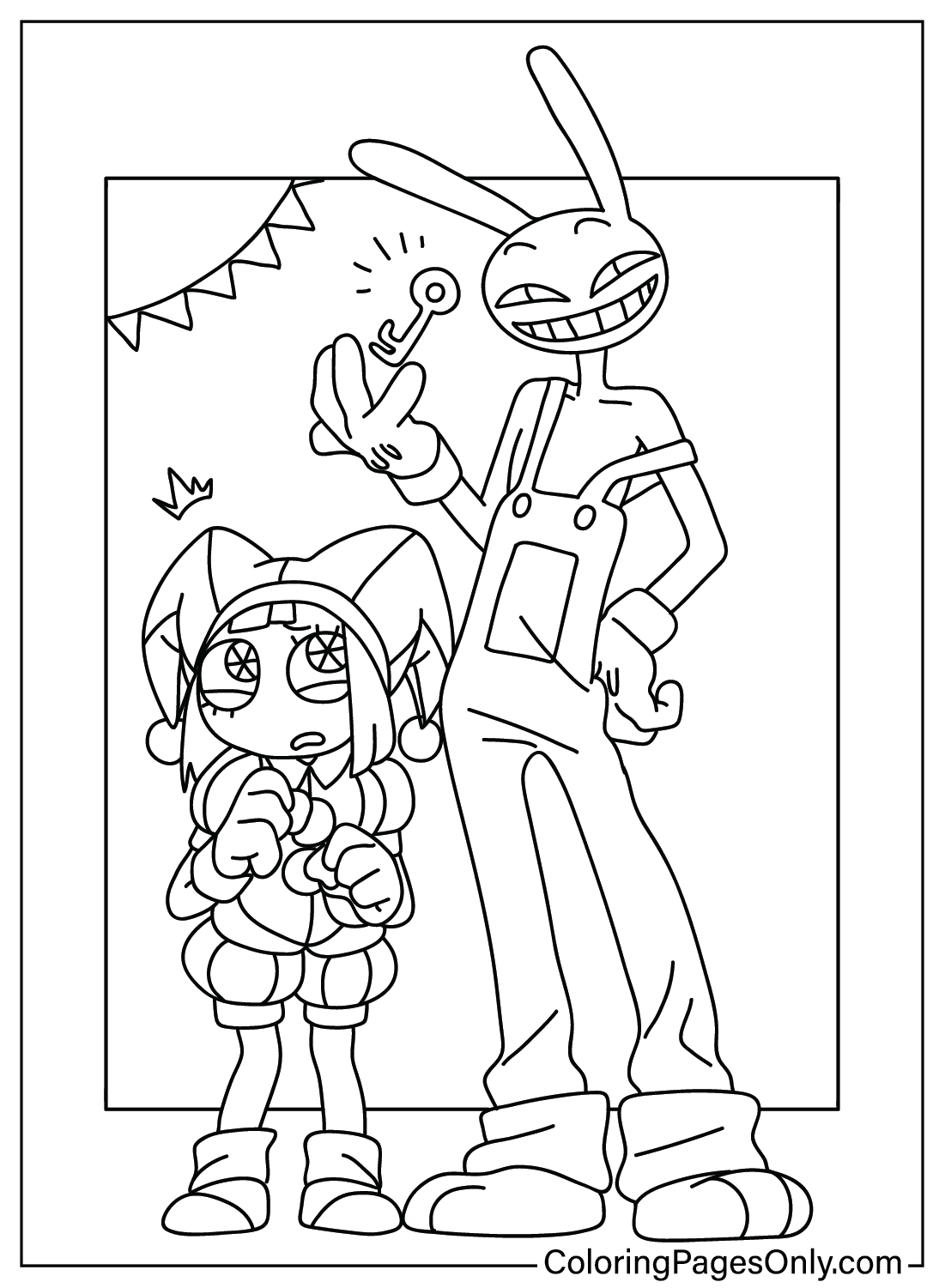
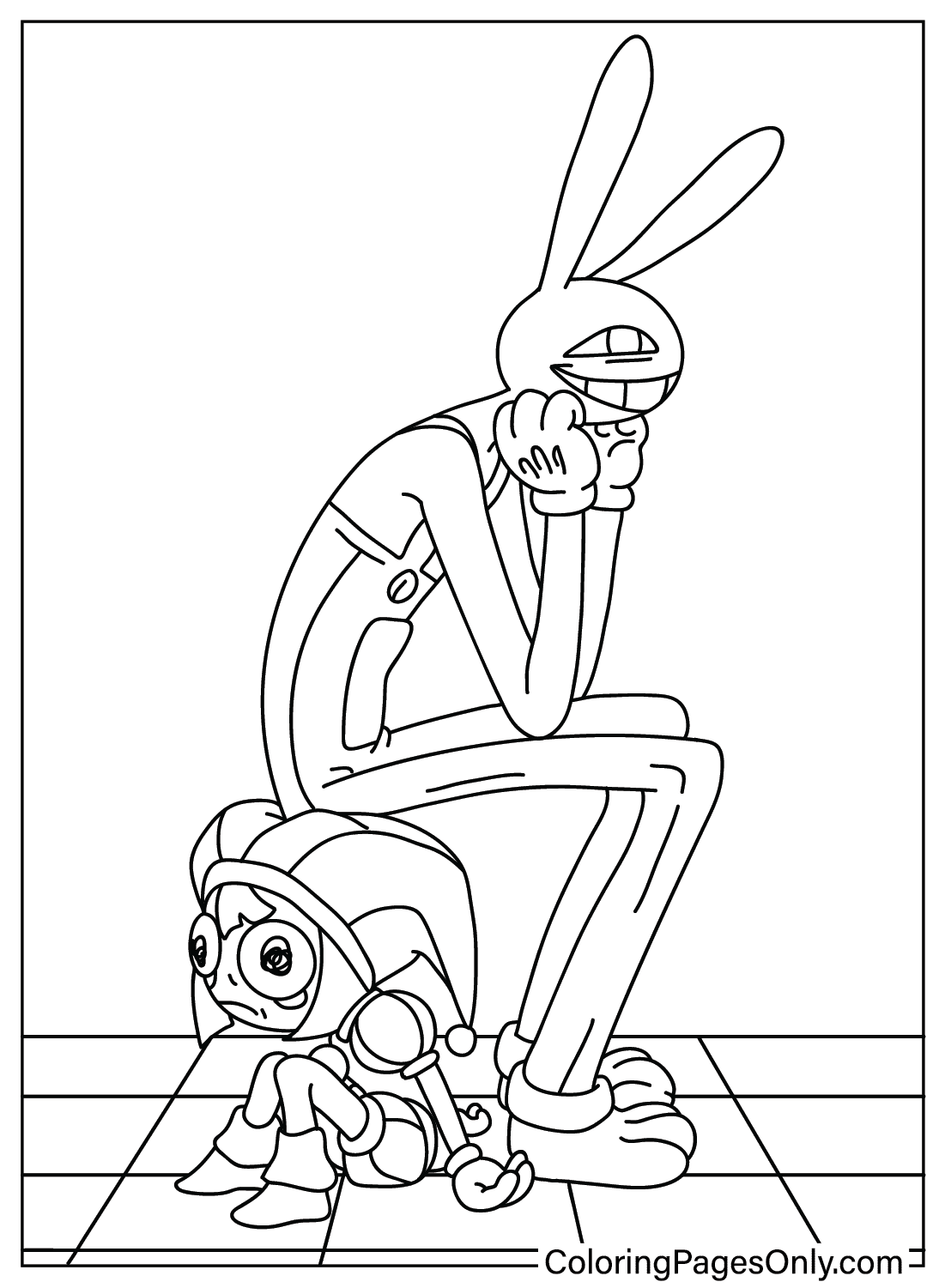
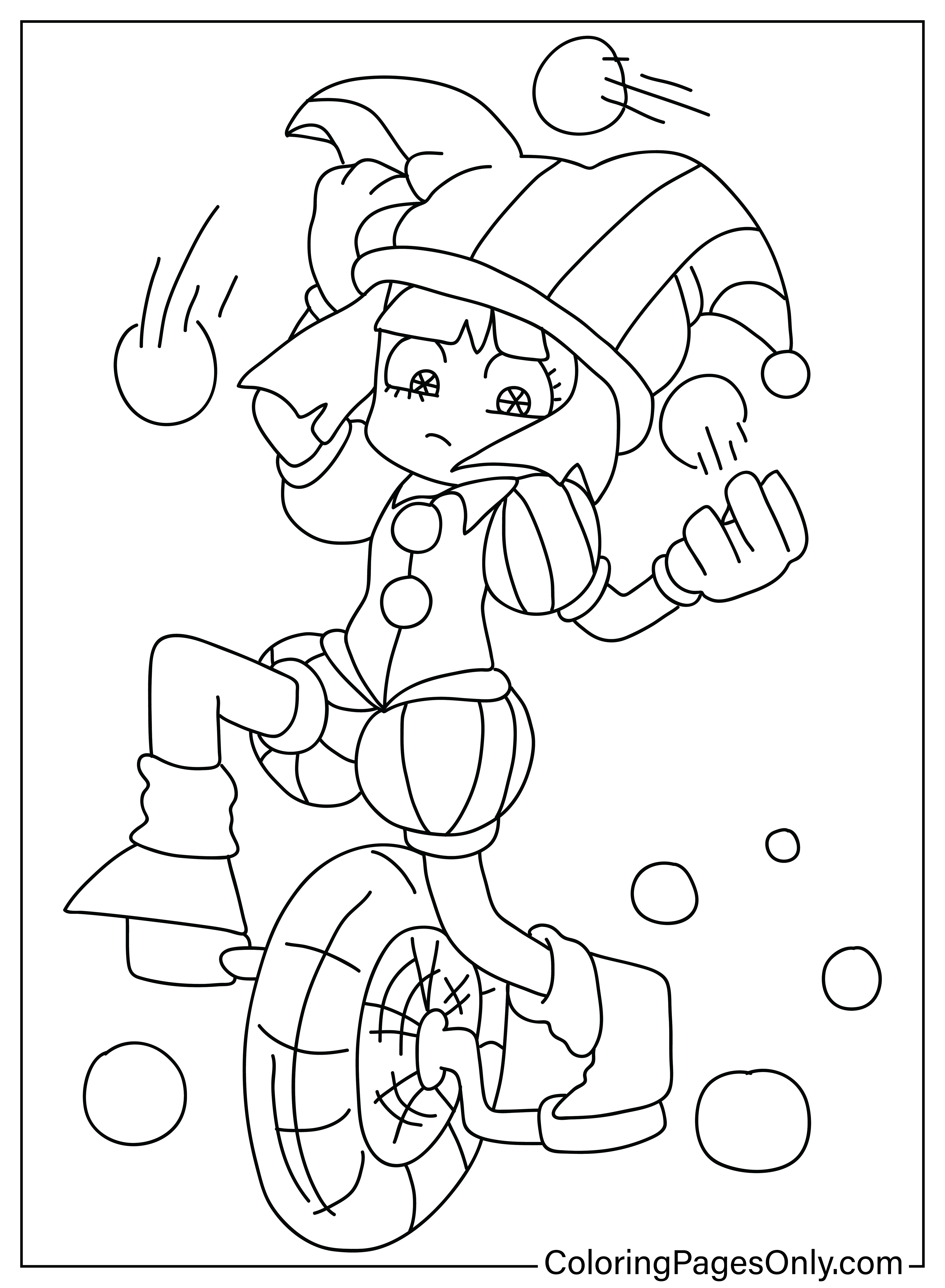
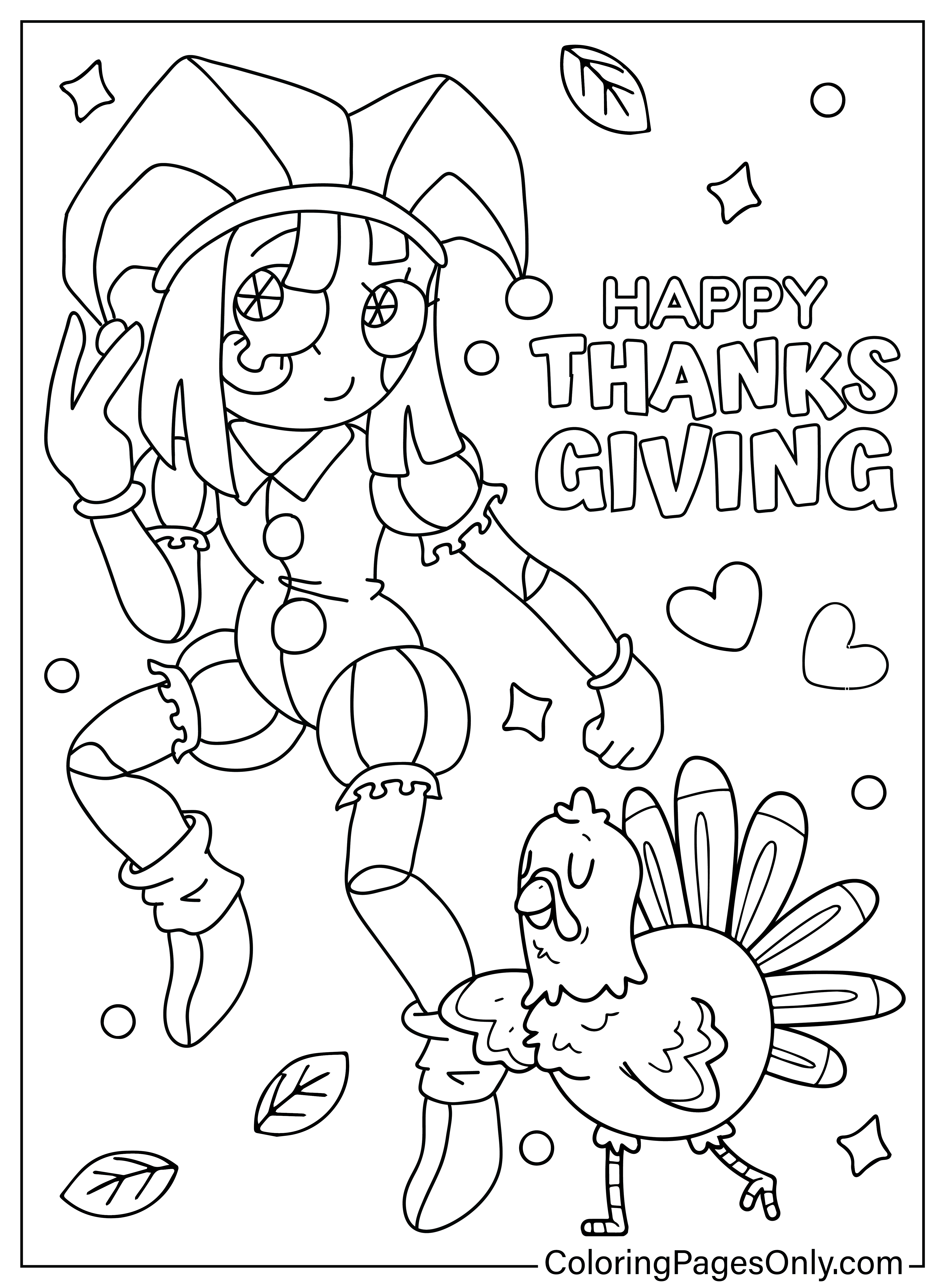
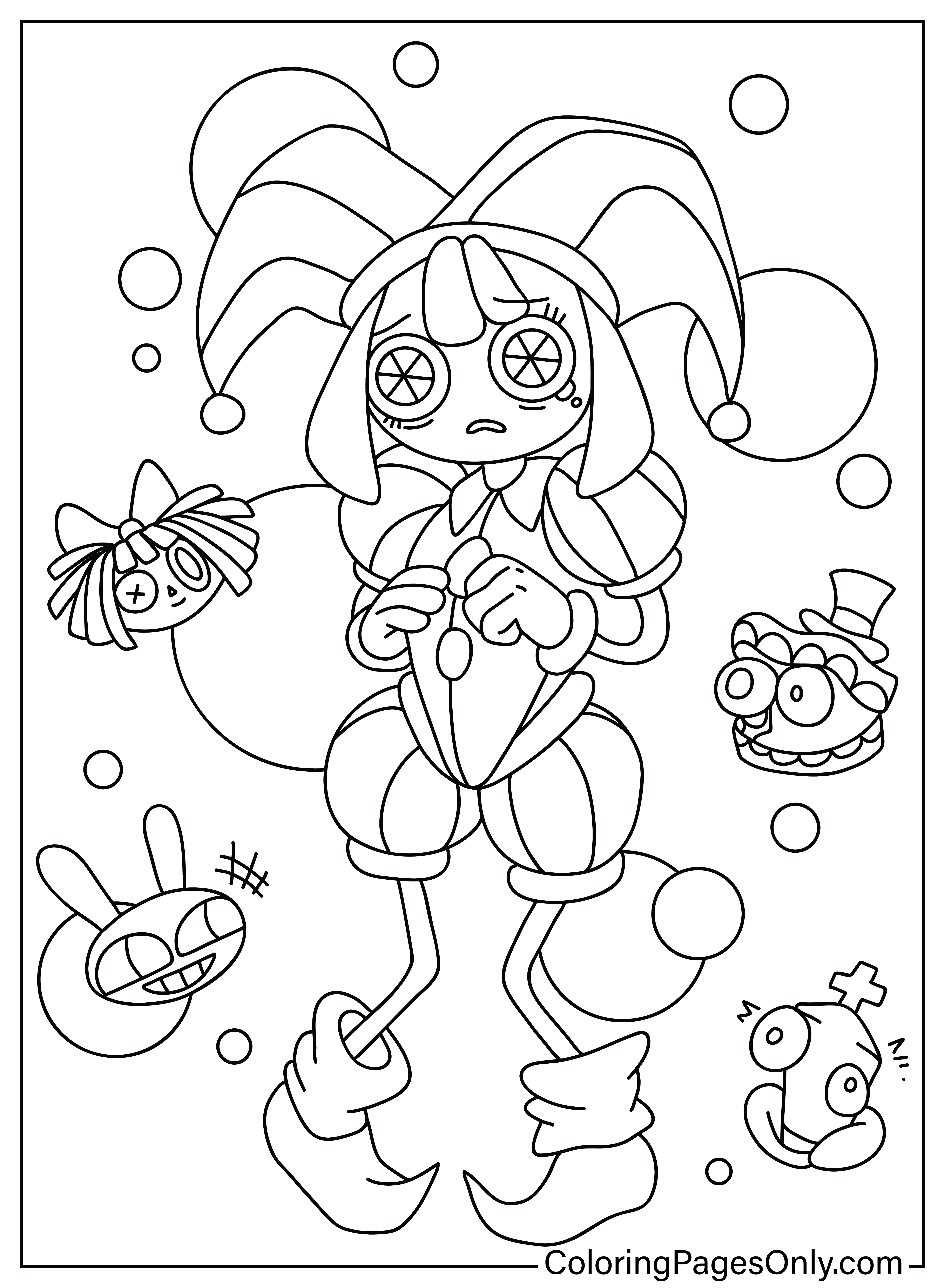
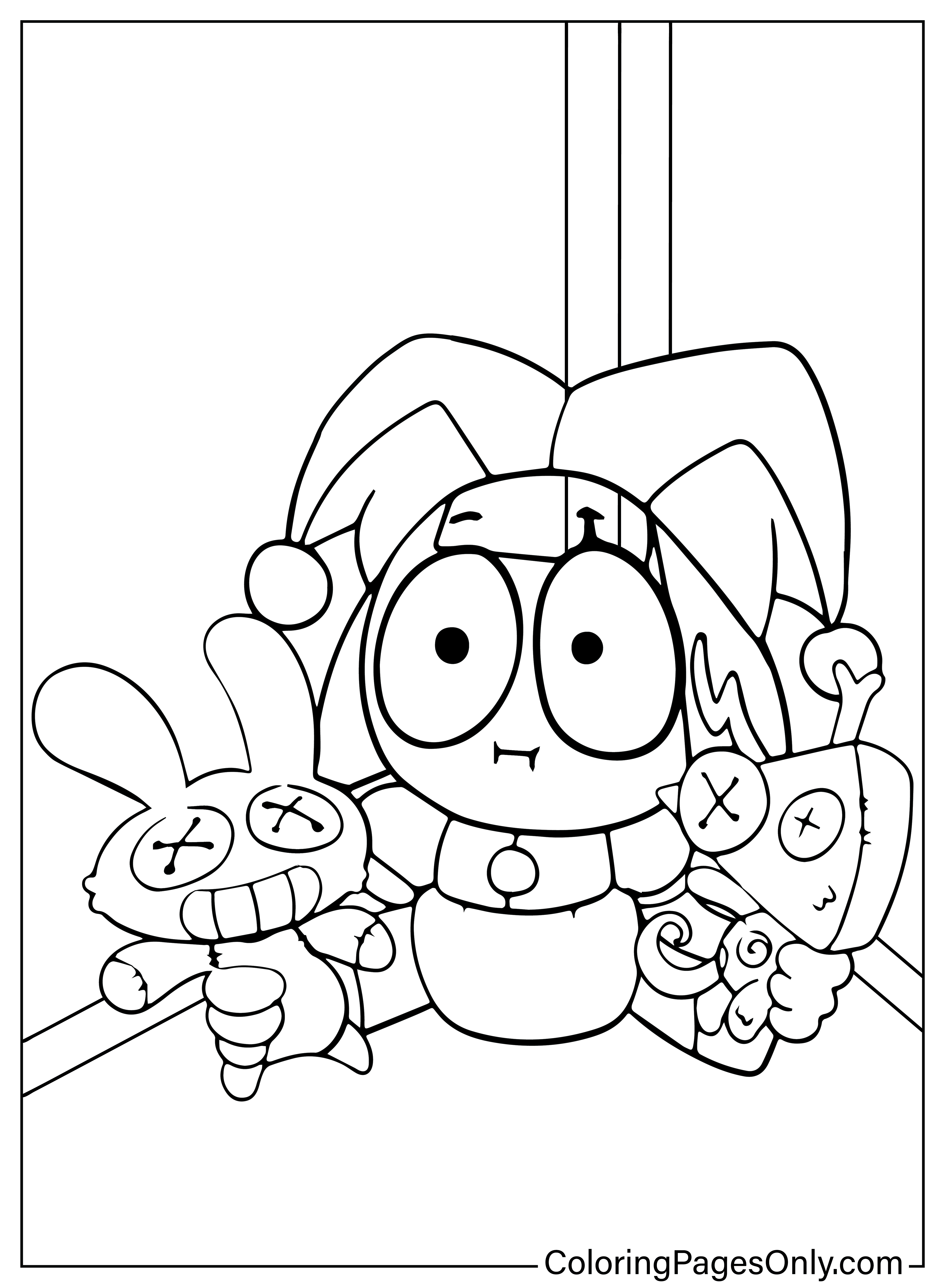
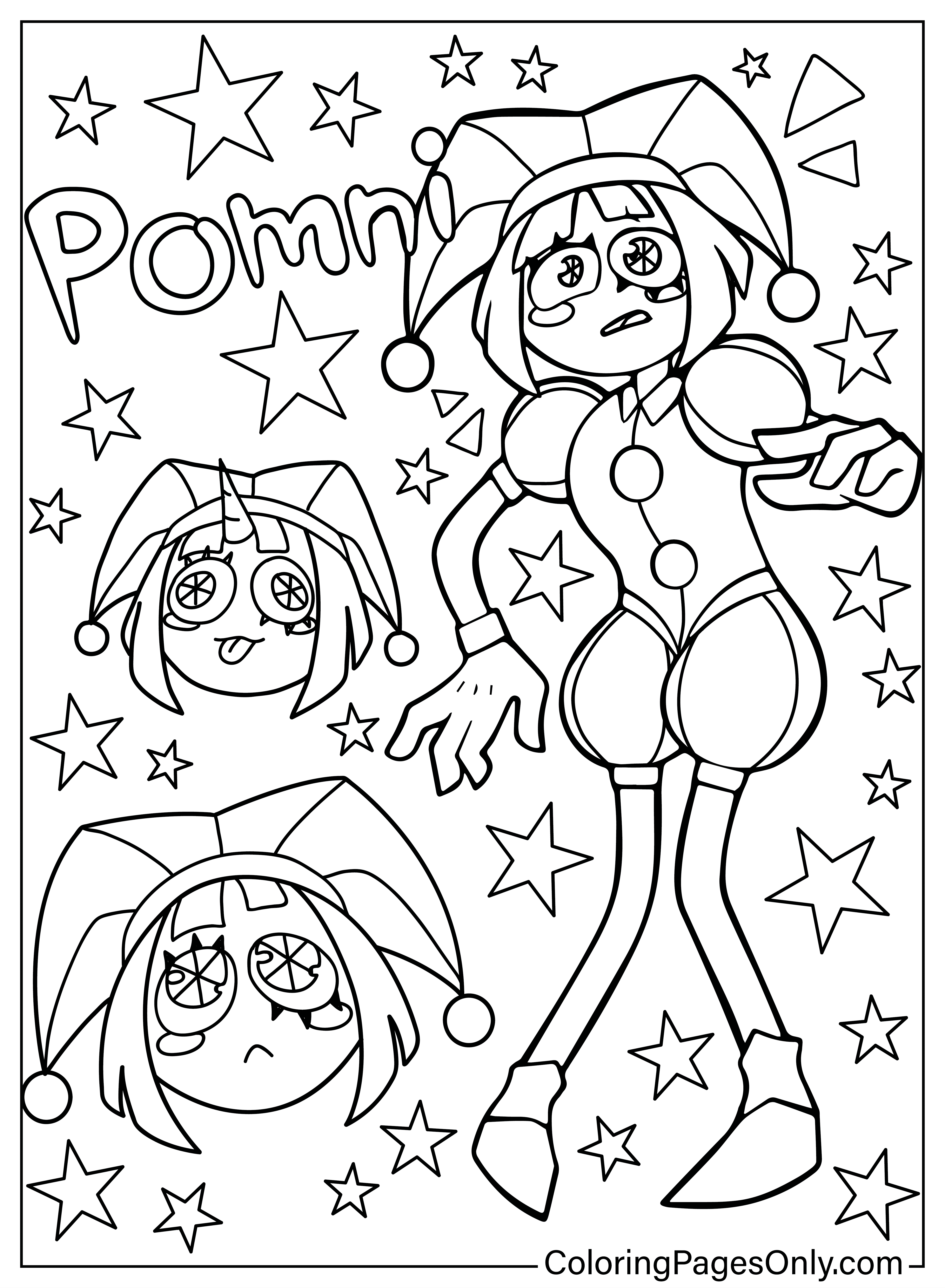
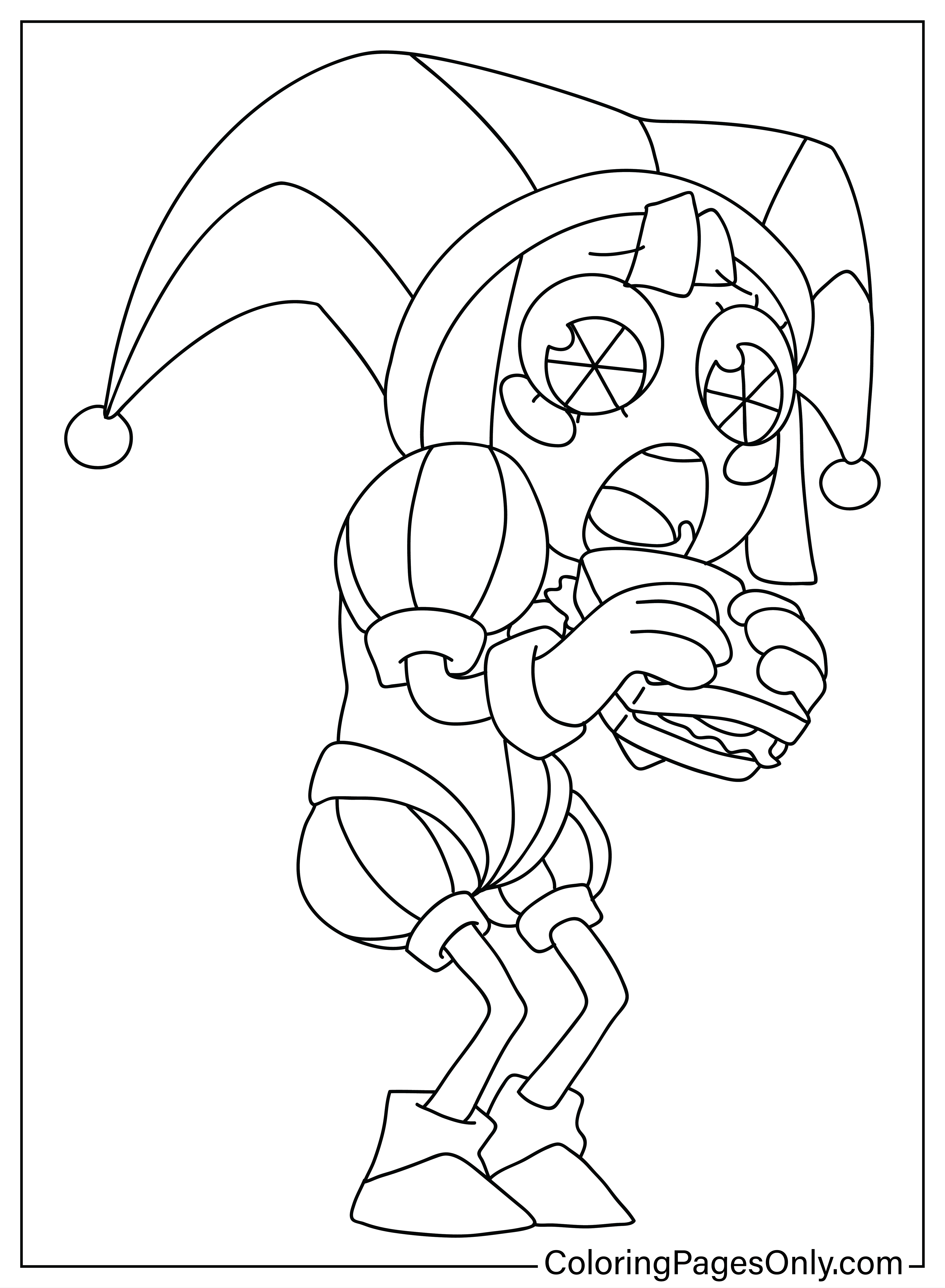
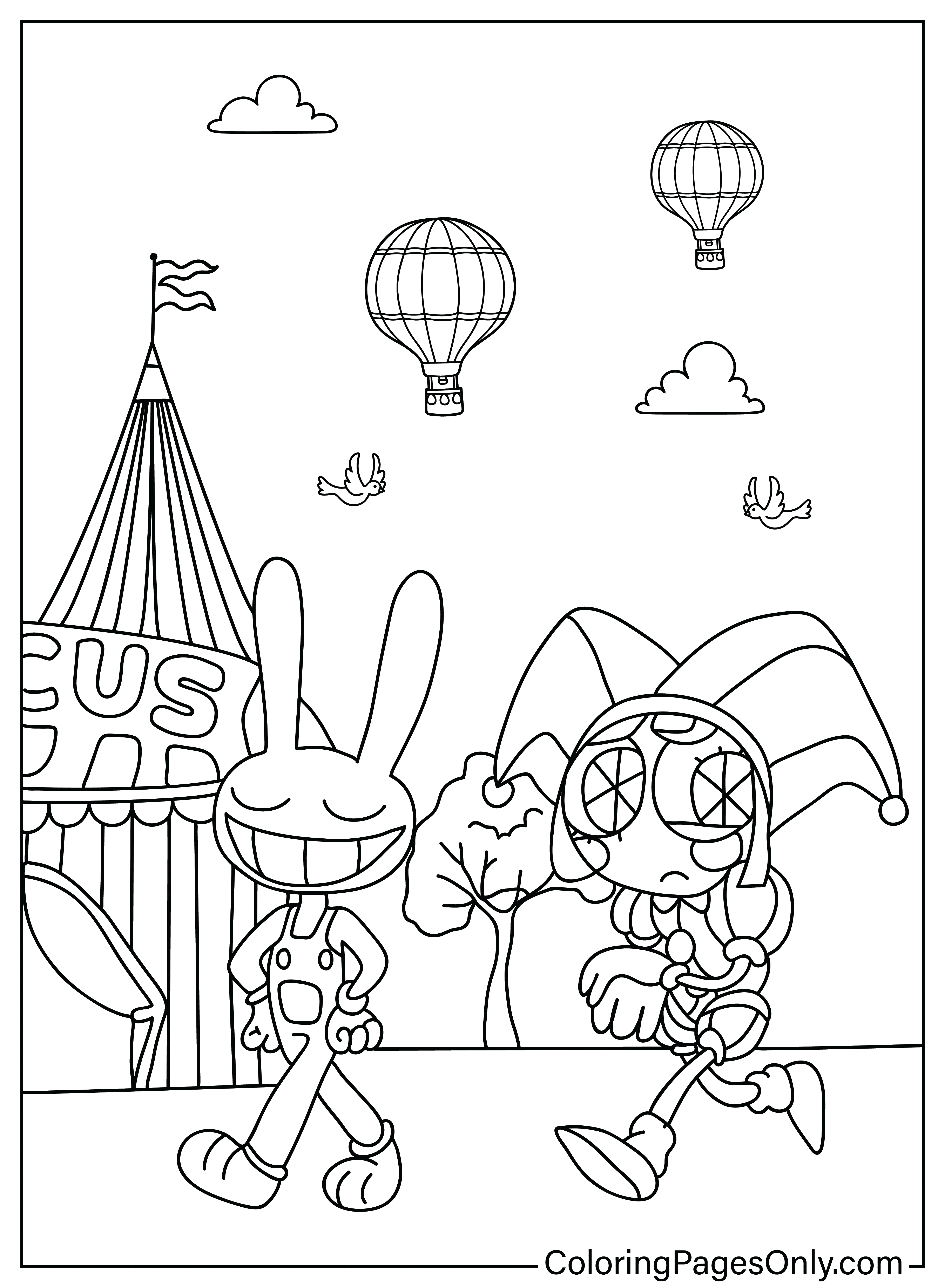
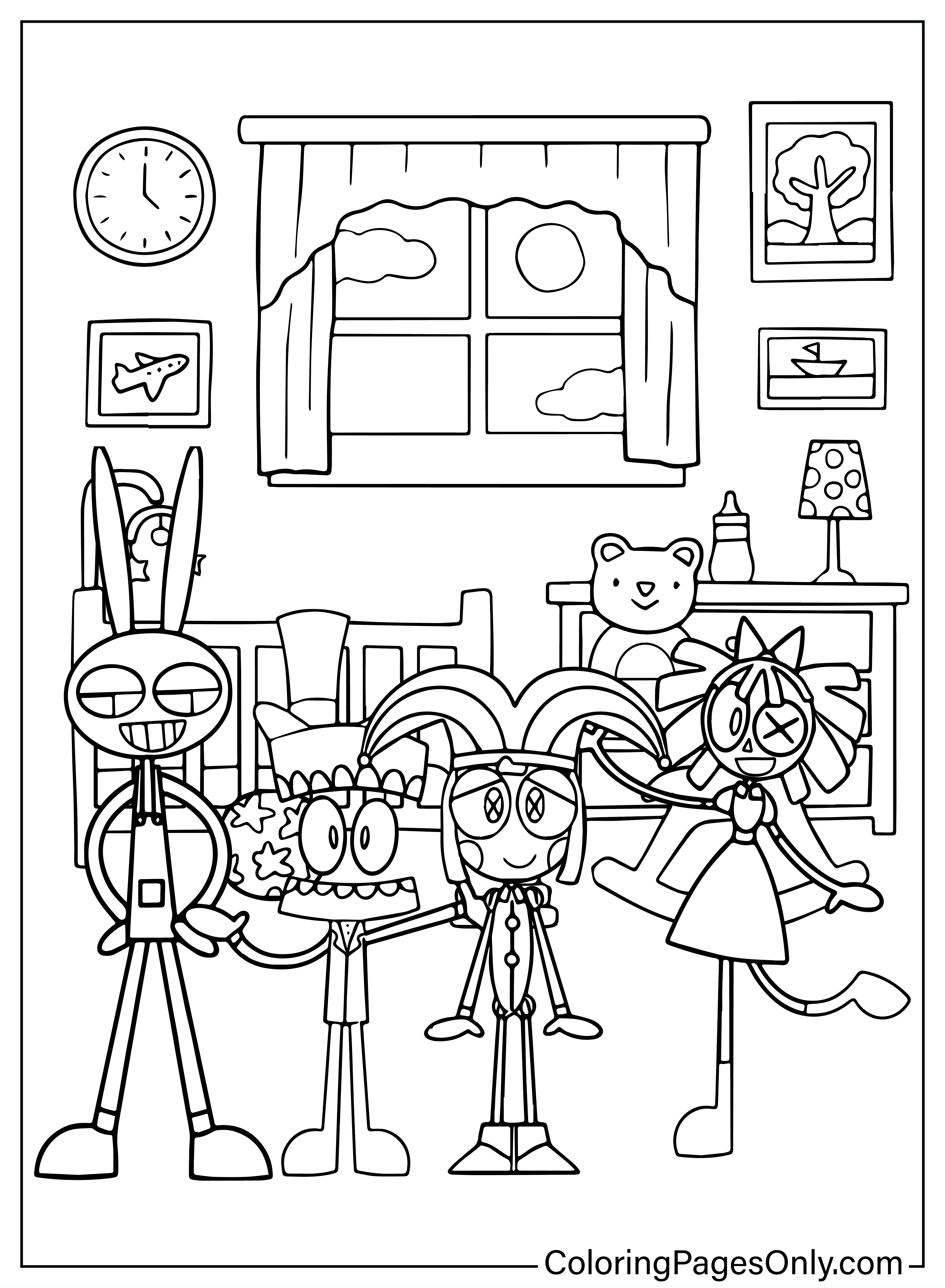
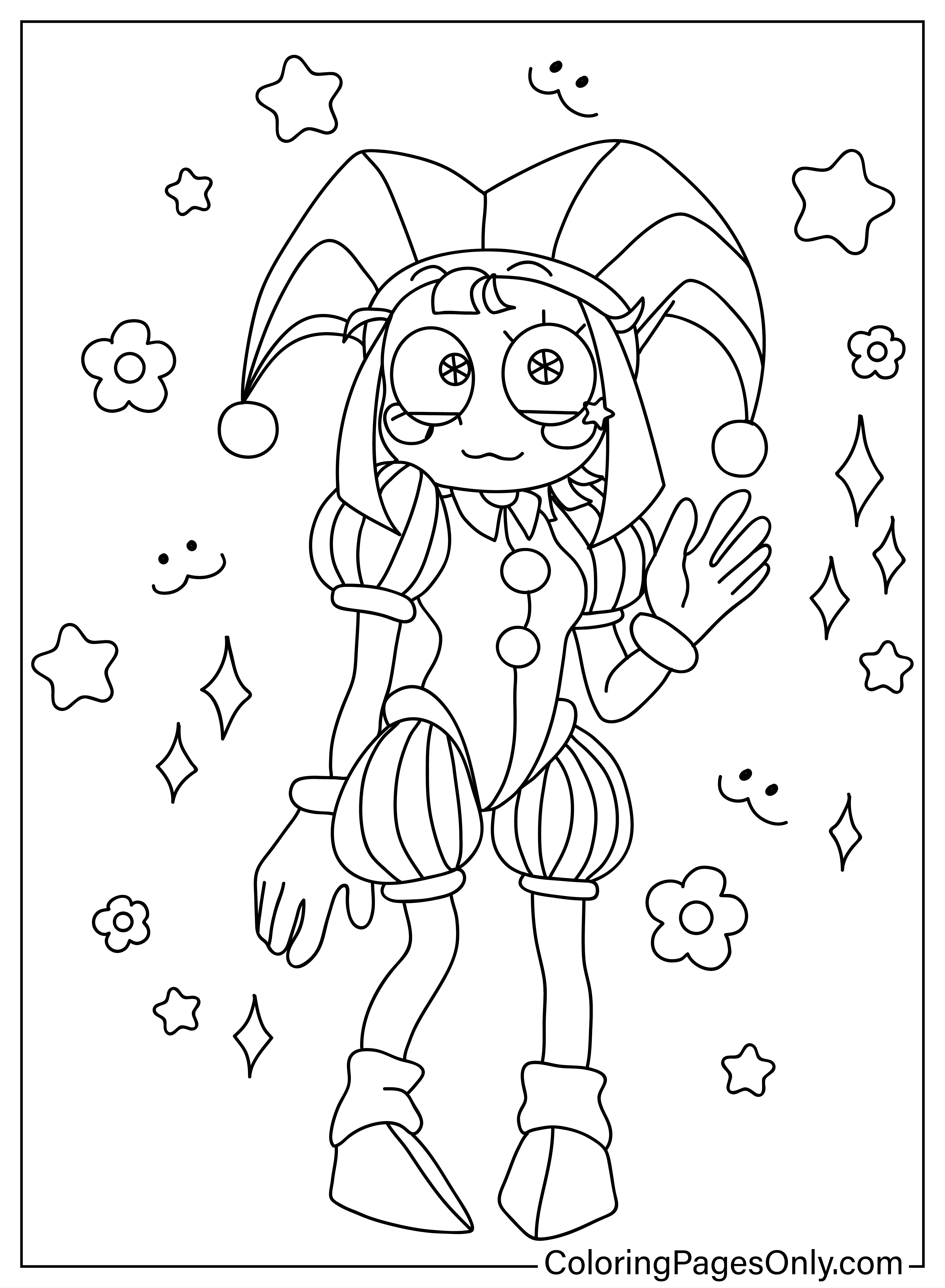
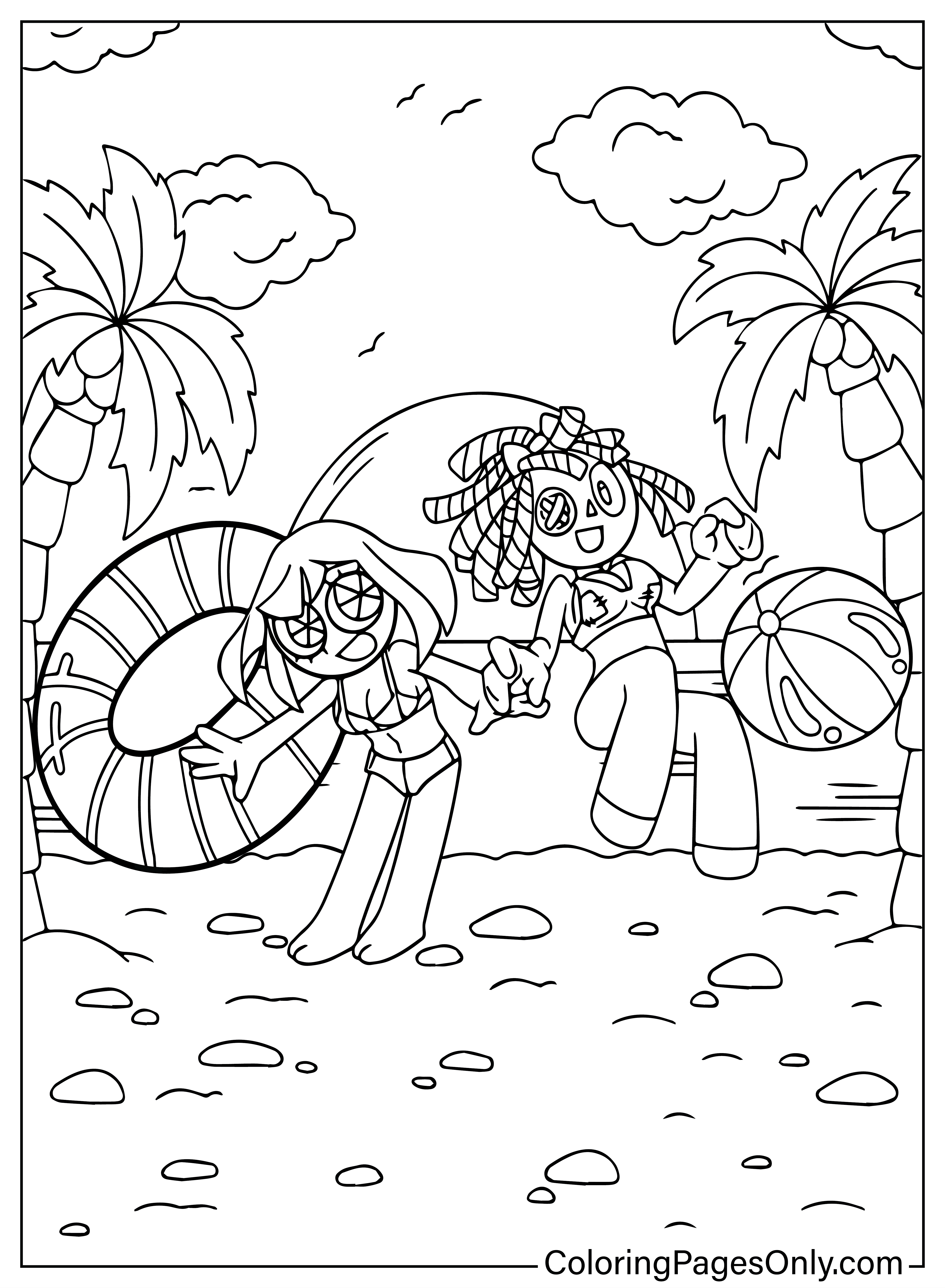
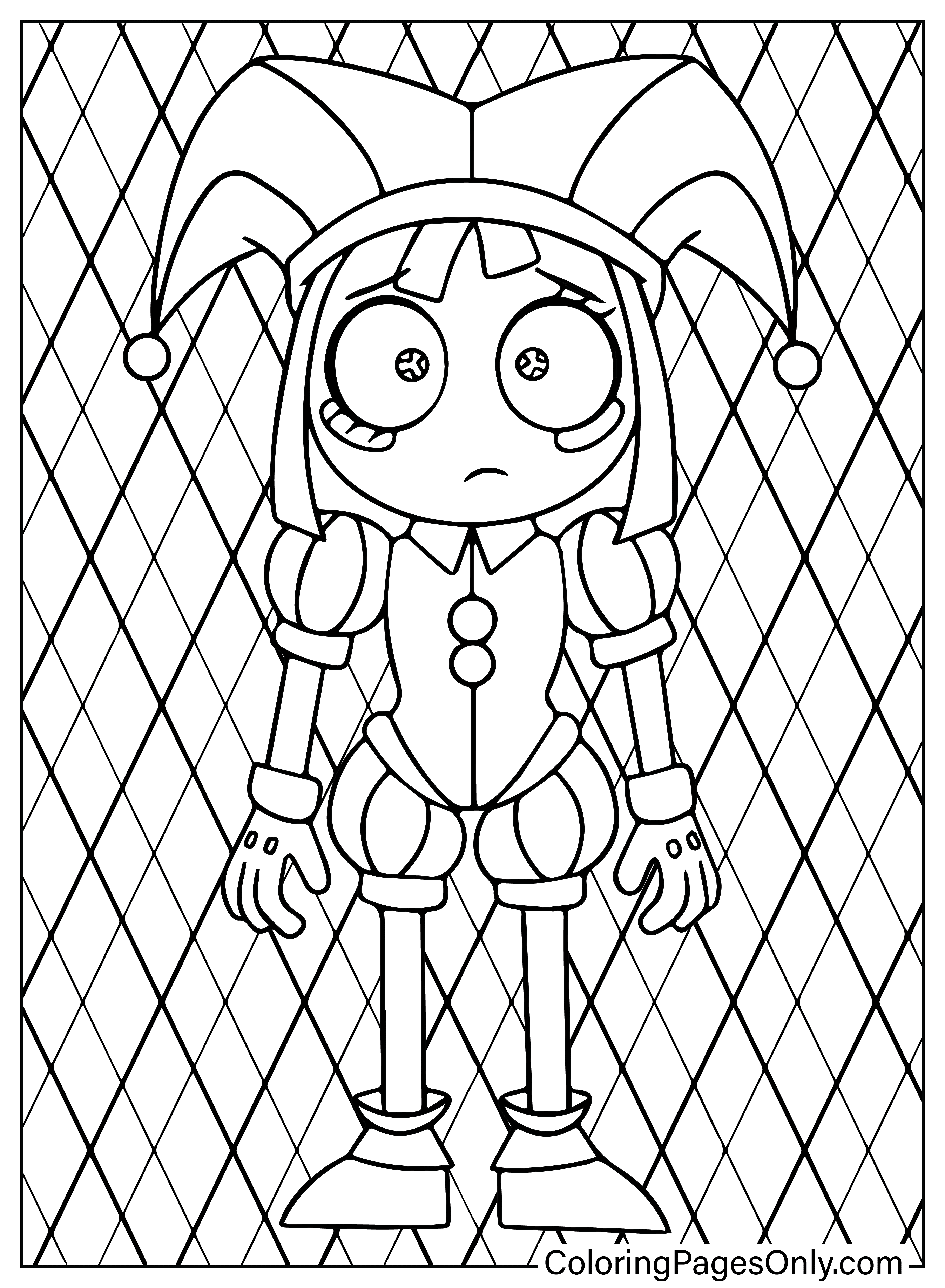
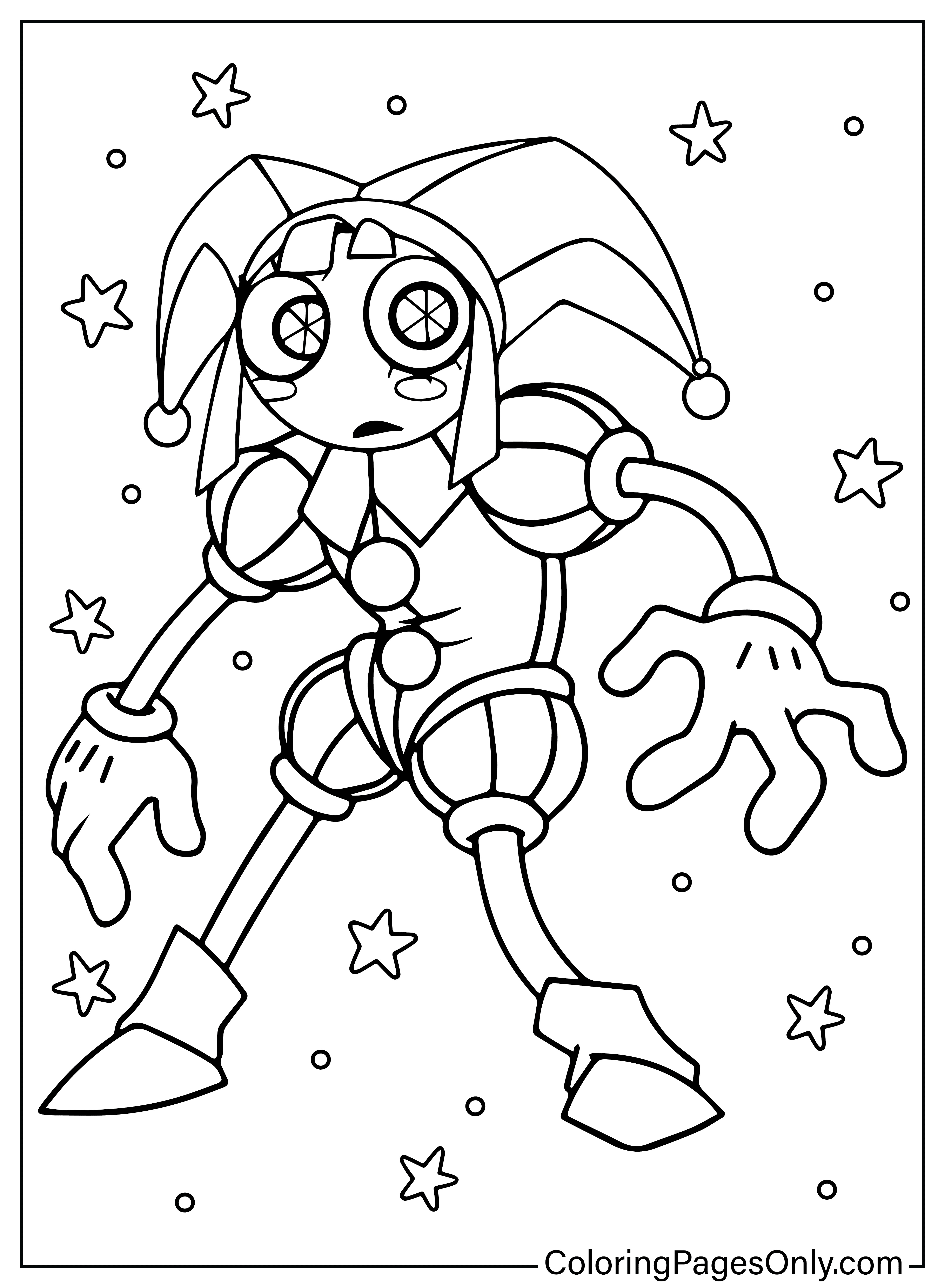
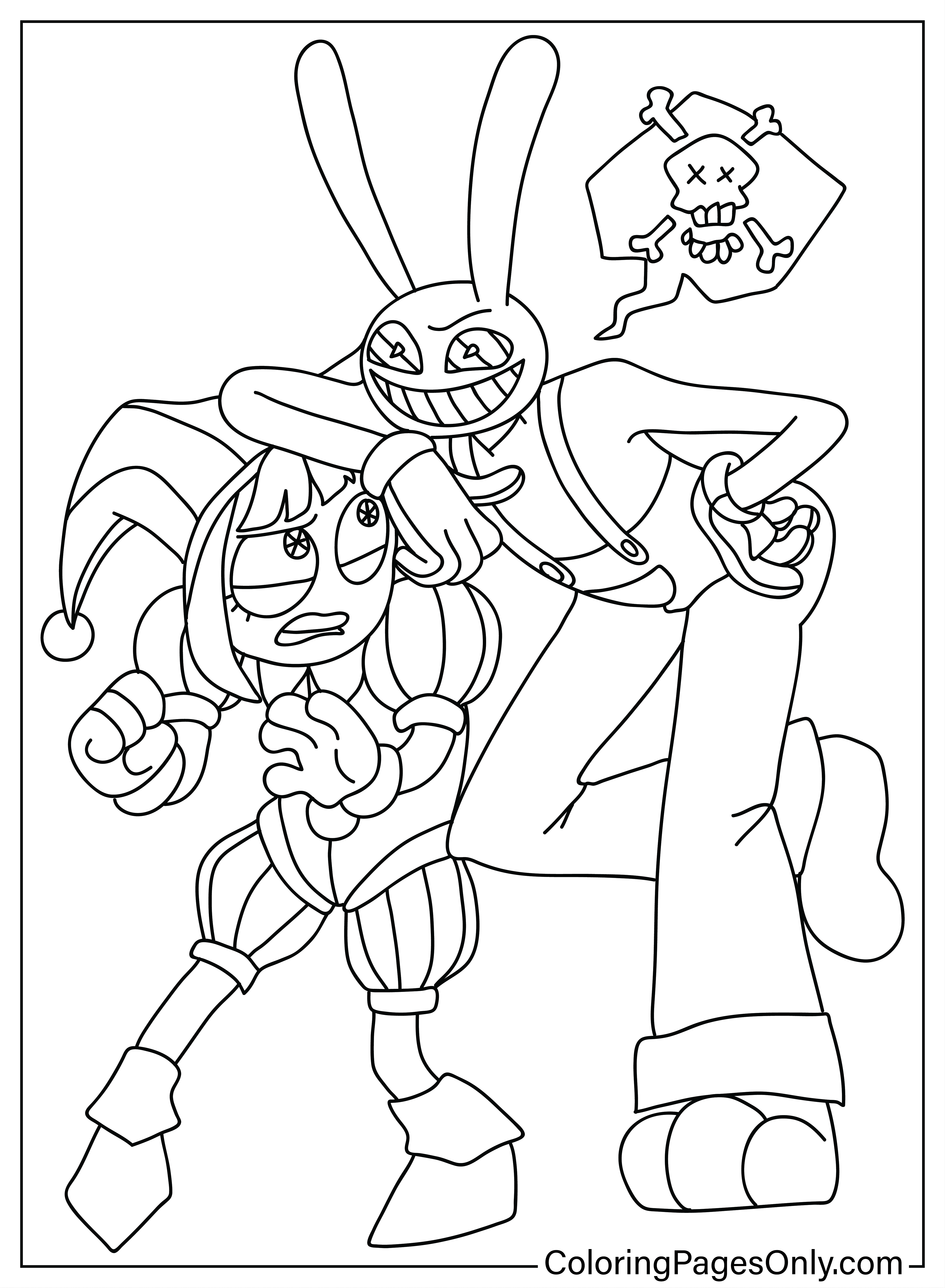
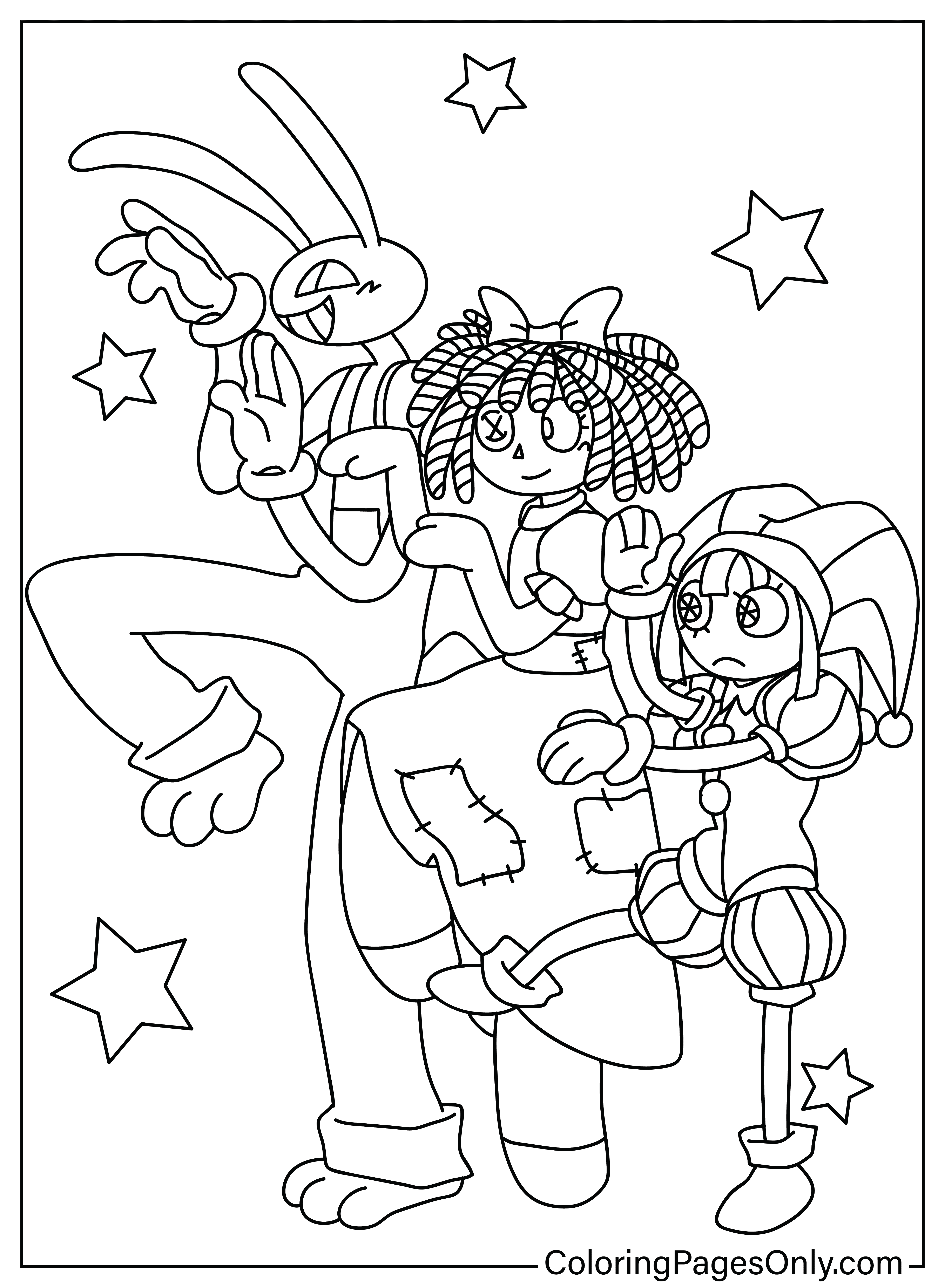
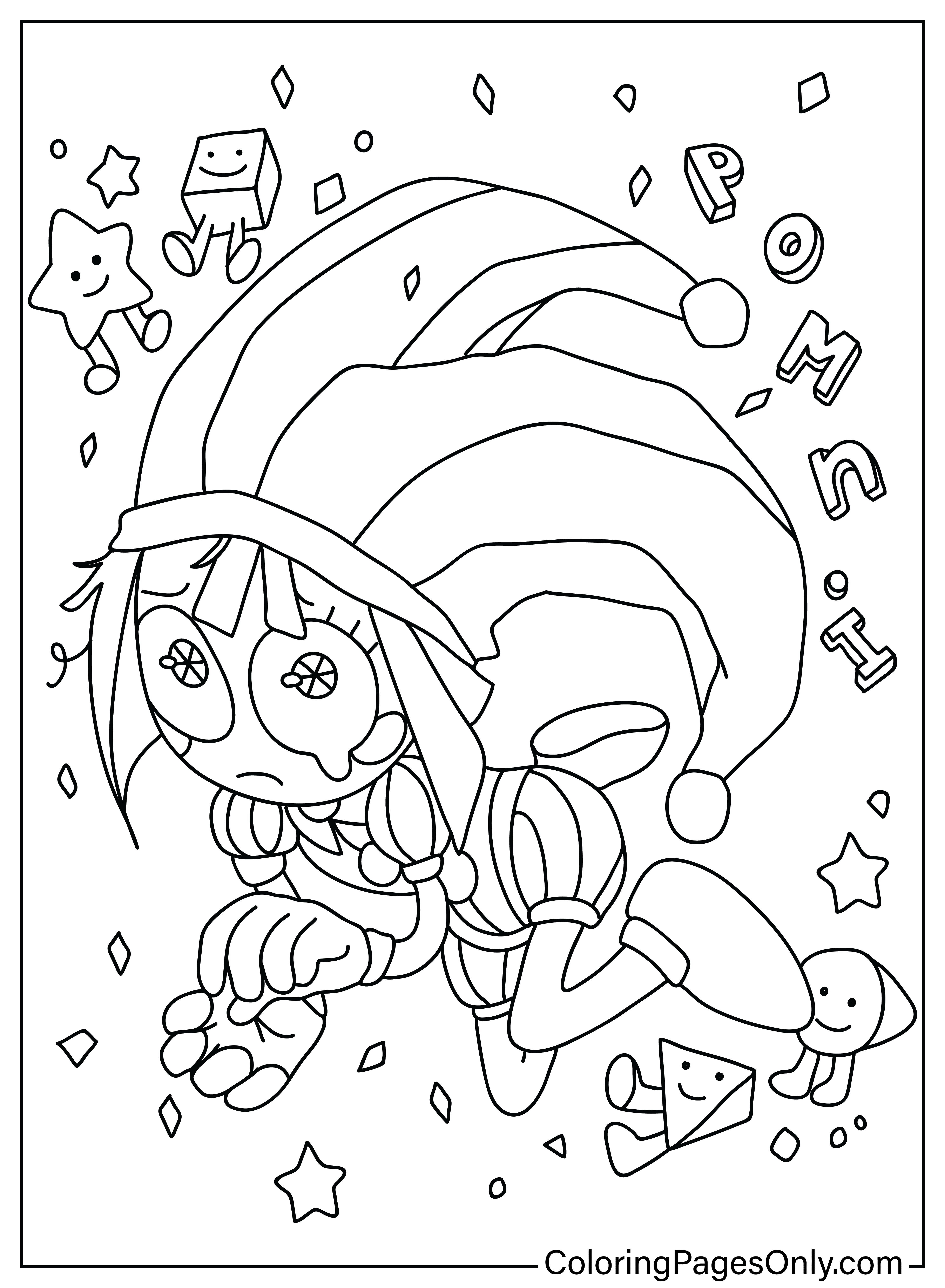
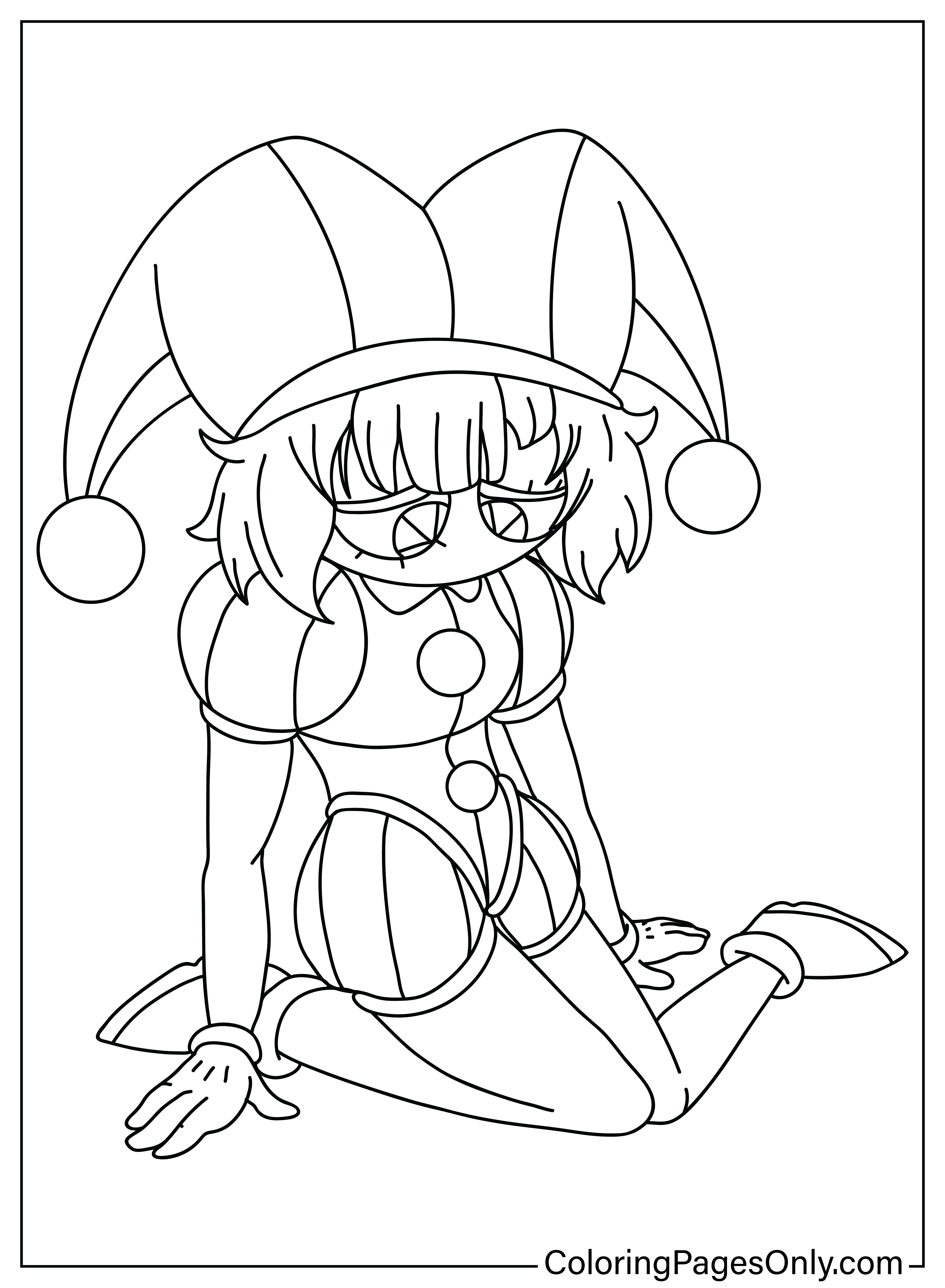
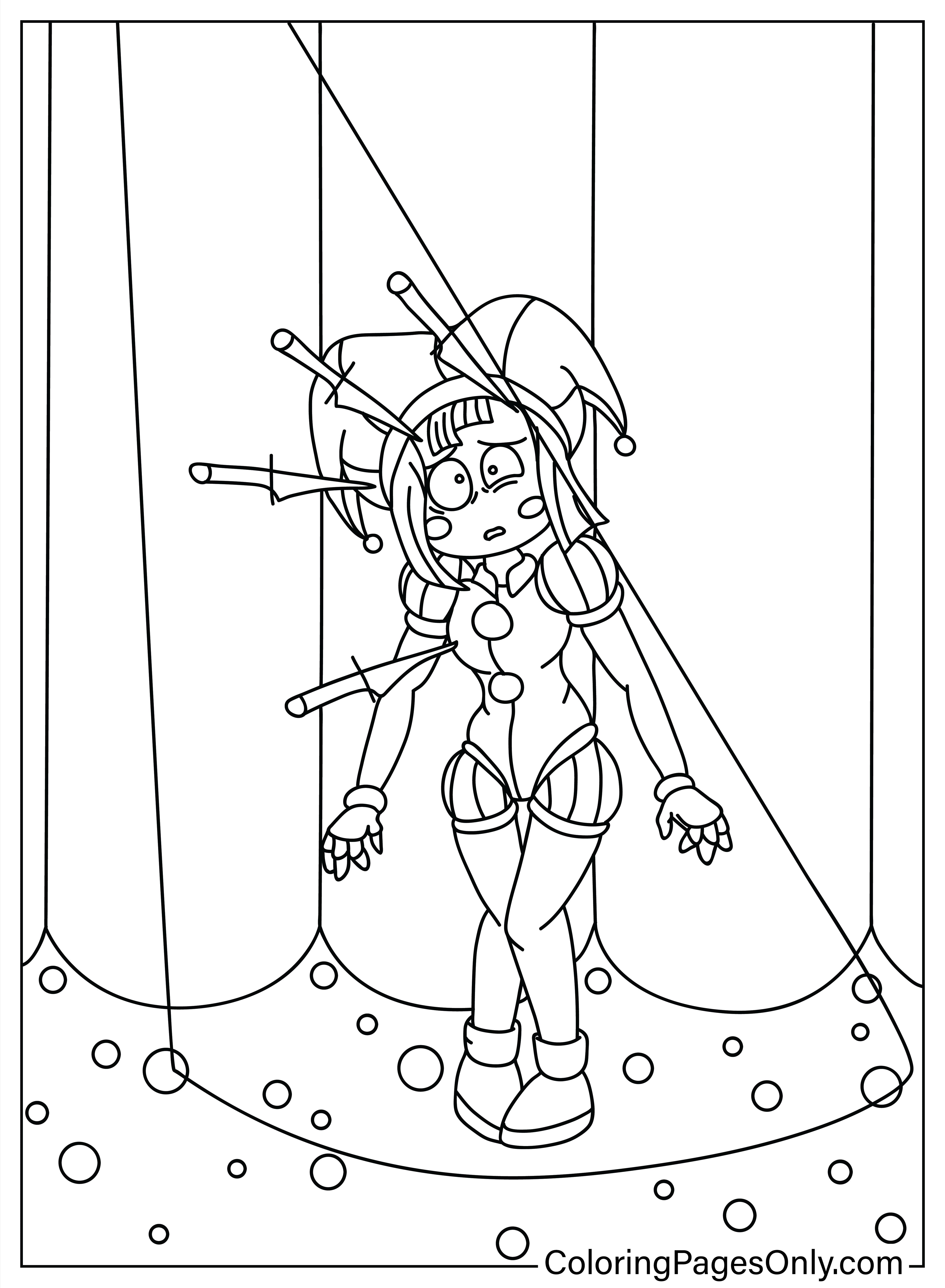
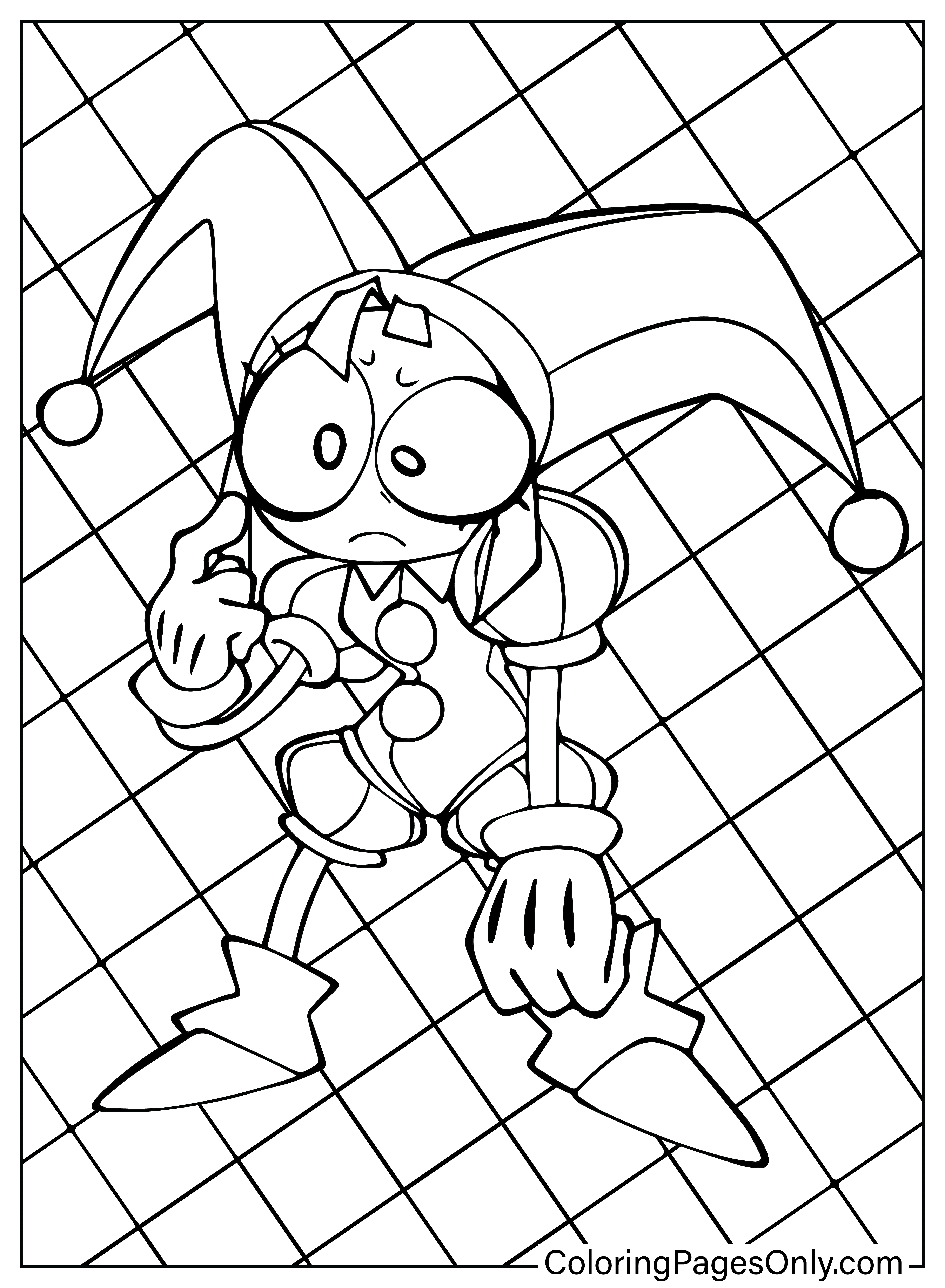
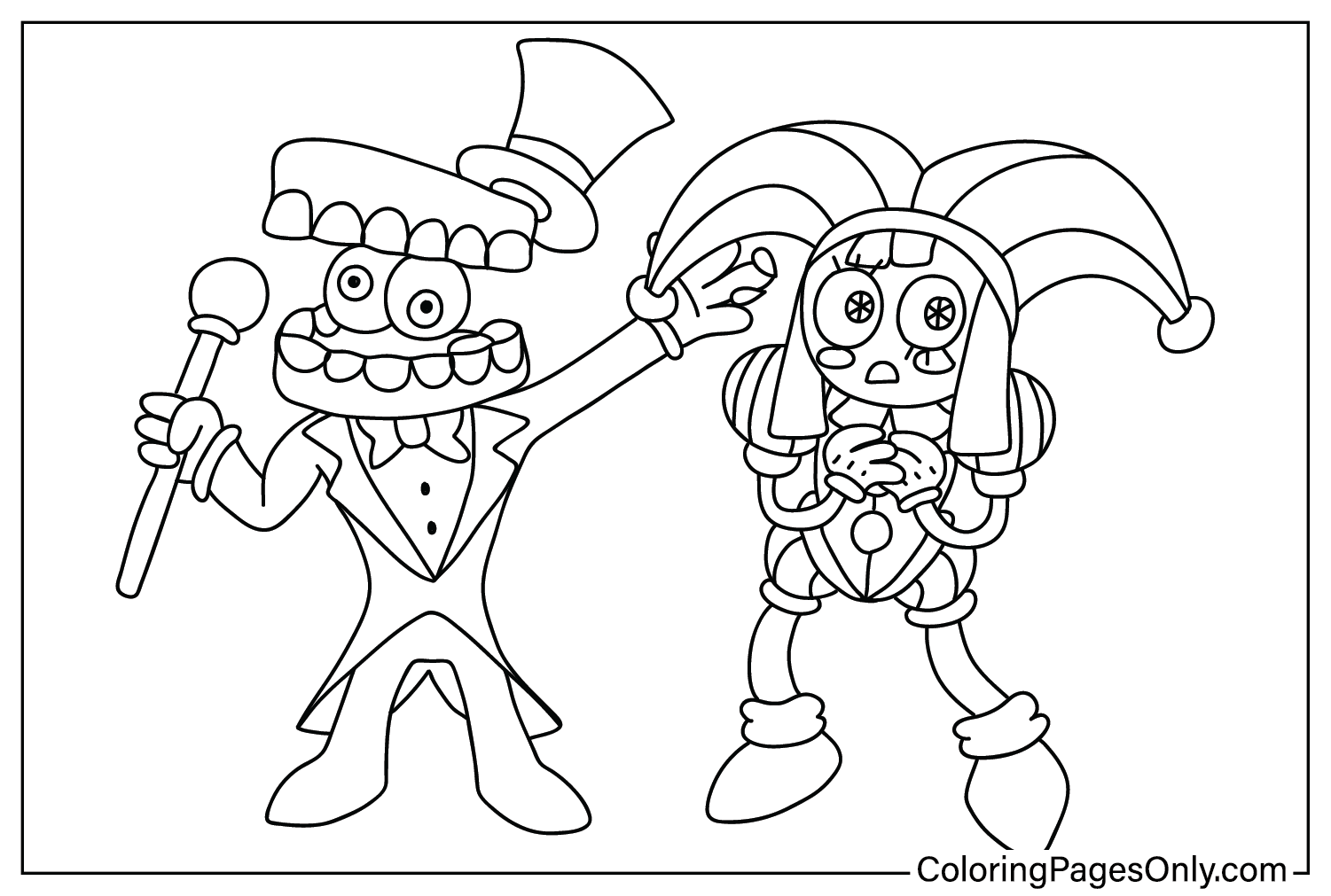
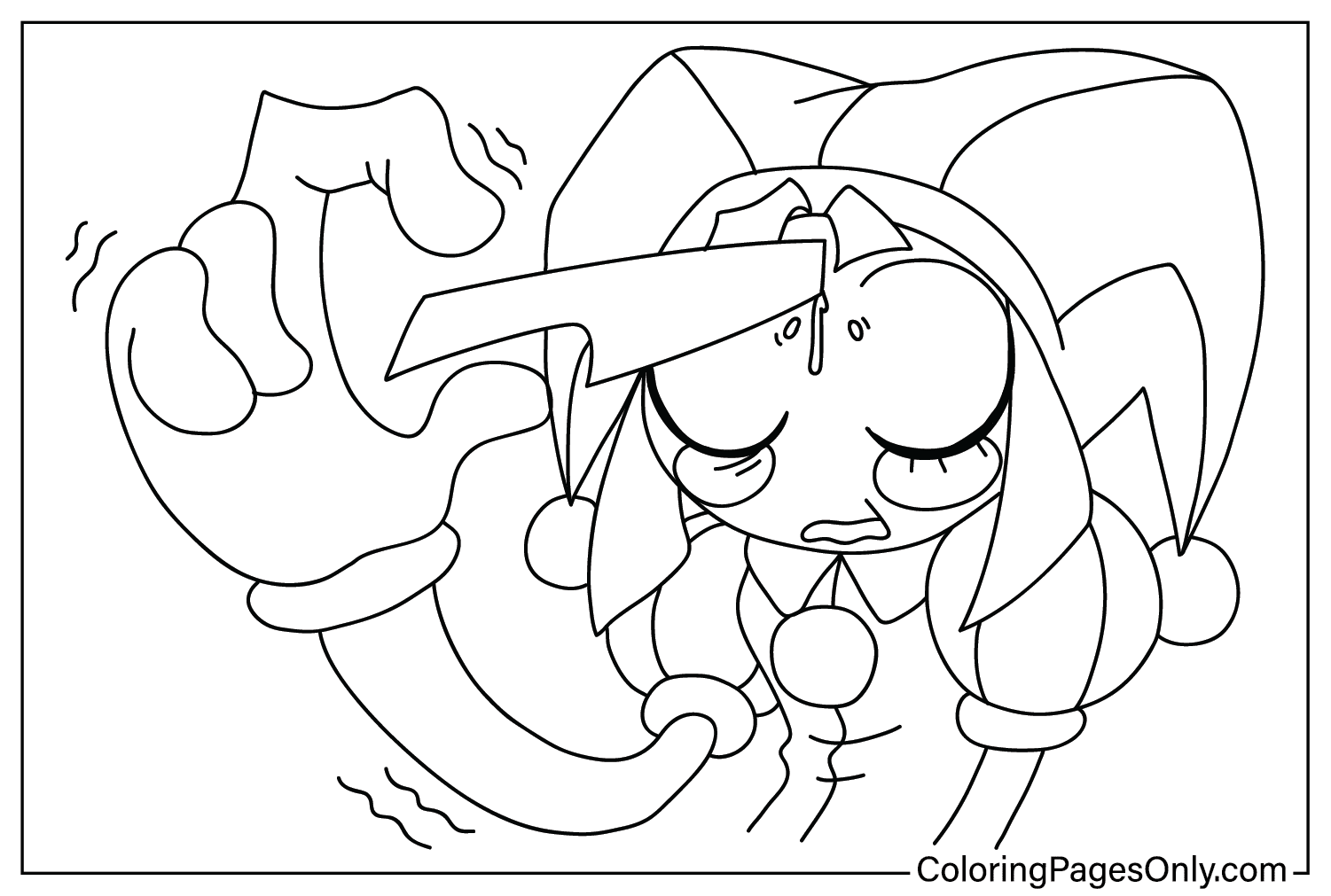
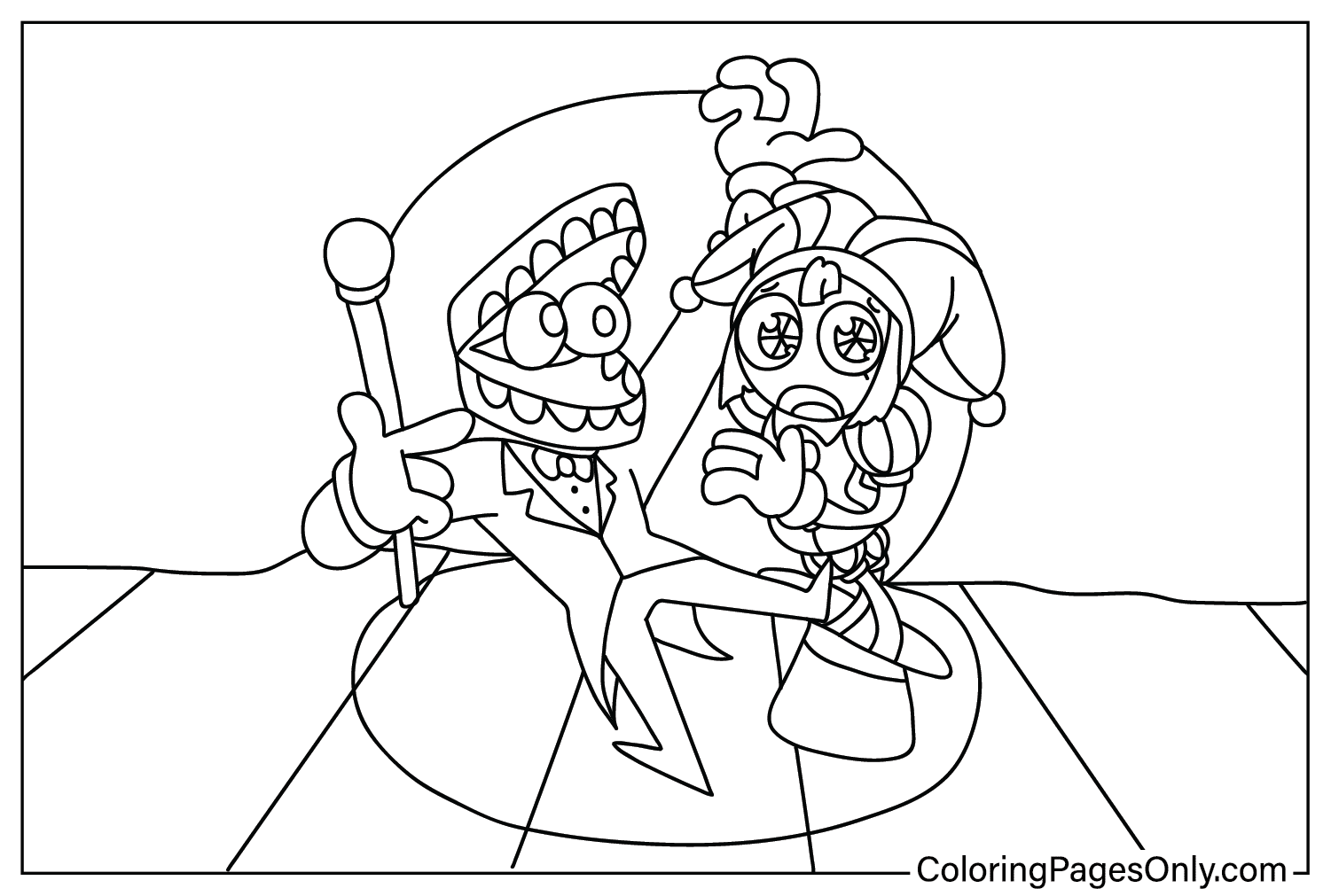
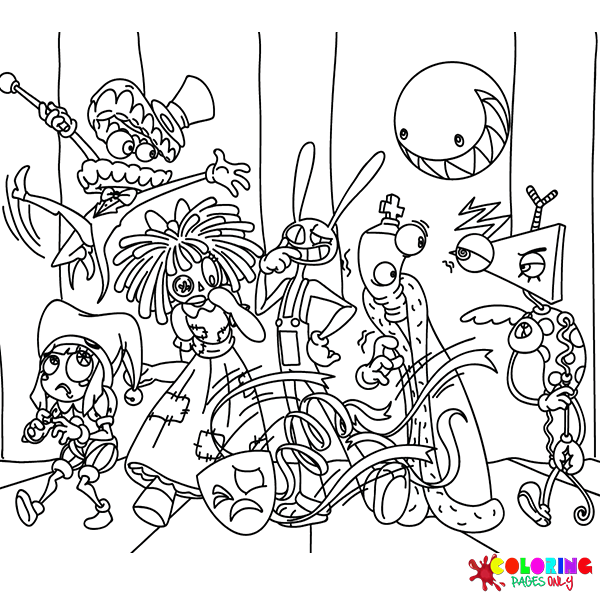
Pomni Coloring Pages at ColoringPagesOnly.com brings together 40+ free pages from The Amazing Digital Circus – individual character pages for Pomni in her jester form, duo pages with Gummigoo, Caine, Ragatha, and Gangle, group scenes with the full circus cast, and action compositions from the show’s adventure episodes. Download any page as a free PDF to print at home, or color online directly in your browser.
For more animated series, explore the full TV Show and Films Coloring Pages collection. Fans of digital horror and survival games will also enjoy Poppy Playtime Coloring Pages and Sprunki Coloring Pages.
What Is The Amazing Digital Circus?
The Amazing Digital Circus – abbreviated as TADC by its fanbase – is an Australian independent adult animated web series created, written, and directed by Gooseworx and produced by Glitch Productions, the studio founded by brothers Luke and Kevin Lerdwichagul. The pilot episode premiered on Glitch Productions’ YouTube channel on October 13, 2023. It went viral within days, accumulating over 100 million views within its first month – one of the most successful animation pilot launches in the history of the platform. The series was nominated for an Annie Award.
The show is a dark psychological comedy set inside a circus-themed virtual reality game. Six human beings have been trapped inside the circus and given cartoon avatar bodies by Caine, an erratic AI ringmaster. They cannot leave. They cannot swear. They cannot engage in adult content. And most importantly, they cannot find a way out. To keep them from losing their sanity entirely, Caine organizes daily adventures through the circus world. These adventures are often absurd, frequently dangerous, and almost always traumatizing in ways Caine either doesn’t notice or doesn’t care about.
The central threat is “abstraction” – the process by which a human trapped too long in the circus gradually loses their mind and transforms into a mindless, glitching monster. Once a character abstracts, they are taken to the Cellar beneath the circus. Kaufmo, the clown who was searching for an exit before Pomni arrived, has already been abstracted by the time the pilot episode begins. This establishes the stakes immediately: the people in the circus are not guests who can leave. They are prisoners on an indefinite sentence, and mental deterioration is always a possibility.
The characters’ avatar designs are each based on a specific form of entertainment, a decision made by Gooseworx during the development period: Pomni is based on jesters; Ragatha is based on rag dolls (specifically Raggedy Ann); Jax draws from Looney Tunes-style cartoon rubber characters; Gangle is based on theatrical drama and comedy masks; Kinger and his late wife Queenie are based on chess pieces; Zooble is based on mix-and-match modular toys like Zolo; and Kaufmo the clown references traditional circus clown archetypes.
The show’s tone deliberately contrasts its visually vibrant, candy-colored aesthetic with genuinely dark existential themes – psychological horror, grief, identity loss, and the question of what happens to a person’s sense of self when they are stripped of their real-world context and given a cartoon body indefinitely. Critics described the second episode as “a candy-coated existential crisis.” The show is classified as adult animation and is not intended for young children.
Character Guide – Canonical Colors and Design
Pomni – The Jester
Pomni is the protagonist and the most recently trapped human in the circus. In the real world, she was an accountant who had started recording urban exploration videos to escape the boredom of her job. She put on a VR headset she found and was immediately transported into the circus, with no memory of how to return. Caine named her “Pomni” because she could not remember her own name – a detail that functions as both a character beat and an ongoing source of anxiety.
Her avatar is a court jester. Her canonical color palette is a strong blue-and-red combination: the primary blue of her jester suit (a mid-to-bright blue, not navy, not sky blue – the specific periwinkle-leaning blue of the circus’s visual language), with red accents in the diamond pattern on her costume, her collar, and her jester bells. Her skin tone is a light, warm peach. Her hair is short, dark brown-black, with two distinct bangs framing her face. Her eyes are large, with roulette-wheel style pupils – circular with a segment pattern – which spin during moments of extreme stress or anxiety. Her cheeks have a permanent blush marking.
The bells on her jester hat and collar are a warm yellow-gold. These small yellow accents create the color triad of her design: blue base, red diamonds, yellow bells. Getting all three right is what separates a canonical Pomni rendering from a generic jester drawing. The blue and red are complementary contrasts that give the costume its visual energy; the yellow bells add warmth and ground the palette.
Pomni’s personality is anxious, compassionate, and deeply aware of the horror of her situation in a way that other characters – who have had more time to build coping mechanisms – sometimes aren’t. She wants to find a way out more than anything else. This means pages showing Pomni in action poses or adventure scenes carry an inherent tension: the character is not willingly having fun; she is surviving.
Caine – The AI Ringmaster
Caine is the omnipotent AI that runs the circus and has no physical body in the traditional sense – his “head” is a set of large disembodied teeth with a top hat, floating above his ringmaster outfit. His outfit is a pinkish-red tailcoat with gold lining on the interior, a black collar with white lining, a bow tie with white outlines, a white undershirt with two reddish buttons, and white gloves. The pinkish-red of his tailcoat is the dominant color in his design – a warm rose-red that reads immediately as a circus ringmaster’s coat but with a slightly uncanny softness. His teeth are white, large, and always visible.
Pages with Caine and Pomni together are among the most compositionally interesting in the collection because the two characters have opposing design temperatures – Pomni’s cooler blue-and-red against Caine’s warmer rose-red – and opposing psychological registers: Caine’s manic oblivious energy against Pomni’s grounded, terrified awareness.
Jax – The Rabbit
Jax is a purple rabbit in red overalls – one of the most recognizable silhouettes in the show’s cast. His purple is a medium-to-bright violet-purple, not dark, not pastel. His overalls are a clear, saturated red. He is consistently the most antagonistic of the trapped humans toward other cast members, particularly toward newcomers, though later episodes reveal a more complicated inner life. His characterization follows the “Jerk With a Heart of Gold” archetype that the show itself acknowledges and deconstructs.
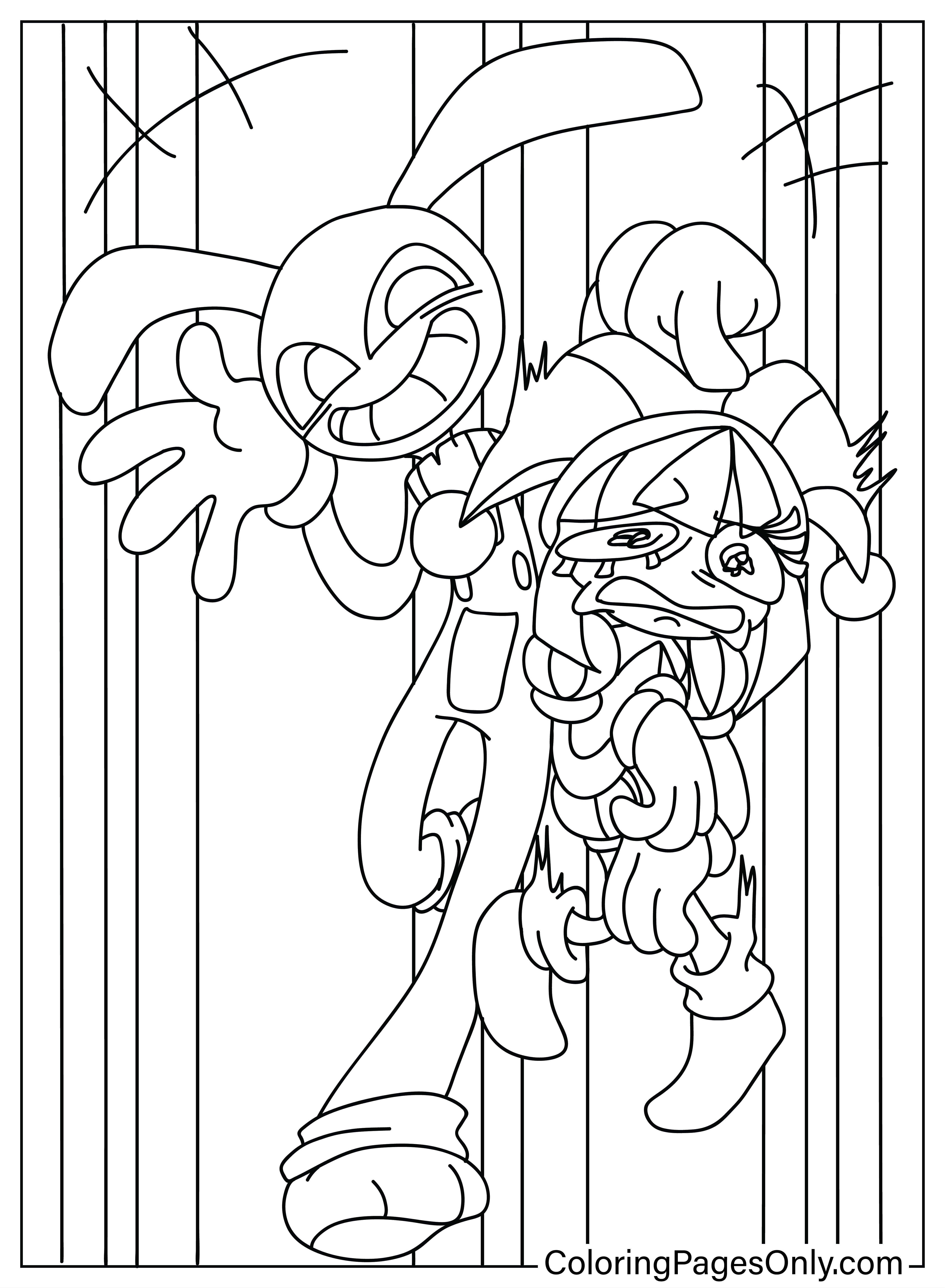
Ragatha – The Rag Doll
Ragatha’s avatar is a rag doll in the style of Raggedy Ann. Her design features yarn-texture red hair, visible stitching across her body suggesting fabric construction, button eyes, and a consistently warm, friendly expression. Her outfit is primarily pink and red tones. Her appearance communicates warmth and safety, which makes her one of the most immediately trusted characters in the ensemble – and which makes the moments when her stitched body glitches or distorts particularly unsettling.
The texture challenge for Ragatha pages is the yarn hair and fabric body: both require a different rendering approach than smooth character surfaces. Short directional strokes for the yarn hair (following the direction strands would hang) and visible value variation across the body to suggest fabric texture will make Ragatha pages read as distinctly different from the smoother character pages in the collection.
Gangle – The Ribbon Mask
Gangle’s avatar is perhaps the most abstract in the cast: her body is composed of long red ribbons, and her face is an interchangeable pair of theater masks – the traditional comedy mask (upturned smile) and the tragedy mask (downturned frown). Her comedy mask is prone to breaking, which is a recurring visual joke and narrative beat throughout the series. When it breaks, the tragedy mask takes over as her primary face, and her emotional state shifts accordingly.
For Gangle pages: the red ribbons of her body should be a consistent warm red, not orange-red. The mask surfaces are smooth white with the classic theater mask expression painted on. The contrast between the stark white of the mask face and the deep red of the ribbon body is the primary value relationship in any Gangle composition.
Kinger – The Chess Piece
Kinger’s avatar is a king chess piece – his body is a white chess king torso and crown – wearing a royal purple robe with fluffy white lining. He is the longest-trapped human in the circus, and his extended captivity has made him eccentric, paranoid, and forgetful during daylight hours, though he paradoxically becomes more lucid and rational in dark environments. His wife Queenie, who had the avatar of a queen chess piece, had already abstracted and was sent to the Cellar before the pilot.
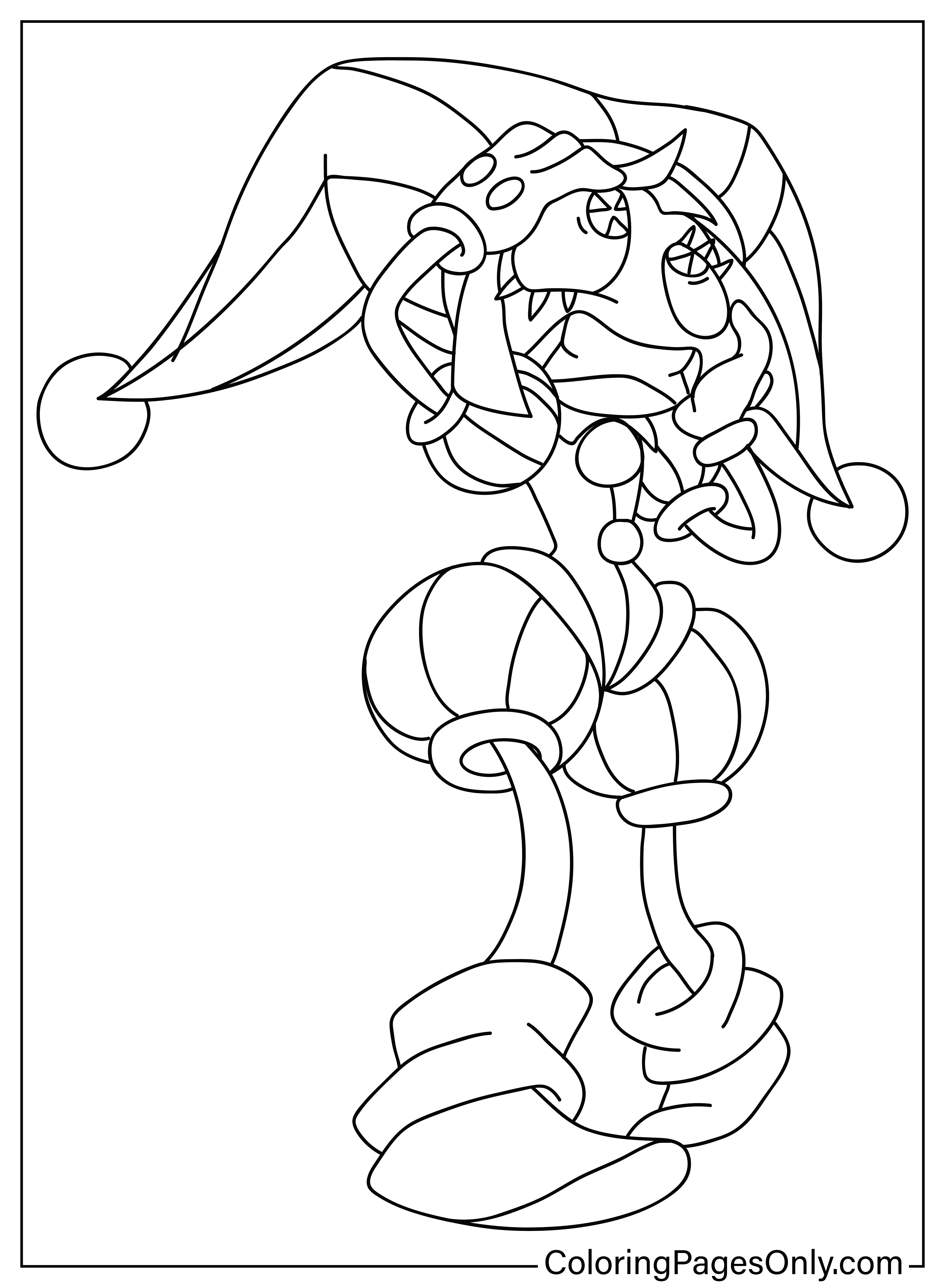
The purple of his robe is a deep, rich purple – not blue-purple, not red-purple, but a classic royal purple. The white fluffy lining creates a strong value contrast at the robe’s edges. The chess piece’s body beneath is a warm off-white ivory.
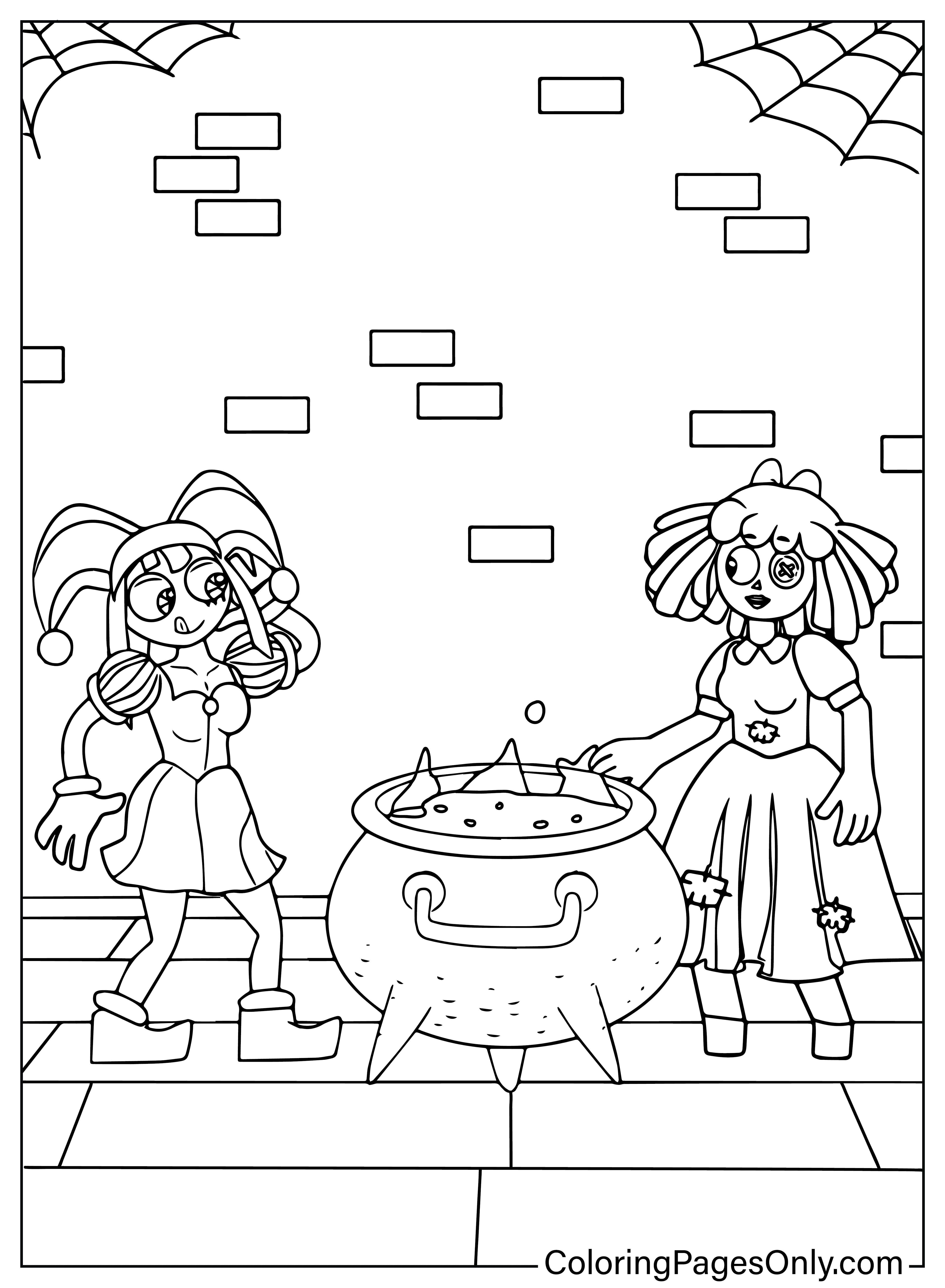
Zooble – The Mix-and-Match Toy
Zooble’s avatar is the most visually variable in the cast – their body is made of interchangeable modular parts that change between episodes. They are the show’s most visually complex characters to color because their specific part arrangement shifts. The consistent elements are the use of bright, varied, somewhat random colors for their different body parts, and the overall impression of a colorful toy whose pieces don’t quite belong together. Any Zooble page rewards careful reference checking against the specific episode it depicts, because their appearance genuinely differs.
Gummigoo – The NPC Candy Bandit
Gummigoo is not a trapped human – he is an NPC (non-player character) generated by Caine for the “Candy Carrier Chaos!” adventure episode. He is a gummy candy-themed character in the form of a gummy worm or gummy bear stylization, rendered in translucent candy colors – primarily orange-yellow warm tones with the slightly translucent quality of gummy candy. His episode explores the question of whether NPCs generated by the circus AI can develop genuine consciousness, making him one of the show’s most emotionally complex supporting characters despite appearing only briefly. The Pomni-and-Gummigoo pages are among the most emotionally resonant in the collection for viewers who have seen “Candy Carrier Chaos!”
Coloring Tips
The show’s visual language is built on one central contrast: the brightness of the circus world versus the darkness of what’s actually happening inside it. The Amazing Digital Circus is deliberately designed to look cheerful, colorful, and maximally appealing at a glance – it is a children’s entertainment aesthetic applied to a horror-tinged psychological drama. Every coloring decision on these pages can engage with that contrast intentionally. You can color the circus world exactly as it appears – vivid, candy-bright, inviting – or you can push into the emotional reality underneath by cooling and darkening the shadows, adding subtle grey tones to the negative space, and keeping the character’s expressions as the most emotionally communicative element of the composition.
For Pomni’s suit, the blue matters more than anything else. The specific blue of Pomni’s jester costume is one of the most recognizable colors in the show’s entire visual identity. It is a medium, slightly periwinkle-leaning blue – not the bright electric blue of neon, not the cool grey-blue of denim, not the dark navy of formal clothing. It sits roughly at the midpoint of the blue spectrum with a slight warmth from the red that always accompanies it. When you’re mixing or choosing your blue for Pomni, test it next to a saturated red. If the contrast reads as clean, complementary, and circus-appropriate, the blue is right.
The red diamonds are the secondary priority, and their value matters. The red in Pomni’s costume needs to be lighter in value than the blue, not equal to it. Two colors of equal value create visual confusion – the eye can’t find a clear figure-ground relationship. The blue should be the dominant visual weight, with the red pattern reading as decoration on top of it. If your blue and red feel like they’re fighting each other visually, lighten the red by a value step.
Pomni’s roulette-wheel pupils are the emotional center of any portrait page. Those spinning-segment pupils are the detail that most clearly communicates her anxiety and disorientation. Render them with clear, distinct segment lines radiating from the pupil center. In calm scenes, the segments are evenly distributed. In stressed or spinning moments, the show uses motion blur effects – for a coloring page, this can be suggested by slightly varying the pressure or value in each segment to create a sense of rotation.
For the group scene pages – use the cast’s color diversity as a structural tool. The Amazing Digital Circus cast is designed with exceptional color variety across its members: Pomni’s blue-red, Jax’s purple-red, Ragatha’s warm rag doll palette, Gangle’s dramatic red-and-white, Kinger’s ivory-and-purple, Zooble’s multicolor modular body, and Caine’s rose-red. When coloring a group composition, place each character’s colors before adding any background detail, then step back and check whether the overall color distribution reads as balanced. The cast’s intentionally varied palette was designed to make all six characters simultaneously visually distinct – your coloring should preserve and reinforce that distinction.
For Gummigoo pages – lean into the translucent candy texture. Gummy candy has a specific visual quality: the color is vivid and saturated, but has a slight transparency to it, so the material catches light differently than opaque surfaces. To suggest this on a coloring page, apply your base candy color, then add a lighter zone where light would pass through the material (typically the upper surfaces and thin sections), and a slightly darker zone at the interior mass. The result should read as sweet, almost glowing material rather than a flat painted surface.
For Caine pages – the teeth are the composition’s anchor. In any Caine composition, the large visible teeth are the character’s most dominant visual feature and the element that most communicates his uncanny nature. Render them as a bright, clean white with very subtle shadow at the base where they connect to his “face.” The contrast between his warm rose-red tailcoat and the clean white teeth is the primary visual tension of the character.
5 Activities
Color the circus in bright and dark colors simultaneously. Print any group scene or campfire-equivalent scene from the collection. Apply the full canonical palette – Pomni’s blue-and-red, Jax’s purple-and-red, Ragatha’s warm doll tones, and the bright colors of the circus environment. Then add a second pass: in every negative space and shadow area, push the values darker than you normally would, and cool the shadow tone toward blue-grey rather than warm brown. The finished result should create a visual effect that the show itself achieves: something that looks vivid and colorful when viewed quickly, but carries an underlying heaviness when you look at the shadows. This is a direct exercise in understanding the show’s central aesthetic contradiction – bright surface, dark interior.
Gummigoo’s color spectrum study. Print the Gummigoo and Pomni page. Before coloring Gummigoo, think about what flavor of gummy candy he represents – what specific candy color tells you something about his character, his warmth, his brief existence. Then, research the actual candy colors for that flavor and use them as your reference palette. After finishing, consider: does the candy color you chose communicate Gummigoo’s personality in the show? He is a generated NPC who develops what appears to be genuine feelings over the course of his episode – does the warmth of gummy orange-yellow communicate that better than, say, gummy green? This activity uses flavor-color association as a character design tool, which is exactly the kind of thinking that went into his original character design.
The abstraction warning signs study. The show’s characters show visible signs of psychological stress through glitching, color changes, and distortion effects. Print a Pomni portrait page and color it twice: once in full canonical palette showing her normal state, and once with the “stress color” variant – Pomni’s face changes color when she holds her breath for too long (one of the show’s recurring gags), and her glitching shows in redness or distortion around her eyes. Render both versions and place them side by side. The exercise makes visible the show’s technique of using color shifts within a character’s established palette to communicate internal state – a technique also used by the Sharingan in Naruto, the Deer’s red eyes in 99 Nights in the Forest, and King Ghidorah’s beam color versus body color.
Design a new avatar following Gooseworx’s entertainment-form convention. Every character in the circus has an avatar based on a specific form of entertainment: jesters, rag dolls, cartoon rubber characters, theater masks, chess pieces, modular toys, and clowns. On a blank page, design a new circus character whose avatar is based on a form of entertainment not yet represented in the show – a marionette puppet, a shadow puppet, a carnival mirror, a magic trick prop, a music box figurine, a fortune-telling machine. Establish: what entertainment form the avatar references, what color palette fits both the entertainment form and the character’s personality, and what detail in the design communicates that the character has been in the circus long enough to have developed coping mechanisms (or not). This is the exact design brief that Gooseworx worked from when developing the original cast – reportedly completing all character designs in under a week.
The tone-and-color matching challenge. Print one page showing Pomni in a frightened or anxious moment, and one page showing her in a relatively calmer moment (the Gummigoo hug page is the show’s warmest Pomni scene). Color the frightened page with a palette that externalizes her anxiety: push the background toward cooler, more desaturated tones; keep the circus environment’s colors present but slightly greyed; render her outfit in its canonical blue-red but lean the shadows toward blue-grey. Color the calmer page in a fully saturated, circus-bright palette with warmer shadow tones. The exercise demonstrates how the same character in the same canonical colors reads as more or less threatening based exclusively on the surrounding palette and shadow temperature – a fundamental technique in animation, illustration, and color design.