Celery Coloring Pages
 By:
Jennifer Thoa - Content Editor & Designer
Updated:
By:
Jennifer Thoa - Content Editor & Designer
Updated:
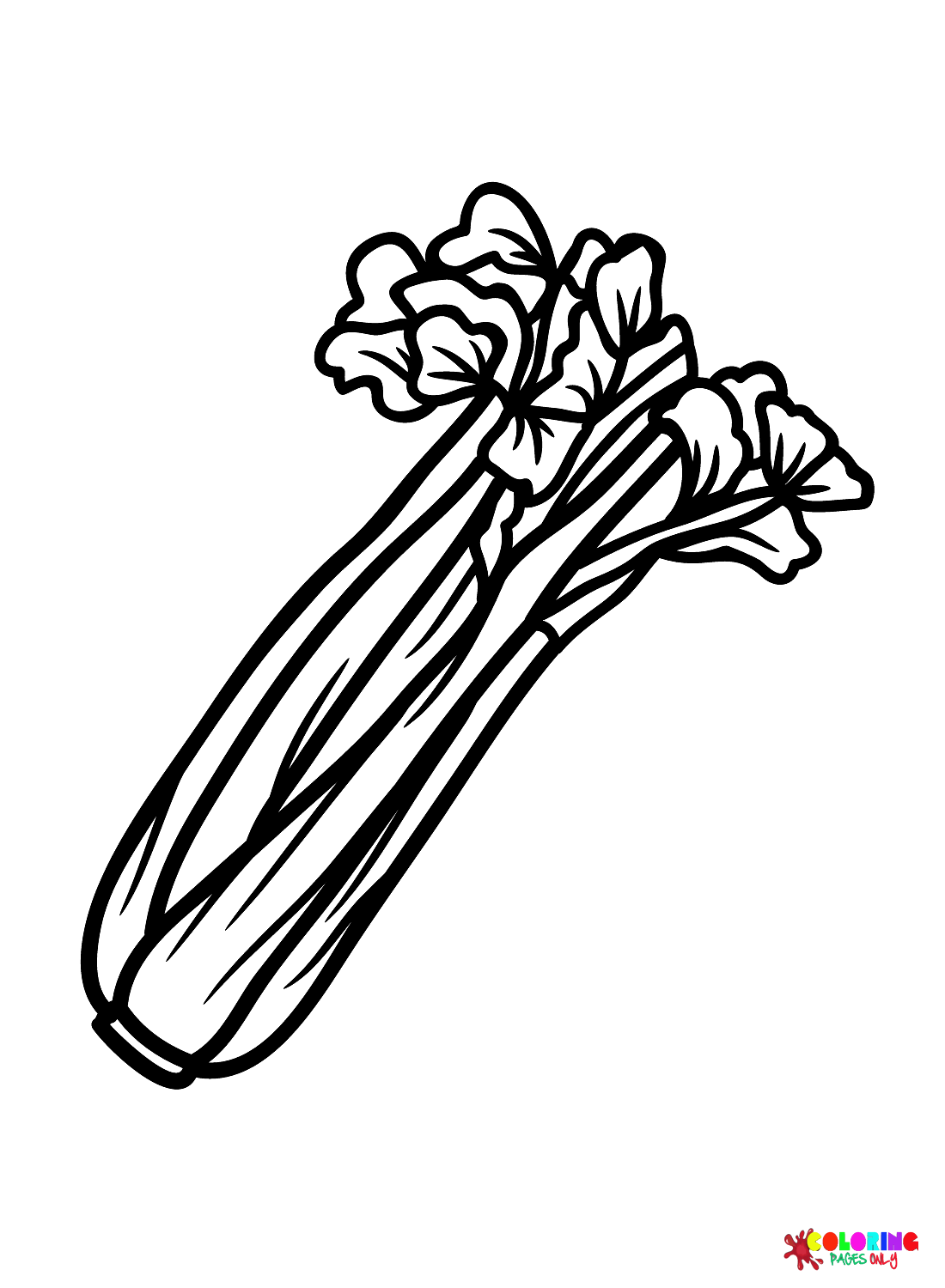
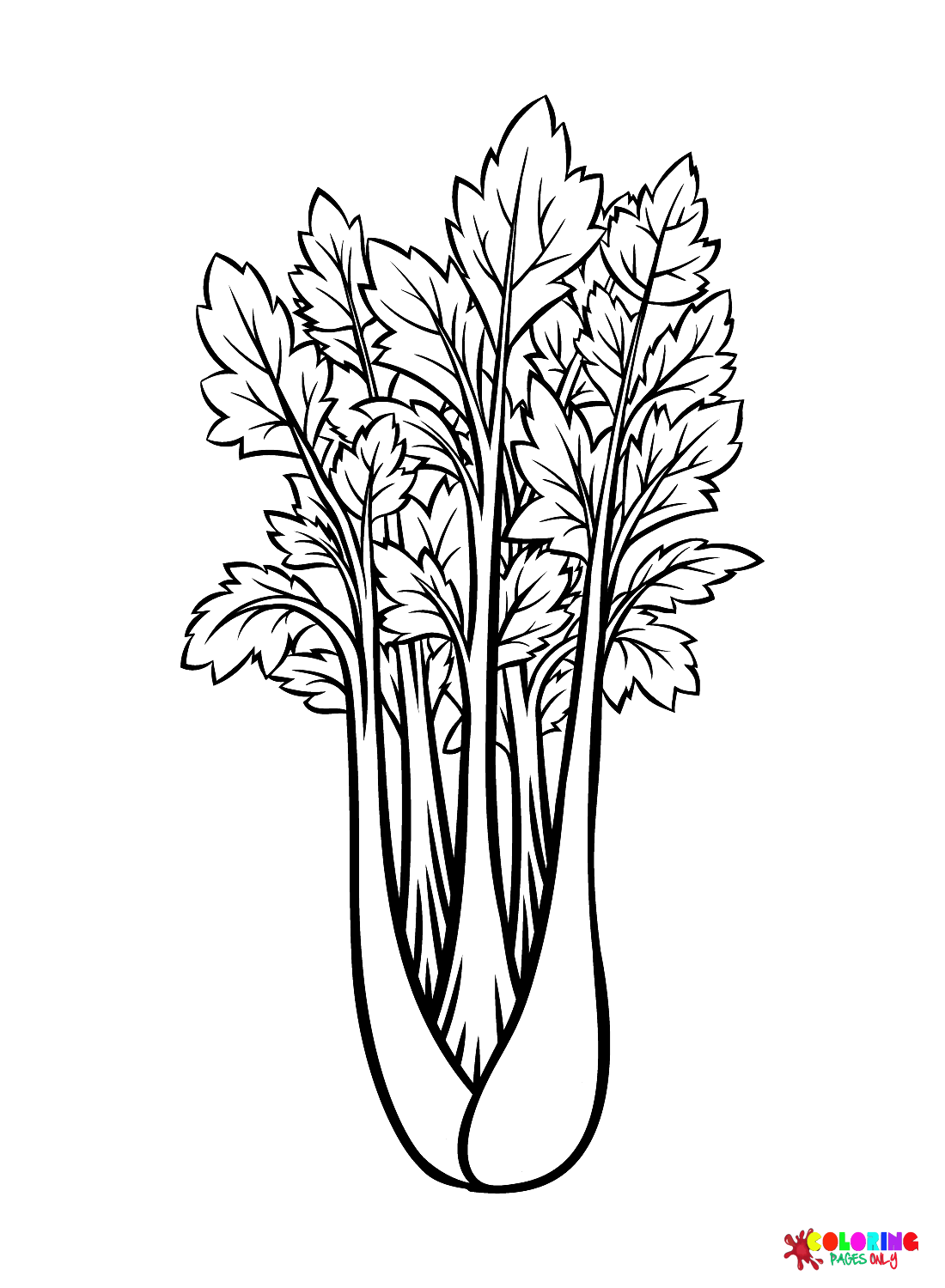
Free Celery Coloring Pages: 28 printable PDF designs built around a single vegetable, shown as a full stalk, a close-up of its leaves, and a range of simplified outlines suited to younger colorers. Printing a page pulls up its PDF version directly, and the same artwork is ready inside the online coloring tool for anyone working without paper.
With one vegetable as the subject throughout, the pages differ mainly in framing, a full stalk, a close-up of the leaves, or a simplified outline built for a first-time colorer. Celery itself, known botanically as Apium graveolens, belongs to the Apiaceae family alongside carrots and parsley. It is roughly 95 percent water, low in calories, and a source of vitamin K, potassium, and dietary fiber. These facts give this set a genuine educational hook beyond the coloring activity itself.
Twenty-eight pages built around one plain, everyday vegetable make this set a straightforward choice for anyone who wants a simple, low-pressure subject rather than a busy scene.
What Is Inside This Collection
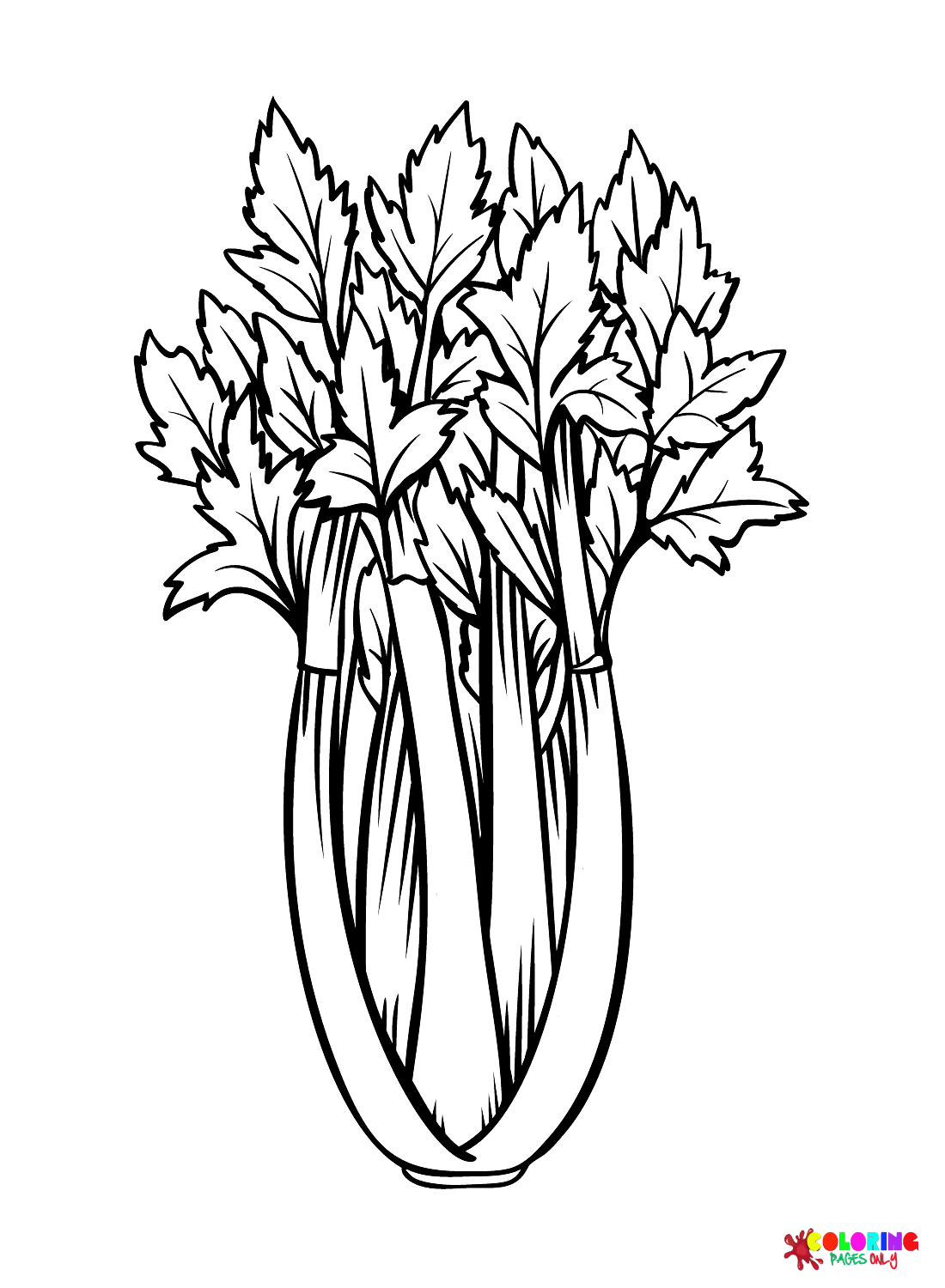
Whole Stalk Designs
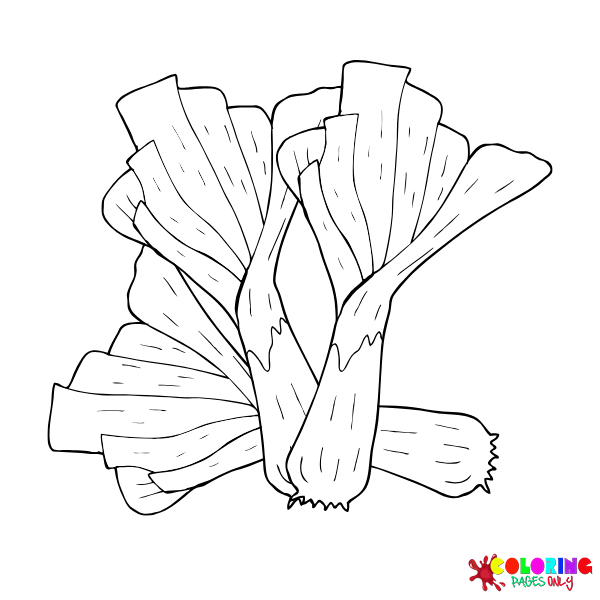
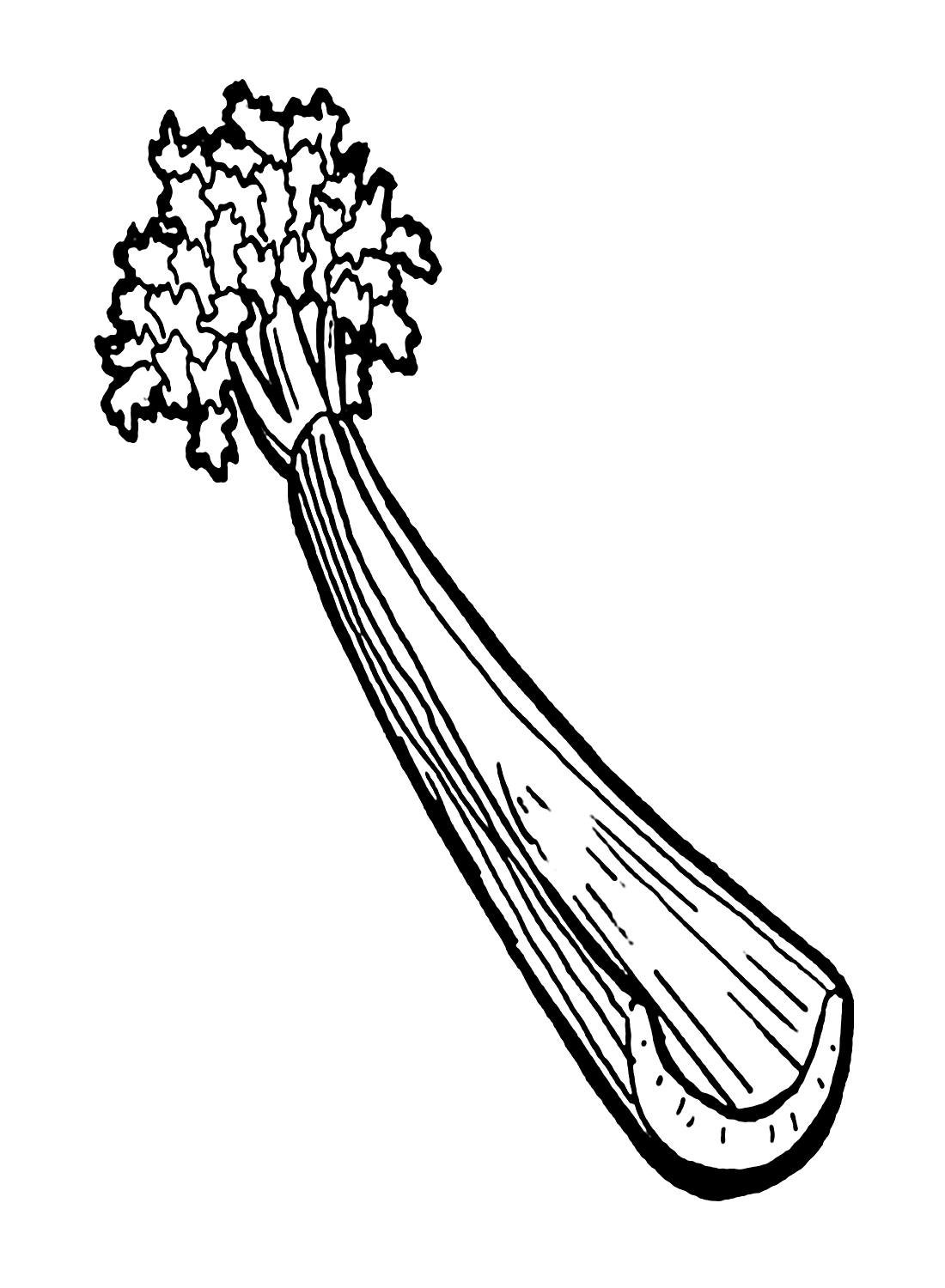
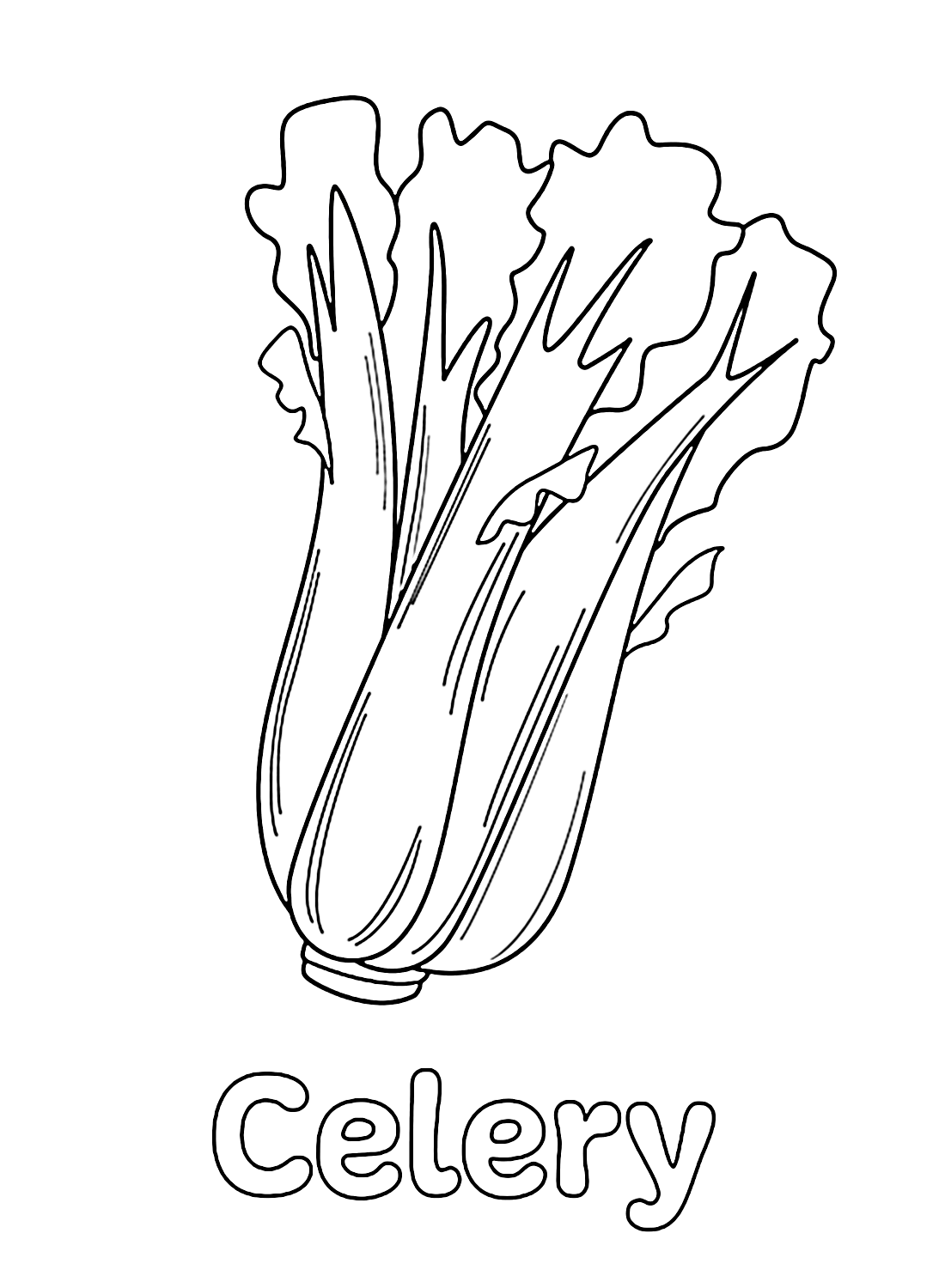
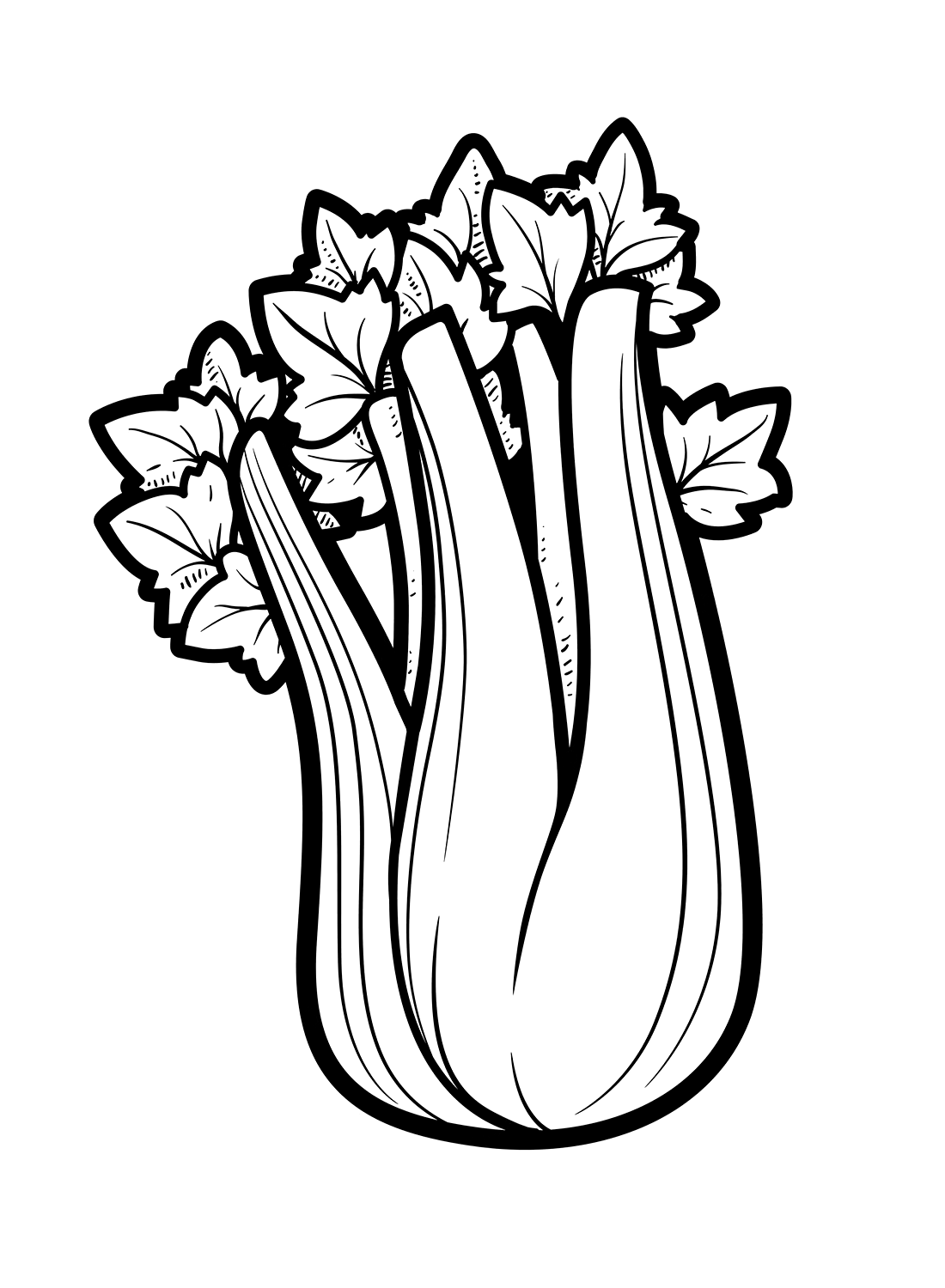
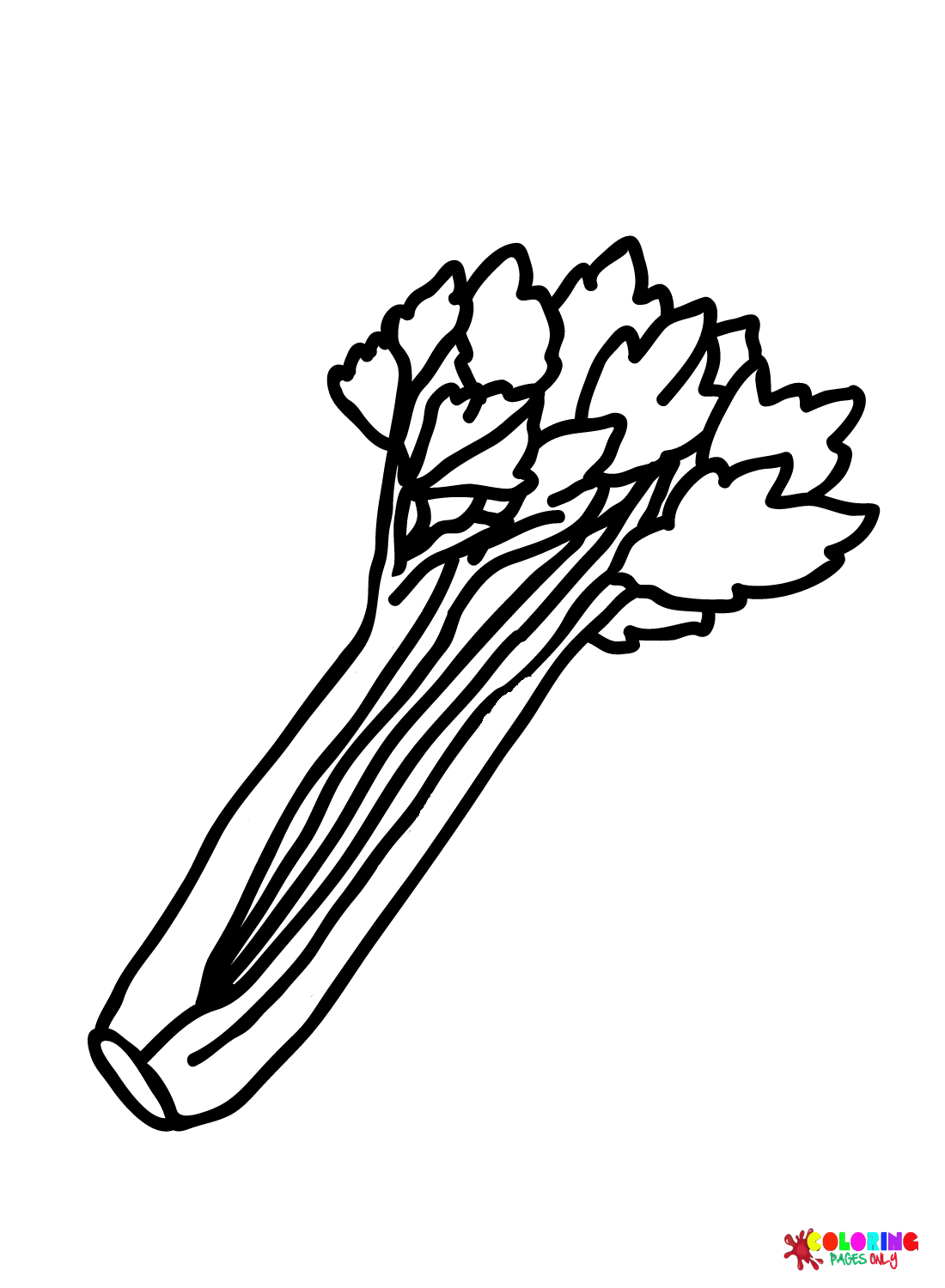
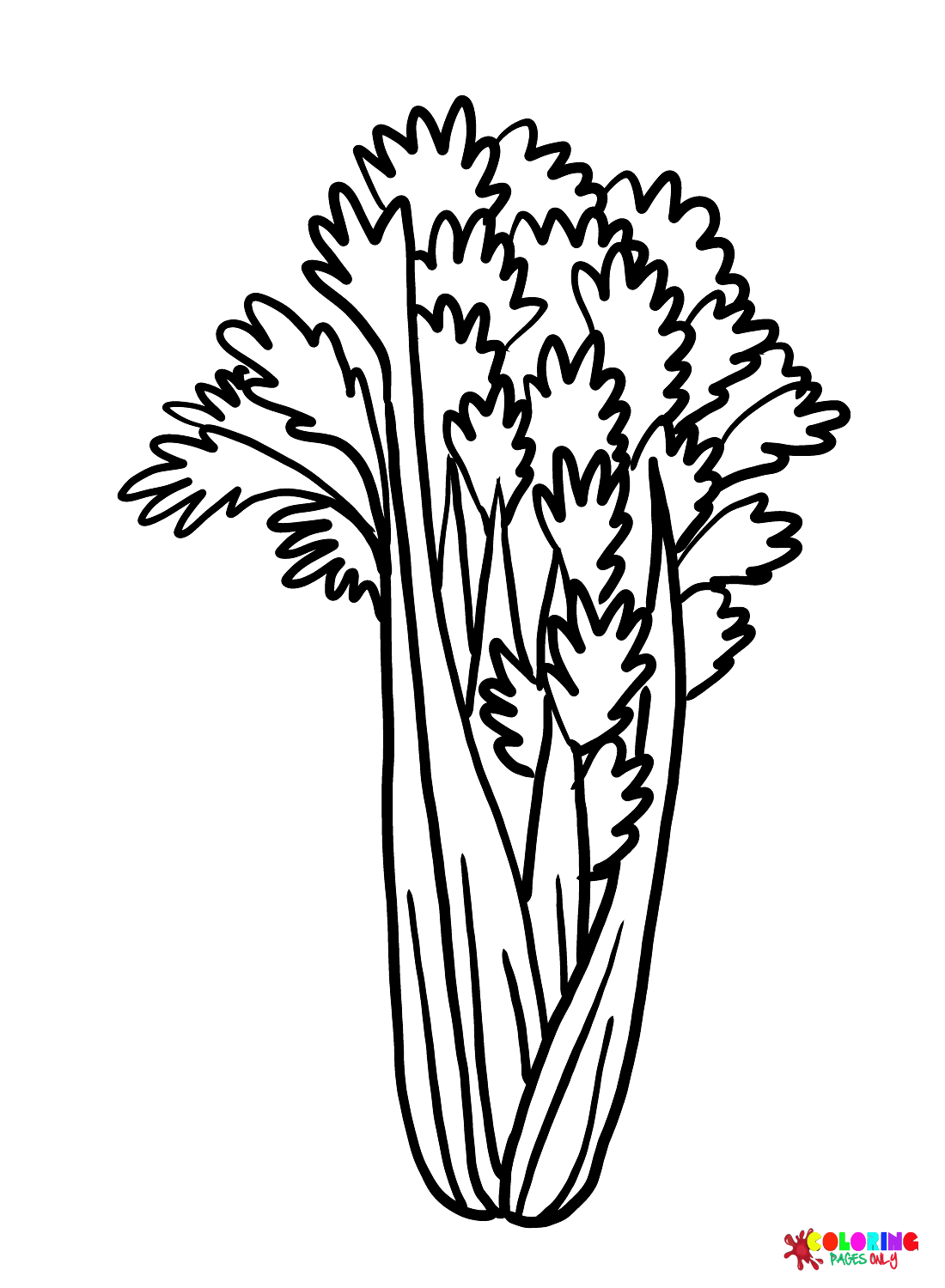
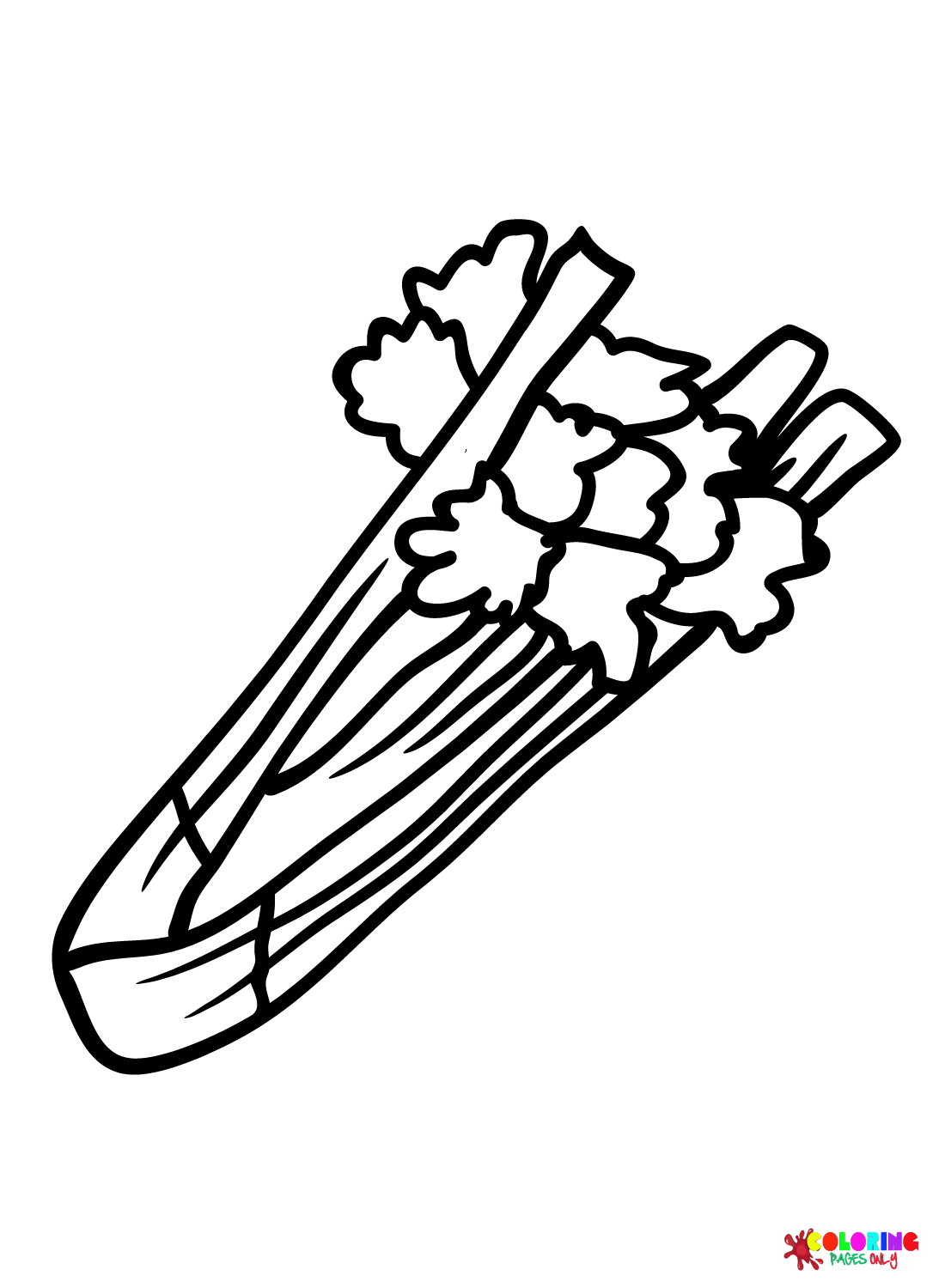
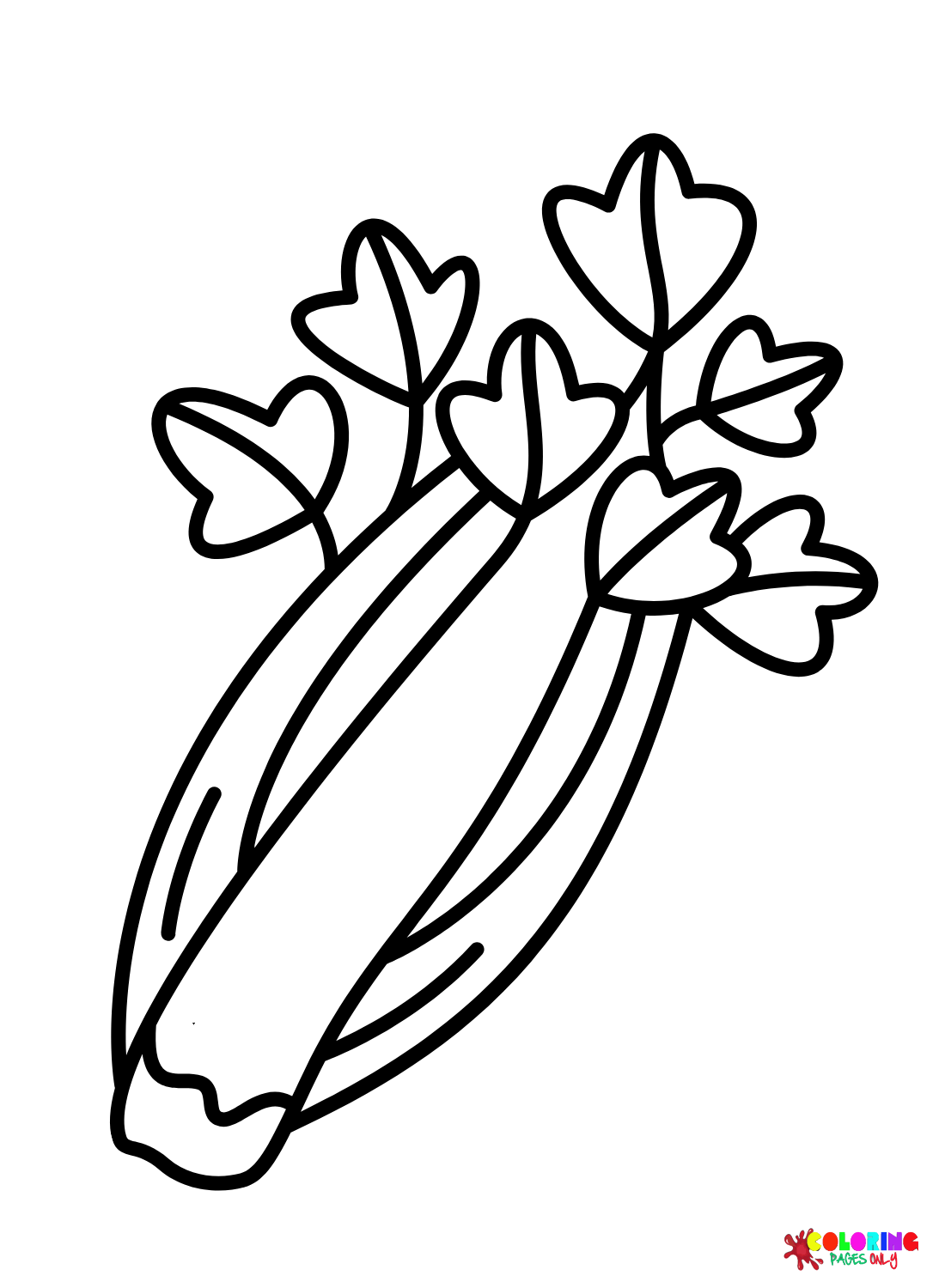
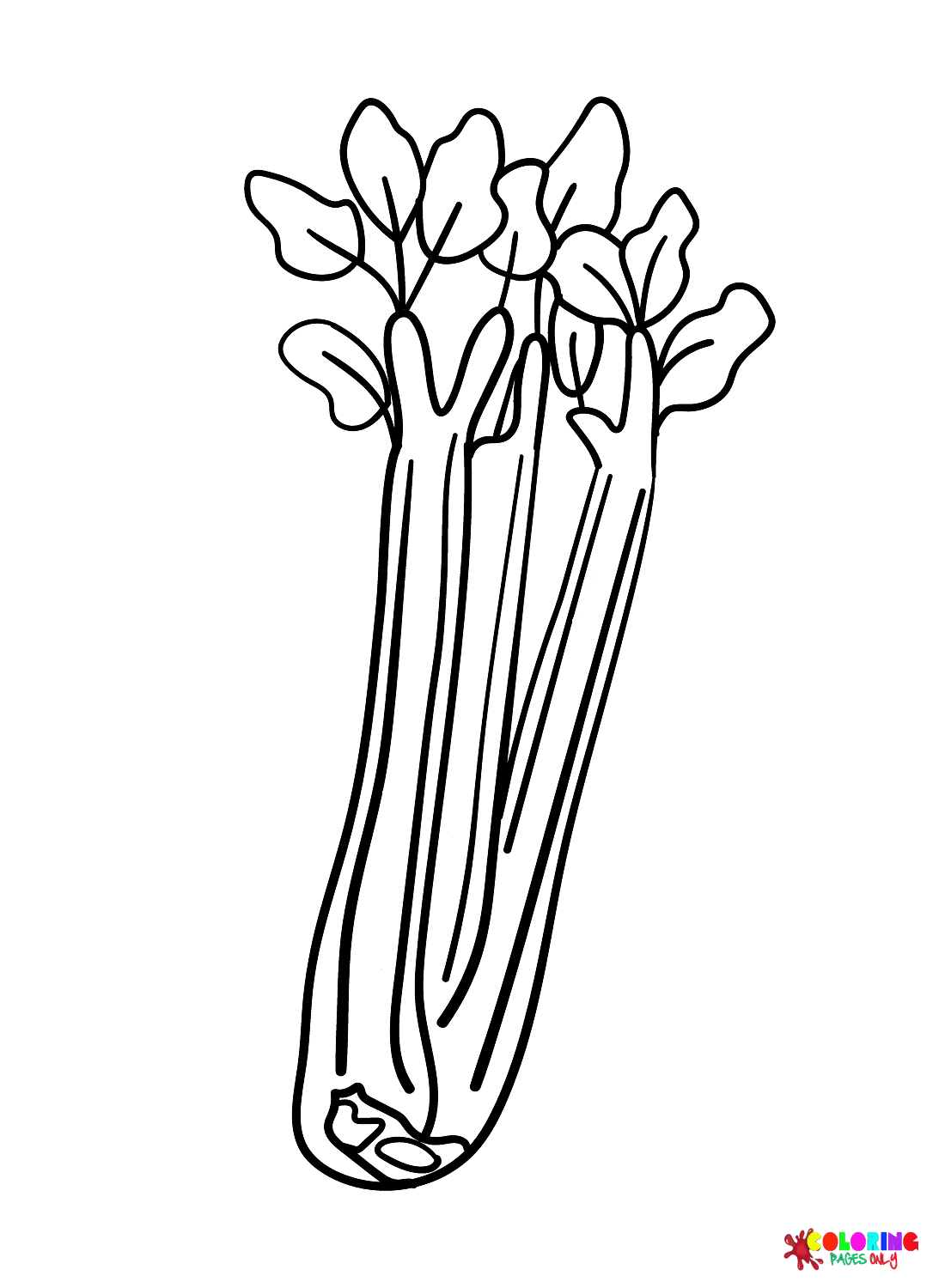
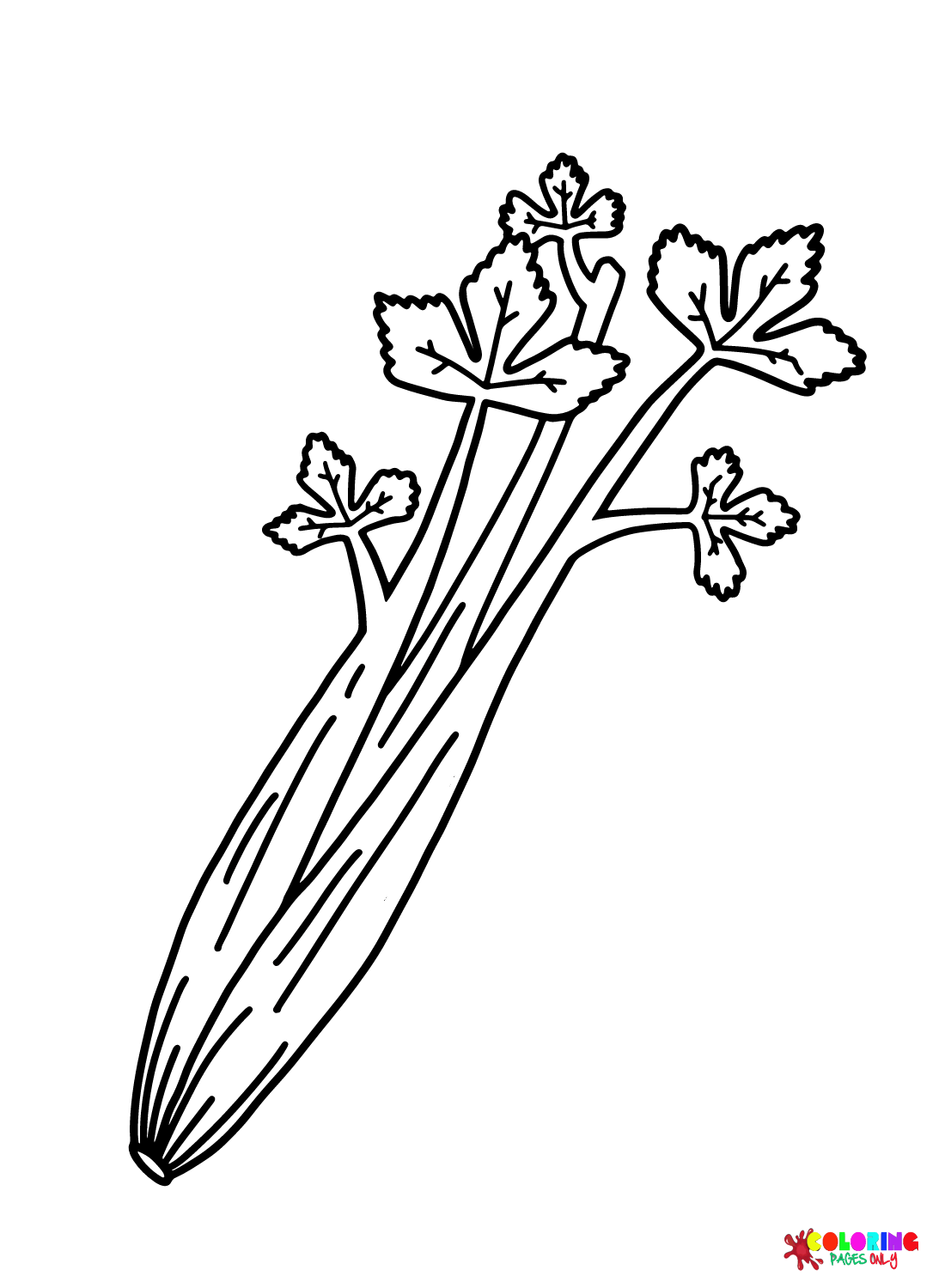
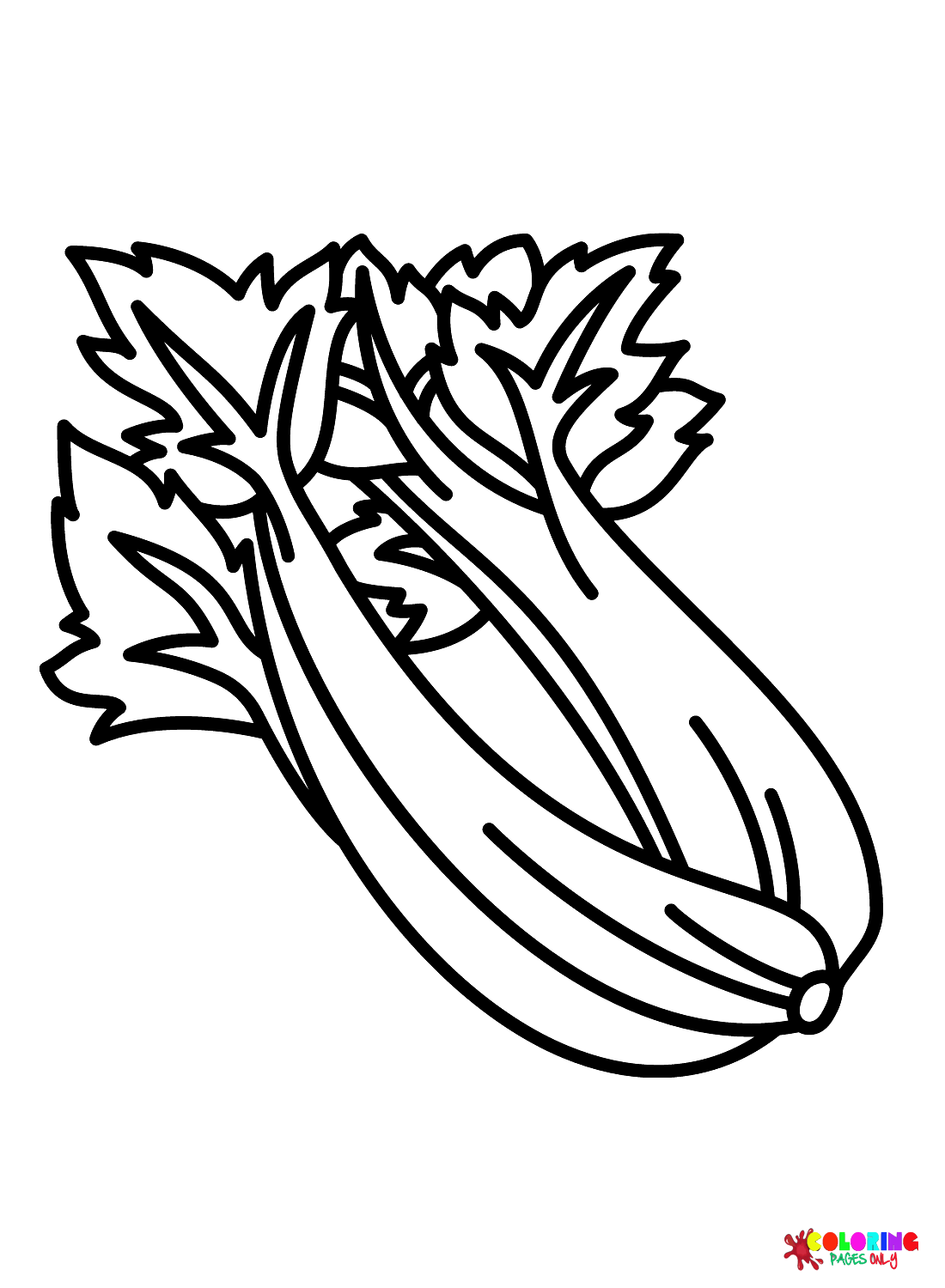
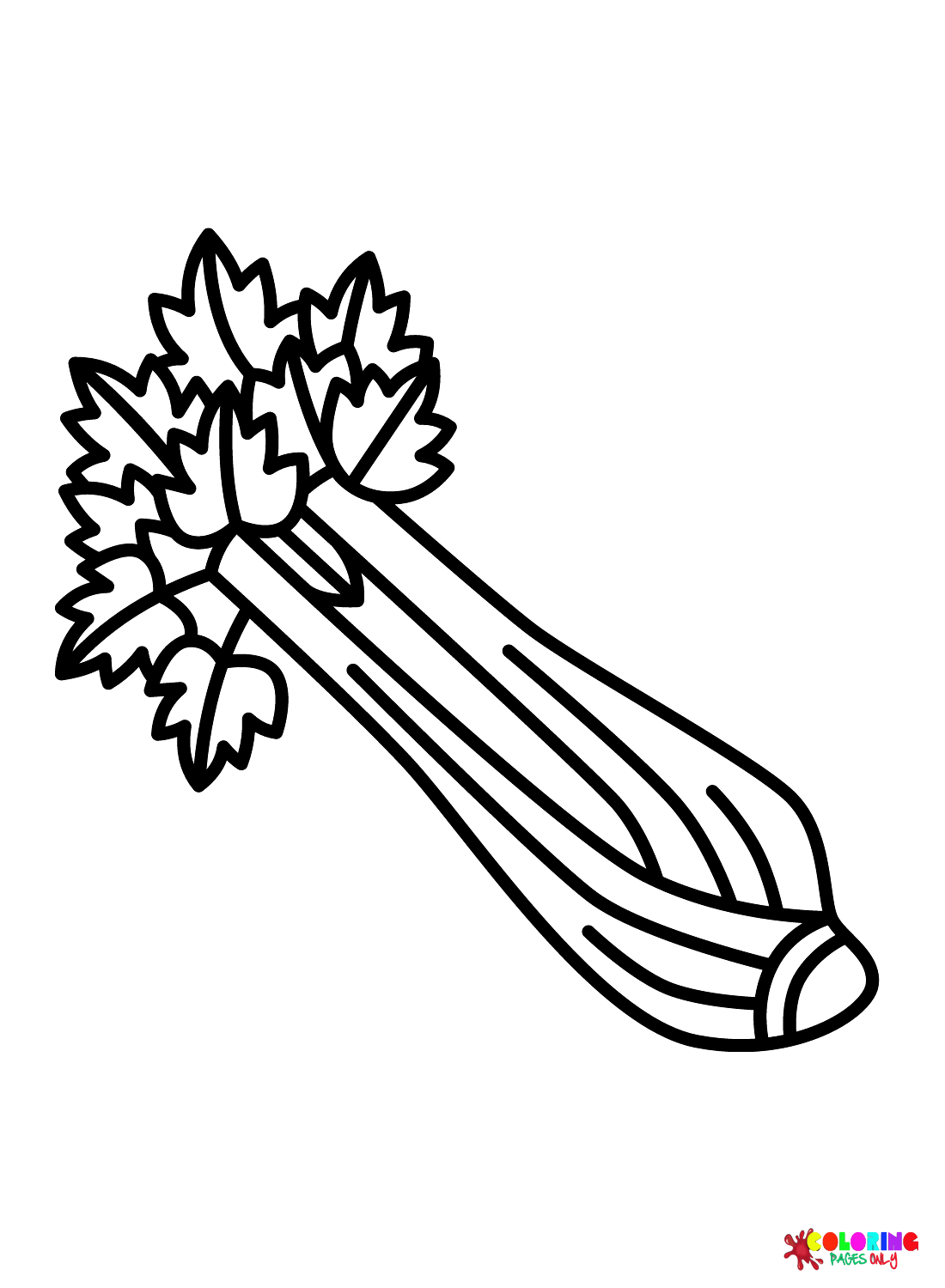
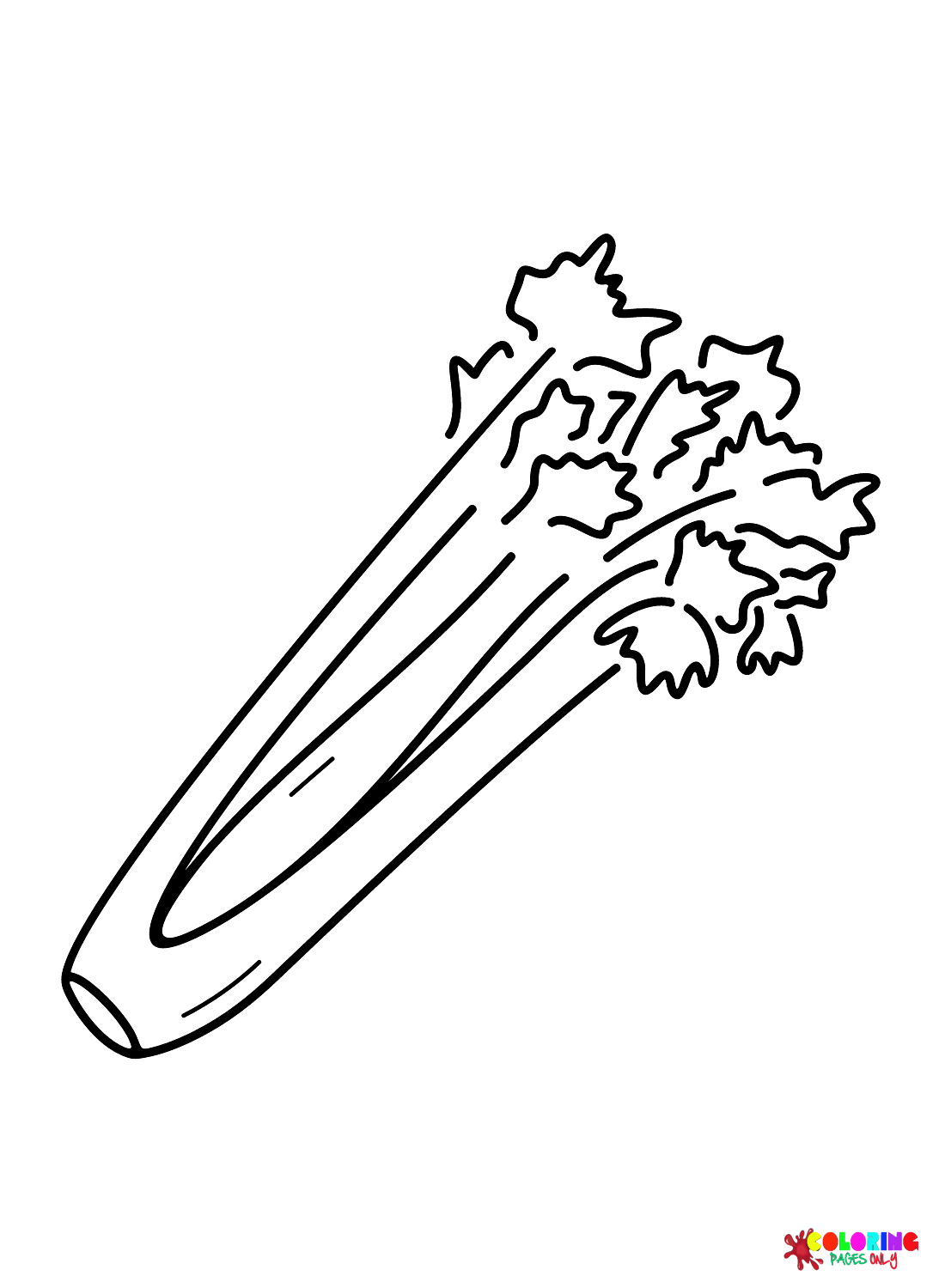
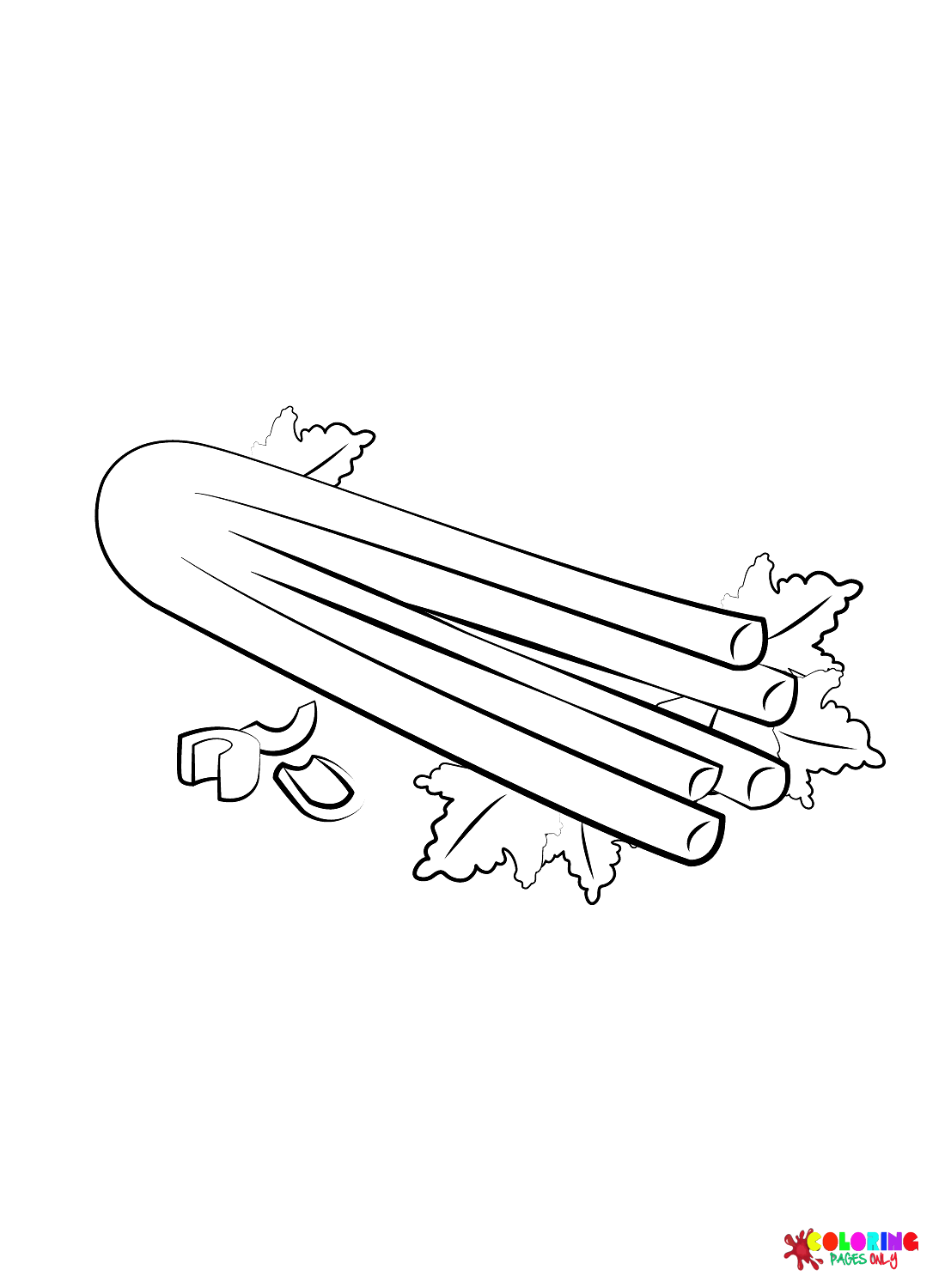
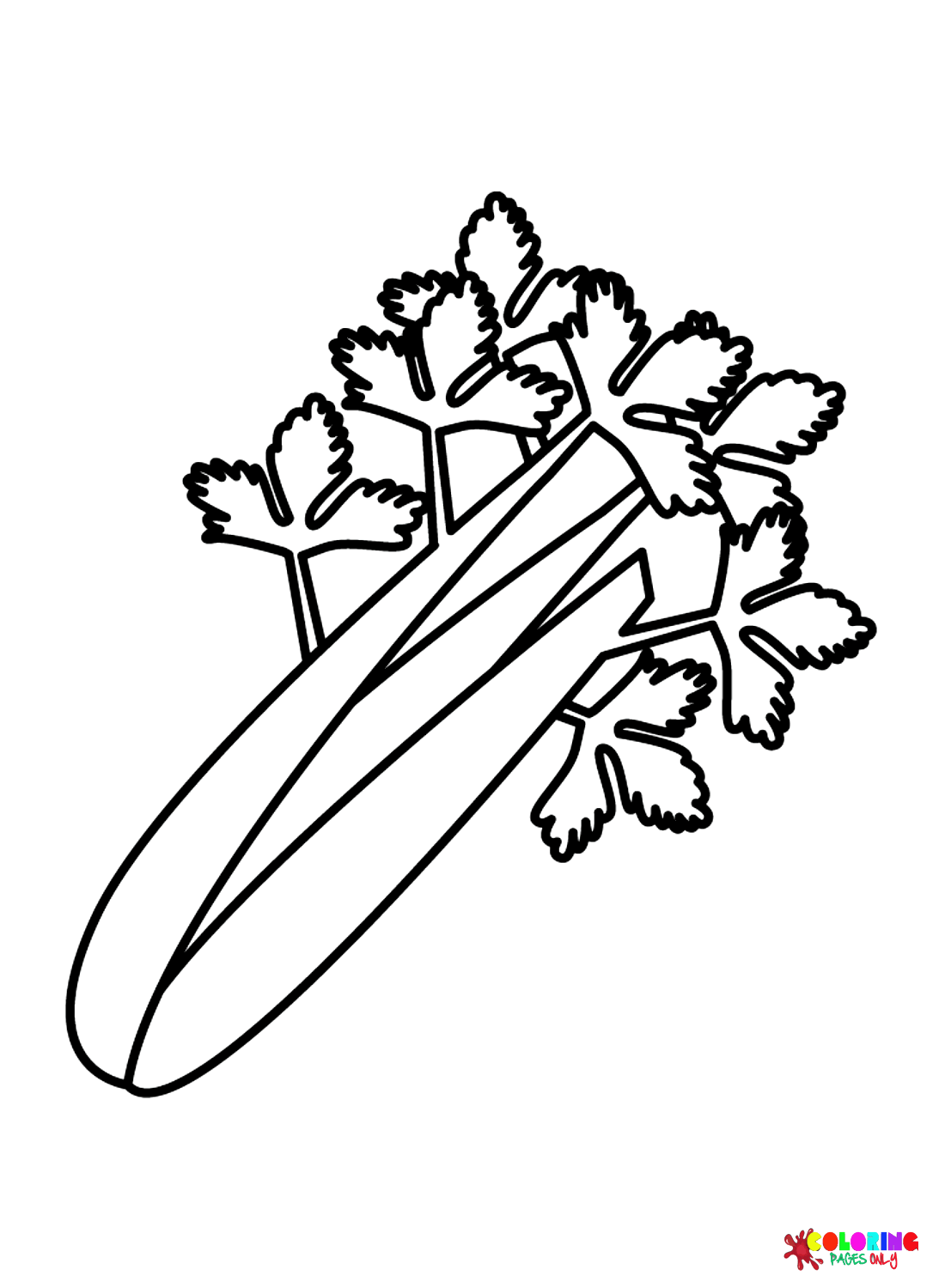
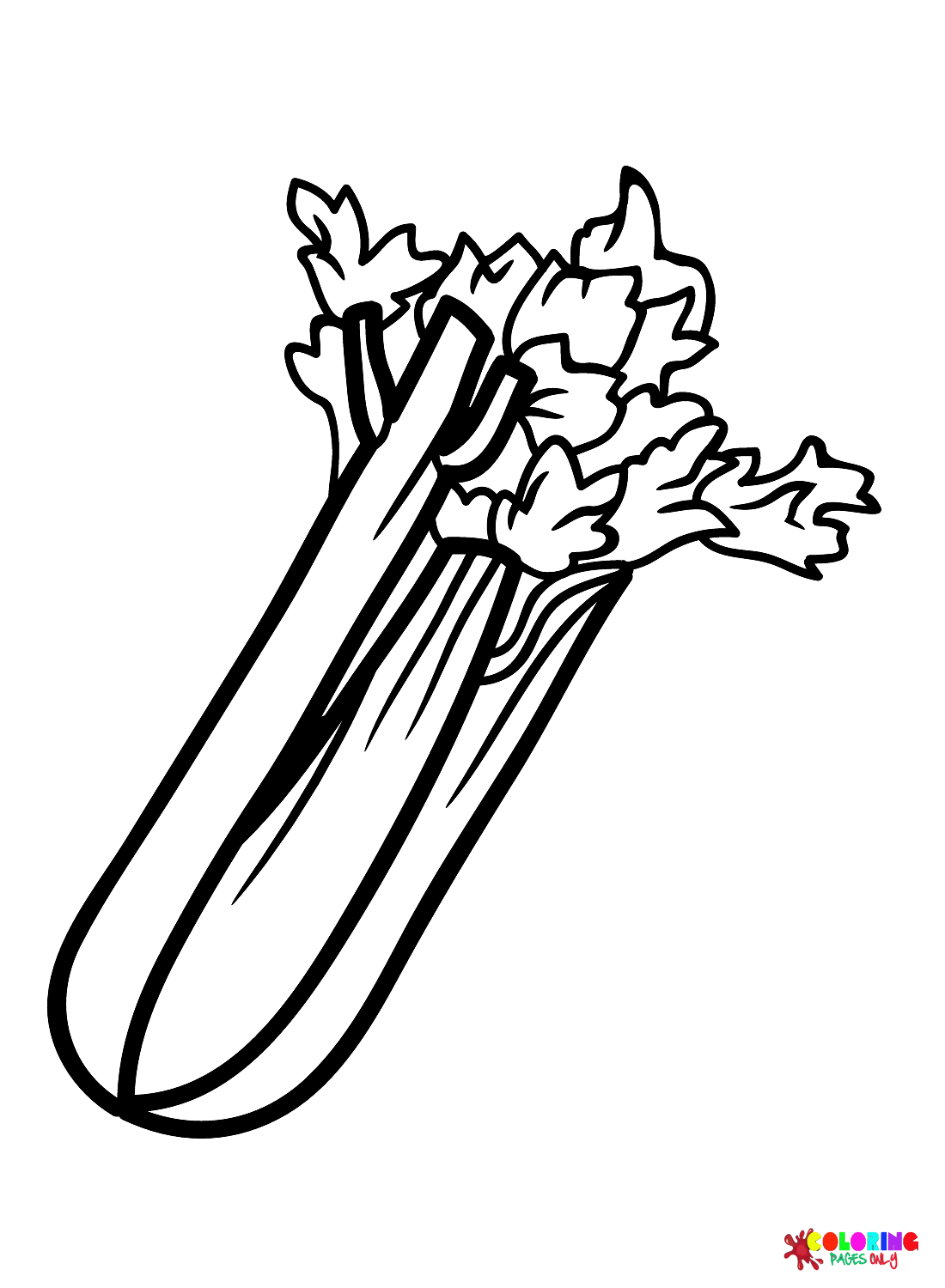
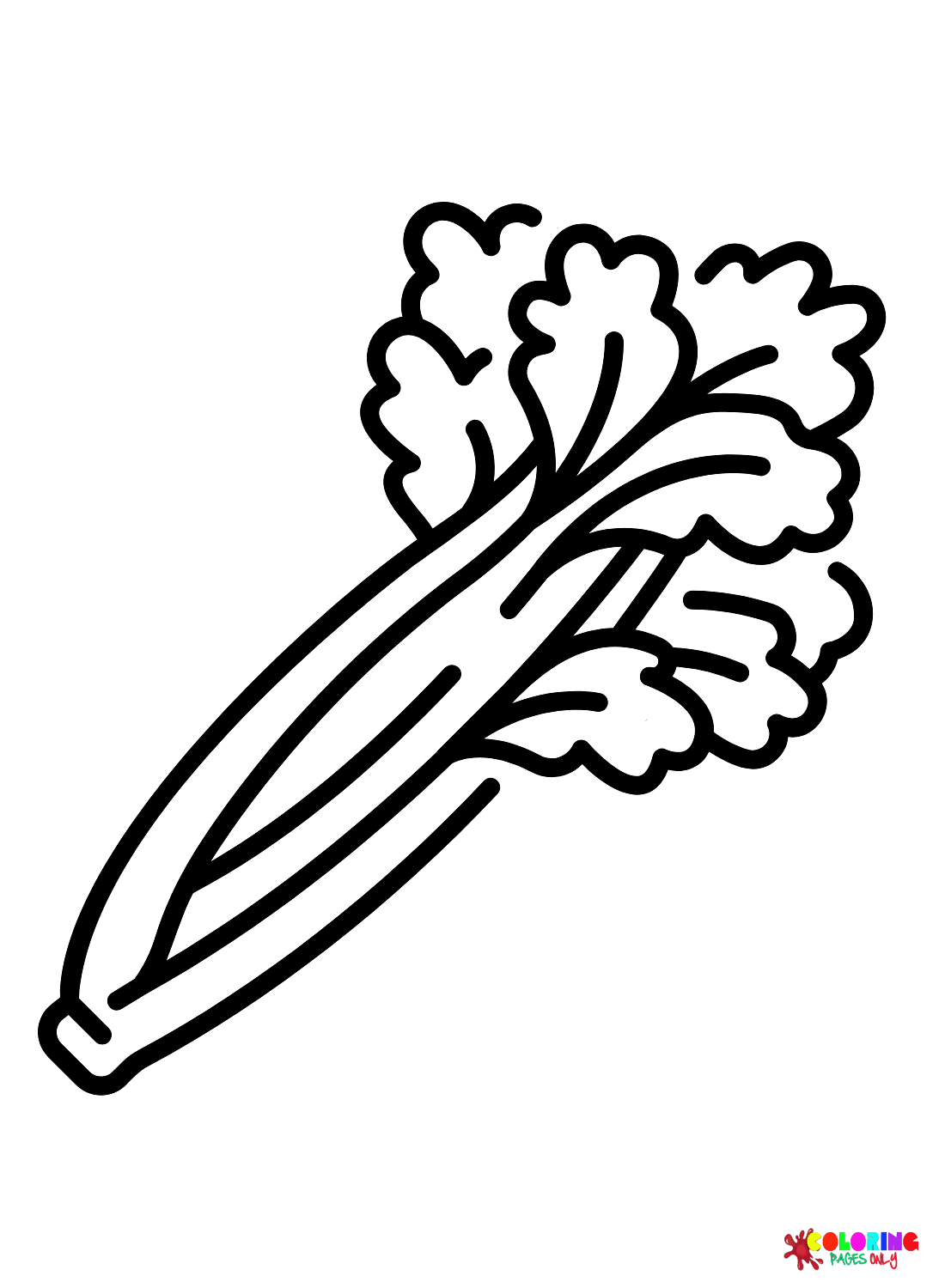
Most pages show celery as a full stalk, the long, ridged shape and leafy top rendered at different levels of detail across the set.
Leaf Close-Up Designs
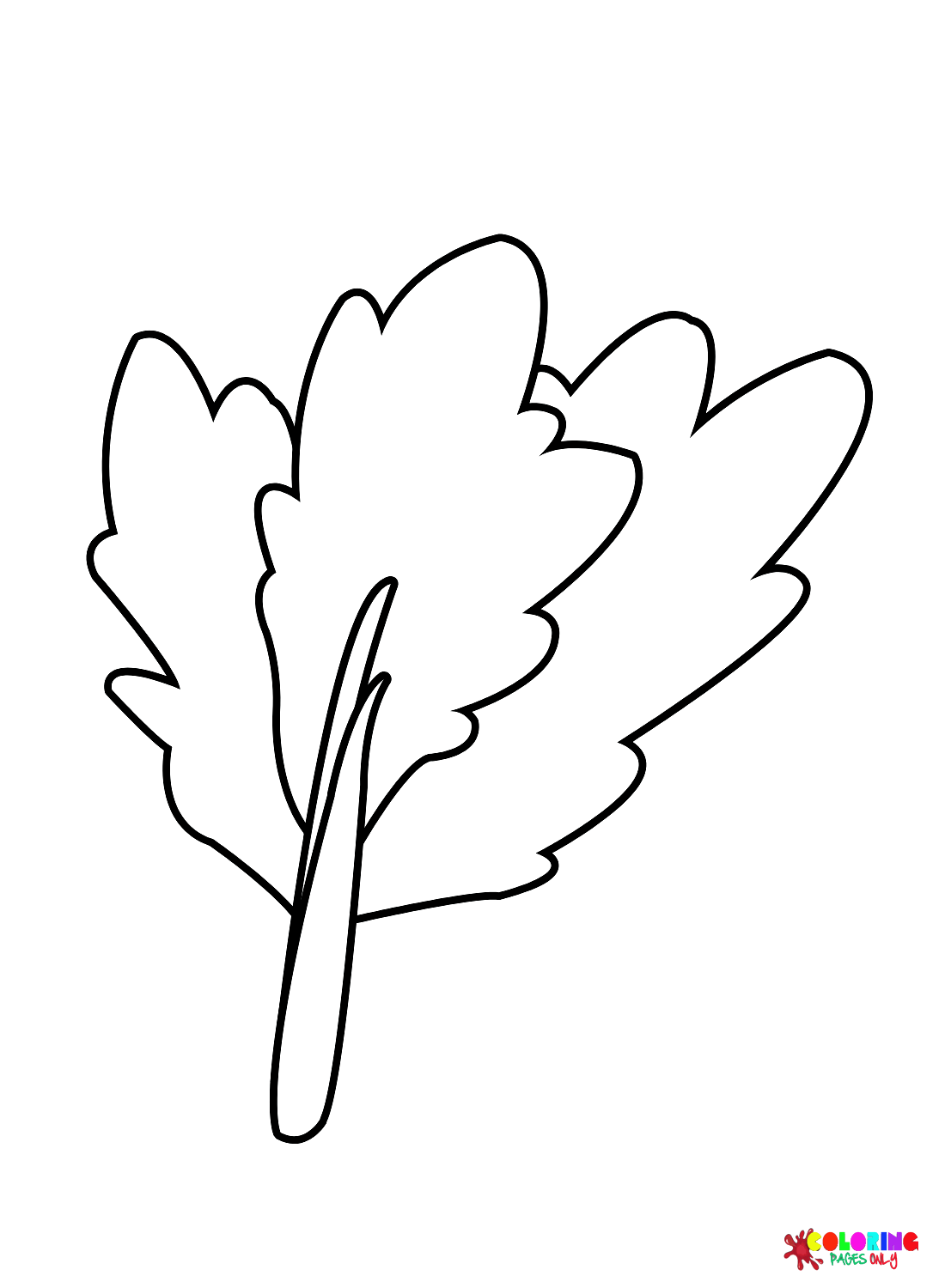
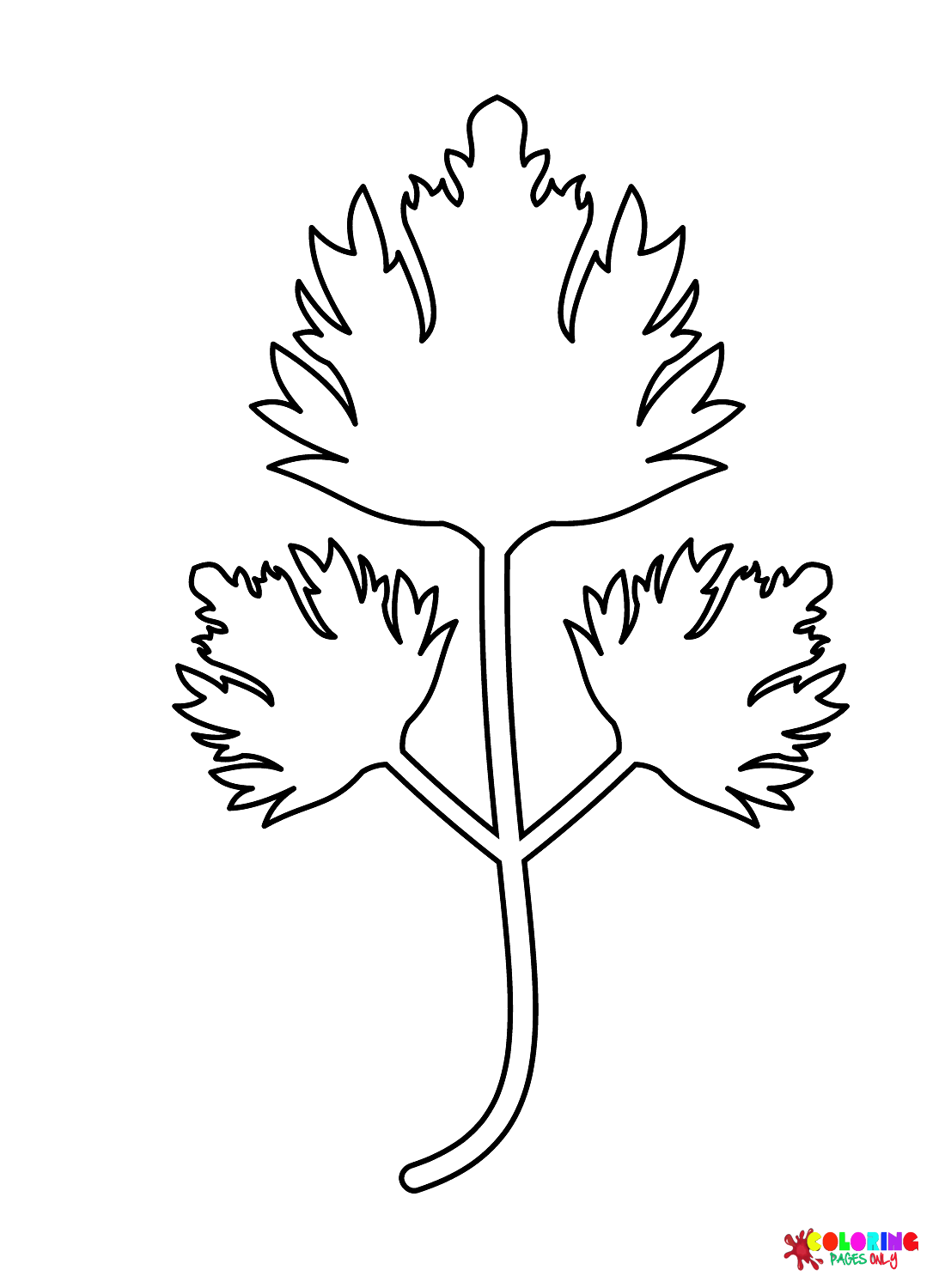
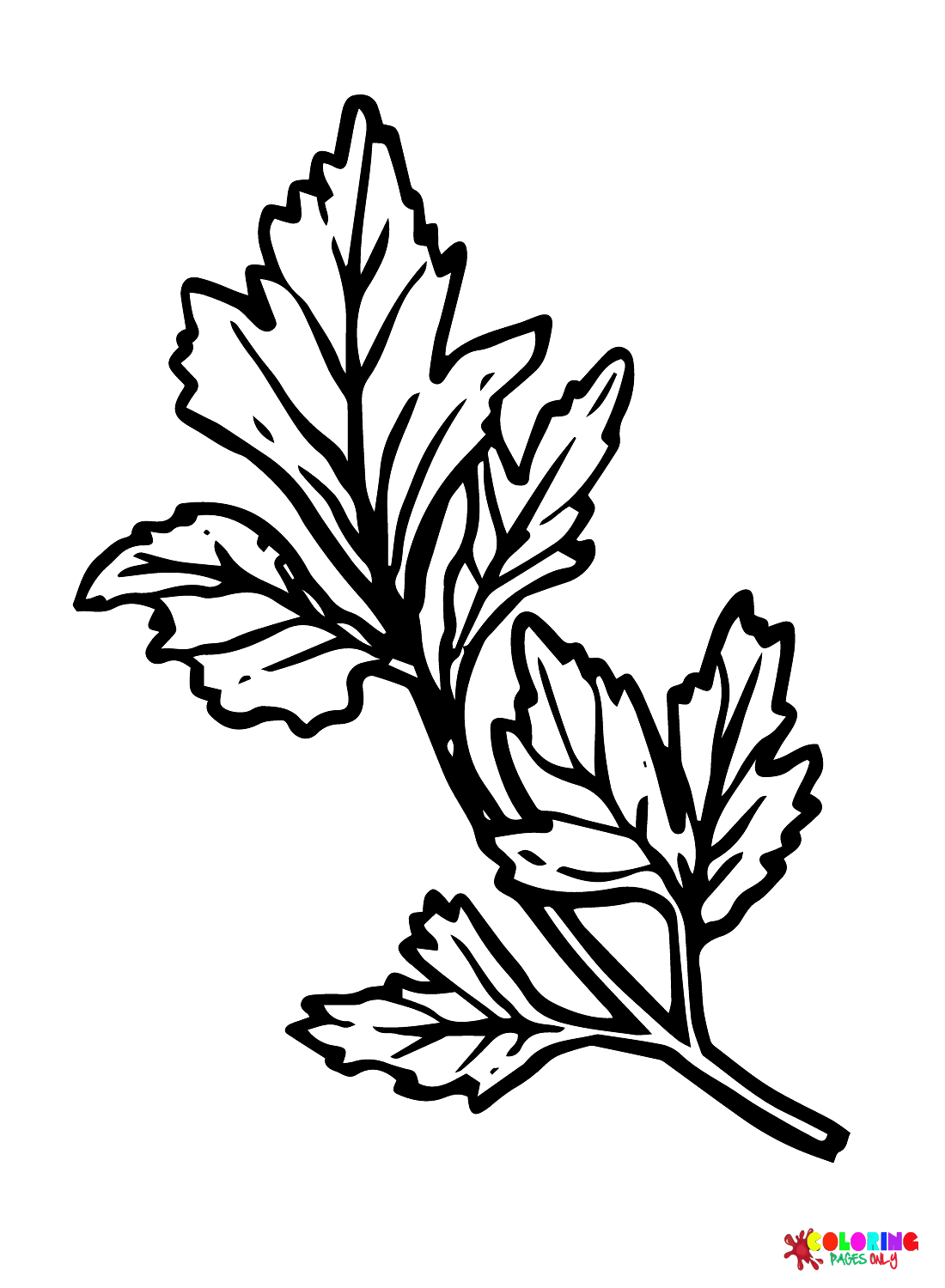
A smaller group zooms in specifically on celery’s leaves, giving a colorer a chance to focus on the more delicate, branching shapes at the top of the plant.
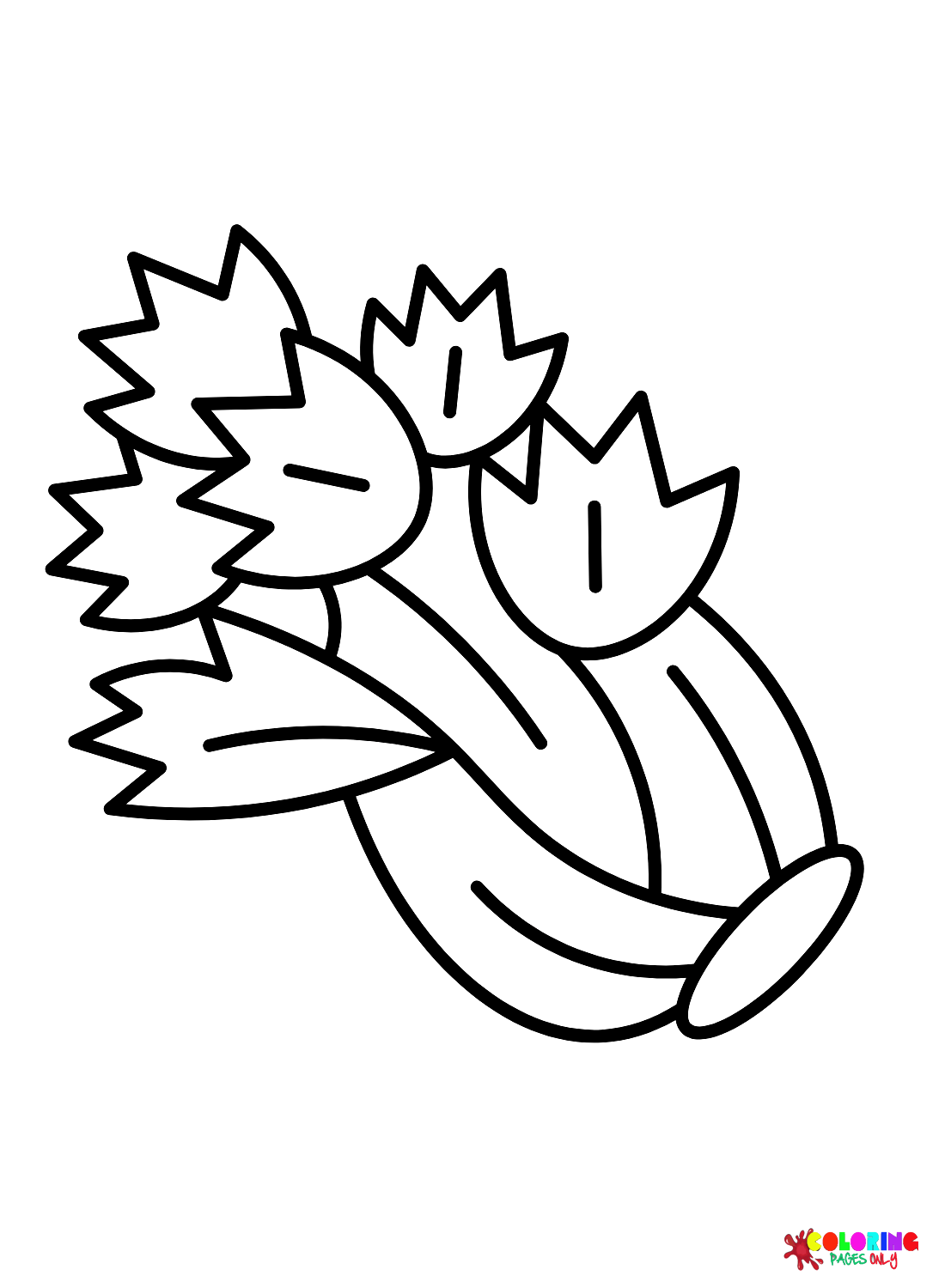
Simple Outlines for Young Colorers
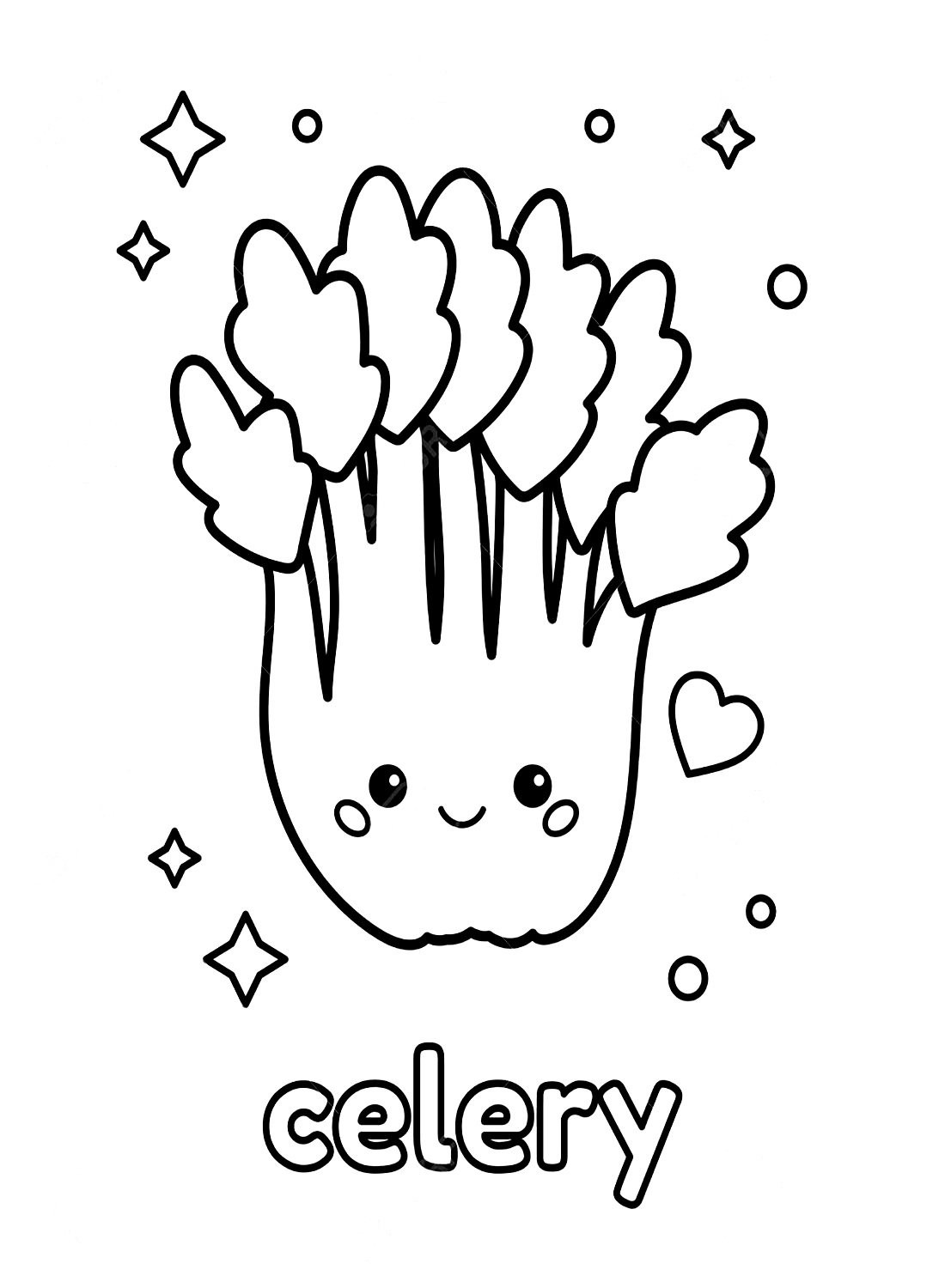
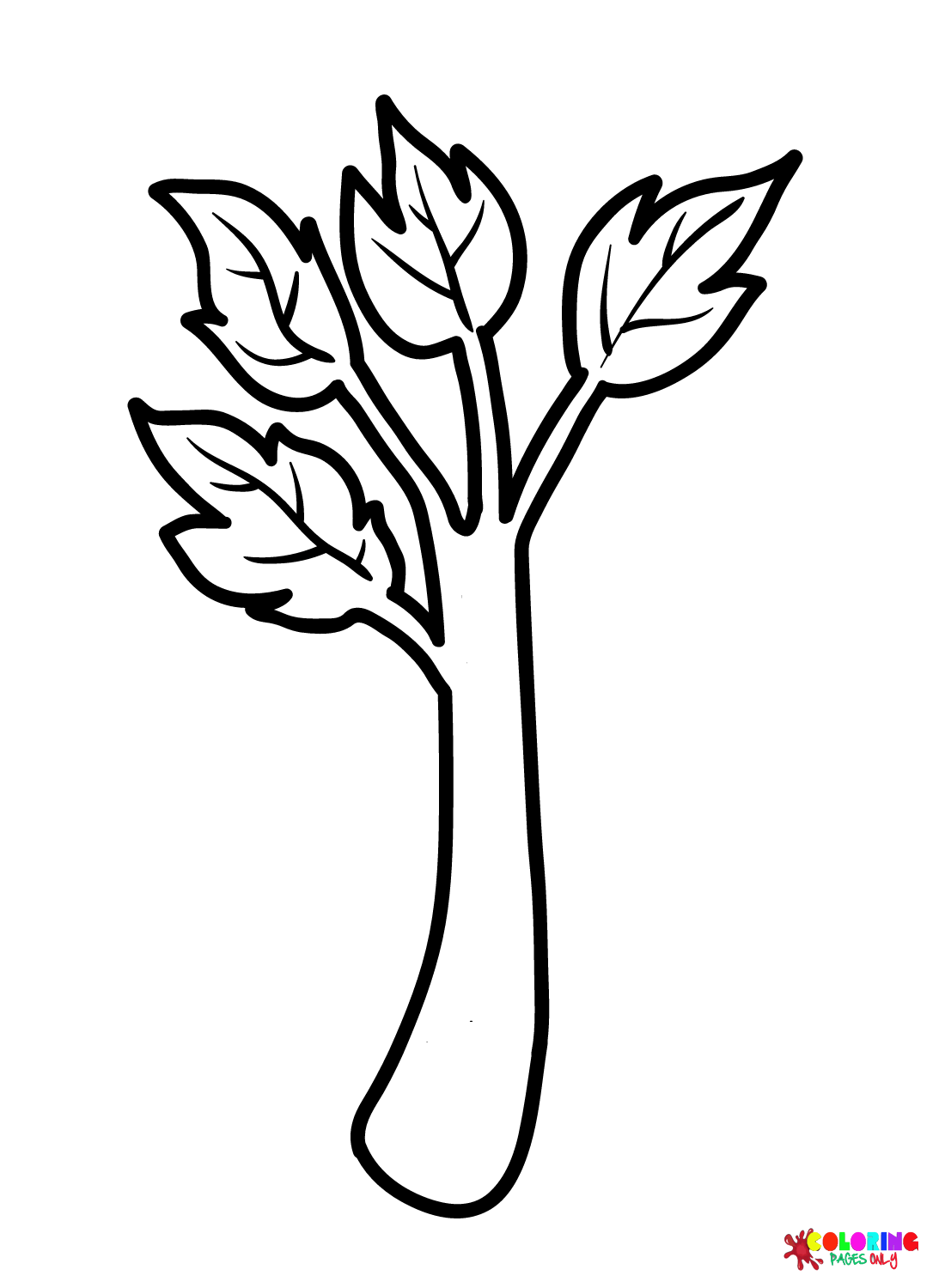
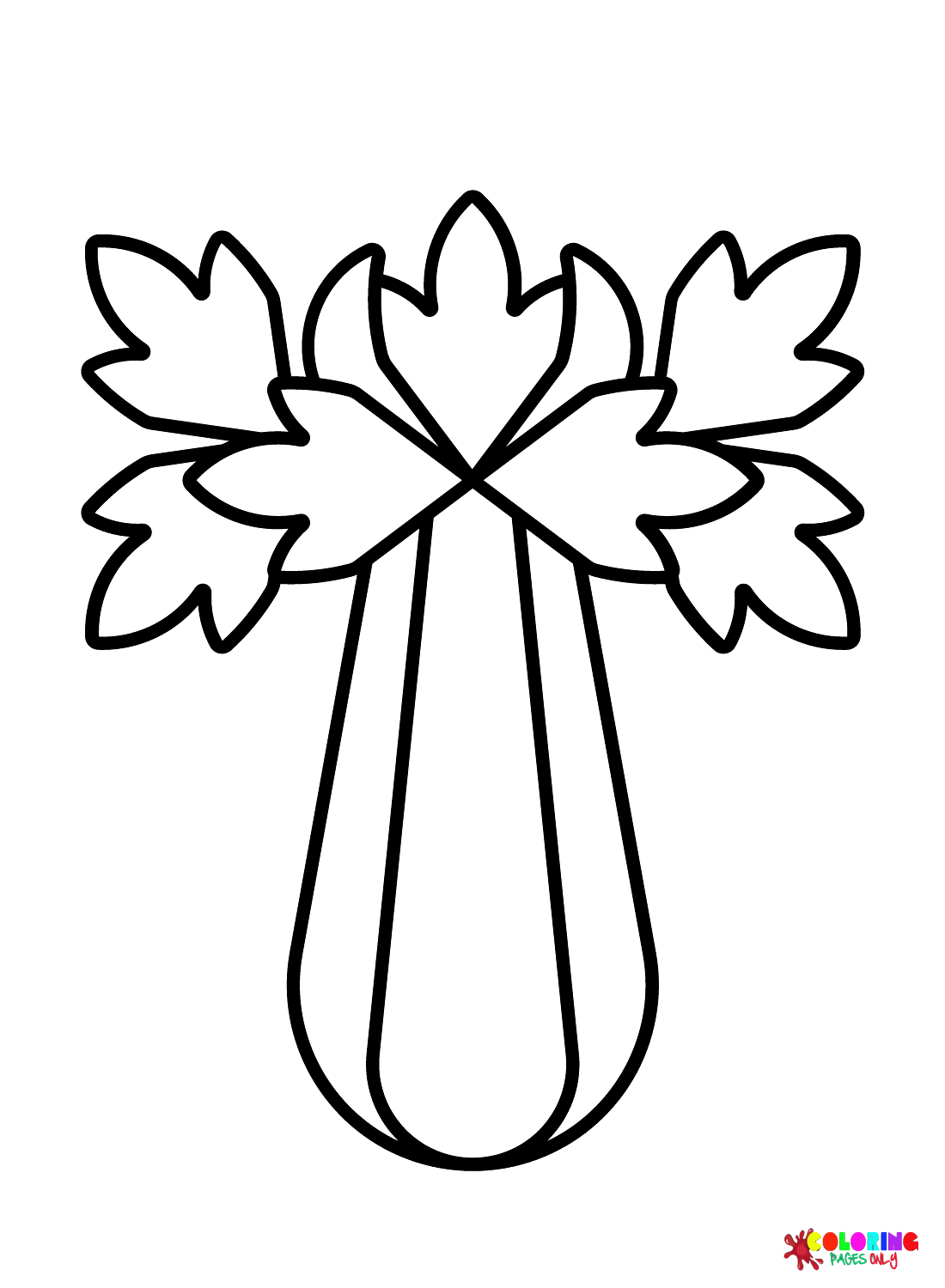
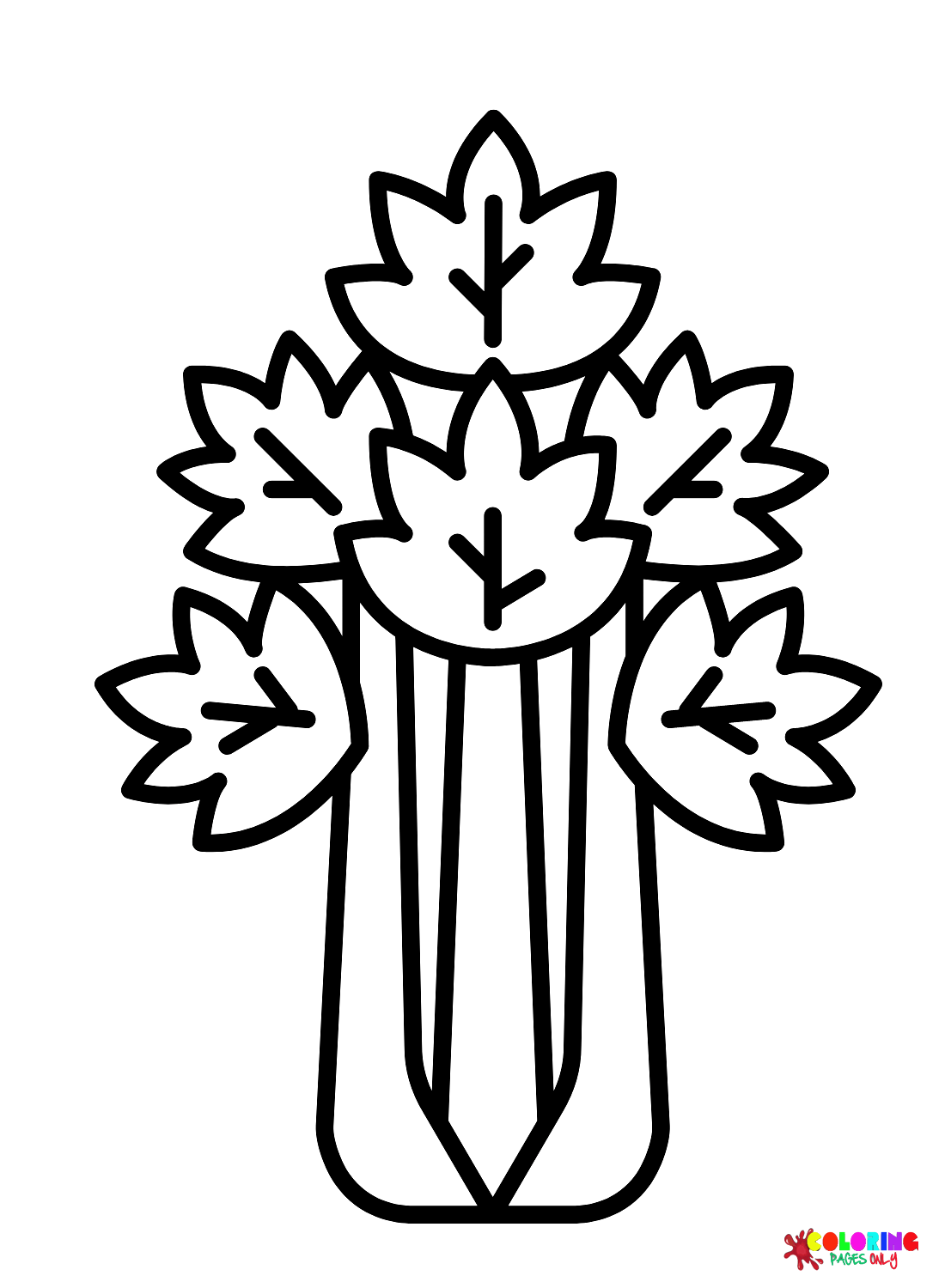
The remaining pages simplify the stalk into large, easy shapes, built for a child coloring independently for the first time rather than for detailed shading.
What Celery Coloring Pages Do
Fine motor development. Structured coloring supports the fine motor skills the American Academy of Pediatrics highlights for children ages 2 through 7, and tracing the long, ridged lines of a celery stalk gives a young hand a simple, repeatable shape to practice on.
Early vegetable and nutrition awareness. Naming celery and its basic nutritional role while coloring gives a young child an early, low-pressure introduction to a vegetable they may already see at snack time or in the kitchen.
Anxiety reduction through focus. A 2005 study published in the Art Therapy Journal linked structured coloring sessions to a measurable reduction in anxiety, and a subject as plain and repetitive as a single vegetable gives that calming routine very little to distract from.
A calm entry point for reluctant colorers. A single, simple subject with few competing details can feel more approachable to a child who finds a busier, character-filled page overwhelming.
How to Color Celery Pages Well
- The stalk body: Use Crayola Yellow Green as a base, then add thin lines of Crayola Forest Green along the ridges to bring out celery’s natural texture without flattening the color.
- The leafy top: Color the leaves in a slightly deeper Crayola Forest Green than the stalk itself, since the leaves are naturally a richer green in real celery.
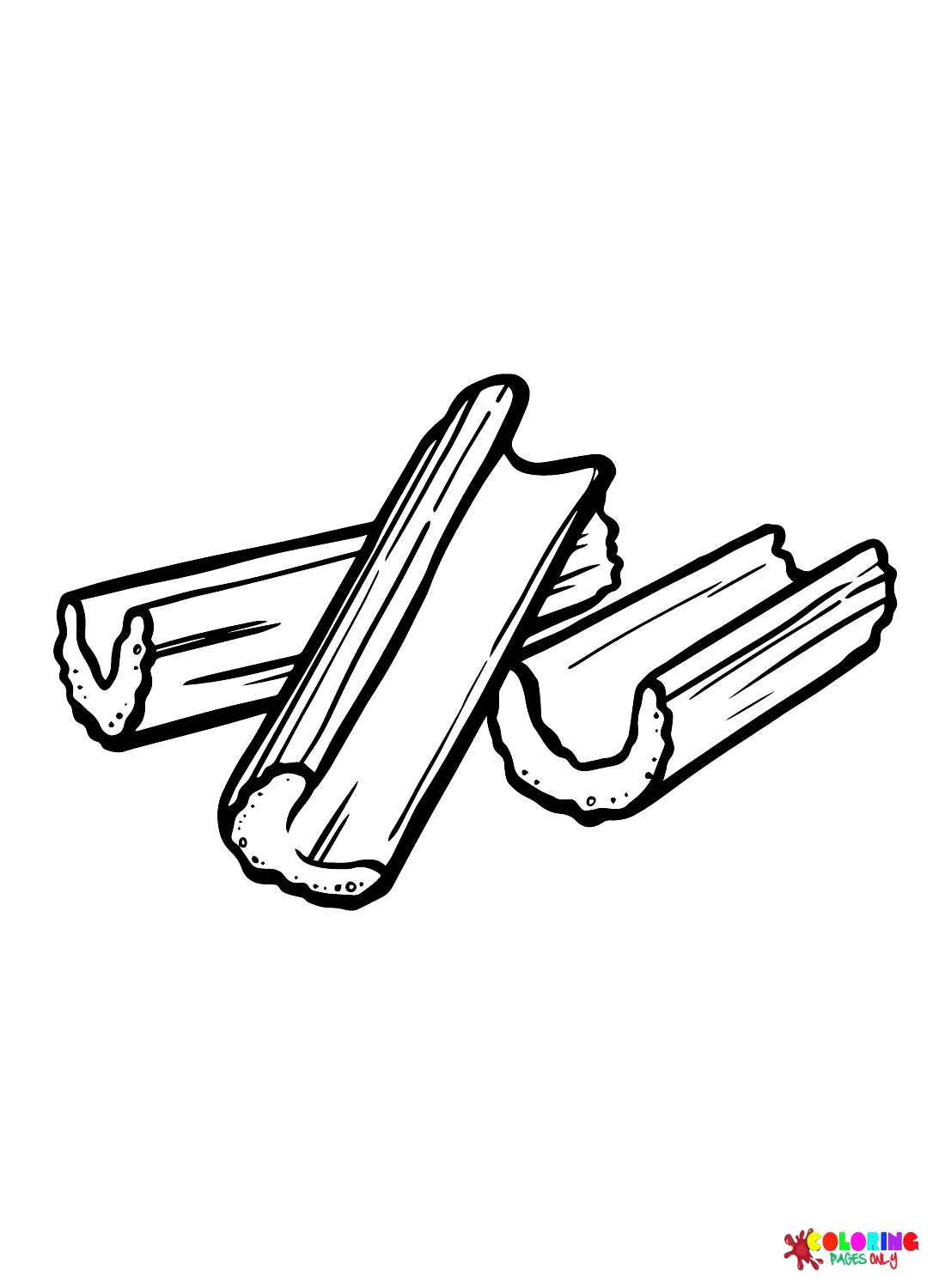
- Cut ends: If a design shows the cut base of the stalk, use pale Crayola Spring Green or White to suggest the lighter, fibrous interior visible at a fresh cut.
- Simple kid-friendly outlines: Keep these pages to one or two shades of green total, since the point of a simplified outline is an easy, low-pressure coloring experience rather than shading detail.
- Background on leaf close-ups: Leave the background white or lightly shaded in a pale Crayola Sky Blue so the leaf details stay the clear focus of the page.
- Highlighting texture: On more detailed stalk pages, use a slightly darker green in the natural grooves running the length of the stalk to suggest its ridged, fibrous surface.
5 Creative Craft Ideas With Celery Coloring Pages
1. Celery Fact Poster
Color one of the stalk pages and mount it on a sheet of paper. Write two or three real facts about celery underneath, such as its water content or which nutrients it provides. The finished poster pairs the coloring activity with a small piece of nutrition learning.
2. Healthy Snack Placemat
Color a page and cover both sides with clear contact paper to make a durable placemat. Use the placemat during snack time to talk about vegetables on the table. The lamination lets it hold up to repeated use.
3. Vegetable Garden Display
Color a celery page alongside pages of other vegetables like carrots or broccoli. Mount them together on a wall or bulletin board to represent a small garden. The mixed display works well for a classroom unit on where food comes from.
4. Celery Bookmark
Color one of the simpler stalk or leaf designs and cut it into a narrow bookmark shape. Laminate or cover with clear contact paper for durability. The finished bookmark makes a small, easy gift for another young reader.
5. Grocery List Illustration
Color a small celery design and attach it to a family grocery list next to the word “celery.” The illustration turns a routine list into a small, personalized touch for a child helping plan meals.
Frequently Asked Questions
What are Celery coloring pages?
A free set of 28 printable designs built around celery, including full stalk illustrations, close-up views of the leaves, and simplified outlines designed for younger colorers.
What is celery?
Celery, scientifically known as Apium graveolens, is a crunchy stalk vegetable in the Apiaceae family, the same plant family as carrots and parsley, grown for its long, ridged stalks and leafy top.
What nutrients does celery contain?
Celery is about 95 percent water and provides vitamin K, potassium, and dietary fiber, all while being low in calories, which is part of why it is often recommended as a light, hydrating snack.
What do the different designs in this set focus on?
Some pages show celery as a complete stalk, others zoom into the leafy top on its own, and a third group simplifies the whole shape into large, easy outlines for beginner colorers.
What colors work best for coloring celery?
A base of Crayola Yellow Green with deeper Crayola Forest Green along the ridges and leaves captures celery’s natural two-tone coloring without needing any additional shades.
Can these pages be colored online instead of being printed?
Yes. Every design in the set opens in the browser-based coloring tool, so a page can be finished on a tablet or computer without printing anything first.
Are Celery coloring pages suitable for young children?
The simplified, kid-friendly outlines in this set suit a child as young as three who is coloring a single, uncomplicated shape. The more detailed leaf and stalk close-ups ask for steadier control and fit better with a child around five or six.
Can this set be used for a nutrition or healthy-eating lesson?
Yes. Pairing a colored celery page with a short conversation about its water content or nutrients gives a teacher or parent an easy, low-pressure way to introduce a basic nutrition topic.
Start Coloring
Every page in this set opens for free with a single click, no account or payment involved. The online coloring tool holds the same design for anyone who wants to skip printing altogether. A finished page can be shared through the Facebook or Pinterest buttons above it.