Vegetable Coloring Pages at ColoringPagesOnly.com covers 598 pages across 16 sub-categories, one of the most directly educational food categories on the entire site, organized around the vegetables that appear in kitchens, gardens, and on dining tables across every culture in the world. Unlike the fruit collection with its extraordinary tropical and exotic range, the vegetable collection’s strength is in depth rather than breadth: each sub-category covers its subject thoroughly across many illustration styles, poses, and contexts, from simple portrait compositions for the youngest colorists to more elaborate cross-section and garden-scene pages for older children and adults. Most vegetables have a known canonical color that makes accurate coloring both satisfying and informative (carrots are orange, broccoli is green, corn is yellow), yet the visual diversity of vegetable forms, the fractal branching of broccoli, the concentric rings of a sliced onion, and the geometric kernel rows of an ear of corn, provide genuine botanical interest that rewards careful observation. Every page in this collection is free to download as a PDF and print, or to color online directly in the browser.
Root Vegetables and Underground Crops
The root vegetable sub-categories cover the edible parts of plants that grow underground. These energy-storing organs have been foundational to human agriculture and diet across virtually every civilization in recorded history. Root vegetables are among the most visually accessible of any food group for coloring: their forms are simple and distinctive, their colors are vivid and canonical, and the contrast between the exterior and interior provides natural compositional variety.
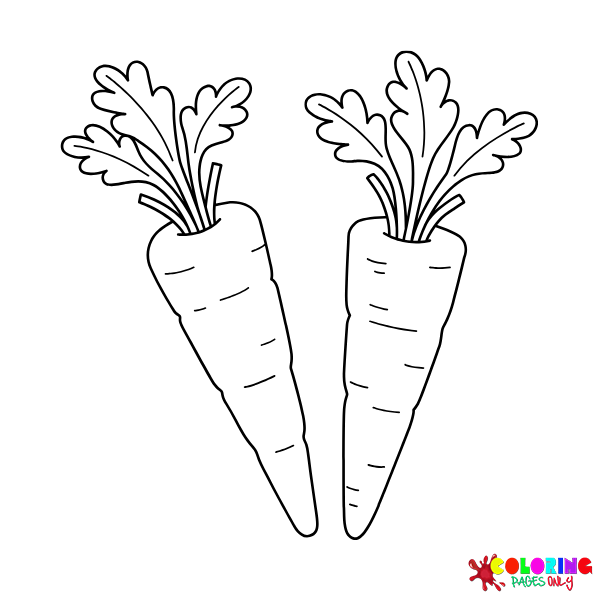
Carrot is the most searched and most illustrated root vegetable in the collection, and one of the most universally recognizable vegetables in all of coloring page illustration. The long, tapered, slightly rough orange root tapers to a point at the base, with feathery green tops emerging from the crown at the narrow upper end. The canonical carrot orange sits in the warm orange range, brighter and more vivid than the duller orange of a peach or apricot, and distinctly separate from the more yellow-orange of a mandarin. The interior of a sliced carrot reveals a slightly paler orange in the outer flesh, graduating to a very pale orange-cream in the central core.
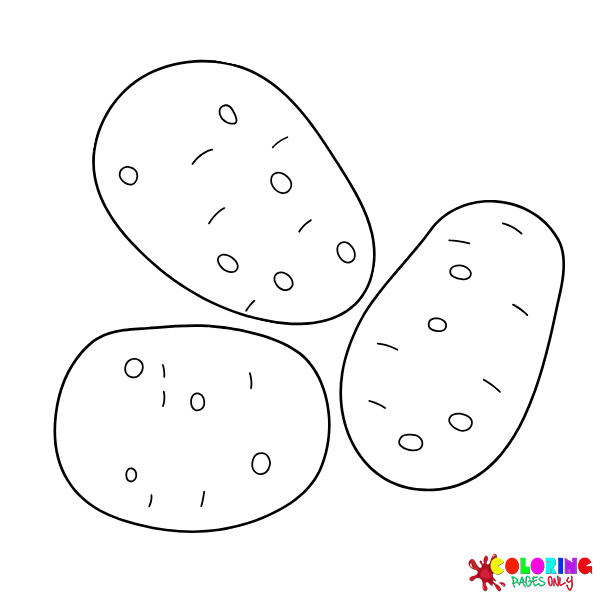
Potatoes are the world’s most widely cultivated vegetable and one of the most important food crops in human history, the starchy underground tuber of the Solanum tuberosum plant, native to the Andes of South America. Potato pages present an interesting coloring challenge because the potato lacks a vivid canonical color: the skin ranges from the pale tan-beige of a Russet to the yellow of a Yukon Gold to the vivid purple of a purple potato. The “eyes” of the potato, the small, slightly recessed growth points distributed across its surface, are the defining detail of any accurate potato illustration.
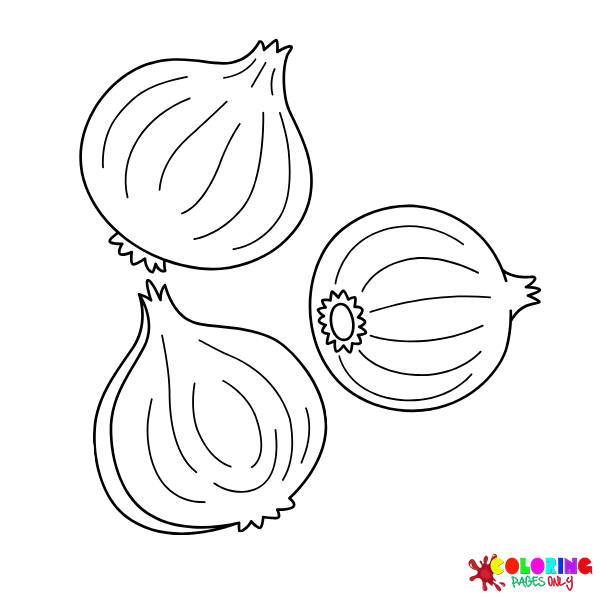
Onion covers one of the most universally used culinary vegetables in the world, the bulb of the Allium cepa plant. The papery outer skin ranges from golden-tan to reddish-purple, covering a compact, spherical bulb. The cross-section of a halved onion reveals concentric rings of layered flesh, each ring a lighter, more translucent version of the white-to-cream interior. The spring onion or scallion, a long, slender allium with vivid green stems, presents a completely different visual form from the bulb onion.
Fruiting Vegetables: The Colorful Stars of the Garden
The fruiting vegetable sub-categories cover plants that are botanically fruits but treated as vegetables in culinary convention because of their savory flavor and use. These sub-categories include some of the most vivid and immediately recognizable colors in the entire vegetable collection.
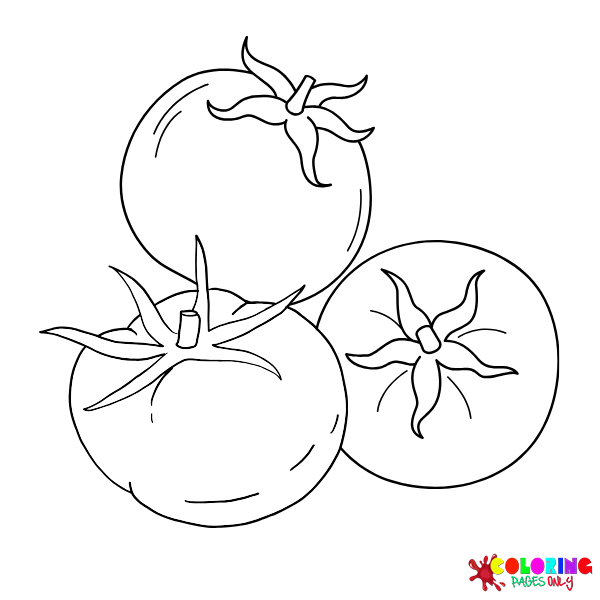
Tomato is the most botanically contested vegetable in the collection, a fruit by botanical definition but classified as a vegetable by culinary convention and, famously, by a United States Supreme Court ruling in 1893. Tomato pages cover the round, vivid red globe with its star-shaped calyx of green sepals, the elongated plum or Roma tomato, small round cherry and grape tomatoes, and the yellow, orange, and striped varieties that demonstrate the tomato’s full color range beyond its canonical red. The canonical tomato red is a warm, vivid red, more orange-warm than the blue-red of cherries, with a slightly glossy quality suggested by a small highlight point on the upper surface.
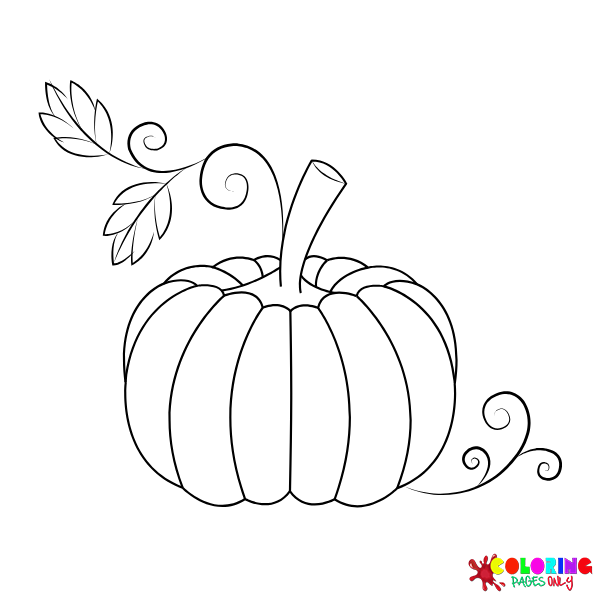
Pumpkin is the most seasonally loaded vegetable in the entire collection, a fruit of the Cucurbita genus whose association with Halloween, Thanksgiving, and autumn has made it one of the most widely depicted food subjects in coloring page history. Pumpkin pages cover the whole pumpkin in the field, the carved Halloween jack-o’-lantern, and the cooking pumpkin cut open to reveal its interior and seeds. The surface is divided into vertical ribs by shallow grooves running from stem to base, each lobe shading from bright orange where it faces the light to deeper orange-brown in the grooves.
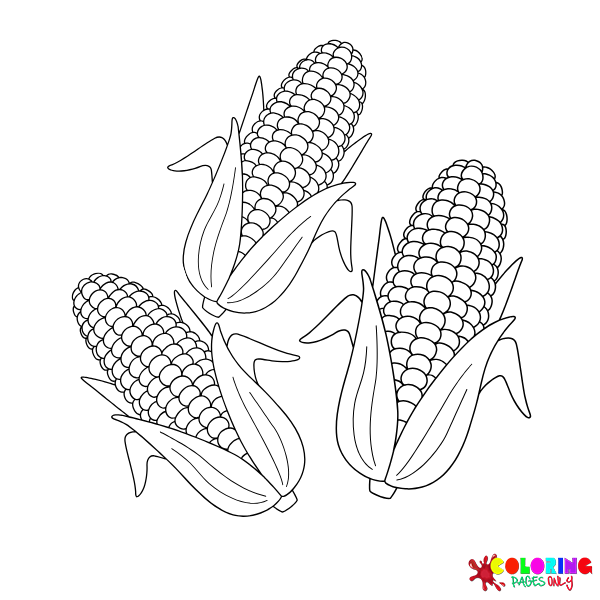
Corn covers the ear of maize, one of the most geometrically distinctive vegetable forms, with perfectly regular rows of kernels arranged in a precise grid pattern around the cylindrical cob, wrapped in a papery green husk with silk strands emerging from the tip. Each kernel, typically 800 or more per ear across 16 rows, is a slightly rounded sphere in vivid golden yellow. Field corn is typically yellow, but sweet corn also occurs in white, and decorative “Indian corn” varieties range across deep purple, burgundy, red, orange, and cream.
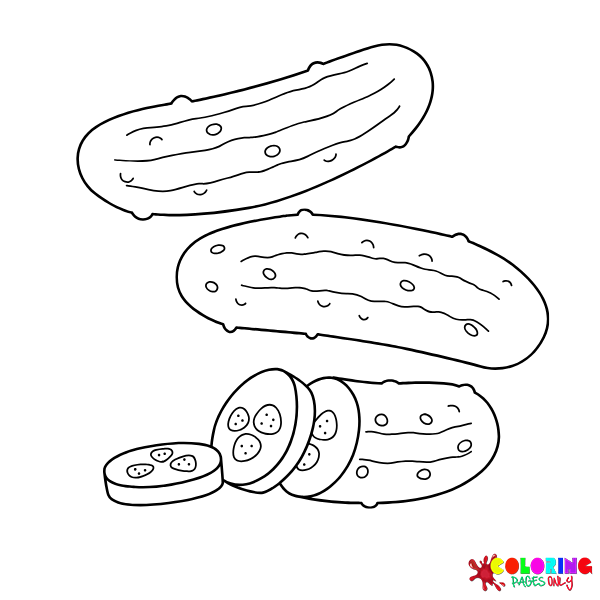
Cucumber covers the long, cylindrical, smooth-skinned vegetable of the gourd family. The visual form is a long, slightly tapered cylinder of vivid medium green, with a paler, yellower-green at the ends. The sliced cross-section reveals a pale, almost white interior with a central zone of small, pale seeds.
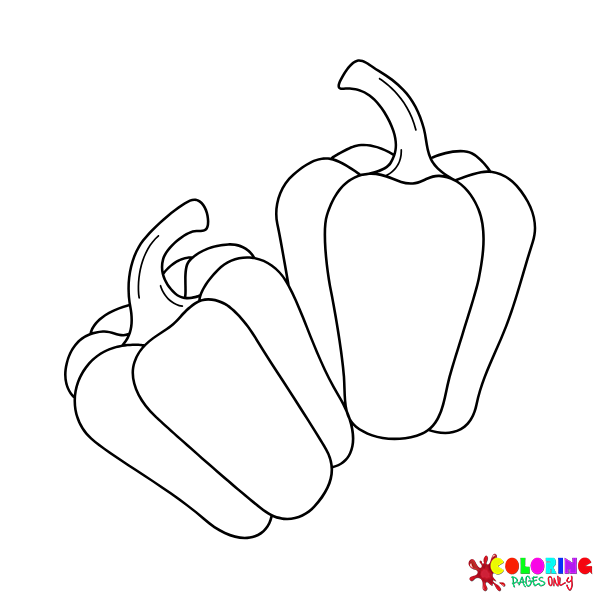
Bell Pepper is the most colorfully diverse vegetable in the collection, a single species available in four dramatically different mature colors. The green bell pepper is a vivid, slightly blue-green; the yellow variety is a bright golden yellow; the orange variety is a vivid warm orange; and the red variety is a deep, vivid red-orange. A page showing all four together produces one of the most colorfully complete compositions in the vegetable collection.
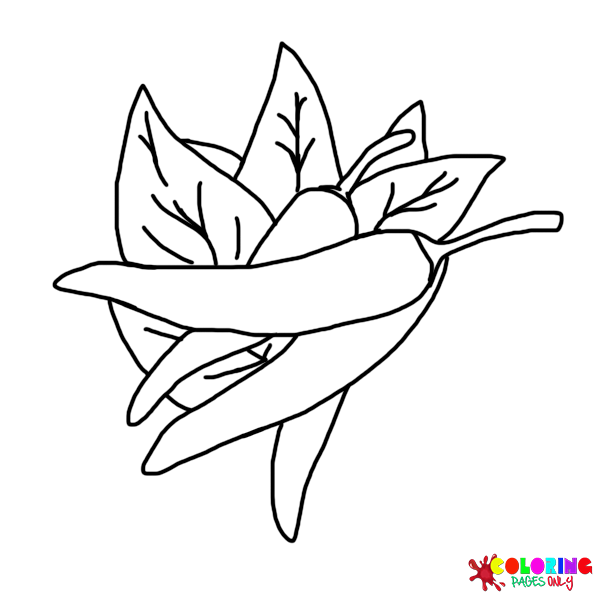
Chili Pepper covers the hot pepper family, ranging from the mild Anaheim chile through the medium jalapeno to the very hot cayenne, serrano, habanero, and ghost pepper. Chili pepper pages are dominated by vivid reds and oranges in the mature ripe state, with green in the immature stage. The specific vivid red of a ripe cayenne or red jalapeno is more orange-warm than tomato red and more vivid than the duller red of a beet.
The Brassica Family and Green Vegetables
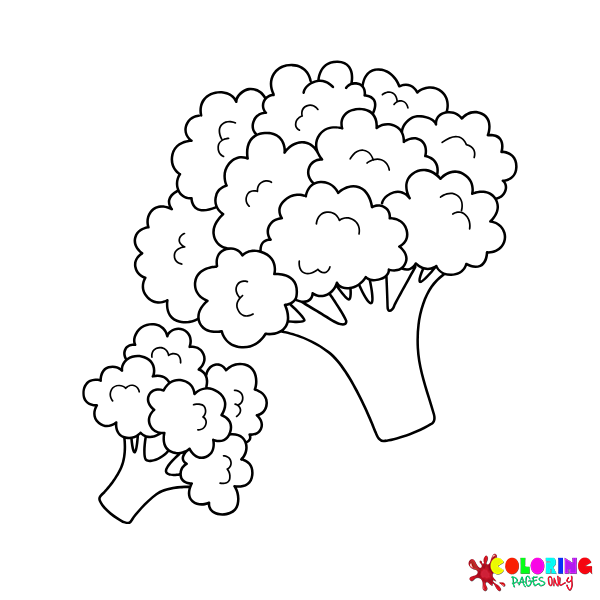
Broccoli is the most visually complex vegetable in the entire collection, a member of the Brassicaceae species whose edible portion is a dense, branching head of undeveloped flower buds arranged in a fractal-like structure. The broccoli head is a mass of tiny green florets arranged on progressively thicker branching stems that converge into the central stalk, with a deep, slightly blue-green color that graduates to a lighter, more yellow-green stalk.
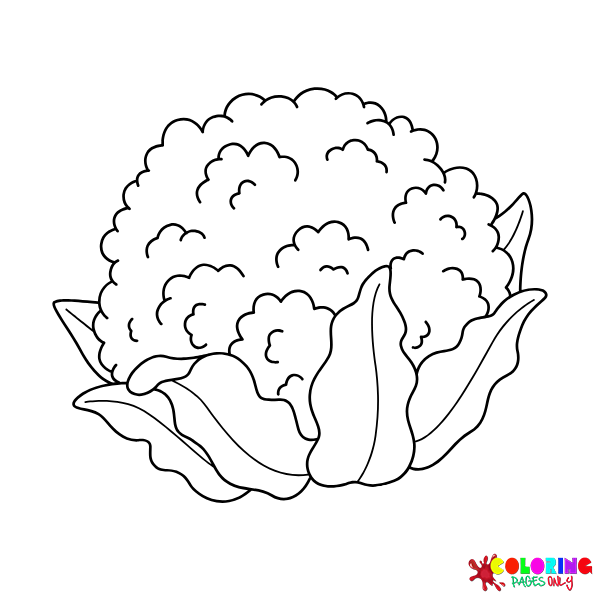
Cauliflower is the white counterpart of broccoli, the same species with the same dense curd structure of tightly packed undeveloped flower buds, but in white rather than green. The traditional cauliflower is a creamy off-white, with slightly darker cream tones in the crevices and brighter near-white on the elevated surfaces. Modern cultivated varieties include vivid orange, purple, and green cauliflowers.
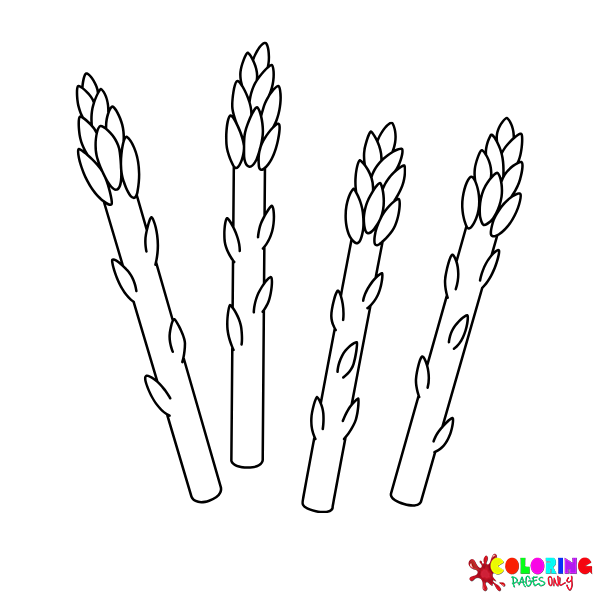
Asparagus refers to the elegant spring vegetable, the edible young shoots of the Asparagus officinalis plant. The spear is a straight, tapering, round-sectioned stalk with tightly closed, triangular scale leaves wrapped around the pointed tip. The canonical green asparagus is a vivid medium green in the stalk, graduating to a slightly purple-tinged green in the tip. White asparagus, grown by excluding sunlight from the emerging shoots, produces a creamy ivory-white alternative coloring.
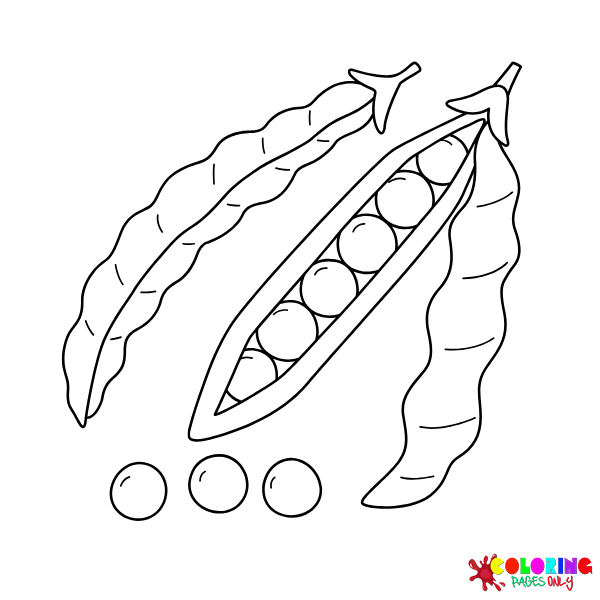
Beans cover the legume family in its cultivated forms, the green bean or string bean in its pod form, and the various shelling bean varieties, kidney beans, cannellini, black beans, and chickpeas. The green bean pod is a simple cylinder of bright green with a pointed tip at the blossom end. The dried bean in its shelled form covers an extraordinary range of colors: kidney beans are deep red-brown, black beans are near-black with a slight purple gloss, cannellini are cream-white, and chickpeas are pale golden-tan.
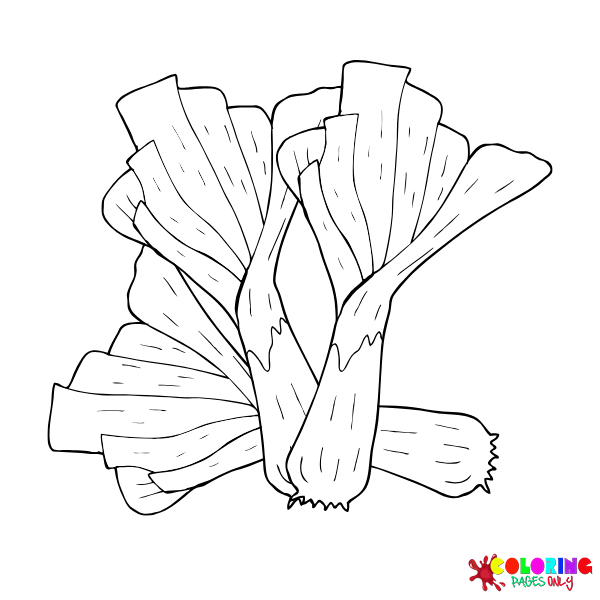
Leek covers the largest and mildest member of the allium family, a long, cylindrical vegetable with a white lower shank graduating through pale green to the vivid deep green of the upper leaves. This distinctive color gradient, from pure white at the base through pale green to deep green at the top, is one of the most natural and appealing color transitions in the vegetable world.
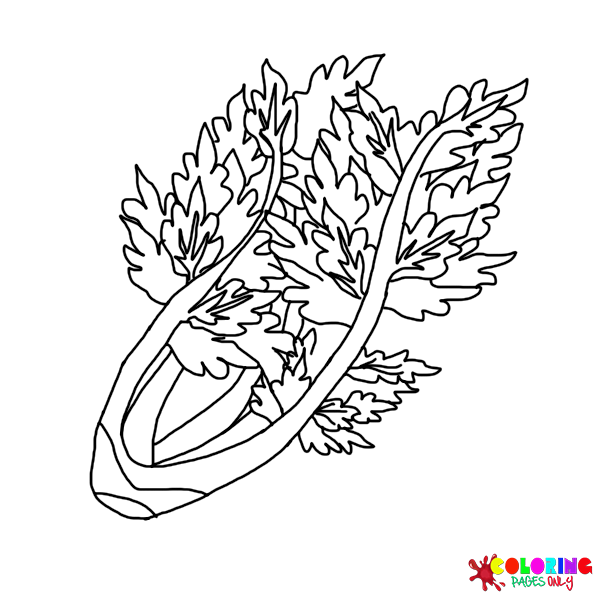
Celery covers the long, ribbed stalk of the Apium graveolens plant, which grows in a compact bunch of pale to medium green stalks. The celery bunch has inner pale stalks and outer deeper green ones, creating a natural color gradient from the center outward. The feathery celery leaves at the top add a fine-textured green counterpoint to the smooth, ribbed stalk below.
The Allium Family and the Culinary Staples
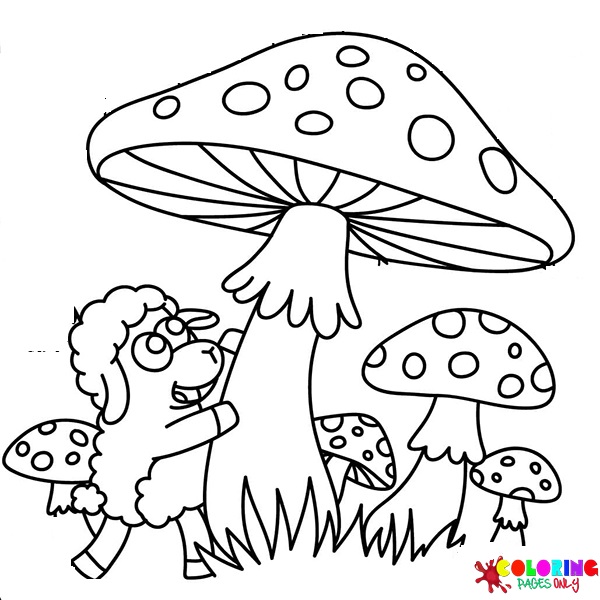
Mushrooms cover the fungal kingdom’s edible representatives, technically not vegetables in any botanical sense, but universally classified alongside vegetables in culinary and nutritional contexts. The rounded cap on its central stalk is among the most immediately recognizable of any food form. The common button mushroom offers the simplest mushroom page, a smooth, rounded cap in pale tan to off-white above a short, thick stalk, with pink to brown gills visible on the underside in cut views. The shiitake mushroom adds a darker, more irregular brown cap; the oyster mushroom presents a shelf-like, fan-shaped cap in pale gray to cream; the chanterelle offers a vivid golden-yellow to apricot-orange funnel shape; and the fly agaric, with its vivid red cap scattered with white warts, provides one of the most visually arresting subjects in the sub-category.
What These Pages Do
The American Academy of Pediatrics identifies fine motor skill development as a core benefit of structured coloring for children ages 2 through 7. Simple, rounded shapes like Tomato or Onion suit the youngest colorists, while detailed pages in the Broccoli or Mushroom collections challenge older children and adults with more demanding linework.
A 2005 study in the Art Therapy Journal documented measurable reductions in anxiety following structured coloring sessions. The repeating, geometric structure of a Corn cob or a cross-sectioned onion suits the kind of focused, detailed task associated with the study’s calming findings. For young children learning food vocabulary, these pages also connect the act of coloring to the real objects they encounter at mealtimes, one of the most consistently practical and curriculum-relevant sets of coloring pages on the site.
5 Creative Craft Ideas With Vegetable Coloring Pages
1. Garden Classification Chart. Print one vegetable from each group, a root vegetable, a fruiting vegetable, and a leafy vegetable, color them, and arrange them under group headings to build a garden classification chart.
2. Play Grocery Store Cards. Color several vegetable pages, trim each to card size, and use them as play money or product cards for a pretend grocery store activity.
3. Rainbow Vegetable Plate. Color a page for each color of the rainbow: orange carrot, red tomato, yellow corn, green broccoli, and purple cauliflower, and arrange them on a paper plate outline to build a rainbow vegetable plate.
4. Vegetable Cross-Section Study. Color both a whole and a cross-section page of the same vegetable, an onion or a bell pepper, for example, and mount them side by side to compare the exterior and interior structure.
5. Garden-to-Table Fact Cards. Color a vegetable page, glue it to an index card, and write a real fact about how that vegetable grows on the back to build a set of homemade garden trivia cards.
Frequently Asked Questions
What vegetables are included in this collection?
The collection spans 16 sub-categories and 598 pages, covering root vegetables like carrot and potato, fruiting vegetables like tomato and pumpkin, brassica green vegetables like broccoli and cauliflower, and the allium and fungal categories, onion, leek, and mushroom.
Which sub-collection gets the most traffic?
Tomato, Corn, and Potato are among the strongest-performing sub-collections in this hub.
Is a tomato a fruit or a vegetable?
A tomato is a fruit by botanical definition, the seed-bearing structure of the tomato plant. Still, it is classified as a vegetable by culinary convention and, famously, by a United States Supreme Court ruling in 1893.
Are mushrooms actually vegetables?
No. Mushrooms belong to the fungal kingdom, which is biologically distinct from both plants and animals. Still, they are universally classified alongside vegetables in culinary and nutritional contexts, which is why they are included in this collection.
Are these pages suitable for young children?
Yes. Simple, rounded shapes like Tomato, Onion, and Pumpkin work well for children ages 3 to 6, while detailed pages in the Broccoli, Mushroom, and Bell Pepper collections suit older children and adults.
Can these pages be used for a classroom nutrition or gardening unit?
Yes. The collection’s organization by plant family pairs well with a classroom unit on nutrition, plant biology, or gardening, and the Garden Classification Chart and Garden-to-Table Fact Cards crafts above turn the pages into hands-on learning activities.
Are these pages free to print?
All pages are free to download as a PDF and print, or to color online in the browser. No account, email, or payment is required.
What is the difference between broccoli and cauliflower coloring pages?
Broccoli and cauliflower are the same species, Brassica oleracea, with the same dense curd structure. Still, broccoli is colored in deep green, while traditional cauliflower is colored in a creamy off-white, with modern varieties also available in orange, purple, and green.
Start Coloring
Choose a vegetable above to browse that collection, or open any page to download it as a free PDF or color it online in the browser. No account, email, or payment is required. Share finished pages on Facebook or Pinterest with the share buttons on each page.
More Vegetable Coloring Pages
Jump straight to a specific collection: