Onion Coloring Pages
 By:
Jennifer Thoa - Content Editor & Designer
Updated:
By:
Jennifer Thoa - Content Editor & Designer
Updated:
Free Onion Coloring Pages: 37 printable PDF designs featuring classic portraits and expressions, variety and cross-section artwork, character and group scenes, drawing-style designs, and printable sheets. Each page can be downloaded as a PDF to print or colored online in the browser.
The onion (Allium cepa) is a bulbous vegetable in the same family as garlic, chives, and leeks, grown and eaten in countless cuisines worldwide. An onion bulb is made up of overlapping fleshy layers wrapped in a thin, papery outer skin, and comes in several common types, including yellow, red, white, and green (scallion) varieties. Slicing into an onion famously triggers tears: when the cells are cut open, an enzyme called alliinase reacts with sulfur compounds inside to form an unstable acid, which a second enzyme, lachrymatory factor synthase, then converts into a volatile gas called syn-propanethial-S-oxide, the actual compound that irritates the eyes and triggers tears. Japanese researchers confirmed this two-step process in a 2002 study. Interestingly, garlic contains the first enzyme but lacks the second, which is why cutting garlic doesn’t cause the same reaction.
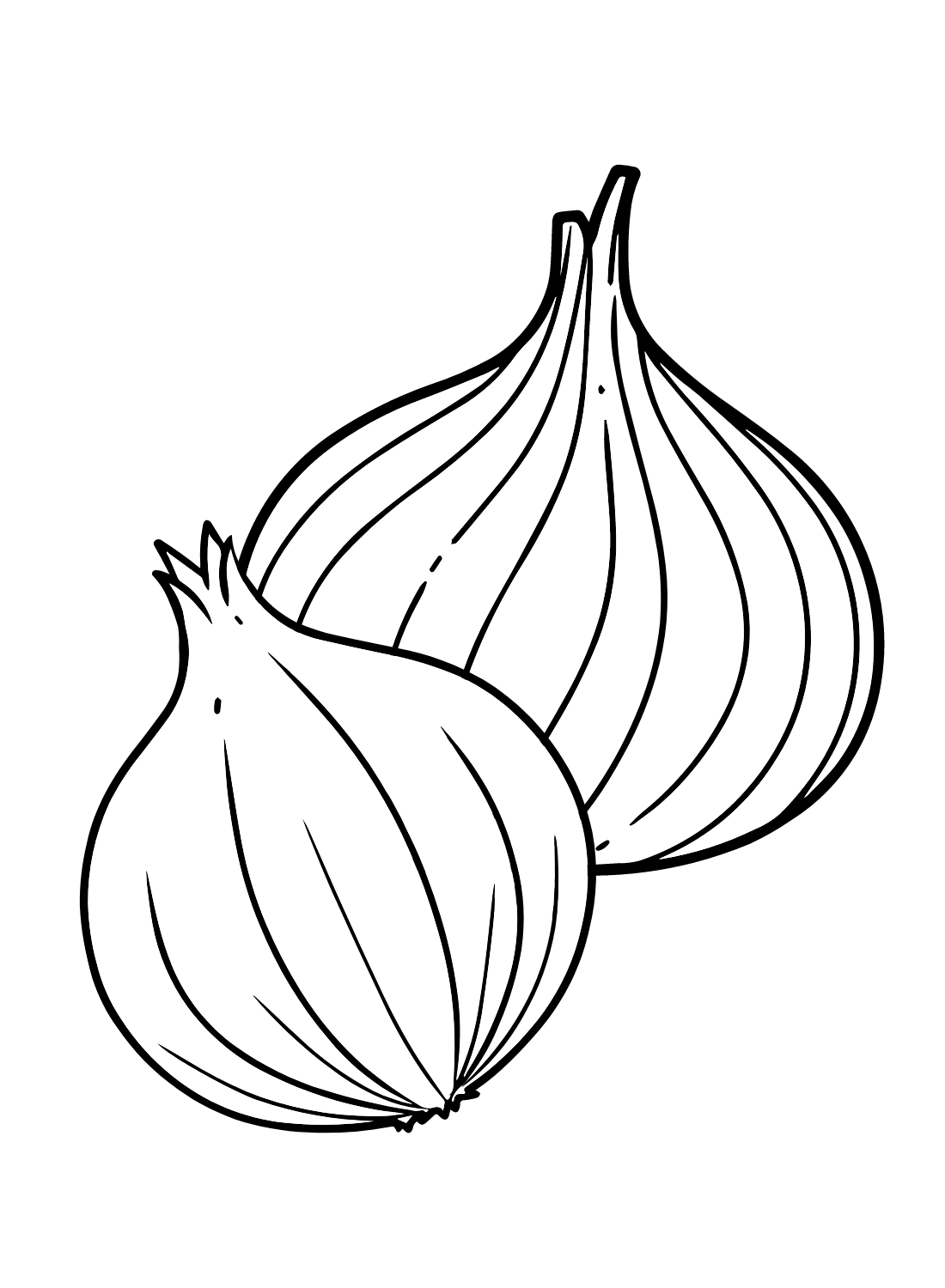
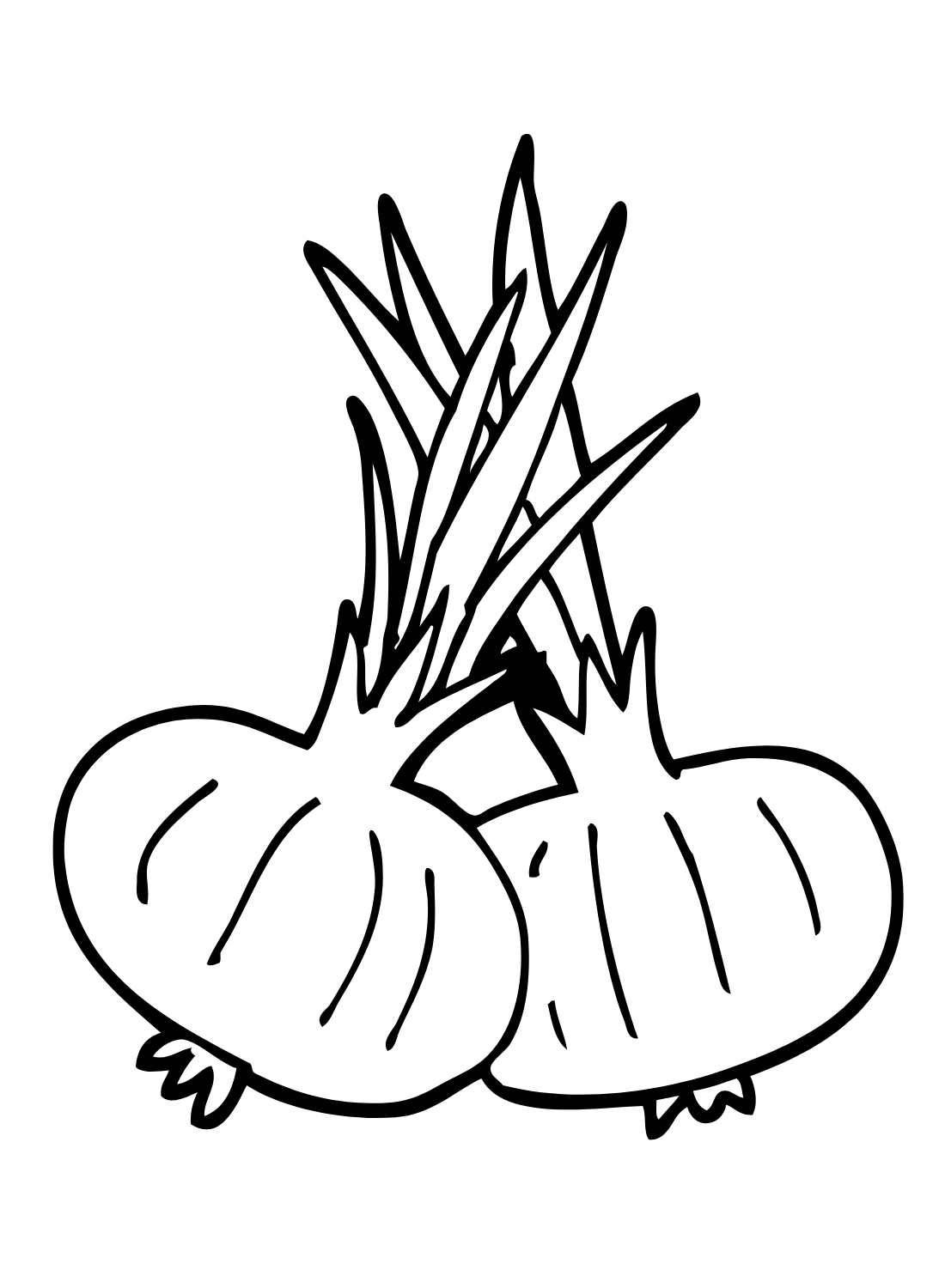
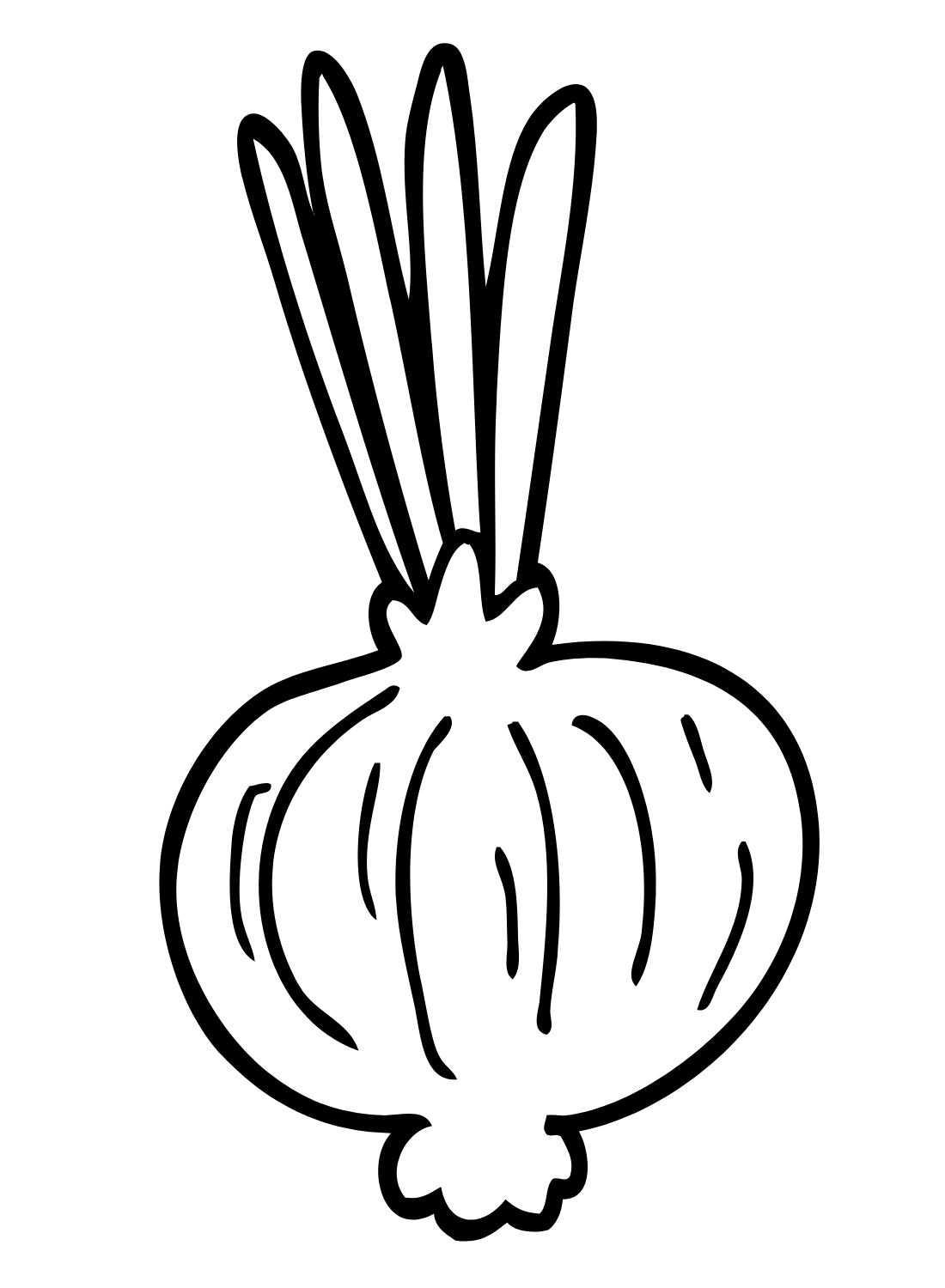
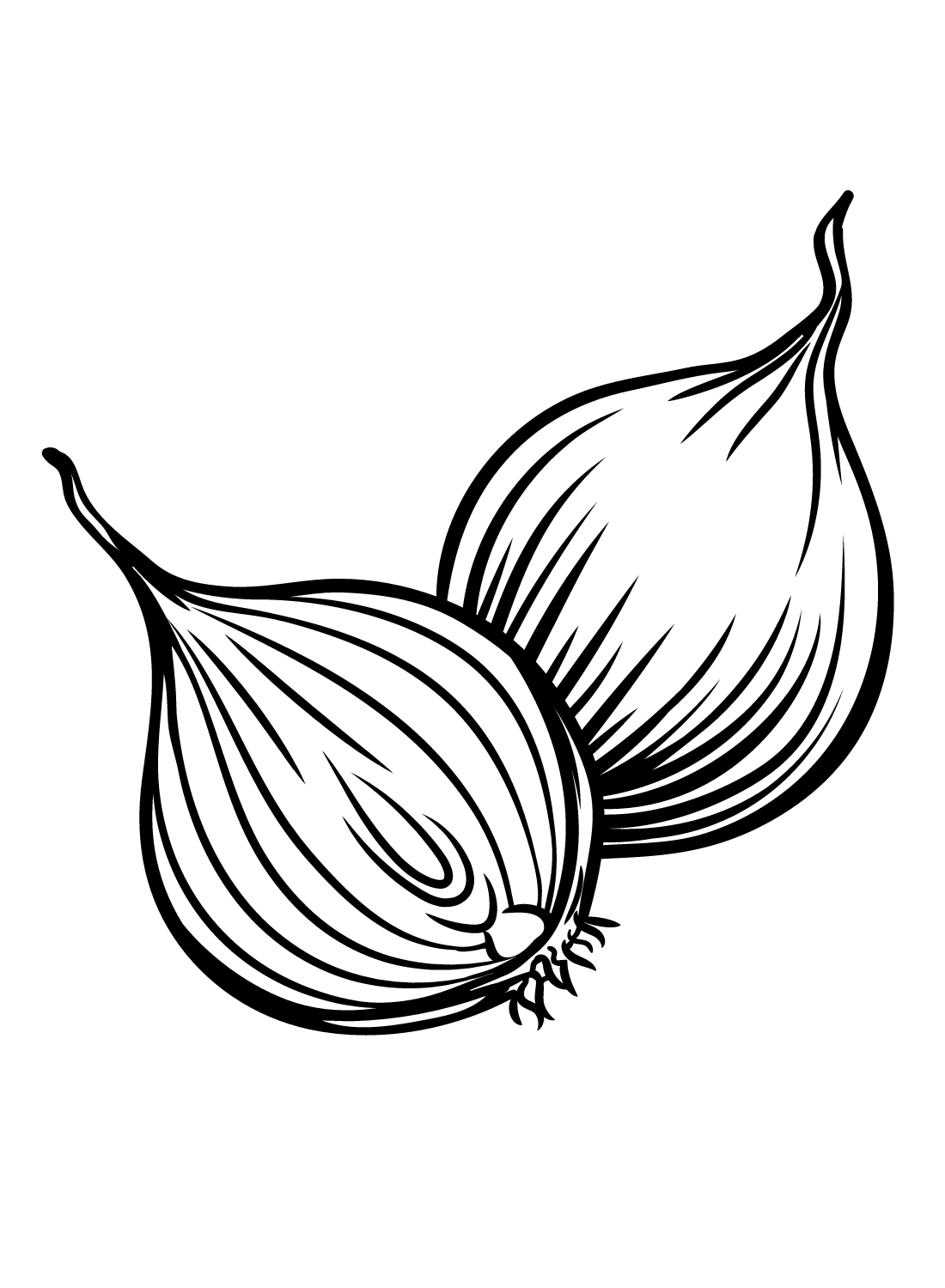
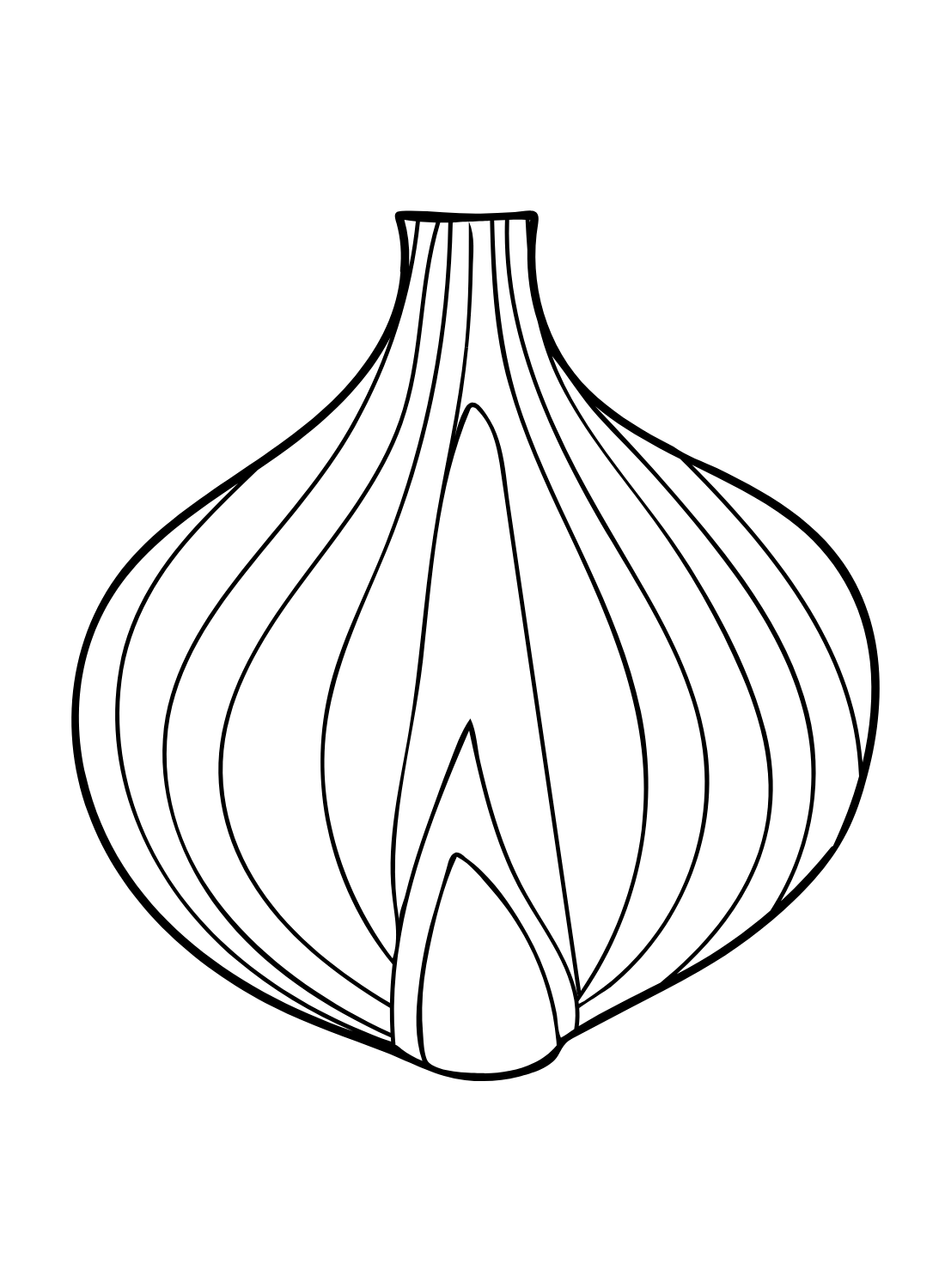
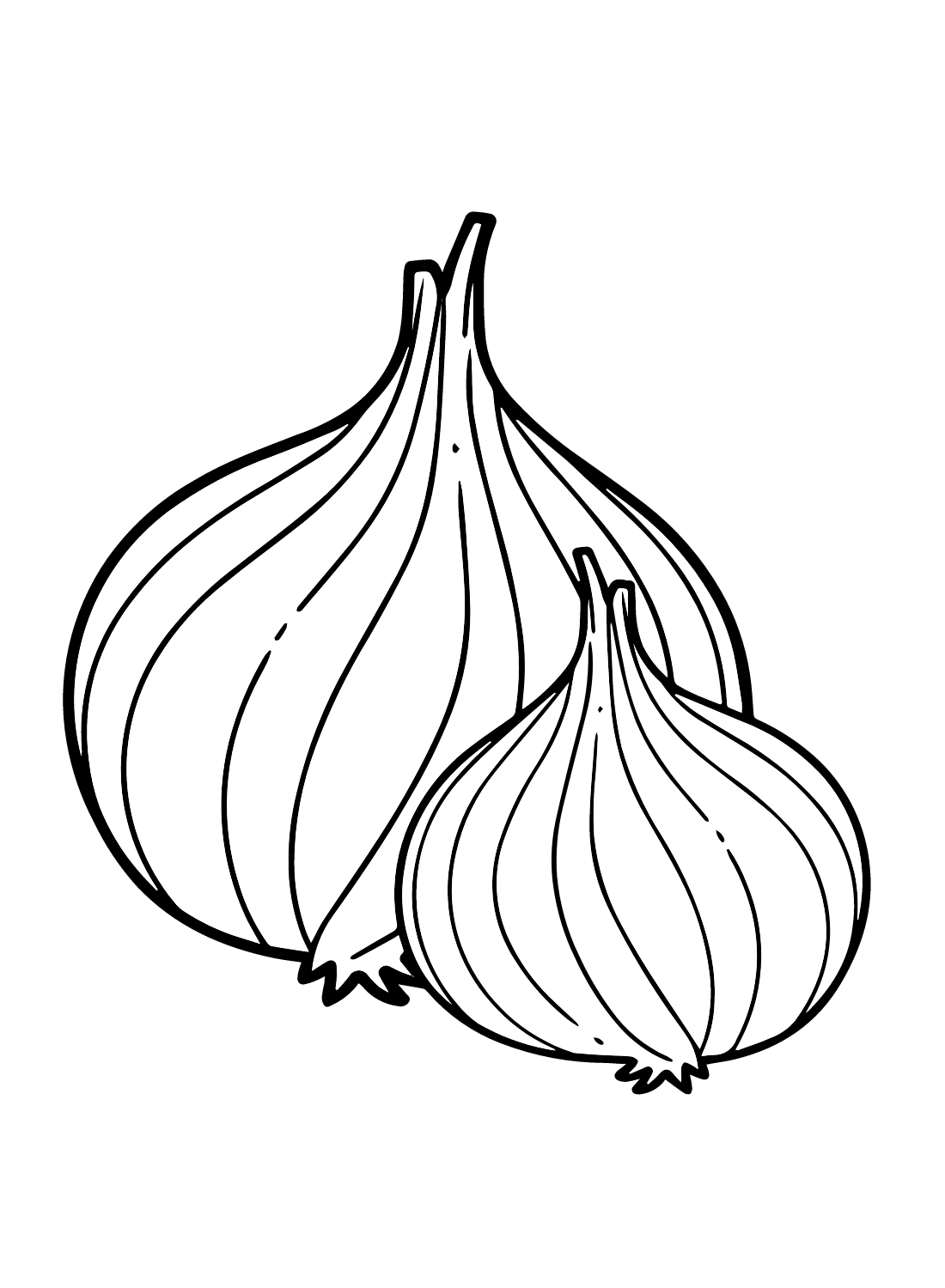
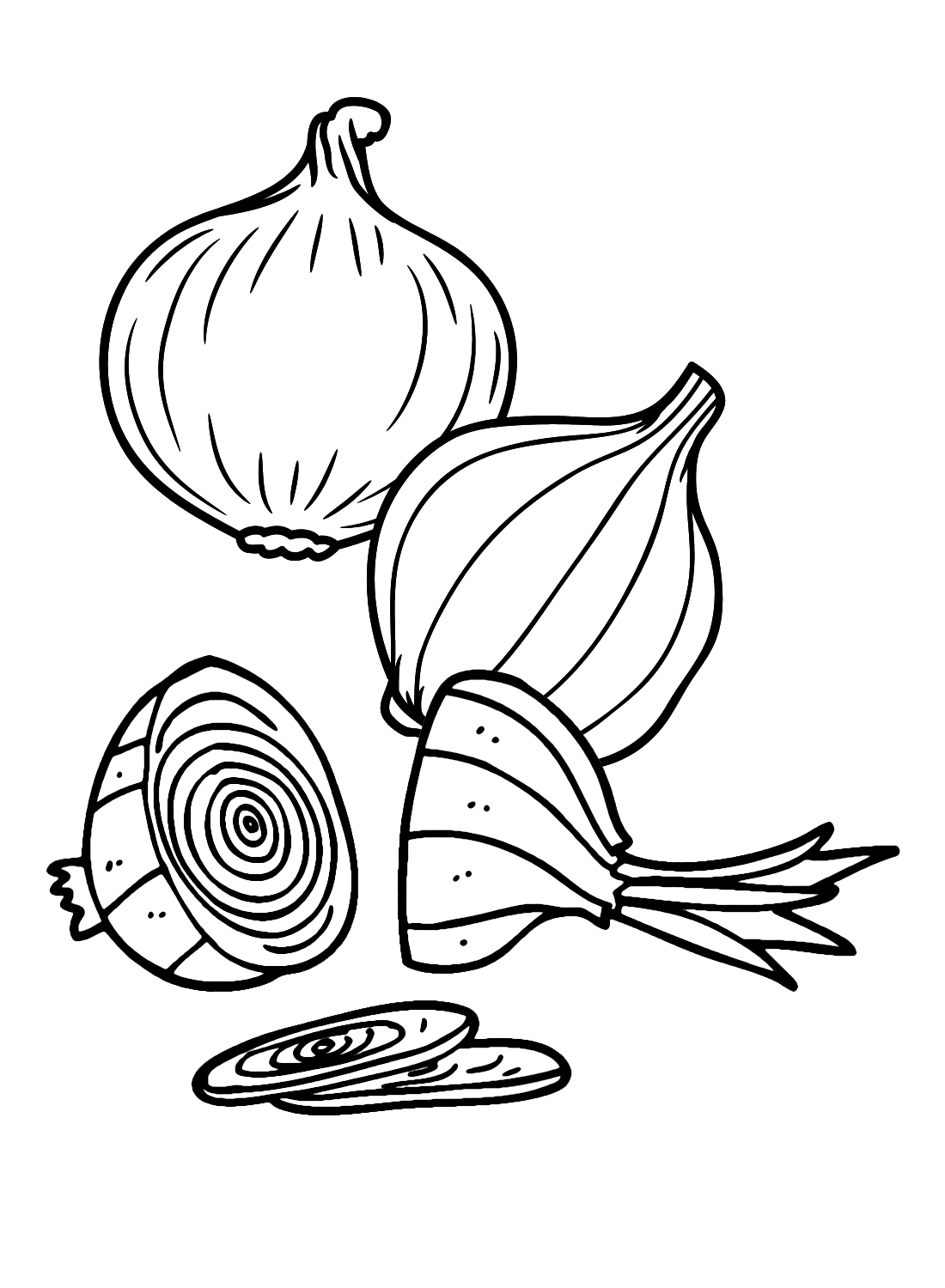
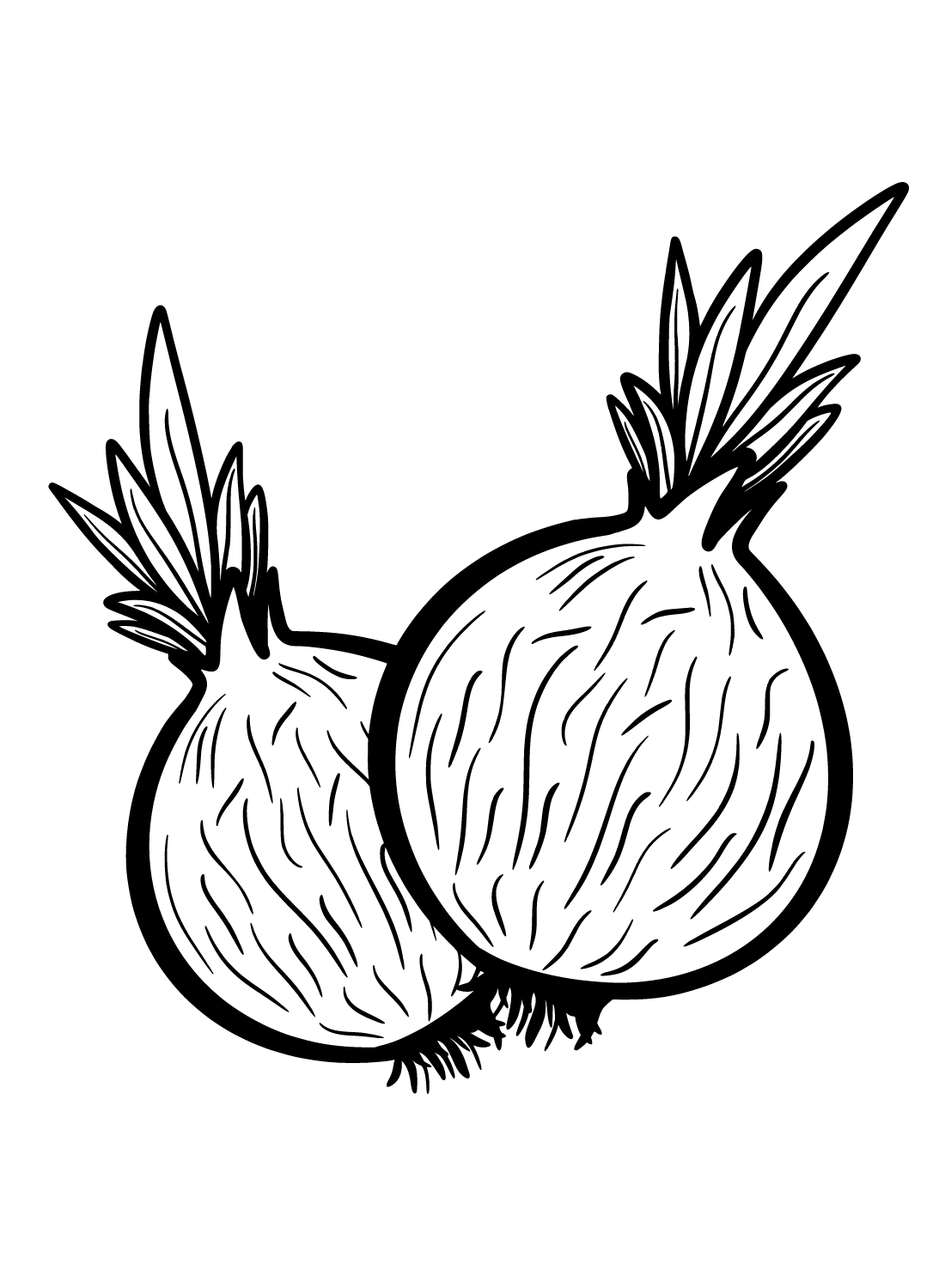
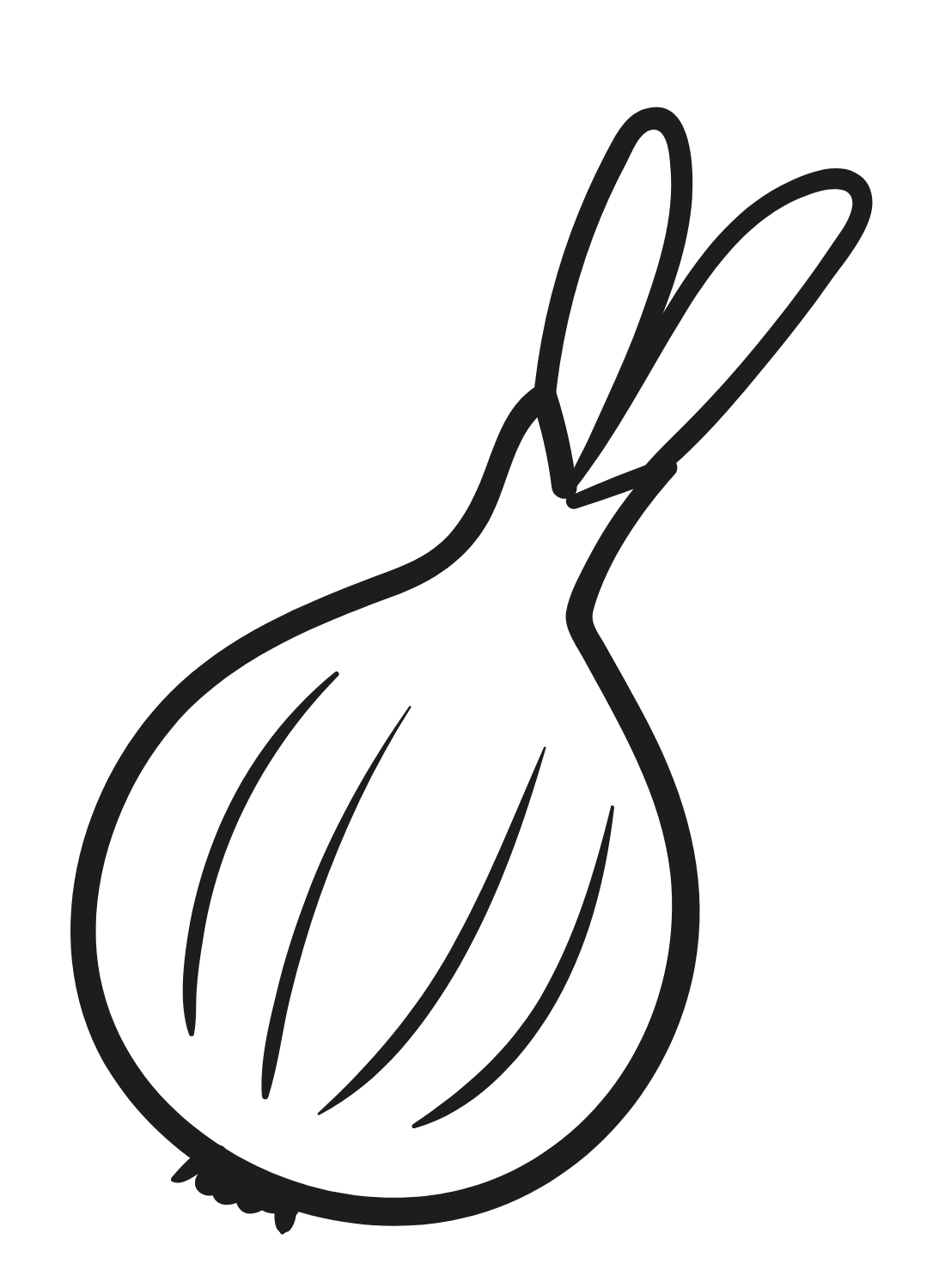
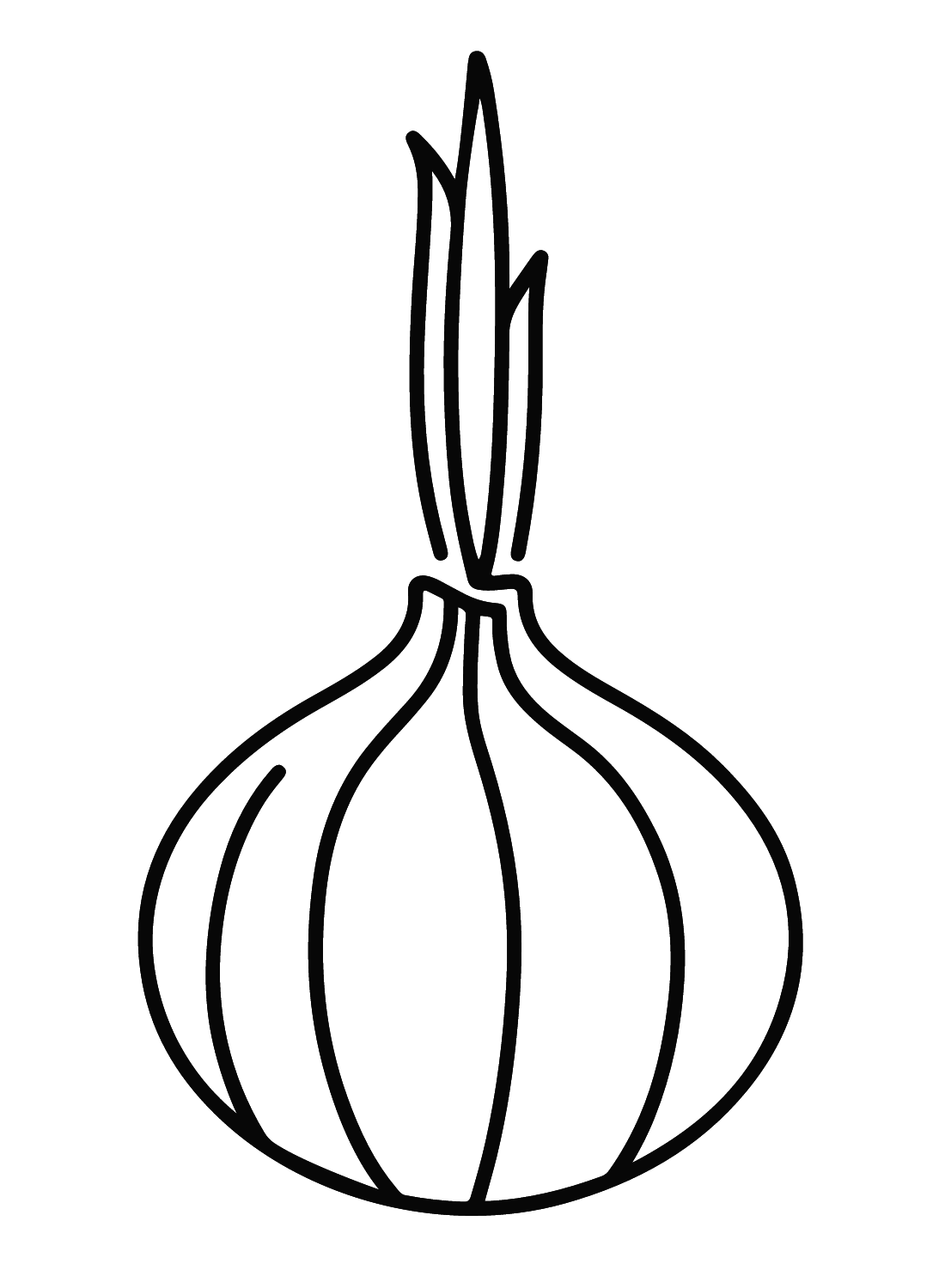
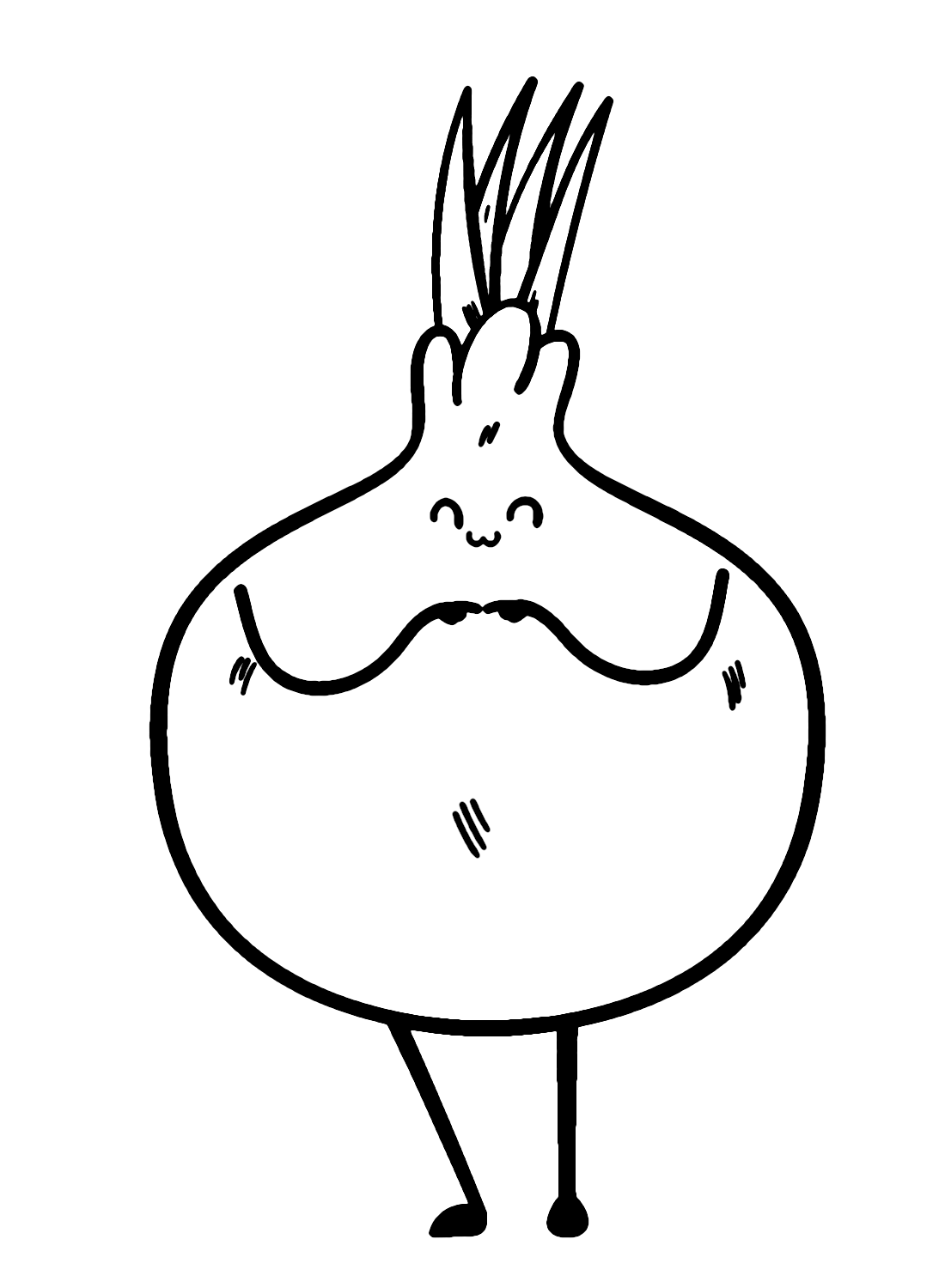
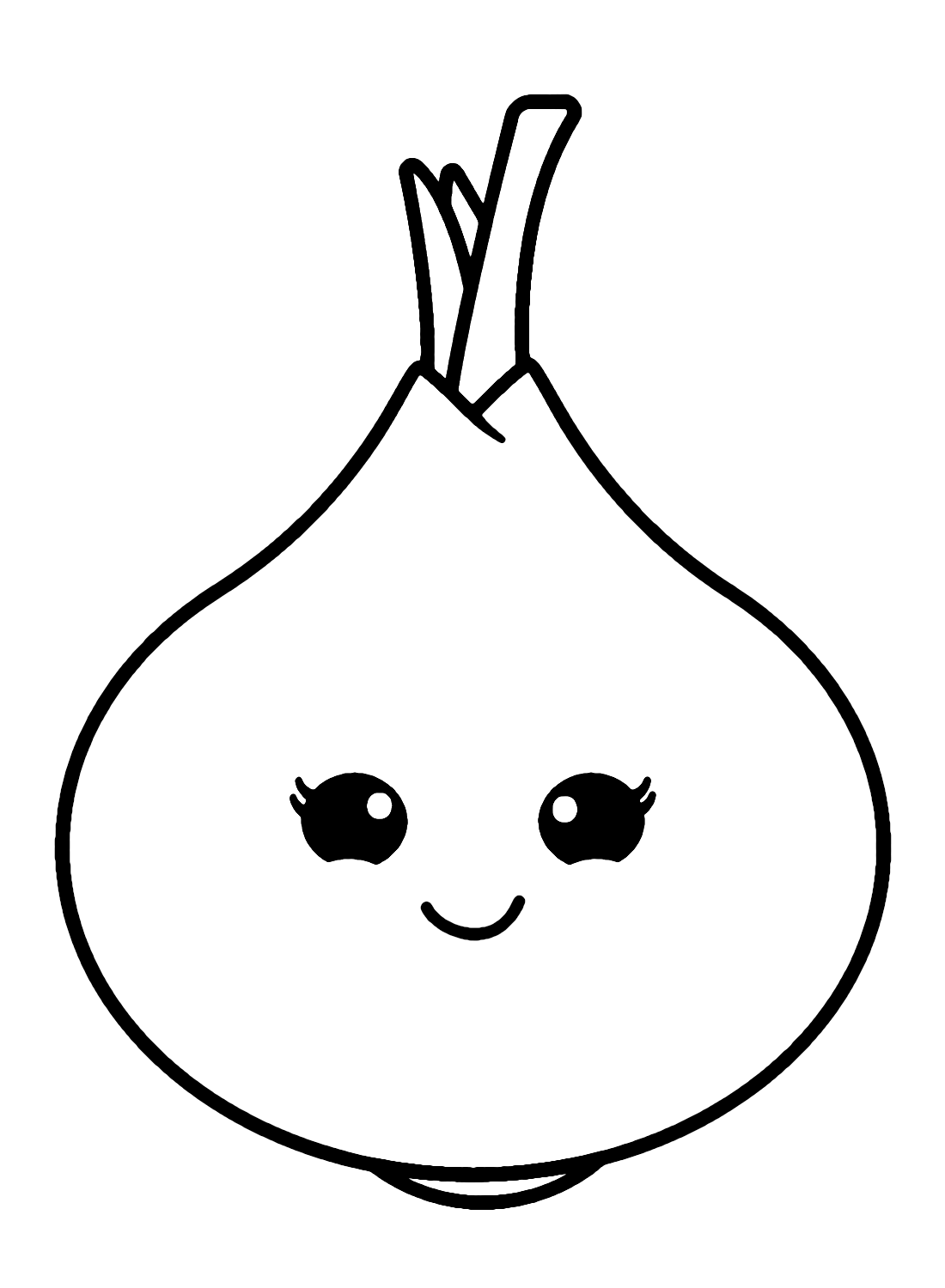
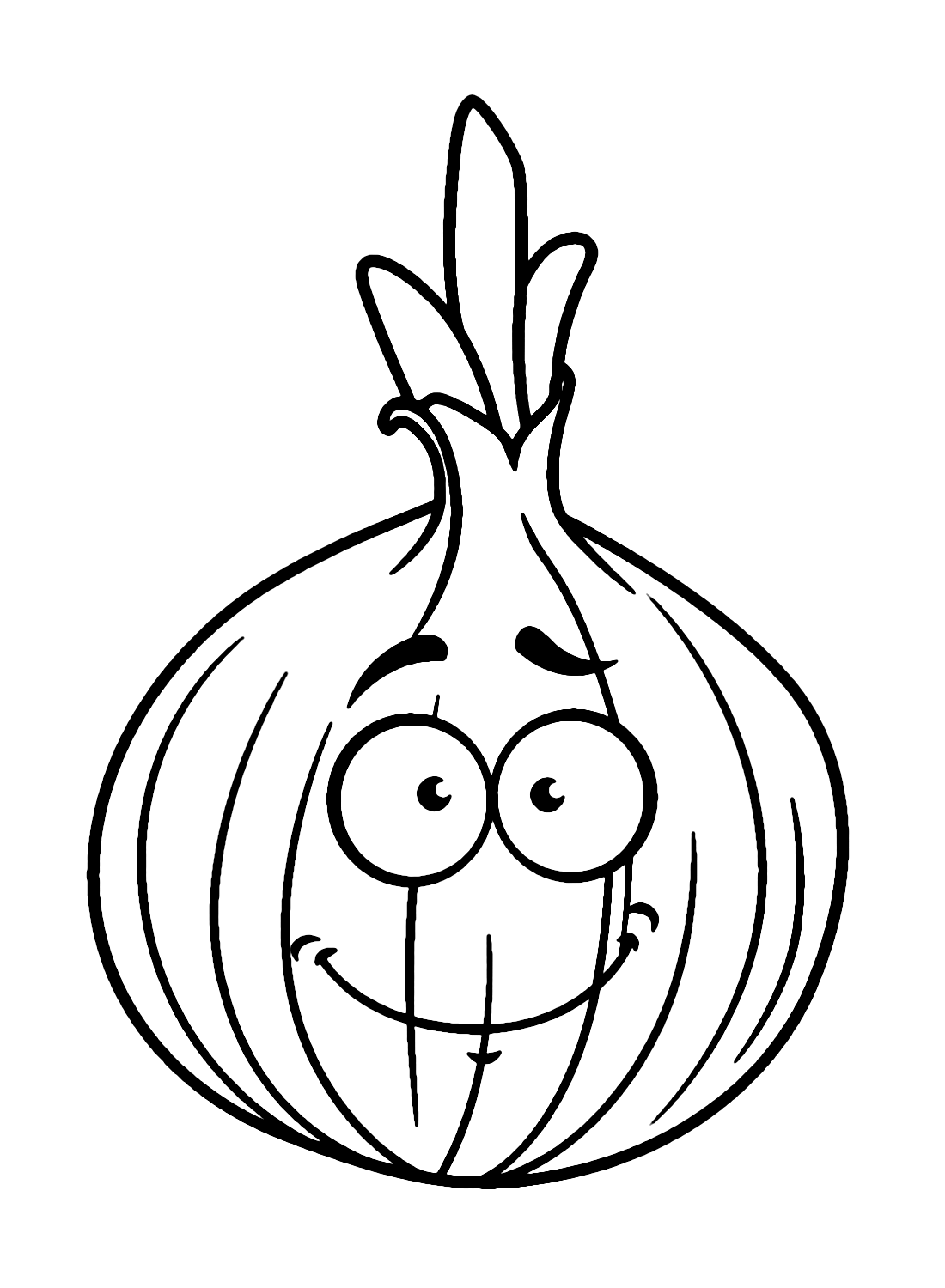
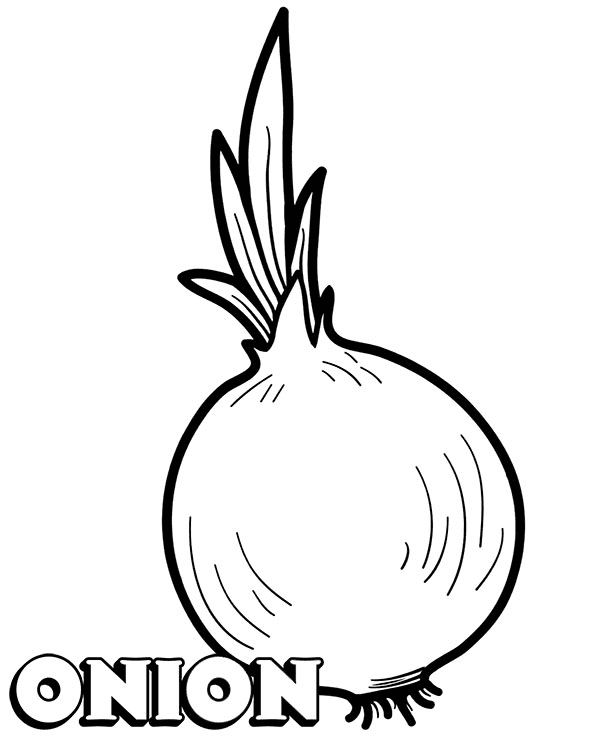
This collection spans 37 pages, grouped into classic portraits and expressions, variety and cross-section designs, character and group scenes, drawing-style artwork, and printable sheets. The coloring angle ranges from simple standalone bulbs to playful character designs.
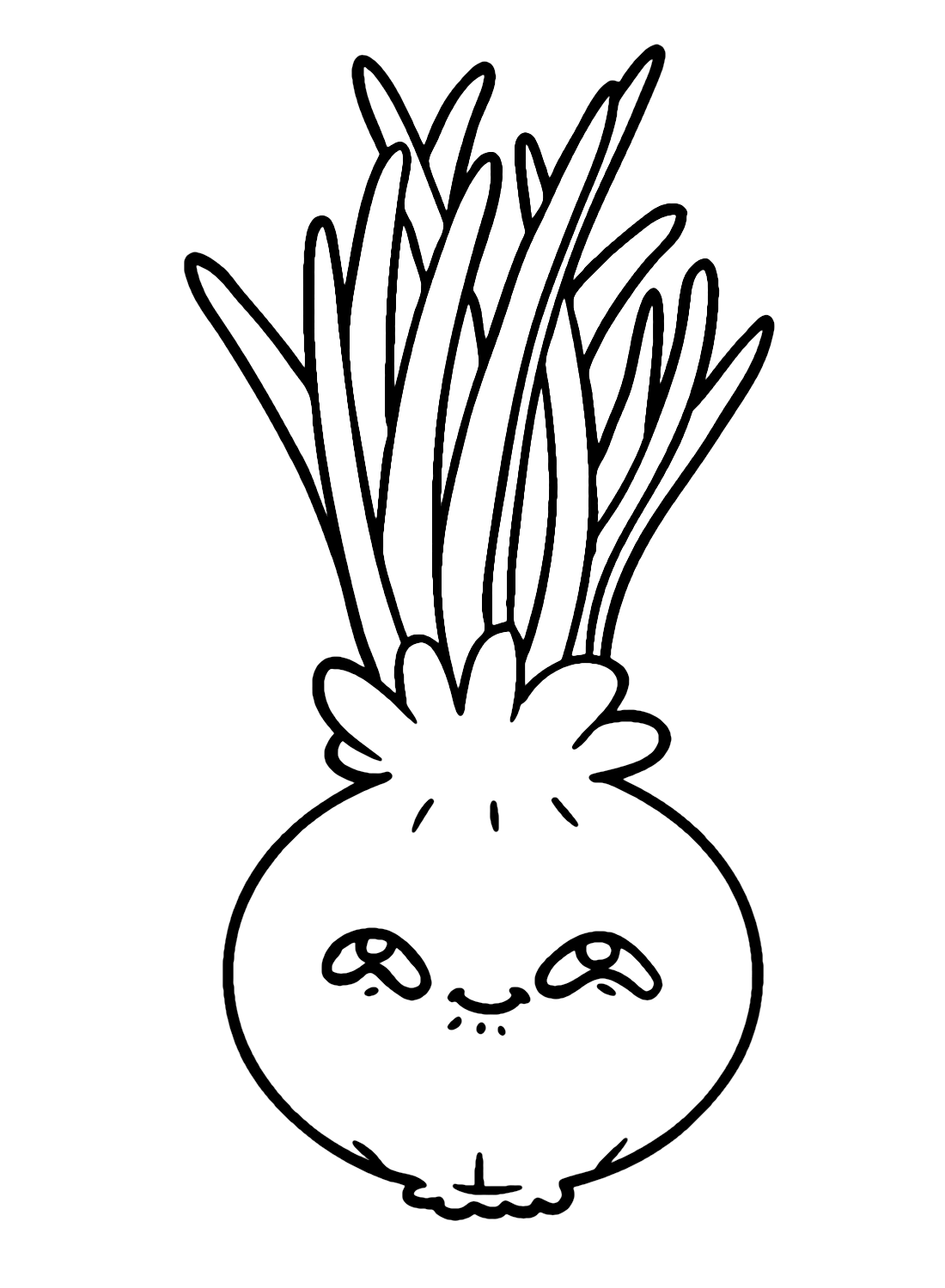
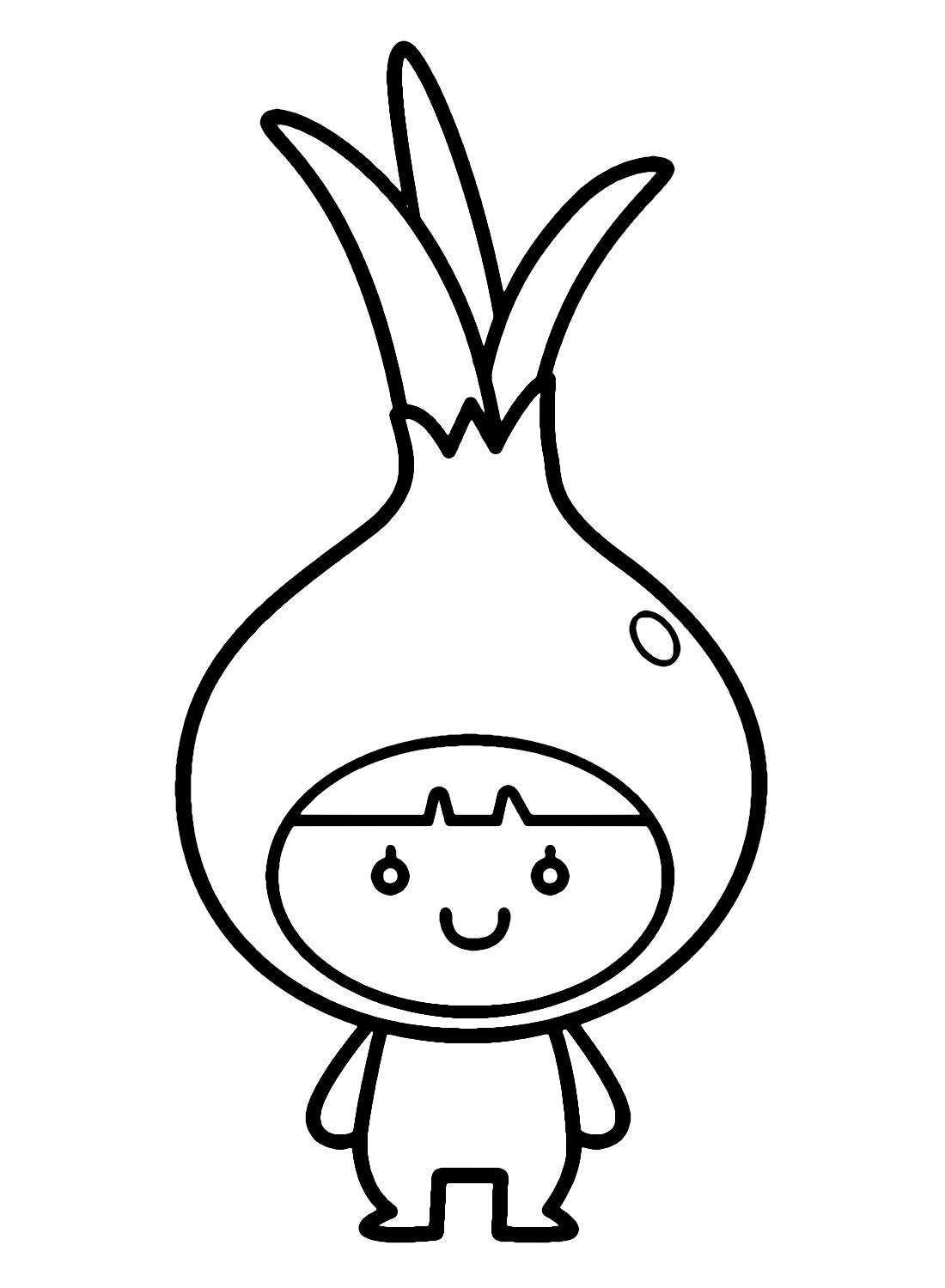
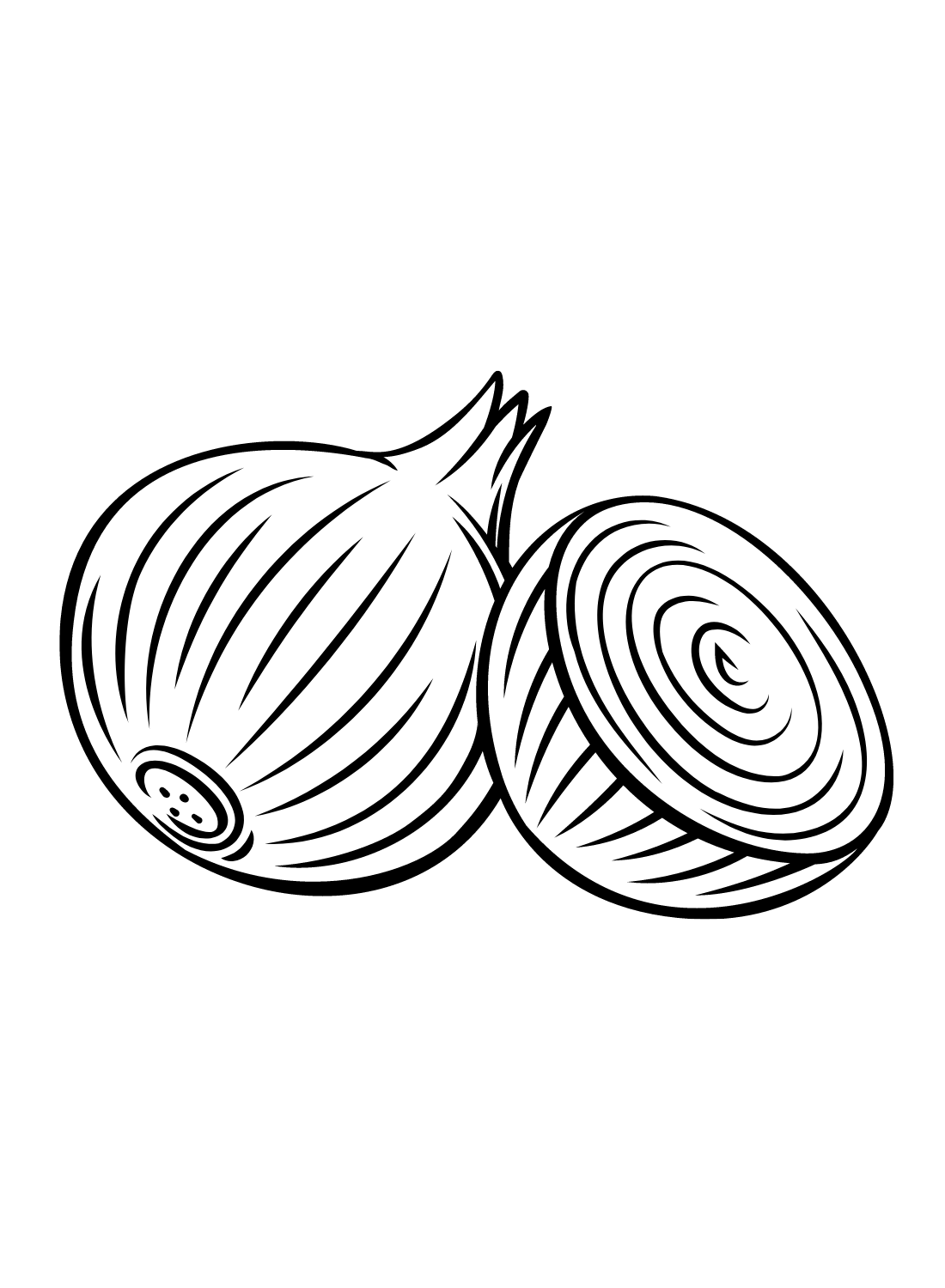
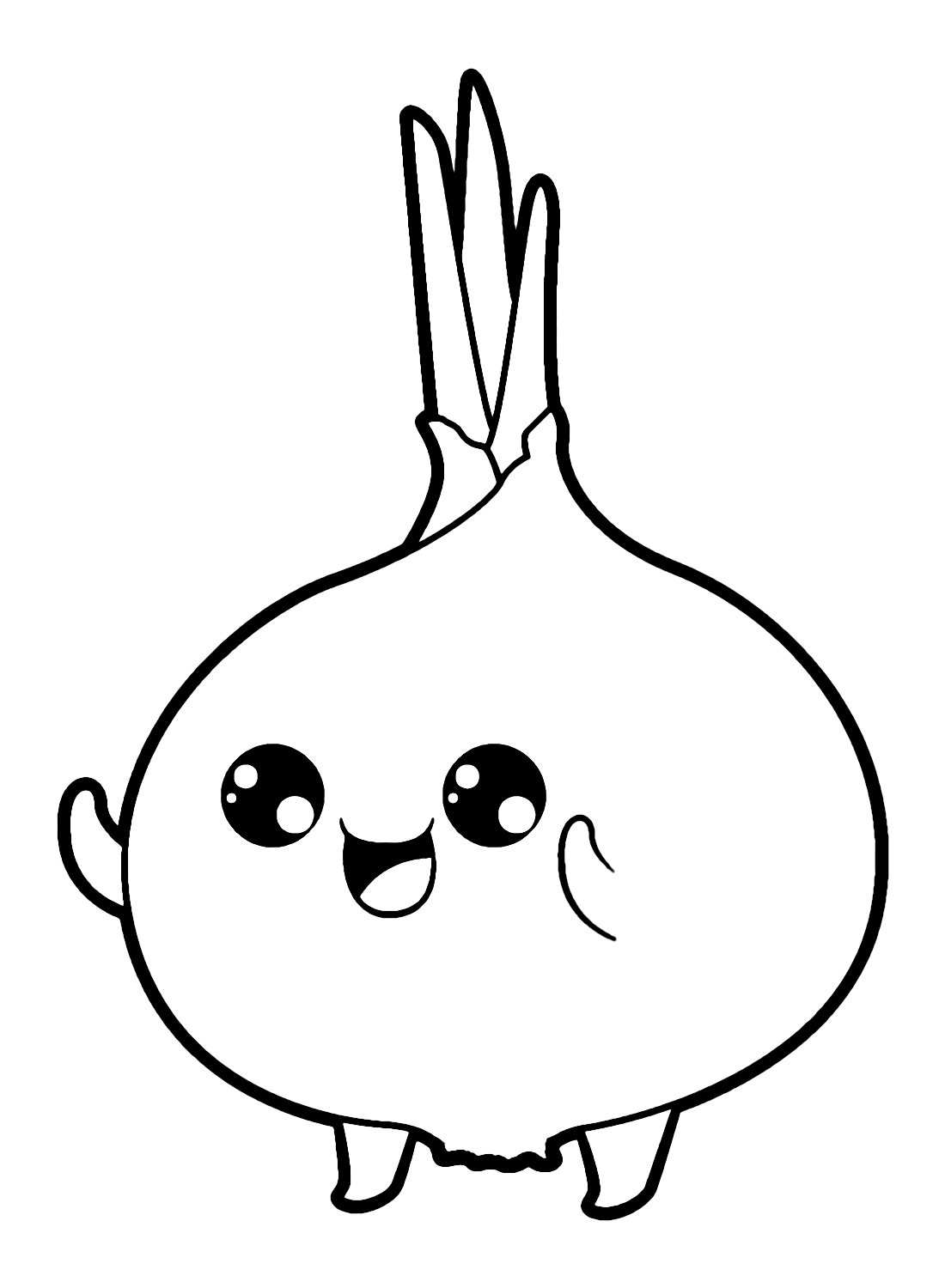
What Is Inside This Collection
The 37 designs group into five categories, from classic expressions to printable sheets.
Classic Portraits and Expressions
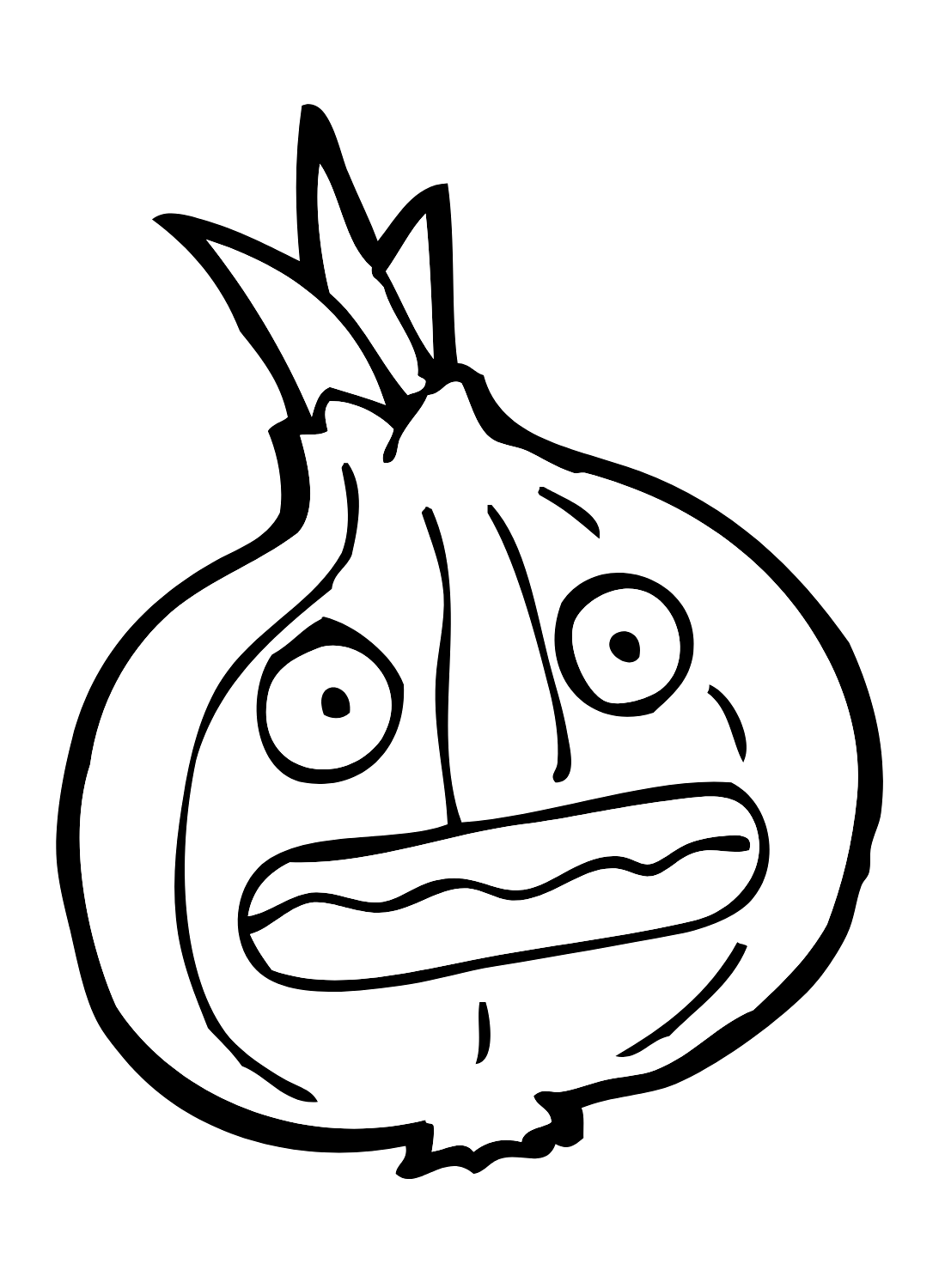
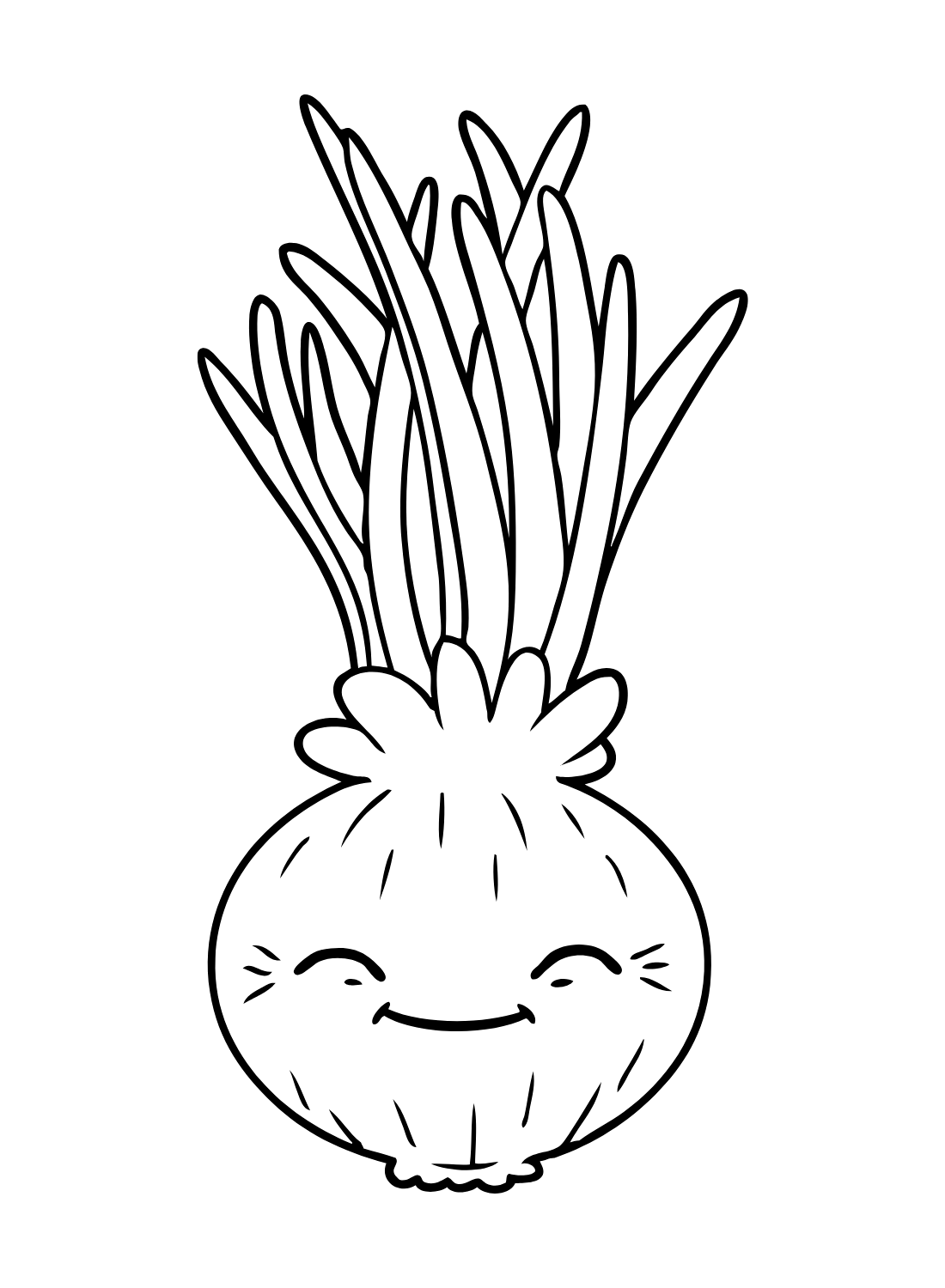
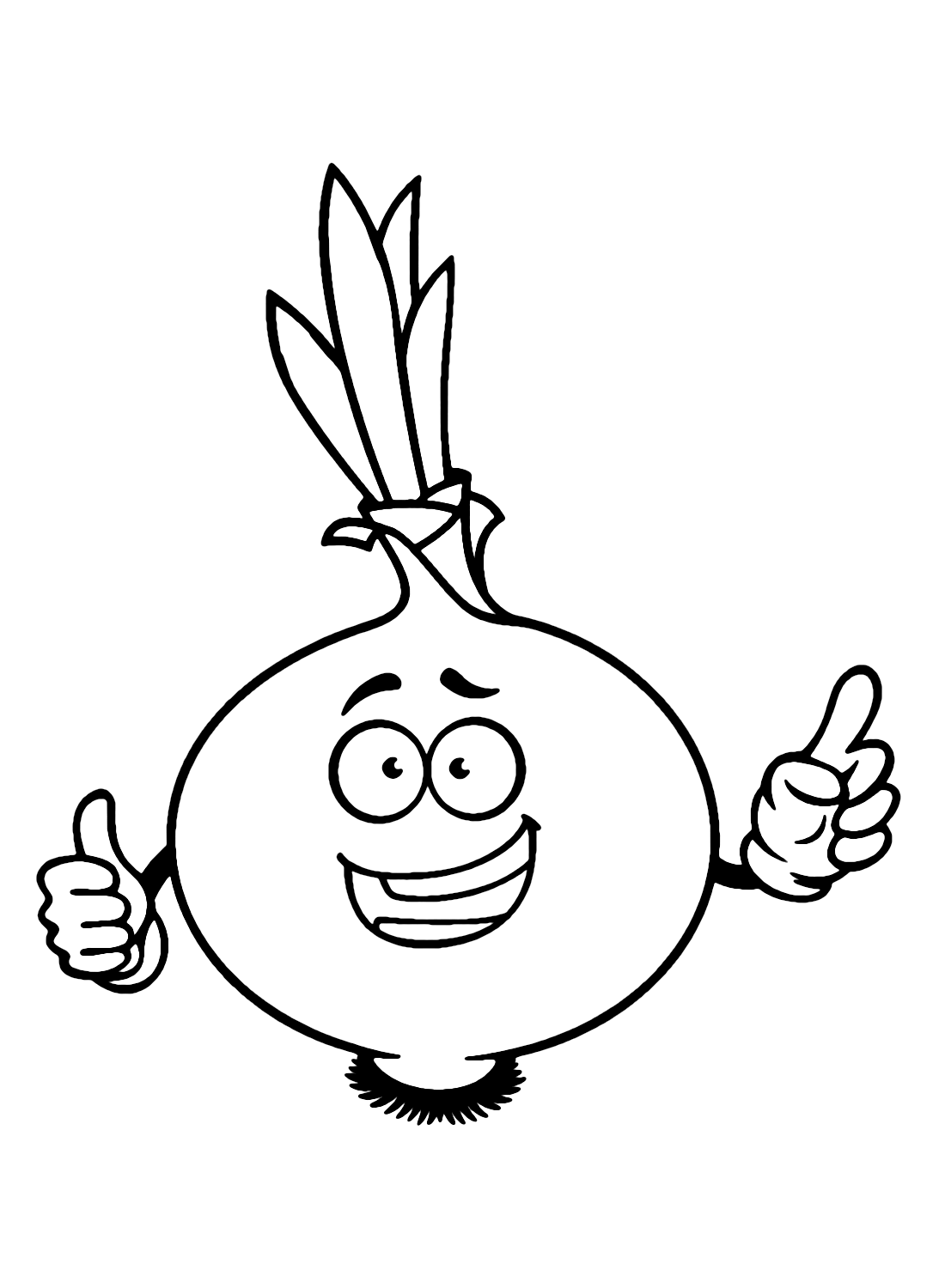
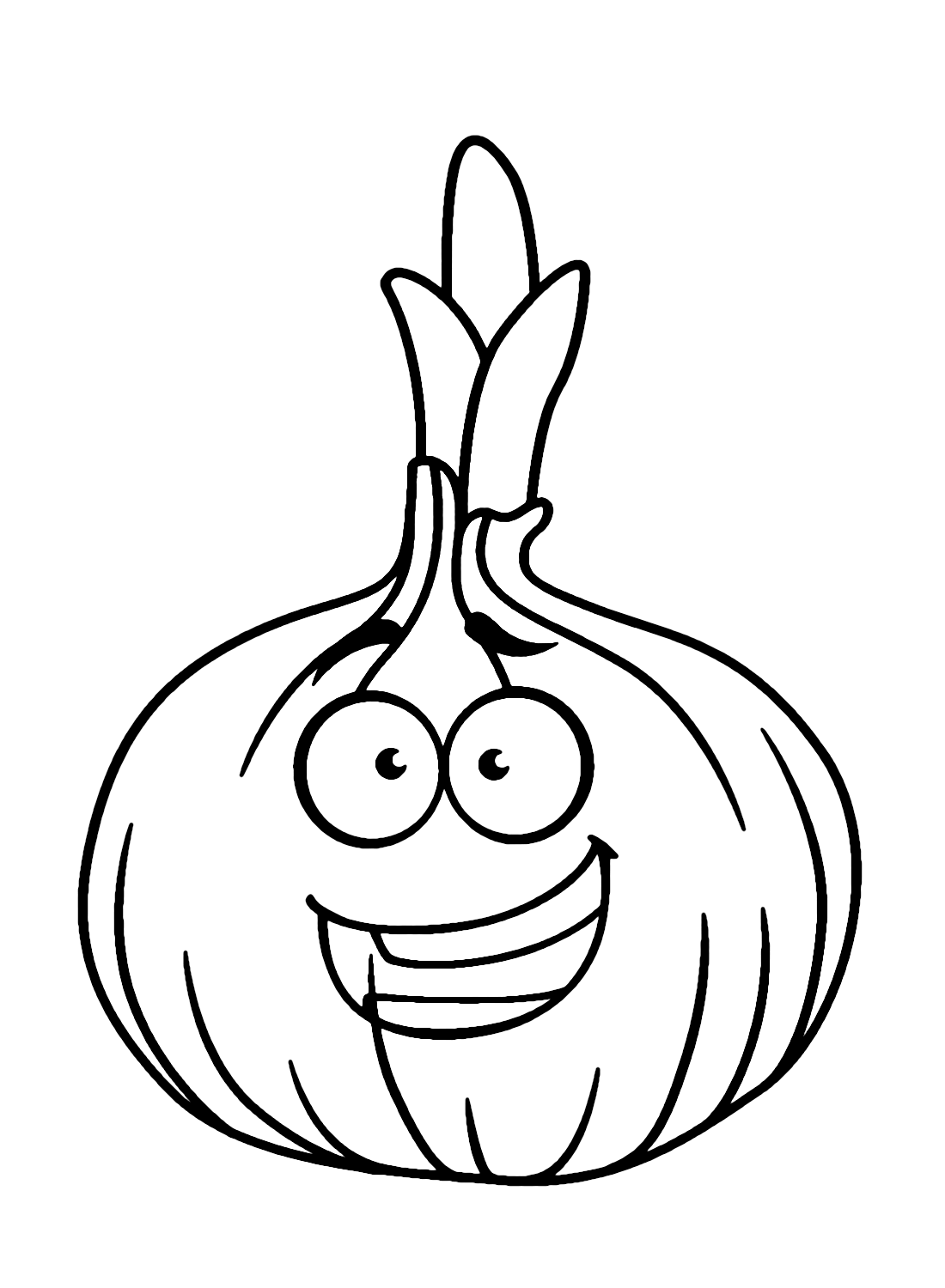
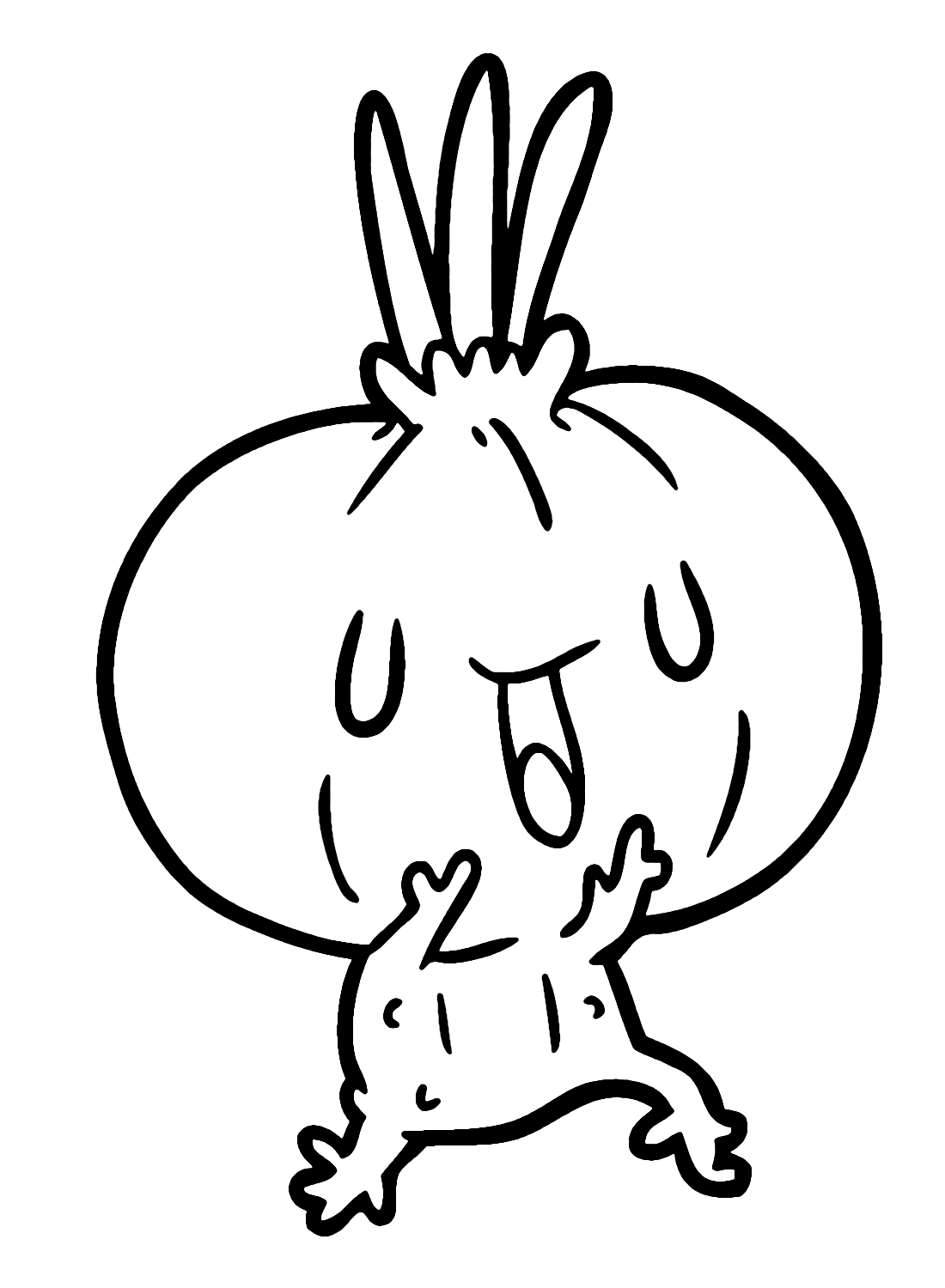
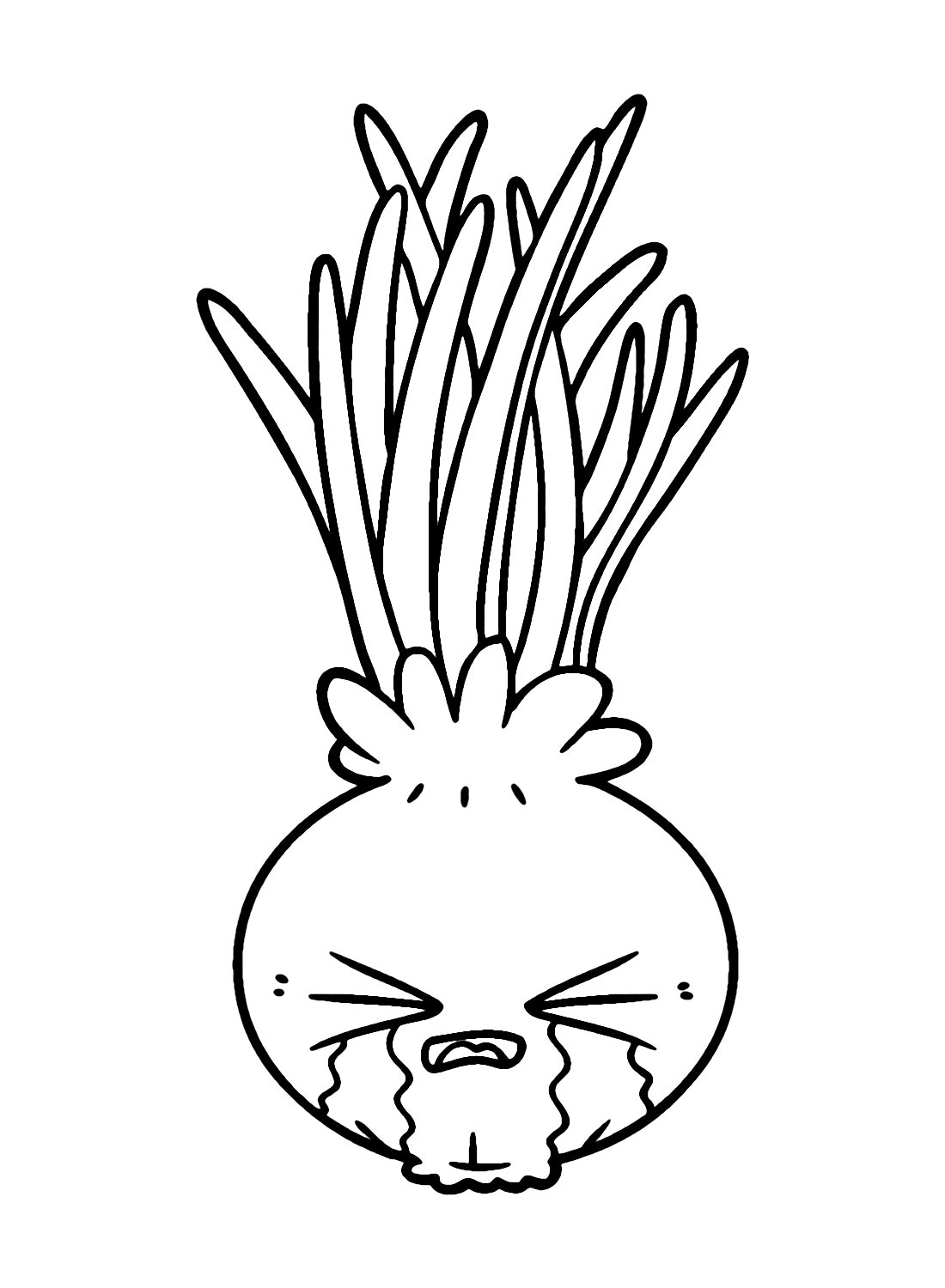
Ten pages show an onion with a range of moods, including happy, scared, crying, and kawaii-style expressions, making up the largest single group in the collection.
Variety and Cross-Section Designs
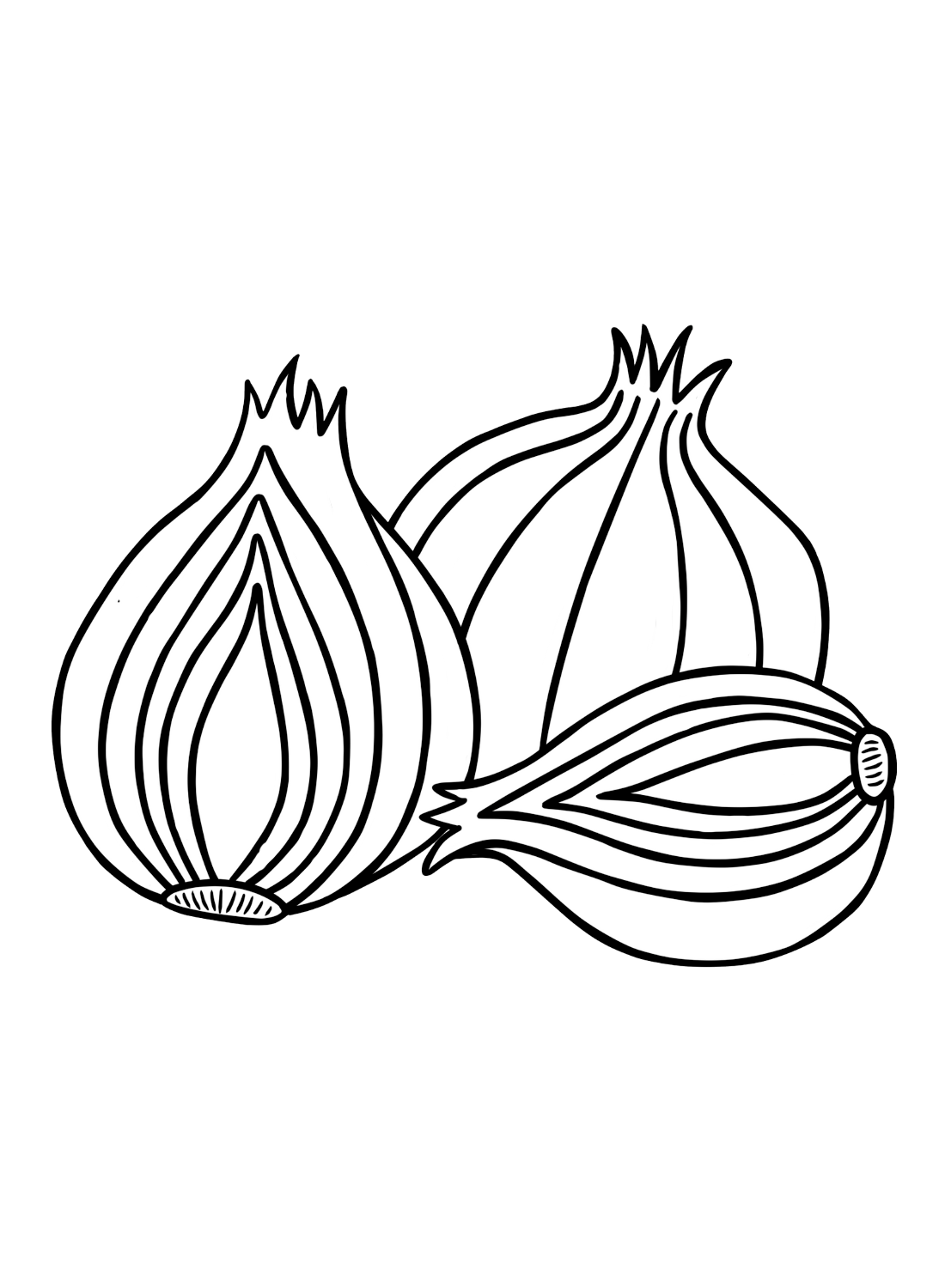
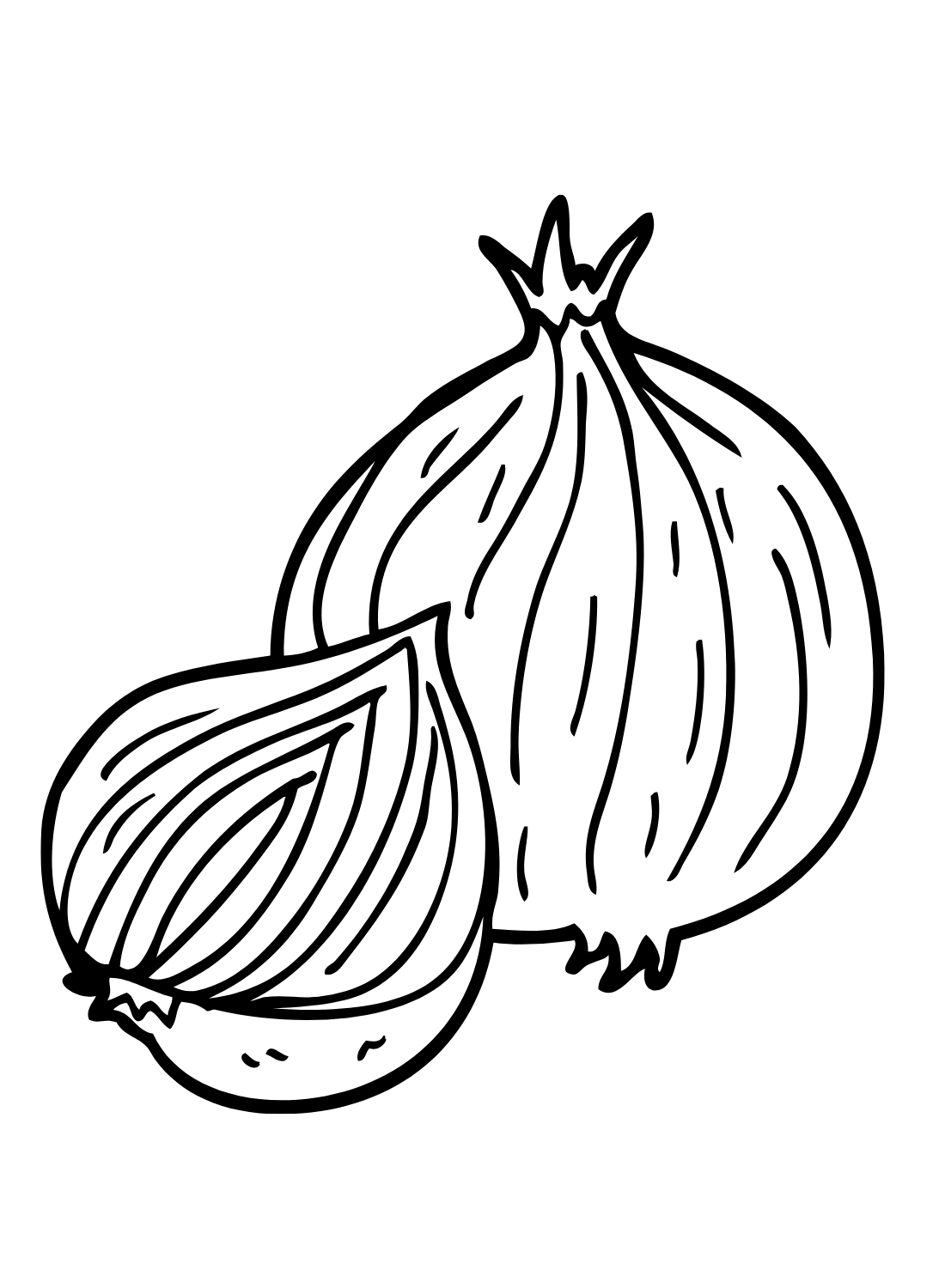
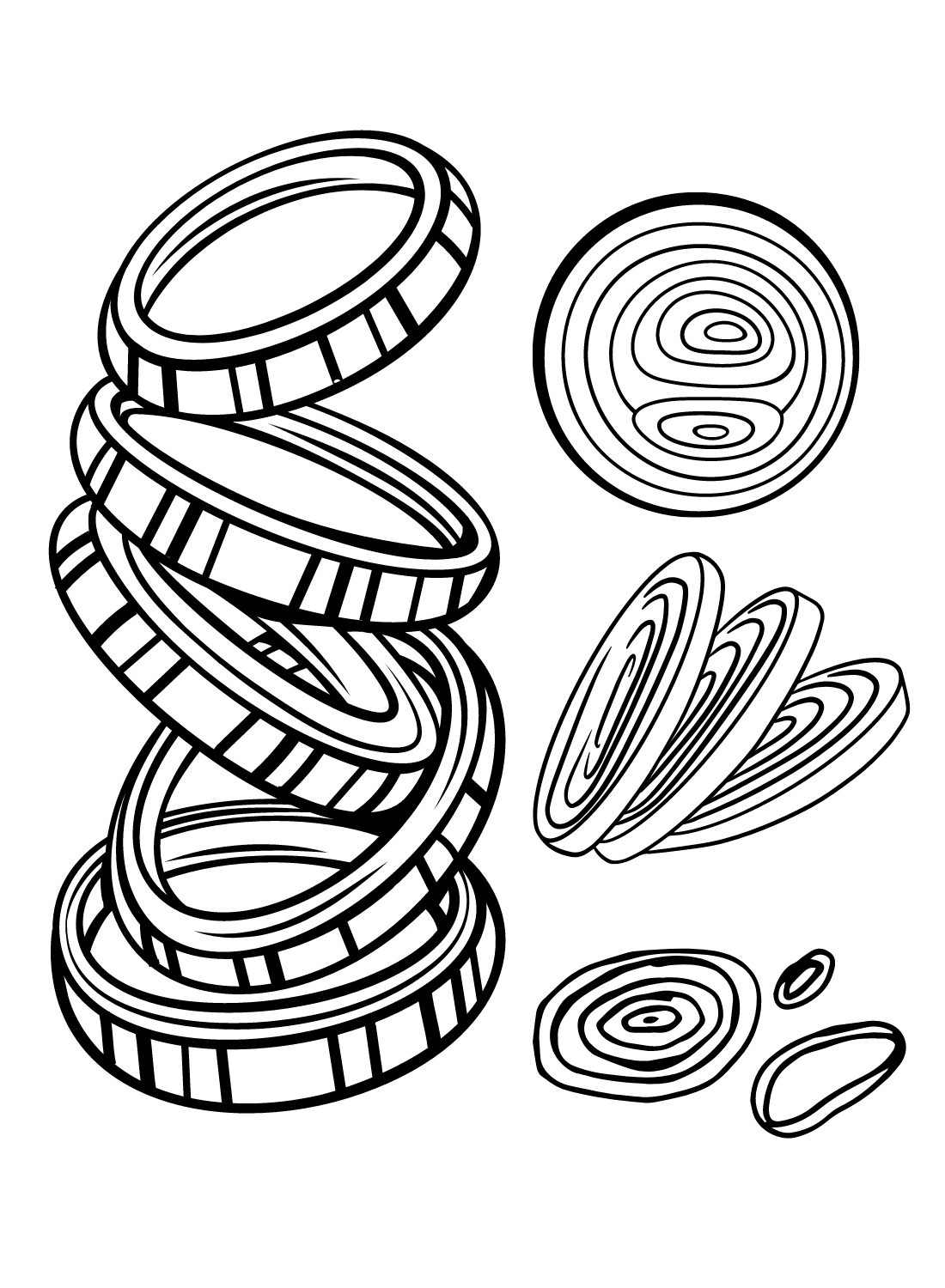
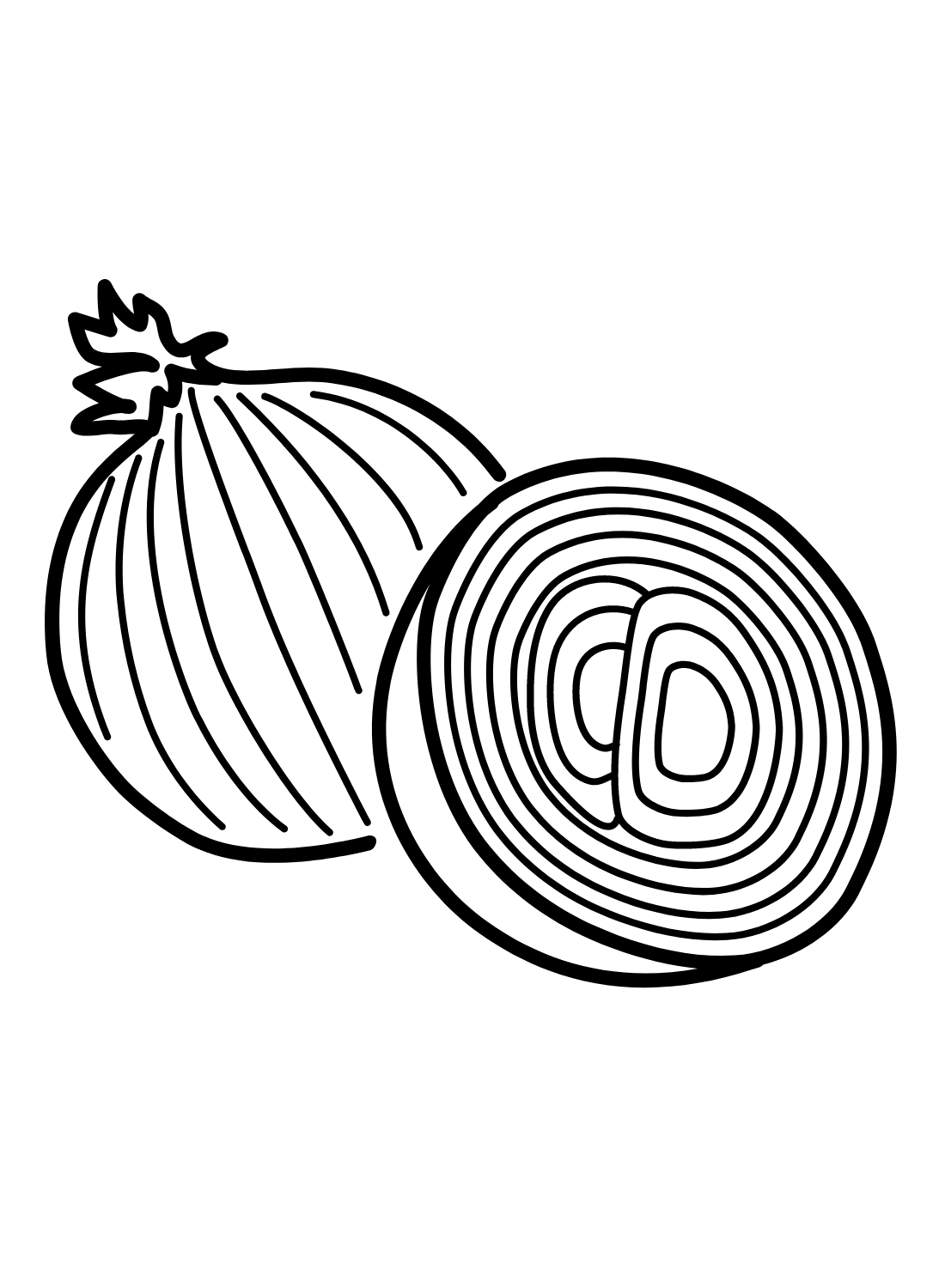
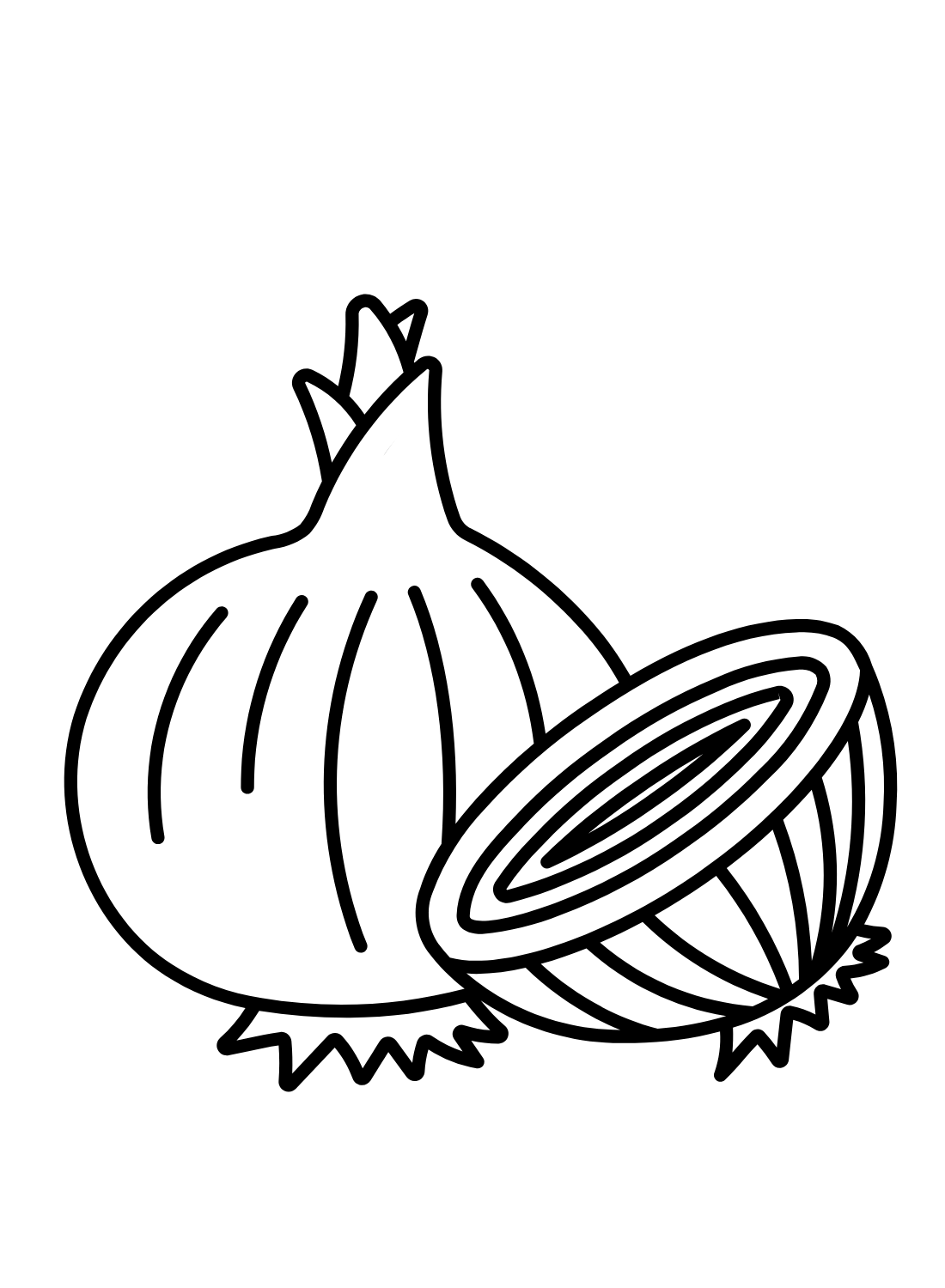
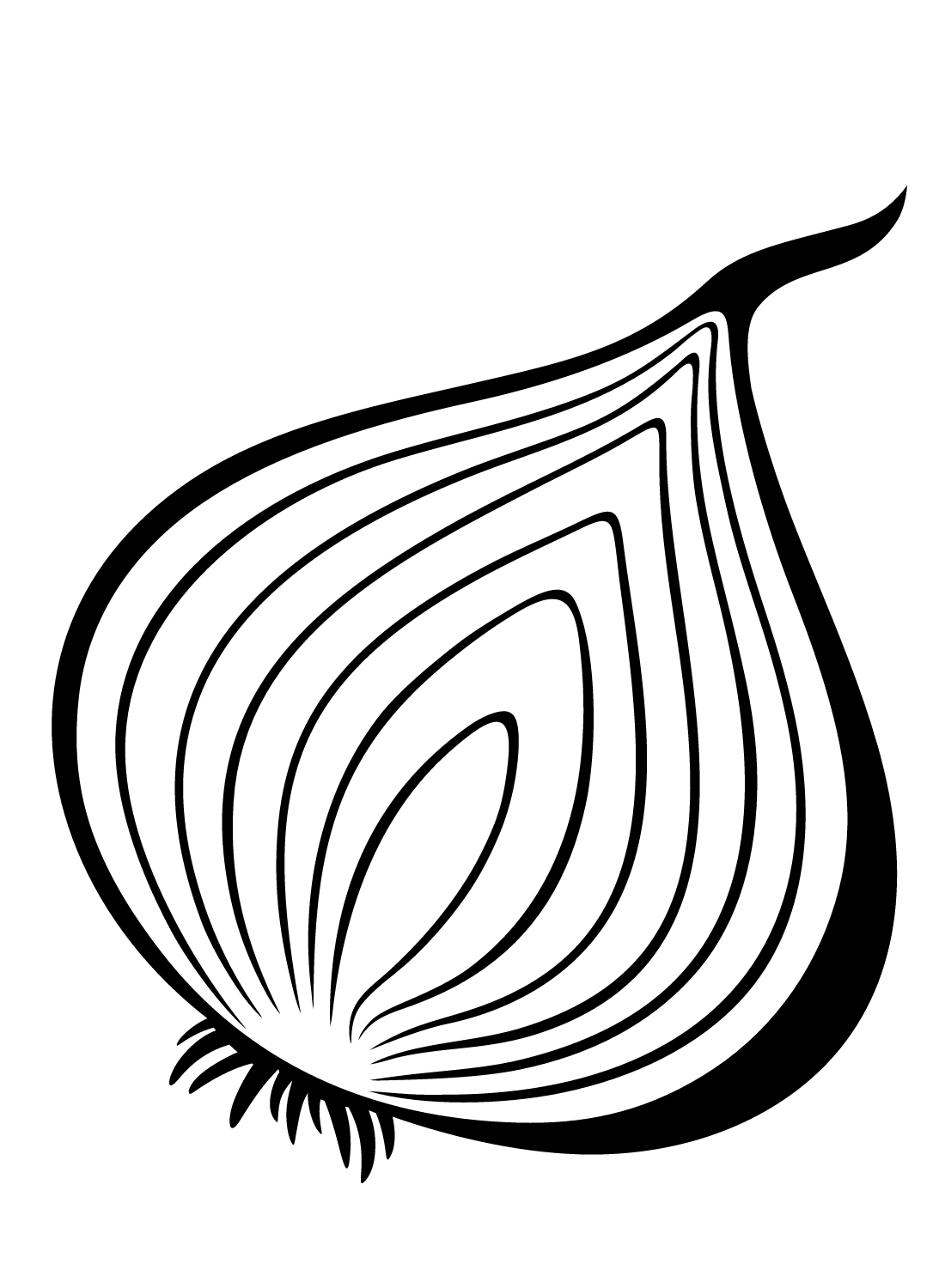
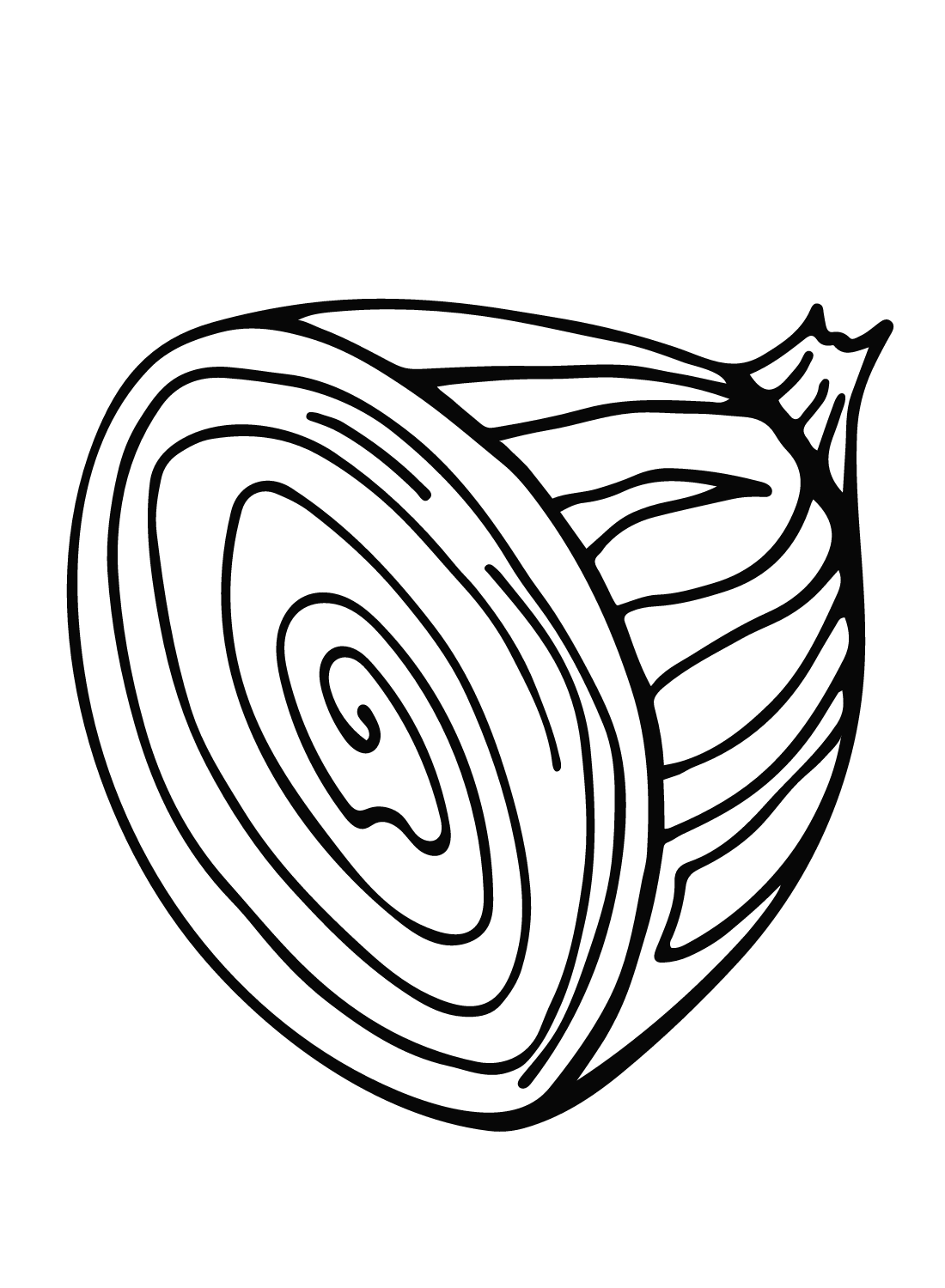
Seven pages take a closer look at specific onion types and structure, including red, purple, and green varieties, along with sliced and cross-section views.
Character, Costume, and Group Scenes
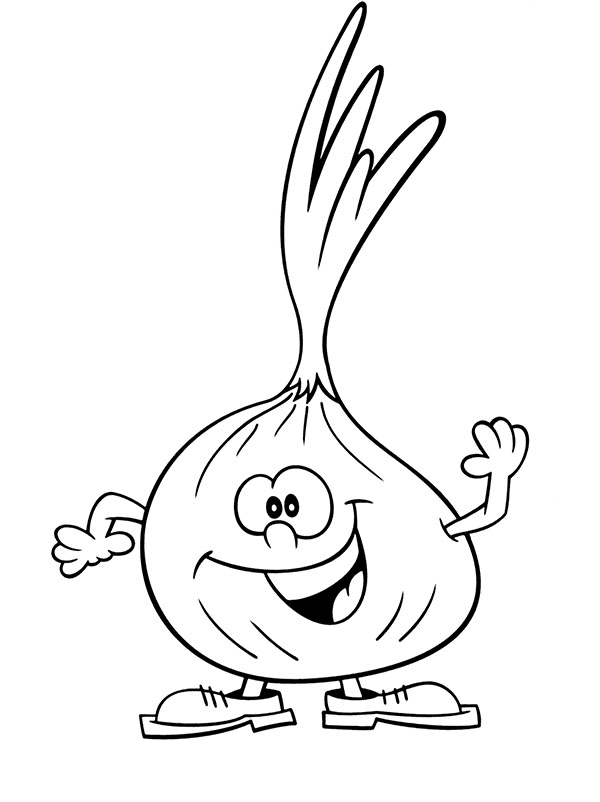
Six pages give onion a playful, character-based twist, including a child in an onion costume, cartoon-style renderings, and scenes with multiple onions or sprouts.
Drawing-Style Designs
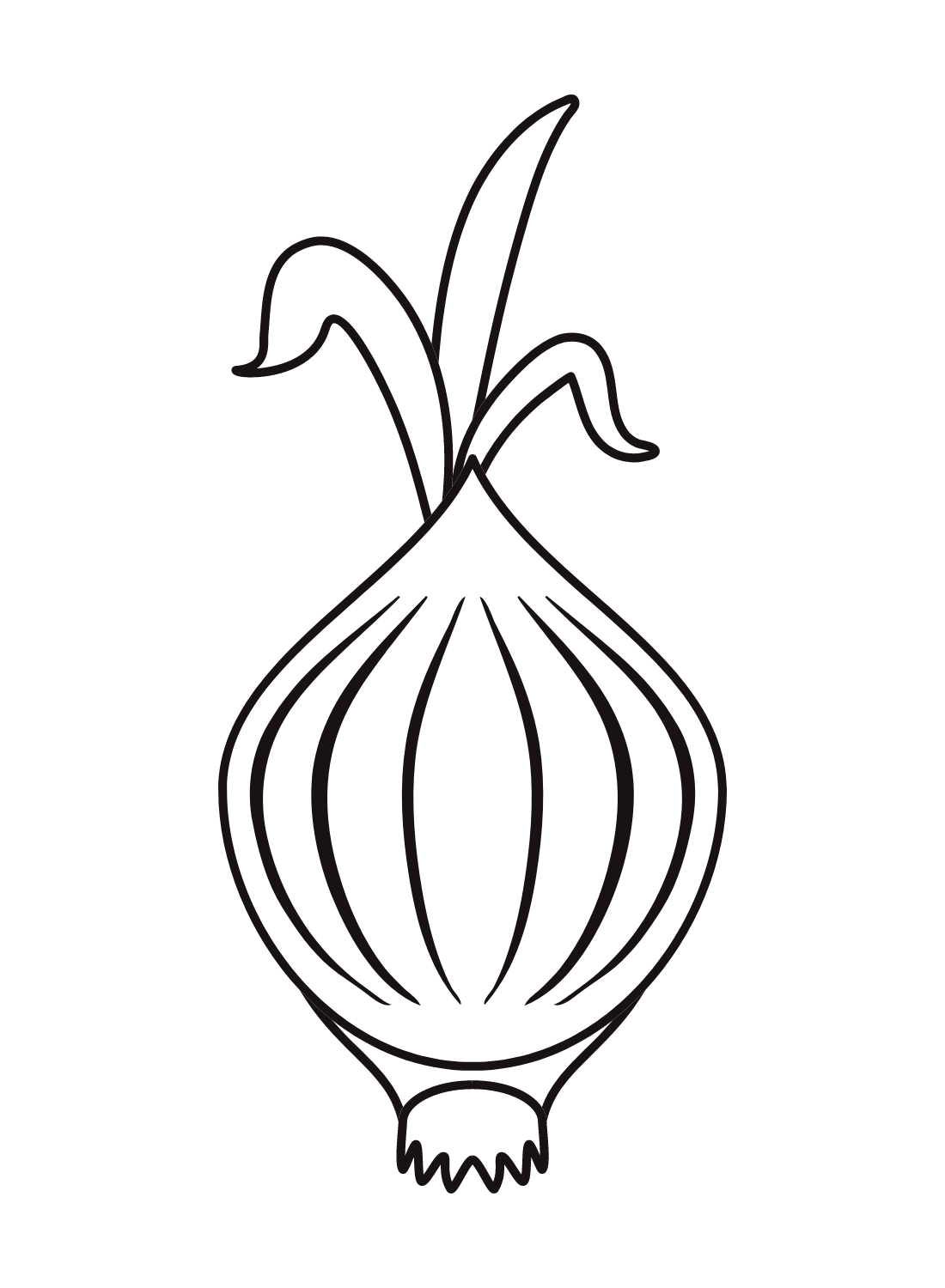
Two pages use a simplified sketch or line-drawing style, offering a lighter, more approachable version for beginner colorists.
Printable and Free Sheets
Twelve pages are formatted as general printable sheets, making up the largest share of the collection and useful for a quick, single-session print at home or in the classroom.
What Onion Coloring Pages Do
Concentric rings that reward a steady hand. A sliced or cross-section onion design reveals layered, ring-like structures radiating outward, and keeping each ring evenly spaced without letting the lines drift takes more careful, repetitive linework than a plain, uncut bulb shape. The American Academy of Pediatrics ties structured, radiating coloring work to fine motor skill development in children ages 2 through 7.
A two-step chemistry lesson behind every tear. Cutting an onion sets off a genuine two-step chemical reaction. One enzyme creates an unstable acid, and a second enzyme converts it into the actual gas that irritates the eyes, a process Japanese researchers confirmed in 2002. That real science gives coloring sessions a concrete, memorable fact rather than a vague “onions make you cry” explanation.
A calming activity paired with a genuinely surprising family comparison. A 2005 study in the Art Therapy Journal found that structured coloring sessions produced measurable reductions in anxiety, and there’s a fun bit of trivia to sit with during a slow coloring session: garlic belongs to the same plant family as onions. Still, it doesn’t make anyone cry, because it’s missing one specific enzyme onions have.
Real variety, real color choices. Because this collection includes red, purple, green, and classic yellow-toned onion designs, colorists get to match their page to an actual onion type rather than guessing at a single expected color.
How to Color Onion Pages Well
- Yellow onions: Use warm Tan or Golden Brown for the papery outer skin, with pale Cream for the inner layers.
- Red onions: Use deep Red-Purple for the outer skin and layers, keeping the color rich and consistent throughout the rings.
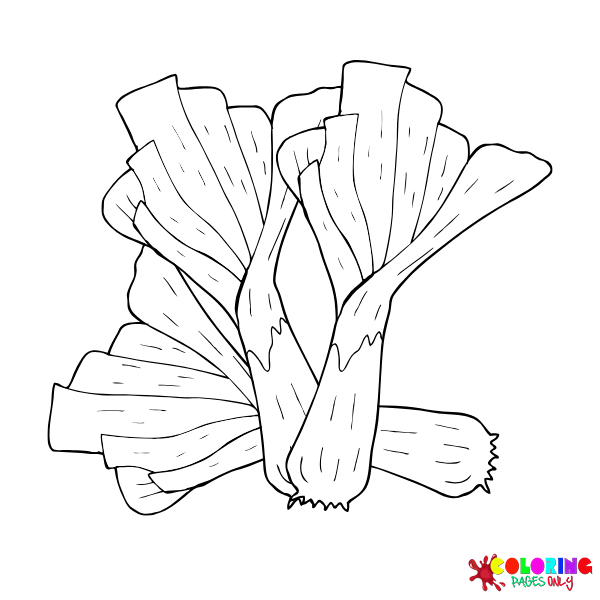
- Green onions (scallions): Use White for the lower bulb portion and fresh Green for the long, hollow stalks.
- Sliced and cross-section designs: Use alternating light and slightly darker shades of the base color for each ring, helping the layered structure read clearly.
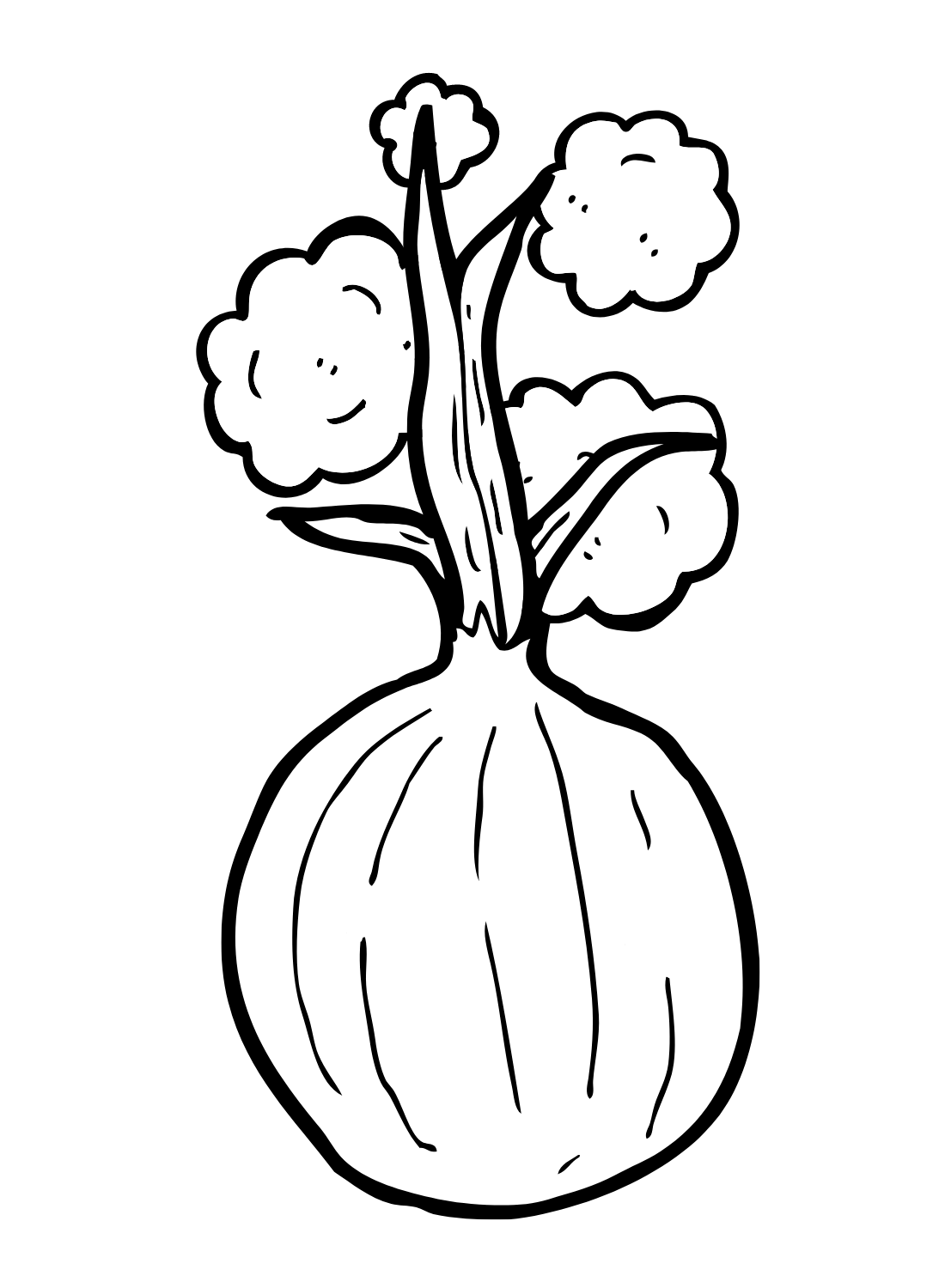
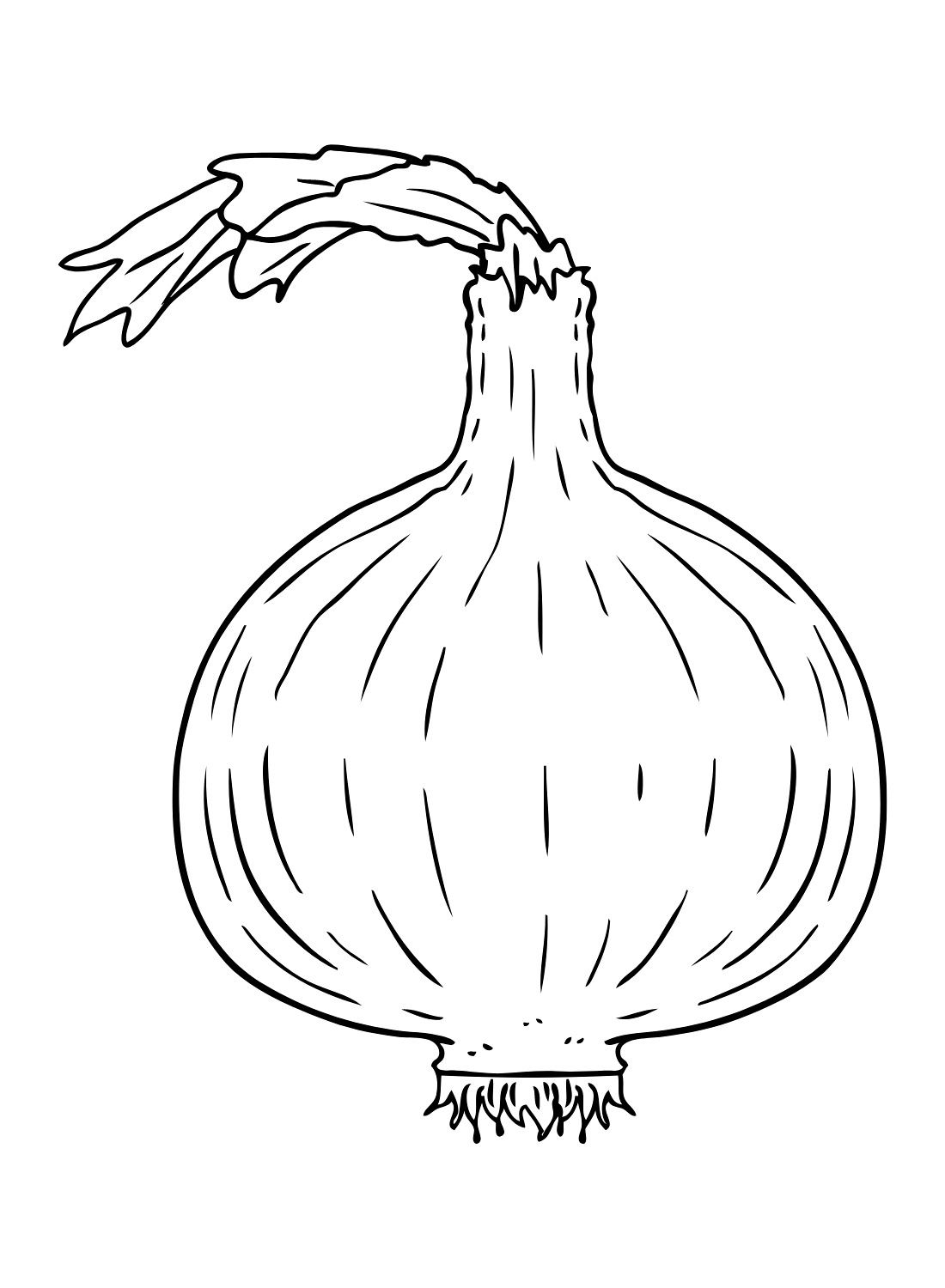
- Sprouts: Use bright Green for any visible sprout or shoot growing from the top of the bulb.
- Character and costume designs: Keep the onion’s base color accurate to a real variety, then add simple facial features or costume details in contrasting colors so the character stands out clearly.
5 Creative Craft Ideas With Onion Coloring Pages
1. Kitchen Recipe Card
Color an onion design, glue it to the front of an index card, and use it as a decorative cover for a favorite family recipe.
2. Onion Bookmark
Color a small onion design, cut it into a bookmark shape, and use it to mark a place in a favorite book.
3. Greeting Card
Fold cardstock in half, glue on a colored onion design, and write a message inside for a friend who loves cooking.
4. Classroom Vegetable Poster
Color several onion pages as a group and arrange them on a poster board for a classroom lesson about vegetables and where our food comes from.
5. Paper Garland
Cut out three or four colored onion designs, punch a hole in each, and string them together with twine for a fun kitchen-themed garland.
Frequently Asked Questions
What are Onion coloring pages?
Onion coloring pages are printable line-art designs featuring this vegetable in classic portrait, variety, and character artwork. This collection includes 37 free designs available as PDFs or online coloring.
What plant family does an onion belong to?
An onion belongs to the genus Allium, the same family as garlic, chives, and leeks.
Why do onions make you cry when you cut them?
Cutting an onion damages its cells and releases an enzyme called alliinase, which reacts with sulfur compounds to form an unstable acid. A second enzyme, lachrymatory factor synthase, then converts that acid into a volatile gas that irritates the eyes and triggers tears.
Why doesn’t garlic make you cry as onions do?
Garlic contains the first enzyme involved in the reaction but lacks lachrymatory factor synthase, the second enzyme needed to produce the tear-inducing gas, so cutting garlic doesn’t trigger the same response.
What are the different types of onions?
Common onion types include yellow, red, white, and green onions (scallions), each with a slightly different flavor and appearance.
What part of the onion plant do we eat?
The edible part of the onion is the bulb, made up of overlapping fleshy layers formed from modified leaf bases, wrapped in a thin, papery outer skin.
Are Onion coloring pages suitable for young children?
Yes. The simple portrait and expression designs in this collection use bold, uncluttered outlines suited to preschool and early elementary colorists. At the same time, the cross-section and variety pages offer more detail for older kids.
What nutrients do onions provide?
Onions are low in calories and provide vitamin C, vitamin B6, potassium, and antioxidant plant compounds like quercetin.
Start Coloring
Download any page by clicking the design. No account, email, or payment is required. Pages print directly from the browser at full resolution or open in the online coloring tool for screen use. Share finished pages on Facebook or Pinterest with the share buttons at the top of each design page.