Free Doraemon coloring pages – 150+ pages featuring Doraemon, Nobita, Shizuka, Gian, Suneo, Mimi, gadgets, adventures, seasonal scenes, costumes, and activities – free printable PDF and online coloring for children and fans of Japan’s most beloved robotic cat.

On January 1, 1970, a blue robotic cat appeared simultaneously in six different Japanese children’s magazines published by Shogakukan – Yoiko, Yōchien, and four Shōgaku grade-level magazines – marking the debut of a manga character who would become one of the most culturally significant figures in the history of Japanese popular culture. Created by the artist duo Hiroshi Fujimoto and Motoo Abiko under the pen name Fujiko F. Fujio, Doraemon ran until Fujimoto’s death in 1996. The manga has sold over 100 million copies, been translated into more than 40 languages, and generated an anime franchise that began in 1979 and continues to this day. In 2008, Japan’s Foreign Ministry appointed Doraemon as the country’s first “anime ambassador.”

The story is simple: a robotic cat from the 22nd century arrives in a young boy’s desk drawer to help him navigate childhood. Everything else follows from that.

These 150+ free pages at ColoringPagesOnly.com cover the full Doraemon world. All free, PDF or PNG, print or color online. Let’s go, Nobita.

What’s Inside

Doraemon Solo – Emotions, Poses, and Character Expressions

With 150+ pages to choose from, the solo Doraemon collection is the largest and most varied section. It spans the full emotional vocabulary of a character who, despite being a robot, expresses feelings with complete transparency.

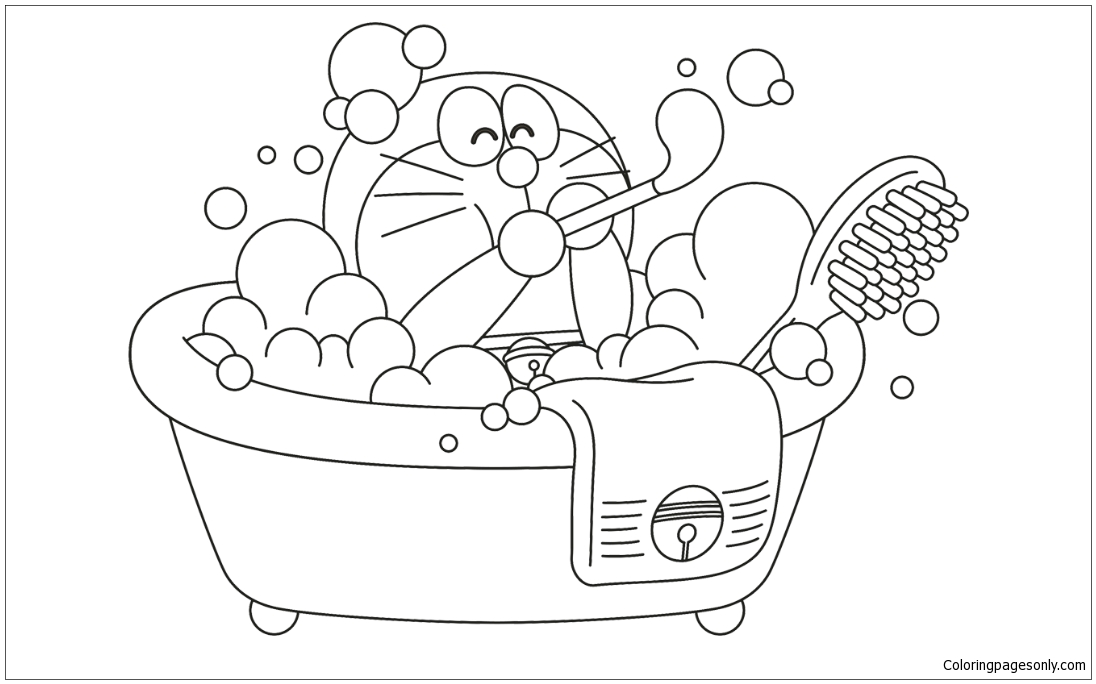
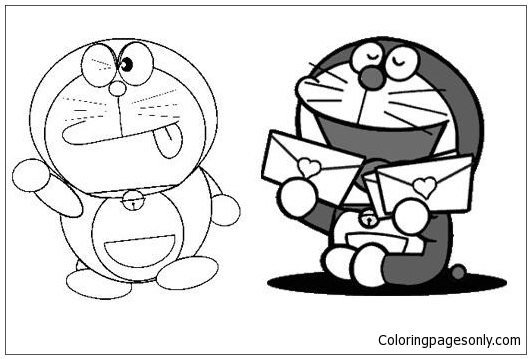
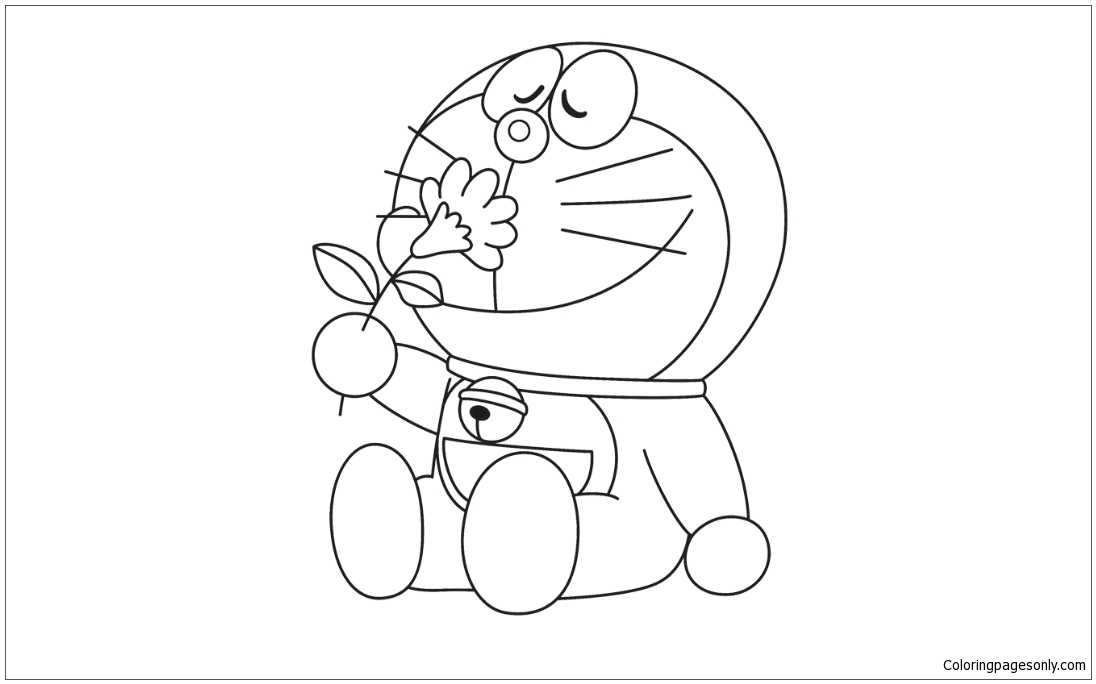
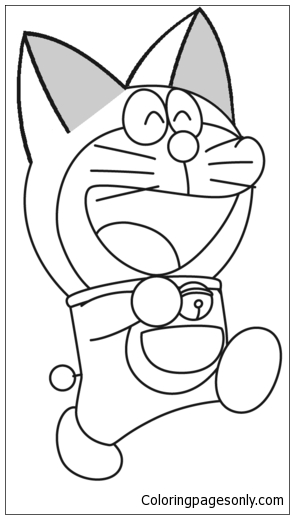
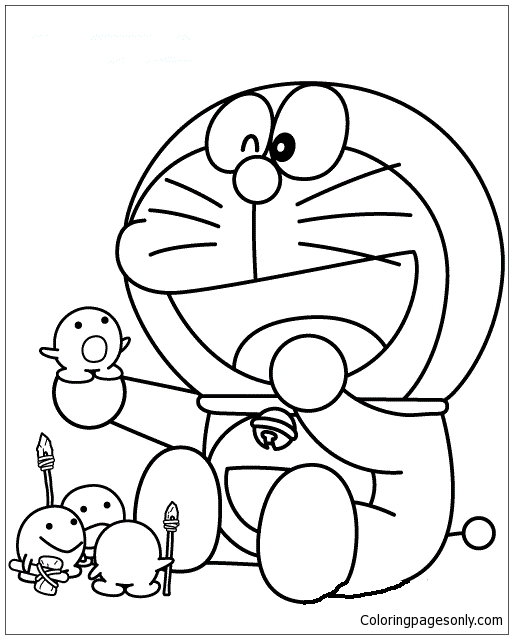
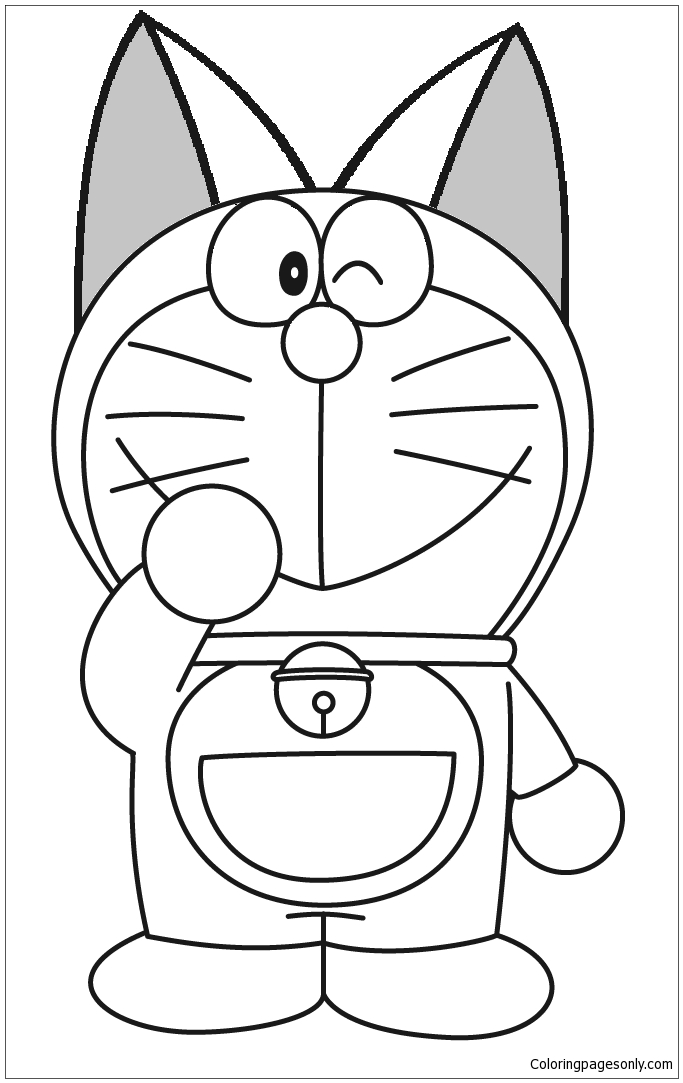
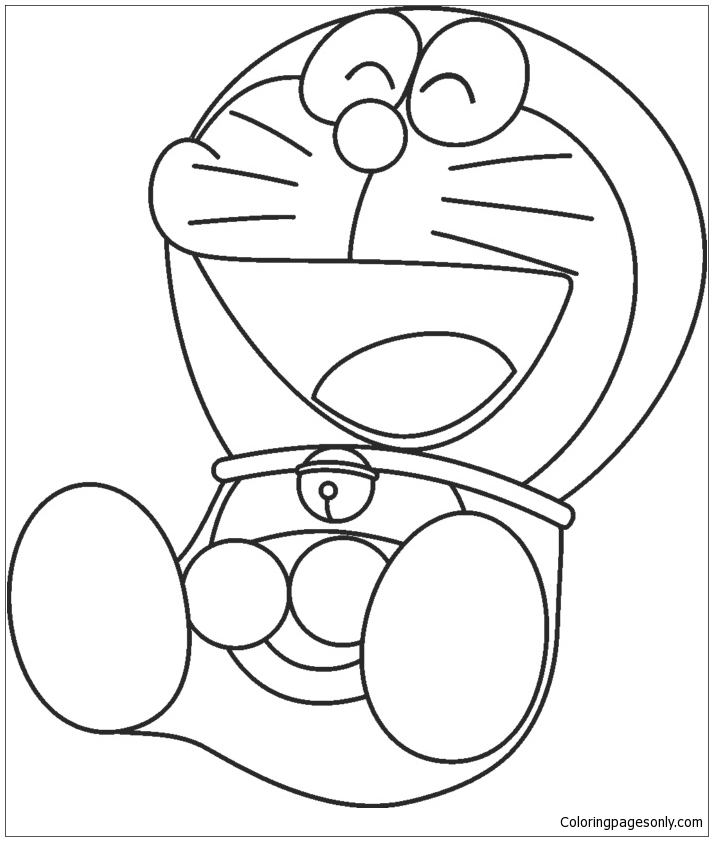
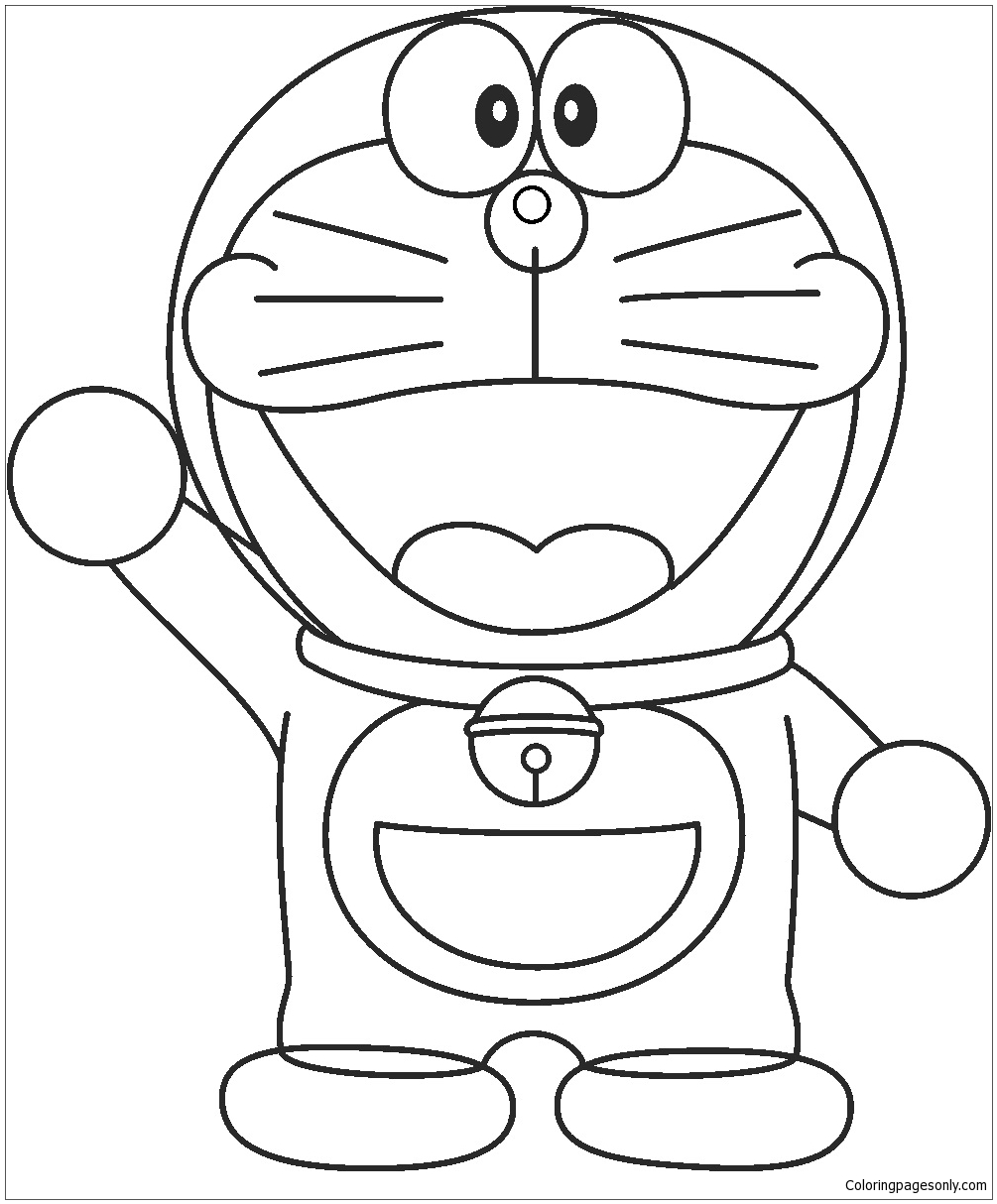
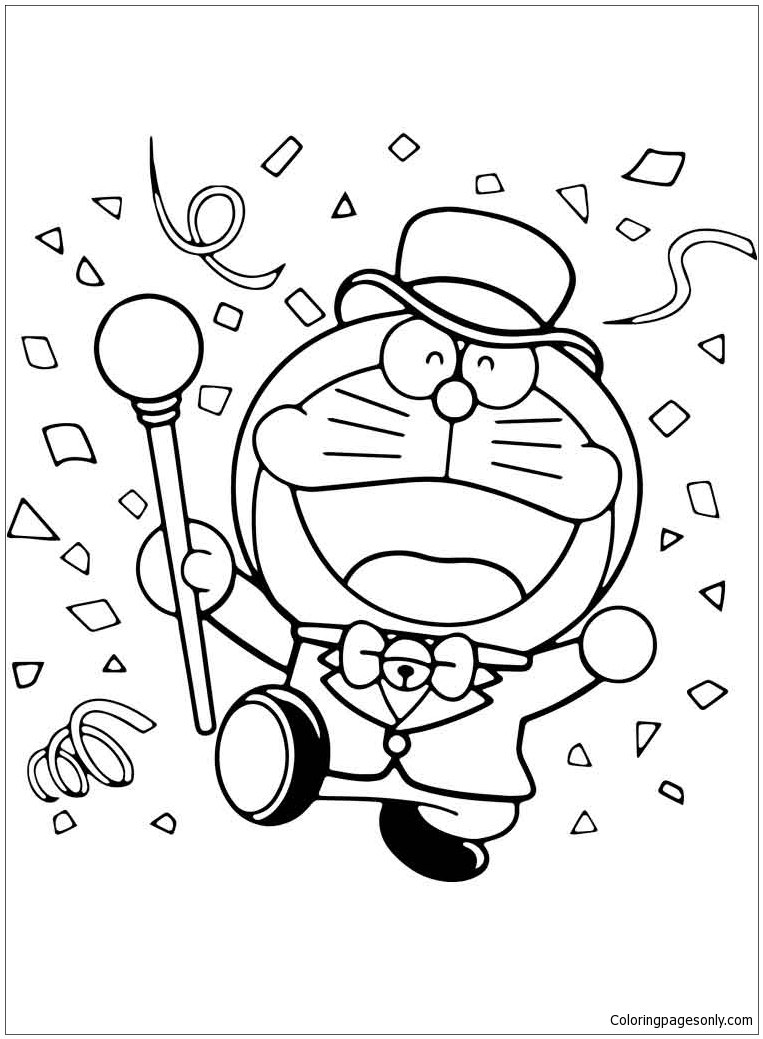
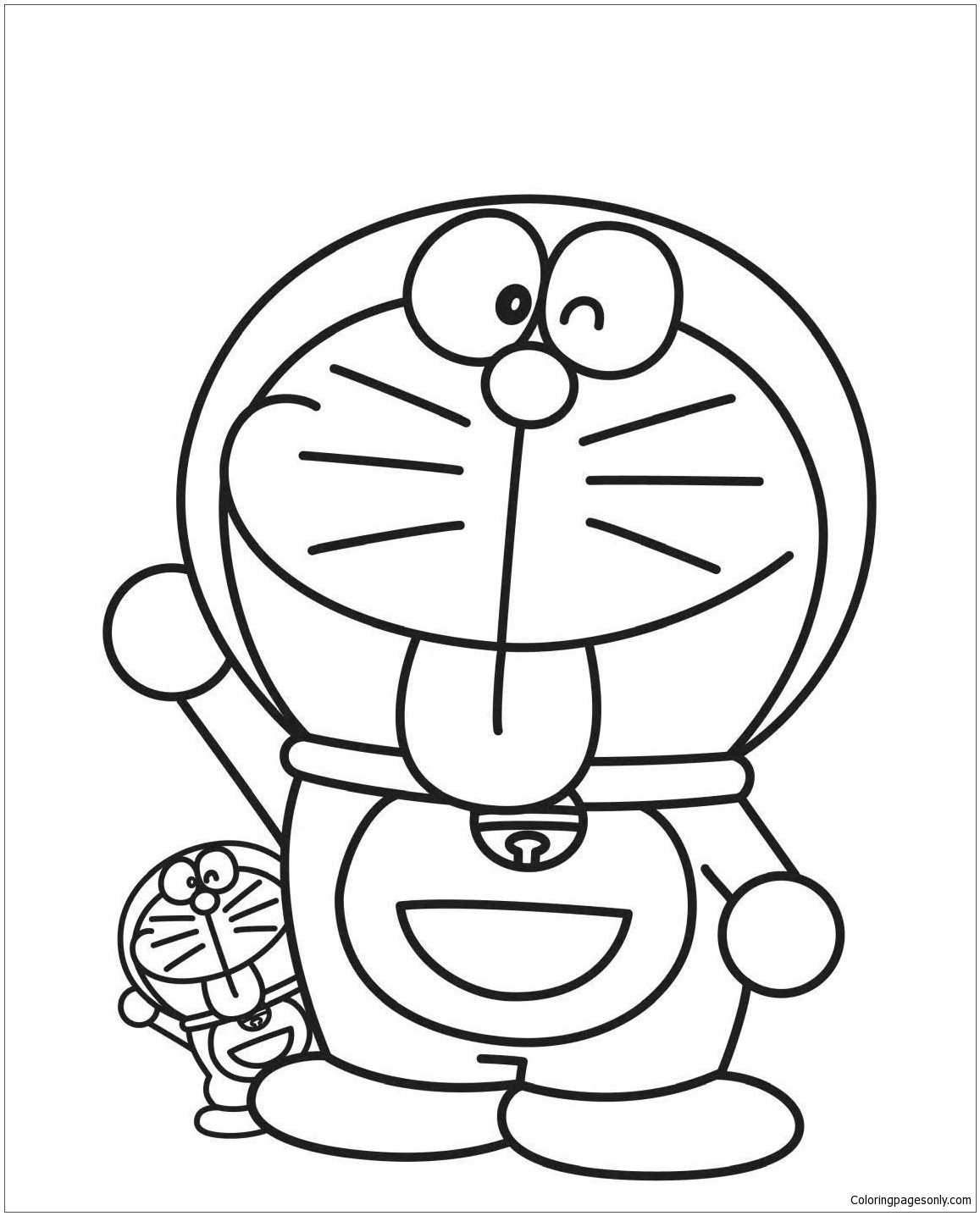
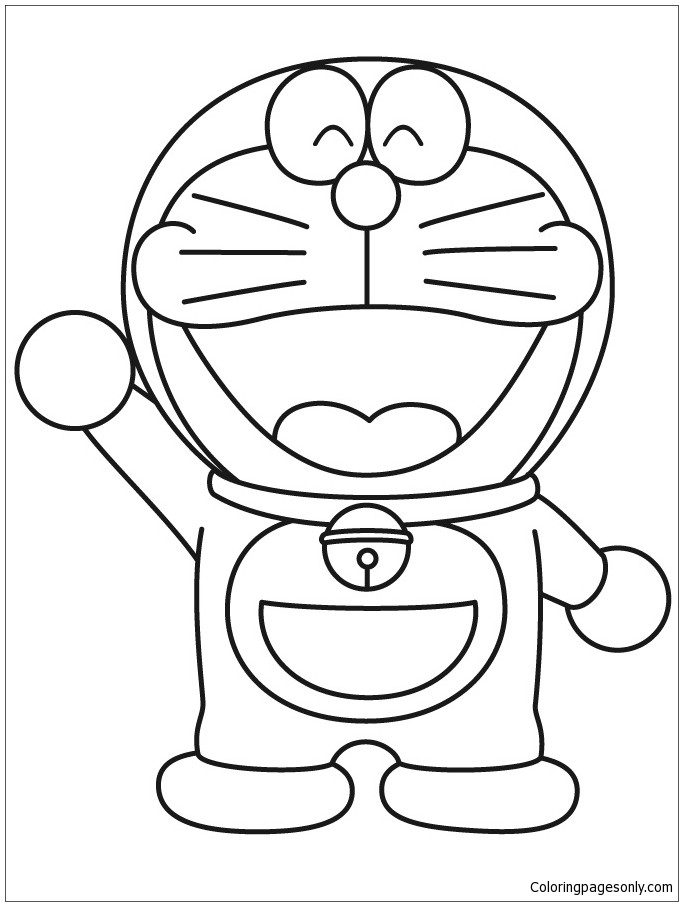
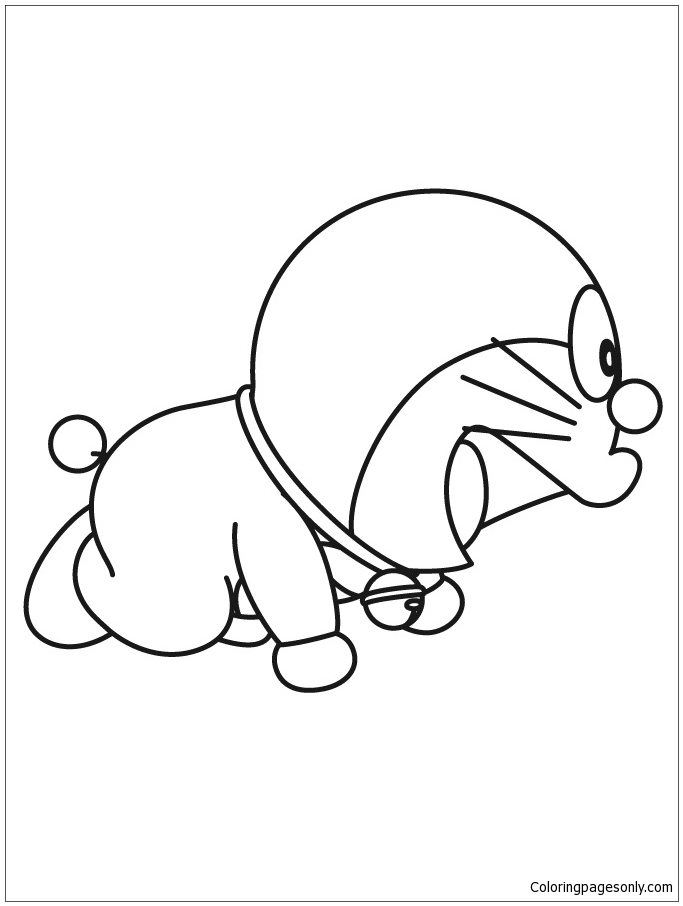
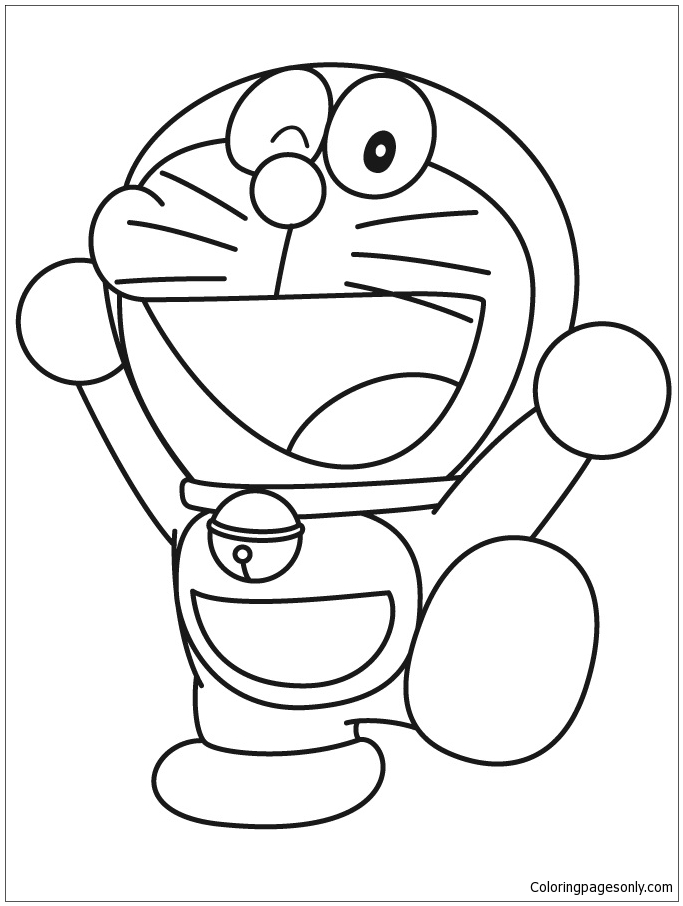
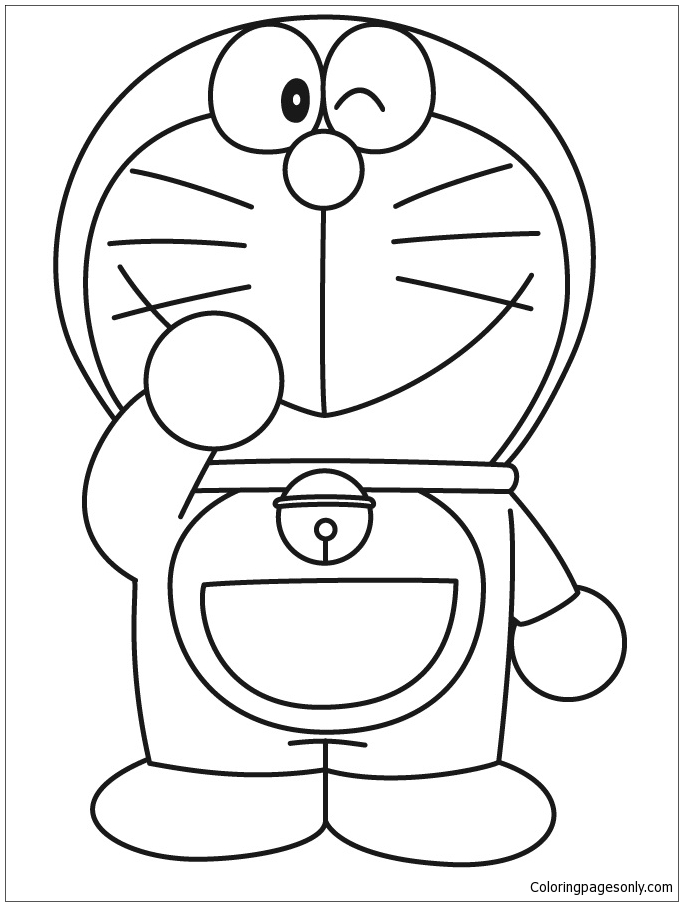
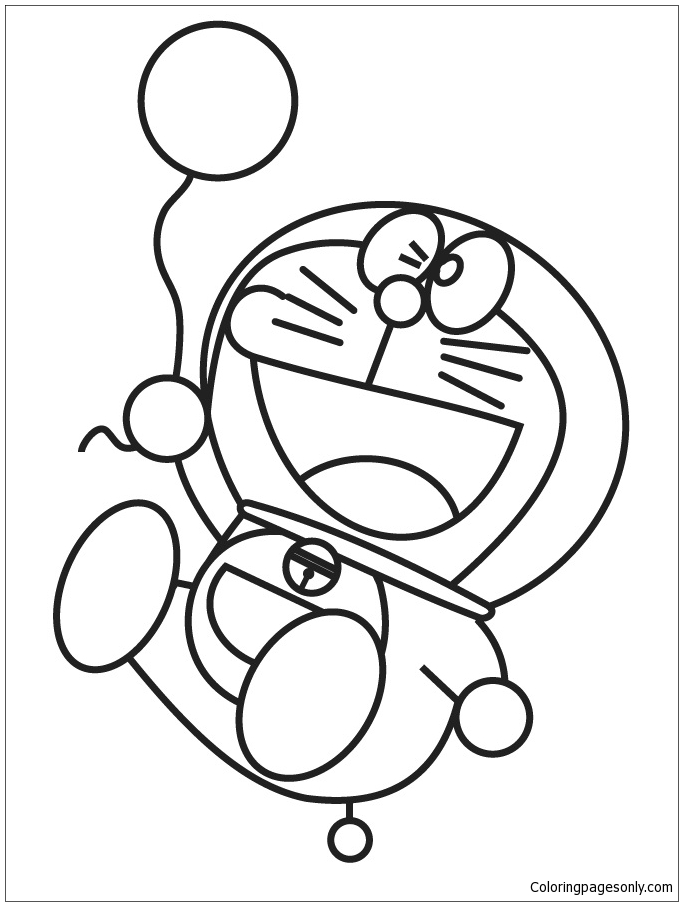
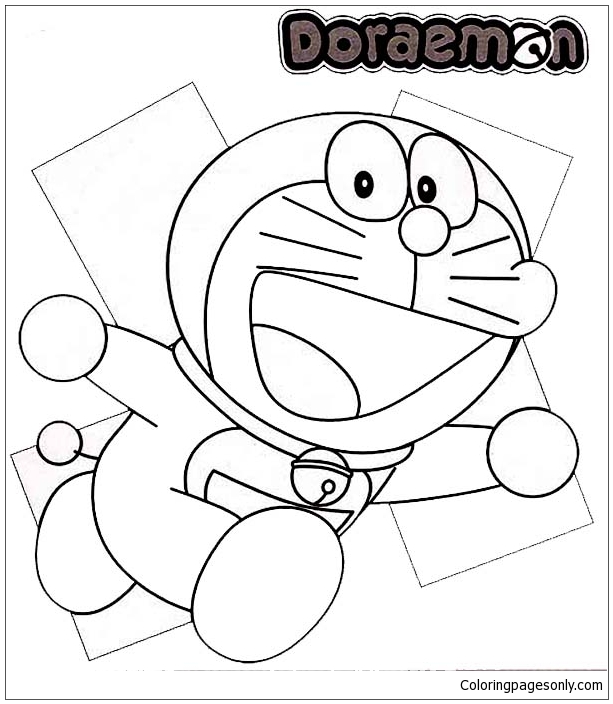
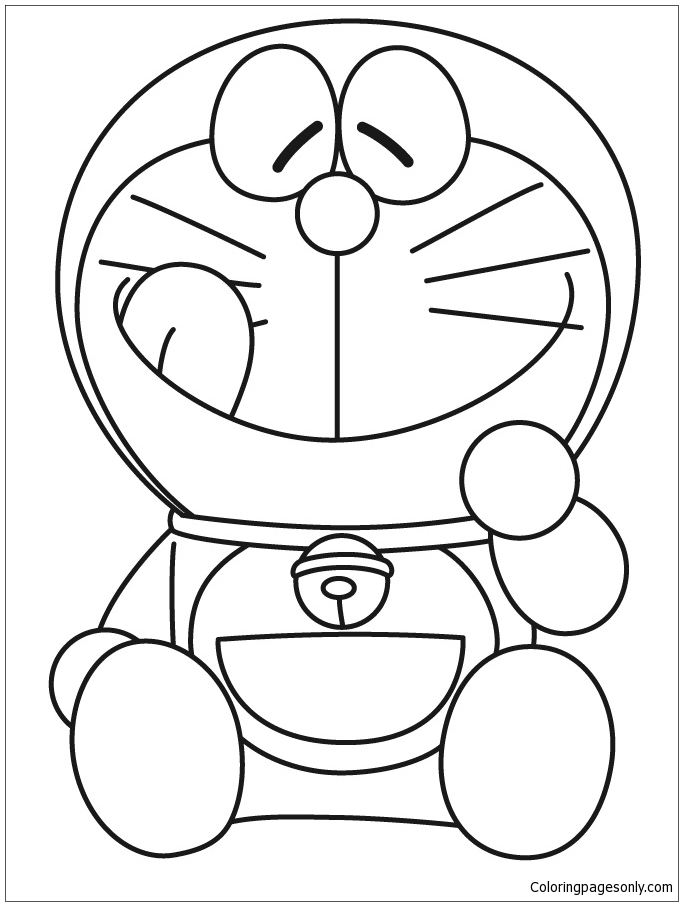
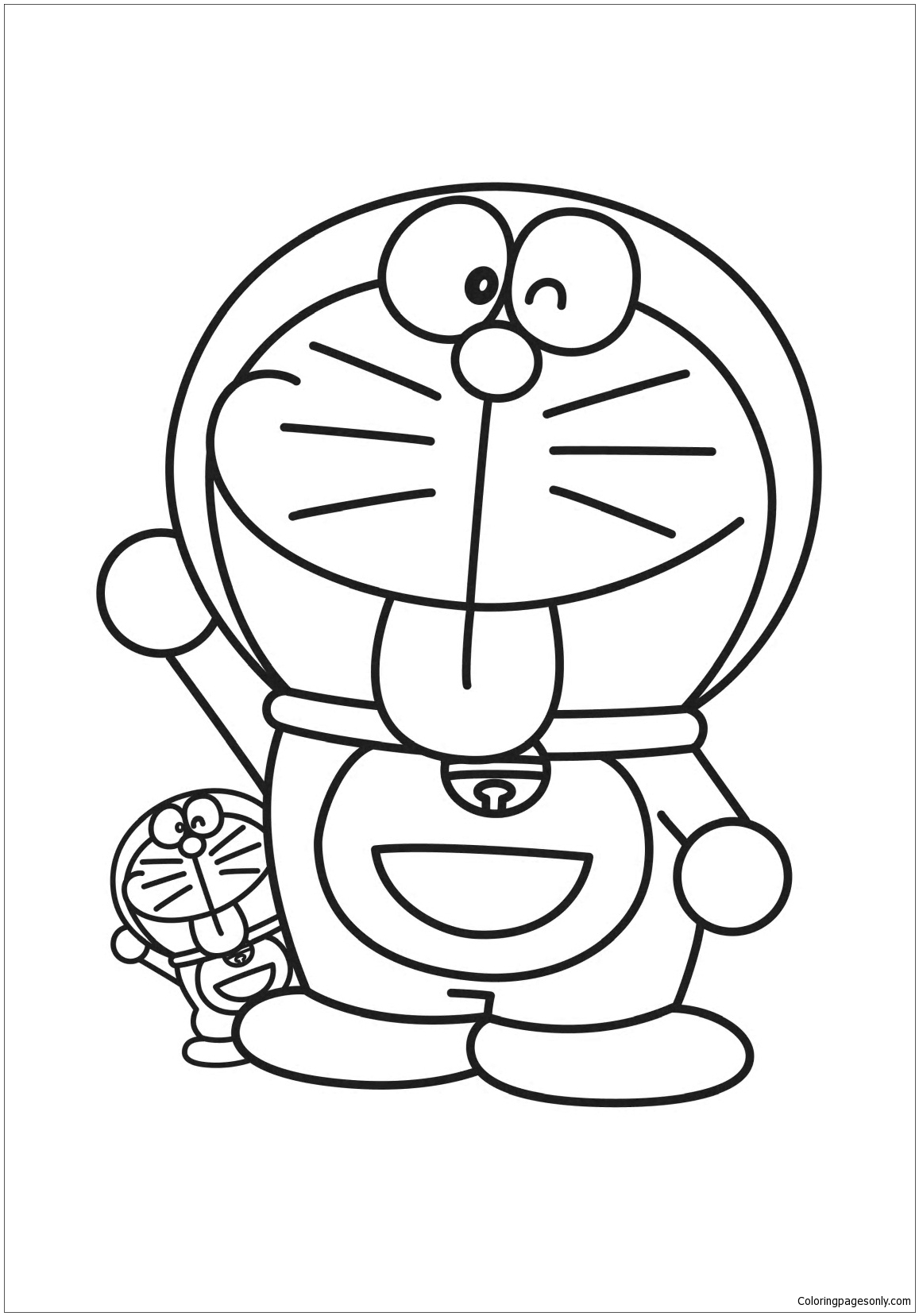
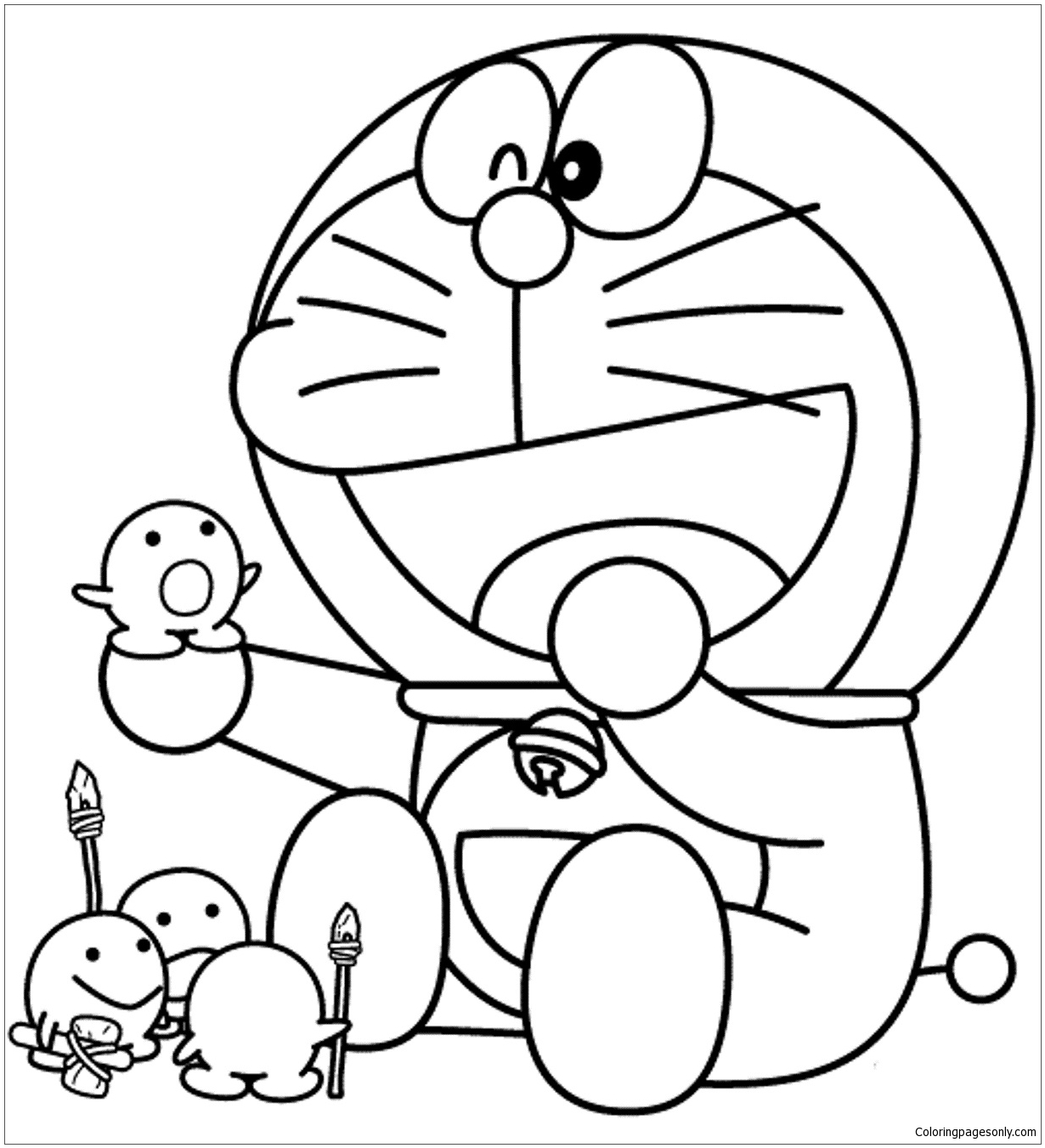
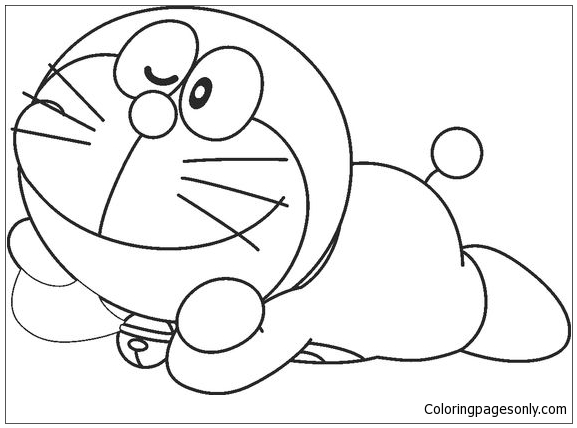
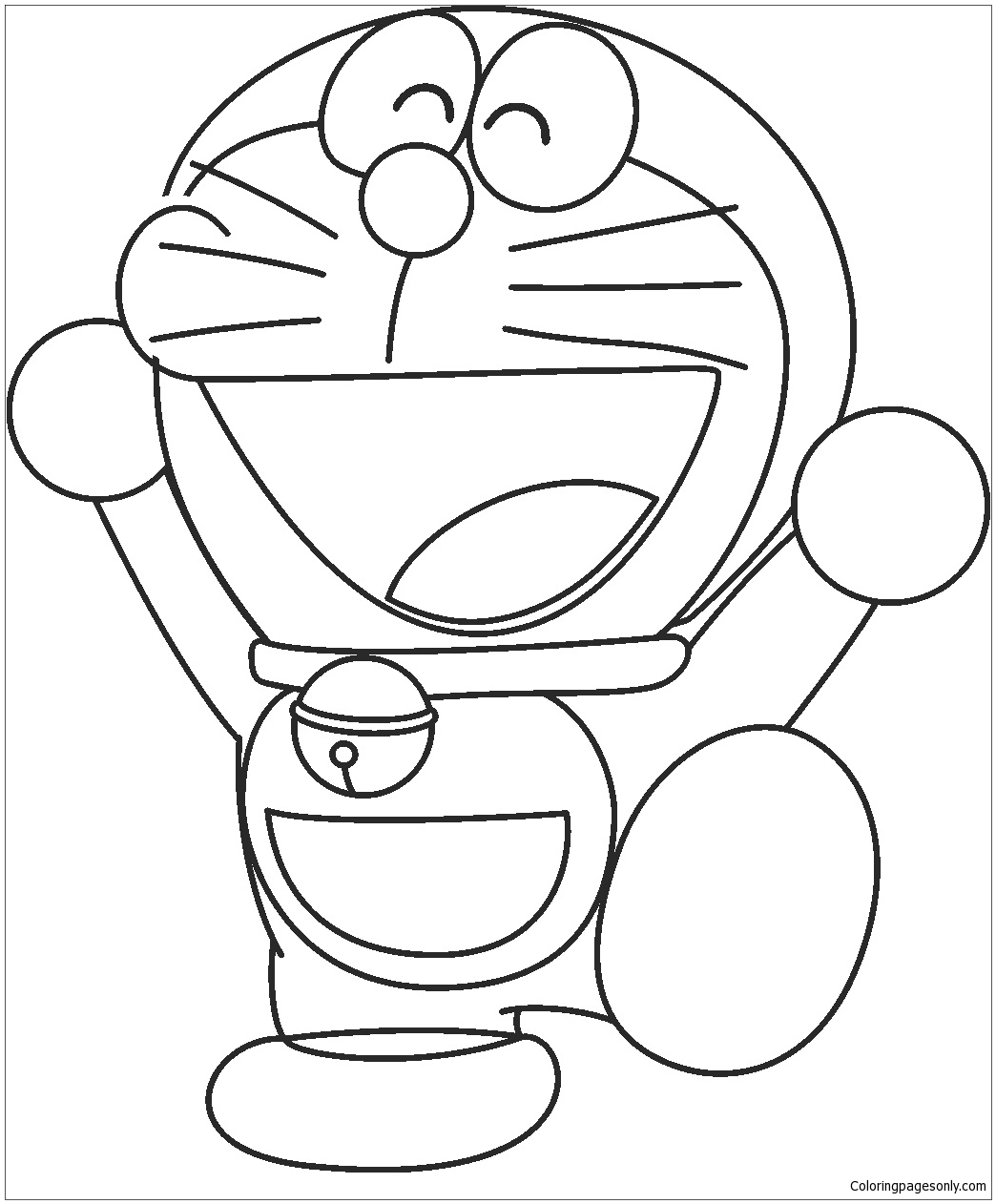
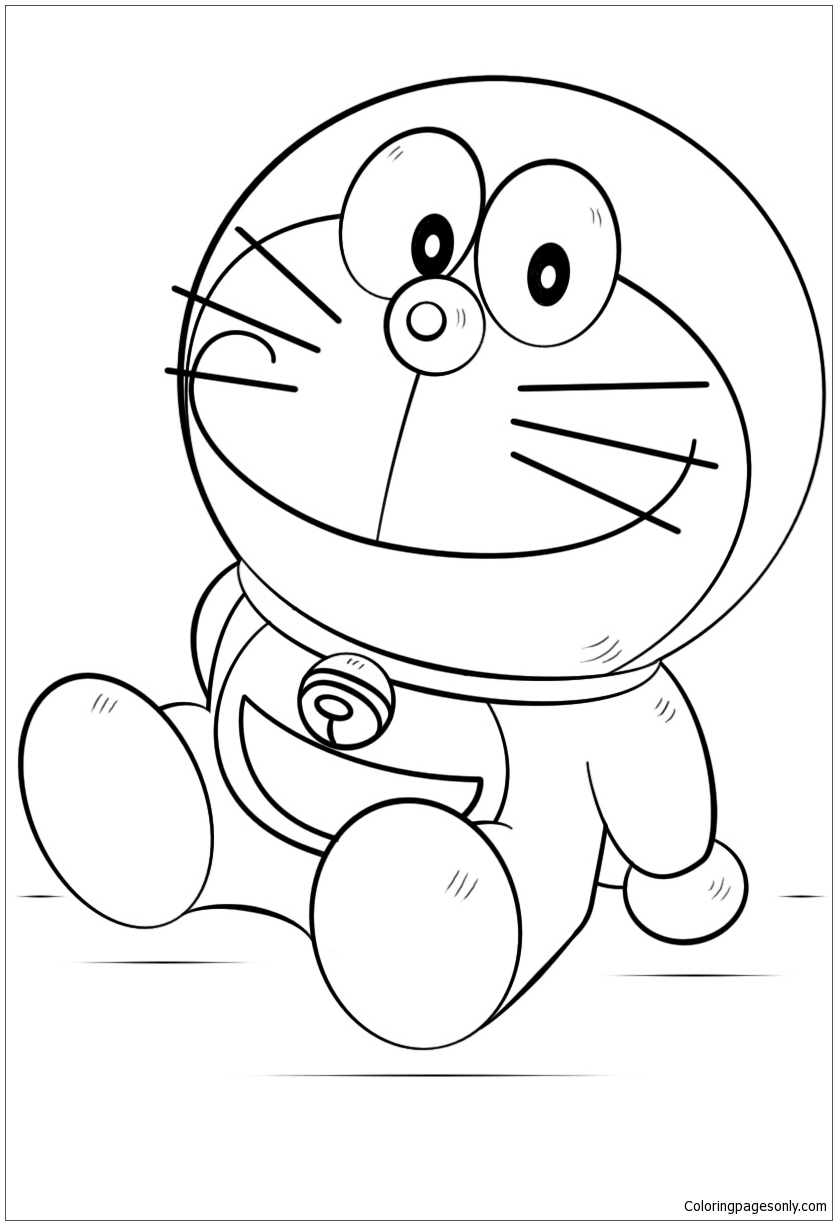
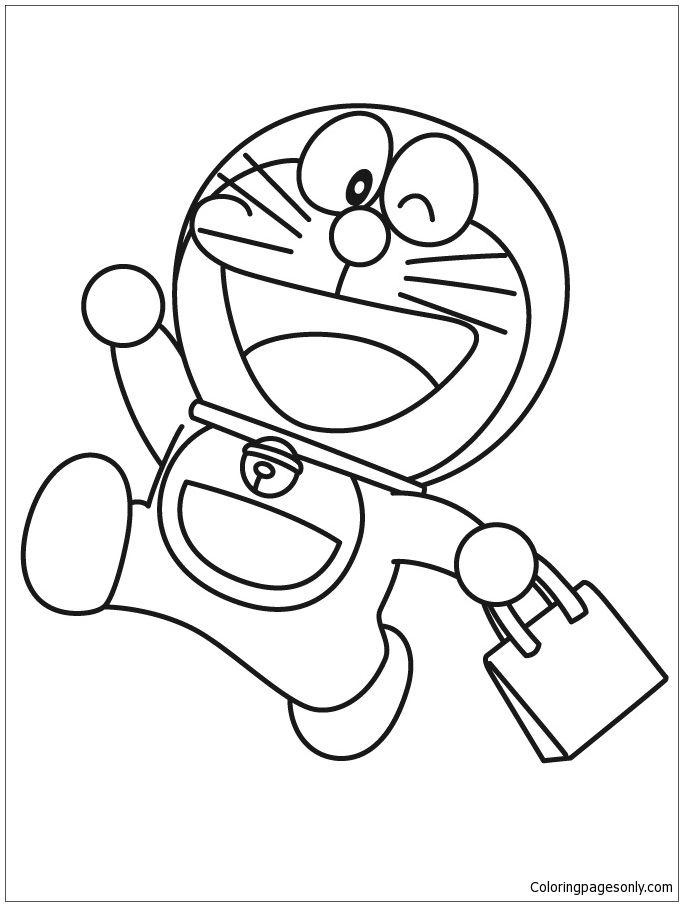
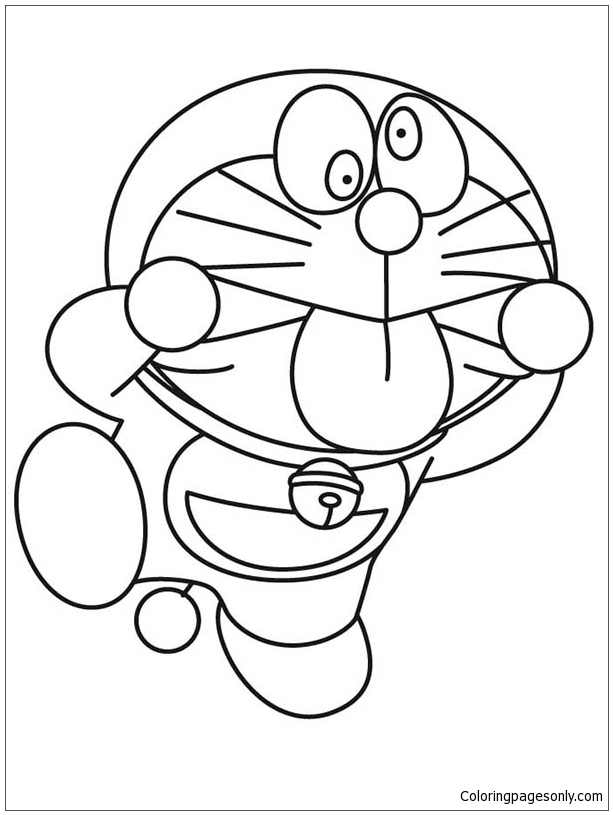
Doraemon Cute 1, Beautiful Doraemon, Big Doraemon, Base Doraemon, and Laughing Doraemon establish the character in his most recognizable modes – the round, warm, uncomplicated design that has made Doraemon one of the most drawn and colored characters in all of manga history. His design is deceptively simple: a round blue body, a white belly with the 4D pocket, a round face with large eyes, a small red nose, a wide mouth, no visible ears (a mouse ate them while he slept, causing him such distress that he cried until his yellow color washed away and he turned blue), and a collar with a bell.

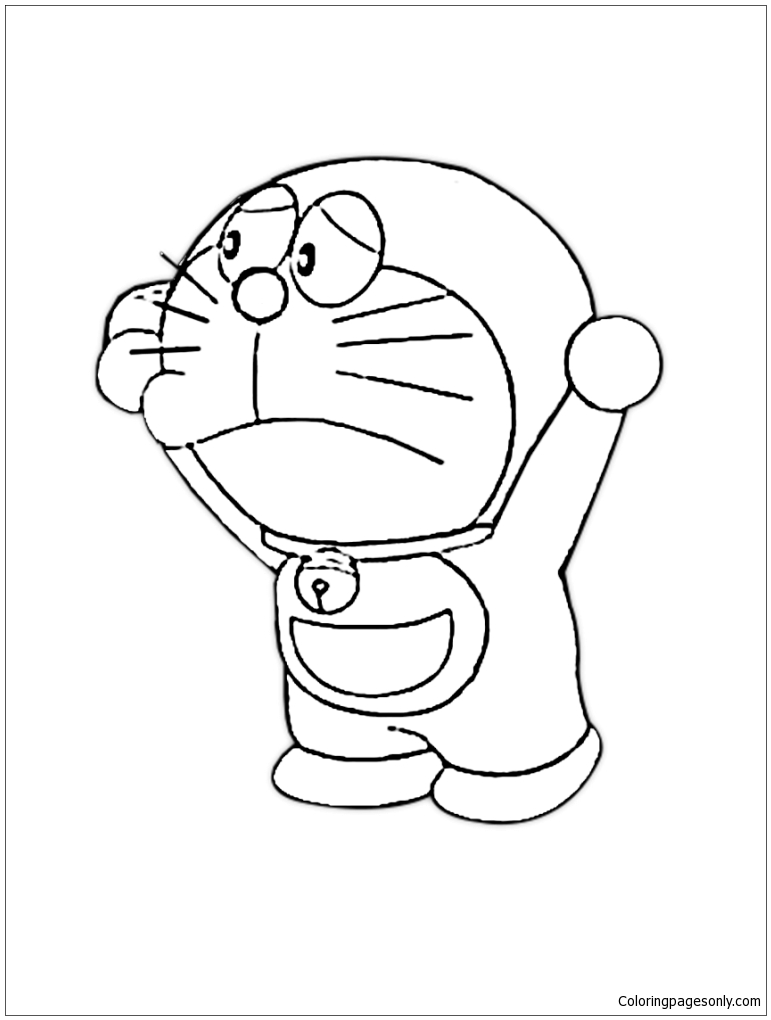
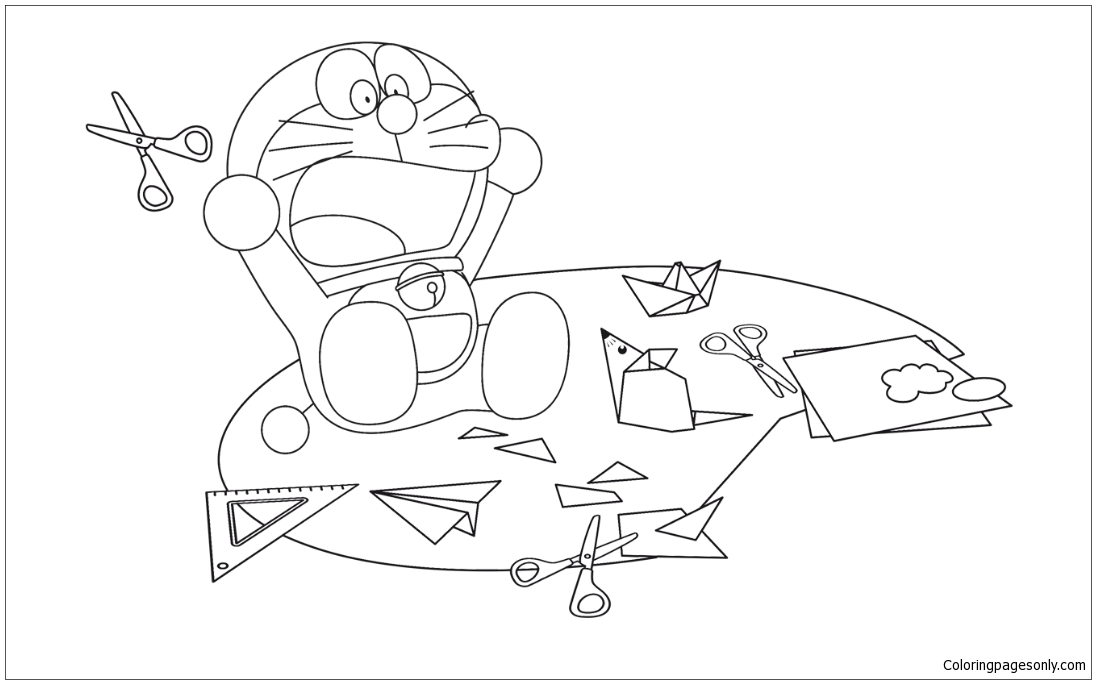
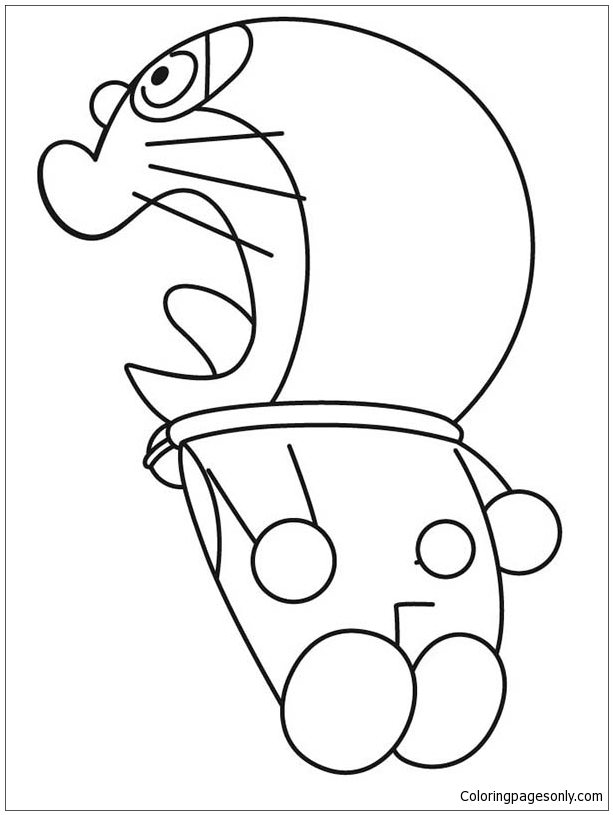
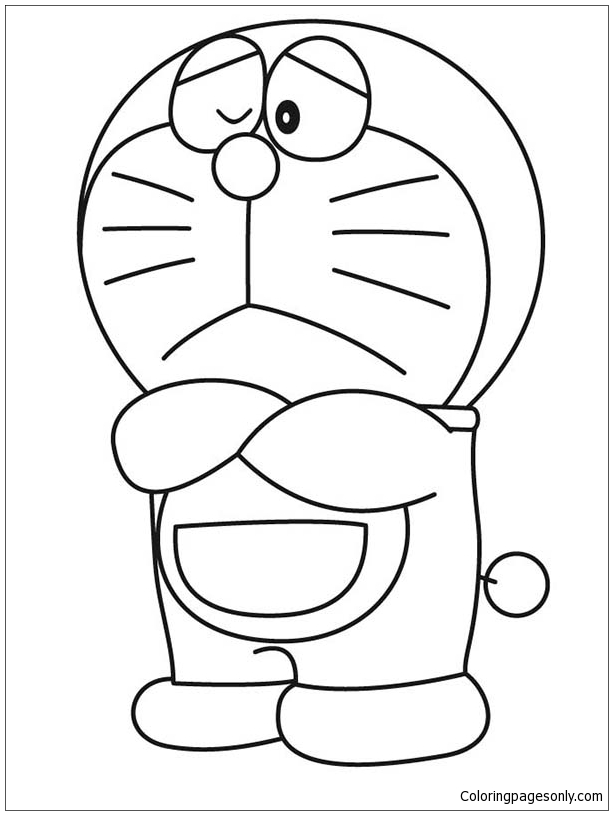
Doraemon Angry, Surprised Doraemon, Doraemon Craves Doughnuts, and Cute Doraemon Cartoon Wallpaper Ache Teeth show the emotional range that makes Doraemon funny rather than simply cheerful. He is not a saint. He gets exasperated with Nobita. He has opinions about his gadgets being used incorrectly. He loses his temper. The Doraemon Angry page captures the specific quality of his frustration – the pursed mouth, the narrowed eyes, the general bearing of a robot cat who has been asked to fix a problem that he already told Nobita would happen.

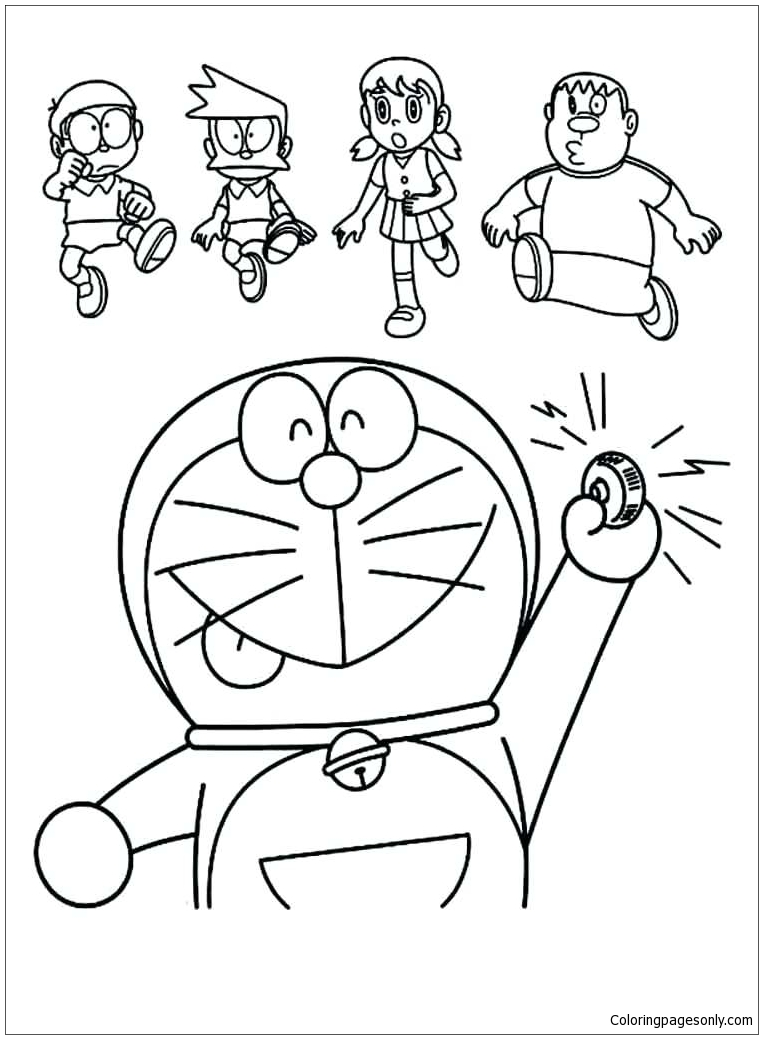
Doraemon Pressing Button is one of the collection’s most narratively suggestive pages – the moment before a gadget is deployed, before consequences arrive, before anyone has worked out whether this is going to be fine.

Coloring Doraemon: His blue is very specific – a medium, clean, slightly warm blue that reads as neither sky blue nor navy. It should be vivid enough to be clearly blue but warm enough to feel friendly rather than cold. His belly is white – clean, bright white. His red nose is small but should be the warmest red available. The collar bell is a warm yellow-gold. His eyes are large, round, and black with white highlights.

Doraemon with Food – Dorayaki and Other Favorites

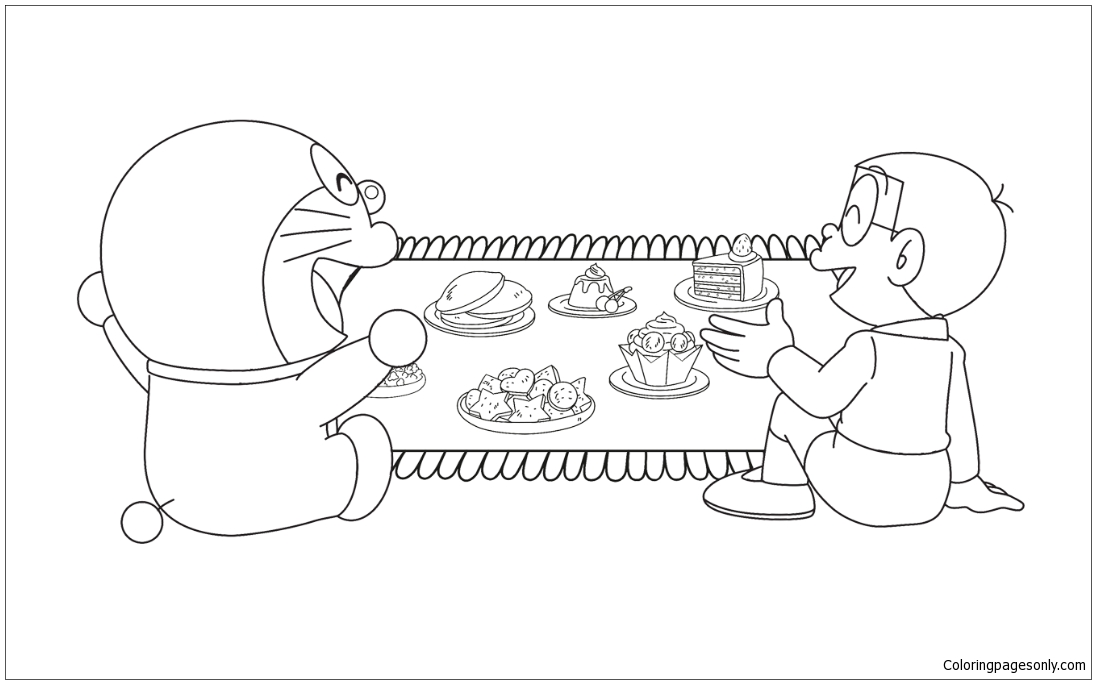
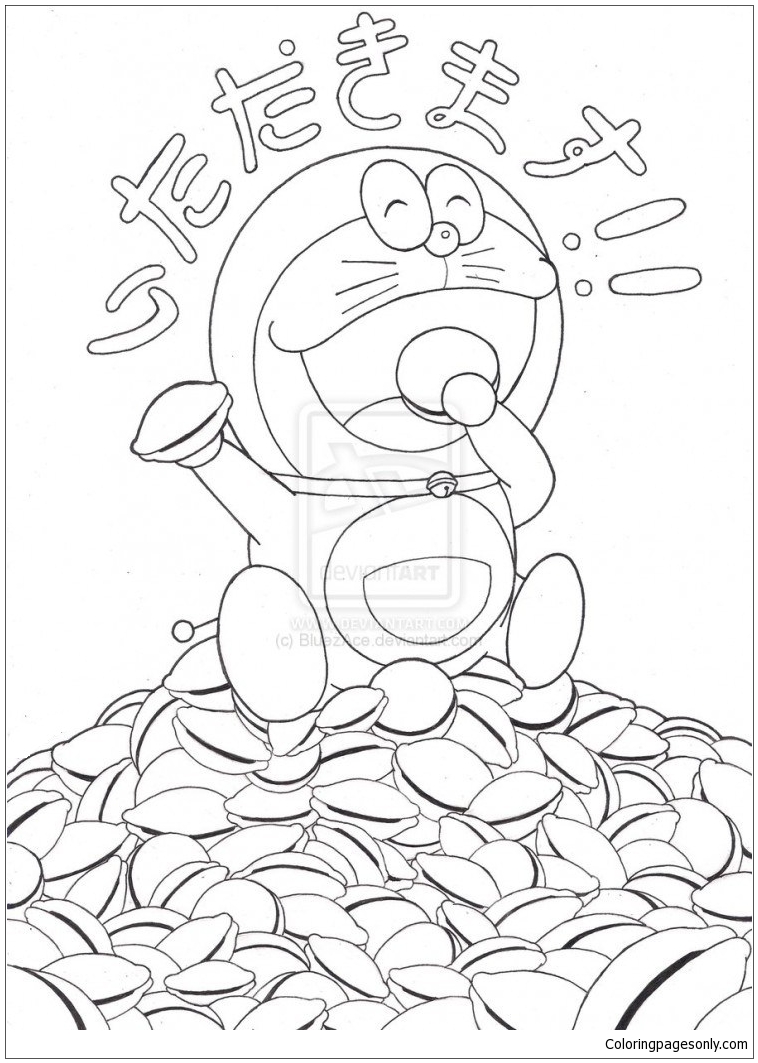
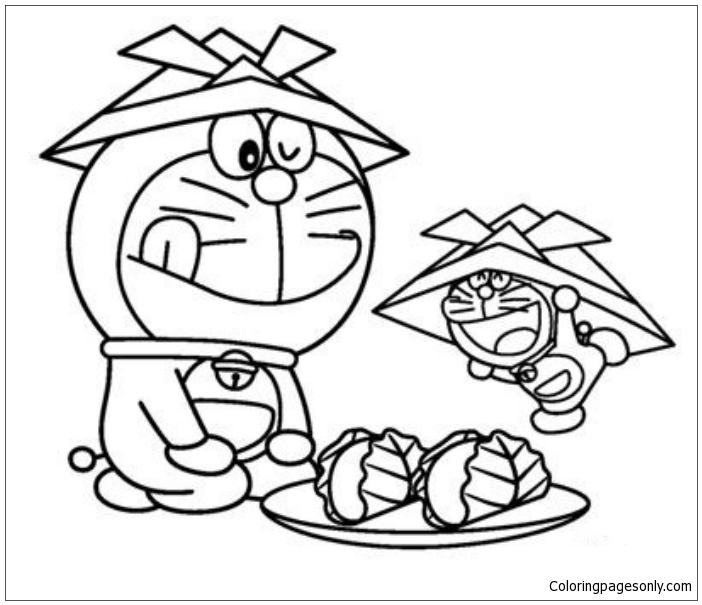
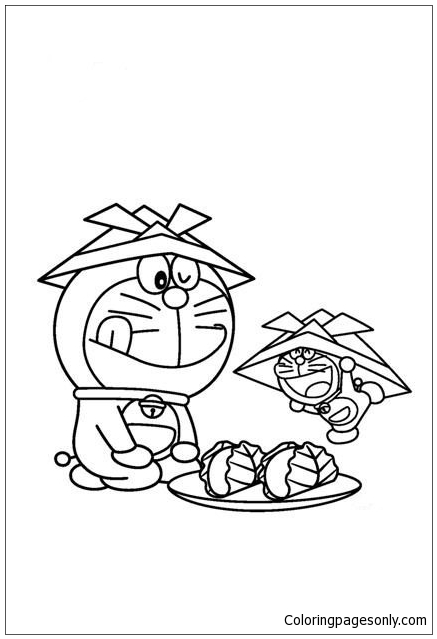
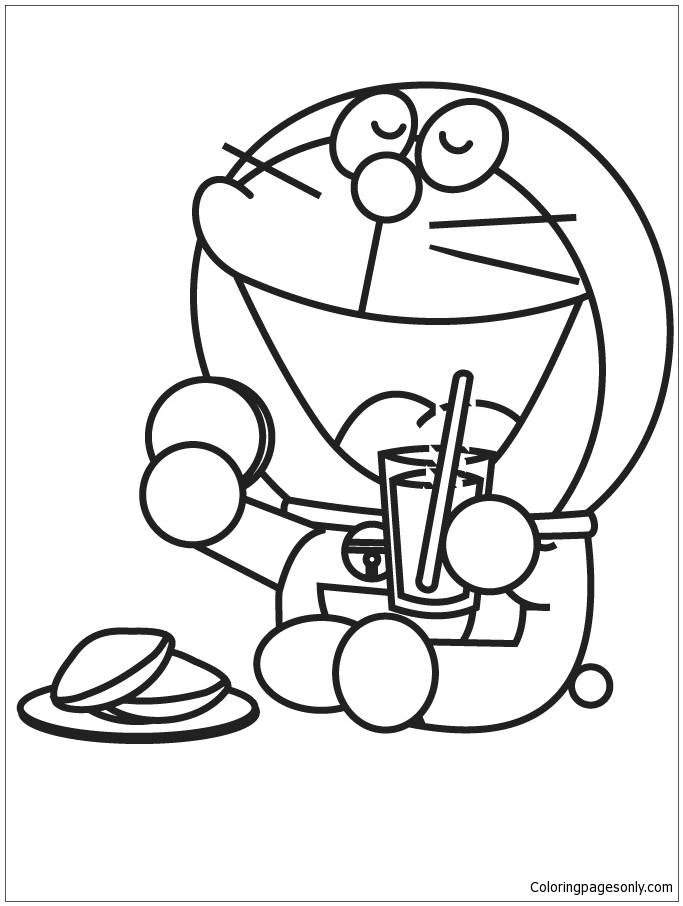
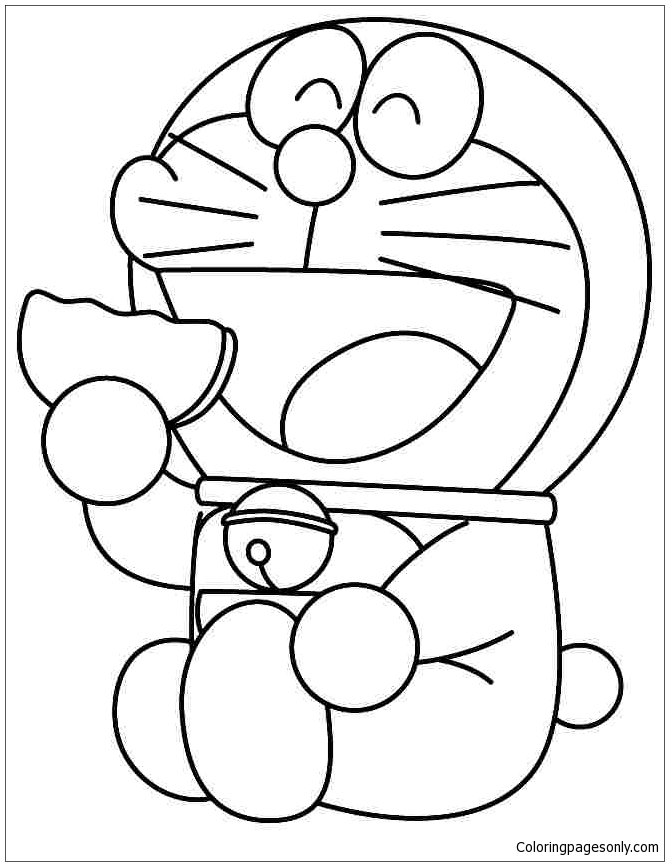
Doraemon, having Dorayaki, and Doraemon and Dorayaki are among the most culturally specific pages in the collection. Doraemon’s relationship with dorayaki – the Japanese sweet consisting of two small castella pancakes wrapped around sweet azuki red bean paste – is one of the franchise’s most defining character traits. He is genuinely transformed by the presence of dorayaki: calmer, more generous, more cooperative, occasionally susceptible to being bribed by anyone who knows his weakness.

Dorayaki should be colored in a warm golden-brown on the outside – the color of a perfectly cooked pancake – with a glimpse of the darker red-brown azuki paste visible at the edge where the two halves meet. The contrast between Doraemon’s blue and the warm golden-brown of his favorite food creates one of the collection’s most satisfying color pairings.

Doraemon with Nobita – The Central Friendship

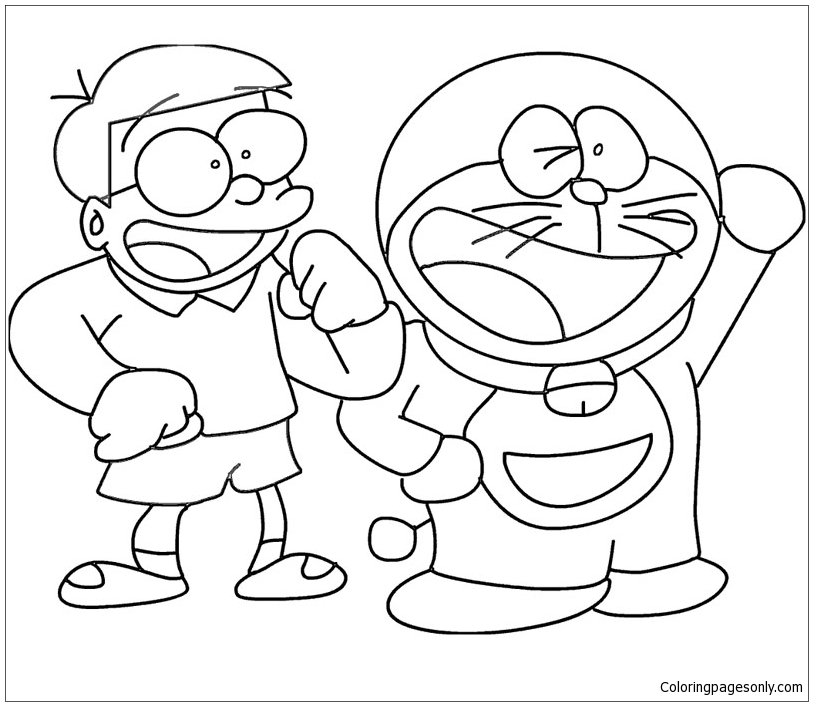
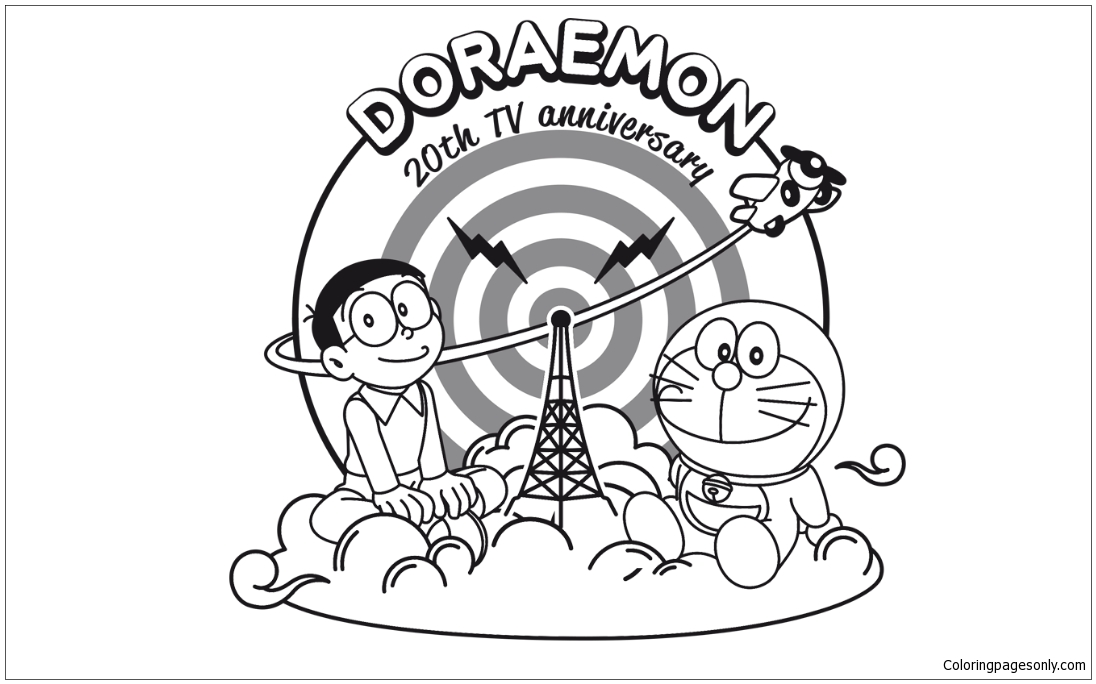
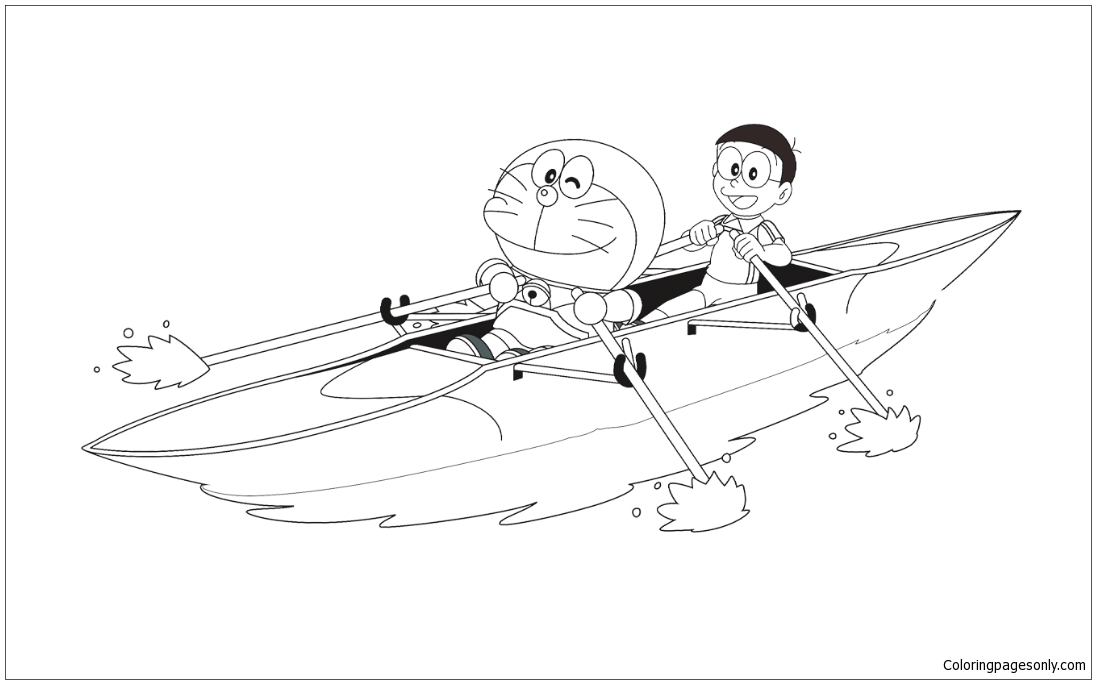
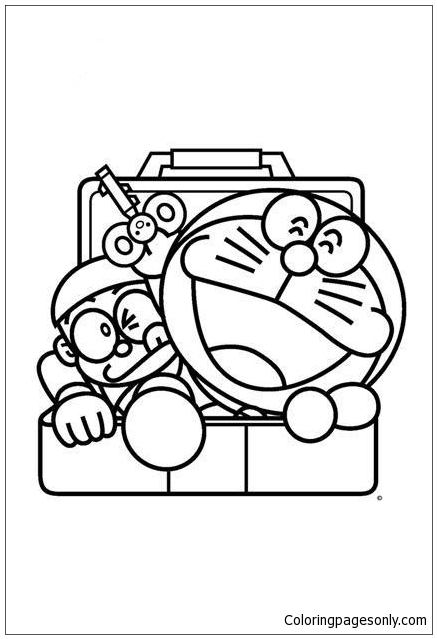
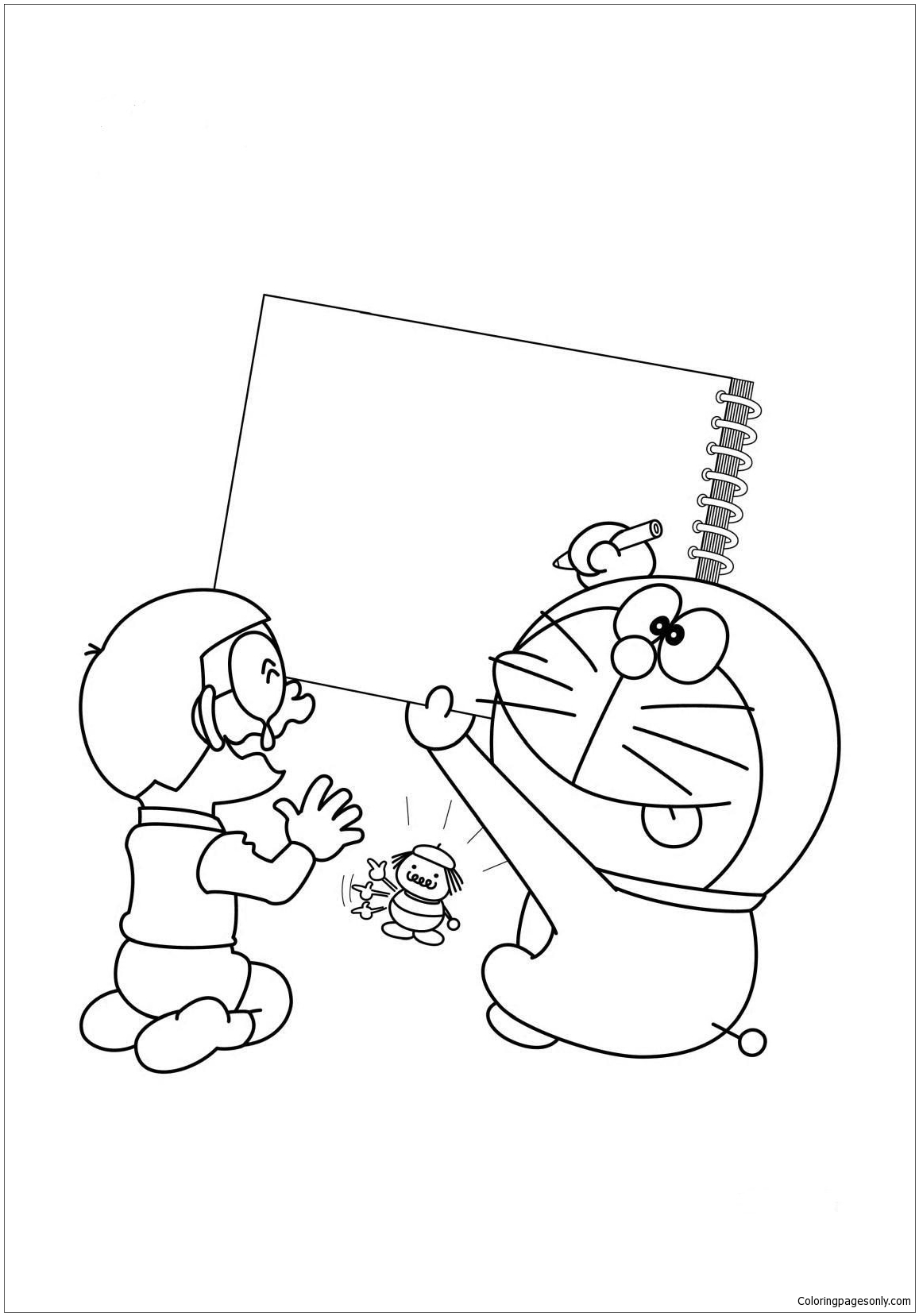
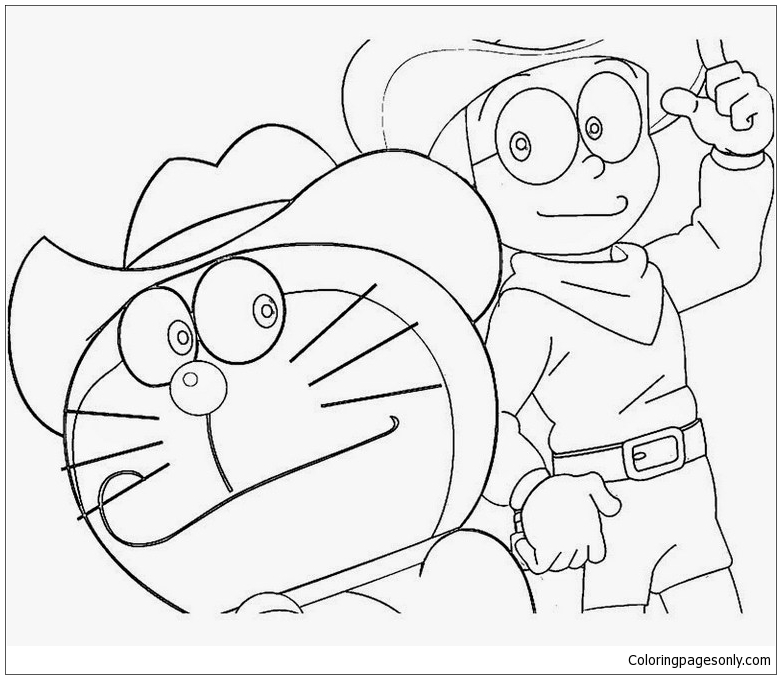
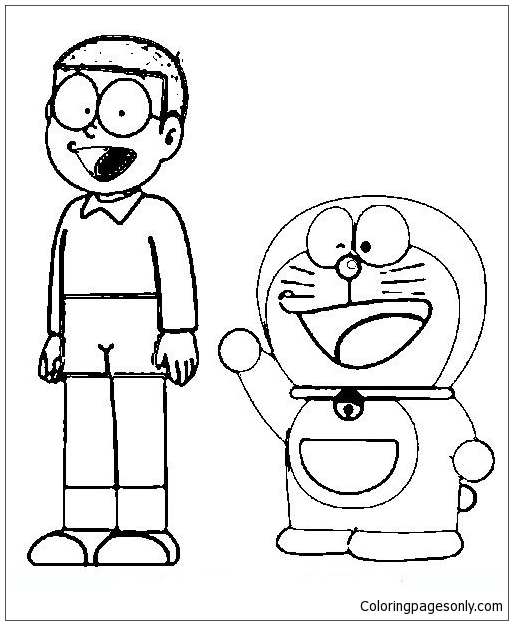
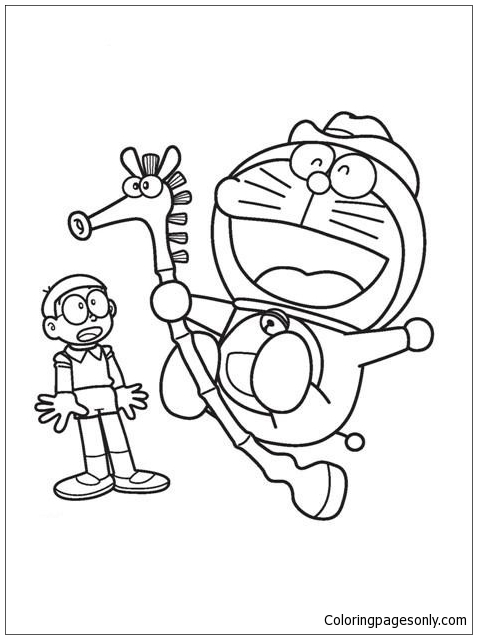
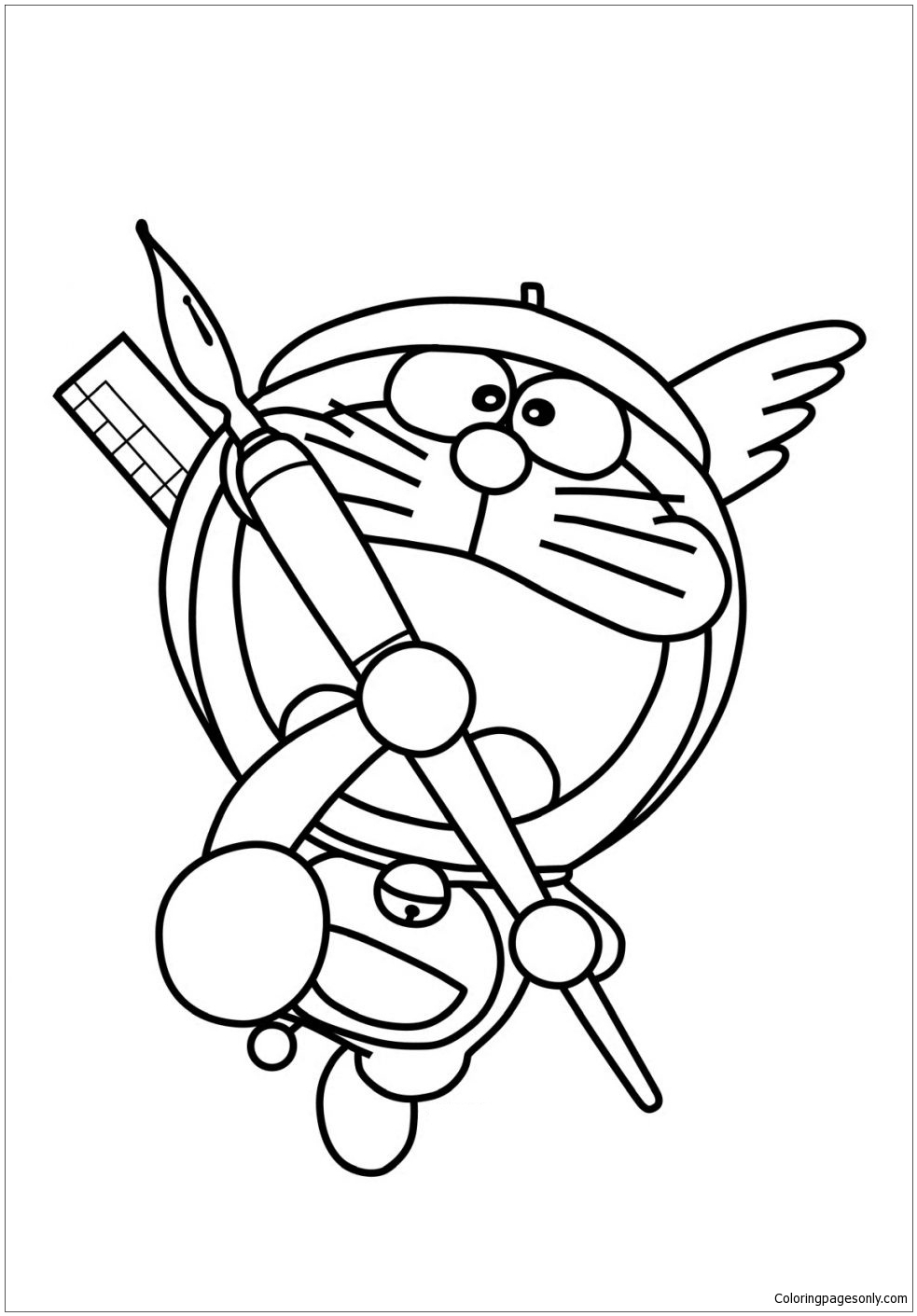
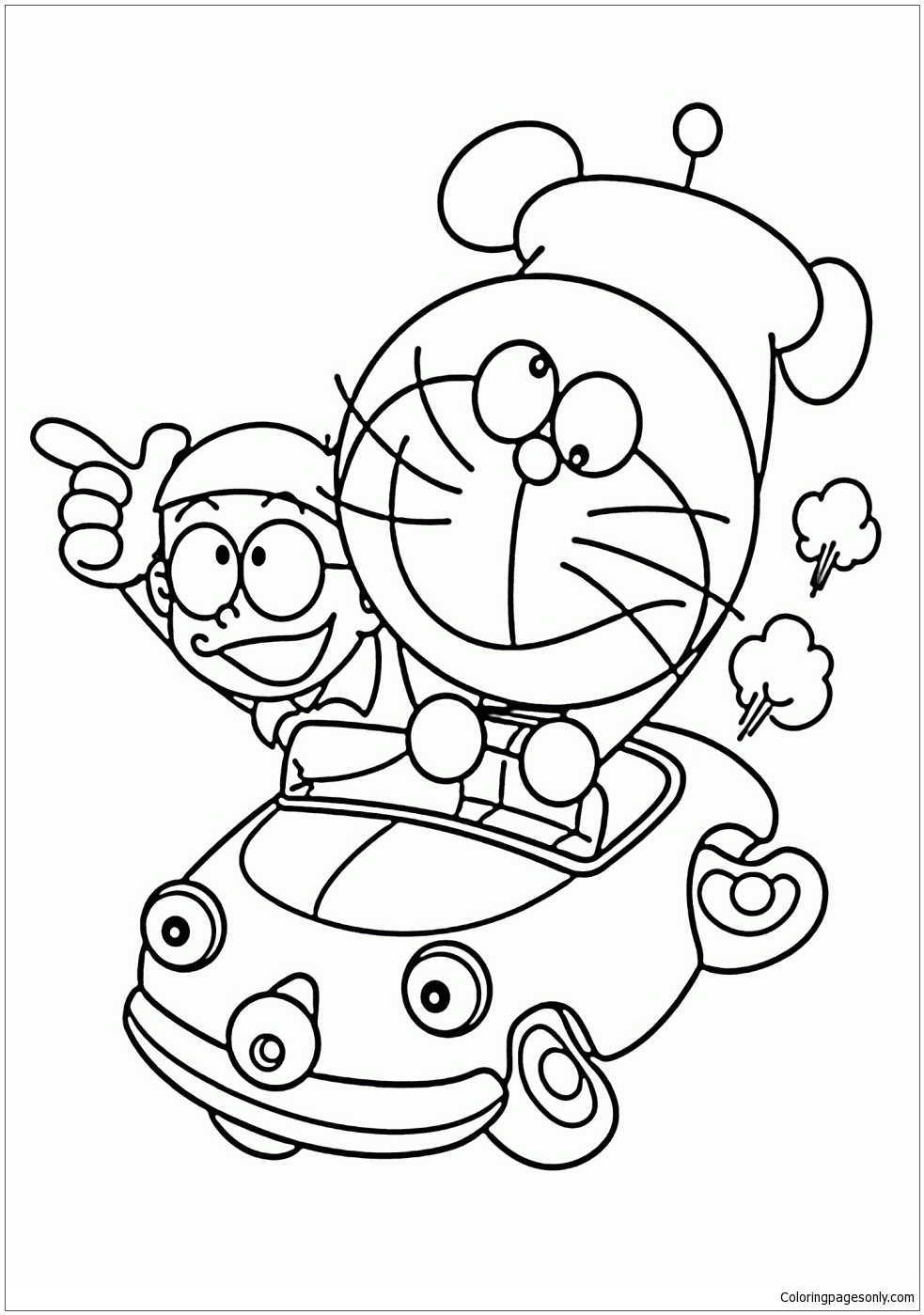
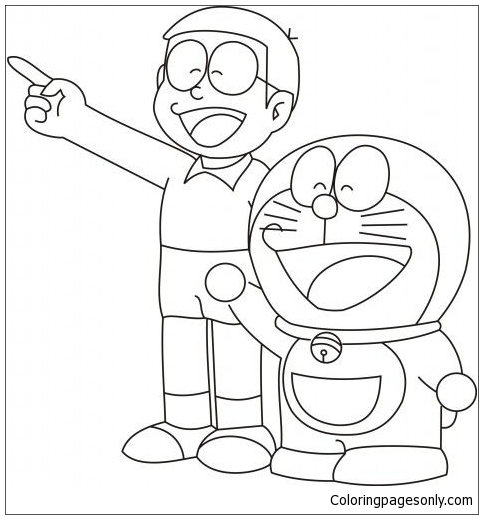
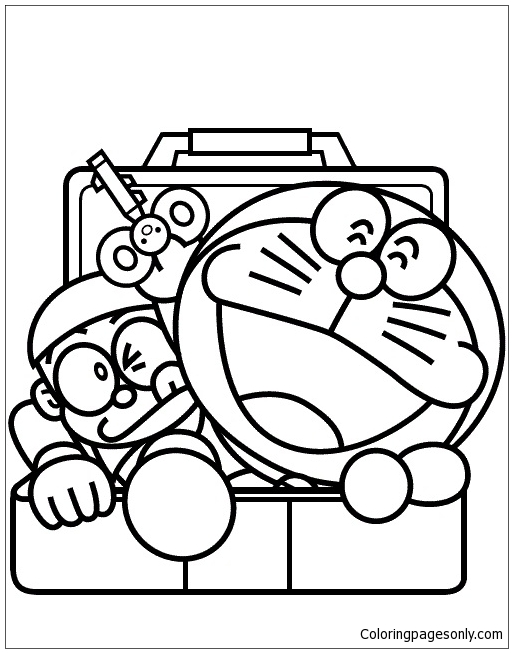
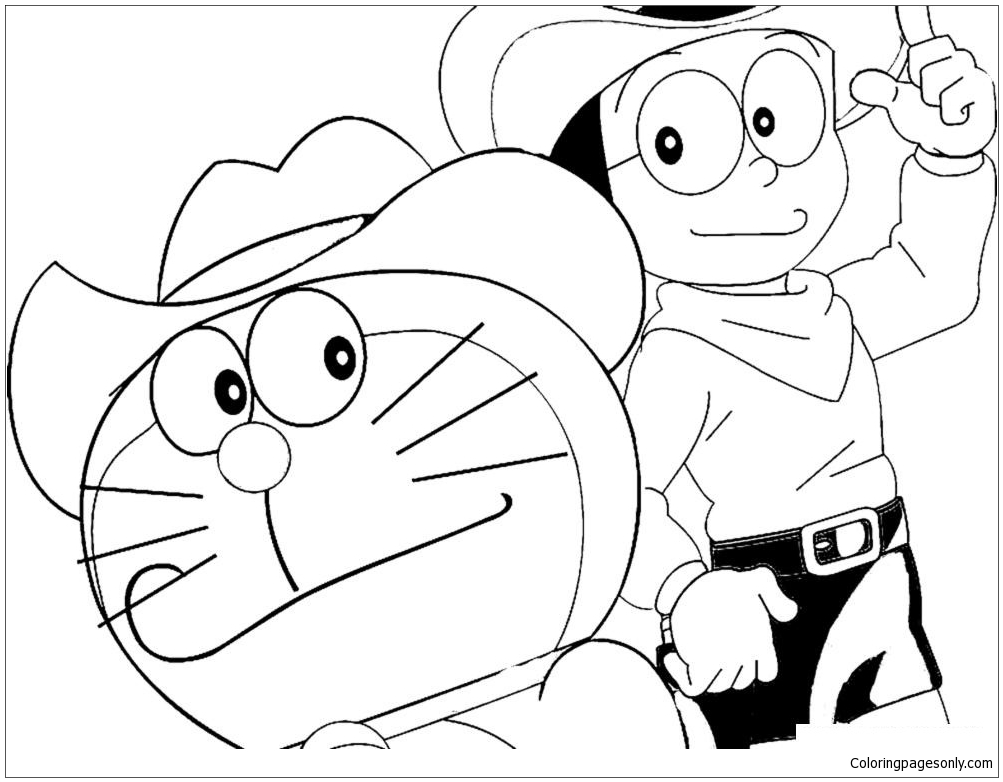
Doraemon and Nobita 3, Doraemon and Nobita 2, Doraemon and Nobita boating, Doraemon Draws For Nobita, and Nobita and Doraemon Come Out From Locker – the paired pages are where the series’ emotional core is most clearly visible.

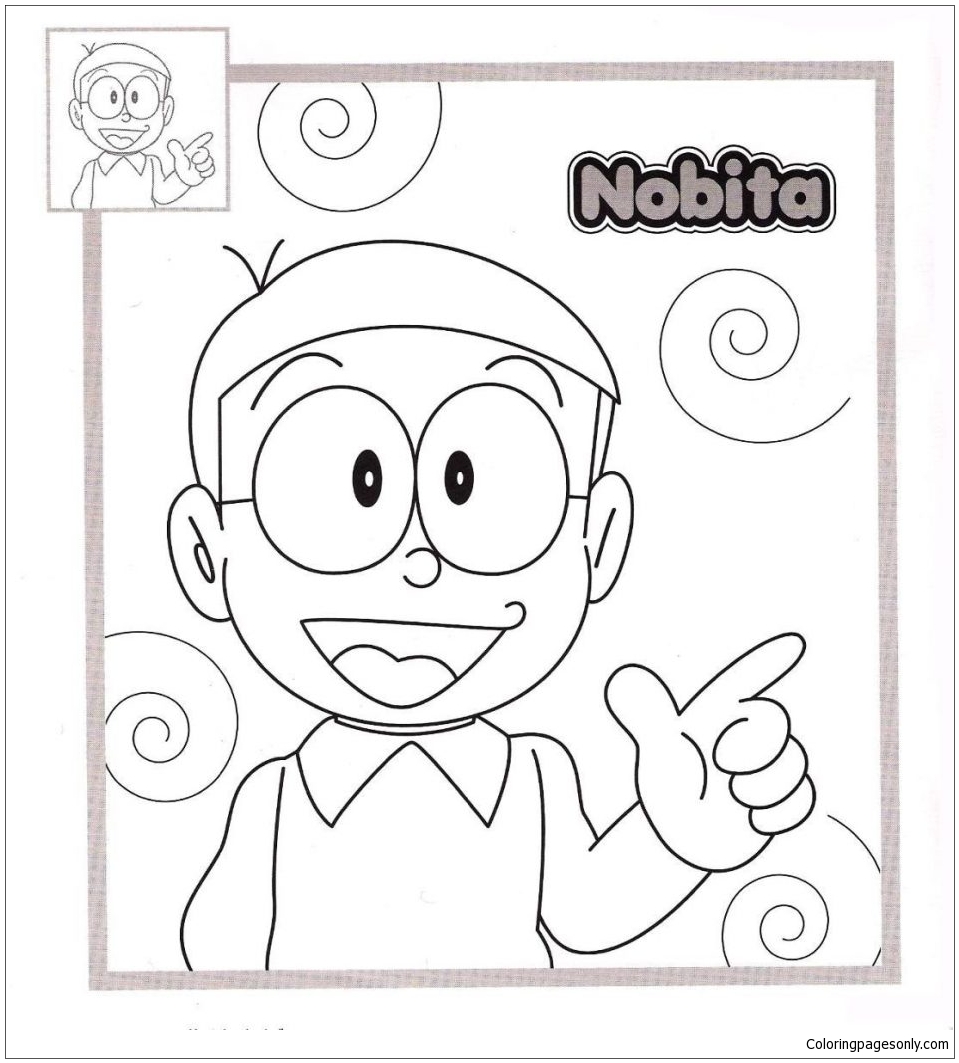
Nobita Nobi is 10 years old, consistently earns zeros on his exams, is terrible at both academics and sports, and has a gift for bad luck that borders on the supernatural. He is also genuinely kind, deeply loyal to his friends, and capable of extraordinary courage when the people he loves are at stake. The relationship between Doraemon and Nobita is not the relationship of a tool and its user – it is a friendship between two imperfect beings who have become essential to each other. Doraemon arrived to help Nobita, but he stays because he cares about him.

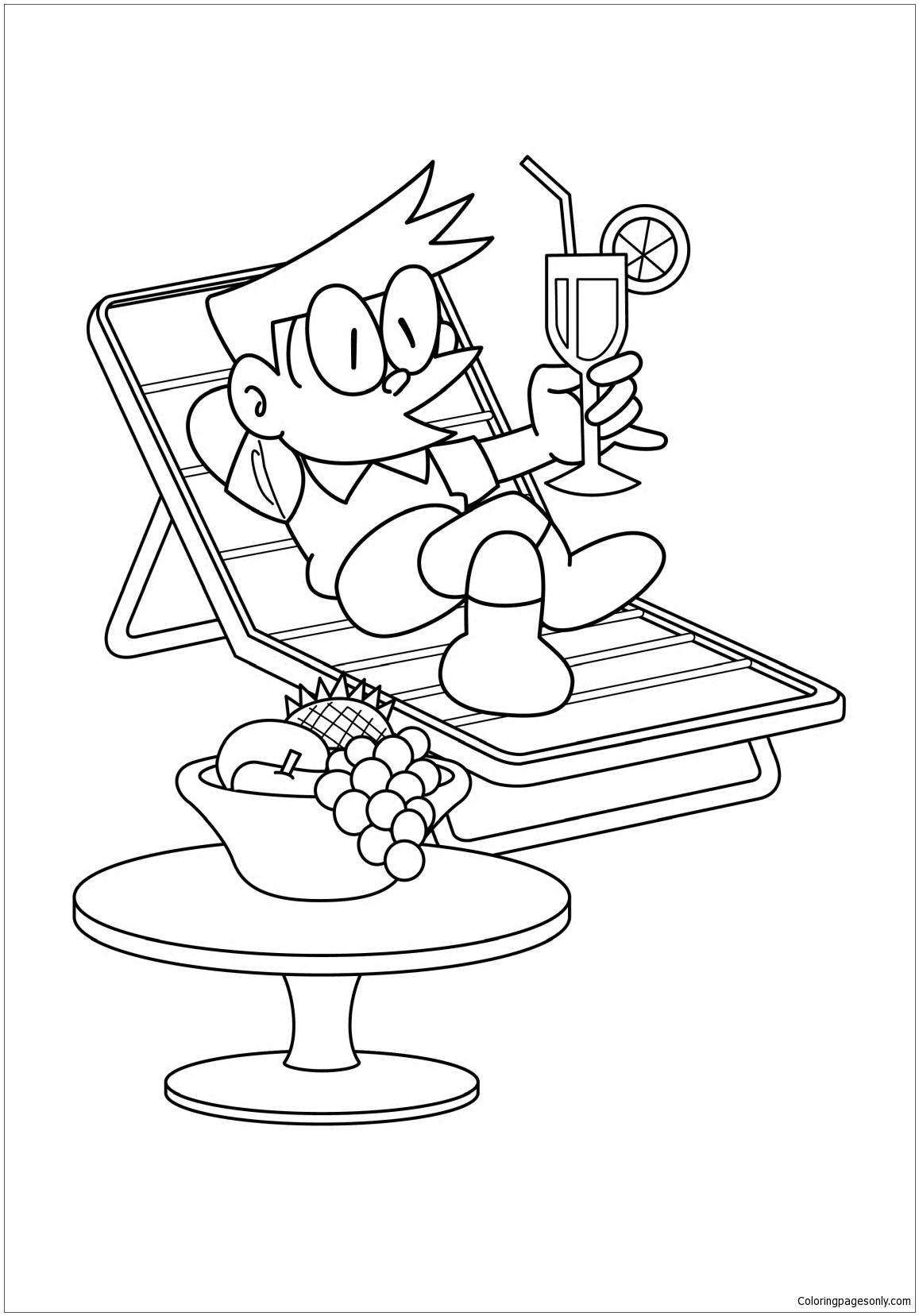
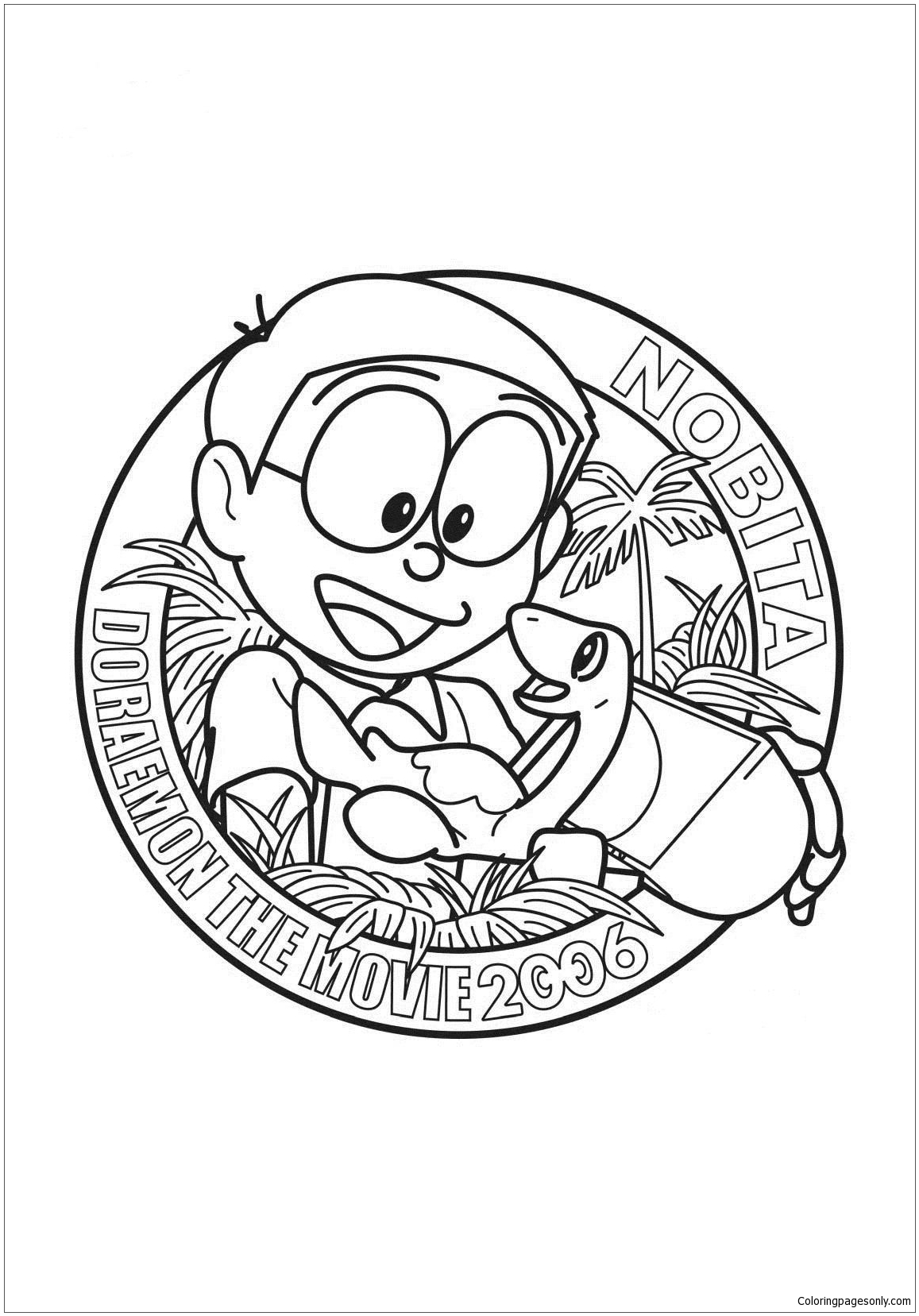
Nobita Studied Mathematics, and Nobita in Doraemon the Movie gives Nobita his own pages. His design: round glasses, a short-sleeved blue or yellow shirt, dark shorts, the slightly plaintive expression of someone who is trying. Coloring Nobita: His canonical anime colors are a yellow shirt and dark shorts. His glasses are round and simple. His hair is short and dark. His expression should look earnest – he is always trying, even when things go wrong.

The Full Gang – Doraemon, Nobita, Shizuka, Gian, and Suneo

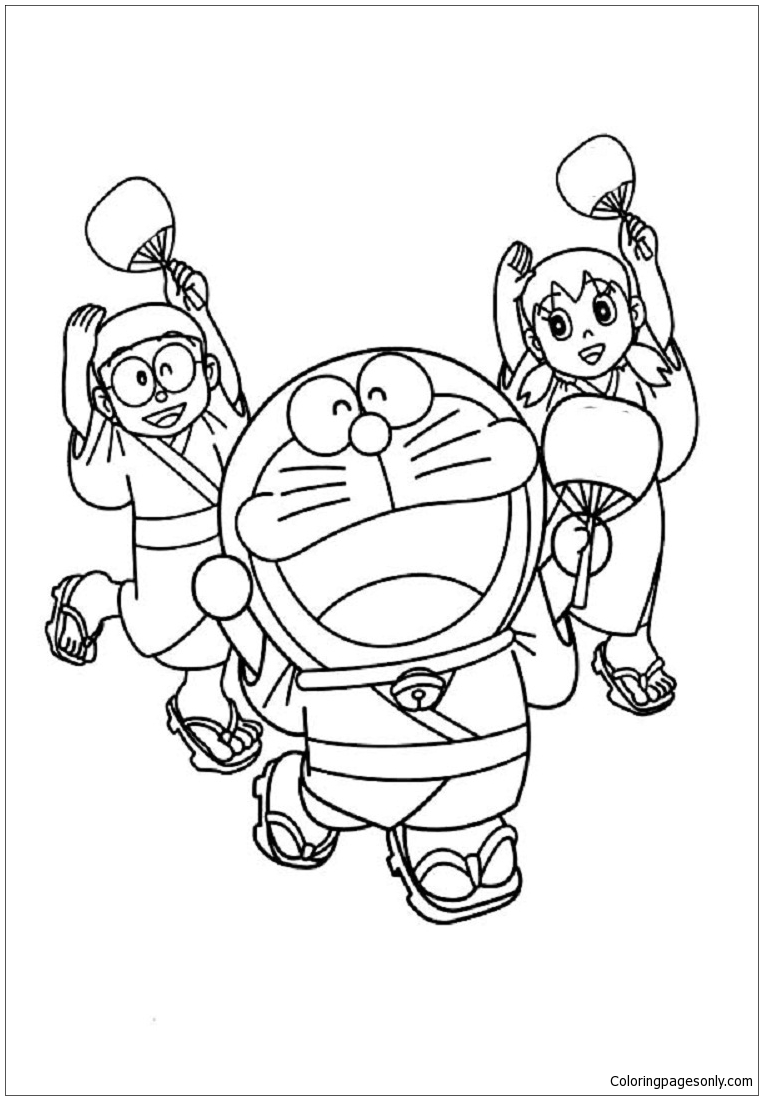
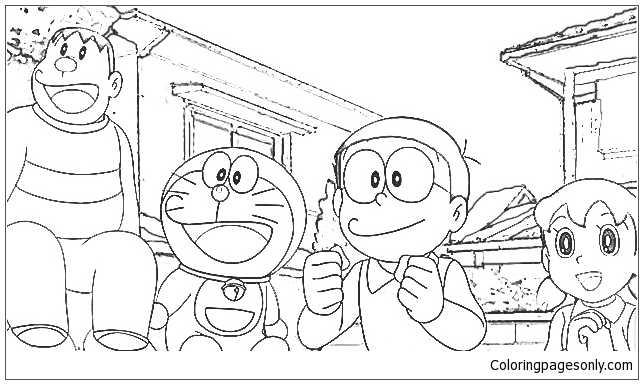
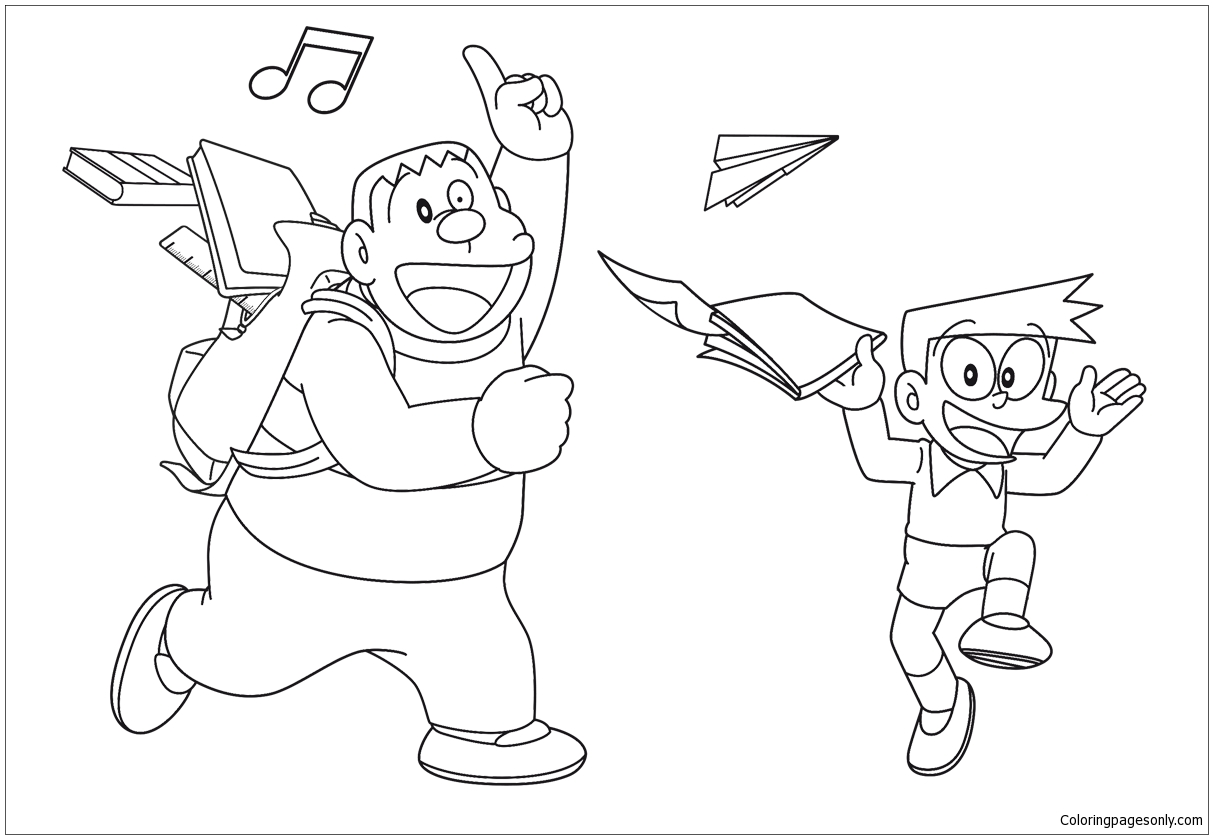
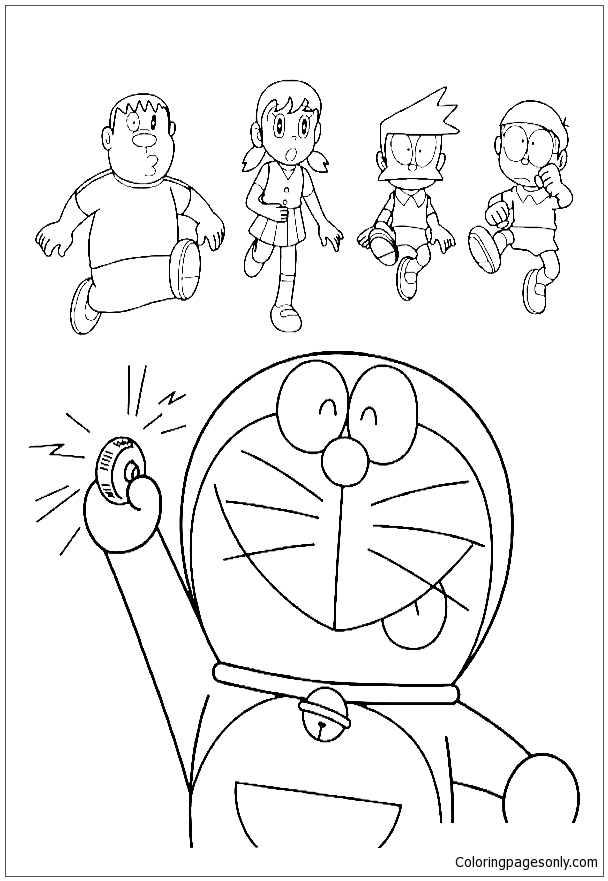
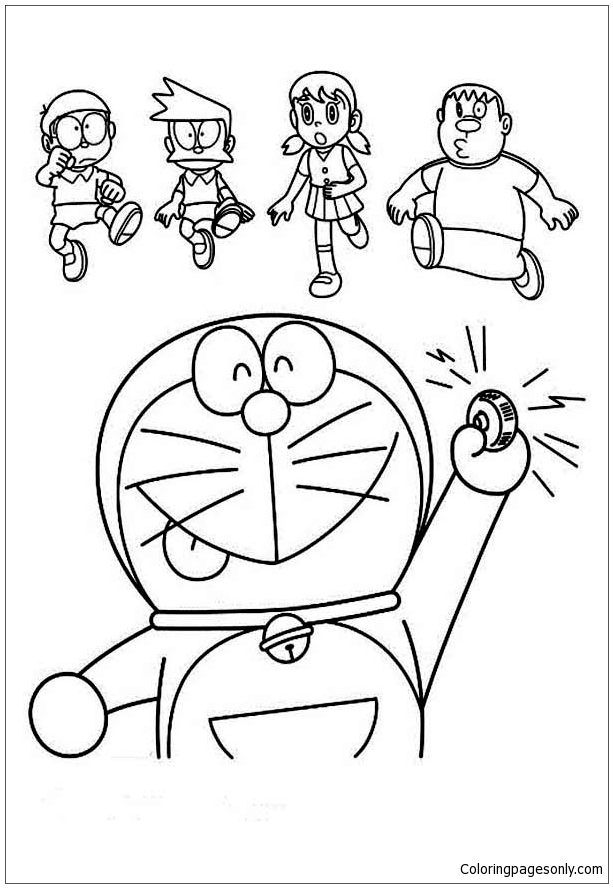
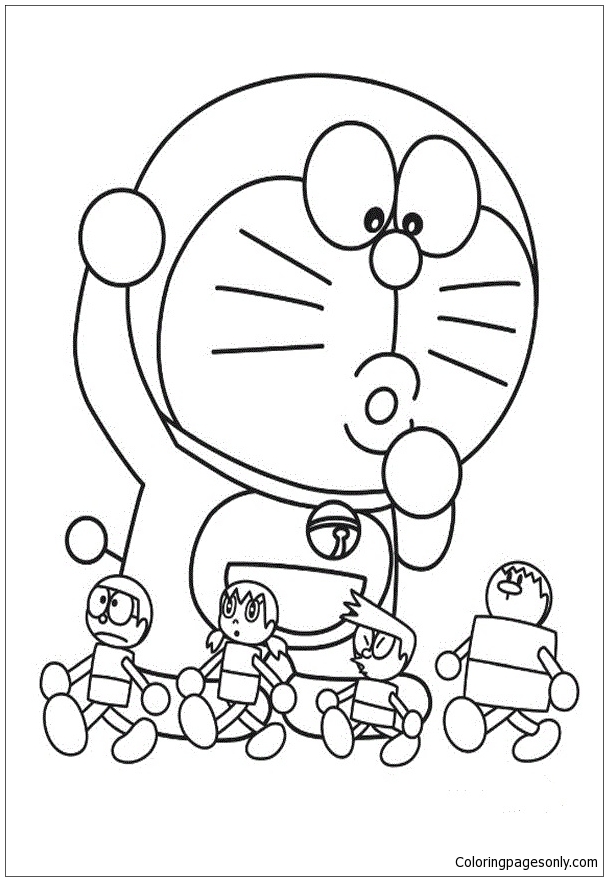
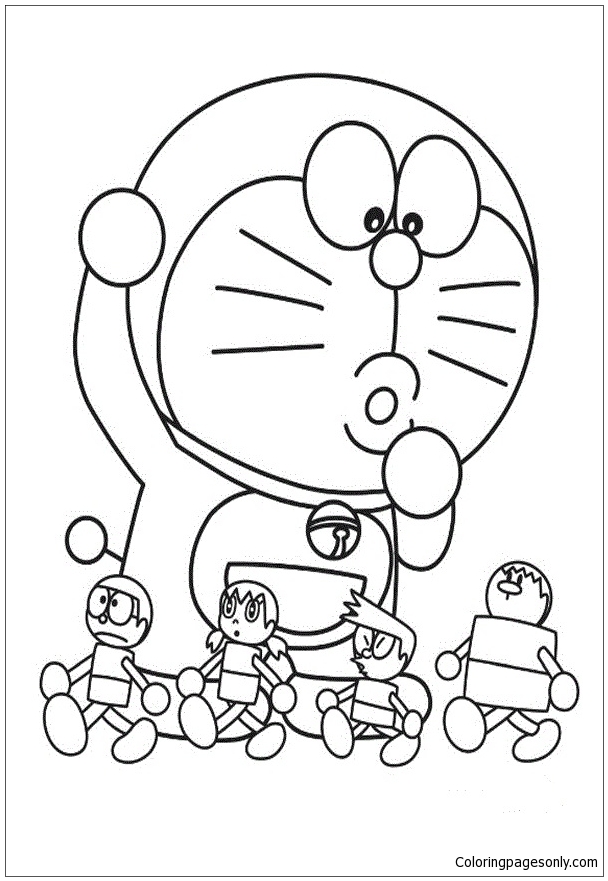
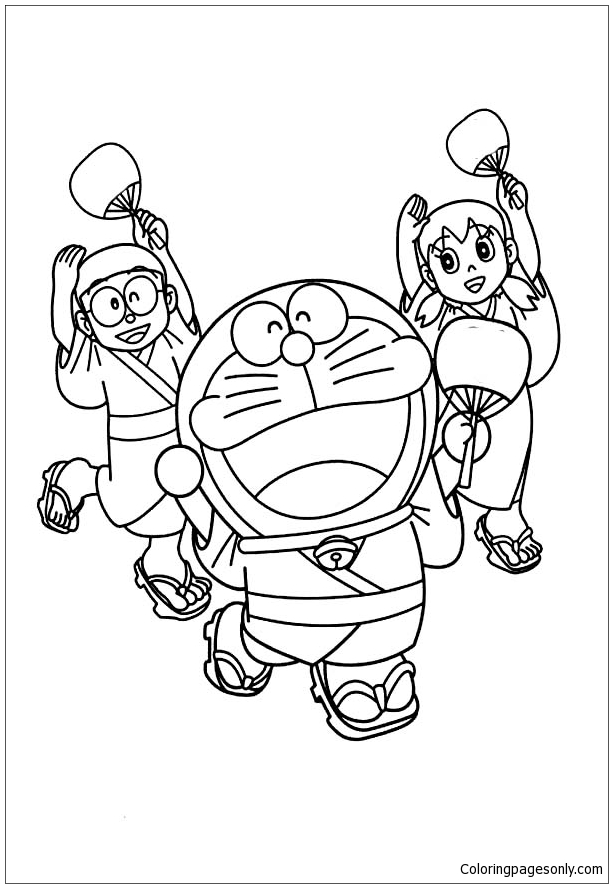
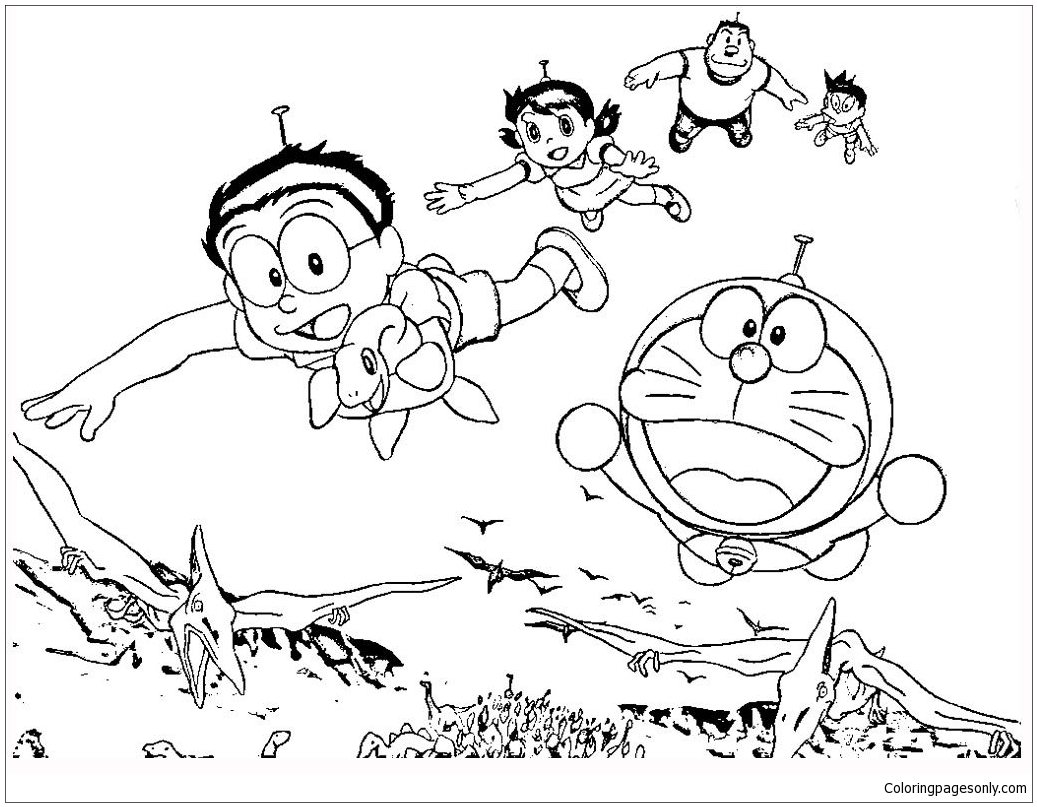
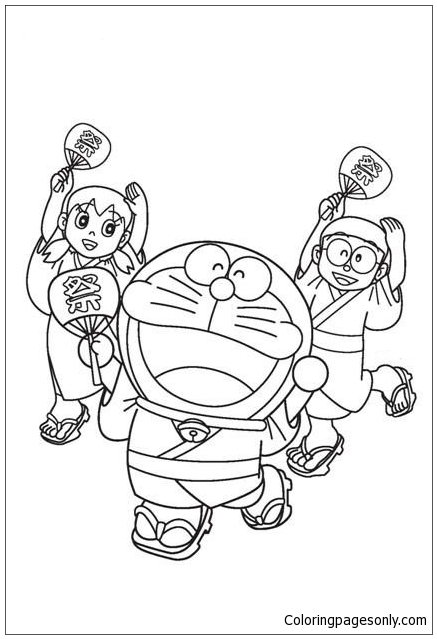
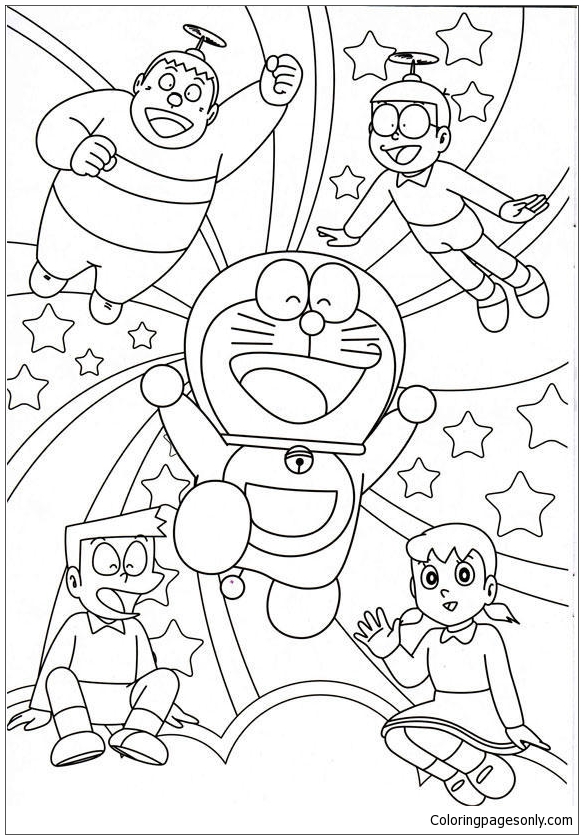
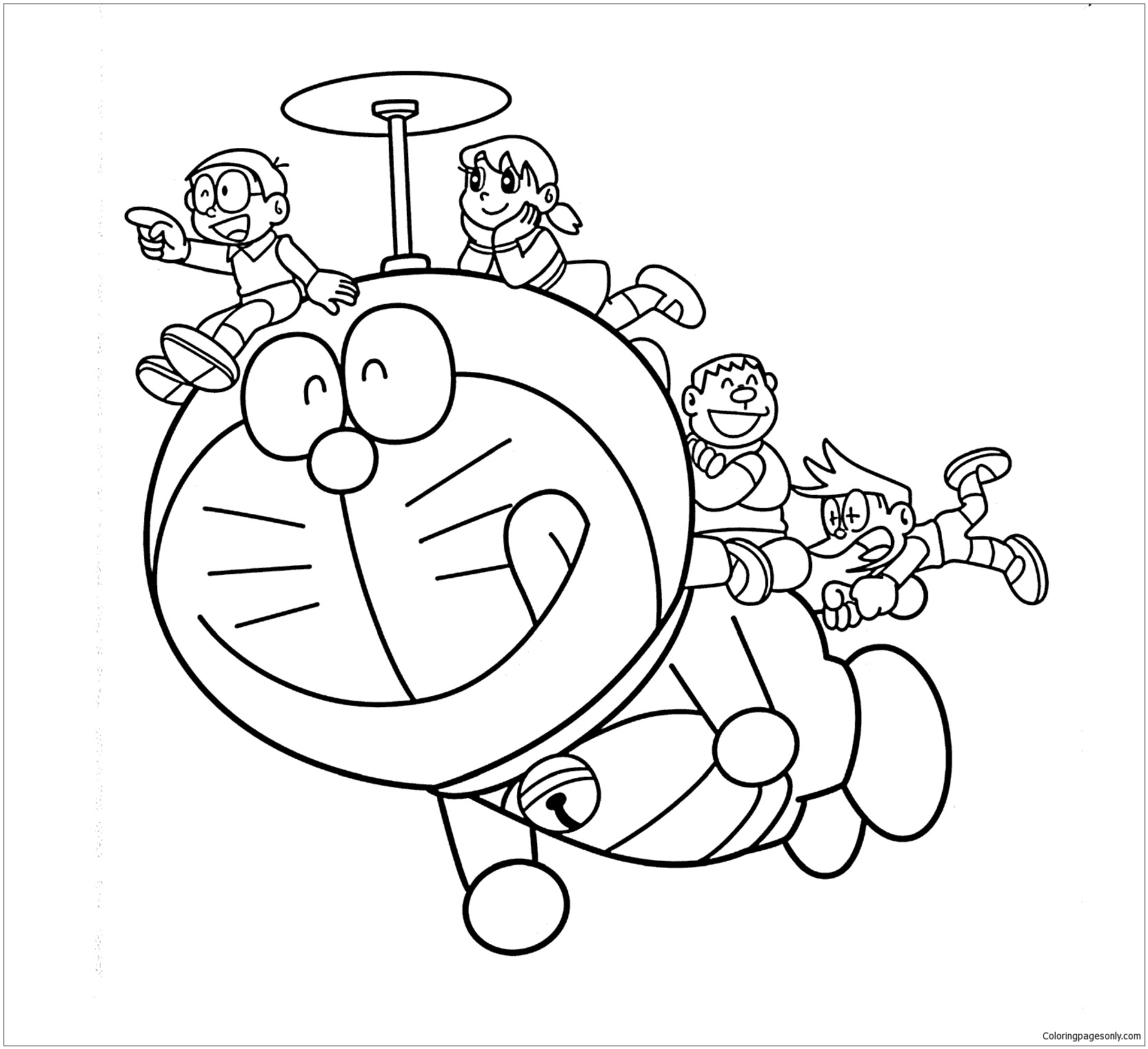
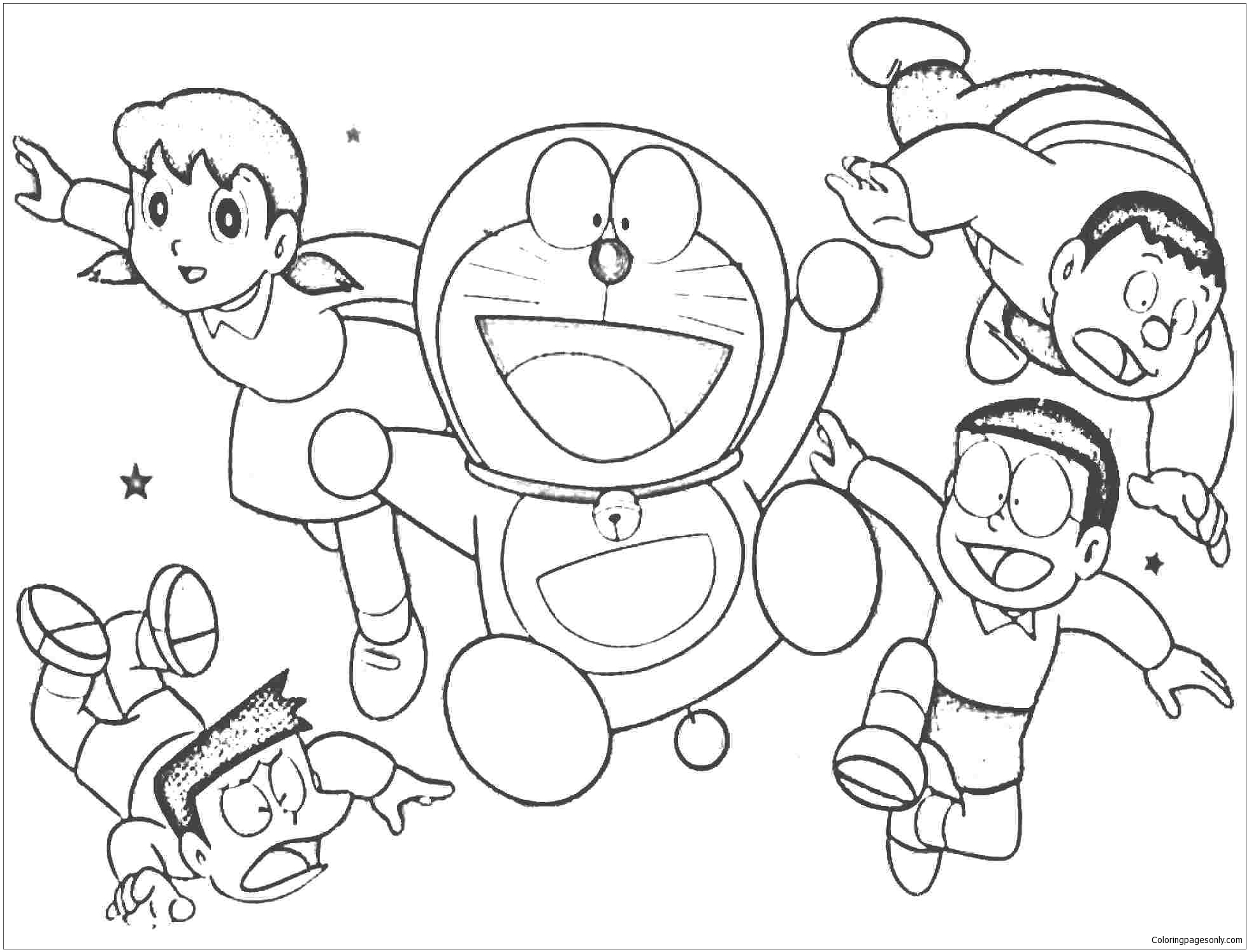
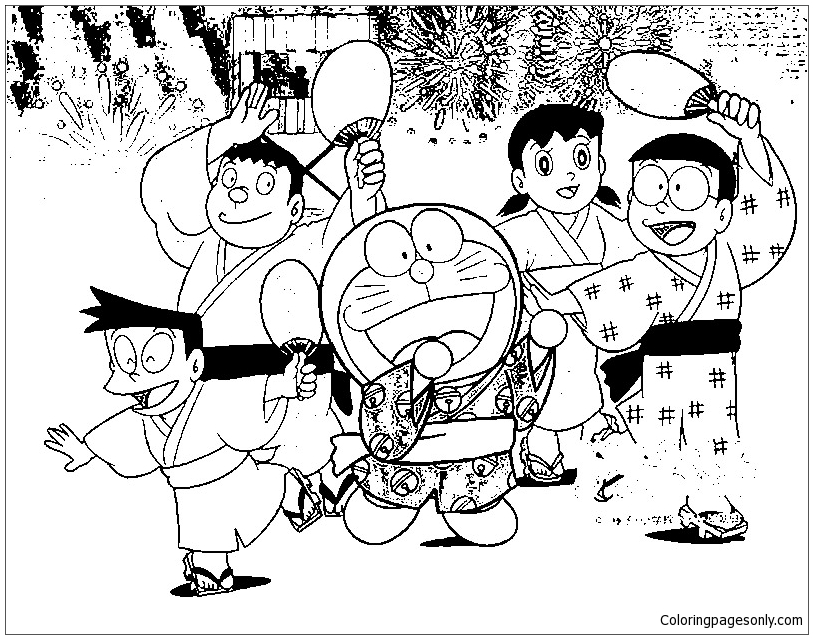
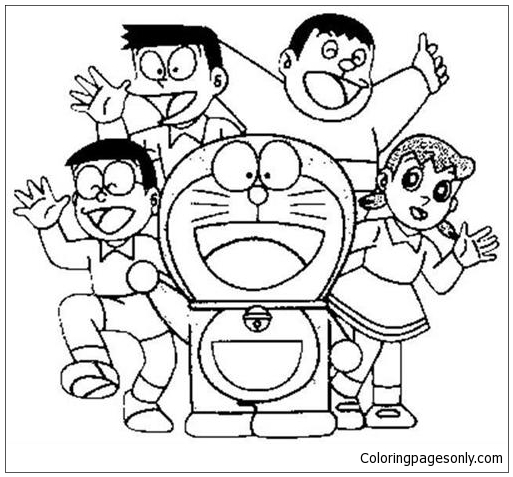
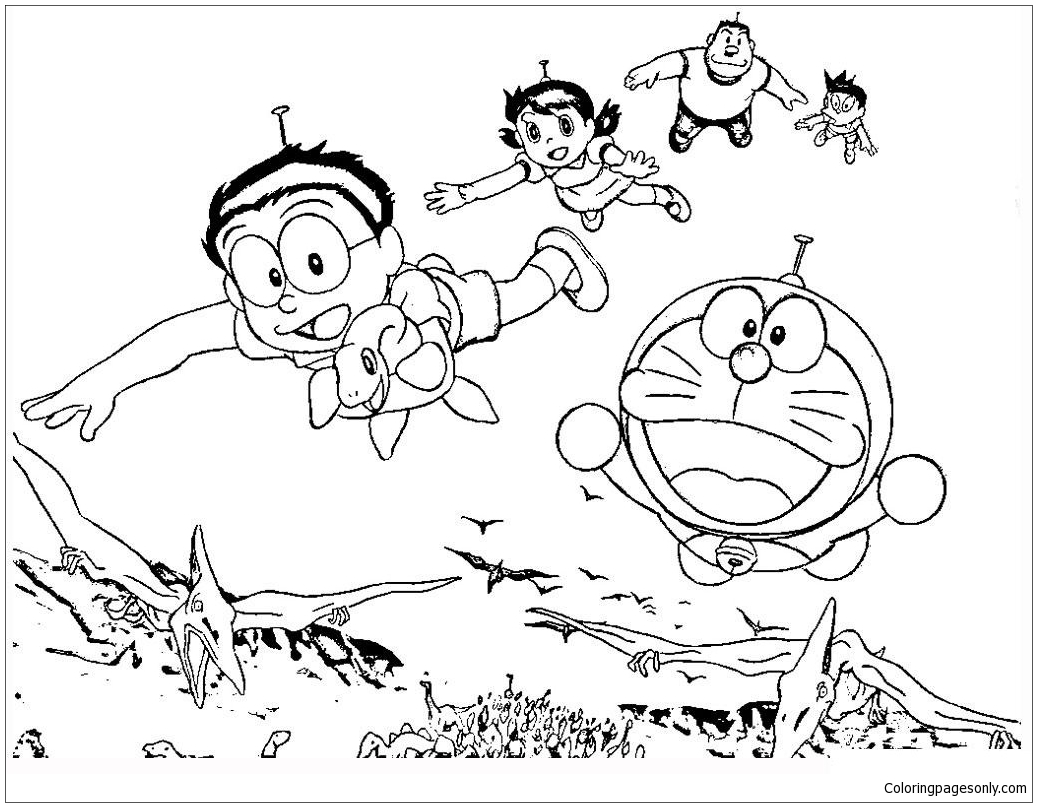
Doraemon and the friends, Doraemon and Friends 1, Doraemon and Friends-Sort, Doraemon and Friends, Doraemon Calling Nobita Suneo Shizuka and Giant, and Chaien and Xeko bring the full cast together.

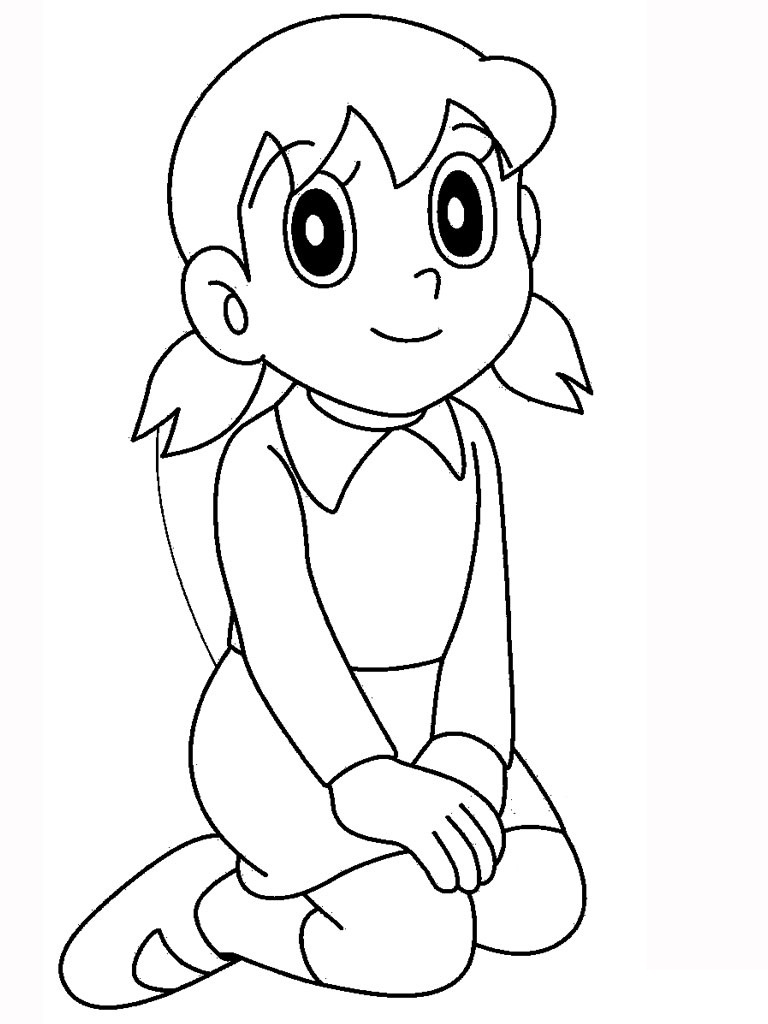
Shizuka Minamoto (Sizuka in some spellings) is Nobita’s classmate and the person he eventually marries in the series’ canonical future. She is gentle, kind, academically capable, and regularly used in the series as a measure of what a reasonable, thoughtful person would do in the situations the gadgets create. The Sizuka from Doraemon page shows her in her characteristic pink dress.

Gian (Takeshi Gōda) is the neighborhood’s biggest kid and its most reliable bully – physically imposing, confident to the point of delusion about his singing ability (he is catastrophically bad), loyal to Nobita when it matters despite everything. His defining contradiction – the bully who shows up when things get serious – is one of the series’ most consistent sources of both comedy and genuine warmth.

Suneo (Suneo Honekawa, also called Xeko in some translations) is wealthy, boastful, attached to Gian, and reliably the person who makes the situation worse by bragging about something he has that Nobita doesn’t – which is frequently the reason Doraemon produces a gadget in the first place. He has a distinctive pointed face and a small, smug expression that the coloring pages capture with accuracy.

Coloring the group pages: Establish each character’s color territory before beginning – Doraemon blue, Nobita yellow-shirt, Shizuka pink, Gian striped shirt in orange and yellow, and Suneo in his lighter-toned outfit. The visual distinction between five characters requires clear palette decisions made before any color is applied.

Gadget and Adventure Pages

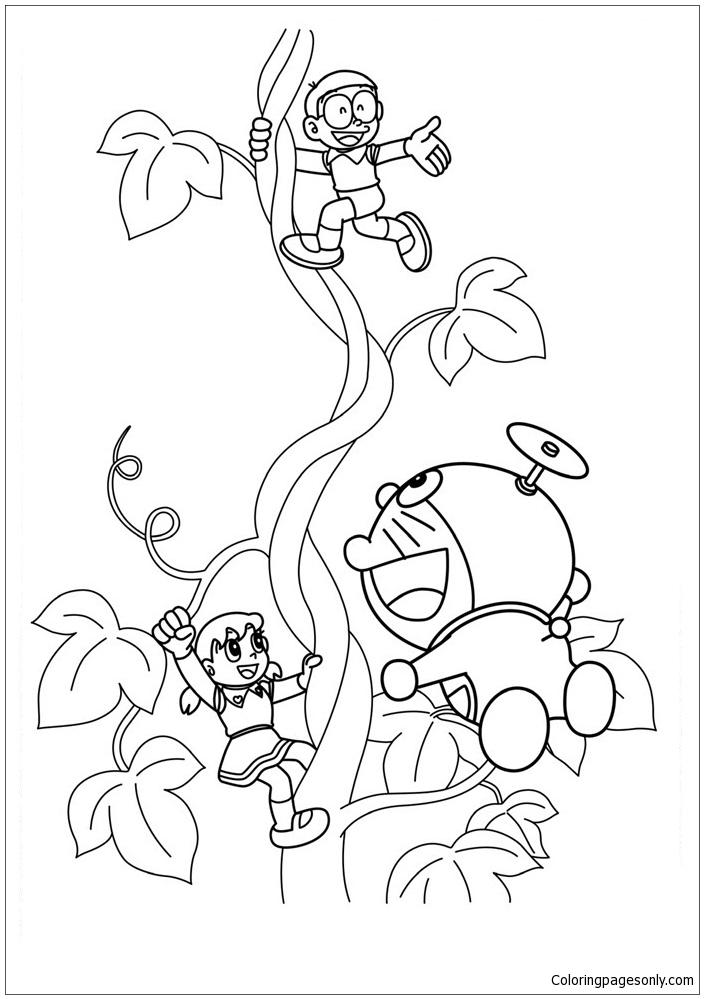
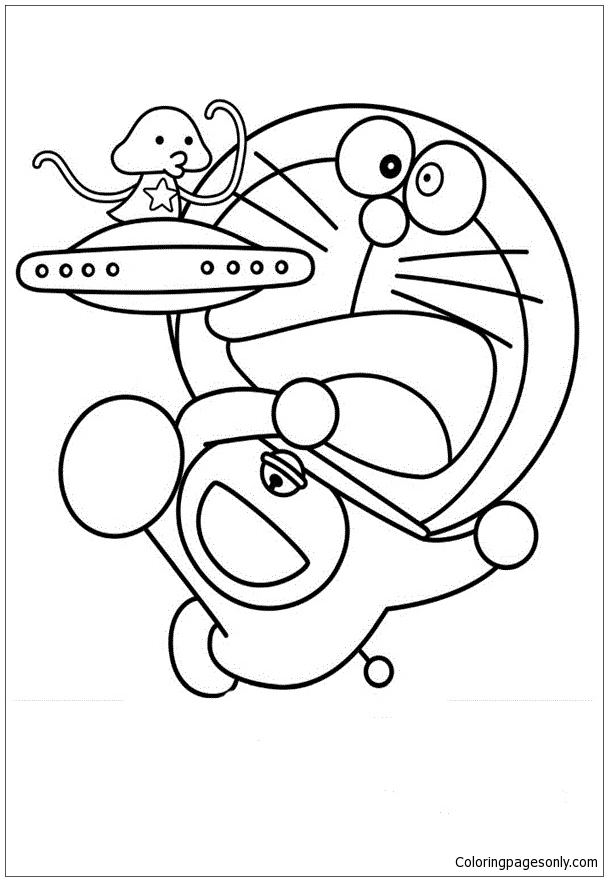
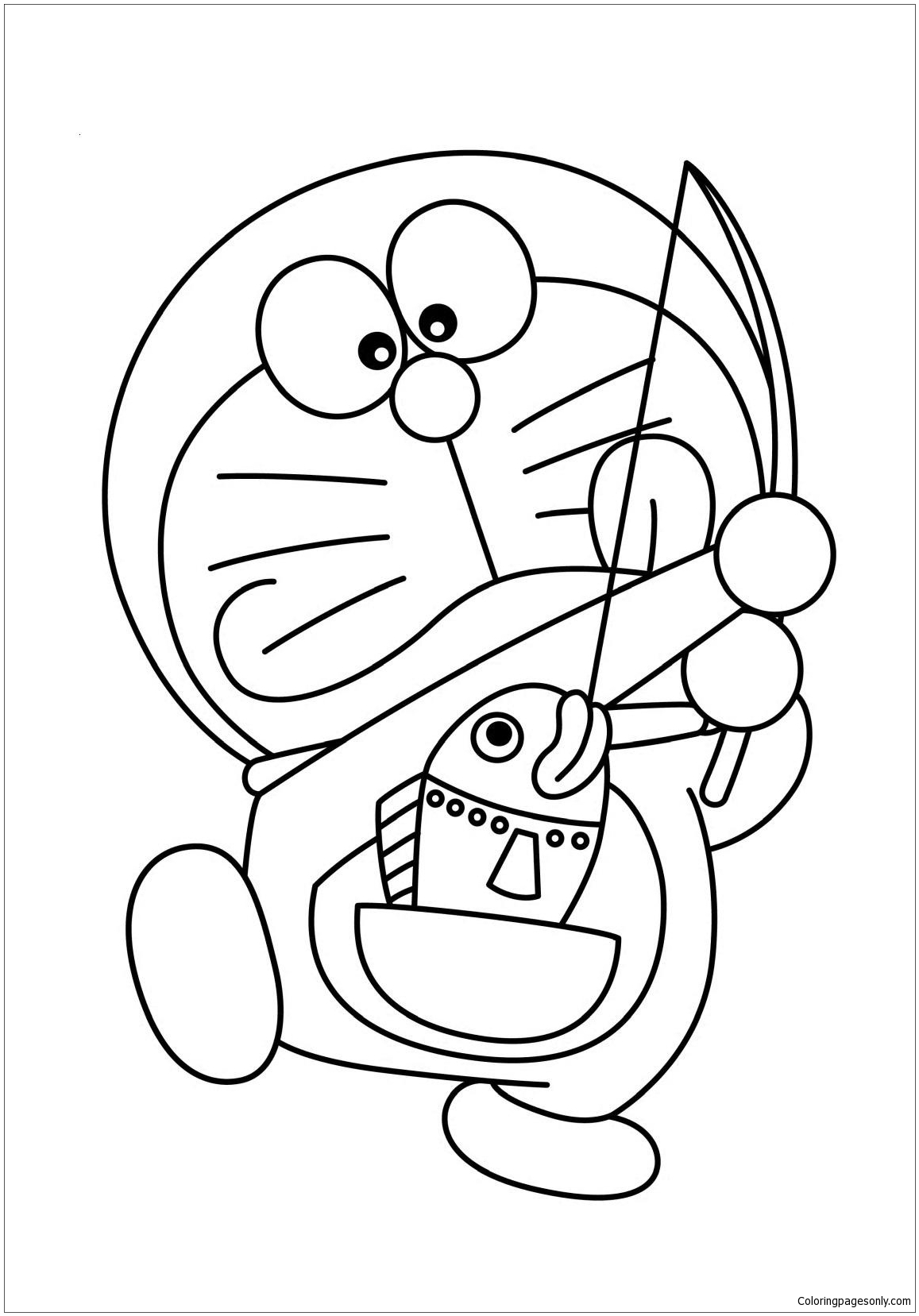
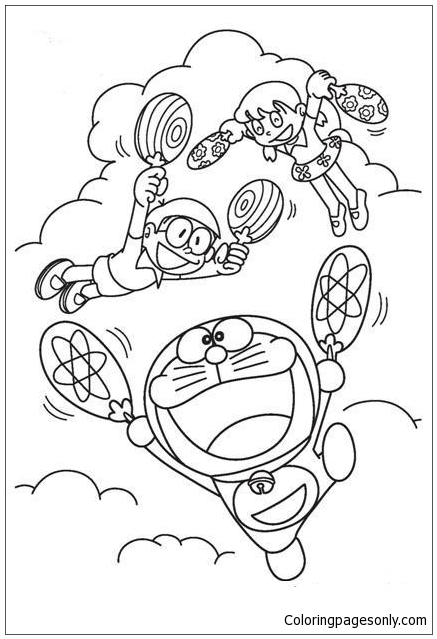
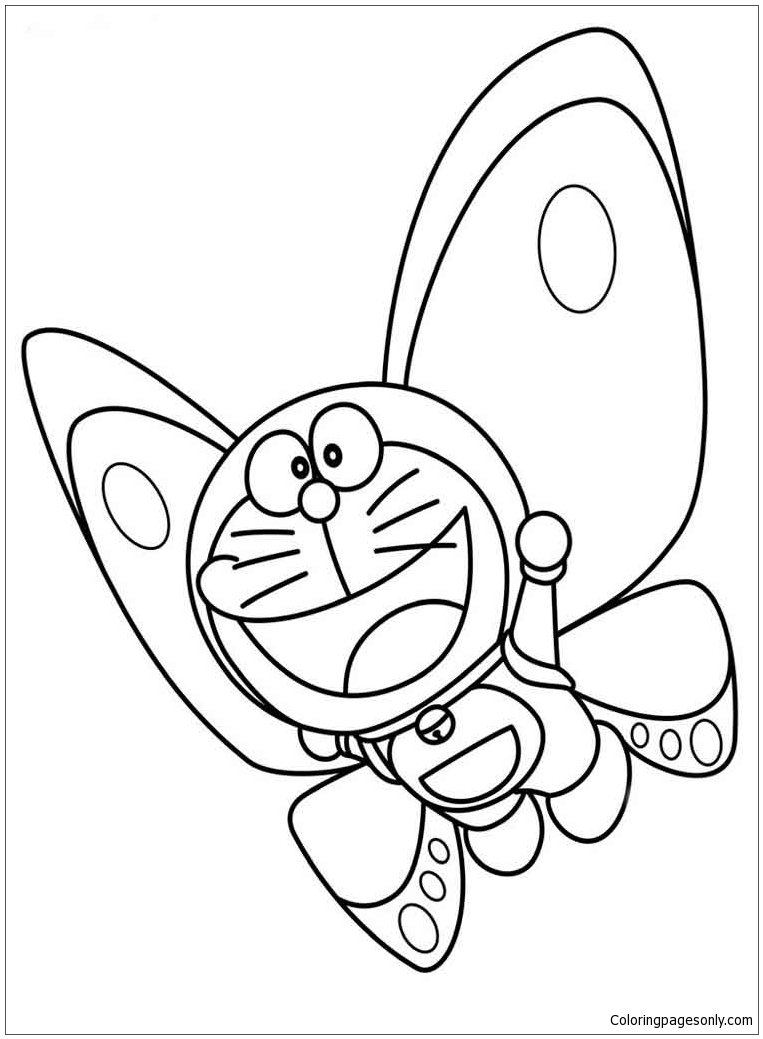
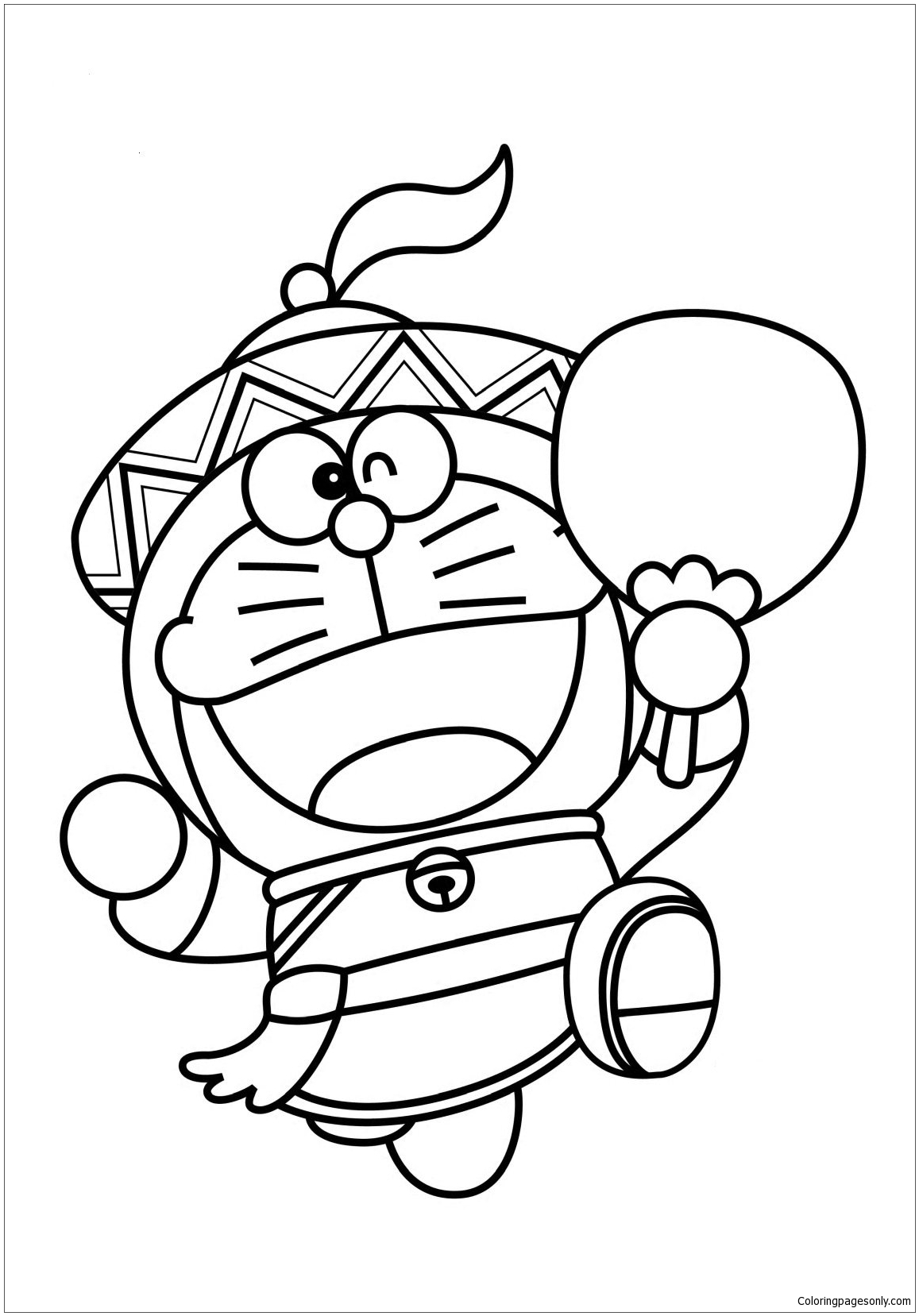
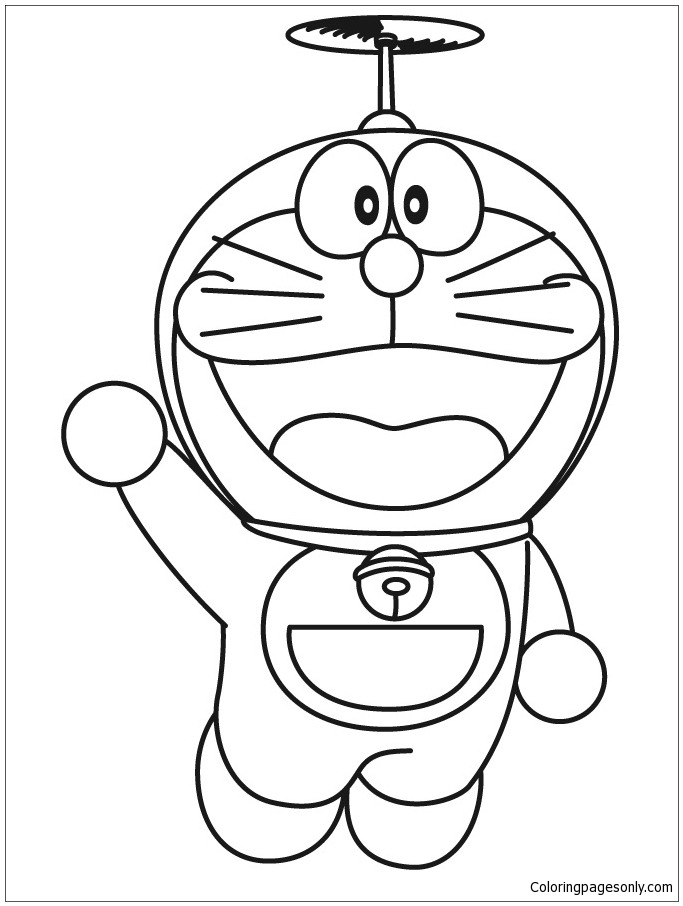
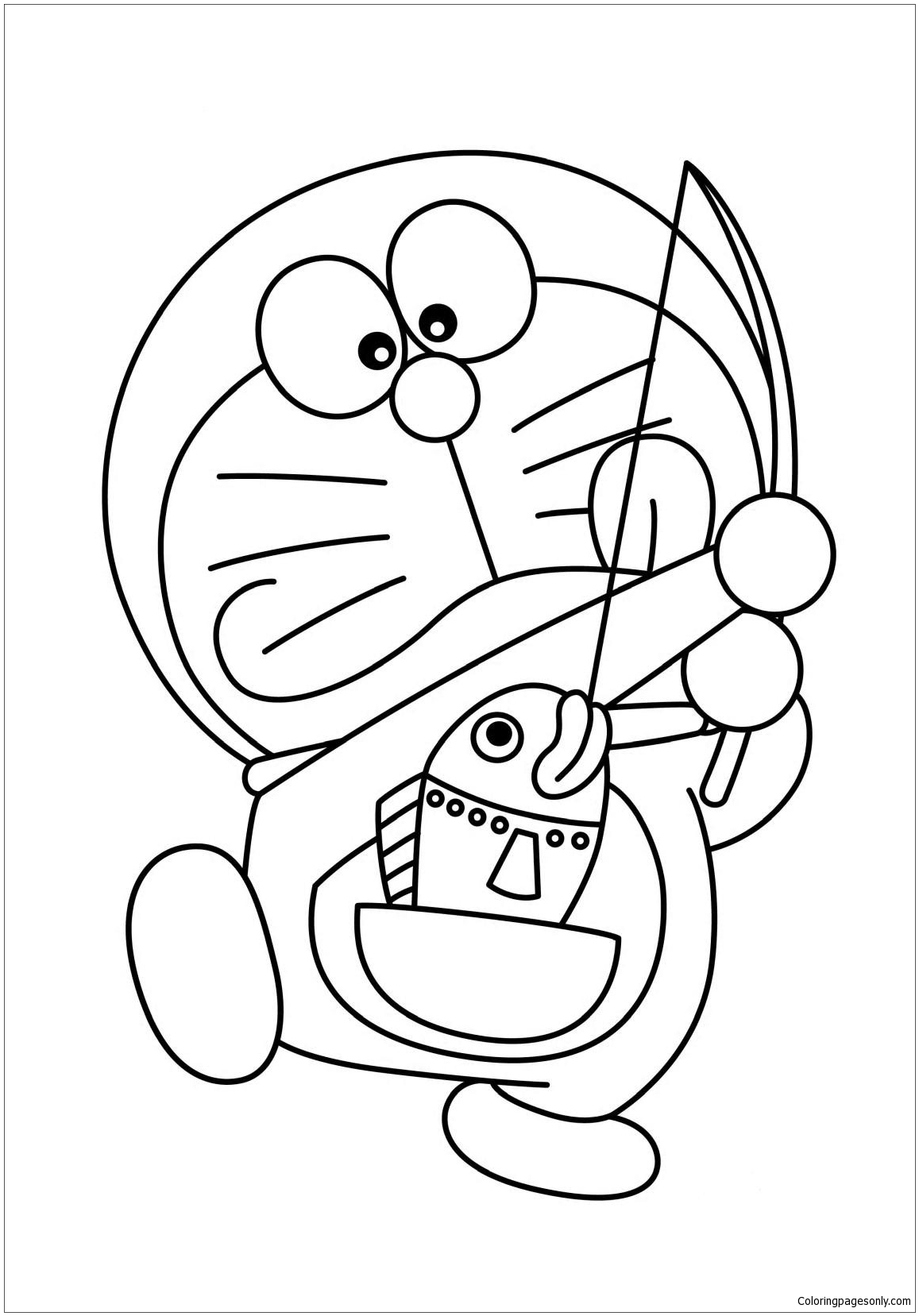
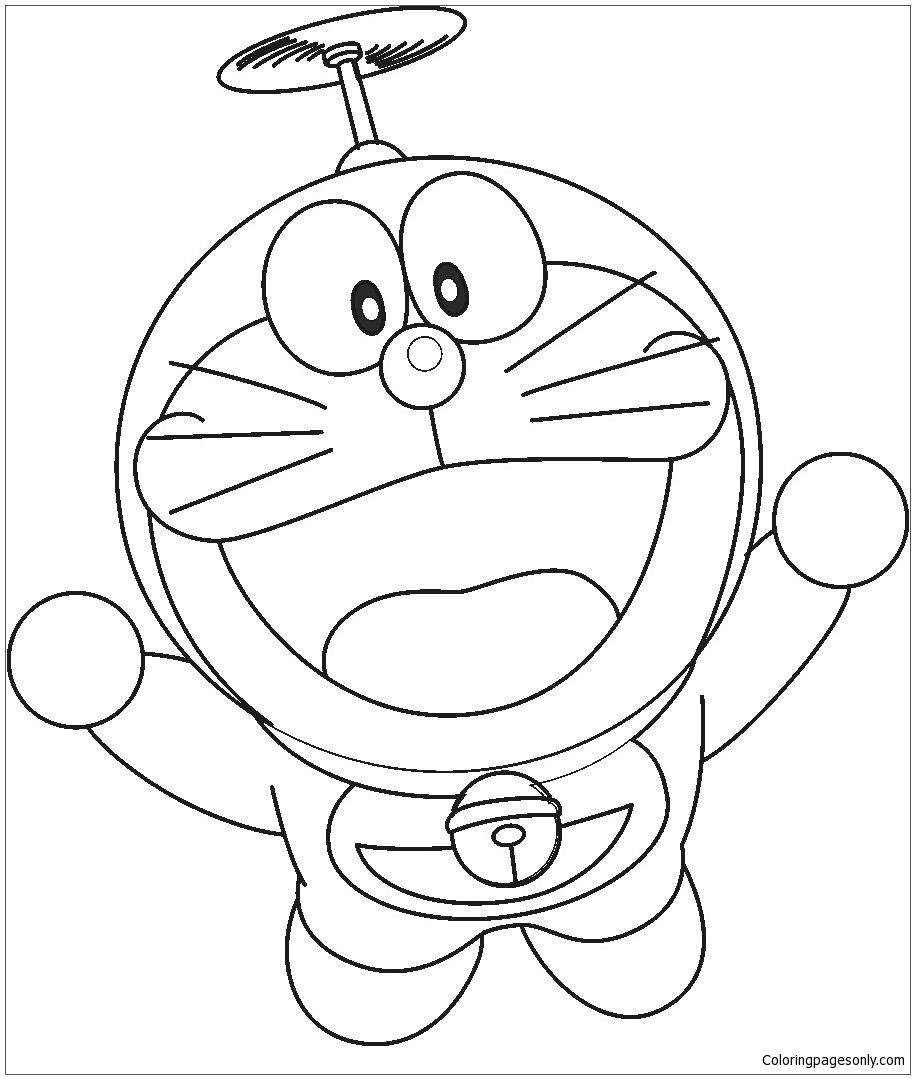
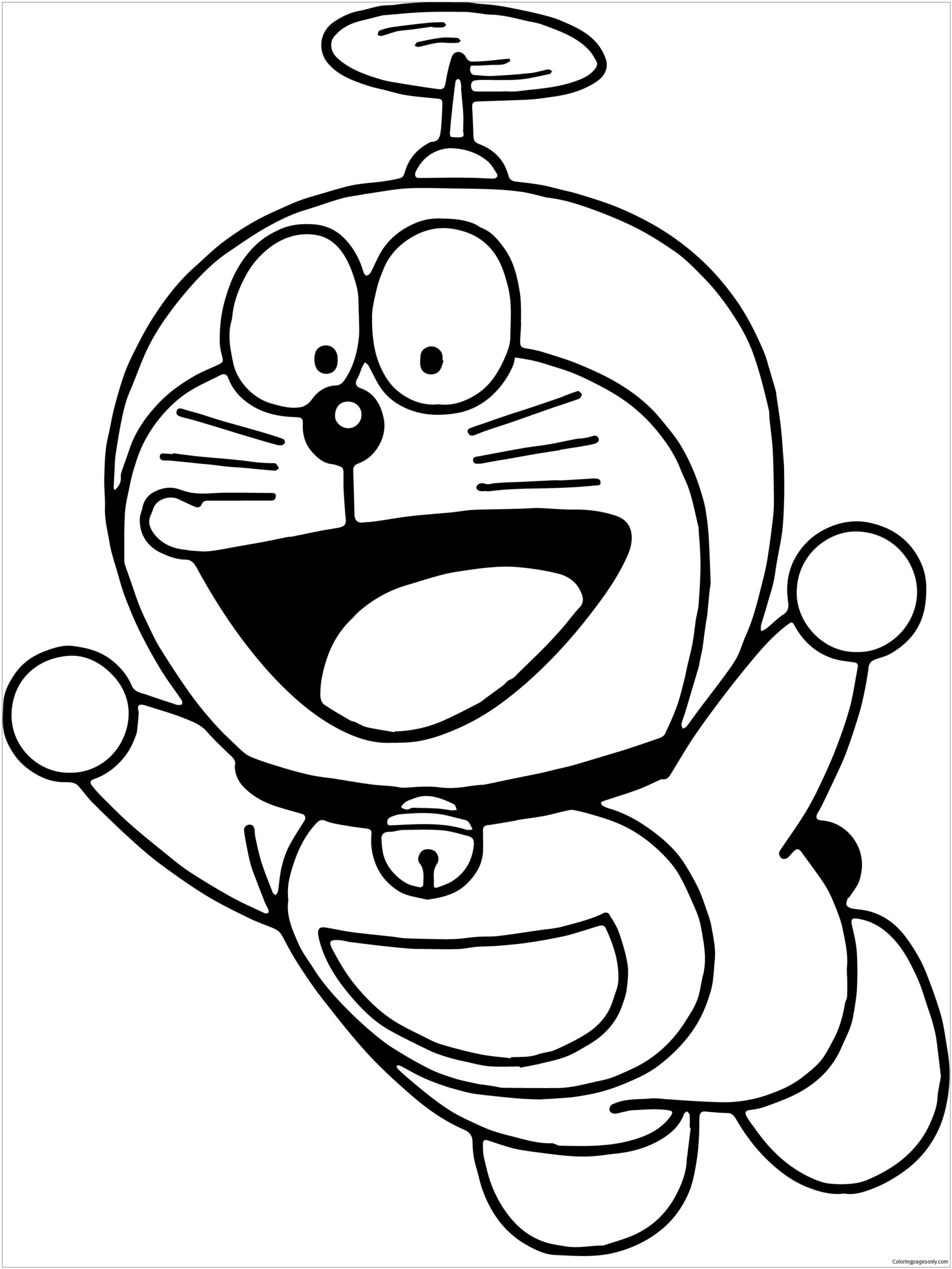
Doraemon Fishing From His Pocket, Doraemon s magic carpet, Doraemon With UFO, Doraemon Flies With Fan, Doraemon Flying 1, Nobita and Doraemon Come Out From Locker – the gadget pages capture the series’ central creative engine: the 4D pocket.

The 4-dimensional pocket on Doraemon’s belly contains an essentially infinite supply of futuristic gadgets, each solving a specific problem in a way that creates new, usually worse problems. The most famous: the Take-copter (a small propeller attached to the head that enables flight), the Anywhere Door (a pink door that opens to any location the user names), the Small Light and Big Light (devices that shrink or enlarge objects), Memorization Toast (bread stamped with text that, when eaten, allows instant memorization). The Doraemon Fishing From His Pocket page captures the pocket’s impossible interior quality – Doraemon reaching into his belly for something that could be anything.

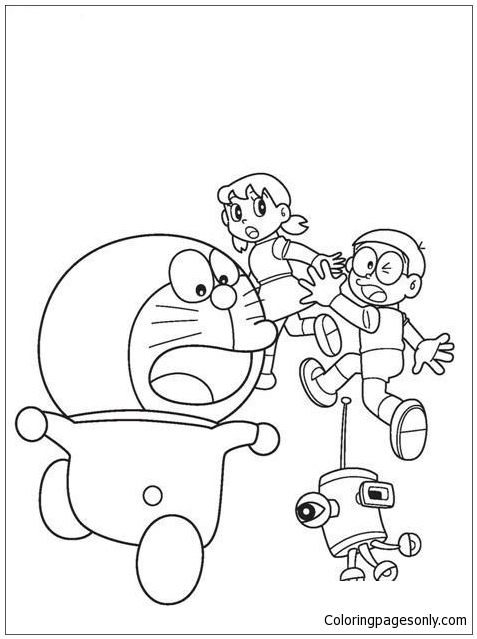
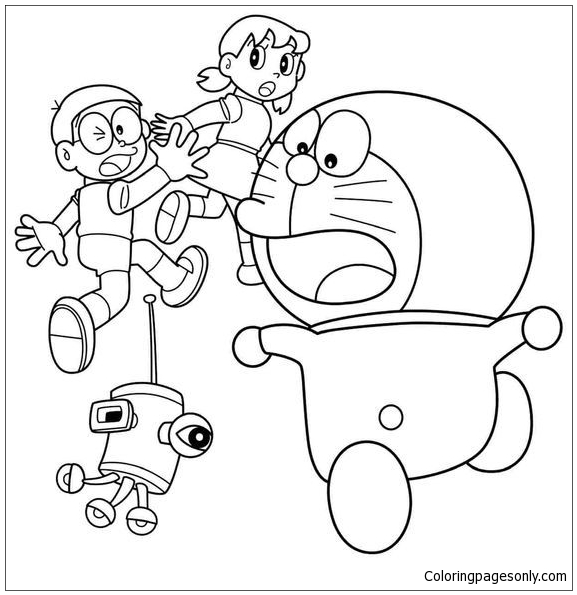
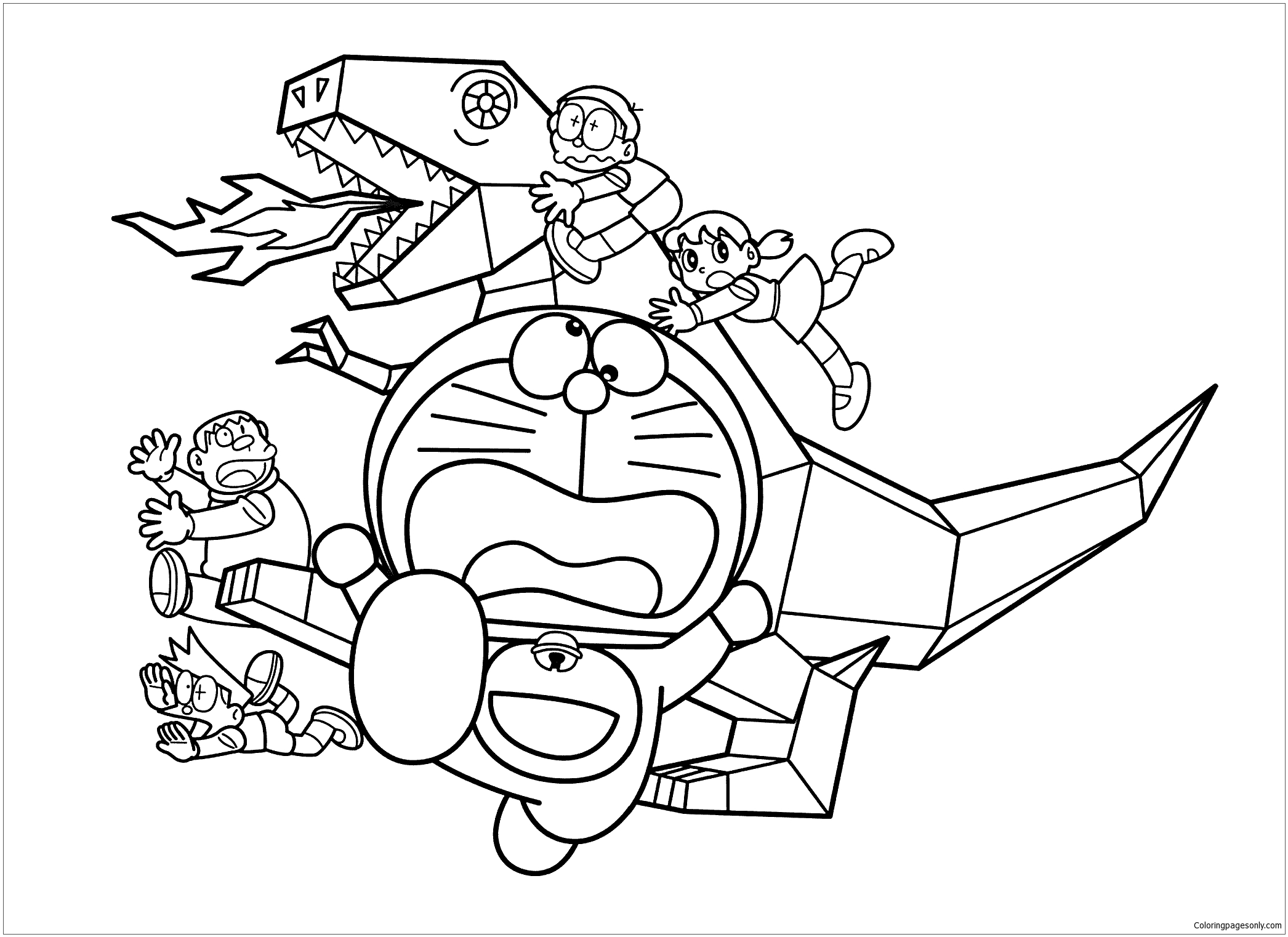
Doraemon Chased By Robot captures one of the series’ recurring structural jokes: the gadget has escaped Doraemon’s control and is now pursuing him. This is a plot that recurs so frequently in both the manga and anime that it functions as its own genre of Doraemon episode.

Doraemon in Activities and Sports

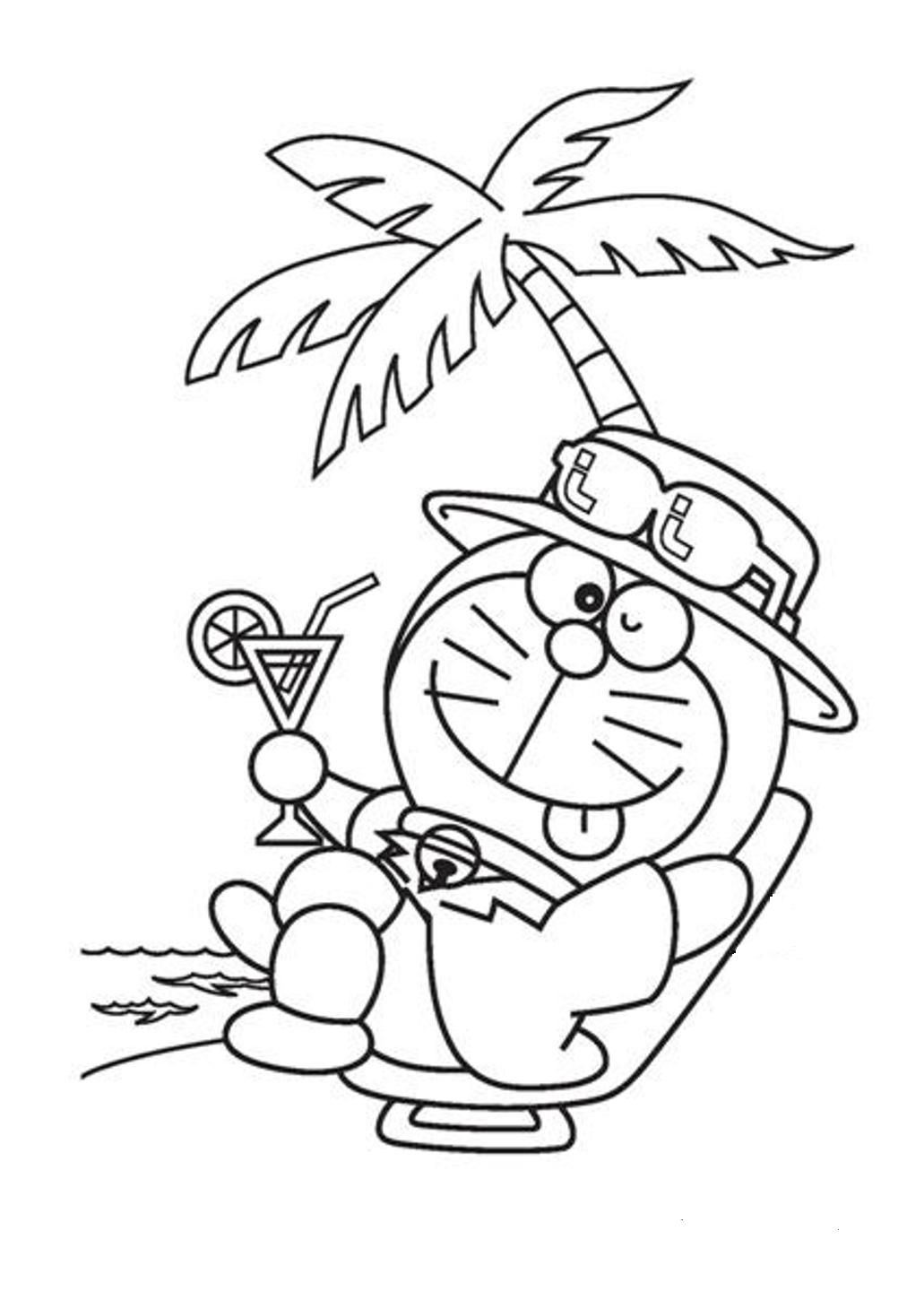
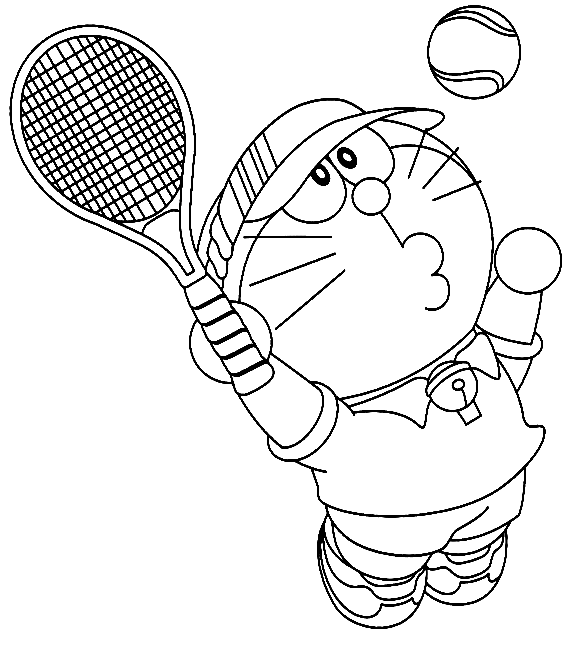
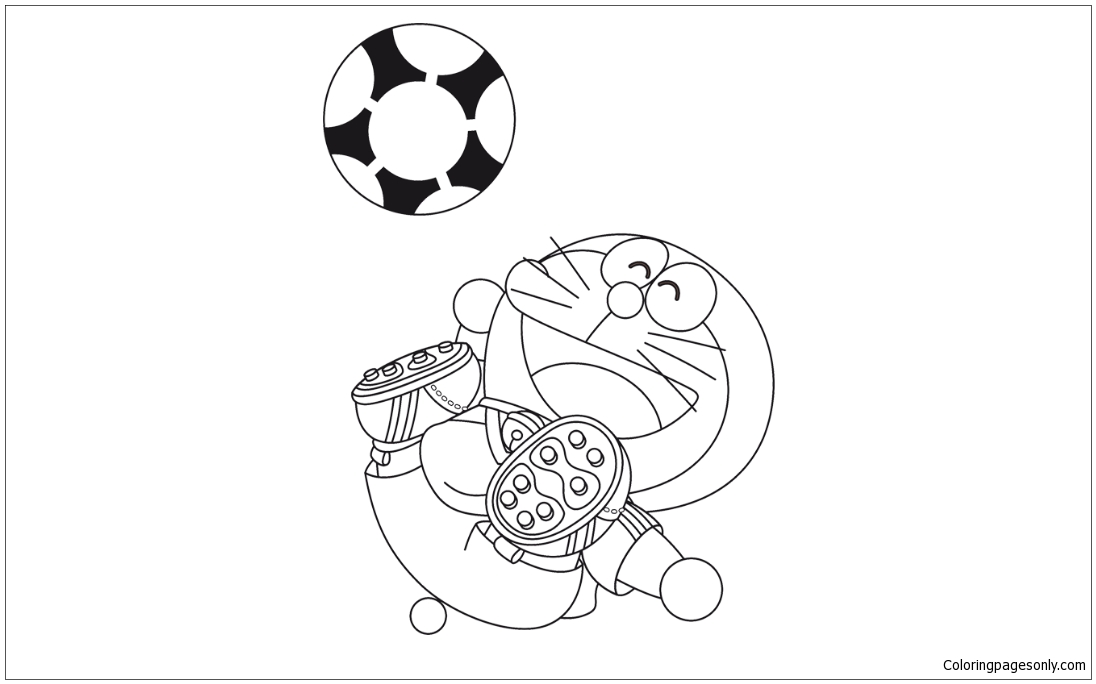
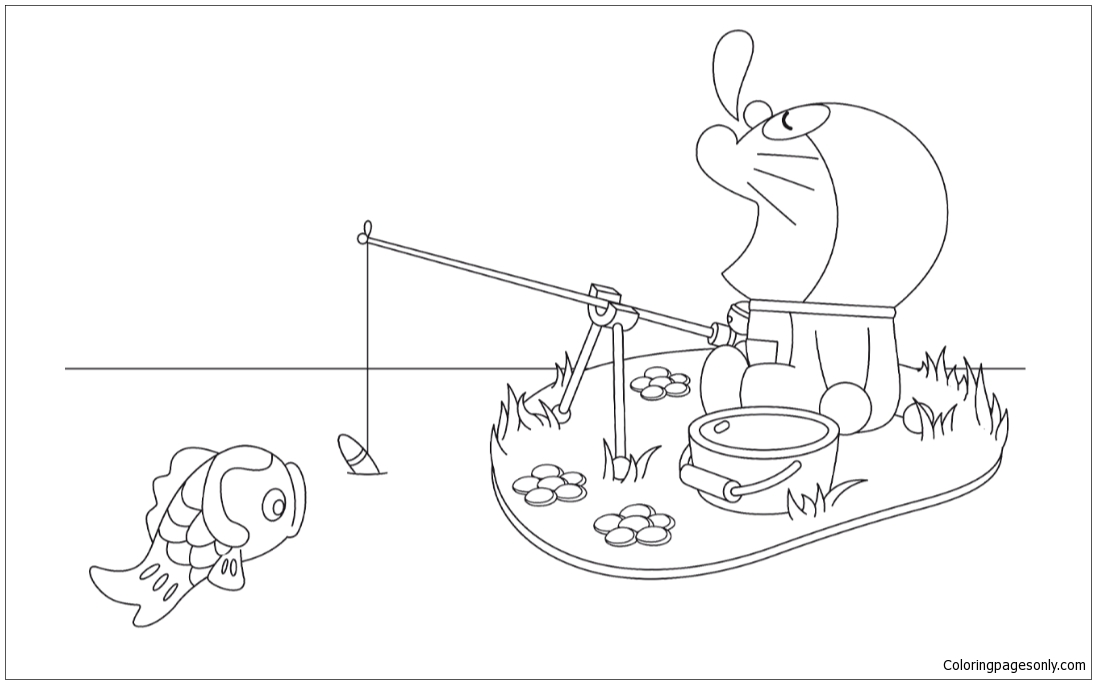
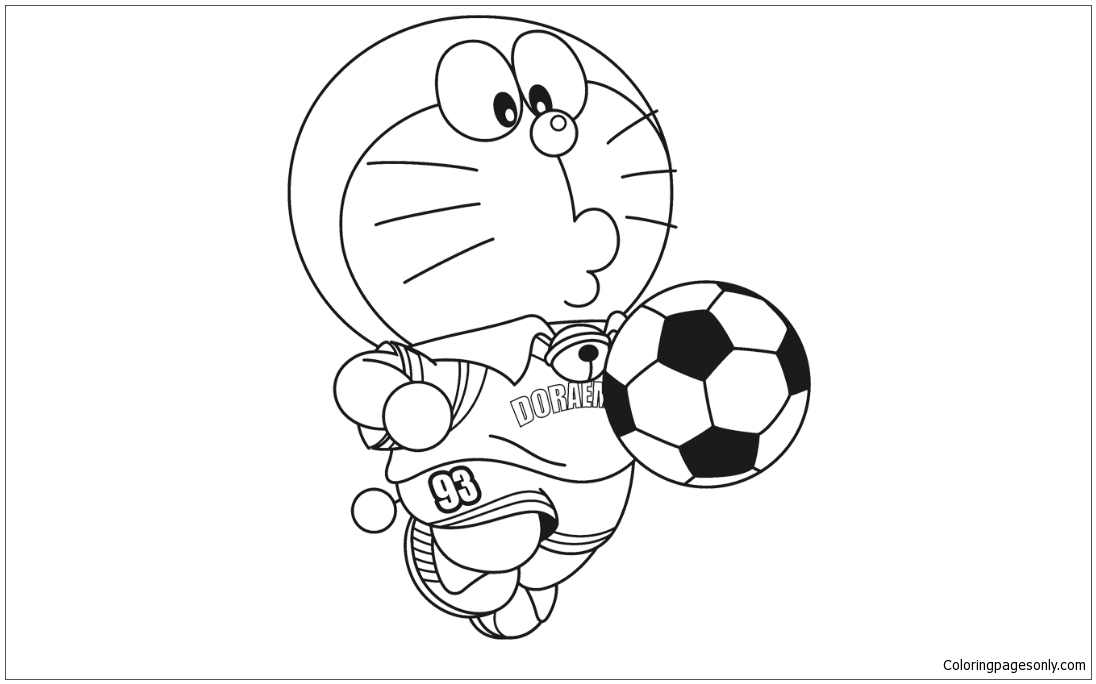
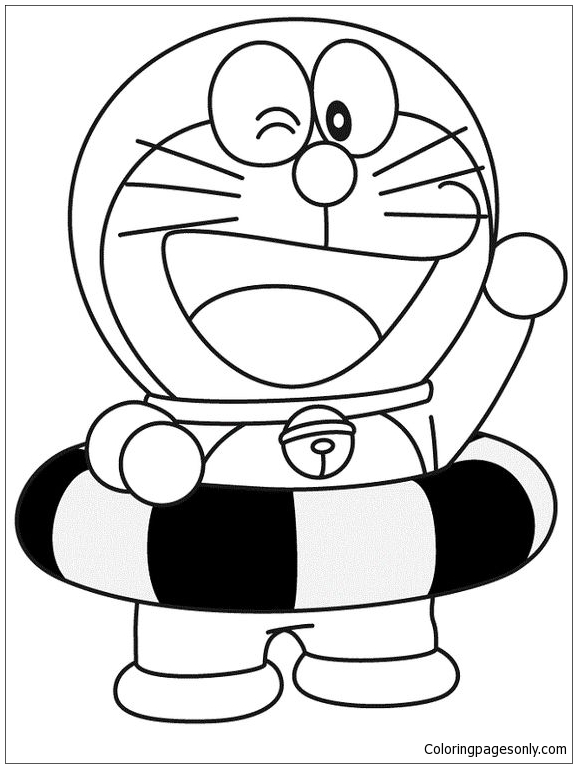
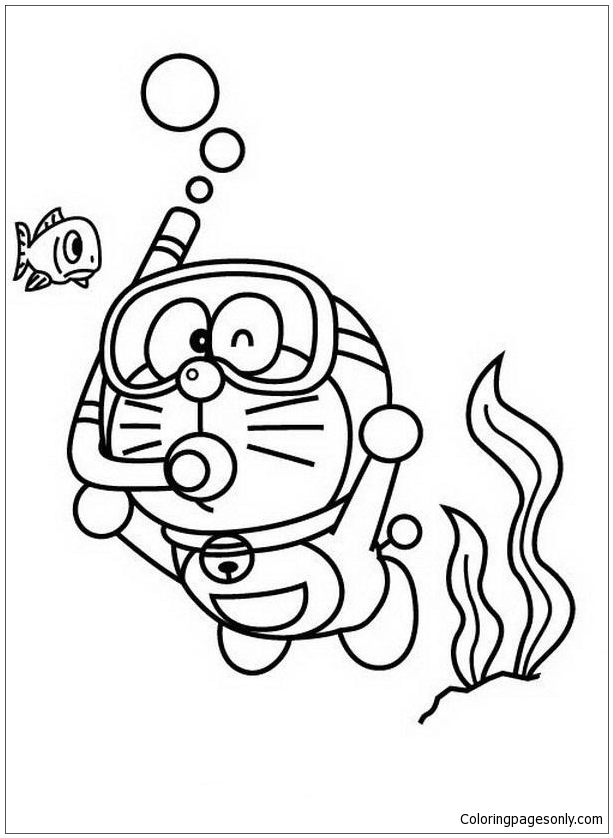
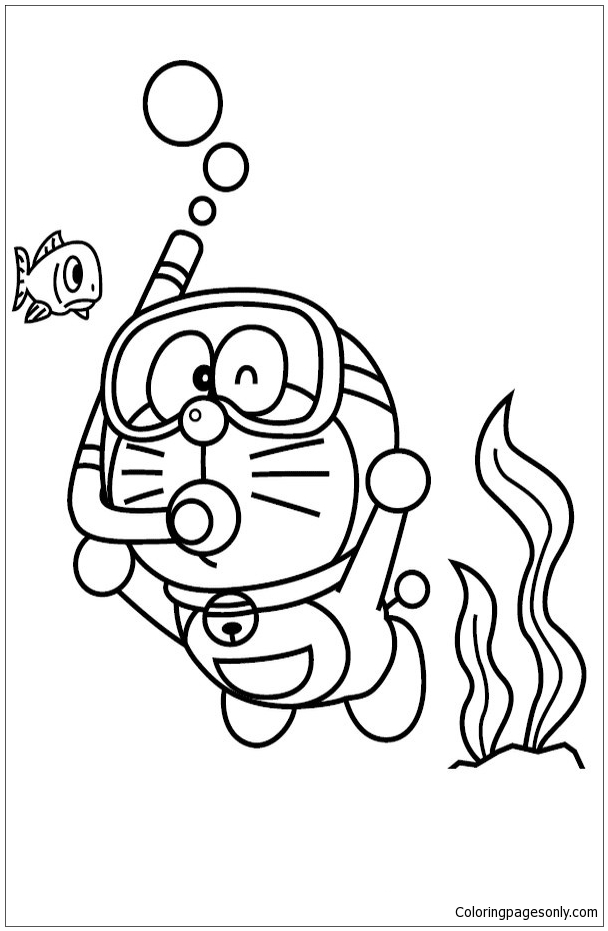
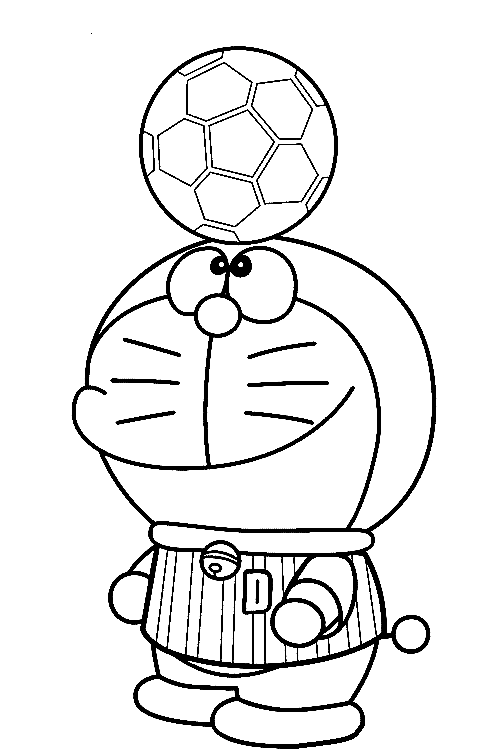
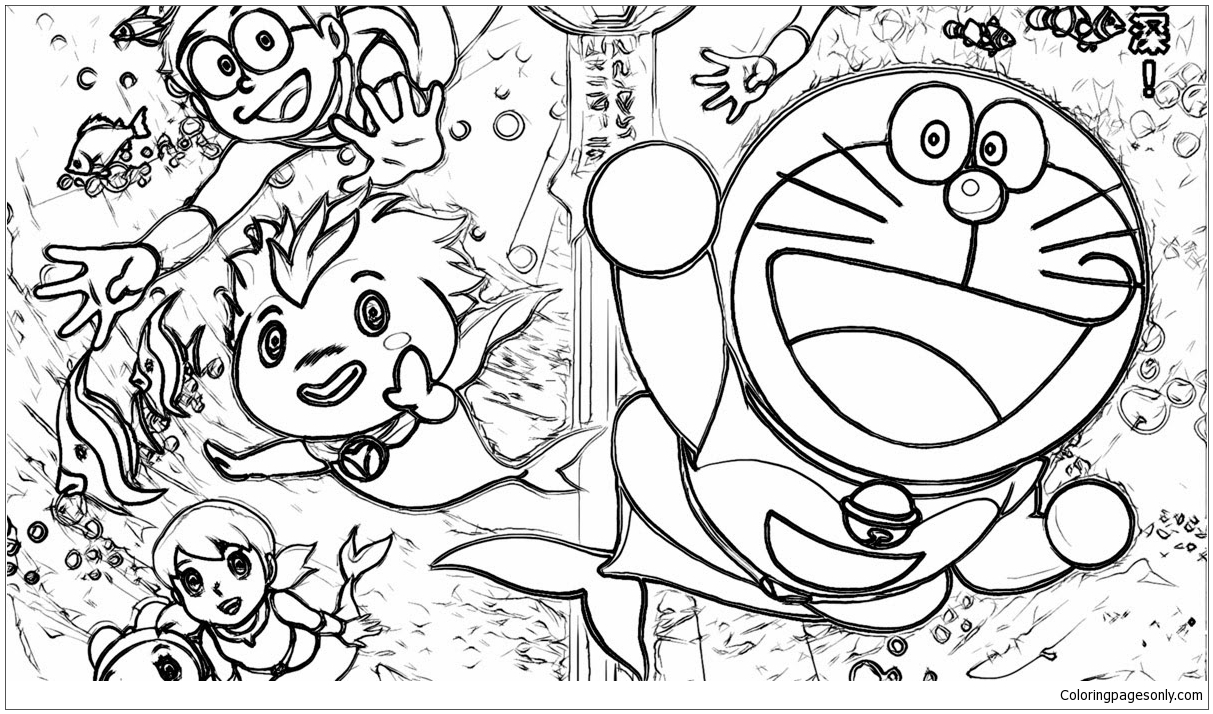
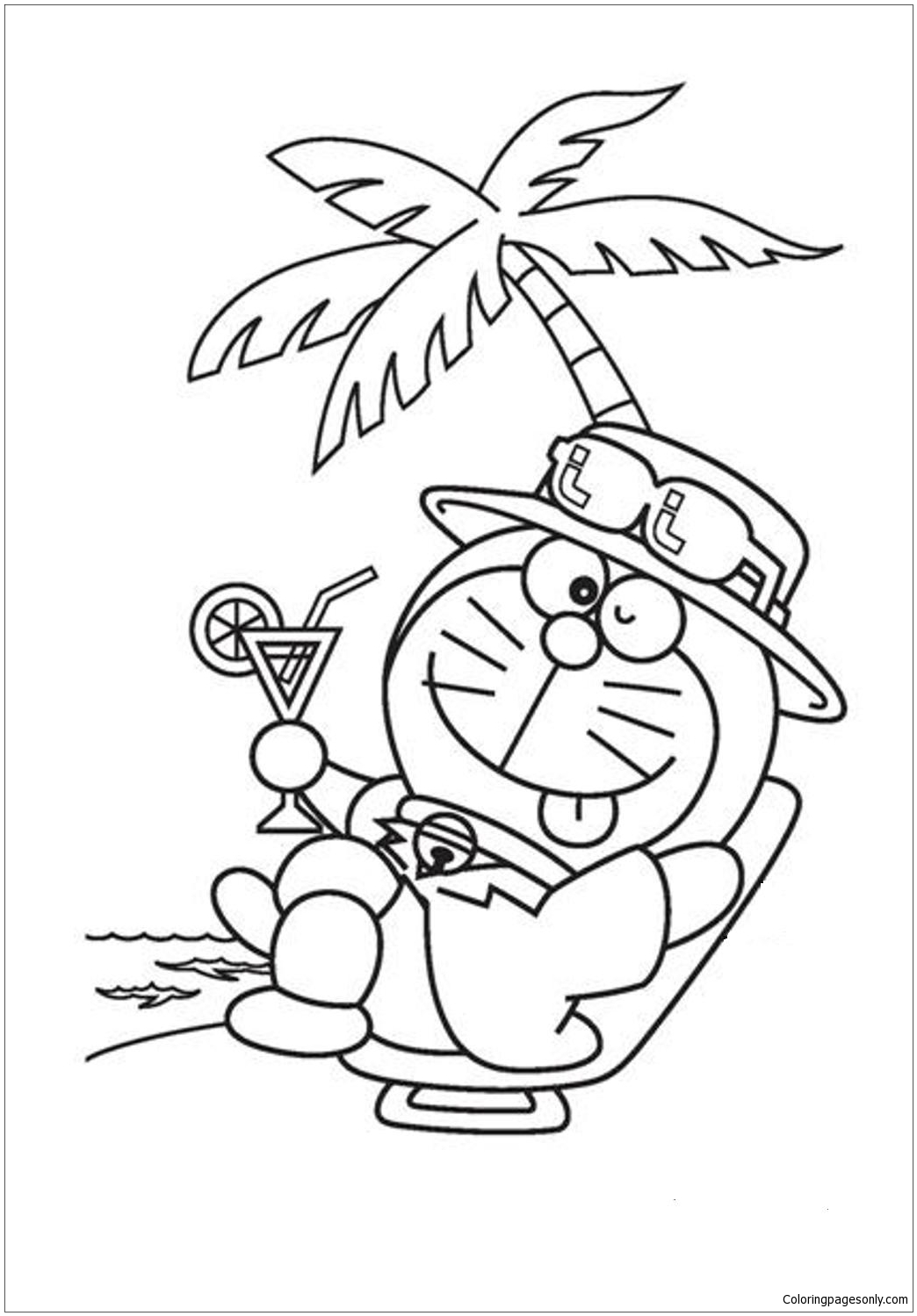
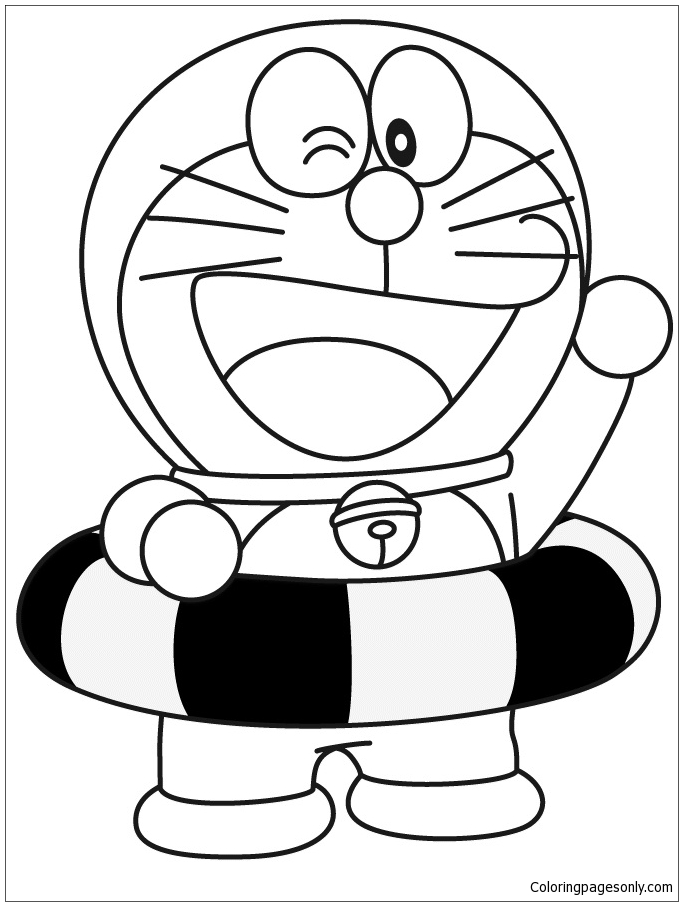
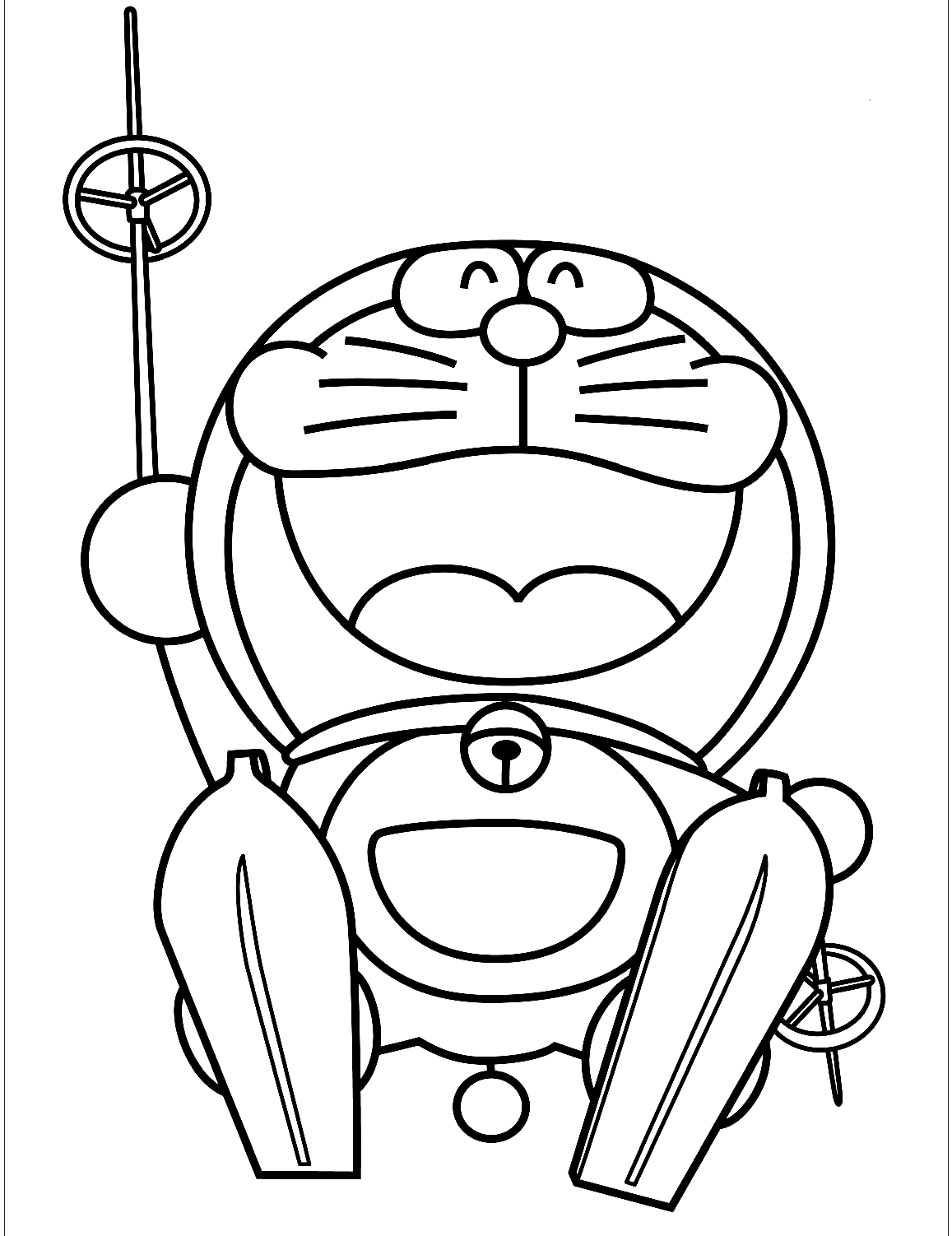
Doraemon is playing tennis, Doraemon Playing Football 1, Doraemon Playing Football, Doraemon Playing Baseball, Doraemon Skiing, Doraemon is sitting fishing, Doraemon Is Going Swimming, Doraemon Diving, Doraemon at the beach – one of the collection’s most endearing subsections.

Doraemon is a robot cat who has apparently decided to participate fully in all aspects of human recreational life. He skis. He plays tennis. He plays football (soccer). He plays baseball. He fishes. He swims. None of these activities is a natural fit for a cylindrical robotic cat, and the pages capture the delightful absurdity of this commitment while also showing genuine enthusiasm for his participation.

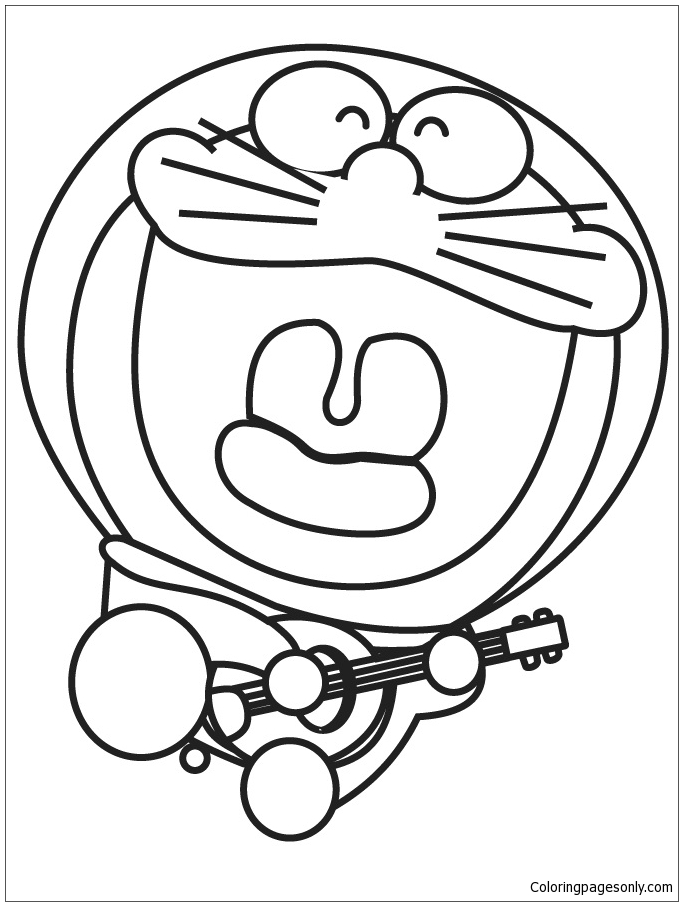
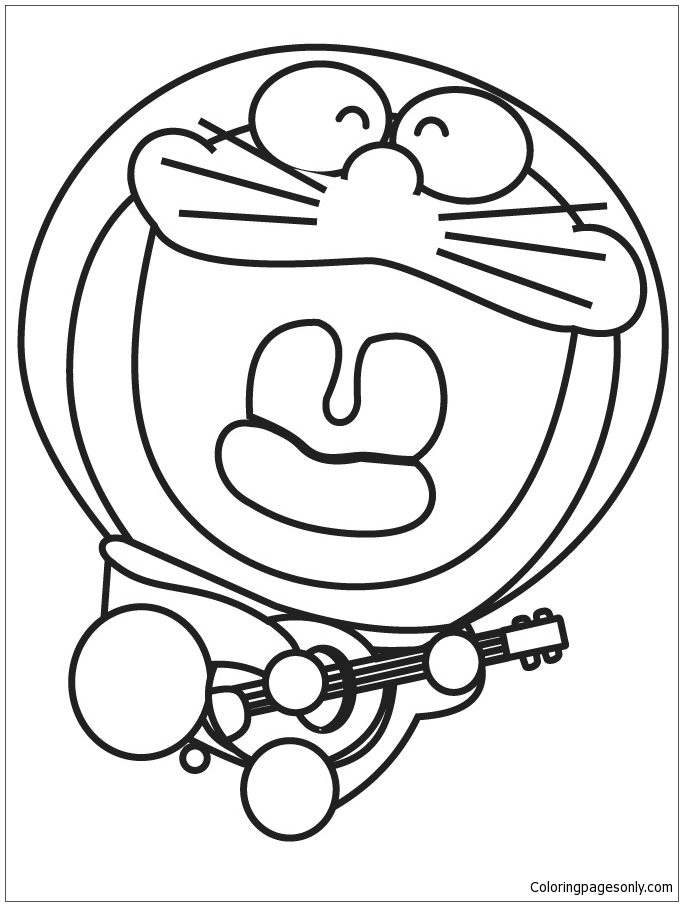
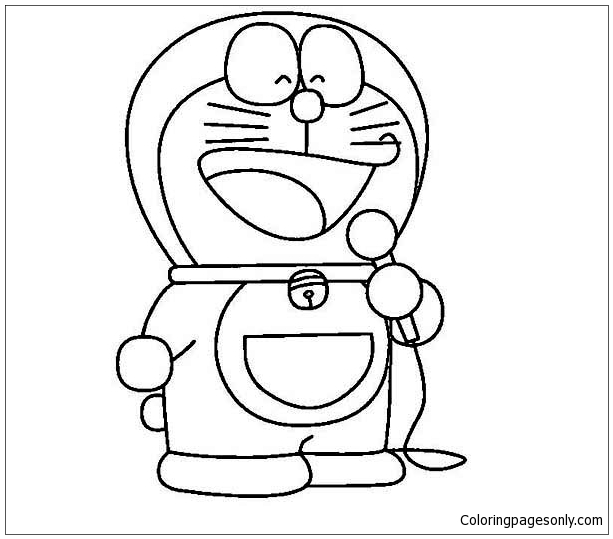
Doraemon Playing Guitar and Playing Guitar Doraemon give two pages to Doraemon as a musician – an image that is funnier than it looks because Gian, the franchise’s canonically terrible singer, is also musically enthusiastic. Doraemon’s musical ambitions are at least not described as painfully as Gian’s.

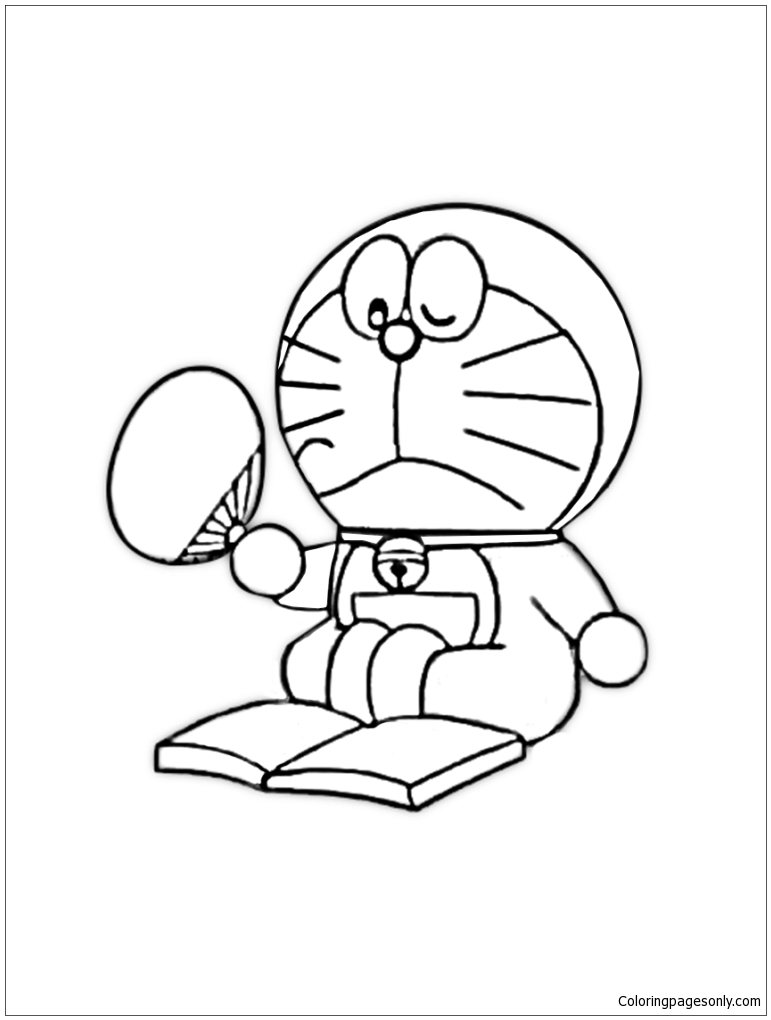
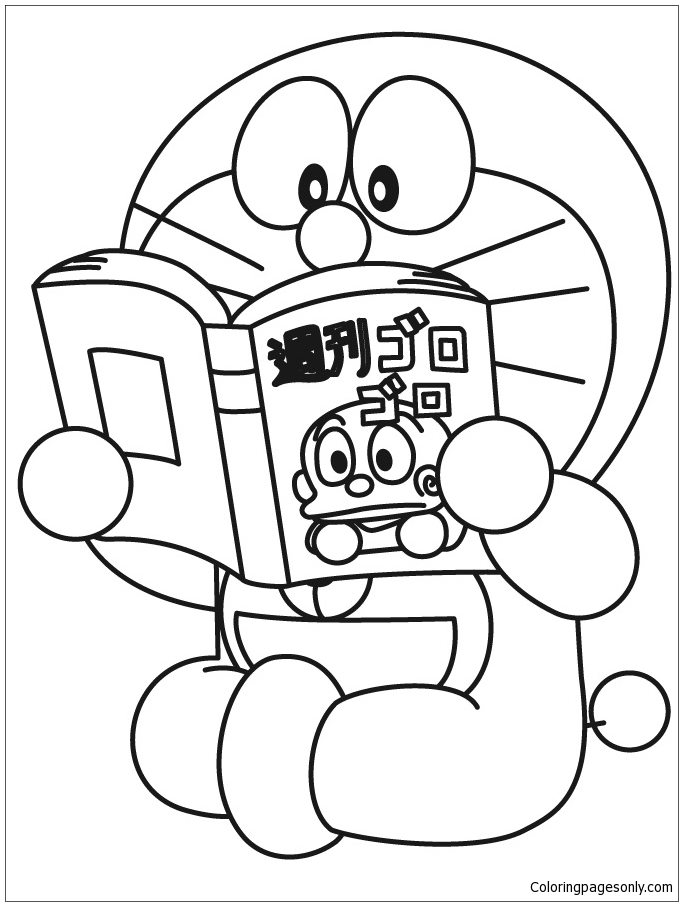
Doraemon Is Reading The Book 1 shows the robot cat in the activity most associated with his core role – learning, understanding, and preparing. He reads a lot. He is effectively a library of the 22nd century’s knowledge, and the reading pages capture this dimension of his character.

Doraemon in Costumes and Special Roles

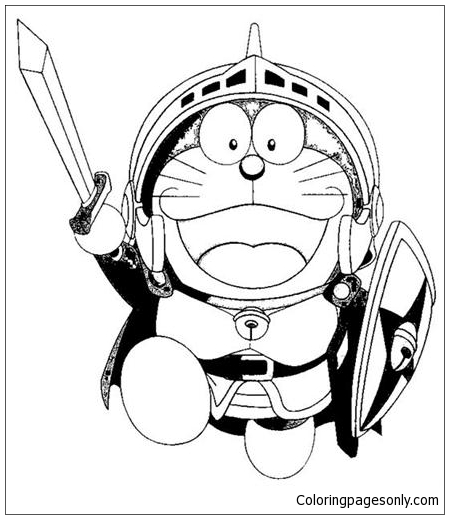
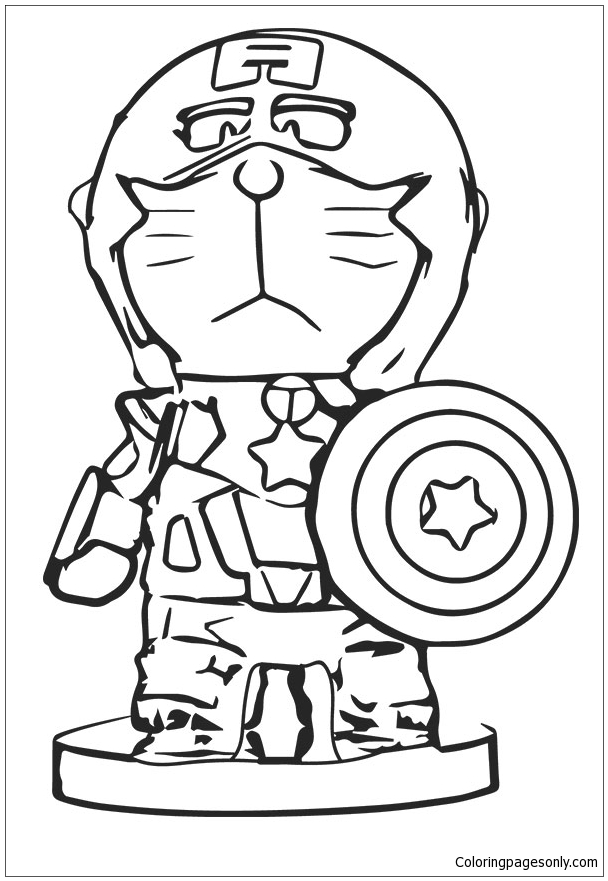
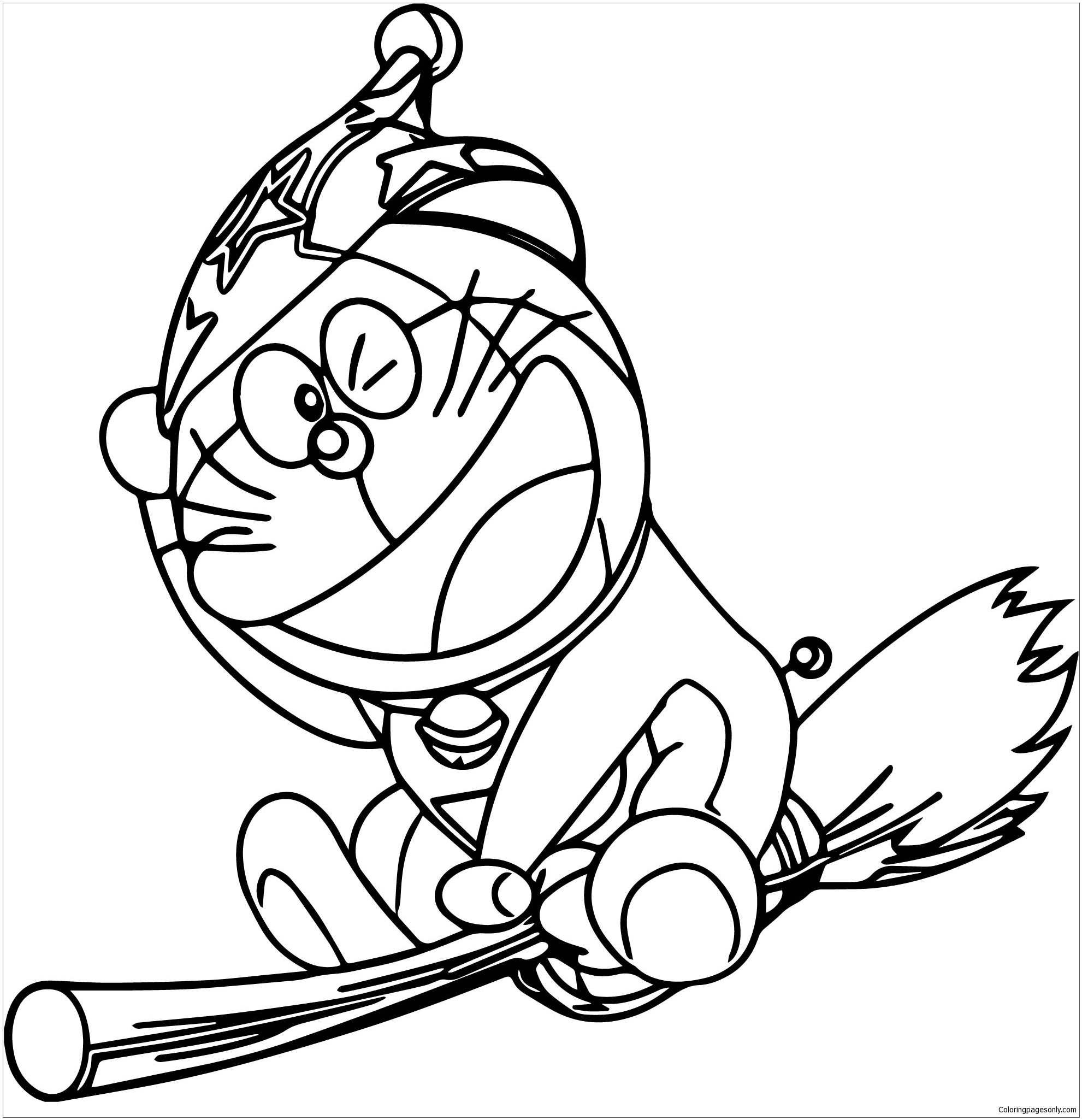
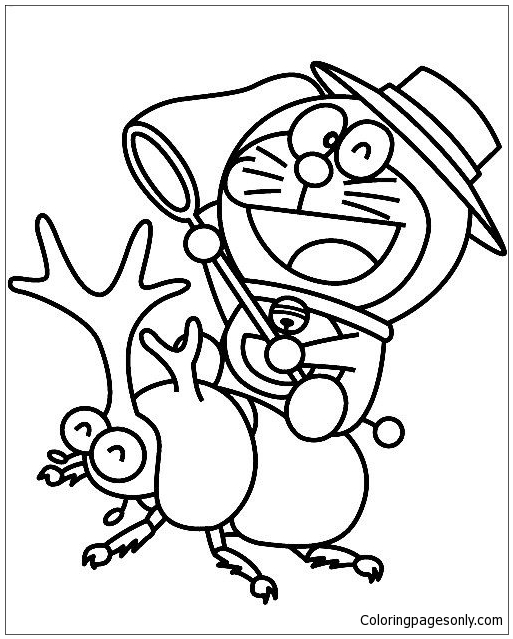
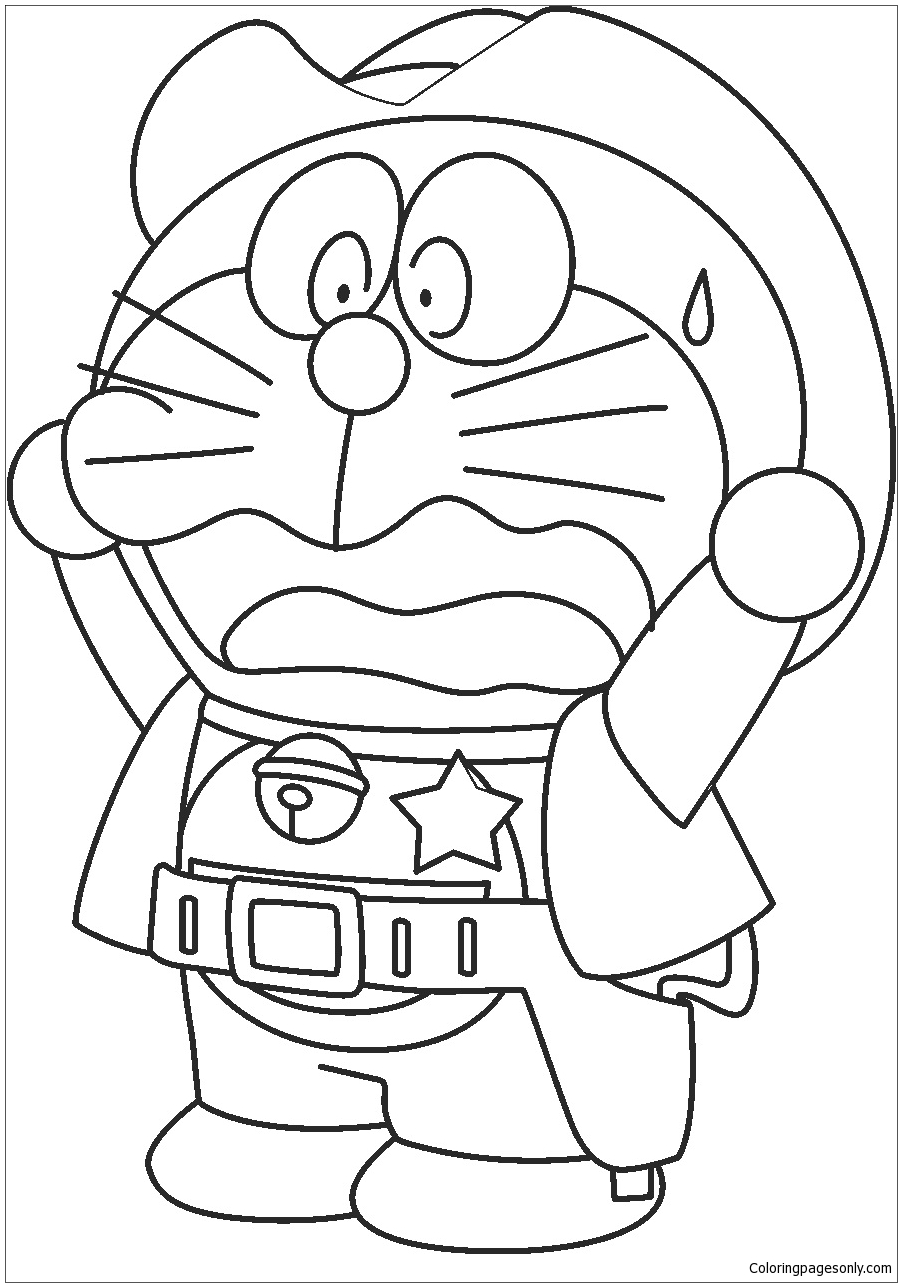
Doraemon Knight, Doraemon as Captain America, Bratz Doraemon Witch – the costume pages are among the collection’s most creatively playful.

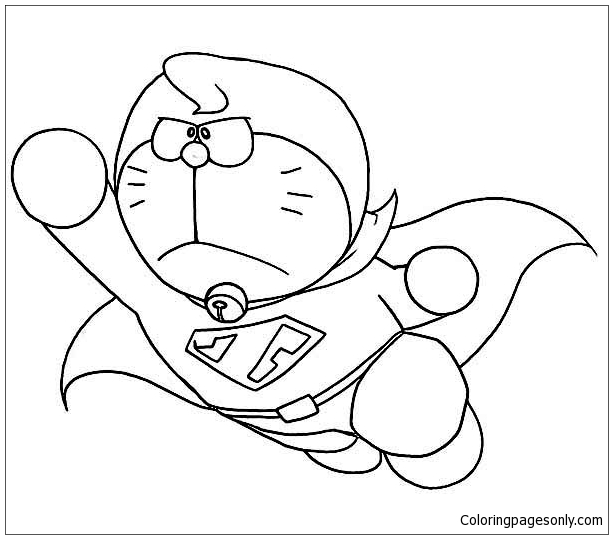
Doraemon, as Captain America, is an image that rewards exactly one question: under what circumstances did this happen? The answer is almost certainly “a gadget was involved,” and almost certainly the consequences were interesting. His canonical blue, combined with Captain America’s red-white-and-blue, creates a color challenge where Doraemon blue and Cap’s shield blue need to be clearly differentiated – aim for Doraemon’s warmer medium blue against a slightly cooler, more pure blue for the shield elements.

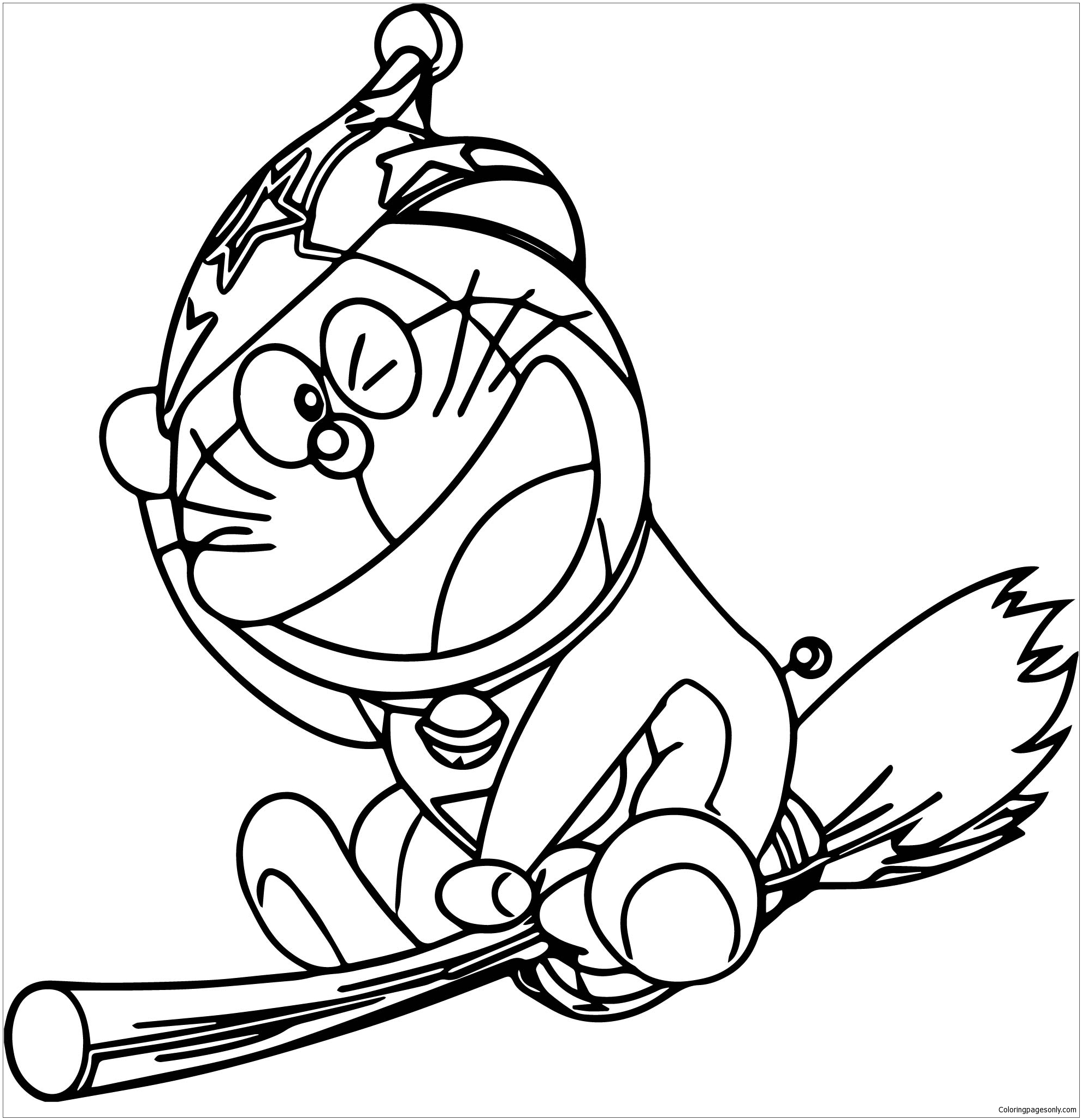
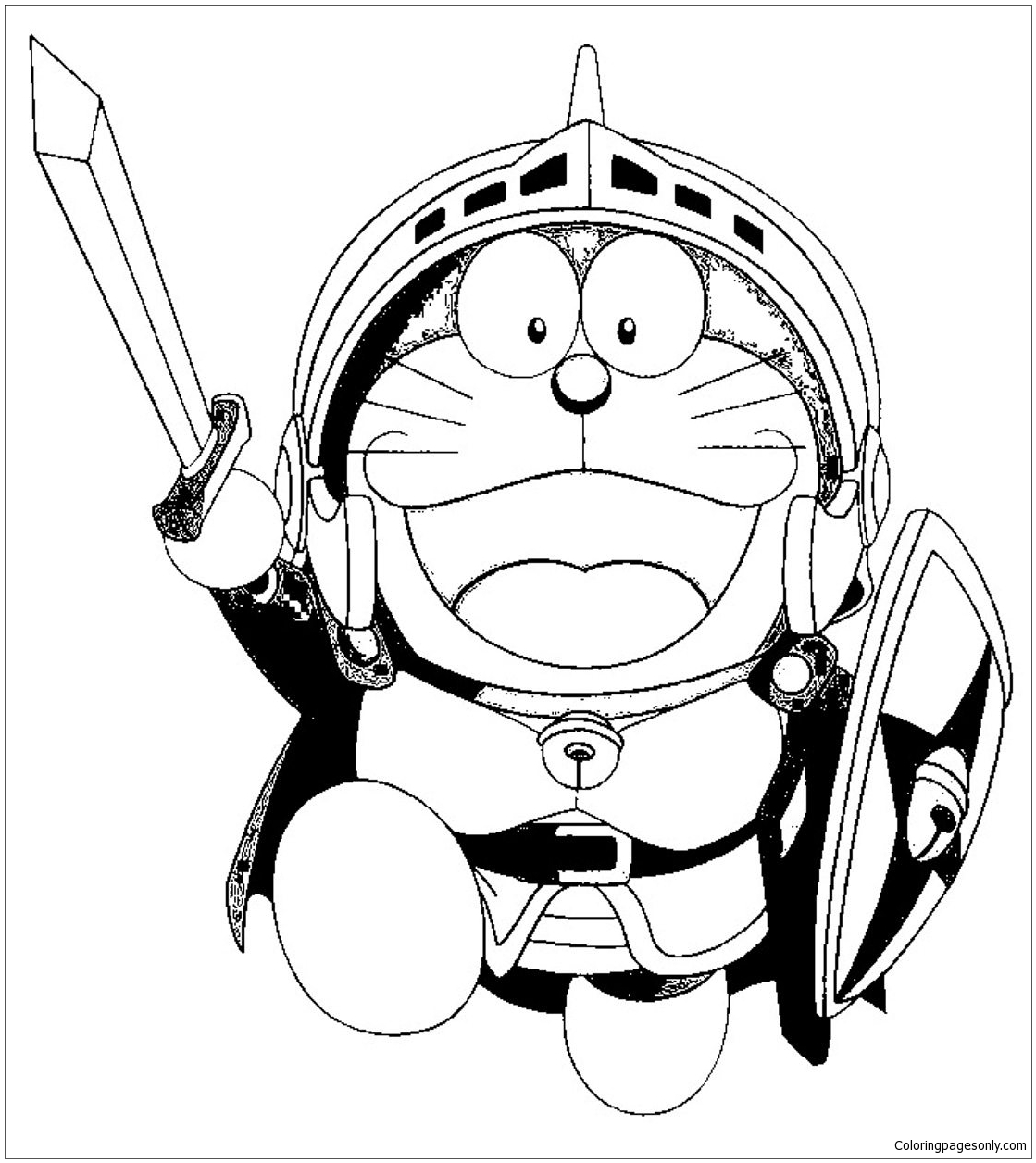
Doraemon Knight places him in medieval armor, which raises questions about how armor is constructed for a cylindrical torso – and rewards the metallic silver-grey technique used throughout this site for armored characters. Bratz Doraemon Witch brings the Bratz doll aesthetic (large eyes, fashion-forward styling) into contact with Doraemon’s round simplicity, creating a visual hybrid that is somehow both recognizable as Doraemon and clearly operating in a different visual register.

Doraemon and Mimi

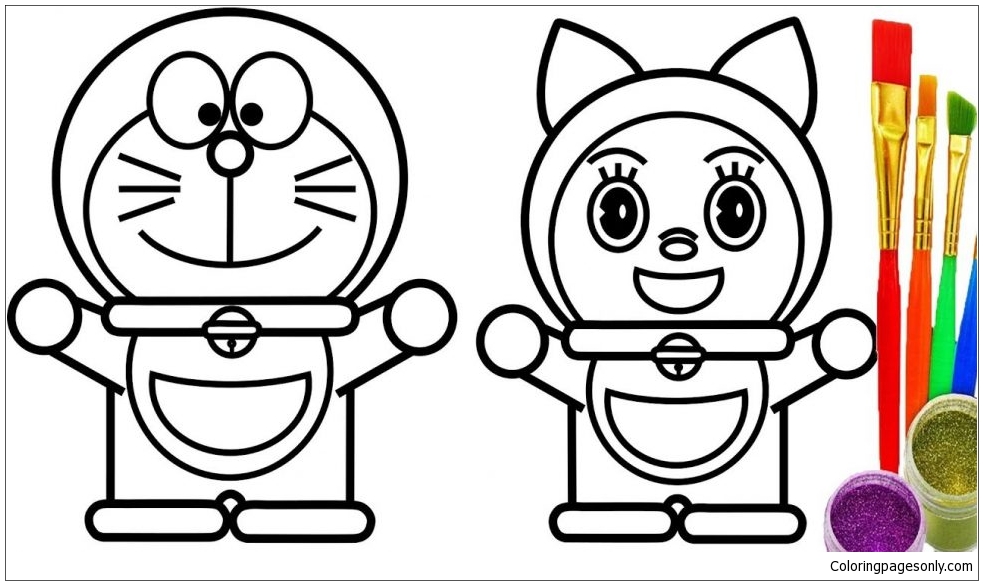
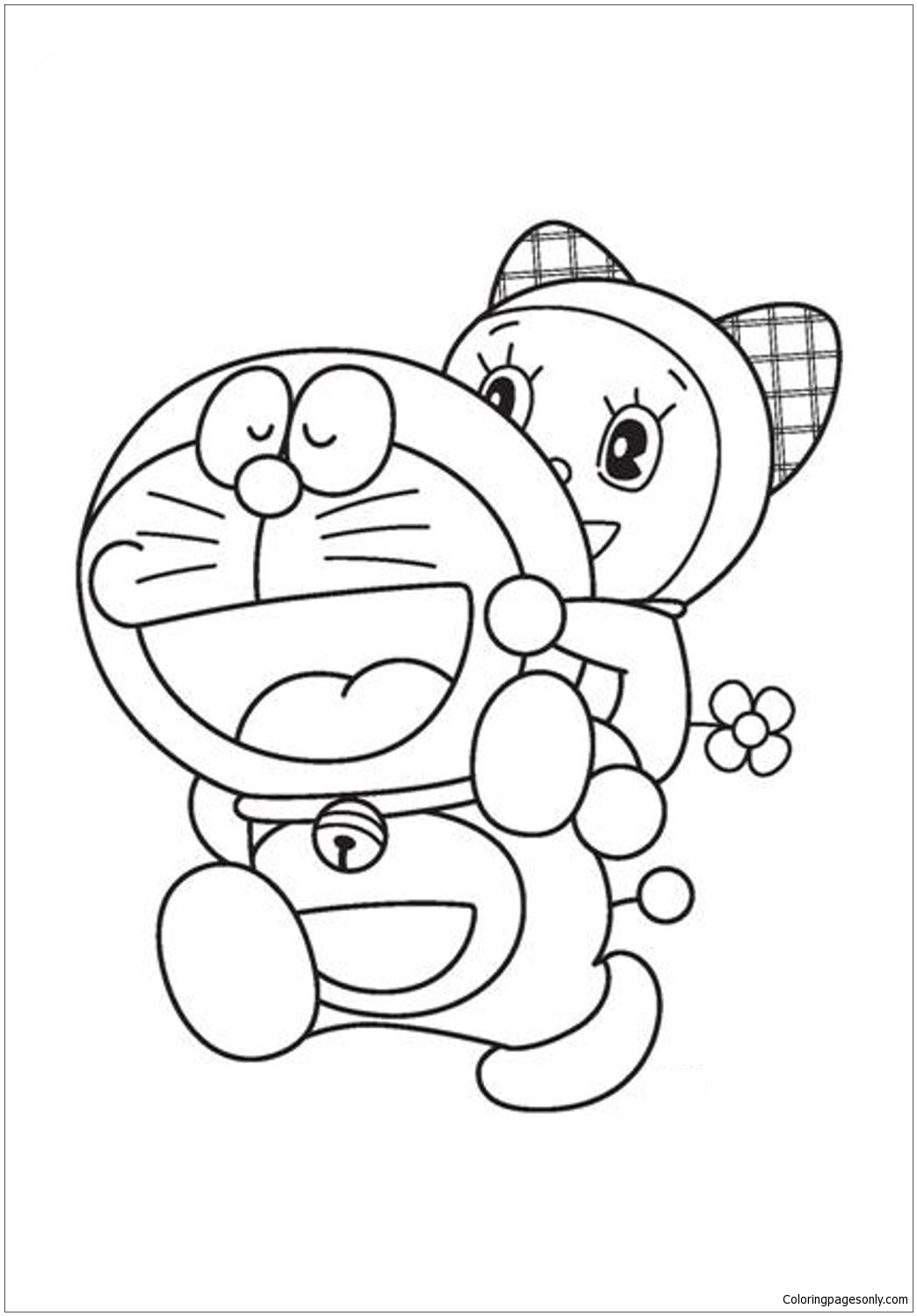
Doraemon and his girlfriend, Mimi – Mimi is a yellow female robot cat who appears occasionally in the franchise as Doraemon’s romantic interest. She is the counterpart to Doraemon’s blue: warm where he is cool, yellow where he is blue. The page showing them together creates the most vivid color contrast in the entire collection – her warm golden yellow against his cool medium blue is a complementary-adjacent pairing that pops visually.

Nobita’s Family – Mom, Dad, and Teacher

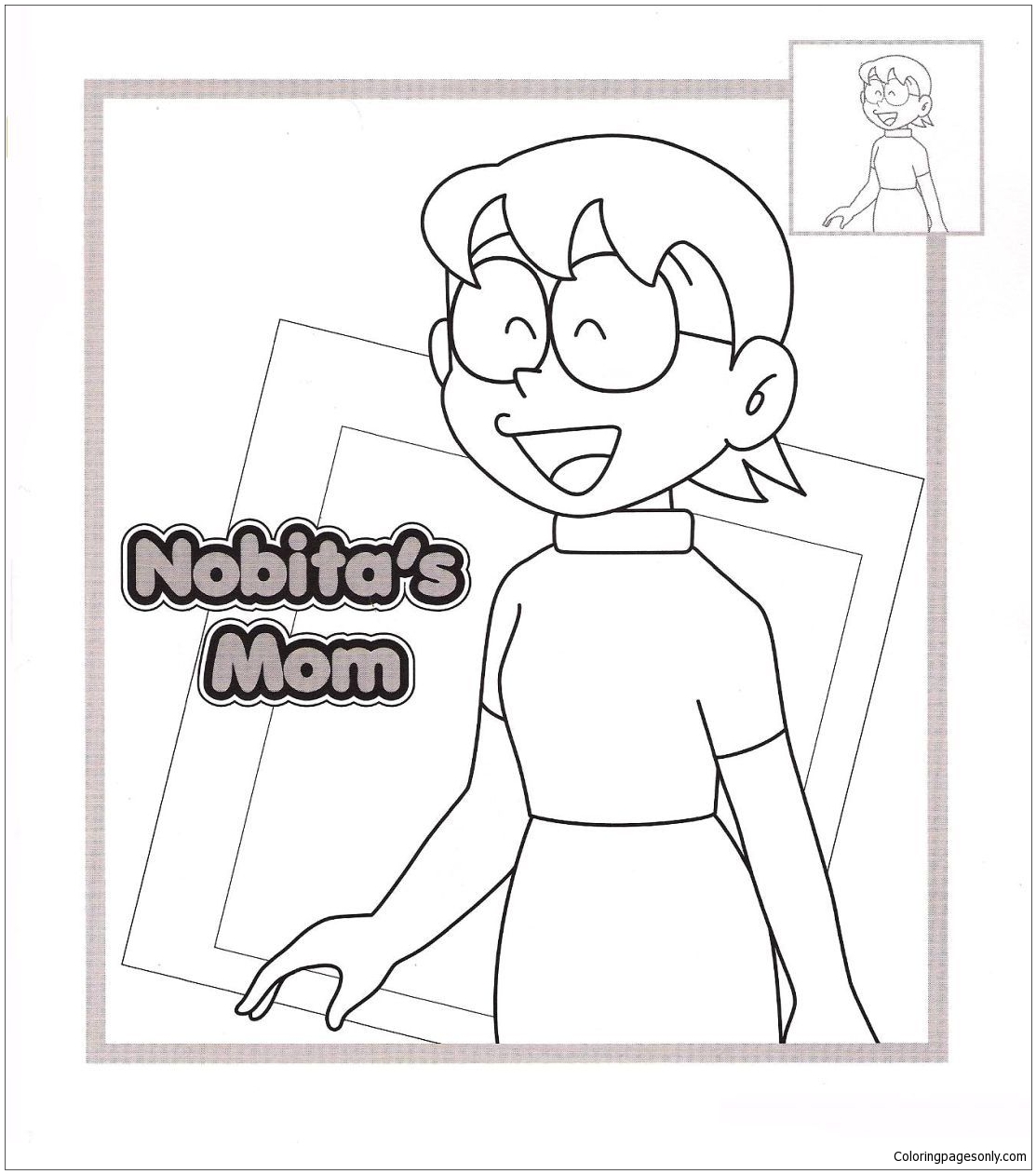
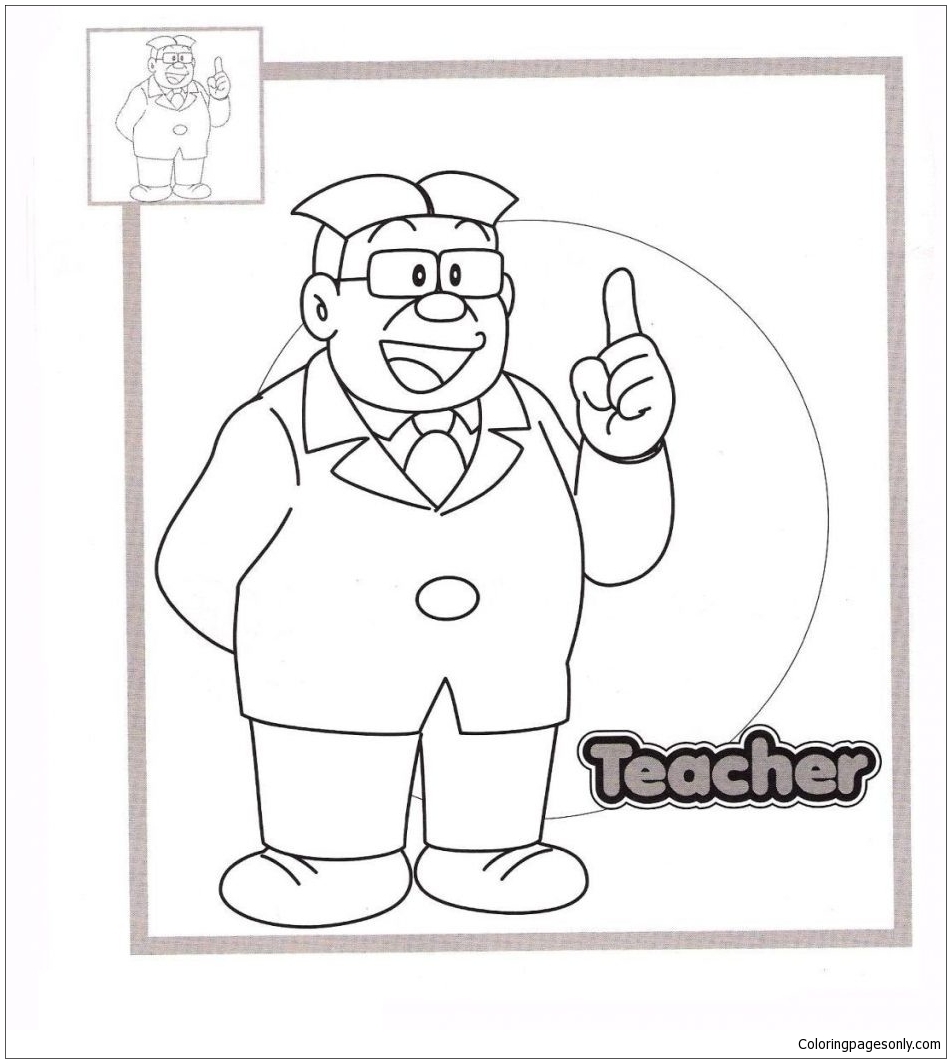
Nobita s Mom, Nobita s Dad, and Nobita’s teacher complete the adult world that surrounds and frequently exasperates the main cast.

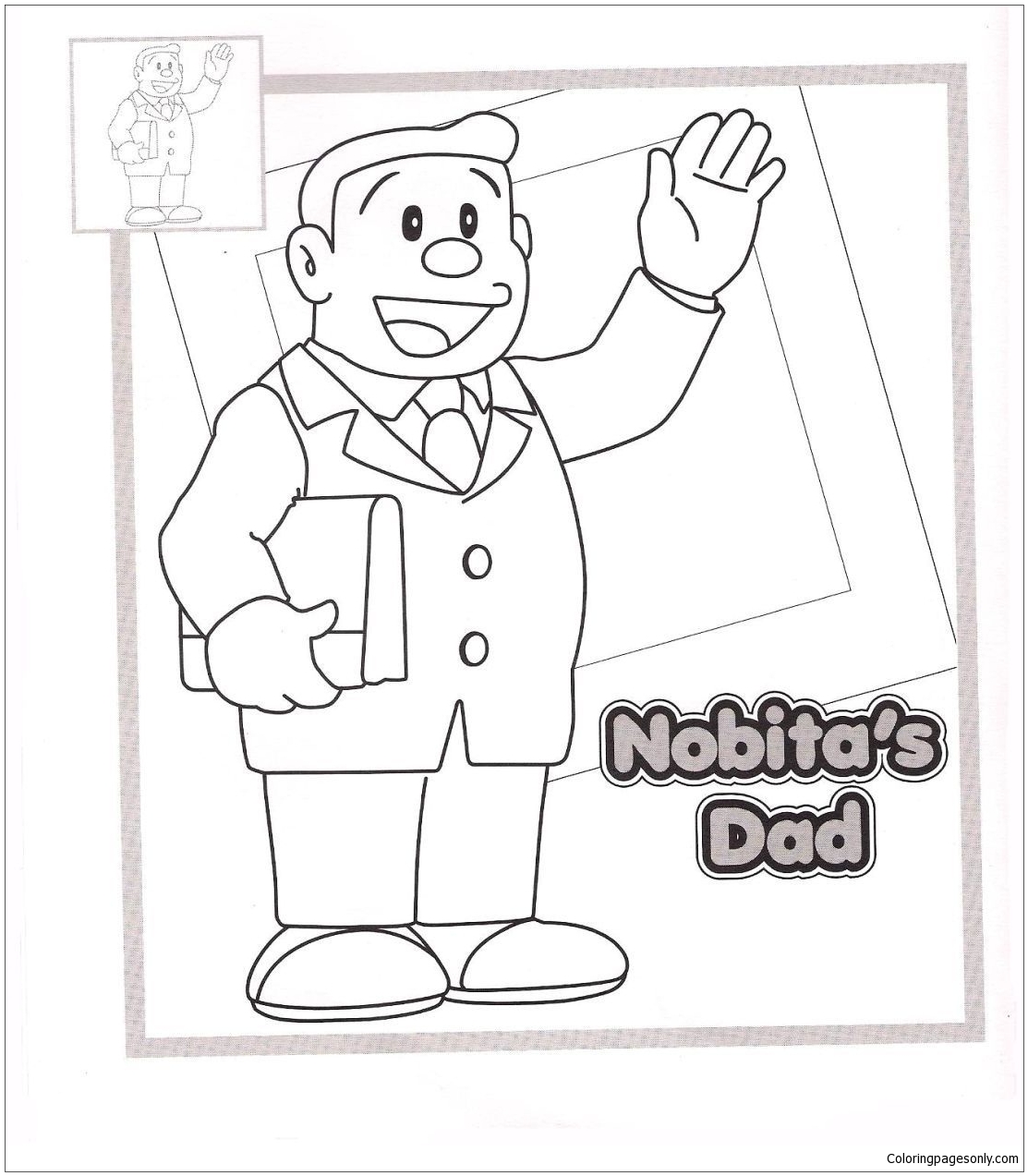
Nobita’s mother, Tamako Nobi, is the family’s disciplinarian – regularly furious with Nobita’s test scores, aware that something unusual is happening with the robot cat in the house but largely choosing not to examine it too closely, and genuinely loving in the way that tired, exasperated parents are loving when they express it through worry and expectation rather than warmth. Nobita’s father, Nobisuke, is gentler – an everyman whose modest career success is echoed in his son’s academic performance. Sensei (the teacher) is the institutional authority whose zero grades on Nobita’s tests provide the recurring academic stakes of the early episodes.

Seasonal Pages

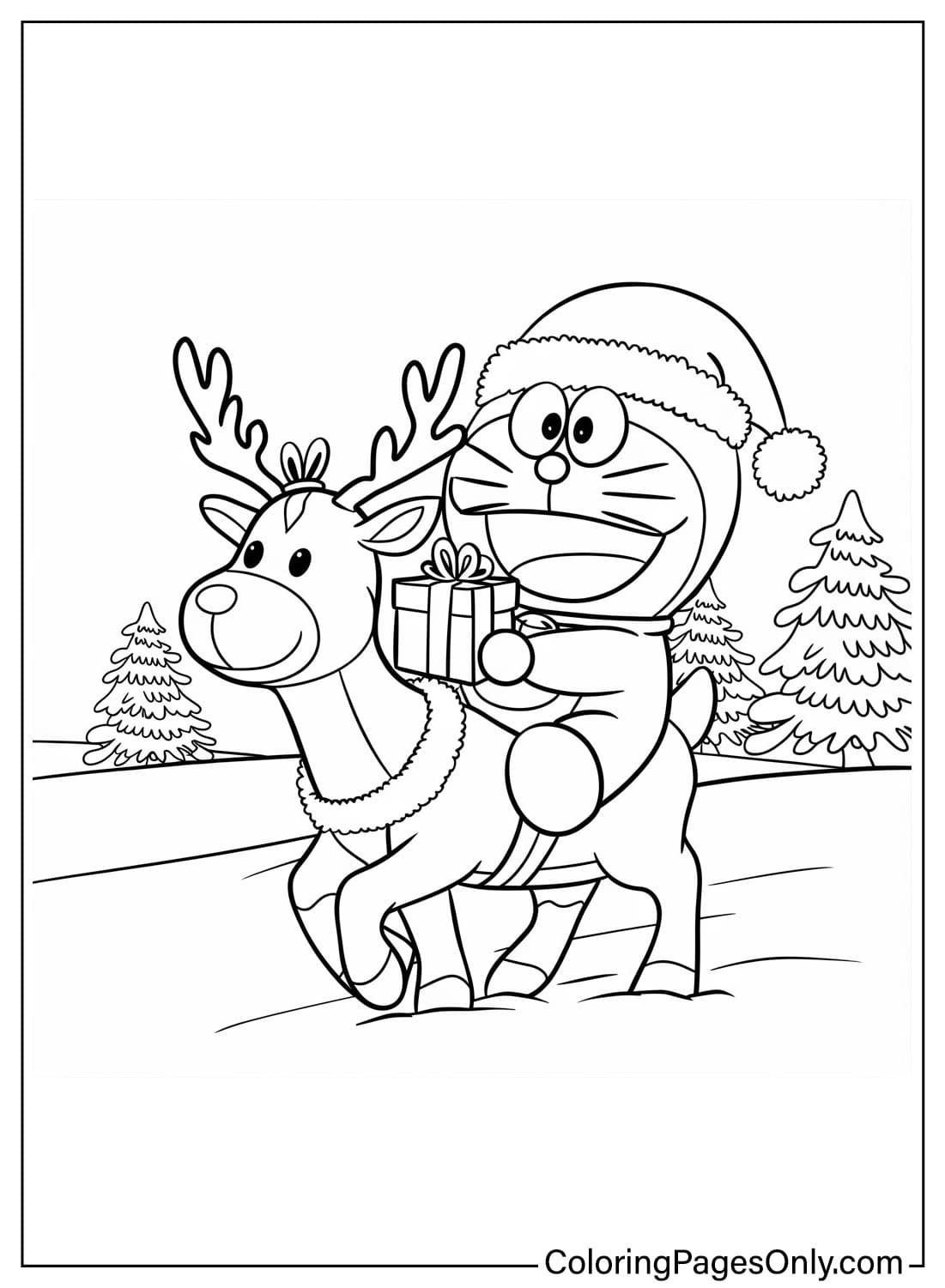
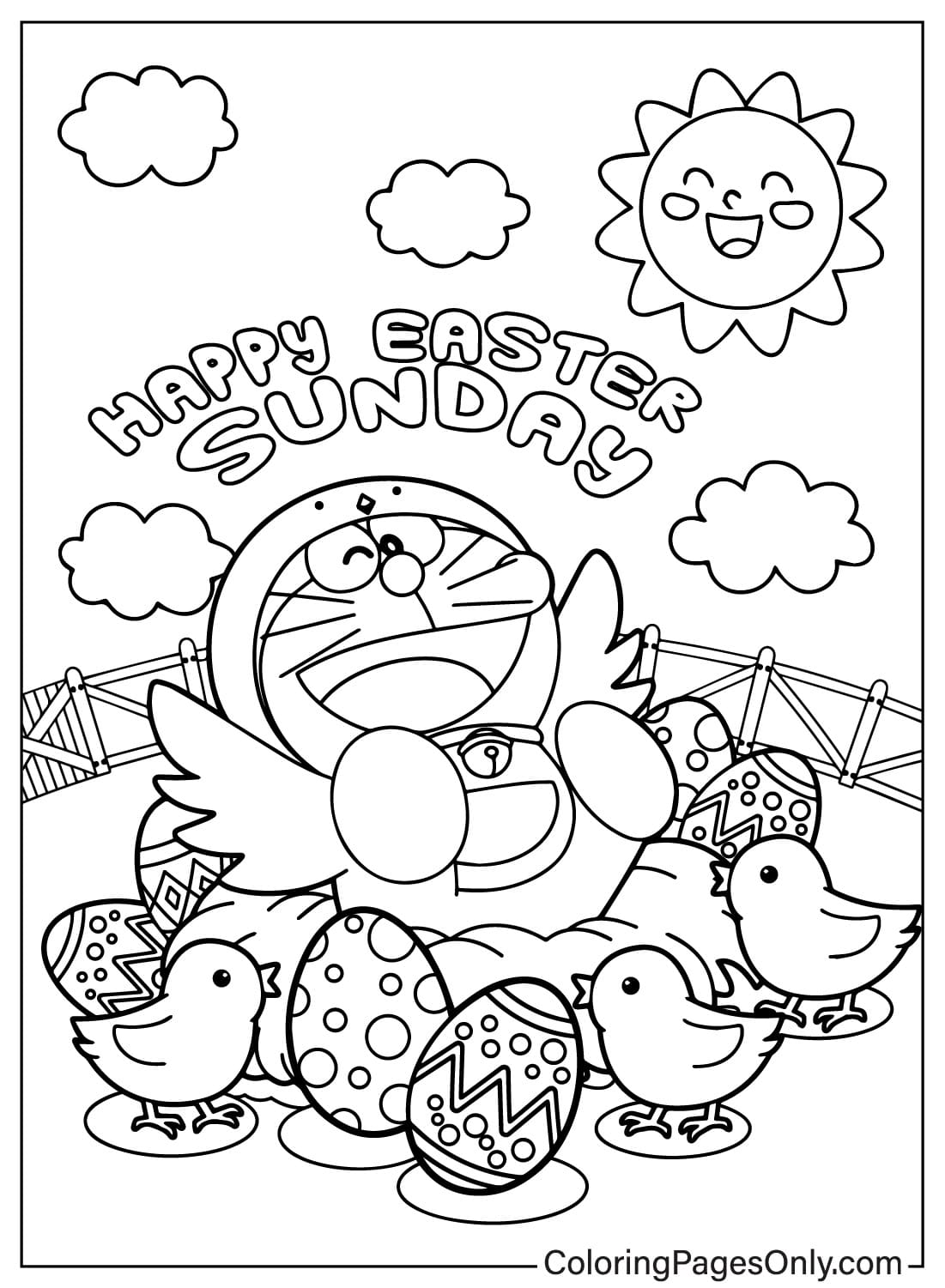
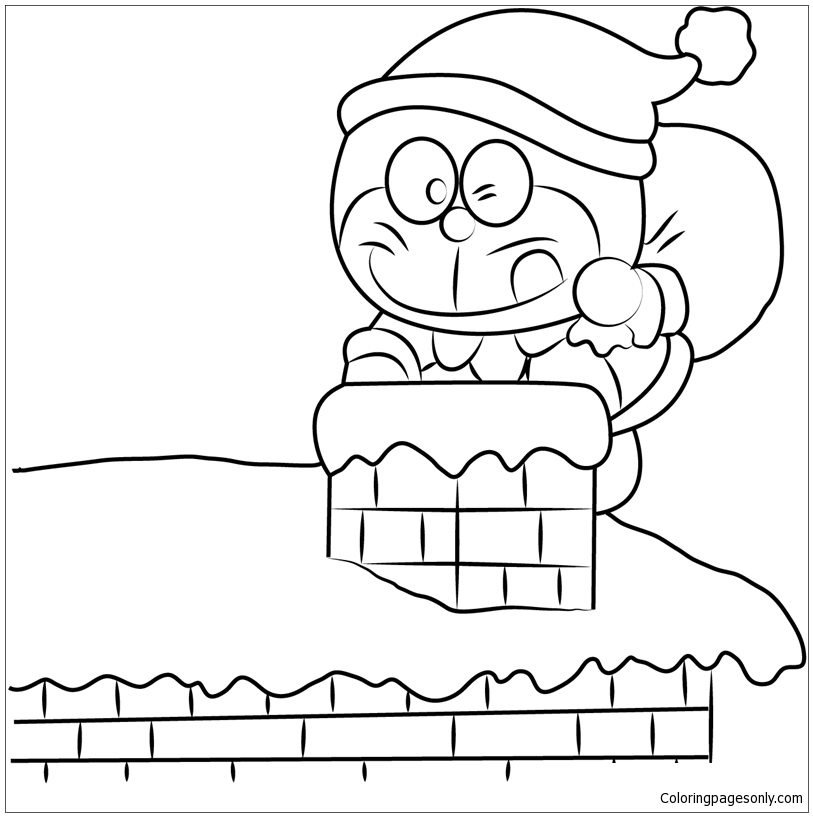
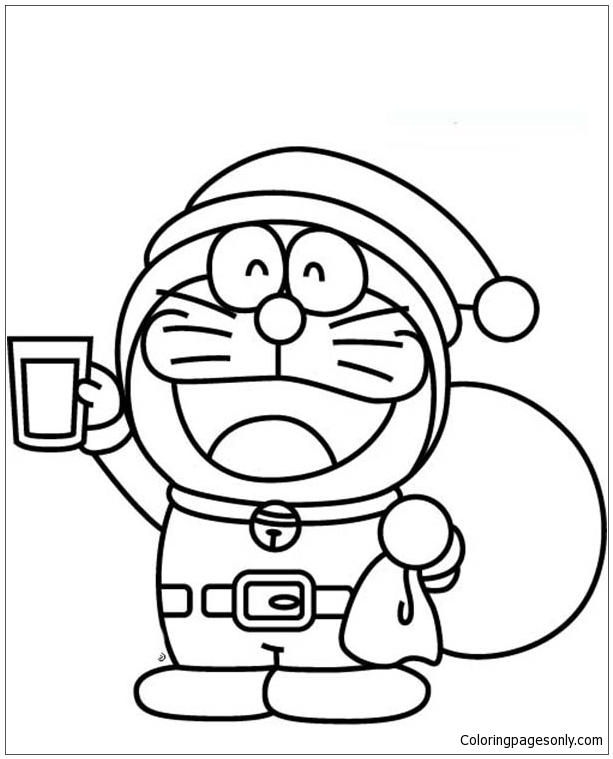
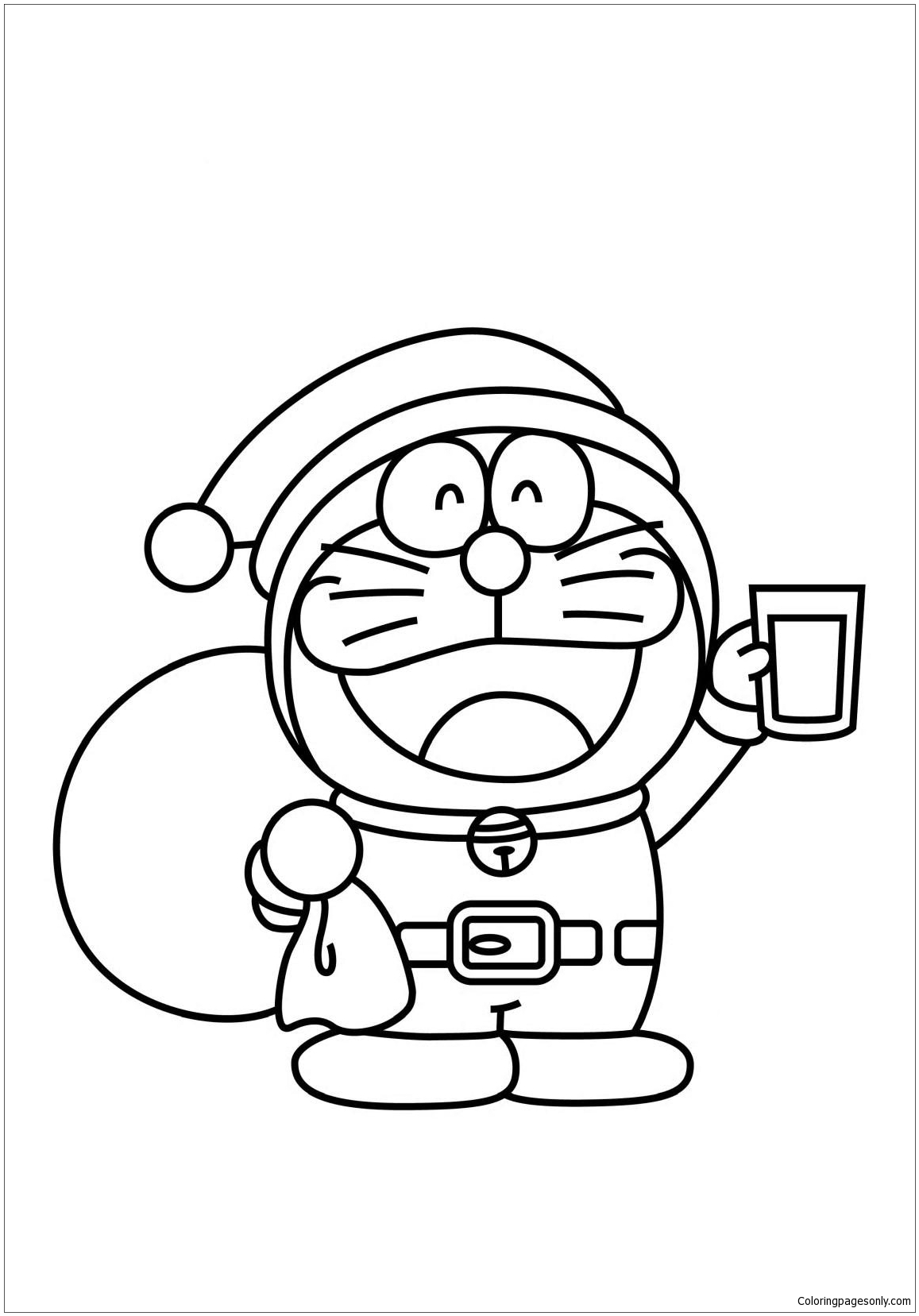
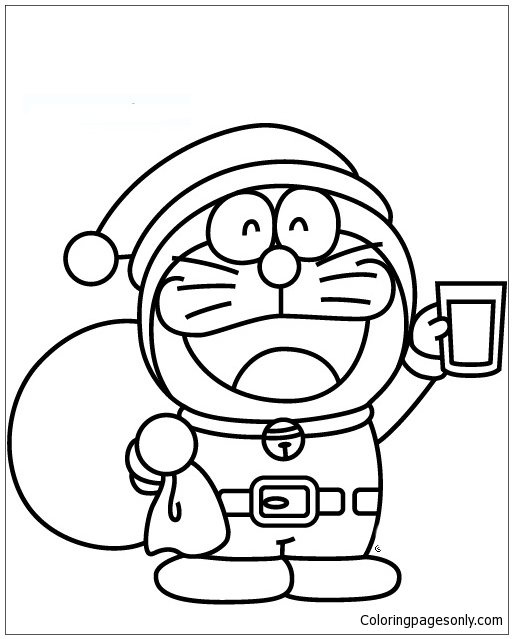
Christmas Doraemon, Christmas Doraemon with Rudolph, and Easter Doraemon place Doraemon in holiday contexts that are delightful precisely because they are so specific. Christmas Doraemon in a Santa hat is a canonical image in the franchise’s seasonal content – he wears it with the same earnest enthusiasm he brings to everything. The Christmas Doraemon with Rudolph page adds a reindeer to the equation, which raises the same class of logistical question as the Captain America page.

What These Pages Do

Doraemon teaches problem-solving through creative play. The franchise’s central recurring structure – a problem arises, a gadget is deployed, the gadget creates worse problems, the characters solve the underlying issue through their own effort – is one of the most effective narrative formulas for teaching children about the relationship between shortcuts and consequences. A child who has watched Doraemon understands intuitively that the Anywhere Door doesn’t solve the problem that led Nobita to want to go somewhere else. Coloring pages that depict these moments – the gadget, the adventure, the friendship – maintain and reinforce that narrative literacy in a quiet, creative way.

The friendship pages build emotional vocabulary. The relationship between Doraemon and Nobita is one of the most carefully modeled friendships in children’s media – patient but not infinitely so, caring but honest about failure, committed even when frustrated. Research in child development consistently shows that children who are regularly exposed to narratives depicting healthy friendship dynamics – including conflict, repair, and sustained care – develop stronger emotional intelligence and friendship skills than children who are not. Coloring the Doraemon-and-Nobita pages while talking about what makes their friendship work is a natural, low-pressure context for those conversations.

Fine motor development through Doraemon’s specific round forms. Doraemon’s circular body, circular head, and circular facial features are an excellent fine motor coloring challenge – maintaining the perfect roundness of his face, the consistent curve of his belly outline, and the precise positioning of his features requires exactly the controlled hand movement the American Academy of Pediatrics identifies as a key developmental milestone. The larger solo pages work well for younger children still developing pencil control; the group pages and detailed activity pages reward the more advanced precision that develops from around ages 6-7.

The 2005 Art Therapy Journal finding on structured coloring and anxiety reduction applies throughout. Doraemon’s warm palette – the specific blue of his body, the yellow-gold of his collar bell, the warm white of his belly – creates a visually calm and inviting set of coloring subjects. The franchise’s fundamental emotional register is warm, hopeful, and gently comedic; these qualities carry through into the coloring experience.

How to Color These Pages Well

Doraemon’s blue is not negotiable – get it right first. The character’s specific blue is the single most important color decision in the entire collection. It should be a medium, vivid, slightly warm blue – not so dark it reads as navy, not so light it reads as sky blue, not so cool it reads as cold. If you have multiple blue options, test on scrap paper: the right Doraemon blue reads as immediately, unmistakably “Doraemon” the moment you see it. Everything else on any page depends on getting this right as the anchor.

His white belly needs contrast management. The white of Doraemon’s belly should be the brightest white on the page – kept clean and light, not accidentally shaded into grey. When coloring the blue body first, be careful not to let the blue bleed into the belly area. If you work digitally, the belly is the last area to fill. If you work with colored pencils or markers, lightly trace the belly’s circular boundary before applying any blue.

The 4D pocket on his belly is a slightly different shade of white than the belly itself. The pocket is essentially an opening into another dimension – some illustrators render it with a very subtle warm yellow-grey undertone to suggest its spatial impossibility. This is a small detail that makes the page look more considered.

For the food pages, warm contrasting colors. Dorayaki against Doraemon’s blue creates the most appealing color contrast in the collection – the warm golden-brown of the pancake against his cool blue is a natural complementary tension that reads as appetizing. Apply the dorayaki’s color with slightly varied pressure to suggest the texture difference between the outer pancake surface (slightly darker, more golden-brown) and the azuki filling visible at the edge (a deep, warm red-brown).

The seasonal pages want bold holiday colors. Christmas Doraemon in Santa red rewards the full, vivid application of holiday red – Santa’s red should be the most saturated red available, creating maximum contrast with Doraemon’s blue. The combination of his canonical blue and Christmas red is a striking, complementary pairing that makes these pages some of the most visually dramatic in the collection.

5 Creative Craft Ideas

Doraemon’s Gadget Pocket Book

Create a handmade book that catalogs Doraemon’s gadgets – with colored illustrations from the collection alongside hand-written gadget descriptions. Print six to eight pages that show Doraemon with gadgets or in adventure contexts. Color them carefully.

Fold four to six sheets of A4 paper in half and staple along the fold to create a small booklet. Glue one colored Doraemon page on the cover with the title “Doraemon’s Gadget Guide.” Inside, dedicate one spread per gadget: glue the relevant colored illustration on the left page, and on the right page, write the gadget name, what it does, and one example of how Nobita used it (and how it went wrong).

The finished book is both a creative portfolio and a knowledge reference – the kind of project that demonstrates genuine engagement with the franchise rather than simple familiarity with it.

Doraemon Character Color Guide

Print one page each of Doraemon, Nobita, Shizuka, Gian, and Suneo. Color each in its canonical palette. Mount all five on a single large sheet in a row, with each character’s name printed below them and a color swatch box showing the two or three primary colors used.

The finished guide serves as a character reference sheet – the kind of working document that professional animators and illustrators keep to ensure character color consistency across a long production. For children who want to draw these characters, it is a practical tool. For fans who simply want a display, it is a complete visual introduction to the series’ main cast.
Seasonal Doraemon Calendar

Print twelve Doraemon pages that work for different months – the Christmas and Easter pages for December and April, the beach page for summer, the skiing page for winter, and the reading page for back-to-school season. Color each one with season-appropriate colors and mount them in sequence on a long vertical strip.

Add hand-lettered month names below each image. The finished calendar is a year of Doraemon – each month given its own mood and activity, each page showing a different dimension of the character’s personality and adaptability.

Doraemon Birthday Card

Print the Doraemon and Nobita page and one solo Doraemon page. Color both with the full canonical palette. Cut out the figures. Fold A5 cardstock for the card base. Layer Doraemon on the front, slightly angled, with Nobita beside him. Add a speech bubble from Doraemon with the recipient’s name: “Happy Birthday, [Name]!” in the font of someone who takes birthdays seriously (which Doraemon absolutely does).

Inside, write the message in blue – the same blue as Doraemon. The finished card takes twenty minutes and is immediately recognizable to any fan of the series. In Japan, Doraemon is such a culturally universal reference that this card communicates warmth across every age group.

Friends Group Wall Art

Print the largest group page available – Doraemon Calling Nobita Suneo Shizuka and Giant or Doraemon And Friends. Color every character with careful, canonical attention: Doraemon’s blue, Nobita’s yellow, Shizuka’s pink, Gian’s striped shirt, Suneo’s lighter palette. Apply the most vivid, cheerful version of each character’s palette – this is a page about friendship and should read as joyful.
Frame the finished page in a simple white or primary-color frame. The full cast of Doraemon together in a framed piece makes immediately recognizable, culturally resonant wall art that works in a child’s bedroom, a family common room, or anywhere that could use the warmth of a 55-year-old friendship.
Frequently Asked Questions

Who created Doraemon, and when did the manga first appear? Doraemon was created by Hiroshi Fujimoto and Motoo Abiko, who worked together under the pen name Fujiko F. Fujio. The manga first appeared on January 1, 1970, simultaneously published in six different children’s magazines by Shogakukan – Yoiko, Yōchien, Shōgaku Ichinensei, Shōgaku Ninensei, Shōgaku Sannensei, and Shōgaku Yonnensei. The manga ran until Fujimoto’s death in 1996 and has sold over 100 million copies. In 2008, Japan’s Foreign Ministry appointed Doraemon as Japan’s first “anime ambassador” – a recognition of the character’s extraordinary cultural reach globally.

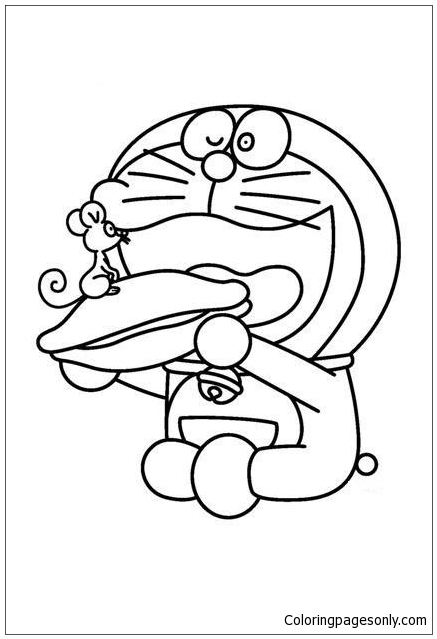
Why is Doraemon blue, and why does he have no ears? Both questions have the same answer. In his original form, Doraemon was yellow. While he was sleeping, a mouse chewed off his robotic ears. The distress of losing his ears caused Doraemon such profound sadness that he cried for an extended period, and his yellow pigment washed away with the tears, leaving him permanently blue. This is also the reason he is afraid of mice, which is an ongoing joke in the franchise (a robot cat from the future, afraid of mice). His lack of ears distinguishes his silhouette from conventional cat designs and is one of the most recognizable aspects of his appearance.

What is the 4D pocket, and what are the most famous gadgets? The 4-dimensional pocket is located on Doraemon’s belly and contains an infinite supply of futuristic gadgets from the 22nd century. The pocket accesses a different dimension, which is why it can hold more than its external size suggests. The most famous gadgets include: the Take-copter (a small propeller attached to the head that allows flight), the Anywhere Door (Dokodemo Door – a pink door that opens to any location the user names), the Small Light and Big Light (which shrink or enlarge objects), Memorization Toast (bread stamped with text that when eaten allows instant memorization), and the Time Machine (stored under Nobita’s desk drawer). Most episodes are structured around the deployment and unintended consequences of these gadgets.

Who are the main characters in Doraemon? The core cast is five characters: Doraemon (the robotic cat from the 22nd century), Nobita Nobi (the 10-year-old boy he was sent to help), Shizuka Minamoto (Nobita’s classmate and eventual wife in the series’ canonical future – kind, capable, and generally more competent than Nobita), Takeshi Gōda known as Gian or Giant (the neighborhood bully who is physically imposing, sings badly, and shows up when things are serious), and Suneo Honekawa (Gian’s wealthy, boastful best friend). Nobita’s parents – Tamako and Nobisuke – and his teacher appear regularly as the adult authority figures in his life.

What is dorayaki, and why does Doraemon love it? Dorayaki is a traditional Japanese sweet – two small, fluffy pancakes made from castella batter, sandwiching a filling of sweet red bean paste (azuki). The pancakes are golden-brown on the outside and soft inside; the filling is smooth, dark, and subtly sweet. Doraemon’s love of dorayaki is one of the franchise’s most consistent character traits and a reliable plot device – he can frequently be persuaded, distracted, or rewarded with dorayaki in ways that affect the episode’s outcome. Dorayaki has become so associated with Doraemon globally that the pastry itself is now more widely known internationally than it might otherwise be.

How many Doraemon films have been made? The Doraemon film series began in 1980 and has released a new theatrical film every year since then – making it one of the longest-running annual film series in cinema history. Each film tells a standalone adventure story involving the main cast and a new environment or historical period. Films have been set in prehistoric times, feudal Japan, outer space, underwater kingdoms, and various fantasy worlds. The films are major theatrical events in Japan, consistently ranking among the highest-grossing domestic productions each year.

What age group are these Doraemon pages best suited for? The simple solo Doraemon pages – Doraemon Cute 1, Base Doraemon, Laughing Doraemon – work well from ages 3–4, when children are developing an initial pencil grip and can recognize familiar characters. The activity pages (Doraemon playing sports, Doraemon with food) suit ages 4–8. The group pages with multiple characters require managing several distinct color palettes simultaneously and reward the fine motor control that develops from around age 6–7. The costume and themed pages (Knight, Captain America, Witch) and the seasonal holiday pages work well across all ages. Adults who grew up with Doraemon – particularly in Japan, other Asian countries, and the many nations where the anime has been broadcast – find the pages genuinely nostalgic and personally meaningful.
Browse the full collection at ColoringPagesOnly.com. All 150+ pages free, no sign-up, PDF or PNG, print at home or color online directly in your browser.
Doraemon has been in Japan’s collective imagination for over 55 years. Children who grew up reading manga in 1970 are now grandparents. Their children watched the anime in the 1980s. Their grandchildren are watching it now. The character who arrived in six magazines simultaneously on New Year’s Day 1970 became a national icon, then an international one, then Japan’s official anime ambassador to the world. He is still blue. He is still afraid of mice. He still has a pocket full of gadgets that make things better before they make things worse.

Pick up your blue. Get the color exactly right. Color something from 55 years of friendship.

Share your work on Facebook and Pinterest and tag #Coloringpagesonly. We especially want to see the gadget pocket books and the seasonal calendar projects.

Color the pocket. Trust the gadget. Stay beside Nobita.

These related coloring collections will help you explore the wonderful world of colors. Let’s choose, be creative, and show us your great pictures!

Jennifer Thoa – Writer and Content Creator

Hi there! I’m Jennifer Thoa, a writer and content creator at Coloringpagesonly.com. With a love for storytelling and a passion for creativity, I’m here to inspire and share exciting ideas that bring color and joy to your world. Let’s dive into a fun and imaginative adventure together!