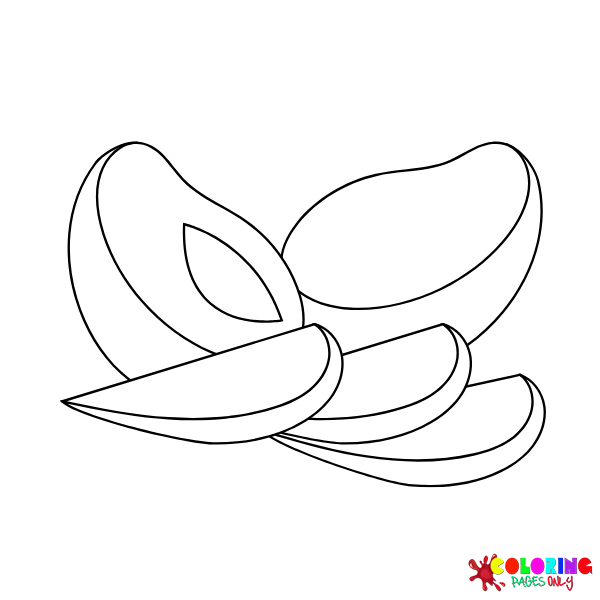

Free Figs Coloring Pages: 24 printable PDF designs featuring classic portraits, tree and branch scenes, and printable sheets. Each page can be downloaded as a PDF to print or colored online in the browser.
A fig isn’t quite a simple fruit, the way an apple or a peach is. What we eat as a fig is technically a synconium, an entire cluster of tiny flowers turned inward. It is enclosed inside a fleshy pod, which is why cutting a fig open reveals hundreds of tiny seed-like structures rather than a single pit or core. Many fig varieties depend on a remarkable partnership with a specific species of tiny fig wasp, which enters the fig through a small opening to pollinate the flowers inside, a mutualism that has existed between figs and their wasps for more than 60 million years. Figs are believed to have originated in the Middle East and have been part of Mediterranean diets for thousands of years; they are now grown widely in regions including Turkey, Greece, Spain, and the United States. They’re a good source of fiber, potassium, and antioxidants.
This collection spans 24 pages, grouped into classic portraits, tree and branch scenes, drawing-style and specialty designs, and printable sheets. The coloring angle ranges from simple, standalone fruit to fuller tree compositions.

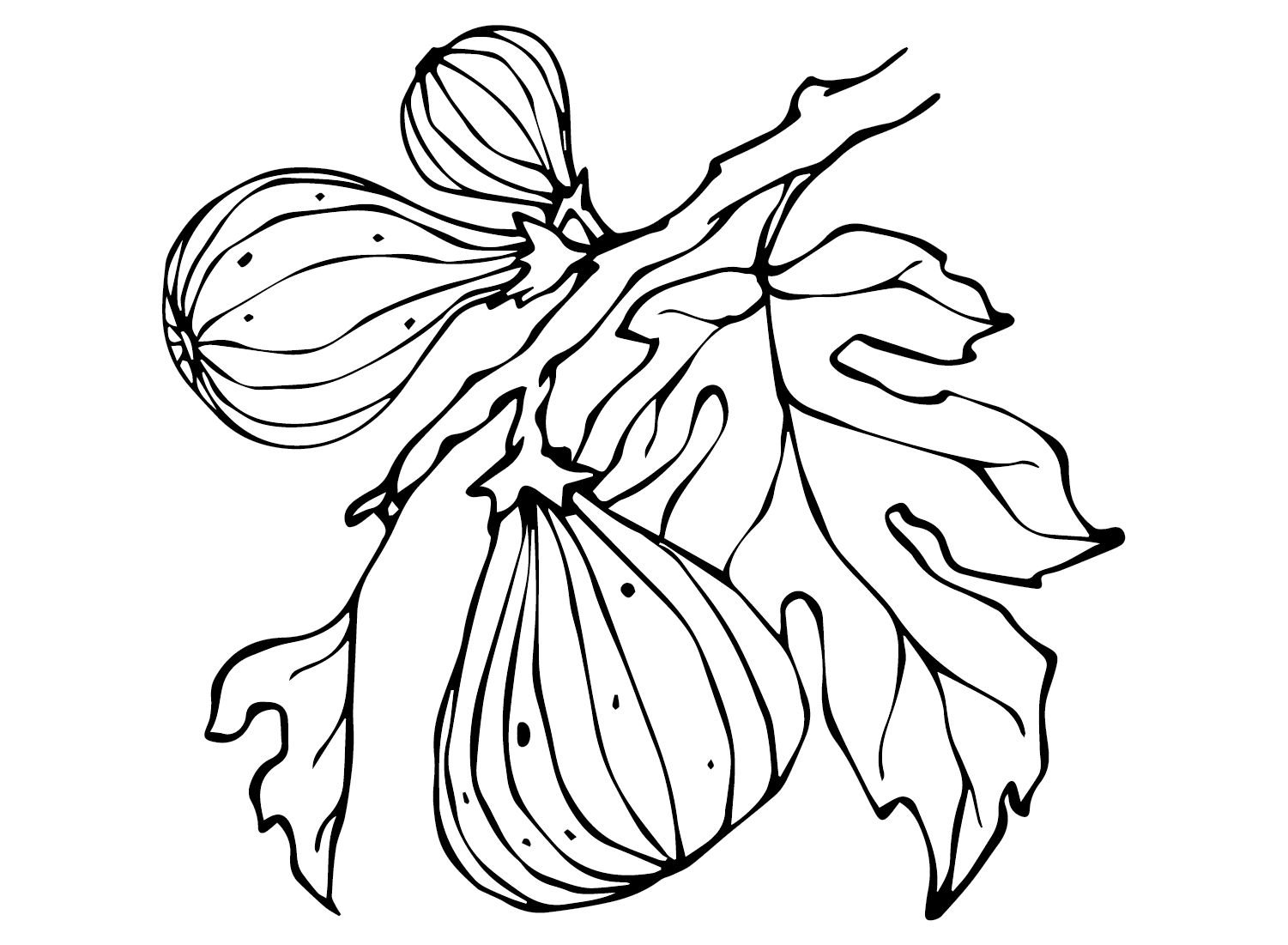
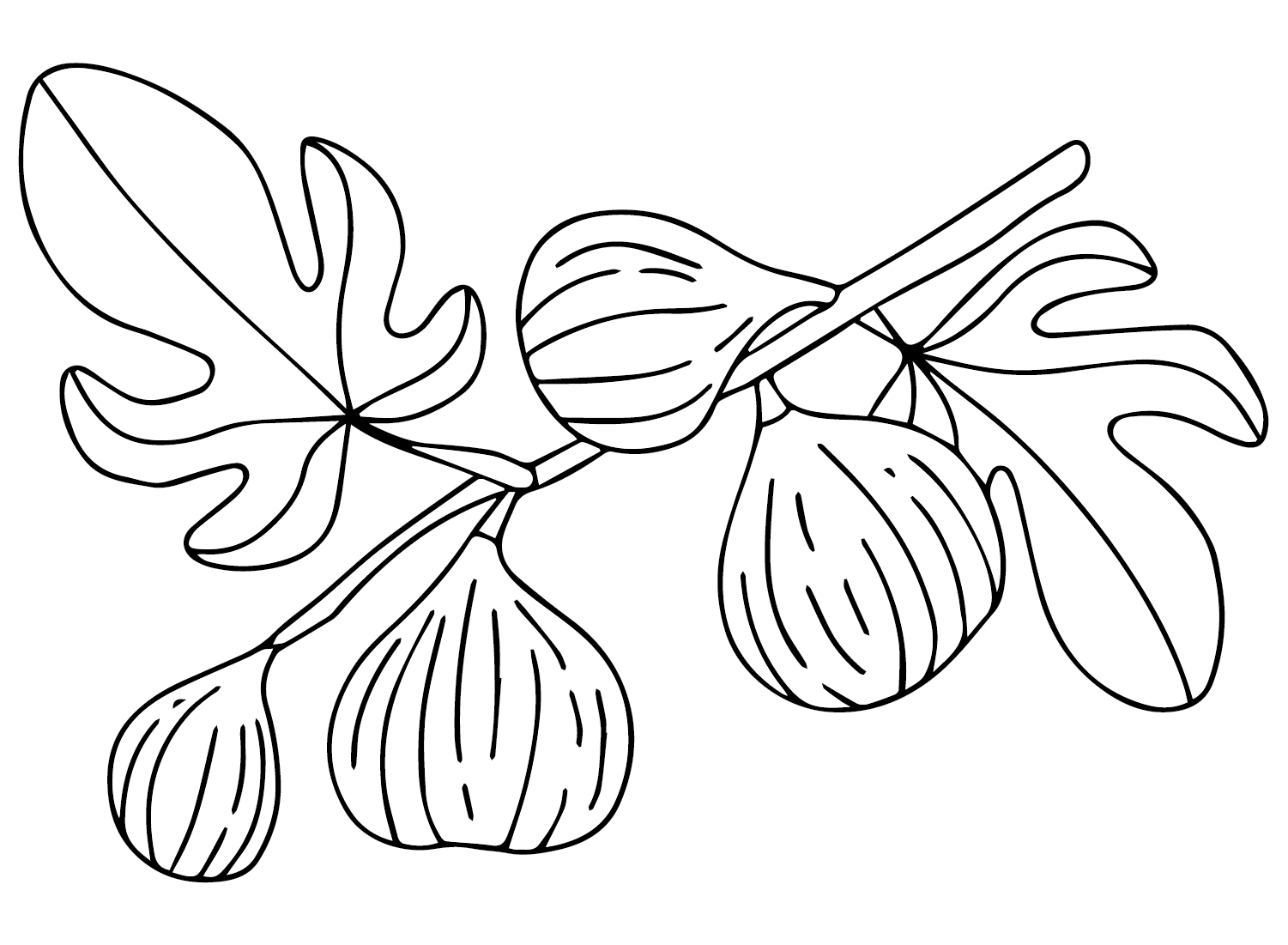
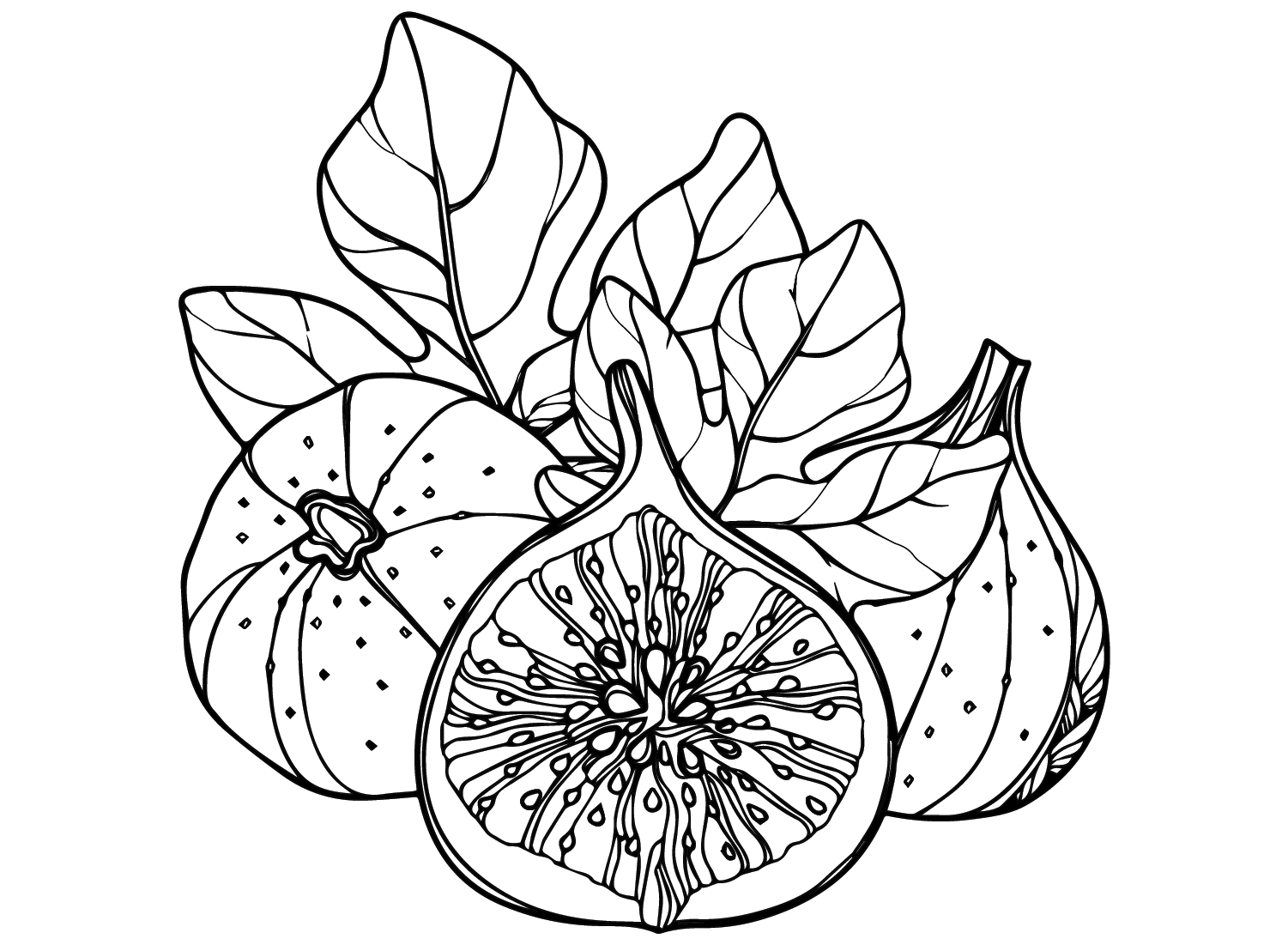
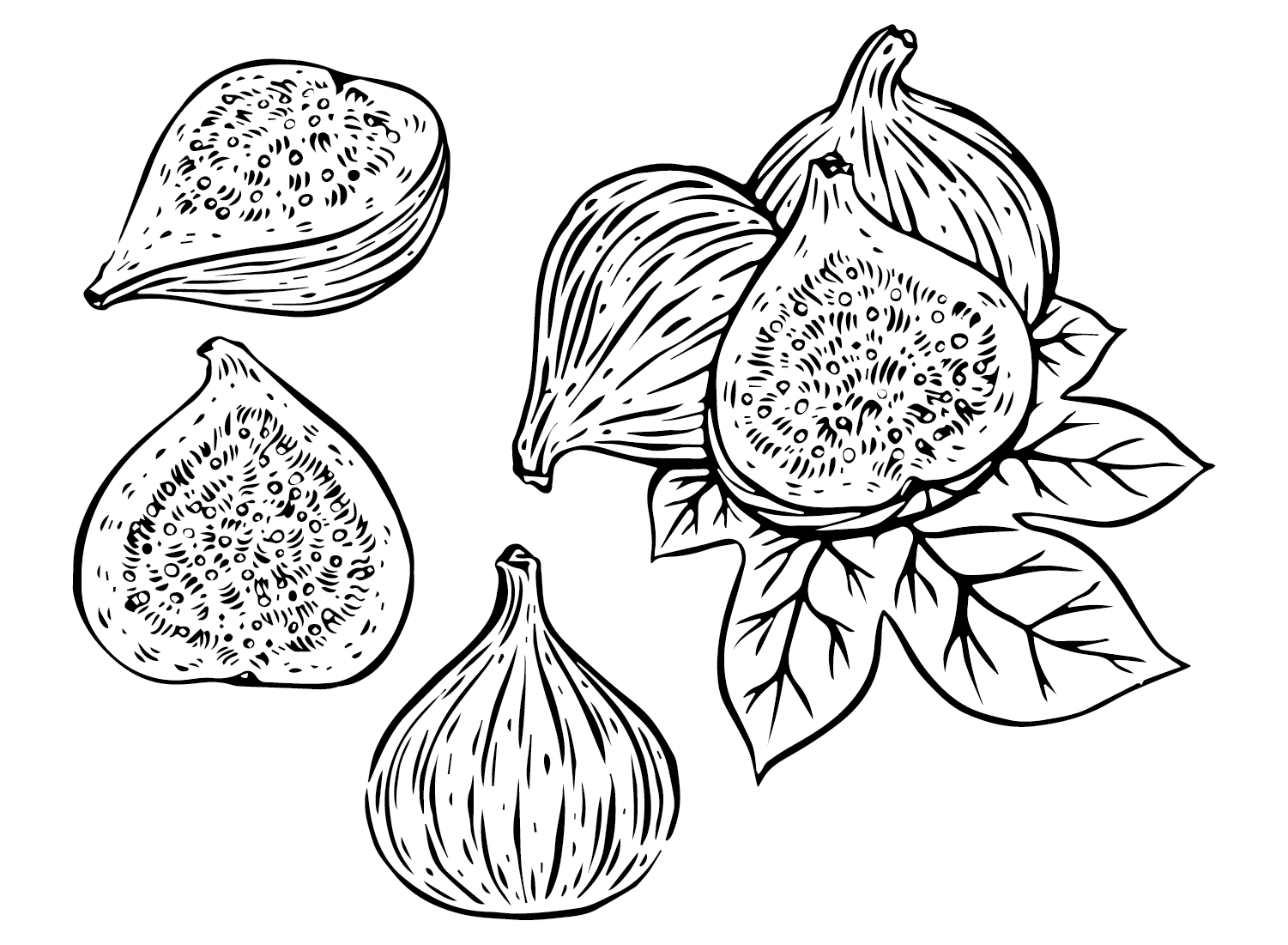
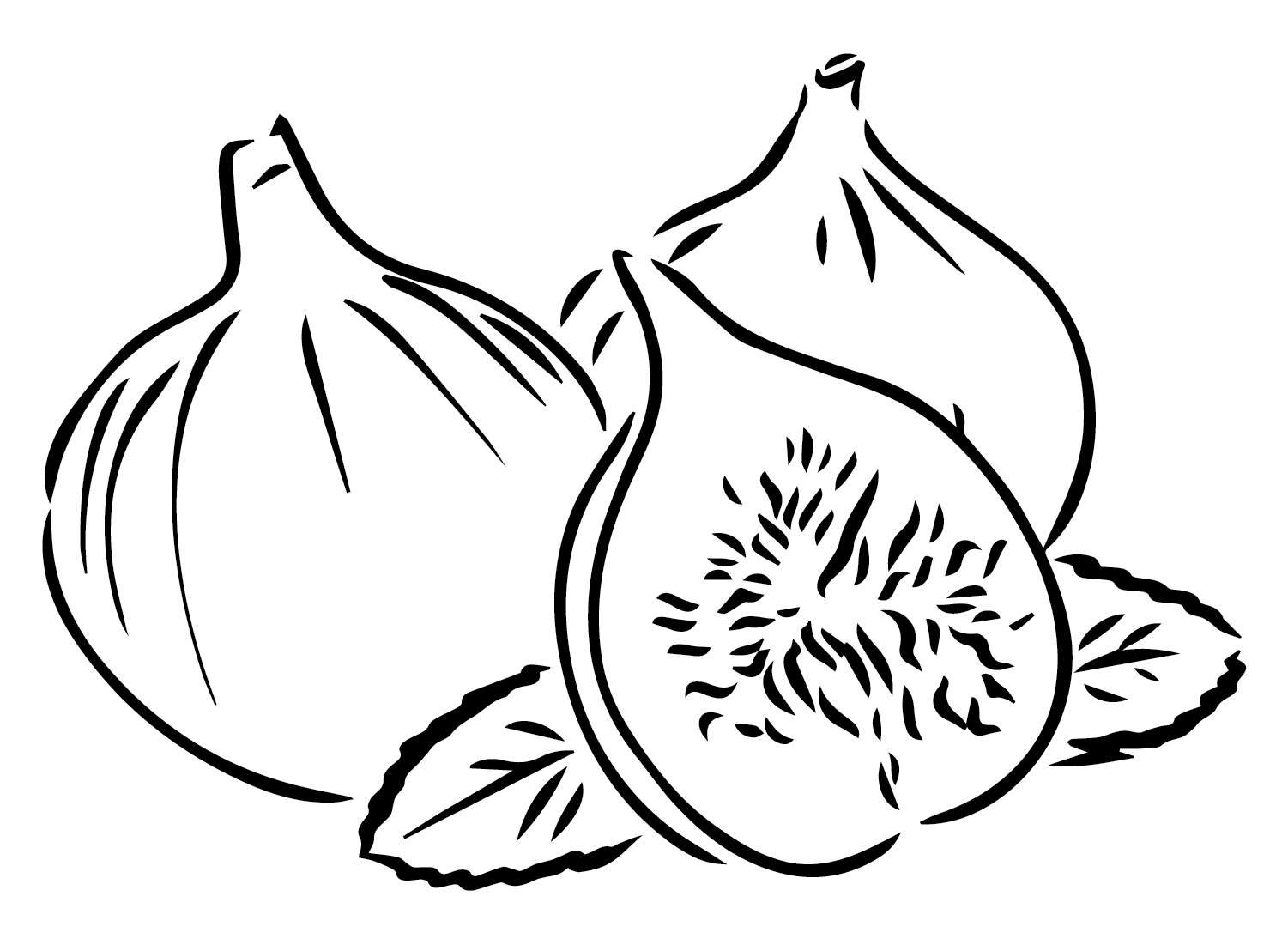
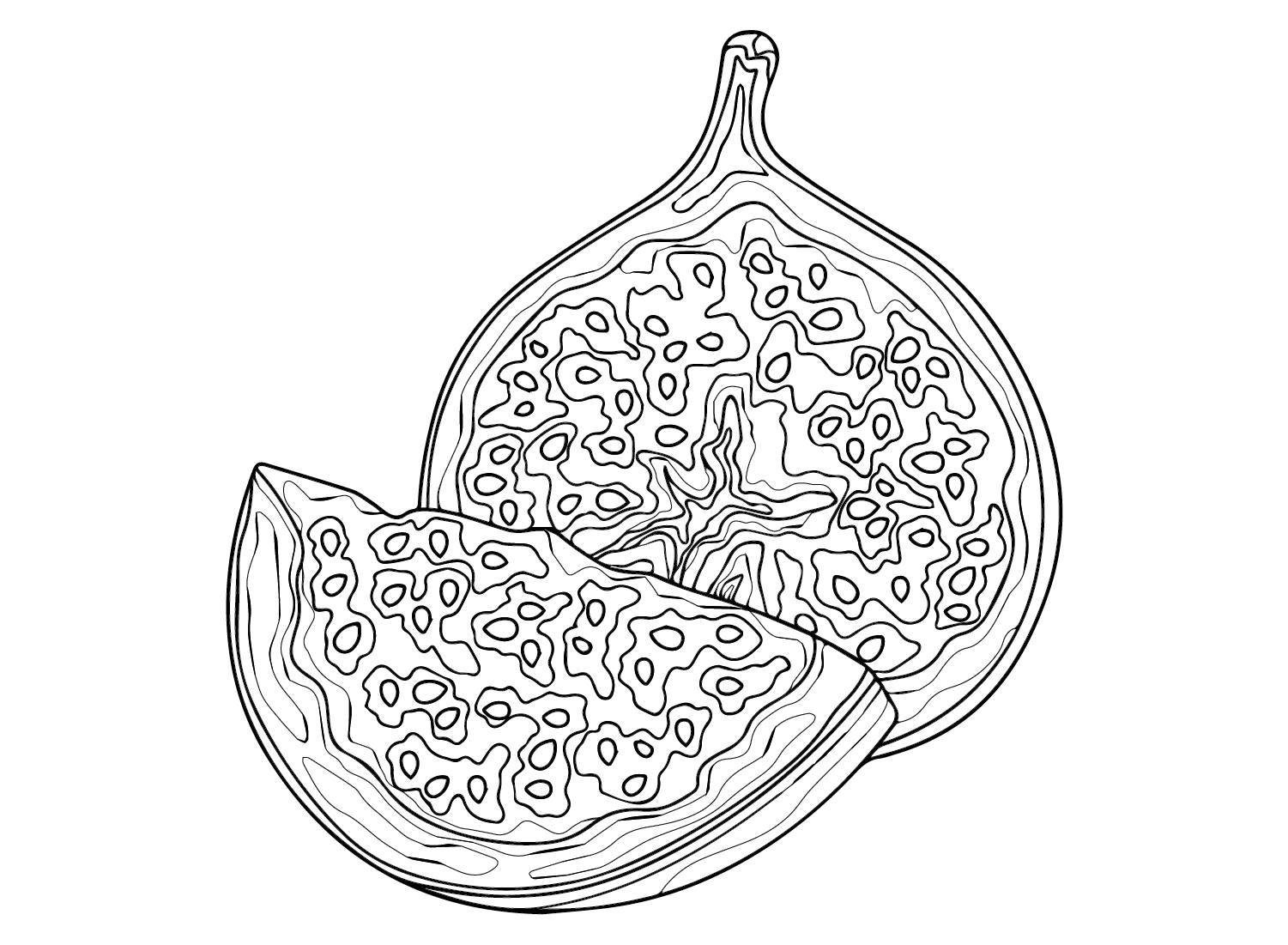
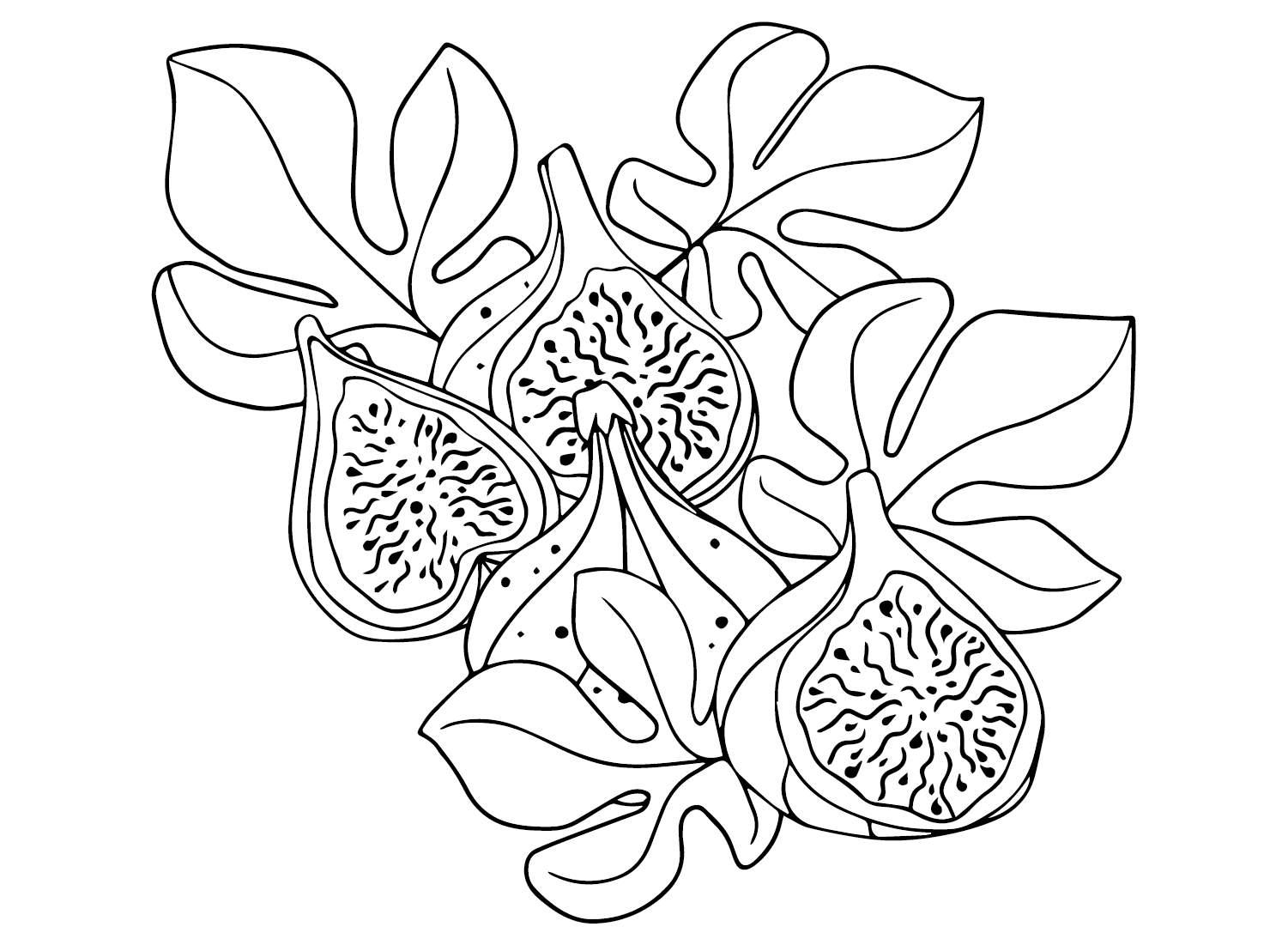
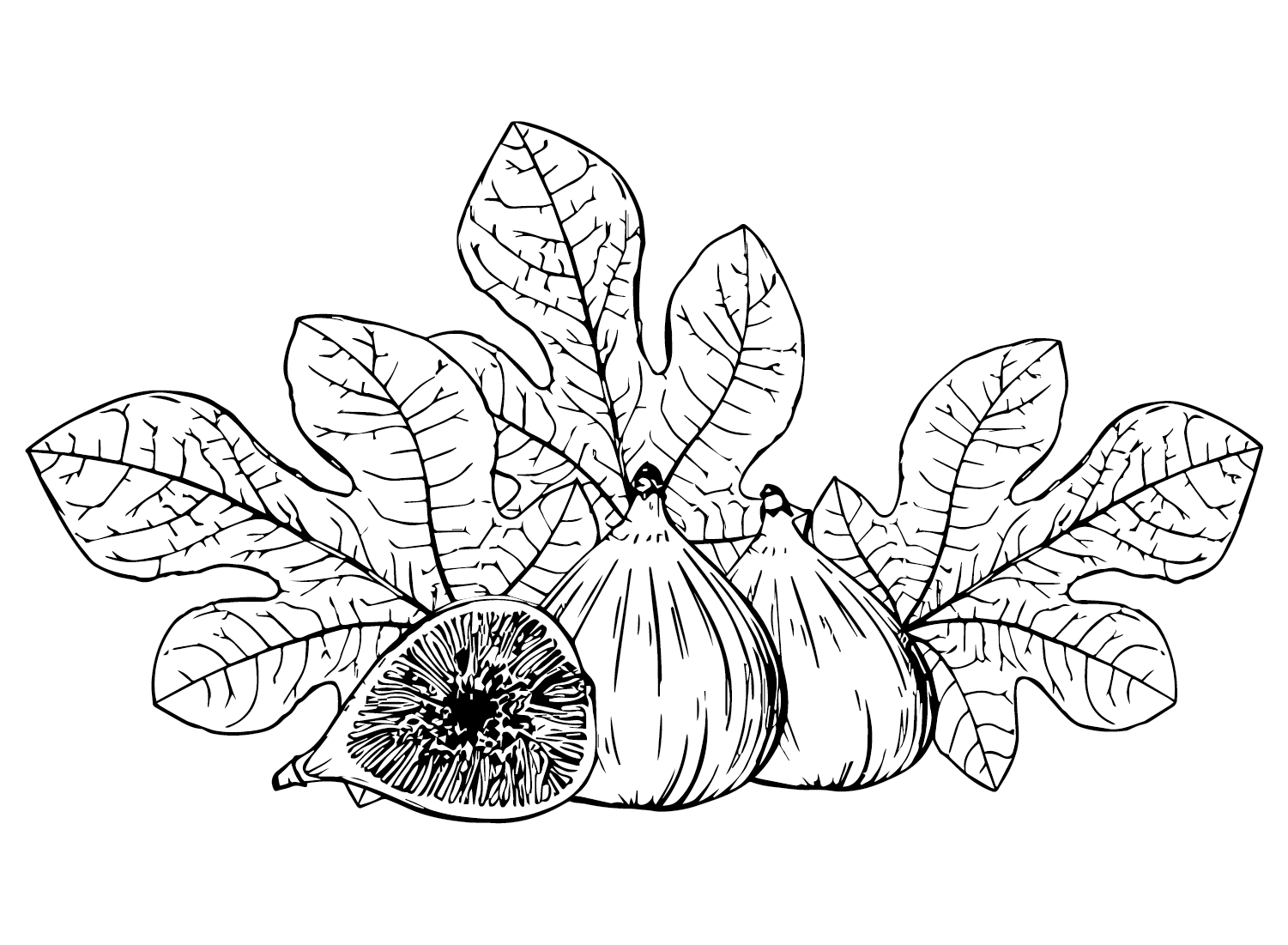
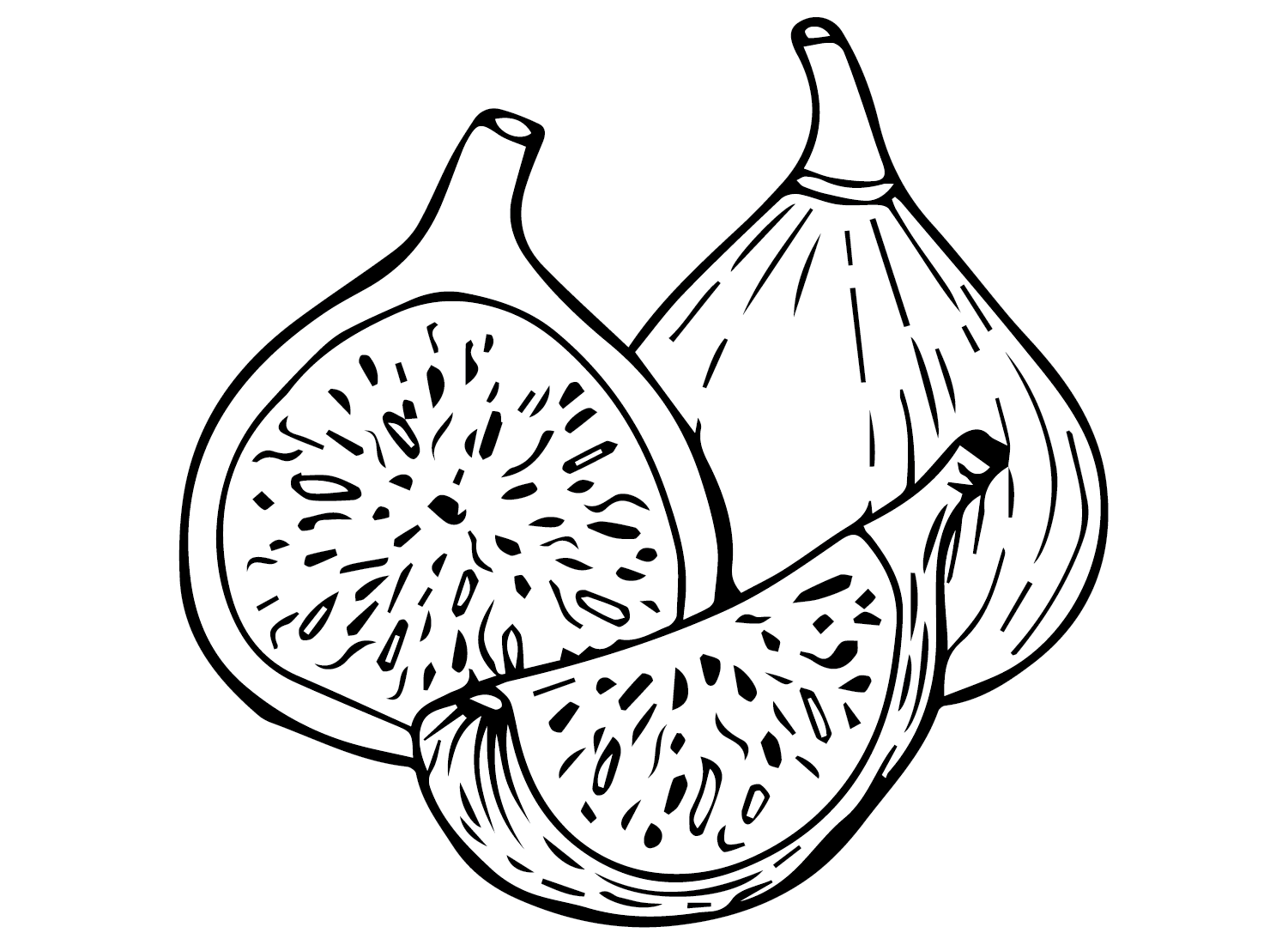
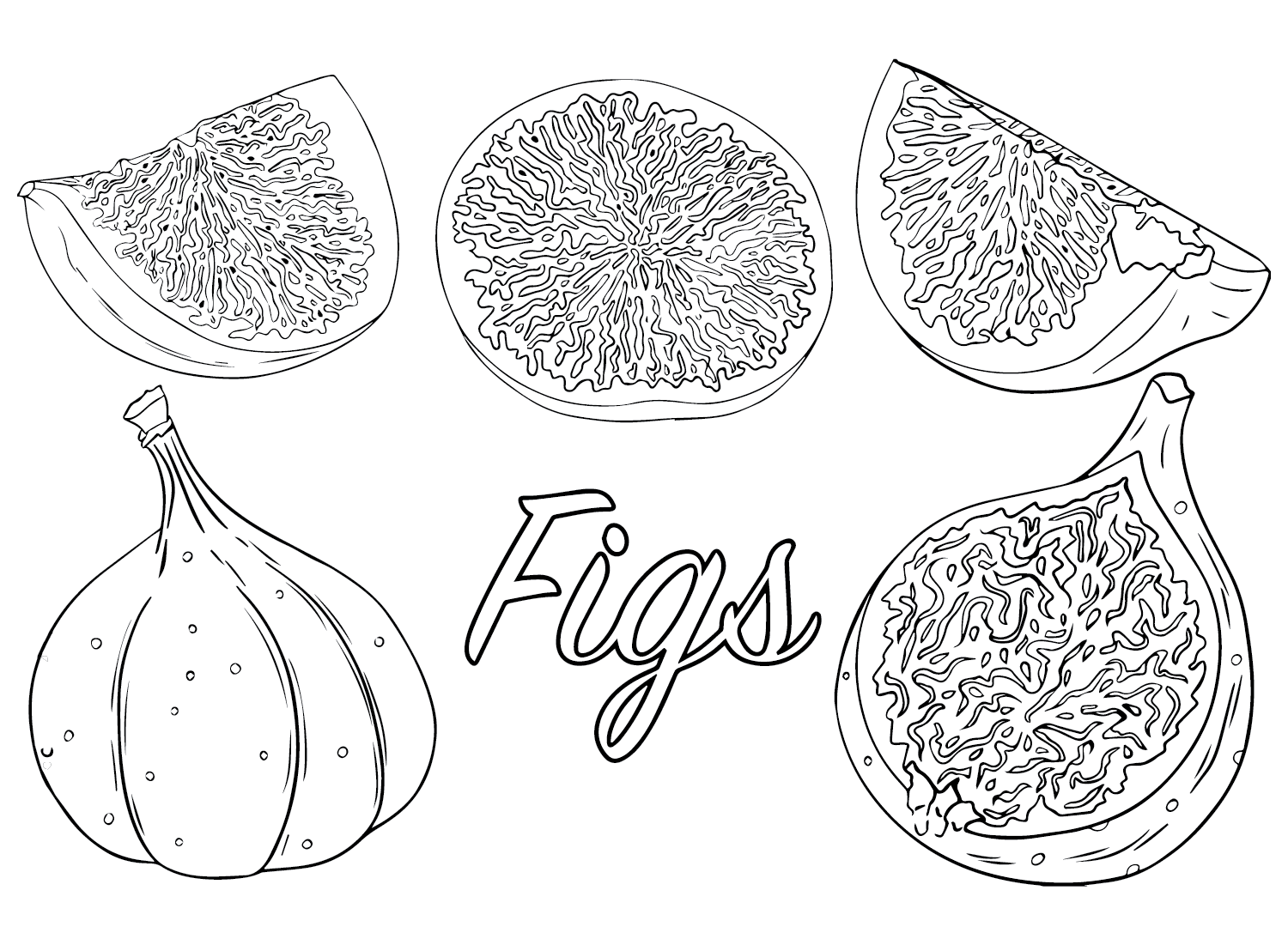
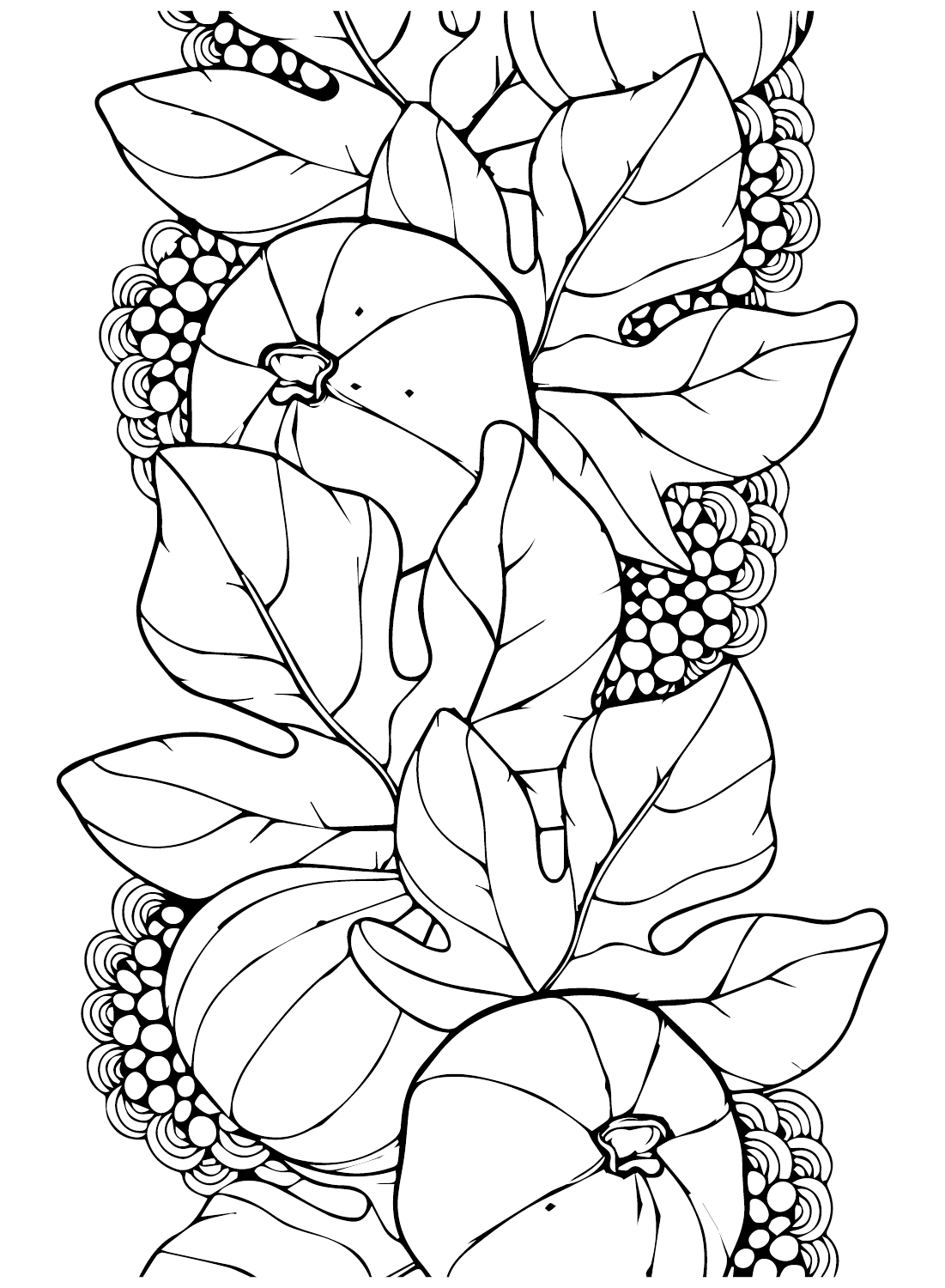
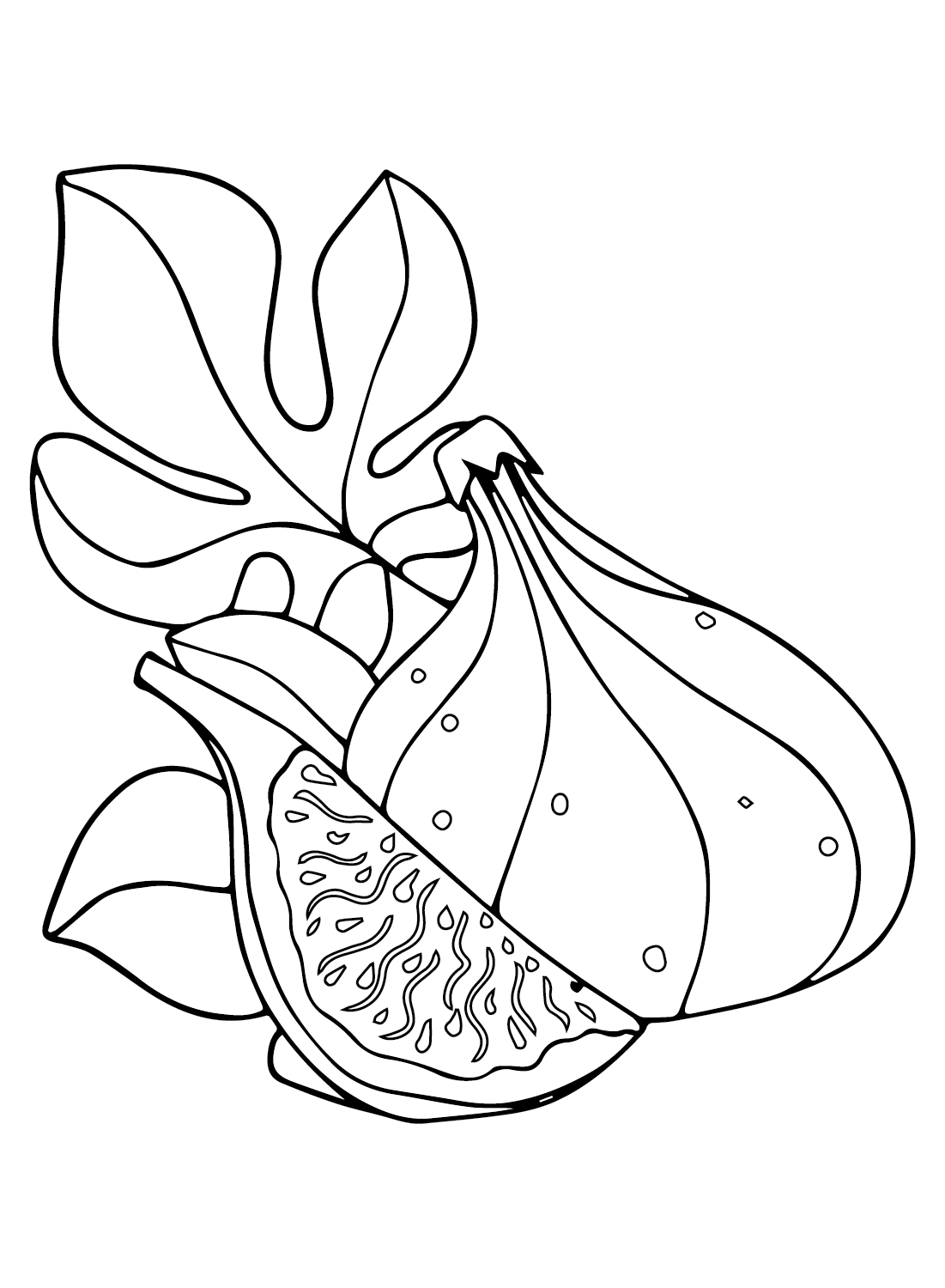
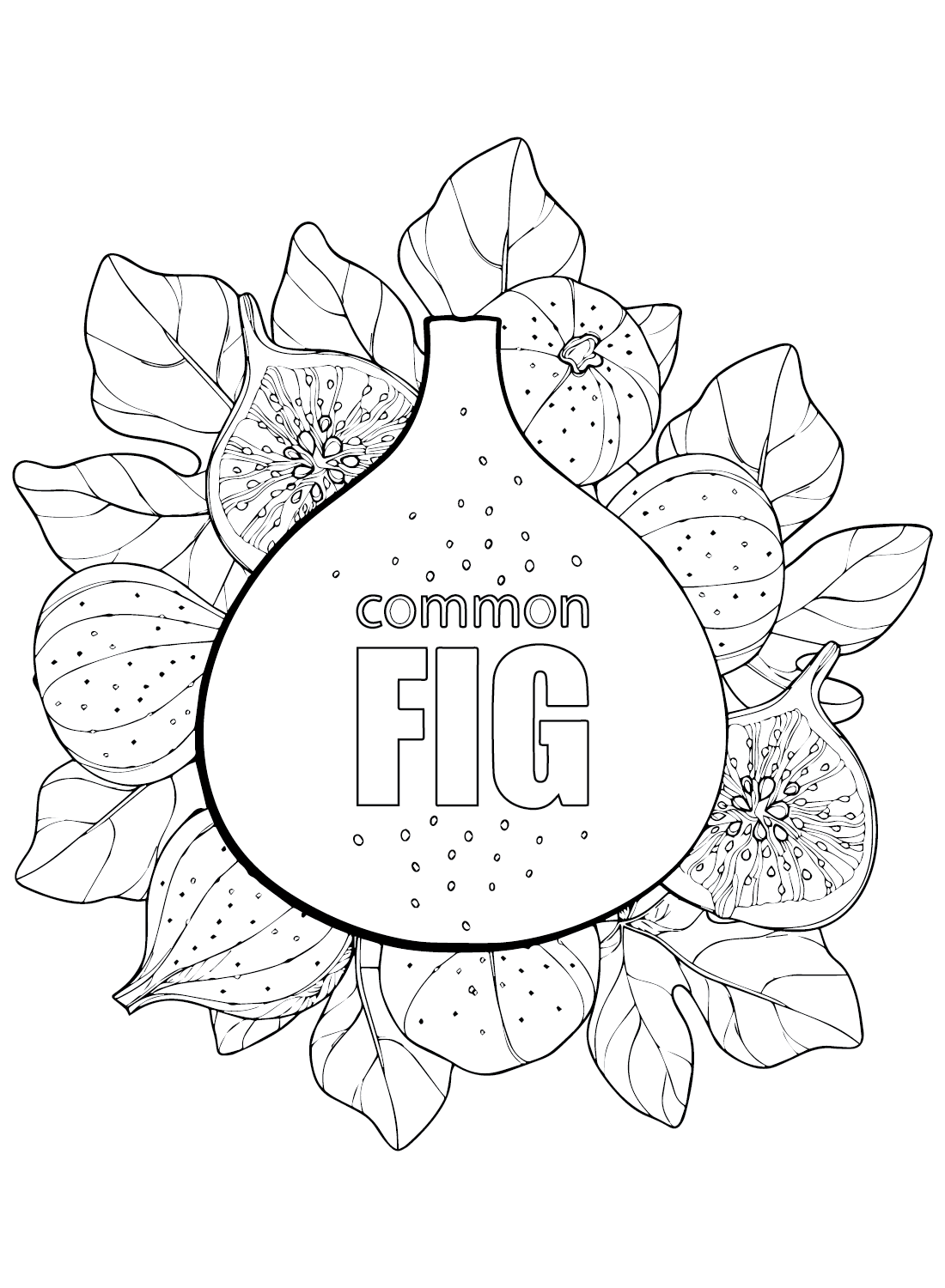
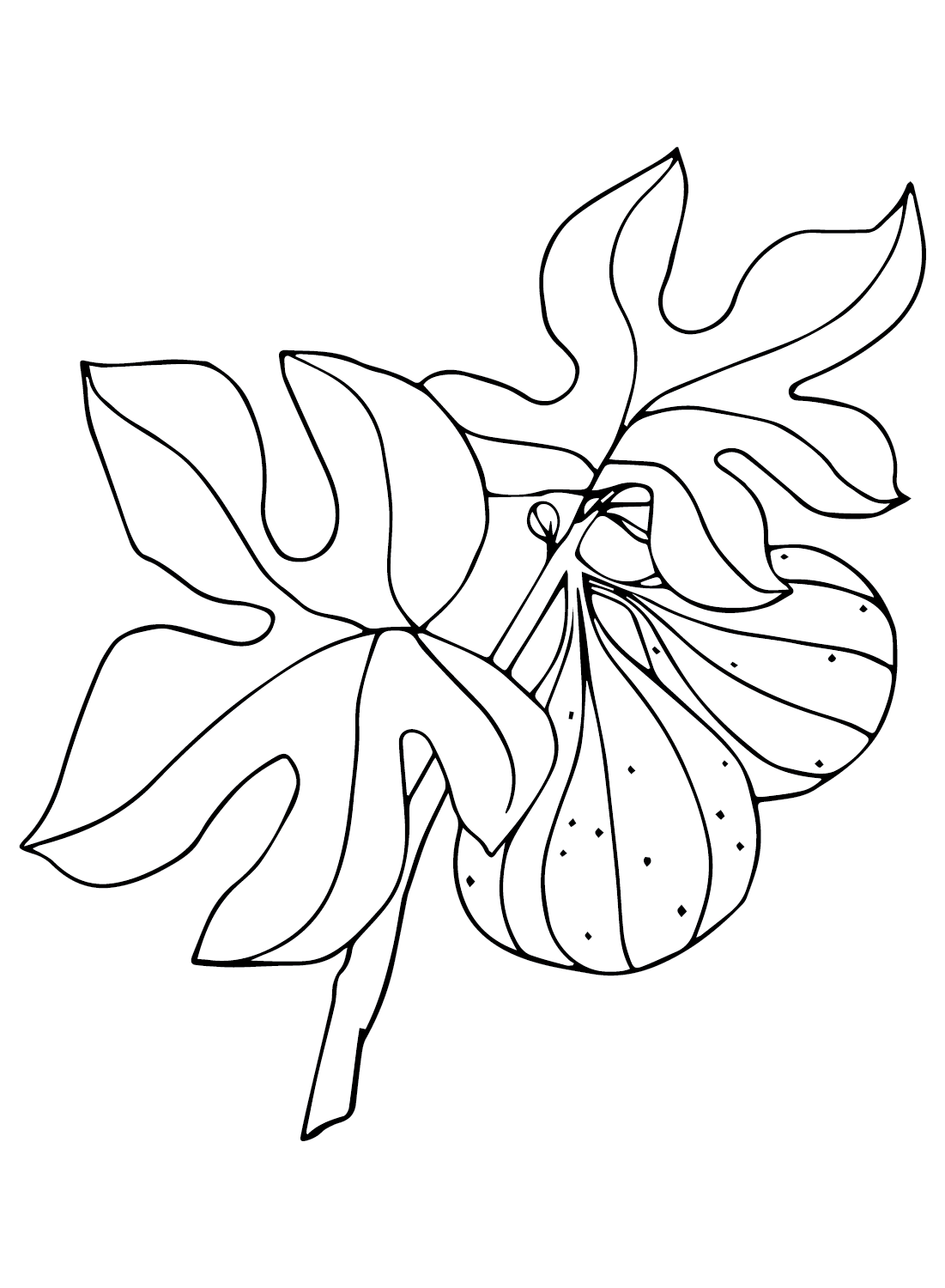
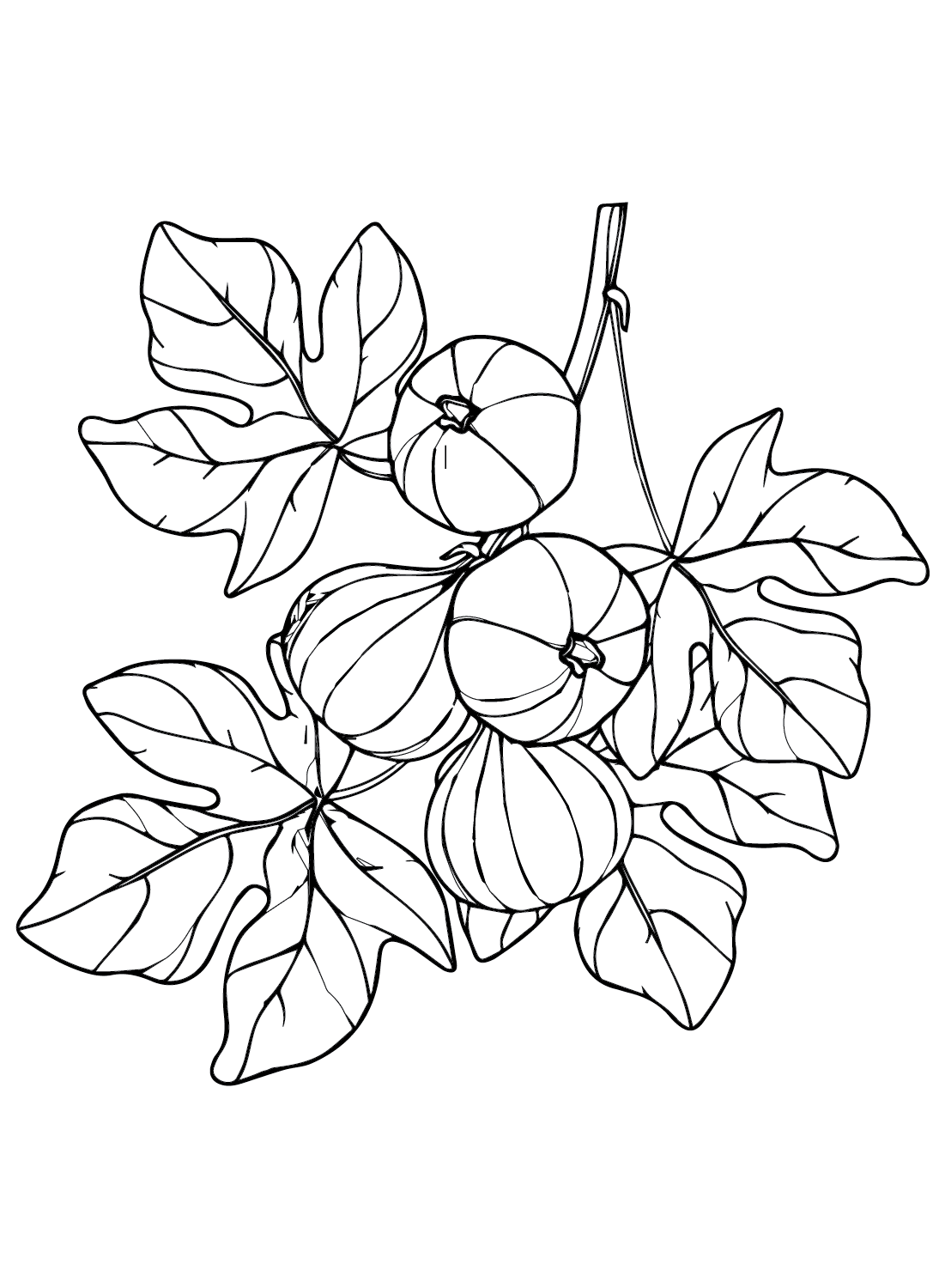
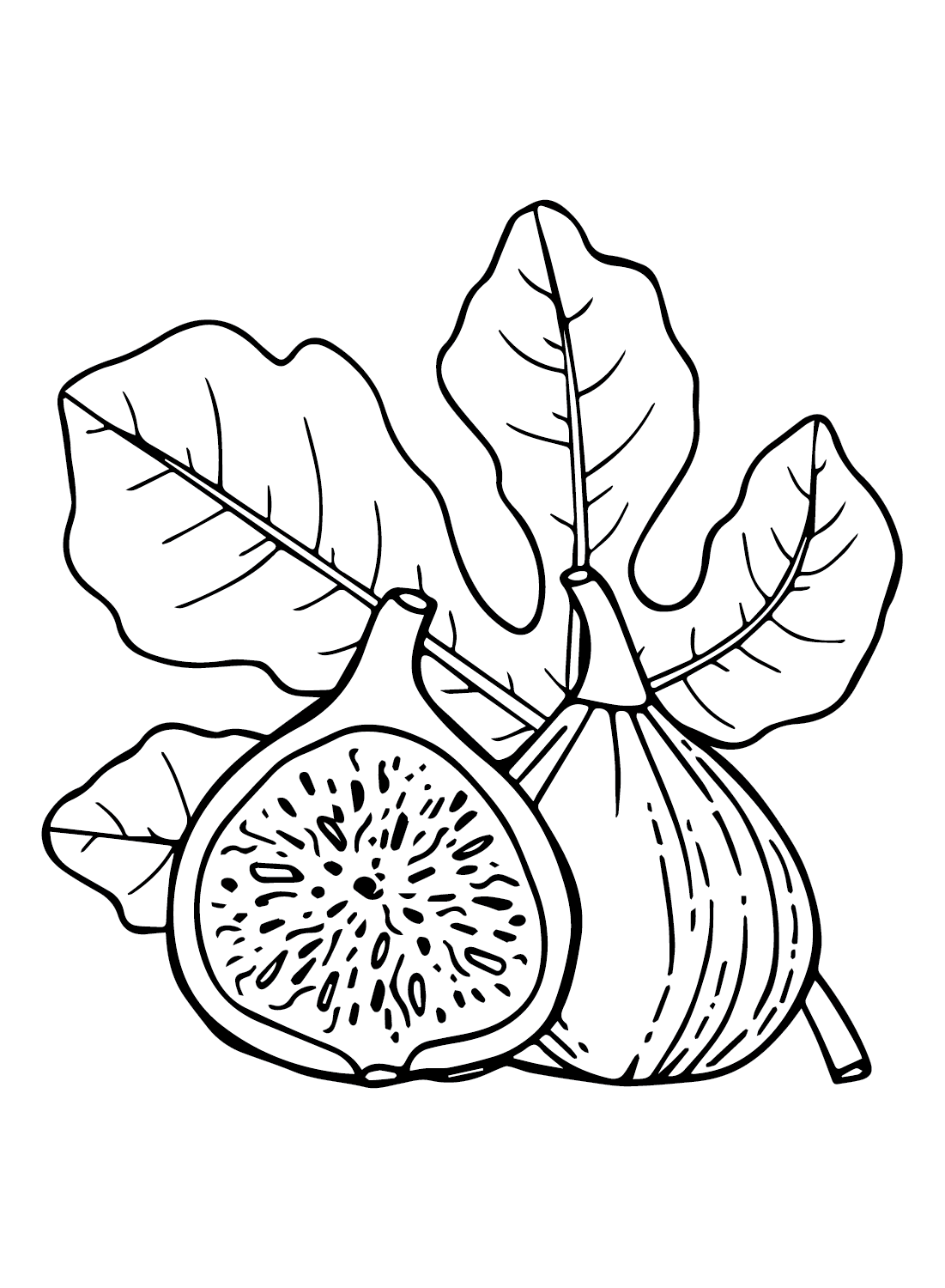
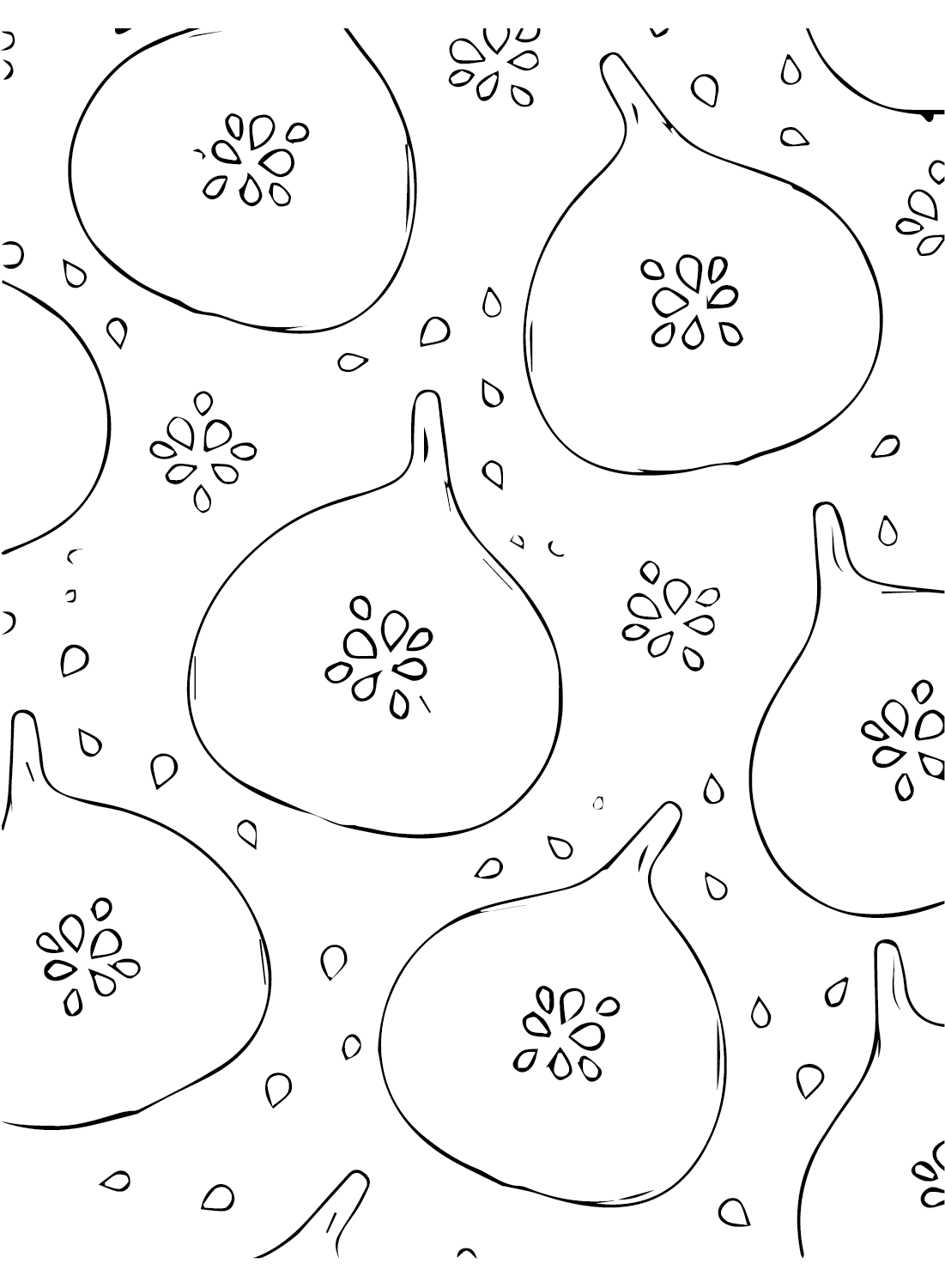
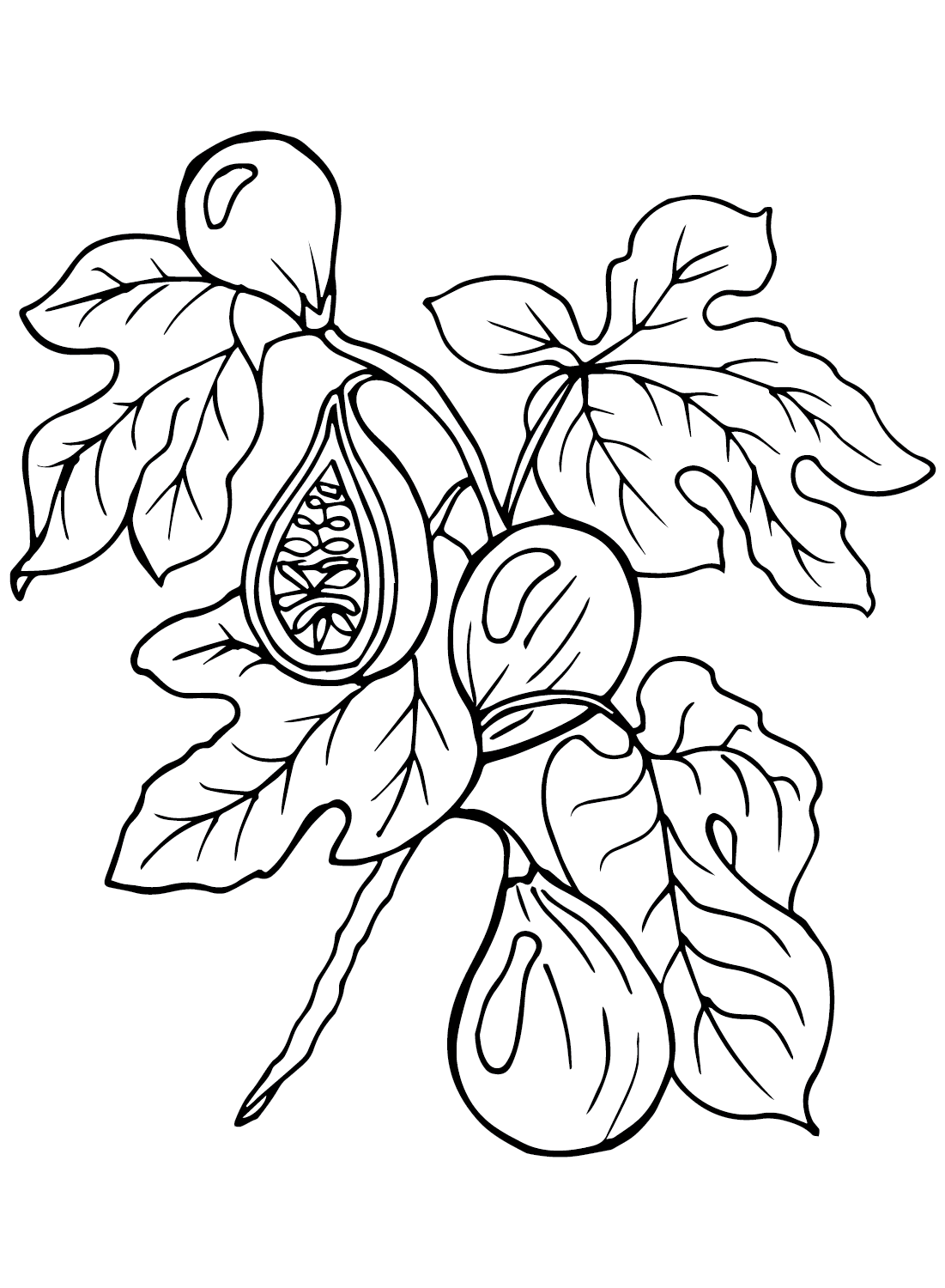
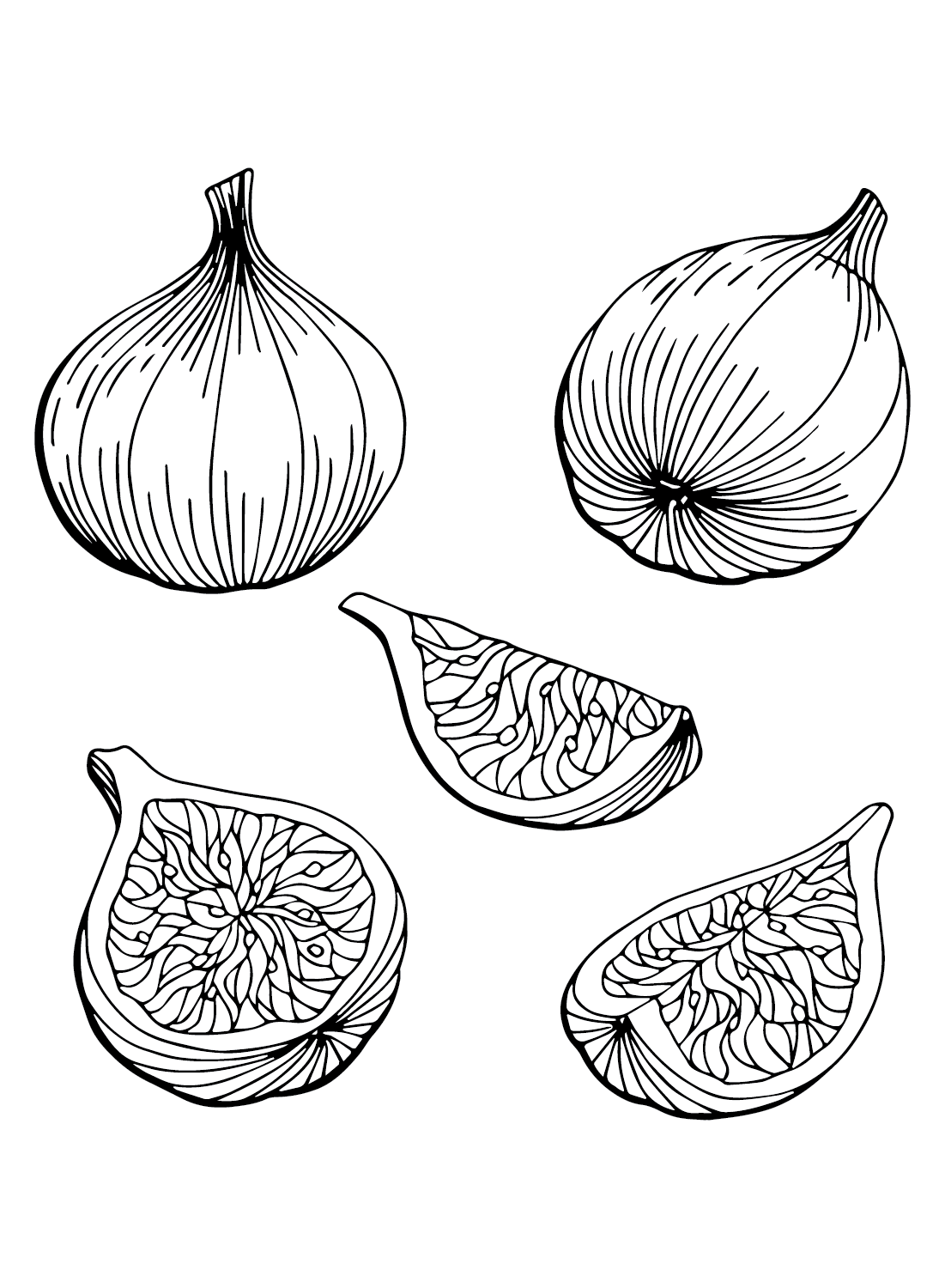
What Is Inside This Collection
The 24 designs group into four categories, from classic portraits to printable sheets.
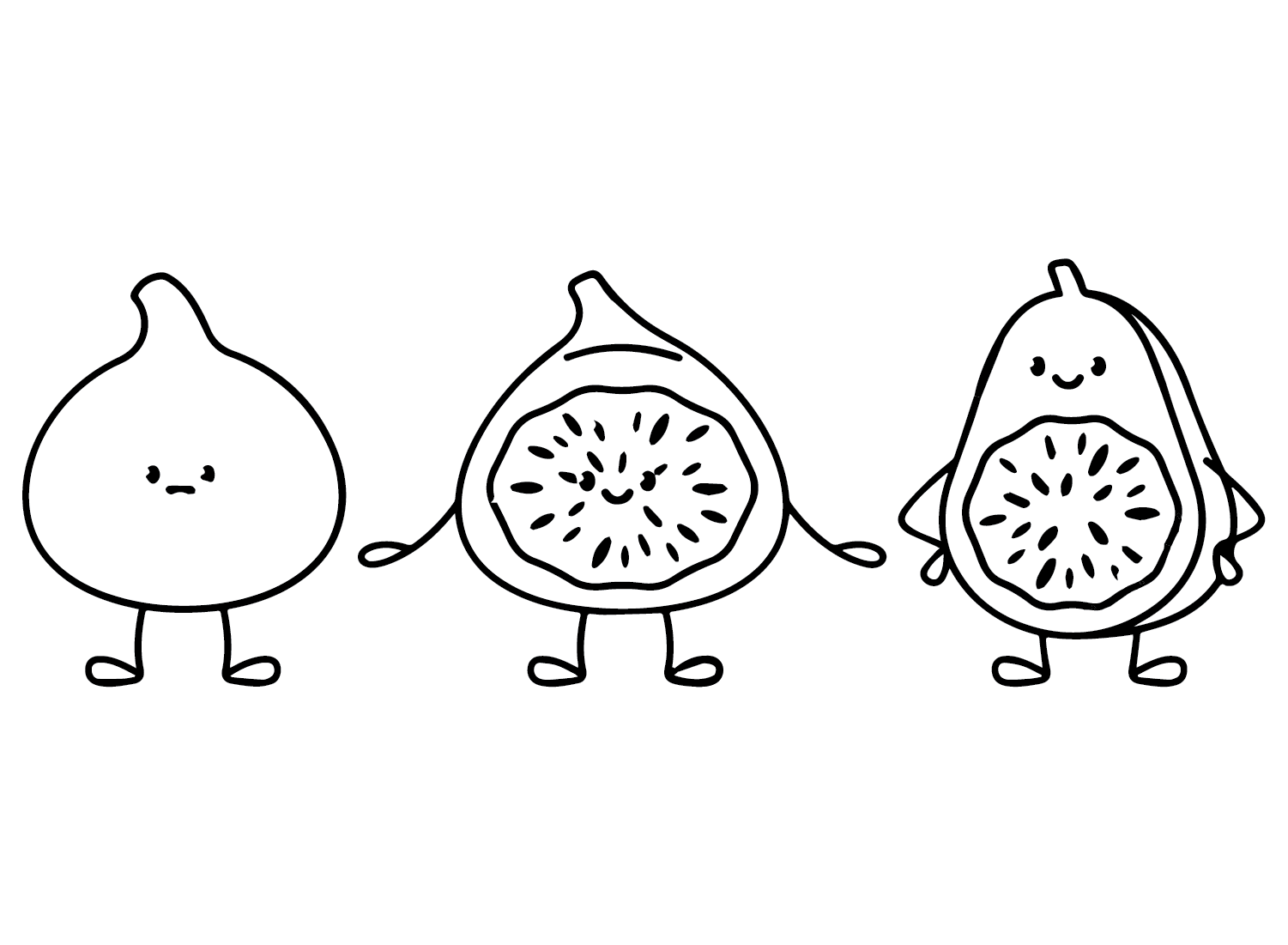
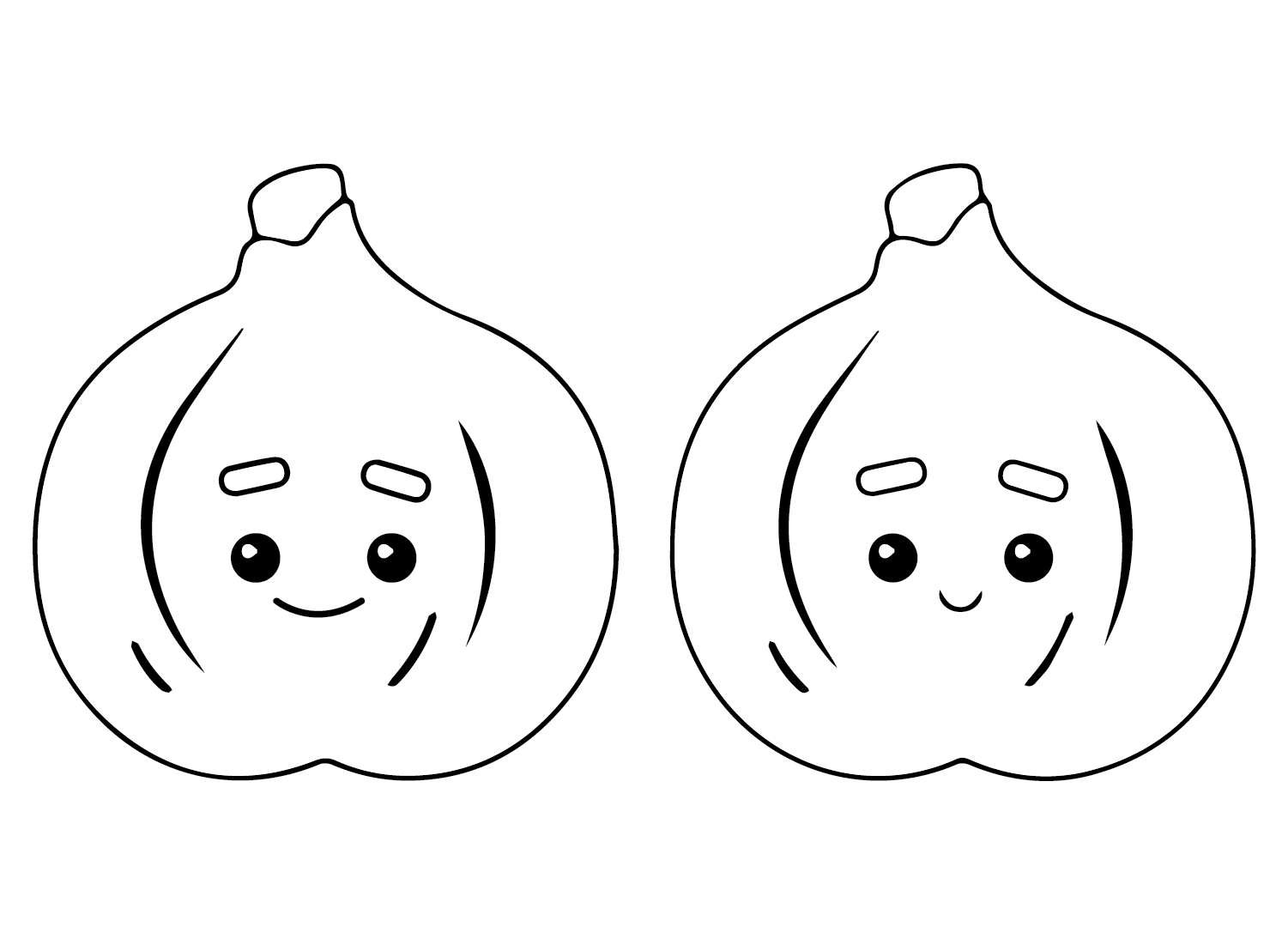
Classic Portraits
Five pages show a standalone fig or small cluster, including cute, kid-friendly, and colored renderings.
Tree and Branch Scenes
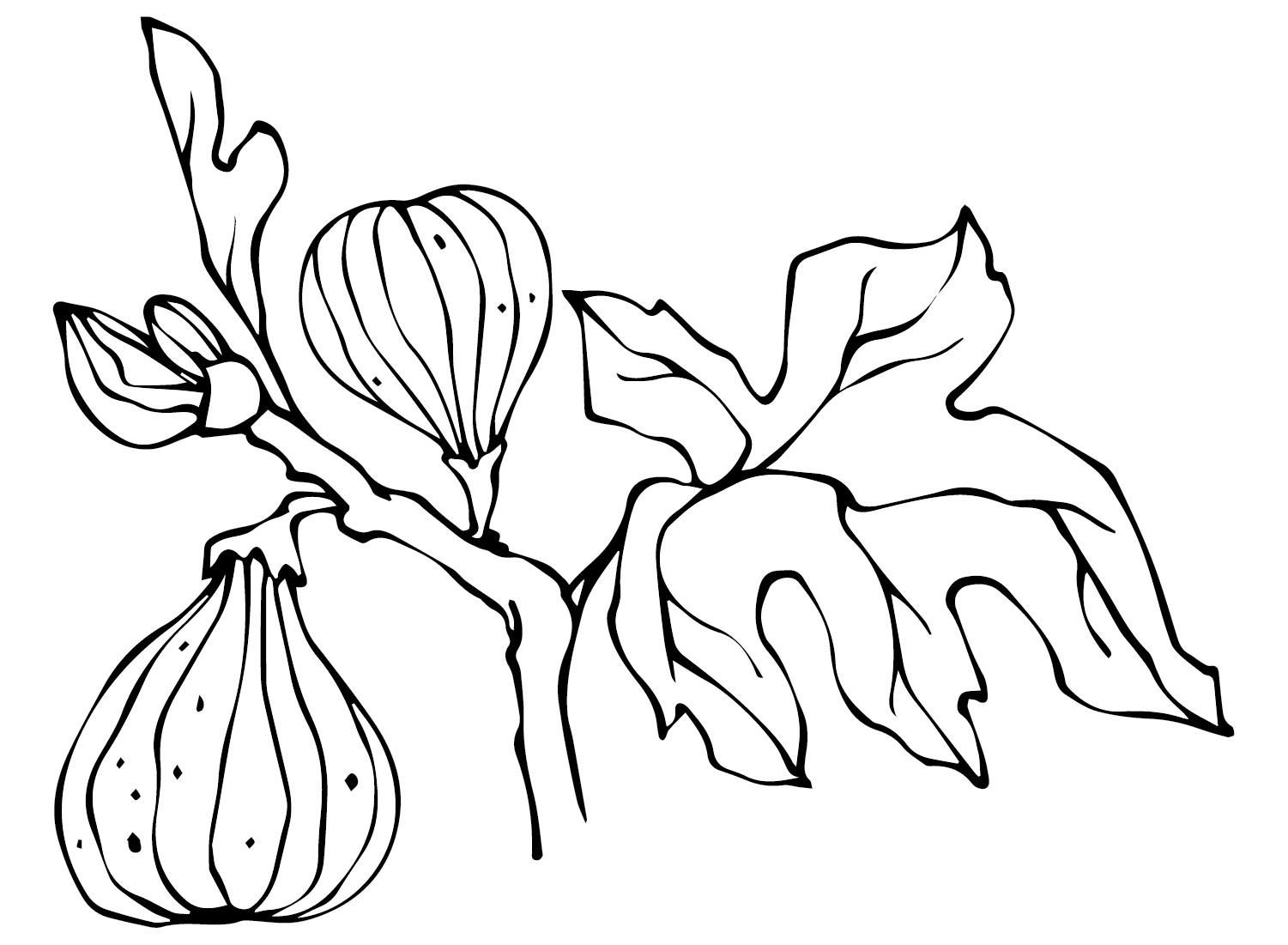
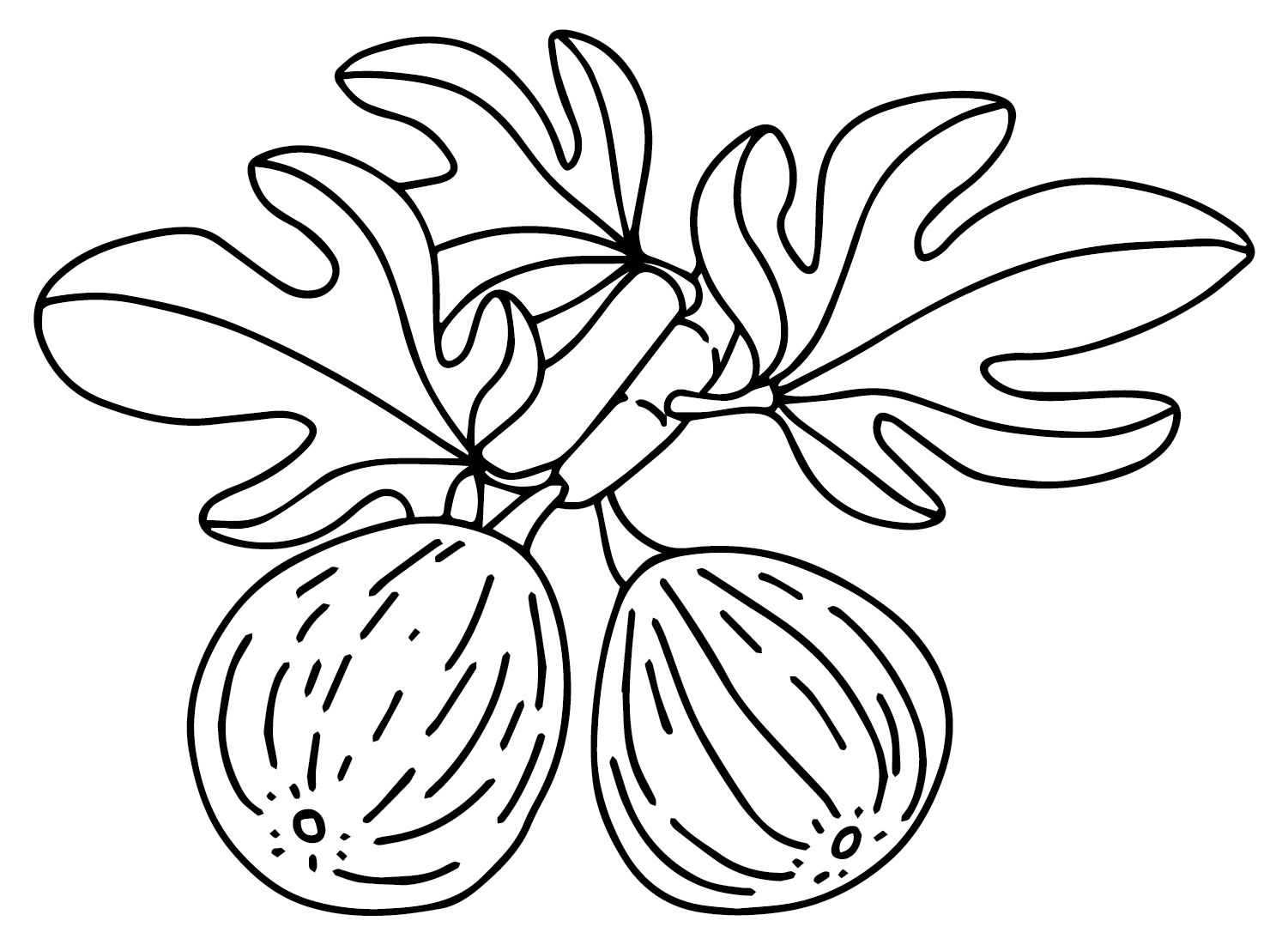
Three pages place the fig on its tree or branch, giving colorists a fuller composition that includes the plant’s broad, distinctive leaves.
Drawing-Style and Specialty Designs
Four pages take a more specific approach, including sketch-style line drawings and background-style artwork.
Printable and Free Sheets
Twelve pages are formatted as general printable sheets, making up the largest share of the collection and useful for a quick, single-session print at home or in the classroom.
What Figs Coloring Pages Do
Hundreds of tiny shapes inside one fruit. A cut-open fig reveals a dense field of small, seed-like structures radiating inward, and any design that shows this cross-section calls for careful, repetitive dot-work quite different from shading a smooth, single-surface fruit. The American Academy of Pediatrics ties that kind of small-scale, deliberate coloring work to fine motor skill development in children ages 2 through 7.
A fruit that isn’t really a fruit at all. What looks like a simple fruit is actually an entire flower cluster turned inside out, and many fig varieties rely on a tiny, specific species of wasp to pollinate the flowers hidden inside. This partnership has continued for more than 60 million years, giving colorists one of the more genuinely astonishing facts hiding behind a familiar snack.
A calming activity paired with an ancient fruit. A 2005 study in the Art Therapy Journal found that structured coloring sessions produced measurable reductions in anxiety, and there’s a fitting sense of history in coloring a fruit that has been part of Mediterranean diets for thousands of years.
Broad leaves alongside compact fruit clusters. The tree and branch scenes combine the fig’s large, deeply lobed leaves with its smaller, denser fruit shapes, giving colorists practice in managing two very different scales of detail within the same composition.
How to Color Figs Pages Well
- Ripe skin: Use deep Purple, Brown, or Green depending on the variety, since fig skin color ranges widely across different cultivated types.
- Interior (if shown in a cut cross-section): Use Pink or Red for the inner flesh, with tiny, lighter dots scattered throughout to represent the many small seed-like structures.
- Stem: Use a short, simple line in light Green or Brown at the top of the fig, where it would have connected to the branch.
- Leaves: Use rich, deep Green for the fig’s large, deeply lobed leaves, adding lighter vein lines to highlight their dramatic shape.
- Branches and bark: Use warm Brown for tree and branch scenes, keeping the tone simple so the fruit and leaves remain the clear focus.
- Backgrounds: Keep backgrounds simple with soft Cream or light Blue tones so the fig’s rich, saturated color stays the page’s clear focus.
5 Creative Craft Ideas With Figs Coloring Pages
1. Mediterranean Fruit Basket Collage
Color several fig designs, cut them out, and arrange them inside a paper basket cutout for a simple Mediterranean-themed fruit display.
2. Nature Journal Cover
Color a small fig portrait and glue it onto the cover of a blank notebook to make a personalized nature-observation journal.
3. Greeting Card
Fold cardstock in half, glue on a colored fig design, and write a message inside for a friend interested in world cuisines or nature.
4. Classroom World Foods Poster
Color several fig pages as a group and arrange them on a poster board for a classroom lesson about fruits from around the Mediterranean.
5. Paper Bookmark
Cut a small colored fig design into a bookmark shape and use it to mark a place in a favorite book.
Frequently Asked Questions
What are Figs coloring pages?
Figs coloring pages are printable line-art designs featuring this ancient Mediterranean fruit in classic portrait, tree, and branch scene artwork. This collection includes 24 free designs available as PDFs or online coloring.
Is a fig actually a fruit?
Not in the typical sense. What we eat as a fig is technically a synconium, an entire cluster of tiny flowers enclosed inside a fleshy pod, rather than a fruit that grows from a single flower.
What is the relationship between figs and wasps?
Many fig varieties rely on a specific species of tiny fig wasp to pollinate the flowers hidden inside the fruit. This highly specialized partnership has existed for more than 60 million years.
Where do figs originally come from?
Figs are believed to have originated in the Middle East and have been part of Mediterranean diets for thousands of years.
What do figs look like when cut open?
A cut-open fig reveals a dense interior filled with hundreds of tiny seed-like structures radiating inward from the center.
What are the health benefits of figs?
Figs are a good source of fiber, potassium, and antioxidants, and can be enjoyed fresh or dried.
Are Figs coloring pages suitable for young children?
Yes. The simple portrait designs in this collection use bold, uncluttered outlines suited to preschool and early elementary colorists, while the tree and branch scenes offer more detail for older kids.
Can all figs be eaten fresh?
Most commercially grown fig varieties can be eaten fresh or dried, though certain traditional types are grown specifically to support wasp pollination rather than direct eating.
Start Coloring
Download any page by clicking the design. No account, email, or payment is required. Pages print directly from the browser at full resolution or open in the online coloring tool for screen use. Share finished pages on Facebook or Pinterest with the share buttons at the top of each design page.