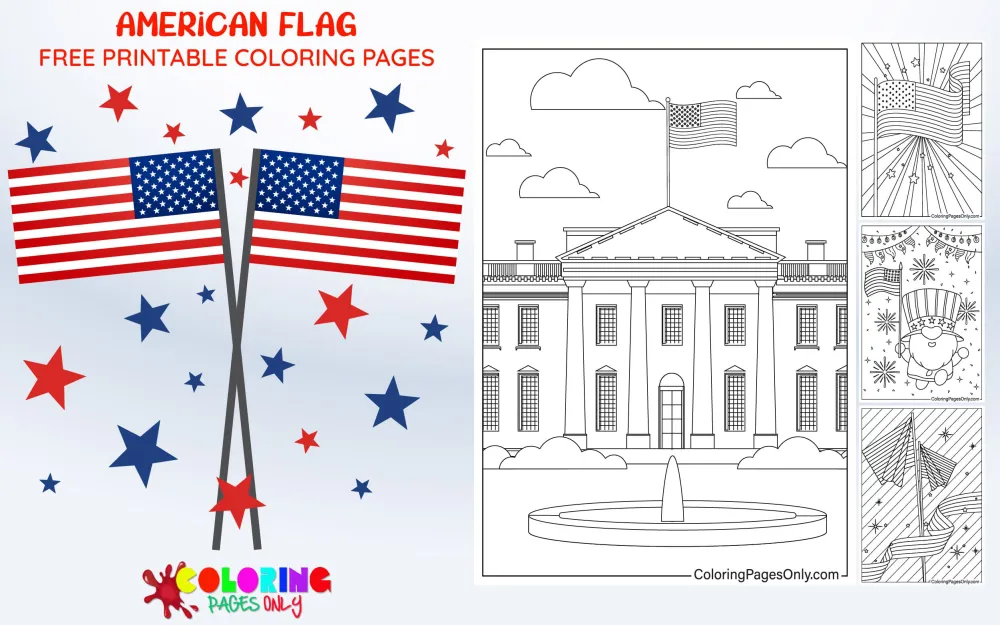
40 free American flag coloring pages – standalone flags, George Washington, Bald Eagle, White House, Statue of Liberty, and kids with flags. PDF or color online.
Red, white, and blue in a ratio of 10 to 19. That is the official proportion of the United States flag, established by Executive Order 10834 signed by President Dwight D. Eisenhower on August 21, 1959 – the same order that set the arrangement of fifty stars following Hawaii’s admission as the fiftieth state. The flag’s thirteen stripes have stayed unchanged since the first Flag Resolution of June 14, 1777. The stars have been reorganized twenty-seven times as new states entered the union. Every change has been documented; every star has a date.
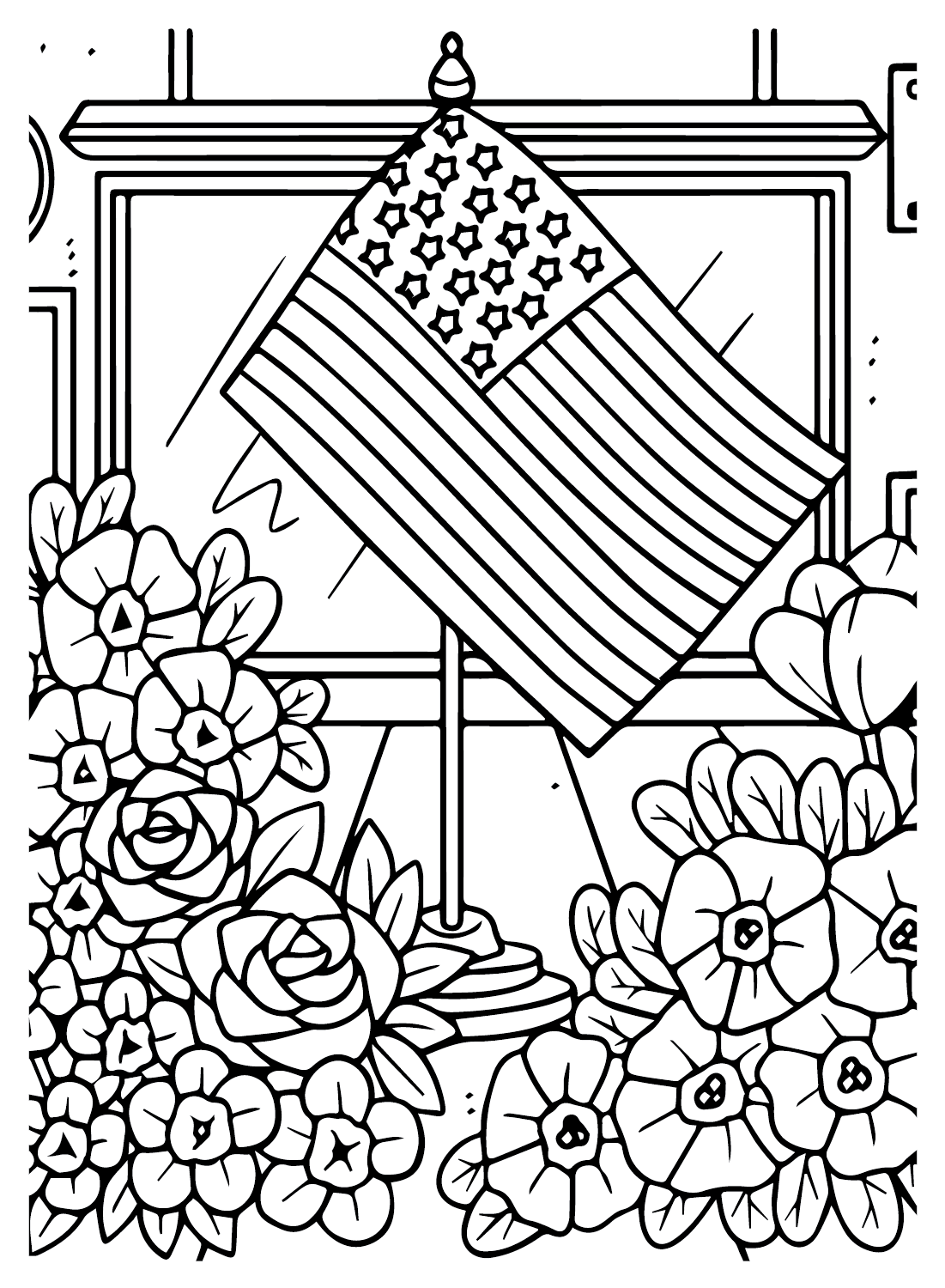
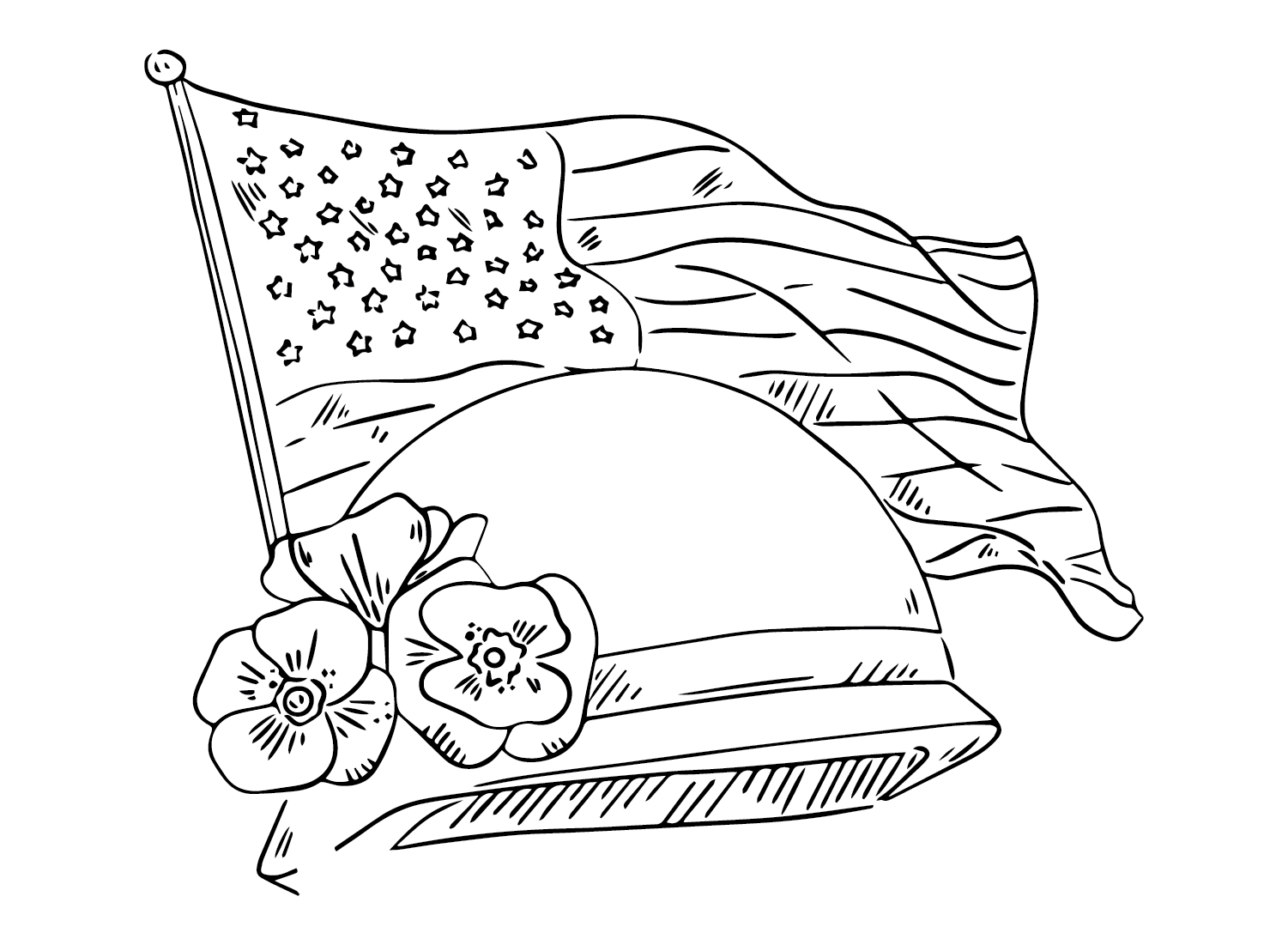
The flag appears in this collection across its full range of contexts: standalone on a white field, paired with the Bald Eagle and the Great Seal, alongside George Washington and the nation’s founding, above the White House, beside the Statue of Liberty, in the hands of children and cartoon characters. Each context asks a different thing of the coloring page – the standalone flag demands precision with colors and proportions, the historical figure pages ask for period accuracy, and the character pages ask for warmth.
These 40 free pages at ColoringPagesOnly.com cover the American flag in standalone designs, with national symbols, historical figures, civic landmarks, and character scenes. All free, PDF or PNG, print or color online.
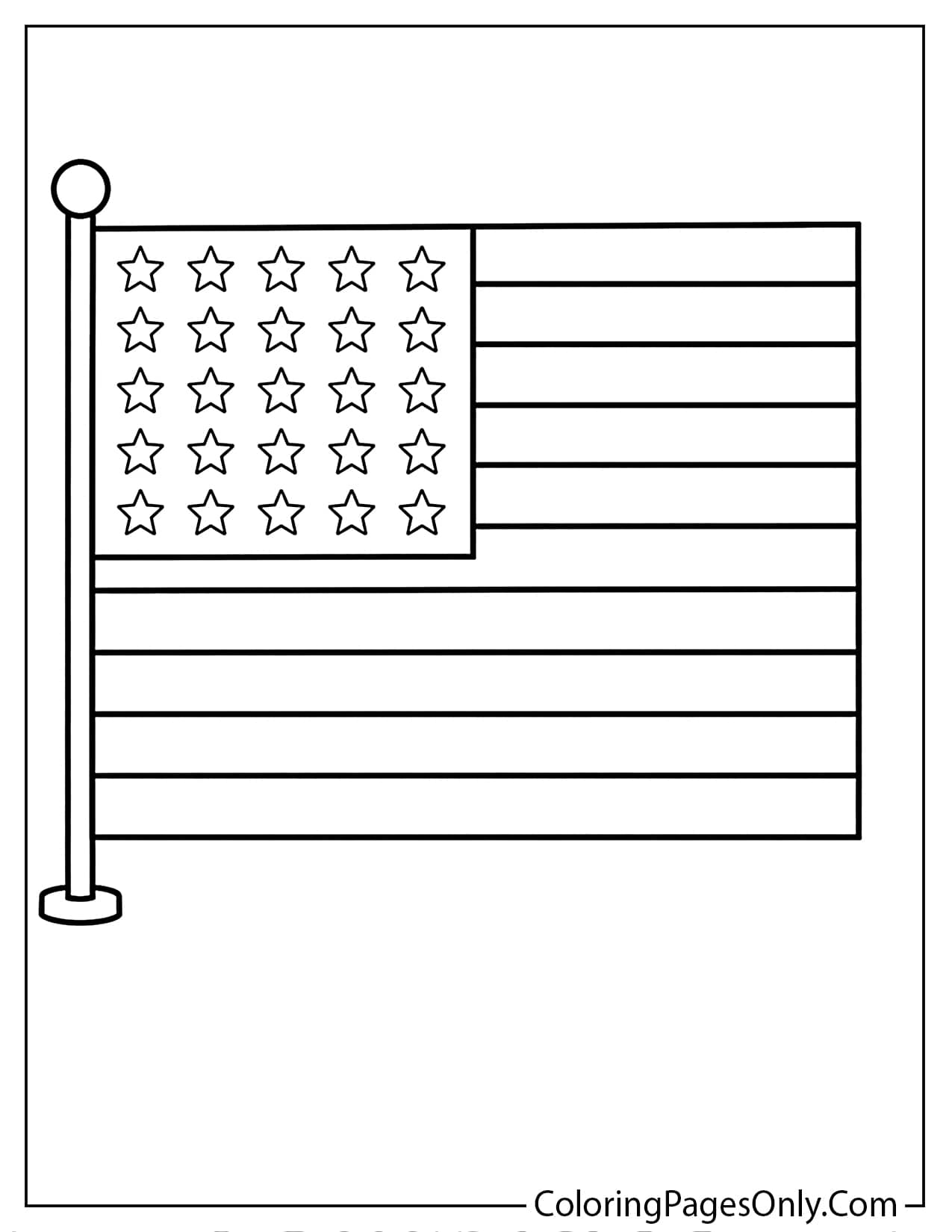



What’s Inside
Standalone Flag Pages
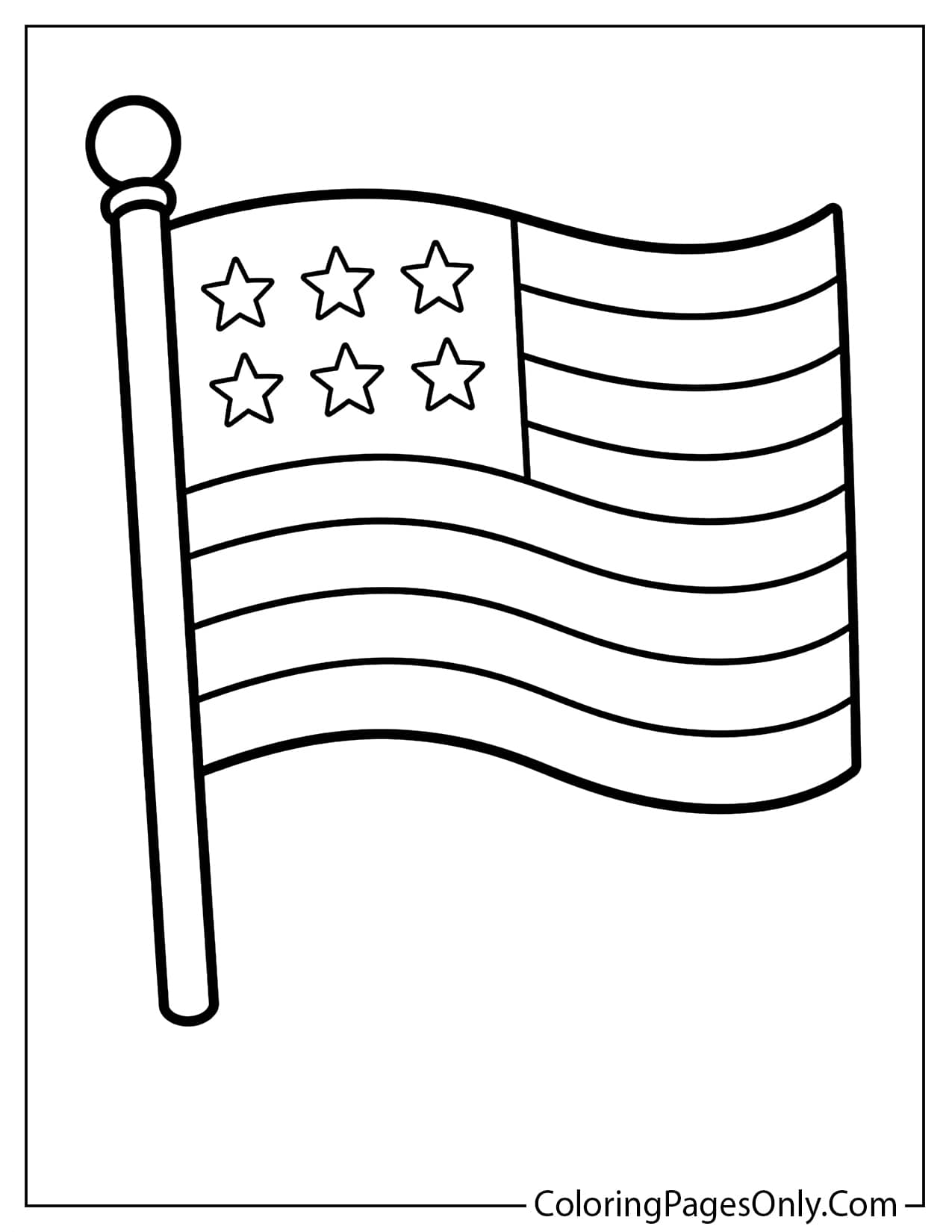
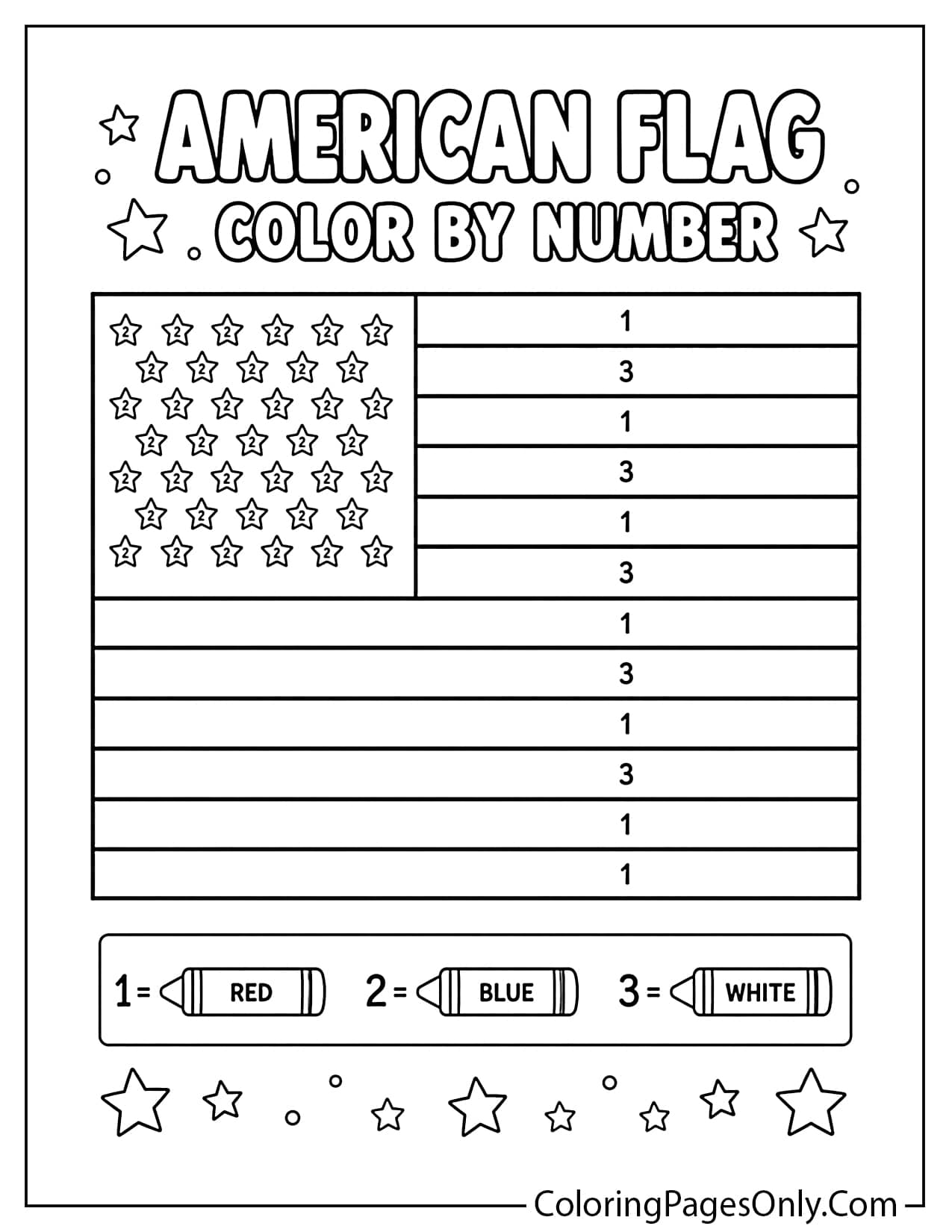
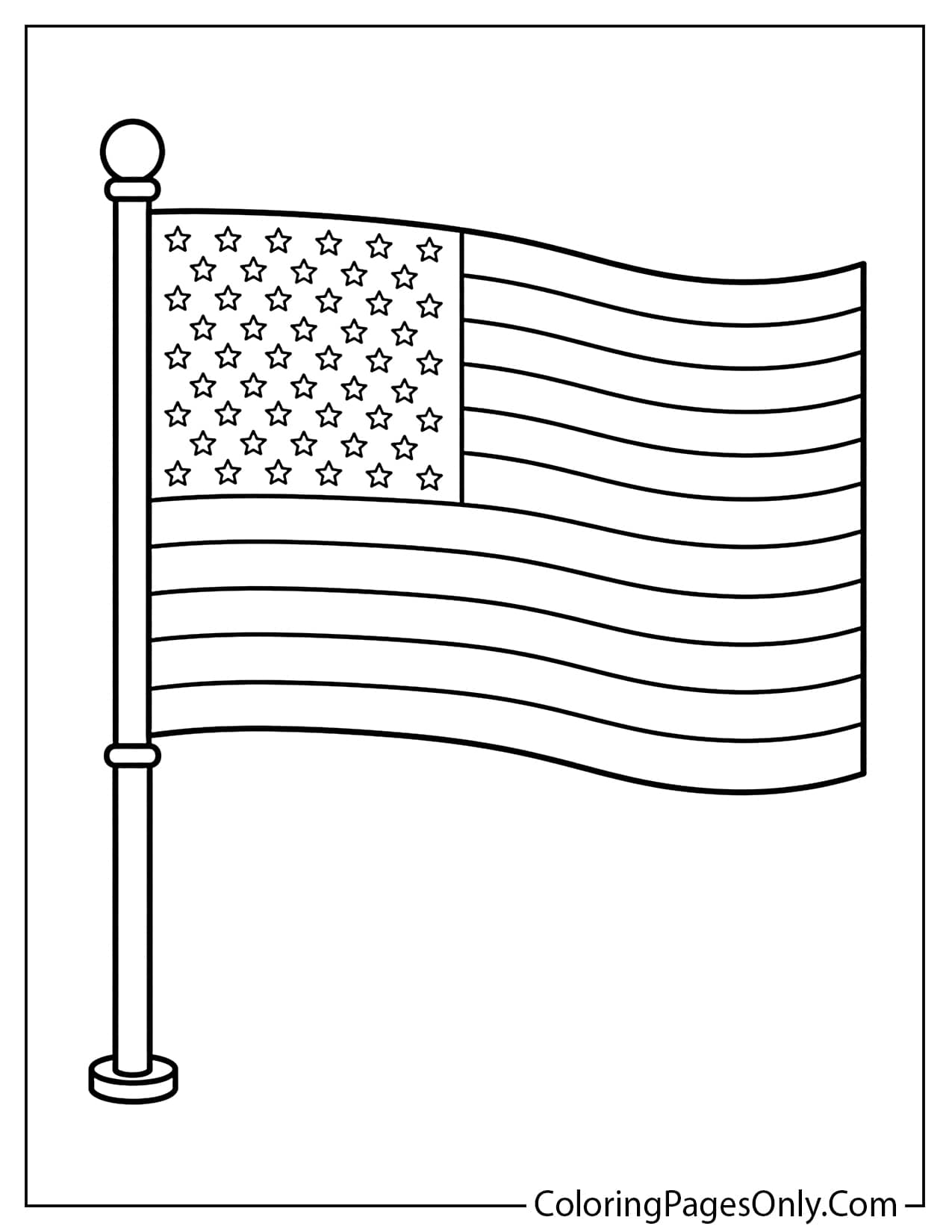
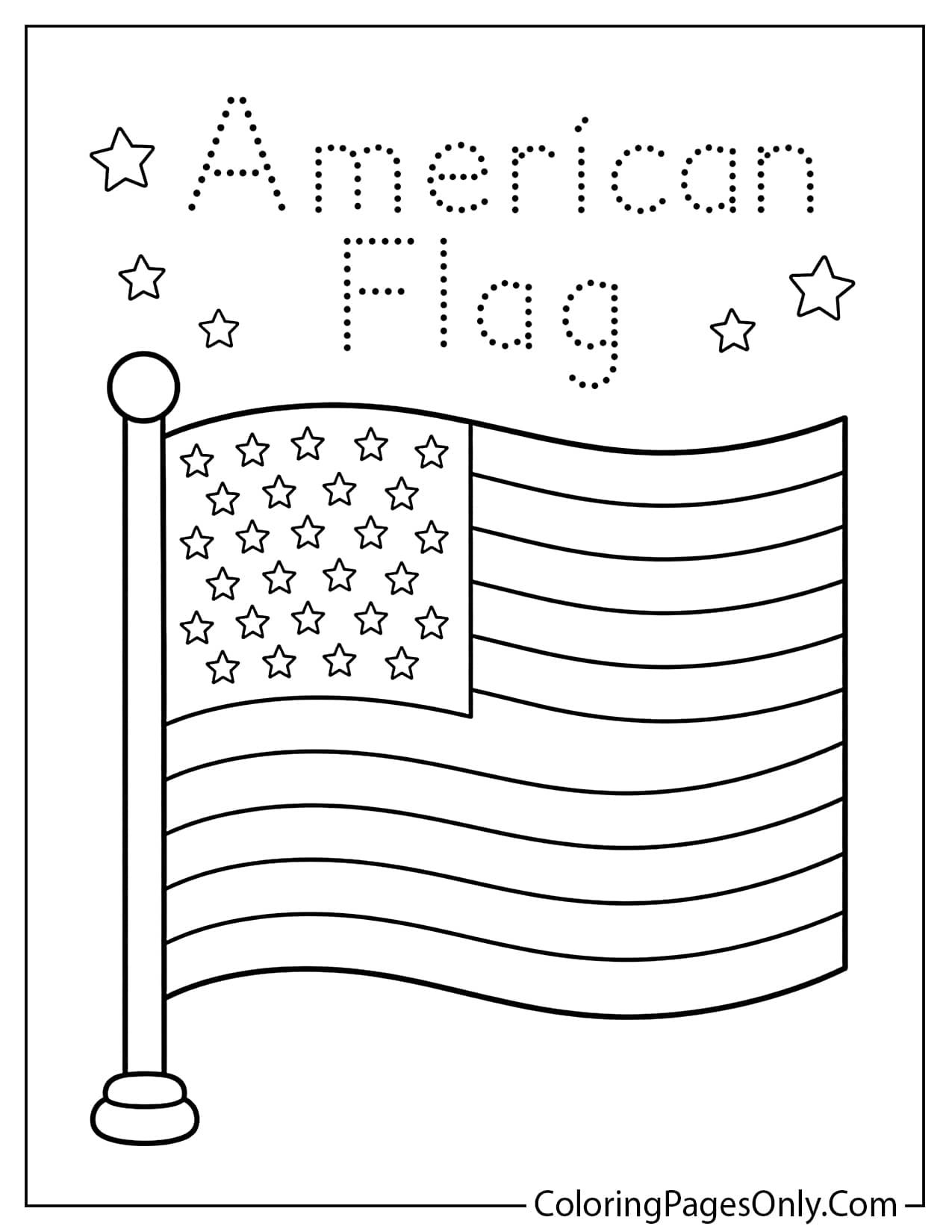
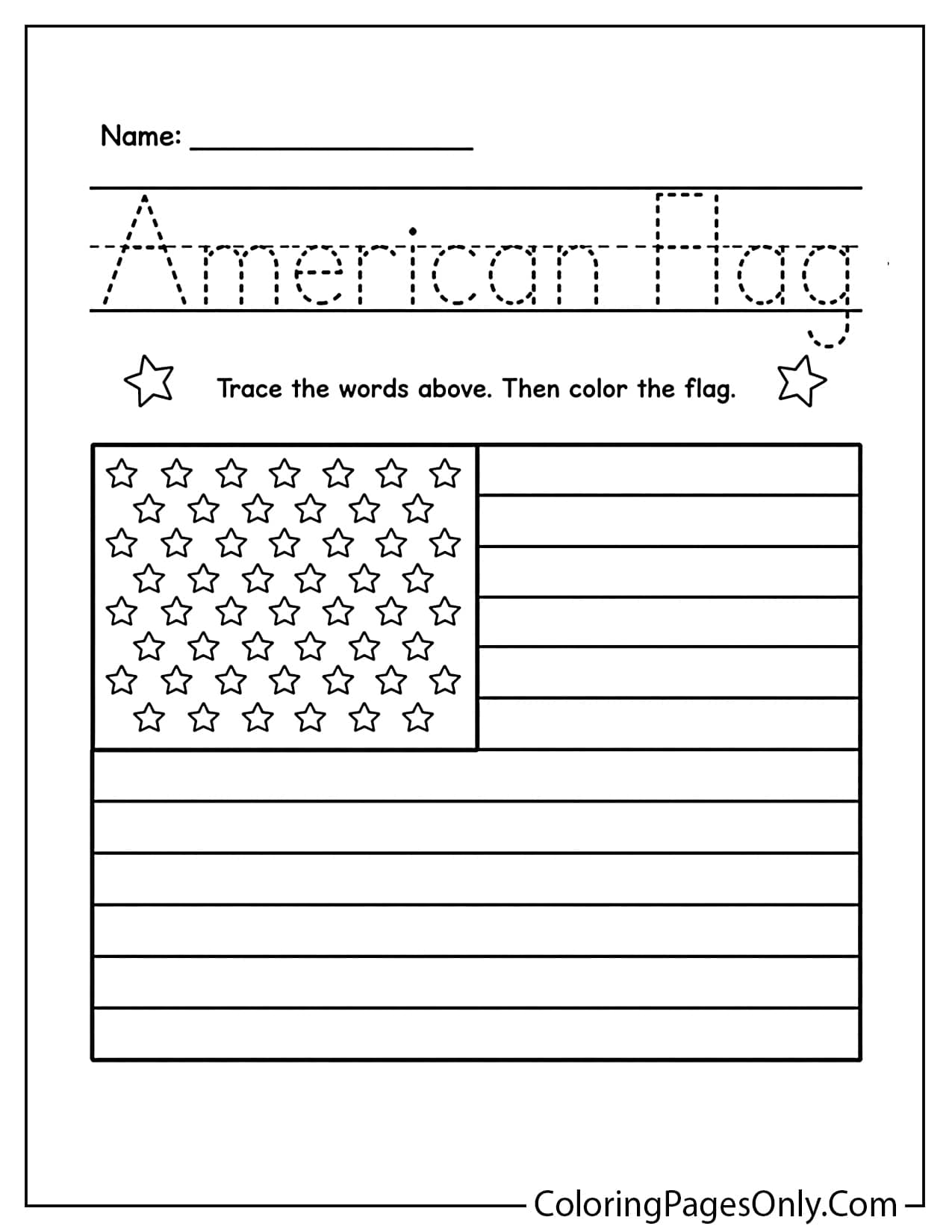
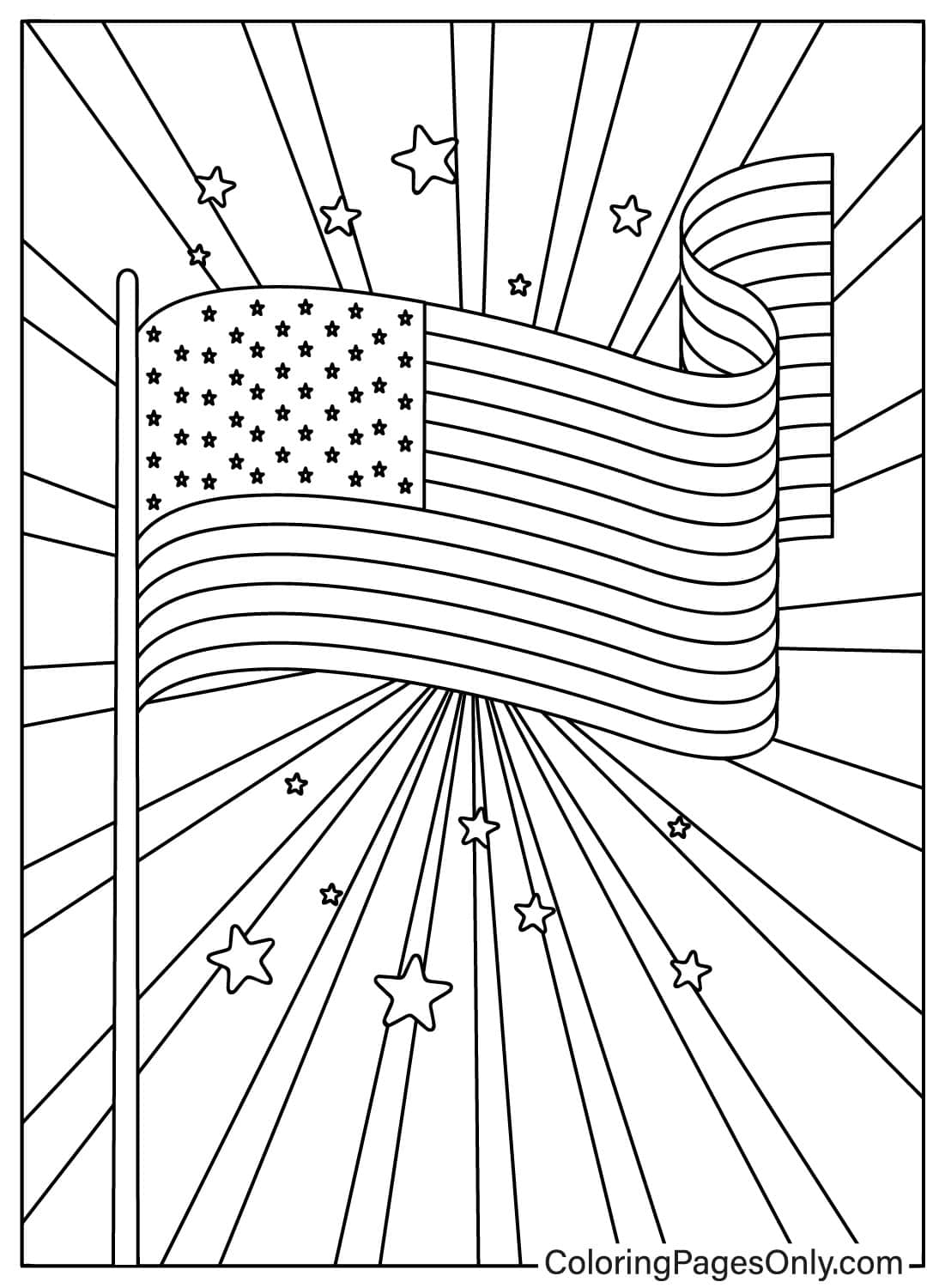
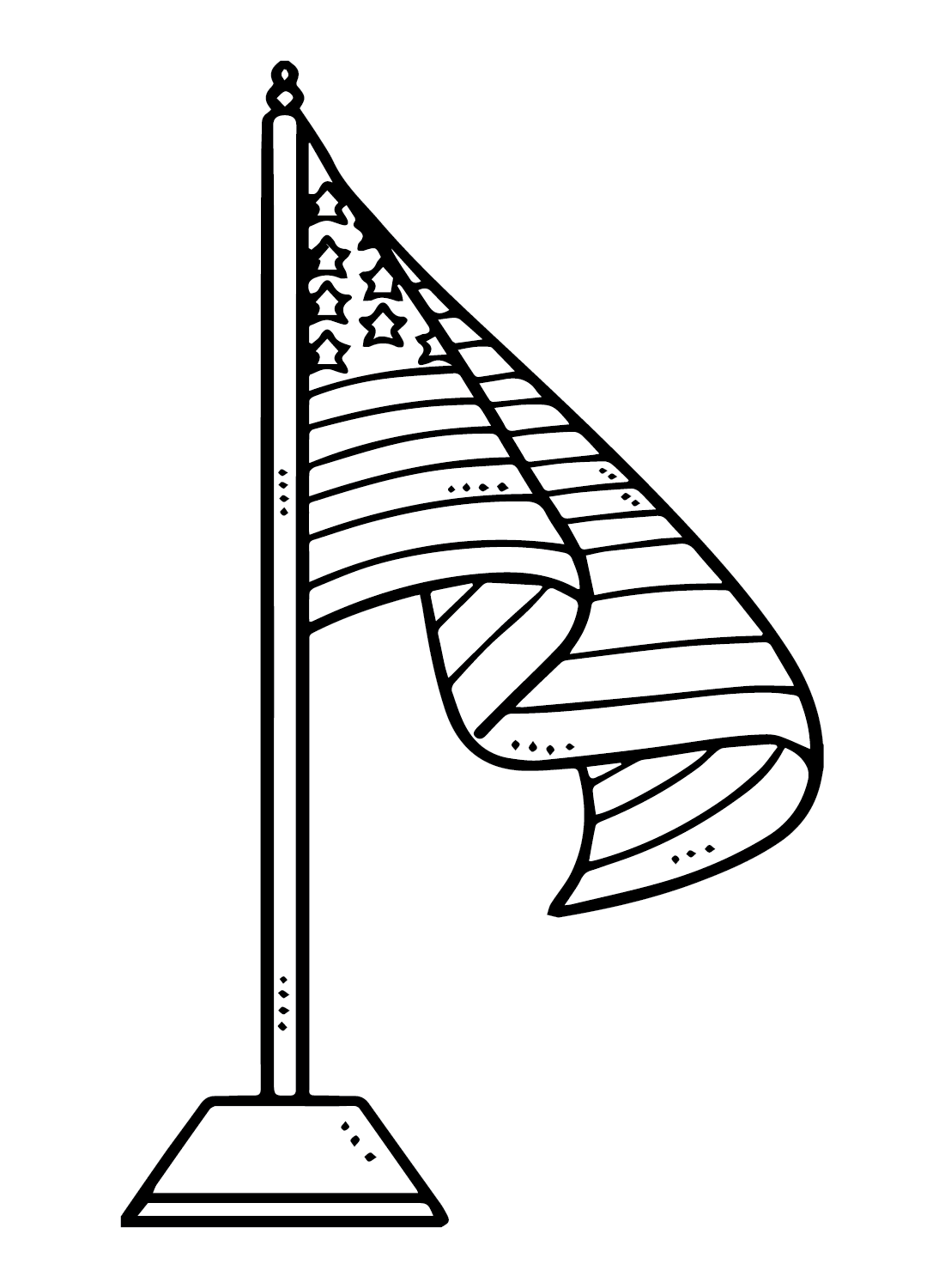
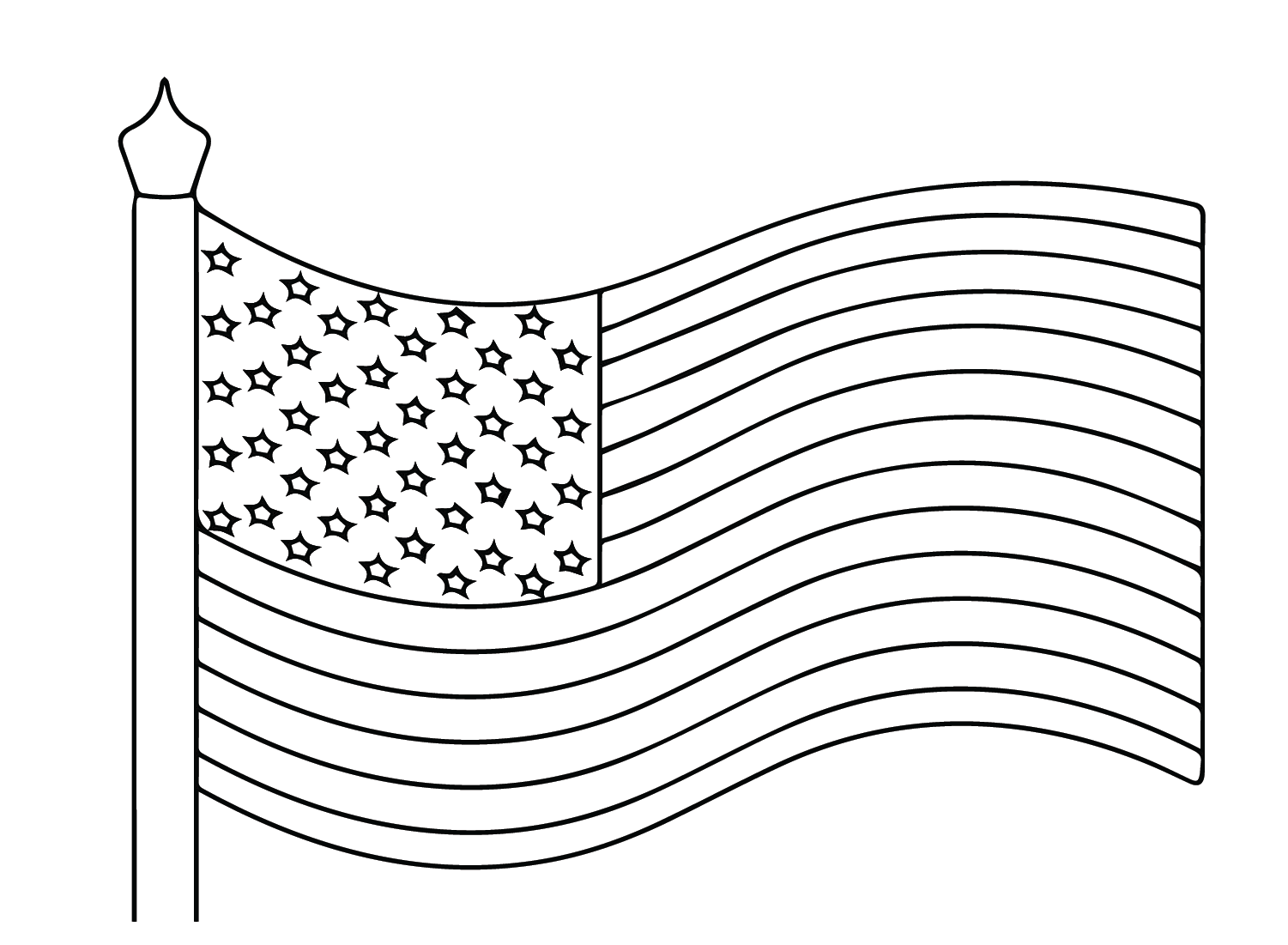
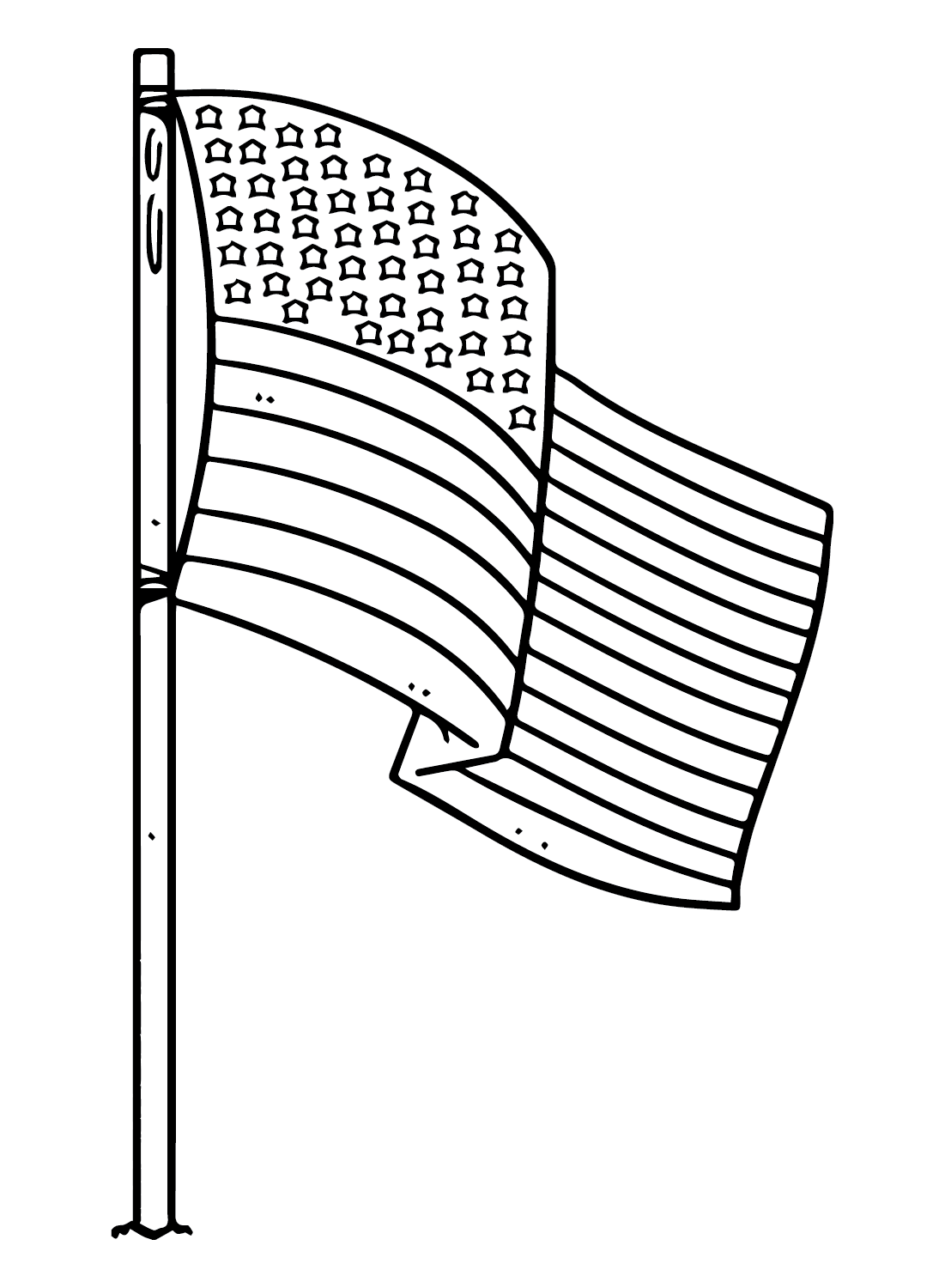
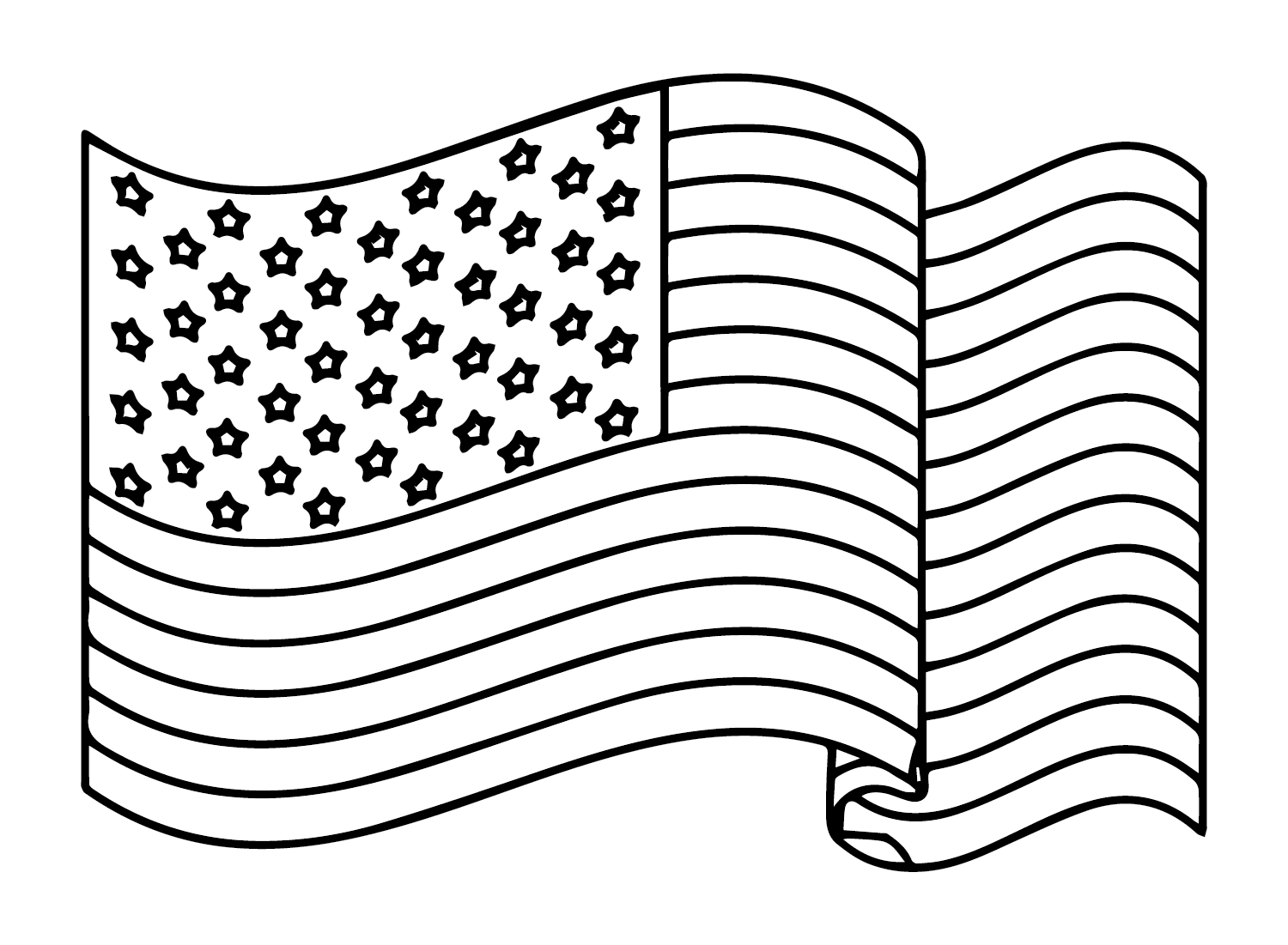
The largest single group – Traditional American Flag, Modern American Flag, American Flags, The American Flag, and the general printable and downloadable flag pages. These are the collection’s most technically demanding in one specific way: accuracy. The American flag has official colors, official proportions, and an official star arrangement. A flag page colored with bright crayon red and royal blue looks wrong to anyone familiar with the actual flag. The coloring challenge here is not complexity but fidelity.
Coloring standalone flag pages: The canton – the blue rectangle in the upper left – covers the top seven stripes and extends roughly 40% of the flag’s total length. It is deep navy, not sky blue or medium blue. Old Glory Red is a dark, slightly warm red, closer to a dried cherry than to a fire engine. The fifty stars sit in five rows of six alternating with four rows of five – nine rows total – producing the offset staggered grid. On simplified pages, a regular grid of dots reads acceptably. On detailed pages, the alternating offset is worth preserving.
Flag with the Bald Eagle
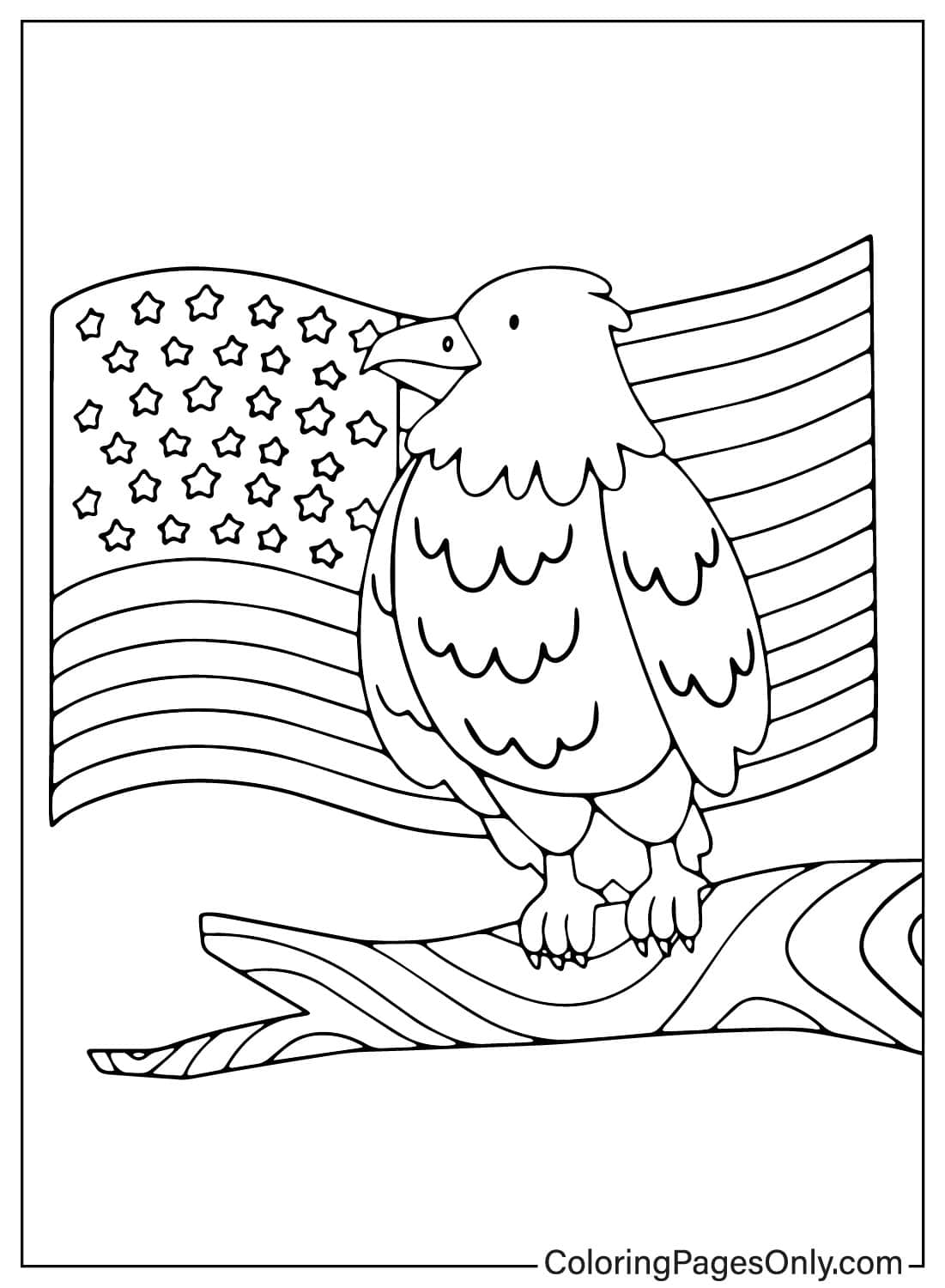
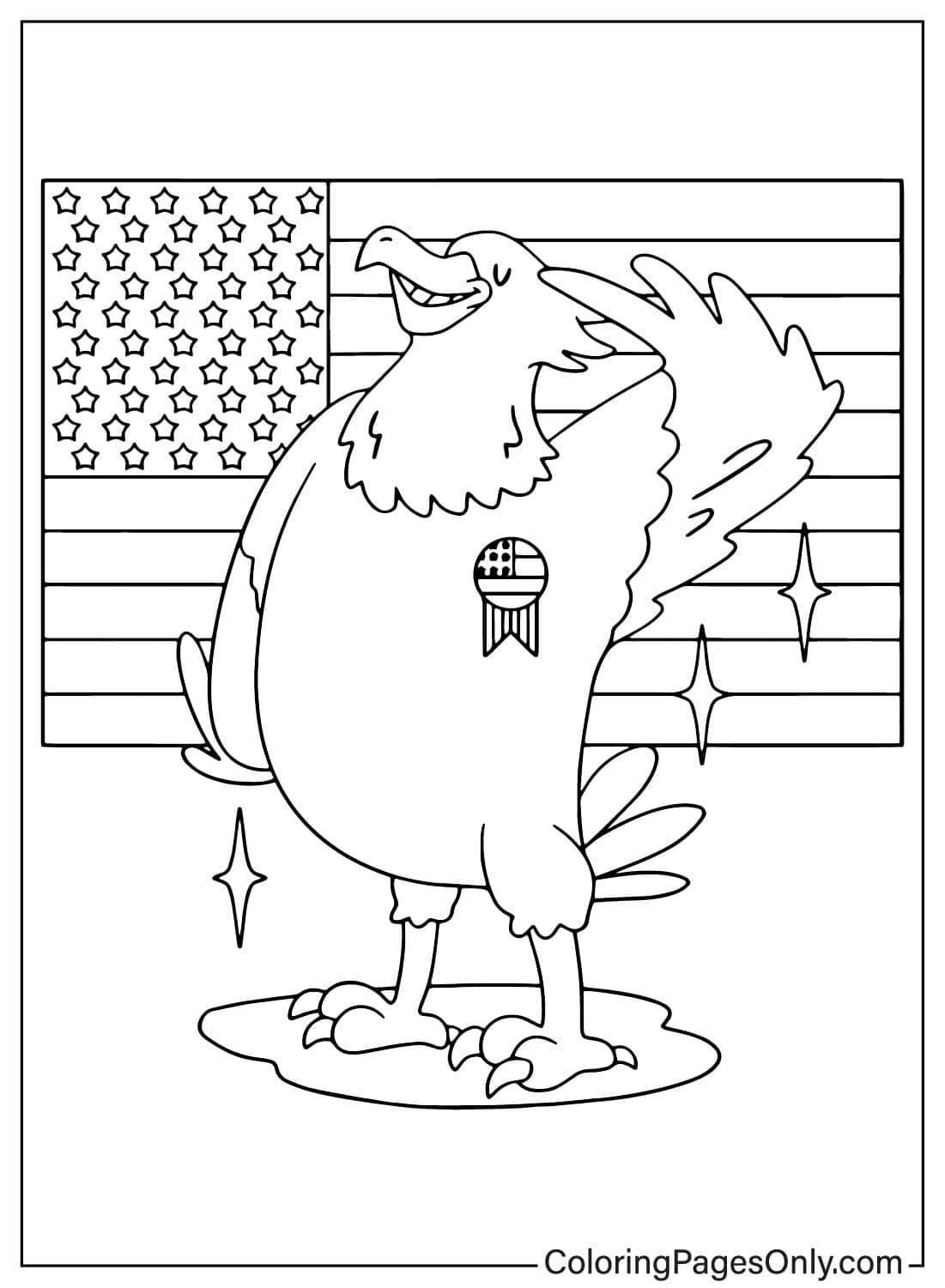
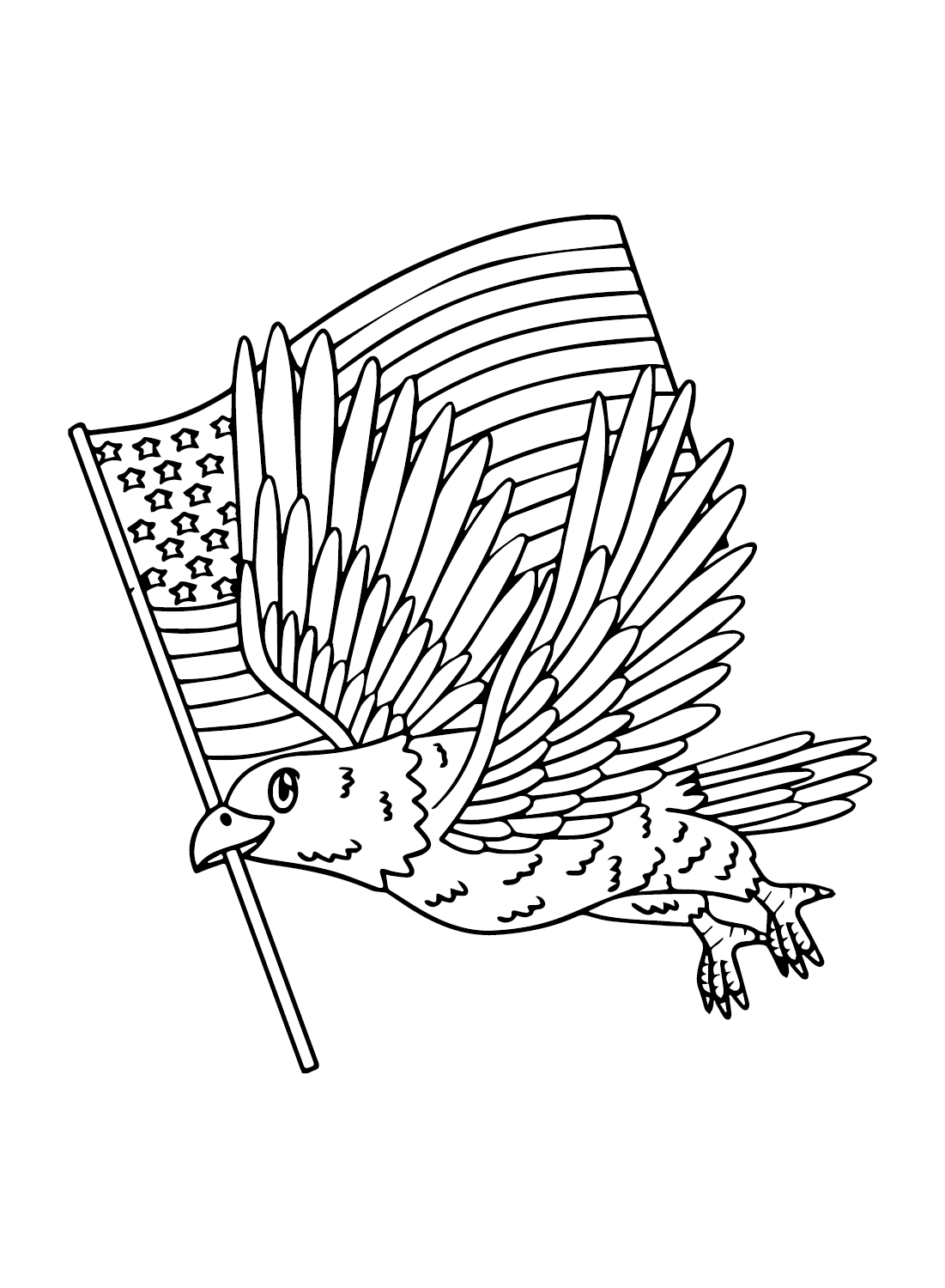
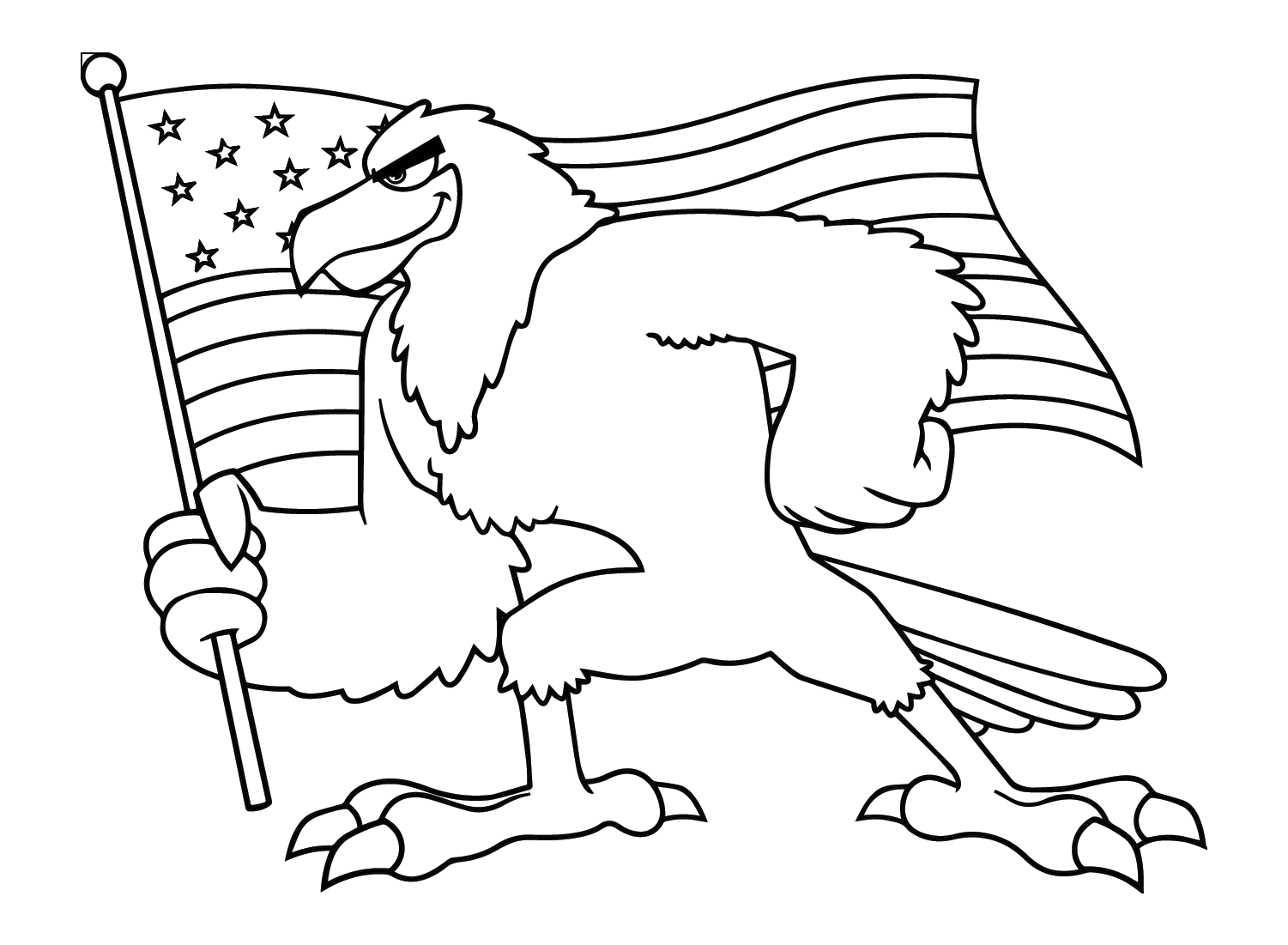
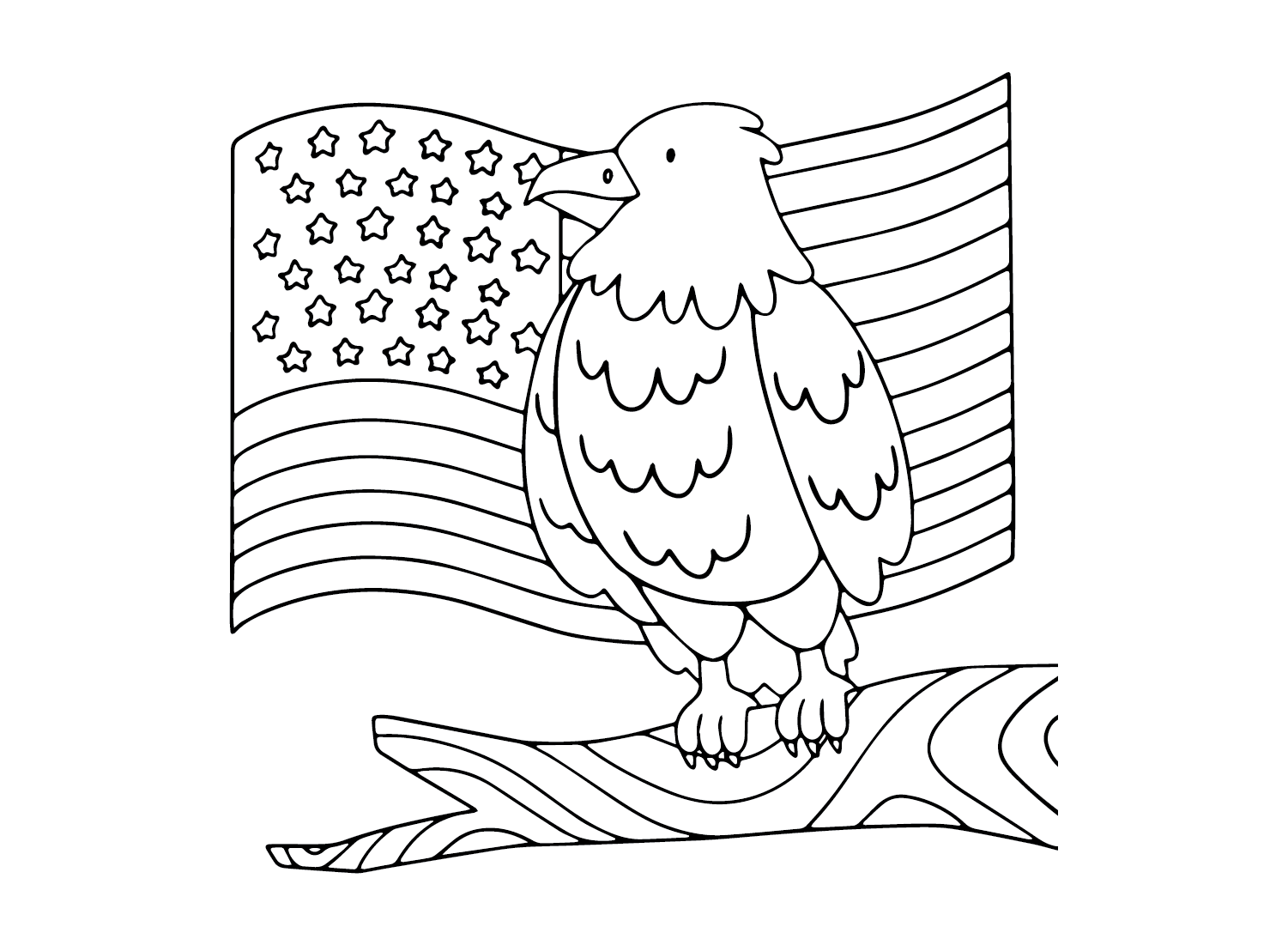
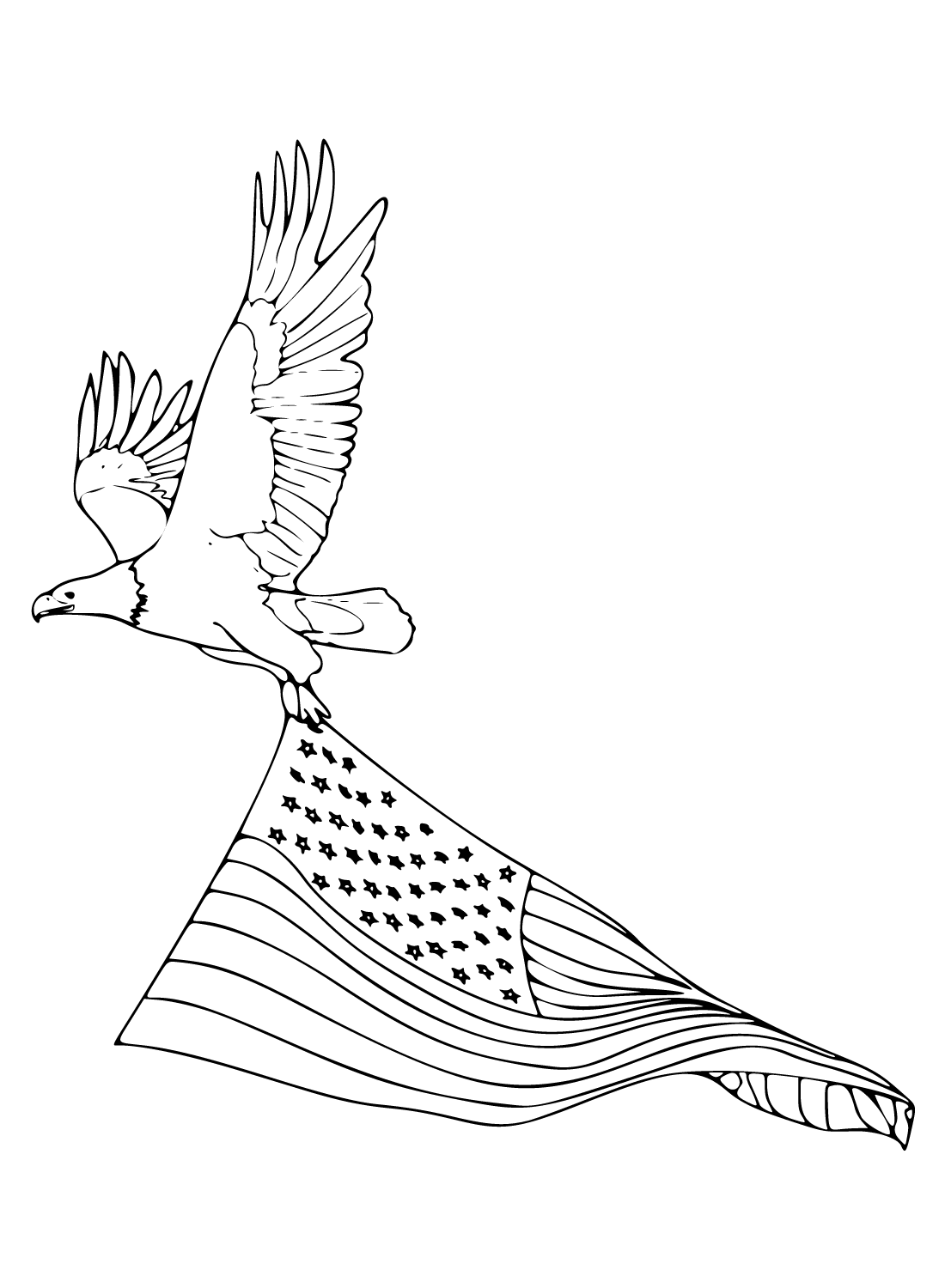
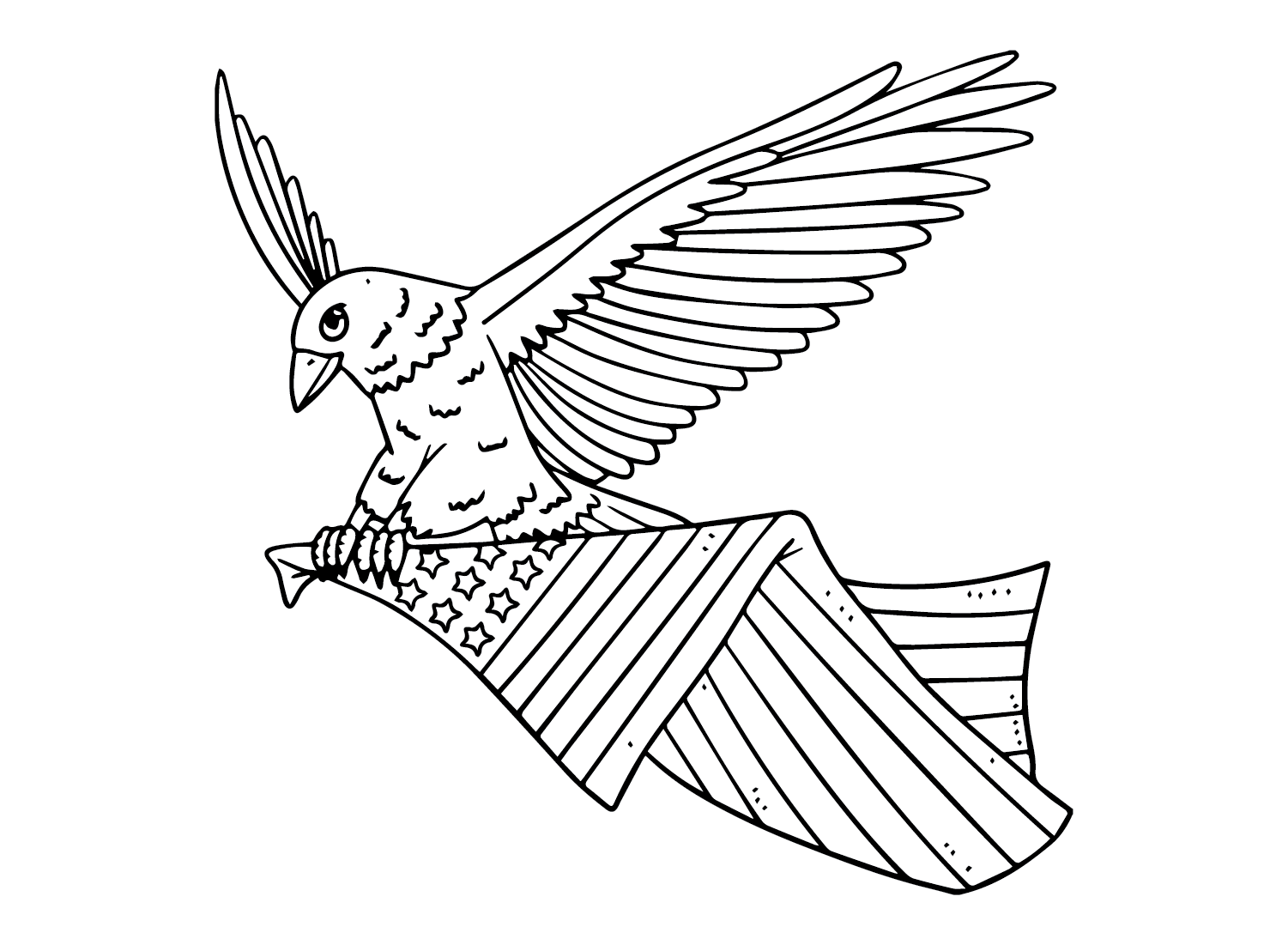
Two eagle pages appear in the collection: “American Flag With Eagle” and “American Flag And Eagle.” The Bald Eagle has appeared alongside the American flag in official contexts since the Great Seal of the United States was adopted on June 20, 1782. The seal shows the eagle with the national shield on its chest, thirteen arrows in one talon, and an olive branch in the other – a composition that has remained standardized for over 240 years.
Coloring the eagle pages: The Bald Eagle’s body is a very dark warm brown – not black, but close enough that a standard black crayon as a base layer with brown blended over it produces a credible result. The head and tail are white. Apply white with very light warm grey only in the deepest shadow areas, particularly at the boundary between the white head and dark brown neck. The yellow beak and yellow talons are the same warm yellow – keep them consistent across both zones.
Flag with George Washington
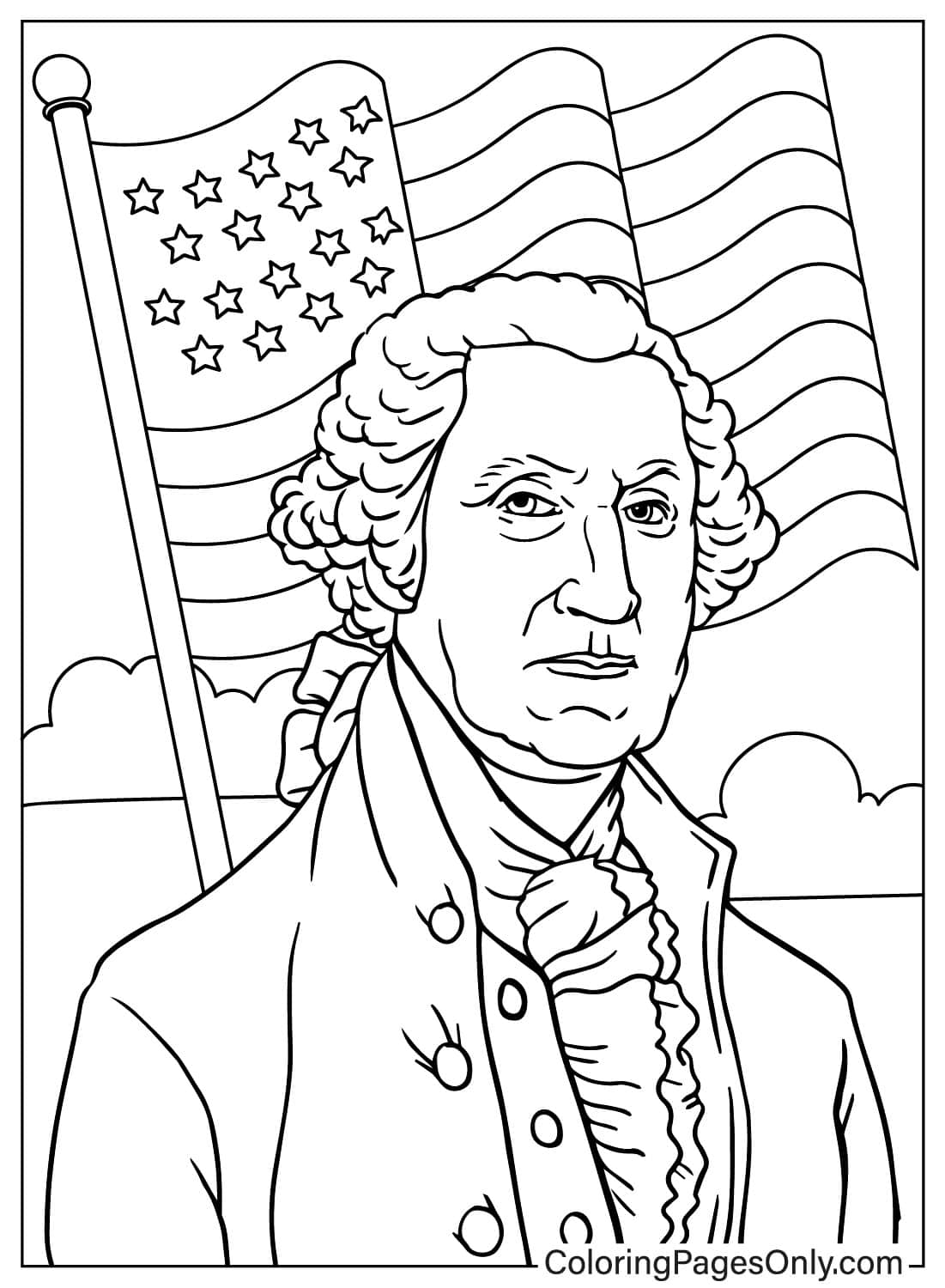
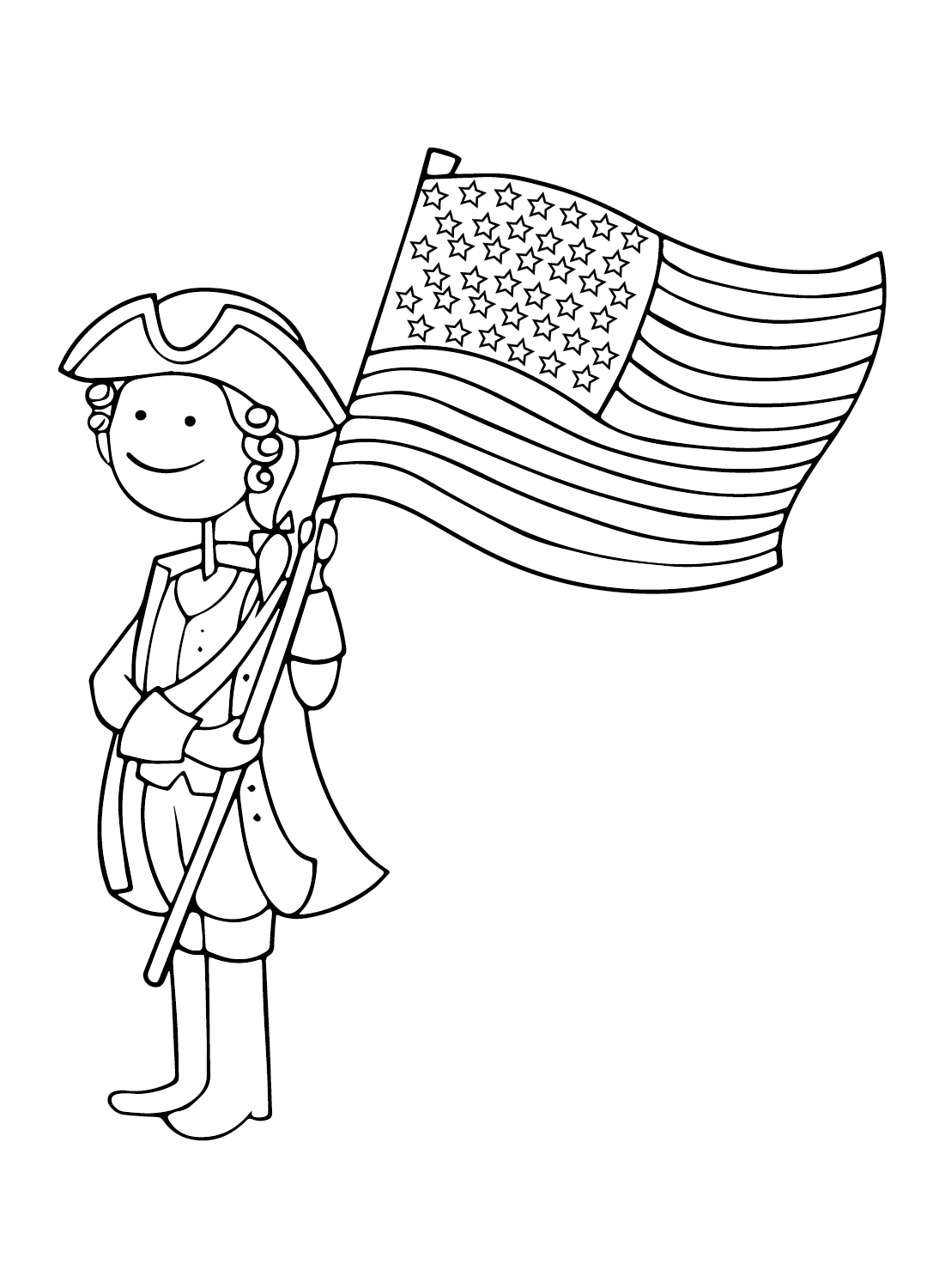
“American Flag and George Washington” is one of the collection’s most historically grounded pages. George Washington was commander-in-chief of the Continental Army when the first Flag Resolution was passed, and his image has appeared alongside the American flag in patriotic art since the nineteenth century. Gilbert Stuart’s 1796 portrait, known as the Lansdowne portrait, established the conventions of Washington’s visual representation that most illustrations draw from: white powdered hair, dark coat, formal pose.
Coloring George Washington: Washington’s powdered hair reads as warm off-white – not bleached white, not cream yellow, but the slightly warm off-white of an eighteenth-century powdered wig. His skin tone is a warm, light peach-tan. The palette overall should be kept formal and dark; this is not a page for bright colors. The coat and uniform specifics – buff facings, Continental Army colors – are covered in the How to Color section below.
Flag with the Statue of Liberty
“American Flag With Liberties” pairs the flag with the Statue of Liberty – two of the most globally recognized American symbols. The Statue was a gift from France, designed by sculptor Frédéric Auguste Bartholdi with its internal iron framework engineered by Gustave Eiffel. It was dedicated on October 28, 1886, on Bedloe’s Island (renamed Liberty Island in 1956) in New York Harbor. The copper surface has oxidized to its current blue-green verdigris over nearly 140 years.
Coloring the Statue of Liberty: The Statue reads as a cool, muted blue-green – verdigris, the natural patina of oxidized copper. The tone sits between teal and grey, considerably quieter than any standard crayon green. The torch flame and crown were the original copper-gold in the Statue’s earliest photographs; by the early twentieth century, the entire surface had oxidized to a uniform verdigris. The technique for achieving this specific tone is covered in the How to Color section below.
Flag above the White House
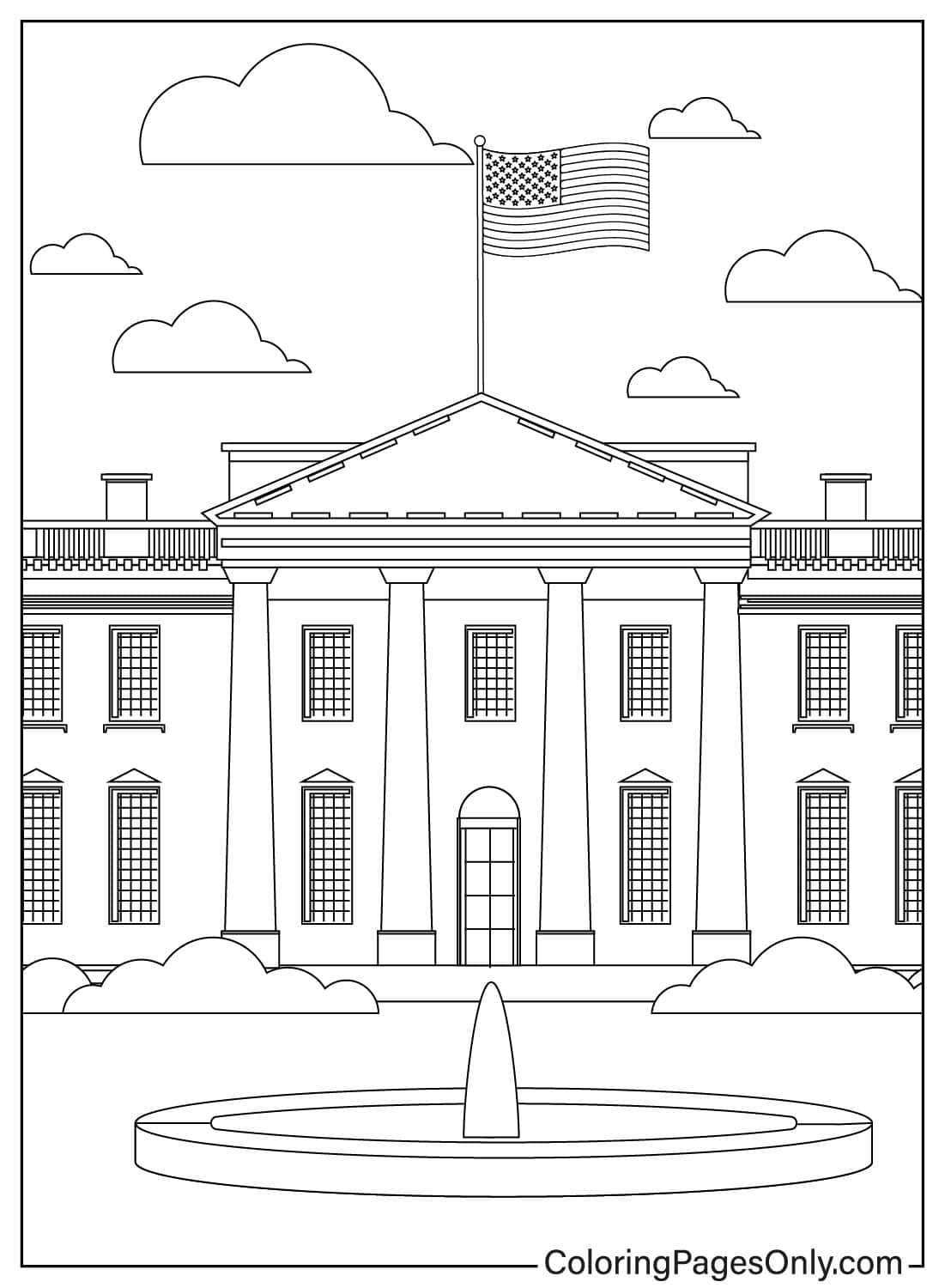
“American Flag On The Roof Of The White House” places the flag in its most prominent civic context. The White House at 1600 Pennsylvania Avenue NW, Washington, DC, has been the official residence and workplace of every United States president since John Adams in 1800. The American flag flies from the roof’s flagpole whenever a president is in residence; the flag is lowered to half-staff at the president’s direction or by statutory order.
Coloring the White House: The White House exterior has been painted white since 1798, when the original stone walls were first coated with a lime-based whitewash. The building’s characteristic brilliant white comes from multiple coats of specially formulated exterior white paint applied over the original sandstone. On coloring pages, very light warm grey in shadow areas – window recesses, column shadows, roofline – against a dominant white makes the architecture read correctly. The South Portico’s semicircular columns are the building’s most recognizable feature and deserve crisp rendering.
Flag in Holiday Scenes
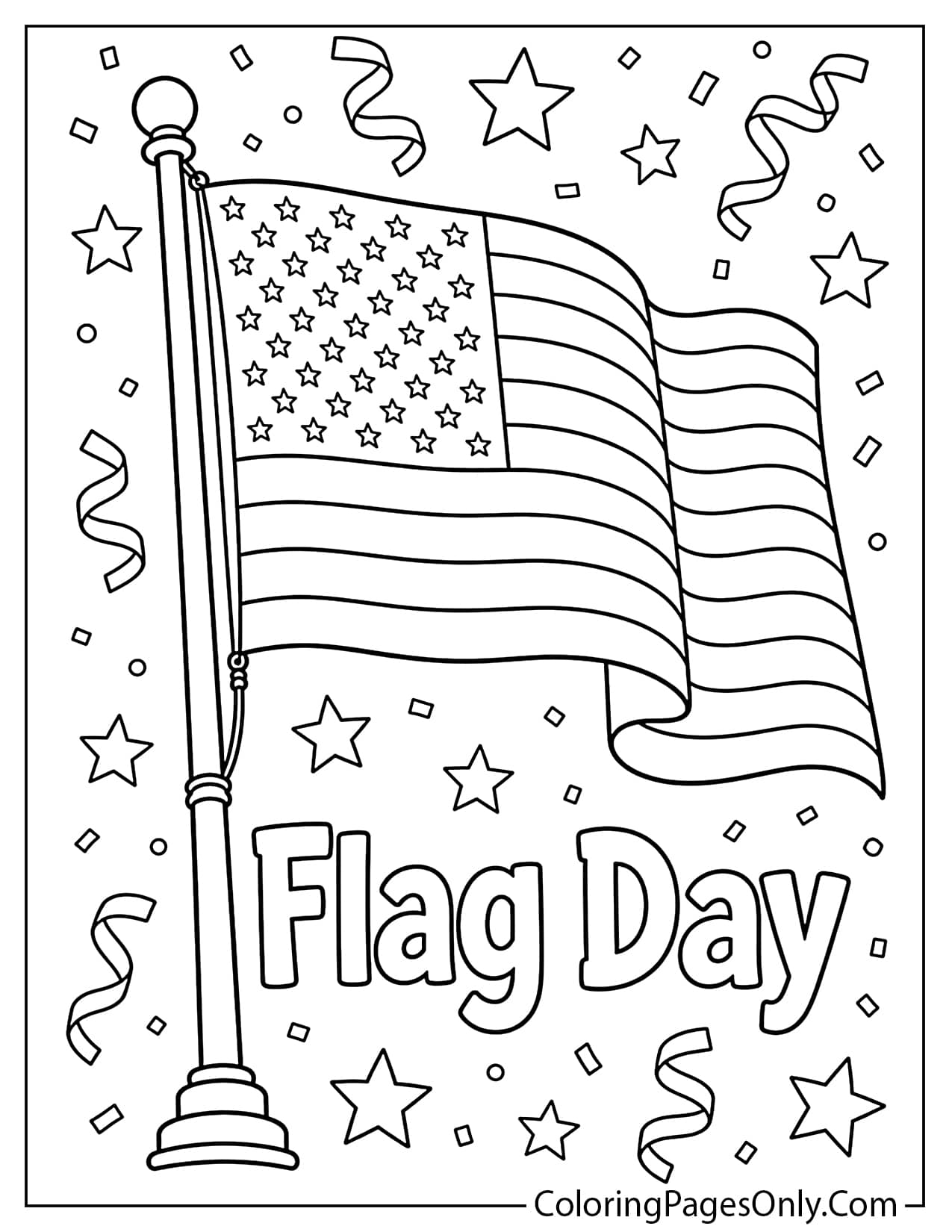
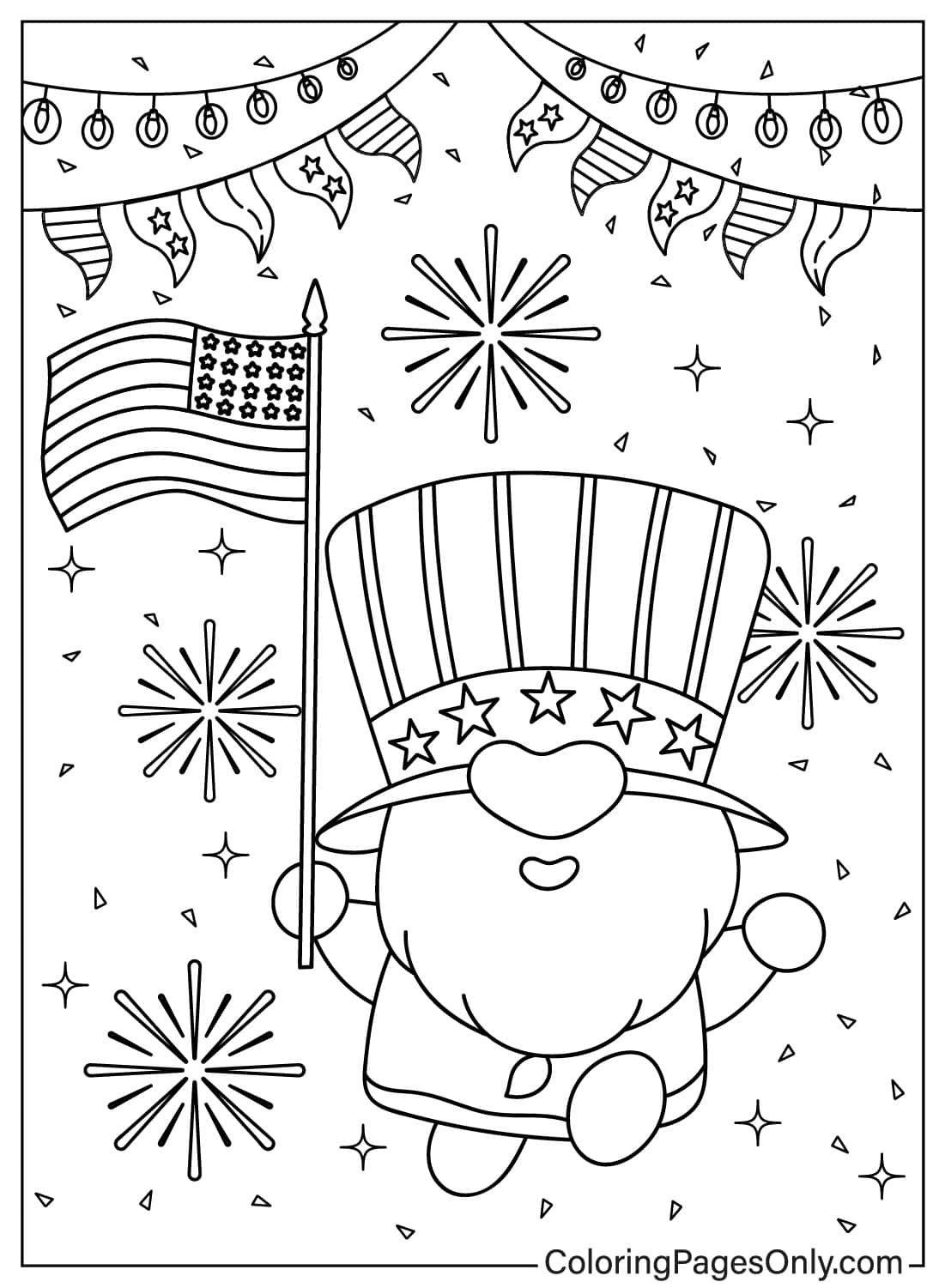
“American Flag On Holidays” and “American Flag On Victory Days” place the flag in celebratory settings – the flag as a participant in national observances rather than as a standalone subject. The flag appears at Fourth of July celebrations, Memorial Day services, Veterans Day parades, and Flag Day on June 14. These pages have more complex backgrounds and scene elements than the standalone flag pages.
Coloring celebration scenes: The challenge in multi-element scenes is maintaining the flag’s correct deep colors while keeping the surrounding festive elements bright. Establish the flag’s navy and dark red first, at full saturation. Then color the surrounding fireworks, balloons, and decorative elements in brighter, more varied tones. The flag reads as an anchor – the deep, formal colors against which the celebration elements play.
Flag with Characters and Kids
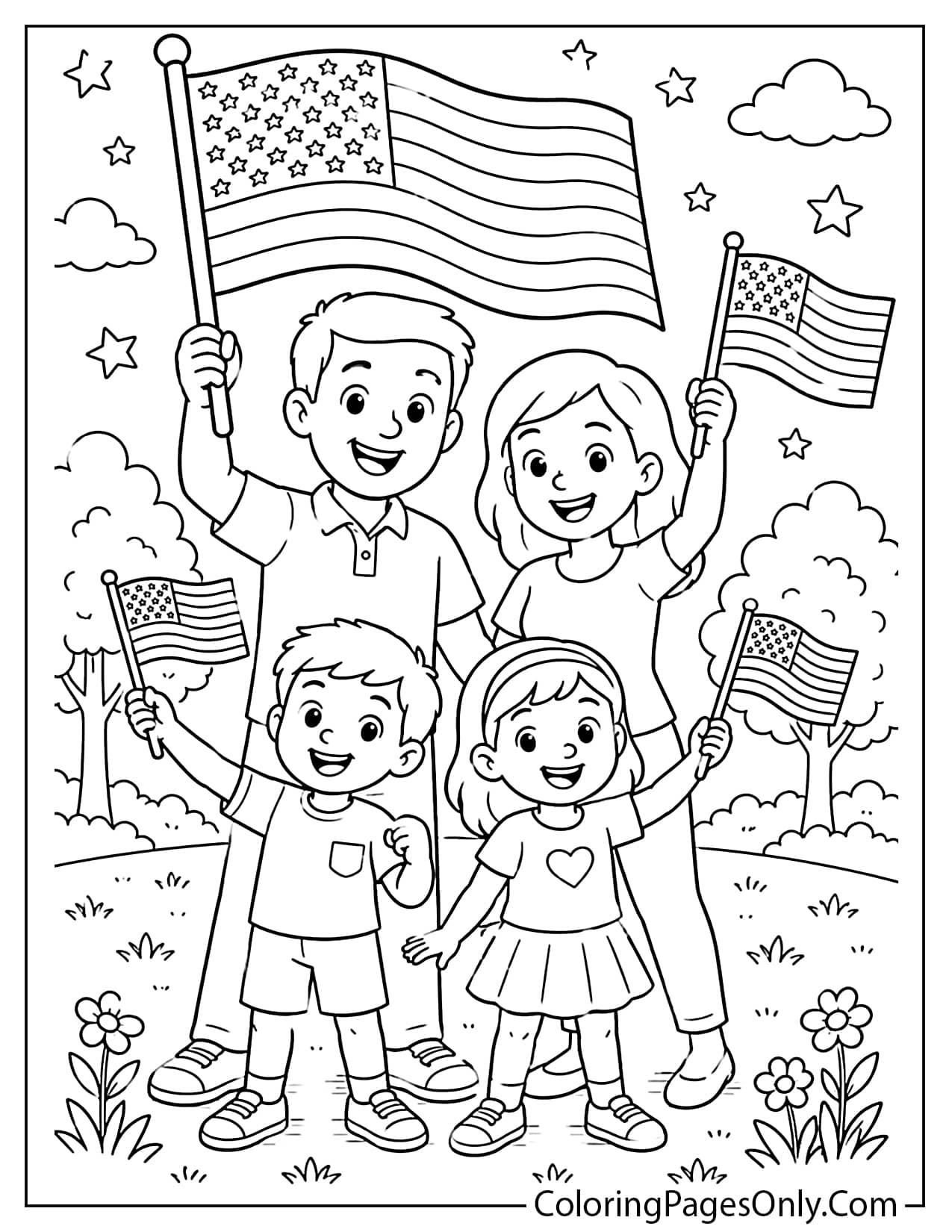
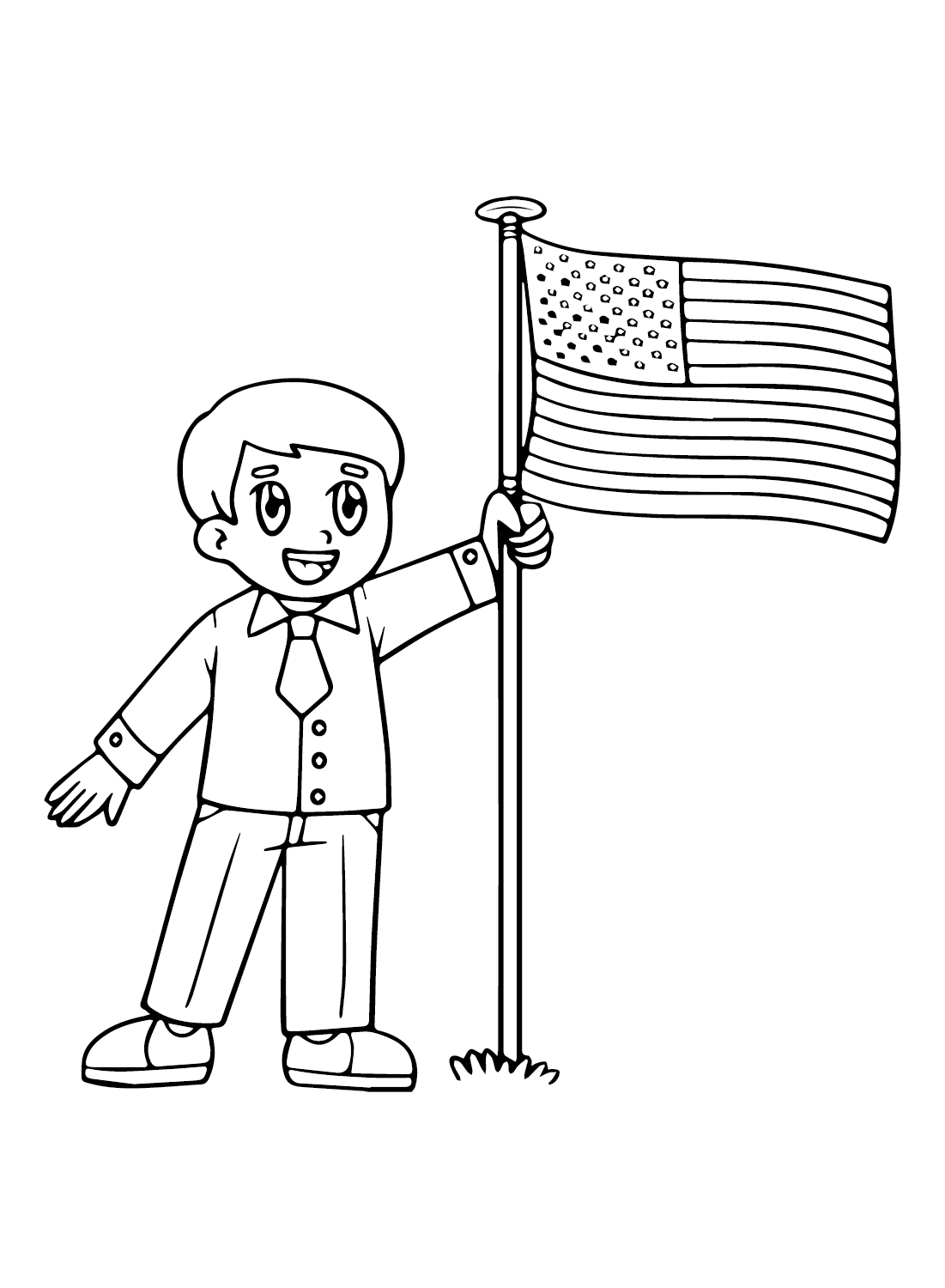
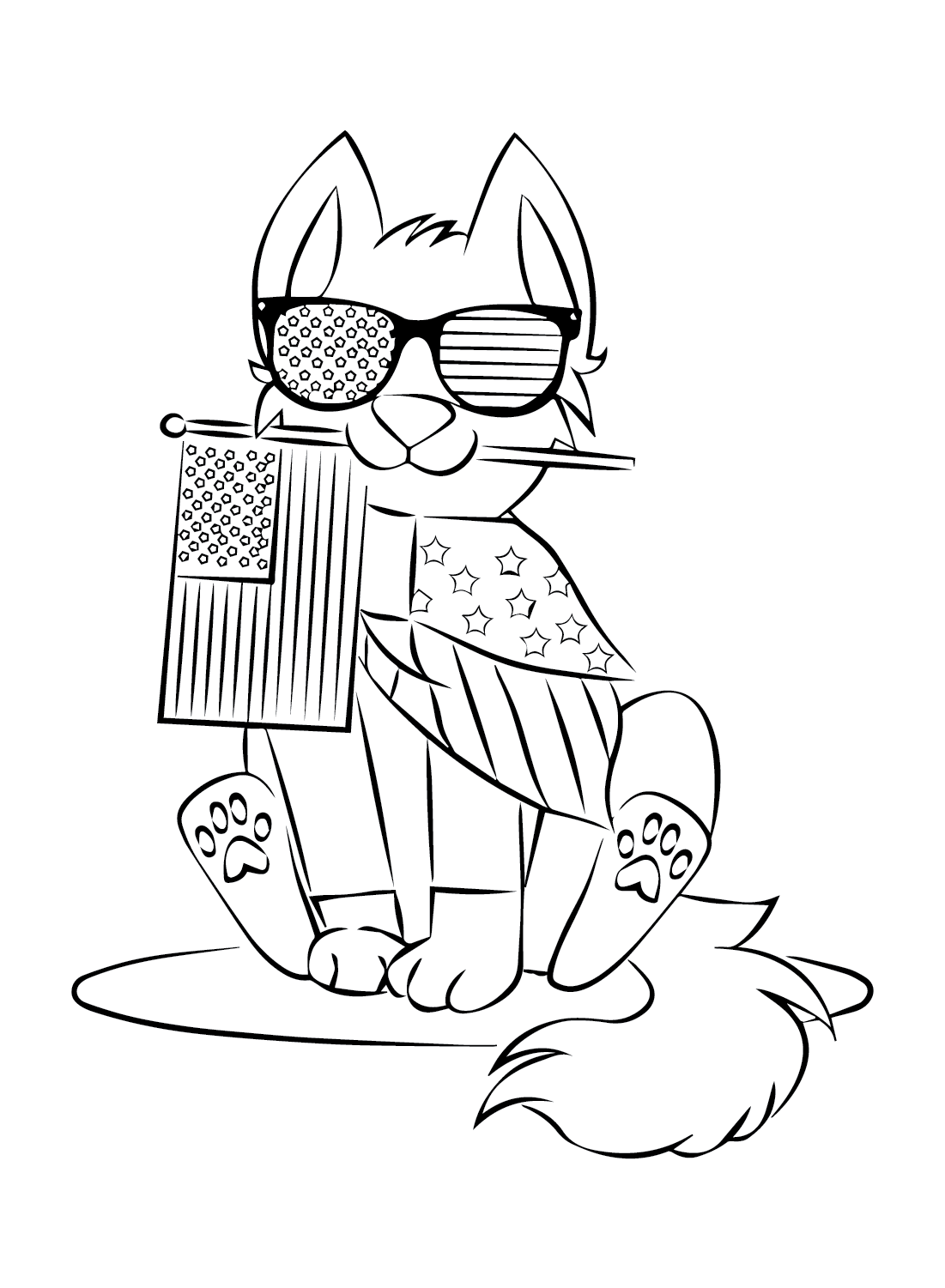
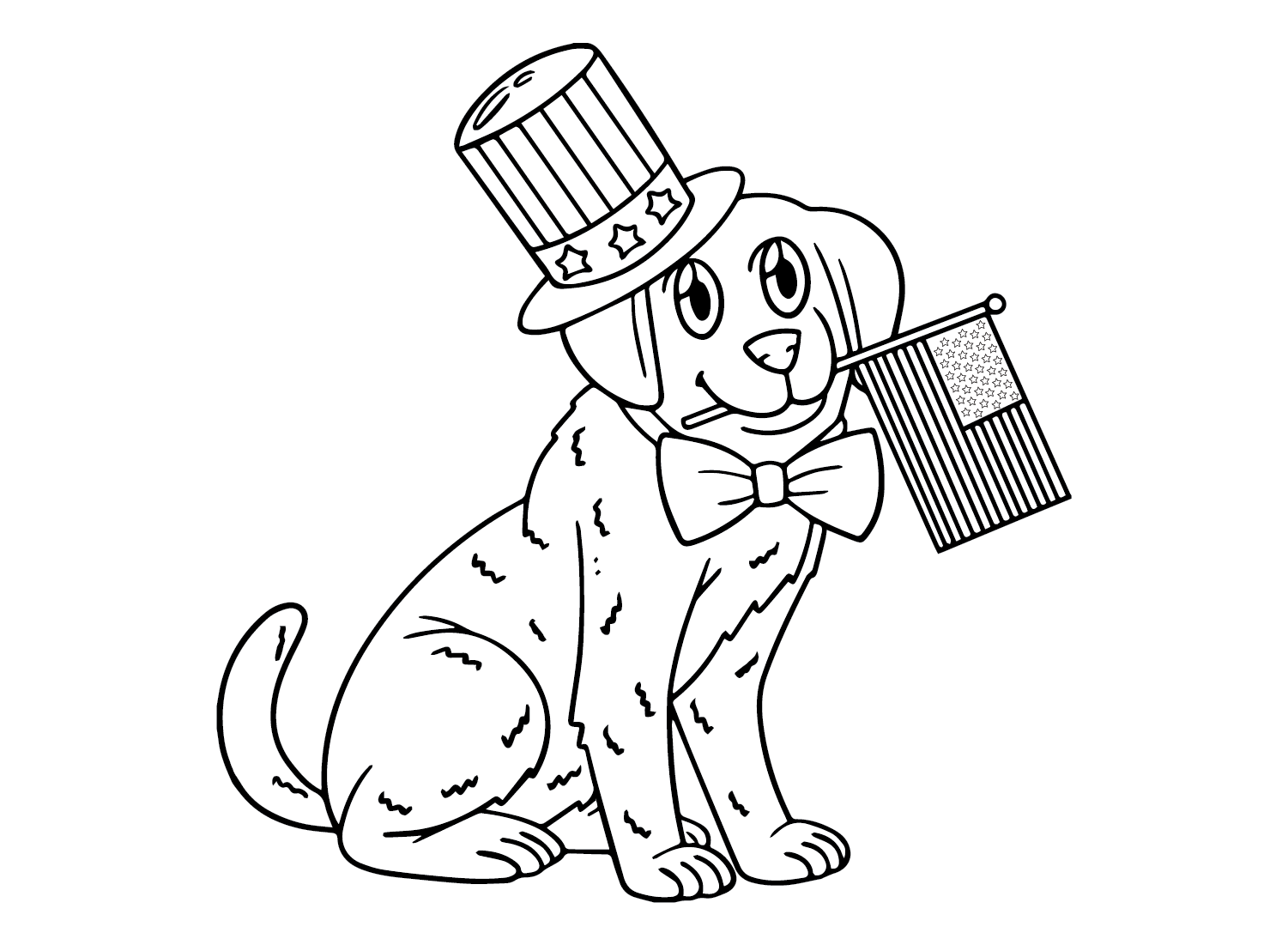
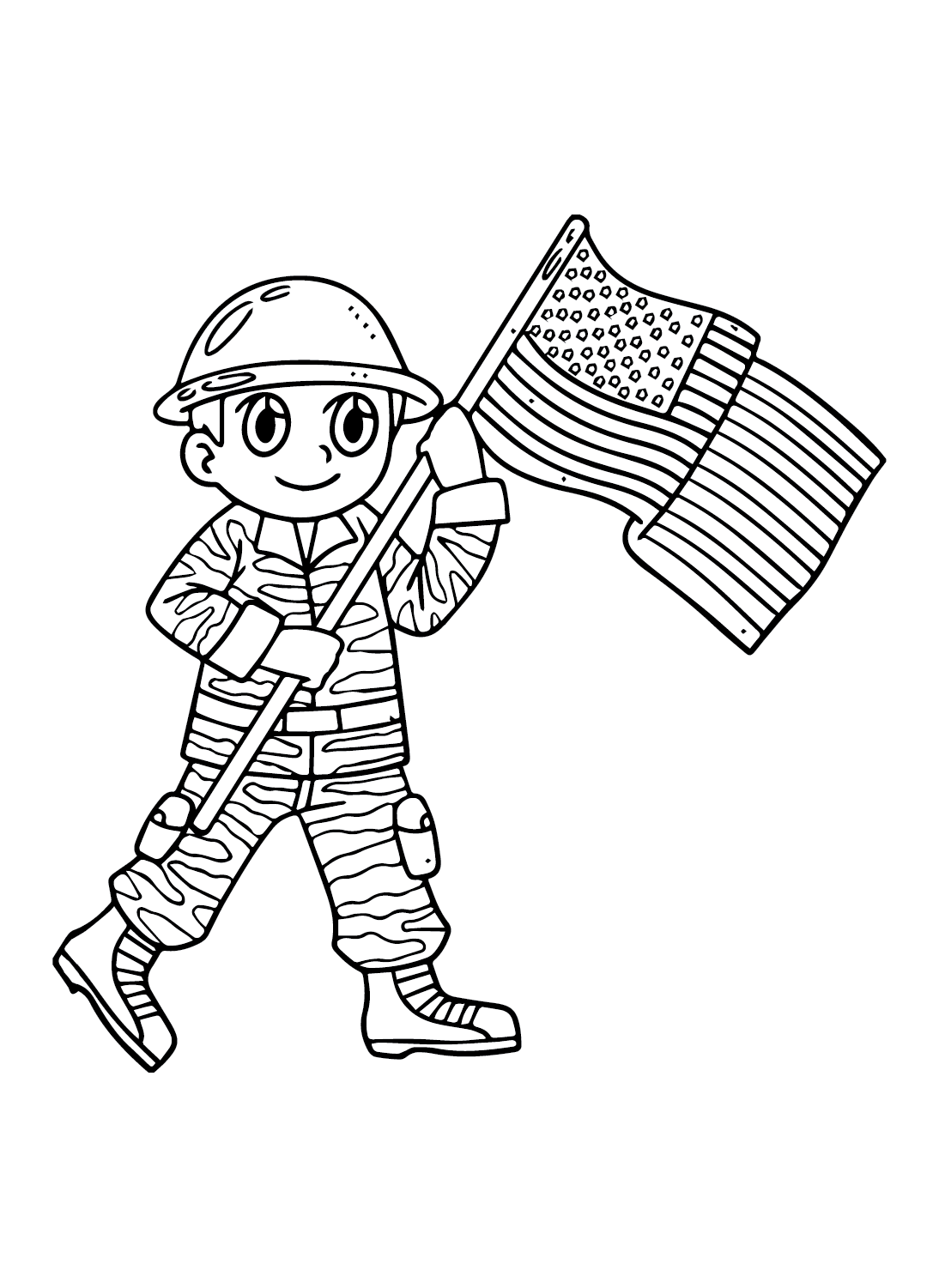
“American Flag And Boys,” “The Boy And American Flag,” “American Flag And Cat,” “American Flag Cartoon,” and “Cartoon American Flag” are the collection’s most accessible pages – simpler line density, larger color zones, cartoon illustration styles that suit younger colorists. These pages carry the flag’s colors without requiring the precision of the standalone designs.
Coloring character pages with flags: On these pages, the flag often appears smaller – held in a character’s hand, shown in the background, or simplified to suggest the design. Apply the flag’s colors consistently, even when the design is abbreviated: deep navy canton, alternating red and white stripes. The character’s clothing and skin tone are the primary coloring decisions; keep the flag details accurate within whatever space the page provides.
What These Pages Do
The American flag is one of the most precisely documented design objects in United States law. The Flag Code, codified at 36 U.S.C. §§ 301–313 and first enacted by Congress on June 22, 1942, specifies how the flag is to be displayed, folded, and retired. Presidential Executive Orders govern its exact proportions: the 10:19 width-to-length ratio, the canton’s dimensions, and the star arrangement. Coloring the flag accurately – finding the right navy, the right deep red, the right spatial relationship between the stripes and the canton – is an engagement with a design system that has been legally standardized for over eighty years.
The flag’s twenty-seven versions tell American history as a design sequence. The 1777 original had thirteen stars in an arrangement that varied between manufacturers. There was no standardized star formation until 1818, when Congress legislated the thirteen-stripe rule and directed that a new star be added for each state on the following July 4. The 1818 flag had twenty stars; by 1960, there were fifty. Coloring pages showing the historical figure pages – George Washington, the Continental soldier – engage with an earlier iteration of that design history, before the flag reached its current form.
Working within flag pages builds the kind of fine motor precision that carries into writing and detailed craft work. The American Academy of Pediatrics documents fine motor development – controlled directionality, pressure consistency, staying within defined boundaries – as a measurable milestone across early and middle childhood. The alternating stripe sequence of flag pages is a particularly structured exercise: horizontal strokes in a consistent direction, bounded above and below, across the full width of the page. The canton’s star field, on detailed pages, requires a different kind of attention – small, consistent marks in a defined area.
Coloring familiar images in a structured context measurably reduces anxiety. The 2005 Art Therapy Journal study on structured coloring found that working within defined forms produced a statistically significant reduction in anxiety markers compared to open-ended drawing activities. The American flag is among the most recognized visual symbols in the world; for American children especially, coloring it engages the calming benefits of structured work within a form they already know.
How to Color These Pages Well
Learn the flag’s actual palette before reaching for red and blue. Standard crayon red is too orange-bright. Standard crayon blue is too light and too vivid. The American flag’s designated colors – Old Glory Red at Pantone 193 C and Old Glory Blue at Pantone 281 C – are both considerably deeper and more muted than their generic equivalents. Old Glory Red sits closer to the color of dark brick than to a fire truck. Old Glory Blue reads almost as midnight blue in full saturation. Searching “Pantone 193 C” and “Pantone 281 C” online takes thirty seconds and produces a color reference that permanently improves flag coloring accuracy.
Work the stripes top to bottom with a system, not freehand. The thirteen stripes run in a fixed sequence: the top stripe is red, the bottom stripe is red, and the pattern alternates between them. Mark the top and bottom stripes red first. Fill in the alternating pattern downward. The most common coloring error on flag pages – two red stripes or two white stripes adjacent – comes from losing track mid-page without a system in place. A light pencil mark on each stripe before applying color takes ten seconds and eliminates the error.
The canton occupies a specific portion of the flag. On accurately proportioned flag pages, the blue canton covers the upper-left corner across the top seven stripes – roughly 40% of the flag’s total length, as specified in Executive Order 10834. On pages where the canton appears too large or too small, this is the artist’s simplification; color it as drawn. On accurate pages, the canton’s lower edge should align with the boundary between the seventh and eighth stripes from the top.
George Washington’s uniform is dark, not bright. Pages showing Washington alongside the flag often depict him in a dark military coat. The Continental Army’s commander-in-chief wore a blue coat with buff facings – the buff being a pale yellow-cream on the collar and cuffs. The coat itself was a dark blue-grey, not the bright royal blue that military coloring pages sometimes default to. A warm dark blue, almost navy, with cream-colored collar and cuff details, reads correctly.
Cartoon flag pages benefit from flat, saturated color – not blended gradients. The cartoon and character pages in this collection use bold outline styles that read best with solid color fills rather than shading or blending. On “American Flag Cartoon” and similar pages, apply the flag’s colors in flat, even passes. The visual interest comes from the design and the character, not from tonal variation within the color zones. This is also the most accessible technique for young colorists – steady pressure, no need to vary the stroke.
The Statue of Liberty pages need patience with the verdigris. The temptation on any green-adjacent coloring decision is to reach for bright emerald or lime. The Statue’s actual patina is quieter than either: a muted, slightly grey blue-green. If only one pencil or marker is available, a medium teal applied lightly comes closer than bright green. If two are available, teal plus a very light grey, applied in alternating light strokes, produces the aged copper quality that makes the Statue visually distinctive.
Five Creative Craft Ideas
Flag Proportions Activity
Print any standalone American flag page from the collection and color it in Old Glory Red, white, and deep navy. Before coloring, use a ruler to measure the page’s flag and calculate the ratio of its width to its length. The official ratio is 10:19 – width 10 units, length 19 units. Write both measurements and the calculated ratio on the back of the completed page.
This turns a coloring activity into a practical introduction to ratios for children ages 8 and up. The flag is one of the most tangible ways to encounter proportional reasoning outside a mathematics textbook. Younger children can participate in the coloring while an adult handles the measurement and calculation.
Flag Color Accuracy Challenge
Print any three standalone flag pages from the collection – Traditional American Flag, Modern American Flag, and one more of your choice. Color the first page using standard crayon red and royal blue. Color the second using colors matched as closely as possible to Old Glory Red (dark, brick-like red) and Old Glory Blue (deep navy). Color the third page in any color combination the child prefers as a creative interpretation.
Line all three side by side and compare. Which reads most accurately as the American flag? Which reads as a creative version? Write the coloring tools used on the back of each page as a reference.
The comparison makes a design concept concrete: the American flag has officially designated colors, and the difference between “red” as a general category and Old Glory Red as a specific shade is visible the moment both are placed next to each other. For classroom use, the three-page set opens a discussion about design standards and why they exist. Best suited for ages 7 and up; younger children can participate in the coloring while an adult guides the comparison conversation.
Patriotic Symbols Triptych
Print three pages: “American Flag With Eagle,” “American Flag With Liberties,” and “American Flag On The Roof Of The White House.” Color all three in their correct palettes – the eagle in dark warm brown and white, the Statue of Liberty in verdigris blue-green, the White House in clean white with grey shadows.
Mount all three on a single backing sheet in a row with equal spacing. Below each image, write a single fact: the Great Seal adoption date (June 20, 1782) under the eagle, the Statue’s dedication date (October 28, 1886) under Liberty, and the year the White House became the presidential residence (1800) under the building. The finished triptych is three national symbols with three dates – a compact civic reference that works as a wall display.
Stars Count Worksheet
Print any detailed American flag page that shows the full star field in the canton. Color the flag. Then count the stars row by row: the top row has six stars, the next has five, then six, then five, continuing through nine rows. Write the count for each row along the left margin as the children count.
The total should reach fifty. If it does, the page’s star arrangement is accurate. If it does not, the page uses a simplified arrangement, which is worth noting as the difference between a simplified illustration and an accurate representation. This activity teaches children both the star count and the organized grid structure that makes fifty stars fit in the canton. Suitable for ages 6 and up; younger children can count along with an adult.
Historical Figure Portrait Series
Print “American Flag And George Washington” and “American Flag And Combatant” (the Continental soldier). Color both in historically accurate palettes: Washington in a dark blue-grey coat with cream collar and cuffs, the soldier in the Continental Army’s buff and blue. Research one fact about each figure and write it on the back of each completed page.
Mount both pages on a backing sheet with a handwritten header: “Americans Who Carried the Flag.” The finished display pairs the flag with the people who fought under it during the nation’s founding period. This connection contextualizes the flag as a living document of national history rather than a static symbol. Best suited for ages 8 and up as a combined coloring and research activity.
Frequently Asked Questions
What does the American flag look like, and what are its official specifications? The American flag consists of thirteen horizontal stripes alternating red and white – seven red and six white – with a blue canton in the upper left corner containing fifty white stars. The official proportions, established by Executive Order 10834 on August 21, 1959, set the flag’s width-to-length ratio at 10:19. The canton spans the top seven stripes in height – approximately 54% of the flag’s hoist width – and extends horizontally to 76% of the flag’s hoist width along the fly. The fifty stars are arranged in nine alternating rows – five rows of six stars and four rows of five – offset to produce a staggered grid.
How many times has the American flag’s design changed? The flag has had twenty-seven official versions since the Continental Congress adopted the first design on June 14, 1777. The original had thirteen stars in an unspecified arrangement – no single formation was standardized at first. The 1818 Flag Act fixed the stripe count at thirteen permanently and established that stars would be added for each new state on July 4 following that state’s admission. The twenty-seventh and current design, with fifty stars, took effect on July 4, 1960, following Hawaii’s admission as the fiftieth state on August 21, 1959. The current flag has been in continuous use longer than any previous version.
What are the official colors of the American flag? The flag’s colors are not defined in the original Flag Resolution of 1777, which described them only as “red, white, and blue.” The Department of State established official color standards in the twentieth century. Old Glory Red is designated as Pantone 193 C – a deep, slightly warm red with more burgundy quality than standard crayon red. Old Glory Blue is Pantone 281 C – a deep navy, considerably darker than royal blue or medium blue. The white is standard. These designations apply to official government uses; the Flag Code does not mandate specific shades for civilian coloring or reproduction.
What is the Flag Code, and what does it say? The Flag Code is a federal law codified at 36 U.S.C. §§ 301–313, first enacted by Congress on June 22, 1942. It establishes guidelines for the display, handling, and respect of the American flag – how and when to fly it at half-staff, how to fold it, and how to retire a worn flag with dignity. The Code states that a worn or damaged flag should be destroyed in a dignified way, traditionally by burning in a ceremony. Many American Legion posts and Boy Scout troops conduct formal flag retirement ceremonies. The Flag Code applies to civilian use; it includes no penalty provisions for private citizens.
Who made the first American flag? The design’s origin is genuinely contested. Betsy Ross of Philadelphia is traditionally credited with sewing the first flag, based on an account given by her grandson William Canby in 1870 – nearly a century after the events he described and without contemporary documentation to support it. Francis Hopkinson, a New Jersey delegate to the Continental Congress and signer of the Declaration of Independence, submitted a bill to the Board of Admiralty in 1780 for designing several government symbols, including a flag. His claim is better documented but also disputed. No surviving primary source from 1777 names the flag’s maker with certainty.
What is “Old Glory” and where does the name come from? Old Glory is the most widely used informal name for the American flag. It originated with Captain William Driver of Salem, Massachusetts, who received a large American flag as a gift on his twenty-first birthday on March 17, 1824, and named it Old Glory when it was raised on his ship. The Driver flew the flag on his voyages for decades. During the Civil War, when Confederate forces occupied Nashville, where Driver had retired, he hid the flag – reportedly sewn inside a bedcover – to protect it. The flag survived and was flown from the Tennessee State Capitol after Union forces recaptured the city. The name Old Glory gradually transferred from Driver’s specific flag to the American flag in general.
What age group are these pages best suited for? The cartoon and character pages – “American Flag And Cat,” “American Flag Cartoon,” and similar designs – are accessible for children as young as 3, with large zones and simple compositions suited to broad markers or chunky crayons. The standalone flag pages work well for ages 5 to 8: structured enough to be manageable, precise enough to feel rewarding when done accurately. The historical figure pages – George Washington, the Continental soldier – and the detailed eagle pages are most engaging for ages 7 and up, where the costume and plumage details reward closer attention. The proportions activity and stars count worksheet are best for ages 8 and up.
What does the Flag Code say about coloring the American flag? The Flag Code does not restrict coloring or artistic representations of the American flag; it governs the physical flag as a physical object. Coloring pages, artwork, clothing, and other reproductions of the flag’s design are not regulated by the Code. The Code’s provisions apply to the flag itself – how it is displayed, stored, and retired. Artistic and educational use of the flag’s image, including coloring pages used in classrooms and homes, falls outside its scope entirely.
Browse and Color
Every design change to the American flag was recorded. The date each new star was added, the executive order that mandated it, the state it represented – all of it documented. Twenty-seven versions across 248 years, each one a response to something that actually happened: another state admitted, another star added on the July 4 that followed.
What stayed constant through all twenty-seven versions was simpler: thirteen stripes, alternating red and white, from the first design in 1777 to the current one. The stripes were set at thirteen in 1818 and have not moved since. They represent the same thirteen colonies that declared independence in 1776, and they will represent them in any future version of the flag as well.
The pages in this collection cover the flag in isolation and in company with the eagle that appeared on the Great Seal in 1782, with the Statue that arrived from France in 1886, and with the White House that has housed every president since 1800. Each companion object has its own documentation, its own dates, its own history of being the thing it is. The flag connects them.
Browse the full collection at ColoringPagesOnly.com. All 40 pages free, no sign-up, PDF or PNG, print at home or color online.
Share your finished pages on Facebook and Pinterest and tag #Coloringpagesonly. We especially want to see the Patriotic Symbols Triptych and the Flag Color Accuracy Challenge comparison sets.
Thirteen stripes from 1777. Fifty stars since 1960. The design is a record.
More from Our Collections
More from our Countries & Cultures and Holidays collections: