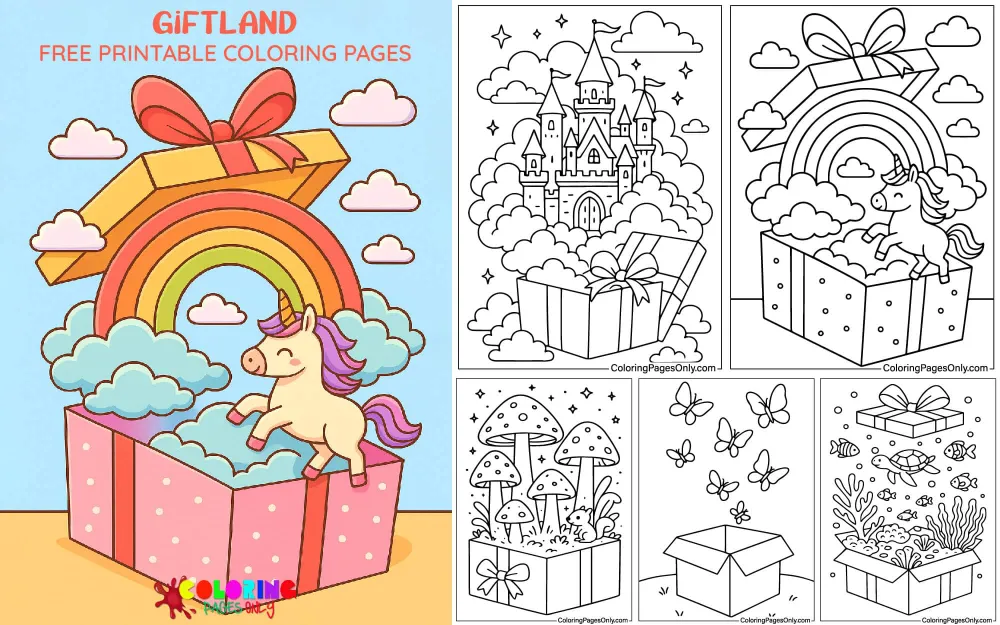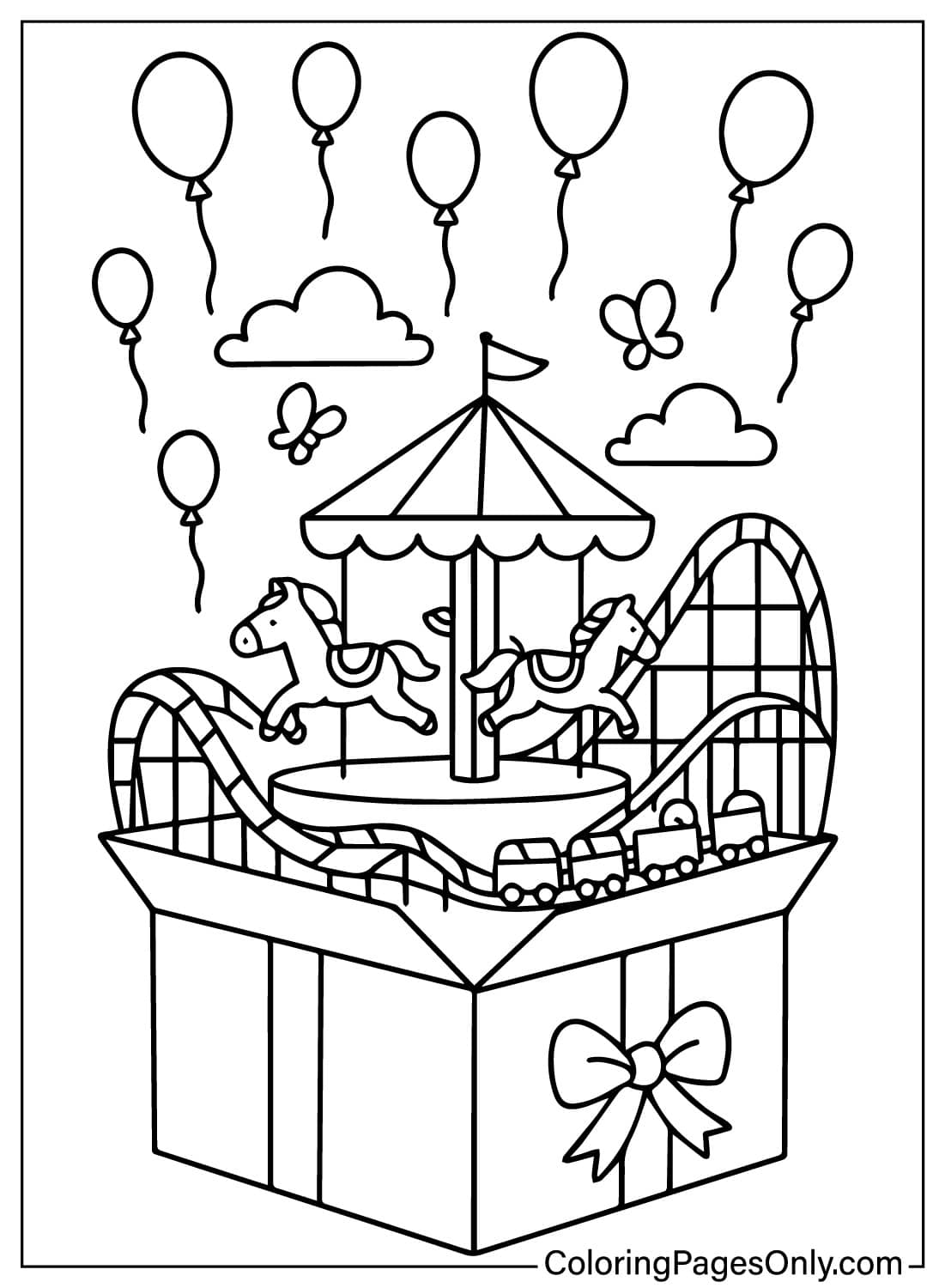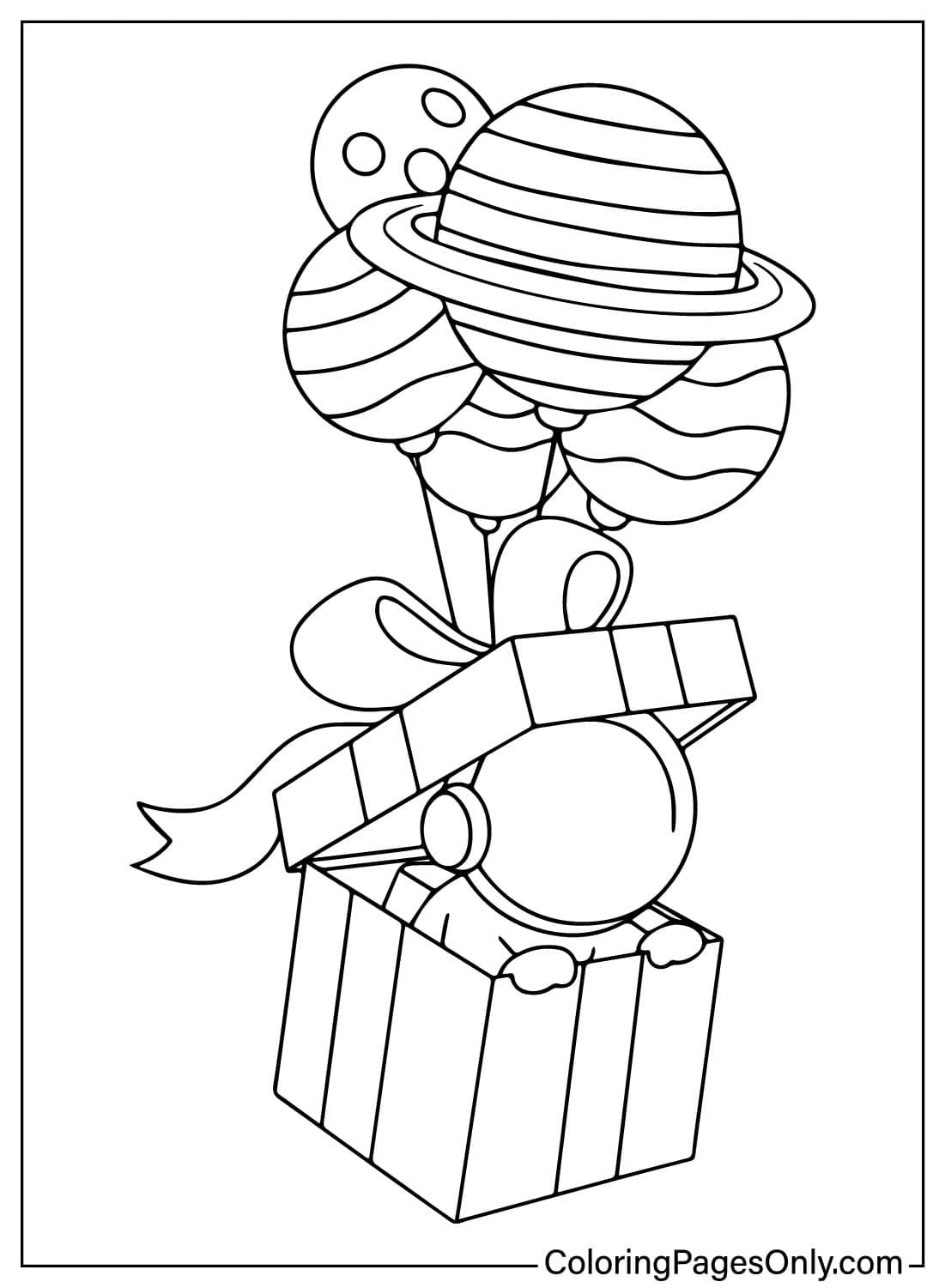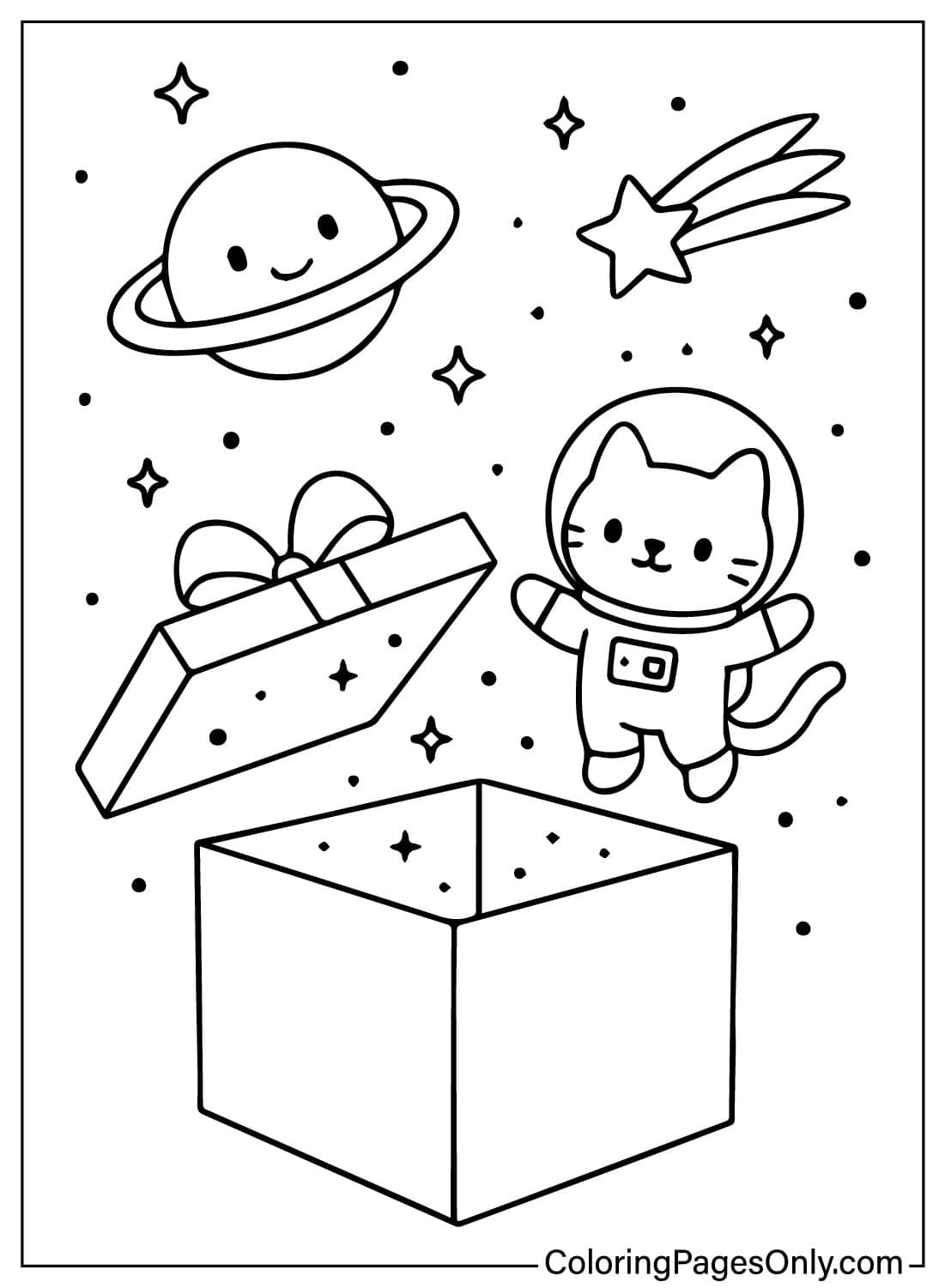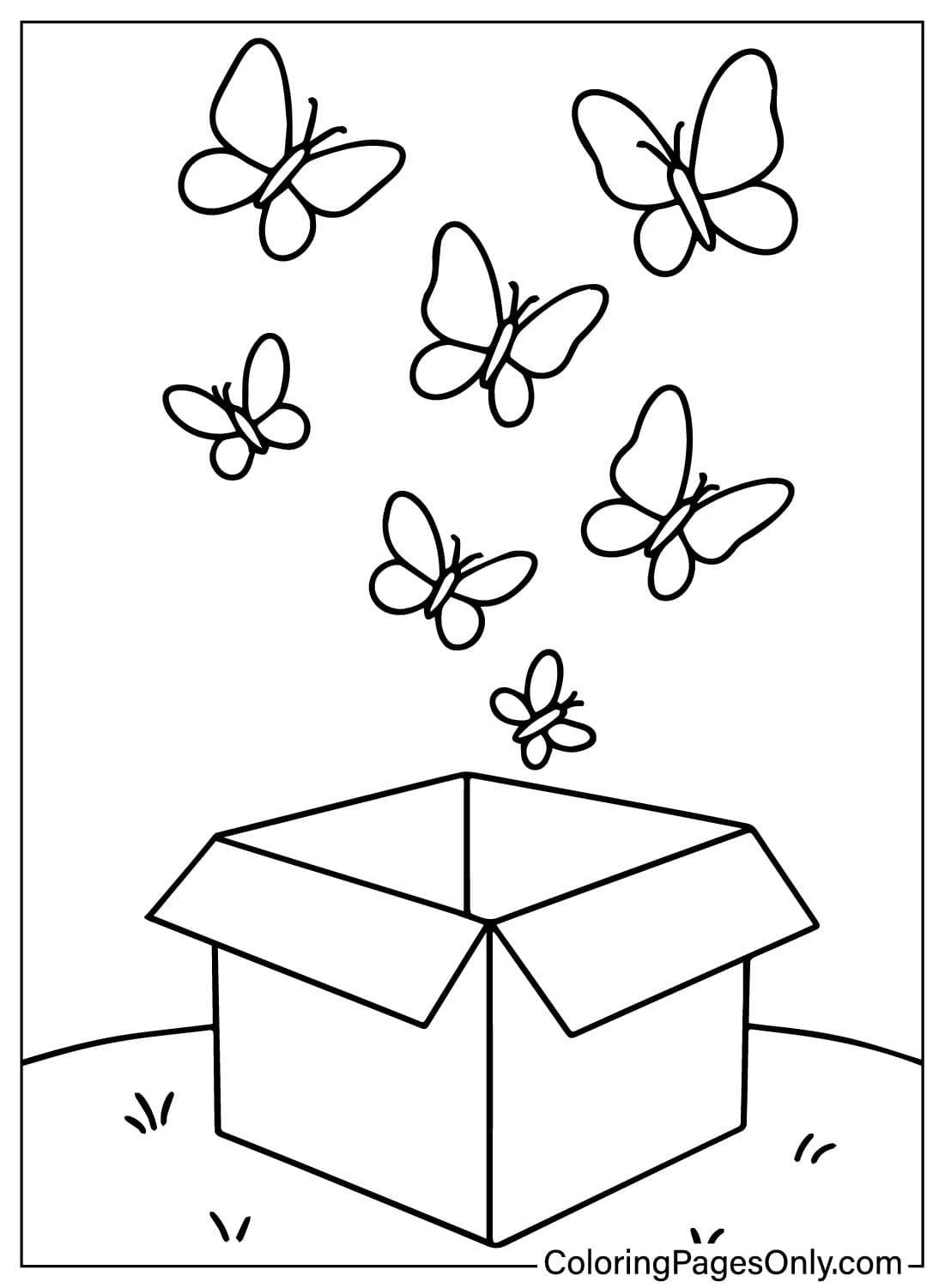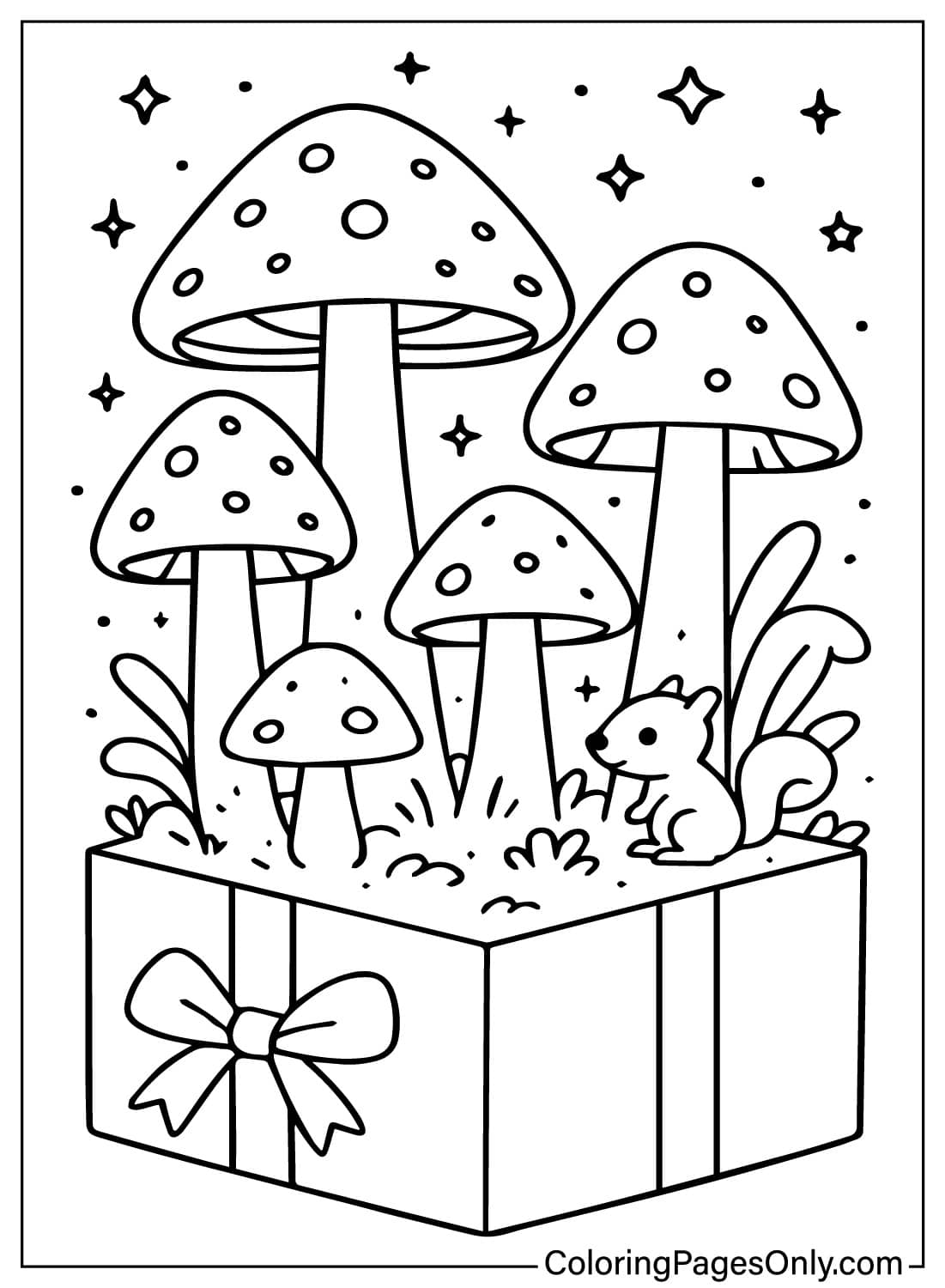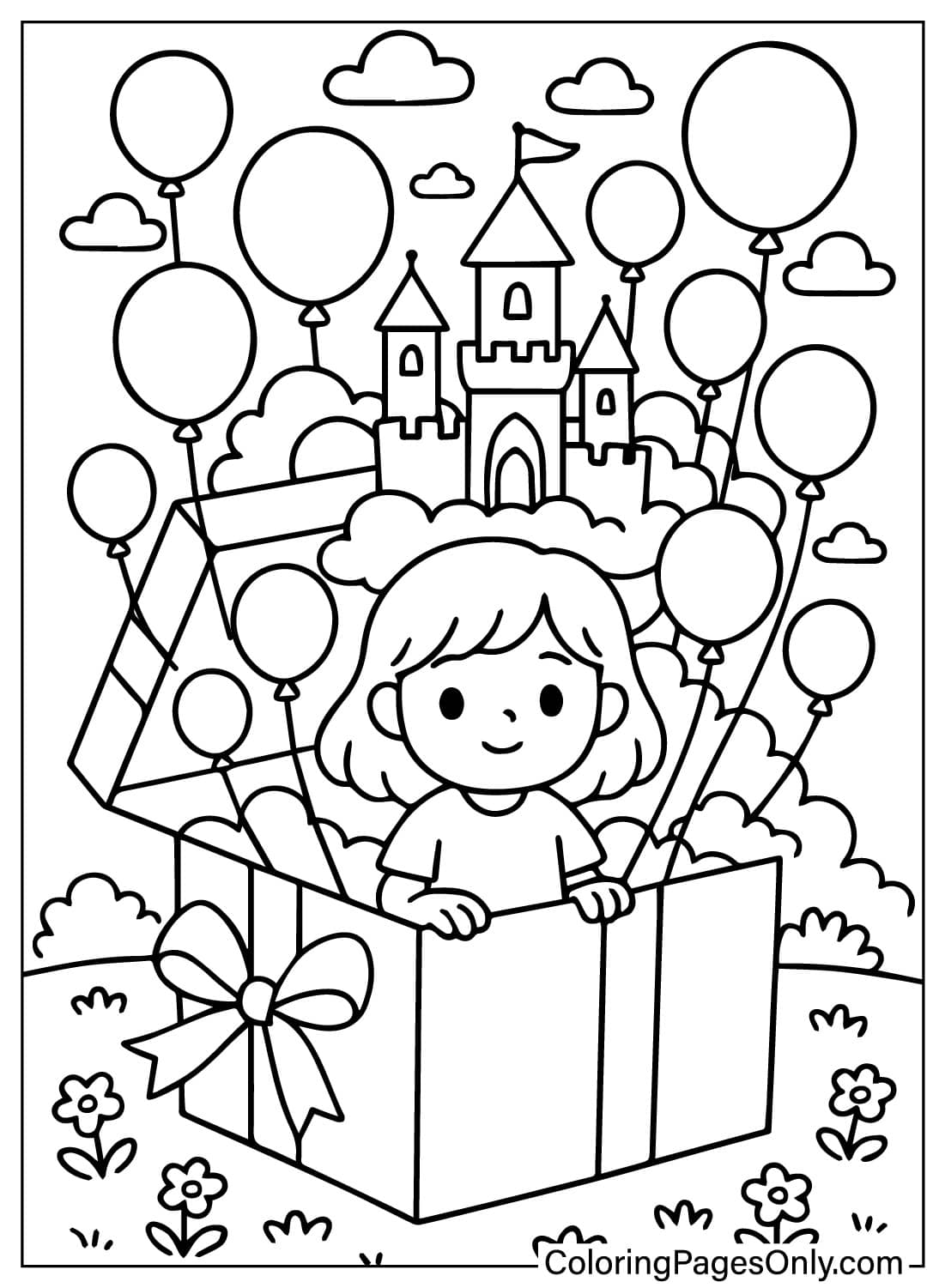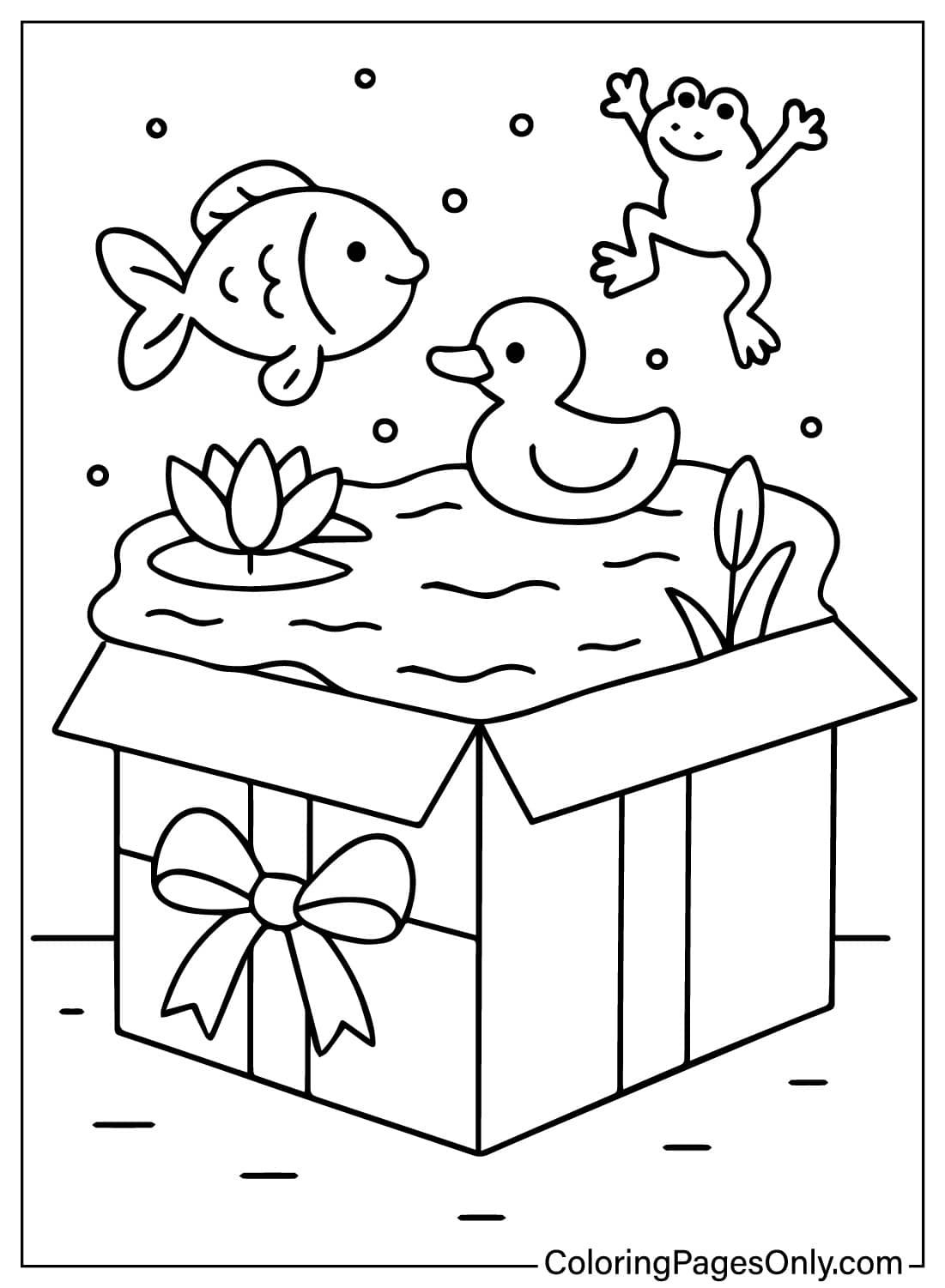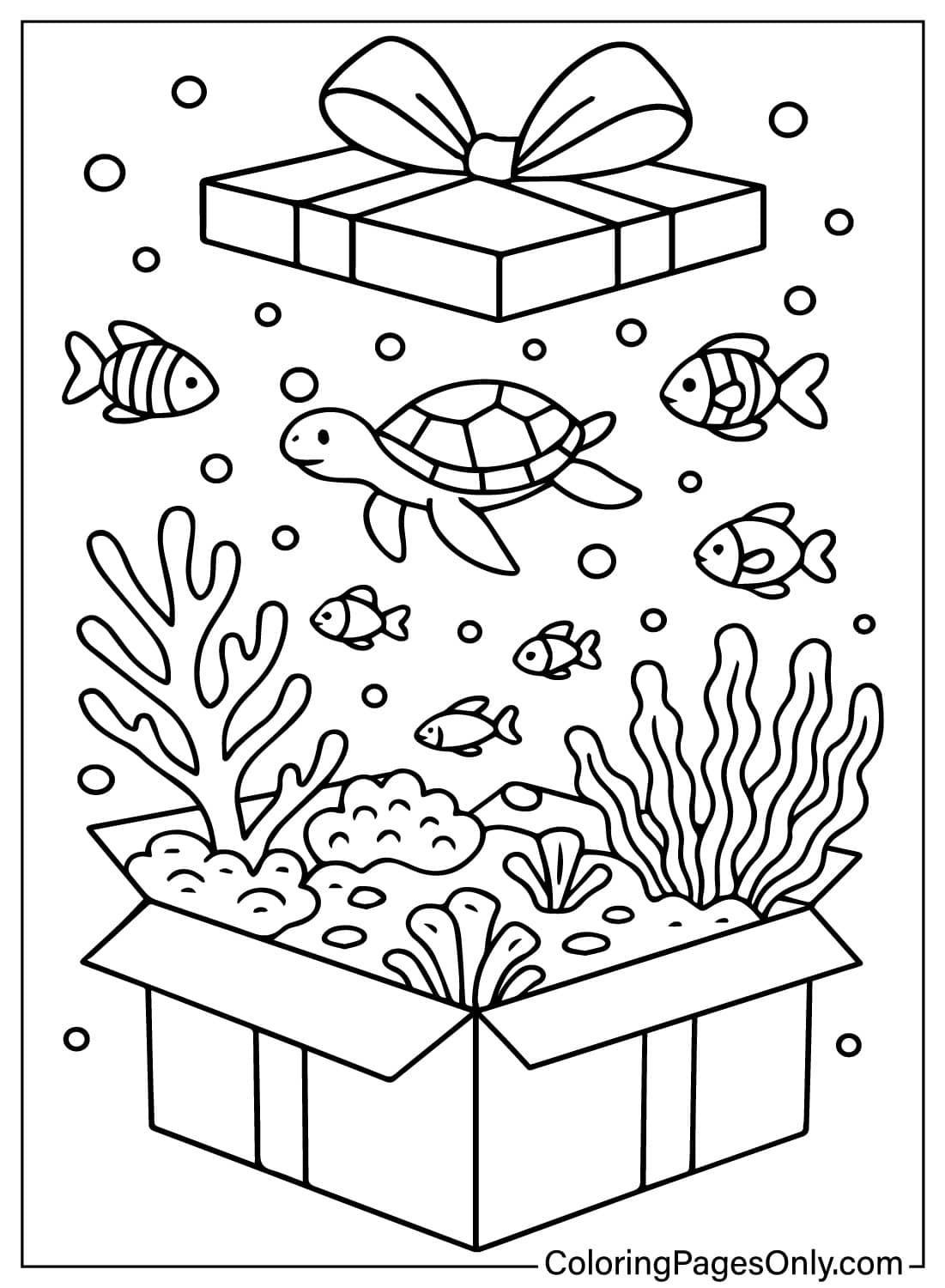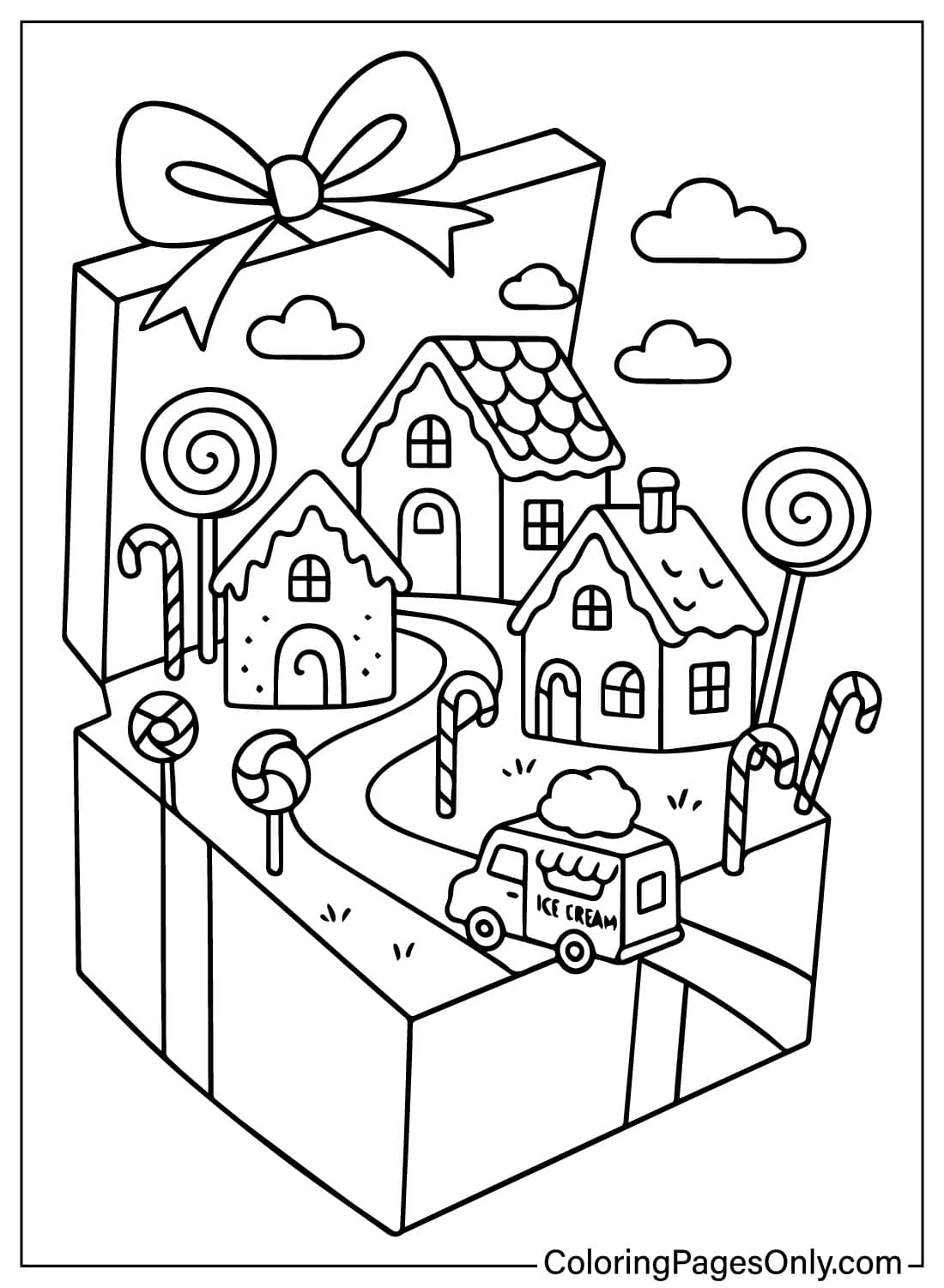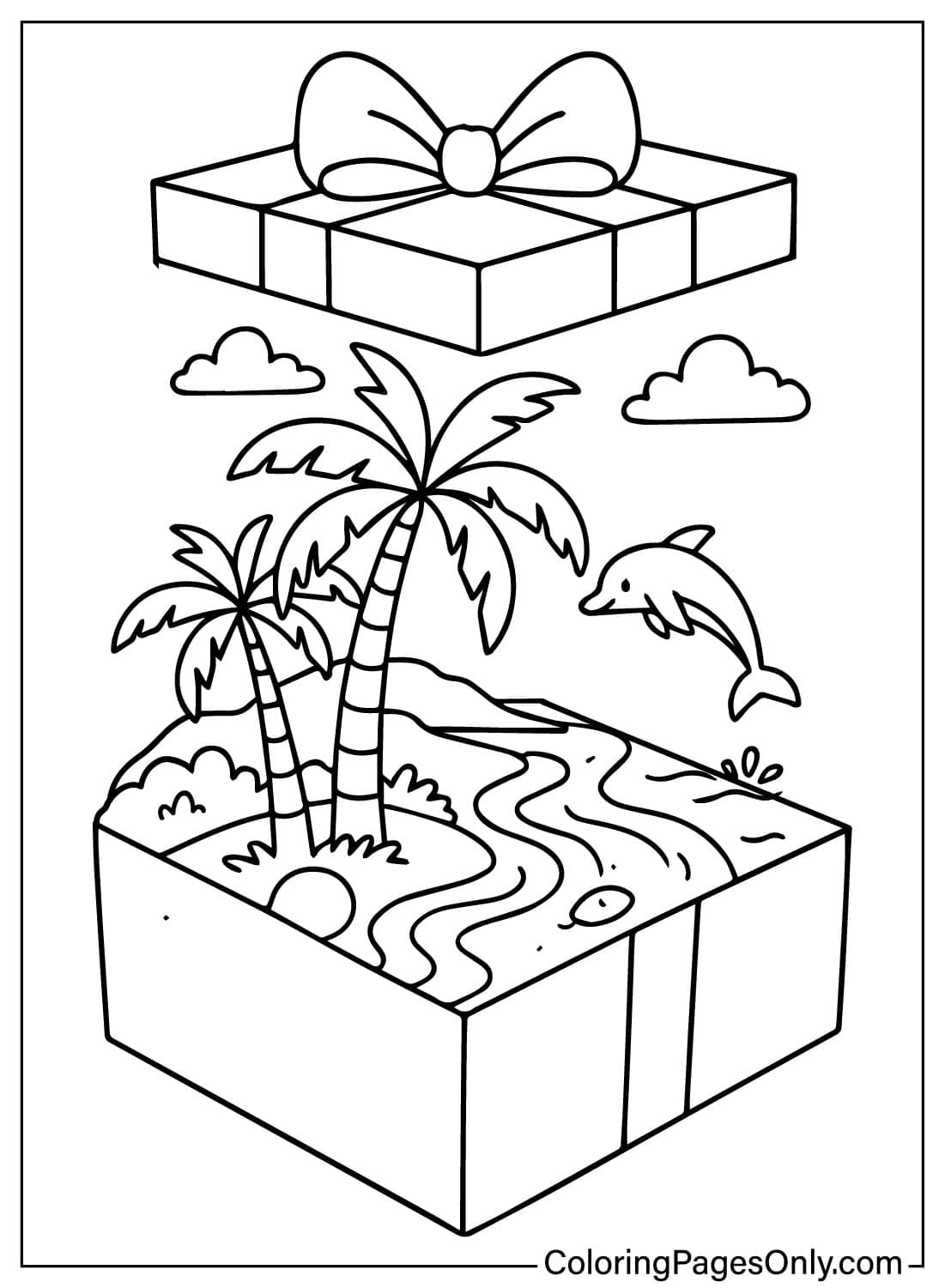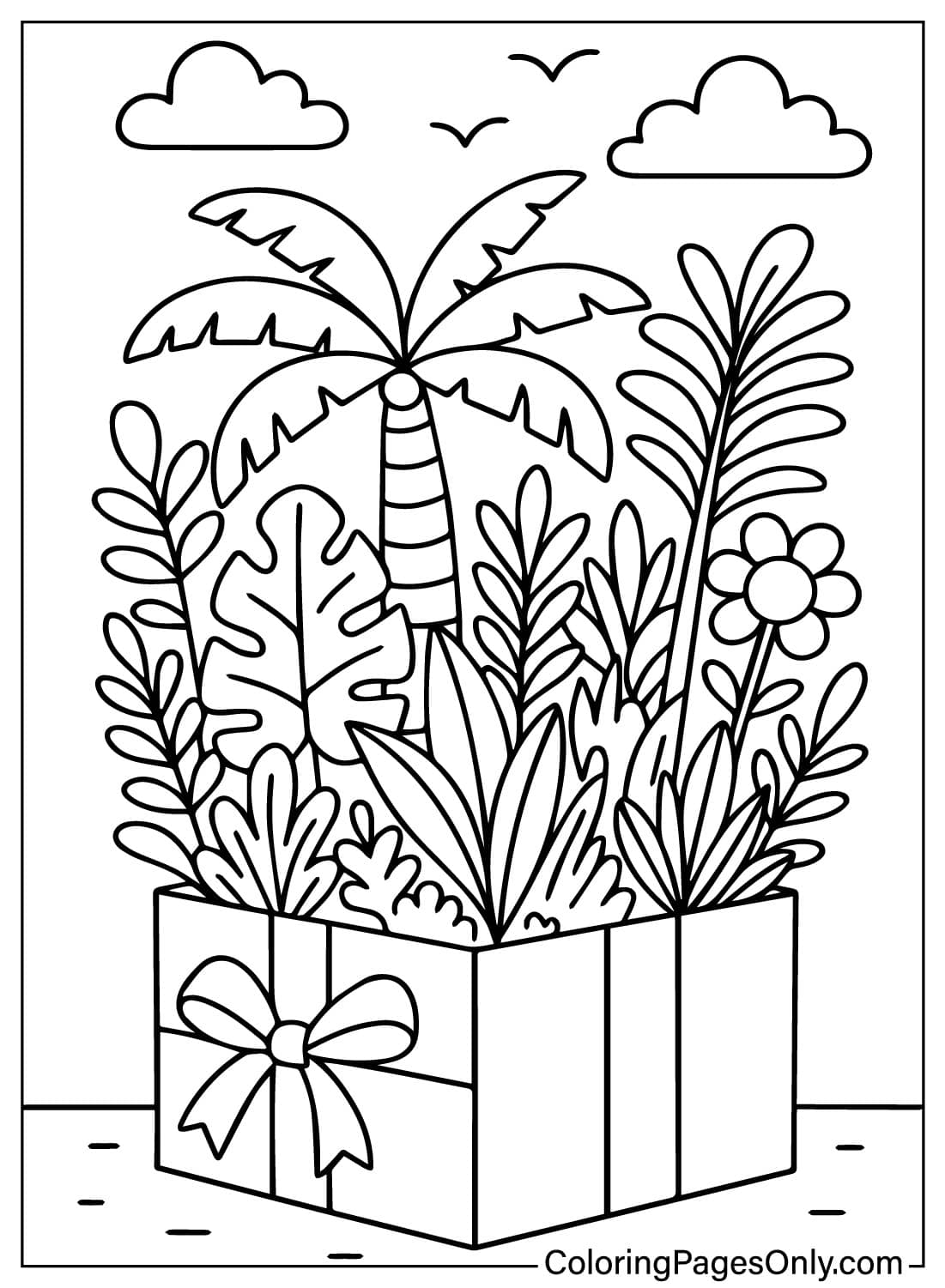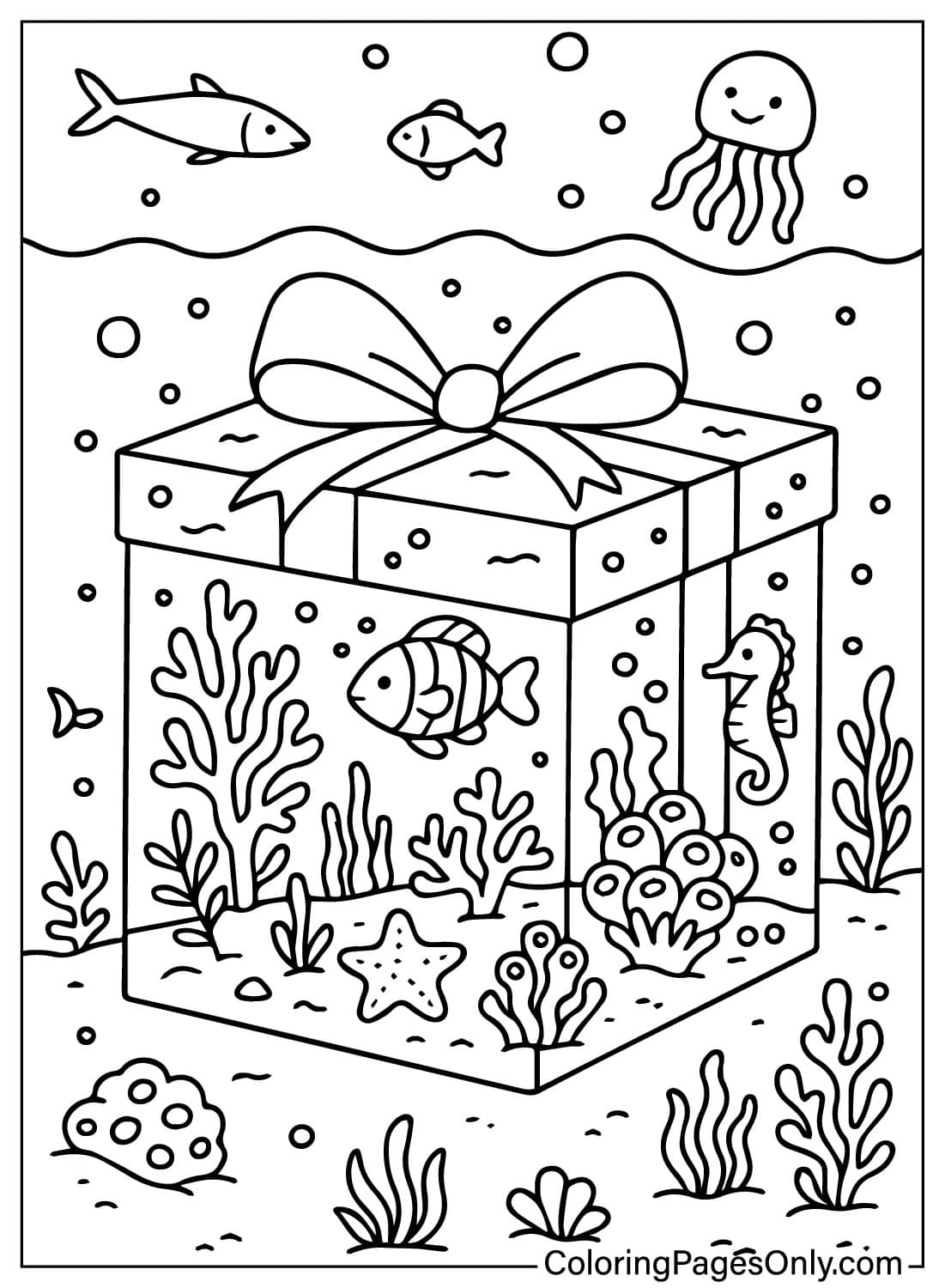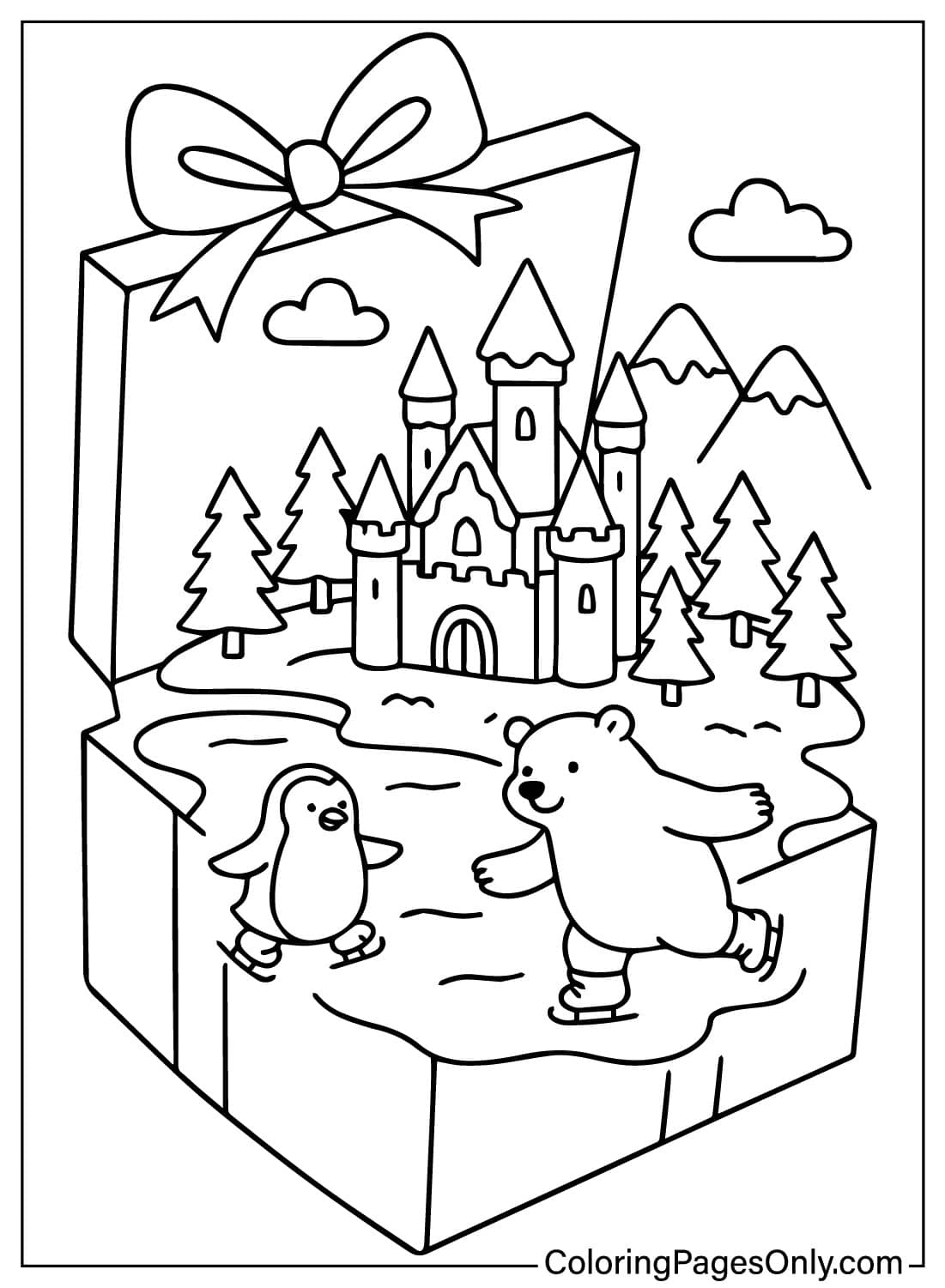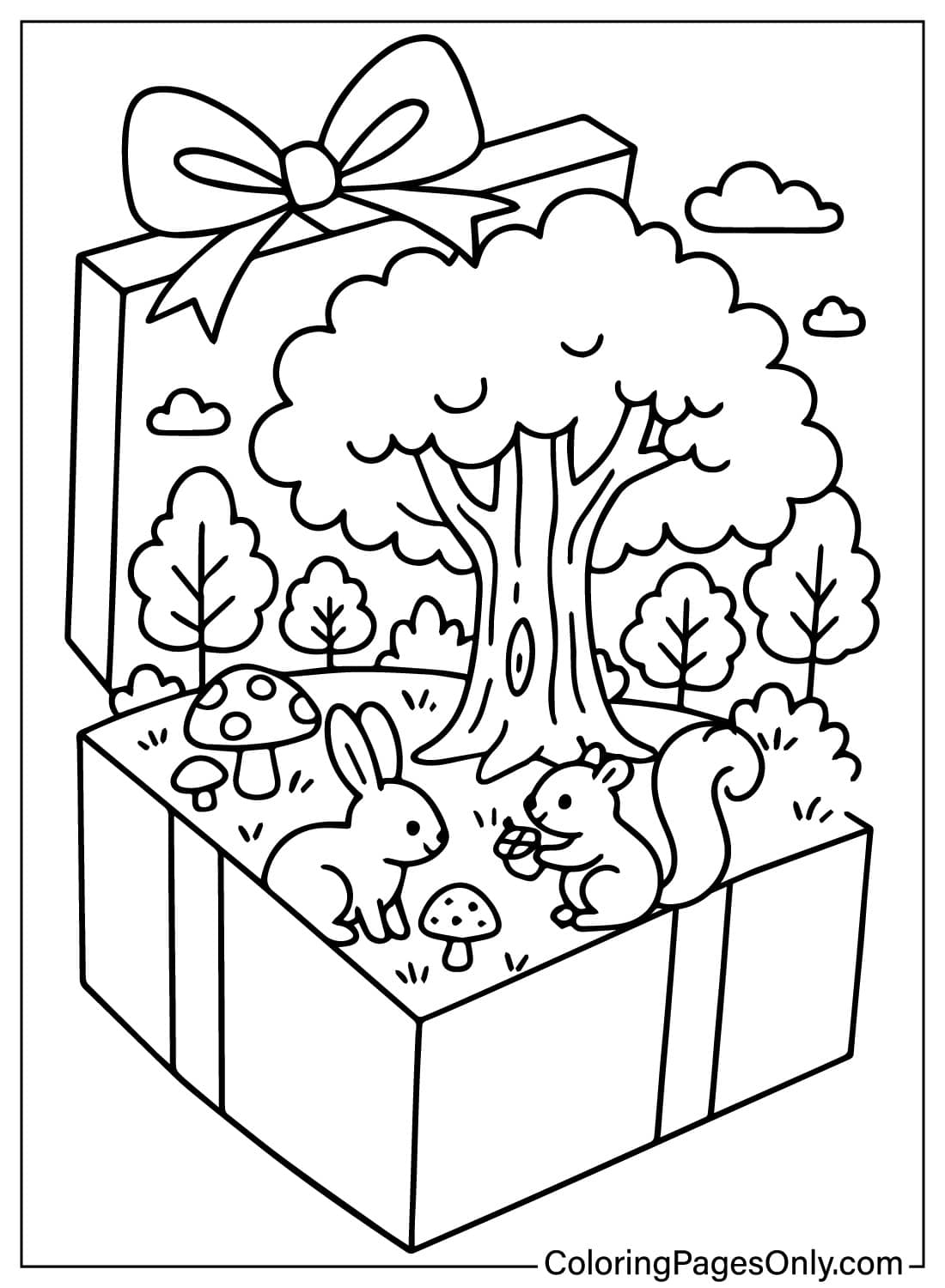
Giftland Coloring Pages at ColoringPagesOnly.com brings together 30+ free printable pages built around one of the most visually inventive concepts in this collection library: the gift box as a portal. In every page, an open gift box with its lid ajar and ribbon trailing becomes the entrance to a world that could not exist anywhere else – a fairy tending a blooming garden, a fairytale castle floating on clouds, a gingerbread house with a cat at the door, twin dinosaurs in party hats, a crystal landscape with waterfalls, birds erupting into flight, a forest full of spotted mushrooms and squirrels, Easter animals in a hillside meadow. The gift box is always the frame; what fills it is always a surprise. Download any page as a free PDF to print, or color online directly in your browser.
This collection sits within the Toys and Dolls Coloring Pages hub. For related collections that share the same spirit of whimsy, magic, and imagination, see Whimsy Cute Coloring Pages, Princess Coloring Pages, Cute Animal Coloring Pages, and Butterfly Coloring Pages.
The Gift Box is the Most Powerful Object in a Child’s Imagination
There is a moment that every person alive recognizes from childhood: a wrapped box sitting on a table, its contents unknown, the ribbon tied and the paper still intact. The anticipation of that moment – before the lid comes off, before the surprise is revealed – is one of the most universally shared experiences of early life. It is a moment of pure, undiluted possibility, where the gift could be anything, where imagination fills the space that knowledge has not yet occupied.
Neuroscience has a precise explanation for why this moment feels so extraordinary. When the brain encounters an unexpected reward, it releases dopamine – the neurotransmitter associated with pleasure, motivation, and reward learning. Research published in Scientific American and cited across multiple neuroscience studies consistently shows that the brain’s reward pathways are significantly more activated by unexpected rewards than by expected ones. This means the moment of surprise – the instant of “I didn’t know this was coming” – produces a neurological response stronger than the experience of receiving a known, anticipated reward. The unknown is, neurochemically, more rewarding than the known.
But the gift box also produces something that precedes the surprise: anticipation. The act of seeing a wrapped box, the delay between viewing it and opening it, the act of untying the ribbon and lifting the lid – all of this creates what psychologists describe as a “buffer” that intensifies the emotional experience at the moment of revelation. The American Psychological Association’s review of gift-giving neuroscience describes how even the preparatory stages of giving and receiving – selecting the gift, wrapping it, being in the room while someone opens it – activate the mesolimbic reward system, releasing dopamine, oxytocin, and endorphins simultaneously. The gift box does not just deliver a gift; it delivers an experience whose emotional impact is amplified by every second it remains closed.
The pages in this Giftland collection work with this psychology directly. Every page shows a gift box already opened – but the “reveal” has not yet happened for the colorist, because the scene inside the box is still black and white, still waiting to be brought to life. The child who picks up a crayon and begins coloring “Enchanted Forest Gift Box” is performing a version of the gift-opening experience: making the scene emerge from the blank page through their creative choices, deciding what color the squirrel’s fur will be, what shade the swirling mushrooms will carry, and whether the forest feels autumnal or spring-fresh. The color choices are the gift, made by the colorists themselves.
The Concept That Makes This Collection Unique
The Giftland collection operates on a visual premise that no other collection on this site uses in quite the same way: the gift box as a world container. In every page, the box is not the subject of the illustration – it is the frame through which a completely different scene is viewed. The box is a window, a doorway, a portal that opens onto a landscape or scenario with its own internal logic, scale, and population.
This concept has a genuine art historical precedent. The idea of a container that holds a world vastly larger than itself – a box, a door, a wardrobe, a rabbit hole – is one of the oldest and most recurring motifs in fantasy and children’s literature, precisely because it captures something children already intuitively understand: that the world inside imagination is not bounded by the world outside it. A gift box, physically, can hold a small toy. Imaginatively, it can hold a castle with cloud-towers, a garden where a fairy tends blooming flowers, an enchanted forest where spotted mushrooms grow tall as trees, or a crystal landscape with waterfalls and gems. The box’s physical limits do not apply to what the mind can place inside it.
For the colorist, this creates a unique dual compositional challenge: the gift box itself must be rendered in its canonical visual language (ribbons, bows, the specific texture of wrapped paper, the clean line of the lid), while the scene emerging from the interior of the box must be rendered in the visual language appropriate to that specific world – which is entirely different in each page. The child coloring “Fairytale Castle in the Clouds Gift Box” must manage both the warm, celebratory palette of the gift wrapping and the cool, aerial palette of a cloud-floating castle. The child coloring “Happy Dinosaur Surprise in Gift Box” must navigate between the formal gift-box aesthetic and the vivid primary colors of a cartoon dinosaur’s exuberant emergence. This dual-register challenge is one of the most sophisticated coloring compositional problems in any collection on this site, and it produces finished pages of unusual visual richness.
The Collection’s Worlds – A Complete Scene Guide
The 30+ pages in this collection can be organized into five thematic clusters based on the world each gift box reveals. Understanding which cluster each page belongs to guides both the coloring approach and the imagination-building conversation that the page can anchor.
Magical Creatures and Fantasy Beings
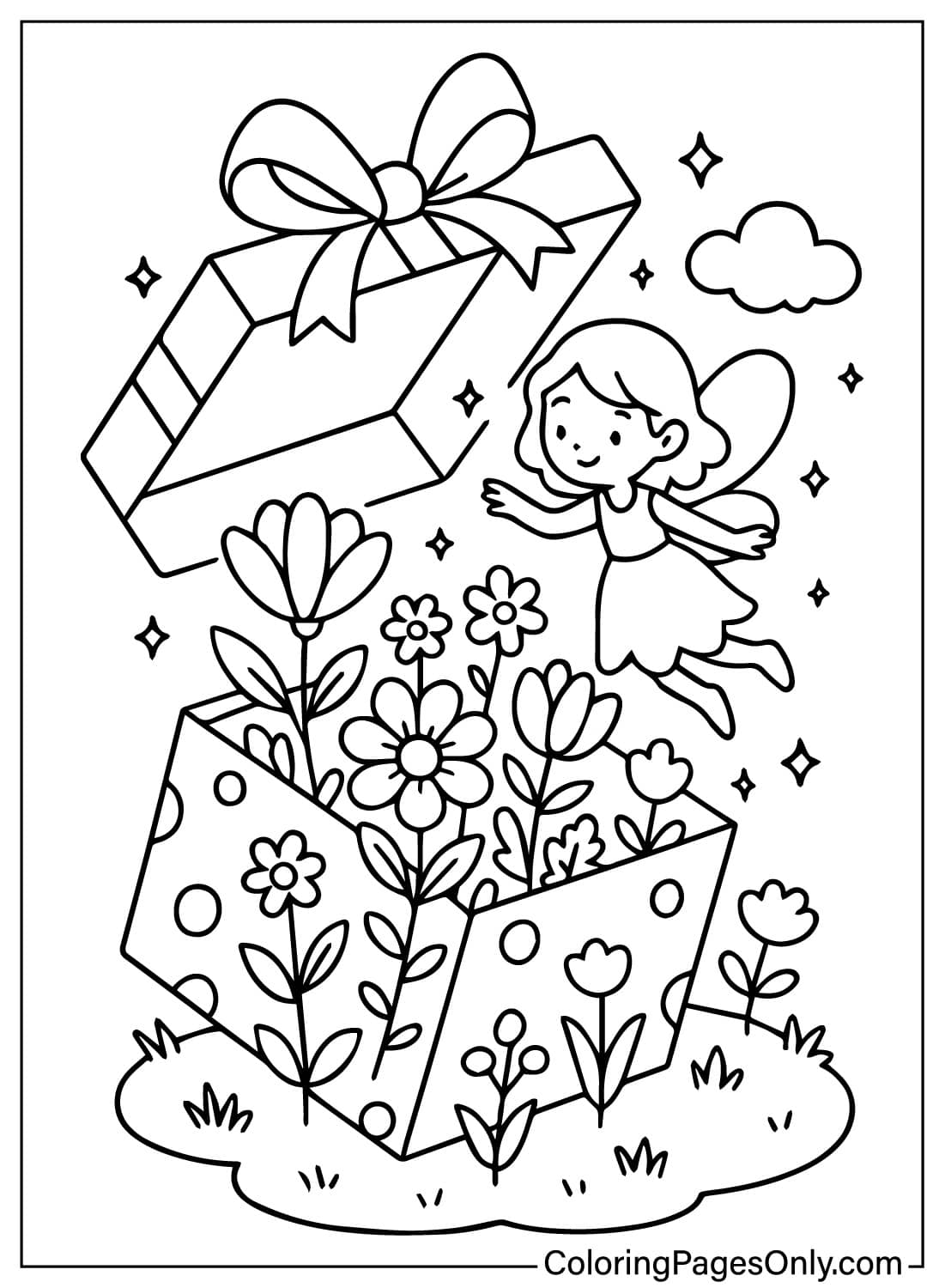
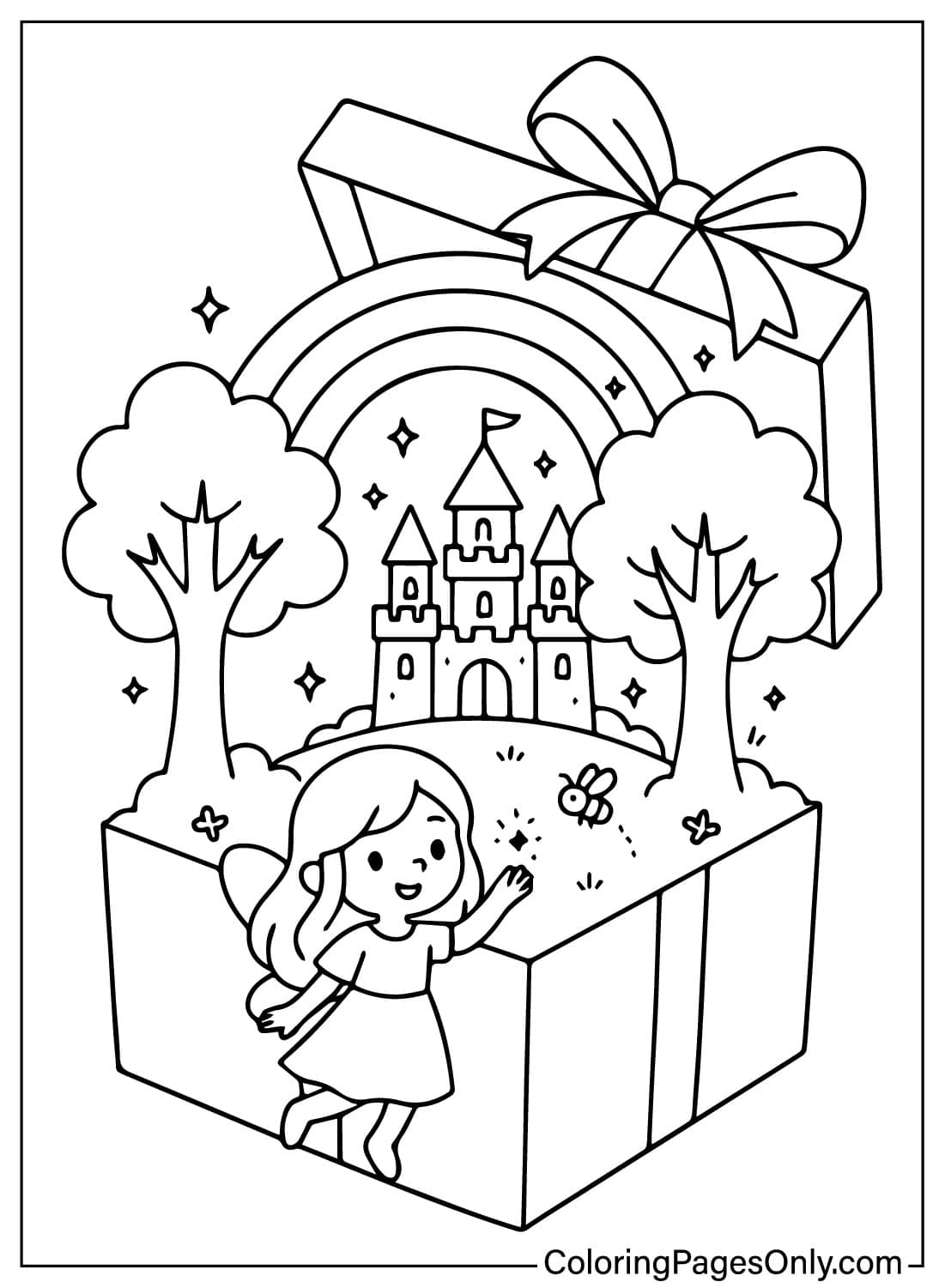
Fairy and Flower Garden Gift Box – A smiling fairy with wings flies out of an open gift box surrounded by growing flowers, sparkles, and clouds. This page belongs to the classical fairy-tale tradition: the fairy as a small magical being associated with nature, flowers, and the transformation of ordinary spaces into enchanted ones. The coloring challenge here is the relationship between the fairy’s wings (typically translucent, iridescent, with a pale lavender or blue-green shimmer) and the vivid warm colors of the flowers she tends – these two palettes must coexist without either overwhelming the other.
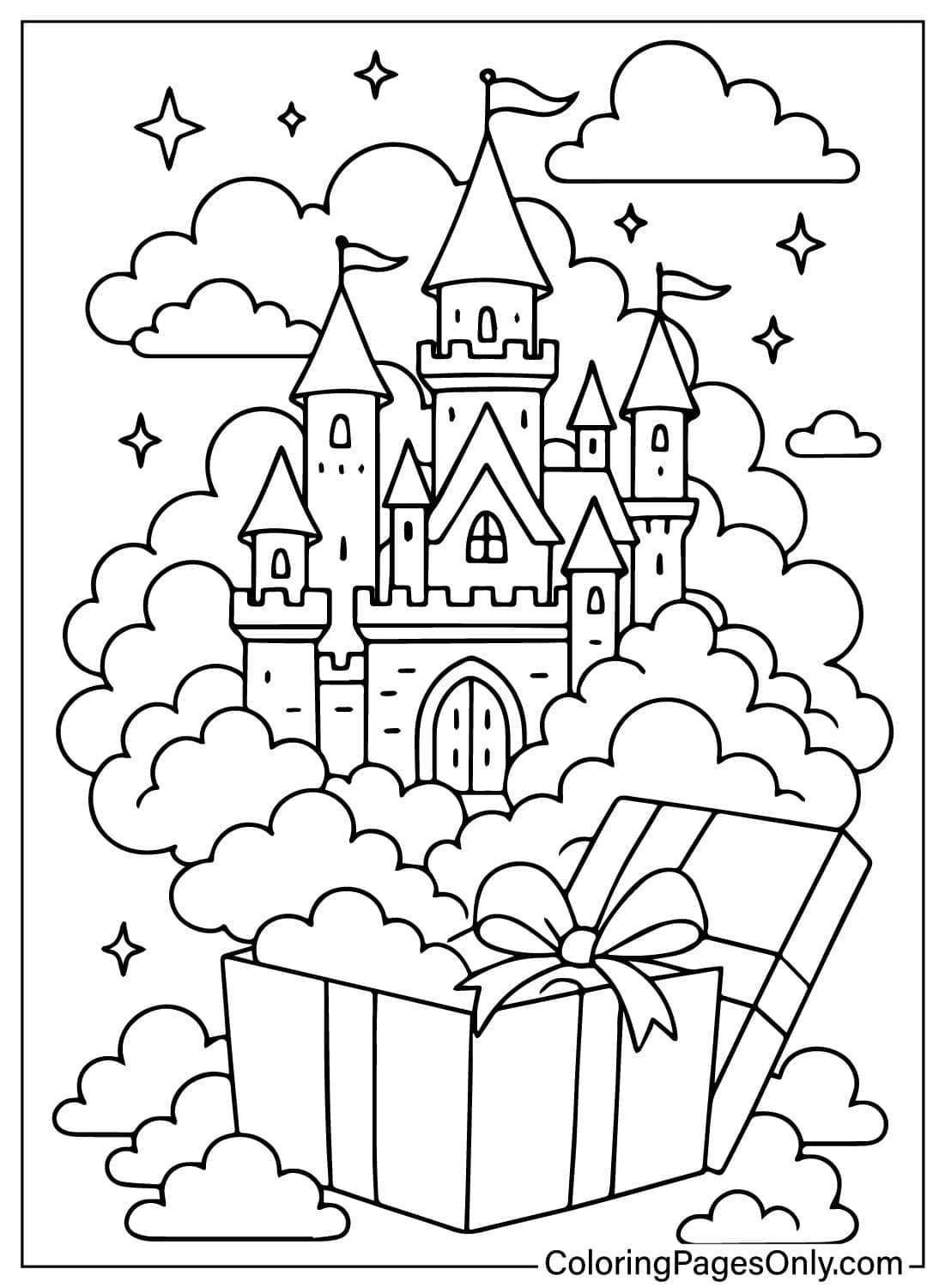
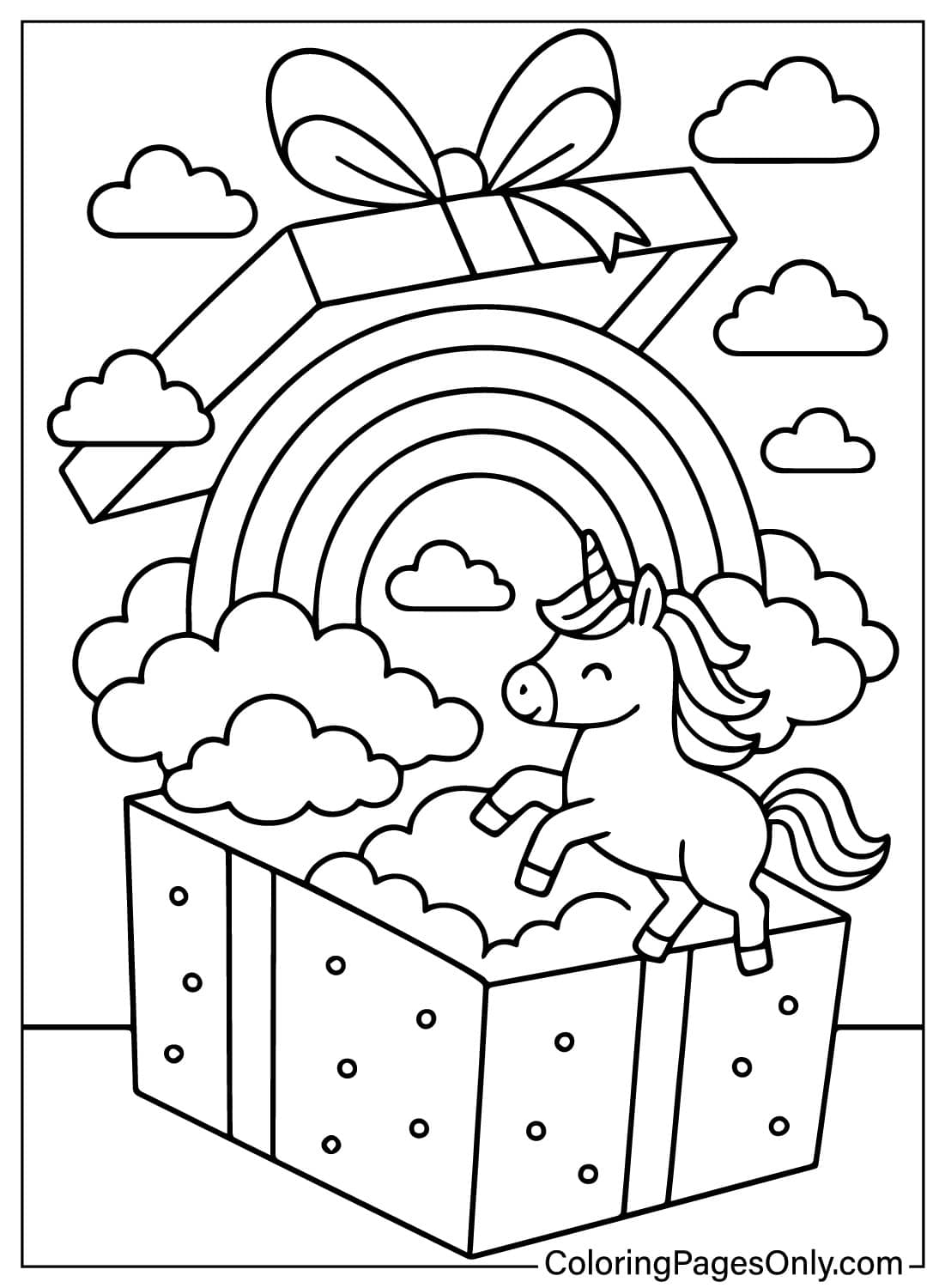
Fairytale Castle in the Clouds Gift Box – A whimsical multi-tower castle with pennant flags emerges from a gift box surrounded by clouds, creating the impression of an aerial fortress floating above the ordinary world. Castle architecture in fairy-tale illustration follows specific conventions: cylindrical towers topped with conical roofs (in deep purple or slate blue), battlements of pale stone (warm cream or grey), pennant flags in bright contrasting colors, and clouds that are both supportive (the castle rests on them) and decorative (they fill the space around the towers). The gift box below provides a warm, ribbon-tied anchor to this aerial composition.
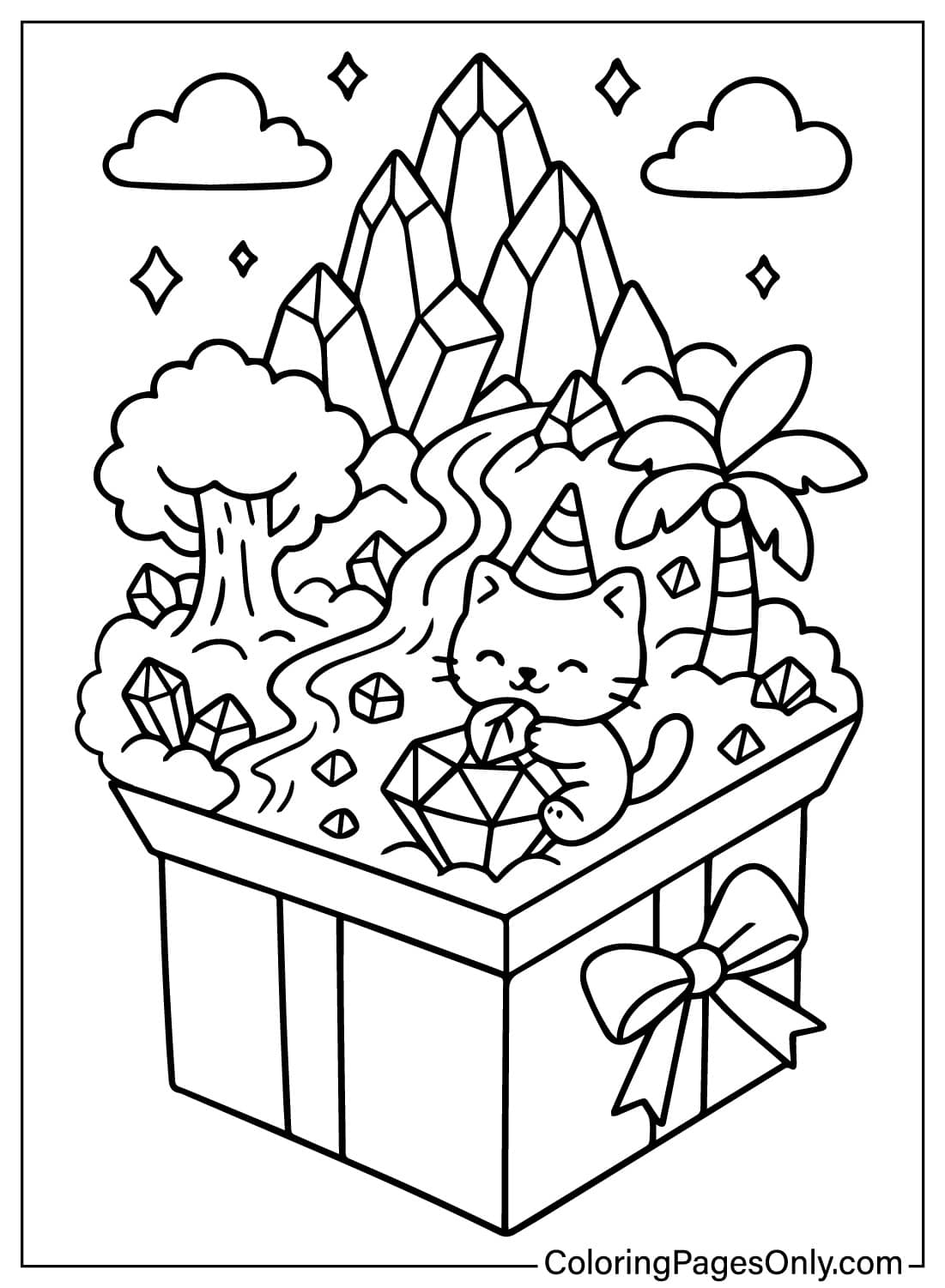
Crystal Land Cat Gift Box – A cat in a party hat holds a large gem while surrounded by crystals, a waterfall, and a palm tree inside the gift box interior – one of the most visually complex individual scenes in the collection. The crystal landscape belongs to a fantasy tradition associated with underground or magical geology: formations that catch and refract light, rendering them simultaneously translucent and vivid. Crystal coloring technique involves layering: a pale base color (light blue, pale lavender, or pale rose), then darker tones in the deep interior of each crystal face, leaving the raised edges and tips lighter to suggest light refraction. The cat in its party hat provides a warm, whimsical contrast to the cool crystalline landscape.
Animals in Surprise
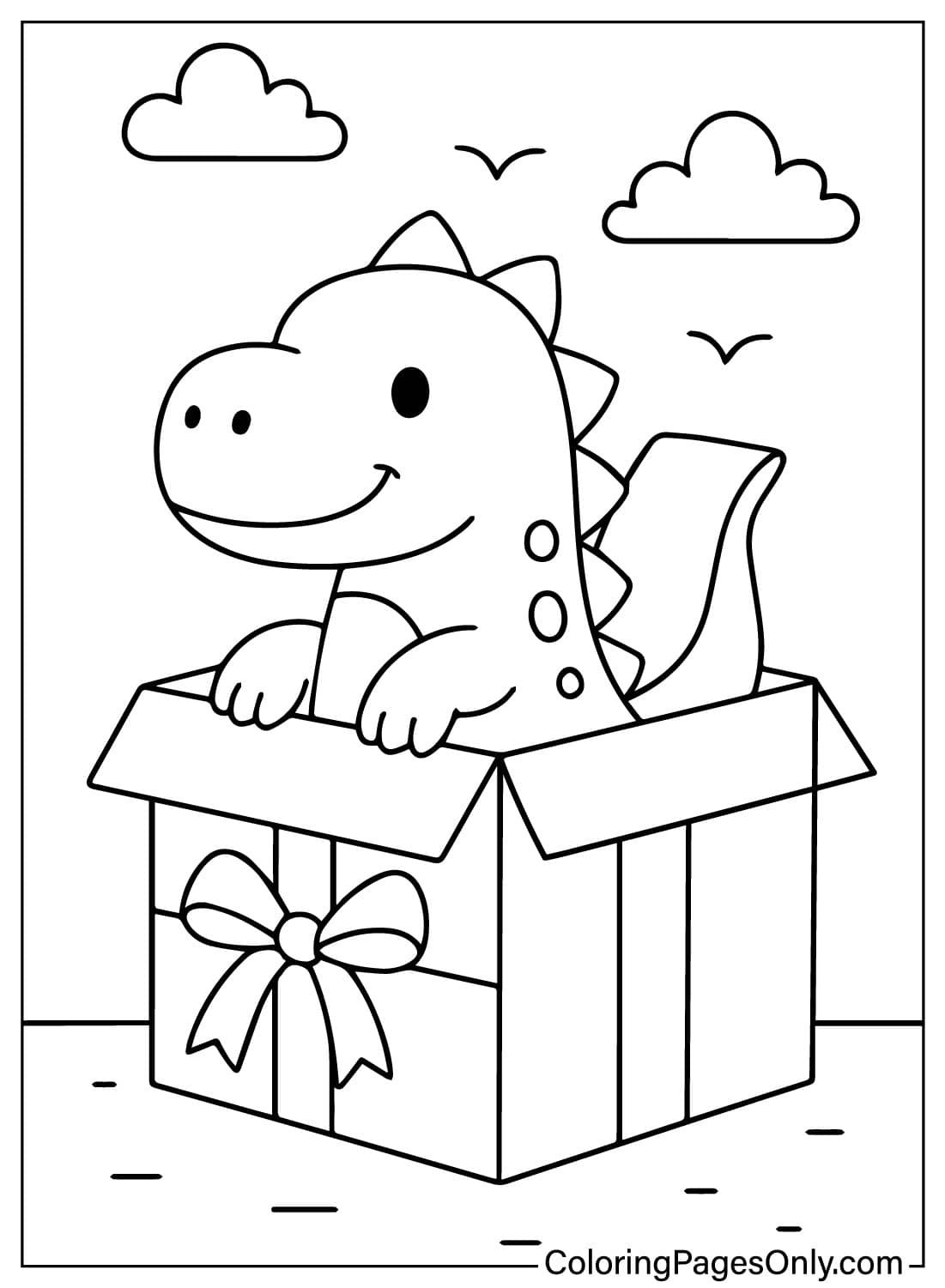
Happy Dinosaur Surprise in Gift Box – A smiling cartoon dinosaur with spikes pops from a gift box, pure joy radiating from its cartoonishly large eyes. This is the most straightforwardly celebratory page in the collection – a beloved child subject (dinosaurs) delivered in the most celebratory possible context (popping unexpectedly from a bow-tied box). The coloring register is maximum saturation: vivid green or teal for the dinosaur’s body, bright contrasting colors for the box, and an expression that is all open-mouthed delight.
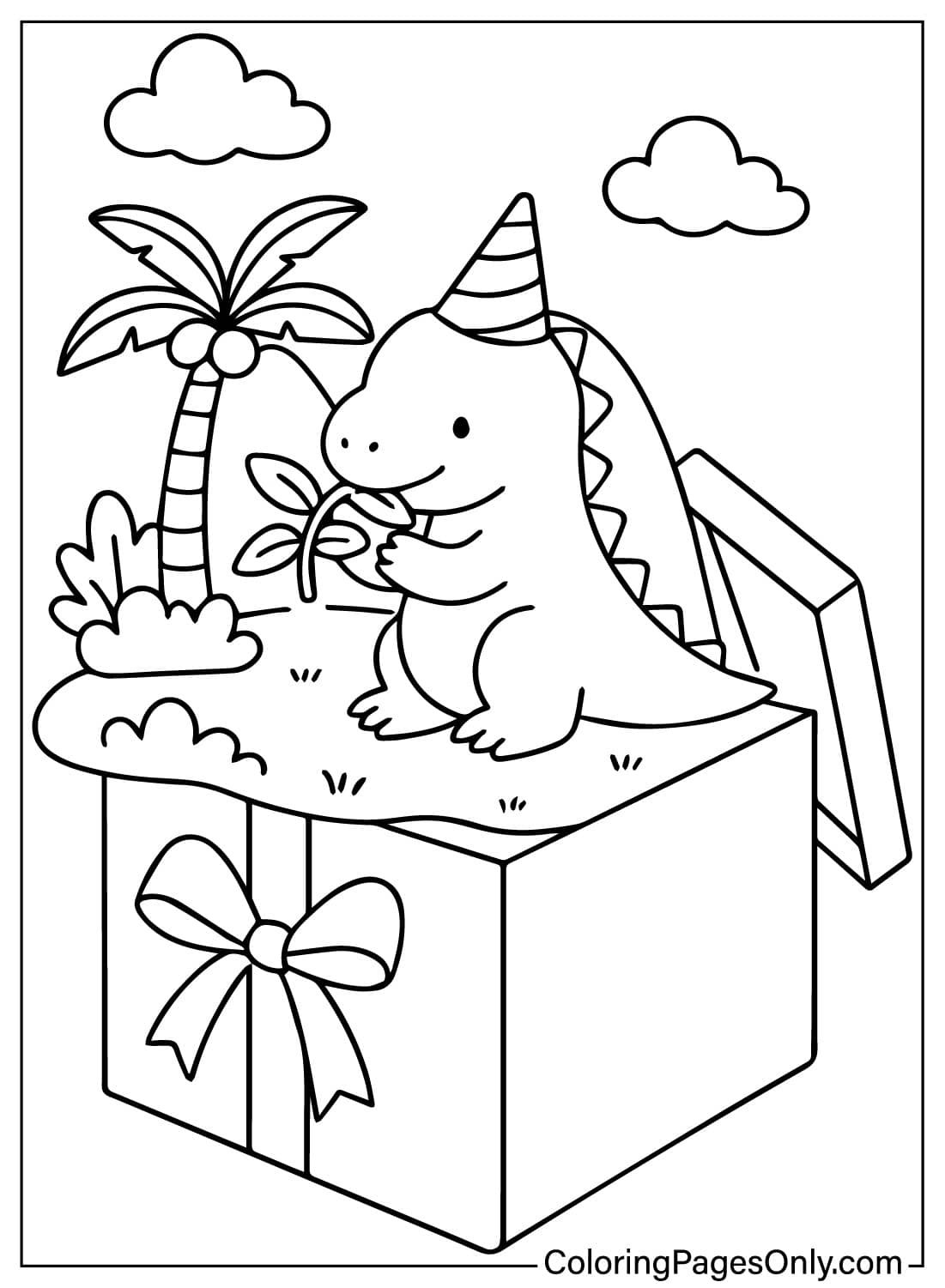
Cute Party Dinosaur in Gift Box – A dinosaur in a party hat holds a leafy branch while emerging from a gift box beside a small palm island. Where the Happy Dinosaur Surprise is purely joyful, this page has more compositional complexity: the party hat, the palm island beside the box, and the leafy branch create a richer scene that rewards more careful coloring attention. The party hat’s color should be chosen to contrast with the dinosaur’s body – if the dinosaur is green, the hat might be red or yellow; if the dinosaur is blue, the hat in bright orange creates the most vivid contrast.
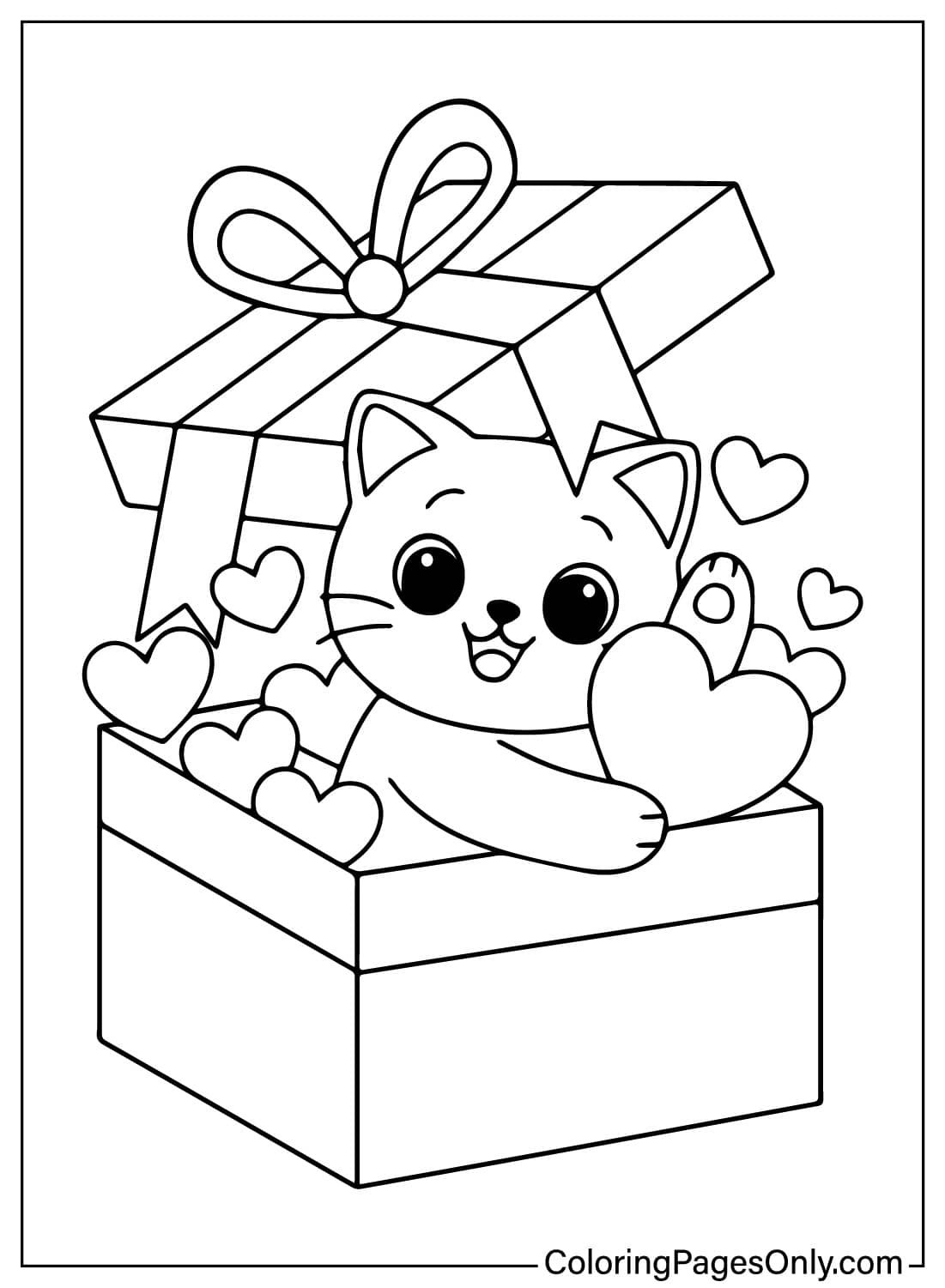
Adorable Kitten and Hearts in Gift Box – A small kitten holds a heart and is surrounded by floating hearts both inside and outside the box – the most purely affectionate page in the collection, built around the emotional vocabulary of love and care. This page works well for Valentine’s Day or as a general birthday gift. The hearts should be rendered in warm pinks and reds ranging from deep rose to pale blush, creating a gradient of affection; the kitten in soft warm grey or orange tabby tones provides a gentle contrast.
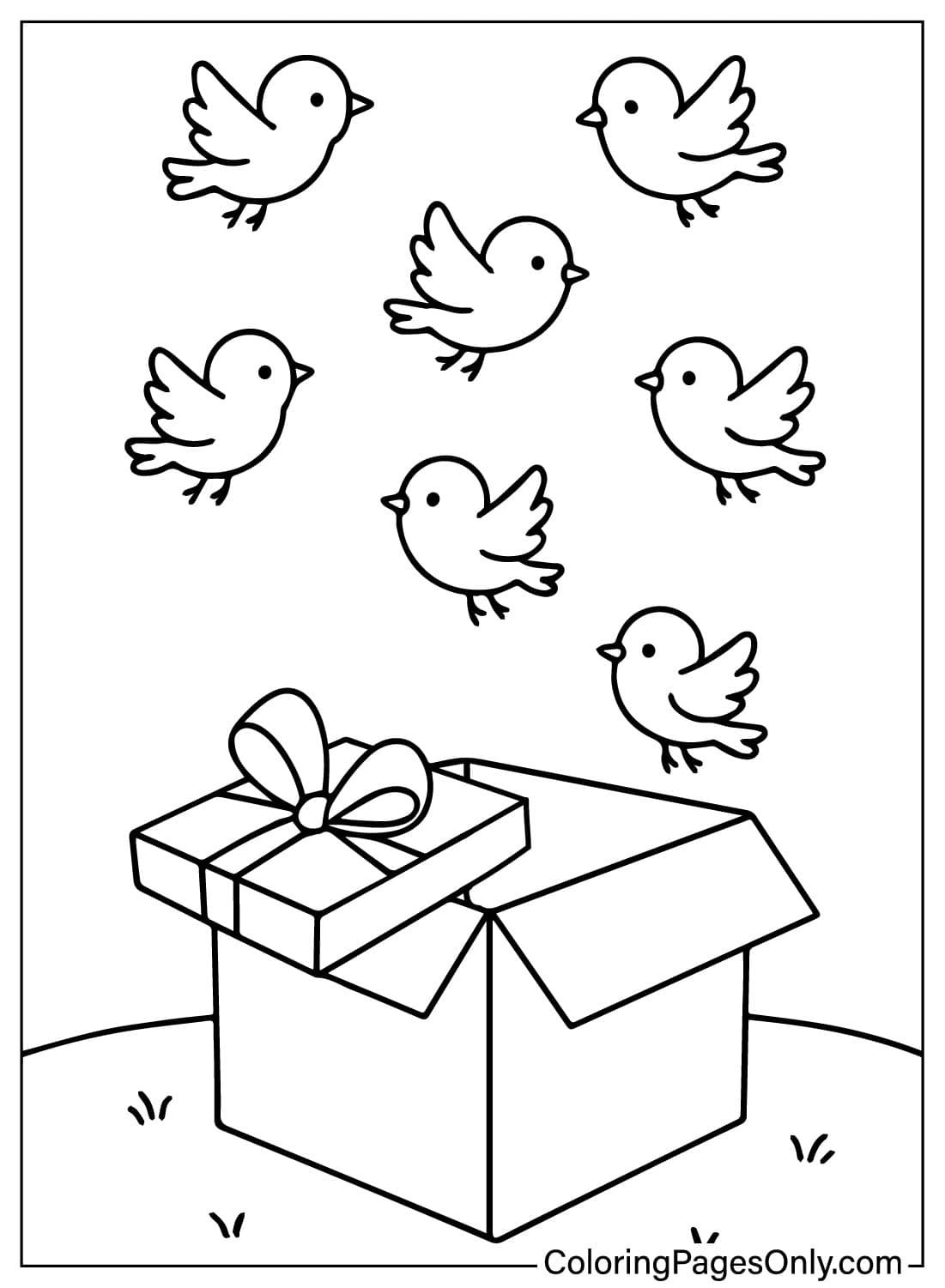
Cute Birds Flying from Gift Box – Multiple small birds fly out of and around an open box, creating the visual sensation of a contained flock suddenly released. The bird release is one of the most ancient visual metaphors for freedom – birds emerging from an enclosed space representing liberation. The coloring approach: each bird a slightly different species-inspired color (yellow for a canary, red for a cardinal, blue for a jay, brown for a sparrow), with the flock creating a varied color arc across the page.
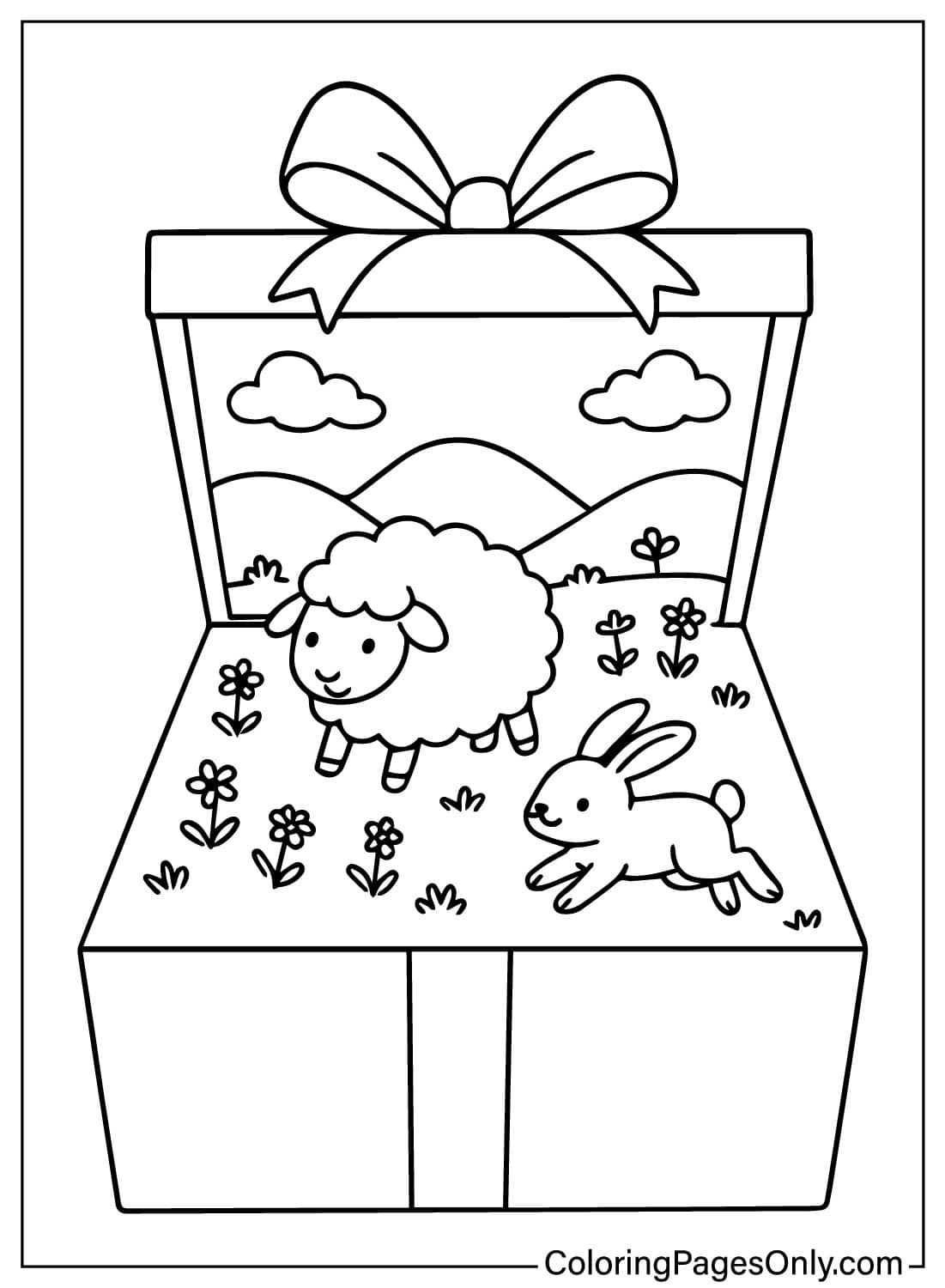
Cute Easter Animals in Gift Box – A fluffy sheep and a hopping bunny rabbit emerge from a gift box, with hills and clouds in the background – the most seasonal-specific page in the collection. The Easter palette is warm spring tones: pale yellows, soft greens, light blues, warm cream for the sheep’s wool, and gentle grey-brown for the rabbit. The background hills in pale green under a light blue sky complete the pastoral spring scene.
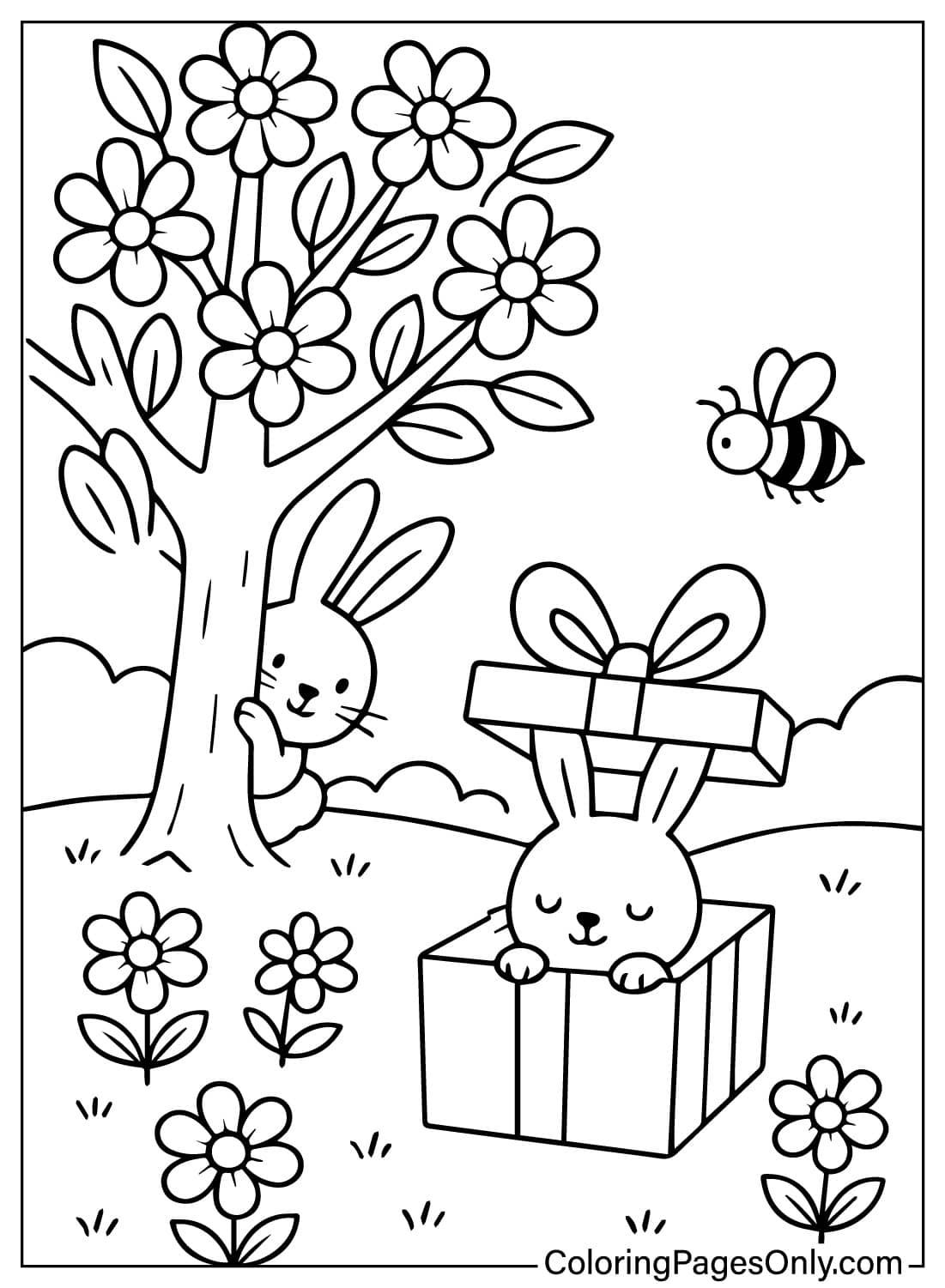
Cute Bunnies and Spring Flowers Gift Box – Two bunnies – one peeking from behind a blossom tree, one emerging sleepy-eyed from a gift box – with flowers and a bee in a spring setting. The dual-bunny composition creates a more complex scene than the single-animal pages: the bunnies’ similar coloring must be differentiated (one slightly warmer brown, one cooler grey-white) so they read as two distinct characters rather than one character repeated.
Nature Bursting Free
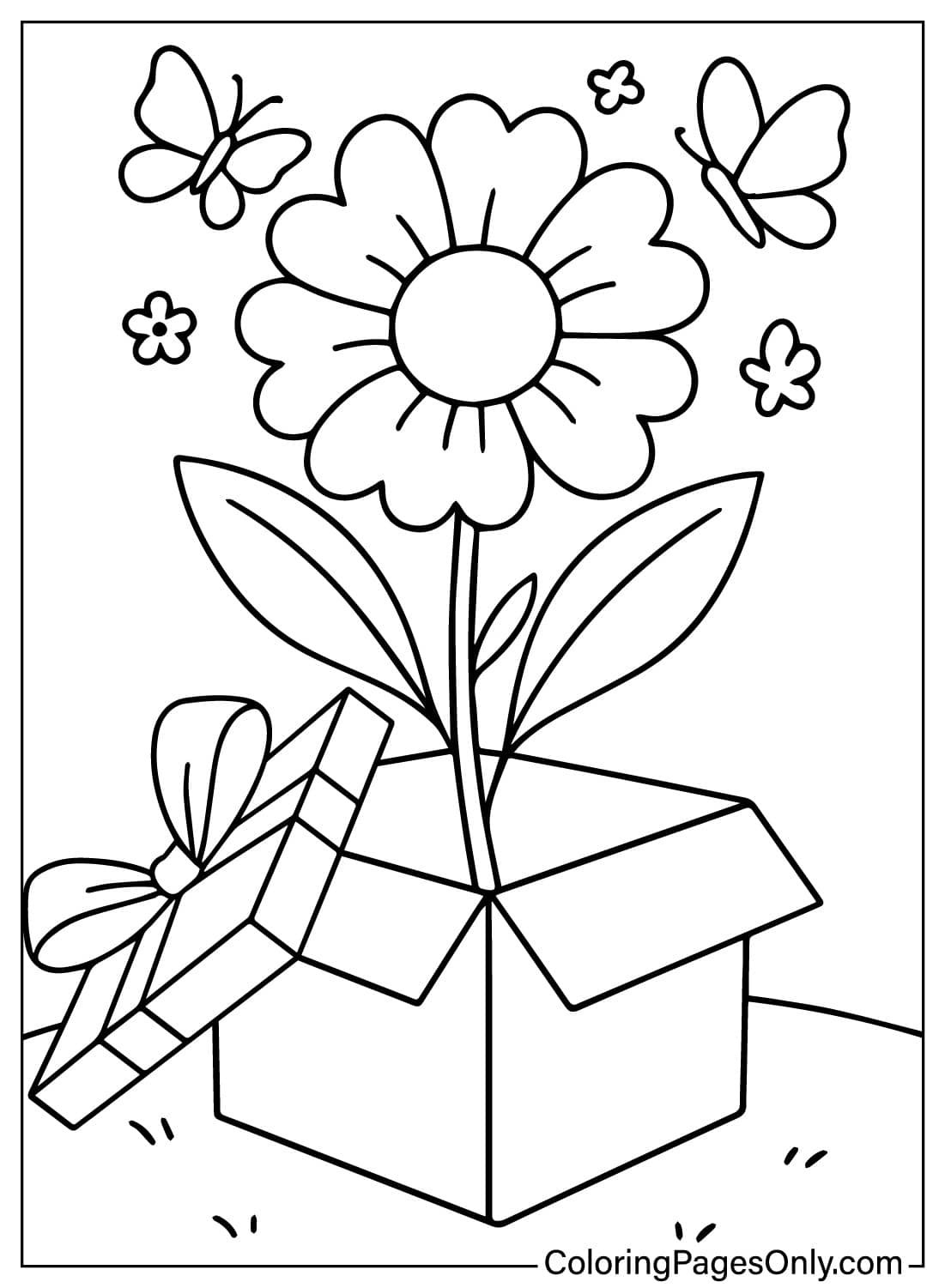
Giant Flower and Butterflies from Gift Box – A large blooming flower with leaves rises from the gift box, with the lid lying beside it. The flower-from-box image has a specific visual power: the flower is obviously too large to have been physically inside the box, which is exactly the point. The scale is impossible, and that impossibility is the magic. The coloring approach for the flower should be the most vivid and saturated on the page – this flower did not grow gradually; it burst into full bloom at the moment of the box opening.
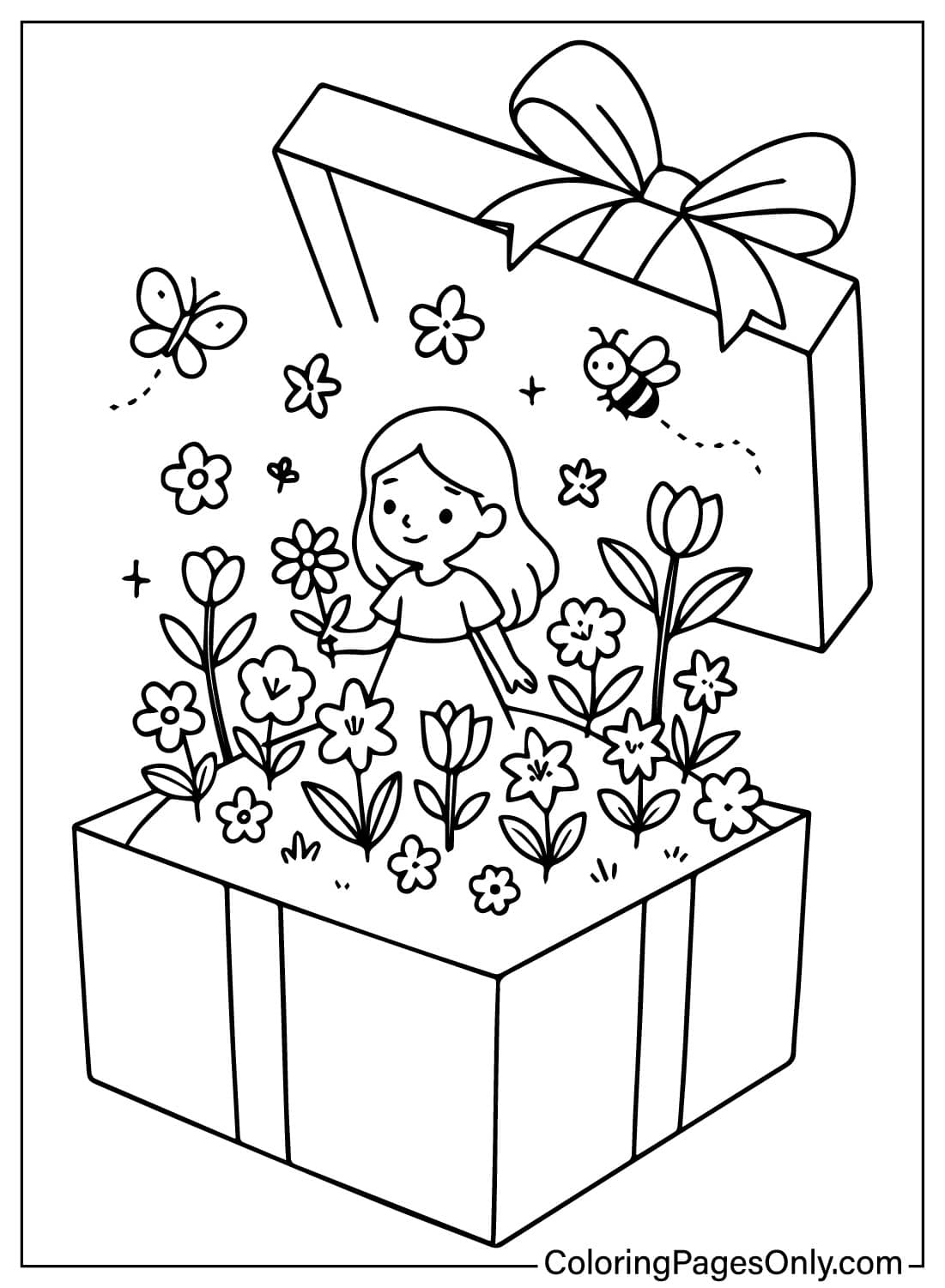
Girl in Flower Garden Gift Box – A happy girl emerges from a gift box surrounded by blooming flowers, with butterflies and a bee flying above. This page shows a person inside the box – not a fantastical creature, but a child in a garden – which makes it the most relationally immediate page in the collection. The girl can be given hair color and clothing colors that reflect the child doing the coloring, making the page a self-portrait of sorts: “I am what is inside this gift box.”
Landscapes and Worlds
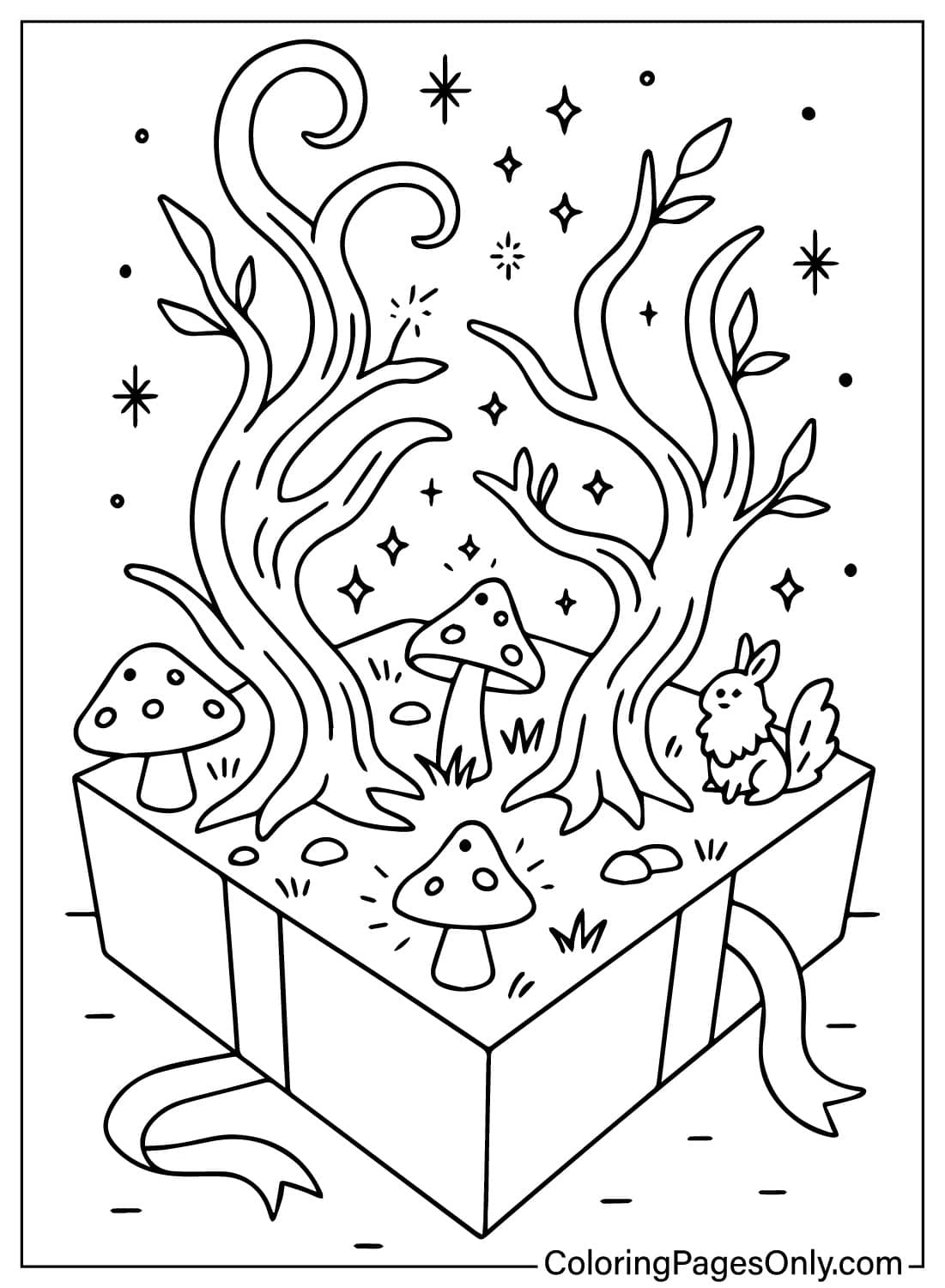
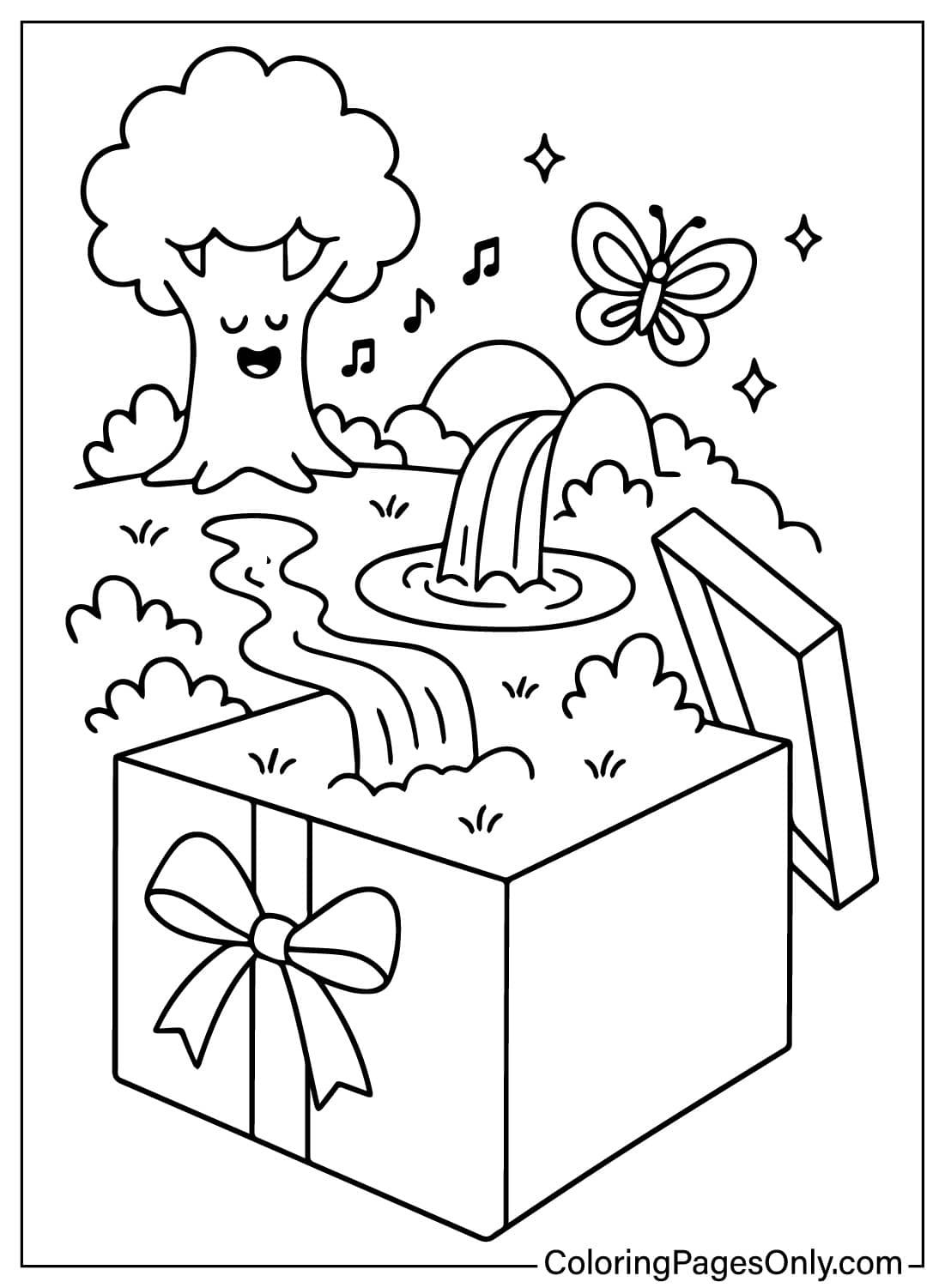
Enchanted Forest Gift Box – Two stylized trees with swirling branches, spotted mushrooms, and a small squirrel emerge from a gift box with ribbons spilling out. This is the most detailed landscape page in the collection. The enchanted forest visual language has specific conventions: trees with gnarled, spiral-branching forms rather than natural branching patterns; mushrooms with polka-dotted caps in red or orange against white stems; small woodland animals rendered in warm brown tones. The gift box ribbons spilling out into the forest scene create a visual connection between the gift-giving context and the natural world it contains.
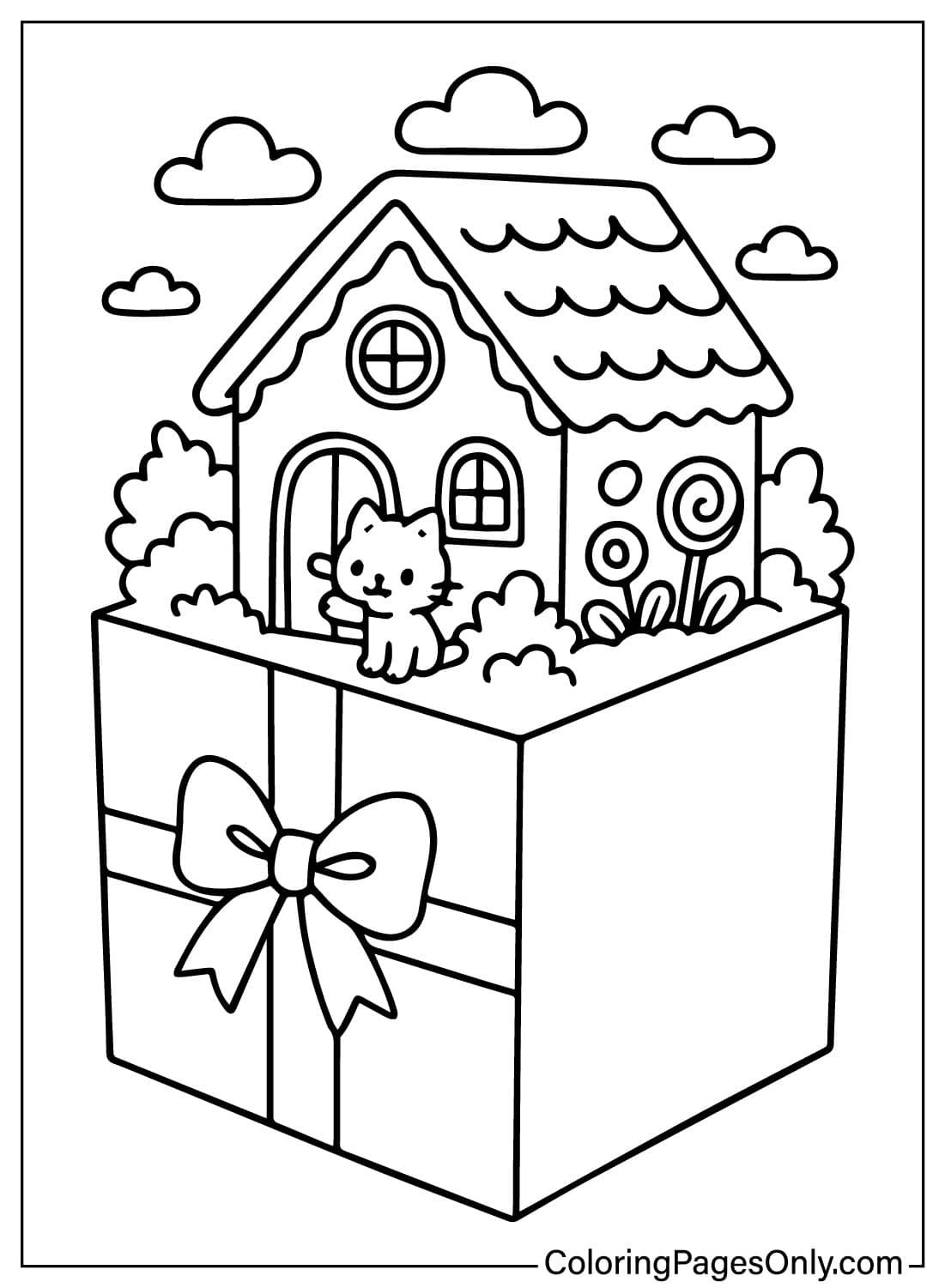
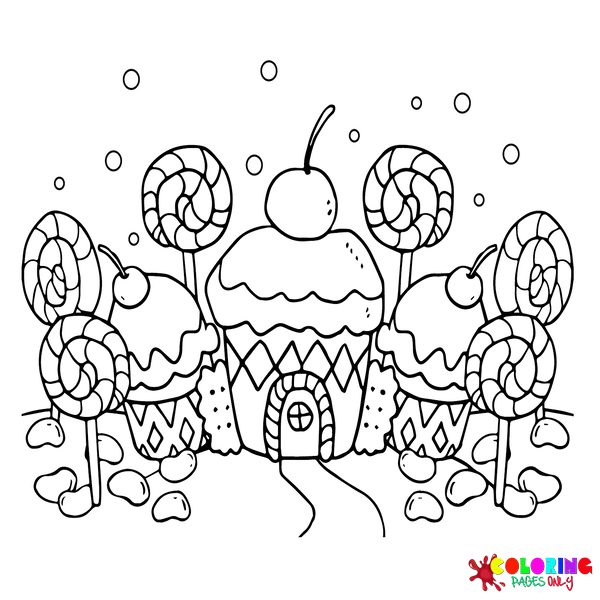
Gingerbread House and Cute Cat in Gift Box – A gingerbread-style house with wavy roof details, surrounded by bushes and a lollipop plant, with a cat at the front door. The gingerbread house is one of the richest single-image coloring subjects in children’s illustration: warm cookie-brown walls, white icing outlines and trim, candy decorations in vivid reds and greens, a lollipop spiral in pink and white. Every surface is an opportunity for a different pattern and color. The cat at the door – rendered in warm tabby tones – provides a living, character-based focal point in the foreground of this architectural fantasy.
Celebration and Abundance
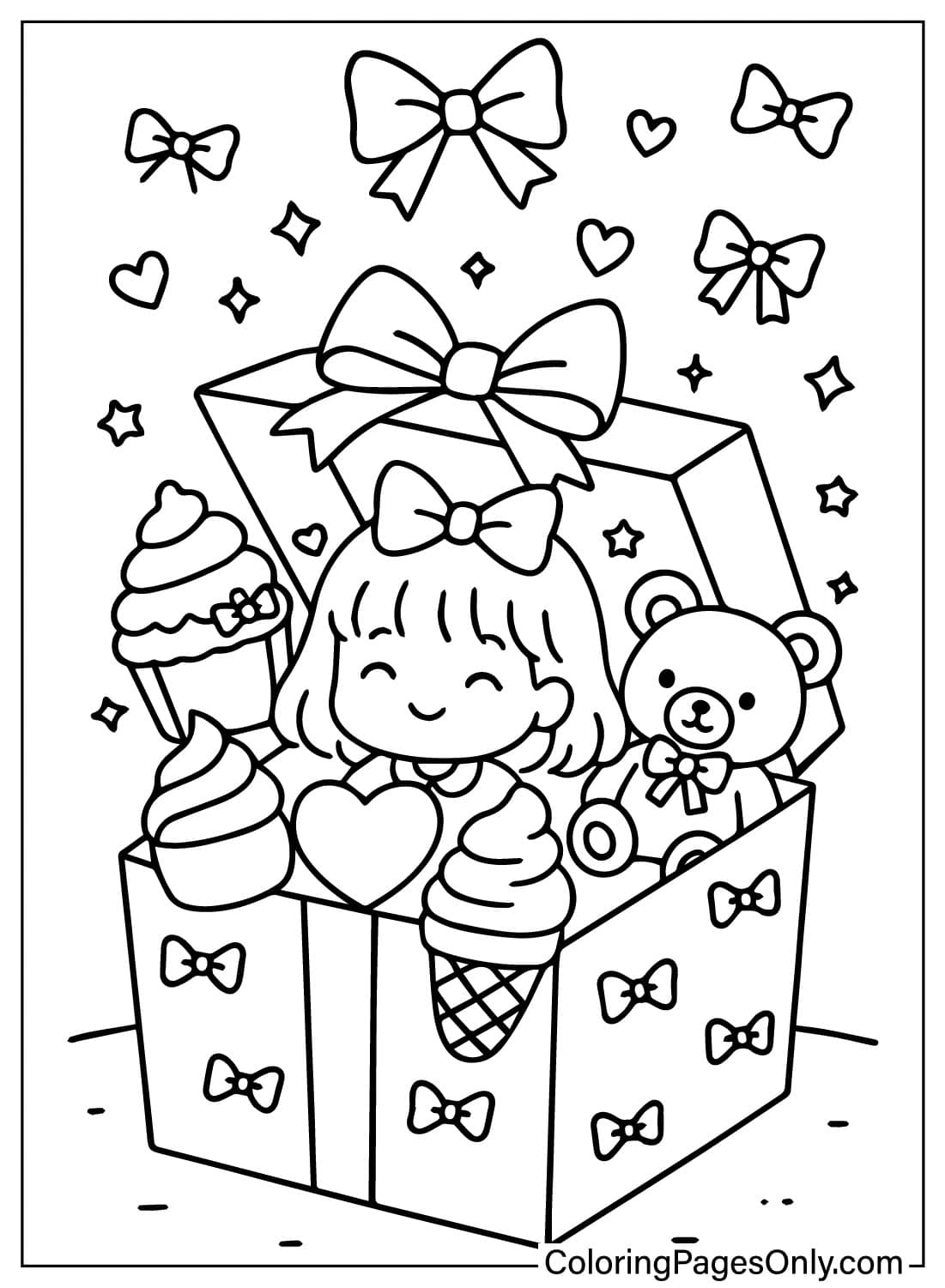
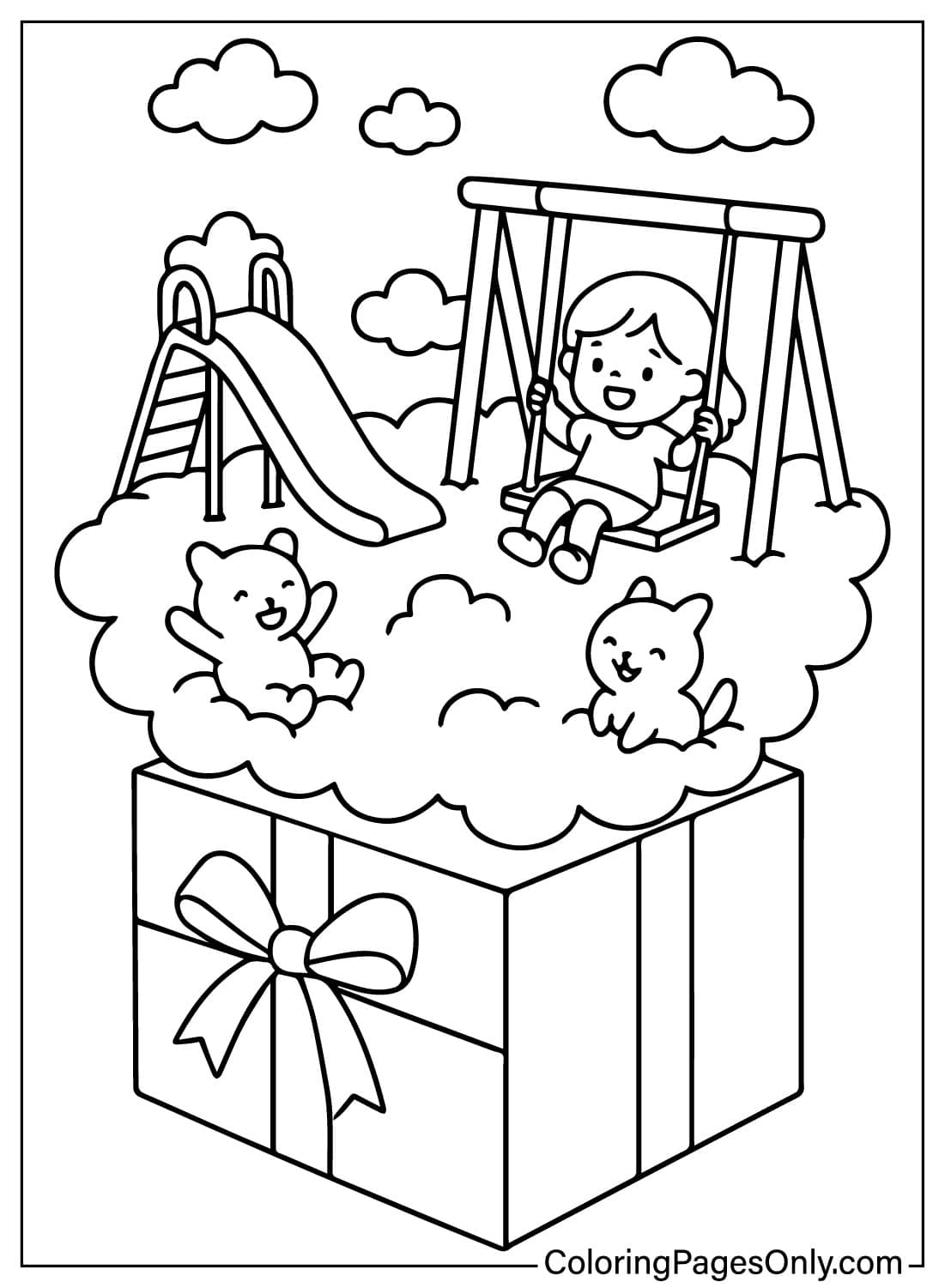
Cute Girl, Teddy Bear, and Sweets in Gift Box – A smiling girl holding a heart, a teddy bear, cupcakes, and an ice cream cone fill the box, surrounded by floating bows, hearts, and stars. This is the collection’s most explicitly celebratory page – a complete birthday or party scene contained within the gift box frame. The sweets vocabulary (cupcakes with swirled frosting, ice cream cones) provides a specific coloring challenge: food illustration benefits from warm, saturated colors that make the subjects look appealing. Pink frosting, yellow cake, mint or chocolate ice cream, red and gold stars.
The Psychology of Coloring a Surprise
The coloring experience in the Giftland collection has a specific quality that distinguishes it from most other coloring page subjects: it involves a kind of retroactive discovery. The scene inside each gift box is visible – unlike a real gift box, the contents are already shown – but they are shown in outline only, waiting for color to give them their full existence. The colorist is not discovering the contents so much as determining them through their color choices.
This creative agency – I decide what color this fairy’s wings are, I determine how vivid this crystal landscape feels, I choose whether this enchanted forest feels spring-bright or autumn-deep – produces a relationship with the finished page that is more personal than many coloring subjects. Because the scene inside the box is fantastical (not constrained by real-world color conventions in the way that, say, a school bus or a national flag is), the colorist has genuine creative latitude. The “correct” colors for a floating castle’s towers or a crystal cat’s gem are not established by nature – they are established by the colorist’s imagination.
Research from developmental psychology consistently shows that children value creative products more when they have exercised genuine choice in their production. The Giftland pages, by presenting subjects that have no fixed canonical palette, invite a higher degree of creative investment than pages where the “correct” colors are predetermined. A child who chooses to make “Fairytale Castle in the Clouds Gift Box” in warm sunset tones – pink towers, orange clouds, golden pennants – rather than the conventional cool blues of cloud imagery has made a genuine creative decision that reflects their individual color sensibility. The finished page is then unmistakably theirs.
Coloring Tips for Giftland Pages
The gift box itself – render it before the interior scene. Every page in this collection has two visual zones: the gift box (exterior, with bow, ribbon, and box walls) and the scene emerging from or contained within it. A common approach is to color the exciting interior scene first and leave the box for later – but this often results in a box rendered in residual colors that don’t quite work with the scene. Instead, decide on the box color first and commit to it: a deep red box with gold ribbon, a royal purple box with silver trim, or a classic cream box with a velvet bow. With the box established, the interior scene’s colors can be chosen to complement or contrast deliberately.
The interior scene requires its own internal color logic. The world inside each gift box should feel coherent – as if it follows the laws of some specific magical environment, even if those laws differ from reality. For the Enchanted Forest, that means earthy greens, russet browns, and mushroom reds working together as a forest palette. For the Crystal Land, that means cool blues and lavenders with bright gem accents working as a geological palette. For the Gingerbread House, that means warm cookie browns, white icing, and candy-bright accent colors working as a confectionery palette. Before coloring the interior scene, spend a moment deciding: what kind of place is this, and what colors does that kind of place use?
The “impossible scale” is the magic – honor it with color contrast. Every page in this collection violates the physical laws of containment: a giant flower that couldn’t fit in any real box, a castle that would require a warehouse rather than a gift-wrapped cube, a forest with full-sized trees emerging from a ribboned package. The visual effect of this deliberate impossibility is most powerful when the colors make the contrast clear: the gift box should read as smaller-scale and more domestic (warm, familiar gift-wrapping colors), while the interior scene should read as larger-scale and more expansive (the colors of a landscape or a world, not of a box-sized miniature). Deep, rich colors for the interior scene versus warm, familiar colors for the box exterior create this feeling of a world that is genuinely larger inside than outside.
Sparkles, stars, and floating elements – use them as a color accent system. Many pages in this collection feature floating decorative elements around and above the gift box: hearts, stars, sparkles, bows. These elements should not all be the same color – they should function as a color accent system that reinforces the page’s palette. In “Adorable Kitten and Hearts in Gift Box,” the floating hearts can progress from deep red at the largest to pale blush at the smallest, creating a value gradient that frames the scene. In “Cute Girl, Teddy Bear, and Sweets in Gift Box,” the floating stars and bows can alternate between the warm colors of the scene (pinks, golds) and cool accent colors (silver, pale blue) to create visual sparkle.
The lid – the most overlooked element in the collection. Every page shows a gift box with its lid ajar, removed, or floating above the scene. The lid is easy to overlook because it is not the compositionally interesting element – the interior scene demands attention. But the lid is the page’s punctuation mark: it is what makes the box “open,” what communicates that the reveal has happened. The lid should be colored in the same palette as the box body, with the ribbon or bow as the accent color that draws the eye. A rich lid color (matching the box) and a vivid accent bow (contrasting with both box and interior) give the whole composition a clear visual hierarchy: the eye goes from box, to open lid, to interior scene – exactly the order of discovery in real gift-opening.
5 Activities
The gift box story creation. Choose any page from this collection and color it. While coloring, create a story that explains the gift box: who gave it? to whom? On what occasion? And why does it contain this particular world – why does this specific person receive a fairy garden, or a gingerbread house, or a crystal landscape? The story should have three parts: the giving (who gave the box, and what was the occasion), the opening (the moment the lid came off and the world inside was revealed), and the aftermath (what the recipient did next – did they step into the world inside the box? did they make a wish? did they visit the fairy and ask her a question?). Write the story on the back of the finished colored page. This activity transforms a coloring page into the beginning of an original narrative – the coloring gives the story its visual world, and the story gives the coloring its emotional context.
The “what’s in your box?” design challenge. After coloring any page from the collection, design your own Giftland page on blank paper. The design rules: draw a gift box with its lid off (the box should take up approximately the lower third of the page). Then decide: what world will emerge from your box? It must be a world you have invented – not copied from any existing illustration. Sketch the world, then color it. The completed original Giftland page – a child’s own invented surprise scene – is often more personally meaningful than any pre-printed coloring page, because every element was chosen and placed by the creator rather than received. Display the original alongside any colored pages from the collection as a companion piece: “This is a Giftland scene I invented.”
The color theory contrast exercise. Select three pages from the collection that contain different types of interior worlds: one natural scene (Enchanted Forest or Giant Flower), one architectural scene (Fairytale Castle or Gingerbread House), and one creature scene (Happy Dinosaur or Crystal Land Cat). Color all three gift boxes in identical colors – the same box color, the same ribbon color, the same lid treatment. Then color each interior scene using its own distinct and internally consistent palette. The finished set of three pages demonstrates, visually and concretely, how the same “container” (identical gift box) can hold completely different “worlds” – the box is the constant, the world inside is the variable. This exercise develops what color theorists call “palette discipline”: the ability to choose a color scheme for a specific subject and maintain it consistently throughout a composition rather than mixing unrelated colors at random.
The occasion-matching game. Select seven pages from the collection – one for each day of a week – and match each page to a real-world gift-giving occasion. Which gift box world would you give on a birthday? Which would you give on a holiday? Which would you give to a friend who was sad? Which would you give to a grandparent? Which would you give to a teacher? Which would you give to someone getting married? Which would you give on the last day of school? For each occasion, color the selected page and write a brief gift tag on the back: who the gift is from, who it is for, and why this particular world was chosen for this particular person and this particular moment. This activity develops the “theory of mind” that psychologists associate with thoughtful gift-giving – the ability to imagine another person’s emotional state and choose something that will resonate specifically with them, not just something that is generically pleasant.
The collaborative Giftland mural. In a classroom or family setting, print multiple pages from the collection and assign one page per person. Each person colors their page using whatever palette they choose, without consulting or coordinating with others. When all pages are finished, arrange them together on a large piece of backing paper to create a Giftland world map: the gift boxes are all positioned on the same ground level, and the worlds emerging from each box – the fairy garden, the castle clouds, the enchanted forest, the crystal landscape, the Easter meadow, the bird flock – fill the space above each box as neighboring domains in a larger magical geography. The assembled mural shows that each gift box contains not just a world but a part of a larger Giftland continent, where all these magical territories coexist. The variety of color palettes – each person’s individual choices – makes the assembled world feel genuinely diverse and rich, because it is: many different imaginations have contributed to the same shared space.