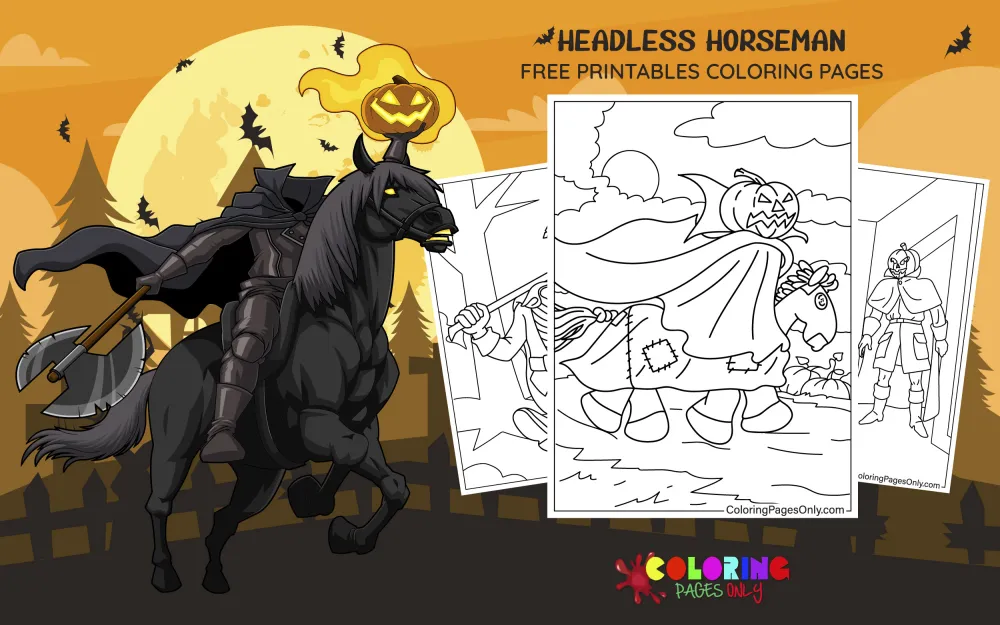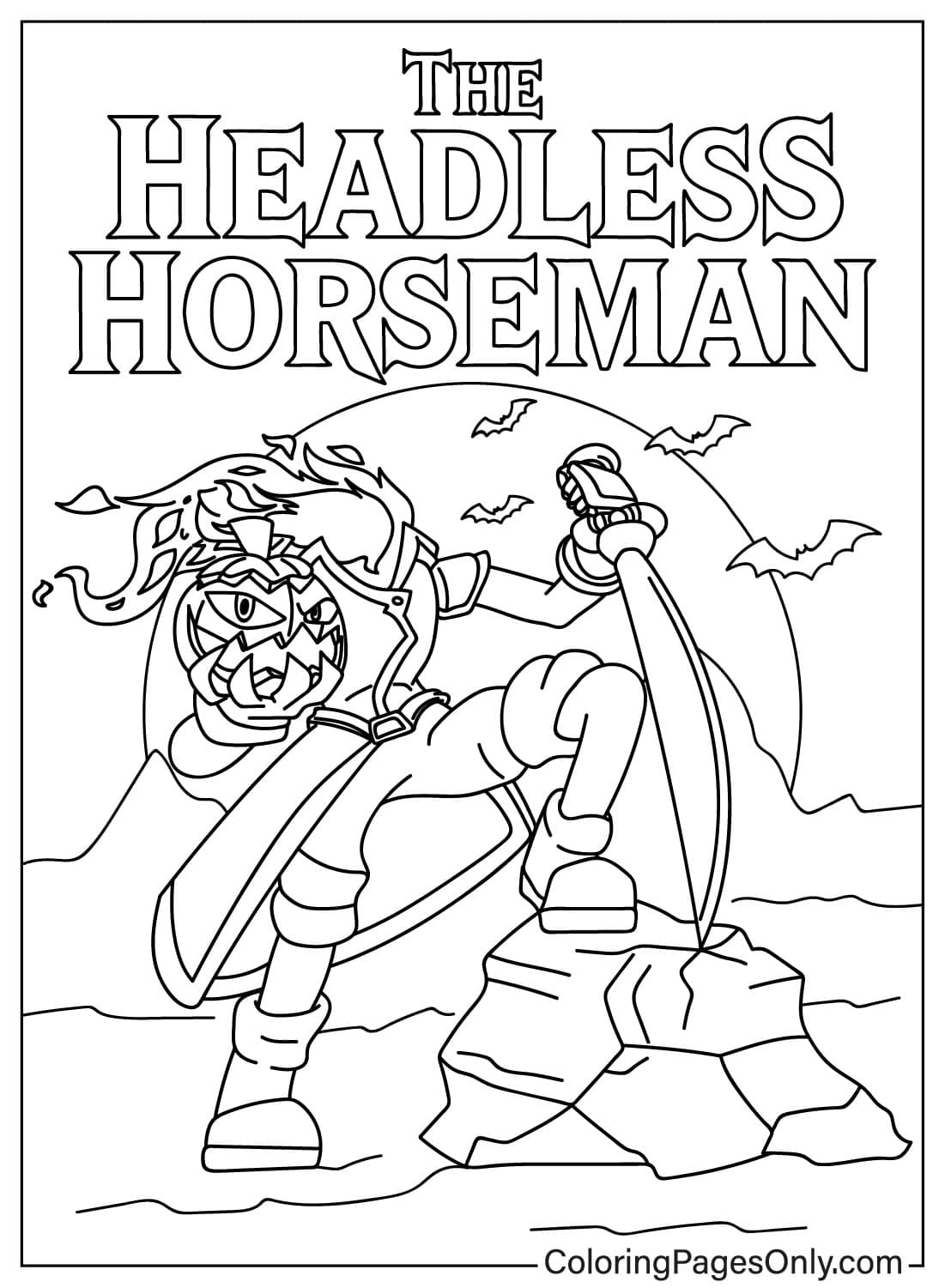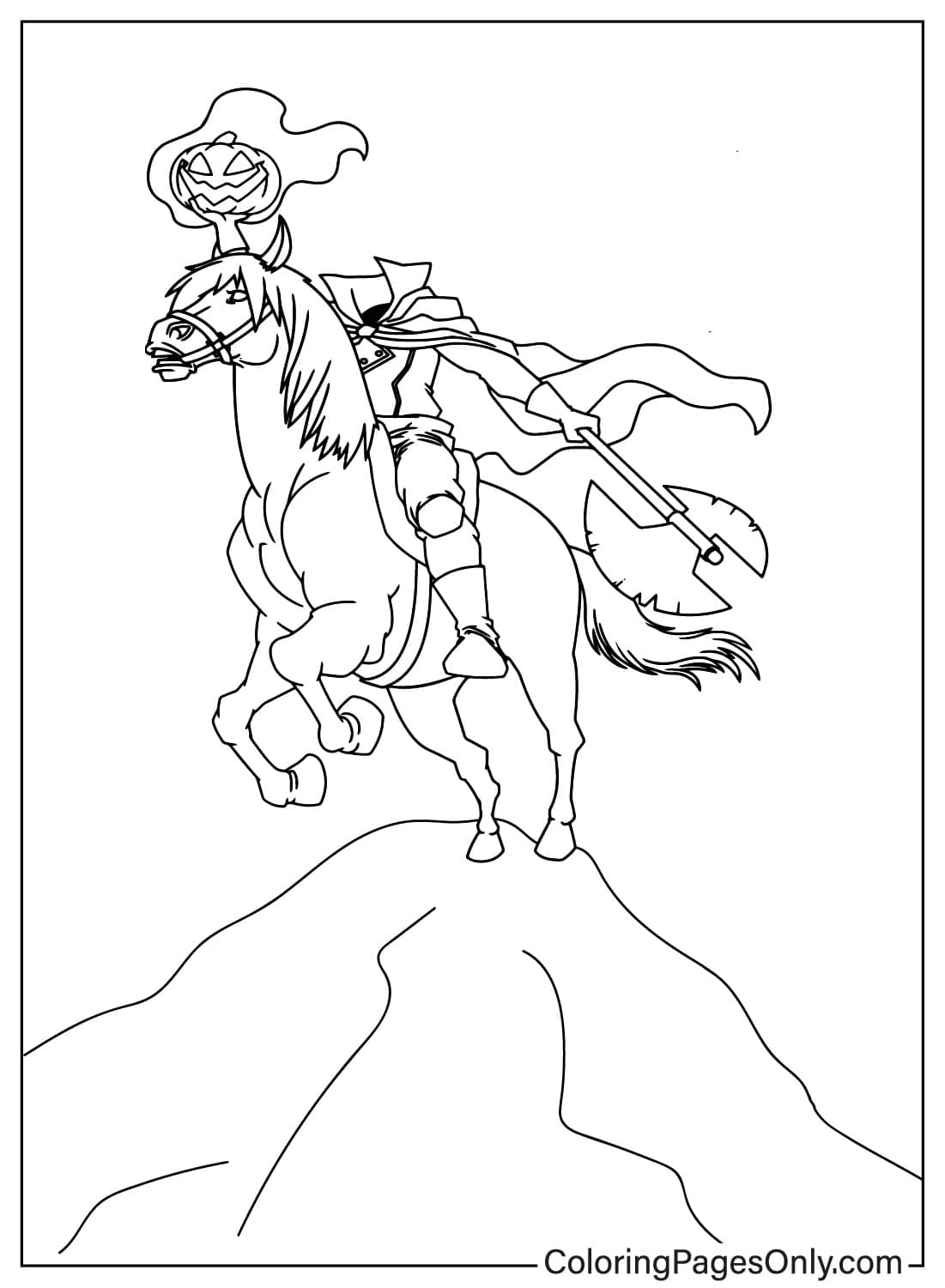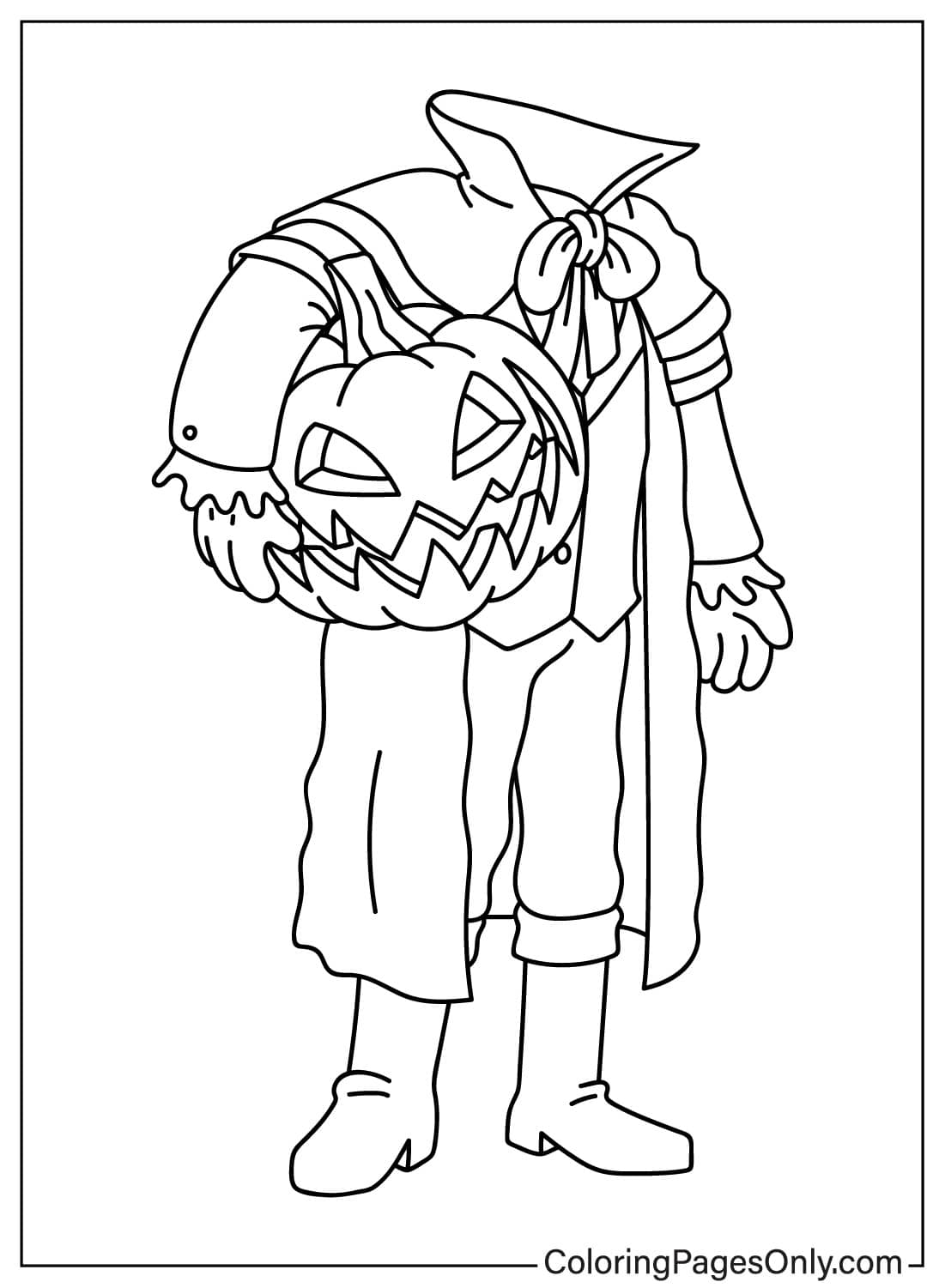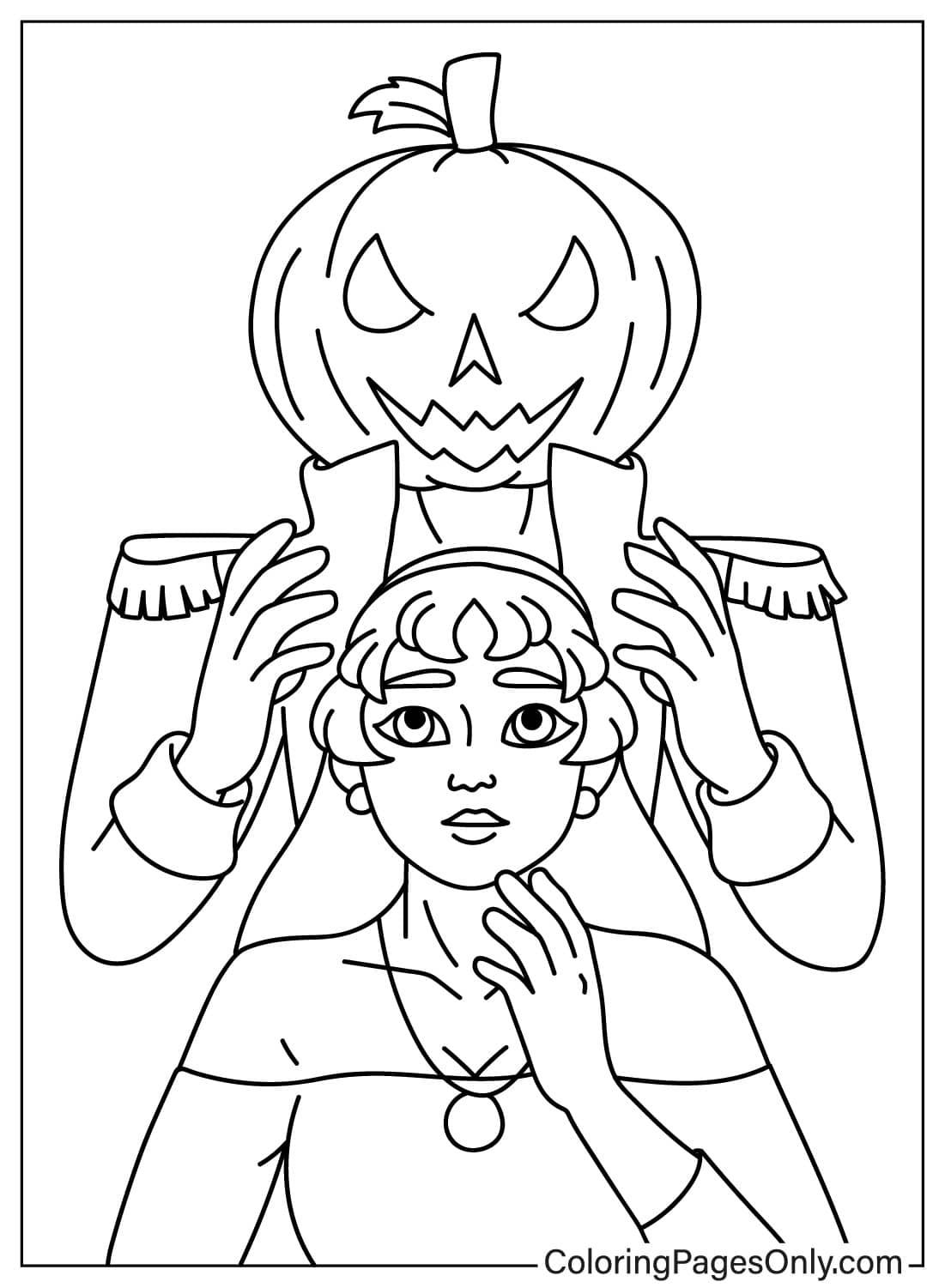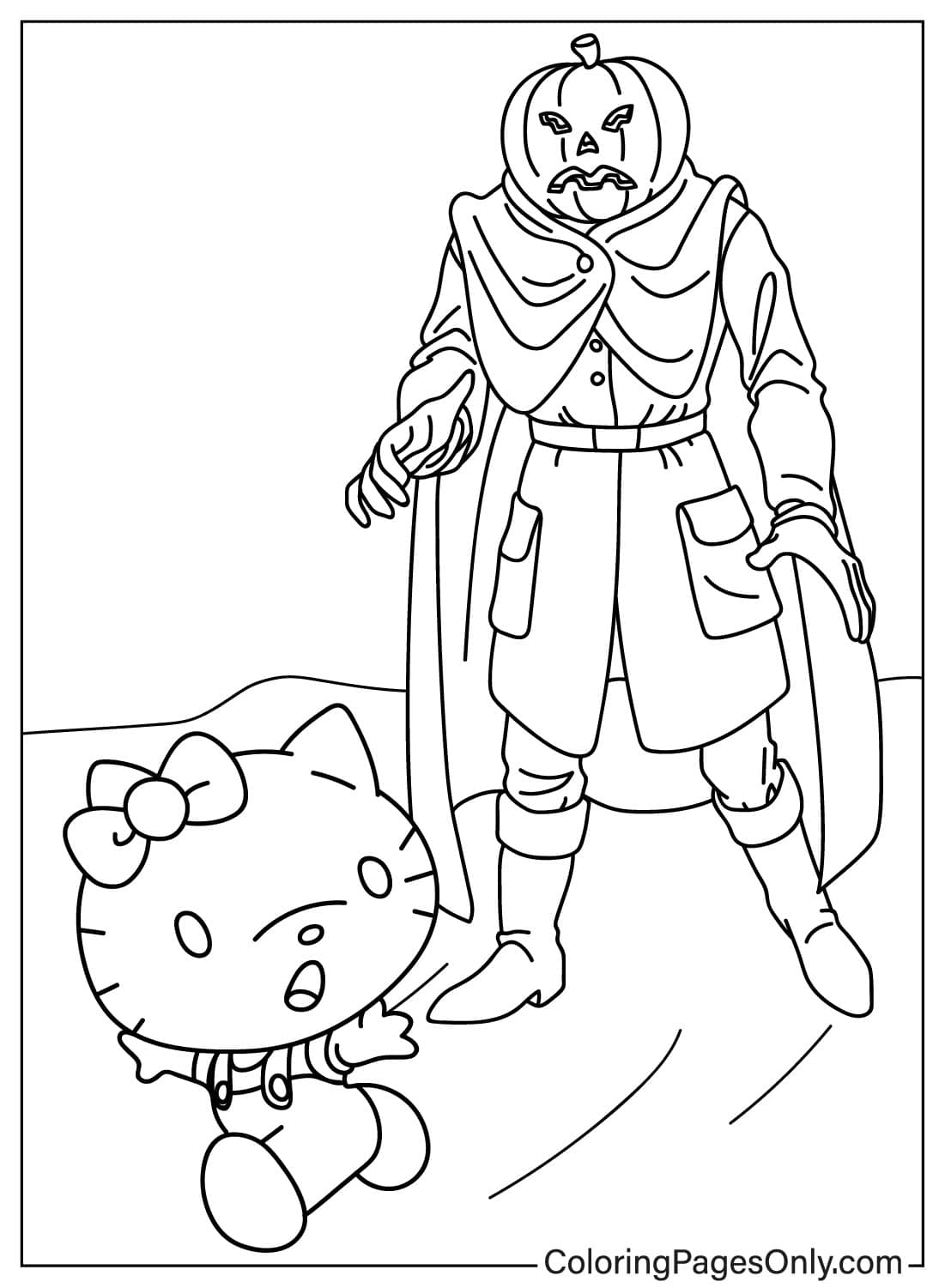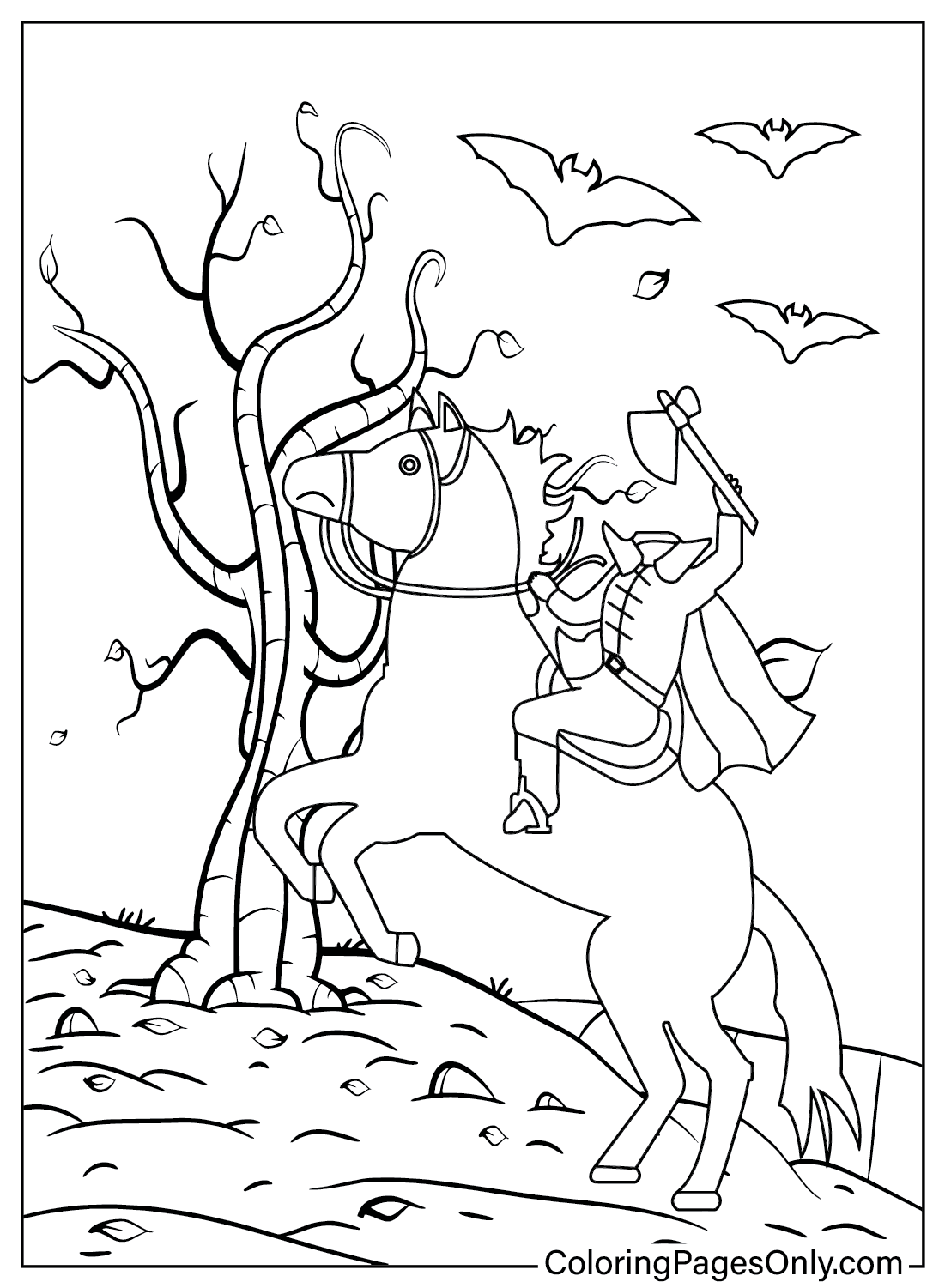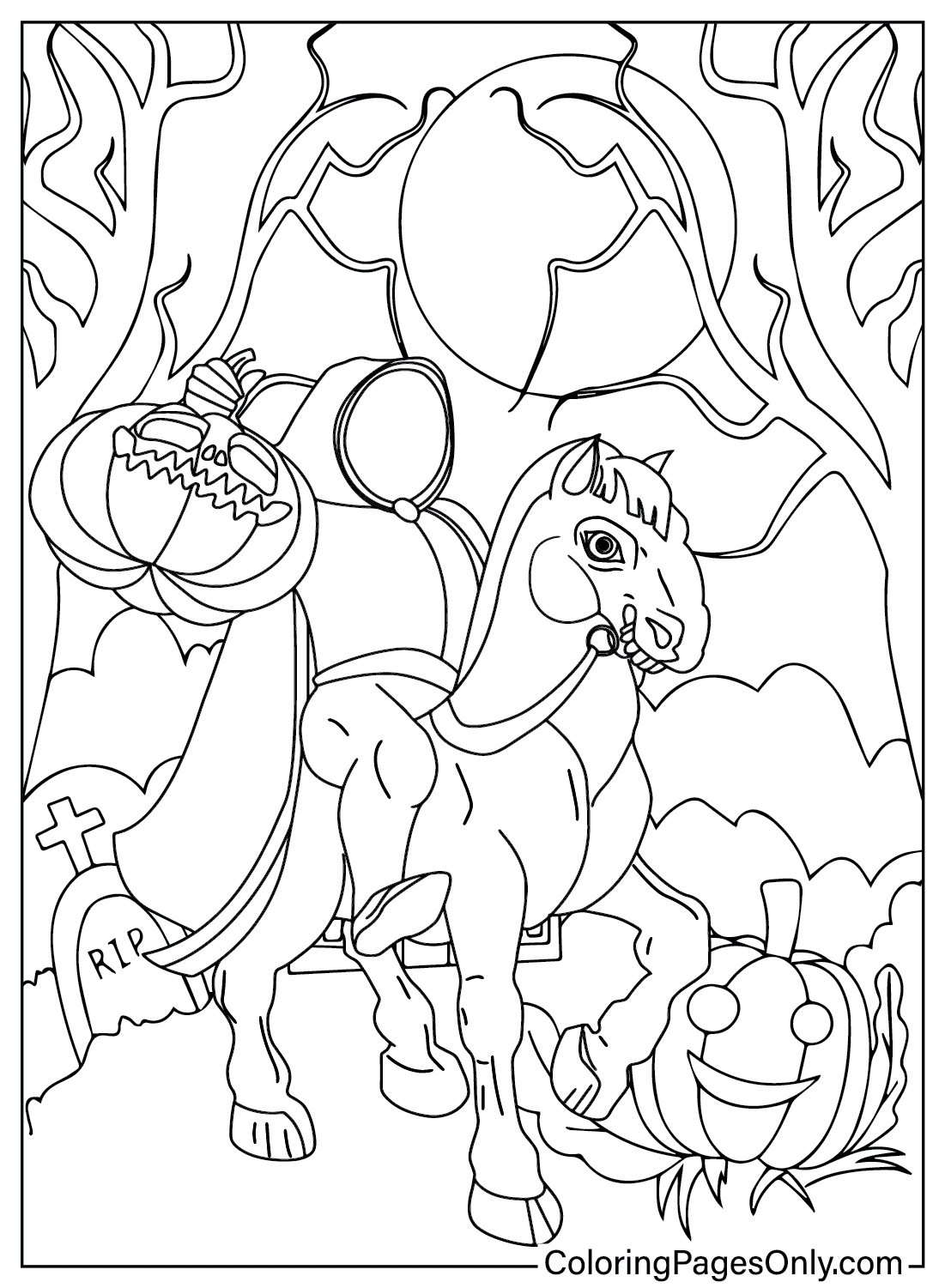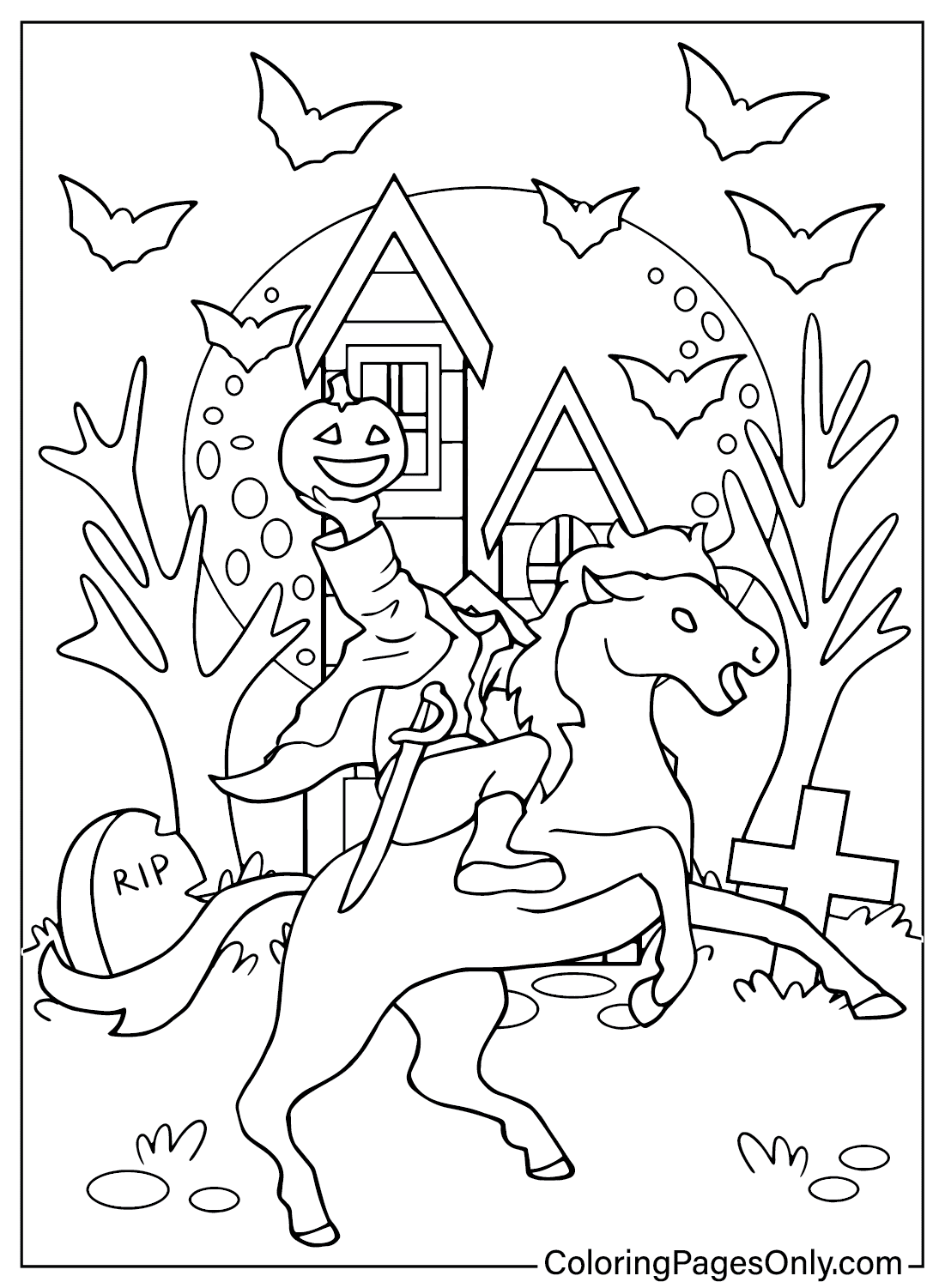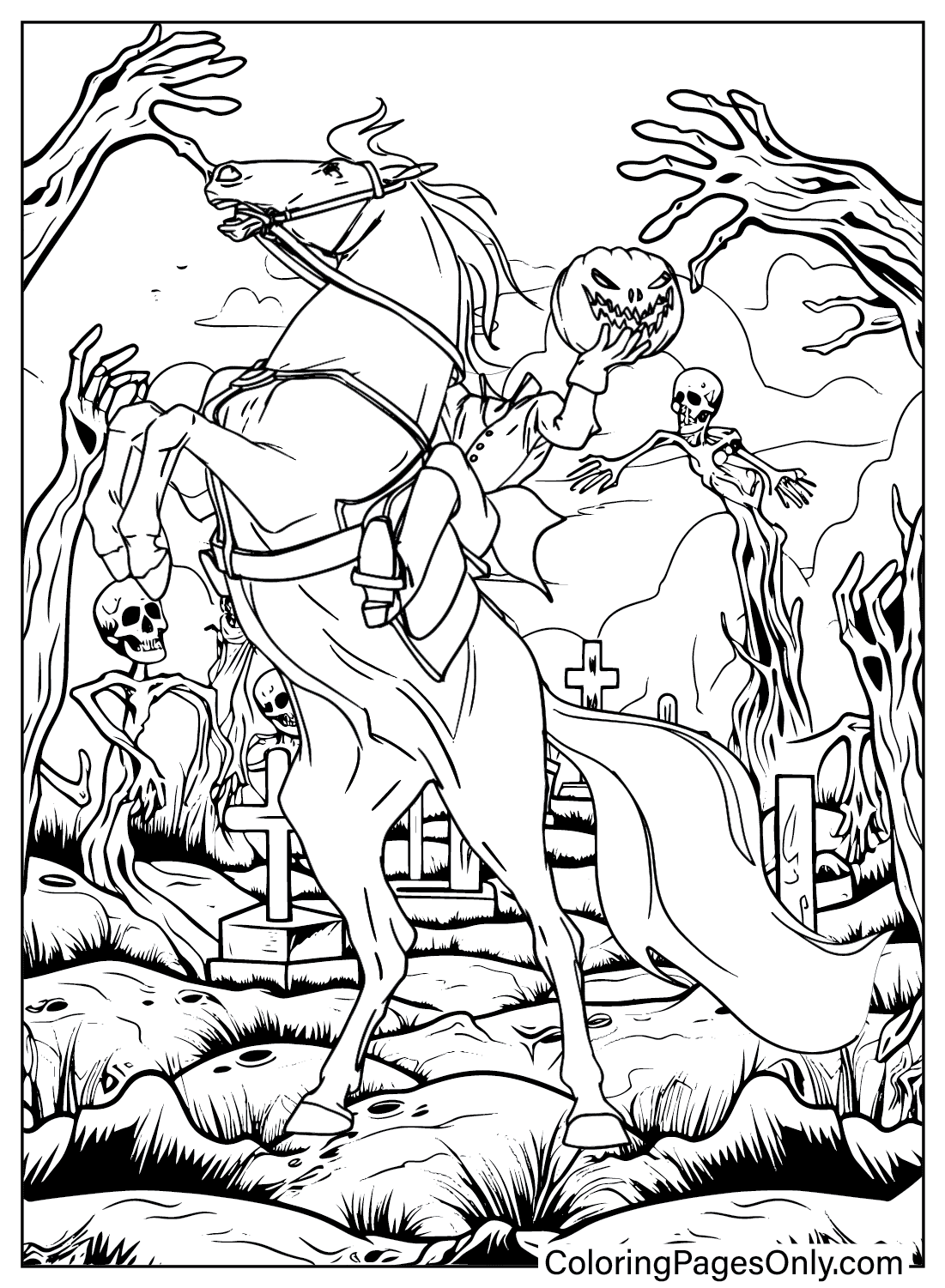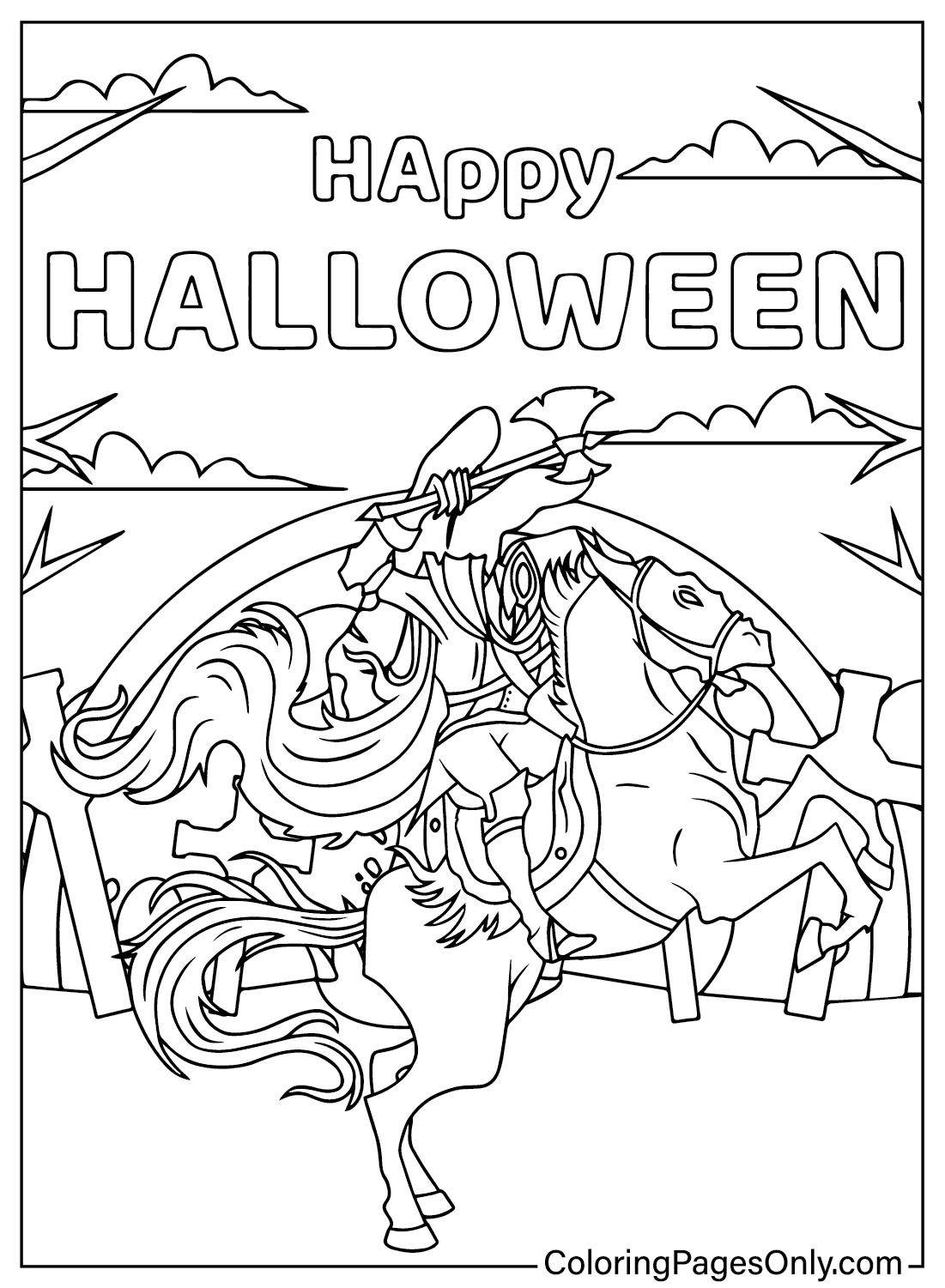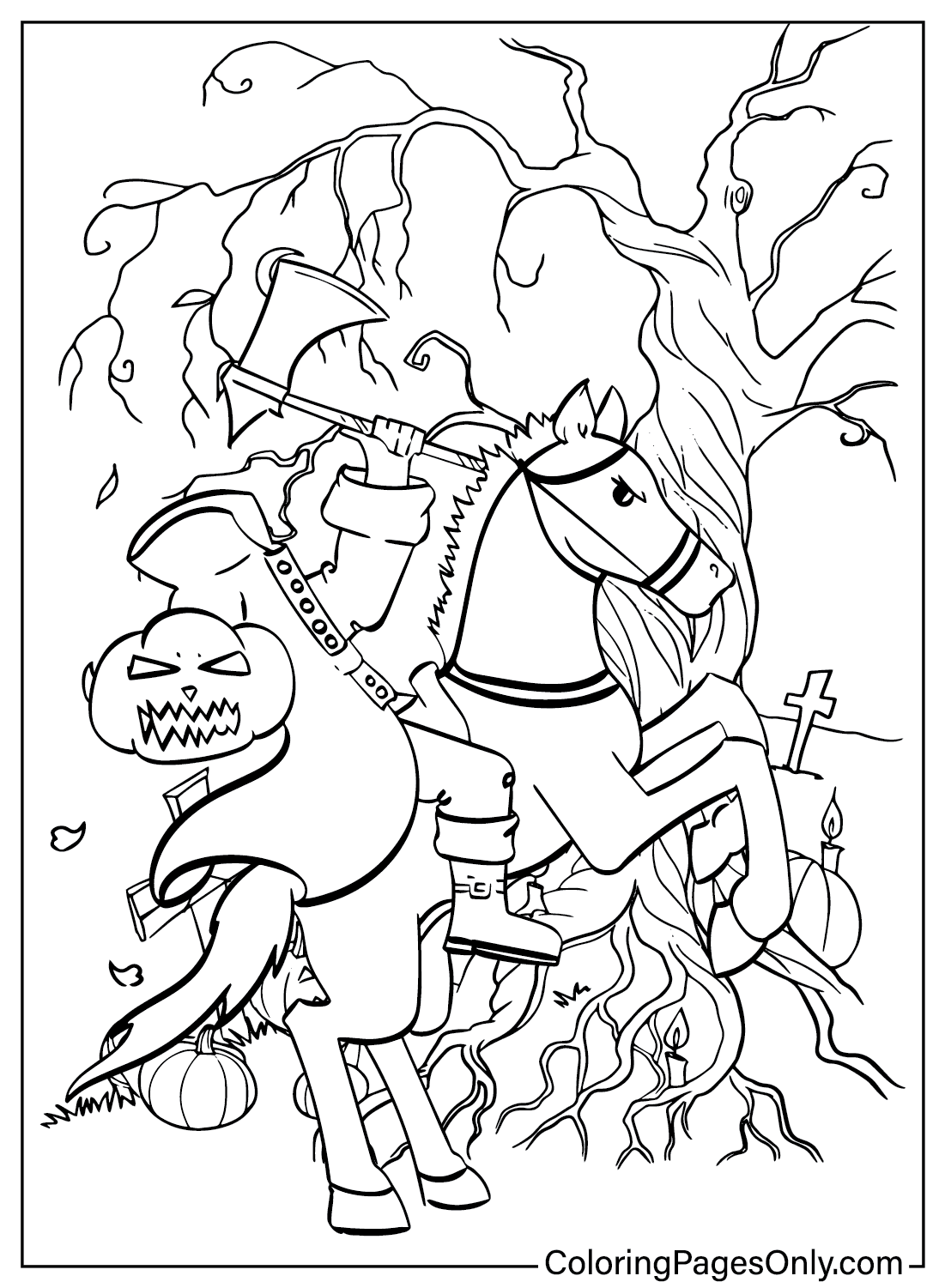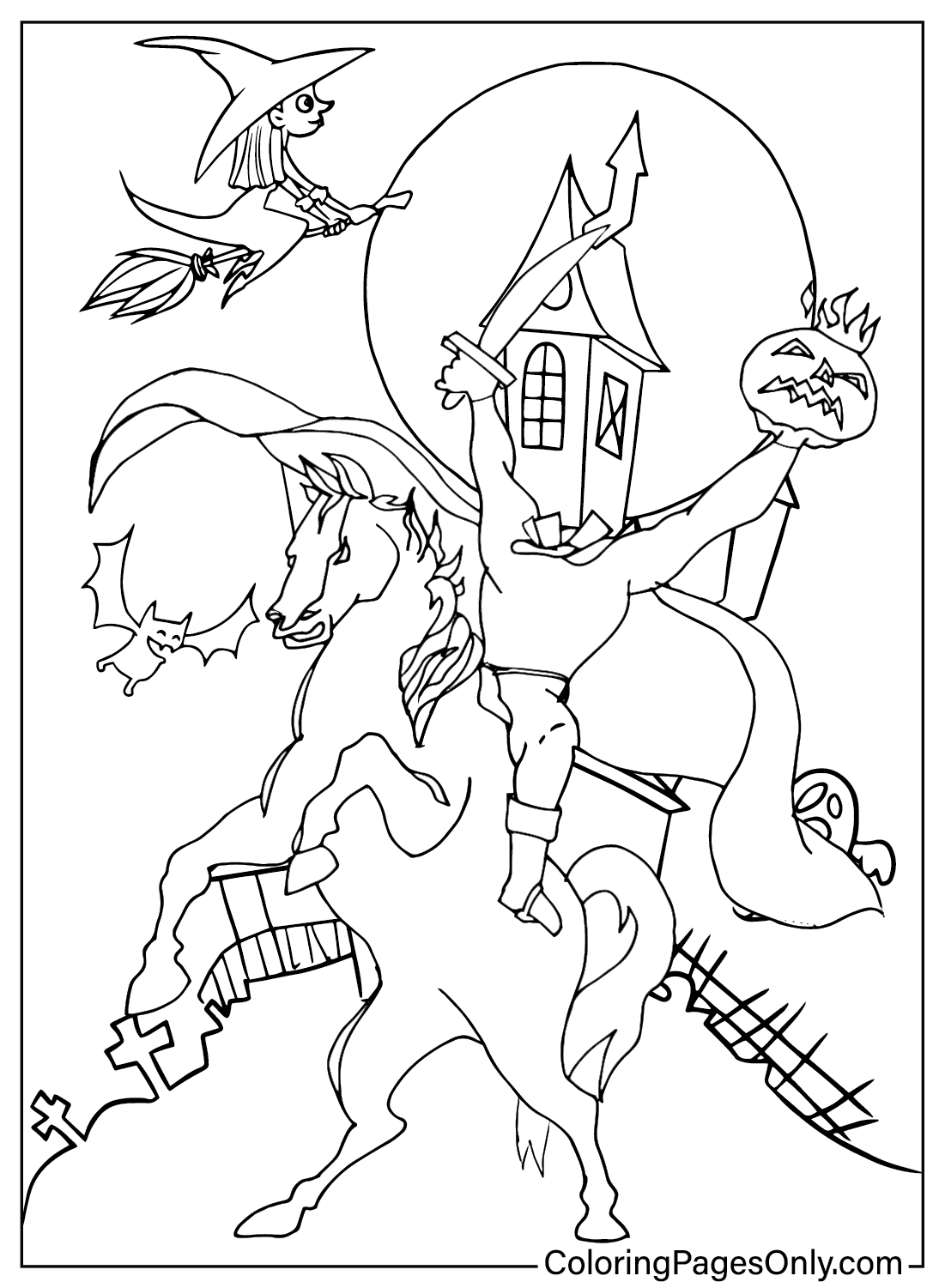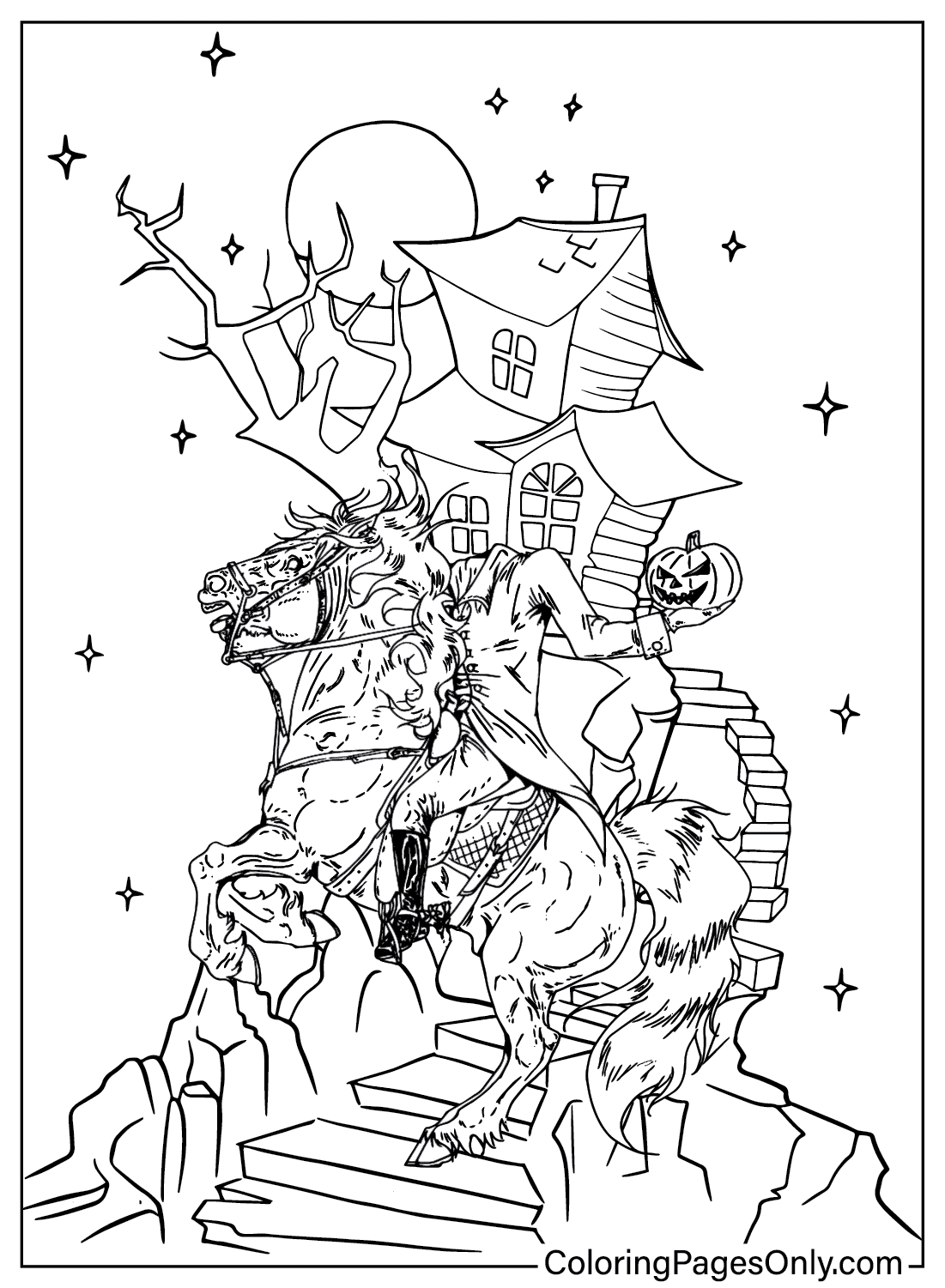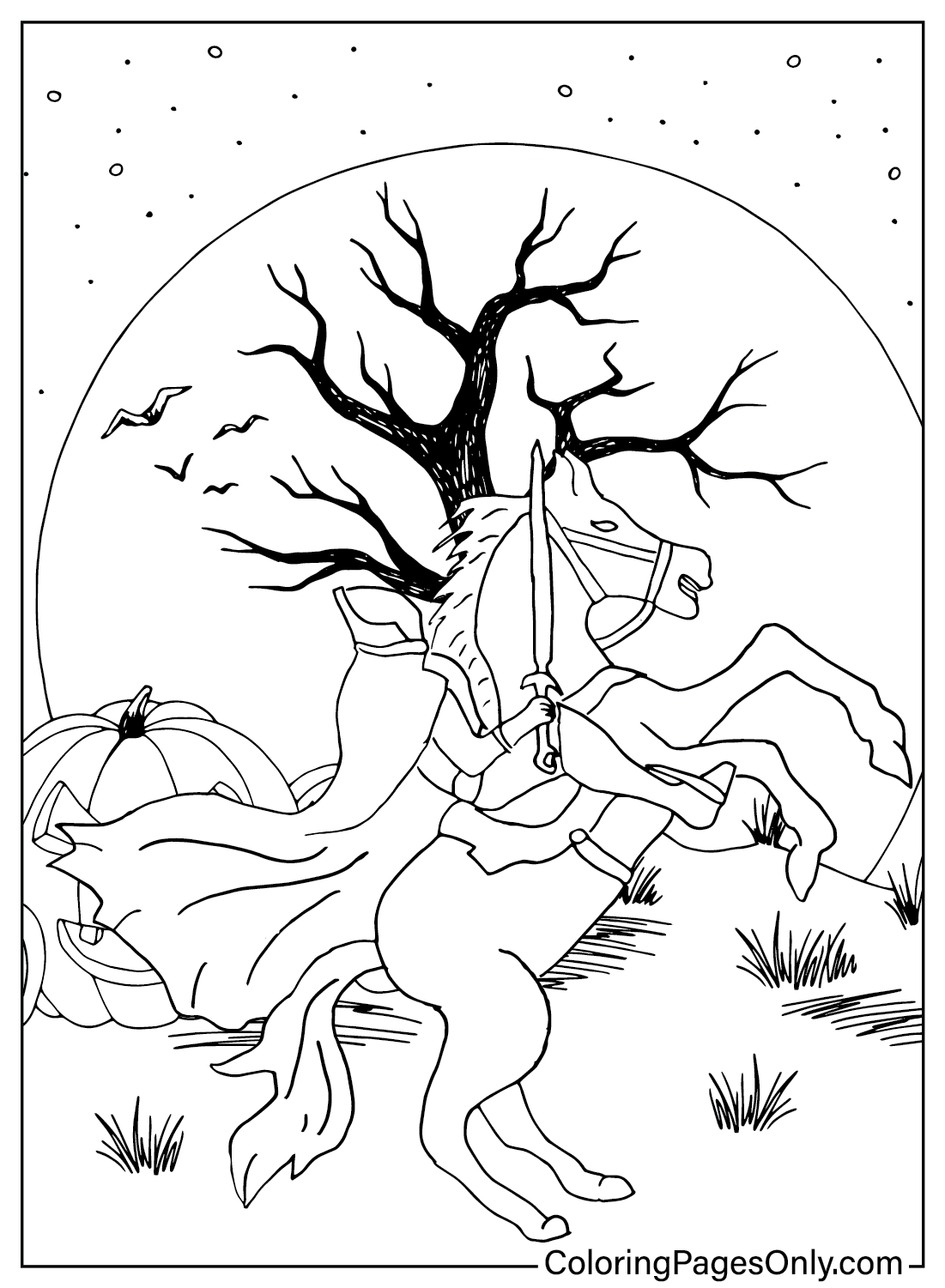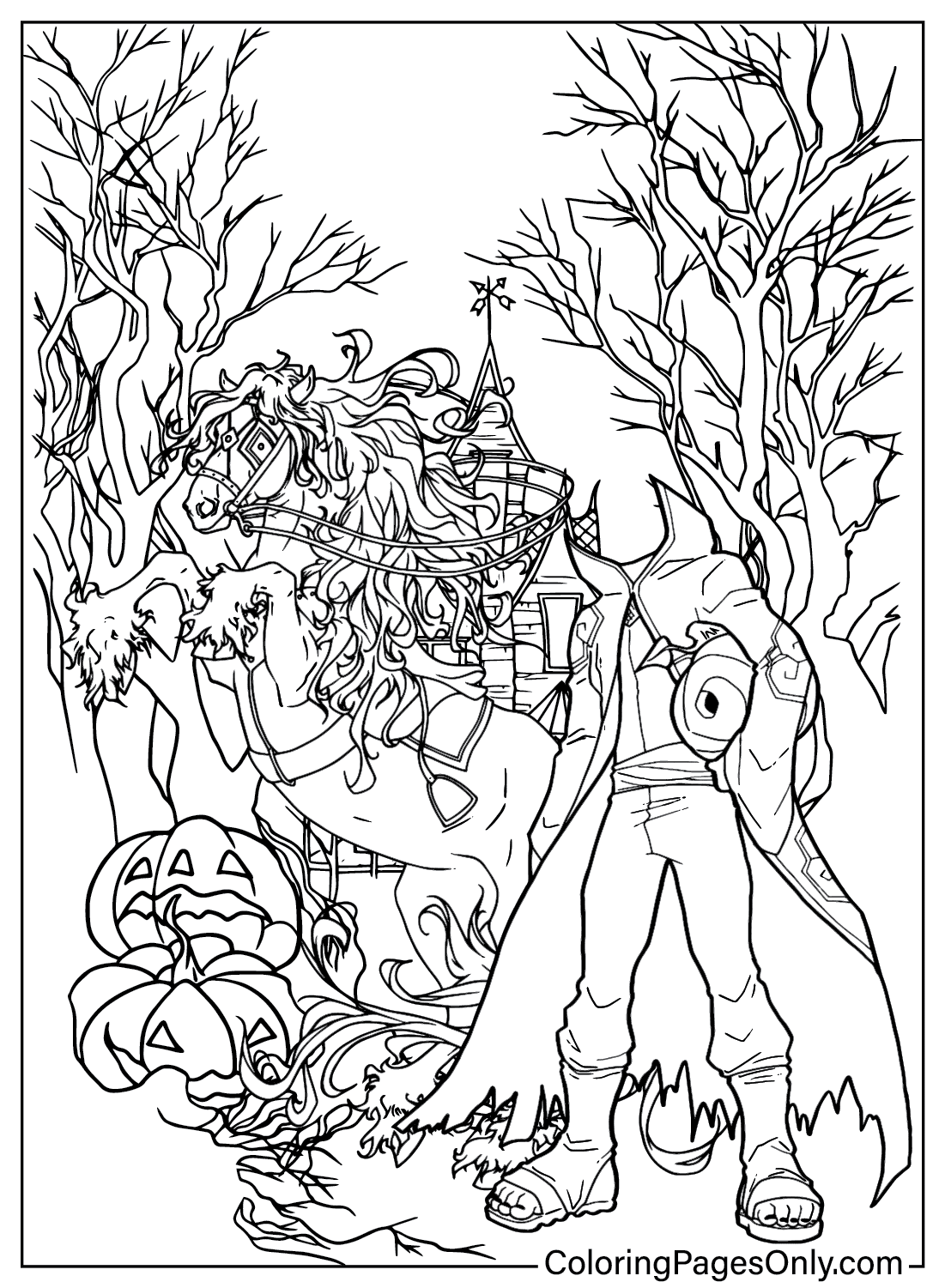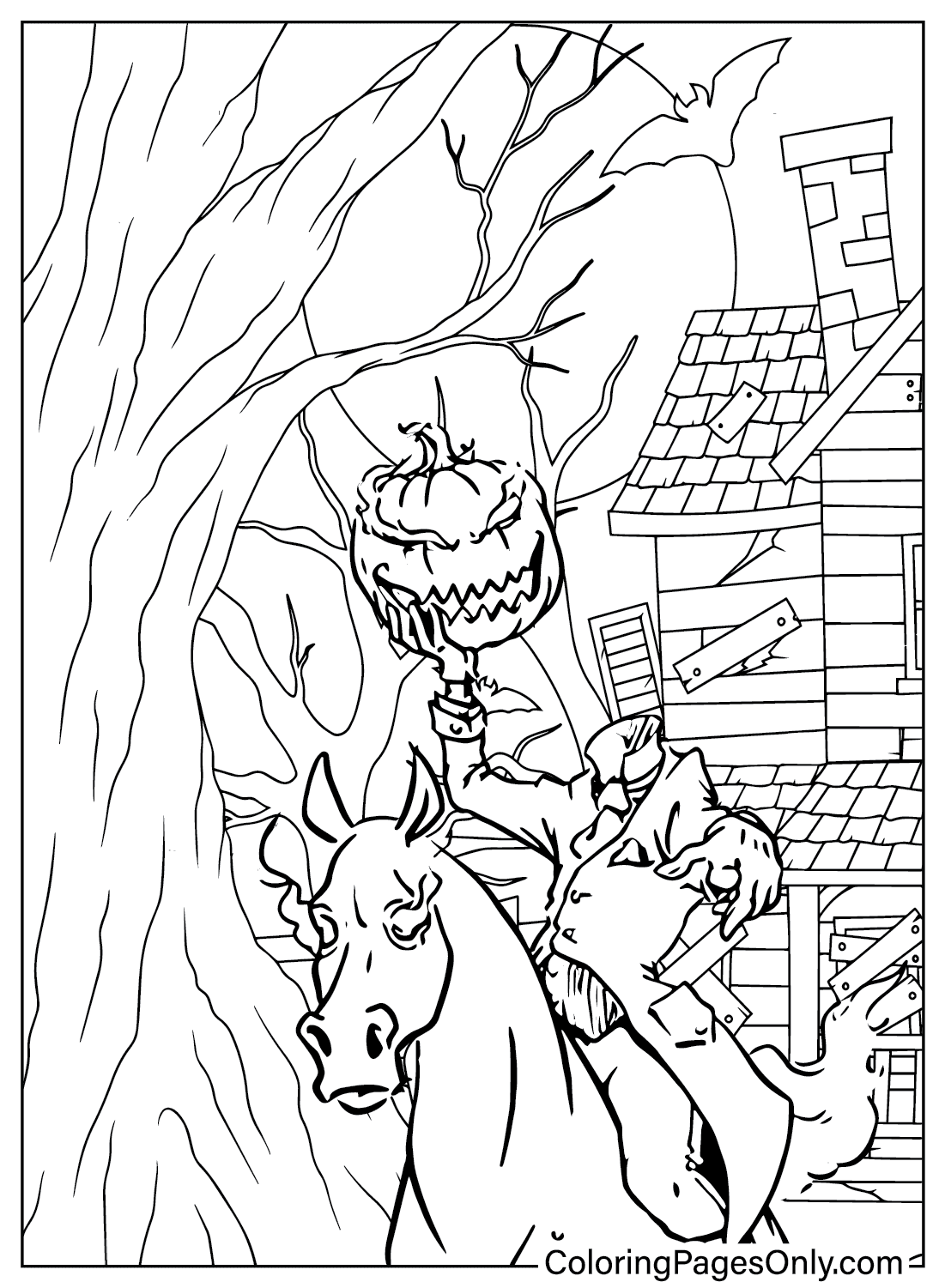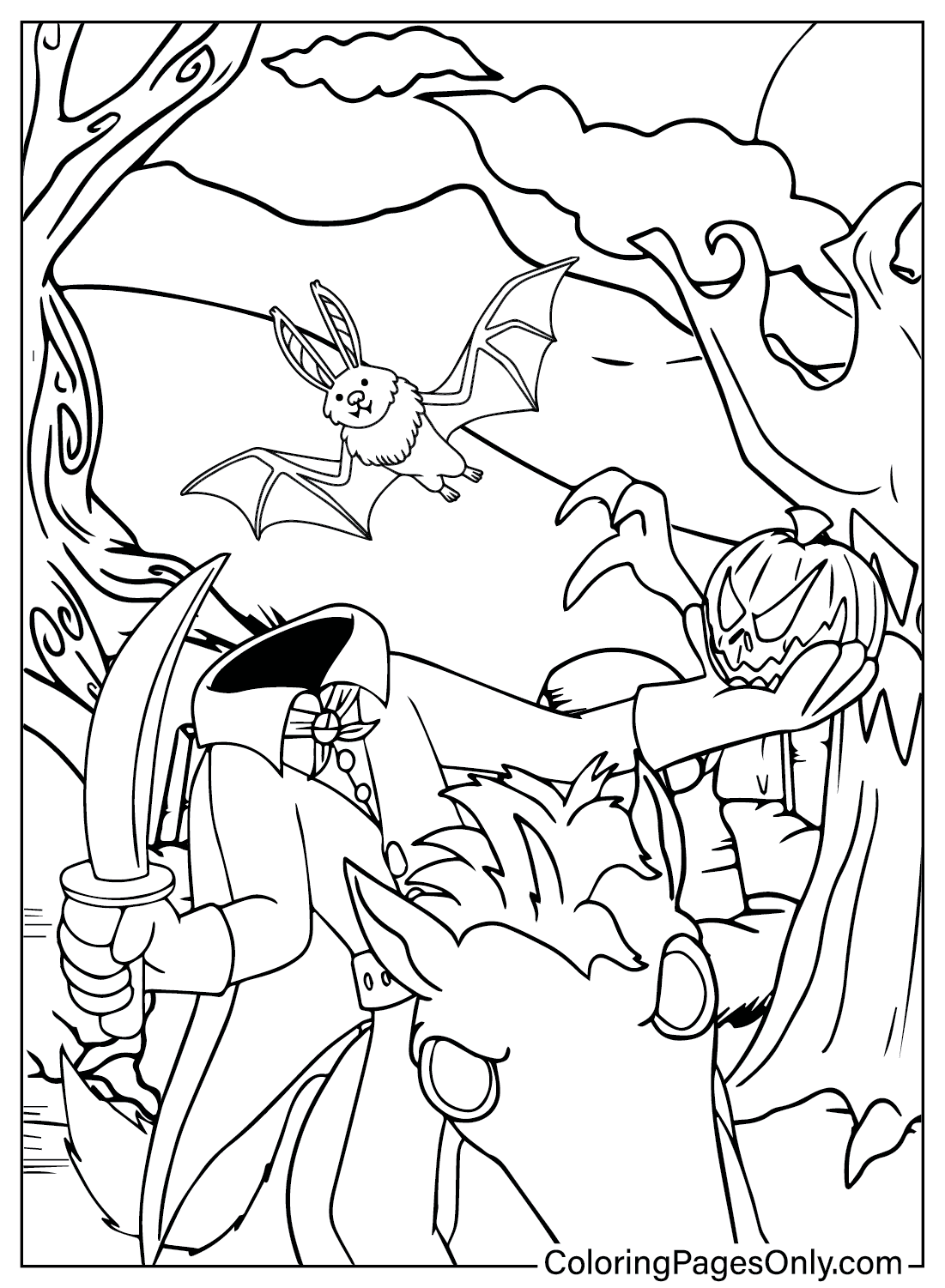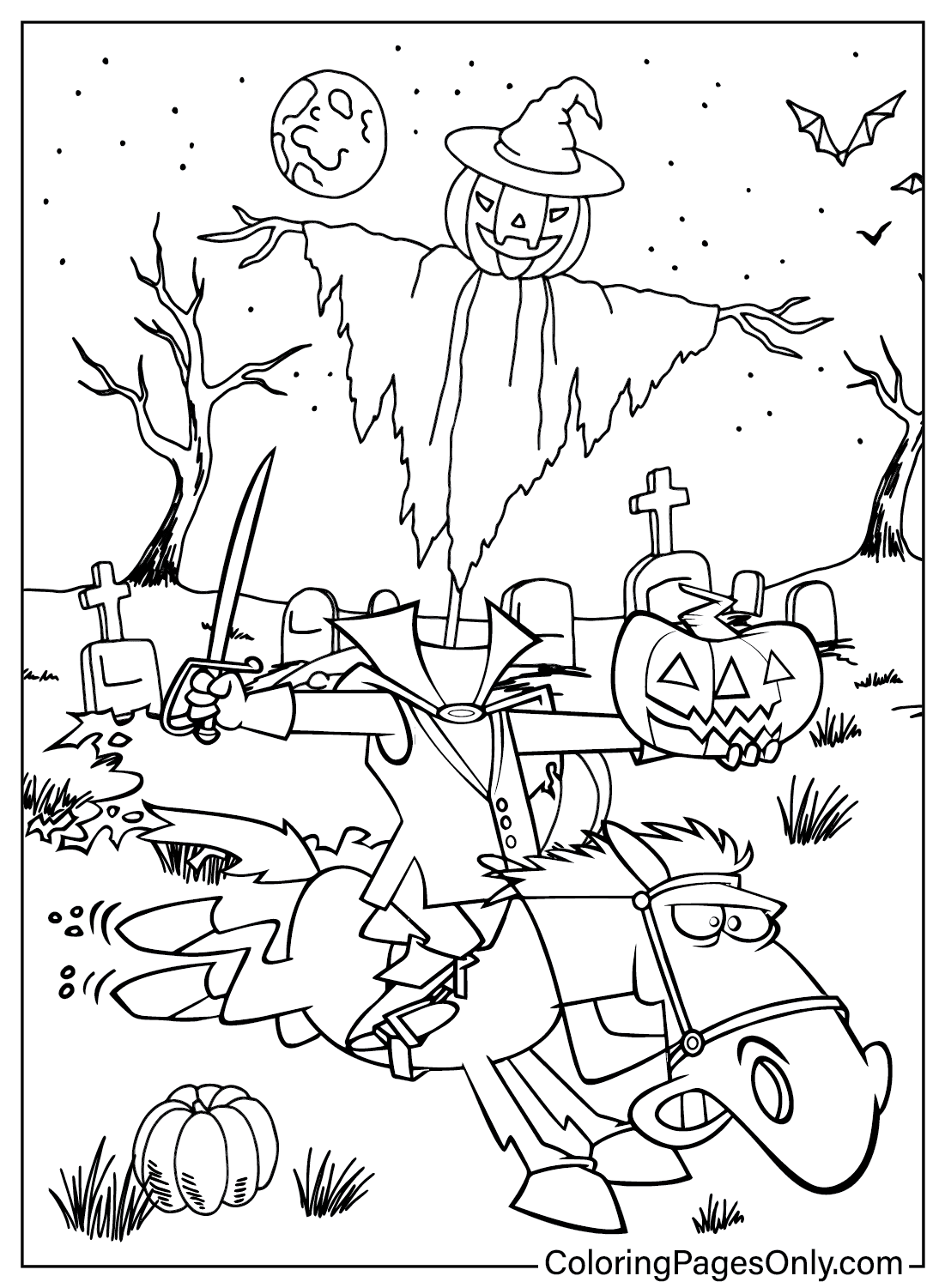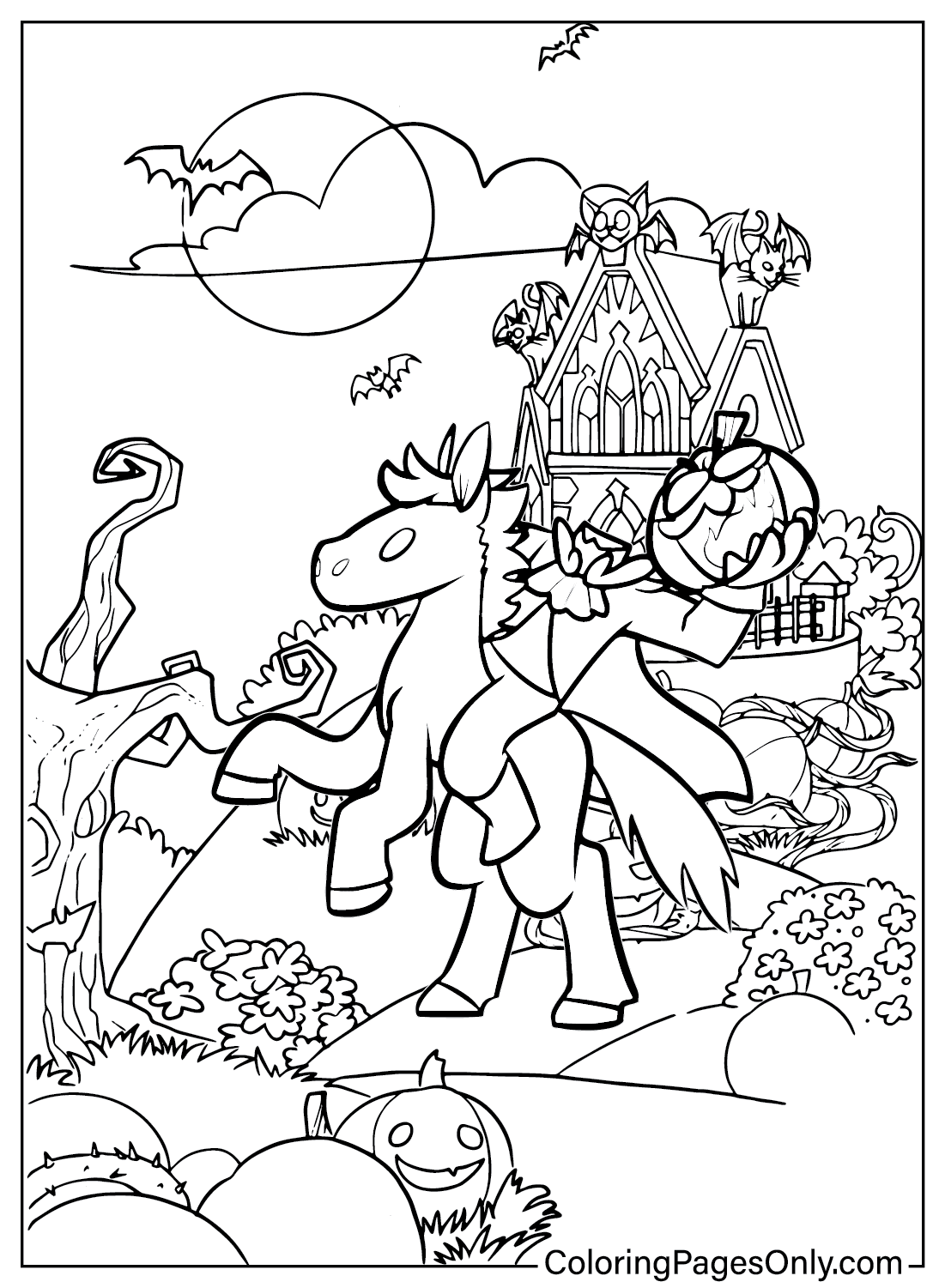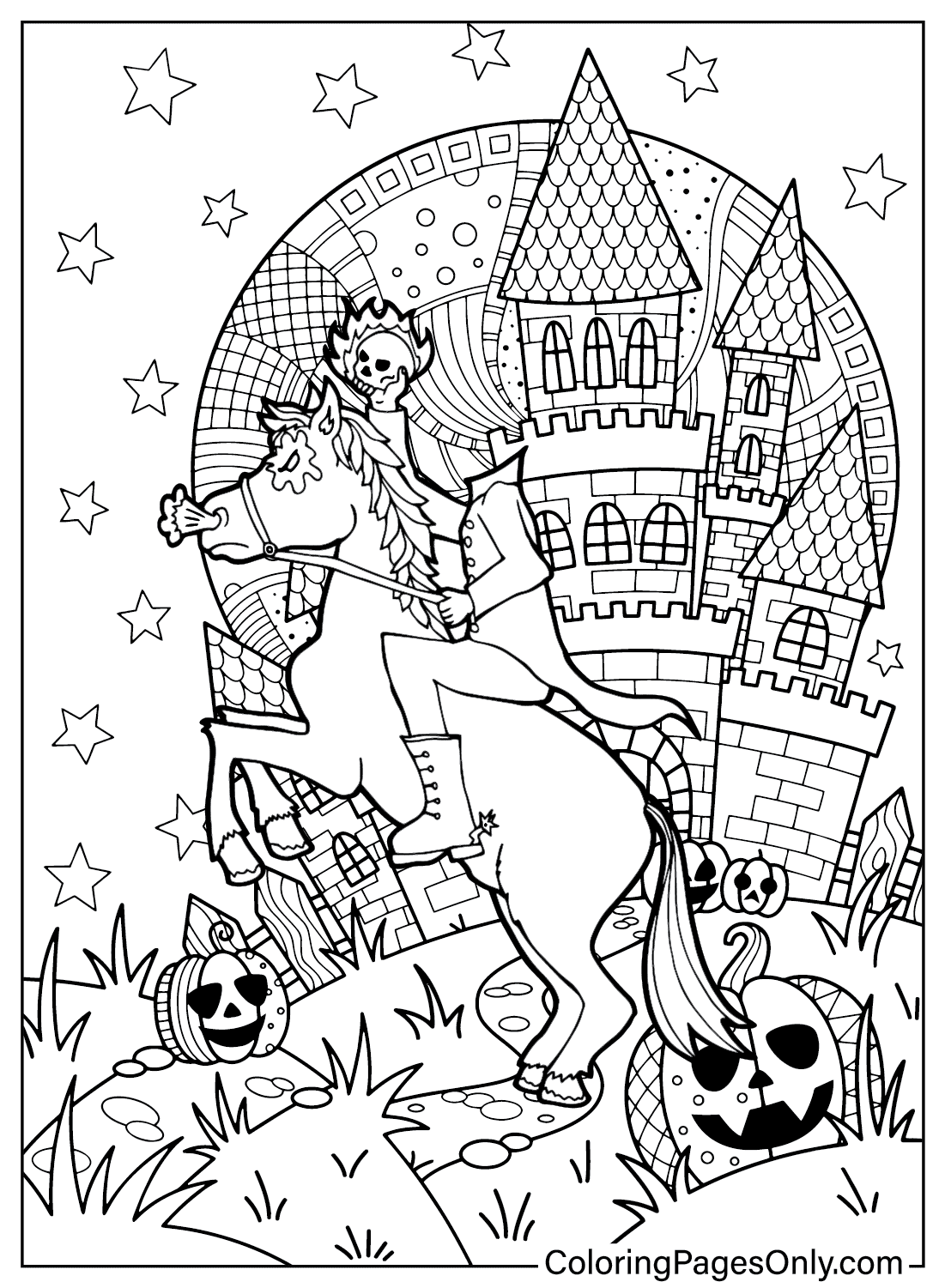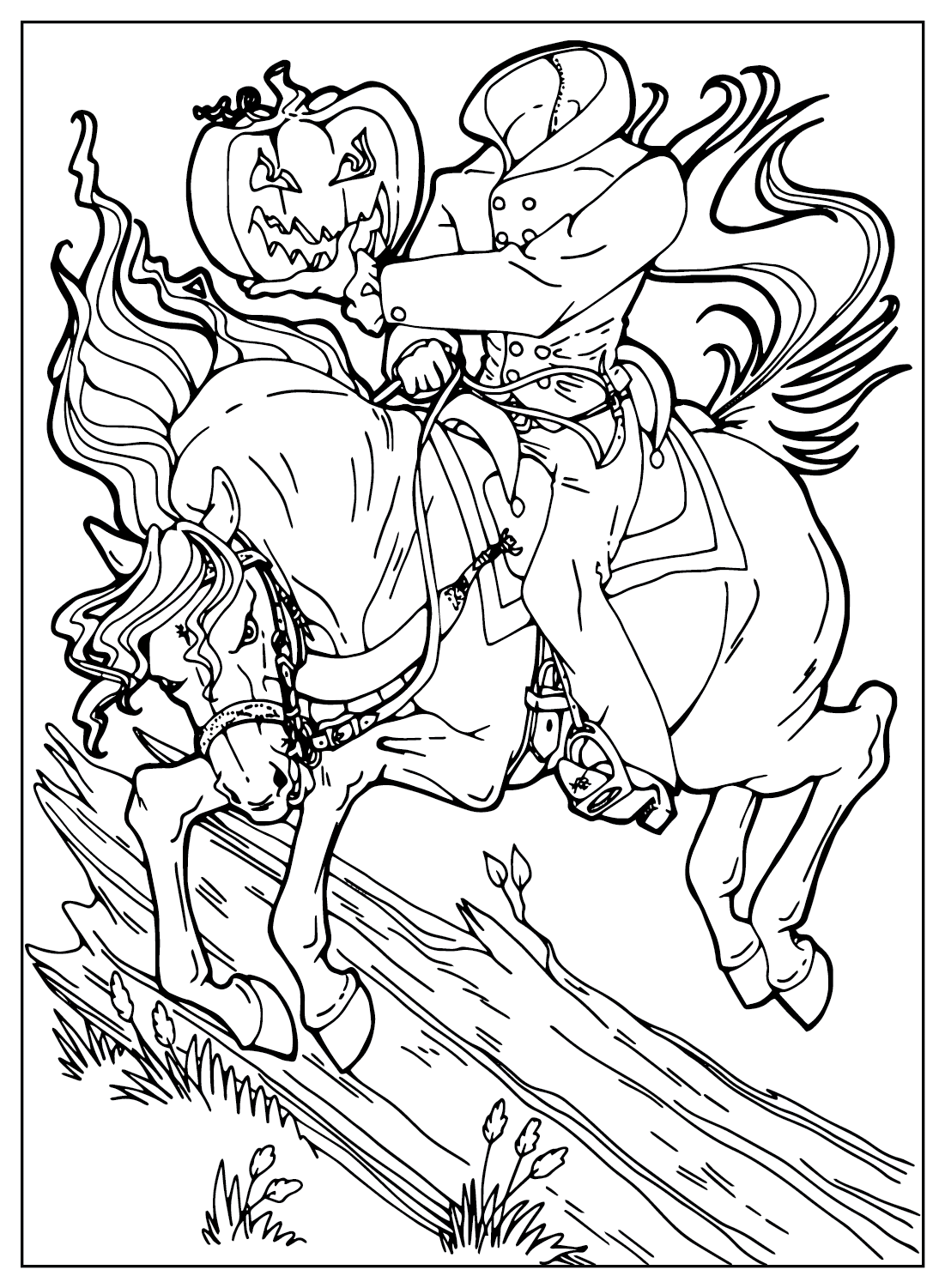
On this page, you’ll find 28 free Headless Horseman coloring pages – all free to download as PDFs or color online! This Halloween collection covers the full cultural reach of one of America’s most enduring ghost stories: the classic galloping silhouette with the blazing jack-o’-lantern, Disney’s iconic chase scene with Mickey Mouse from The Adventures of Ichabod and Mr. Toad, the Scooby Doo Halloween version, and video game renditions from Skyrim and Roblox. Whether you want a spooky atmosphere or cross-franchise fun, there’s a Headless Horseman page here for every Halloween fan!
These pages are perfect for Halloween night, October coloring sessions, classroom storytelling activities, and anyone who finds the most famous ghost story in American literature genuinely thrilling. Once colored, use them as Halloween wall decorations, party display art, or handmade holiday cards!
While you’re here, grab these Halloween pages! Halloween Coloring Pages · Ghost Coloring Pages · Pumpkin Coloring Pages · Halloween Bats Coloring Pages
The Legend of Sleepy Hollow – America’s First Great Ghost Story
The Headless Horseman did not begin as a Halloween decoration. He began as literature – specifically, as the centerpiece of a short story that is widely considered one of the first great American short stories ever written, published over 200 years ago by a New York writer who became one of the most celebrated authors in American history.
Washington Irving published “The Legend of Sleepy Hollow” in 1819–1820 as part of a collection called The Sketch Book of Geoffrey Crayon, Gent. – a series of essays and stories published in installments under a pseudonym. Irving wrote The Sketch Book during a tour of Europe, deliberately weaving real American locations into his supernatural tales to create a distinctly American folklore at a time when the new nation was still building its cultural identity. “The Legend of Sleepy Hollow” and Irving’s companion story “Rip Van Winkle” – published in the same collection – are among the foundational works of American literature, and both are still taught in schools more than two centuries after their first publication.
The story is set in Sleepy Hollow, a real place – a quiet Dutch settlement near Tarrytown, New York, along the Hudson River, about 30 miles north of New York City. Irving had visited the Tarrytown area as a teenager in 1798, fleeing a yellow fever outbreak in the city, and historian Elizabeth Bradley of Historic Hudson Valley has noted that he “would have been introduced to local ghost stories and lore at an impressionable age.” The Dutch community around Tarrytown had its own rich tradition of ghost stories and supernatural legends, and Irving drew from these when constructing his tale. The village of Sleepy Hollow still exists today, has embraced the story as central to its identity, and runs one of the most elaborate Halloween seasons in the United States each October.
The Story – Ichabod, Katrina, Brom Bones, and the Pumpkin
The plot of “The Legend of Sleepy Hollow” is simpler than it first appears, and its genius lies not in complexity but in a single, perfectly executed ambiguity at its end.
The setting: Sleepy Hollow is a drowsy, enchanted-feeling valley whose residents are deeply superstitious and fond of ghost stories. The most feared of all Sleepy Hollow’s many supposed ghosts is the Headless Horseman – locally known as the Galloping Hessian – said to be the spirit of a Hessian mercenary soldier (a German soldier fighting on the British side during the American Revolutionary War) who had his head blown off by a cannonball, likely during the Battle of White Plains in 1776, which was fought very close to Sleepy Hollow. According to local legend, the ghost rides out from the Old Dutch Churchyard every night in search of his missing head, racing back to his grave before dawn.
The protagonist: Ichabod Crane is a lanky, comically scarecrow-like schoolteacher newly arrived from Connecticut. He is highly superstitious, deeply fond of ghost stories (especially about the Headless Horseman), and possessed of an enormous appetite for both food and social advancement. He sets his sights on Katrina Van Tassel – the beautiful, flirtatious daughter of the wealthiest farmer in Sleepy Hollow – and courts her with the specific ambition of inheriting her father’s farm.
The rival: Abraham Van Brunt, called Brom Bones, is Ichabod’s obstacle – a strong, bold, mischievous local horseman who is also pursuing Katrina and resents the outsider’s competition. Brom already rides the finest horse in the area, is known for his pranks and daring, and has been unable to intimidate Ichabod through direct confrontation alone.
The night: After a lively party at the Van Tassel farm – during which ghost stories are exchanged, and Ichabod dances enthusiastically with Katrina – Ichabod rides home alone through the dark countryside. He crosses through the most haunted stretches of road near Sleepy Hollow. At a bridge near the Old Dutch Churchyard – the Horseman’s supposed crossing point – Ichabod encounters a large, dark figure on a powerful black horse. The figure reveals no head. Ichabod flees in terror. The Horseman pursues him toward the bridge, beyond which, by local tradition, the ghost cannot follow. Just as Ichabod reaches what he believes is safety, the Horseman hurls his “head,” which turns out to be a pumpkin, directly at the fleeing schoolmaster.
The morning after: Ichabod’s horse returns home alone. At the bridge, searchers find only his hat – and a smashed pumpkin. Ichabod is never seen in Sleepy Hollow again. Brom Bones, shortly after, marries Katrina Van Tassel. And whenever anyone tells the story of the Headless Horseman and the pumpkin, Brom always laughs.
The brilliant ambiguity: The smashed pumpkin is Irving’s masterstroke. A real ghost – a decapitated Hessian soldier seeking his lost head – would not use a pumpkin as a substitute. The most natural explanation is that Brom Bones, an excellent horseman who knew the roads and the darkness, dressed as the Headless Horseman and chased Ichabod away from Sleepy Hollow and from Katrina’s affections with a very well-timed pumpkin throw. Brom’s laughter whenever the story is told seems to confirm it. Yet Irving never resolves it – the narrator admits uncertainty, the tale is presented as hearsay, and the possibility of genuine supernatural terror is never fully closed. The story works precisely because both explanations are entirely plausible, and Irving leaves every reader to decide which they believe.
Where the Headless Horseman Came From – European Roots
Irving did not invent the concept of a headless horseman. The image of a decapitated rider is one of the oldest recurring figures in Northern European folklore, and Irving’s genius was in taking this ancient figure and grounding it in a specific American time, place, and social context.
The most direct ancestor of Irving’s Horseman is the Irish Dullahan (also written Dulachán, meaning “dark man”) – a headless demonic fairy from Celtic tradition, typically depicted riding a black horse and carrying its own head under one arm. The Dullahan stops at the home of a person who is about to die, calls their name, and the person dies immediately. Some versions say the Dullahan is the spirit of Crom Dubh, an ancient Celtic god worshipped before the arrival of Christianity in Ireland. The Dullahan wears black, uses a human spine as a whip, and cannot be driven away – it can only be repelled by gold.
Historian Elizabeth Bradley has identified a likely direct source for Irving: Sir Walter Scott’s 1796 poem “The Chase”, a translation of the German poem Der wilde Jäger (The Wild Huntsman) by Gottfried Bürger. Irving had just met and befriended Scott in 1817, and the poem – about a wicked hunter condemned to be hunted forever as punishment for his sins – provides the template of a terrifying spectral rider pursuing a victim through the night.
German folklore from the Rhineland also had its own headless horseman tradition: the Kopflose Reiter (headless horseman) was a revenant – a ghost condemned to wander the earth until it had atoned for its sins – who would warn the living of impending danger or punish the wicked. Unlike the Irish Dullahan’s pure malevolence, the German versions introduced moral complexity into the headless rider figure.
What Irving contributed was something specifically American: the historical grounding (a real war, a real soldier, a real date), the specific social setting (Dutch farming community, Yankee outsider, landed wealth), and above all, the ambiguity – the possibility that the ghost is not a ghost at all but a very human rival’s very effective practical joke.
The Collection’s Pages – From Irving to Video Games
This collection spans more than 200 years of the Headless Horseman’s cultural life, from his literary origins to his modern digital presence.
The classic Irving visual – pages depicting the silhouetted rider on his black horse, the jack-o’-lantern ablaze, the bridge, and the dark trees – represent the Headless Horseman at his most canonical. These pages draw directly from the visual vocabulary that has been established through illustration, stage, and film since the 19th century: the massive black horse at full gallop, the rider’s body solid and dark, the glowing pumpkin held aloft or hurled forward, the autumn trees arching overhead. These are the collection’s most atmospherically rich pages and reward careful attention to the relationship between the dark figure and the light source of the pumpkin.
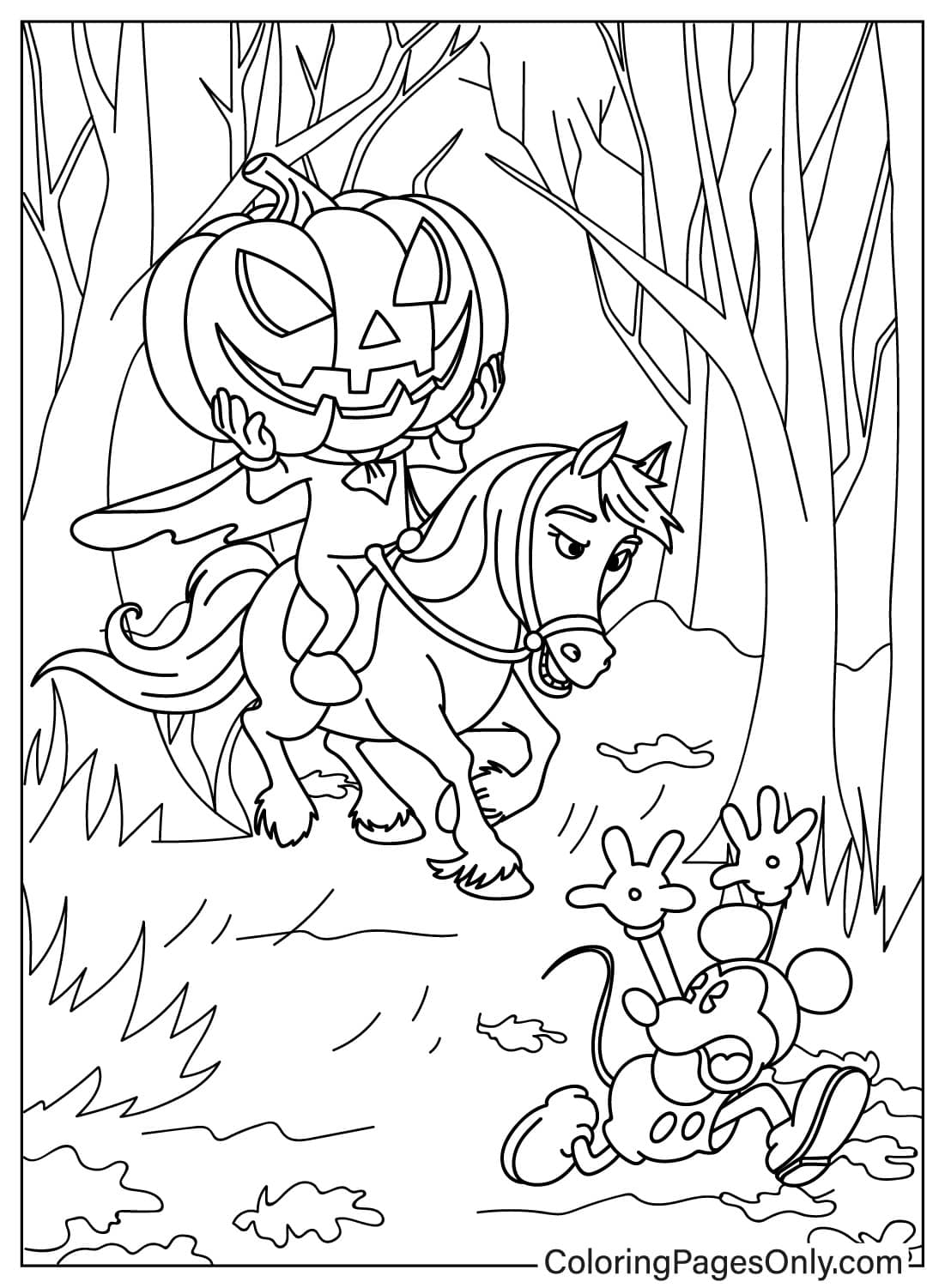
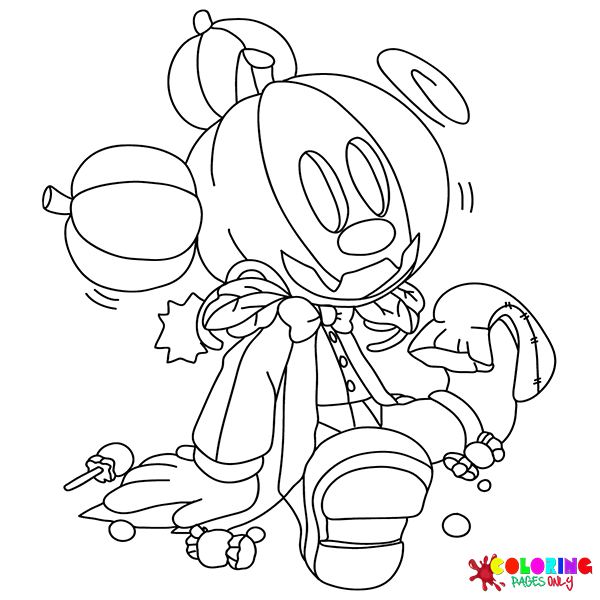
“Headless Horseman Chasing Mickey Mouse” depicts a scene from Disney’s 1949 animated film The Adventures of Ichabod and Mr. Toad – the most famous adaptation of Irving’s story and almost certainly the version most widely seen by children today. In the Disney film, the Headless Horseman is genuinely terrifying – portrayed as an actual supernatural being rather than Brom Bones in disguise – and his pursuit of the Ichabod Crane character (voiced through Bing Crosby’s narration) across the bridge culminates in the pumpkin throw that is the story’s iconic climax. The Disney design – the flaming jack-o’-lantern head, the black armor, the powerful horse – has become the dominant visual reference for the Headless Horseman in American popular culture.
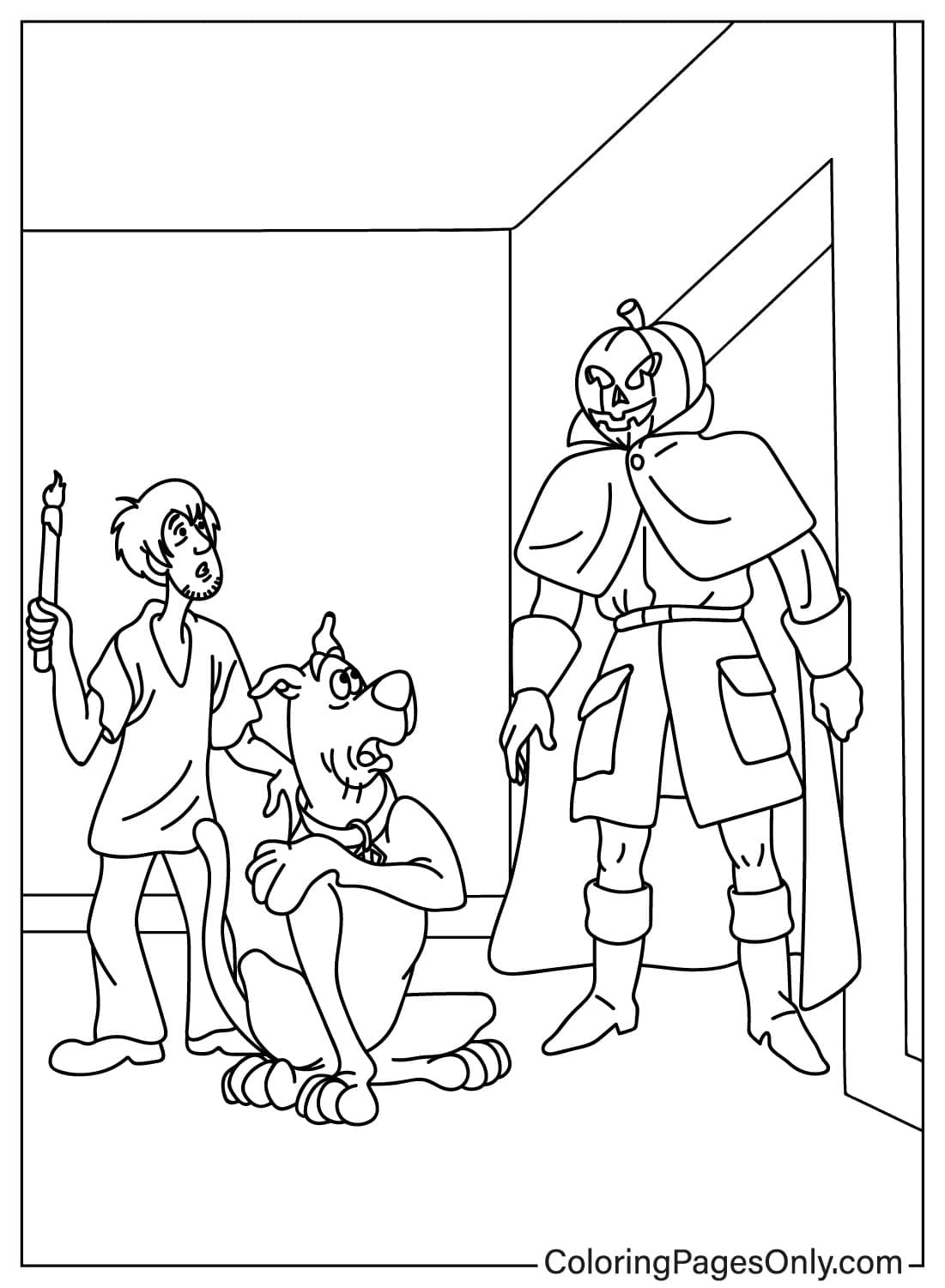
“Headless Horseman With Scooby Doo” references the 1976 episode of The Scooby-Doo Show titled “The Headless Horseman of Halloween” – one of the most-remembered episodes from that era of the franchise, in which the gang investigates a haunting connected to a descendant of Ichabod Crane. The Scooby Doo version follows the franchise’s signature format: a seemingly supernatural threat that turns out to have a human origin and a motive, then a chase sequence, then an unmasking.
“Headless Horseman Skyrim” depicts the Headless Horseman as he appears in The Elder Scrolls V: Skyrim – a rare, surprising encounter in which a spectral headless horseman rides silently through the night and, if followed, leads the player to a ghost-inhabited barrow. He doesn’t attack; he simply appears and vanishes, and finding him is considered one of the game’s most memorable and unsettling secret discoveries.
“Headless Horseman Roblox” refers to the Headless Horseman character and cosmetic in Roblox, where the Headless Horseman avatar item (a character skin without a visible head) is one of the rarest and most sought-after Halloween cosmetics in the game, typically available only for limited time periods in October.
Coloring Tips for Headless Horseman Pages
Night atmosphere – the page should feel dark. The Headless Horseman is fundamentally a night scene, and the most effective coloring approach establishes darkness as the page’s dominant value before adding the light sources. Start with the sky and background areas in deep blue-black or charcoal, then work inward. The horse and rider should be rendered in tones slightly darker than the background – creating depth through value difference rather than through color contrast – and the pumpkin should be the page’s single, vivid light source.
The jack-o’-lantern – your only light source. In most Headless Horseman pages, the glowing pumpkin provides the scene’s only light. Render the pumpkin exterior in a deep, rich orange – more saturated and darker than typical cartoon orange, approaching a burnt sienna orange at the maximum shadow depth. The interior of the pumpkin (visible through carved eyes and mouth) should be a vivid, near-white yellow-orange at its brightest center, transitioning outward. The glow cast by the pumpkin onto the rider’s body and the horse’s neck should be a warm amber tint – applying a very light layer of yellow-orange over the dark base color of any surface facing the pumpkin’s light.
The horse – black with depth, not flat black. A black horse rendered in pure flat black reads as a silhouette rather than a three-dimensional animal. The technique: use a very dark blue-black or charcoal as your base for the horse’s body, concentrating the darkest tone in the deeply shadowed areas (underside of neck, belly, inside of legs). The areas of the horse that face the pumpkin’s light should receive the amber glow described above. The mane and tail should have slightly more texture and movement than the body, with individual hair strokes in a very slightly lighter dark tone.
The Disney version – red eyes and armor detail. The Disney 1949 Headless Horseman has a specific canonical visual: black armor with orange highlights, red fire where the head should be (his neck is a column of flame), and a distinctly menacing horse design. Pages depicting the Disney version should use the pumpkin orange as both the thrown pumpkin AND the flame at the rider’s neck – connecting these two fire elements visually creates the design’s internal logic. The armor should be rendered with geometric panel separations in charcoal.
Scooby Doo version – warm, slightly comedic. The Scooby Doo visual aesthetic is warm and slightly rounded, even when depicting villains. The Headless Horseman in Scooby Doo pages benefits from a slightly warmer, more amber-toned dark rather than the cold black-blue of the classic Irving version. This tonal warmth – combined with the larger, simpler shapes of the Scooby Doo art style – produces a finished page that feels spooky but approachable, matching the franchise’s consistent tone of creepy-but-not-too-creepy.
5 Activities
The “ghost or prank” debate. After coloring any classic Headless Horseman page from the collection, read the story’s ending together as a family – focusing on the smashed pumpkin, Brom Bones’s laughter, and Ichabod’s later reported survival in New York as a judge. Then hold a simple “ghost or prank” debate: one side argues that the Headless Horseman was genuinely supernatural (what evidence supports this?), the other argues that it was Brom Bones in disguise (what evidence supports this?). Irving deliberately makes both arguments possible – the strength of the story’s ending is precisely that the mystery can never be fully resolved. Write a one-paragraph “verdict” on the back of the finished colored page: which explanation do you find more convincing, and why? This activity develops argumentation skills using a 200-year-old literary ambiguity that has been debated by readers ever since.
The cultural family tree. After coloring the classic Headless Horseman page, draw a simple family tree on blank paper showing where the character’s imagery came from. At the top: Irish Dullahan (carries his own head, calls the name of the dying). Middle level: German Kopflose Reiter (warns the living, punishes the wicked) and Sir Walter Scott’s The Wild Huntsman (spectral hunter condemned to be hunted). Bottom: Washington Irving’s Headless Horseman, 1820 (Hessian ghost, pumpkin thrower, may or may not be Brom Bones). Then add branches showing where Irving’s character went: Disney 1949, Tim Burton 1999, Scooby Doo 1976, Skyrim, Roblox. Color each branch of the tree in a different tone – the European folklore roots in cool blues and greens, the American literary tradition in warm oranges and reds, the modern pop culture branches in whatever colors feel right for each franchise. This activity demonstrates how a cultural image travels through time, changing with each retelling while preserving a recognizable core.
The bridge scene re-illustration. The Headless Horseman story’s climax – Ichabod approaching the bridge, the pursuing rider, the pumpkin throw – takes place at a specific, real bridge near the Old Dutch Churchyard in Sleepy Hollow, New York. After coloring any Headless Horseman page from the collection, draw your own version of the bridge scene on blank paper: the wooden bridge over a dark stream, the arching trees overhead, the moonlight (or complete absence of it), Ichabod’s fleeing silhouette, and the pursuing dark shape. The challenge is to design the visual so that the viewer’s eye travels from left (escape) to right (threat) or from foreground (bridge planks) to background (the pursuing rider) in a way that creates genuine tension. Research what wooden bridges from the 1790s in New York looked like for authentic design reference. This is a complete original illustration exercise that requires compositional thinking, period research, and atmosphere-through-color – a sophisticated creative project for older children and adults.
The adaptation comparison. The Headless Horseman has been adapted so many different ways that comparing the versions reveals how storytellers make choices based on their audience and purpose. After coloring two pages from different versions of the character – for example, the Disney Mickey Mouse page (the Disney 1949 version) and the Roblox page – write a brief comparison: How is the horse depicted in each version? What replaces the head? What visual elements are kept consistent across both? What has been completely changed? What does each version seem designed to make the viewer feel – terror, excitement, humor, curiosity? Then compare both to the original 1820 Irving description: a figure in darkness, on a large black horse, appearing only as a shape before the pumpkin throw. Which adaptation is most faithful to Irving’s text? Which has traveled furthest from it? There are no wrong answers – the point is to practice the skill of reading a visual interpretation against its source material.
The Sleepy Hollow geography project. Washington Irving used real places in his story – the Old Dutch Church (still standing), the bridge (since rebuilt), and the Sleepy Hollow Cemetery (still active, where Irving himself is buried). Using any map resource, find Sleepy Hollow, New York, on a map of the United States and trace its location relative to New York City. Research: What does the Old Dutch Church look like today? What does Sleepy Hollow Cemetery look like? Is there still a bridge near the churchyard where the story’s climax takes place? Draw a simple illustrated map of “Ichabod’s Route” from the Van Tassel farm through the dark countryside to the fateful bridge – using the story’s description of the route and the real geography of the area as your guide. Color the map using an autumn palette – deep oranges and reds for the trees, blue-black for the stream, grey-brown for the roads – and mark each significant location with a small illustrated icon. Display the finished colored Headless Horseman page alongside your completed map as a paired artifact connecting the literary work to its real-world setting.