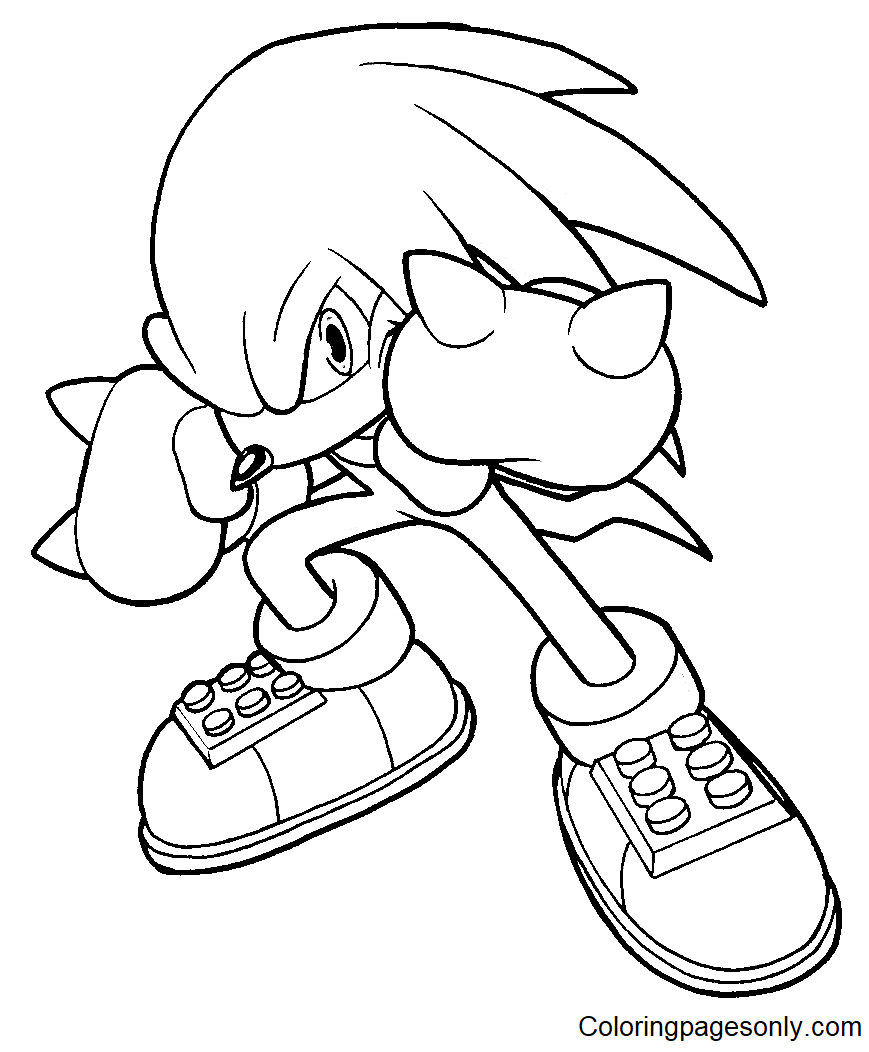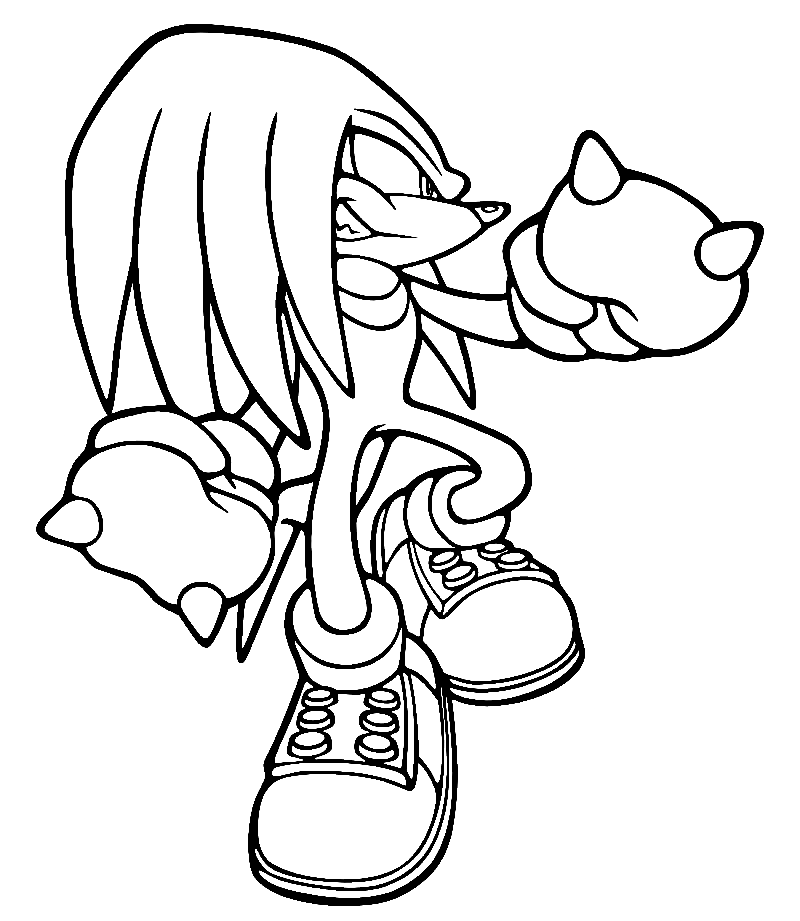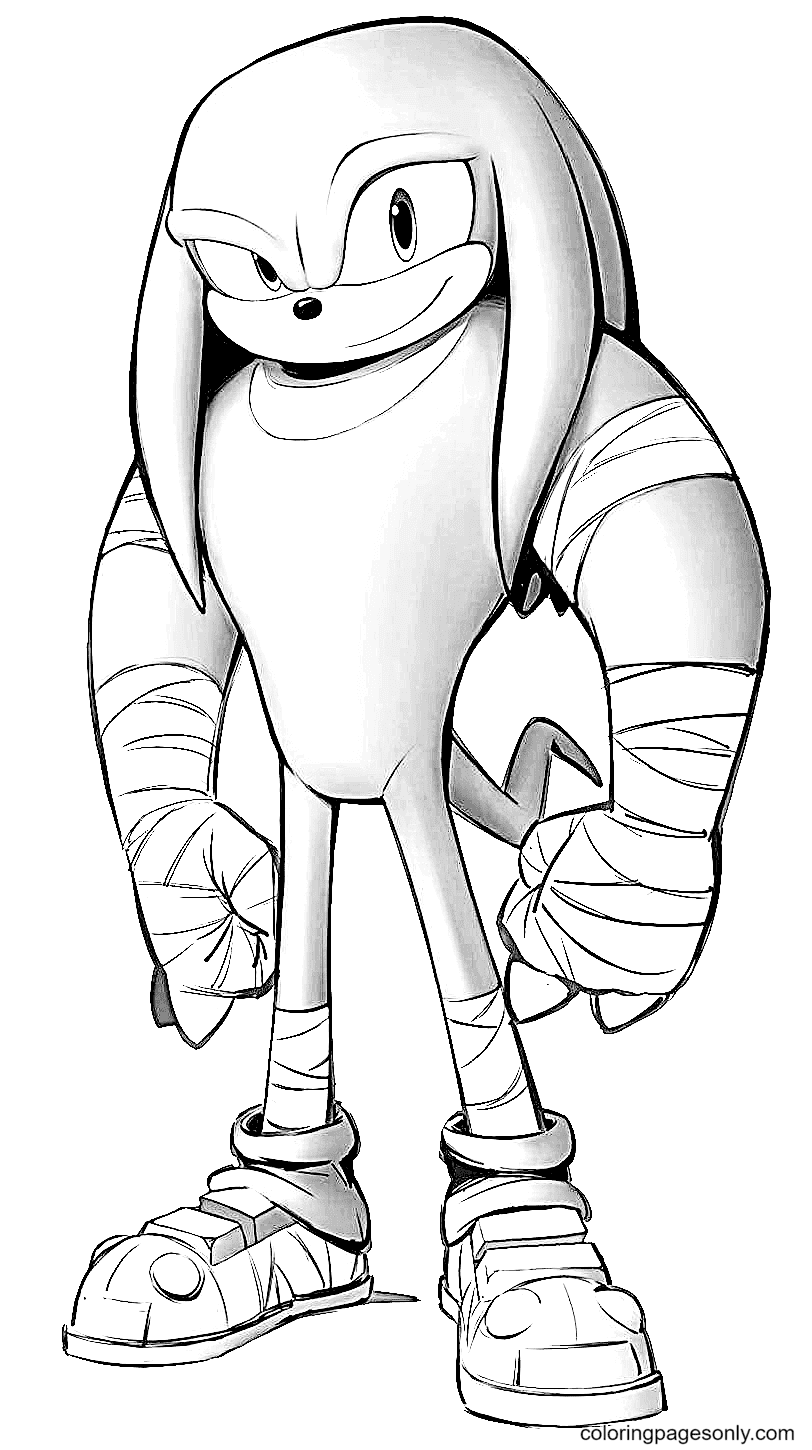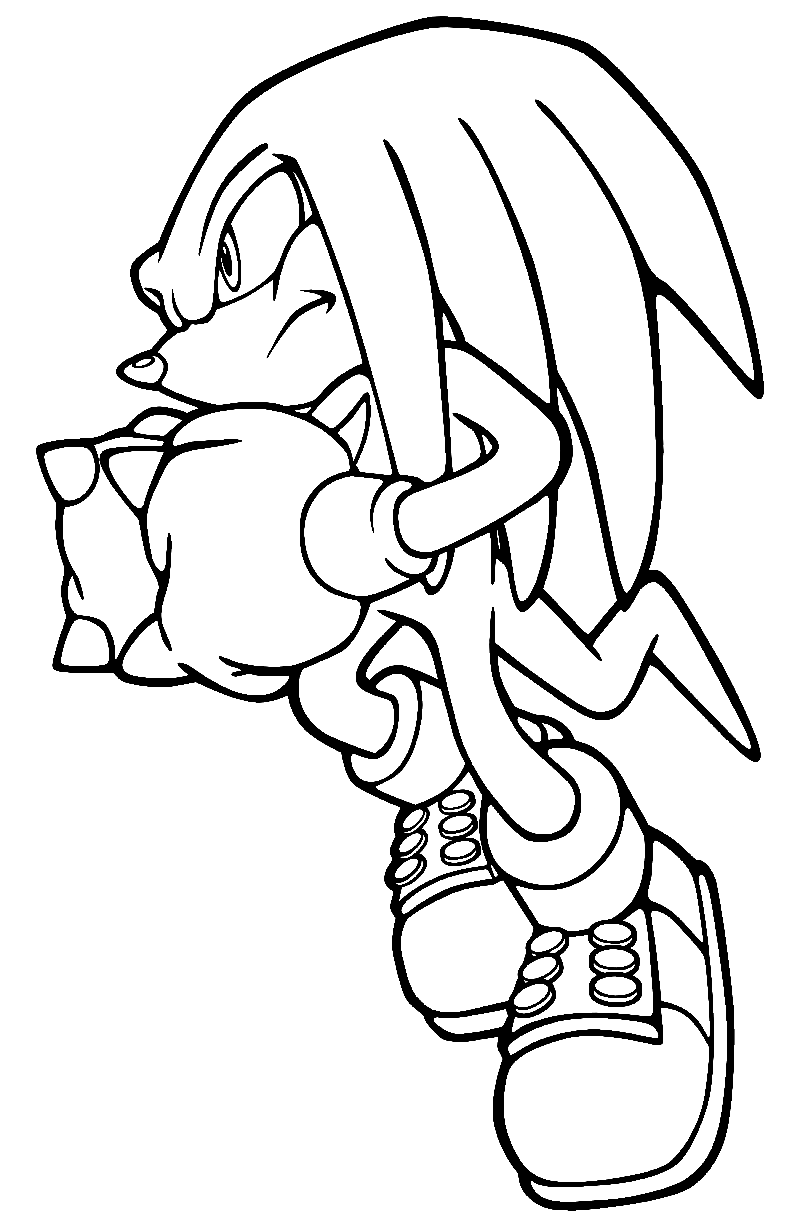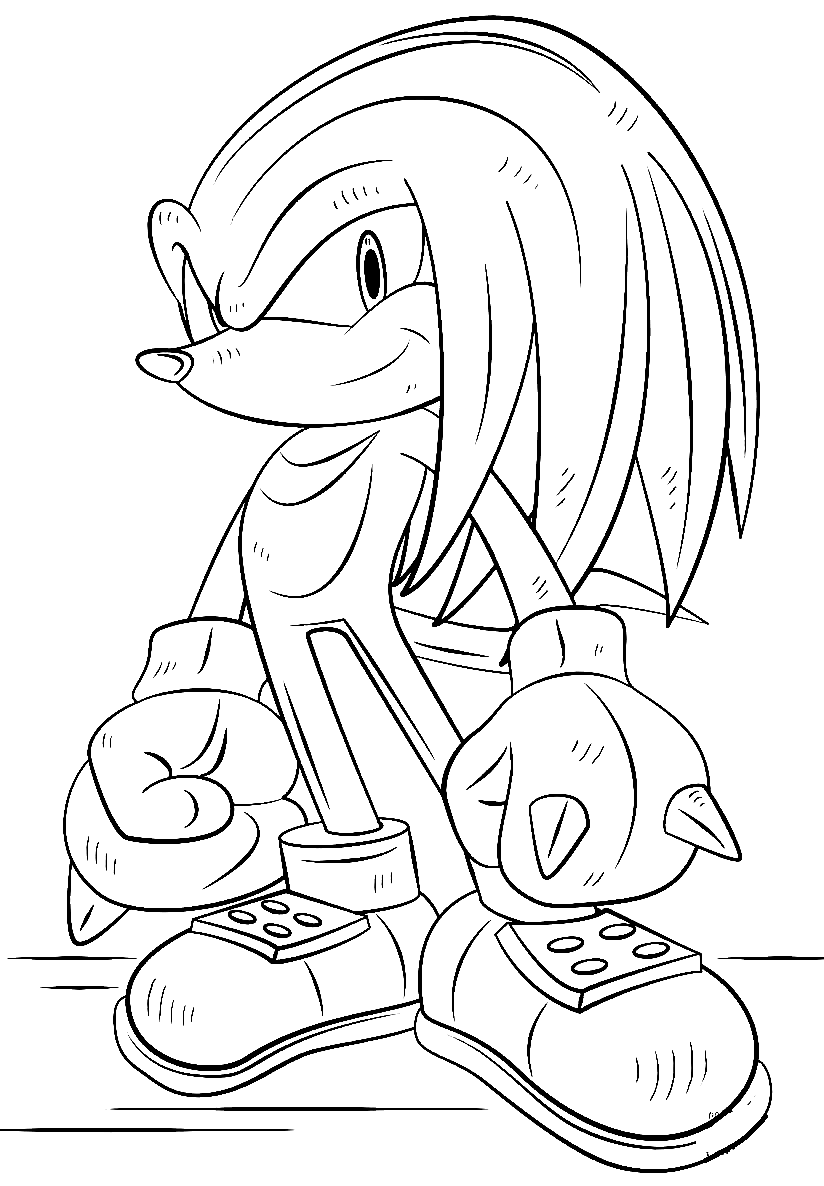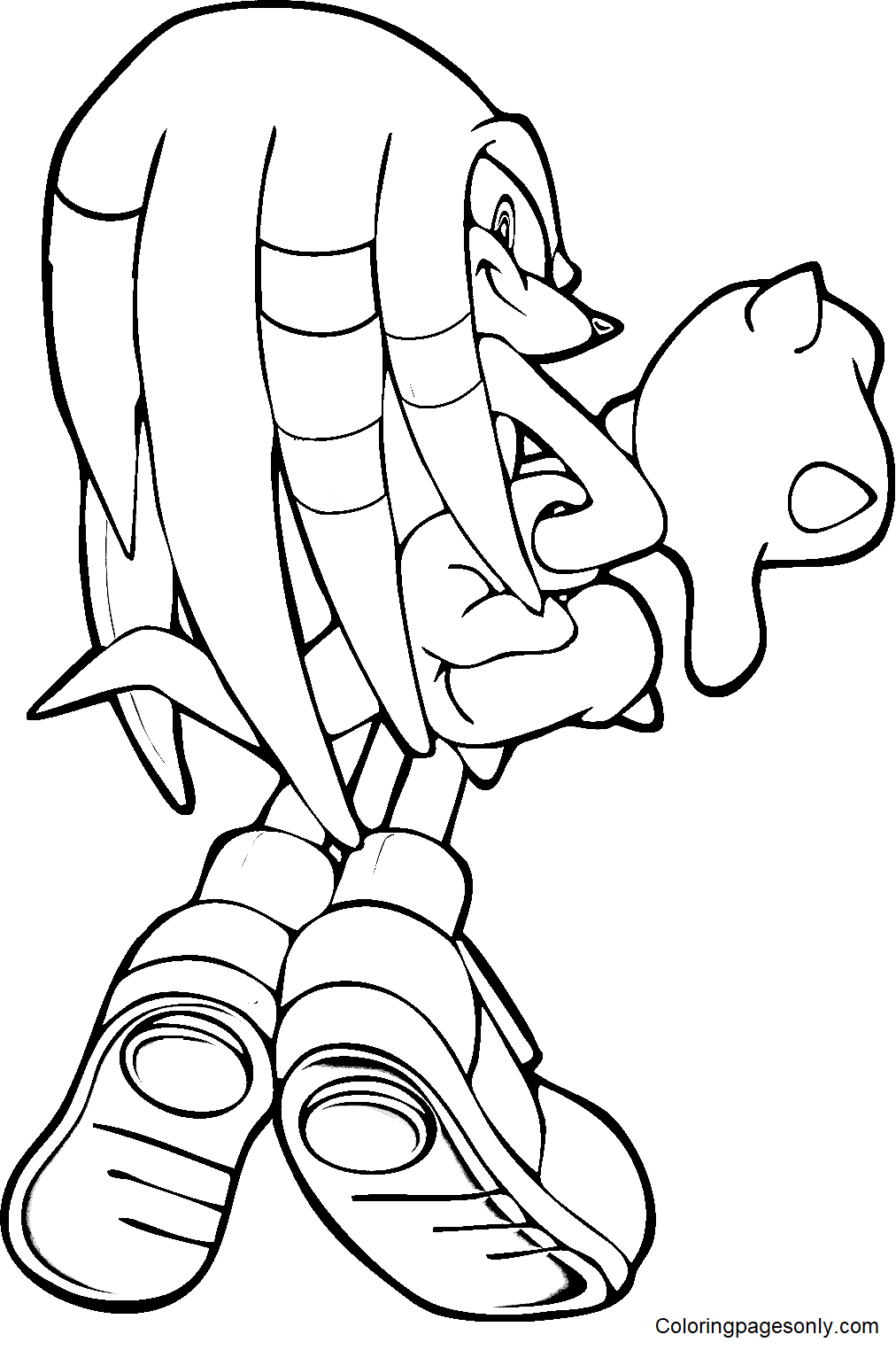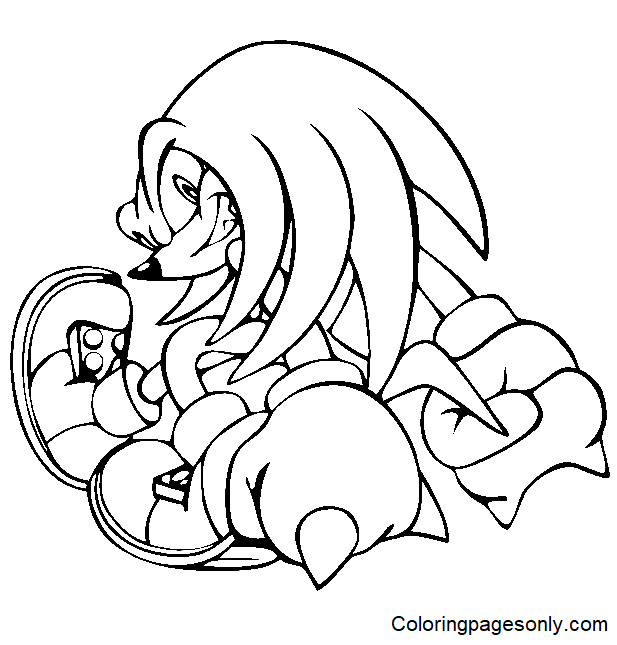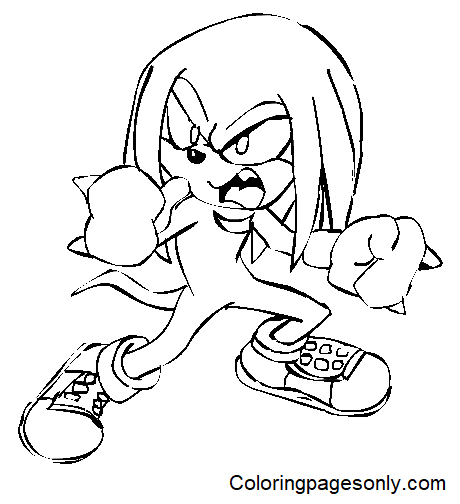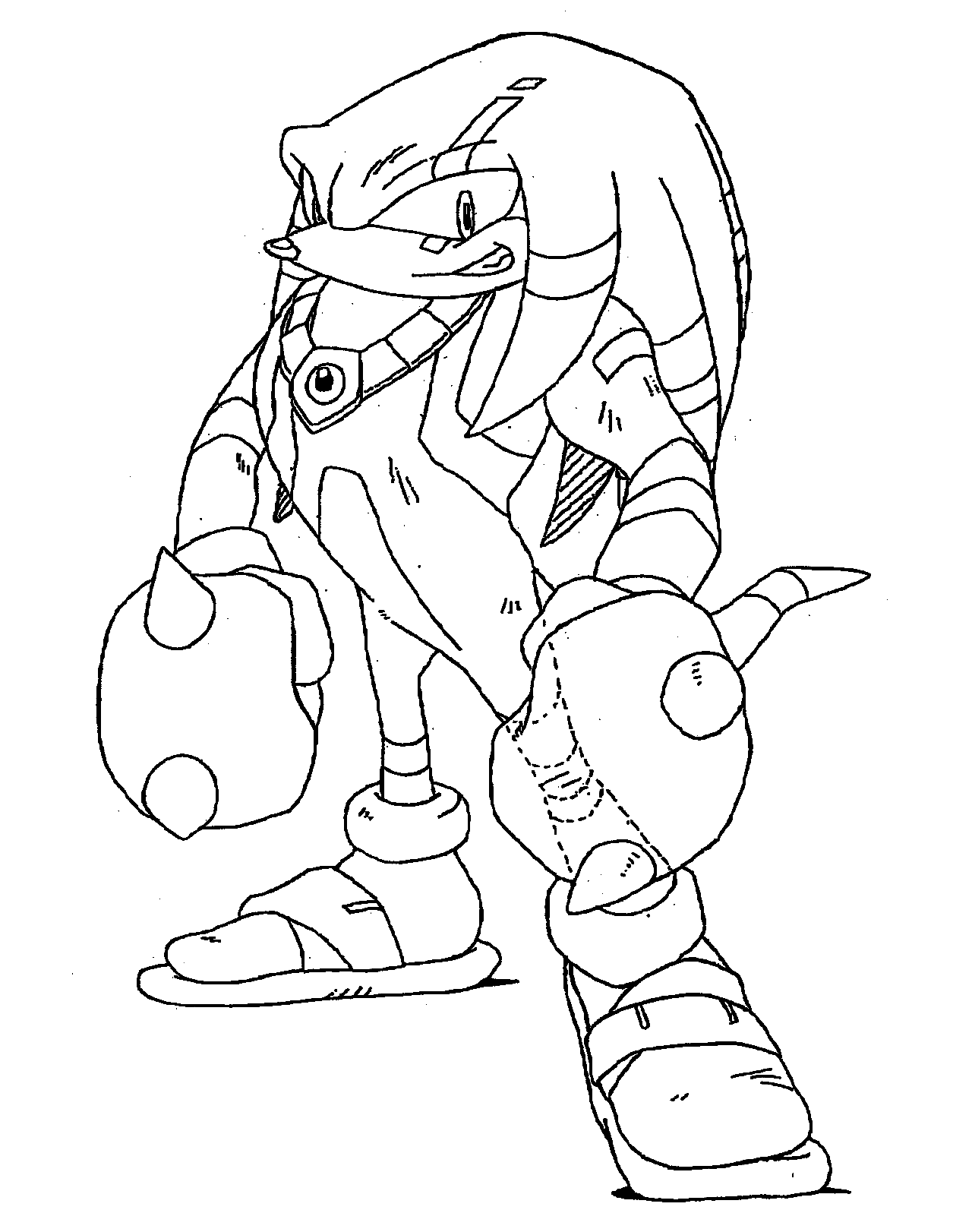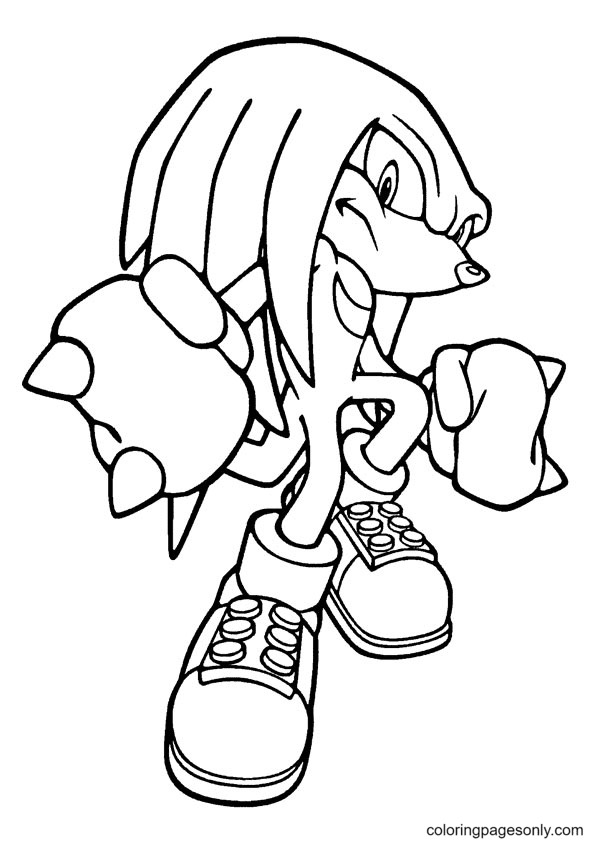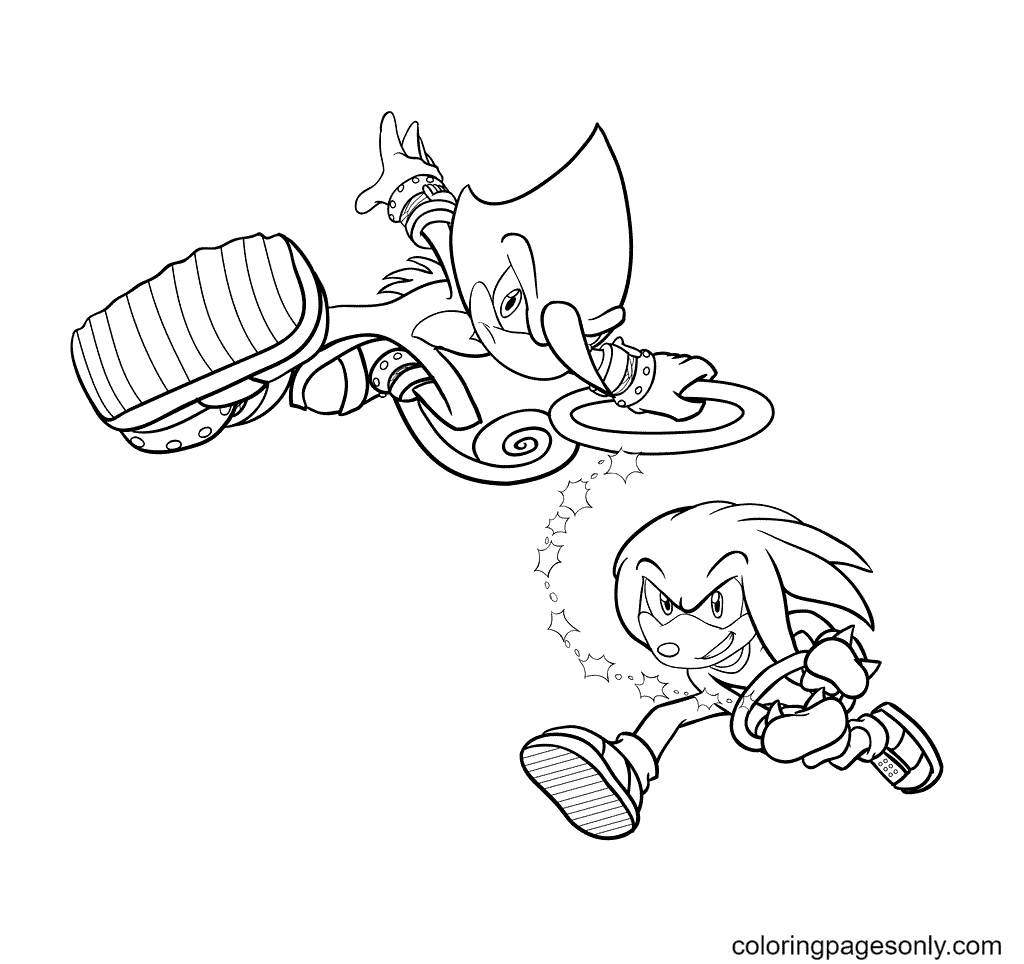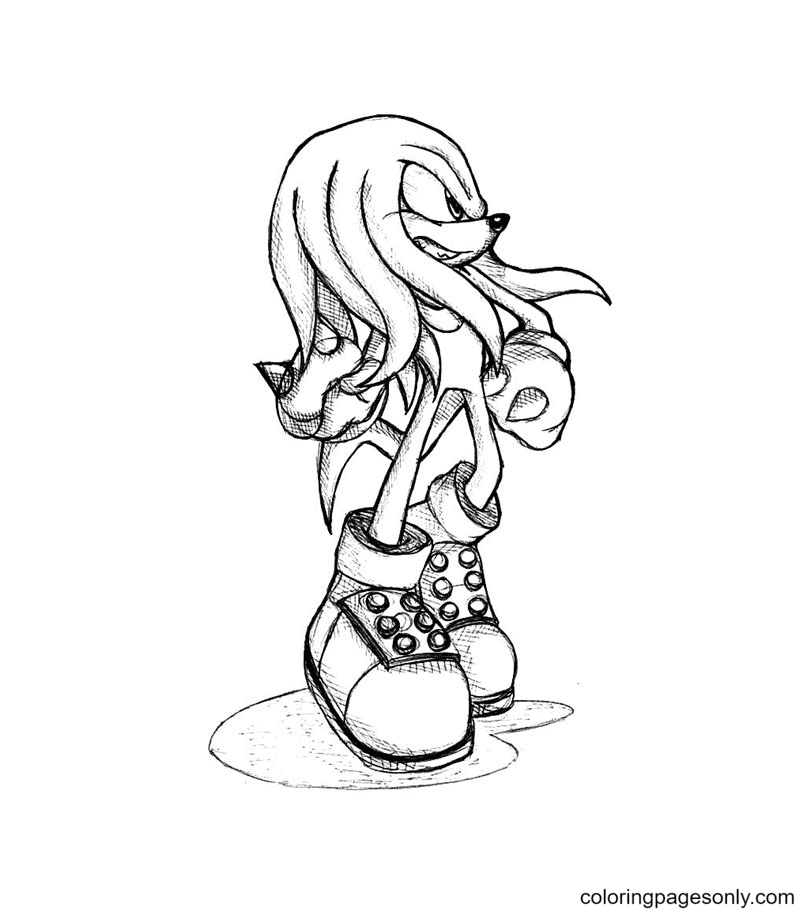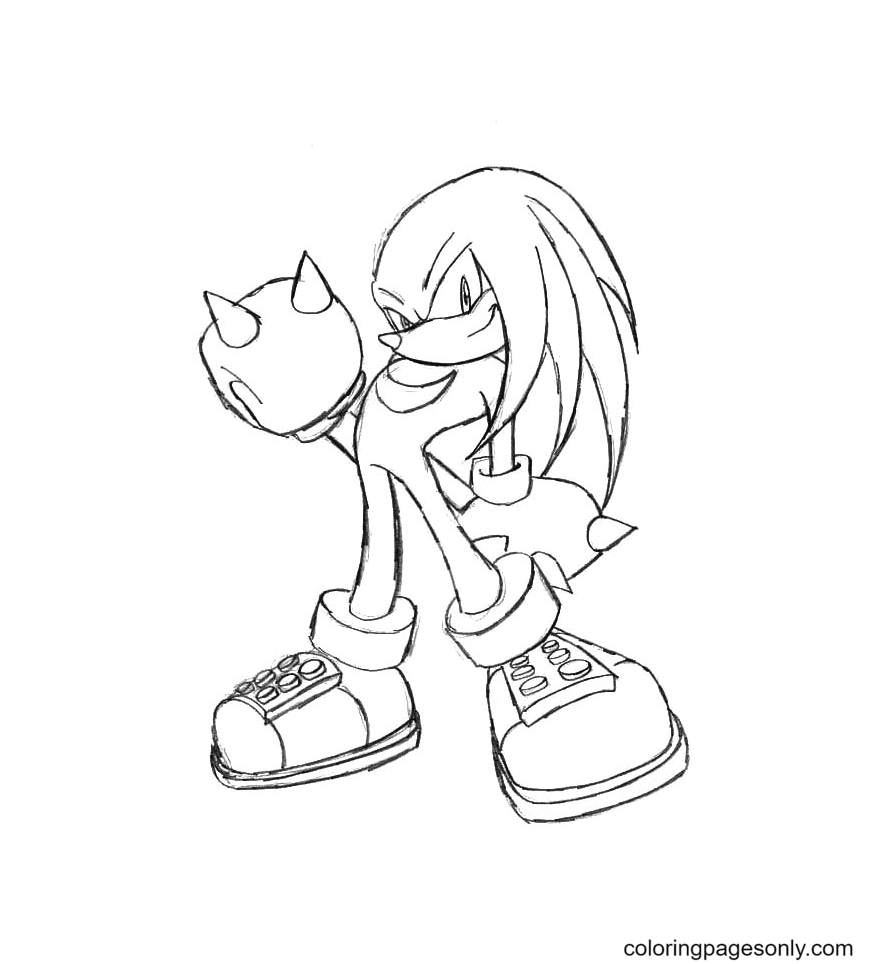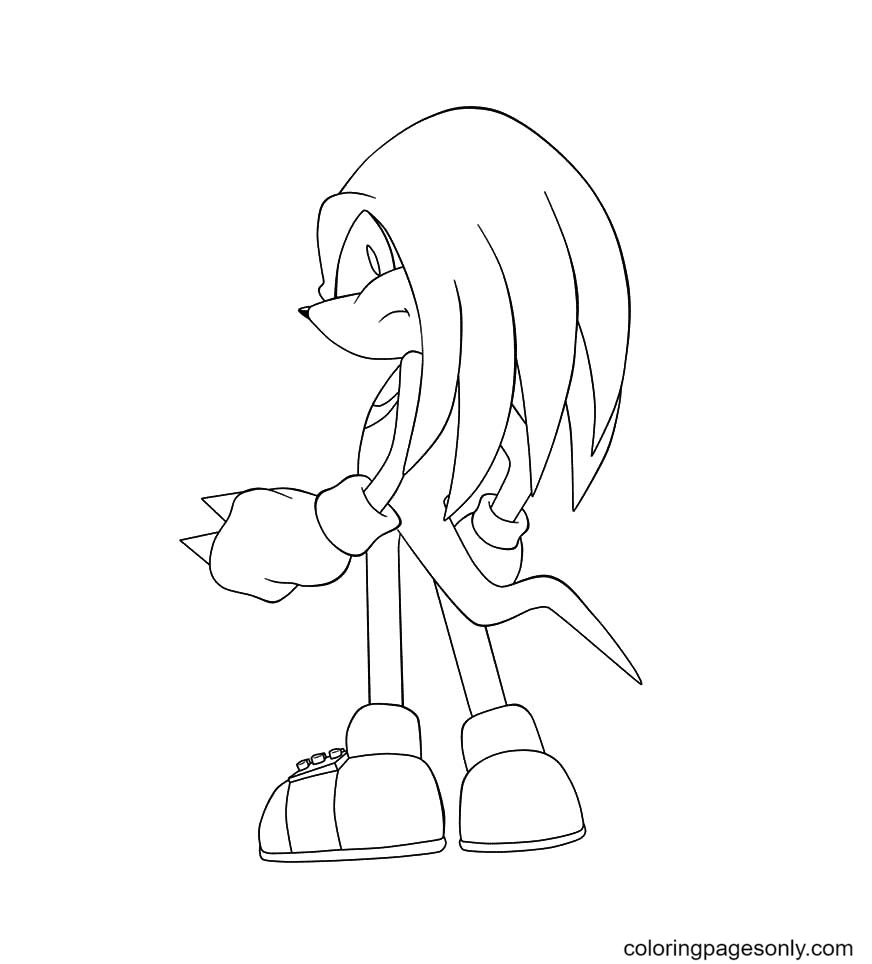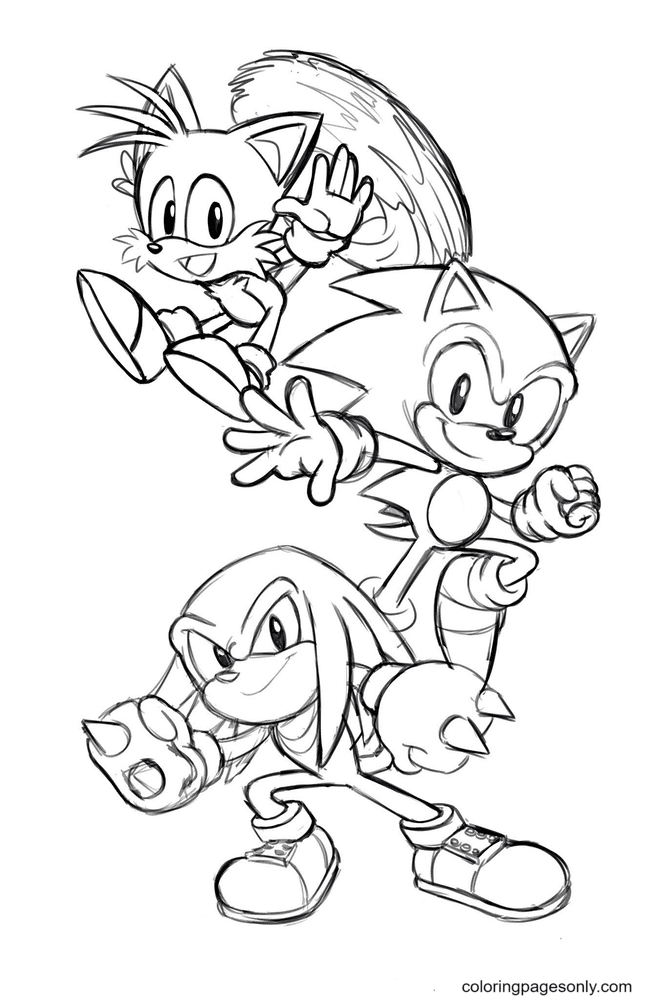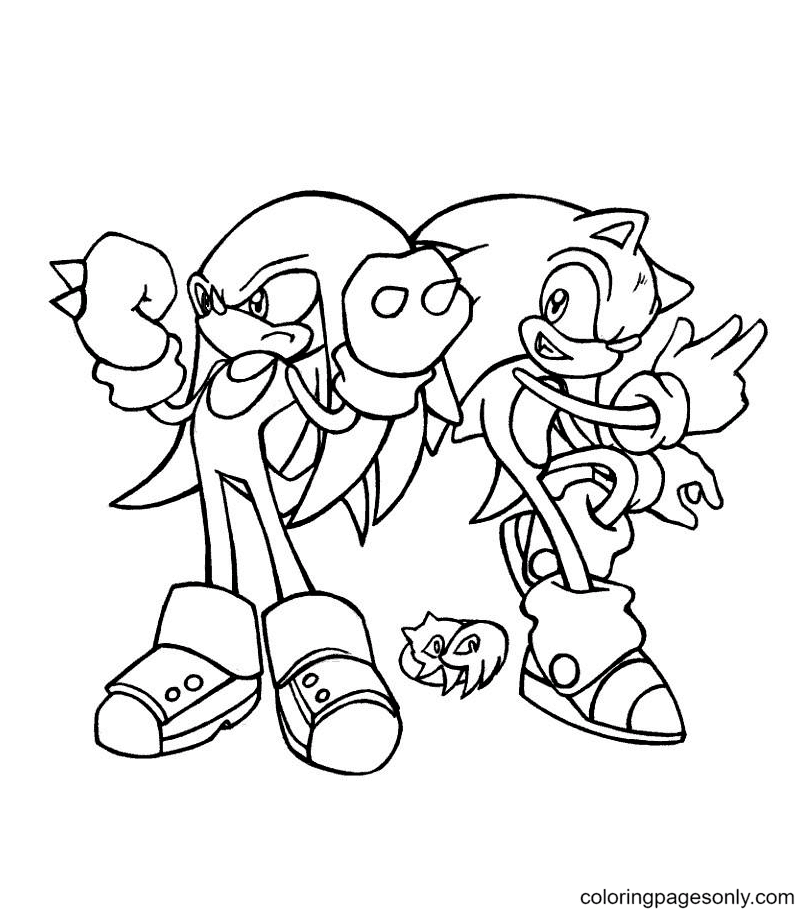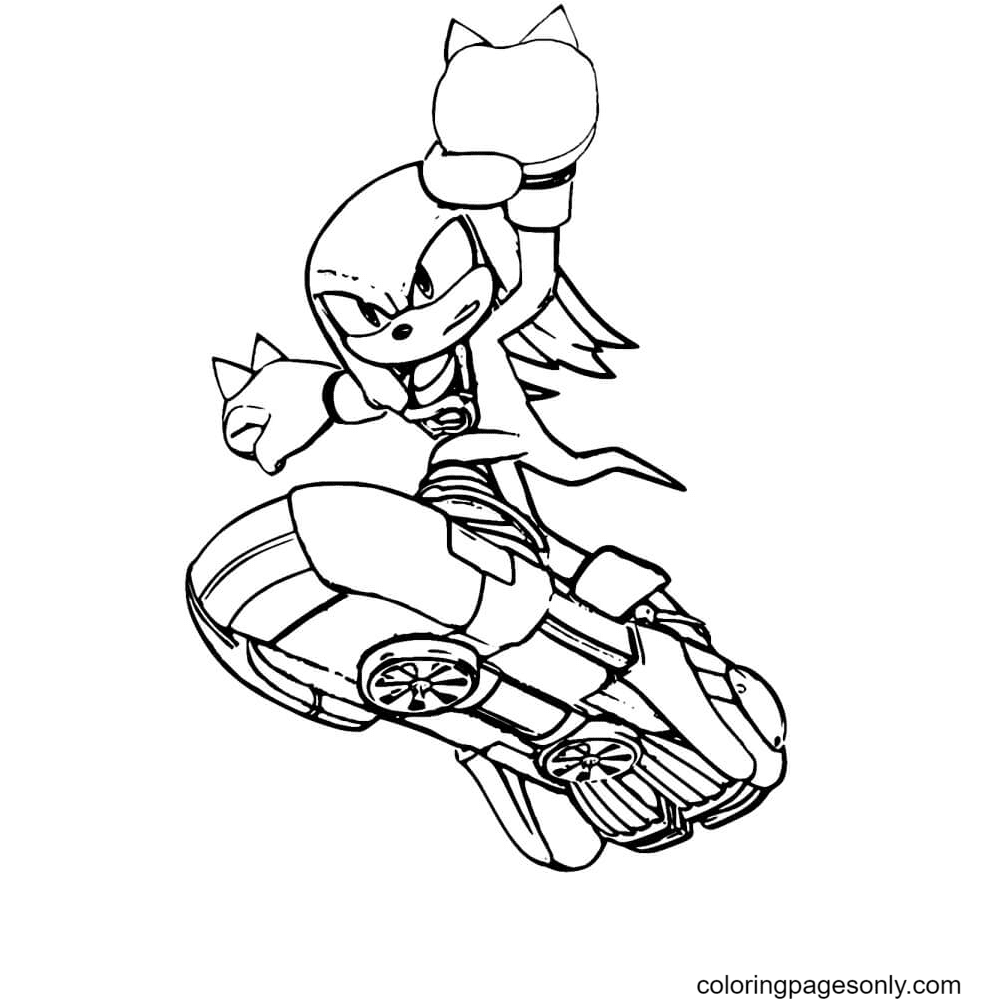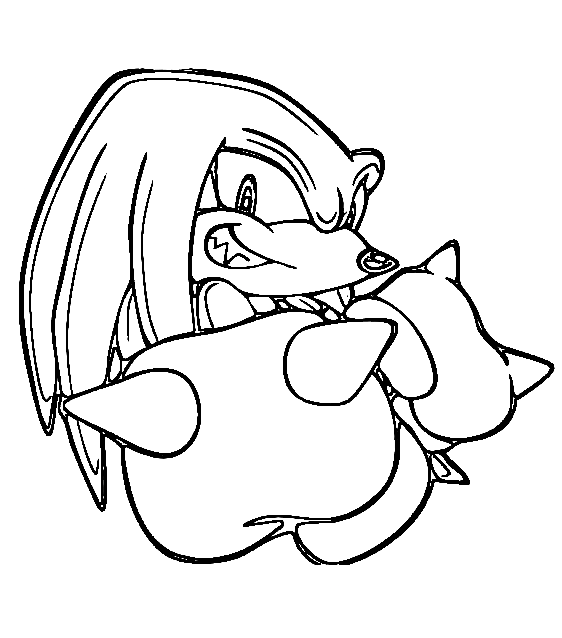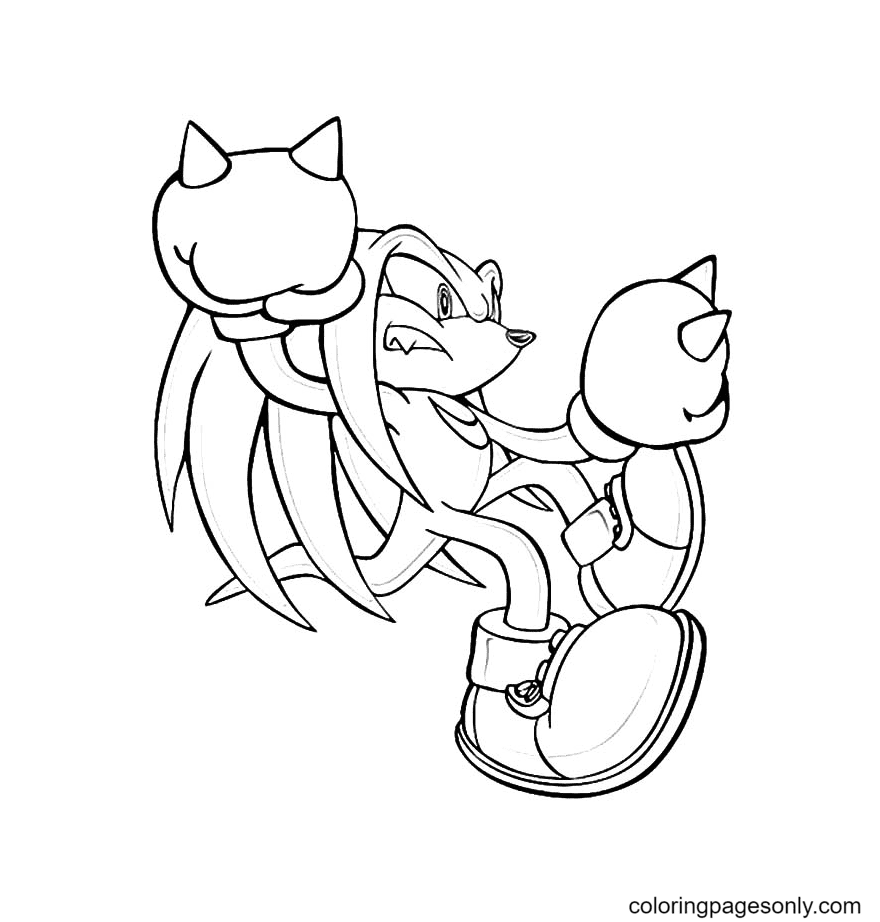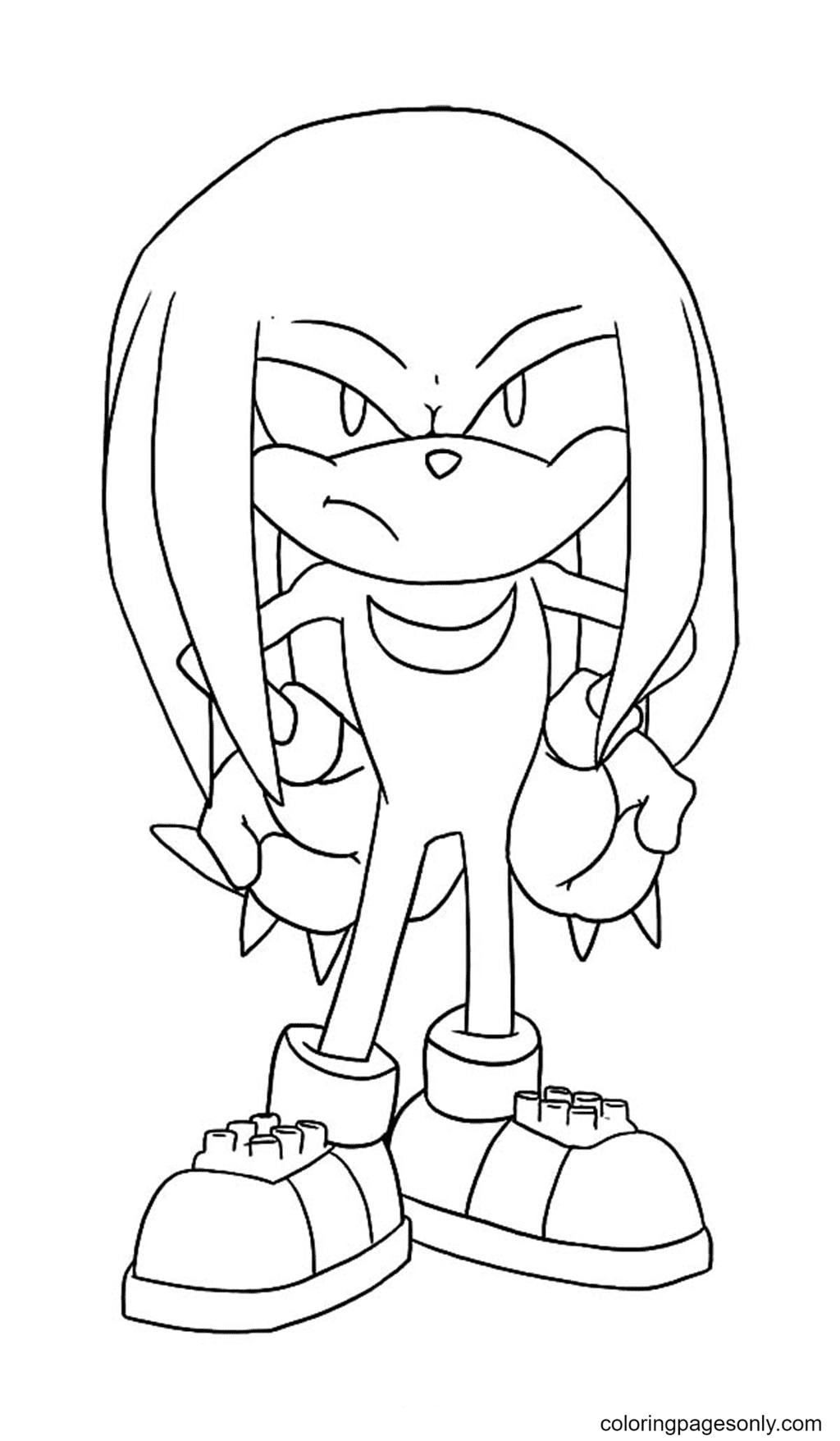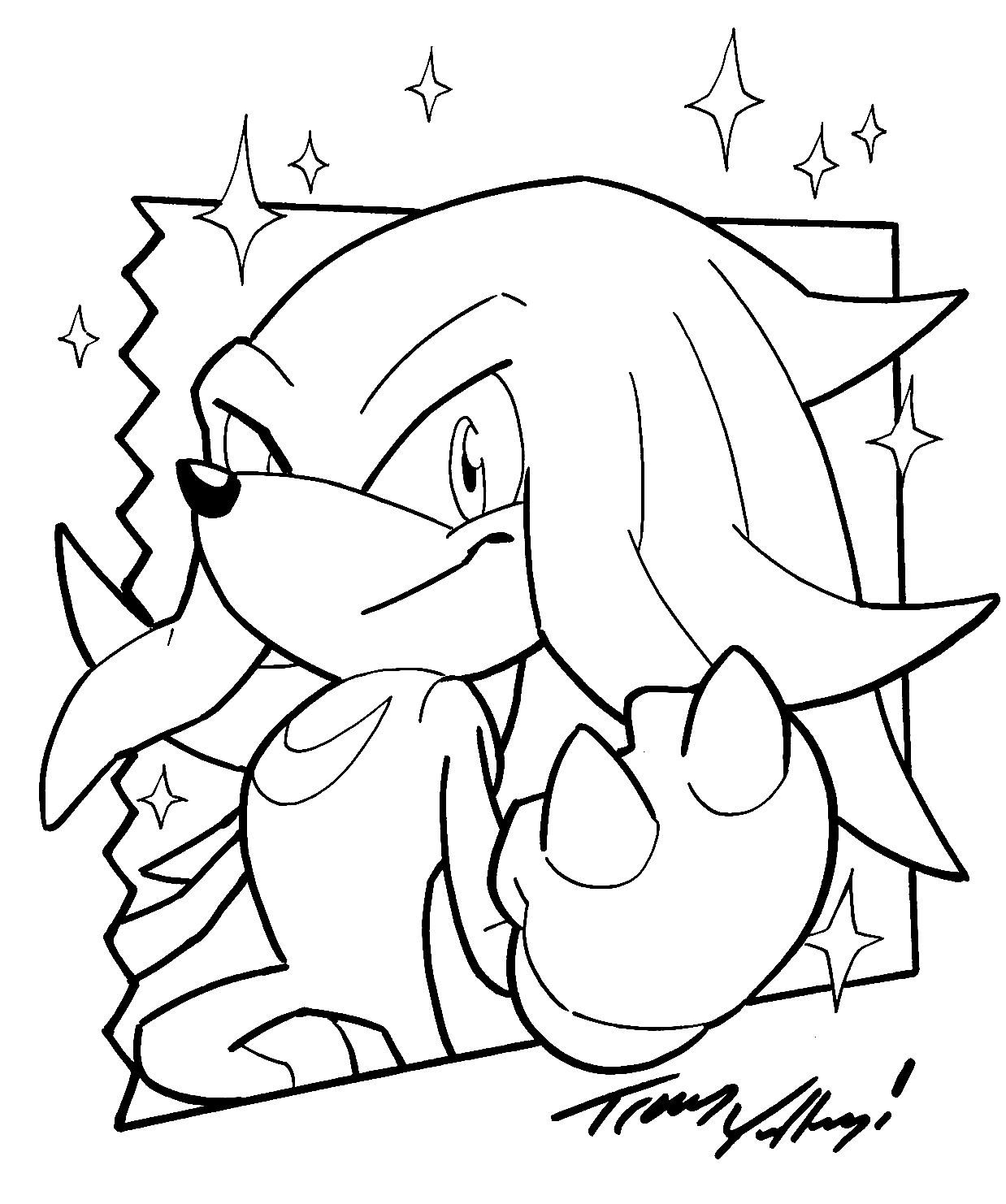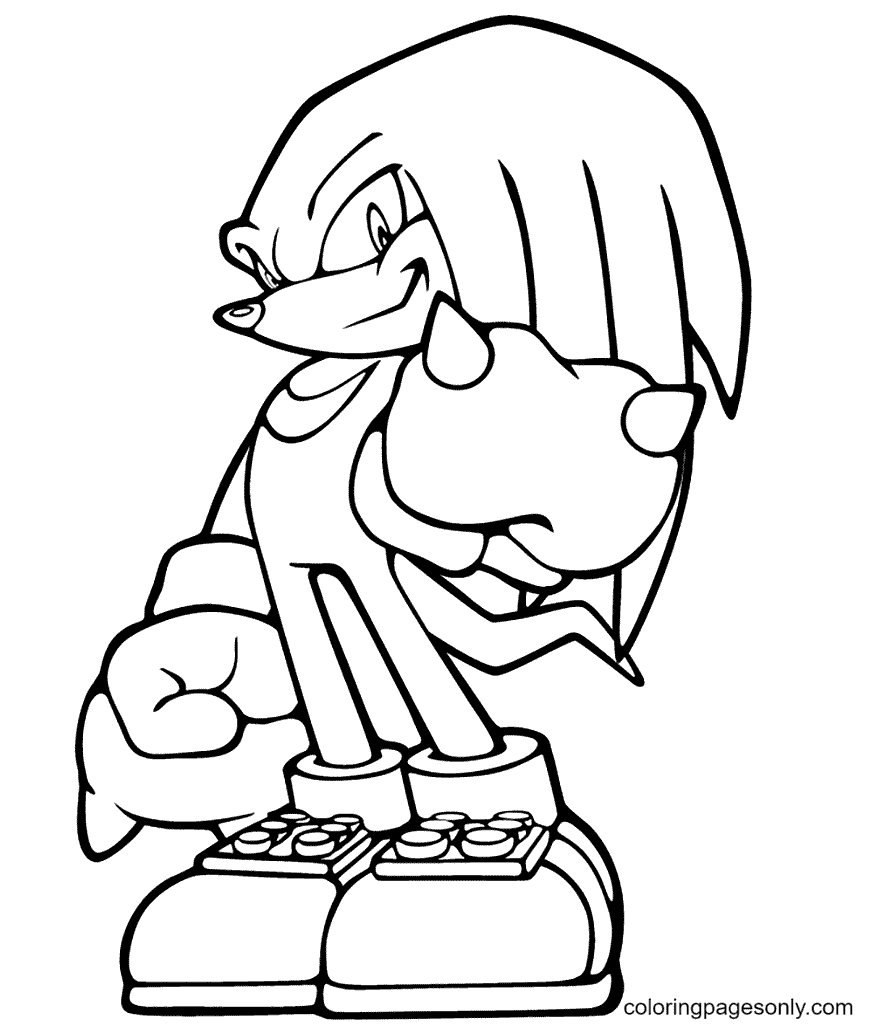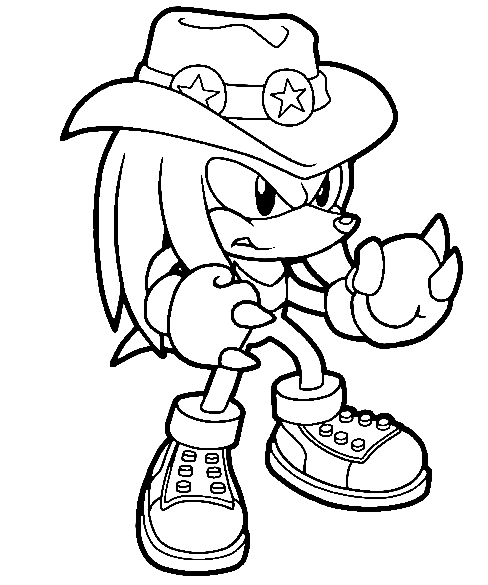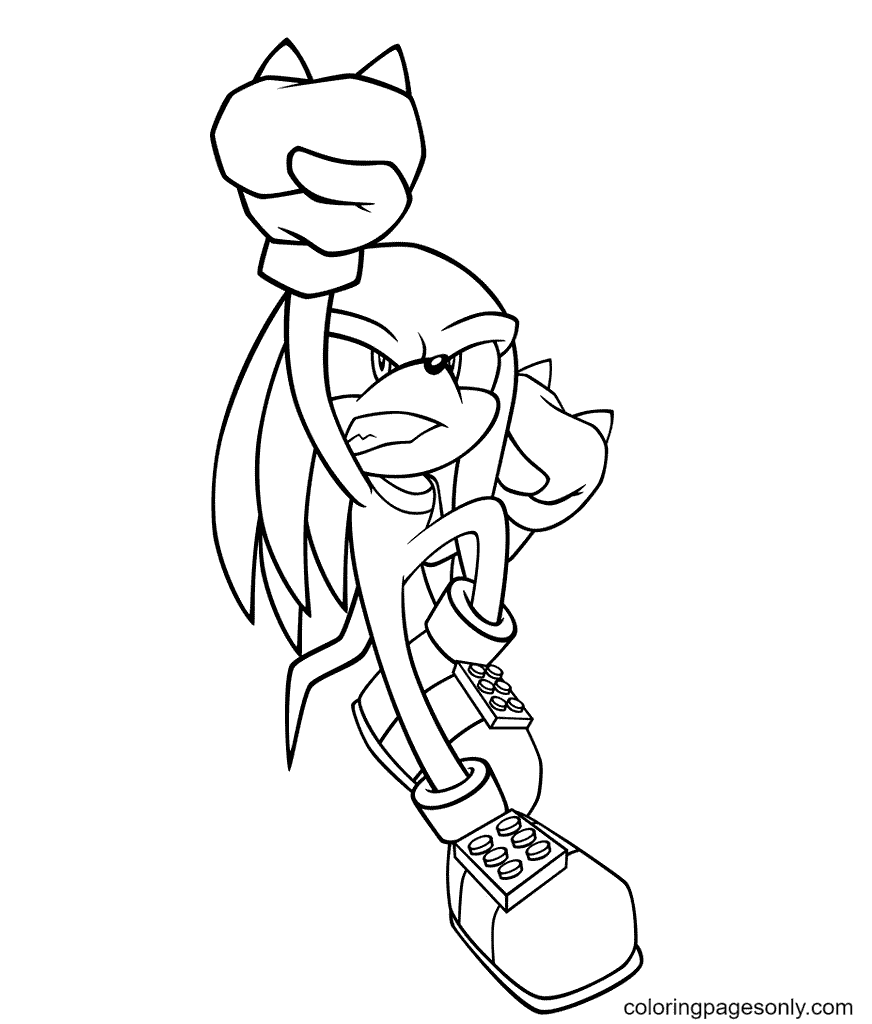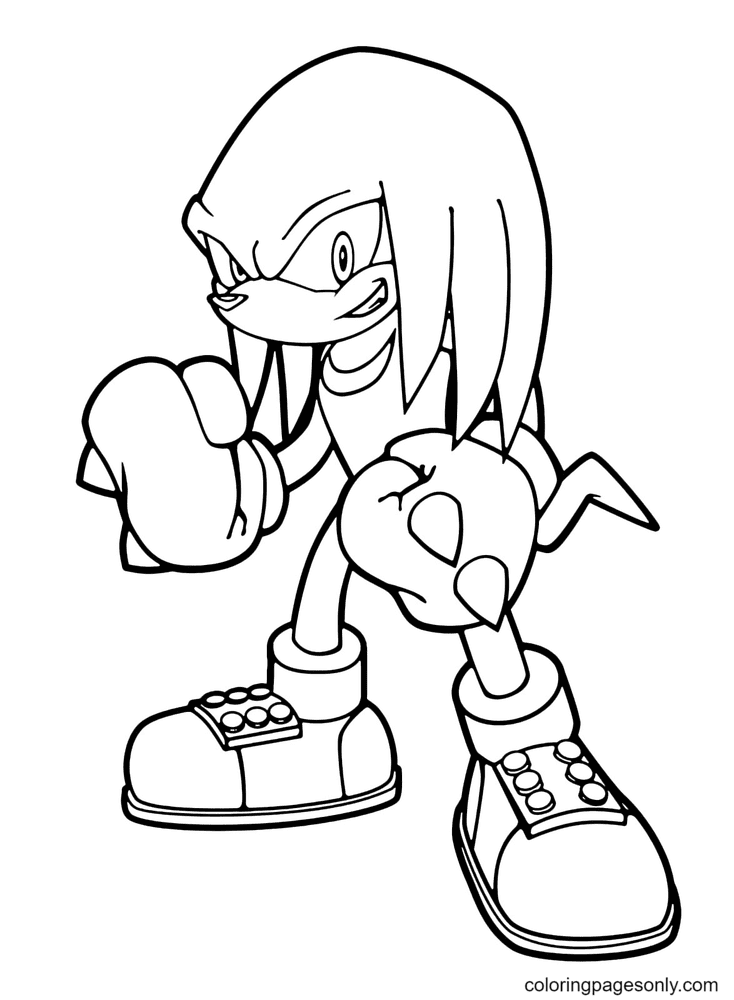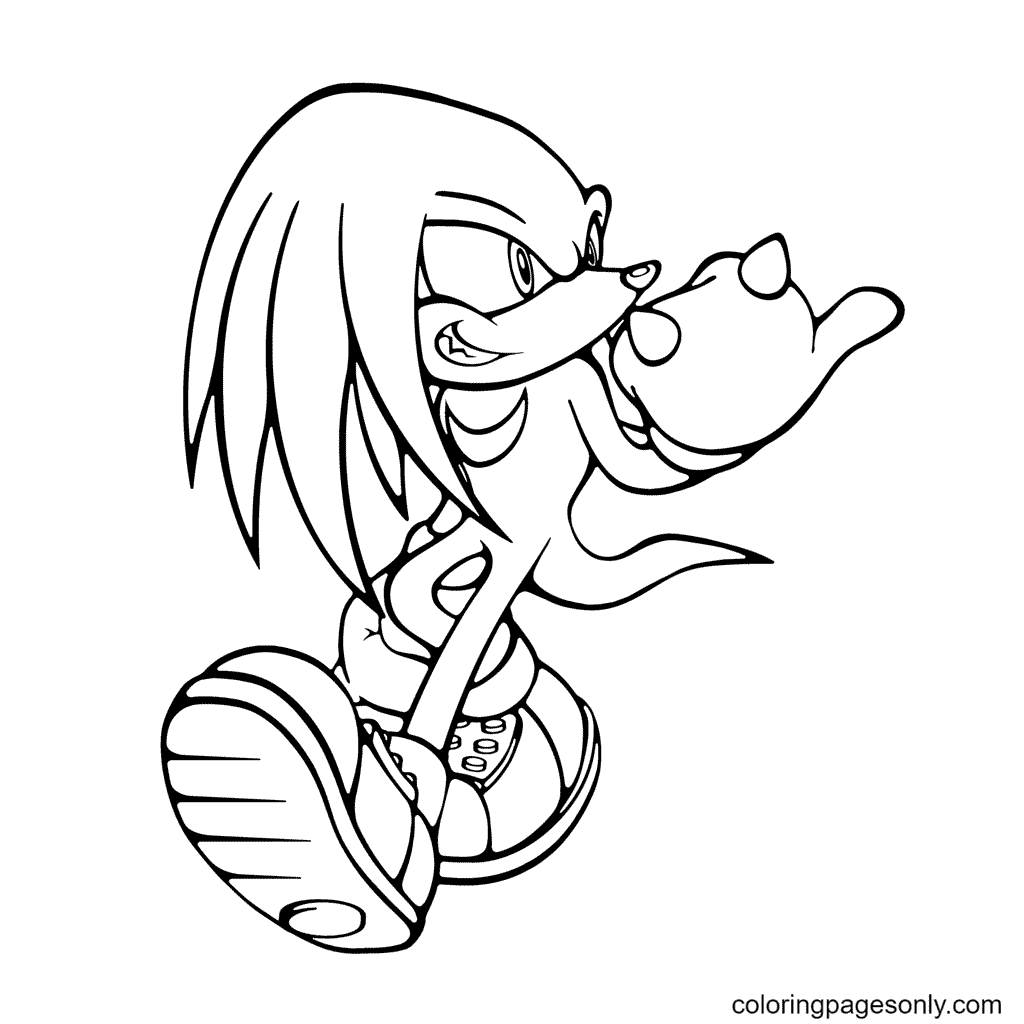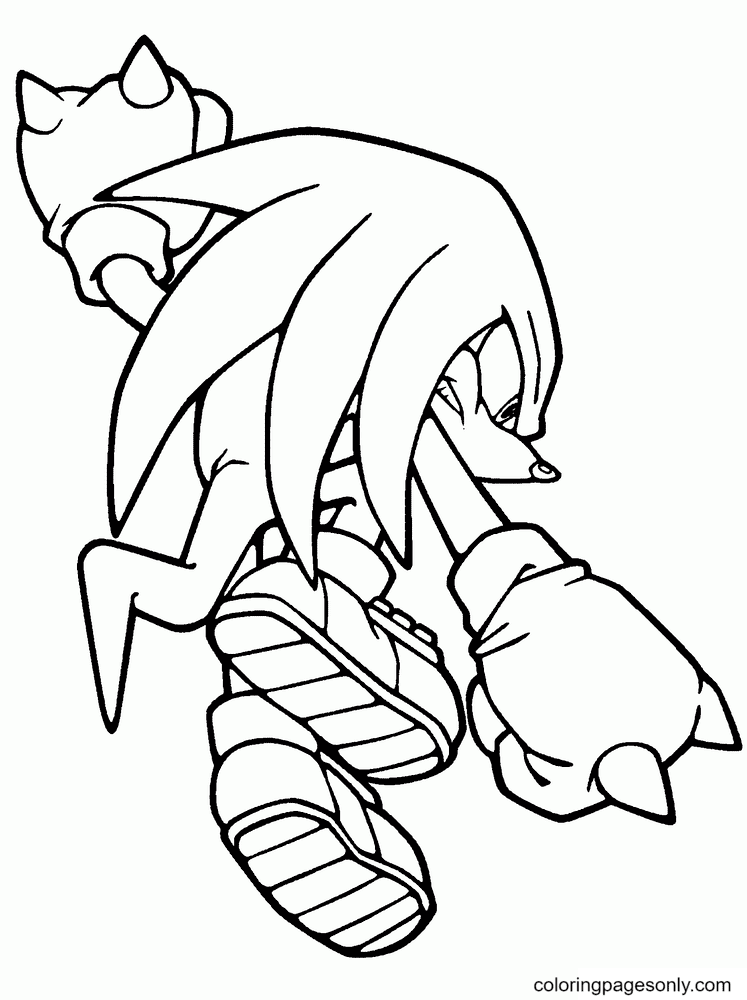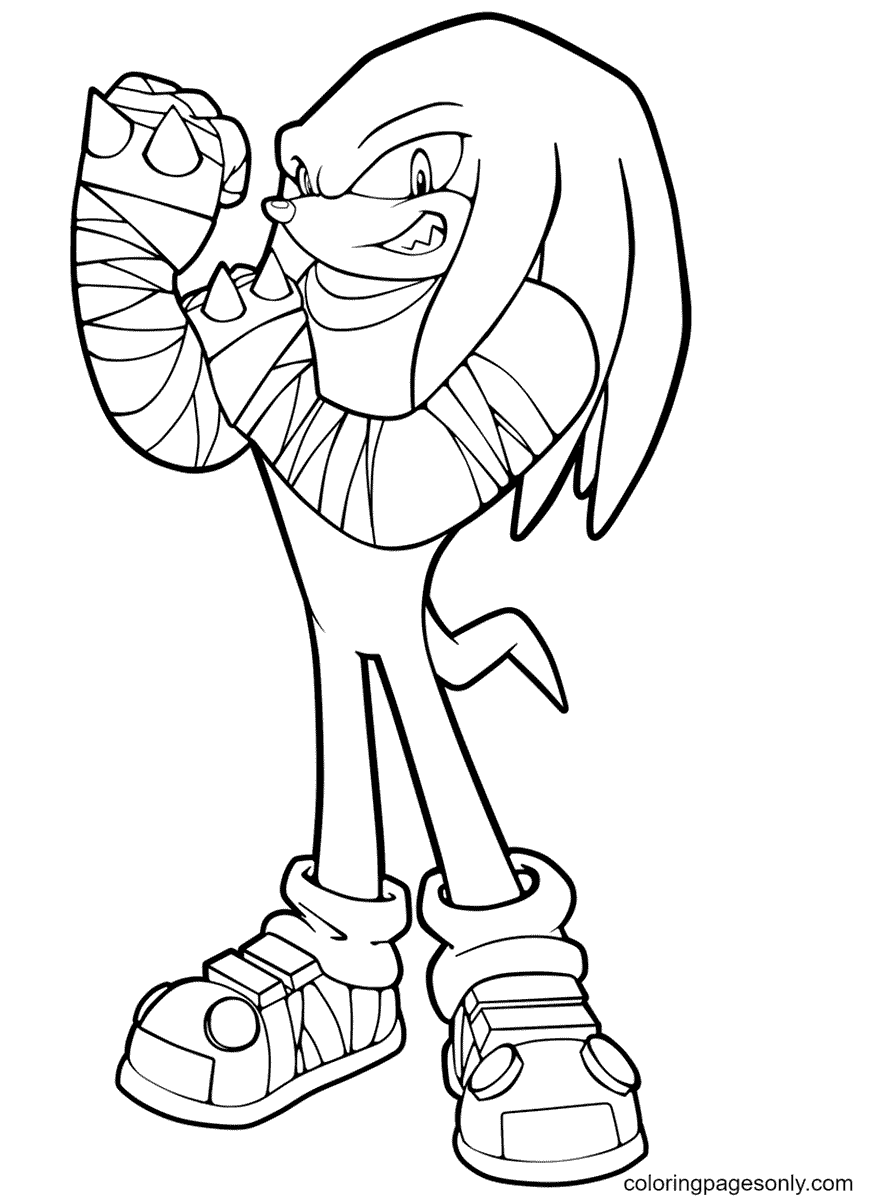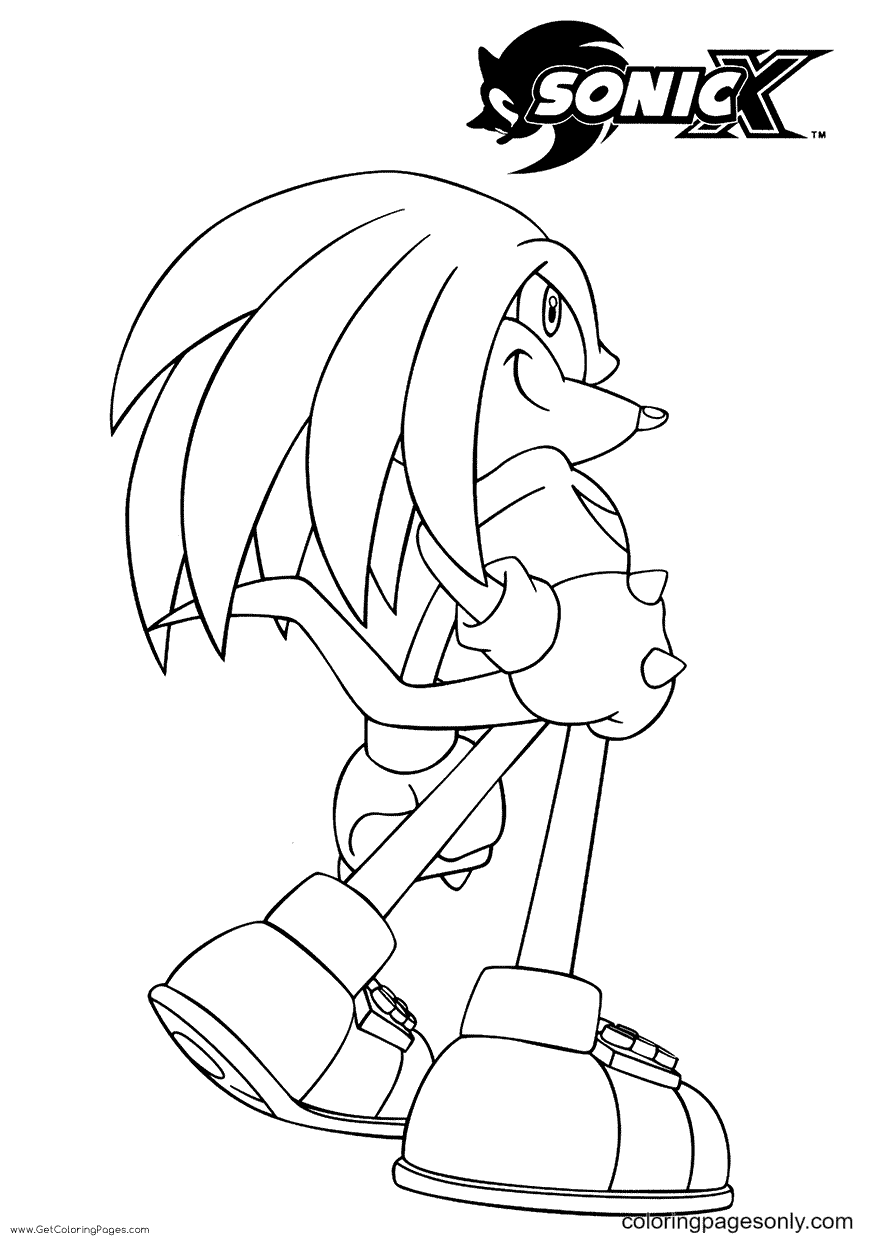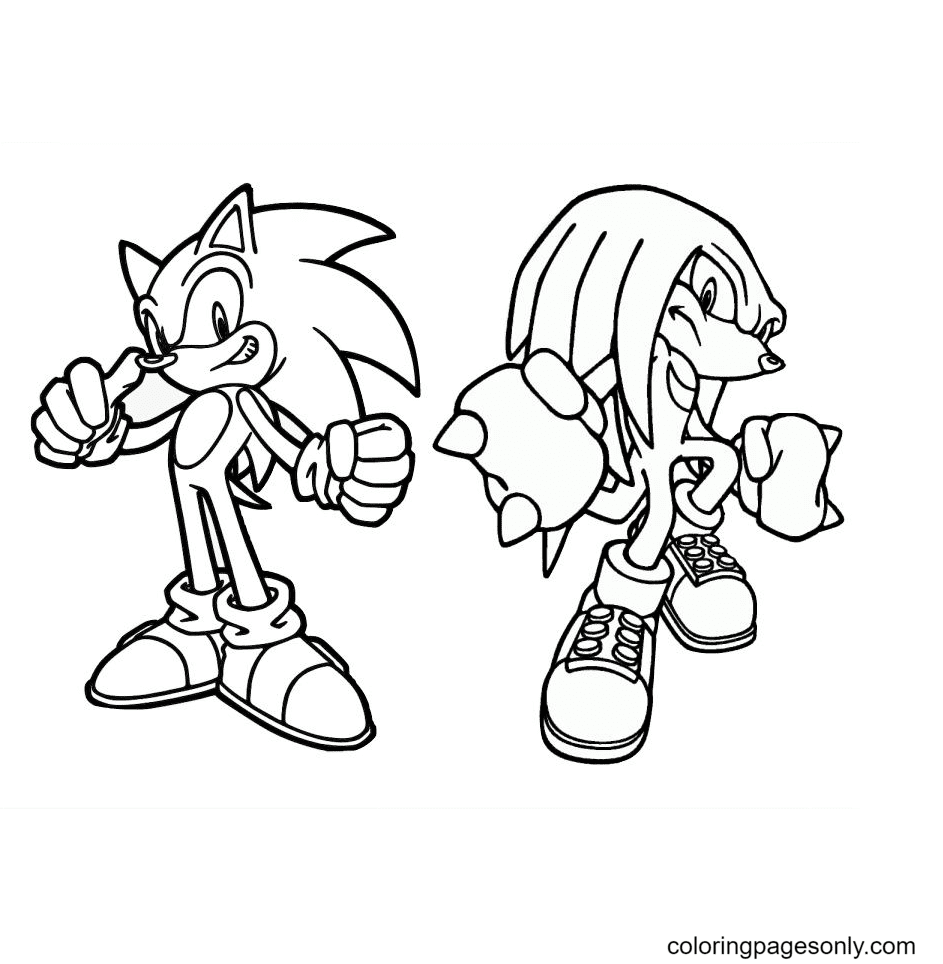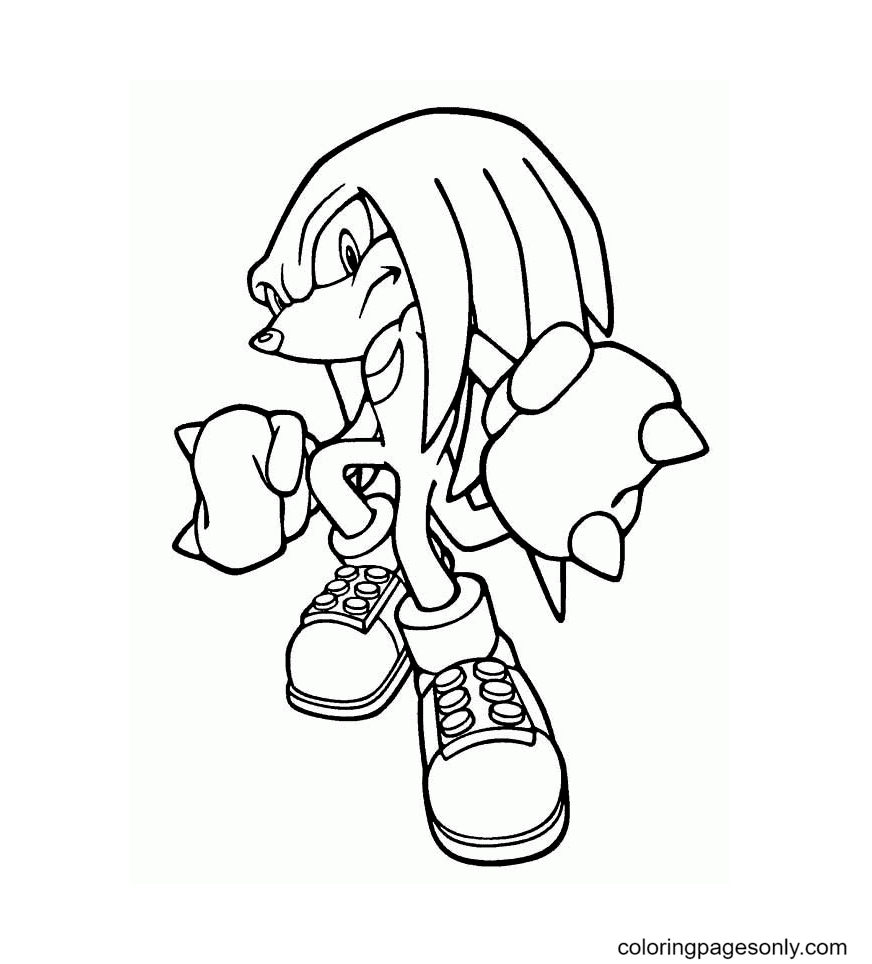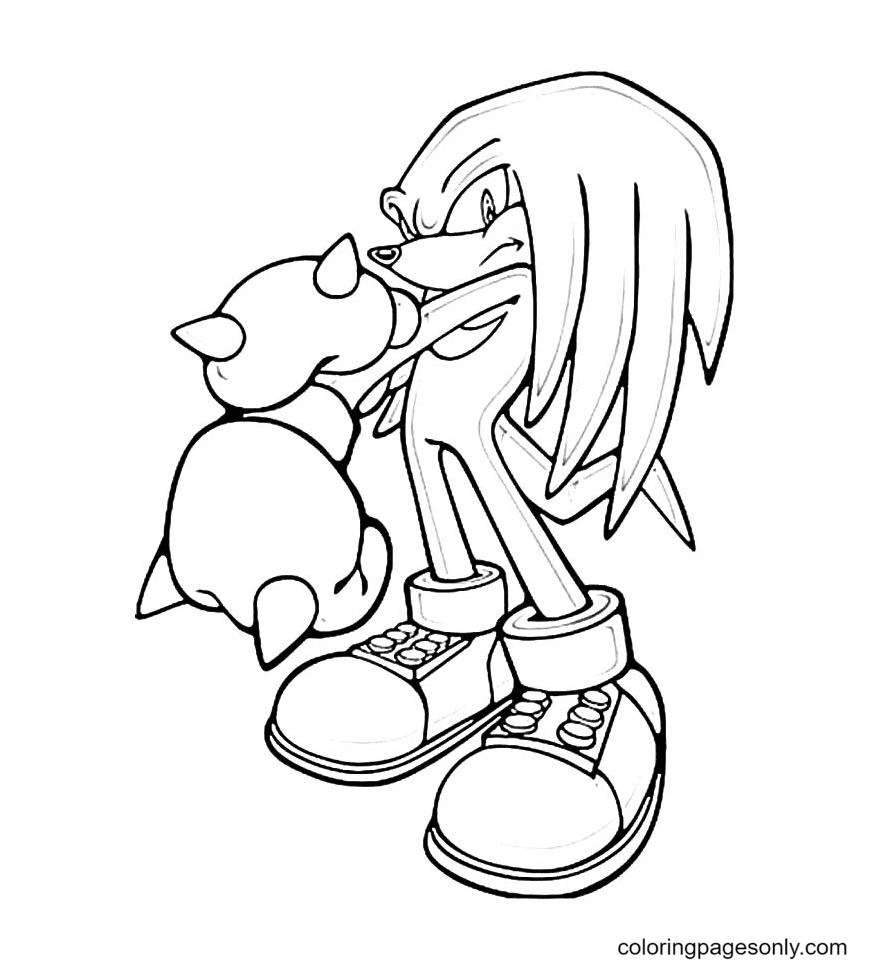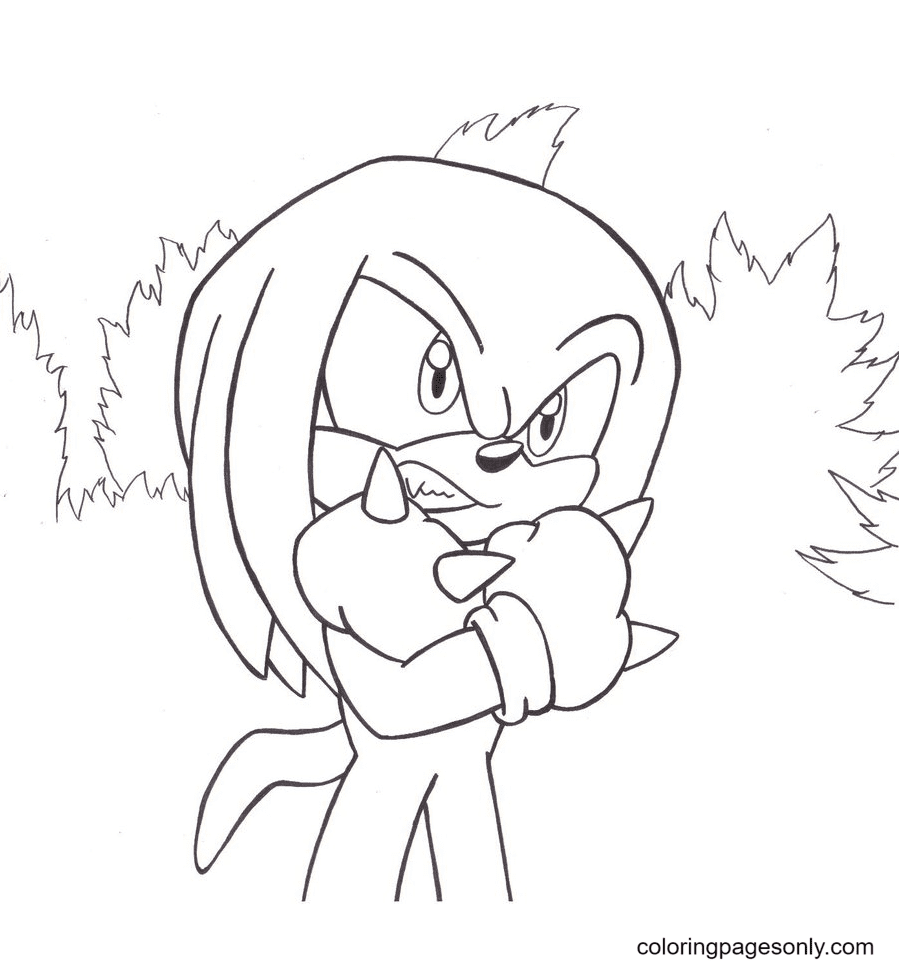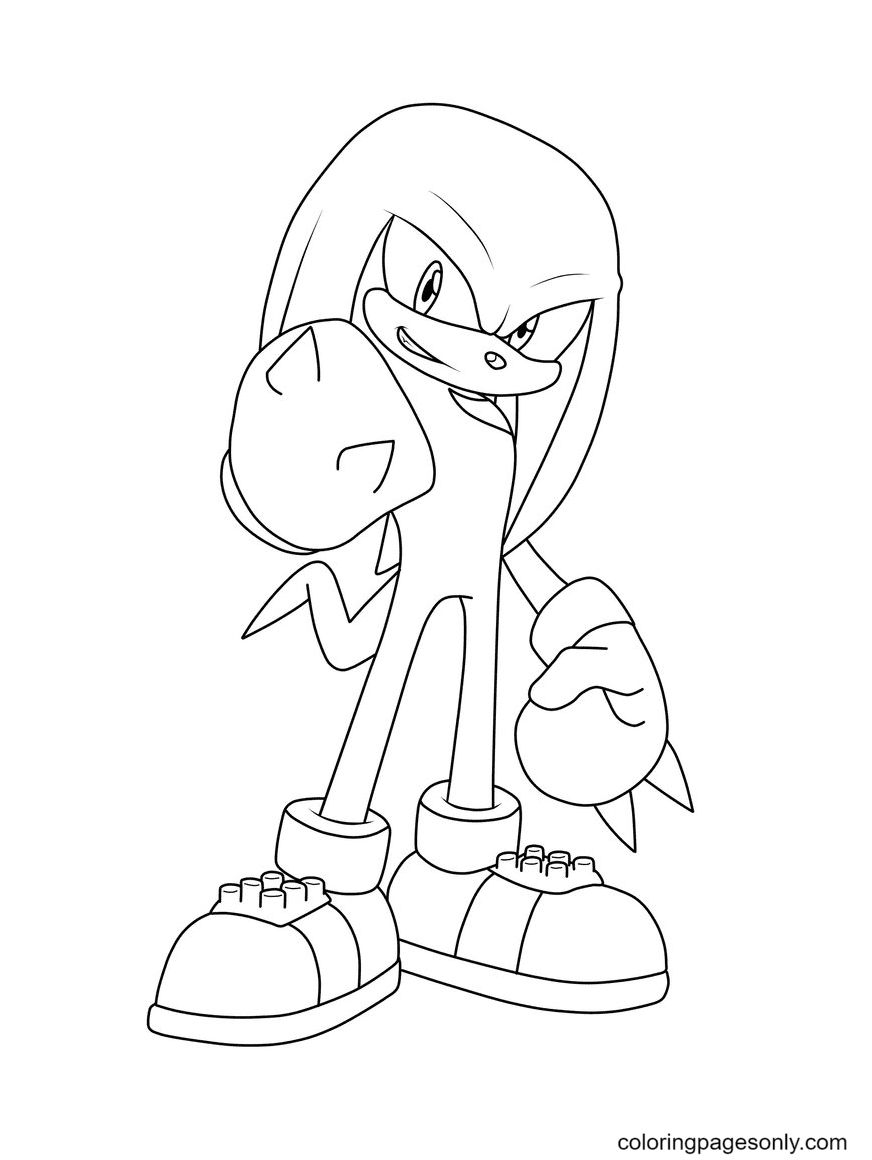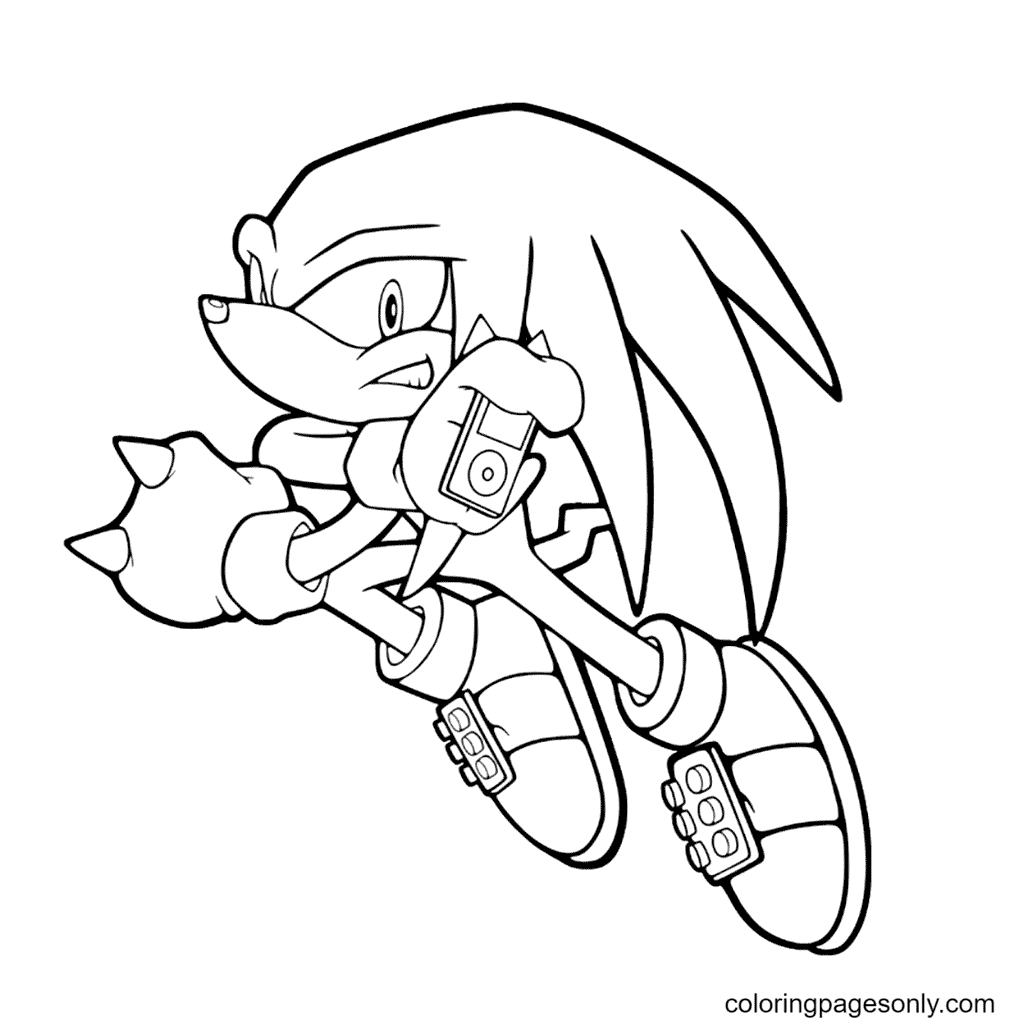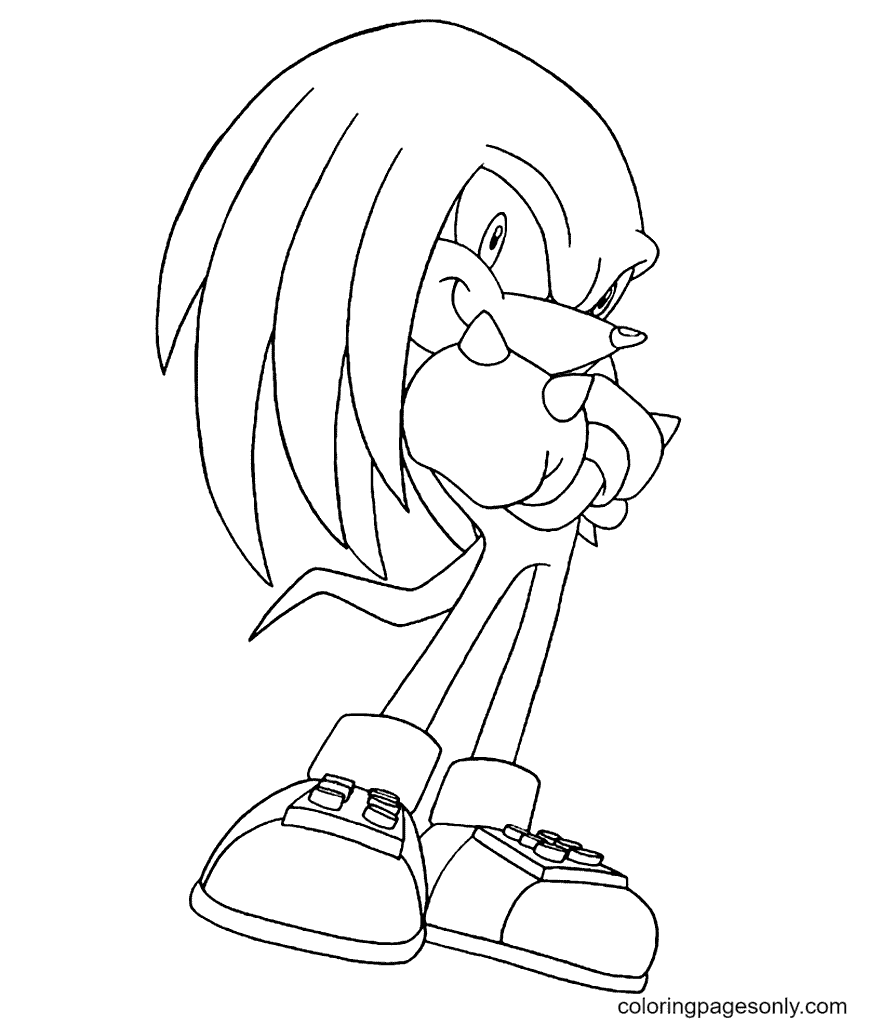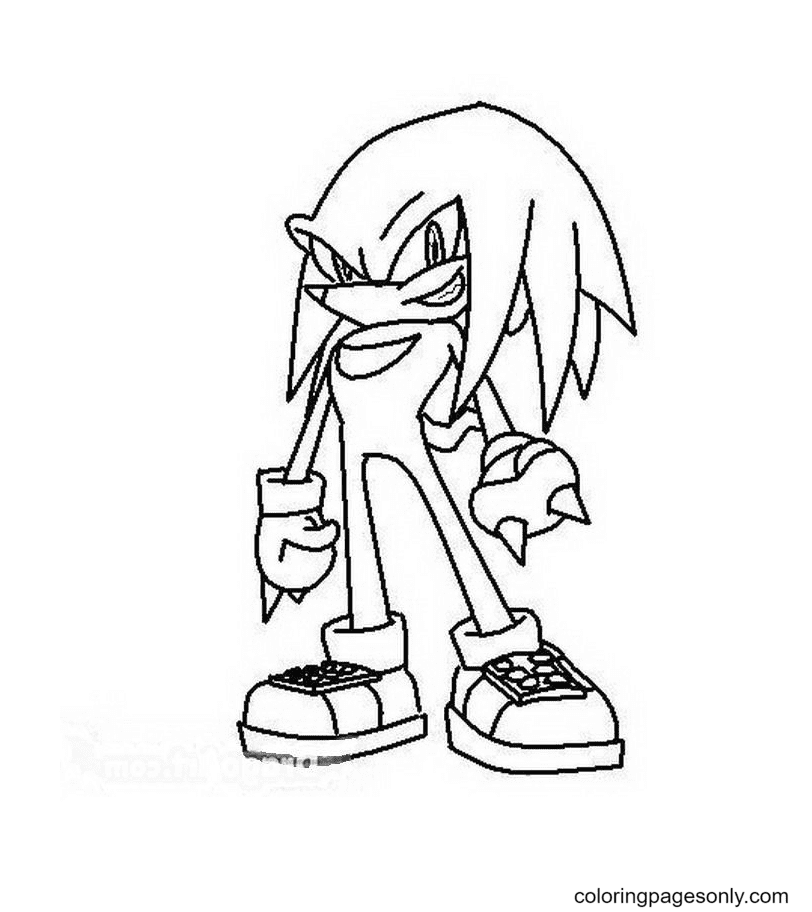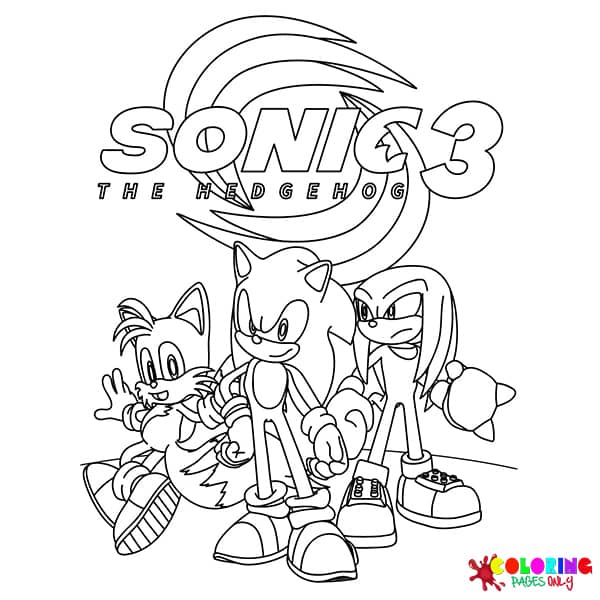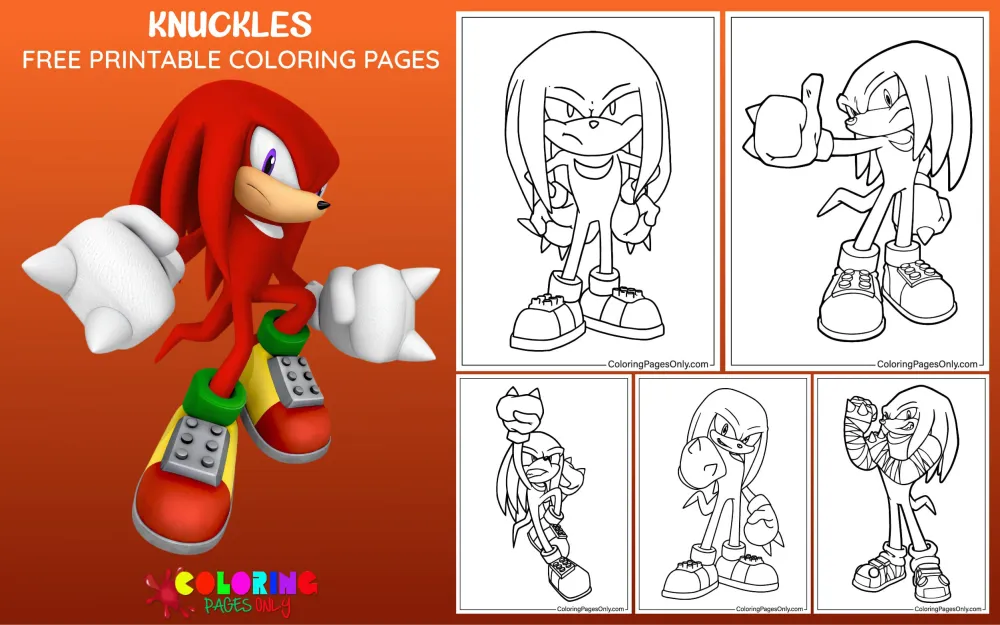
Free Knuckles coloring pages: 50+ pages featuring the Guardian of the Master Emerald in combat poses with his signature spiked knuckles raised, gliding scenes with his dreadlock-quills spread in the wind, digging and wall-climbing action pages, close-up portrait studies of his red fur and white chest crescent, Super Knuckles in golden powered form, scenes with the Master Emerald and Angel Island, Knuckles alongside Sonic and Tails, his Paramount film and series design based on Idris Elba’s portrayal, and the full visual vocabulary of the Sonic franchise’s physically strongest character across thirty years of games, animation, and live-action film. All free, printable PDF and online coloring for Sonic fans of all generations.
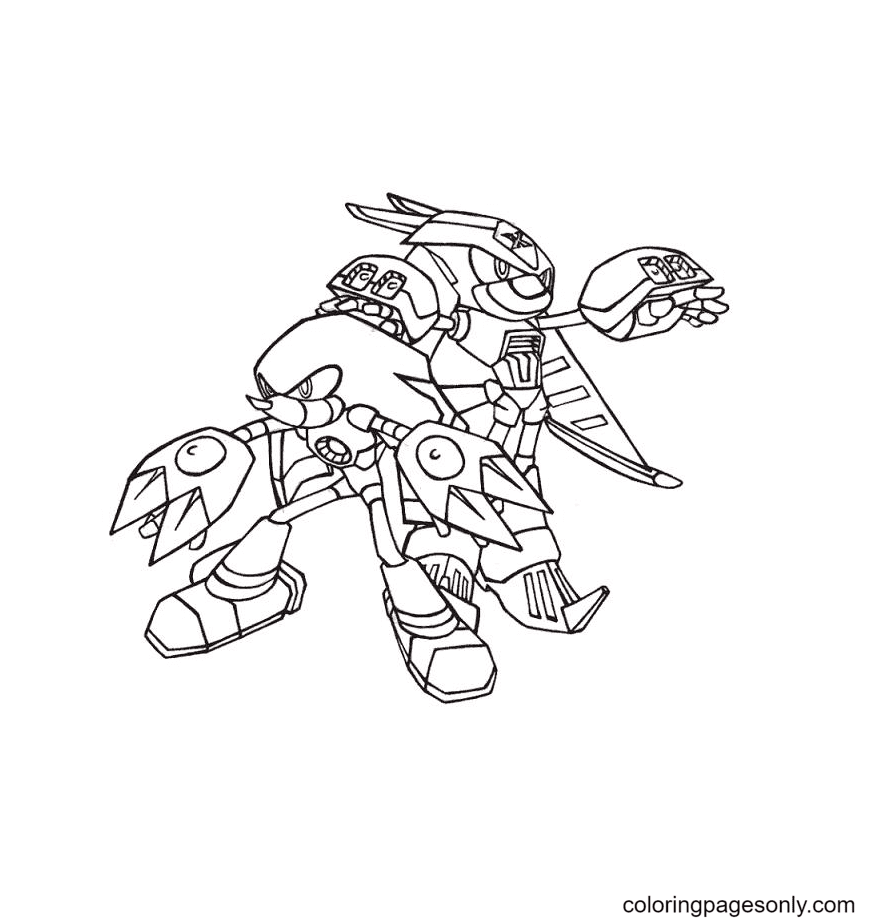
Knuckles the Echidna first appeared in Sonic the Hedgehog 3, released on February 2, 1994, in Japan and February 3, 1994, in North America, developed by Sonic Team and published by Sega. He was created by character designer Takashi Thomas Yuda. His introduction in that game placed him immediately in an adversarial role against Sonic and Tails: Dr. Eggman had deceived him into believing that Sonic was a thief coming to steal the Master Emerald, the giant green gem that Knuckles is sworn to protect. He fights the heroes, steals their Chaos Emeralds, and only allies with Sonic after discovering that Eggman was the actual threat. This pattern, Knuckles being deceived into opposing Sonic before becoming an ally, has repeated across multiple games and has become a defining element of his character: deeply loyal, fiercely protective of his duty, and occasionally susceptible to manipulation precisely because he takes his responsibilities so seriously.

His species is the echidna, a real monotreme mammal native to Australia and New Guinea. His name directly references his most distinctive physical feature: the two elongated spiked spurs extending from each of his fists, which function as both his primary weapon and his digging tool. His design as a red echidna with dreadlock-style quills and knuckle spurs was specific enough to make him immediately distinguishable from Sonic’s blue hedgehog design, a deliberate choice that helped establish him as a separate visual identity within the same franchise.

These 50+ free pages at ColoringPagesOnly.com cover Knuckles across his full visual history. All free, PDF or PNG, print or color online.

What’s Inside

Knuckles Portrait and Close-Up Pages

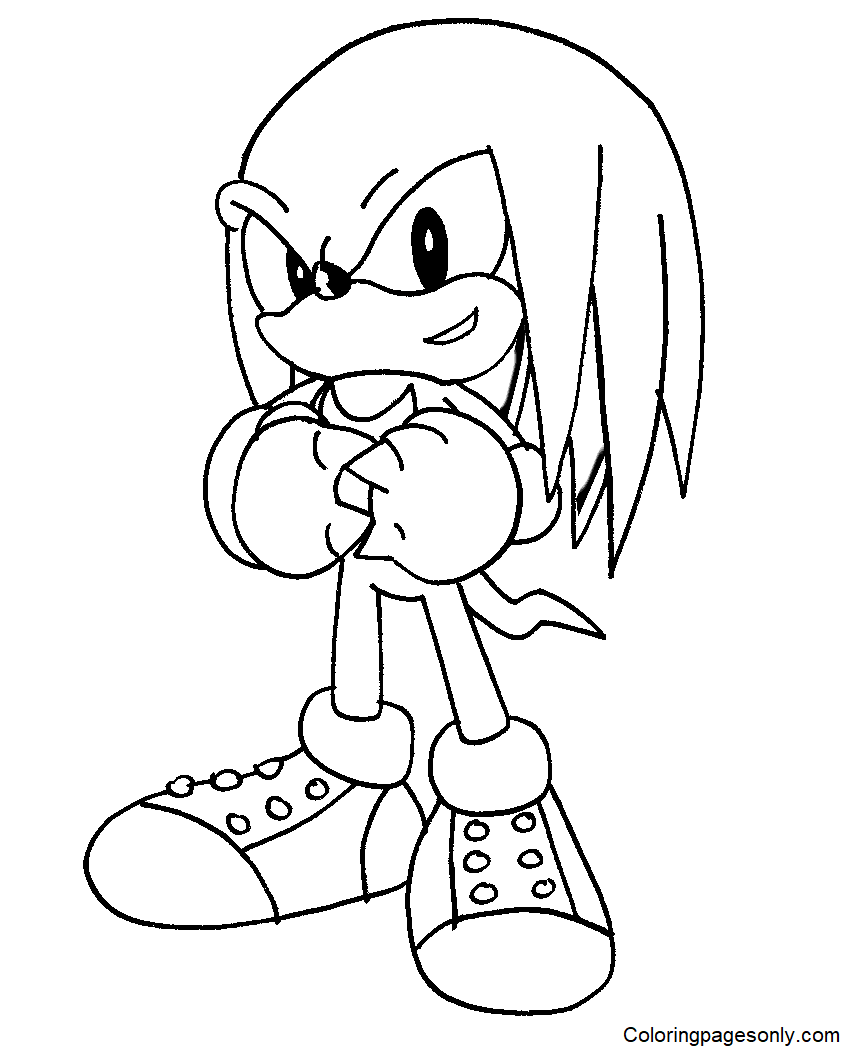
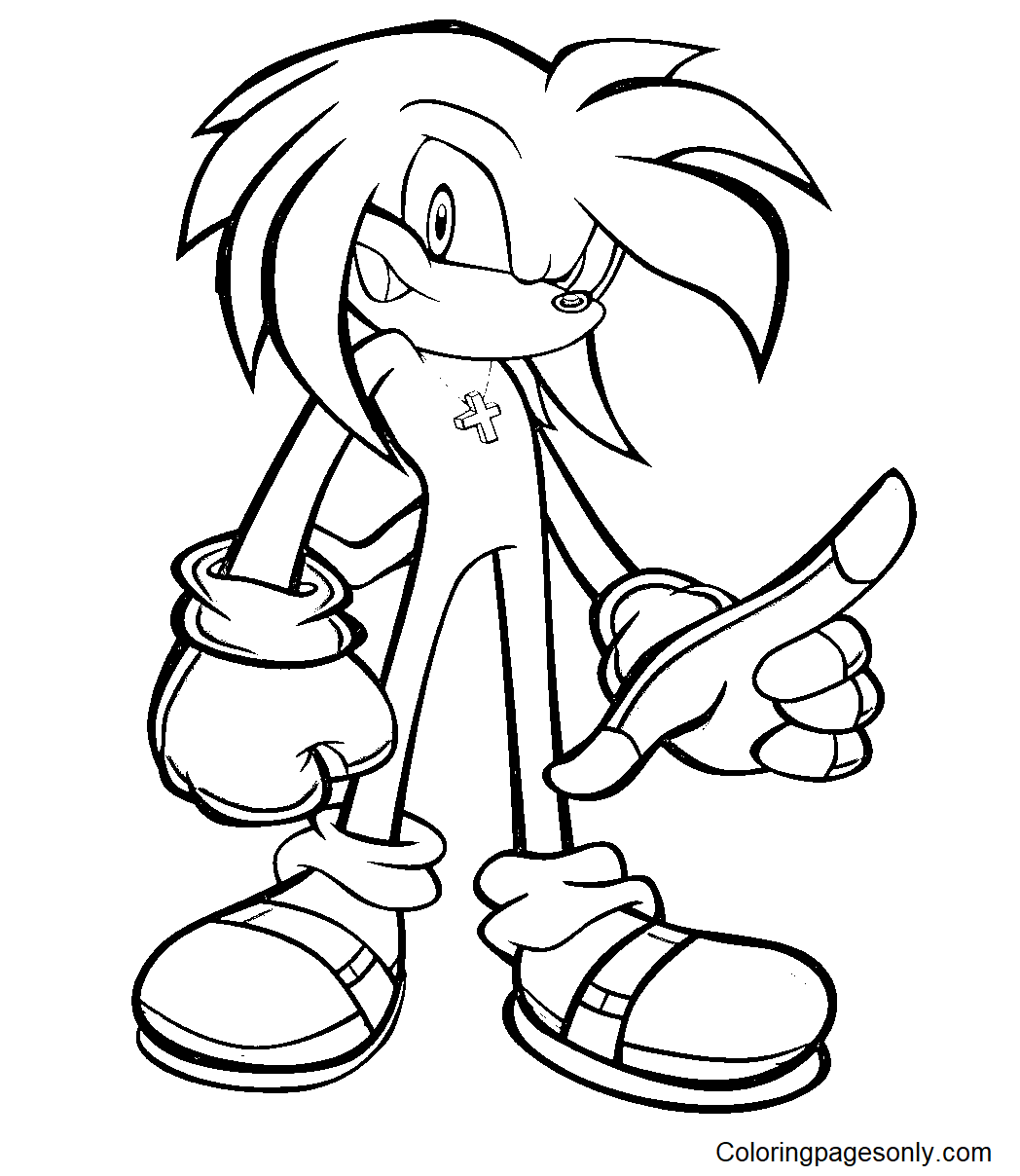
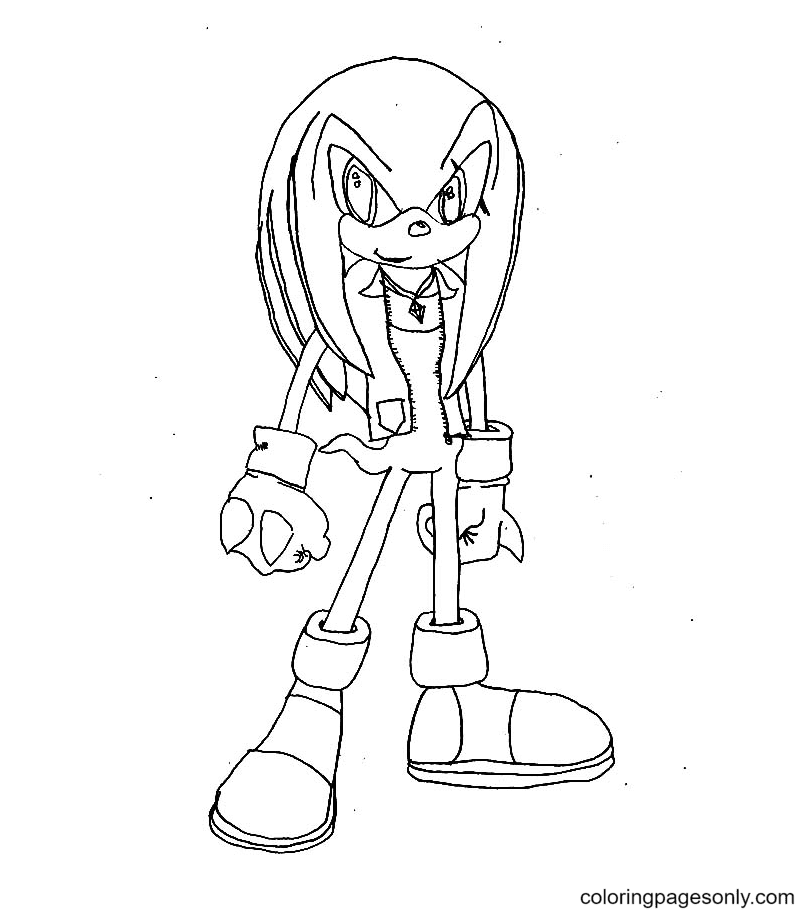
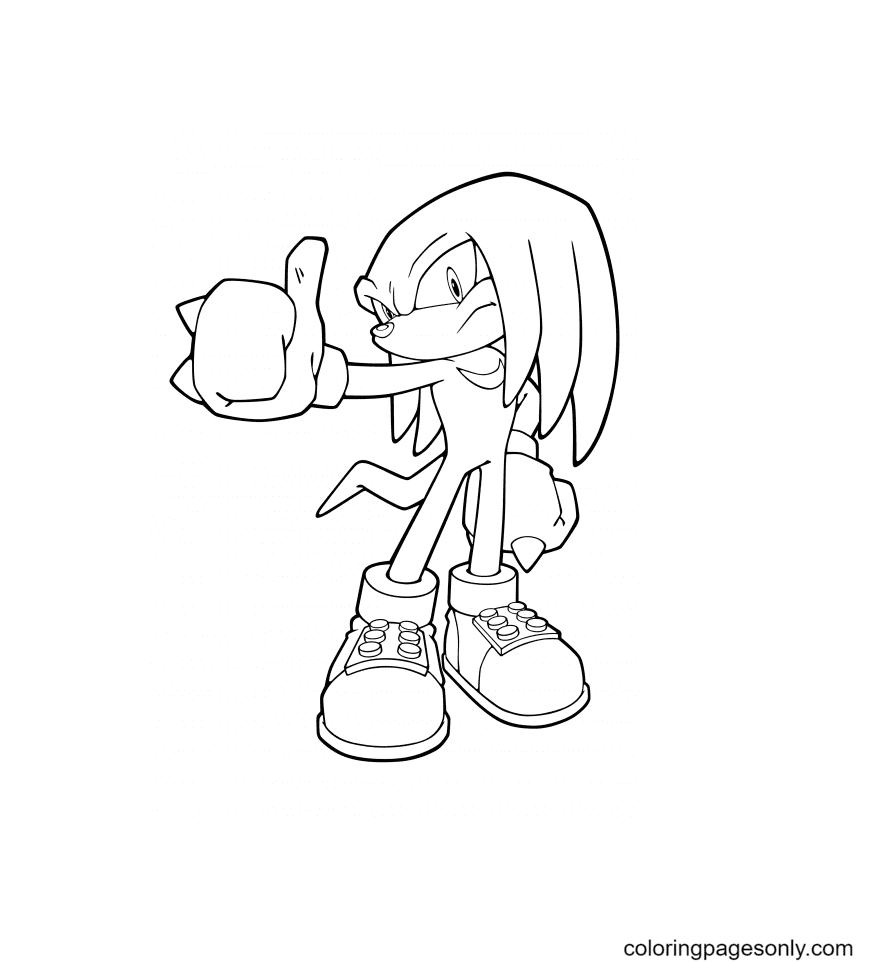
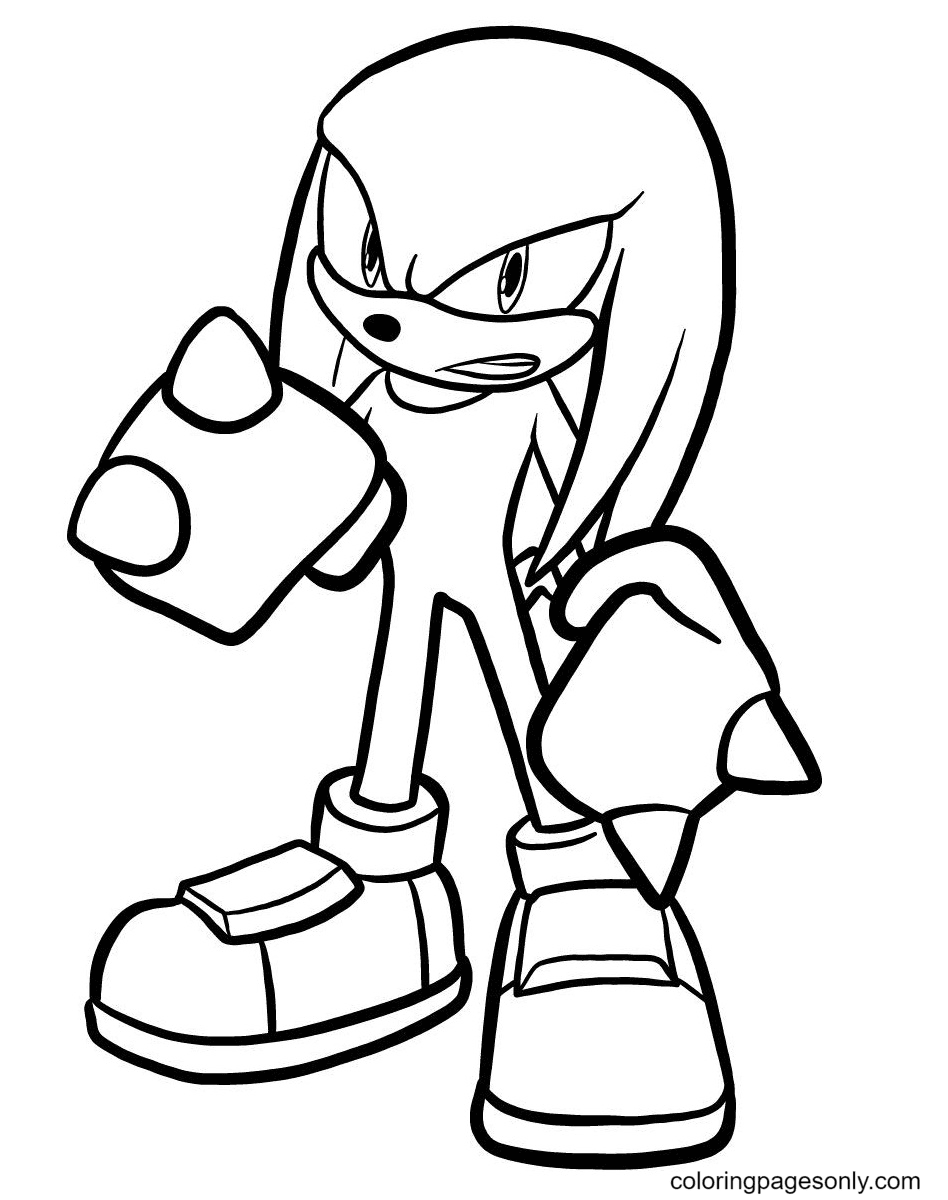
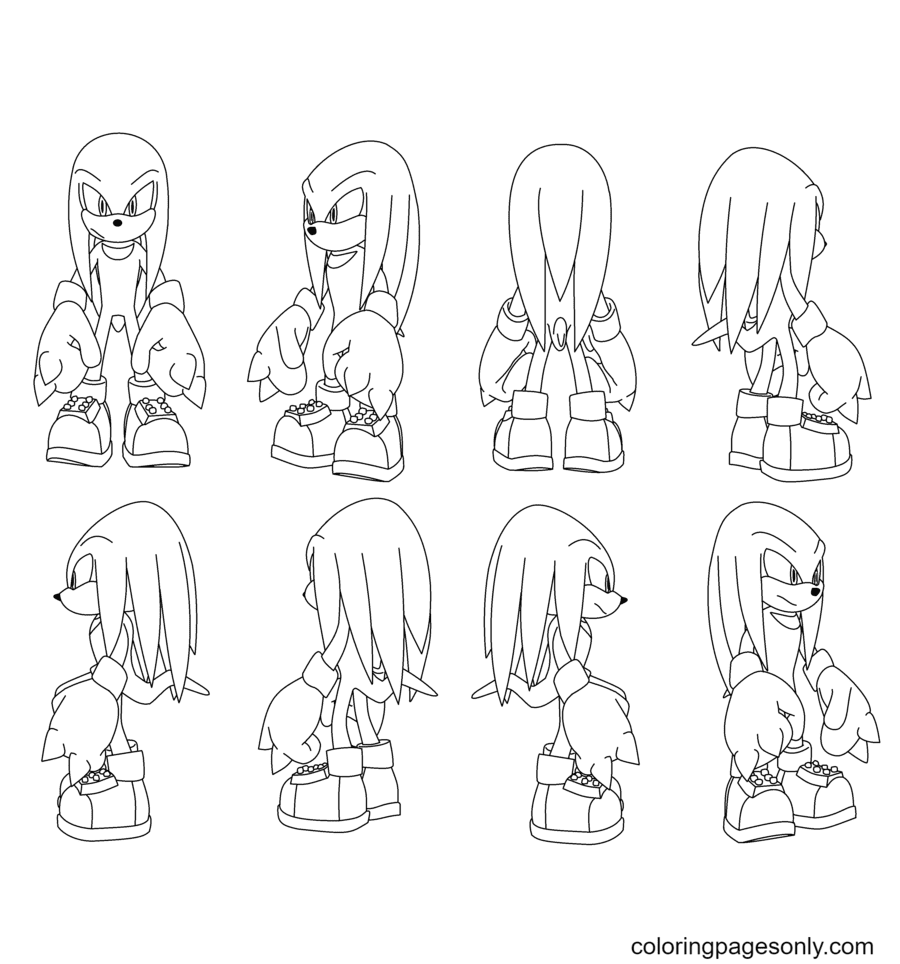
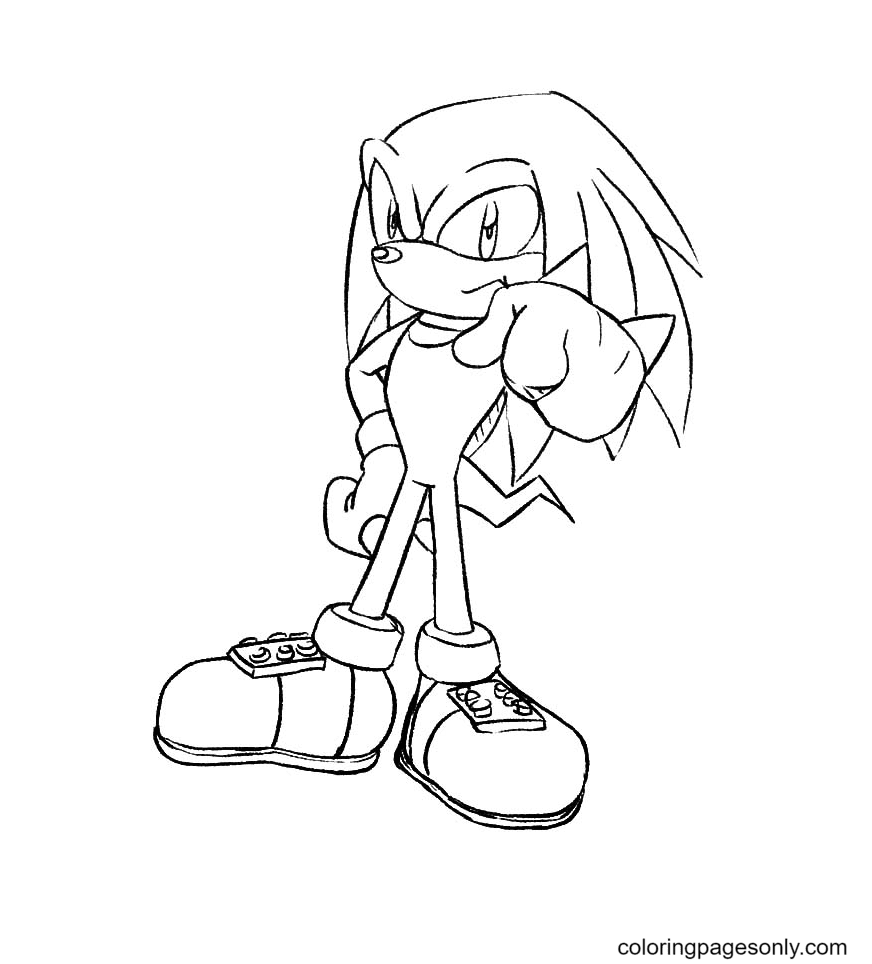
Knuckles’ design communicates his role before he takes a single action: the color red, the heavy build, the elongated fist spurs, and the default expression somewhere between serious and confrontational all establish him as the franchise’s physical anchor. He is stockier than Sonic, slower in straight-line running, and significantly more powerful in direct strength. The design’s visual logic is consistent: every element communicates a character who was built for power and endurance rather than speed and agility.

His red fur is a vivid, fully saturated red, slightly warmer and more vivid than a dark crimson and clearly distinguishable from any orange or maroon direction. His white chest crescent is the design’s most distinctive single decorative element: a curved white shape on his chest that has appeared in every version of the design across thirty years without modification, functioning as a consistent visual anchor across every redesign.

His dreadlock-quills, typically six long spines hanging from the back and sides of his head with one broader front lock, are the design element that most clearly distinguishes him from other Sonic franchise characters. They are the same red as his body fur, and they move differently in action pages: in gliding poses, they spread outward to catch wind; in fighting poses, they hang to the sides as his fists lead the composition.
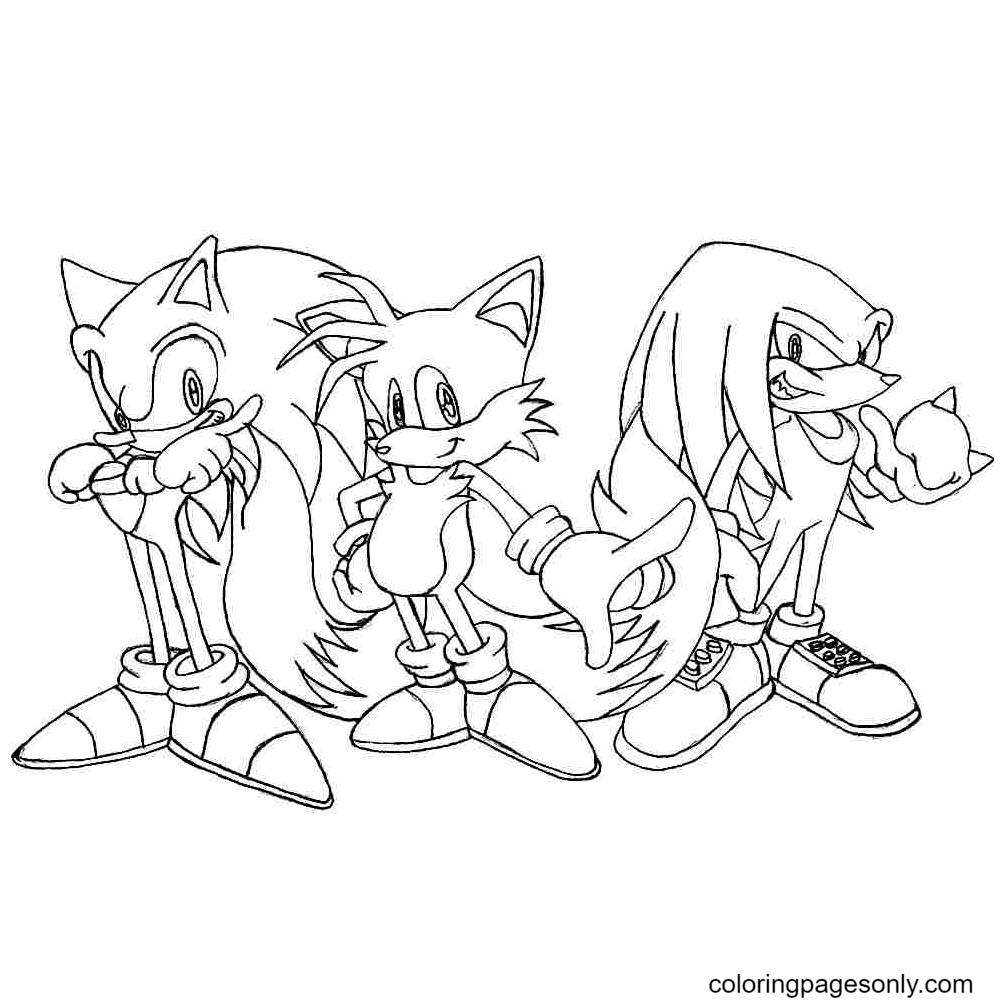
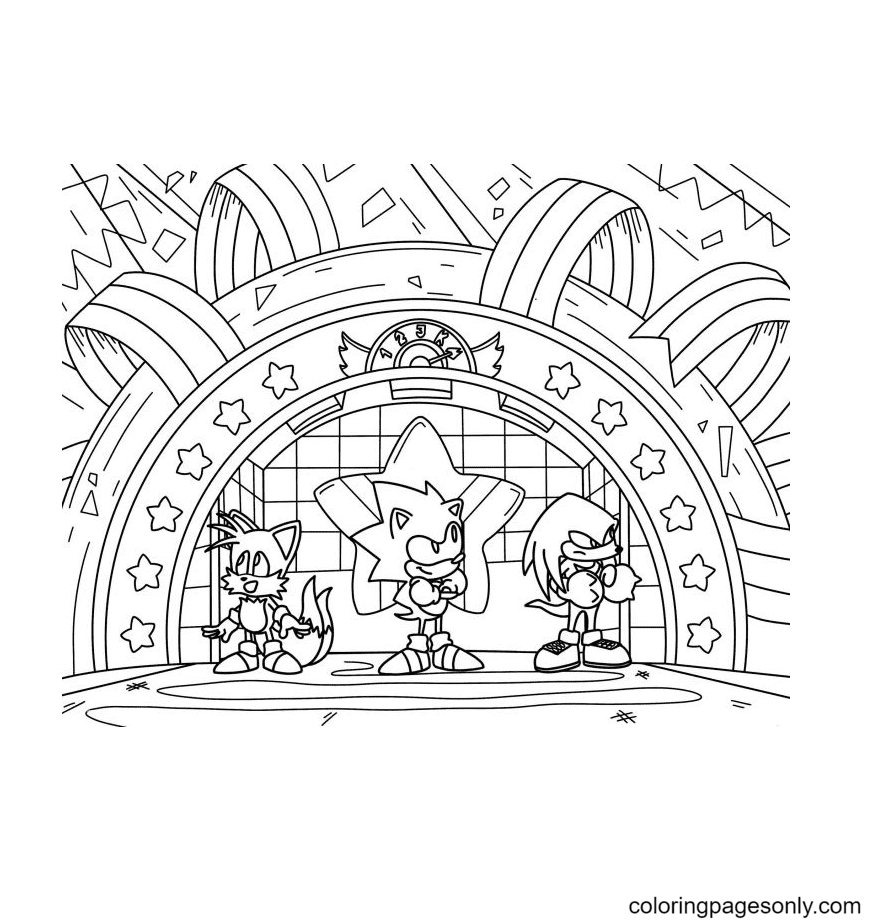
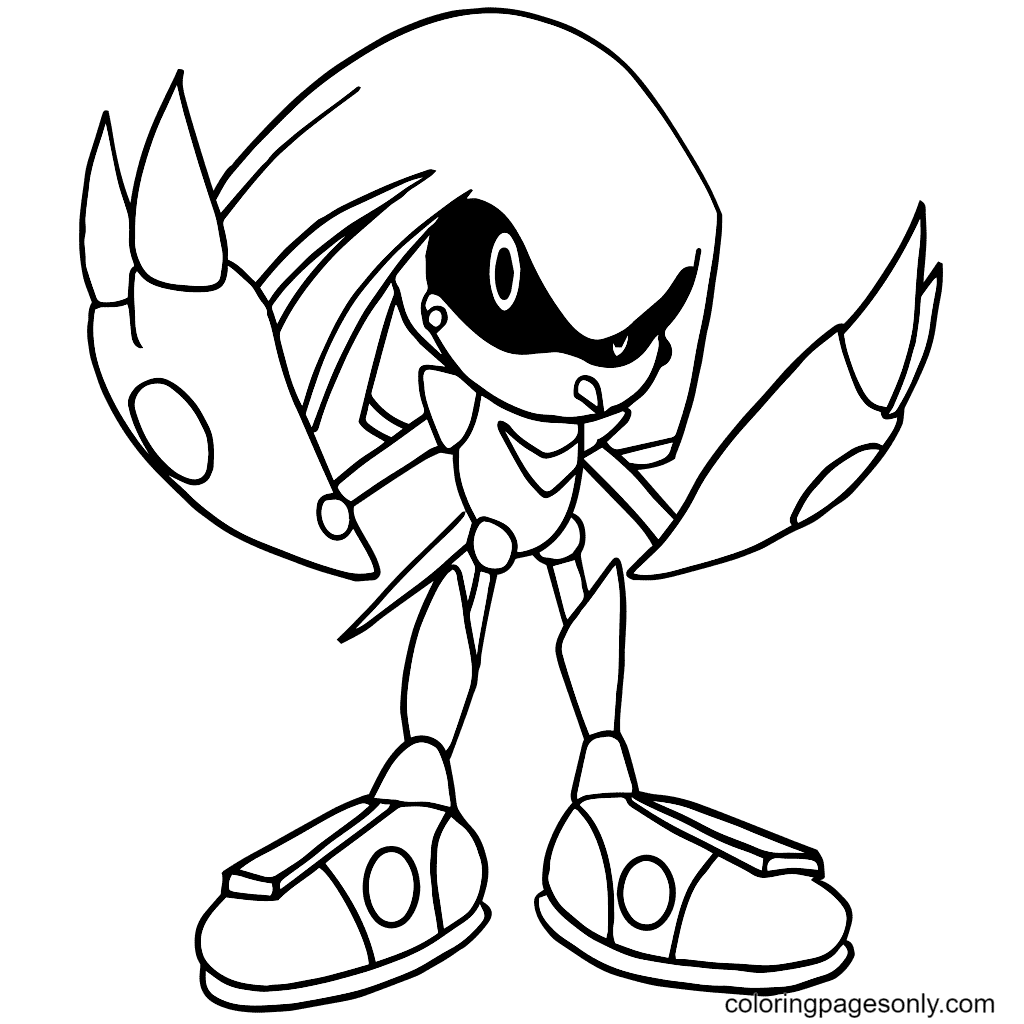
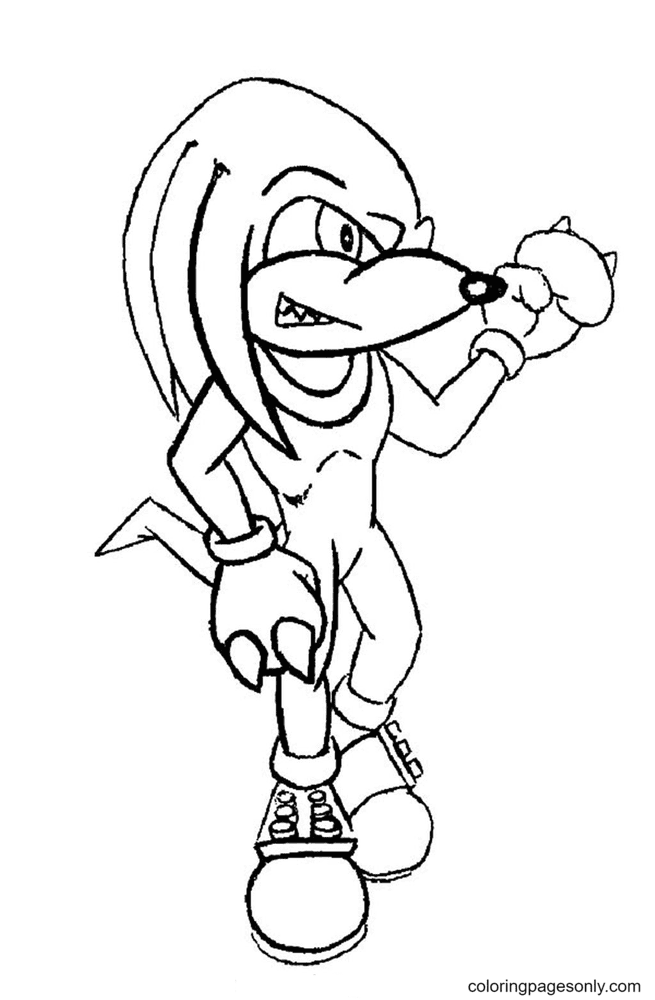
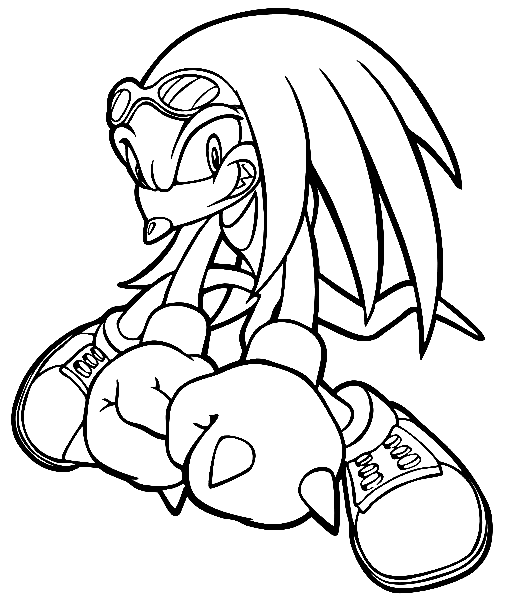
His knuckle spurs, two elongated white spikes extending from each fist, are the character’s namesake and his primary combat weapon. They are also his digging tools, the implements he uses to climb walls and tunnel through rock. In close-up pages showing his raised fists, the knuckle spurs are the most specific and important detail to render accurately.

Coloring portrait pages: The body uses vivid warm red at full saturation across every fur surface, applied evenly with no shift toward orange or toward dark crimson. The chest crescent is clean white, or very pale warm cream. The knuckle spurs are white or pale grey-white. His shoes follow the specific Knuckles design: red and yellow with a diamond pattern, the most colorful element of his costume design. His eyes are purple or mauve: a warm, slightly red-shifted purple rather than blue-purple.

Combat and Action Pose Pages

Knuckles in a fighting stance is the collection’s most physically dynamic subject: the low center of gravity, the raised fists, and the specific weight distribution of a character built for raw power rather than speed create a compositional energy entirely distinct from the running and spin-dash poses that define Sonic’s action pages.

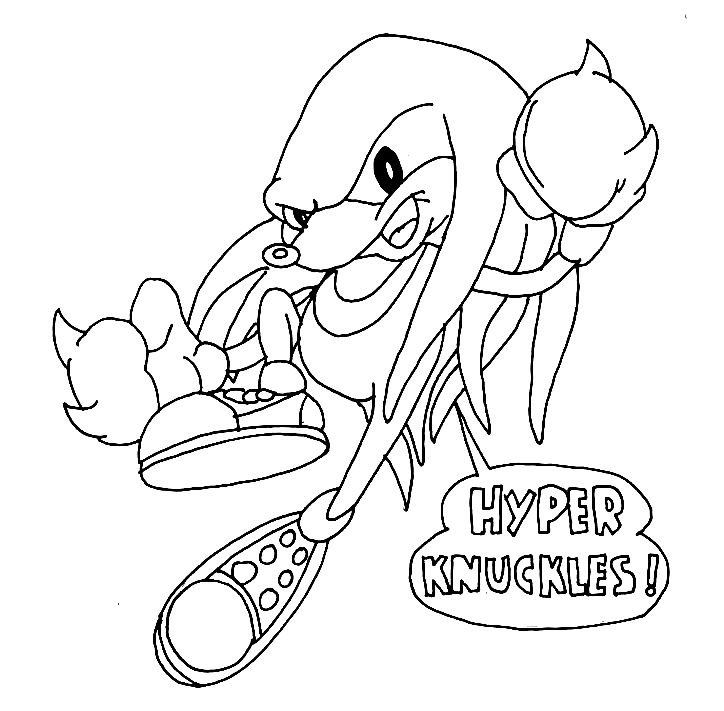
His signature combat move is the “Knuckles Punch” or “Knuckles Fist”: a direct, powerful forward punch that is strong enough to shatter stone and metal, to crack through walls, and in the games, to destroy enemy robots with a single strike. Pages showing this attack show the extended fist, the spiked knuckle spurs at the forward point of the punch, and the impact effects of the strike: shattered rock, energy impact waves, or debris.

His “Spiral Upper” and other named combat moves appear in various fighting and action games throughout the franchise, and pages referencing these moves show different punch trajectory angles: the straight forward punch, the upward uppercut, and the downward ground punch that creates a shockwave.

Coloring combat pages: Action effects surrounding any punch impact should be rendered in warm, vivid yellow-orange at the center point of impact, fading to pale yellow at the outer edge of the shockwave. Shattered rock or debris elements use warm medium grey with slightly darker grey at the shadow edges of each rock fragment. The fist and forearm in a punching pose should be the composition’s darkest element: the full vivid red at maximum contrast against the lighter impact effects surrounding it.

Gliding Pages

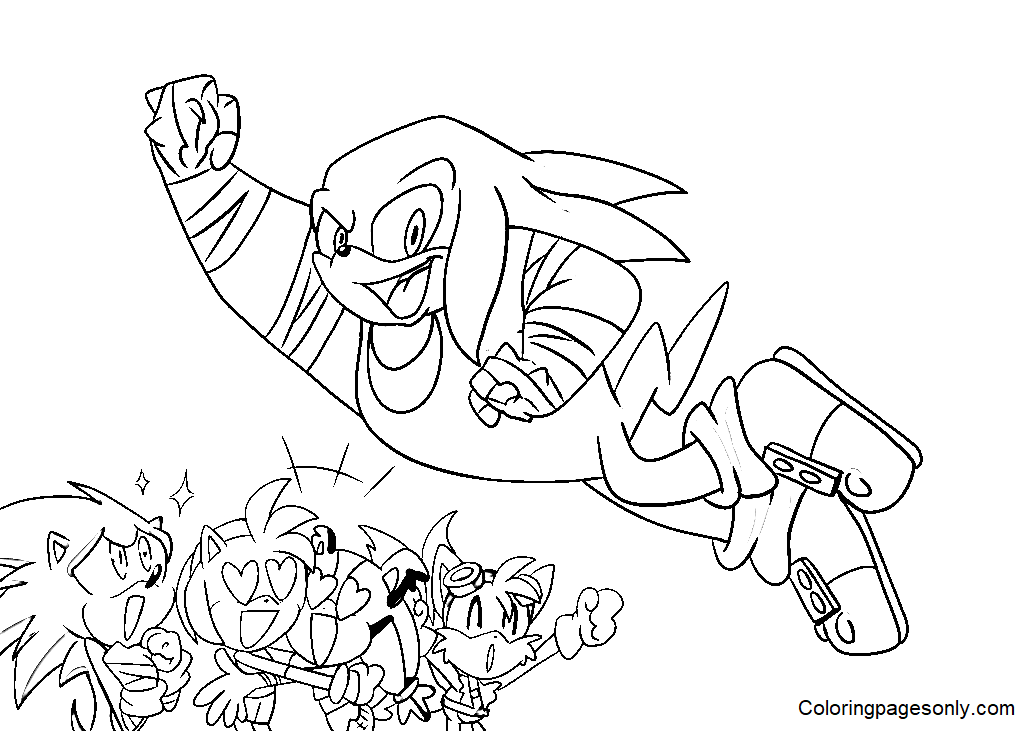
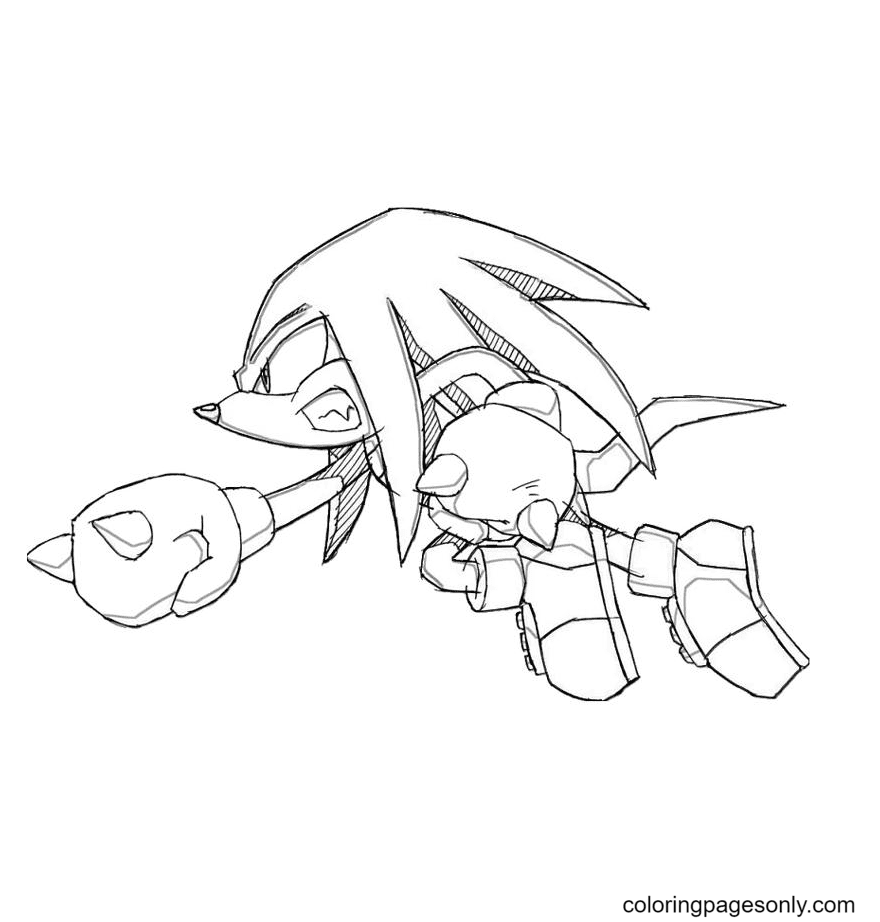
Knuckles’ gliding ability is his most visually unique movement: using his dreadlock-quills to catch air currents, he can soar through the air in a horizontal body position, arms and fists extended forward, dreadlocks streaming behind him. This is his primary method of covering long distances quickly without Sonic’s running speed, and in the games, it is one of his most useful traversal tools, allowing him to extend jumps and reach areas that would otherwise be inaccessible.

In gliding pages, his body is typically shown in a horizontal position, fists pointed in the direction of travel, dreadlocks flowing backward in the wind behind him. This posture creates a completely different compositional dynamic from his standing or combat poses: the horizontal orientation suggests speed and freedom of movement in a way that his ground-based poses do not.

Coloring gliding pages: The wind direction is communicated by the angle and direction of the flowing dreadlocks: they should be rendered as sweeping backward and slightly upward from their attachment point on his head, suggesting significant air speed. Apply slight motion blur effects to the trailing edges of the dreadlocks using very light pale red at minimum pressure. The background sky area, if present, should use bright blue at the lower-opacity end of the palette rather than deep blue, suggesting altitude and open sky.

Knuckles with the Master Emerald

The Master Emerald is the largest and most powerful gem in the Sonic universe, a giant green crystalline gem that neutralizes and controls the seven Chaos Emeralds and provides the energy that keeps Angel Island floating in the sky above the clouds. When the Master Emerald is stolen, shattered, or removed from its altar on Angel Island, the island falls into the ocean.

Knuckles has been the Guardian of the Master Emerald for his entire life, a hereditary duty passed through his bloodline. He is the last surviving member of the Knuckles Clan, an ancient echidna civilization that lived on and protected the Master Emerald long before the events of the modern games. His lifelong isolation on Angel Island, the solitary existence of a guardian with no society around him, is the biographical fact that explains his entire personality: the distrust, the seriousness, the willingness to be deceived because he so rarely encounters anyone who treats him as an equal.

Pages showing Knuckles beside the Master Emerald are the most visually dramatic in the collection: the vivid green of the gem against the vivid red of his fur creates a high-contrast complementary color relationship that gives these pages significant visual energy.

Coloring Master Emerald pages: The Master Emerald is a vivid, deep gemstone green: more vivid and more jewel-like than the teal-green of Ariel’s tail or the leaf-green of standard illustration. Apply the base vivid green at full saturation across all visible facets of the gem. Then add slightly lighter green-white highlights at the facet edges and the apex of each visible face, creating the specific faceted gemstone quality of a large crystalline object. The gem should appear to emit its own light: apply a very pale green-white at the center of the most directly lit facet.

Super Knuckles

Super Knuckles, the powered transformation achieved when Knuckles gathers all seven Chaos Emeralds, follows the same visual logic as Super Sonic: the base red fur color transforms to vivid golden-yellow, and the character’s power increases dramatically. Super Knuckles is significantly rarer in the games than Super Sonic and is typically only achievable through specific game conditions.

The transformation is one of the most visually striking color shifts in the franchise: the specific contrast between Knuckles’ canonical vivid red and the transformation’s vivid golden-yellow is more dramatic than Sonic’s black-to-gold shift (since Knuckles’ red is already a vivid, intense color).

Coloring Super Knuckles pages: The body fur transforms to vivid golden-yellow, the warmest and most vivid available, applied at full saturation. The chest crescent remains white or pale cream. The knuckle spurs remain white. The aura surrounding the character in the powered state is pale golden-yellow at its inner surface, fading to very pale yellow-white at the outer edges.

Knuckles in the Sonic Film Series

The Paramount Pictures Sonic the Hedgehog 2 (2022), directed by Jeff Fowler and released on April 8, 2022, introduced Knuckles as a CGI-animated character voiced by Idris Elba. The film earned $405.4 million worldwide. Knuckles in the film begins as an antagonist searching for the Master Emerald before becoming Sonic’s ally, following the same character arc established in Sonic the Hedgehog 3 (1994).

The Paramount+ series Knuckles, which premiered on April 26, 2024, gave Knuckles his own six-episode spin-off in which Idris Elba reprised the role. The series followed Knuckles mentoring a bowling enthusiast named Wade Whipple while experiencing human culture, combining action-comedy elements with the character’s established serious personality for comedic contrast. Idris Elba’s committed, unironic performance received significant praise.

Sonic the Hedgehog 3, released December 20, 2024, continued the franchise with Knuckles as an established ally and introduced Shadow the Hedgehog as the film’s primary antagonist.

Coloring film-style Knuckles pages: The film’s CGI design maintains the canonical vivid red while giving the fur a more textured, three-dimensional quality than the flat-color game design. The knuckle spurs in the film design are slightly larger and more prominent than in the game artwork. The chest crescent is white. Apply the same vivid red base, then add slightly darker red in the shadow areas of the fur texture using the directional fur-stroke technique: short parallel strokes in the direction of fur growth rather than flat solid-color coverage.

What These Pages Do

Knuckles the Echidna was introduced in February 1994 as the first Sonic franchise character to both oppose and then ally with the protagonist within a single game. This narrative structure, enemy-turned-ally within a single narrative arc, was unusual for platform game characters of the era and established a character dynamic that subsequent Sonic games and the broader franchise have continued to develop. Knuckles is now the franchise’s primary example of a character whose specific character flaw (excessive trust in authority and rules) is also his primary virtue (absolute dedication to his duty). His repeated deception by Eggman is not stupidity but the specific vulnerability of someone who takes responsibility seriously in a universe where others exploit that seriousness.

The real echidna, on which Knuckles is based, is a monotreme mammal: one of only five monotreme species in the world, alongside the platypus. Monotremes are egg-laying mammals, the only mammal group that reproduces by laying eggs. Short-beaked echidnas (Tachyglossus aculeatus) are native to Australia and New Guinea and are characterized by their long sticky tongues (for capturing ants and termites), their strong digging claws (directly referenced in Knuckles’ digging ability), and the sharp spines that are modified hairs providing protection. The connection between Knuckles’ digging ability and the real echidna’s digging claws is one of the more specifically documented examples of real animal biology informing a game character’s abilities.

The American Academy of Pediatrics identifies fine motor skill development as a key childhood milestone throughout early childhood. The knuckle spur detail, the dreadlock-quill pattern, the Master Emerald’s faceted gem surface rendering, and the combat impact effects all provide motivated fine motor practice across the collection’s age range. The 2005 Art Therapy Journal study on structured coloring and anxiety reduction applies throughout.

Idris Elba’s vocal performance as Knuckles in the Sonic the Hedgehog 2 film (2022) and the Knuckles Paramount+ series (2024) introduced the character to audiences who had not previously engaged with the game franchise, significantly expanding the character’s cultural reach.

How to Color These Pages Well

Knuckles’ red is vivid and fully saturated throughout the entire body with no significant value variation. The most common error on Knuckles pages is applying a red that is either too dark (approaching maroon or crimson) or too desaturated (approaching a muted brick-red). His canonical red is vivid, warm, and fully saturated: the specific red of a ripe red pepper or a fire engine, with enough warmth to prevent it from reading as cool or dark. Apply it at full pressure across every fur surface. Shadow areas, if the page design includes them, use a slightly deeper and slightly more purple-shifted red rather than dark brown or grey.

The chest crescent white must be kept clean throughout the coloring process. The white crescent on Knuckles’ chest is the design’s most immediately distinctive element after his red color. In any portrait or full-body page, plan the crescent area before beginning and protect it from the surrounding red. Apply the red fur carefully around the crescent outline. If any red migrates into the crescent area, apply clean white over it to restore the clarity of the shape. The crescent should remain the brightest white element on any page.

The knuckle spurs require careful individual rendering in close-up pages. Each spur is a white or pale grey elongated spike extending forward from the knuckle position. In close-up pages showing the raised fists, apply each spur in slightly different tones: slightly brighter white at the spur’s very tip (the sharpest point), graduating to very pale grey at the base where the spur meets the gloved hand. This subtle value graduation gives each spur the dimensional quality of a sharp spike rather than the flat appearance of a painted white shape.

Dreadlock-quills need directional stroke application rather than flat fill. The six main dreadlocks hanging from Knuckles’ head are thick, rope-like structures, not flat shapes. Apply the base red in long, parallel strokes running from the root of each dreadlock to its tip. Then apply a slightly darker red in the shadow areas between dreadlocks (where one dreadlock passes behind another) to create the visual separation that distinguishes individual strands. In gliding pages where the dreadlocks stream backward in the wind, the stroke direction follows the curve of each dreadlock’s wind-influenced arc.

Master Emerald gem pages use the faceted gemstone rendering technique. The Master Emerald is not a smooth sphere but a faceted gem with flat triangular and trapezoidal faces. Each visible face is a different shade of the same vivid green, depending on its orientation relative to the light source: the most directly lit face is the lightest (pale jade-green), the faces at angles to the light are medium vivid green, and the faces pointing away from the light are the deepest gem-green. The edges between faces, where two flat surfaces meet, are the most directly lit elements: apply a bright, very pale green-white line along each visible edge to suggest the gem’s faceted quality.

5 Creative Craft Ideas

The Knuckles Clan History Page

Knuckles is the last surviving member of the Knuckles Clan, an ancient echidna civilization that built the Shrine of the Master Emerald on Angel Island and designated a guardian lineage to protect it. The Knuckles Clan’s history, explored in detail in Sonic Adventure (1998) and expanded in later games, connects the character’s present isolation to a specific historical and cultural origin.

Print a Knuckles-with-Master-Emerald page. Color Knuckles in canonical vivid red. Apply the faceted gem-green to the Master Emerald with careful face-by-face lighting logic.

On the backing card: “Knuckles the Echidna. Last Guardian of the Master Emerald. Last member of the Knuckles Clan. Angel Island: kept afloat by the Master Emerald’s power. The Guardian lineage: hereditary. His isolation: chosen and necessary. First appearance: Sonic the Hedgehog 3, February 2, 1994. 30 years as a guardian. He lives on an island in the sky. He has done it alone.”

DIY Knuckles Bracelet
DIY Knuckles Bracelet (Resource: Etsy.com)

The Real Echidna Study

The echidna that inspired Knuckles is a real monotreme mammal found in Australia and New Guinea. Monotremes are egg-laying mammals: one of the world’s five monotreme species (four species of echidna and the platypus). Short-beaked echidnas (Tachyglossus aculeatus) have strong digging claws, a long sticky tongue for capturing insects, and spines that are modified hairs.

Print a standard Knuckles portrait page. Color in full canonical vivid red.

On the backing card, draw a simple outline of a real echidna beside the Knuckles portrait. Add: “Knuckles the Echidna (Sonic franchise, 1994). Species basis: the echidna, a monotreme mammal. Monotremes: egg-laying mammals. Five species worldwide: four echidna species and the platypus. Short-beaked echidna (Tachyglossus aculeatus): found in Australia and New Guinea. Key abilities shared with Knuckles: strong digging claws, protective spines. Key abilities not shared: a very long sticky tongue for catching ants.”

Decorate Sneakers with Knuckles
Decorate Sneakers with Knuckles (Source: Etsy.com)

The Three Rivals Turned Friends

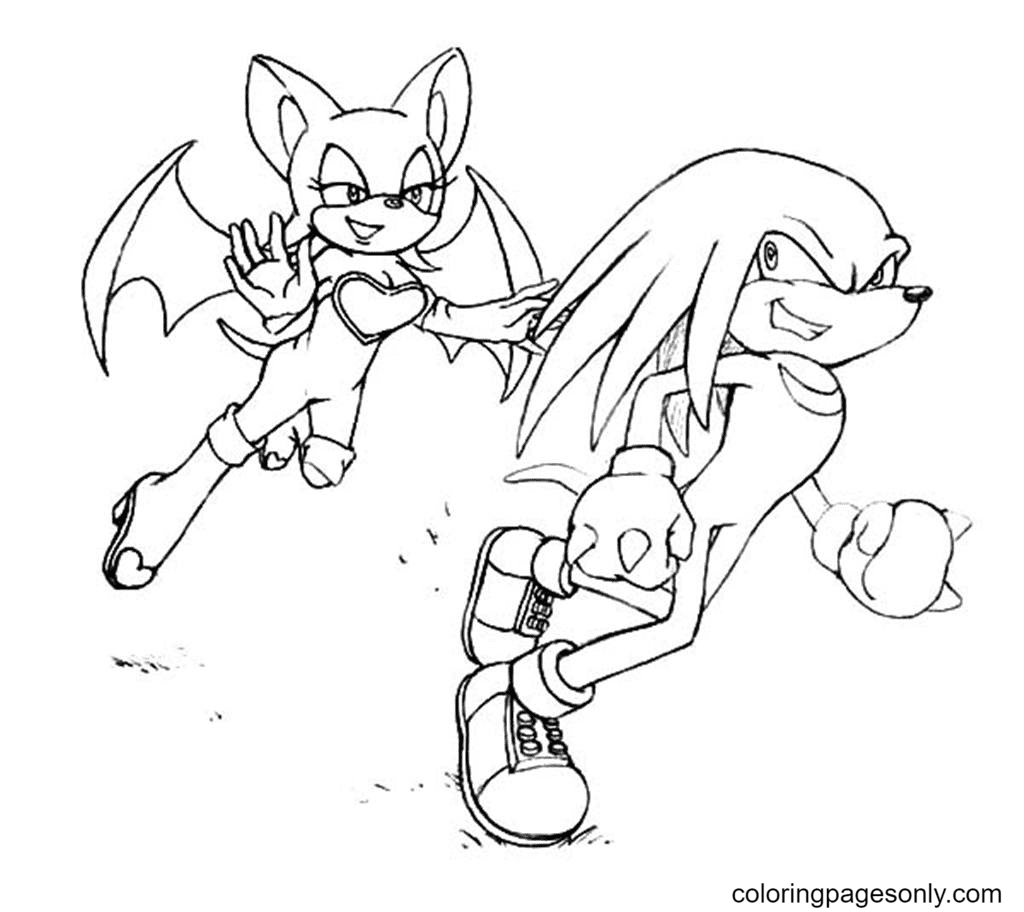
The core narrative pattern of the Sonic franchise involves rivals who become allies. Knuckles first opposed Sonic in 1994, fought alongside him in Sonic & Knuckles (1994), and has been a primary ally across thirty years. Shadow the Hedgehog, introduced in Sonic Adventure 2 (2001), followed a similar enemy-to-ally arc. Rouge the Bat occupies a more ambiguous position as a rival and occasional ally.

Print one Knuckles page, one Sonic page, and one Shadow page (if available in the collection). Color Knuckles in vivid red, Sonic in the canonical blue, and Shadow in black with red stripes.

Mount all three: “Knuckles: rival since February 2, 1994. Deceived by Eggman. Now: Team Sonic’s strength. Shadow: antagonist since June 19, 2001. The Ultimate Life Form. Now: complicated ally. The pattern: in the Sonic franchise, every rival eventually finds a reason to protect what Sonic protects. The process takes multiple games. It always works.”

Decorate a Clock with Knuckles
Decorate a Clock with Knuckles (Source: eBay.com)

The Idris Elba Tribute Page

Idris Elba voiced Knuckles in Sonic the Hedgehog 2 (2022), the Knuckles Paramount+ series (2024), and Sonic the Hedgehog 3 (2024). His performance, playing a character who is completely earnest about his warrior identity while being placed in comic situations, received consistent praise for its commitment to the character’s established serious personality.

Print the film-design Knuckles page with the most three-dimensional, detailed rendering in the collection. Color using the film-accurate vivid red with the textured fur technique.

On the backing card: “Idris Elba as Knuckles. Sonic the Hedgehog 2: April 8, 2022. Worldwide gross: $405.4 million. Knuckles (Paramount+): April 26, 2024. 6 episodes. Sonic the Hedgehog 3: December 20, 2024. The critical note on Elba’s performance, consistently, he plays the character completely seriously, without irony, and this is why it works. The Guardian of the Master Emerald does not find himself funny. That is correct.”

Decorate a Backpack with Knuckles
Decorate a Backpack with Knuckles (Resource: Walmart.com)

The Angel Island Display

Angel Island is Knuckles’ home: a floating island kept aloft by the power of the Master Emerald, hovering above the clouds. When the Master Emerald is stolen or damaged, Angel Island falls into the ocean. The island contains the Shrine of the Master Emerald, a jungle environment, and various areas that appear across the games set there.

Print a Knuckles gliding page. Color in canonical vivid red with the horizontal gliding posture.

On a large backing sheet, draw a simple island outline floating among clouds below the Knuckles figure (suggesting he is gliding above his island). Add the Master Emerald shrine as a simple green-topped structure on the island.

Add: “Angel Island. Floating island. Kept aloft by the Master Emerald. Falls when the Emerald is removed. Current population: one. The Guardian has lived here alone for his entire life. From the ground, the island is invisible above the clouds. From the island, the ground is a long way down.”

Decorate Pillows with Knuckles
Decorate Pillows with Knuckles (Resource: Redbubble.com)

Frequently Asked Questions

Who is Knuckles, and when did he first appear? Knuckles the Echidna is a character in Sega’s Sonic the Hedgehog franchise, first appearing in Sonic the Hedgehog 3, released on February 2, 1994, in Japan and February 3, 1994, in North America. He was created by character designer Takashi Thomas Yuda at Sonic Team. Knuckles is the Guardian of the Master Emerald, the giant green gem that controls the seven Chaos Emeralds and provides the energy that keeps Angel Island floating in the sky. He is characterized by his vivid red fur, his dreadlock-style quills, the two spiked spurs on each fist that are his primary weapon, and his role as the Sonic franchise’s physically strongest character. He is sixteen years old, stands approximately 110 centimeters (3 feet 7 inches) tall, and lives alone on Angel Island as the last surviving member of the Knuckles Clan.

What are Knuckles’ abilities and powers? Knuckles possesses several distinct abilities that reflect his echidna design and his role as a guardian warrior. His physical strength is the greatest of any character in the Sonic franchise: he can punch through stone and metal, shatter rock formations, and generate shockwaves with his strikes. His spiked knuckle spurs on each fist serve as both weapons and digging tools, allowing him to excavate through any material rapidly and to drive his spurs into walls and cliff faces for climbing. His gliding ability uses his dreadlock-quills to catch air currents, allowing him to travel long horizontal distances from elevated positions. He can sense the presence of Chaos Emeralds and the Master Emerald, giving him a form of supernatural awareness of the gems he is sworn to protect. Super Knuckles, achieved by collecting all seven Chaos Emeralds, grants dramatically enhanced versions of all these abilities.

What is the Master Emerald, and why does Knuckles guard it? The Master Emerald is the largest and most powerful gem in the Sonic universe: a giant crystalline emerald that neutralizes and controls the seven Chaos Emeralds and provides the energy that keeps Angel Island floating above the ocean. The gem sits on its altar at the Shrine of the Master Emerald on Angel Island, and when it is stolen, shattered, or removed, the island falls into the sea. Knuckles is the Master Emerald’s guardian by hereditary duty: he is the last surviving member of the Knuckles Clan, an ancient echidna civilization that built the shrine and established the guardian lineage. He has been the sole guardian for his entire life, living alone on Angel Island in service of this responsibility, which is both the source of his strength of character and the isolation that makes him occasionally vulnerable to deception.

Why is Knuckles often an antagonist in Sonic games? Knuckles has served as an antagonist in multiple Sonic games, most notably in his introduction in Sonic the Hedgehog 3 (1994), because Dr. Eggman has repeatedly convinced him that Sonic is a threat to the Master Emerald. Knuckles takes his duty as guardian with absolute seriousness, and Eggman exploits this by presenting false evidence that Sonic is planning to steal the gem. Because Knuckles has lived most of his life in isolation with few social relationships, he has limited experience distinguishing trustworthy intentions from deceptive ones, making him susceptible to manipulation by anyone who appeals to his sense of duty. His repeated deception is not stupidity but the specific vulnerability of a character whose greatest virtue is also his greatest weakness: he takes responsibilities so seriously that he can be leveraged by anyone who frames a threat in those terms.

What is Knuckles’ role in the Sonic Paramount film series? Knuckles was introduced into the Paramount Pictures live-action Sonic film franchise in Sonic the Hedgehog 2, released on April 8, 2022. He is voiced by Idris Elba, and his character arc in the film follows the pattern established in Sonic the Hedgehog 3: he begins as an antagonist, deceived into believing Sonic is a threat, before learning the truth and aligning with Sonic against Eggman. The film earned $405.4 million worldwide. The Knuckles series on Paramount+, which premiered on April 26, 2024, in a six-episode run, gave Knuckles his own spin-off in which Elba reprised the role. The show featured Knuckles mentoring a human named Wade Whipple while navigating human culture, combining action and comedy. Elba continued as Knuckles in Sonic the Hedgehog 3, released December 20, 2024.

What real animal is Knuckles based on? Knuckles is based on the echidna, a monotreme mammal native to Australia and New Guinea. Monotremes are egg-laying mammals: the five monotreme species worldwide are four species of echidna (short-beaked echidna and three long-beaked echidna species) and the platypus. The short-beaked echidna (Tachyglossus aculeatus) is the most common species, found throughout Australia and New Guinea, and is characterized by its protective spines (which are modified hairs), its strong digging claws (directly referenced in Knuckles’ digging ability), and its long sticky tongue for capturing ants and termites. Echidnas are not related to hedgehogs: Sonic the Hedgehog and Knuckles the Echidna represent two entirely different mammal groups, though both are designed as anthropomorphized running characters in the game franchise.

What age group are these pages best suited for? Knuckles coloring pages serve Sonic franchise fans across a wide age range. The simplest portrait pages with large, clearly defined color areas in the franchise’s signature flat, bold style are accessible from ages four and five, where the character’s striking, vivid red coloring and the clear contrast of the white chest crescent provide immediately achievable results. The combat and action pose pages, with their impact effect details and spur-specific rendering, are most rewarding from ages six to ten, where developing fine motor control allows for more precise application. The Master Emerald gem rendering, the gliding pages with their dreadlock motion detail, and the film-design textured fur pages are most engaging for ages seven and up. Adult fans of the franchise, particularly those who have followed Knuckles since his 1994 introduction, find the most detailed pages and the character history pages most satisfying.

Browse the full collection at ColoringPagesOnly.com. All 50+ pages free, no sign-up, PDF or PNG, print or color online.

Takashi Thomas Yuda designed a red echidna for Sega in 1994. The character appeared in Sonic the Hedgehog 3 as an antagonist who had been deceived by the game’s actual villain into fighting the protagonists. By the end of Sonic and Knuckles in October 1994, he was an ally.

He has been an ally ever since. He has also been deceived by the same villain again on multiple occasions. This is consistent with his character. He takes his duty seriously. People who take their duties seriously can be manipulated by anyone who frames a threat in terms of that duty. He knows this. He continues to take his duty seriously.

Idris Elba voiced him in 2022 and played him completely straight. Critics noted this was exactly correct.

Pick up your most vivid warm red. The entire body goes first at full saturation. The chest crescent stays white throughout. The knuckle spurs go last: white, slightly graduated from bright tip to pale grey base.

Share your work on Facebook and Pinterest and tag #Coloringpagesonly. The real echidna study displays, and the rivals-turned-friends pages are particularly worth sharing.

Color the red. Protect the crescent. The Guardian of the Master Emerald does not find himself funny. Apply the color accordingly.

These related coloring collections will help you explore the wonderful world of colors. Let’s choose, be creative, and show us your great pictures!


Jennifer Thoa – Content Editor & Designer

Jennifer Thoa is Content Editor and Designer at ColoringPagesOnly.com. Degree in Journalism and Creative Writing, University of Kansas. She writes and edits long-form educational articles on anime, film, animals, world cultures, and automotive history - verified against named primary sources before publication.