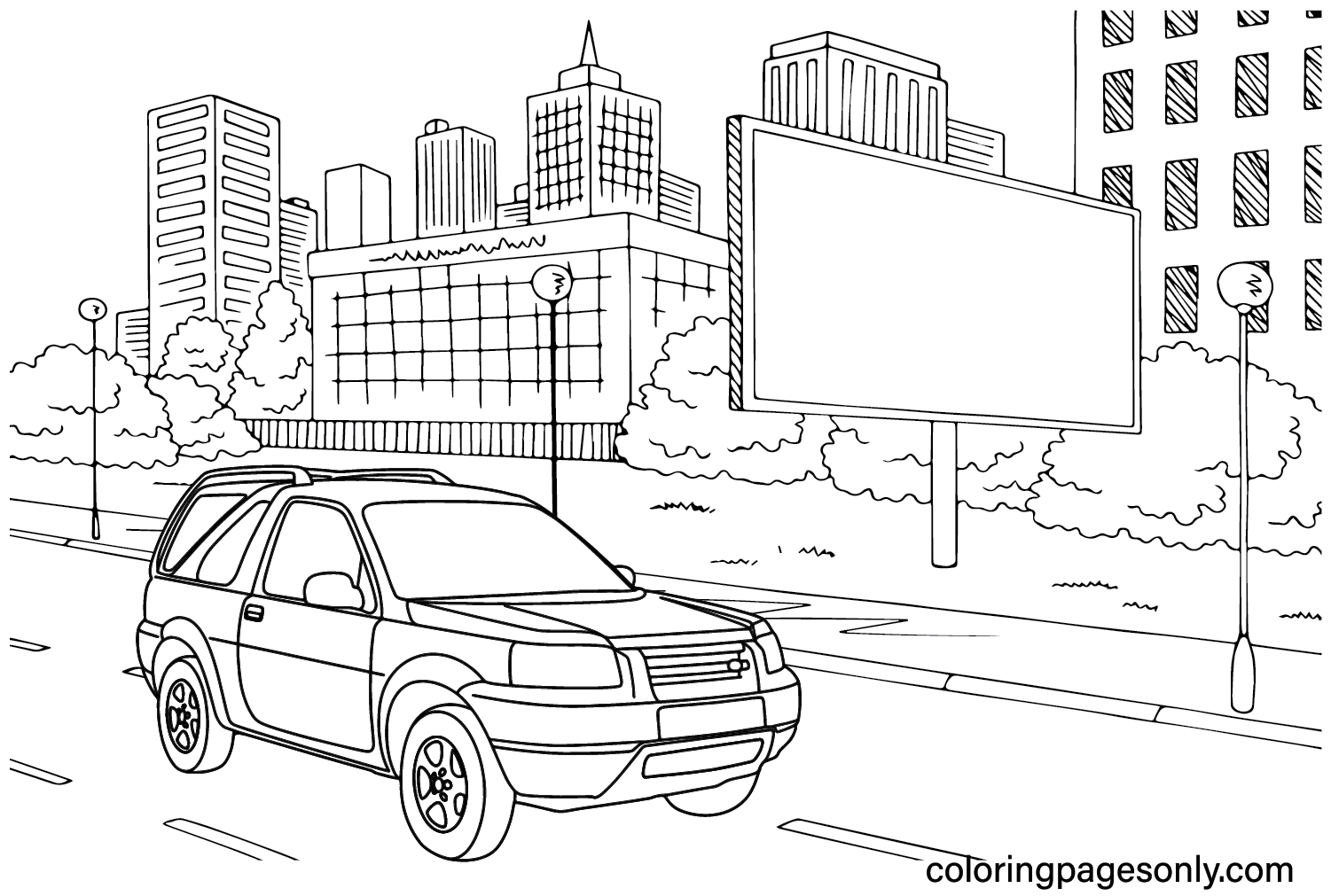
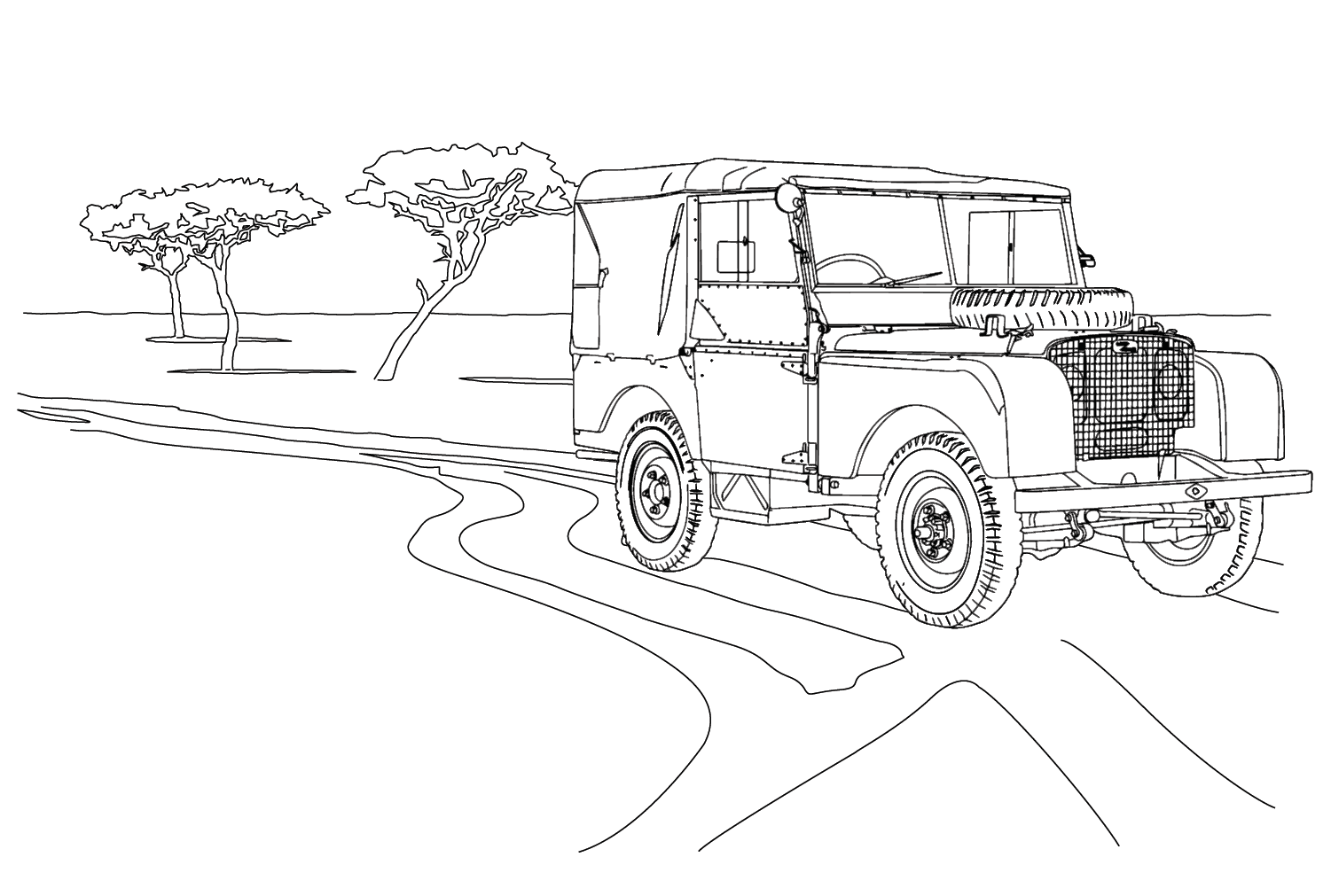
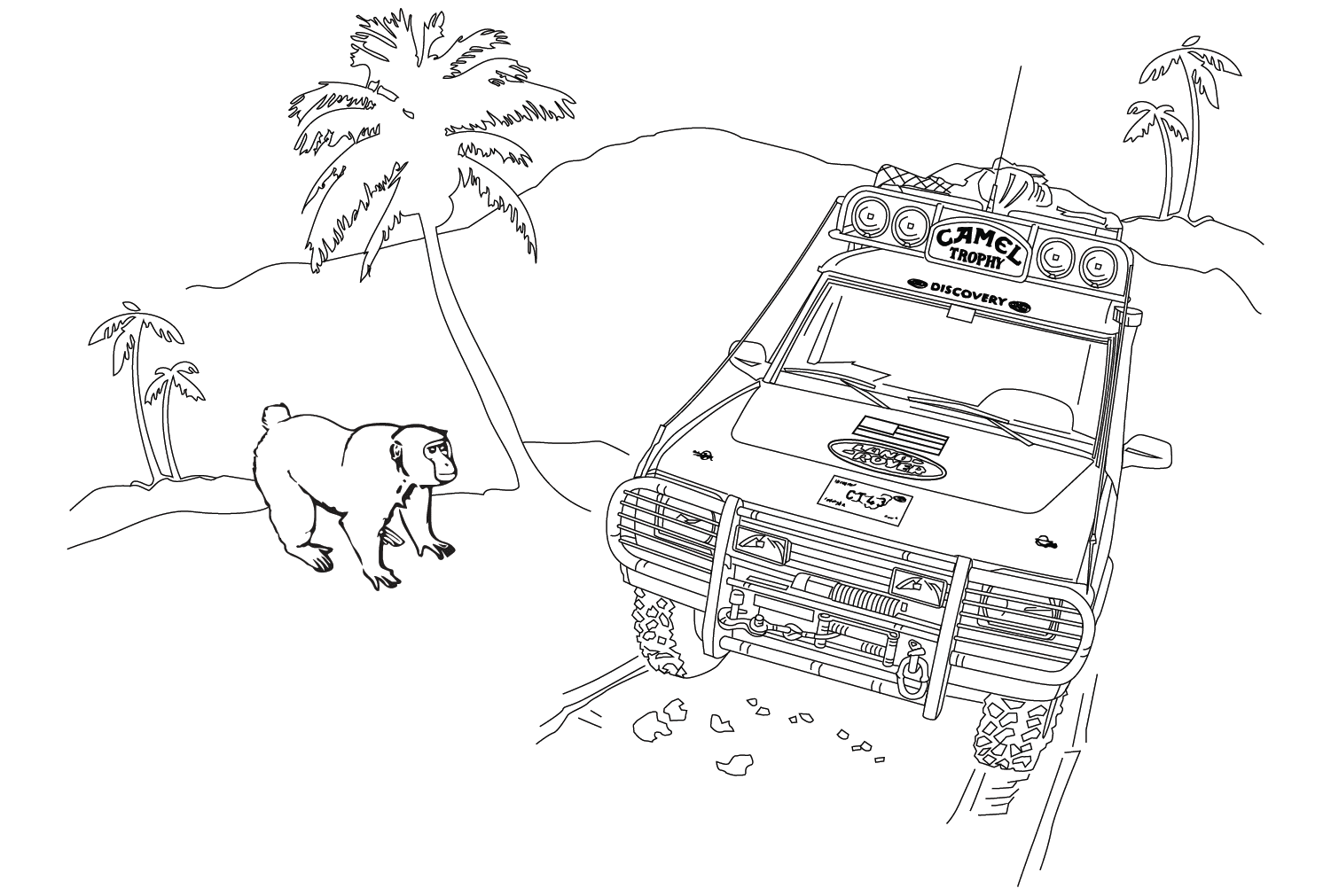
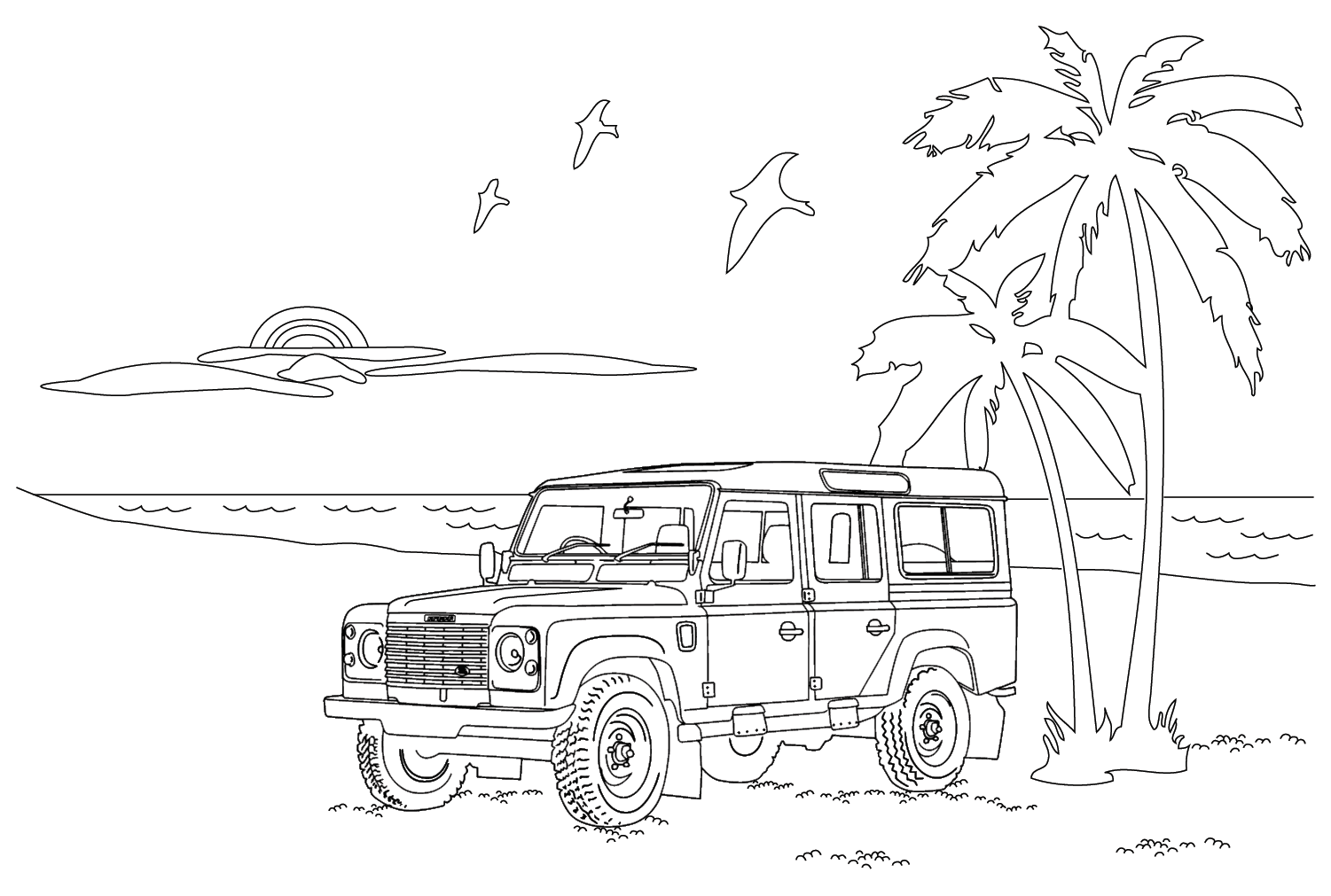
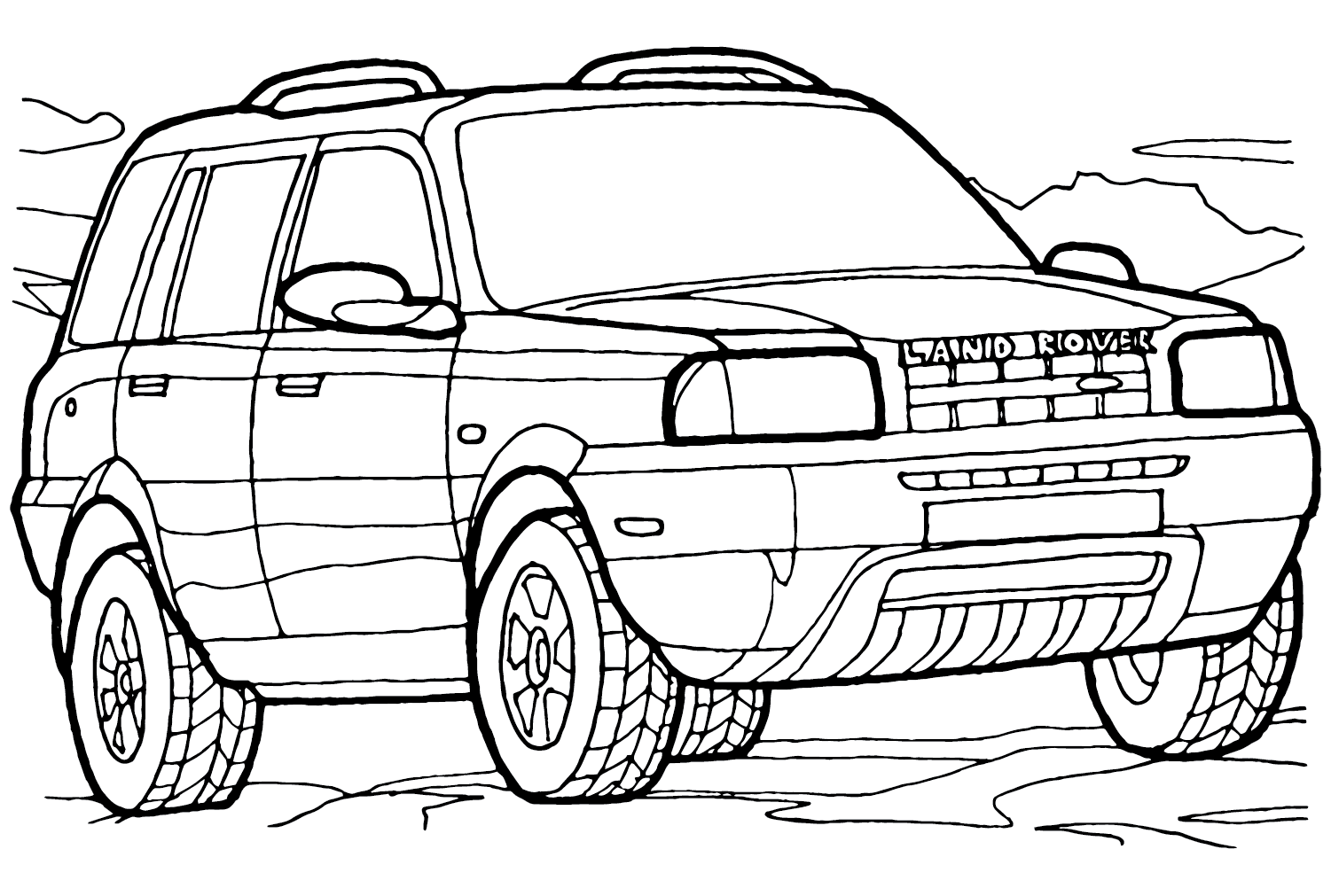
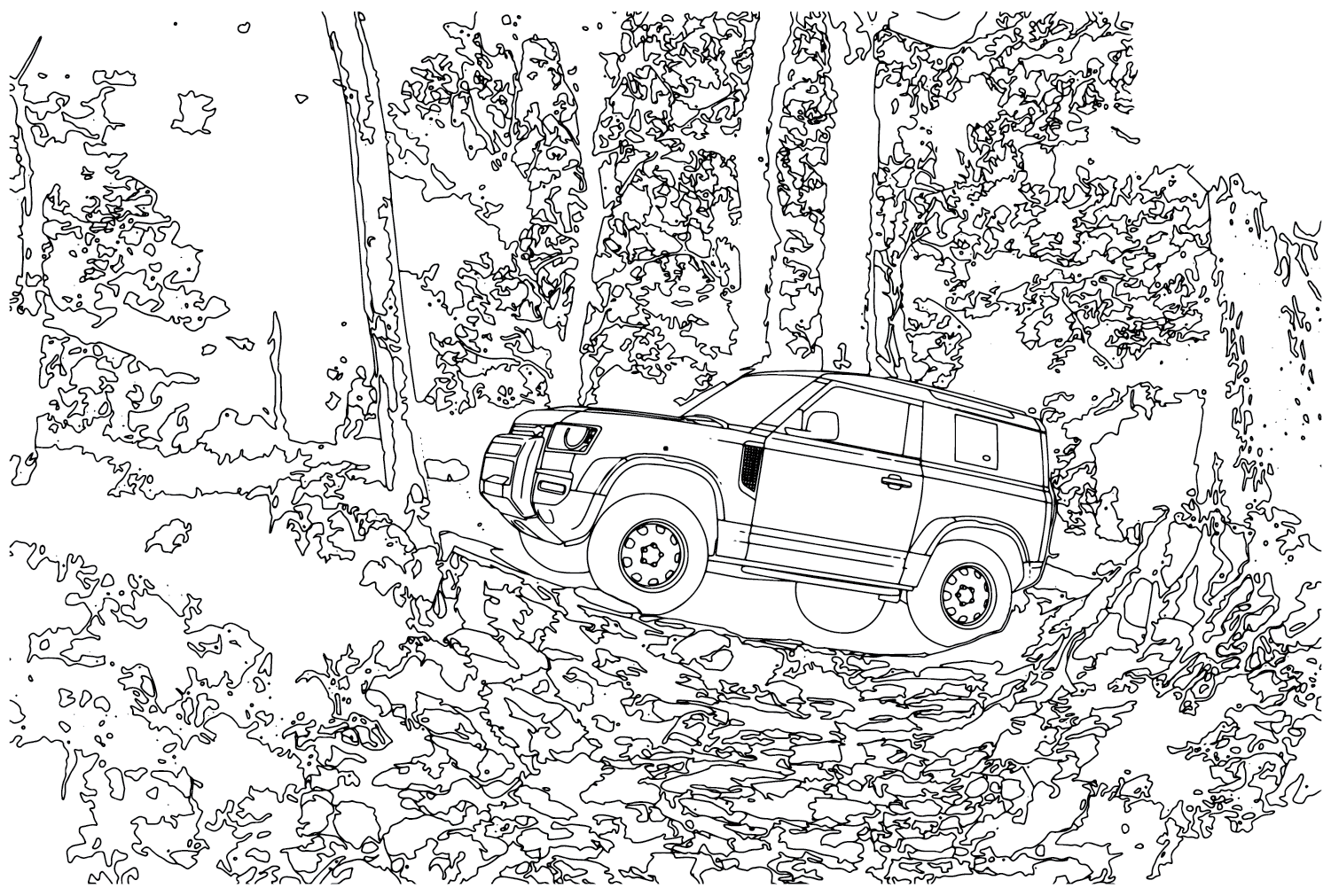
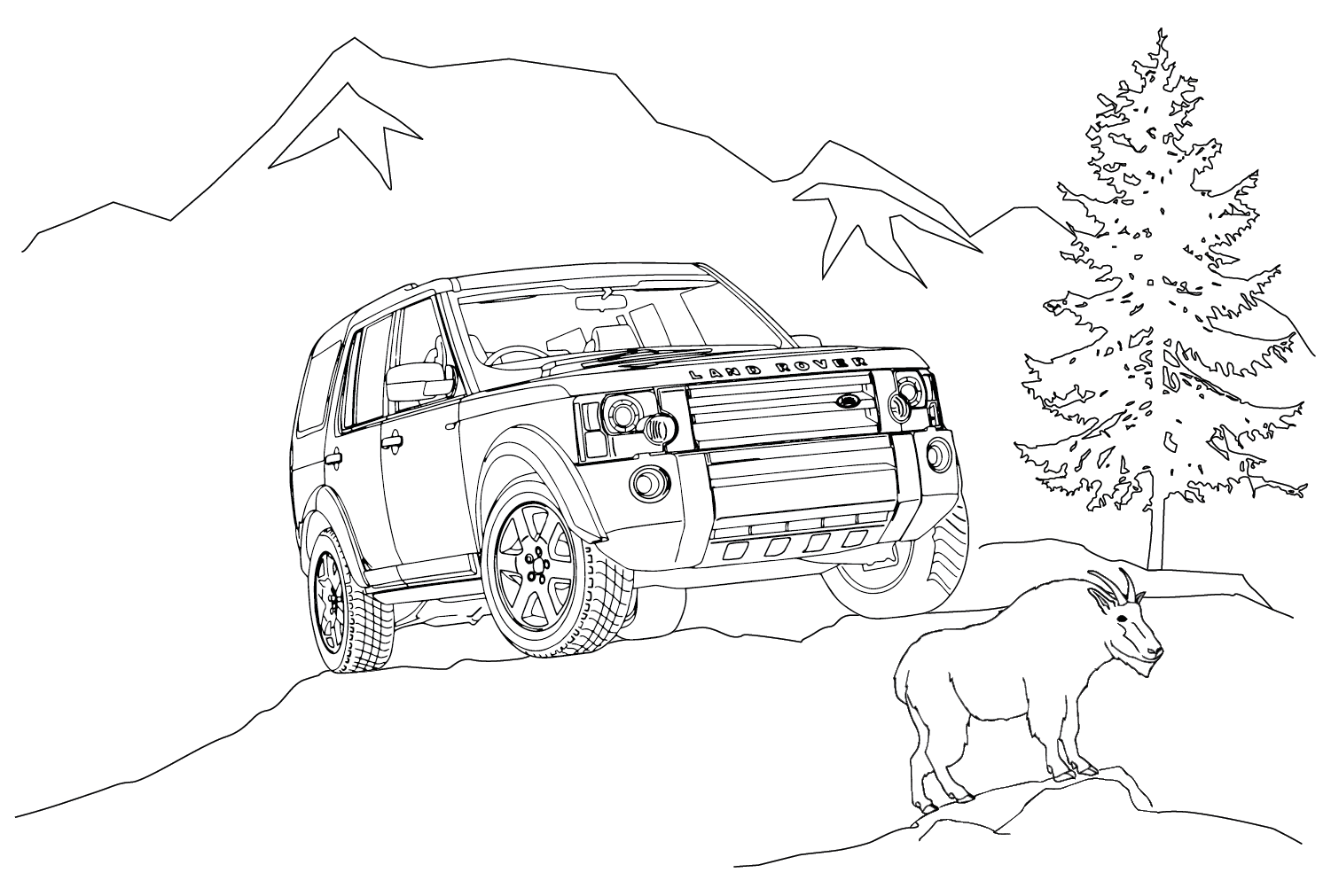
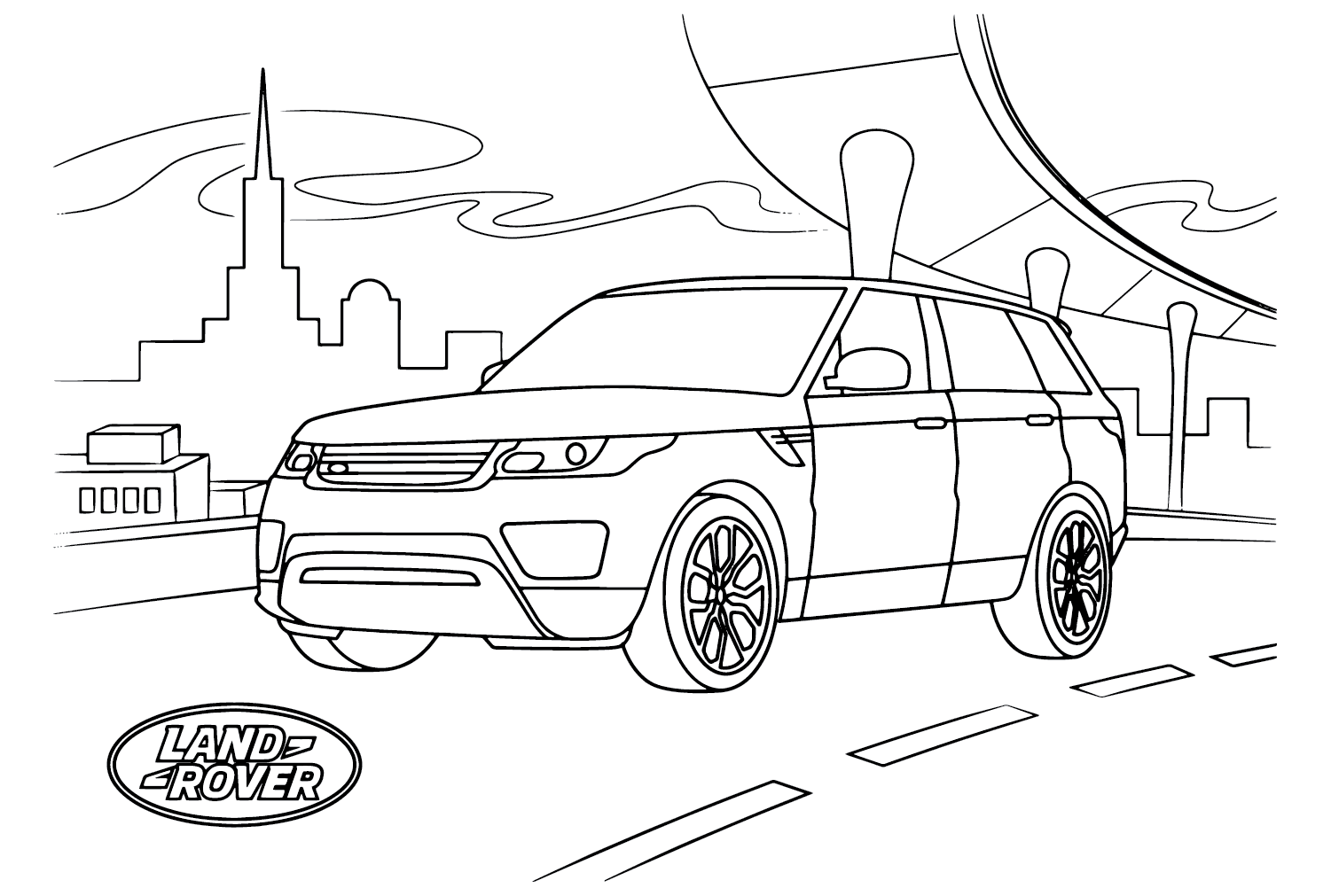
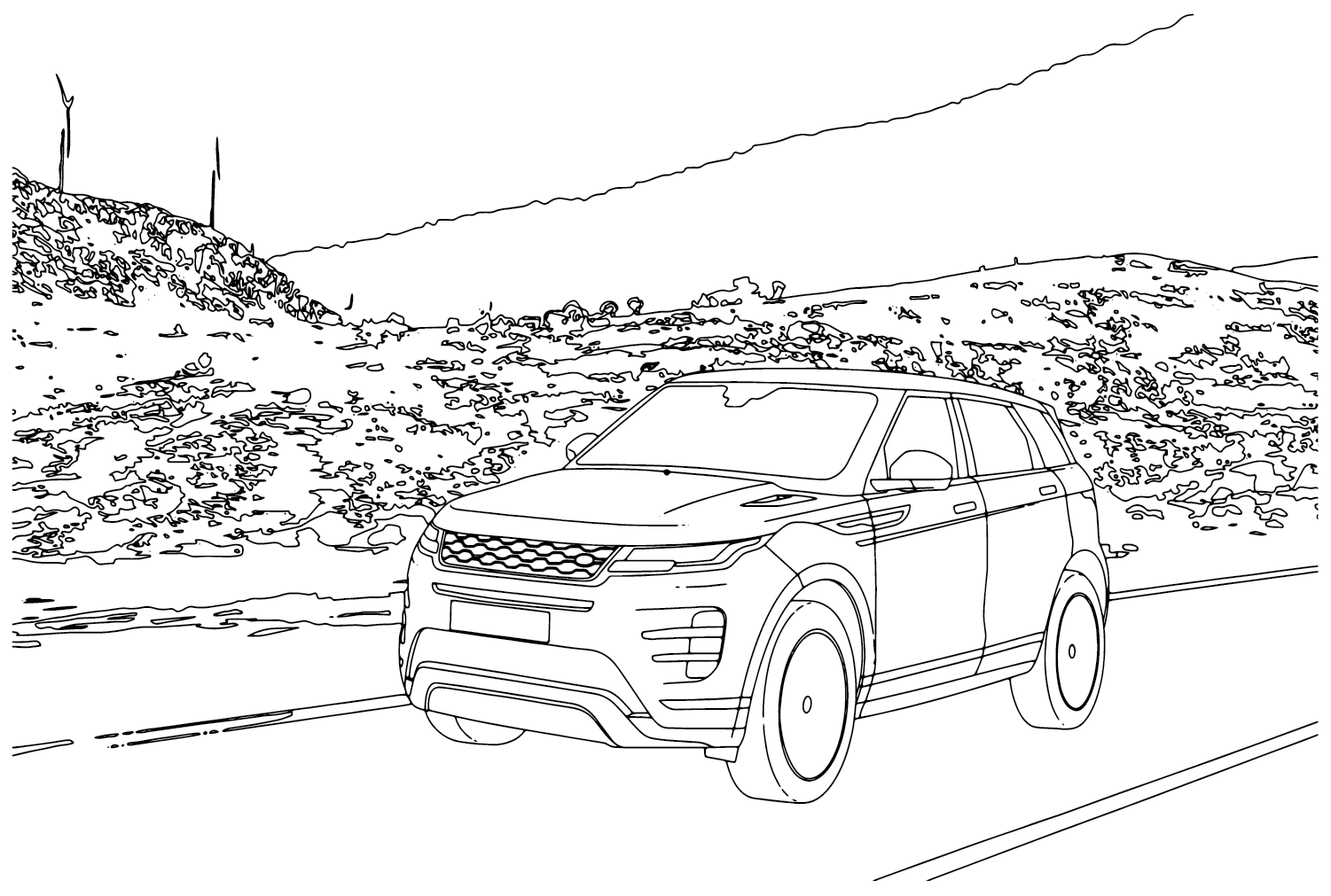
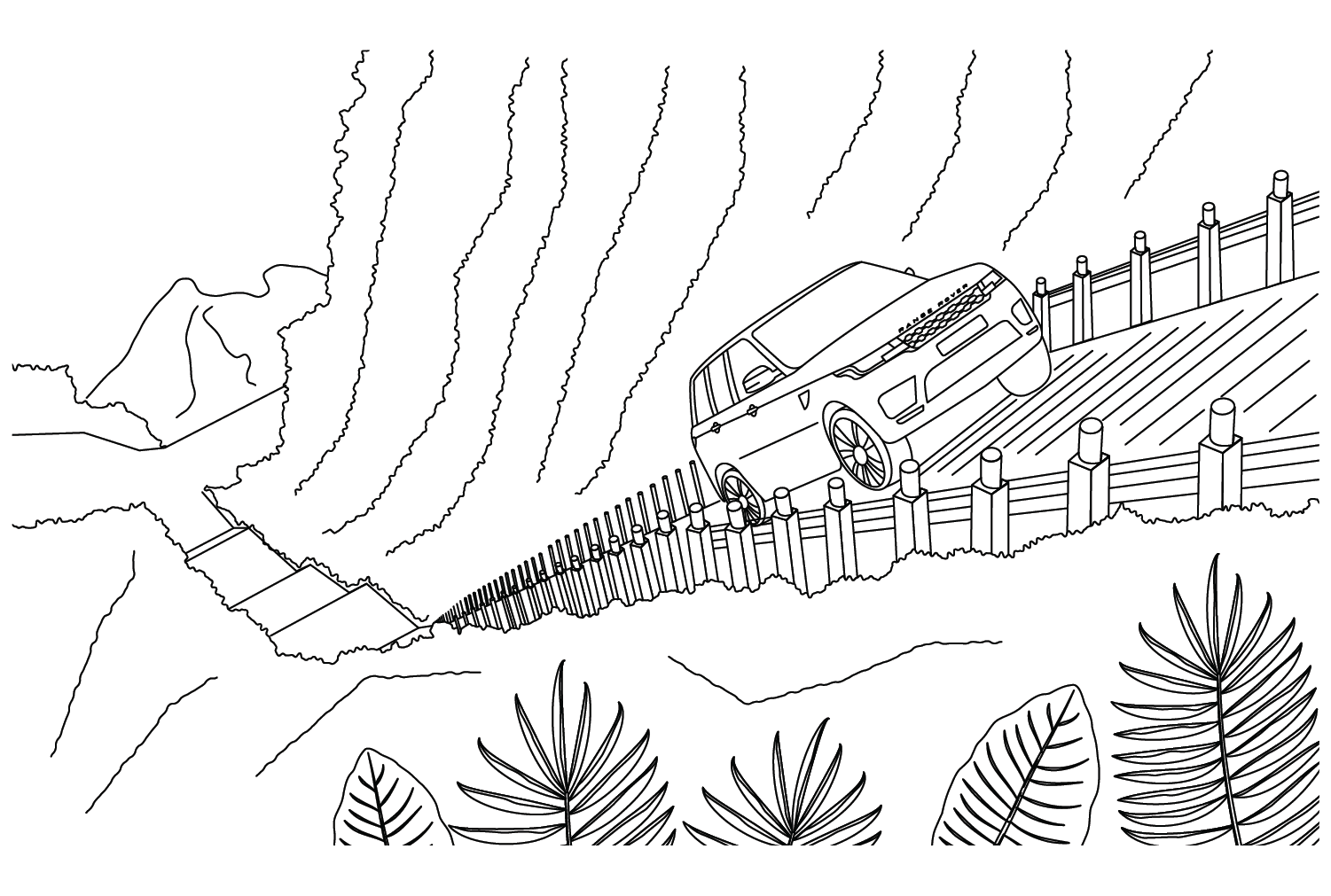
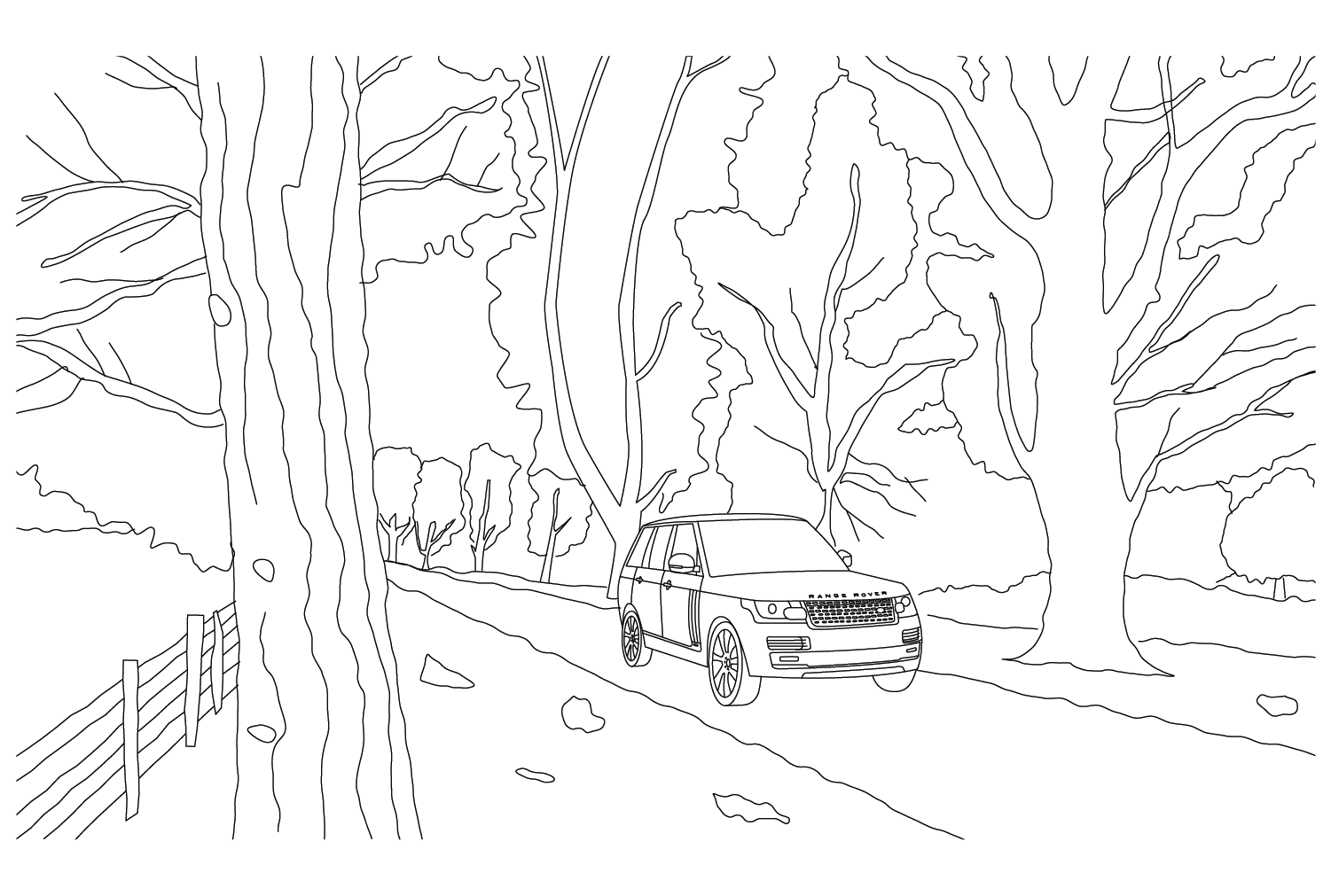
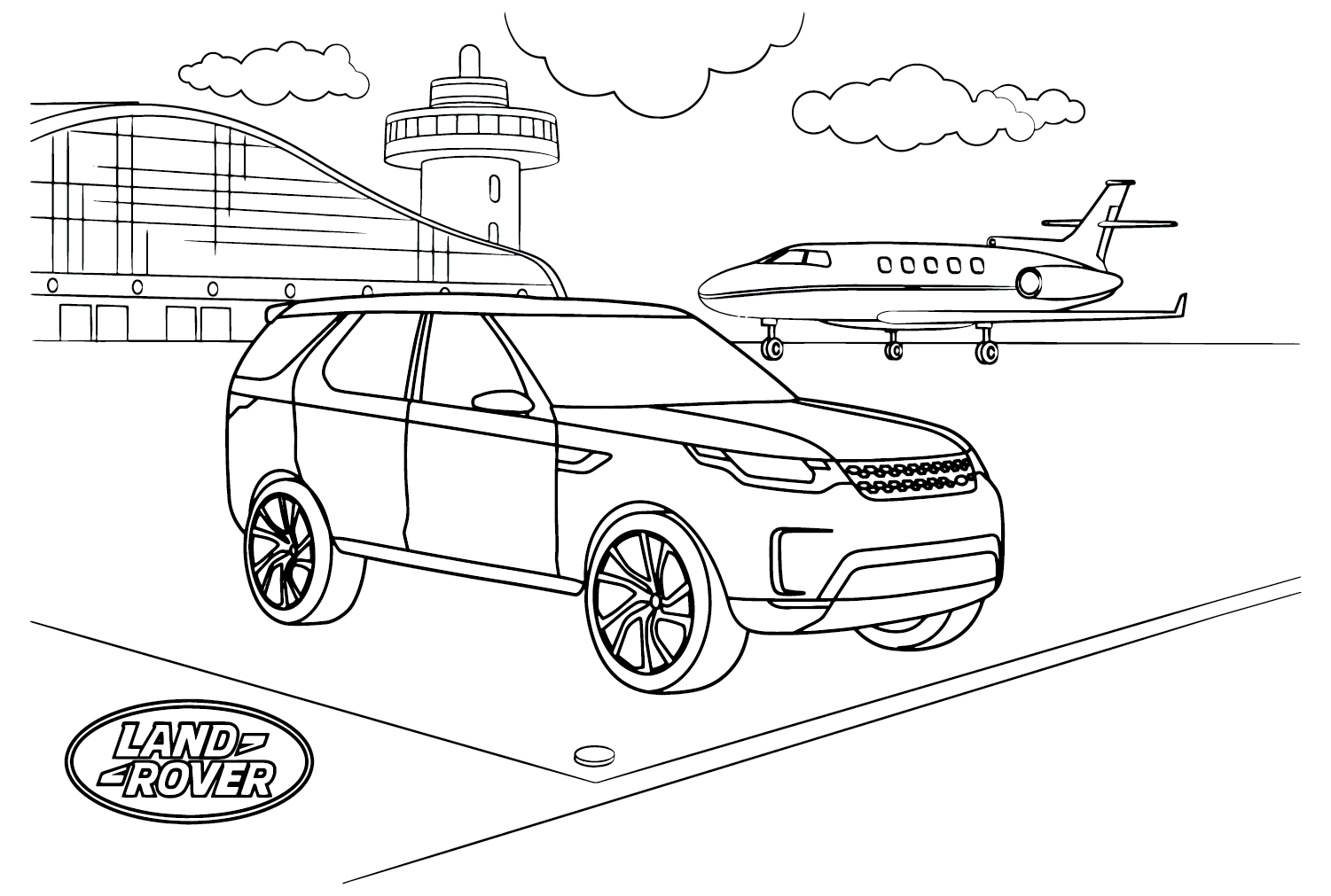
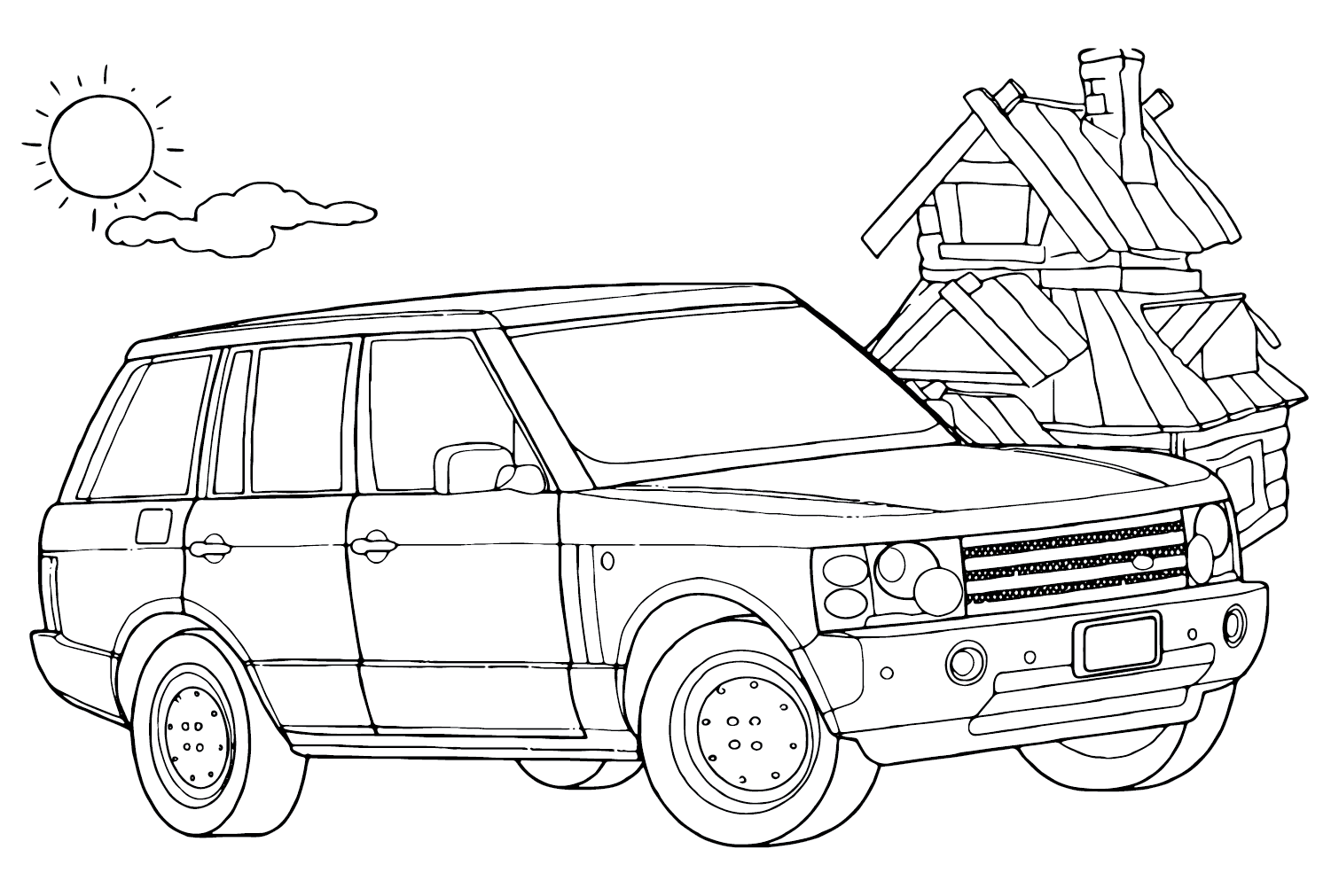
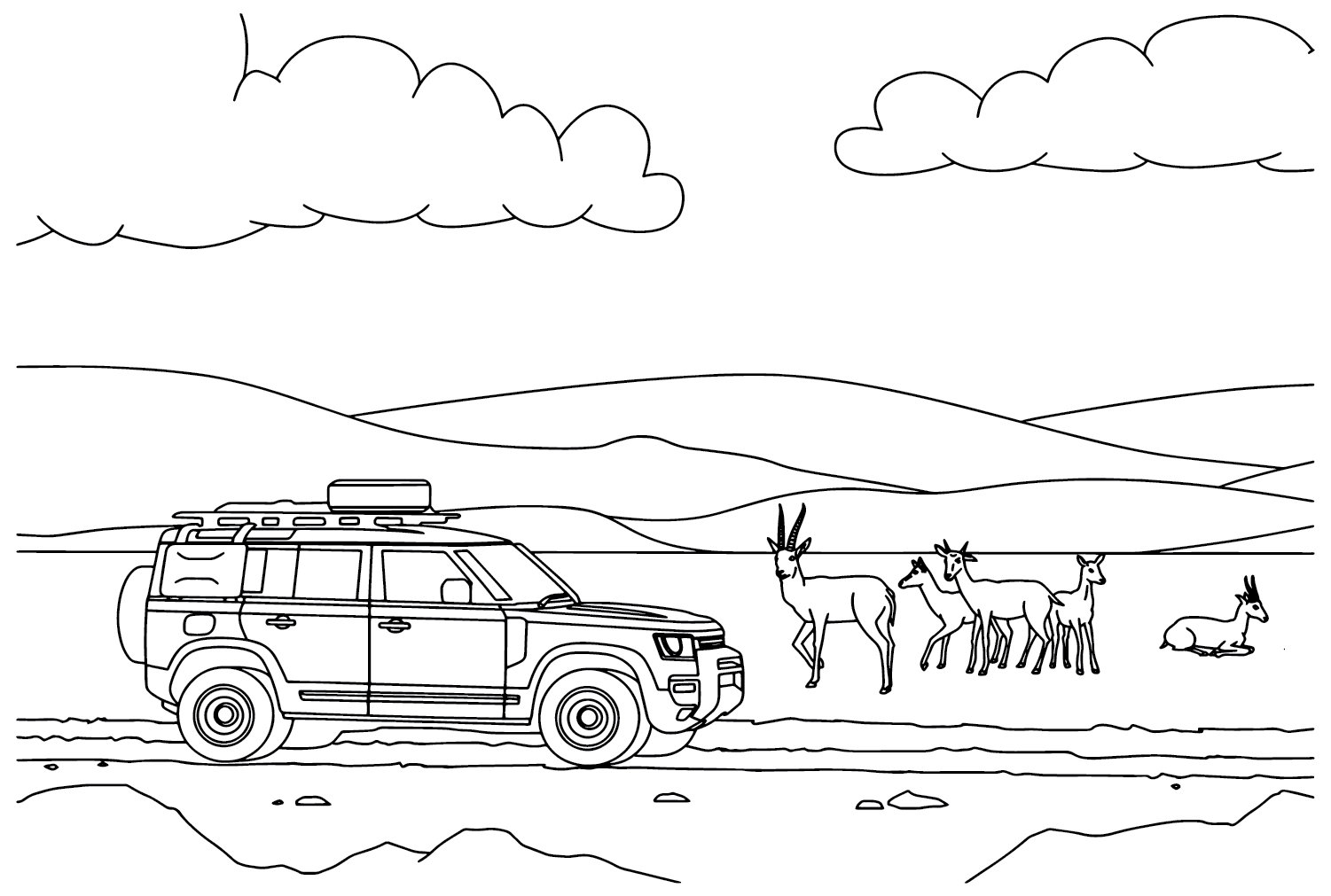
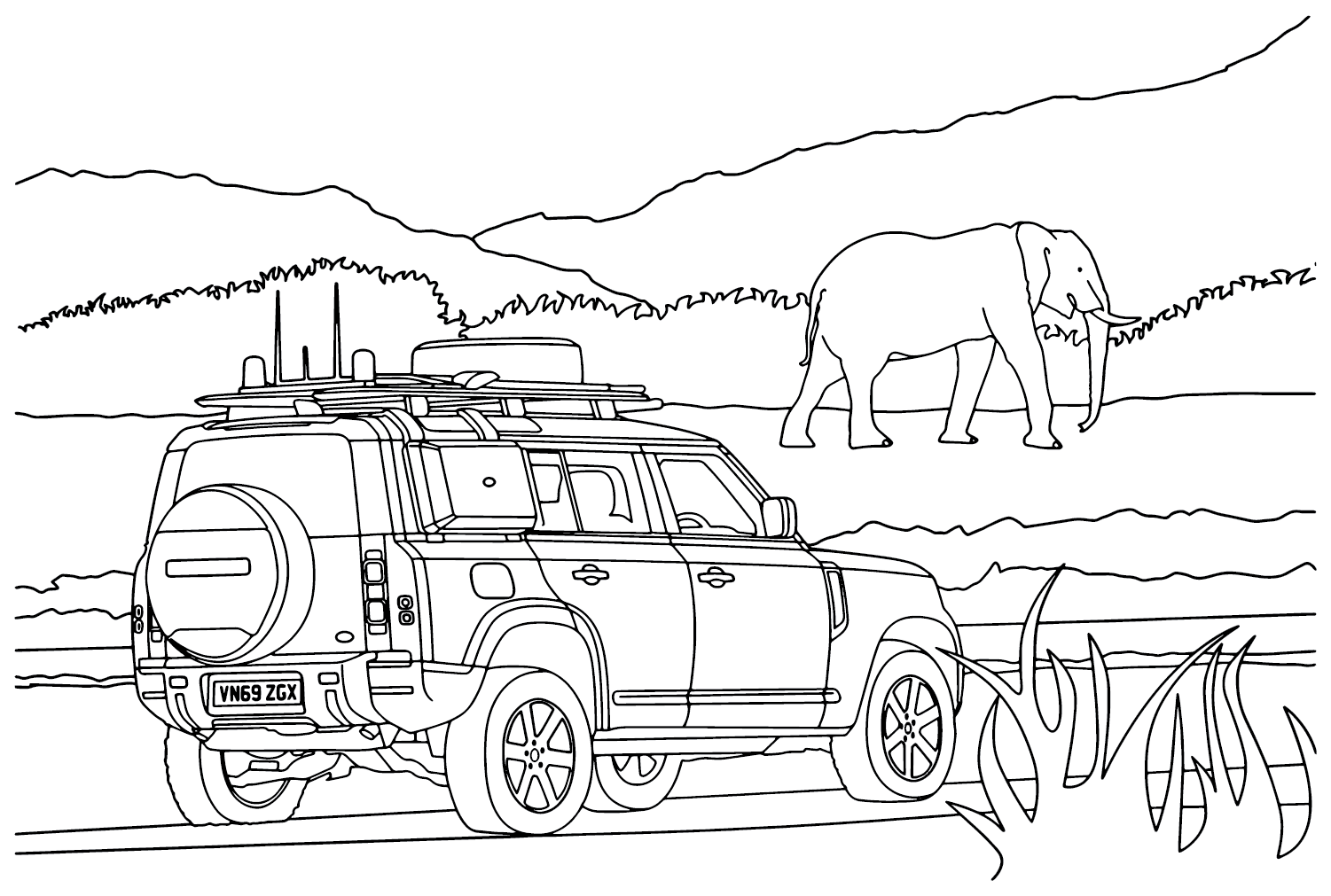
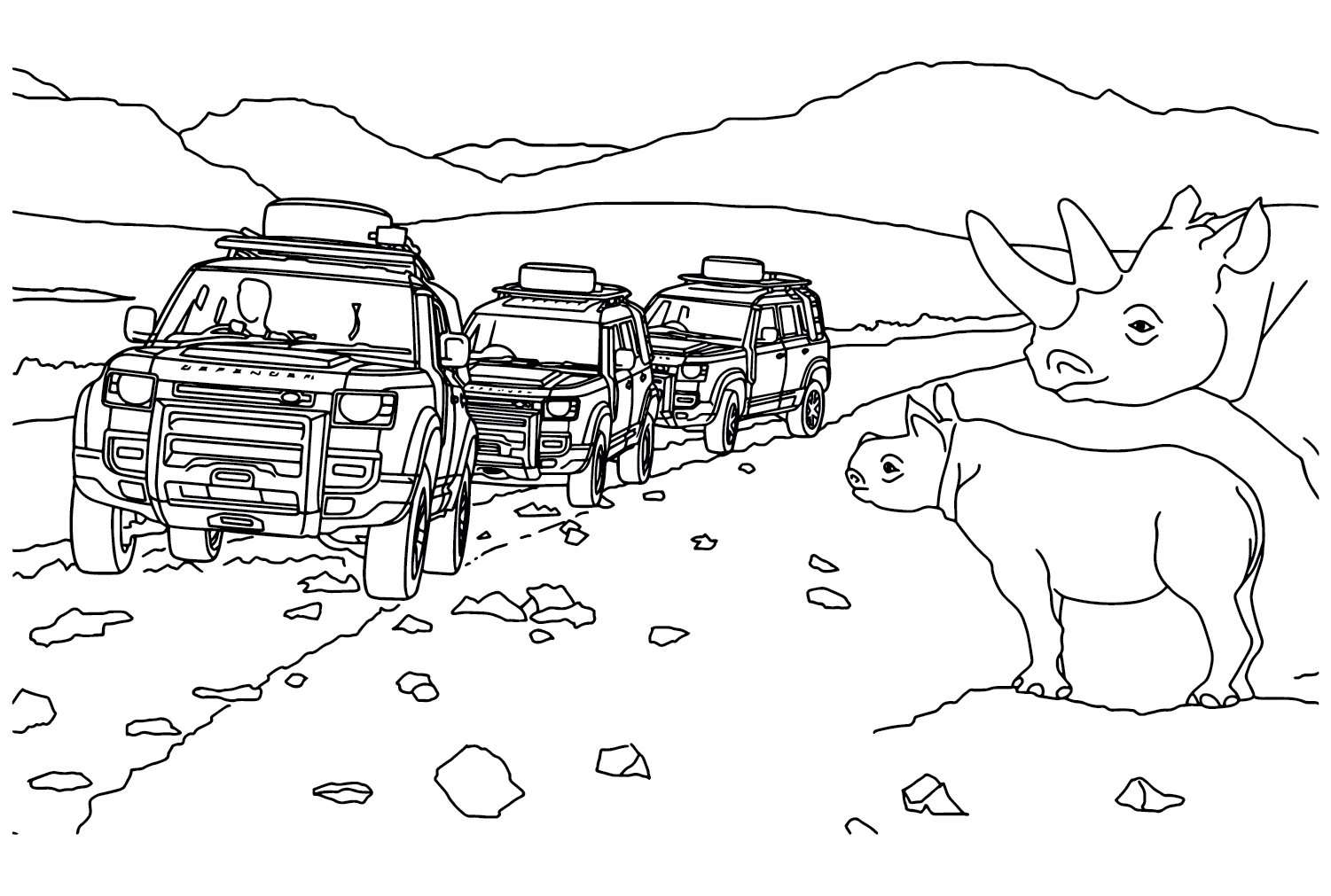
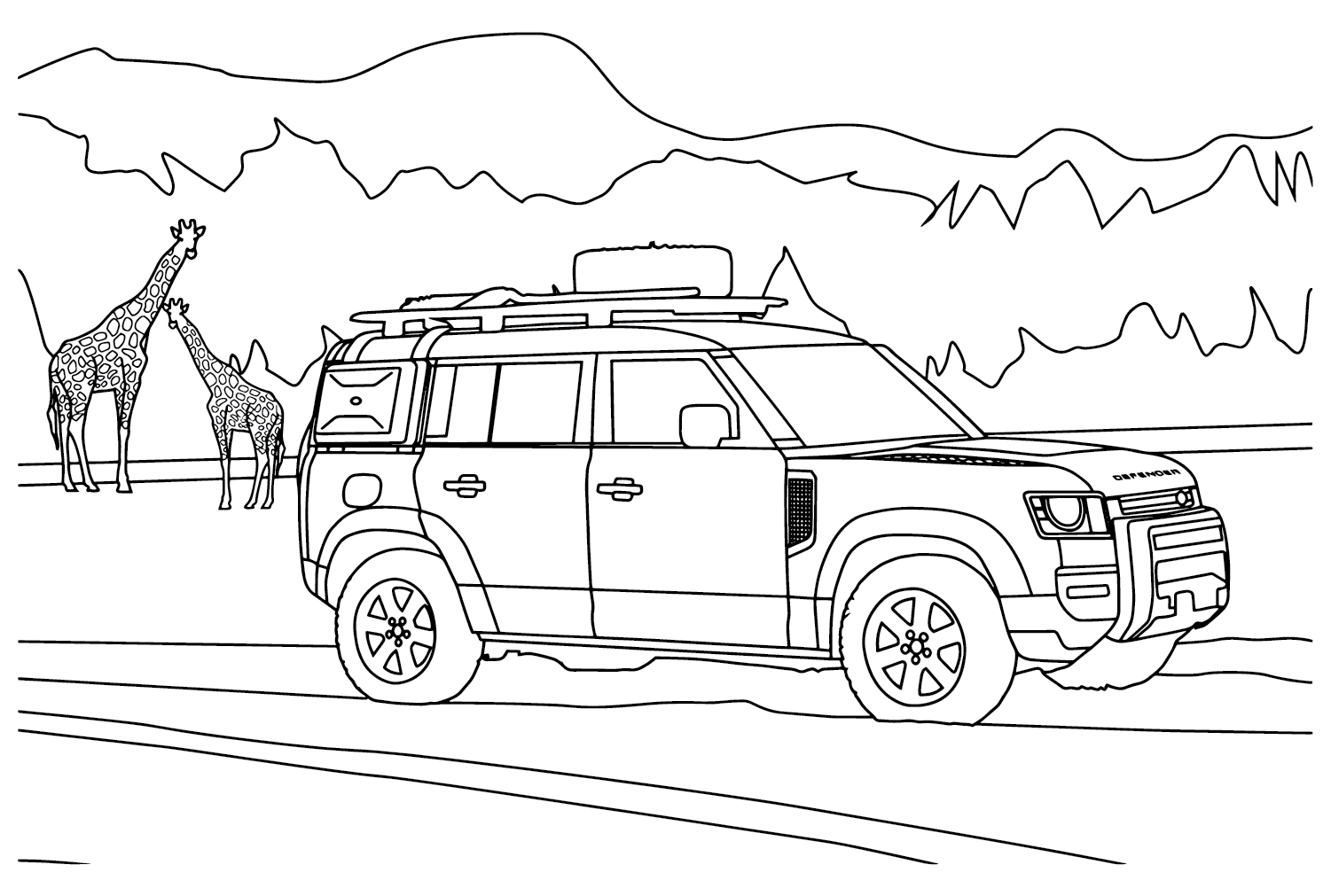
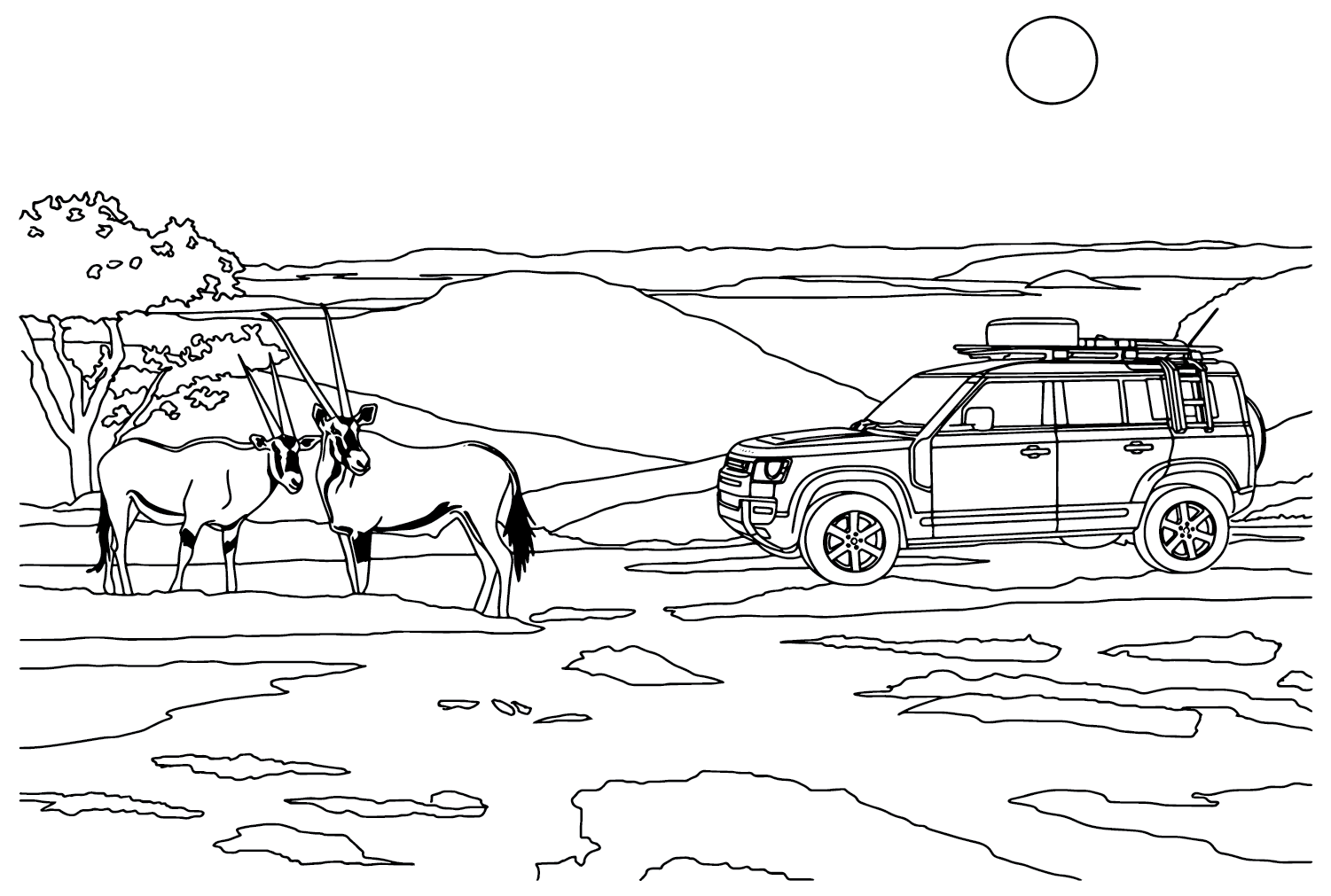
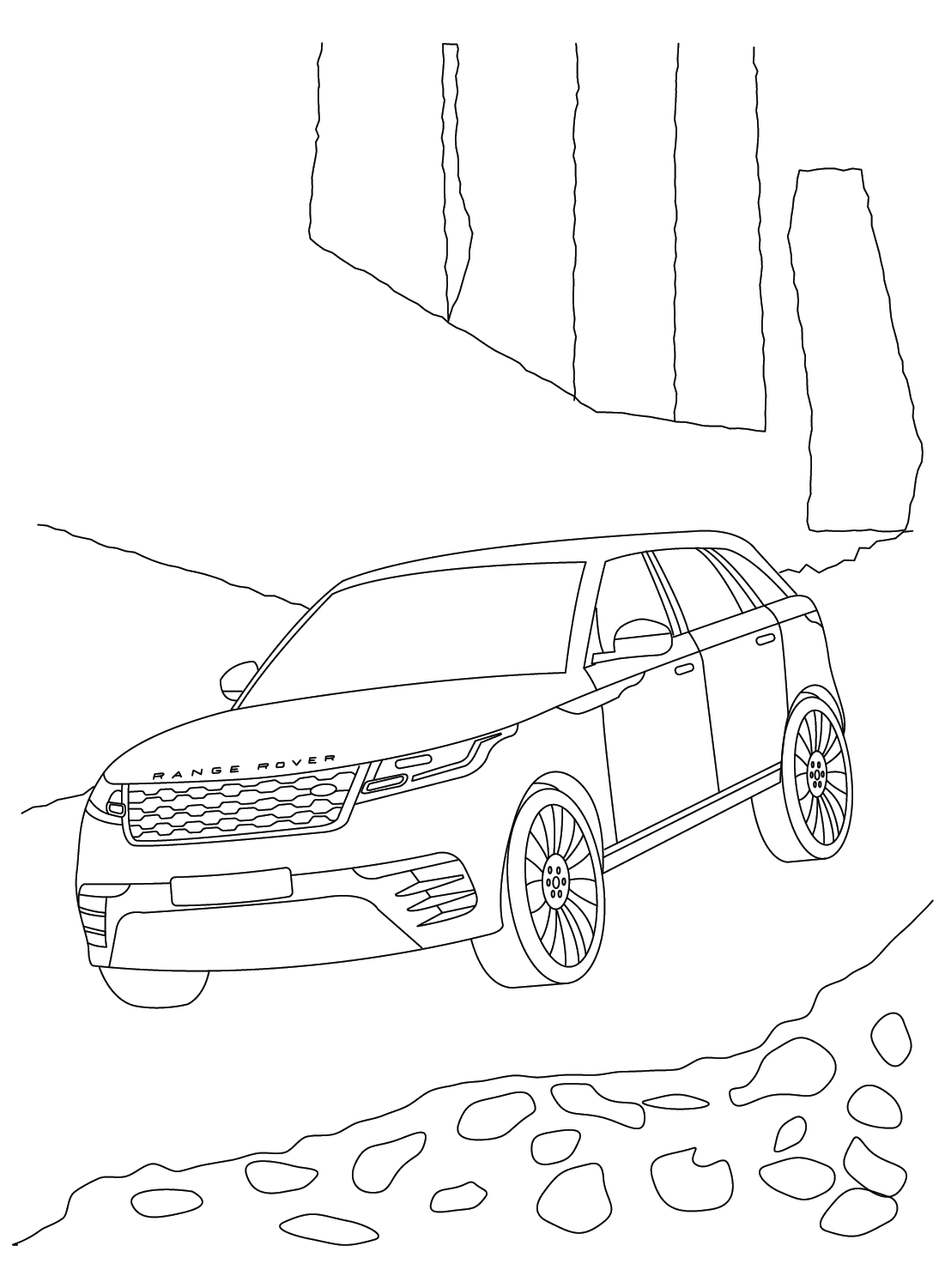
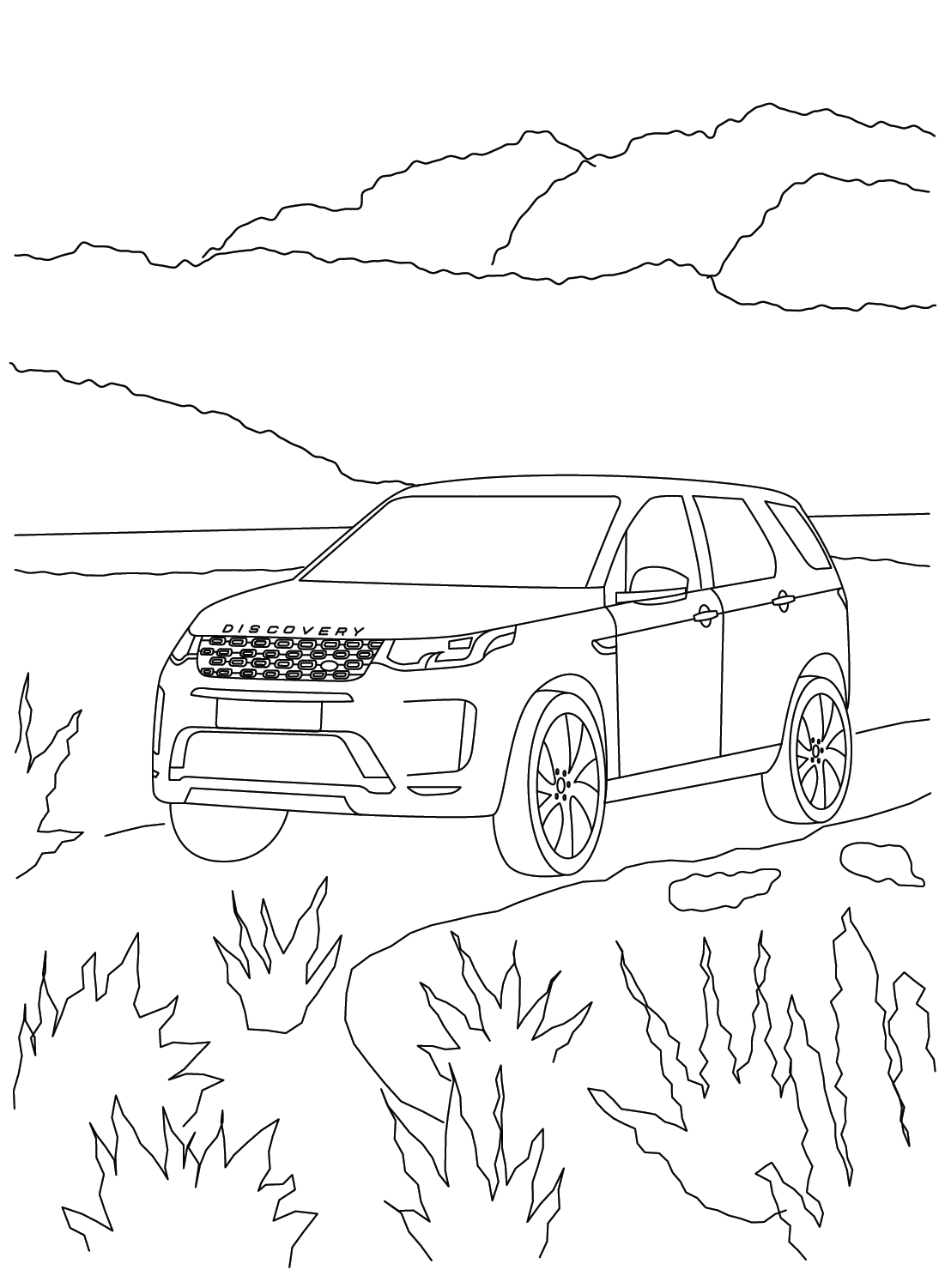
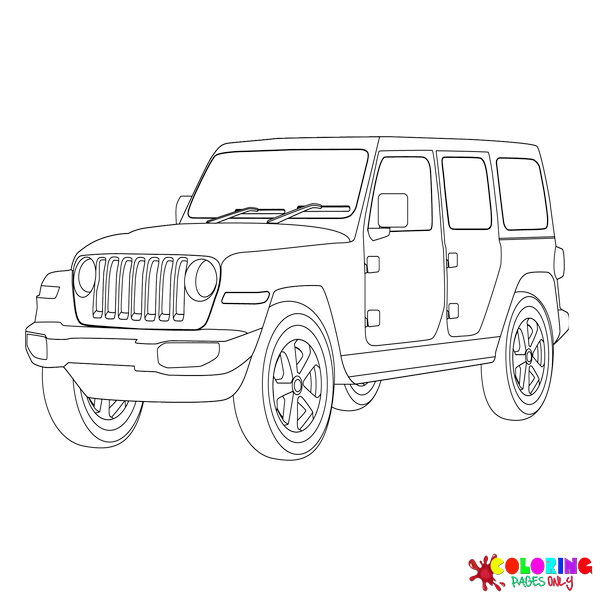
Free Land Rover coloring pages – 20+ pages featuring the Defender, Range Rover, Discovery, Range Rover Sport, Range Rover Evoque, classic Series Land Rovers, off-road terrain scenes, and the full visual history of Britain’s most globally recognized four-wheel-drive manufacturer – free printable PDF and online coloring for automotive enthusiasts and admirers of vehicles built to go anywhere.

Land Rover as a product line was conceived in 1947 when Maurice Wilks, the Rover Company’s chief designer, was farming his land in Anglesey, Wales, using a Willys Jeep left over from the Second World War. The Jeep, he observed, was extraordinarily capable on rough ground and for farm work, but there was no British equivalent – and the postwar British market had farmers, foresters, and utility buyers who needed exactly what the Jeep provided. Wilks proposed that Rover build one.

The first Land Rover was revealed to the public at the Amsterdam Motor Show on April 30, 1948. Its aluminum body panels – a material chosen partly because post-war steel rationing made aluminum more readily available – turned out to be a practical advantage: aluminum does not rust, and the vehicles that went to the far corners of the British Empire and beyond were going to encounter conditions where rust would have destroyed them within years. The design was utilitarian by deliberate calculation: flat panels, robust frame, four-wheel drive, maximum visibility from the driver’s seat over difficult terrain.

The vehicle that resulted from Maurice Wilks’s observation about a farmer’s needs became, across seventy-seven years of production and development, the standard by which off-road capability is measured in the premium automotive market. The Range Rover created the luxury SUV category in 1970. The Defender defined utilitarian off-road design so completely that its silhouette is globally recognizable. The Discovery made seven-seat family capability available in a properly capable off-roader for the first time.

These 20+ free pages at ColoringPagesOnly.com span Land Rover’s full model range. All free, PDF or PNG, print or color online.

What’s Inside

The Land Rover Defender – The Icon

The Defender is the direct descendant of the 1948 original – the vehicle that became the Series I, the Series II, the Series IIA, the Series III, the 90 and the 110, and finally, the Defender name was officially adopted in 1990. Its design logic remained fundamentally unchanged for sixty-eight years: a ladder frame chassis, a box-like aluminum body, a spare wheel on the rear door, and the specific upright windshield and flat-glass architecture of a vehicle designed for visibility over difficult terrain rather than for aerodynamic efficiency.

The last classic Defender rolled off the production line at the Solihull factory on January 29, 2016. Factory workers signed it. It is now in the British Motor Museum at Gaydon. The vehicle that replaced it – the new Defender, designated L663, unveiled at the Frankfurt Motor Show in September 2019 – is a fundamentally different vehicle in engineering terms: modern unibody construction (not a ladder frame), significantly more technology, and a design that references the classic’s upright proportions and spare-wheel-on-the-door heritage while being recognizably contemporary.

Both versions have been used by the British Royal Family, the British Army, wildlife conservation organizations, humanitarian agencies, and expedition teams on every continent. Prince Philip specifically requested that his funeral hearse be a modified Land Rover Defender – he collaborated with Land Rover engineers on the design before his death on April 9, 2021, and the custom Defender hearse carried his coffin at the funeral on April 17, 2021.

The Defender is available in three wheelbase configurations: the 90 (three-door, shorter wheelbase), the 110 (five-door, medium wheelbase, the most common), and the 130 (extended five-door, eight seats).

Coloring the classic Defender: The classic Defender’s flat-panel design translates to the most graphically direct coloring challenge in the automotive collection – large, flat surfaces with no significant curvature, meaning shadow and highlight zones are sharply defined at panel edges rather than gradually blended across curves. Apply a consistent mid-tone across the flat door and body panels. Add a slightly lighter highlight along the very top of the flat hood and roof surfaces (where they catch overhead light most directly). The darker shadow falls sharply below the panel edges. The classic Defender’s most common colors historically include Santorini Black, Grasmere Green, Heritage Blue, and the landmark special edition colors – Pangea Green and Sedona Red.

Coloring the new Defender: The new Defender’s design has more surface variation than the classic – subtle curves on the hood, a more complex front fascia – but maintains the upright quality of the original. The three-zone gradient technique applies across its larger, more gently curved body panels. The circular headlights of the classic have been replaced by square LED units in the new Defender.

The Range Rover – The Original Luxury SUV

The Range Rover was launched on June 17, 1970 – three doors, permanently engaged four-wheel drive, a V8 engine, leather seats, and the specific combination of genuine off-road capability with interior comfort that had never previously been offered in a single vehicle. It was designed by Charles Spencer “Spen” King and his team at Land Rover. The Range Rover created the luxury SUV segment – every premium SUV produced since 1970 exists in the category that this one vehicle defined.

The original Range Rover – a three-door with aluminum body panels and a practical, easy-clean hose-down interior – is now almost universally available with a four-door body, leather-lined interiors of considerable sophistication, and technology that its 1970 designers would not have imagined. The current fifth-generation Range Rover is one of the most expensive and most sought-after vehicles in the world’s premium automotive market.

The Range Rover family now includes four distinct vehicles: the full-size Range Rover (flagship), the Range Rover Sport (performance-oriented, slightly smaller), the Range Rover Velar (design-forward, mid-size), and the Range Rover Evoque (compact, introduced 2011, designed by Gerry McGovern).

Coloring the Range Rover: The current Range Rover’s design is built around a floating roof – the roof is separated from the body by a band of dark glass that makes the roof appear to float above the body rather than sit atop it. This floating roof effect requires specific coloring: the body in its color, the dark glass band in near-black, and the roof in a slightly different tone from the body (either matching or contrasting, depending on whether the two-tone paint option is shown). The Range Rover’s most associated colors include Santorini Black (deep, near-black metallic), Silicon Silver, and British Racing Green for heritage references.

The Range Rover Evoque – Design Breakthrough

The Range Rover Evoque is the model that most significantly expanded Land Rover’s commercial reach – a compact Range Rover that brought the brand’s premium positioning to a price point accessible to buyers for whom the full Range Rover was beyond budget, and with a body size suited to urban environments where the full-size flagship would be impractical.

Designed by Gerry McGovern, the original Evoque (2011) was immediately award-winning – it was the most awarded new vehicle launch in Land Rover’s history at its introduction. Its coupe-like roofline, slim pillars, and design-forward aesthetic made it recognizable as a Land Rover product while being dramatically different from anything the brand had previously produced.

Coloring the Evoque: The Evoque’s most distinctive visual is its roofline – lower and more flowing than other Range Rover models, with a strong C-pillar and a high beltline that narrows the glass area. The three-zone technique applies to its more dynamic body surfaces, with the shoulder line’s peak as the lightest point and the shadow zones falling below and behind. The Evoque’s color range has historically included Fuji White and Firenze Red among its most associated tones.

The Discovery – The Family Adventurer

The Land Rover Discovery was introduced in 1989 to fill the gap between the utilitarian Defender and the premium Range Rover – a family-practical, properly capable off-road vehicle at a price between the two. Its most distinctive visual feature in the first and second generations was the stepped roofline – the roof rose above the main greenhouse to provide additional headroom for rear passengers – and the asymmetric rear door treatment (different-sized doors on each side of the tailgate).

The Discovery made genuine off-road capability available to families who needed seven seats and school-run practicality alongside the ability to cross a field when required. It became one of Land Rover’s highest-volume models and is currently in its fifth generation.

Coloring the Discovery: The stepped roofline of the early Discovery generations is the single most architecturally distinctive feature in the collection – the horizontal step visible in the greenhouse profile where the roof rises to its higher level. This step should be colored with a clear tonal distinction: the lower greenhouse glass area in one treatment, the raised roof section with its additional glass in a clear above-the-step distinction. The Discovery’s body is typically rendered in darker, more practical colors – Fuji White, Santorini Black, and the various metallic greys that communicate the model’s practical premium positioning.

Classic Series Land Rovers – The Originals

Pages referencing the Series I, II, or III Land Rovers give the collection its most historically grounded subject matter – the vehicles that established the brand and defined the utilitarian off-road aesthetic that the Defender maintained for sixty-eight years. Their flat-glass windshields, round headlights, canvas roof options, and simple body panels are immediately distinguishable from any subsequent Land Rover production.

The Series vehicles were built in a remarkable range of configurations: short-wheelbase (station wagon, pickup, soft-top), long-wheelbase (ambulance, fire tender, military, crew cab), and numerous special build versions for specific military, agricultural, and expedition purposes. Their simplicity of design and mechanical straightforwardness meant they were repaired and maintained in conditions and locations where no other vehicle would have survived.

Coloring Series Land Rovers: The classic Land Rover color of Pastel Green (the original light green of the 1948-1950 vehicles) is the historically most resonant choice – a pale, slightly yellow-shifted green that reads as the vehicle’s original factory color. Later Series vehicles were also available in Military Bronze Green, Poppy Red, and Limestone (white). The flat surfaces and round headlights give these pages the most graphically simple automotive silhouette in the collection.

What These Pages Do

The Land Rover’s history is the clearest illustration of a product designed for pure function becoming a global design icon. Maurice Wilks designed the original Land Rover to do specific things on farm terrain. He did not design it to be beautiful. The beauty – if that is the right word for the functional directness of a flat-glass, flat-panel, nothing-that-doesn’t-need-to-be-there vehicle – was a consequence of the function being served completely. Coloring the classic Defender is coloring the specific visual result of designing only for what a vehicle needs to do.

The Range Rover created a vehicle category that is now one of the most commercially significant in the global automotive market. Every luxury SUV produced – from the Mercedes-Benz GLE to the BMW X5 to the Cadillac Escalade – exists because the Range Rover demonstrated in 1970 that buyers would pay premium prices for a vehicle that combined genuine off-road capability with refined interior quality. The coloring pages that show the Range Rover are illustrations of the specific vehicle that established this market logic.

The Camel Trophy represents the brand’s most documented adventure heritage. From 1980 to 2000, the Camel Trophy was an international off-road competition held in remote locations – the Amazon, Borneo, Madagascar, Siberia, Tierra del Fuego – that always used Land Rover vehicles (primarily Defenders and Discovery models). The vehicles were required to traverse terrain that no production vehicle had previously been driven through. The Camel Trophy is the clearest documented evidence of Land Rover’s actual off-road capability at its extreme limit.

Fine motor development. The American Academy of Pediatrics identifies fine motor skill development as a key childhood milestone throughout early childhood. The Defender’s flat panel edges, the Range Rover’s floating roof treatment, the Discovery’s stepped roofline, and the classic Series vehicles’ circular headlights all provide motivated, sustained fine motor practice. The 2005 Art Therapy Journal study on structured coloring and anxiety reduction applies throughout this collection.

How to Color These Pages Well

Flat-panel Land Rover designs use edge highlights rather than surface gradients. The classic Defender and Series vehicles have flat, nearly planar body surfaces – unlike the smoothly curved panels of a Range Rover or a modern sedan. On flat surfaces, the light-to-shadow transition occurs at the panel edges rather than gradually across the surface. Apply a consistent mid-tone across the entire flat panel. Then add a very thin, slightly lighter line along the top edge of each panel (where the flat surface meets the edge and catches the most direct light). Add a slightly darker line along the bottom edge (where the panel goes into shadow). The result reads as a flat panel with dimensional edge definition.

The floating roof treatment on Range Rover pages requires three distinct tones. The floating roof effect – where the roof appears to hover above the body – is created visually by three zones: the body color (applied to the main body and the lower door panels), the dark glass band (applied in near-black to the thin strip of glass between the roofline and the body), and the roof color (applied to the roof surface above the dark glass band). The dark glass band must be as dark as possible – the closer to black, the more the roof appears to float.

Mud and terrain effects are optional but reward the most committed players. Off-road pages that show Land Rovers on terrain – mud splashes on the lower body, dust on the windshield, water streaming from the wheel arches – can receive environmental weathering treatment that standard road-car pages do not. Apply warm brown (mud) in irregular splashes along the lower body panels and wheel arches. Apply a very light warm tan (dust) as a slight tint across the windshield and hood. These effects communicate the vehicle’s environment and function in a way that a clean, showroom-condition rendering does not.

Green in all its forms is the brand’s most historically resonant color family. From the original Pastel Green of the 1948 Series I to the Grasmere Green of the classic Defender era to the Pangea Green of the new Defender’s launch and the British Racing Green of heritage references – green is Land Rover’s most consistently associated color family across its entire history. When in doubt about body color, green of the appropriate era communicates the brand most directly.

Window glass on upright vehicles catches more sky. Land Rovers sit higher and have more upright windshields than most vehicles, which means their glass surfaces reflect a larger proportion of sky. Apply the window glass areas in a slightly more pronounced pale blue-grey than you would use for a lower, more reclined windshield. The upright glass of a Defender or Discovery should read as showing more sky reflection than the raked windshield of a sports car.

5 Creative Craft Ideas

Seventy-Five Years of Design Evolution

Print pages representing four Land Rover design eras: a Series I (1948 – the original), a classic Defender (1990s era), a Discovery first generation (1989-1998), and a current new Defender (2019-present). Color each in a color appropriate to its era: Pastel Green for the Series I, Heritage Blue or Coniston Green for the classic Defender, Adriatic Blue or Oxford Blue for the original Discovery, Pangea Green or Santorini Black for the new Defender.

Mount all four in chronological order. Below each: the model name, the year, and one sentence about its place in the brand’s history. The display shows seventy-five years of functional evolution – the same design brief (go anywhere, carry anything) answered differently in each decade.

The Original and the Revival

The classic Defender and the new Defender represent the same design philosophy, answered in two completely different engineering moments. Print one classic Defender page (the boxy, flat-glass, pre-2016 design) and one new Defender page (the L663 post-2019 design). Color both in Santorini Black – the deep, near-black that both generations have worn as one of their most recognizable colors.

Mount both side by side: “January 29, 2016 – Last classic Defender, Solihull factory” on the left. “September 10, 2019 – New Defender, Frankfurt Motor Show” on the right. The display is a study in how the same identity is maintained across a complete engineering change.

Royal Warrant Certificate

Land Rover has supplied vehicles to the British Royal Family for decades, holding Royal Warrants that acknowledge it as an official supplier to the Crown. Print the most distinguished-looking Range Rover or classic Defender page available. Color it carefully in a deep, formal color – Santorini Black or Buckingham Blue.

Mount on a cream backing sheet with a hand-lettered border. At the top, add: “By Appointment to Her Majesty The Queen.” At the bottom: “Land Rover – Motor Vehicle Manufacturers – Est. 1948.” The finished display creates a fan-made Royal Warrant certificate with the coloring page as its central image.

Camel Trophy Adventure Map

The Camel Trophy sent Land Rovers to some of the world’s most remote locations from 1980 to 2000. Print the most rugged-looking Defender page – ideally one with off-road terrain visible. Color it in the Camel Trophy livery: Camel Yellow body with black roof, Camel Trophy decals (hand-drawn), roof rack visible.

On a large backing sheet, draw a simplified world map. Mark the twenty years of Camel Trophy locations: Amazon/Brazil (1980), Papua New Guinea (1982), Zaire (1983), Borneo (1984), Australia (1989), Madagascar (1990), Siberia (1990), Tanzania (1991), Guyana (1992), Sabah Borneo (1993), Argentina (1995), Mongolia (1996), South Africa (1997), Tierra del Fuego (1998), Borneo (2000). Place the colored Defender image at the center.

Prince Philip’s Defender – A Memorial Page

Prince Philip, Duke of Edinburgh, was one of Land Rover’s most devoted advocates – he drove Land Rovers throughout his life and specifically requested that his funeral hearse be a modified Defender that he helped design with Land Rover engineers before his death on April 9, 2021. The custom Defender hearse was painted in Edinburgh Green and carried his coffin at the funeral on April 17, 2021.

Print the most classic Defender page available. Color it in a deep, dignified green – Edinburgh Green or equivalent. Mount on a dark backing sheet. Add: “Prince Philip, Duke of Edinburgh, 10 June 1921 – 9 April 2021. He drove Land Rovers for most of his life. He helped design this one.”

Frequently Asked Questions

Who founded Land Rover and when did the original vehicle launch? Land Rover, as a product line, was conceived by Maurice Wilks, the Rover Company’s chief designer, in 1947. Wilks used a wartime Willys Jeep on his farm in Anglesey, Wales, and proposed that Rover build a British equivalent for the utility vehicle market. The first Land Rover was revealed to the public at the Amsterdam Motor Show on April 30, 1948. The vehicle used aluminum body panels – a practical choice given post-war steel rationing – a decision that proved advantageous for durability in harsh environments. Land Rover was originally a product line of the Rover Company rather than a separate entity; it became its own marque through the strength of its products.

What is the difference between the Land Rover Defender and the Range Rover? The Land Rover Defender and the Range Rover represent two distinct philosophies within the Land Rover brand, though both are designed for genuine off-road capability. The Defender originates from the 1948 original utility vehicle – prioritizing practical capability, durability, and go-anywhere functionality over interior comfort and refinement. The Range Rover, launched on June 17, 1970, was designed specifically to combine genuine off-road capability with premium interior comfort – it created the luxury SUV category. Today, the Defender is positioned as Land Rover’s adventure and utility model, while the Range Rover family occupies the brand’s premium luxury positioning.

What is the Range Rover’s historical significance? The Range Rover, designed by Charles Spencer “Spen” King and launched on June 17, 1970, is credited with creating the luxury SUV vehicle category – a segment that is now one of the most commercially significant in the global automotive market. Before the Range Rover, no vehicle combined genuine off-road capability (four-wheel drive, long-travel suspension, real ground clearance) with premium interior appointments at production vehicle scale. Every premium SUV produced since – the Mercedes-Benz GLE, the BMW X5, the Cadillac Escalade, and numerous others – exists in the market category that the Range Rover created and defined.

What is the Camel Trophy and why is it important to Land Rover’s heritage? The Camel Trophy was an international off-road competition held annually from 1980 to 2000 in some of the world’s most remote and difficult terrain – locations including the Amazon Basin, Borneo, Papua New Guinea, Madagascar, Siberia, Tanzania, Mongolia, and Tierra del Fuego. The competition always used Land Rover vehicles – primarily Defenders and Discovery models – and required teams to traverse terrain that no production vehicle had previously been driven through. The Camel Trophy is the most extensively documented real-world test of Land Rover’s off-road capability and is largely responsible for the brand’s global reputation for going anywhere, regardless of conditions.

Who currently owns Land Rover? Land Rover is currently owned by Tata Motors, the Indian automotive corporation, as part of Jaguar Land Rover (JLR). Tata Motors acquired both Land Rover and Jaguar from Ford Motor Company in 2008 for $2.3 billion. JLR operates as a largely autonomous subsidiary under Tata ownership, headquartered in Coventry, England. Under Tata’s ownership, Land Rover has significantly expanded its model range – the Range Rover Evoque (2011), Range Rover Velar (2017), Defender revival (2019), and multiple electrified variants – and has grown substantially in both revenue and global market presence.

What is the Discovery and how does it differ from the Defender and Range Rover? The Land Rover Discovery was introduced in 1989 to fill the market gap between the utilitarian Defender and the premium Range Rover – offering family-practical seating (five or seven seats), genuine off-road capability, and a price point between the two established models. Its design in the first two generations featured a distinctive stepped roofline and asymmetric rear door arrangement. The Discovery is Land Rover’s most family-focused model – designed for school runs and grocery trips as well as genuine off-road use – and has been produced through five generations, with the Discovery Sport (2014-present) as its compact counterpart.

Browse the full collection at ColoringPagesOnly.com. All 20+ pages free, no sign-up, PDF or PNG, print or color online.

Maurice Wilks looked at a wartime Jeep on his farm in Wales in 1947 and proposed that Rover build something like it. The vehicle that resulted from that proposal was revealed in Amsterdam on April 30, 1948. It had aluminum panels because steel was scarce. It had flat glass because flat glass was simpler. It had four-wheel drive because the farm required it.

The last classic Defender was built at Solihull on January 29, 2016. The workers signed it. It is now in a museum.

The new Defender was launched at Frankfurt in September 2019. The design references the original. The engineering is entirely different. Both are Land Rovers.

Pick up your Pastel Green for the Series I. Your Coniston Green for the classic Defender. Your Santorini Black for the Range Rover.

Go anywhere.

Share your work on Facebook and Pinterest and tag #Coloringpagesonly. We especially want to see the design evolution timelines and the Camel Trophy adventure maps.

Color the Defender. Take the Range Rover off-road. The original is still there in all of them.

More from our automotive collections:

Sophia Williams – Writer and Social Network

Hi everyone! I’m Sophia Williams, a social media specialist at Coloringpagesonly.com. My goal is to spread the love of color and creativity to everyone. Join me online as we share inspiration, connect through art, and fill the world with vibrant, joyful colors!