Calf Coloring Pages
 By:
Jennifer Thoa - Content Editor & Designer
Updated:
By:
Jennifer Thoa - Content Editor & Designer
Updated:
Free Calf coloring pages: 33 printable PDF designs featuring these young cattle in portrait, cute, and mother-and-calf styles. Each page can be downloaded as a PDF to print or colored online in the browser.
A calf is a young cow, typically born after a gestation period of about nine months, close to the length of a human pregnancy. One of the most remarkable things about calves is how quickly they get moving: a healthy calf usually stands and takes its first steps within about an hour of birth, a huge head start compared to many other newborn mammals. Calves are born with all four stomach compartments already in place, but only one, the abomasum, or true stomach, is functional at birth, since a newborn calf survives entirely on milk. The other three compartments, including the rumen, only fully develop over the following weeks as the calf begins nibbling on solid food like hay and grain, gradually building up the specialized microbes needed to digest fibrous plants the way an adult cow does. In the very first hours of life, a calf’s most urgent need is colostrum, the antibody-rich first milk from its mother, since calves are born without protective antibodies of their own and rely on this early milk to build up their immune defenses. Calf coats can come in shades of brown, black, white, red, or spotted, depending on the breed of cattle.
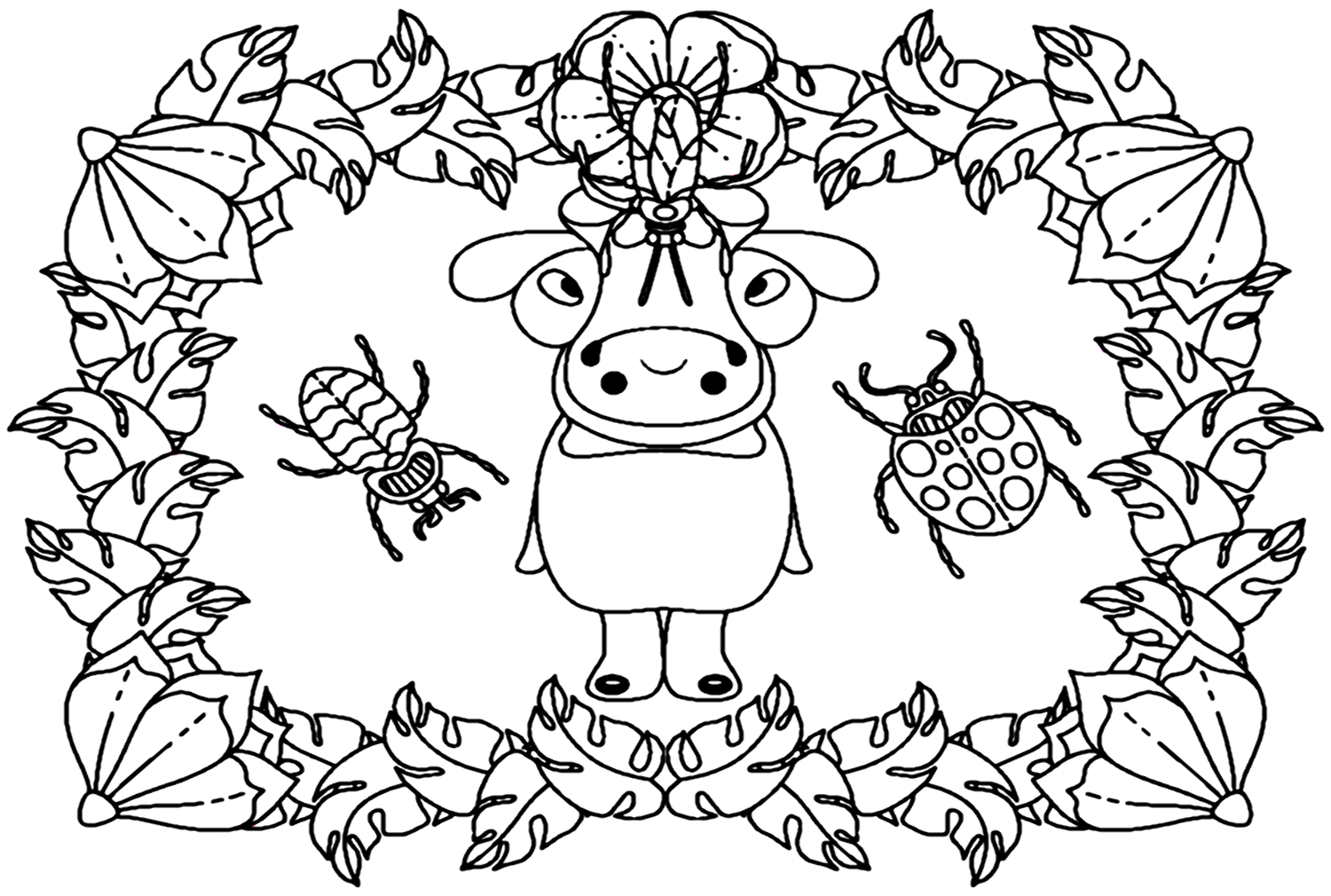
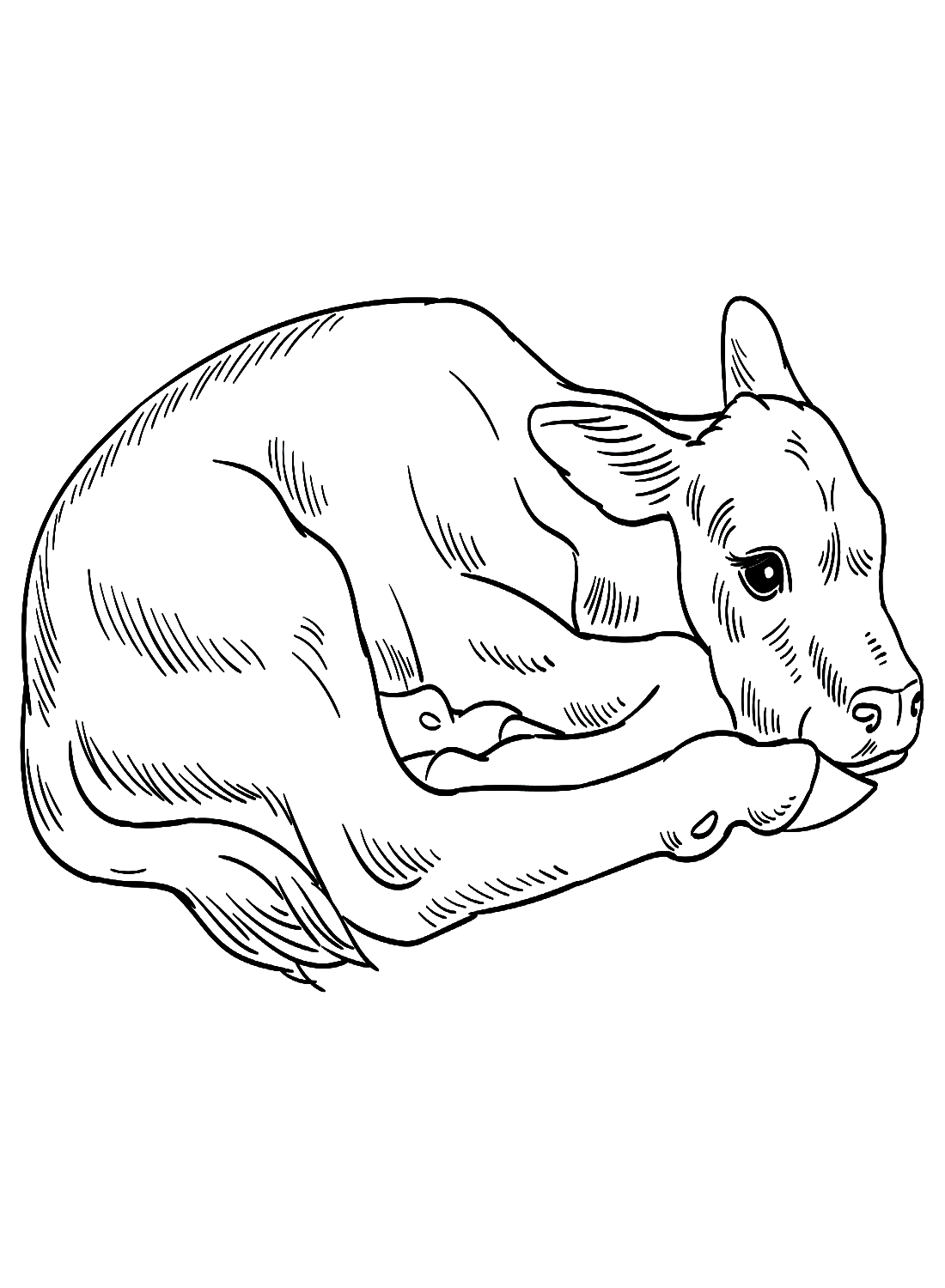
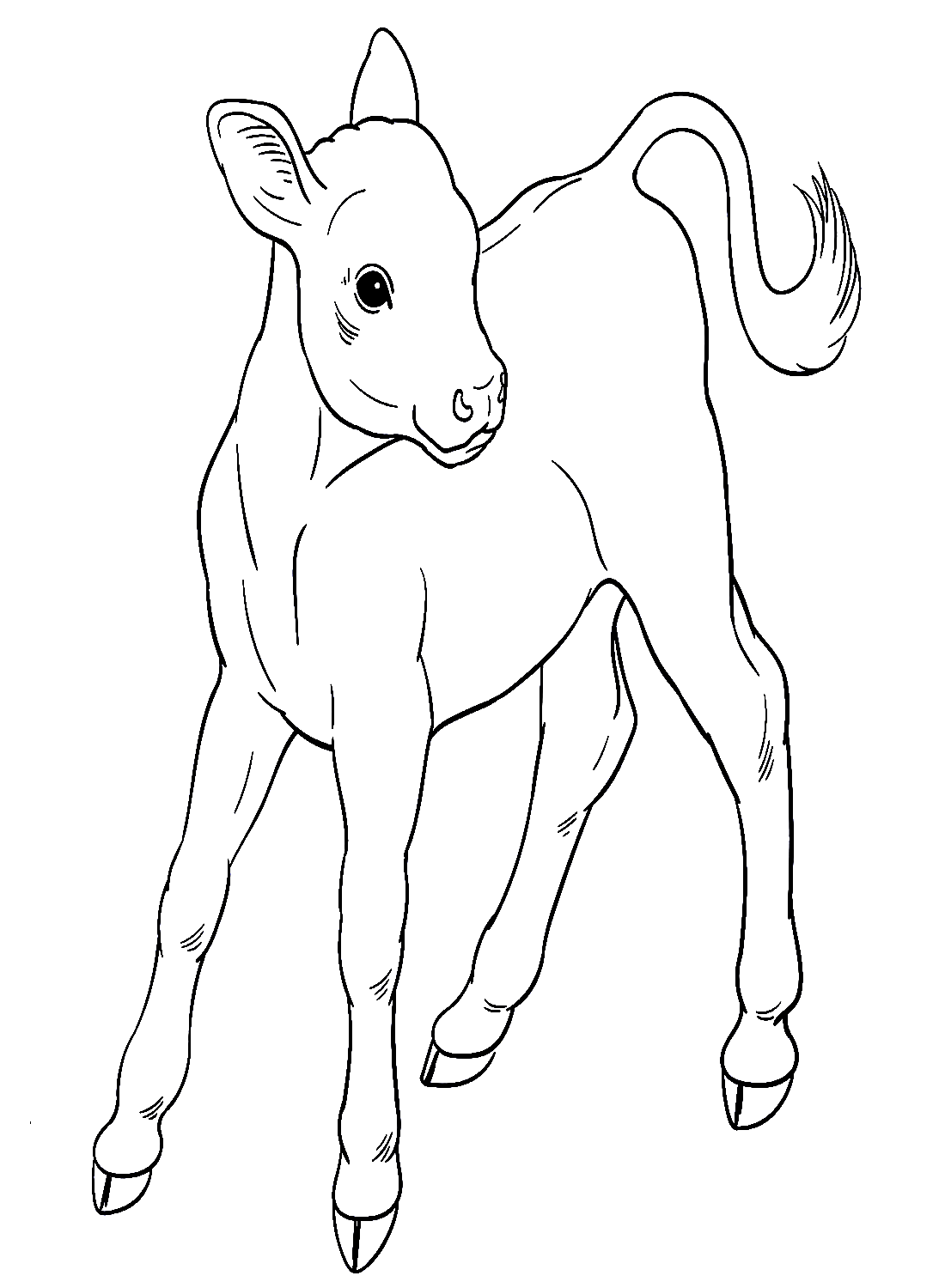
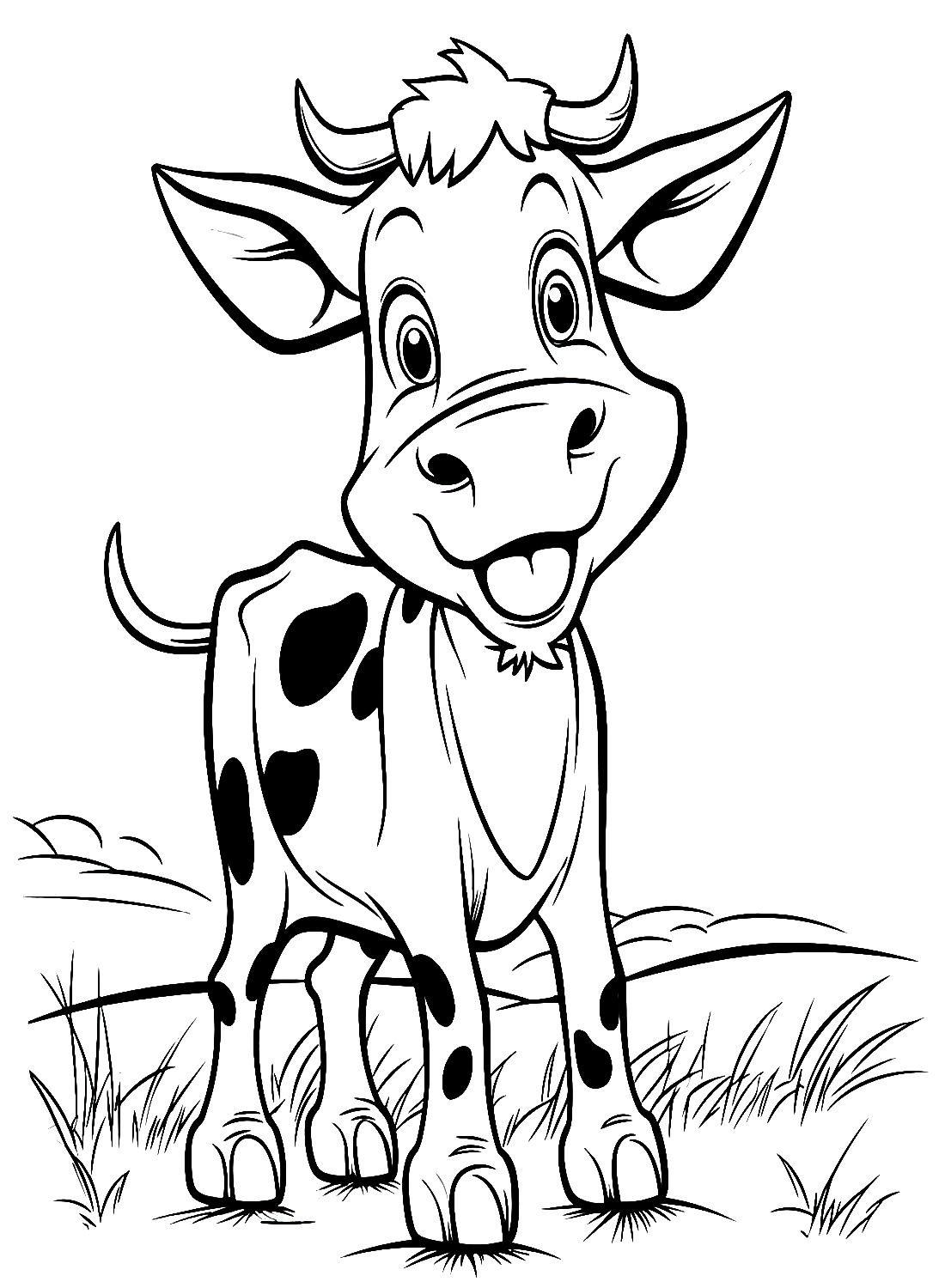
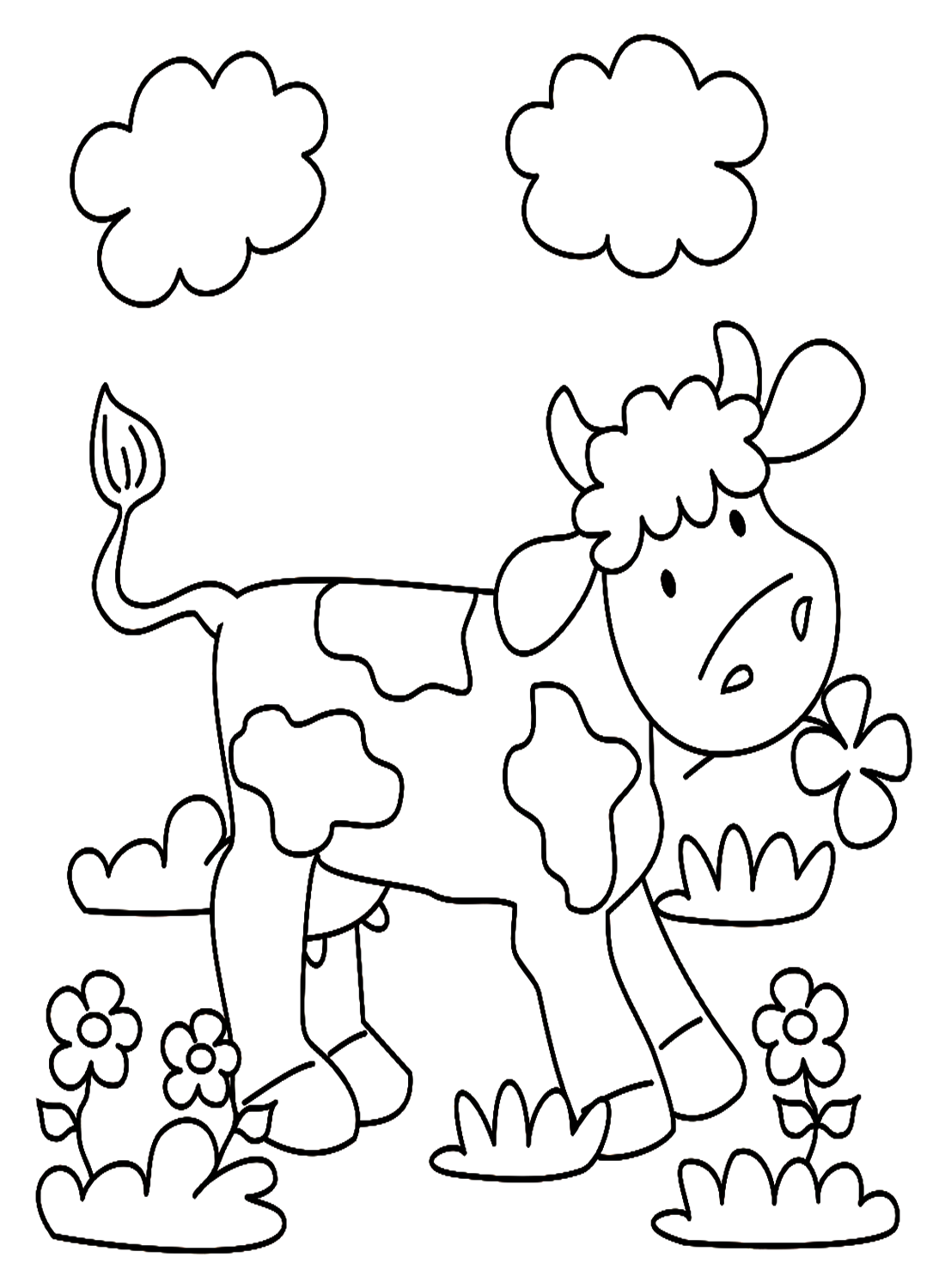
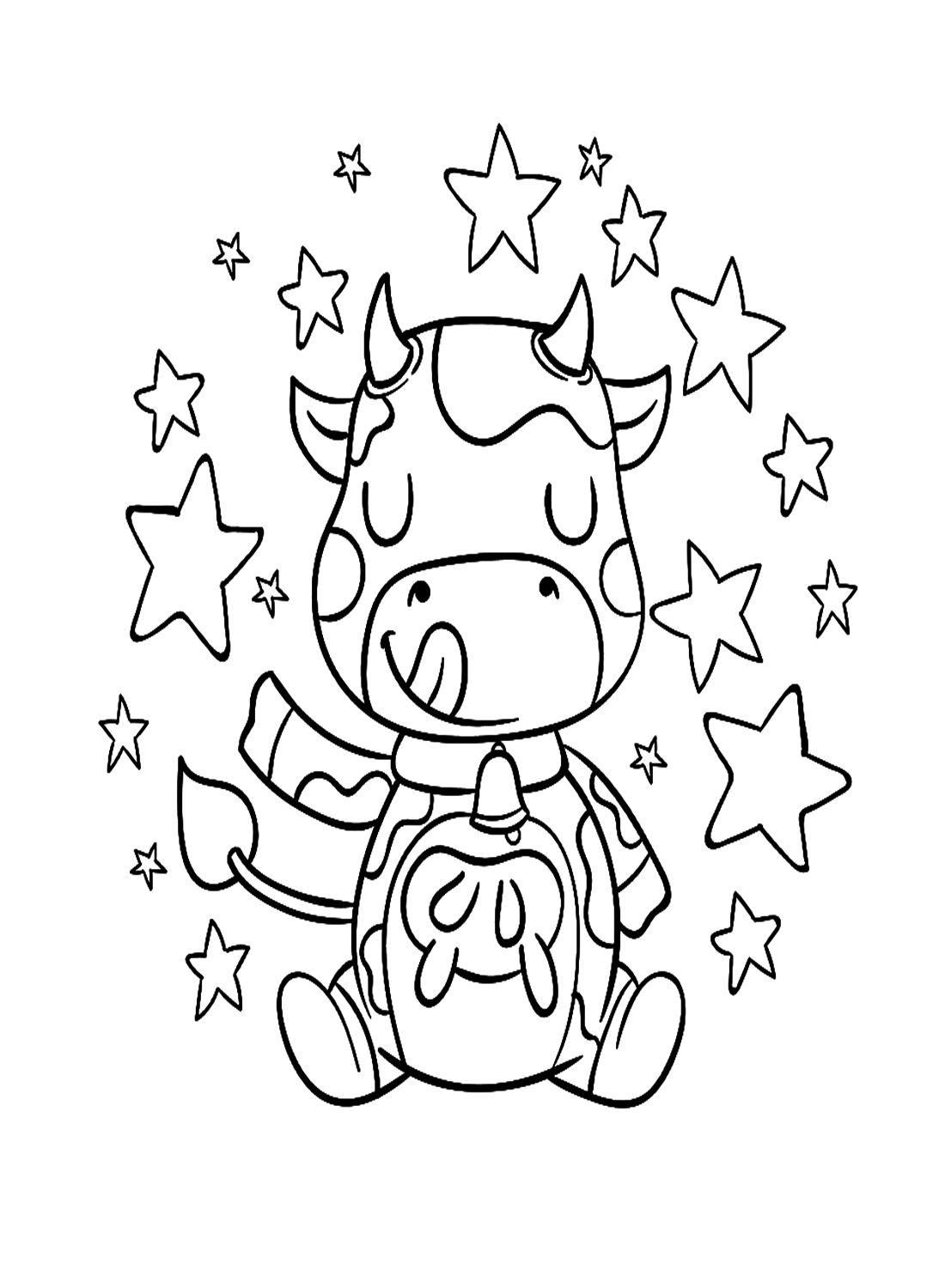
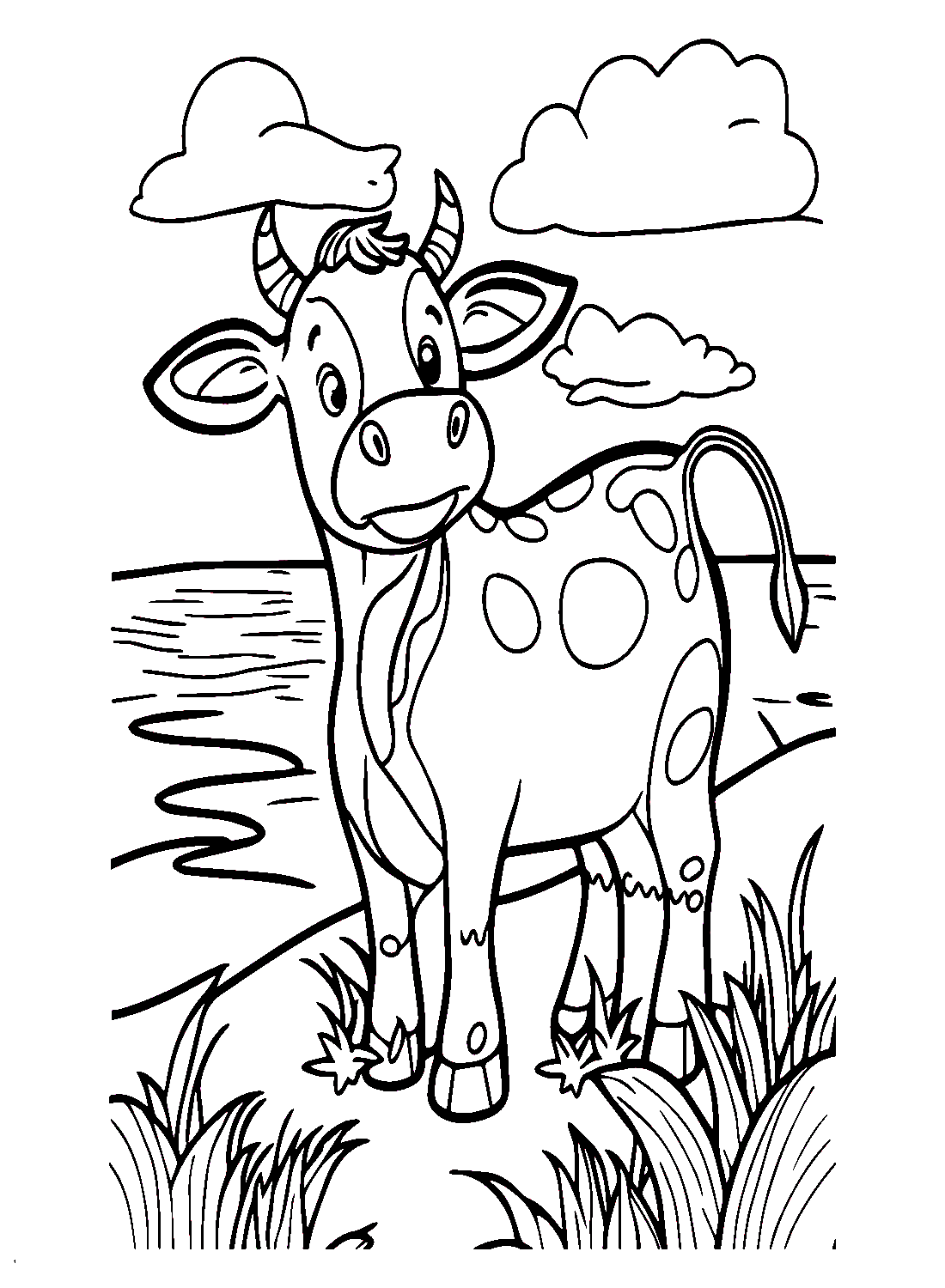
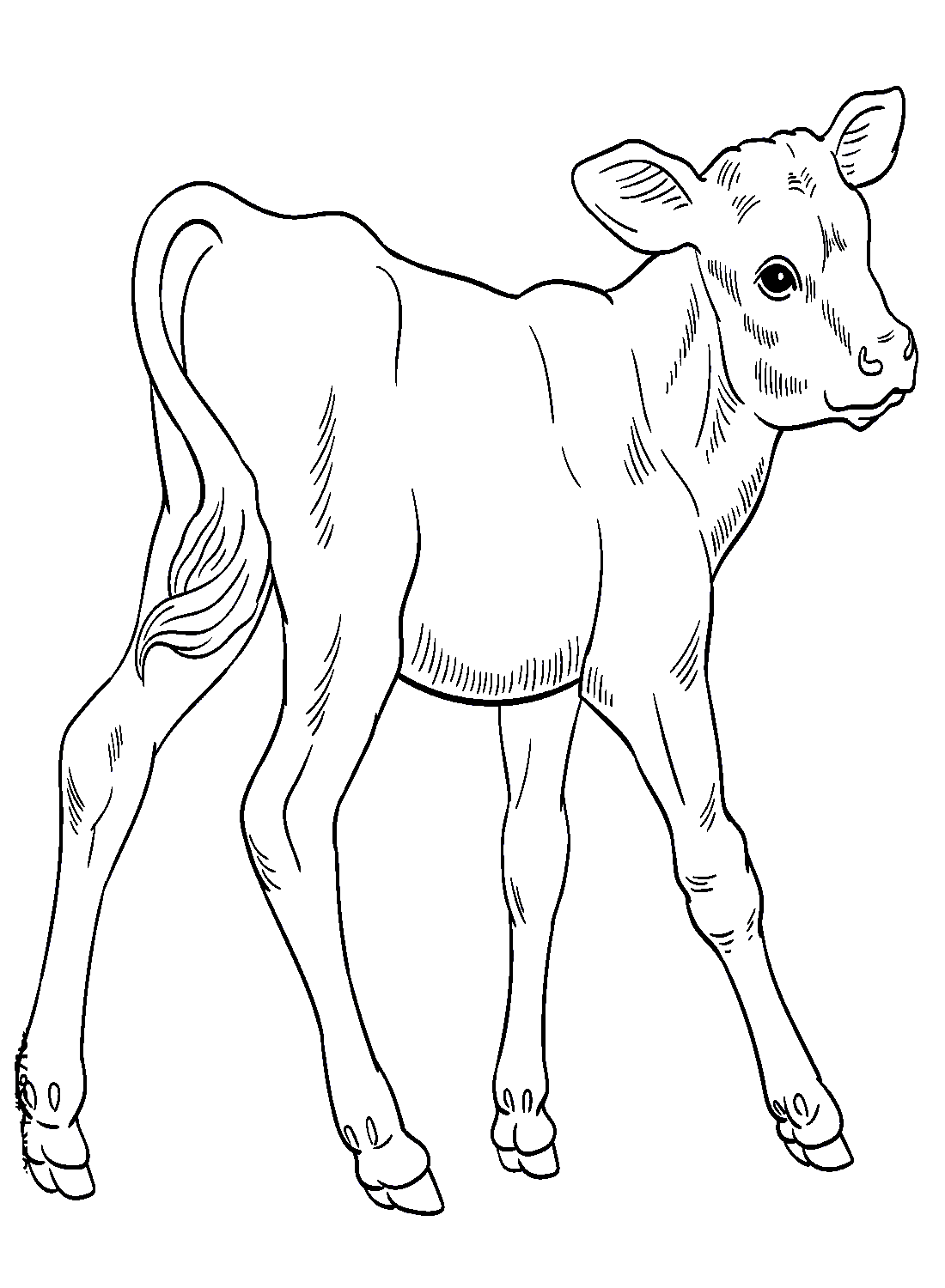
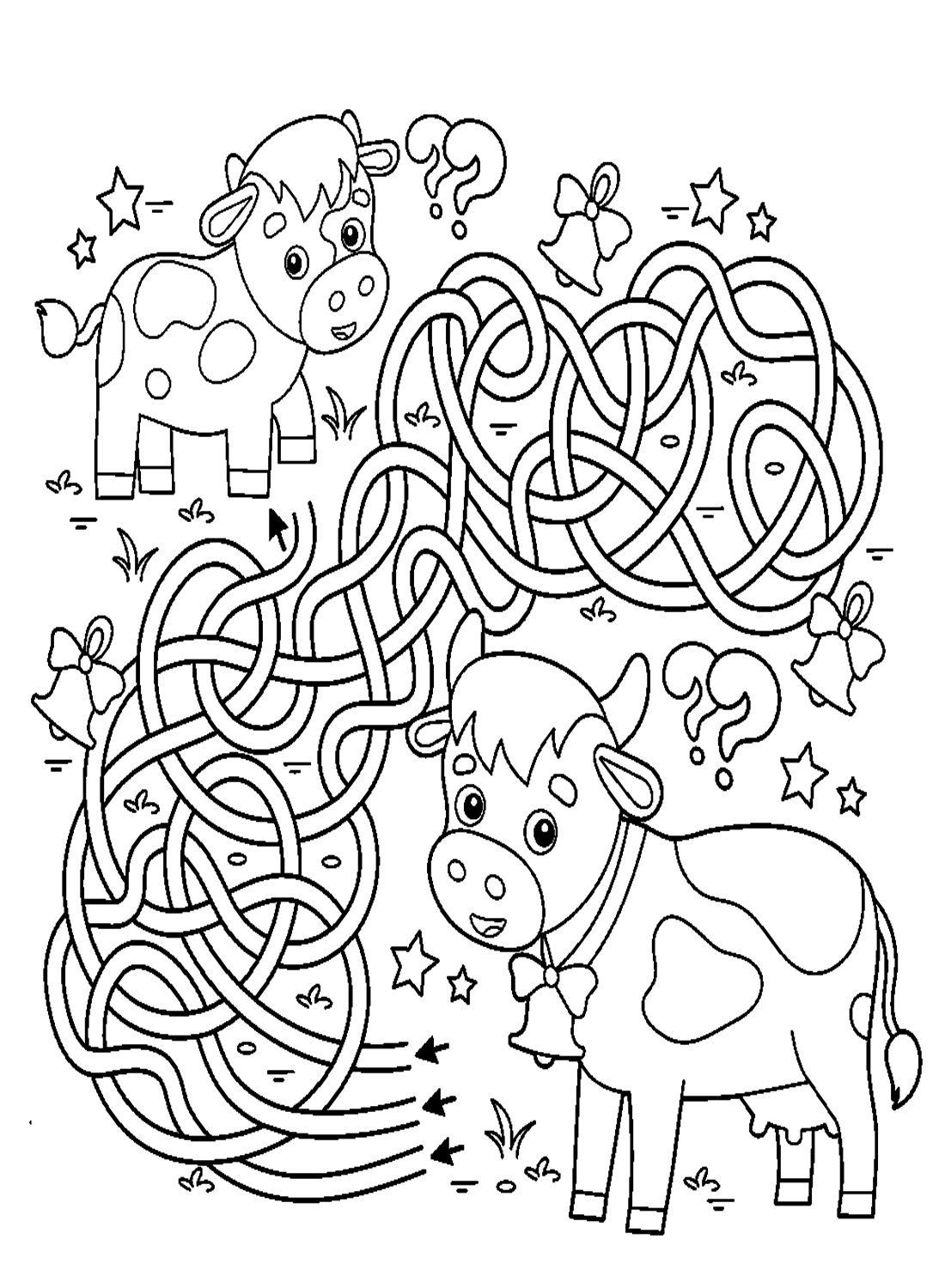
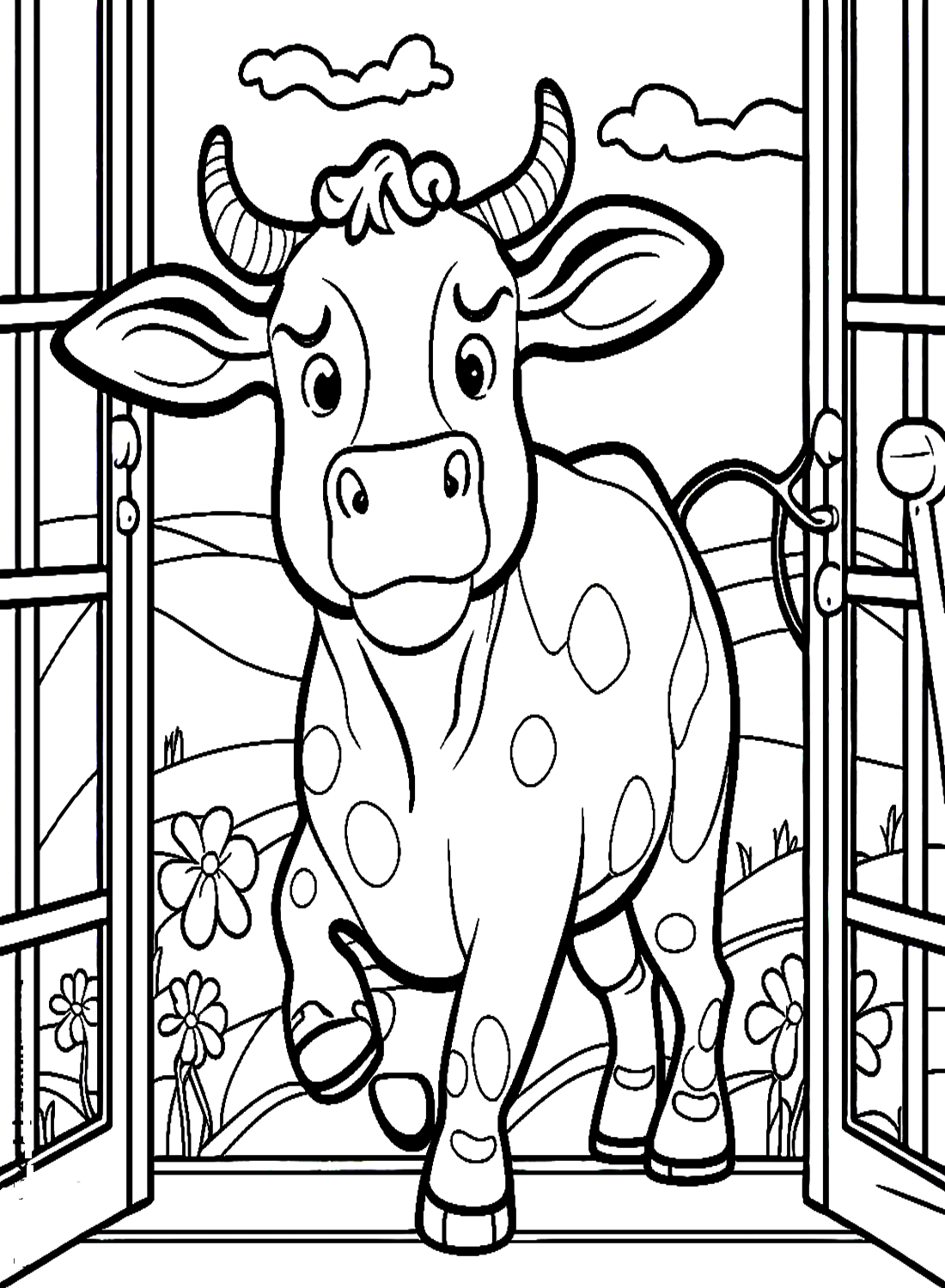
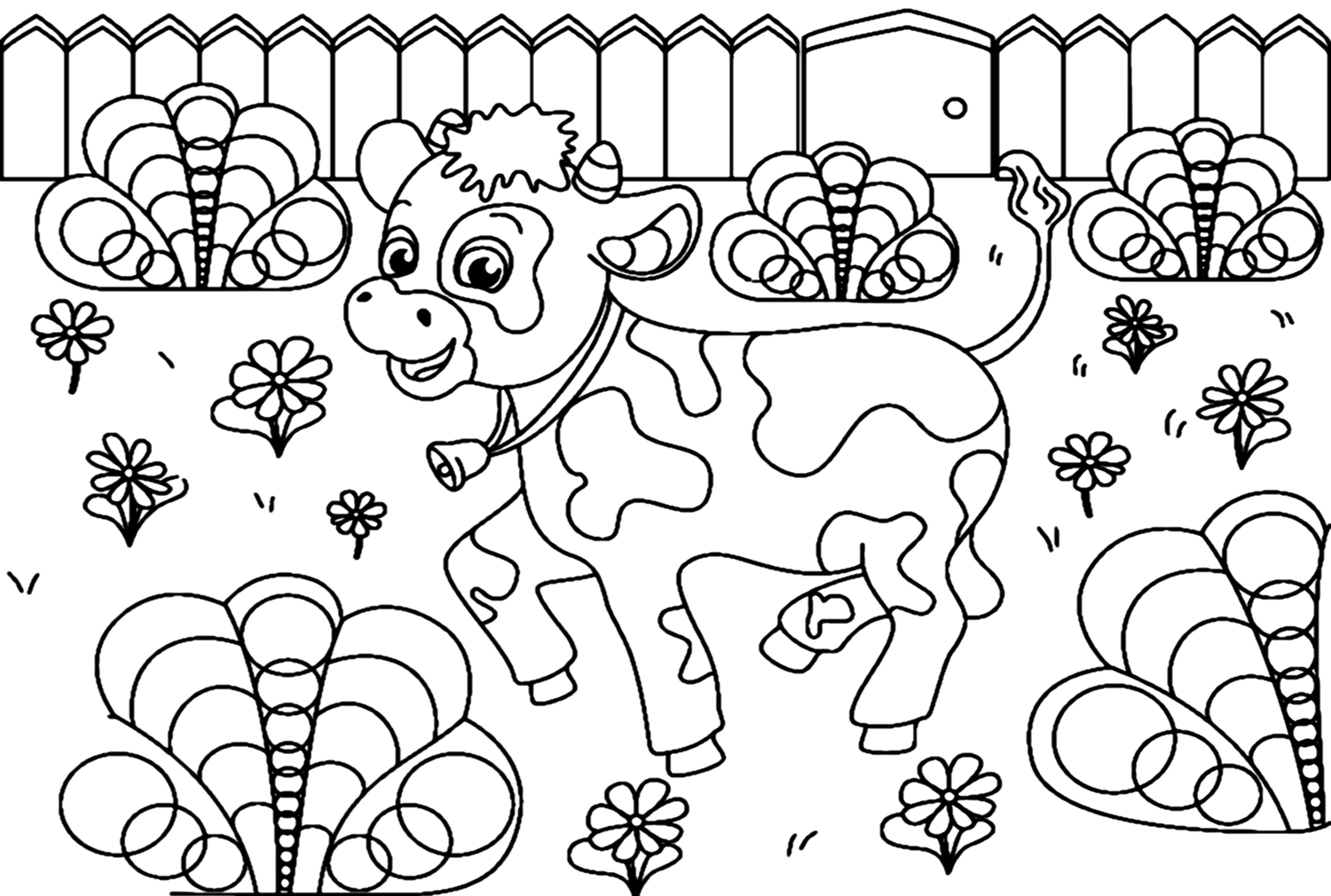
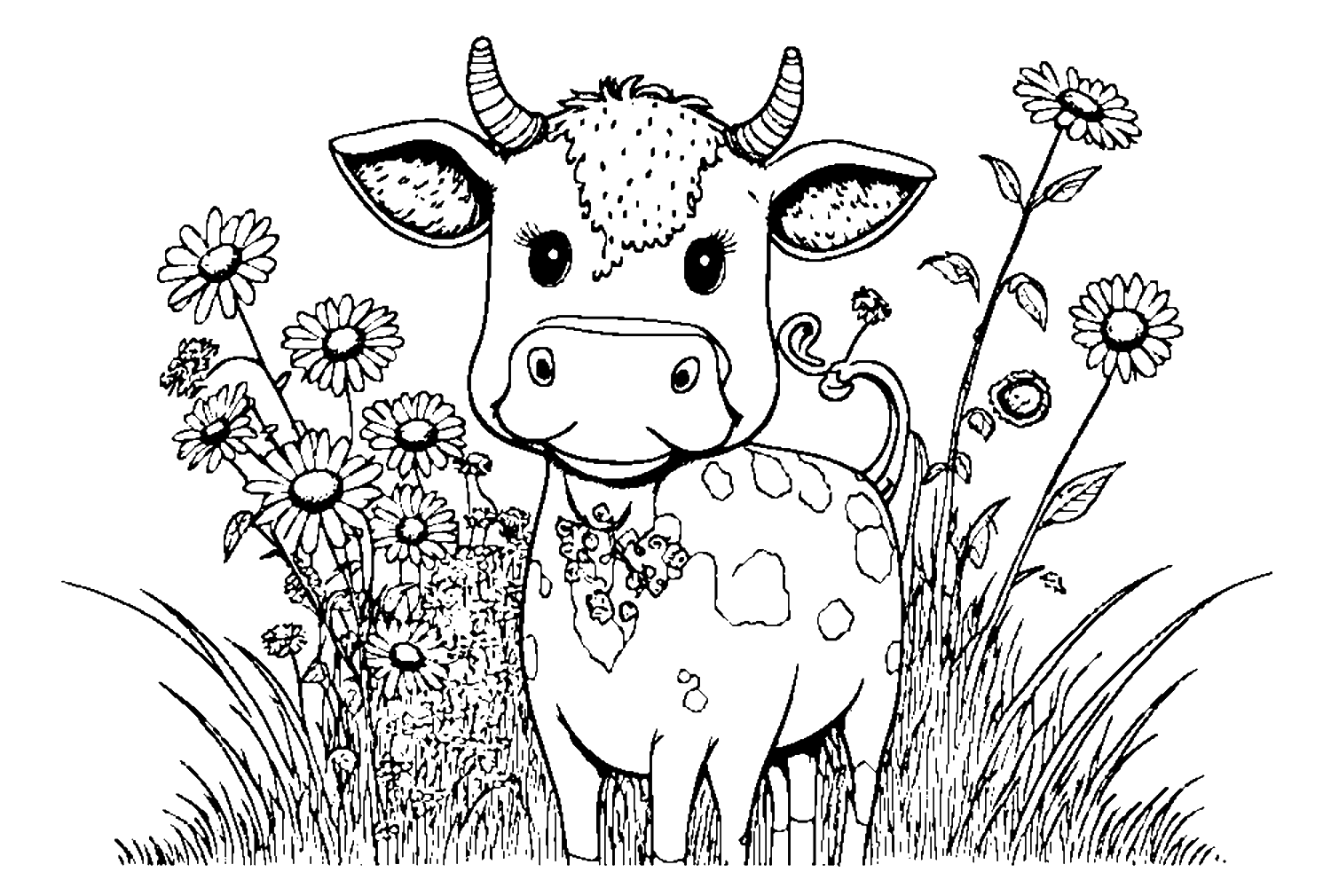
This collection groups its 33 designs into classic portraits, cute and cartoon takes, calf with mother cow, and calf playing in nature, giving colorists several ways to bring these young farm animals to life.
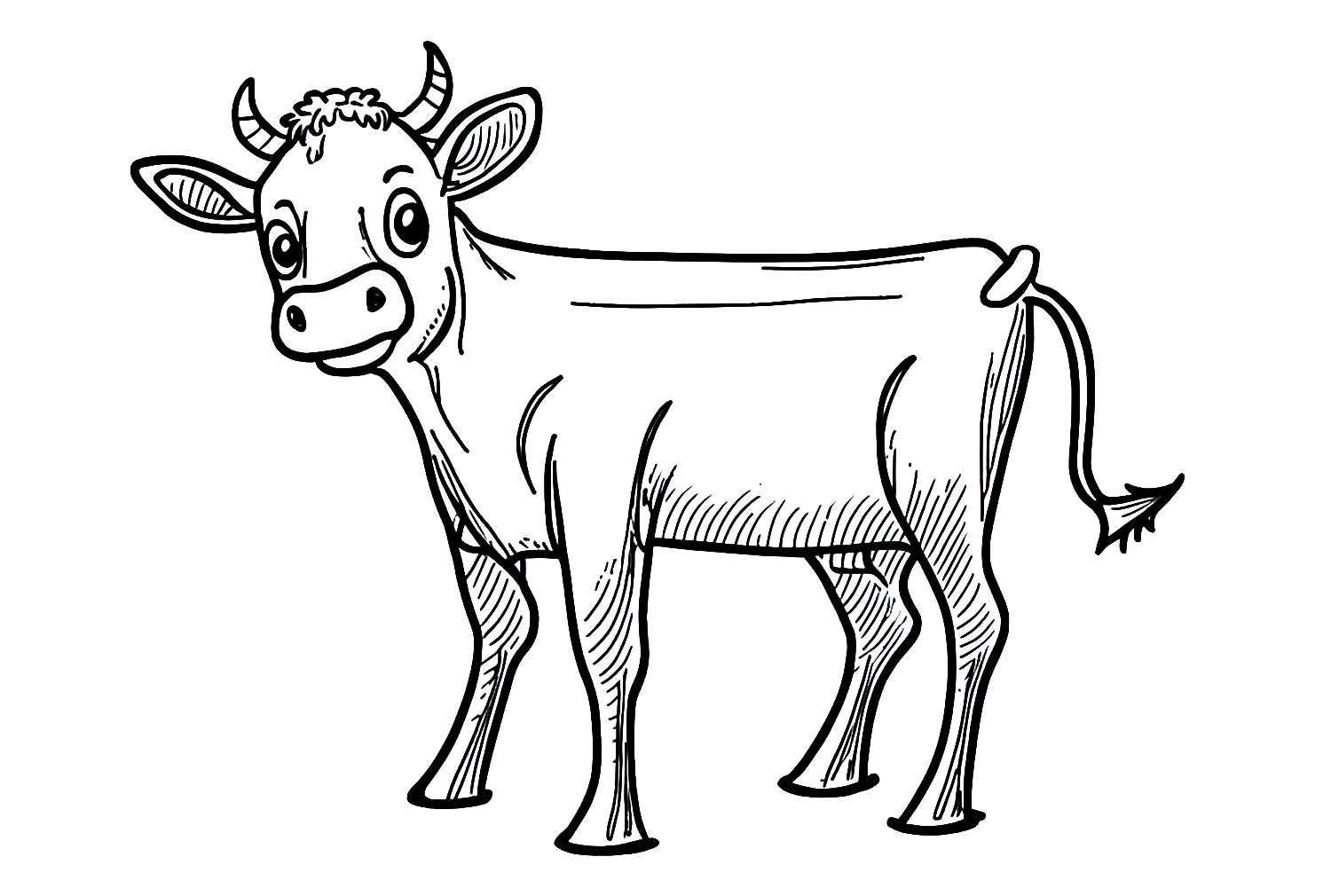
What Is Inside This Collection
The 33 Calf pages are split into four natural groups based on pose and setting.
Classic Portraits
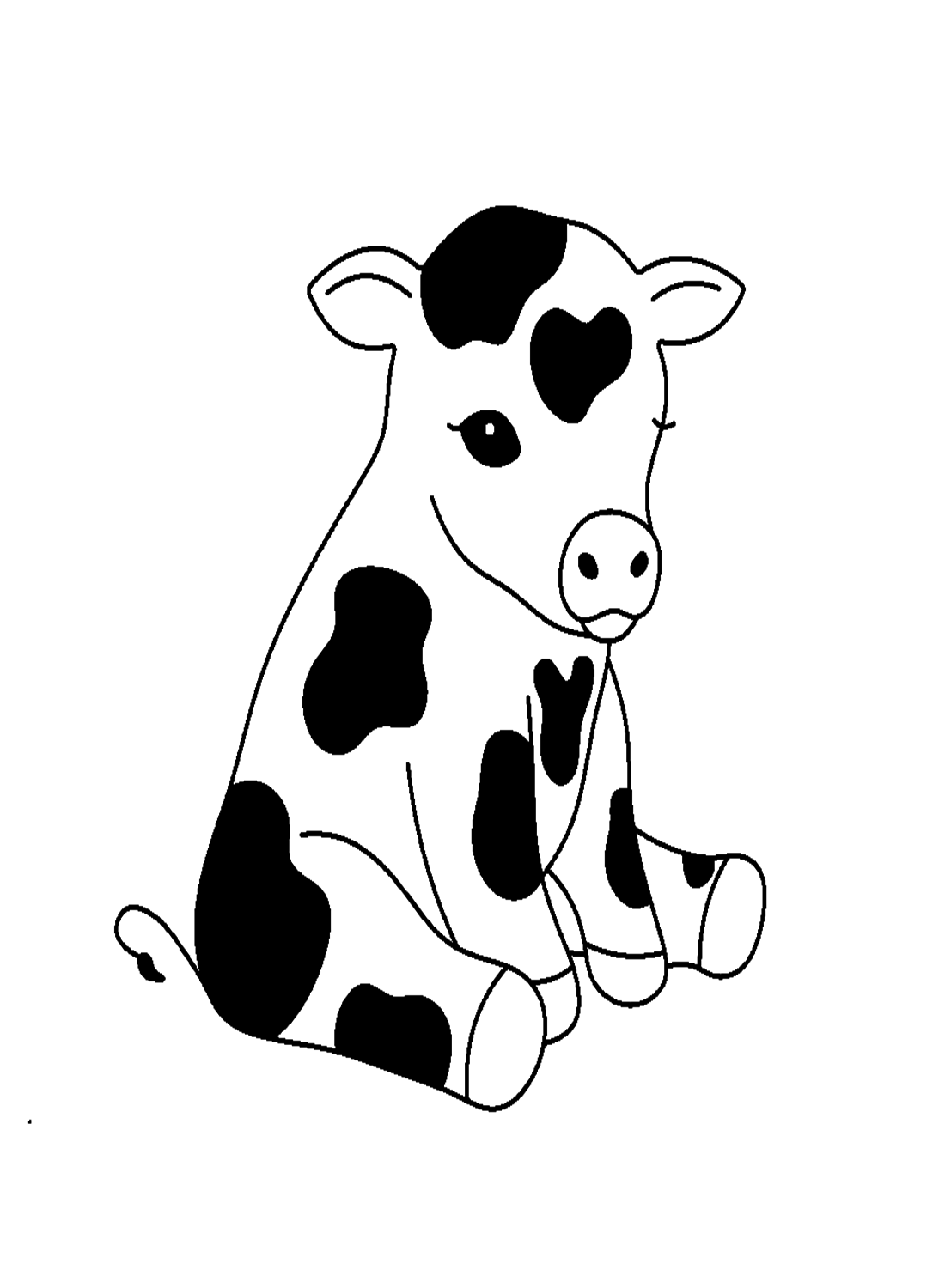
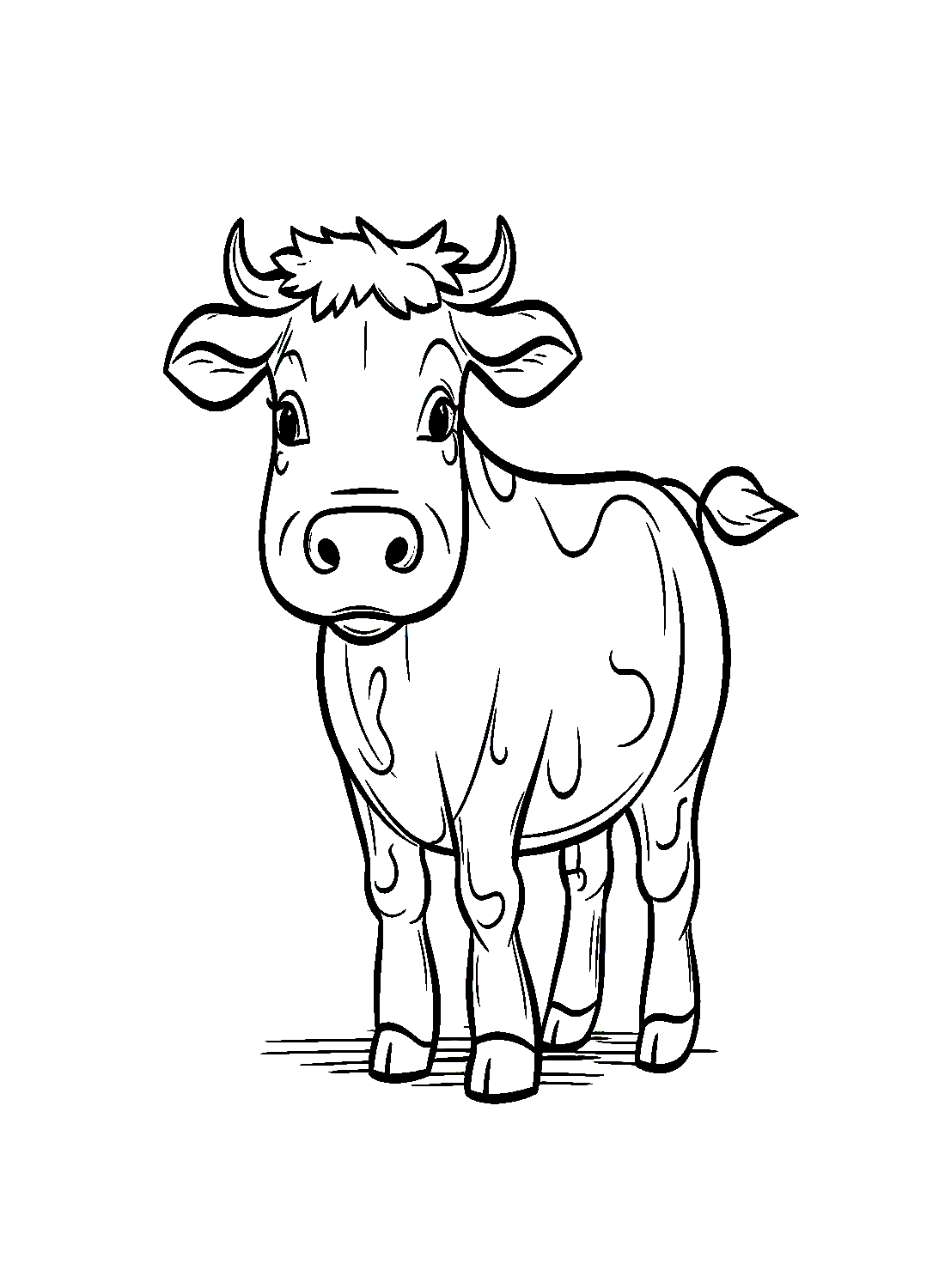
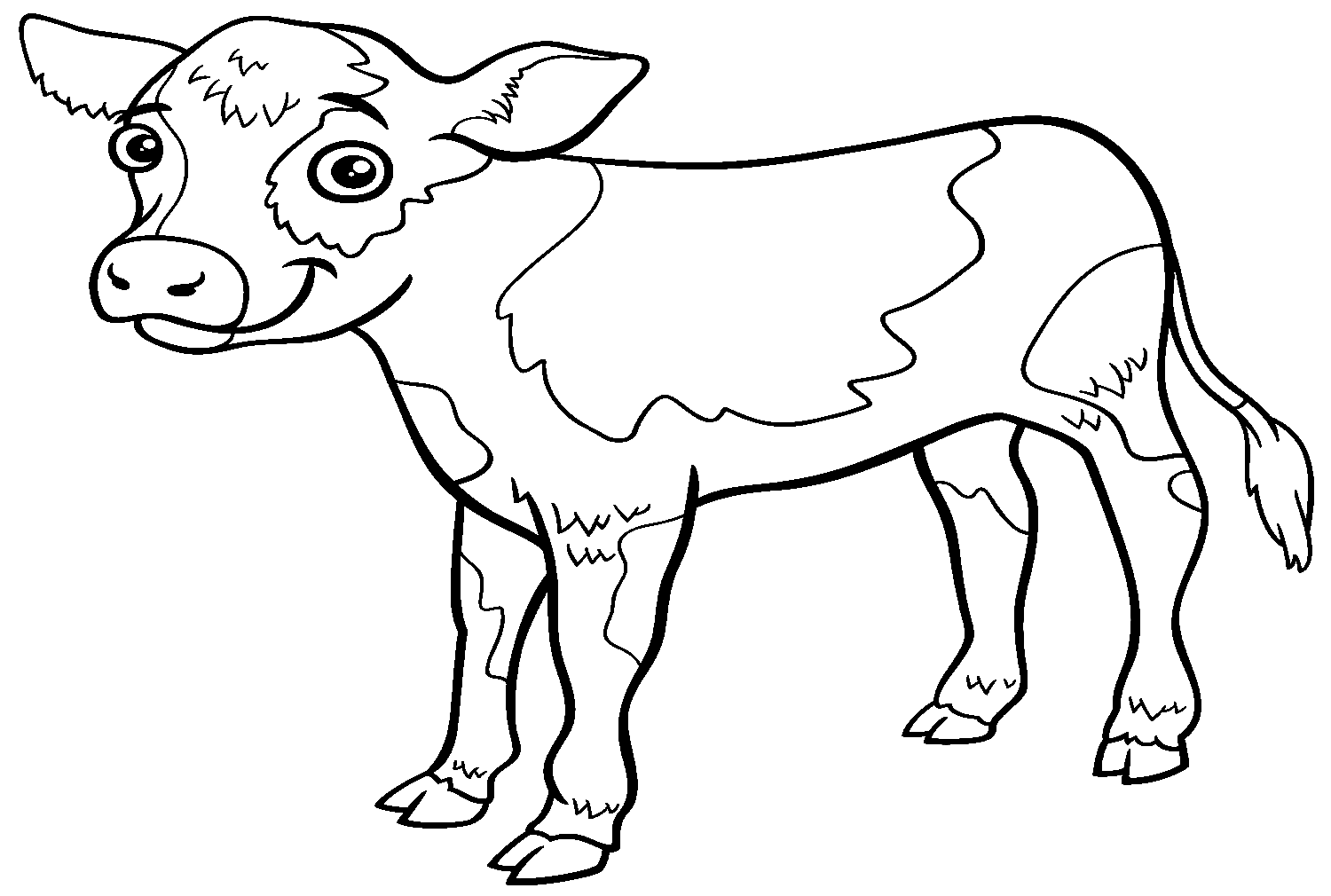
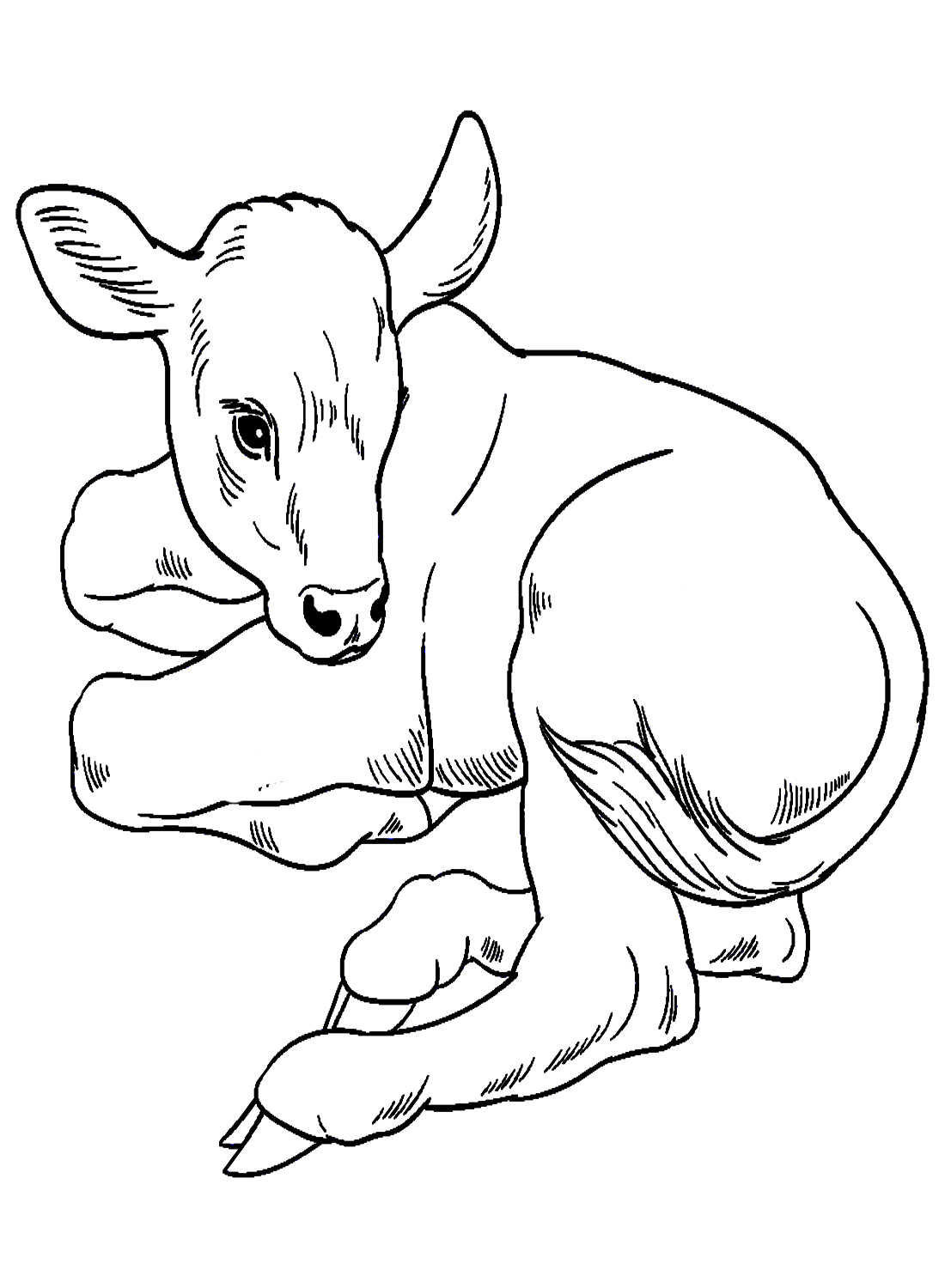
This group covers straightforward standing and sitting poses, including a simple outline design and a spotted calf variation. A warm brown or tan base for the coat pairs well with white patches for spotted breeds and a soft pink for the nose.
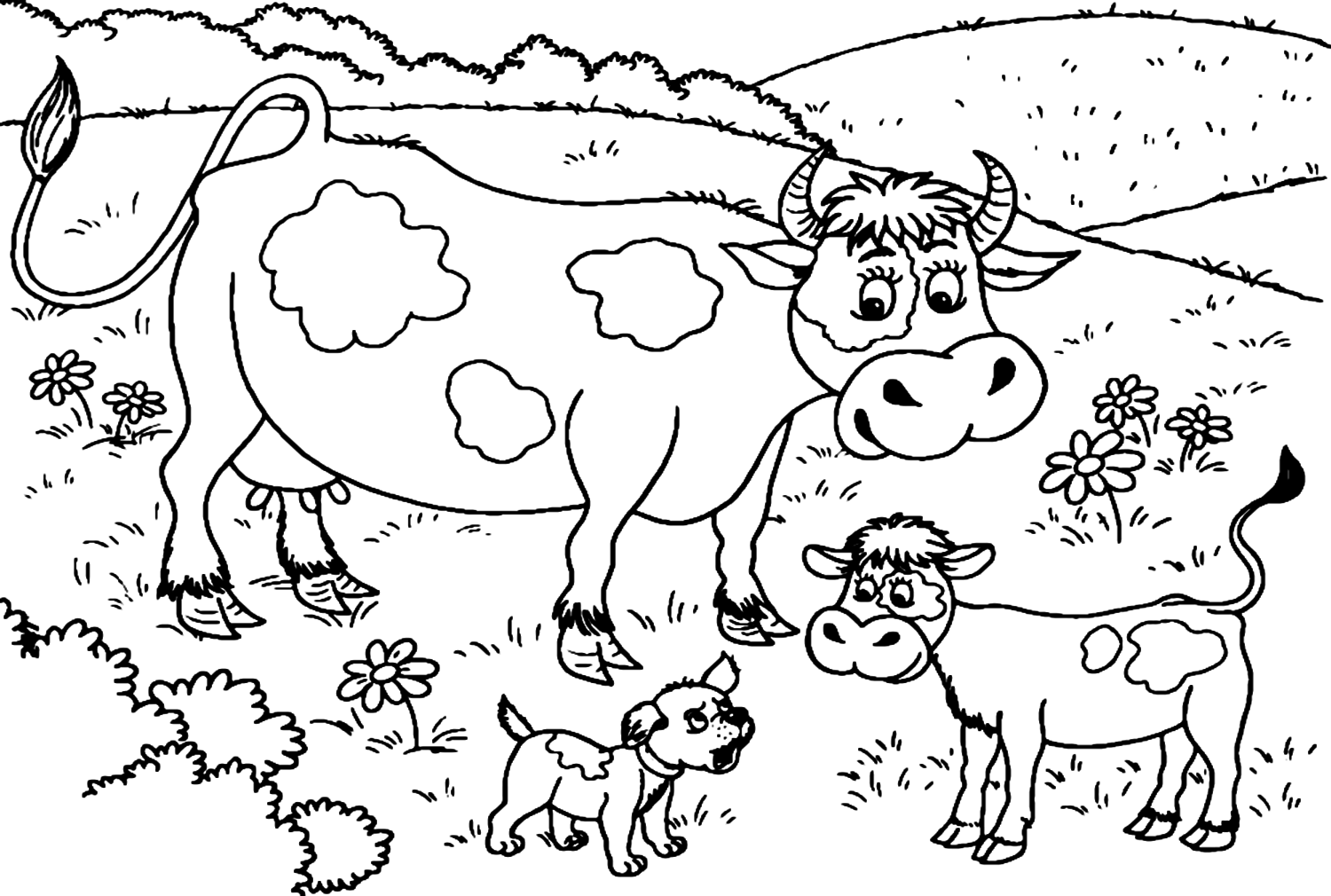
Cute and Cartoon Takes
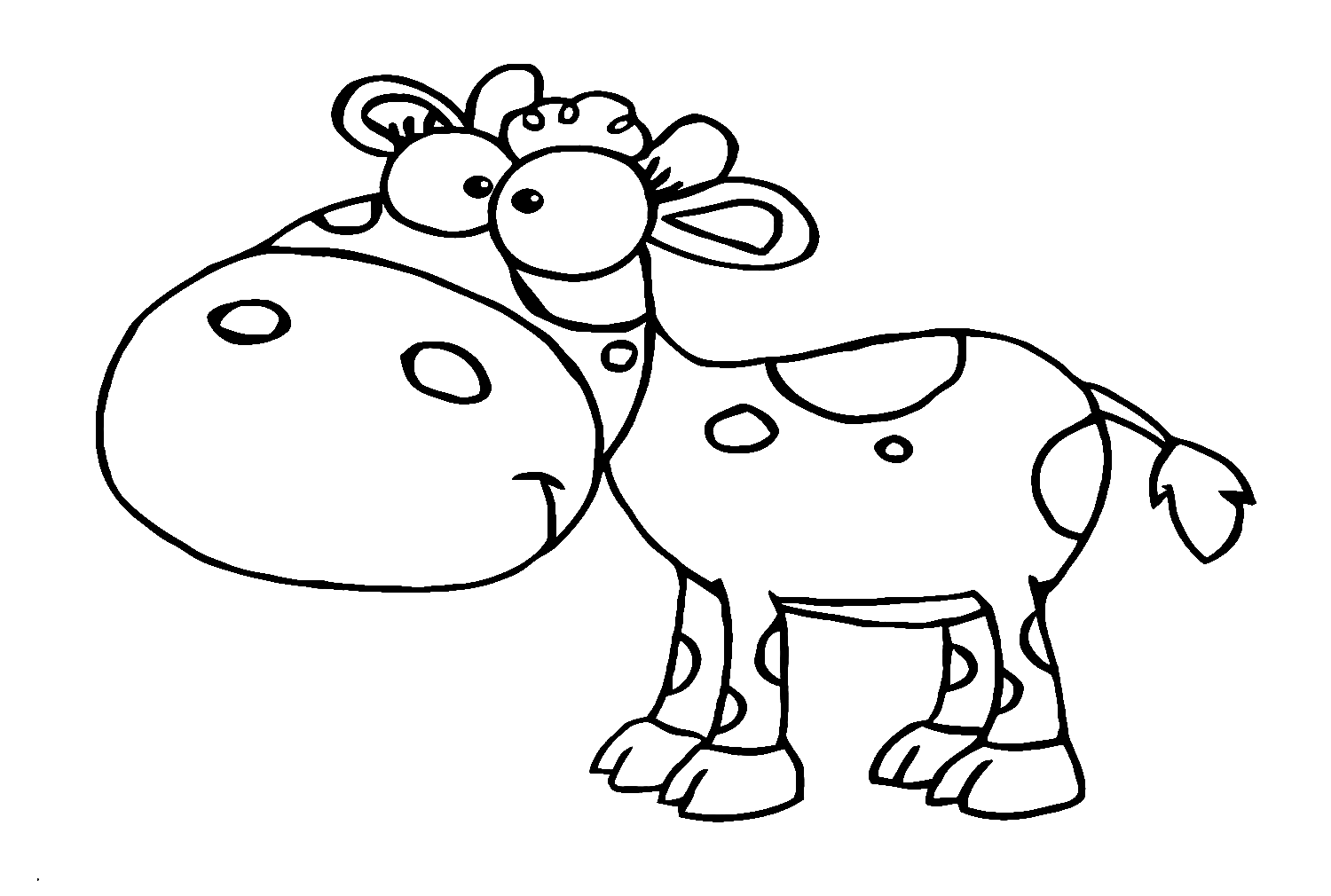
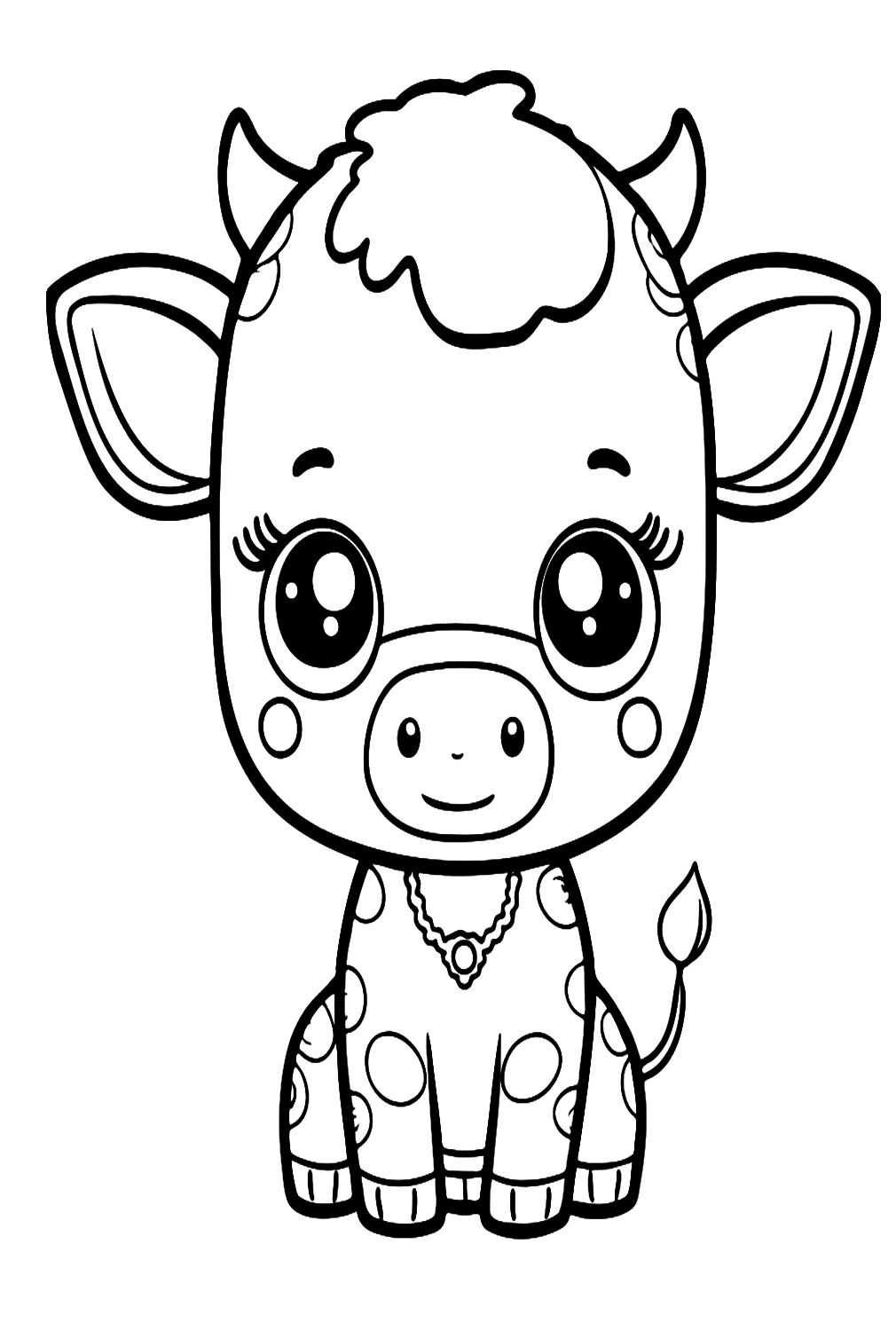
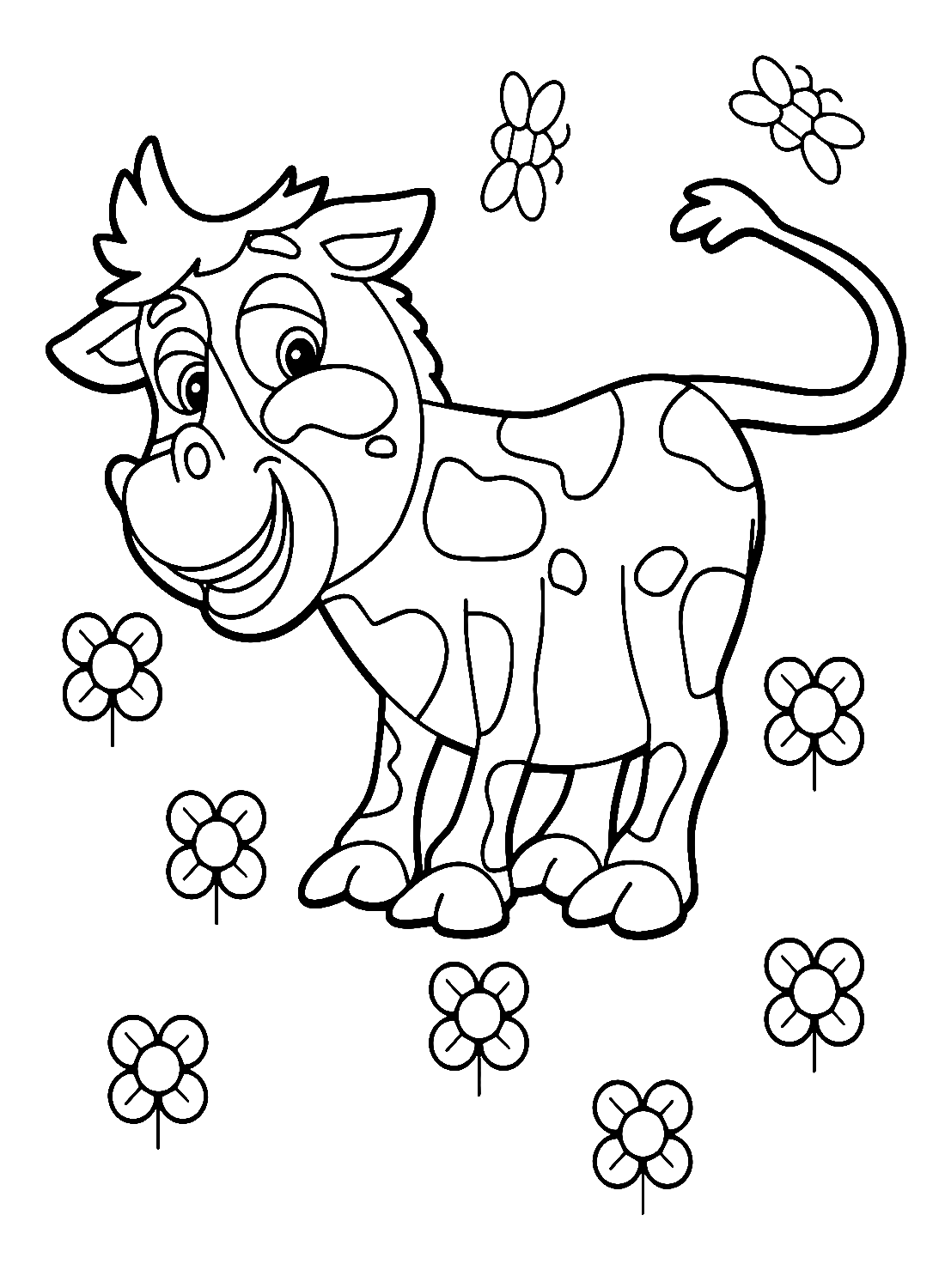
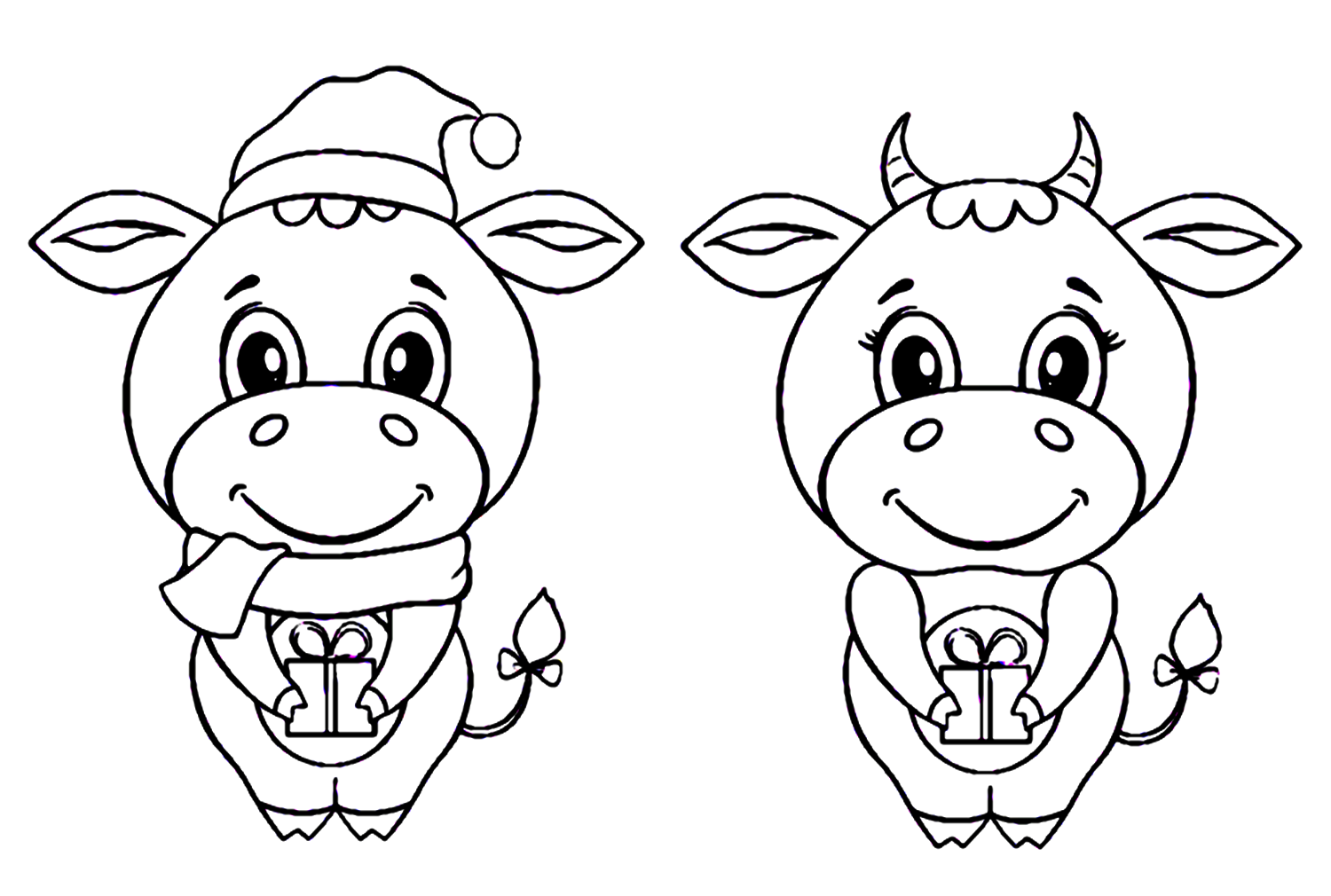
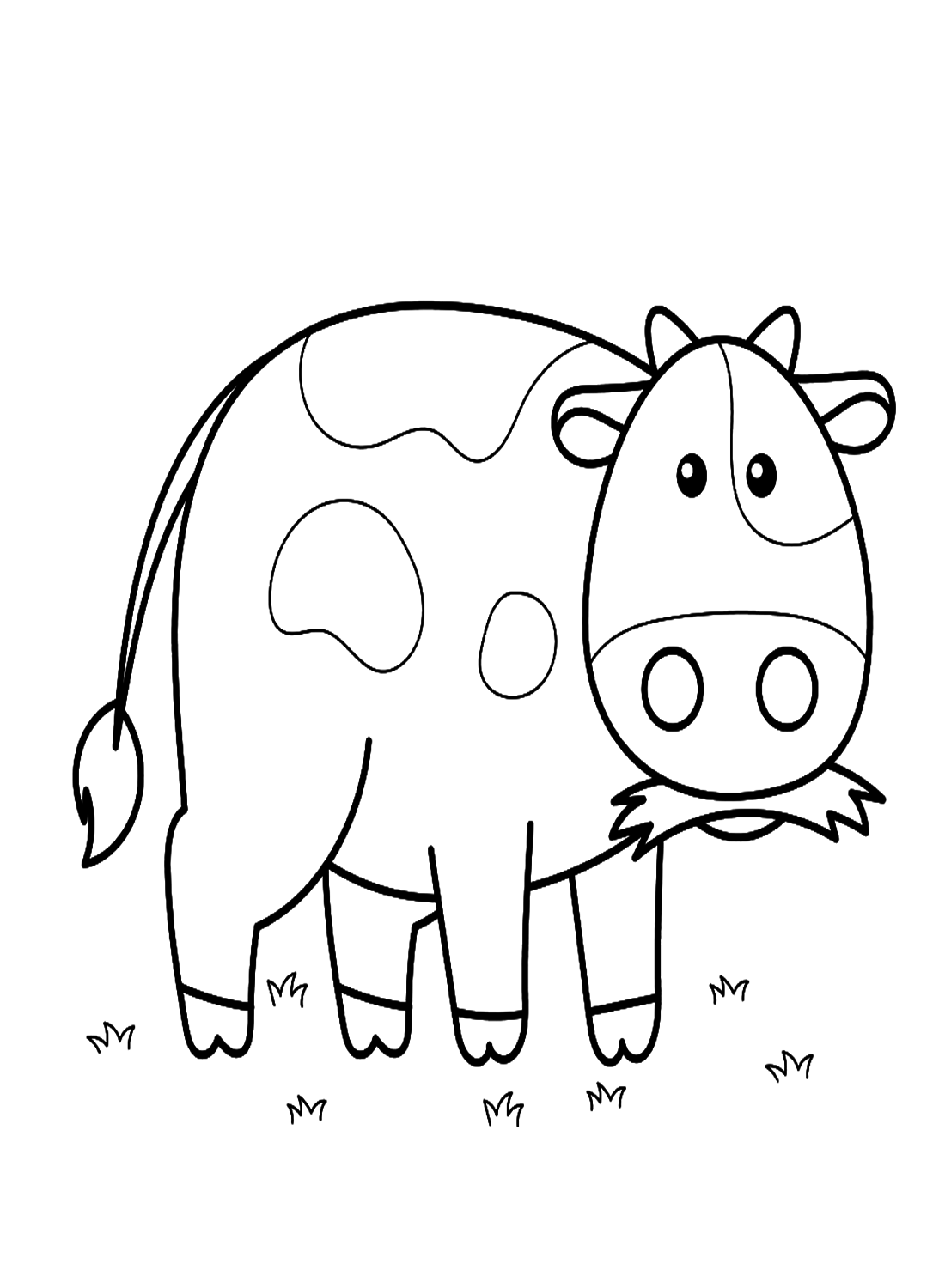
This set leans into softer, rounder proportions and expressive faces, from happy and sad moods to playful cartoon and stylized interpretations. These pages trade some of the calf’s realistic detail for a friendlier, more emotionally expressive look.
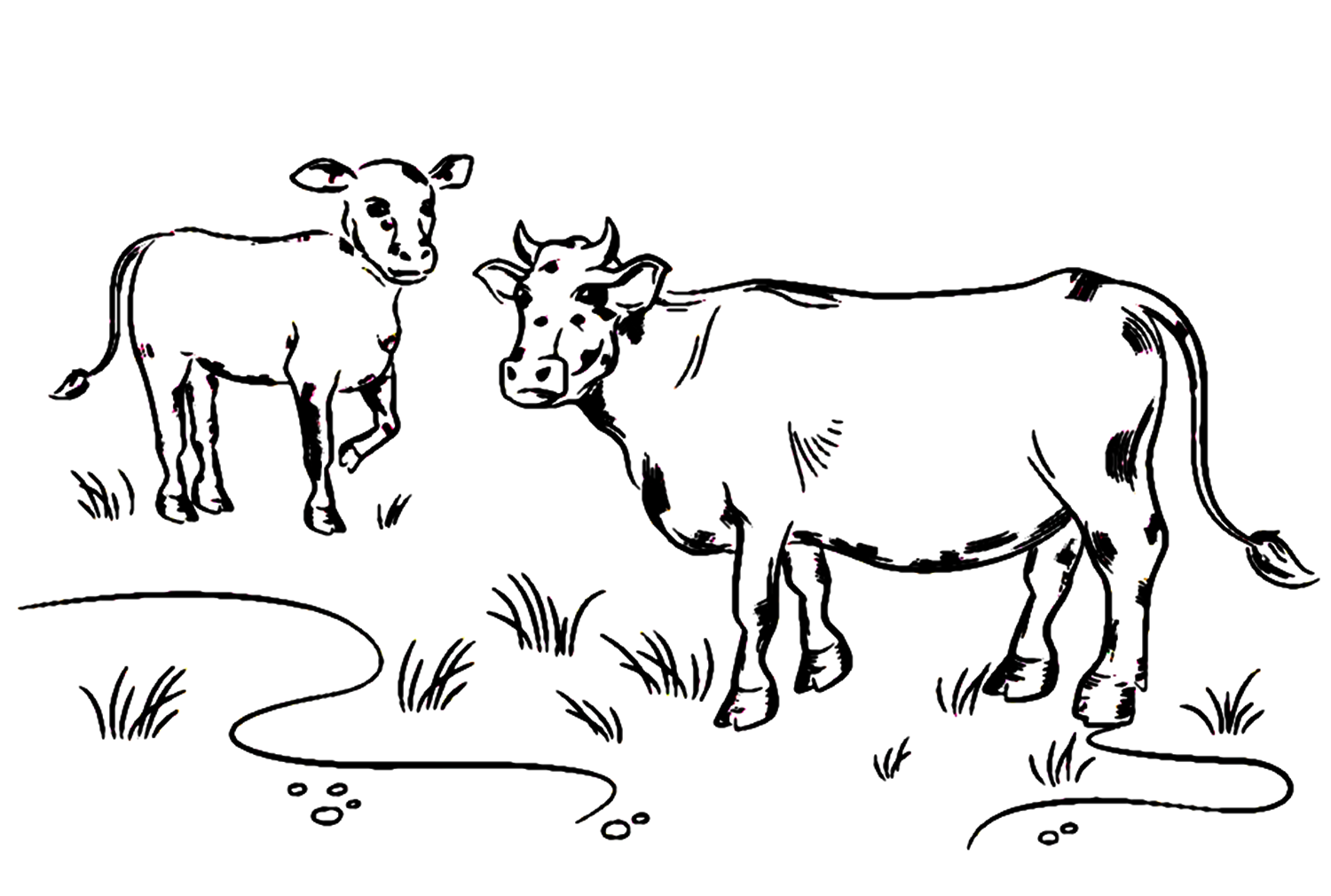
Calf with Mother Cow
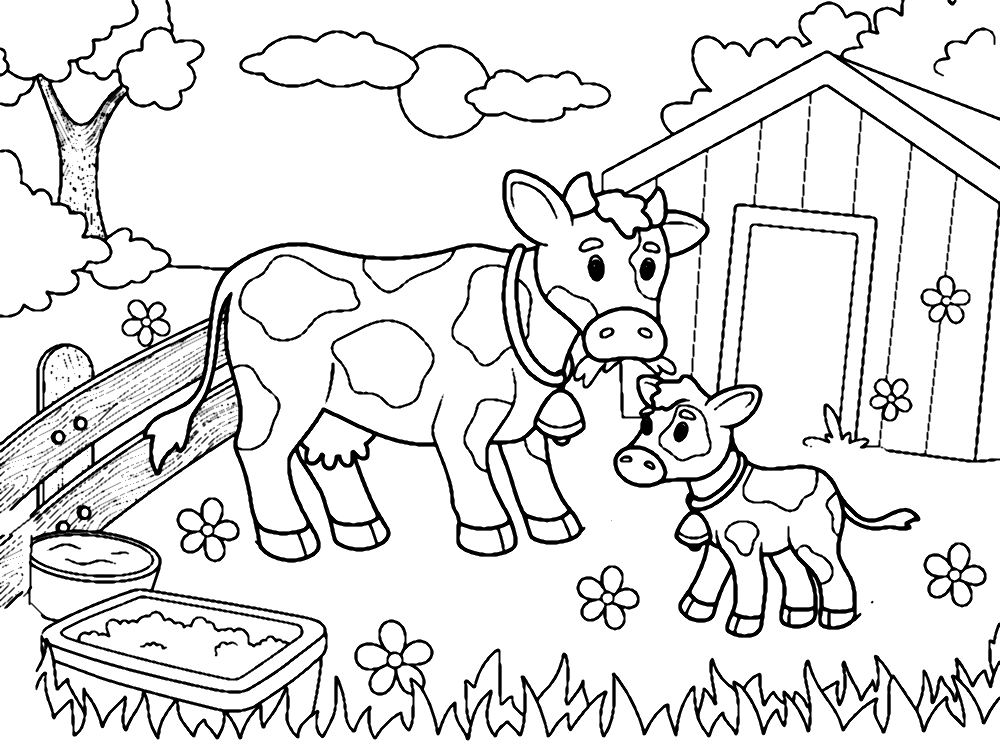
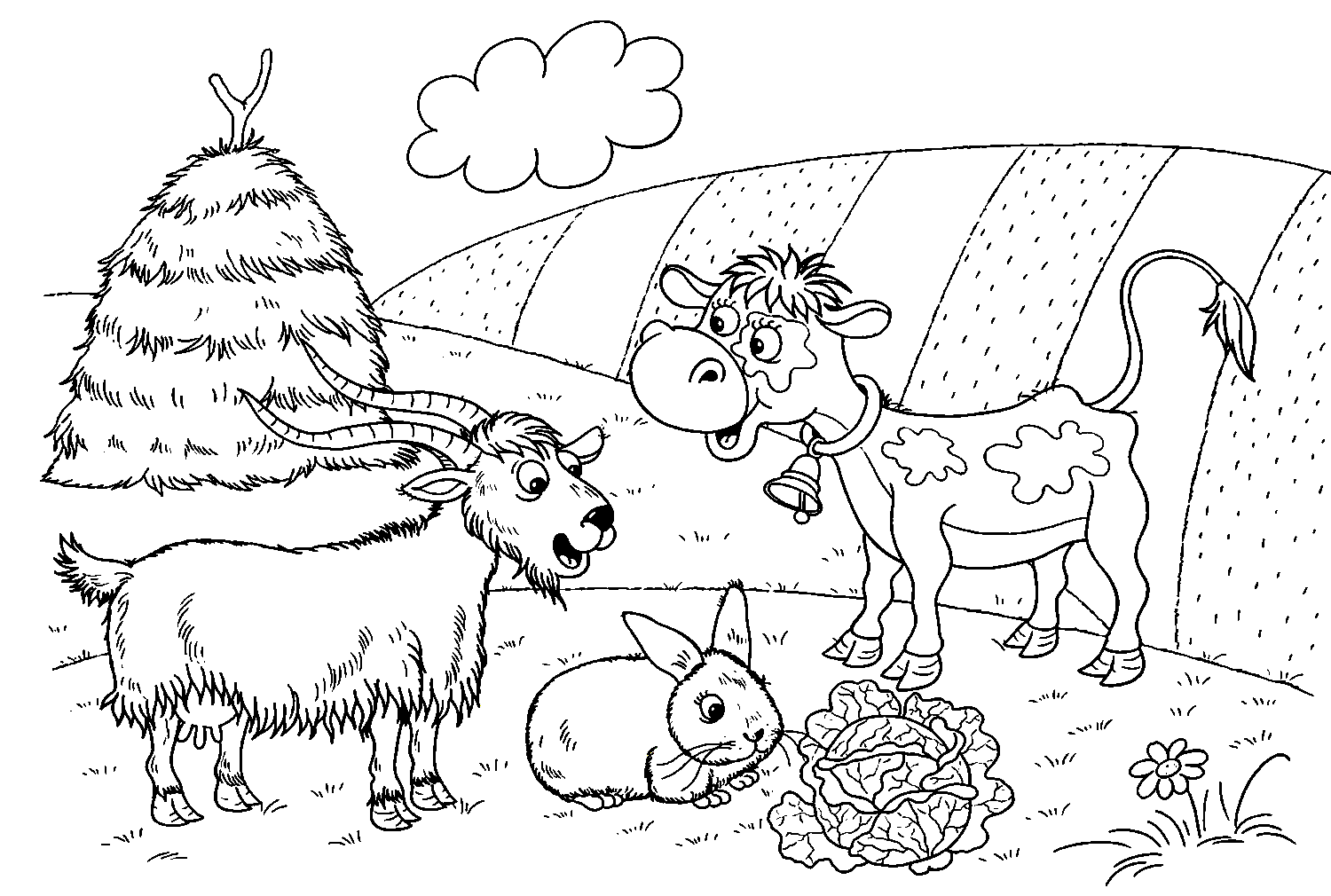
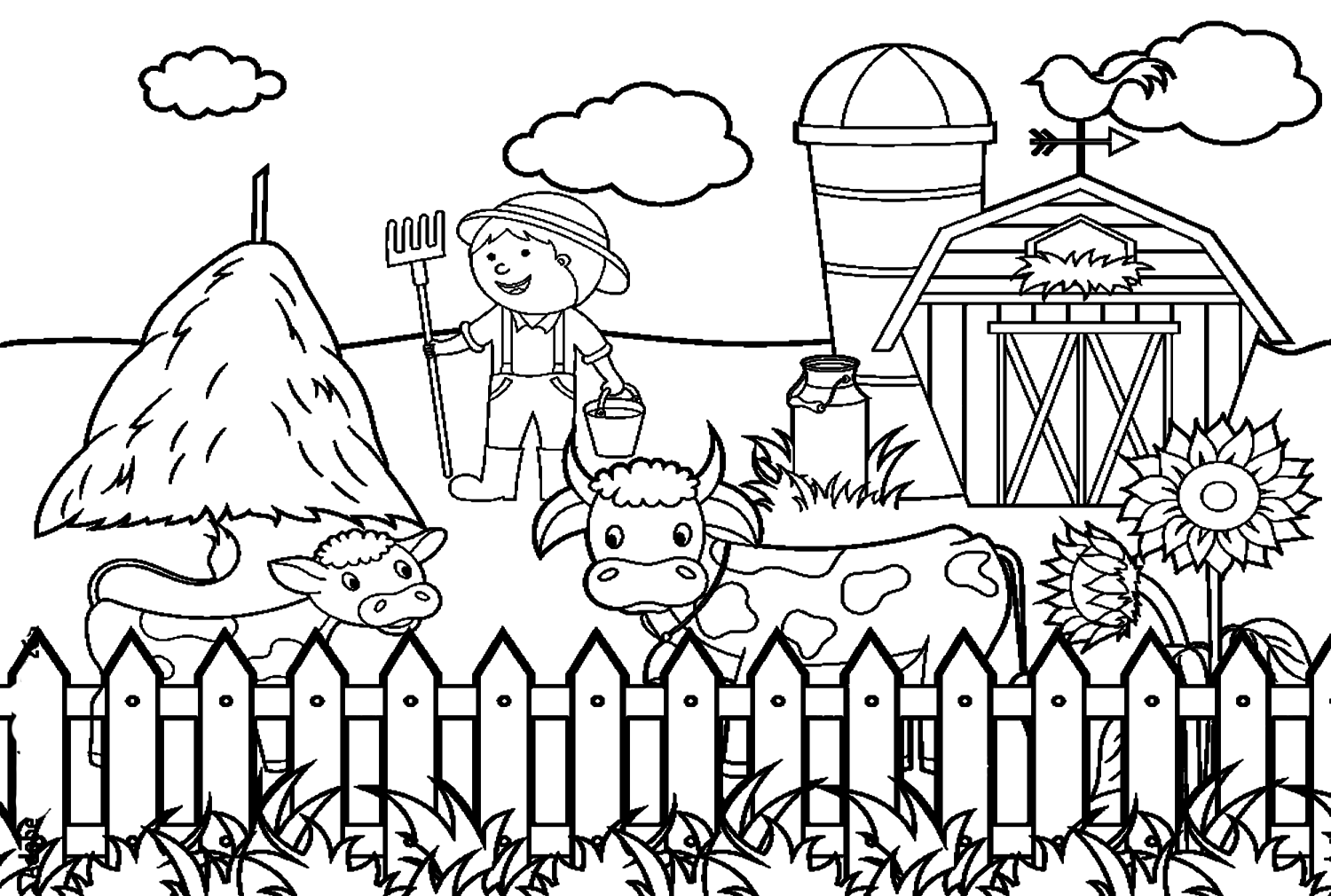
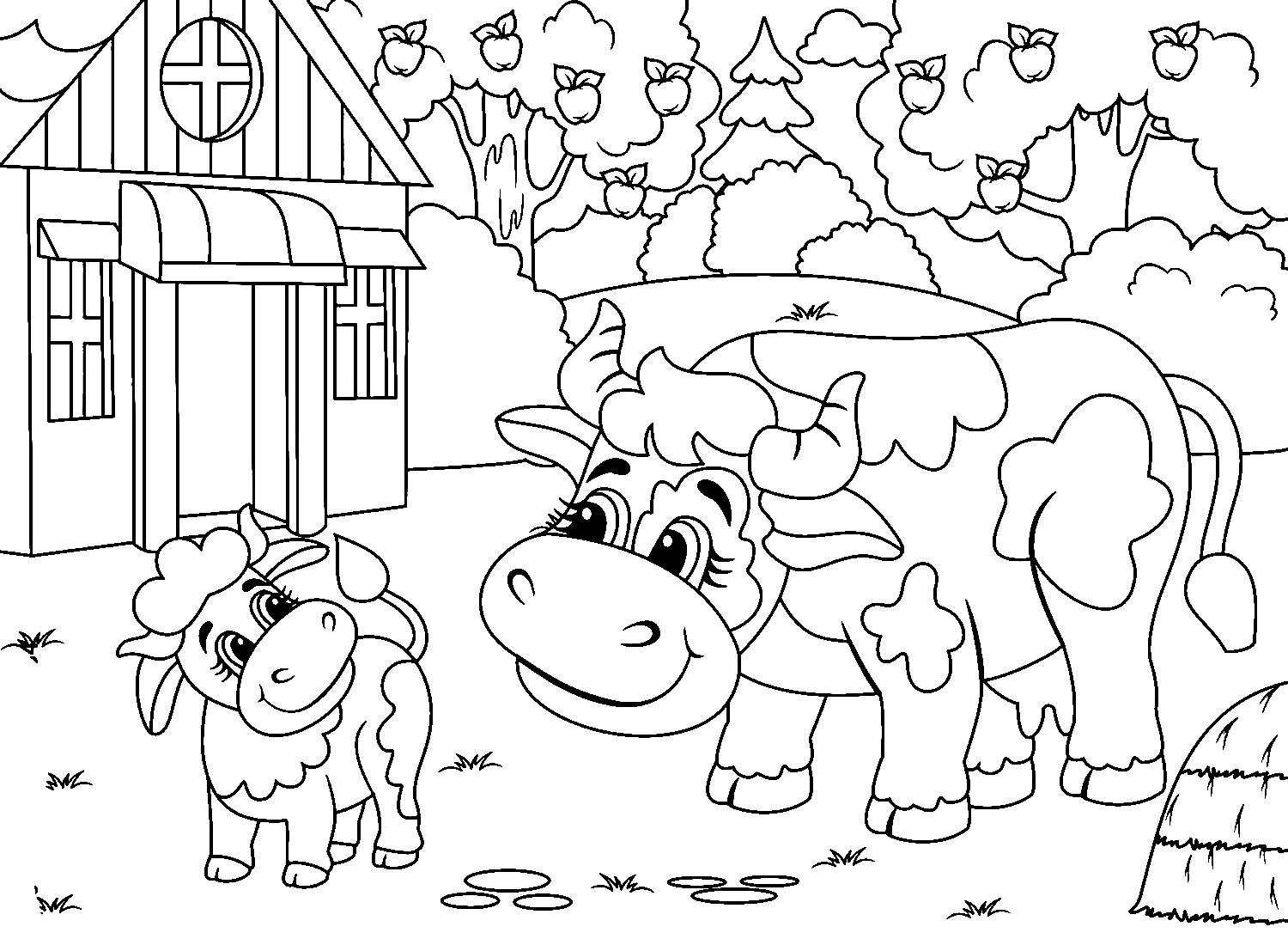
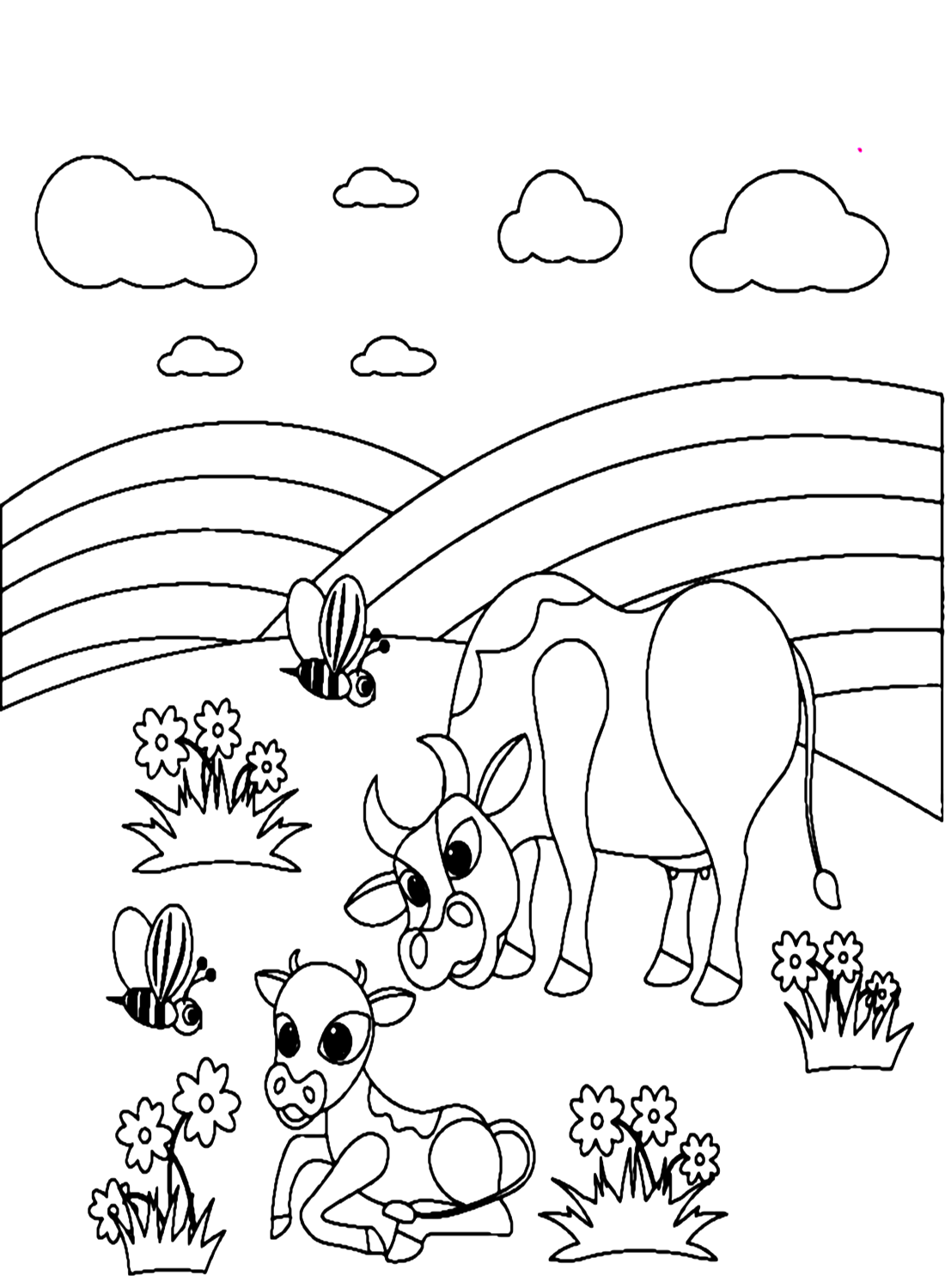
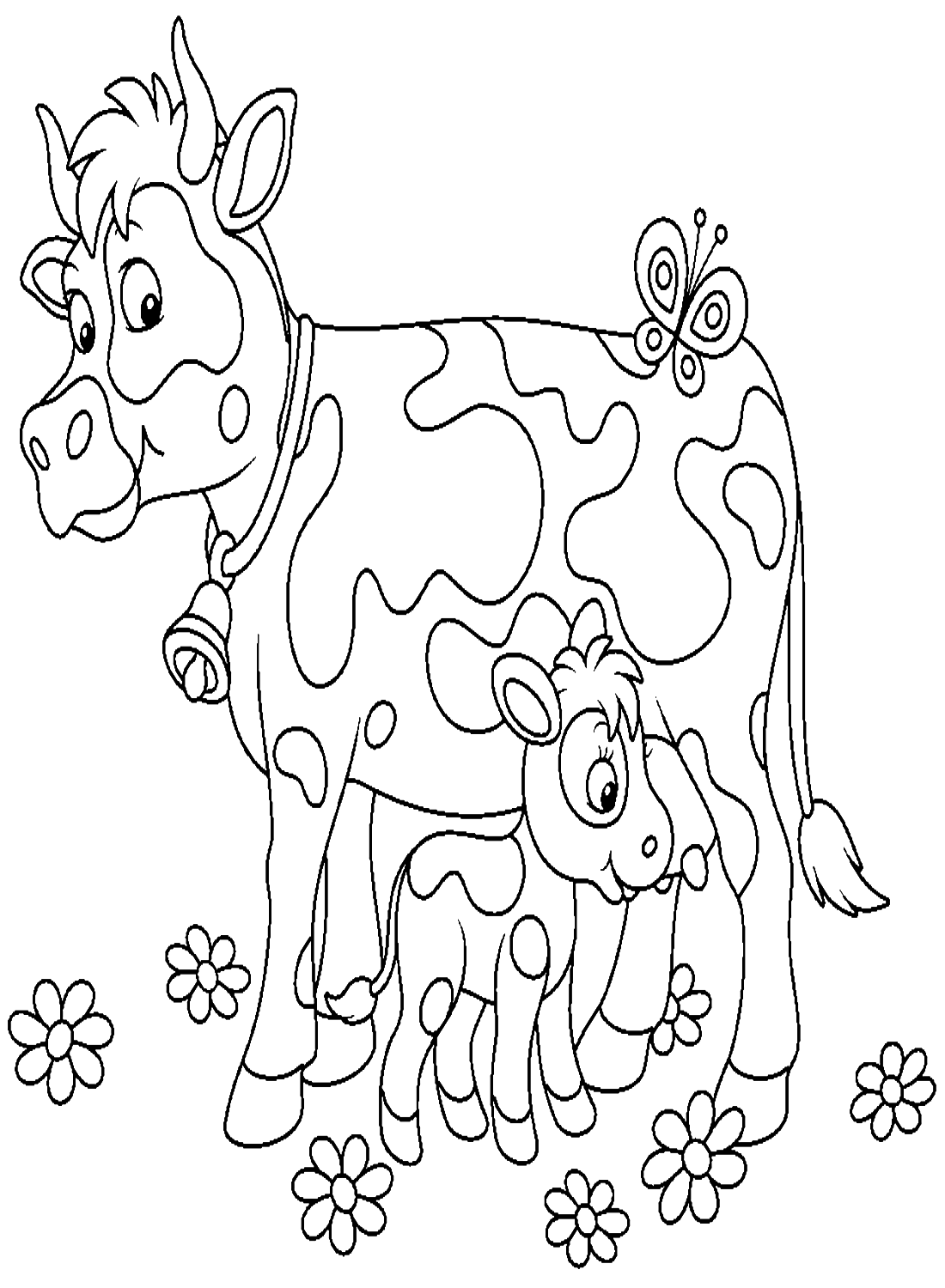
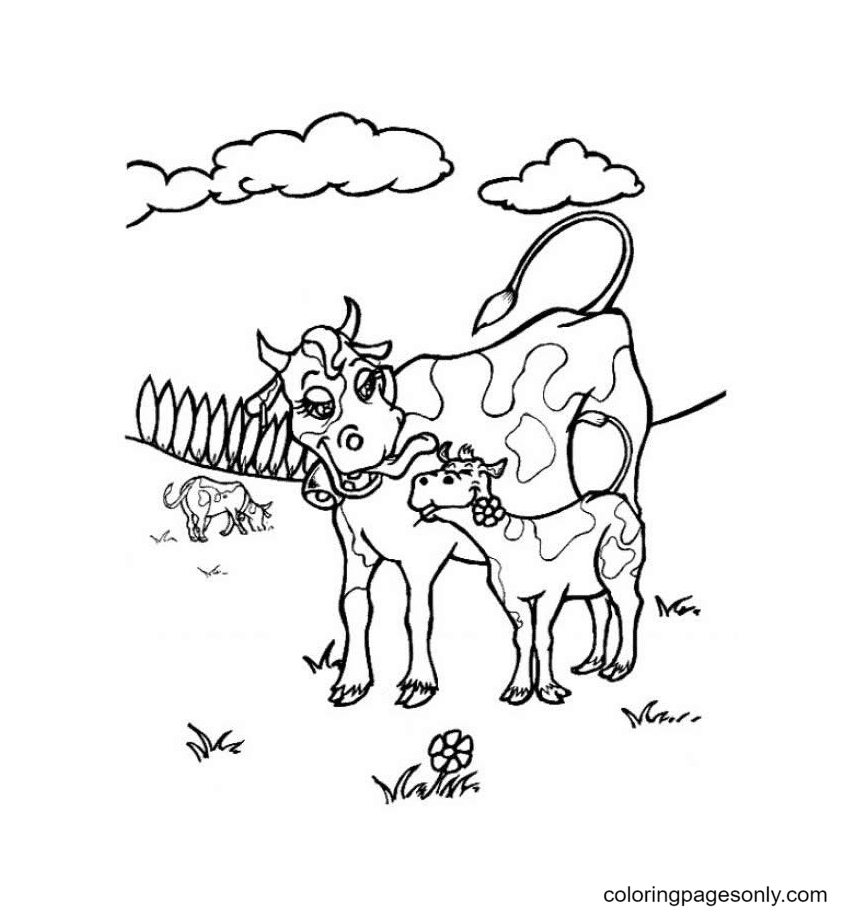
This is the largest group, pairing a calf with its mother in a range of settings, from a farmyard to a meadow or in front of a house. These pages reflect the calf’s real early dependence on its mother, especially in the first days of life.
Calf Playing in Nature
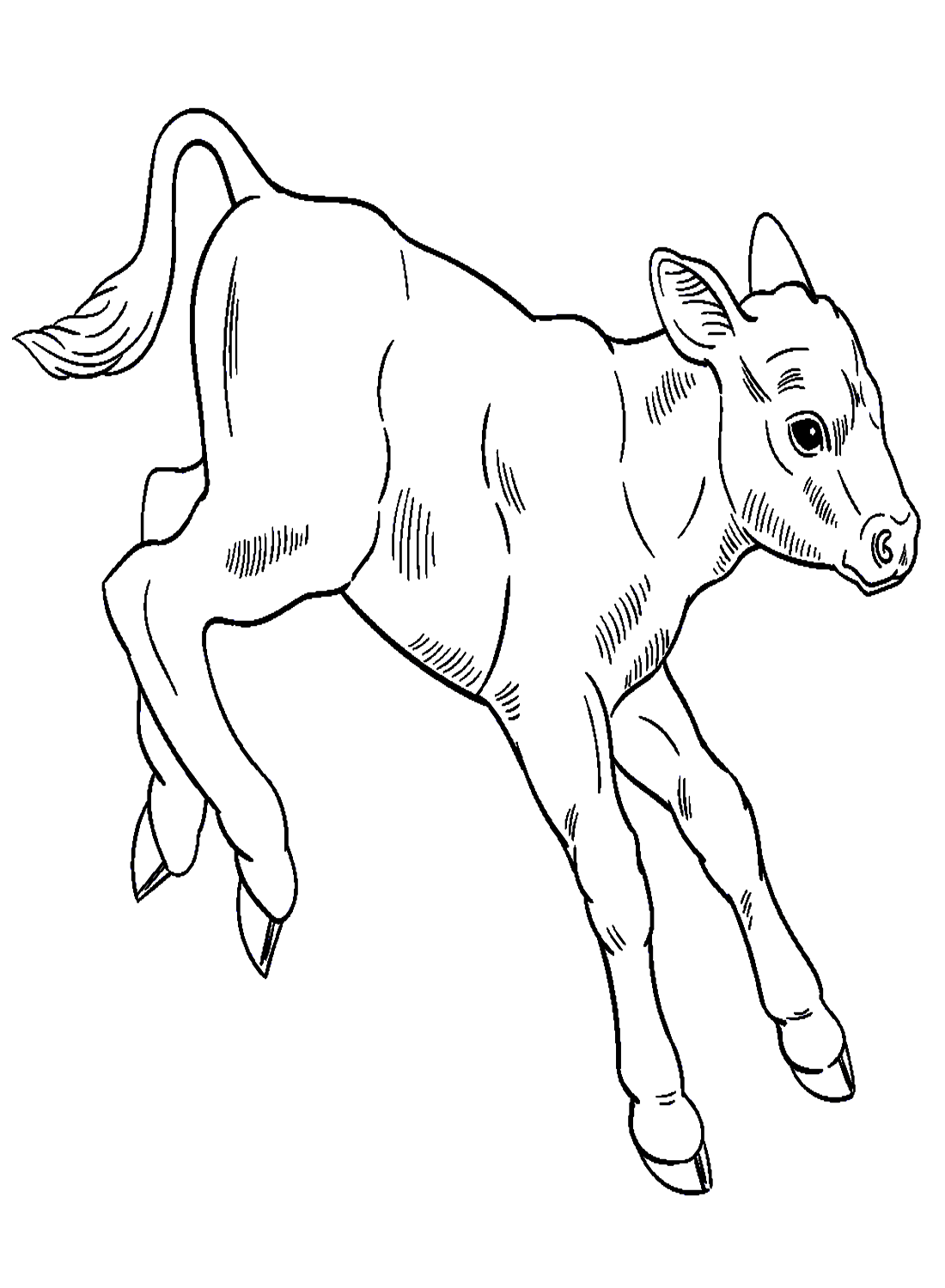
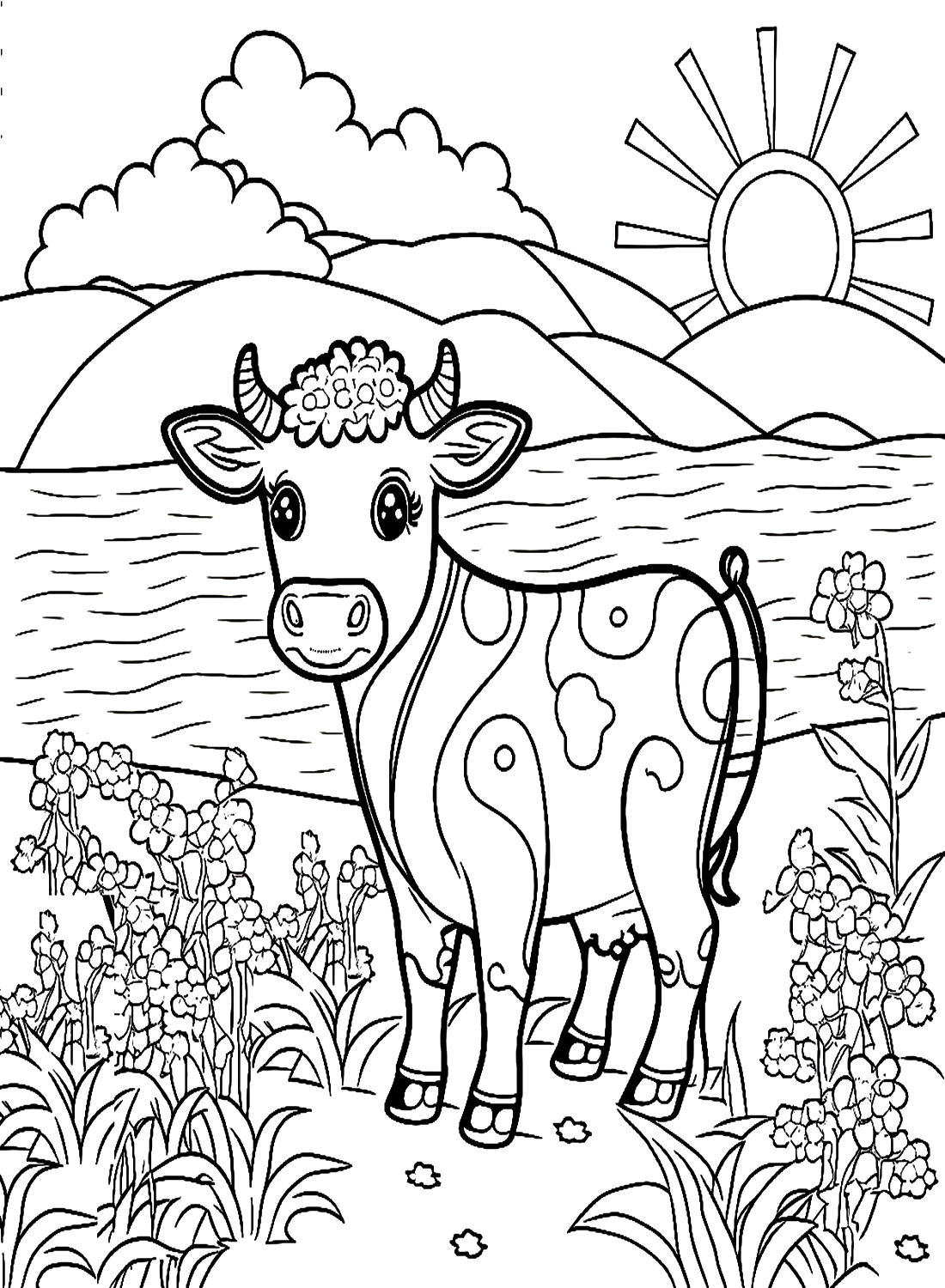
This group shows calves jumping, grazing, or exploring open ground and lakesides, along with a couple of playful seasonal scenes. These pages capture the energetic, curious side calves show once they are a bit older and more independent.
What Calf Coloring Pages Do
A genuinely fast start to life. Most people are surprised to learn that a calf can stand and walk within about an hour of being born, a striking contrast to many other newborn animals that take days or weeks to become mobile. Coloring a calf page gives a parent or teacher a natural opening to talk about how differently animals are built to handle their very first hours of life.
Practicing detail on real coat patterns. The American Academy of Pediatrics identifies fine motor skill development as a core benefit of structured coloring for children ages 2 through 7, and a spotted calf’s irregular patches give children practice placing uneven shapes carefully within an outline, a different challenge than filling in one solid color.
Understanding an unusual digestive system. A calf is born with four stomach compartments but can only use one of them at first, gradually developing the rest as it starts eating solid food. That detail offers children a genuinely interesting example of how a young animal’s body can still be developing key functions well after birth.
A gentle, nurturing focus. A 2005 study in the Art Therapy Journal documented measurable reductions in anxiety following structured coloring sessions. The many mother-and-calf pages in this collection reflect a calf’s real early bond with its mother, giving these designs a naturally warm, comforting quality well suited to a calm coloring session.
How to Color Calf Pages Well
- Coat: Base the body in a warm Brown or Tan for most classic portraits, since this is one of the most common calf coat colors across cattle breeds.
- Spotted pages: On the spotted calf design, add irregular White patches over the brown or black base, keeping the patches varied in size and shape to mimic a real dairy breed’s markings.
- Nose and ears: Use a soft Pink or light gray for the nose, and keep the inner ears a slightly lighter shade than the surrounding fur.
- Eyes: Keep the eyes large, dark, and gently rounded, matching the soft, innocent expression calves are known for.
- Mother and calf pages: Use a noticeably larger body and deeper coat tone for the mother cow, keeping the calf visibly smaller and lighter to show the size difference between them.
- Nature-scene pages: On the grazing, jumping, and lakeside pages, use warm greens for grass and soft blues for water, keeping the calf’s coat color as the clear focal point.
5 Creative Craft Ideas With Calf Coloring Pages
1. First-hour fact card
Pair a colored calf page with a simple fact about how calves stand and walk within about an hour of being born.
2. Stomach diagram activity
Pair a colored calf page with a simple drawn diagram of the four stomach compartments, explaining that only one works right after birth.
3. Mother-and-calf card
Use a colored mother cow and calf page as the front of a handmade card celebrating a parent, grandparent, or family bond.
4. Coat pattern matching game
Color several different calf pages in different coat patterns, then sort them by breed-like coloring, solid, spotted, or a single color.
5. Farmyard scene bookmark
Cut out a colored classic portrait page, glue it to cardstock, and trim close to the outline for a durable bookmark.
Frequently Asked Questions
What are Calf coloring pages?
Calf coloring pages are free printable and online designs featuring young cattle in different poses and settings, including classic portraits, cute and cartoon takes, mother-and-calf scenes, and calves playing in nature. This collection includes 33 designs that can be downloaded as PDFs or colored directly in the browser.
How soon after birth can a calf walk?
A healthy calf typically stands and takes its first steps within about an hour of being born, much faster than many other newborn mammals.
How long is a cow pregnant before a calf is born?
Cattle have a gestation period of about nine months, close in length to a human pregnancy.
Why is colostrum important for a newborn calf?
Colostrum is the antibody-rich first milk a mother cow produces, and it is essential for a newborn calf because calves are not born with protective antibodies of their own. Drinking colostrum in the first hours of life helps build the calf’s early immune defenses.
Does a calf’s stomach work like an adult cow’s right away?
No. A calf is born with all four stomach compartments already formed, but only one, the abomasum, functions at birth. The other compartments, including the rumen, develop fully over the following weeks as the calf begins eating solid food.
What colors can a calf’s coat be?
Calf coats can range from brown, black, and white to red or spotted patterns, depending on the breed of cattle the calf belongs to.
Are Calf coloring pages suitable for young children?
Yes. The simplified classic portraits and cute, cartoon-style designs work well for toddlers and young children, while the detailed mother-and-calf scenes and nature pages give older kids and animal lovers more to work with.
How many Calf coloring pages are available to download?
This collection includes 33 designs, covering classic portraits, cute and cartoon takes, mother-and-calf scenes, and calves playing in nature. Every page can be downloaded as a free PDF or colored online.
Start Coloring
Download any page by clicking the design. No account, email, or payment is required. Pages print directly from the browser at full resolution or open in the online coloring tool for screen use. Share finished pages on Facebook or Pinterest with the share buttons at the top of each design page.