Explore 30+ free NBA coloring pages featuring team logos from across both conferences, legendary players LeBron James, Tim Duncan, Kevin Garnett, and Dwyane Wade, plus the iconic NBA logo – free printable PDF and online coloring for basketball fans of all ages.

December 21, 1891. James Naismith. A gymnasium in Springfield, Massachusetts. Two peach baskets and a soccer ball. The game invented that afternoon to keep students active through a New England winter eventually became the NBA, formally founded on June 6, 1946, as the Basketball Association of America, and renamed the National Basketball Association in 1949 when it merged with the rival National Basketball League.

What the NBA became is worth stating plainly: the most globally watched basketball league in the world, broadcasting to over 200 countries and territories, generating more than $10 billion in annual revenue, and producing some of the most recognizable athletes in human history. No sport travels as purely as basketball. You need a ball, a hoop, ten people, and a flat surface. The league built on that simplicity now fills arenas of 20,000 people across 29 American cities and one Canadian city, in a season that runs from October through June.

These 30+ free pages at ColoringPagesOnly.com cover team logos from Atlanta to Washington and players whose careers defined their eras. All free, PDF or PNG, print at home or color online. Let’s go.

What’s Inside

The NBA Logo

The NBA Logo page belongs at the beginning because the logo is the collection’s most historically loaded image. The white silhouette of a dribbling basketball player against a blue and red background was designed by Alan Siegel in 1969. The silhouette has been almost universally identified as Jerry West, the Hall of Fame guard who played for the Los Angeles Lakers from 1960 to 1974 and was so commonly known as “The Logo” during his playing career that the nickname preceded the design itself. The NBA has never officially confirmed West’s identity as the model. West himself has publicly expressed discomfort with the association and has reportedly requested that the league retire the silhouette in favor of a player who better represents basketball’s demographics. As of 2025, the logo has not changed.

Color the silhouette in solid white or a very light warm grey. The background: blue on the left half, red on the right, separated by a clean vertical line. The border ring: a slightly darker version of navy. Five colors, total. One of the most recognized logos in sport.

The Team Logos – Conference by Conference

The collection covers teams across both conferences. A few logos carry stories worth knowing before the coloring starts.

Boston Celtics Logo – 17 NBA championships, tied with the Lakers for the most in league history. The Celtic leprechaun sitting on a shamrock and spinning a basketball on his finger has been the primary logo since 1968. The specific Kelly green of the Celtics is one of the most recognizable colors in American sport – bright, warm, distinctly different from darker forest greens.

Chicago Bulls Logo – six championships across two three-peats in the 1990s, all with Michael Jordan. The charging bull in red has been essentially unchanged since 1966, designed with a slightly menacing forward lean that communicates the aggression of the franchise’s championship era better than most sports logos communicate anything.

Cleveland Cavaliers Logo – one championship, in 2016, which was the one that mattered: the largest comeback in Finals history (3-1 against the Golden State Warriors), in Cleveland’s first major professional sports championship since 1964. Wine and gold: a deep burgundy rather than a standard red, combined with a warm golden yellow.

Golden State Warriors Logo – four championships since 2015, built on Steph Curry’s revolutionary three-point shooting philosophy that changed how every team in the league plays offense. The royal blue and gold of the Warriors – specifically the version used during the Curry dynasty – is one of the sharpest color combinations in NBA history.

Los Angeles Lakers Logo – 17 championships (tied for most), home to more Hall of Fame players than any franchise in the league. The interlocking LA in purple and gold is immediately recognizable to fans on every continent. Lakers purple is a specific warm-cool medium purple – not lavender, not grape, but the particular shade that has meant “Lakers” for over 60 years. Lakers gold is deep and warm – amber rather than bright yellow.

Miami Heat Logo – three championships (2006, 2012, 2013), the franchise that assembled the template for the modern “superteam” when LeBron James, Dwyane Wade, and Chris Bosh joined forces in 2010. The flaming basketball logo is one of the most graphically bold in the NBA – black, red, and yellow-orange in a design that commits completely to the Heat identity.

San Antonio Spurs Logo – five championships (1999, 2003, 2005, 2007, 2014), built through Tim Duncan’s 19-year career. The spur design in black, silver, and white is deliberately understated – the logo of a franchise that won more consistently than almost any other in professional sports by being boring in the best possible way.

Denver Nuggets Logo – the 2023 NBA champions. The mountain and basketball design in midnight navy, gold, and red represents a franchise that had never won a championship before Nikola Jokić’s back-to-back-to-back MVP seasons remade them into the dominant team in the league.

Toronto Raptors Logo – the only non-American NBA franchise and the 2019 champions. The raptor gripping a basketball has evolved through several versions since the franchise’s 1995 founding; the current design is cleaner and more aggressive than early versions that leaned heavily into the mid-1990s aesthetic of the franchise’s launch.

Oklahoma City Thunder Logo – navy, orange, and gold in a design that still carries the energy of the Kevin Durant, Russell Westbrook, and James Harden era of the early 2010s, when this small-market team in the middle of the Great Plains consistently competed for championships.

Milwaukee Bucks Logo – the 2021 champions. The green deer design represents a franchise that had Kareem Abdul-Jabbar win six MVP awards and one championship (1971) in his early career, then waited 50 years for the second title, which came with Giannis Antetokounmpo’s extraordinary season and Finals performance.

Charlotte Hornets Logo – the original 1988 teal and purple design was so popular that it launched the first wave of NBA merchandise culture. The current logo returns to that original teal and purple palette after years of the franchise being known as the Bobcats. The Hornets’ original merchandising impact on the early 1990s sports apparel market was extraordinary and genuinely influential on how all professional sports leagues think about logo and uniform design.

Dallas Mavericks, Detroit Pistons, Houston Rockets, Indiana Pacers, Memphis Grizzlies, Minnesota Timberwolves, New Orleans Pelicans, New York Knicks, Orlando Magic, Philadelphia 76ers, Phoenix Suns, Portland Trail Blazers, Sacramento Kings, Utah Jazz, Washington Wizards, Atlanta Hawks, Brooklyn Nets – the full complement of team logos spans the league’s geography from the Pacific Northwest to the Deep South, from the Northeast corridor to the Mountain West.

The Players – Legends of the Game

Four player pages in this collection represent different eras and different definitions of excellence in NBA basketball.

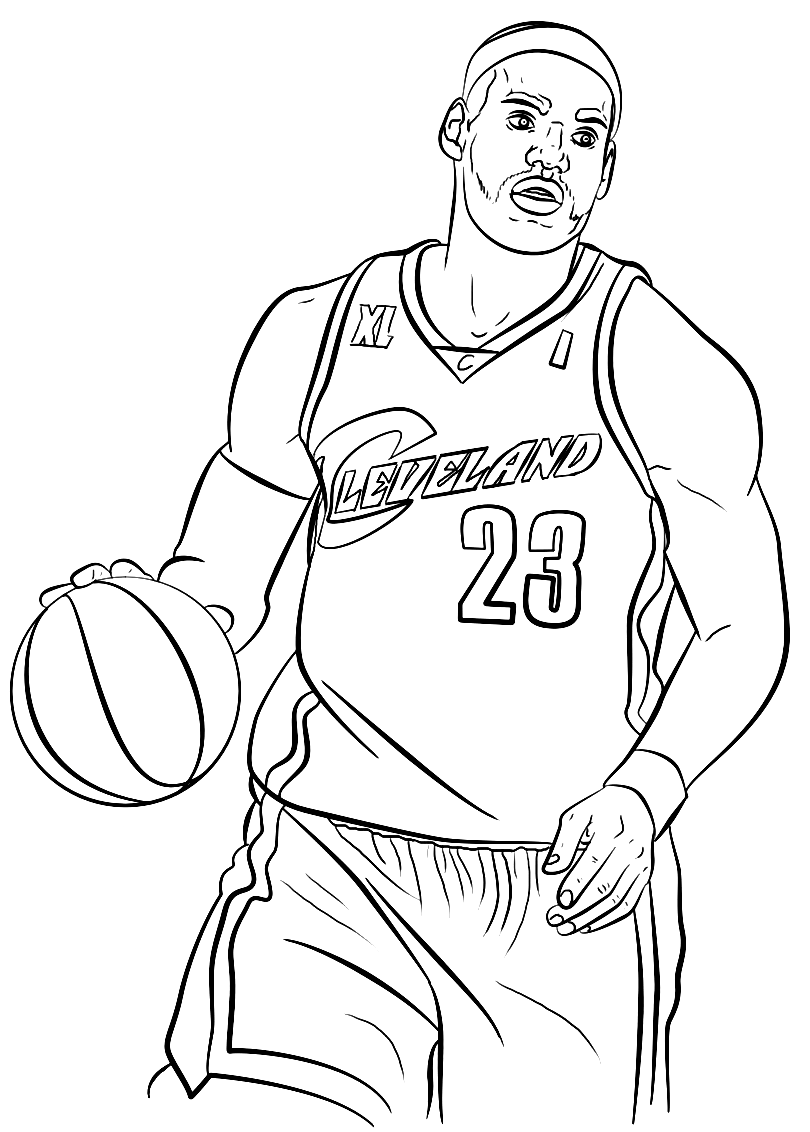
LeBron James is the most straightforwardly debated “greatest of all time” candidate in NBA history – not because the debate is settled, but because it is more genuinely competitive than any other such debate in the sport. Four NBA championships across three different franchises (Miami Heat, Cleveland Cavaliers, Los Angeles Lakers). Four Finals MVP awards. Four regular-season MVP awards. All-time NBA scoring leader, surpassing Kareem Abdul-Jabbar’s record of 38,387 points in February 2023 – a record that had stood for 39 years. He was still active and productive at 39 years old in the 2023-24 season, extending a career that began when he was drafted first overall out of Akron, Ohio, in 2003 at 18 years old.

For the LeBron page: Lakers gold and purple for the most iconic current uniform, or Heat red and black for the era that first established him as a genuine GOAT candidate. Cavaliers wine and gold is the choice if the 2016 championship is your defining moment for him.

Tim Duncan is the San Antonio Spurs’ power forward and center who played from 1997 to 2016 and won five NBA championships – all with the Spurs, all in the Gregg Popovich era. He won two regular-season MVP awards and three Finals MVP awards. His retirement in 2016 was announced with a one-sentence press release and no press conference, which was completely consistent with the 19-year career of the most consistently excellent and least publicly dramatic player of his era. He was inducted into the Basketball Hall of Fame in 2020. The Spurs page and the Tim Duncan page belong together in any collection.

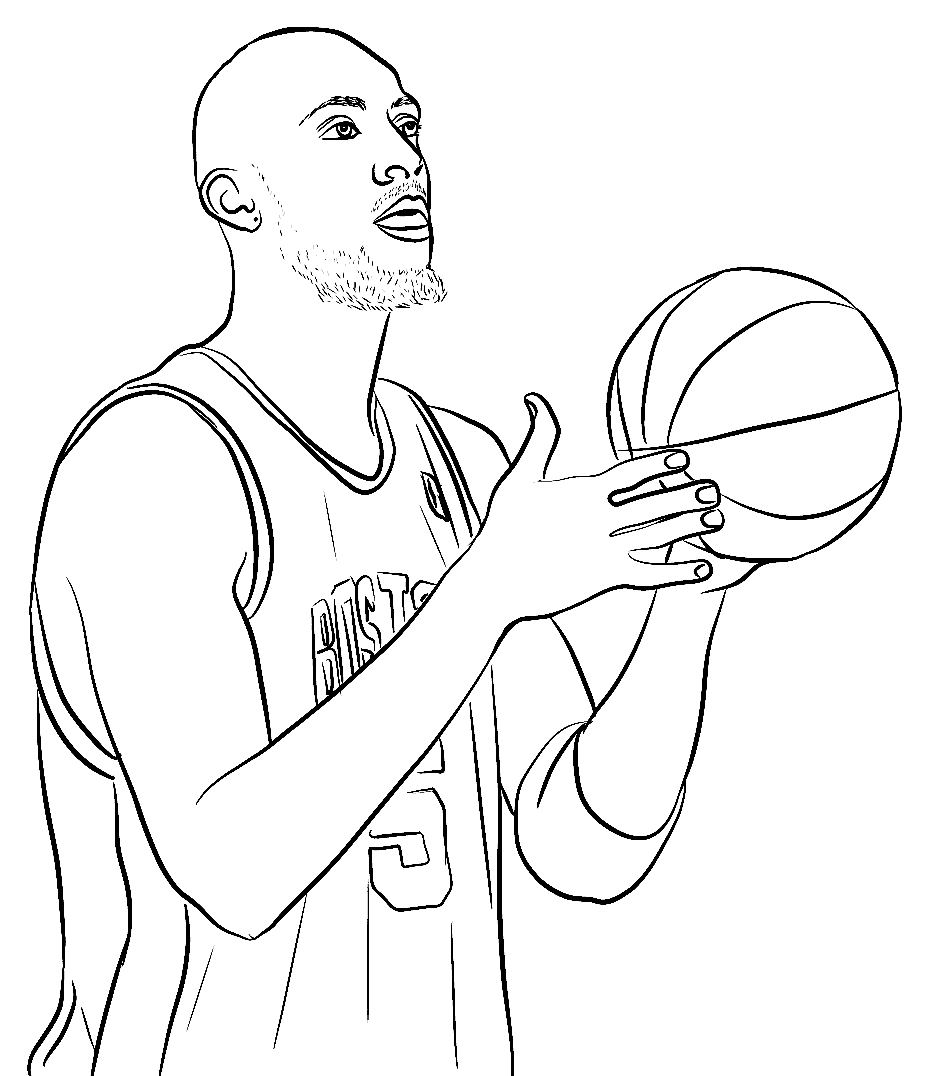
Kevin Garnett played from 1995 to 2016, primarily with the Minnesota Timberwolves and Boston Celtics. He won one NBA championship (2008, with the Celtics) and one regular-season MVP (2004, with the Timberwolves – one of the greatest individual seasons by a big man in NBA history). He was known for his intensity, his vocal leadership, and a defensive impact that advanced statistics are still developing tools to fully capture. He was inducted into the Basketball Hall of Fame in 2020 alongside Tim Duncan.

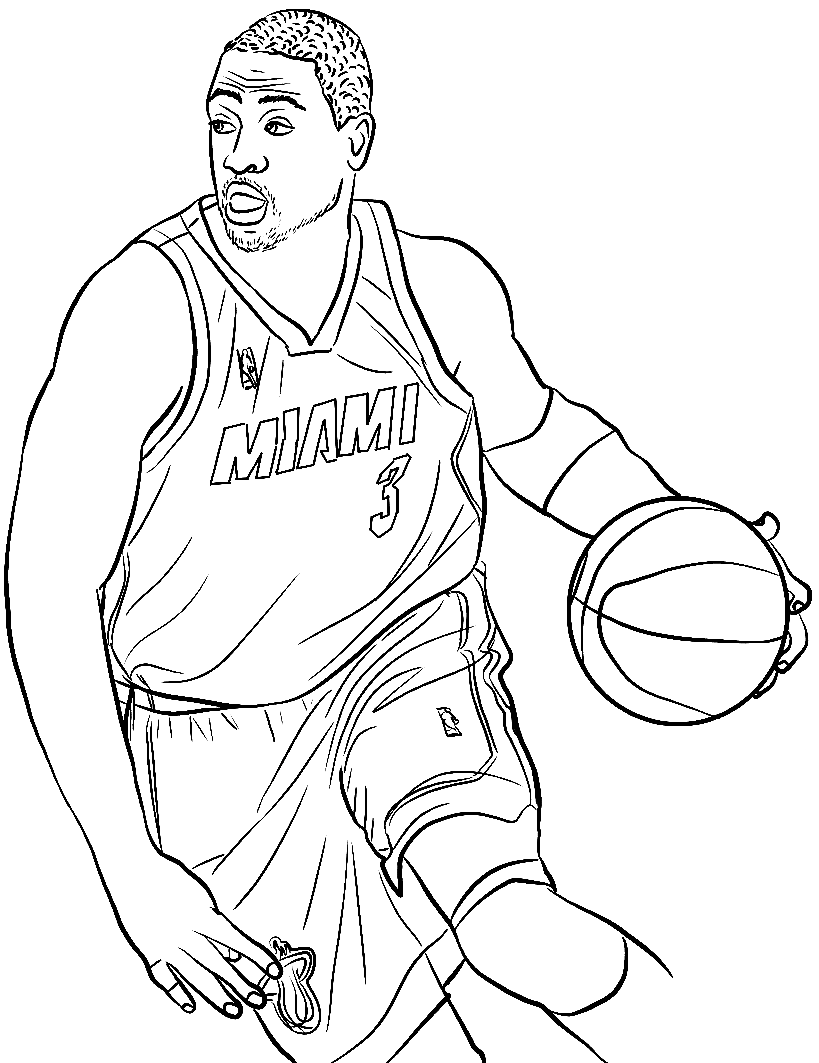
Dwyane Wade is the Miami Heat’s shooting guard – drafted fifth overall in 2003, won the 2006 NBA championship as Finals MVP in one of the great individual Finals performances in league history (averaging 34.7 points, 7.8 rebounds, and 3.8 assists per game). He won two more championships alongside LeBron James (2012, 2013) and retired in 2019 after 16 seasons, all but two of which were with Miami. His career statistic – 23,165 points, 5,701 assists, 4,933 rebounds – understate his actual value: Wade was one of the three or four best players in the league for a sustained period and remains one of the most beloved figures in franchise history.

What These Pages Actually Do

Basketball logos are teaching tools in disguise. Each logo in this collection carries geographic, historical, and cultural information that generates conversation when someone asks about it. Why does the Spurs logo look like a spur? (San Antonio’s ranching history.) Why is there a pelican in New Orleans? (The brown pelican is Louisiana’s state bird.) Why are the Jazz in Utah when jazz music comes from New Orleans? (Because the franchise moved from New Orleans to Utah in 1979 and kept the name.) Why does the Nuggets logo reference mountains? (Denver sits at the base of the Rocky Mountains, and “Nuggets” references the Colorado Gold Rush of 1859.) These questions, asked naturally while coloring, are real history and geography education that happens to involve colored pencils.

The player pages build genuine sports history knowledge. Coloring LeBron while talking about the 2016 Finals comeback, Tim Duncan while talking about what made the Spurs dynasty special, Kevin Garnett while talking about what it means to be the best player on a team that never wins a championship – these are conversations that build sports literacy and historical thinking simultaneously.

Fine motor development through logo precision. The NBA logo pages present specific geometric and typographic challenges that develop fine motor control in children and adults. The Bulls charging bull requires careful attention to the organic curves of the animal form. The Celtics leprechaun has multiple overlapping elements. The Warriors bridge design has precise architectural geometry. The 2005 Art Therapy Journal finding on structured coloring and anxiety reduction applies consistently throughout.

Team colors build pattern recognition and visual memory. The 30 NBA franchises are identified by color schemes as much as by logos – often more so. The ability to identify a team by color alone is a specific visual literacy skill that develops through repeated exposure. Coloring these pages in accurate team colors accelerates that development in a way that passive observation of games does not.

How to Color These Pages Well

Know your blues before you start. The NBA has more blue-primary teams than any other color, and the specific shades matter enormously: Knicks orange and blue (a specific bright royal blue), Mavericks royal blue and silver, Thunder navy and orange, Jazz navy and gold, Pelicans navy and gold (different shade from the Jazz), 76ers red and blue, Nets black and white, Magic navy and black. Getting the right shade of blue for each team – cold navy versus bright royal versus medium blue – is the first decision and the one that determines whether the finished logo reads as that specific team or just “a blue team.”

The Heat flaming ball wants the fire technique. The Miami Heat logo features a basketball trailing flames, which rewards the same fire coloring technique useful across this site: white at the absolute core of each flame, transitioning to lemon yellow, then bright orange, then deep red at the tips. The basketball itself should be the canonical burnt orange of an NBA game ball against the fire, so it reads separately from the flames. The black background elements provide maximum contrast.

For the Chicago Bulls logo, the horns matter. The charging bull’s horns, nostrils, and eye are the most detailed elements of the logo and the ones that most affect whether the finished result reads as aggressive and alive or generic and flat. Color the horns in a slightly lighter, more warm-tan tone than the deep red body – they catch light from above. The dark red eye and the dark nostril details, applied last with a fine-tip marker or sharp colored pencil, complete the character of the face.

The Celtics leprechaun is the most technically complex page. Multiple overlapping elements – the figure, the shamrock, the basketball, the hat – require systematic layering from background to foreground. Color the shamrock first (Kelly green, the specific bright warm green of the Celtics), then the figure’s clothing, then the skin and facial details, then the basketball, then any overlapping elements last. The hat and cane details go on top of everything.

Player portraits: team colors frame everything. Establish the correct jersey color before working on skin tone. The jersey’s dominant color creates the color temperature context that makes skin tone appear accurate or inaccurate – a warm Lakers gold jersey makes skin tones next to it appear slightly cooler; a warm Heat red does the same. Apply the jersey color first, get it right, then work the skin and face, knowing what the surrounding color is doing.

5 Creative Activity Ideas

All-30 Conference Wall Display

Print every team logo in the collection. Color each one with accurate team colors – verify each team’s proprietary shades before starting. Organize the completed logos by conference (Eastern and Western) and by division within each conference. Mount them on a large sheet of dark poster board in the standard NBA conference and division structure, labeled with division names.

The finished display is a comprehensive visual reference to the entire NBA structure – geography made visual, team identity made explicit, the full competitive landscape of the league laid out in one place. For a child learning about the NBA, it is the most efficient learning tool available and costs almost nothing to produce.

Player Era Comparison Poster

Print the four player pages – LeBron, Duncan, Garnett, Wade – and color each in their most iconic team uniform. Mount them side by side on a piece of black or dark grey poster board. Below each player, add a hand-written three-stat line: championships, MVP awards, and one defining career statistic. The comparison format – four legends, four different eras, four different styles of excellence – generates exactly the kind of conversation that basketball fans have been having in barbershops and living rooms for decades.

This poster does not require you to decide who was better. It requires you to know what each player accomplished and to present it accurately. That is a more interesting exercise.

Team Colors Sticker Set

Print all logo pages at approximately 35% of full size. Color each one in exact team colors with fine-tip markers. Apply clear contact paper over each page before cutting. Cut along each logo’s outline with a clean 2mm laminate border. Add double-sided tape to the back.

A complete NBA team sticker set – all available teams, consistently sized and laminated – applied to a notebook or folder creates a fan collection that demonstrates the full geographic and visual breadth of the league. Individual team stickers applied to specific items (your team’s logo on your water bottle) are the more personal version of the same activity.

NBA Birthday Card

Select three logo pages or one player page paired with two logo pages, all representing the recipient’s team. Color everything in the team’s exact color palette. Cut out figures and logos. Layer them on folded cardstock, overlapping slightly at different angles for visual depth. Write the birthday message inside in the team’s primary color.

For a LeBron fan: the Lakers logo, the LeBron page in Lakers gold and purple, and the NBA logo in its canonical blue and red. For a Heat fan: the Heat logo, Dwyane Wade in Heat red and black, and a personal message about the 2006 championship if the recipient is old enough to remember it. The specificity is the whole point.

Championship History Timeline

This project requires research alongside coloring. Print one logo page for each NBA championship year’s winning team, going back as far as the collection’s logos cover. Color each logo. Mount them in chronological order on a long horizontal strip of paper or cardboard, with each logo labeled with the year and Finals opponent. Add the winning team’s championship count as a running total in the corner.

The finished timeline is a visual history of the NBA’s competitive landscape: the Celtics dominance of the 1960s, the Lakers and Celtics rivalry of the 1980s, the Bulls’ dynasty of the 1990s, the Spurs’ sustained excellence of the 2000s, the Warriors and LeBron-era competition of the 2010s, the Bucks, Nuggets, and Boston’s 2024 title in the current era. The pattern visible in the logos – certain teams clustering, certain colors appearing repeatedly – is a genuine basketball history lesson made visual.

Frequently Asked Questions

When was the NBA founded, and what was it originally called? The NBA was founded on June 6, 1946, under the name Basketball Association of America (BAA). It merged with the rival National Basketball League (NBL) in 1949, at which point the combined organization took the name National Basketball Association. The league’s founding is usually traced to a meeting in New York City involving the owners of several major arenas who wanted to fill their buildings with basketball games. The BAA’s inaugural season included 11 teams and was played before the merger that created the modern NBA.

Who are the most successful franchises in NBA history? The Boston Celtics and Los Angeles Lakers are tied for the most NBA championships with 17 each as of the 2024-25 season. The Chicago Bulls have 6 championships (all won during the Michael Jordan era, 1991-93 and 1996-98). The San Antonio Spurs have 5 championships (1999, 2003, 2005, 2007, 2014). The Golden State Warriors have 4 championships in the modern era (2015, 2017, 2018, 2022), in addition to 1 earlier title.

Who is LeBron James and what records has he broken? LeBron James is a small forward/power forward who was drafted first overall by the Cleveland Cavaliers in 2003 directly out of St. Vincent–St. Mary High School in Akron, Ohio. He has won four NBA championships with three different franchises (Miami Heat, 2012, 2013; Cleveland Cavaliers, 2016; Los Angeles Lakers, 2020), four Finals MVP awards, and four regular-season MVP awards. In February 2023, he surpassed Kareem Abdul-Jabbar’s all-time NBA scoring record of 38,387 points, which had stood for 39 years. He became the first player in NBA history to score 40,000 career points.

Who is Tim Duncan, and what made him so dominant? Tim Duncan played power forward and center for the San Antonio Spurs from 1997 to 2016, 19 seasons with one franchise. He won five NBA championships, two regular-season MVP awards, and three Finals MVP awards. His dominance was built on exceptional footwork, precise post technique, reliable mid-range shooting, and elite defensive positioning – a skill set that made him effective from his first season through his last without reliance on elite athleticism that would have diminished with age. He retired in 2016 via a quiet press release and was inducted into the Basketball Hall of Fame in 2020.

What is the story behind the NBA logo silhouette? The NBA logo depicts a white silhouette of a basketball player dribbling against a blue and red background. It was designed by Alan Siegel in 1969 and has been used with minor modifications ever since. The silhouette has been widely identified as Jerry West, the Hall of Fame guard who played for the Los Angeles Lakers from 1960 to 1974. Jerry West himself has said he believes the silhouette is based on a photograph of him, though he has expressed discomfort with the permanent association and has publicly suggested the league should transition to a silhouette representing a player from basketball’s current era or a figure that better represents the sport’s demographics. The NBA has not changed the logo.

What do the team colors in the collection represent? Several NBA team color schemes have specific origins: the Celtics green references the Irish heritage of the Boston community and the franchise’s founders. The Lakers’ purple and gold were inherited from the Minneapolis Lakers (the franchise’s original city), where the colors referenced the state of Minnesota. Cavaliers wine and gold references the colors of Ohio State University, where the franchise’s early ownership had connections. Hornets teal and purple were selected in 1988 precisely because teal was an unusual color in sports at the time – the franchise wanted a distinctive visual identity in a crowded market. The Warriors’ royal blue and gold references the colors of the University of San Francisco, where several key players in the franchise’s early history had played.

What age group are these NBA pages best suited for? Simple logo pages with clean, geometric forms – the Nets (black and white), the Spurs (black, silver, white), the Bulls (red and black) – work well from age 4 upward. More complex logos with multiple overlapping elements (the Celtics leprechaun, the Raptors, the Pelicans with detailed bird imagery) reward the fine motor patience that develops from around age 7-8. The player portrait pages (LeBron, Duncan, Garnett, Wade) require the careful skin tone and uniform detail work that is most satisfying for ages 8 and up and for adults. The NBA logo itself – clean, geometric, three-color – is one of the most accessible and satisfying pages in the collection for any age.

Can these pages be used in a classroom or youth basketball context? Yes, and this is one of the most effective applications. Youth basketball coaches use logo identification activities as team-building and basketball literacy exercises. Physical education teachers use NBA pages as cross-curricular connections between sports, art, and geography. After-school programs find that coloring during rest periods maintains positive energy without the stimulation of screen time. The championship history timeline activity (described in the Craft Ideas section above) makes a particularly strong classroom or club project for children who are interested in both basketball and history.

Browse the full collection at ColoringPagesOnly.com. All pages free, no sign-up, PDF or PNG, print at home or color online.

James Naismith wrote 13 rules on two pages in 1891 and watched 18 students play the first game with a soccer ball and two peach baskets. Over the next 130 years, the game he invented traveled to every country in the world, produced the most physically gifted athletes in human history, and became the NBA – the league that turns an October Sunday in Indiana into exactly the same thing as a November Sunday in Tokyo or a March afternoon in Lagos. The game scaled. It kept scaling.

Pick up your team’s colors. Find your logo. Color something that connects you to all of that.

Share your work on Facebook and Pinterest and tag #Coloringpagesonly. We especially want to see the All-30 Conference displays and the player era comparison posters.

Color the court. Honor the game. Choose your team.

More from our league and sports collections:

Jennifer Thoa – Writer and Content Creator

Hi there! I’m Jennifer Thoa, a writer and content creator at Coloringpagesonly.com. With a love for storytelling and a passion for creativity, I’m here to inspire and share exciting ideas that bring color and joy to your world. Let’s dive into a fun and imaginative adventure together!