Leagues & Clubs Coloring Pages
 By:
Jennifer Thoa - Content Editor & Designer
Updated:
By:
Jennifer Thoa - Content Editor & Designer
Updated:
Free leagues and clubs coloring pages: 892 printable designs spanning the NFL, NBA, MLB, NHL, soccer clubs, WWE, and international soccer, featuring team logos, player portraits, helmets, and trophies for sports fans of all ages. Sheffield FC was founded on October 24, 1857, making it the oldest football club in the world still in existence, and less than 170 years later the global sports industry generates over $500 billion annually. Leagues have proliferated on every continent, and the logos of the most successful teams are recognized in countries where the sports themselves are barely played.
This collection is organized by sport, by league, and by individual team. Every page is free to download as a PDF and print, or to color online directly in the browser.
What’s Inside This Collection
NFL, 78 pages
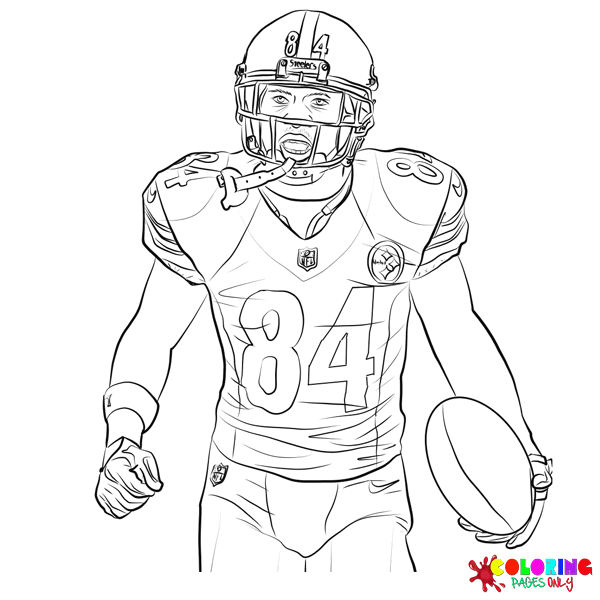
The NFL collection is the largest single North American league in this category, spanning all 32 franchises across both conferences and covering current elite players alongside historical franchise material. Team logo pages cover every franchise from the Atlanta Falcons to the Washington Commanders; several teams have multiple logo pages representing different eras of their branding, including the Washington franchise under both its historical name and its current Commanders identity following the team’s 2022 rename. Player pages represent the current era’s defining figures, including Patrick Mahomes and Travis Kelce of the Kansas City Chiefs, Lamar Jackson of the Baltimore Ravens, Josh Allen of the Buffalo Bills, Jalen Hurts of the Philadelphia Eagles, and Joe Burrow of the Cincinnati Bengals. Special pages include Super Bowl trophy and stadium designs, the Vince Lombardi Trophy, and equipment pages such as a 3D NFL helmet template. Seven franchises have their own dedicated sub-collections accessible from this page: the Philadelphia Eagles, Dallas Cowboys, Kansas City Chiefs, Los Angeles Rams, San Francisco 49ers, Cincinnati Bengals, and Detroit Lions.
NBA, 35 pages
The NBA collection covers team logos across both conferences, organized to reflect the league’s current franchise geography, from the Atlanta Hawks to the Washington Wizards, plus player portraits representing different generational peaks: LeBron James, Tim Duncan, Kevin Garnett, and Dwyane Wade. The NBA logo itself, the white silhouette against a blue and red background designed by Alan Siegel in 1969, is included as its own page.
MLB, 45 pages
The MLB collection covers all 30 franchises across the American League and National League, plus nine player portrait pages spanning the sport’s history from the 1990s to the current generation, including Ken Griffey Jr., Clayton Kershaw, Bryce Harper, and Mike Trout. Template pages, including an MLB birthday card template and MLB-themed puzzles, round out the collection’s craft-ready pages.
NHL, 40 pages
The NHL collection covers team logos across both conferences of the National Hockey League, the oldest of the four major North American professional sports leagues still operating under the same name, in continuous play since November 26, 1917. Franchise geography reflects the league’s expansion from the “Original Six” (Boston, Chicago, Detroit, Montreal, the New York Rangers, and Toronto) to a 32-team league that now includes Las Vegas, Seattle, and other non-traditional hockey markets. The Stanley Cup, awarded since 1893, is unique among major professional sports trophies as a single trophy passed between champions rather than a new one made each year.
Soccer Clubs Logos, 109 pages
The soccer clubs collection reflects the sport’s global reach and the cultural weight club identity carries for fans worldwide. Premier League clubs represented include Manchester United, Manchester City, Liverpool, Arsenal, Chelsea, and Tottenham Hotspur; Manchester United, founded in 1878 as Newton Heath LYR Football Club, has won 20 English top-flight titles. La Liga’s Real Madrid and Barcelona represent two of the most globally recognized club brands in world football, with their El Clasico rivalry drawing television audiences that regularly exceed 650 million viewers. Bundesliga’s Bayern Munich and Borussia Dortmund, and Serie A’s Juventus, Inter Milan, AC Milan, and Roma, round out the collection’s major European coverage.
WWE, 60 pages
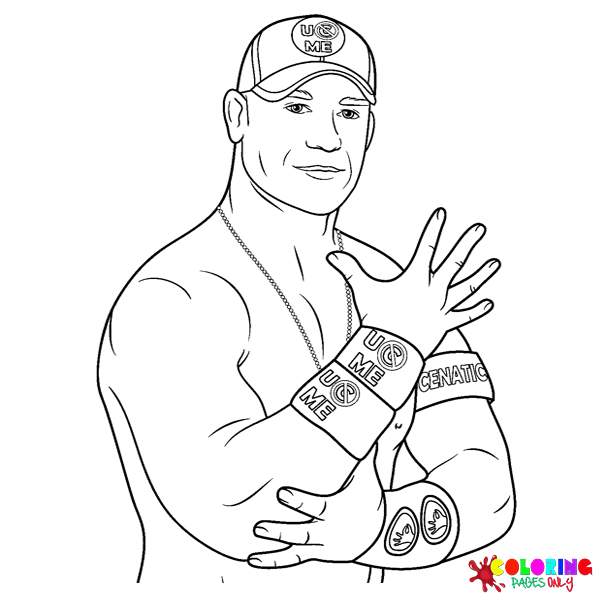
The WWE collection covers professional wrestling’s largest promotion, including current and historic performers, championship belts, and event branding, giving fans of sports entertainment their own dedicated space alongside the traditional leagues above.
World Cup 2026 and Water Sports
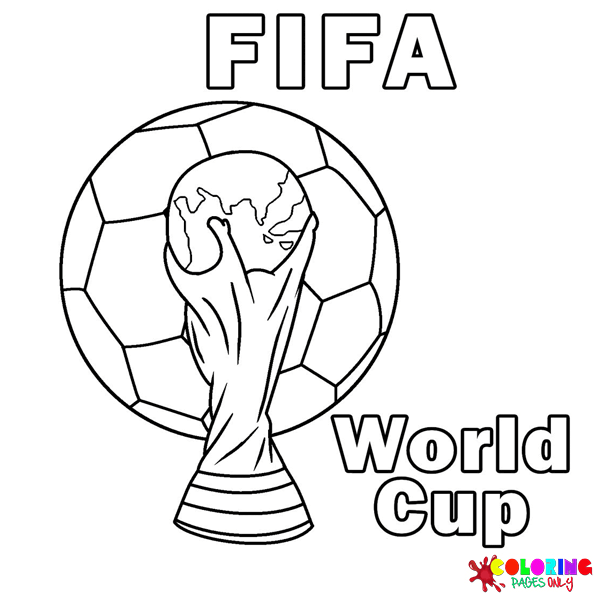
World Cup 2026 covers the men’s international soccer tournament being co-hosted by the United States, Mexico, and Canada. Water Sports covers swimming, surfing, and other water-based competitive and recreational sports, extending the collection beyond team-branded leagues into individual athletic pursuits.
Why Team Logos Are More Than Decoration
Every logo in this collection is a compressed argument about identity. It says something about where a franchise comes from, what it values, and how it wants to be seen. The Pittsburgh Steelers’ Steelmark carries the city’s industrial heritage. The Green Bay Packers’ G acknowledges one of the strangest ownership structures in professional sports, publicly owned, with shareholders distributed among the fanbase rather than a single billionaire owner. The New Orleans Saints’ fleur-de-lis is a medieval heraldic symbol that became the emblem of a city’s identity after Hurricane Katrina in 2005, when the Saints’ 2009 Super Bowl victory became one of American sport’s most celebrated stories of civic resilience.
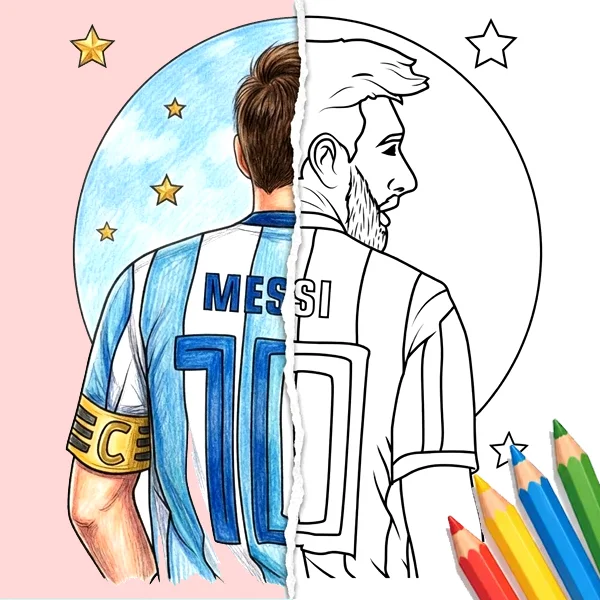
Soccer club crests carry similarly deep historical weight. Arsenal’s cannon has appeared on club representations since the 1880s. The FC Barcelona crest incorporates the Cross of Saint George, the red and yellow stripes of the Catalan flag, and the club’s own blue and garnet colors, making it simultaneously a football emblem and a marker of Catalan cultural identity. Real Madrid’s crown has been present since 1920, when King Alfonso XIII granted the club the title “Real” (Royal).
What These Pages Do
The American Academy of Pediatrics identifies fine motor skill development as a core benefit of structured coloring for children ages 2 through 7. Children ages 4 to 6 do best with the boldest, simplest logos, the Cowboys star, the Saints fleur-de-lis, the Colts horseshoe, since these reward confident flat color application and produce immediately satisfying results. Children ages 7 to 10 can handle more complex designs, the Eagles wing, the Ravens bird, and most Premier League crests, and player portrait pages become more rewarding at this age as accurate jersey color and careful face rendering start to look genuinely like the player depicted.
A 2005 study in the Art Therapy Journal documented measurable reductions in anxiety following structured coloring sessions. The precise, geometric nature of team logos, matching a shield’s proportions, layering a crest’s overlapping color fields in the correct order, suits the kind of focused, detailed task associated with the study’s calming findings, making the more intricate crest and portrait pages effective for teenagers and adults as well as children.
Families find that the most rewarding shared sessions involve choosing a sport the family follows and coloring the full set of related pages together, every team in a division, every player in the collection, or a full league of logos. The conversation that happens during a shared coloring session is different from watching a game together, slower, more detailed, and more focused on the specific shapes and colors that make each team identifiable.
Coloring Tips for Leagues and Clubs Pages
- Verify team colors before you start: teams have proprietary colors enforced rigorously across all official merchandise. Eagles’ midnight green is not forest green, Chiefs red is warm and orange-tinted rather than a cool red, and Lakers purple is medium and warm-cool rather than lavender. Looking up a team’s official colors first saves frustration later.
- Work from background to foreground on complex crests: European club crests and several NFL and NBA logos have overlapping visual layers. Establish the shield or crest background first, then internal color fields, then the central motif, then any overlapping text or borders last.
- Team logos deserve geometric precision: the Steelers’ Steelmark has three diamonds in precisely defined proportions, and the Cowboys’ star is a single perfect shape. Slow down and get the underlying shapes right before adding color.
- Player portraits, jersey before face: the uniform’s dominant color sets the visual context for everything else. Apply the jersey color first, get the team’s specific shade correct, then work the skin tone knowing what surrounds it.
- For young children, start simple and build complexity: begin with bold, simple logos, a single star or a clean letter, and build toward complex crests and portrait pages as fine motor control develops.
5 Creative Craft Ideas With Leagues and Clubs Coloring Pages
1. Multi-Sport All-Star Collection. Choose five pages, one from each major league, NFL, NBA, MLB, NHL, and soccer, representing the most personally meaningful team or player in each sport. Color all five with care and mount them together on dark cardstock in a deliberate arrangement.
2. Cross-Sport Color Challenge. Choose one color, gold for example, and print every page in the collection where that color is a primary team color: Lakers gold, Chiefs gold, Steelers gold, and Borussia Dortmund yellow. Color each page in its exact shade and mount them together to show how many related but distinct shades one color name can cover.
3. Rivalry Matchup Display. Choose a classic rivalry, Cowboys versus Eagles, Lakers versus Celtics, or Manchester United versus Liverpool, and print every relevant page from both teams. Mount them facing each other on opposite sides of a display board, separated by a line down the center, with hand-lettered founding dates and head-to-head history.
4. Fan Identity Scrapbook. Assemble a personal sports scrapbook using pages from this collection. For each team followed, include the current logo page, any player pages of admired players, and a hand-written page noting a first memory of the team or a favorite season.
5. Generational Comparison Display. Use the player portrait pages to compare players across different eras of the same sport, for example LeBron James, Tim Duncan, Kevin Garnett, and Dwyane Wade in the NBA. Color each player in their most iconic uniform and mount them side by side with a hand-written note on what each one meant to the game when they played.
Frequently Asked Questions
What leagues and sports are covered in the Leagues and Clubs collection?
The collection covers the four major North American professional sports leagues, the NFL, NBA, MLB, and NHL, plus a soccer clubs section covering the Premier League, La Liga, Bundesliga, Serie A, and other major club football, along with WWE, World Cup 2026, and Water Sports. Individual team deep-dives are available for the Philadelphia Eagles, Dallas Cowboys, Kansas City Chiefs, San Francisco 49ers, Los Angeles Rams, Cincinnati Bengals, and Detroit Lions.
Which is the oldest sports league in the collection?
The oldest continuously operating professional league in the collection is the National League of Baseball, founded in 1876. The NHL was founded in 1917, the NFL in 1920 as the American Professional Football Association, and the NBA in 1946 as the Basketball Association of America. Sheffield FC, the world’s oldest football club, was founded in 1857.
Which teams have the most championship titles across the major sports?
The New York Yankees have won 27 World Series titles. The Boston Celtics and Los Angeles Lakers have each won 17 NBA championships. The Pittsburgh Steelers and New England Patriots have each won 6 Super Bowls. The Montreal Canadiens have won 24 Stanley Cups, the most in NHL history. In soccer, Real Madrid has won the UEFA Champions League 15 times, more than any other club.
What coloring supplies work best for sports logo pages?
Broad-tip markers deliver the most vibrant, consistent fill on logos with large solid color fields, such as the Cowboys star. Fine-tip markers or sharp colored pencils give better control on logos with fine detail or text. Layered colored pencils work best for player portrait skin tones, and chunky crayons or washable markers are the most accessible option for younger children.
How often is the collection updated with new pages?
New pages are added regularly, tied to current sports seasons, championship events, and player popularity. Super Bowl pages are added ahead of each Super Bowl, and player pages are added as new achievements or personalities become popular.
Can these pages be used in a classroom or school sports event?
Yes. Teachers use sports logo pages for cross-curricular activities connecting art, geography of team locations, and statistics. Schools use them for pep rallies and spirit days, and youth sports leagues use them for team bonding activities. All pages are free for educational and non-commercial use.
Why do some logos look different from current team branding?
The collection includes pages created at different times, some of which predate recent logo updates. The Washington NFL franchise page includes historical branding from before the team’s 2022 rename to the Commanders. These historical logo pages are labeled accordingly and remain valuable for fans who prefer earlier eras of a franchise’s visual identity.
What is the most popular page in the Leagues and Clubs collection?
Pages featuring currently active players with large social media followings consistently rank among the most downloaded, alongside established franchise logos like the Dallas Cowboys star. Among the soccer pages, Real Madrid and Barcelona crest pages generate the highest traffic given the global reach of those clubs.
Start Coloring
Choose a league, team, or player above to browse that collection, or open any page to download it as a free PDF or color it online in the browser. No account, email, or payment is required. Share finished pages on Facebook or Pinterest with the share buttons on each page.
More Leagues and Clubs Coloring Pages
Jump straight to a specific collection: