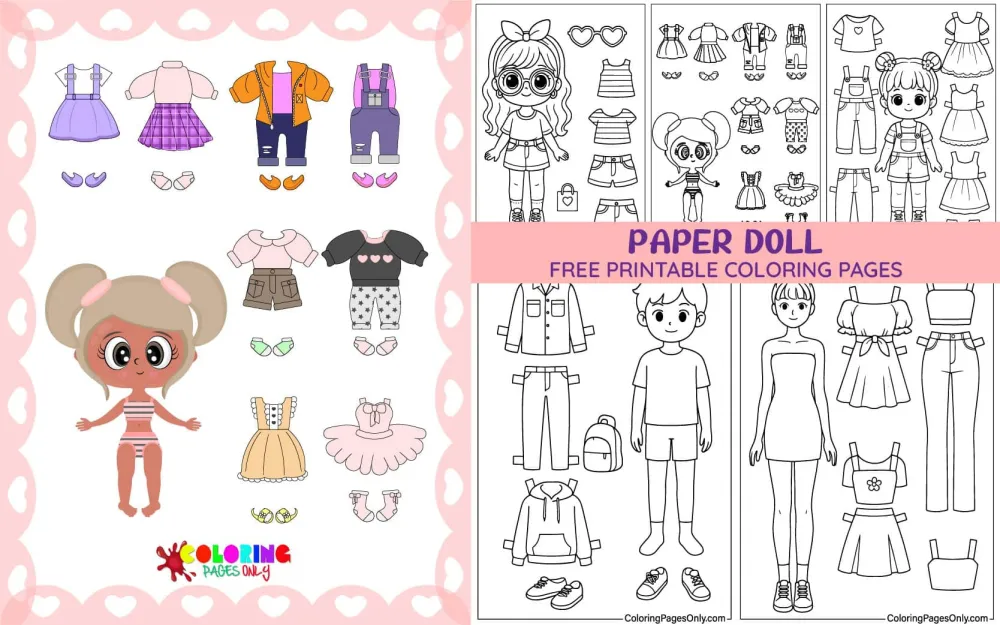
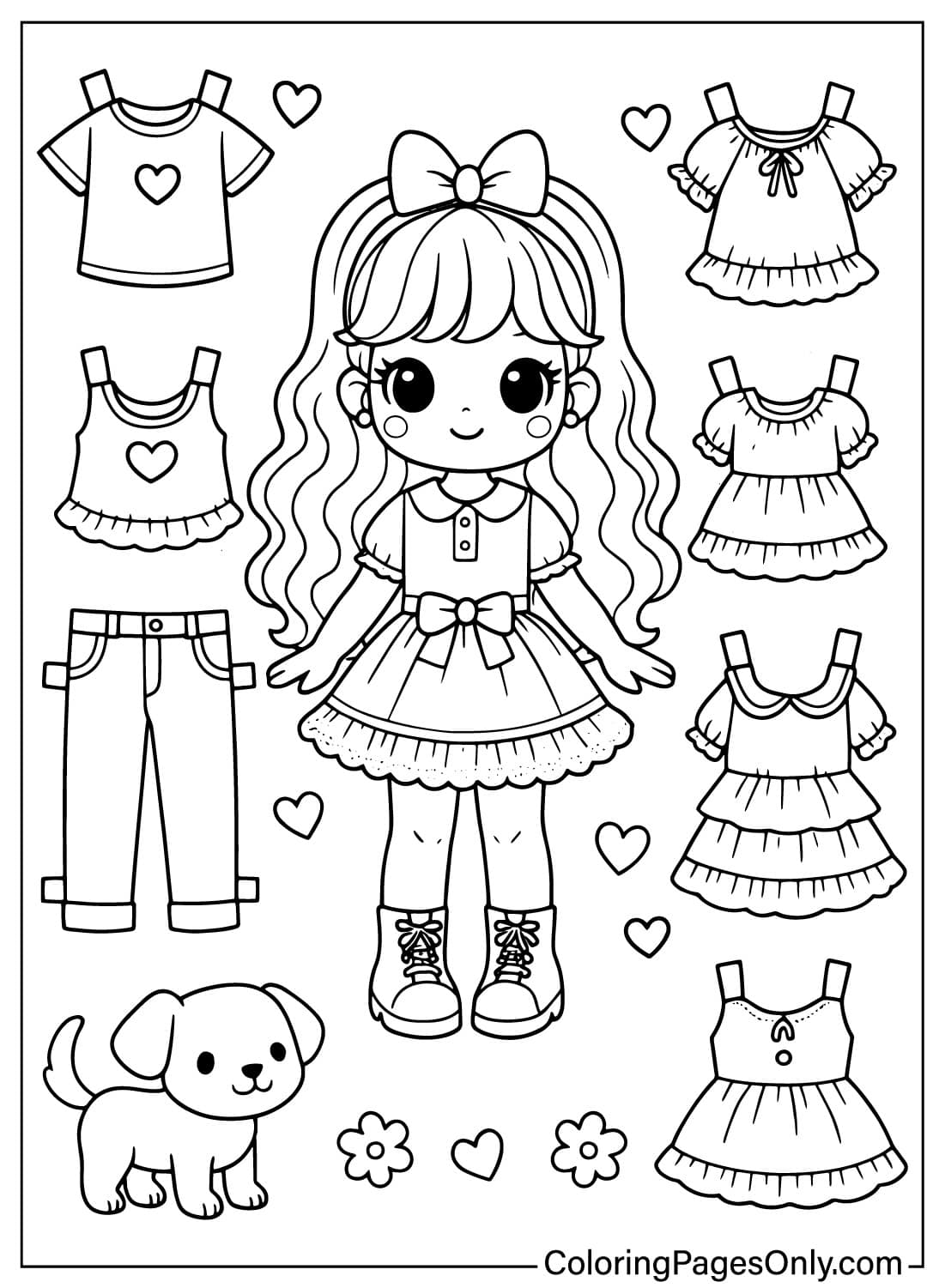
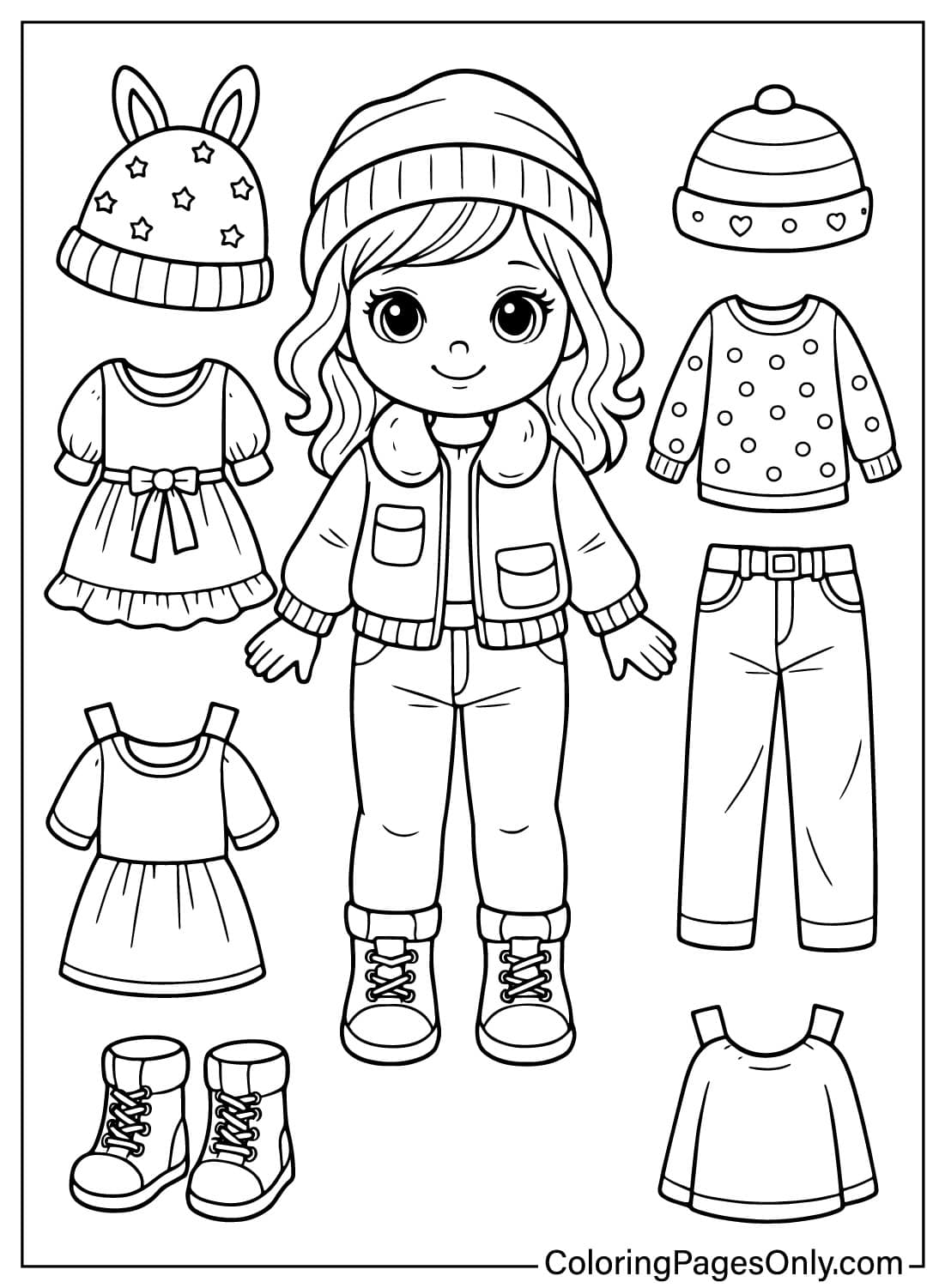
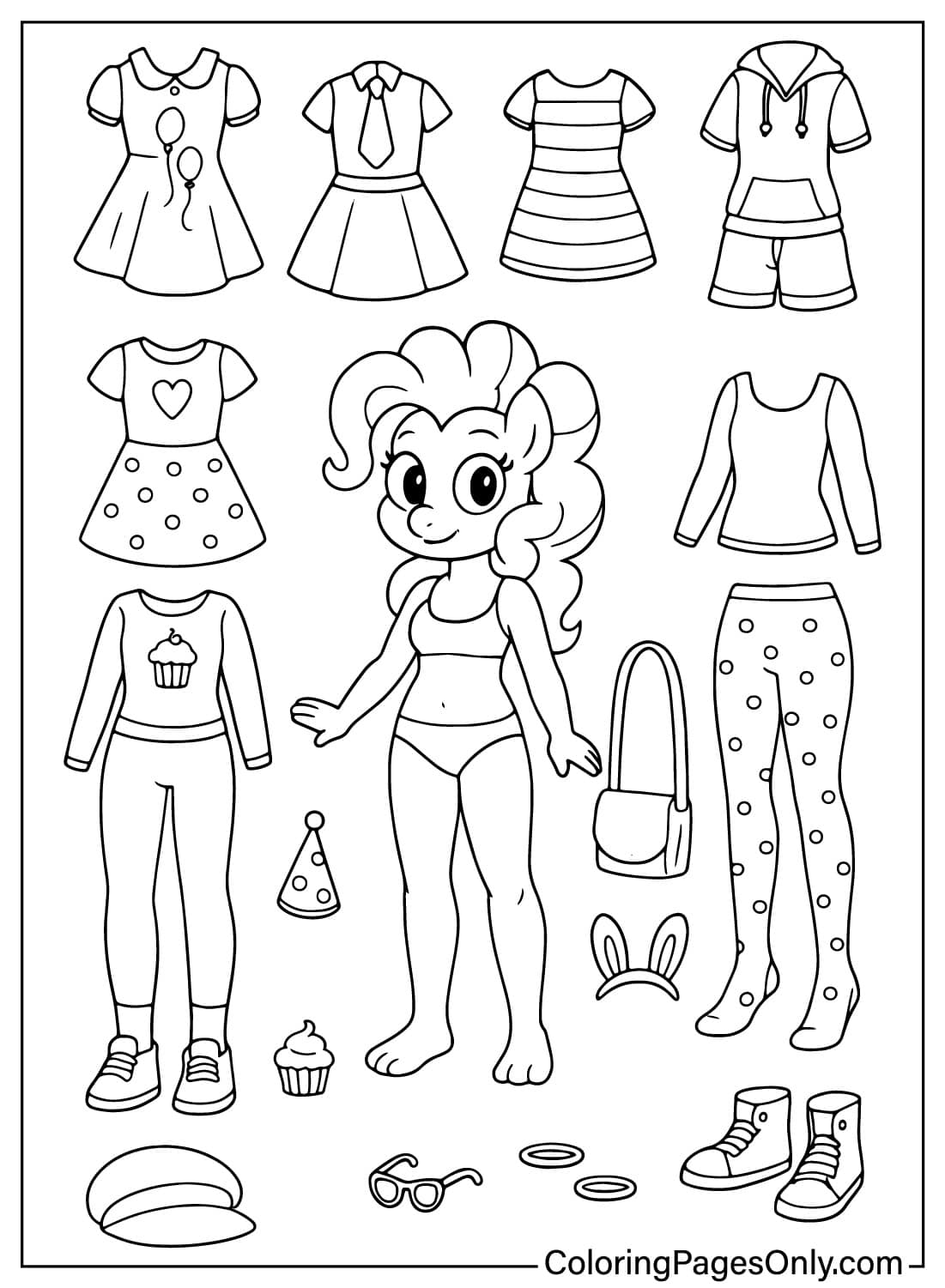
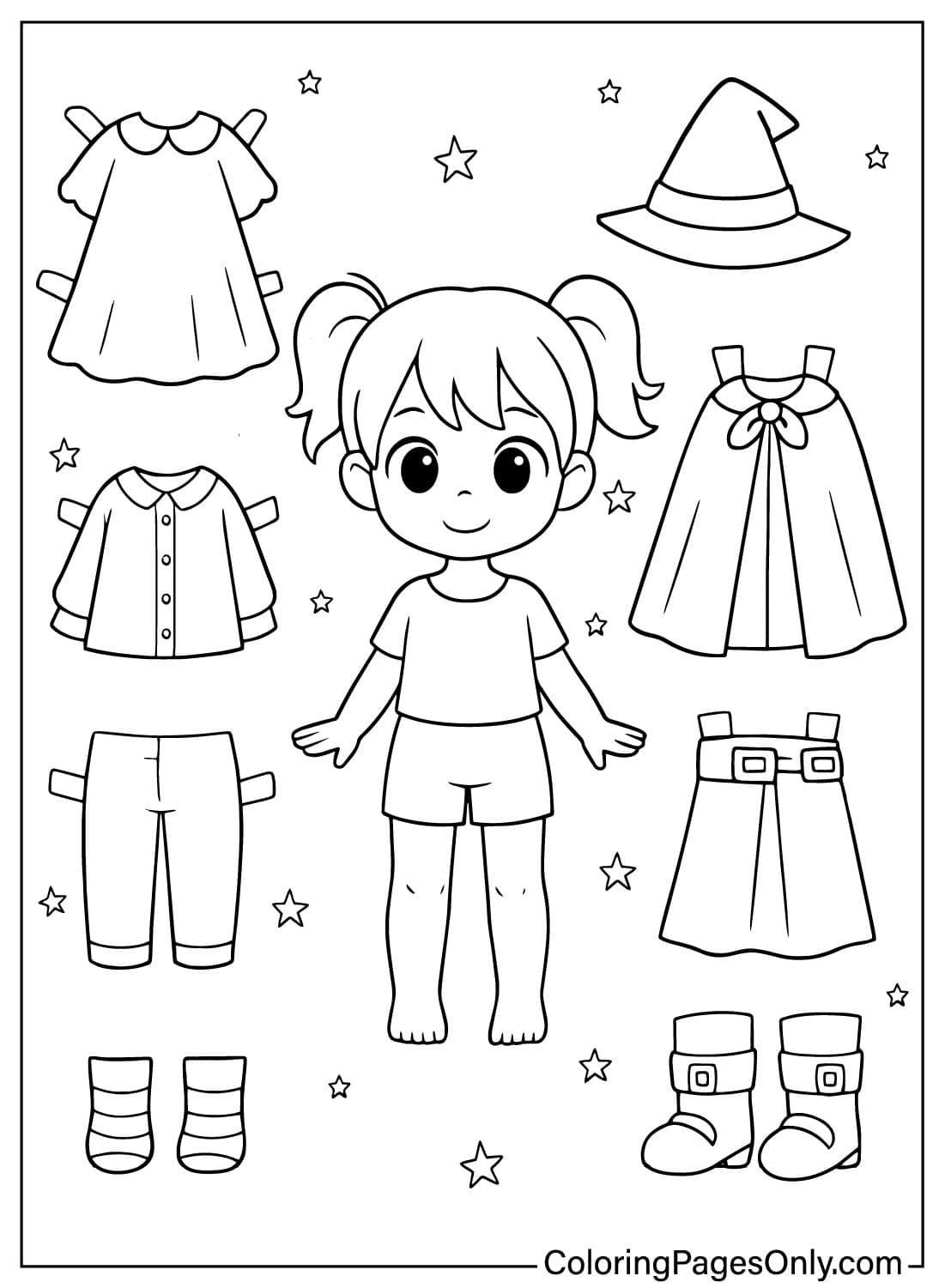
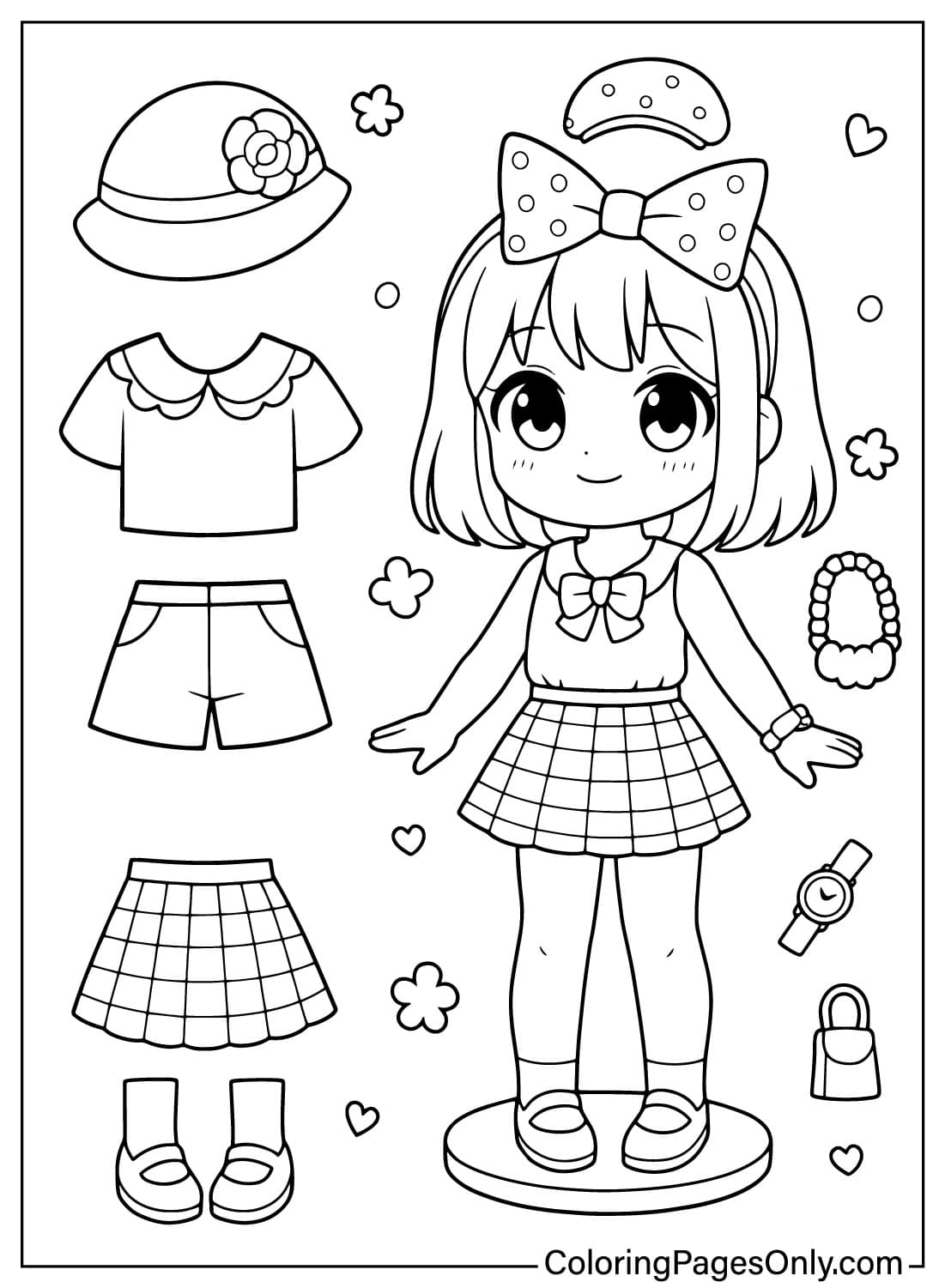
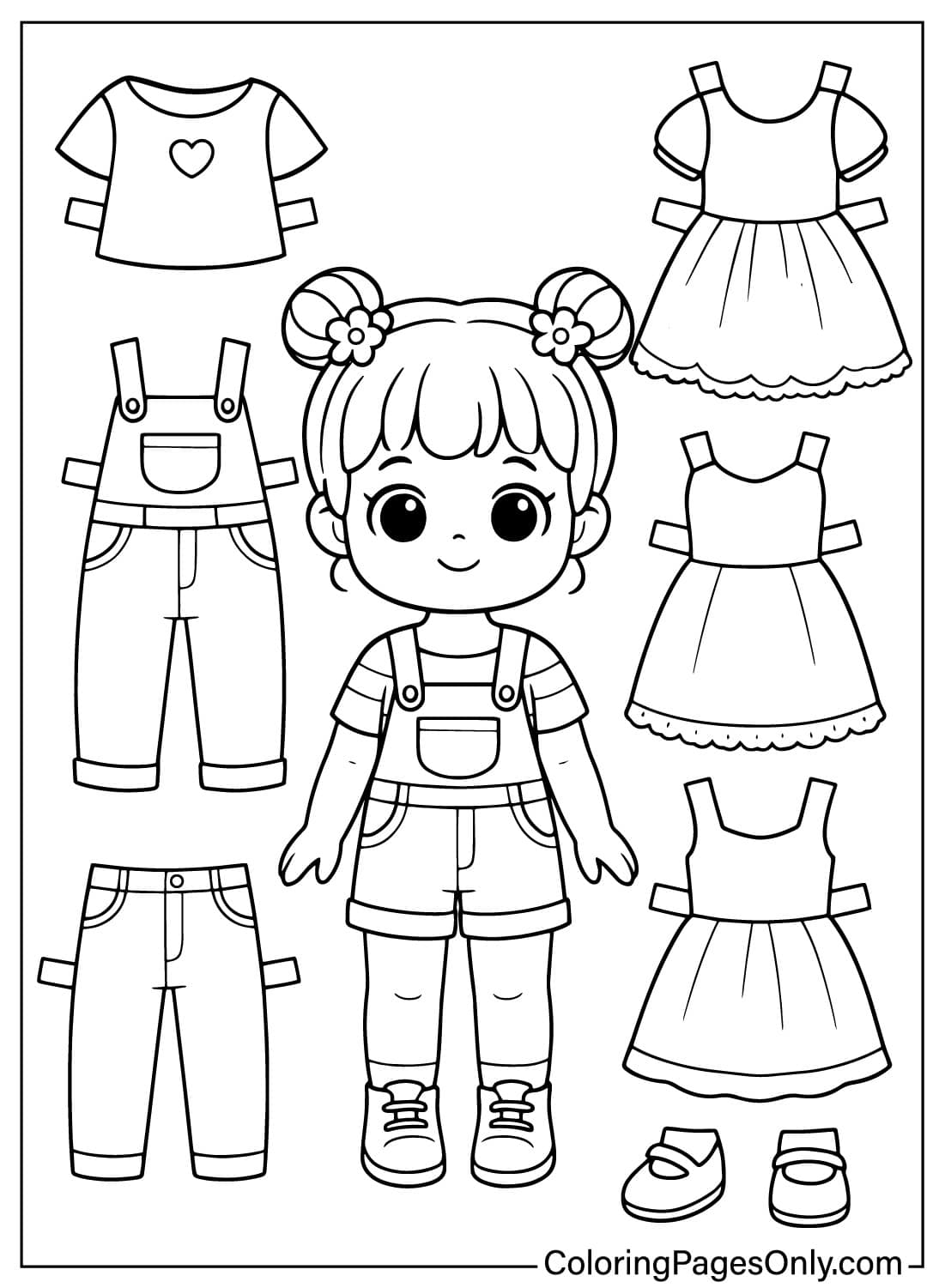
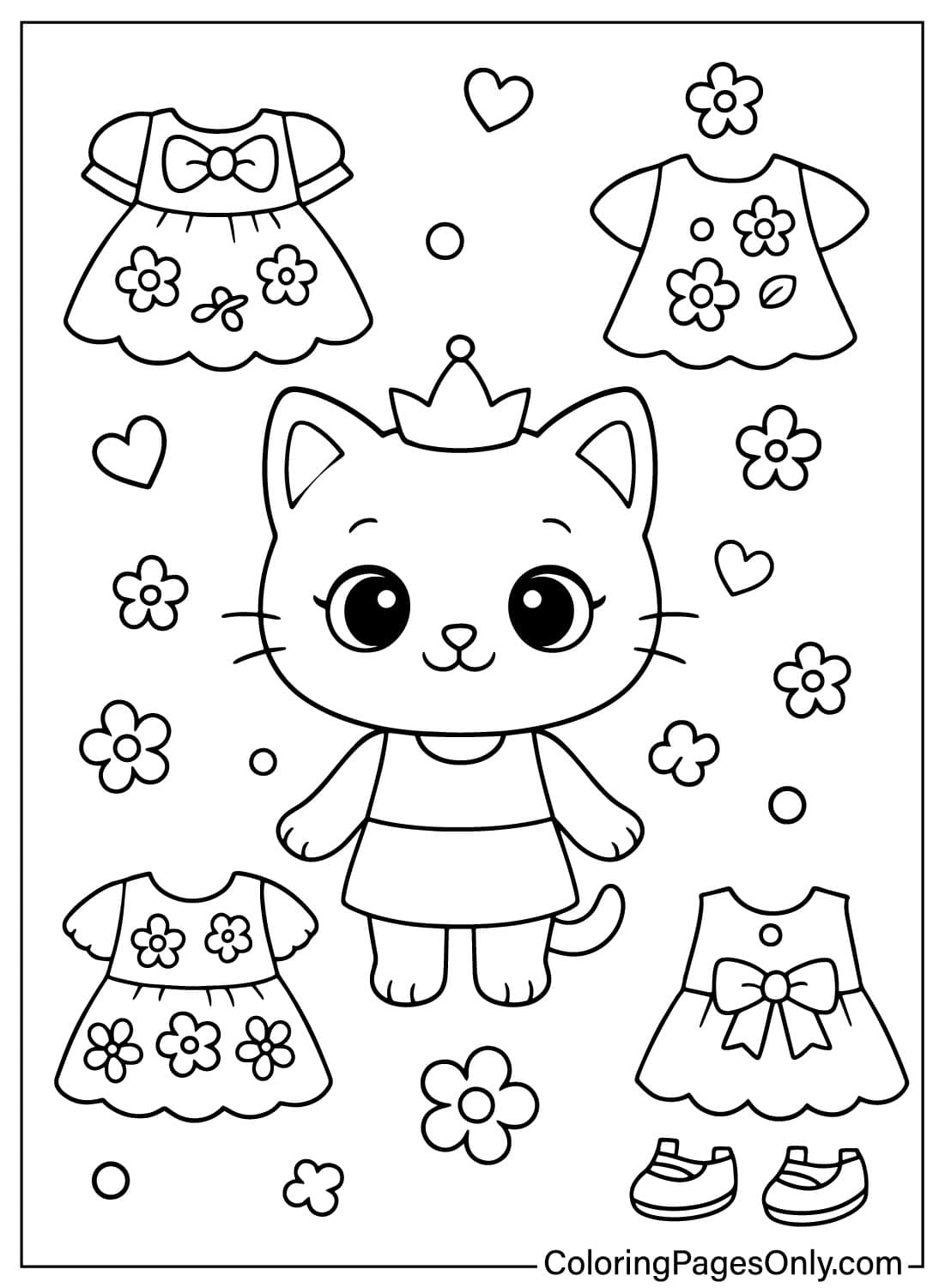
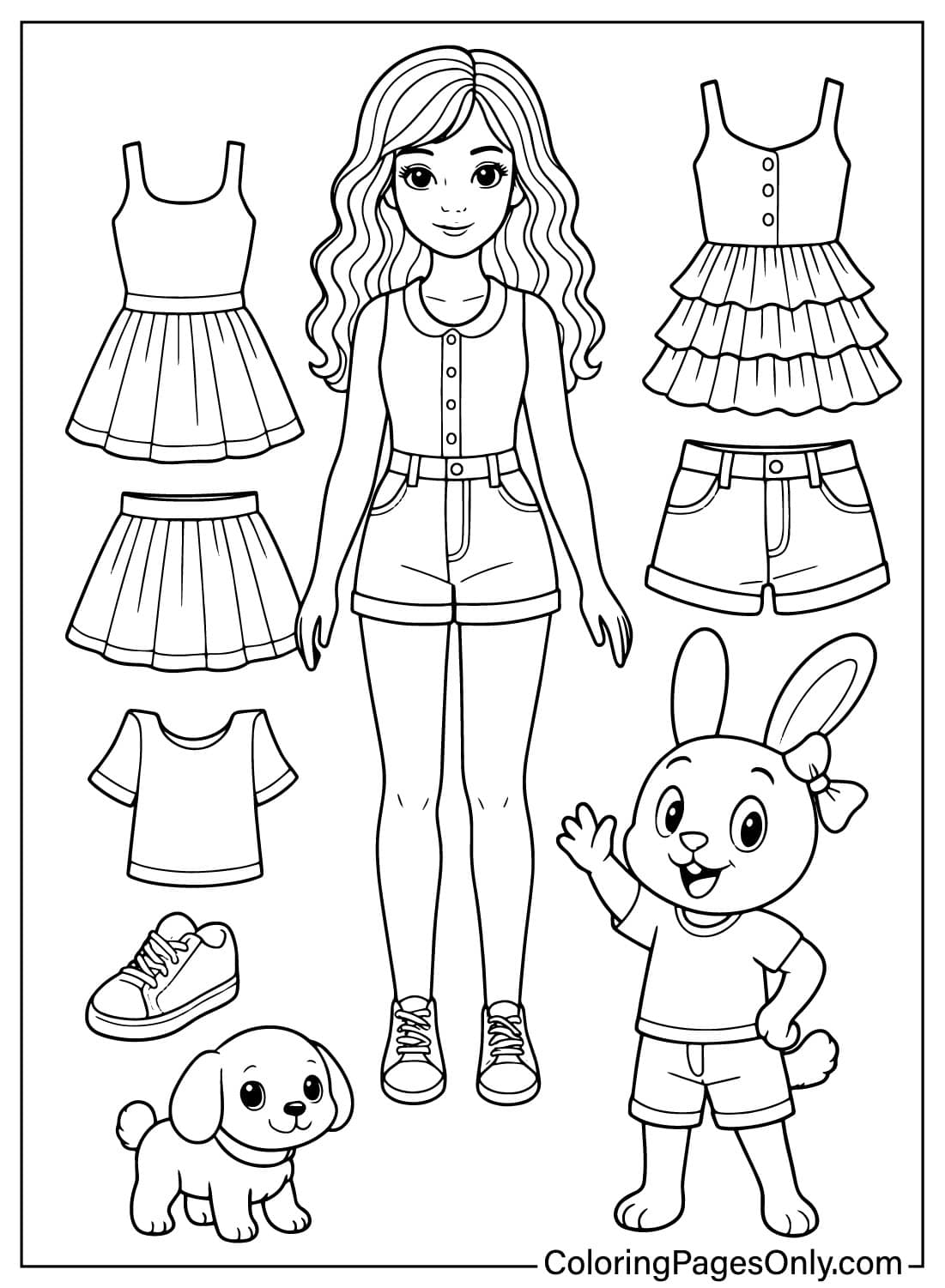
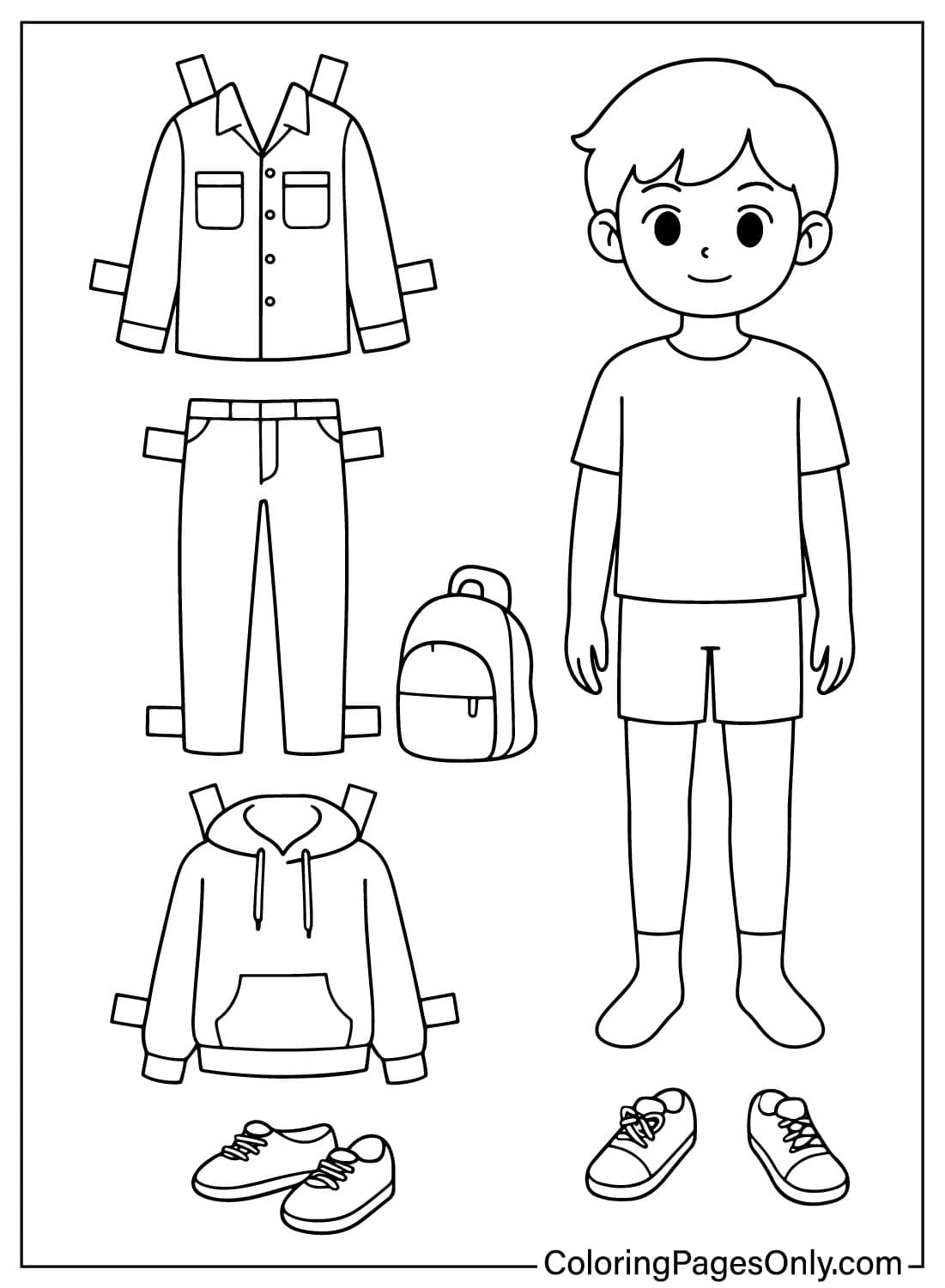
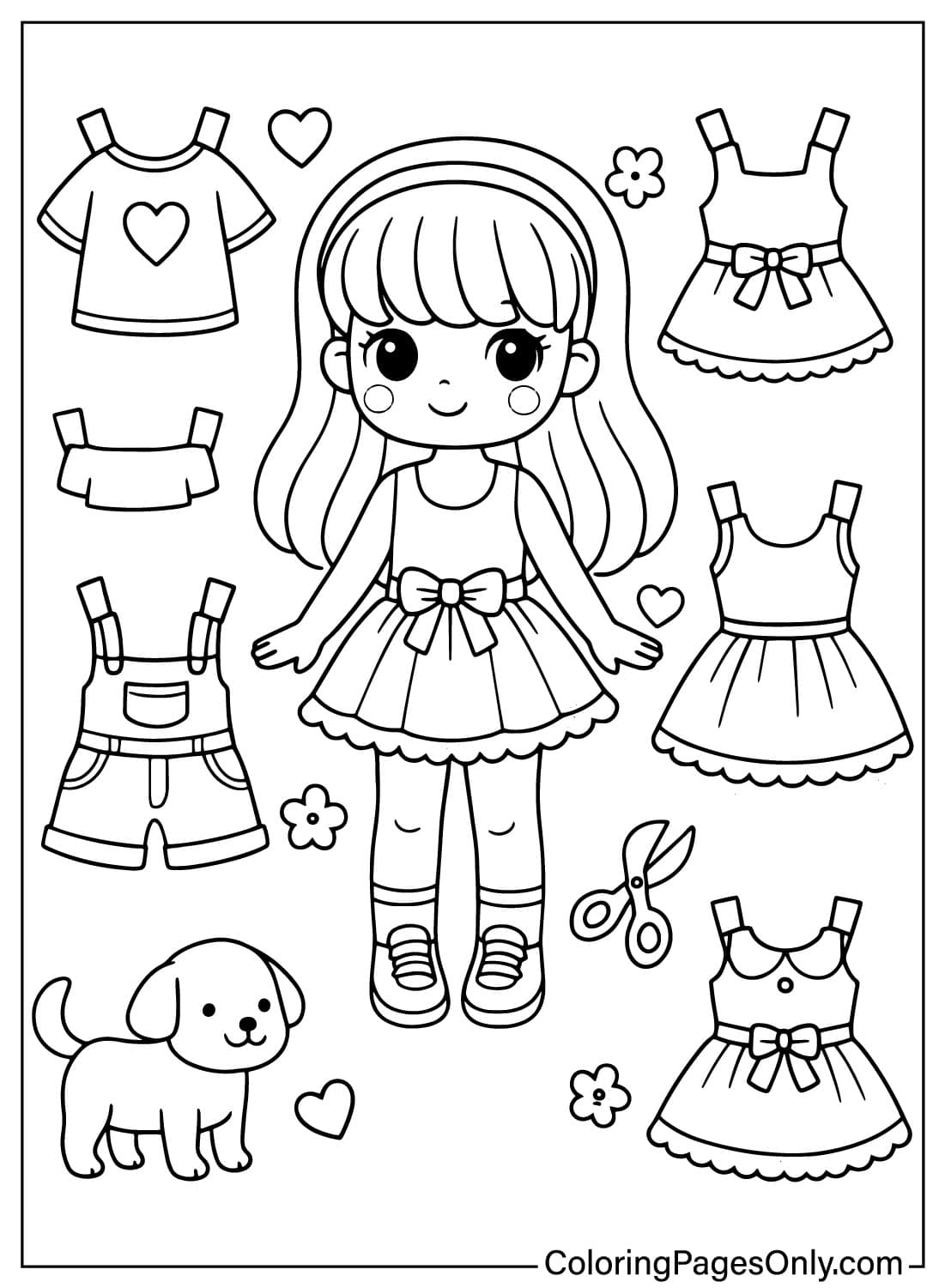
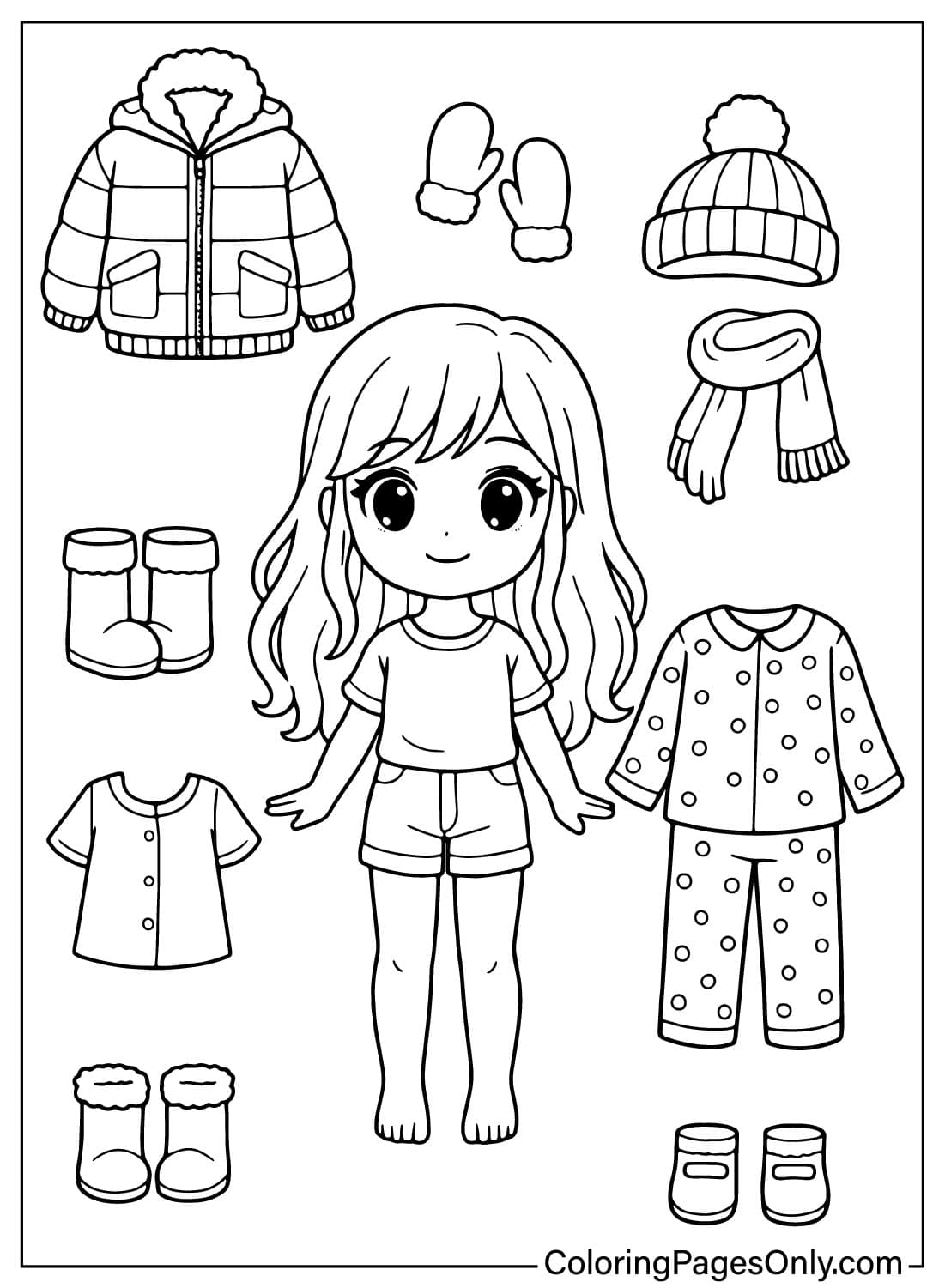
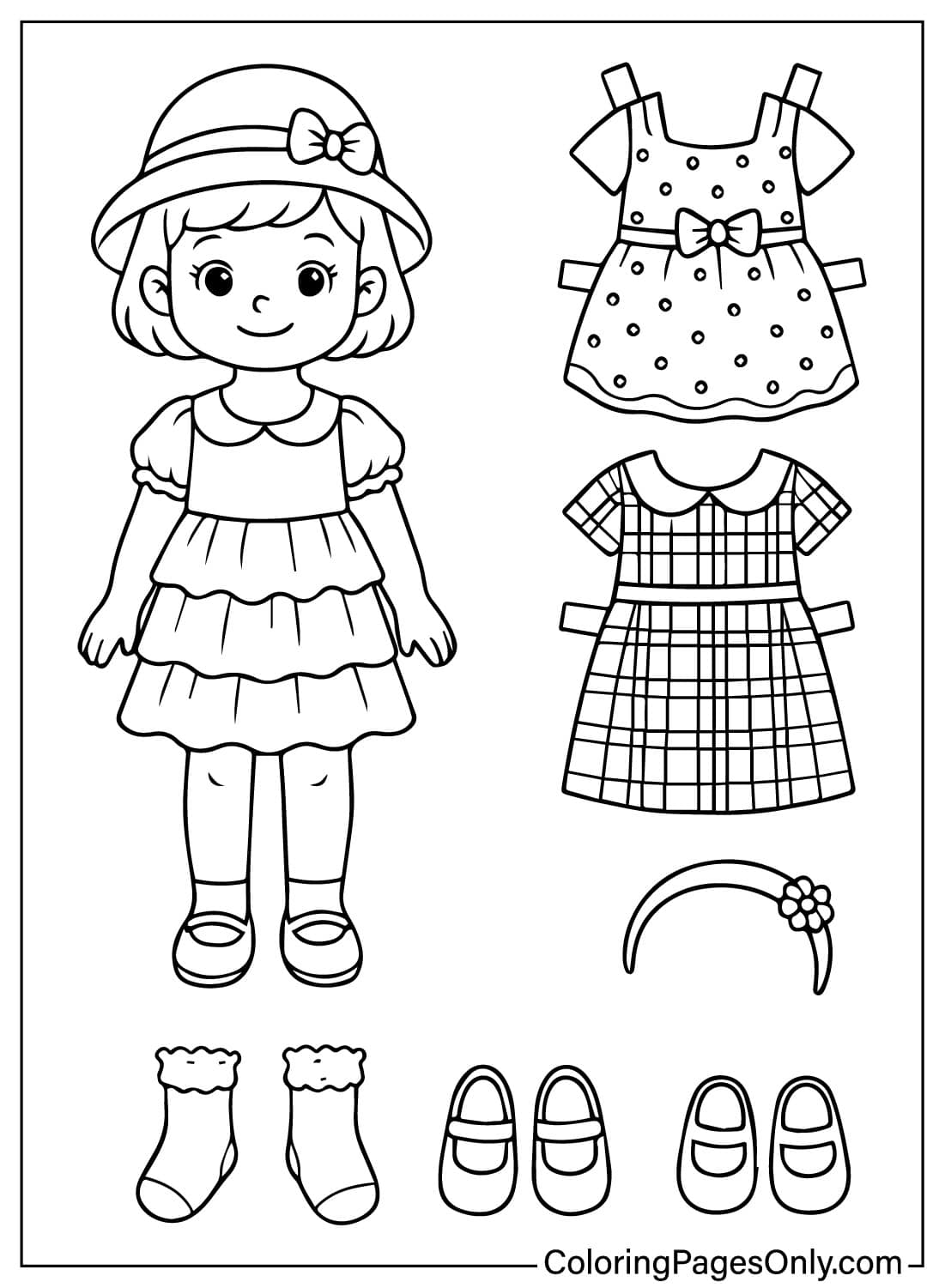
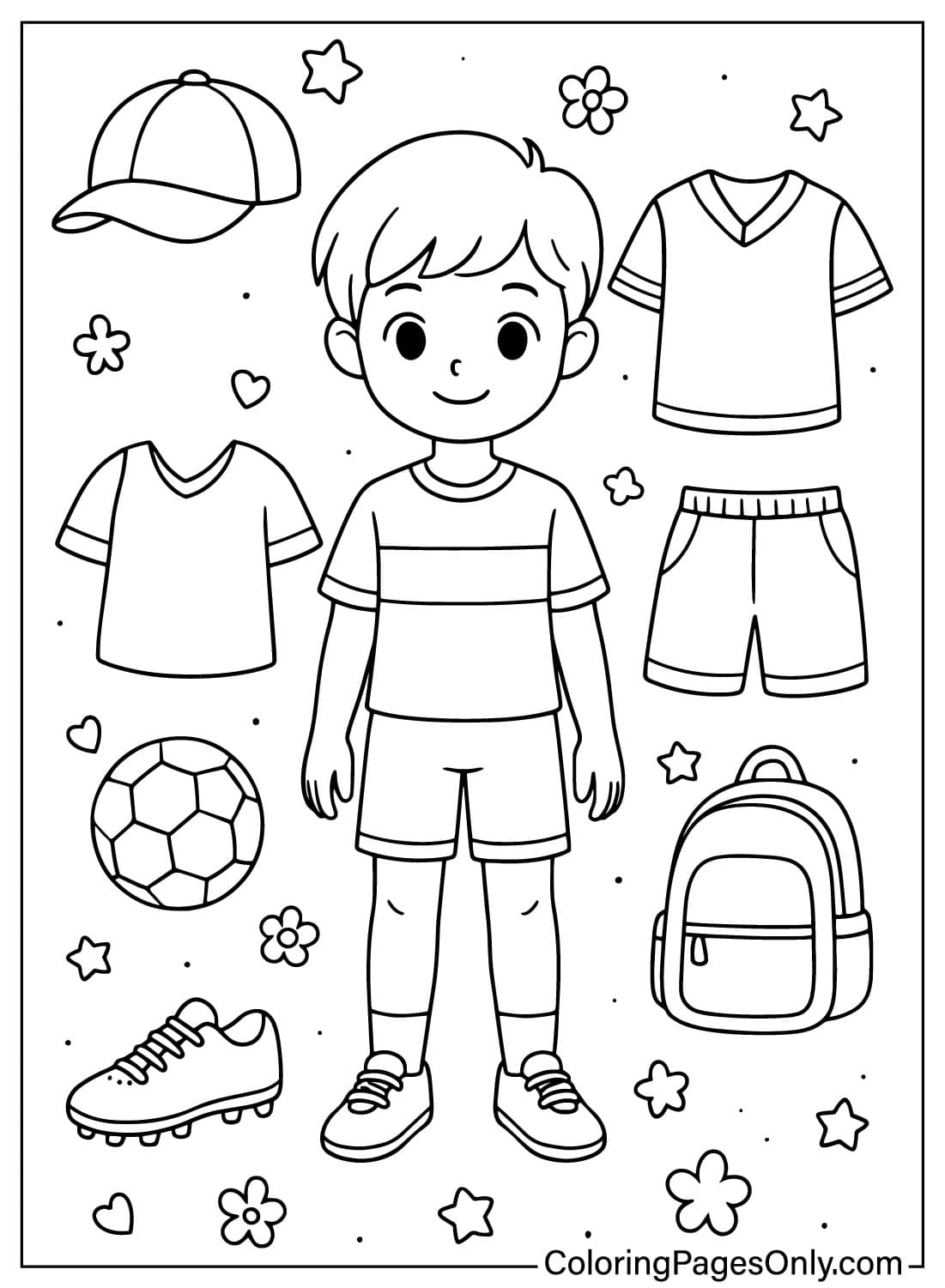
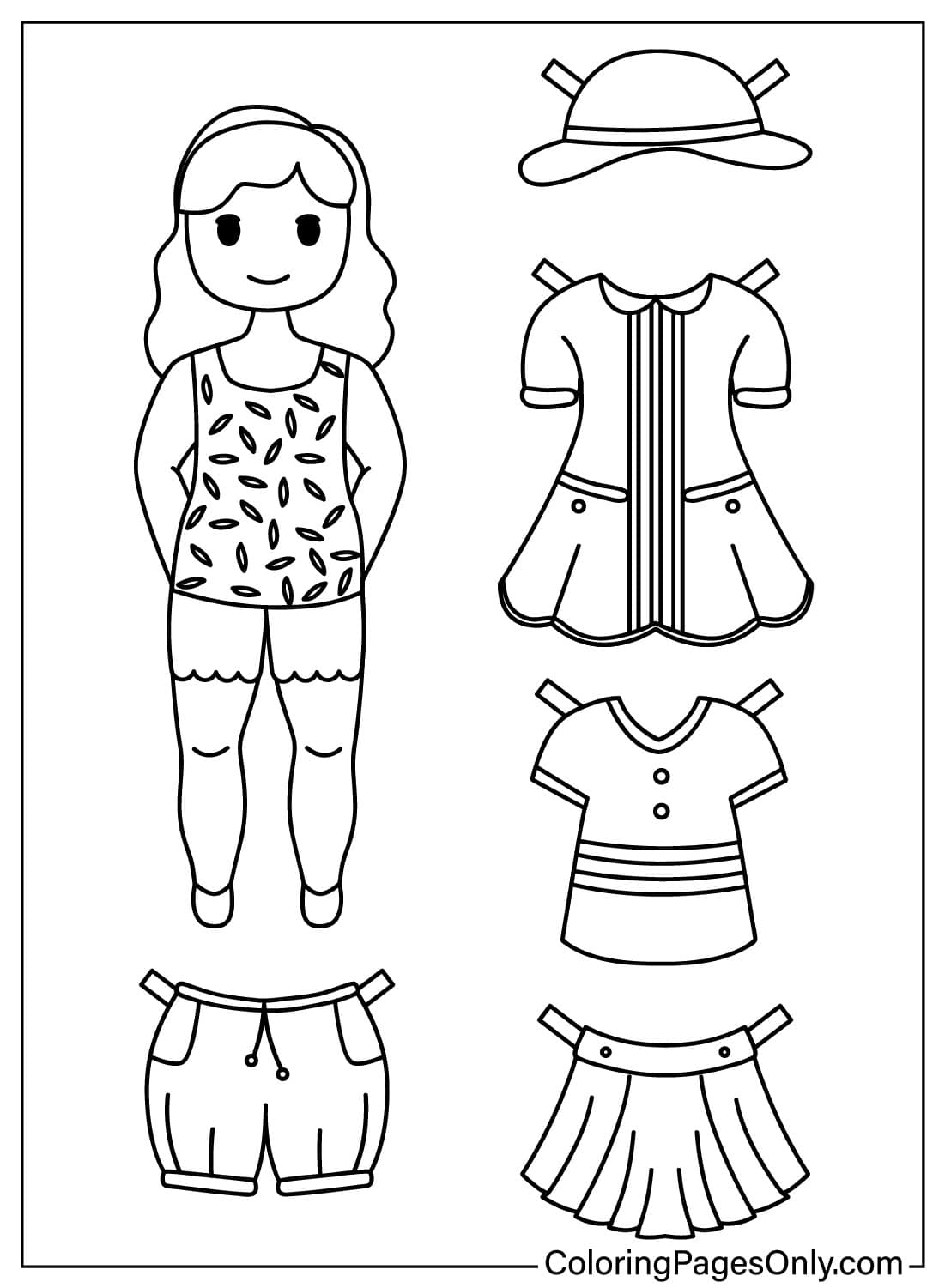
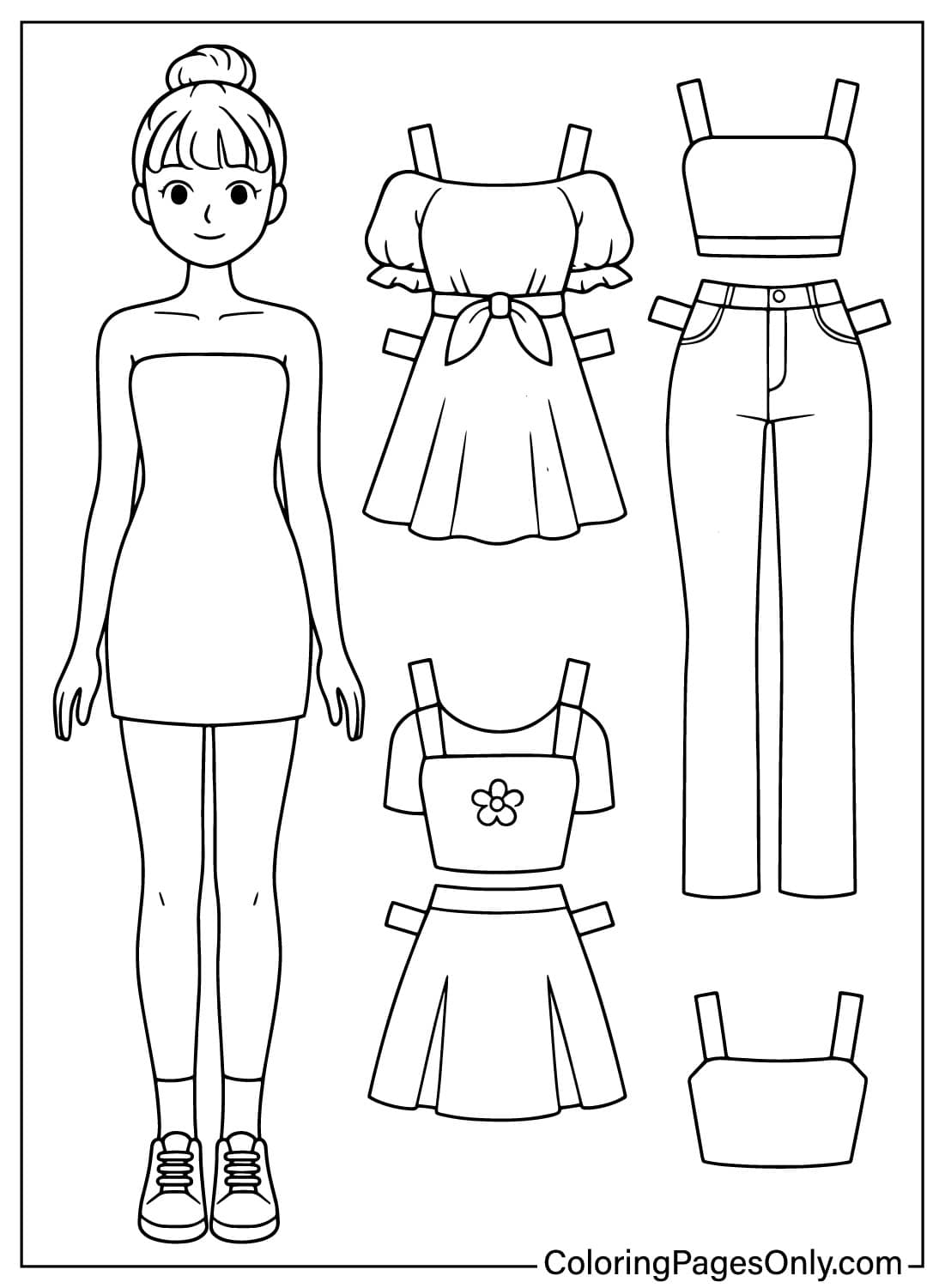
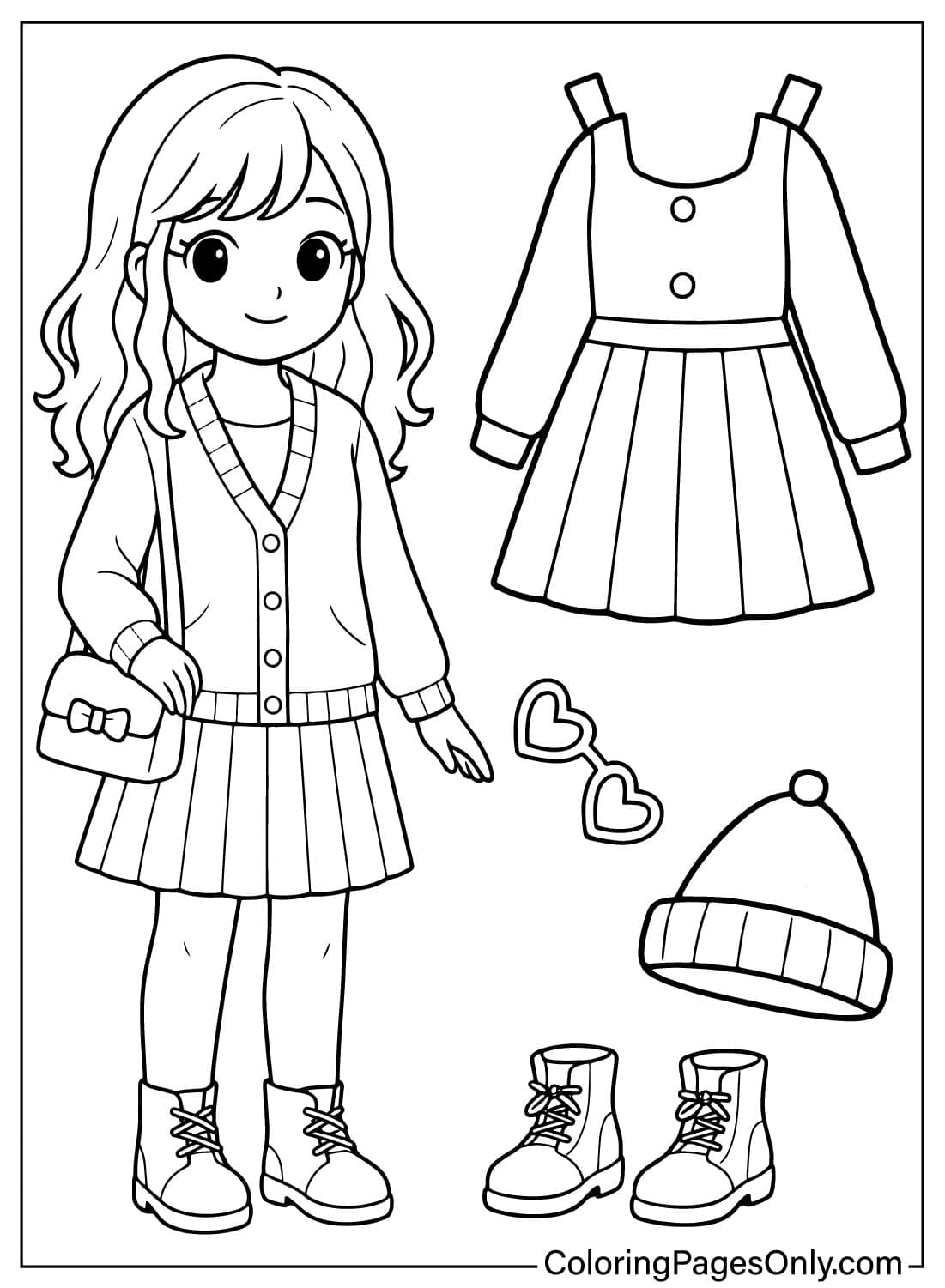
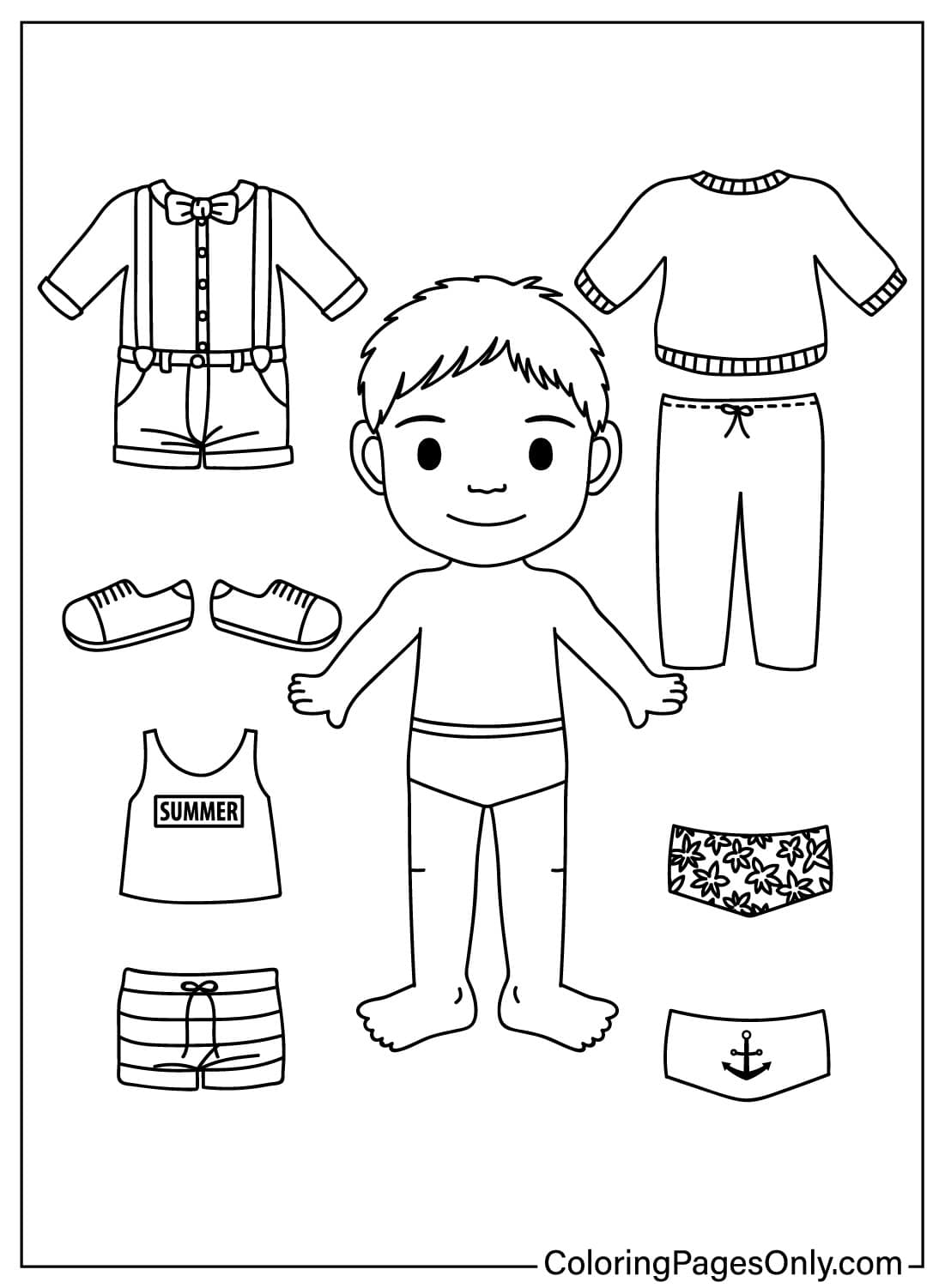
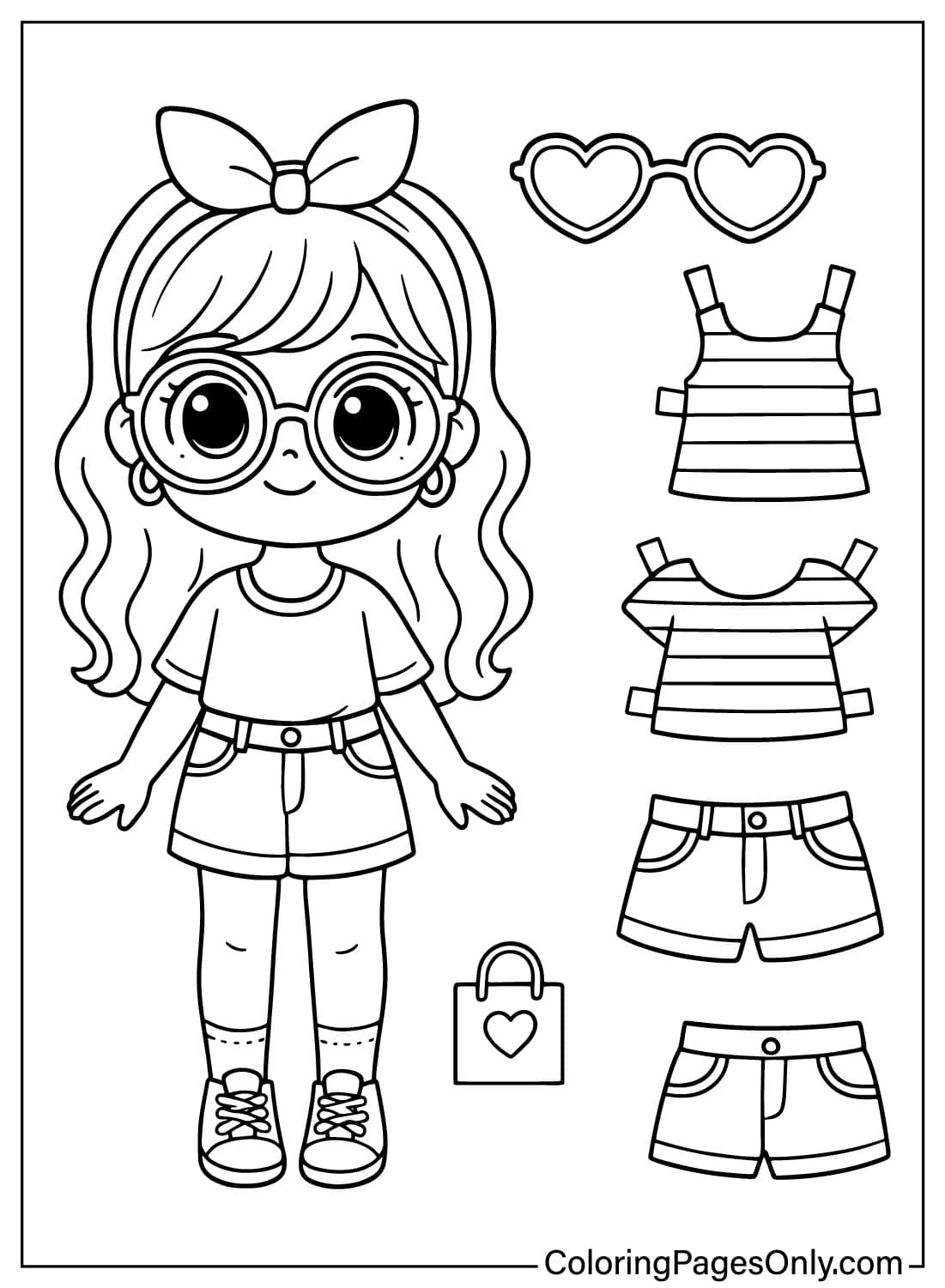
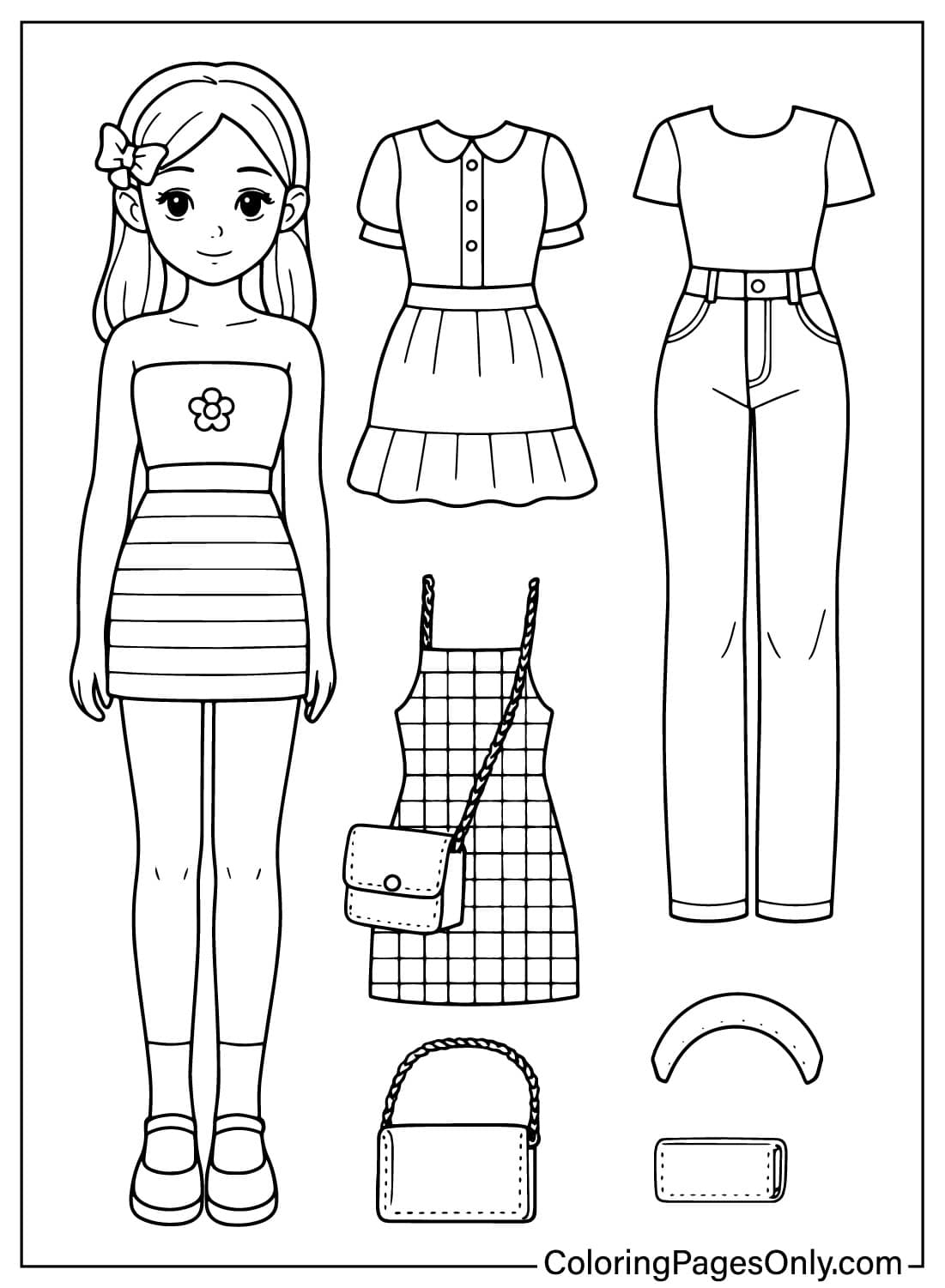
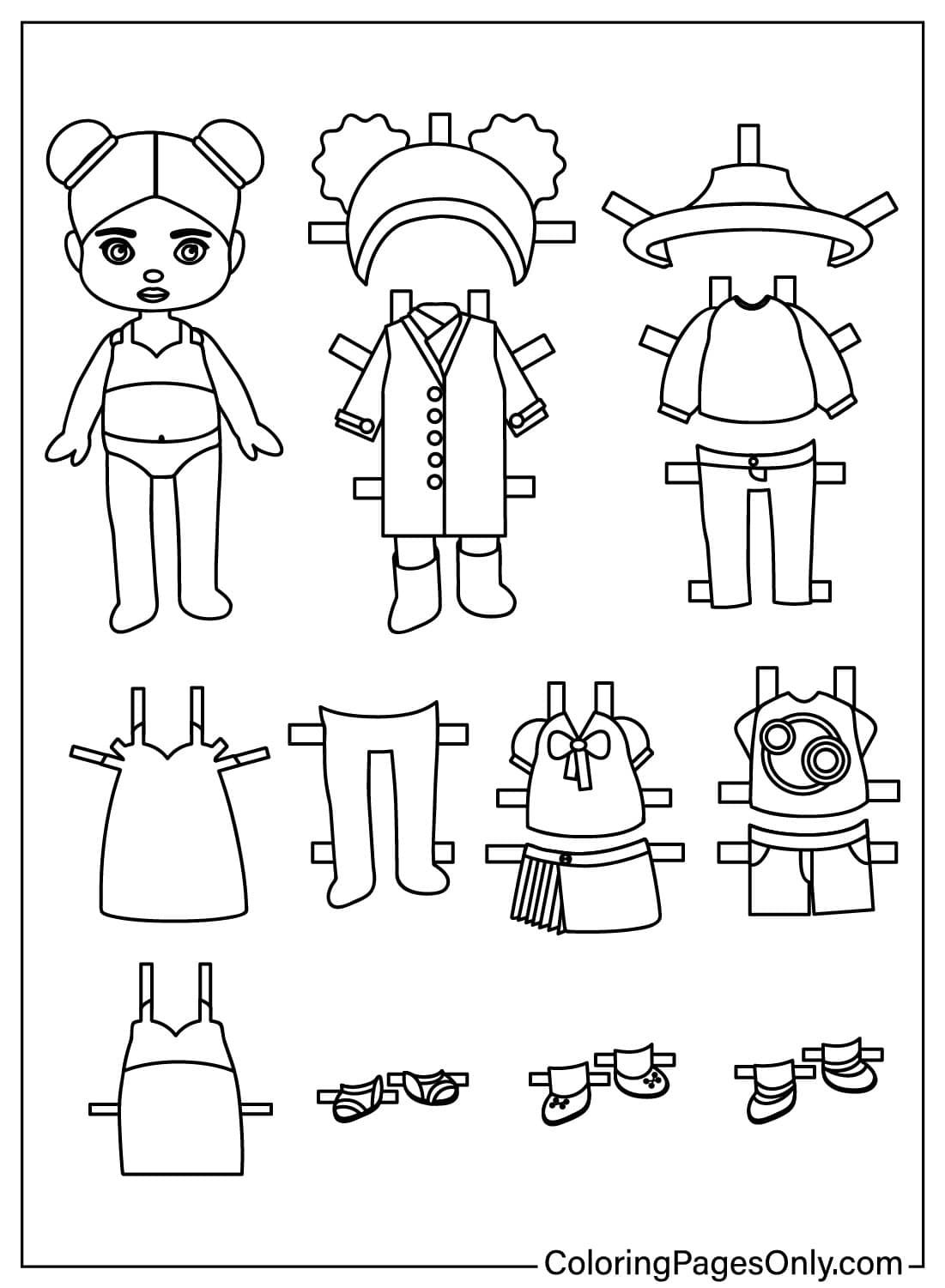
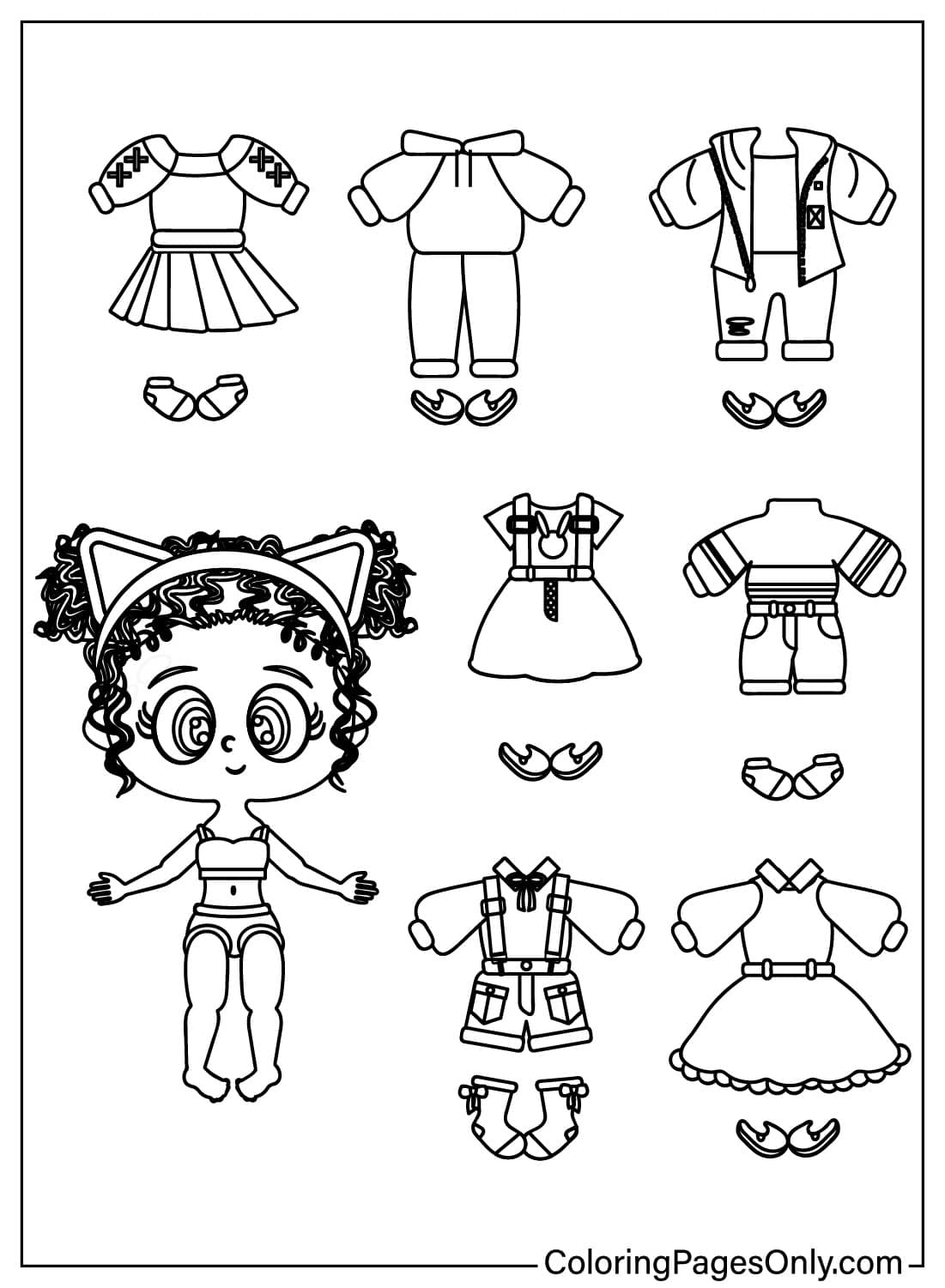
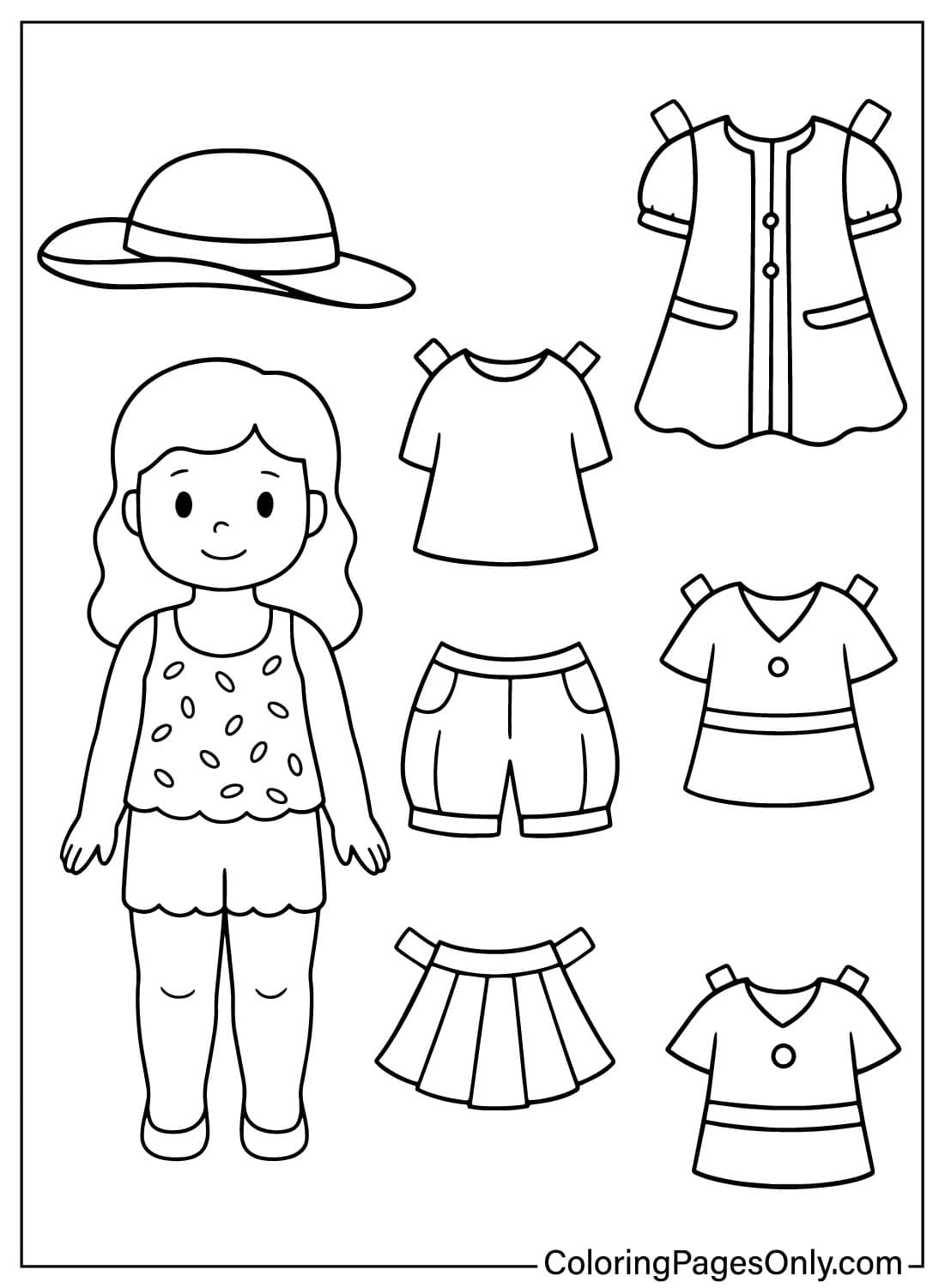
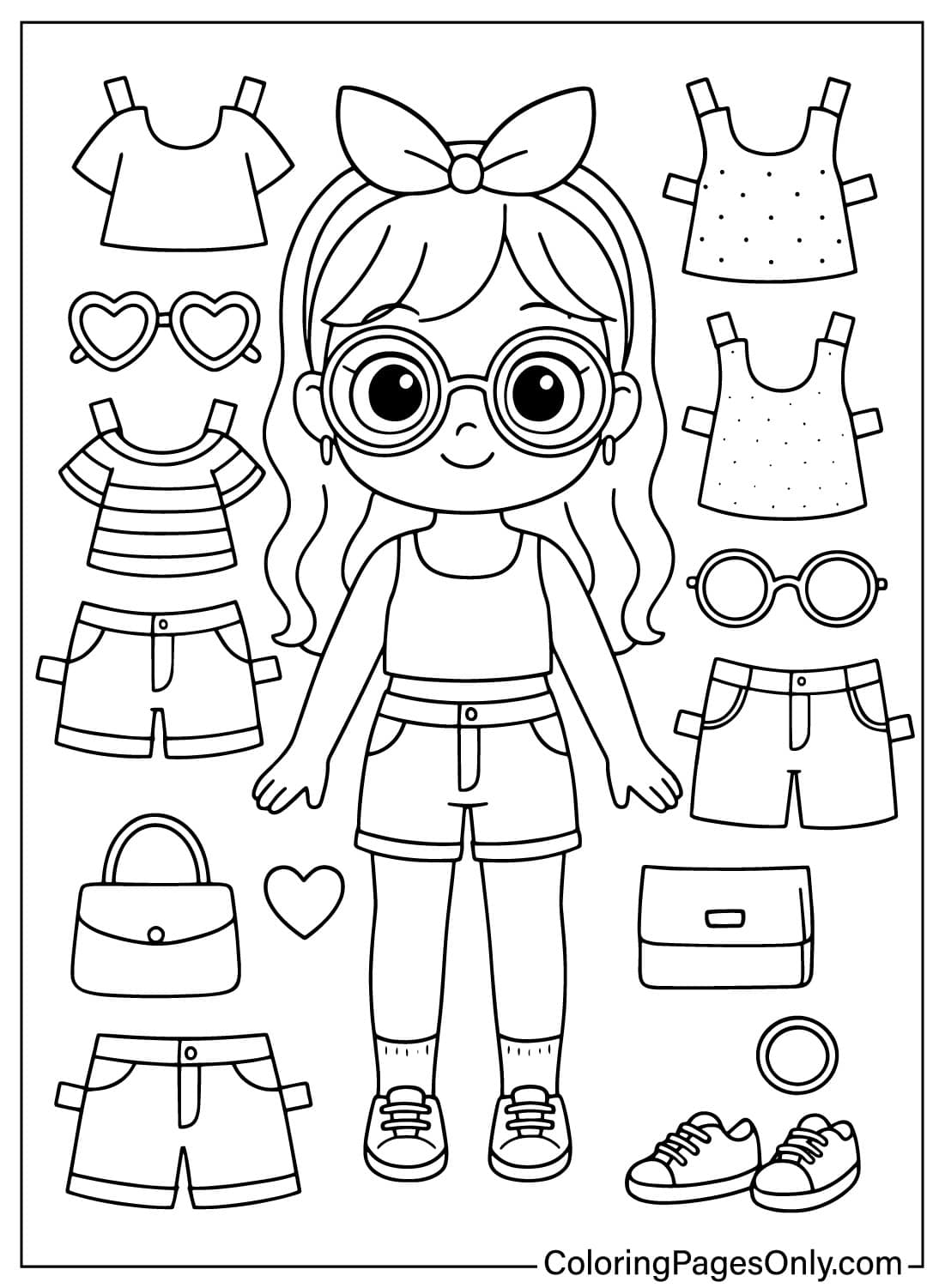
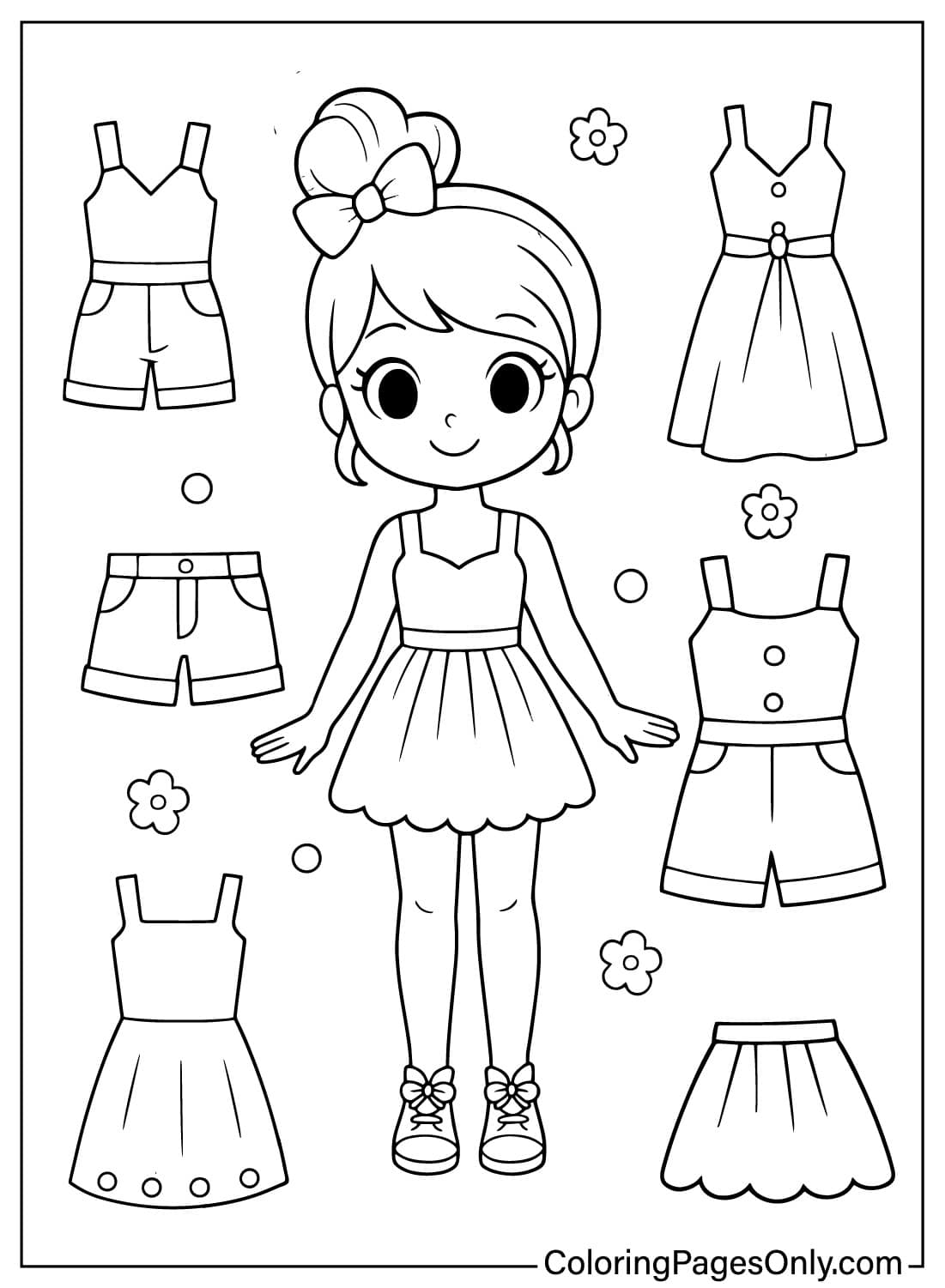
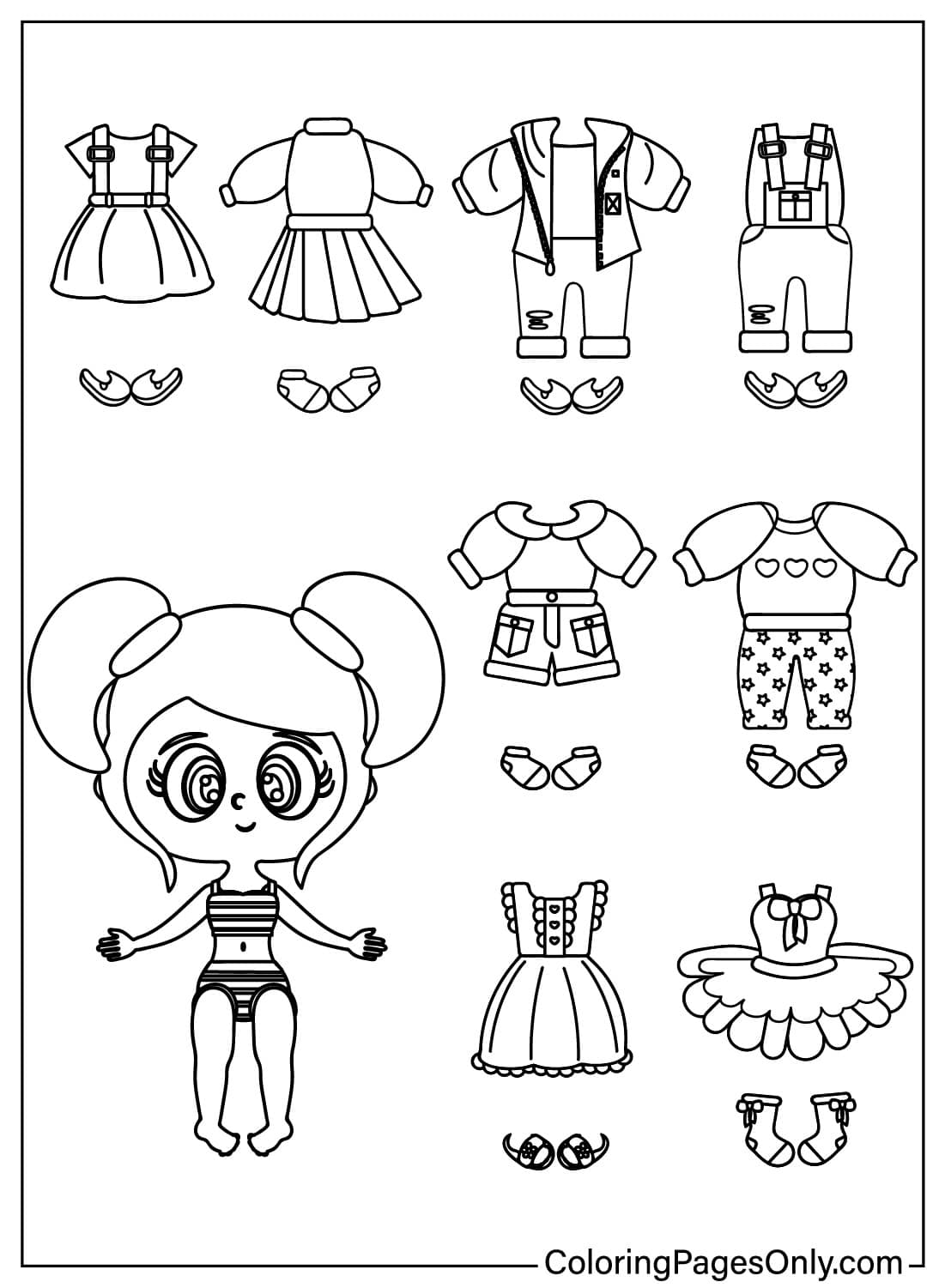
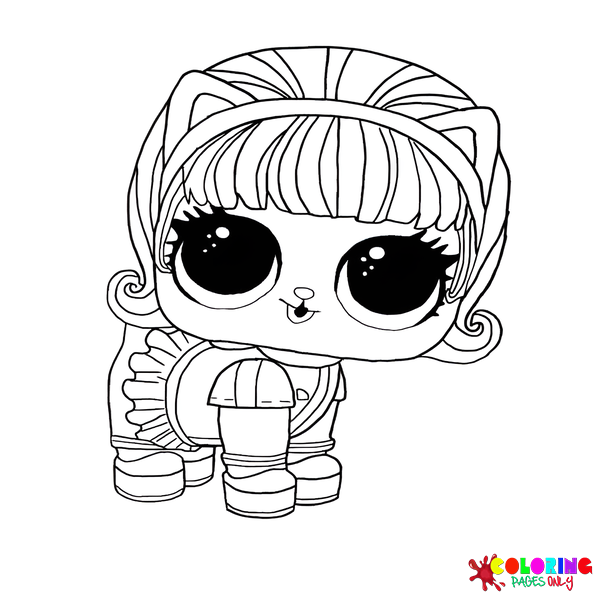
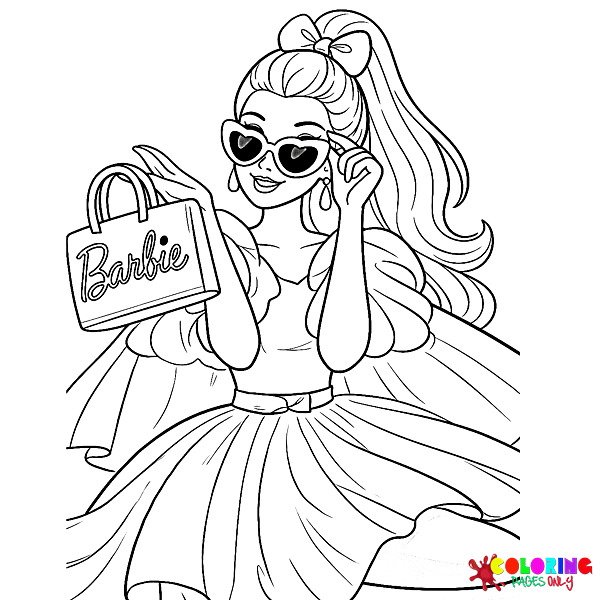
Paper Doll Coloring Pages at ColoringPagesOnly.com brings together 24 free printable pages centered on one of childhood’s most enduring creative traditions – the paper doll. The collection covers the full range of paper doll outfit categories: princess and fantasy, vintage and classic looks, seasonal outfits (winter, summer, holiday), everyday contexts (school, sports, travel), fashion-forward styles (fancy, style, fashion), and complete dress-up sets. Each tile depicts a paper doll figure with a specific outfit designed for coloring, cutting out, and play. The full Toys and Dolls collection is available through our Toys and Dolls Coloring Pages hub.
Every page is completely free – download as PDF to print or color online in your browser. No sign-up, no cost.
About Paper Dolls
Paper dolls are flat, illustrated human figures – typically printed on paper or cardstock – accompanied by separate clothing pieces designed to be cut out and placed on the figure. The clothing attaches to the doll through tabs folded over the doll’s edges, allowing outfits to be changed and recombined freely. The doll itself is typically depicted in a simple standing pose in undergarments or a base outfit, with the clothing layers placed over it.
Paper dolls have one of the longest and most consistent histories of any children’s toy. They appeared in Europe in the late 18th century and became mainstream entertainment in the 19th century, when American and European magazines began publishing paper doll inserts as regular features. By the early 20th century, dedicated paper doll books were a significant publishing category – the Lettie Lane and Betty Bonnet series in the early 1900s established the format that remained largely unchanged for decades. Celebrity paper dolls depicting film stars, royalty, and public figures became popular throughout the mid-20th century, producing an entire collector culture around vintage paper doll sets that remains active today.
The enduring appeal of paper dolls rests on several characteristics that most other toys do not share. The combination of coloring, cutting, dressing, and storytelling in a single activity engages multiple creative and fine motor skills simultaneously. The paper doll invites imaginative play without prescribing it – there is no correct way to play, no predetermined story to follow, and no wrong outfit combination. This open-ended quality, combined with the satisfying tactile experience of cutting and dressing the figures, explains why paper dolls have remained a consistent childhood activity across generations and changing toy markets.
What’s in This Collection
Princess and Fantasy
Paper Doll Princess and Paper Doll Magic represent the collection’s fantasy register – a doll dressed in royal or magical attire, including gown, crown, and fantasy accessories. The Princess tile uses the formal ball gown silhouette associated with fairy tale royalty, while the Magic tile incorporates fantasy elements suggesting a witch or sorceress aesthetic – star and wand accessories, a more dramatic silhouette.
Coloring the Princess tile: The ball gown suits the most vivid, saturated color treatment in the collection – a deep royal blue, rose pink, or emerald green gown body with contrasting white or gold trim and a metallic gold crown. The gown’s layered petticoat structure provides multiple distinct color zones that can be treated in graduated shades of the same color family (darker at the bottom layers, lighter toward the waist) to suggest the volume and depth of fabric layers.
Vintage and Classic
Paper Doll Vintage and Paper Doll Classic are the collection’s most historically grounded tiles – depicting the styling conventions of earlier eras in fashion and paper doll design. The Vintage tile references mid-20th century fashion aesthetics: A-line skirts, fitted bodices, gloves, and structured silhouettes. The Classic tile depicts a more timeless, refined look that references the paper doll tradition itself.
For anyone interested in the history of fashion as well as the history of paper dolls, these tiles serve as a starting point for exploring period clothing. The Vintage tile’s 1950s-adjacent aesthetic uses a specific color palette – pastel pink, mint green, or pale yellow for the skirt, contrasting with a darker fitted bodice in navy or burgundy, and white gloves as the defining accessory detail.
Everyday and Contextual Outfits
The largest thematic cluster in the collection covers paper dolls dressed for specific real-world contexts and activities. Paper Doll School depicts back-to-school attire – a clean, practical outfit suitable for classroom wear, with a backpack and school accessories. Paper Doll Sports covers activewear – athletic clothing in the casual, functional aesthetic of modern sportswear. Paper Doll Travel dresses the doll for a journey – practical clothing, luggage, and the accessories associated with departure and arrival. Paper Doll Outfit and Paper Doll Girl are the most general everyday tiles, depicting contemporary casual clothing without a specific activity context.
These contextual tiles are particularly valuable for educational use – they provide natural conversation starters about clothing appropriate for different situations, weather conditions, and activities. For parents and teachers using paper dolls as teaching tools about occasions and dress codes, these tiles offer the clearest vocabulary for those discussions.
Seasonal Outfits
Paper Doll Winter and Paper Doll Summer cover the two most visually distinct seasonal wardrobes. The Winter tile incorporates cold-weather elements – coat, scarf, hat, boots, and layered clothing – while the Summer tile uses the light, minimal aesthetic of warm-weather dressing. The Paper Doll Holiday tile covers festive seasonal attire – a dressed-up outfit appropriate for holiday celebrations and special occasions.
Coloring seasonal tiles: Winter outfits suit a cool palette – deep navy, forest green, burgundy, or rich purple for the coat, with warm cream or white for the scarf and hat trim. Summer outfits suit the brightest, most saturated warm tones in the collection – vivid yellow, coral, sky blue, or mint for lightweight fabrics that convey warmth and airiness.
Fashion and Style Tiles
Paper Doll Fashion, Paper Doll Style, Paper Doll Fancy, and Paper Doll Pink form the collection’s fashion-forward cluster – outfits that prioritize aesthetic interest and visual drama over contextual realism. The Fashion tile references contemporary runway-adjacent styling. The Fancy tile depicts formal occasion wear – an elevated, dressed-up outfit suitable for a gala or formal event. The Pink tile uses pink as a deliberate design statement throughout the outfit rather than as simply one color among many.
These tiles connect to the broader fashion illustration tradition and are the collection’s most appropriate pages for older children and teens who are interested in fashion design as a creative pursuit. For broader fashion and dress-up coloring pages, the Fashion Vibes collection extends this aesthetic.
Birthday and Special Occasion
Paper Doll Birthday depicts a doll dressed for a birthday celebration – party attire, birthday hat, and festive accessories. This tile is the most directly occasion-specific page in the collection and functions naturally as an activity component of birthday party planning: children color and cut out the birthday paper doll as a party activity, then use it as a party favor or decoration.
Complete Sets and Activity Tiles
Paper Doll Set is the collection’s most practical tile – a complete paper doll set on a single page, including the base doll figure and multiple outfit pieces ready to color, cut, and assemble. This is the tile most directly intended for the classic paper doll play format, where the doll and wardrobe exist as a complete unit rather than as individual outfit tiles.
Paper Doll Dress Up and Paper Doll Dress focus specifically on dress garments – the formal, occasion-wear register of paper doll fashion. Paper Doll Dollhouse places the paper doll in a domestic context – a doll within a dollhouse setting, combining the paper doll tradition with the dollhouse play tradition.
Paper Doll Hat, Paper Doll Smile, Paper Doll Cute, and Paper Doll Fun are the collection’s most accessible and youngest-skewing tiles – simpler compositions with more approachable designs suited to children ages 4–7 who are new to paper doll activities.
How to Make the Most of Paper Doll Coloring Pages
The Two-Step Approach: Color First, Cut Second
The most effective sequence for paper doll coloring pages is always to color the complete page first before cutting any element out. Cutting before coloring makes the individual clothing pieces difficult to handle and color – they are too small to hold stable while applying color, and the cut edges are easily torn. Color the entire page as a flat sheet, allow it to dry fully if using markers or paint, then cut out the doll and clothing pieces with scissors or a craft knife.
Paper Weight and Print Quality
Standard 75gsm printer paper produces a paper doll that is too lightweight and floppy to handle well after cutting – the figure bends, and the clothing tabs tear easily. Print on 120–160gsm cardstock for best results. The heavier paper holds its shape when cut, keeps the doll standing more easily, and survives repeated outfit changes without tearing at the tab attachment points. For guidance on home printing paper selection, see our how to print coloring pages guide.
Coloring Tool Choice
Different coloring tools produce different results for paper doll pages. Colored pencils allow the most precise work within the small detail areas of clothing – embroidery details, buttons, trim – and produce a finished surface that cuts cleanly without smearing. Markers produce more vivid, saturated colors but require heavier paper to prevent bleed-through, and the faster-drying requirement means the sheet must be fully dry before cutting. Watercolor pencils applied dry and then lightly activated with a damp brush produce a soft, illustrated quality suited to the vintage and classic tiles. For a full guide to tool selection and technique, see our coloring tips for beginners.
Making Sets and Organizing Outfits
Print multiple outfit tiles from the collection to create a personal paper doll wardrobe. Store the cut-out clothing pieces in a small envelope or zip-lock bag attached to the back of the doll sheet – this keeps the wardrobe organized and prevents outfit pieces from being lost between play sessions. A small binder with plastic sleeve pages provides a more permanent and organized storage solution for a larger collection.
Extending Beyond the Page
Paper doll coloring pages can extend into entirely original creative work. After coloring and cutting the provided tiles, children can draw and cut their own additional outfit pieces on blank paper – using the existing clothing pieces as scale references. This extension from structured coloring page activity into open-ended fashion design is one of the paper doll format’s distinctive educational features: it provides a scaffold that children can then step beyond.
Paper Dolls and Child Development
Paper doll activities engage several distinct developmental skill areas simultaneously, making them one of the more educationally rich craft activities available to children in the 4–10 age range.
Fine motor development is the most immediately apparent benefit – the combined demands of coloring within outlines, cutting along clothing edges (particularly the small tab shapes), and manipulating the tabs onto the doll figure require sustained fine motor precision. These skills directly support pencil grip, scissor control, and the hand-eye coordination that underlies writing readiness.
Categorical and sequential thinking develops through the dressing process – children learn implicitly about outfit appropriateness (a winter coat is not worn at the beach), layering order (undergarments before outer garments), and occasion matching (formal occasions call for different clothing than playground activities). These categorization and sequencing skills are foundational cognitive tools applicable far beyond clothing.
Narrative and imaginative play is facilitated by the paper doll’s fundamental openness – the doll has no predetermined story, no fixed personality, and no scripted adventure. Children supply all of this, using the doll and its wardrobe as props for stories they invent. This self-directed imaginative play is associated with language development, empathy building (through character creation and perspective-taking), and creative problem-solving.
For more on the developmental benefits of coloring and creative activities across age groups, see our benefits of coloring for children guide.
FAQs
What is a paper doll? A paper doll is a flat, illustrated figure printed on paper or cardstock, accompanied by separate clothing pieces that can be cut out and placed on the figure by folding small tabs over the doll’s edges. Paper dolls allow children to color, cut, dress, and create stories with the figures and their changeable wardrobes.
What age group are paper doll coloring pages for? Paper doll coloring pages suit a wide range of ages. The simpler tiles – Paper Doll Cute, Smile, Hat, Fun – work well for children ages 4–6 who are developing scissor skills and enjoying dress-up play. More detailed fashion tiles suit ages 7–12. Teens and adults may enjoy the Vintage, Classic, and Fashion tiles as fashion illustration and design exercises.
What paper should I print on? For best results with paper dolls, print on 120–160gsm cardstock rather than standard printer paper. Heavier paper holds its shape after cutting, prevents the figure from bending, and keeps the clothing tabs intact through repeated outfit changes.
Should I color before or after cutting? Always color before cutting. Coloring the complete flat sheet first is significantly easier than trying to color individual cut-out pieces and produces better results. Allow colors to dry fully before cutting if using markers or watercolor-based tools.
Can I create my own outfits? Yes – after coloring and cutting the provided tiles, children can draw and cut their own additional clothing pieces using the existing pieces as size references. This extension of the original design is one of the paper doll format’s best features for creative development.
Are these suitable for classroom use? Yes – paper doll coloring pages work well as classroom craft activities, particularly for fine motor practice, sequential thinking exercises, and creative play sessions. The School and Everyday outfit tiles connect naturally to social studies discussions about clothing and occasion-appropriate dress. All pages are free for personal and educational non-commercial use.
What is the Paper Doll Set tile? The Paper Doll Set tile provides a complete paper doll set on a single page – the base doll figure and multiple clothing pieces together – ready to color, cut, and assemble as a complete play set. It is the most direct representation of the classic paper doll format in the collection.
All 24 Paper Doll Coloring Pages are free – download as PDF or color online. Share your finished pages on Facebook and Pinterest.