Velociraptor Coloring Pages
 By:
Jennifer Thoa - Content Editor & Designer
Updated:
By:
Jennifer Thoa - Content Editor & Designer
Updated:
Velociraptor coloring pages: 30 free printable PDF designs covering two very different versions of the same animal, from feathered, scientifically accurate portraits to the larger scaly raptors familiar from film, plus pack scenes, hatchlings, and simple cartoon pages for younger colorists. Print any design as a PDF or open it in the browser to color on screen, no sign-up needed anywhere in the collection.
Few dinosaurs carry two completely different reputations at once, the way Velociraptor does. Say the name and most people picture something roughly human-sized, scaly, and clever enough to open doors. The real animal, first described from bones found in Mongolia’s Gobi Desert in the early 1920s, stood closer to the height of a large turkey and was very likely covered in feathers. Both pictures are worth coloring, and this set gives equal room to each one.
That gap between the movie Raptor and the real one is what makes this collection worth spending time in. Kids meeting dinosaurs for the first time, older kids sorting fact from Hollywood, classrooms building a unit on fossils and evidence, and adults who grew up with the film version and are curious what changed, will all find something here.
If there’s one detail that belongs entirely to this set, it’s the choice a colorist has to make before picking up a single crayon: which Velociraptor is this page? A quick, feathered hunter built for speed, or the towering movie predator most people already have in their head? The line art usually makes it obvious, and getting the scale and texture to match that choice is most of what makes a page here feel right.
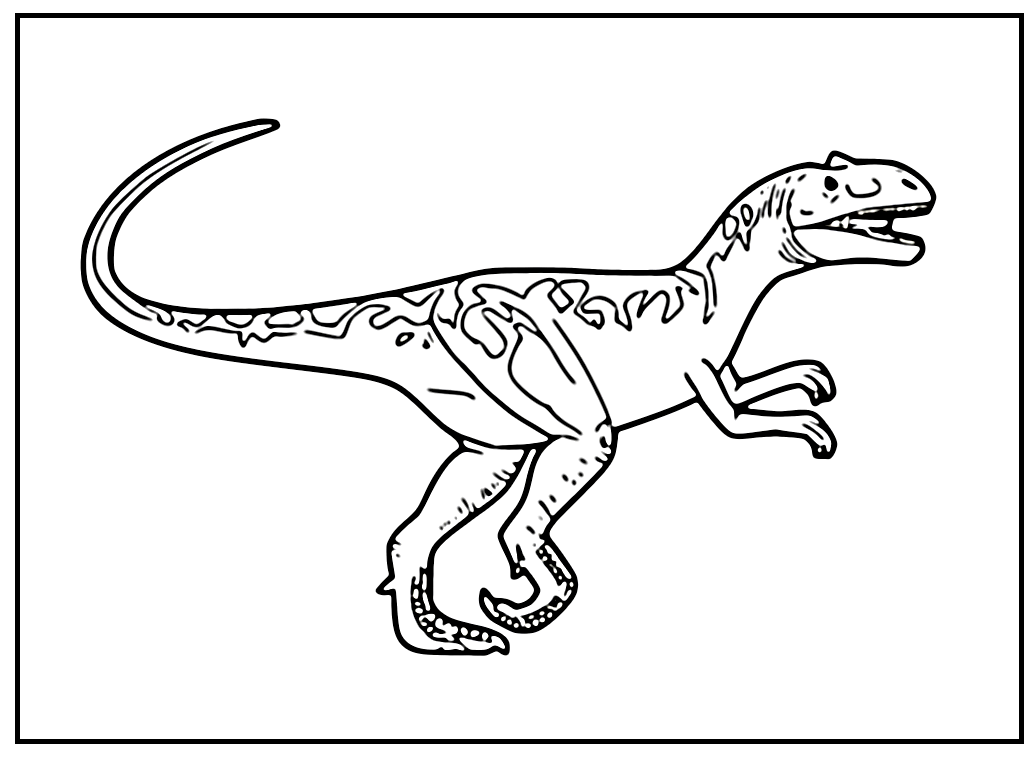
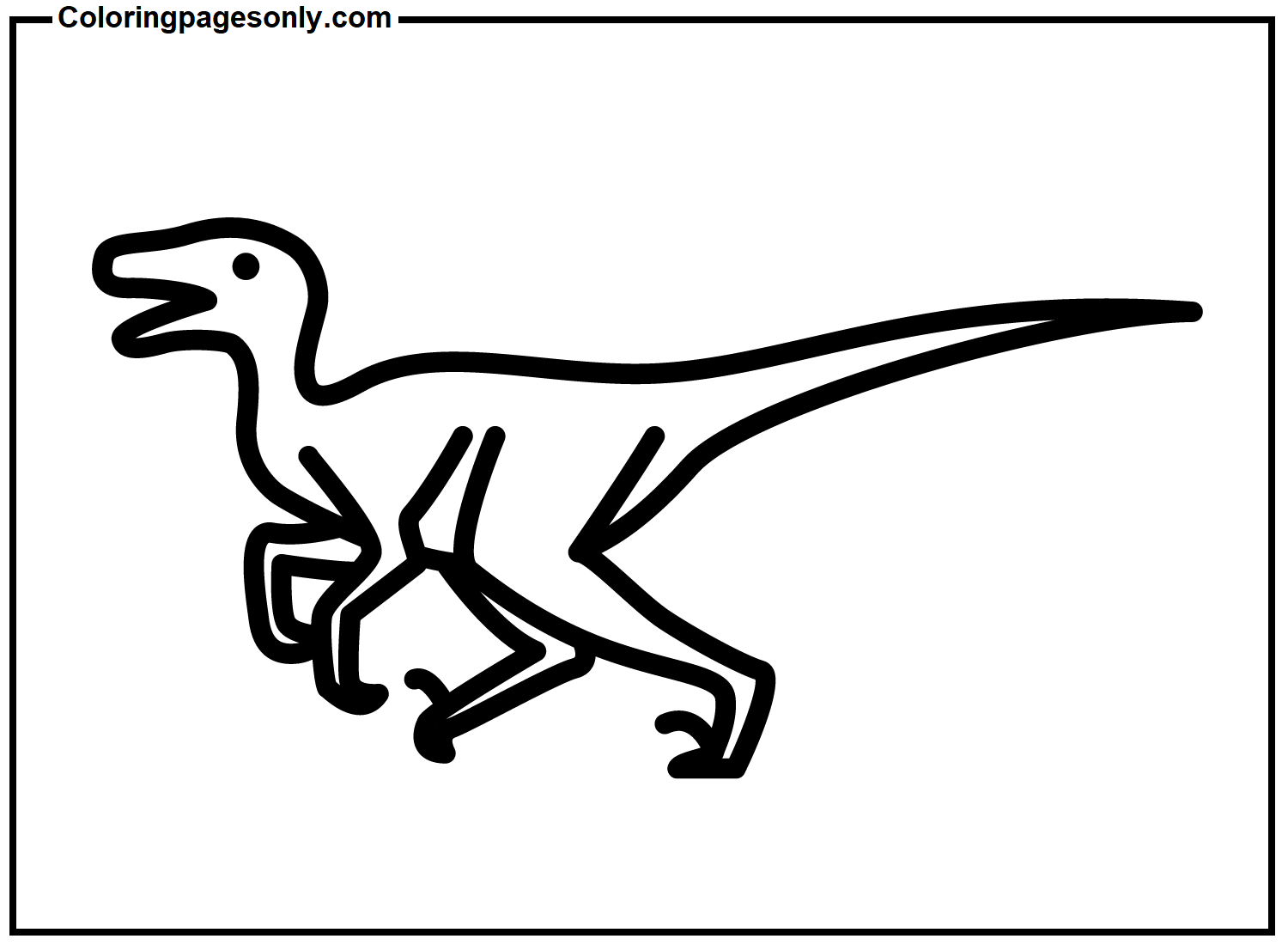
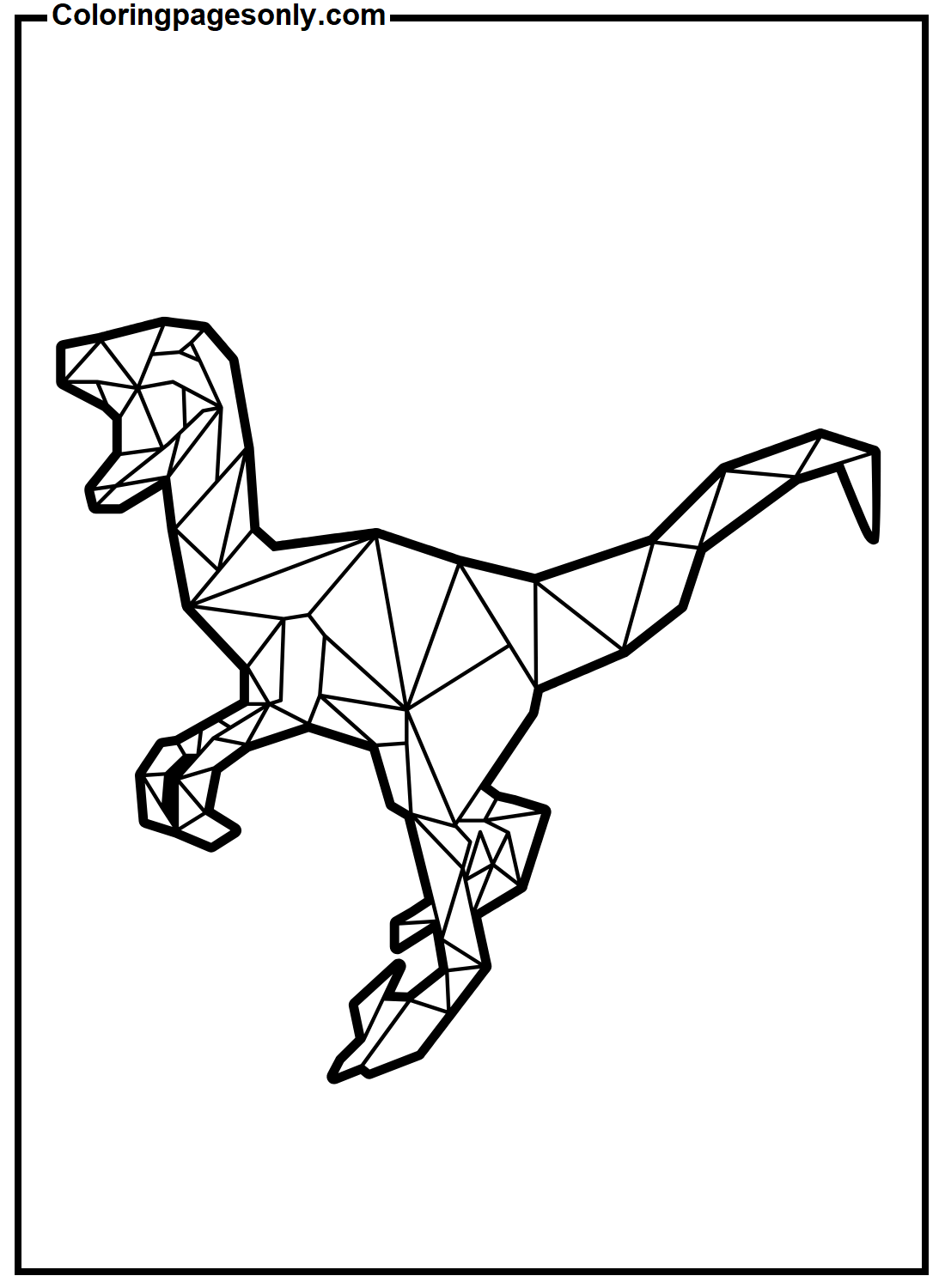
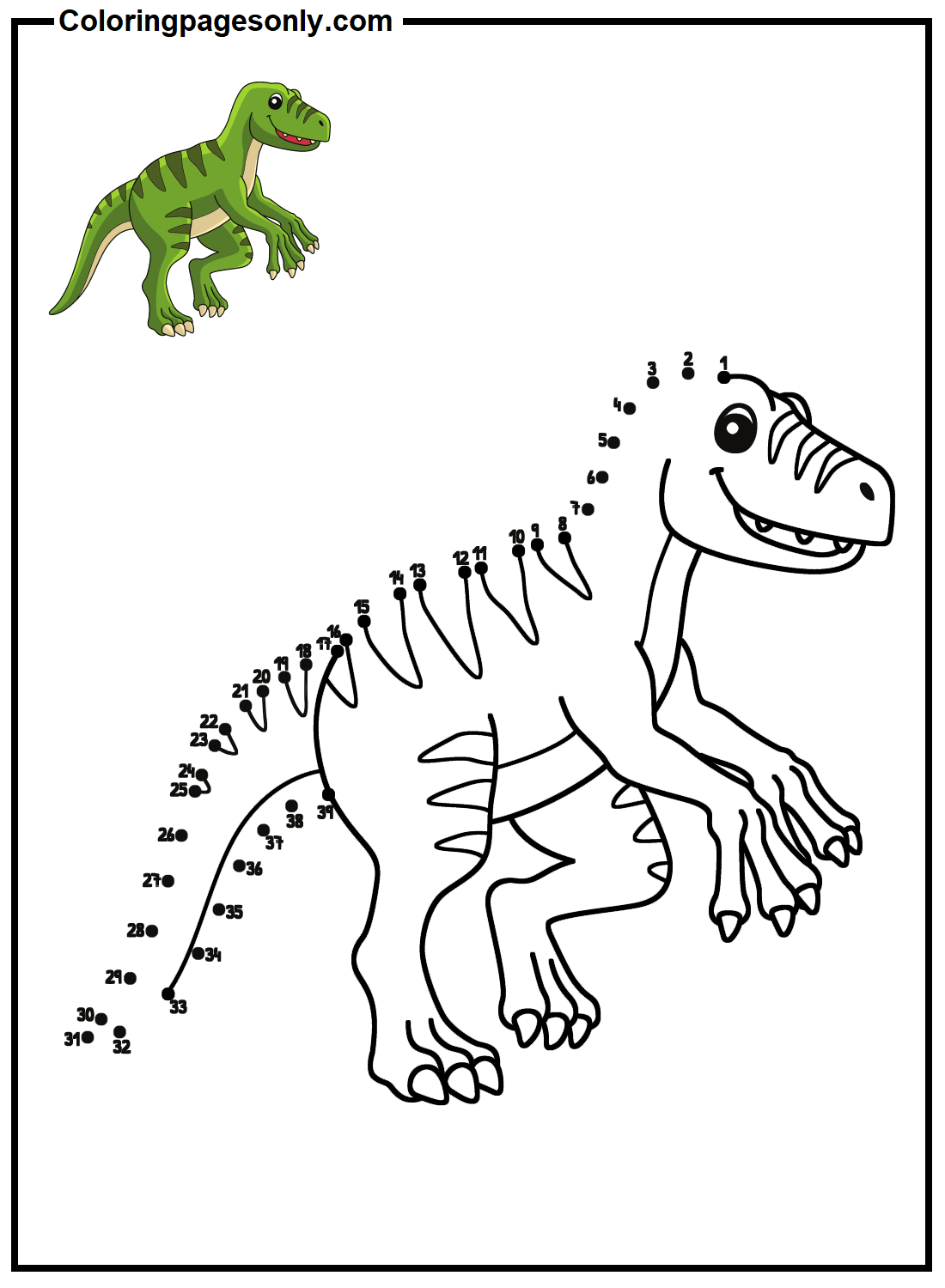
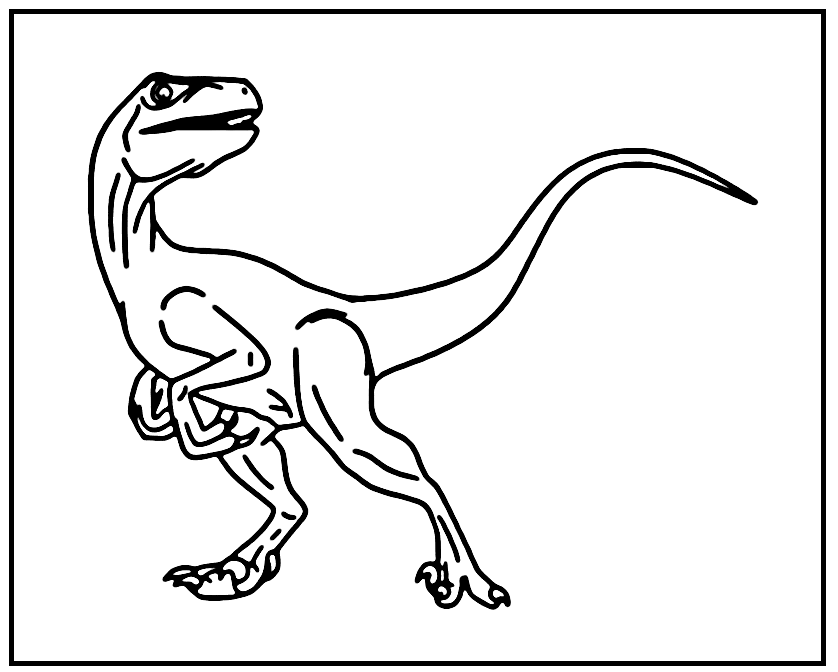
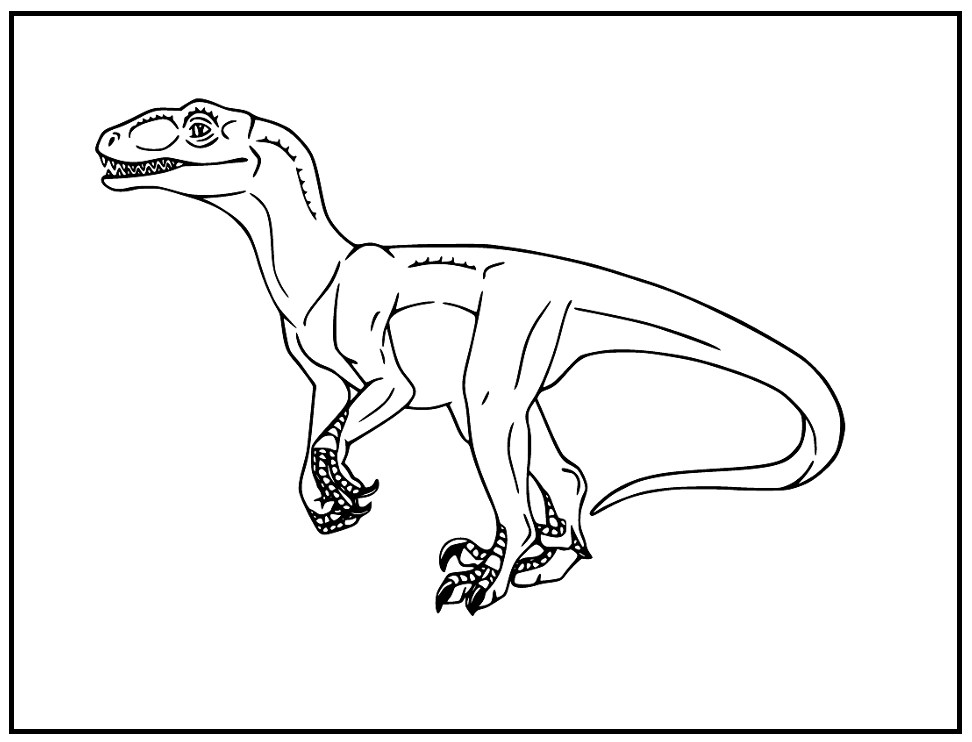
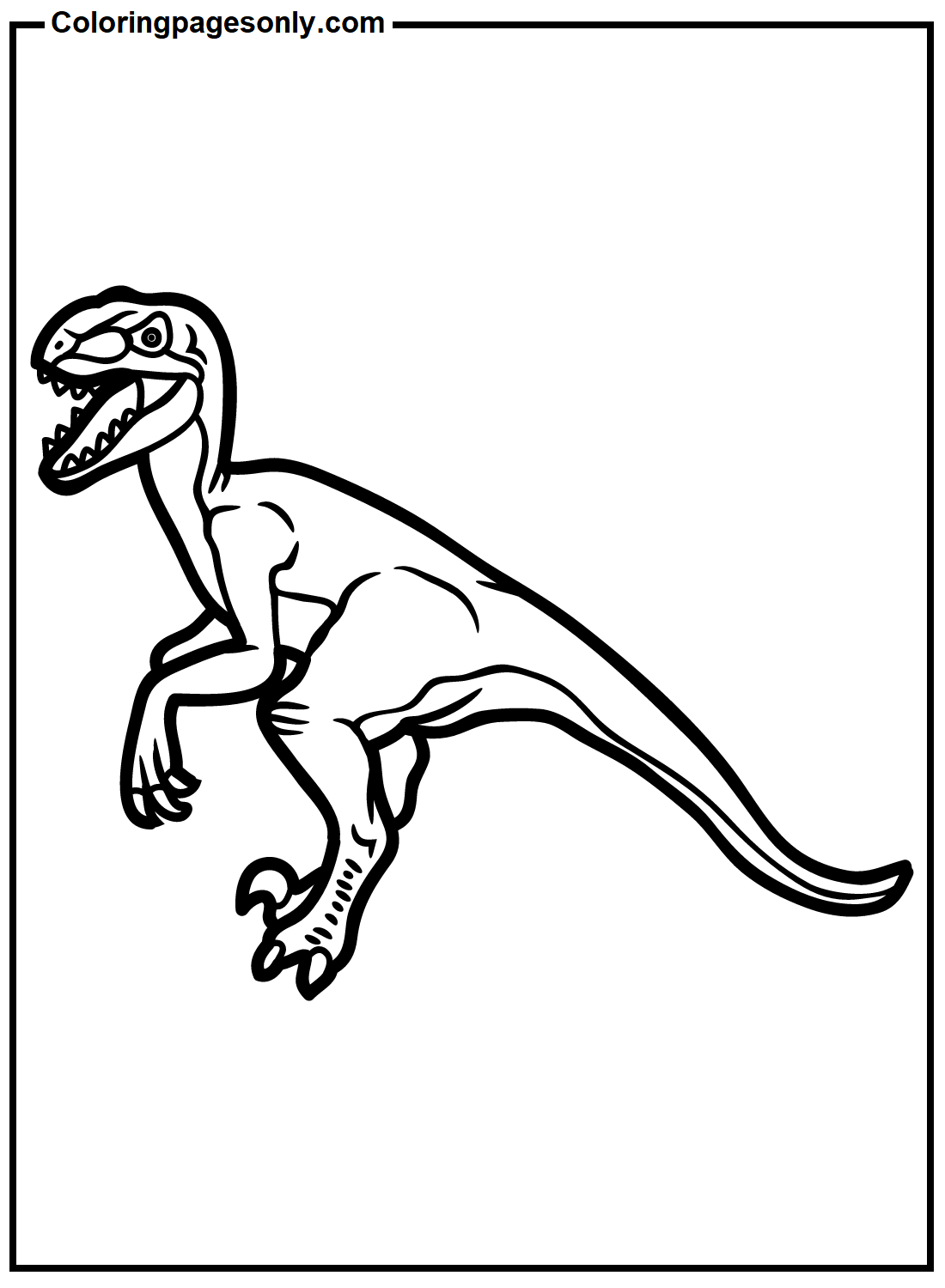
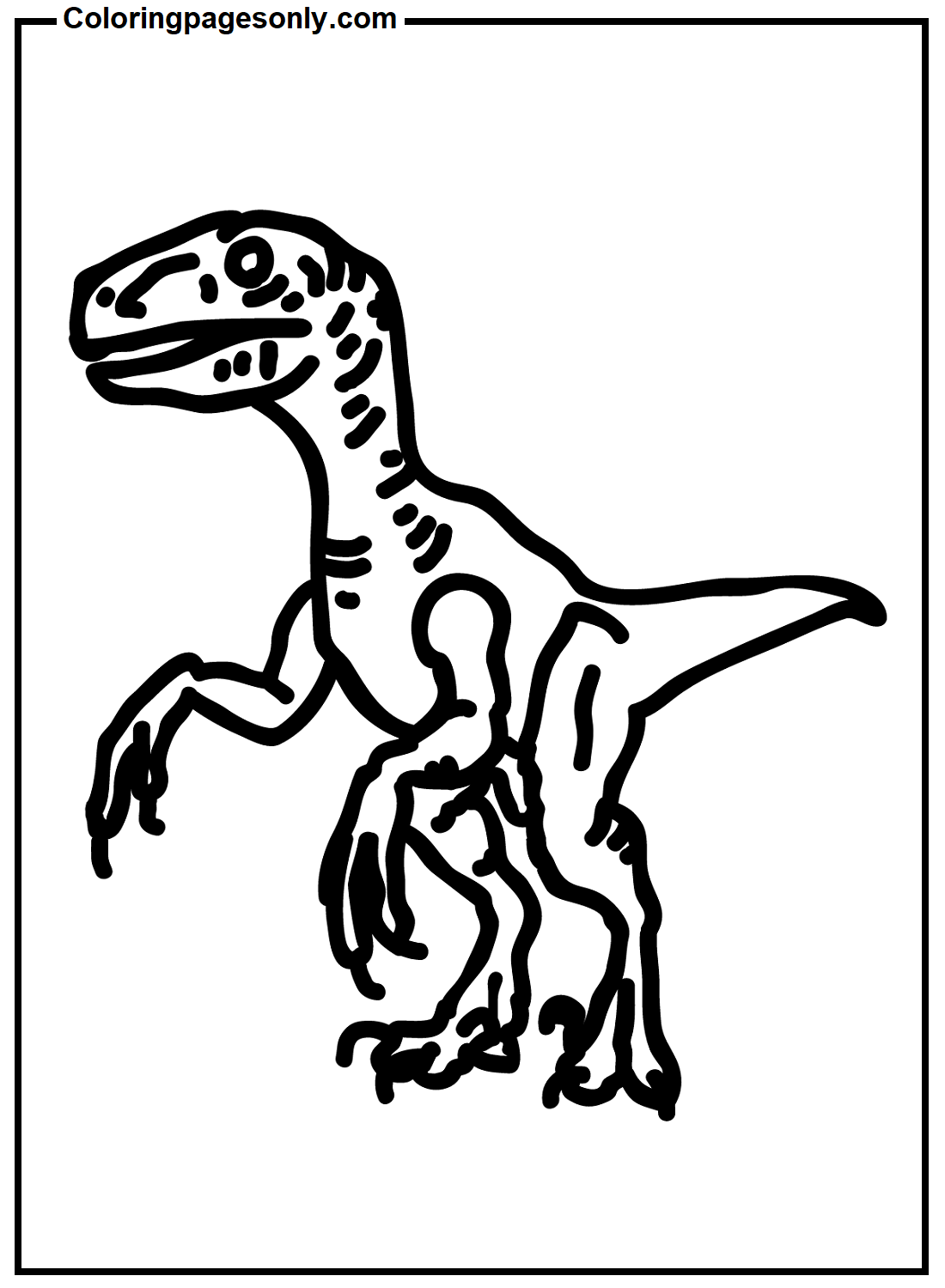


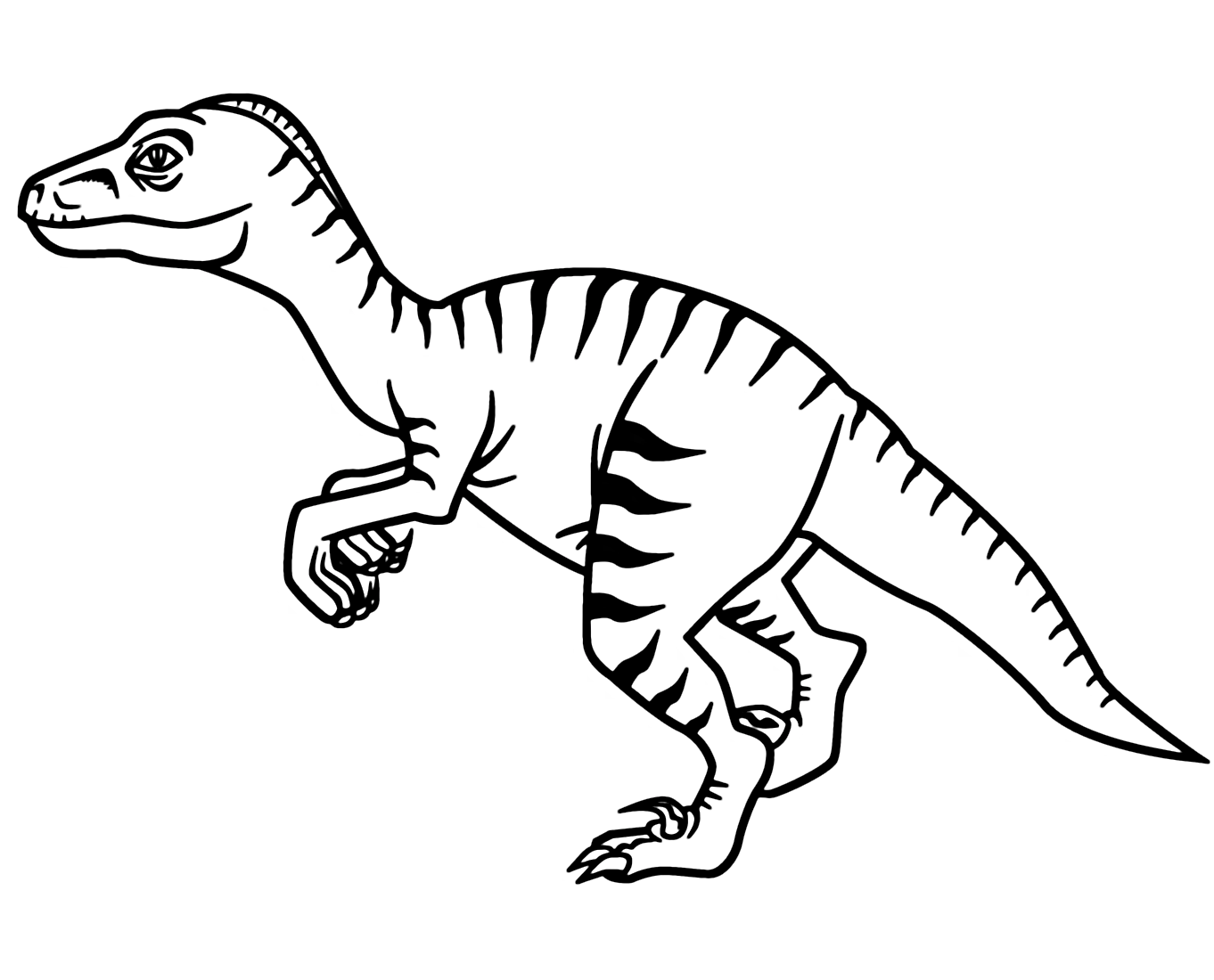
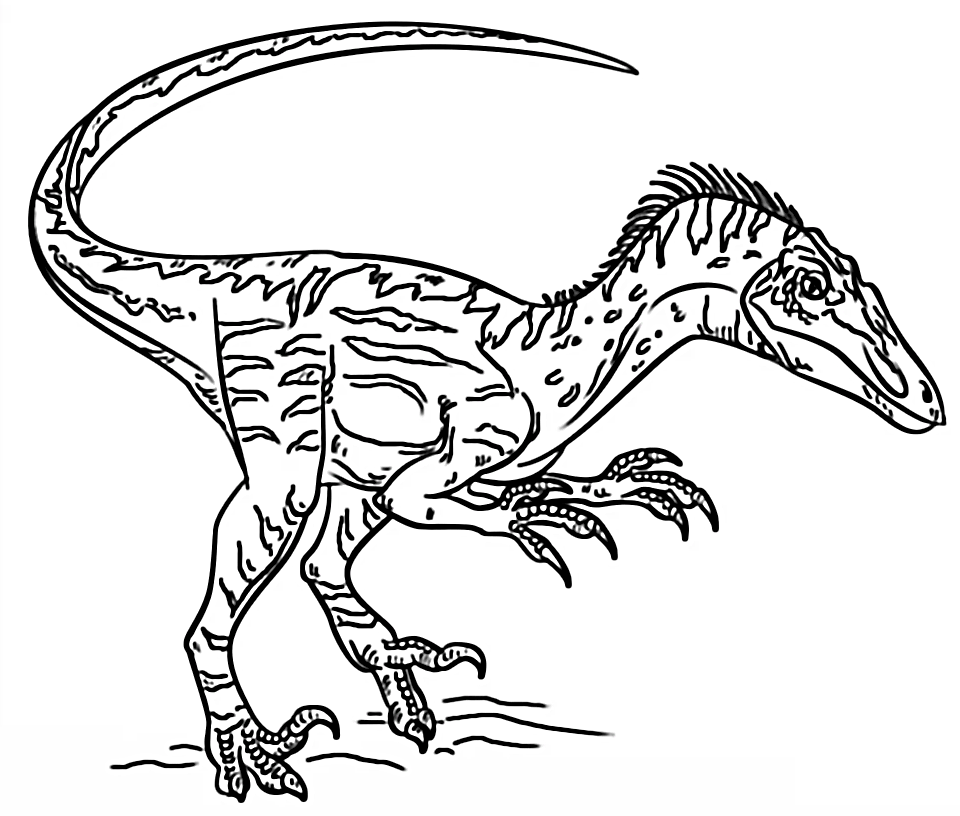
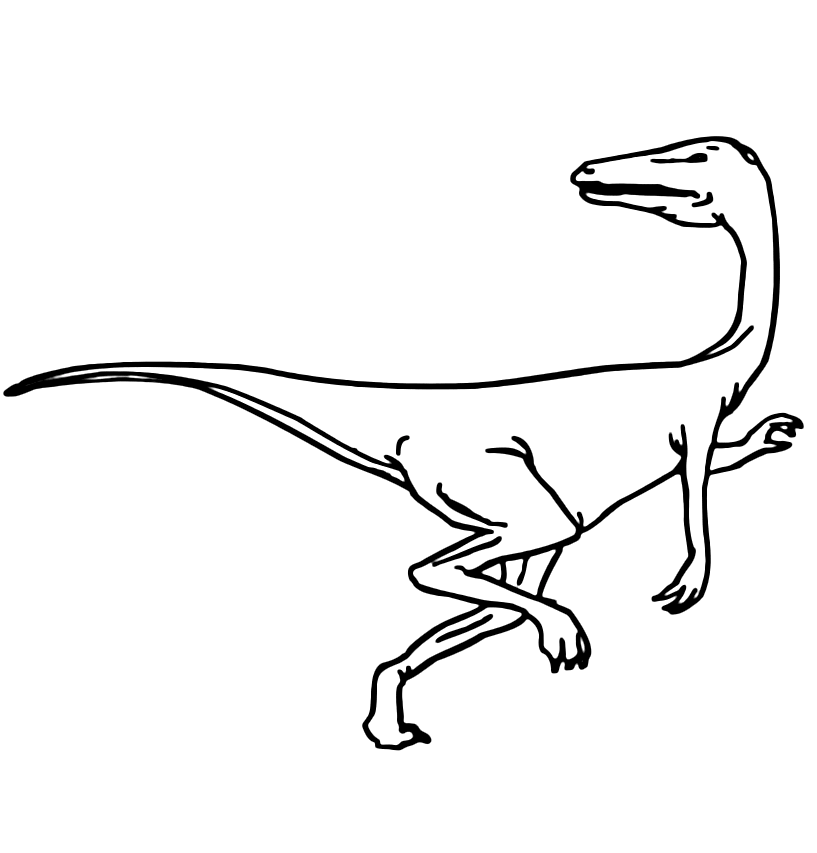
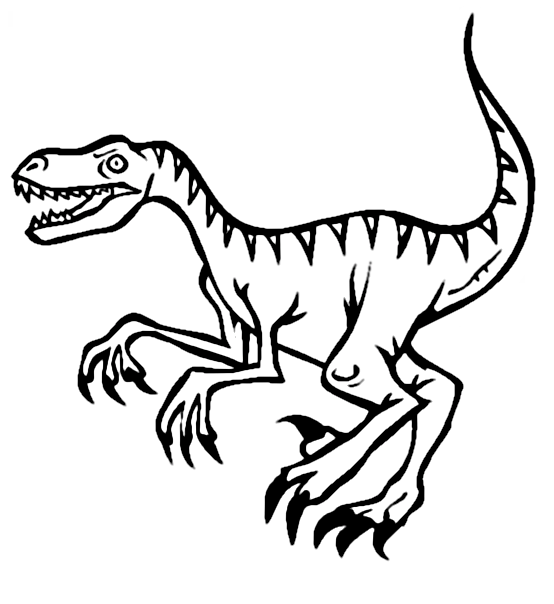
Quick Answer
Velociraptor coloring pages are a free set of 30 printable PDFs and browser-based coloring sheets covering both the scientifically accurate, feathered Velociraptor and the larger, scaly raptor familiar from film, alongside pack scenes, hatchlings, and simple designs for young children.
Best for: kids aged 3 and up, dinosaur-obsessed grade schoolers sorting fact from fiction, and classrooms teaching how scientific pictures change with new evidence
Formats: printable PDF and online coloring
Popular pages: the feathered realistic portrait, the movie-style raptor mid-chase, a raptor pack scene, and the hatchling in its nest
Creative uses: a side-by-side “real vs. movie” comparison display, a raptor pack mural, and a feather-texture study using colored pencils
What’s Inside Velociraptor Coloring Pages
The set splits fairly evenly between two identities, with a smaller cluster of pack, baby, and beginner-friendly pages rounding things out.
Realistic, Feathered Velociraptor Portraits
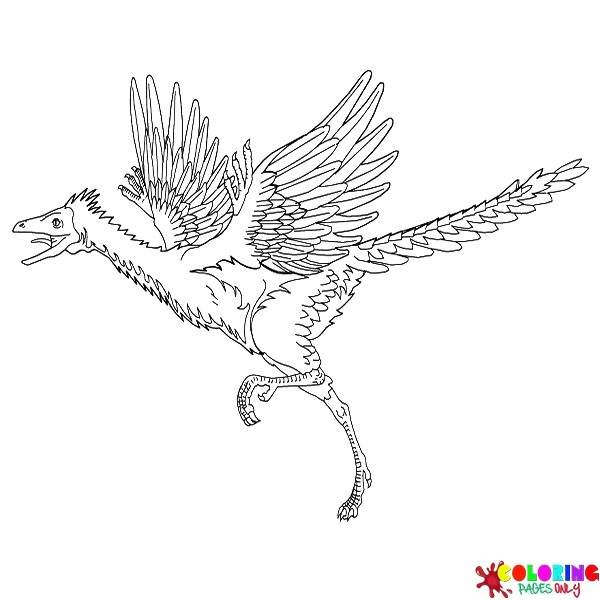
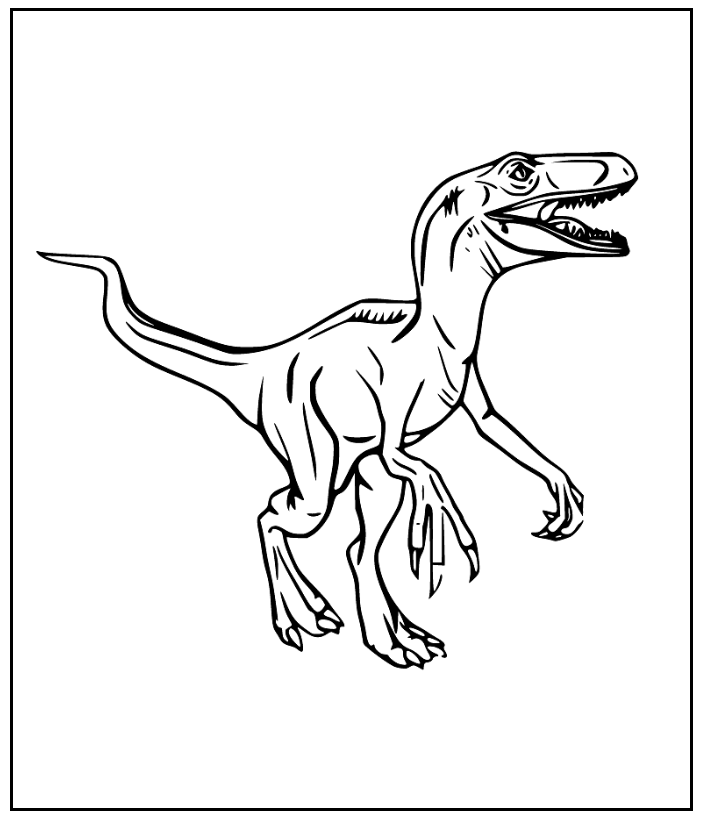
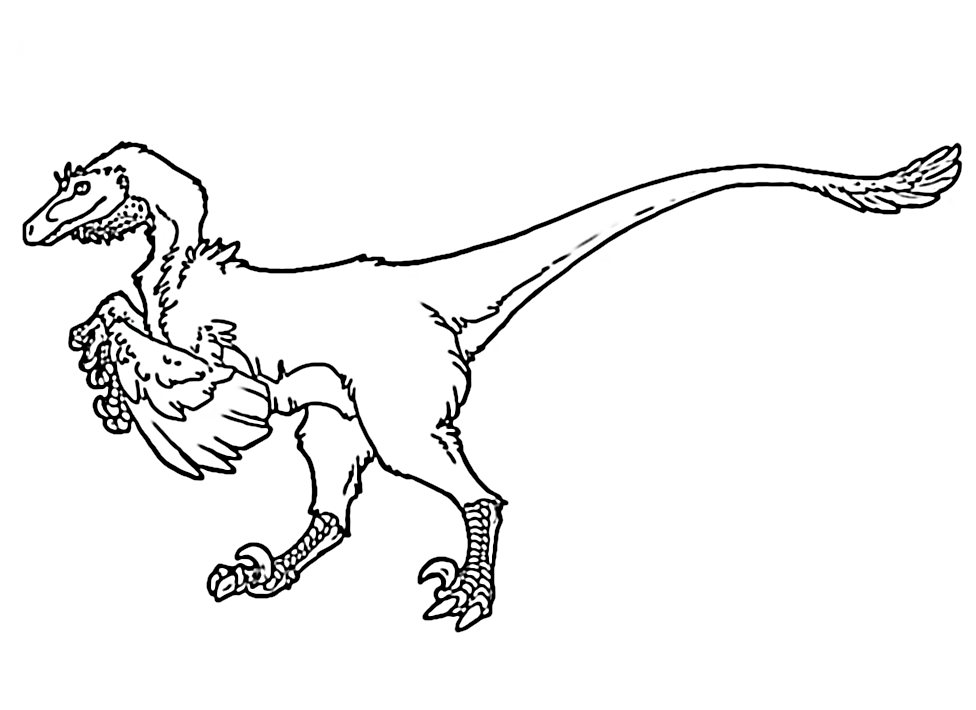
These pages show Velociraptor closer to how paleontologists currently picture it: small, light-boned, and covered in feathers along the arms and tail, with the enlarged sickle-shaped claw on the second toe as the clearest identifying feature.
Coloring the feathered portraits: think bird before you think lizard. Muted browns, tans, and grays with a slightly lighter chest work well as a base, and the feathered arms benefit from short, layered pencil strokes rather than one flat color, since real quill impressions run in a clear direction along the limb. The claw and teeth stay a contrasting off-white, so they still read as weapons on an otherwise soft-looking animal.
Movie-Style Raptor Action Scenes
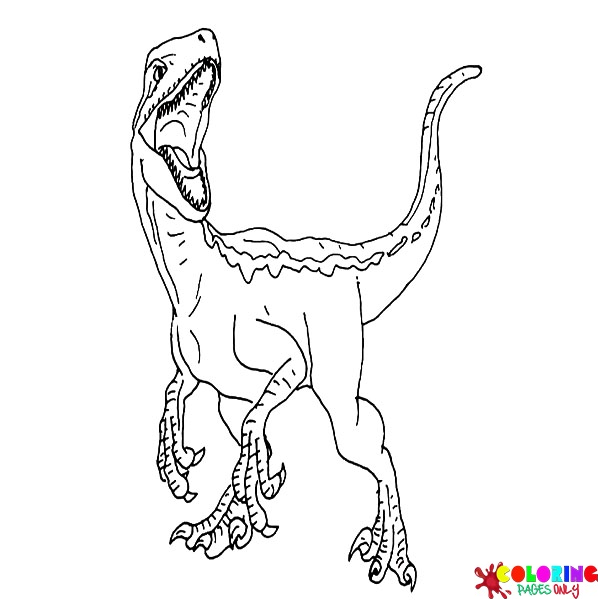
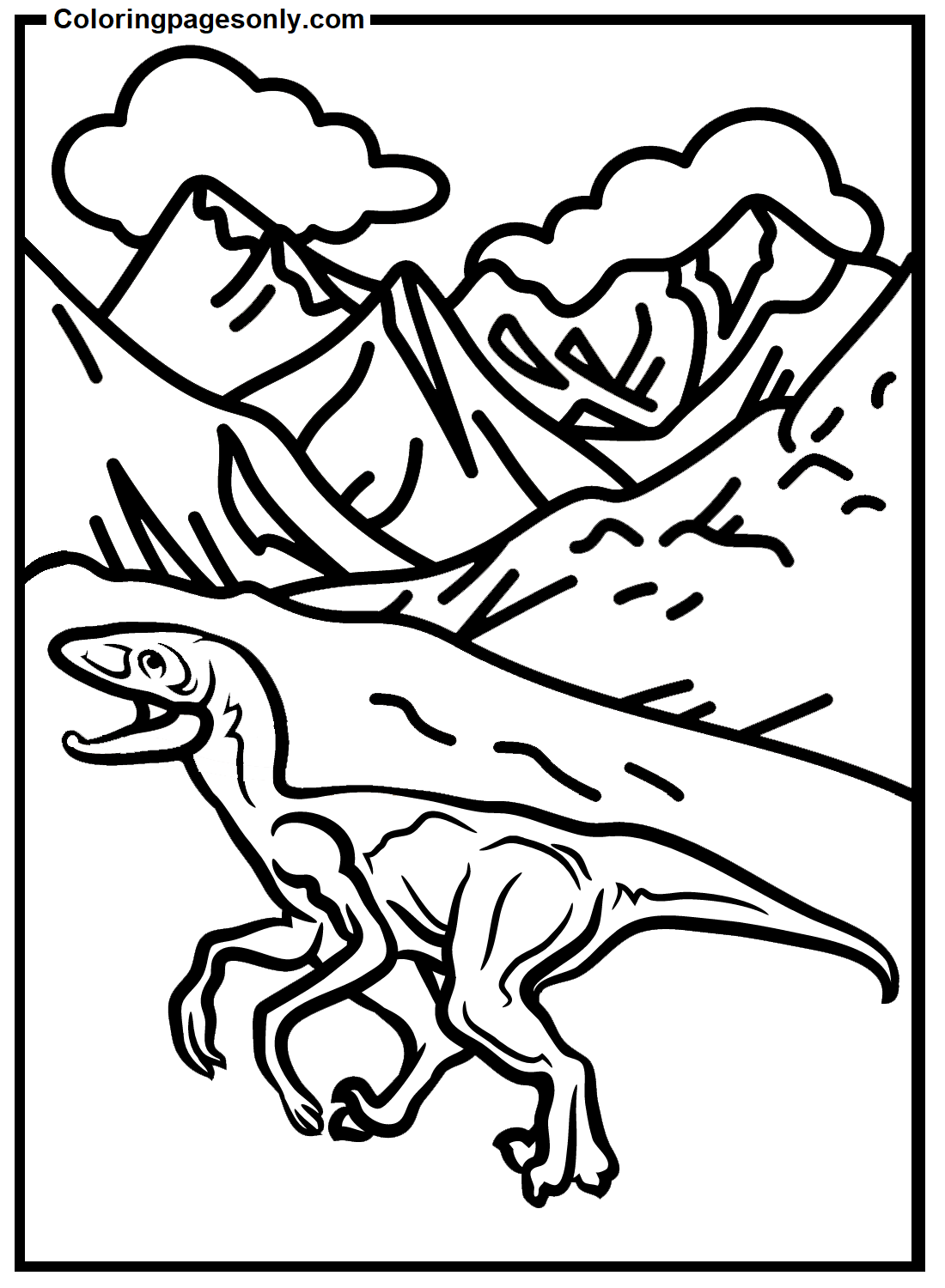
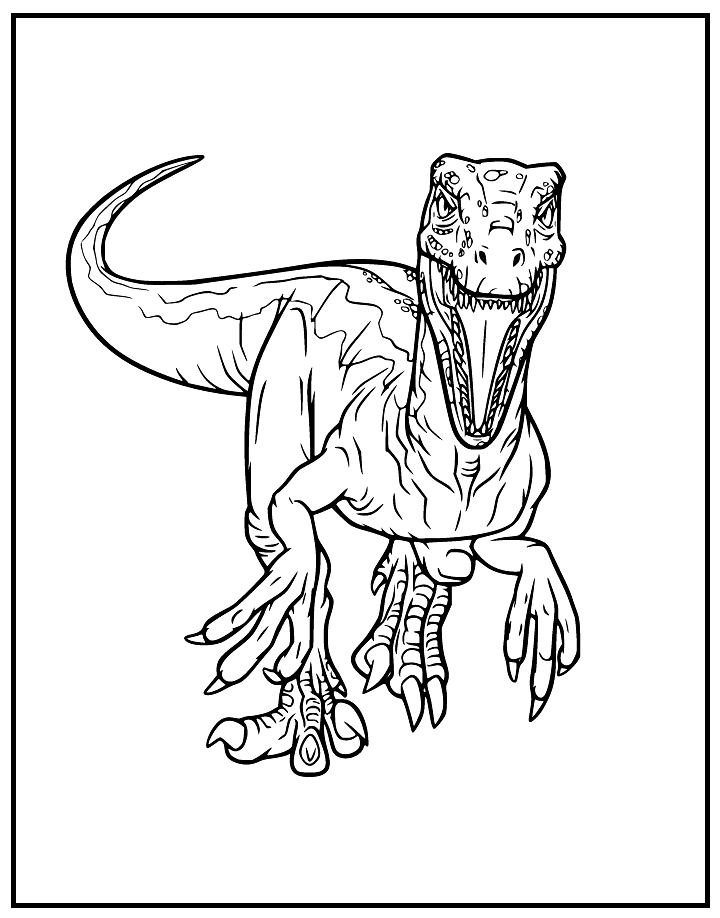
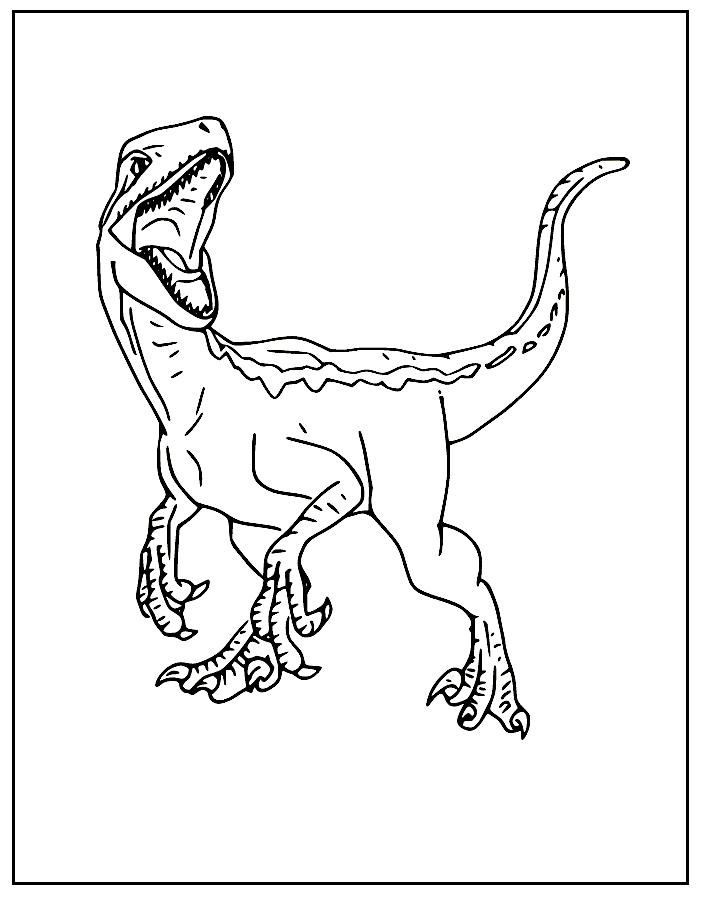
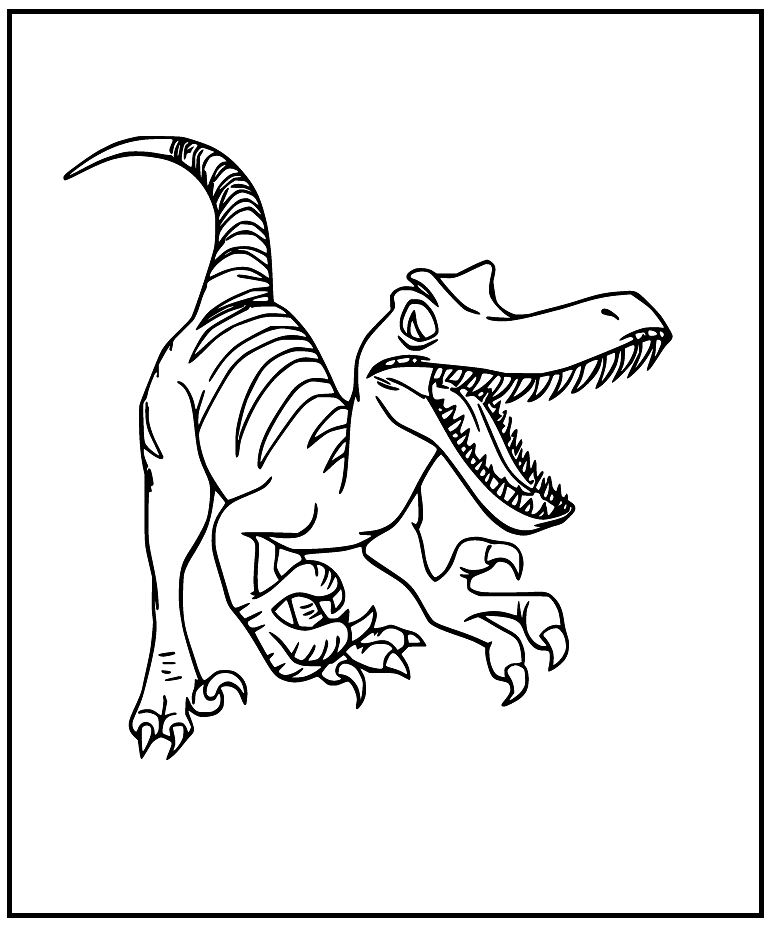
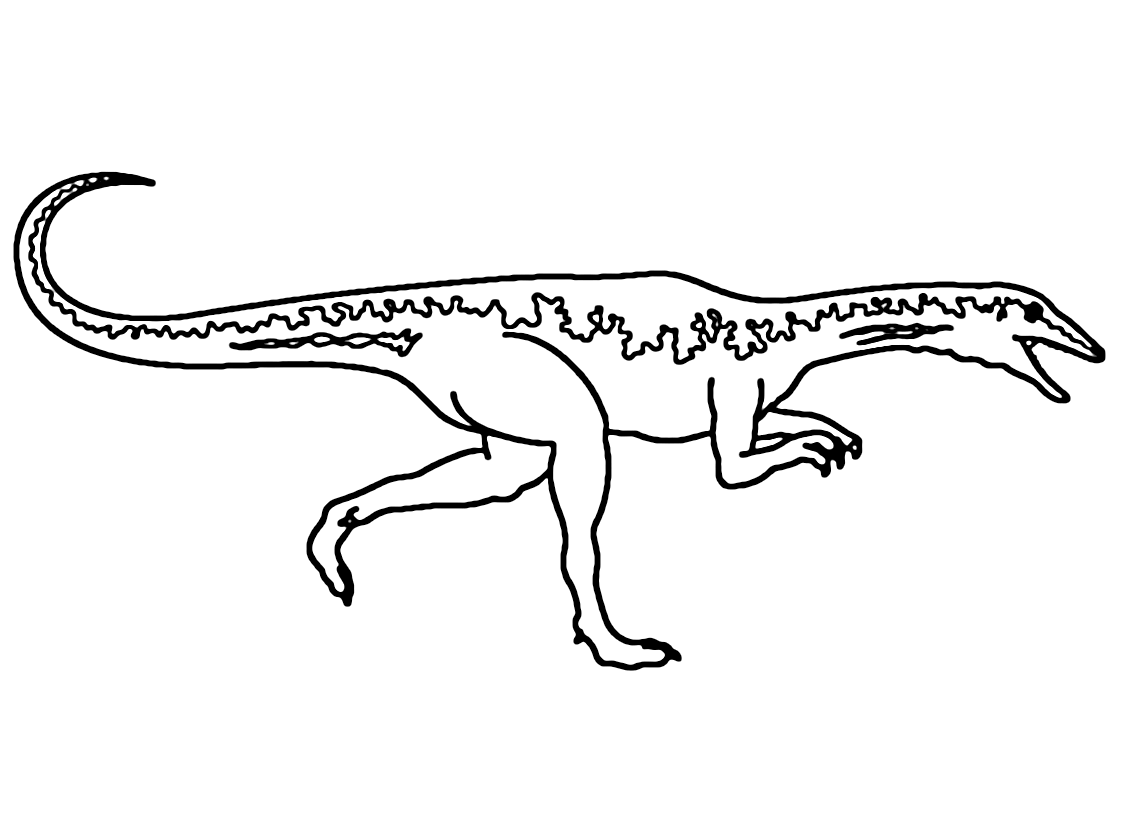
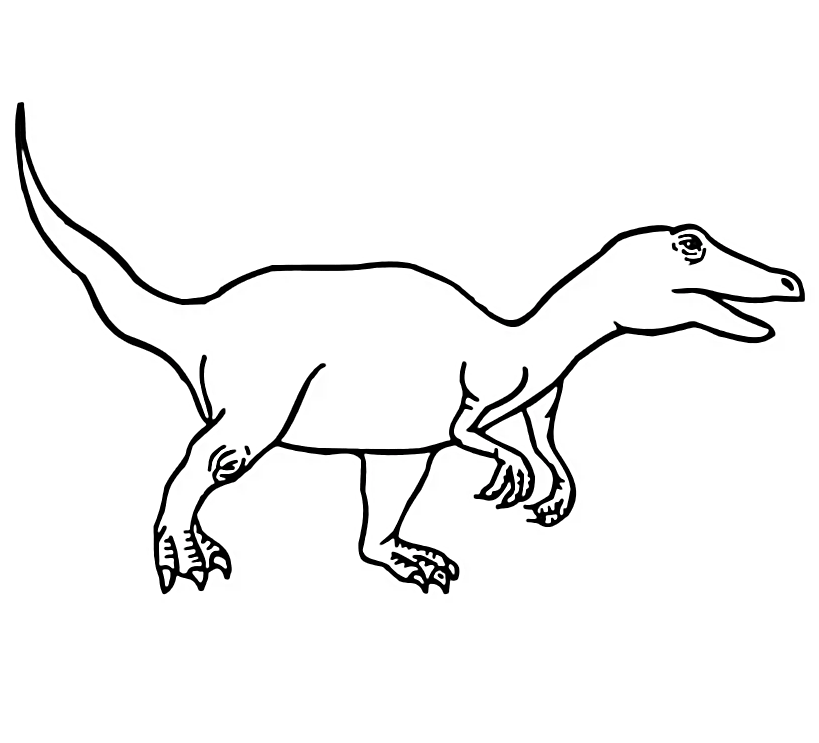
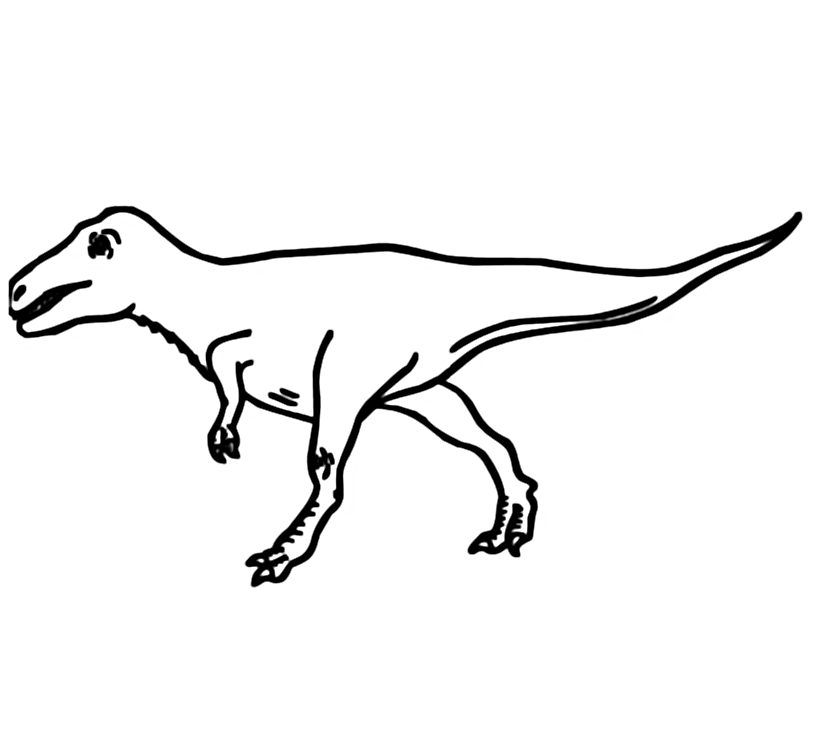
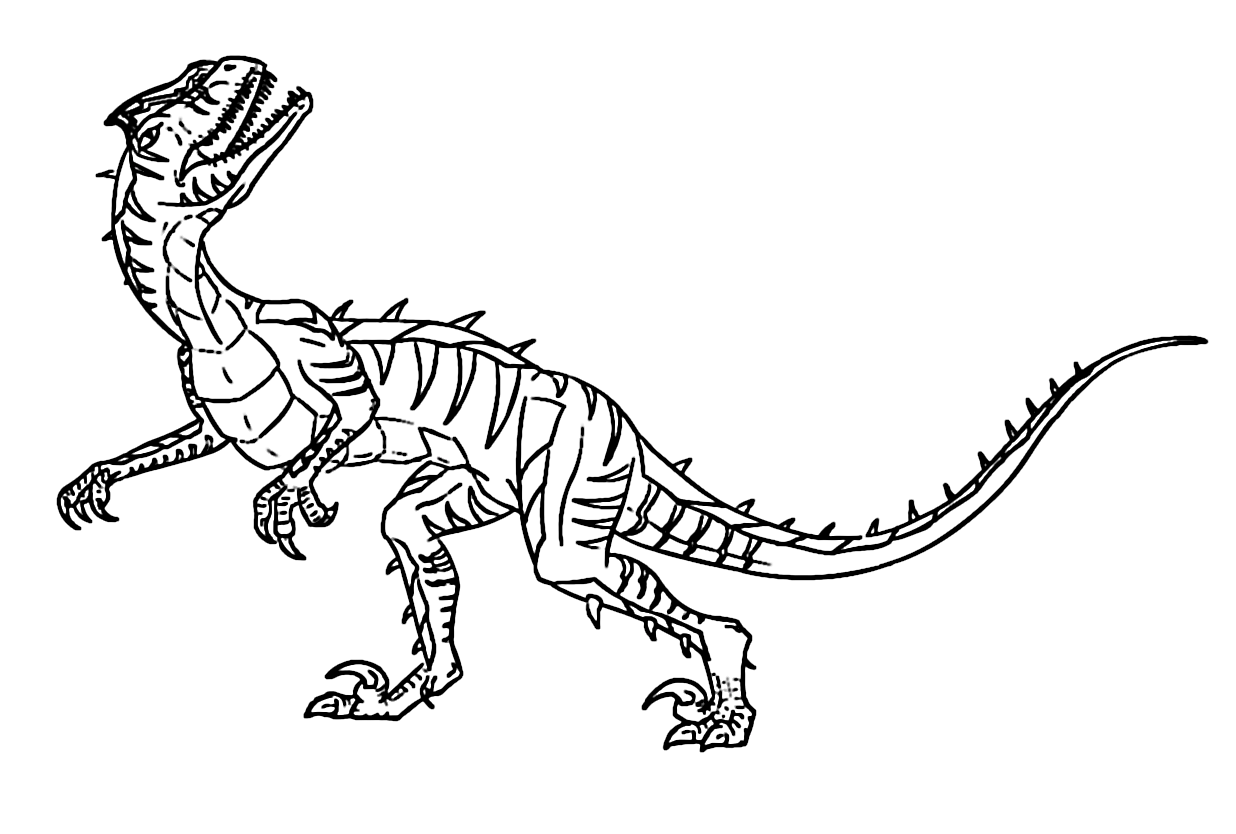
This half of the set leans into the version most people already know: a much larger, scaly raptor, often shown mid-chase, snarling, or squaring off against prey or another predator.
Coloring the action pages: these pages want scale and menace, not accuracy. Olive, khaki, and gunmetal gray read as convincingly reptilian, and adding darker shadow along the muscle lines makes the pose feel more dynamic. Since these designs are already exaggerated for drama, bold, saturated color choices tend to look more at home here than the muted palette suited to the feathered portraits.
Pack Scenes and Multiple Raptors
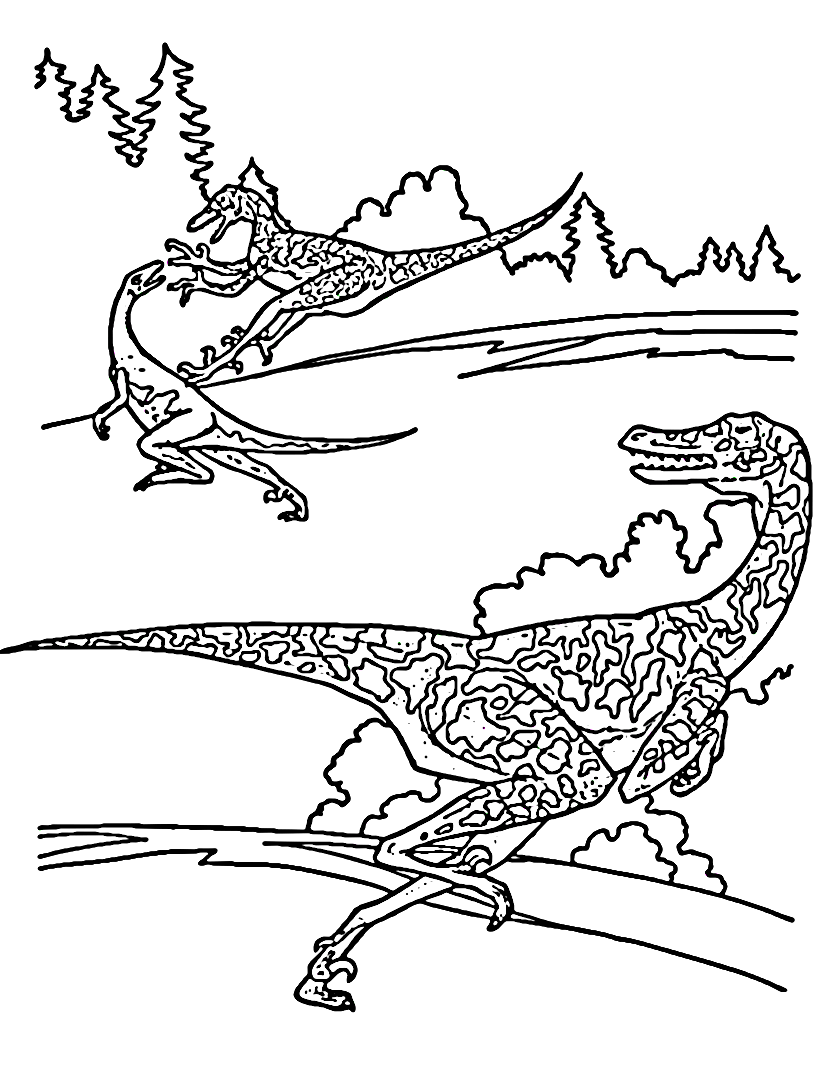
A handful of pages show several raptors together, moving, watching, or converging on the same target, playing into the long-standing idea of Velociraptor as a coordinated pack hunter.
Coloring pack scenes: give each raptor its own slight variation, a touch more red here, a darker stripe there, the way real animals in a group are never perfect copies of each other. Keeping every raptor identical flattens the scene; small individual differences make a group of five read as five animals rather than one shape repeated.
Baby Velociraptor and Nest Pages
A small cluster of hatchling pages shows Velociraptor freshly out of the egg, still downy, round-eyed, and a fraction of adult size.
Coloring hatchlings: softer and lighter than the adult palette works best here, closer to a chick’s down than a grown raptor’s feathers. Pastel pencils or light-handed crayon work suit these pages better than bold marker, since the goal is fluffy and small rather than sleek and fast.
Simple Cartoon Raptors for Young Colorists
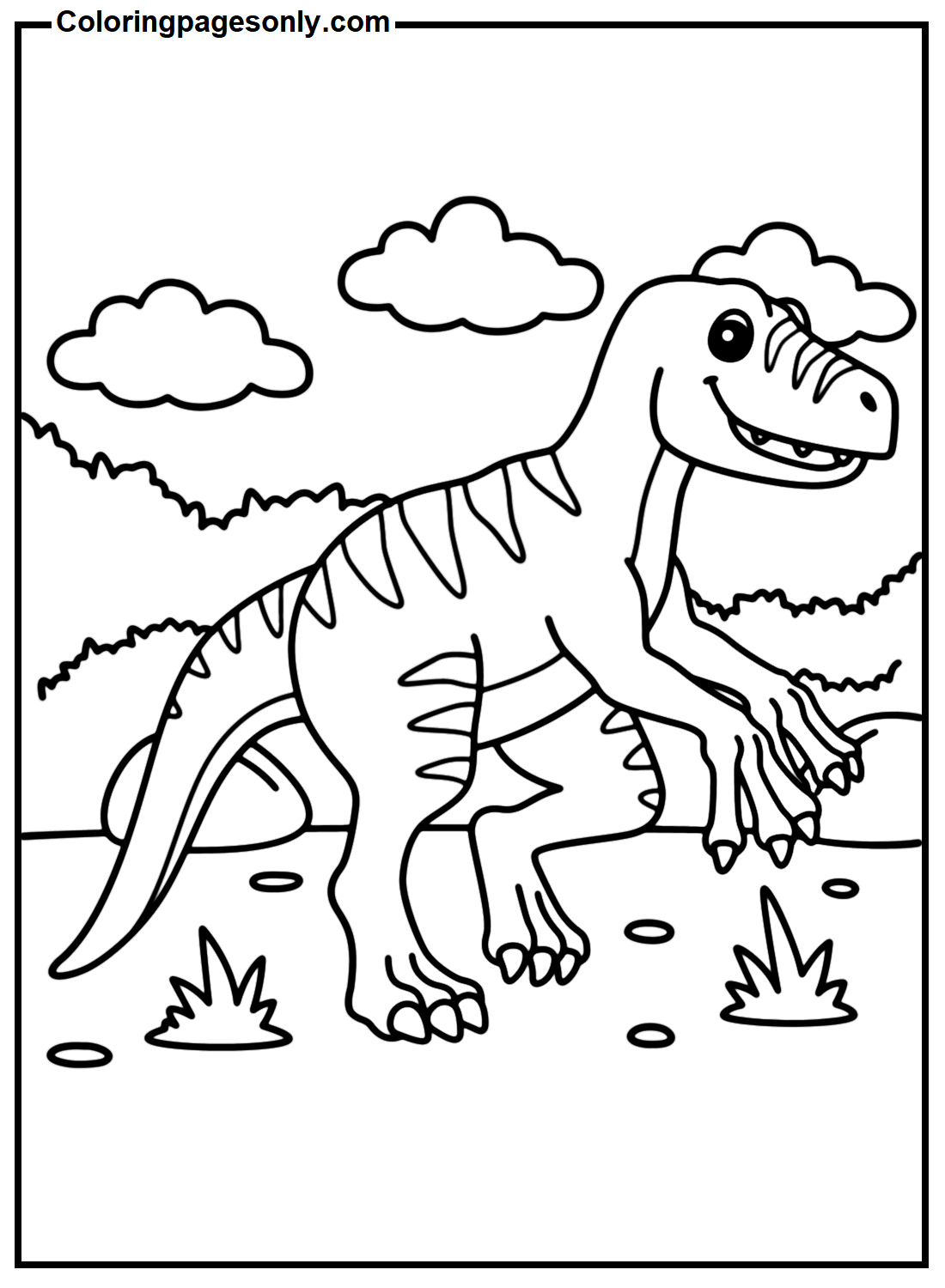
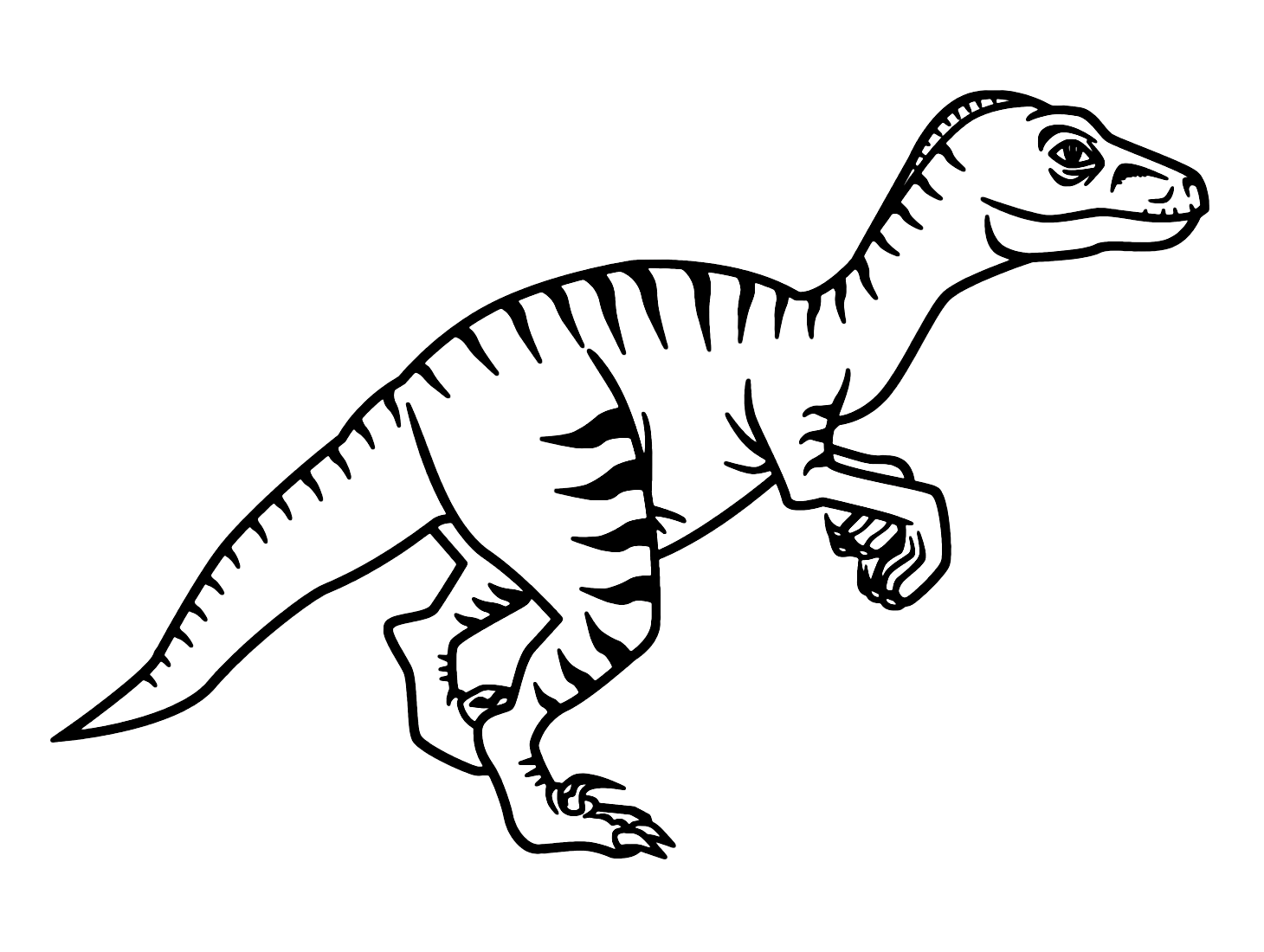
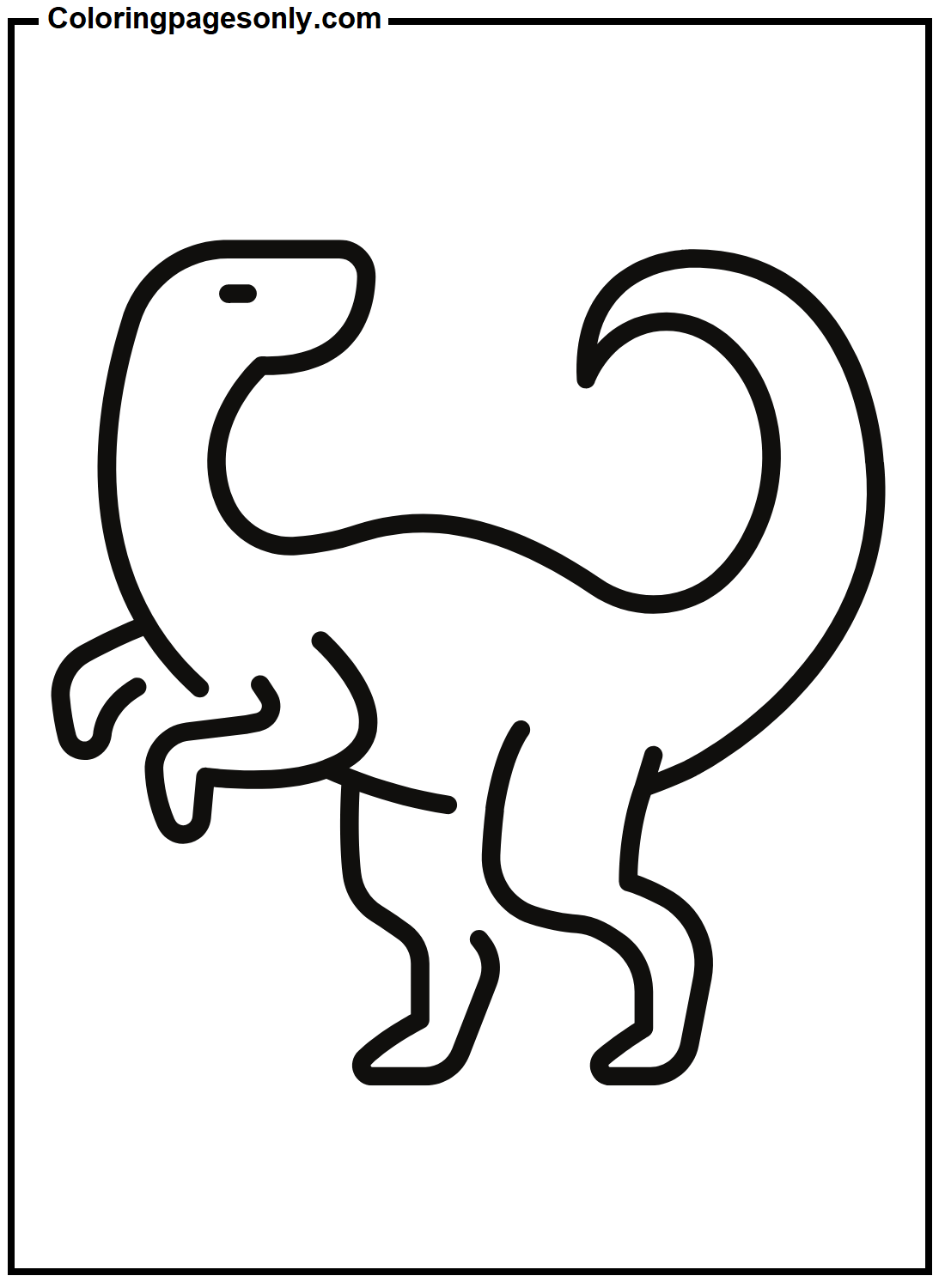
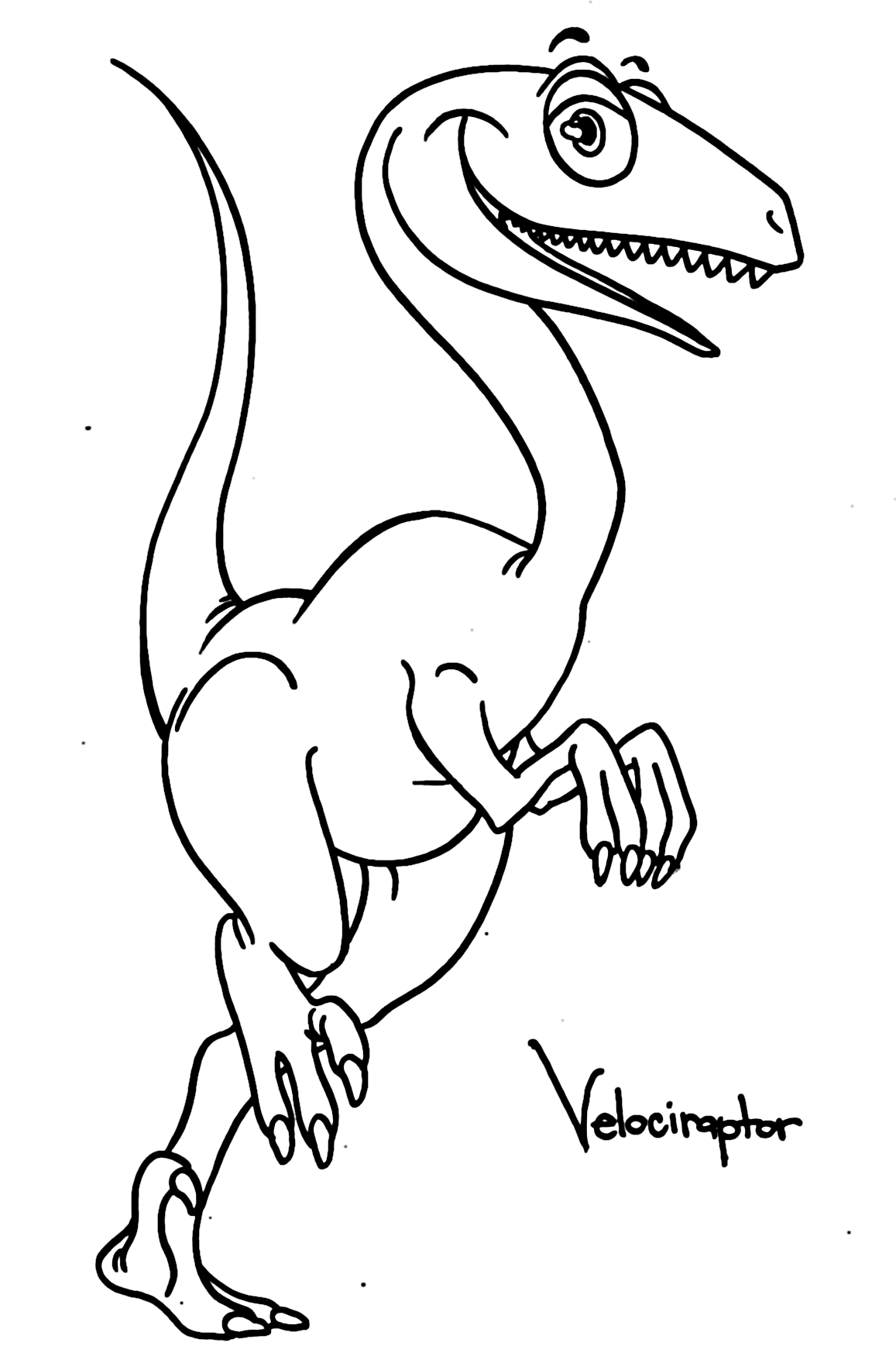
Rounded out with a handful of friendly, big-eyed cartoon raptors built for the youngest colorists, with thick outlines and minimal internal detail.
Coloring the cartoon pages: there’s no scientific accuracy to worry about here. Bright, playful colors, purples, oranges, and even a rainbow raptor are entirely fair game, and these are the easiest pages in the set for a child who’s still building the coordination for more detailed line work.
Two Ways to Color, Zero Barriers
Every page in this set opens for online coloring right in the browser or downloads as a print-ready PDF, whichever fits the moment better, and none of it sits behind an account or a sign-up screen.
What These Pages Do
There’s a genuinely surprising story behind why the Velociraptor on this page might look nothing like the one people picture first. The huge, scaly, roughly human-sized raptor from the movies was never really Velociraptor to begin with. Filmmakers built that look from a larger cousin called Deinonychus and kept the catchier name for the screen. The actual Velociraptor mongoliensis, the one dug out of the Gobi Desert, stood about as tall as a large turkey. Both versions live in this collection, and neither one is the wrong page to reach for.
The variety here does more than keep coloring interesting. The American Academy of Pediatrics points to coloring as a genuine building block for fine motor skills in young children, and a set built around two very different animal styles asks for more range than most. A page of narrow, layered feather lines calls for a slower, more careful hand than a page with one big scaly raptor filling the whole sheet, and moving between the two in a single sitting is real, useful practice for a hand that’s still developing.
There’s also something worth pointing out in how this set handles a fact that used to surprise almost everyone: real Velociraptors had feathers. Scientists confirmed it in 2007, after finding small bumps on a fossil arm bone in Mongolia, exactly where feathers would have attached. The classic scaly picture had to change. Art therapy practitioners have noted that showing children a picture updated by new evidence, rather than pretending the old version was right all along, is a small, gentle way to practice sitting with information that shifts, without it feeling like something was lost.
That’s really the spirit of the whole set. It holds the dramatic movie Raptor and the small, feathered original side by side on purpose, and lets a child pick either one without being told which is more correct. Page after page, a kid gets to decide for themselves which Velociraptor they feel like meeting that day.
How to Color Velociraptor Coloring Pages
Decide which raptor you’re looking at first. Everything else follows from this one choice. A feathered portrait wants muted, bird-like tones and soft texture; a movie-style action page wants bold, reptilian color and hard shadow. Coloring a feathered page in gunmetal gray or a movie raptor in soft pastel down tends to look like a mismatch rather than a creative choice.
Give the sickle claw its own moment. The oversized curved claw on the raptor’s second toe is the animal’s real signature, arguably more than anything else about it, and it deserves a clean, contrasting color rather than getting blended into the rest of the foot.
Feathers want direction, not just color. On the realistic portraits, short strokes that all point the same way down the arm or tail read as feathers. Random scribbled texture in the same spot reads as messy shading.
Let the eyes do the work on pack pages. With several raptors in one scene, alert, forward-focused eyes on each one are what make the group feel like it’s actually hunting together rather than just standing around.
5 Creative Craft Ideas with Velociraptor Coloring Pages
Real vs. Movie Comparison Display
Color one feathered, scientifically accurate Velociraptor and one movie-style raptor page using clearly different palettes, then mount them side by side with a small label under each explaining which is which.
This is the single most direct way to make the size-and-feathers surprise land for a child, turning a coloring session into a genuine “wait, really?” moment. Takes about twenty minutes.
Raptor Pack Mural
Color three or four pack-scene or single-raptor pages, giving each one a slightly different shade, then arrange them together along a long strip of paper to build one continuous hunting scene.
Varying the poses and colors across pages turns individual sheets into a single coordinated group, which is a nice hands-on way to talk about how packs of animals actually move together. Takes about thirty minutes.
Feather Texture Study
Pick a close-up feathered-arm page and color the same small section three different ways, once with colored pencil, once with crayon, once with fine-tip marker, to compare which tool captures feather direction best.
This turns one page into a quick materials experiment rather than a single finished piece, which is a good option for an older child who’s already comfortable with basic coloring and wants a new challenge. Takes about fifteen minutes.
Sickle Claw Bookmark
Color a close-up page featuring the raptor’s foot and signature curved claw, cut it into a bookmark shape, and laminate or cover it with clear tape.
The claw is compact, graphic, and instantly recognizable, even cropped down to bookmark size, making it one of the better close-up details in the set to reuse this way. Takes about ten minutes.
Hatchling Nest Diorama
Color two or three hatchling pages, cut them out, and arrange them inside a small paper or twig nest glued into a shoebox lid or paper plate.
Pairing the hatchling pages with a physical nest gives the softer, downier palette somewhere real to live, rather than staying flat on a printed page. Takes about twenty-five minutes.
FAQ About Velociraptor Coloring Pages
Is this Velociraptor coloring set free, and does it work without an account?
It does. Every design here can be printed straight from the browser or colored online with no login, no email, and nothing to pay.
Who was Velociraptor?
Velociraptor was a small, feathered, meat-eating dinosaur first described from fossils found in Mongolia’s Gobi Desert in the early 1920s by an American Museum of Natural History expedition. Paleontologist Henry Fairfield Osborn gave it the name in 1924; “Velociraptor” roughly translates to “swift thief.”
How big was the real Velociraptor?
Much smaller than most people expect. Adult Velociraptor mongoliensis measured roughly two meters (about six and a half feet) nose to tail, but most of that length was a slim tail, and the animal itself likely weighed somewhere around 15 kilograms (about 33 pounds), close to the size of a large turkey.
Did Velociraptor really have feathers?
Yes. In 2007, researchers examining a fossil forearm bone found in Mongolia identified small, evenly spaced bumps called quill knobs, the same kind of anchor points birds have where wing feathers attach. It’s some of the clearest direct evidence that Velociraptor was feathered, even though no actual feather impressions have been found on this particular species.
Why do movies show Velociraptor so much bigger than it really was?
Filmmakers based that larger, more human-sized look on Deinonychus, a bigger relative of Velociraptor found in North America, but kept the more dramatic-sounding name for the screen. It made for a scarier movie animal, even though it isn’t an accurate picture of the real Velociraptor.
Did Velociraptor actually hunt in packs?
It’s genuinely uncertain. The pack-hunting idea comes largely from trackway and behavior evidence tied to Deinonychus and other related raptors, not from direct proof specific to Velociraptor itself. It’s a reasonable, popular guess rather than a settled fact, which is part of why pack scenes in this set are labeled as classic dinosaur-book imagery rather than confirmed behavior.
What’s the “Fighting Dinosaurs” fossil people mention with Velociraptor?
It’s one of the most famous dinosaur fossils ever found: a Velociraptor and a Protoceratops preserved together in Mongolia, apparently locked in combat at the moment they were both buried, likely by a collapsing dune. Discovered in 1971, it remains one of the clearest direct snapshots of dinosaur behavior ever recovered.
What age group are these pages best suited for?
The simple cartoon raptors suit ages three and up. The feathered portraits, movie-style action scenes, and pack pages work well from about five and up, and the fact-versus-fiction angle of the whole set makes it a natural fit for classroom or homeschool discussions well into the older elementary grades.
Start Coloring
Pick any design and go, print it for a full-resolution page at home or color it right in the browser if there’s no printer nearby. Once a page is finished, the share buttons at the top of each design make it easy to post the result to Facebook or Pinterest.