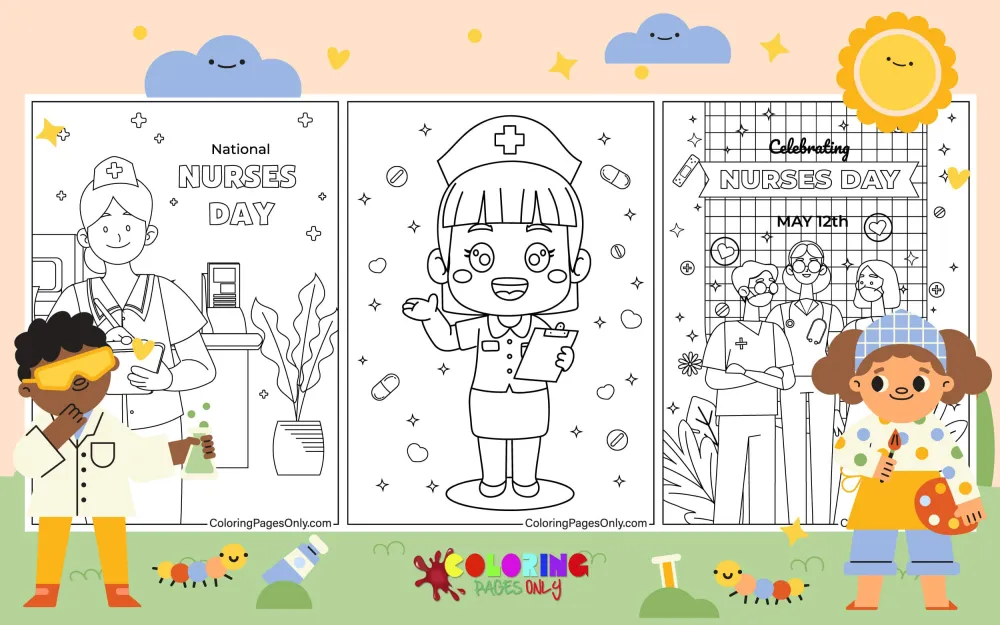
Free Nurse coloring pages – 72 pages featuring nurses in modern scrubs and historical uniforms, nurses with stethoscopes, blood pressure cuffs, clipboards and charts, caring for patients, working in pediatric and emergency settings, nurse portrait pages, cartoon and realistic nurse illustrations, nurses with the Red Cross symbol, and scenes from across the nursing profession’s daily work – free printable PDF and online coloring for children learning about healthcare careers.
Nursing is the world’s largest health profession. The World Health Organization estimates approximately 29.8 million nursing professionals working globally, and the United States Bureau of Labor Statistics counts approximately 5.2 million registered nurses in the United States alone. Gallup’s annual survey of honesty and ethics in professions has ranked nursing first – the most trusted profession in America – for twenty-two consecutive years through 2023, a record of public confidence that no other profession has approached.
The profession’s modern foundation was laid by Florence Nightingale, born May 12, 1820, in Florence, Italy – a city her parents named her after during their travels – who organized nursing care for British soldiers during the Crimean War (1853-1856) at the Scutari hospital in Constantinople. The hospital’s death rate when she arrived was 42 percent. Within six months, through systematic improvements to sanitation, ventilation, nutrition, and the quality of nursing care, she had reduced it to 2 percent. She returned to England and founded the Nightingale Training School for Nurses at St. Thomas’ Hospital in London in 1860 – the first secular nursing school in the world – and wrote Notes on Nursing in 1859, which remains one of the foundational texts of the profession. May 12, her birthday, is observed annually as International Nurses Day.
These 72 free pages at ColoringPagesOnly.com cover the full visual range of nursing across its history and its contemporary practice. All free, PDF or PNG, print or color online.
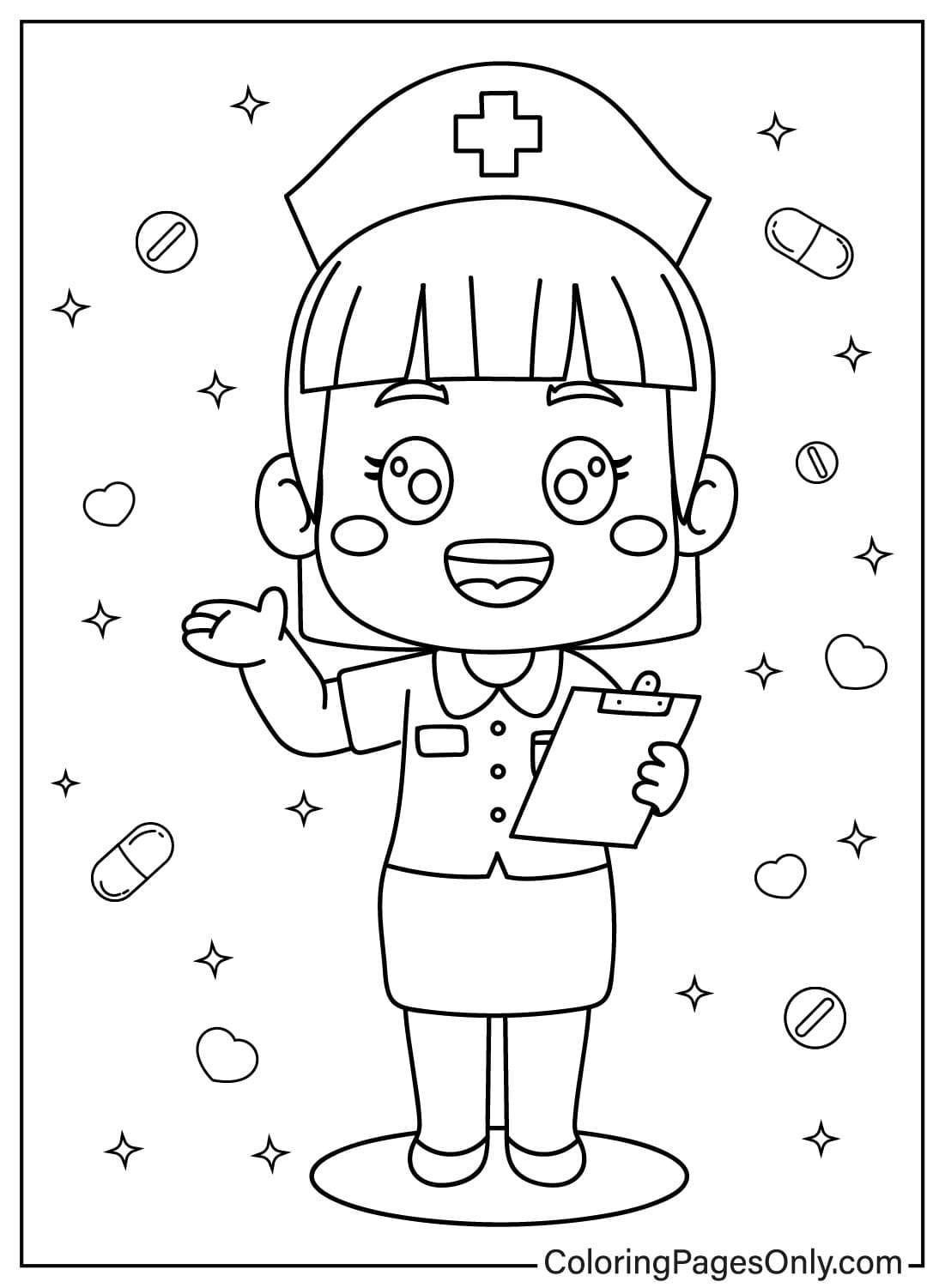
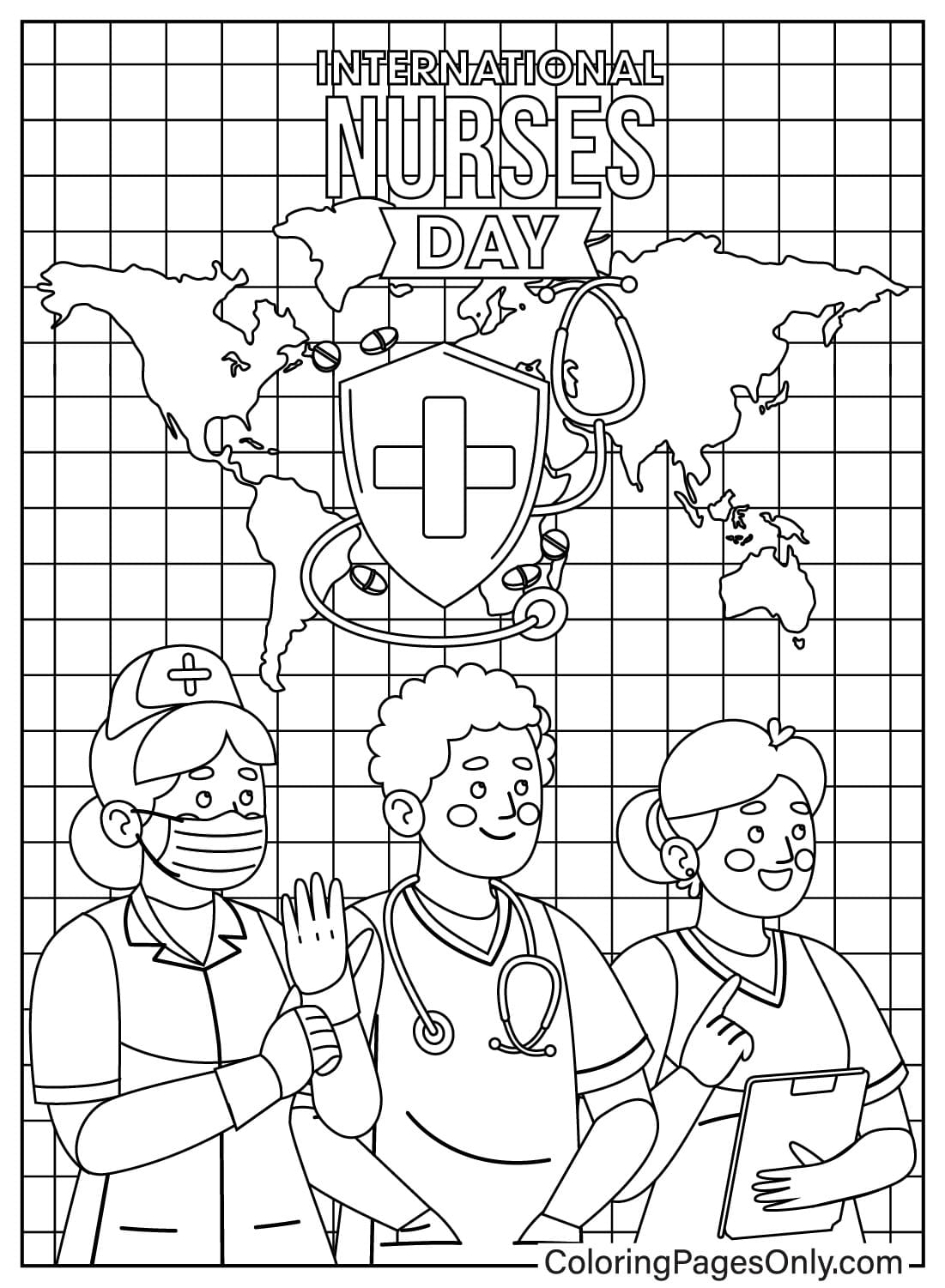
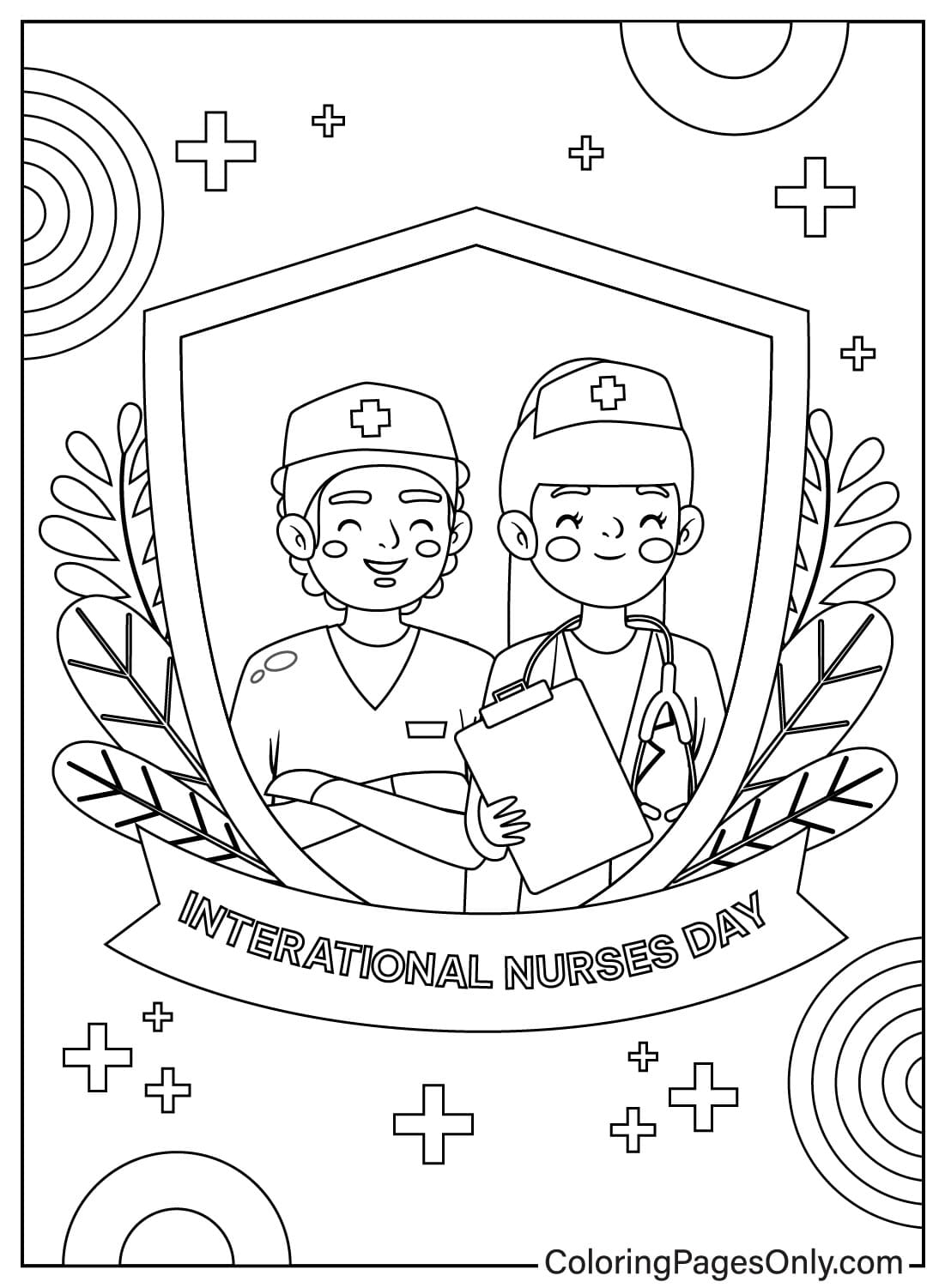
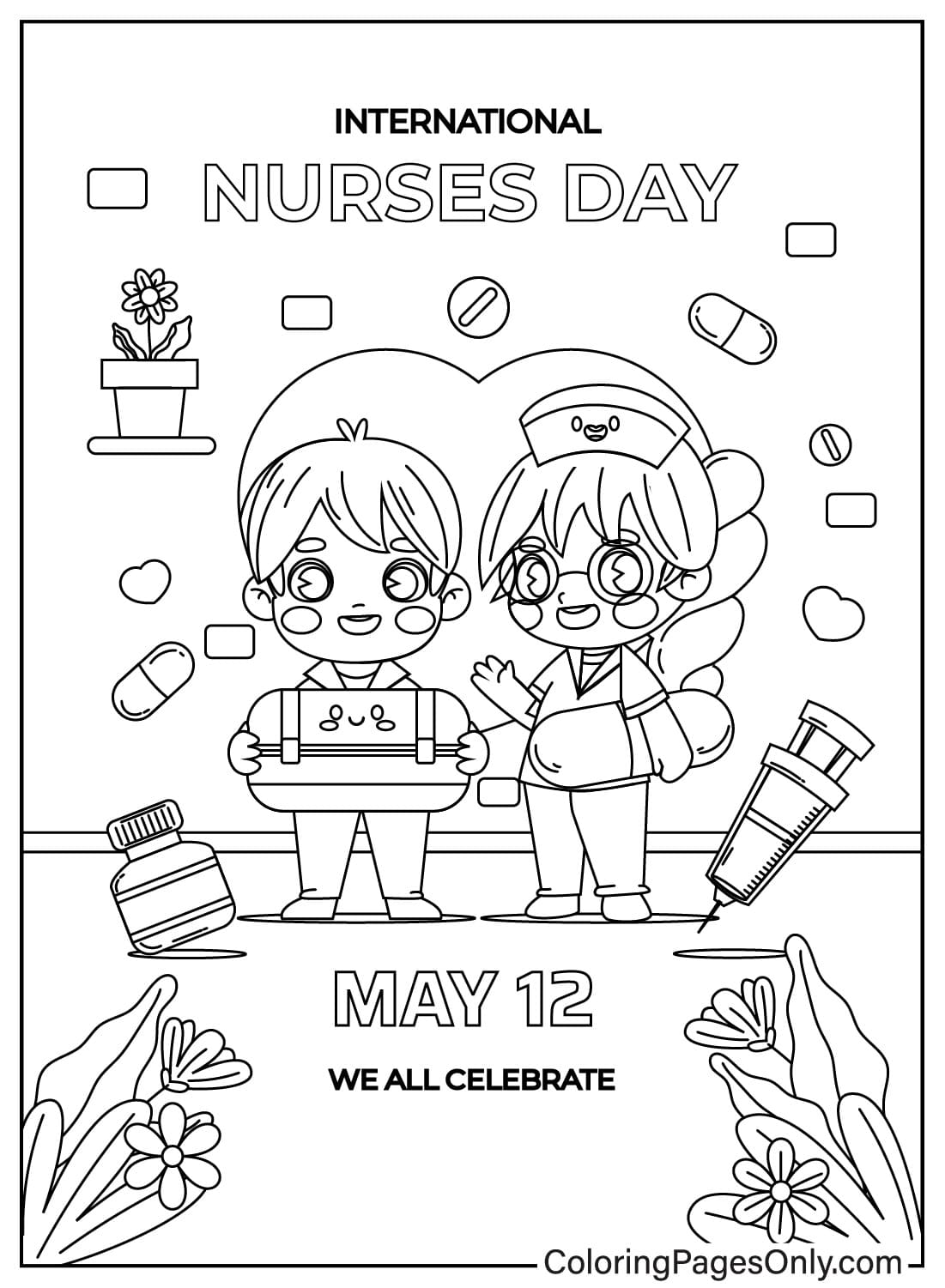
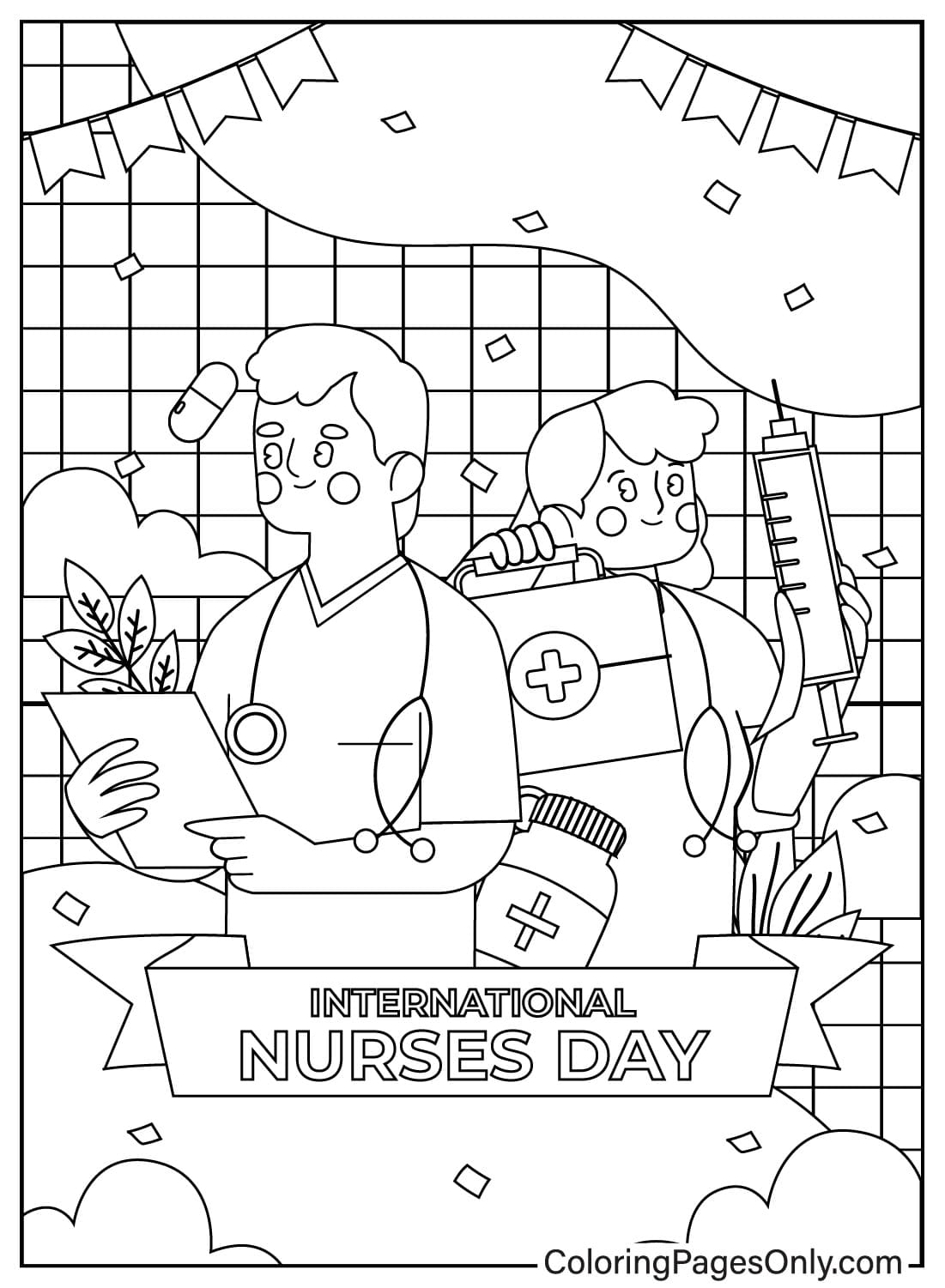
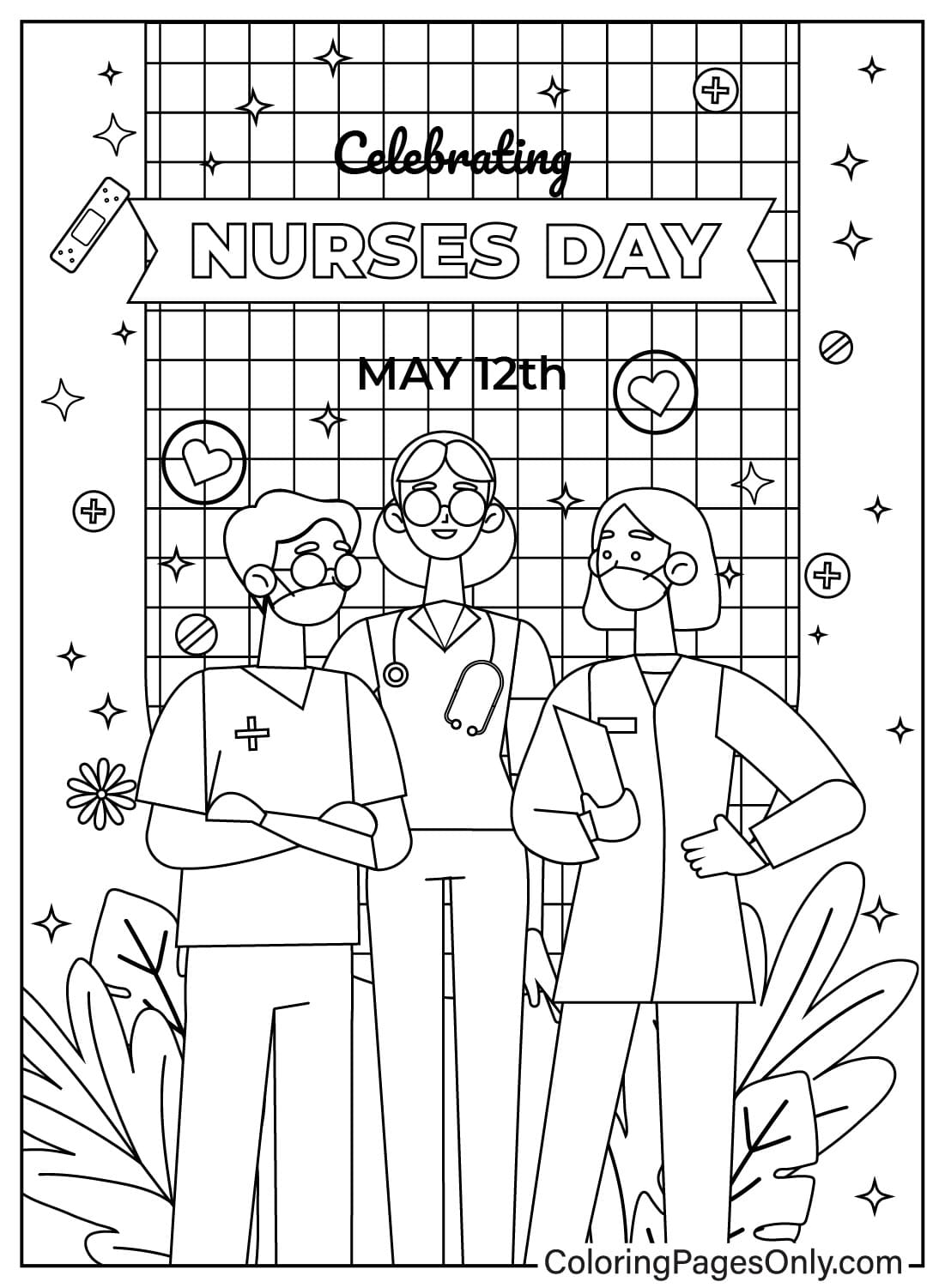
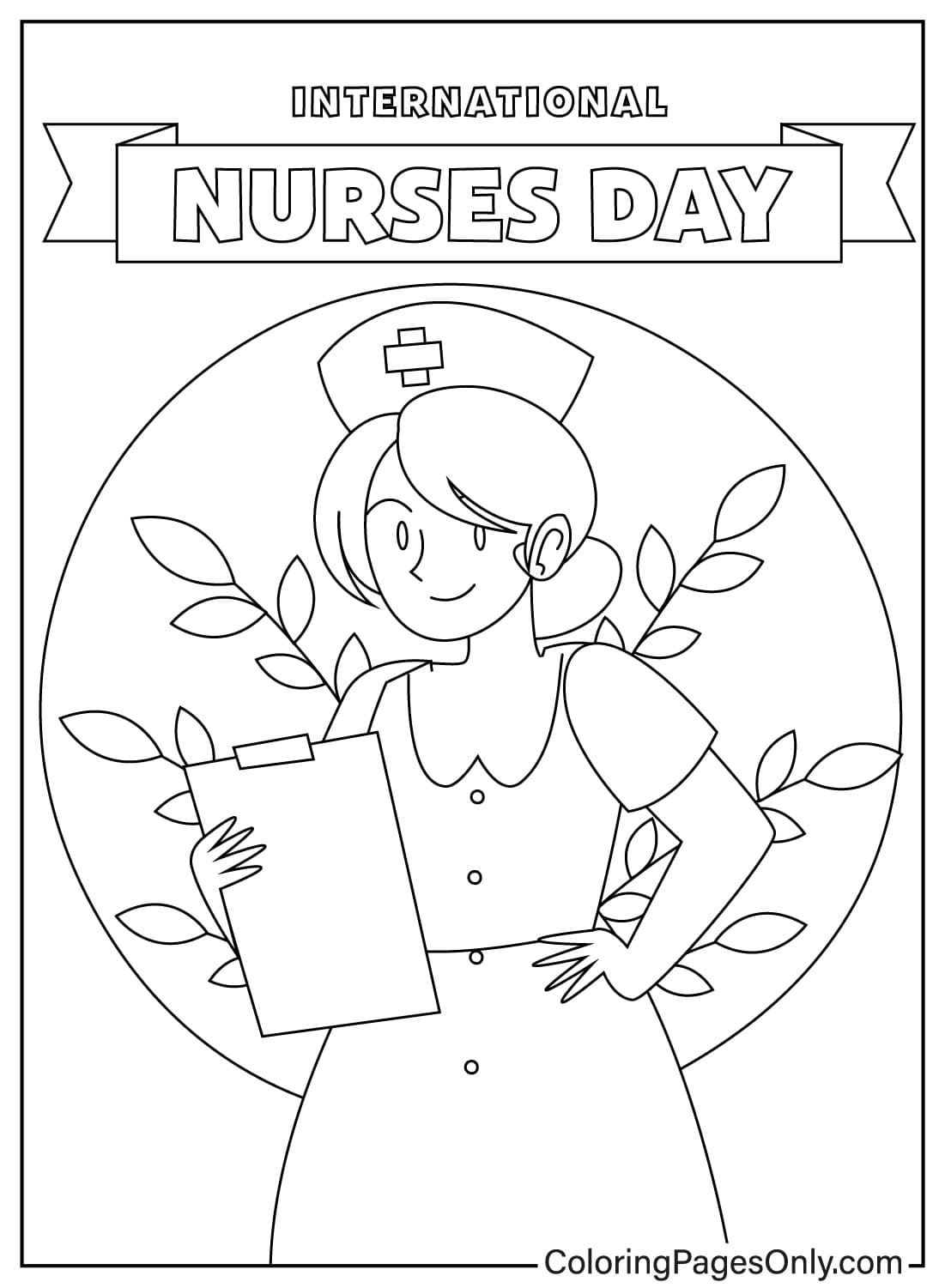
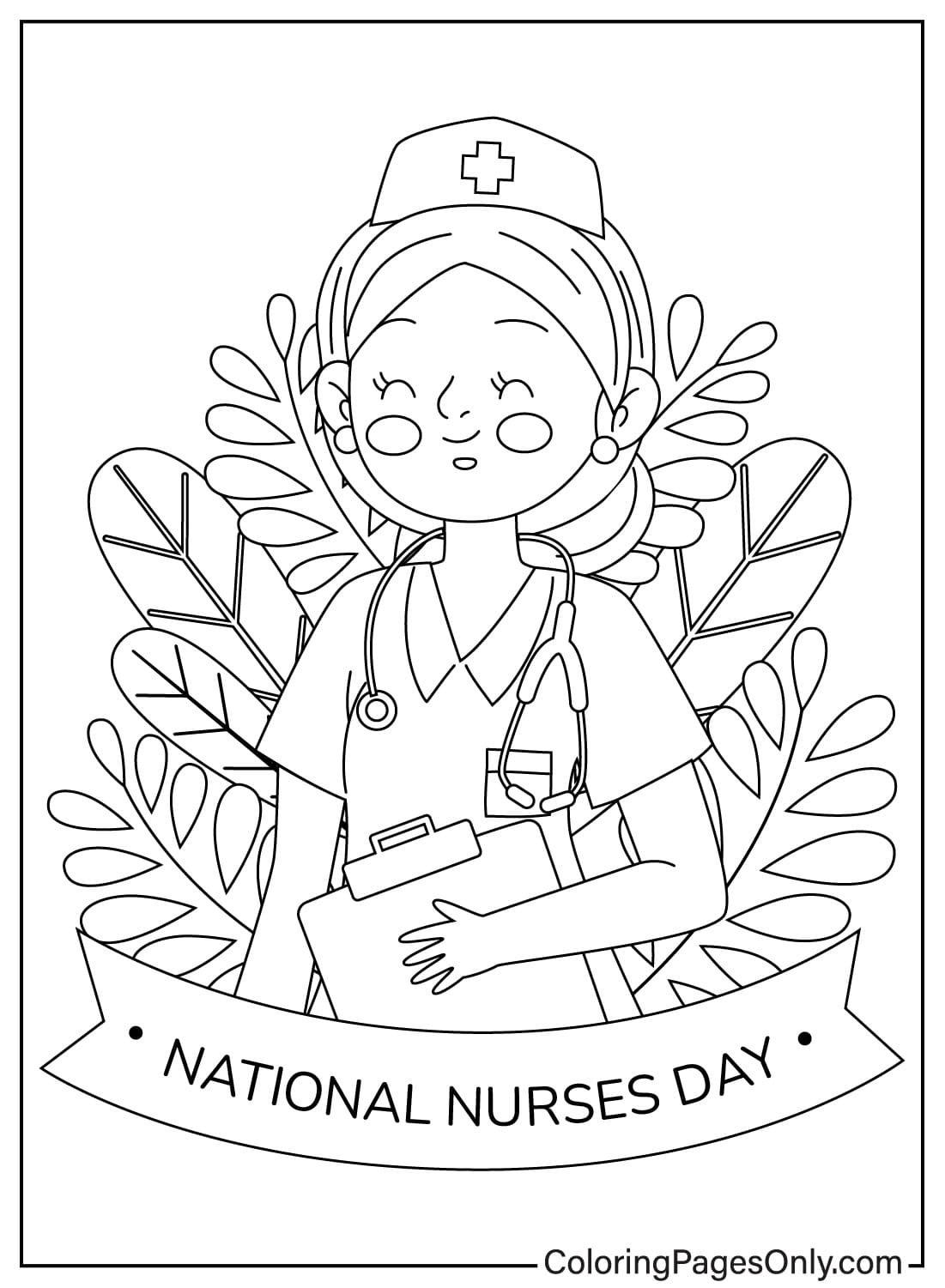
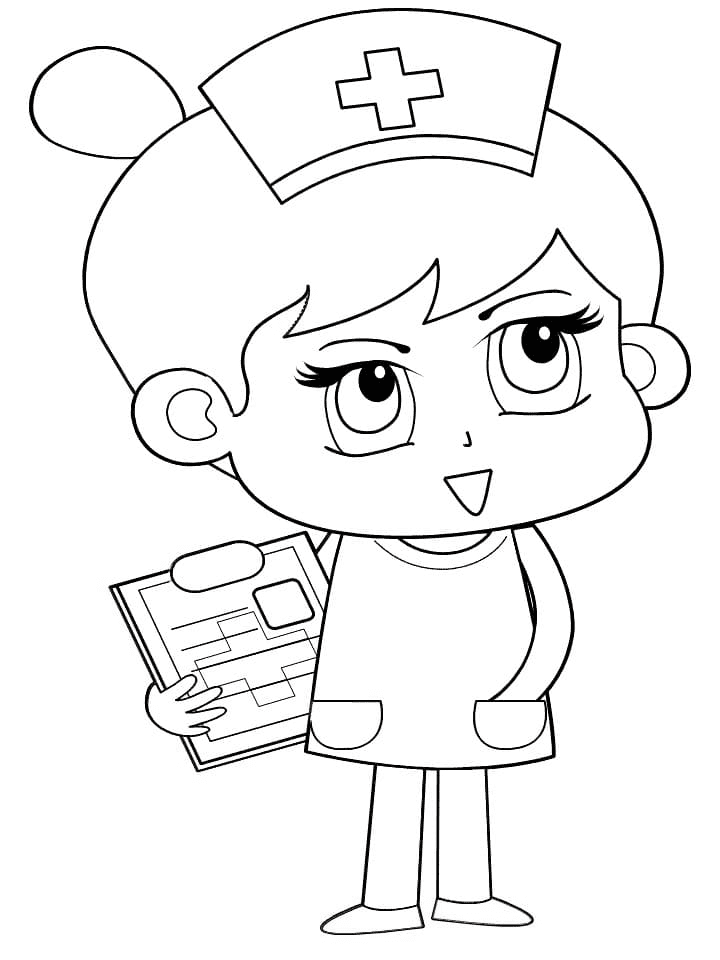
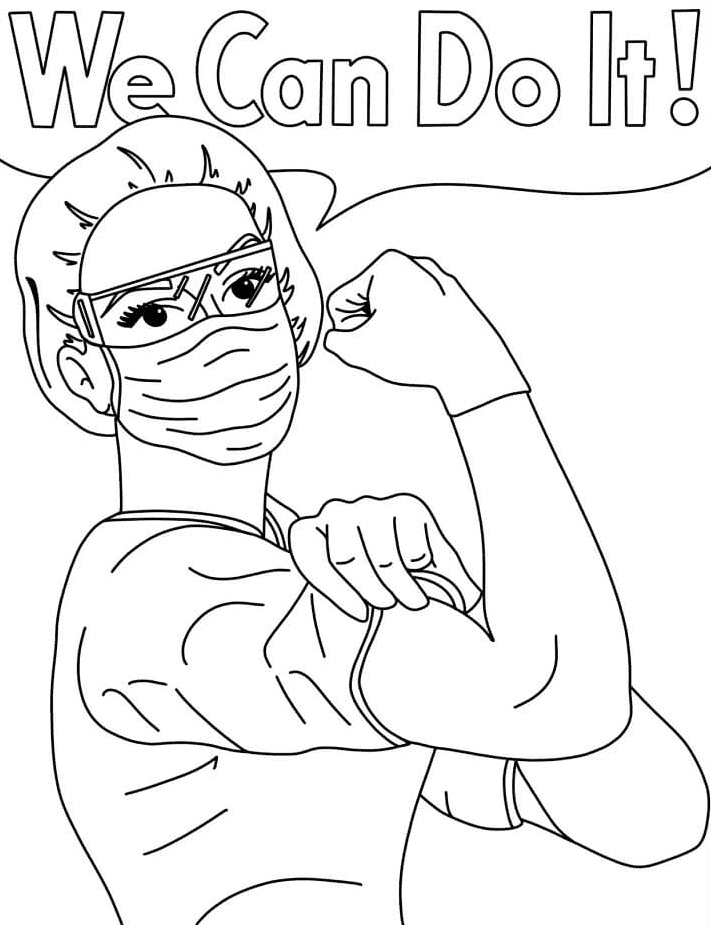
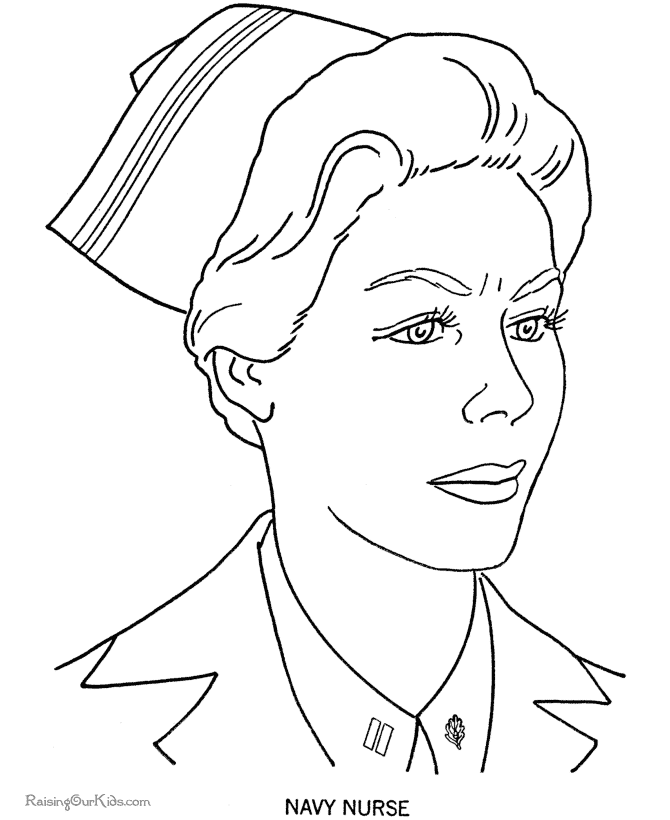
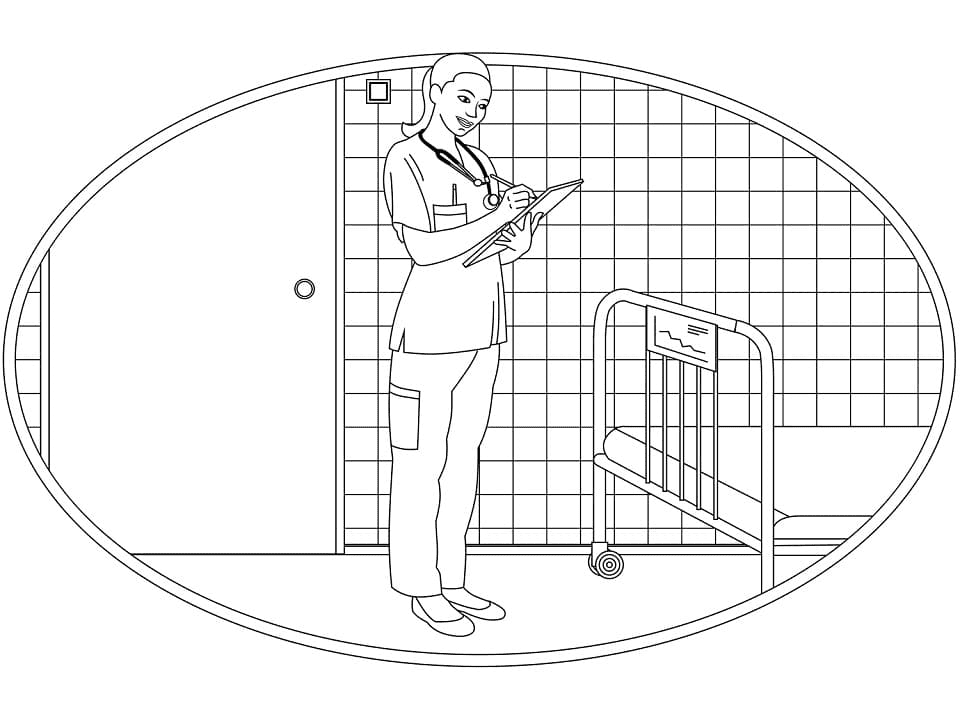
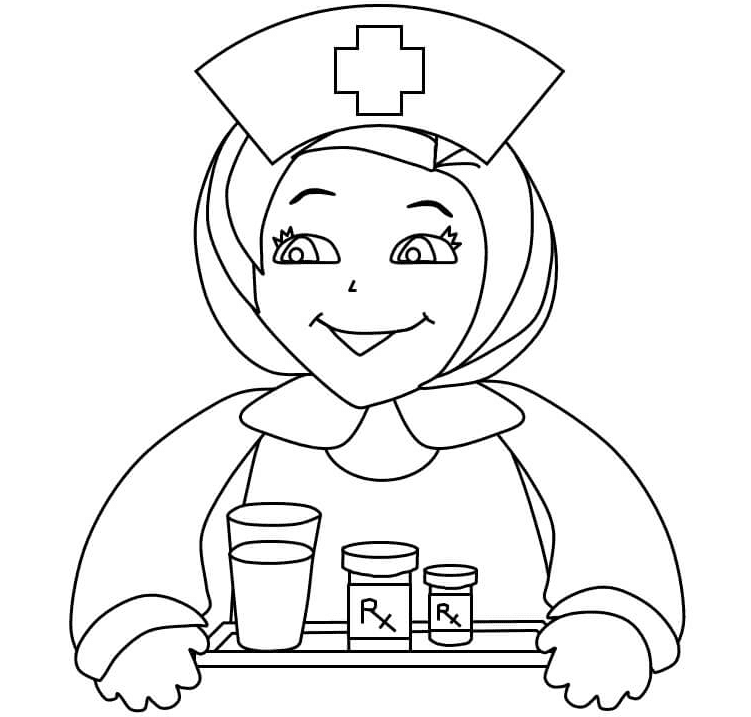
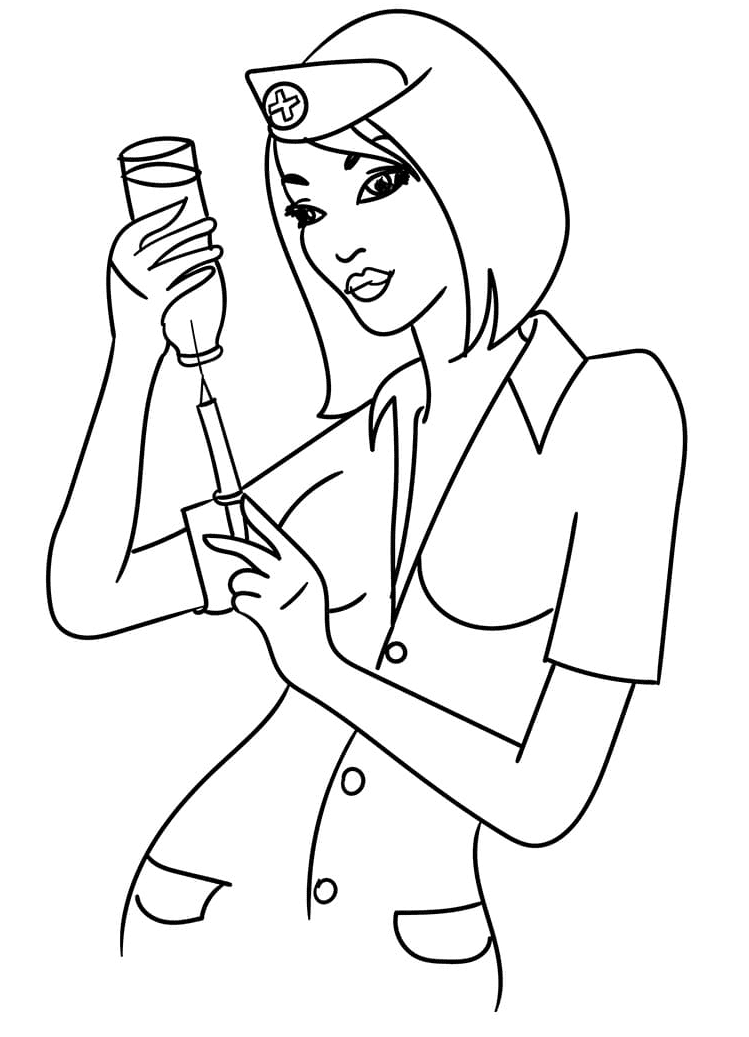
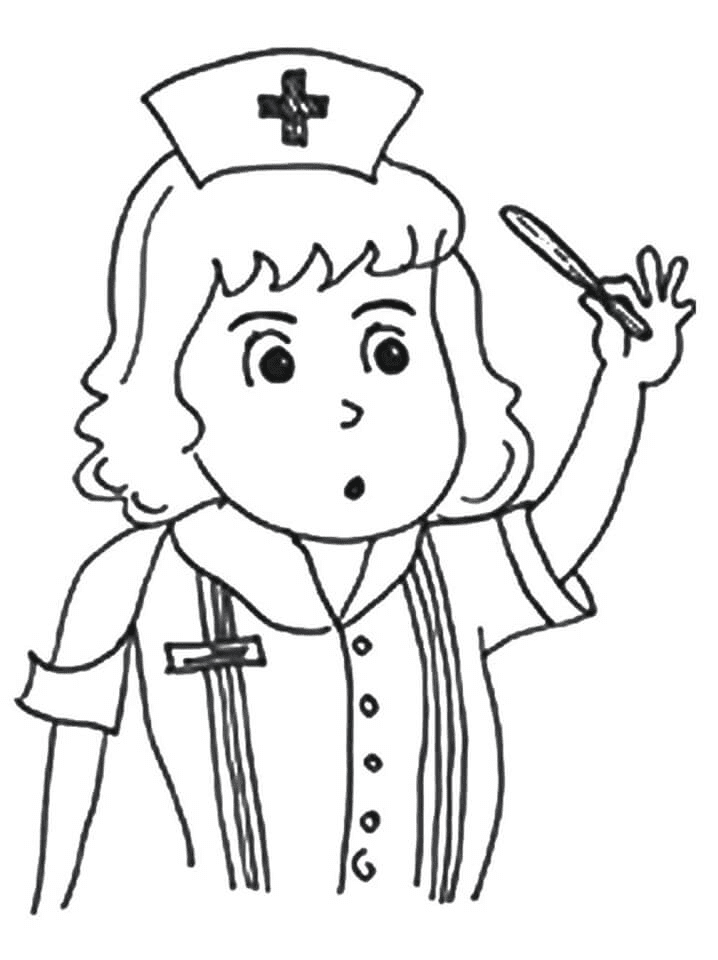

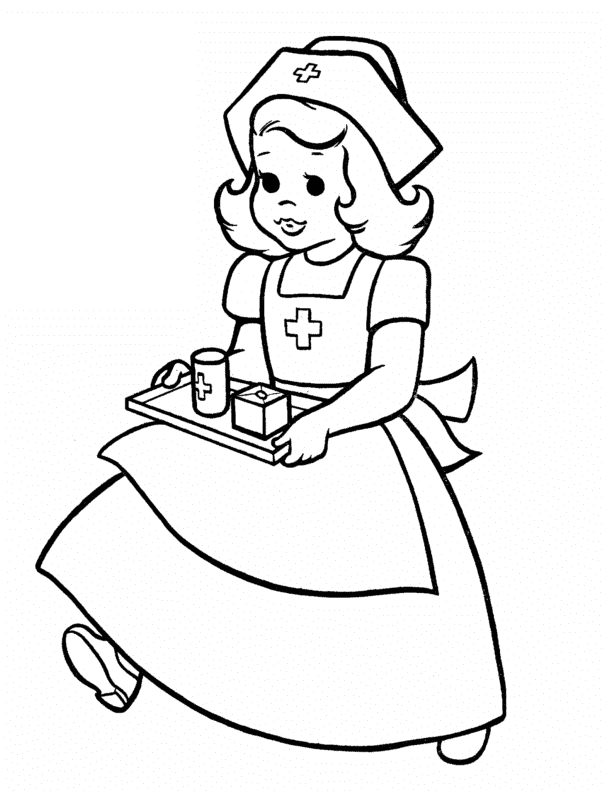
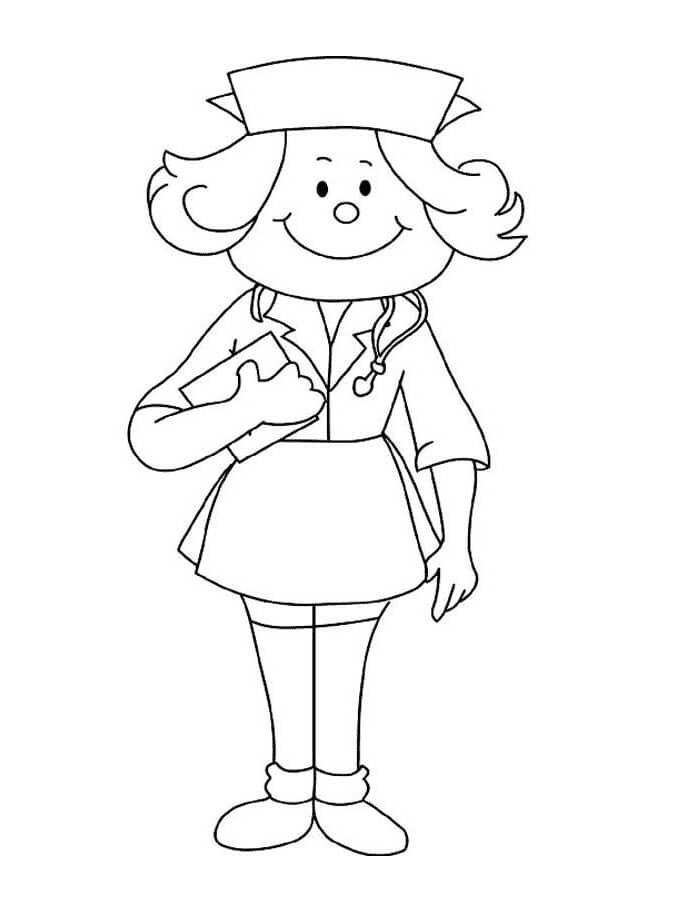
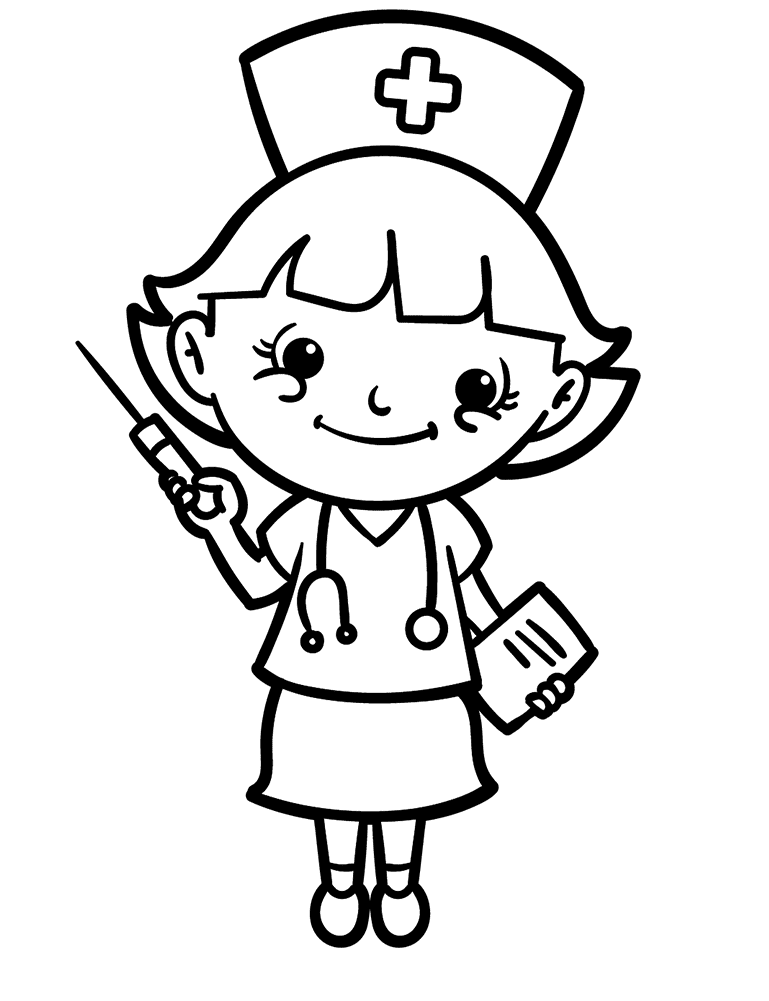
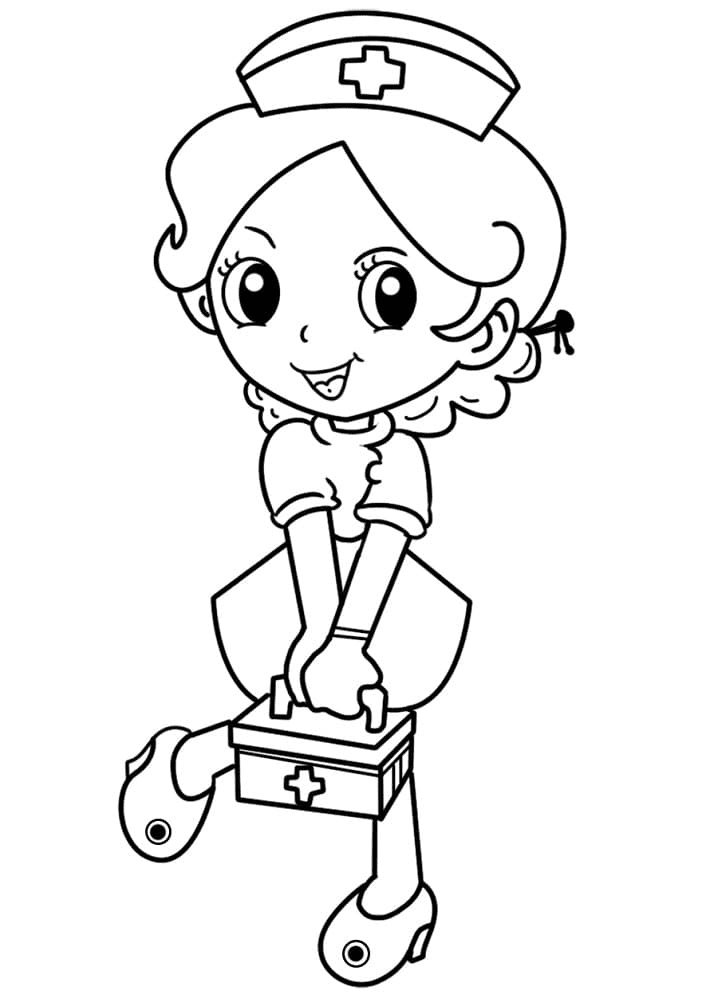


What’s Inside
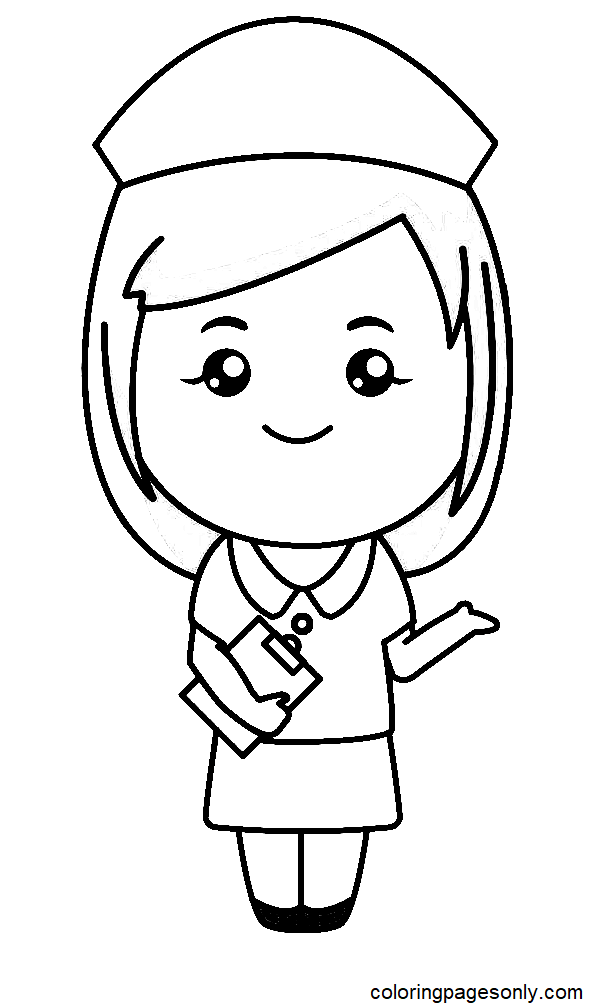
Modern Nurses in Scrubs
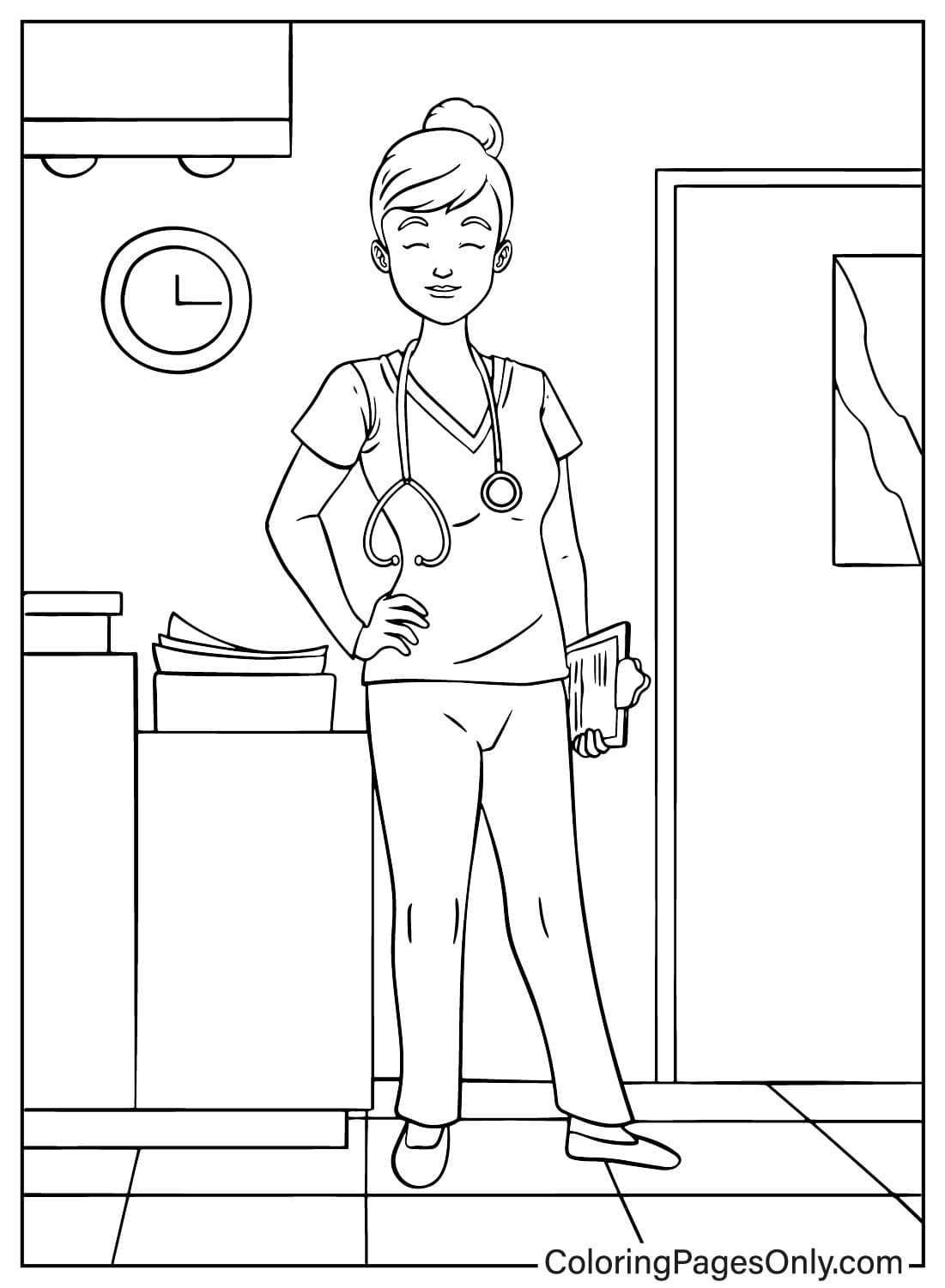
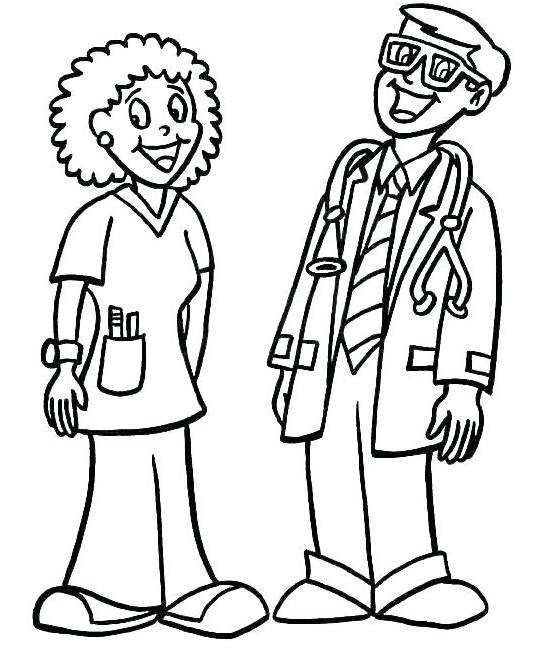
The most numerous pages in the collection show contemporary nurses in the work uniform that replaced the traditional white dress, cap, and pinafore from the 1960s onward: scrubs. Medical scrubs are the practical, washable, professional garments worn by nurses (and other healthcare workers) across virtually every healthcare environment today – typically in solid colors or subtle patterns, designed for comfort across long shifts and for easy laundering at the high temperatures required by clinical hygiene standards.
The color of scrubs is not standardized across the profession – different hospitals use color-coding systems (different colors for different departments or roles), while individual nurses in non-coded systems may wear their own choice of scrub color. Pediatric nurses frequently wear patterned scrubs with bright colors or children’s characters to make their appearance less clinical and more approachable for young patients. Emergency and surgical nurses often wear solid colors. School nurses may wear colors that match their institution.
Pages showing modern nurses in scrubs capture the contemporary reality of the profession – the working uniform of the 21st-century healthcare worker – and give colorists the maximum creative latitude in color choice, since no single color is “wrong” for scrubs.
Coloring scrubs pages: The creative opportunity on scrub pages is the color itself. Unlike a white traditional uniform, scrubs can be almost any color. Consider: teal or Caribbean blue (the most widely associated color with medical scrubs), navy or dark blue (common in many hospital systems), green (surgical and ED associations), wine or maroon (common in some systems), or the vividly patterned scrubs of pediatric nurses. The scrub top is typically looser than the pants; shadow folds appear at the underarm, waist, and pocket areas. Pockets – multiple, practical, often stuffed with equipment – are a functional design element that should be clearly rendered.
Historical Nurse Uniforms – The Florence Nightingale Era
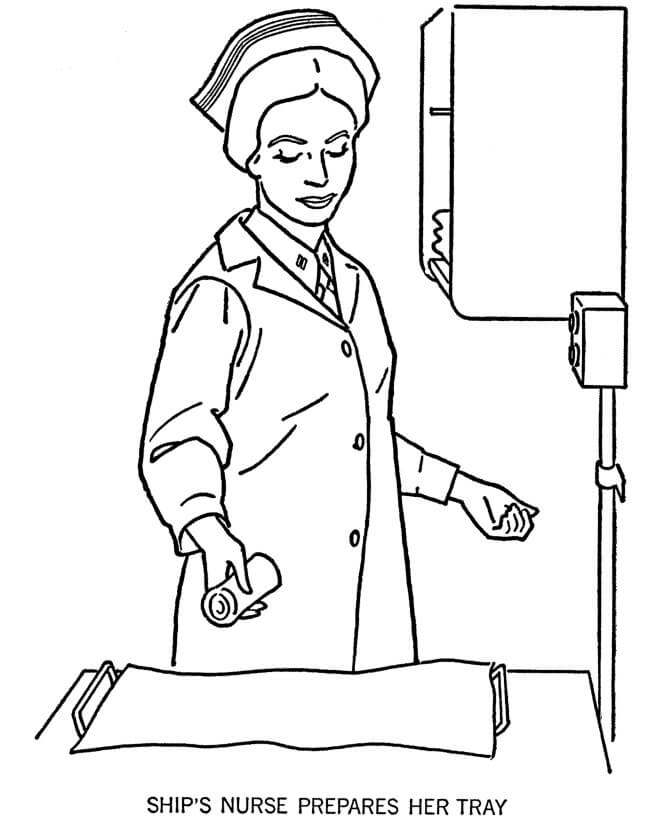
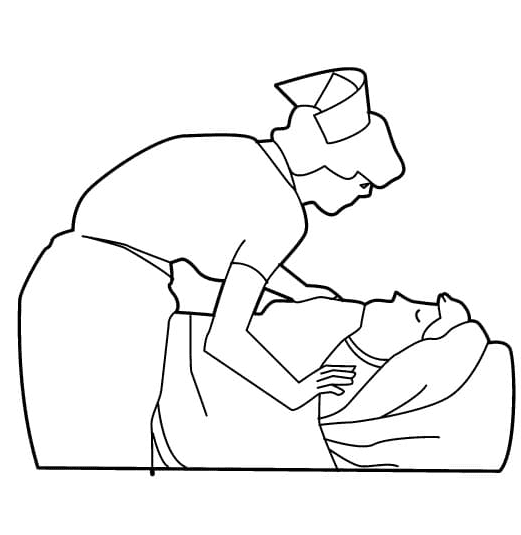
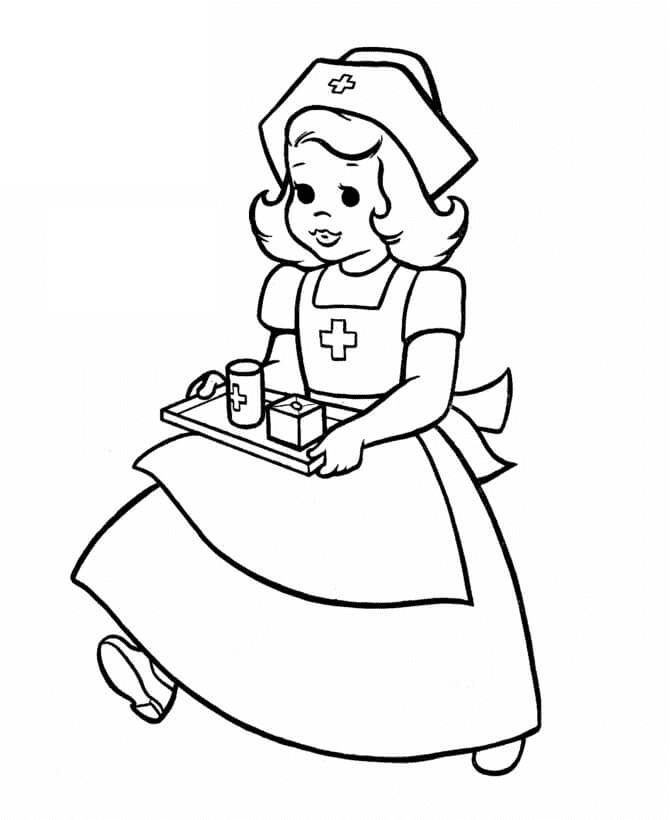
The traditional nursing uniform – white dress, white pinafore (apron), nursing cap – was the profession’s standard from the late nineteenth century through the middle of the twentieth century and is still worn in some formal contexts or depicted in historical illustration. The nursing cap, which varied by nursing school in its specific design, was a symbol of professional identity that nurses received at their capping ceremony upon completing training.
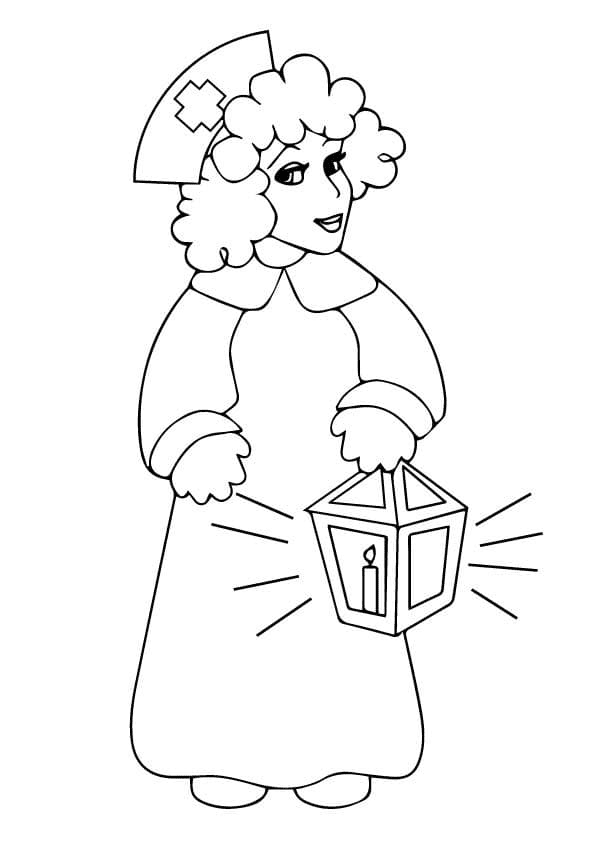
Pages showing historical nursing uniforms connect the contemporary profession to its founding figures and to the specific visual language of nursing during the Crimean War, the World Wars, and the establishment of the modern hospital system. Florence Nightingale’s “Lady with the Lamp” image – a nurse walking hospital wards at night carrying an oil lamp to check on patients – is one of the most recognized images in nursing history and is referenced in some pages of the collection.
Coloring historical nurse pages: The traditional nursing uniform is white – the white dress, the white apron, the white cap. These should be rendered with the same technique as any white garment: very subtle cool grey shadow in the deep fold areas, pure white on the directly lit surfaces. The nursing cap’s specific design (which varied by school) is the most important detail – render its folds and structure carefully. The lamp in any Nightingale-reference page should be rendered in warm yellow-gold metal with a warm yellow-orange light emission.
Nurses with Medical Equipment
The most informationally rich pages in the collection show nurses with the specific equipment of their daily work:
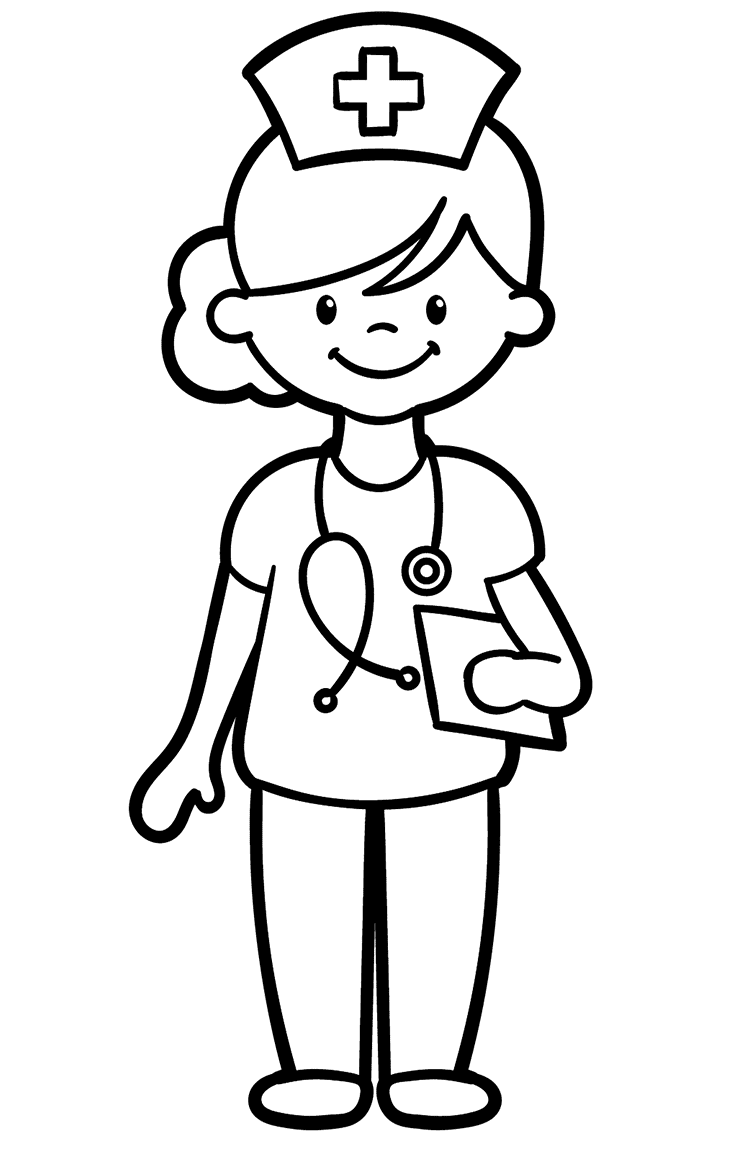
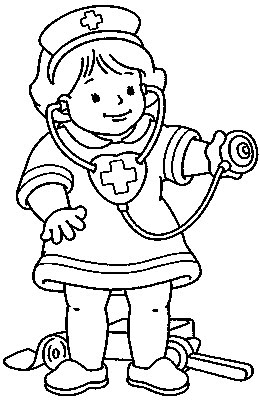
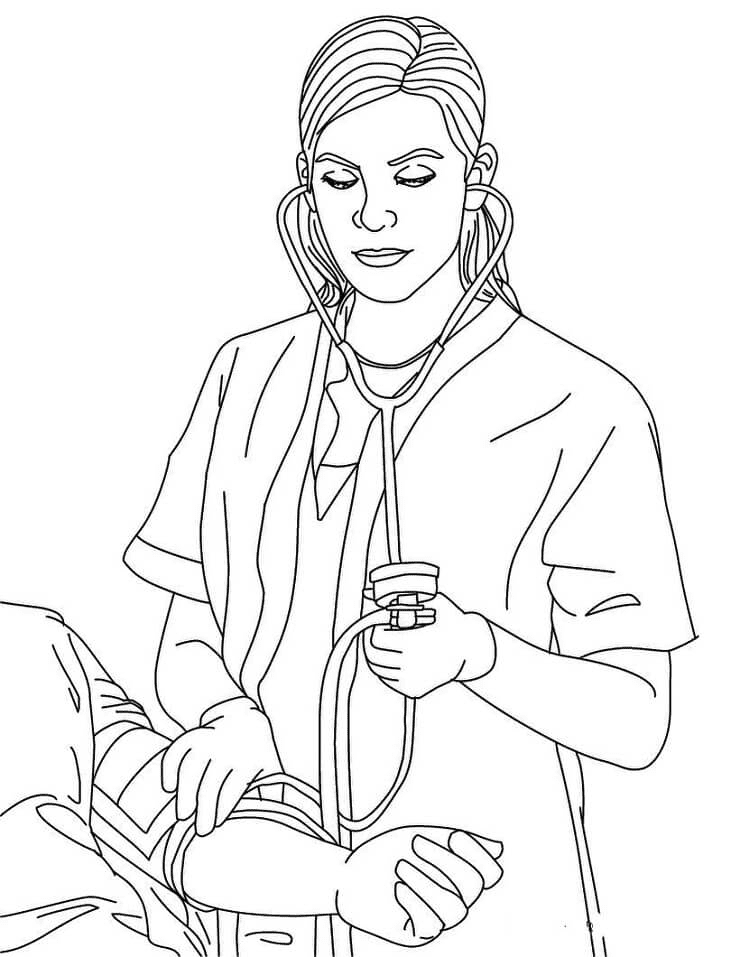
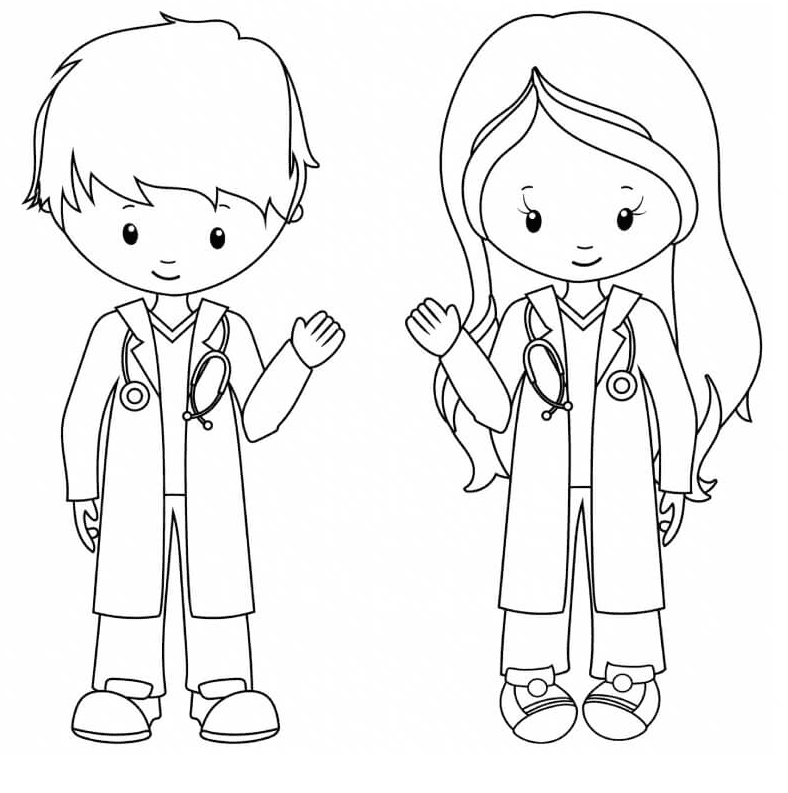
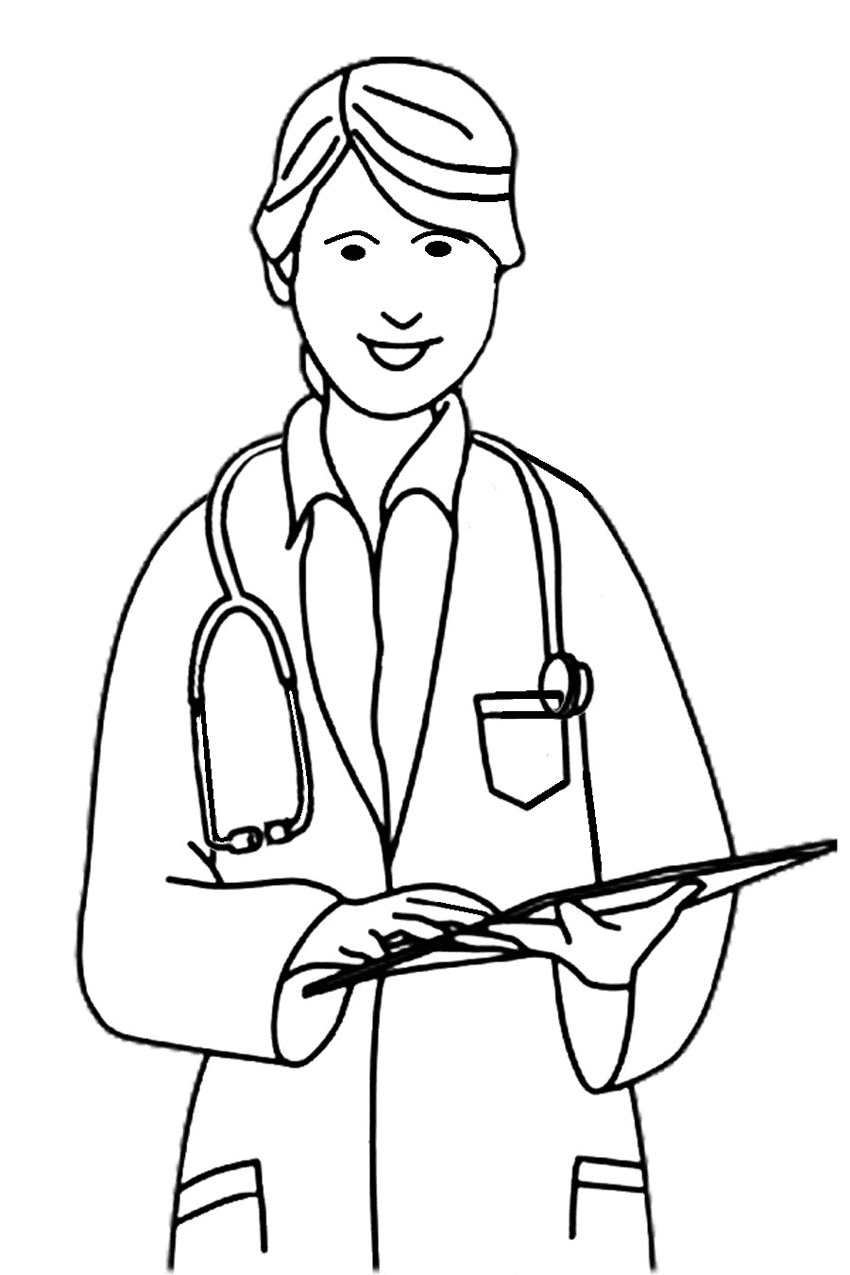
The stethoscope is the most iconic nurse (and doctor) tool – the Y-shaped acoustic device invented by René Laennec in 1816, originally by rolling paper into a tube to listen to a patient’s heart. The modern binaural stethoscope (two earpieces, flexible tubing, chest piece) is the standard instrument and appears in virtually every nurse portrait in the collection. The stethoscope is typically rendered hanging around the nurse’s neck or held in one hand.
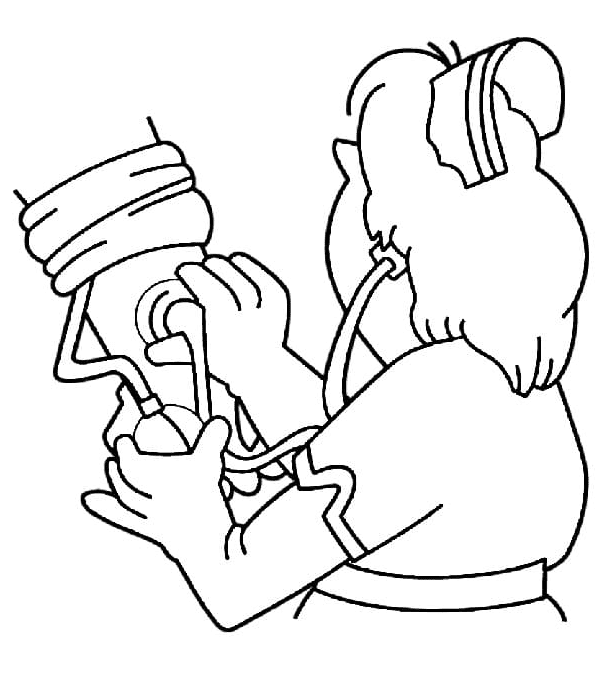
The blood pressure cuff (sphygmomanometer) appears in pages showing patient assessment – the inflatable cuff wrapped around the upper arm, connected to a gauge that reads pressure in millimeters of mercury. The cuff is typically black or dark navy, the gauge chrome or white.
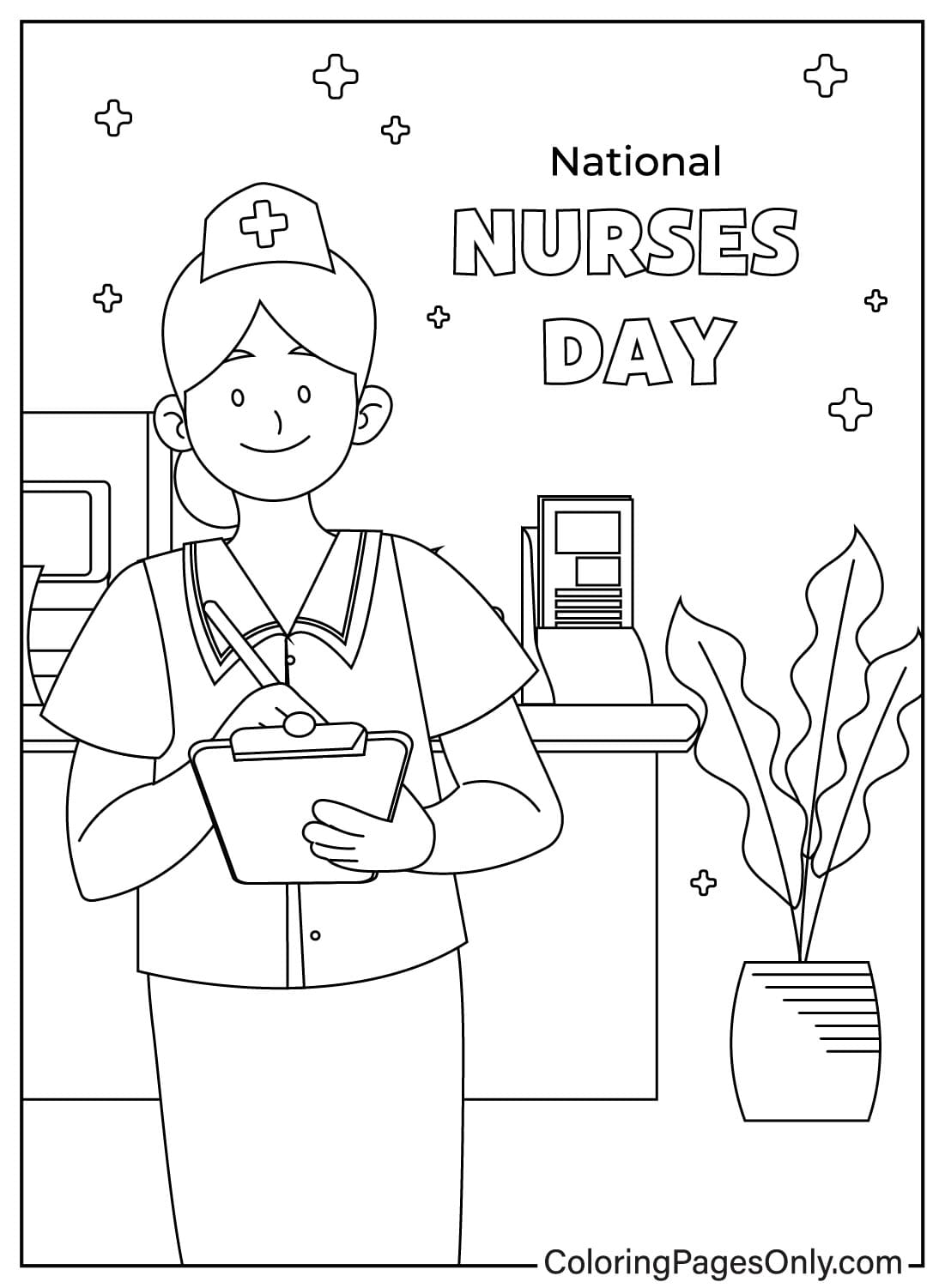
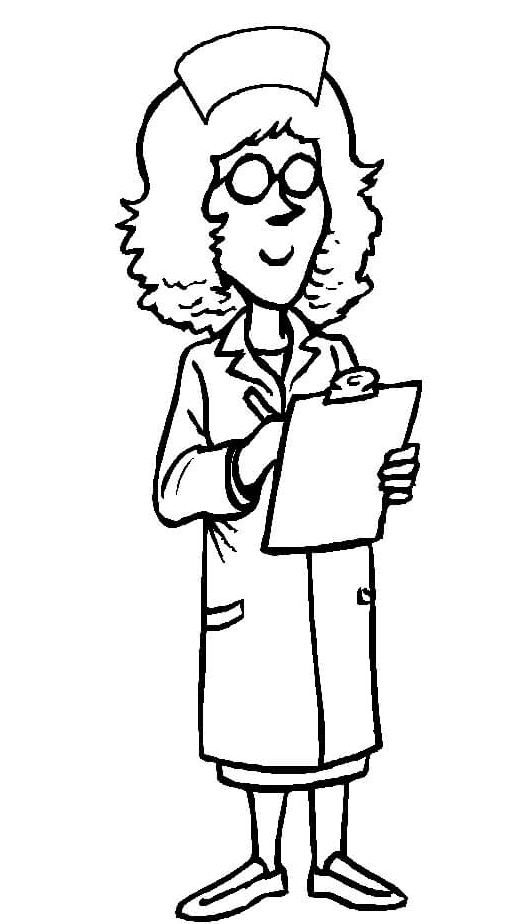
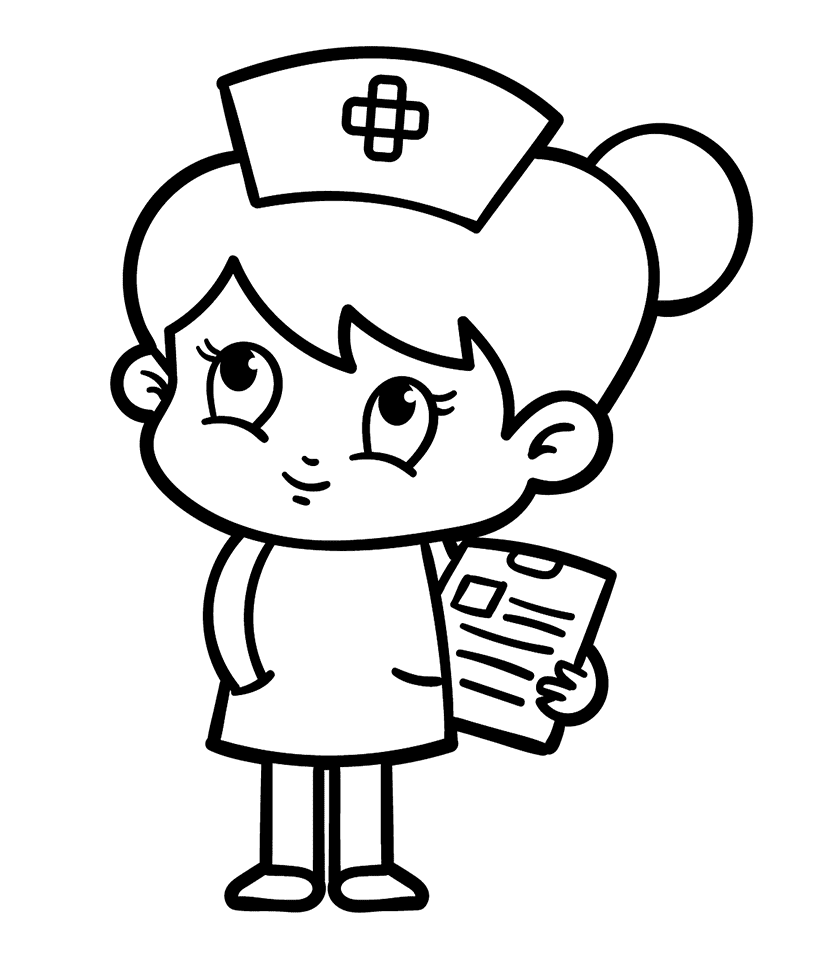
The clipboard and chart represent the documentation aspect of nursing – the ongoing record of patient status, medications administered, and care provided. These pages show nurses reading or writing on clipboards or, in more contemporary pages, tablet devices.
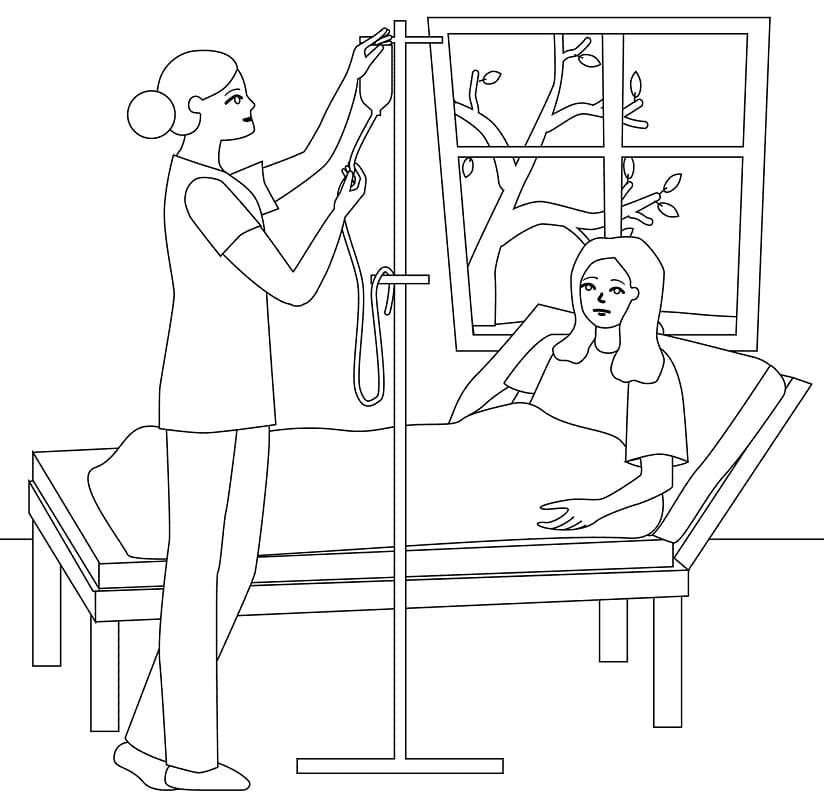
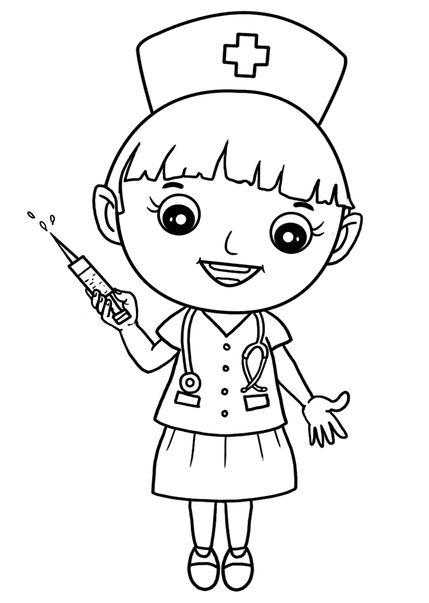
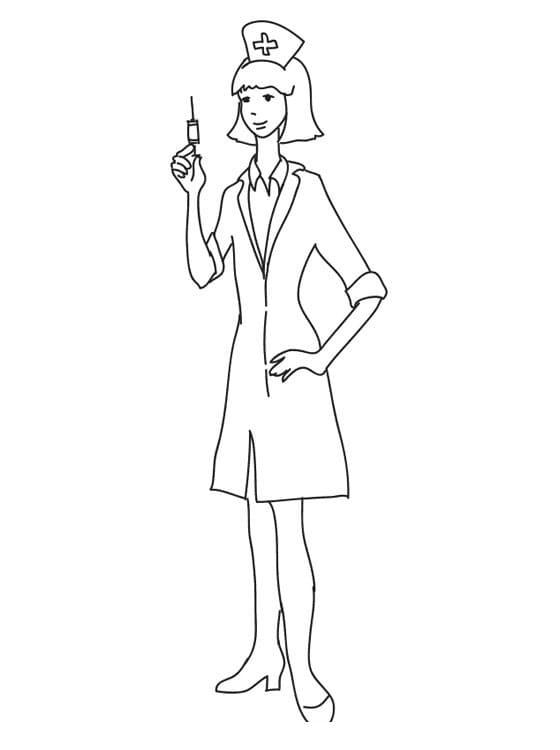
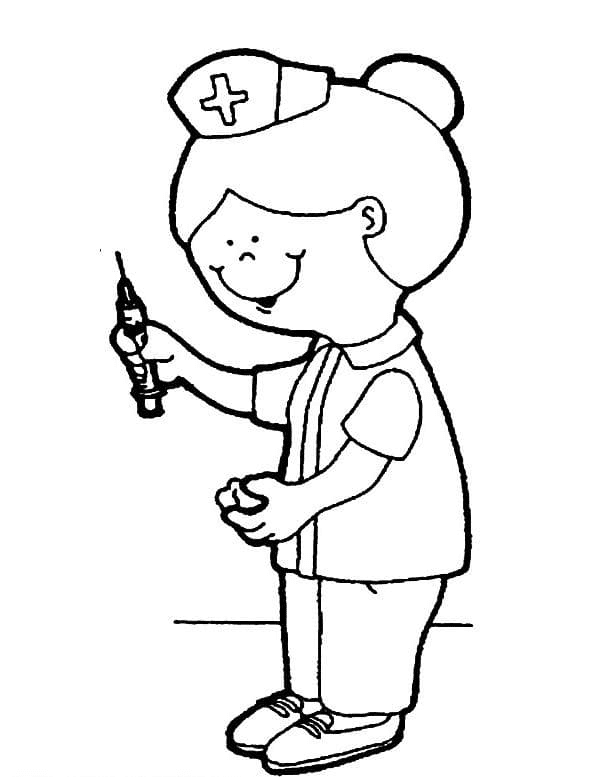
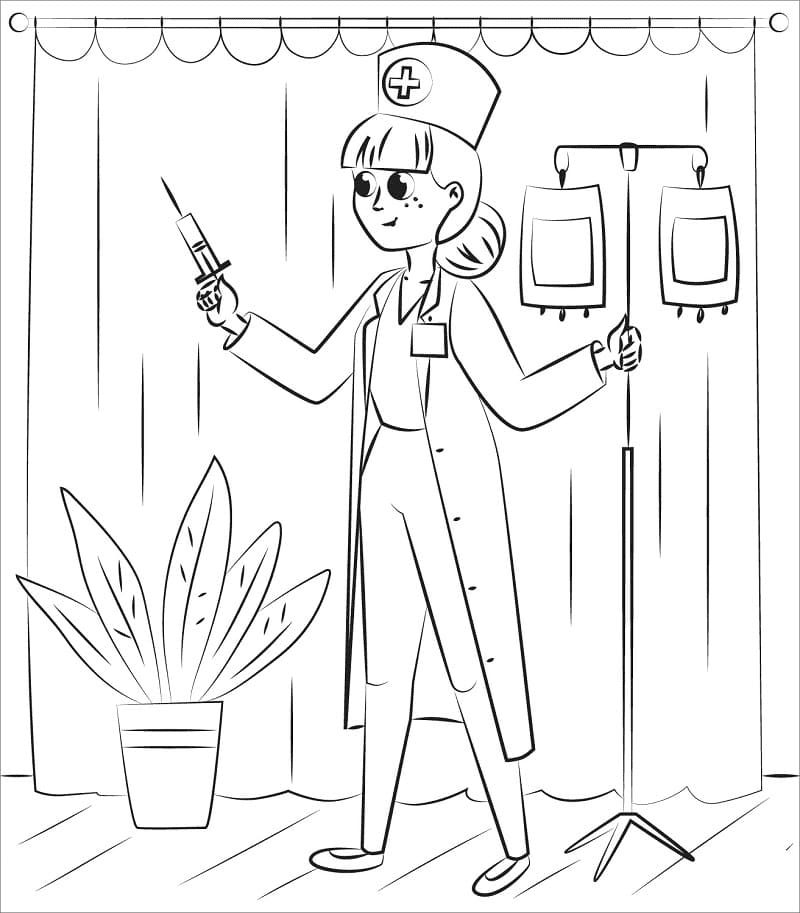
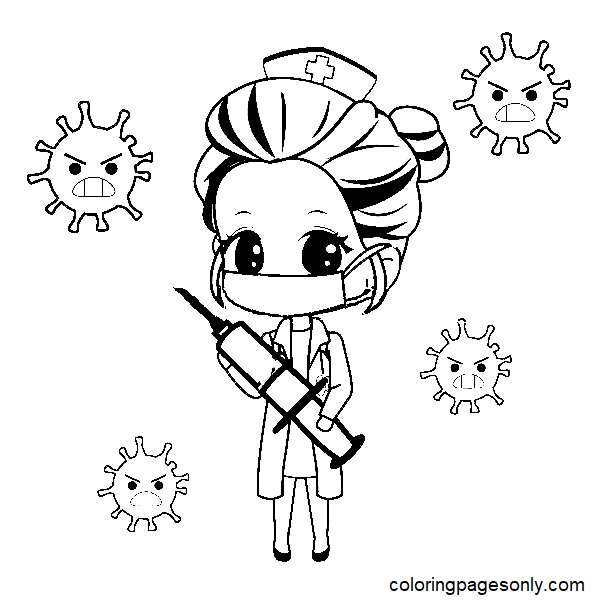
The syringe and IV bag appear in pages showing medication administration – one of nursing’s most specific and most carefully monitored responsibilities. The syringe’s precision and the IV bag’s transparent plastic with its tubing and ports are the most technically detailed medical equipment in the collection.
Coloring medical equipment: Stethoscope – the earpieces and tubing are typically black or dark navy rubber/plastic; the chest piece (the disc that contacts the patient) is chrome metallic silver. Blood pressure cuff – dark navy or black for the cuff fabric, chrome or white for the gauge. Syringe – clear plastic (rendered as very pale blue-grey) with metric markings visible, metallic chrome for the plunger. IV bag – clear or very pale blue translucent plastic, the fluid within visible as a slightly more saturated pale blue.
Pediatric Nursing Pages
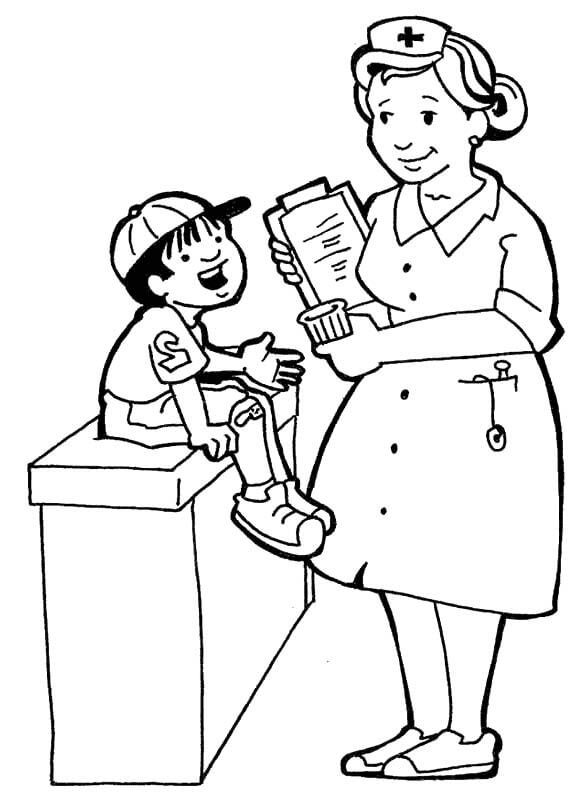
Several pages in the collection show nurses in pediatric settings – caring for children, which involves a specific adjustment to the standard nursing approach: the young patient requires not only clinical care but reassurance, communication adapted to their developmental level, and the specific skill of building trust with someone who may be frightened by the clinical environment.
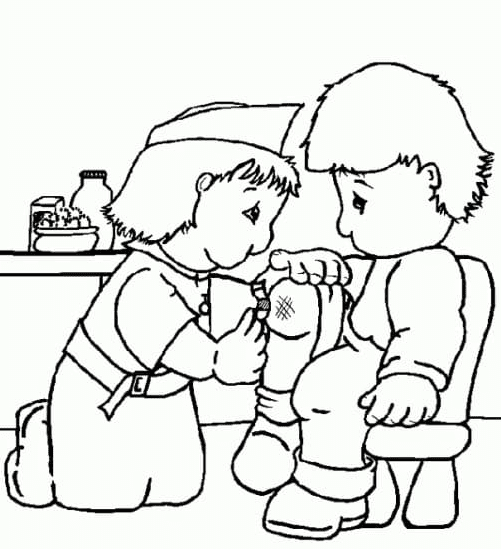
Pediatric pages typically show nurses in interaction with child patients – holding hands, offering comfort alongside clinical care, or depicted with toys or child-friendly medical equipment (smaller stethoscopes, pediatric blood pressure cuffs). The nurse in these pages is shown in the dual role that pediatric nursing specifically requires: caregiver and clinician simultaneously.
Coloring pediatric pages: The child patient’s presence gives the composition warmth that standard nursing pages may not have – the interaction between a nurse and a child patient is the collection’s most emotionally expressive content. Color the nurse in their working uniform and the child patient in the specific warm tones that suggest youth and vulnerability (softer skin tones, lighter coloring). The setting – hospital room, clinic, pediatric ward with child-friendly decoration – should be rendered in the relatively neutral but warmly-lit tones of a healthcare environment designed for comfort.
Career and Educational Pages
Some pages in the collection are specifically designed for children exploring nursing as a career concept – nurses depicted in ways that communicate the profession’s values (care, competence, compassion) alongside its specific practices. These pages are the collection’s most directly educational content.
The Red Cross symbol appears on some pages – the equal-sided red cross on a white background that has been the internationally recognized symbol of medical neutrality and humanitarian healthcare since Henry Dunant founded the International Red Cross in 1863. Its appearance in nursing imagery connects the individual nurse to the broader tradition of organized humanitarian healthcare.
Coloring Red Cross pages: The Red Cross symbol is specifically a vivid, fully saturated red cross on white – no shading within the cross arms, no dark outlining inside the cross. The red should be at maximum saturation. The white surrounding the cross should be the cleanest available white. The symbol’s simplicity is its power, and any color drift within the red or any contamination of the white reduces the symbol’s immediate recognizability.
What These Pages Do
Nursing is the most trusted profession in America, according to twenty-two consecutive years of Gallup polling – and the coloring pages make that trustworthiness visible and explorable for children. The nurses in this collection are depicted in the specific activities that earn that trust: careful assessment of patients, attentive documentation, and compassionate patient interaction. Coloring these pages while understanding what the depicted activities mean develops a child’s understanding of what nursing is before they encounter it in a clinical setting.
The collection serves a specific developmental purpose for children with family members in the nursing profession. Approximately one in six American families has a nurse among their immediate household or close family members. For a child whose parent, grandparent, or sibling is a nurse, coloring pages of nurses serve as a bridge between the family member’s work world and the child’s understanding – the uniform, the stethoscope, the clipboard become familiar and demystified through the coloring activity.
The nursing profession’s history from Florence Nightingale to the COVID-19 pandemic response is one of the most consistently heroic documented narratives in the history of public service. The American Academy of Pediatrics identifies early career awareness as a component of healthy child development, understanding that adults in their community perform specific, skilled work on their behalf. Nursing pages give children a specific and accurate entry point into that understanding.
Fine motor development. The American Academy of Pediatrics identifies fine motor skill development as a key childhood milestone throughout early childhood. The stethoscope’s tubing, the syringe’s measurement markings, the scrub’s fabric fold detail, and the medical equipment’s specific forms all provide motivated, sustained fine motor practice. The 2005 Art Therapy Journal study on structured coloring and anxiety reduction applies throughout – structured coloring activity provides the calm, focused benefit the research documents, with particular relevance for children experiencing healthcare anxiety who may find nurse-themed coloring a helpful processing activity.
Nurse coloring pages reduce medical anxiety in children. Healthcare settings can be frightening for young children, and familiarity with the visual elements of those settings – the scrubs, the stethoscope, the equipment – reduces the novelty that makes the environment intimidating. Research in pediatric psychology consistently shows that children who have some familiarity with medical settings and personnel before clinical encounters experience significantly lower anxiety during those encounters.
How to Color These Pages Well
Scrub colors are the most creative choice available – commit to one clearly. Unlike the white historical uniform, which has a canonical color, scrubs are available in virtually every color. Before starting any scrubs page, decide on the specific scrub color and apply it at full saturation across all scrub fabric areas. The most common clinical scrub colors – teal, navy, dark green, maroon – are all appropriate and historically grounded in real clinical environments. The creative decision is yours: make it definitive.
White uniforms in historical pages need shadow to read as fabric. White fabric has dimensionality – it folds, wrinkles, and casts a shadow on itself. Apply a very cool, very light grey (barely distinguishable from white) in the fold areas of the dress, the apron strings where they cross, and the underarm areas. The pure white surfaces are the directly lit areas: the front of the apron, the shoulder areas, and the top of the cap. The balance between white and the barely-there shadow is what makes the fabric read as present rather than as uncolored paper.
The stethoscope needs three distinct zones. The rubber/silicone tubing: dark navy or black, applied consistently along the entire tubing length. The chest piece: chrome metallic silver – apply a cool light grey on the facing surface, a darker grey on the shadow side, and a near-white highlight at the brightest point. The earpieces: the same dark material as the tubing, with the small metal eartip in chrome. These three zones – dark tubing, chrome chest piece, dark earpieces – give the instrument its complete rendered quality.
Patient skin tones are the most empathetic detail in interaction pages. Pages showing nurses with patients require careful consideration of the patient’s skin tone alongside the nurse’s. Apply consistent warmth across the patient’s figure – human skin in all its tones has warm undertones, and the shadow areas should deepen within the warm family rather than shifting to cool grey. The patient’s expression – often one of vulnerability or relief – is the page’s emotional center and should be rendered with the same care as the nurse’s clinical equipment.
Medical equipment requires precision over an area. Most coloring pages reward confident, broad application of color across large areas. Medical equipment – the syringe’s measurement markings, the IV bag’s port details, the blood pressure gauge’s scale – rewards precision at a small scale. Apply the equipment’s base color first across all primary surfaces. Then add the smallest details – markings, ports, connectors – with the finest available tool, working carefully to keep these details readable at their small size.
5 Creative Craft Ideas
Florence Nightingale Memorial Page
Print the most historical-looking nurse page in the collection – ideally one in a traditional white uniform. Color it carefully: white dress and apron, the dark blue nursing cloak that Nightingale and her nurses wore at Scutari, and warm yellow-gold for any visible lamp.
Mount on backing cardstock. Add hand-lettered text: “Florence Nightingale – 12 May 1820 – 13 August 1910. She reduced the death rate at Scutari from 42% to 2%. She founded the first secular nursing school. Her birthday is International Nurses Day.” The finished page is a memorial card for the profession’s founding figure.
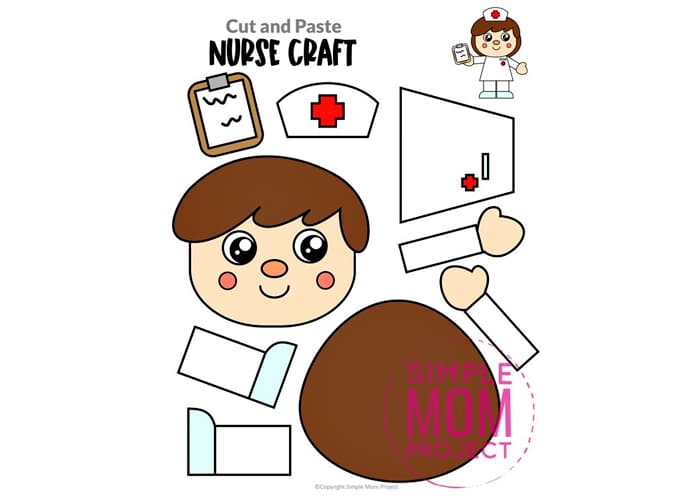
Nursing Thank You Card
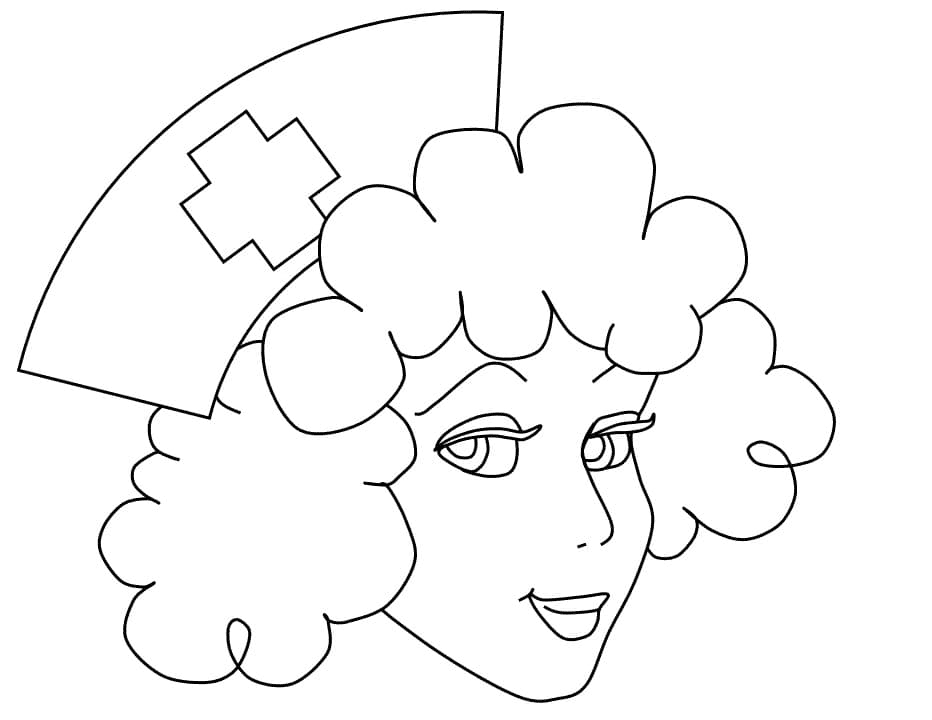
Print any portrait nurse page – the cleanest, most directly warm and caring nurse image in the collection. Color it carefully in appropriate scrub or uniform colors, with the nurse’s expression communicating warmth.
Write on the back of the card or on an attached card: “To [nurse’s name]. Thank you for [specific thing they did or for the work they do]. I made this for you.” A child who has a nurse in their family – or who has received nursing care themselves – can give this as a personalized, hand-colored tribute.
The finished card is the coloring page’s most direct real-world application: a handmade thank-you delivered to a specific person.
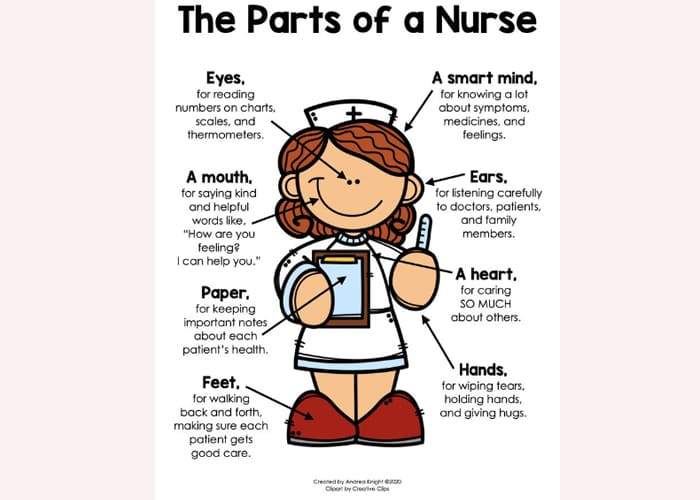
Nursing Career Exploration Display
Print five pages showing nurses in different specialty settings or activities: a nurse with a stethoscope (assessment), a nurse with a syringe (medication administration), a nurse holding a patient’s hand (comfort and care), a pediatric nurse with a child, and a nurse in an emergency/active setting. Color all five with consistency in the nurse figure’s uniform while varying the environmental context.
Mount all five in a grid on a backing sheet. Below each, add one line about that nursing activity: “Assessment: listening to understand what the body needs.” “Medication: giving the right treatment at the right time.” “Comfort: being present when presence matters.” “Pediatric: caring for children requires care in two registers at once.” “Emergency: when speed and precision are the same thing.”
International Nurses Day – May 12
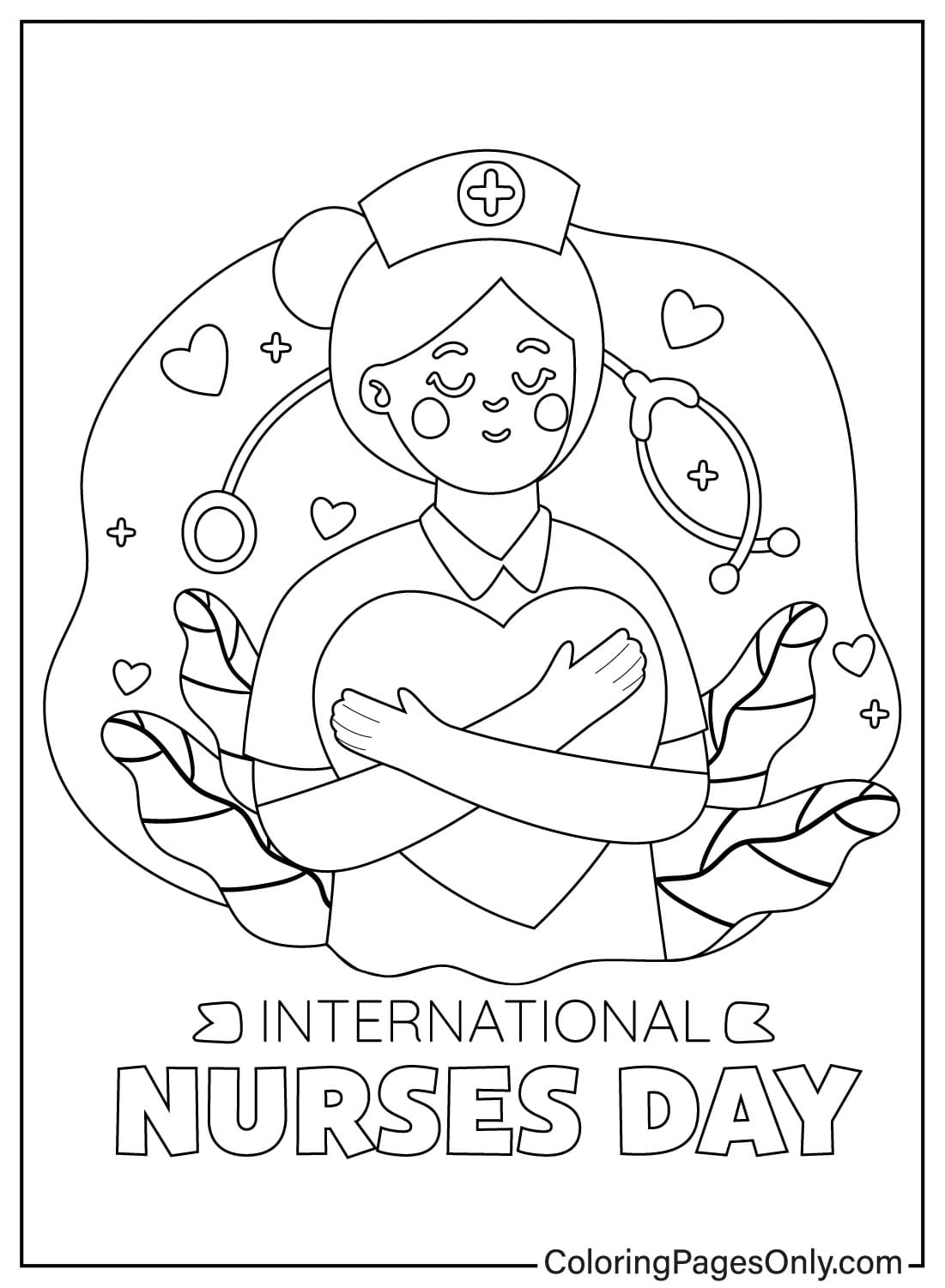
International Nurses Day is observed annually on May 12, Florence Nightingale’s birthday. Print several nurse pages – enough to create a celebration display. Color all in a coordinated color palette: warm teal scrubs with white accents, consistently applied across all figures.
Create a poster-style backing sheet: “International Nurses Day – May 12” at the top in large hand-lettered text. Mount the colored nurse pages in a composition around the title. Add Florence Nightingale’s birth year (1820) and the current year at the bottom. The finished display is a hand-made annual celebration of the profession.
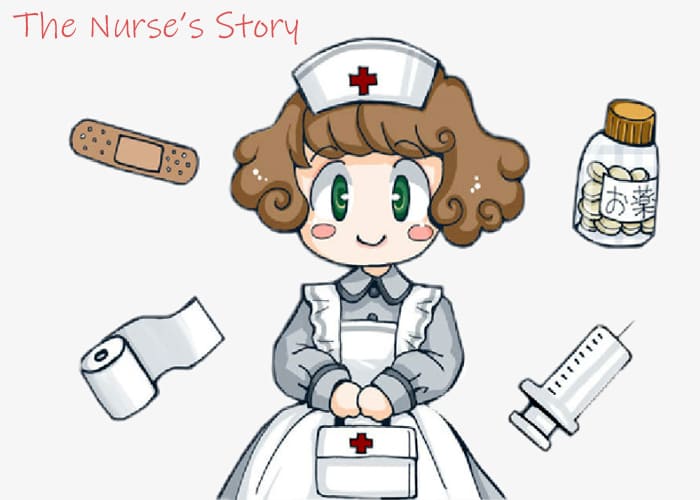
The Stethoscope Story
This craft combines coloring with a brief science lesson. Print a nurse page showing a nurse with a stethoscope clearly visible. Color the nurse completely.
On a separate small piece of paper, draw a simple timeline:
- “1816: René Laennec rolled paper into a tube to listen to a patient’s heart. The stethoscope was invented.”
- “1850s: The binaural (two-ear) stethoscope with flexible tubing is developed.”
- “Today: The stethoscope remains the most recognized medical instrument, two hundred years after its invention.”
Mount the colored nurse page alongside the timeline card. The finished display combines a completed coloring page with the specific history of the tool that most identifies nursing and medicine visually.
Frequently Asked Questions
Who is Florence Nightingale, and why is she significant to nursing? Florence Nightingale was born on May 12, 1820, in Florence, Italy – named by her parents after the city of her birth during their travels. She is considered the founder of modern nursing. During the Crimean War (1853-1856), she organized and led nursing care for British soldiers at the Barrack Hospital in Scutari, Constantinople (now Üsküdar, Istanbul, Turkey), where she reduced the hospital’s death rate from approximately 42 percent to approximately 2 percent through systematic improvements to sanitation, nutrition, and nursing care. She returned to England and founded the Nightingale Training School for Nurses at St. Thomas’ Hospital in London in 1860 – the world’s first secular nursing school – and published Notes on Nursing: What It Is, and What It Is Not in 1859. May 12, her birthday, is observed annually as International Nurses Day.
How trusted is the nursing profession? Nursing has been ranked the most trusted profession in Gallup’s annual survey of honesty and ethics in the United States for twenty-two consecutive years through 2023 – the longest streak of any profession in the survey’s history. The survey asks Americans to rate various professions on their perceived honesty and ethical standards; nursing has led every year since 1999 (with the exception of 2001, when firefighters ranked first following the September 11 attacks). This sustained public trust reflects both the quality of nursing practice and the specific nature of the nurse-patient relationship, which places nurses in intimate proximity to patients at their most vulnerable.
What are the different types of nurses and their roles? The nursing profession encompasses several distinct credential levels. Certified Nursing Assistants (CNAs) complete state-approved training programs of several weeks and provide basic patient care under supervision. Licensed Practical Nurses (LPNs) complete one-year programs and provide direct patient care under registered nurse supervision. Registered Nurses (RNs) complete two-to-four-year programs (associate or bachelor’s degree) and are licensed by their state, performing the full range of nursing assessment, care, and advocacy. Advanced Practice Registered Nurses (APRNs) – including Nurse Practitioners (NPs), Certified Nurse Midwives (CNMs), and others – hold master’s or doctoral degrees, can diagnose conditions and prescribe medications, and work with significant clinical independence.
What does a nurse’s typical workday include? A registered nurse’s daily work varies significantly by specialty but consistently involves patient assessment (gathering information about the patient’s current condition through observation, conversation, and measurement), medication administration (preparing and delivering prescribed medications on schedule and monitoring for effects), documentation (maintaining the continuous written or electronic record of patient status and care provided), patient education (explaining conditions, treatments, and self-care to patients and families), coordination with other healthcare providers, and direct patient care including wound care, IV management, and comfort measures. In emergency settings, the work also includes rapid prioritization of multiple patients’ needs. In pediatric settings, communication is adapted for the child’s developmental level. In community or school settings, preventive care and health education are central.
What is the stethoscope, and when was it invented? The stethoscope is the acoustic instrument used to listen to sounds produced within the body, primarily heart and lung sounds. It was invented in 1816 by French physician René Laennec, who rolled a sheet of paper into a tube to listen to a patient’s heart after finding that placing his ear directly on the patient’s chest was insufficiently sensitive and clinically awkward. He found that the paper tube significantly amplified the heart sounds. Modern binaural stethoscopes – with two earpieces connected by flexible tubing to a chest piece – were developed in the 1850s. The stethoscope has remained the most universally recognized medical instrument for over two hundred years and is the single item most associated with nursing and medicine in popular visual representation.
What are nursing scrubs, and when did they replace the traditional uniform? Medical scrubs are the washable, loose-fitting garments worn by nurses and other healthcare workers during clinical work, replacing the traditional nursing uniform of white dress, white pinafore, and nursing cap that was standard through the mid-twentieth century. The transition to scrubs began in the 1960s and 1970s, driven by practical considerations: scrubs are more comfortable for long shifts, easier to launder at the high temperatures required by clinical hygiene, less costly to replace, and available in a wider range of sizes and styles. Today, scrubs come in virtually every color and pattern, with many hospital systems using color-coding to identify different roles or departments. Pediatric nurses frequently wear patterned scrubs with child-friendly designs to reduce clinical anxiety in young patients.
What age group are these pages best suited for? Nurse coloring pages work well across a wide age range. The simplest cartoon and illustration-style nurse pages – clean outlines, large areas, minimal detail – are accessible from ages three and four, particularly for children with a nurse in the family who want to color their family member’s work world. The more detailed pages – realistic nurse portraits, equipment-focused pages, complex clinical setting scenes – are most rewarding from ages six to ten, where developing motor control allows the small-scale detail work that equipment like stethoscopes and syringes require. The historical nursing pages (Florence Nightingale era) and the career-exploration educational pages are most engaging for ages eight and up, as they connect to curriculum content about history and community helpers. Adult nurses and nursing students also find these pages relaxing and professionally meaningful.
Browse the full collection at ColoringPagesOnly.com. All 72 pages free, no sign-up, PDF or PNG, print or color online.
Florence Nightingale was twenty-three years old when she decided to become a nurse – a decision her upper-class British family considered beneath her station and actively opposed for years. She became a nurse anyway. She went to Crimea at thirty-three. She reduced the death rate from 42 percent to 2 percent and did not stop working until she was physically unable to continue, decades later.
The stethoscope on the pages in this collection was invented in 1816 by a man who rolled paper into a tube. The scrubs are a 1970s practical improvement over a nineteenth-century uniform. The Red Cross symbol has been recognizable since 1863.
The most trusted profession in America. Twenty-two consecutive years. Counting.
Pick up your teal. The scrubs come first. The stethoscope hangs around the neck or rests in the hand.
Share your work on Facebook and Pinterest and tag #Coloringpagesonly. We especially want to see the Florence Nightingale memorial pages and the nursing thank-you cards delivered to actual nurses.
Color the nurse. Learn the history. The trust is earned every shift.