Sasuke Coloring Pages
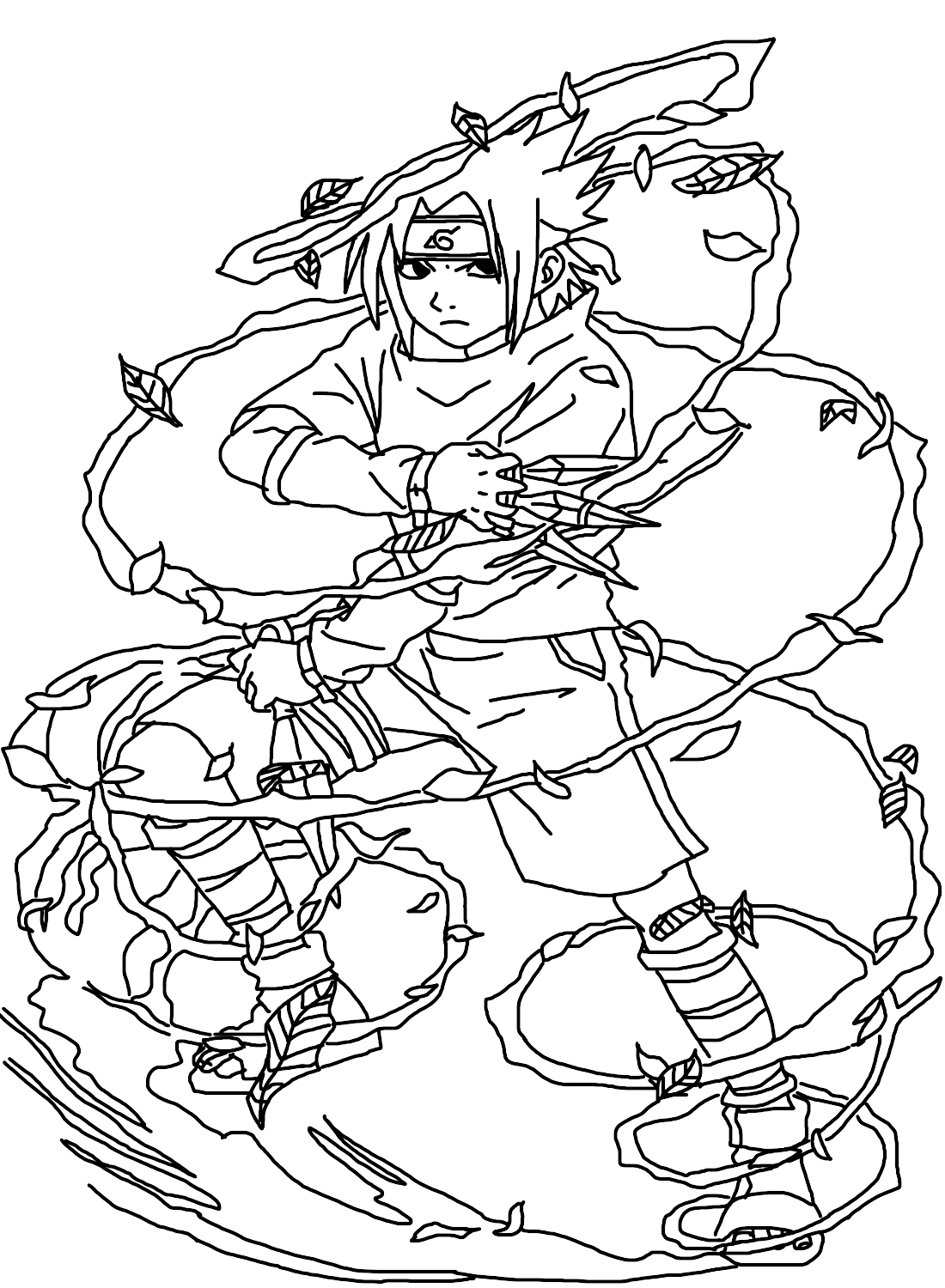
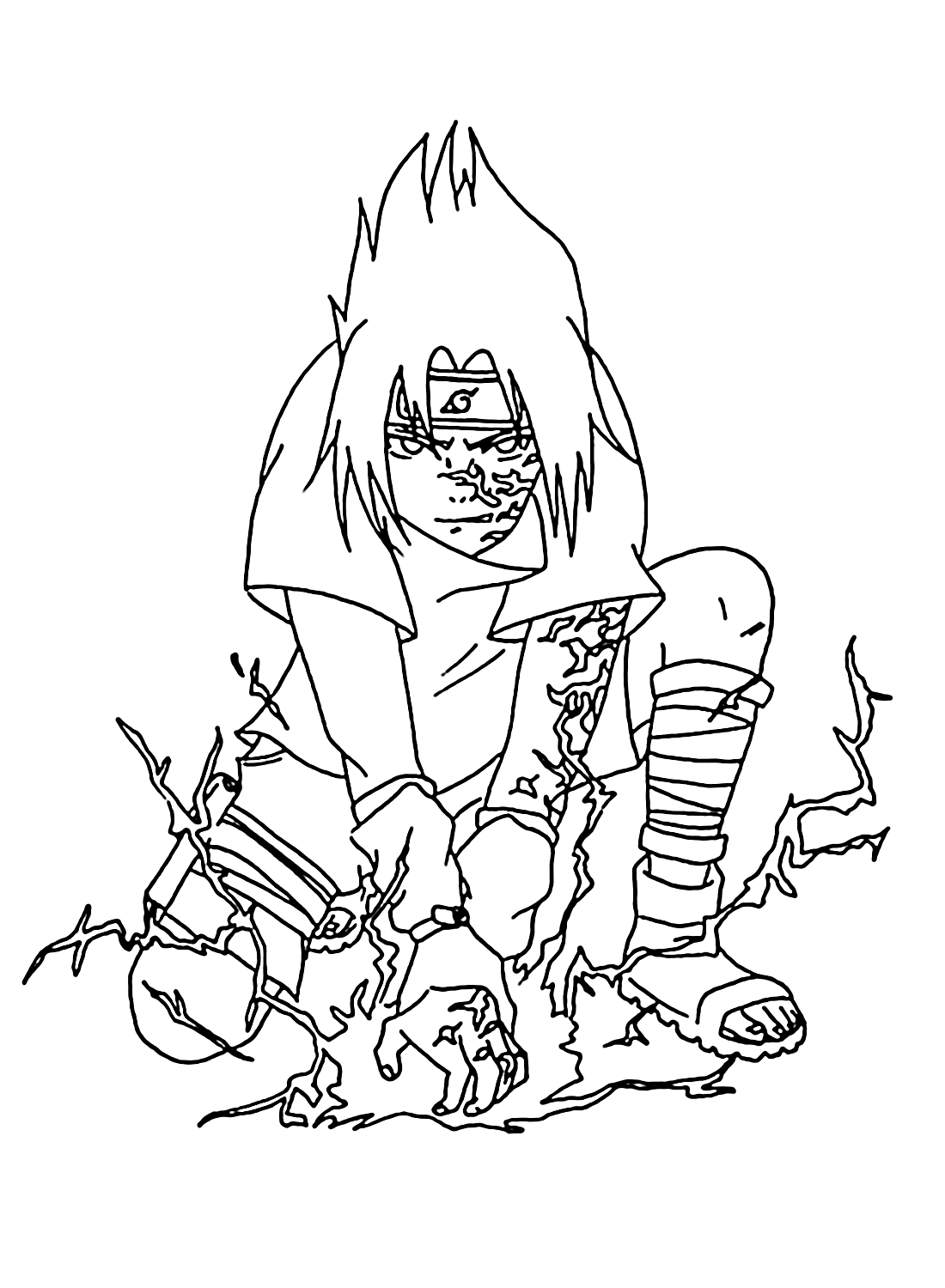
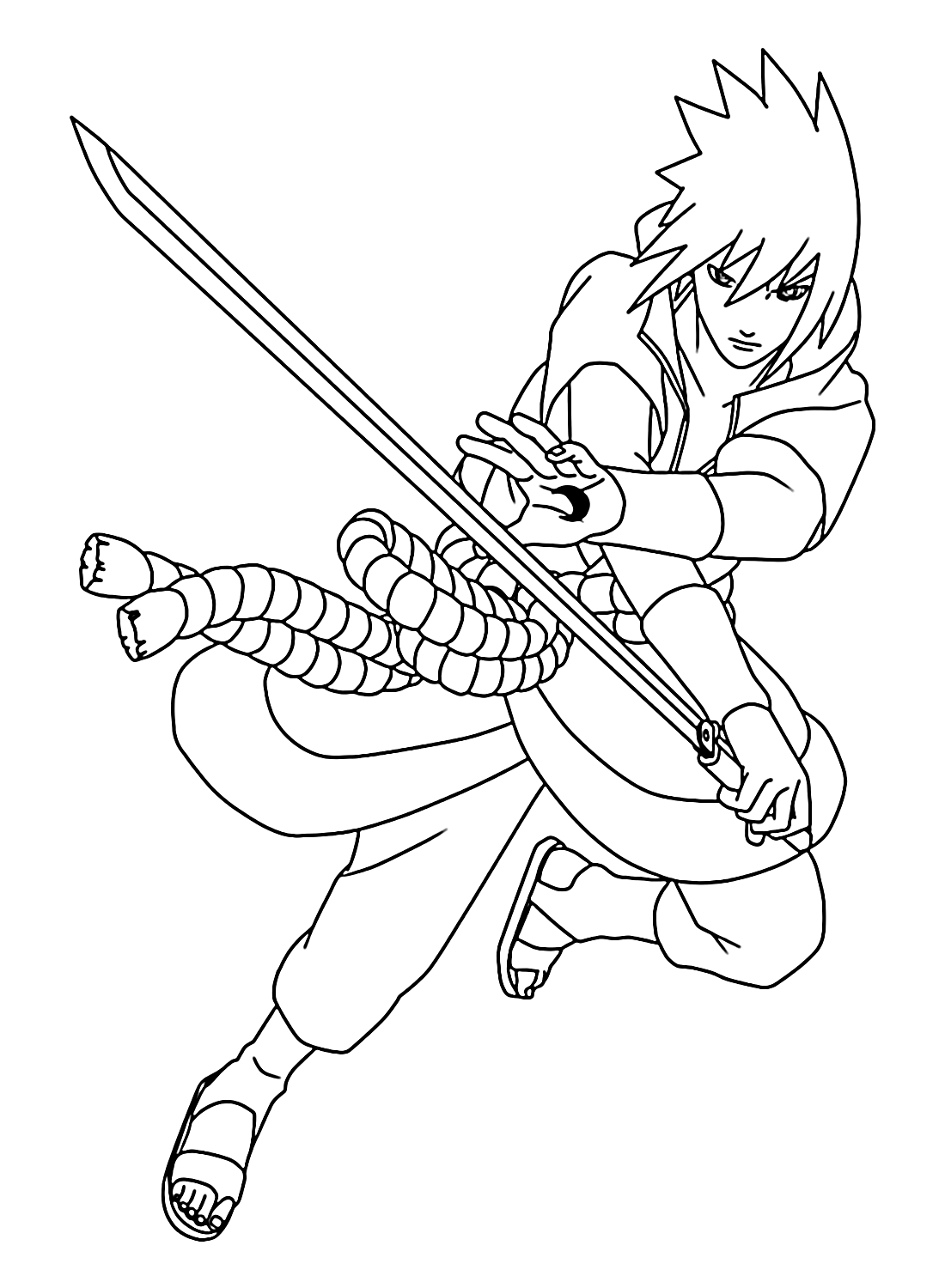
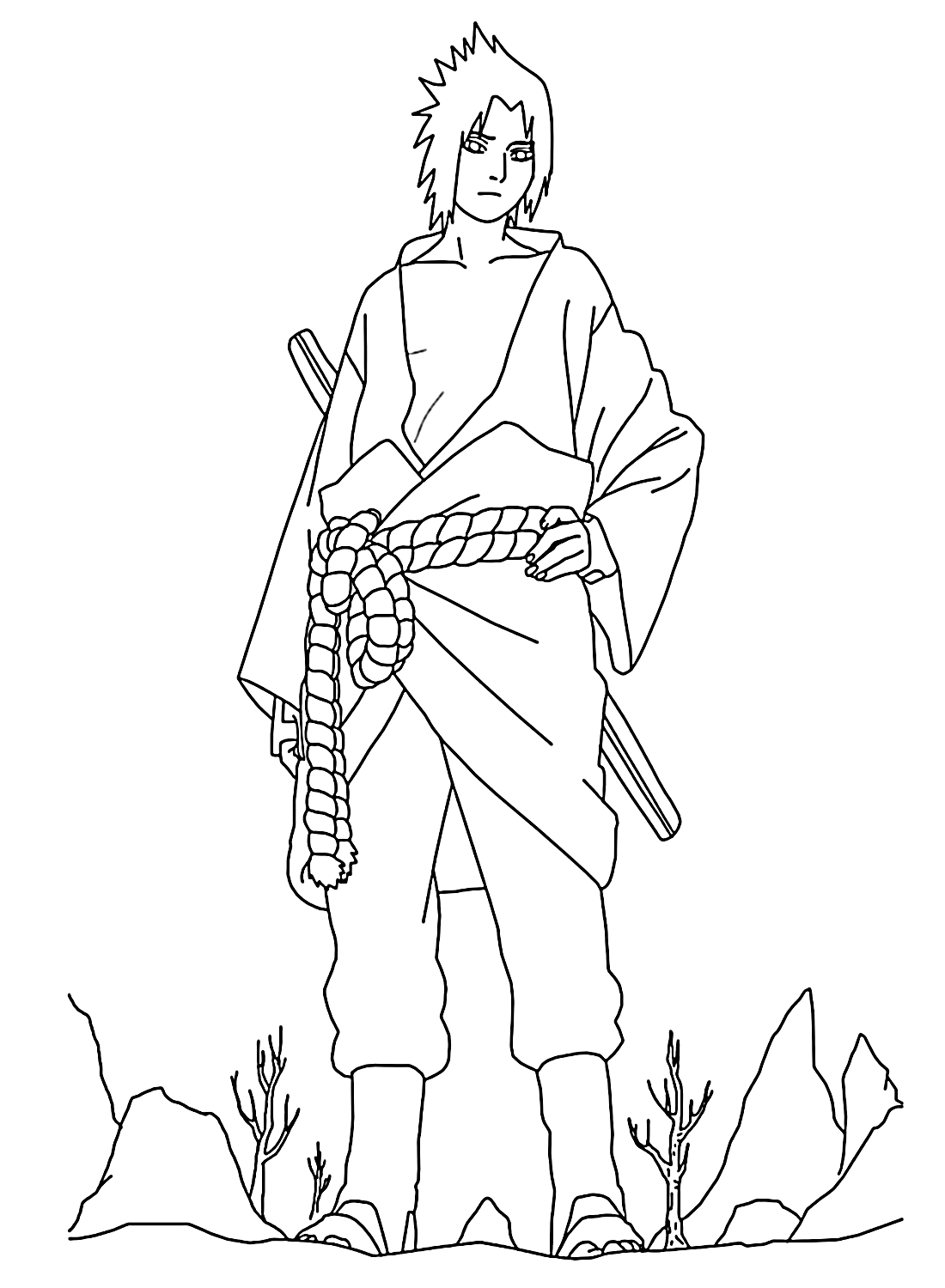
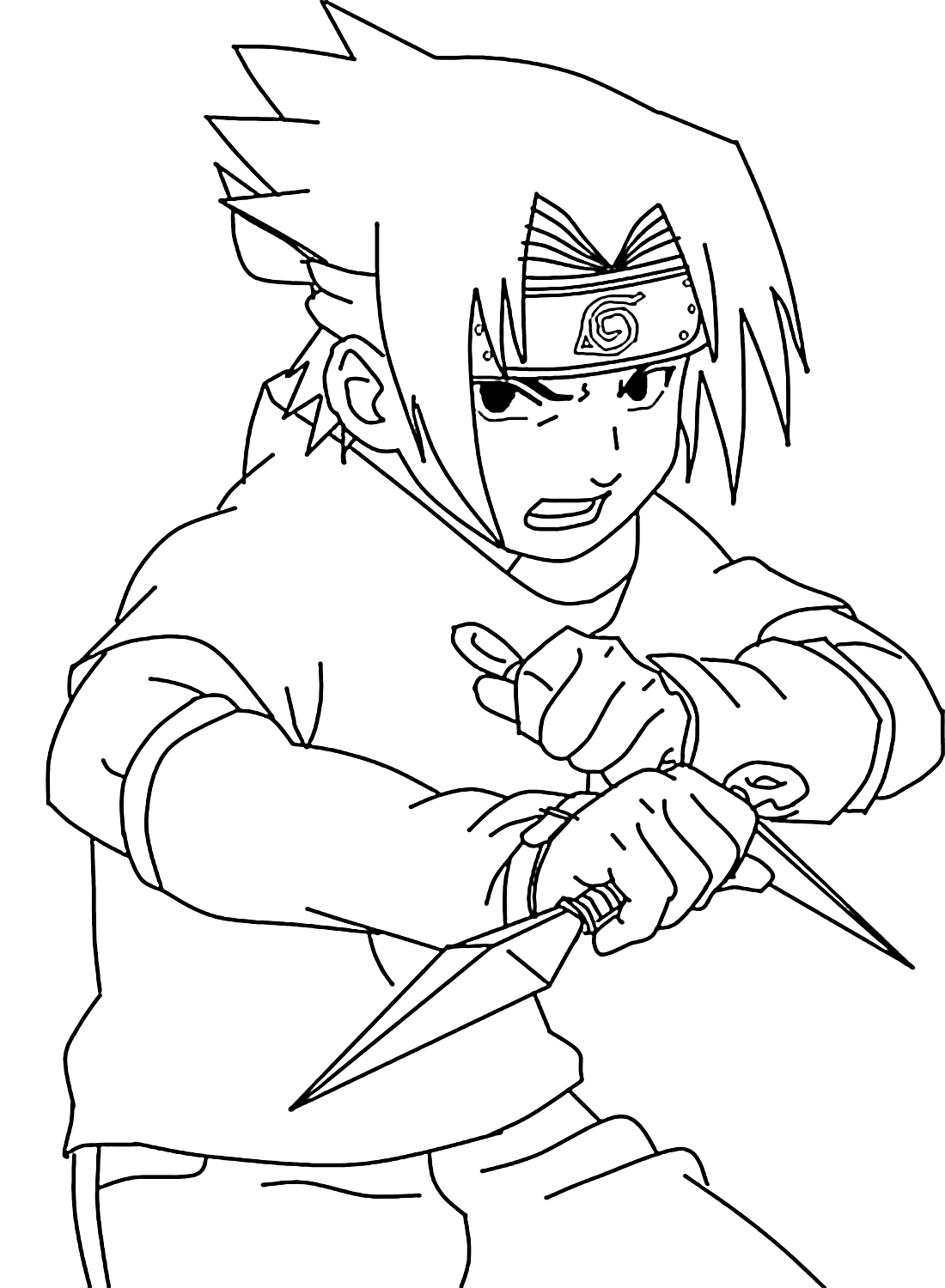
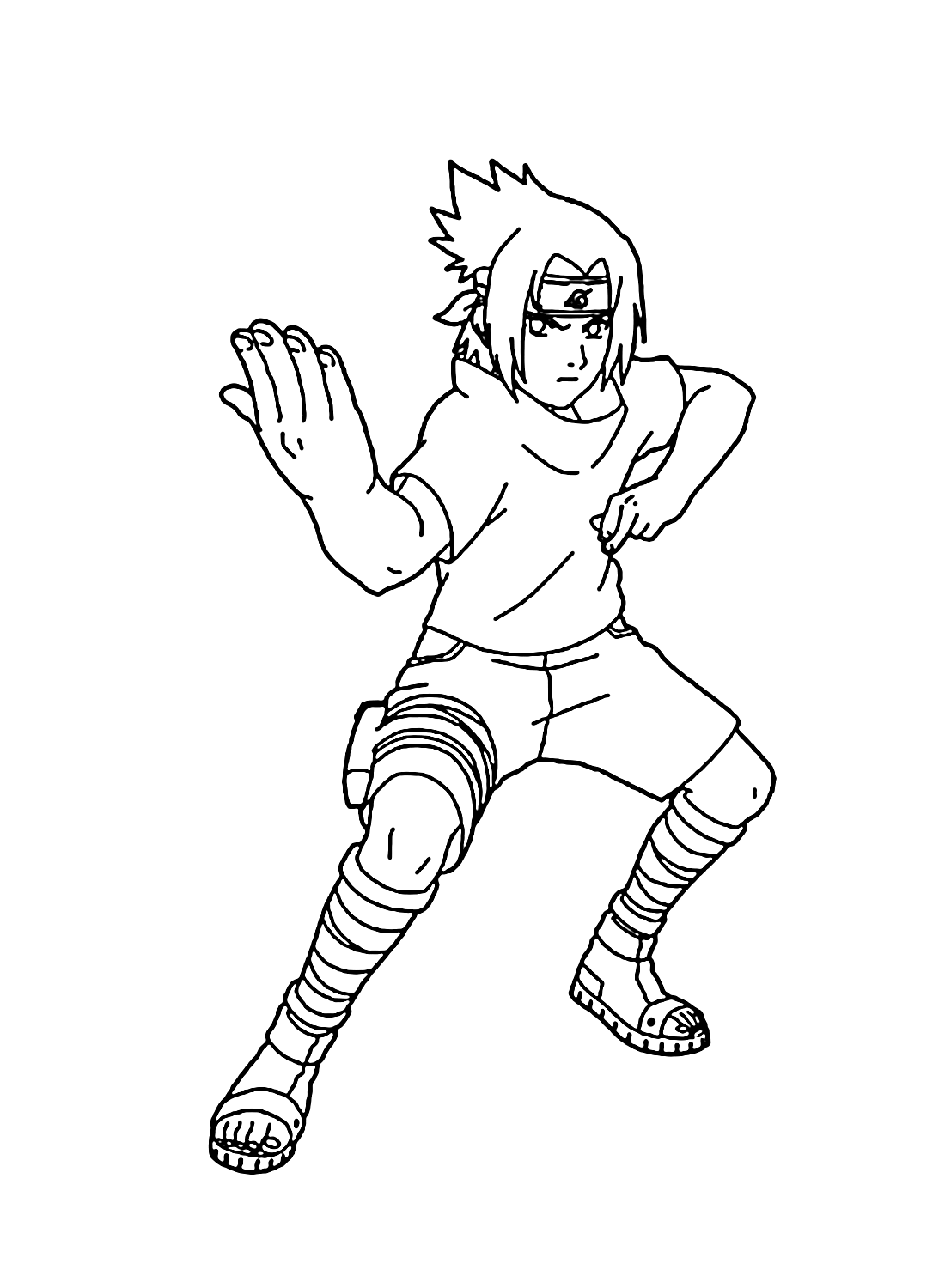
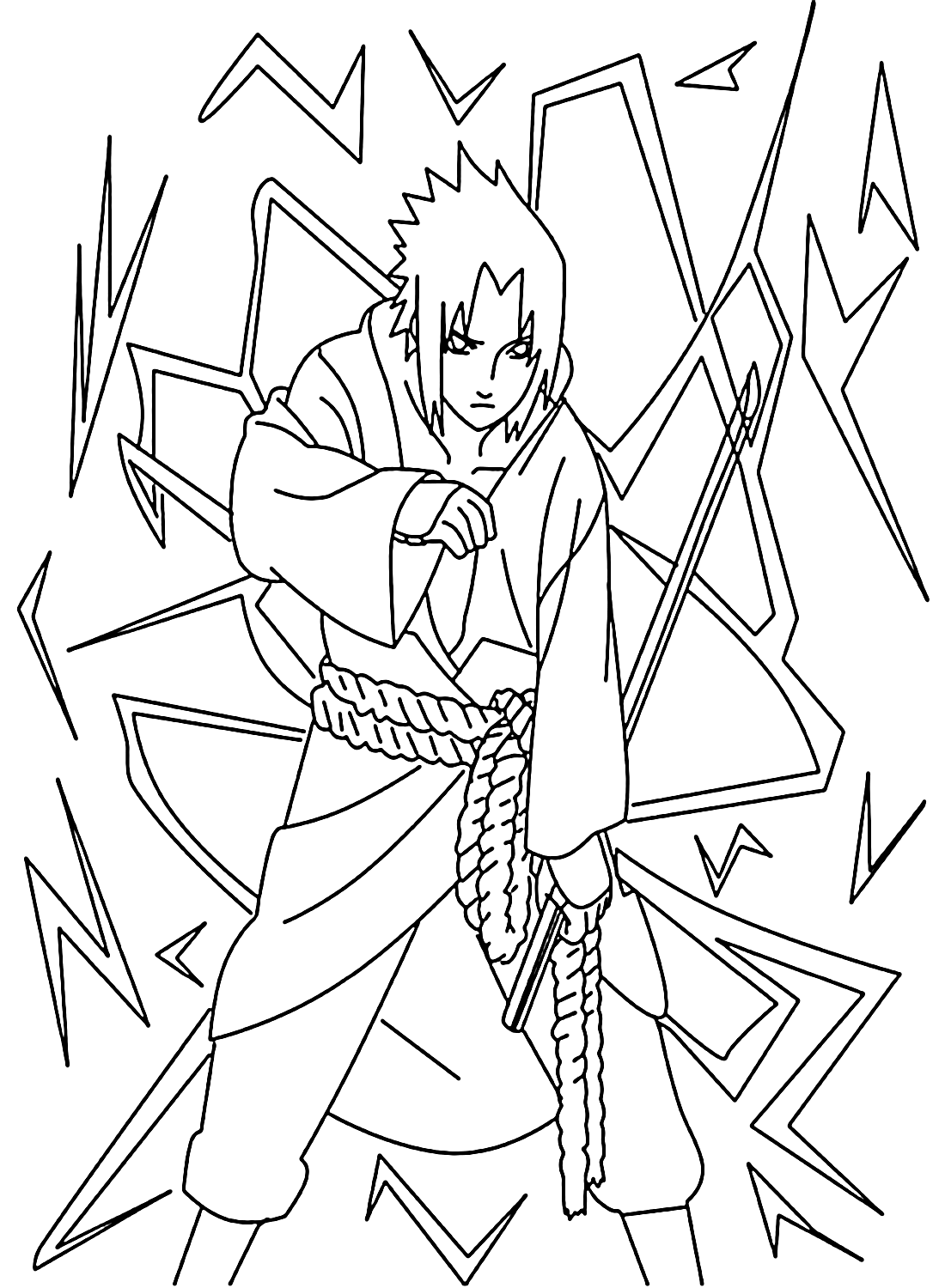
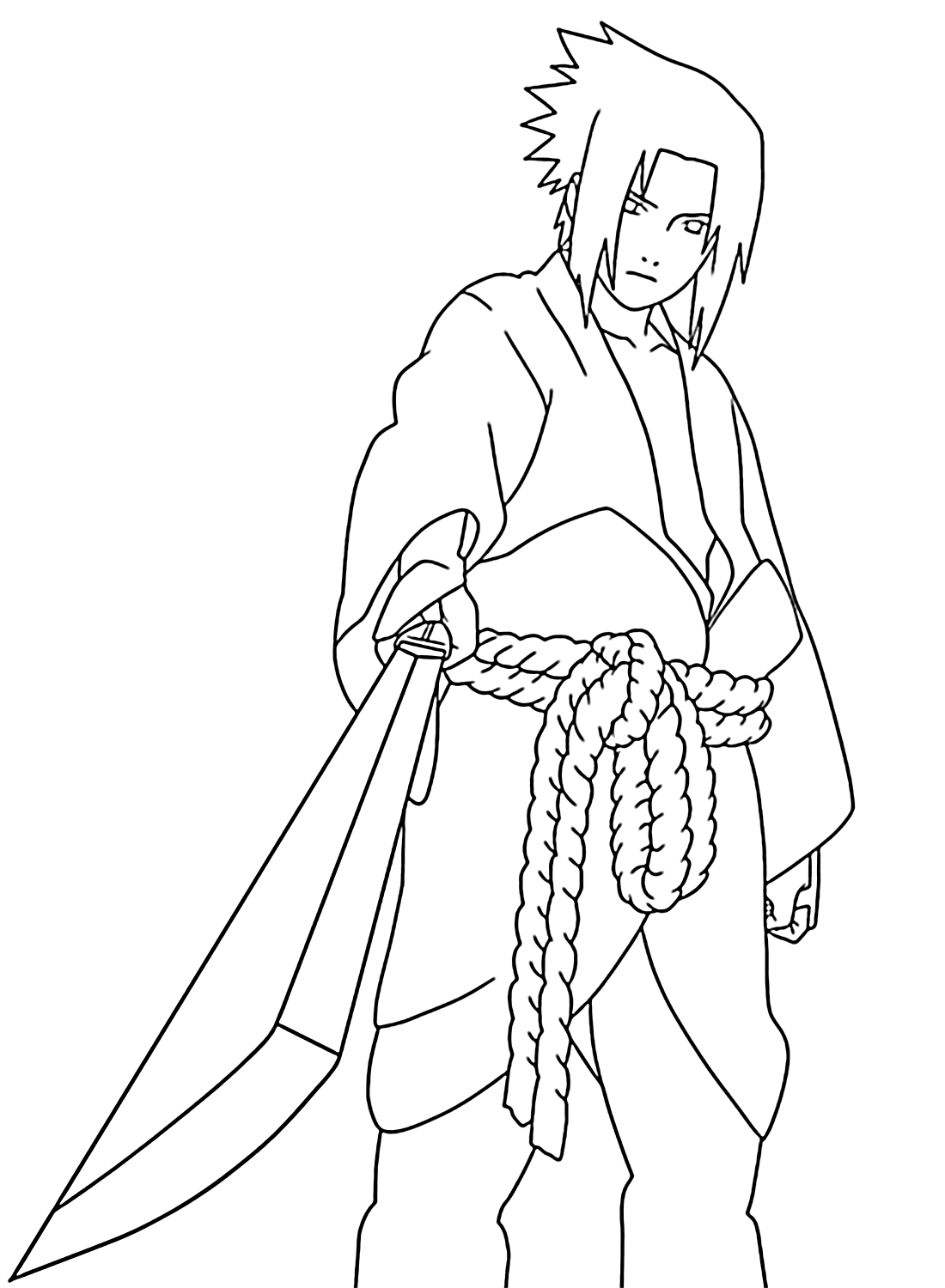
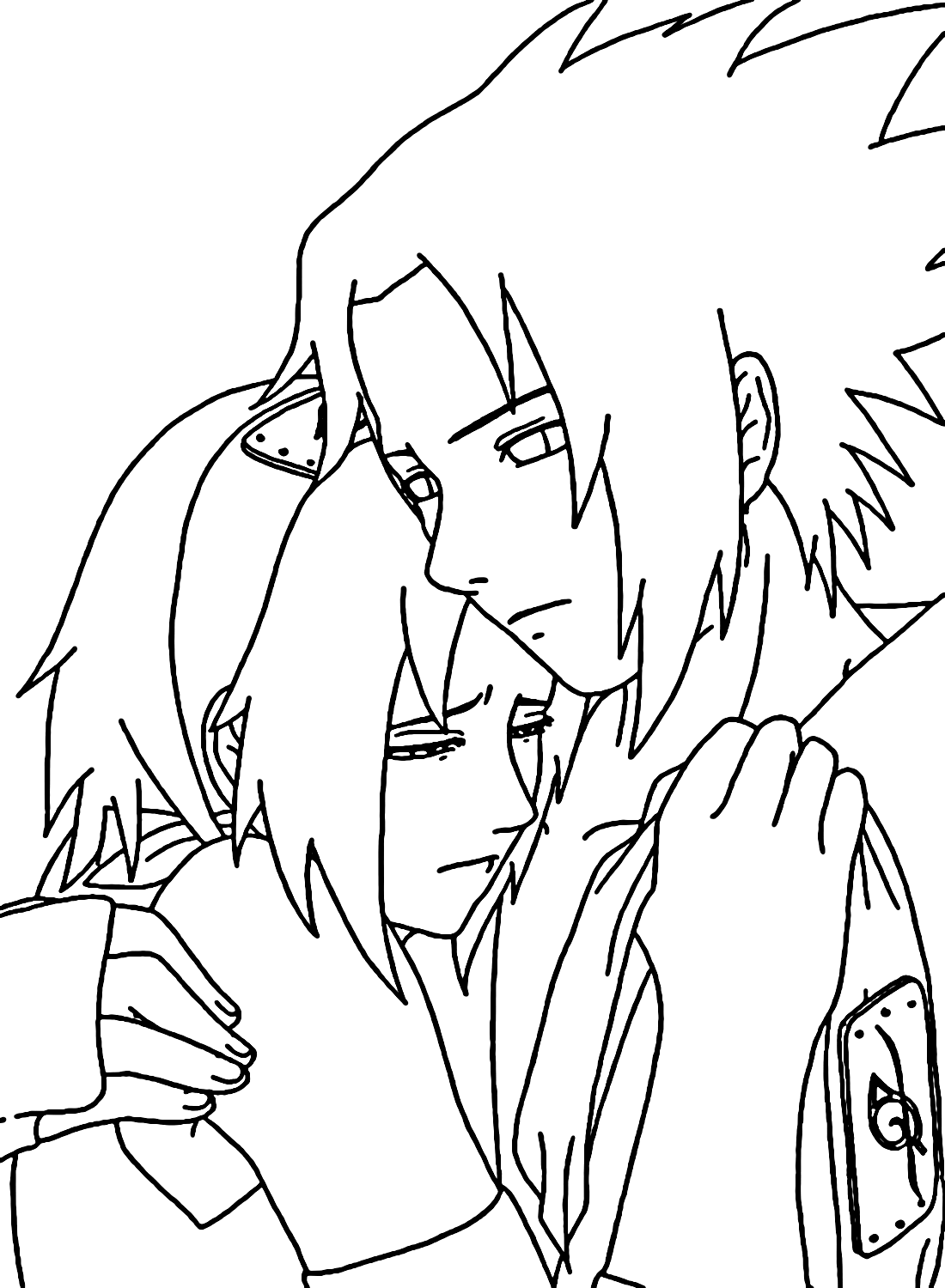
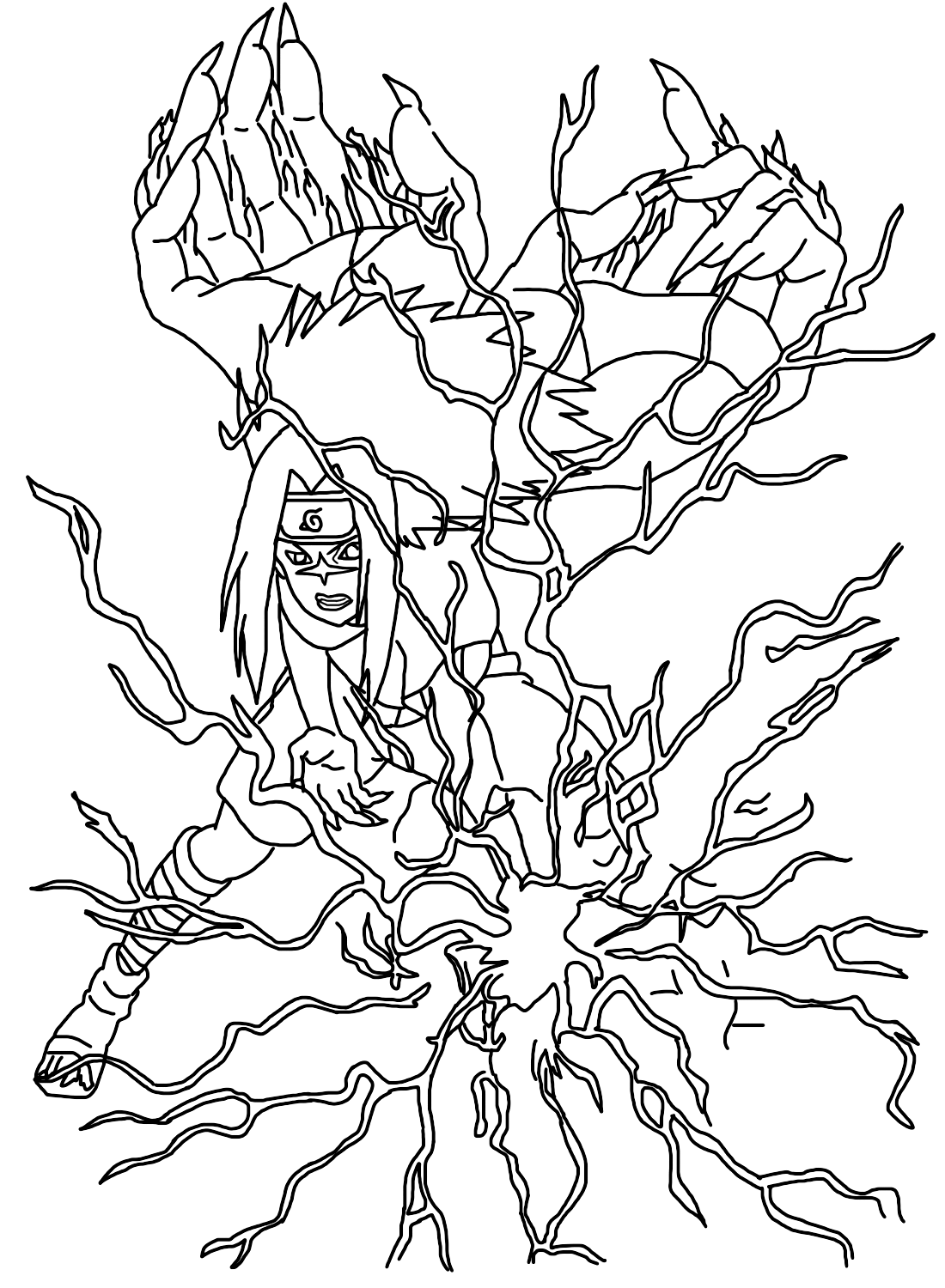
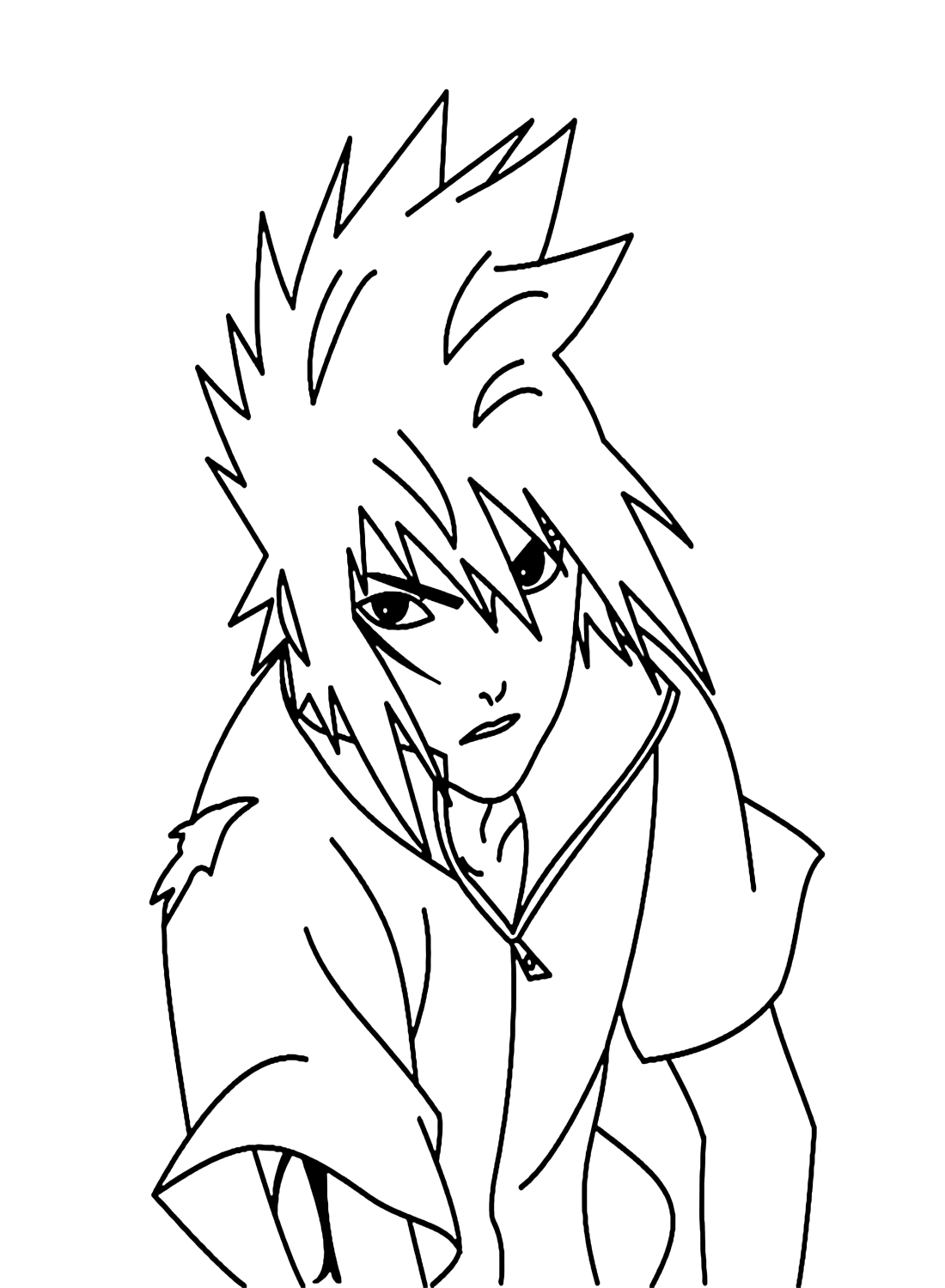
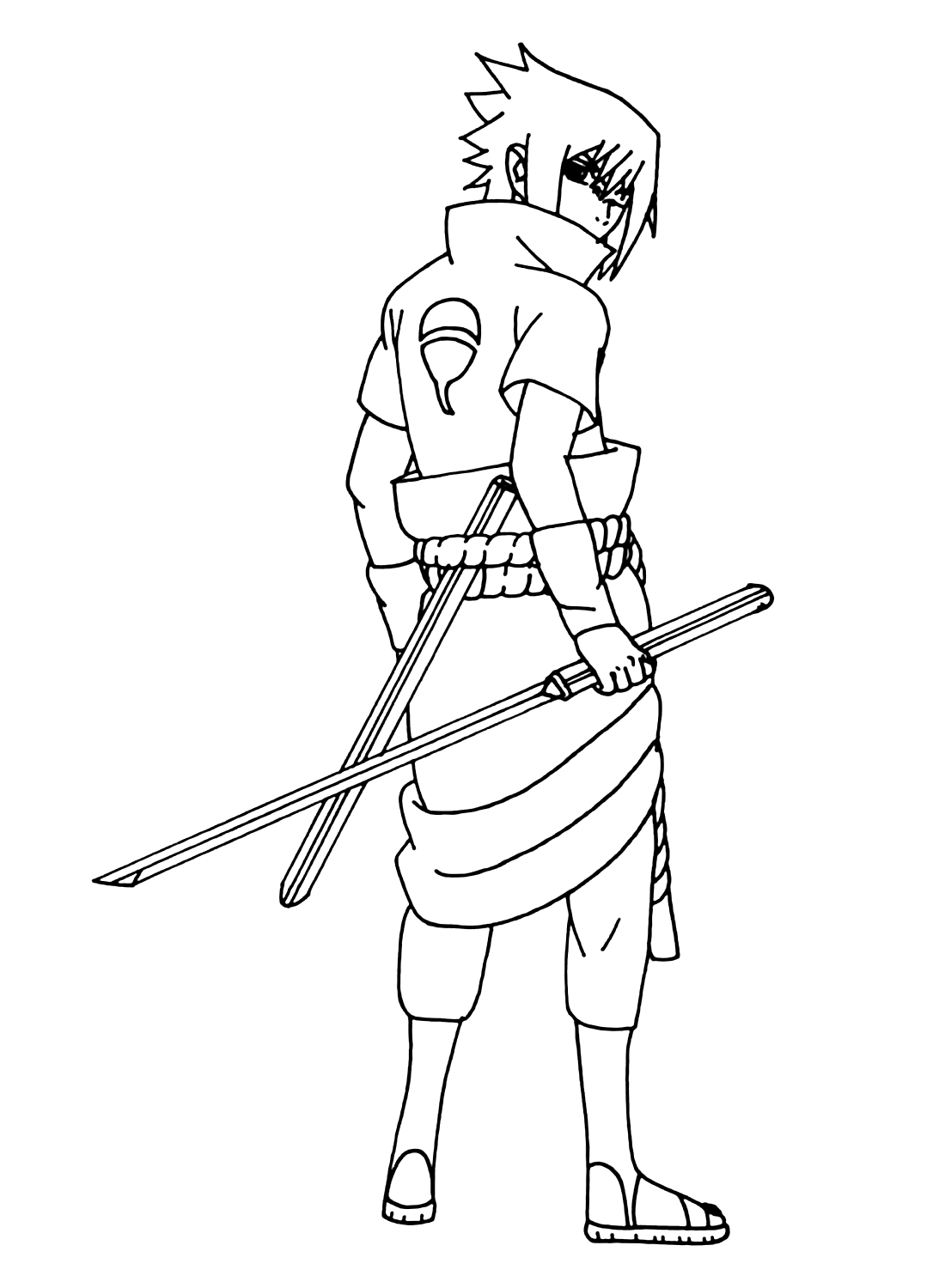
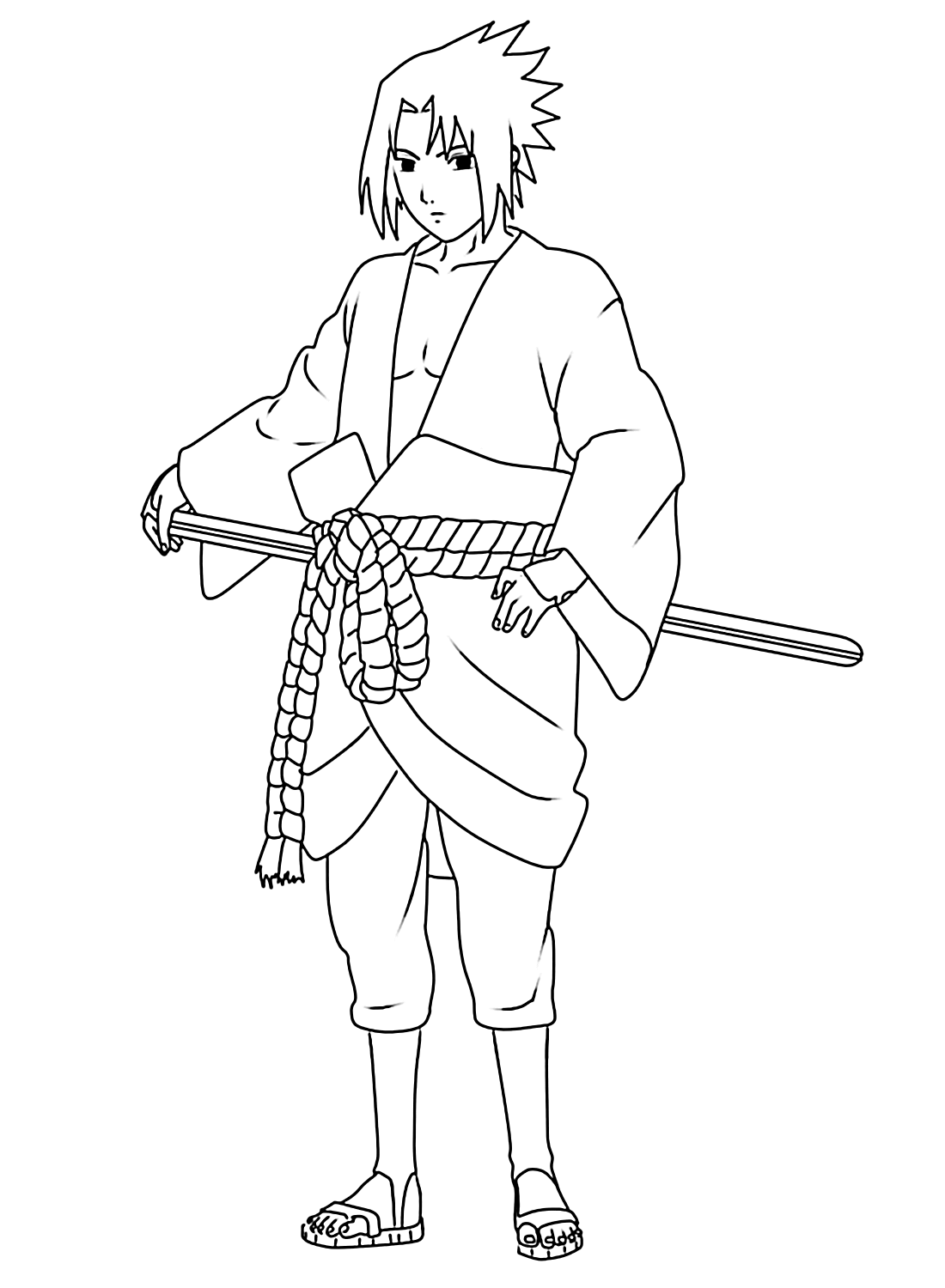
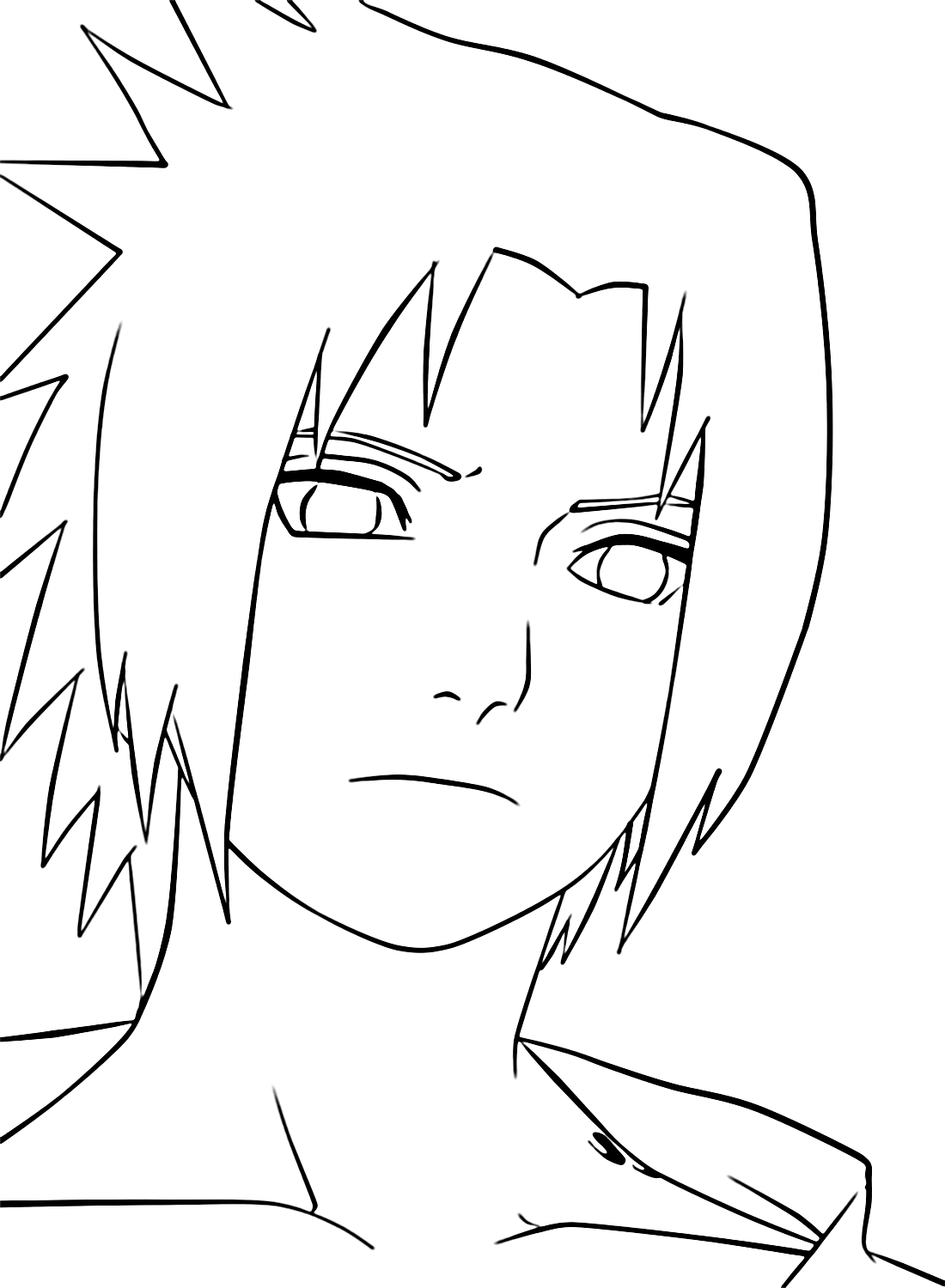
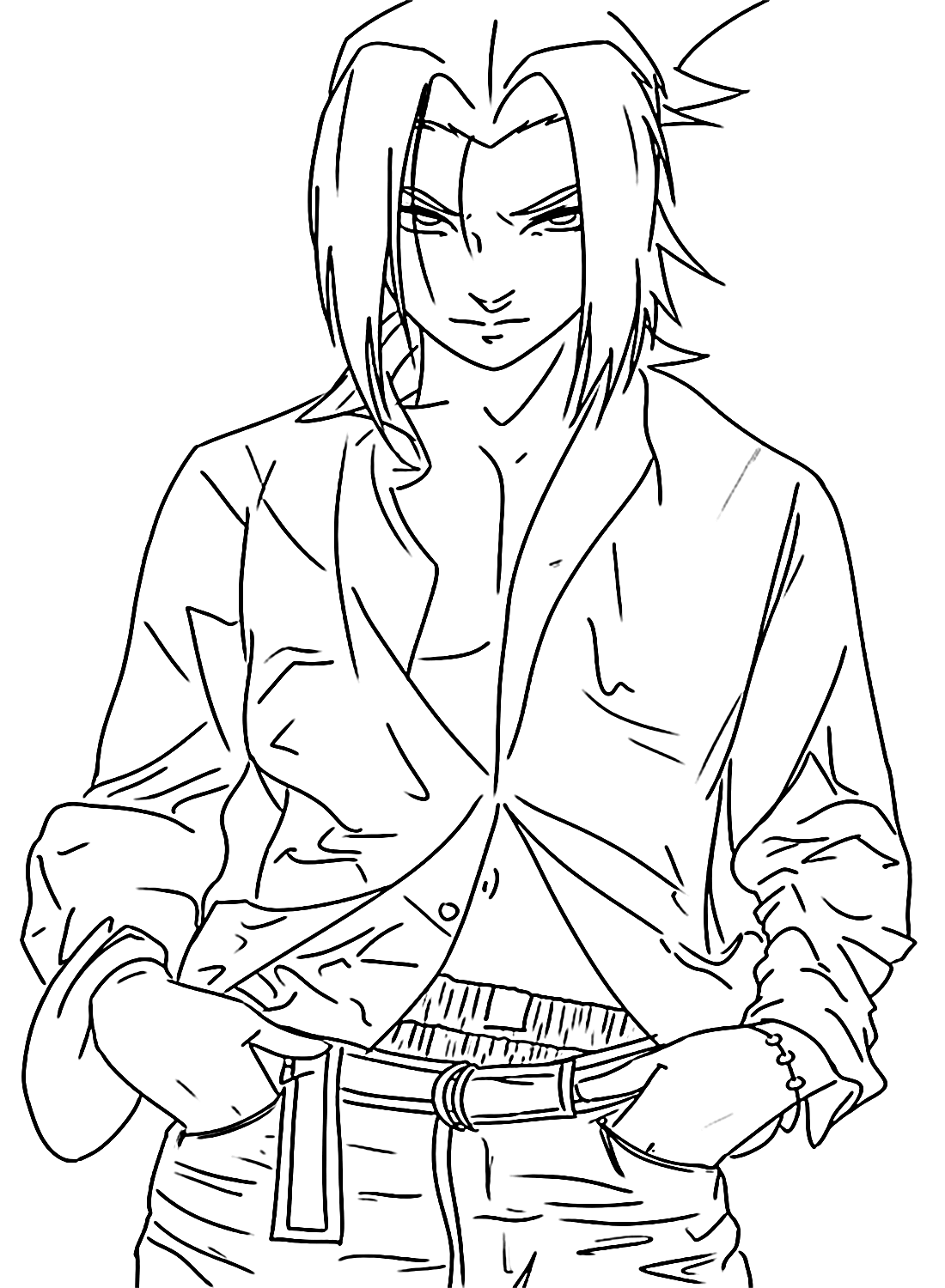
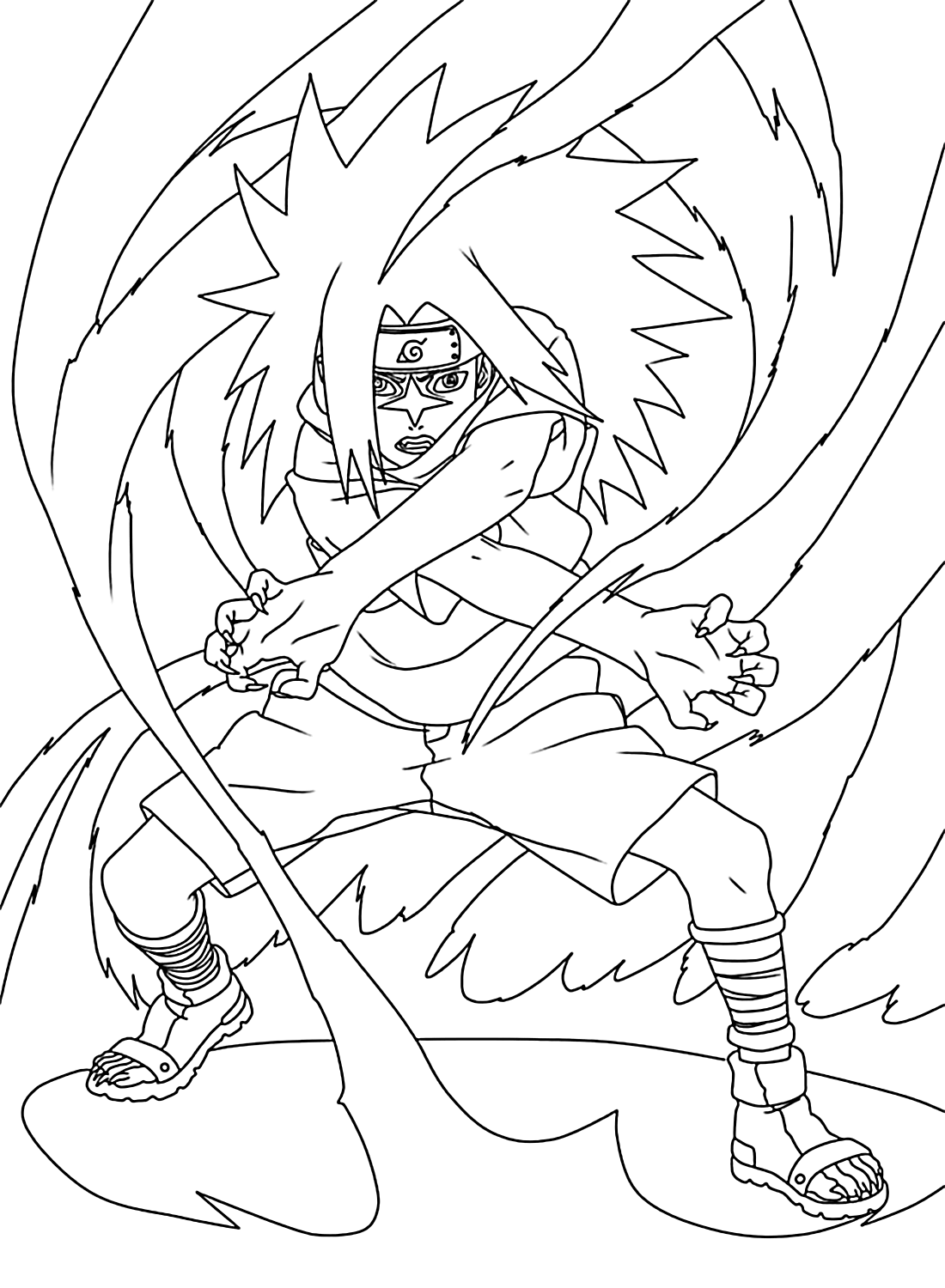
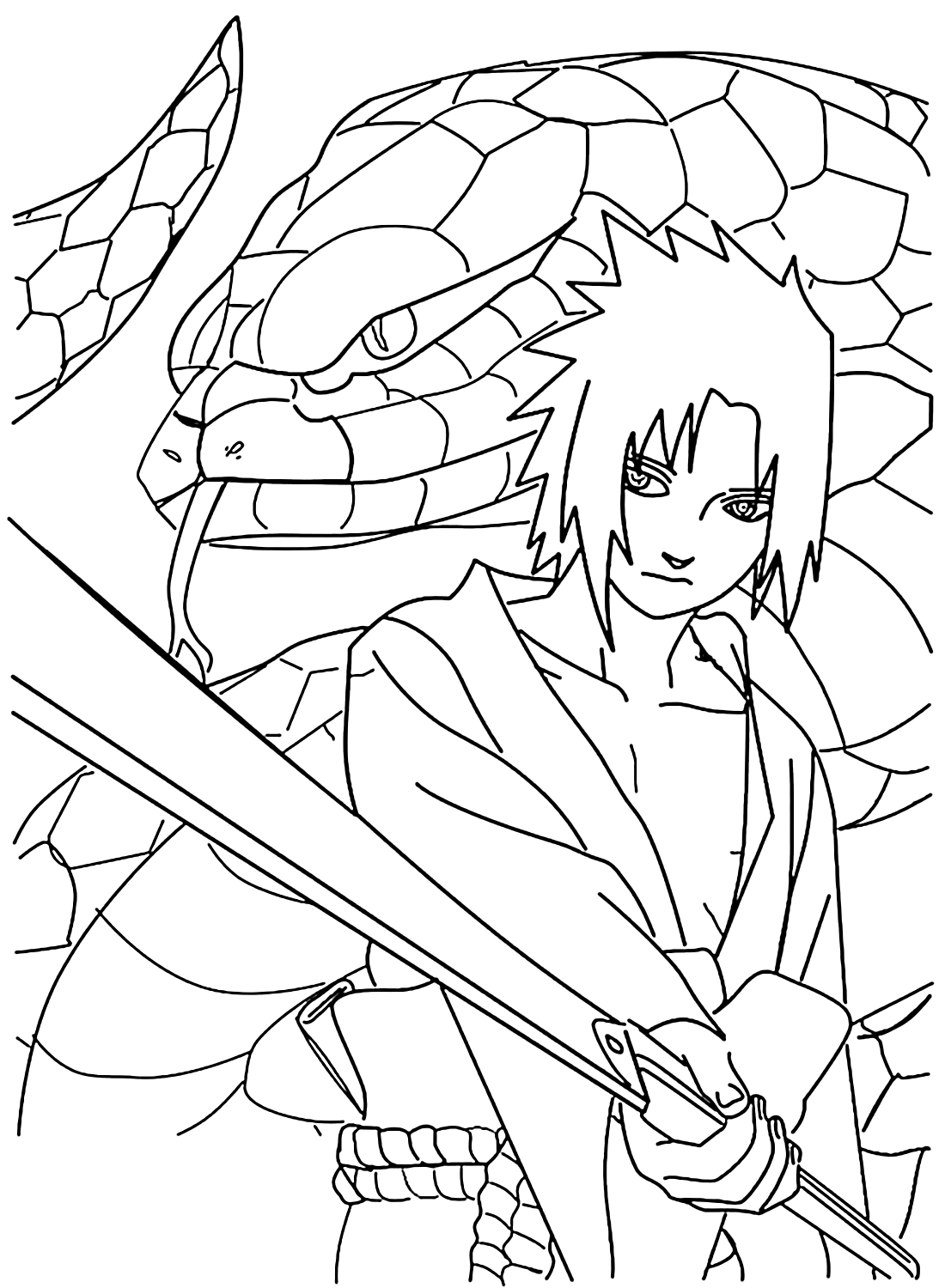
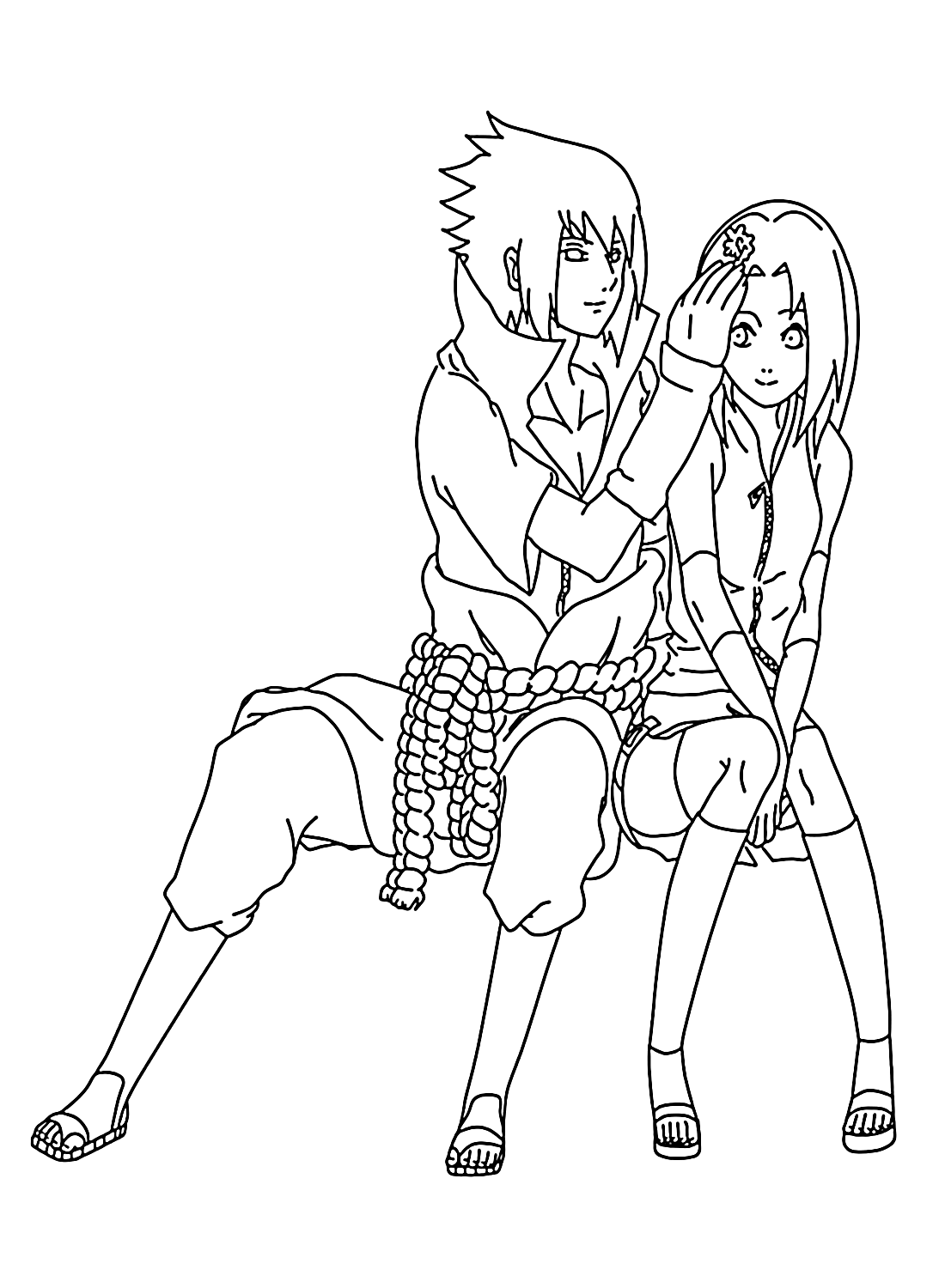
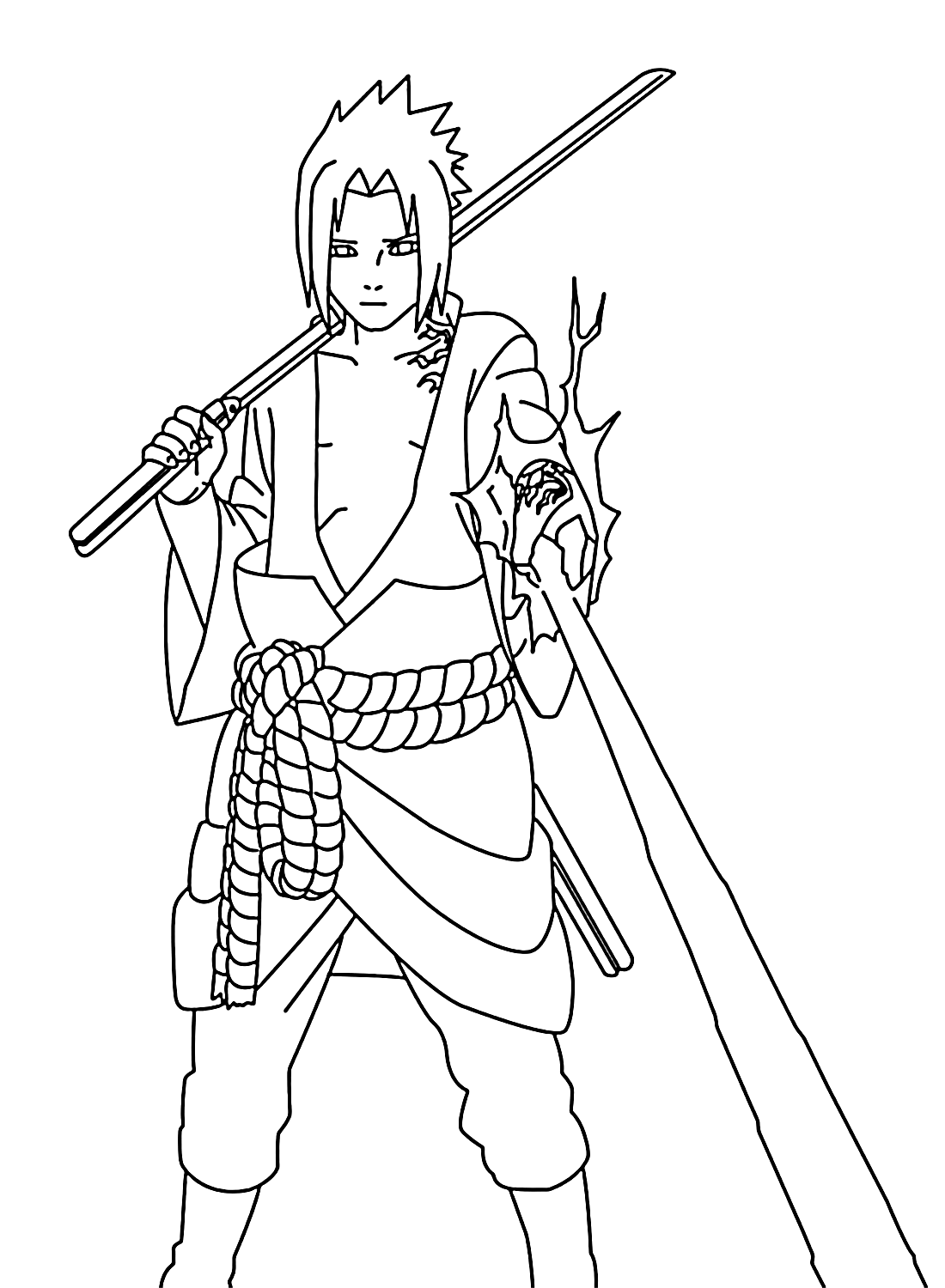
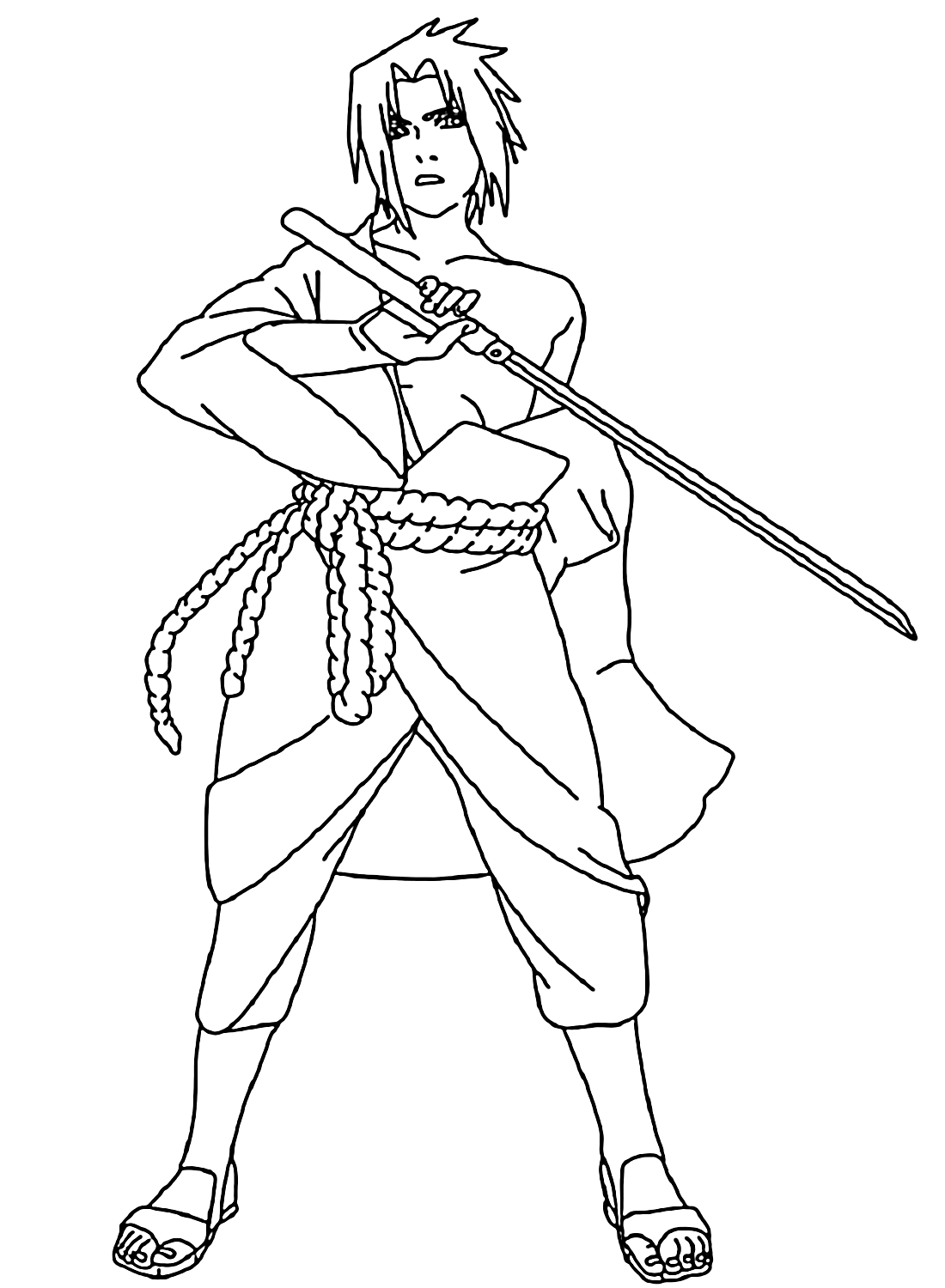
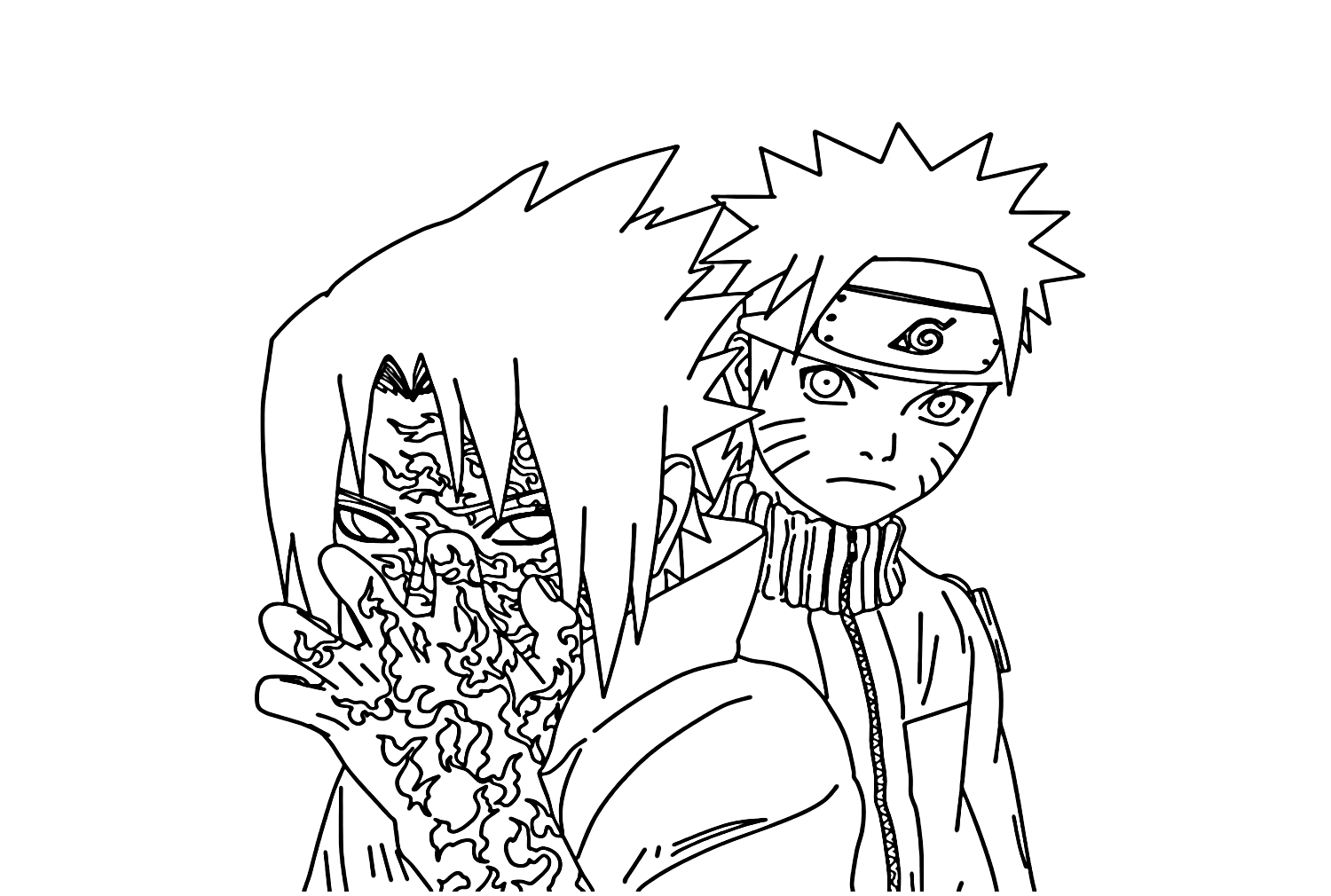
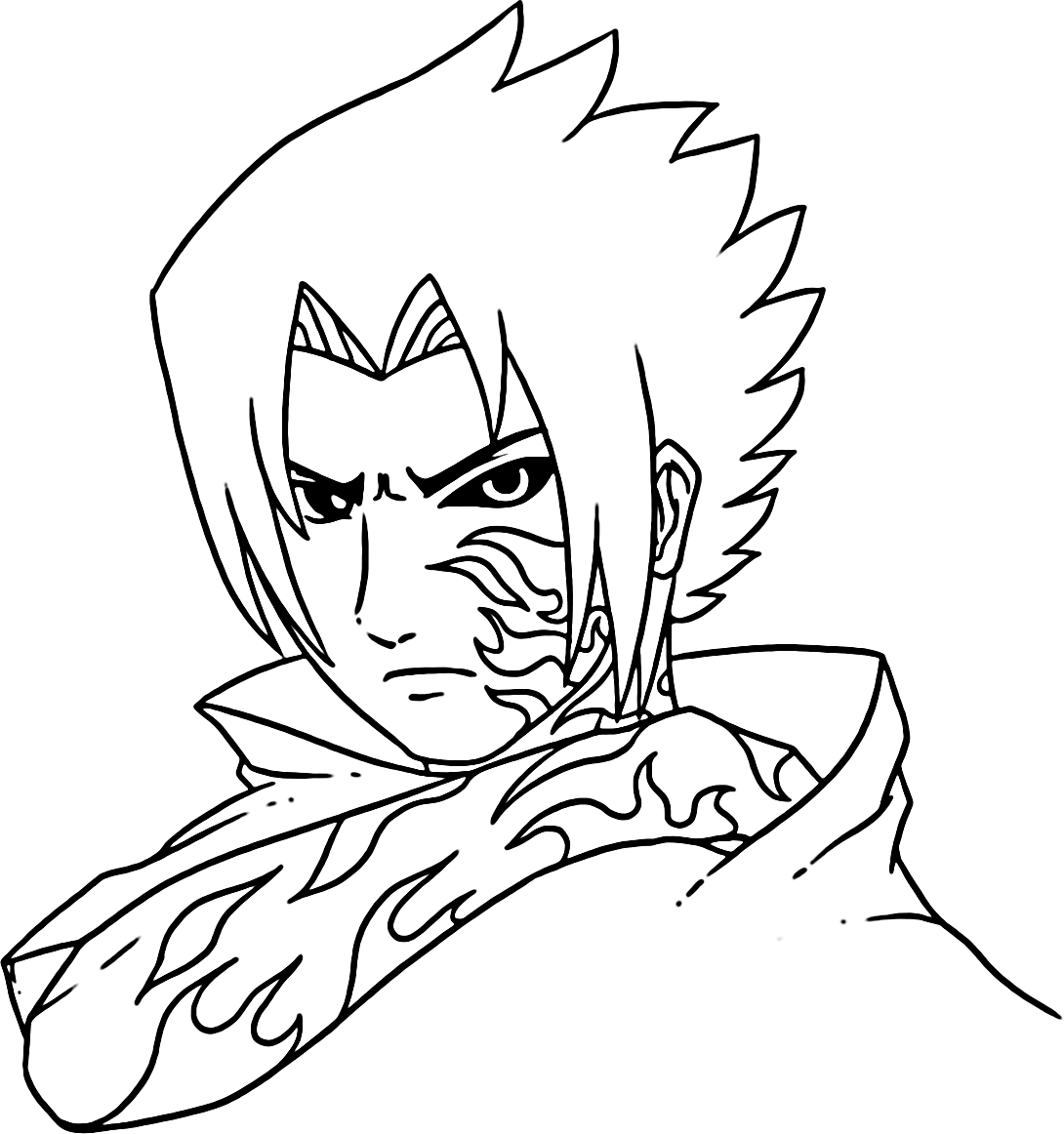
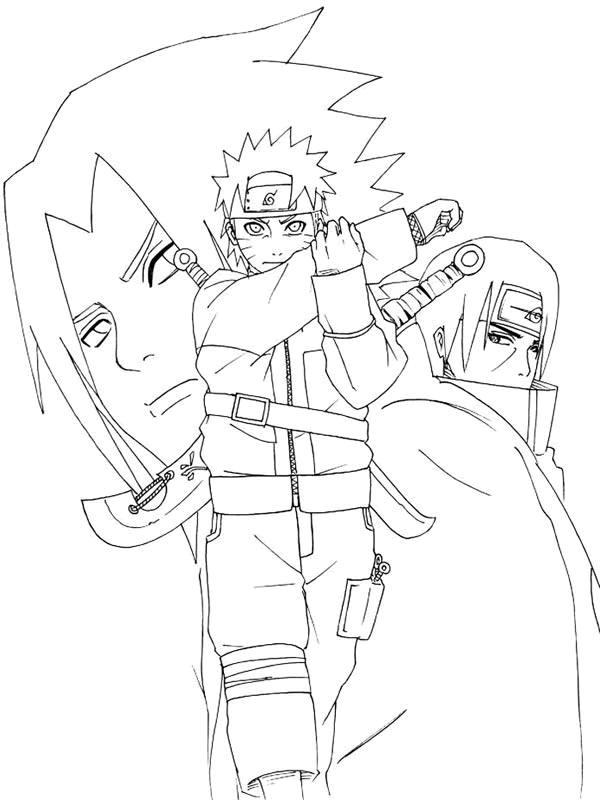
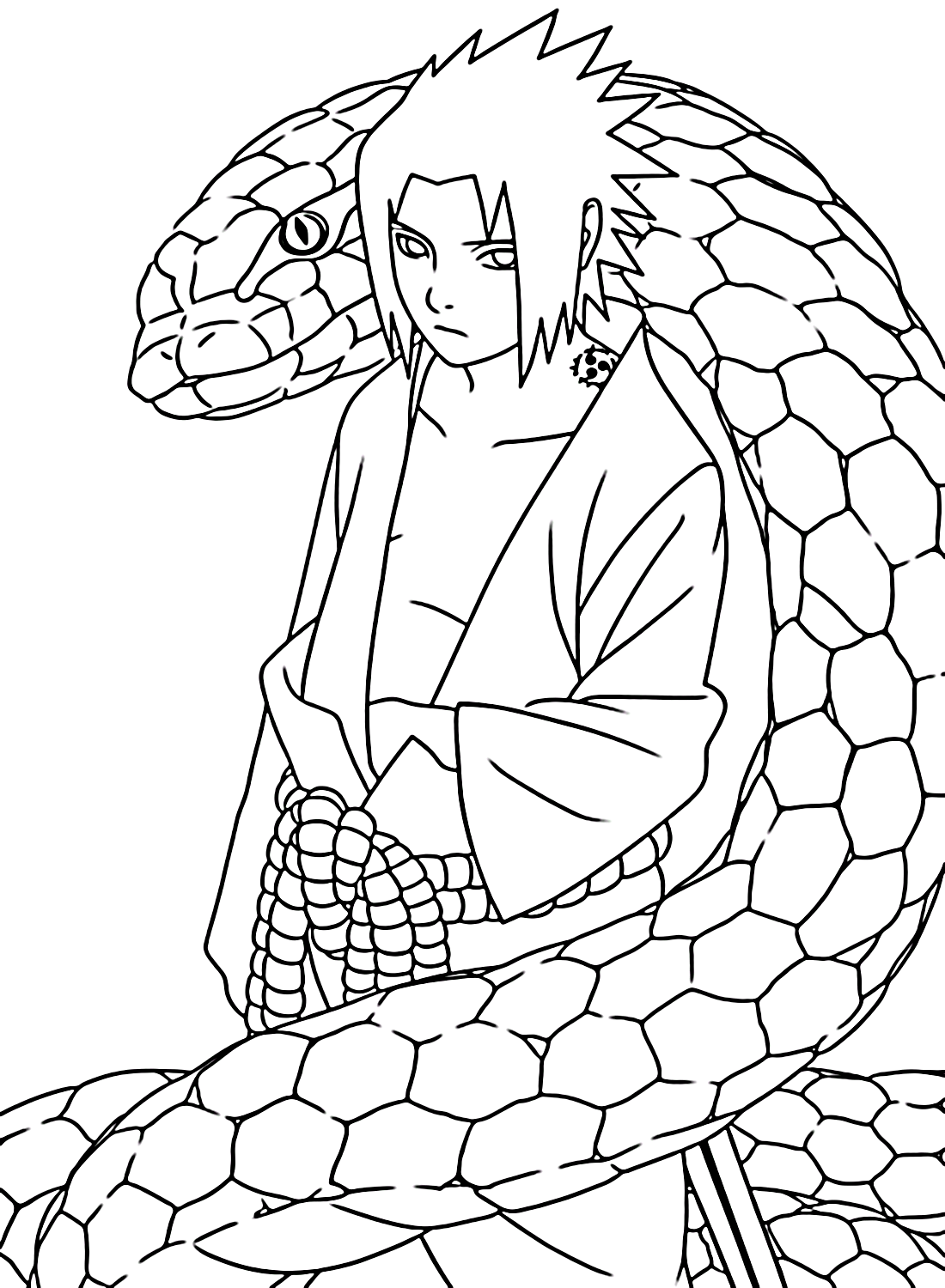
Free Sasuke Uchiha coloring pages – 30+ pages featuring the last surviving Uchiha across every stage of his arc – Part 1 academy and genin pages, Shippuden design variants, Sharingan activation scenes, Mangekyō and Eternal Mangekyō pages, Susanoo combat compositions, Chidori technique pages, Amaterasu black flame scenes, the Cursed Seal form, and adult Sasuke from the Boruto era – free printable PDF and online coloring for Naruto fans.
Sasuke Uchiha (うちはサスケ) is the deuteragonist of Naruto, the manga written and illustrated by Masashi Kishimoto, serialized in Weekly Shōnen Jump from September 21, 1999, to November 10, 2014, across 72 volumes and 700 chapters. The anime adaptation produced by Studio Pierrot ran as Naruto (2002-2007, 220 episodes) and Naruto Shippuden (2007-2017, 500 episodes), with the sequel series Boruto: Naruto Next Generations continuing from 2016.
Sasuke is the last surviving member of the Uchiha clan – one of the Hidden Leaf Village’s most powerful shinobi families – after his older brother Itachi murdered the entire clan when Sasuke was seven years old. Itachi spared only Sasuke, forced him to witness the massacre through genjutsu, and told him to grow strong enough to kill him. The entire architecture of Sasuke’s character – his ambition, his isolation, his eventual departure from the village, his years as an antagonist – is built from that single event and the specific instruction his brother gave him in its aftermath.
The series’ revelation that Itachi murdered the clan under secret orders from the village leadership – that Itachi was a loyal spy who sacrificed his own reputation and life to prevent a coup and protect Sasuke – is the narrative moment that reorganizes everything the audience understood about Sasuke’s arc. It does not excuse the choices he made in response to his brother’s lie. It explains them. The distinction is the series’s most mature argument.
These 30+ free pages at ColoringPagesOnly.com span Sasuke’s full visual history. All free, PDF or PNG, print or color online.
What’s Inside
Part 1 Design – Genin Sasuke
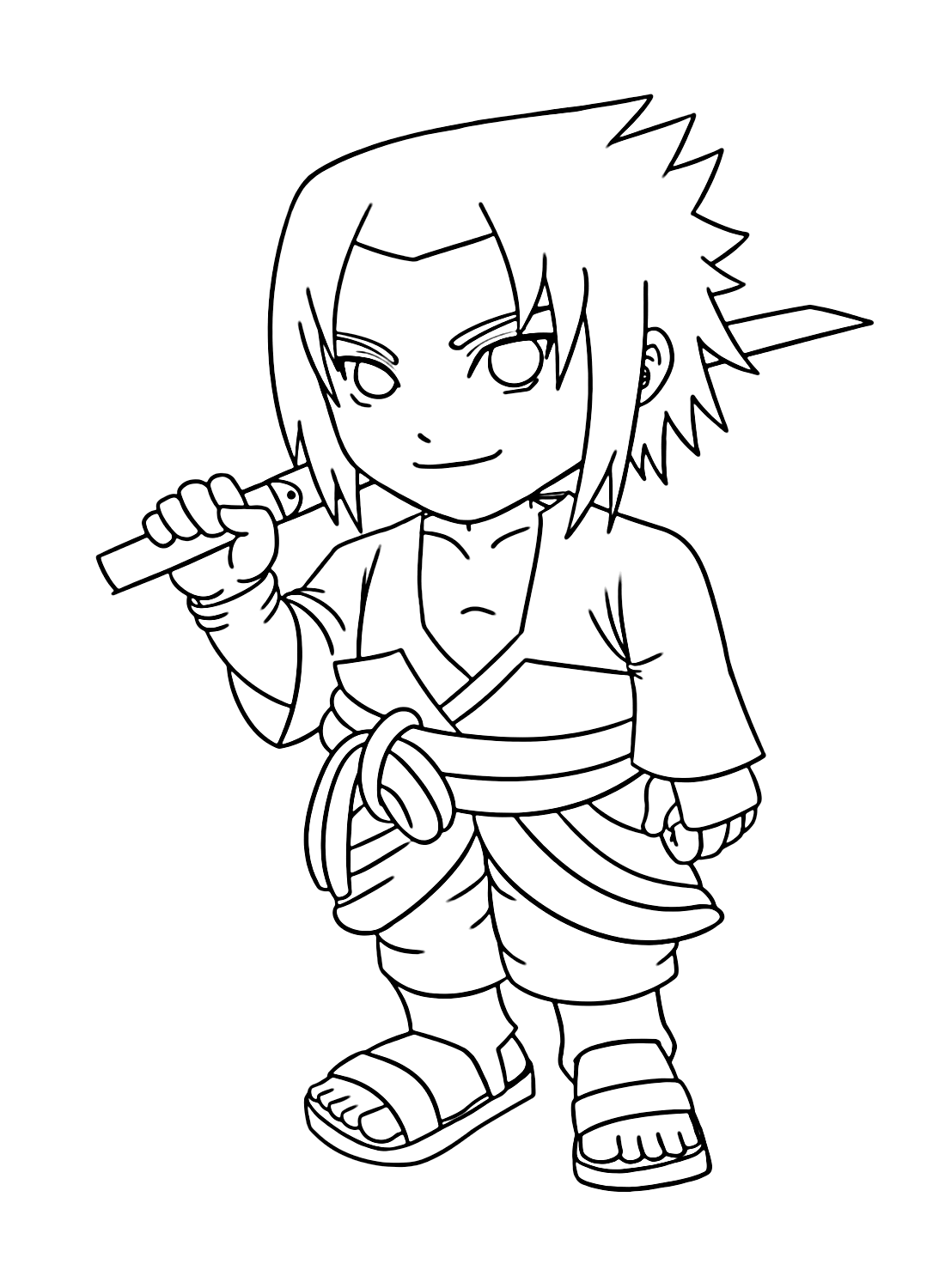
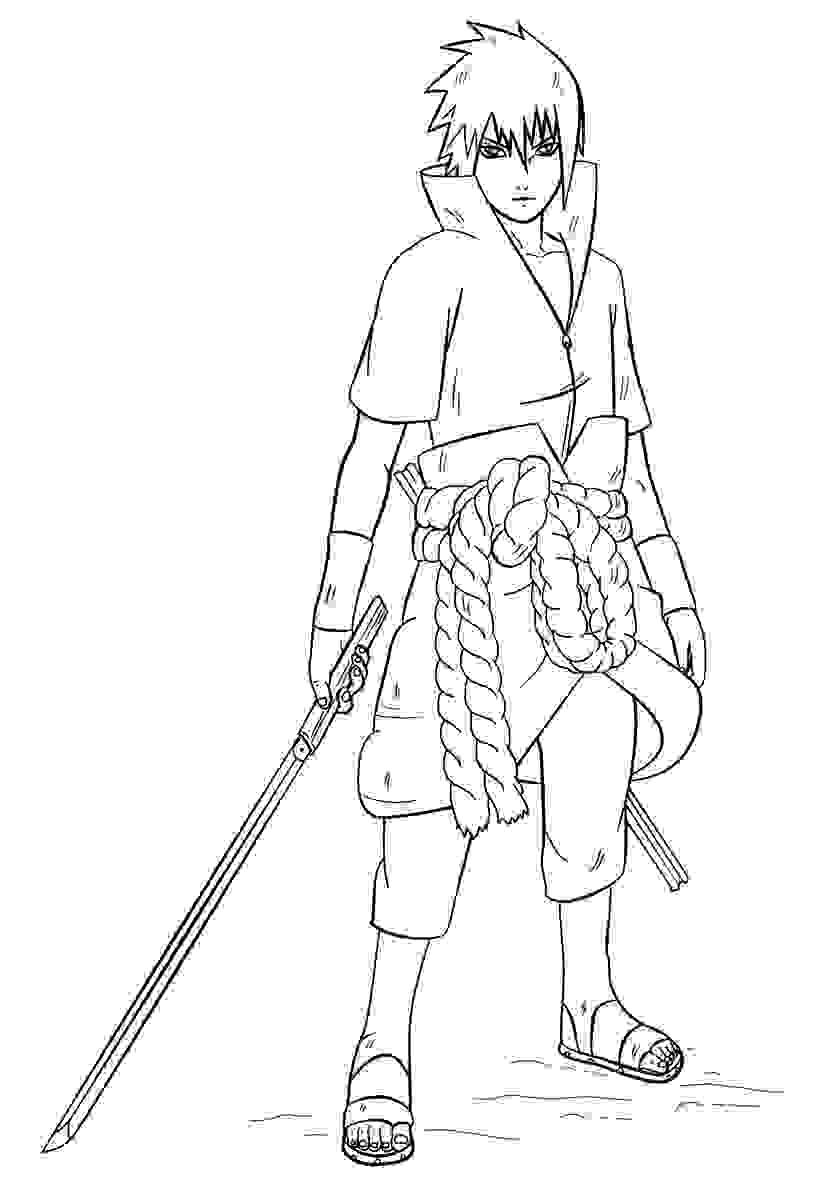
Sasuke’s Part 1 design is one of anime’s most immediately recognized character looks. The blue high-collared shirt of his earliest episodes – which he wears through much of the Academy and early genin period – is the visual associated with the version of Sasuke who is still defining his goals primarily through rivalry with Naruto and the academic framework of Team 7. The outfit communicates the specific aesthetic of a character who is trying to present himself as serious and controlled in a way that twelve-year-olds attempt and achieve with varying degrees of success.
The Uchiha crest – a red-and-white fan symbol – appears on the back of his clothing and is the design element that most directly connects his visual identity to his family history and the weight of what he survived. It is present throughout his appearances as a persistent reminder of what he carries.
His hair in Part 1 is the other immediately recognizable design element: dark blue-black, styled upward at the back in the shape that the fandom has variously described as a “duck butt” – an affectionate description of the specific silhouette created by the short, upward-angled hair cluster at the rear of his head. It is distinctive to an extreme degree and absolutely correct to his character: Sasuke’s hair does exactly what it wants.
Coloring Part 1 Sasuke: His hair is dark blue-black – the specific blue-black that distinguishes it from pure black while remaining dark enough to read as dark in almost all lighting contexts. Apply a near-black with a very subtle blue reflection along the outer hair edges. His Part 1 shirt is a blue, a medium, slightly cool blue, not navy and not bright, the specific blue associated with this era of his design. The Uchiha fan crest on the back is red (the top half) and white (the bottom half) – apply both with precision, as the fan shape’s exact rendering is the most recognizable detail on his back.
Sharingan – The Uchiha Eyes
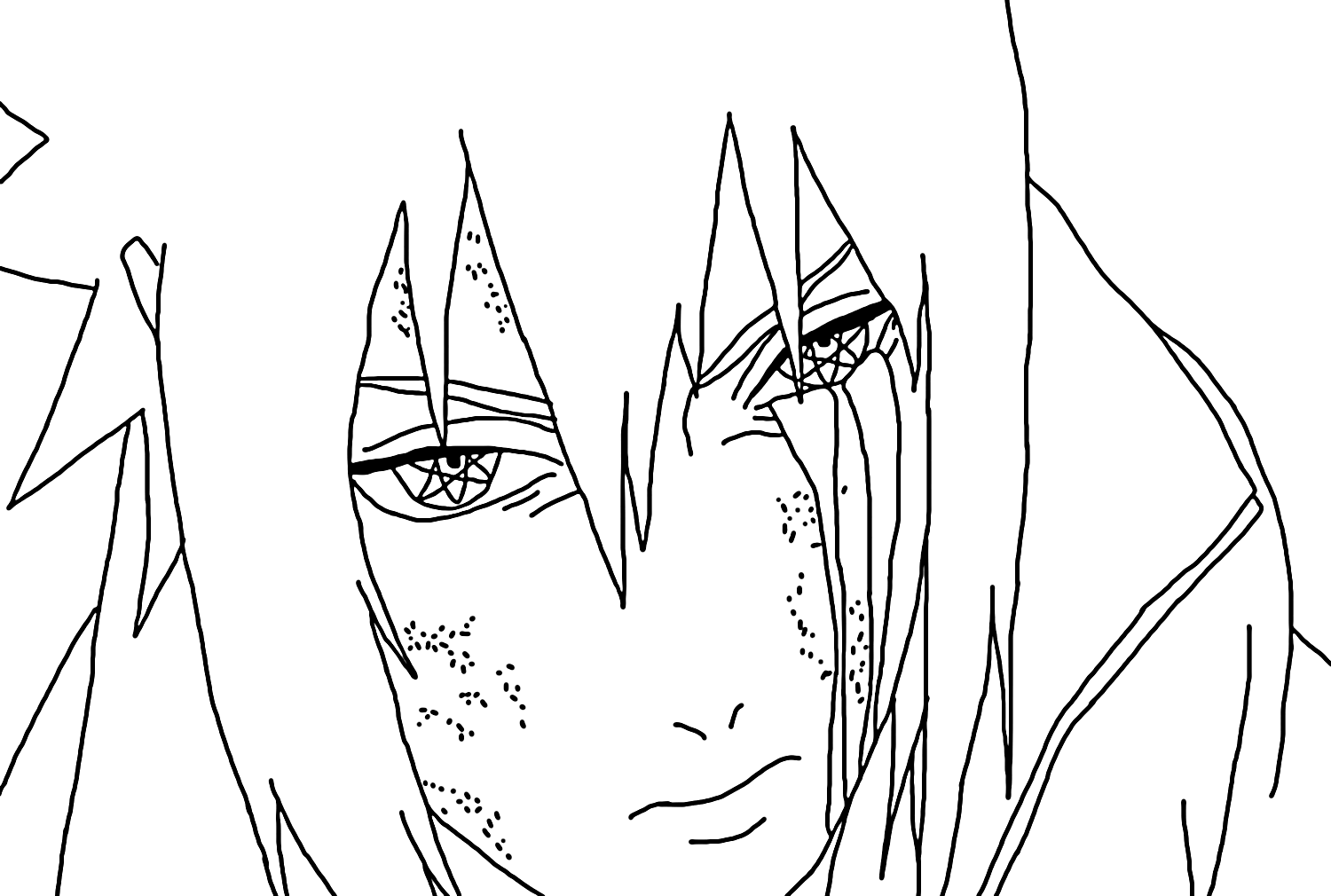
The Sharingan is the Uchiha clan’s hereditary dōjutsu – eye technique – and Sasuke’s most consistent visual identifier across his entire arc. In its active state, the iris shifts from black to red, with black tomoe (comma-shaped marks) arranged around the pupil. The number of tomoe – one, two, or three per eye – indicates the Sharingan’s developmental stage, with three tomoe in each eye representing full development.
Sasuke’s Sharingan activates in stages across Part 1: first fully developed during his fight against Haku, then refined through subsequent encounters. By the time he leaves the village for Orochimaru at the end of Part 1, his Sharingan is fully developed at three tomoe per eye.
The Sharingan pages are the collection’s most color-specific in terms of eye rendering – the shift from Sasuke’s black eyes to the vivid red Sharingan is the most dramatic single color change in his design and the one that signals the most significant escalation in any scene where it appears.
Coloring the Sharingan: The iris is a vivid, fully saturated red – not brick red, not dark red, but the specific, clear,r vivid red of the canonical Sharingan as it appears in the anime’s color design. Apply it at maximum saturation and full pressure across the entire iris area. The tomoe are pure black, rendered as comma shapes arranged around the pupil – their specific placement and shape should be as accurate as possible. The pupil at the center remains black. The white of the eye surrounds the red iris and should be rendered as bright white to maximize the contrast.
Mangekyō Sharingan – The Cost of Power
The Mangekyō Sharingan is the evolved form of the Sharingan, activated by experiencing or witnessing an extremely traumatic event – specifically, the loss of a person the user loves most. Sasuke awakens his Mangekyō Sharingan in the immediate aftermath of Itachi’s death – after watching his brother die in their fight, before the truth about Itachi has been revealed.
His Mangekyō pattern is a specific pinwheel/flower design – a central black area surrounded by three curved blades or petals radiating outward. This pattern is unique to Sasuke; every Uchiha’s Mangekyō has a different design, and the specific form Sasuke’s takes is one of the most reproduced images in Naruto fan art.
The Eternal Mangekyō Sharingan – achieved by transplanting another Mangekyō from a close relative, which restores sight and creates a combined pattern – is the form Sasuke develops after taking Itachi’s eyes. Its pattern combines elements of both brothers’ Mangekyō designs.
Coloring the Mangekyō Sharingan: The same vivid red base as the standard Sharingan. The Mangekyō pattern replaces the tomoe arrangement with the specific pinwheel design – apply the pattern in pure black over the red iris. The precision required to render the Mangekyō pattern correctly is the collection’s most technically demanding eye detail. The Eternal Mangekyō pattern is more elaborate still – its additional complexity rewards careful, patient application.
The Rinnegan – Six Paths Power
In the later arcs of Shippuden, Sasuke receives the Rinnegan from Hagoromo Ōtsutsuki – the Sage of Six Paths himself – in his left eye, while retaining his Eternal Mangekyō Sharingan in his right. Sasuke’s Rinnegan is a unique design: a purple iris with six tomoe arranged in a ring pattern within it – the Rinnegan’s characteristic concentric ring pattern combined with the six-tomoe arrangement of the Sharingan heritage.
This combination of Rinnegan and Mangekyō in separate eyes is visually specific to Sasuke in the series. It gives his adult face one of anime’s most immediately recognizable two-eye configurations.
Coloring the Rinnegan: The Rinnegan is purple – a vivid, medium purple, distinctly different from the red of the Sharingan. The concentric ring pattern within the purple iris should be rendered in slightly darker purple lines. The six tomoe, when present, are black. The right eye, retaining the red Mangekyō Sharingan, while the left shows the purple Rinnegan, creates a deliberate asymmetry. Both eyes must be rendered correctly and in their specific colors for the two-eye composition to read as Sasuke specifically.
Susanoo – The Great Spirit
Susanoo is the most visually dramatic technique in Sasuke’s arsenal – a giant spectral warrior that forms around his body when he uses his advanced dōjutsu. In its incomplete forms, it is an armored ribcage, a set of phantom arms, or a partial warrior figure. In its complete and Perfect Susanoo, it is an enormous armored humanoid – hundreds of meters tall in its maximum form – wielding a sword, a bow, and arrows, with wings in some depictions.
Sasuke’s Susanoo is predominantly rendered in purple in the anime’s color design – a vivid, cool purple that makes it immediately distinct from Itachi’s blue and Kakashi’s later green. The purple Susanoo pages are the collection’s most dramatic in terms of scale – the figure dwarfs everything around it, and the visual of Sasuke small within or before the giant purple warrior is the specific image that defines these pages.
Coloring Susanoo pages: The Susanoo form should be vivid purple – fully saturated, the most vivid purple available. The armored surfaces should receive a three-zone treatment: lightest purple at the most directly lit surfaces, main purple across the broad armor planes, dark purple in the shadow recesses between armor segments. The ribcage of incomplete forms should show the internal dark negative space between ribs as near-black, with the rib bones themselves in the lighter purple. Any visible weapons – the sword, the bow – should be a slightly cooler, slightly more metallic purple-grey.
Chidori – The Lightning Blade
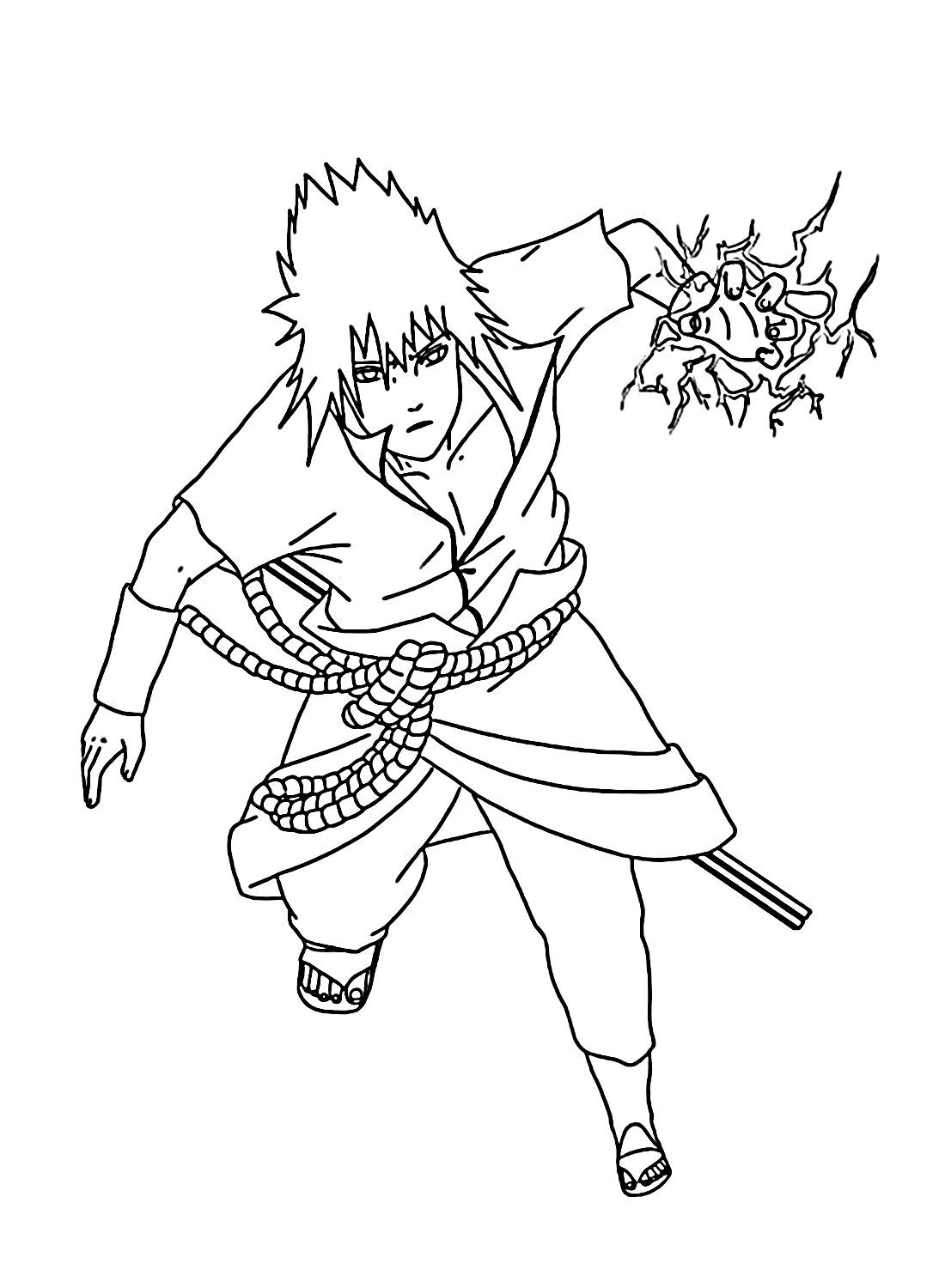
The Chidori – taught to Sasuke by Kakashi Hatake and one of the signature techniques of the Sharingan users – is a concentration of lightning-natured chakra in the palm that produces a distinctive visual and audio effect (the name translates to “One Thousand Birds,” after the sound it makes). It is Sasuke’s most used technique in combat and the one most associated with the Valley of the End confrontations with Naruto.
Chidori pages show Sasuke with a crackling mass of blue-white electricity gathered in one hand, often mid-sprint toward an opponent. It is the technique most directly associated with the series’s most emotionally significant fights.
Coloring Chidori pages: The Chidori effect is blue-white lightning – the specific pale blue-white of electrical discharge, applied at the hand and radiating outward in short, jagged lightning bolt extensions. The center of the concentration should be near-white – the hottest point of the electrical charge. The outer edges should shift toward a more vivid, slightly cooler blue. Small lightning spark extensions should radiate beyond the main concentration. The surrounding air around the Chidori hand often shows a slight pale blue atmospheric effect – apply this as a very light blue halo extending beyond the main effect.
Amaterasu – Black Flames
Amaterasu is the black fire technique generated from Sasuke’s left Mangekyō eye – inextinguishable flames that burn anything they touch and can only be extinguished by the user. They are rendered in the series as pure black fire. This unusual visual choice makes the technique immediately distinct from conventional fire effects and gives pages showing Amaterasu a specific visual identity.
Coloring Amaterasu pages: Black flames are the coloring challenge of working with pure black as a fire effect. Apply pure black to the flame mass, then add very subtle dark grey at the edges of the flame shapes where they catch the light – just enough to give the flames their flickering quality without losing the black reading. The eye producing Amaterasu – Sasuke’s left Mangekyō – often shows a black bleeding effect from the strain of the technique.
What These Pages Do
Sasuke’s arc is the most sustained villain-to-redemption narrative in mainstream shōnen manga. He is the protagonist’s closest rival, the person the protagonist is most motivated to bring back, and the character who spends the most story time actively working against the people who care about him – before the narrative brings him back in a way that the series earns rather than simply declares. Coloring pages that span his arc from genin to redeemed adult document that journey visually.
The Sharingan’s visual design is one of anime’s most reproduced eye techniques. The red iris with black tomoe is immediately recognizable globally – reproduced in fan art, merchandise, cosplay, and cultural reference at a scale that reflects how effectively the design communicates power and lineage simultaneously. Coloring the Sharingan is engaging with one of anime’s most successful single design decisions.
The truth about Itachi is one of manga’s most successful narrative reversals. Everything established about Itachi in Part 1 – his cruelty, his absolute power, his casual contempt for his brother – is reframed by the Shippuden revelation without contradicting any of the original facts. Itachi did kill the clan. Itachi tortured Sasuke. The revelation is not that these things did not happen but that they happened for reasons that change what they mean. This kind of narrative architecture rewards the audience that paid close attention to both versions.
Fine motor development. The American Academy of Pediatrics identifies fine motor skill development as a key childhood milestone throughout early childhood. The tomoe precision of Sharingan pages, the Mangekyō pinwheel pattern, the Amaterasu flame edge work, and the Susanoo armor segment detail all provide motivated, sustained fine motor practice. The 2005 Art Therapy Journal study on structured coloring and anxiety reduction applies throughout this collection.
How to Color These Pages Well
The Sharingan red must be fully committed – no muting. The single most important color decision in any Sasuke page that shows the Sharingan active is the specific red of the iris. It must be a fully saturated, clear, vivid red – the red of maximum chromatic intensity. Any drift toward dark red, brick red, or pink-red reads as wrong. Test the red before applying: hold it against a white page and confirm it reads as vivid and immediately attention-catching. The tomoegoeso is applied as pure black over the red after the iris is complete.
Hair, blue-black, requires the blue to be present but not dominant. The goal of Sasuke’s hair color is a near-black with blue undertones – not blue hair that reads as blue, and not pure black that reads as flat. Apply a very dark navy or dark blue-grey as the base. Then add near-black on top in the deepest areas, leaving the dark navy visible at the hair’s outer edges and in the lighter reflective areas along the hair’s surface. The result reads as dark in all contexts but shows blue when light catches it directly.
The Mangekyō pattern requires pre-planning before color. Before applying any color to a Mangekyō page, identify the specific pattern – the three-blade pinwheel arrangement of Sasuke’s design. The blades are not symmetric like a standard symbol – they curve in a specific direction. Study the pattern in the page’s line drawing before committing to any application. Apply the red iris first across the entire eye. Then carefully add the black pattern over it, working from the center outward. The boundary between the black pattern and the red iris is the most important edge in the entire page.
Susanoo purple needs three distinct tones to read as armor. Flat purple applied uniformly across a Susanoo page reads as a shape rather than as an armored figure. Apply the lightest purple (lavender-adjacent) at the highest armor surface points. Apply the main medium purple across the broad armor planes. Apply the deepest purple in the narrow recesses between armor segments and beneath overhanging elements. The three-tone gradient makes the armor read as dimensionally solid and armored rather than as a two-dimensional shape.
Amaterasu’s black flames need their flame shape logic. Black flames must still look like flames – the shape is what communicates “fire” when the color cannot. The flame shapes should taper to irregular points at their tips, widen and become more rounded at their bases, and show the organic irregularity of actual fire rather than the symmetric regularity of a logo. Apply the black at full pressure across the flame mass, maintaining the flame shapes’ tapered tips and irregular contours.
5 Creative Craft Ideas
The Eye Evolution Timeline
Sasuke’s eye progression is one of the most structured visual evolutions in the series: black eyes (before awakening) → three-tomoe Sharingan → Mangekyō Sharingan → Eternal Mangekyō Sharingan → Rinnegan (left eye only). Print five close-up portrait pages and color each showing a different eye stage – match the body and outfit to the appropriate story era for each.
Mount all five in chronological order on a backing sheet with the eye type labeled below each: “Sharingan – Chunin Exam Arc,” “Mangekyō – After Itachi’s Death,” “Eternal Mangekyō – Itachi’s Eyes Transplanted,” “Rinnegan – Hagoromo’s Gift.” The display documents the visual record of Sasuke’s power progression as a single continuous eye evolution.
The Two Brothers – Before and After the Truth
Print two pages that reference Itachi and Sasuke – one showing Sasuke in the aggressive, grief-driven register of his early Shippuden period (dark outfit, Mangekyō active), and one showing the post-revelation moment where the truth about Itachi has been delivered.
Color both. Mount side by side: “What Sasuke believed” on the left, “What was true” on the right. Between them, add: “Itachi killed the clan. He did not kill it for the reasons Sasuke knew. The difference is everything.”
The display captures the series’s most important narrative reversal in two images and two labels.
Valley of the End – The Full Circle
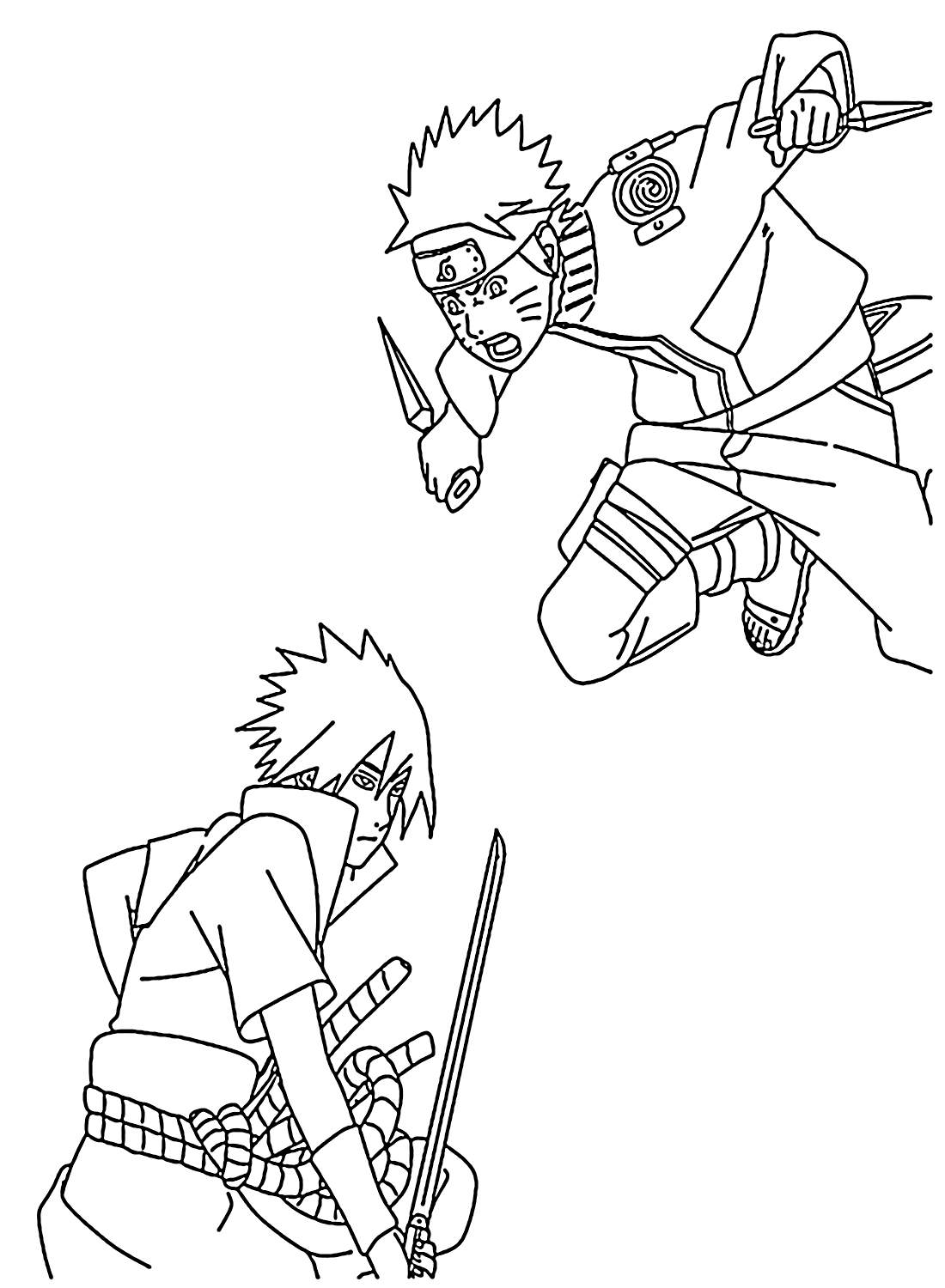
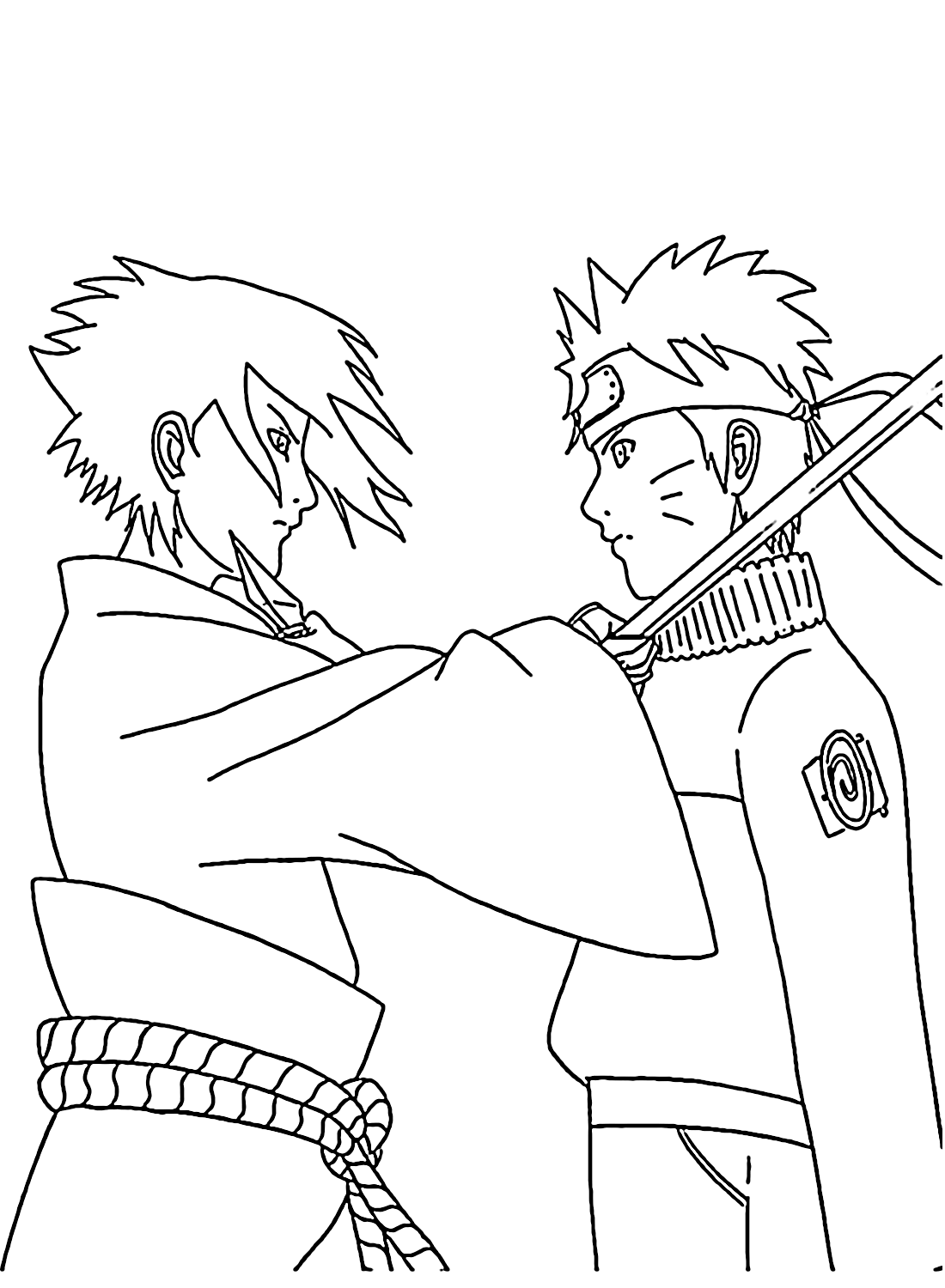
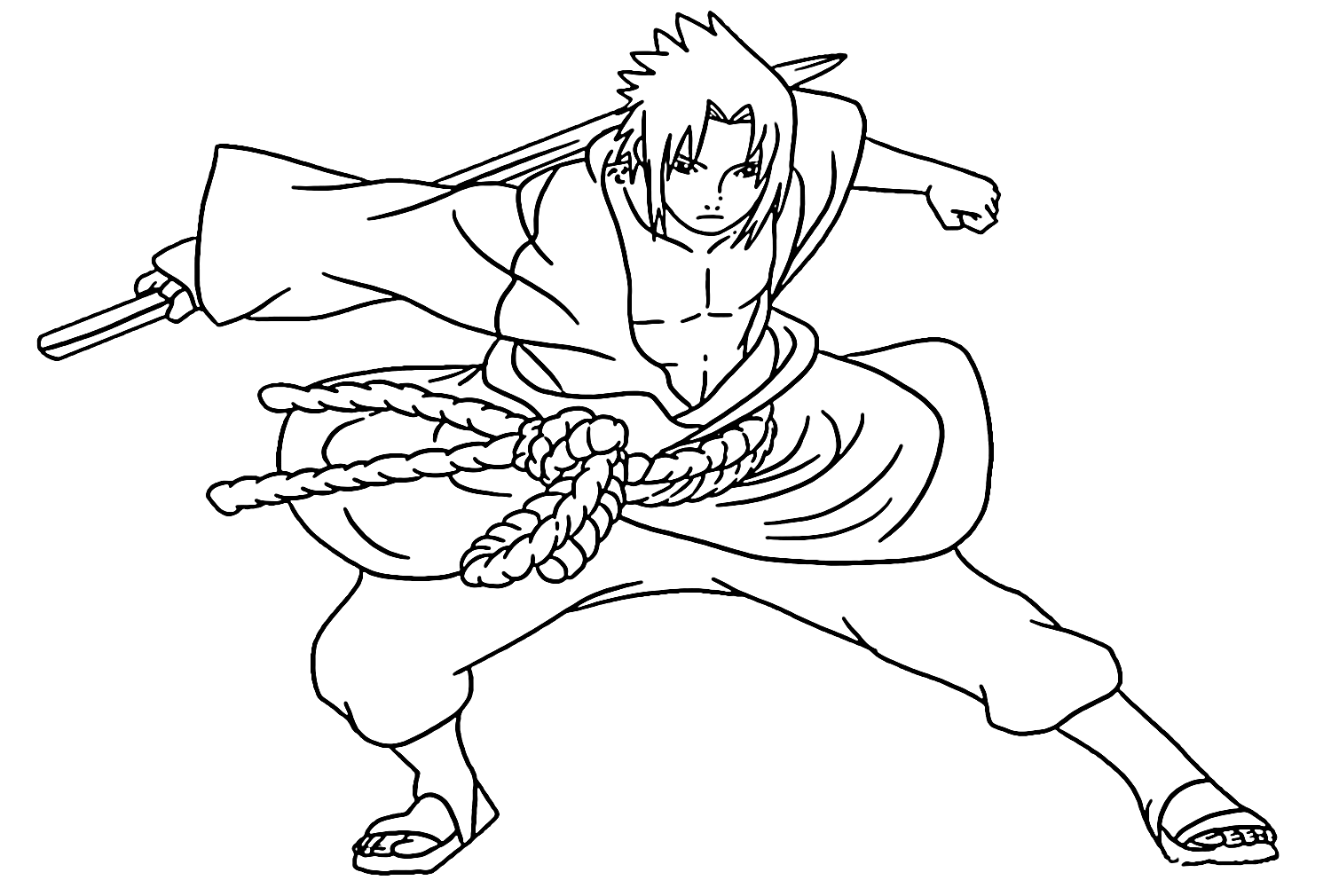
The Valley of the End – the location where Naruto and Sasuke fight at the climax of Part 1 and again at the end of Shippuden – is the series’ most symbolically loaded geography. Print a dynamic Sasuke action page and, from the Naruto collection, a comparable Naruto action page. Color Sasuke in dark blue-black and purple (his Shippuden palette). Color Naruto in orange.
Mount them facing each other from opposite sides of a dark backing sheet. Between them, add: “Part 1: The Valley of the End. The friend who left. Part 2: The Valley of the End. The friend who came back.” The display frames both fights at the same location across the series’ entire run.
Susanoo Scale Reference
Sasuke’s complete Susanoo dwarfs everything around it – the scale is one of the technique’s most distinctive visual qualities. Print a full Susanoo page and a standard Sasuke portrait page. Color the Susanoo in three-tone purple armor. Color the standard Sasuke portrait at a much smaller scale.
Cut out the Sasuke portrait and mount it at the base of the Susanoo page – positioning Sasuke as the tiny figure within or before his own giant spectral warrior. The scale juxtaposition makes the technique’s enormity legible in a way that a single-figure Susanoo page does not.
Outfit Through the Arcs
Sasuke’s costume changes significantly across his arc: the blue high-collar shirt of Part 1, the various dark outfits of Shippuden as he moves further from the village, the white coat of the later war arc, and the adult traveling outfit of the Boruto era. Print four pages from different arcs. Color each in the canonical outfit of that specific story period.
Mount in chronological order. Below each, add the arc name and one line characterizing where Sasuke is in his arc at that point: “Team 7. Still choosing.” “Orochimaru. Power above everything.” “War Arc. Returning.” “Adult. Making amends.” The display shows the same character choosing different things, visible in what he wears.
Frequently Asked Questions
Who is Sasuke Uchiha? Sasuke Uchiha is the deuteragonist of Naruto, the manga series written and illustrated by Masashi Kishimoto, serialized in Weekly Shōnen Jump from September 21, 1999, to November 10, 2014. He is the last surviving member of the Uchiha clan in the Hidden Leaf Village, after his older brother, Itachi, massacred the entire clan when Sasuke was seven years old. His primary motivation across the first series is to become strong enough to kill Itachi and avenge his clan. Born on July 23, he is twelve at the series’ beginning and grows through both the Naruto and Naruto Shippuden series.
What happened to the Uchiha clan, and why did Itachi kill them? The Uchiha clan was massacred by Itachi Uchiha when Sasuke was seven years old – Itachi killed every member of the clan in a single night, sparing only Sasuke. In Naruto Shippuden, it is revealed that Itachi carried out the massacre under secret orders from the Hidden Leaf Village’s leadership – specifically, the ANBU organization under Danzō – to prevent a Uchiha coup that threatened civil war. Itachi loved Sasuke and could not kill him, so he fabricated the story of killing the clan for personal power to give Sasuke the motivation to grow strong. He planned for Sasuke to eventually kill him and become a hero of the village, not knowing that the truth would emerge differently.
What is the Sharingan, and how does Sasuke’s evolve? The Sharingan is the hereditary dōjutsu of the Uchiha clan – a special eye technique that activates under extreme stress and grants enhanced perception, the ability to copy jutsu, and genjutsu capabilities. In its active form, the iris turns red and black tomoe appear – the number of tomoe (one, two, or three per eye) indicates the development level. Sasuke’s Sharingan progresses to three tomoe across Part 1. The Mangekyō Sharingan – an evolved form awakened through extreme trauma – develops after witnessing Itachi’s death. The Eternal Mangekyō Sharingan follows after transplanting Itachi’s eyes. Later, in Naruto Shippuden‘s final arc, the Sage of Six Paths grants Sasuke the Rinnegan in his left eye.
What are Sasuke’s signature techniques? Sasuke’s most recognized techniques are: the Chidori (One Thousand Birds) – a concentration of lightning chakra in the palm taught by Kakashi Hatake, which became his signature close-range attack across both series; Amaterasu – black, inextinguishable flames generated from his left Mangekyō Sharingan eye; and Susanoo – a giant spectral warrior formed from his chakra that surrounds and protects him while attacking, which evolves from partial to Perfect form across the later arcs of Shippuden. He also uses extensive Fire Release techniques, snake summonings (from his time with Orochimaru), and his Rinnegan’s space-time abilities.
What is Sasuke’s relationship with Naruto? Sasuke and Naruto’s relationship is the central emotional narrative of the Naruto series. They are opposite in almost every respect – Naruto outgoing and attention-seeking, Sasuke reserved and dismissive; Naruto rejected by the village as a child, Sasuke initially celebrated; Naruto without parents, Sasuke with parents murdered by his brother. Their rivalry develops into a bond that neither can fully articulate and that the series eventually frames as the closest possible friendship – two people who understand each other in ways no one else can, expressed primarily through conflict. The series’ ending is built around whether Naruto can bring Sasuke back from his path of vengeance.
What is Sasuke like as an adult in Boruto? Adult Sasuke in Boruto: Naruto Next Generations is a wandering protector – traveling the world to gather information, investigate threats, and atone for his actions during the Shippuden era. He is missing his left arm, which he chose not to have replaced with a prosthetic (unlike Naruto, who accepted an artificial arm), carrying the physical evidence of the choices he made. He trains Boruto Uzumaki and maintains a more distant but functional relationship with the Hidden Leaf Village. His Rinnegan – present in his left eye during Shippuden – is destroyed by Momoshiki Ōtsutsuki early in the Boruto timeline, leaving him relying on his Eternal Mangekyō Sharingan and his other abilities.
What age group are these pages best suited for? The simpler portrait pages – Sasuke in standing poses, early Part 1 genin design – work well from ages six to eight for younger Naruto fans developing coloring confidence. The technique pages showing Chidori, Amaterasu, or basic Susanoo forms are most engaging from ages eight to twelve, as they require planning around special effects rendering. The Mangekyō Sharingan pattern pages, the detailed Susanoo armor compositions, and the full multi-arc design comparison projects are most rewarding for ages ten and up and for adult Naruto fans who want sustained technical challenge. The series itself carries a suggested age of ten and up due to combat violence.
Browse the full collection at ColoringPagesOnly.com. All 30+ pages free, no sign-up, PDF or PNG, print or color online.
Masashi Kishimoto gave Sasuke a single defining event at age seven and then spent fifteen years of publication examining every consequence. The massacre happened. Itachi gave his brother a reason to survive it. The reason was a lie. The lie was love. The love was real.
Sasuke spent the better part of a decade trying to do what his brother asked him to do – become strong enough to kill him. He succeeded. And the thing that waited on the other side of that success was not the peace he had been promised. It was the truth.
The pages in this collection span every stage of what follows that truth: the dark outfits, the black flames, the purple Susanoo, the two different eyes in the adult face.
Pick up your near-black. Add the blue reflection to the hair’s edge. Make the Sharingan as red as it can be.
Share your work on Facebook and Pinterest and tag #Coloringpagesonly. We especially want to see the eye evolution timelines and the Valley of the End displays.
Color the last Uchiha. Activate the Sharingan. The truth was always there.
More from our Naruto collections: