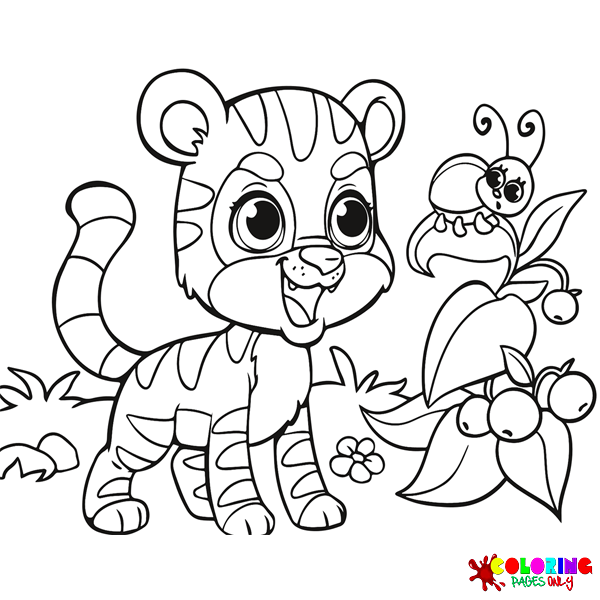

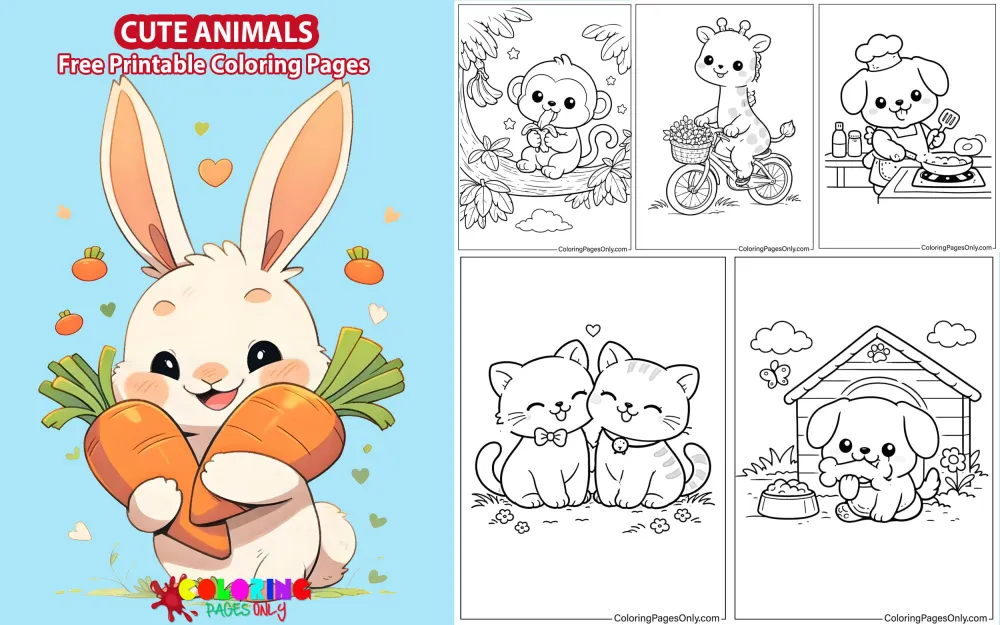
Cute Animal Coloring Pages at ColoringPagesOnly.com brings together 60+ free pages celebrating the animals that make us smile – ducks in the swamp and ducks wearing bow ties, baby bats, koalas, hedgehogs, camels, turtles, nestlings, lambs, kittens, foals, calves, dogs, monkeys, hippos, baby bears, and more. The collection spans realistic baby animal portraits, charming cartoon animal characters, and whimsical illustrated scenes. Download any page as a free PDF to print, or color online directly in your browser.
Find related animal collections at Animals Coloring Pages – our full animal hub – and explore specific species, including Cat Coloring Pages, Dog Coloring Pages, Horse Coloring Pages, and Duck Coloring Pages.




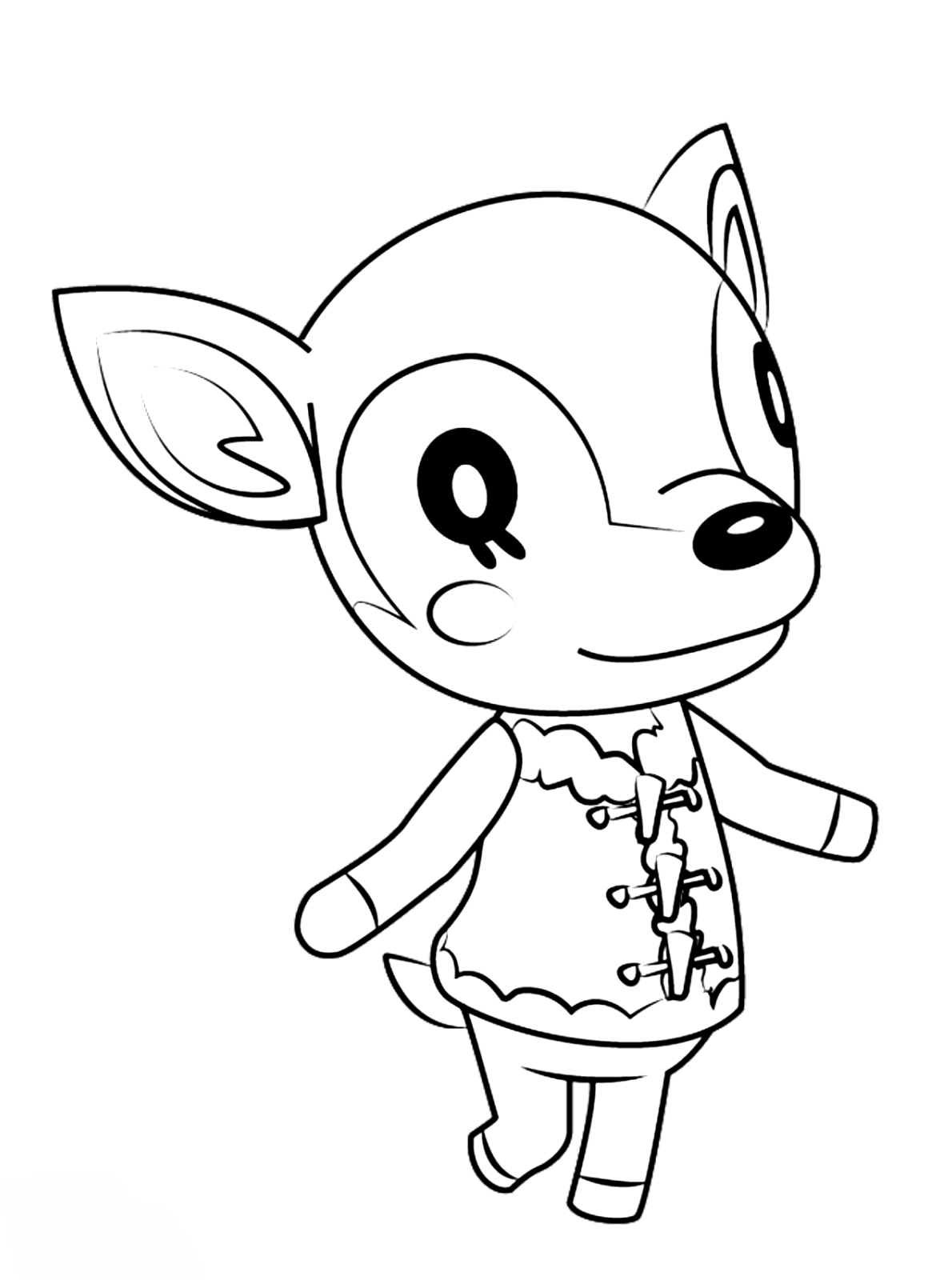
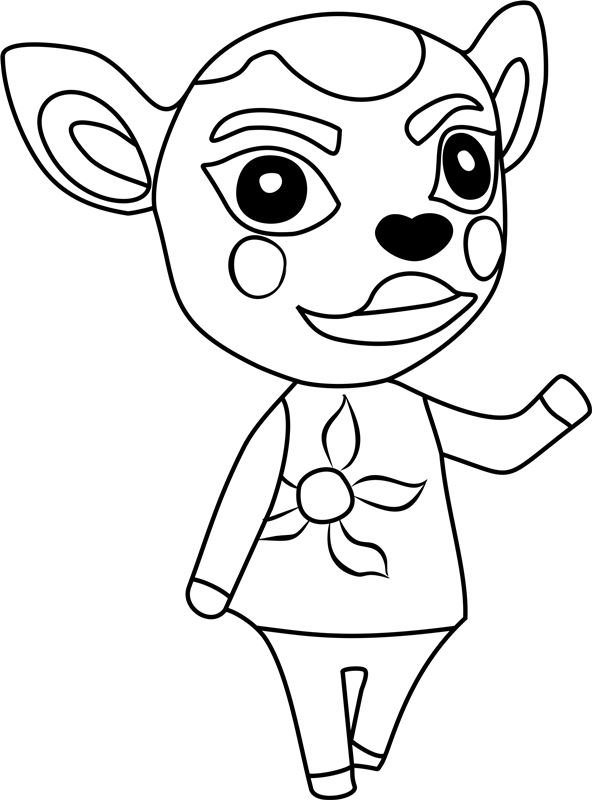

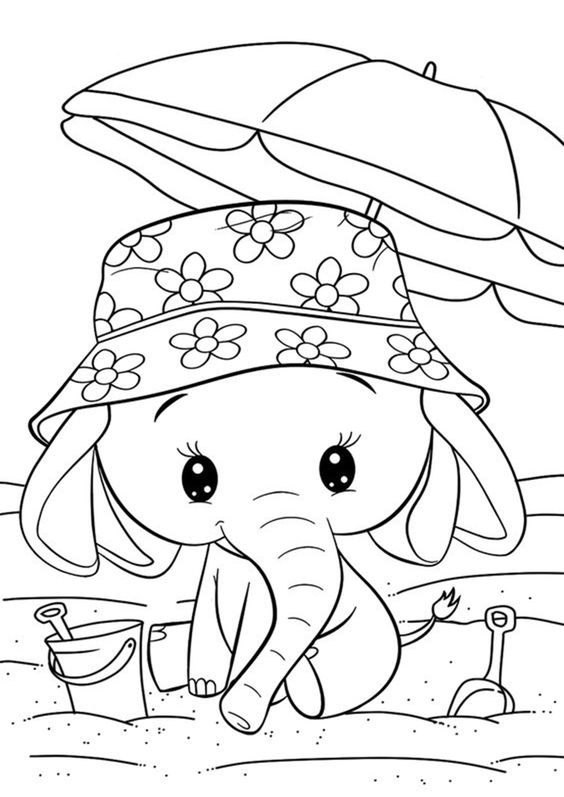
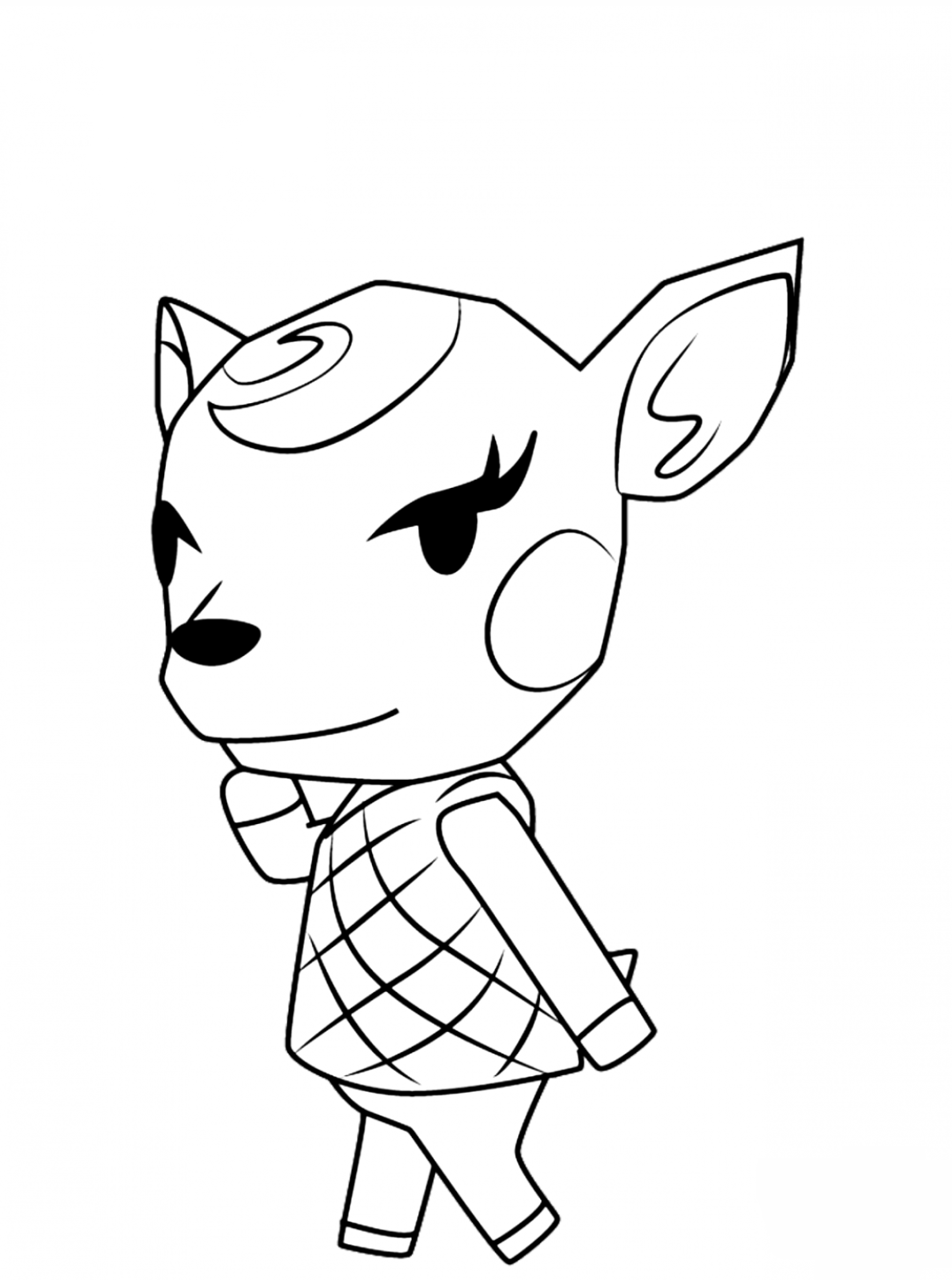
Why Animals Look Cute – The Science Behind the Feeling
There is a reason you cannot look at a photo of a baby duckling without wanting to protect it, or see a kitten curled up asleep without feeling warmth. That reaction is not random sentiment – it is a deeply wired biological response that has been studied extensively since the 1940s.
Austrian ethologist Konrad Lorenz first described this phenomenon in 1943, calling it Kindchenschema – literally “infant schema” or “baby schema” in German. Lorenz proposed that human infants possess a specific set of physical features – a large head relative to body size, a high and protruding forehead, large eyes positioned below the midpoint of the face, round, chubby cheeks, a small nose and mouth, and short, thick limbs – that function as a biological trigger for caregiving behavior in adults. The evolutionary logic is straightforward: infants who successfully triggered nurturing responses in adults received better care and were more likely to survive.
What Lorenz also observed, and what decades of subsequent research have confirmed, is that these features are not limited to human infants. Many young animals display the same proportional characteristics – the disproportionately large eyes, the round face, the compact limbs – and trigger the same caregiving response in human observers. The result is what we experience as “cute”: an involuntary, cross-species response rooted in evolutionary biology.
Research published in PNAS (2009) by Melanie Glocker and colleagues used fMRI scanning to demonstrate that viewing faces with high baby schema features activates the nucleus accumbens – a brain region central to reward processing and motivation – in adult women with no children of their own. Cuteness, in other words, engages the same neural reward systems as other positive experiences. Seeing something cute is neurologically pleasurable, which is why people tend to linger on cute animal images, seek them out, and feel better after viewing them.
The cartoonist’s art has long leveraged this biology intuitively. As evolutionary biologist Stephen Jay Gould famously noted in 1979 (“Mickey Mouse Meets Konrad Lorenz”), Mickey Mouse became progressively cuter over the decades not through conscious design decision but through iterative commercial refinement: his eyes grew larger, his head rounder, his limbs shorter and thicker – all moving him incrementally toward a more infant-like, Kindchenschema-conforming appearance. The same principle explains why cartoon animal characters – the animals in this collection’s illustrated pages – tend to have enormously large eyes, very round heads, and oversimplified, compact body proportions: the illustrators are working with the same biological levers Lorenz described.
The Animals in This Collection – A Guide to Canonical Colors
The collection spans an unusually wide range of species, from common domestic animals to wild creatures from multiple continents. Here is a guide to each animal’s canonical colors and distinctive visual features.
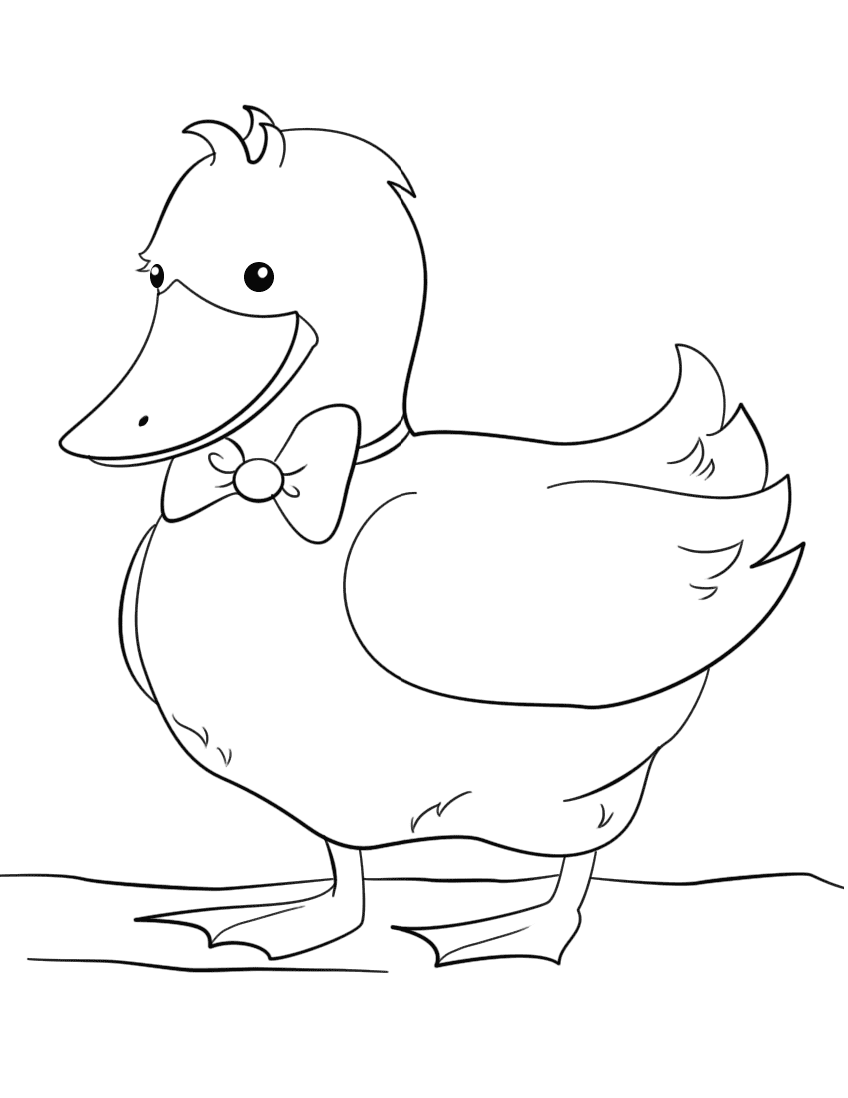
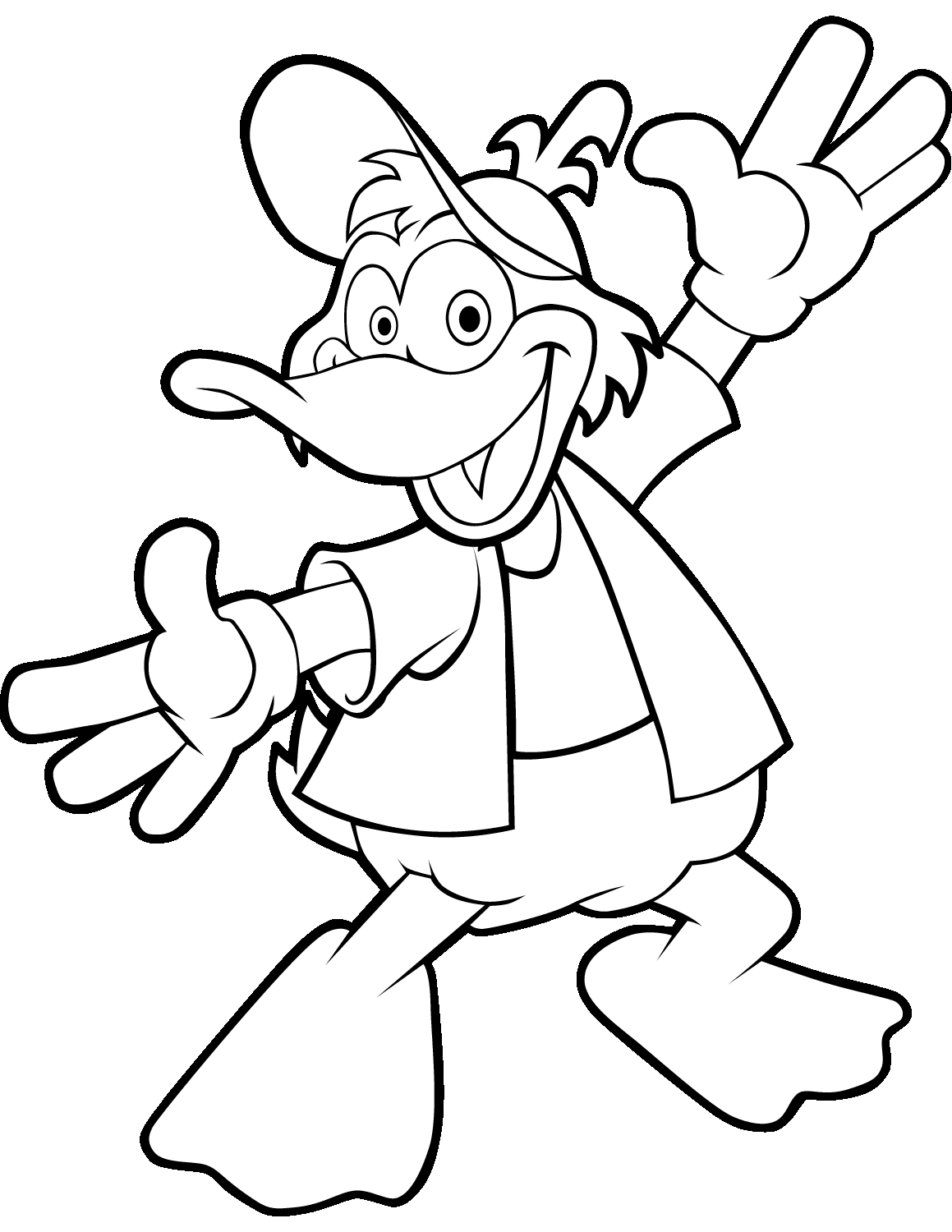
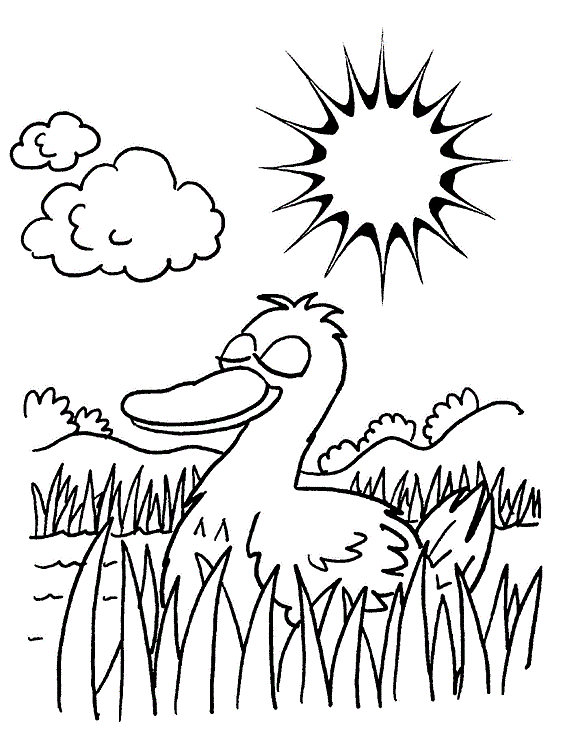
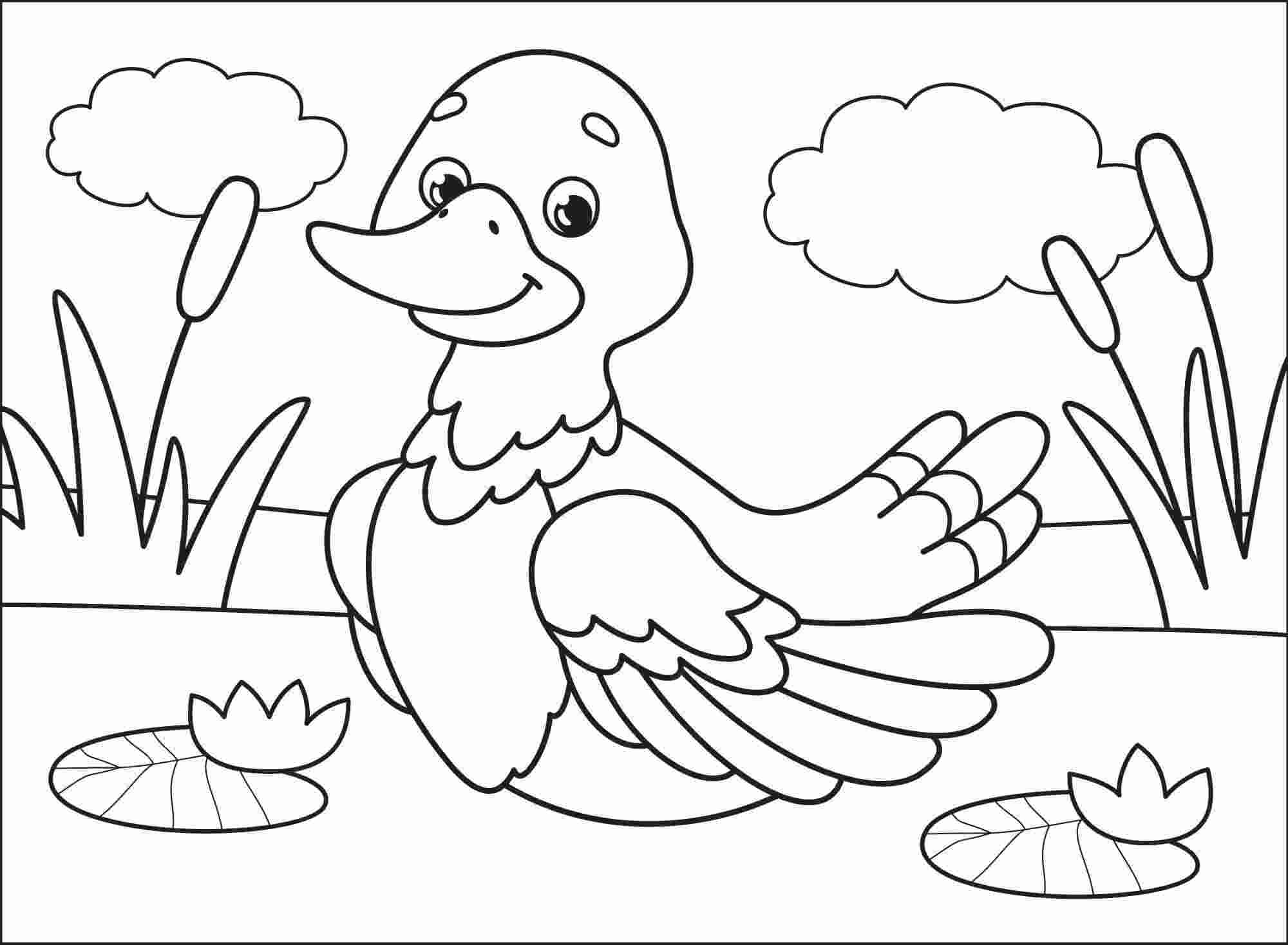
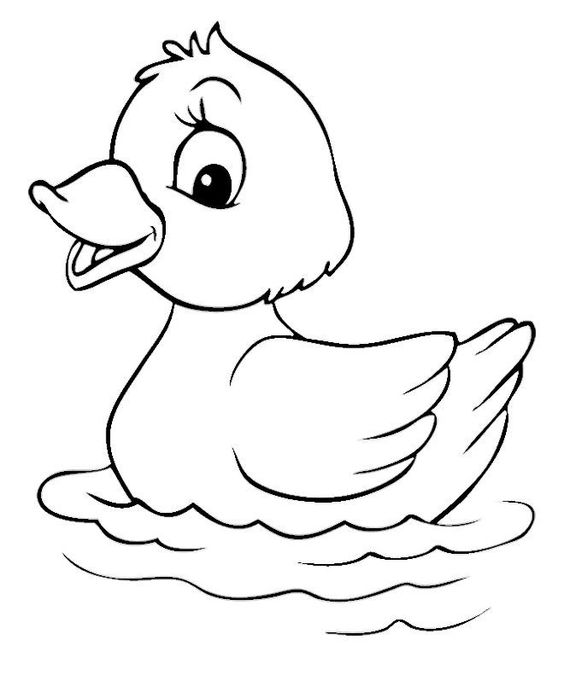
Ducks are the most extensively represented species in the collection, with multiple pages showing ducks in different styles – realistic swamp scenes, cartoon characters wearing caps and bow ties, cloud-day illustrations. The canonical coloring of a domestic duck or mallard is: male (drake) with a distinctive dark green head (iridescent, not flat green – it has a shimmer that reads as blue-green in different lights), a white collar ring at the neck, grey body, brown chest, and a curled tail feather; female (hen) in mottled warm brown throughout. Cartoon ducks like Donald Duck are rendered in white with an orange bill and orange feet. Yellow rubber-duck style cartoon ducks use vivid yellow for the body, orange for the bill and feet, and sometimes add accessories in contrasting colors.
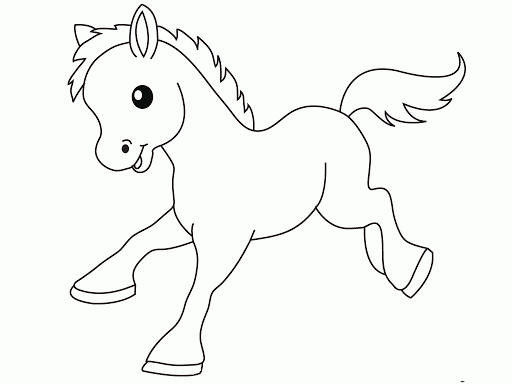
Foal (baby horse) – Foals are born with proportions that epitomize the Kindchenschema: their legs are disproportionately long relative to their body, their head appears large, and their eyes are enormous. The canonical foal is rendered in warm brown or chestnut with a lighter mane, though foals can be any horse color: bay (brown body, black mane and tail), chestnut (reddish-brown), grey, palomino (golden-yellow body, cream mane), or black. The distinctive feature of foal illustration is the slightly wobbly, just-learning-to-stand quality of the legs.
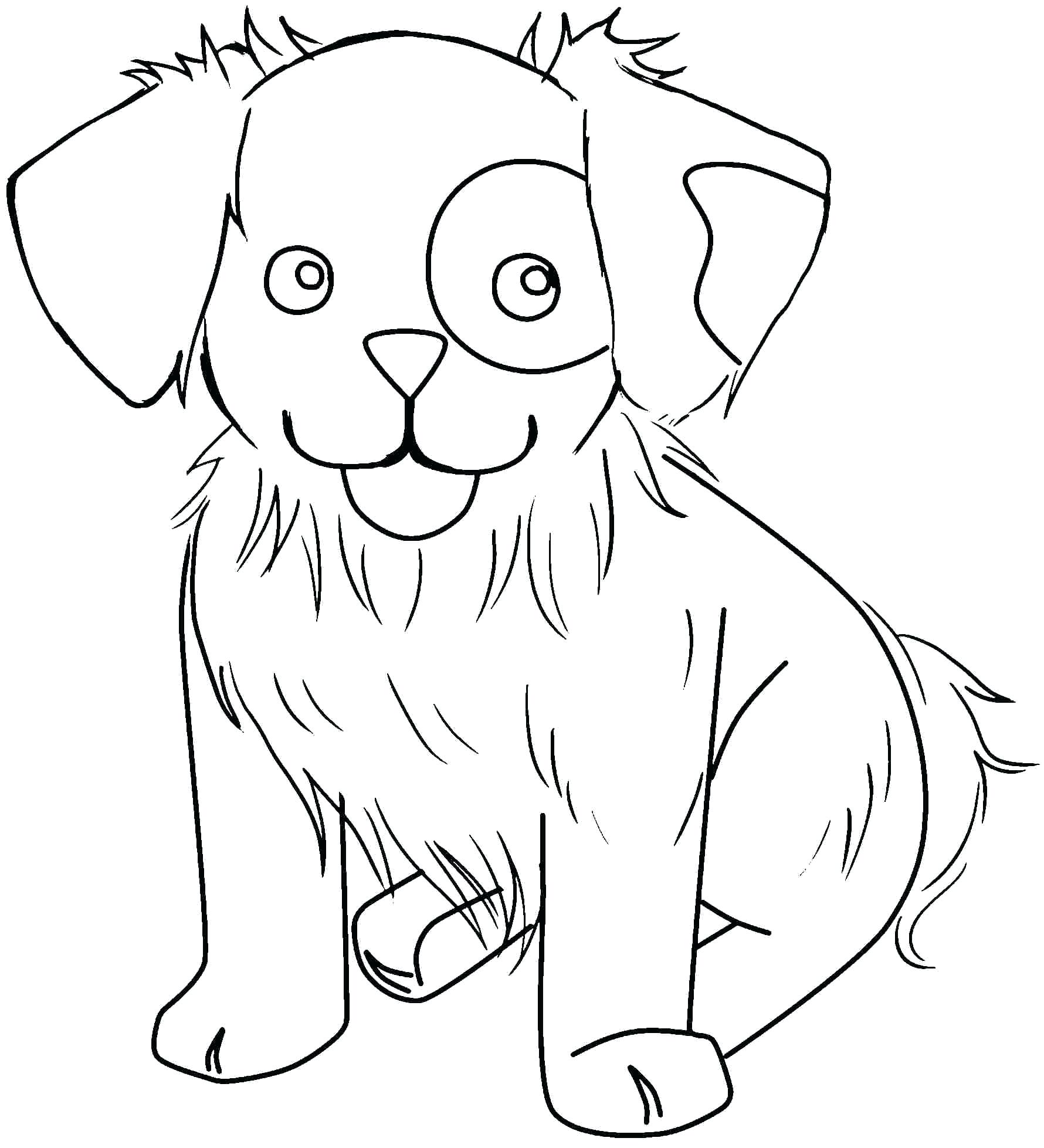
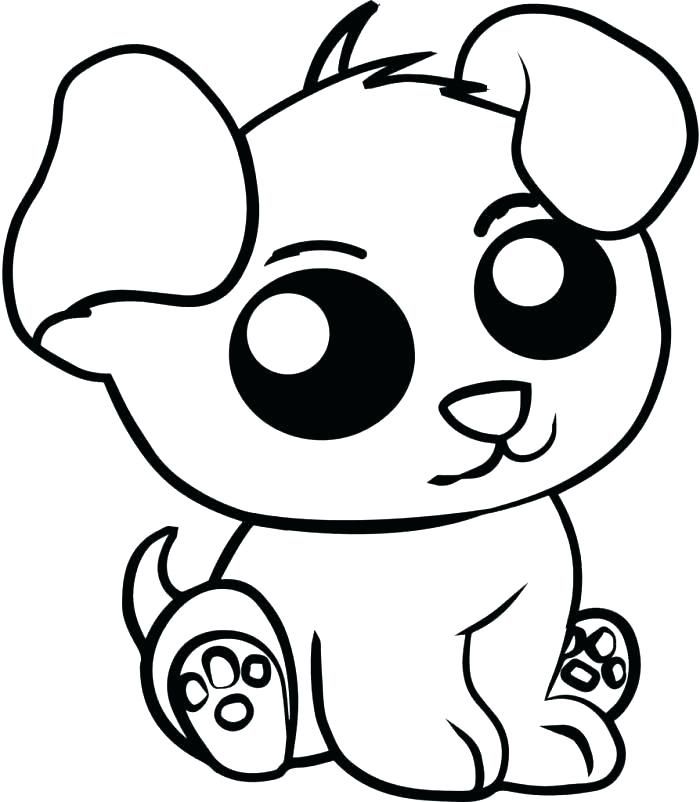
Dog – The collection’s dog pages use a generalized cute dog style rather than a specific breed. For a universally appealing cartoon dog: warm tan or golden-brown as the primary body color, slightly lighter cream on the muzzle, chest, and paw undersides, dark brown or black for the nose, and warm amber-brown for the eyes. The ears should be slightly darker than the body. Dog illustrations often exaggerate the eye size significantly – this is the Kindchenschema effect in cartoon form.
Calf (baby cow) – Calves have the same gentle, round-faced appeal as foals. The classic black-and-white Holstein pattern is the most recognizable, but calves also appear in: solid tan-brown (Jersey calf), solid black, red-brown (Hereford, with white face), or solid cream. Baby calves always have enormous dark brown or black eyes with long lashes, which is one of the strongest cute triggers in the animal kingdom.
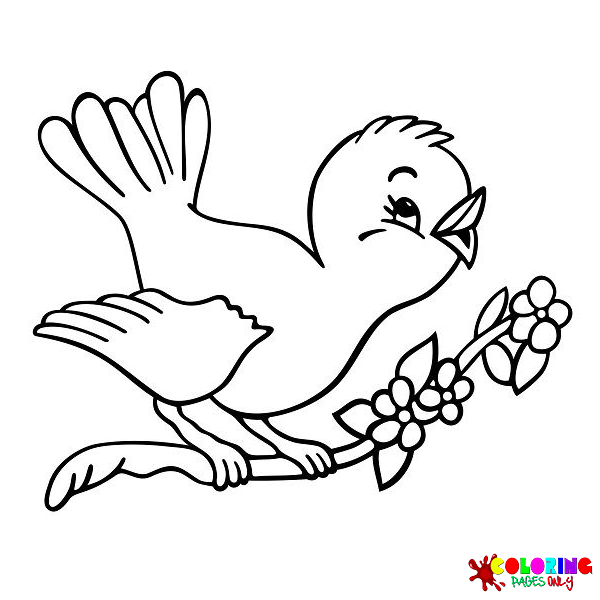
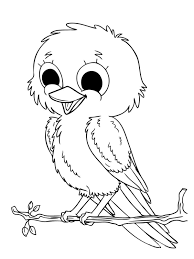
Bird / Nestling – Baby birds (nestlings) are among the most dramatically cute animals in nature: enormous eyes relative to body size, wide-open gaping beaks, and sparse fluffy down rather than adult feathers. For a generic baby bird illustration: pale yellow or cream down on the body, bright orange-yellow for the beak interior and feet, dark eyes with a slight highlight. The nestling tile in this collection depicts a baby bird in its nest – the nest itself should be colored in warm browns and tawny tones, representing woven twigs, while the bird’s down is softer and lighter.
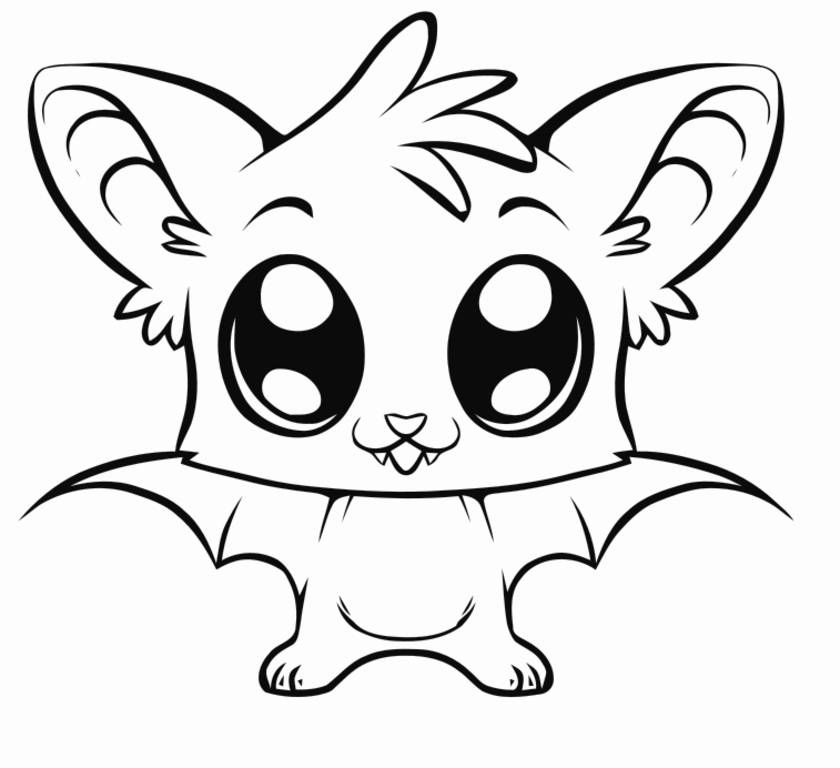
Baby Bat – Baby bats are among the animals that benefit most dramatically from the cute cartoon treatment: real bats have somewhat angular features, but illustrated baby bats render them with enormous eyes, soft, round faces, and folded wings. Bat coloring: dark grey to near-black body and wing membranes, slightly lighter grey on the face and underbelly, pink or warm peach for the ears’ interior and tiny nose tip. The wing membranes often have a subtle texture that rewards careful, layered coloring.
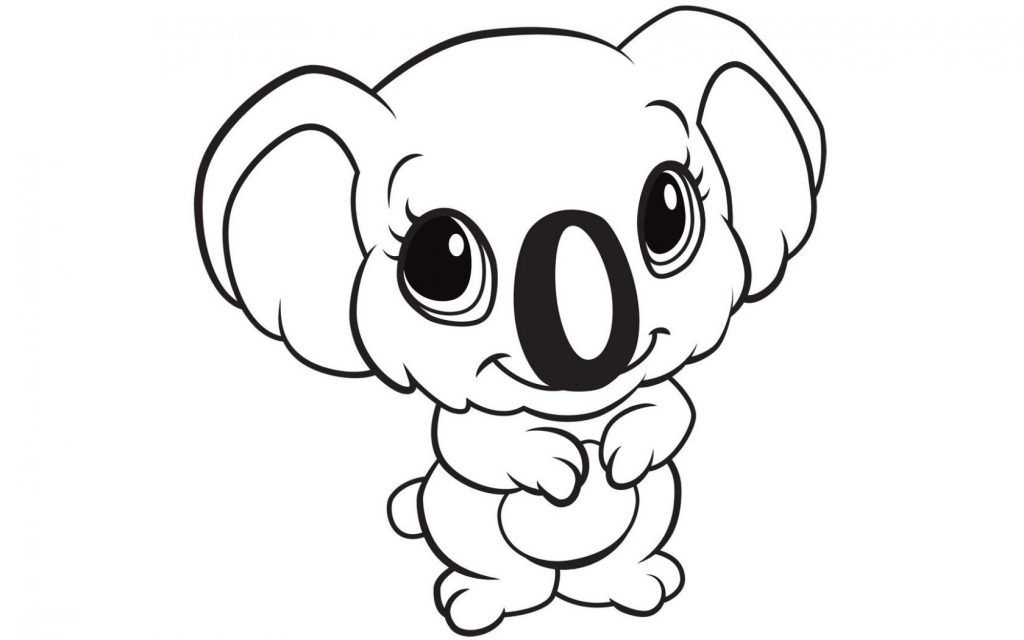
Koala – Koalas are one of the most Kindchenschema-conforming adult animals: their large, round ears, big dark nose, and small face on a round, furry head create a naturally infantile appearance even as adults. Canonical koala colors: soft silver-grey body fur (sometimes with a slight blue cast), paler grey-white on the face and chest, dark brown or black nose, and darker grey on the back and outer ears. The inner ears show a distinctive lighter pink-grey. Koalas gripping a eucalyptus branch should have that branch in grey-green, the eucalyptus leaves in soft grey-green.
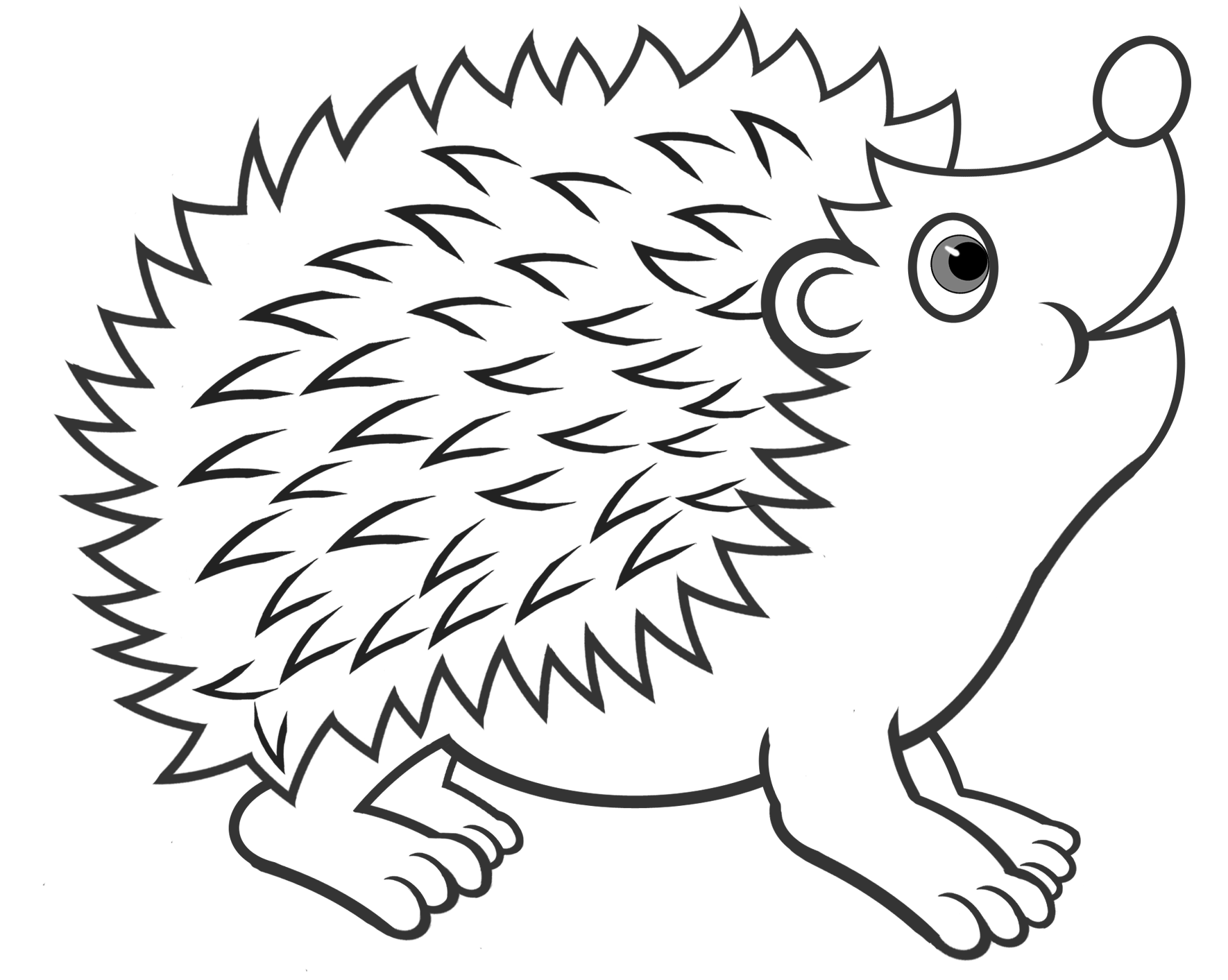
Hedgehog – Hedgehogs are one of the most distinctive-looking small animals: the contrast between the soft, round, pale face and the dark, spiny back creates an immediately recognizable silhouette. Canonical colors: cream-white face, throat, and underside; mid-brown or grey-brown sides; dark brown to black spines on the back; dark button nose and small dark eyes. The spines themselves deserve careful rendering – they are not uniform; they grow in rows and have a lighter base that darkens toward the tip.
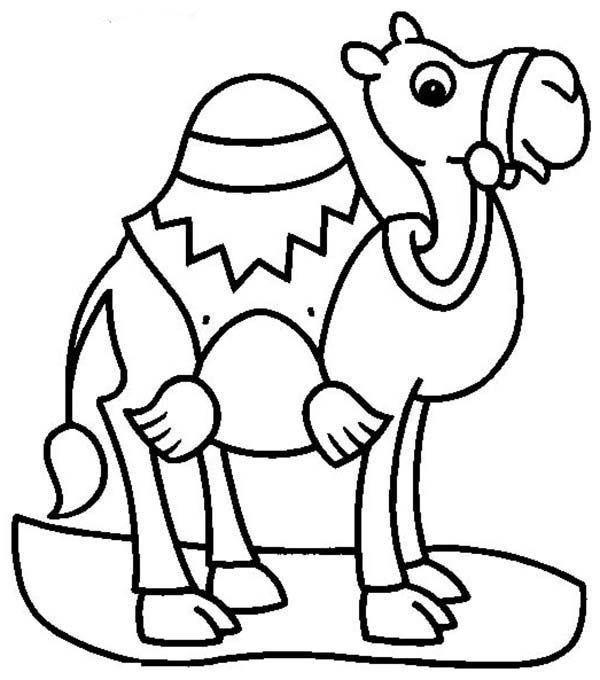
Camel – Camels are underrepresented in children’s coloring collections, which makes them a distinctive and educational choice. Canonical camel colors: warm sandy-tan as the primary body color (the color of desert sand), slightly darker brown at the hump tip, mane, and lower legs, and a paler cream on the face and underbelly. The hump(s) should be slightly darker than the body and given an irregular, organic shape. Camels have remarkably long, thick lashes – a notable feature worth emphasizing in coloring.
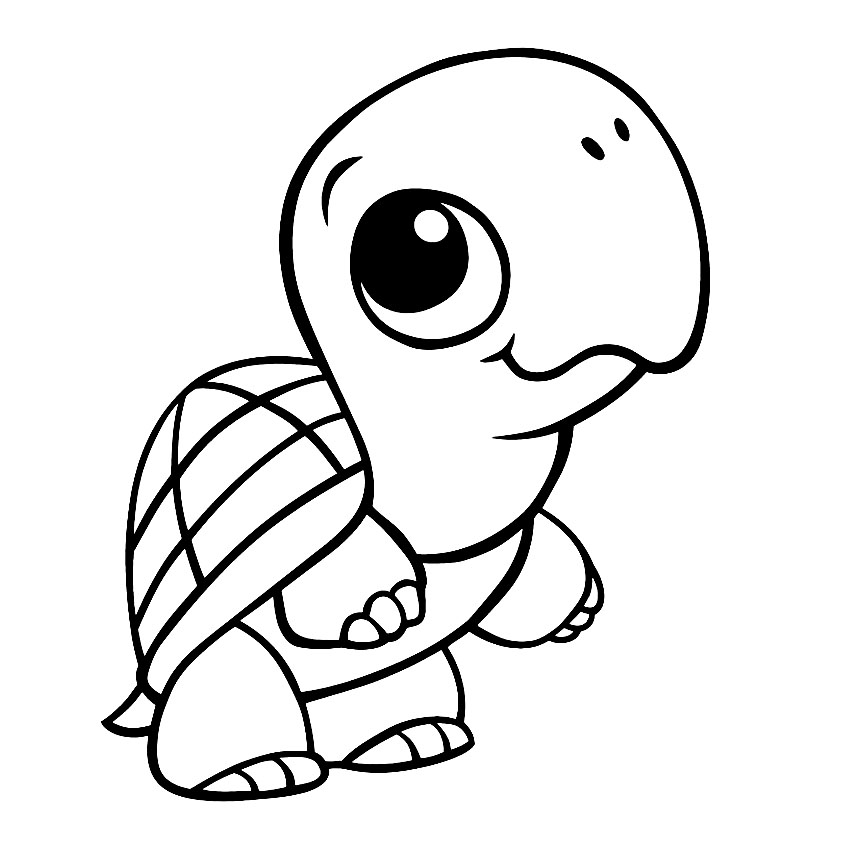
Turtle – Cartoon turtles are one of the most visually variable animals in illustration: the shell can be rendered in realistic patterns (green-brown hexagonal segments) or in bright, stylized colors. For a realistic baby turtle: olive-green to dark green shell, slightly lighter green on the legs and head, with a yellow-green or cream underside (plastron). For a cartoon turtle: any color palette is acceptable – cartoon turtles are frequently rendered in vivid greens, blues, or even purple-pink.
Baby Monkey – Baby monkeys have some of the most human-like, cute features of any animal: large eyes, a small, rounded nose, and expressive faces. Canonical coloring depends on species: macaques and most small monkeys are warm brown-tan with a slightly lighter face; spider monkeys are very dark brown to black; golden lion tamarins are vivid golden-orange. For a generic cute monkey illustration: warm mid-brown body, paler tan or peach face and palms, dark brown eyes.
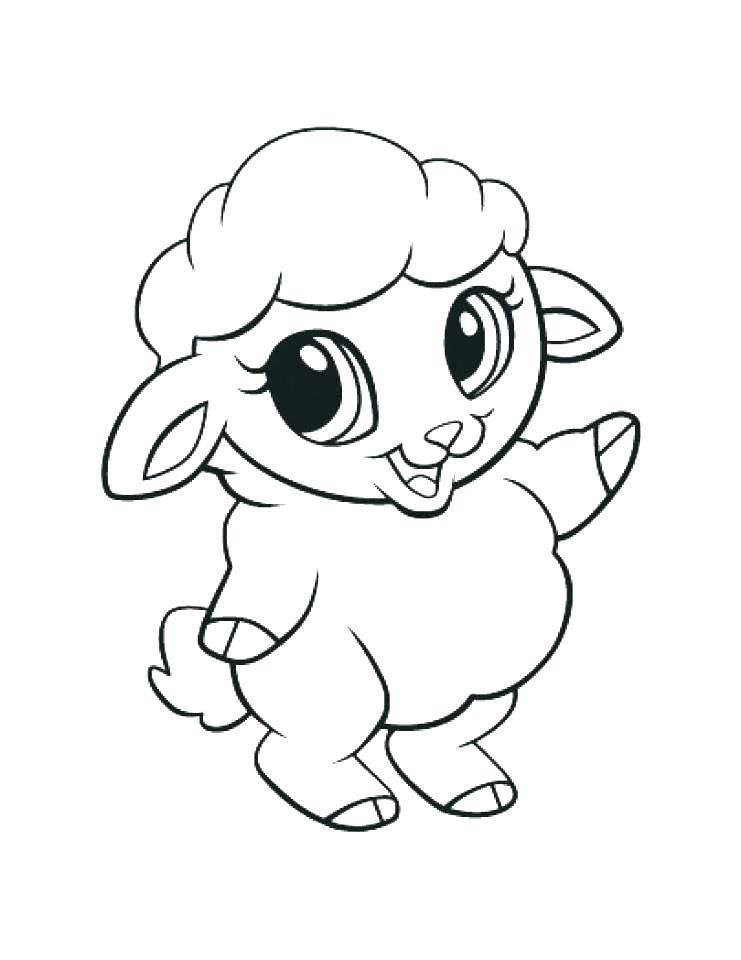
Lambs – Baby sheep (lambs) are the archetypal fluffy, cute animal: cream-white or light grey woolly body, delicate pink or pale skin on the face and legs, small black or dark brown hooves, and soft dark eyes. The woolly texture of a lamb’s fleece is one of the most rewarding to render in coloring – short, dense circular strokes with a slightly lighter highlight on top create the appearance of soft, three-dimensional fleece.
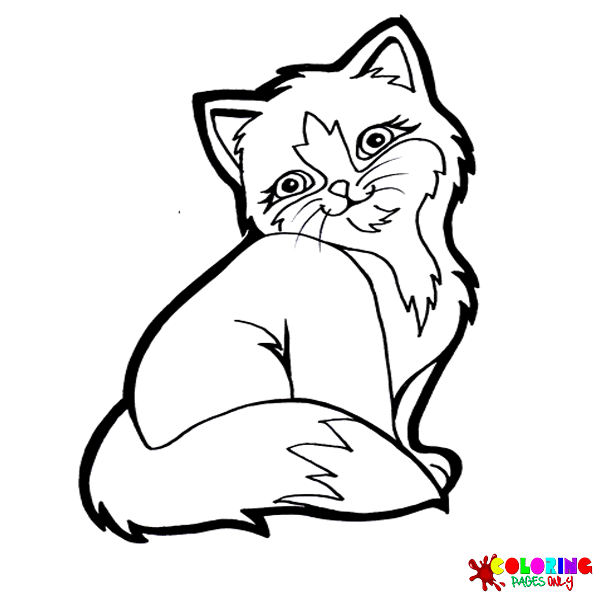
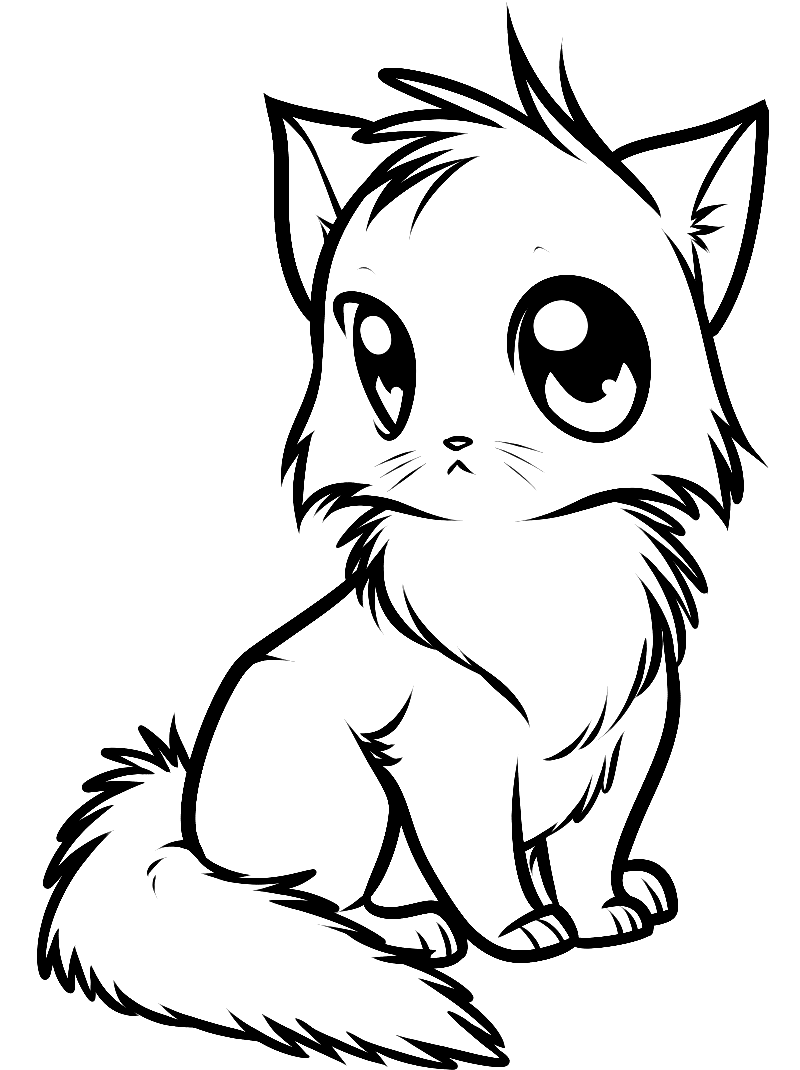
Kitten – Kittens are perhaps the single most universally beloved cute animal subject. The collection’s kitten page should follow the canonical kitten proportions: enormous eyes (taking up a much larger proportion of the face than adult cats), small triangular nose, rounded head, and small, delicate paws. Kitten color varies freely – tabbies in orange-brown or grey stripes, black kittens, calico (orange, black, and white patchwork), all-white, or all-grey. The eyes of a kitten should have a highlight dot in the upper pupil area to convey the distinctive, large, glistening quality of kitten eyes.
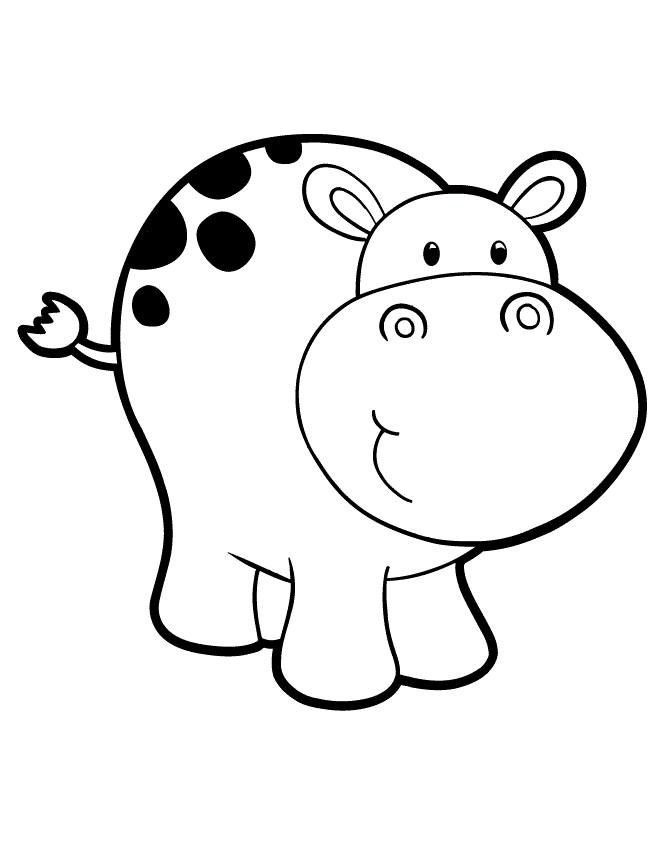
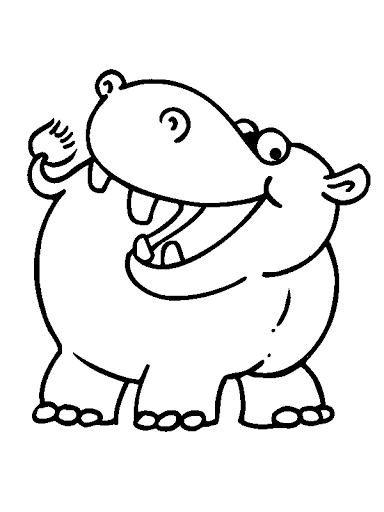
Hippo – Despite being one of the most dangerous large animals in Africa, hippos in illustration read as inherently gentle due to their barrel-shaped, smooth-skinned bodies and wide, smiling mouths. Canonical hippo colors: grey-purple or blue-grey skin overall, slightly pinker and more flushed around the eyes, ears, and sensitive skin areas (hippos secrete a reddish fluid sometimes called “blood sweat” that has sun-protection properties). The interior of the mouth is a distinctive deep pink when open.
Coloring Tips for Cute Animal Pages
The eyes are everything – and they need a highlight. In cute animal illustration, the eyes are the primary carrier of emotional expression and the main source of the “aww” response. Every cute animal eye should receive a small white highlight dot in the upper quadrant of the iris. This highlight simulates the reflective sheen of a moist, living eye and is the single most effective technique for making an illustrated animal look genuinely alive rather than flat. Apply the highlight after all other eye colors are complete – use a white gel pen or leave a tiny area uncolored.
Fur texture determines everything about animal realism. Different animals have dramatically different coat textures that call for different coloring approaches. Fluffy animals (lambs, baby bears, koalas, kittens) benefit from soft, circular strokes that suggest three-dimensional fur clumps – start with a base color, then layer slightly darker circular marks that suggest individual fur tufts, finishing with very light strokes along the highlights. Smooth-skinned animals (hippos, turtles, ducks) need flat, even coverage in their primary color, with smooth gradient transitions at shadow zones. Spined animals (hedgehogs) need deliberate directional strokes that follow the spine direction – from back toward tail, darkening toward the tips.
Use color temperature to create depth. On any animal page, the areas closest to a light source (top of the head, back, outer shoulders) should be colored in the animal’s lightest, warmest version of their coat color. Shadow areas (under the chin, inside the ears, beneath the belly) should be the same color’s darker, slightly cooler version. This temperature shift – warm highlights, cool shadows – creates the impression of three-dimensional form even with simple coloring tools.
Backgrounds should serve the animal, not compete with it. The most common mistake in coloring cute animal pages is using a background color that is similar in value (lightness/darkness) to the animal itself, which causes the animal to disappear into the background. As a rule: if the animal is light-colored (lamb, duck, koala), use a stronger, darker background color – sky blue, grass green, warm golden-yellow. If the animal is dark-colored (baby bat, dark monkey), use a lighter background – pale sky, cream, warm yellow-white – to make the animal silhouette read clearly against it.
For cartoon animals with accessories – color the animal before the clothing or props. Pages showing ducks wearing caps, bow ties, or other accessories should have the animal’s body fully colored before any accessory color is applied. This prevents the common problem of the accessory color bleeding into the animal color or the reverse. Accessories should generally be in contrasting colors to the animal – a bright red cap on a white cartoon duck, a deep blue bow tie on a yellow duck.
The baby bat’s wings deserve special attention. Wing membranes on illustrated bats are translucent in nature – thin skin stretched between elongated finger bones. This translucency can be suggested in coloring by keeping the membrane color slightly lighter than the body fur color, and by using slightly warmer tones where the membrane would be thinnest (near the wing tips) versus where it would be thicker and darker (along the leading edge). This simple variation gives the wings visual interest without requiring complex shading techniques.
Camel humps cast shadows on themselves. The hump of a camel is a genuinely three-dimensional form that deserves careful rendering. The front face of the hump (facing the head) is typically in full light; the back slope is in mid-shadow; the area directly below the hump on the back is in deep shadow. Using three distinct values of the same warm sandy-tan – light, medium, and dark – across these three zones gives the hump convincing three-dimensional weight.
5 Activities
The baby-versus-adult comparison study. Find reference images of adult versions of three animals in this collection – an adult duck, an adult cat, and an adult horse – and compare them to the baby/young versions on the coloring pages. Measure and note the differences: the baby versions have proportionally larger eyes, rounder heads, larger heads relative to body size, and shorter, thicker limbs. Then, on a blank piece of paper, draw a simple side-by-side comparison: the baby animal on one side, the adult on the other, with arrows pointing to the features that changed. Color both. This activity is an introduction to the Kindchenschema concept – the scientific reason baby animals look cute – in visual, hands-on form. It is also excellent observational drawing practice, as it requires children to look carefully at proportional differences rather than copying a single image.
The habitat color challenge. Print any five animal pages from the collection. Before coloring, research where each animal actually lives: ducks live near water (blue, green, brown tones); koalas live in eucalyptus forests (grey-green, muted silver); camels live in desert environments (sandy, ochre, terracotta); turtles live in ponds and slow rivers (green, blue-green, murky brown); hedgehogs live in temperate woodland (warm brown, leaf-litter colors). Color each animal in its correct canonical colors, and then add a background using three colors appropriate to that animal’s actual habitat. The finished set creates a visually cohesive “where animals live” reference – animals accurately colored in their biologically correct settings. This activity builds both coloring skills and natural world knowledge simultaneously.
The expression experiment. The cartoon duck pages in this collection show the same animal in different illustrated expressions and scenarios – relaxed in the swamp, wearing a cap, playing on a cloudy day, and wearing a bow tie. Print all four duck pages. Color each one in the same primary duck colors (consistent body color across all four). But change the secondary and accent colors on each page to create distinct moods: cool blues and greens for the swamp page (peaceful, natural), bright primary colors for the cartoon cap page (playful, bold), soft pastels for the cloud-day page (dreamy, gentle), formal navy and white for the bow-tie page (sophisticated, funny). After completing all four, arrange them as a series and discuss: how do the background and accessory colors change the mood of the same character? This activity teaches one of the most important principles of visual communication: that color choices communicate emotion and context independently of line art.
The cuteness science observation. After reading about the Kindchenschema, use the pages from this collection as a simple science experiment. Print three pages: one showing a baby animal (the foal, lamb, or nestling), one showing an adult-proportioned cartoon animal (the camel, hippo), and one showing a highly stylized cartoon animal (the duck with a cap). Ask: Which one looks cutest? Rate each on a scale of 1 to 5. Then measure the eye size relative to head size on each illustration using a ruler. Does the page with the highest cuteness rating have the largest eye-to-head ratio? This converts a coloring activity into a simple scientific observation, testing Lorenz’s Kindchenschema theory with real data from the collection. Children who do this activity often find the correlation remarkably clear – and the discovery that their emotional response follows a measurable physical rule is genuinely surprising and memorable.
The animal fact book. Over the course of a month, color one page per week and, for each finished page, write or dictate three facts about that animal on the page’s back. For the baby bat: bats are the only mammals that can truly fly; a baby bat is called a pup; a single bat can eat up to 1,000 mosquitoes in an hour. For the koala: koalas sleep up to 22 hours per day; they are not bears but marsupials; they eat almost exclusively eucalyptus leaves, which are toxic to most animals. For the lamb: baby sheep are born knowing how to walk within minutes of birth; they recognize their mother by sound; sheep have rectangular pupils. Bind the finished pages together to create a personal illustrated animal fact book. This activity extends coloring into research, writing, and natural science, while the completed book becomes a genuinely useful and personally meaningful reference that the child created themselves.