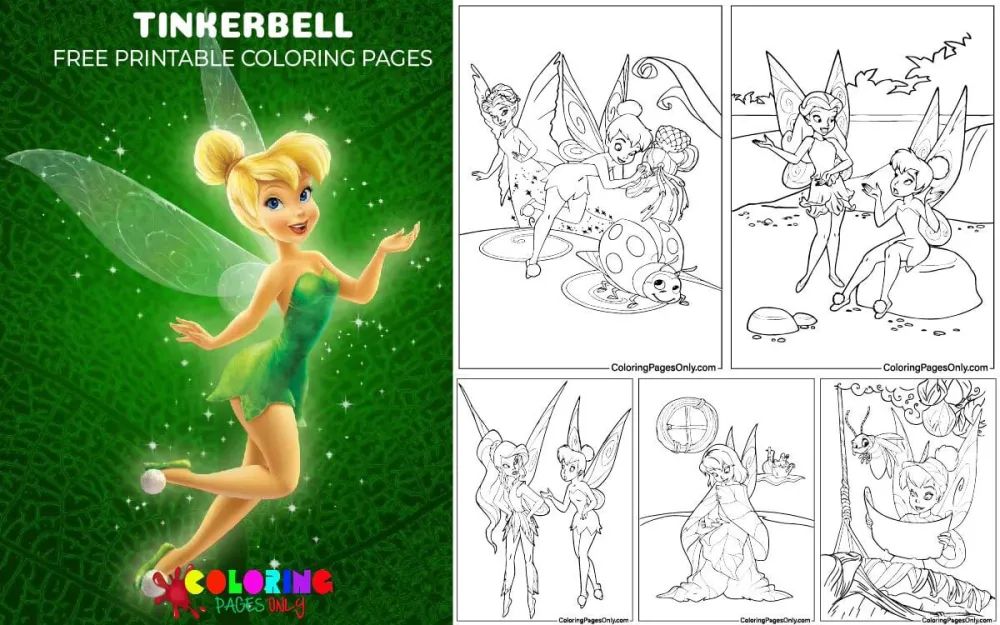
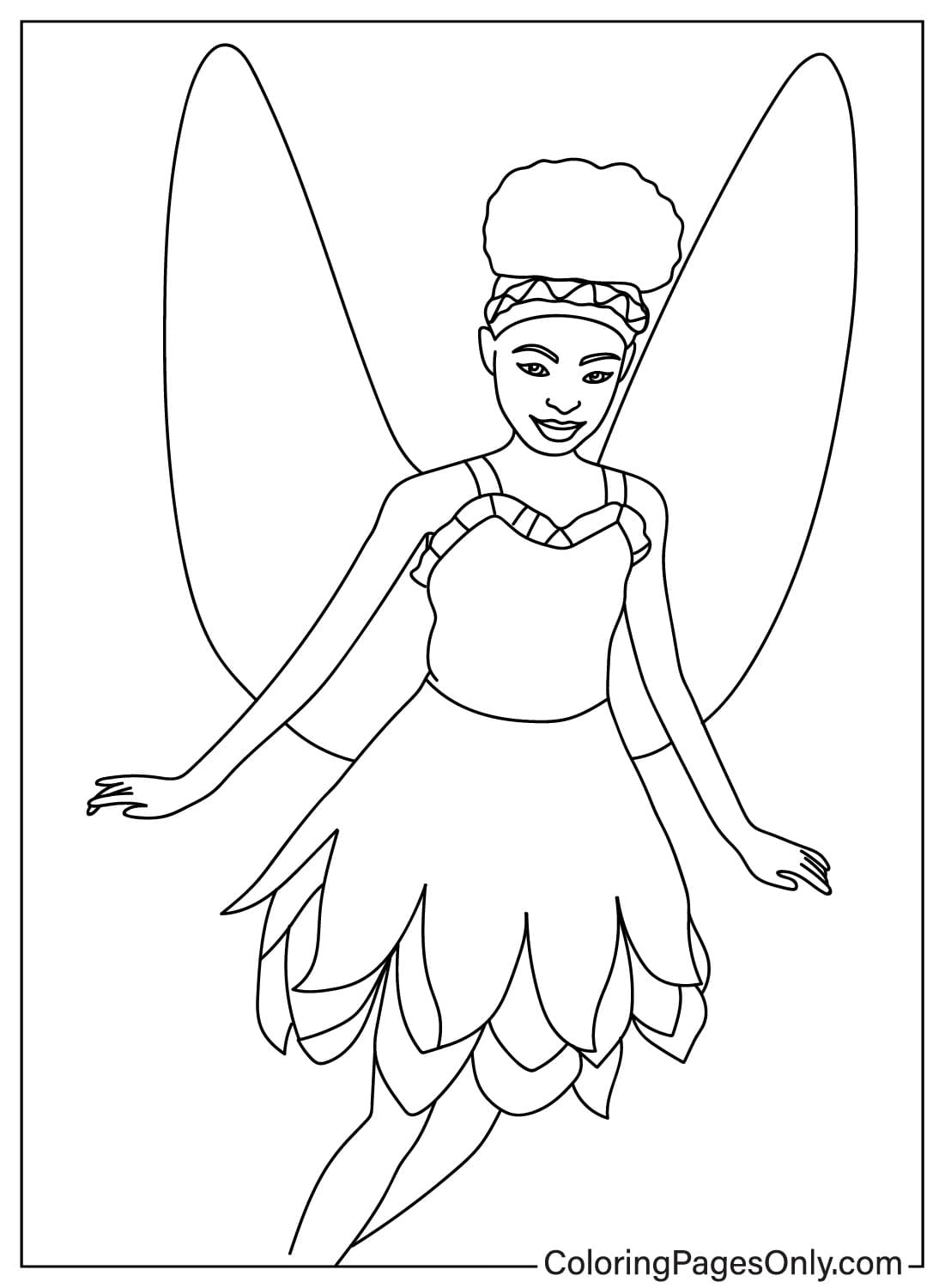
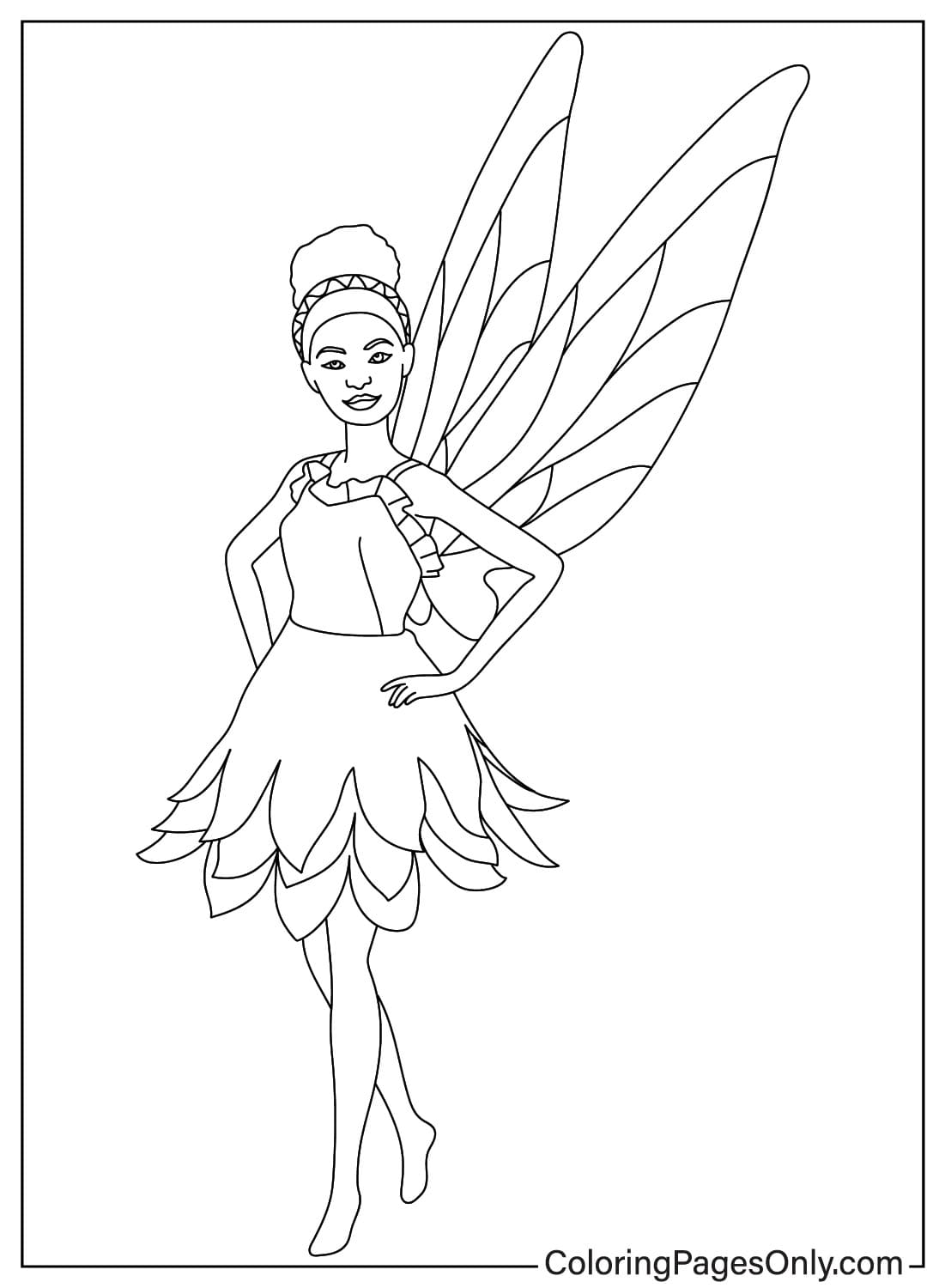
Free Tinkerbell Coloring Pages: 79 printable PDF designs featuring the fairy in her classic look, alongside her fairy friends, pixie dust, and scenes in Pixie Hollow. Each page can be downloaded as a PDF to print or colored online in the browser.
Scottish writer J.M. Barrie created Tinker Bell for his 1904 play Peter Pan, or The Boy Who Wouldn’t Grow Up, and later appeared in his 1911 novel Peter and Wendy, where her name comes from her talent for mending pots and pans, an actual tinker’s job among the fairies. Disney’s 1953 animated film Peter Pan gave her the look most people picture today: a blonde bun, a green strapless dress, and translucent wings, designed by animator Marc Davis with live-action reference footage of performer Margaret Kerry, not Marilyn Monroe, despite a persistent myth to the contrary. In 2008, Tinker Bell became the star of her own Disney Fairies franchise and spoke on screen for the first time. This collection colors the same fairy across both eras of her look.
This set works across a wide range of ages: the simple solo portraits suit a child just starting to color a small figure with wings. At the same time, the busier fairy-friend group scenes and Pixie Hollow settings give an older child or an adult more detail and background to work through. It is also a natural way to talk about how a single character can change in small ways over decades while still staying recognizable.
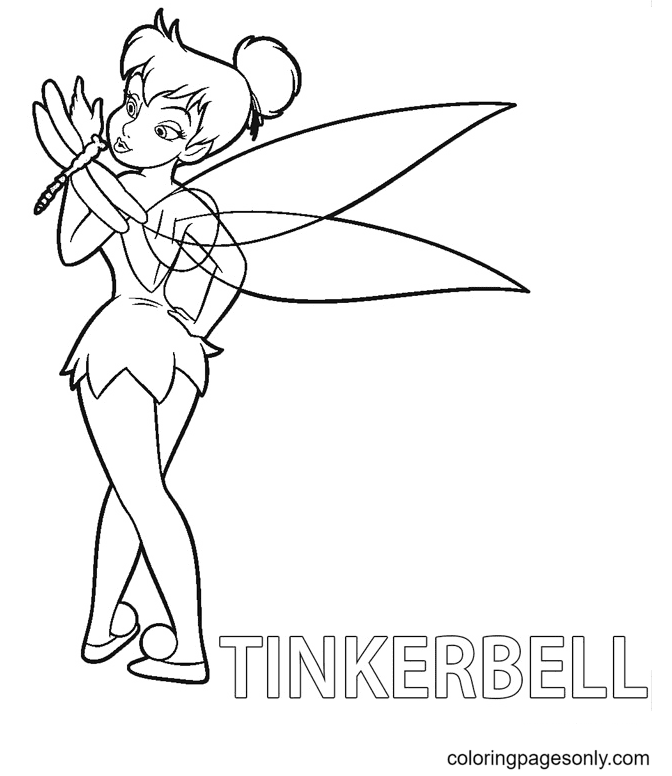
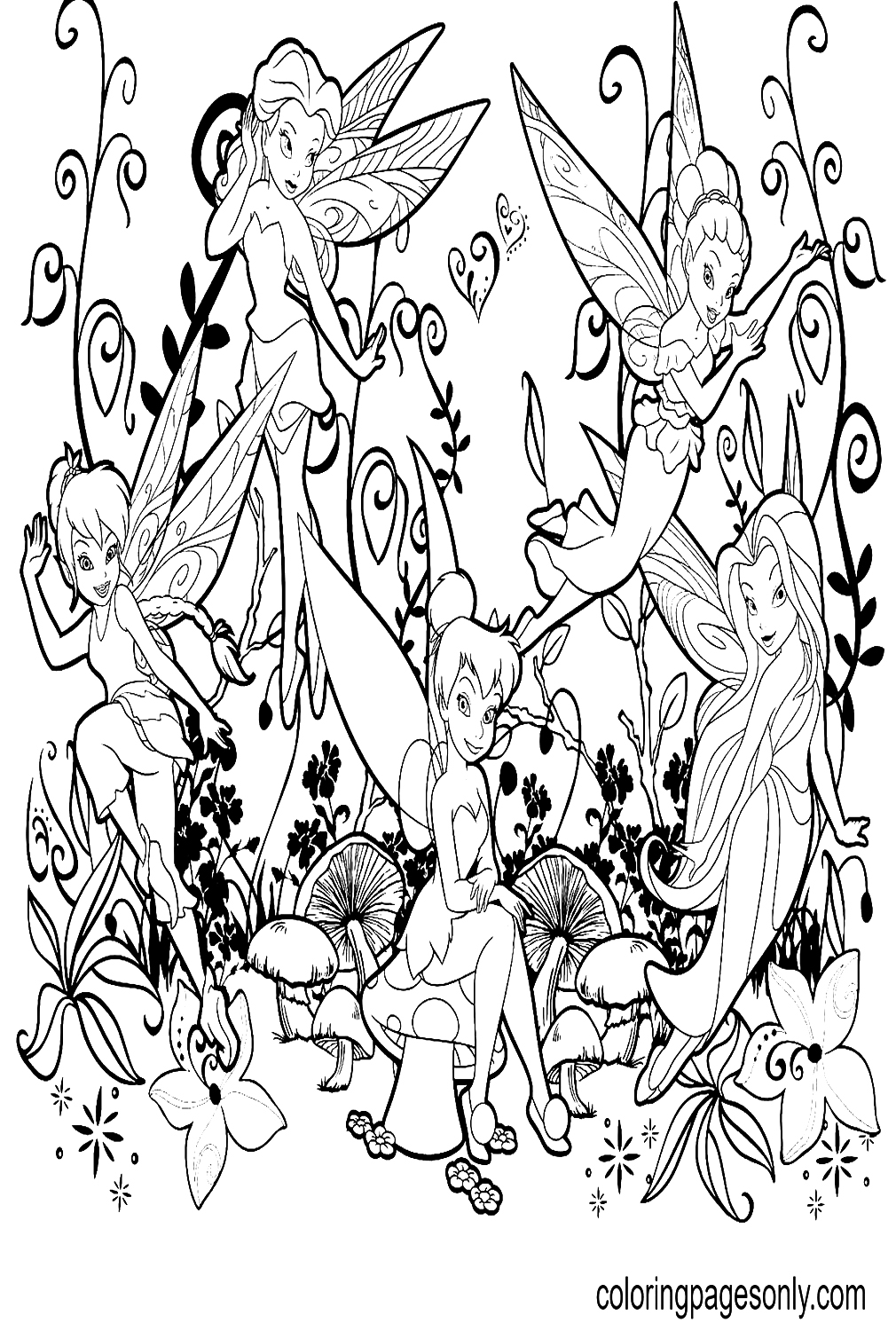
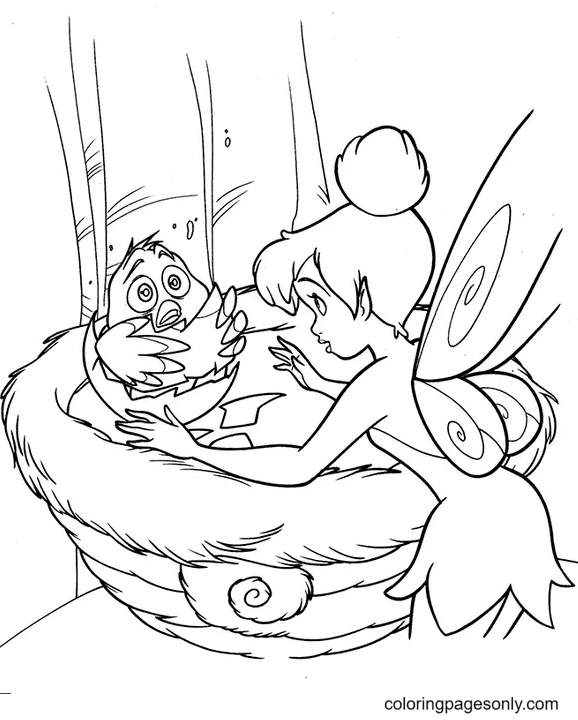
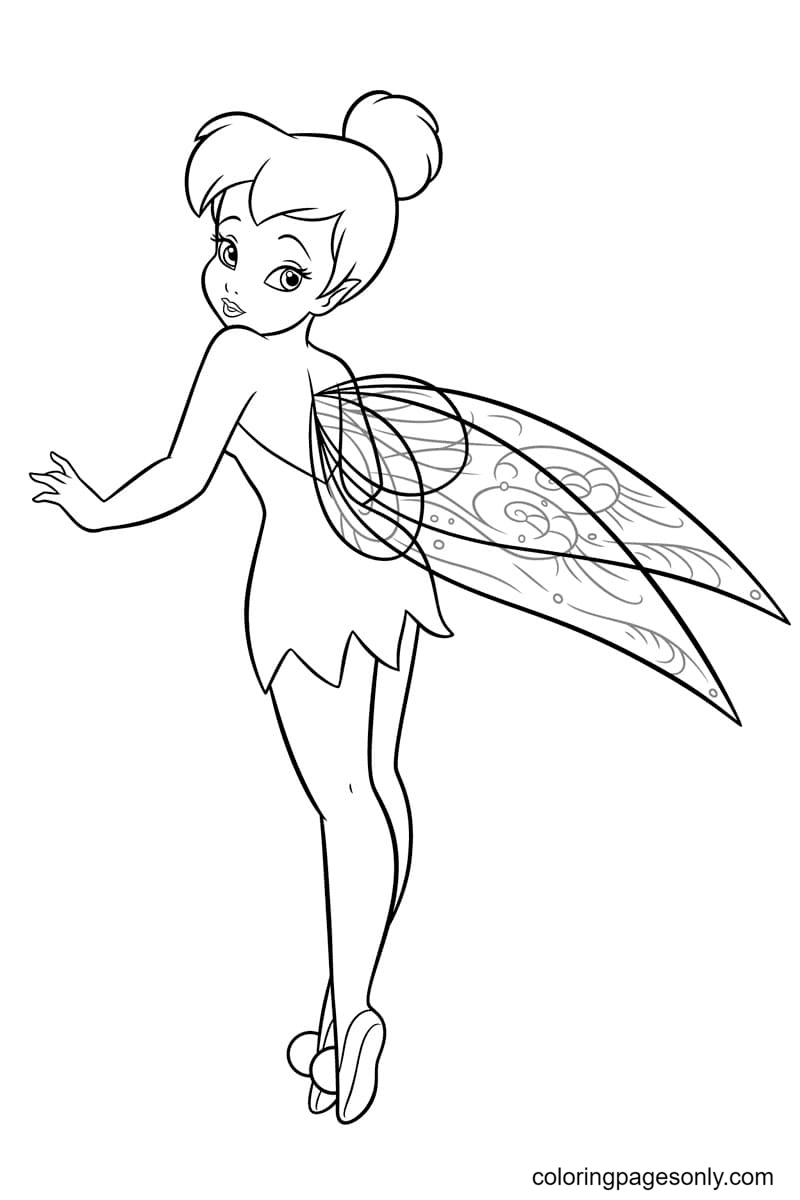












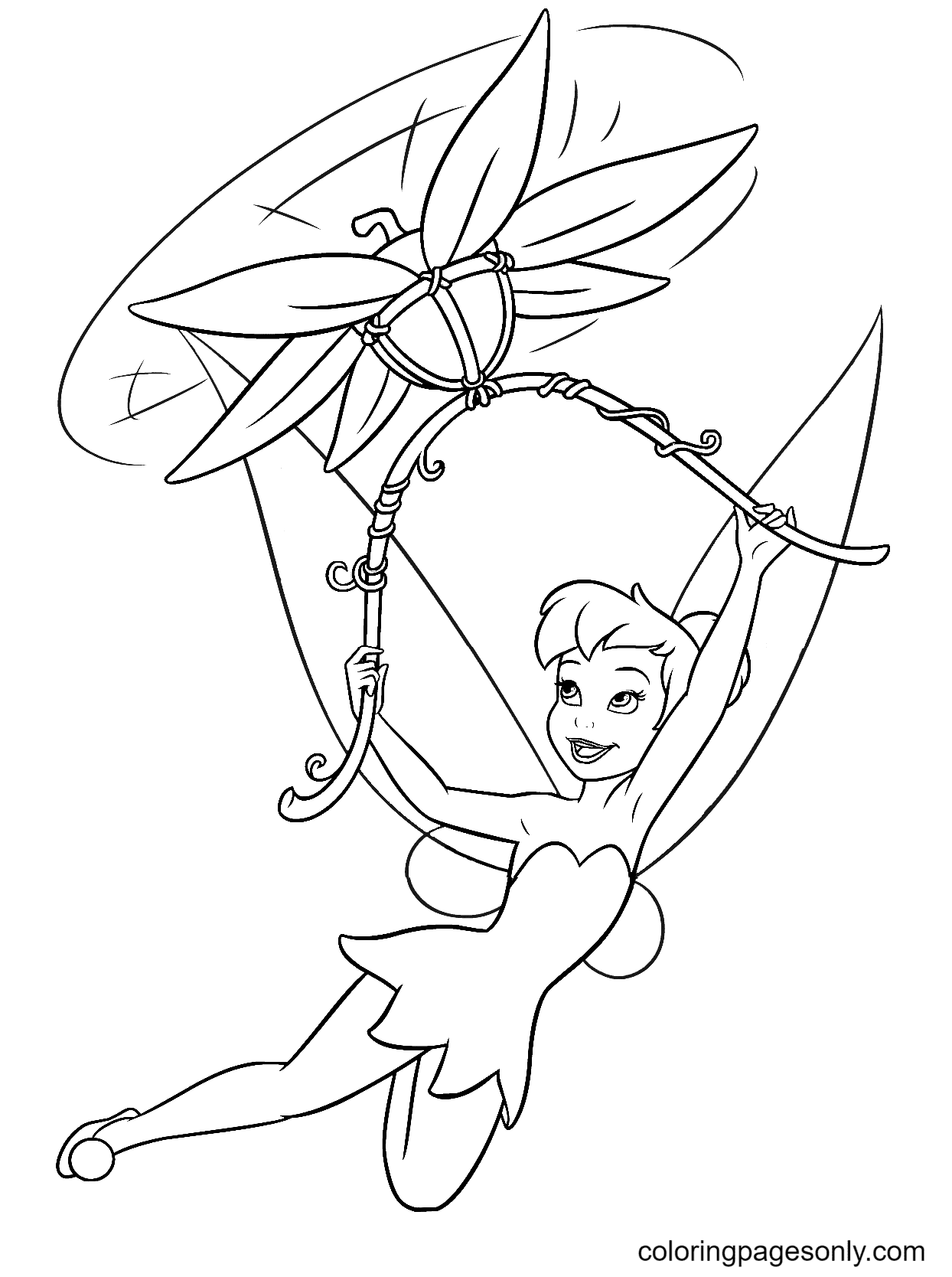
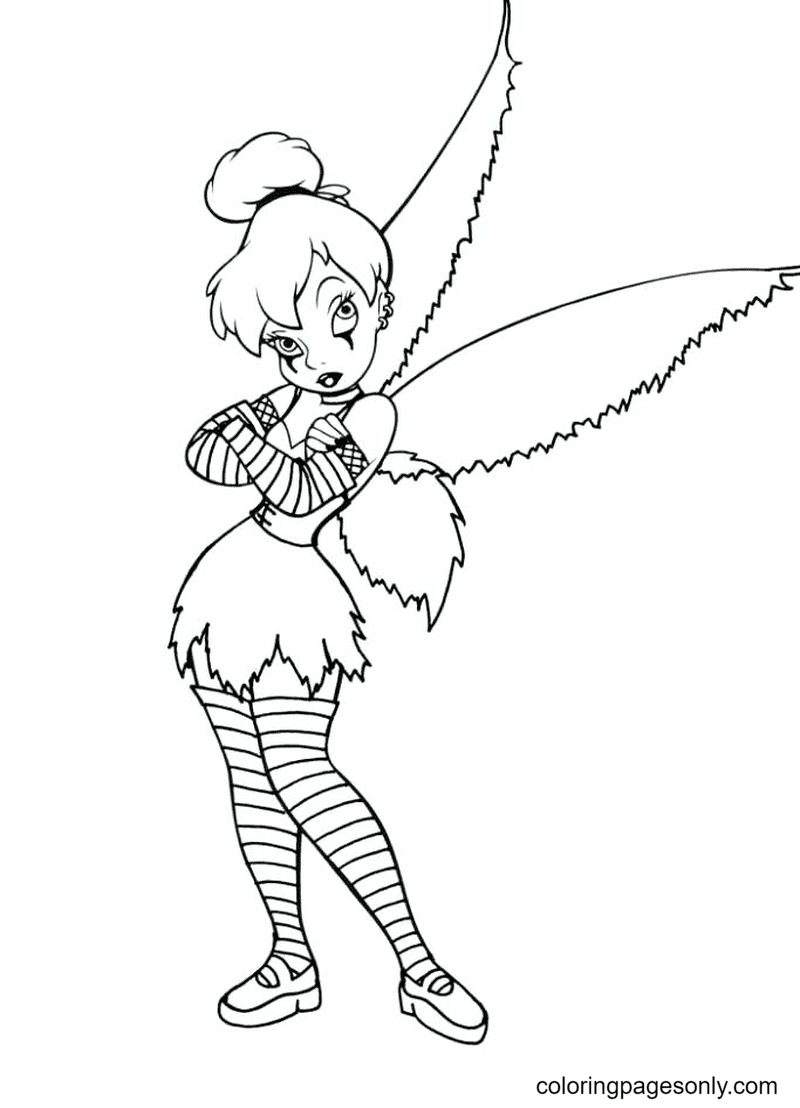
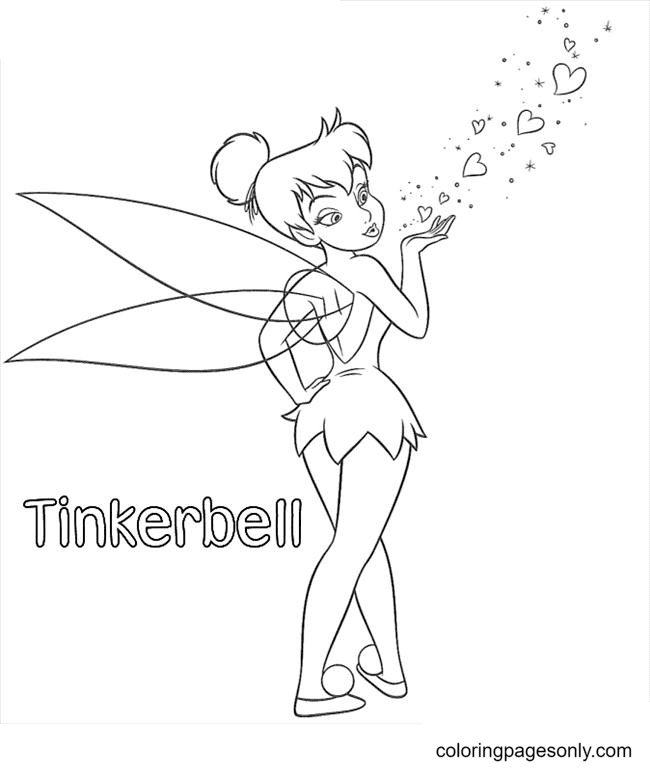
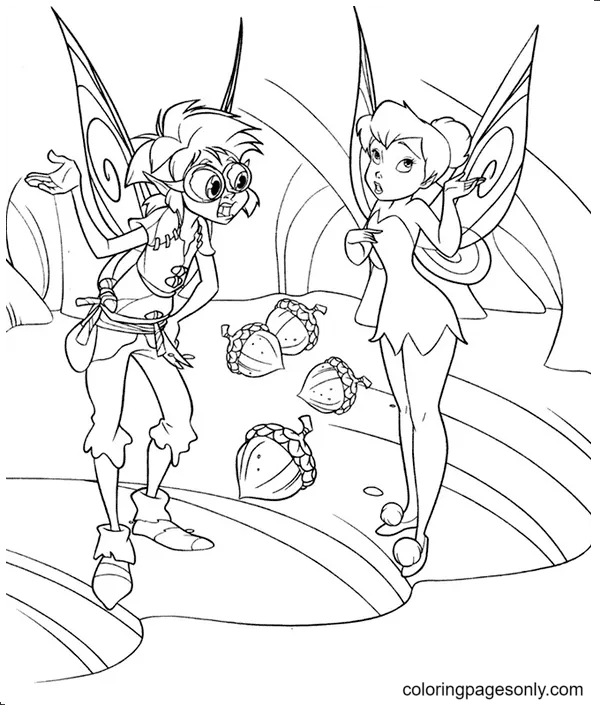

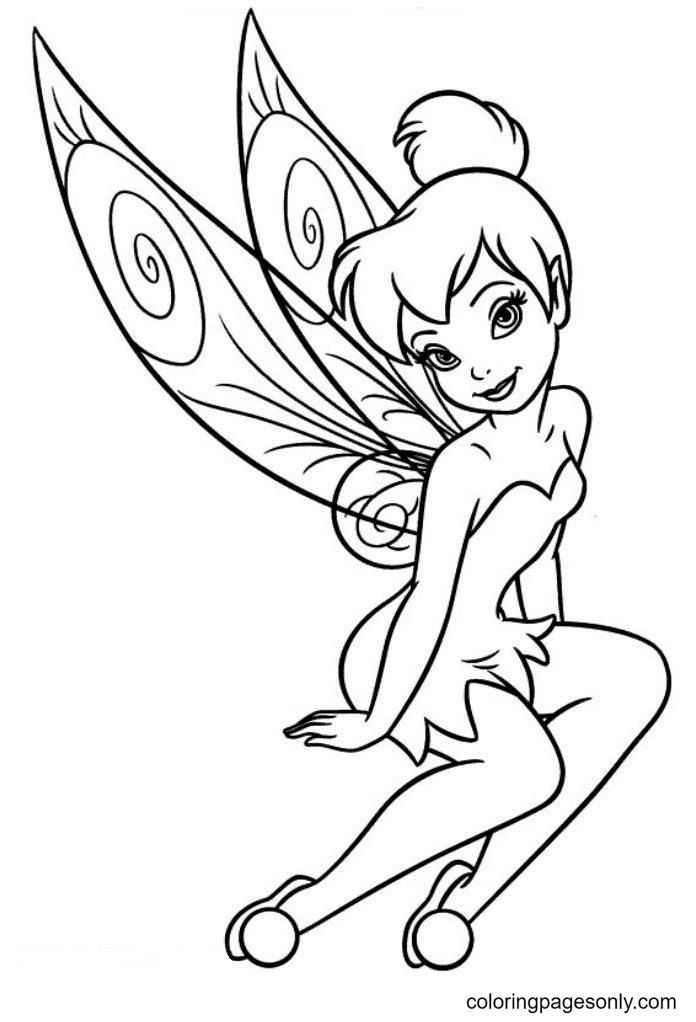
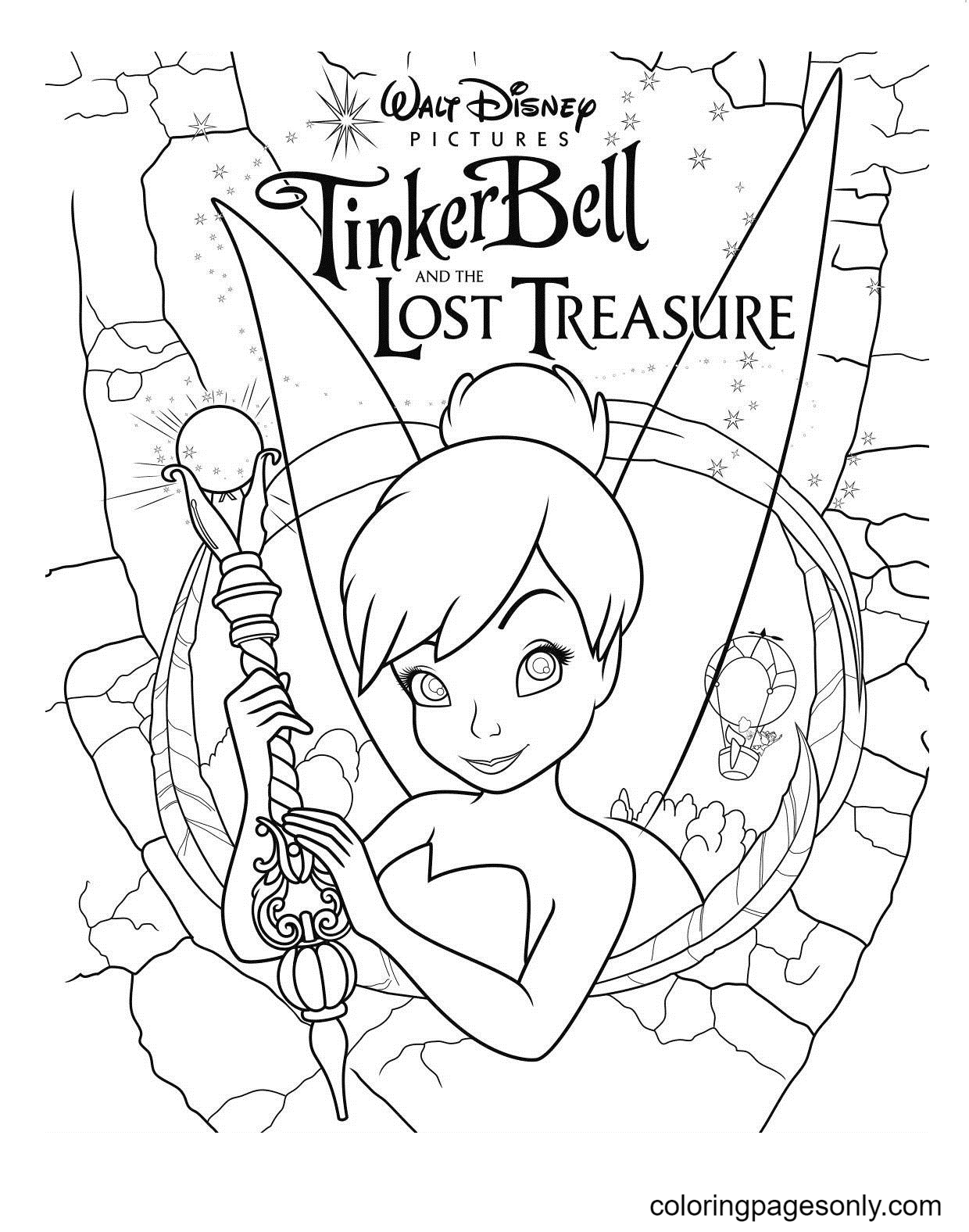
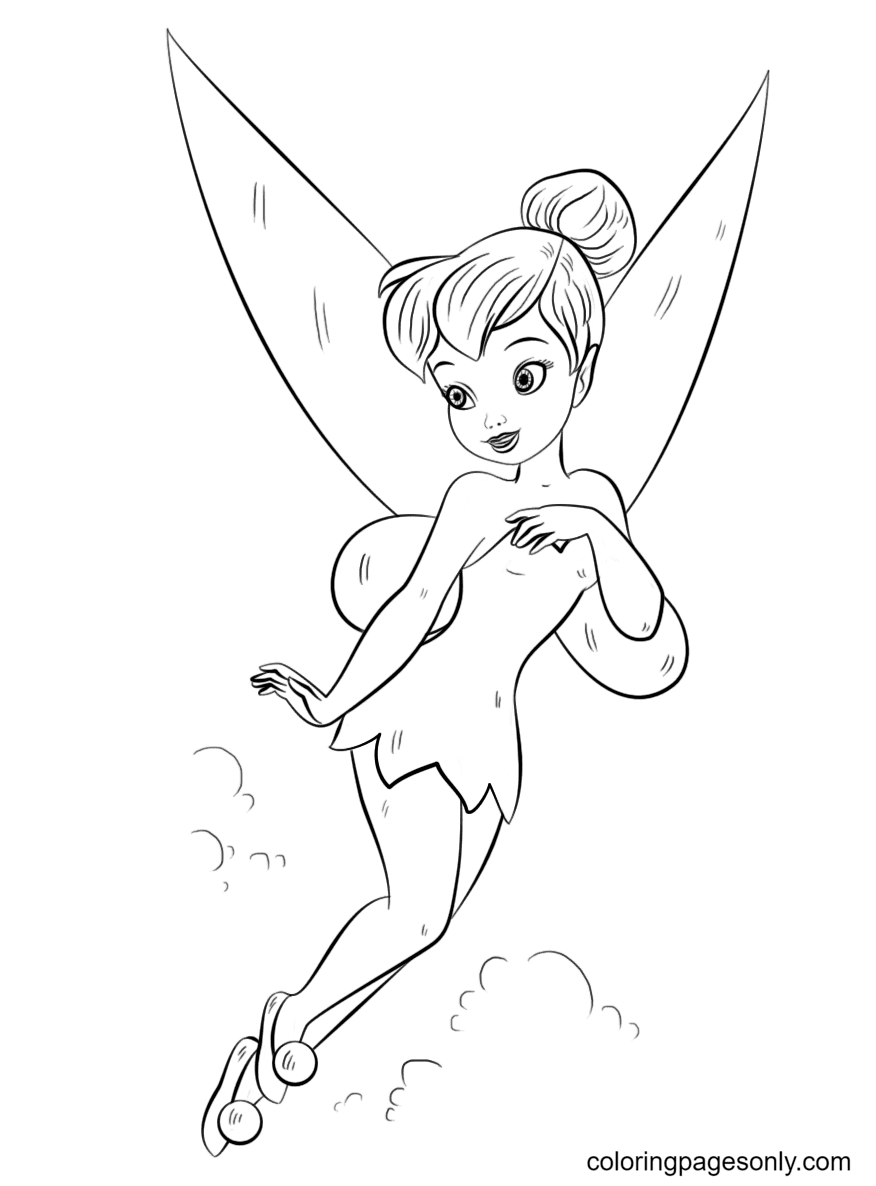
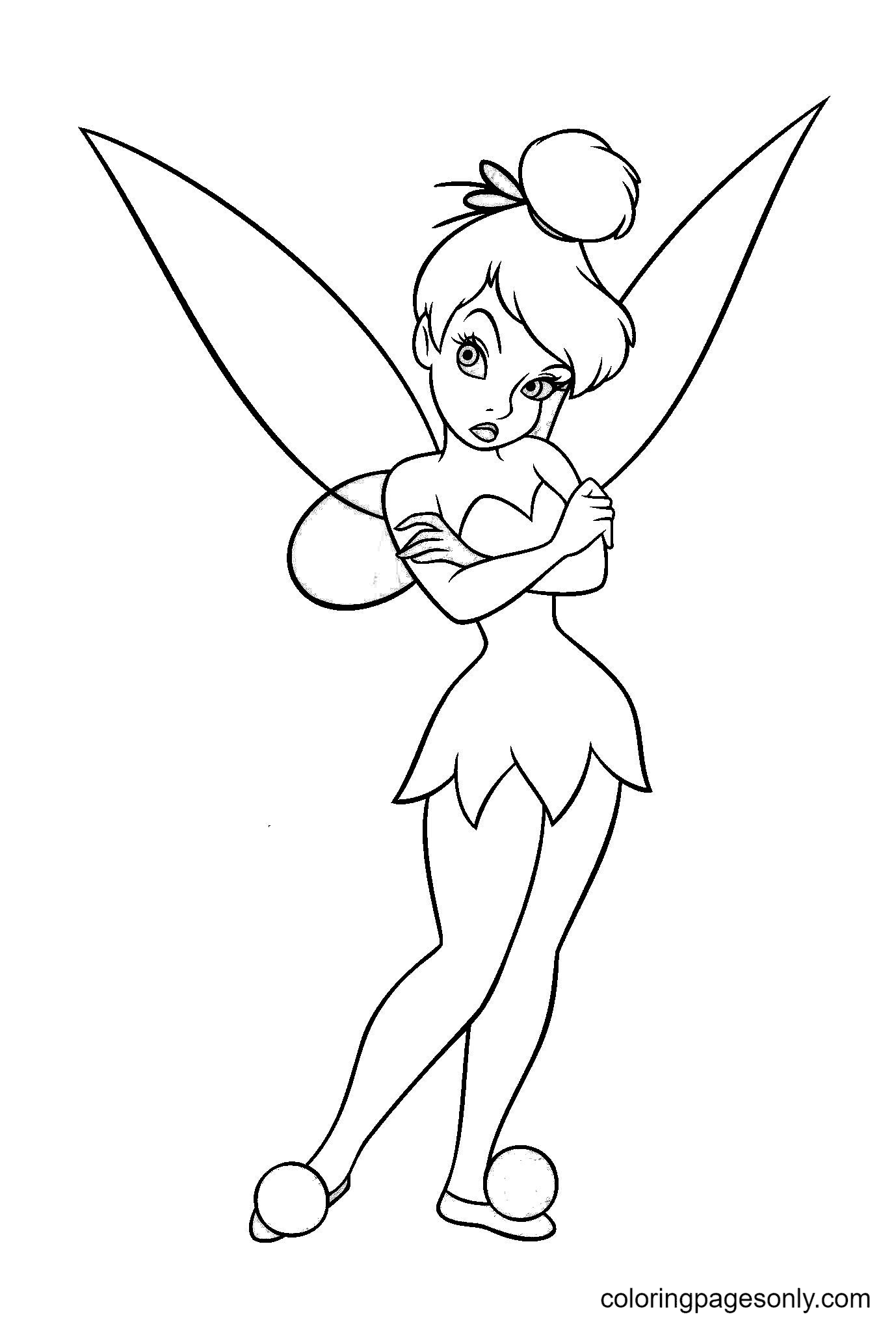
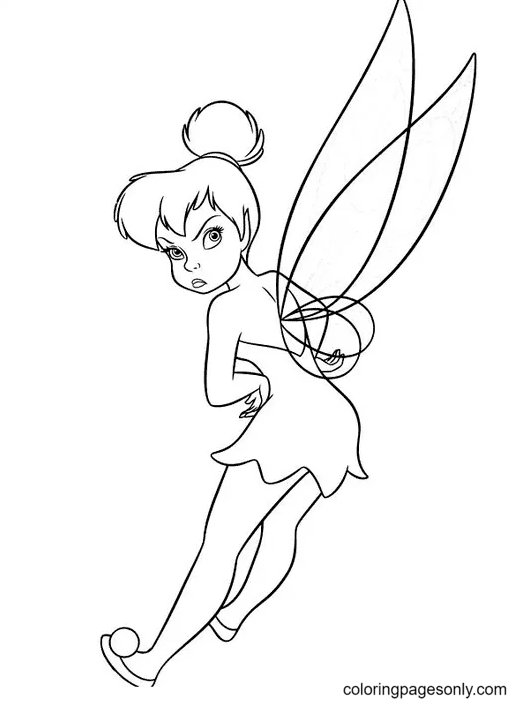
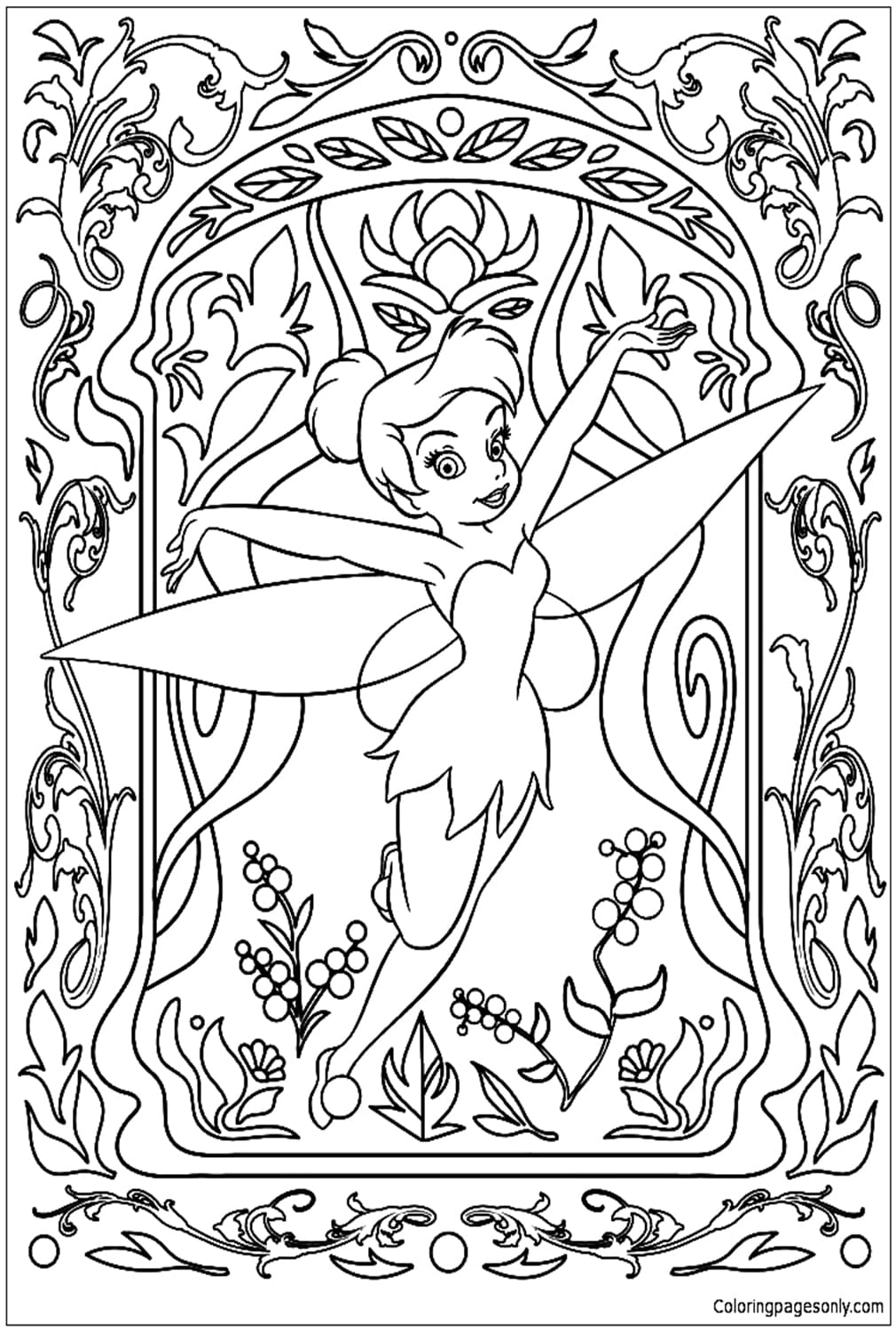
What Is Inside This Collection
The 79 pages fall into a few clear groups, based on how Tinker Bell is shown and who appears with her.
Classic Solo Portraits
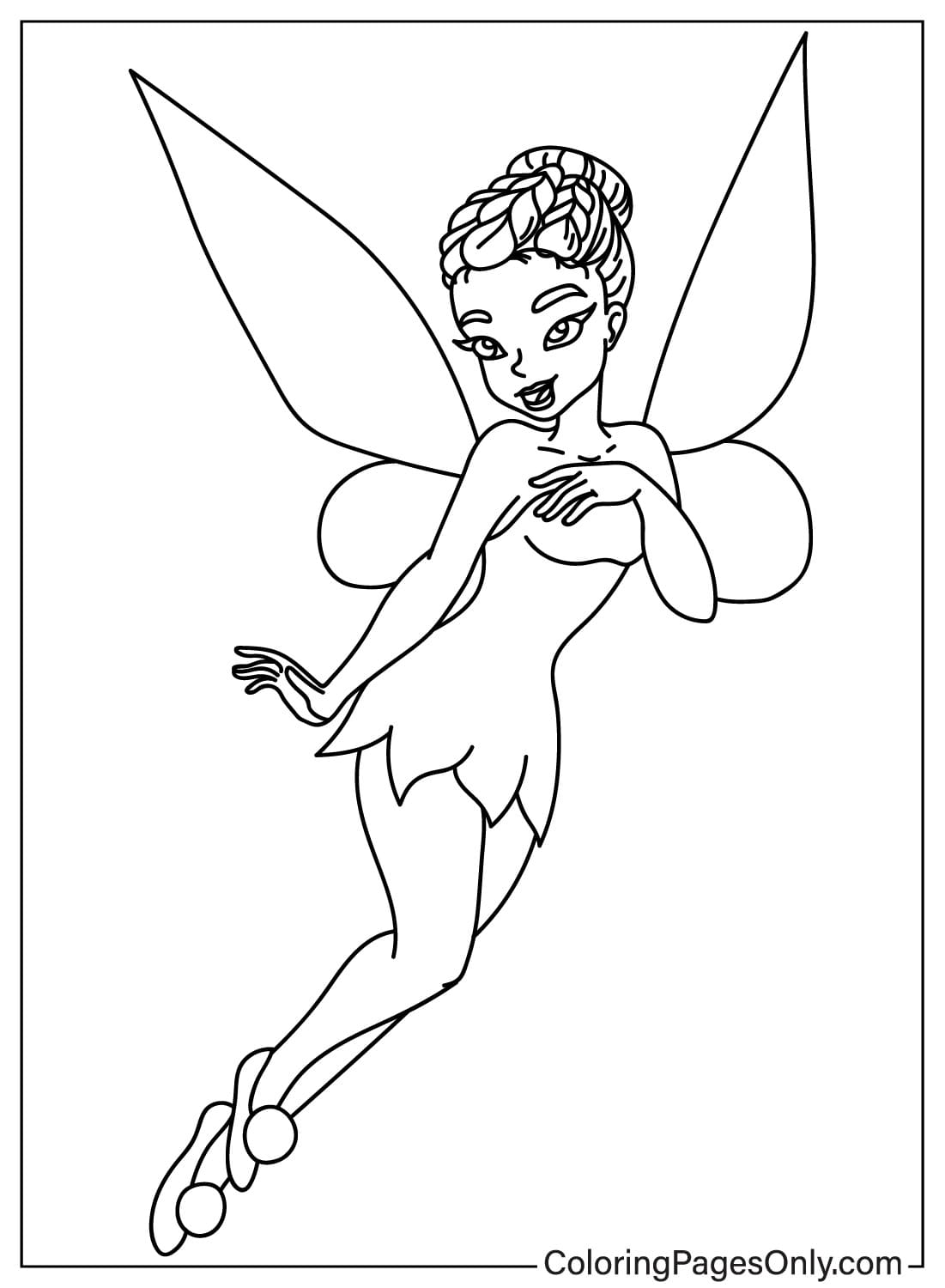
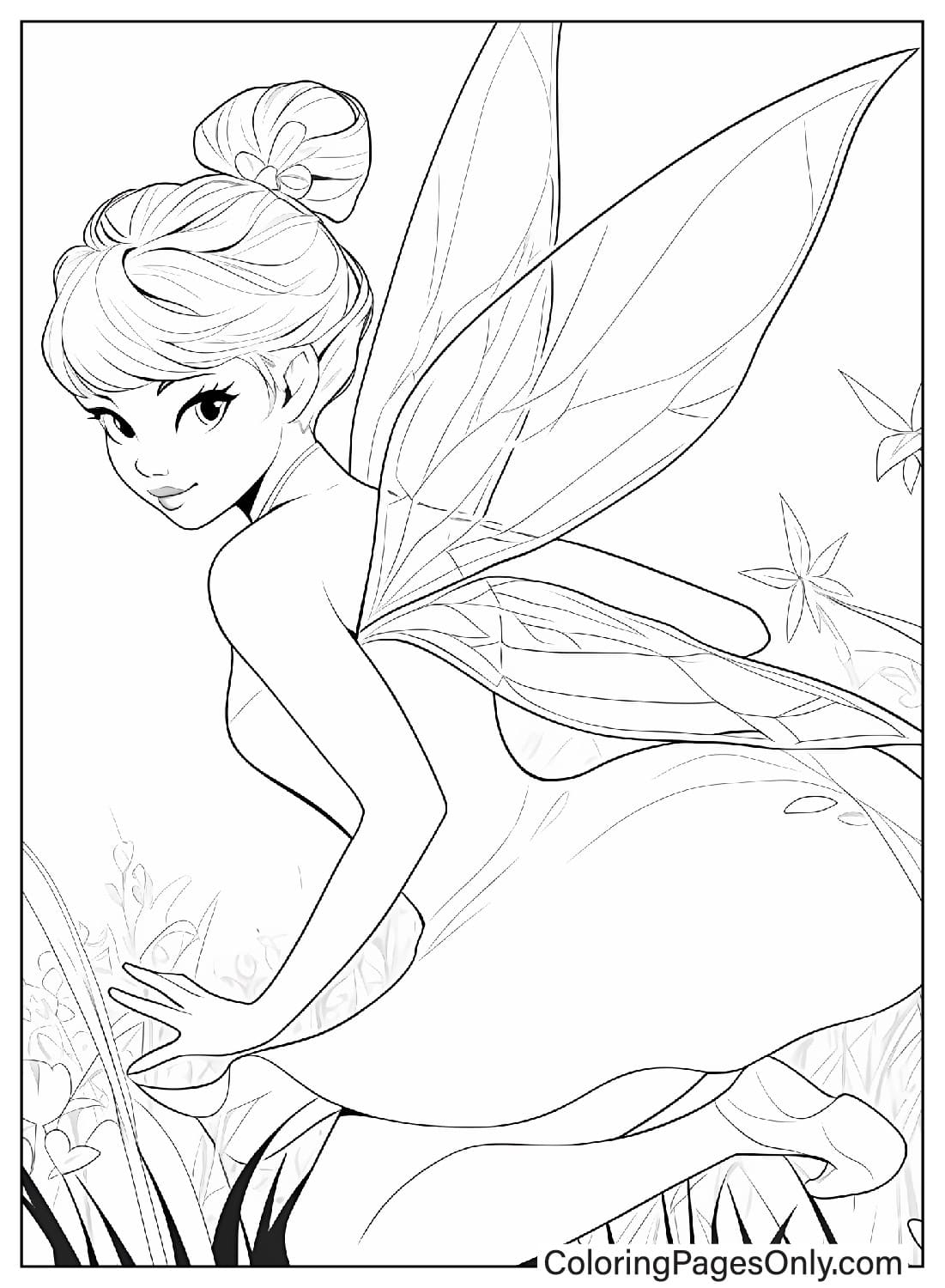
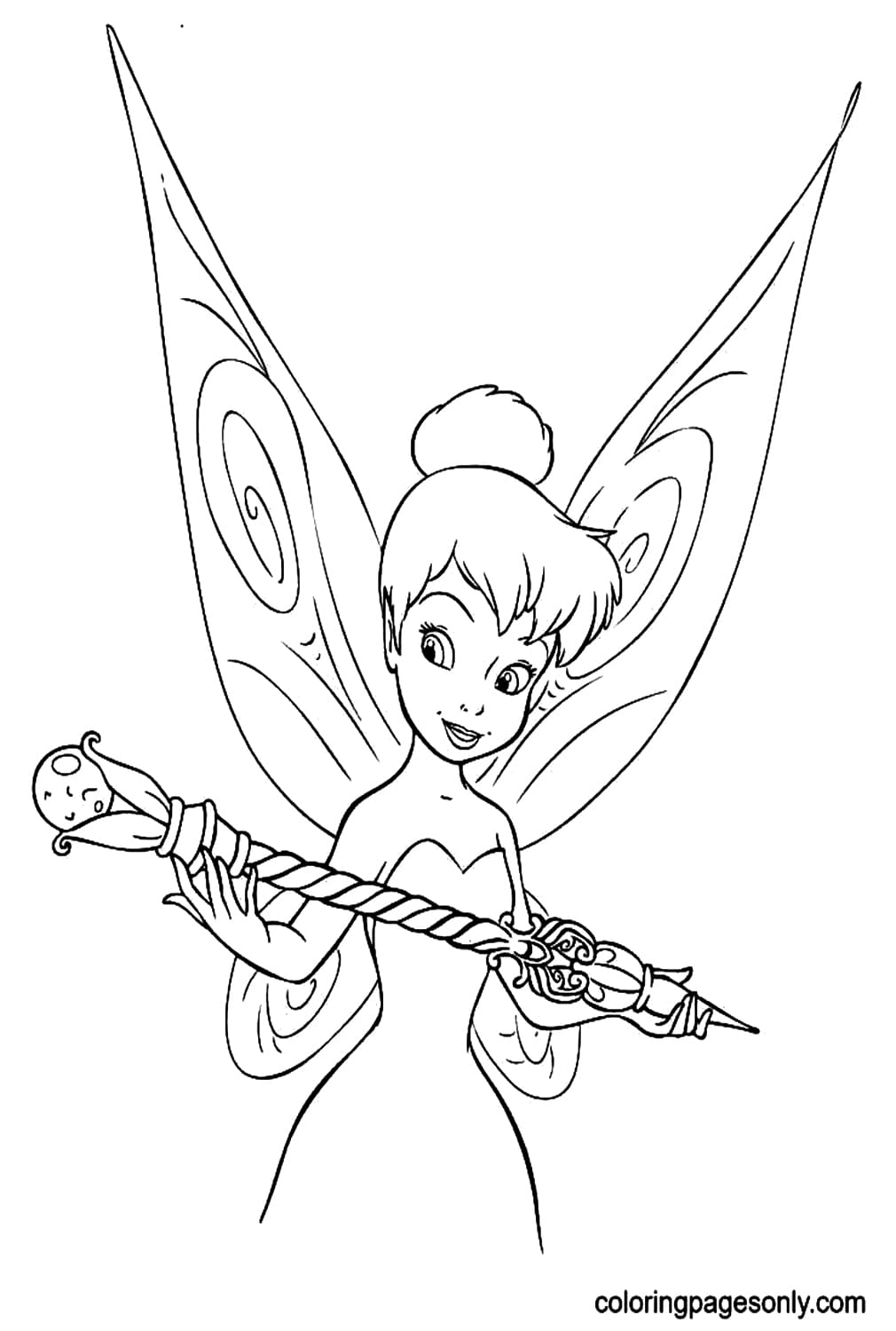
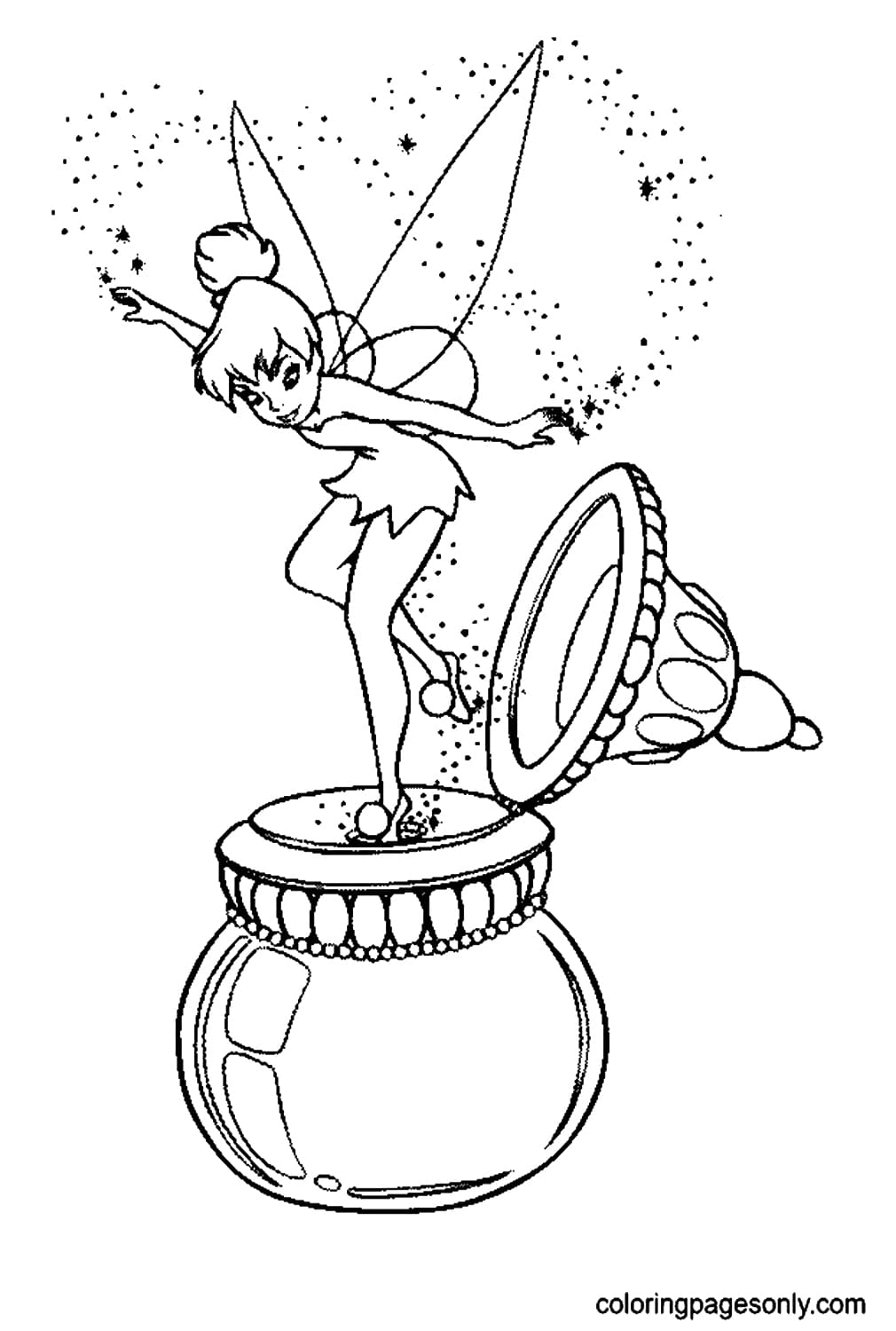
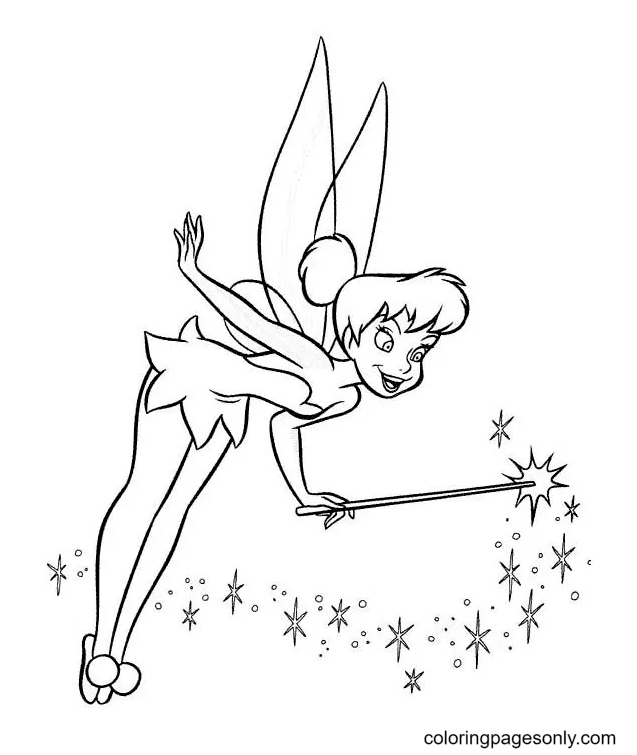
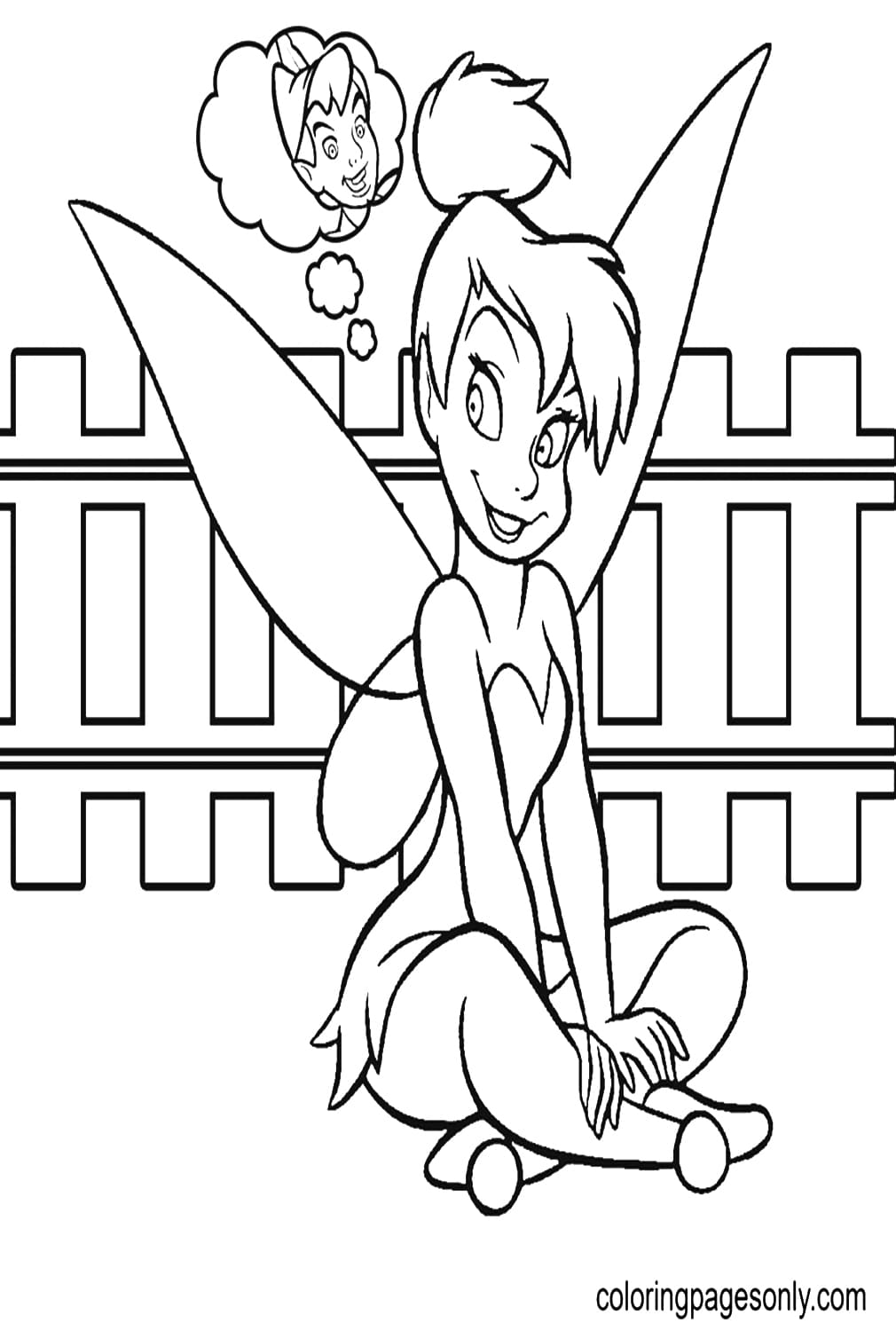
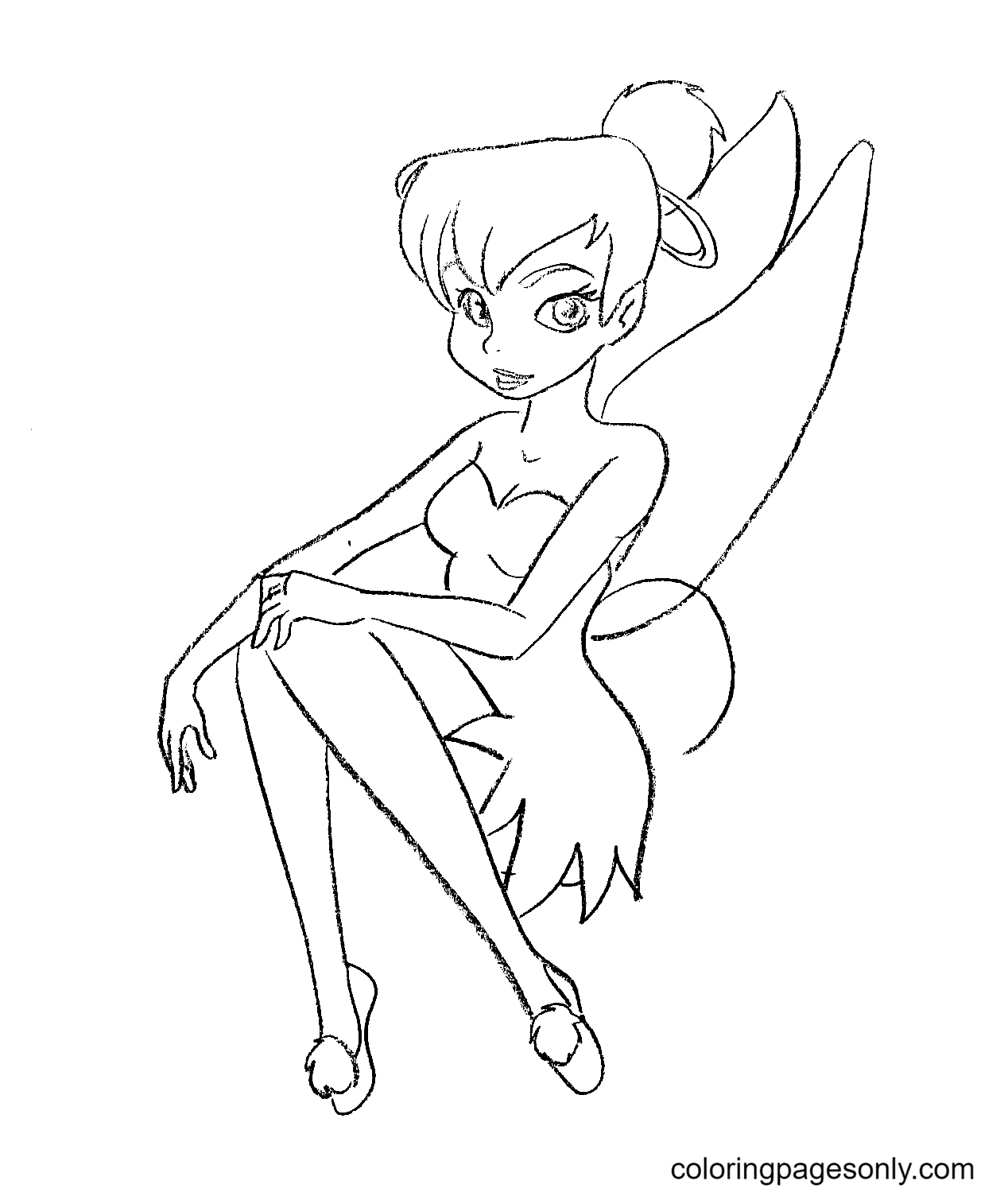
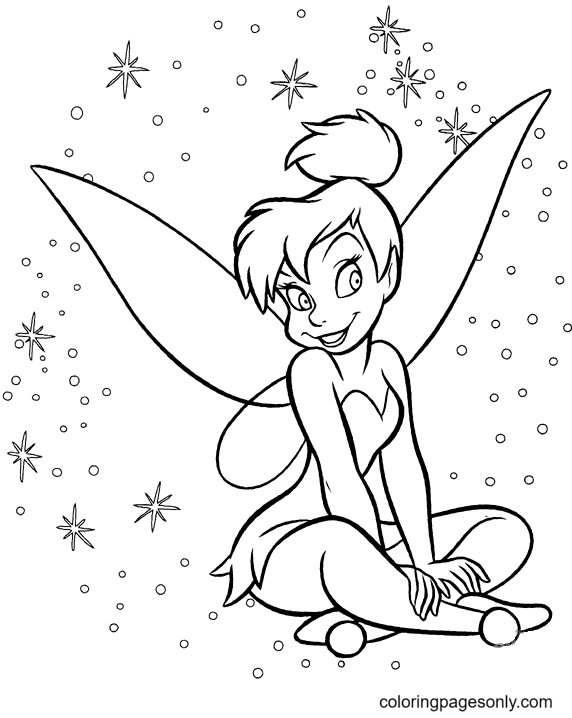
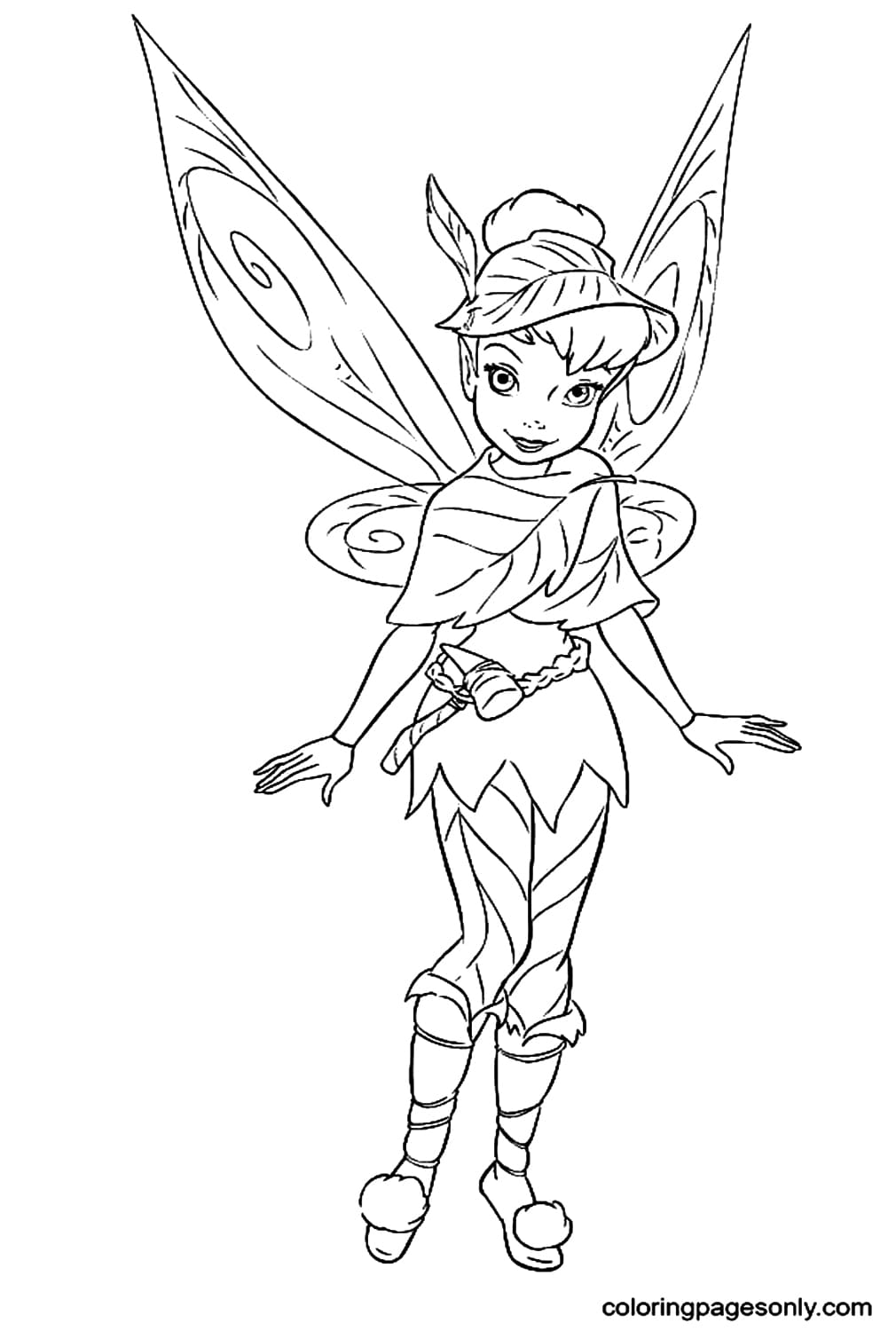
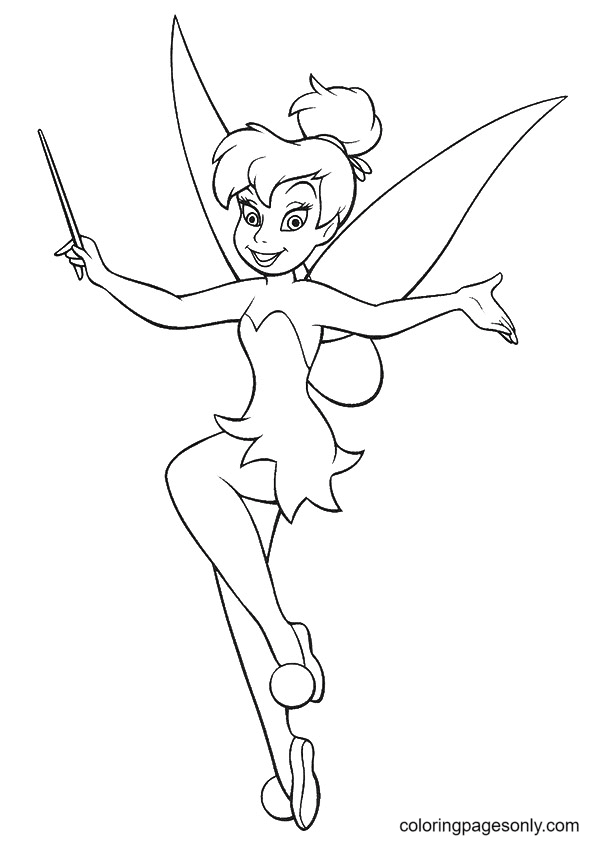
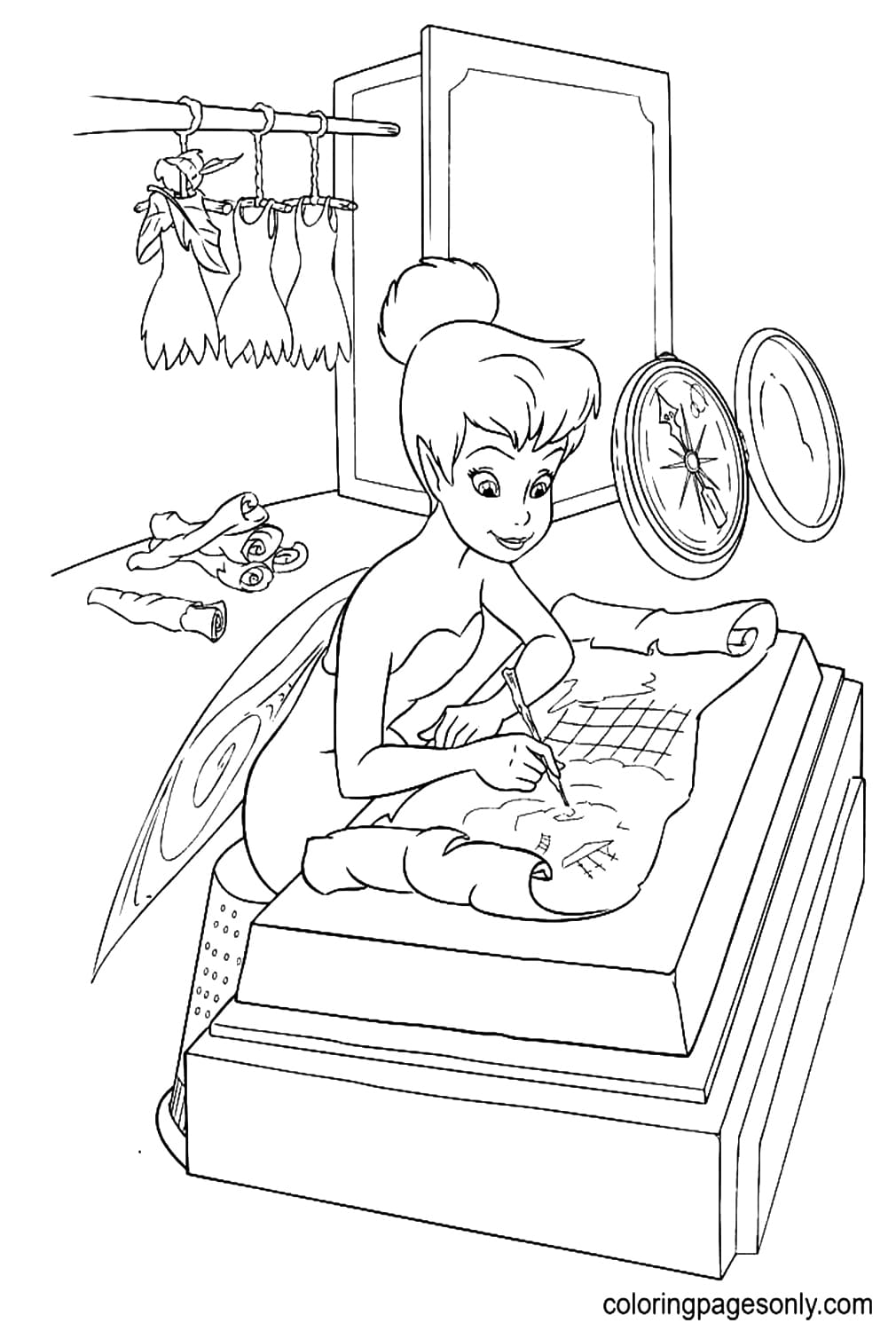
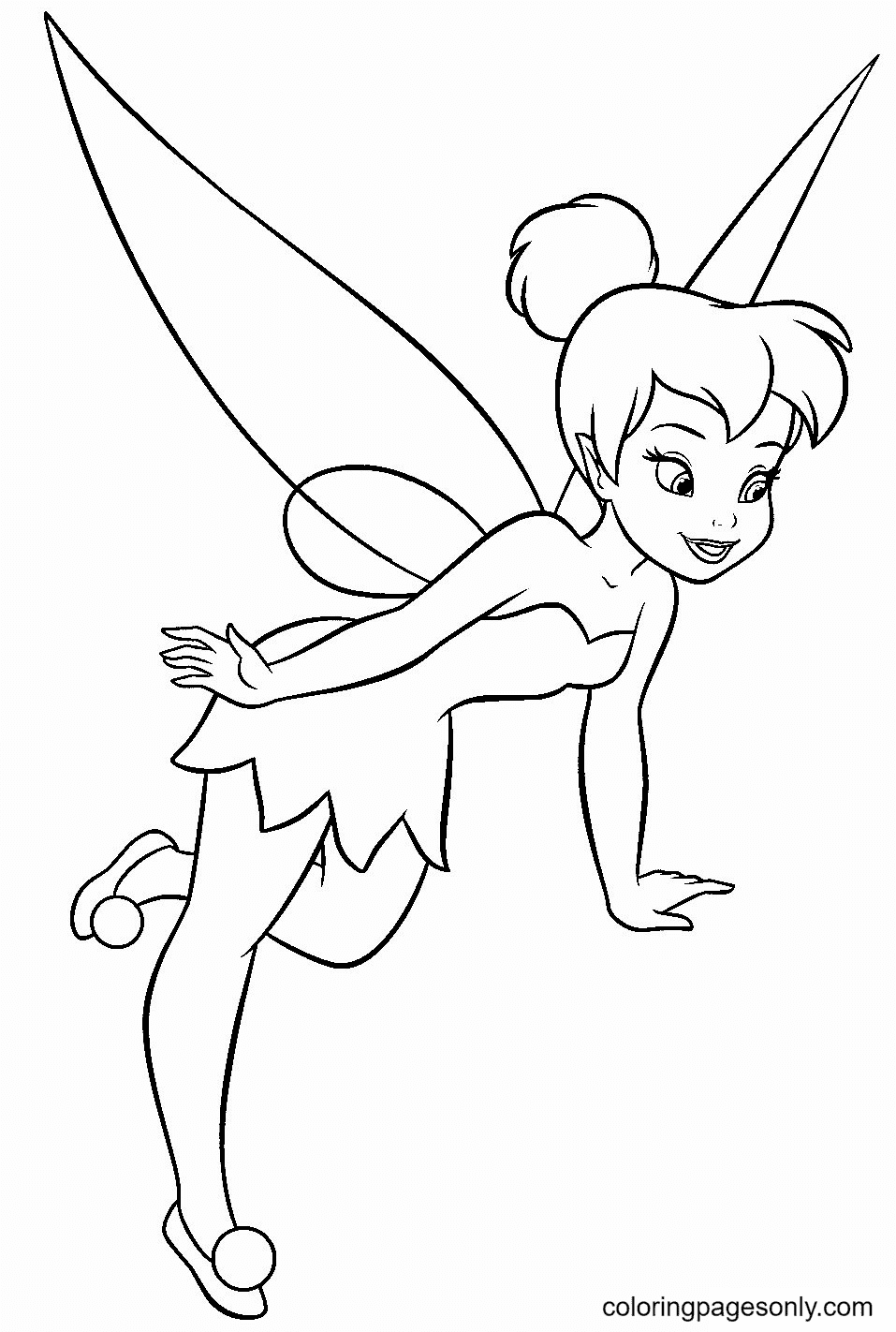
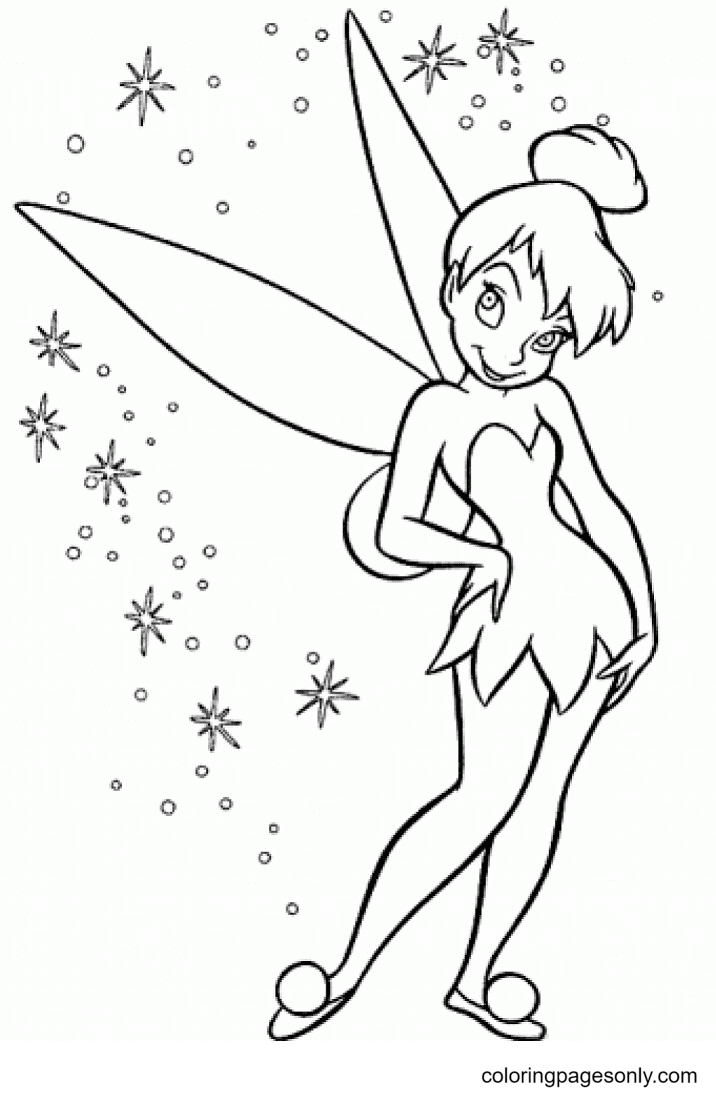
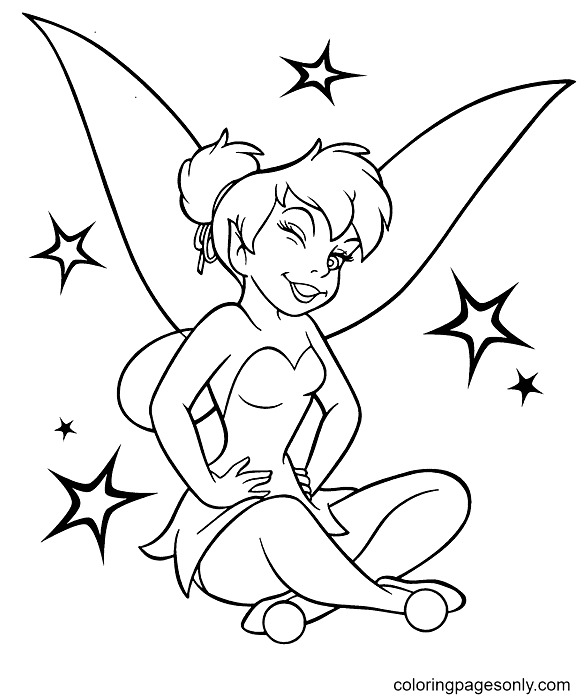
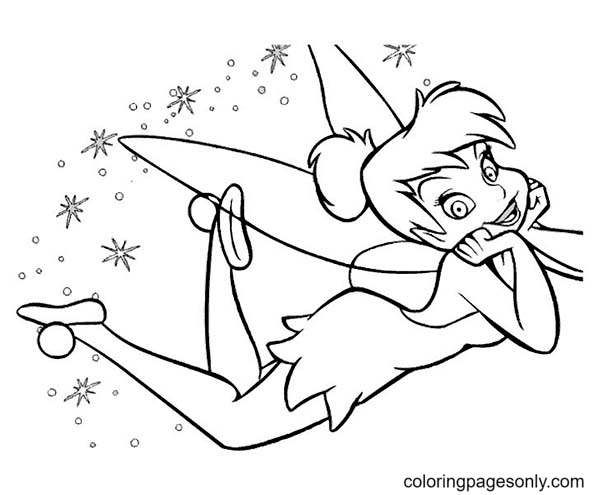
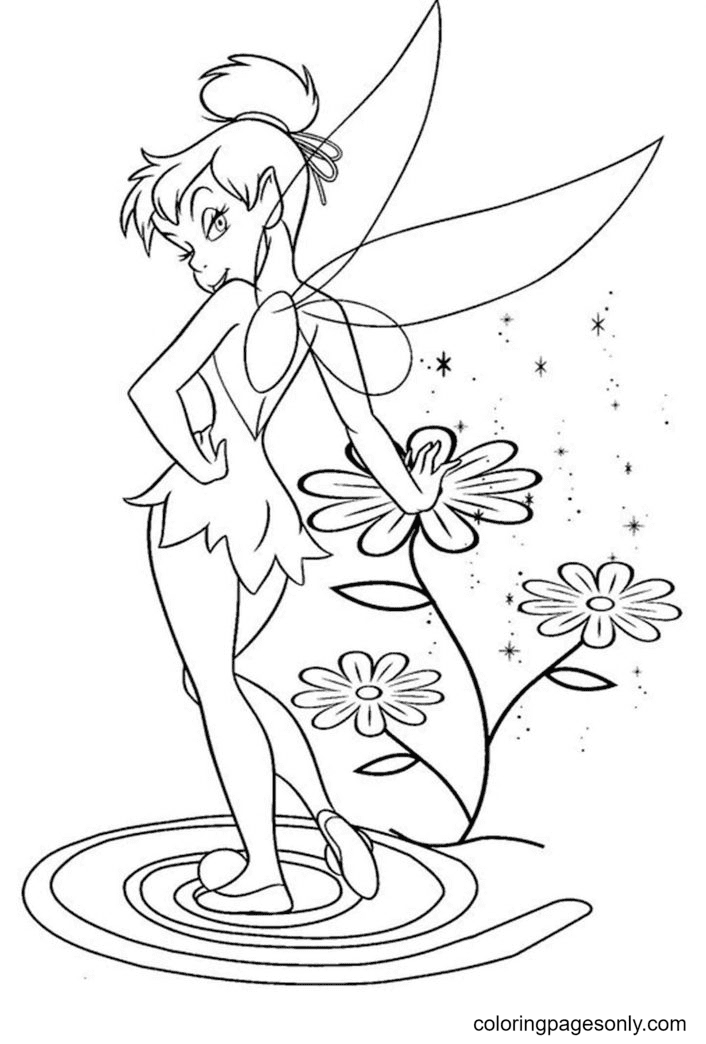
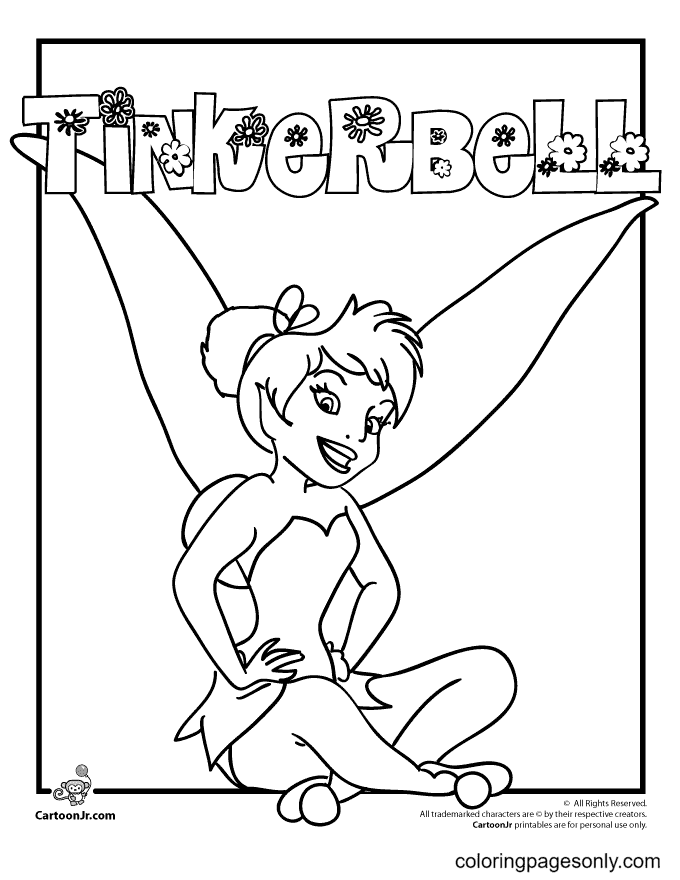
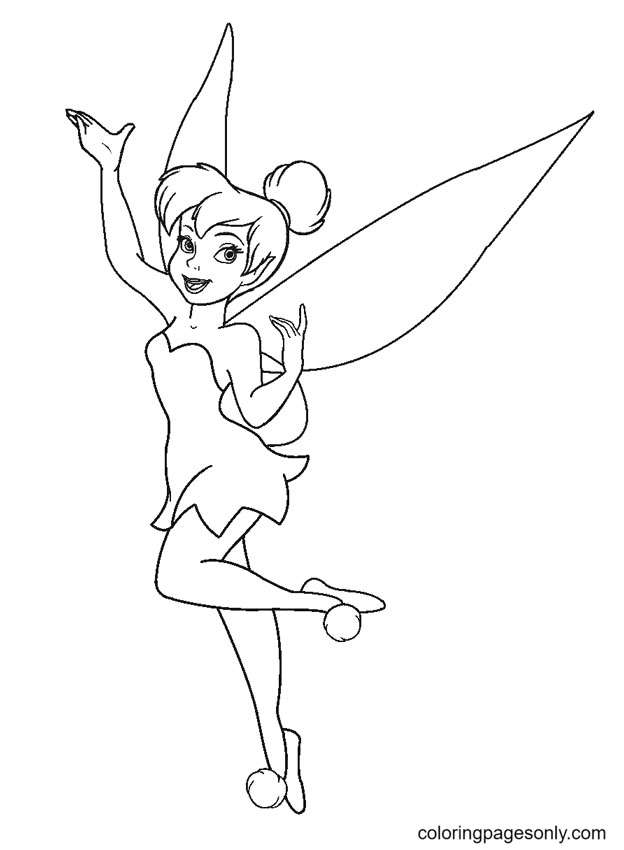
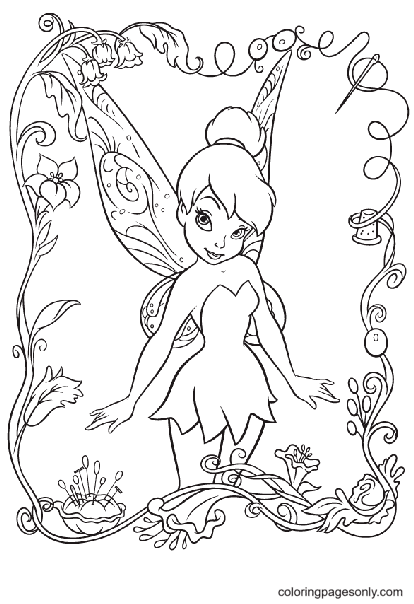
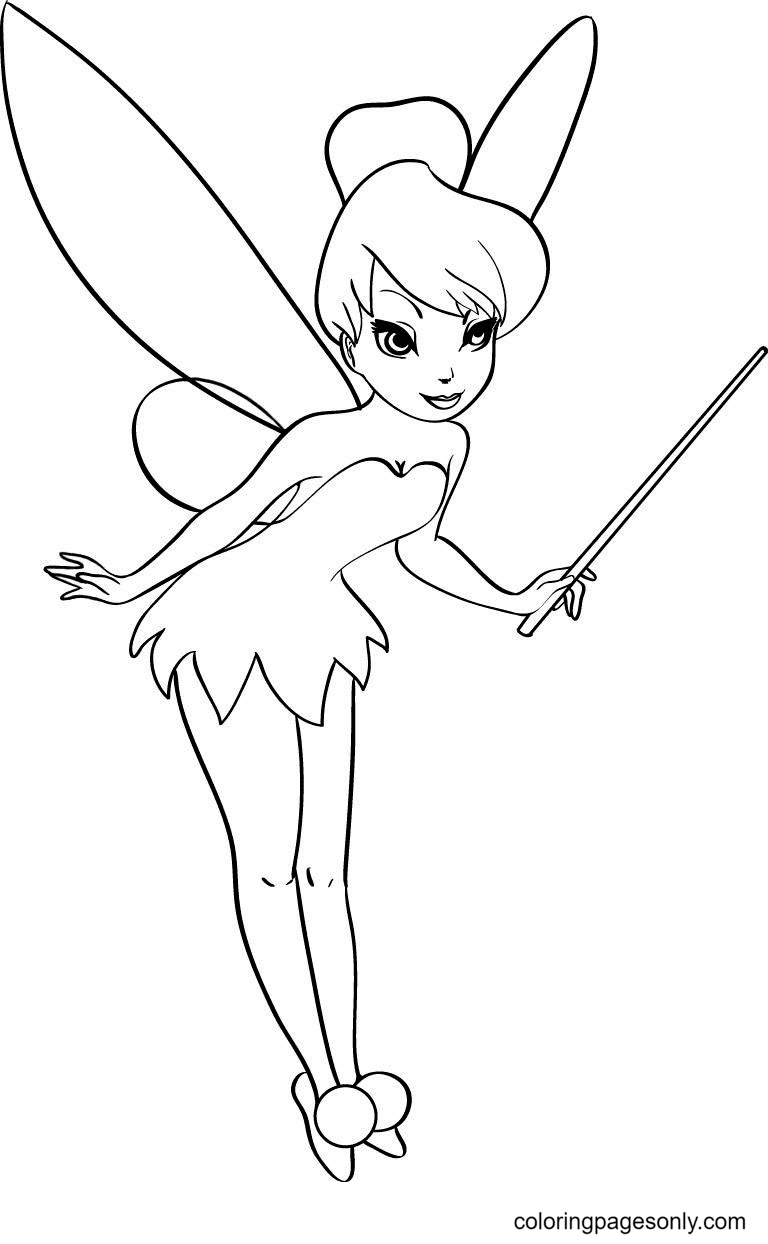
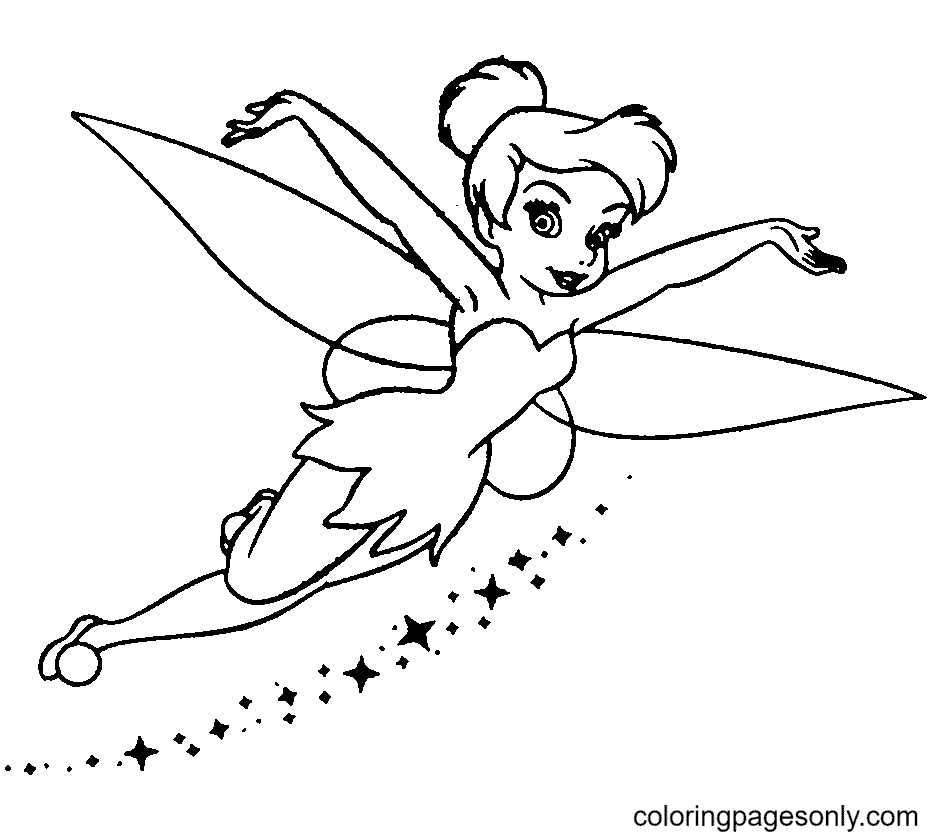
The largest share of the collection is single portraits showing Tinker Bell alone, standing, sitting, or flying. Color her hair a warm Golden Yellow pulled up in a bun, her dress a bright Green, and her wings a pale, almost transparent Blue, the same three colors that have defined her look since the 1953 Disney film.
Emotions and Expressions
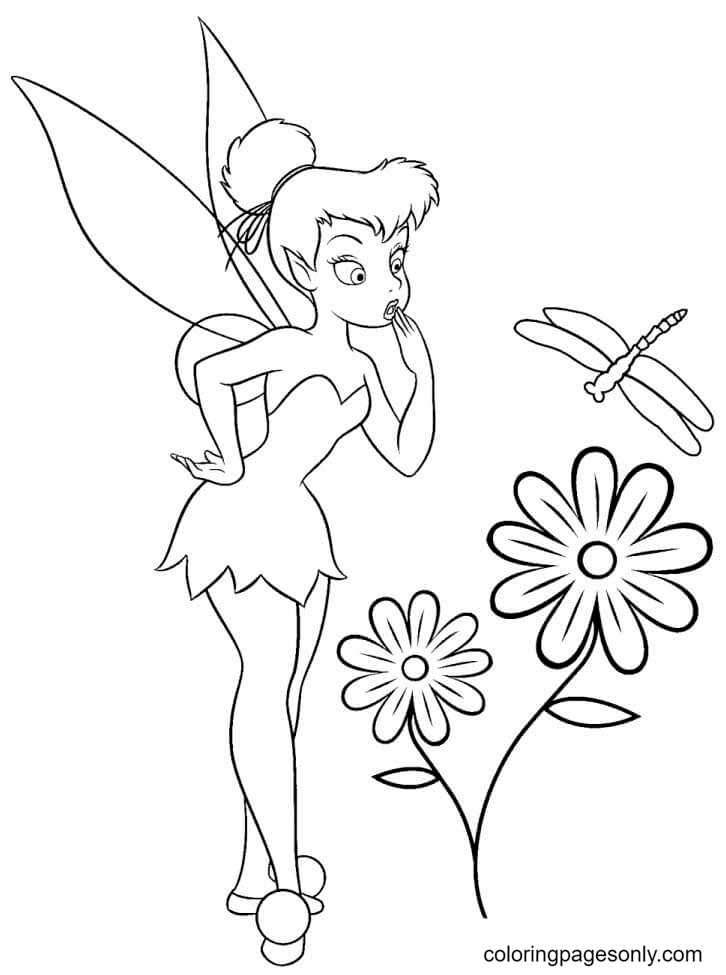
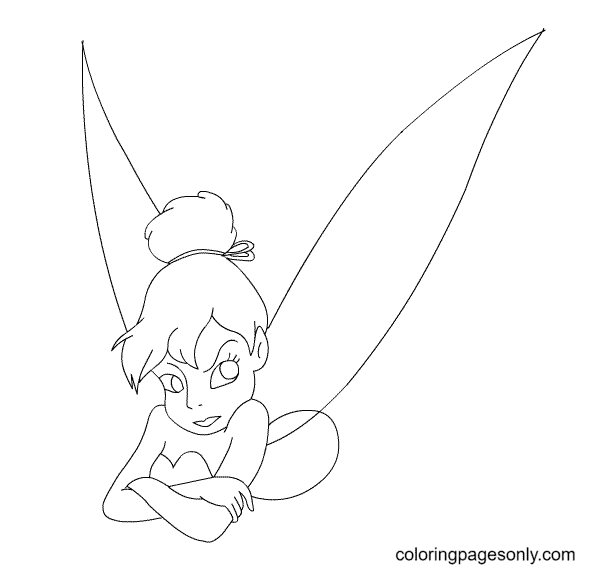
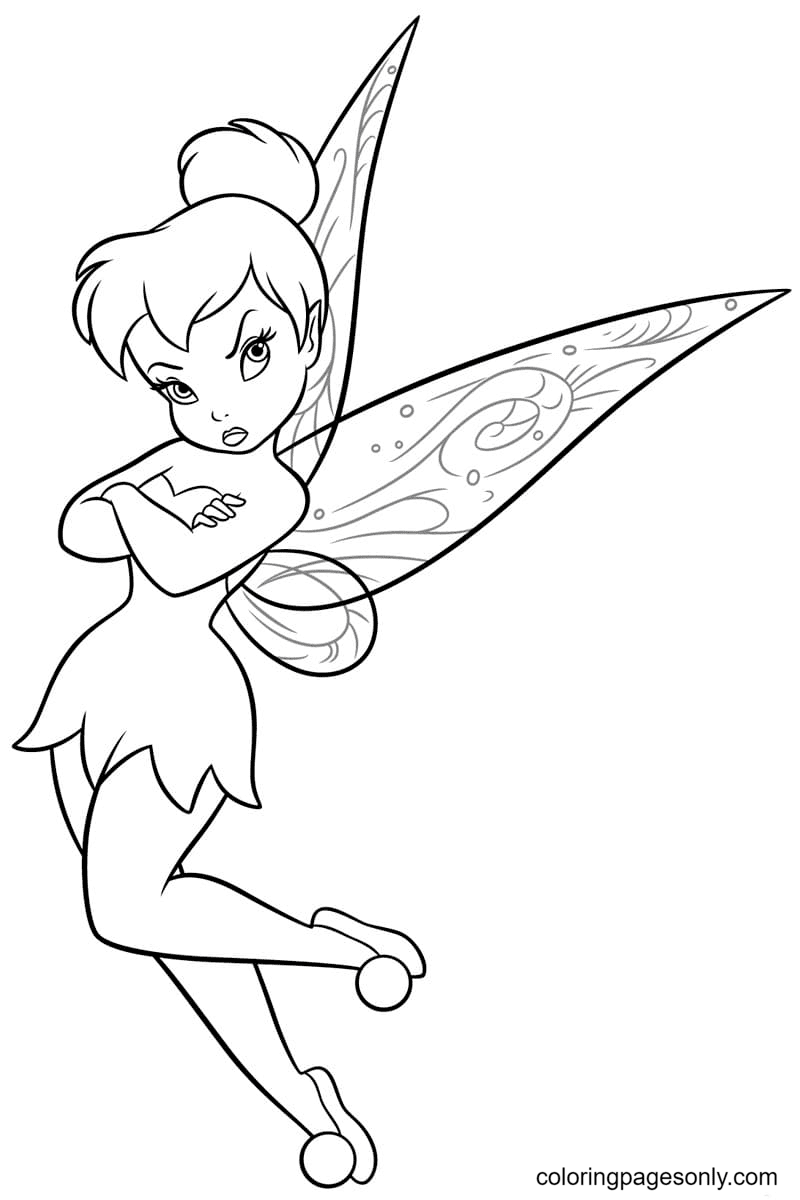
A second group focuses on her range of expressions, happy, upset, proud, or deep in thought. Keep the color palette consistent across these pages, Green dress, Blue wings, Golden hair, and let the line work of her face carry the emotion rather than changing her colors from page to page.
With Objects and Nature
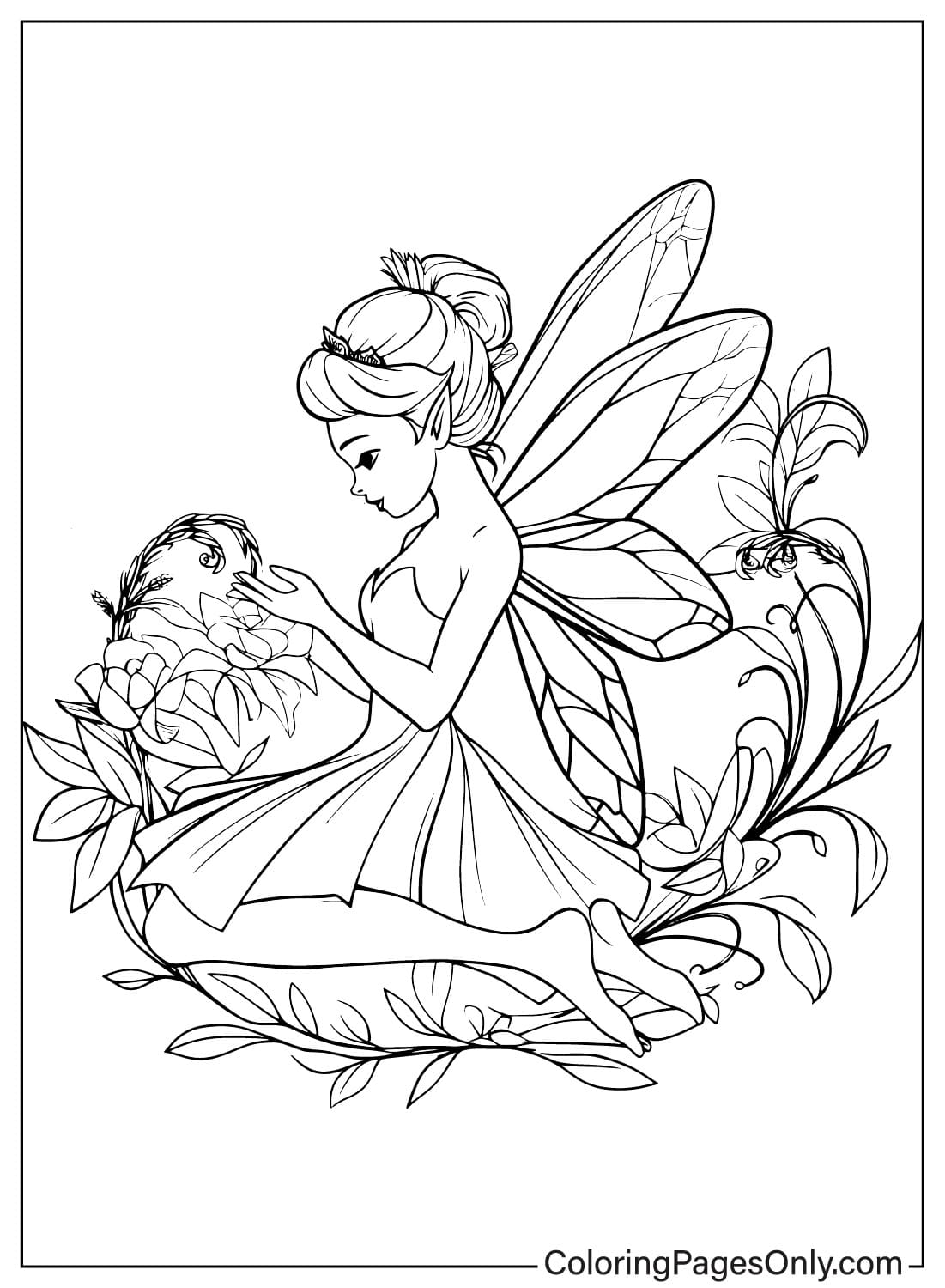
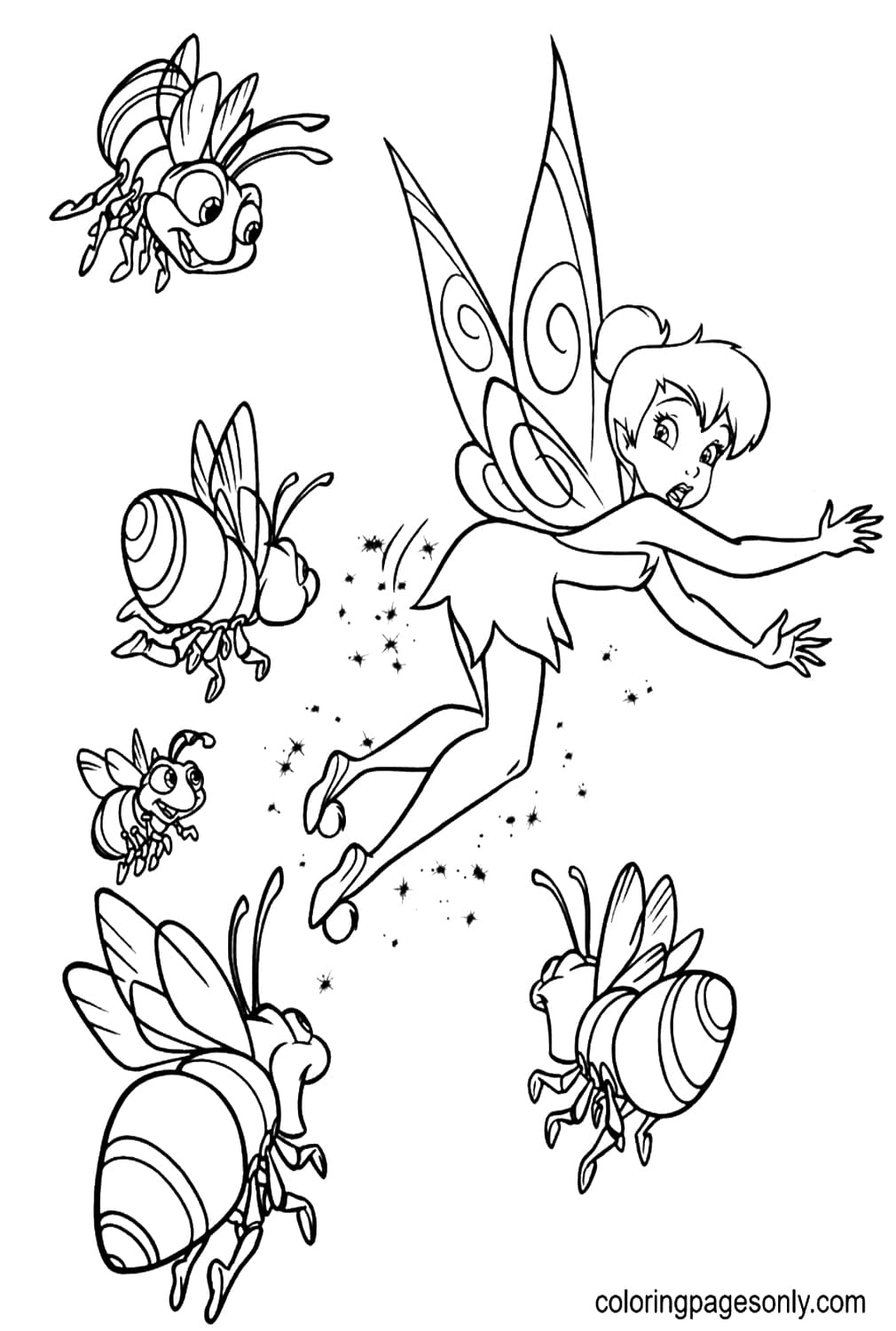
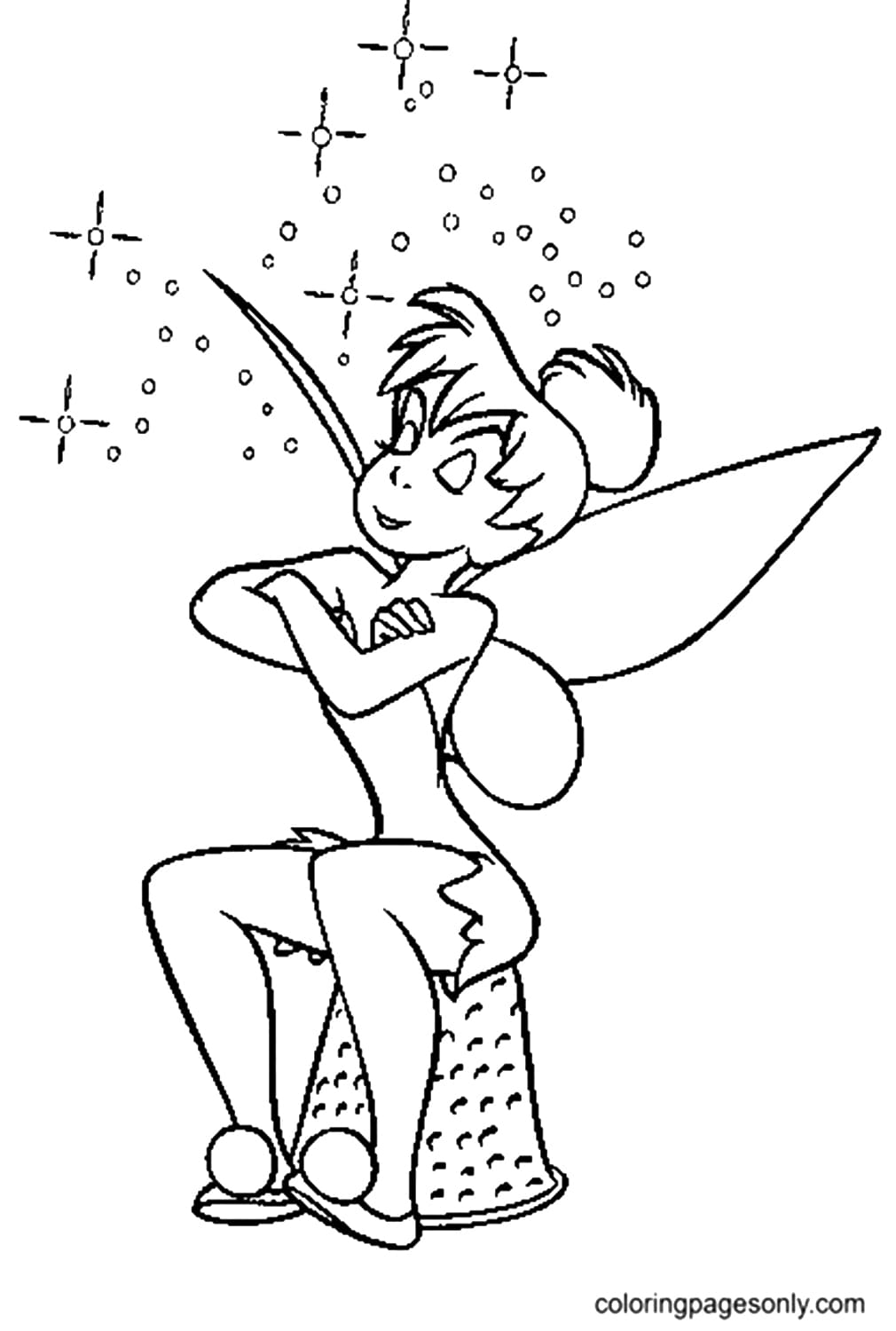
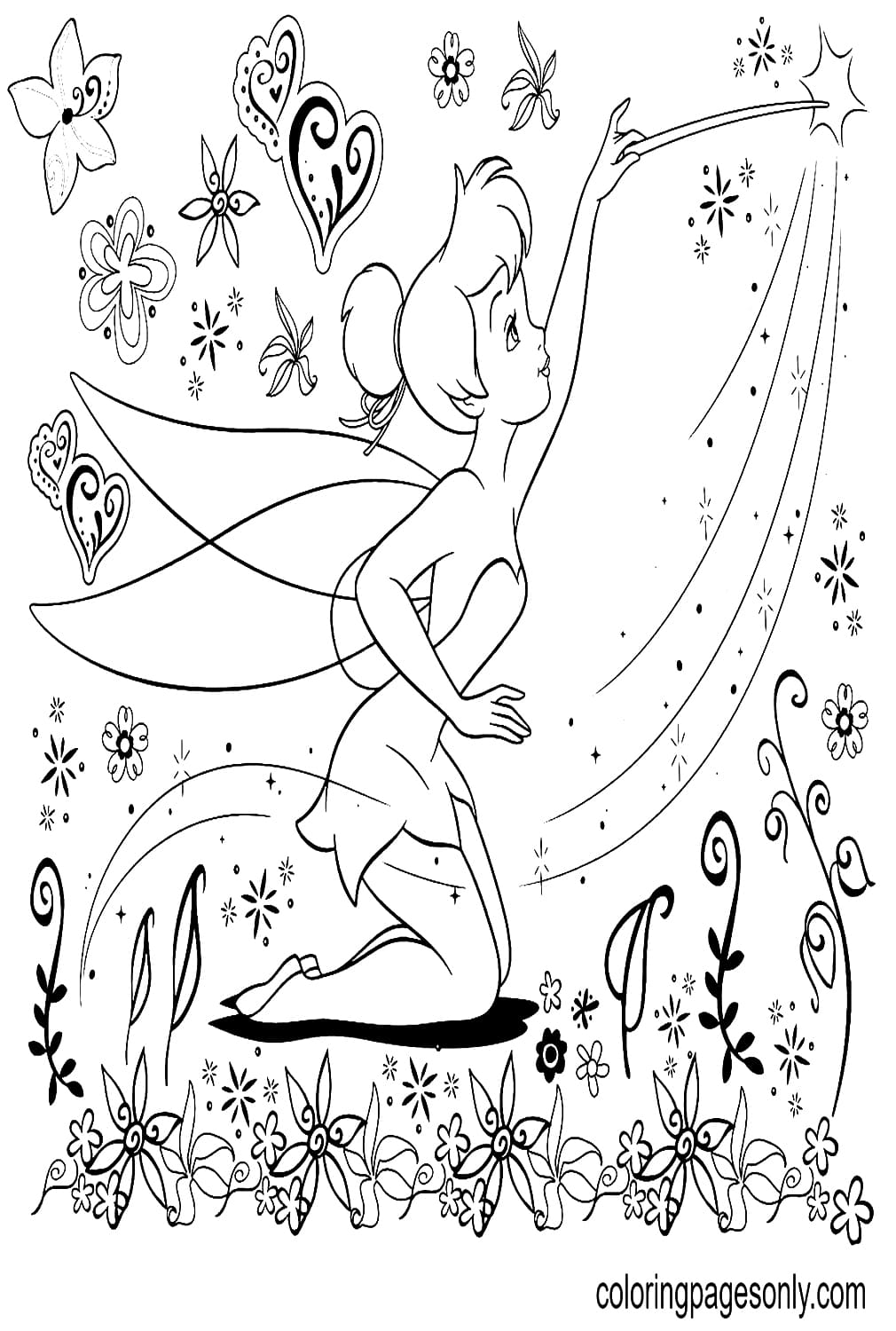
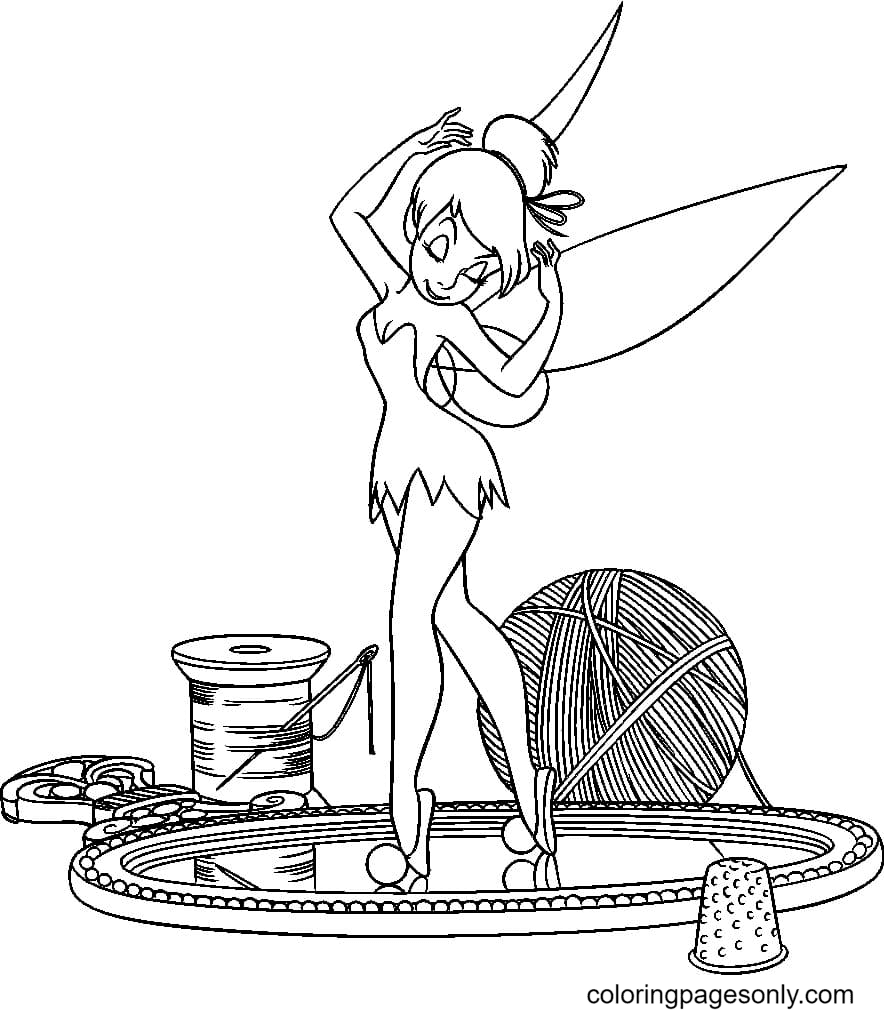
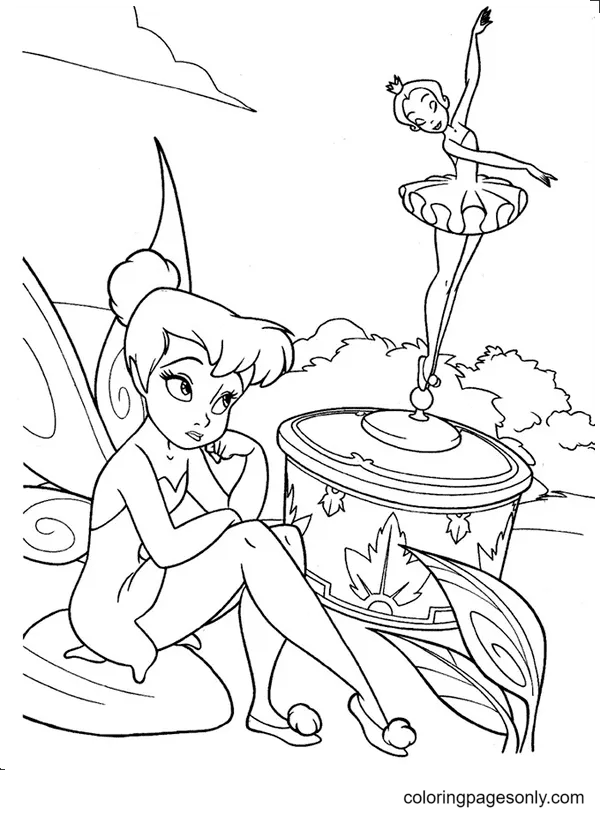
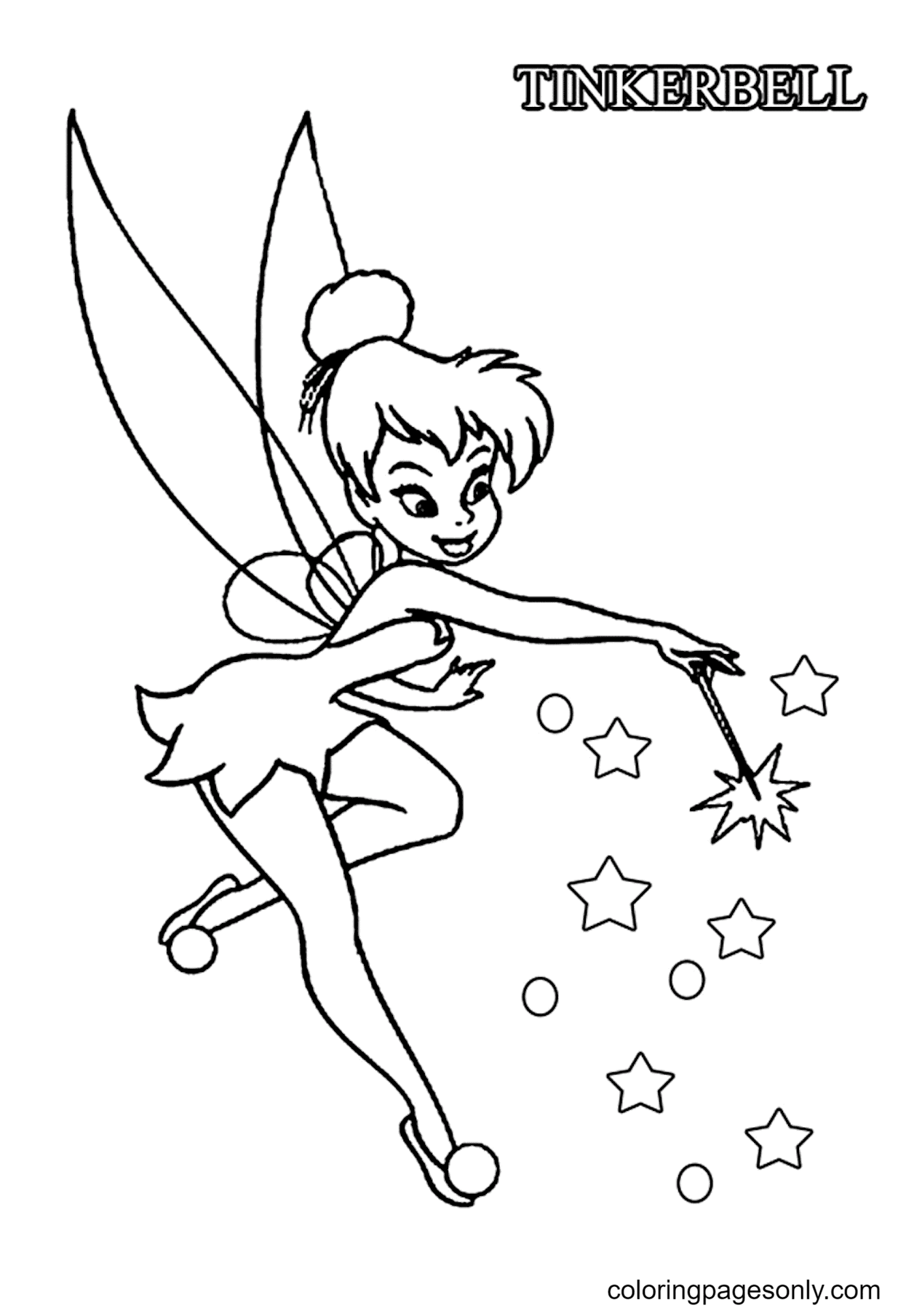
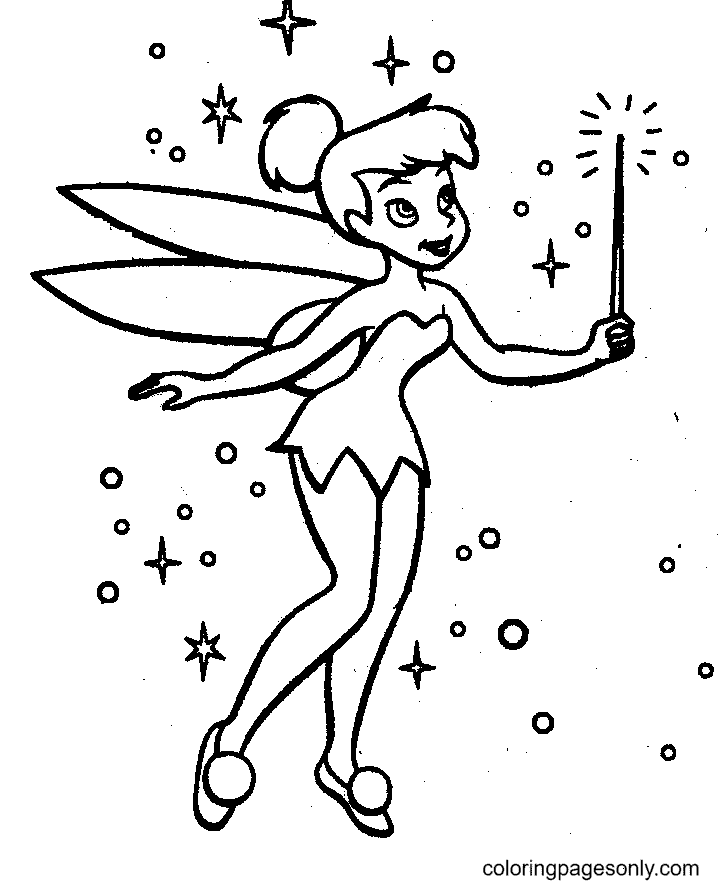
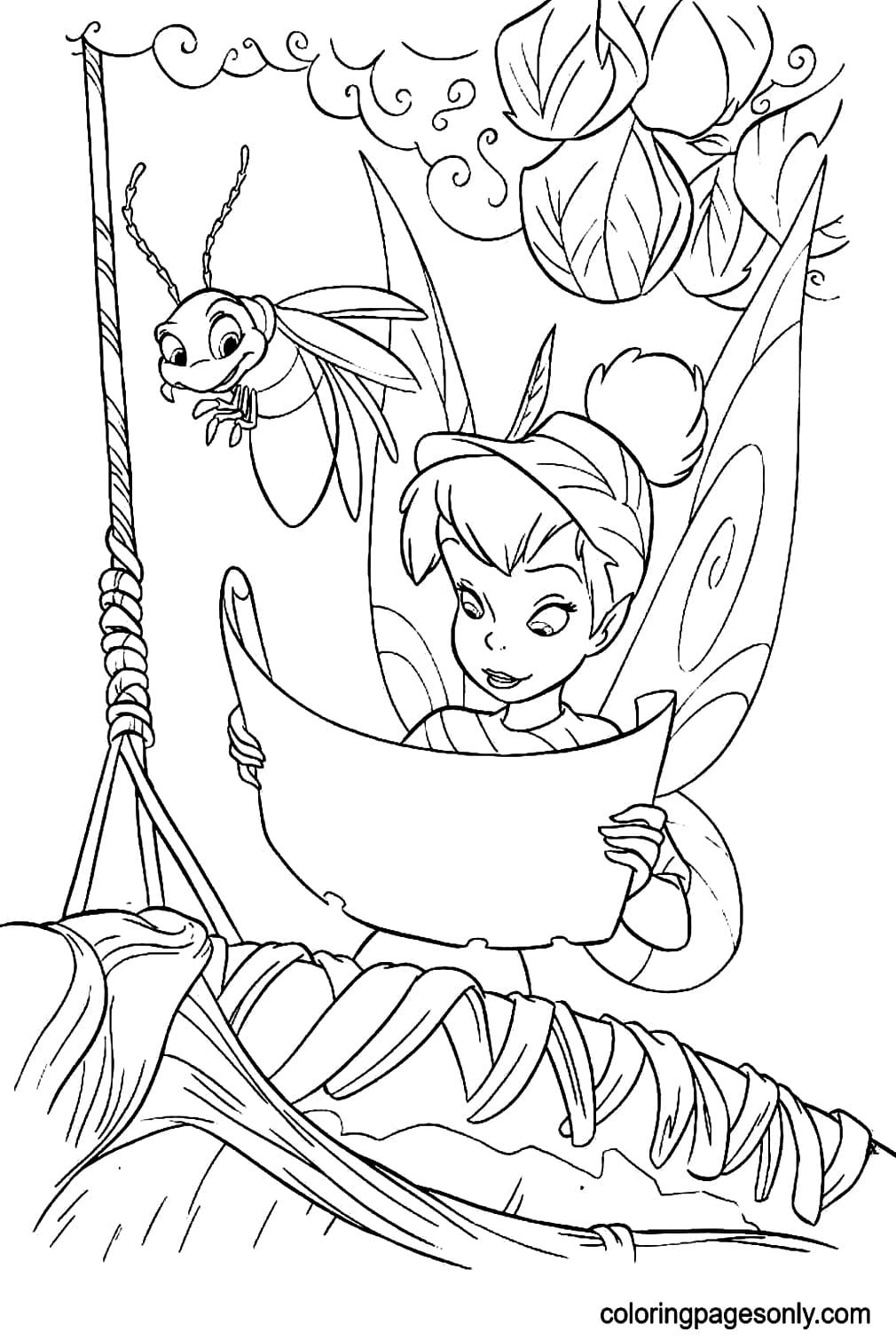
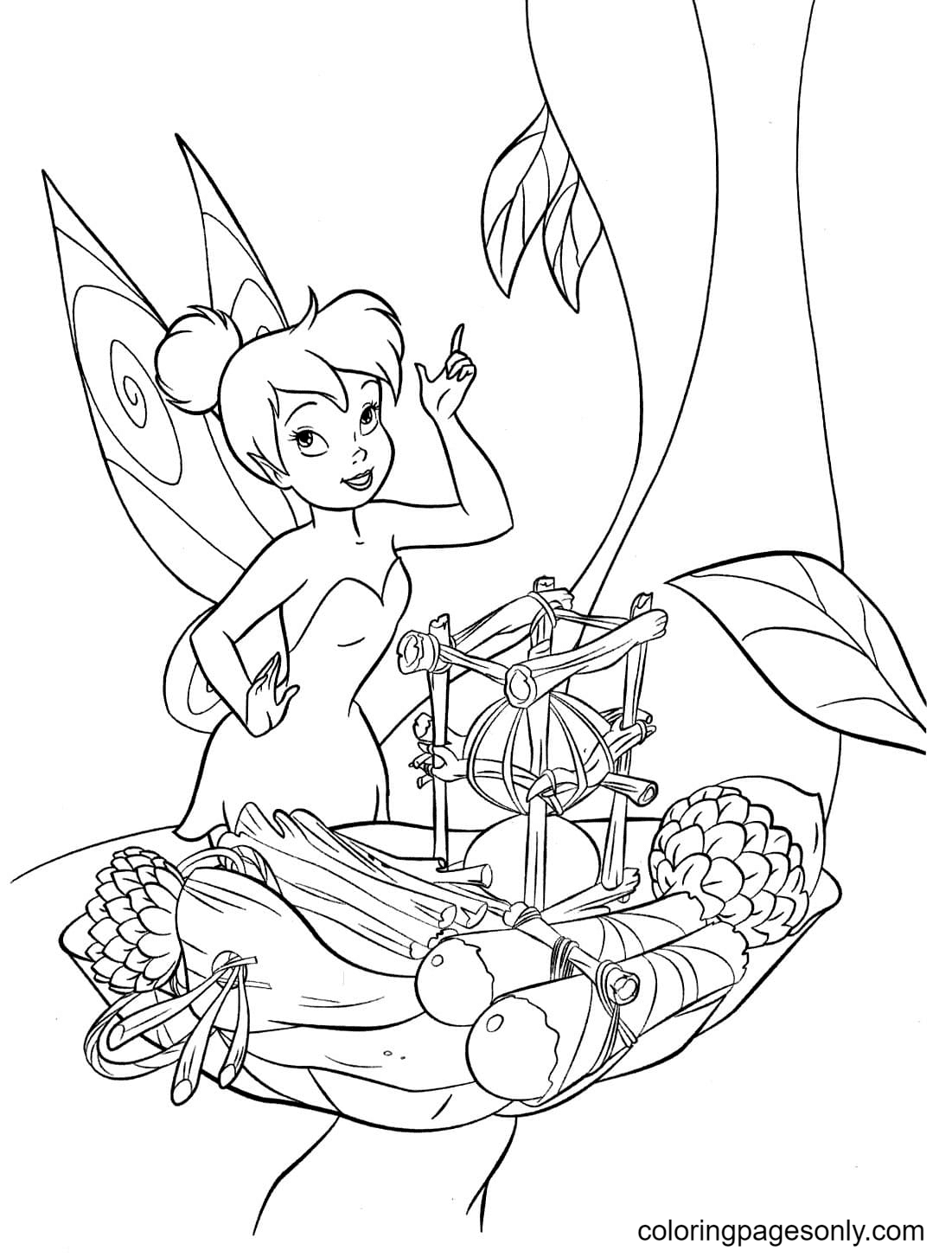
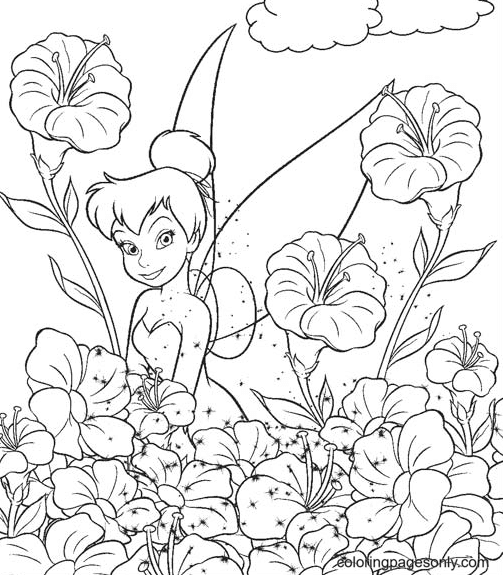
Several pages show her interacting with small objects and creatures: a magic wand, a firefly, a bird, a mushroom seat, or a hot air balloon she is building. Color these extra elements in their own natural or object-appropriate colors, Brown for wood, Yellow for firefly light, so they read as separate from Tinker Bell herself.
With Fairy Friends
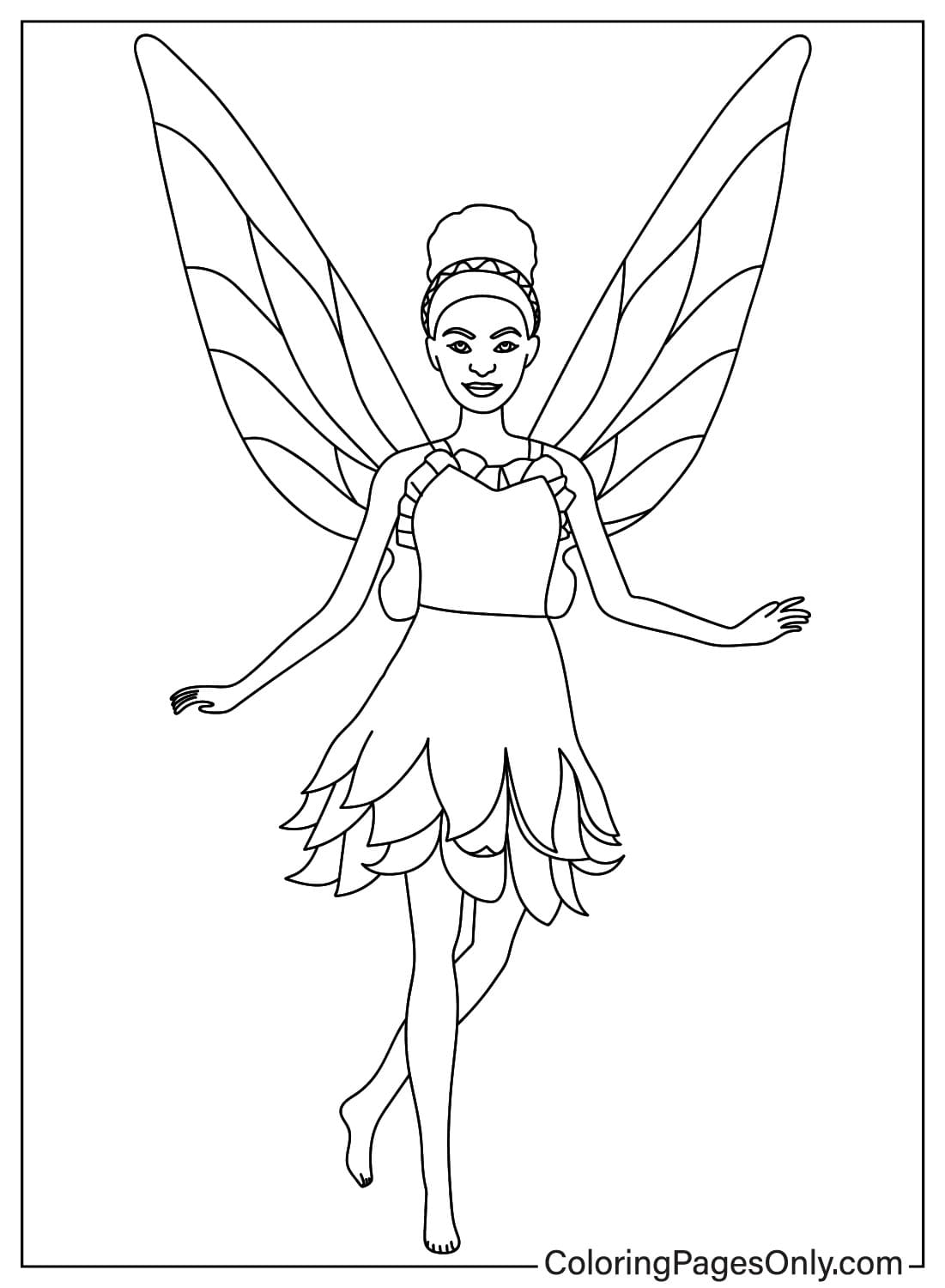
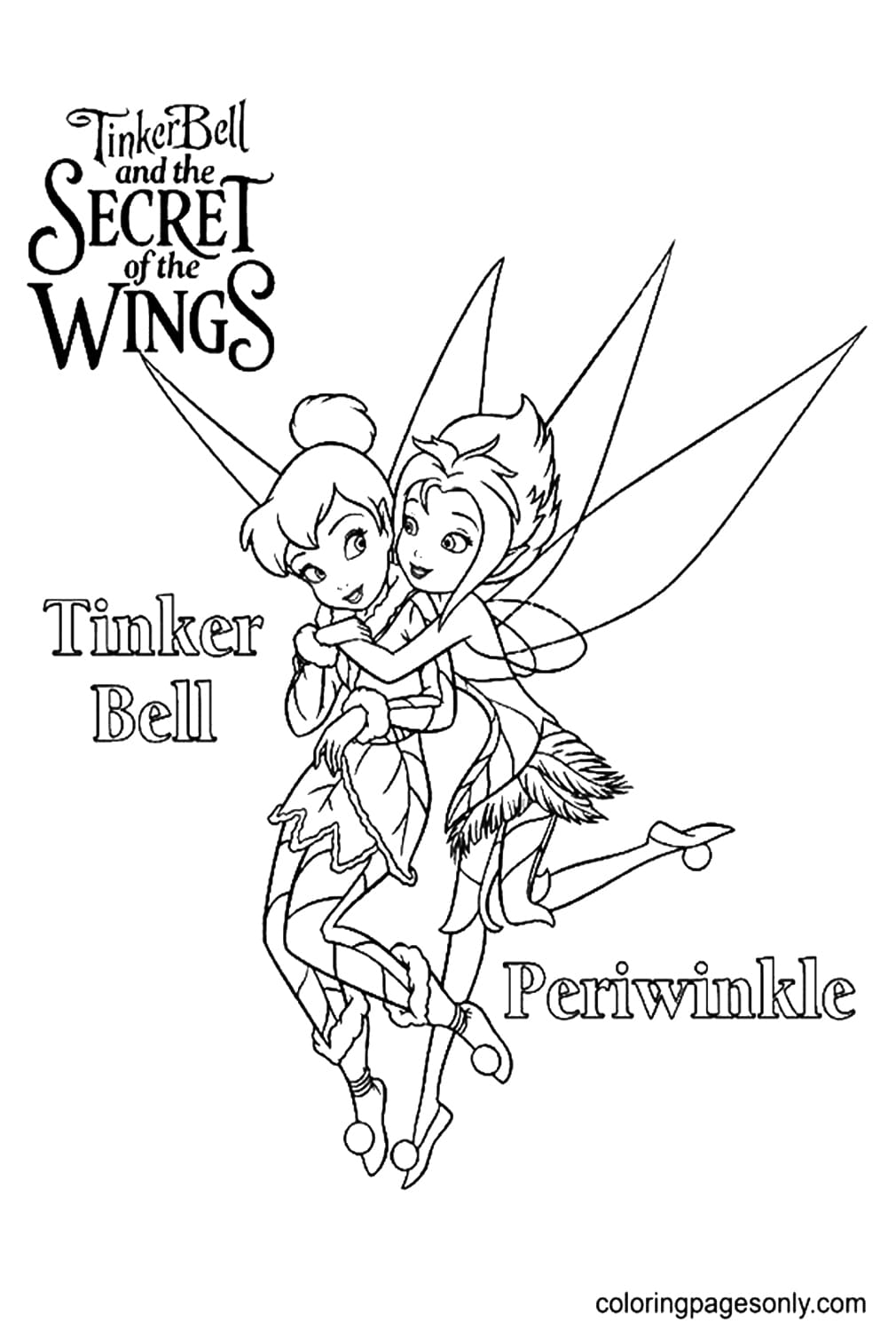
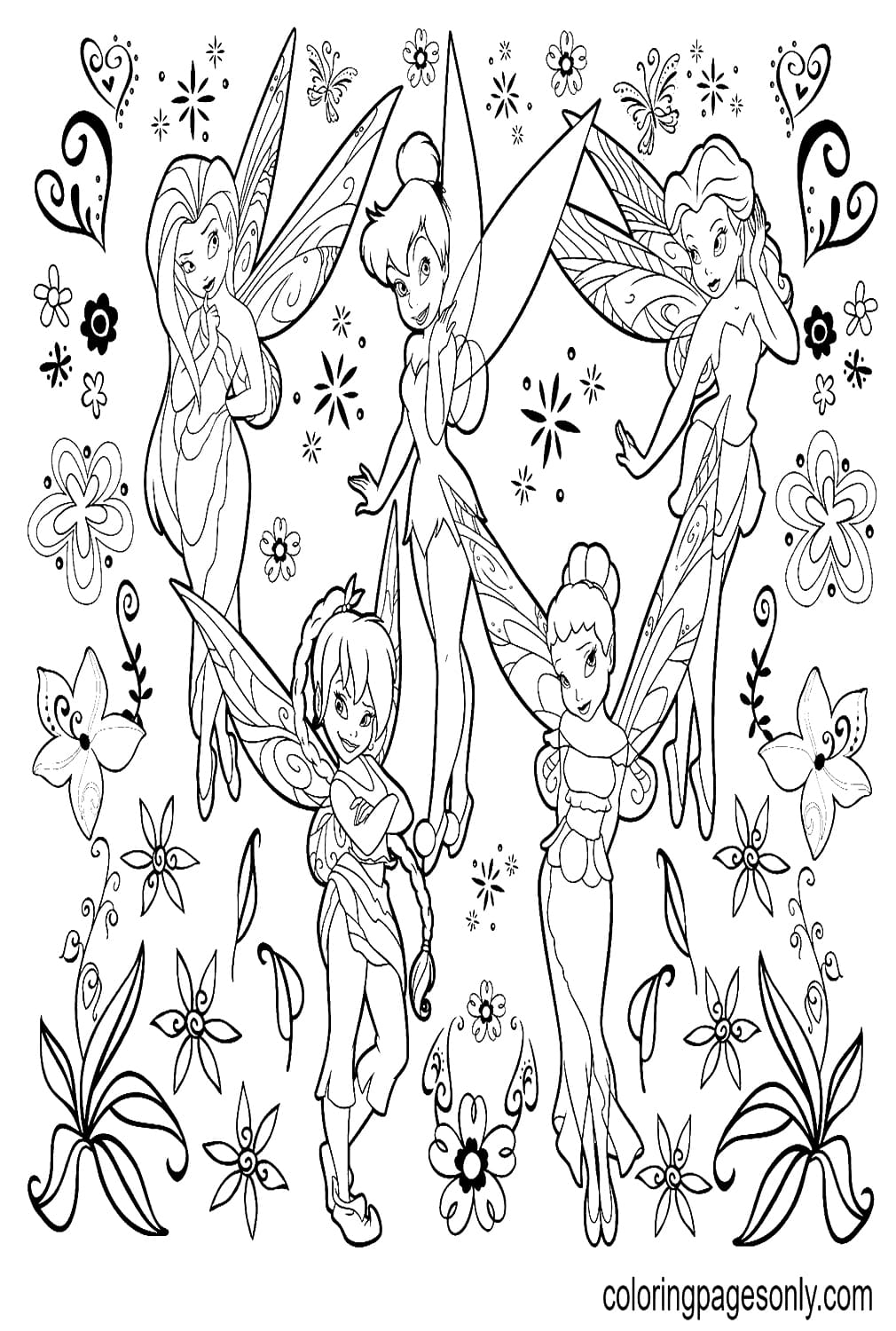
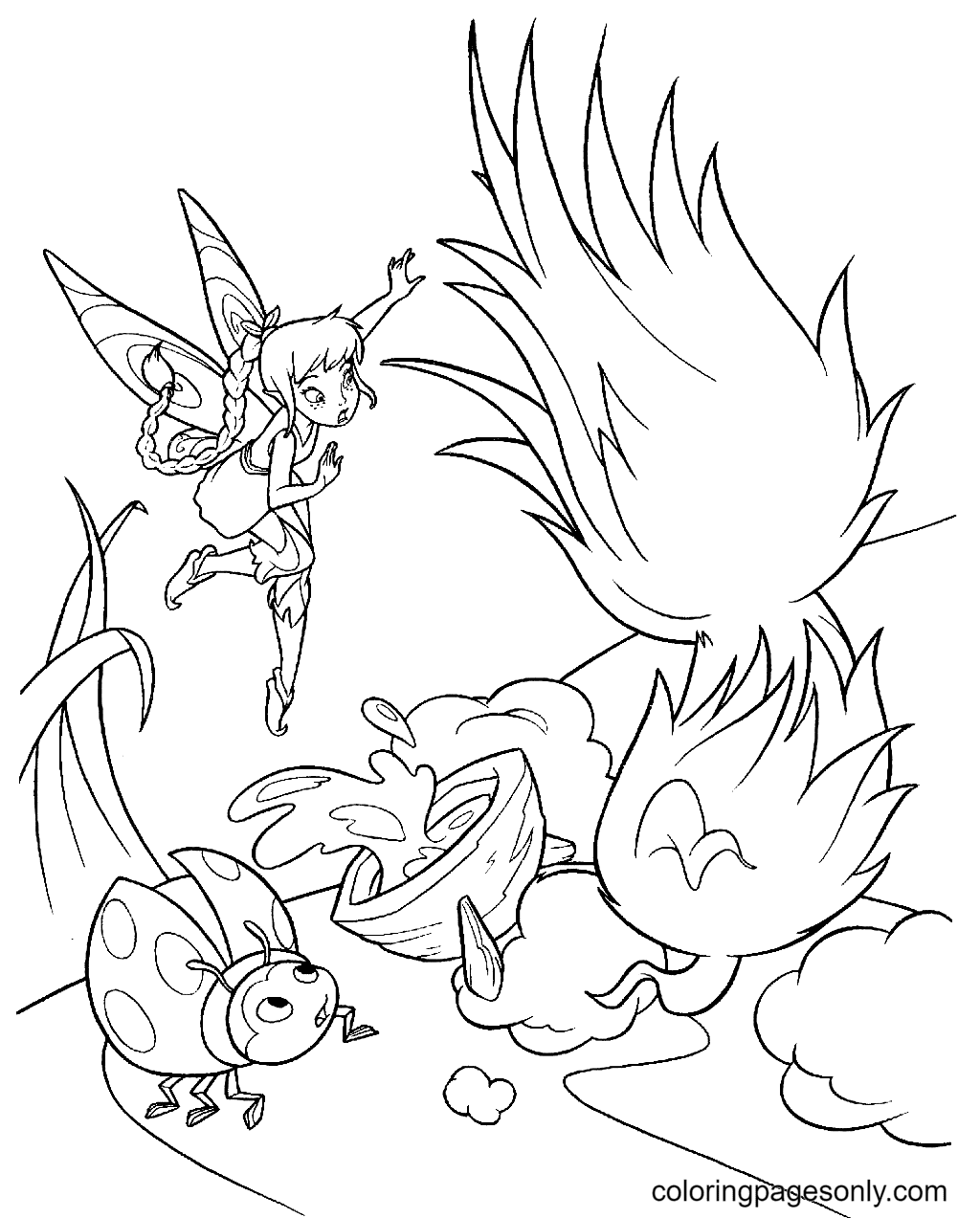
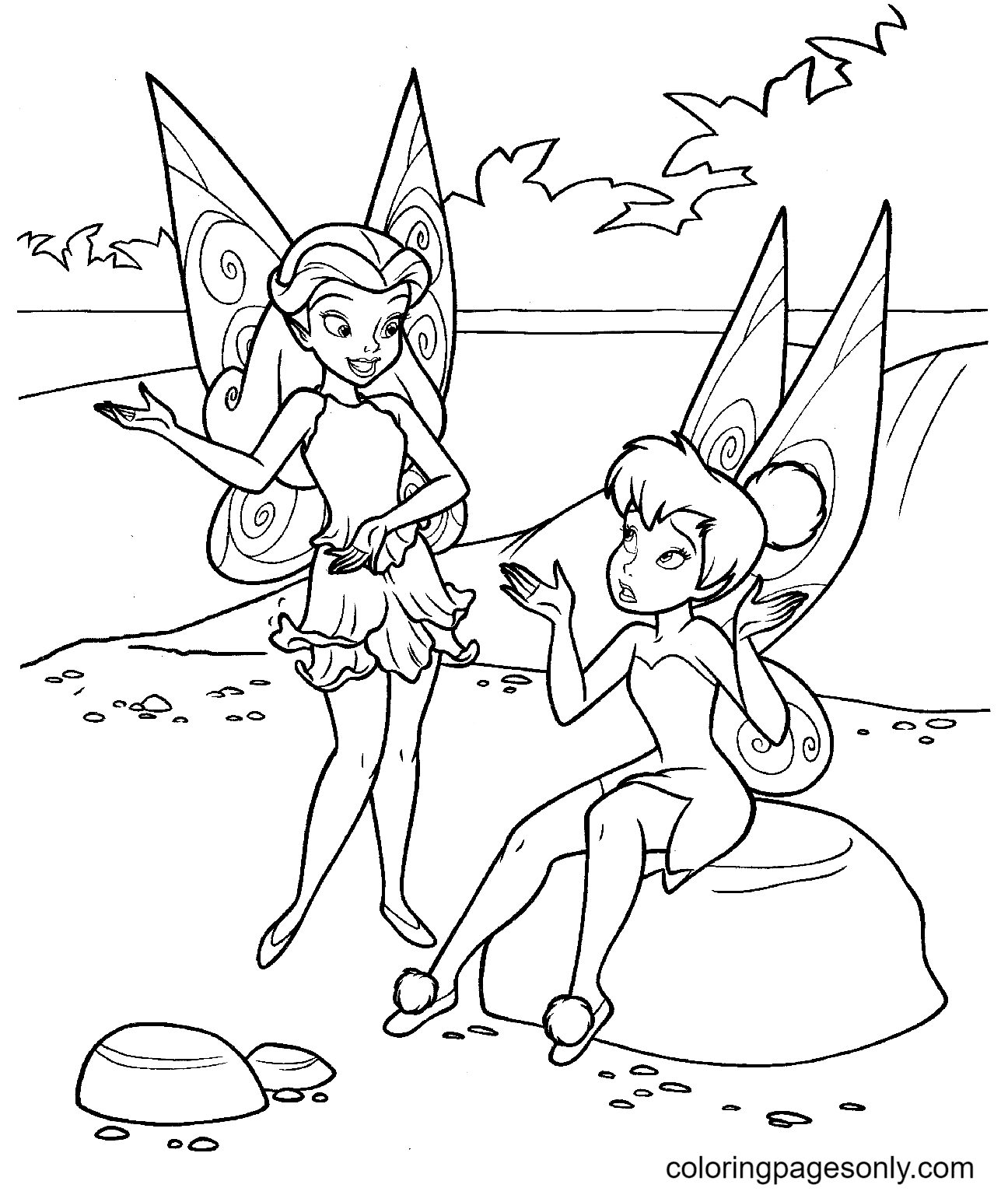
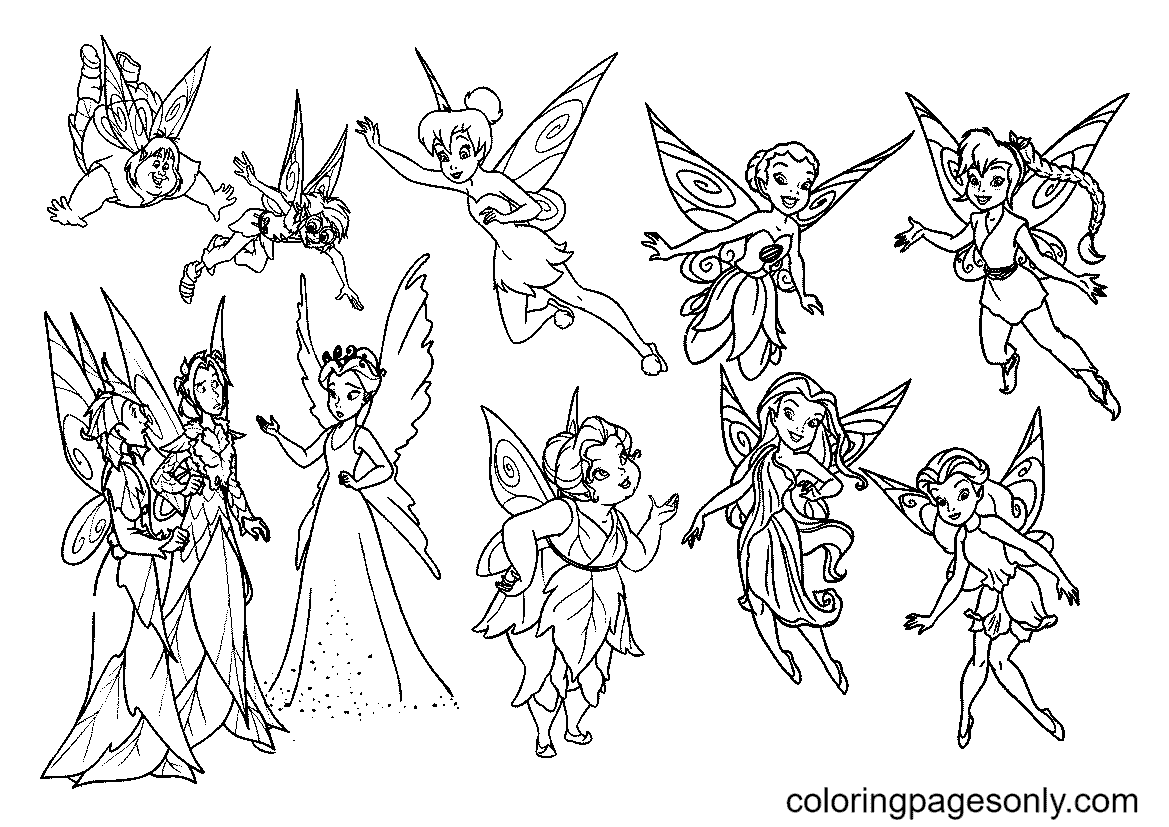
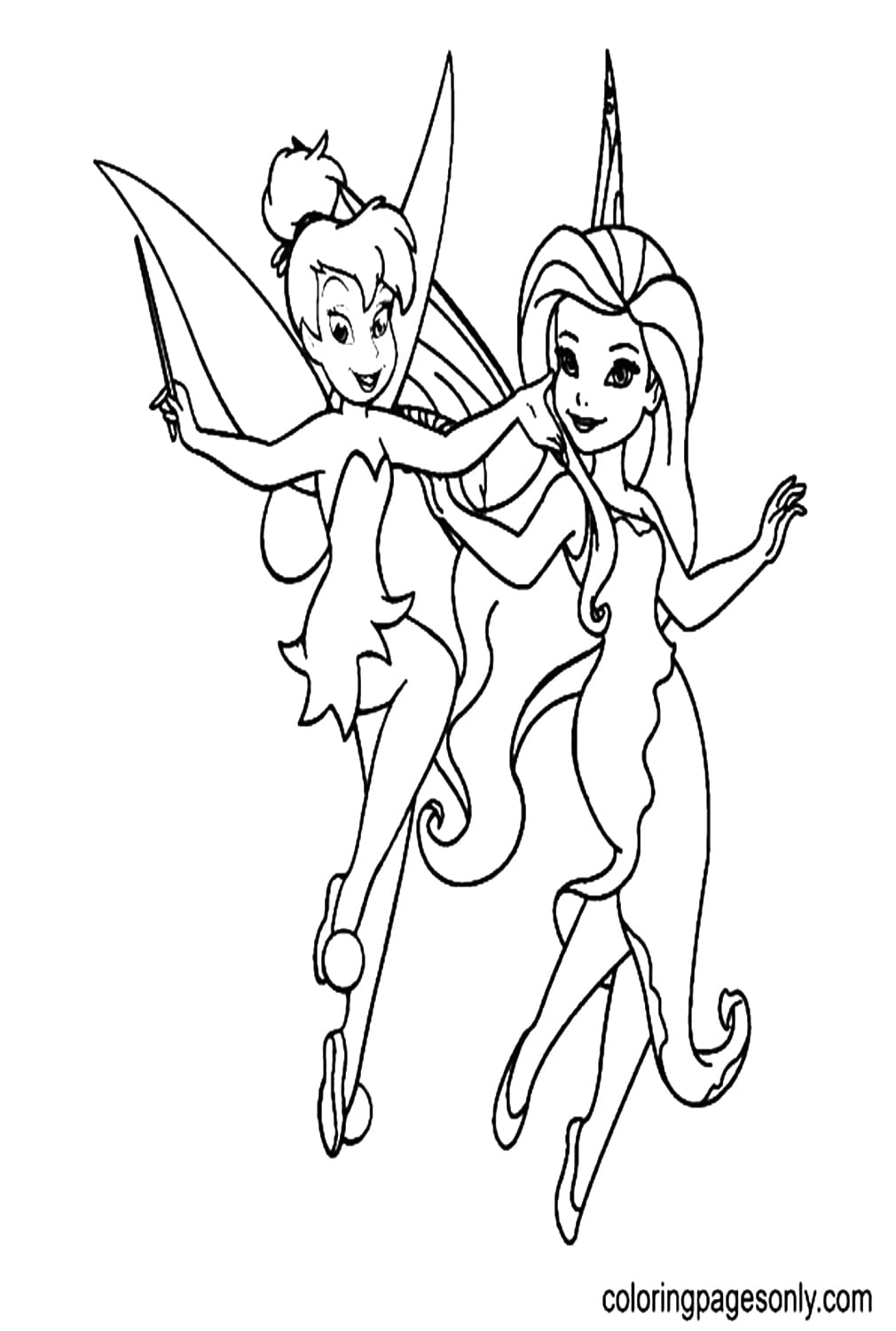
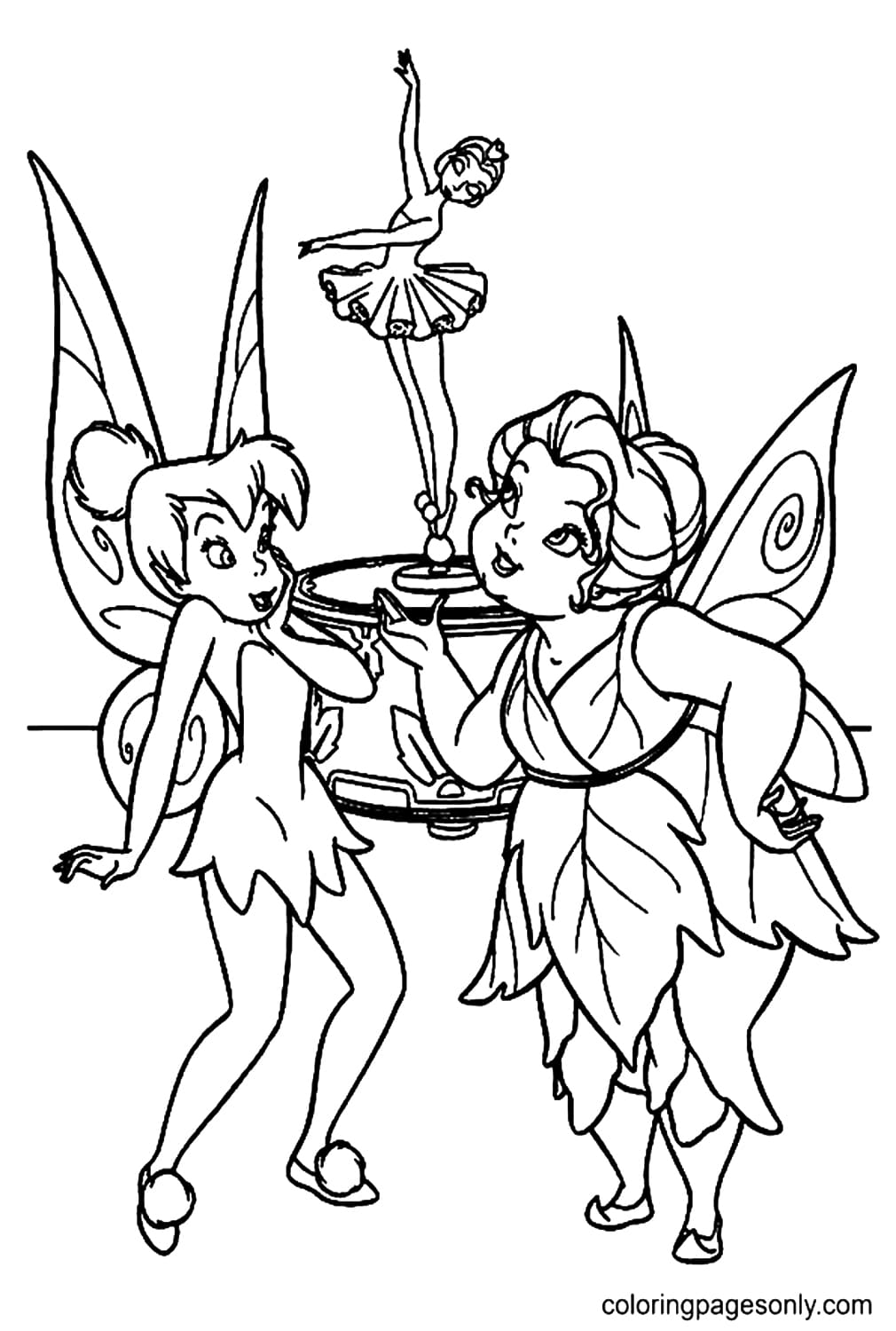
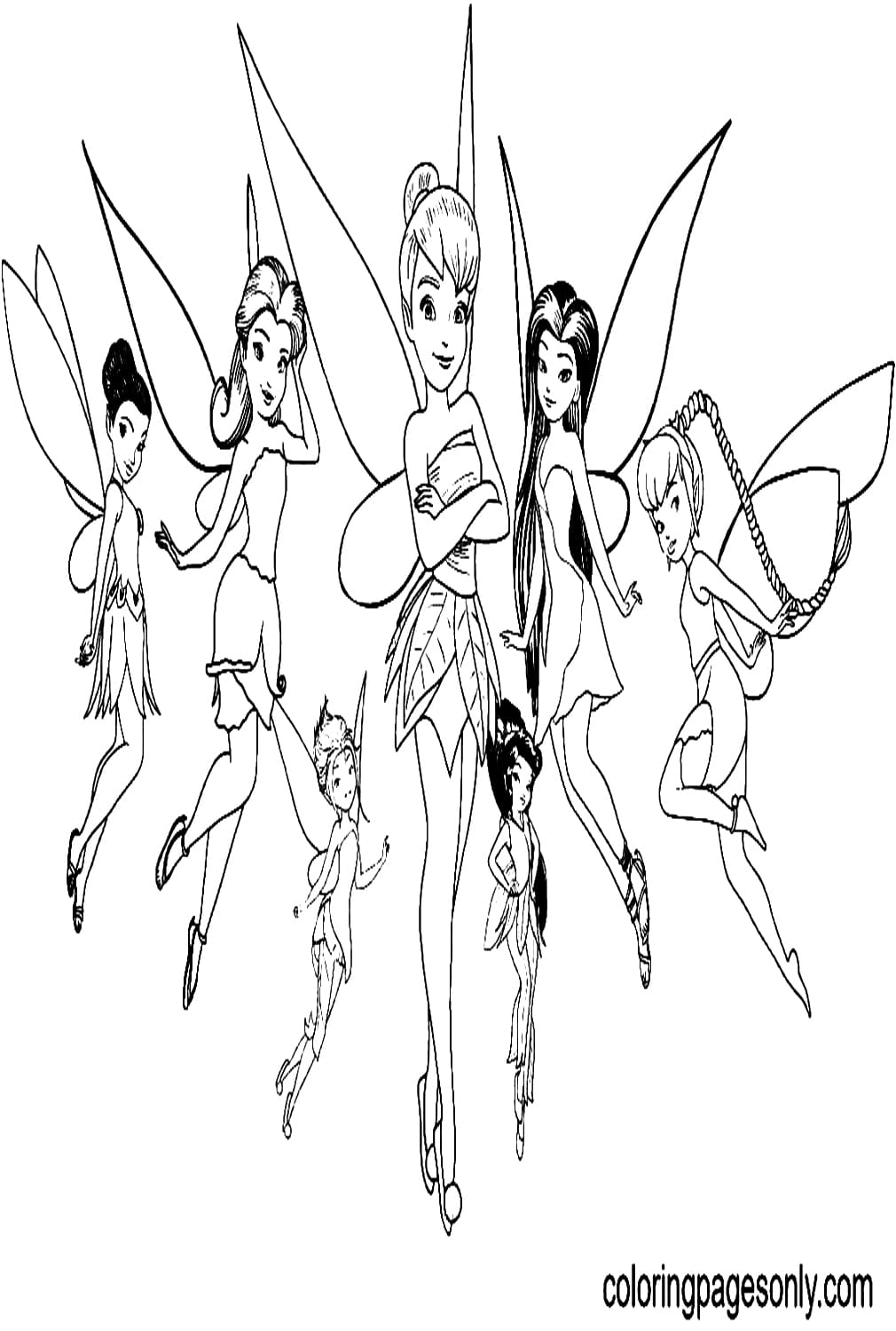
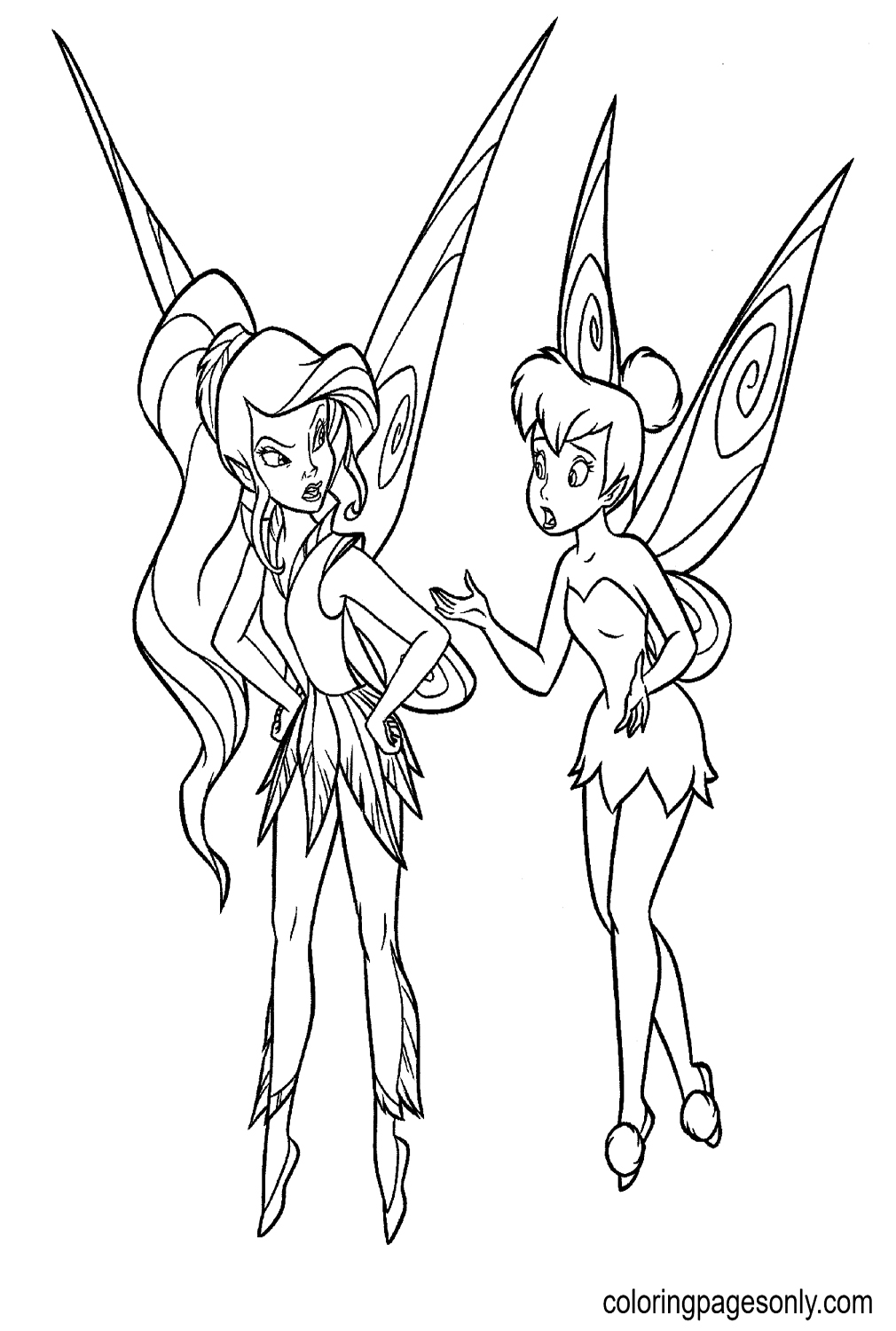
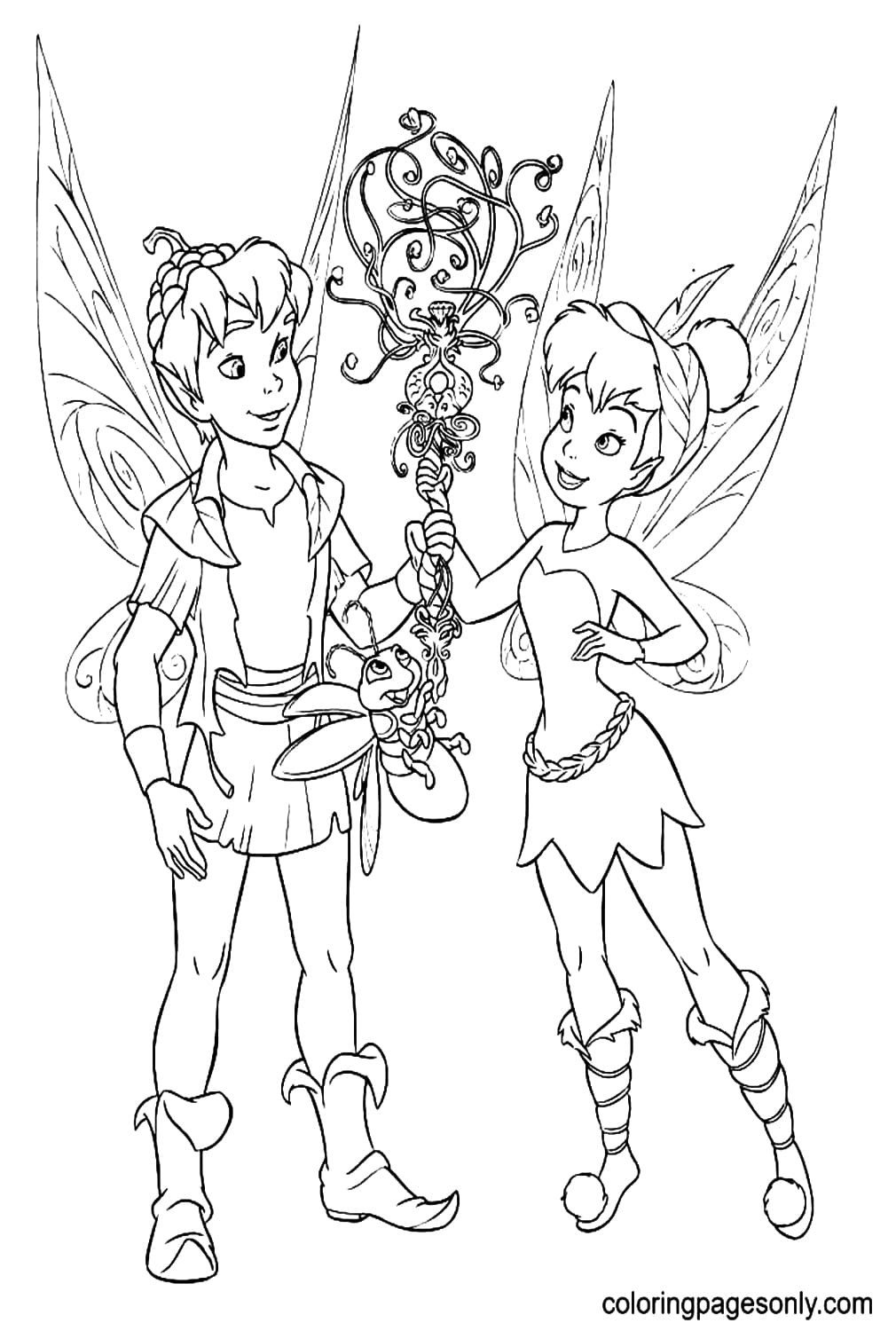
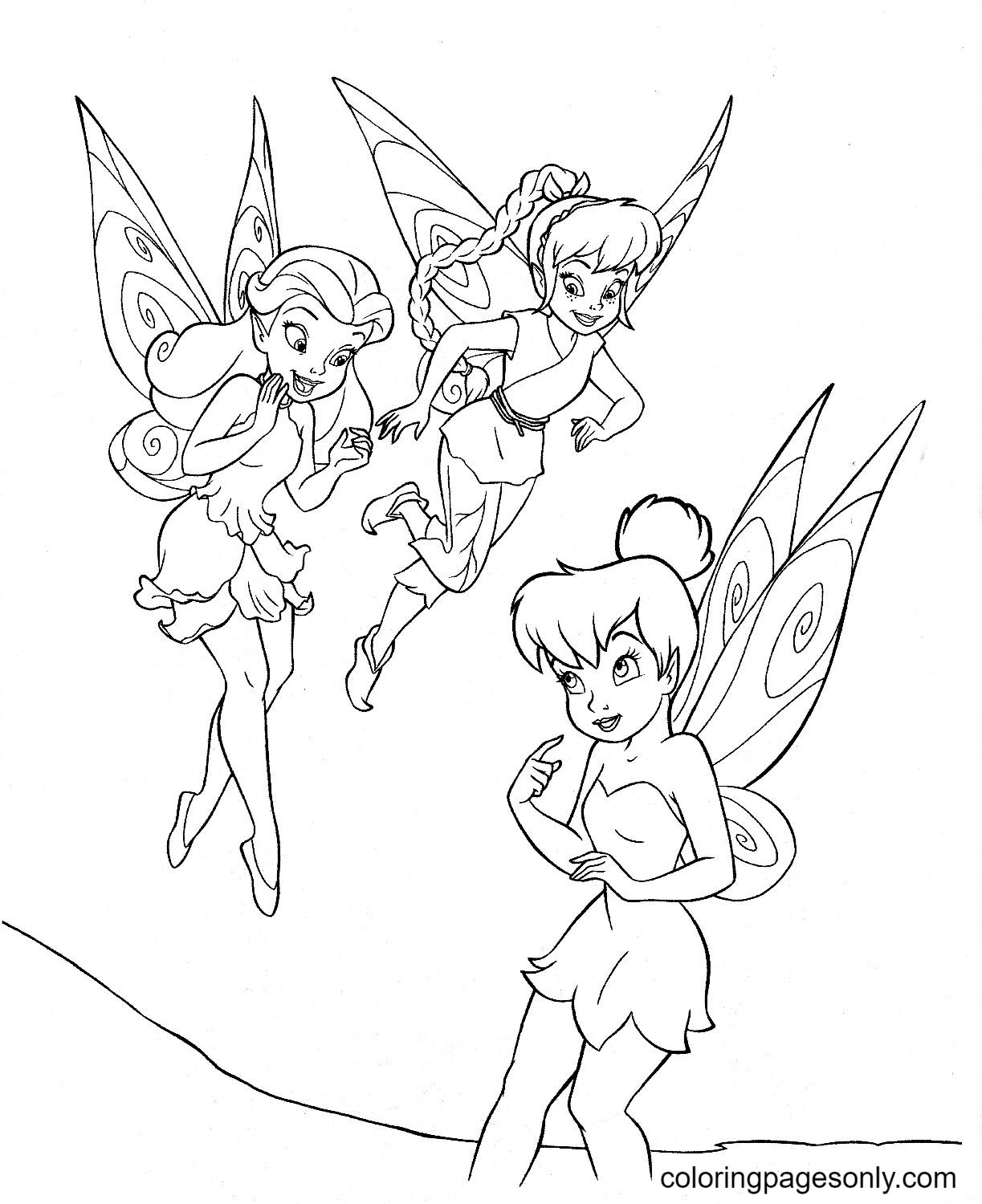
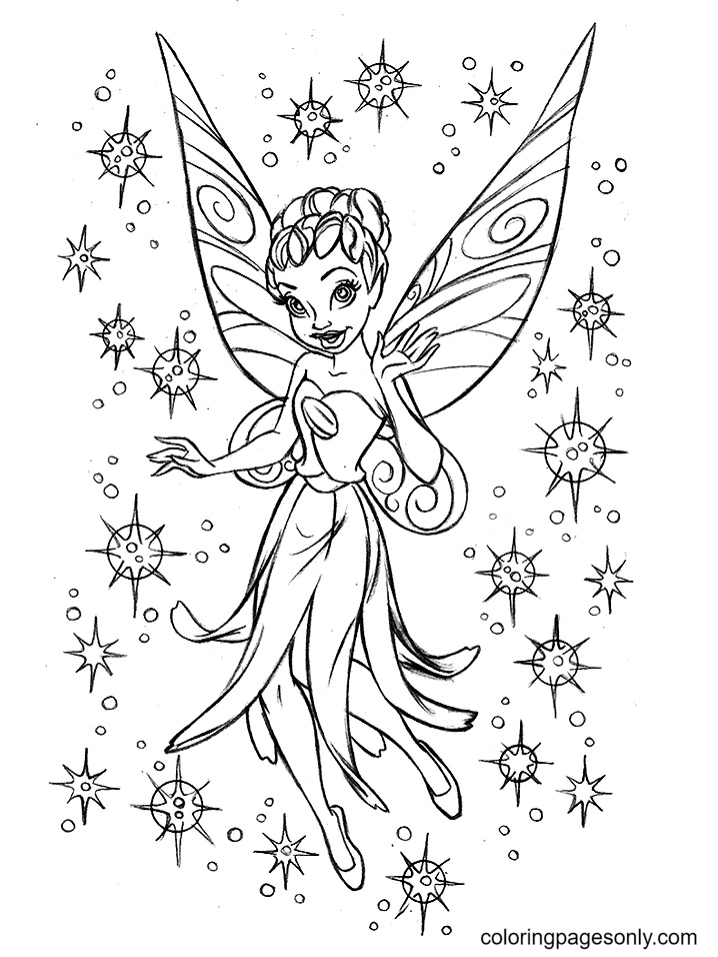
A large group pairs her with other named fairies from the wider Disney Fairies world, including Periwinkle, Rosetta, Vidia, Terence, and Fairy Mary. Give each fairy her own distinct color scheme, a garden fairy in warmer tones, a frost fairy like Periwinkle in cool blues and whites, so the group reads as a set of individuals rather than repeats of Tinker Bell.
Holiday and Special Scenes
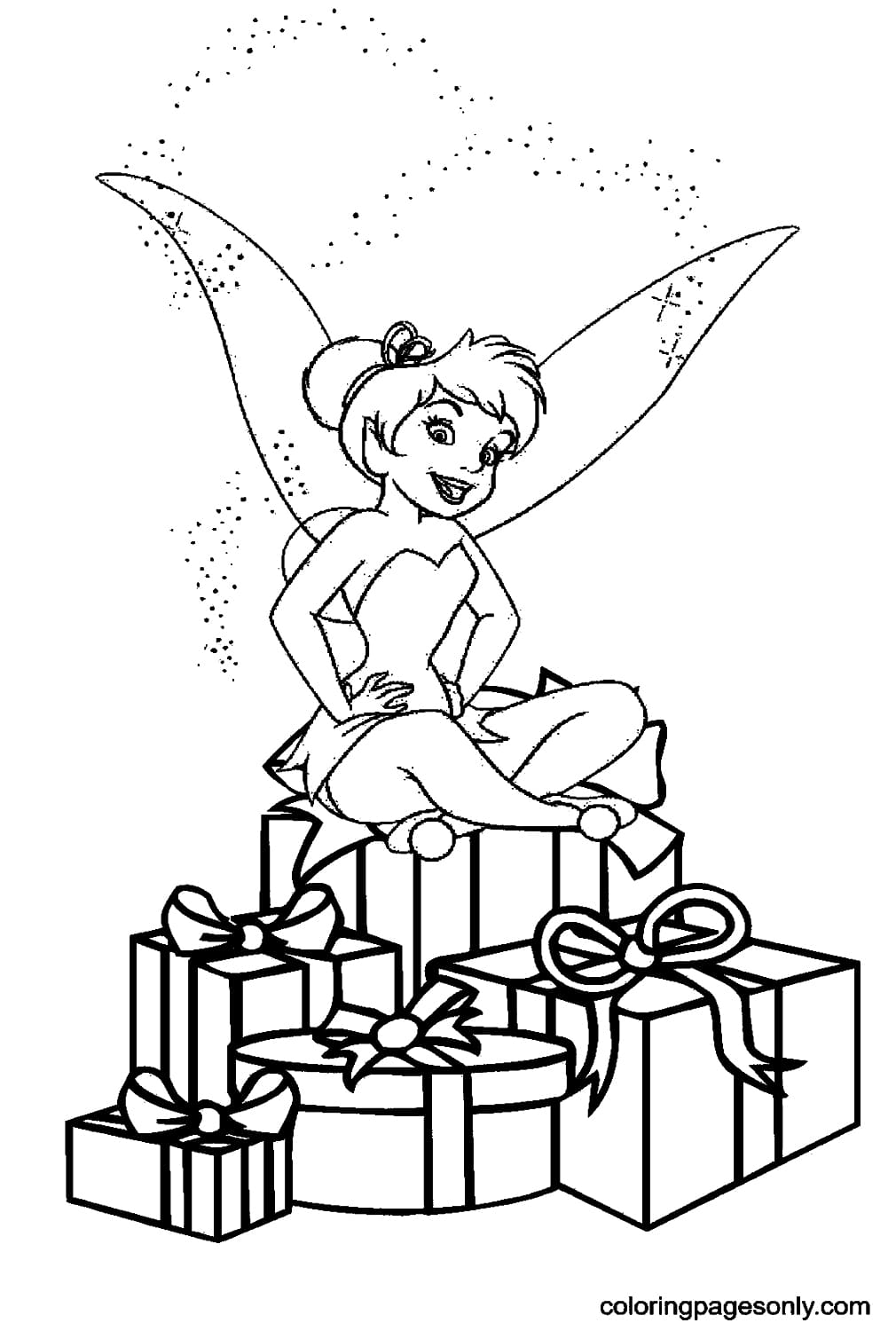
A small final group places her in a specific moment or season, a Valentine’s Day page, a Christmas scene, or getting ready to travel. Layer the holiday’s usual colors, Red and Pink for Valentine’s Day, Red and Green for Christmas, over her standard Green-and-Gold palette rather than replacing it.
What Tinkerbell Coloring Pages Do
A small figure with a lot riding on the details. Tinker Bell is drawn small relative to most other characters, which means her wings, hair, and dress details take up proportionally more of the page and demand more careful, controlled coloring than a larger figure would. The American Academy of Pediatrics identifies fine motor skill development as one of the benefits of structured coloring for children ages 2 through 7, and a small figure with fine details asks for that skill more precisely than a page built from a few large shapes.
A character who has changed without losing herself. Tinker Bell has kept the same core colors, green, gold, and pale blue, since 1953, even as her exact proportions and outfit have shifted across films and decades. Coloring both an older-style portrait and a newer Disney Fairies-style page side by side is a small, hands-on way to notice how a character can visibly change while still staying recognizable.
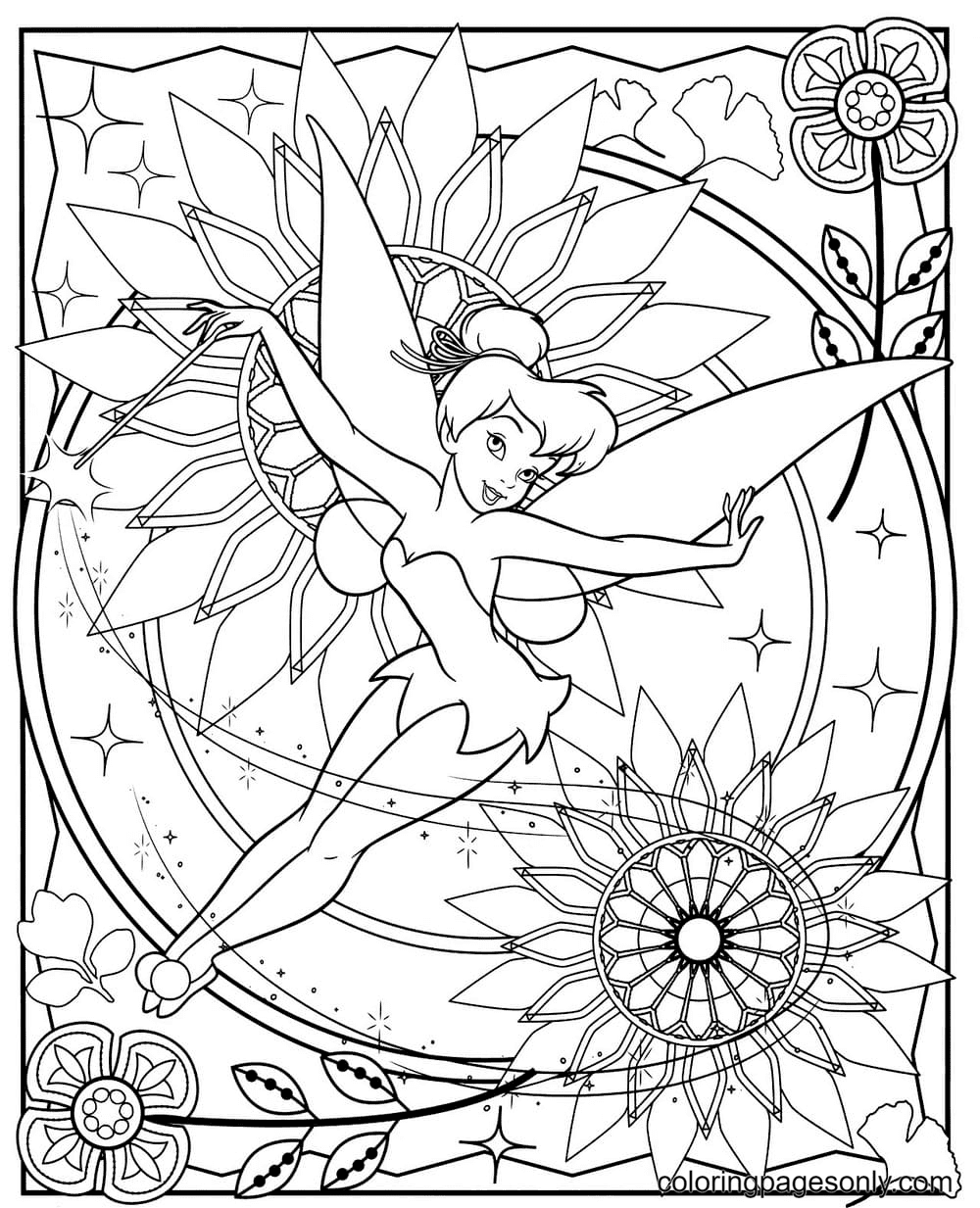
A calmer task backed by research, not just intuition. A 2005 study in the Art Therapy Journal found that people who colored within a set outline reported lower anxiety afterward than those who drew without one. The busier fairy-friend group scenes and detailed wing patterns in this set, with many small sections to fill in one at a time, suit that same slow, structured kind of task.
A face modeled after a real performer, not a movie star. A persistent myth claims the 1953 animated Tinker Bell was modeled after Marilyn Monroe. In fact, animator Marc Davis worked from live-action reference footage of performer Margaret Kerry, who was called in specifically to help shape the character’s movement and expression before a single frame was drawn.
How to Color Tinkerbell Pages Well
- Hair: use Golden Yellow or a warm blonde, styled in a rounded bun shape with a few loose strands left slightly lighter.
- Dress: color it bright Green as the base, with a slightly darker Forest Green for folds and shadowed edges.
- Wings: keep them a pale, almost translucent Blue, left mostly unfilled or very lightly shaded so they still read as see-through.
- Fairy friends: give each named fairy her own palette rather than reusing Tinker Bell’s colors, warmer tones for a garden fairy, cool Blues and Whites for a frost fairy like Periwinkle.
- Pixie dust and magic effects: use small dots or swirls of Gold or Yellow, kept light and sparse rather than filling the whole background.
- Holiday-themed pages: layer the season’s usual colors, Red and Pink for Valentine’s Day, Red and Green for Christmas, over her standard Green-and-Gold look rather than replacing it.
5 Creative Craft Ideas With Tinkerbell Coloring Pages
- Fairy Wing Card. Materials: a colored Tinkerbell page, a blank folded card, scissors, and glue. Cut out the colored figure and glue it to the card front, then write a message inside for a birthday or thank-you note.
- Pixie Dust Garland. Materials: several colored solo Tinkerbell pages, scissors, and a length of string. Cut out each colored figure and string them along the twine spaced a few inches apart to hang across a window or wall.
- Fairy Friends Mobile. Materials: several colored fairy-friend pages, scissors, a hanger or stick, and string. Cut out each colored fairy, tie a length of string to each one, and hang them at different lengths from the hanger.
- Bookmark. Materials: a colored solo portrait page, scissors, and clear contact paper or a laminate sheet. Cut a narrow strip around the colored figure, cover both sides with the contact paper or laminate, and use it as a bookmark.
- Pixie Hollow Diorama. Materials: a colored Tinkerbell page, a colored mushroom or nature page, scissors, a small box, and glue. Mount the colored pages inside the box to build a small fairy-world scene.
Frequently Asked Questions
What are Tinkerbell coloring pages?
Printable designs featuring Tinker Bell in her classic look, alongside her fairy friends, pixie dust, and Pixie Hollow scenes. This collection offers 79 free designs as printable PDFs or online coloring pages.
Who created Tinker Bell?
Scottish writer J.M. Barrie created Tinker Bell for his 1904 play Peter Pan, or The Boy Who Wouldn’t Grow Up, and later appeared in his 1911 novel Peter and Wendy.
Why is she called Tinker Bell?
Her name comes from her role as a tinker fairy, one who mends pots, pans, and kettles, combined with the fact that fairies communicate to humans through bell-like sounds in the original story.
Was the 1953 Tinker Bell really modeled after Marilyn Monroe?
No. That is a persistent myth. Animator Marc Davis worked from live-action reference footage of performer Margaret Kerry to shape the character.
What is Pixie Hollow?
Pixie Hollow is the fairy world introduced in the Disney Fairies franchise, which began with the 2008 film Tinker Bell and expanded her story beyond her role in Peter Pan.
Who are Tinker Bell’s fairy friends shown in this collection?
Several pages feature named fairies from the Disney Fairies franchise, including Periwinkle, Rosetta, Vidia, Terence, and Fairy Mary, each with her own distinct talent and color scheme.
Are Tinkerbell coloring pages suitable for young children?
Yes. The simple solo portraits suit ages 3 and up, while the busier fairy-friend group scenes suit ages 6 and up or an adult looking for more detail.
Are any of these pages tied to a specific holiday?
Yes. A couple of pages place Tinker Bell in a Valentine’s Day or Christmas setting, alongside the collection’s non-holiday designs.
Start Coloring
Download any page by clicking the design. No account, email, or payment is required. Pages print directly from the browser at full resolution or open in the online coloring tool for screen use. Share finished pages on Facebook or Pinterest with the share buttons at the top of each design page.