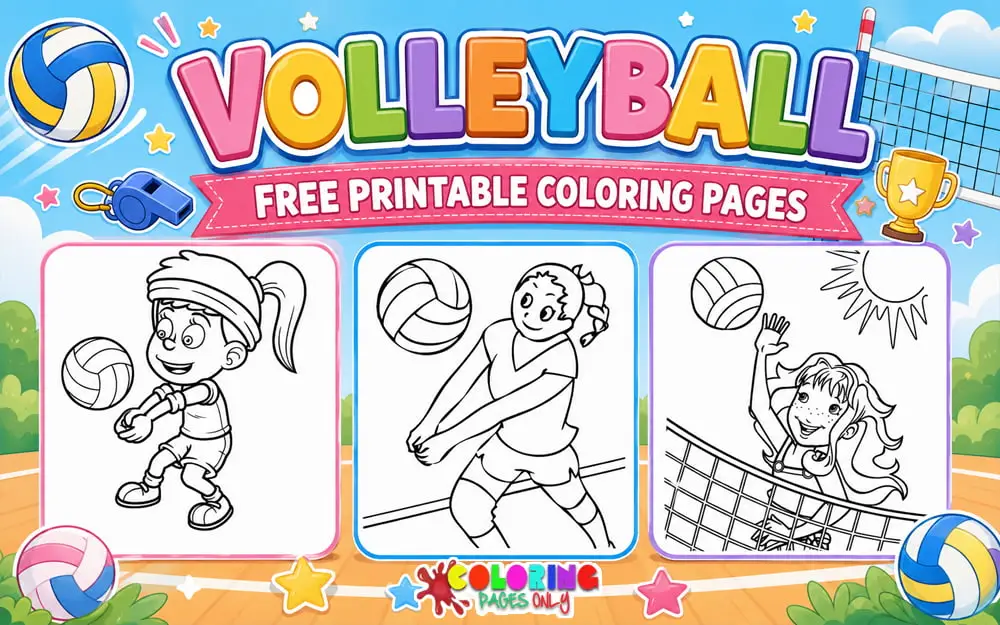
Volleyball coloring pages: 50+ free printable PDF designs covering ball designs, general and kids’ player portraits, indoor court and beach scenes, and a small group of character crossovers. Every page is available as a printable PDF or to color in the browser, with no account required.
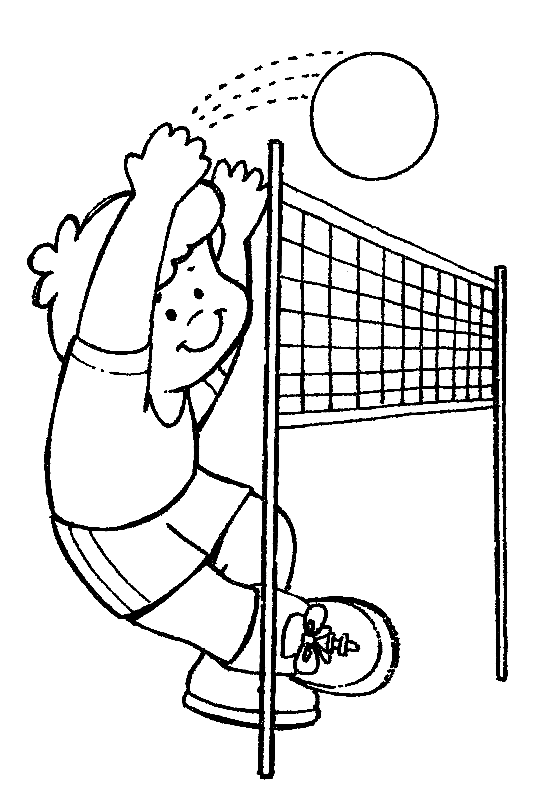
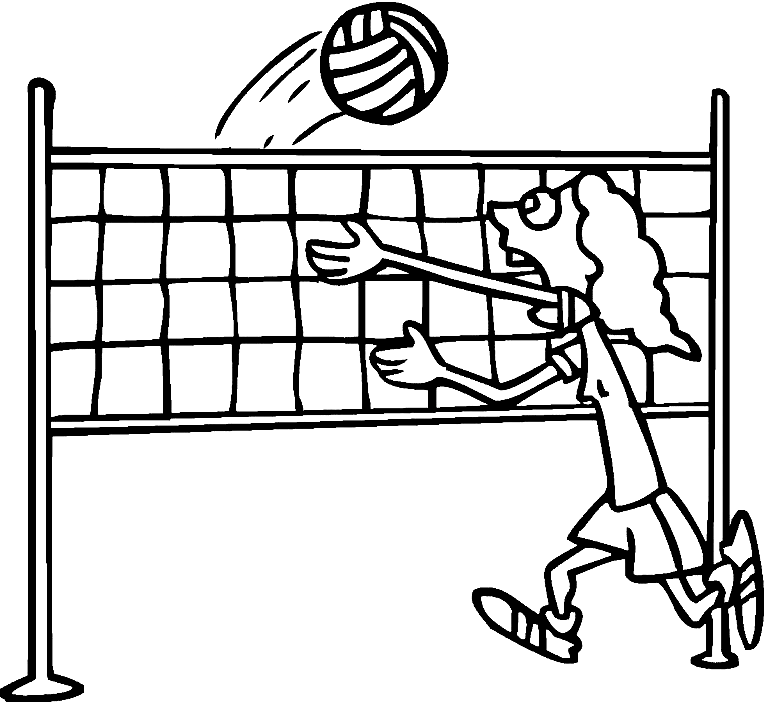
Here’s a rule that sets volleyball apart from almost every other sport on this site: the net isn’t a fixed height. Men’s competition plays with the net set at 2.43 meters, women’s at 2.24 meters, a nearly 20-centimeter difference that most ball sports don’t bother with at all. A court scene colored with that in mind, the net riding noticeably lower relative to the players in a women’s match, is quietly more accurate than one where the height is just guessed.
William G. Morgan invented the game in 1895 at a YMCA in Holyoke, Massachusetts, as a gentler alternative to basketball for members who found it too rough. He called it Mintonette at first; the name volleyball stuck once people noticed the ball was being volleyed back and forth rather than carried or dribbled. Indoor volleyball became an Olympic sport in 1964, but beach volleyball, played two-a-side rather than six, didn’t join the program until 1996, more than three decades later.
These pages suit kids who already know their dig from their set, families who play barefoot in the sand as often as indoors, and anyone who wants a team sport where the ball itself, not a racket or a bat, is really the whole story.





Quick Answer
Volleyball coloring pages are a free set of 50+ printable PDFs and browser-based coloring sheets covering ball designs, general and kids’ player portraits, indoor court and beach scenes, and character crossovers.
Best for: children aged 3 and up, young volleyball players in either the indoor or beach game, and anyone who wants a team sport set with real variety
Formats: printable PDF and online coloring
Popular pages: the tri-color ball, the general player portrait, the beach volleyball scene, and the character crossovers
Creative uses: an indoor-versus-beach comparison, a three-touches study, a tri-color ball study, and a team photo display
What’s Inside Volleyball Coloring Pages
Ball Designs
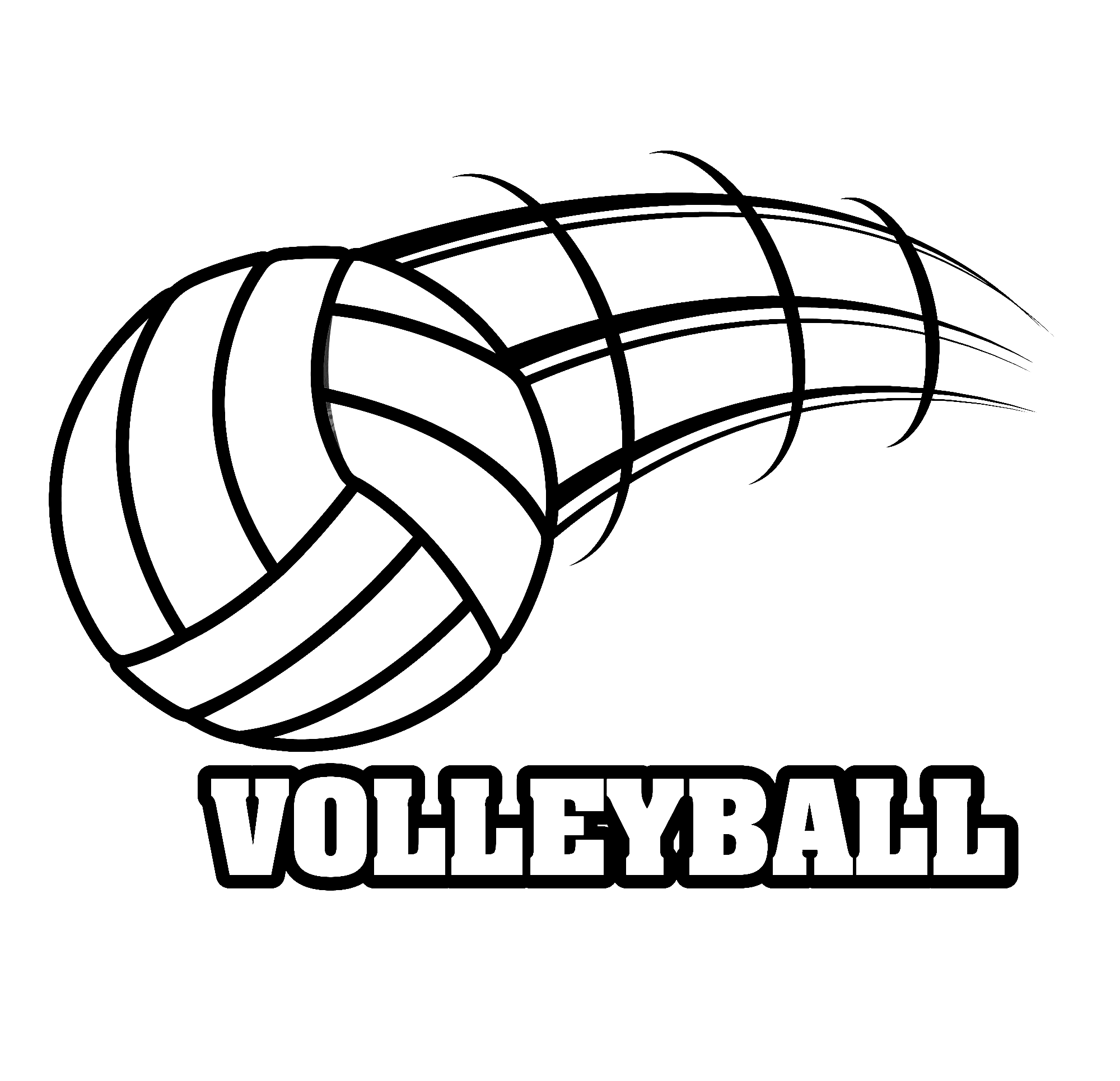
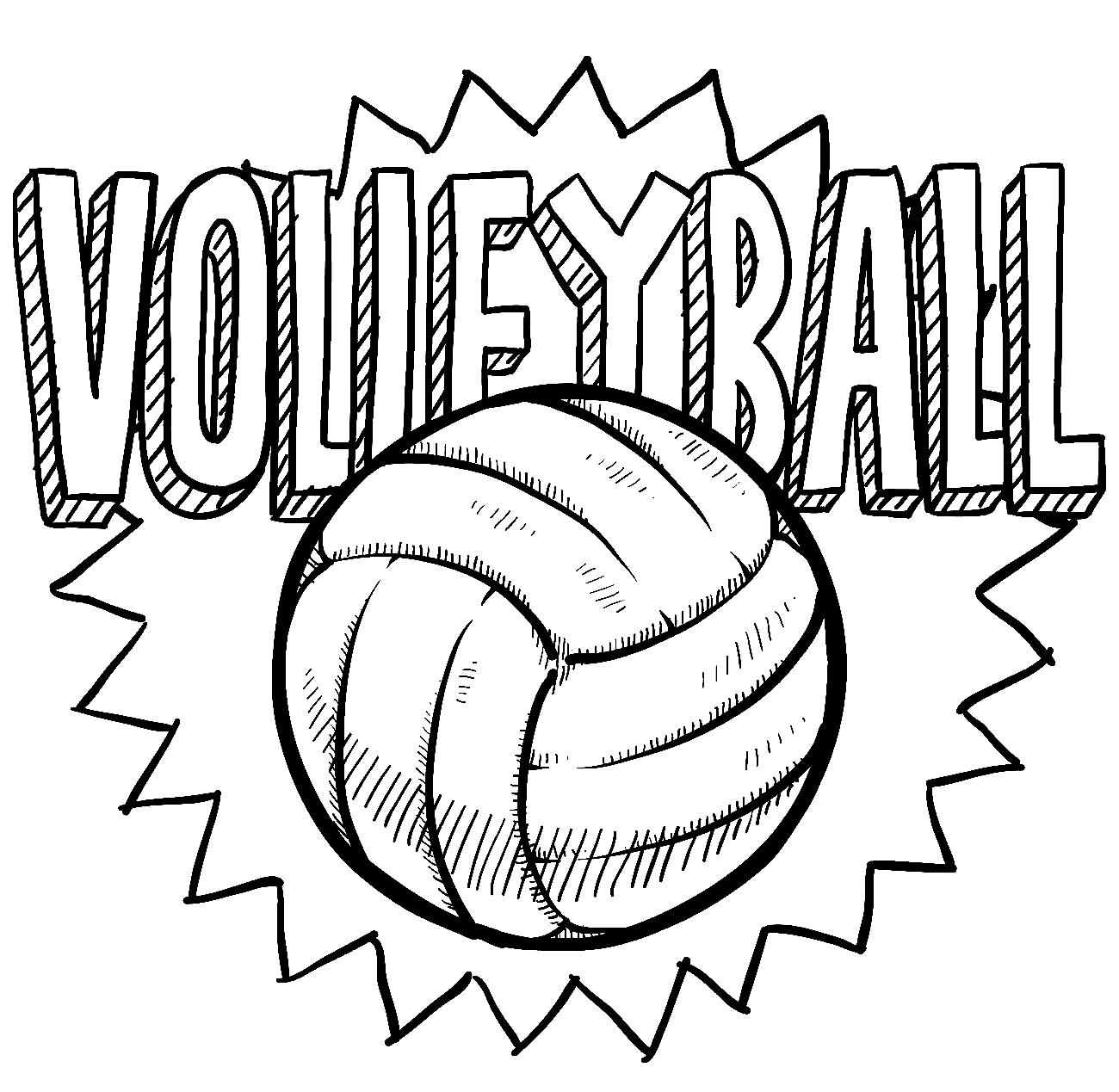
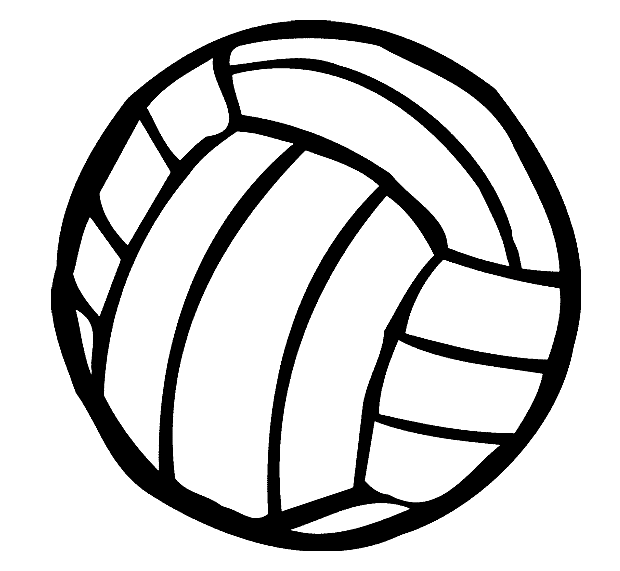
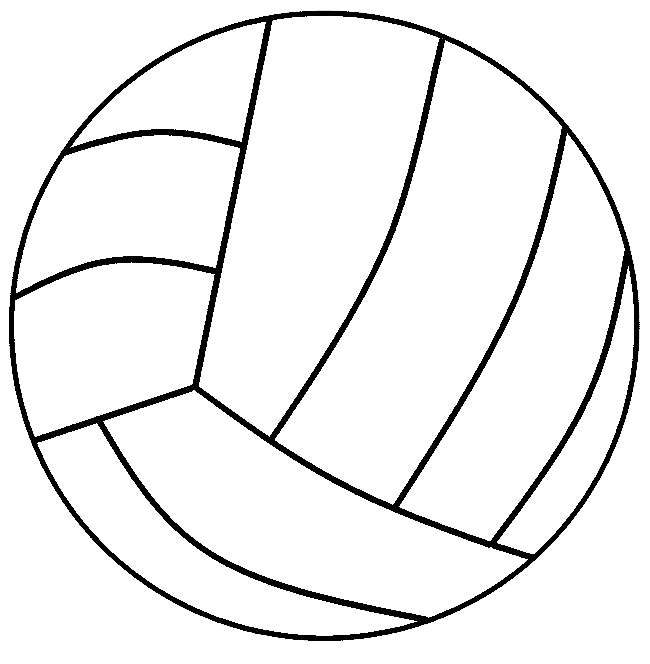
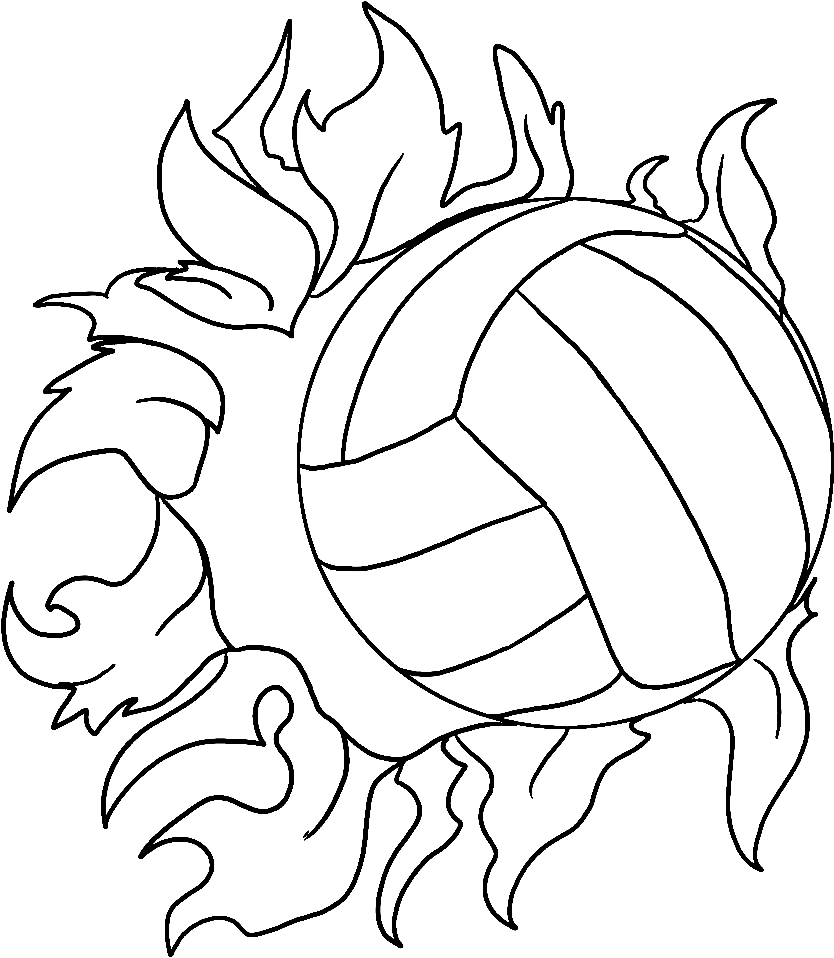
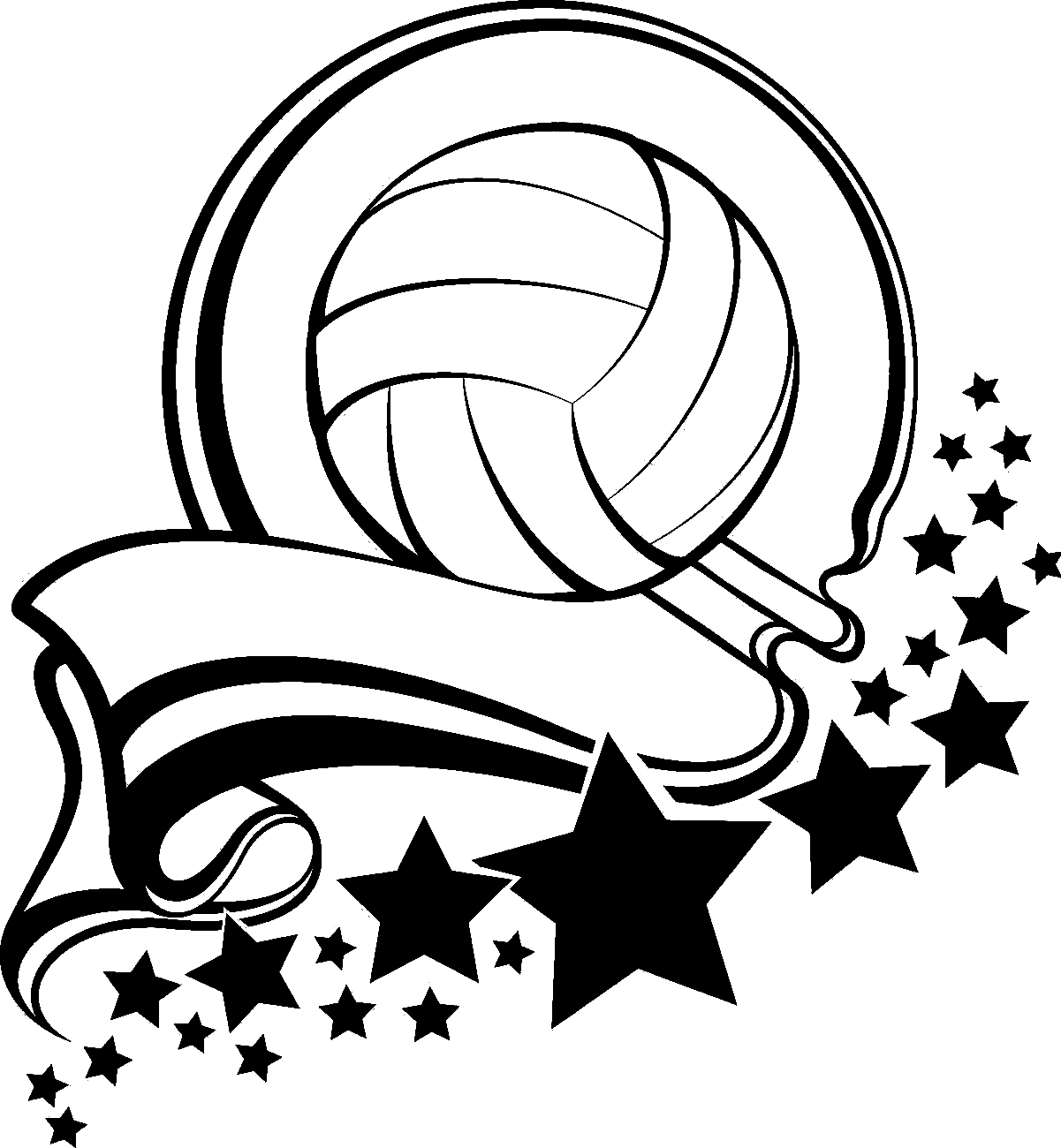
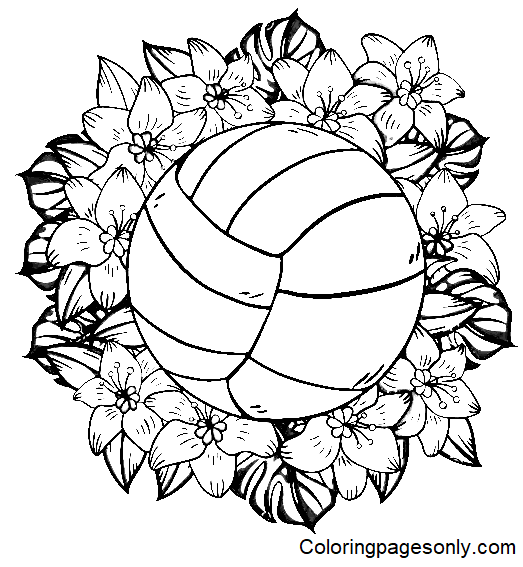
More pages in this set are built around the ball alone than around any single player pose, which makes sense once you notice how recognizable a volleyball’s own coloring is compared to a plain basketball or soccer ball.
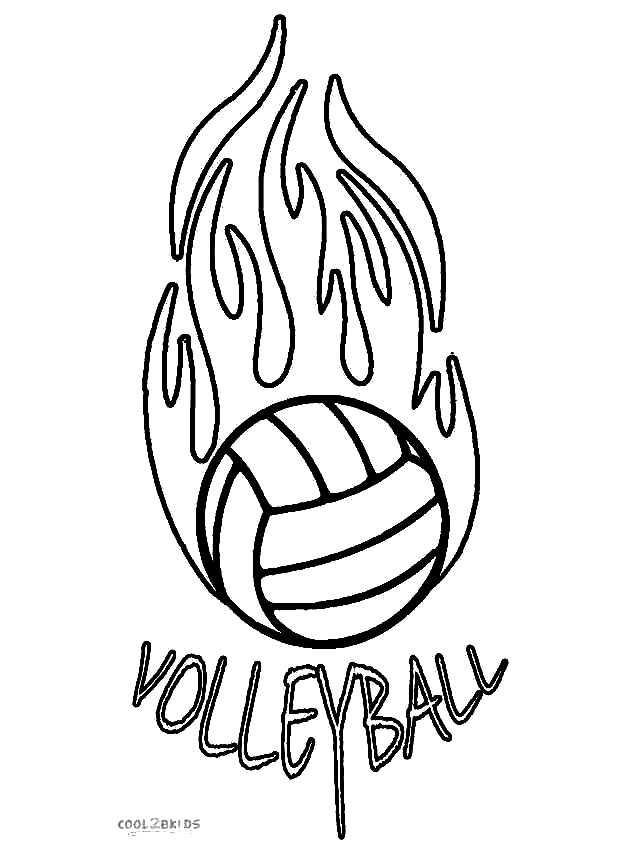
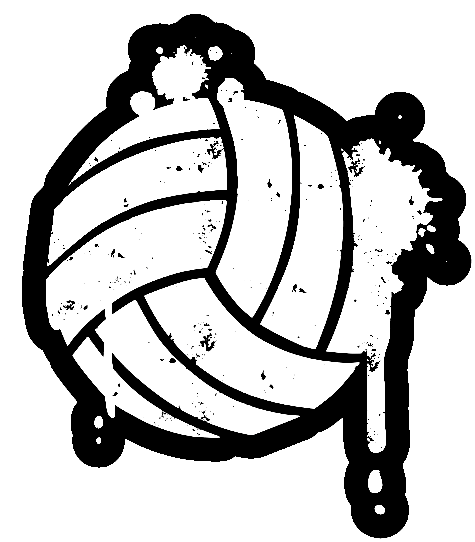
Many modern volleyballs use a distinctive yellow, blue, and white panel pattern rather than one solid color, and that three-color split is worth matching if realism matters to the page. The more playful ball designs here, flaming, flowered, “awesome,” clearly aren’t going for accuracy, and that’s fine: they’re a separate category with their own rules.
General and Kids’ Player Portraits
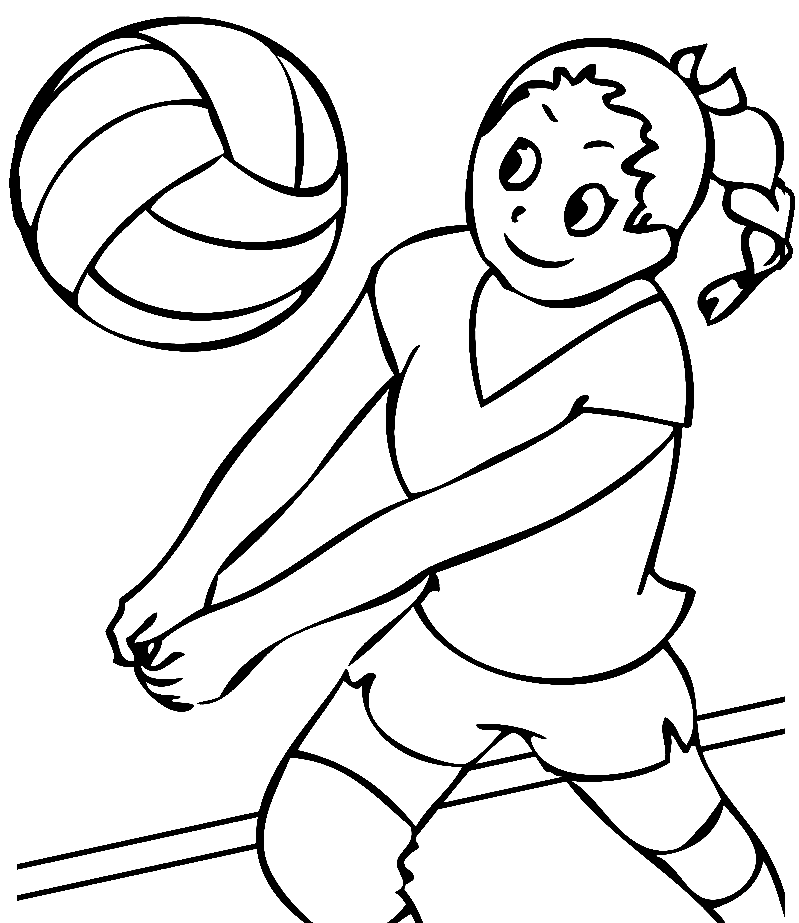
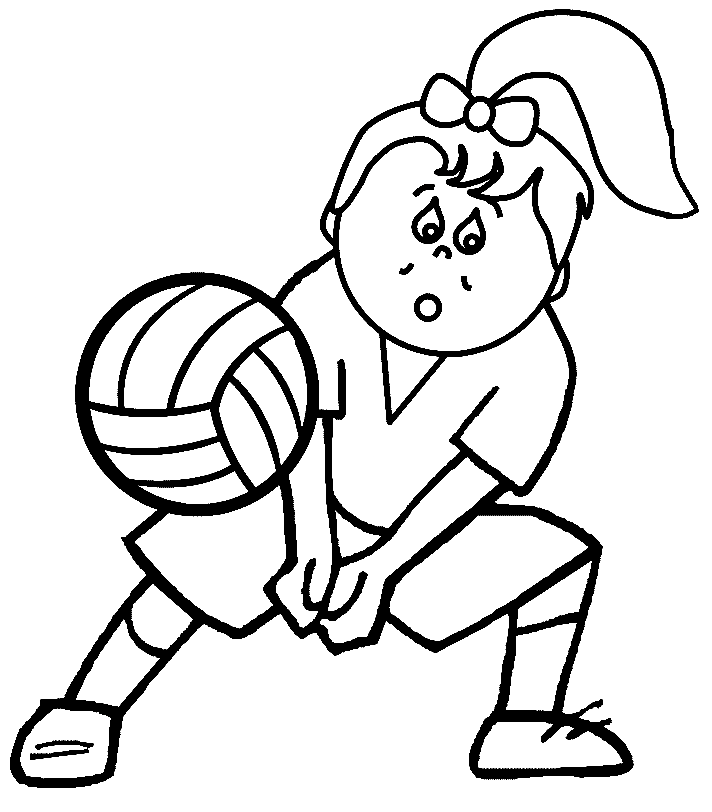
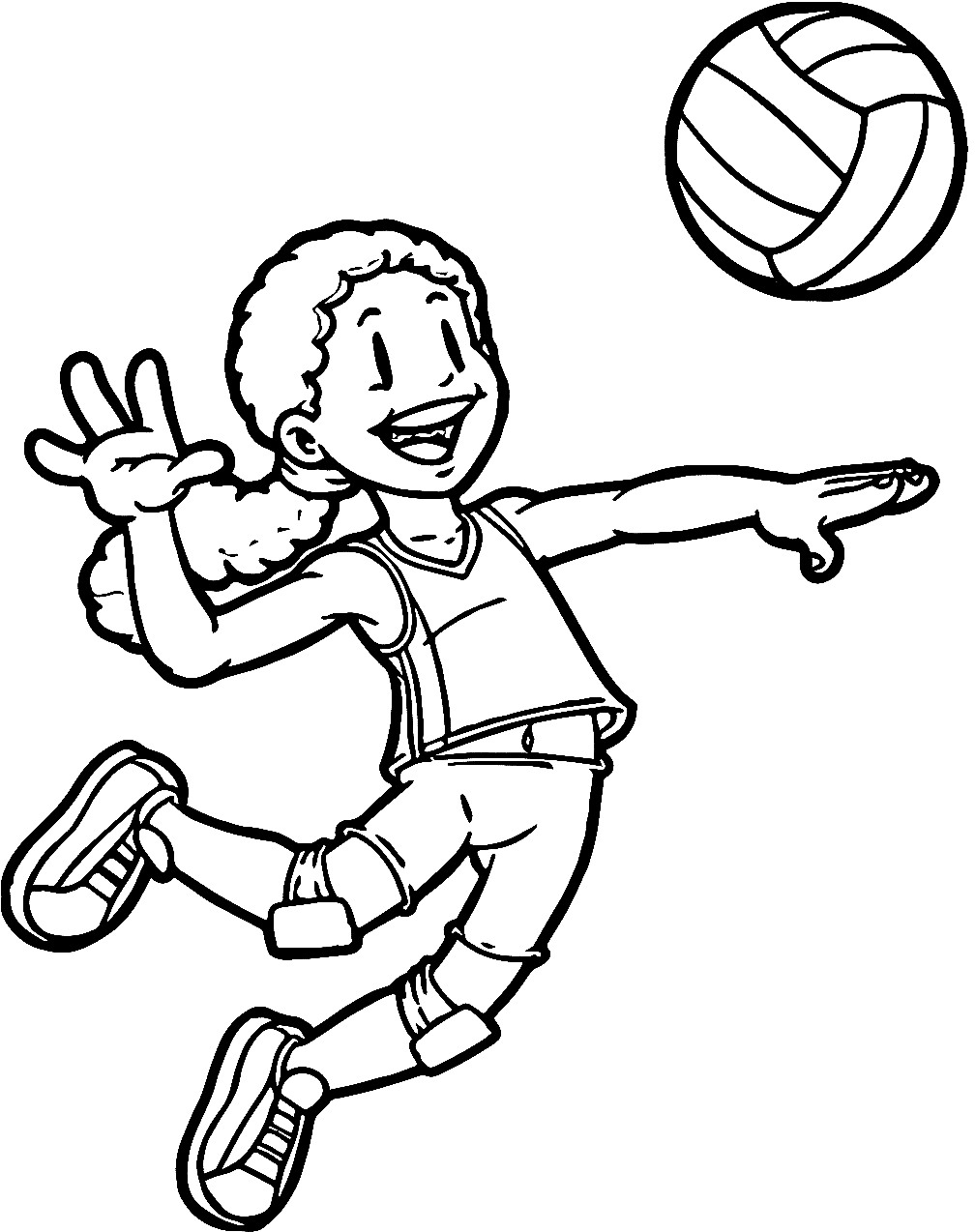
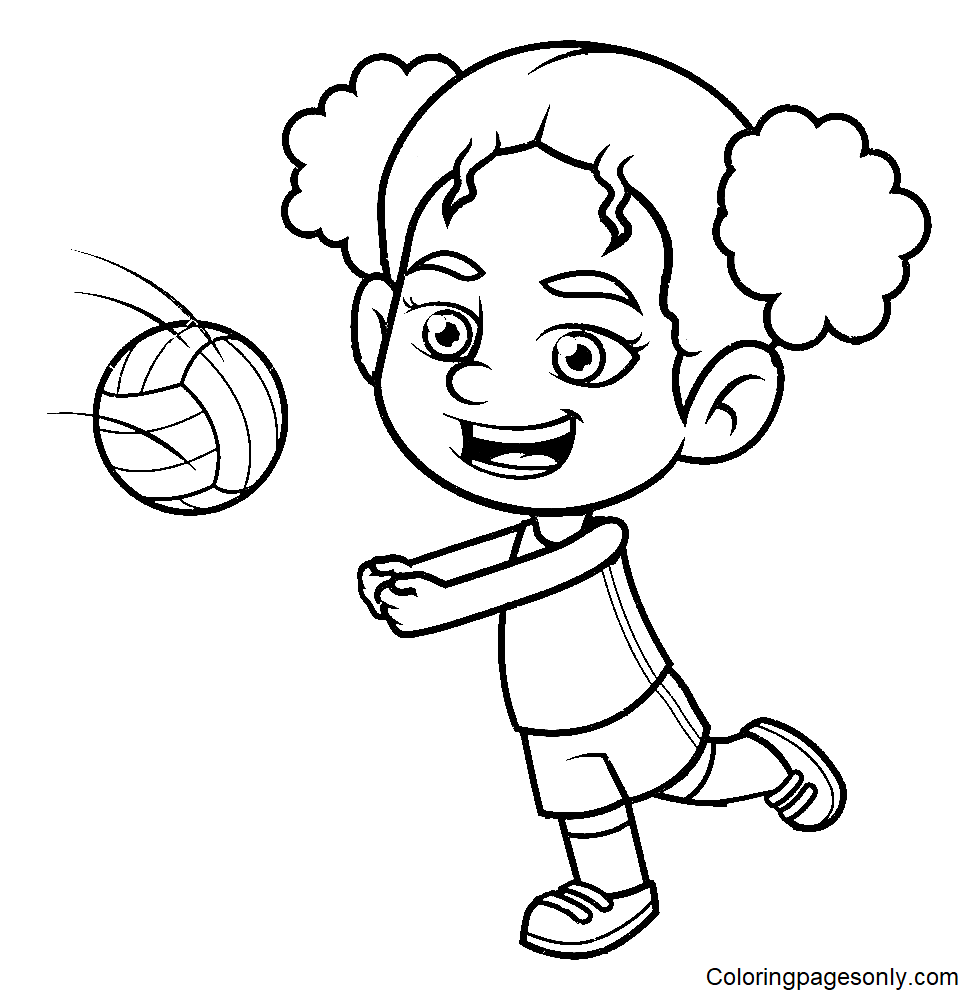
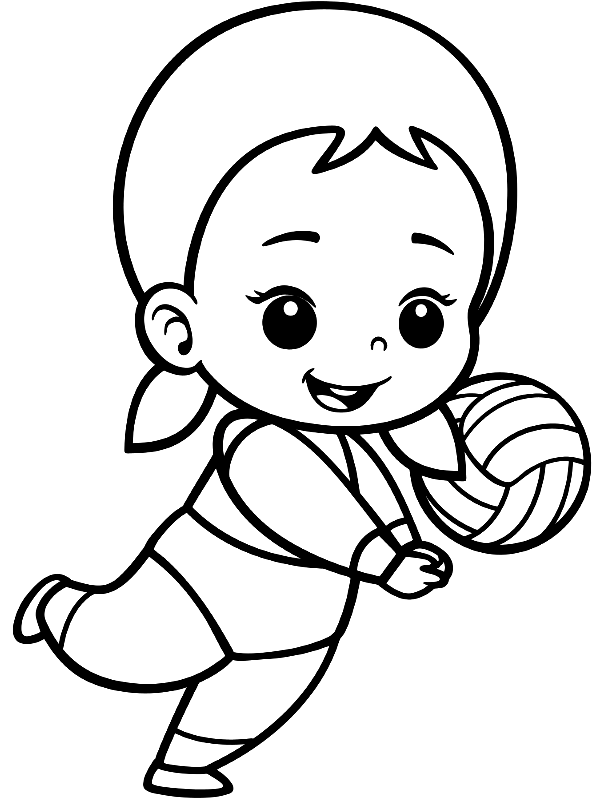
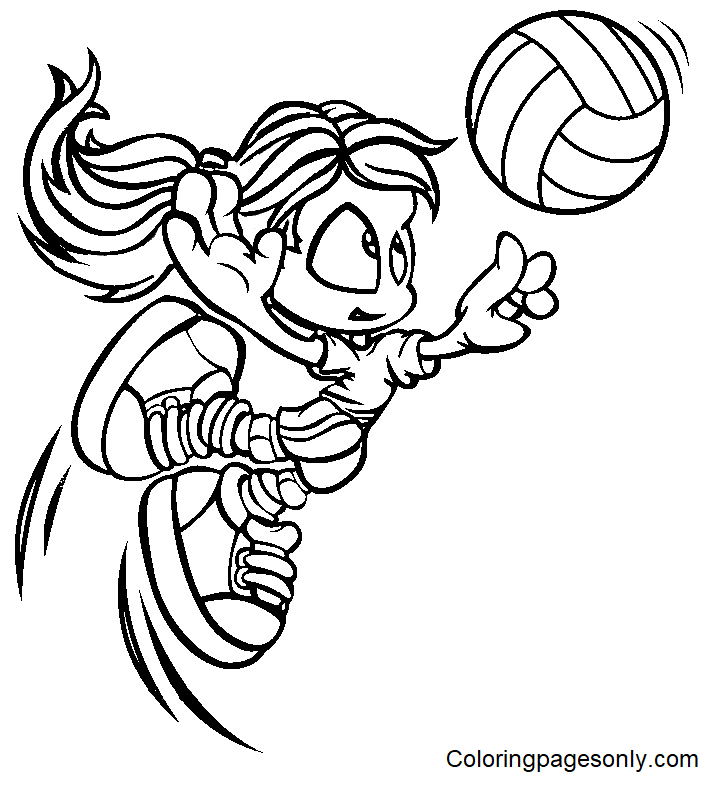
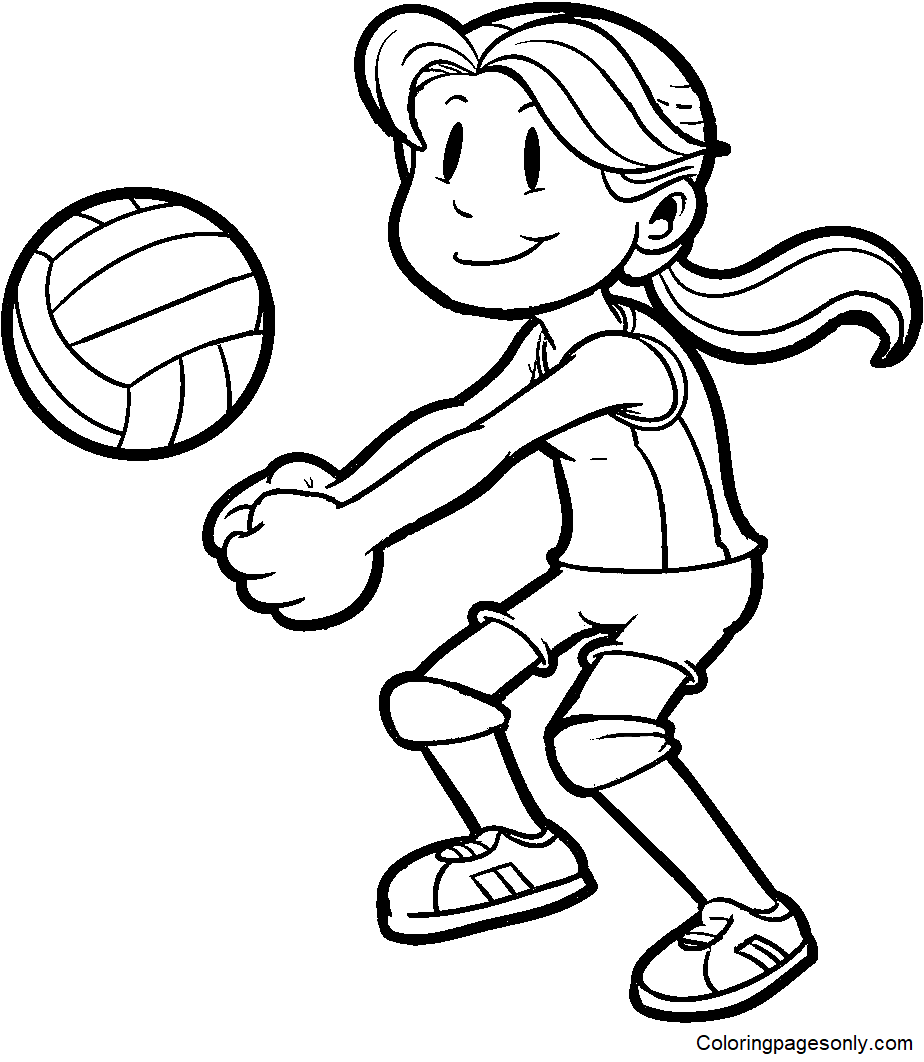
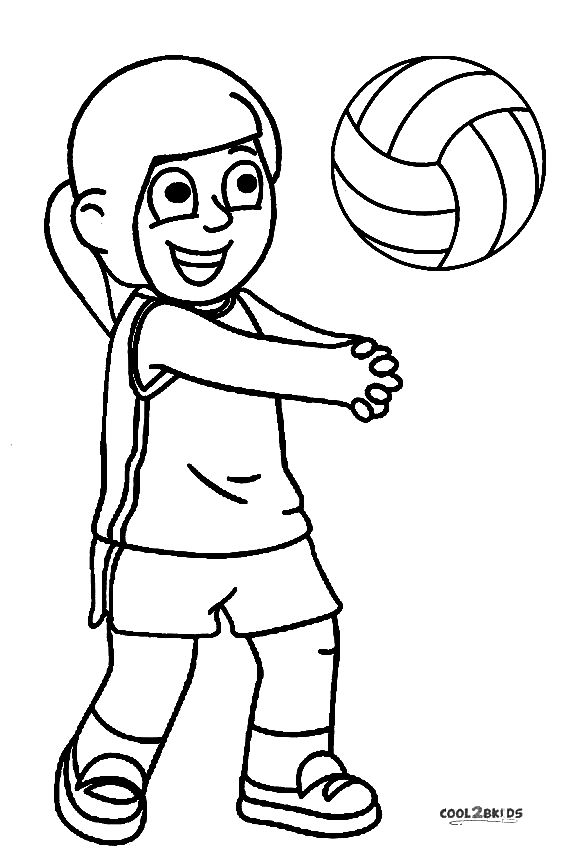
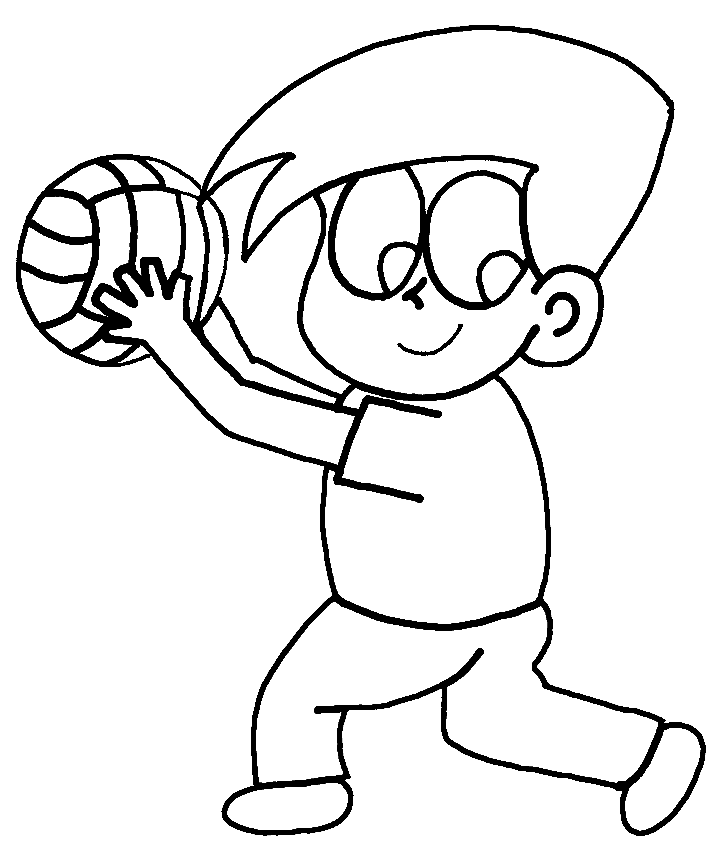
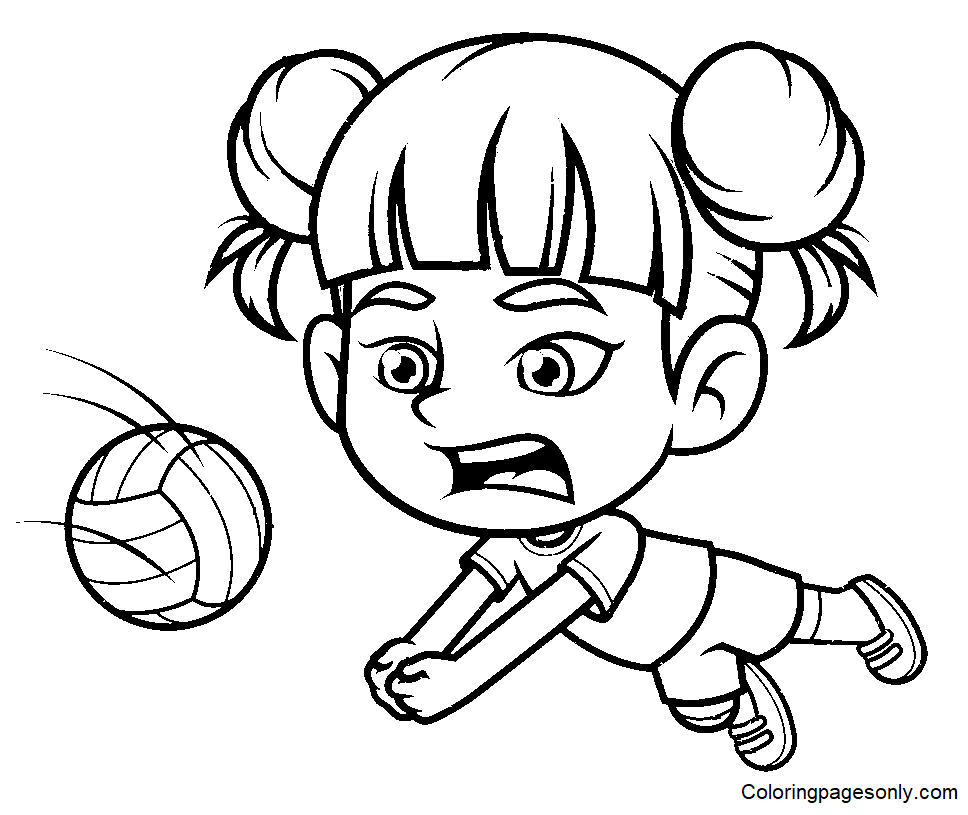
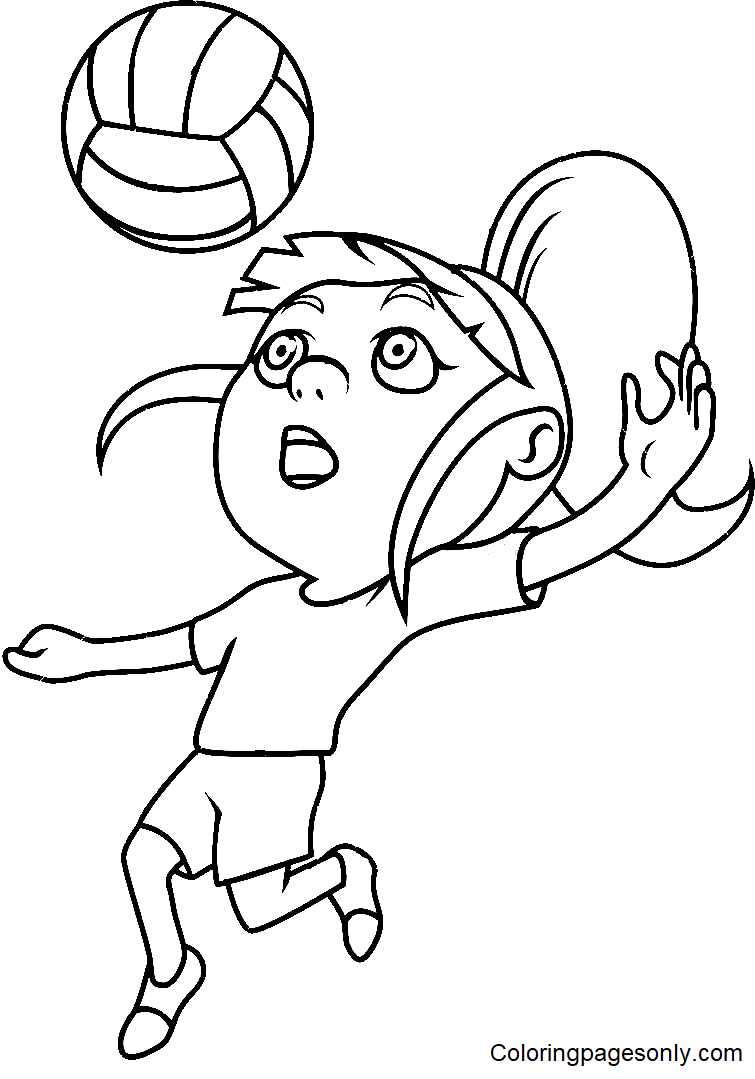
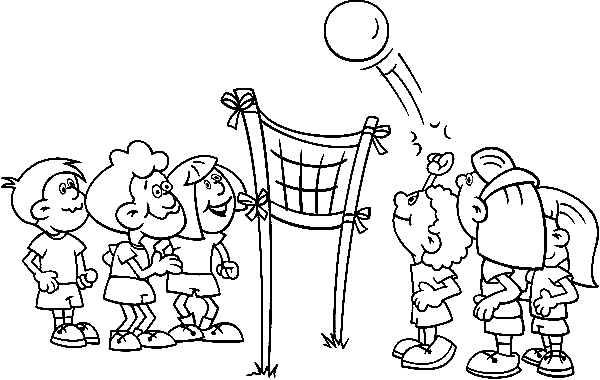
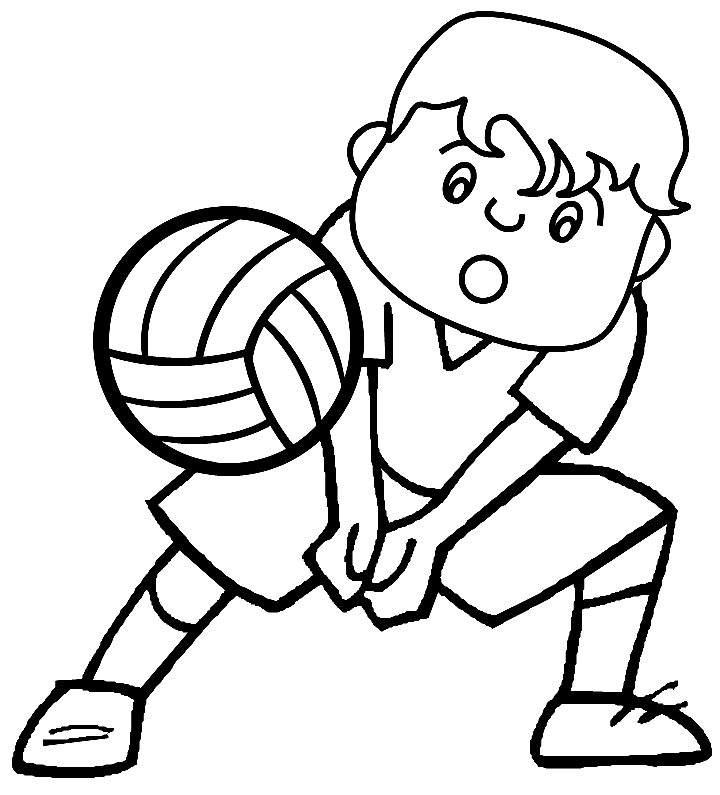
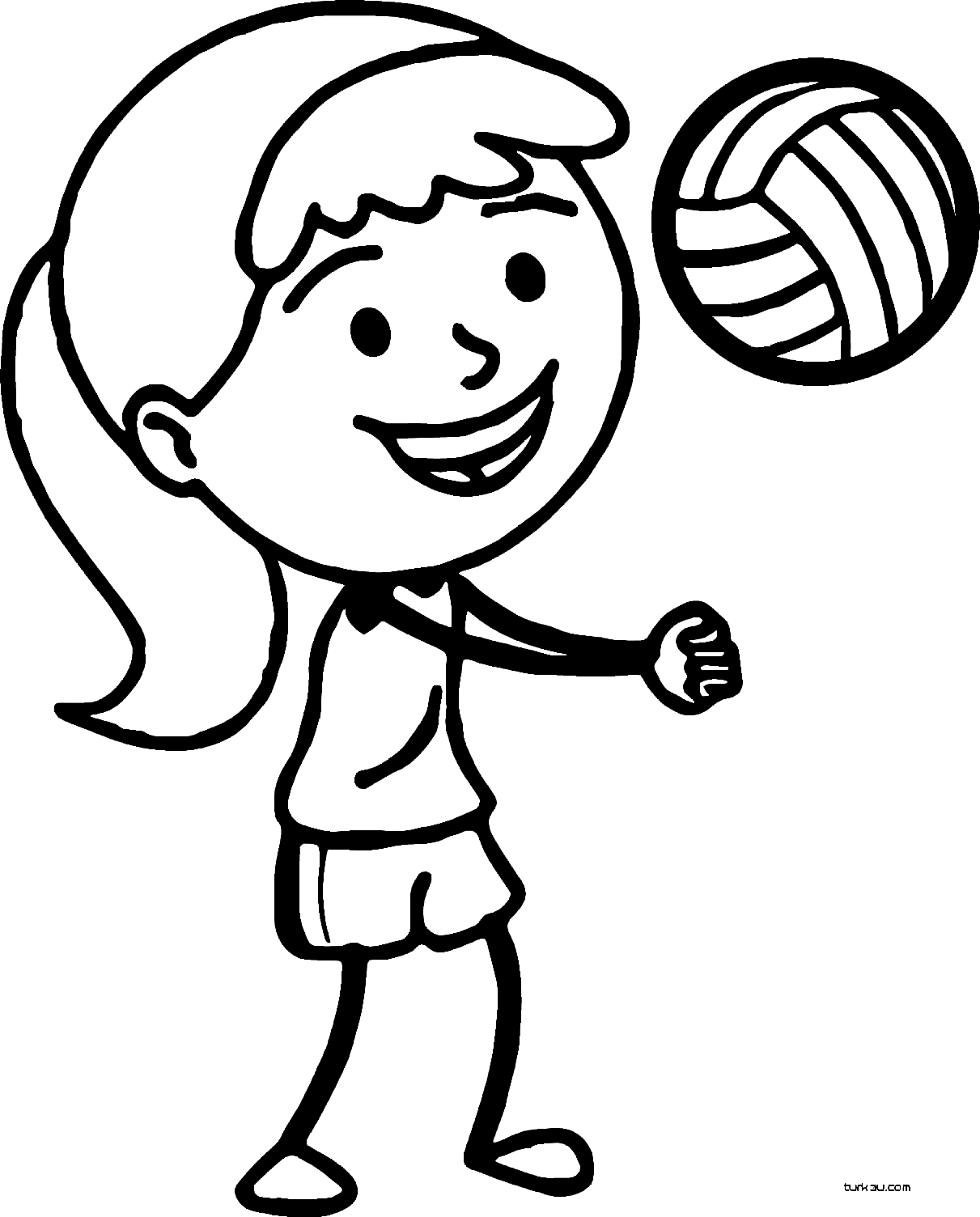
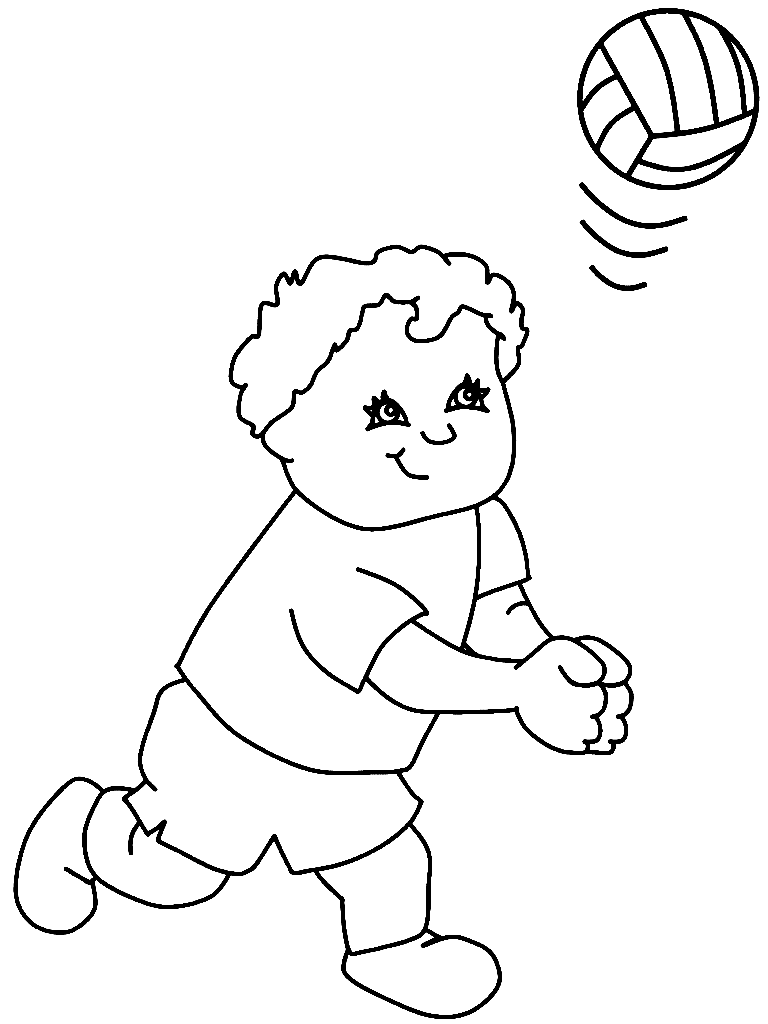
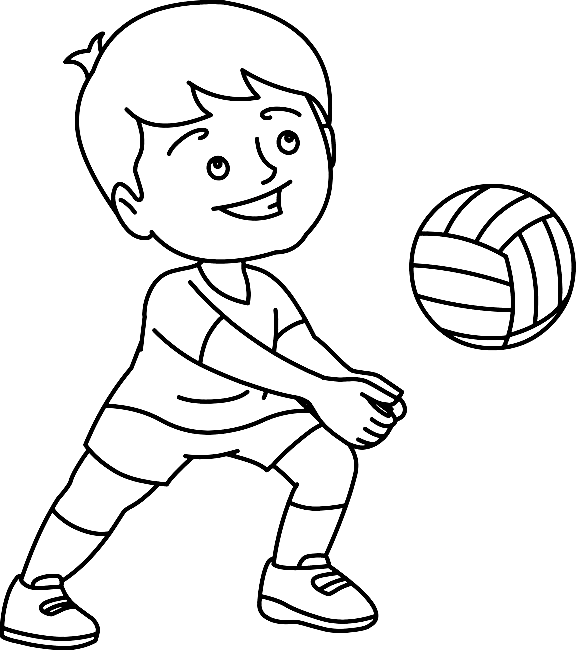
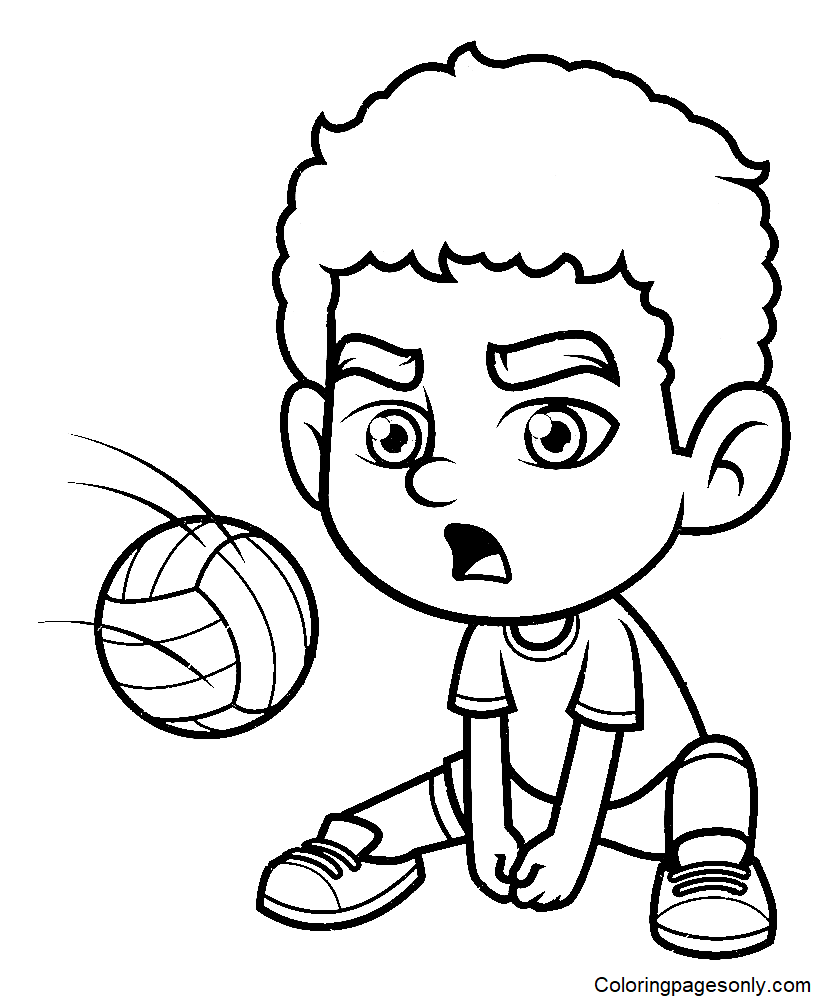
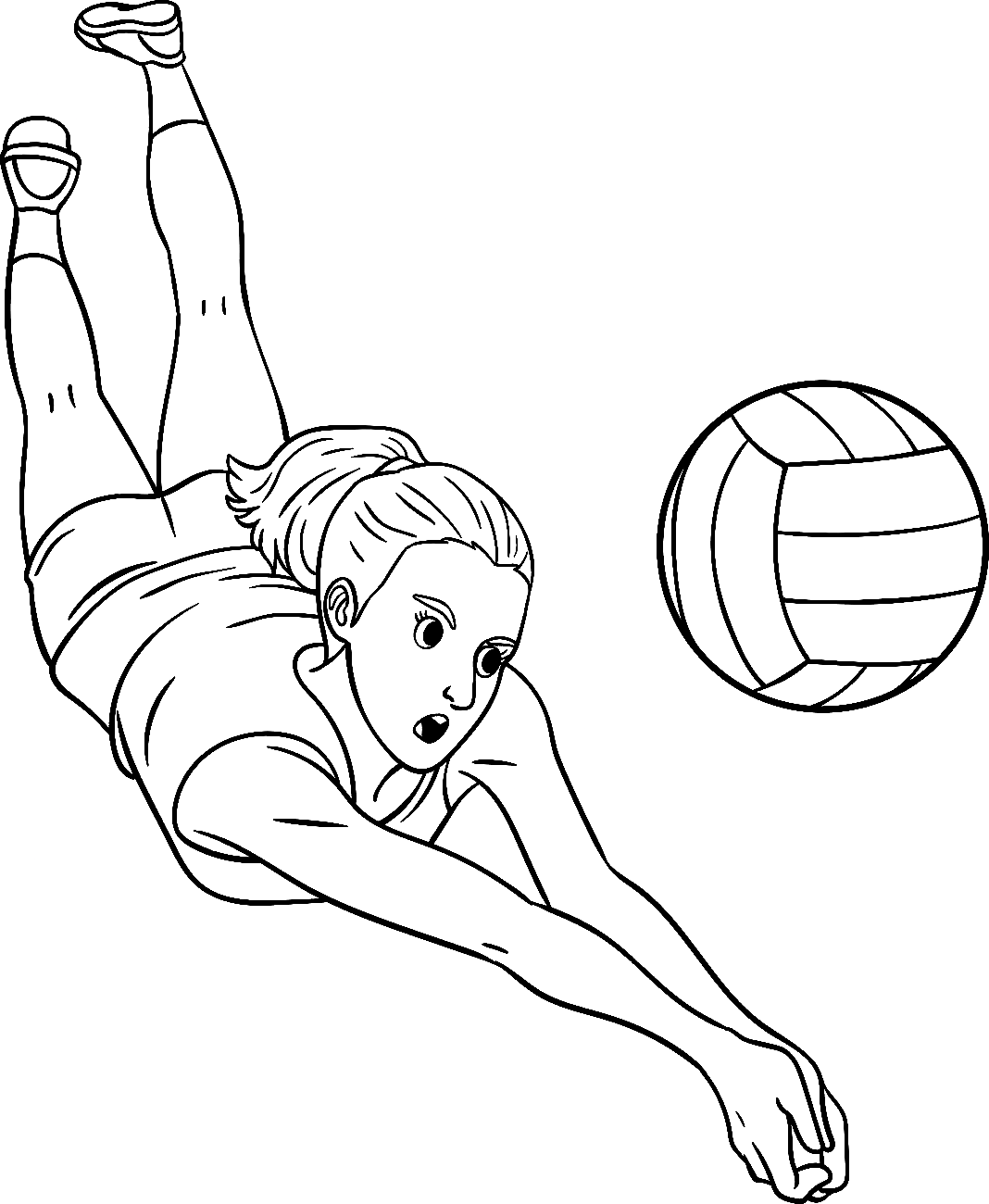
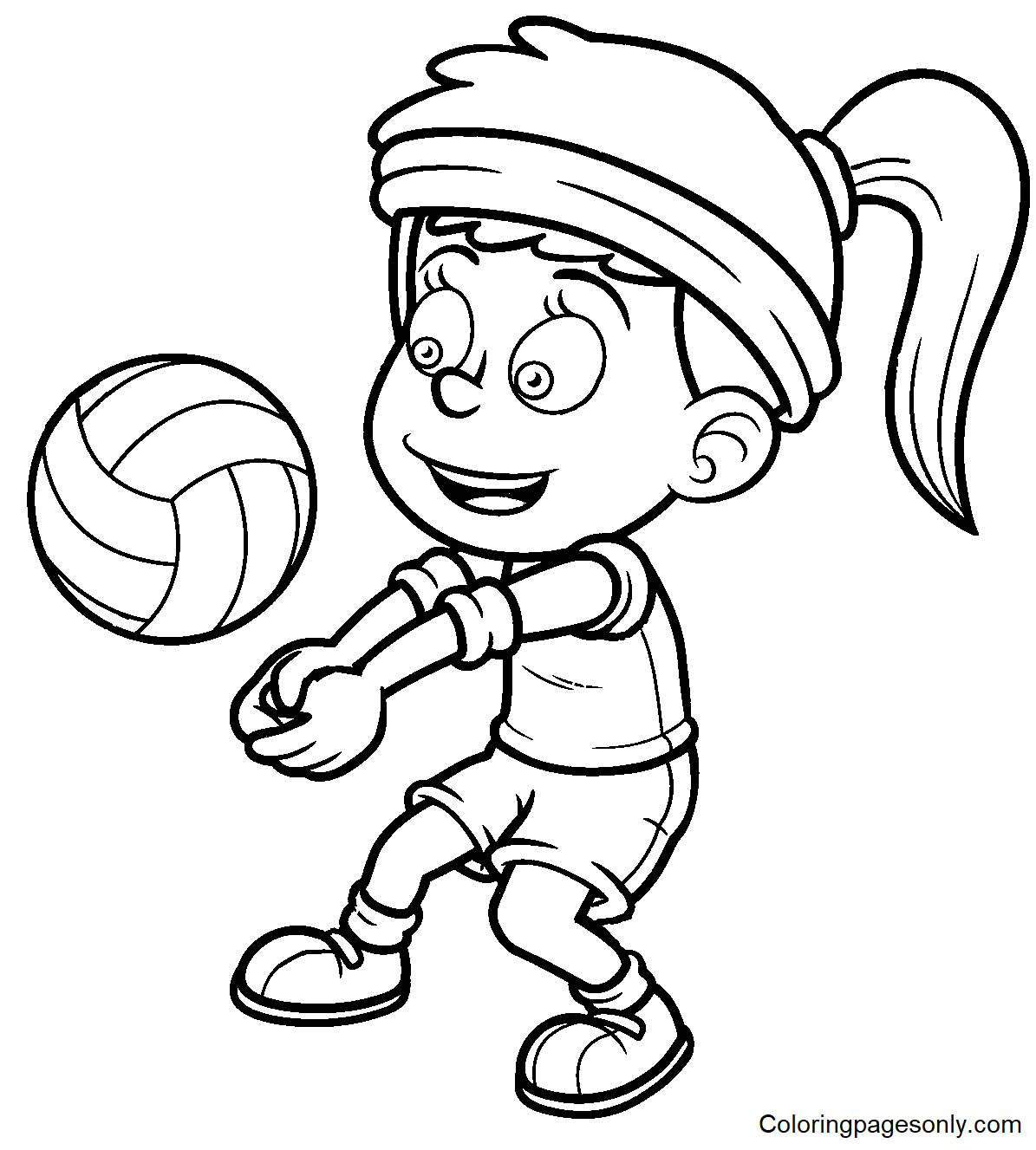
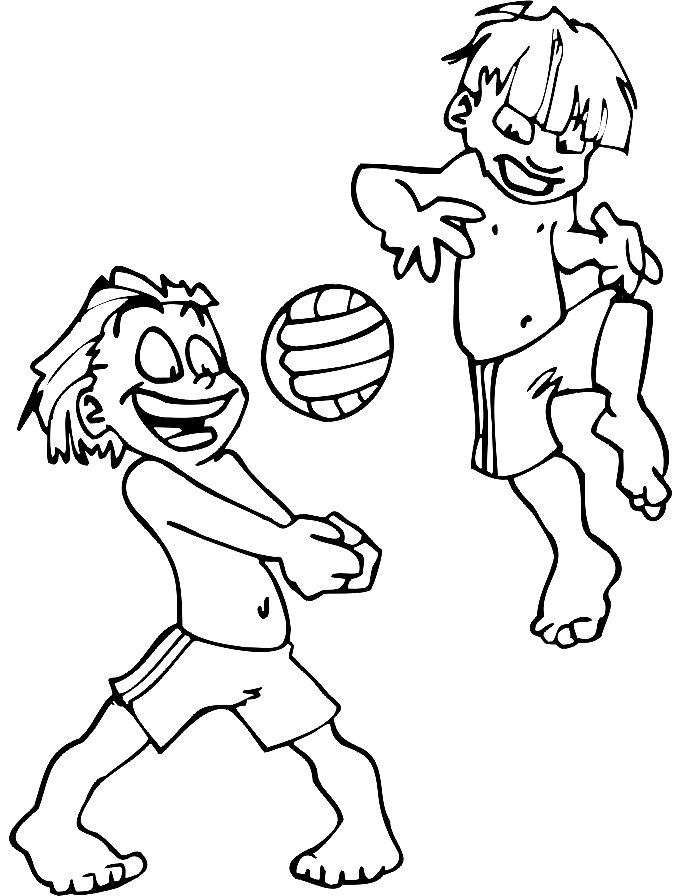
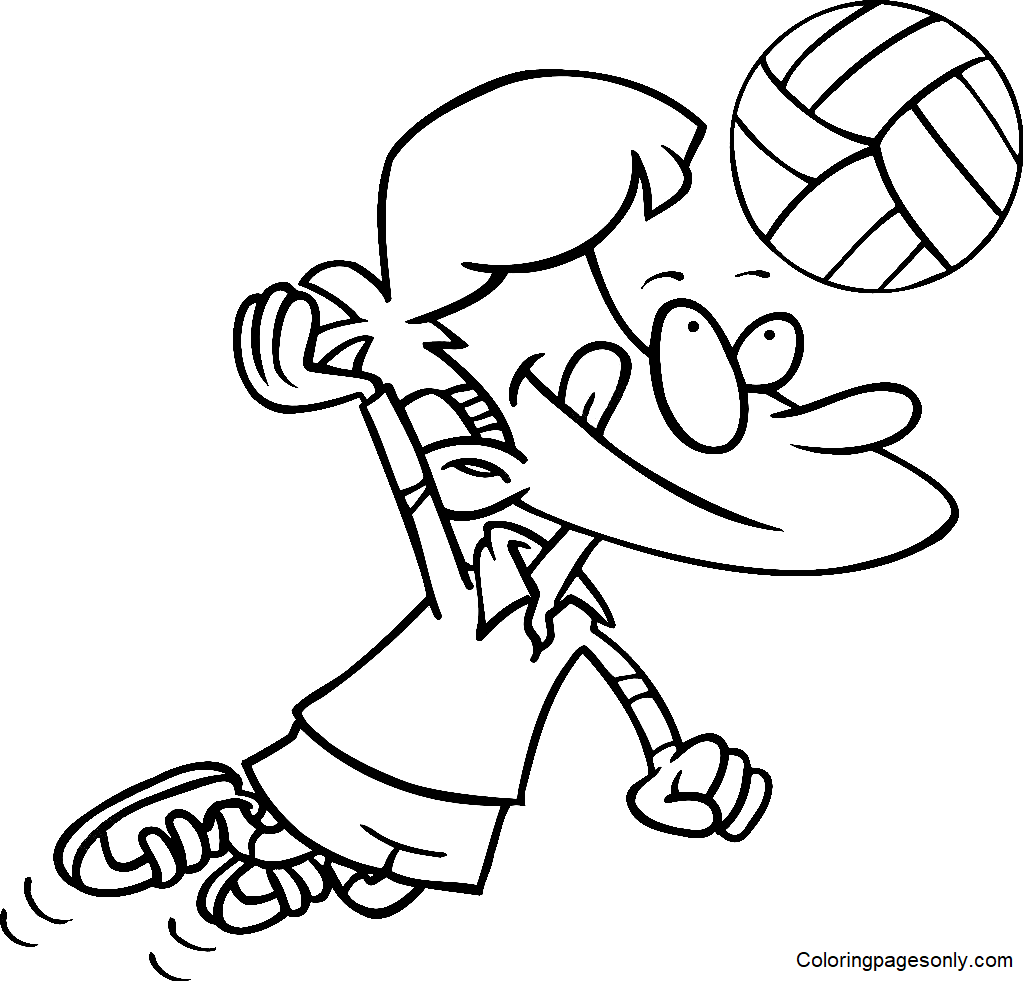
By far the largest group in the set: a child’s first game, a general player mid-action, and a long run of happy, funny, and simply generic portraits built around one figure.
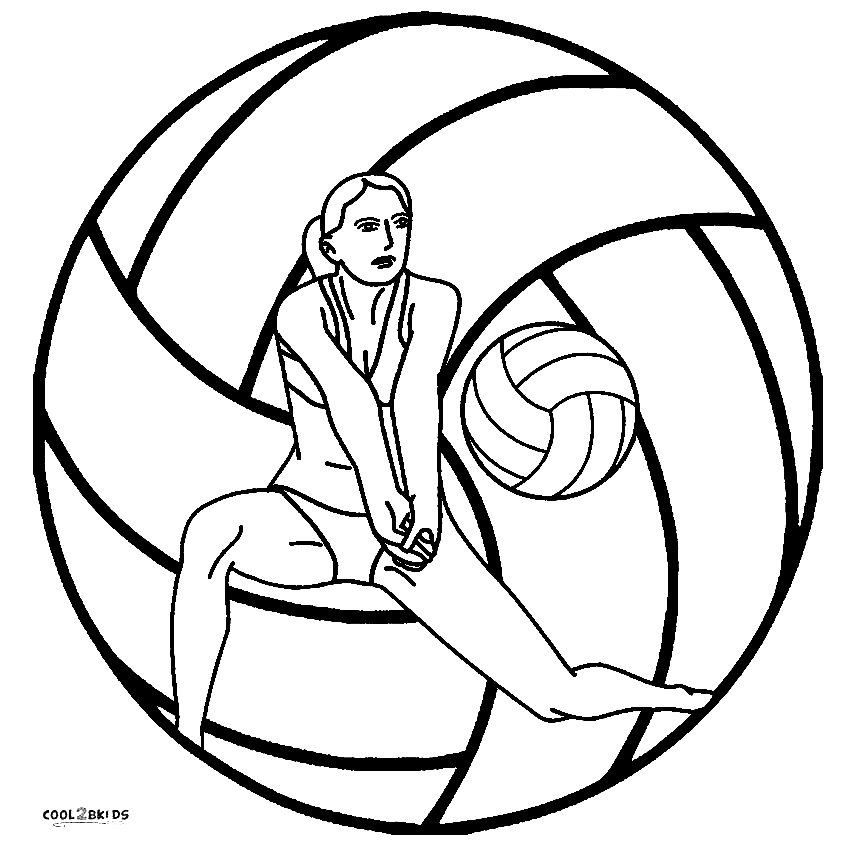
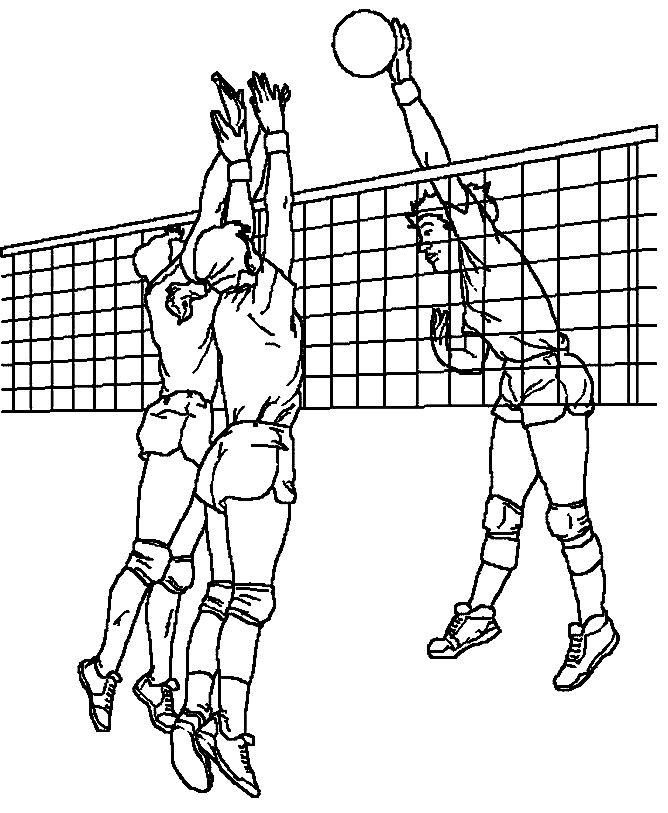
Here’s the detail that actually matters on these pages: which touch is being shown. A dig uses flat, joined forearms low to the ground. A set uses spread fingers curved above the head. A spike uses one arm fully extended, hand open or fisted at the top of a jump. Match the hand and arm shape to whichever action the page is actually drawing, rather than defaulting to the same generic raised arm every time.
Indoor Court and Beach Scenes
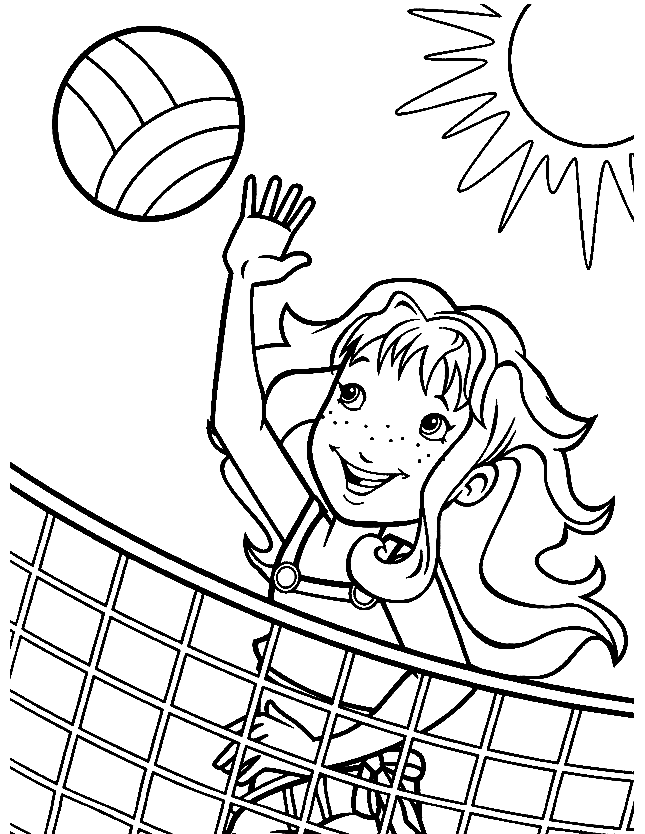
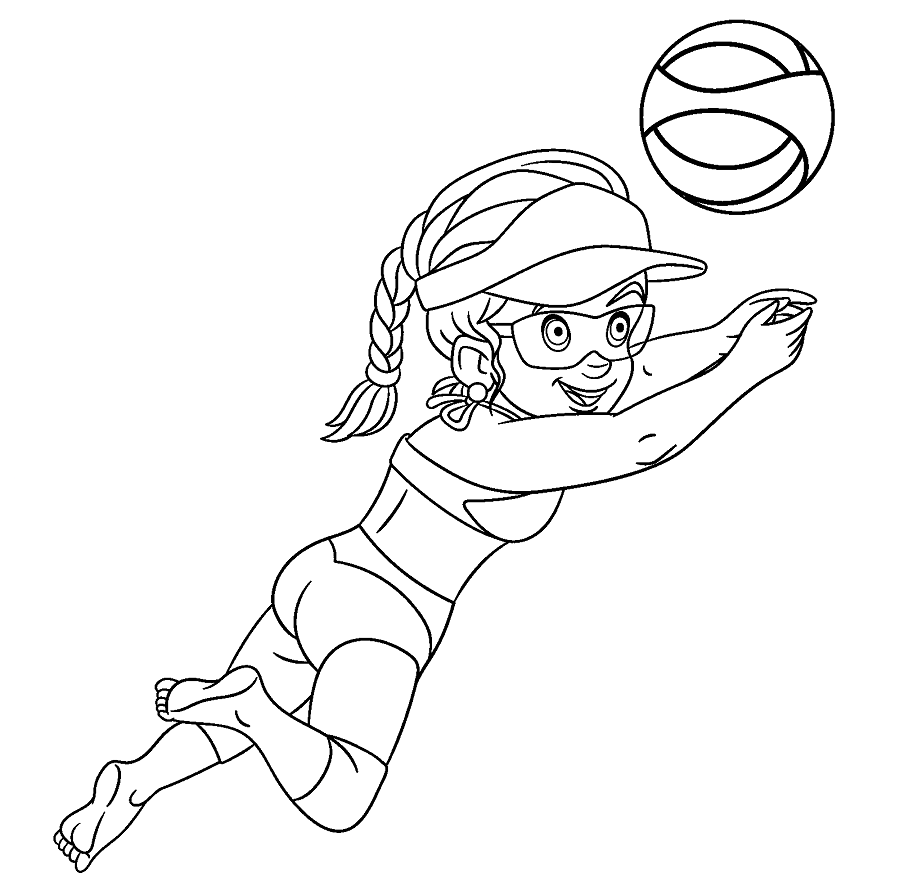
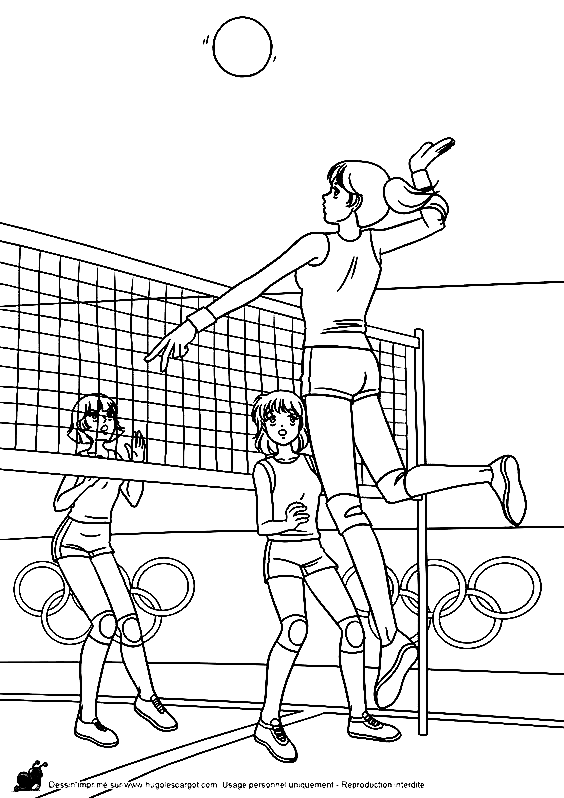
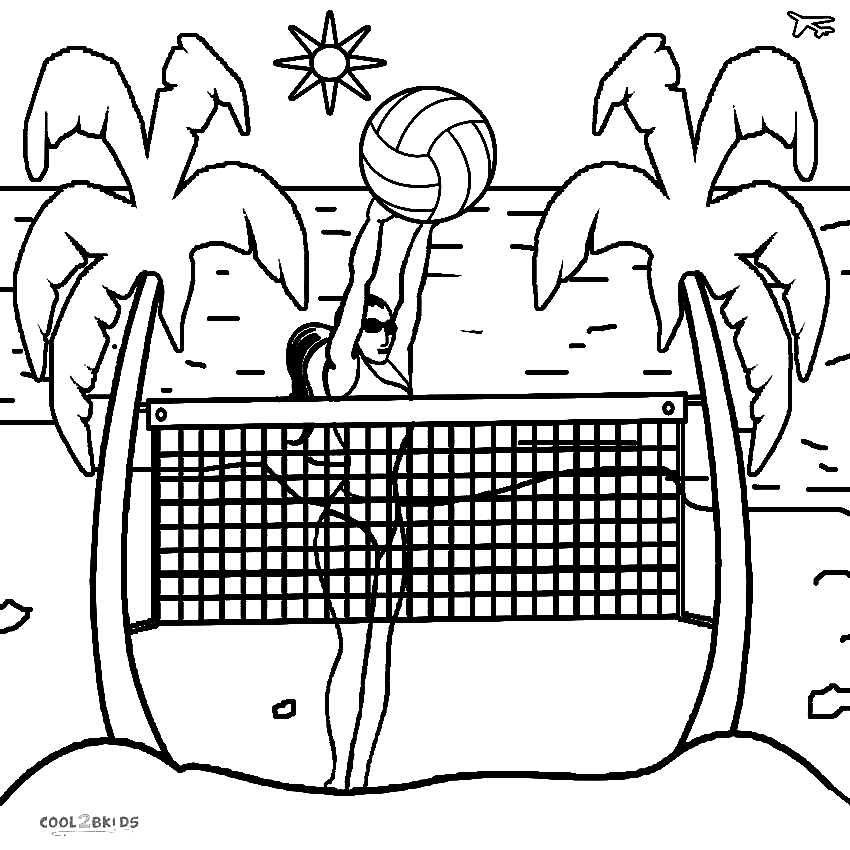
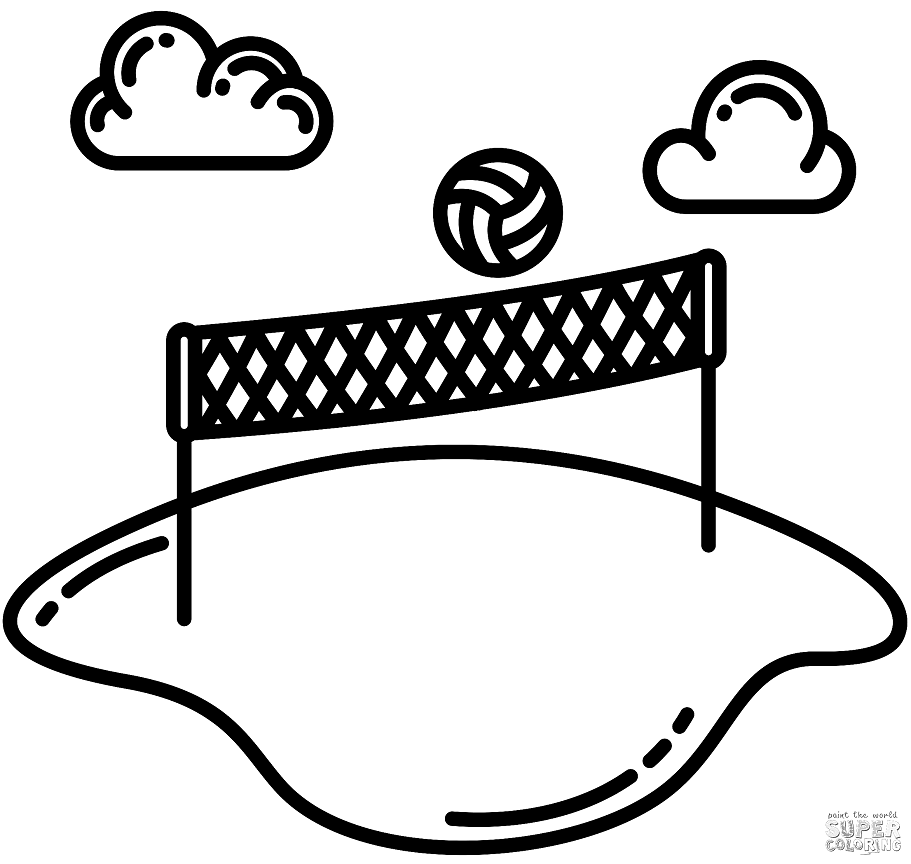
Two very different surfaces show up here: a polished indoor court with painted lines, and open beach sand with no fixed lines at all, plus at least one page tied directly to the Olympics.
The court itself carries most of the storytelling. A clean, geometric floor with crisp painted boundaries reads as indoor competition; warm, uneven sand tones with a looser, more relaxed color palette reads as beach volleyball, which has been an Olympic sport for a much shorter stretch of history than its indoor counterpart.
Character Crossovers
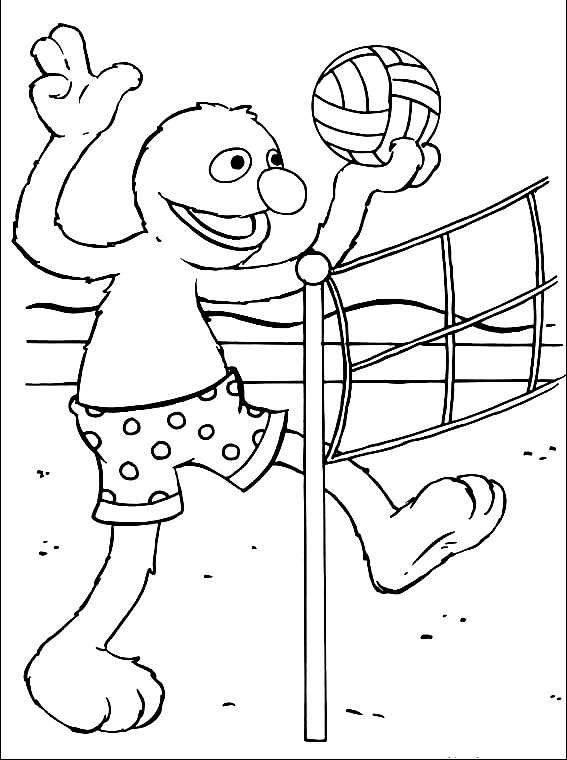
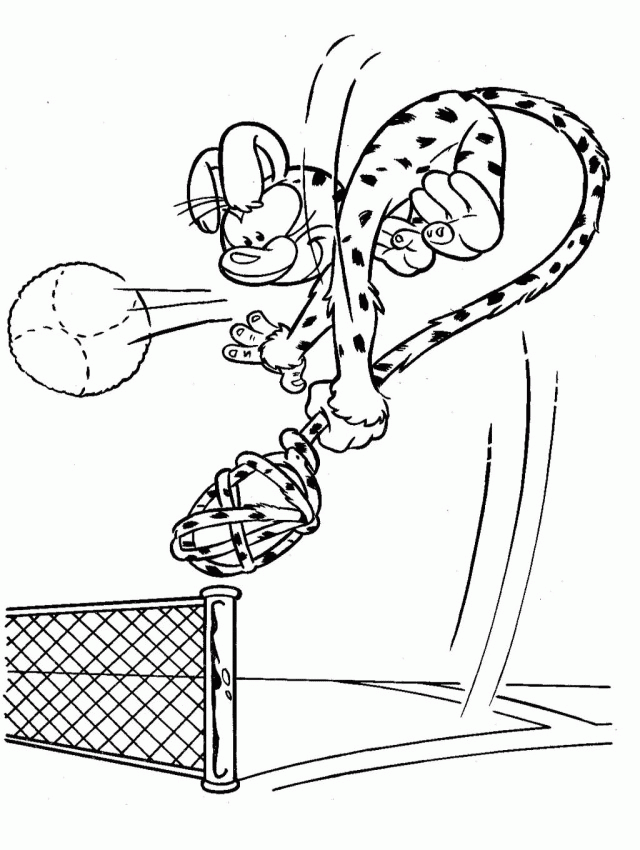
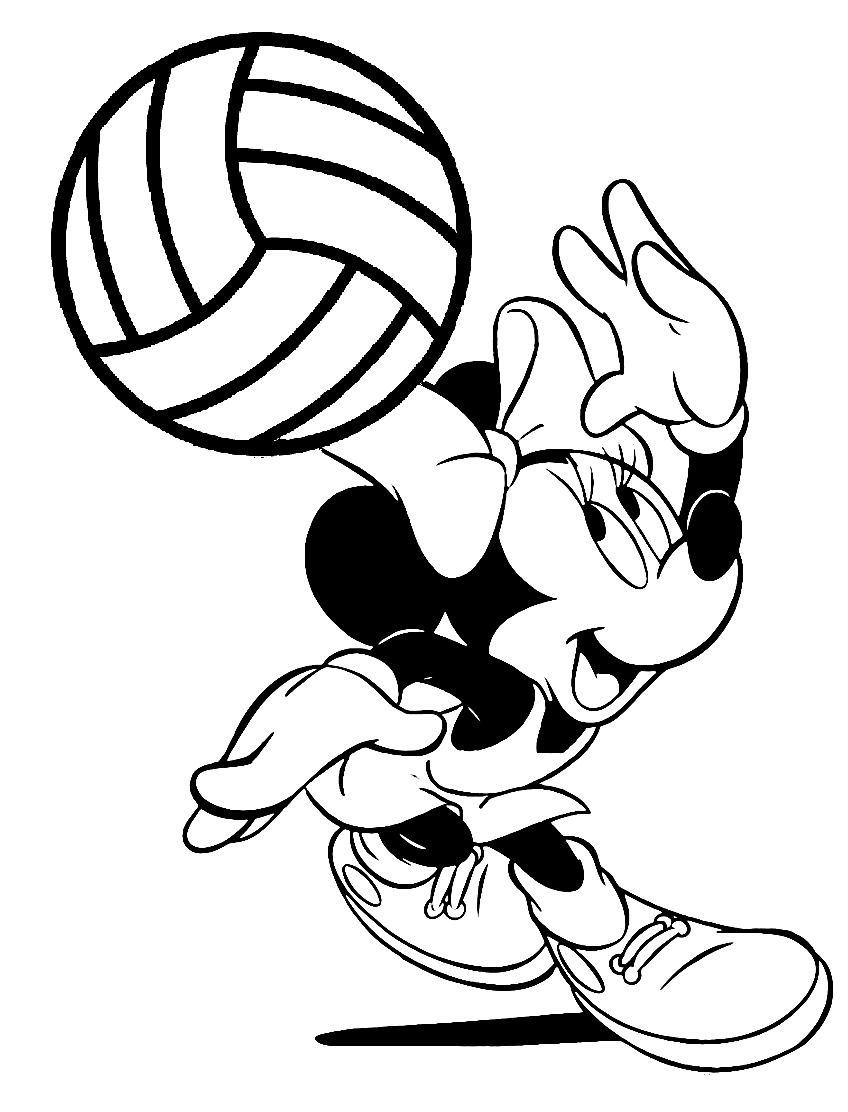
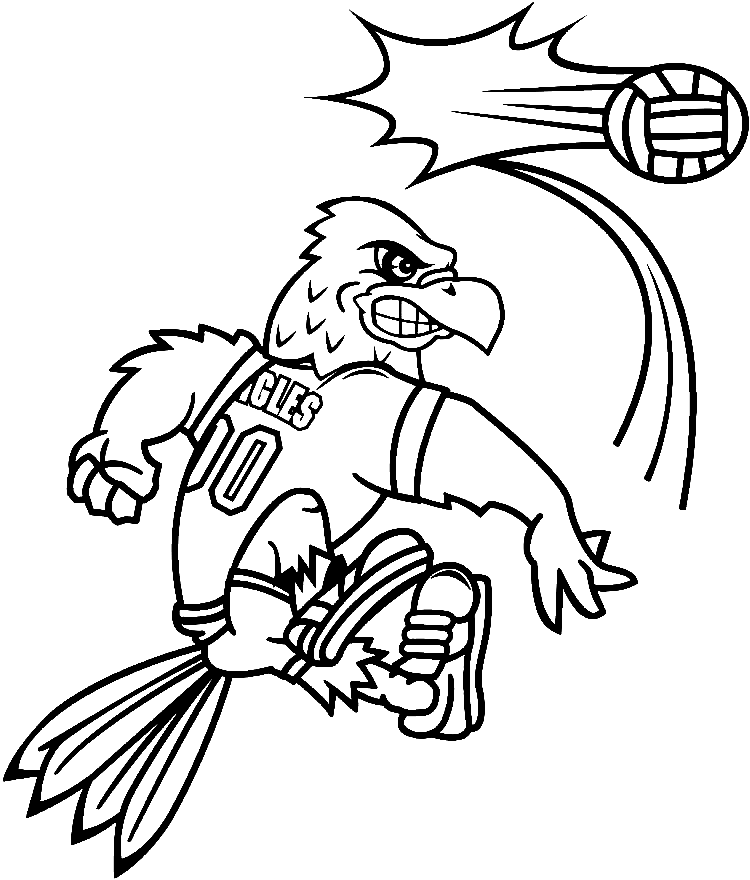
A small, purely playful trio closes out the set, familiar characters picking up the game for a lighter take entirely separate from the realistic portraits above.
Keep each character’s own established colors intact here. The point of these pages isn’t accuracy to the sport; it’s a quick, fun crossover, so there’s no touch-type or net-height rule to worry about.
What These Pages Do
Volleyball’s own history splits neatly in two, and this set reflects that split honestly rather than treating the sport as one uniform thing: an indoor game invented in 1895 and an Olympic sport since 1964, alongside a beach version that didn’t reach the Olympics until 1996. A single collection built around both versions carries more real history than most single-discipline sports sets can offer.
Fine motor development gets a genuinely varied workout here, too. The American Academy of Pediatrics has pointed to structured coloring as a genuine contributor to fine motor development in children roughly between the ages of two and seven. This set’s three distinct hand and arm shapes, the flat forearms of a dig, the curved fingers of a set, the extended reach of a spike, ask for three different kinds of careful linework rather than one repeated pose colored over and over.
There’s a subtler benefit tied to how volleyball actually works as a team sport. Art Therapy Practitioners have noted that coloring a scene where one figure has a clear, individual moment within a larger group, rather than blending into it, can feel quietly affirming, a small reminder of being both part of something and still seen on your own. A volleyball page showing one player mid-spike while teammates wait nearby is exactly that kind of scene.
Real vocabulary rounds it out. A child who can name a dig, a set, and a spike, or explain why the beach and indoor games have different Olympic histories, has picked up more than a casual “hit the ball over the net” understanding of the sport.
How to Color Volleyball Coloring Pages
Match the hand shape to the touch being shown. Flat, joined forearms mean a dig. Spread, curved fingers above the head mean a set. A fully extended arm with an open or fisted hand means a spike. Getting this right is the single most accurate thing you can do on a player portrait.
Use a yellow, blue, and white split for a modern-looking ball. That tri-color panel design is what most people picture when they think of a real volleyball, distinct from the black-and-white pattern of a soccer ball or the plain colors of a basketball.
Let the surface tell you which version of the sport you’re coloring. Crisp, geometric court lines mean indoor volleyball. Warm, uneven sand with no fixed boundary lines means beach volleyball.
Set the net a little lower for a women’s match, a little higher for a men’s match. It’s a small, easy-to-miss detail, but it’s a genuine rule of the sport rather than an artistic choice.
5 Creative Craft Ideas with Volleyball Coloring Pages
Indoor Versus Beach Comparison
Take a court scene and a beach scene and color them side by side, keeping the two surfaces as different from each other as they actually are, crisp lines against loose sand. About twenty minutes, and the comparison does most of the explaining on its own.
Three Touches Study
Color three separate player portraits, giving one the flat forearms of a dig, one the curved fingers of a set, and one the extended reach of a spike. Label each with its name underneath. Twenty minutes for a genuinely useful little reference set.
Tri-Color Ball Study
Spend real, careful time on just the ball page, keeping the yellow, blue, and white panels clean and evenly split. Ten minutes, and it’s a good one for a child who likes a smaller, more contained project.
Team Photo
Pick one of the group scenes and give every player on it matching jersey colors, the way an actual team photo would look. Fifteen minutes, and it turns a generic group page into something that reads like a real roster.
Character Crossover Corner
Color the character crossover pages together and keep them visibly separate from the realistic portraits elsewhere in the display. Ten minutes, kept the light on purpose.
FAQ About Volleyball Coloring Pages
Are these volleyball coloring pages free, and can I color them online?
Yes. Every page is free, with no account, email, or payment required. Download the PDF to print at home, or open it in the online coloring tool to color on screen.
What age group are these volleyball coloring pages best suited for?
The general and kids’ portraits work well from age 3. The court, beach, and action pages, with more detail in the pose and setting, suit ages 5 and up. The character crossover pages work for any age, including adults looking for something lighter.
Why does the net height change in some volleyball matches?
Men’s competition uses a net set at 2.43 meters, while women’s competition uses 2.24 meters. It’s an official rule difference, not a casual variation, and it’s one of the more distinctive equipment rules in any ball sport on this site.
What’s the difference between indoor and beach volleyball?
Indoor volleyball is played with six players per side on a hard court with fixed boundary lines. Two players per side play beach volleyball on sand with no fixed lines. Indoor volleyball has been an Olympic sport since 1964; beach volleyball didn’t join the Olympics until 1996.
Who actually invented volleyball?
William G. Morgan, a YMCA instructor in Holyoke, Massachusetts, invented the game in 1895 as a lower-impact alternative to basketball. He originally called it Mintonette before the name volleyball took over.
Has volleyball always been part of the Olympics?
Indoor volleyball has been part of the Summer Olympics since 1964. Beach volleyball is much newer to the Games, joining the official program in 1996.
Are these pages based on a specific real team or brand?
No. The players, balls, and scenes are generic and inspired by the sport broadly, including its real rules and Olympic history. Still, they are not licensed by or affiliated with any specific team, league, or federation.
Can I use these pages for a volleyball club, PE unit, or birthday party?
Yes. Clubs use the general and court pages for youth recruitment and beginner lessons, PE teachers use the three-touch portraits to introduce basic vocabulary, and the character crossover pages work well as a lighter party activity.
Start Coloring
Download any page by clicking the design. No account, email, or payment is required. Pages print directly from the browser at full resolution or open in the online coloring tool for screen use. Share finished pages on Facebook or Pinterest using the share buttons at the top of each design page.