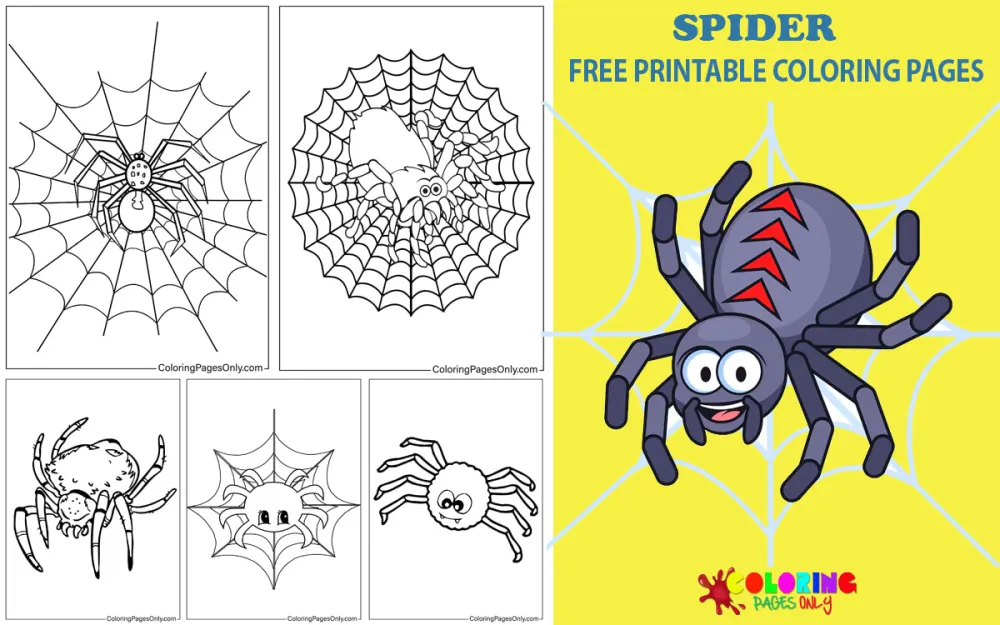
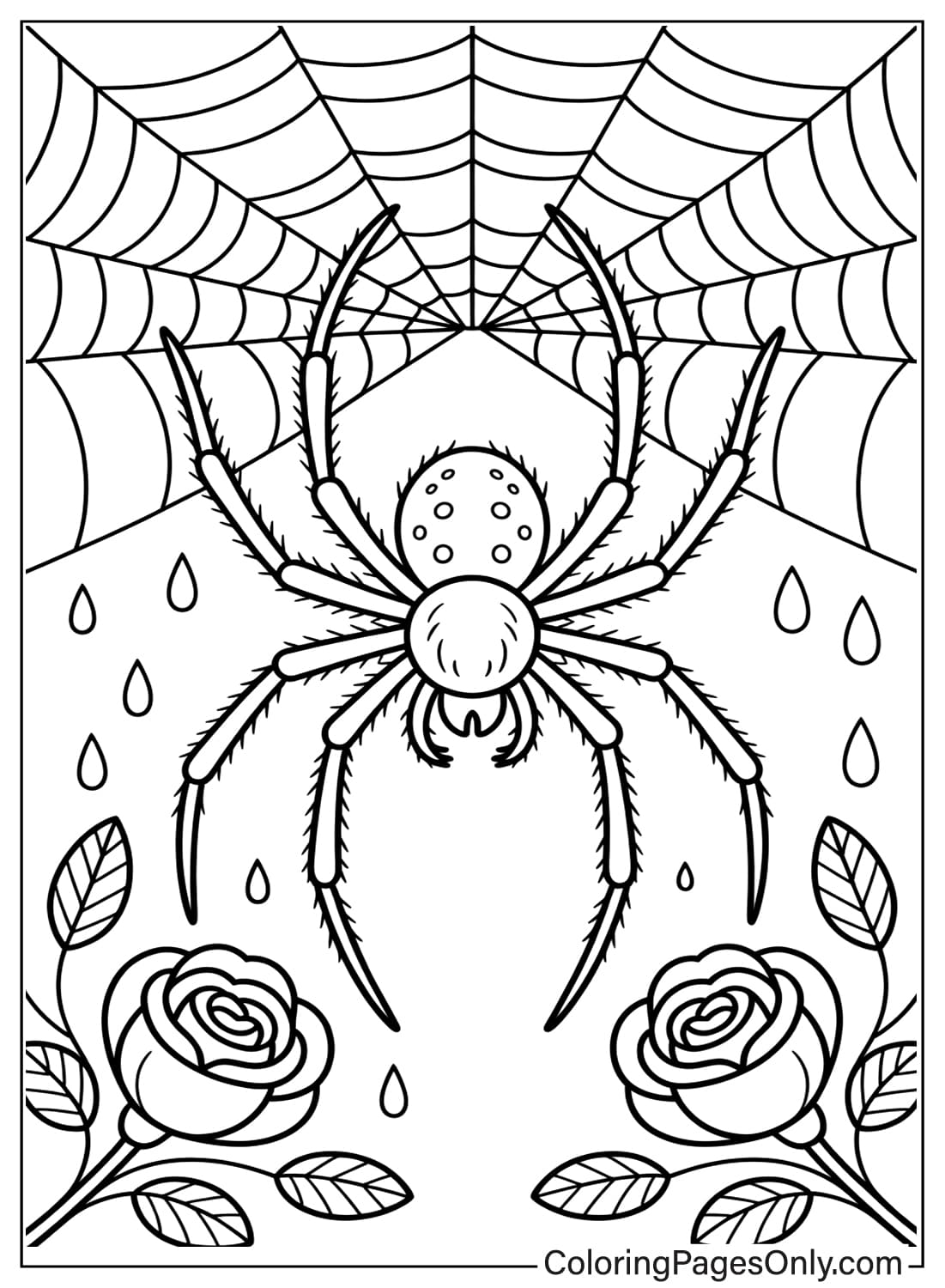
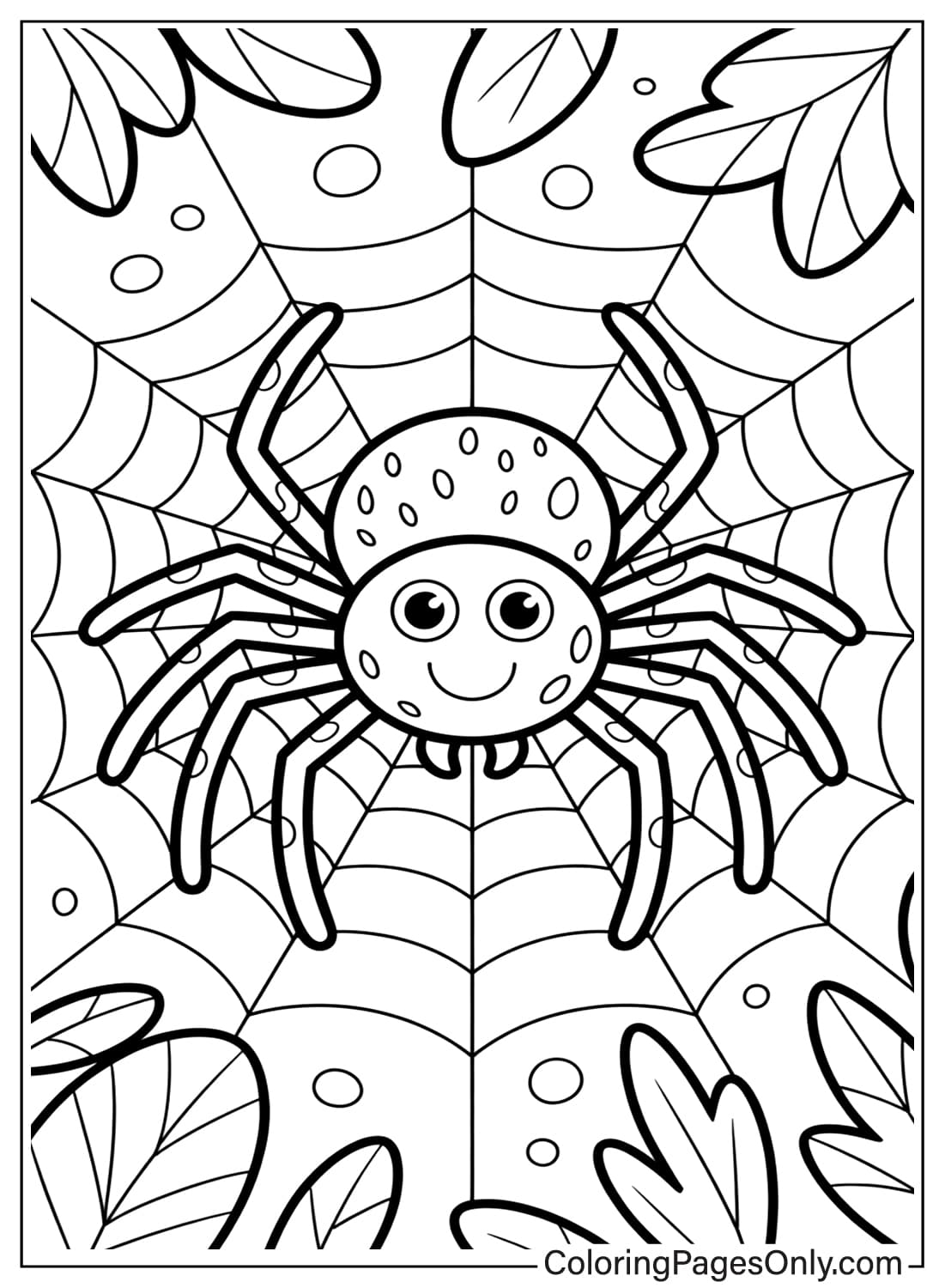
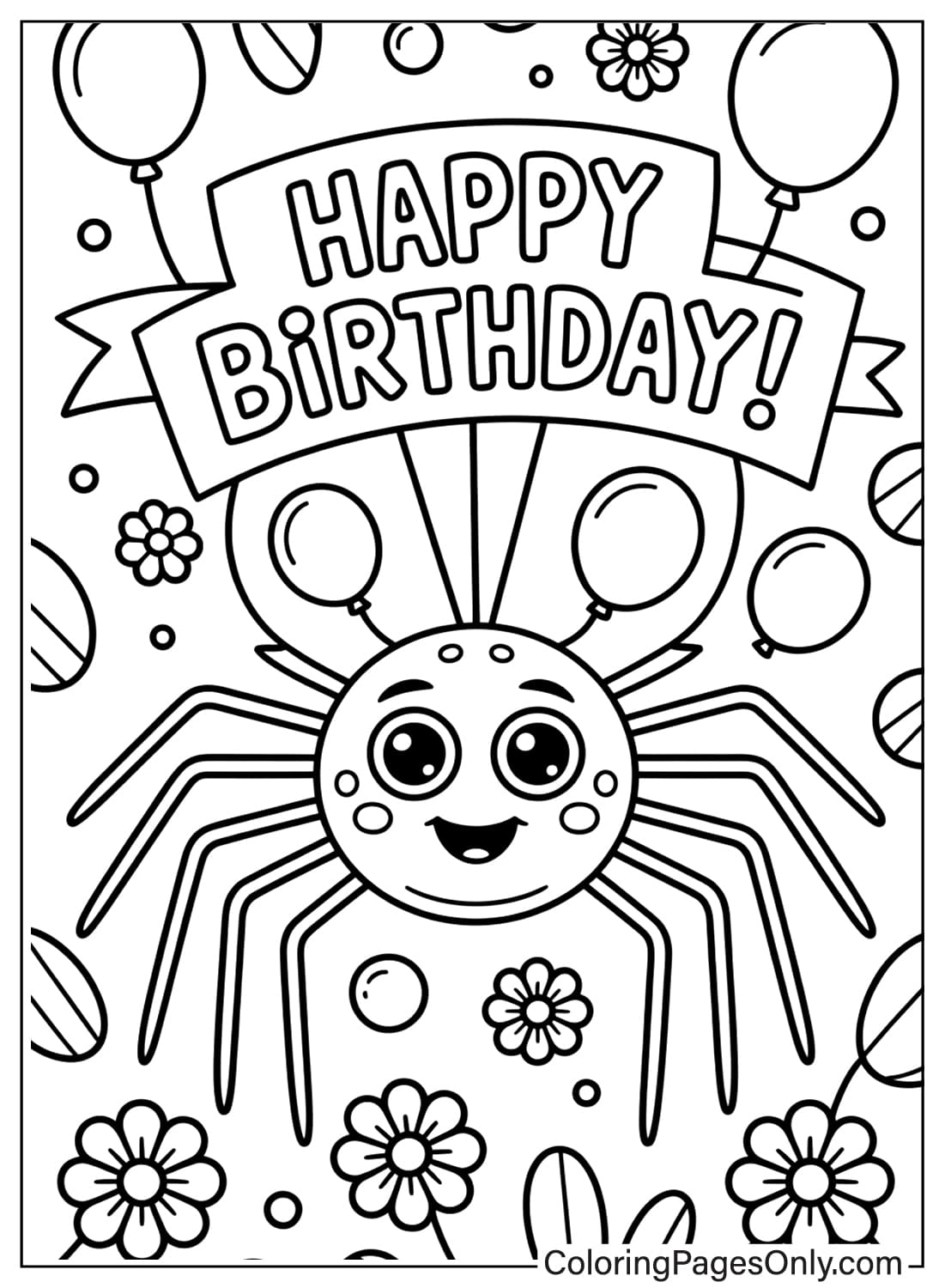
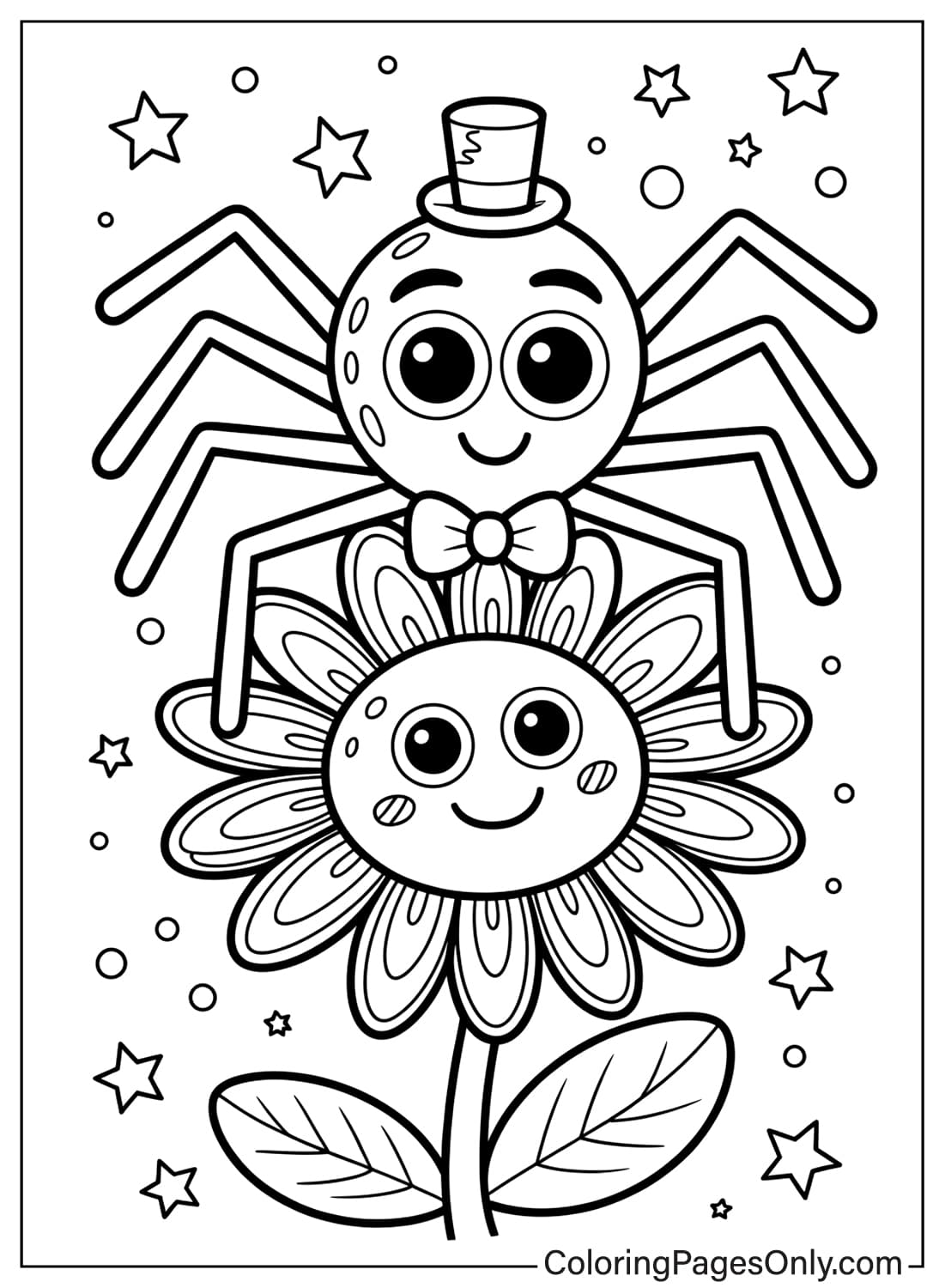
Free Spider Coloring Pages: 40 printable PDF designs featuring cartoon spiders, spider web scenes, and one realistic Black Widow design. Spiders are arachnids, not insects, built with eight legs and two body sections instead of the six legs and three body sections found on insects. Each page can be downloaded as a PDF to print or colored online in the browser.
Spiders live on every continent except Antarctica and fill an important role in nature by feeding on insects, including mosquitoes and flies. Most spiders build silk webs to catch food, though some, like jumping spiders, hunt without a web at all. Out of more than 45,000 known spider species, only a small number are dangerous to people, and the vast majority colorists will meet in a picture book, backyard, or coloring page are harmless.
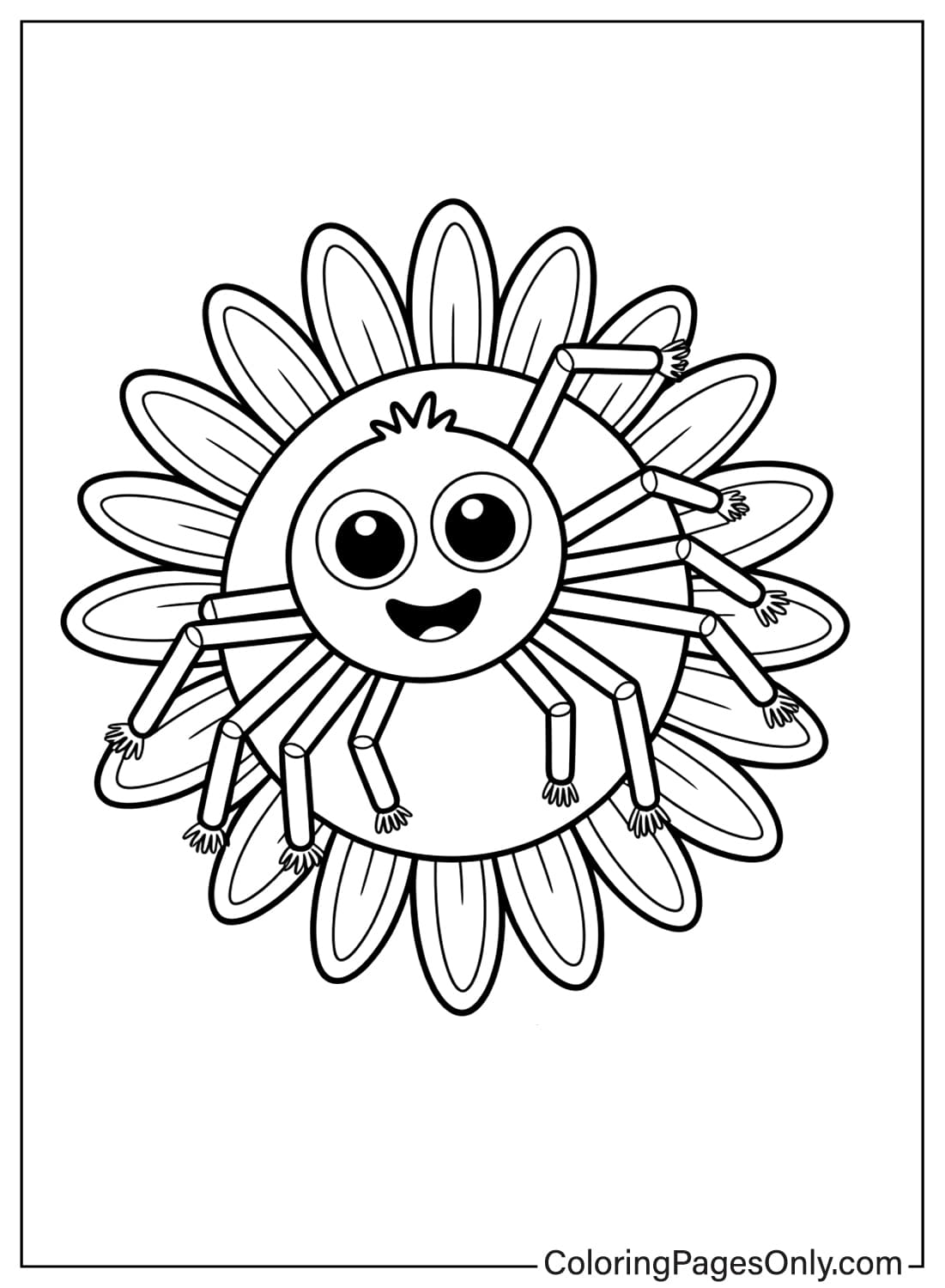
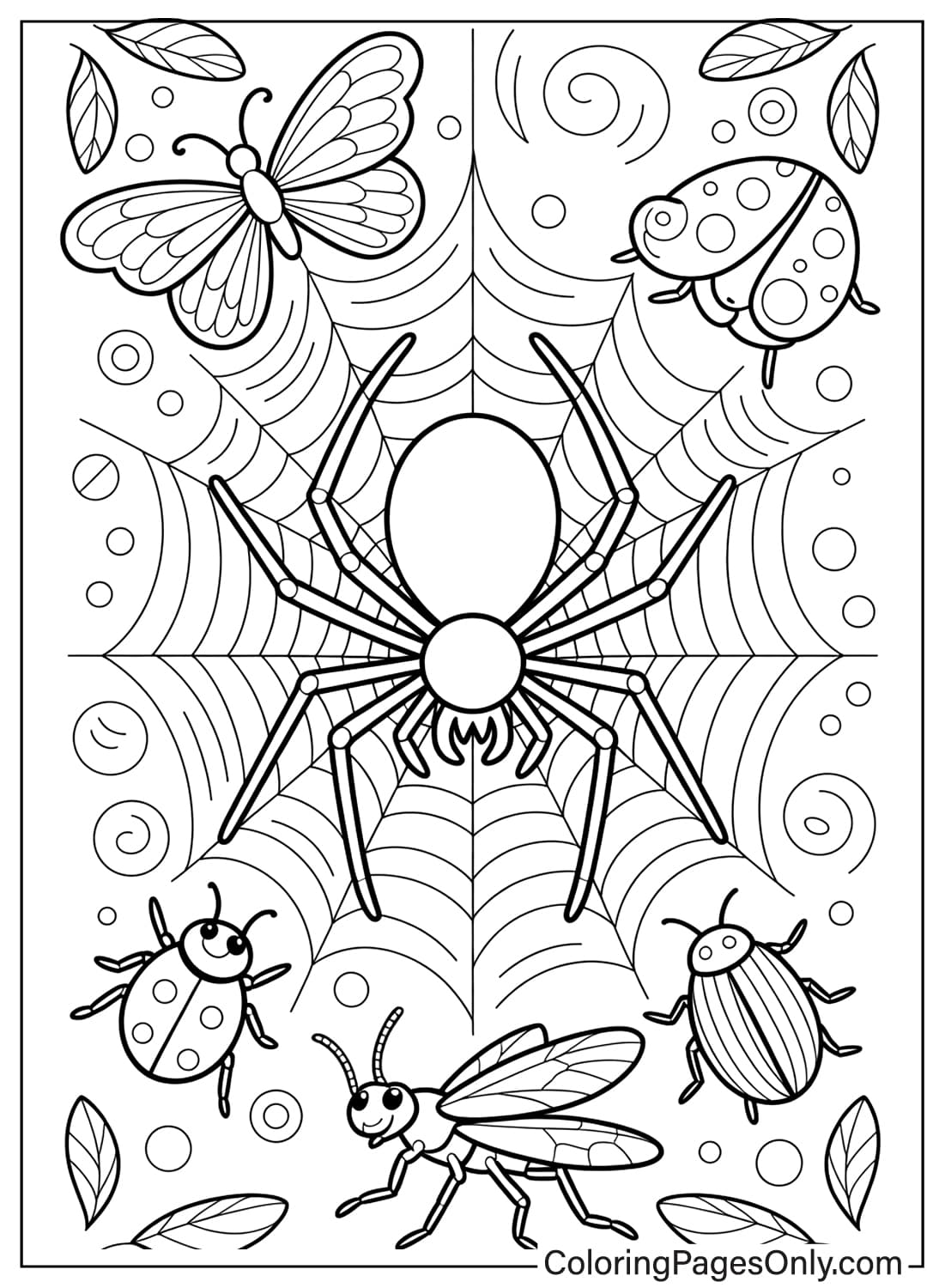
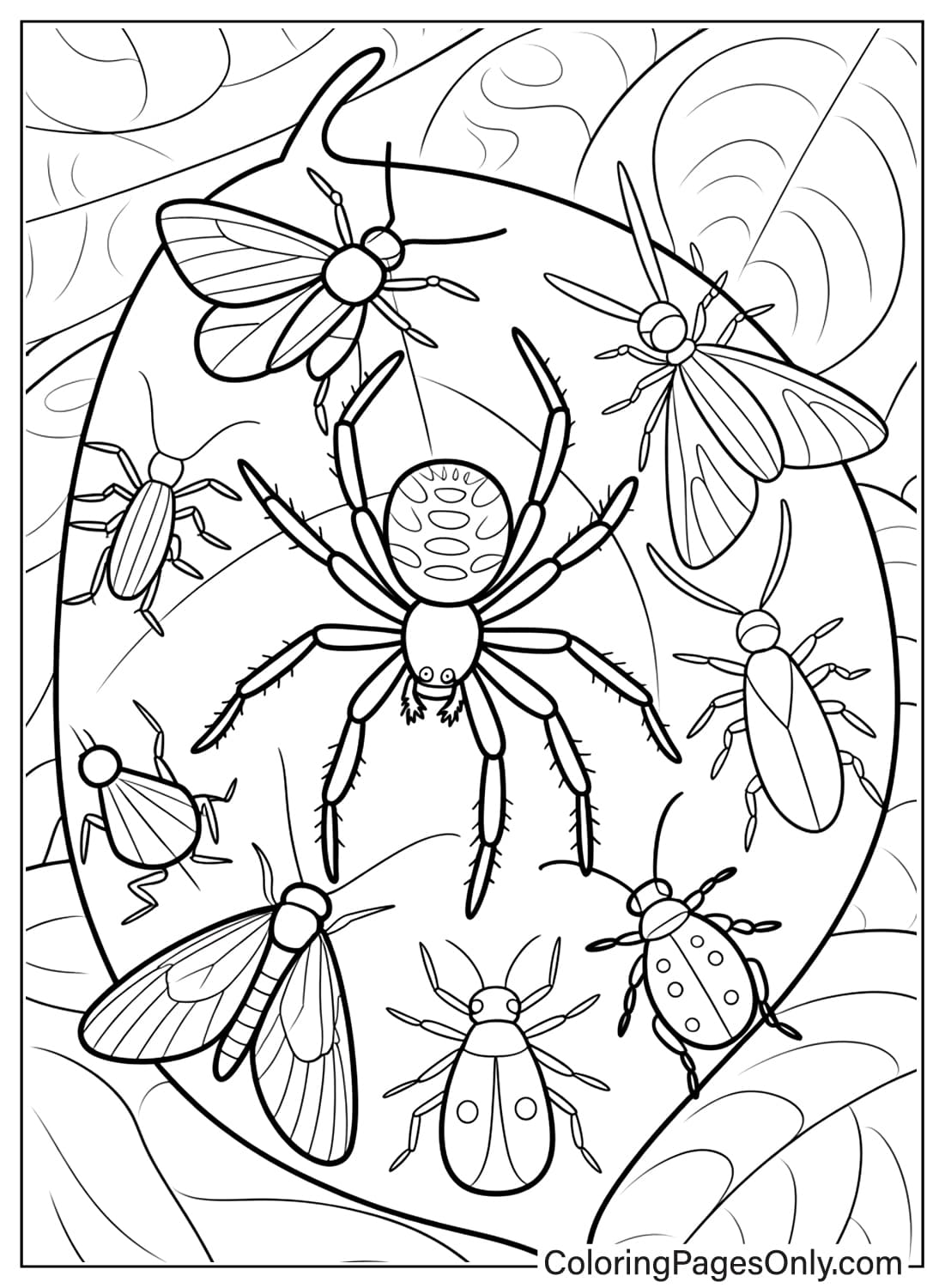
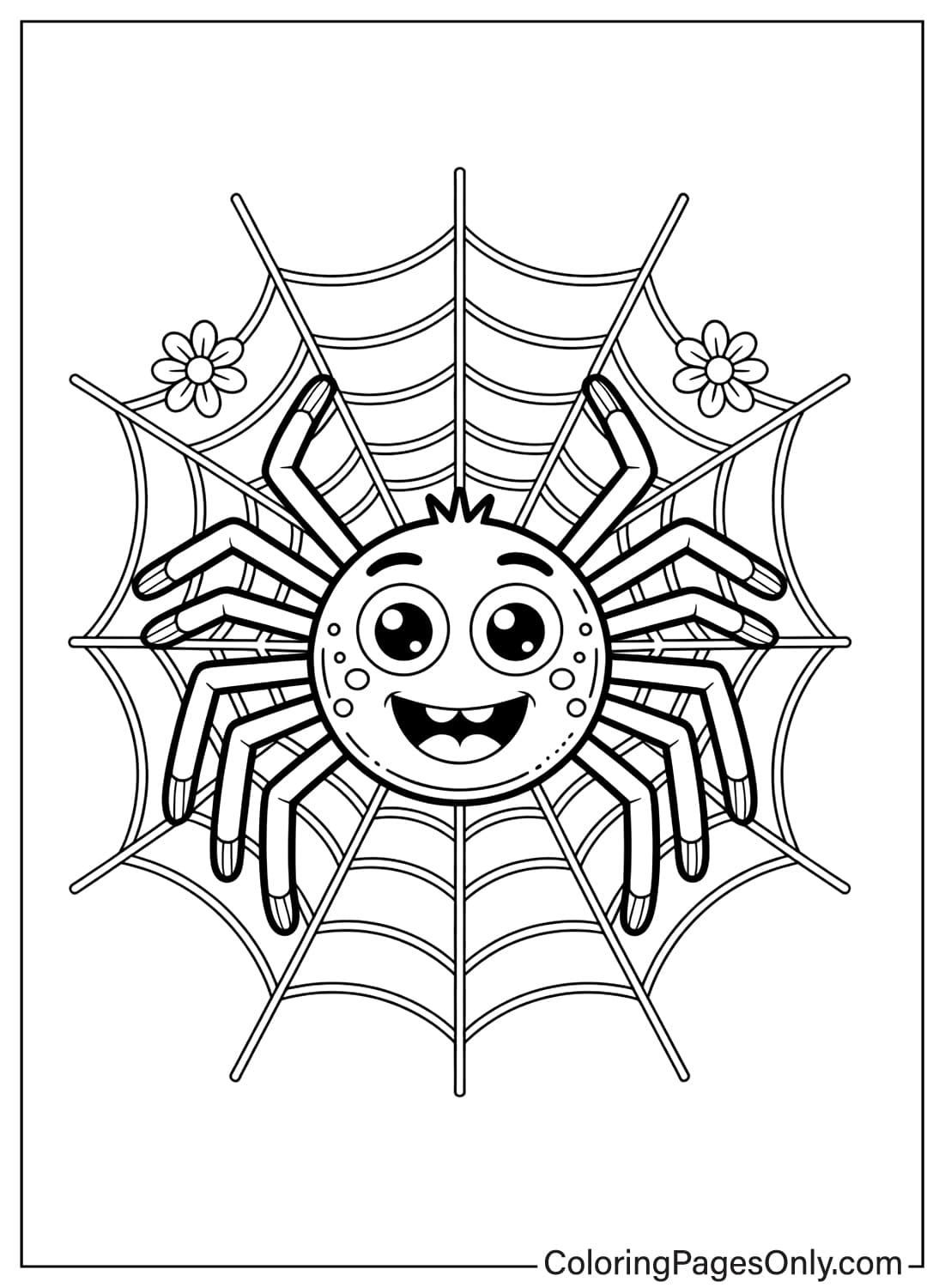
This collection spans 40 pages, split between cartoon and character-style spiders, web and scene designs, a realistic Black Widow page, and simple sheets sized for younger colorists. The coloring angle ranges from a few quick lines for a first-timer to fuller scenes with webs, flowers, and other insects.
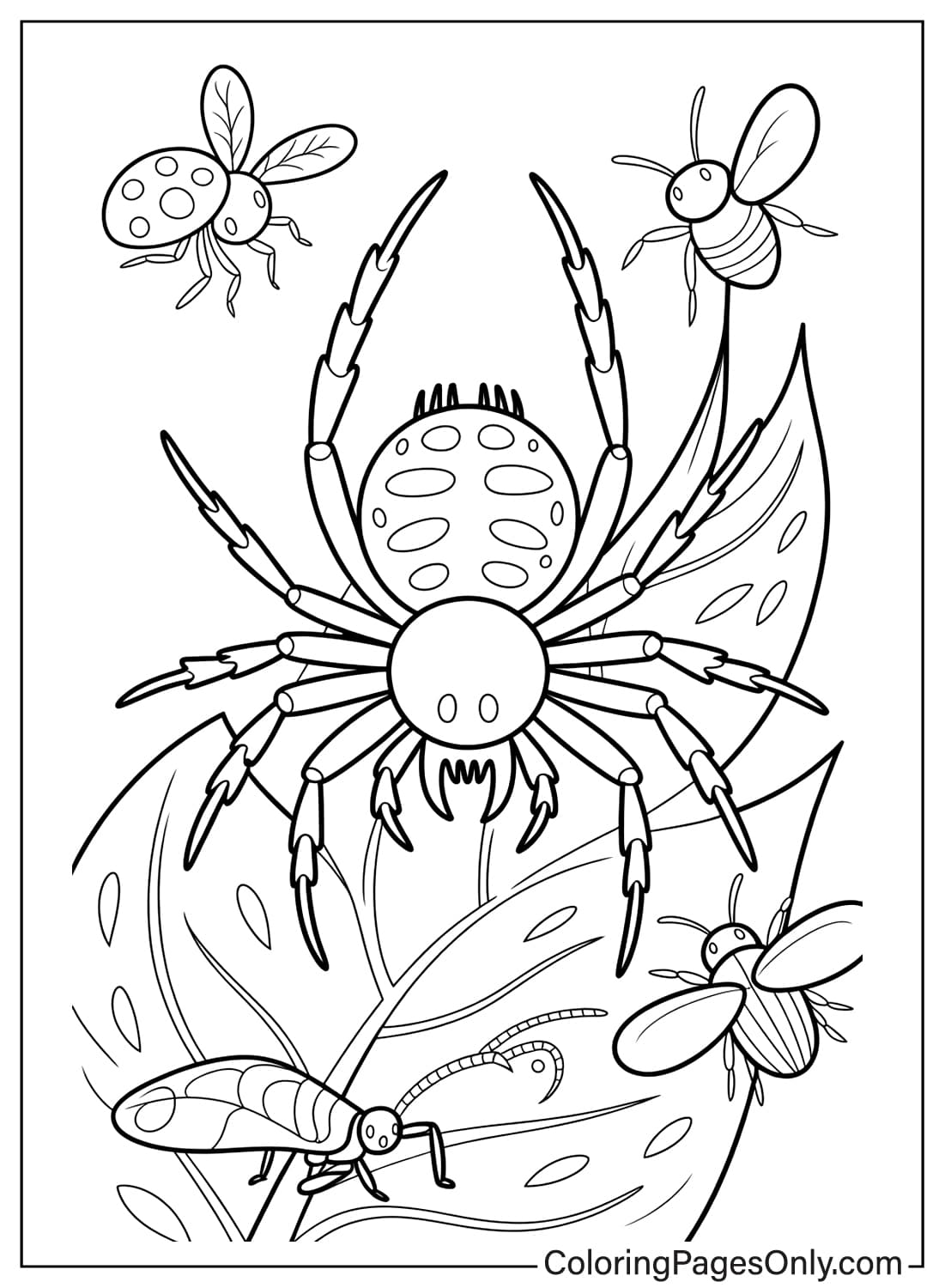
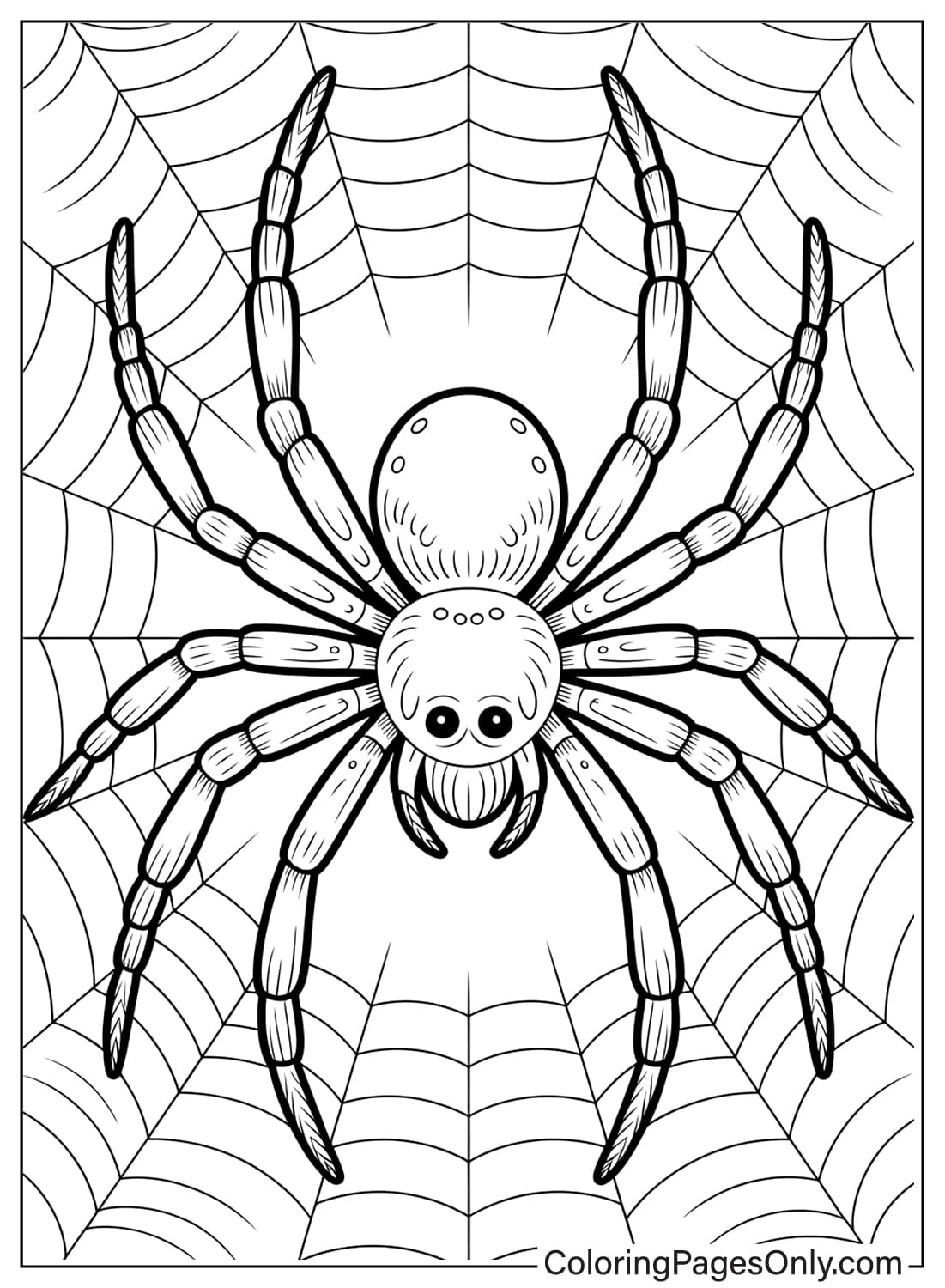
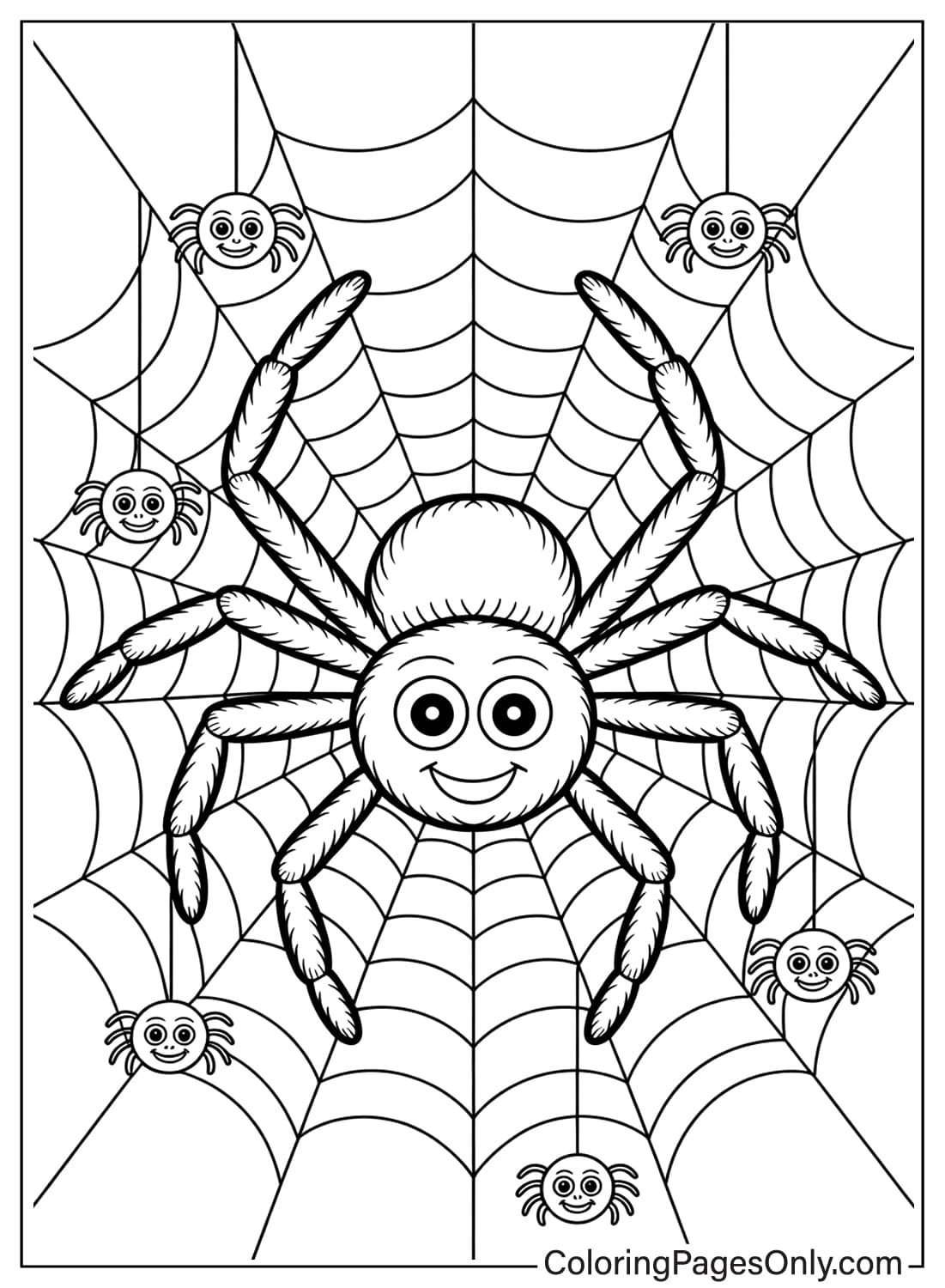
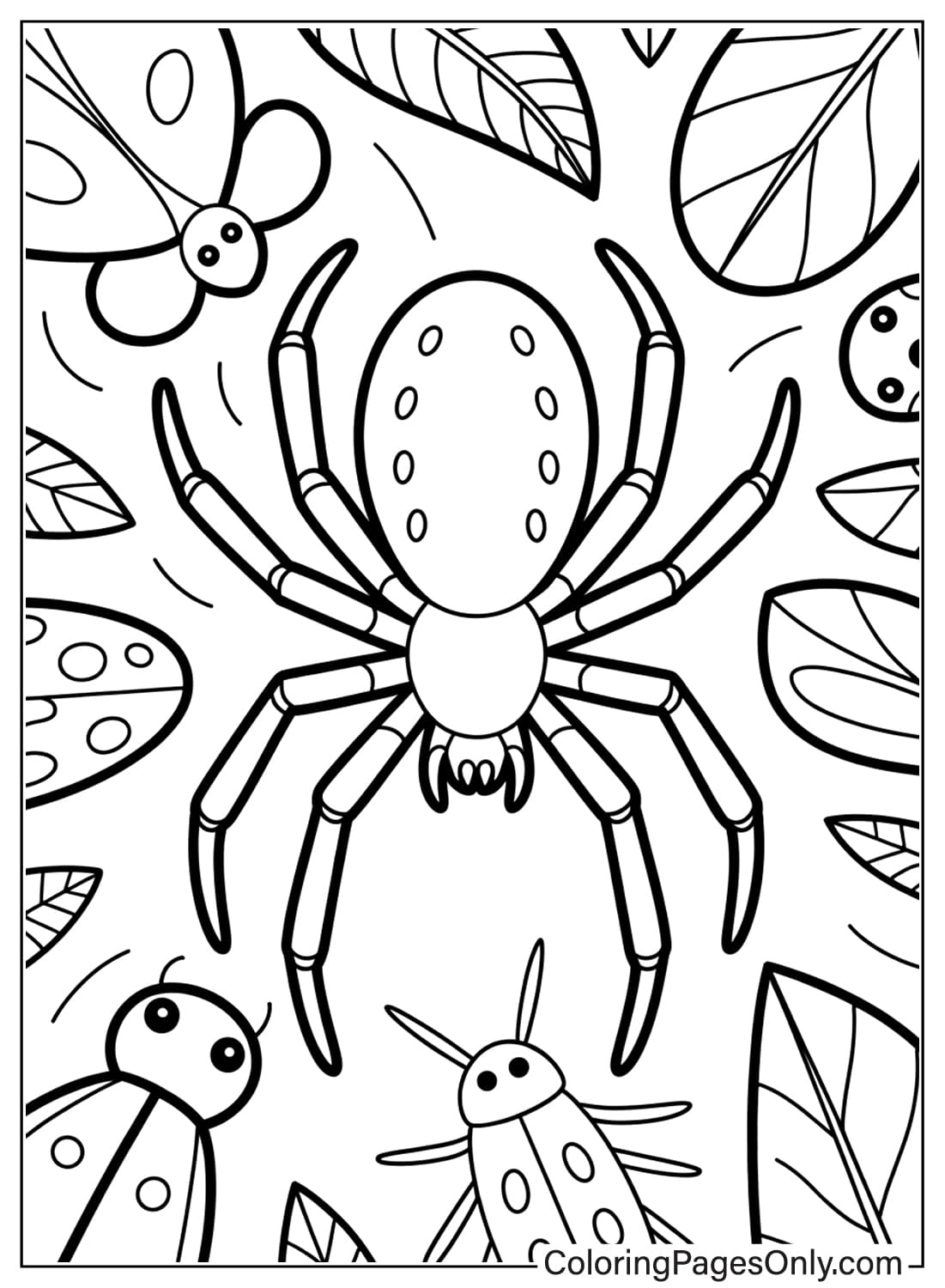
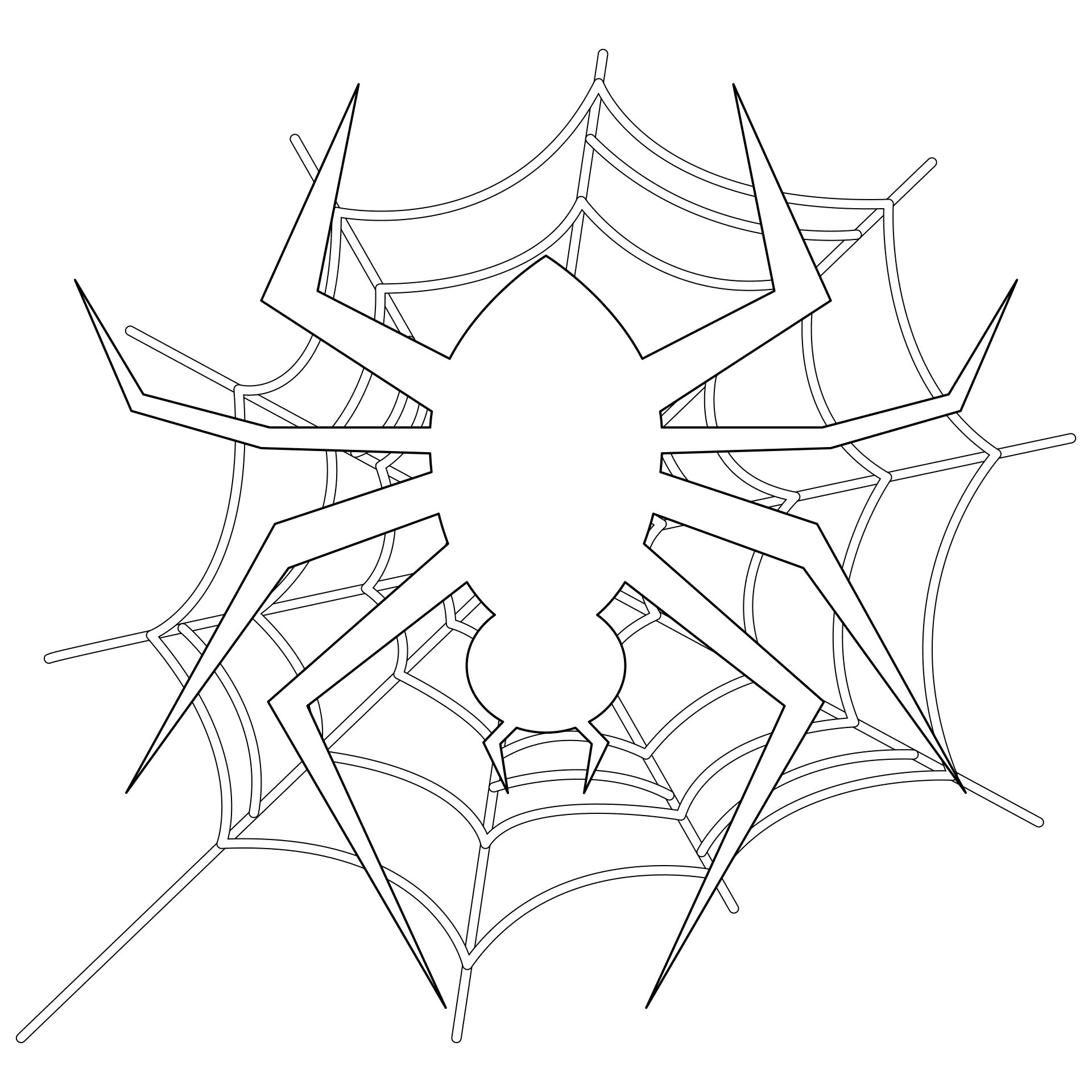
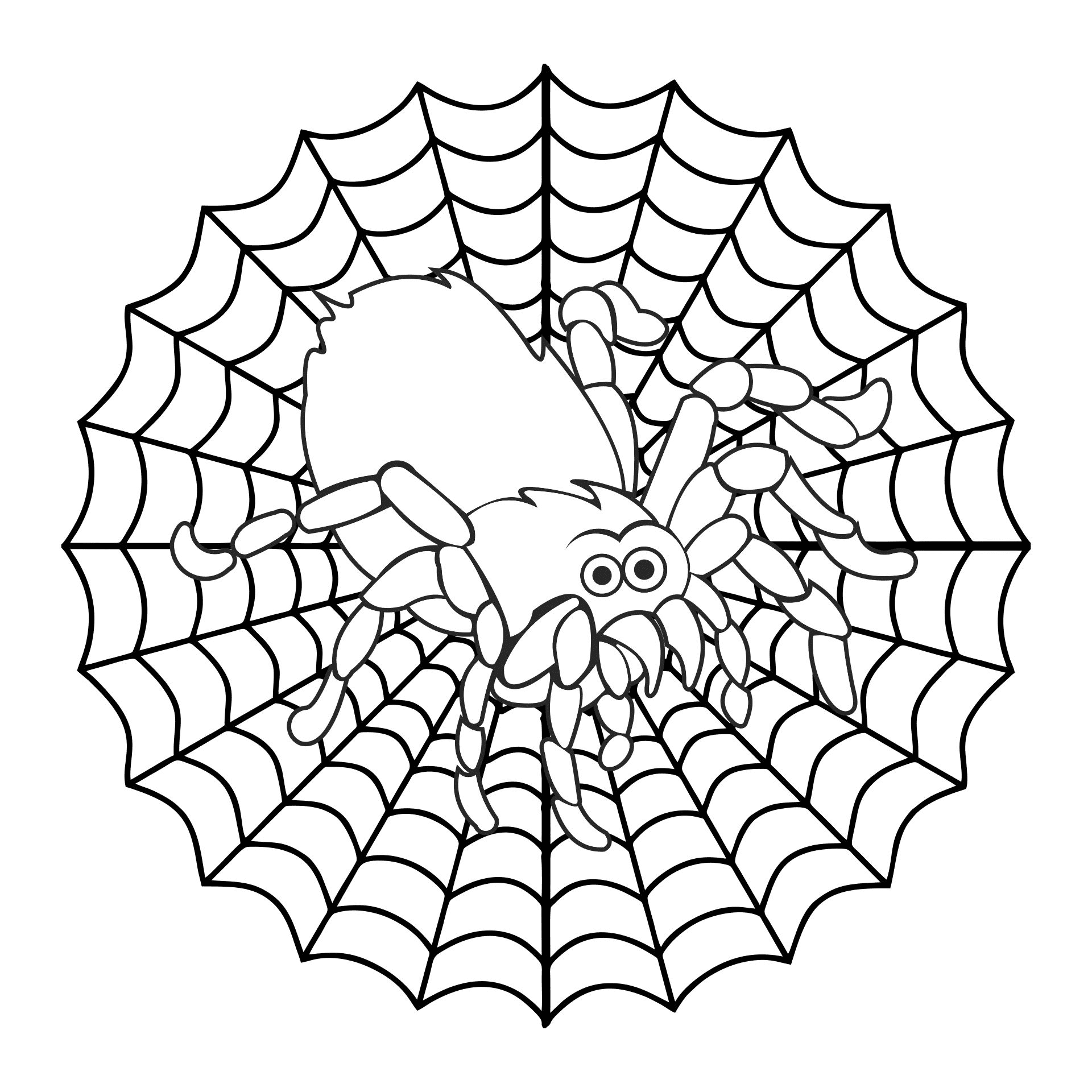
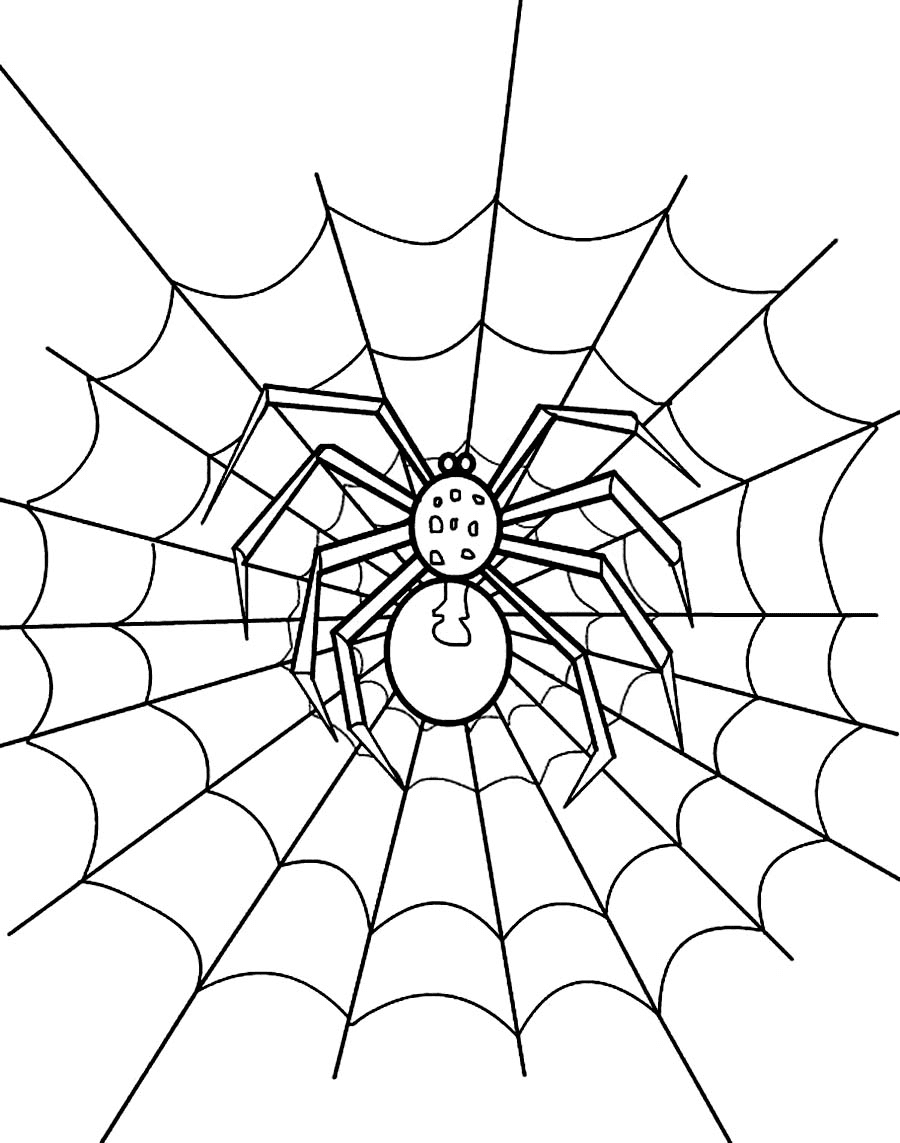
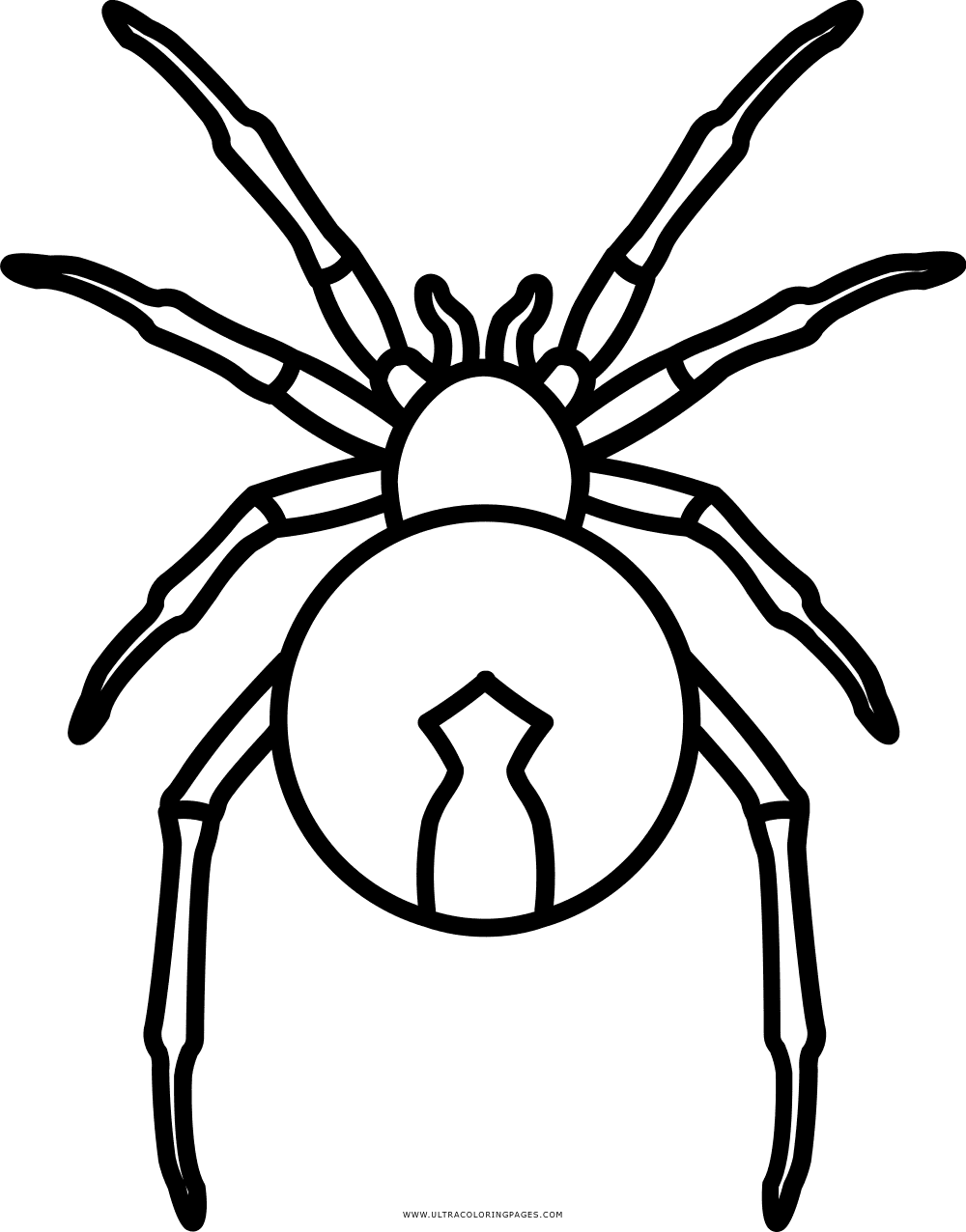
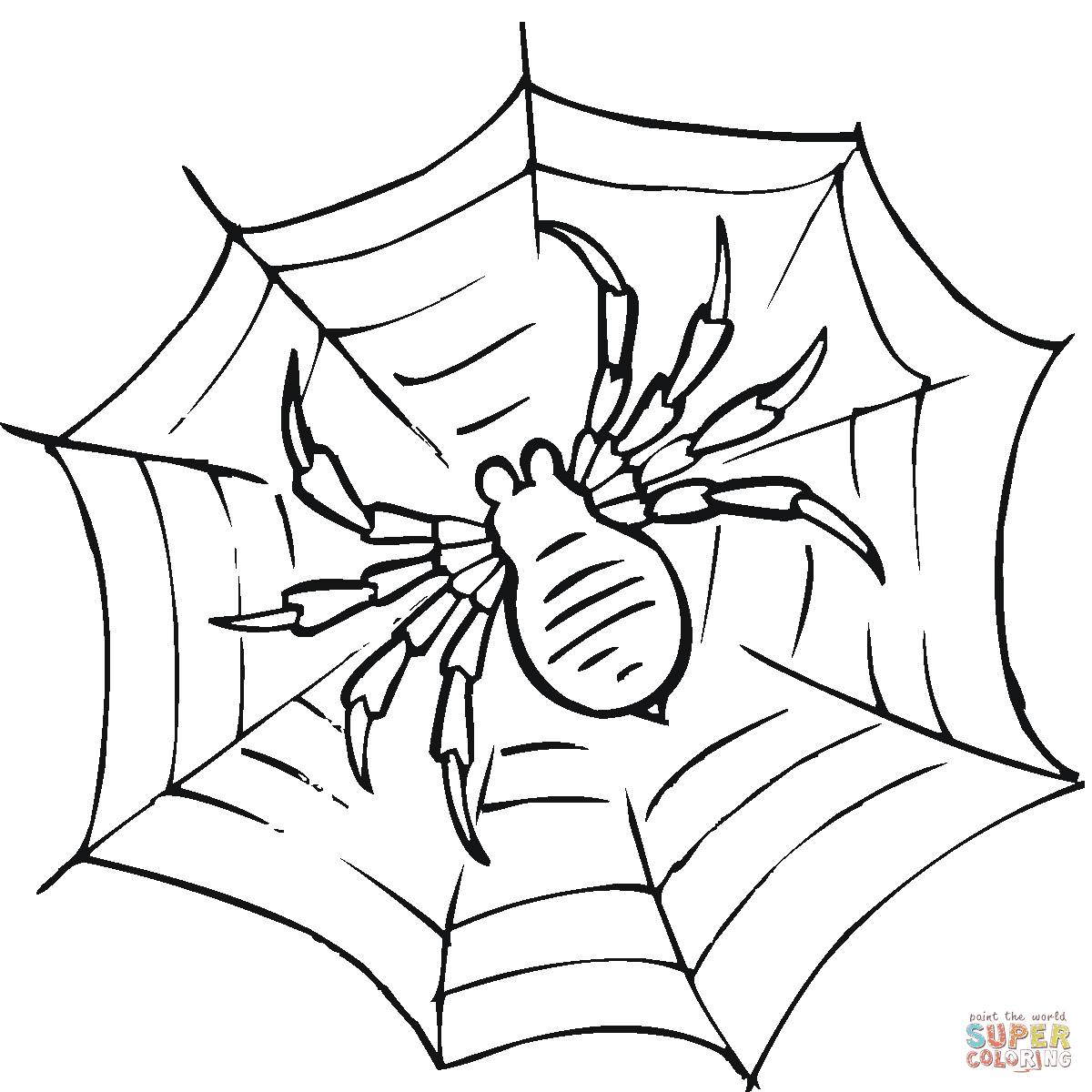
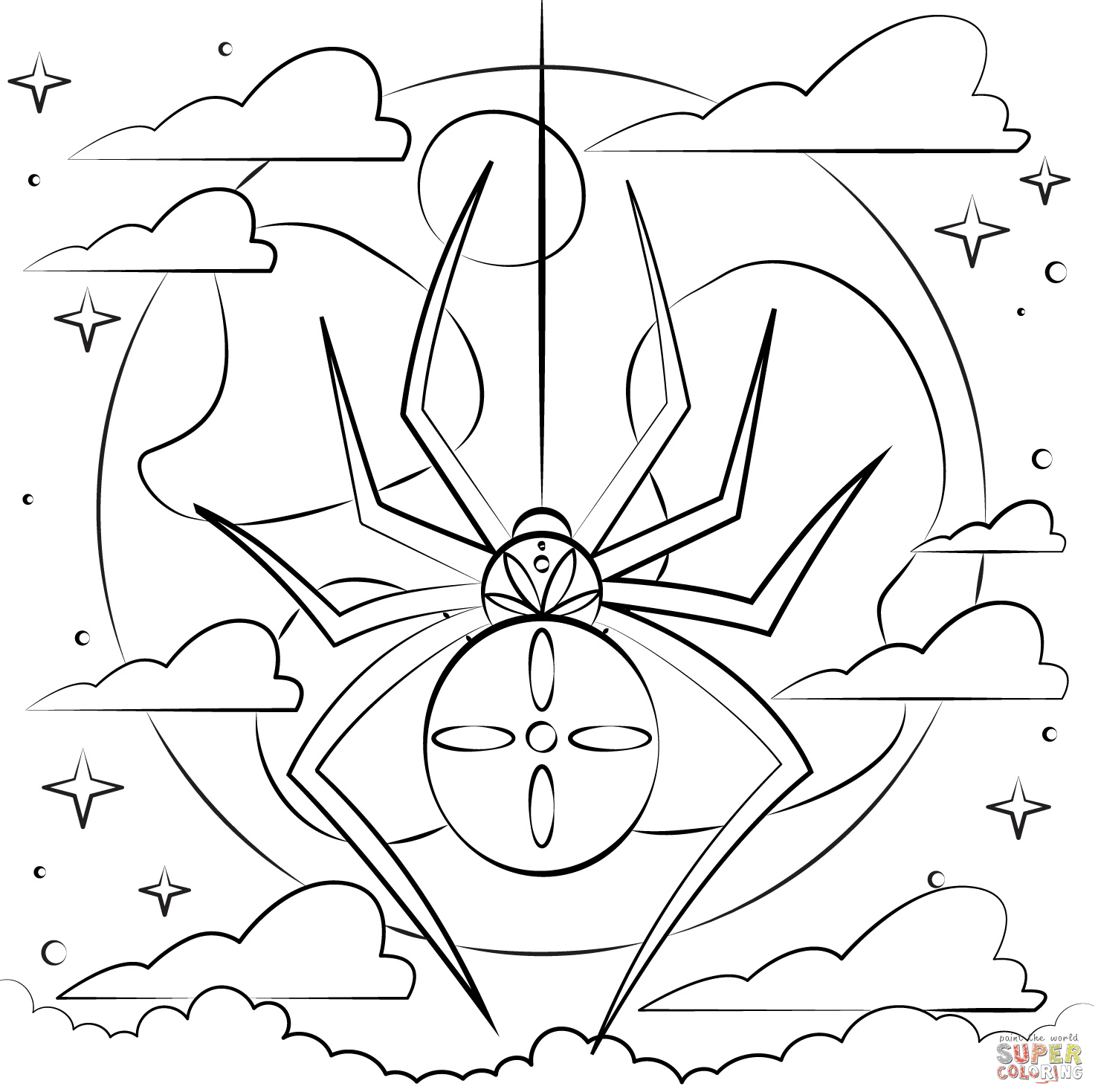
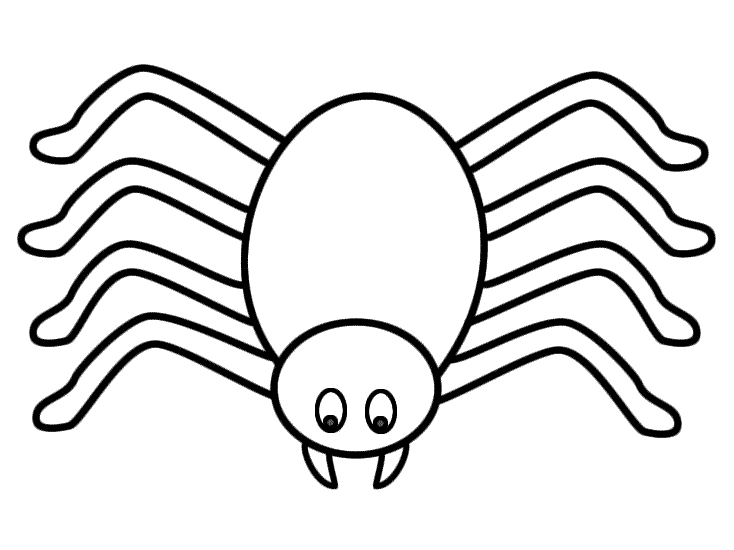
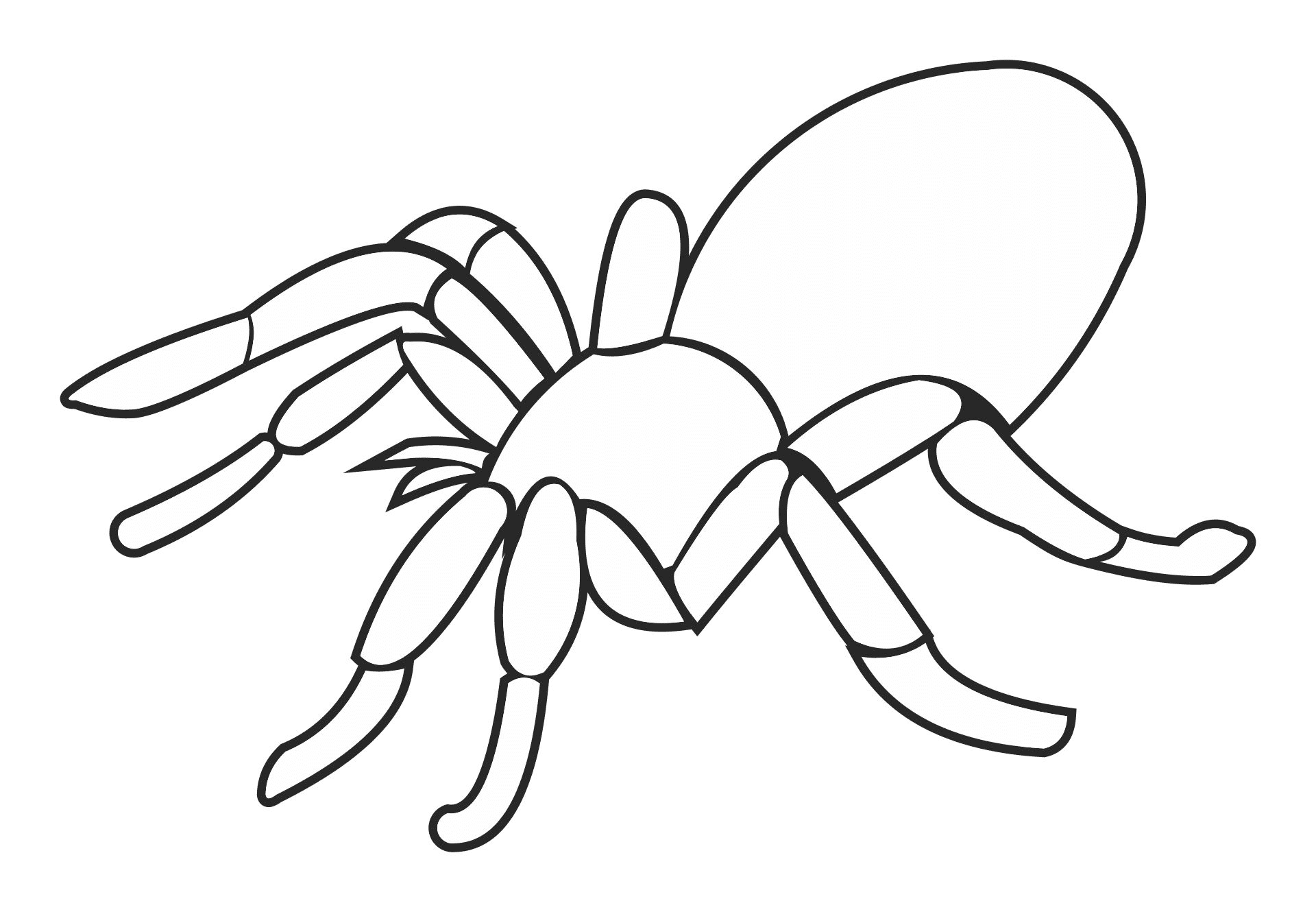
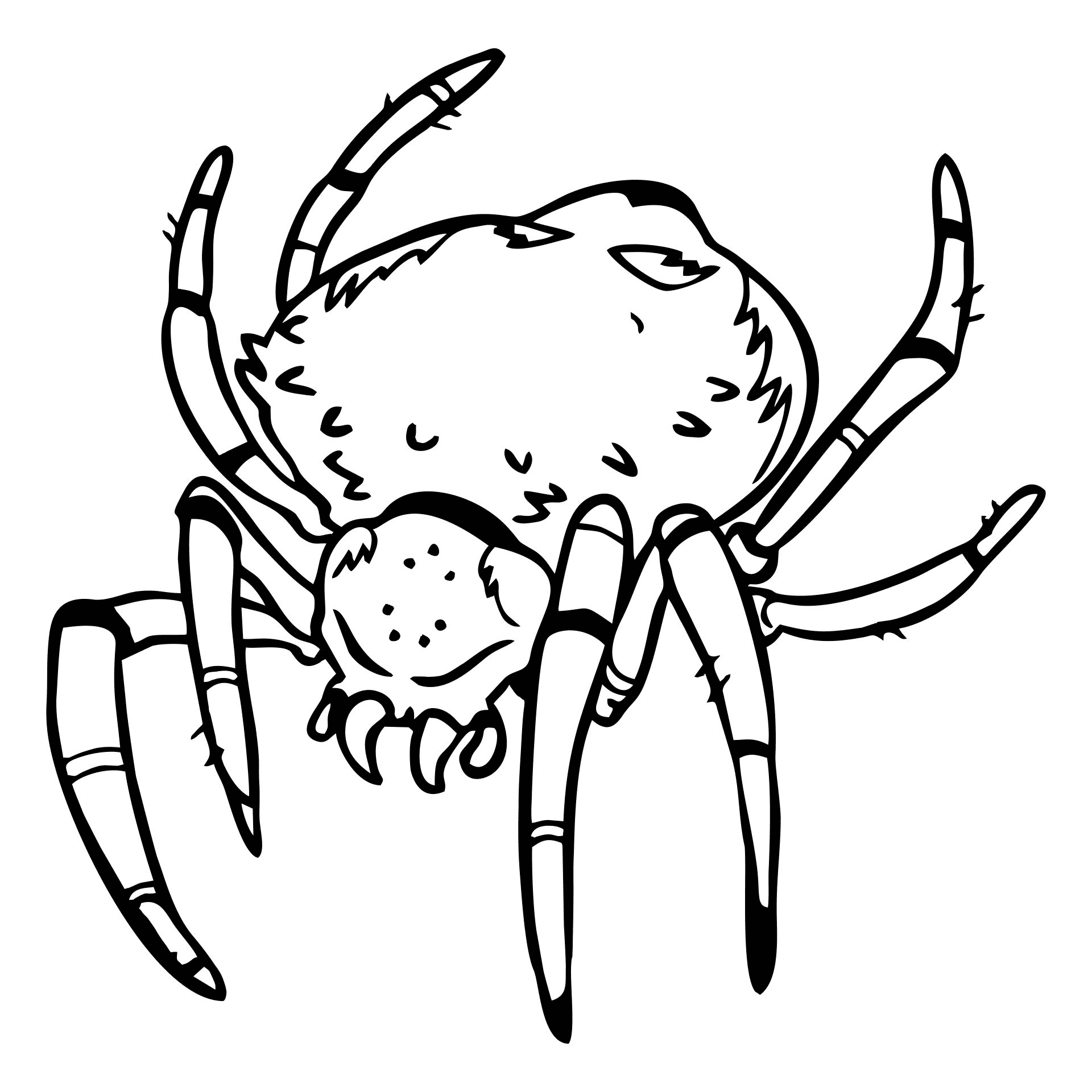
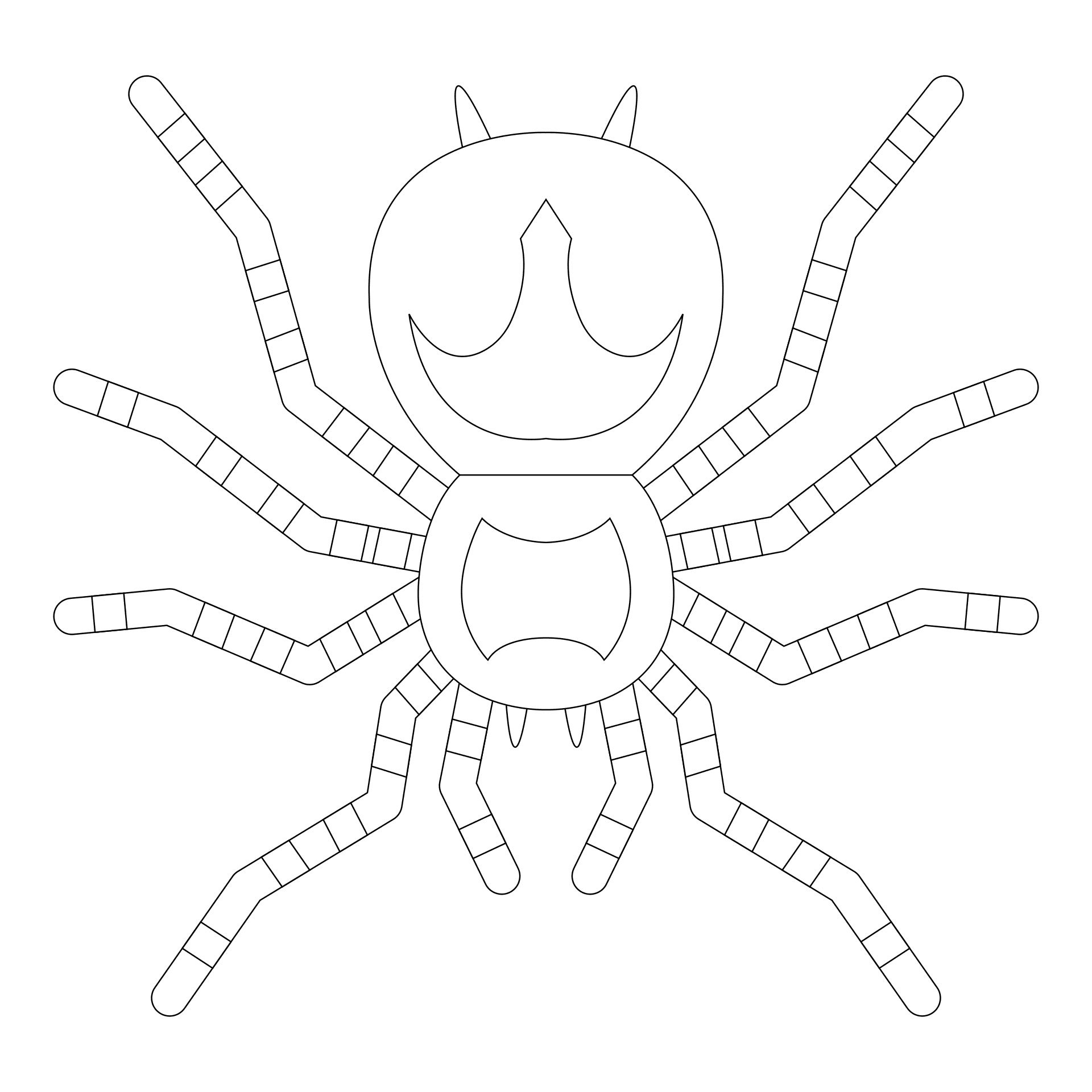
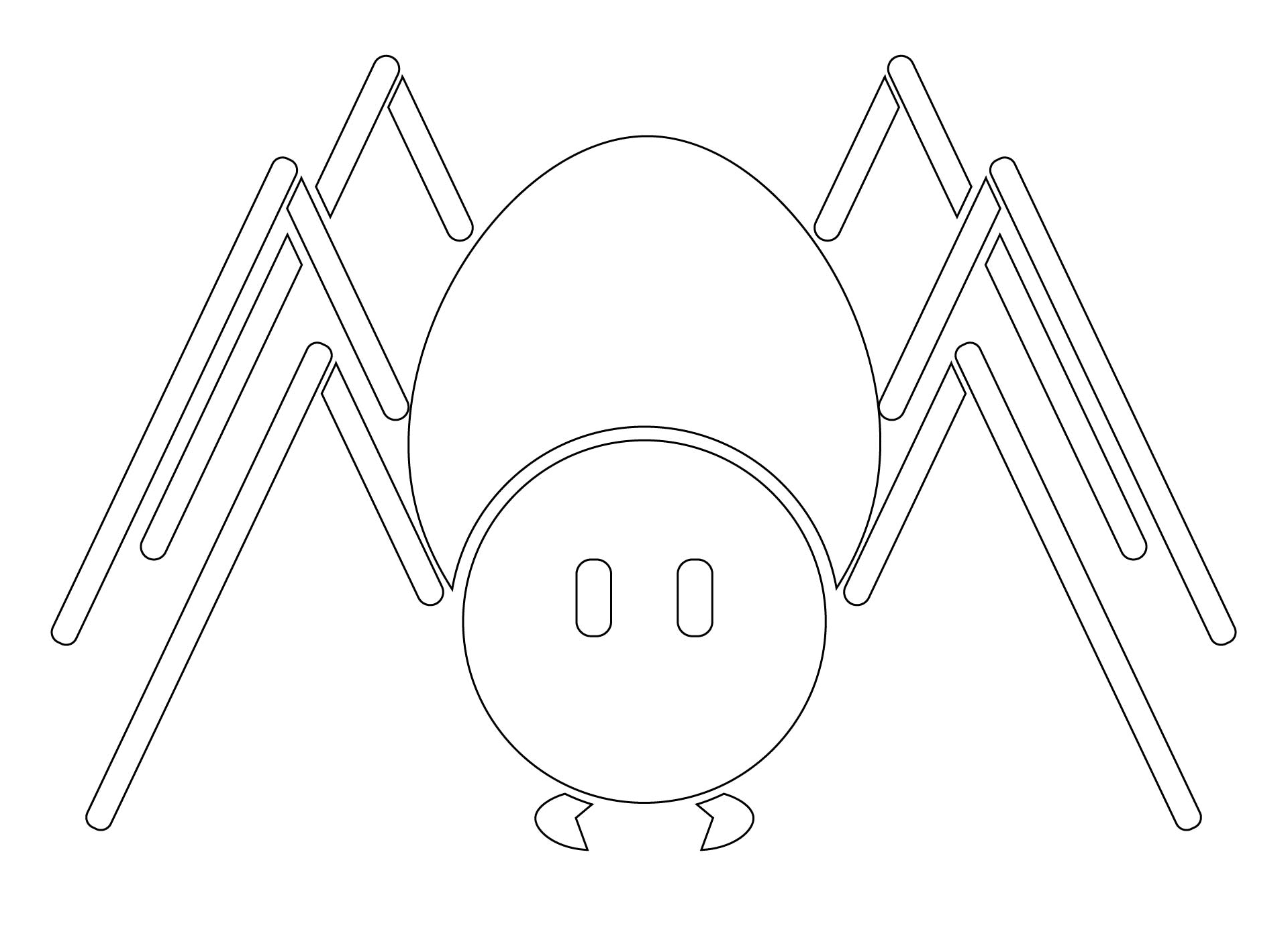
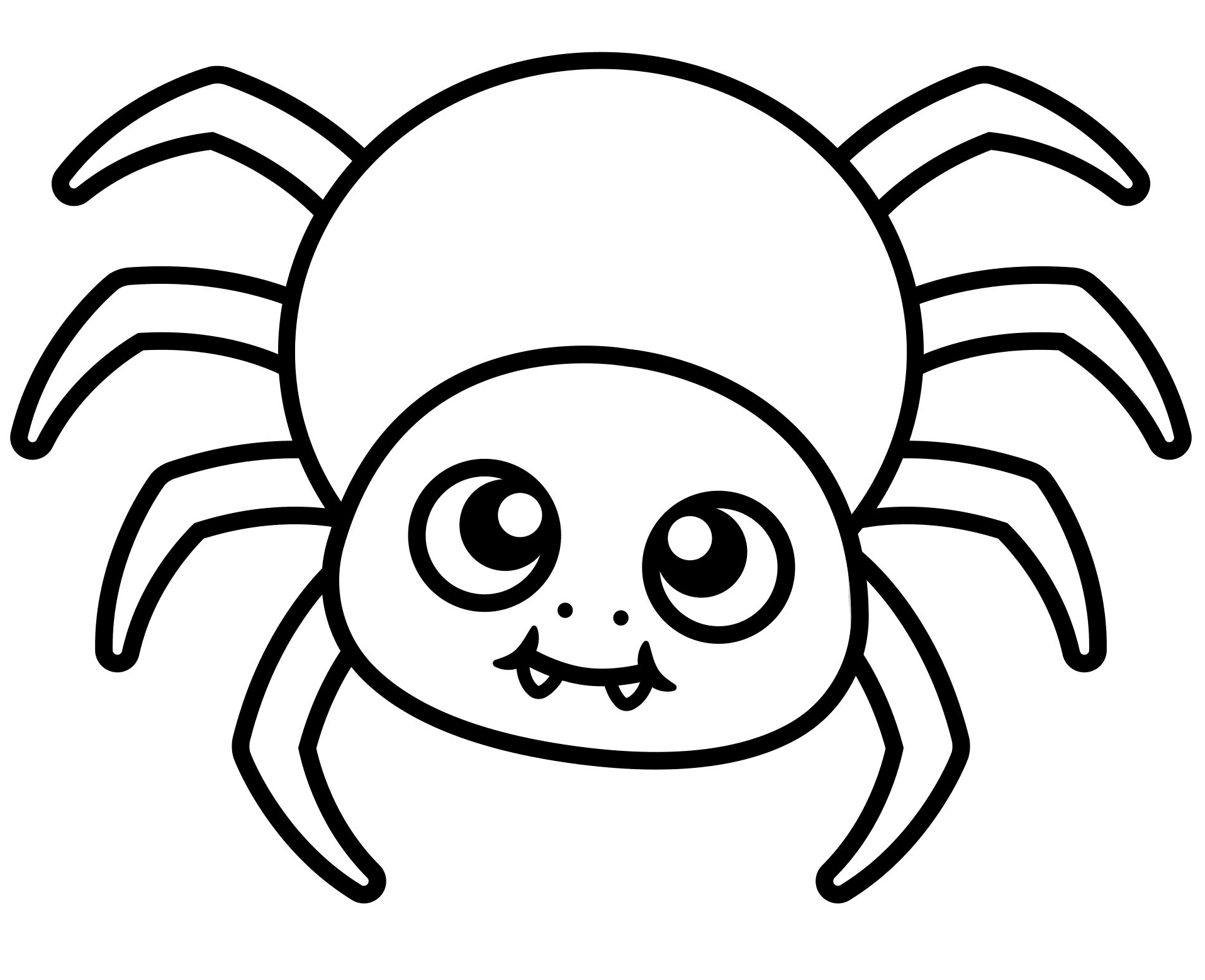
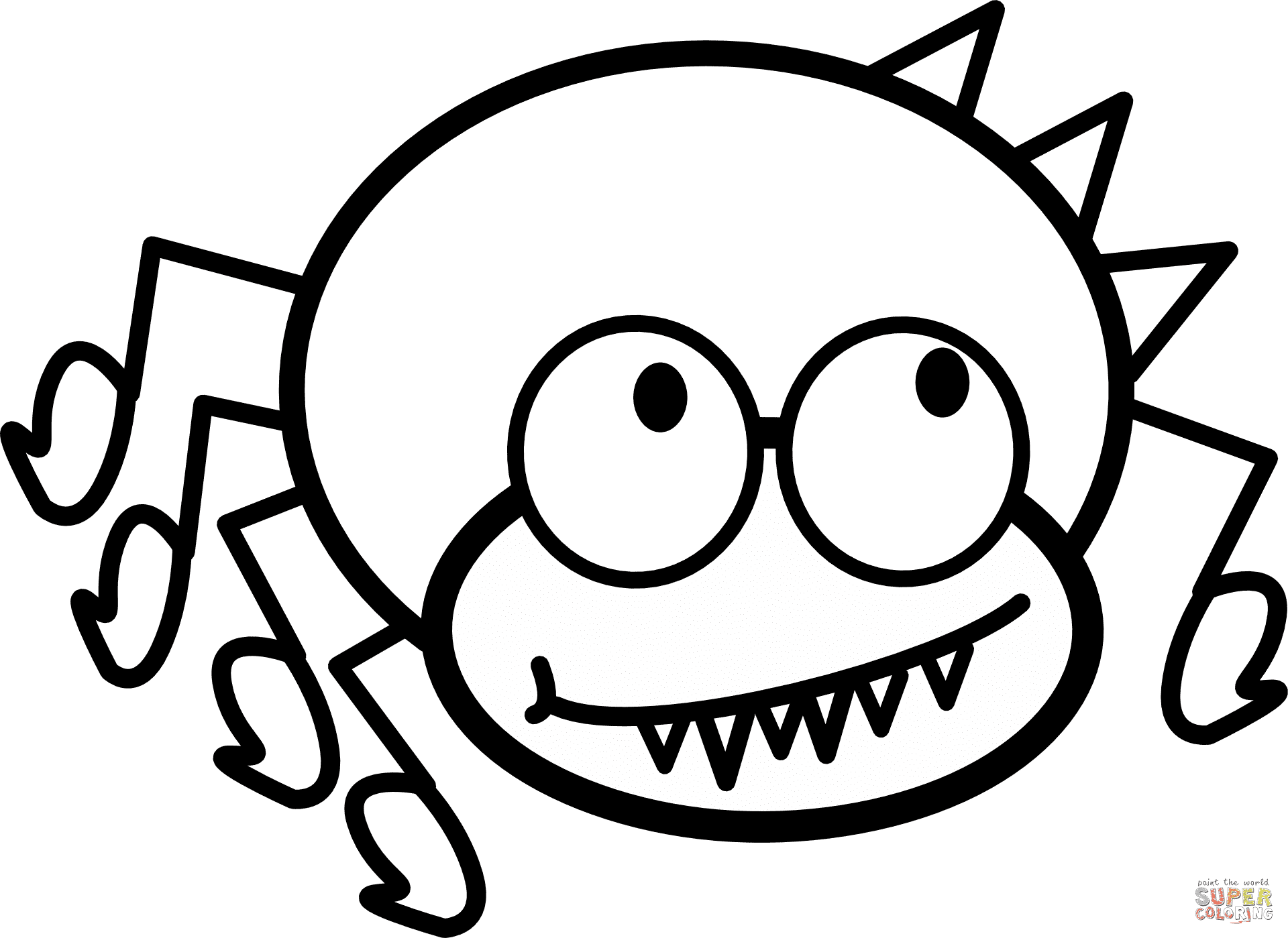

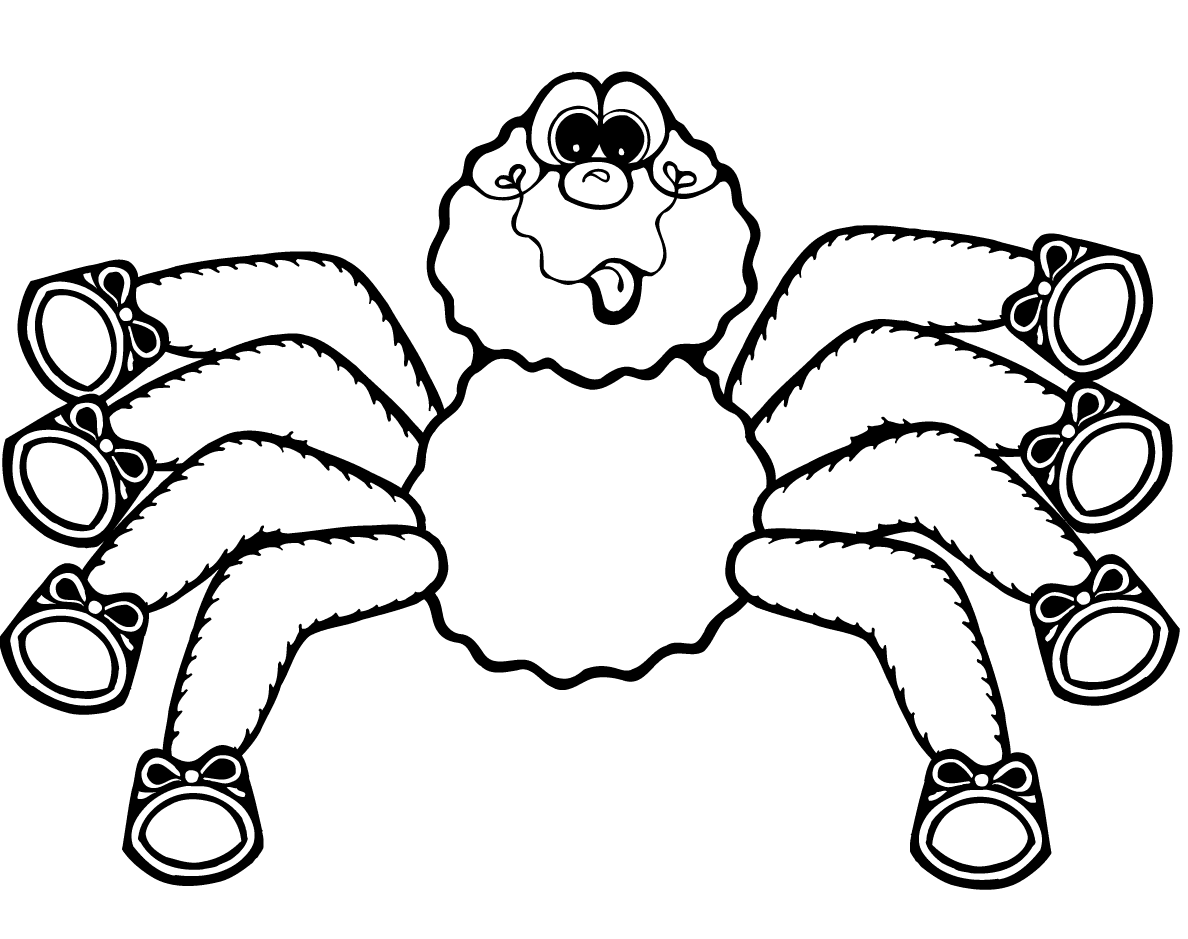
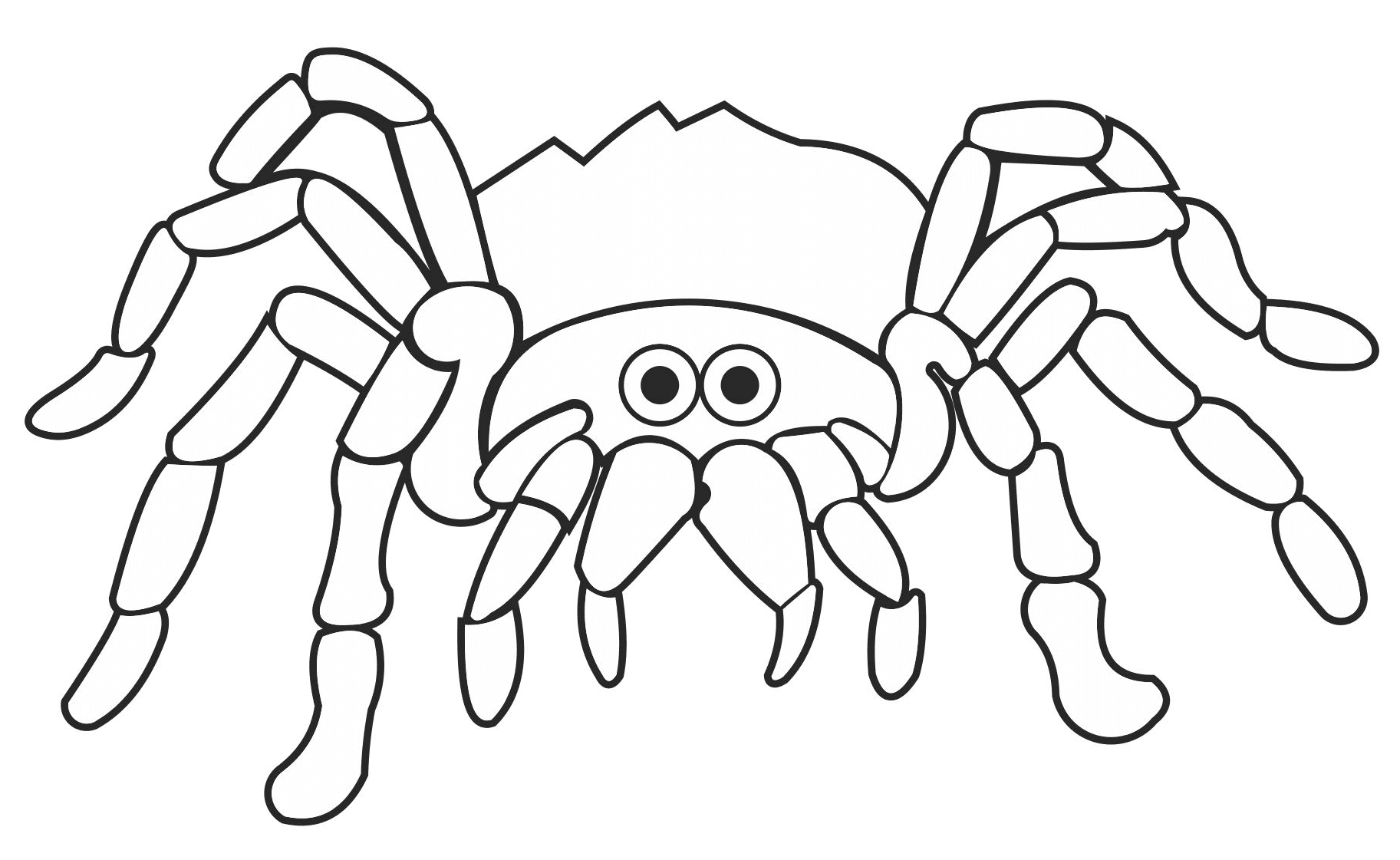
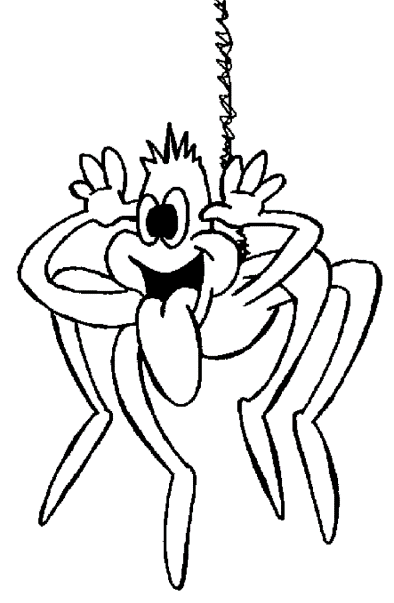

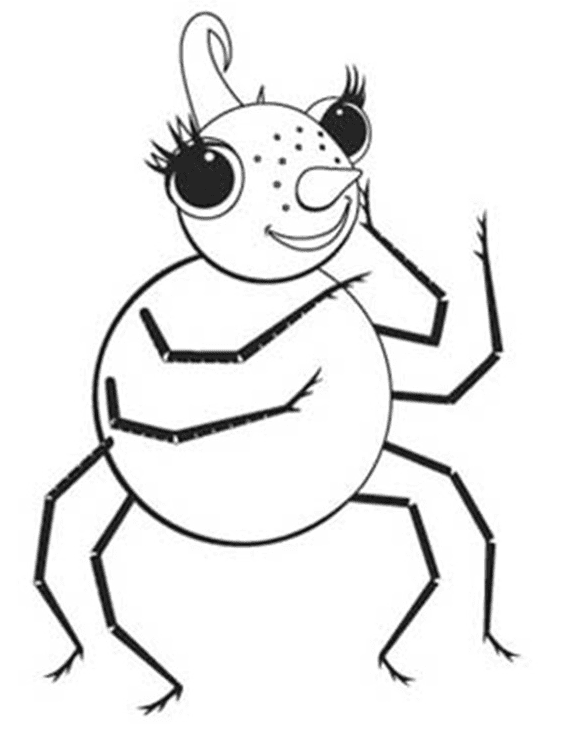
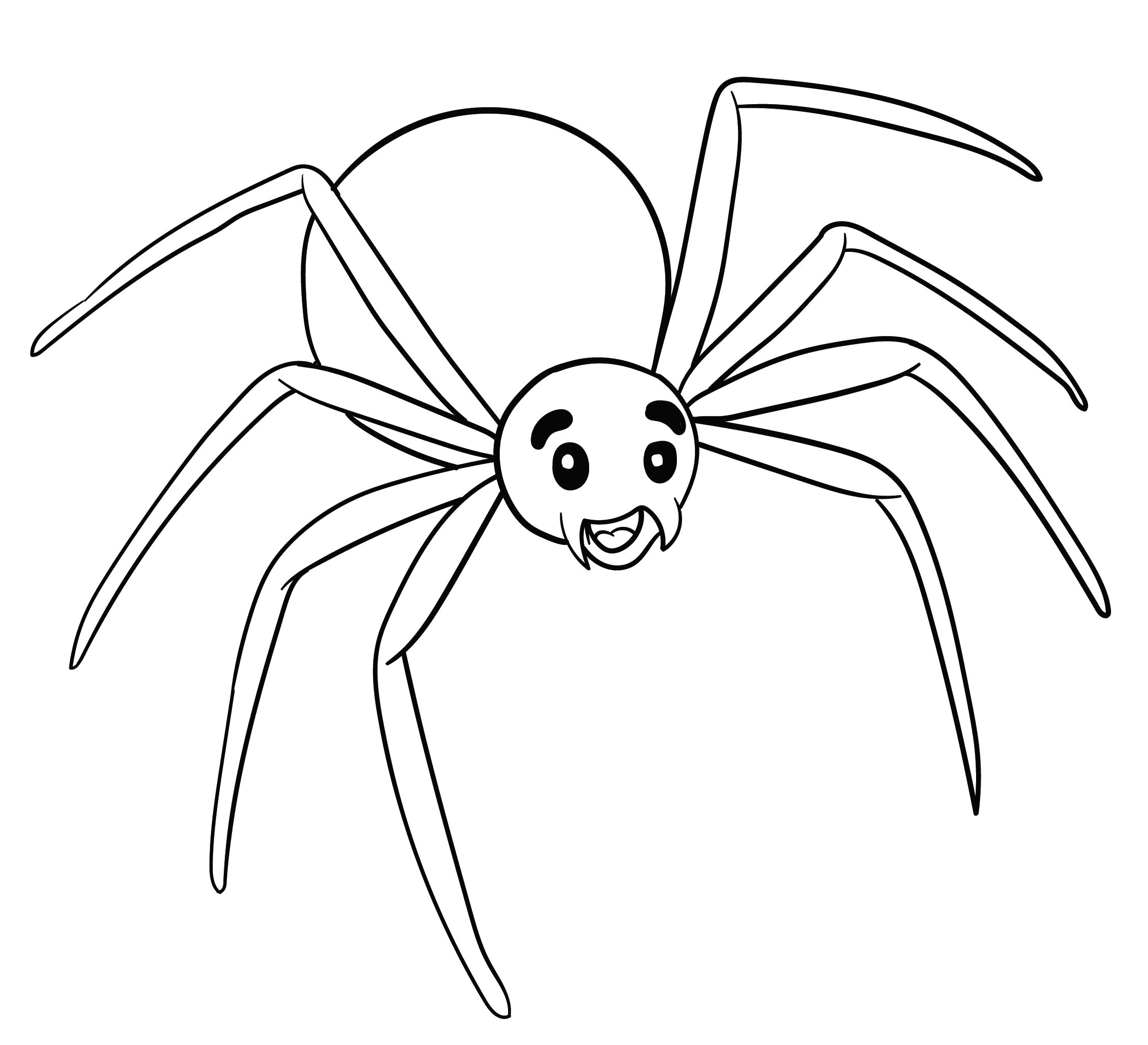
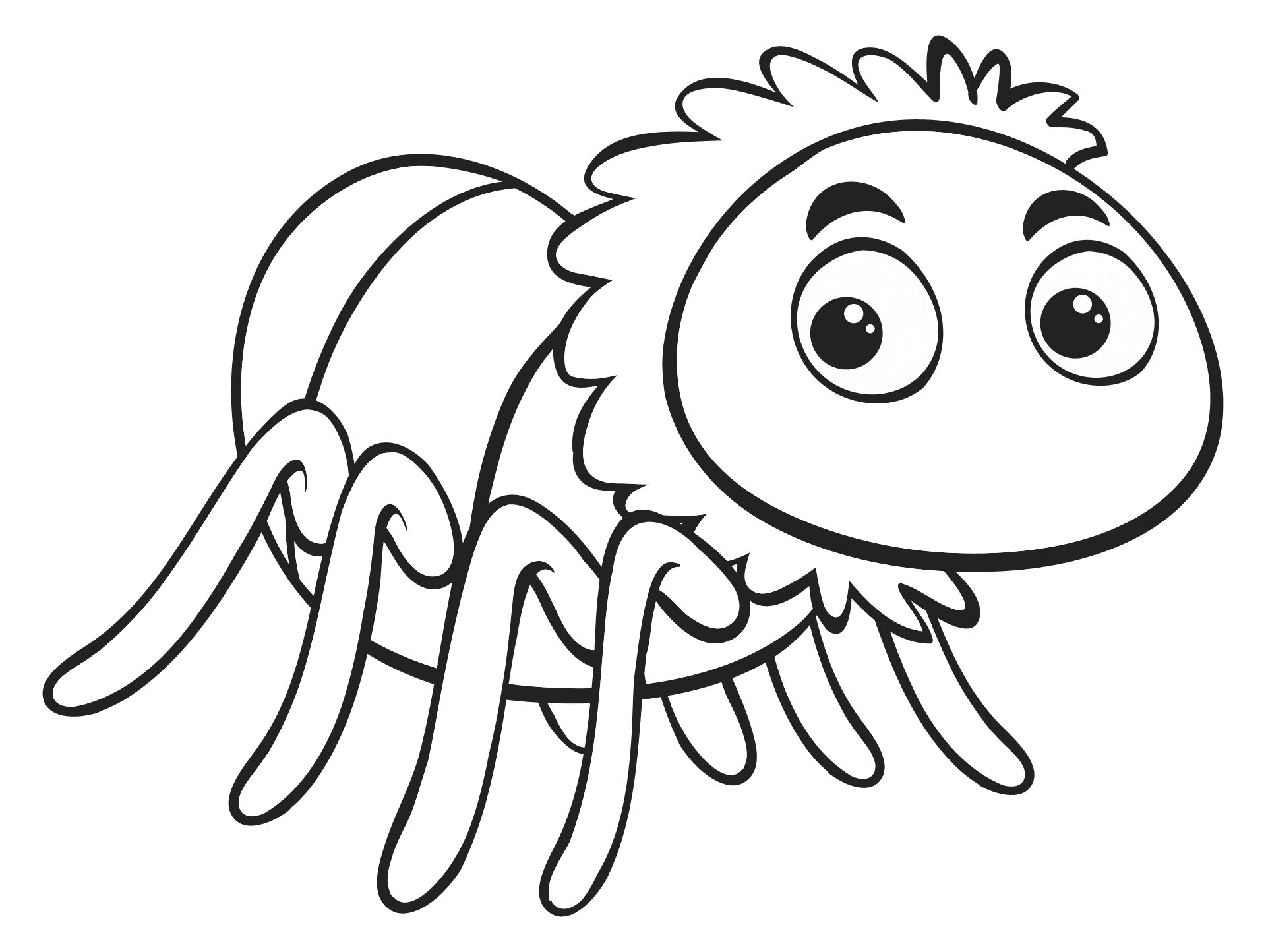
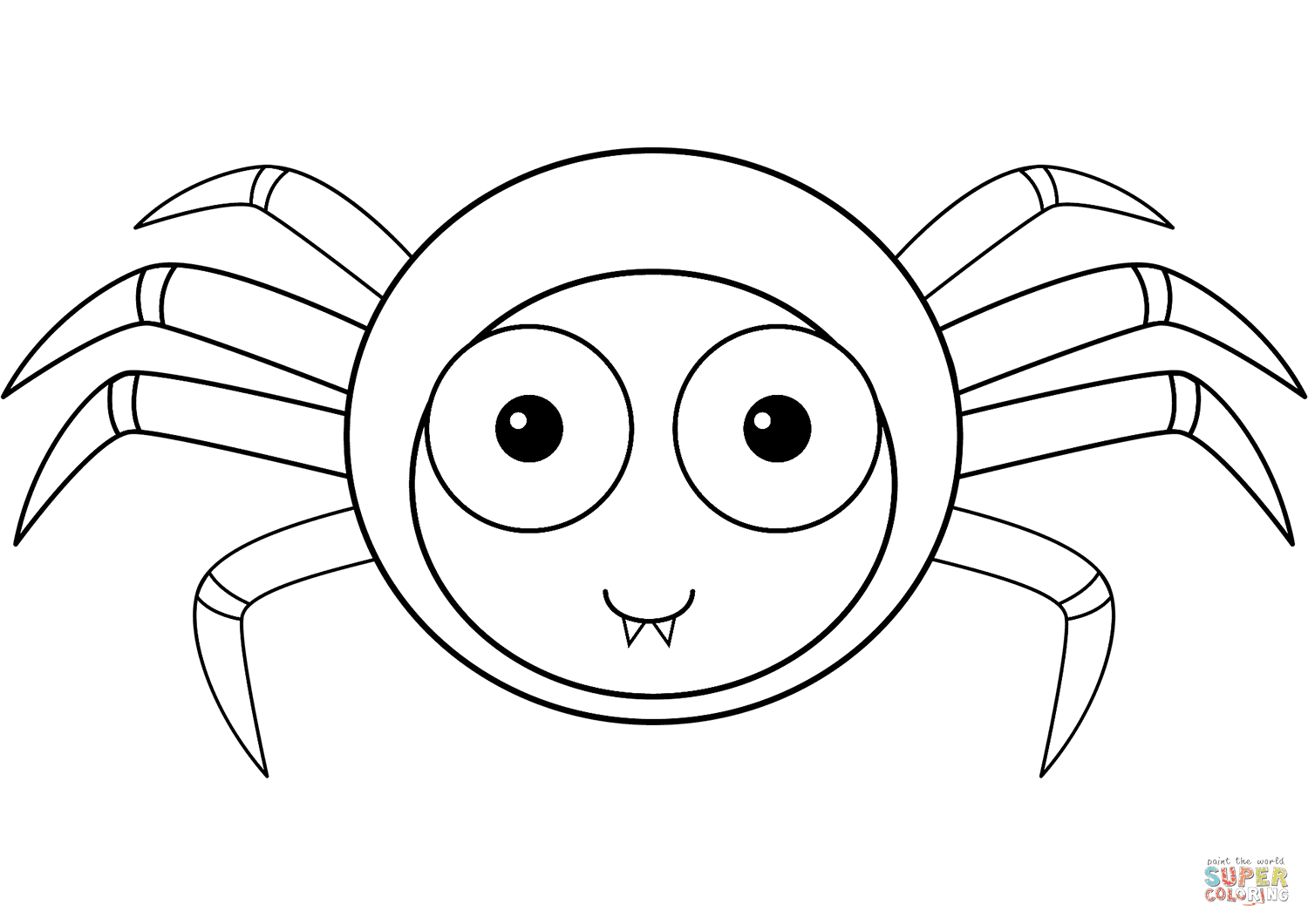

What’s Inside This Collection
The 40 designs are grouped into four categories, from cartoon spiders to a realistic species page.
Cartoon and Character Spiders
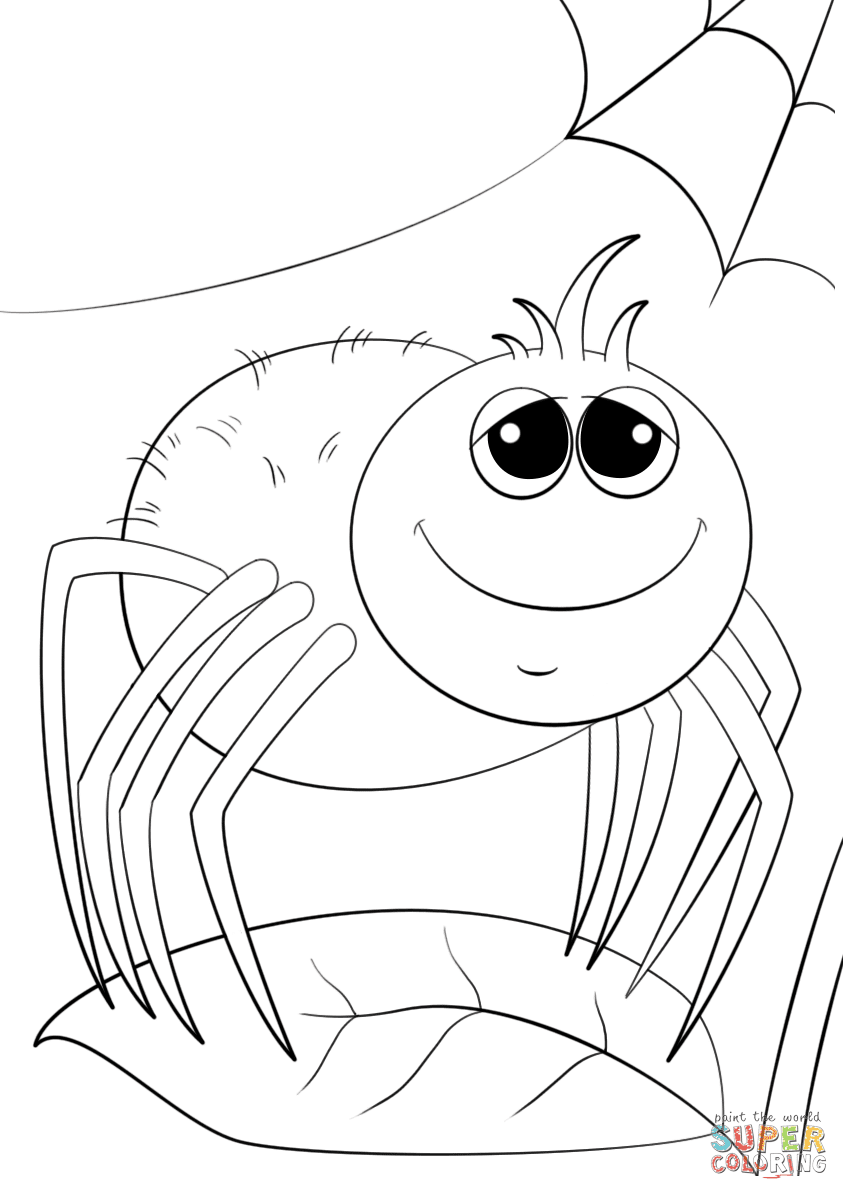
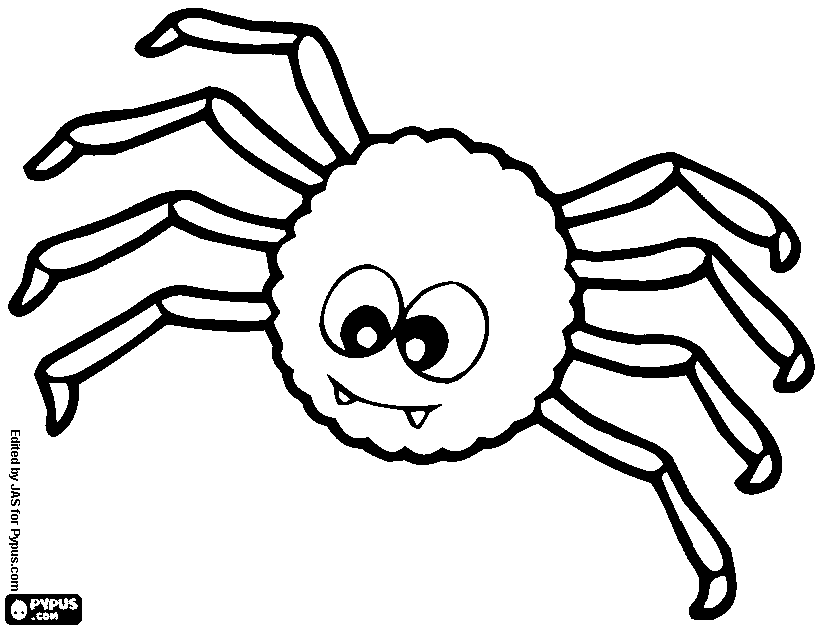
Around 14 pages give spiders a friendly, cartoon look, including a Miss Spider design and an Itsy Bitsy Spider page inspired by the classic nursery rhyme. Bright, non-realistic colors work well here since these designs are not meant to be accurate to a real species.
Webs and Scene Designs
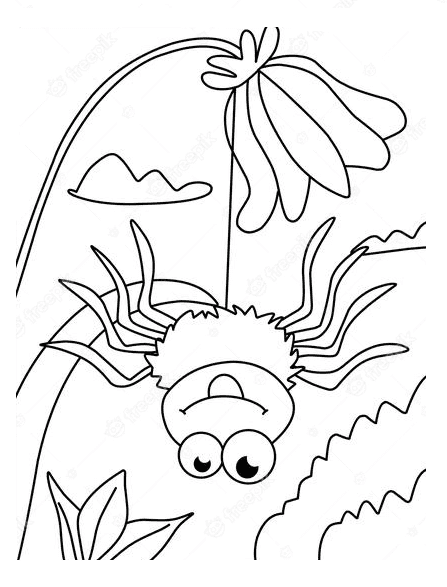
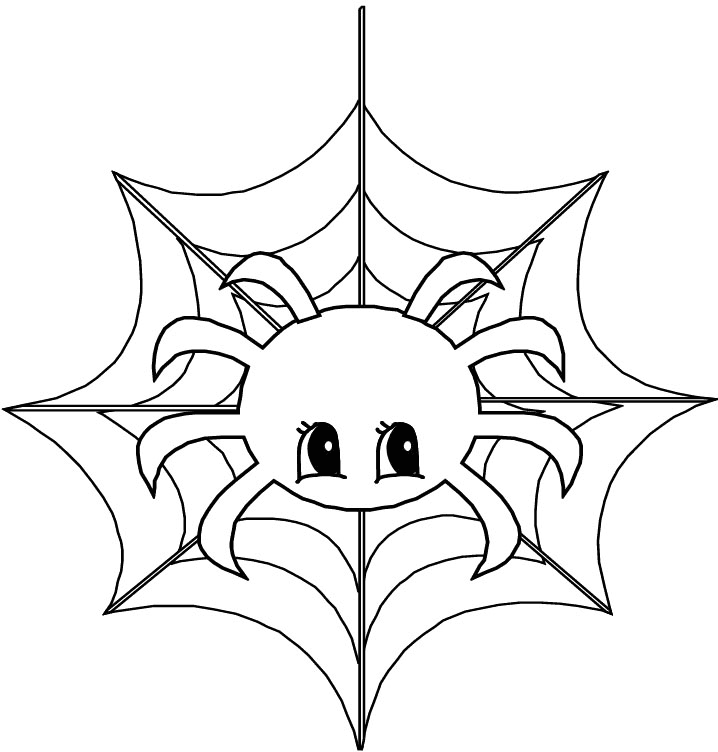
About 10 pages set a spider into a fuller scene, spinning a web, resting on a web, or sharing the page with a flower, butterfly, or other insects. These pages give colorists more background detail to fill in beyond the spider itself.
Realistic Spiders
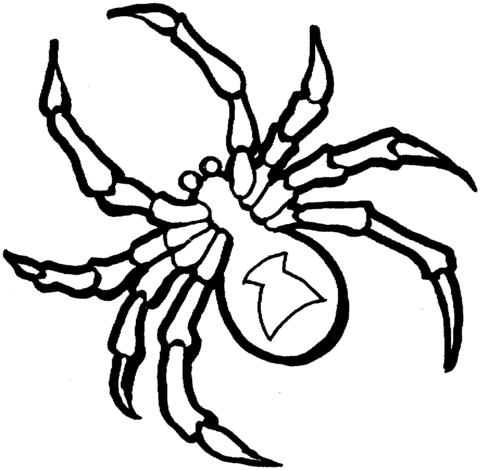
A smaller set of pages, including a Black Widow design, sticks closer to how real spiders look, with a rounder body, eight visible legs, and simpler shading.
Simple and Easy Designs
About 10 pages use bold, uncluttered outlines sized for a quick, single-session print, well suited to first-time colorists.
What Spider Coloring Pages Do
Careful strokes for eight thin legs. Keeping color inside eight narrow spider legs without crossing the lines calls for controlled, contained pencil movement, and the American Academy of Pediatrics identifies fine motor skill development as a core benefit of structured coloring for children ages 2 through 7.
An easy way to introduce a real animal fact. Since spiders are commonly and incorrectly grouped with insects, coloring a spider page alongside a short conversation about its eight legs and two body sections gives families and classrooms a simple way to correct that mix-up.
A steady, repeatable rhythm. A 2005 study in the Art Therapy Journal documented measurable reductions in anxiety following structured coloring sessions, and returning to a spider page, especially for a colorist working through a fear of spiders, can offer that same steady, low-pressure rhythm.
Practice with contrast and pattern. Because many designs pair a dark spider body against a lighter web or background, coloring these pages gives colorists a straightforward way to practice contrast and repeating patterns, like the spokes and rings of a web.
How to Color Spider Coloring Pages Well
- Cartoon spider bodies: Purple, Blue, or Hot Pink work well for the character-style designs, since these pages are not meant to look like a real species.
- Black Widow spider: Use Black for the entire body and legs, then add a small Red hourglass marking on the underside of the abdomen, matching this spider’s most recognizable real-world feature.
- Realistic spider bodies: Brown or Gray, shaded a little darker along the round abdomen, give the more true-to-life designs a natural look.
- Spider webs: Leave the web White or color it a light Silver, keeping the lines thin so the spider stays the main focus of the page.
- Eyes: Small Black dots suit the multiple eyes shown on the more detailed designs.
- Backgrounds and scene details: Green for leaves, Yellow for flower centers, and soft Blue for sky work well behind the scene-style pages, keeping the spider itself the darkest shape on the page.
5 Creative Craft Ideas With Spider Coloring Pages
1. Paper Plate Spider Web
Color a spider page, cut out the spider, and glue it onto a paper plate threaded with yarn in a web pattern for a simple hanging display.
2. Spider Bookmark
Color a small spider design, mount it on cardstock, and attach a ribbon or tassel at the top for a bookmark that clips over the corner of a page.
3. Spider Standee
Color a spider page, mount it on cardstock, and fold a small tab at the base so the finished spider can stand upright on a shelf or desk.
4. Backyard Bug Journal Cover
Color a spider page and use it as the cover for a simple stapled or bound journal for recording backyard bug and spider sightings.
5. Classroom Web Collage
Color several spider pages as a group, cut out the finished spiders, and arrange them across a length of yarn strung between two points to build a classroom web collage.
Frequently Asked Questions
What are spider coloring pages?
Spider coloring pages are printable line-art designs featuring cartoon spiders, spider web scenes, and one realistic species page. This collection includes 40 free designs available as PDFs or online coloring.
What is a spider?
A spider is an arachnid, not an insect, built with eight legs and two main body sections: the cephalothorax and the abdomen. Most spiders spin silk webs to catch food and live on every continent except Antarctica.
Are spiders insects?
No. Spiders belong to a different group of animals called arachnids, which also includes scorpions and ticks. Insects have six legs and three body sections, while spiders have eight legs and two body sections.
What is a Black Widow spider?
The Black Widow is a real spider species known for its shiny black body and a red hourglass-shaped marking on the underside of its abdomen, featured as one of the realistic designs in this collection.
What is the Itsy Bitsy Spider?
The Itsy Bitsy Spider is a well-known children’s nursery rhyme about a spider climbing up a water spout, getting washed back down by rain, and climbing up again once the sun dries the rain away. It inspired one of the character-style designs in this collection.
What colors are spiders?
Real spiders are most often Black, Brown, or Gray, with the Black Widow’s red marking as a well-known exception. The cartoon designs in this collection use brighter colors like purple, blue, and pink for a friendlier look.
Are spider coloring pages suitable for young children?
Yes. The simple and easy designs in this collection use bold, uncluttered outlines suited to preschool and early elementary colorists, while the web scenes and realistic Black Widow page work well for older children and classroom use.
Why do spiders spin webs?
Most spiders spin sticky silk webs to catch flying and crawling insects for food, though some spiders, like jumping spiders, hunt and pounce without building a web at all.
Start Coloring
Download any page by clicking the design. No account, email, or payment is required. Pages print directly from the browser at full resolution or open in the online coloring tool for screen use. Share finished pages on Facebook or Pinterest with the share buttons at the top of each design page.