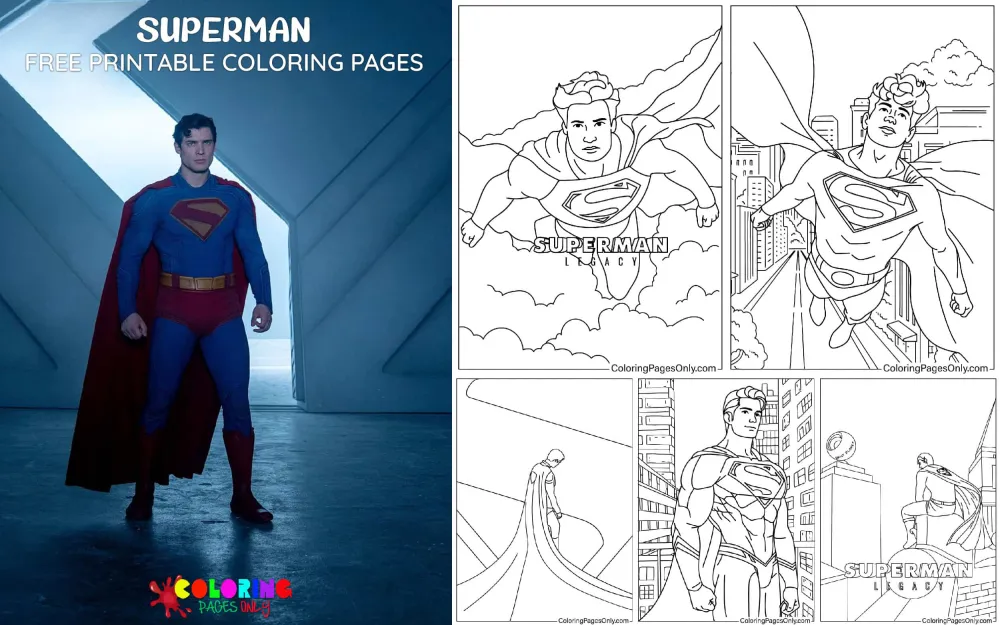
Free Superman coloring pages: 50+ pages featuring the Man of Steel in iconic flying poses with red cape billowing, the classic three-point landing stance, heat vision action scenes with vivid eye-beam effects, the S-Shield logo in standalone compositions, Clark Kent portrait pages, Superman in space above Earth, Lex Luthor confrontation scenes, Supergirl alongside her cousin, the new DC Universe design from James Gunn’s 2025 film, and the full visual vocabulary of the character who defined the superhero genre across eighty-seven years of comics, radio, television, and film—allfree, printable PDF and online coloring for DC Comics fans of all generations.
Superman was created by Jerry Siegel (born October 17, 1914, in Cleveland, Ohio) and Joe Shuster (born July 10, 1914, in Toronto, Ontario), two teenagers who developed the character in the early 1930s. Superman first appeared in Action Comics #1, published on April 18, 1938, with a cover date of June 1938. A near-mint copy of Action Comics #1 sold at auction in 2021 for $3.25 million, establishing it as one of the most financially valuable single comic books ever produced.
The character’s premise, established in that first appearance, has remained fundamentally unchanged across eighty-seven years: Kal-El, a baby sent to Earth in a rocket by his scientist father Jor-El as their home planet Krypton was destroyed, was found and adopted by Jonathan and Martha Kent of Smallville, Kansas, who raised him as Clark Kent. The Earth’s yellow sun gives him powers unavailable on Krypton, where the red sun provided no enhancement: superhuman strength, invulnerability, flight, super speed, heat vision, X-ray vision, freezing breath, and super hearing. By day, he works as a reporter at the Daily Planet newspaper in Metropolis. When duty calls, he becomes Superman.
James Gunn’s Superman (2025), the first film in Gunn’s rebooted DC Universe, starred David Corenswet as Clark Kent/Superman, Rachel Brosnahan as Lois Lane, and Nicholas Hoult as Lex Luthor, with a release date of July 11, 2025.
These 50+ free pages at ColoringPagesOnly.com cover Superman across his full history. All free, PDF or PNG, print or color online.
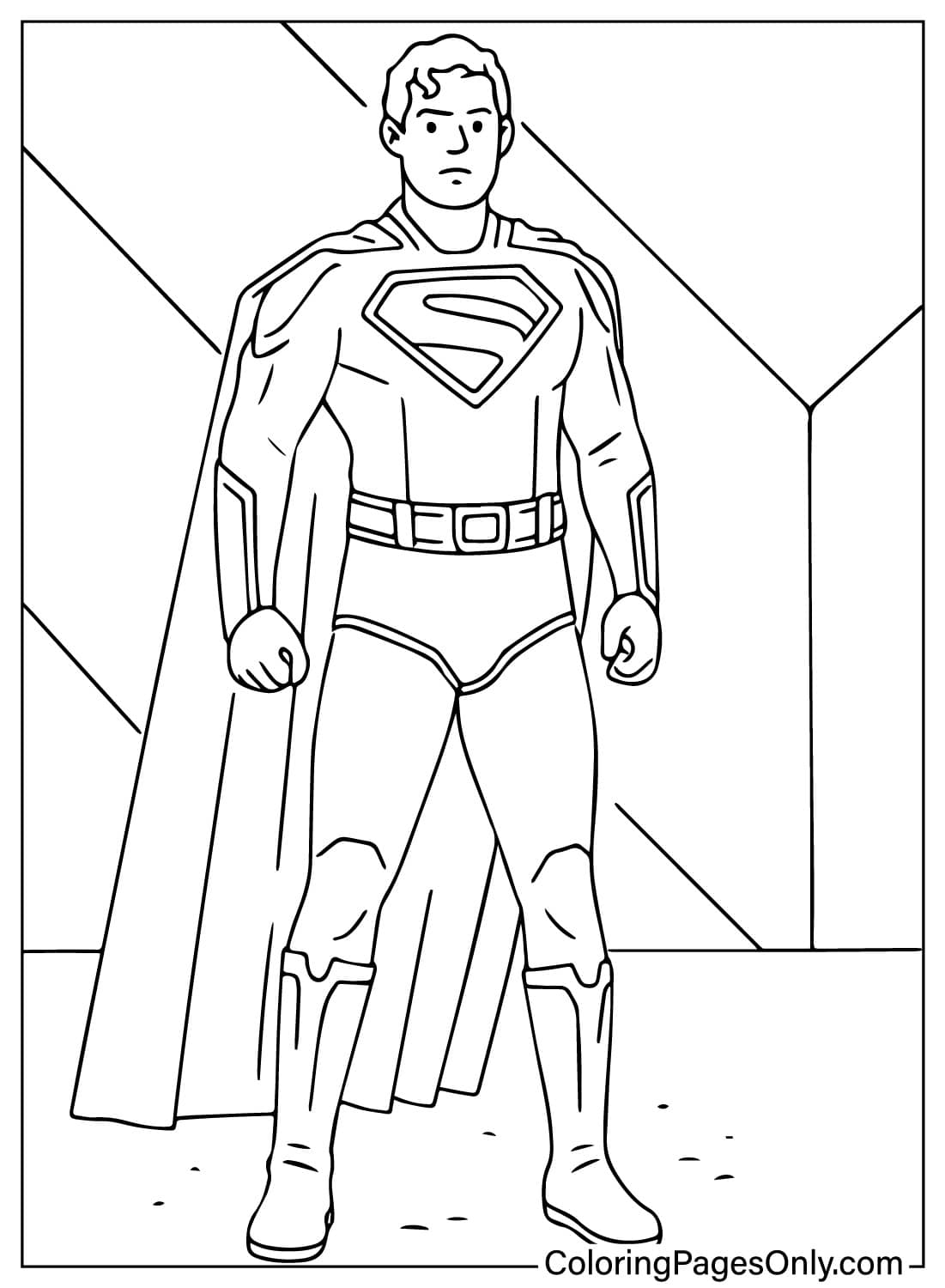
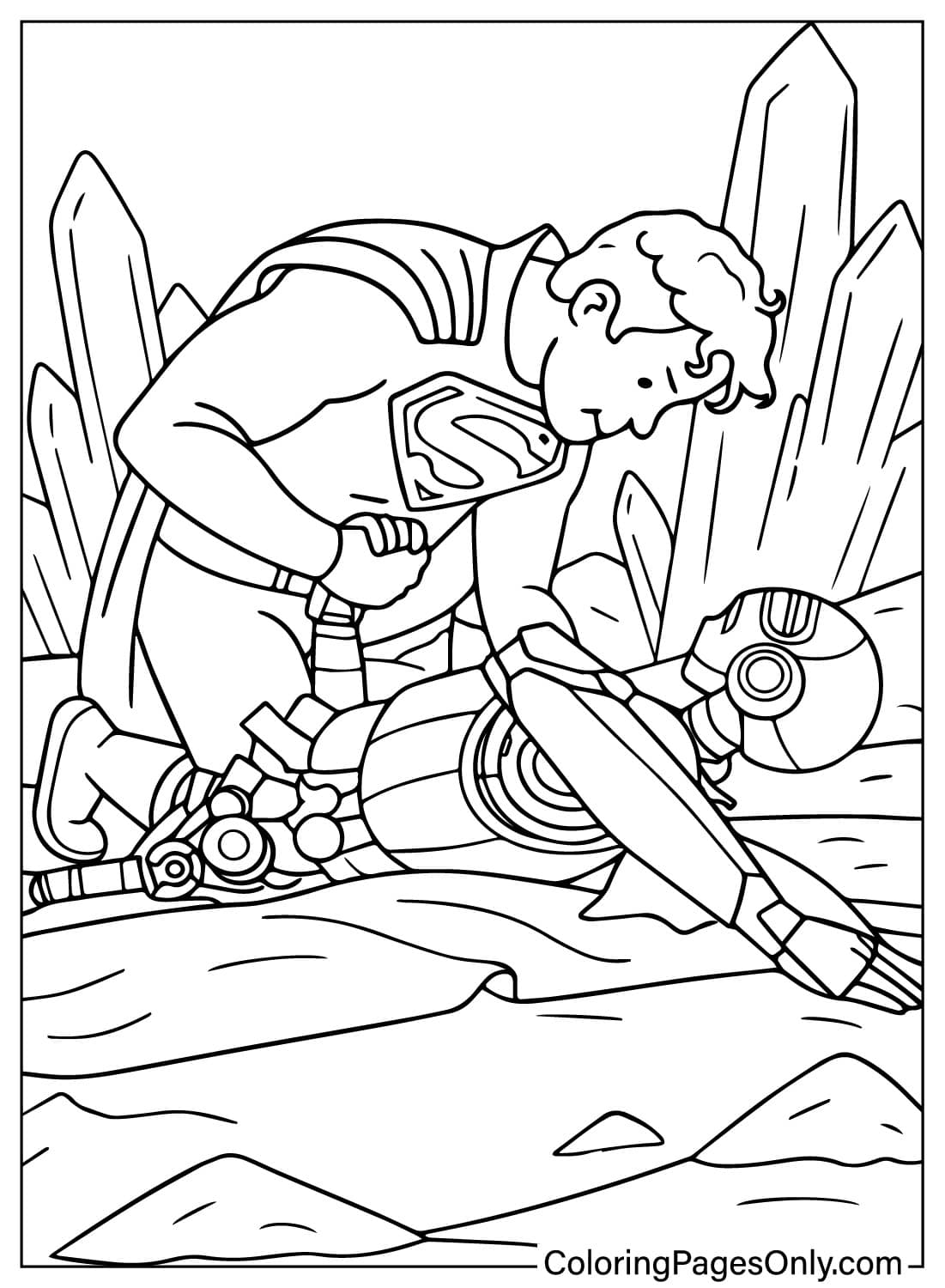
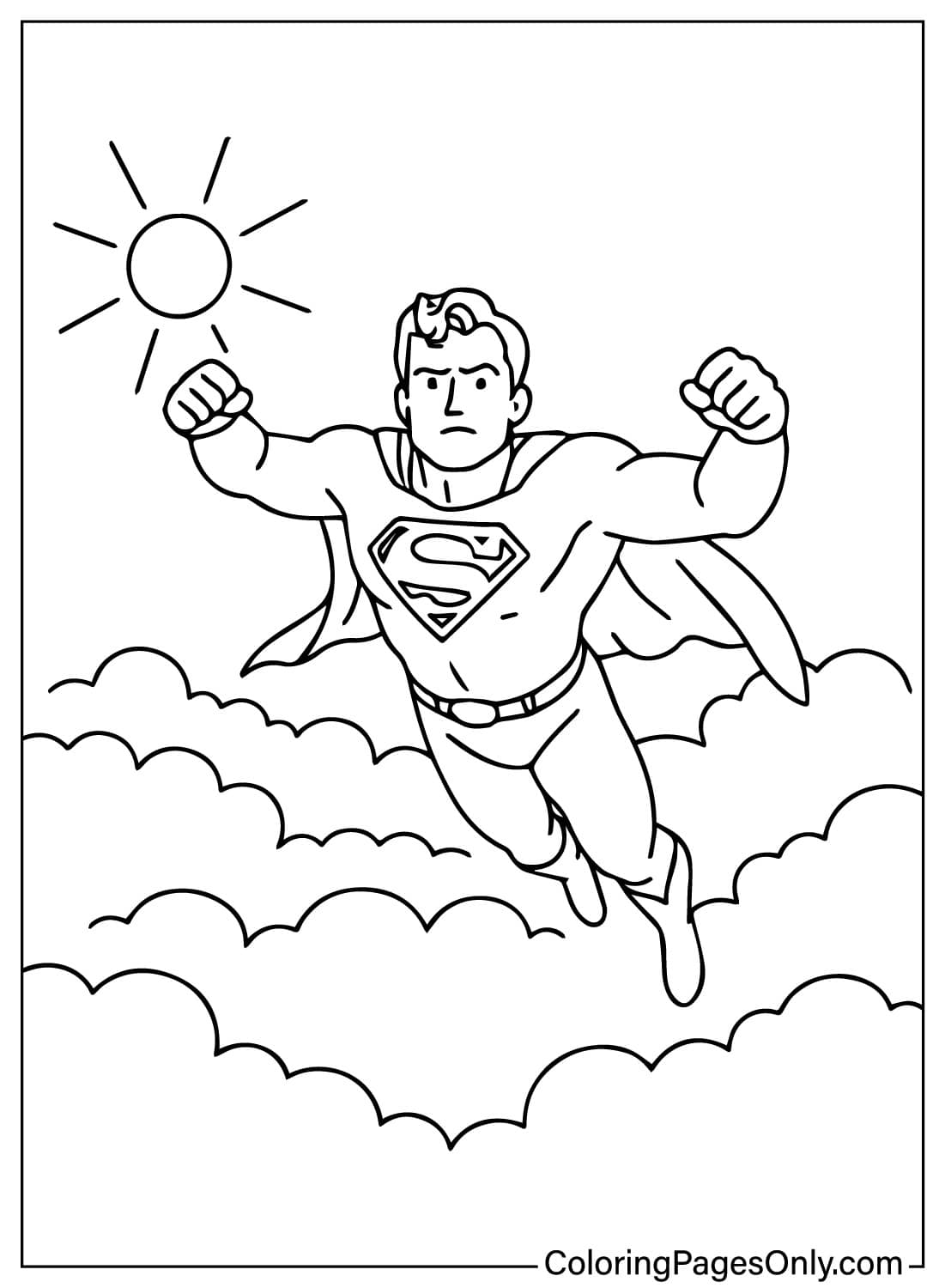
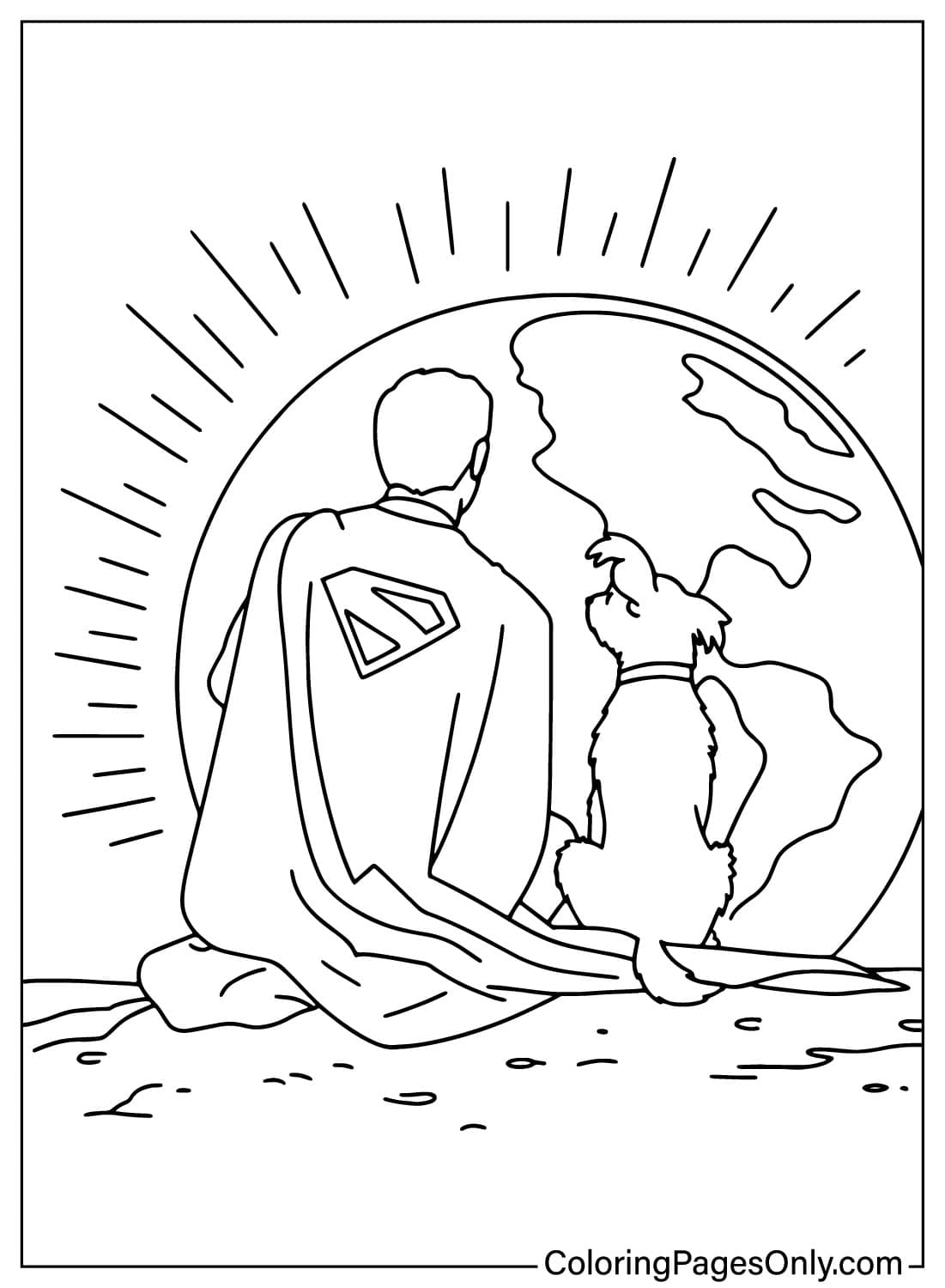
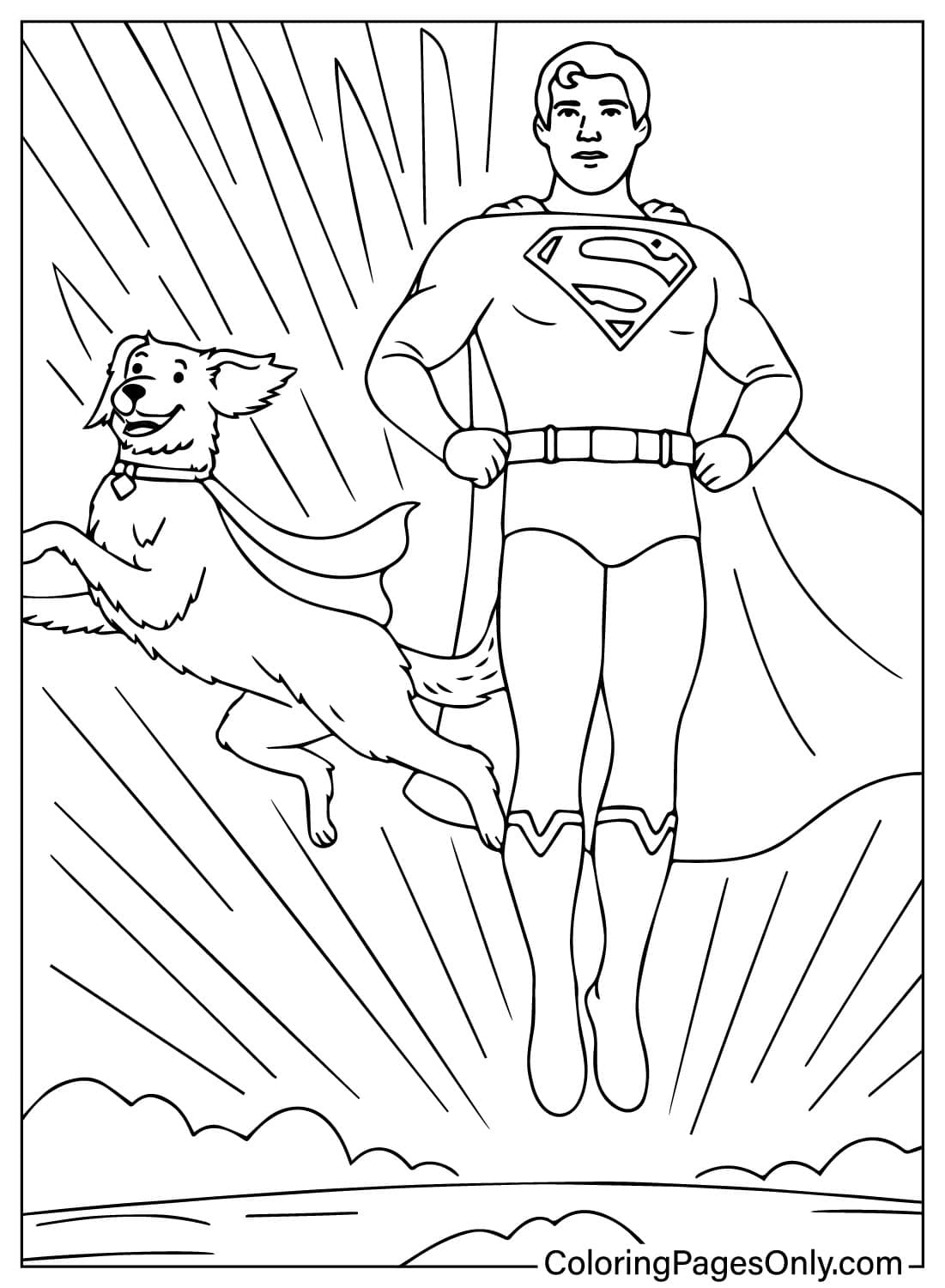
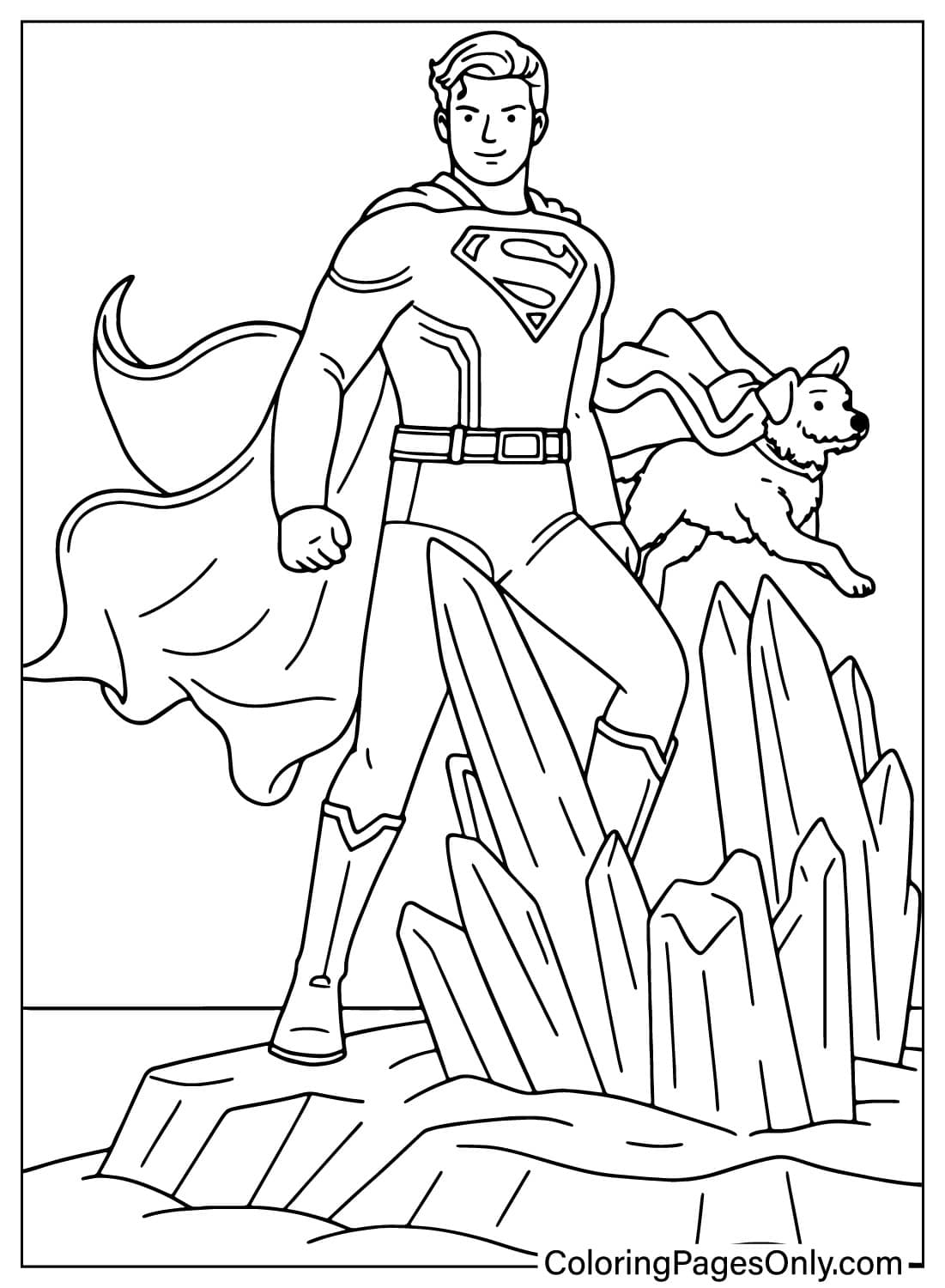
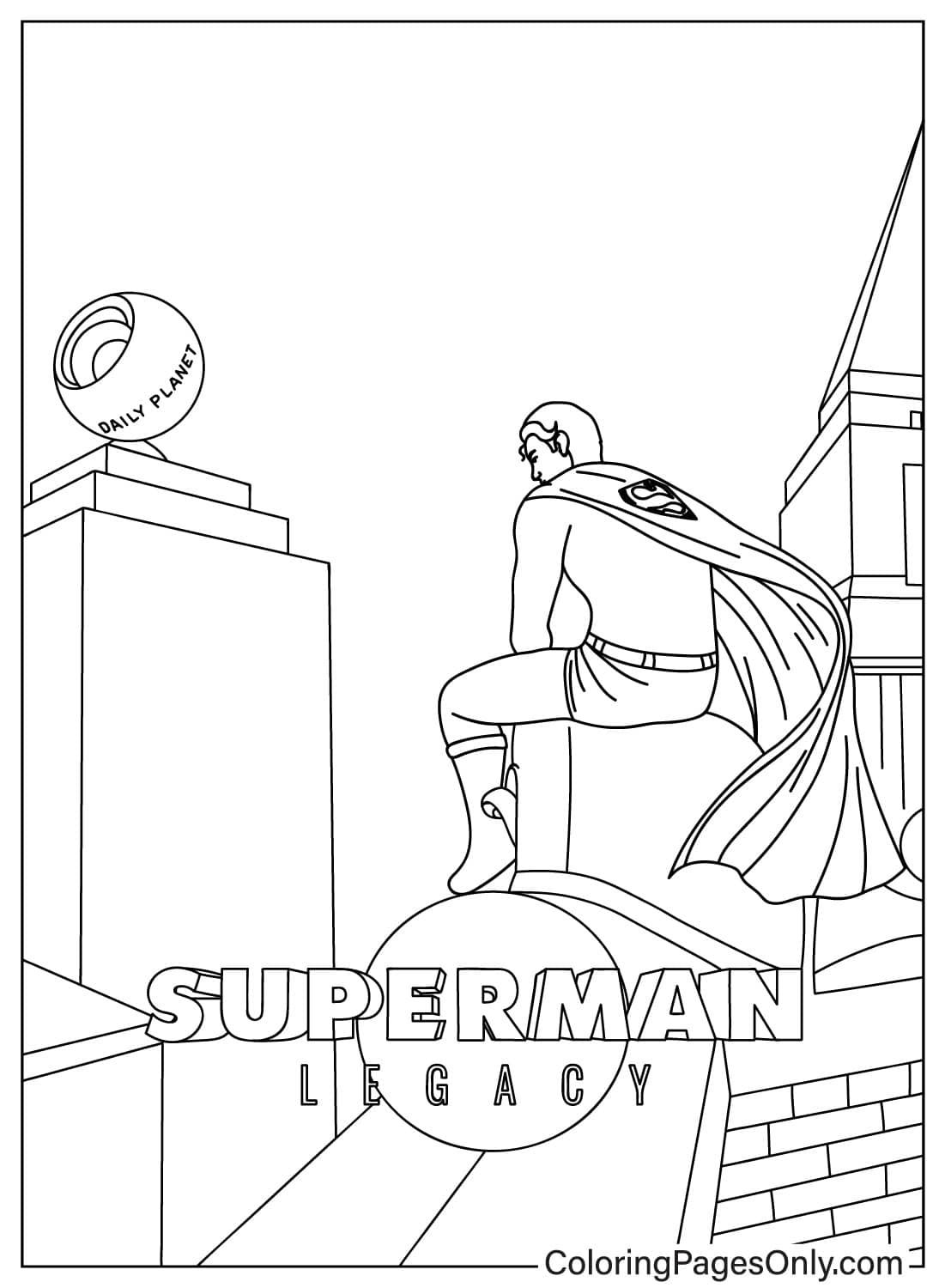
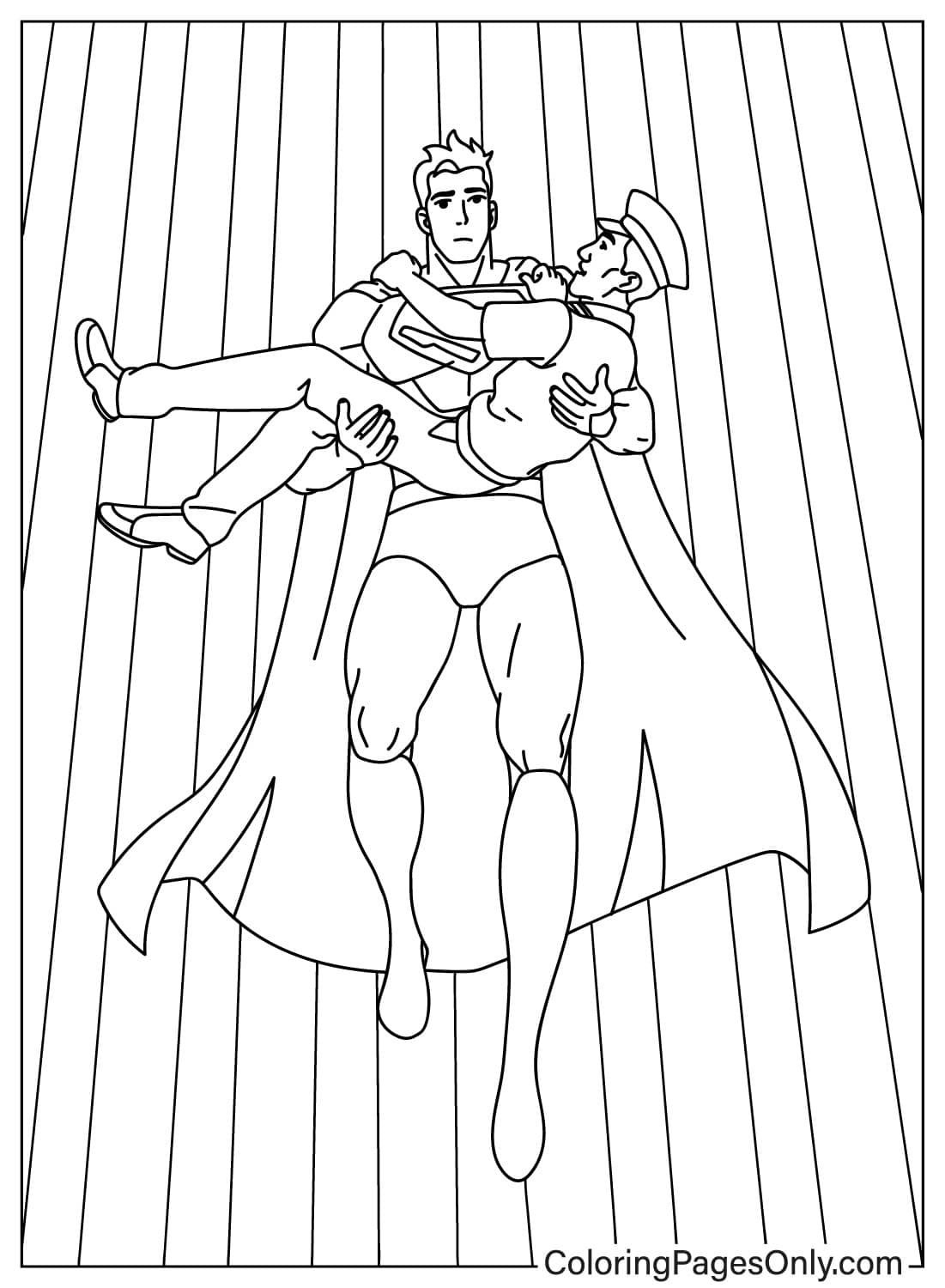
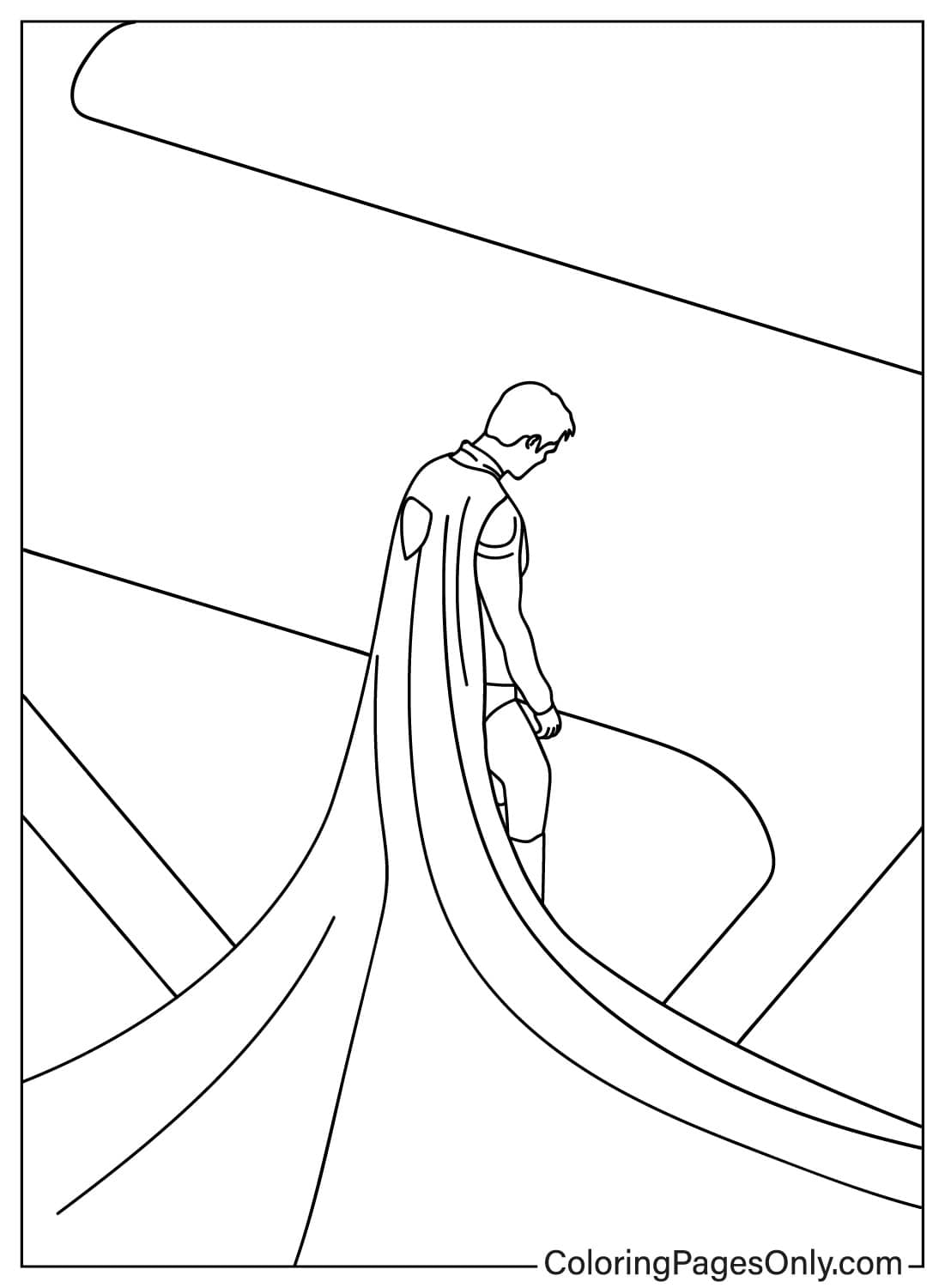
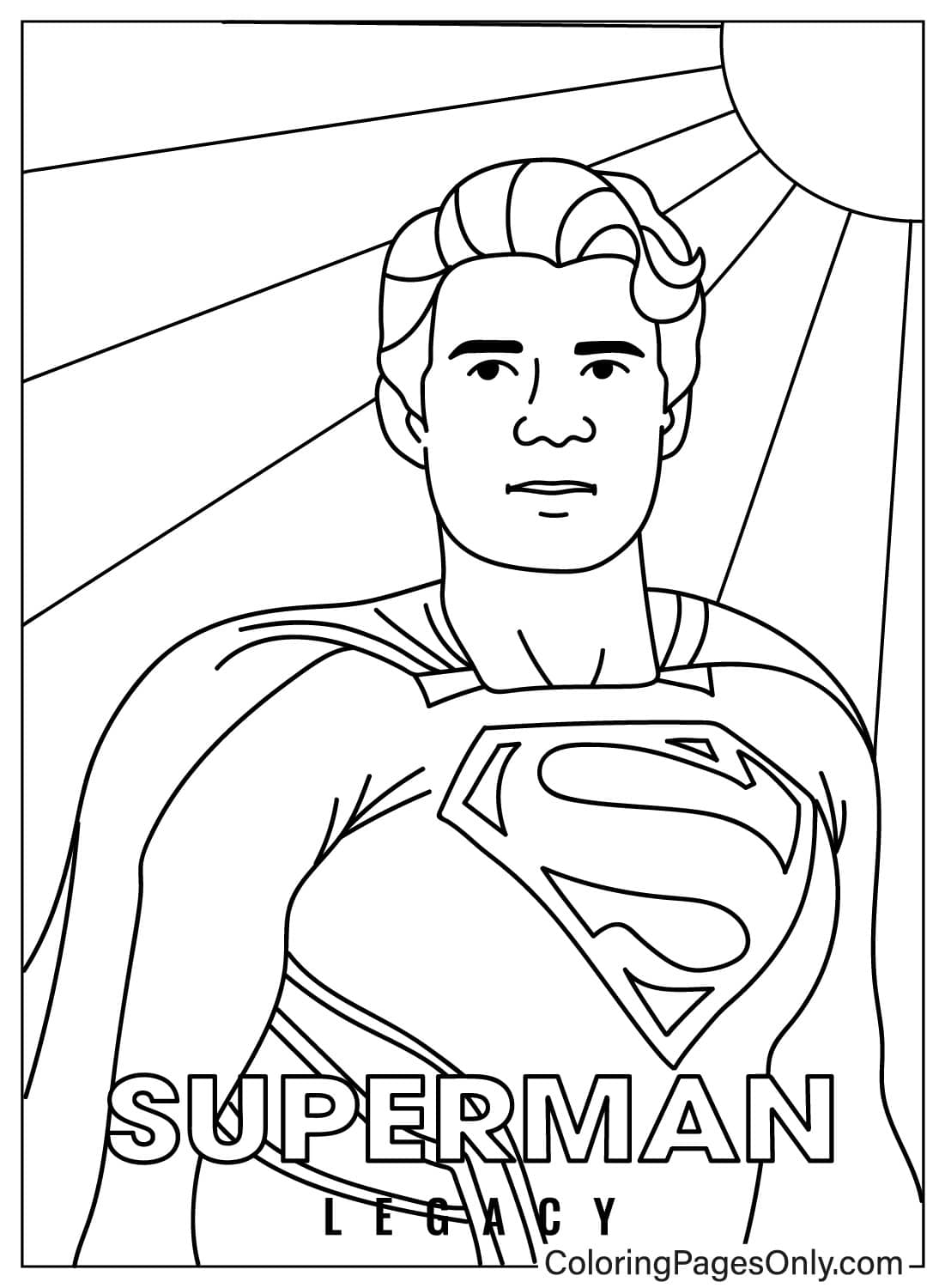
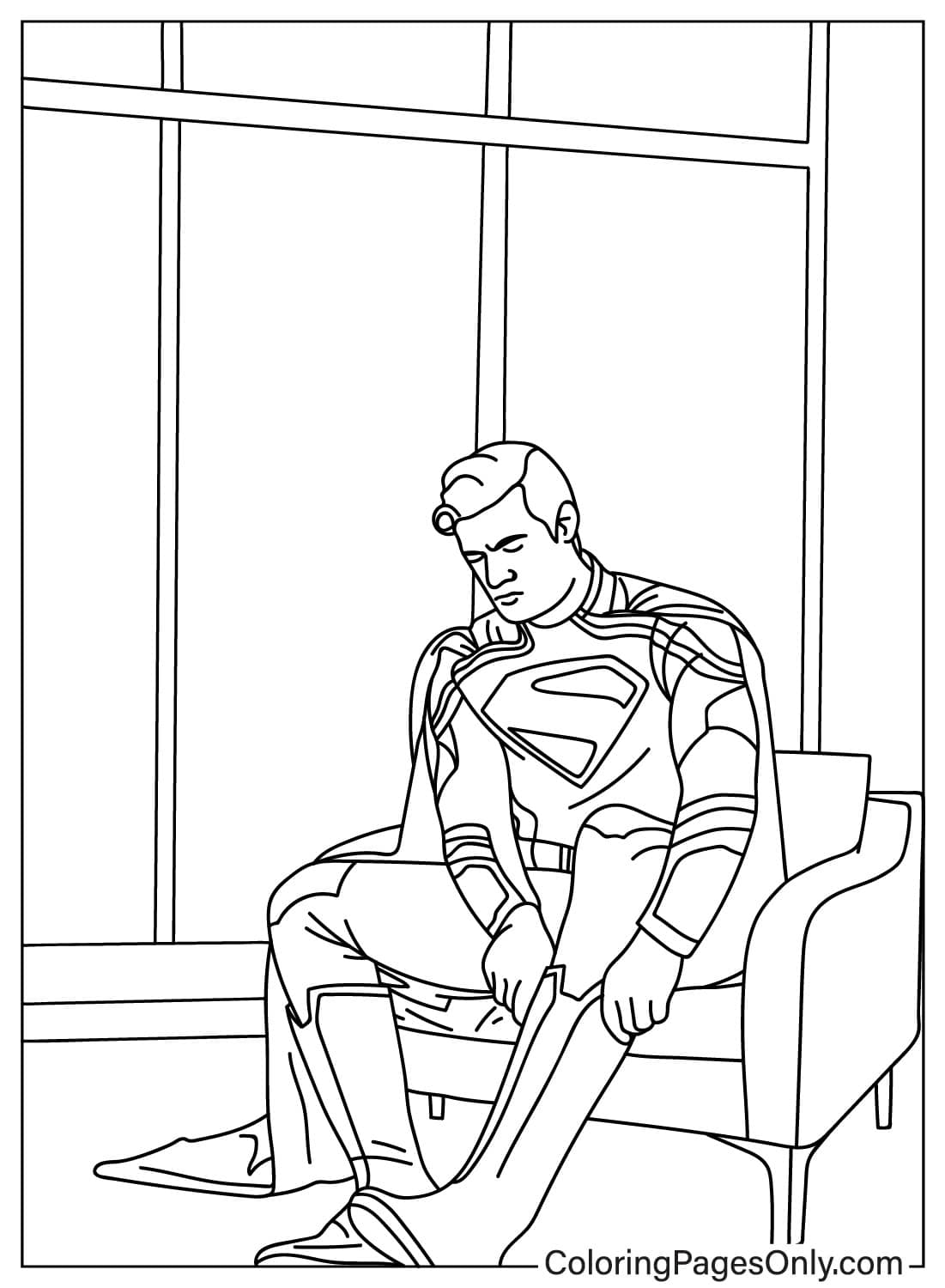
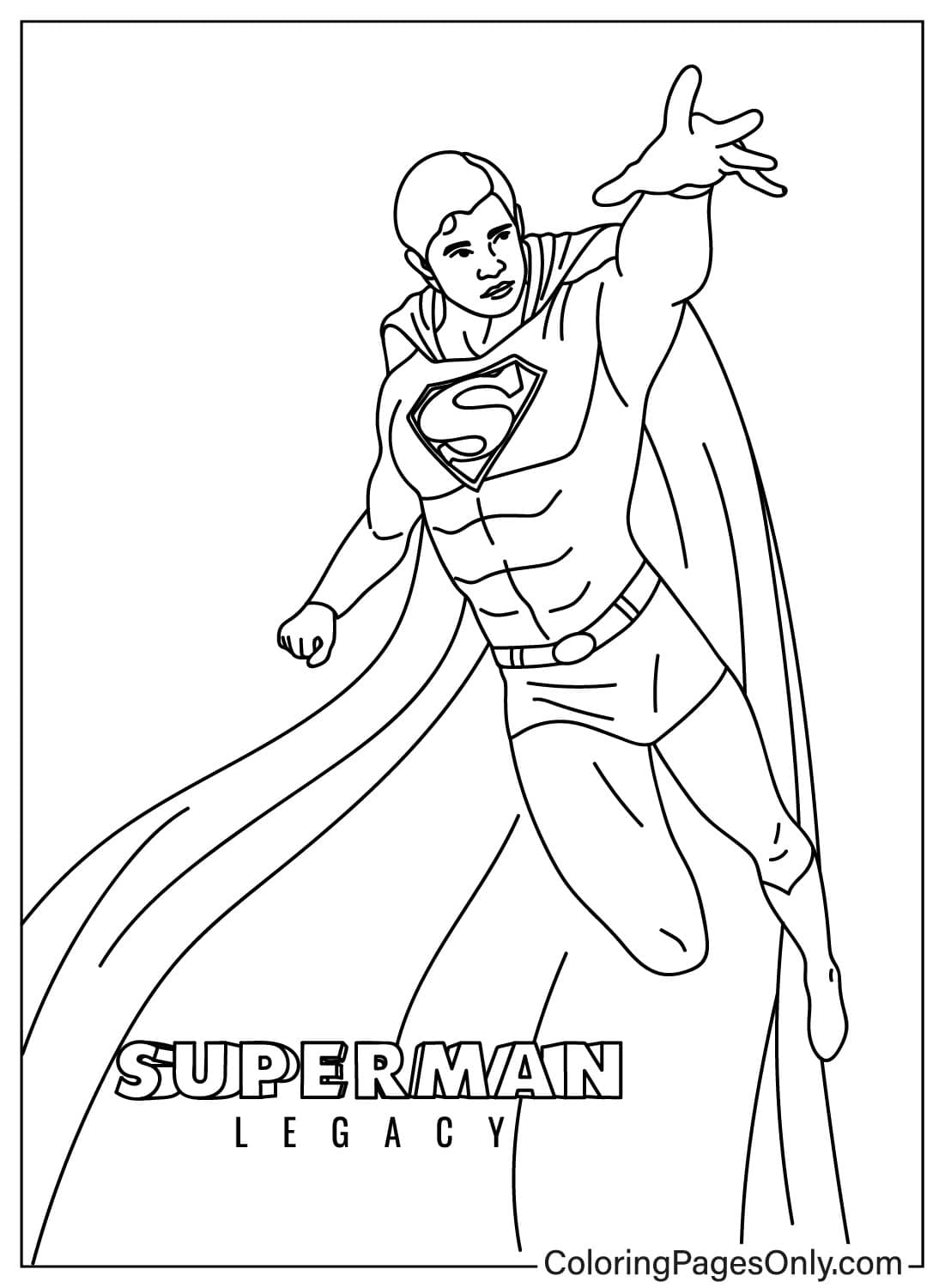
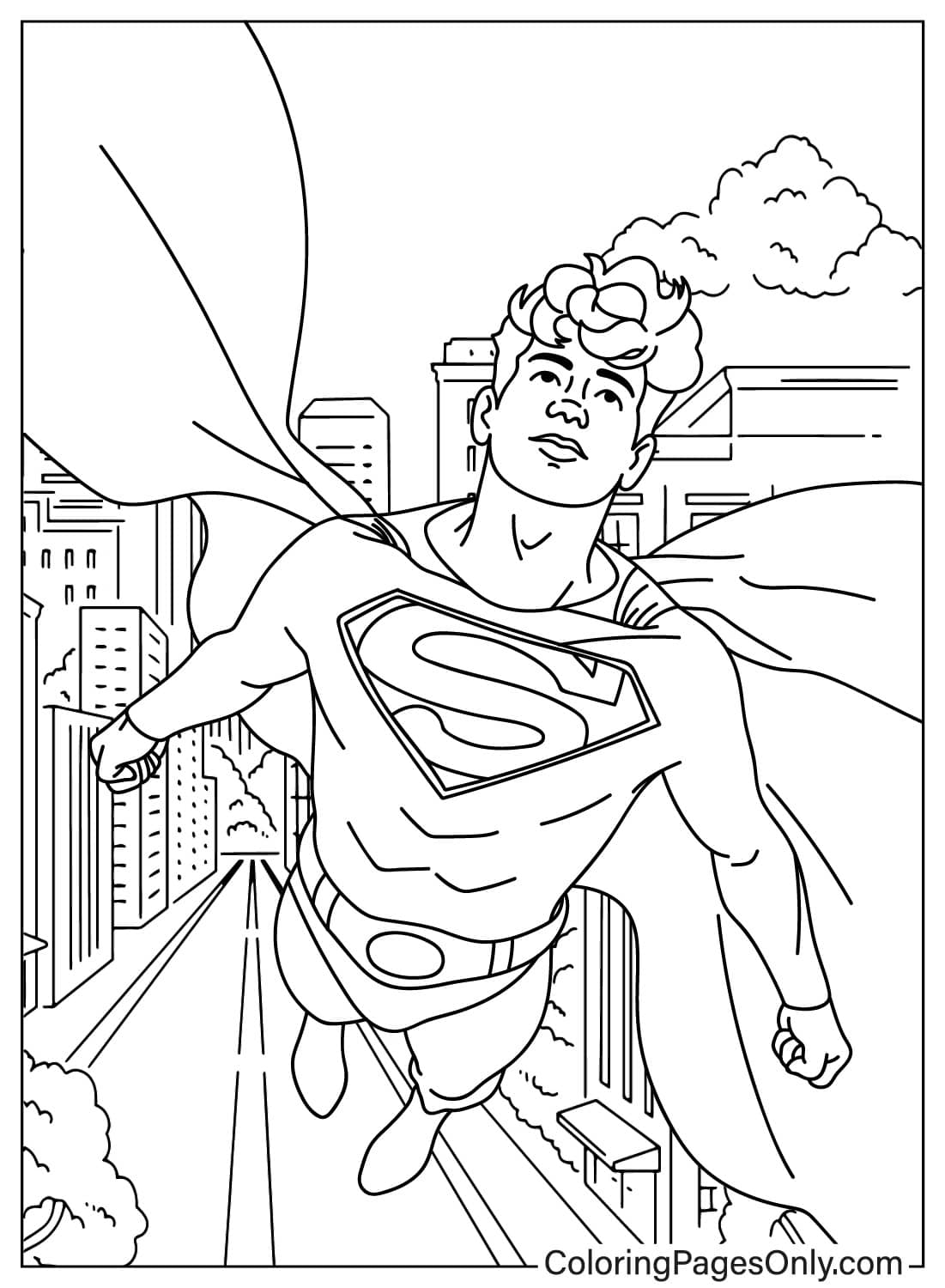
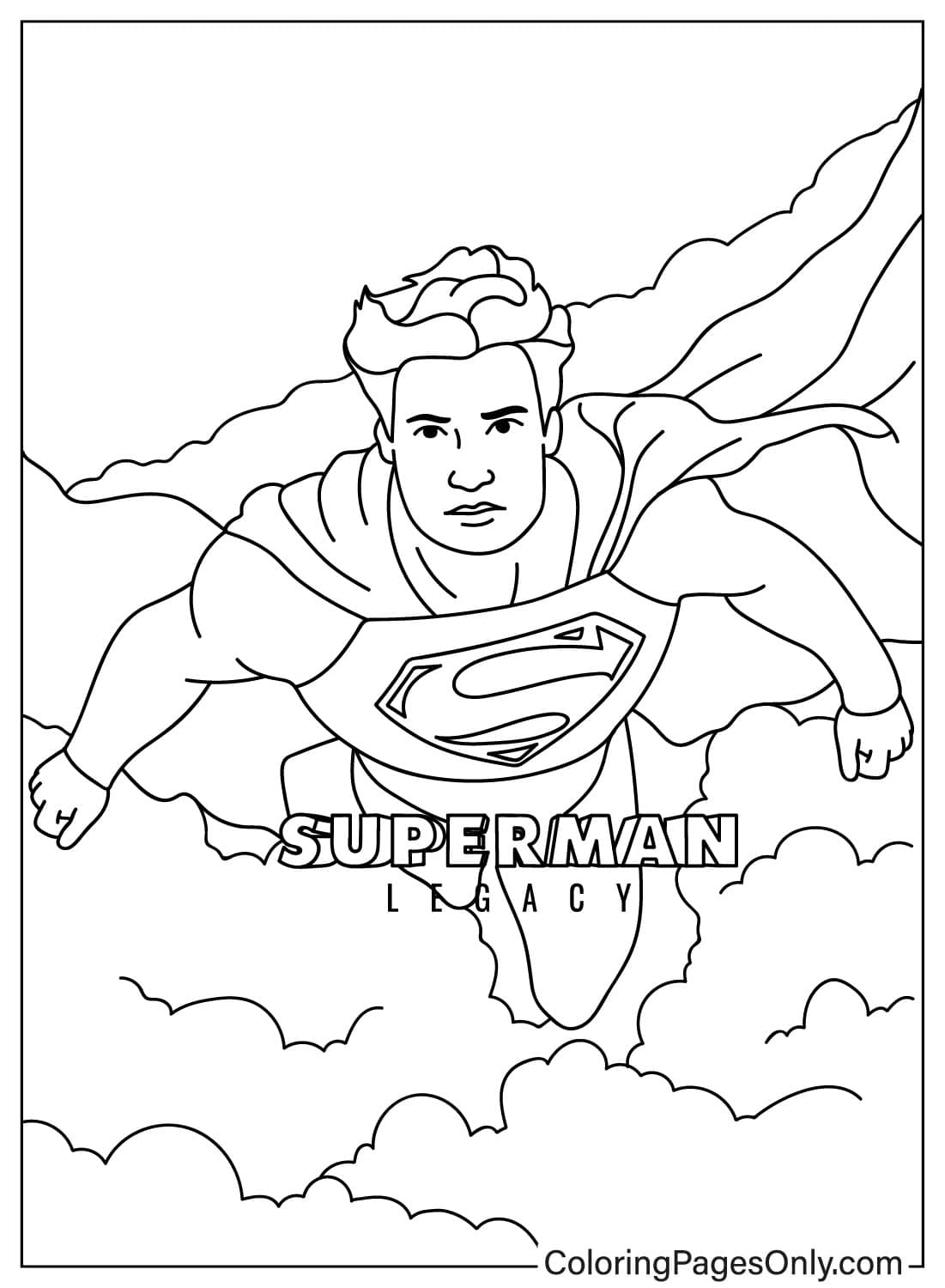
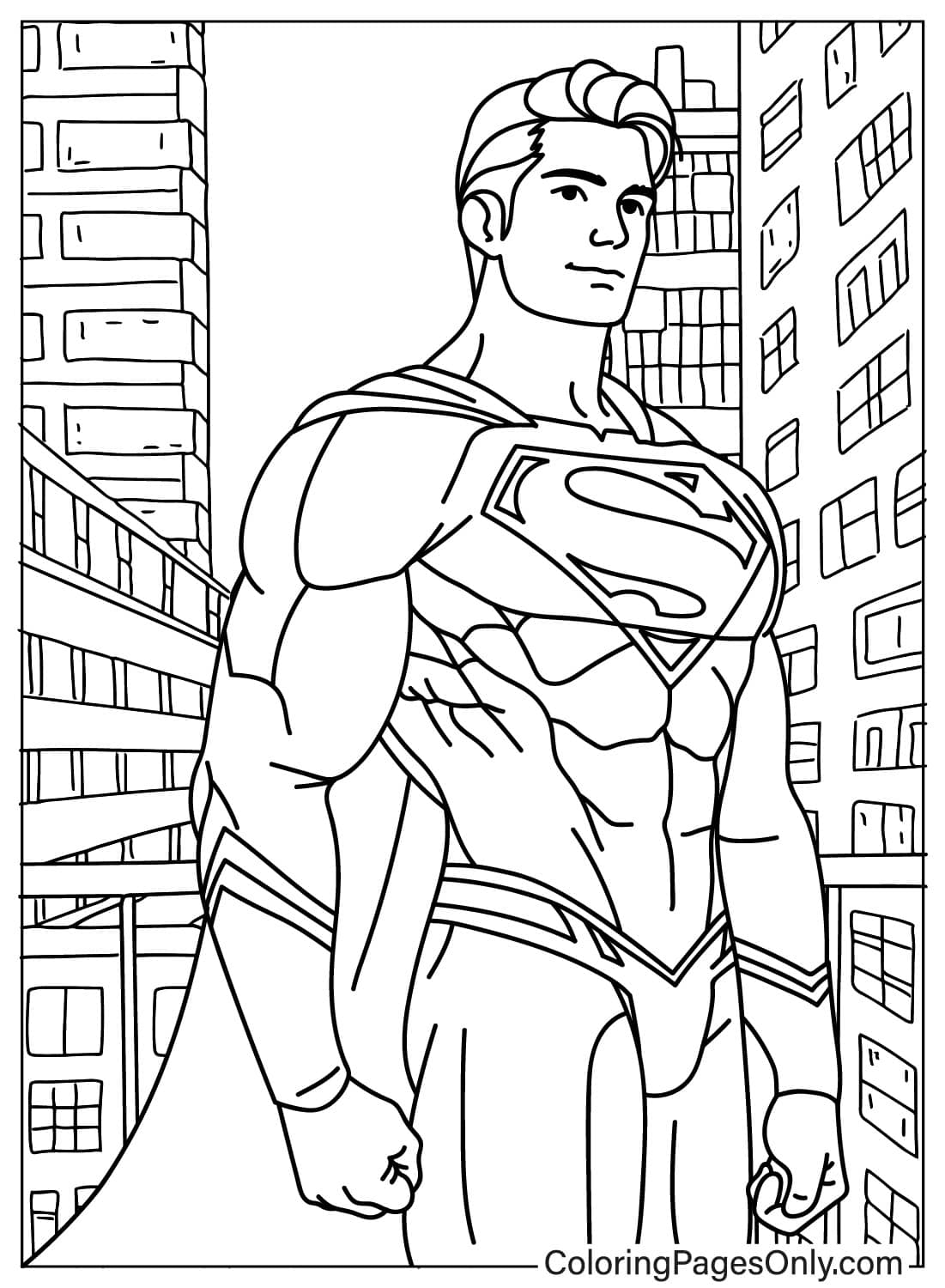

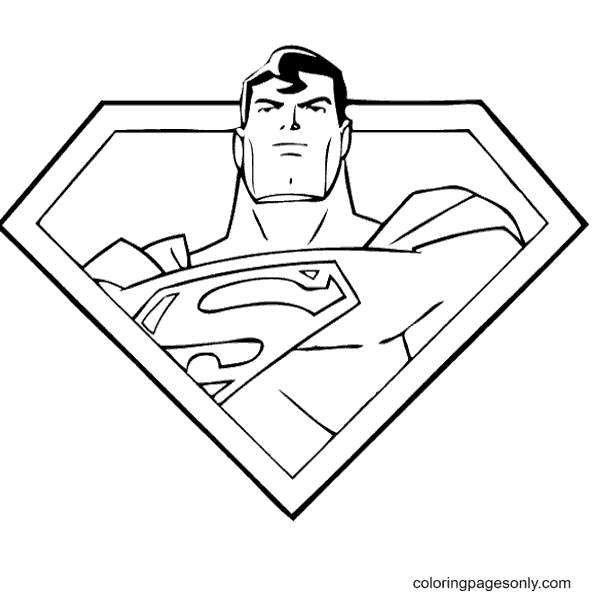
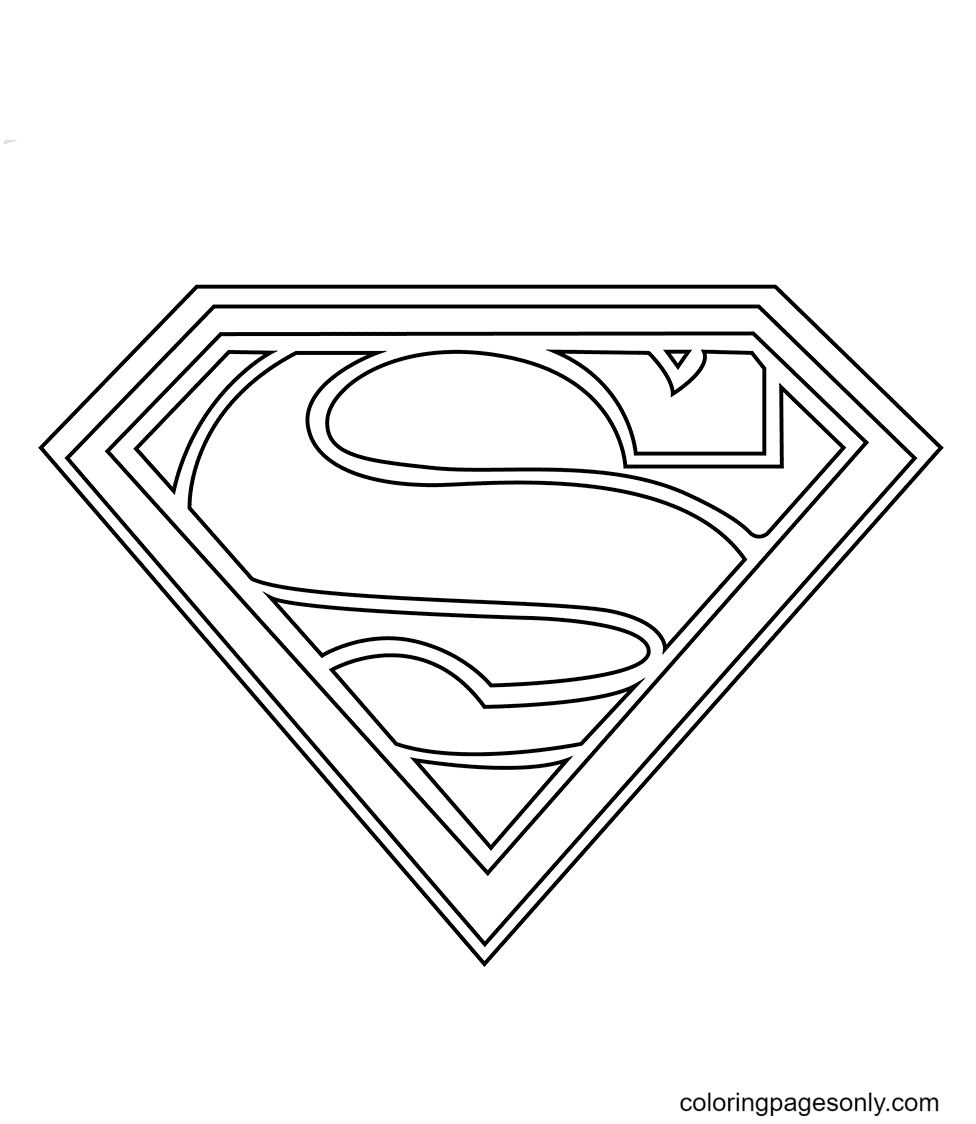
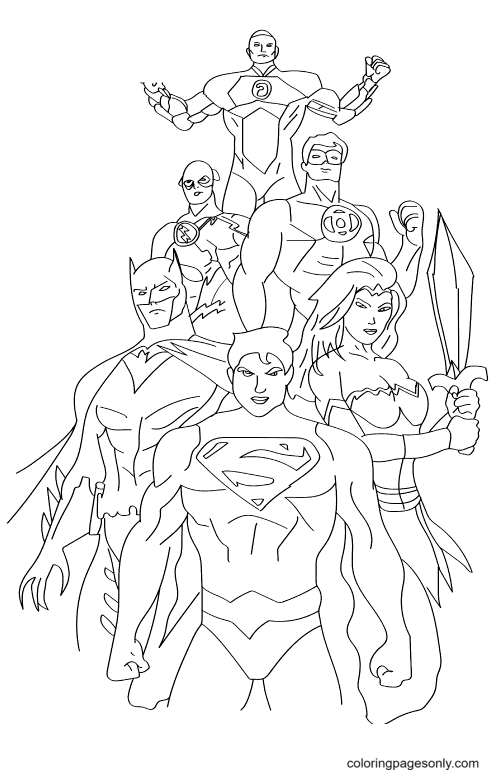
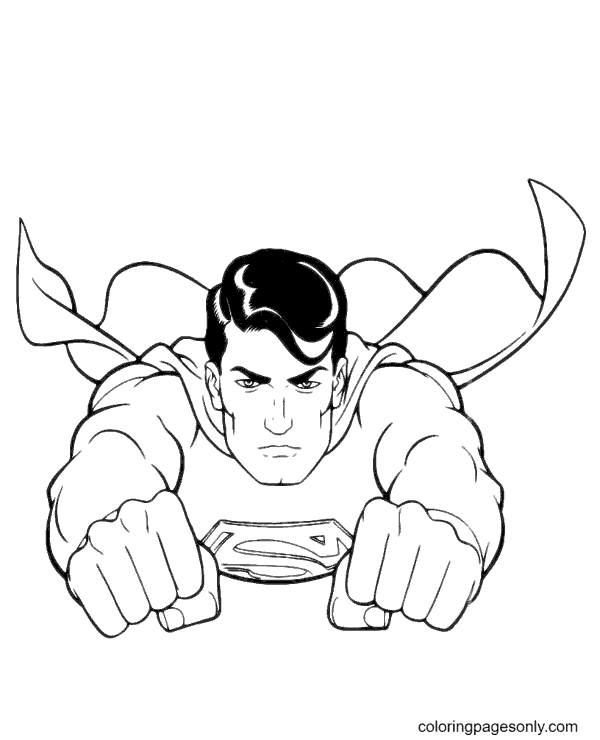
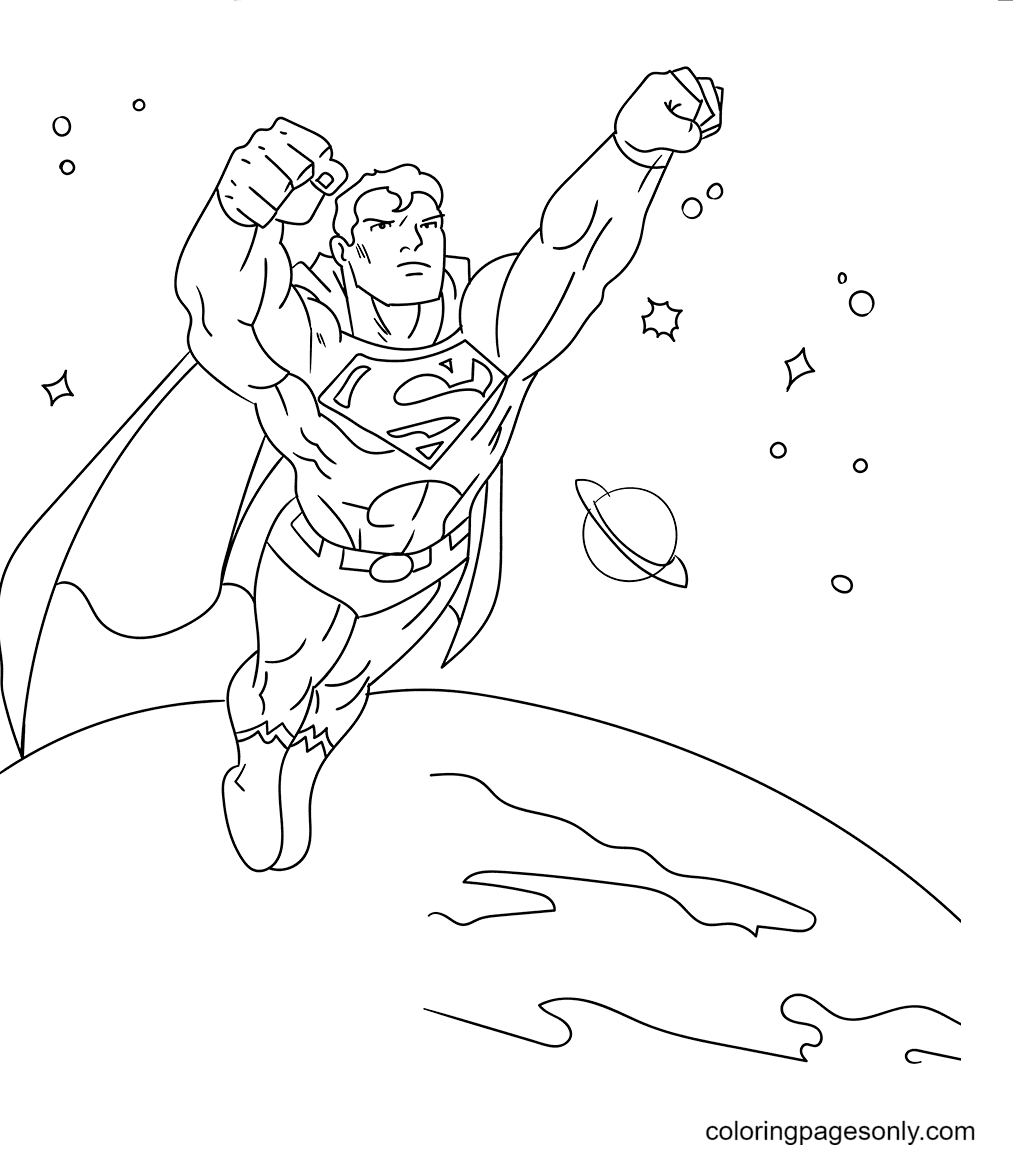
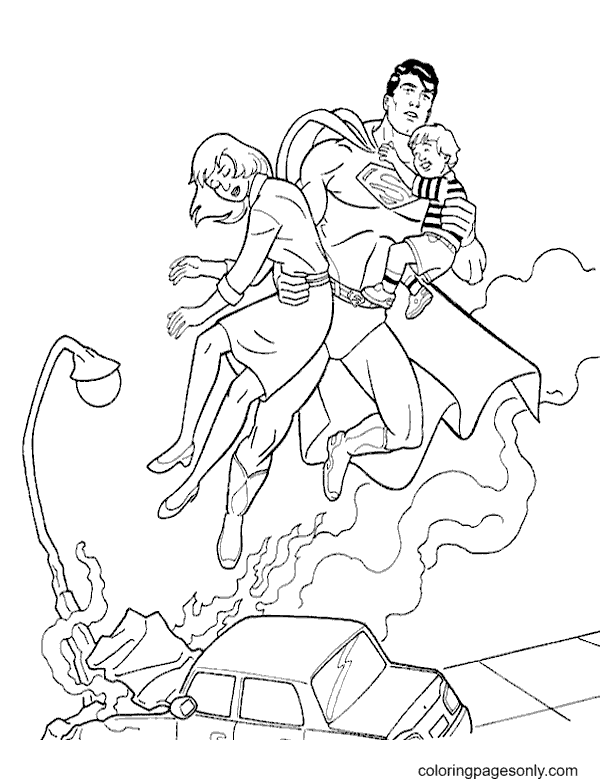
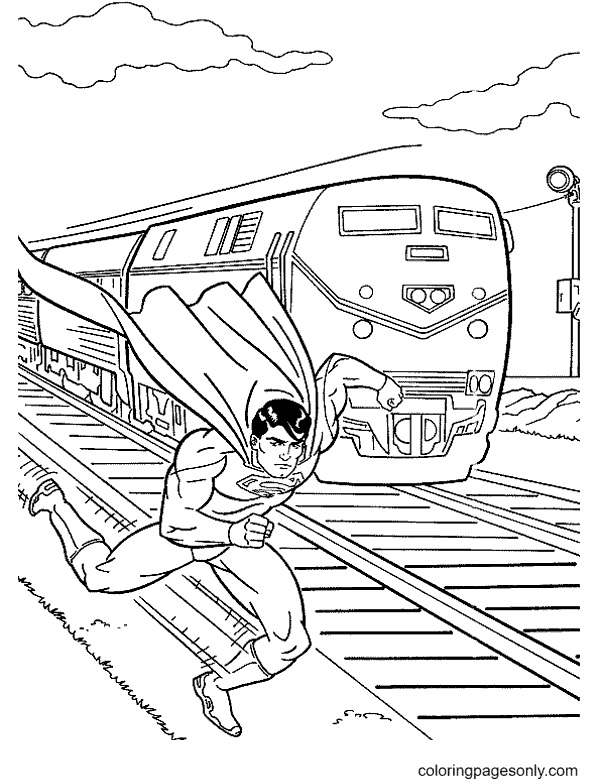
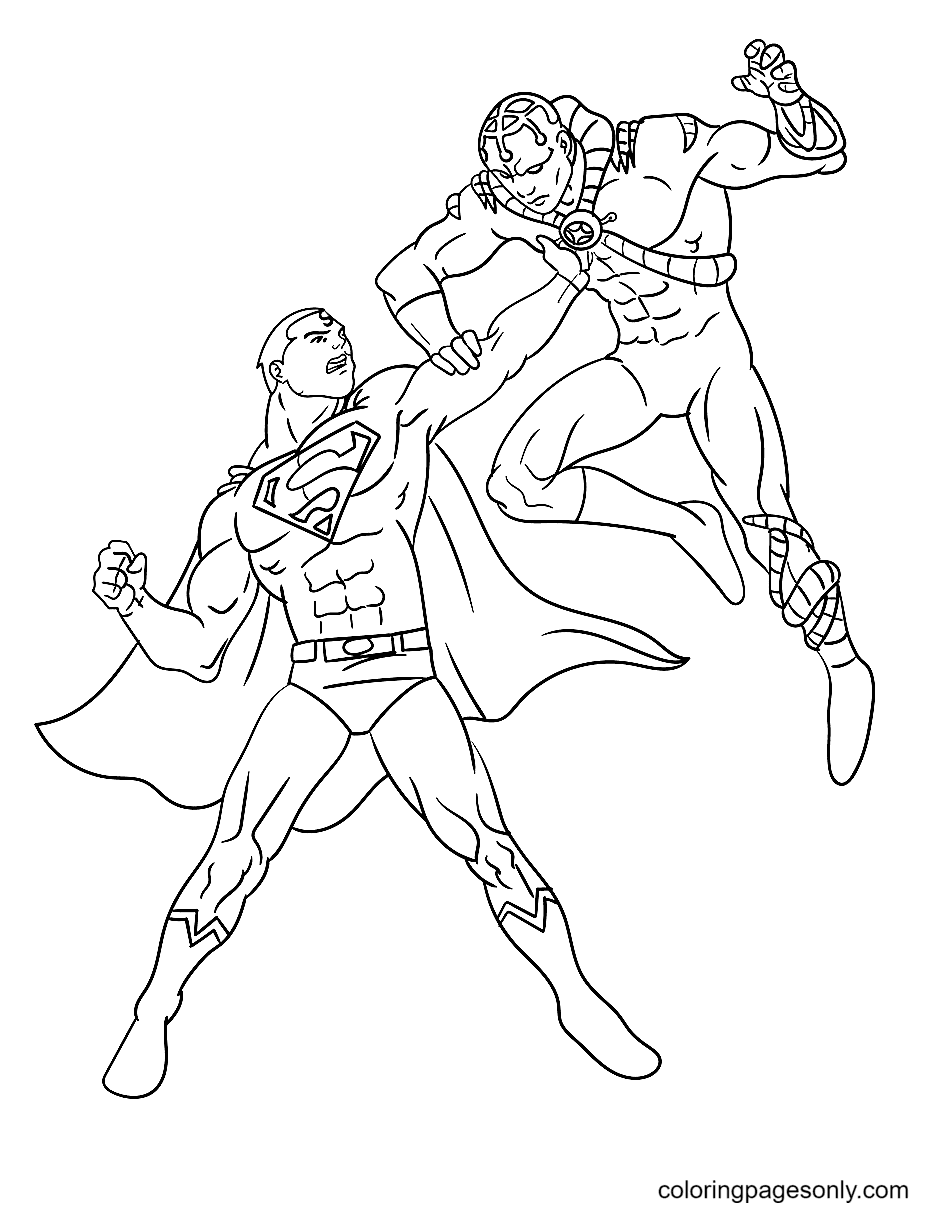
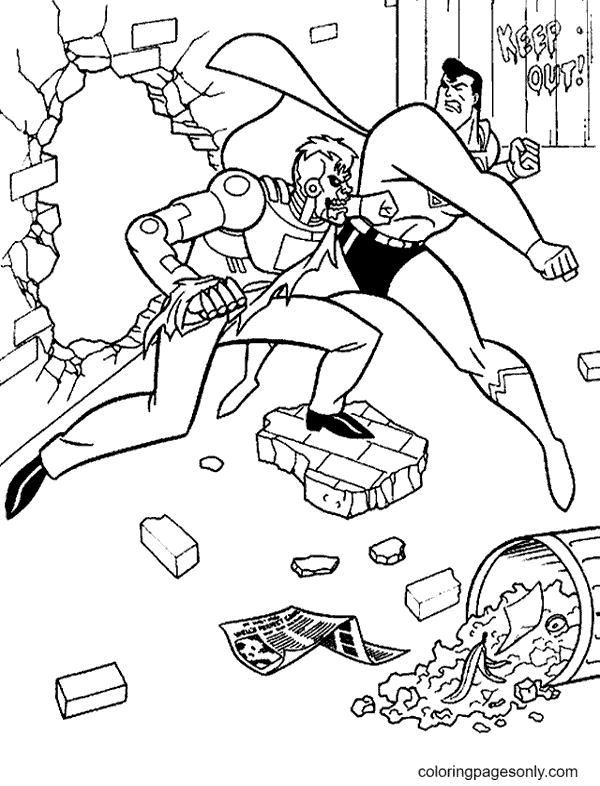
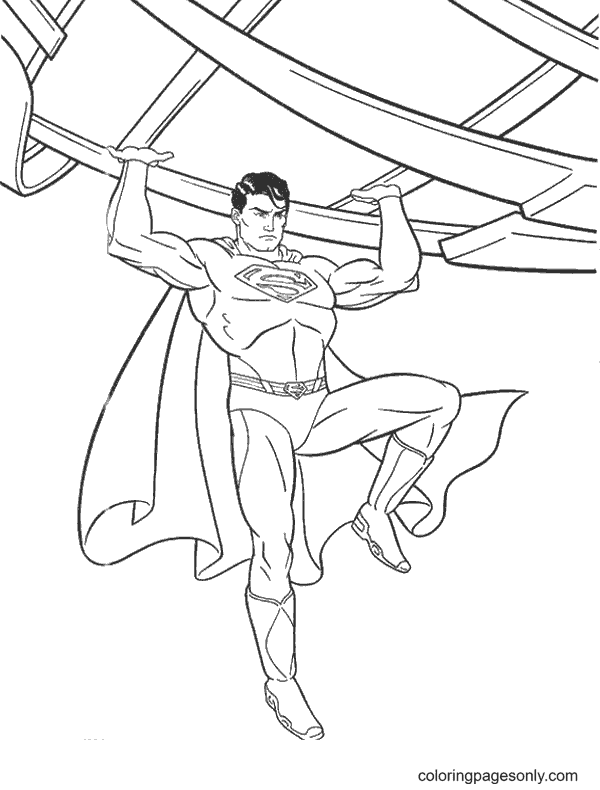

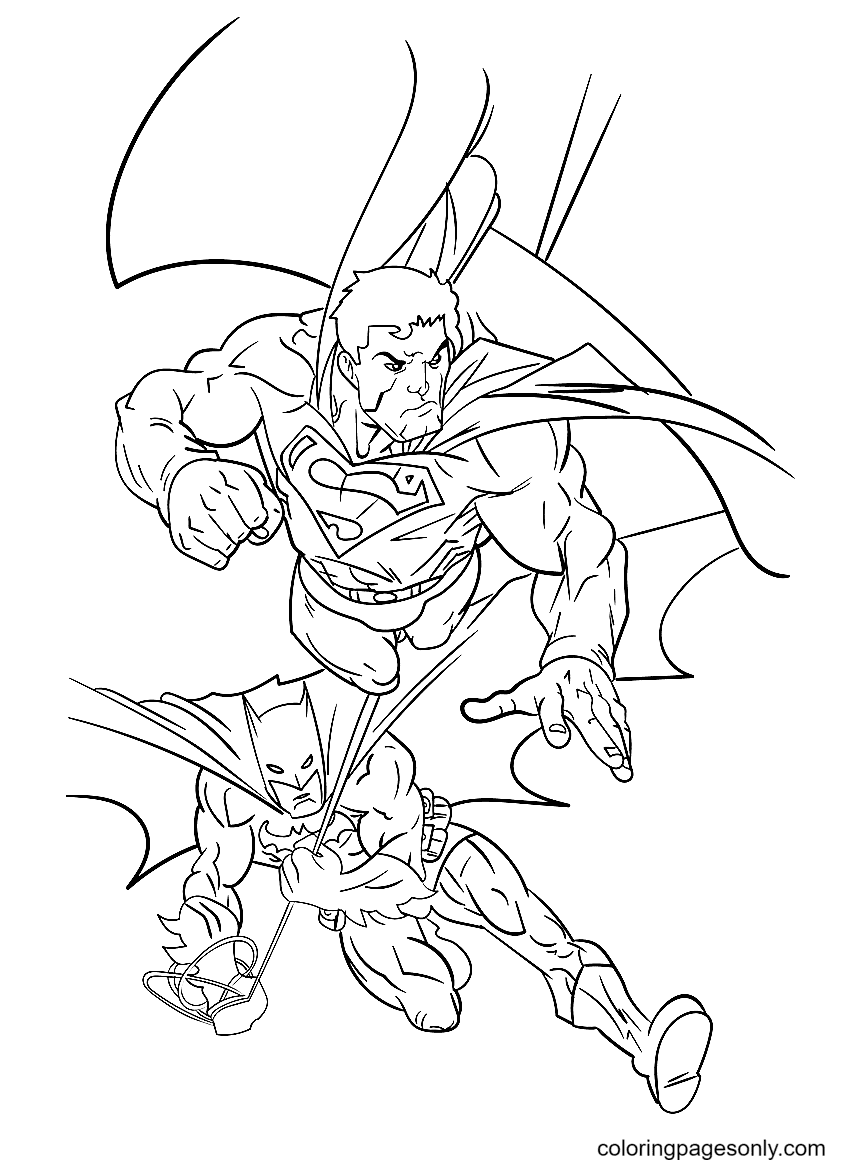
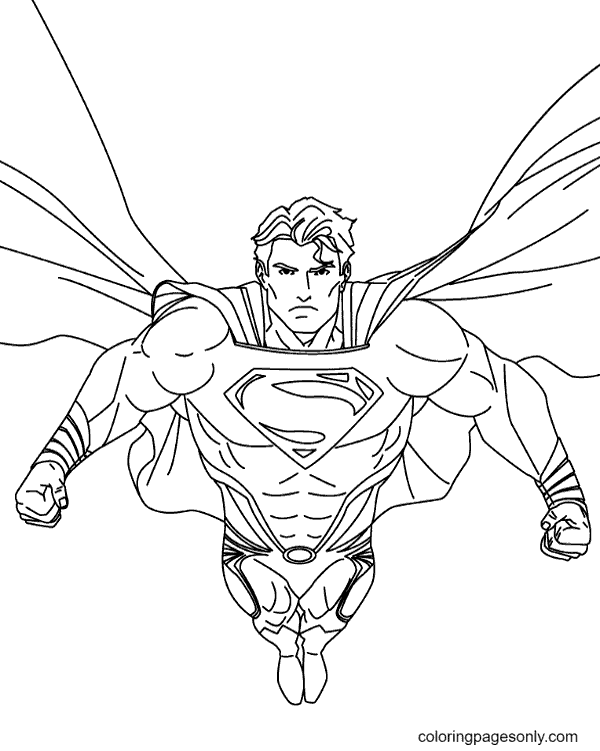
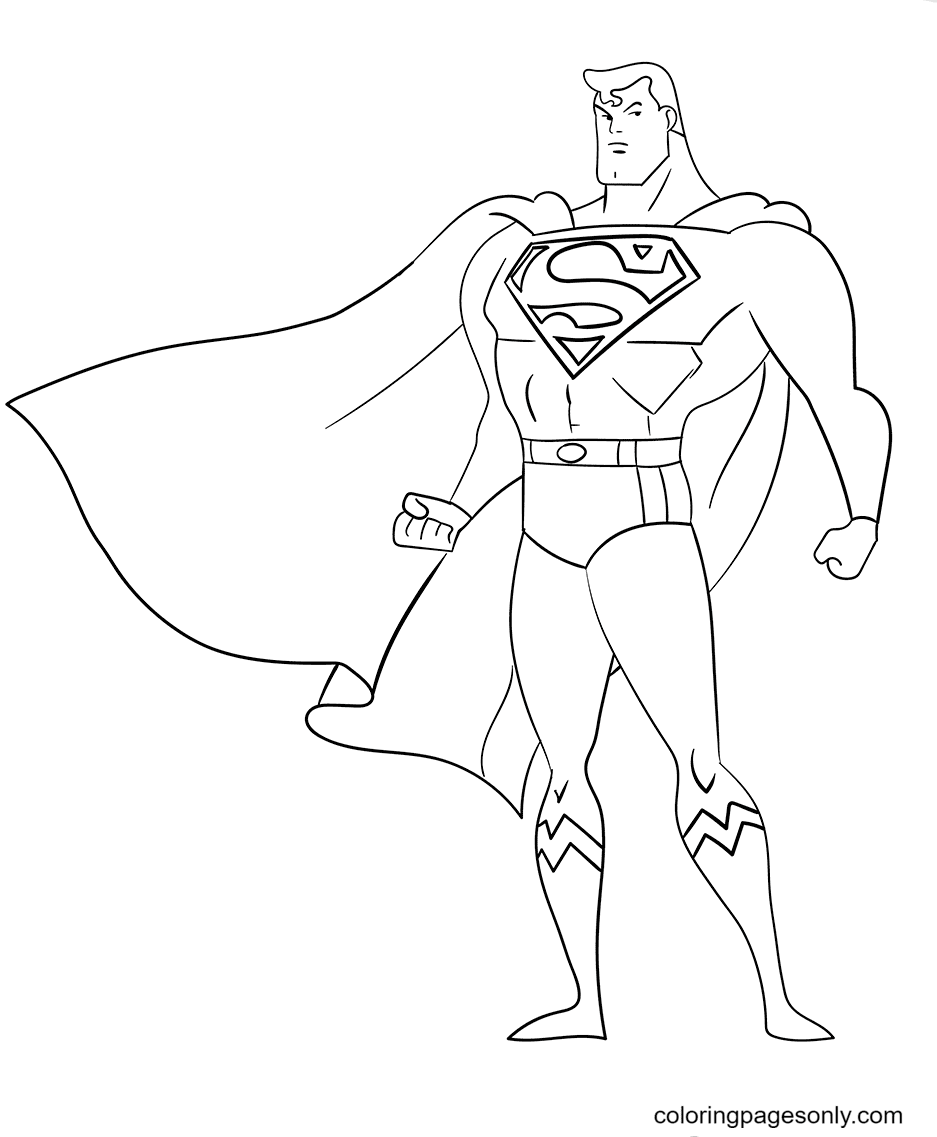
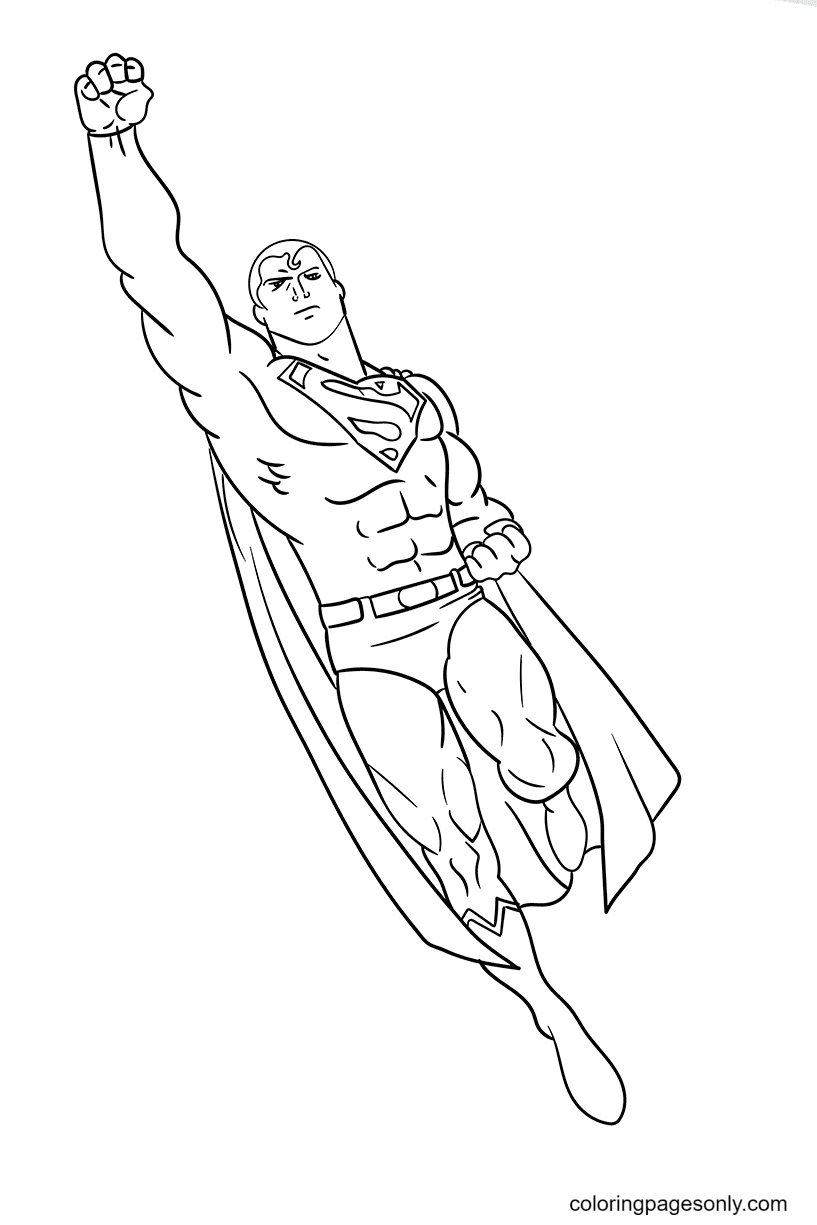
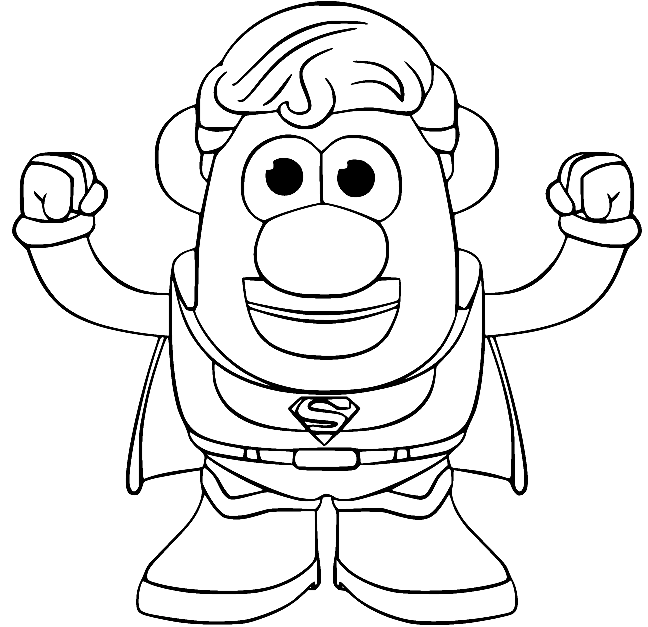
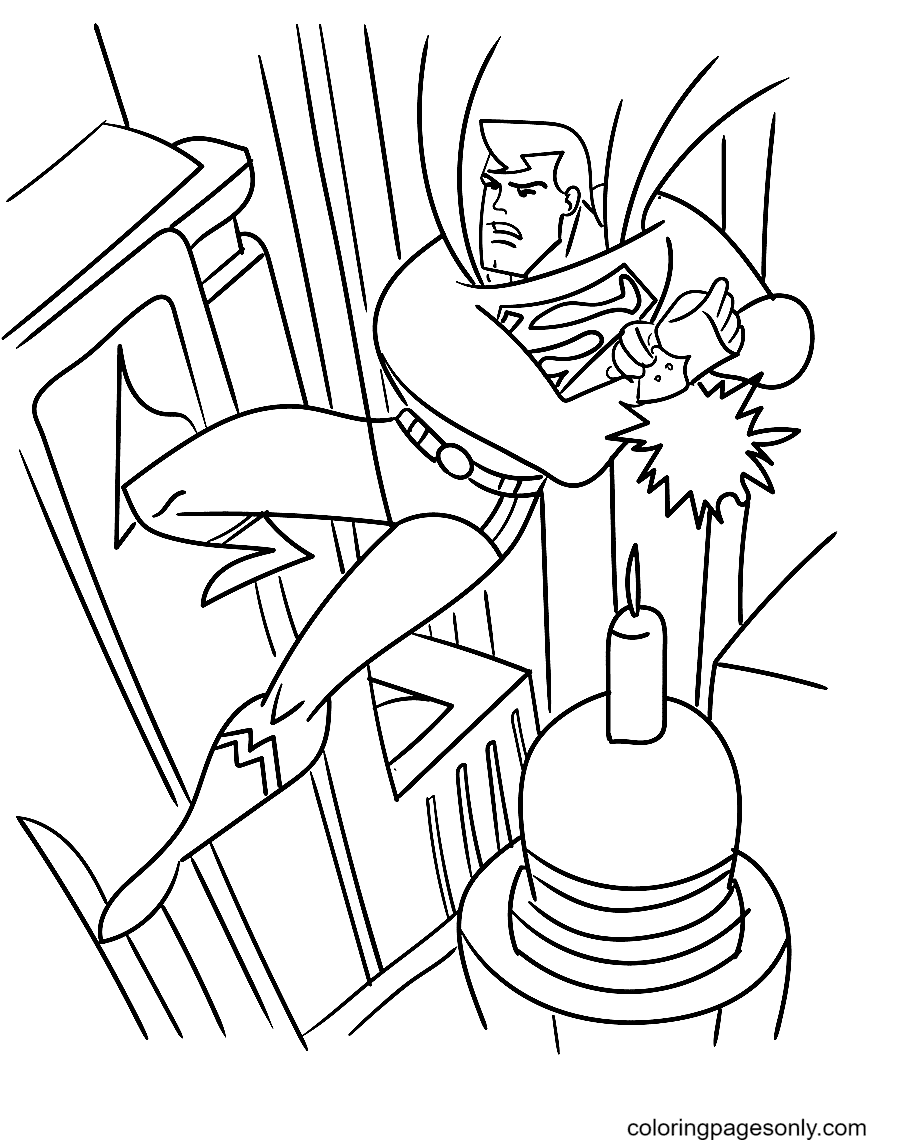
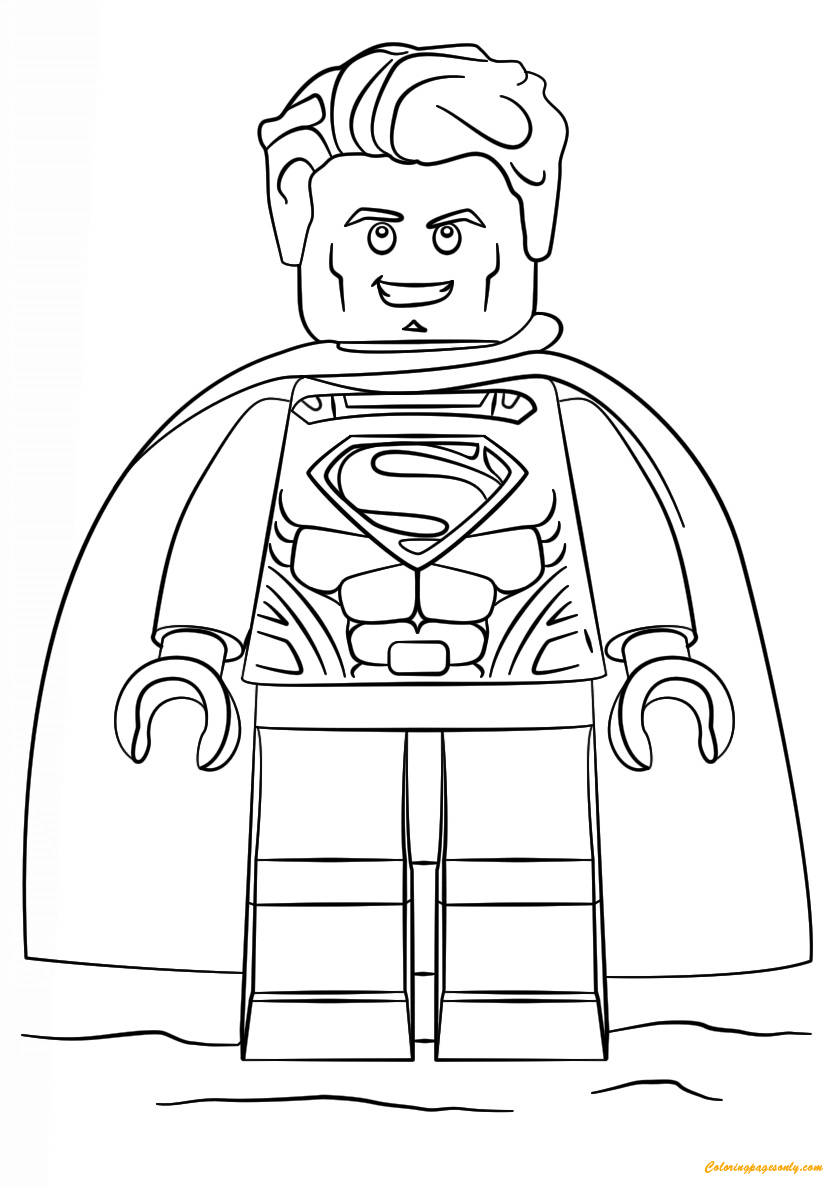
What’s Inside
The Classic Flying Pose Pages
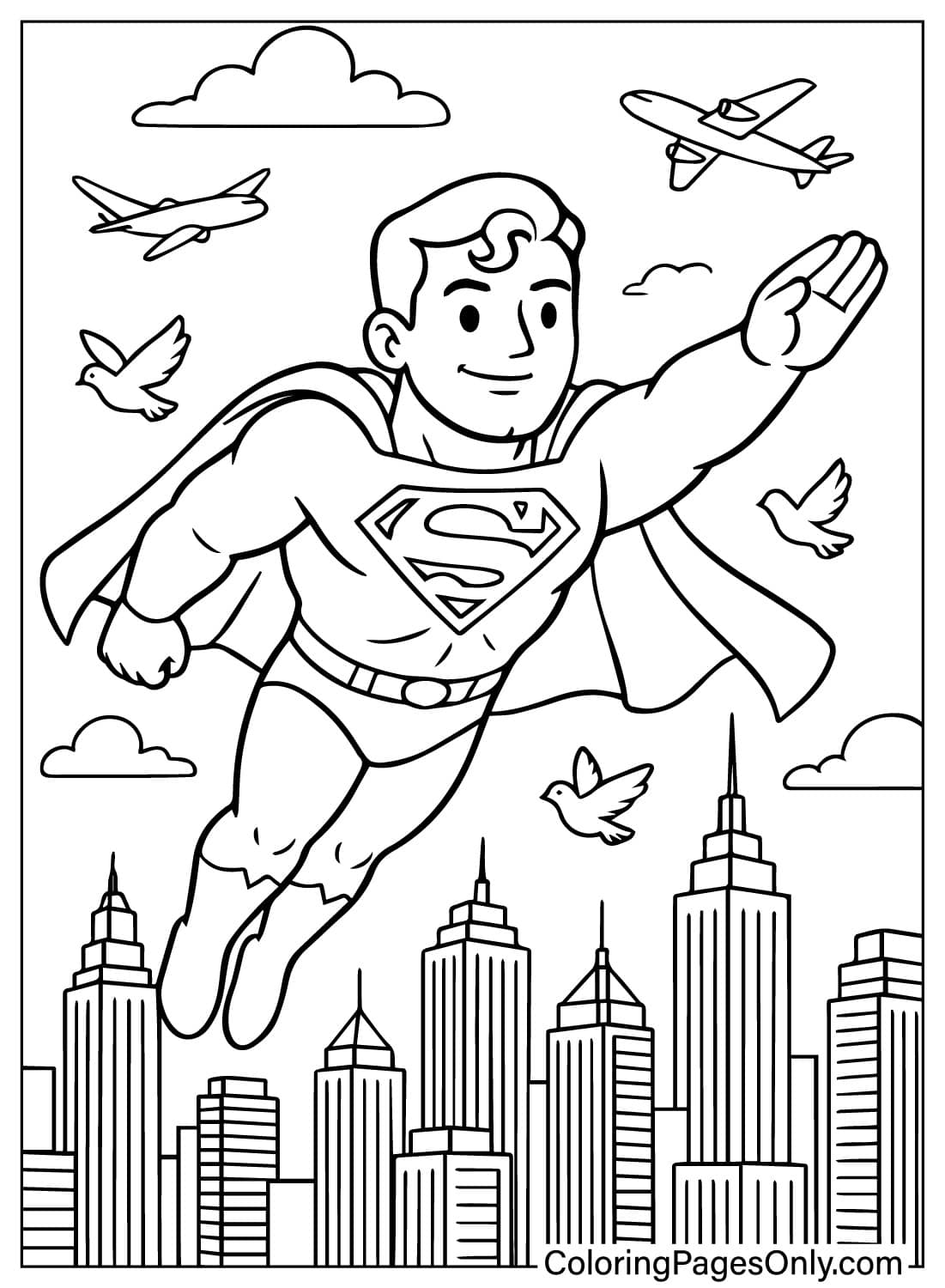
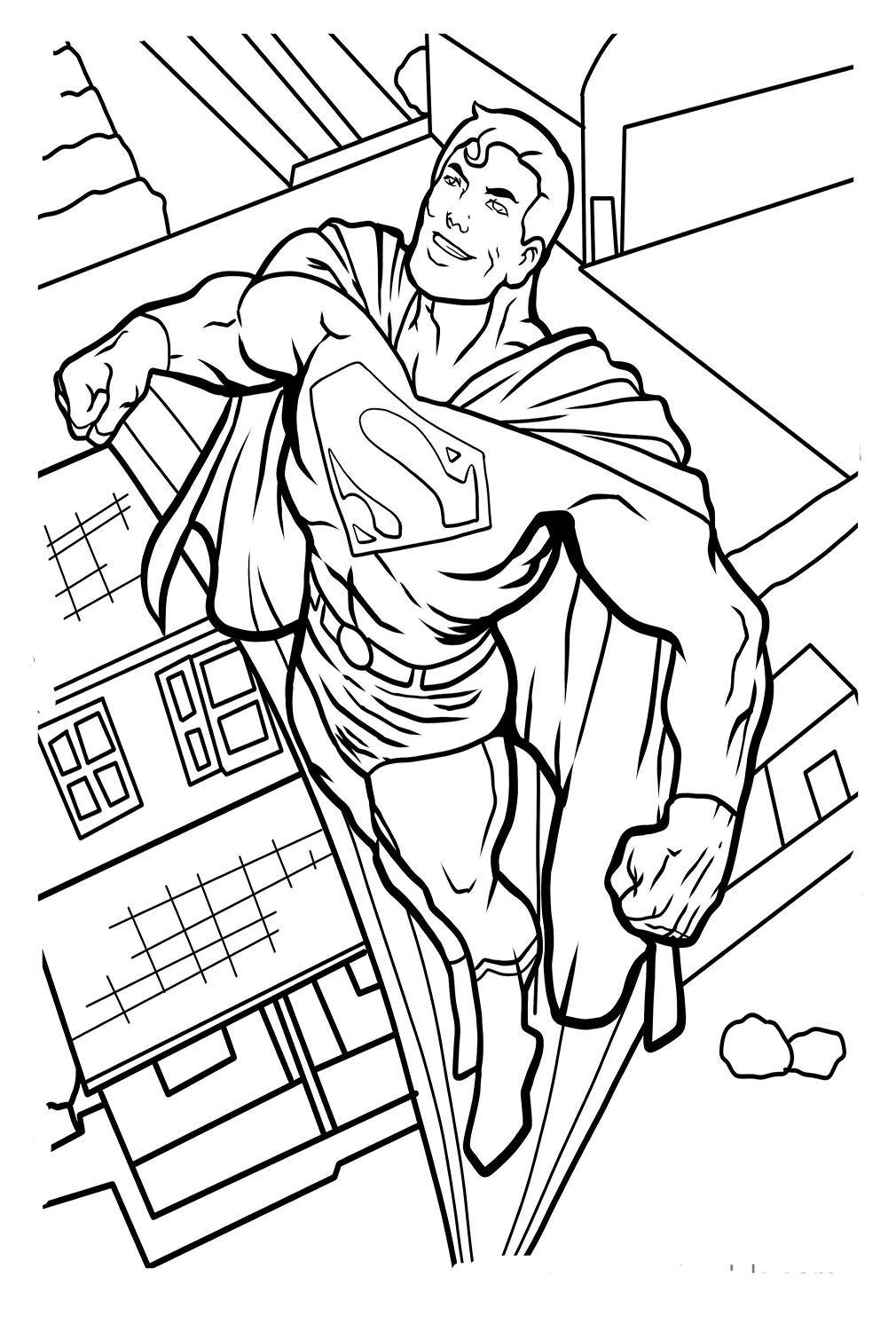
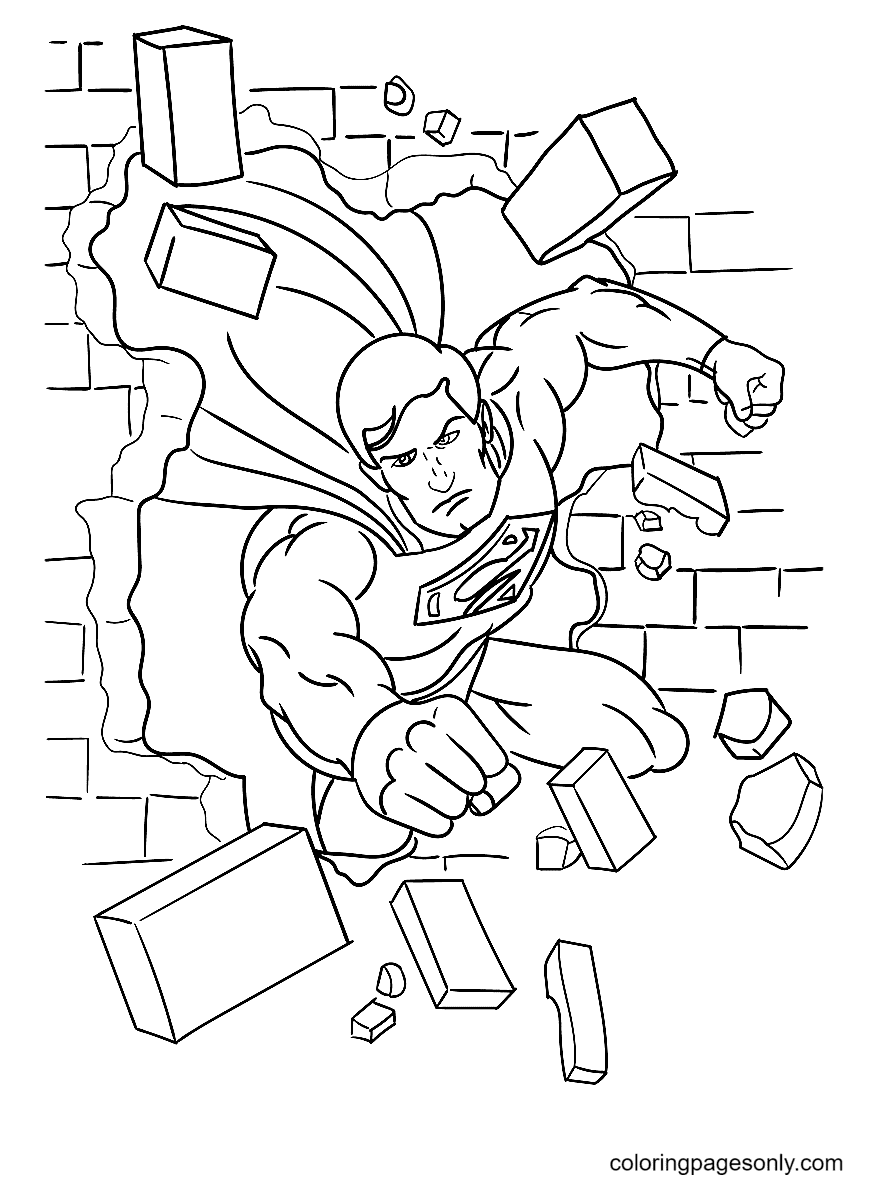
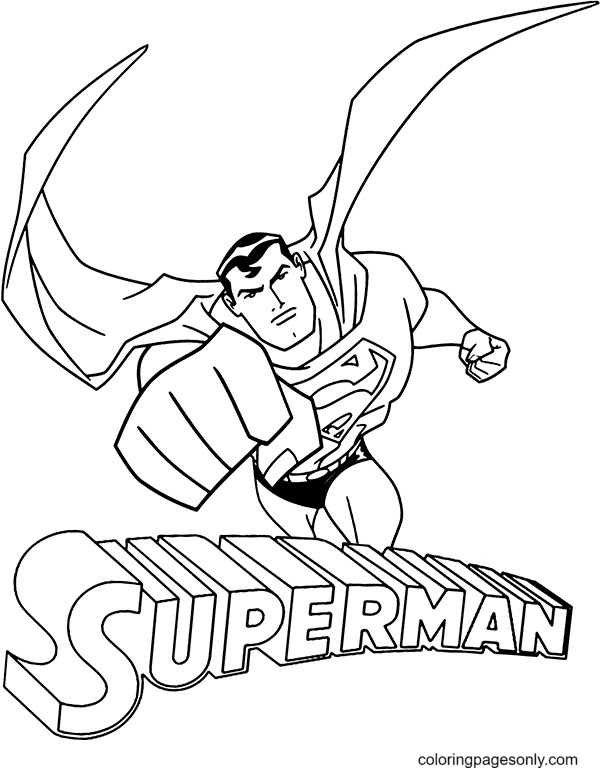
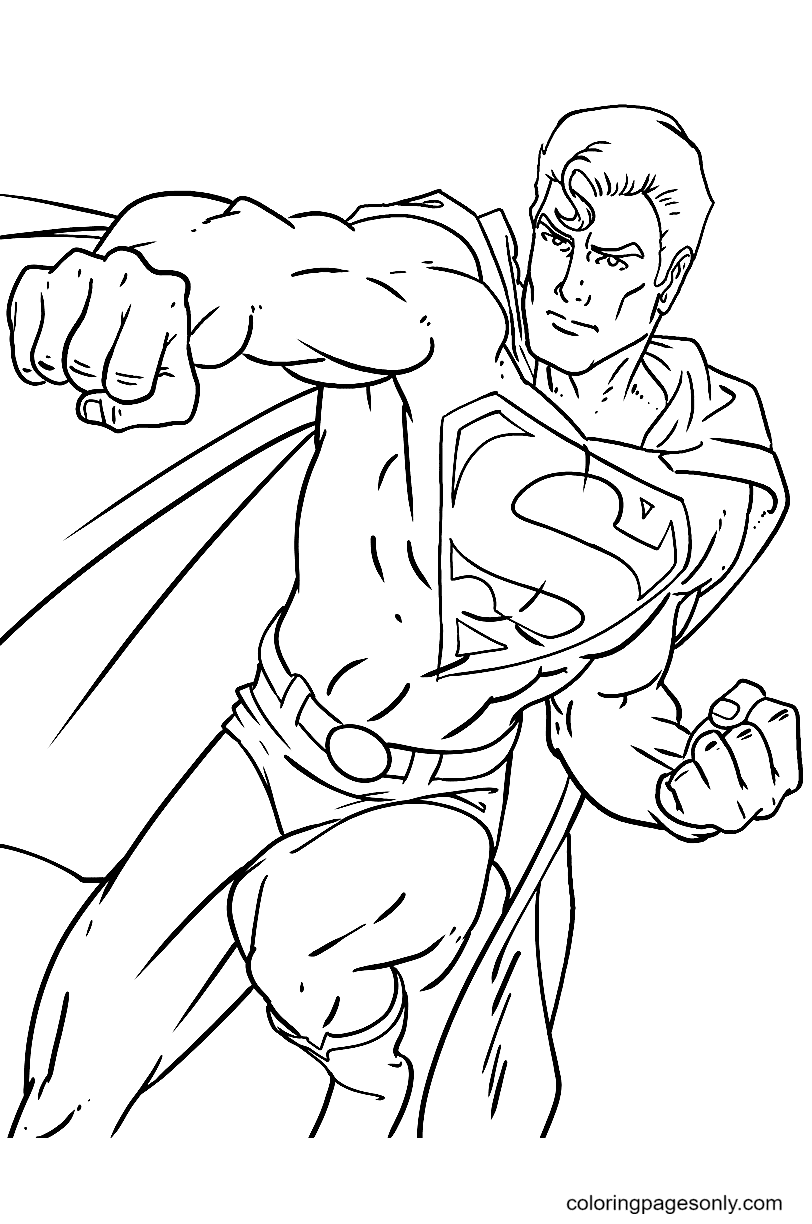
Superman in flight is the character’s most powerful visual statement and the image most fundamentally associated with him across every medium he has appeared in: the specific posture of the fist-forward horizontal flight, the cape streaming behind, the body at full extension in the direction of travel. This image did not exist in popular culture before Superman. The combination of human form with unpowered flight at superhuman speed was the specific visual innovation of Siegel and Shuster’s creation, and the image they established has been reproduced more times than any single superhero visual in history.
The 1978 film’s marketing tagline, “You’ll believe a man can fly,” references how radical this image remained forty years after Action Comics #1: a human figure in flight, not in an aircraft or with wings, but simply flying, remained visually remarkable enough to merit a specific promise to audiences that the special effects would make it credible. Director Richard Donner and cinematographer Geoffrey Unsworth developed a combination of front-screen projection, wire rigs, and camera techniques to achieve the effect.
The flying pose pages show Superman most commonly in one of two configurations: the “fist forward” pose (one arm extended in the direction of flight, body horizontal) or the more formal “arms wide” pose (both arms extended, the cape forming a full spread behind him). Both are correct canonical flying positions from different visual traditions within the character’s history.
Coloring flying pose pages: The cape is the most visually dominant element in flight pages: vivid, fully saturated red applied at full coverage across the full cape area. The cape in flight billows outward and has volume: shadow the underside of any cape folds with a slightly deeper red, lighter at the outer surfaces where light hits the fabric. The suit is vivid royal blue applied at full coverage. The S-Shield on the chest should remain clearly visible against the blue: apply the yellow background and red S carefully at whatever scale the chest area allows.
The S-Shield Logo Pages
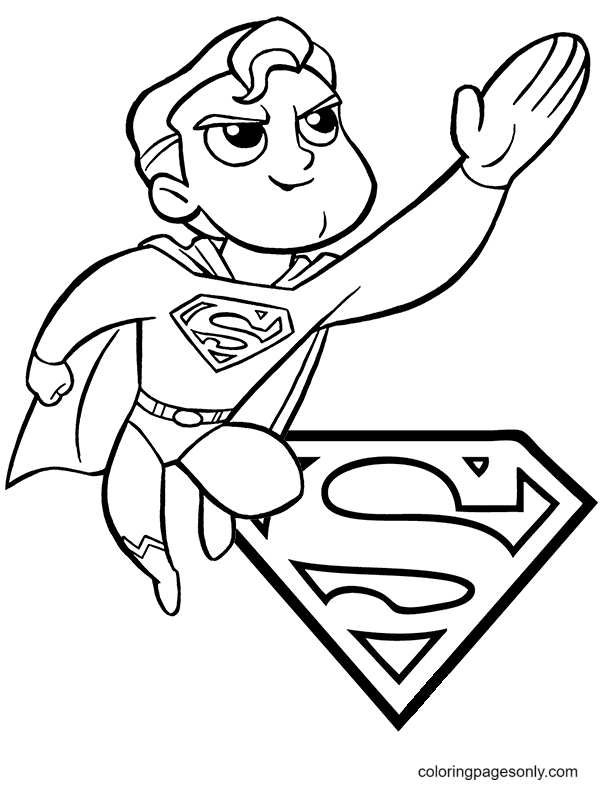
The S-Shield on Superman’s chest is one of the most recognized symbols in the world. Studies conducted in the early 2000s measuring global symbol recognition placed the S-Shield alongside a small number of other universally recognized marks. Its design has evolved across decades of comics publishing but maintains consistent elements: the letter S within a pentagonal diamond shape, using red and yellow as the primary colors.
In more recent comic and film adaptations, the S-Shield has been explained as the Kryptonian symbol for the House of El, Superman’s birth family, and the character has indicated that in Kryptonian, the symbol means “hope.” This explanation, introduced in the Man of Steel era of DC storytelling, gives the logo a meaning that extends beyond its identification as a letter: the S is not Superman’s initial but his civilization’s word for the value he has chosen to represent on Earth.
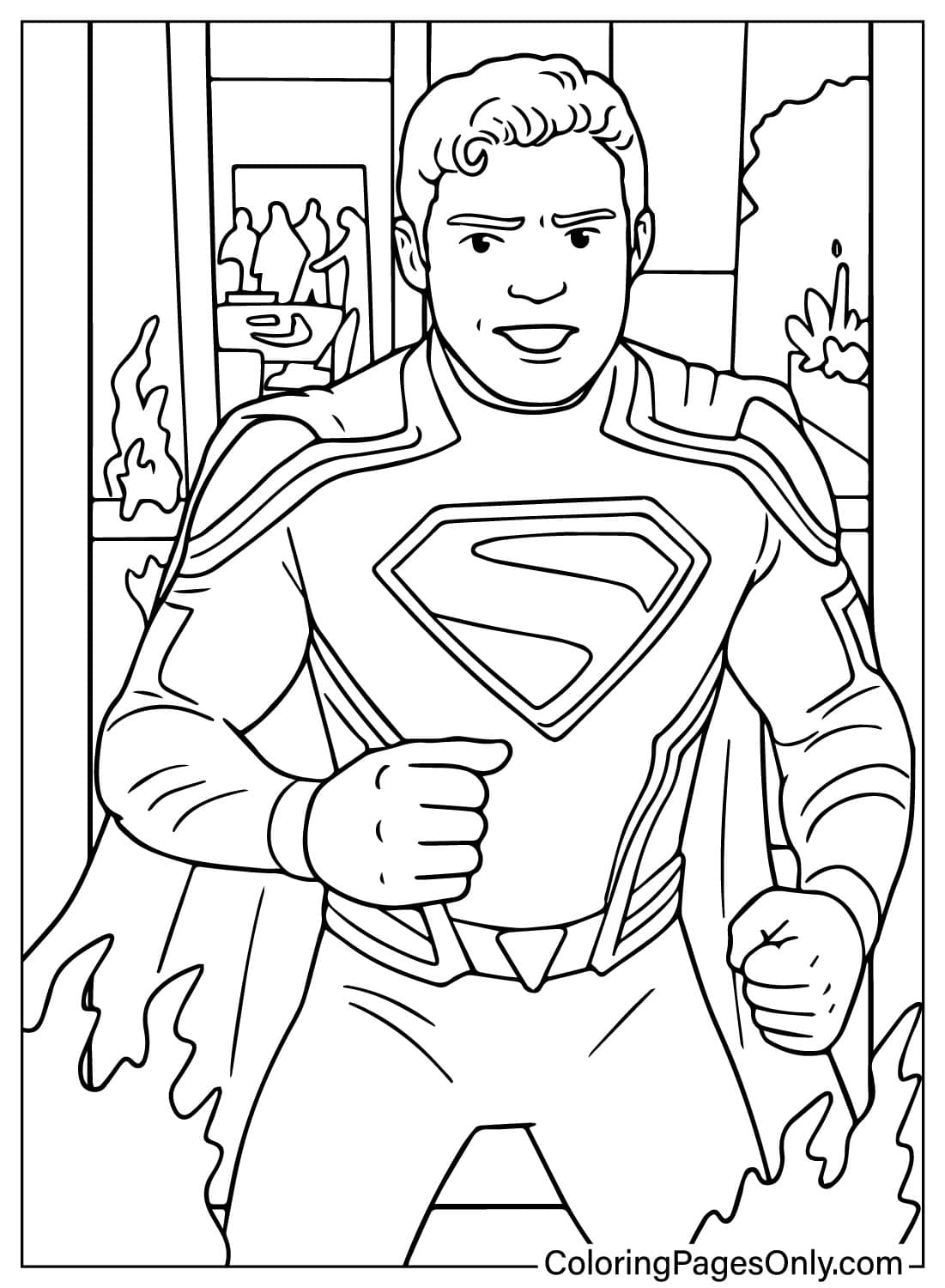
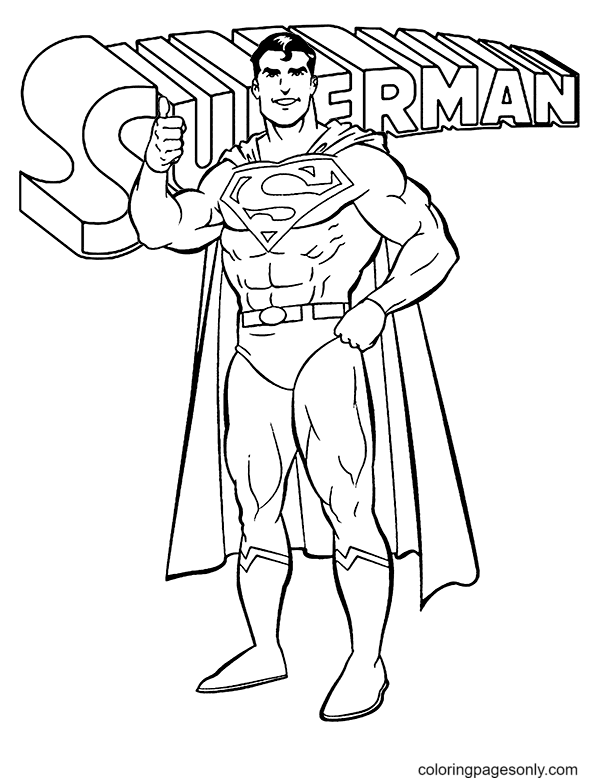
The shield’s construction is specific: the yellow diamond-pentagon shape forms the background, the red S is drawn within it with specific proportions that give it visual stability at any size, and the outline of the entire shield is typically red with a yellow interior. Standalone logo pages showing only the S-Shield are among the collection’s most graphically direct pages: a single strong, clean symbol that requires decisive, confident application of a small palette.
Coloring S-Shield pages: The background pentagon is vivid warm yellow, the specific warm yellow of Superman’s visual identity. The S within it is vivid red. The outer border of the pentagon shield is red, matching the S. The colors should be at maximum saturation for both yellow and red: the Shield’s visual power comes from the contrast of two fully saturated complementary-family colors (red and yellow) against each other.
Superman’s Classic Costume: Design and Color Details
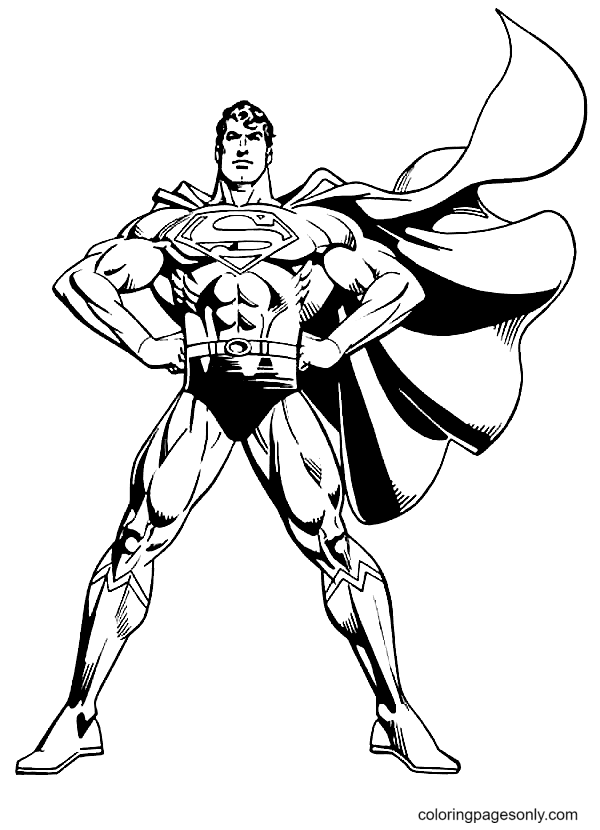
Superman’s canonical costume has been refined and debated across eighty-seven years of comics publishing. Still, the core design elements established by Joe Shuster in 1938 have remained consistent: blue suit, red cape, yellow belt, red boots, and the S-Shield on the chest. The specific blue of the suit, the specific red of the cape, and the relationship between these colors across the full costume constitute one of the most deliberately designed color systems in superhero visual history.
The “Superman blue” is a specific vivid royal blue that reads as neither dark navy nor bright cornflower but as the specific middle-vivid royal blue of classic superhero design. This blue is the costume’s dominant color and the color most immediately associated with the character in any color context.
The red cape and boots are a specific vivid red that is warm (slightly orange-shifted) rather than cool (slightly purple-shifted). This red appears at full saturation and provides maximum contrast against the royal blue of the suit.
The 2011 “New 52” DC Comics reboot removed the red trunks from the classic costume, replacing them with a blue suit from waist to foot, with the red only at the boots and cape. This design change was controversial within the comics community and has been reversed in various subsequent interpretations. The James Gunn 2025 film design brought back a version of the red trunks, connecting to the classic costume tradition.
Coloring the full costume: Apply the royal blue at full saturation across the full suit area: torso, arms, and legs. The red areas (cape, boots, trunks if depicted) use the specific warm, vivid red that reads as clearly red without approaching orange. The yellow areas (belt, S-Shield background) use vivid warm yellow. The S-Shield on the chest requires the most precise work: apply the yellow pentagon background first, then the red S within it.
Clark Kent: The Secret Identity Pages
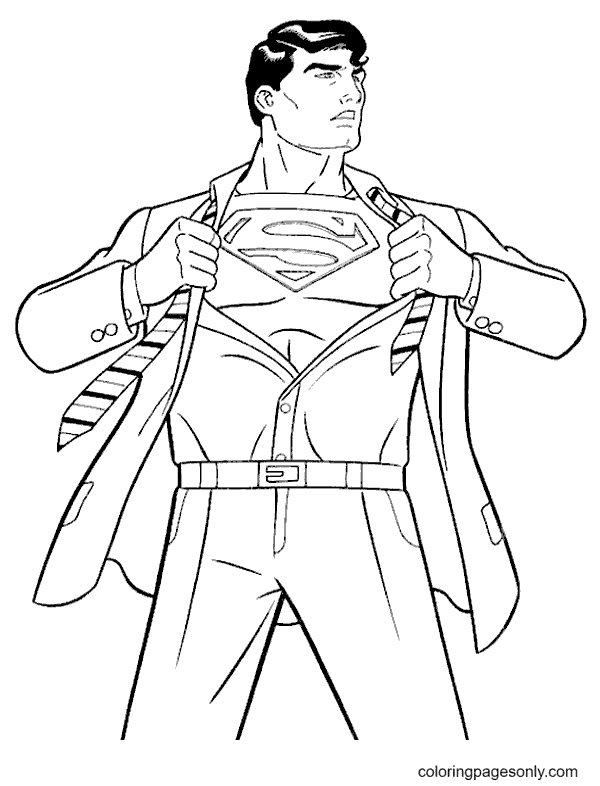
Clark Kent, Superman’s human identity, is as carefully designed as the superhero costume. The specific contrast between Superman’s confident, powerful visual presence and Clark Kent’s deliberately understated, slightly awkward appearance (dark-rimmed glasses, slightly rumpled business suit, posture that diminishes his height and presence) creates the central comedic and dramatic conceit of the character’s dual identity: that removing glasses and straightening posture is sufficient disguise for a globally recognized superhero.
The glasses are the single most important element of the Clark Kent identity: thick-framed glasses in the classic design, which became associated with the character’s civilian identity so specifically that “Clark Kent glasses” became a cultural shorthand for the specific style of black or dark-rimmed glasses associated with mid-20th-century business fashion.
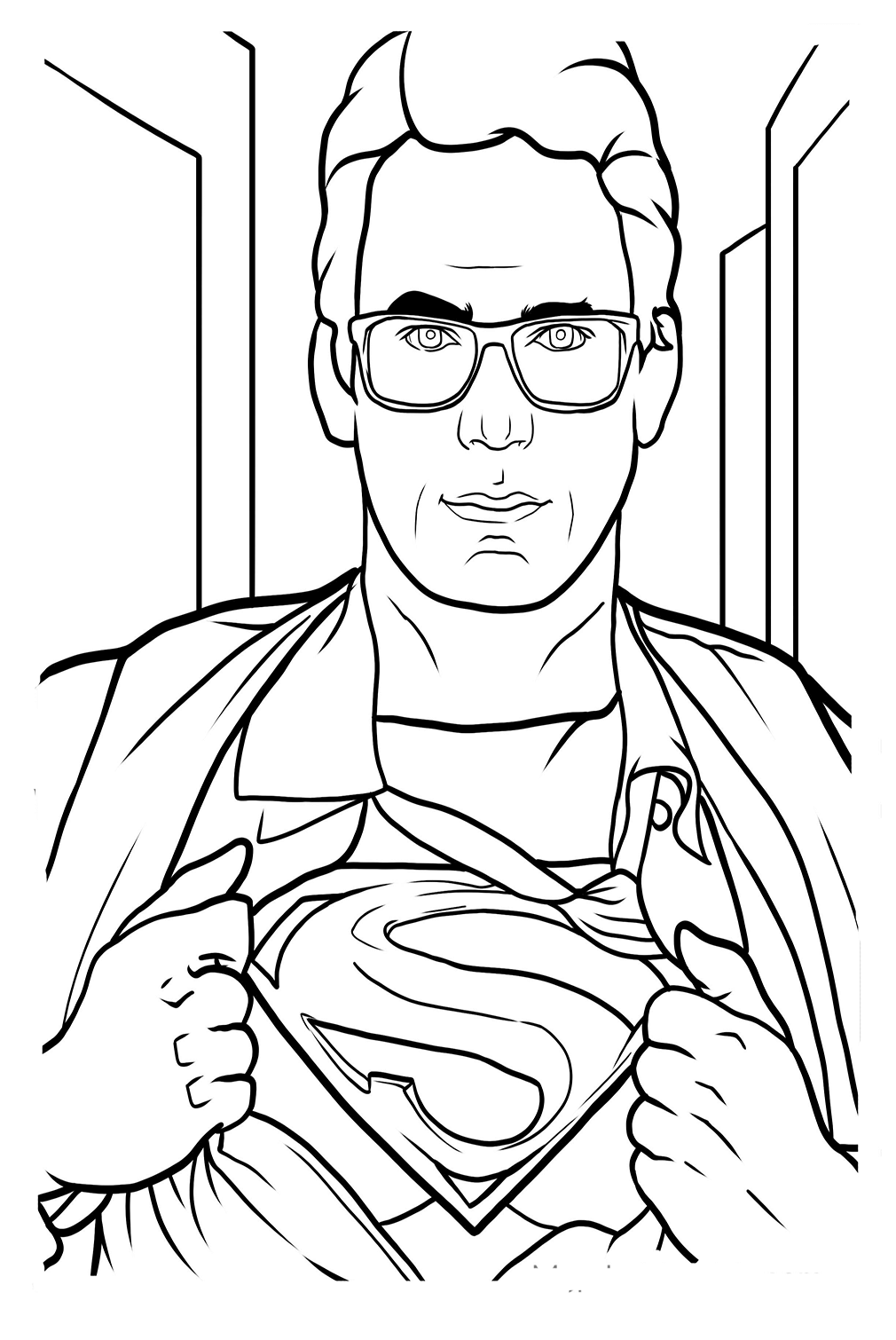
Pages showing Clark Kent, particularly the classic image of him beginning to open his shirt to reveal the S-Shield beneath, are among the collection’s most narratively evocative: the moment of transformation from civilian to superhero, expressed through the most minimal visual change (a shirt being opened), is one of superhero fiction’s most iconic recurring images.
Coloring Clark Kent pages: His suit is a medium grey-blue or dark charcoal, the specific conservative business palette of a mid-20th-century Metropolis reporter. The white shirt shows at the collar and cuffs. The dark-rimmed glasses are the most important accessory: near-black frames applied carefully around the eye area. If the S-Shield is visible beneath the opened shirt, apply the vivid blue and the S-Shield colors at full saturation, creating maximum contrast with the muted grey of the Clark Kent suit.
Heat Vision Action Pages
Superman’s heat vision is the most visually dramatic of his active powers: vivid beams of intense heat projected from his eyes, capable of cutting through metal, welding, and operating at temperatures sufficient to melt steel. The visual representation of heat vision varies across comics and film: in some depictions, the beams are vivid red; in others, they are vivid orange-red; in the more contemporary film depictions (Man of Steel, 2013), they show the full spectrum from yellow-white at the hottest core to red at the outer edges.
Heat vision pages show Superman with the characteristic eye-beam effect extending from his eyes toward a target, sometimes with impact effects at the point of contact.
Coloring heat vision pages: The eye beams should use the flame-gradient technique, applying from the hottest (innermost) to the coolest (outermost) zones. Near-white or pale yellow-white at the very center of the beam, closest to the eye. Vivid orange-yellow for the main beam body. Deep red-orange at the outer edges. Any impact effects at the target use the same gradient applied radially from the impact point outward.
Supergirl and Supporting Characters
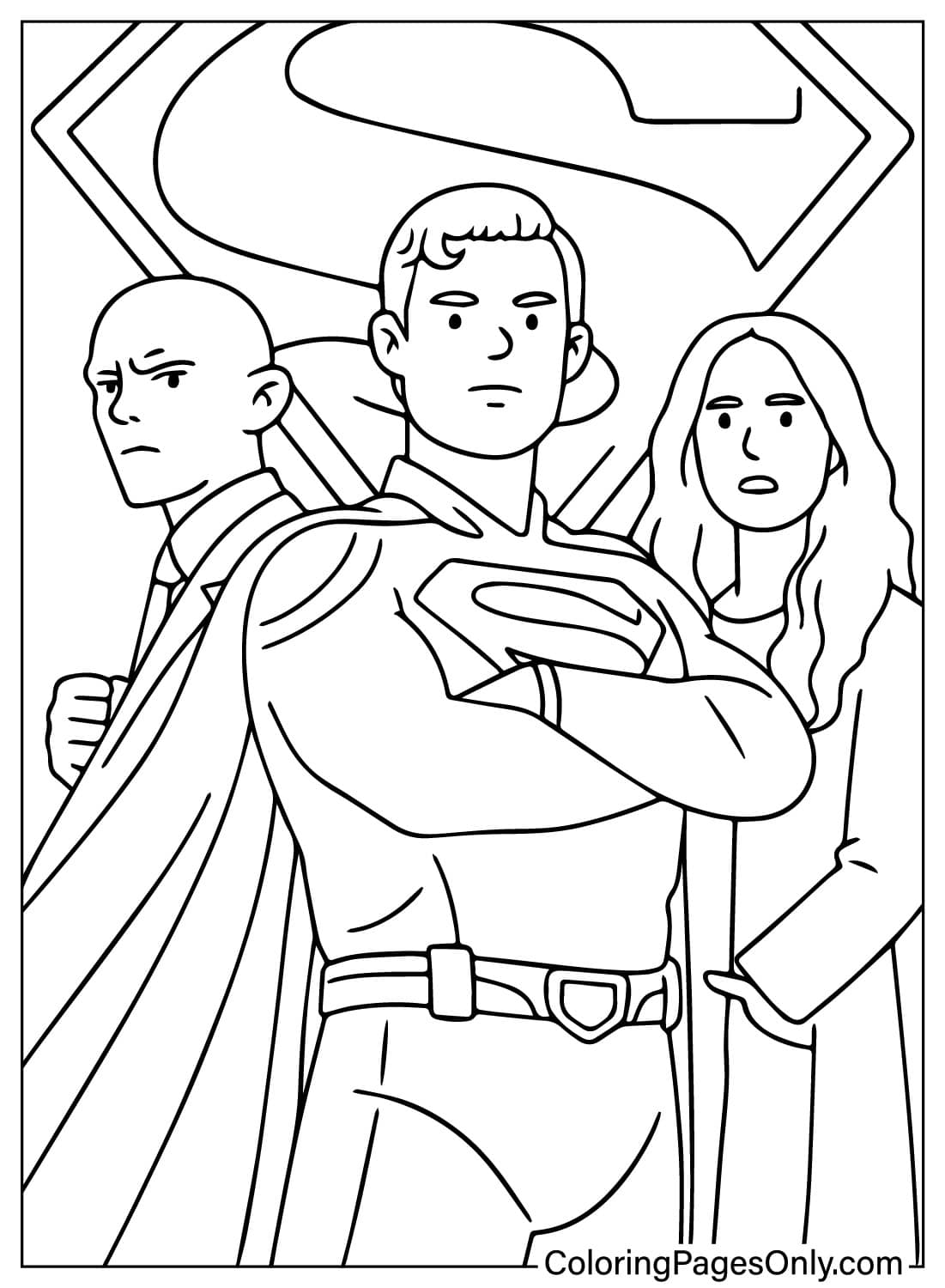
Supergirl (Kara Zor-El), Superman’s Kryptonian cousin, appears in several collection pages. She shares Superman’s powers, origin planet, and many visual design elements, but with a distinct costume: a blue top (typically a shorter-cut version of the Superman suit design), red skirt, and red cape, with the S-Shield on her chest.
Lex Luthor, Superman’s primary villain across every era of the character’s history, is a genius-level billionaire industrialist who views Superman as an existential threat to human achievement and autonomy. His visual design has ranged from the classic bald businessman in a business suit to various armored battle-suit configurations.
Coloring Supergirl pages: Her costume uses the same royal blue and vivid red as Superman’s, but in different proportions and style. The S-Shield on her chest follows the same yellow-and-red design. Her hair is typically depicted as long and blonde.
What These Pages Do
The creation of Superman by Jerry Siegel and Joe Shuster in the early 1930s and his first publication in Action Comics #1 (April 18, 1938) is the documented beginning of the American superhero genre. Every superhero who has appeared in comics, film, and television since 1938 exists within a tradition that Siegel and Shuster established: the costume, the dual identity, the powers as metaphor, and the moral commitment to protecting the vulnerable that define the superhero archetype were all established by Superman before any subsequent superhero existed.
The legal history of Siegel and Shuster’s relationship with DC Comics is one of the most extensively documented creator-rights disputes in entertainment history. They sold all rights to Superman for $130 in 1938. Siegel, who had created the character, spent decades fighting for credit, compensation, and acknowledgment. After legal action, DC Comics and parent company Warner Bros. agreed in 1975 to provide Siegel and Shuster each with a $20,000 annual stipend and the “Created by Jerry Siegel and Joe Shuster” credit to appear in all Superman productions. Subsequent litigation involving their heirs continued through the 2010s.
The American Academy of Pediatrics identifies fine motor skill development as a key childhood milestone throughout early childhood. The S-Shield’s precise geometric construction, the cape’s fabric fold and shadow work, the heat vision beam gradient application, and the costume’s multiple distinct color zones all provide sustained fine motor challenge across the collection’s age range. The 2005 Art Therapy Journal study on structured coloring and anxiety reduction applies throughout.
James Gunn’s Superman (2025) represents the character’s most recent major film adaptation, with David Corenswet’s performance and the film’s design choices connecting the character’s 87-year visual history to a new generation of audiences.
How to Color These Pages Well
The “Superman blue” is a specific vivid royal blue that must be applied at full saturation. The most common error on Superman pages is using a blue that reads as either too dark (navy, too dark for the heroic, open quality of the character’s costume) or too light (sky blue, too casual for the suit’s formal heroic register). Superman’s blue is vivid, medium-bright royal blue: the specific blue that reads as primary and clear. Apply it at full pressure across every blue suit surface. The blue must read as confident and vivid: this is the most important single color decision on any Superman page.
The red cape requires a warm red rather than a cool red. Cape red in Superman’s design is a warm, slightly orange-shifted red: the specific warm red of the American flag’s red stripes, which reads as heroic and vivid. A cool, purple-shifted red reads as more dramatic or sinister; a warm red reads as noble and active. Apply the warm red at full saturation and full coverage across the cape’s complete surface, including any fold areas, with slightly deeper warm red in the deepest fold shadows.
The cape’s volume and fold logic define the page’s sense of movement. In any page showing a billowing cape, the cape’s folds communicate the direction and speed of movement. Apply the base warm red across all cape surfaces. Then identify the deepest fold areas (where the fabric bends most sharply) and apply a slightly deeper, slightly more burgundy-shifted red in the innermost part of each fold. The fold shadow should be the deepest warm red available. Lighter surfaces (the outermost, most directly lit areas of the cape) remain at the base, warm red. This three-zone technique gives the cape its sense of three-dimensional fabric.
The S-Shield requires planning the work sequence: yellow first, then red. The yellow background pentagon of the Shield must be applied before the red S within it. Applying red over yellow produces a muddy orange at the boundary; applying yellow over red produces a dirty yellow that reads as orange. Apply the vivid warm yellow across the full pentagon area first. When dry or after careful application, draw the red S within the yellow background, keeping the letter’s boundaries clean against the yellow.
Superman’s hair has the specific blue-black quality of comic book dark hair. In the art tradition established by Siegel and Shuster and refined across decades of Superman artists, the character’s black hair is rendered with a vivid blue-black quality. In bright light, the hair highlights appear blue rather than grey or brown. Apply the darkest available blue-black across the hair mass. Add very subtle dark blue highlights (at minimum pressure) along the hair surface where light would catch it most directly. The single curl on the forehead (the signature forelock that drops in a small curl from his hairline) should be applied with careful attention: it is one of the character’s most specific identifying features.
5 Creative Craft Ideas
The Action Comics #1 Tribute
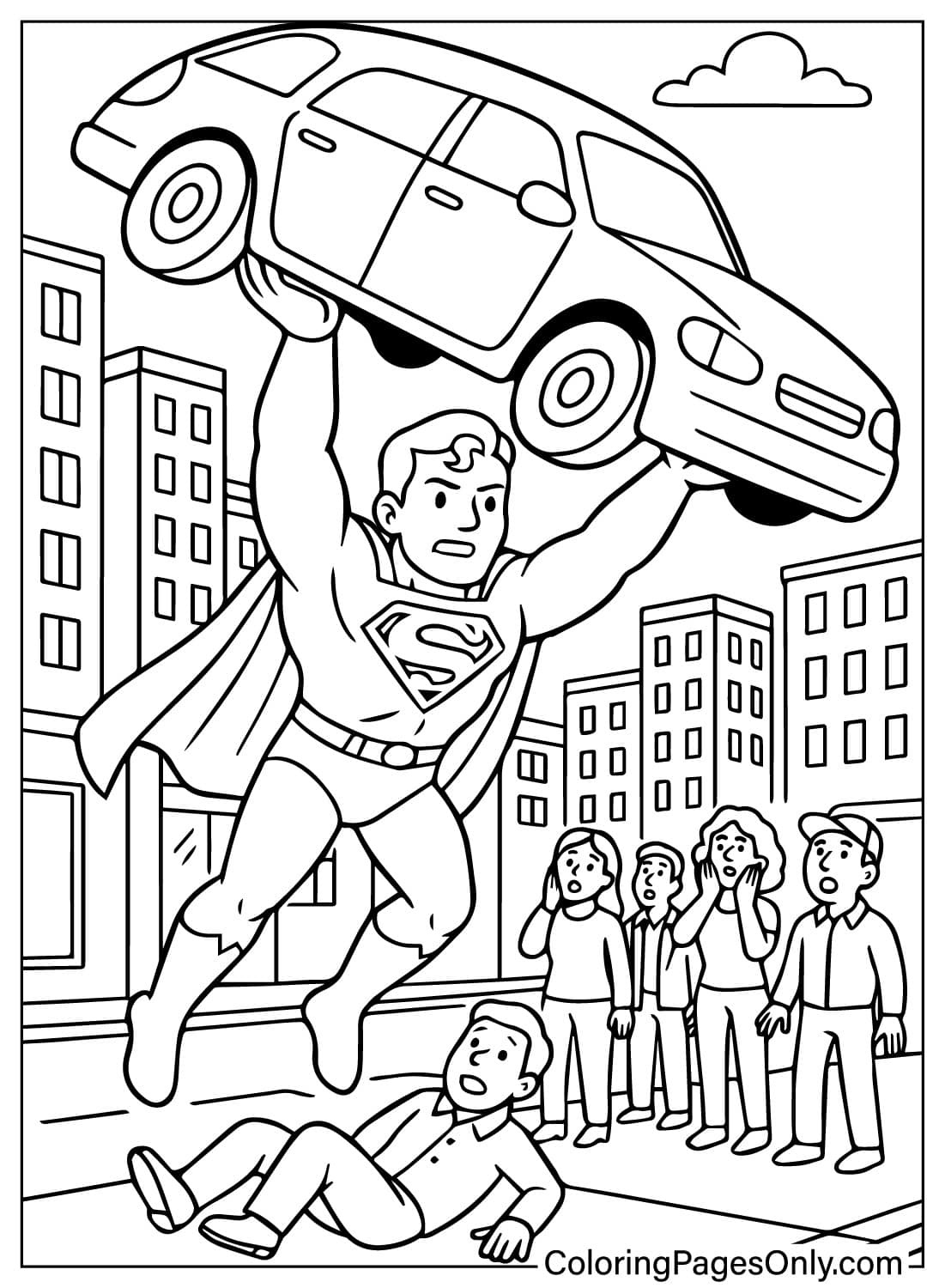
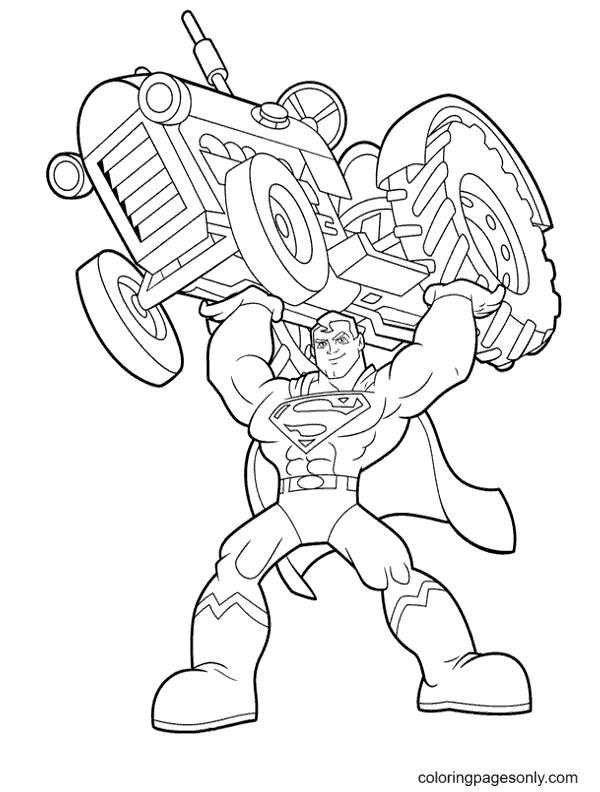
Action Comics #1, published April 18, 1938, is the most financially valuable single comic book ever produced. The cover, showing Superman lifting a car above his head while bystanders flee in terror, is one of the most reproduced comic book covers in history—a near-mint copy sold for $3.25 million in 2021.
Print the most dynamic Superman action pose in the collection. Color it in full canonical colors: vivid royal blue suit, warm vivid red cape, yellow belt, and S-Shield.
On the backing card: “Action Comics #1. Published April 18, 1938. Superman’s first appearance. Created by Jerry Siegel (born October 17, 1914) and Joe Shuster (born July 10, 1914). They sold all rights to Superman for $130. A near-mint copy of Action Comics #1 sold at auction in 2021 for $3.25 million. The gap between $130 and $3.25 million: 83 years.”
The Dual Identity Study
Clark Kent and Superman are the same person. The disguise consists of glasses and a change in posture. This has been discussed by comics scholars, cultural critics, and general audiences for 87 years as the most implausible aspect of the character. The counterargument is that people rarely expect to encounter someone they know in an entirely different context. If Superman appeared in a Metropolis newsroom, no one would look for him there.
Print a Clark Kent page (or any page showing the civilian identity) and a Superman flying page. Color Clark Kent in a conservative business palette: dark charcoal suit, white shirt, dark-rimmed glasses. Color Superman in full, vivid, canonical colors.
Mount both side by side: “Clark Kent. Reporter. Daily Planet. Dark-rimmed glasses. Metropolis, 1938-present. Superman. Man of Steel. The skies above Metropolis. 1938-present. The disguise: glasses. The question: how does it work? The answer: no one looks for Superman at a desk. Identity is partly expectation.”
The Siegel and Shuster Story
Jerry Siegel and Joe Shuster created Superman in Cleveland, Ohio, in the early 1930s. They tried for years to sell the character before DC Comics acquired it in 1938 for $130. For most of their lives, they received no significant royalties from one of the world’s most profitable entertainment properties. In 1975, after a sustained legal and public relations campaign, Warner Bros. agreed to provide each of them a $20,000 annual stipend and the credit they deserved.
Print a Superman logo or S-Shield page. Color it in full canonical yellow and red.
On the backing card: “Created by Jerry Siegel and Joe Shuster. Cleveland, Ohio. Sold to DC Comics, 1938. Price: $130. Superman’s worldwide revenue across film, television, comics, and merchandise from 1938 to the present: billions of dollars. 1975: after legal action and public pressure, Warner Bros. agreed to a $20,000 annual stipend for each creator and the ‘Created by’ credit. Siegel died January 28, 1996. Shuster died July 30, 1992. The credit appears on all Superman productions.”
The Christopher Reeve Legacy Page
Christopher Reeve played Superman in four theatrical films from 1978 to 1987 and is widely considered the definitive live-action Superman by audiences who grew up with that era. The 1978 film, directed by Richard Donner with a score by John Williams, was produced on a budget of approximately $55 million and earned $300.2 million worldwide.
Reeve was paralyzed from the shoulders down in a horseback riding accident on May 27, 1995, and became one of the most prominent advocates for spinal cord injury research until his death on October 10, 2004.
Print a classical, formal Superman flying pose. Color it with careful attention to the royal blue and warm, vivid red of the 1978 film’s specific costume, which leaned toward the traditional comic design.
On the backing card: “Christopher Reeve as Superman. Superman (1978). Director: Richard Donner. Music: John Williams. Box office: $300.2 million. ‘You’ll believe a man can fly.’ Four films: 1978, 1980, 1983, 1987. May 27, 1995: spinal cord injury. Subsequent years: advocate for spinal cord research, testimony before Congress, and founder of the Christopher Reeve Foundation. October 10, 2004. The role and what he made of it, both.”
The “Hope” Symbol Display
The S-Shield has been given a Kryptonian meaning in recent Superman storytelling: in the house of El, the symbol means “hope.” This recontextualization of the character’s chest emblem from a personal initial to a universal value statement shifts the S-Shield from a piece of costume branding into a thematic statement. It also gives the character’s visual identity a philosophical dimension that connects the look of the costume to the character’s purpose.
Print five copies of the S-Shield logo page. Color all five, but use five different color combinations rather than the canonical red-and-yellow: one in the canonical red/yellow, one in silver/blue (for a New 52 era reference), one in gold/blue (for a Black Superman alternate universe reference), one in black/grey (for a dark costume variant), and one in the colorist’s chosen original combination.
Mount all five in a row: “The S-Shield. What it represents: hope. Designed by Joe Shuster, 1938. Five versions. One meaning. The color changes. The meaning does not.”
Frequently Asked Questions
Who created Superman, and when did he first appear? Superman was created by Jerry Siegel (born October 17, 1914, in Cleveland, Ohio) and Joe Shuster (born July 10, 1914, in Toronto, Canada), two teenagers who developed the character in the early 1930s. Superman first appeared in Action Comics #1, published on April 18, 1938 (with a cover date of June 1938), by Detective Comics Inc., which later became DC Comics. The character was the first modern superhero and established the visual and narrative template for all subsequent superhero characters, including the costume, the dual identity (a civilian name covering a superhero identity), the set of superhuman powers derived from a specific scientific source, and the moral commitment to protecting civilians.
What is Superman’s origin story? Superman was born on the planet Krypton as Kal-El, the son of scientist Jor-El and his wife Lara Lor-Van. When Jor-El determined that Krypton was structurally unstable and would be destroyed, he placed his infant son in a rocket and launched it toward Earth. The rocket landed near Smallville, Kansas, where it was found by farmers Jonathan and Martha Kent, who adopted the child and raised him as Clark Kent. As Clark grew, he discovered that Earth’s yellow sun, unlike Krypton’s red sun, gave him extraordinary abilities: superhuman strength, speed, and durability; the ability to fly; heat vision; X-ray vision; freezing breath; and enhanced hearing. As an adult, Clark moved to the city of Metropolis and took a job as a reporter at the Daily Planet newspaper, using the name Superman when he applies his powers in the service of others.
What are Superman’s powers and weaknesses? Superman’s powers, derived from absorbing energy from Earth’s yellow sun, include superhuman strength (virtually unlimited physical power), invulnerability (near-impenetrable skin and tissue), flight (at speeds approaching the speed of light in some versions), heat vision (projecting intense beams of heat from his eyes), X-ray vision (able to see through all materials except lead), freezing breath (exhaling super-cold air), super hearing (able to detect sounds anywhere on Earth), and super speed. His primary weakness is Kryptonite: radioactive fragments of his destroyed home planet. Green Kryptonite causes pain and power loss with exposure. Red Kryptonite produces various unpredictable effects. Gold Kryptonite can permanently remove his powers. Superman is also weakened by red sun radiation (the type his home planet had) and has no special resistance to magic.
What is the significance of the S-Shield on Superman’s chest? The S-Shield on Superman’s chest is one of the world’s most universally recognized symbols. In the character’s original 1938 conception, it was simply a stylized S on his costume. In more recent DC Comics and film storytelling, particularly beginning in the early 2010s, the S has been explained as the Kryptonian symbol for the House of El (Superman’s birth family) and as a symbol meaning “hope” in Kryptonian culture. This explanation, used prominently in Zack Snyder’s Man of Steel (2013), gives the logo a philosophical dimension: Superman chose to wear his family’s symbol as a statement of his purpose rather than as a personal initial. The shield’s design, a red S in a pentagonal yellow background, has been consistently maintained across nearly ninety years of publication.
Who has played Superman in major film and television productions? The most significant Superman portrayals in live-action include: George Reeves, who played the character in the television series Adventures of Superman from 1952 to 1958; Christopher Reeve, who played Superman in four theatrical films from 1978 to 1987 (including the highly acclaimed 1978 film directed by Richard Donner with music by John Williams); Brandon Routh, who starred in Superman Returns (2006); Henry Cavill, who played the character in the DC Extended Universe from Man of Steel (2013) through Justice League (2017); Tyler Hoechlin, who played Superman in the television series Superman and Lois (2021-2024); and David Corenswet, who starred in James Gunn’s Superman (2025), the first film in the new DC Universe.
What is the Siegel and Shuster rights dispute? Jerry Siegel and Joe Shuster created Superman in the early 1930s and sold all rights to the character to Detective Comics Inc. in 1938 for $130. For most of their professional lives, they received no significant royalties from one of entertainment’s most commercially successful properties. In 1975, following a sustained legal and public relations campaign, Warner Bros. (which had acquired DC Comics) agreed to provide both Siegel and Shuster each with a $20,000 annual stipend, cost-of-living adjustments, and the acknowledgment credit “Created by Jerry Siegel and Joe Shuster” to appear in all Superman productions. Subsequent legal disputes involving their heirs continued through the 2010s. The Siegel and Shuster case is one of the most extensively documented creator-rights disputes in entertainment history.
What age group are these pages best suited for? Superman coloring pages serve a genuinely wide age range. The simplest S-Shield logo pages and basic standing or flying poses with large, clearly defined color areas are accessible from ages three and four, where the bold primary color palette (vivid blue, vivid red, yellow) provides immediately clear and achievable coloring targets. The more detailed pages, including costume fold and shadow work on the cape, heat vision gradient effects, the precise S-Shield rendering, and dual identity pages with Clark Kent’s multiple costume layers, are most rewarding for ages six to twelve. The historical context pages, creation history cards, and the legacy displays are most engaging for older teenagers and adults who can engage with the eighty-seven-year history of the character. Adult comic book fans find the design variation pages and the creator history context most satisfying.
Browse the full collection at ColoringPagesOnly.com. All 50+ pages free, no sign-up, PDF or PNG, print or color online.
Jerry Siegel and Joe Shuster were teenagers in Cleveland, Ohio, when they created a man from another planet who could fly. They sold him for $130 in 1938. He appeared on the cover of Action Comics #1, lifting a car above his head.
In 2021, a near-mint copy of that first issue sold for $3.25 million.
Christopher Reeve wore the cape from 1978 to 1987 and made the flying look true. He was paralyzed in 1995 and became a different kind of hero. David Corenswet wore the cape in 2025 and brought back the red trunks. The S means hope in Kryptonian—eighty-seven years of hope, in blue and red, above the city.
Pick up your royal blue. The suit goes first at full saturation. Pick up your warm, vivid red for the cape. The cape fold shadows go slightly deeper, warm red. The S-Shield goes last: yellow background, then red S within it, clean at every edge.
Share your work on Facebook and Pinterest and tag #Coloringpagesonly. The Action Comics #1 tribute pages and the Siegel and Shuster story displays are particularly worth sharing.
Color the suit royal blue. Apply the warm red cape at full saturation. The symbol means hope. It has meant hope since April 18, 1938.