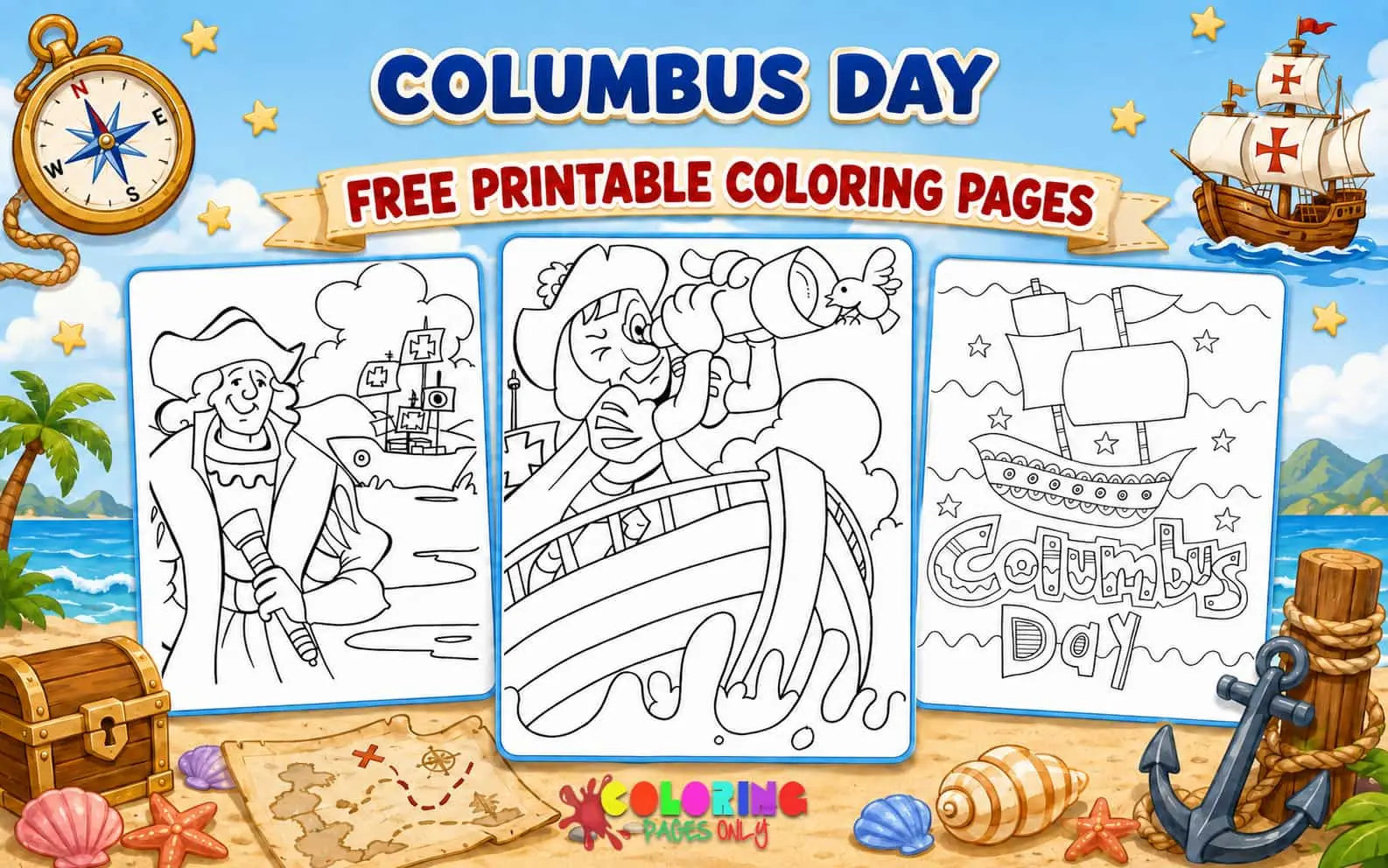
Free Columbus Day Coloring Pages: 50+ printable PDF pages featuring Happy Columbus Day signs, Christopher Columbus portraits, 1492 voyage scenes, Santa Maria, Niña, Pinta, sailing ships, October 12 pages, preschool designs, regatta scenes, landing images, maps, and classroom-friendly history activities. These coloring sheets are great for kids, parents, teachers, homeschool lessons, history units, holiday folders, ship coloring, map activities, October crafts, fine motor practice, bulletin boards, and screen-free creative time. All free, download PDF to print, or color online.
Columbus Day coloring pages are special because they combine holiday coloring with ships, maps, ocean travel, dates, vocabulary, and classroom discussion. A page can show a sailing ship crossing the Atlantic, a 1492 label, a simple preschool ship, a Christopher Columbus portrait, or the Santa Maria, Niña, and Pinta. This gives children a visual way to explore a historical theme through drawing, labeling, and storytelling.
Unlike general ship coloring pages, Columbus Day coloring pages focus on one history-based holiday topic. They can help children recognize sailing ships, ocean routes, maps, banners, dates, flags, and words such as voyage, explorer, ship, sail, ocean, map, compass, crew, arrival, and history. For older students, these pages can also support a respectful conversation about how historical events are remembered in different ways today, including discussions around Indigenous Peoples’ Day and multiple perspectives.

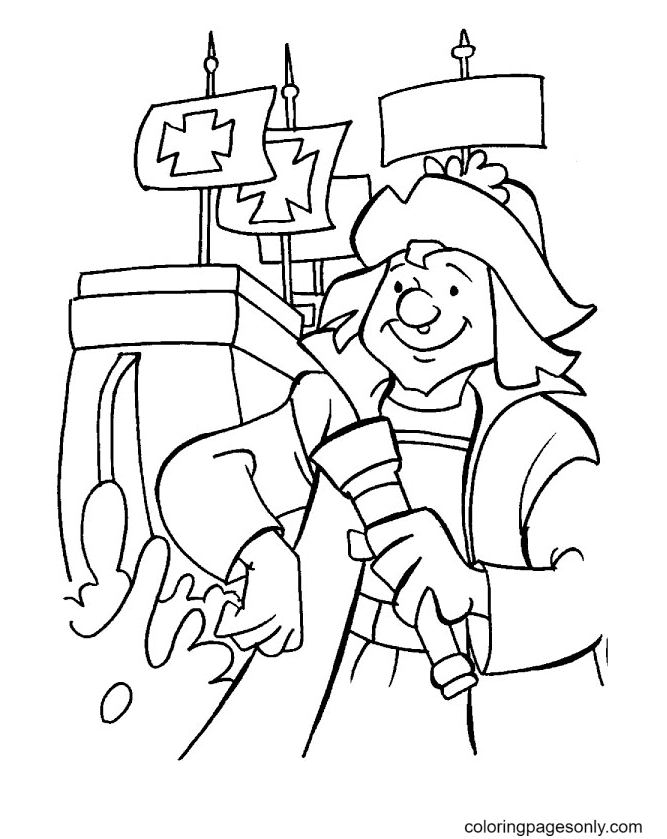
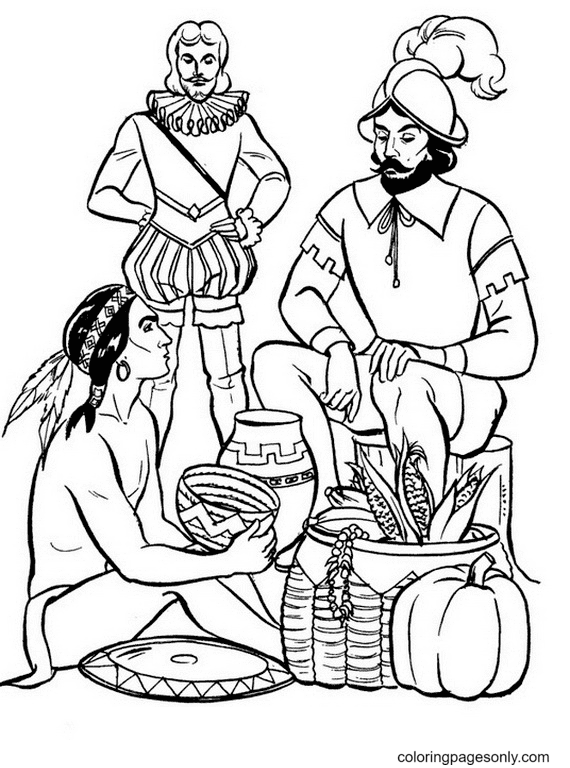
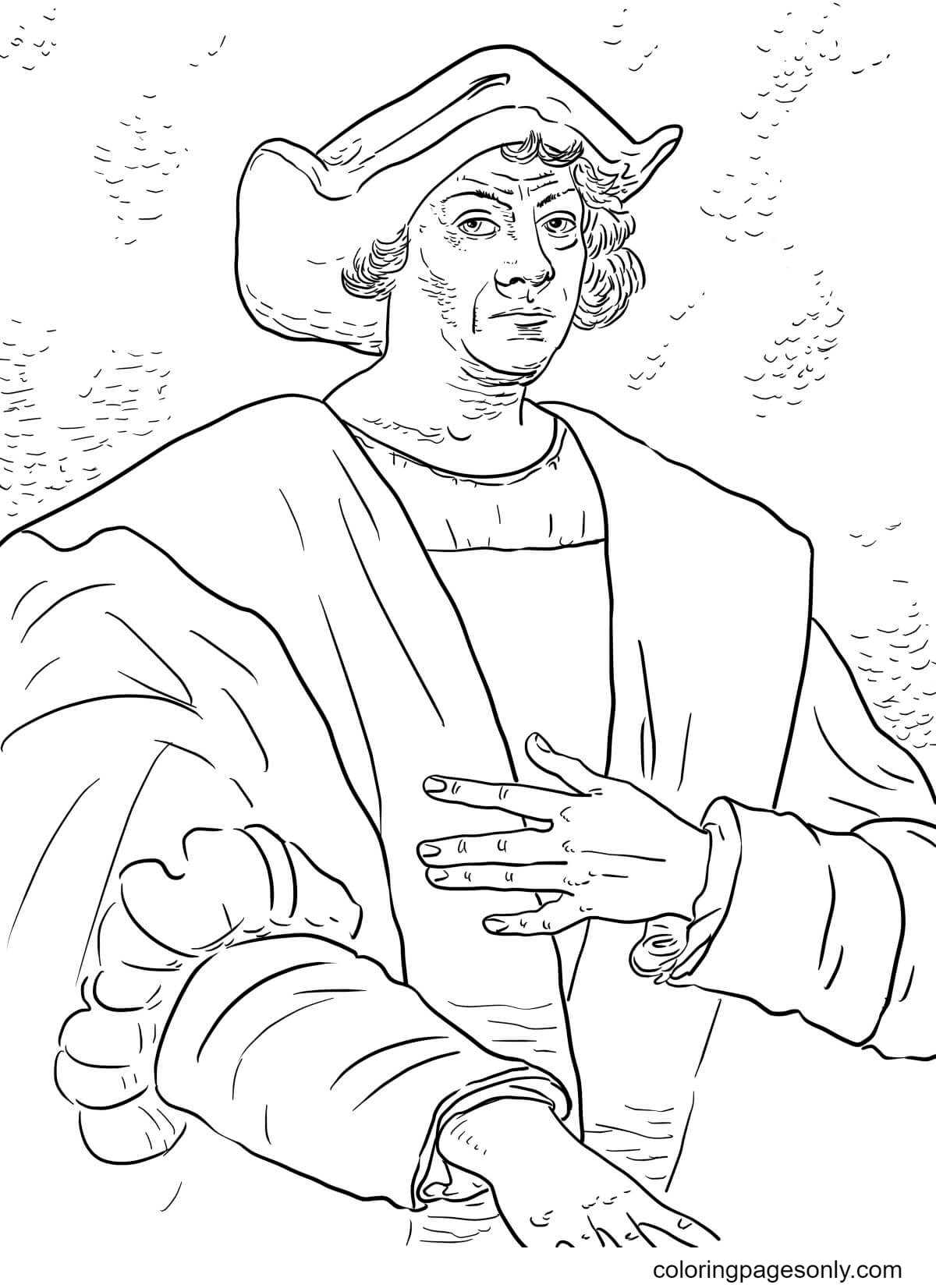
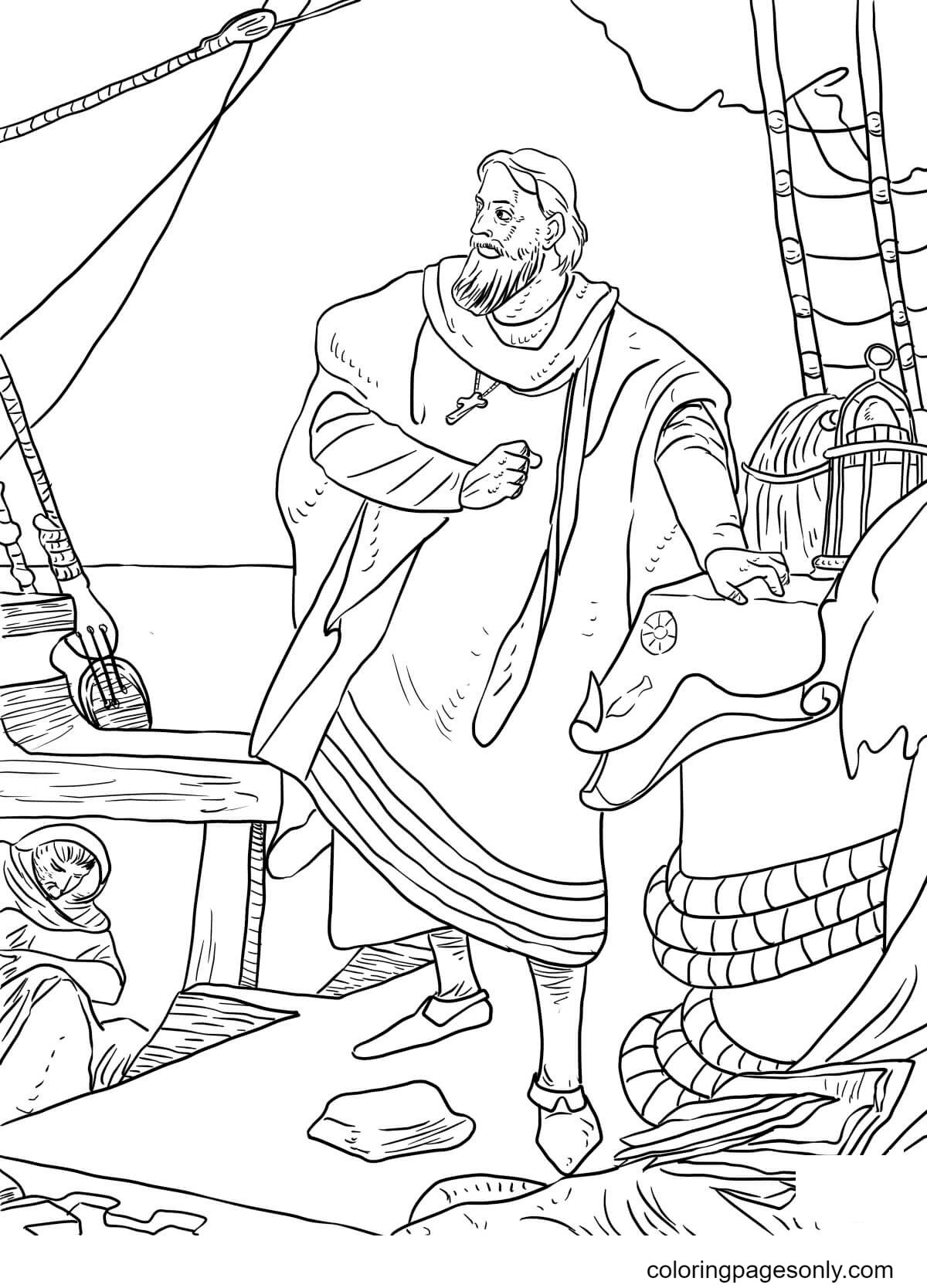

What’s Inside
Simple Columbus Day Coloring Pages for Preschool and Young Kids
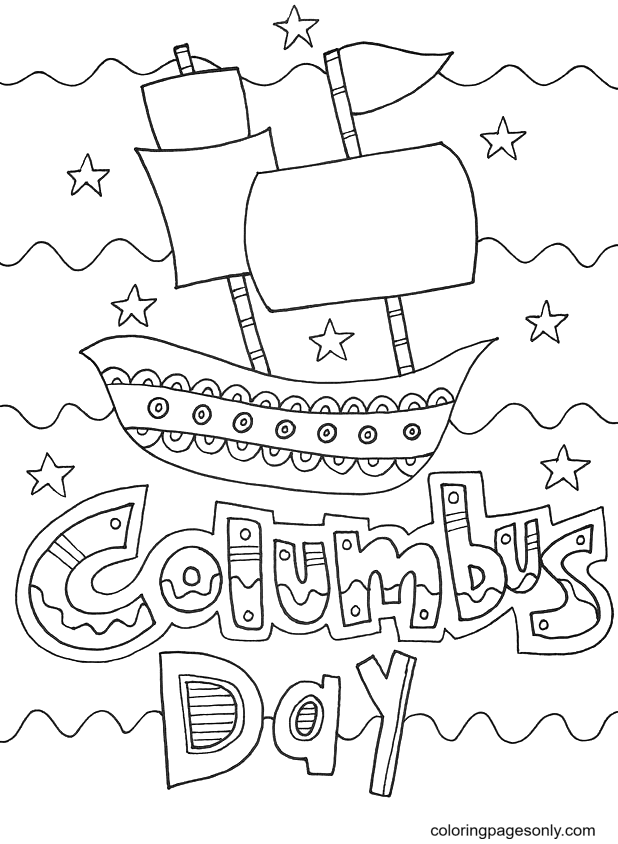
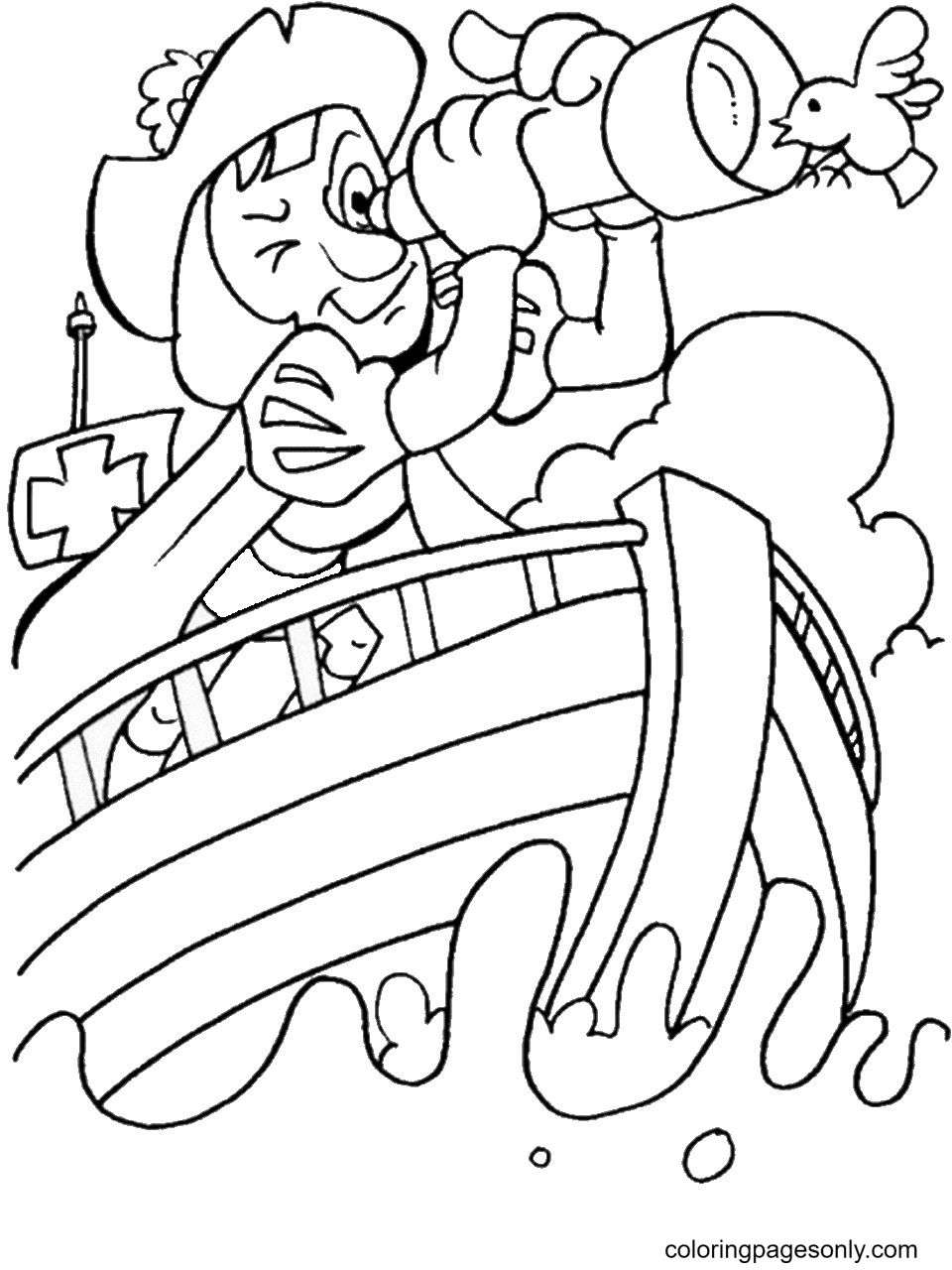
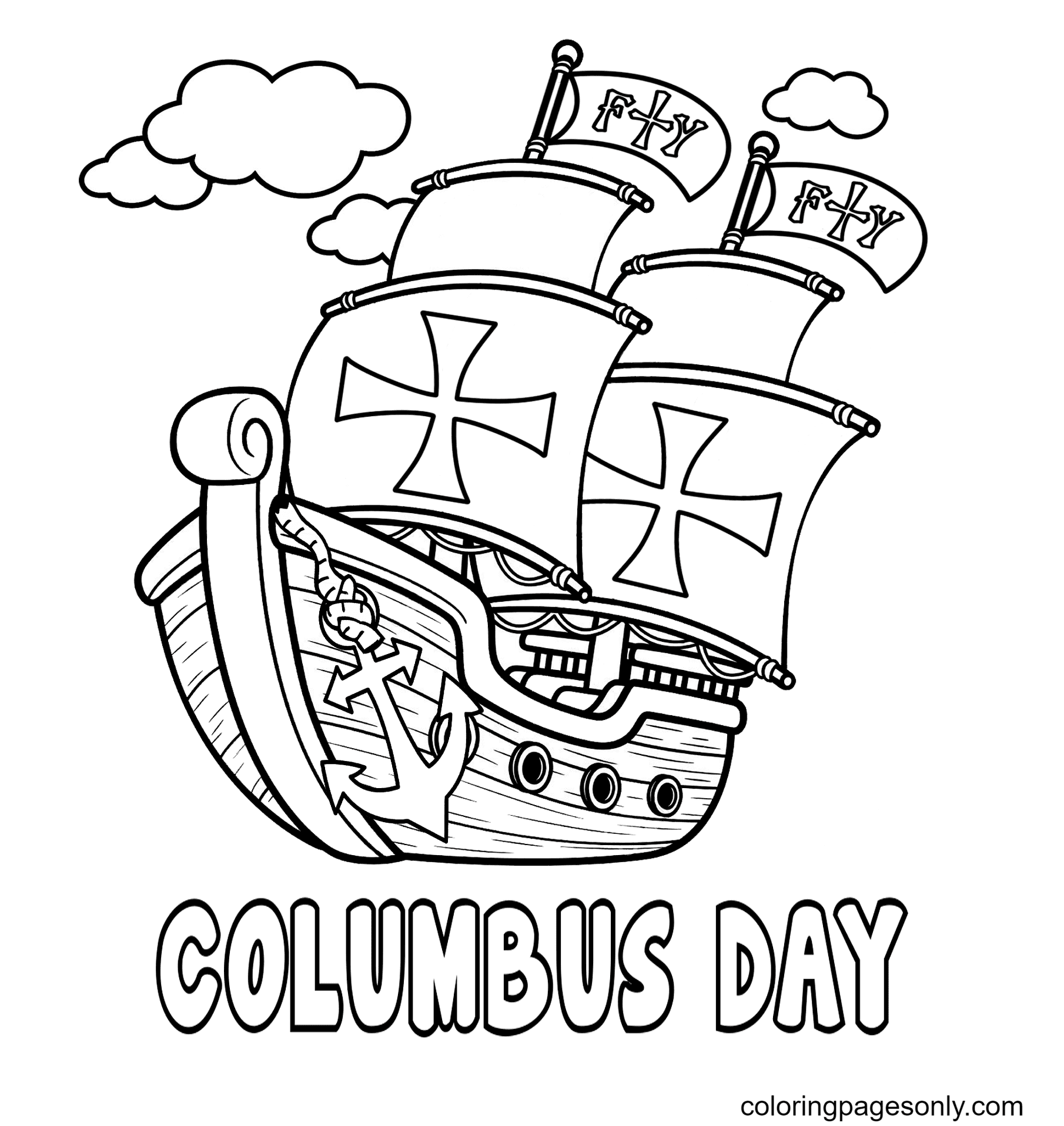
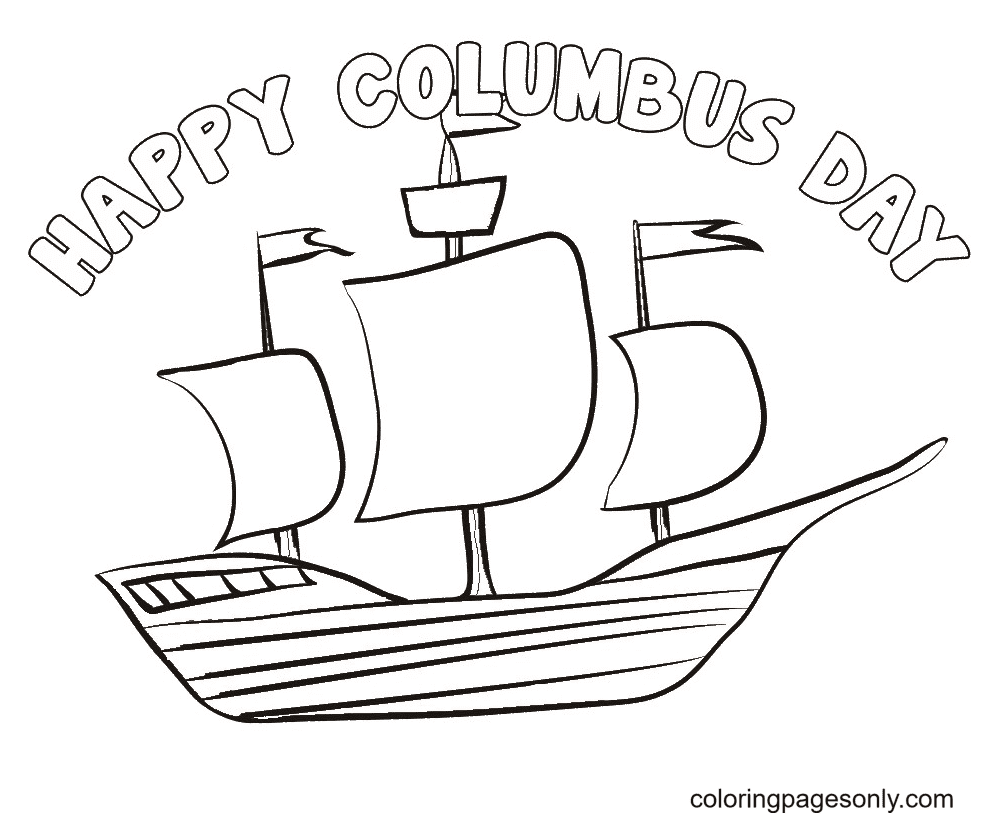
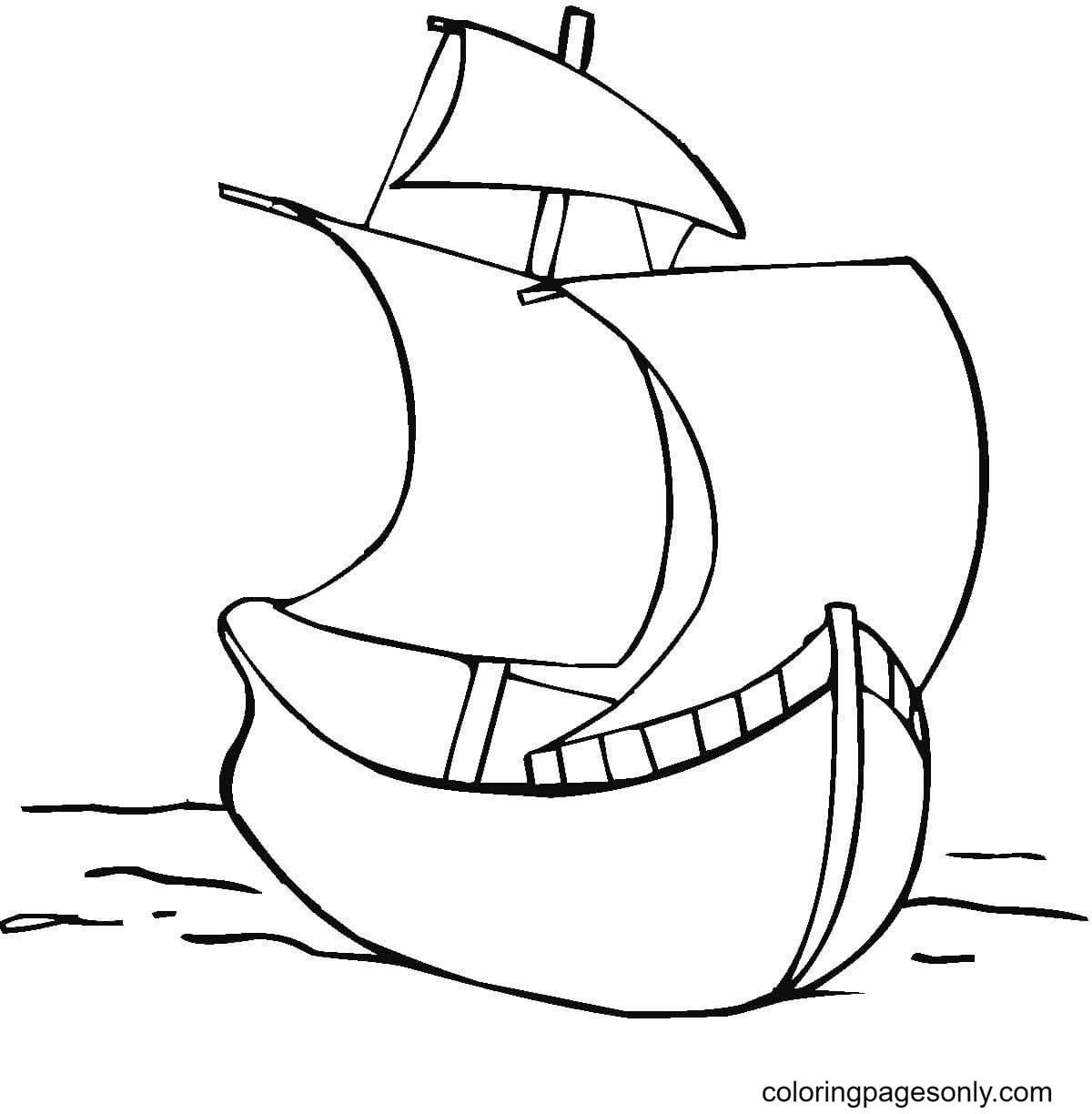
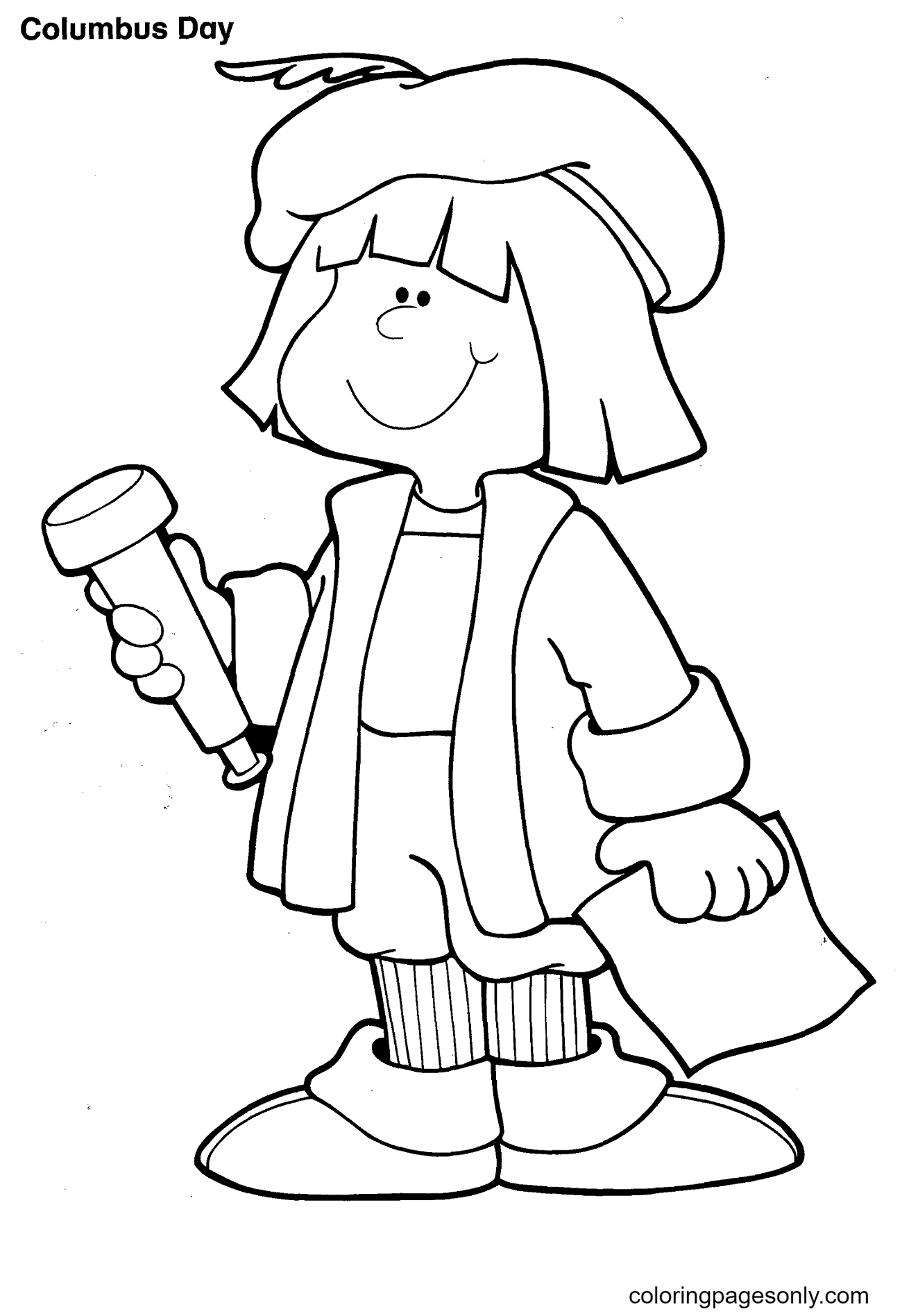
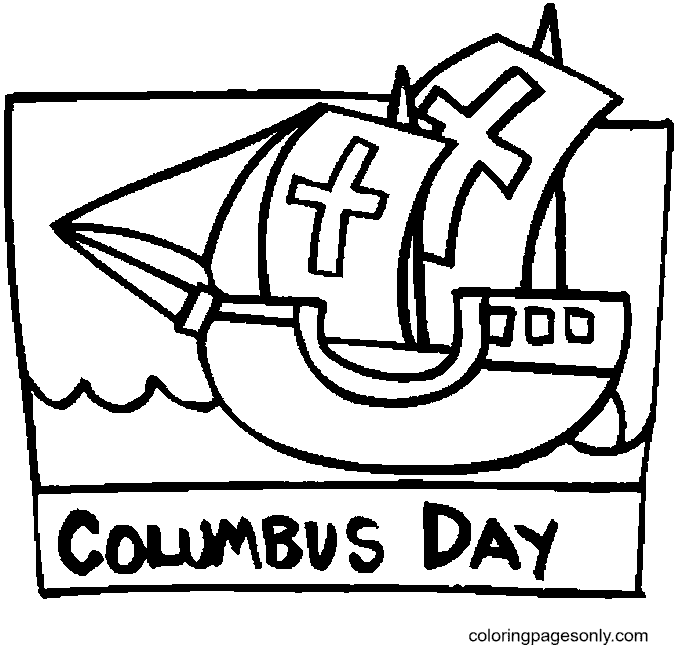
Simple Columbus Day pages are the best starting point for preschool and early elementary children. These pages may show a large ship, a simple “Happy Columbus Day” message, a basic Columbus Day image, or a clean printable design with wide coloring spaces.
These designs are useful for quick classroom activities because they do not require long historical explanations. Children can practice coloring sails, water, clouds, flags, and large letters while learning simple holiday words.
Simple pages also work well for morning work, quiet time, holiday folders, and beginner fine motor practice. They give young learners an easy way to join a classroom theme without being overwhelmed by complex historical details.
Coloring simple Columbus Day pages: Use blue for the ocean, white or cream for sails, brown for the ship, and light blue for the sky. Add yellow sunshine, soft clouds, and bright letters for a cheerful classroom page.
Happy Columbus Day and October 12 Coloring Pages
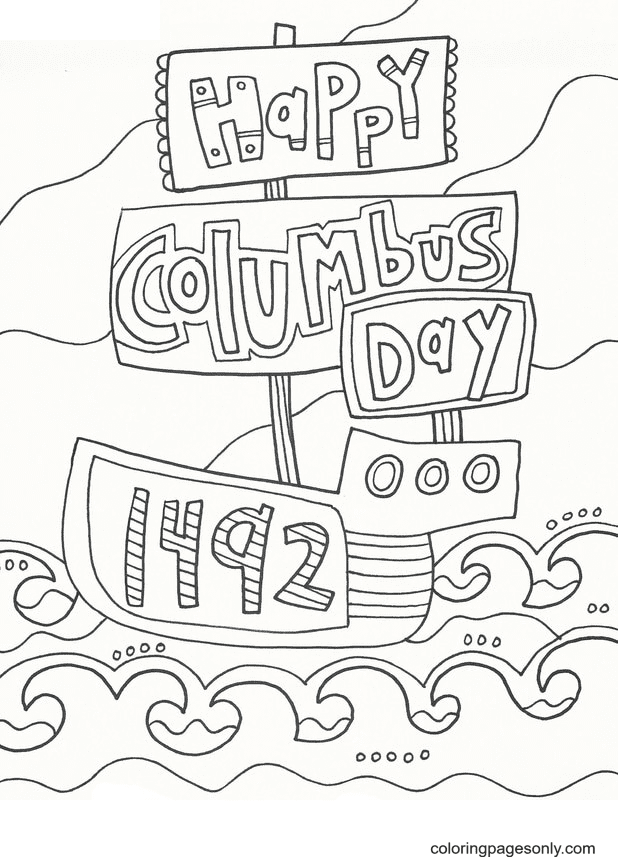
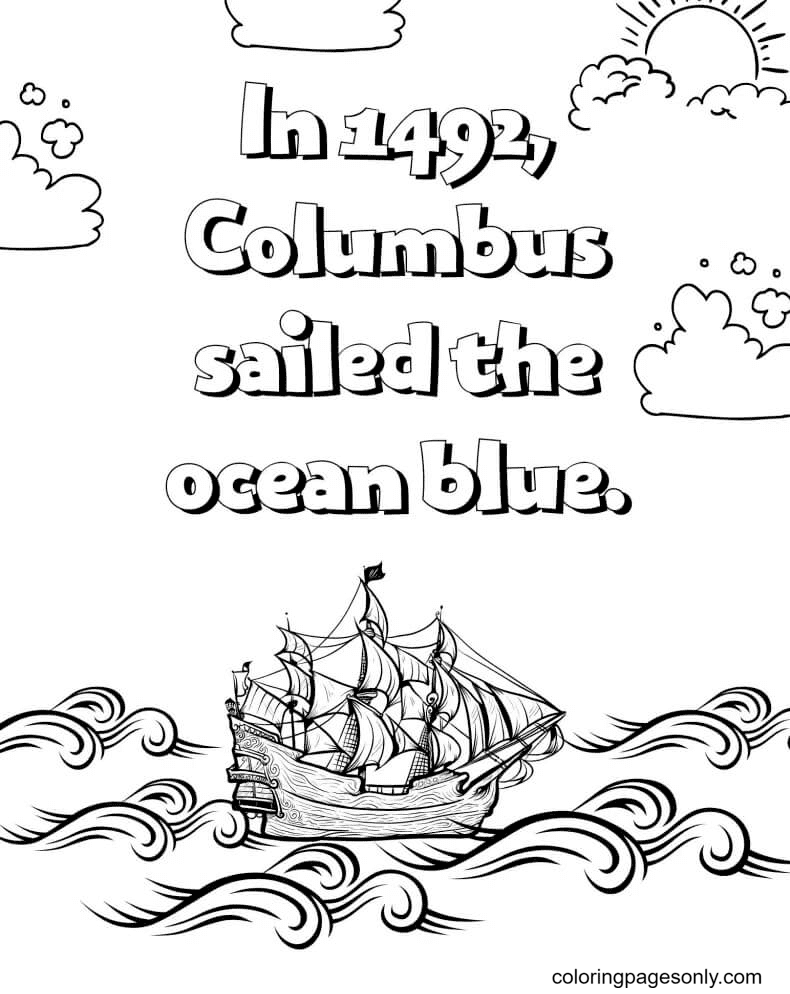
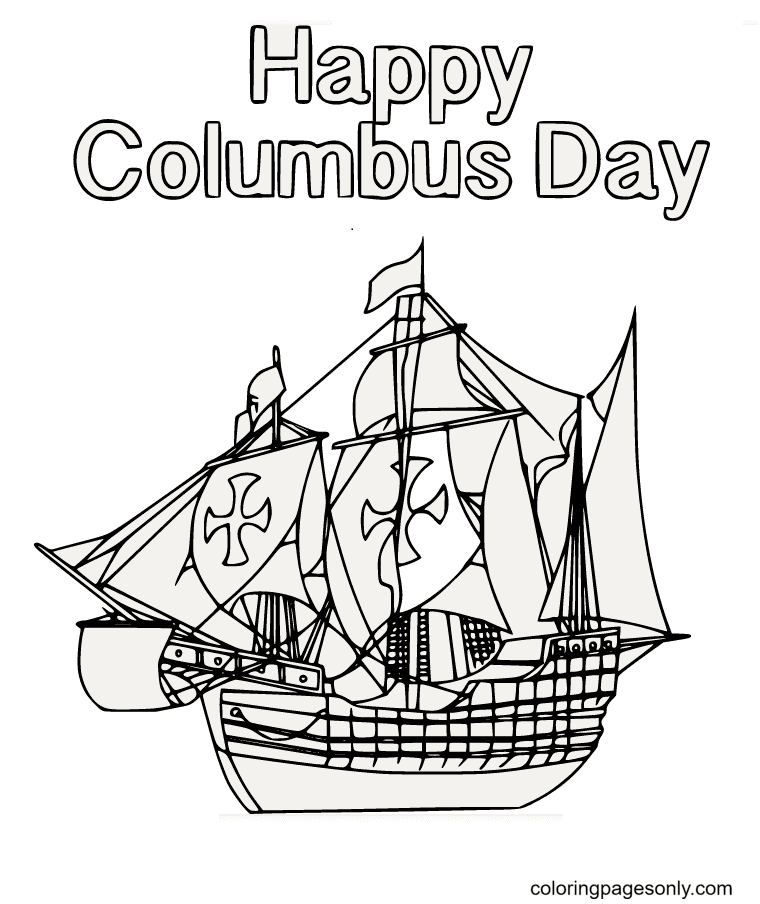
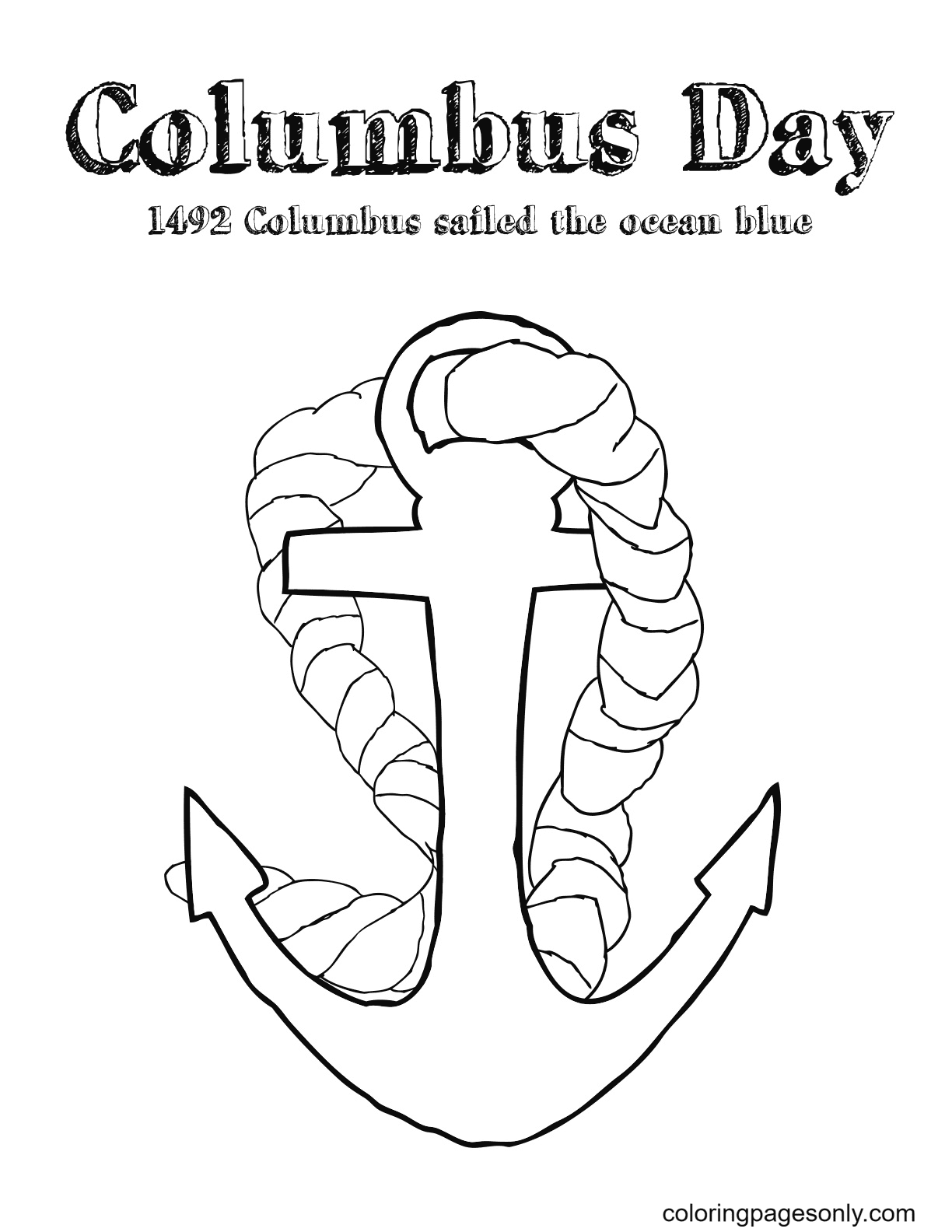
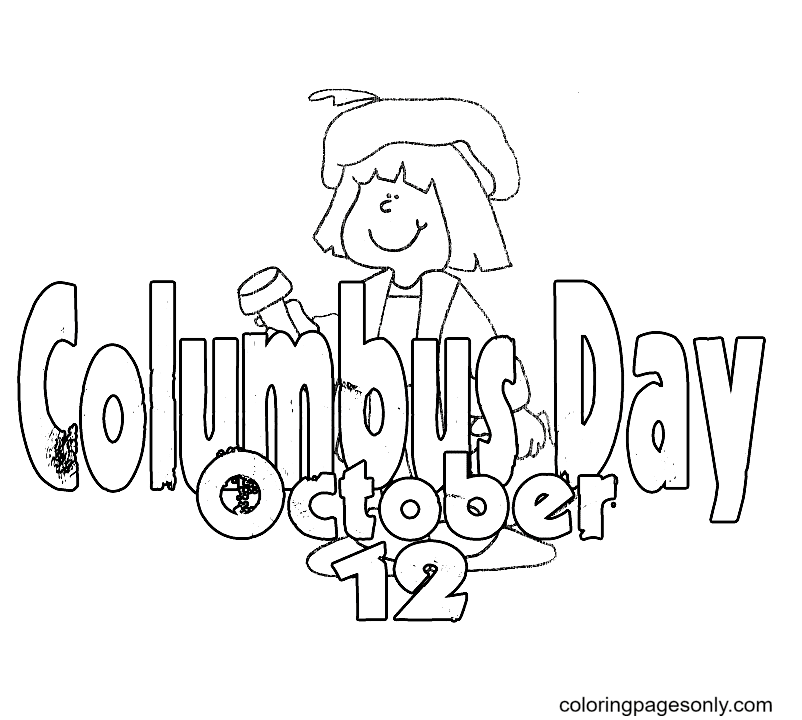
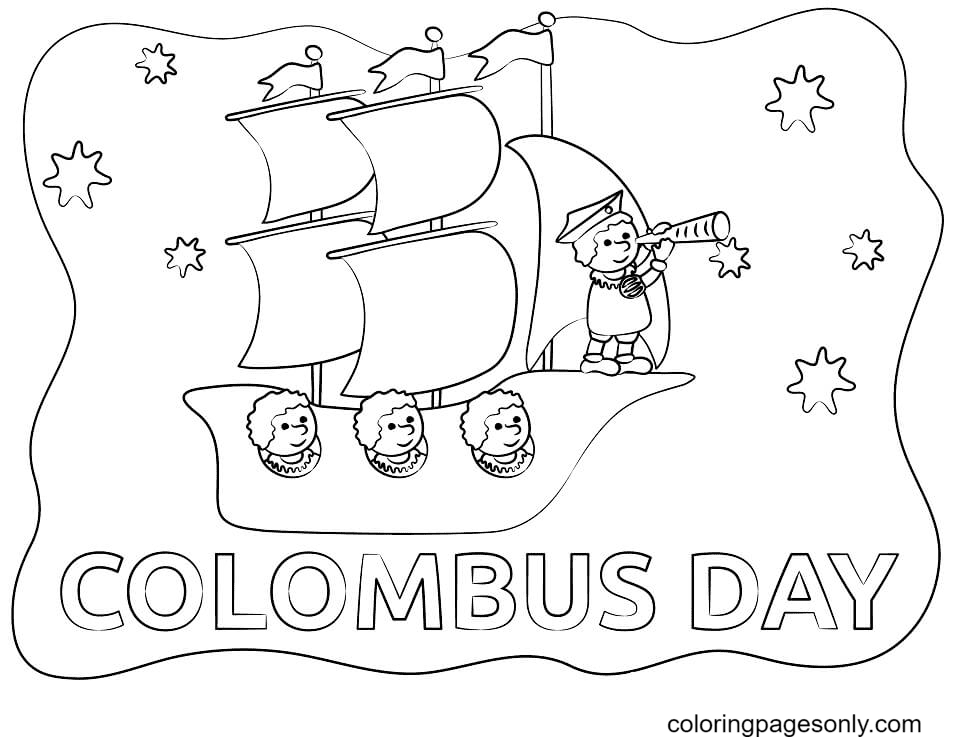
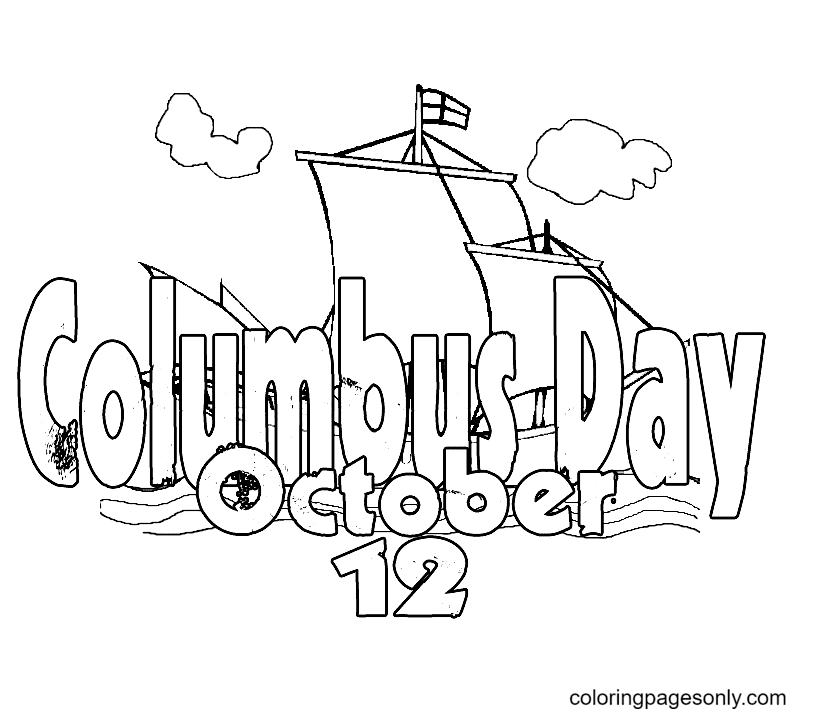
Happy Columbus Day pages often include greeting text, ships, banners, dates, and simple holiday layouts. Some pages may include “1492” or “October 12,” connecting the coloring activity with a historical date.
These pages are useful for holiday bulletin boards, classroom posters, and quick October activities. Children can color the words first, then decorate the ship, waves, sky, flags, or border patterns.
Date pages also help students connect a number with a historical event. Younger children can trace or color the date, while older children can add a short caption explaining what the date is connected to.
Coloring Happy Columbus Day pages: Make the letters bold with red, blue, gold, or brown. Use ocean colors around the ship and add small stars, waves, rope borders, or map-style lines to frame the design.
Christopher Columbus Portrait and Explorer Coloring Pages
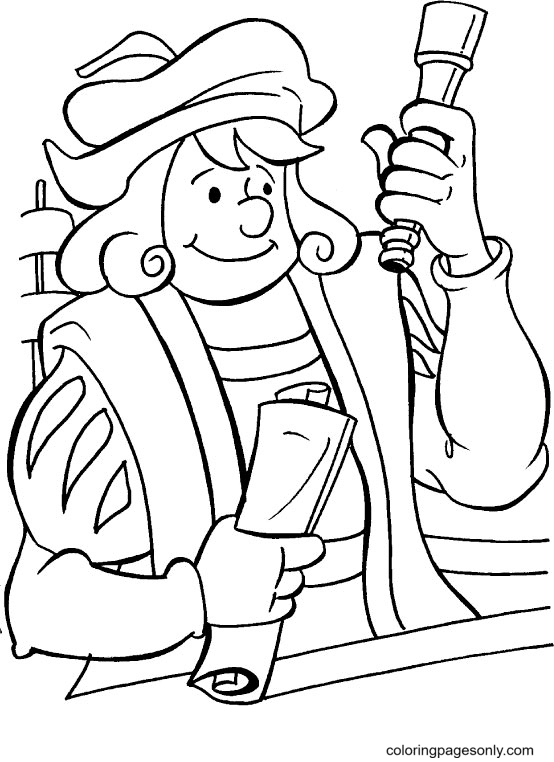
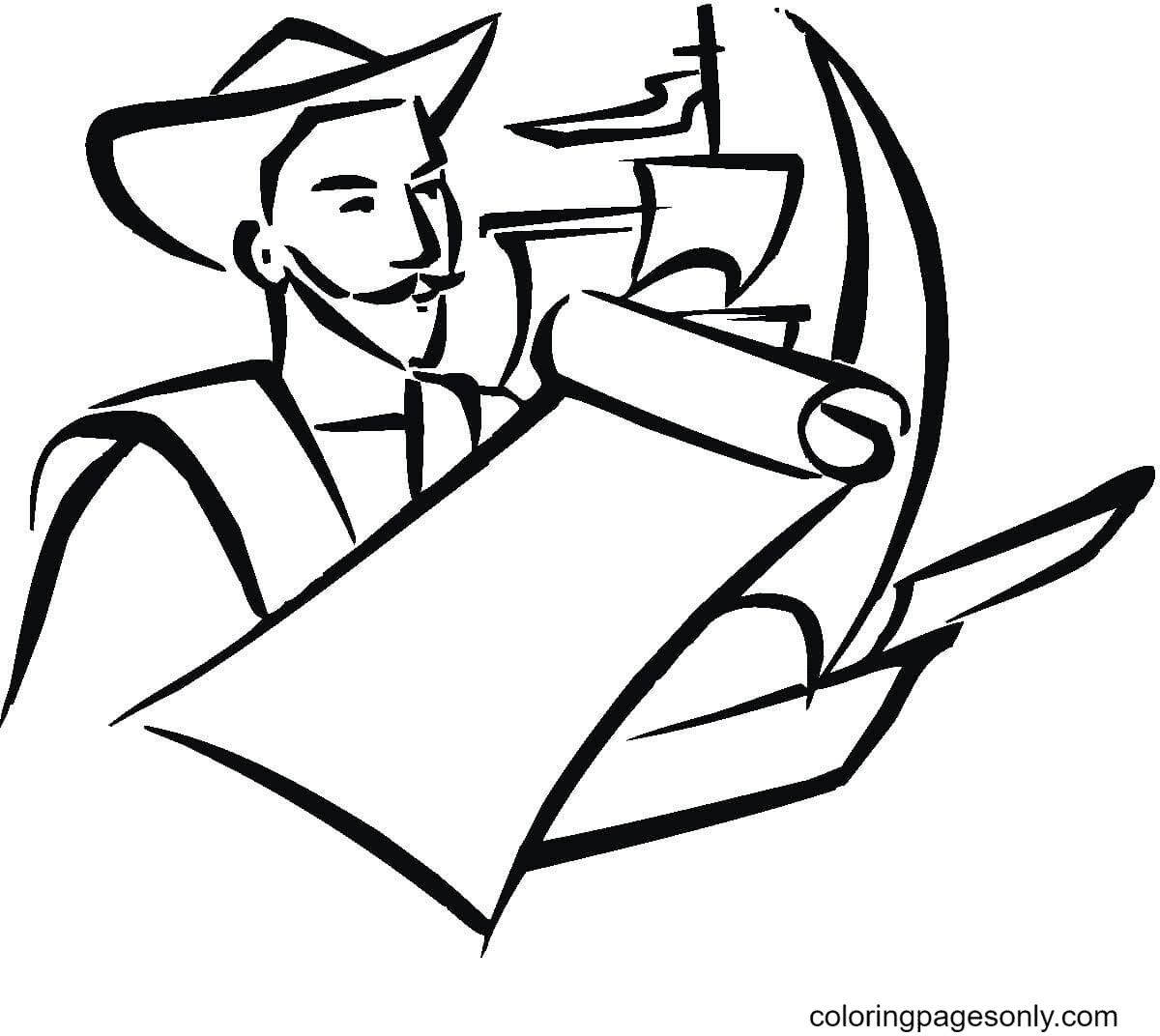
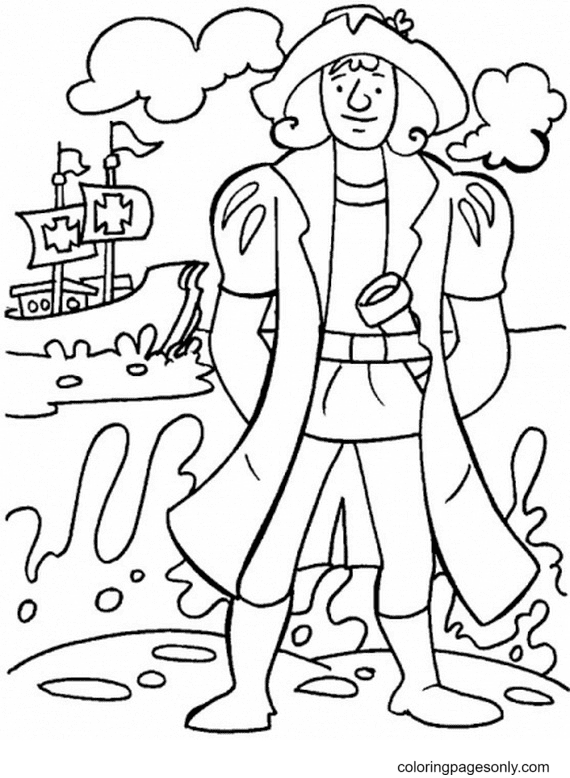
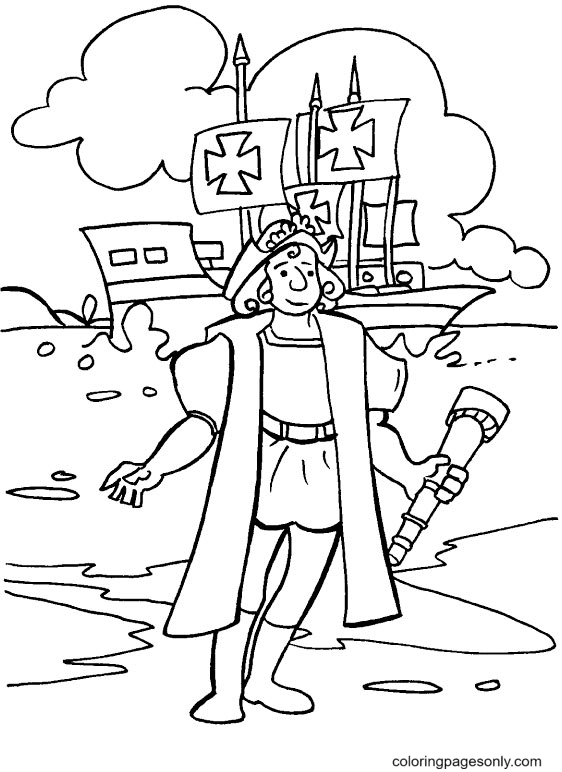
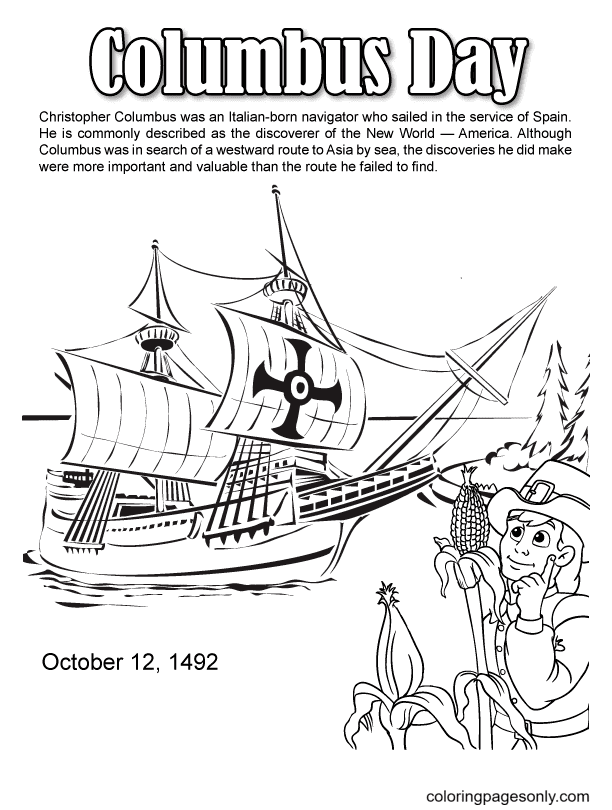
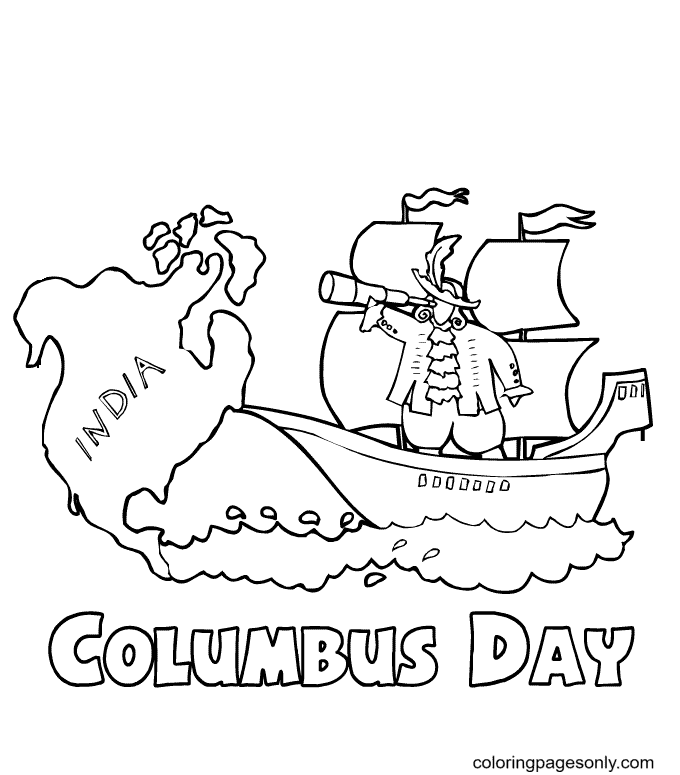
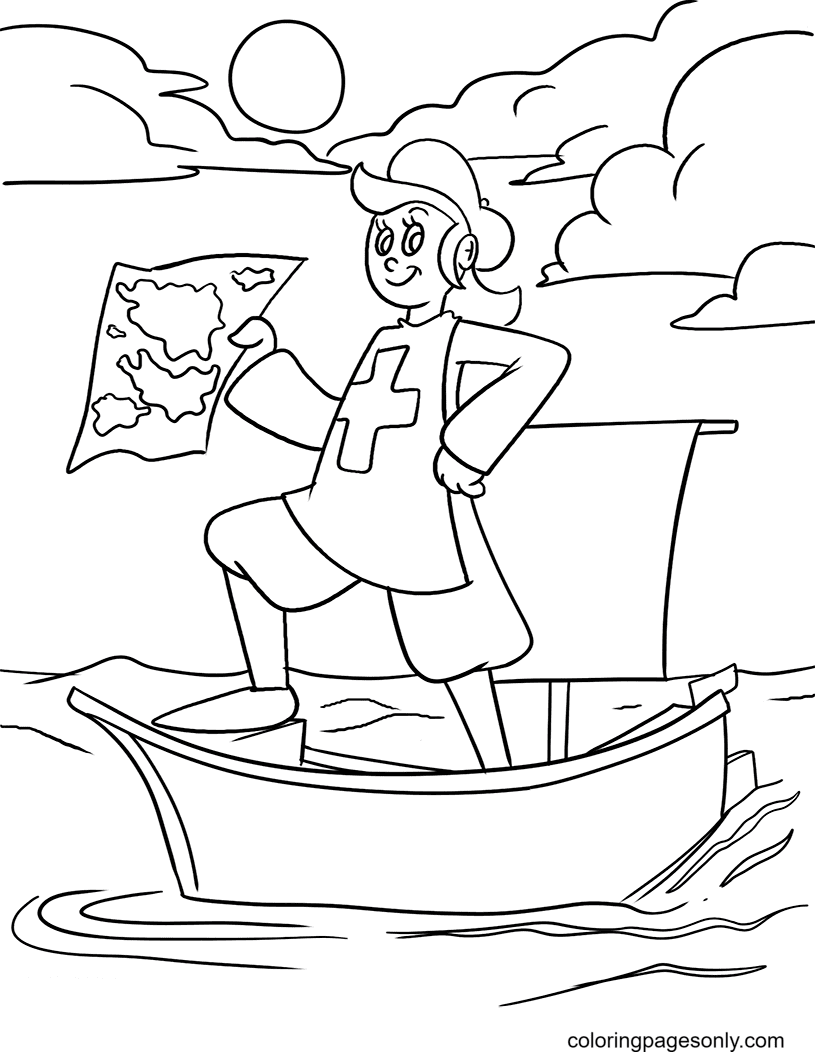
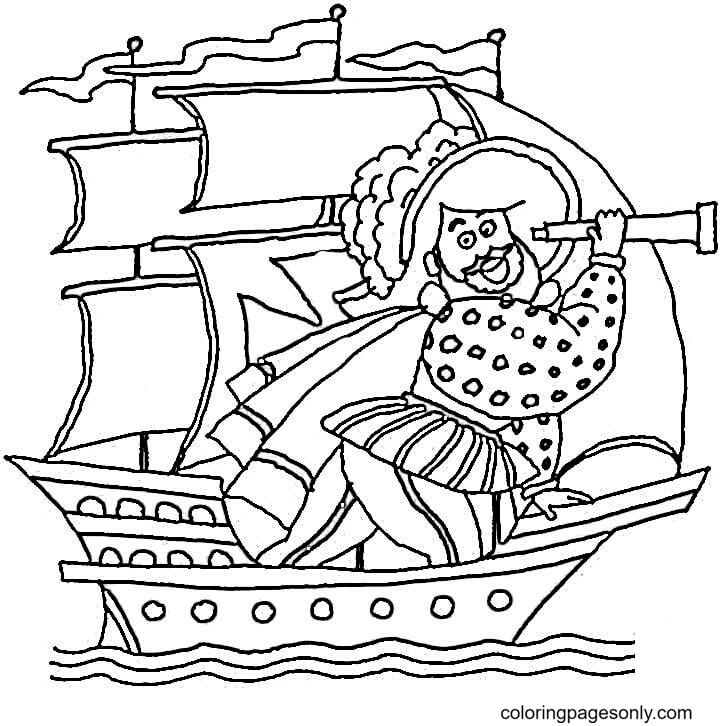
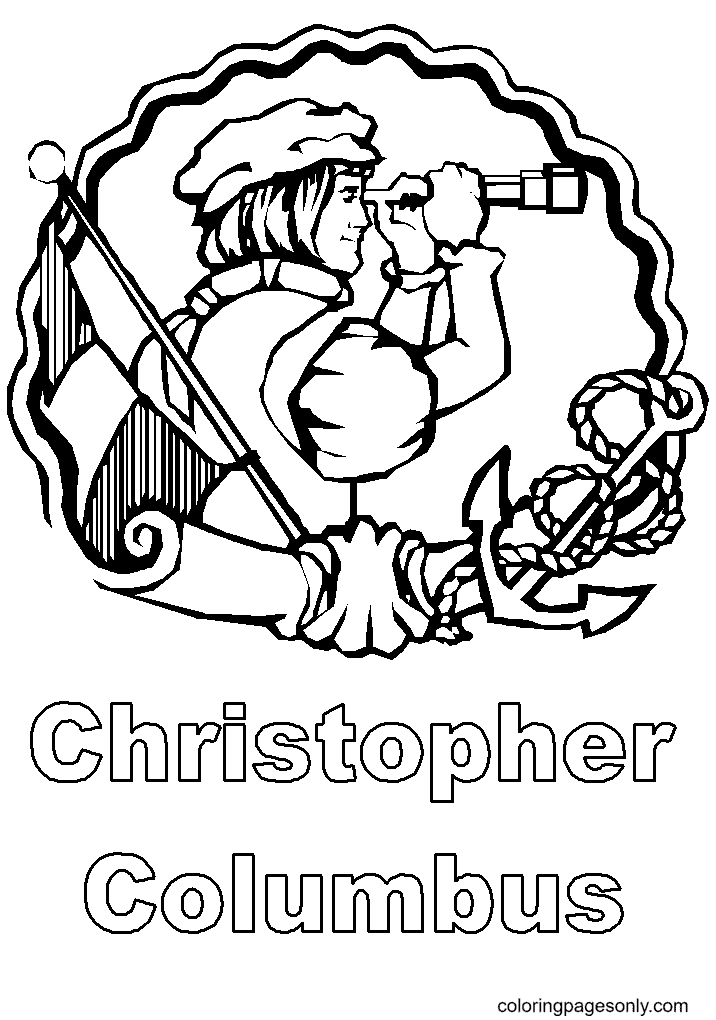
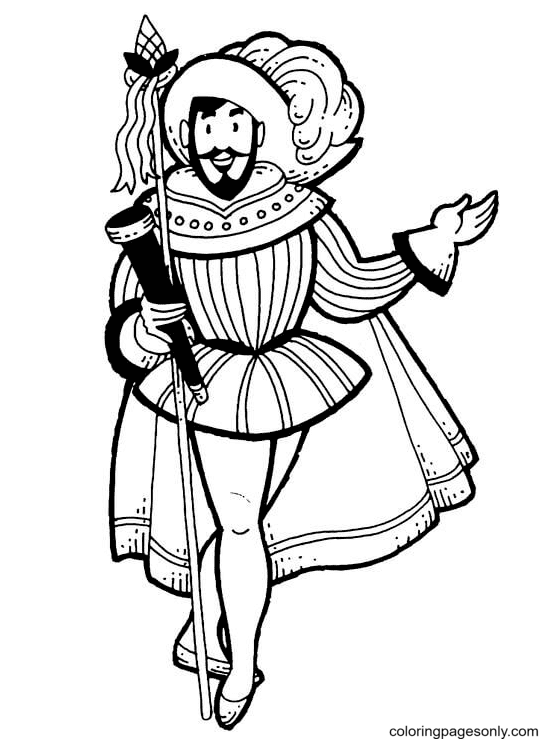
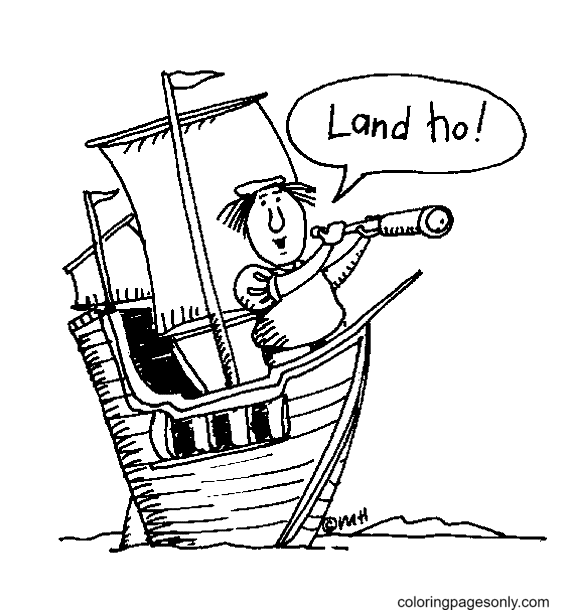
Christopher Columbus pages may show the explorer standing, posing, sailing, looking at a map, or appearing in a historical-style scene. These pages can help students connect the holiday name with the person often associated with it.
Portrait and explorer pages are useful for older kids because they include more details, such as clothing, hats, facial features, maps, scrolls, and backgrounds. They can also be paired with short reading passages or teacher-led discussions.
Because Columbus Day is a historical topic with different viewpoints today, these pages work best when used as part of an age-appropriate lesson rather than as the whole story. Teachers and parents can encourage children to ask who is shown, what is happening, and what other people and communities were part of the history.
Coloring Christopher Columbus pages: Use browns, creams, dark reds, navy, black, and gold for historical clothing. Add soft shading to hats, maps, scrolls, and ship details.
Columbus Day Ship Coloring Pages
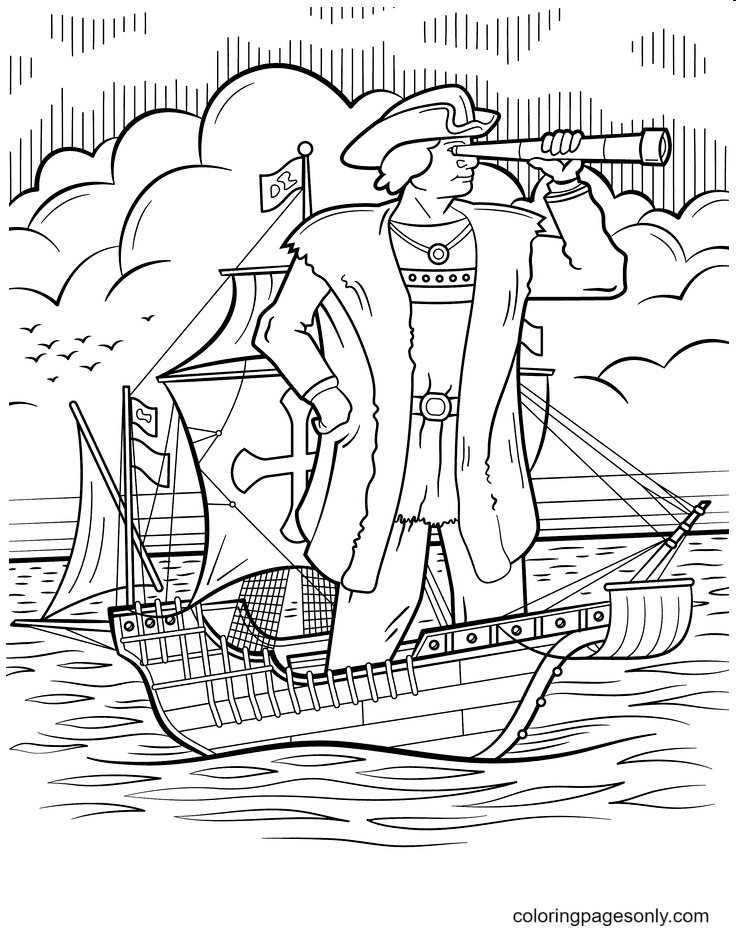
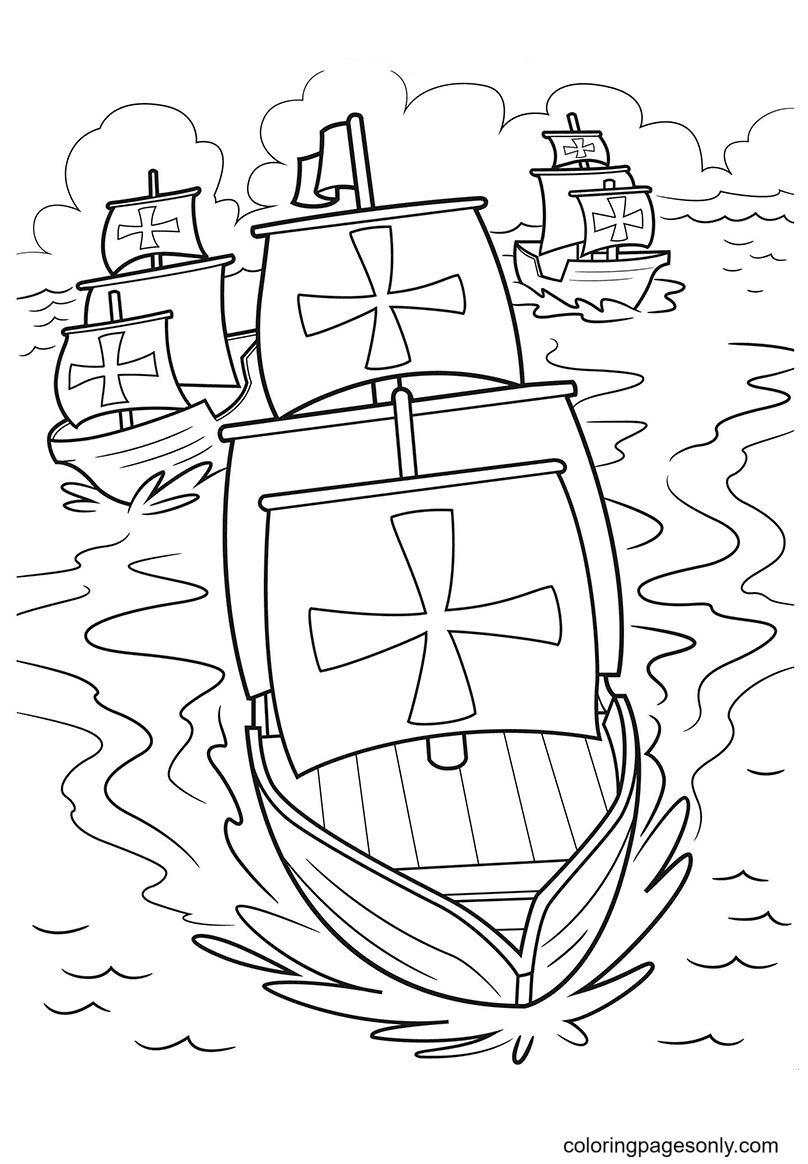
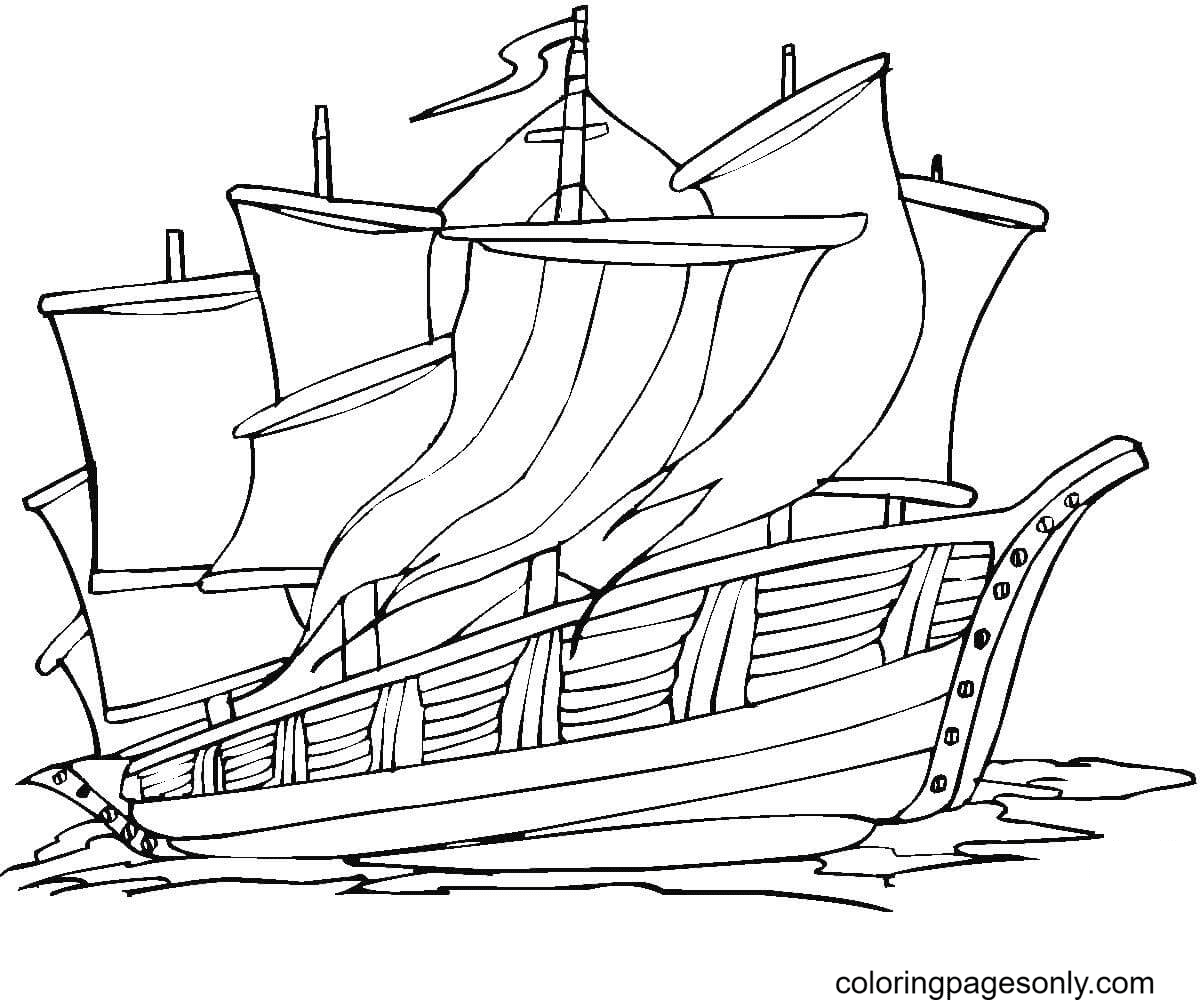
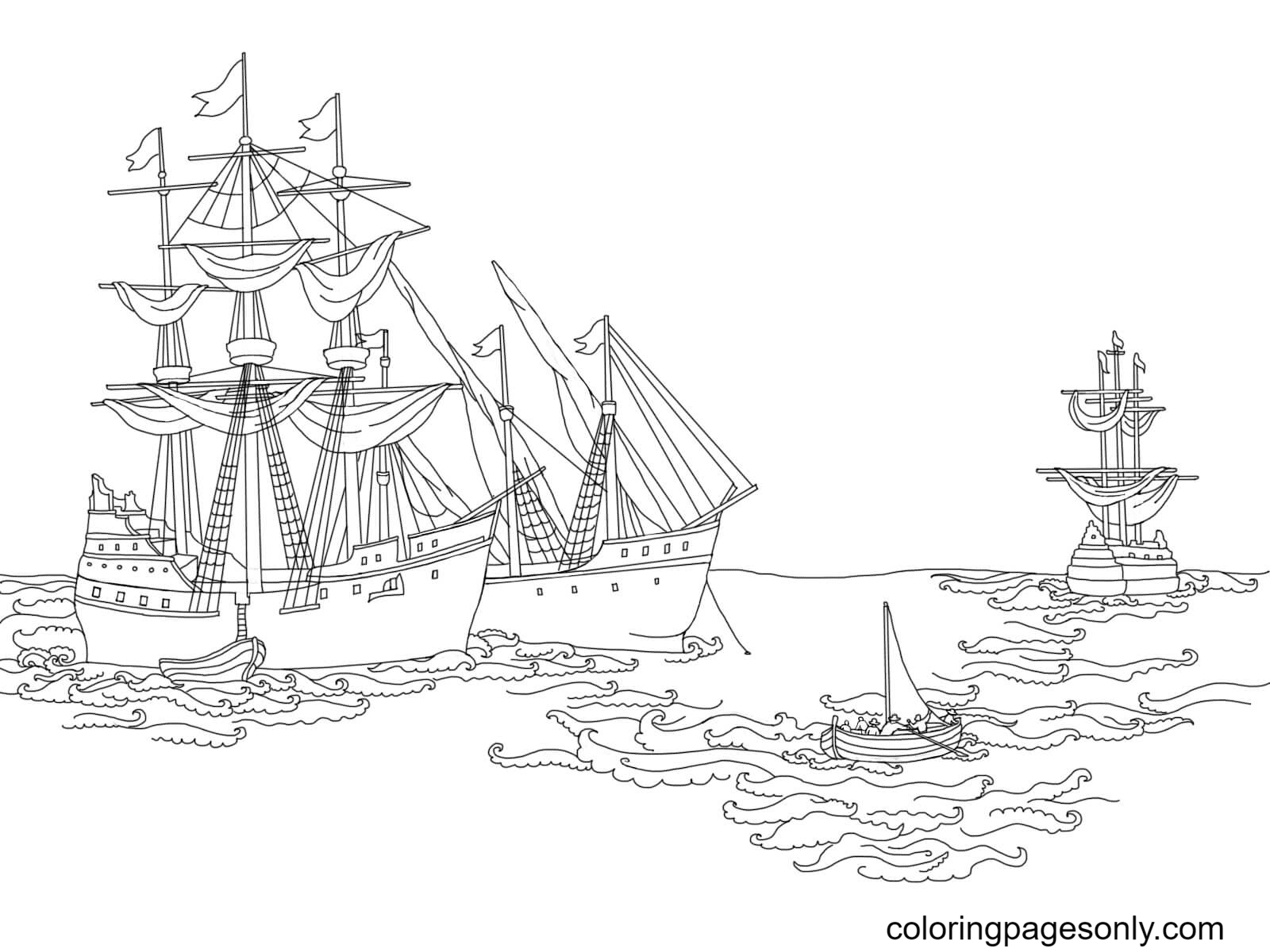
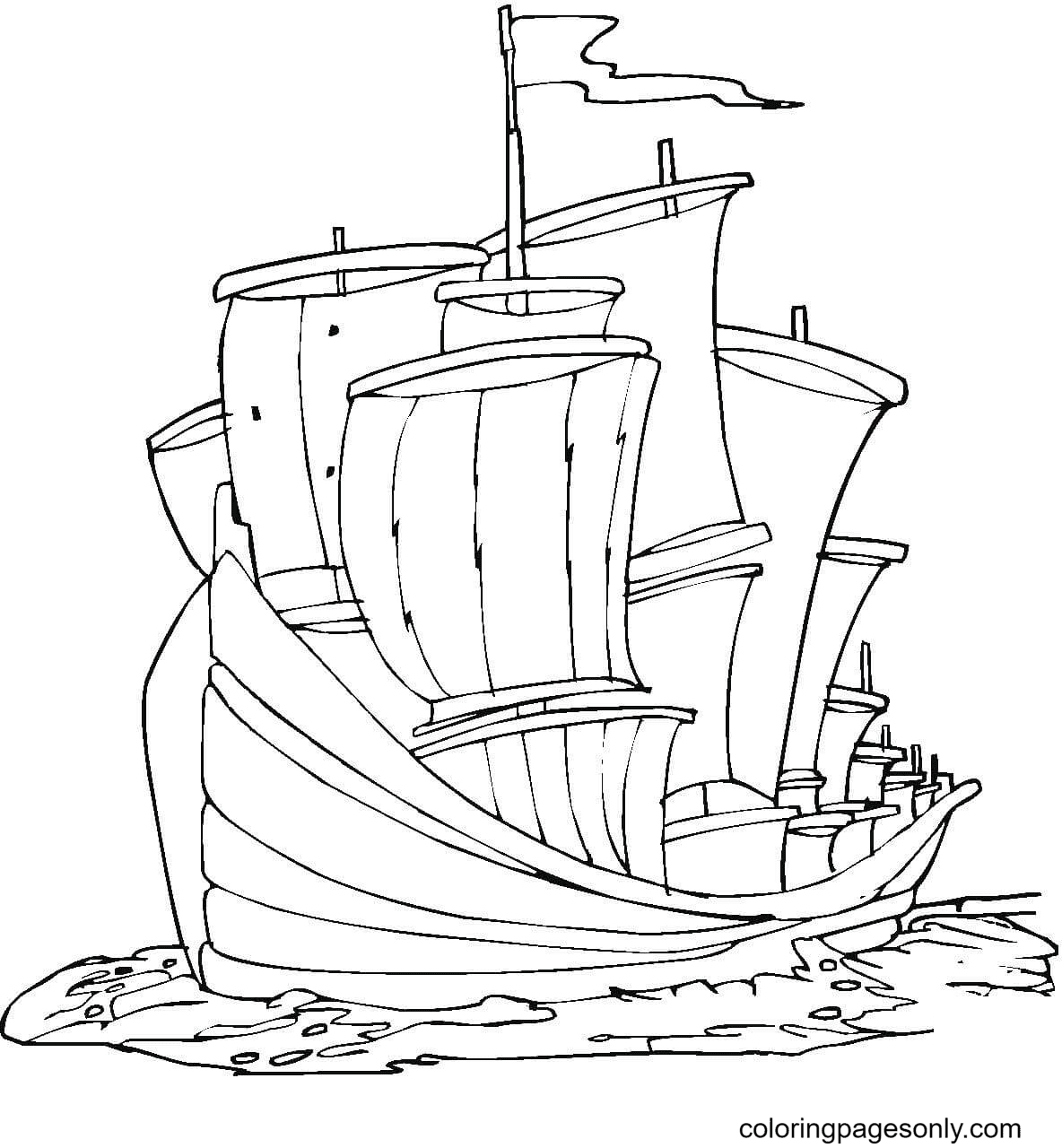
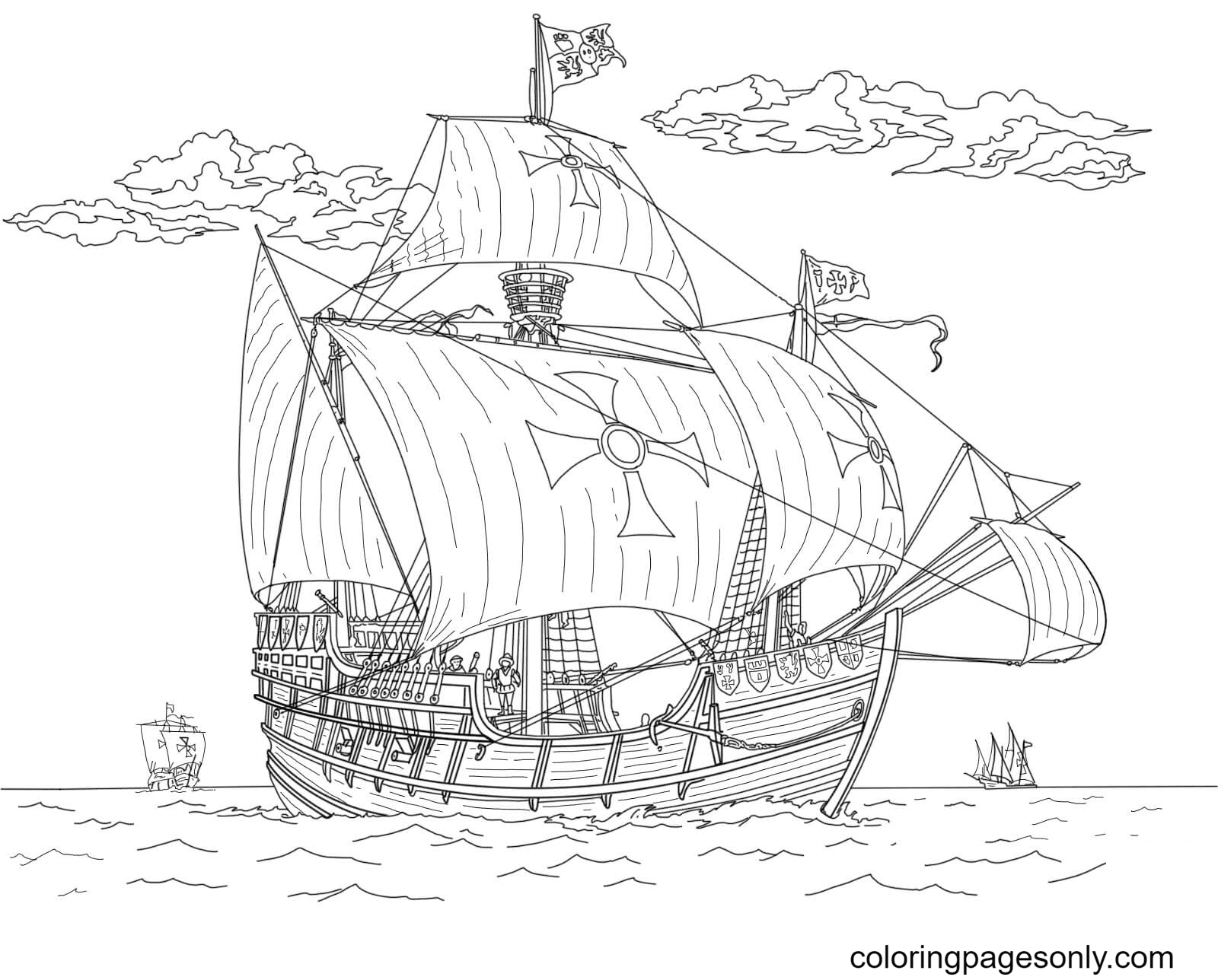
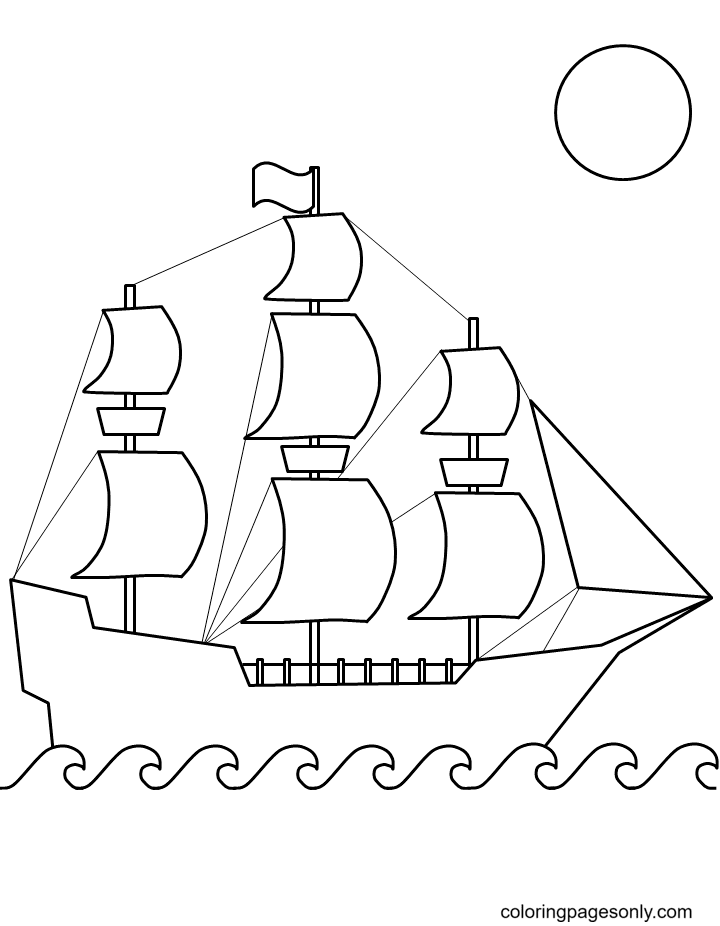
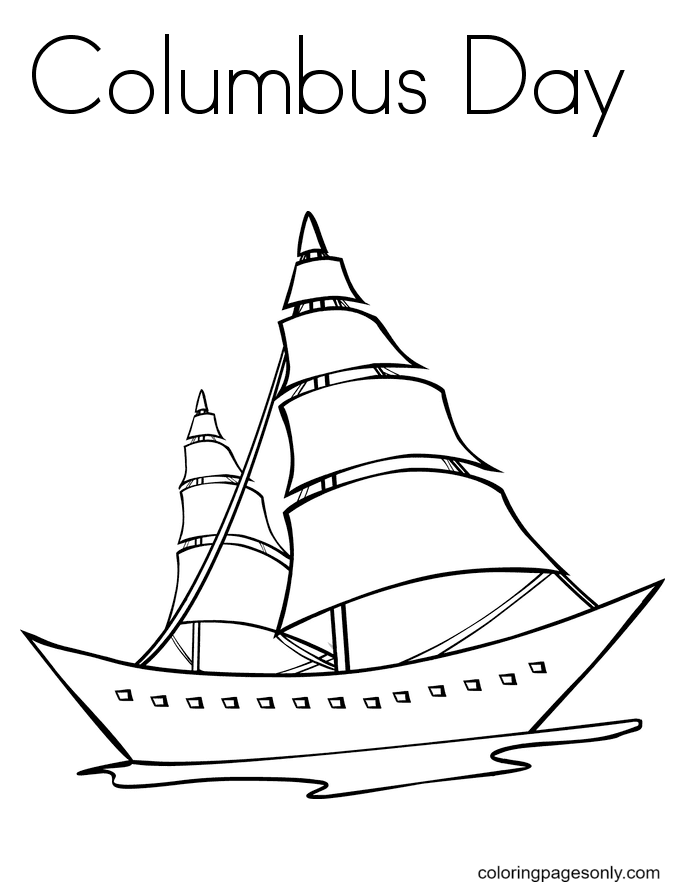
Columbus Day ship pages are one of the strongest parts of this collection. These designs may show large sailing ships, ship silhouettes, ship scenes, or ocean travel pictures.
Ship pages are great for children because they offer clear shapes: sails, masts, ropes, hulls, flags, waves, and clouds. They also help children understand that the Columbus Day story is connected to an ocean voyage.
These pages can be simple for young children or detailed for older kids. A simple ship page can be colored quickly, while a realistic ship page can become a more careful historical art activity.
Coloring Columbus Day ship pages: Use brown for wooden hulls, cream or white for sails, gray or tan for ropes, and blue for waves. Add darker shadows under the ship to make it look like it is moving across the ocean.
Santa Maria, Niña, and Pinta Coloring Pages
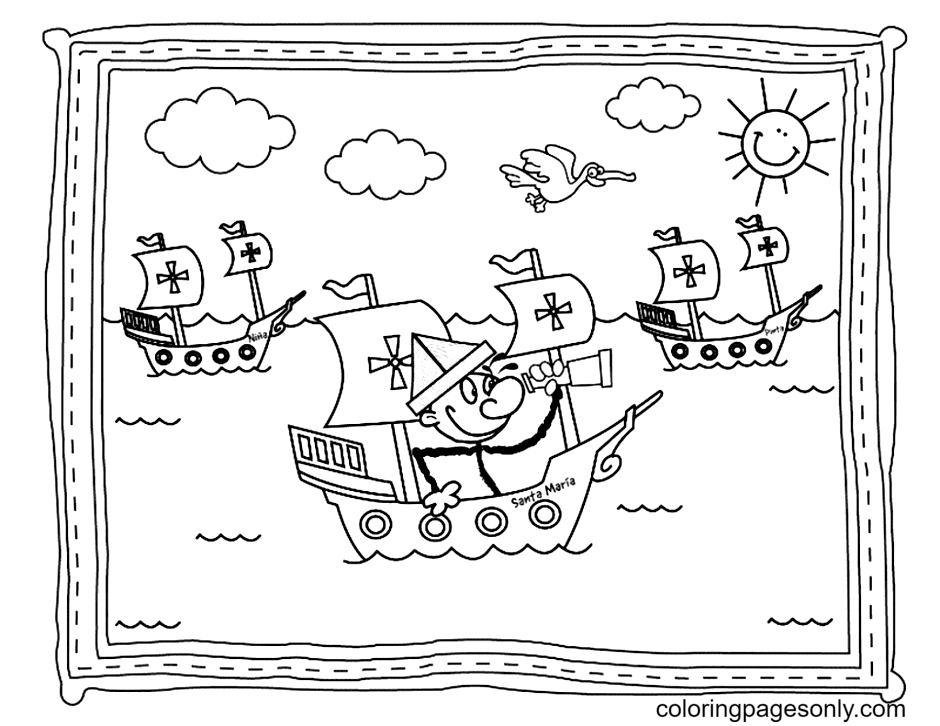
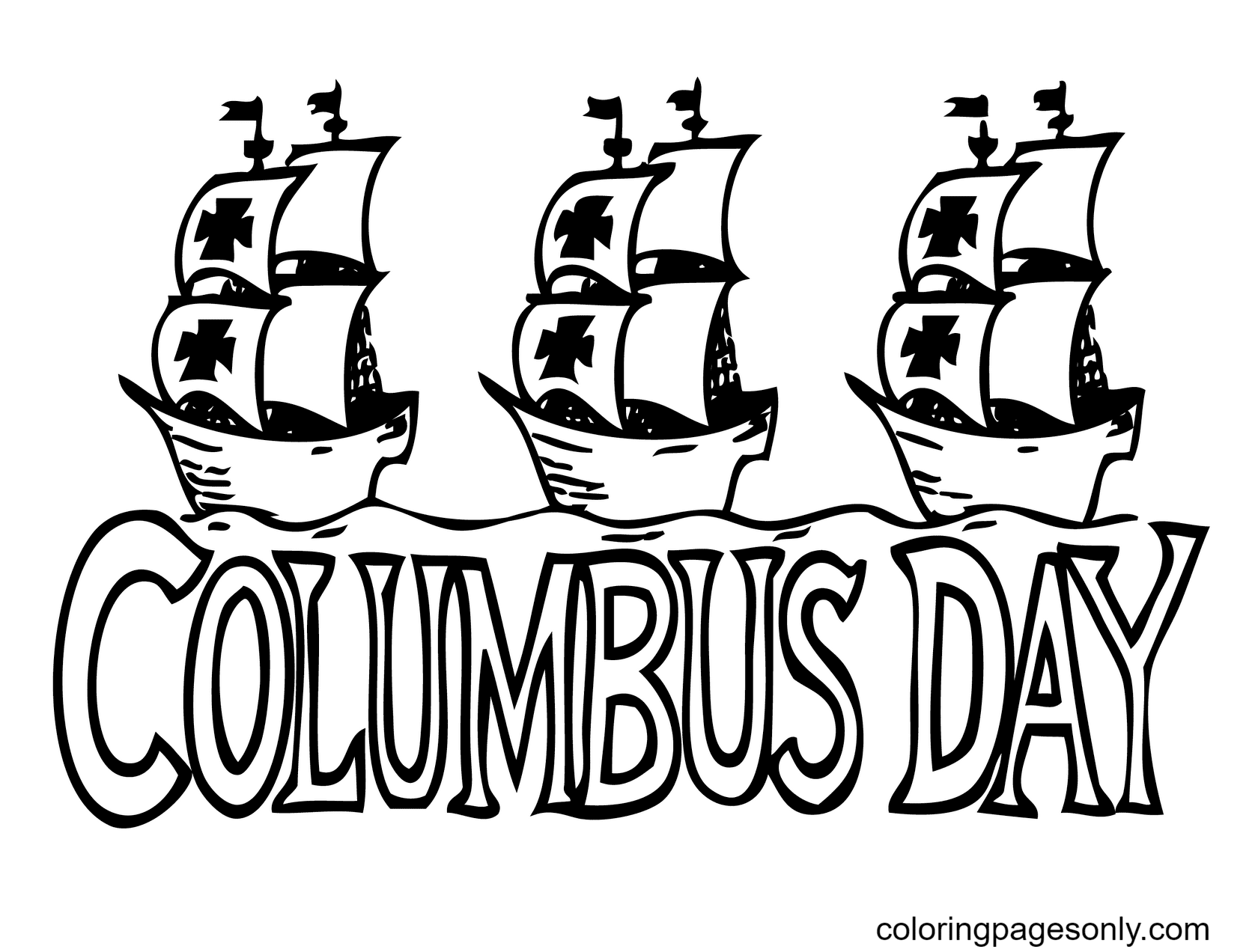
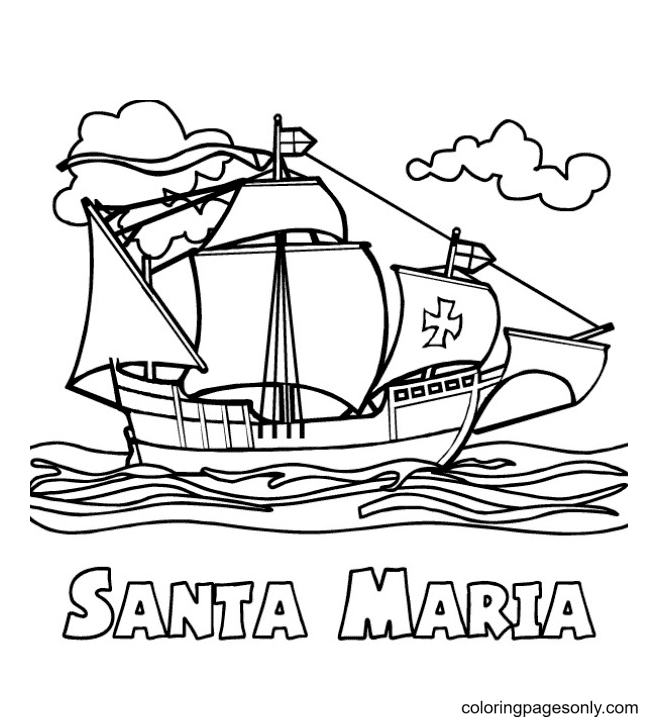
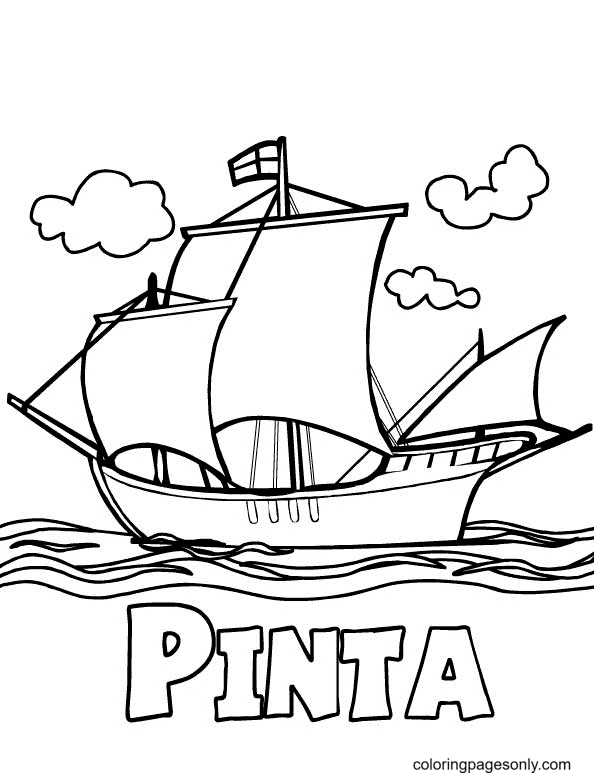
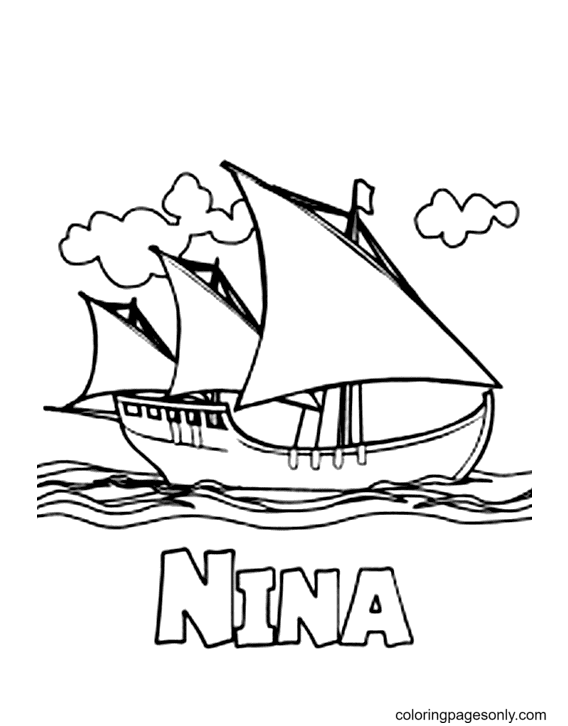
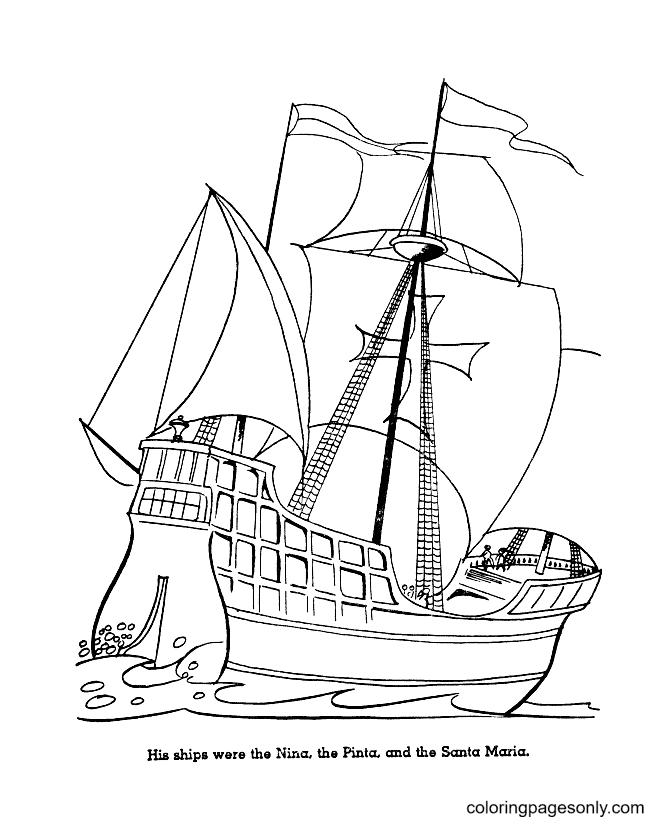
Santa Maria, Niña, and Pinta pages focus on the three ships commonly connected with Columbus’s 1492 voyage. These pages may label each ship or show one ship at a time.
This group is especially useful for classroom learning because students can compare ships, labels, sails, and details. A page with one named ship can become part of a three-page mini-book or a classroom display.
Children can color each ship differently to help remember the names. They can also add arrows, route lines, ocean waves, or a simple map background.
Coloring Santa Maria, Niña, and Pinta pages: Choose a different flag or sail border color for each ship. Use brown hulls, cream sails, blue waves, and small labels so each ship stays easy to identify.
Columbus Day 1492 and Voyage Coloring Pages
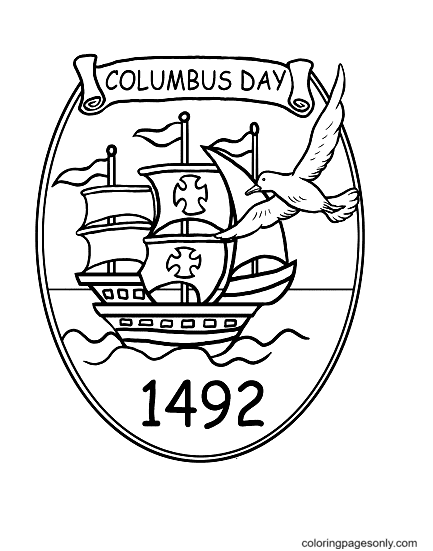
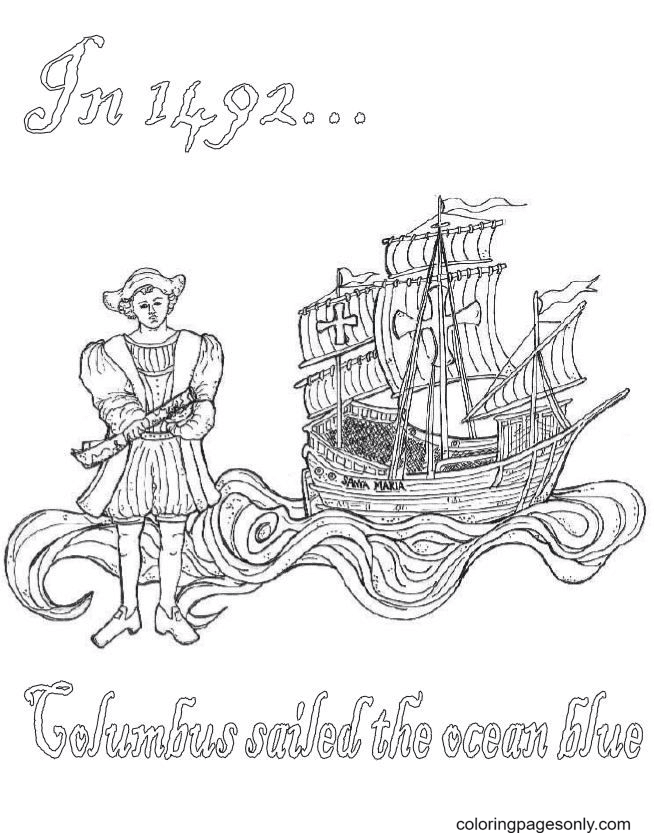
Columbus Day 1492 pages connect coloring with the idea of a voyage. These pages may include ships, dates, ocean scenes, sailing routes, or “1492” text.
Voyage pages are useful because they turn the holiday into a sequence: preparing to sail, crossing the ocean, seeing land, and recording what happened. Children can color the scene and then tell the story in order.
These pages are also good for history notebooks. Students can add captions such as “The ships crossed the Atlantic,” “A sailor looked for land,” or “1492 is connected with Columbus’s first voyage.”
Coloring 1492 voyage pages: Use deep blues for the Atlantic Ocean, warm browns for ships, cream for sails, and gold or red for the number 1492. Add dotted route lines, compass arrows, or a small map border.
Landing, Arrival, and Historical Scene Coloring Pages
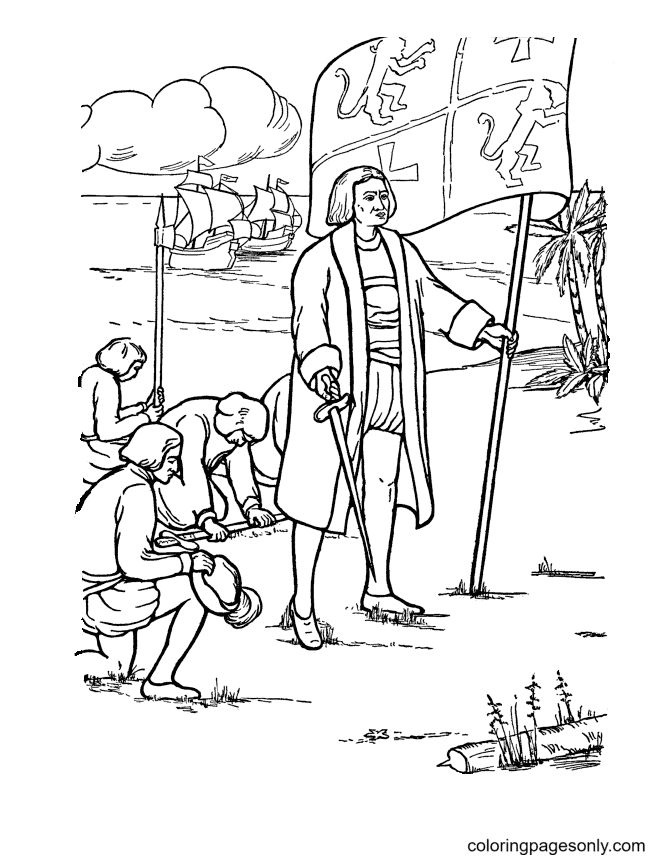
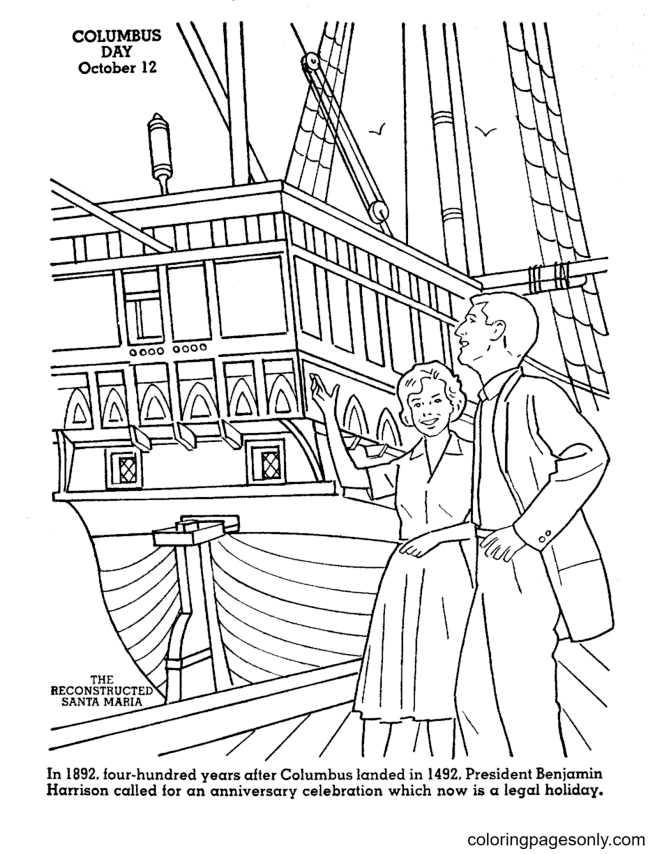
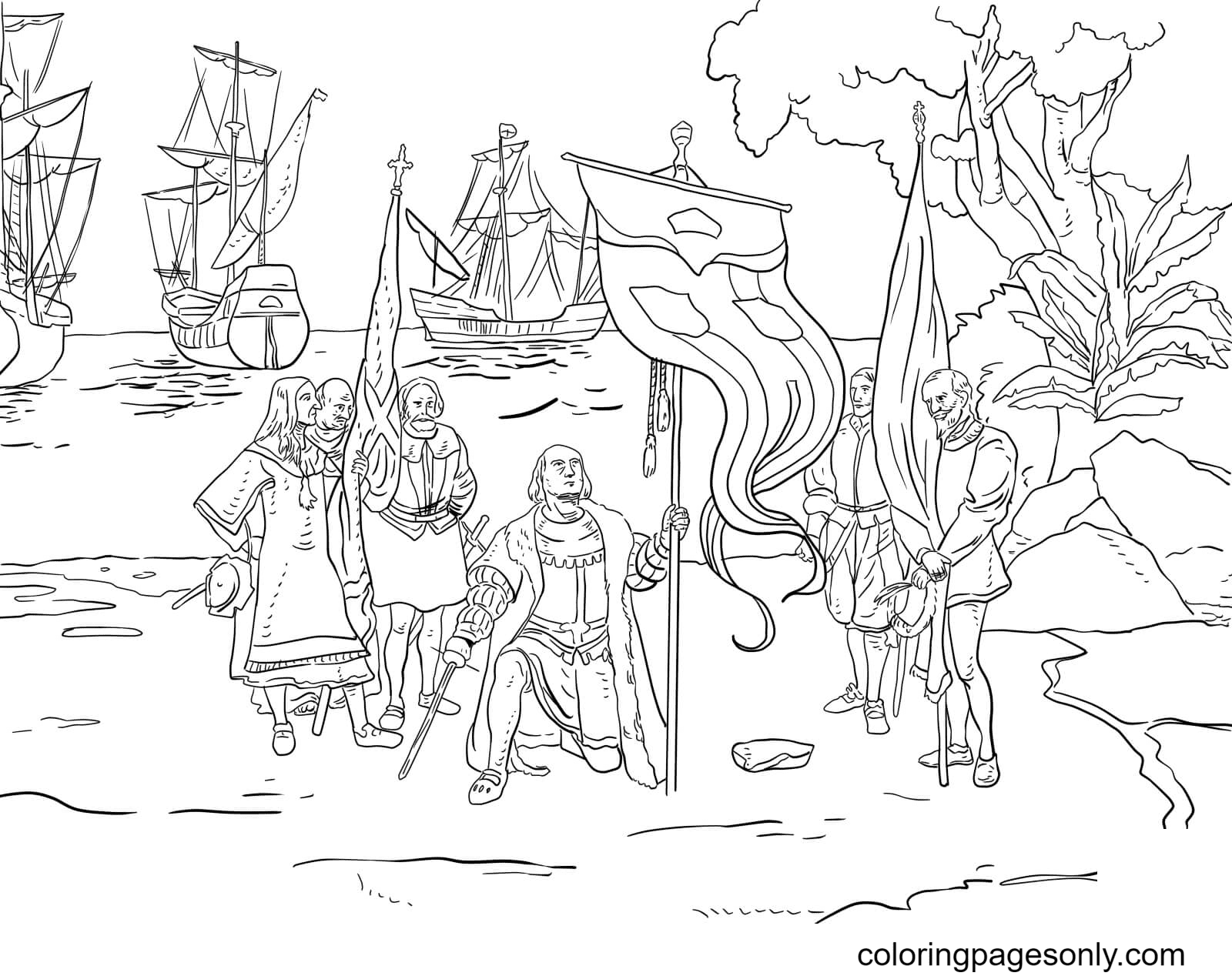
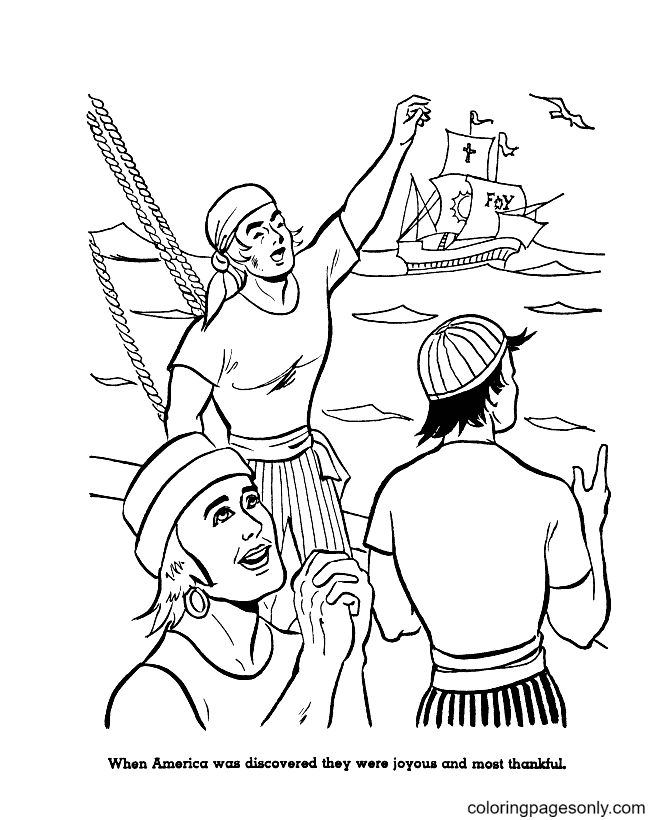
Landing, arrival, and historical scene pages show more complex moments. These pages may include people, ships, land, flags, or scenes connected with arrival after a voyage.
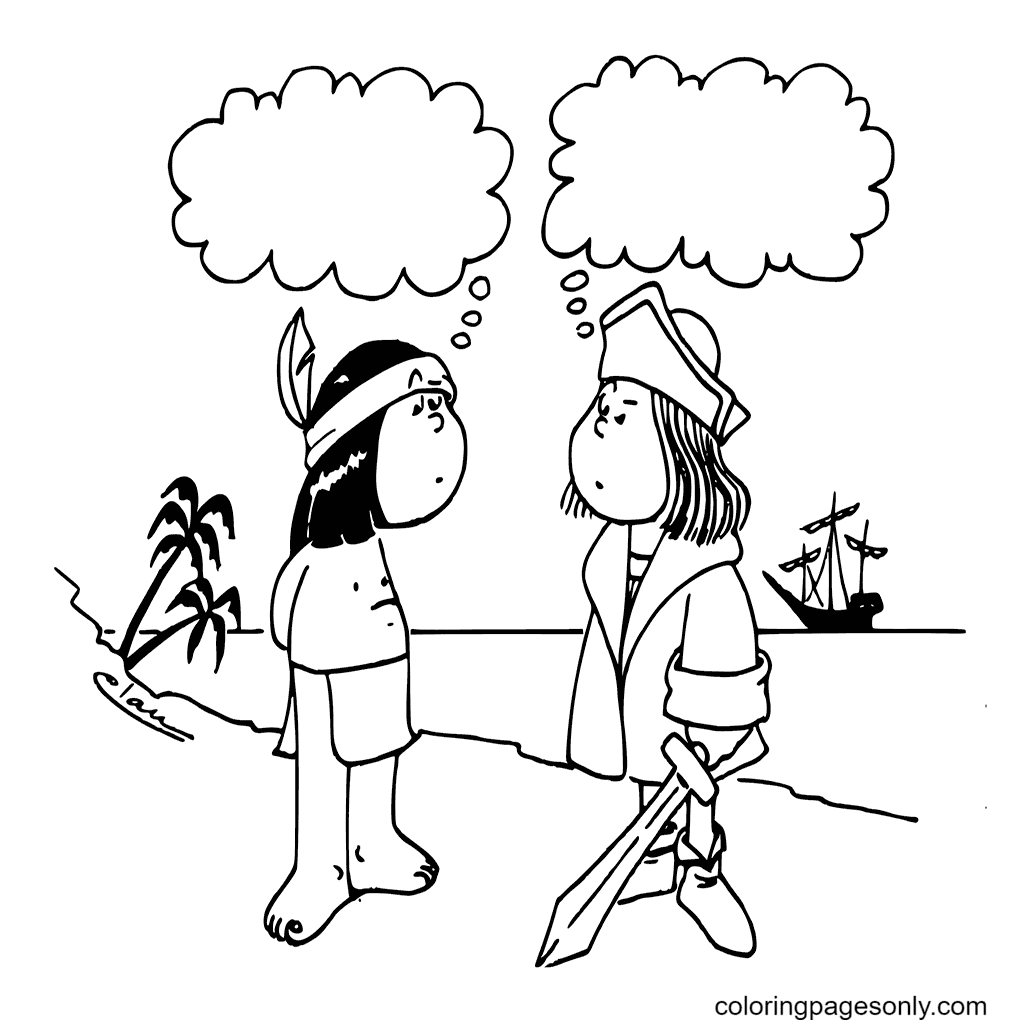
These pages require more careful teaching than simple ship pages. They can be used to discuss what a scene shows, who is included, who is not shown, and why history should be explored with more than one perspective.
For younger children, the page can be treated as a historical scene with people, land, ocean, and ships. For older students, it can support a respectful conversation about European exploration, contact, colonization, and Indigenous peoples.
Coloring landing and historical scene pages: Use natural colors for land, green for plants, blue for ocean, brown for ships, and muted historical colors for clothing. Keep the scene clear and avoid overcrowding the page with too many extra details.
Columbus Regatta and Sailing Activity Coloring Pages
Columbus Regatta and sailing activity pages bring movement and energy to the collection. These pages may show multiple ships, sailing scenes, ocean action, or festival-style ship imagery.
This group is useful for children who enjoy transportation, boats, and action scenes. A regatta page can become a bright ocean race, a ship parade, or a classroom poster about sailing.
These pages also give children more background space to decorate. They can add waves, wind, clouds, seagulls, flags, and route lines.
Coloring regatta and sailing pages: Use different sail colors for each ship. Add curved wind lines, white wave highlights, blue shadows, and bright sky details to make the scene feel active.
Columbus Day Preschool and Classroom Coloring Pages
Columbus Day preschool and classroom pages are designed for easy use in school or home learning. These pages may include simple text, large images, basic symbols, and clean layouts.
They are useful for teachers who need an activity that connects to a calendar theme without overwhelming young children. Children can color while hearing a short, age-appropriate explanation about ships, maps, and history.
These pages can also support tracing, labeling, and simple writing. Students can write “ship,” “ocean,” “map,” “sail,” or “1492” under the picture.
Coloring preschool classroom pages: Use bright, simple colors. Keep the ship easy to see, the water blue, and the text bold. Add one or two extra details, such as a sun, a cloud, or a flag.
Printable PDF and Online Columbus Day Coloring Pages
Printable Columbus Day pages are useful for classrooms, homeschool lessons, family activities, and holiday folders. The PDF format is best for printing because it keeps the page layout clean and clear.
Online coloring is also available for users who do not want to print. This is helpful for quick digital activities or for trying colors before printing a final version.
This collection works for many levels. Younger children can use simple ship and greeting pages. Older students can use voyage scenes, named ships, portraits, and landing scenes for deeper history discussion.
Using printable and online Columbus Day pages: Print the PDF for classroom work, crafts, posters, and notebooks. Use online coloring for quick digital play, color testing, or screen-based activities.
What These Pages Do
Columbus Day coloring pages help users quickly find printable PDF and online coloring sheets based on Christopher Columbus, Columbus Day ships, Santa Maria, Niña, Pinta, Happy Columbus Day messages, Columbus Day 1492 designs, October 12 pages, voyage scenes, ship activities, preschool pages, landing scenes, and classroom-friendly history images. Parents can choose simple pages for holiday coloring. Teachers can choose ship, map, date, and voyage pages for structured lessons. Older students can use portrait and landing scenes for discussion-based activities.
The strongest value of this collection is history-through-ships coloring. Columbus Day pages are most useful when they help children notice the visual parts of a historical voyage: wooden ships, tall sails, ocean routes, maps, dates, flags, and travel across the Atlantic. The coloring page becomes a simple way to introduce historical vocabulary without making the lesson too heavy for young learners.
These pages also support date-and-voyage classroom learning. Designs with “1492,” “October 12,” Santa Maria, Niña, Pinta, and Columbus Day text can become notebook pages, mini books, timeline cards, or bulletin board pieces. Students can color the page and add one sentence about the ship, the date, or the voyage.
These pages work best when coloring is paired with simple context: ships and maps for younger children, dates and vocabulary for elementary students, and perspective-based questions for older learners. This makes the activity more useful than a holiday worksheet alone.
Columbus Day pages are also useful for balanced history conversation. In some communities, the same date is also observed as Indigenous Peoples’ Day, so teachers may choose to pair Columbus Day coloring with broader discussions about perspective, memory, and history. Younger children can focus on ships, maps, and the idea of a voyage. Older children can be guided to ask deeper questions: Who is shown in the picture? What happened after contact? How do different communities remember this day?
For children, Columbus Day pages can work like a “ship, map, and history story” creative prompt. The American Academy of Pediatrics emphasizes that play supports children’s social-emotional, cognitive, language, and self-regulation development. In this collection, that idea connects naturally to classroom play: a child can color a ship, name the sails, trace a route, describe the ocean, identify a date, and tell a short voyage story. While coloring, children can practice vocabulary, sequencing, observation, patience, and focused attention.
These pages can also offer a calm, structured creative break during a history unit or holiday lesson. Research published in Art Therapy has discussed how coloring organized designs with clear boundaries and repeated forms may help reduce short-term anxiety more than fully open-ended drawing. Columbus Day coloring pages should not be presented as therapy, but their ship lines, sails, waves, ropes, flags, map borders, numbers, and lettering give children a clear path to follow with color. That structure can support a quieter, focused, screen-free moment at home, in class, or during an October lesson.
Coloring also supports fine motor practice. Children work on sails, masts, ropes, ship hulls, flags, maps, waves, portraits, clothing, letters, numbers, route lines, and small background details. These areas help build hand control, pencil pressure, patience, and attention to small shapes.
When choosing a page, match the design to the child’s age and the lesson goal. For preschoolers and younger children, start with simple ship pages, Happy Columbus Day pages, and large printable designs. For early elementary children, choose Santa Maria, Niña, Pinta, October 12, and 1492 pages. For older students, choose Columbus portraits, landing scenes, arrival images, voyage scenes, and detailed ship pages that can support discussion.
Columbus Day coloring pages are especially useful because they combine holiday coloring, ship art, map imagination, date recognition, historical vocabulary, classroom discussion, and printable PDF convenience. That makes the collection practical for home coloring, school lessons, homeschool units, October folders, history notebooks, bulletin boards, craft projects, and screen-free creative time.
How to Color Columbus Day Coloring Pages
Start with the ships. Use brown, tan, dark brown, and gray for the wooden parts of the ship. Add darker shading under the hull to show depth.
Keep the sails light. Use white, cream, pale yellow, or light gray for sails. Add soft shadows along the folds so the sails look full of wind.
Use ocean colors for the water. Try light blue, deep blue, teal, turquoise, and white. Add small white lines on waves to show movement.
Make the sky clear and open. Use light blue for daytime skies, orange and pink for sunset, or gray-blue for stormy ocean scenes.
Color 1492 and October 12 text boldly. Use red, blue, gold, or dark brown for large letters and numbers. Add simple borders around dates to make them stand out.
Use map-inspired colors. For maps, scrolls, and route lines, try tan, beige, cream, brown, and muted gold. Add dotted lines or compass arrows if the page has space.
Color the ship flags carefully. Use red, blue, yellow, or white for small flags. Keep flag edges neat so they remain visible.
Add classroom labels. Children can write “ship,” “sail,” “ocean,” “map,” “voyage,” “1492,” or “Santa Maria” near the picture.
Use colored pencils for detailed pages. Colored pencils are best for ropes, sails, clothing, maps, ship rails, waves, and small historic details.
Use crayons or markers for simple pages. Younger children can use crayons or washable markers for large ships, big letters, and preschool designs.
5 Creative Craft Ideas with Columbus Day Coloring Pages
Three Ships Mini Book
Print pages showing the Santa Maria, Niña, and Pinta. Color each ship with a different sail border or flag color.
Staple the pages together to make a mini book. On each page, children can write the ship name and one sentence, such as “This ship crossed the ocean” or “This ship sailed in 1492.”
1492 Voyage Map Poster
Choose a Columbus Day 1492 page or a ship page with open background space. Color the ship and ocean.
Glue the page onto the poster board and draw a simple route line across a map-style background. Add labels such as “Spain,” “Atlantic Ocean,” “1492,” and “Voyage.” This works well for classroom displays or history notebooks.
Columbus Day Ship Wheel Craft
Print a simple Columbus Day ship page. Color and cut out the ship.
Glue the ship onto a paper plate and draw a ship wheel around it. Add waves, wind lines, and the words “Sail Through History.” This creates a hands-on holiday craft for younger children.
Explorer Vocabulary Card Set
Print several simple Columbus Day pages, such as a ship, a map, a portrait, or a 1492 design. Color and cut them into card shapes.
Write one vocabulary word on each card: ship, sail, ocean, map, voyage, explorer, compass, crew, arrival, and history. Use the cards for matching, review, or a classroom word wall.
Balanced History Discussion Page
Choose a landing scene, arrival page, or Christopher Columbus portrait page. Color the image carefully.
Under the picture, add two short writing boxes: “What I see in the picture” and “What questions I have.” This craft helps older students look at historical images thoughtfully instead of only coloring them as decoration.
FAQ About Columbus Day Coloring Pages
Are these Columbus Day coloring pages free to print?
Yes. These Columbus Day coloring pages are free to download and print as PDF pages. You can choose one page for a quick holiday activity or print several designs for classroom lessons, history notebooks, October crafts, or screen-free creative time.
Can I color Columbus Day pages online?
Yes. Online coloring is available if you do not want to print. This is useful for quick digital coloring, color testing, or screen-based classroom activities.
What format should I use for printing?
Use the PDF version for printing. PDF keeps the layout clean and stable on paper, making it the best option for classroom handouts, crafts, posters, and notebooks.
What kinds of Columbus Day designs are included?
The collection includes Happy Columbus Day pages, Christopher Columbus pages, Columbus Day ships, Santa Maria, Niña, Pinta, Columbus Day 1492 designs, October 12 pages, ship scenes, voyage images, preschool pages, landing scenes, and printable Columbus Day designs.
Are Columbus Day coloring pages good for preschoolers?
Yes. Simple ship pages, Happy Columbus Day pages, large printable designs, and Columbus Day Preschool pages are good choices for preschoolers because the shapes are clear and easy to color. More detailed portraits, landing scenes, and historical image pages are better for older students.
How can teachers use Columbus Day coloring pages in class?
Teachers can use these pages for history introductions, holiday activities, ship vocabulary, map lessons, timeline work, writing prompts, bulletin boards, fine motor practice, and discussion-based classroom activities.
Can Columbus Day pages support a balanced history lesson?
Yes. For younger children, the pages can introduce ships, maps, dates, and voyage vocabulary. For older students, teachers can pair coloring with questions about perspective, contact, colonization, Indigenous peoples, and how different communities remember the day.
Should Columbus Day coloring pages be paired with Indigenous Peoples’ Day discussion?
They can be. In some communities, the same date is observed as Indigenous Peoples’ Day. Teachers and parents may choose to pair Columbus Day pages with age-appropriate context about Indigenous peoples, historical perspectives, and how holidays can be remembered differently.
What colors should I use for Columbus Day ship pages?
Use brown for wooden ships, cream or white for sails, blue for the ocean, light blue for the sky, and red, gold, or navy for flags and title letters. Add gray shadows for ropes and ship details.
Can finished Columbus Day pages be used for crafts?
Yes. Finished pages can become ship mini books, 1492 voyage posters, ship wheel crafts, vocabulary cards, classroom displays, notebook covers, timeline pages, or writing prompt sheets.
What is the best way to make a Columbus Day page more educational?
Add labels, dates, route lines, a short sentence, or a question box. Children can write the ship name, color a map route, label “1492,” or describe what they see in the picture.
Browse the full collection at ColoringPagesOnly.com. All 50+ pages are free, available as printable PDF pages, ready to print from PDF or color online.
These Columbus Day pages are created for personal, classroom, homeschool, holiday, and history-themed coloring use. They fit many moments: October lessons, ship coloring, map activities, holiday folders, history notebooks, bulletin boards, vocabulary practice, timeline crafts, and screen-free creative fun.
For the final pass, keep the ships clear, the sails bright, and the ocean moving. Add waves, clouds, flags, route lines, map borders, dates, labels, compass arrows, or short captions to make each page feel like a small history-and-voyage activity.
Share your work on Facebook and Pinterest and tag #ColoringPagesOnly. We especially want to see your Three Ships Mini Book, 1492 Voyage Map Poster, and Explorer Vocabulary Card Set.