Nursery Rhymes Coloring Pages
 By:
Charlotte Taylor - Content Writer
Updated:
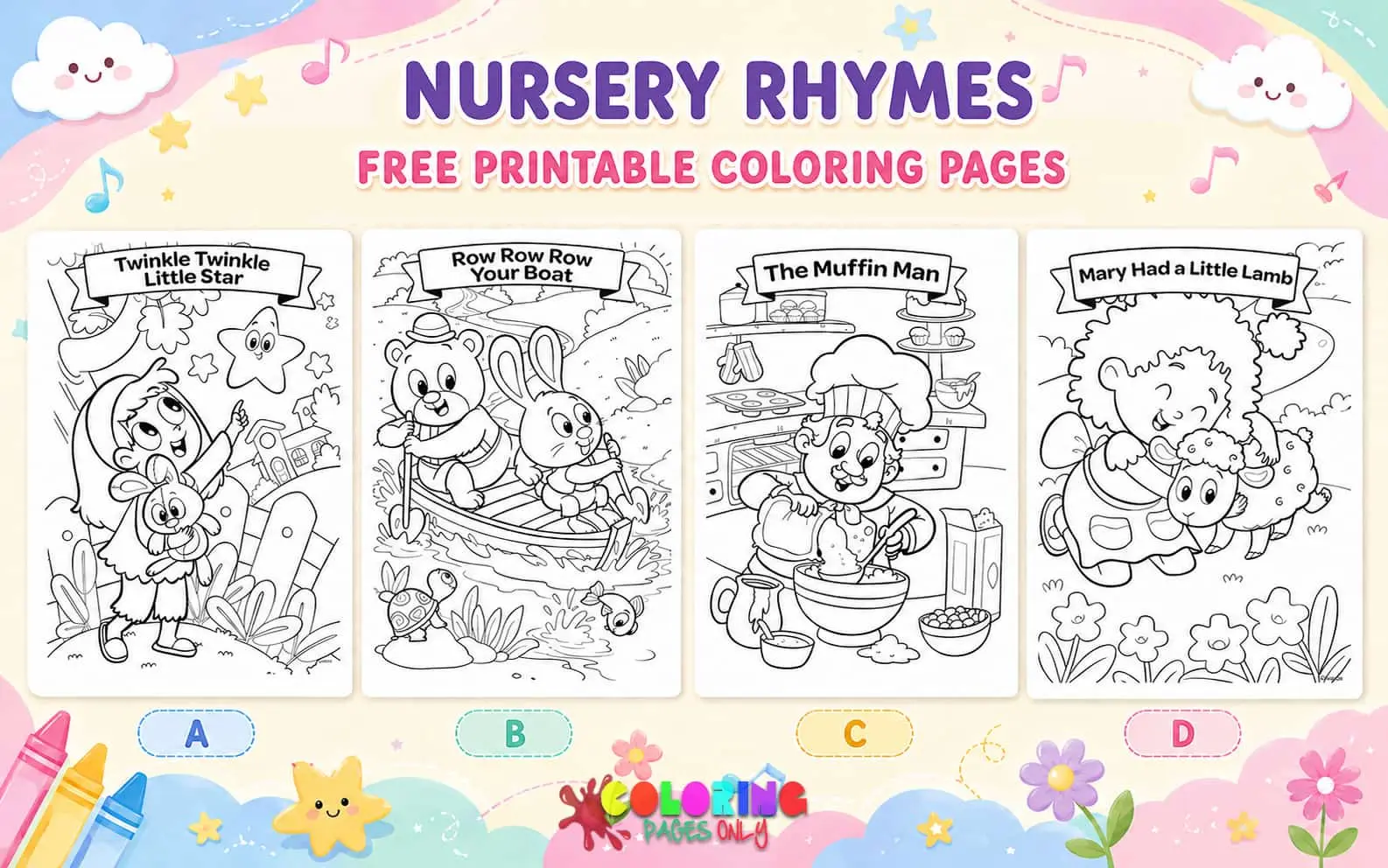
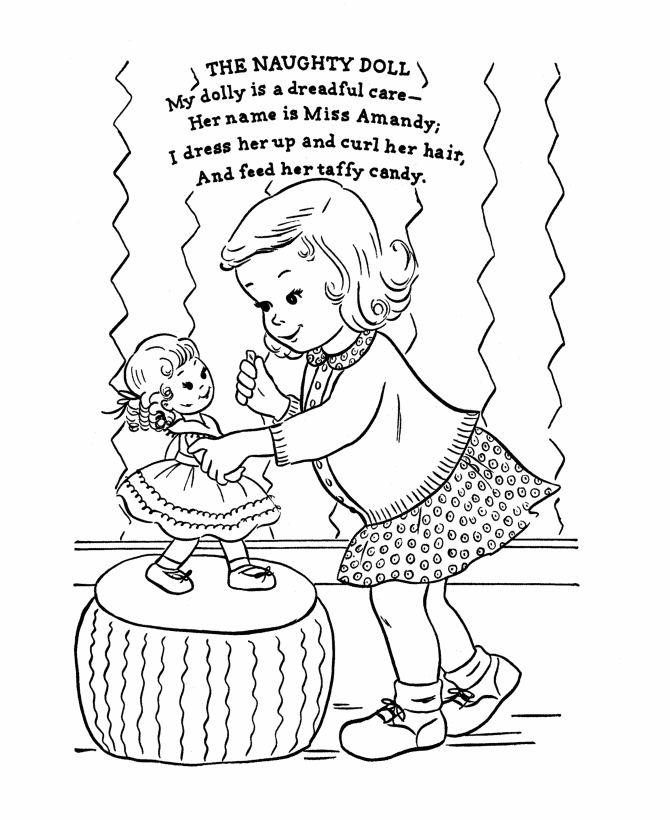
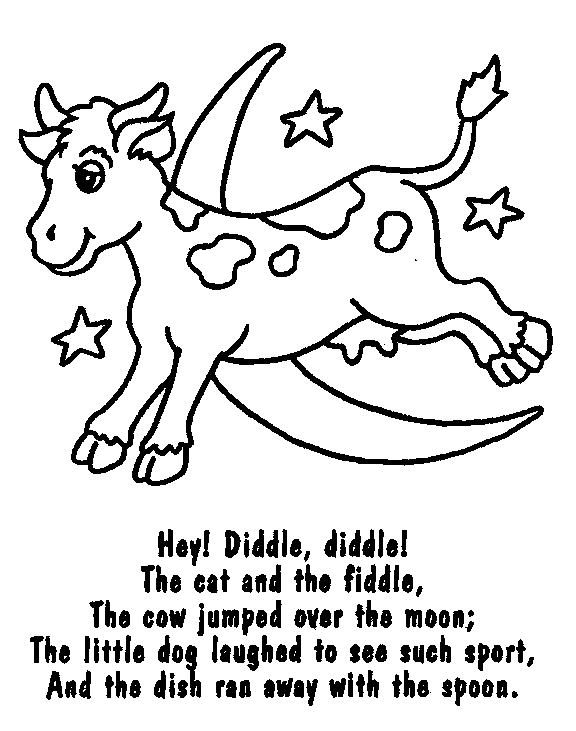
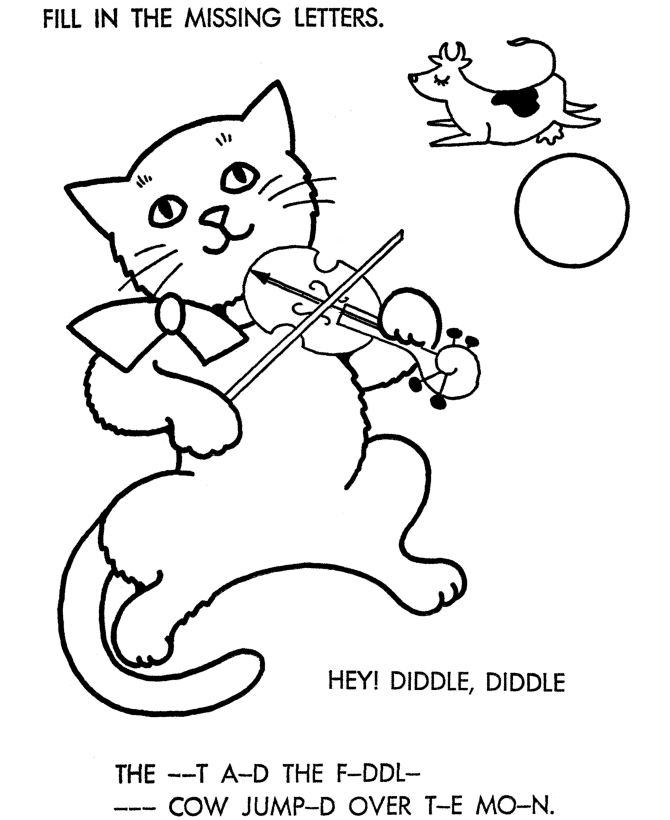
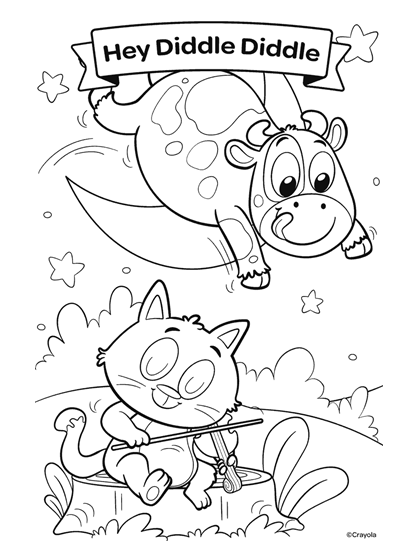
Free Nursery Rhymes Coloring Pages: 40 printable PDF designs that illustrate the classic verses children learn first, including Humpty Dumpty on his wall, Jack and Jill tumbling down the hill, the cow jumping over the moon in Hey Diddle Diddle, Little Miss Muffet and her spider, Mary and her little lamb, the mouse in Hickory Dickory Dock, and Twinkle Twinkle Little Star. Several pages also print the words of the rhyme beside the picture. Printing runs through a PDF on each design, while the online version suits laptops and touchscreens.
Most of these verses were passed down by word of mouth for generations before anyone wrote them down. One of the earliest surviving printed collections, Tommy Thumb’s Pretty Song Book, appeared in London in 1744, and many rhymes later gathered under the name of the imaginary storyteller Mother Goose.
Some favorites have known authors. Twinkle Twinkle Little Star began as “The Star,” a poem by Jane Taylor published in 1806, and Mary Had a Little Lamb was written by Sarah Josepha Hale and published in Boston in 1830. Their short lines, strong rhythms, and silly images make them perfect companions for coloring.

What’s Inside This Collection
Humpty Dumpty and Hey Diddle Diddle have the most pages among the 40 designs, with about two dozen other rhymes covered by one or two pages each.
Humpty Dumpty and Story Moments
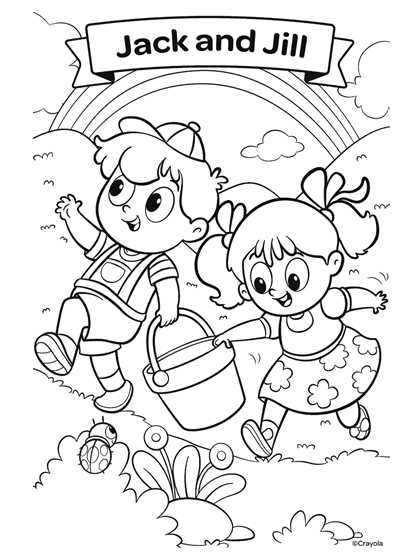
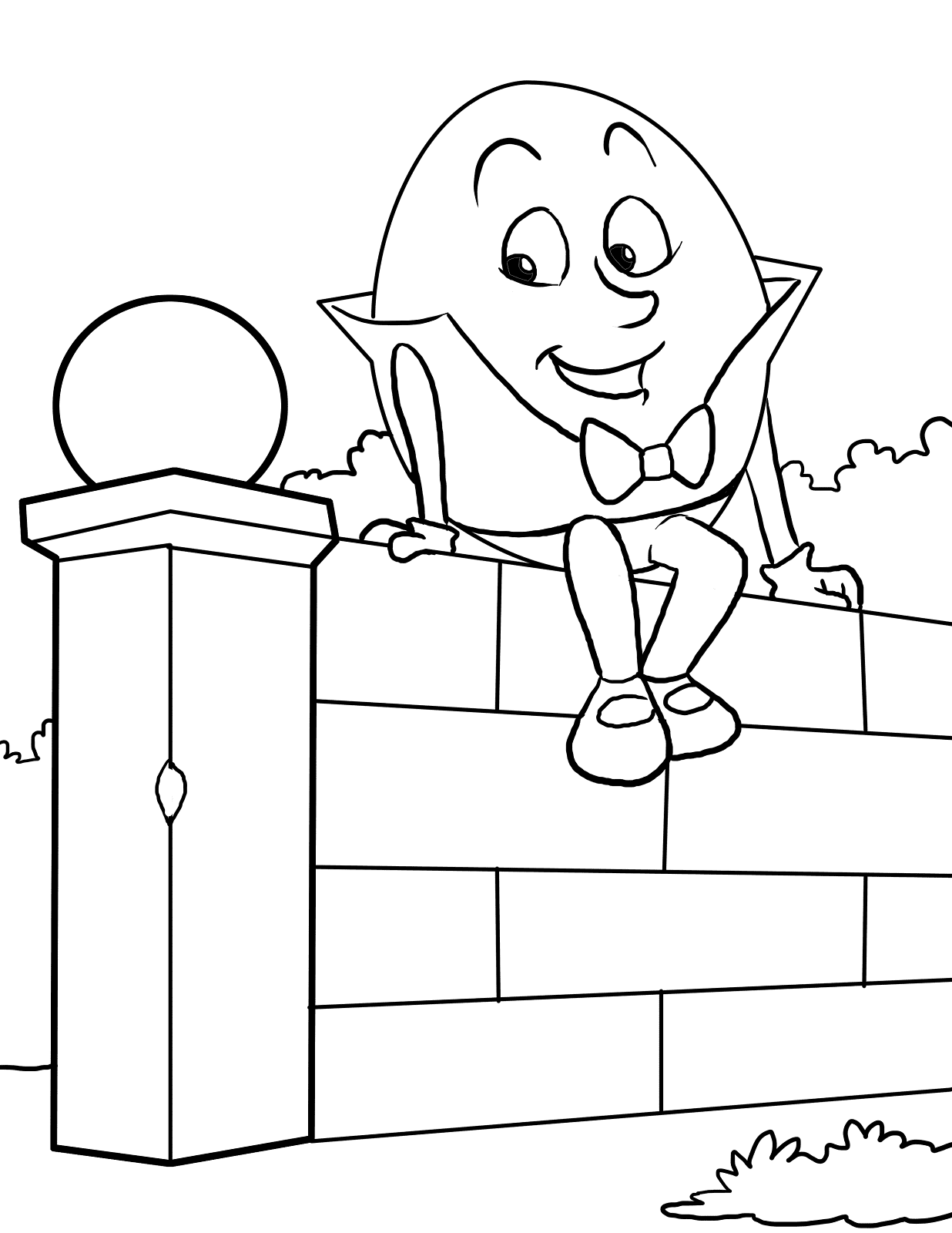
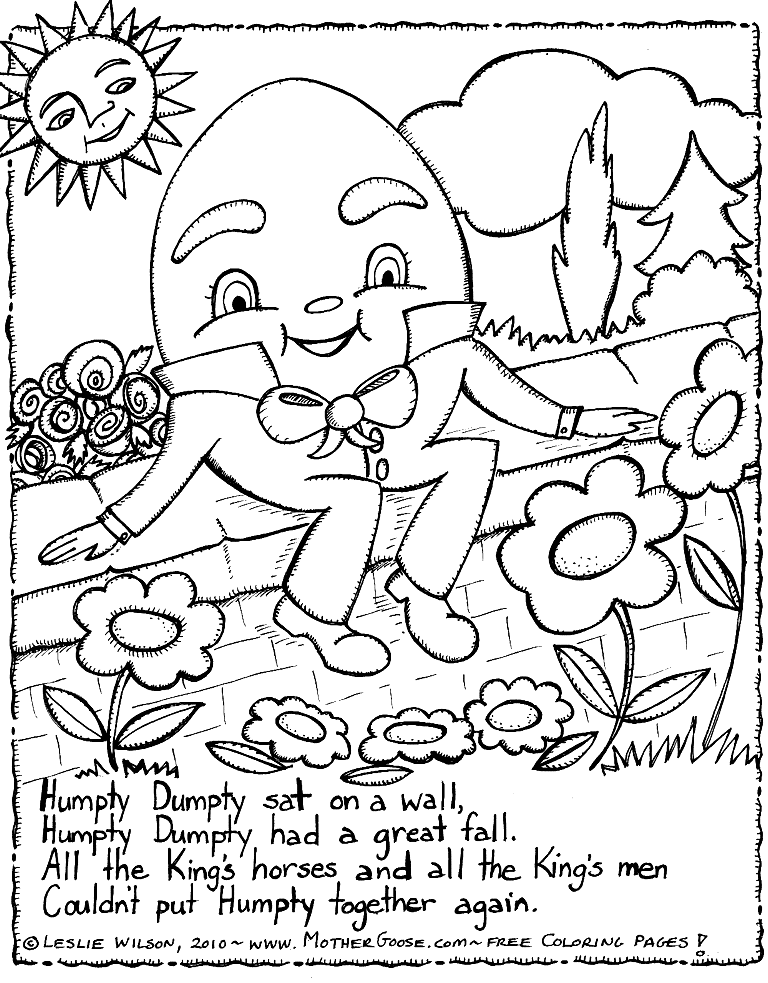
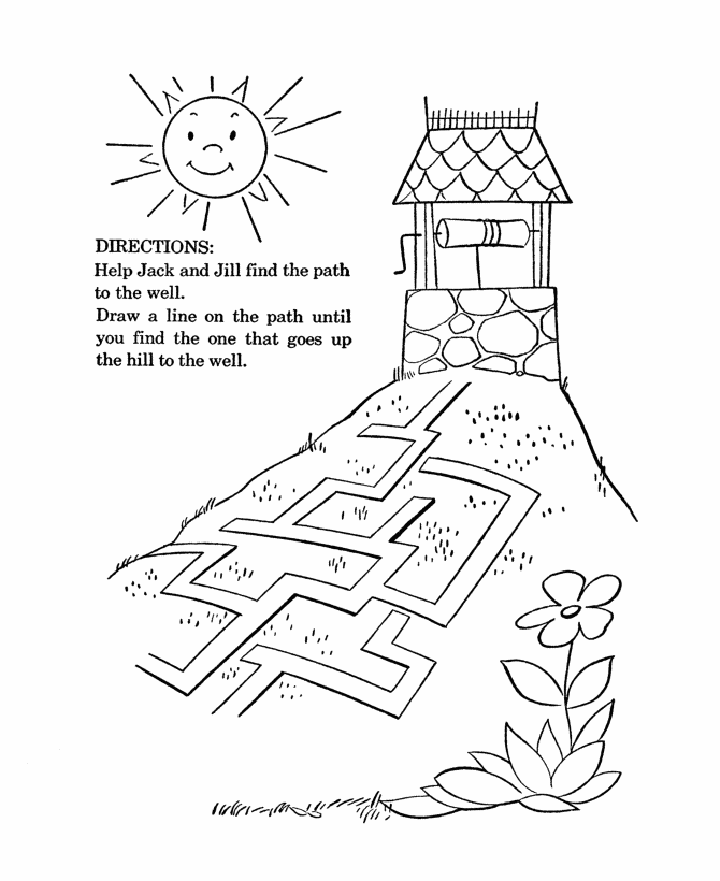
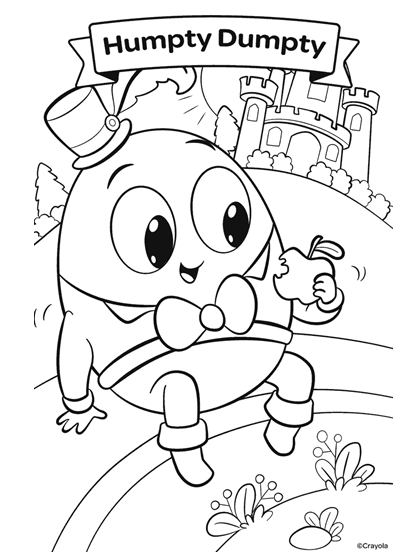
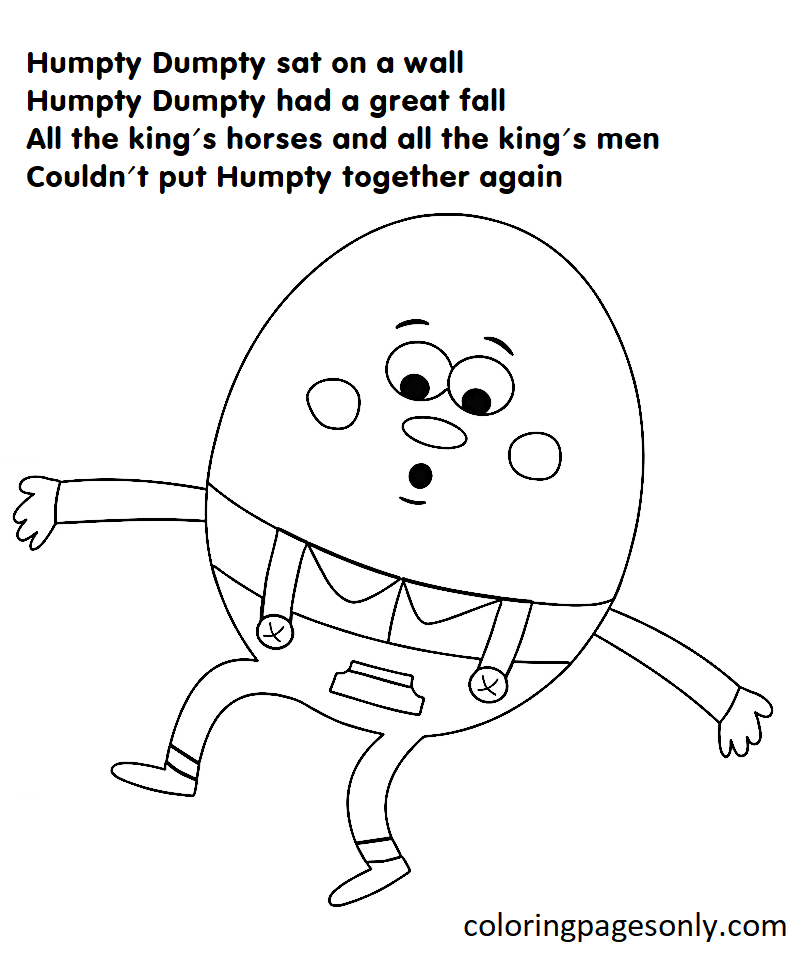
Four Humpty Dumpty pages show the famous egg on his wall, along with The Old Woman Who Lived in a Shoe and Jack and Jill with their pail. Color Humpty’s shell a pale Cream with a bright Blue bow tie, his wall Brick Red with Gray mortar lines, and Jack and Jill’s pail a shiny Silver.
Animal Rhymes
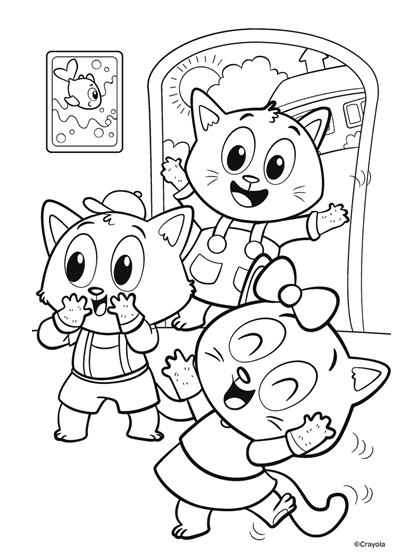
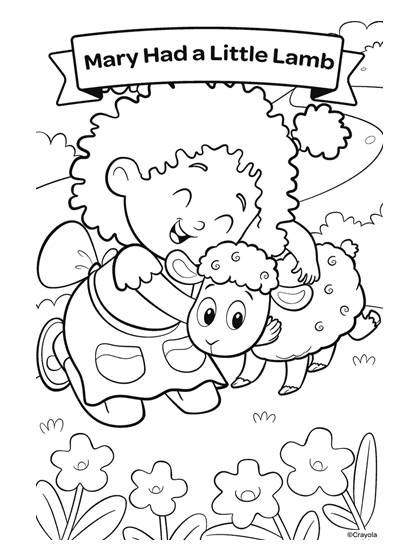
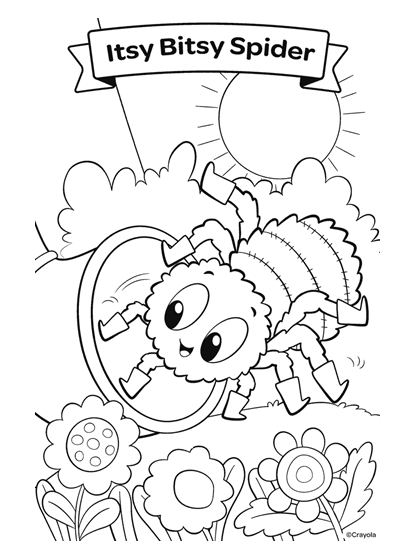
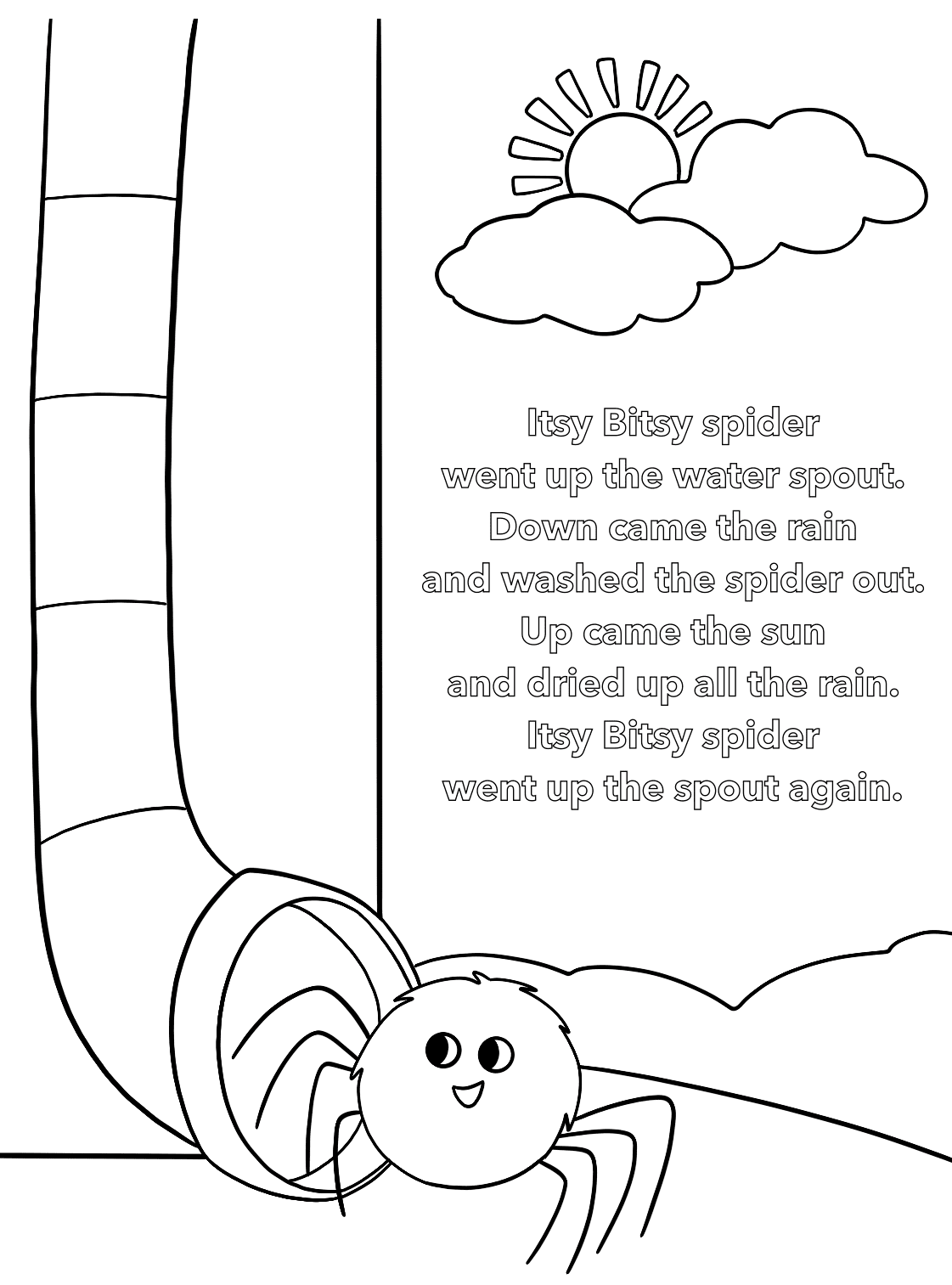
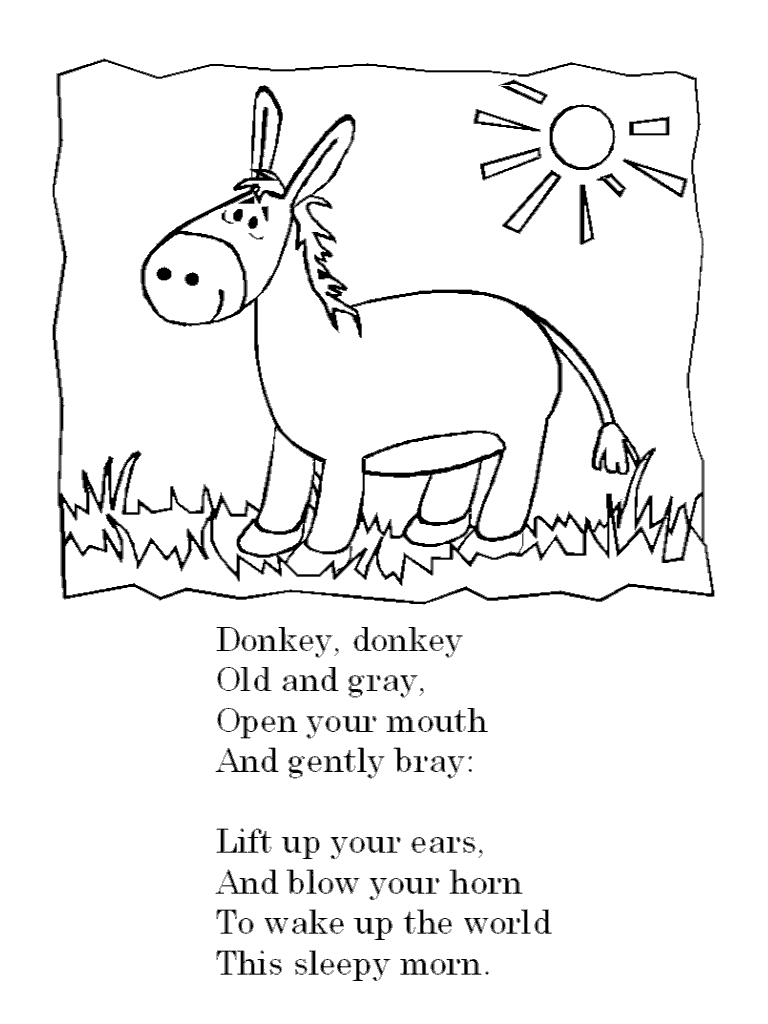
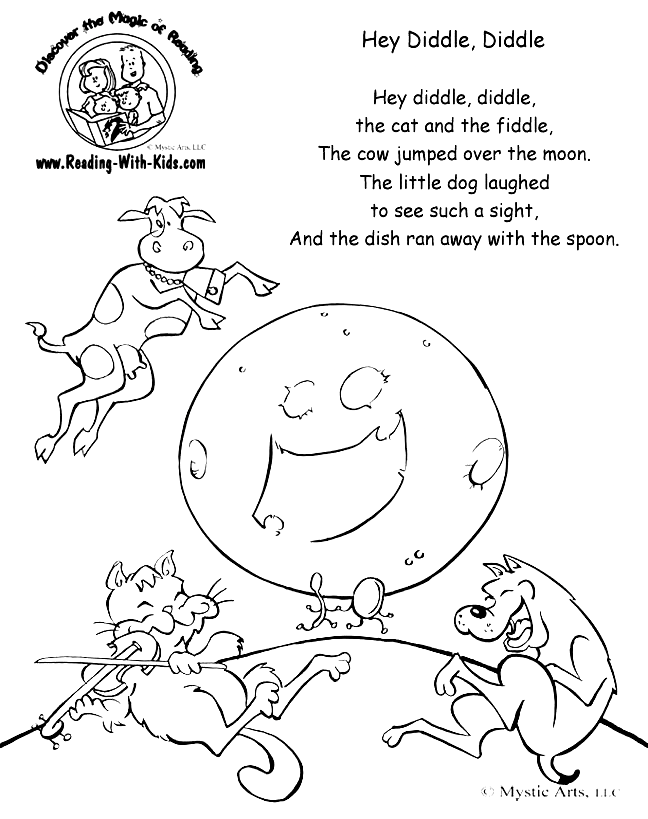
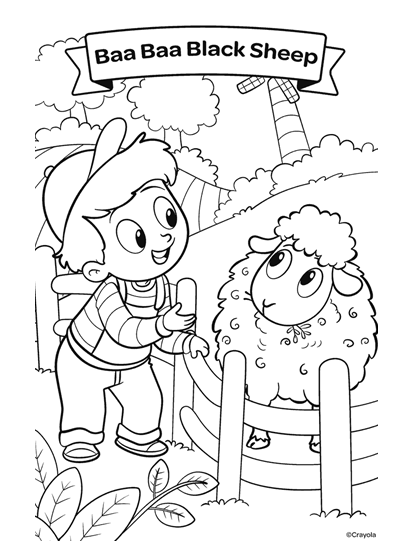
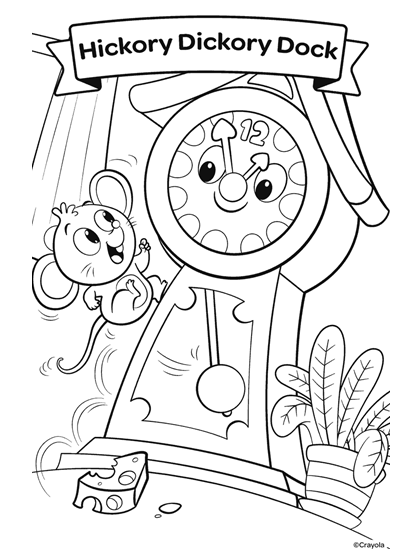
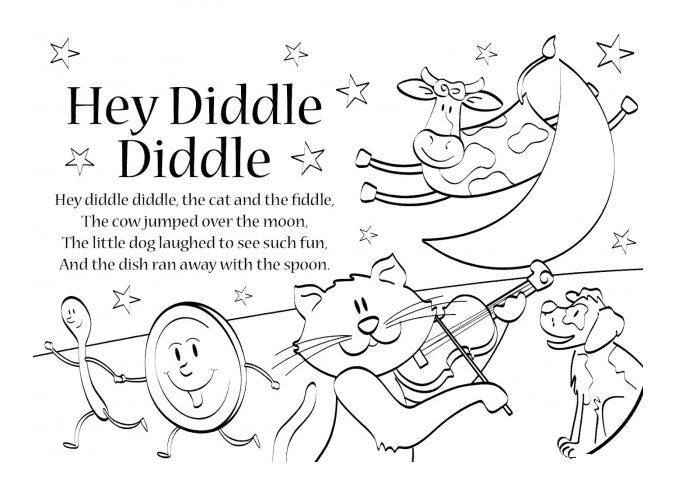
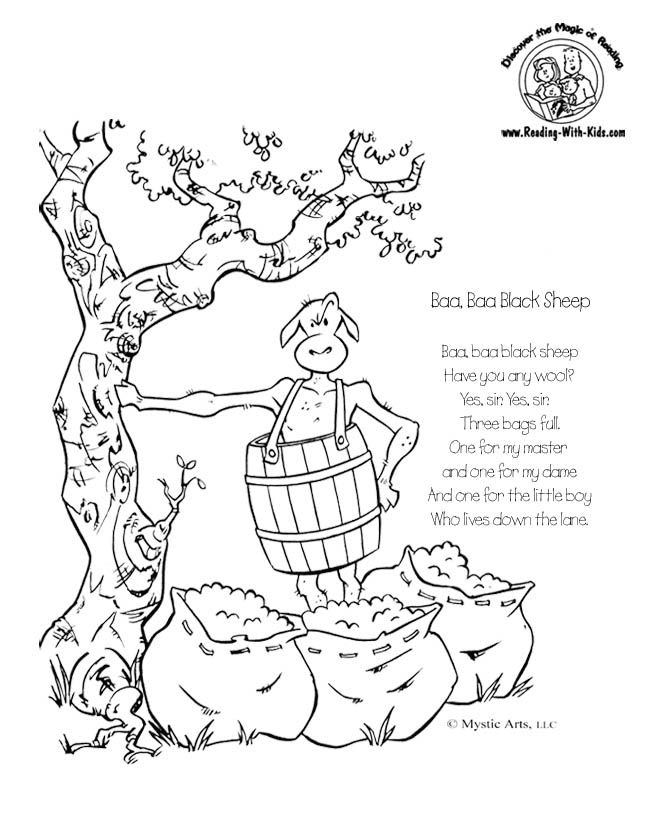
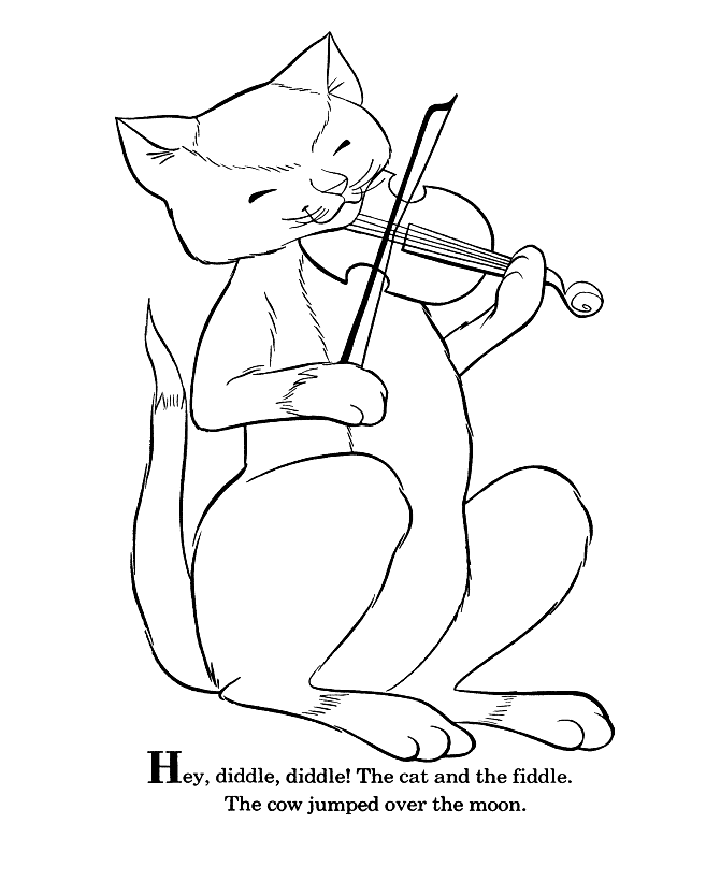
Hey Diddle Diddle with the cat and the fiddle, Mary Had a Little Lamb, Baa Baa Black Sheep, Three Little Kittens, Itsy Bitsy Spider, Hickory Dickory Dock, and Donkey, Donkey, Old and Gray feature friendly animals. Keep the lamb’s fleece white with soft Gray shading, color the black sheep a deep Charcoal, and give the cow a White coat with Black patches as she leaps over a Yellow moon.
Character Rhymes
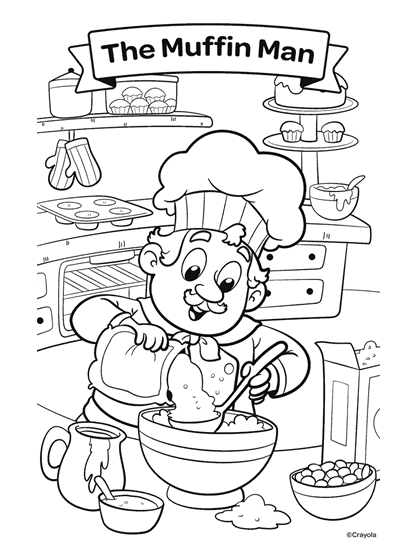
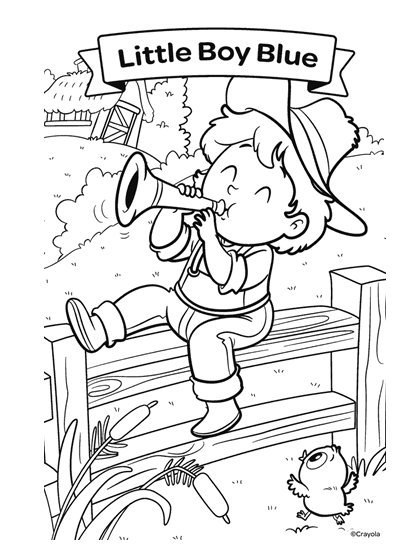
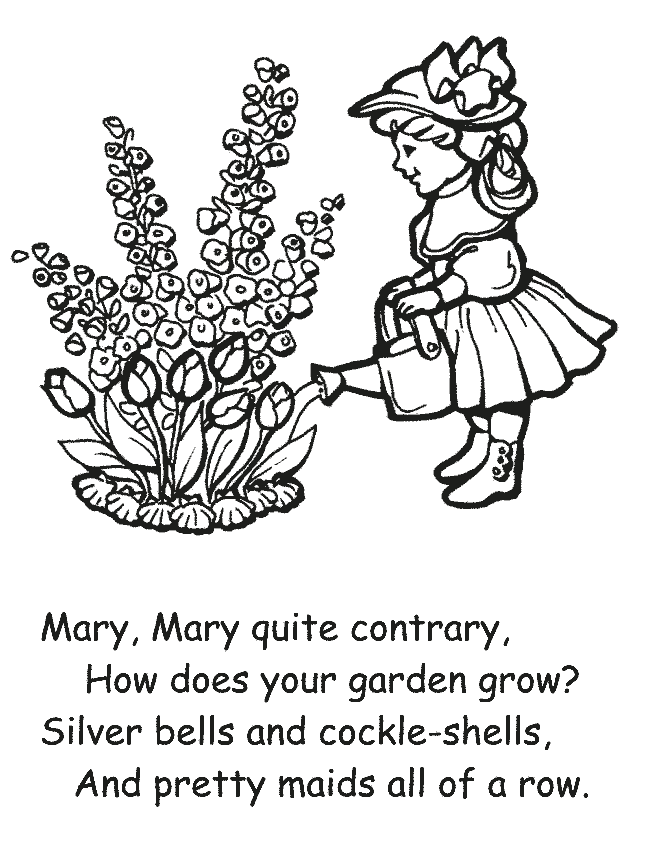
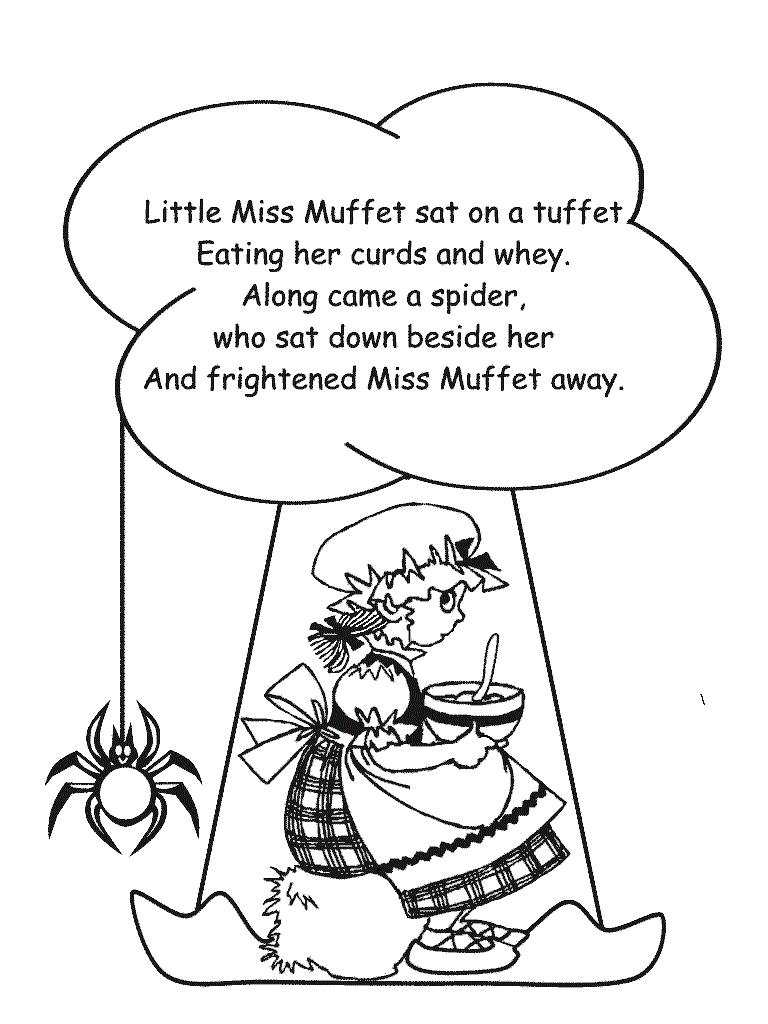
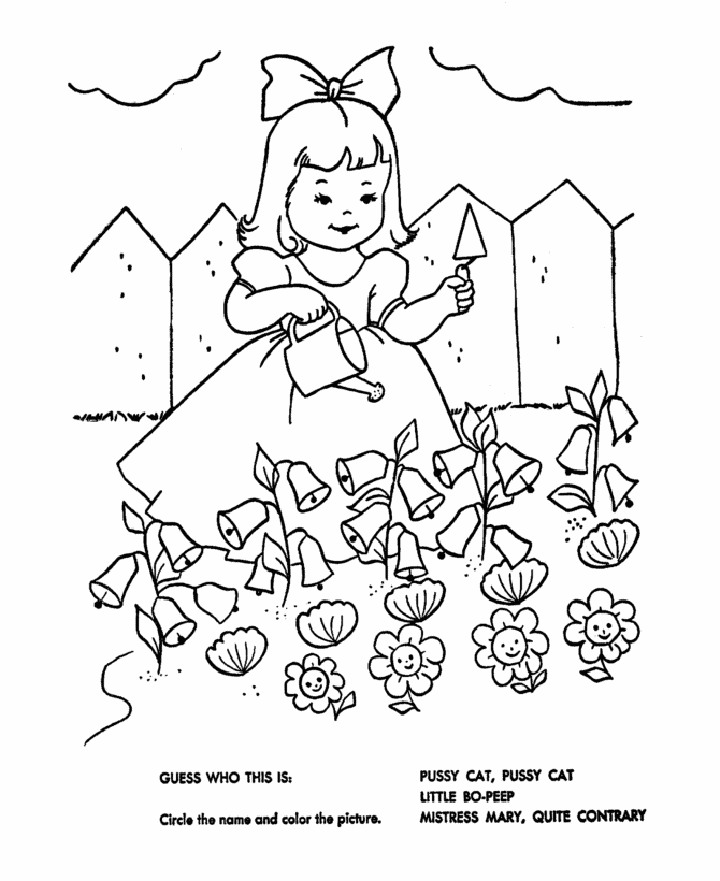
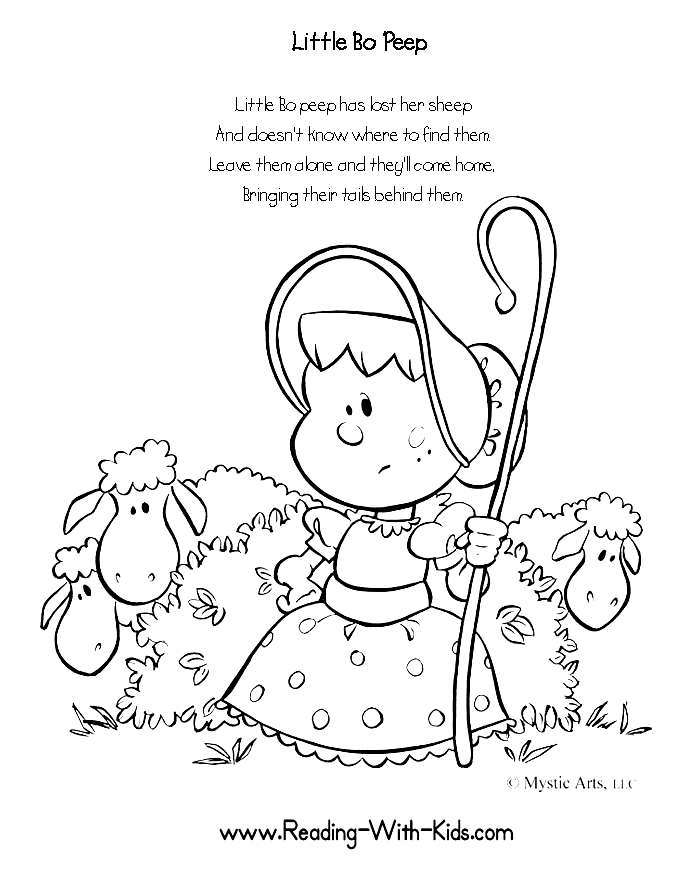
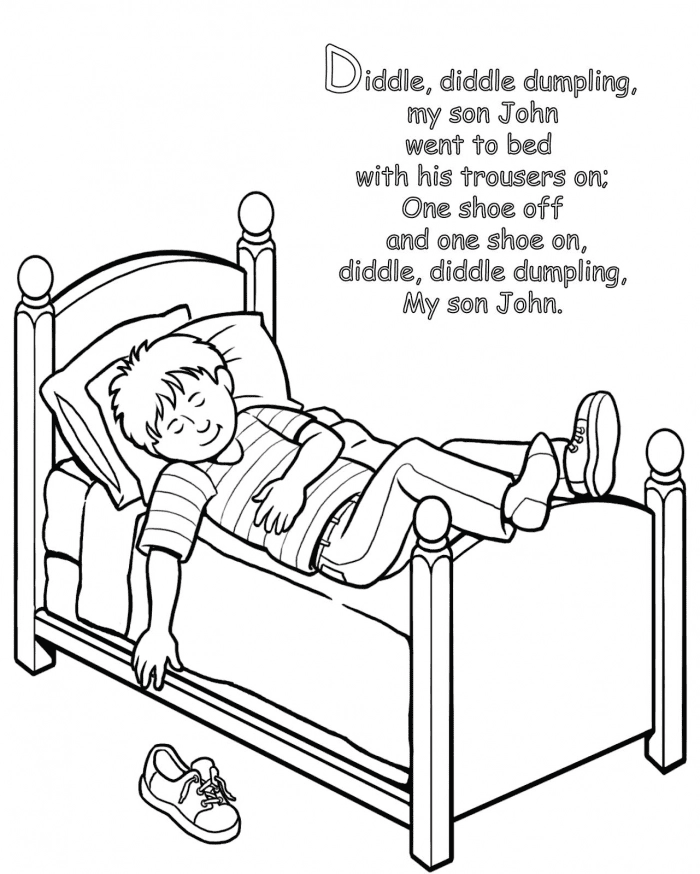
Little Boy Blue, Mary, Mary, Quite Contrary, Little Miss Muffet, Little Bo Peep, Diddle Diddle Dumpling, and The Muffin Man bring storybook figures to life. Little Boy Blue looks right in a Cornflower outfit with a Gold horn, and Mary’s garden can bloom in Pink, Purple, and Yellow flowers.
Bedtime and Music Rhymes
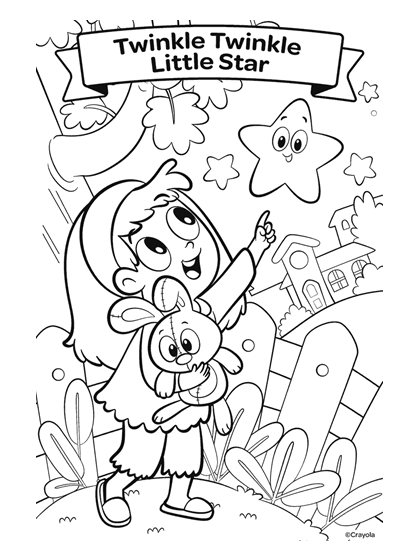
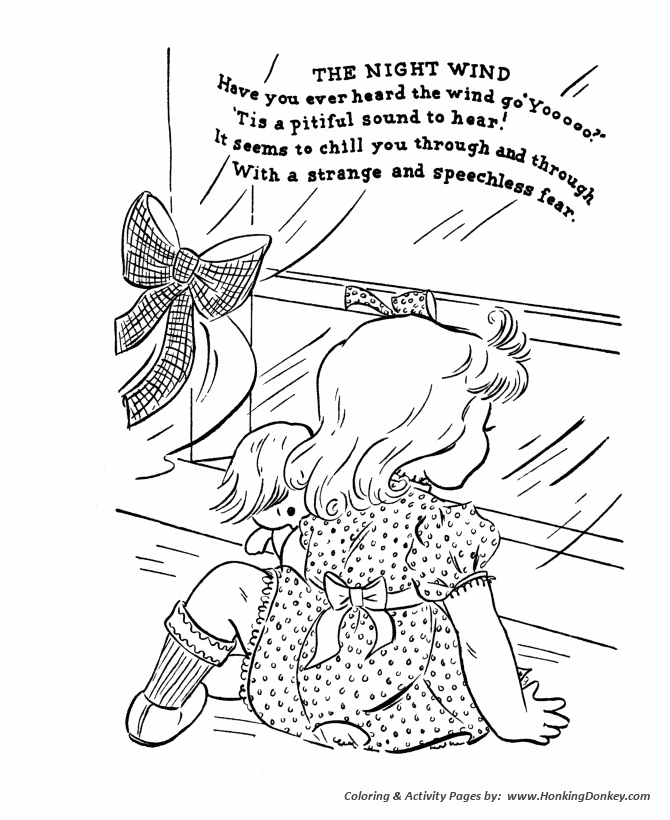
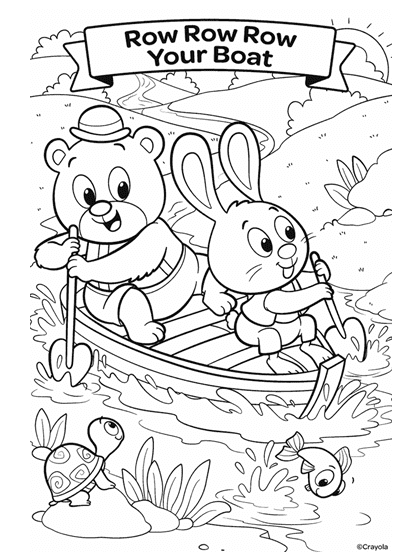
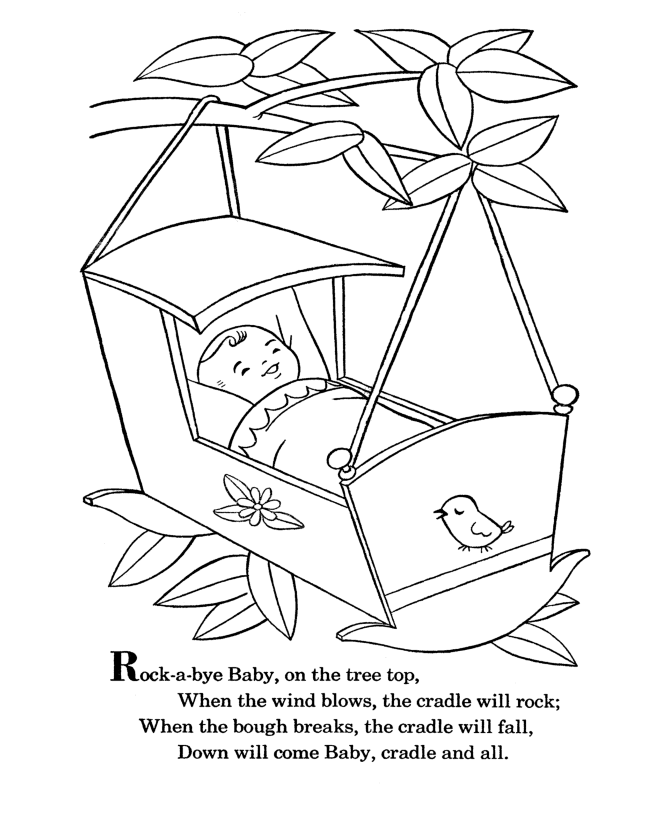
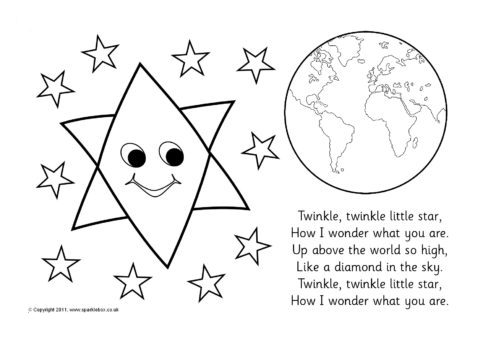
Twinkle Twinkle Little Star, Rock a Bye Baby, The Night Wind, and Row Row Row Your Boat suit calm, quiet coloring. Use Midnight Blue skies with bright Yellow stars, and color the rowboat Brown on a gently rippling Blue river.
Rhymes with Words and Learning Pages
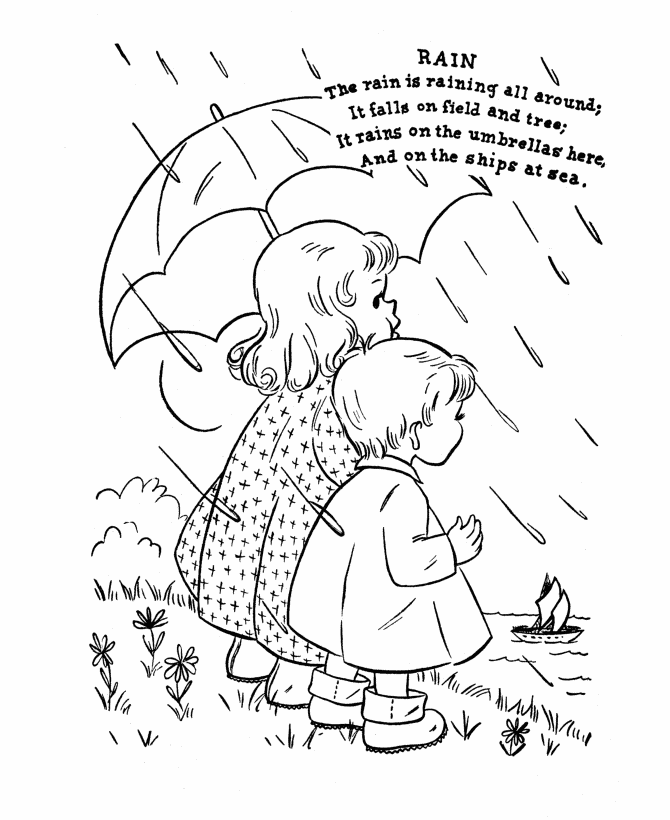
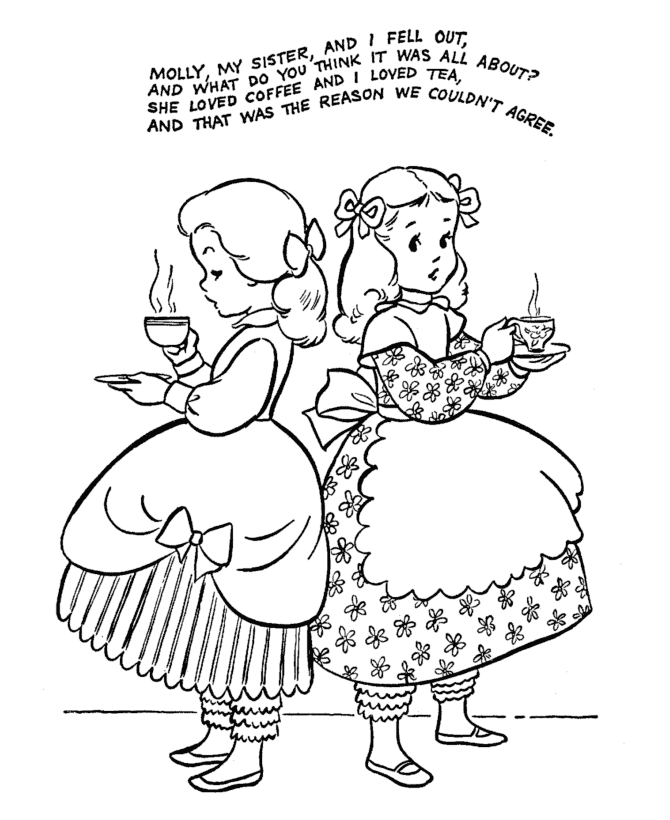
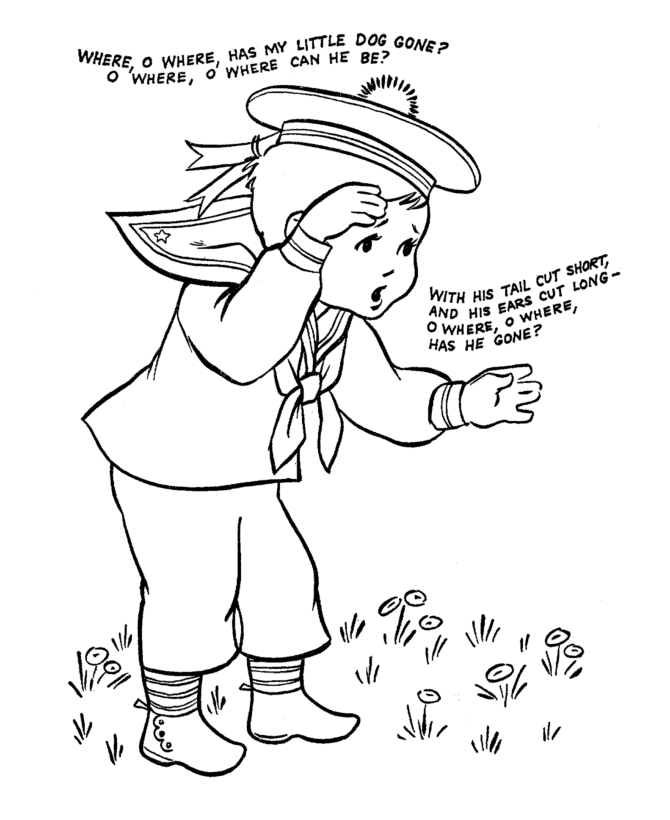
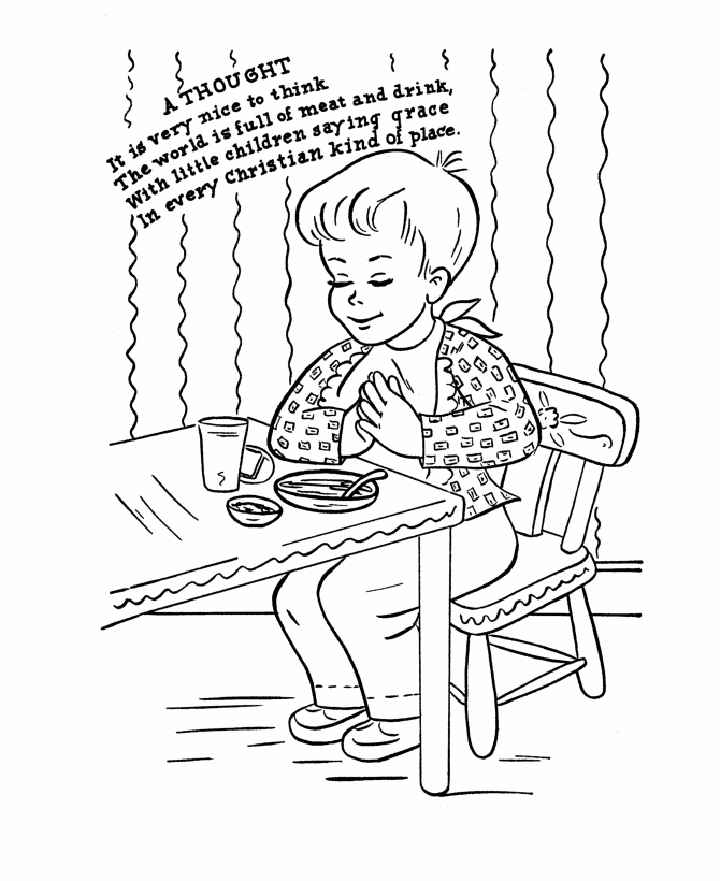
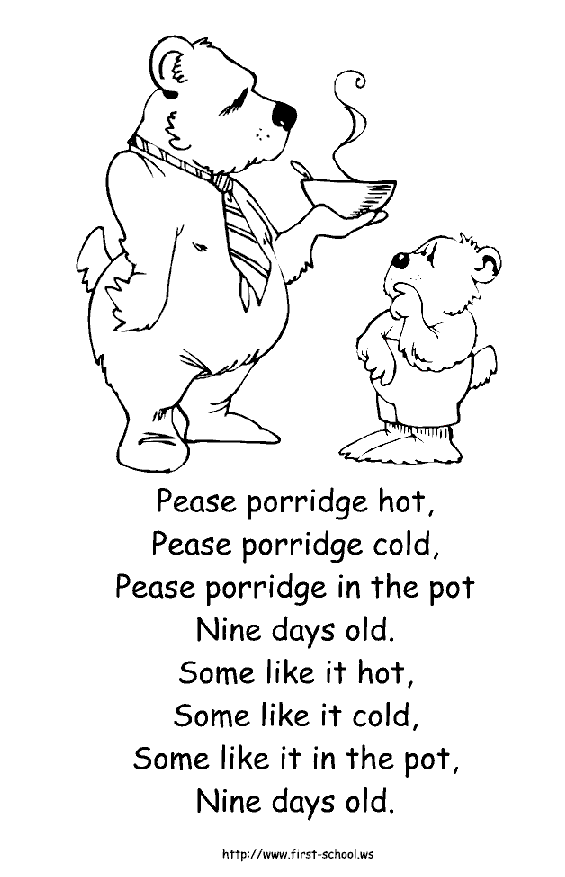
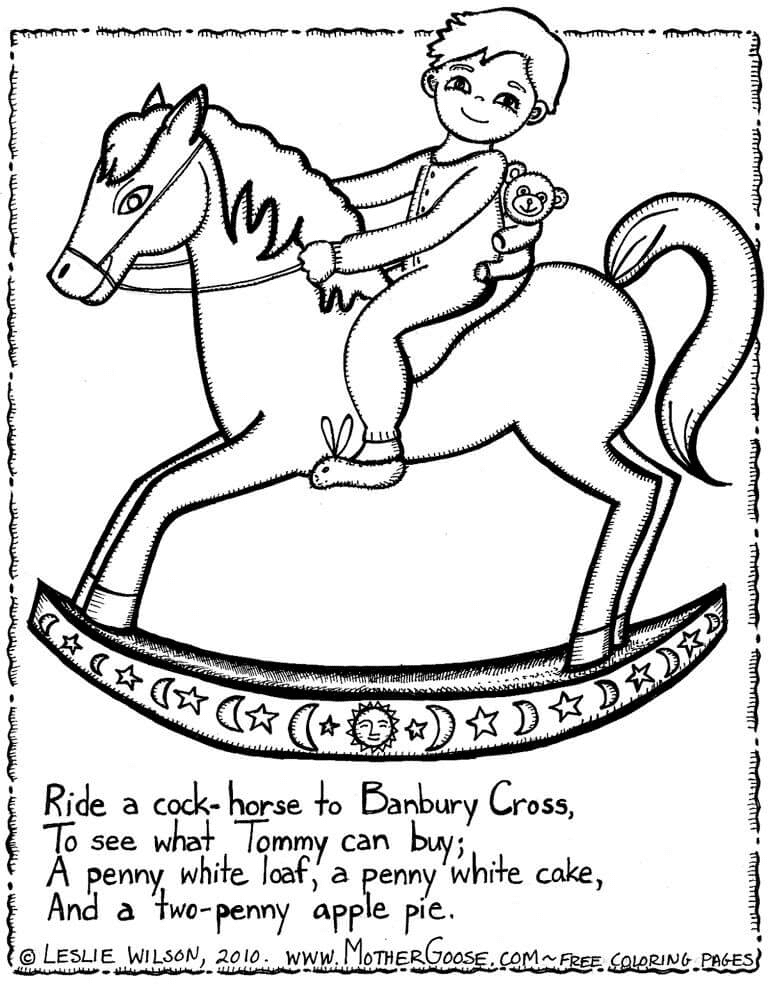
Nursery Rhyme with Words, Pease Porridge Hot, Rain, Directions, A Thought, and several general printable pages combine pictures and text. Children can trace or read the printed lines first, then color the scene around them.
What Nursery Rhymes Coloring Pages Do
Building early reading skills. Rhyming words, repeated sounds, and steady beats help young children hear the separate sounds in language, an ability called phonological awareness that supports learning to read. Coloring a rhyme while saying it aloud links the words to a picture and makes the verse easier to remember. Pages with the words printed on them add early word recognition to the activity.
Strengthening little hands. Between ages 2 and 7, coloring develops the hand muscles and control children need before writing. At the same time, the American Academy of Pediatrics also advises families to share songs and rhymes with young children every day. Humpty Dumpty’s round shell and the big moon are easy targets for toddlers, while the kittens, the spider, and the clock give older preschoolers smaller details. Coloring and reciting together combine both benefits.
Calm, comforting routines. Anxiety levels dropped in a 2005 Art Therapy Journal trial once volunteers finished a structured coloring task. Familiar bedtime rhymes like Twinkle Twinkle Little Star and Rock a Bye Baby add a soothing, predictable rhythm. A short coloring session paired with a lullaby makes a gentle bedtime routine.
Sharing stories across generations. Many grandparents learned these same rhymes as children, which makes these pages a natural shared activity. Children can ask older relatives which rhymes they remember and how they were sung. Coloring a favorite rhyme becomes a small way to pass family traditions forward.
How to Color Nursery Rhymes Pages Well
- Read first, color second: Say or sing the rhyme before starting so kids can choose colors that match the story, like a silver pail or a golden horn.
- Night skies: Color around the stars first, then shade the whole sky Midnight Blue so the stars stay bright white or Yellow.
- Fluffy fleece: Draw tiny curls with a pale Gray pencil along the outline of the lamb and sheep to suggest soft wool.
- Egg-shaped Humpty: Shade one side of Humpty with a light Tan to make him look round.
- Garden flowers: For Mary, Mary, Quite Contrary, alternate Pink, Purple, Yellow, and Red flowers to create a cheerful pattern.
- Text pages: Keep colors pale around printed words so every line of the verse stays legible.
5 Creative Craft Ideas With Nursery Rhymes Coloring Pages
1. Nursery Rhyme Book
Color 8 to 10 rhyme pages, punch holes along one edge, and tie them together with yarn to create a homemade rhyme book.
2. Humpty Dumpty Puzzle
Color a Humpty Dumpty page, glue it onto cardstock, and cut it into a few large pieces so kids can “put Humpty together again.”
3. Hey Diddle Diddle Mobile
Color the cow, cat, dish, spoon, and moon, trim each piece, and dangle them on strings from a coat hanger to retell the rhyme.
4. Twinkle Star Night Light Decoration
Color Twinkle Twinkle Little Star, cut out the star, and stick it to a bedroom wall close to a night light.
5. Rhyme of the Week Board
Choose one rhyme each week, color its page, and pin it to a board along with the written verse for daily practice.
Frequently Asked Questions
What are Nursery Rhymes Coloring Pages?
Nursery Rhymes Coloring Pages include 40 free illustrations built around classic children’s rhymes like Humpty Dumpty, Jack and Jill, Twinkle Twinkle Little Star, and Mary Had a Little Lamb. Each one prints from a PDF or opens for digital coloring.
Where do nursery rhymes come from?
Most nursery rhymes were shared orally for generations before being printed. One early collection, Tommy Thumb’s Pretty Song Book, was published in London in 1744, and many rhymes later became linked with the name Mother Goose.
Who wrote Twinkle Twinkle Little Star?
The words come from “The Star,” a poem by English writer Jane Taylor published in 1806. It is sung to the same tune as the alphabet song and Baa Baa Black Sheep.
Who wrote Mary Had a Little Lamb?
Sarah Josepha Hale, an American writer from New England, published the poem in 1830. It is said to be based on a real girl whose lamb followed her to school.
Why is Humpty Dumpty an egg?
The original rhyme never says Humpty Dumpty is an egg; it began as a riddle. The egg image became famous through illustrations, especially John Tenniel’s drawing in Lewis Carroll’s Through the Looking-Glass in 1871.
Why are nursery rhymes good for children?
Nursery rhymes help children hear rhyme, rhythm, and sound patterns in language, which supports early reading. They also build vocabulary, memory, and counting skills.
What age are nursery rhymes coloring pages for?
The set targets toddlers, preschoolers, and kindergartners, roughly ages 2 to 6. Pages with printed words are especially helpful for children beginning to read.
What is the Muffin Man nursery rhyme about?
The Muffin Man asks whether you know the man who sells muffins on Drury Lane, a real street in London. In the past, muffin sellers walked the streets selling fresh-baked goods door to door.
Start Coloring
Sing a favorite verse, then find its page among the 40 designs. A free PDF prints on regular paper, and screen coloring works without a login. Finished rhyme pictures can be shared with grandparents through Facebook or Pinterest on every page.