Roronoa Zoro Coloring Pages

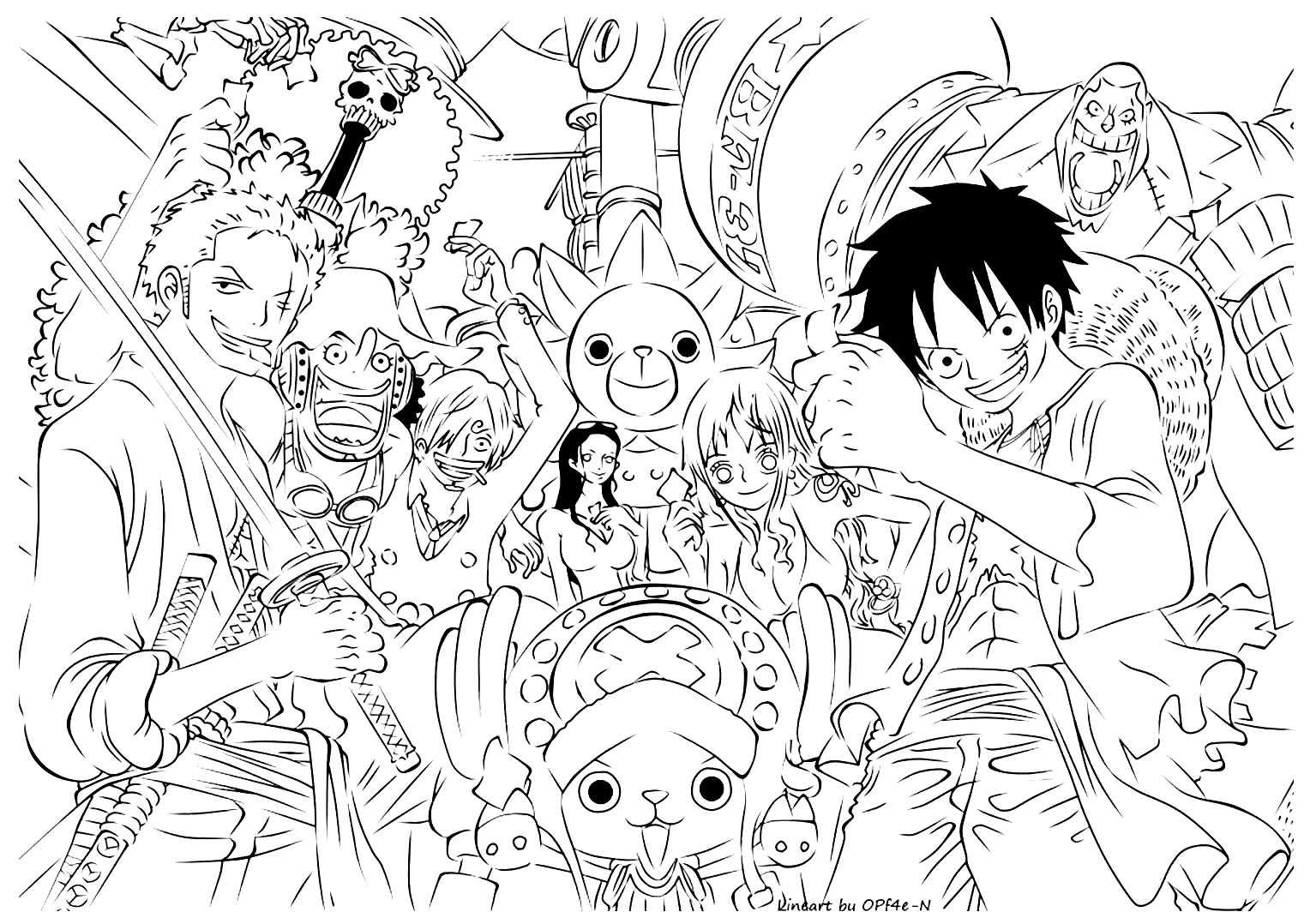
Free Roronoa Zoro coloring pages – 30+ pages featuring the Straw Hat Pirates’ swordsman in three-sword combat stances, Santōryū technique pages, the Asura demon form, portrait pages showing his distinctive green hair and three earrings, his scar across the left eye, post-timeskip designs, and scenes from across his journey to become the World’s Greatest Swordsman – free printable PDF and online coloring for One Piece fans.
Roronoa Zoro is the first person to join Monkey D. Luffy’s crew in One Piece, the manga written and illustrated by Eiichiro Oda that has been serialized in Weekly Shōnen Jump since July 22, 1997. With over 530 million copies sold as of 2022, One Piece is the best-selling manga series in history. The anime adaptation, produced by Toei Animation, began on October 20, 1999, and continues airing with over 1,000 episodes.
Zoro was known before joining the Straw Hats as “Pirate Hunter Zoro” – he had built a reputation as a bounty hunter whose swordsmanship was already exceptional before he was twenty. Luffy found him tied to a post in a Marine base, waiting to be executed rather than compromising his pride by begging for release. The negotiation that followed – Luffy offering freedom in exchange for joining the crew – established the dynamic that defines their relationship: Luffy deciding first, consequences sorted afterward.
His goal is to become the World’s Greatest Swordsman. He carries three swords. The third goes in his mouth. This is the Santōryū style – Three Sword Style -, and it is unique to Zoro in the One Piece world. No explanation is offered for how effective it is. None is needed.
These 30+ free pages at ColoringPagesOnly.com cover his full arc. All free, PDF or PNG, print or color online.

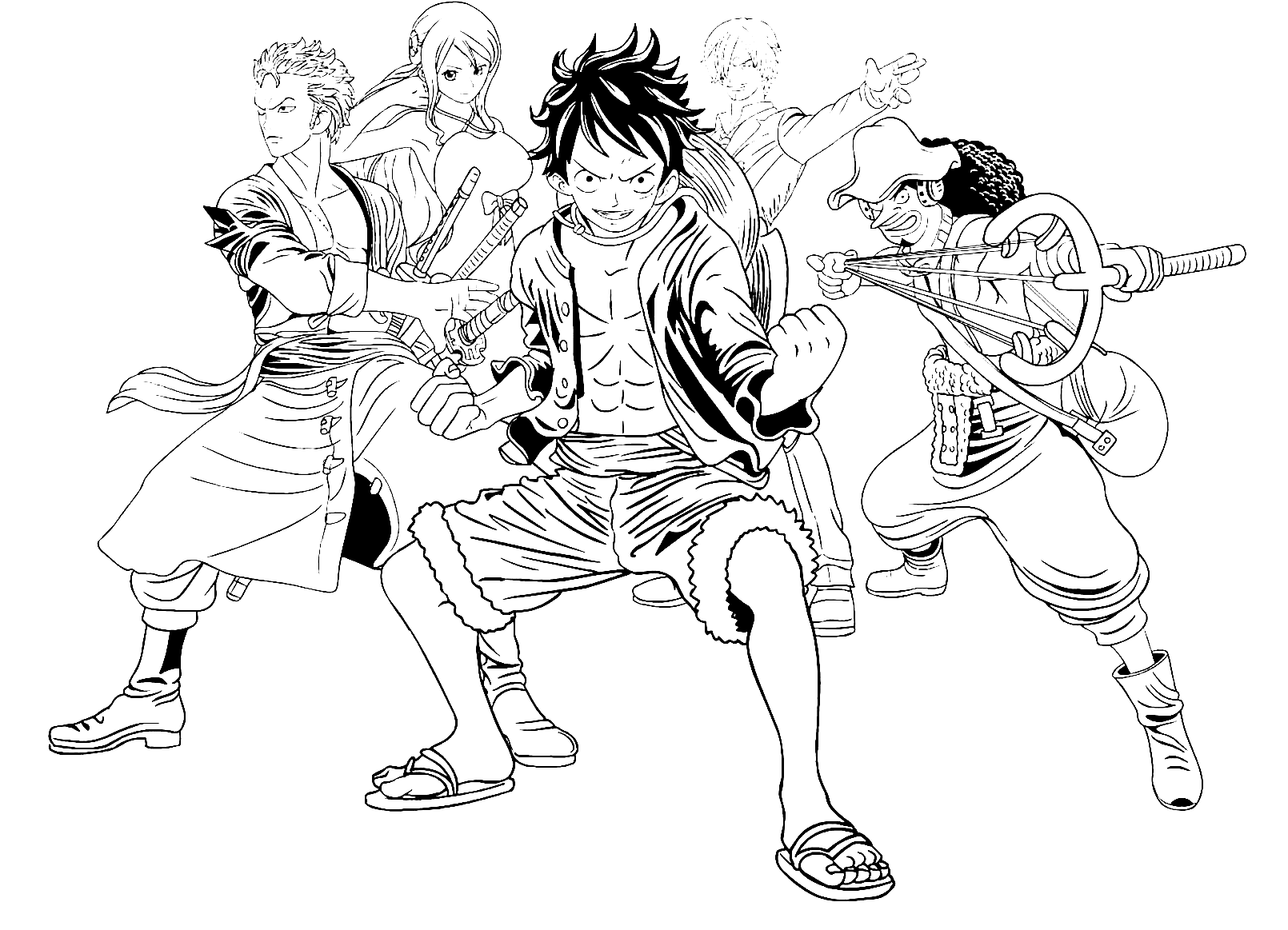
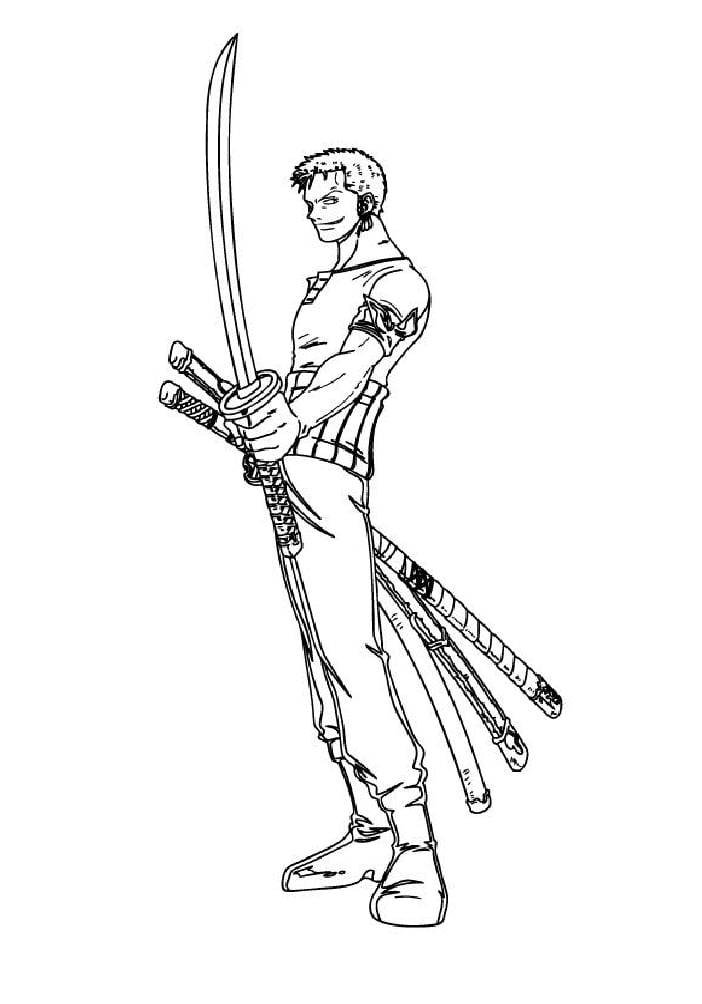
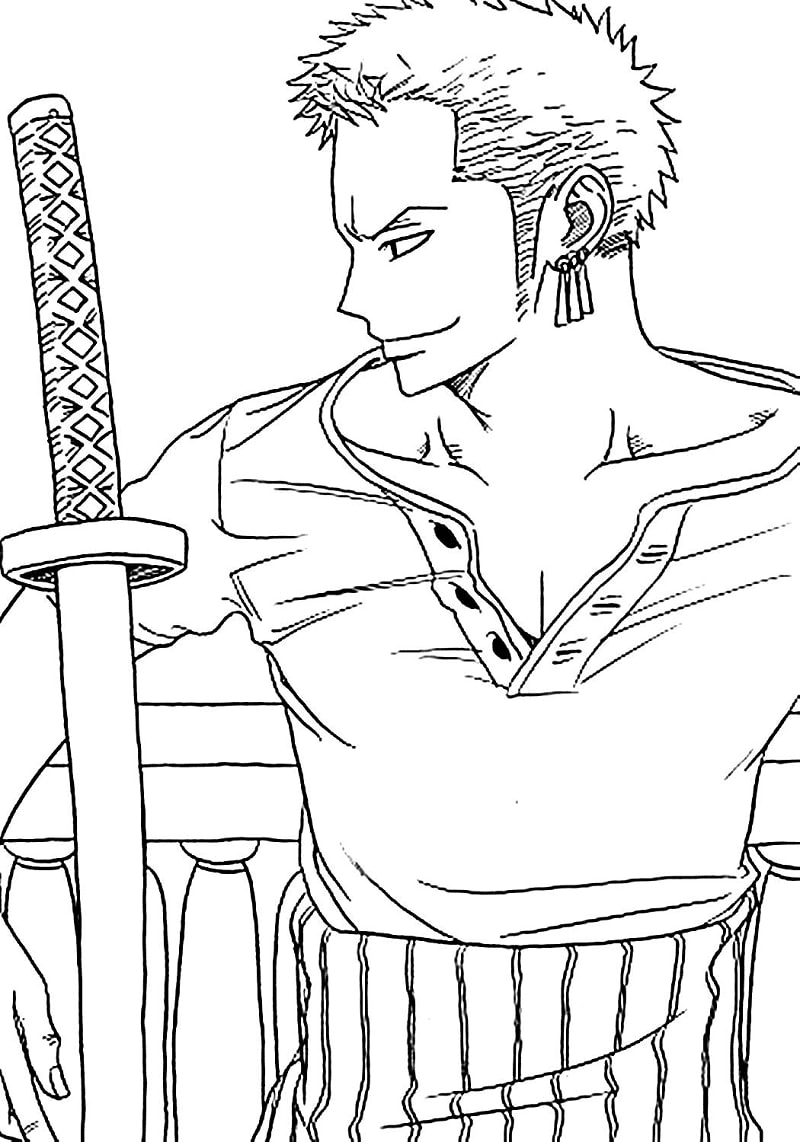
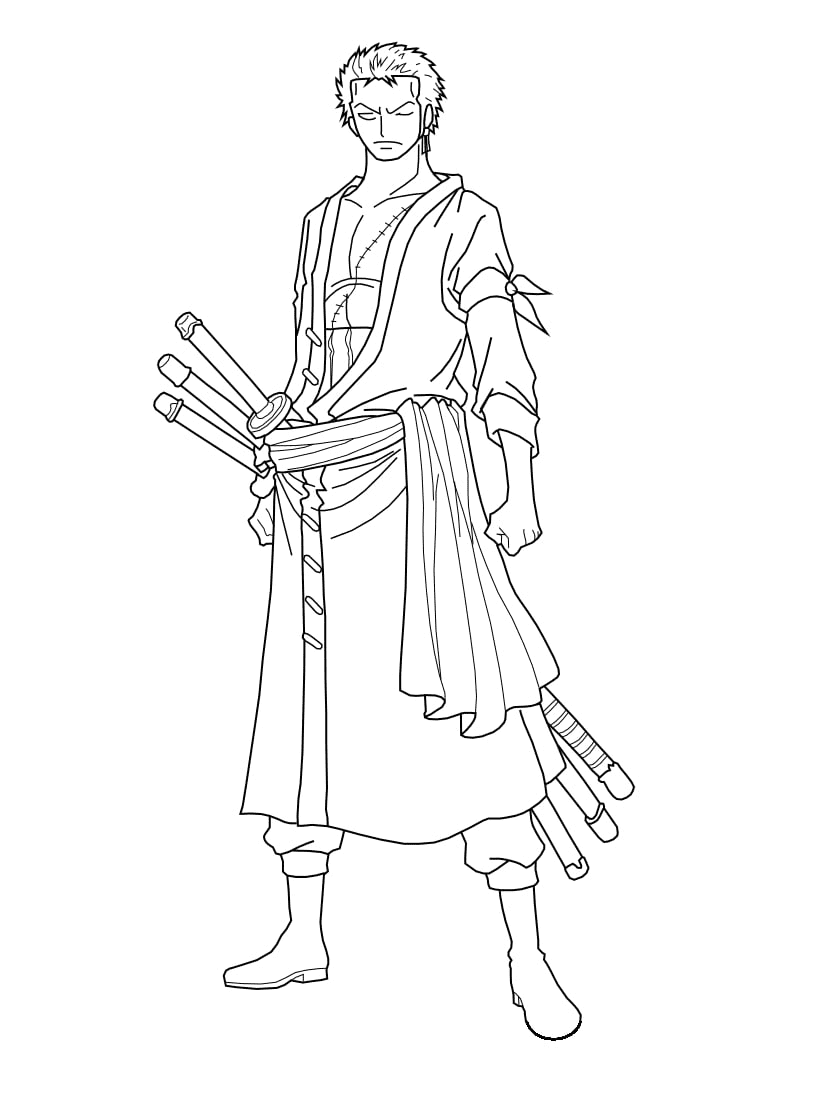
What’s Inside
Three-Sword Portrait and Stance Pages
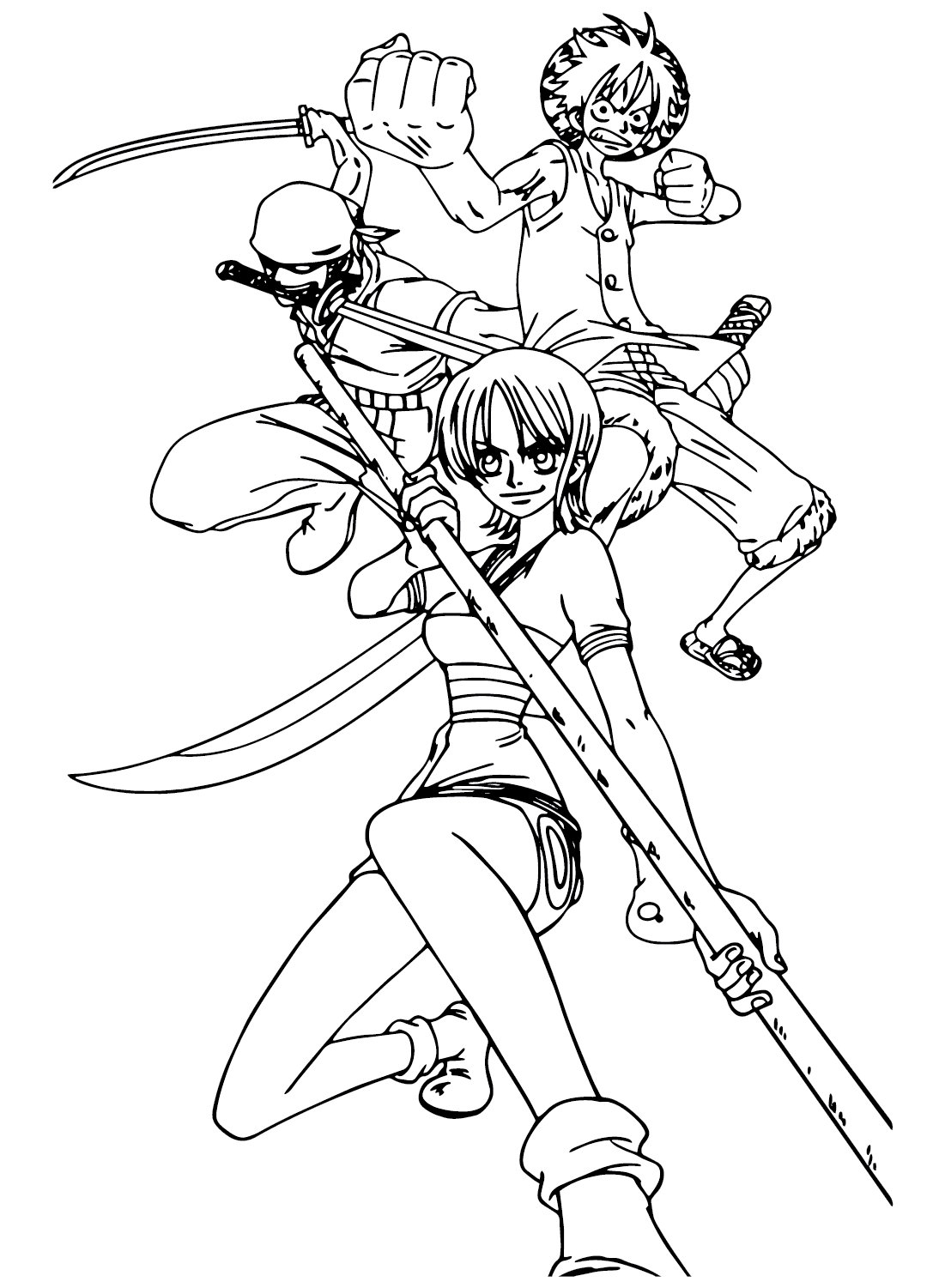
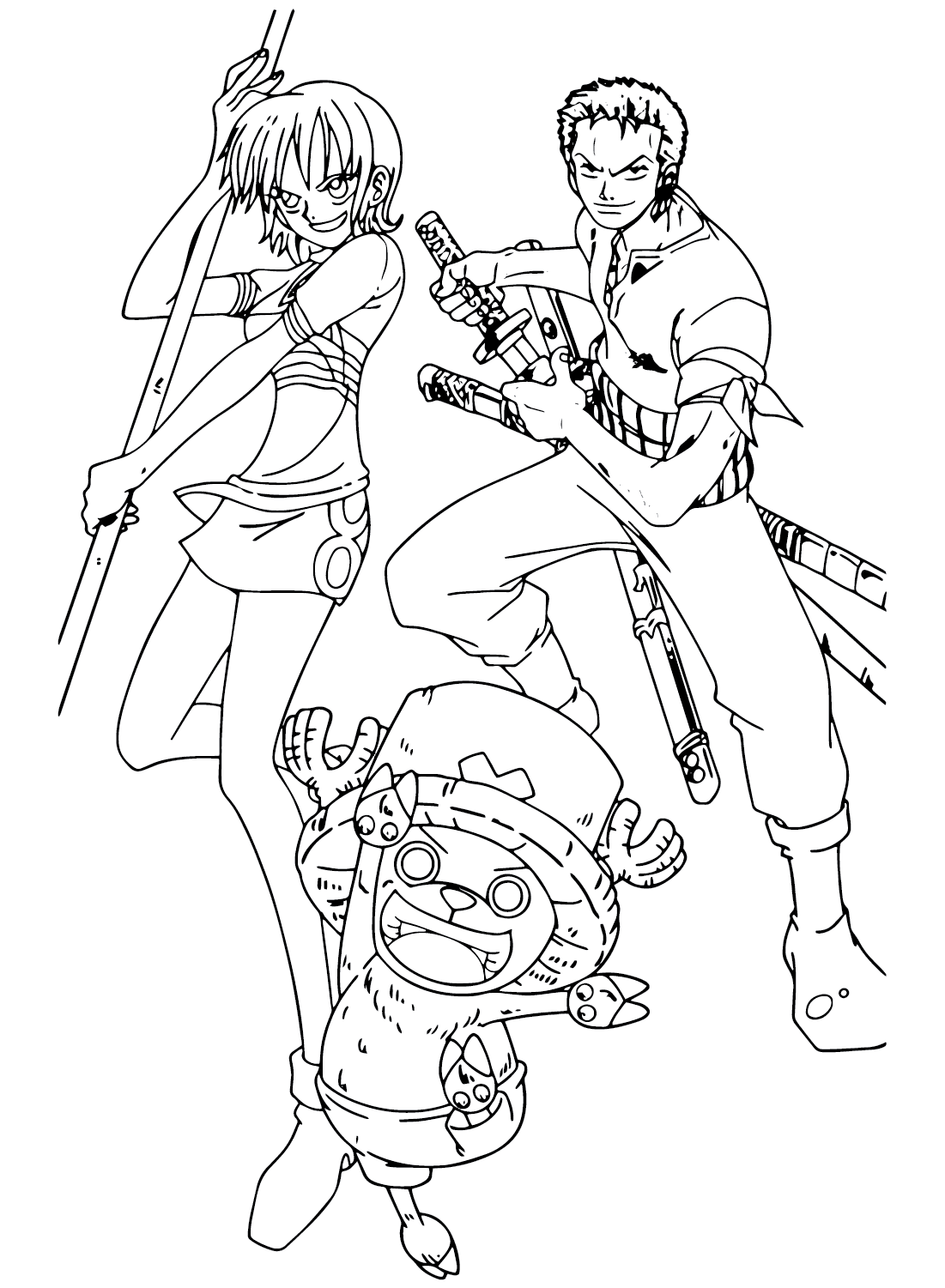
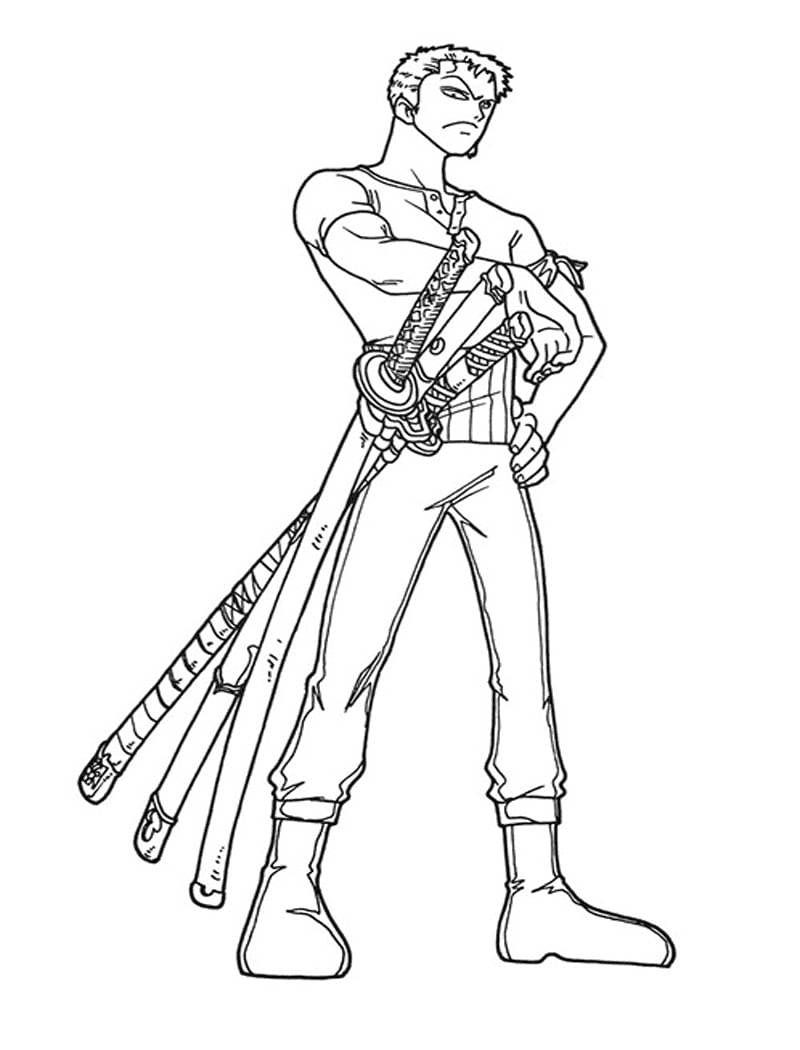
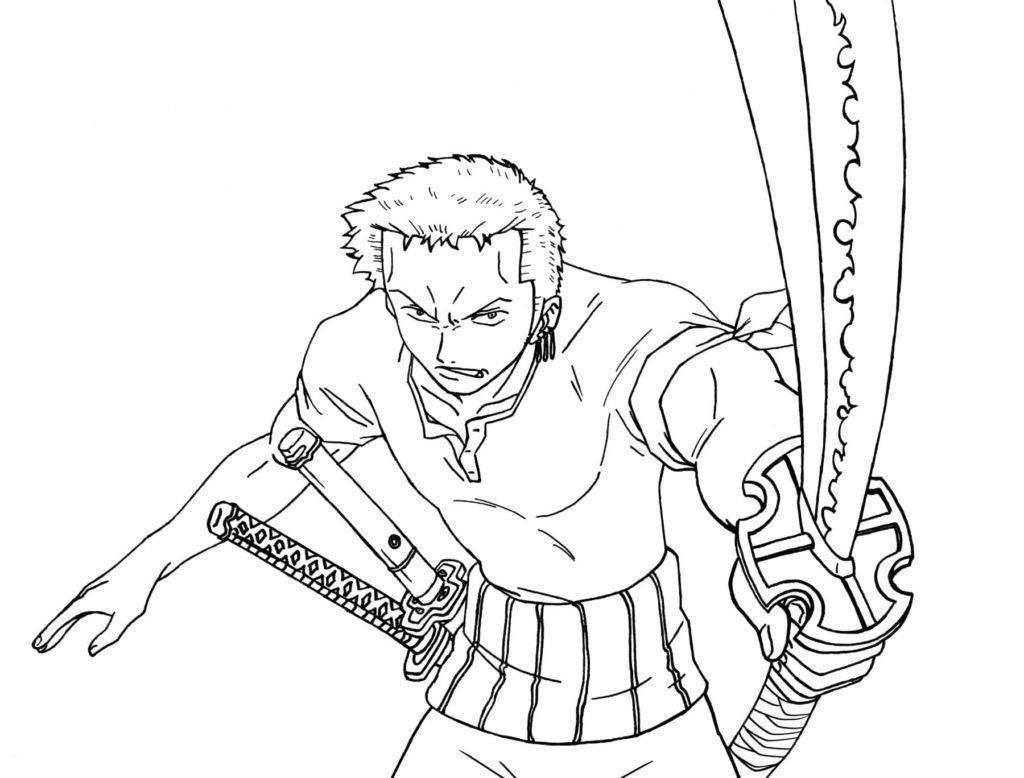
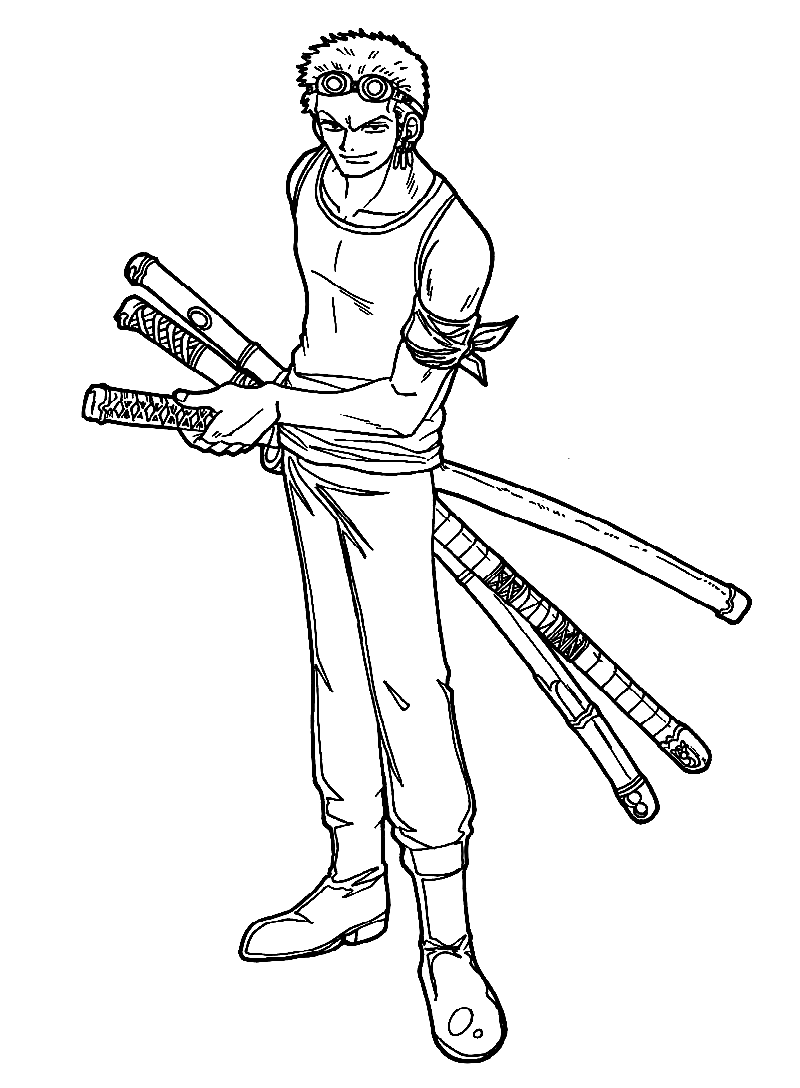
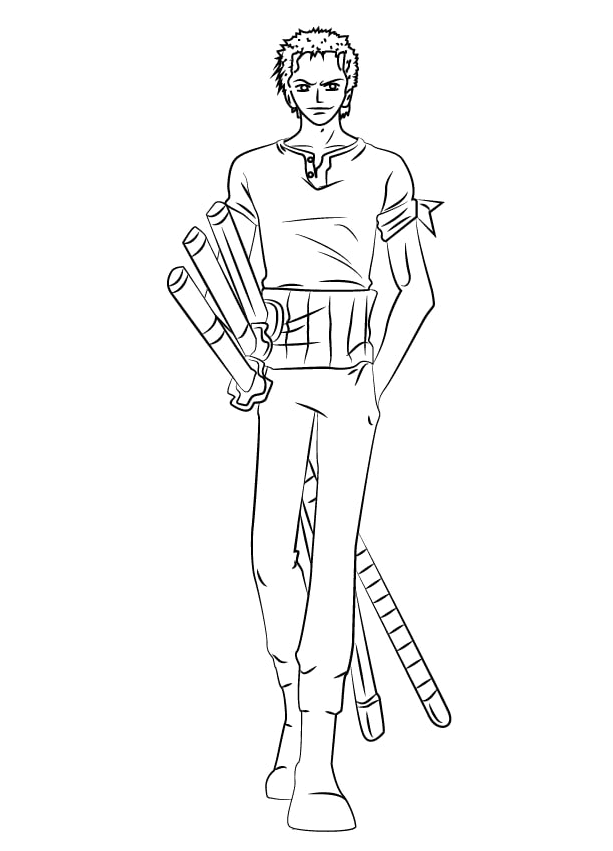
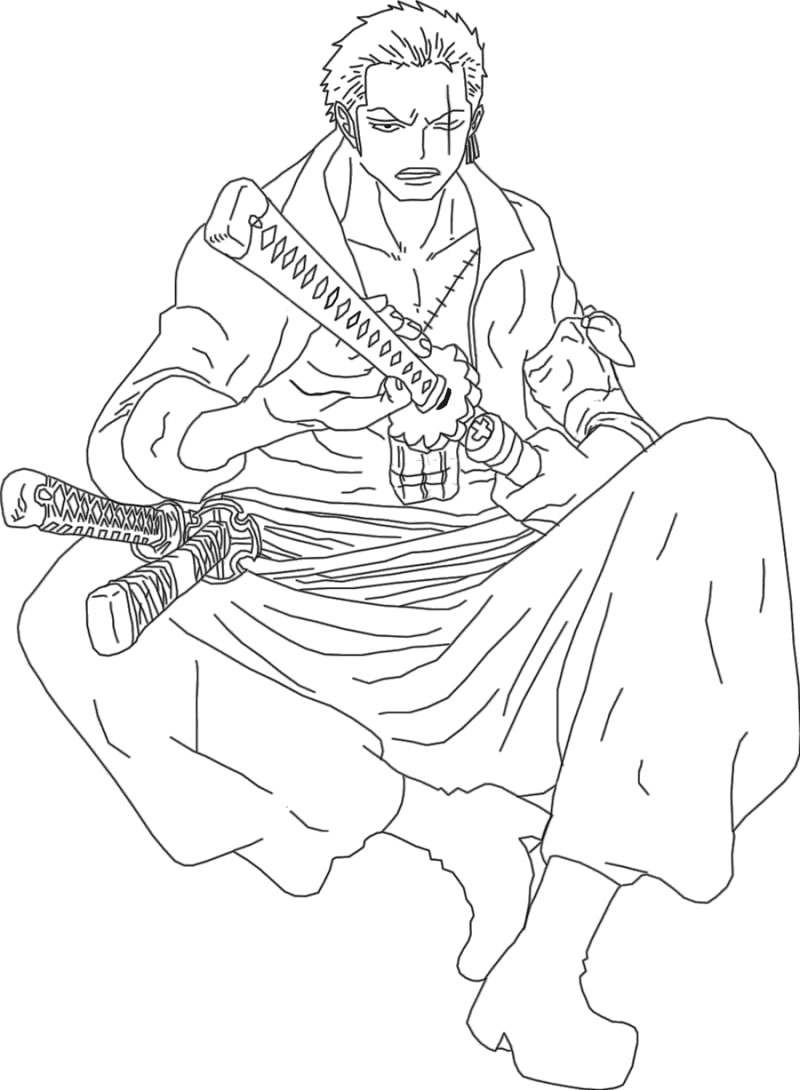
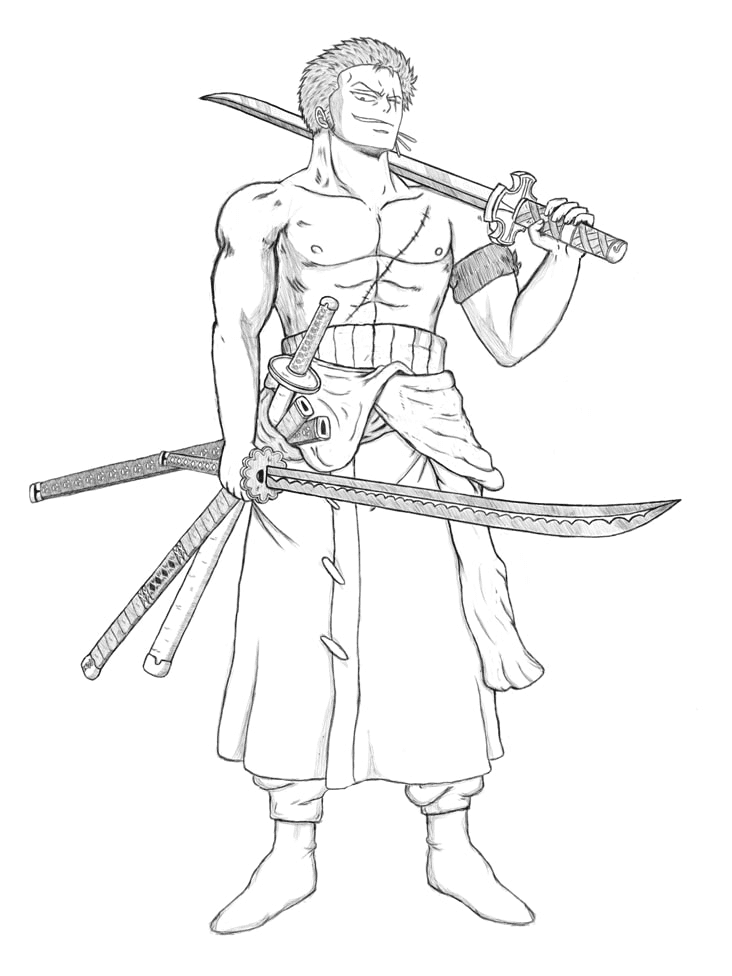
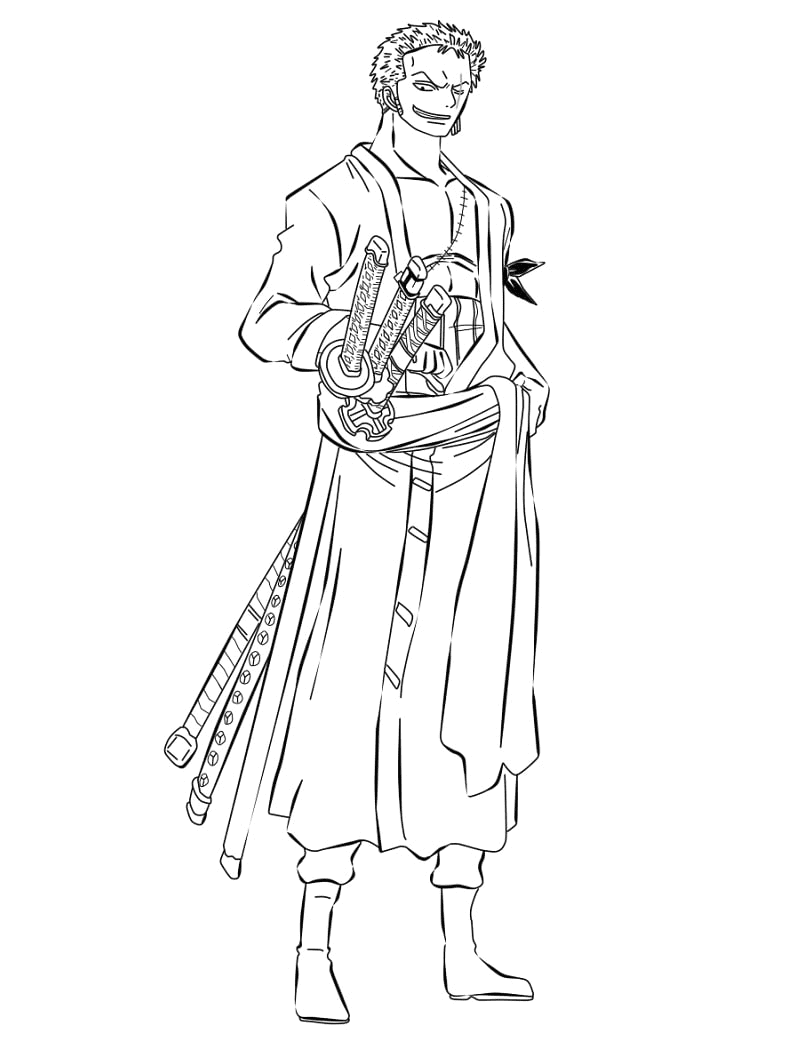
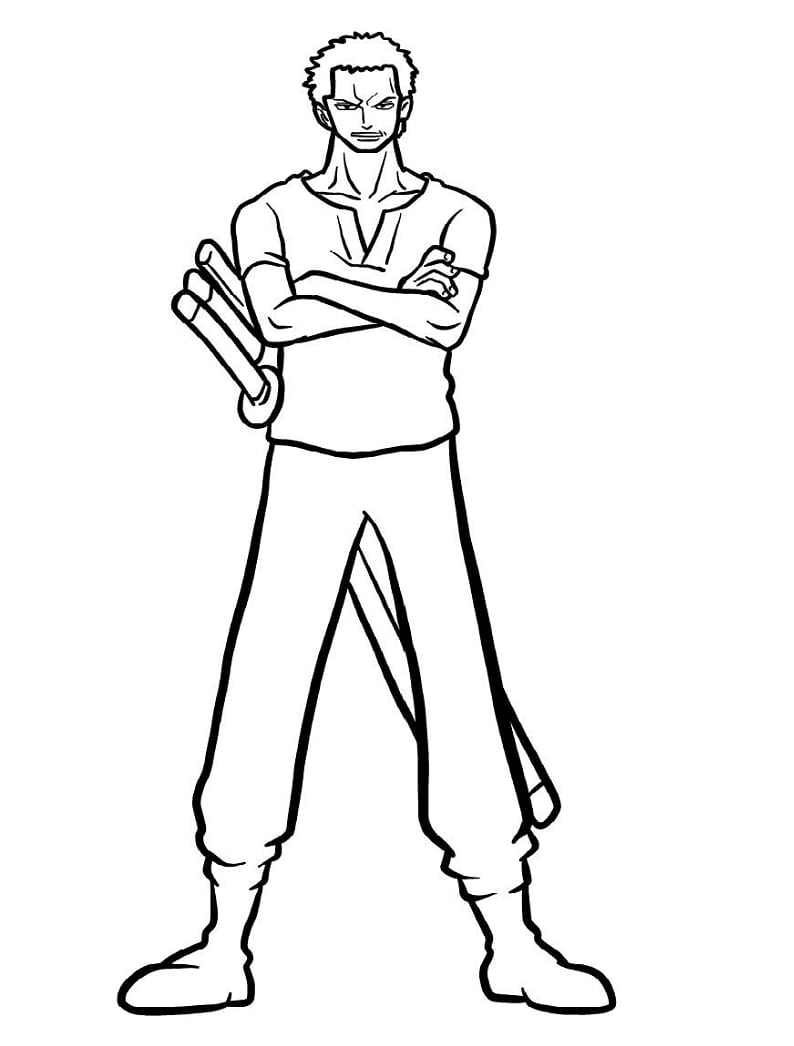
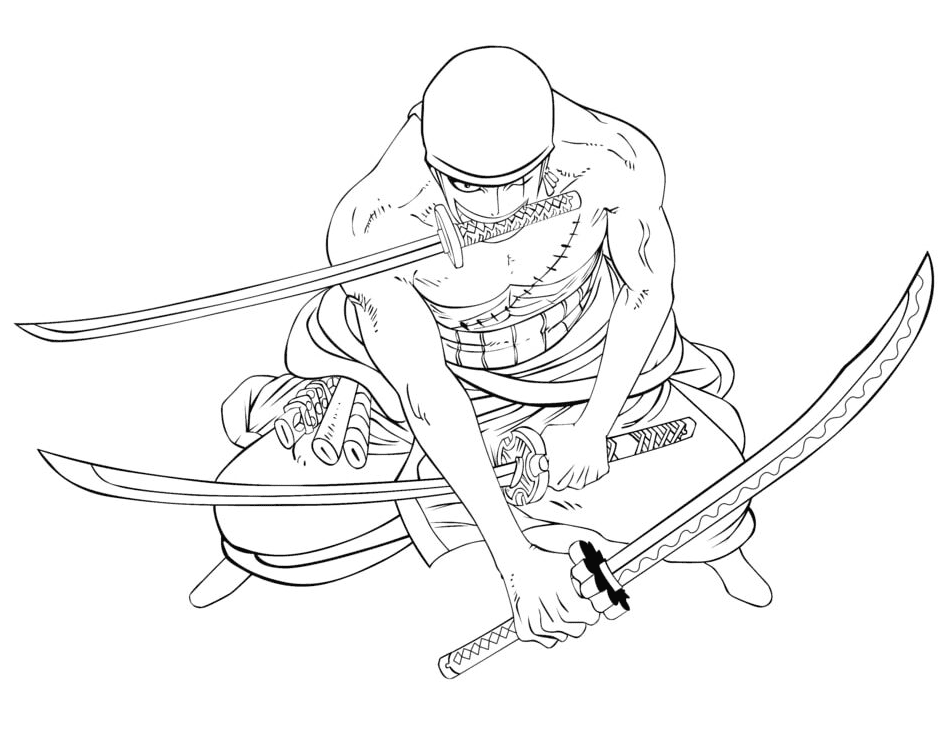
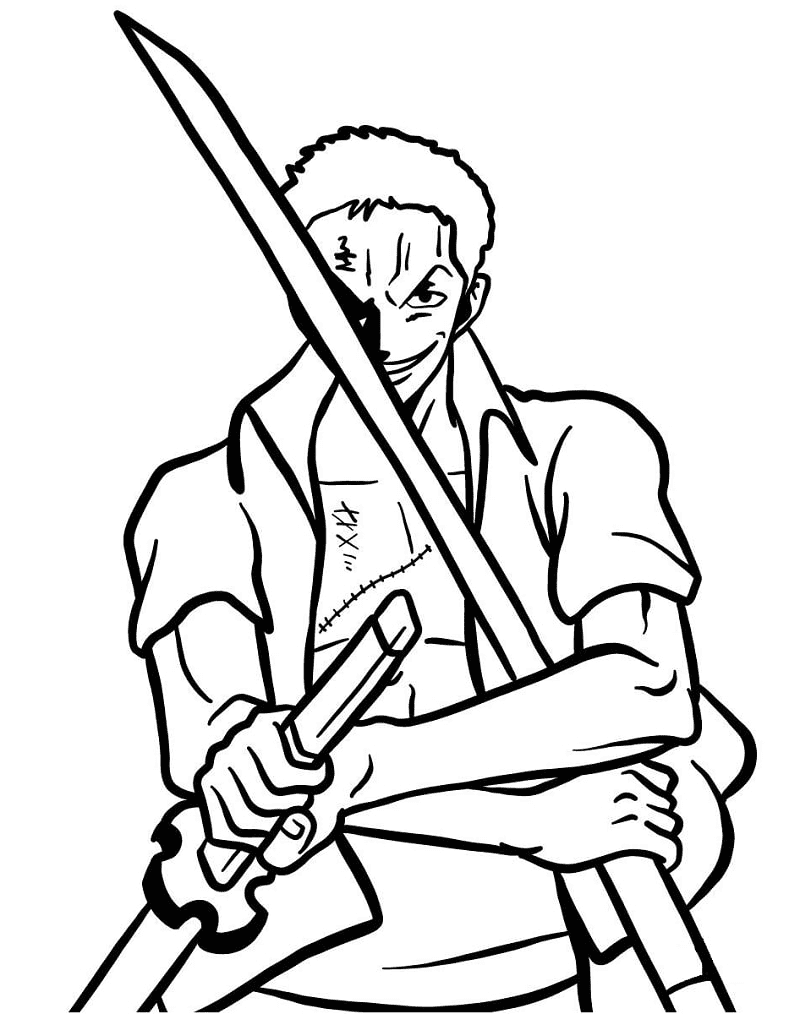
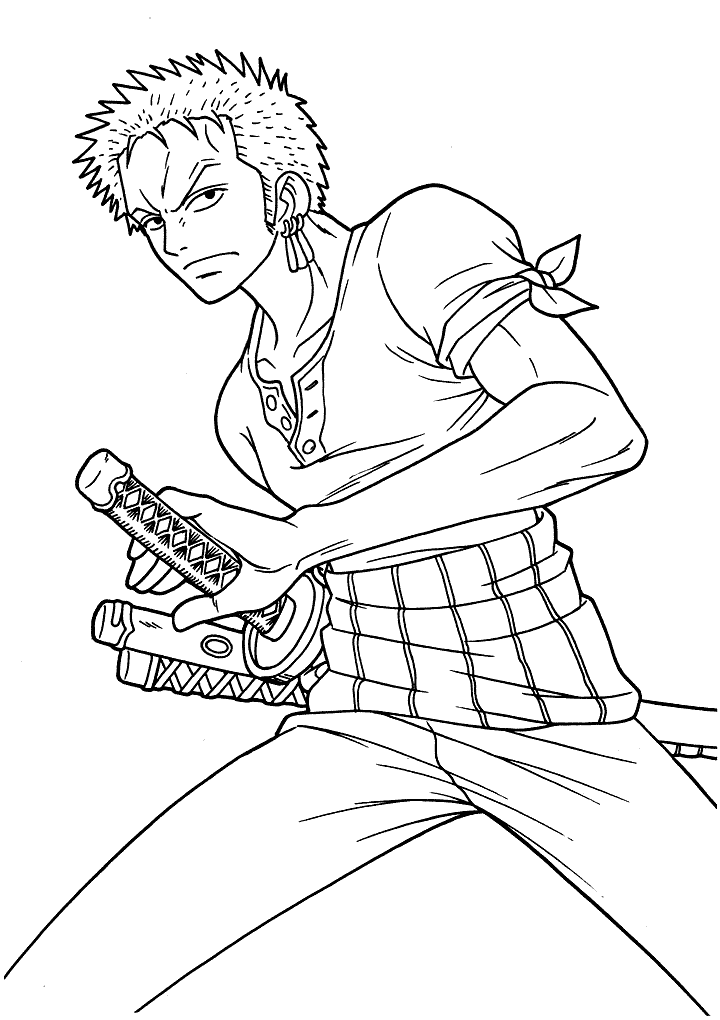
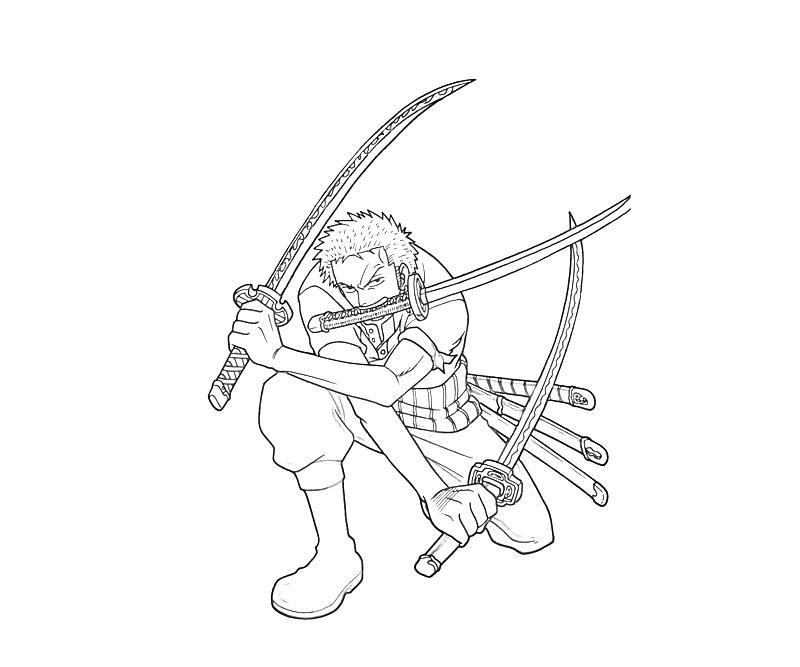
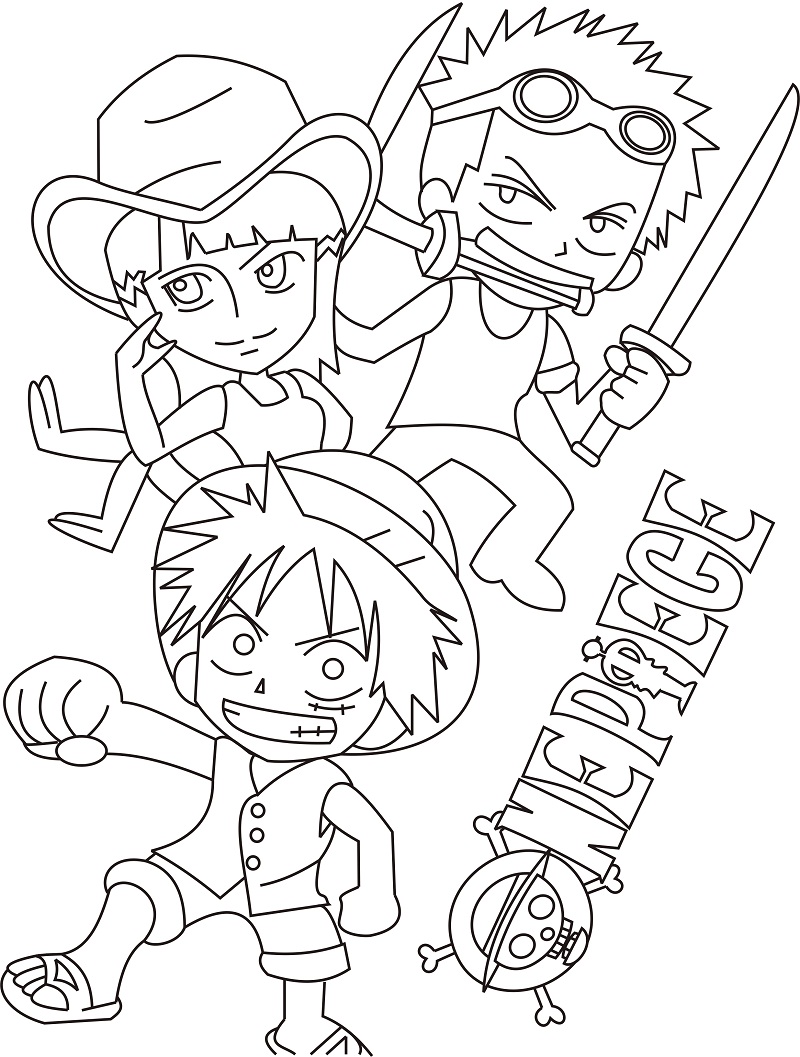
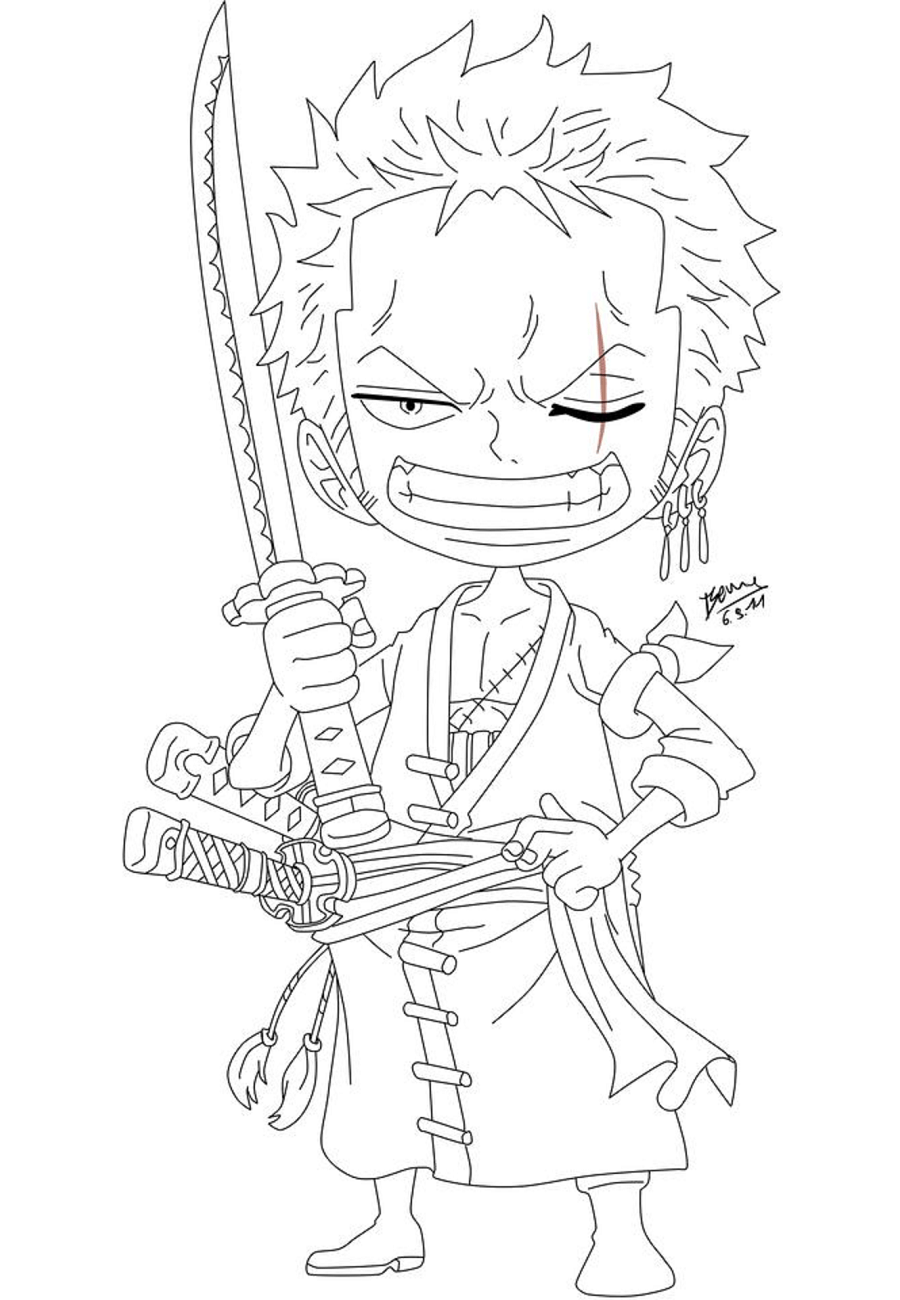
The collection’s most iconic section shows Zoro in his most recognizable visual configuration – three swords simultaneously deployed, two held in his hands and one gripped between his teeth. The Santōryū stance is immediately identifiable: arms spread to hold two blades at angles while the third extends forward from the jaw, the body in a wide, grounded posture that communicates both readiness and the specific controlled aggression of someone who expects the next exchange to end the fight.
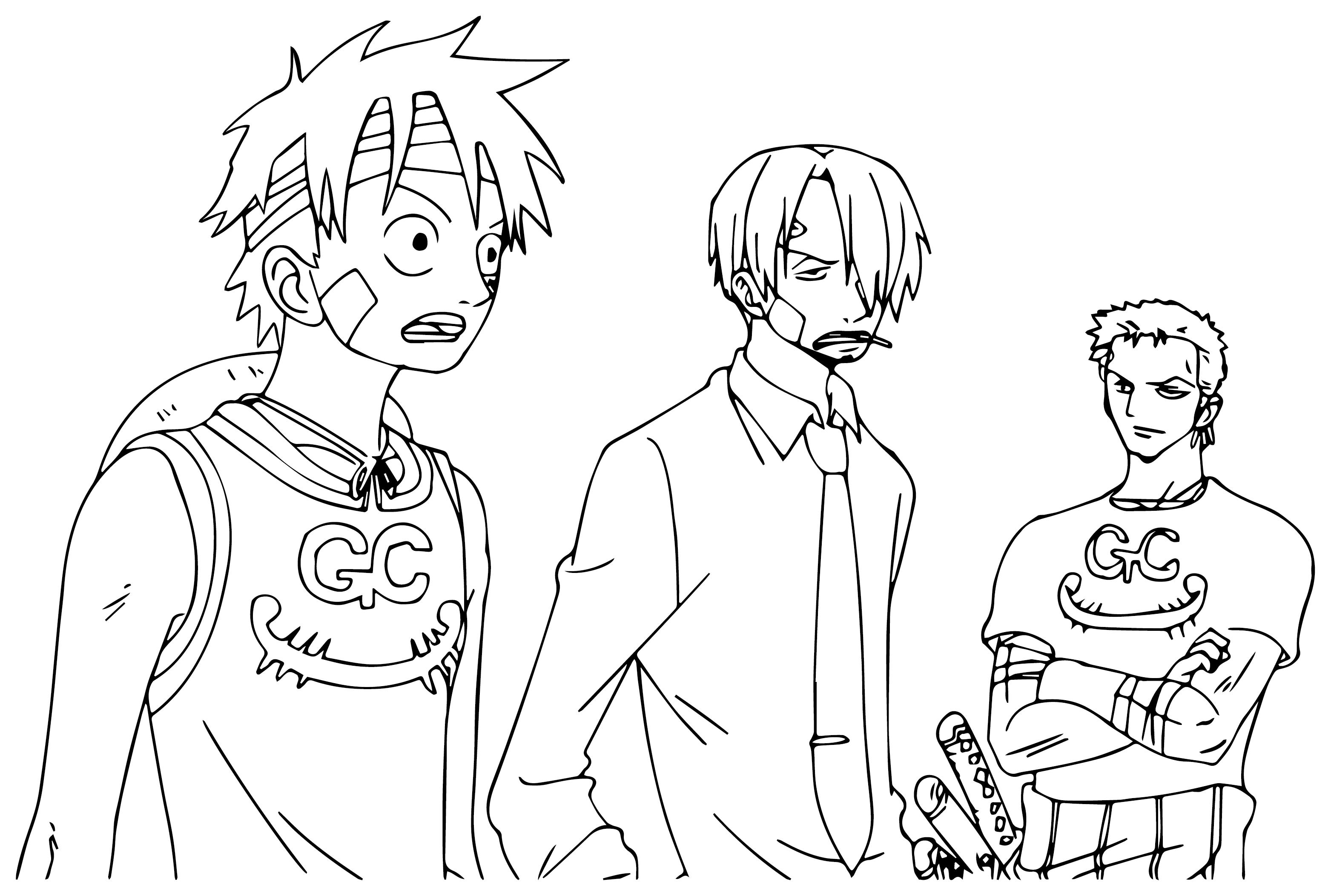
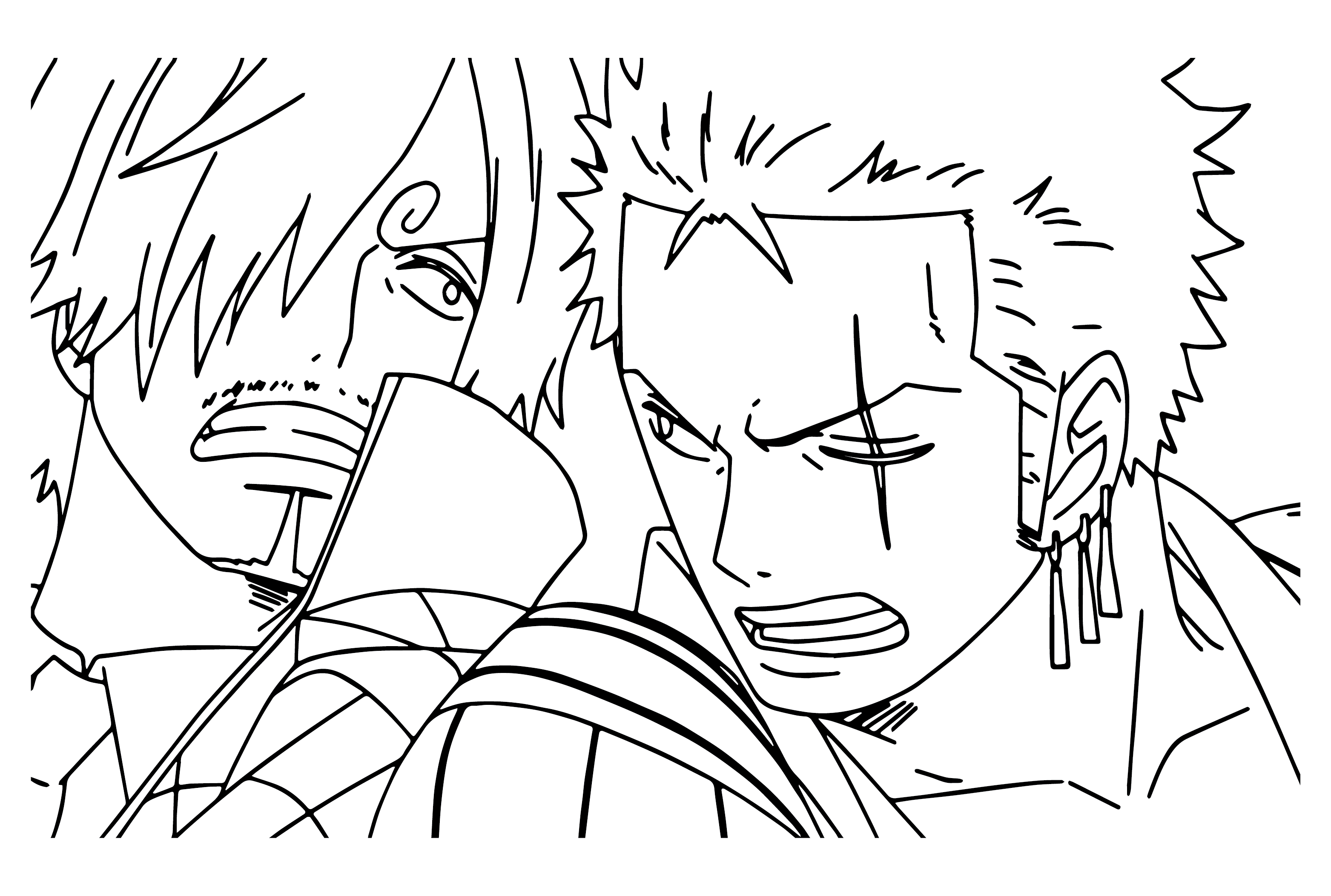
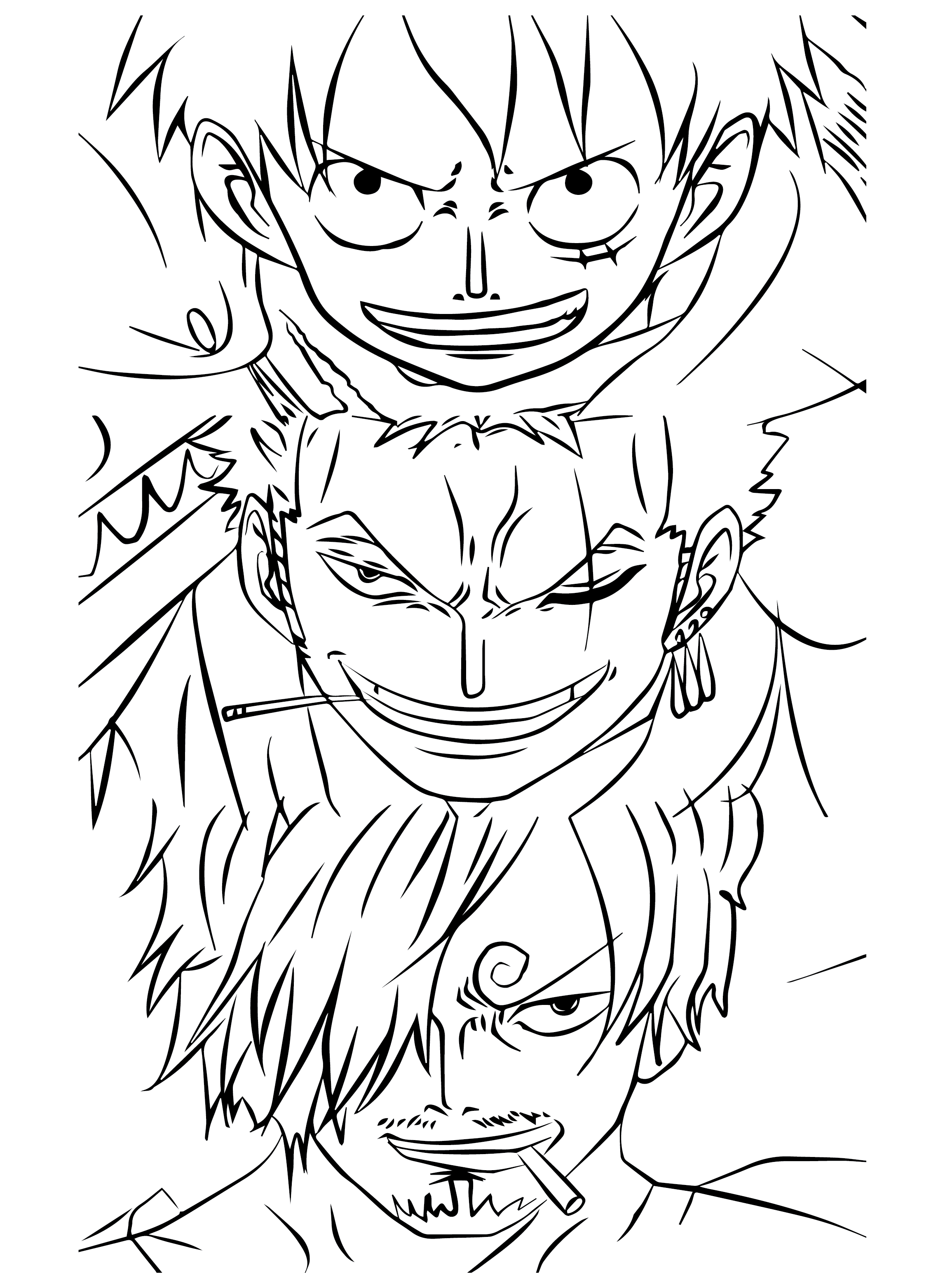
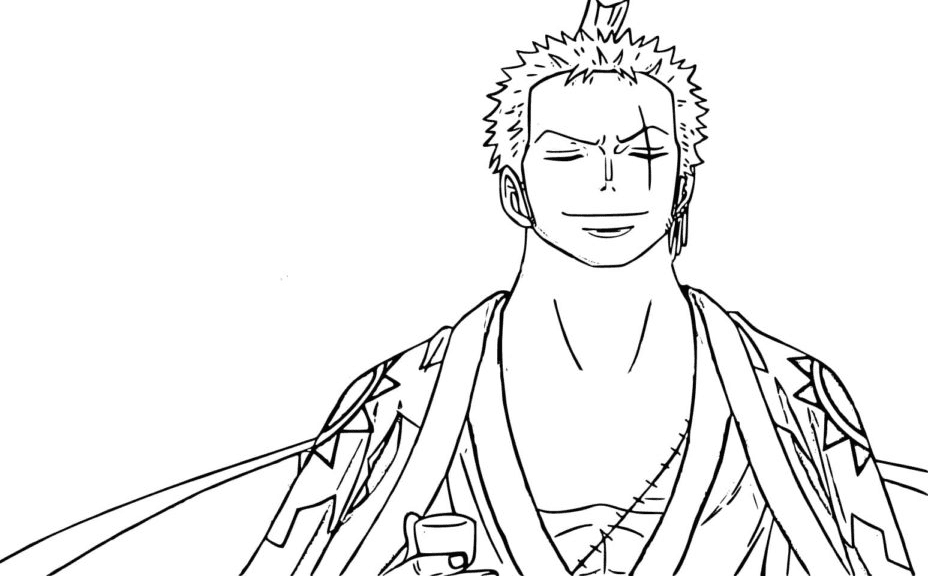
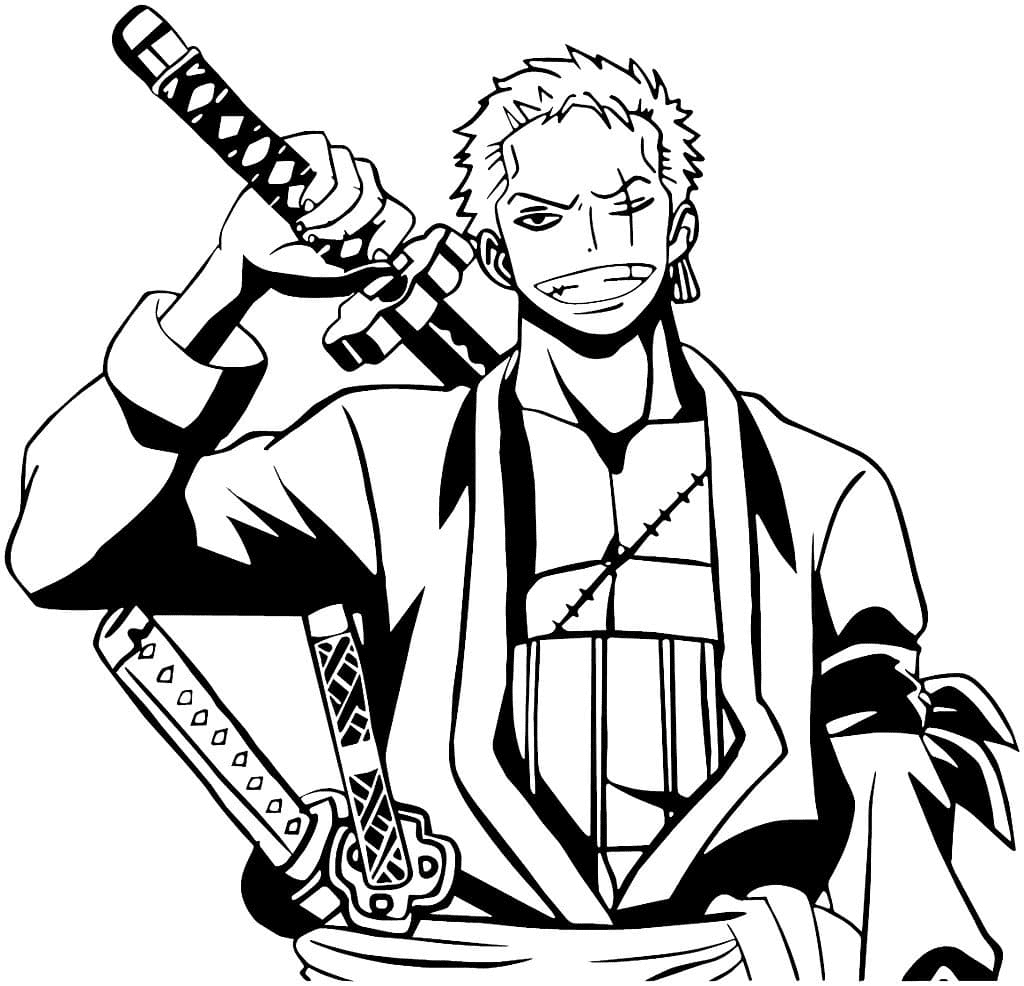
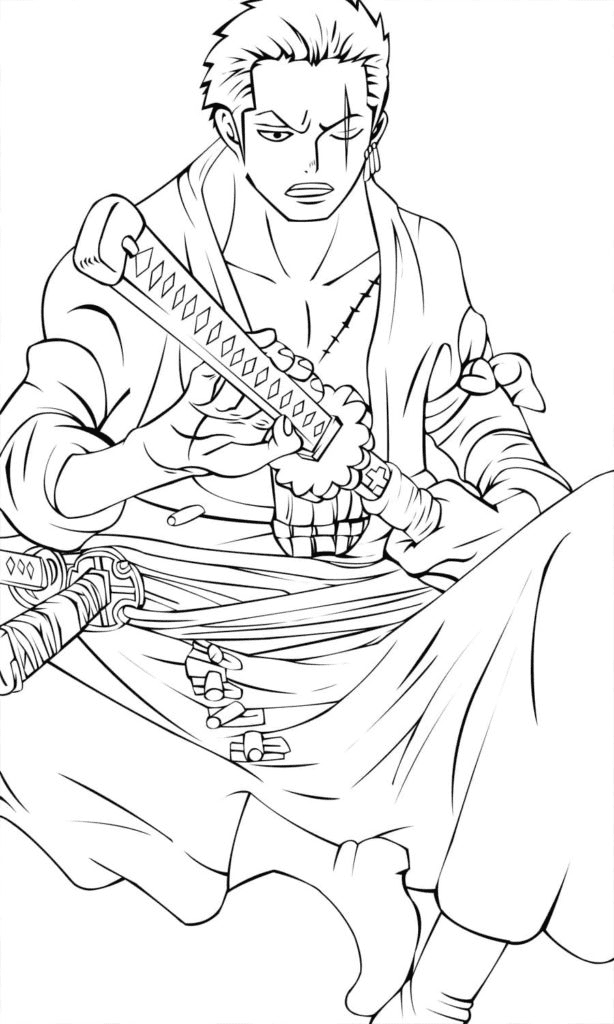
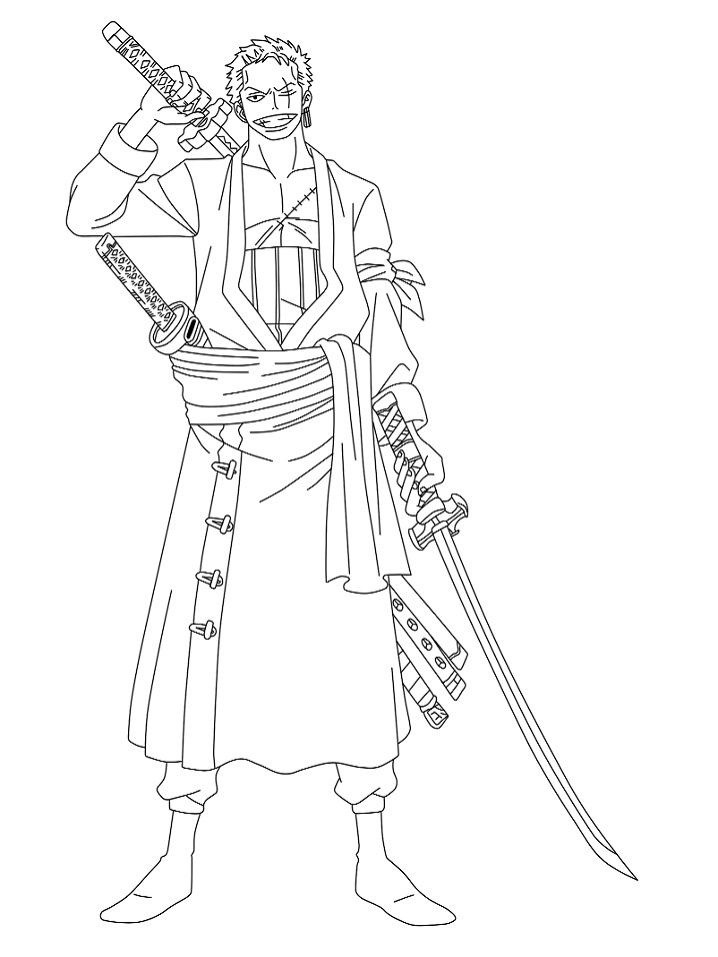
His design elements in these pages are specific and consistent: short green hair (the most immediately distinctive color choice in his design), three gold earrings in his left ear, a muscular build broader in the shoulders than most Straw Hat crew members, and – in post-timeskip pages – the permanent closed scar running diagonally across his left eye, acquired under circumstances that the manga reveals gradually and that give his face a specific asymmetric quality that distinguishes the post-timeskip Zoro from all pre-timeskip pages.
Coloring stance pages: Zoro’s green hair is the page’s primary color identity – a specific medium green that is neither the yellow-green of grass nor the blue-green of teal but the precise mid-green that Oda established as his color from the character’s earliest appearances. The swords in his hands should receive differentiated treatment: Wado Ichimonji is a white or pale grey blade; Enma (his current third sword, previously Sandai Kitetsu in earlier arcs) is a black blade – the highest category of sword in the One Piece world. Apply white/pale grey to Wado, near-black to the black blade, and the mid-tone steel grey of a standard blade to the third.
Asura – The Nine-Sword Technique
The Asura technique is the collection’s most visually complex and dramatically demanding subject. When Zoro activates Asura, he appears to multiply – creating the visual impression of two additional Zoro figures, each with their own three swords, producing a nine-sword configuration that is simultaneously impossible and immediately legible as the most powerful version of his Three Sword Style. The name references the Buddhist/Hindu deity Asura, often depicted with multiple arms.
Asura pages show the central Zoro figure surrounded by or merged with ghost-like additional figures, the nine blades extending in a radial pattern from the combined silhouette. The visual effect in both the manga and anime uses atmospheric shading around the ghost figures to separate them from the central form – they appear as emanations from Zoro’s battle energy rather than literal separate bodies.
Coloring Asura pages: The central Zoro figure should be rendered in canonical colors at full saturation. The ghost figures – the additional Zoro emanations – should be rendered in the same colors but at significantly reduced opacity: a grey-shifted, desaturated version of each color that reads as present but not fully material. One technique: apply the ghost figures’ colors very lightly and add a cool grey overlay to the entire ghost figure area. The contrast between the solid central figure and the desaturated ghost figures makes the technique’s visual logic immediately clear.
Post-Timeskip Design Pages
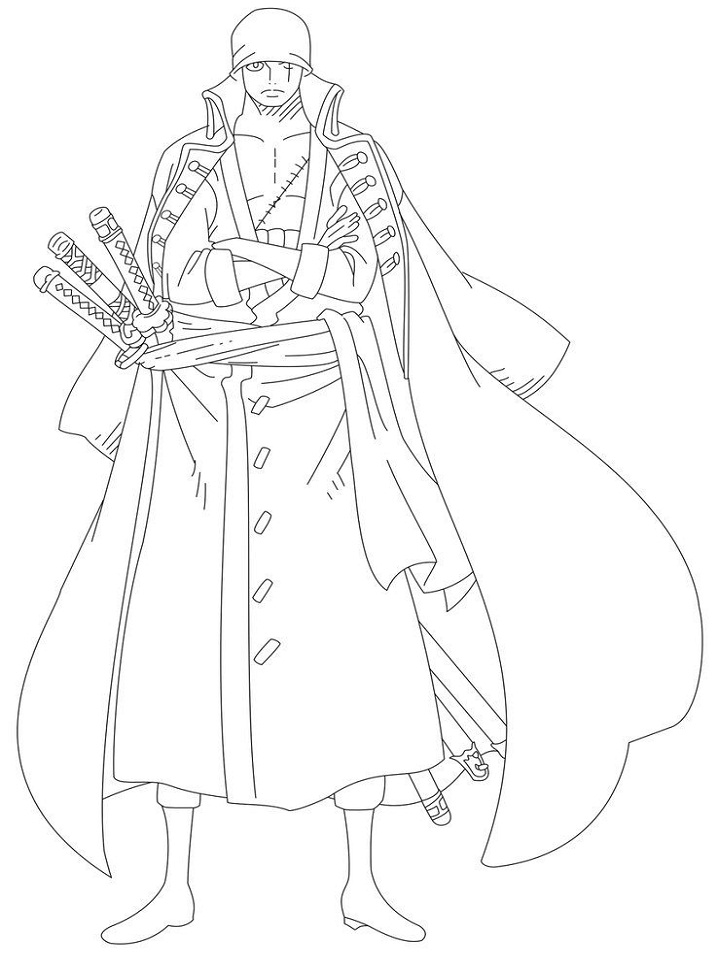
The timeskip – the two-year gap in the story during which the Straw Hat crew trained separately – produced significant visual changes to Zoro’s design. The most narratively significant is the scar across his left eye: permanent, diagonal, crossing from above the eye downward. His left eye remains closed in all post-timeskip appearances. The circumstances of how he acquired this scar are revealed gradually in the Wano arc, adding retroactive weight to its visual presence throughout the timeskip period.
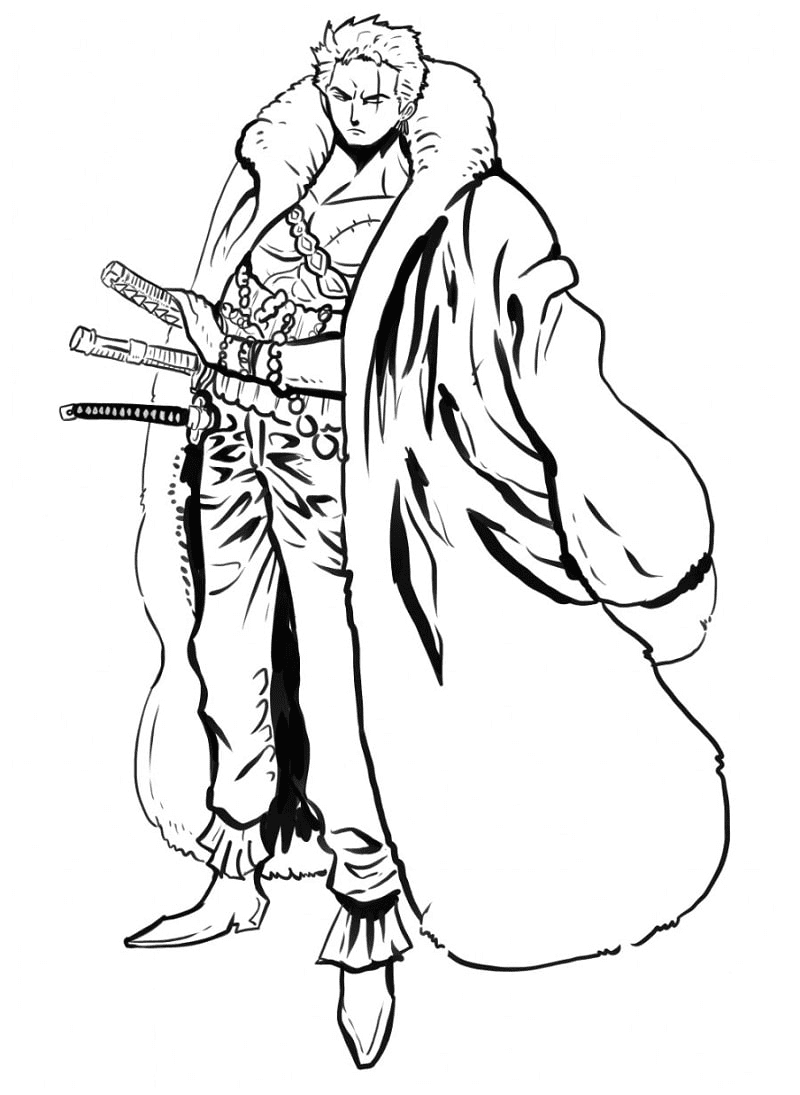
His post-timeskip outfit is also more defined than the varied pre-timeskip clothing: a dark green hooded cloak over a white shirt, the green haramaki (waistband) still present, and a generally more mature, seasoned visual register than the younger Zoro of the early arcs.
Coloring post-timeskip pages: The left eye scar runs diagonally across a closed left eyelid – render it as a line of slightly darker skin tone along the scar’s path, with the eye beneath it shown closed rather than open. The asymmetry between the open right eye and the closed, scarred left eye is the single most important differentiating feature between pre- and post-timeskip Zoro. Do not render both eyes the same way – the scar’s presence and the eye’s closure are what make this Zoro specifically post-Wano.
Wado Ichimonji – The Most Important Sword
Some pages in the collection show Zoro with a specific focus on his swords, and Wado Ichimonji, the white sword that belonged to his childhood rival Kuina, is the most emotionally significant weapon in his possession. Kuina was the daughter of Zoro’s dojo master, Koshiro, and the only opponent who consistently defeated him in their childhood years. The night before she died in an accident, they made a promise: one of them would become the World’s Greatest Swordsman. After her death, Zoro requested the sword from her father and has carried it ever since.
Wado Ichimonji is a white-bladed katana – the white of the blade reflecting Kuina’s memory, held consistently in his right hand or placed in his mouth (as the most sacred of the three swords, it occupies the position of highest respect in his Santōryū style – the mouth position, which most would consider the most physically demanding, is where Zoro places the sword he respects most).
Coloring Wado Ichimonji: Pure white across the blade – the cleanest, most vivid white in the composition. A very subtle pale blue-grey at the blade’s shadow edge to suggest the steel without losing the white reading. The tsuba (guard) and handle are traditionally styled. The white blade should contrast maximally with the darker blades in his other two hands on any three-sword page.
Combat Technique Pages
Beyond the Asura technique, the collection includes pages referencing specific named techniques from Zoro’s repertoire: the Oni Giri (Demon Slash), the Dragon Twister, the Thousand-Sword-Bearing Tiger Hunting, and others. These technique pages show Zoro at the moment of technique execution – the body position of the technique’s delivery, the visual representation of the attack’s energy in the line work surrounding the figure.
Coloring technique pages: Each named technique in One Piece has an associated visual energy – the lines, trails, and atmospheric effects that represent the attack’s force and direction. Render these energy effects in a lighter, slightly desaturated version of the associated color: for most Zoro techniques, a light grey-blue or very pale green for the slash energy, with the central figure in full color and the energy effects receding toward the page edges.
Chibi and Relaxed Pages
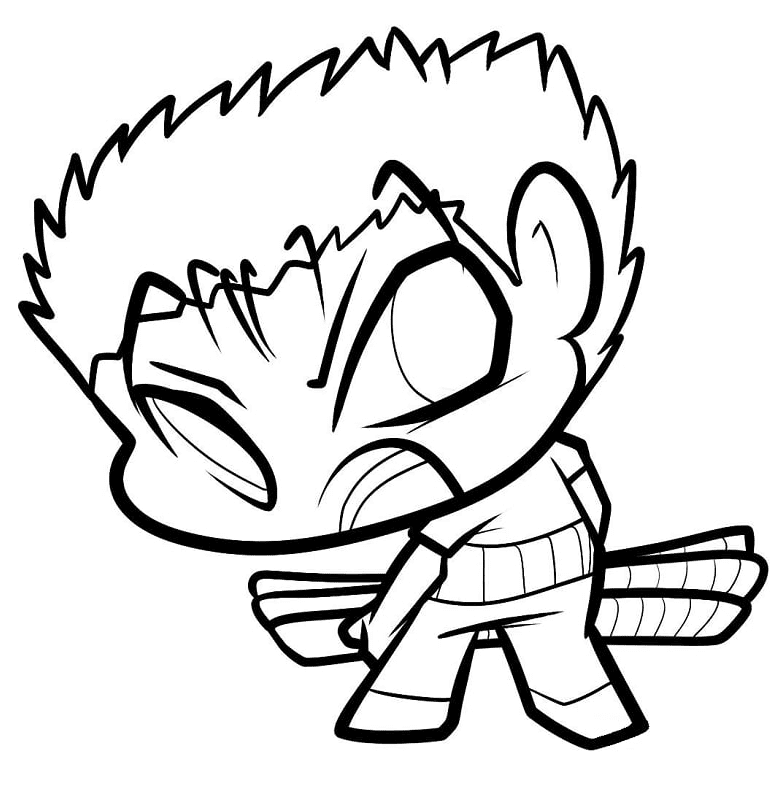
The collection’s most tonally contrasting pages show Zoro in his most characteristic non-combat state: sleeping, drinking sake, sitting with his swords beside him, or in the chibi proportion style that reduces him to exaggerated round proportions. The contrast between combat Zoro – the most controlled, most focused figure in the Straw Hats during a fight – and resting Zoro, who sleeps in the most inconvenient places and wakes up confused about which direction he came from, is one of the series’ most consistent character comedies.
What These Pages Do
Zoro’s dream carries the specific weight of a promise made to a dead friend. He is not trying to become the World’s Greatest Swordsman for himself – he is fulfilling a promise made with Kuina the night before she died, when they were children. The coloring pages capture a character whose every technical improvement is, in its underlying motivation, an act of grief and loyalty. That context is invisible in the images but present in the character for anyone who has followed the story.
The Santōryū style is a genuine creative invention. Three-sword fighting – specifically the technique of holding a sword in the jaw while fighting with two others – has no real-world martial arts precedent. Oda invented it, gave it internal visual logic that the manga has maintained consistently for twenty-five years, and made it specific enough that the style is immediately associated with one character globally. Coloring the three-sword pages is engaging with one of manga’s most original combat design decisions.
The sword differentiation teaches material distinction. White sword, black sword, standard steel sword – three different blade colors in one composition, each representing a different quality of weapon within the One Piece world’s sword hierarchy. Applying these consistently across multiple pages develops the coloring skill of maintaining material differentiation across a complex composition.
Fine motor development. The American Academy of Pediatrics identifies fine motor skill development as a key childhood milestone throughout early childhood. The three-sword compositions, the earring details, the scar across the left eye, the atmospheric effects of the Asura pages – all provide motivated, sustained fine motor practice. The 2005 Art Therapy Journal study on structured coloring and anxiety reduction applies throughout this collection, which rewards the focused, sustained attention that complex anime character pages require.
How to Color These Pages Well
The green hair is the character’s primary identifier – commit to medium green without hesitation. Zoro’s hair color is one of the most specifically associated colors in anime character design. It is a medium, fully saturated green – not olive, not lime, not teal, but the precise mid-green that reads immediately as “Zoro’s hair.” Test your green before applying: it should read as a natural-seeming green that is vivid without being neon. Apply it at full pressure across the entire hair mass, with only the most subtle darkening in the deepest shadow areas between hair clusters.
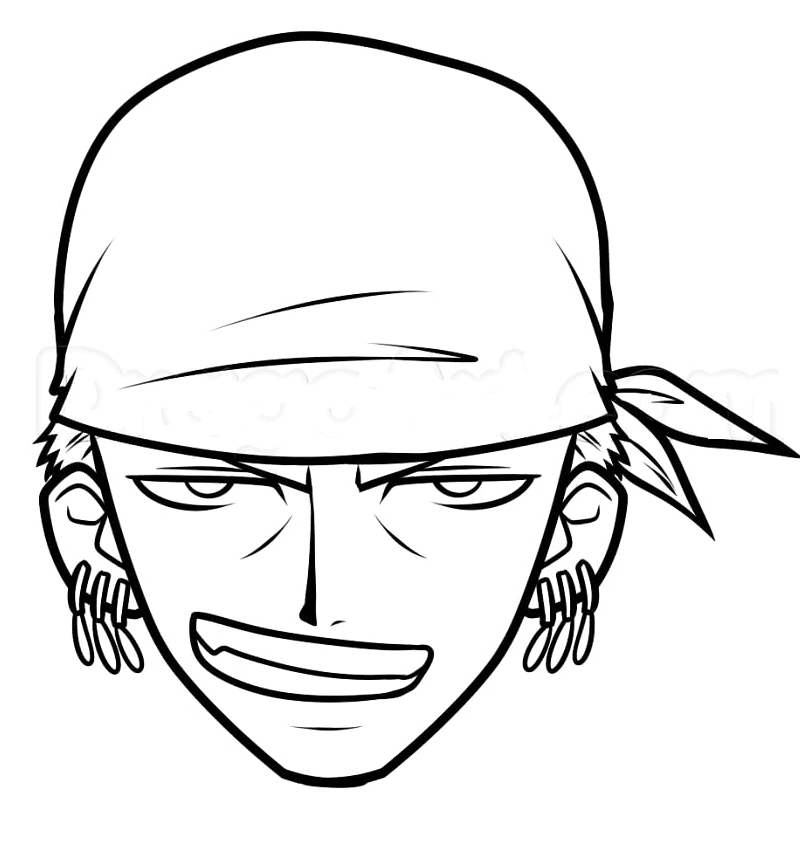
The three earrings in his left ear are tiny but critical. Zoro wears three gold stud earrings in his left ear only – not his right, only his left. In portrait pages and close-up pages, these three small gold dots should be rendered in warm, vivid gold, clearly distinct from each other, clearly in the left ear. This is a small detail, but its accuracy is the difference between a recognizable Zoro portrait and a generic swordsman.
Sword blade differentiation requires three distinct metal treatments. For any page with all three swords visible: Wado Ichimonji – the white blade – should be the lightest element on the page, barely distinguished from white with a cool shadow edge. The black blade (Enma or Shusui) – should be rendered in near-black with very subtle dark grey highlights to prevent it from reading as a flat silhouette. The standard blade – if present – should be the conventional metallic silver grey. Three distinct treatments, visually differentiated at a glance.
The left eye scar has a specific angle. The scar runs diagonally from upper-left to lower-right across Zoro’s left eye – it is not horizontal, not vertical, but specifically diagonal. The eye beneath is always closed. When coloring any post-timeskip portrait, establish the scar’s diagonal angle first before rendering the rest of the face, then build the facial coloring around it. The closed-eye skin tone is slightly darker than the open-eye area of the face – the eyelid surface catches less direct light.
Asura ghost figures recede through desaturation, not through transparency. On paper, you cannot literally make something transparent. Instead, desaturate the ghost figures: apply each color at approximately 30-40% of the pressure you used on the central figure, and add a cool grey layer on top. The result reads as present-but-not-fully-material – the visual equivalent of something between a hallucination and a physical form, which is exactly what Asura represents in the story.
5 Creative Craft Ideas
The Three Swords Named
Print the most complete three-sword stance page – ideally one where all three swords are clearly visible and distinguishable. Color each blade differently and precisely: Wado Ichimonji in white/pale grey, Enma in near-black, and any standard blade in metallic steel grey.
Add small labels connected by drawn lines to each blade: “Wado Ichimonji – White blade, Kuina’s sword” pointing to the white blade, “Enma – Black blade, once wielded by Oden” pointing to the black blade, “Sandai Kitetsu – Cursed sword” or the appropriate third sword for the era shown. The finished page is a character reference that identifies each weapon while serving as a coloring completed page.
Promise to Kuina
Print two portrait pages – one of young Zoro (if available, a pre-timeskip page from the East Blue era) and one of the current, scarred Zoro. Color the young Zoro without the left eye scar (both eyes open). Color the current Zoro with the scar and the closed eye.
Mount both side by side on a dark backing sheet. Between them, add hand-lettered text: “East Blue. A promise made: one of us will become the World’s Greatest Swordsman. – Age 11.” Below Zoro: “Current: the promise, still being kept.” The display honors the character’s foundational motivation – a promise made to someone who is no longer alive to see it fulfilled.
(Image placeholder: Promise to Kuina Display)
Asura – The Nine Blades
Print the most dramatic Asura technique page. Color the central Zoro figure first in full canonical colors – green hair, specific sword colors, full saturation. Then color the ghost figures using the desaturation technique: each ghost figure in the same colors but at significantly reduced pressure, with a light cool grey layer added over each ghost figure’s entire area.
The central figure should be the most vivid element on the page. Each ghost figure should be visibly less vivid than the central one, and equal in vividness to each other. The finished page demonstrates the technique’s visual logic: Zoro at the center, amplified by phantom versions of himself.
Pirate Hunter to First Mate – The East Blue Encounter
Zoro was tied to a post in a Marine base when Luffy found him. He had been there for nine days, refusing to beg for release. He told Luffy he would die there rather than compromise his pride. Luffy said he needed a good swordsman and offered to free him. Zoro agreed to join – and added that if Luffy ever stood between him and his dream, he would kill him.
Print a Zoro portrait page. Color it in his East Blue era palette – no scar, younger, no post-timeskip cloak. Mount on cardstock. Add hand-lettered text: “East Blue, Marine Base—day 9. Roronoa Zoro agreed to join the crew. He made no promises about loyalty. Only about his dream.”
The finished card is a character origin document – the moment he joined, with no sentiment added.
The Wano Scar Reveal
The manga gradually revealed how Zoro acquired the scar across his left eye during the Wano arc. Print a close-up portrait page clearly showing the scar. Color it with maximum attention to the scar’s rendering – the diagonal line across the closed eye, the skin texture around the scar’s edges.
Mount on a dark backing sheet. Add the text: “The scar appeared after the timeskip. What caused it was explained in Wano. The eye remains closed.” No additional explanation. Fans of the series will understand the reference; readers who haven’t reached Wano yet will find the ambiguity appropriate.
Frequently Asked Questions
Who is Roronoa Zoro in One Piece? Roronoa Zoro is the swordsman of the Straw Hat Pirates in One Piece, the manga series written and illustrated by Eiichiro Oda, serialized in Weekly Shōnen Jump since July 22, 1997. He is the first member to join Monkey D. Luffy’s crew, recruited from a Marine base where he had been tied to a post for nine days rather than beg for his release. His goal – established in his very first appearance – is to become the World’s Greatest Swordsman, a title currently held by Dracule Mihawk. He fights using the Santōryū (Three Sword Style), wielding two swords in his hands and a third between his teeth.
Why does Zoro want to become the World’s Greatest Swordsman? Zoro’s goal originates in a promise made with Kuina, his childhood rival at the dojo of her father, master swordsman Koshiro. Kuina was the only opponent who consistently defeated Zoro during their training years, and they made a promise: one of them would become the World’s Greatest Swordsman. Kuina died in an accident the day after making the promise. Zoro requested her sword – Wado Ichimonji, the white katana – from her father and has carried it ever since. His pursuit of the title is both a personal ambition and a promise kept to someone who cannot see it fulfilled.
What is Santōryū, and why does Zoro use a sword in his mouth? Santōryū – Three Sword Style – is the unique fighting style Zoro developed, using two swords held in his hands and a third gripped between his teeth. The style has no real-world martial arts precedent; Oda invented it for the character. Within the One Piece world, it is understood as a technique that Zoro developed through his own training and that allows him to generate attacks and defensive patterns unavailable to standard two-sword or single-sword fighters. The mouth-held sword is controlled through jaw strength and head movement, adding a third striking surface and allowing techniques that a two-handed fighter cannot produce.
What are Zoro’s current swords? As of the Wano arc and subsequent story arcs, Zoro’s three swords are: Wado Ichimonji – the white katana that belonged to Kuina, the most emotionally significant of the three, consistently his through the entire series; Sandai Kitetsu – a cursed sword that Zoro accepted despite being warned of its curse that kills all owners; and Enma – a great sword (O Wazamono category) previously wielded by Kozuki Oden, the legendary samurai of Wano. Enma replaced Shusui, a national treasure of Wano that Zoro returned to the country’s people. In the current story, Zoro is developing his ability to turn blades into “black blades” – a rare and highly advanced swordsmanship achievement.
What is the Asura technique? Asura is one of Zoro’s most powerful techniques, in which he appears to physically manifest additional copies of himself – creating the visual impression of three Zoro figures, each with three swords, producing a nine-sword configuration. The name references Asura, a class of beings in Buddhist and Hindu tradition often depicted with multiple arms and heads. Within the story, the technique is described as an expression of Zoro’s fighting spirit (Haki), creating physical-seeming manifestations of his battle energy. The technique appeared first during the Thriller Bark arc as his most powerful pre-timeskip technique and returned in enhanced form post-timeskip.
What is the scar on Zoro’s left eye? After the two-year timeskip in the One Piece story – during which the Straw Hat crew trained separately before reuniting – Zoro appears with a permanent scar running diagonally across his left eye, which remains permanently closed. The scar’s origin is not initially explained, creating years of fan speculation. It was revealed during the Wano arc that the scar was acquired during his training period under Dracule Mihawk. The specifics of how it was acquired are presented as part of Zoro’s character development during that arc.
What age group are these pages best suited for? The simpler portrait and standing pose pages – showing Zoro in standard stance without complex technique effects – work well from ages six to eight for fans of the series,s developing colored pencil control. The three-sword action pages, which require differentiating multiple blade colors and rendering complex figure poses, are most rewarding from ages eight to eleven. The Asura technique pages – with their multi-figure compositions, atmospheric effects, and the desaturation challenge of the ghost figures – are the collection’s most technically demanding and are most satisfying for ages ten and up and for adult One Piece fans who want an austere coloring challenge.
Browse the full collection at ColoringPagesOnly.com. All 30+ pages free, no sign-up, PDF or PNG, print or color online.
Eiichiro Oda has been writing One Piece since July 22, 1997. Zoro appeared in its first chapter, tied to a post in a Marine base, waiting to die rather than ask for mercy. Luffy untied him. Zoro joined the crew. He carried three swords and a promise to a dead girl and a direction problem so severe it has become one of the series’ defining jokes across twenty-five years.
He is still trying to become the World’s Greatest Swordsman. The story is still ongoing. The promise is still being kept.
Pick up your medium green. Apply it to the hair without hesitation. The three earrings go in the left ear only.
The third sword goes in the mouth.
Share your work on Facebook and Pinterest and tag #Coloringpagesonly. We especially want to see the three swords named display and the Asura nine blades pages.
Color the swordsman. Name the blades. The promise is still being kept.
More from our One Piece and anime collections: