Get Well Soon Coloring Pages

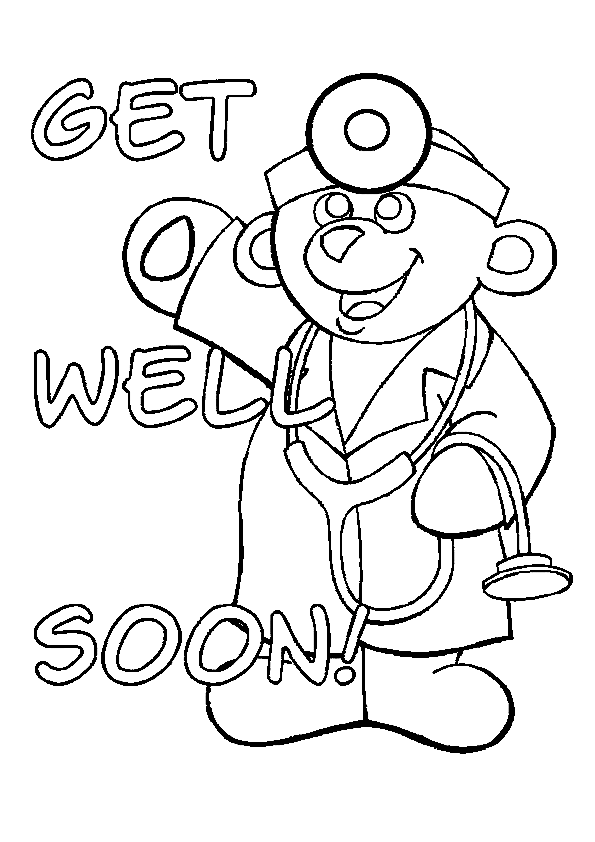
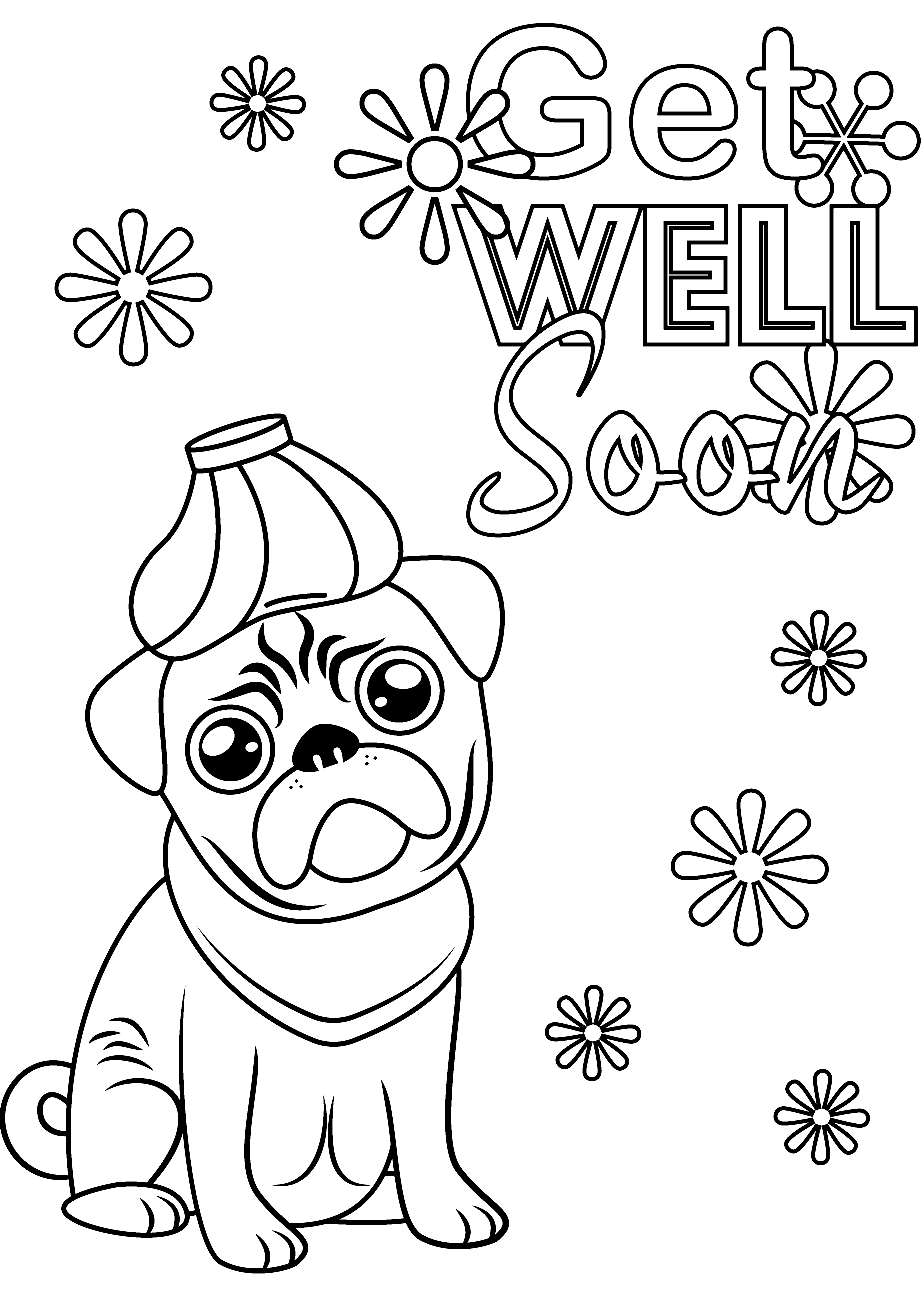
Free Get Well Soon coloring pages: 40+ pages featuring cheerful “Get Well Soon” typographic compositions with decorative borders, sunflower and bouquet pages with encouraging messages, cartoon animals with bandaged paws and thermometers, rainbow and sunshine hope pages, balloon bouquet scenes, warming soup bowl imagery, heart and star arrangements with “Feel Better” wishes, motivational “You Are Strong” pages, butterfly renewal scenes, cartoon germs being defeated by happy immune cells, teddy bears in cozy recovery scenes, and the full visual vocabulary of care, encouragement, and warmth that a handmade page carries to someone who is healing. All free, printable PDF and online coloring for anyone who wants to give someone a personal, hand-colored expression of support.
Get Well Soon coloring pages serve a dual purpose shared by few other categories in a coloring collection: they are both a creative activity for the person doing the coloring and a gift for the person who receives the finished page. A child who colors a sunflower page and gives it to a grandparent in the hospital has completed a purposeful, creative act with a direct social function: the page is evidence of care, the coloring is the labor of that care, and the cheerful imagery is specifically chosen to provide comfort during a difficult time.
The practice of sending illustrated cards and handmade artwork to people who are ill predates the commercial greeting card industry significantly: in medieval European hospitals run by religious orders, visitors brought illuminated devotional images and handcrafted items to the sick as expressions of spiritual and personal care. The get-well card industry developed in the 19th century alongside the broader greeting card market. The American Greeting Cards Association notes that “get well” cards consistently rank among the top-selling card categories annually.
These 40+ free pages at ColoringPagesOnly.com are designed to be colored and shared. All free, PDF or PNG, print or color online.

What’s Inside
“Get Well Soon” Typographic Pages
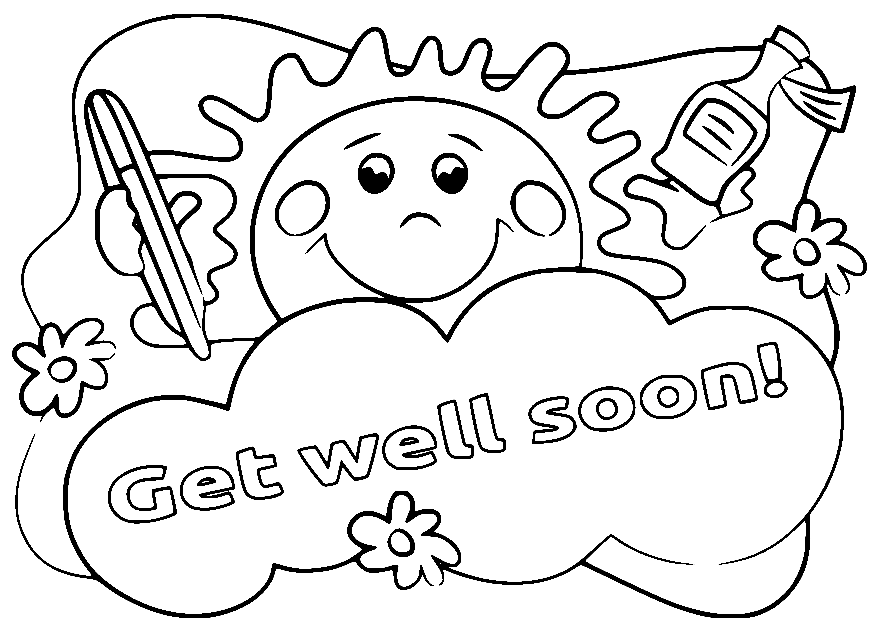
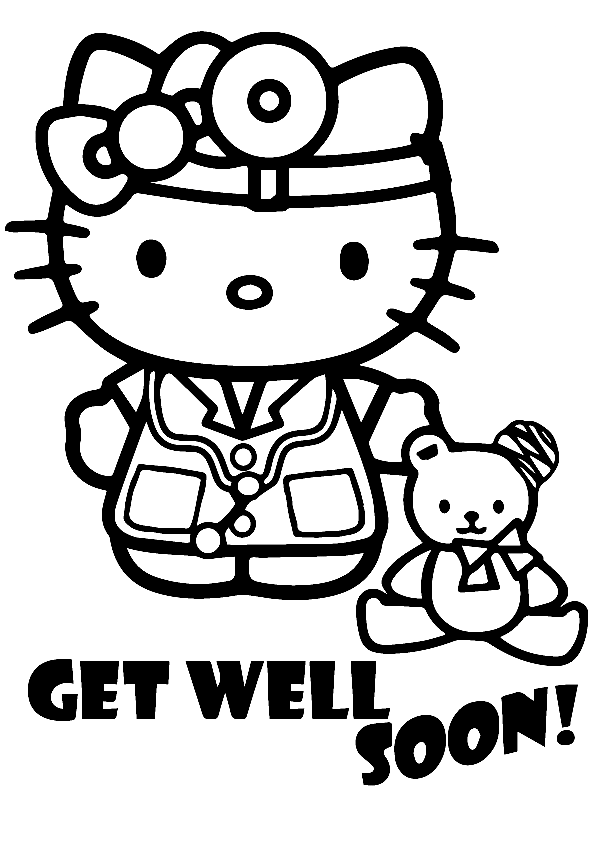
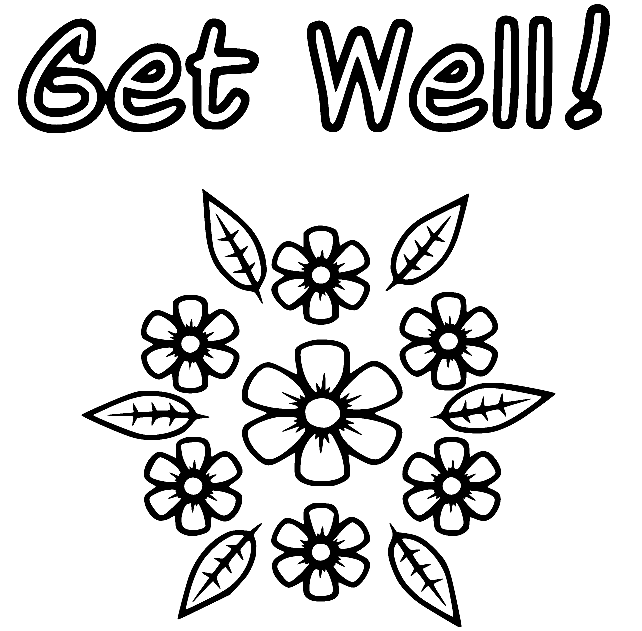
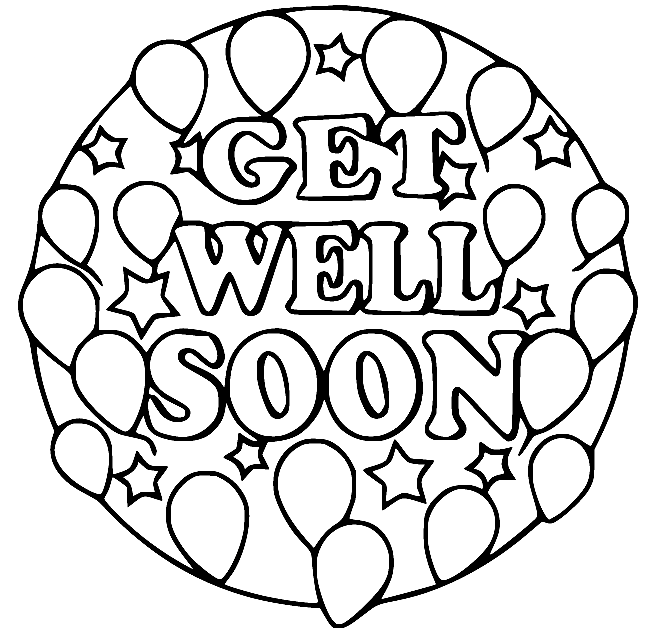
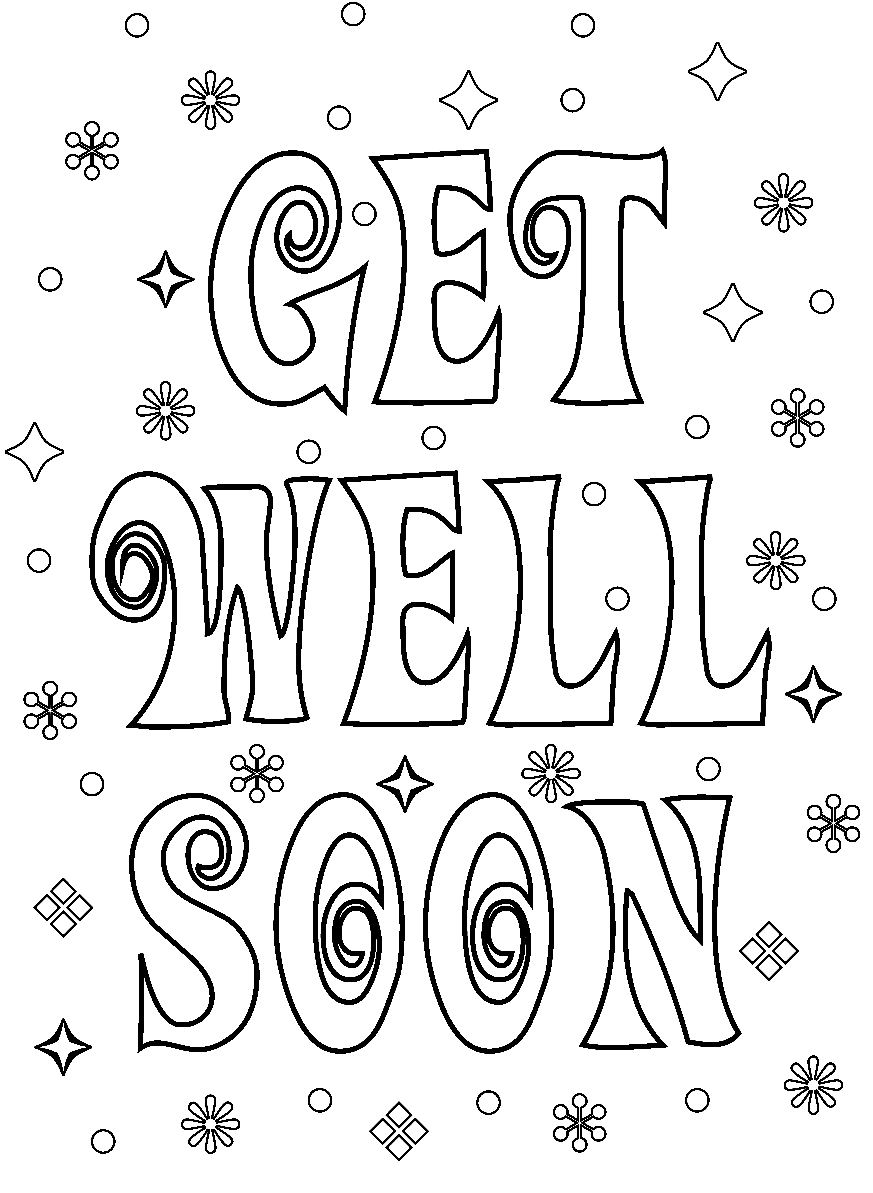
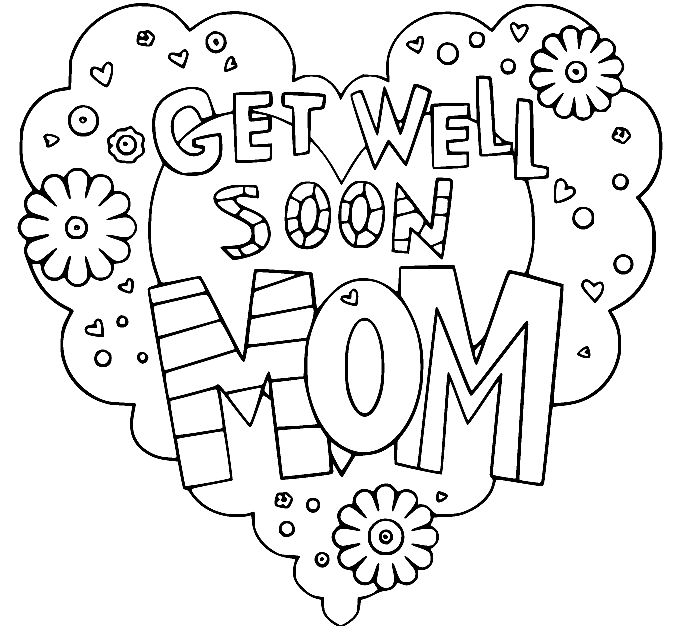
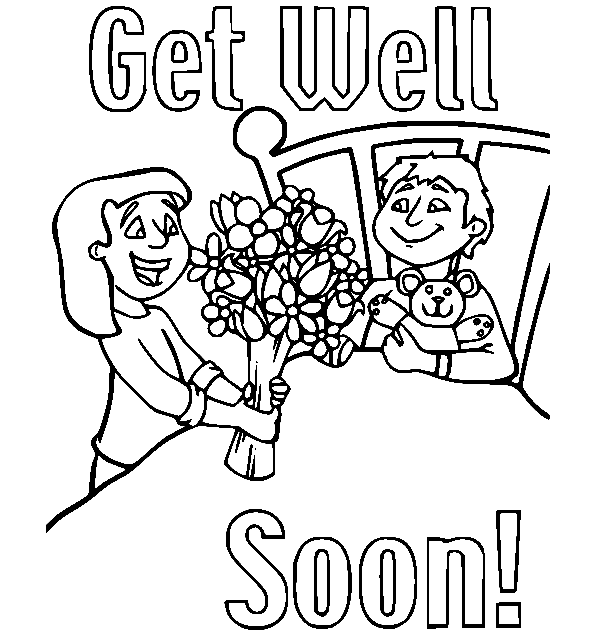
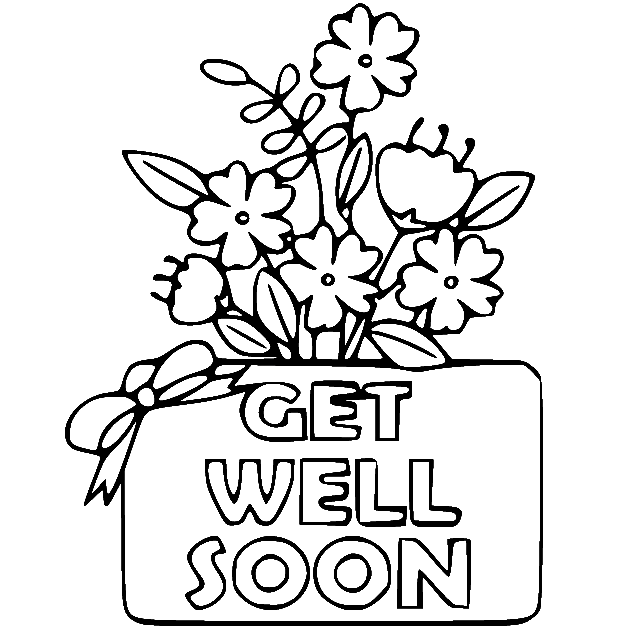
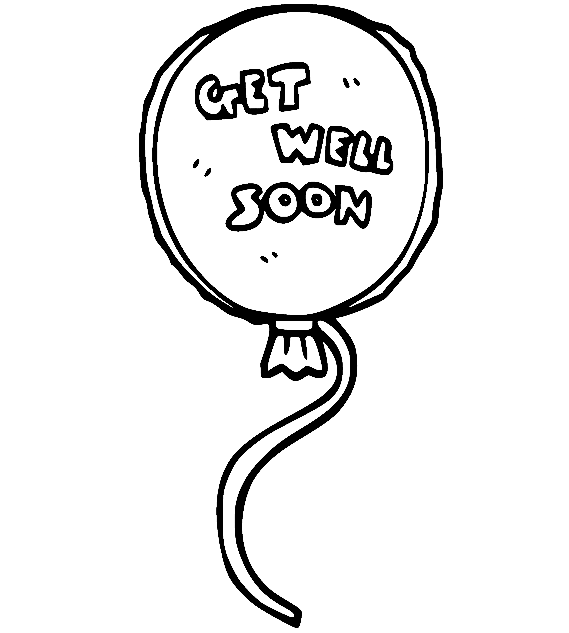
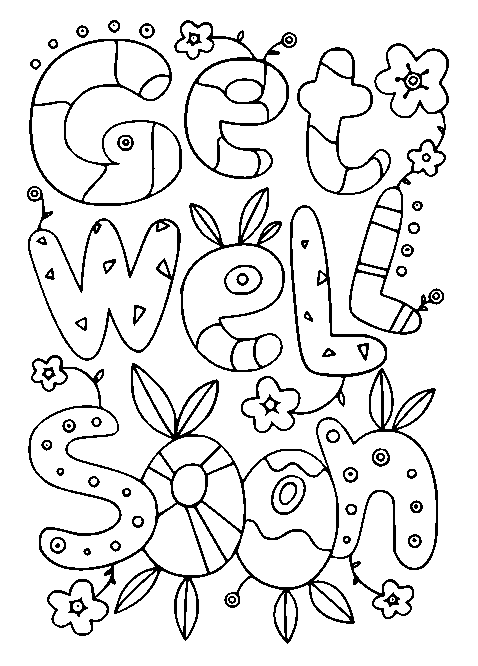
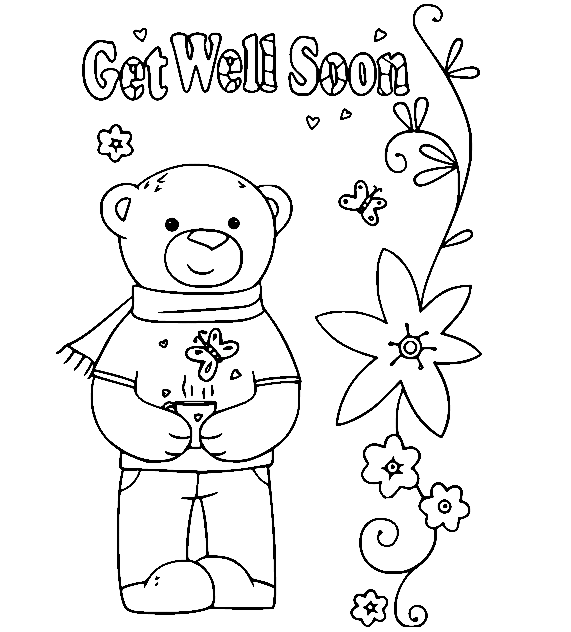
Text-centered pages showing “Get Well Soon” in large, decorative lettering with surrounding illustrated elements are the collection’s most directly communicative category: the message is stated, and the surrounding decoration provides the warmth that makes the stated message feel genuinely personal rather than formulaic.
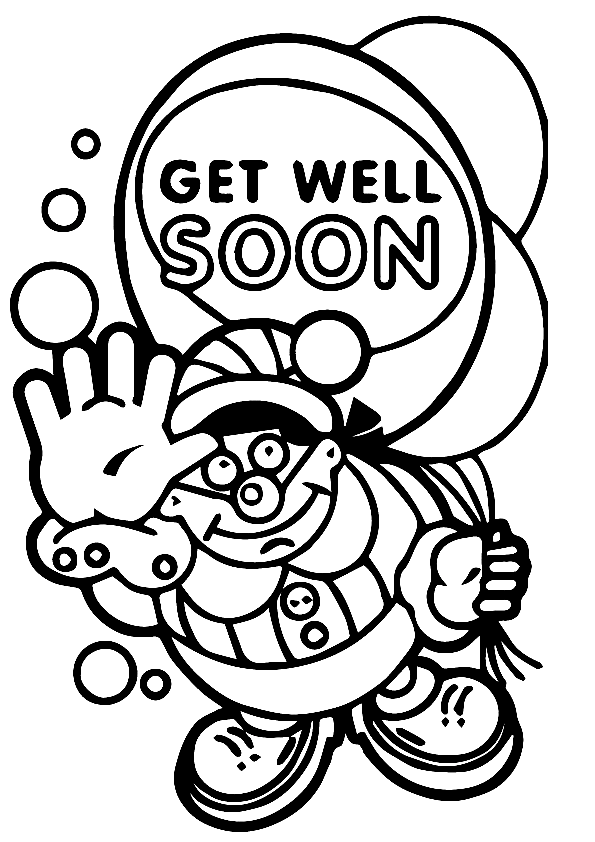
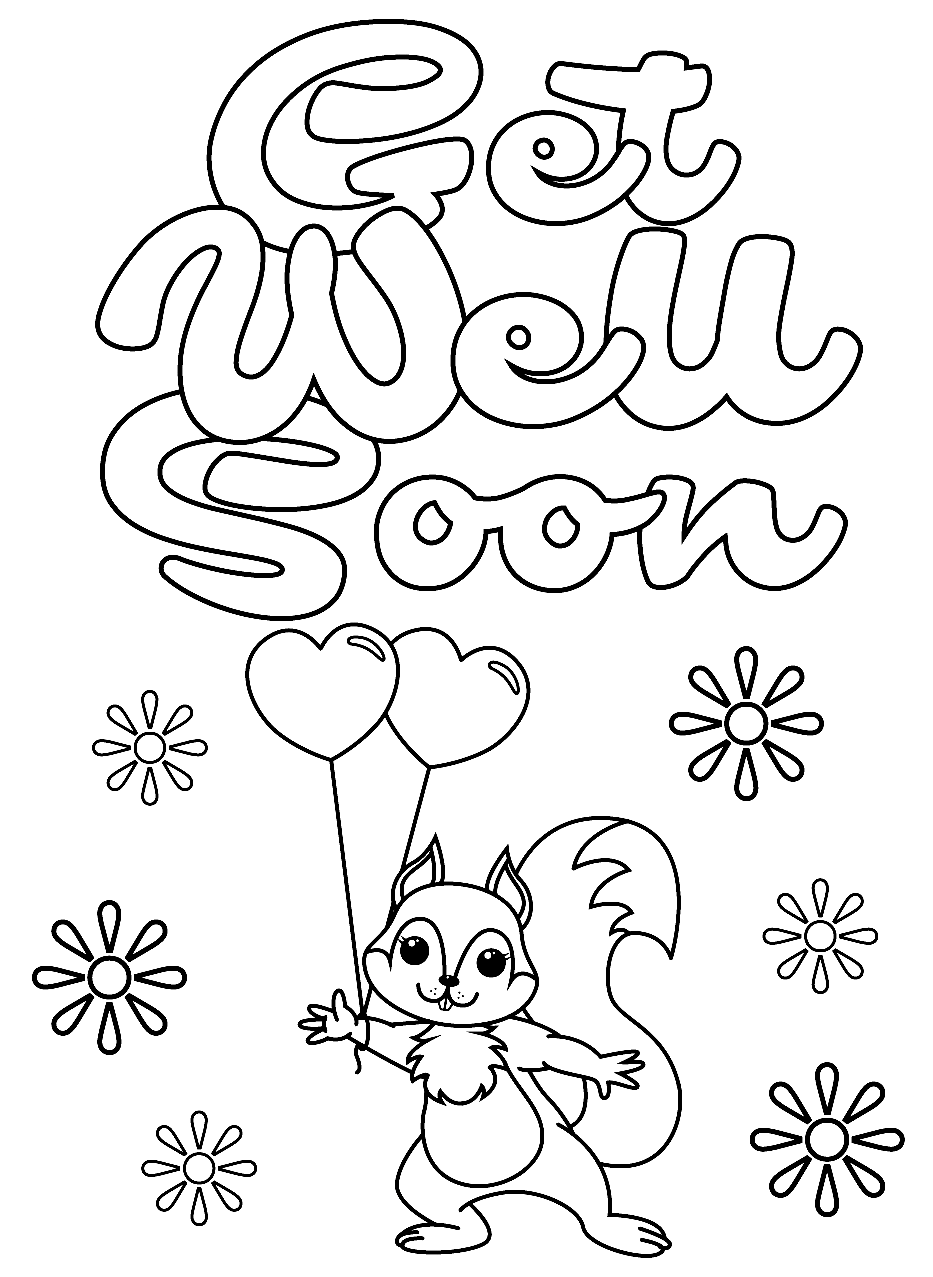
The typography on these pages varies from rounded, bubble-letter fonts accessible for younger colorists to more elaborate script and decorative lettering that rewards careful, detailed coloring by older children and adults. The decorative elements surrounding the text vary across pages: some use floral borders, some use star and heart clusters, some use banner and ribbon elements, and some use the specific visual vocabulary of balloons and confetti that associates the message with celebration and anticipation.
The choice of color for the letters themselves is the page’s most expressive coloring decision: vivid warm colors (vivid yellow, warm orange, bright green) suggest cheer and energy; softer pastel colors suggest gentleness and care; bold primary colors communicate the specific directness of a child’s handmade card.
Coloring typographic pages: The lettering is the primary visual element and should receive the most vivid, most carefully applied color in the composition. Bubble letters benefit from a highlight technique: apply the letter’s primary color at full coverage, then add a slightly lighter version of the same color at minimum pressure along the upper edge of each letter, suggesting the rounded surface of the bubble form catching light. Surrounding floral or decorative elements use their own natural color palettes.
Flower and Bouquet Pages
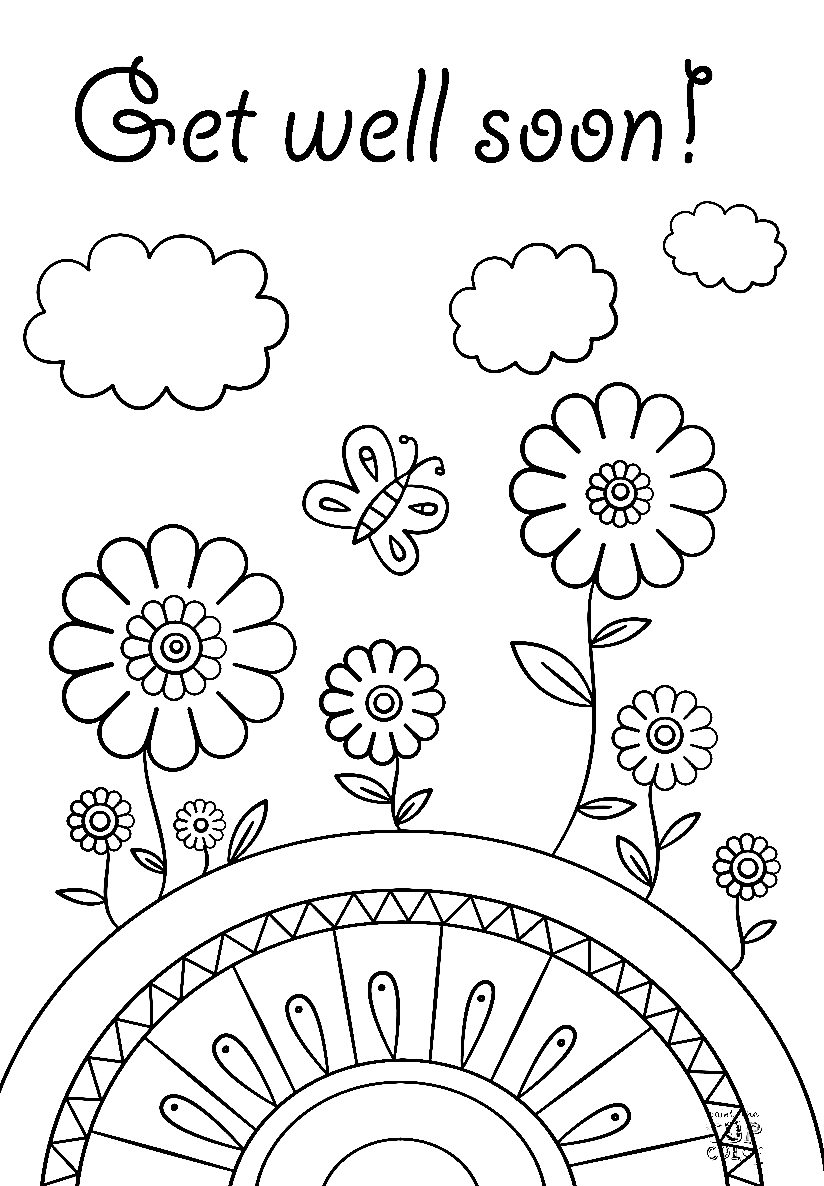
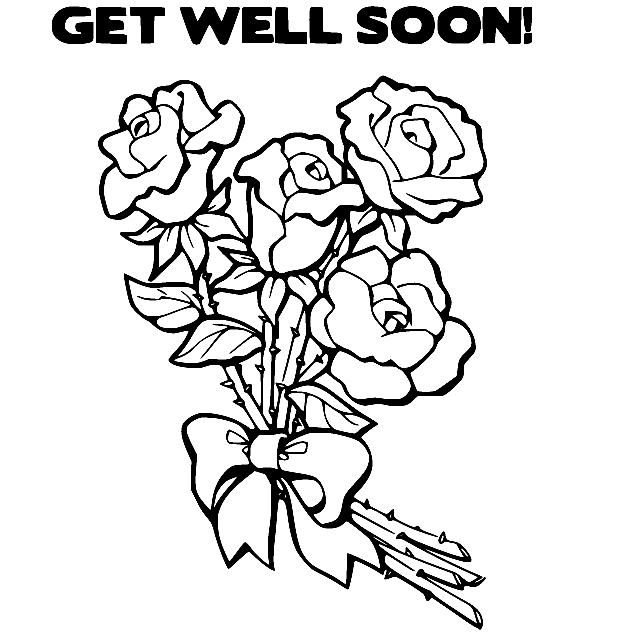
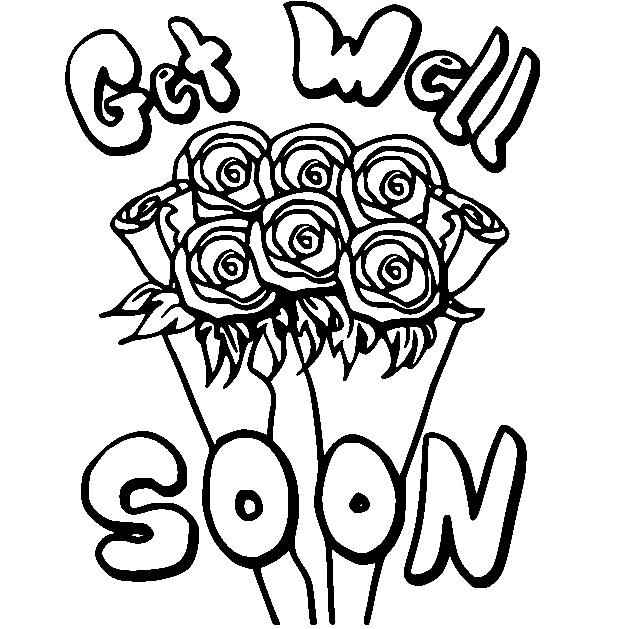
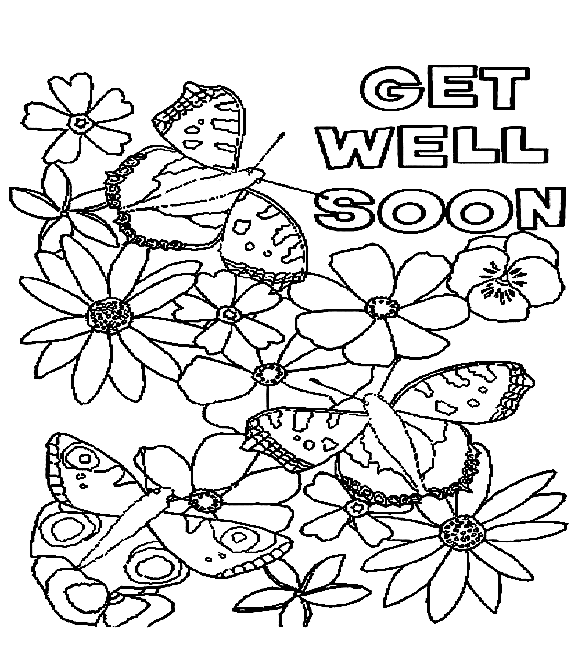
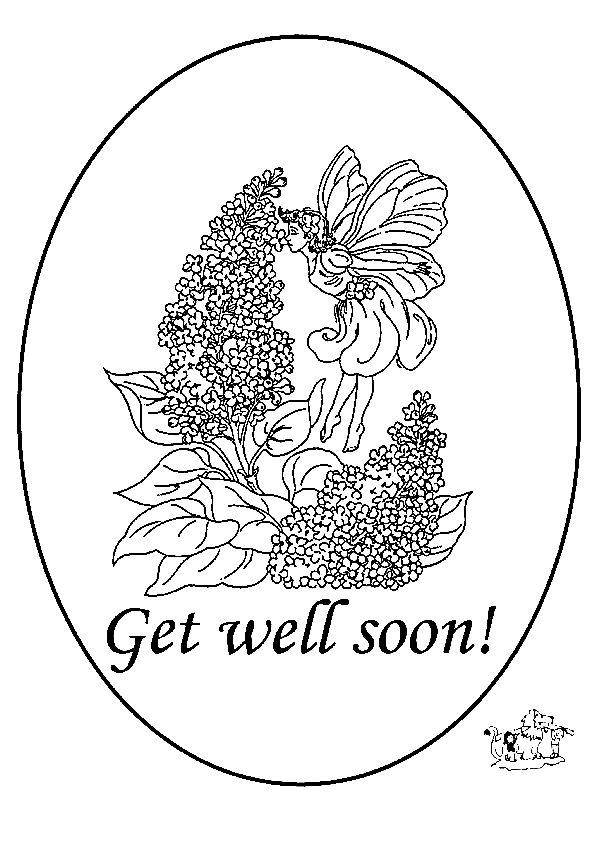
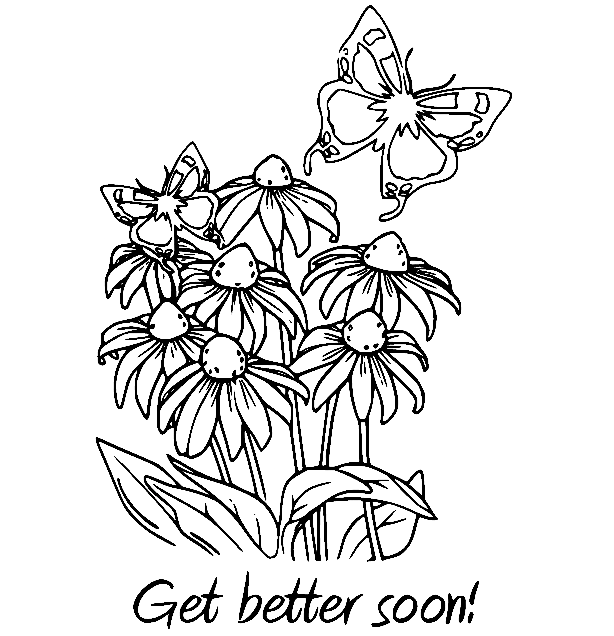
Flowers are the dominant imagery in get-well cards and get-well gifts across cultures: they communicate care through beauty, the effort of selection and giving, and the symbolism of life and growth that connects naturally to the concept of healing and recovery. Flower pages in this collection show sunflowers (associated with warmth and cheerfulness), daisies (simplicity and innocence), tulips (spring renewal), roses (love and care), and mixed garden bouquet arrangements.
The sunflower is particularly associated with get-well imagery because of its specific visual qualities: it faces the sun (suggesting optimism and orientation toward light), its large, bold face communicates confidence, and its vivid yellow color is among the most immediately cheerful in the color spectrum. Studies in environmental psychology have documented associations between yellow and yellow-adjacent colors and mood elevation, making sunflower imagery a functionally appropriate choice for recovery contexts.
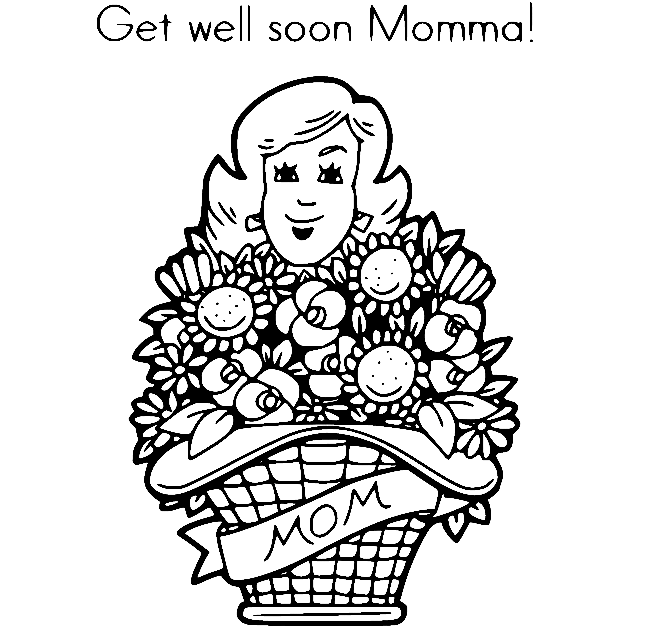
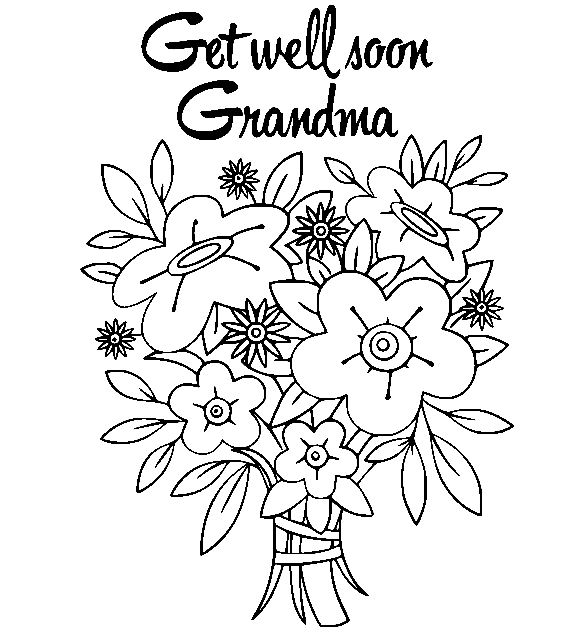
Flower bouquet pages in vase or basket arrangements reference the most common physical gift given to people who are ill or recovering: fresh flowers in a container, brought to hospital rooms and home recovery settings as physical evidence of care that changes and brightens the environment.
Coloring flower pages: Sunflowers use vivid warm golden-yellow for the petals, with deep warm brown-orange for the large seed disc at the center. Apply the yellow petals fully before addressing the central disc. Daisies use white petals (the paper’s natural white or very pale cream) with vivid warm yellow at the center disc. Tulips use the full range of tulip colors depending on the chosen variety: vivid red, vivid pink, vivid orange, and soft lavender. Leaves and stems throughout use medium warm green.
Cartoon Animals in Recovery Pages
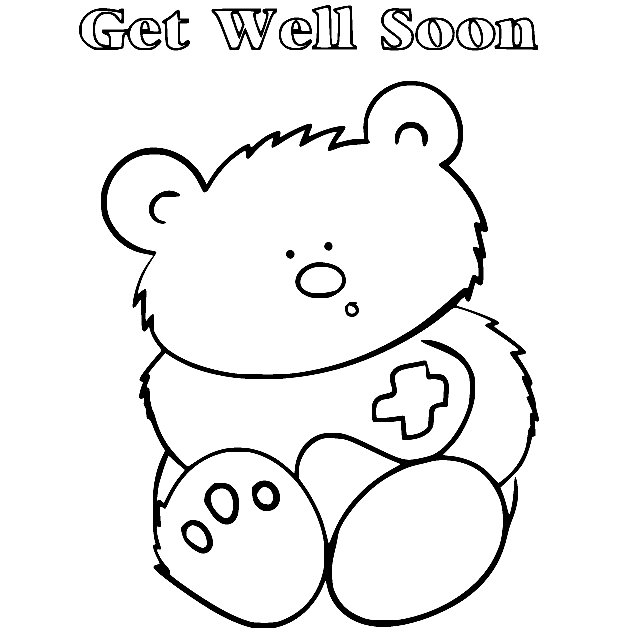
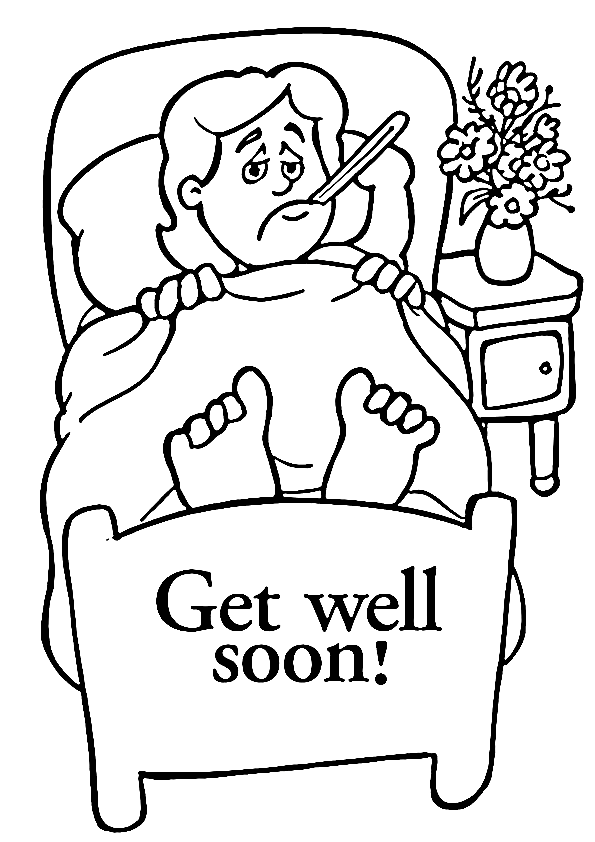
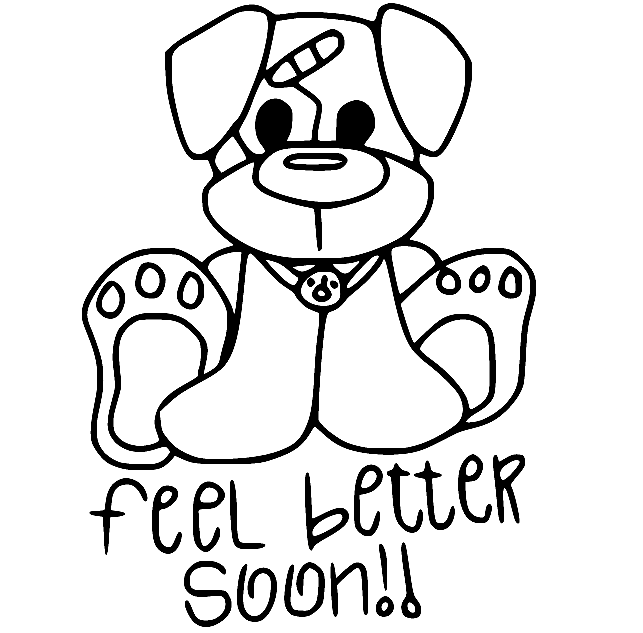
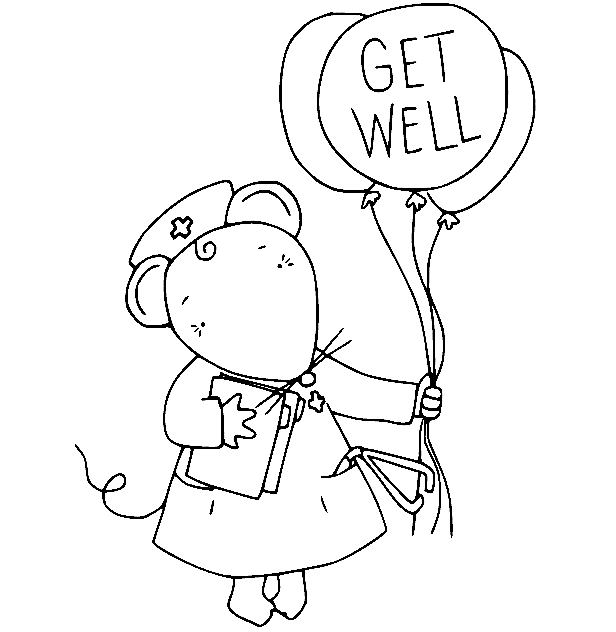
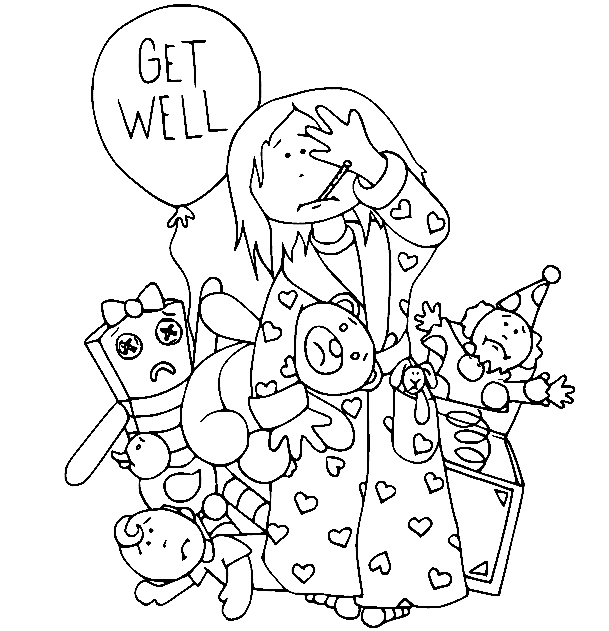
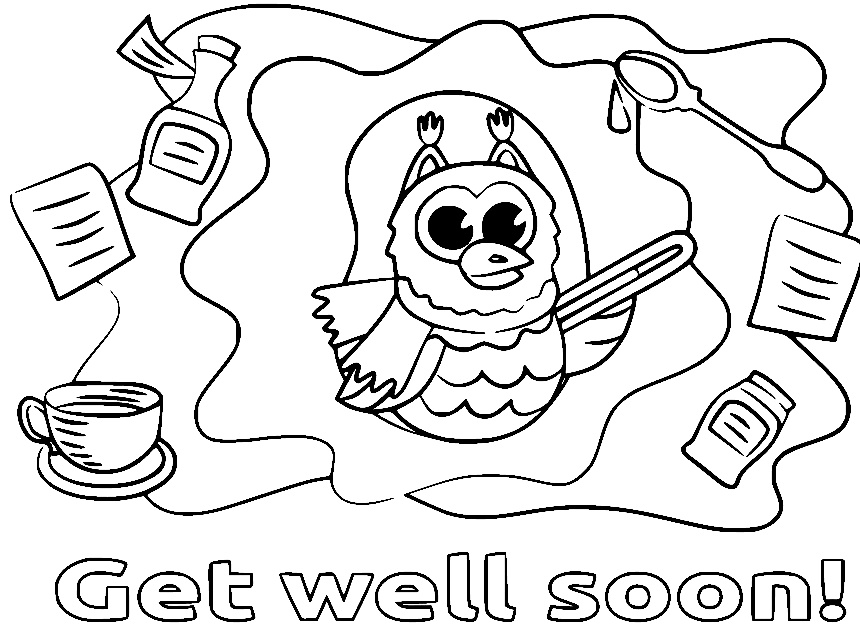
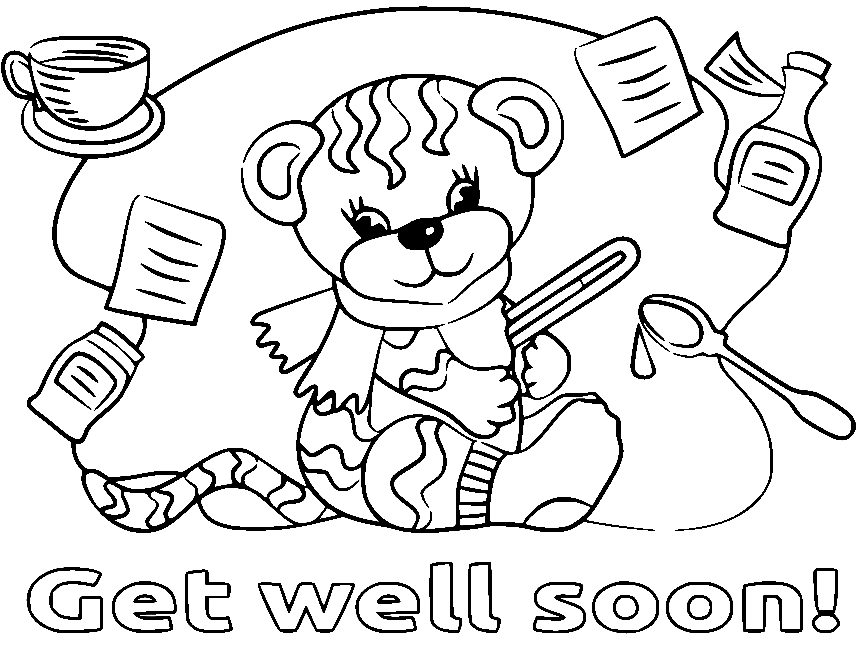
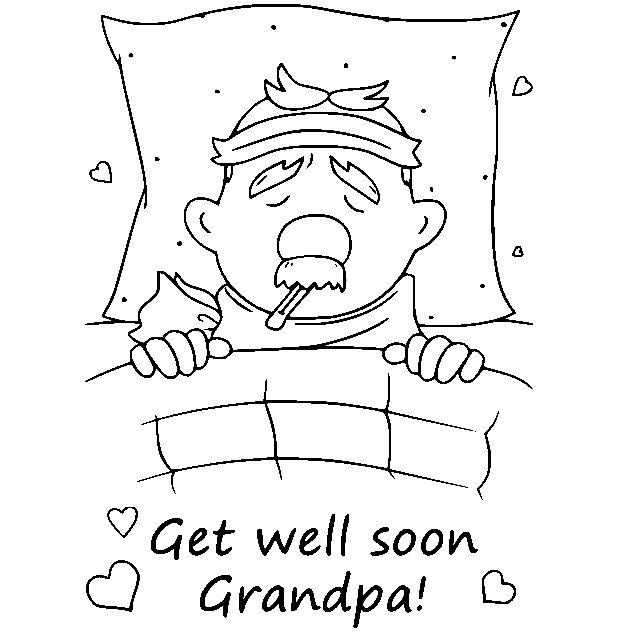
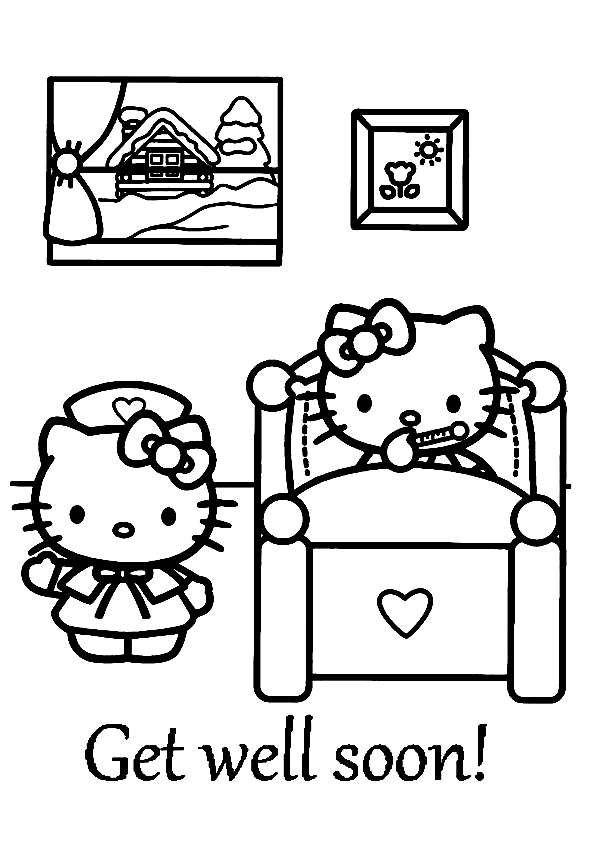
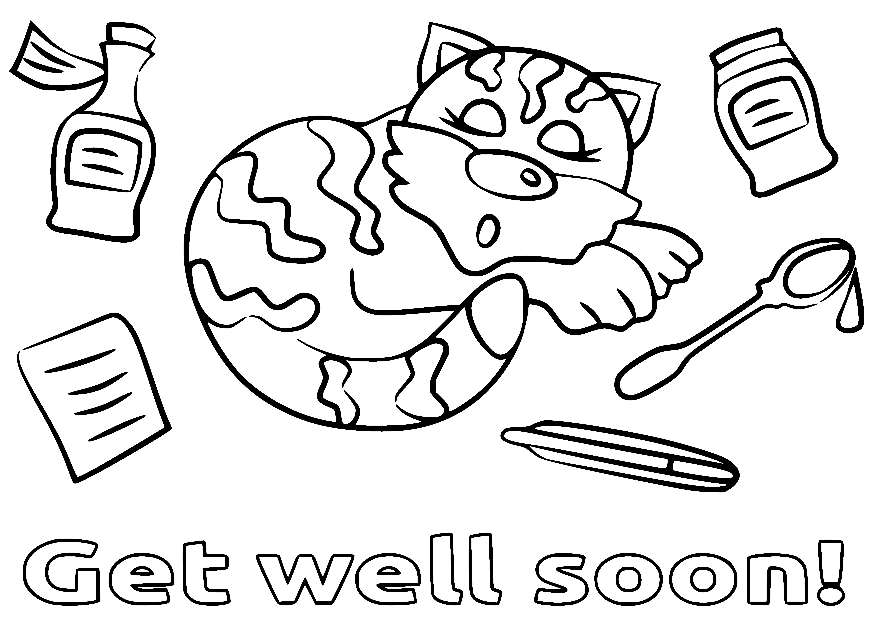
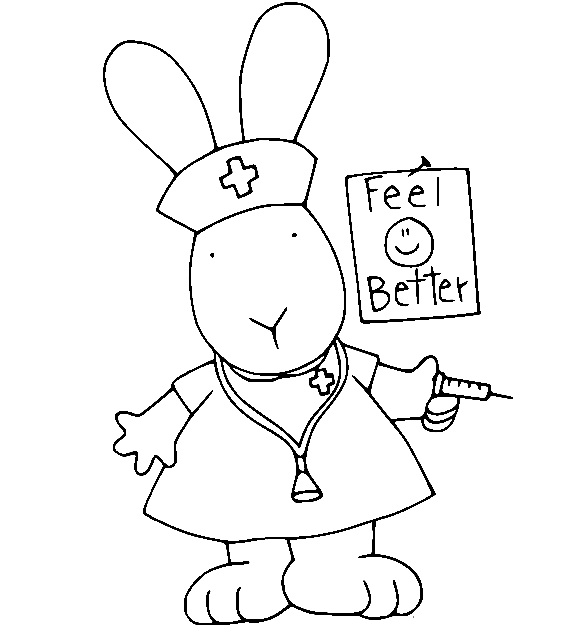
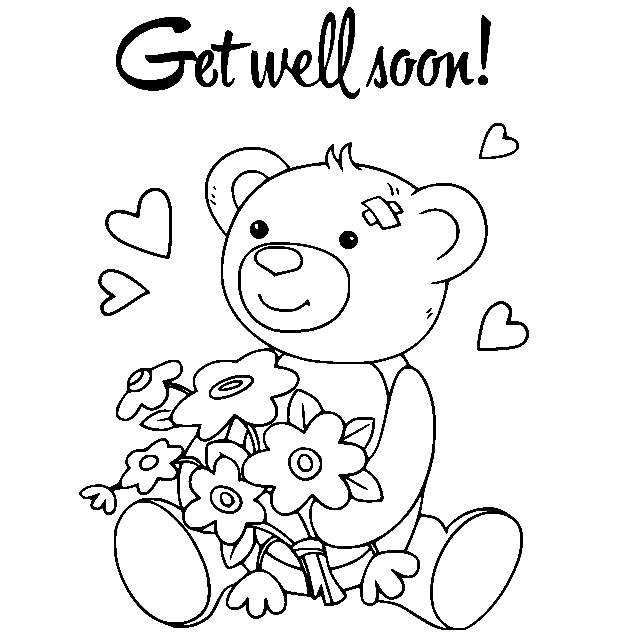
Cartoon animals with bandages, thermometers, and hot water bottles are the collection’s most gently humorous category: they take the specific imagery of illness (the bandage, the thermometer, the medicine cup) and render it cheerful through cartoon anthropomorphization, reducing the perceived seriousness of the recovery context to a register that is manageable for young children receiving these pages and funny rather than worrying for older children and adults.
A cartoon bear with a bandaged paw and a cheerful expression, sitting in a small bed with a thermometer, a hot water bottle, and a bowl of soup nearby, communicates the cozy, cared-for quality of a good recovery: the patient is warm, attended to, and comfortable. The humor of the situation (a bear in a hospital bed) distances the imagery from any clinical anxiety while maintaining its essential message of care.
These pages are particularly effective for children who are ill themselves and who are coloring pages as their own therapeutic activity: the cartoon animal in recovery is a relatable figure who is clearly going to be fine, and whose situation is presented as temporary and manageable.
Coloring cartoon animal pages: The animal’s bandage or cast is typically white gauze with medical tape elements in pale blue or beige. The thermometer shows a red mercury line indicating fever. Any soup or tea elements use warm amber-gold for the liquid. The hospital or recovery setting elements (blankets, pillows) use soft, warm colors that suggest comfort rather than clinical environments.
Rainbow and Sunshine Pages
Rainbow and sunshine pages are the collection’s most optimistic compositions: they show the specific imagery of weather passing and light returning, which maps directly onto the experience of illness and recovery. The rainbow appears after the storm has passed, and the sunshine returns after a dark period. Both images carry their hopeful message through the natural metaphor without requiring text to articulate it.
Pages combining a rainbow with the text “After every storm comes a rainbow” or showing a sunshine face with “Sending you sunshine today” make the metaphorical connection explicit, giving the image a specific verbal message to accompany its visual warmth.
The color range required for rainbow pages is the widest of any page in the collection: all six standard rainbow colors (red, orange, yellow, green, blue, violet) in their canonical sequence from outer arc to inner arc. This color challenge makes rainbow pages particularly engaging as coloring activities and particularly vibrant as finished pieces.
Coloring rainbow pages: Apply rainbow colors in strict spectral sequence from outer arc (red) to inner arc (violet): red, orange, yellow, green, blue, violet. Each color should be vivid and fully saturated to create the specific visual impact of a rainbow. Any clouds at the rainbow’s endpoints are fluffy white or very pale grey. The sky area above and around the rainbow uses a warm light blue.
Motivational and Encouraging Message Pages
Pages with motivational messages go beyond the standard “Get Well Soon” to address the specific emotional experience of illness: “You Are Stronger Than You Know,” “One Day at a Time,” “This Too Shall Pass,” “You’ve Got This,” and similar messages acknowledge that recovery can be difficult while affirming the person’s capacity to get through it.
These pages are particularly appropriate for adult recipients who are managing serious illness, chronic conditions, or extended recovery periods where the simple “Get Well Soon” message may not accurately reflect the timeline or the nature of the condition. A message like “One Day at a Time” is more appropriate for a friend managing a long-term health challenge than a simple “Get Well Soon” that implies a quick, clean recovery.
The visual design of these pages typically uses bold, clean typography against a minimal decorative background: the message is primary, and the visual supports it without competing with it.
Coloring motivational pages: The text is the primary coloring element and should receive the most vivid, most carefully chosen color treatment. For motivational messages, warm, vivid colors (vivid orange, warm red, vivid yellow) communicate energy and strength. For gentler, more contemplative messages (“One Day at a Time”), softer, cooler tones (lavender, soft teal, warm cream) communicate patience and calm acceptance.
Comfort and Cozy Imagery Pages
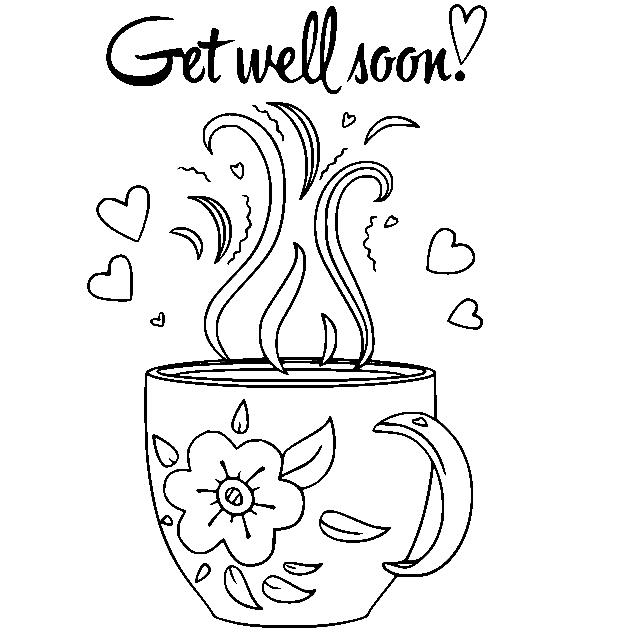
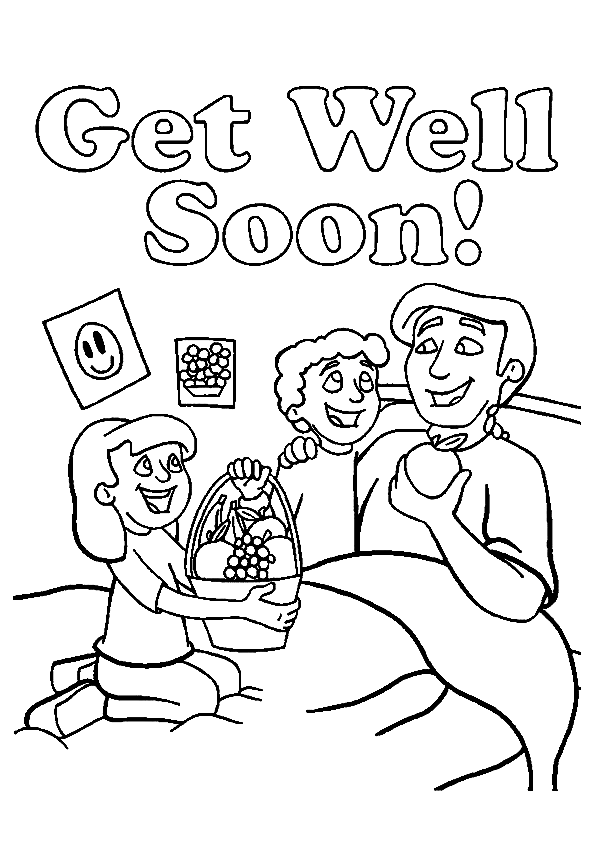
Pages showing the specific comfort imagery of recovery: a steaming bowl of soup with a kind message, a warm mug of tea with a heart, a soft blanket with flowers, or a cozy bedside scene with books and flowers, address the experiential quality of being cared for during illness. These pages acknowledge that recovery involves rest, warmth, and small pleasures, and they celebrate these humble comforts as genuine goods.
The bowl of soup is one of recovery’s most culturally consistent icons across Western and many non-Western cultures: “chicken soup for the cold” has been a folk remedy recommendation since at least the medieval period, and the specific warmth and ease of liquid food during illness gives it a cultural weight beyond its nutritional content. Hot tea similarly carries the warmth and ease that the recovery context requires.
Coloring comfort imagery pages: Steam rising from hot soup or tea should be rendered as very pale grey or white wavy lines at minimum pressure, suggesting steam without drawing heavy opaque marks that compete with the warm food imagery. The soup bowl or tea mug uses warm earth tones for the ceramic and warm amber-gold for the liquid surface. Any hearts or decorative elements on the vessel use vivid warm red or pink.
What These Pages Do
Art therapy has been a recognized therapeutic modality in healthcare settings since the American Art Therapy Association was founded in 1969. Art therapy is used in oncology wards, pediatric hospitals, rehabilitation centers, and mental health settings, and its benefits have been documented across a range of clinical outcomes. A 2006 review published in the Annals of Internal Medicine found significant positive effects of arts-based interventions on patient outcomes, including reduced anxiety, reduced depression, and improved quality of life during illness and recovery.
Get Well Soon coloring pages function within this evidence base in two distinct ways. For the person doing the coloring (typically a child or family member of the ill person), the coloring activity provides the documented benefits of structured coloring: focused attention, the meditative quality of a repetitive, controlled task, and the specific satisfaction of completing a creative work. The 2005 Art Therapy Journal study on structured coloring and anxiety reduction is directly applicable here.
For the person receiving the finished page, the handmade quality of a colored page communicates something that a commercially purchased card does not: the giver spent time, made choices about colors, and completed an act of care specifically for the recipient. Research on social support and health outcomes, including work by Sheldon Cohen at Carnegie Mellon University published in the American Psychologist in 2004, has documented associations between perceived social support and improved health outcomes, including faster recovery from illness and greater resilience under health stressors.
The American Academy of Pediatrics identifies fine motor skill development as a key childhood milestone throughout early childhood. The decorative letter rendering of typographic pages, the petal-by-petal flower coloring, the careful thermometer and bandage detail of cartoon animal pages, and the strict sequence work of rainbow pages all provide motivated fine motor practice for young colorists who are making something for someone they care about. Purpose-driven activities have been specifically noted in pediatric occupational therapy literature as producing stronger engagement and longer sustained attention than abstract practice activities.
How to Color These Pages Well
Color warmly throughout: this is not the context for cool, dark, or muted palettes. Get Well Soon pages communicate care and warmth, and the color palette should reflect that intent. Every page in the collection should use warm, vivid, or soft-warm colors rather than cool, dark, or muted tones. Cool blue-greys, dark purples, or muted earth tones make the page feel heavy or sad in the context of a get-well message. The warm end of the color spectrum, including vivid yellows, warm oranges, bright pinks, soft peaches, and vivid greens, communicates the energy, care, and optimism the pages are designed to carry.
Write a personal message after coloring, before giving. The finished coloring page becomes significantly more personal and more meaningful when the colorist adds a handwritten message in the white space of the composition: a note in the border, a message at the bottom, or a few words written carefully within the page’s decorative elements. Children writing messages to sick grandparents or family friends in their own handwriting, however imperfect, produce a much more powerful expression of care than the same page given without a personal inscription.
Match the message to the recipient’s specific situation. The collection contains pages with very different emotional registers: the cartoon bear with a bandaged paw is funny and appropriate for a child with a sprained wrist; the “One Day at a Time” motivational page is more appropriate for an adult managing a serious long-term condition. Before selecting which page to color and give, consider what the recipient is actually experiencing and which page’s specific message and imagery will most accurately and kindly address their situation.
Allow the coloring to be thorough and complete before giving. A finished coloring page, with all areas colored and the composition visually complete, communicates more care than a partially colored page. Young children who are given these pages should be encouraged to complete the coloring before the page is given, even if that means the adult helps color the more difficult areas. The completeness of the page contributes to the care it’s giving communicates.
Sign the page on the front before coloring to plan the available space. If the colorist intends to write a message or their name on the page, plan where this will appear before applying any color. Signing in the lower margin or in a specific white area of the composition allows the message to remain legible. Writing over heavily applied color makes the inscription difficult to read.
5 Creative Craft Ideas
The Group Card Page
When a school class, workplace team, sports team, or other group wants to send a get-well message to a member who is absent due to illness, a single large coloring page can function as a group card. Print the largest, most decoratively bordered typographic “Get Well Soon” page in the collection.
Rather than one person coloring the entire page, assign different sections to different group members: each person colors one flower, one section of the border, one letter of the text, or one small decorative element. Each person then writes their name and a brief personal message in or around their colored section.
The resulting page is a genuinely collaborative expression of collective care, with each person’s individual color choices and handwriting visible within the unified composition. Mount on cardstock before giving it weight and durability.
The Recovery Week Kit
For someone facing a longer recovery (post-surgery, extended illness, or a period of reduced mobility), print a full collection of seven different pages: one for each day of a week. Choose pages with different imagery across the seven (flowers, rainbow, cartoon animal, sunshine, motivational text, comfort imagery, and a final celebratory page).
Color all seven before giving. On the back of each page, write the day of the week and a specific personal message for that day. Package all seven in a simple folder or envelope tied with ribbon.
Label the front: “A page for each day of this week. Color them in order or out of order, whichever feels right. One of them is for Tuesday. One of them is for the day you feel better. One of them is for the day that feels hardest. They are all here.”
The “Get Well” Coloring Date
For a child who is ill at home and is well enough for gentle activity but not well enough for school or outdoor play, invite them to color one of these pages themselves: a specific, purpose-driven coloring activity that addresses the specific experience of being homesick.
The child colors the page not to give to someone else but to display in their own recovery space: above the bed, on the window, or beside the couch they are resting on. The page becomes a self-directed act of self-care, making their recovery space more cheerful through their own creative effort.
Choose the page together: “Which one would make you feel better to look at while you rest?” The choice itself is an act of agency in a situation that may feel out of the child’s control. Frame the finished page and leave it in their recovery space for the duration of their illness.
The “Thinking of You” Distance Gift
For someone who is ill at a geographic distance and cannot receive an in-person visit, a colored page sent by mail carries the specific warmth of something handmade in a way that a purchased card does not. Print and color a page, write a personal message, and mail it in a flat envelope with a piece of cardboard to keep it from bending.
A child’s colored page sent by mail to a grandparent who is recovering from surgery, or to a friend from another city who is managing a difficult illness, arrives as physical evidence of care that exists in the recipient’s home and recovery space. It can be displayed. It can be held. It has the specific quality of something a specific person made and sent.
On the envelope, write: “Colored by [name], [date]. For [recipient’s name], who we are thinking about today.”
The Get Well Coloring Book
For someone facing a longer recovery or hospital stay where they will have significant time in bed or in a limited environment, print and assemble a small personal coloring book from the collection. Print 10 to 15 pages covering a range of imagery from the collection: some typographic, some floral, some cartoon animals, some motivational, some comfort imagery.
Bind the pages with a simple folder clip or staple along one edge. Add a cover page with the recipient’s name: “[Name]’s Get Well Soon Coloring Book.” Include with the book: a small set of colored pencils or crayons, a sharpener, and a personal note.
The coloring book gives a recovering person a purposeful, engaging activity for the specific hours when visitors are gone, the evening is long, and the television has nothing on. The activity is absorbing, calming, and productive in a context where all three qualities are difficult to access.
Frequently Asked Questions
What are Get Well Soon coloring pages, and who are they for? Get Well Soon coloring pages are printable coloring sheets featuring cheerful imagery, encouraging messages, and “Get Well Soon” or similar sentiments. They serve two primary audiences. For the colorist (typically a child or family member), they provide a purposeful, creative activity: coloring a page specifically intended as a personal gift for someone who is ill. For the recipient, they represent a handmade expression of care that carries the visible evidence of the giver’s time and attention. They are appropriate for anyone wanting to send a personal, hand-colored message of support to a friend, family member, classmate, or colleague who is sick or recovering.
Why give a colored page instead of a store-bought card? A hand-colored page communicates care in a way that a commercially purchased card does not: the giver spent time making choices about colors, completing the coloring, and personalizing the page. Research on social support and health outcomes, including work published in the American Psychologist, has associated perceived social support with improved health outcomes and faster recovery from illness. The handmade quality of a colored page signals more invested personal attention than a purchased card. For children, the act of coloring for someone they care about is also developmental: it gives them an active, productive role in responding to a family member’s illness rather than a passive, helpless one.
Can the ill person themselves color these pages as a therapeutic activity? Yes, and this is one of the collection’s most appropriate secondary uses. Art therapy is a recognized therapeutic modality in healthcare settings, used in oncology wards, pediatric hospitals, and rehabilitation centers. The American Art Therapy Association, founded in 1969, documents the specific therapeutic benefits of art-making during illness. The 2005 Art Therapy Journal study on structured coloring and anxiety reduction found measurable calming effects from focused coloring activity. For a person who is ill, home-bound, or in a hospital setting with limited activity options, coloring can provide focused attention, a sense of productive accomplishment, and the calming quality of a structured, repetitive task.
Which pages are most appropriate for children who are ill? Cartoon animal pages with gently humorous illness imagery (a bear with a bandaged paw, a bunny with a thermometer) are most appropriate for children who are ill themselves: they address the experience of illness in a non-frightening, relatable way through humor and anthropomorphization. Sunshine and rainbow pages with “Feel Better Soon” messages are also well-suited for young colorists. The simple, large-area pages without complex detail are most accessible for a child who may be tired, physically limited, or less energetically engaged than usual. Avoid pages with very small detail work for very young, ill children who may find the fine motor demands frustrating rather than calming.
How do I personalize a colored page before giving it? A handwritten personal message significantly increases the impact of a colored page as a gift. Write the message in any available white space in the composition: in the page’s border, along the bottom margin, or within a decorative element. Include: the recipient’s name, a brief personal message reflecting your specific relationship and their specific situation, and your own name or signature. For children giving pages to adults, encourage the child to write the message themselves in their own handwriting: the imperfection and personality of a child’s handwriting make the message more personal, not less. If the page will be mailed, write the message before rolling or folding, and protect the page with cardboard during mailing.
What colors work best for get-well pages? Warm, vivid, or soft-warm colors throughout are most appropriate for get-well pages. The emotional intent of the pages is care, warmth, and optimism, and these qualities are best communicated through warm yellows, vivid oranges, bright pinks, vivid greens, and cheerful blues. Cool, dark, or muted tones (grey-blues, dark purples, muted browns) communicate heaviness or sadness in this context. Vivid yellow is specifically associated in color psychology research with energy and optimism. Warm peach and pink tones communicate care and gentleness. The most effective get-well pages tend to use a warm, cheerful palette consistently throughout rather than mixing warm and cool elements.
What age group are these pages best suited for? Get Well Soon coloring pages serve two overlapping age groups. For the colorist giving the page: children from ages three and four can color simpler flower and star pages to give to family members; children from ages five to ten can manage most of the collection’s pages; teenagers and adults can color the more complex typographic and motivational pages with the detail and personal inscription that makes them most meaningful as gifts. For the recipient: the pages are appropriate gifts for any age, from young children through older adults, with page selection matched to the recipient’s age (cartoon animals for children, flowers, and motivational messages for adults). The collection is most immediately relevant for school-age children who want to make something for a sick friend, family member, or teacher.
Browse the full collection at ColoringPagesOnly.com. All 40+ pages free, no sign-up, PDF or PNG, print or color online.
Someone is sick. The feeling of wanting to do something and not knowing what to do is specific and uncomfortable. The coloring page gives it a form: here is a thing to make, here is care you can put into it, color by color, here is what it looks like when you are done, here is how you give it.
The American Art Therapy Association was founded in 1969. Hospital wards have had art programs for longer than that. The research on social support and health outcomes suggests that the connection matters. The colored page is evidence of a connection. It can be held. It can be put on the window. It can be the thing in the room that was made specifically for the person in that room.
Pick up the warmest yellow available. The sunflower petals go first. Pick up the warm orange for the center. Add a message in the white space at the bottom in your own handwriting. Sign your name. Give it to the person who needs it.
Share your work on Facebook and Pinterest and tag #Coloringpagesonly. The group card page and the recovery week kit displays are particularly worth sharing.
Color it warm. Write the message. Give it to the person who needs it most. That is what the page is for.