Mexican Flag Coloring Pages
 By:
Charlotte Taylor – Writer
Updated:
By:
Charlotte Taylor – Writer
Updated:
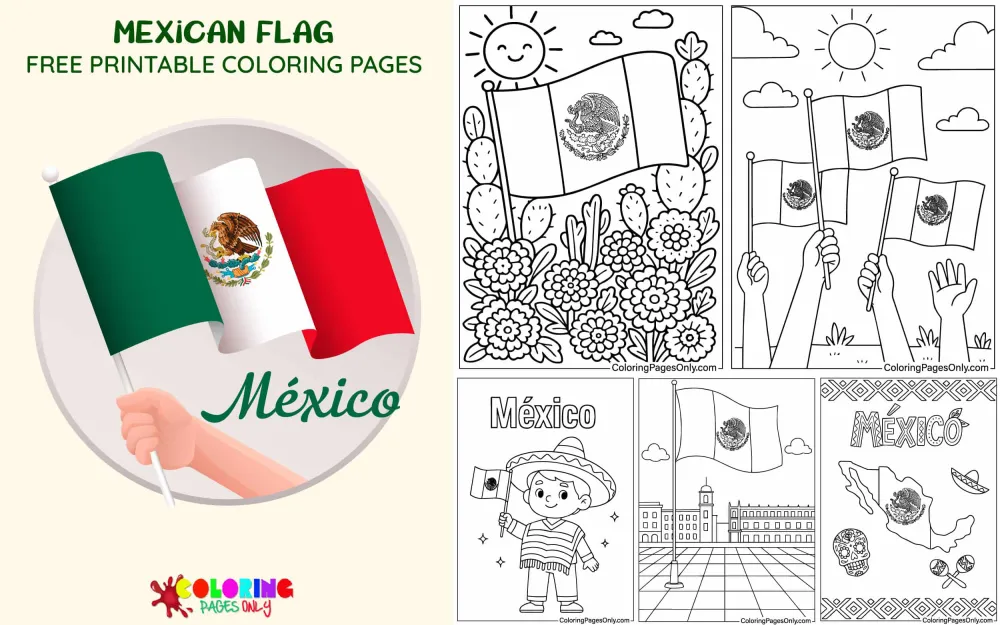
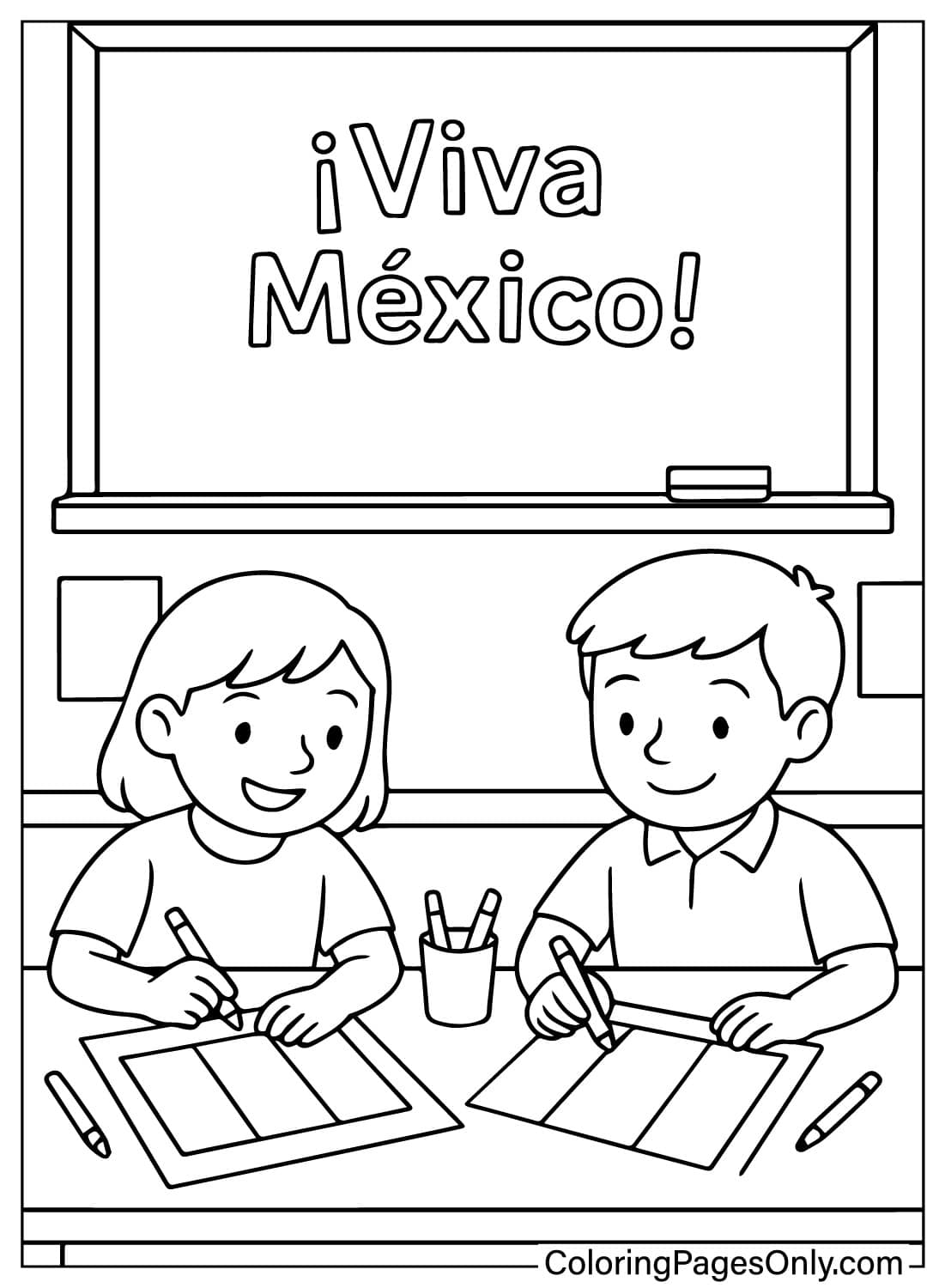
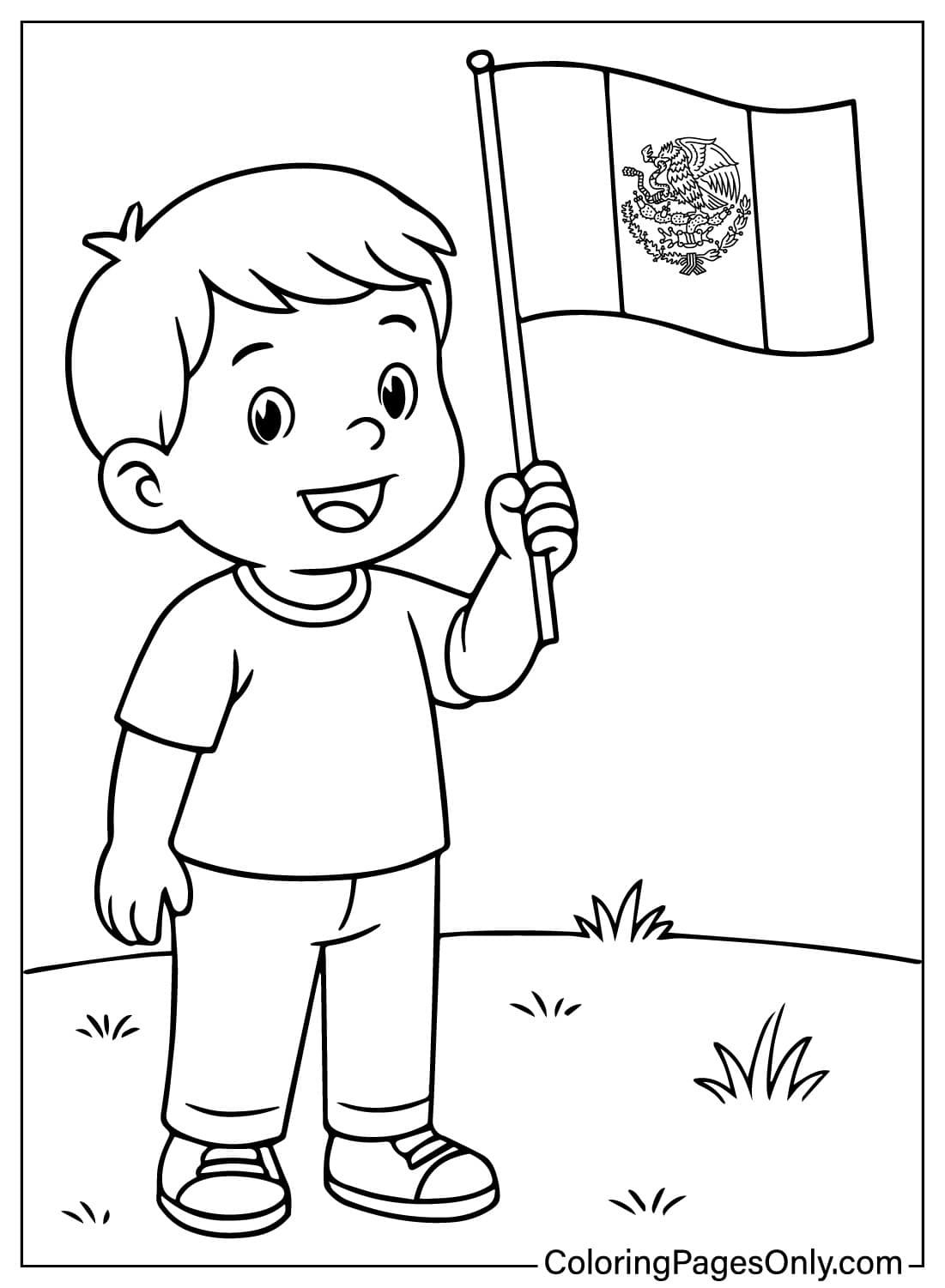
Free Mexican flag coloring pages: 32 printable PDF designs featuring the classic tricolor flag and coat of arms, holiday and celebration scenes, the flag paired with food and culture, and playful scenes with people and animals. Each page can be downloaded as a PDF to print or colored online in the browser.
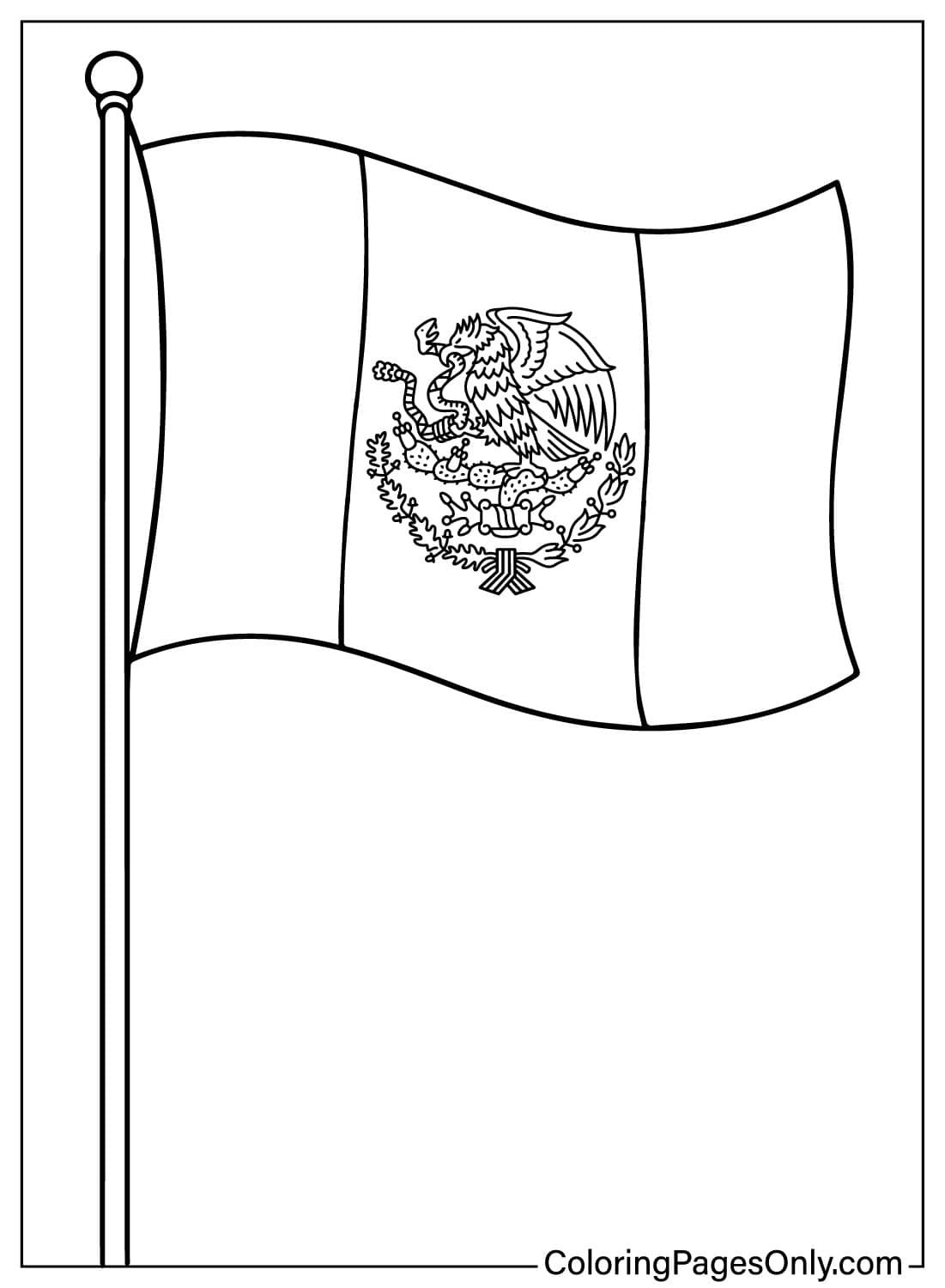
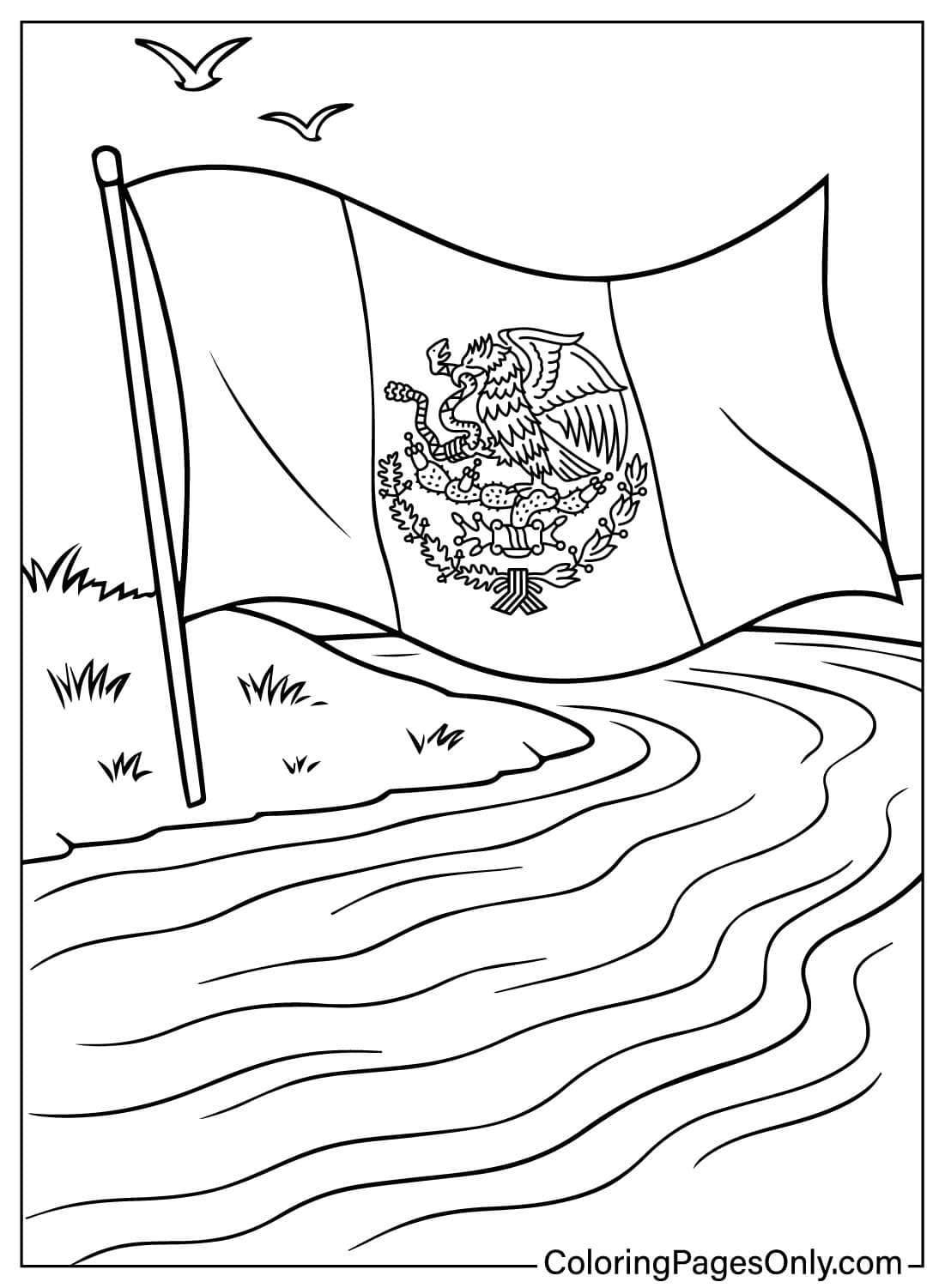
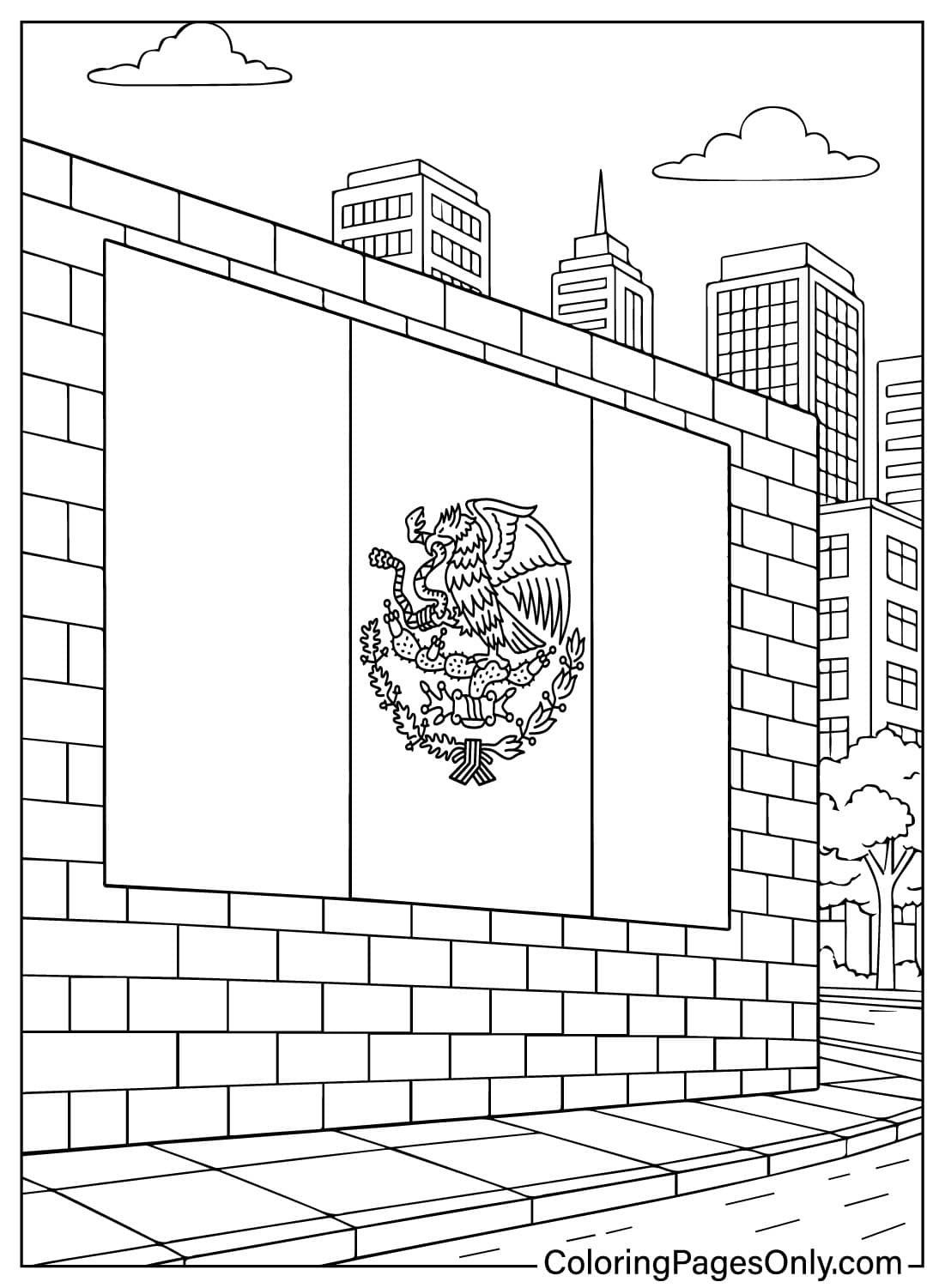
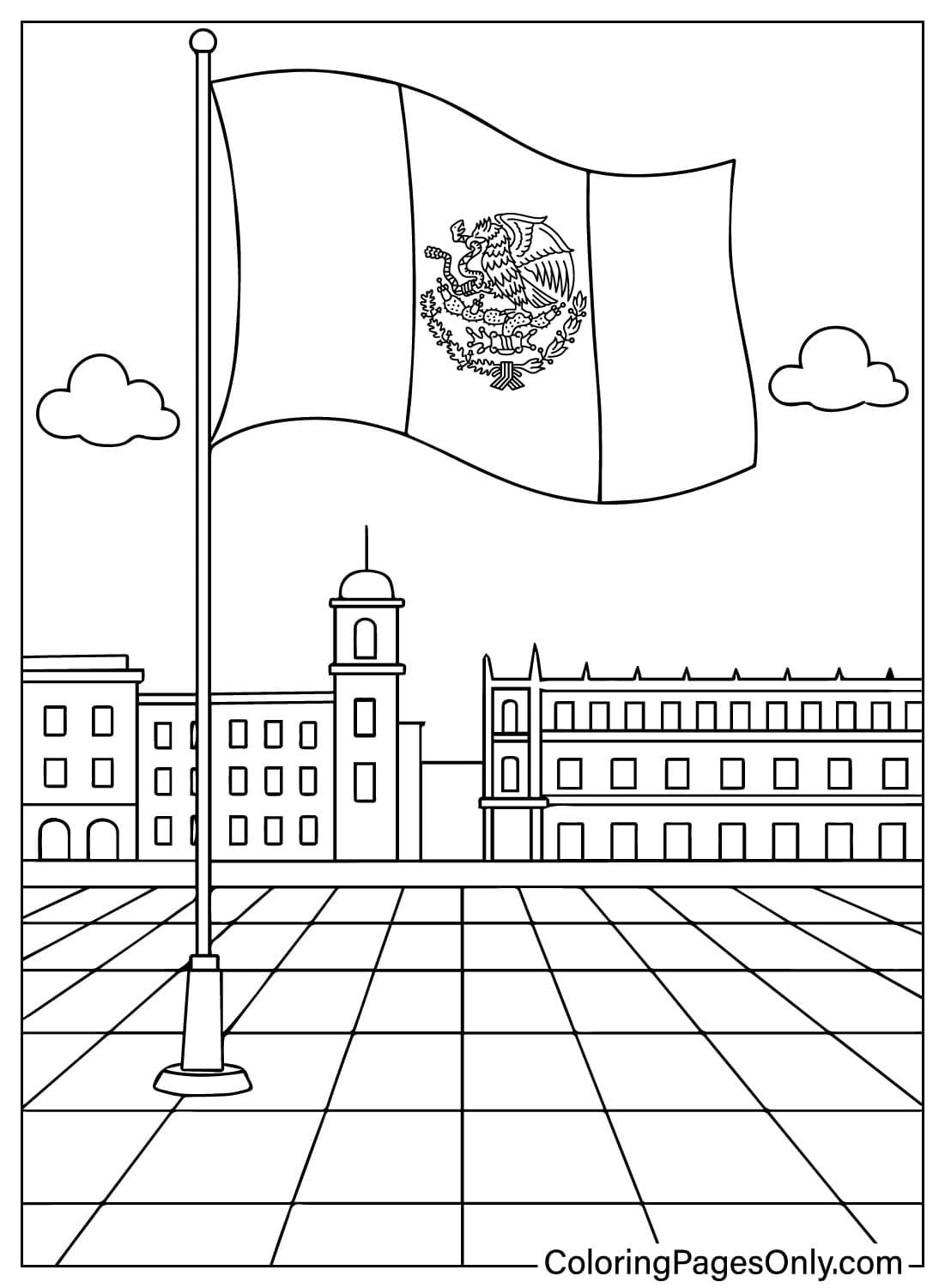
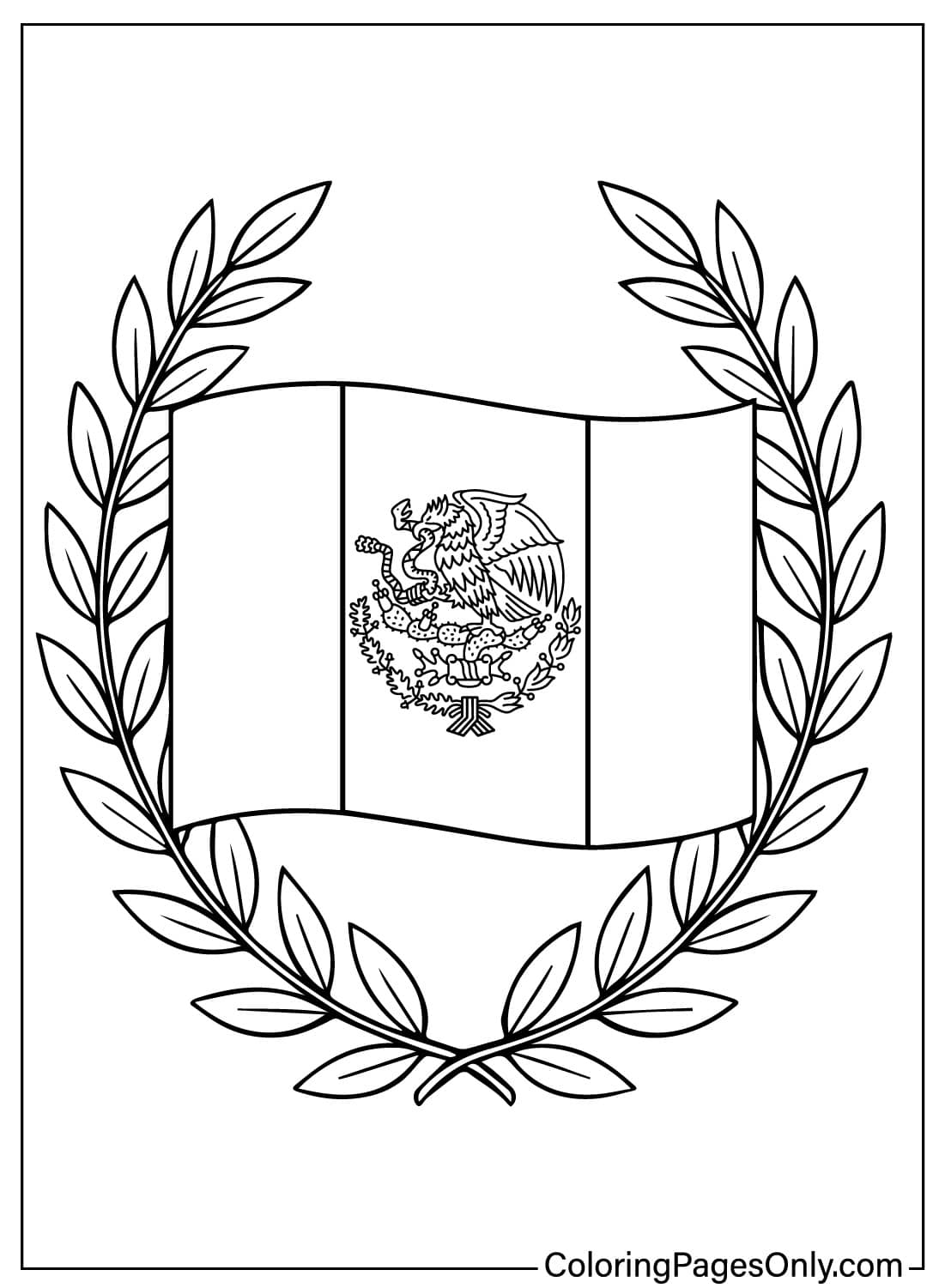
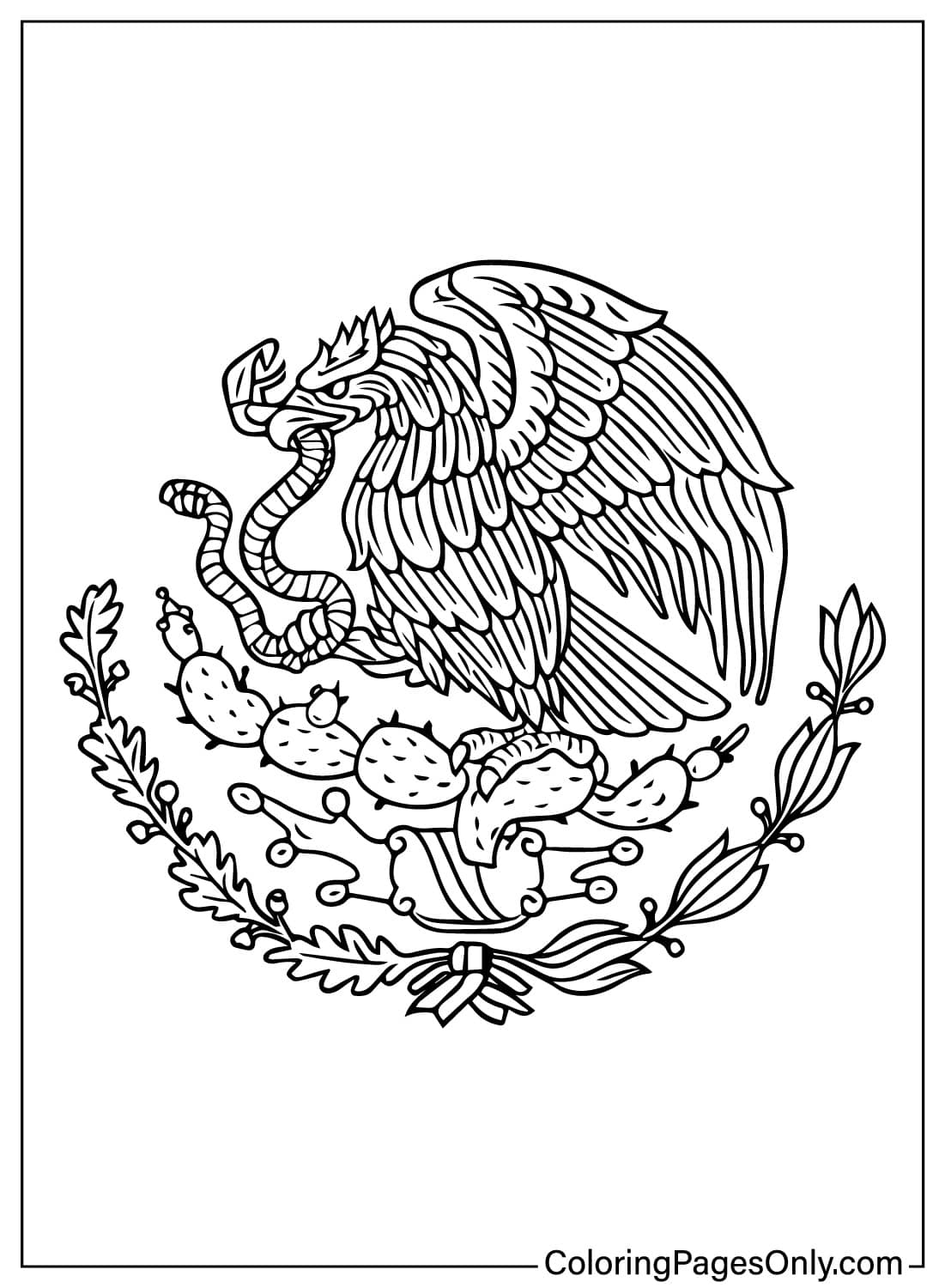
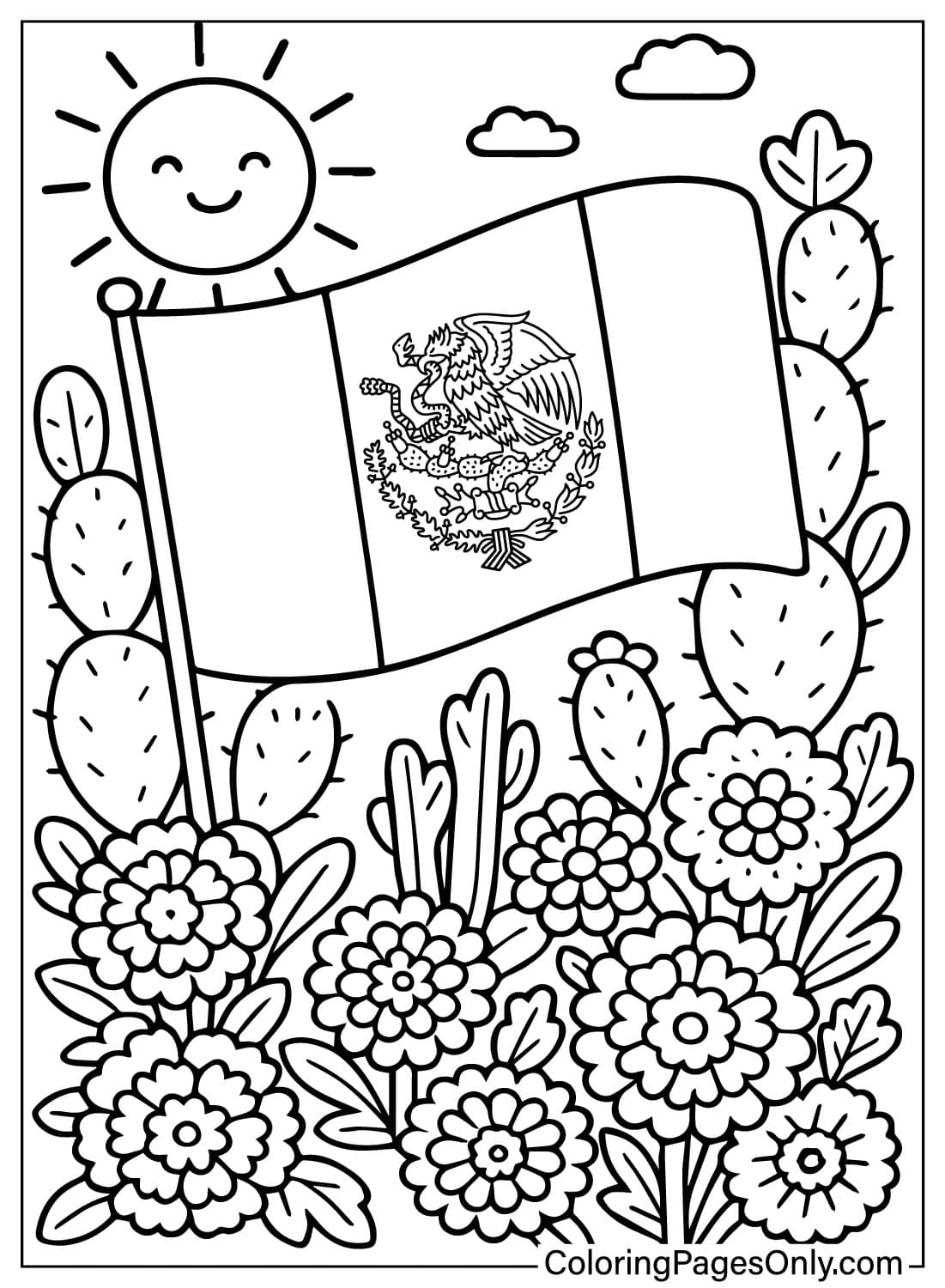
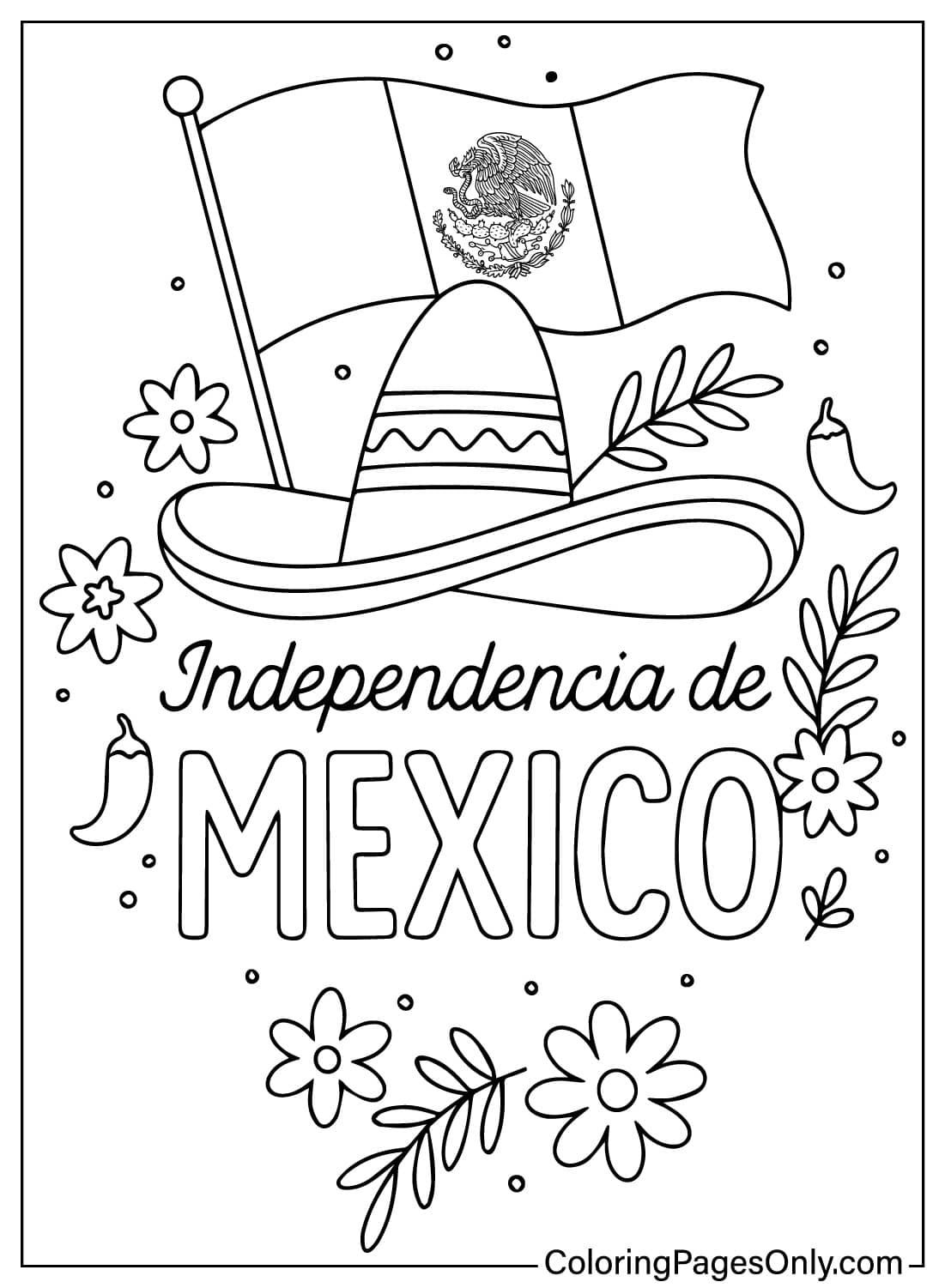
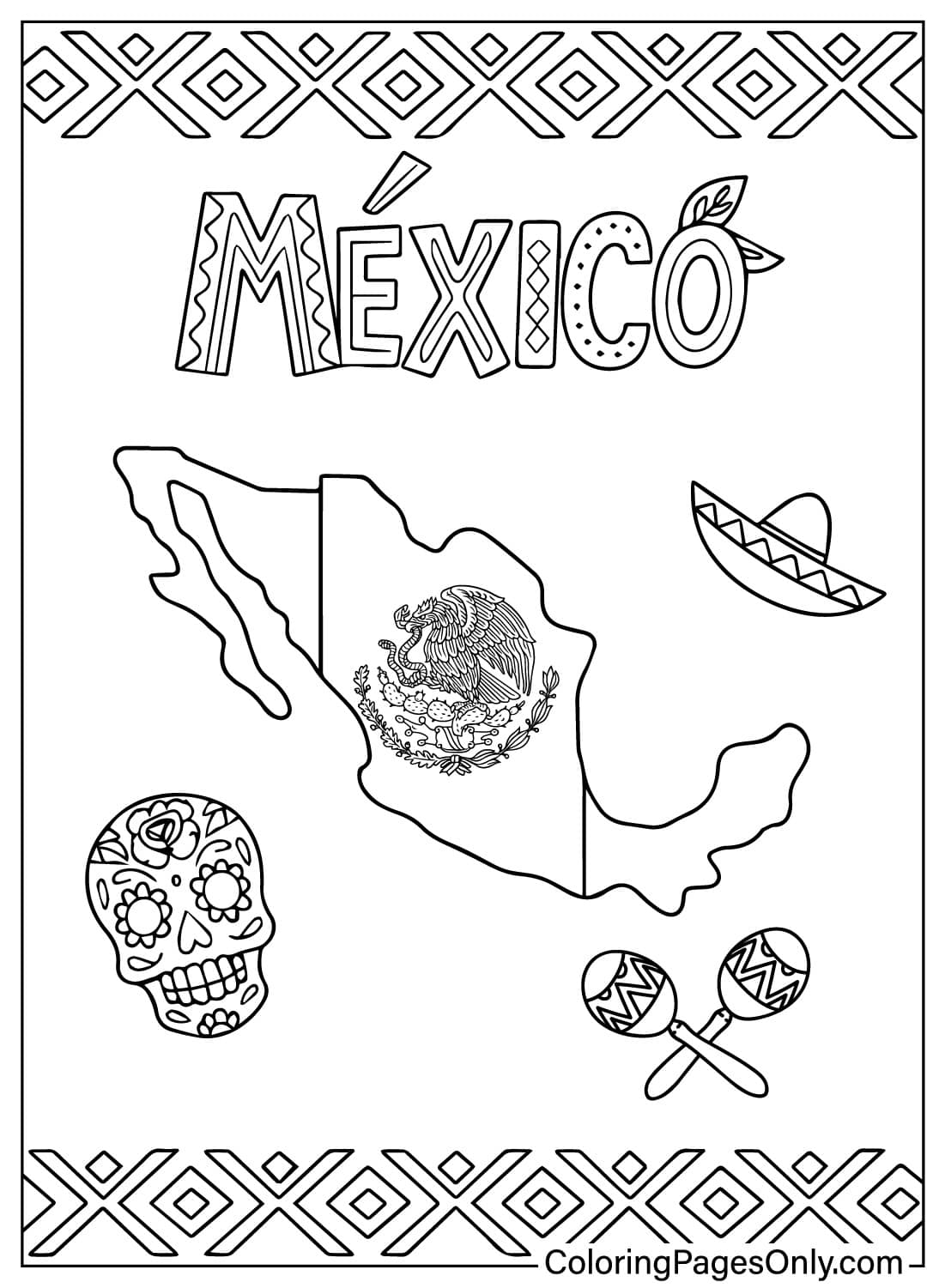
Mexico’s flag features three vertical bands, green, white, and red, with a coat of arms centered on the white stripe: a golden eagle perched on a prickly pear cactus, gripping a serpent in its beak and talon. The design traces back to the founding legend of Tenochtitlan, in which the Mexica people were told to build their city at the exact spot where they saw this scene occur in real life. The current version of the flag was adopted on September 16, 1968, though the tricolor pattern itself dates back to Mexico’s 1821 independence. This set works for a classroom marking Mexican Independence Day, a family building a Cinco de Mayo activity, and anyone who wants a flag page with real symbolism behind every detail.
The coat of arms is really the whole coloring challenge on a flag page, since the green, white, and red bands are the easy part. Getting the eagle, cactus, and serpent right, in their correct positions and colors, is what separates an accurate Mexican flag from a generic striped rectangle.
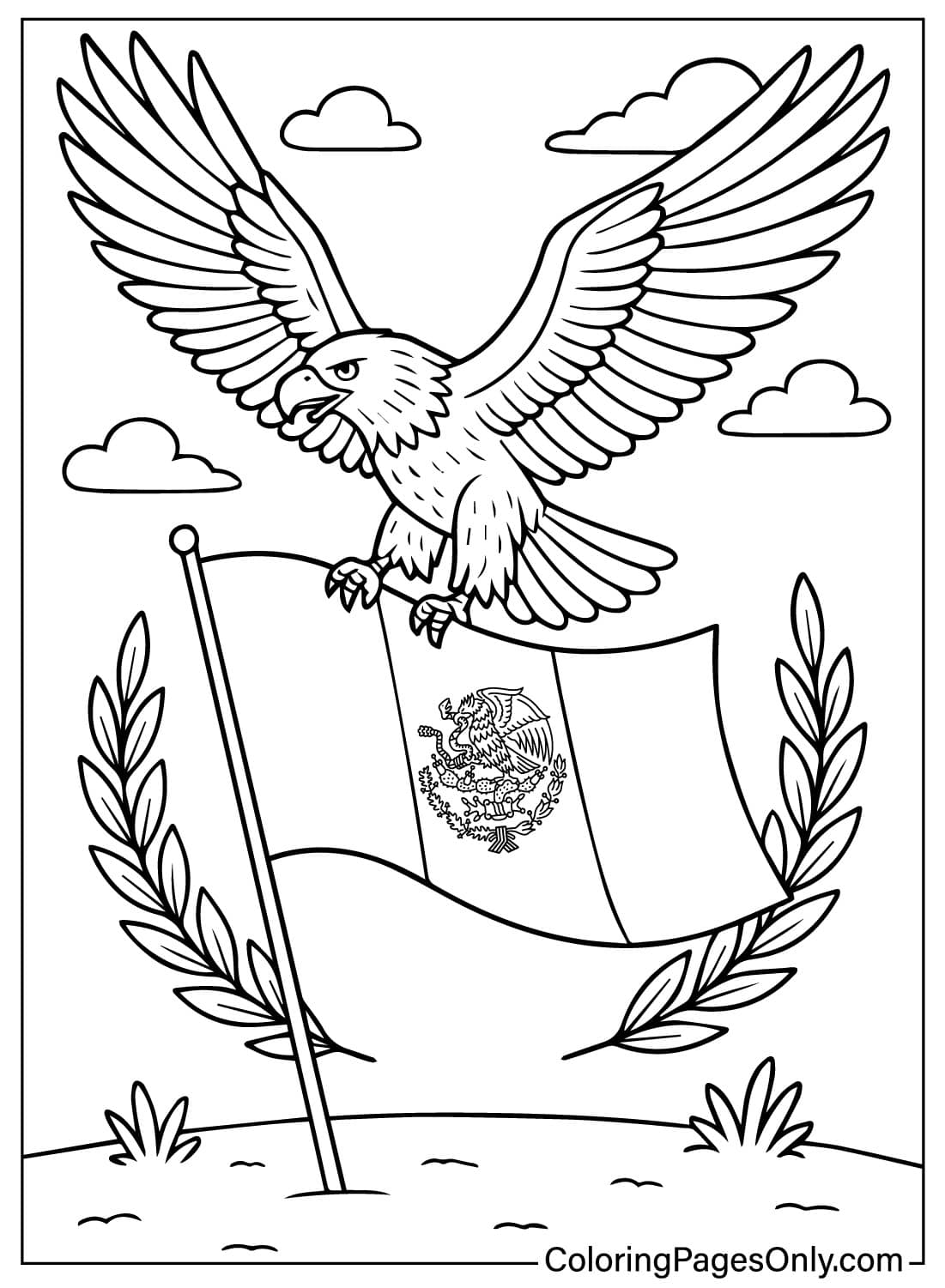
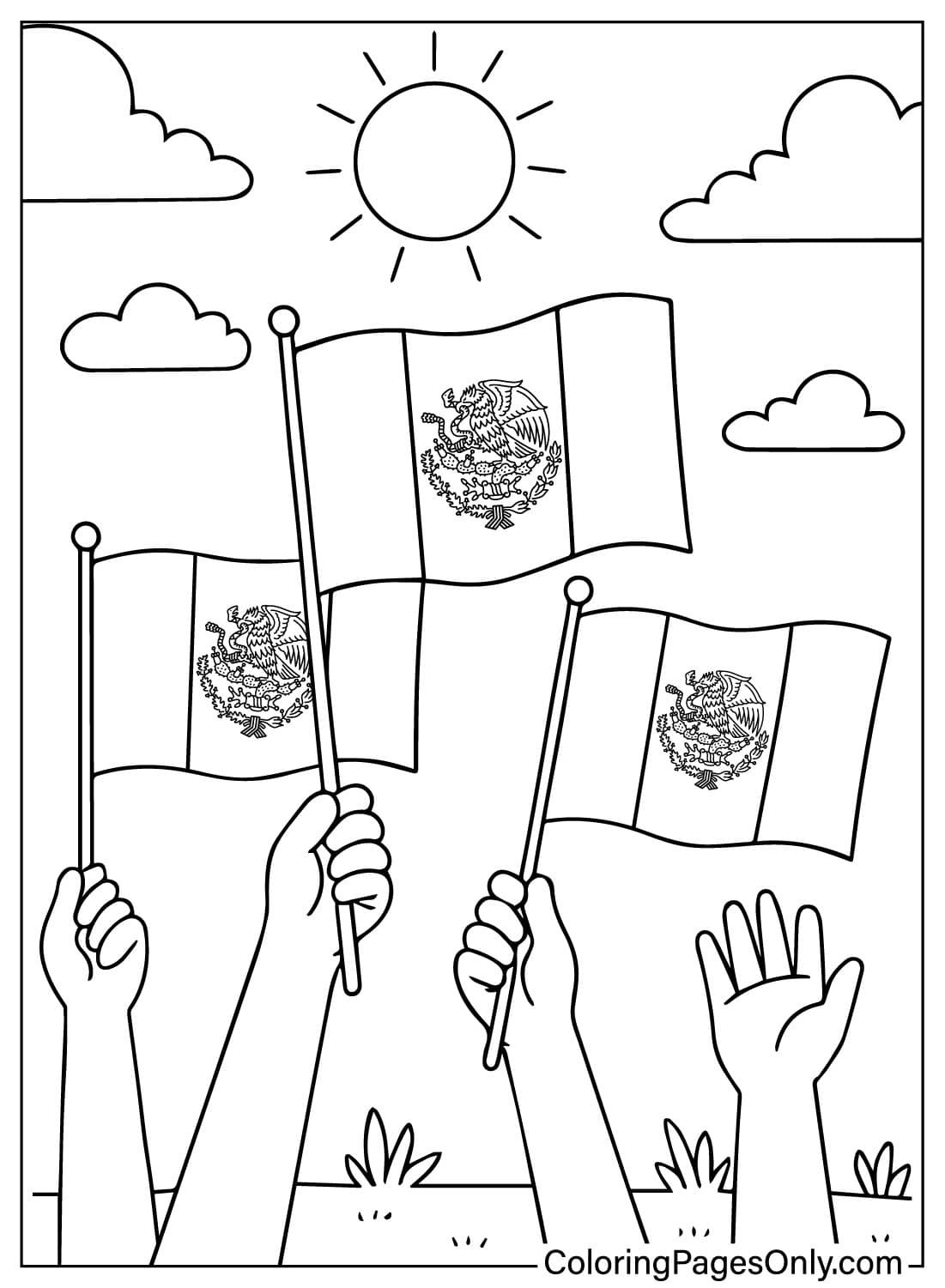
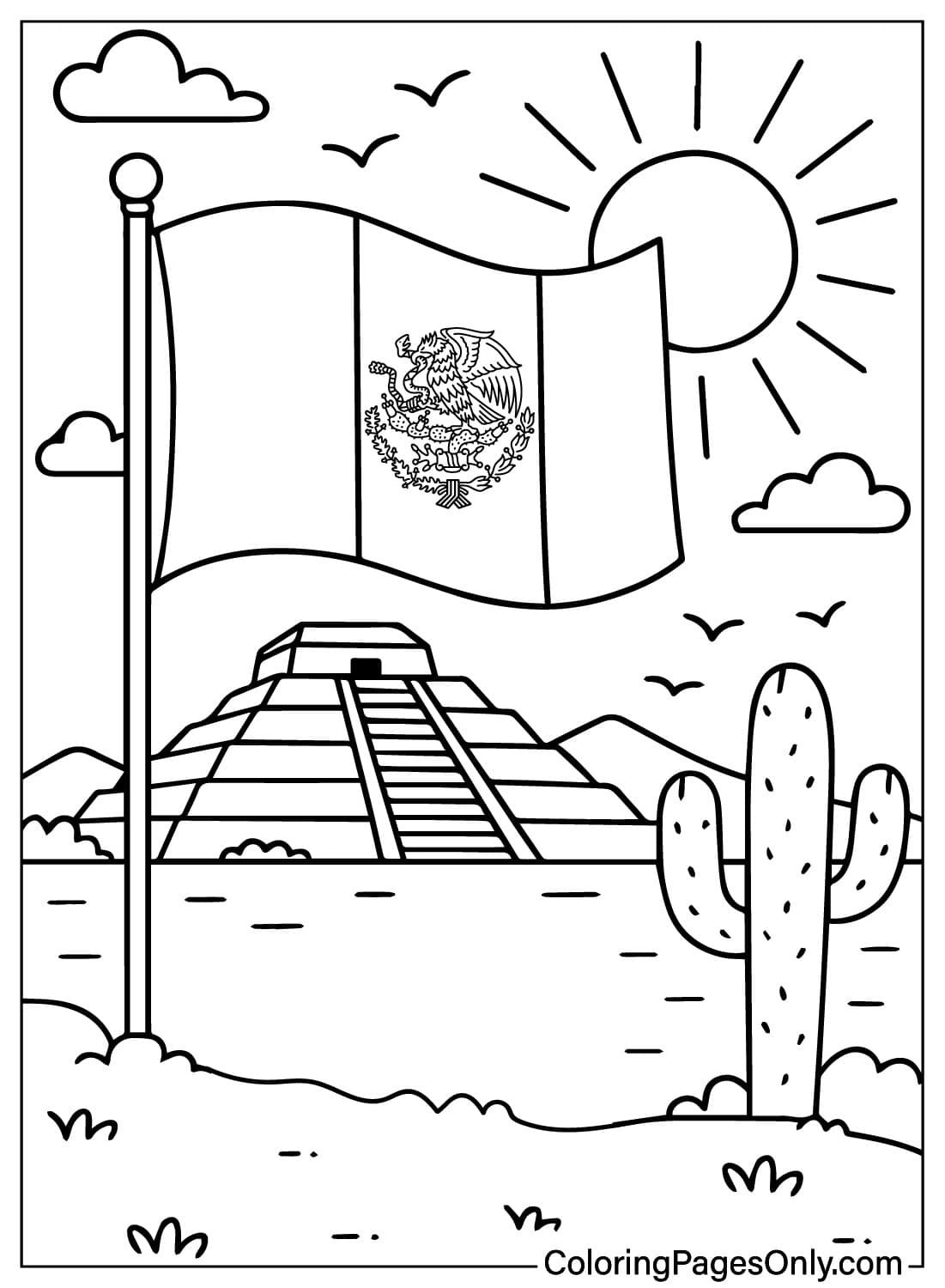
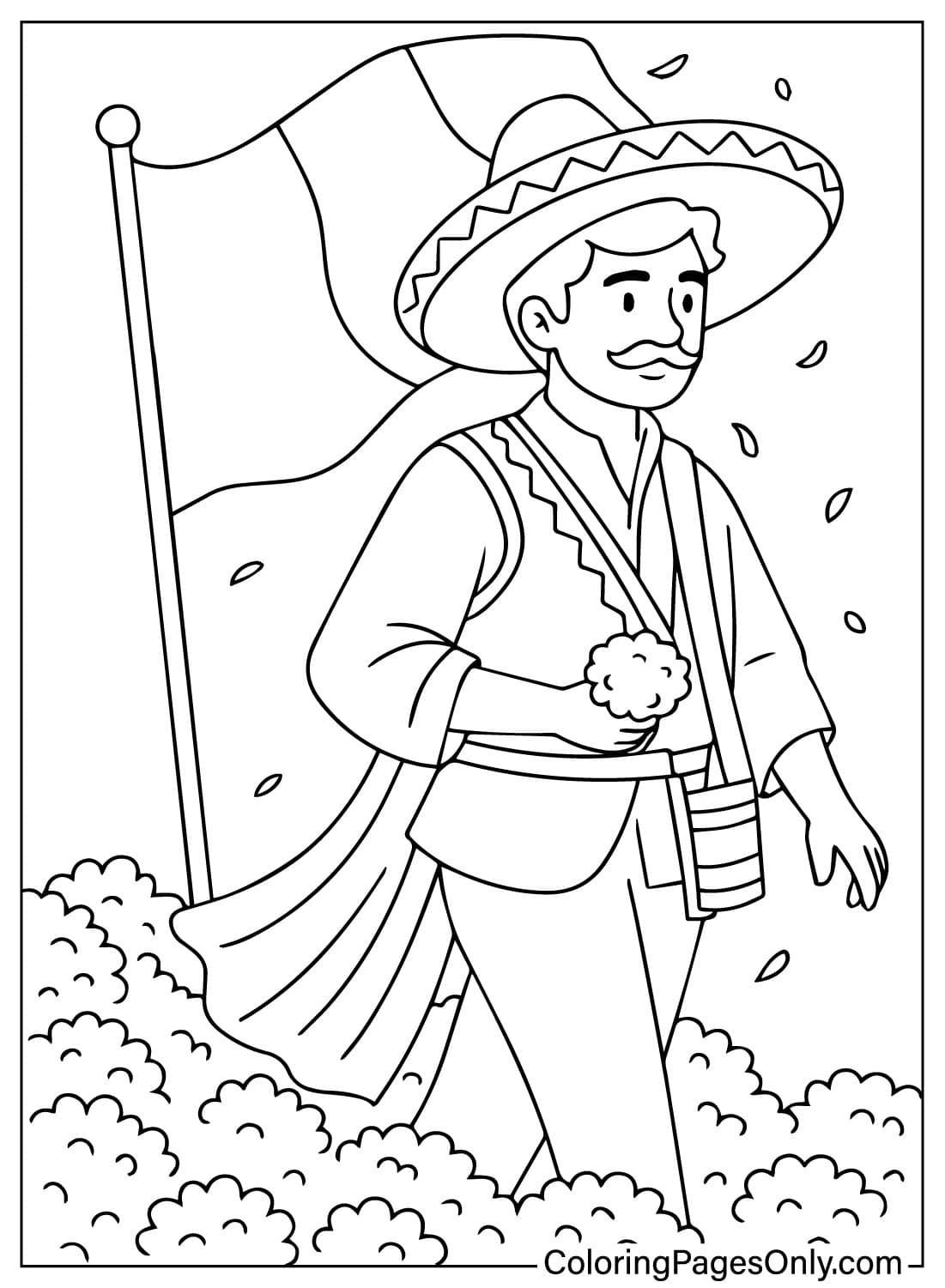
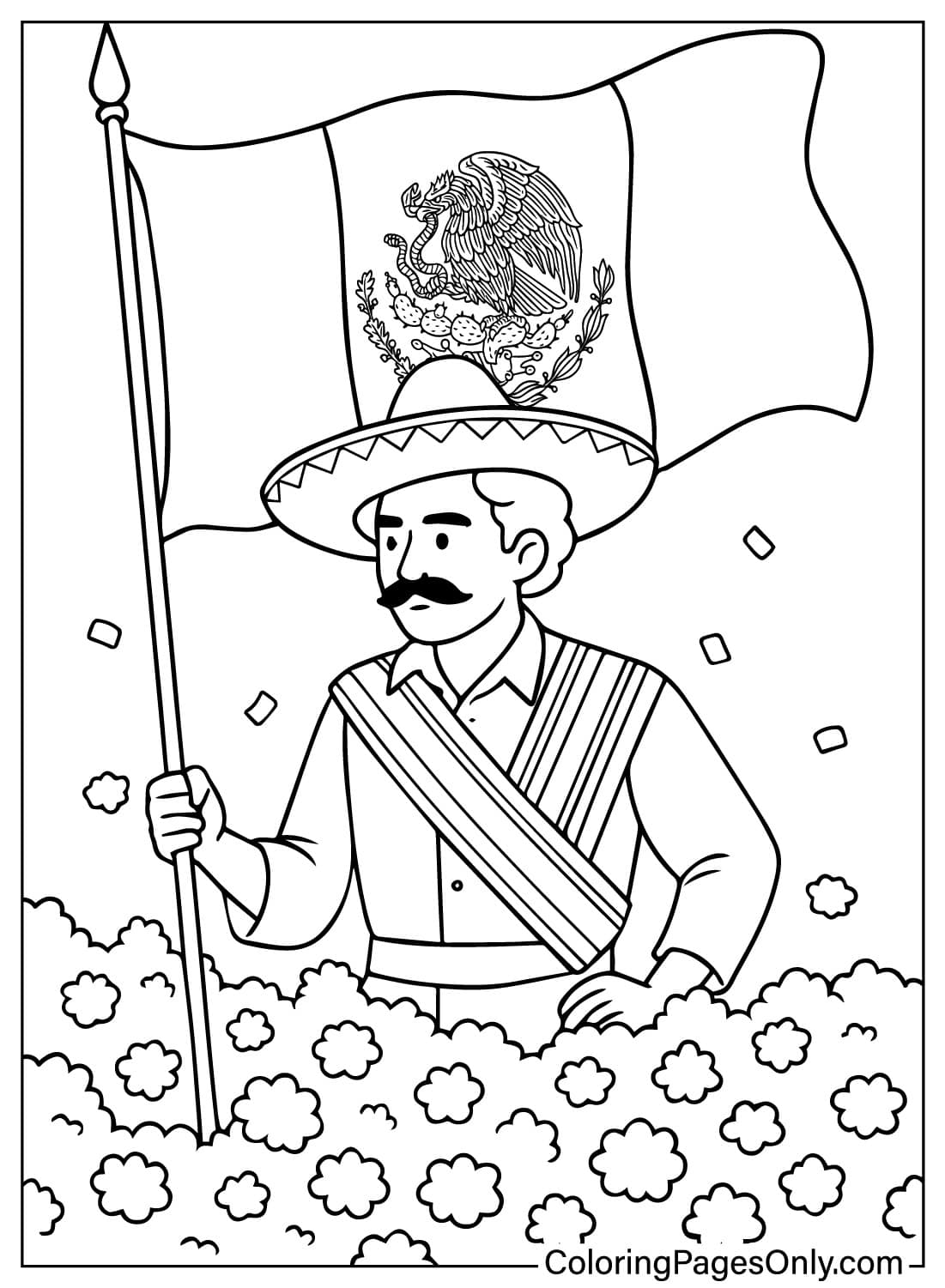
What Is Inside This Collection
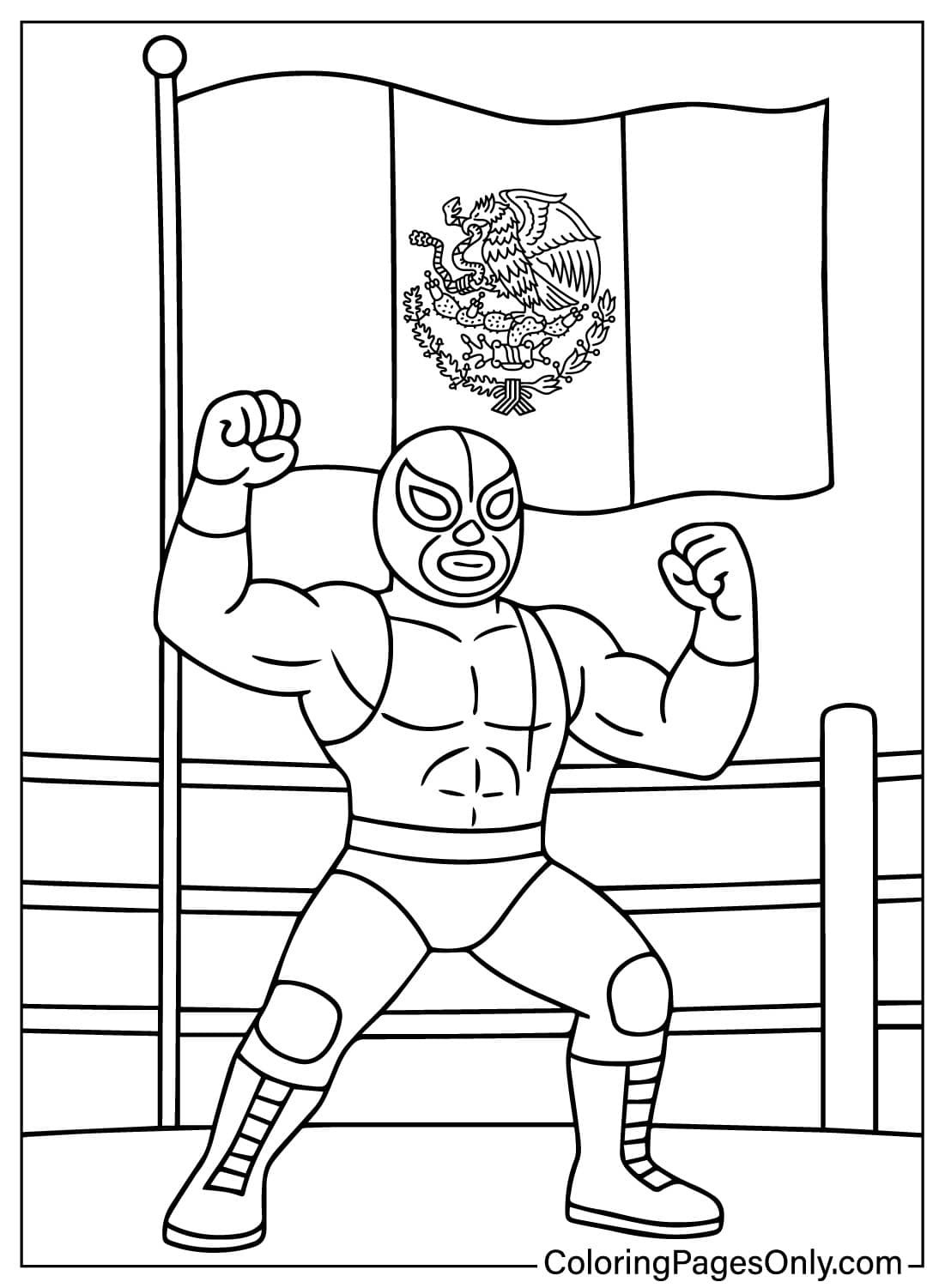
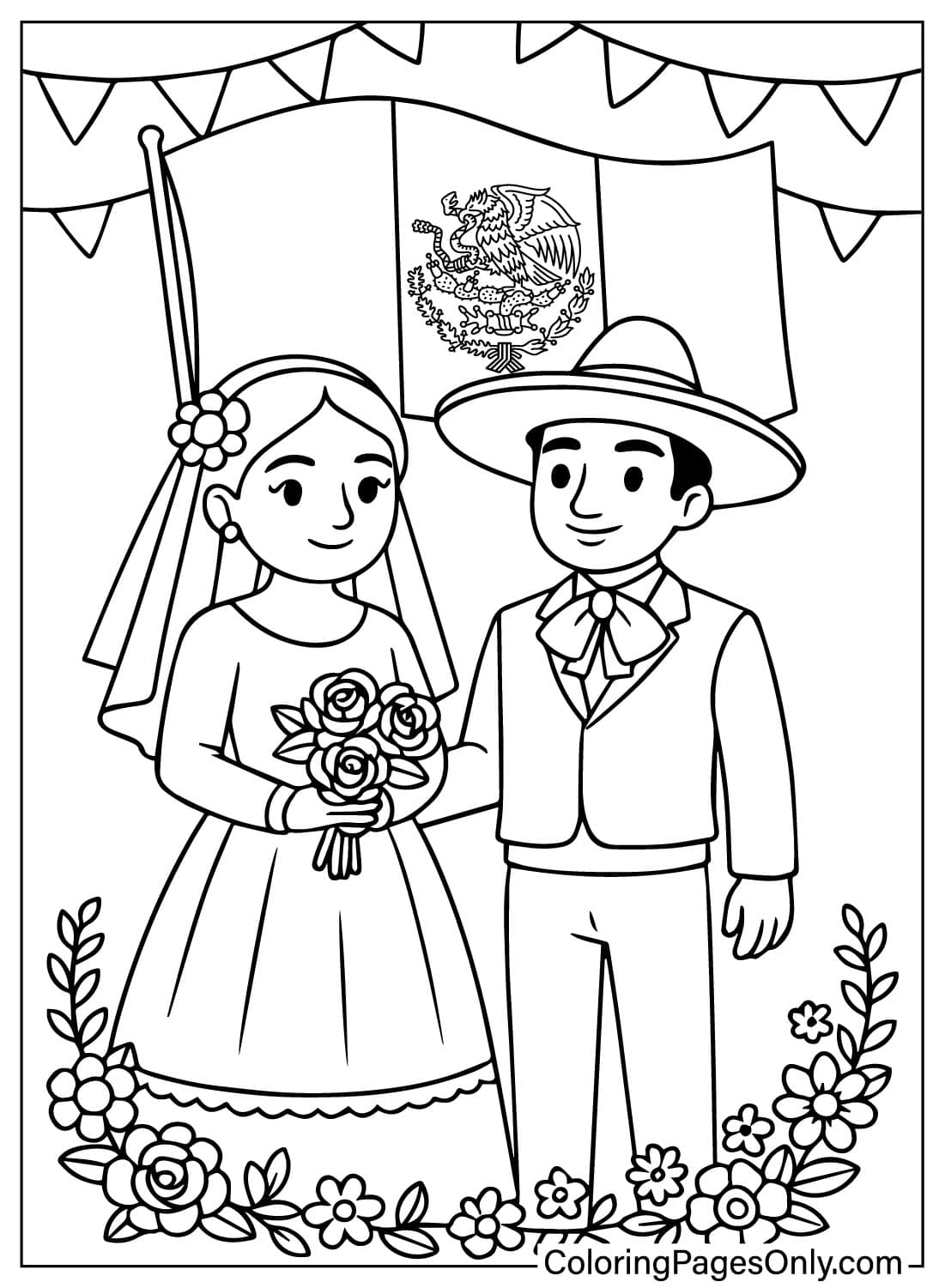
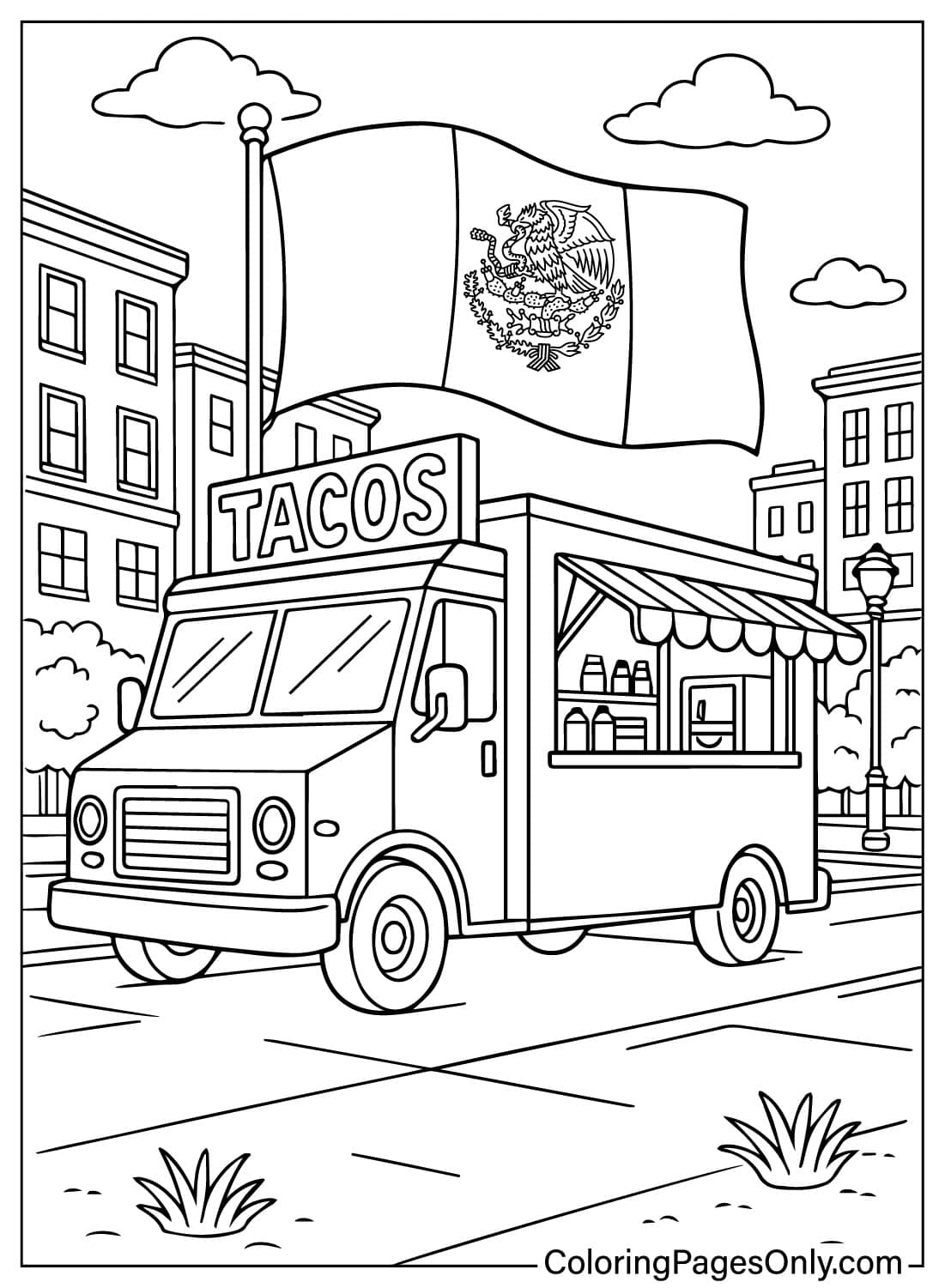
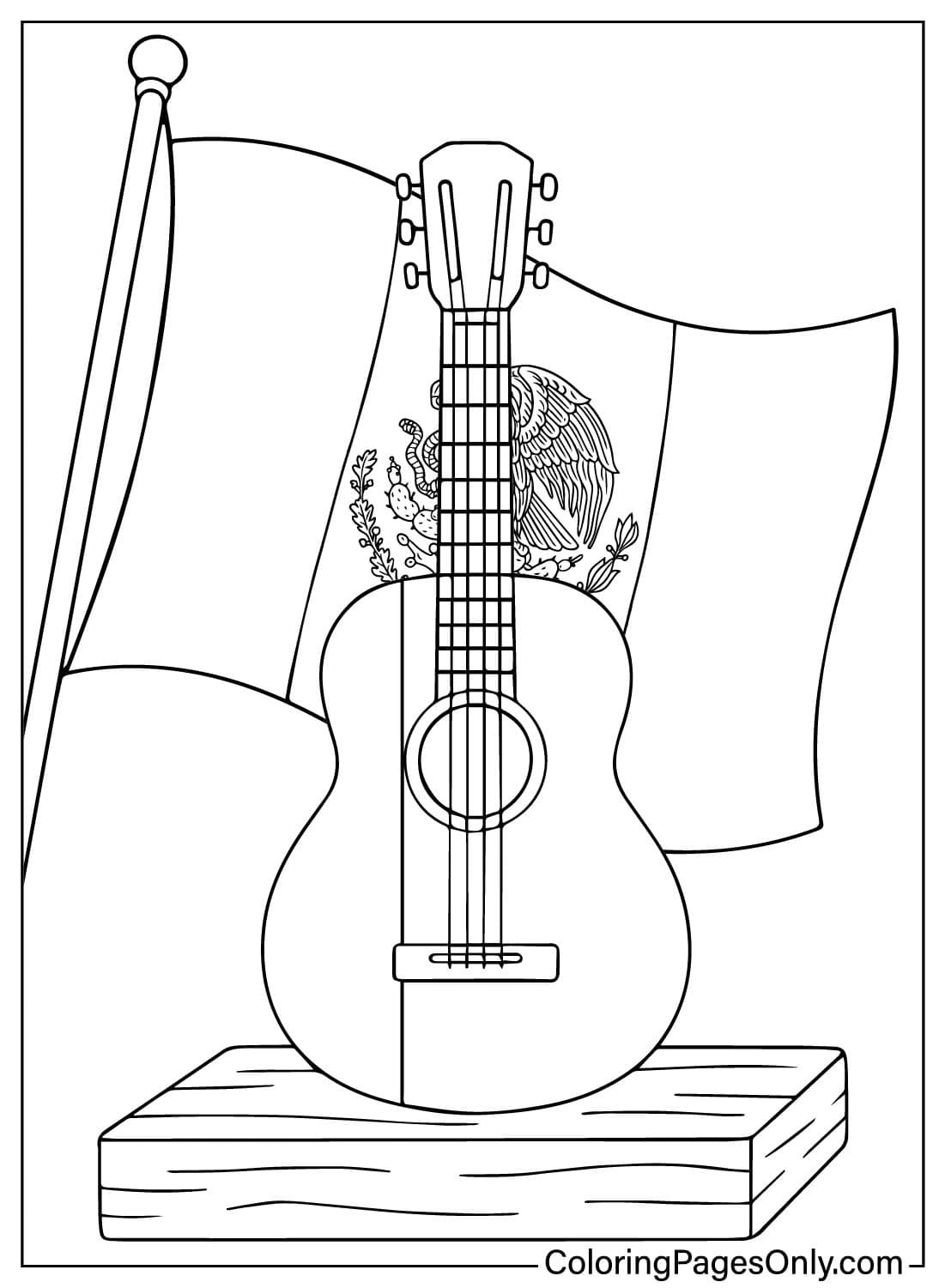
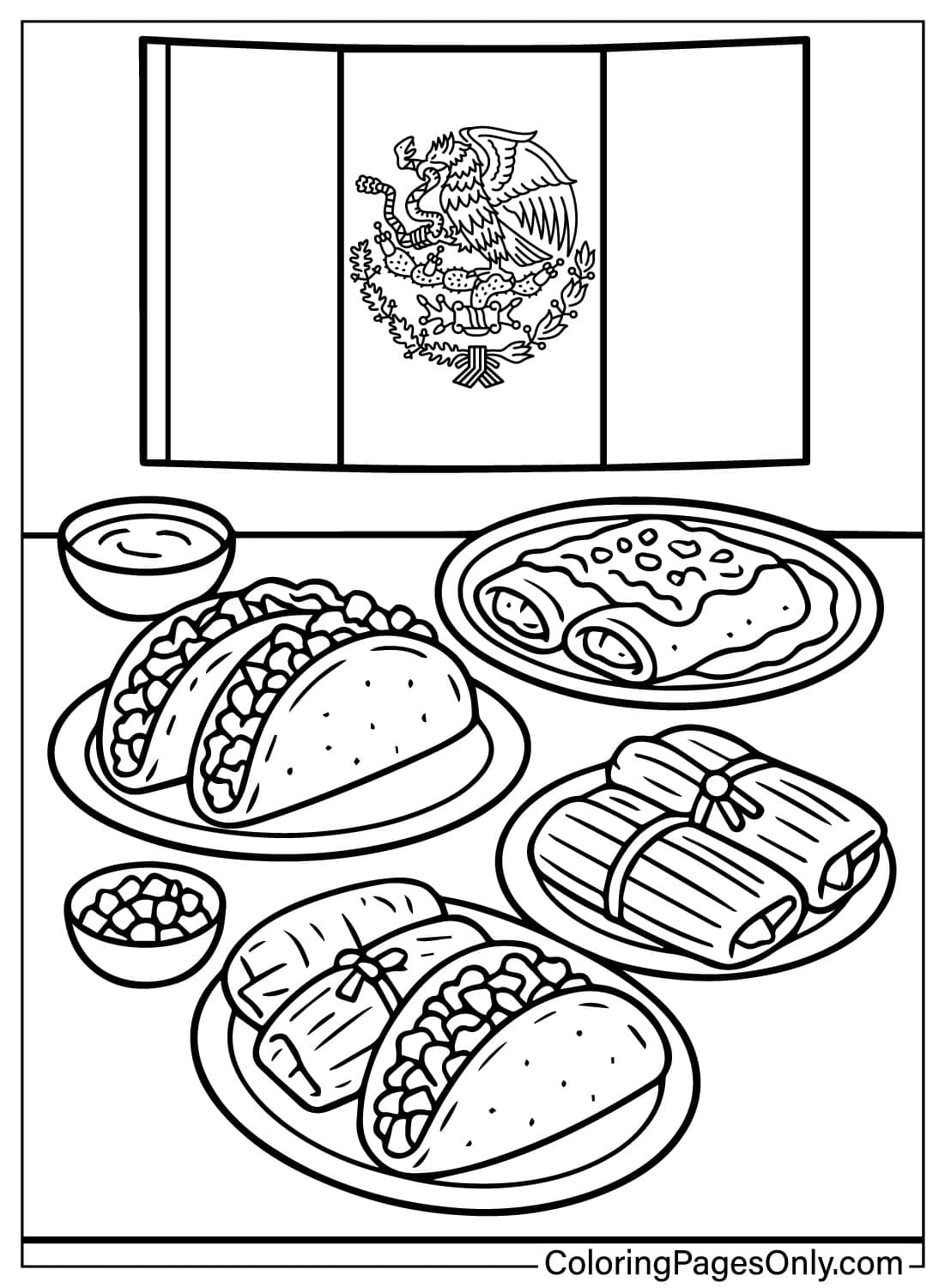
The 32 pages fall into a few clear groups, built around the classic flag and emblem, holiday scenes, the flag paired with culture, and playful scenes with people and animals.
Classic Flag and Coat of Arms Portraits
Sixteen pages show the flag itself, either as a simple tricolor design or with a detailed coat of arms, ranging from easy outlines to more intricate versions. Keep the green a true, medium shade rather than a dark forest green, and the red a clear, saturated tone rather than maroon.
Holiday and Celebration Scenes
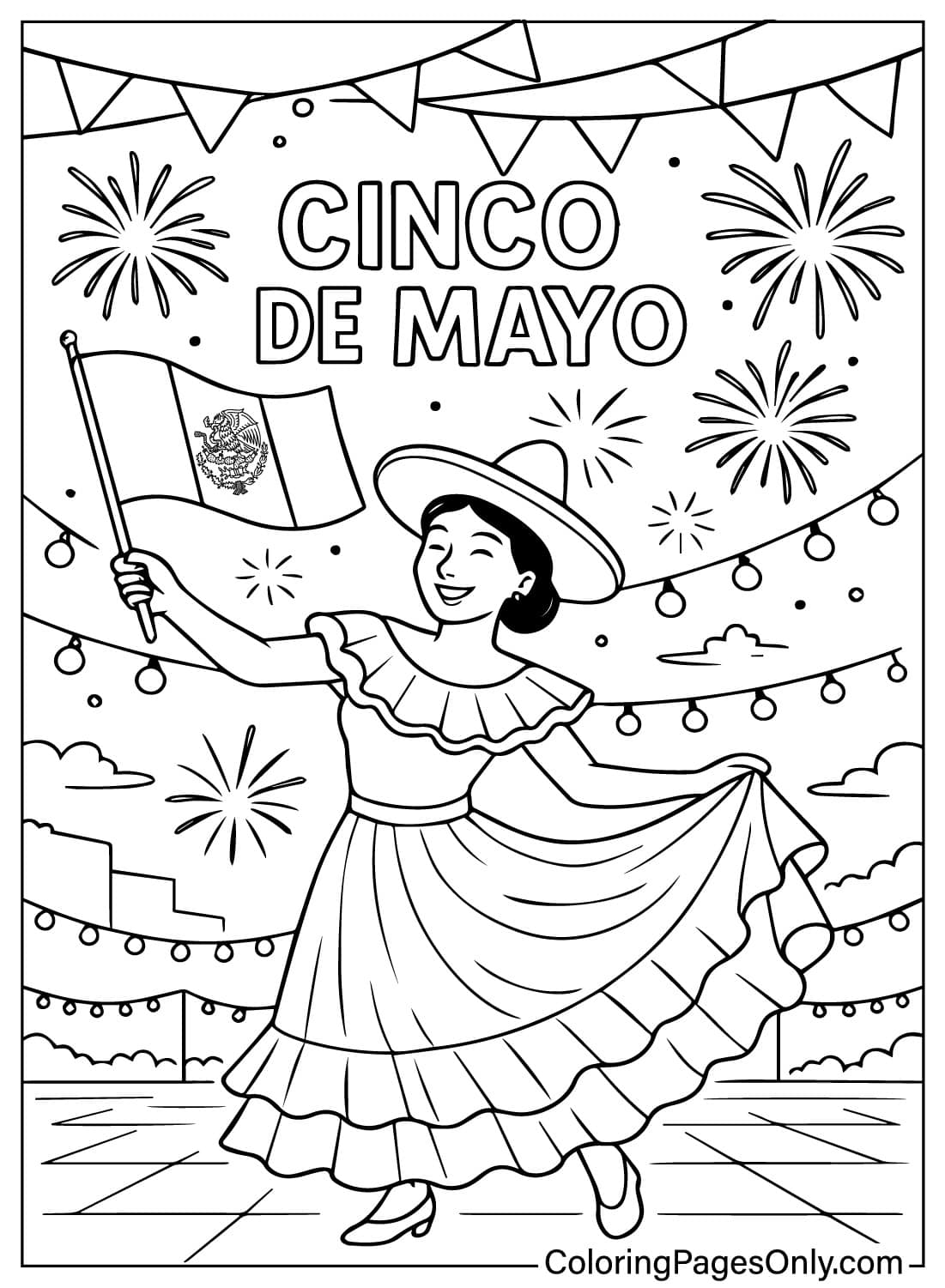
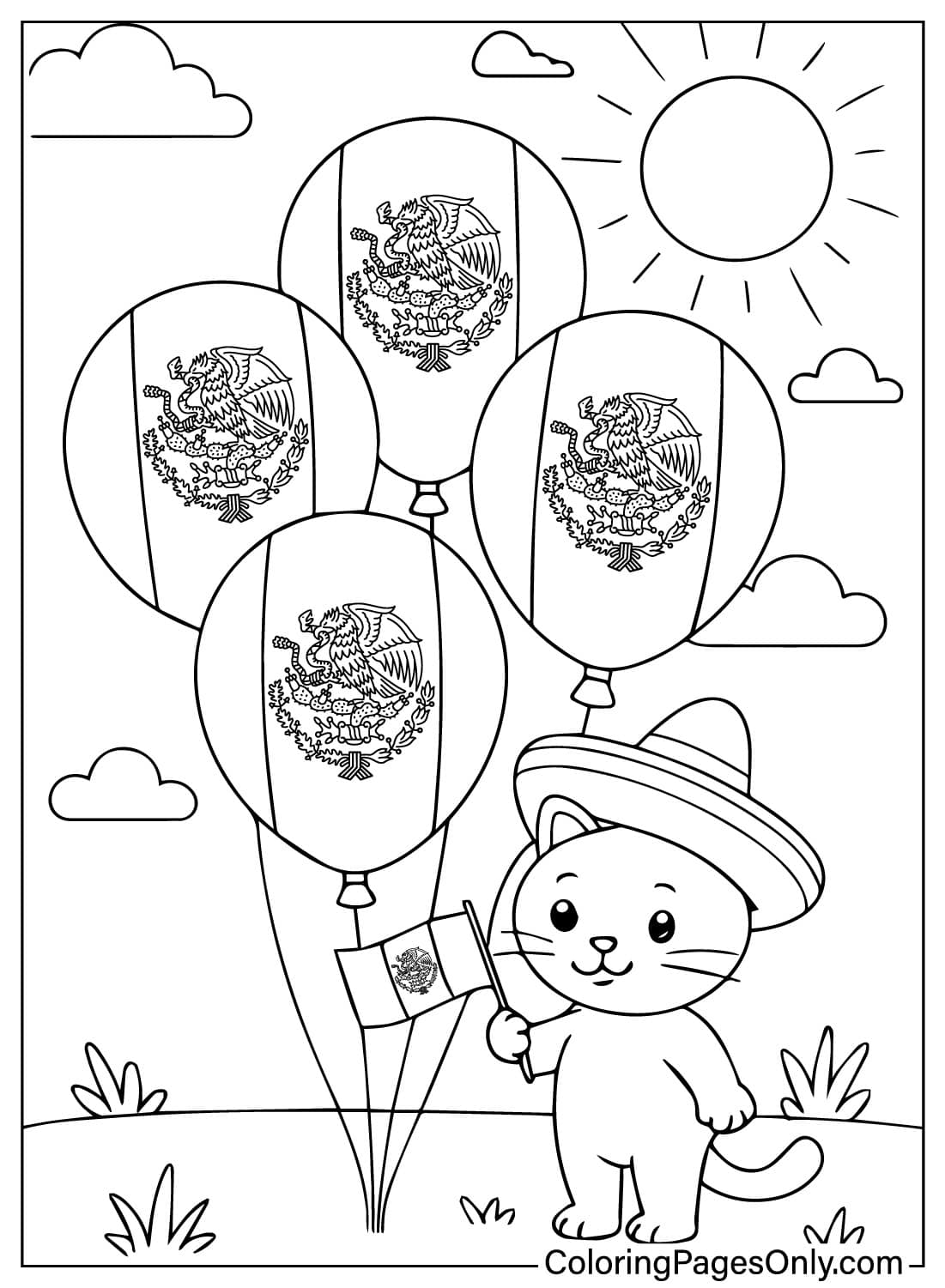
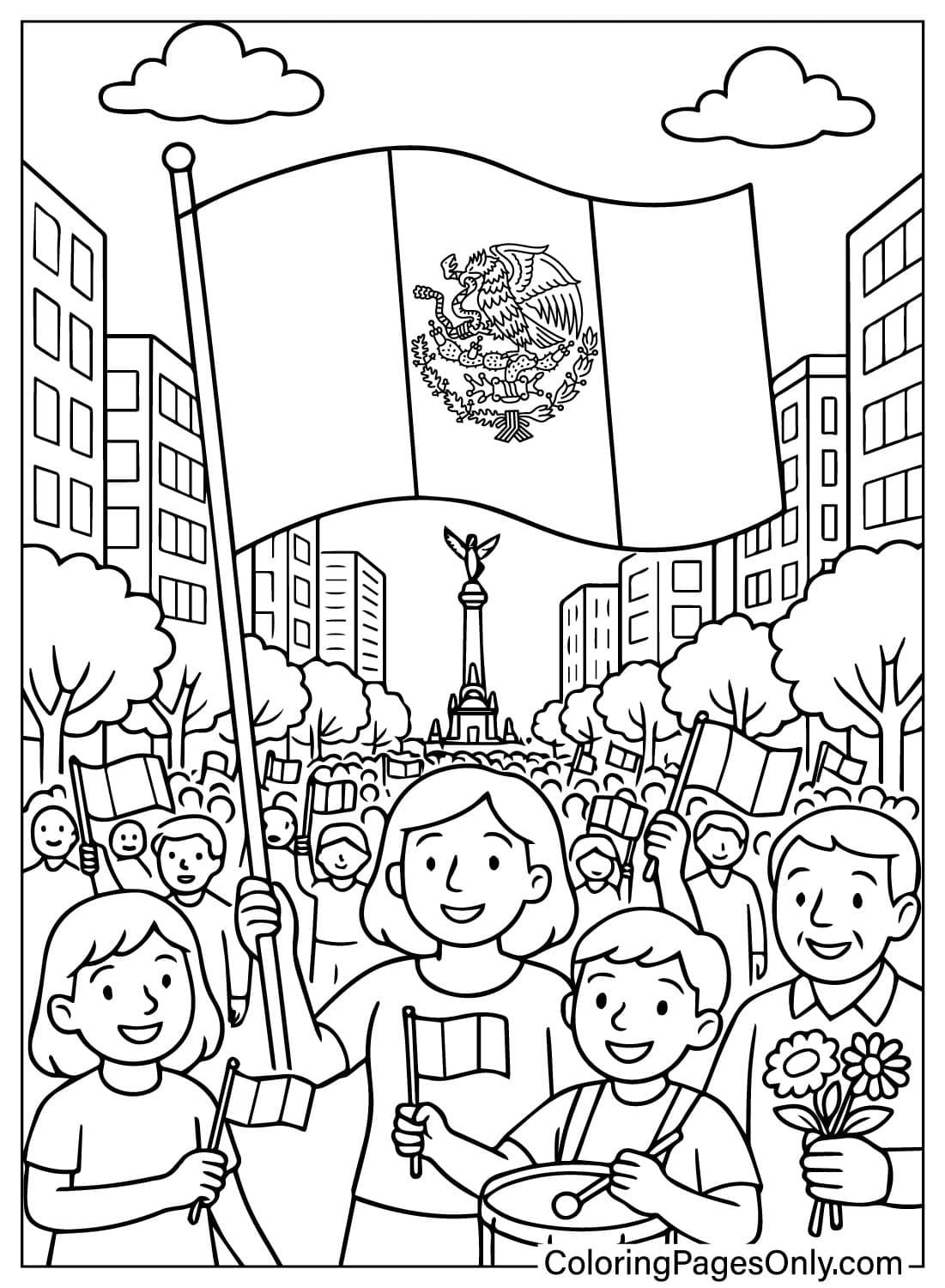
Four pages tie the flag to a specific occasion: Mexican Independence Day, Cinco de Mayo, a wedding scene, and a balloon design. These two holidays are often confused, so getting the occasion right matters as much as the coloring itself.
Flag Paired with Culture and Food
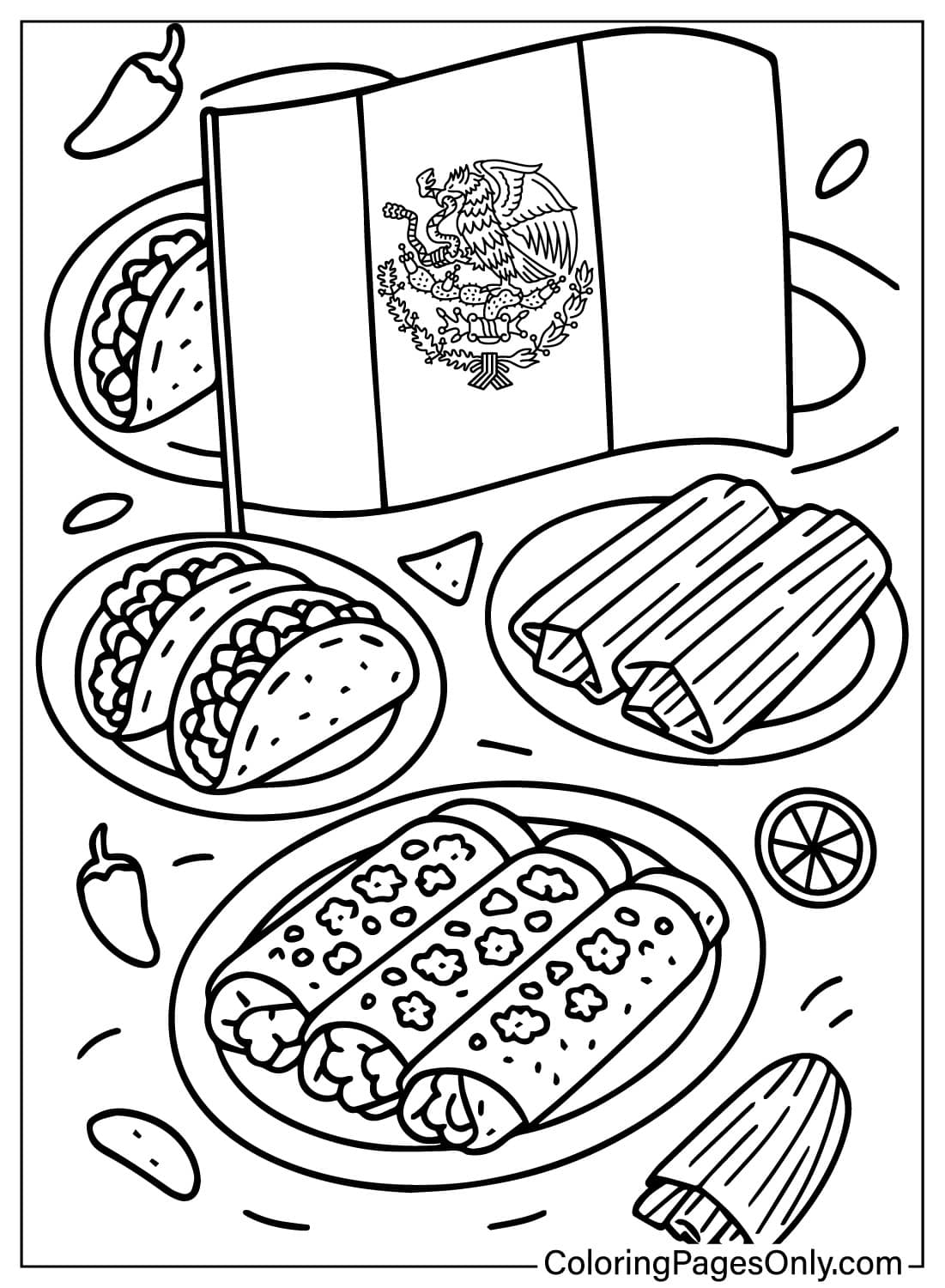
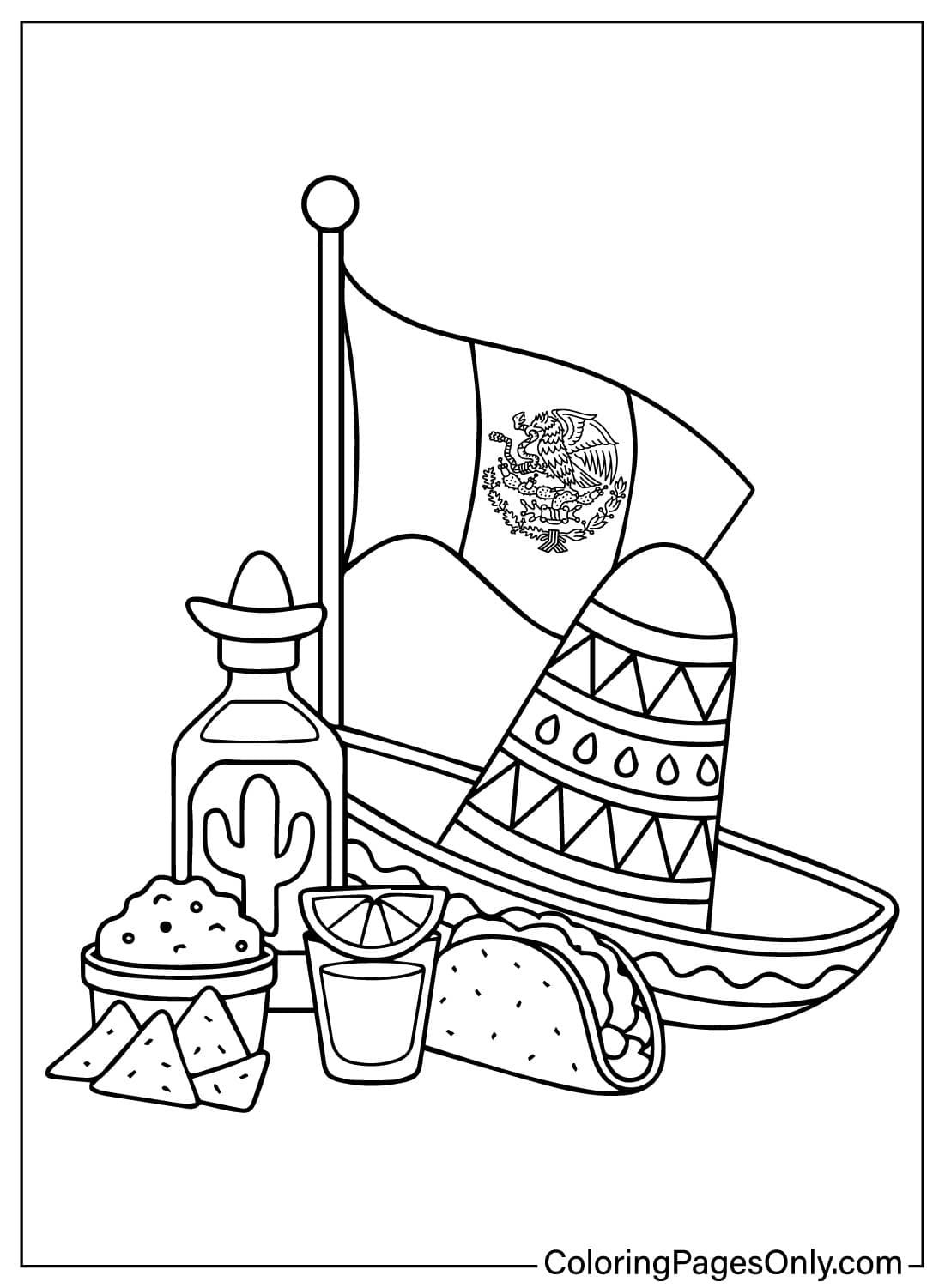
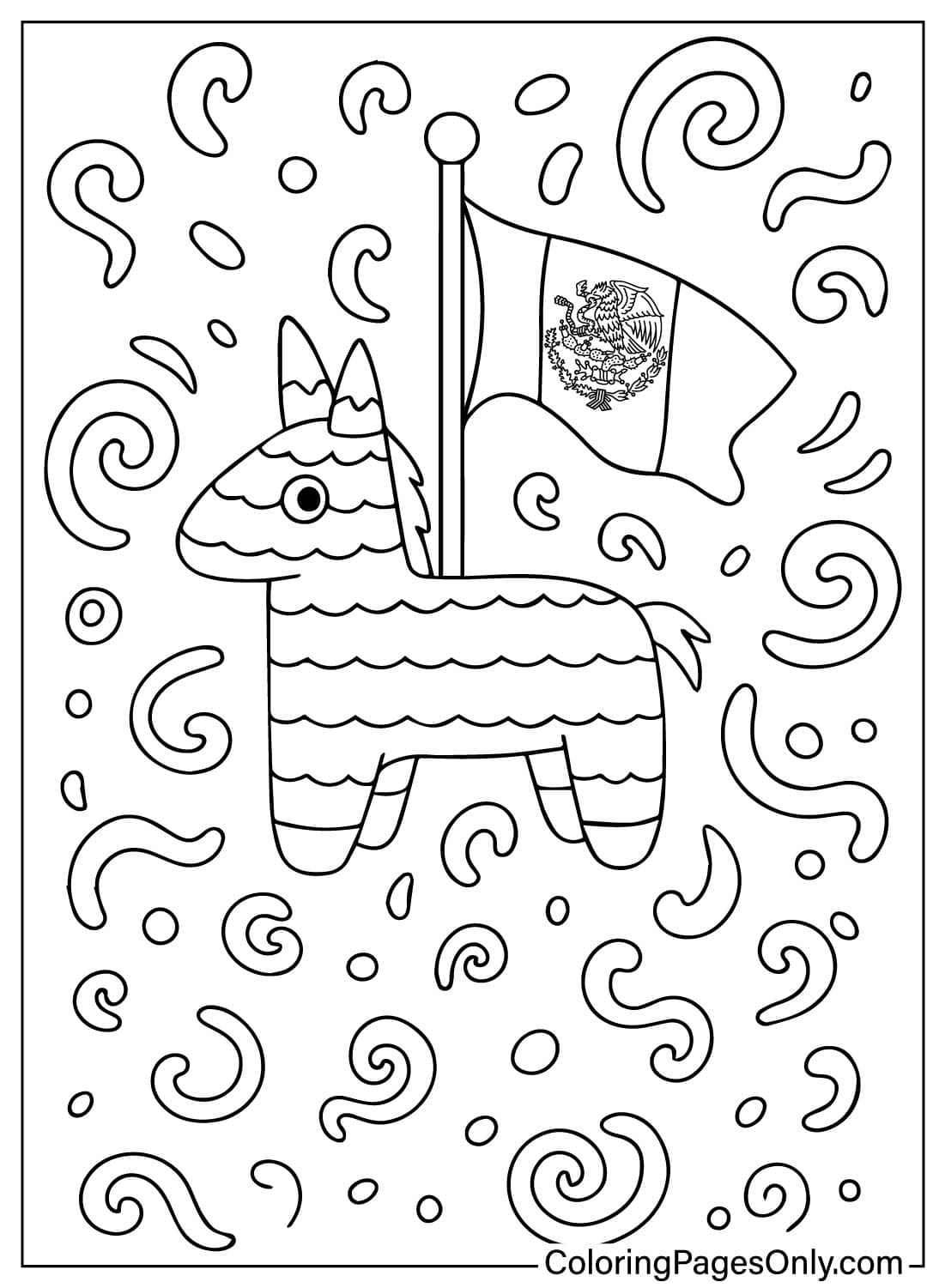
Five pages combine the flag with cultural elements: traditional food, a guitar, and flowers. These pages ask for accurate food and object colors alongside the flag’s own palette.
Flag with People and Animals
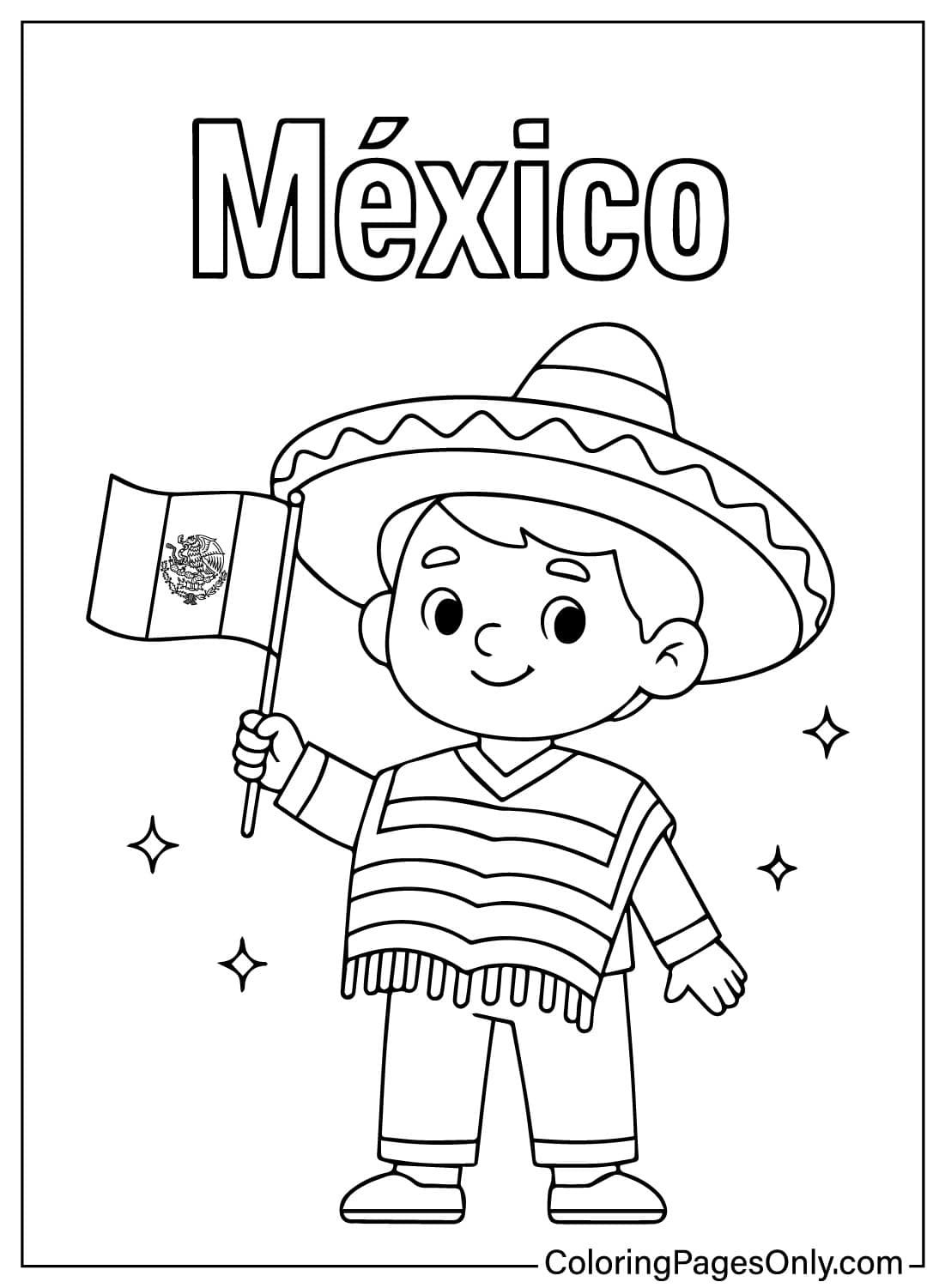
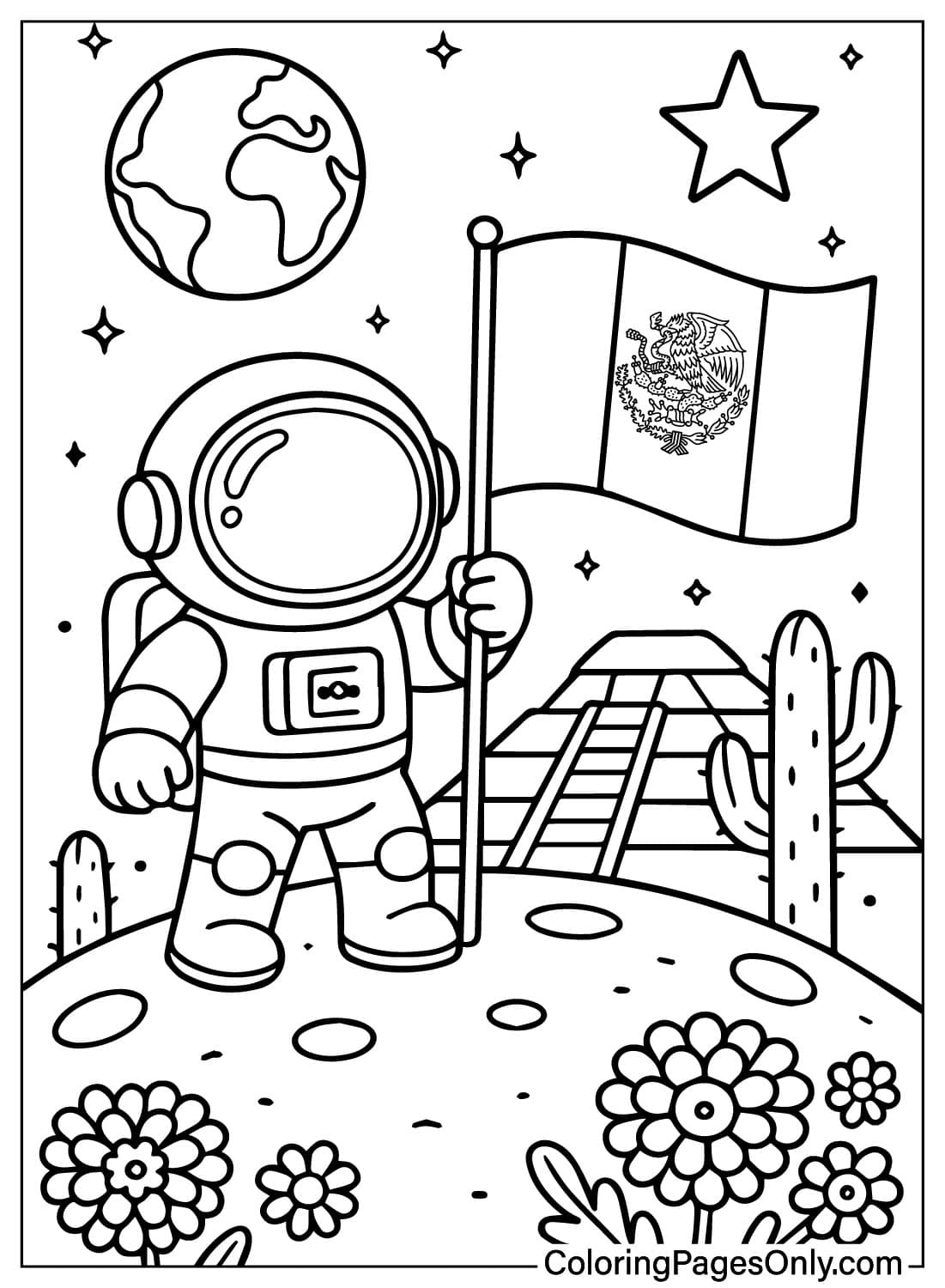
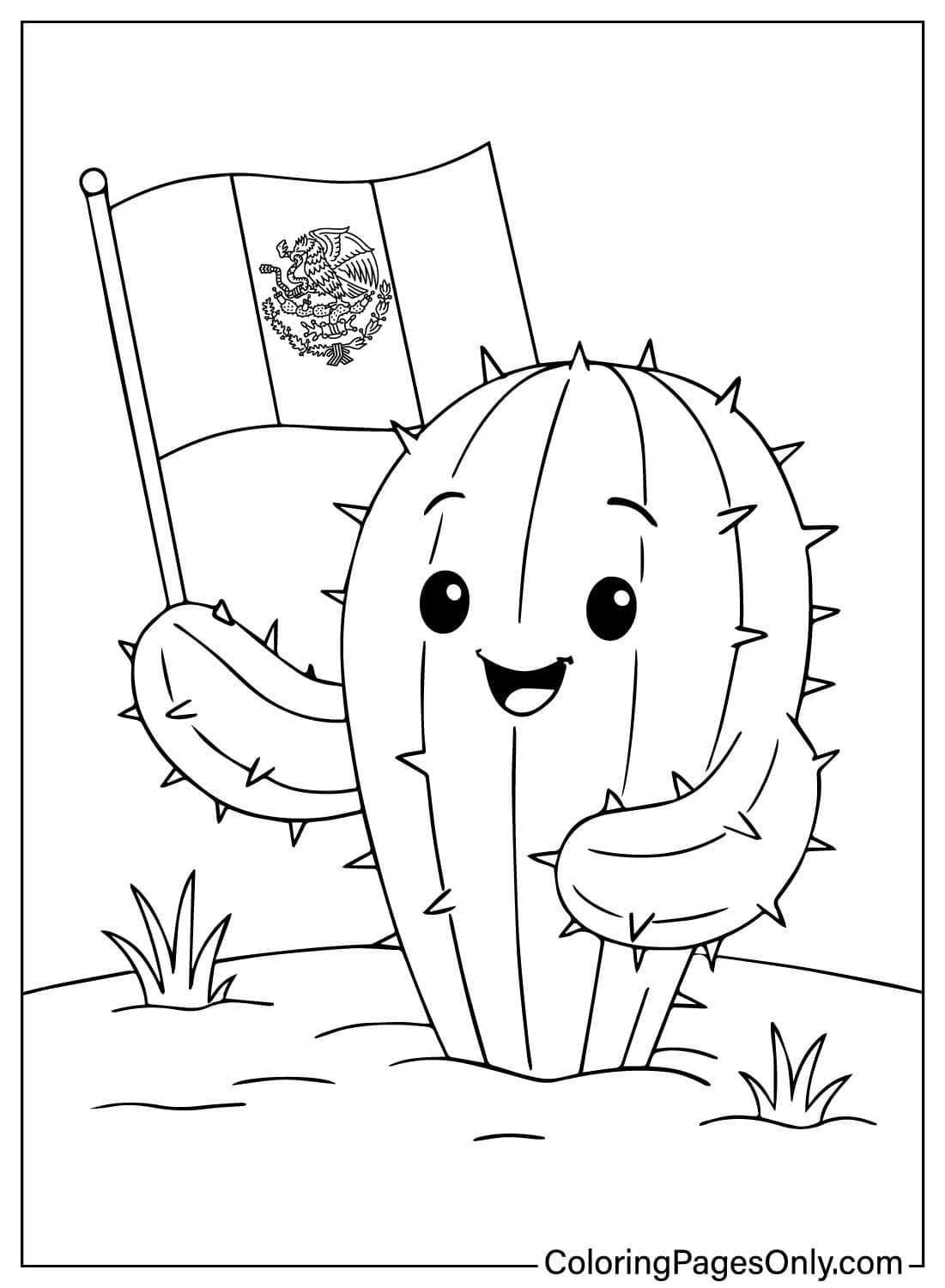
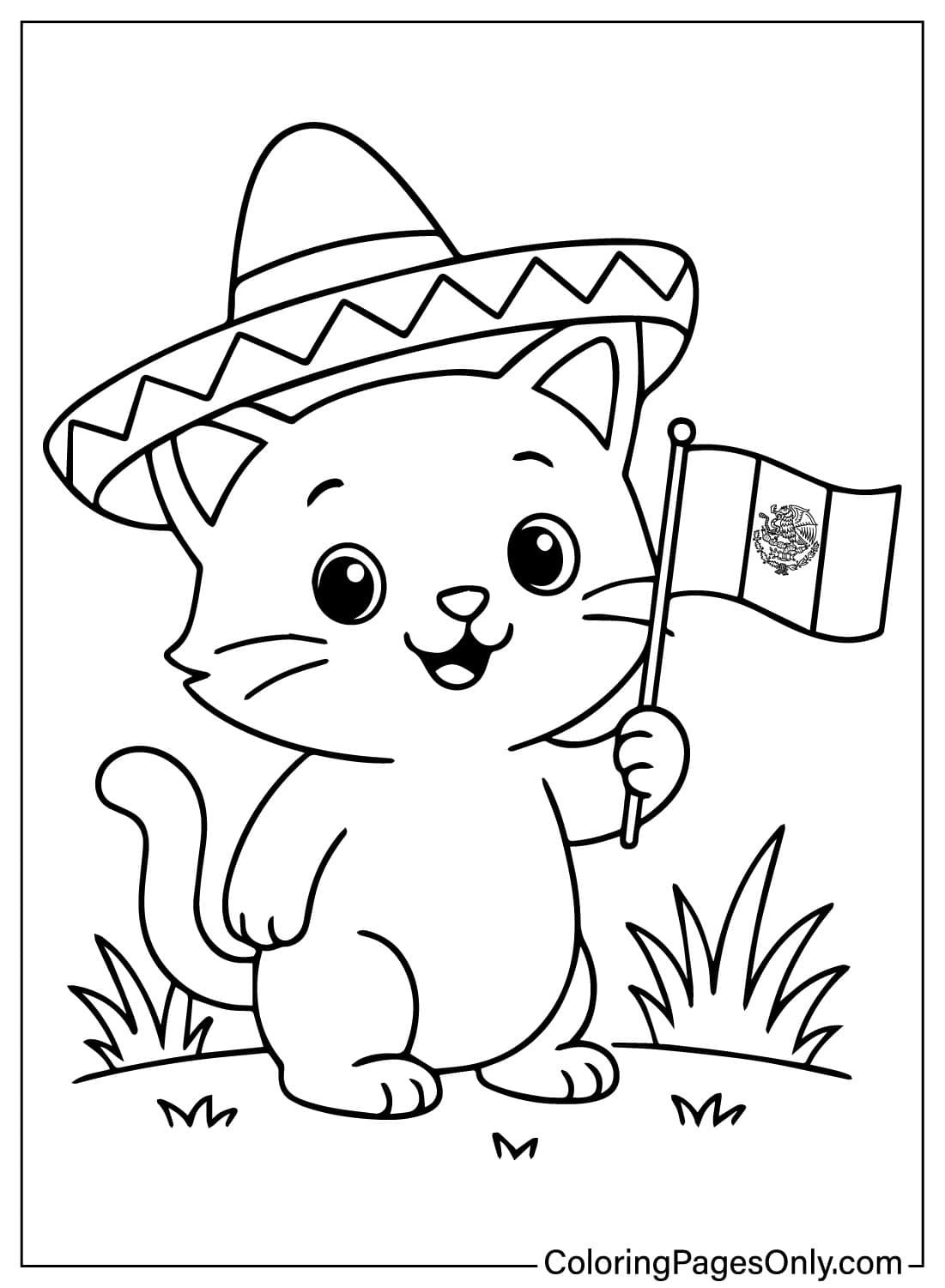
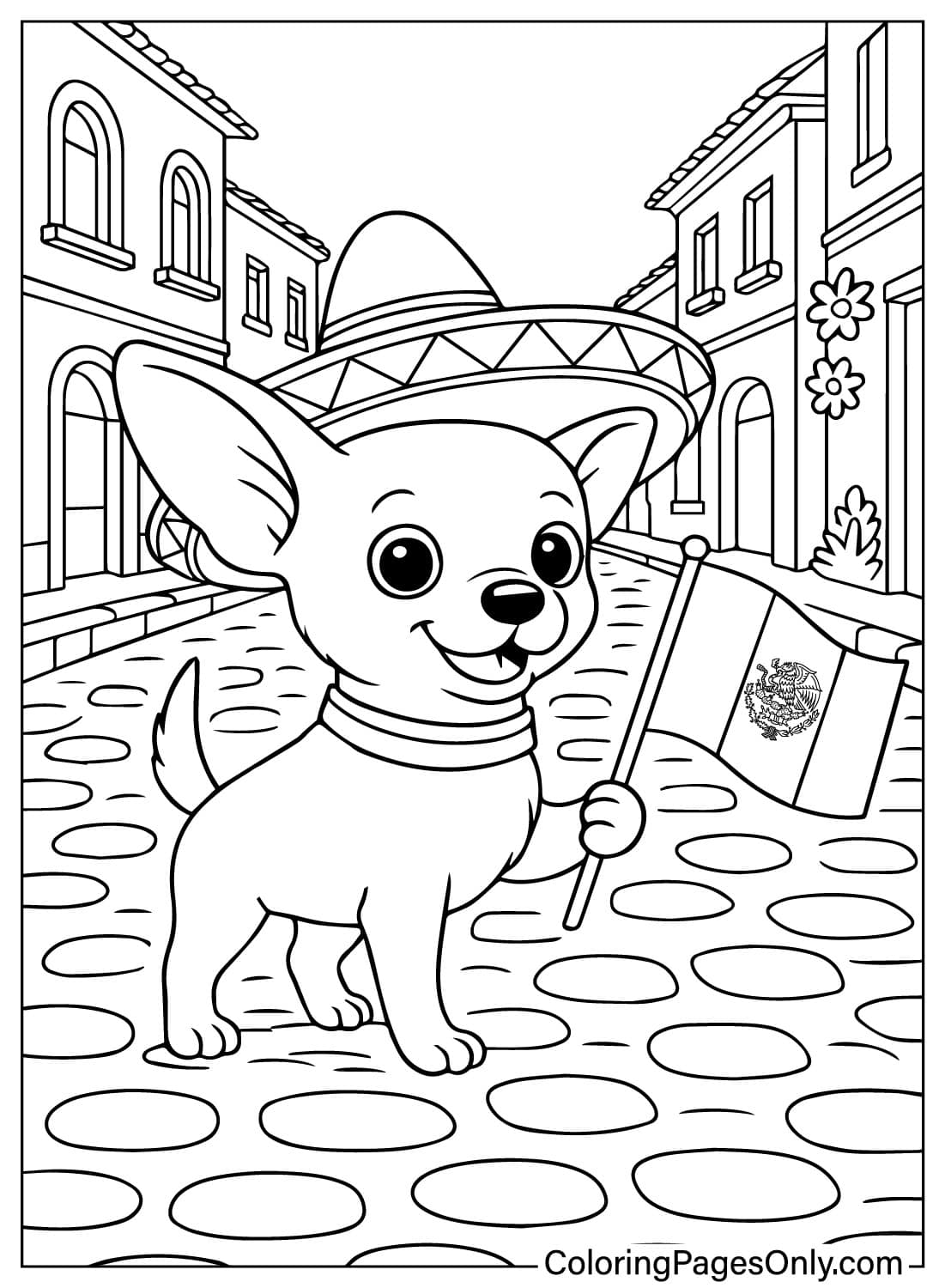
Seven pages show the flag alongside a child, an astronaut, or an animal like a cat, dog, or cactus character. These are the most playful pages in the set, built around a light, approachable mood rather than formal symbolism.
What These Pages Do
The emblem carries more meaning than the stripes. Coloring the eagle, cactus, and serpent accurately connects a child to a specific, centuries-old story, rather than just filling in three colored bands, which gives the page more to think about than a typical flag design.
Steady hands for small, detailed shapes. Getting the eagle’s wings, the cactus pads, and the serpent’s coils right without the color spilling past their edges is a genuine fine motor challenge, one that lines up with what the American Academy of Pediatrics describes as useful hand-strength practice for children roughly two to seven years old.
A flag that teaches its own history. Explaining that the coat of arms comes from an actual founding legend, not just decoration, turns a coloring session into a short, concrete history lesson a child can hold onto.
Slow, structured coloring settles the mind. Back in 2005, a study appearing in the Art Therapy Journal found that people coloring within set lines reported less anxiety than those drawing freely, and the flag’s clearly defined bands and emblem sections give a colorist exactly that kind of contained structure to work through.
How to Color Mexican Flag Pages Well
- Use a true, medium Green: Keep the green band a clear, medium shade rather than dark forest green, since the flag’s real green reads brighter than many people expect.
- Give the eagle Gold and Brown feather detail: Color the eagle in warm Gold and Brown tones with darker feather outlines, since it represents strength and is meant to stand out against the white background.
- Color the cactus a true Green with visible pads: Use a slightly different, cooler Green for the cactus than for the flag’s own green band, and add small dots or lines to suggest the cactus’s real texture.
- Keep the serpent distinct from the eagle: Use a contrasting color, such as Olive Green or Gray, for the serpent so it reads clearly against the eagle’s gold and brown tones.
- Match holiday scenes to their real occasion: Use warm, festive colors for Cinco de Mayo pages and more formal, patriotic styling for Independence Day pages, since these are two distinct dates with different tones.
- Keep food and cultural items in their own accurate colors: On pages pairing the flag with food or a guitar, color those items realistically rather than forcing them into the flag’s green-white-red palette.
5 Creative Craft Ideas With Mexican Flag Coloring Pages
1. Classroom Flag Poster. Materials: several colored flag pages, a poster board, glue, and a marker. Glue the colored flags onto the poster board, then write one fact about the flag’s history or symbolism under each.
2. Independence Day Greeting Card. Materials: a colored flag page, folded cardstock, scissors, and glue. Trim the colored page to fit the card front, glue it in place, and write a message inside for a September celebration.
3. Flag Bookmark Set. Materials: two or three colored flag pages, scissors, clear contact paper, and a hole punch. Cut each colored page into a bookmark-sized strip, cover both sides with contact paper, and punch a hole for a ribbon.
4. Cultural Fact Cards. Materials: several colored pages featuring the flag with food or cultural items, scissors, glue, and index cards. Glue each colored page onto an index card and write a fact about that food or item underneath.
5. Flag Wall Banner. Materials: several colored flag pages, scissors, twine, and clear tape. Cut out each colored flag, tape it to the twine at intervals, and hang the finished banner for a classroom or party display.
Frequently Asked Questions
What are Mexican flag coloring pages?
Mexican flag coloring pages are printable designs featuring the classic tricolor flag and coat of arms, holiday scenes, the flag paired with culture, and playful scenes with people and animals. This collection includes 32 free designs available as printable PDFs or online coloring pages.
What do the colors of the Mexican flag mean?
Green represents independence and hope, white represents unity, and red represents the blood of the heroes who fought for Mexico’s independence.
What does the eagle and serpent emblem represent?
The emblem depicts an eagle on a cactus devouring a serpent, based on the founding legend of Tenochtitlan, in which the Mexica people were told to settle where they saw this exact scene take place.
When was the current Mexican flag adopted?
The current version of the flag was adopted on September 16, 1968, though the green-white-red tricolor pattern dates back to Mexico’s 1821 independence.
Is Mexican Independence Day the same as Cinco de Mayo?
No. Mexican Independence Day is September 16, marking the start of the war for independence in 1810, while Cinco de Mayo, May 5, commemorates a specific military victory at the Battle of Puebla in 1862.
When is Mexican Flag Day?
Mexican Flag Day, Día de la Bandera, is celebrated on February 24 each year.
Are Mexican flag coloring pages suitable for young children?
Yes. The simple tricolor pages suit ages 3 and up. The detailed coat of arms pages, with more emblem detail, suit ages 6 and up.
Can these pages be downloaded or printed without an account?
Yes. Every page can be downloaded or printed directly with no account, email, or payment required.
Start Coloring
Download any page by clicking the design. No account, email, or payment is required. Pages print directly from the browser at full resolution or open in the online coloring tool for screen use. Share finished pages on Facebook or Pinterest with the share buttons at the top of each design page.