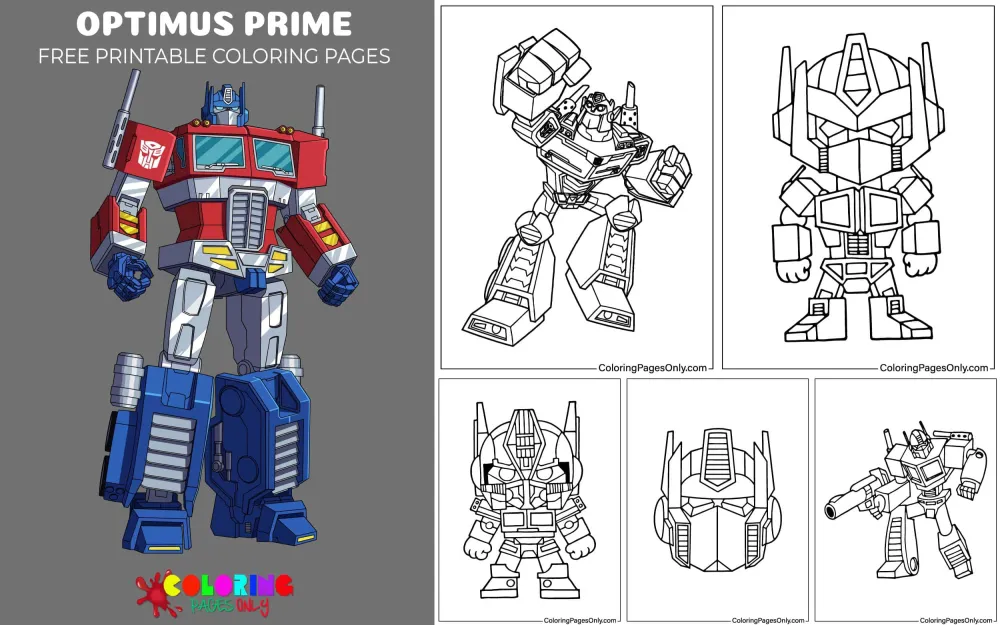
Free Optimus Prime coloring pages – 40+ pages featuring the legendary Autobot leader in classic poses, city guardian scenes, shield protector designs, sword pages, truck scenes, Rescue Bots pages, action poses, calm moments, gear details, Earth-protection scenes, flag pages, and many more printable robot designs. Download your favorite pages as PDF, print them at home, or color online.
Optimus Prime is one of the most iconic characters in the Transformers universe. He is the noble leader of the Autobots, known for courage, wisdom, loyalty, and his strong sense of responsibility. In many Transformers stories, Optimus Prime leads the Autobots in their fight against Megatron and the Decepticons, protecting Earth, helping others, and standing for freedom and teamwork.
What makes Optimus Prime especially interesting for coloring is his mix of robot hero and vehicle design. He is often shown as a powerful red-and-blue robot who can transform into a truck, so his pages include more than a simple character outline. Children can color armor panels, chest windows, wheels, tires, shoulder parts, helmets, faceplates, weapons, shields, truck details, city backgrounds, and mechanical shapes.
His design is strong and easy to recognize: the faceplate, broad chest, truck-inspired parts, and bold red-blue-silver palette make Optimus Prime stand out even before any color is added. For kids who enjoy robots, vehicles, heroic characters, machines, or action scenes, these pages offer a clear subject with many exciting details to finish.
This collection includes many Optimus Prime moods and scenes. Some pages show him standing in a classic hero pose, guarding a city, holding a shield, carrying a sword, pointing forward, or rising like a strong protector. Some pages are calmer, with Optimus sitting, reading, planting a tree, holding Earth, or appearing in a cute, simplified style. Others focus on Transformers-style details, such as trucks, gear wheels, Autobot base scenes, Rescue Bots versions, and printable robot poses.
A simple Optimus Prime page can be finished quickly by younger children. A detailed robot page with armor lines, weapons, background buildings, truck parts, or mechanical panels can become a longer coloring project for older kids and Transformers fans. Parents can print pages for quiet time, teachers can use them for art breaks, and kids can color online anytime.
All 40+ pages are free at ColoringPagesOnly.com. Print your favorite Optimus Prime page at home or color it online.
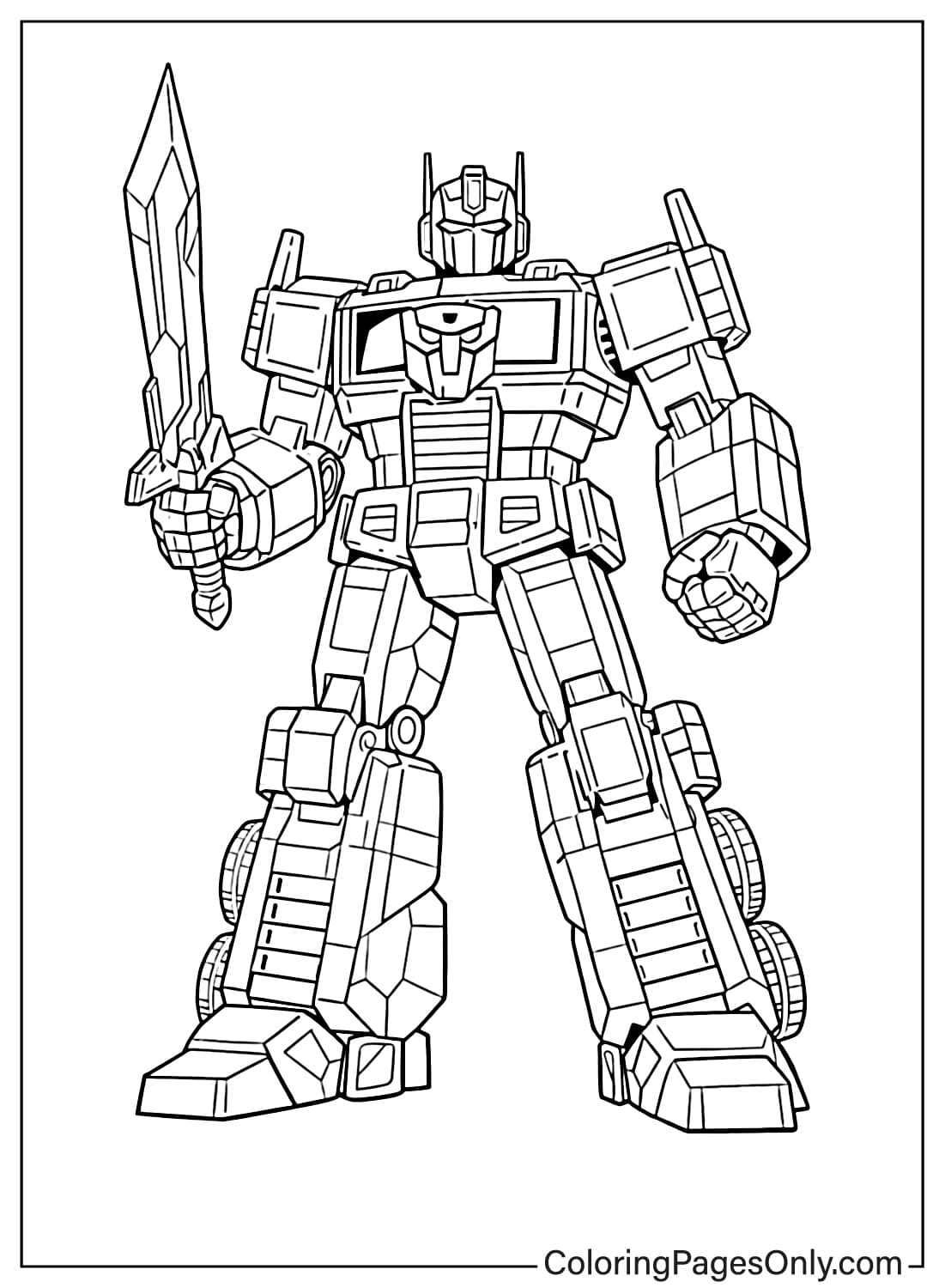
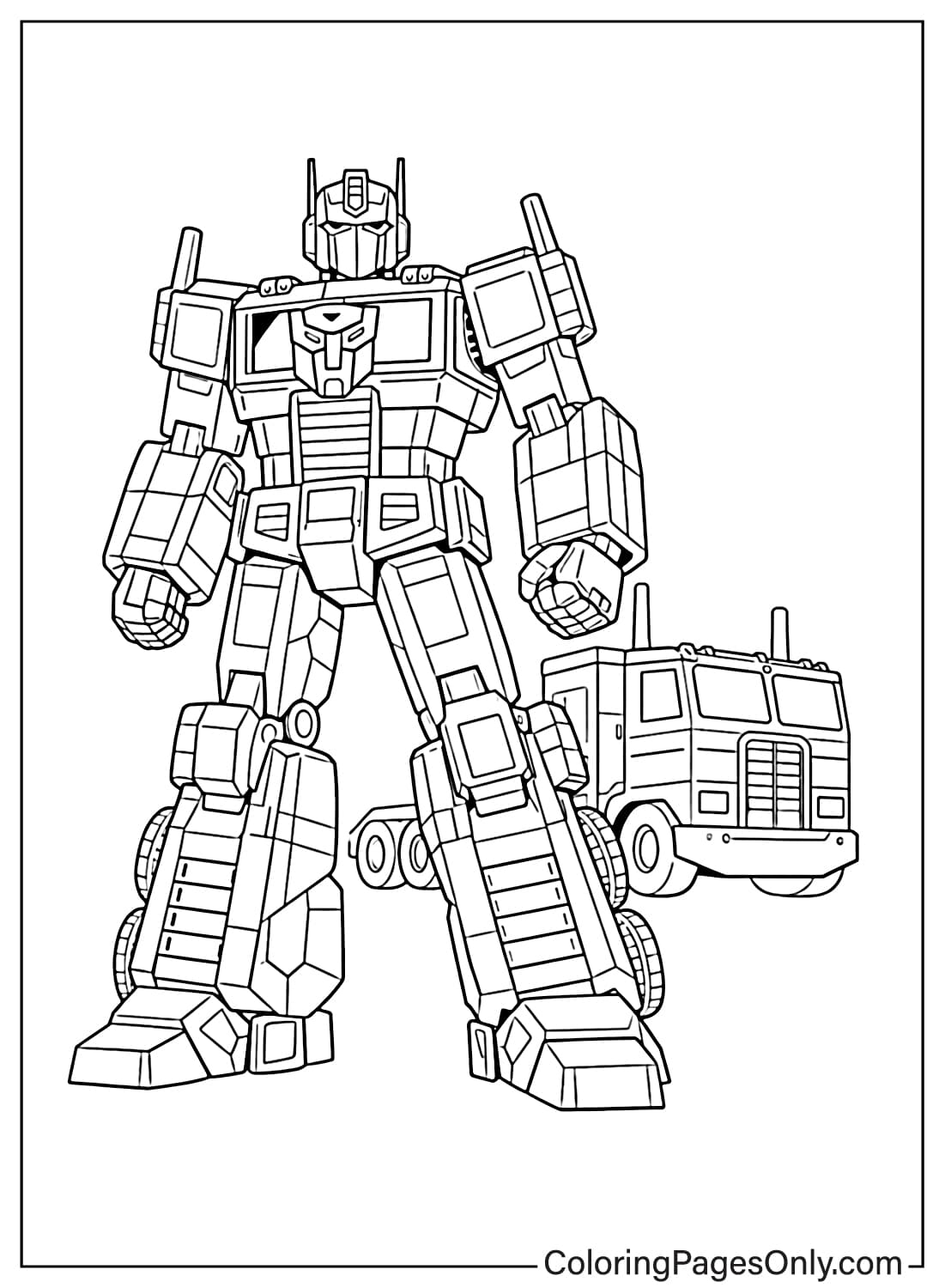
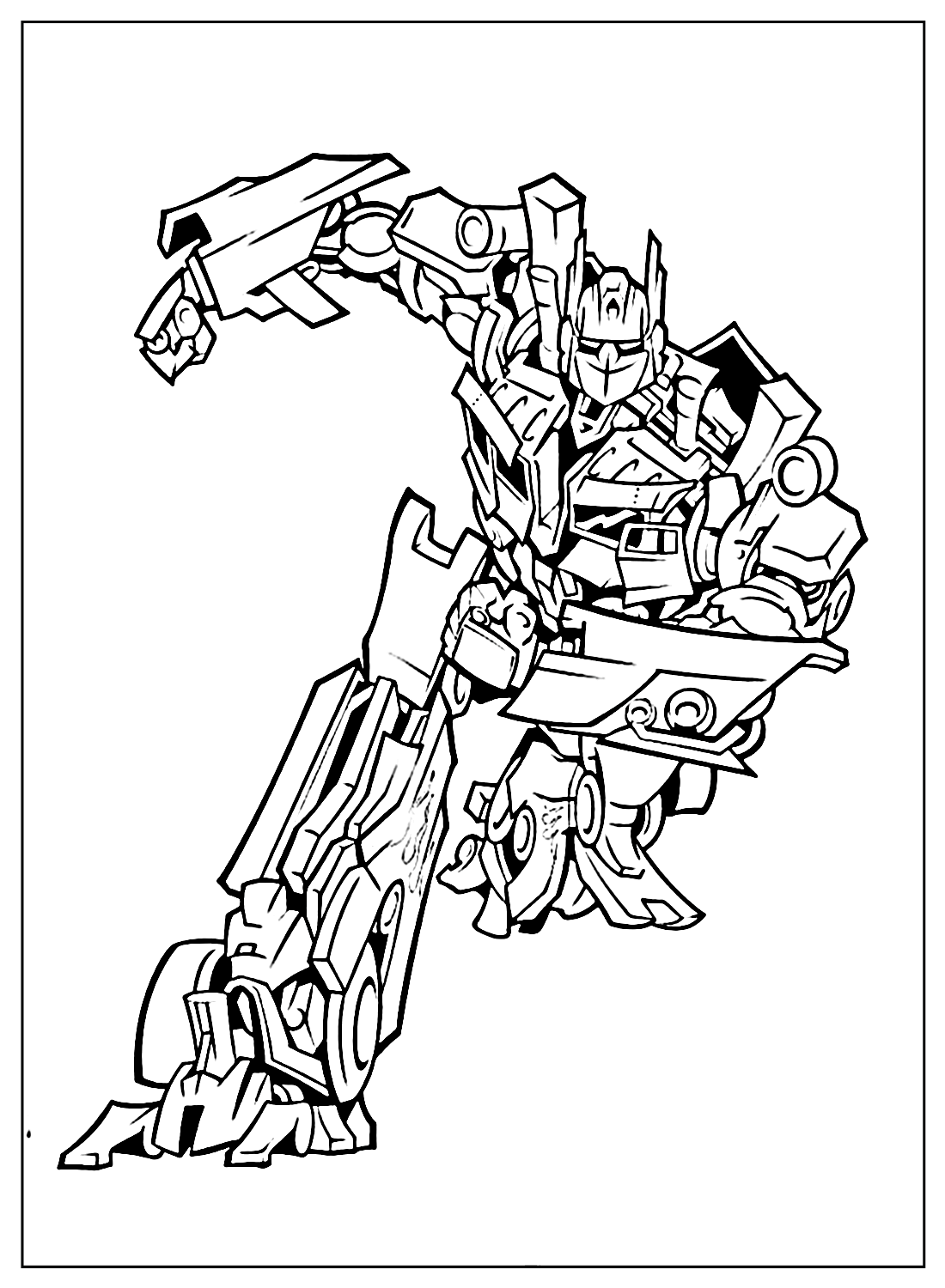
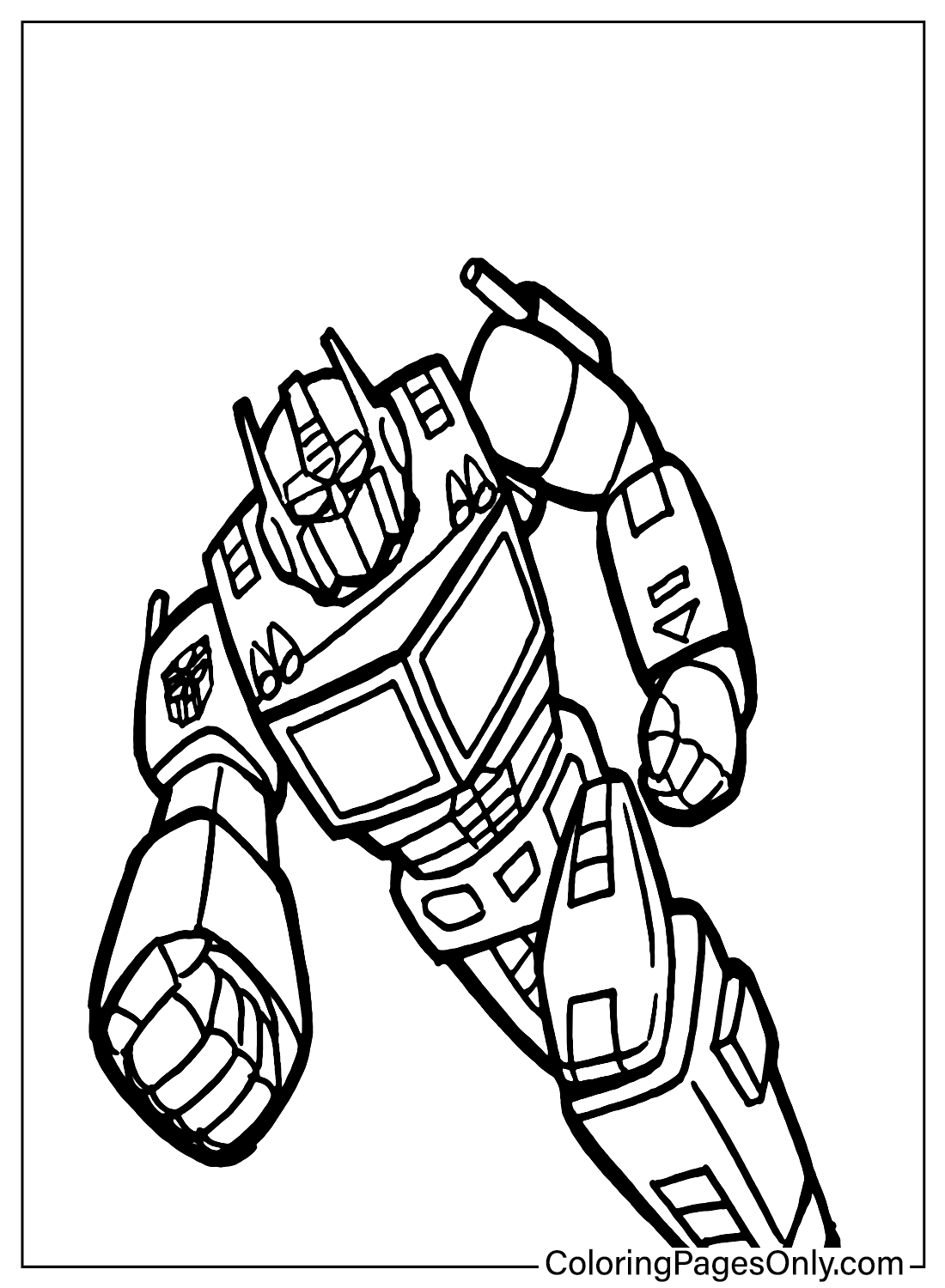


What’s Inside
Classic Optimus Prime Coloring Pages
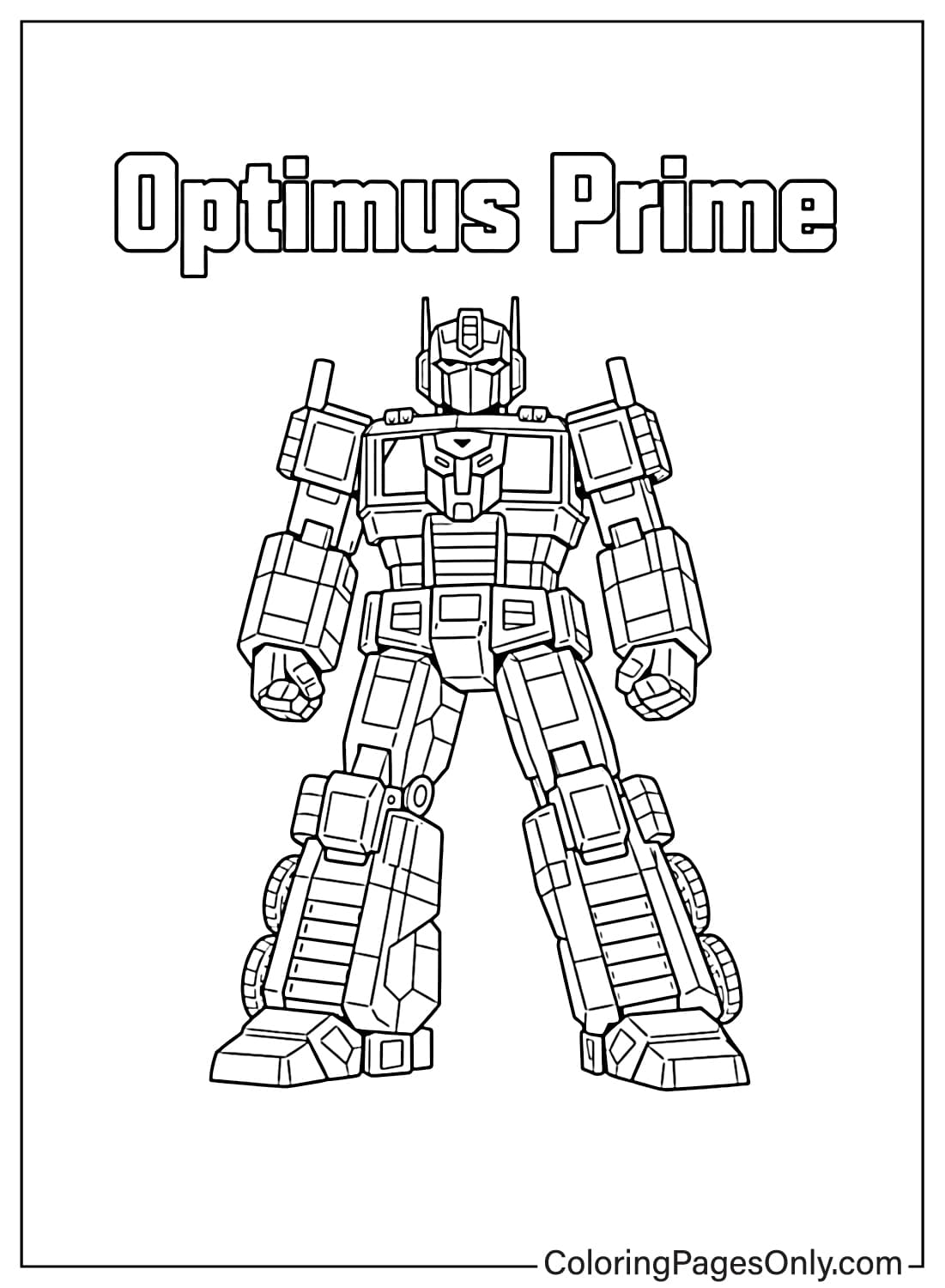
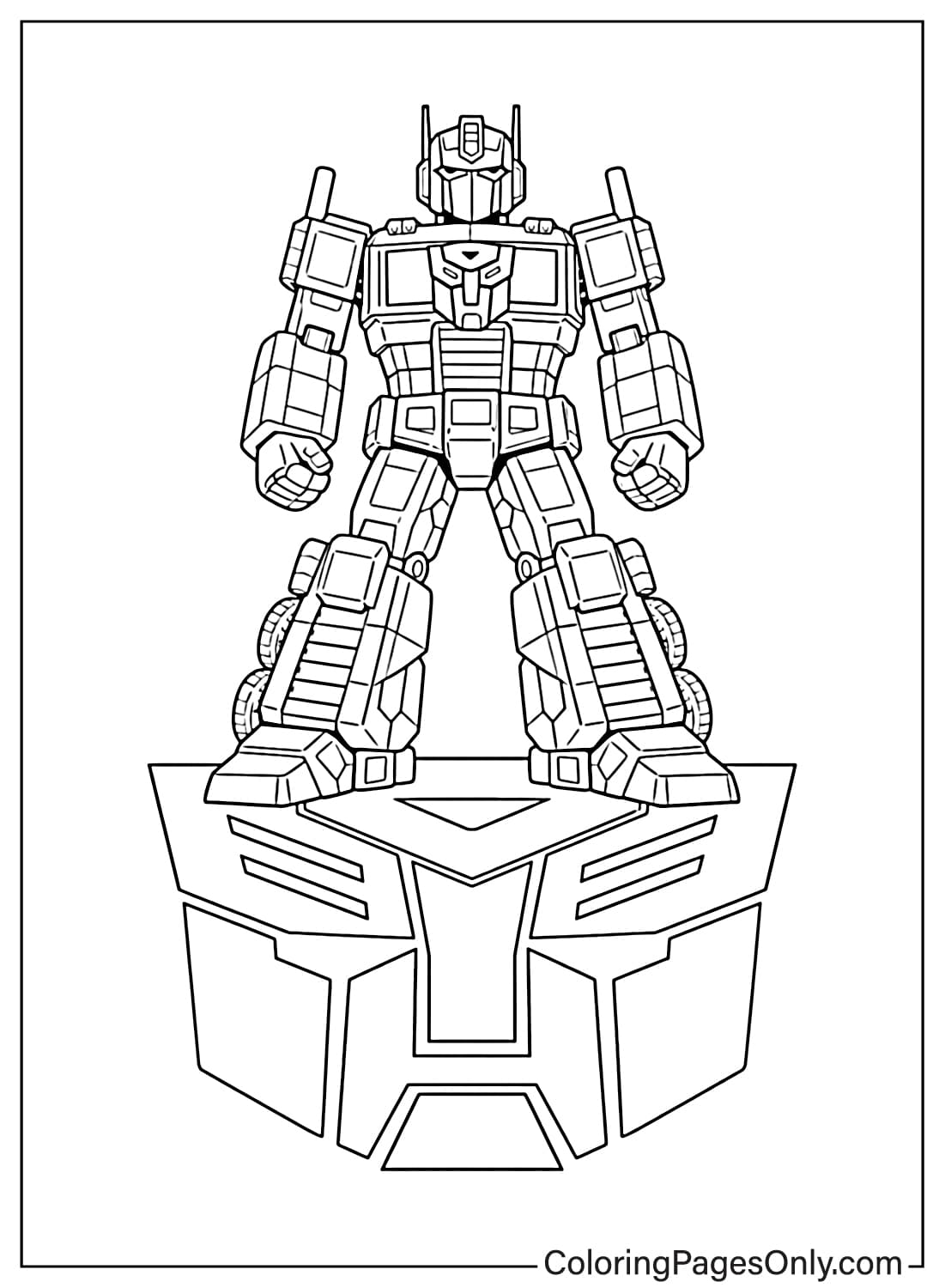
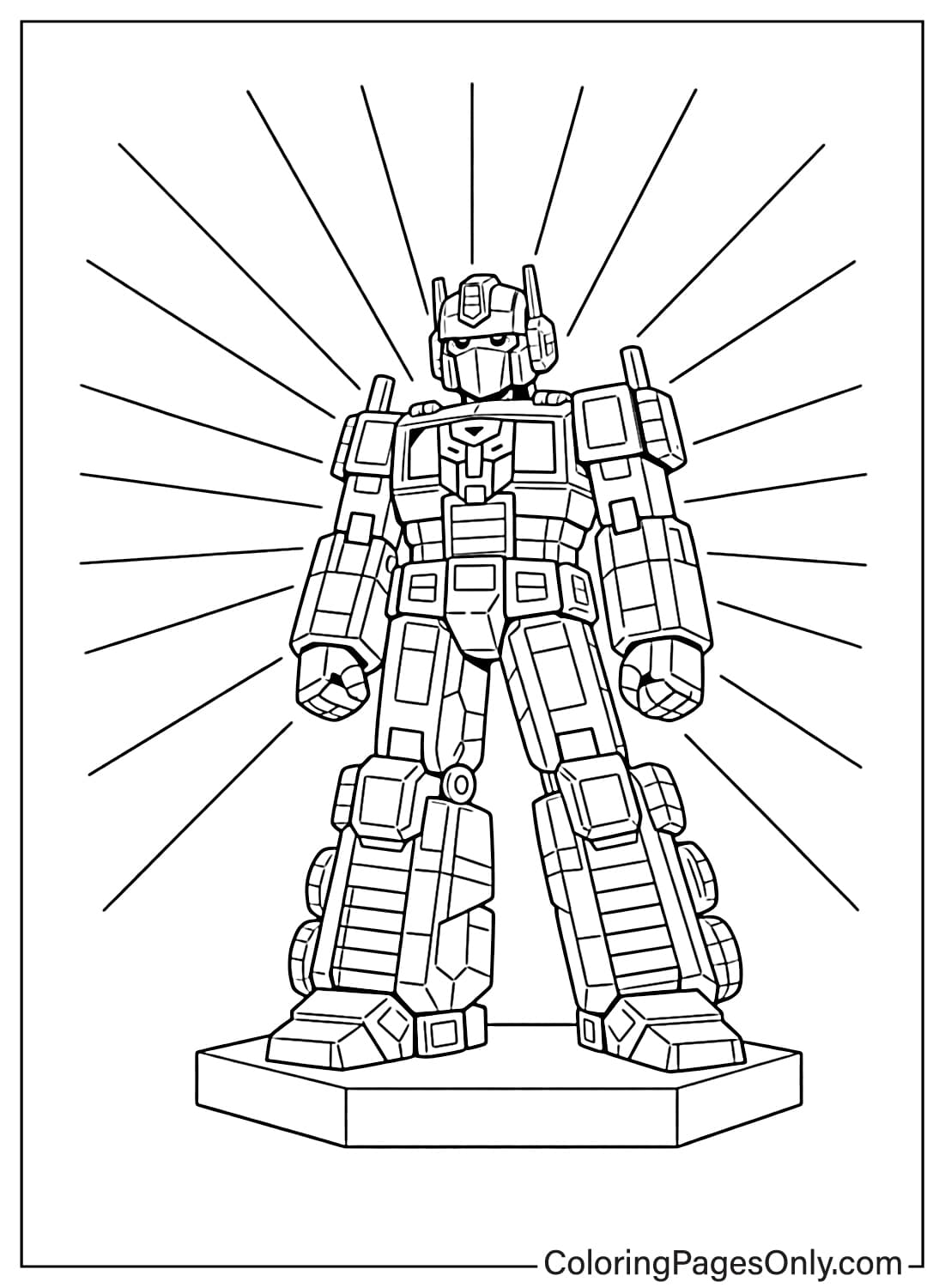
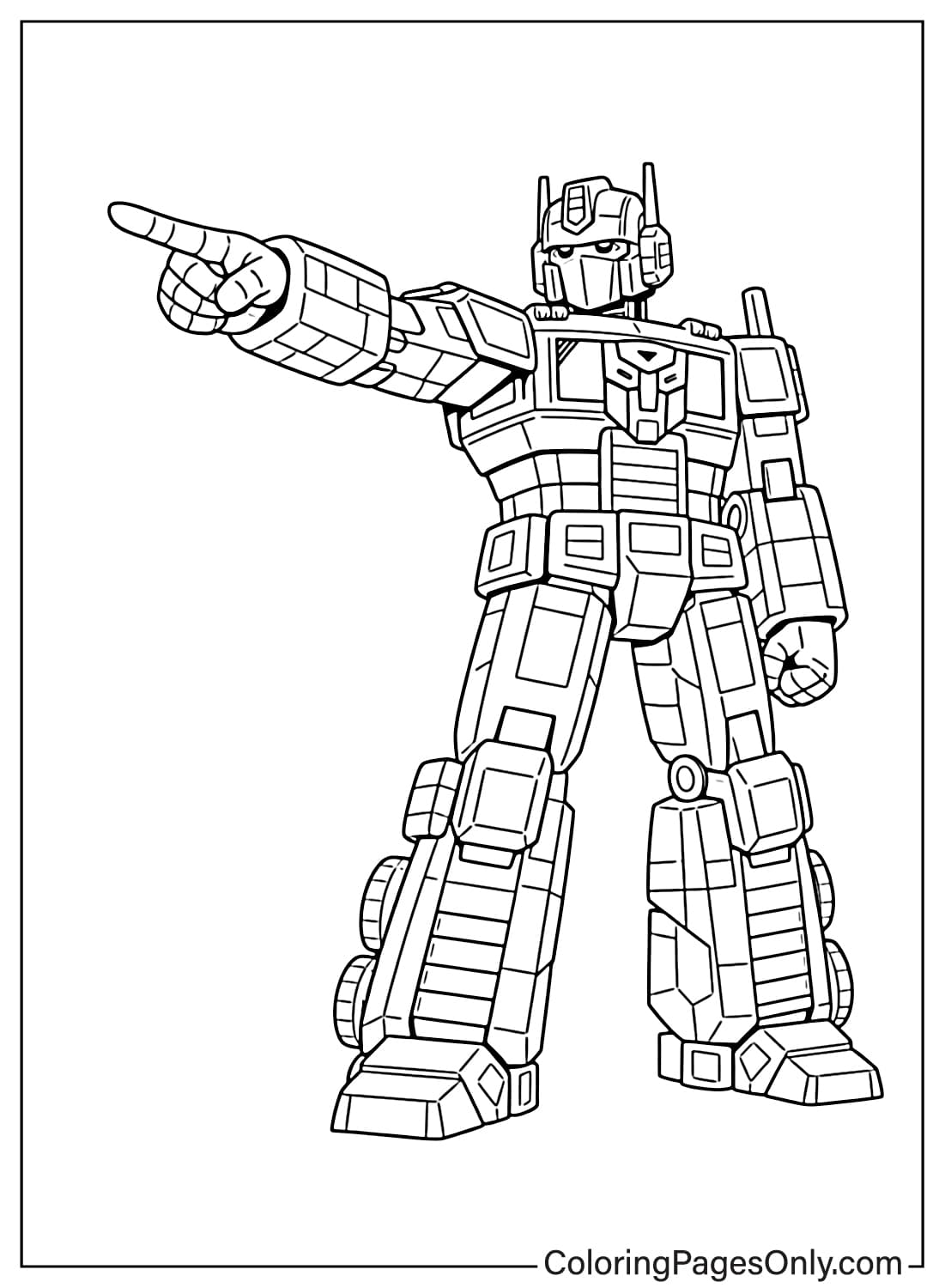
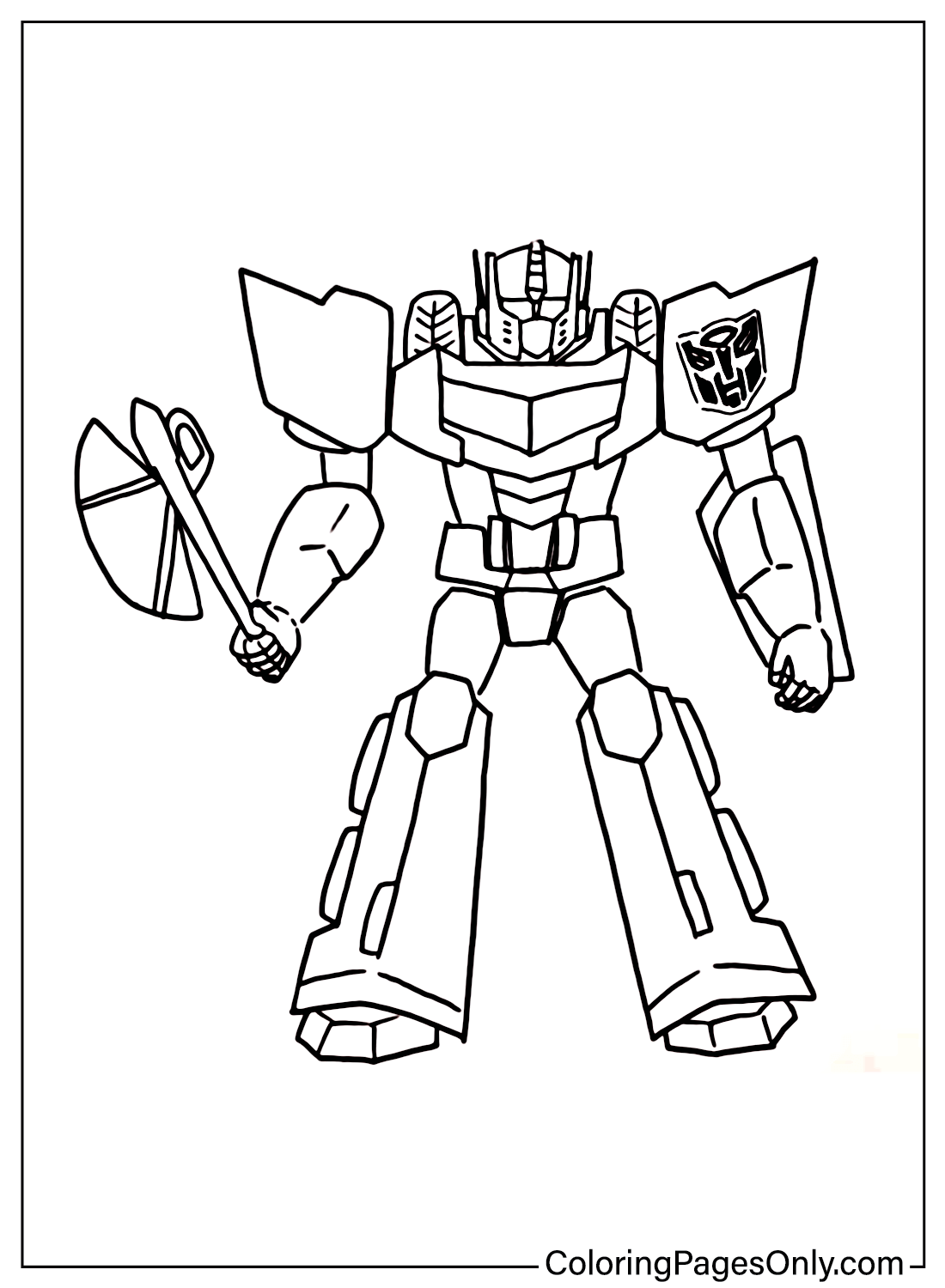
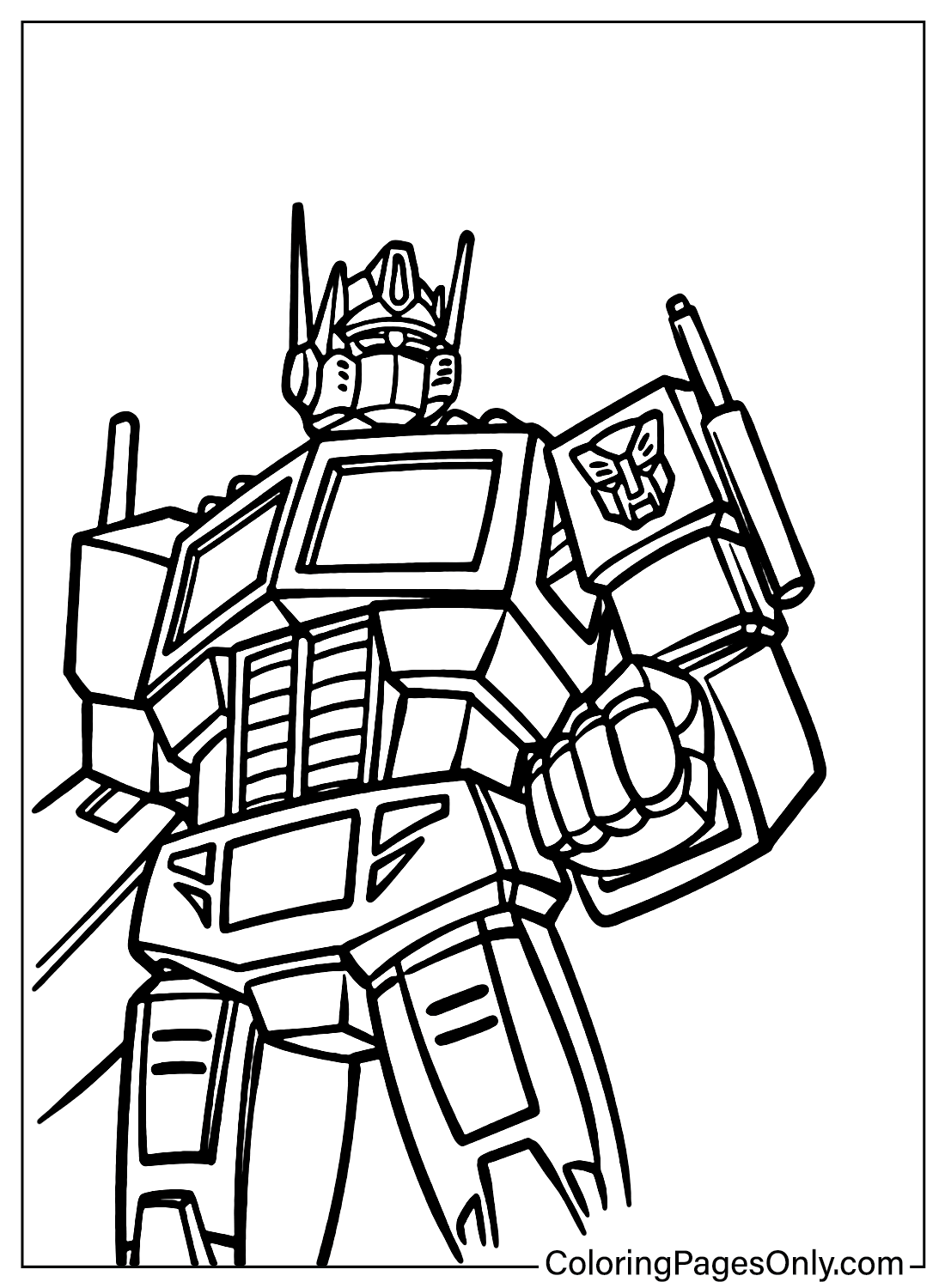
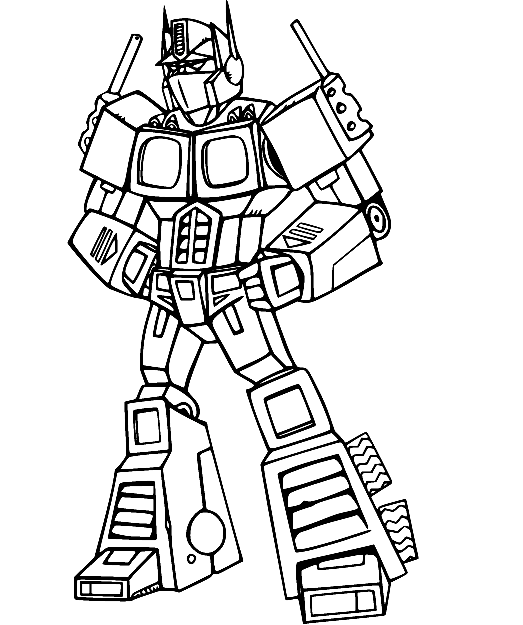
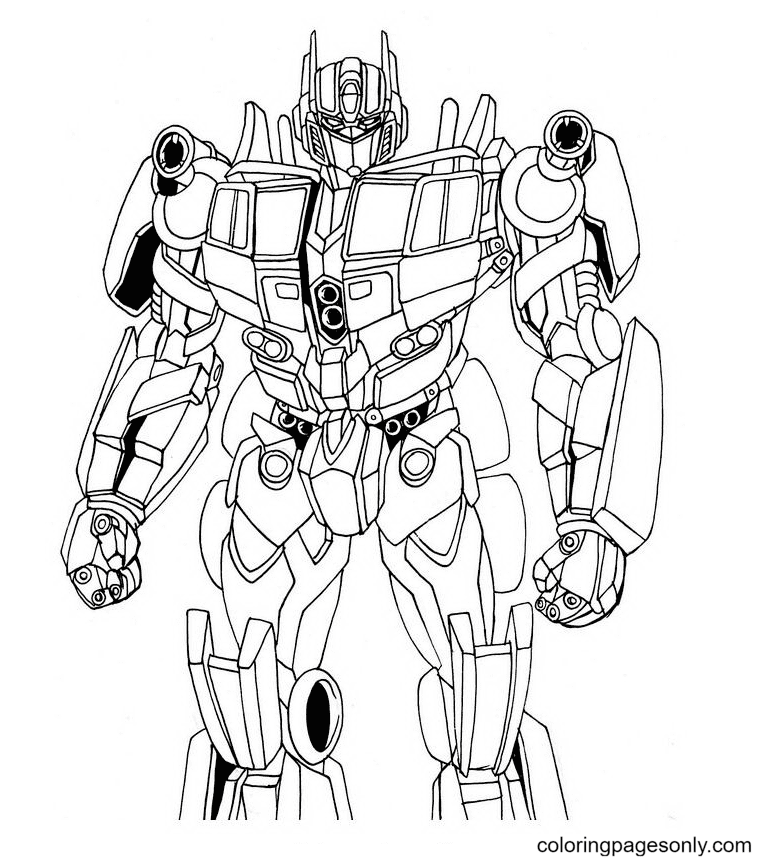
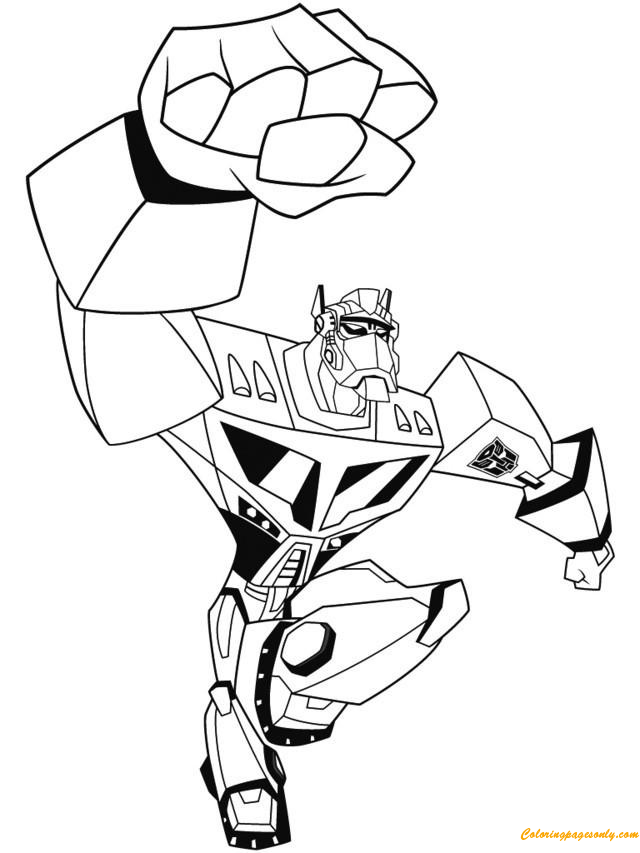
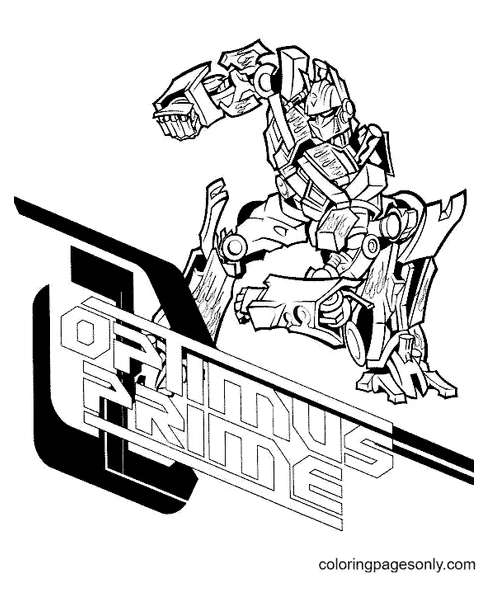
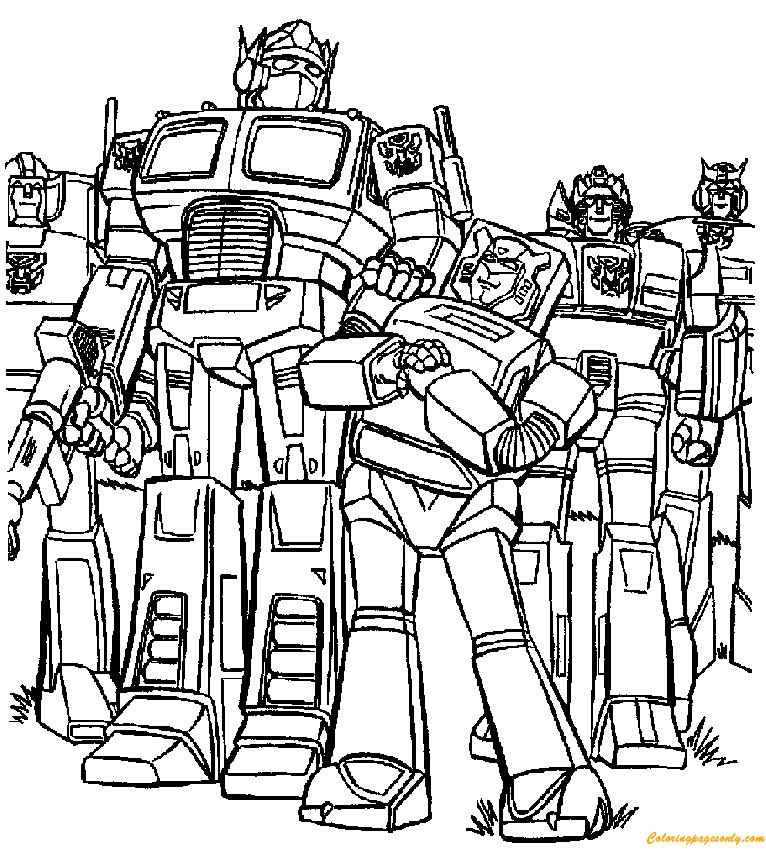
Classic Optimus Prime coloring pages focus on the most familiar look: a strong robot body, helmeted head, broad chest, large arms, powerful legs, and a confident hero pose. These pages may show Optimus standing, facing forward, raising an arm, pointing, or preparing for action.
The strength of a classic Optimus Prime page is clear character identity. Children can recognize the leader shape quickly because the design feels bold and structured. The head, chest, shoulders, arms, and legs create large sections to color, while smaller armor lines add detail for kids who want more challenge.
These pages are a good starting point for younger children because the main figure is usually large and centered. They can color the helmet, chest, arms, legs, and background in a simple order without getting lost in too many tiny parts.
For coloring, keep the main palette strong. Red works well for chest and upper body details, blue for legs and lower armor, gray or silver for mechanical parts, black for tires or dark joints, and pale blue for windows or glowing details.
Classic pages are useful before children move into more detailed scenes with shields, swords, trucks, city backgrounds, or Rescue Bots designs.
Optimus Prime Action Pose Coloring Pages
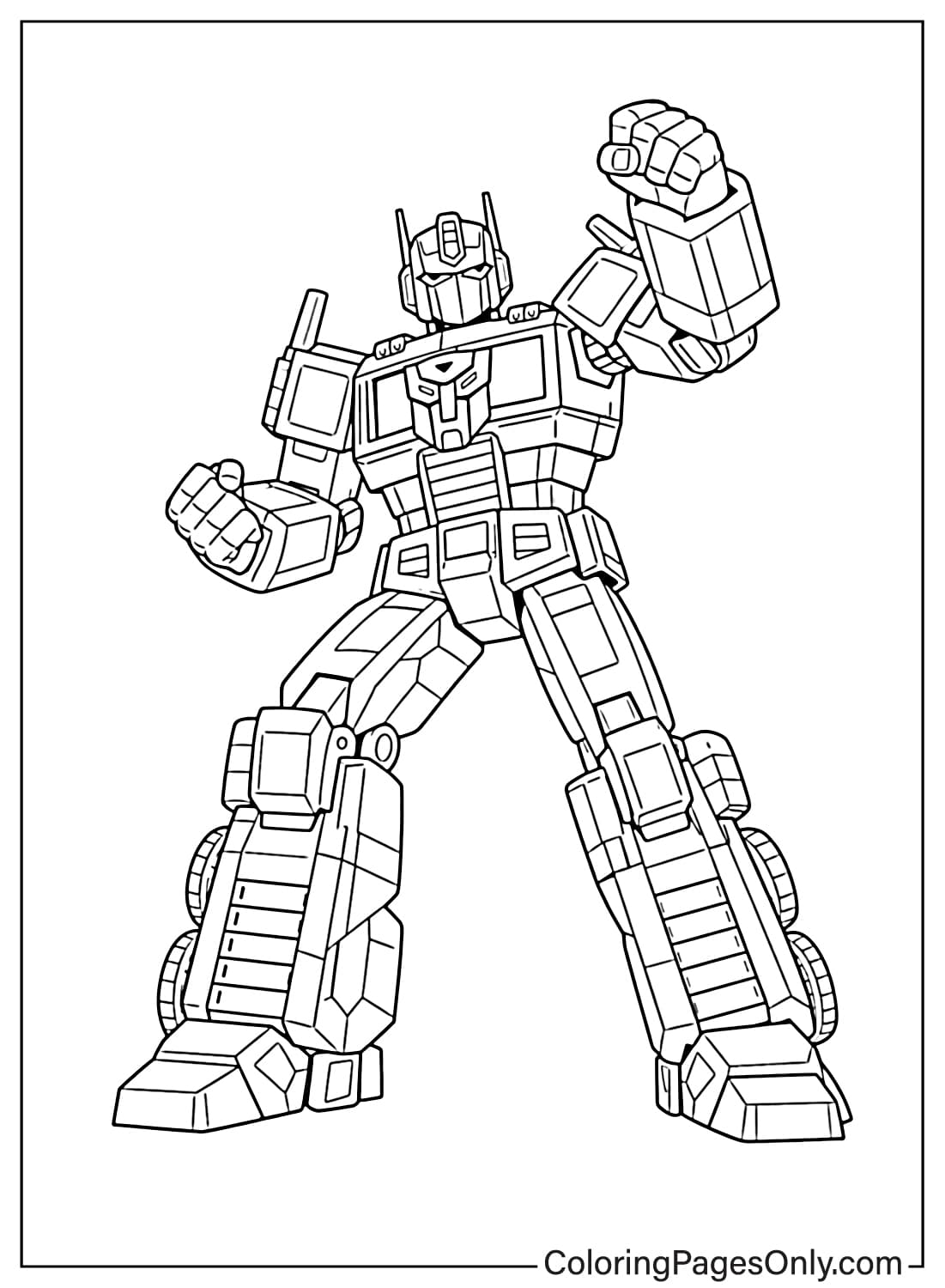
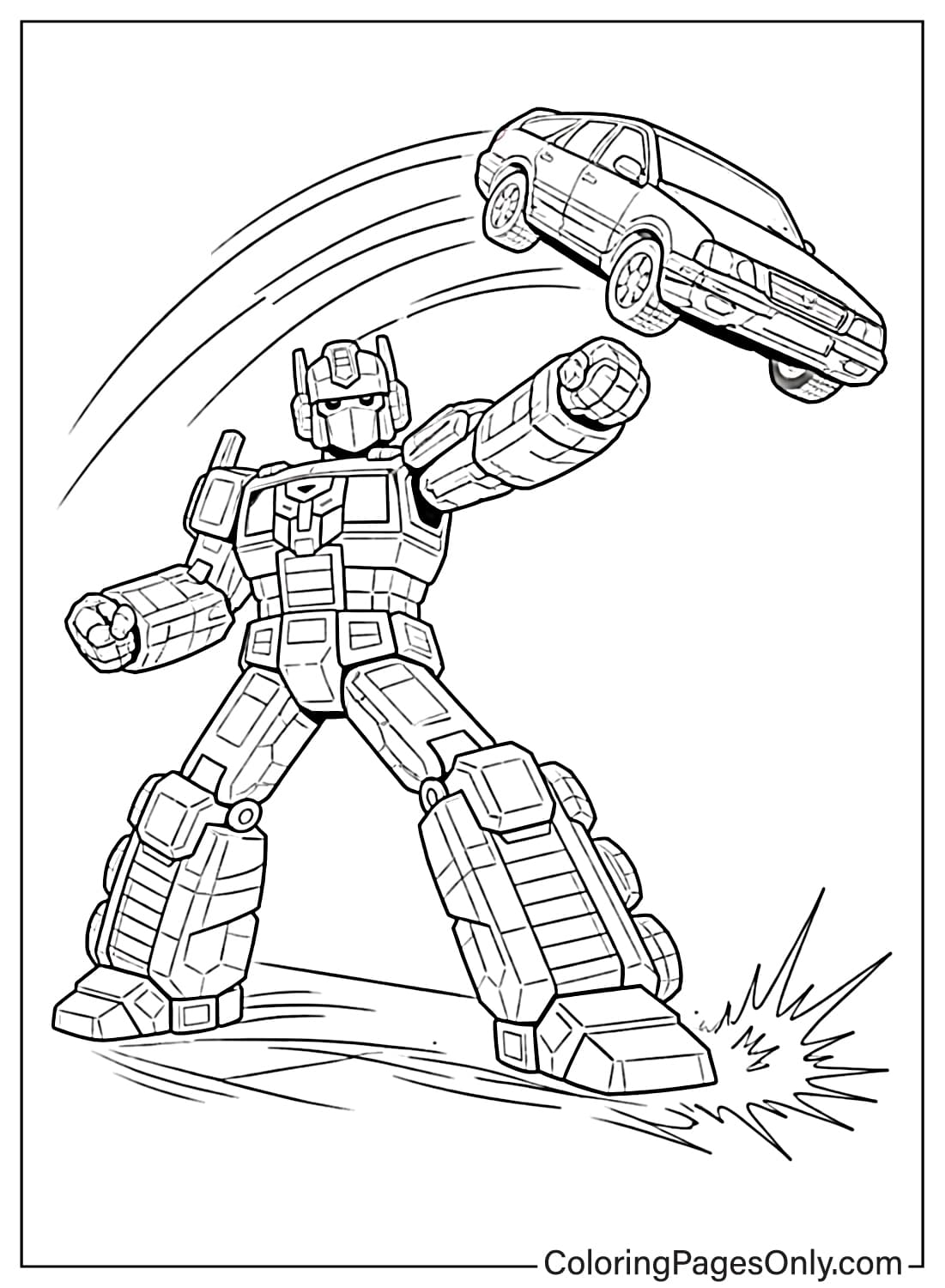
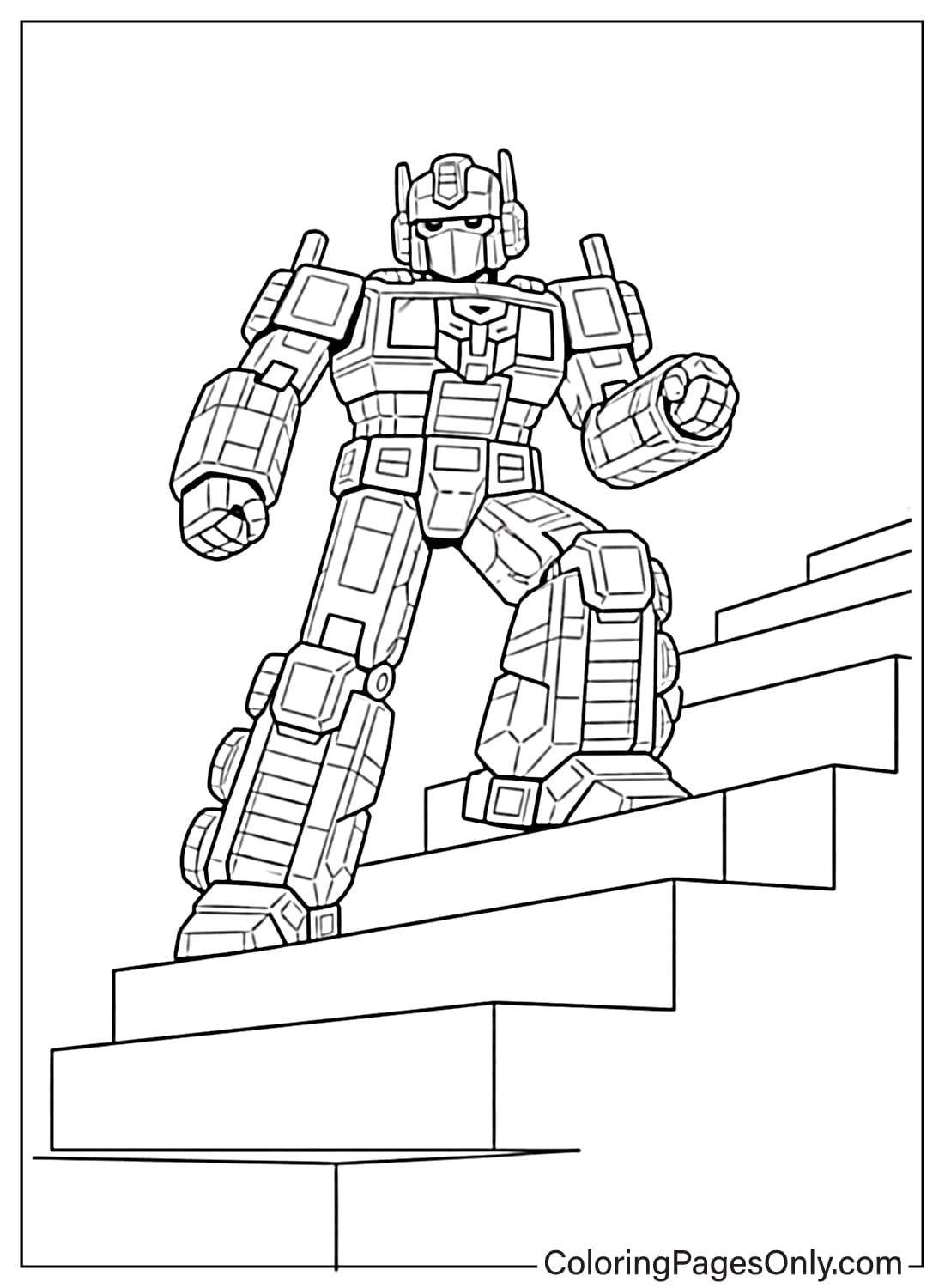
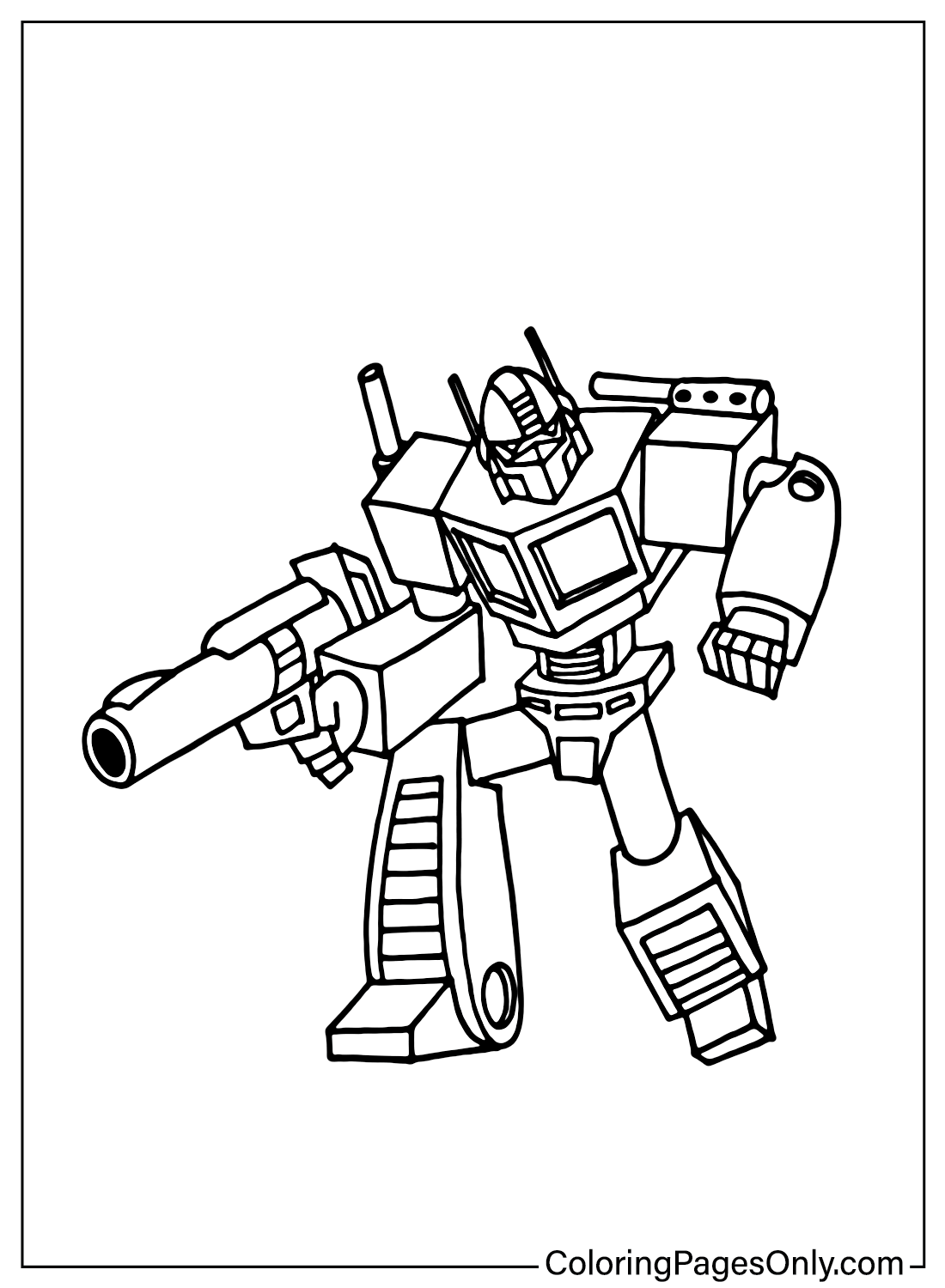
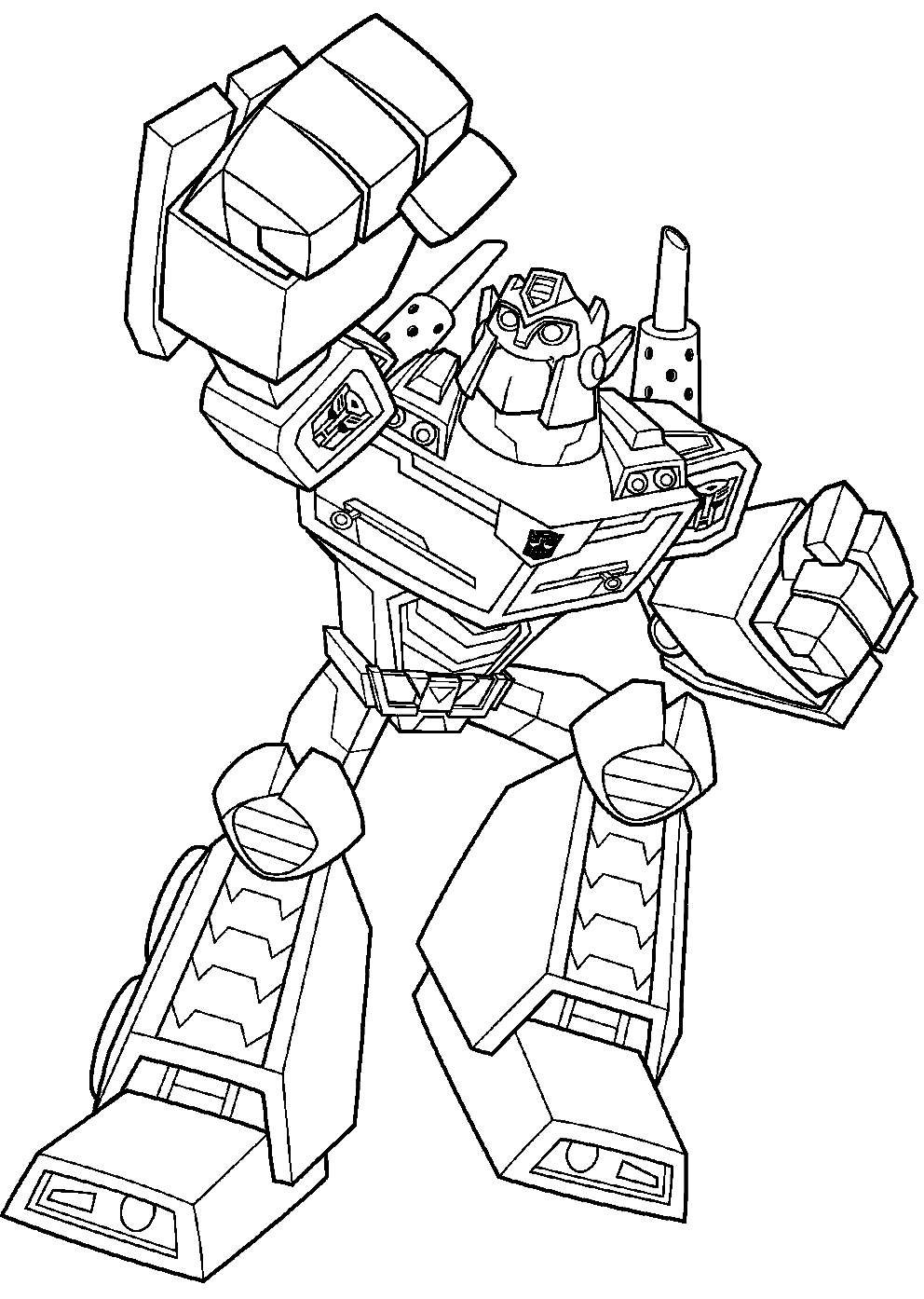
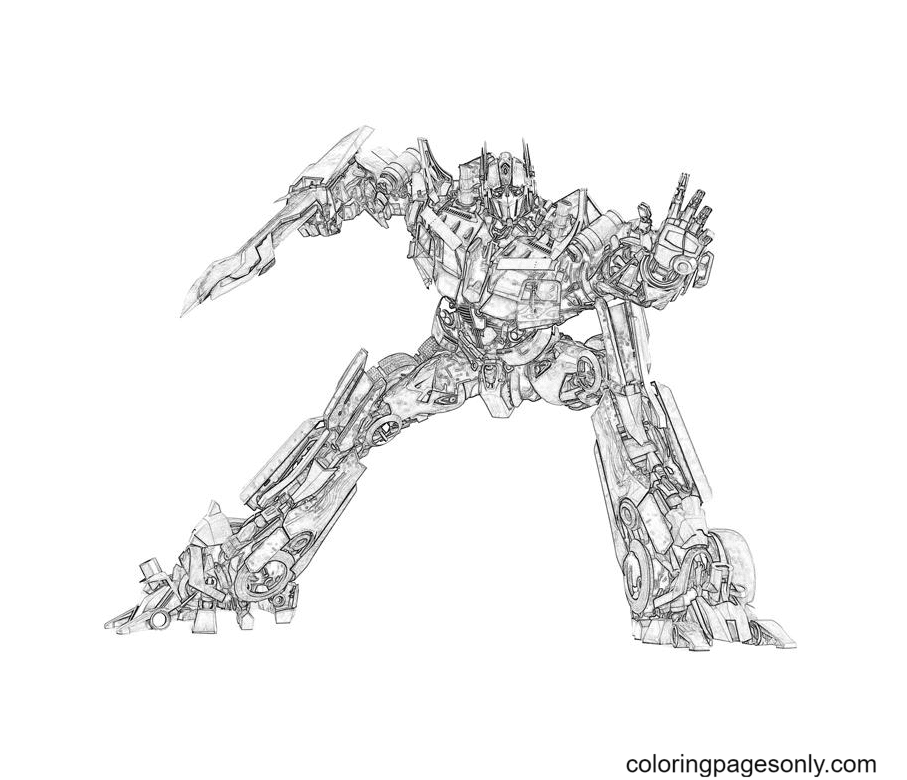
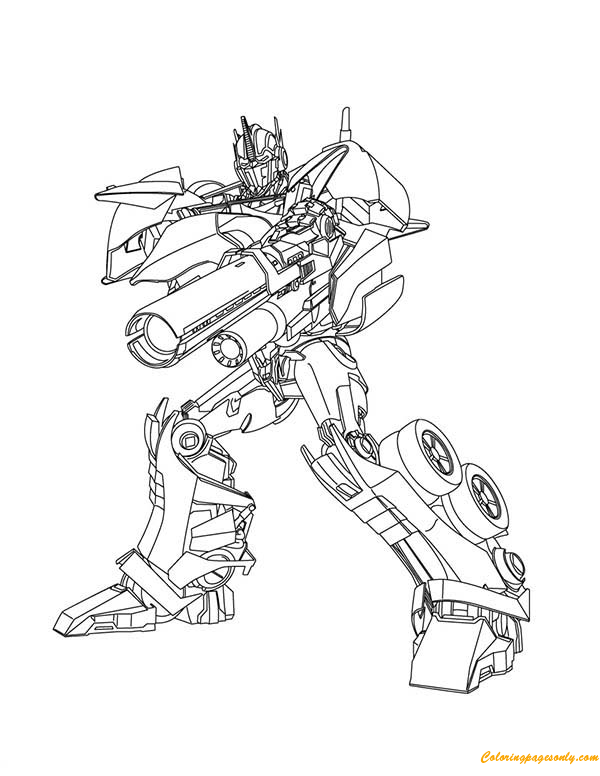
Action pose pages show Optimus Prime moving, defending, climbing, throwing, rising, or standing in a dramatic robot pose. These pages may include city scenes, stair poses, protective stances, forward-pointing gestures, or stronger action moments.
The body position matters here. A bent knee, raised arm, tilted shoulder, wide stance, or open hand can make the whole page feel more active. Optimus does not need a busy background to look powerful; the pose itself can carry the energy.
These pages are good for older kids who enjoy strong robot movement. They can add shadows under the feet, darker colors along armor edges, glowing effects, or simple background lines to make the pose feel more dramatic.
Color can help organize action pages. Keep Optimus bright and clear first, then use softer colors for the background. If the page has buildings, stairs, smoke, or ground details, use gray, blue, brown, or light shadow colors so the main robot stays the focus.
For younger children, choose action pages with one large Optimus figure and a limited background. Older kids can enjoy pages with more armor sections, props, and scene details.
Optimus Prime Shield and Protector Coloring Pages
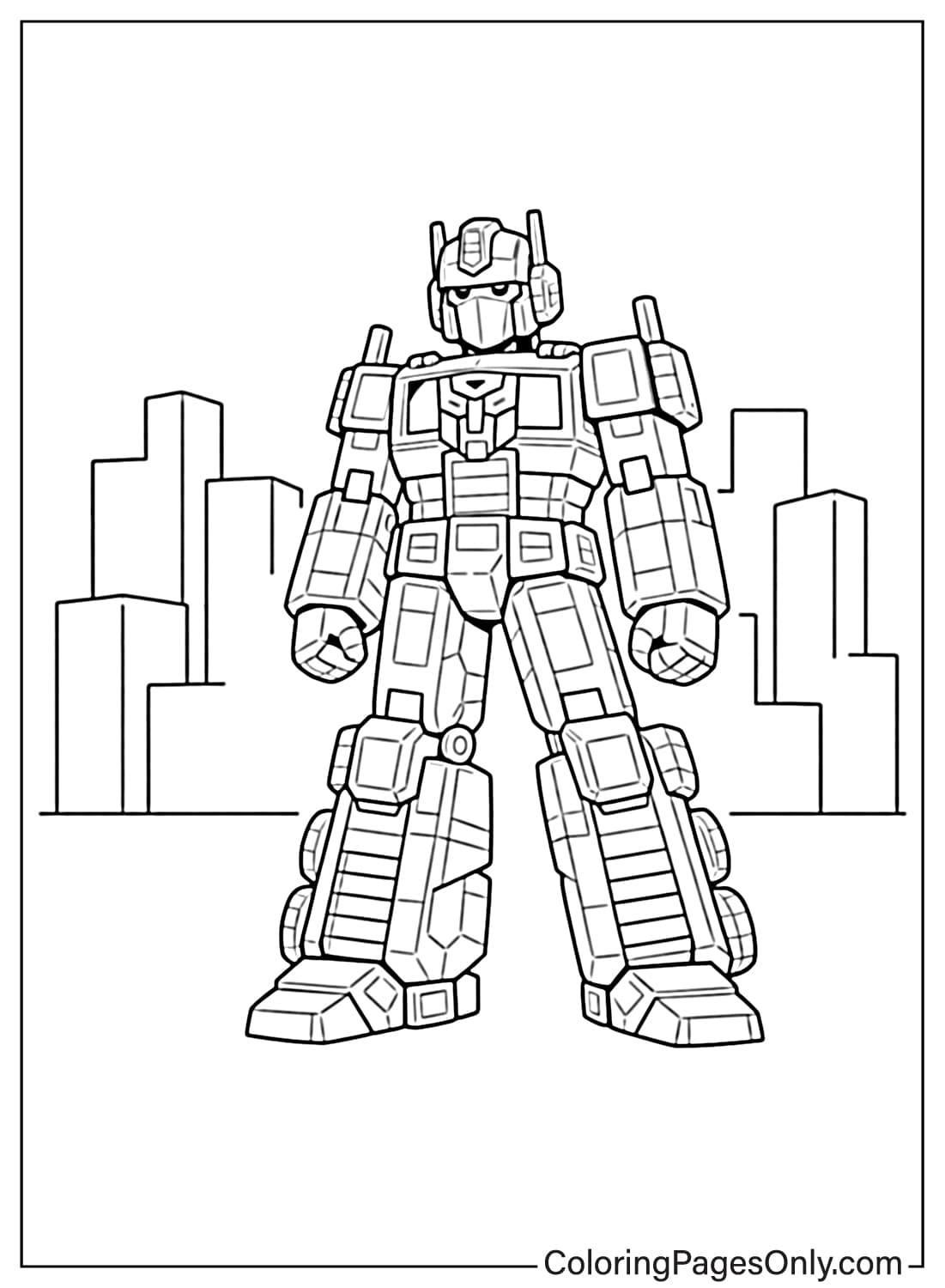
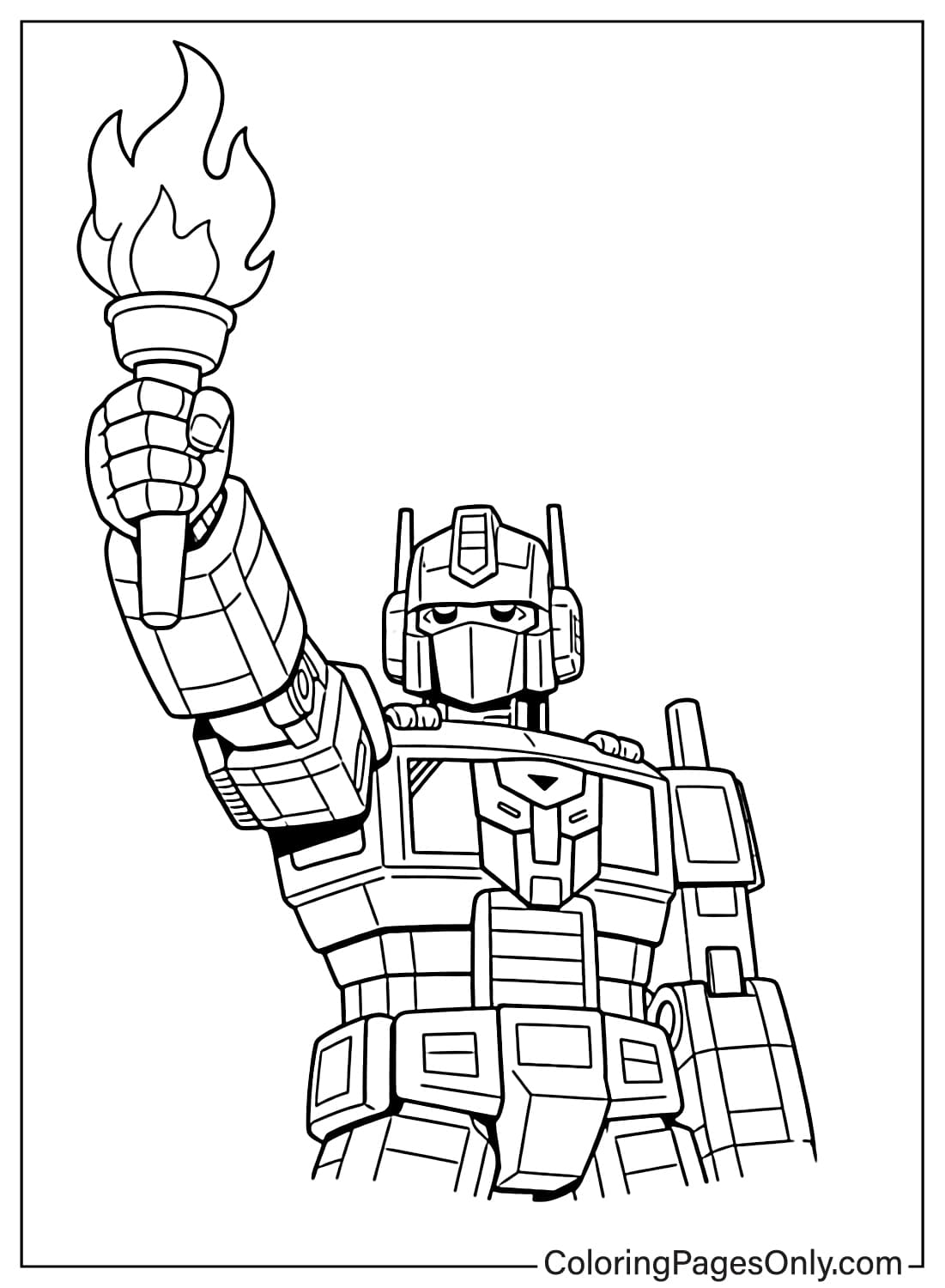
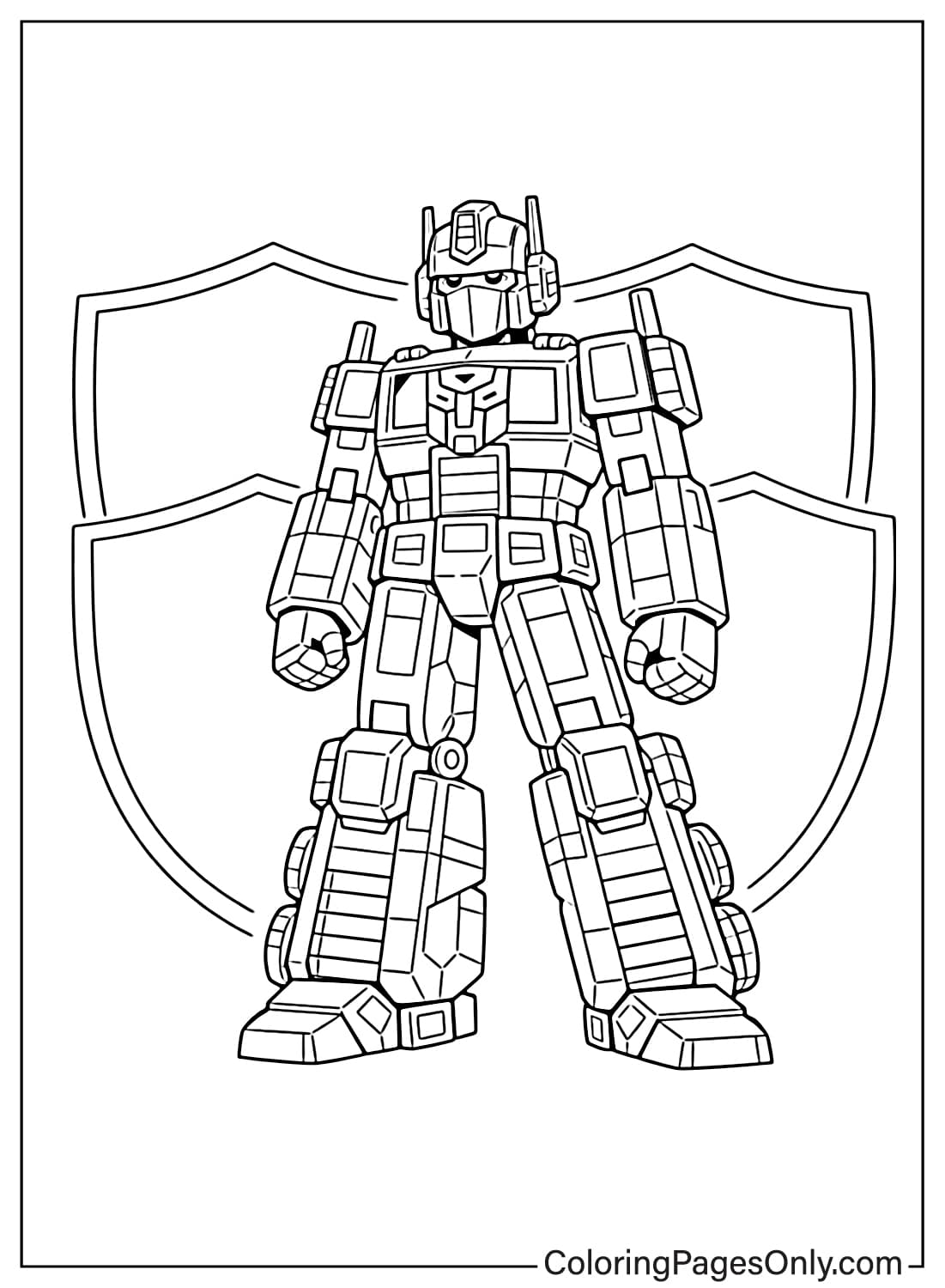
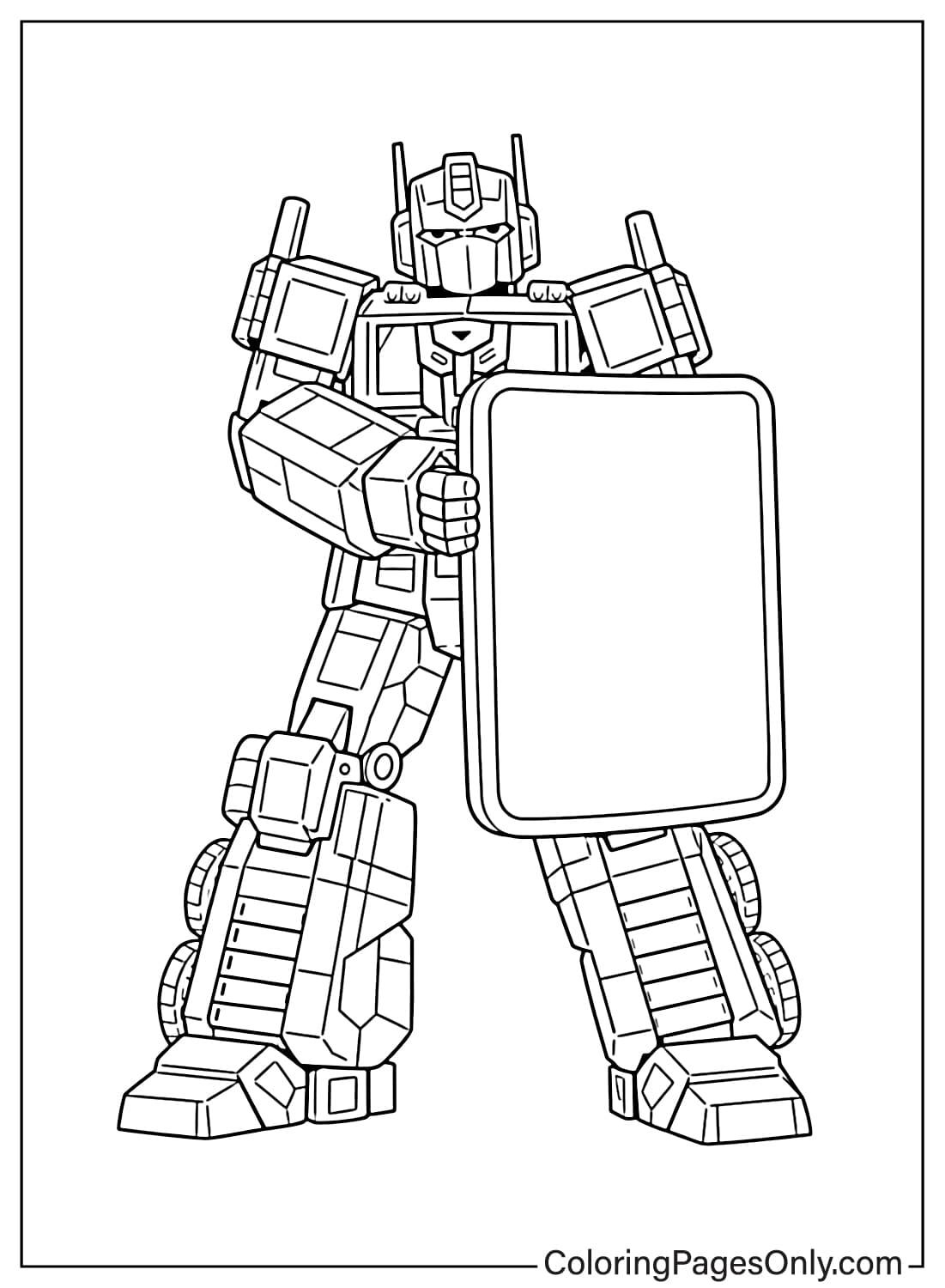
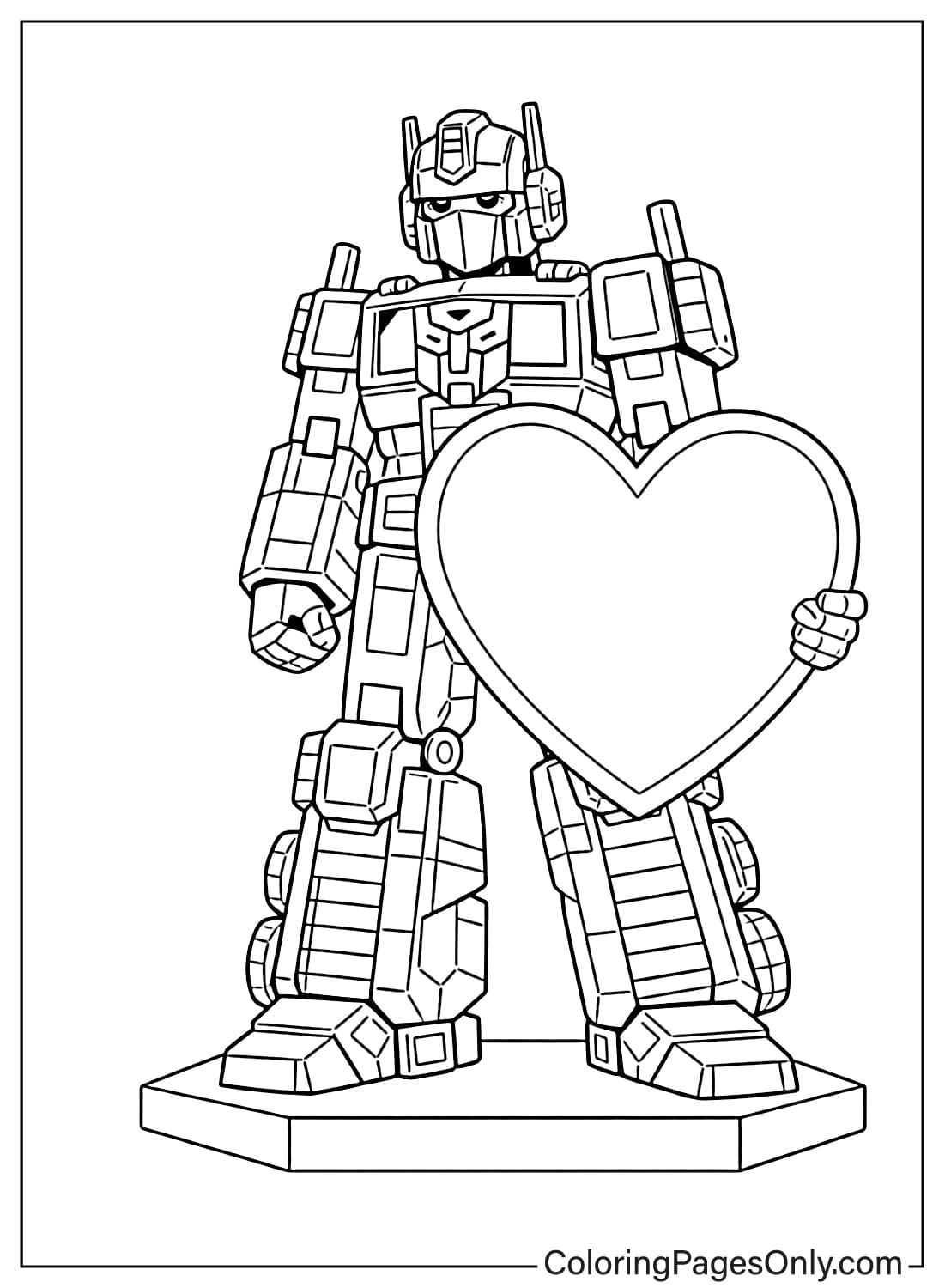
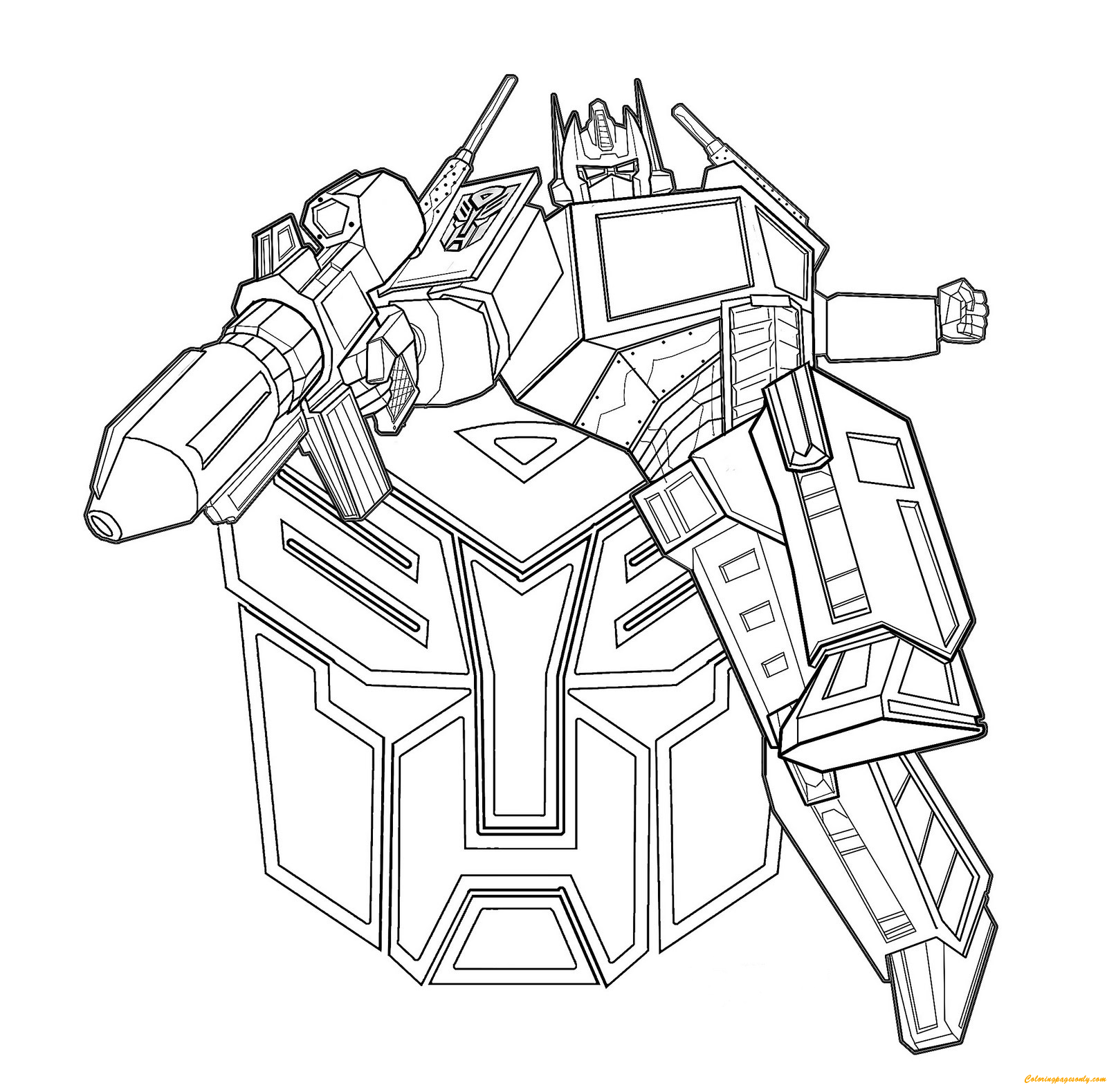
Shield and protector pages show Optimus Prime as a guardian figure. These designs may include a shield, a defensive pose, a heart shield, a city-protection scene, or Optimus holding Earth or a flag.
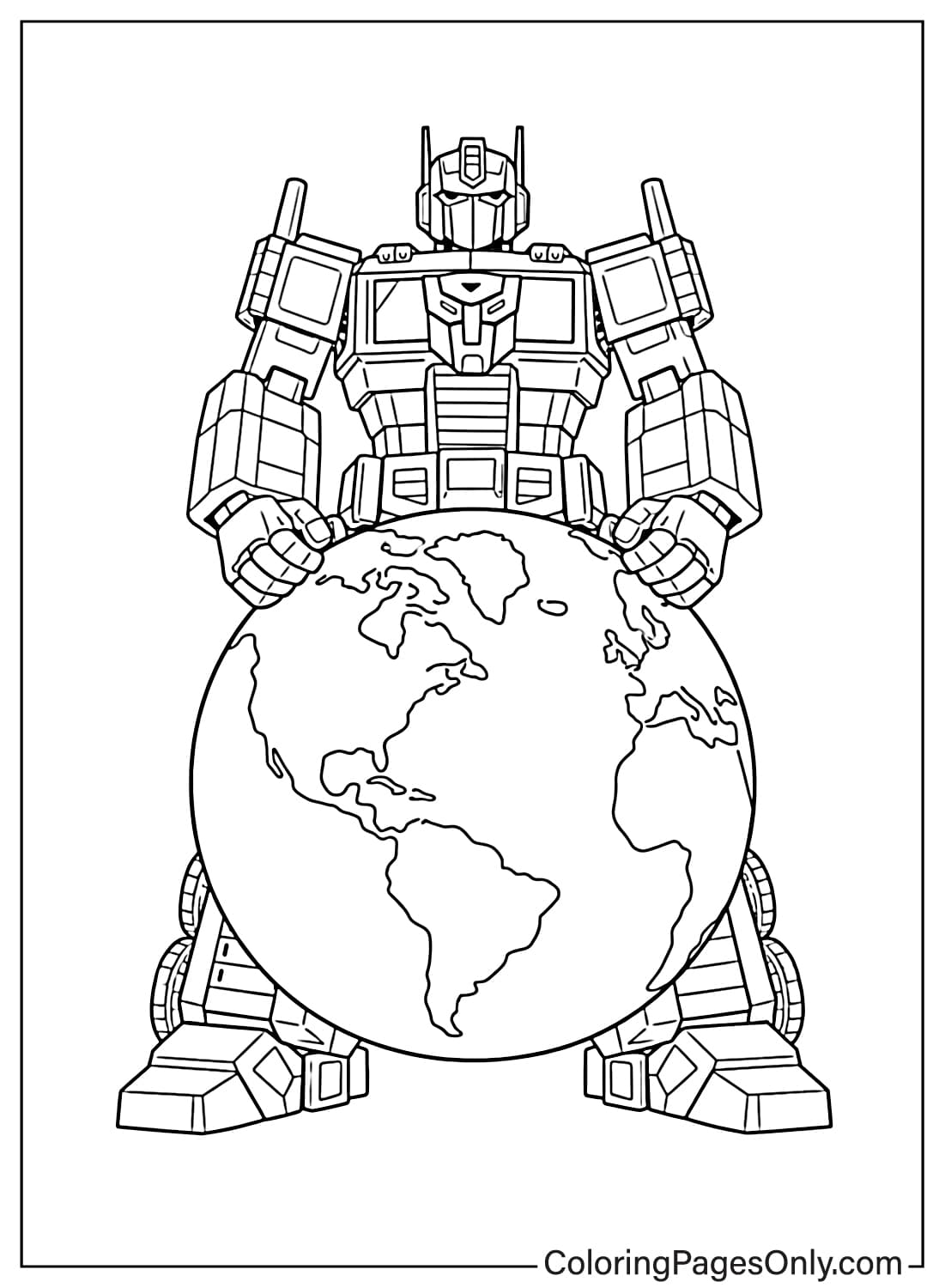
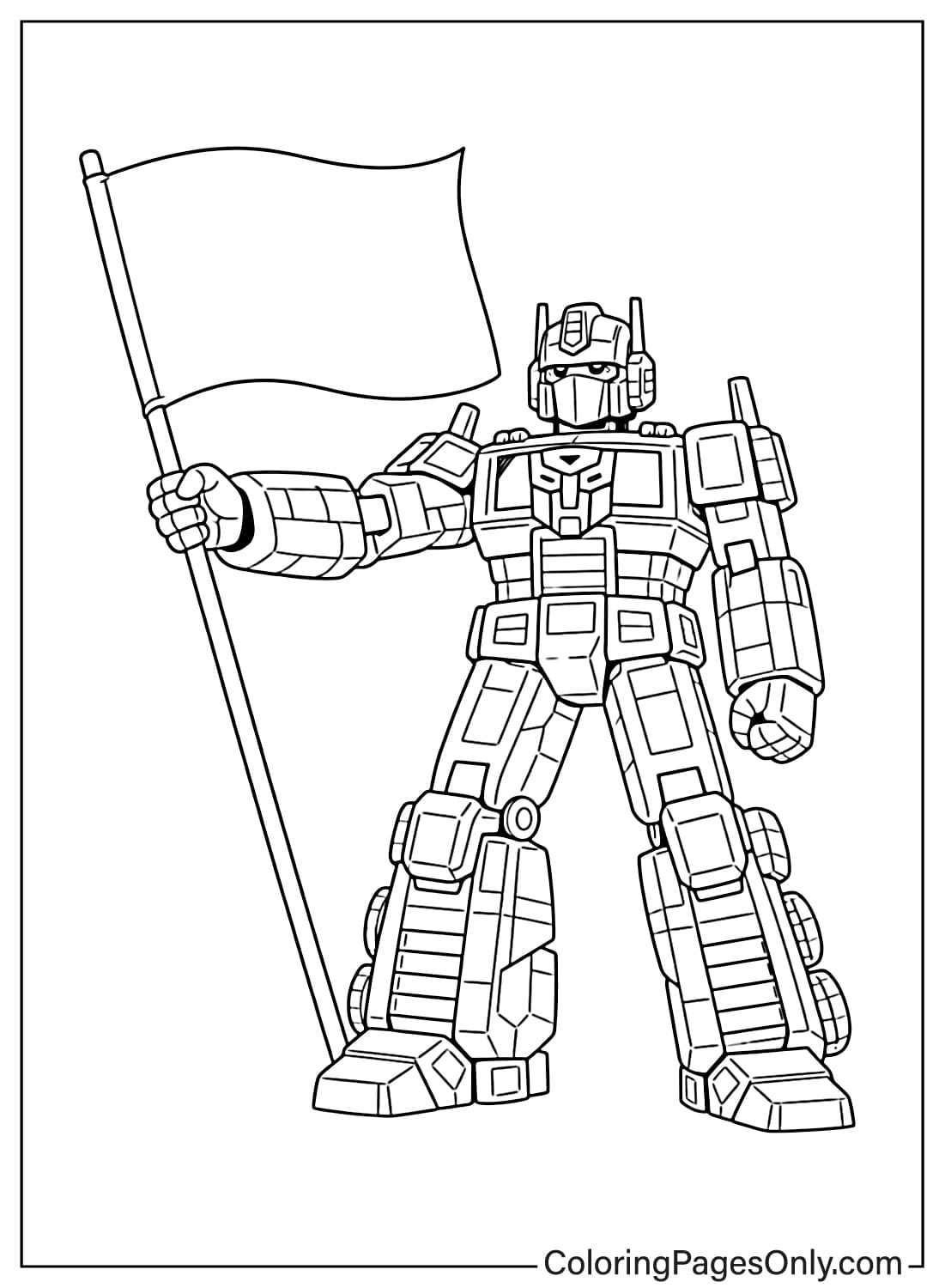
These pages are valuable because they show the character’s protective side, not only his power. A shield suggests defense. Holding Earth suggests care and responsibility. A flag page can feel strong and symbolic. A city guardian page gives children a clear sense that Optimus is protecting something important.
The main skill in these pages is focus. The shield, Earth, flag, or protected object should stay readable. Color Optimus first, then the object he is holding or guarding, then the background.
Shield pages can use blue, silver, gray, red, or metallic tones. If the shield has a heart or symbol, keep that part bright and simple. Earth pages can use blue oceans, green land, and soft white cloud details. City guardian scenes can use gray buildings and a soft sky, so Optimus remains the strongest part of the page.
These pages work well for kids who like hero themes, protection stories, and pages with a clear message.
Optimus Prime with Sword and Hero Gear Pages
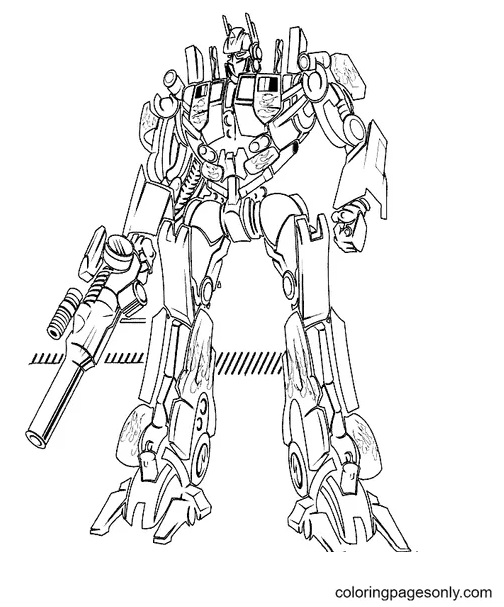
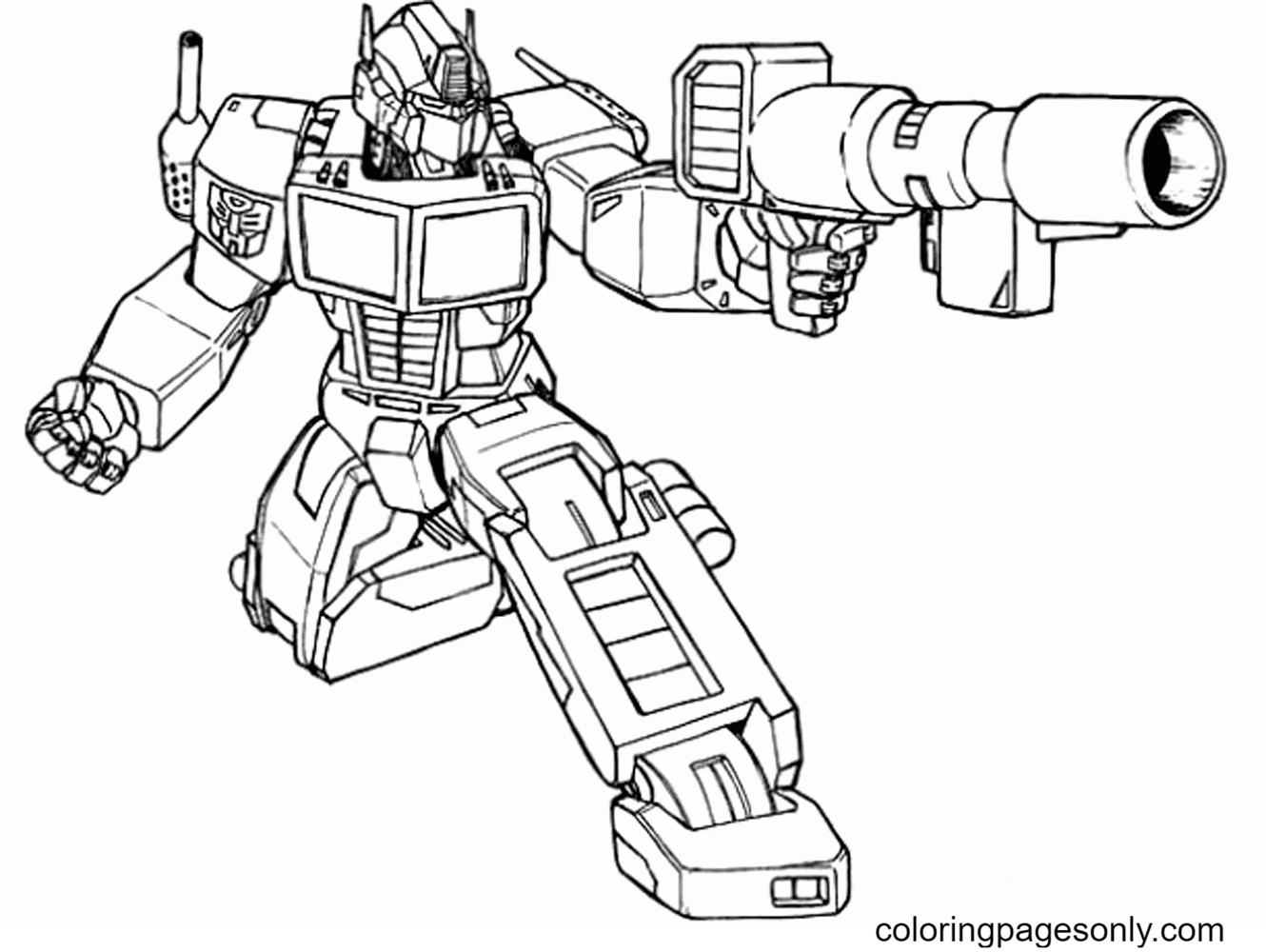
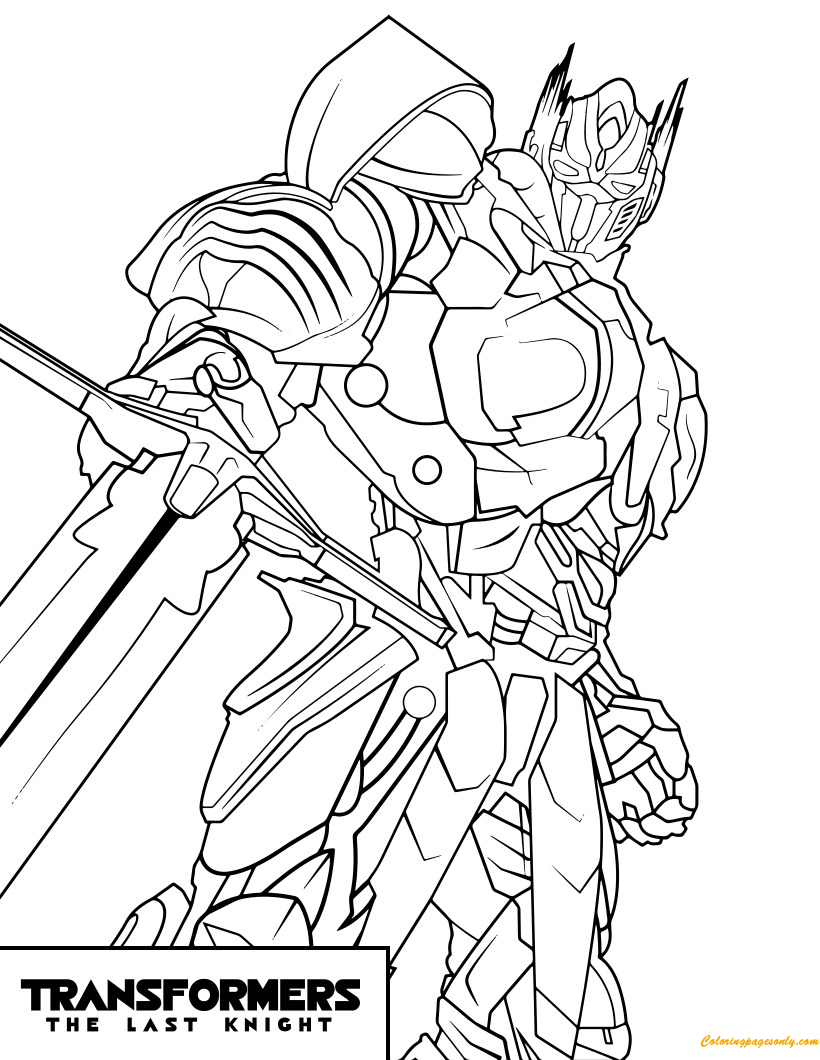
Some Optimus Prime pages include swords, weapons, gear wheels, armor details, or mechanical props. These designs feel more detailed because the objects add extra shapes and lines to color.
Sword pages often look best when the blade stays bright and clean. Use silver, gray, pale blue, or white highlights for the sword, then stronger red and blue for Optimus. This keeps the weapon visible without overpowering the robot.
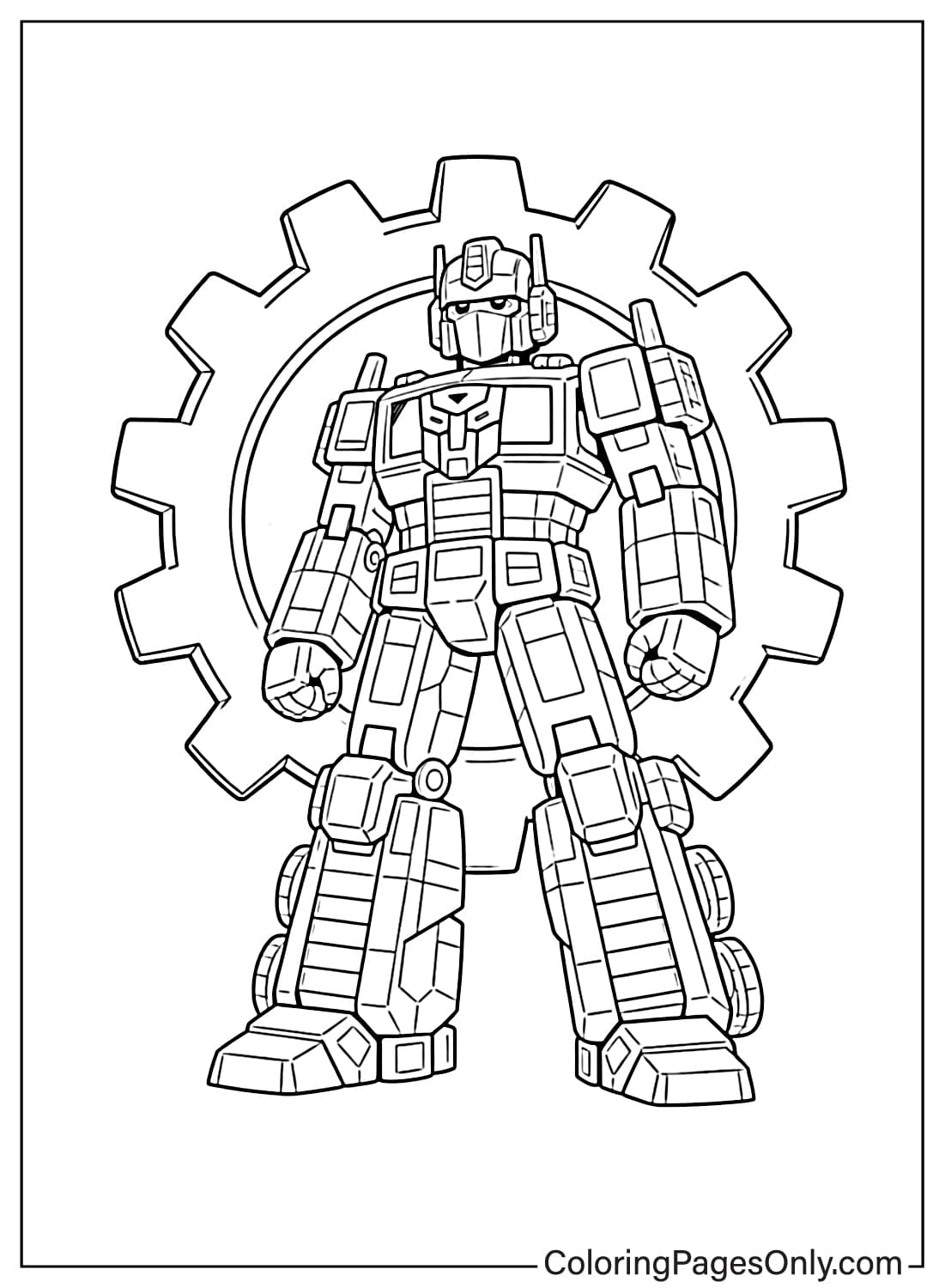
Gear wheel pages are useful for children who enjoy mechanical shapes. Gears can be gray, silver, gold, bronze, black, or dark blue. Older kids can shade one side of each gear to make the parts look more three-dimensional.
Hero gear pages also help children notice how robot design works. Armor panels, joints, wheels, vents, chest plates, and shoulder parts all need different colors or shades so they do not blend.
These pages are best for older kids or patient colorists who enjoy small details. Younger children can still enjoy them if the main Optimus figure is large and the gear details are not too crowded.
Optimus Prime Truck and Vehicle Coloring Pages
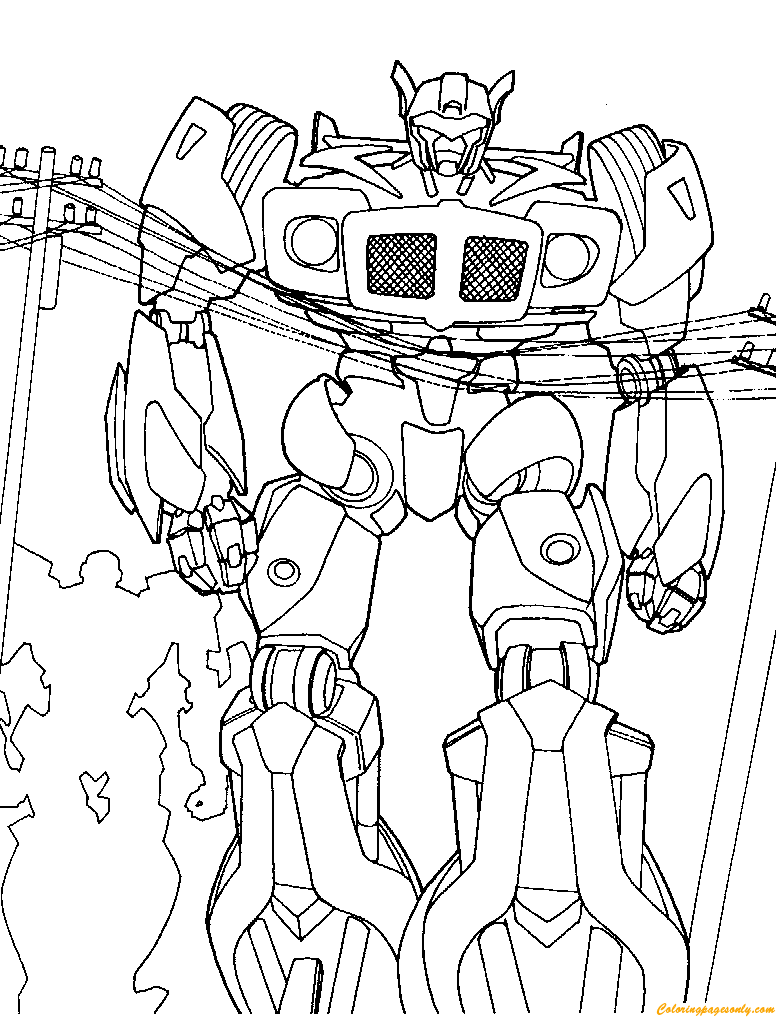
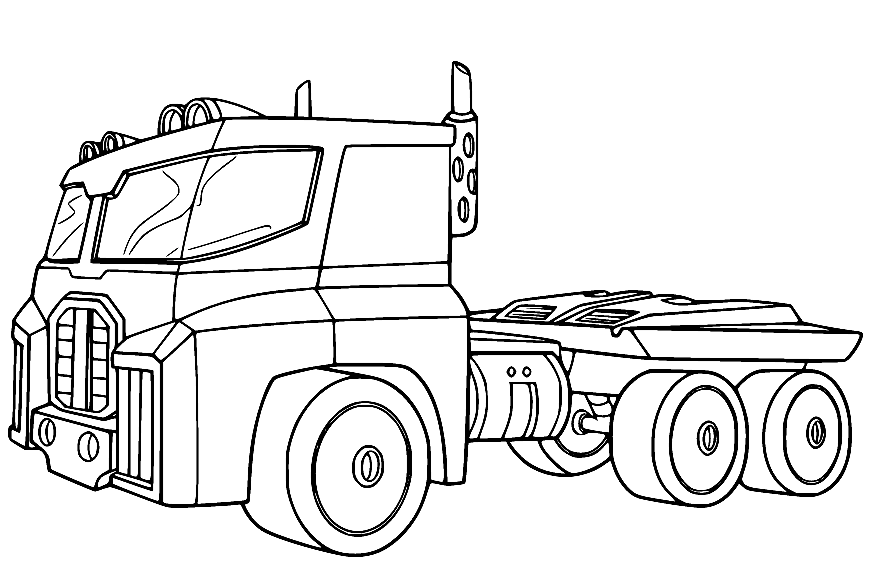
Truck and vehicle pages are important because transformation is one of the most recognizable ideas in Transformers. These pages may show Optimus with a truck, in truck-related scenes, or with visible wheels, windows, grills, and vehicle parts built into his robot design.
Vehicle pages give children a different coloring challenge from regular robot poses. Instead of only coloring arms and armor, they can color tires, windows, headlights, metal panels, truck parts, and road or city details.
Truck colors should stay clear and bold. Red and blue can carry the main vehicle body, gray and silver can be used for grills and metal parts, black or dark gray works well for tires, and pale blue can be used for windows.
If Optimus appears beside a truck or with truck mode details, color the robot first, then the vehicle parts. This helps children keep the character readable inside a mechanical scene.
These pages are a strong choice for kids who enjoy both robots and cars. They also connect naturally with vehicle-themed coloring activities.
Cute and Easy Optimus Prime Coloring Pages
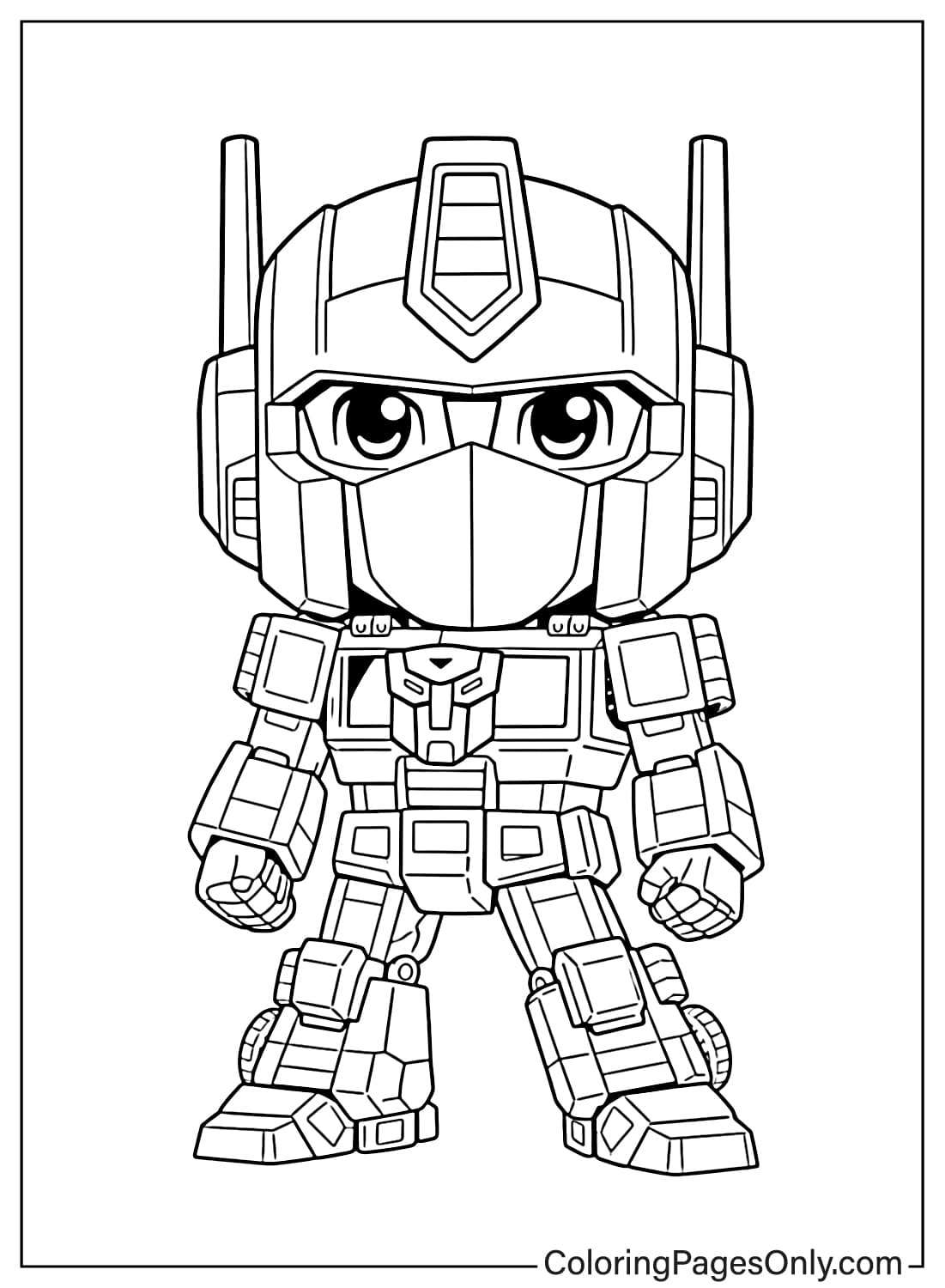
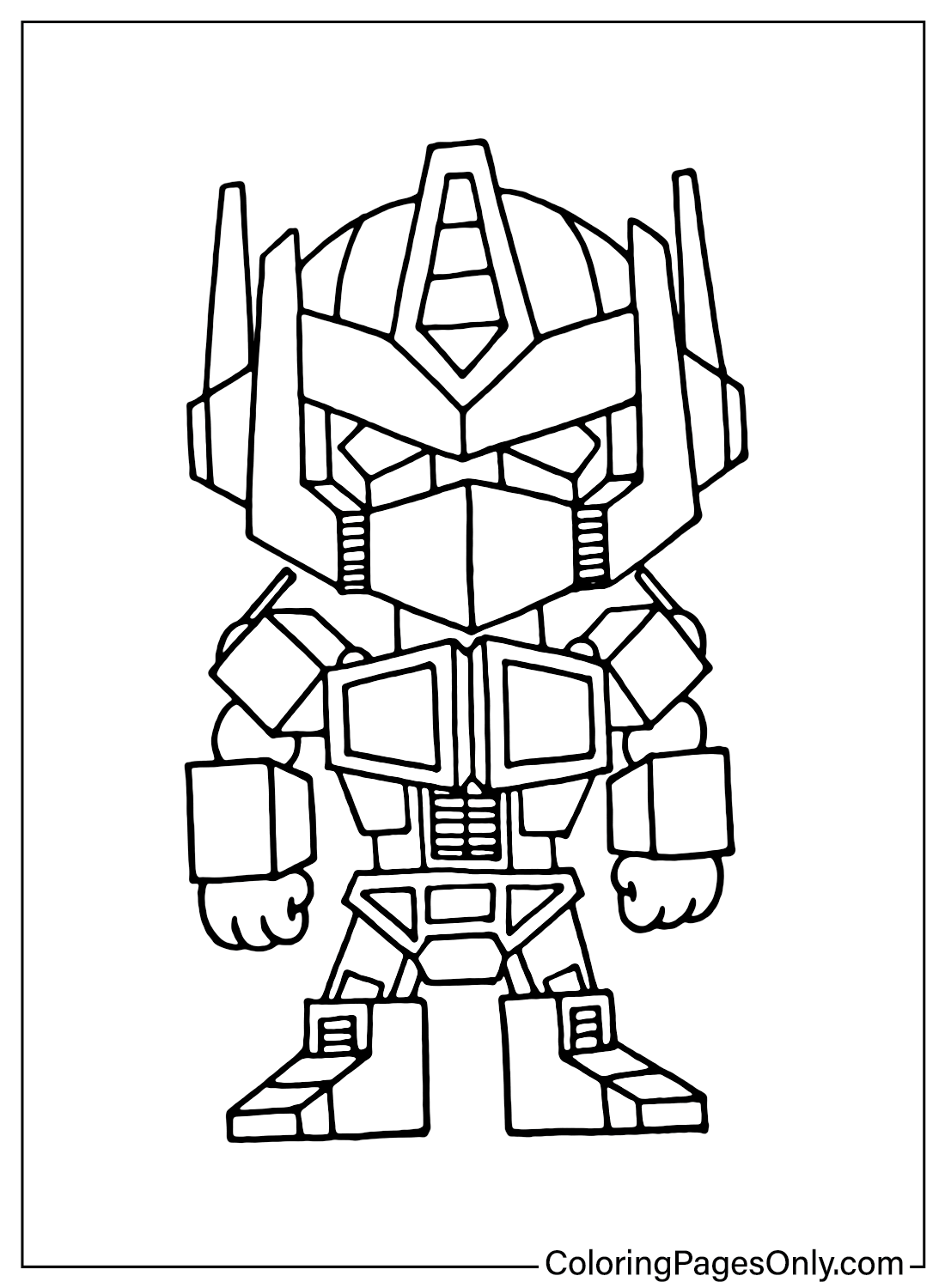
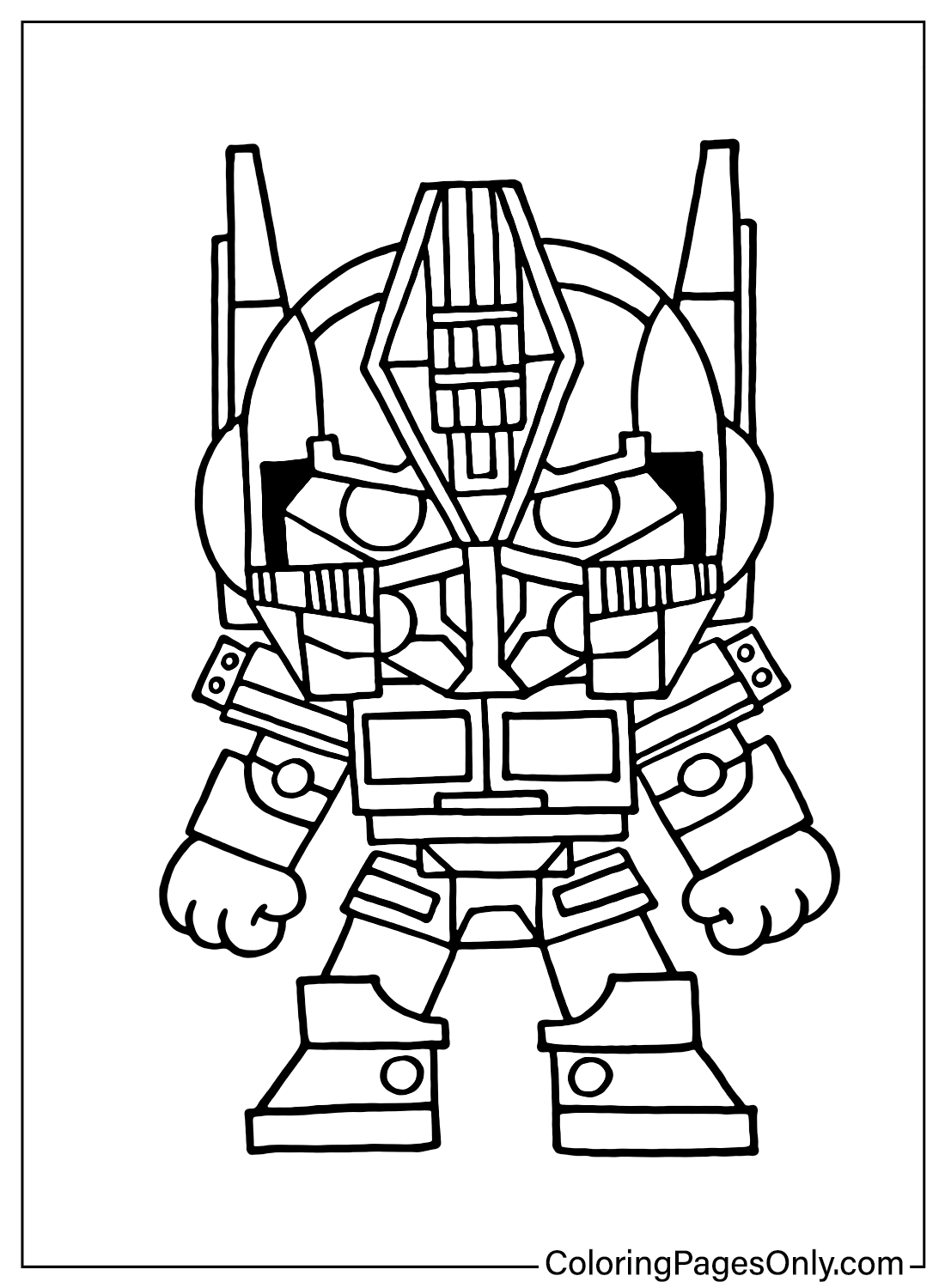
Cute and easy Optimus Prime pages make the character more approachable for younger children. These pages may include simplified robot shapes, rounder features, less armor detail, or one large character with very little background.
The value of easy pages is confidence. A child can finish the helmet, chest, arms, legs, and simple details without feeling overwhelmed. The robot still looks like Optimus Prime, but the page does not require careful coloring of every tiny armor line.
Easy Optimus pages can use the classic red, blue, gray, and silver palette, but the colors can stay flat and bright. Younger kids do not need shading or complex metallic effects. A soft background, simple ground line, or a few stars can make the page feel complete.
These pages are good for preschool, kindergarten, early elementary children, classroom rewards, and quick, quiet-time activities.
For children who are new to robot coloring, start with a cute or easy page before moving into shield scenes, sword scenes, truck pages, or detailed armor designs.
Rescue Bots and Younger-Kid Optimus Prime Pages
Some Optimus Prime pages connect with Rescue Bots or Rescue Bots Academy-style designs. These pages usually feel more child-friendly because the shapes are simpler, the expressions are softer, and the action is easier to understand.
Rescue Bots-style pages are helpful for younger children who like Transformers but may not be ready for very detailed robot designs. The character still feels strong and recognizable, but the outlines are usually easier to color.
These pages also work well for classroom use. Children can color Optimus as a helper, protector, or rescue character instead of only seeing him in action scenes. That makes the page suitable for storytelling about helping, teamwork, safety, and problem-solving.
For coloring, keep the main colors clean: red and blue for the body, gray for robot parts, and light blue for windows or small highlights. Backgrounds can stay simple with sky, road, base, or rescue-themed details.
These pages are a good bridge between easy cartoon robots and more advanced Transformers designs.
Calm and Creative Optimus Prime Pages
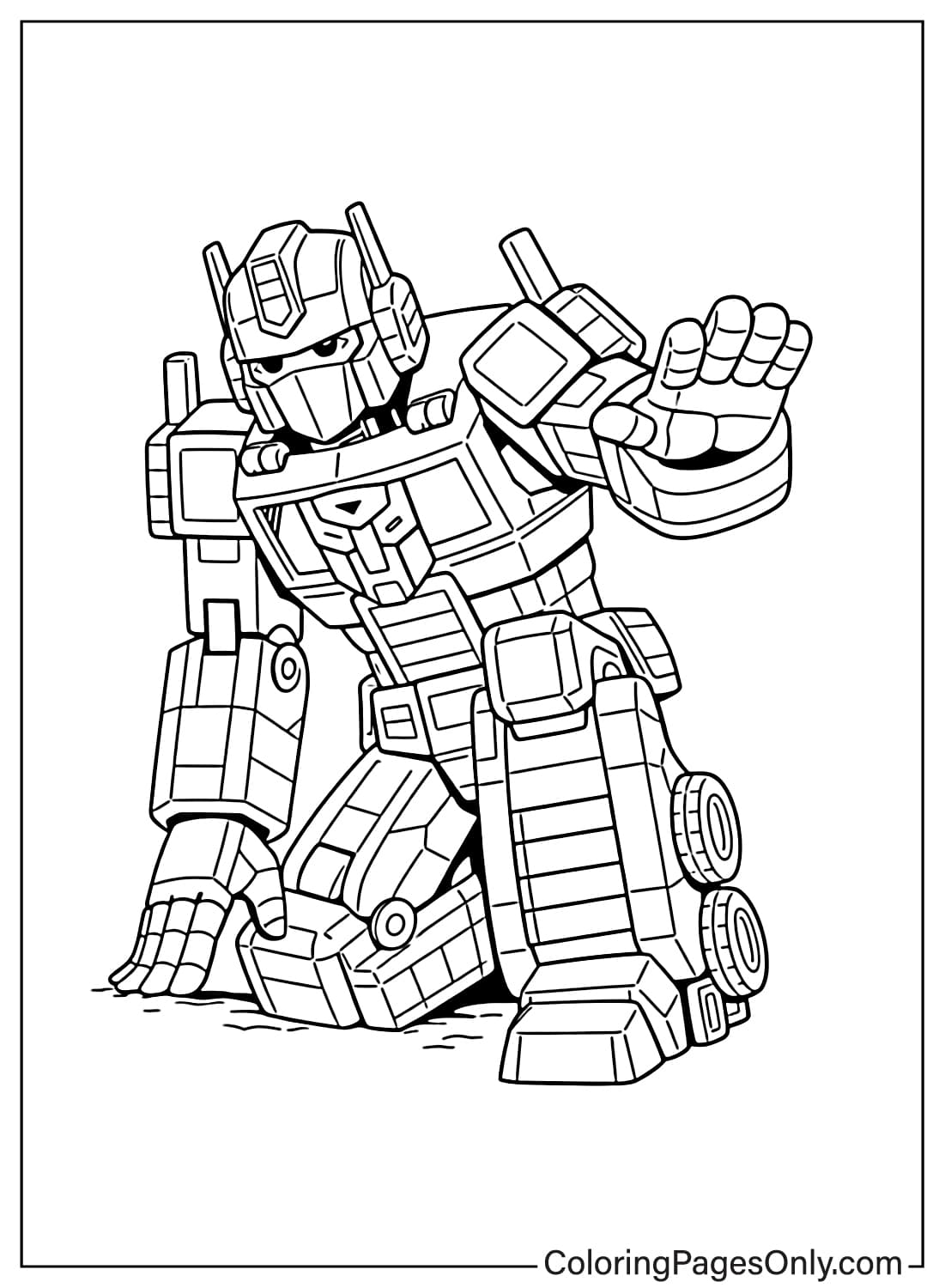
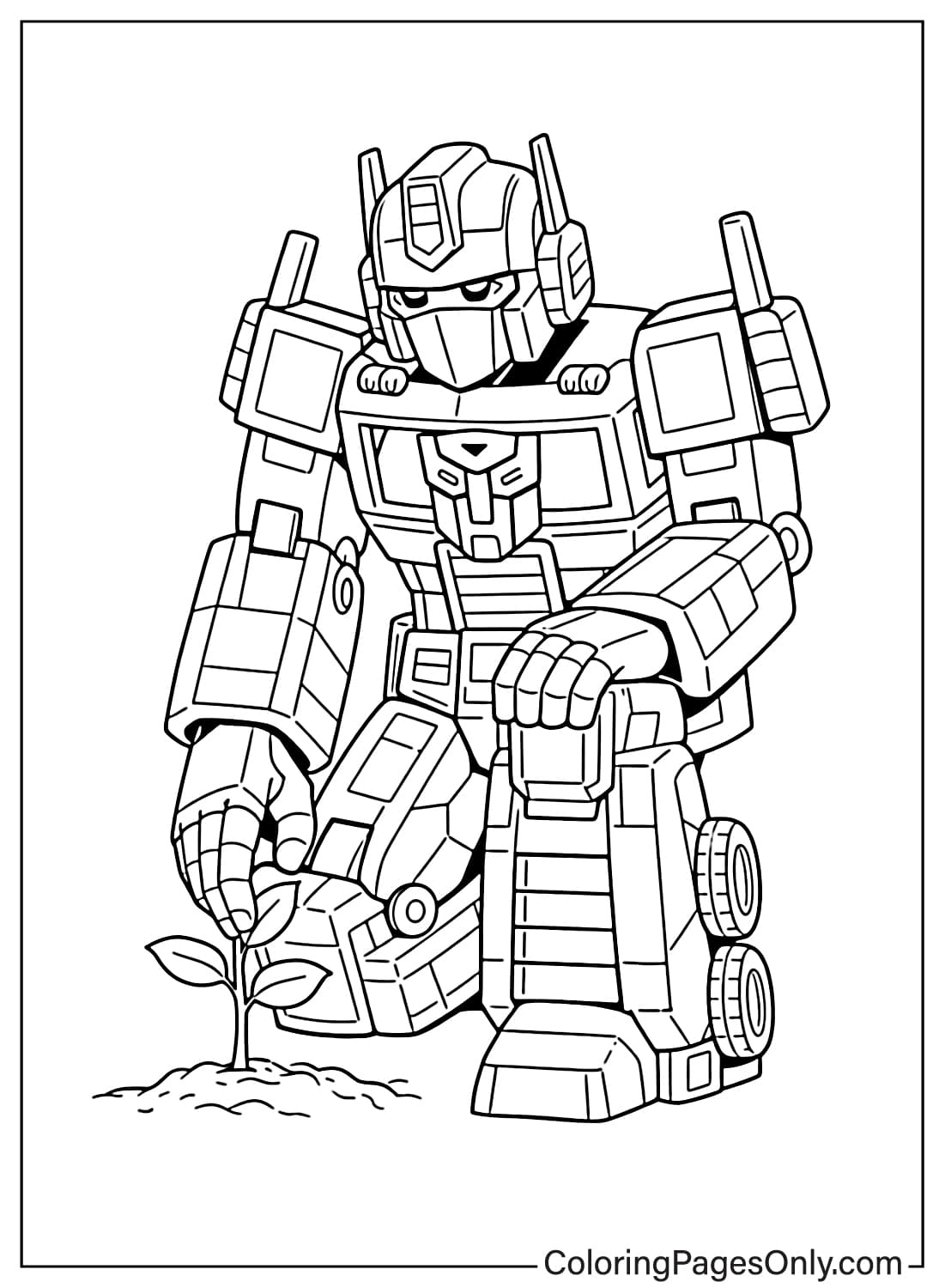
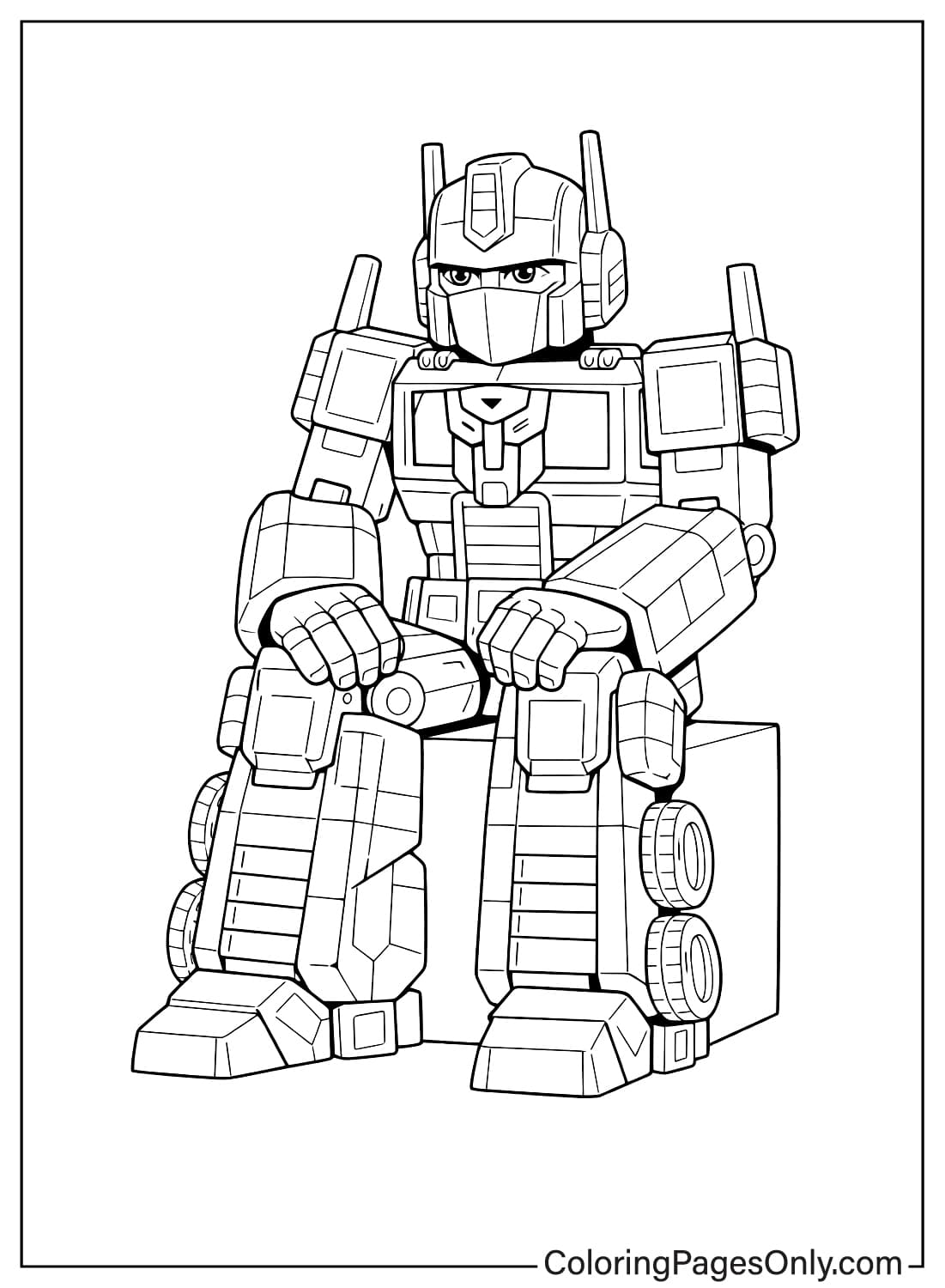
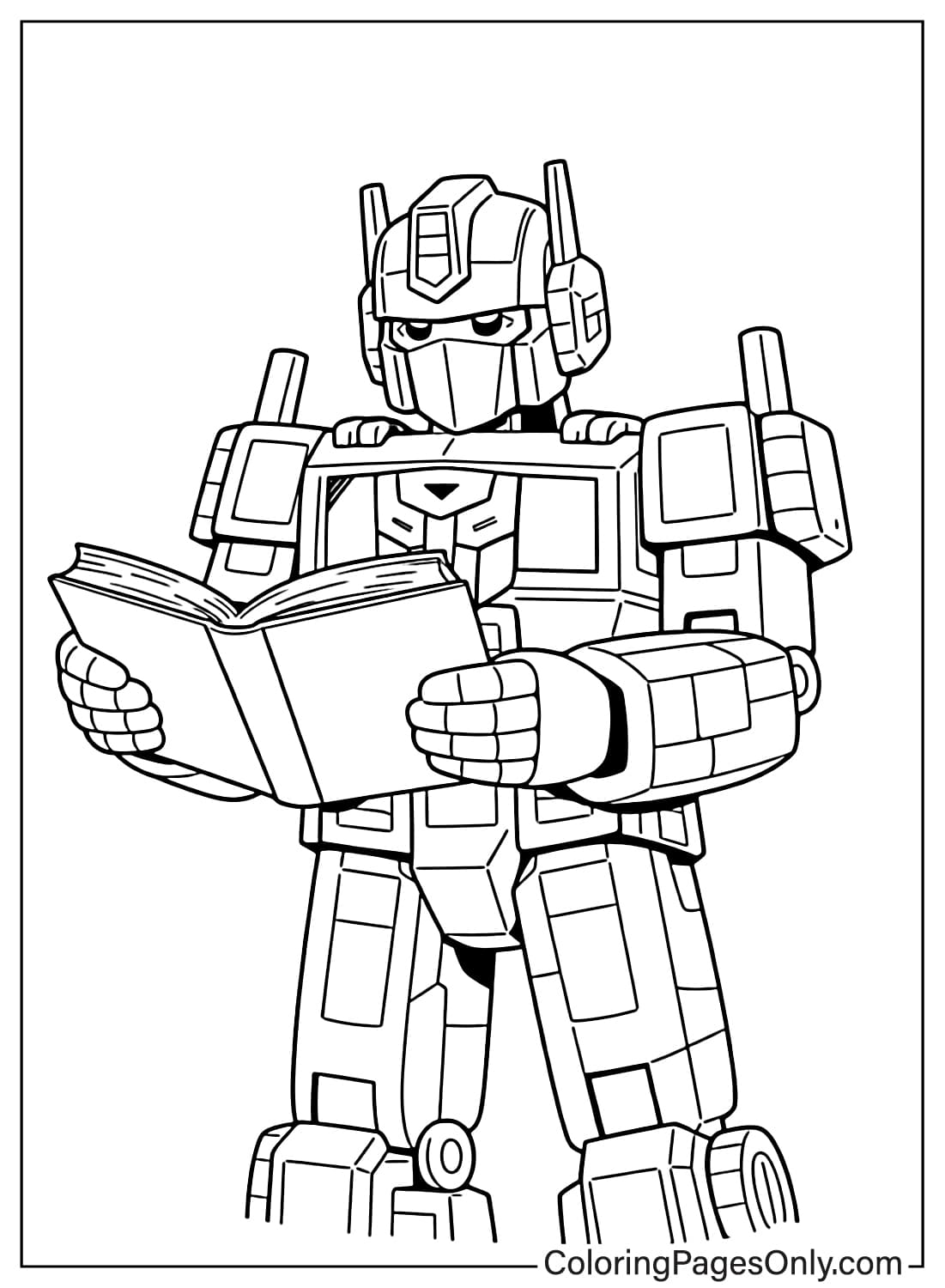
Not every Optimus Prime page needs to feel intense. Some pages show him sitting calmly, reading a book, planting a tree, holding Earth, or appearing in a quieter scene.
These pages are useful because they show a different side of the character. A reading page can become a literacy-themed activity. A planting tree page can connect with nature or Earth Day. A sitting calm page can be used for quiet time. A holding-Earth page can become a discussion about caring for the planet.
The coloring mood should match the scene. Calm pages can use softer backgrounds, less contrast, and gentler shading. Three pages can use green, brown, blue sky, and natural colors. Reading pages can use warm book colors, simple shadows, and a clean background.
These pages work well for parents and teachers who want a robot theme without making the activity too busy or action-heavy.
Detailed Optimus Prime Coloring Pages for Older Kids
Detailed Optimus Prime pages include more armor lines, smaller panels, mechanical sections, weapons, background objects, and Transformers-style shapes. These pages are better for older kids, teens, and fans who enjoy patient coloring.
The challenge is organization. If every armor piece uses the same color, the robot may look flat. Older kids can use darker red, lighter red, dark blue, light blue, gray, silver, and black to separate sections.
A good approach is to color the main helmet and chest first, then the shoulders and arms, then the legs, then the small mechanical details. Backgrounds should come last so the robot stays the focus.
Detailed pages are ideal for colored pencils because they allow shading and small highlights. Markers can work too, but children should use them slowly around armor lines, face details, wheels, and weapons.
These pages can become posters, robot cards, display art, or longer quiet-time projects.
What These Pages Do
Optimus Prime coloring pages help children explore robot design, vehicle details, and heroic storytelling in one activity. A single page can include character identity, mechanical parts, action, symbols, and background scenes.
For younger children, these pages support focus and confidence. Large robot shapes give them clear areas to color, while simple armor details help them practice control.
For older children, the value comes from mechanical thinking. They can separate armor panels, shade metal parts, color wheels and windows, add energy effects, or make a truck-related scene feel more complete.
These pages also encourage storytelling. Children can imagine Optimus guarding a city, leading the Autobots, reading quietly, planting a tree, holding a shield, or preparing for a mission. After coloring, they can describe what Optimus is doing and what happens next.
Parents can use these pages for quiet time, robot-themed activities, after-school coloring, or screen-free play. Teachers can use them for art breaks, indoor recess, simple robot and machine discussions, story prompts, or classroom displays.
How to Color These Pages Well
Optimus Prime pages look best when the robot parts stay separated. Use red for the chest, shoulders, or upper body details; blue for legs and lower armor; gray or silver for mechanical parts; black or dark gray for tires and joints; and pale blue for windows, glow effects, or small highlights.
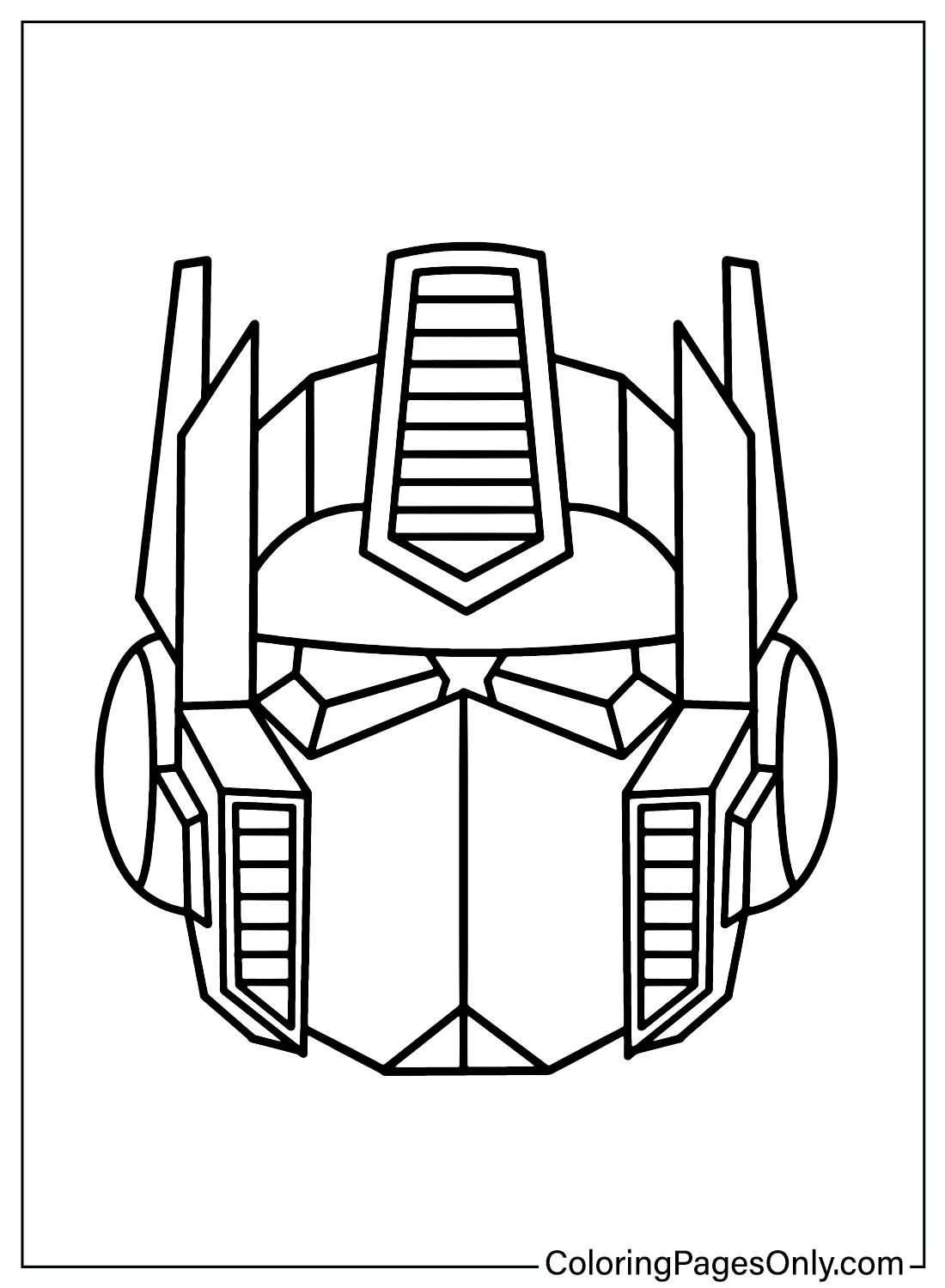
The helmet and faceplate should stay clear. Use blue or dark blue for helmet areas, silver or gray for the faceplate, and light blue for eyes or glowing details. Keeping the face readable helps the whole page feel finished.
For armor panels, avoid coloring every section the same shade. Older kids can use darker red near edges, lighter red on center panels, darker blue near joints, and gray shading around mechanical lines.
For truck parts, use black or dark gray for wheels, silver for grills and metal bars, blue for windows, and red or blue for the main vehicle body. If the page includes both robot and truck details, repeat the same colors so the design feels connected.
For shields and swords, use silver, gray, blue, or metallic tones. A sword can have a light center and a darker edge. A shield can use bold colors, but should not hide the main robot.
For gear wheels and mechanical backgrounds, use gray, silver, bronze, gold, or dark blue. Small highlights can make the parts look more like metal.
For city scenes, use gray buildings, blue sky, yellow windows, or soft shadows. Keep background colors lighter than Optimus so the character stays in front.
For calm pages, use softer colors. A planting tree scene can use green grass, brown trunk, blue sky, and natural colors. A reading page can use warm book colors and a simple background.
For younger children, the easiest order is head first, chest second, arms third, legs fourth, then background. Older kids can add shadows, panel lines, metal highlights, glow effects, and texture after the base colors are finished.
5 Creative Craft Ideas
Optimus Prime Hero Poster
Choose a classic Optimus Prime page or a city guardian page. After coloring, glue the finished page onto a larger sheet of paper.
Children can add a title such as “Autobot Leader,” “Robot Hero,” or “Optimus Protects the City.” Then they can draw buildings, stars, clouds, roads, or Autobot-style symbols around the page.
This craft works well for bedroom wall art, classroom displays, or robot-themed activities.
Design an Autobot Shield
Choose an Optimus Prime shield page or draw a blank shield on separate paper. After coloring Optimus, children can design their own shield pattern.
They can add robot symbols, stars, gears, lightning, truck wheels, initials, or a new hero emblem. Then they can name the shield and explain what it protects.
This activity helps children think about symbols, color, and character identity.
Robot Armor Upgrade Card
Print an Optimus Prime page with clear armor details. After coloring, children can draw extra robot upgrades around the figure.
They can add new shoulder armor, glowing panels, rocket boosters, stronger wheels, energy lines, or a new chest plate. Then they can write one sentence about what the upgrade does.
This craft is great for kids who enjoy robots, machines, and mechanical imagination.
Optimus Prime Truck Mode Scene
Choose a page with Optimus Prime and truck details. After coloring, glue the artwork onto a larger sheet.
Children can draw a road, a garage, a city street, an Autobot base, mountains, or a simple highway background. Add signs, clouds, or tire tracks to make the page feel like a vehicle scene.
This craft connects robot coloring with car and truck themes.
Optimus Prime Story Page
Choose any Optimus Prime page with a strong pose, shield, sword, book, tree, Earth, or city scene. After coloring, place the page on a larger sheet and add a story box below it.
Children can answer: Where is Optimus Prime? What is he protecting? What mission is he on? Who needs help? What happens next?
This turns a coloring page into a writing and storytelling activity for home, homeschool, or classroom use.
Frequently Asked Questions
Are Optimus Prime coloring pages good for young children?
Yes. Optimus Prime coloring pages can work well for young children when the design has one large robot, simple armor shapes, and limited background details. Cute Optimus Prime pages, Rescue Bots-style pages, and simple standing poses are usually easiest.
Very detailed armor pages, sword scenes, city backgrounds, or truck-and-robot designs may be better for older children who can handle smaller spaces.
What colors should I use for Optimus Prime?
Start with the classic red and blue areas first, then use gray or silver for the mechanical parts and black for tires or joints. Light blue works well for windows, eyes, or small glowing details.
Children can also create their own version. A silver-and-blue Optimus, rainbow Optimus, or space-themed Optimus can still look recognizable if the helmet, faceplate, chest, and robot shape stay clear.
Which Optimus Prime pages are best for older kids?
Older kids may enjoy pages with detailed armor, swords, shields, gear wheels, truck parts, city scenes, Autobot base details, or action poses. These pages give more room for shading, metallic effects, panel separation, and background design.
A detailed Optimus page can become a longer project, especially if children add highlights, shadows, energy effects, or a full robot mission scene.
Do kids need to know Transformers to enjoy these pages?
No. Many kids enjoy Optimus Prime pages because the character looks like a strong robot hero. Even if they do not know the full Transformers story, they can still enjoy coloring the armor, truck details, shield, sword, and mechanical shapes.
Children who already like Transformers may enjoy the pages even more because they recognize Optimus as the Autobot leader.
How can I make Optimus Prime’s armor look better?
Treat the armor like separate metal plates. Color the larger panels first, then add darker edges, small highlights, and light gray shadows around joints or panel lines.
This makes the robot look less flat and helps the helmet, chest, shoulders, knees, and mechanical parts stand out more clearly.
Are Optimus Prime truck pages good for kids who like cars?
Yes. Optimus Prime truck pages are a good choice for kids who like both robots and vehicles. They can color wheels, windows, grills, road details, and truck panels along with the robot body.
These pages are also useful for children who enjoy machine themes, vehicle transformations, and action scenes with roads or city backgrounds.
Can Optimus Prime coloring pages be used in classrooms?
Yes. Teachers can use Optimus Prime pages for art time, indoor recess, robot-themed activities, story prompts, or classroom rewards. Simple pages work well for younger students, while detailed robot pages can keep older students focused longer.
For a writing activity, students can color a page and write one sentence about what Optimus is doing or what mission he is on.
What paper and coloring tools work best?
Regular printer paper works well for crayons and colored pencils. If children use markers, place a blank sheet underneath to protect the table and the next page. Thicker paper is better for posters, cards, or pages with heavy marker coloring.
Crayons are good for younger children because they are easy to control. Colored pencils are better for armor lines, gear wheels, truck parts, and small mechanical details. Markers create strong robot colors but should be used slowly around the faceplate, windows, and small panels.
Can finished Optimus Prime pages become crafts?
Yes. Finished pages can become posters, robot cards, classroom displays, story pages, wall art, or cut-out robot decorations. A shield page can become a hero badge, while a truck page can become part of a road scene.
Children can also add speech bubbles, robot symbols, city backgrounds, stars, gears, or mission titles after coloring.
Can kids color Optimus Prime in different colors?
Yes. Kids can use imaginative colors if they want. They can create Ice Optimus, Fire Optimus, Rainbow Optimus, Space Optimus, or their own Autobot design.
If they want the character to stay easy to recognize, it helps to keep the helmet shape, faceplate, broad chest, robot body, and truck details clear. The background and extra armor parts can carry most of the creative colors.
Choose an Optimus Prime page, print it at home, or color online anytime. When your robot hero is finished, share it on Facebook or Pinterest and tag #Coloringpagesonly.
More from Our Transformers and Robot Collections
More from our Transformers and robot collections: