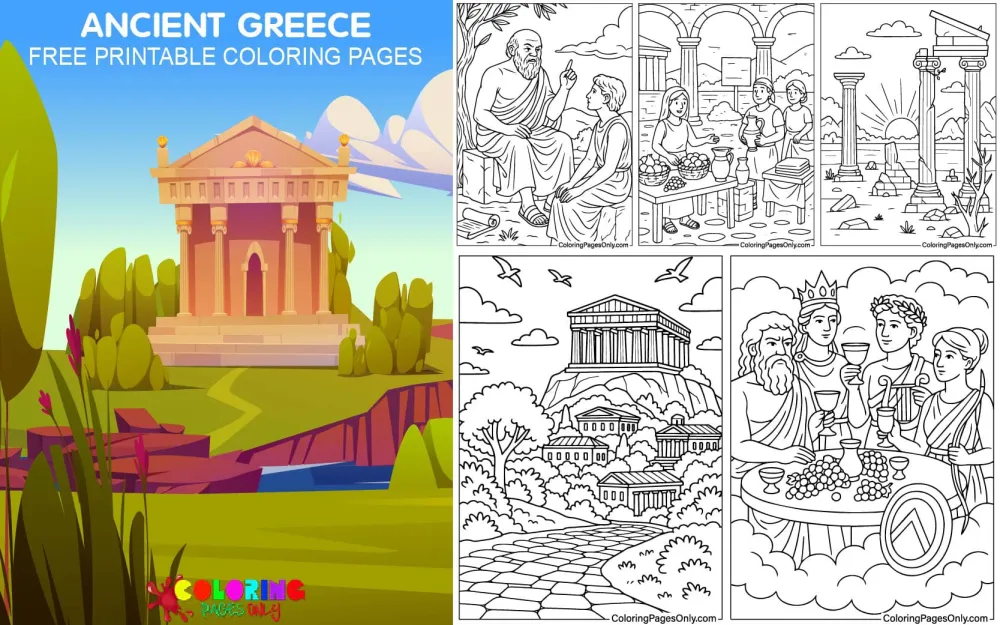
Free Ancient Greece Coloring Pages: 35 printable PDF designs featuring gods and mythology, architecture and city life, philosophy and the arts, and warriors and everyday learning scenes. Each page can be downloaded as a PDF to print or colored online in the browser.
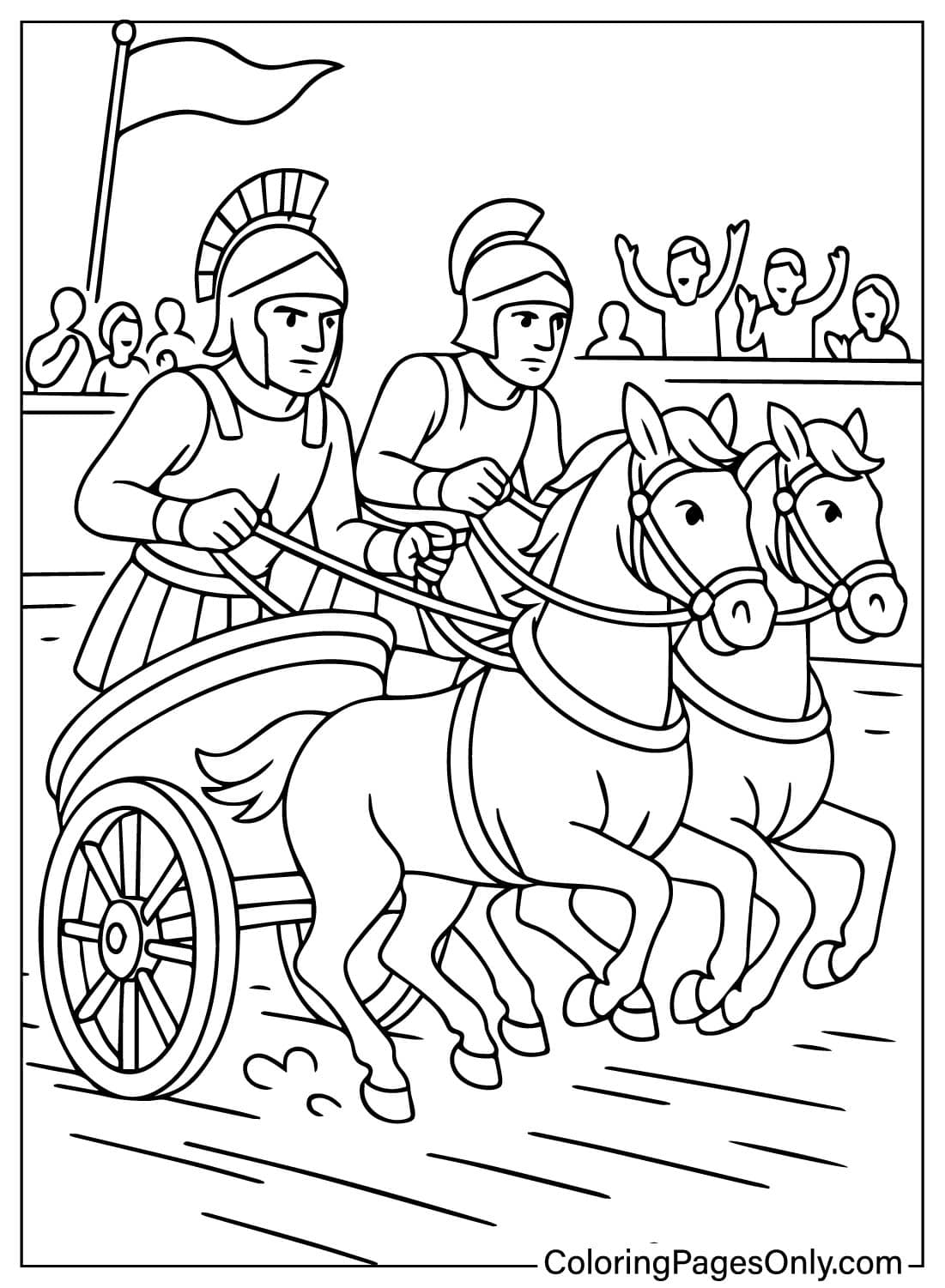
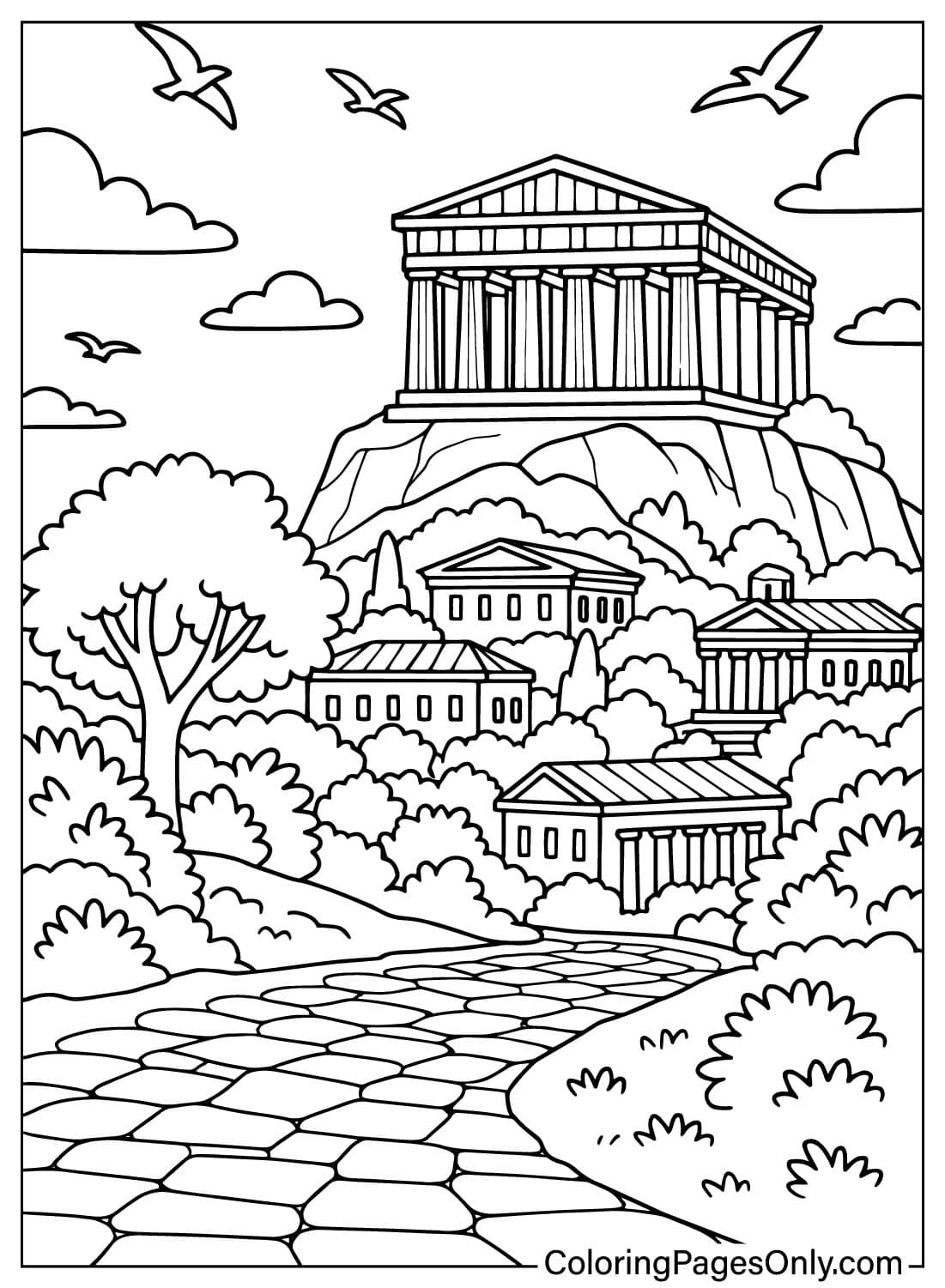
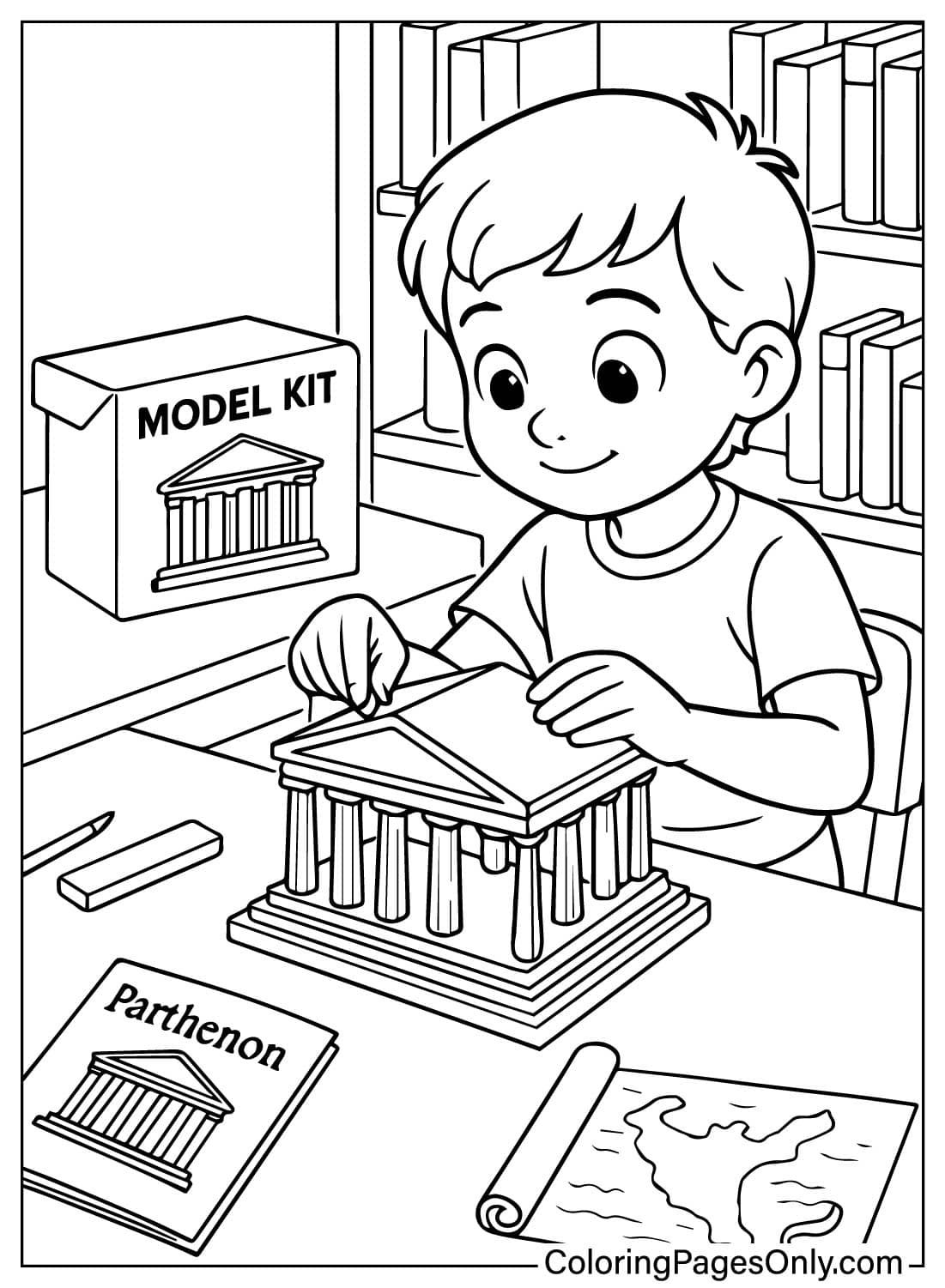
The Parthenon, the temple that appears throughout this collection, was built between 447 and 432 BCE on the Acropolis of Athens, commissioned under the statesman Pericles and designed by the architects Iktinos and Kallikrates, with the sculptor Phidias overseeing its decoration. It was dedicated to Athena, the city’s patron goddess. The ancient Olympic Games, another recurring theme in this set, began in 776 BCE at Olympia as part of a religious festival honoring Zeus, with chariot and horse races held separately in a track called the hippodrome. Ancient Greek warships known as triremes were prized enough that a single talent, the standard unit of payment at the time, covered the cost of building one.
This collection reflects that mix of mythology and history across 35 pages: gods and mythology, architecture and city life, philosophy and the arts, and warriors and everyday learning scenes. Classical columns, flowing robes, and mythological figures are the throughline across nearly every page.
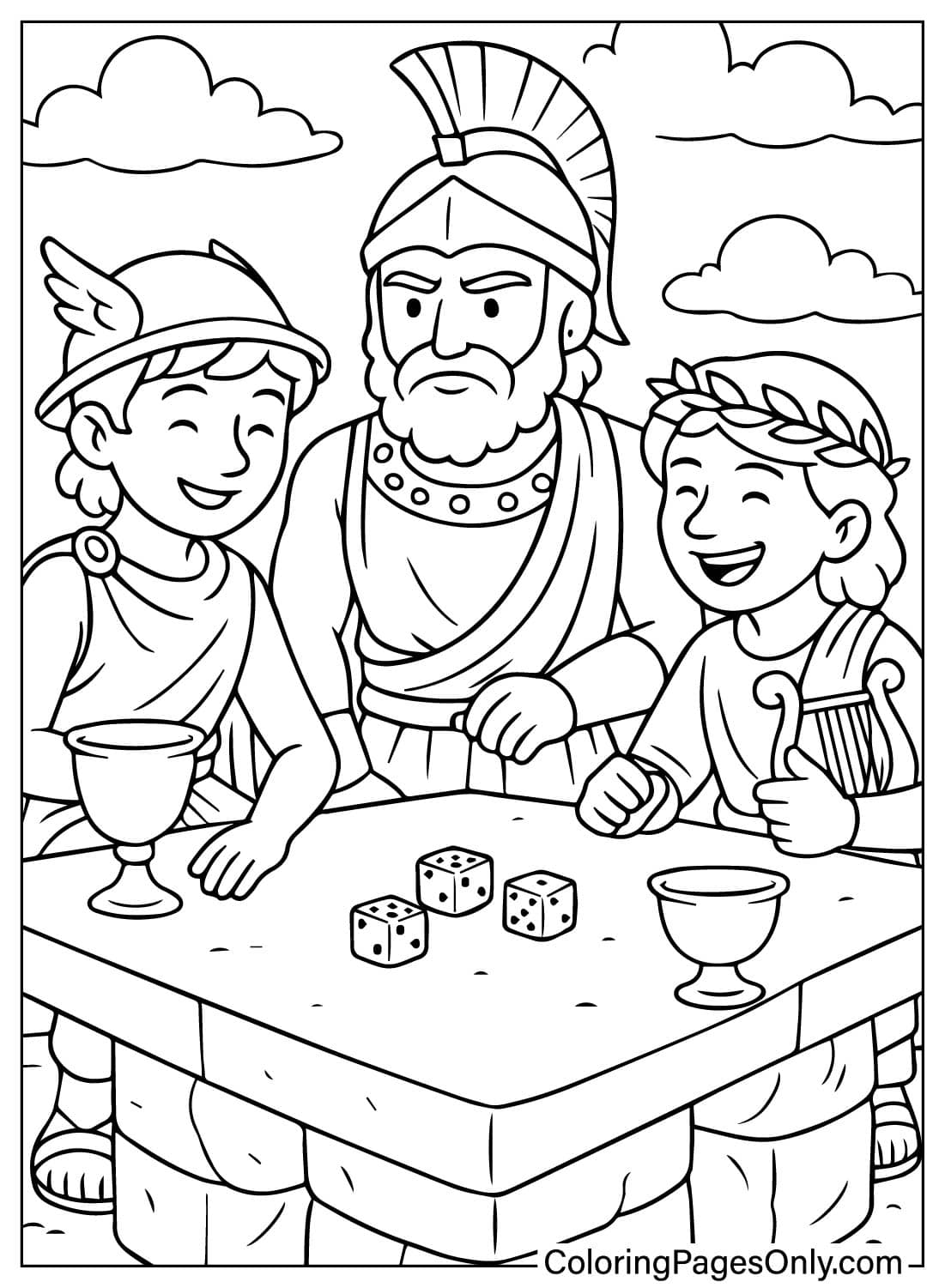
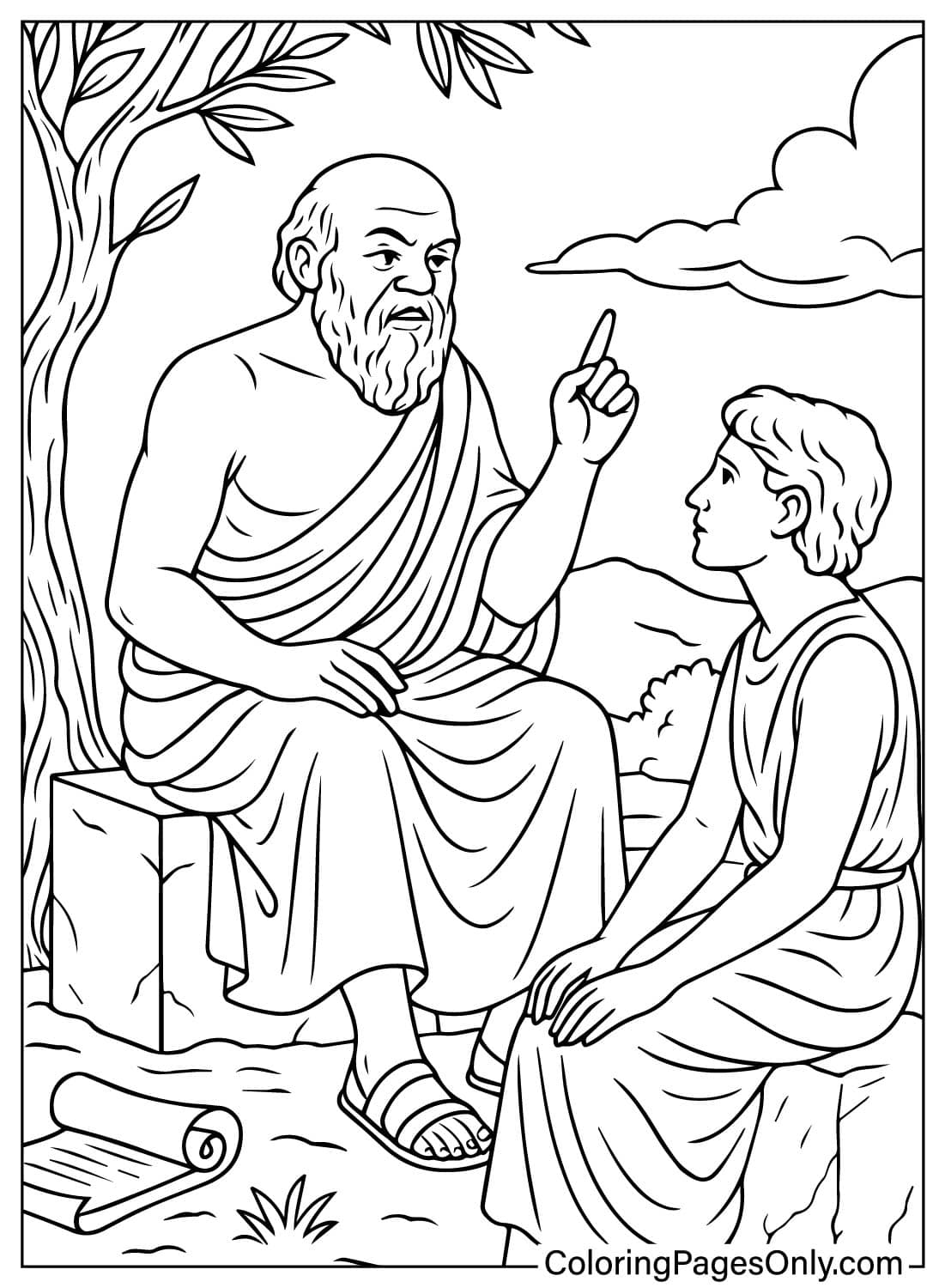
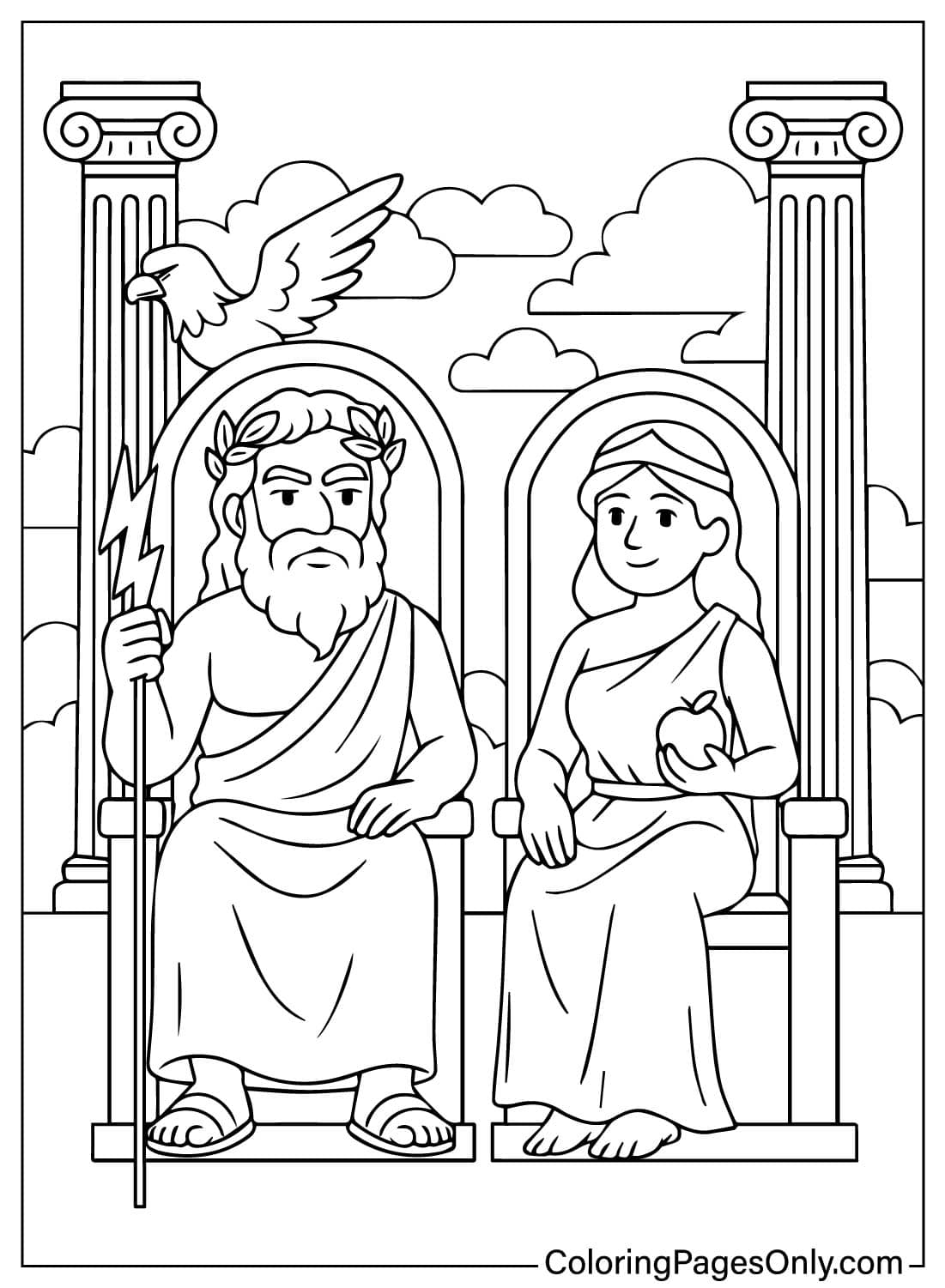
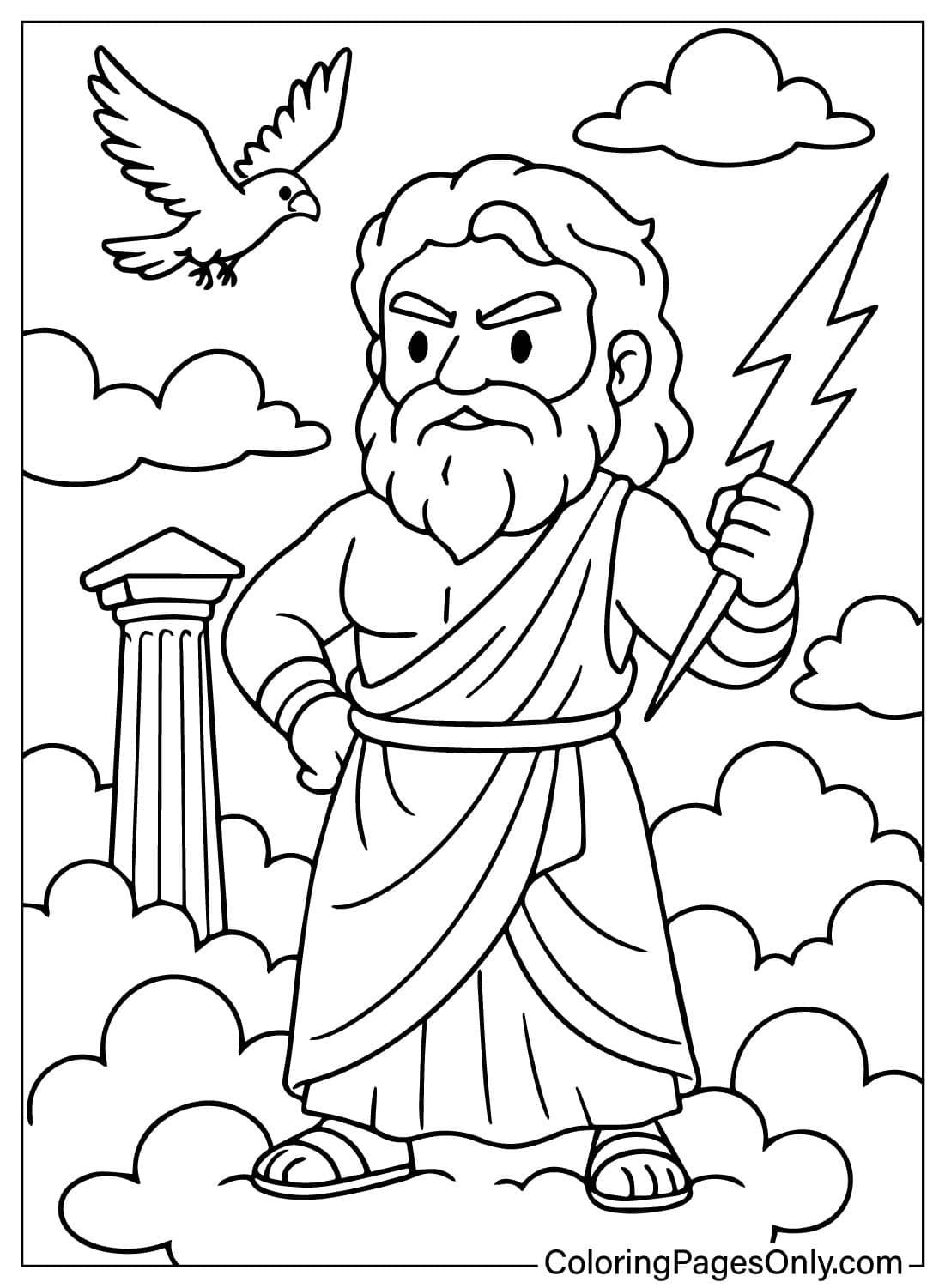
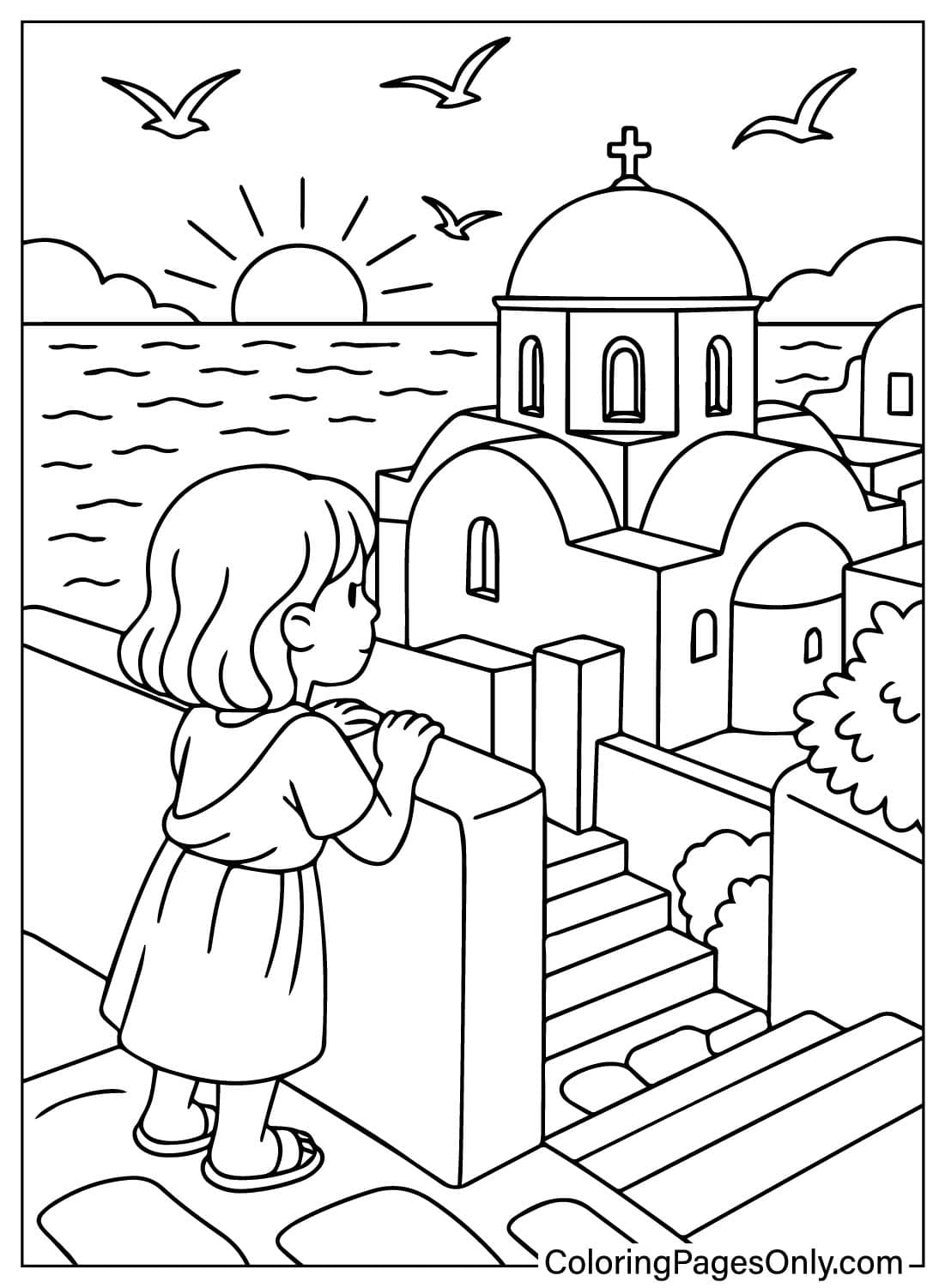
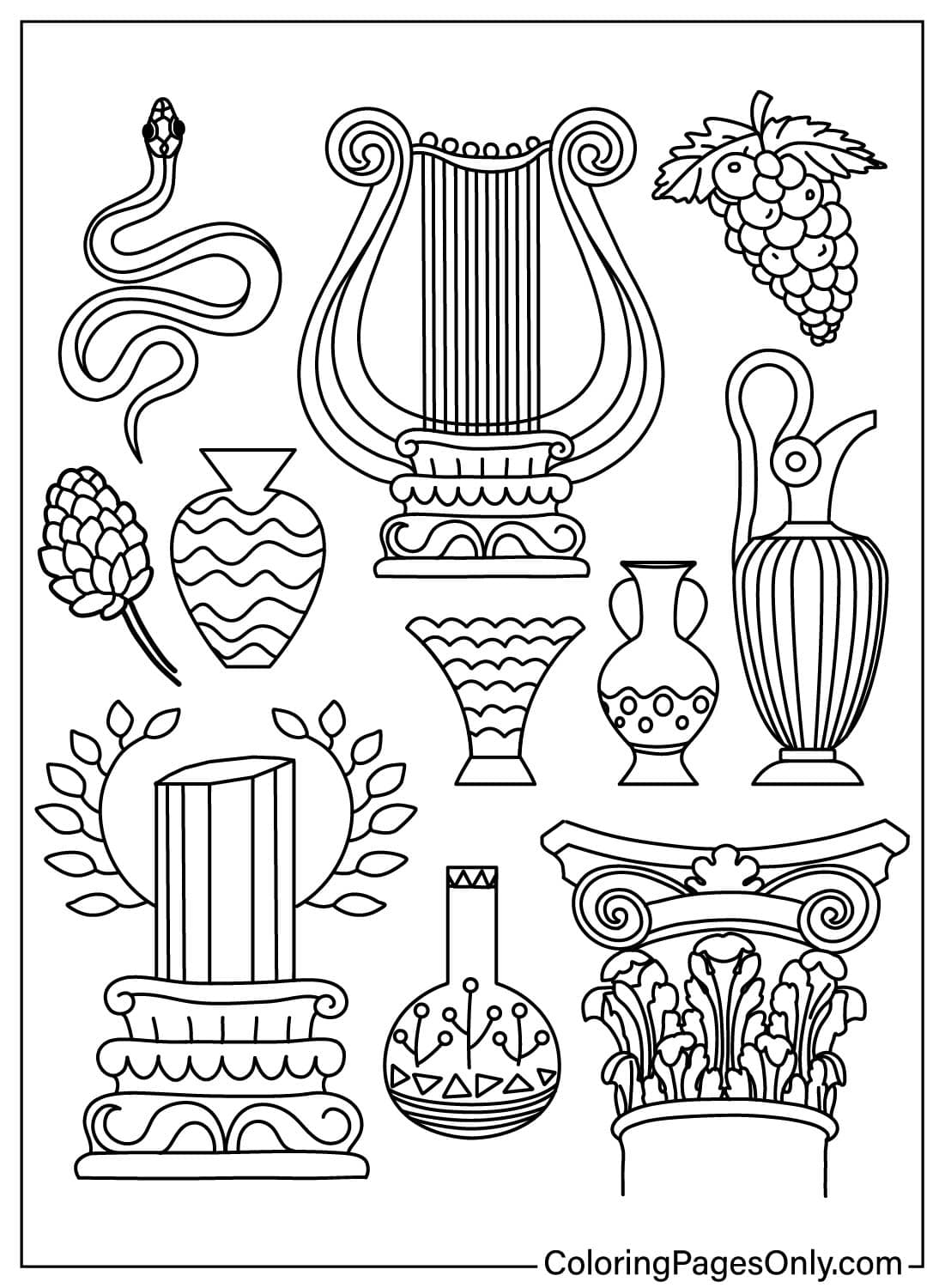
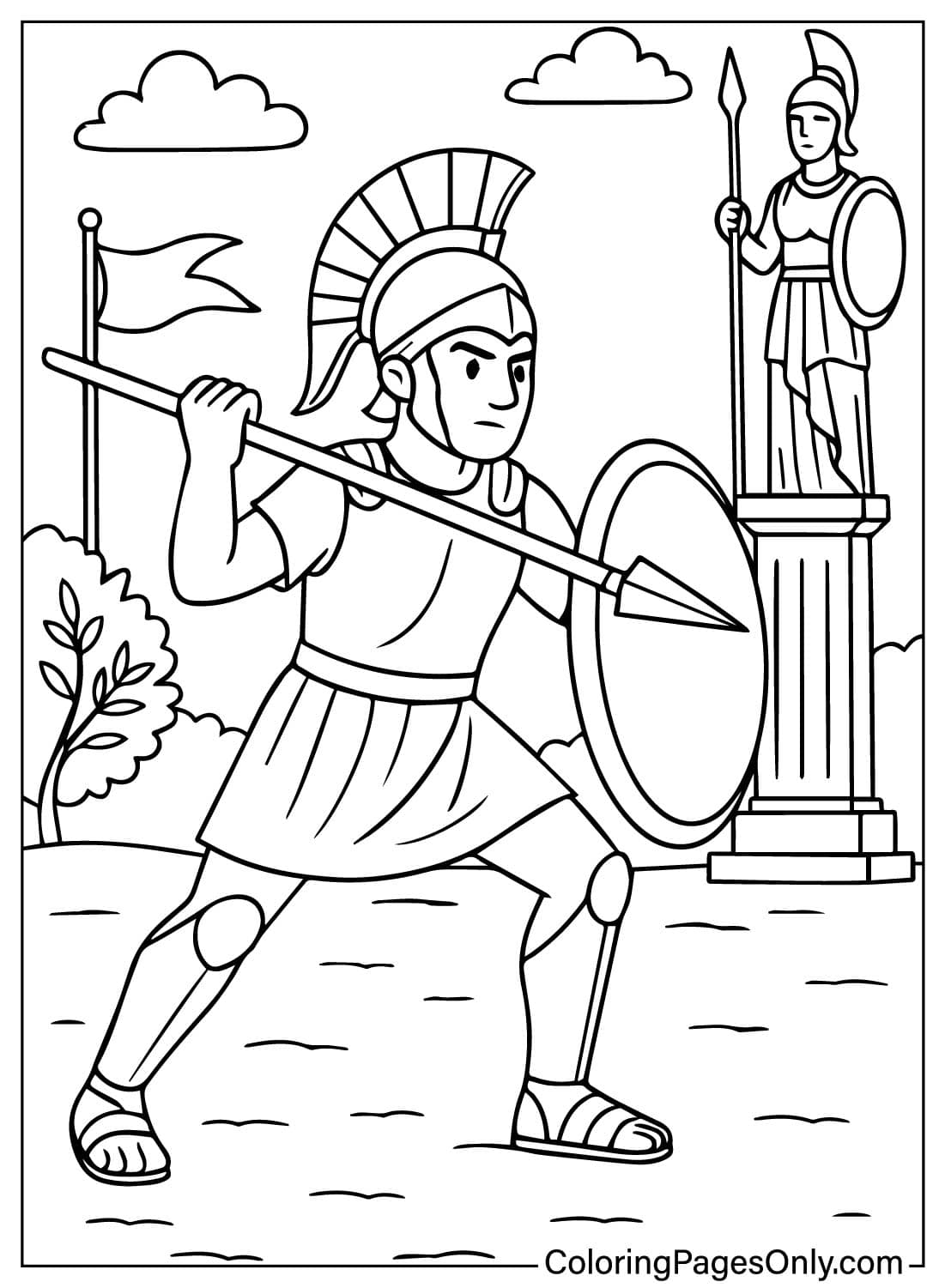
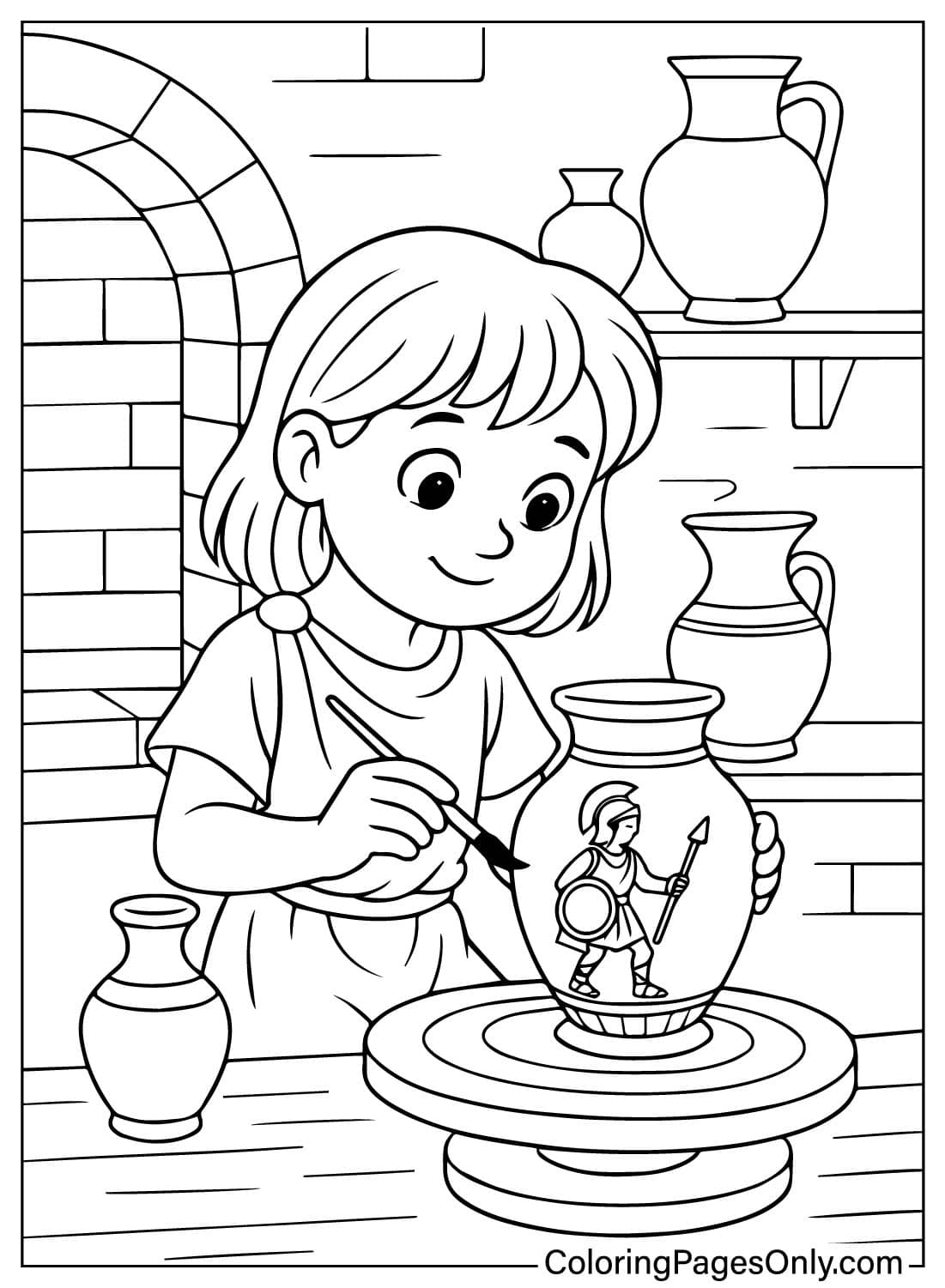
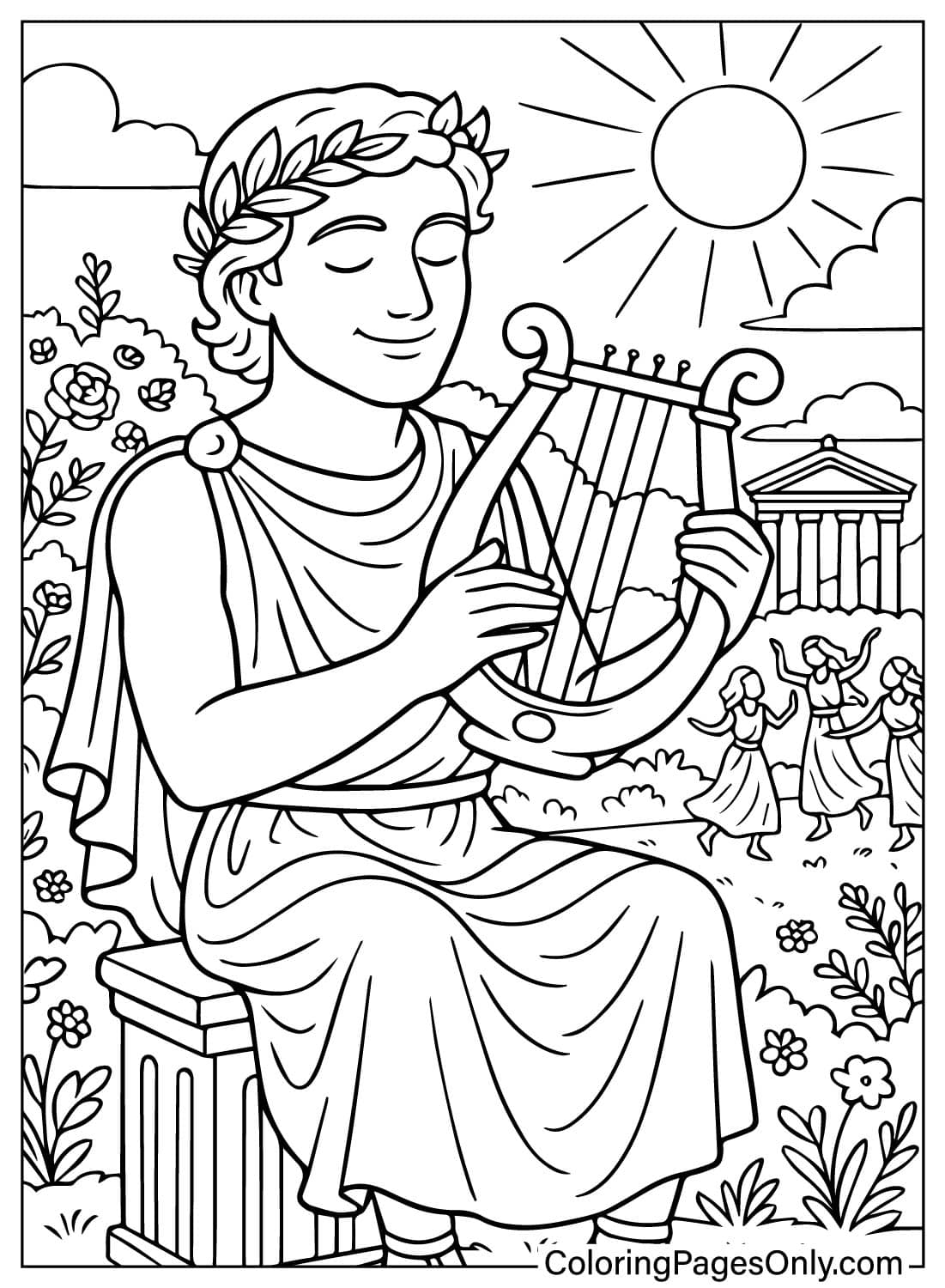
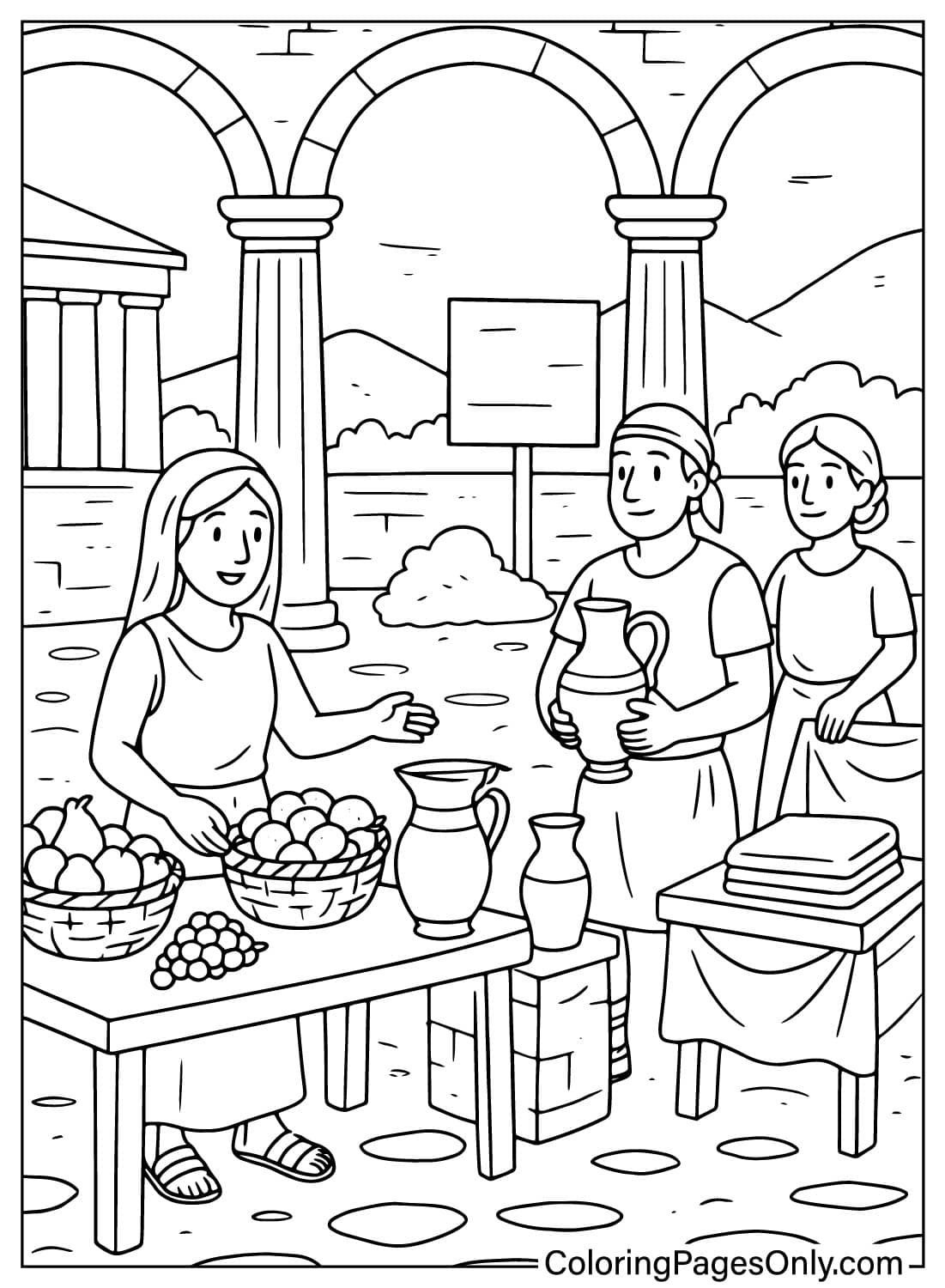
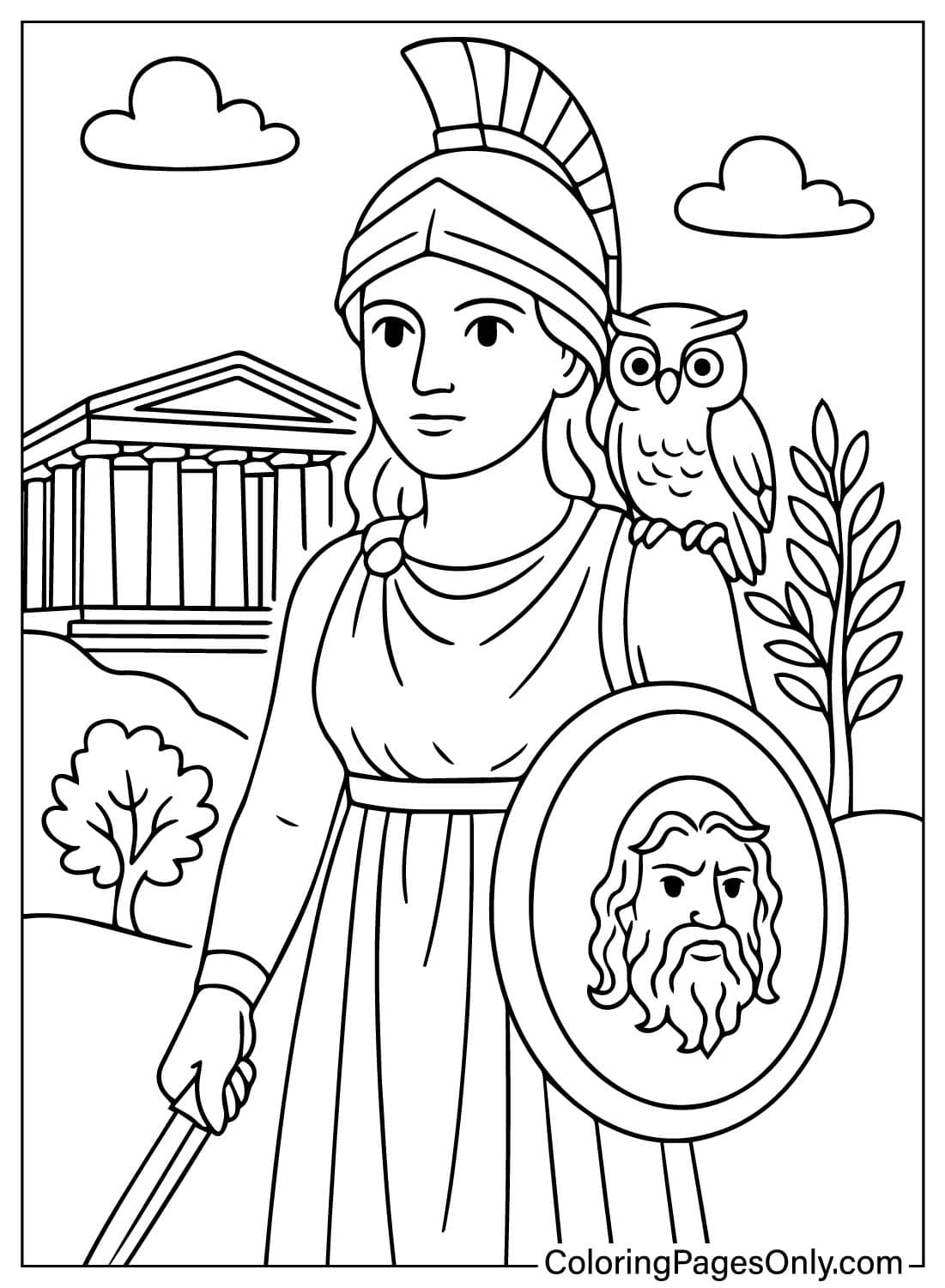
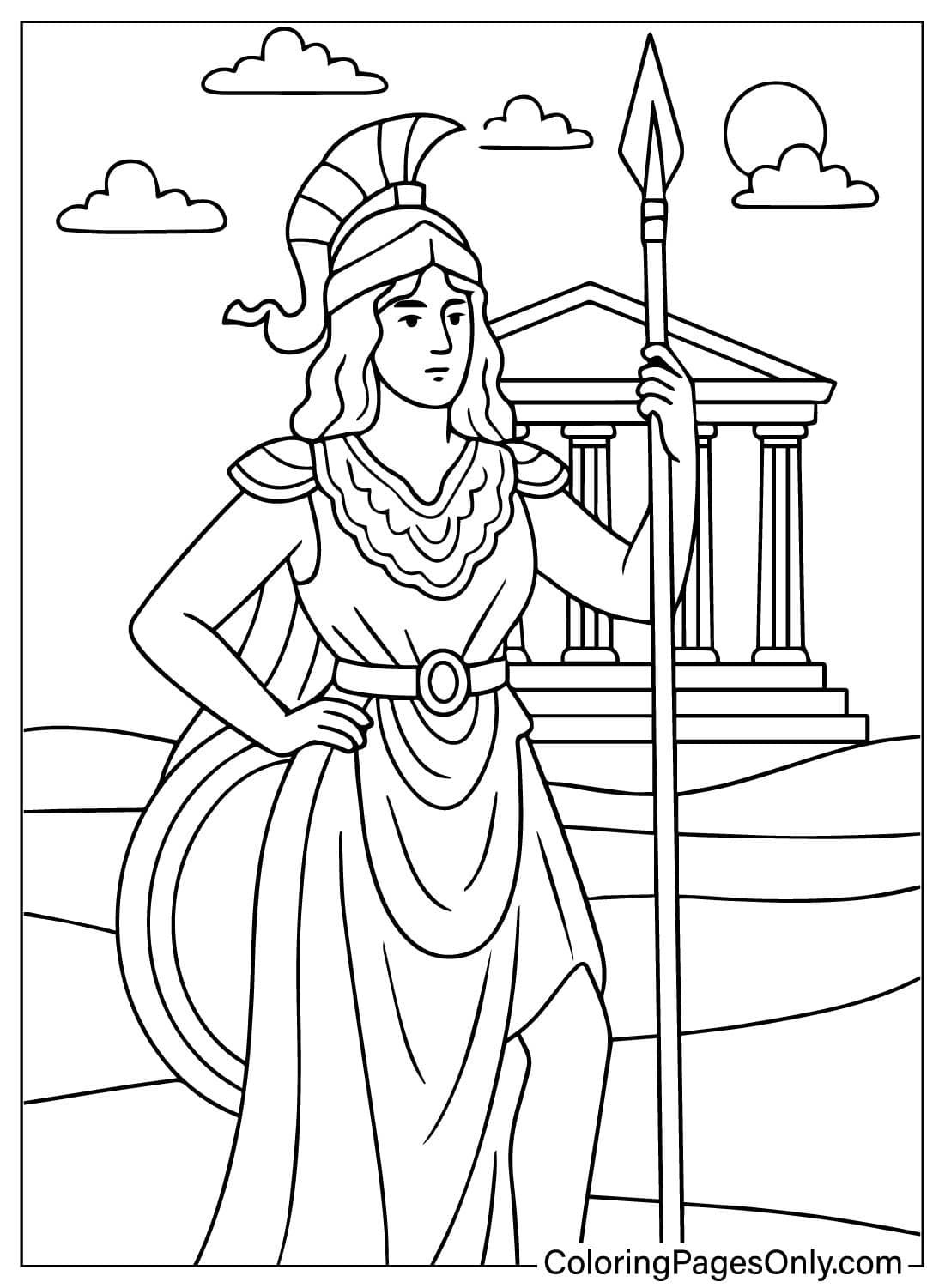
What Is Inside This Collection
The 35 pages are broken into four groups based on content.
Gods and Mythology
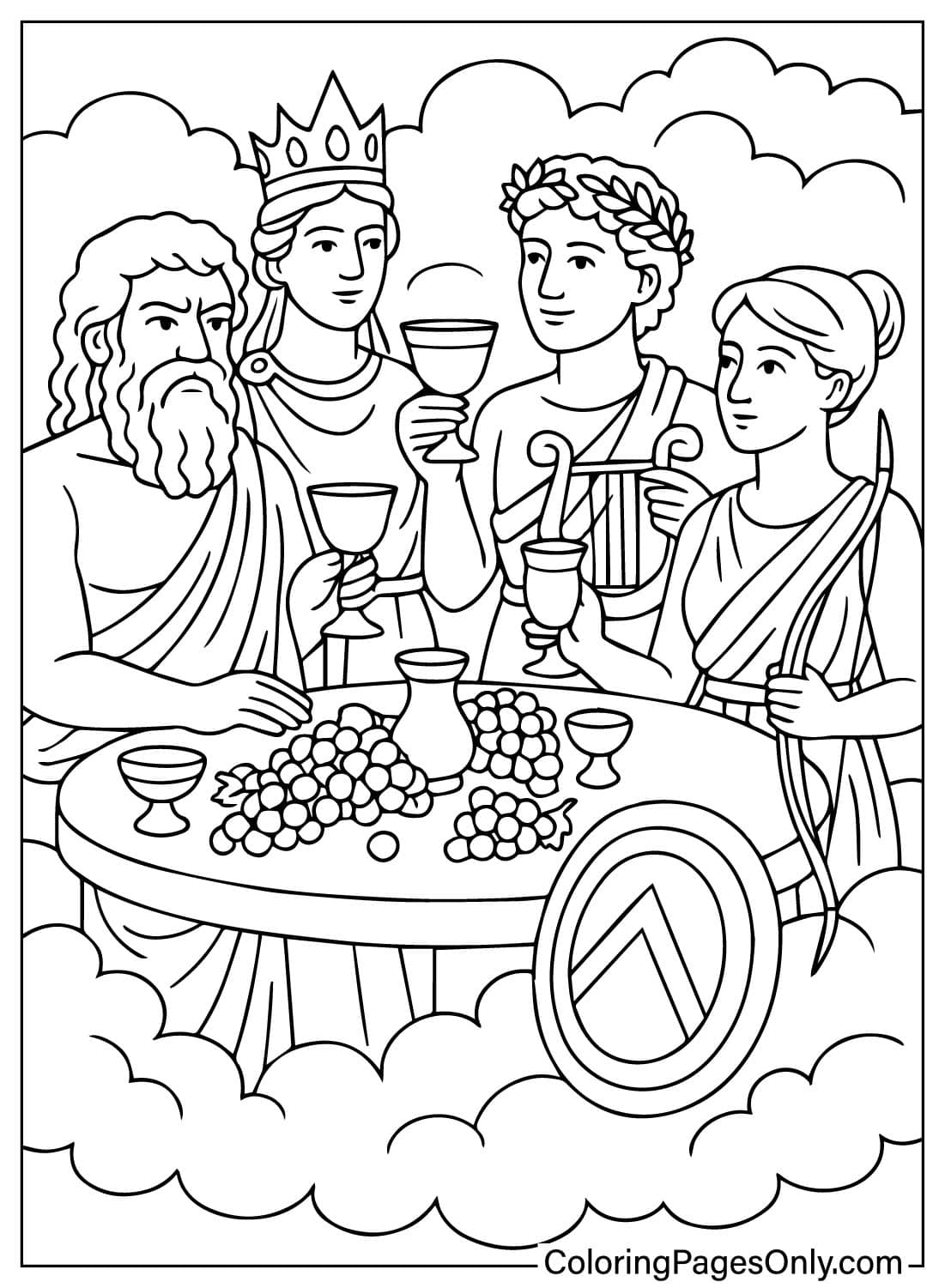
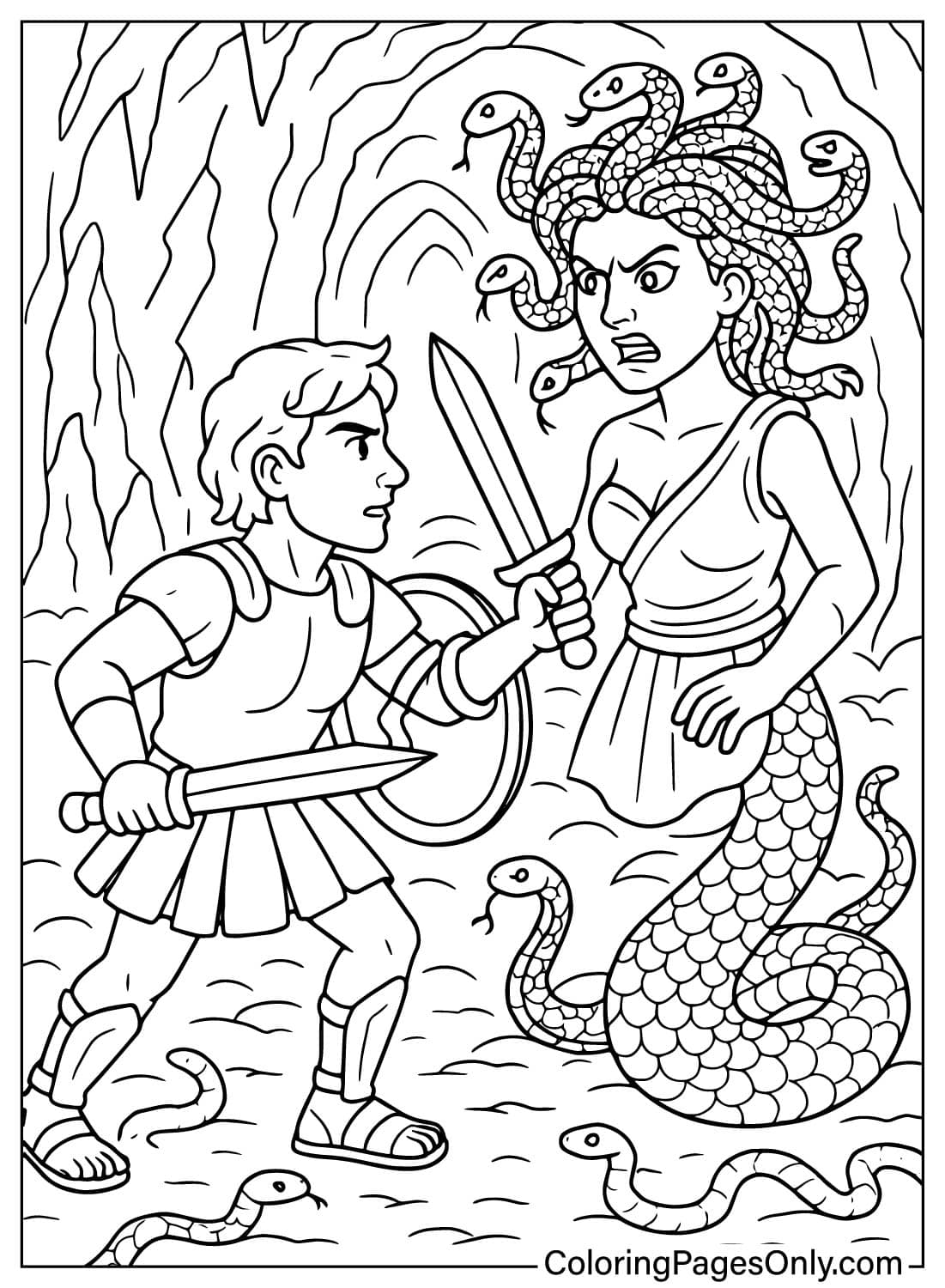
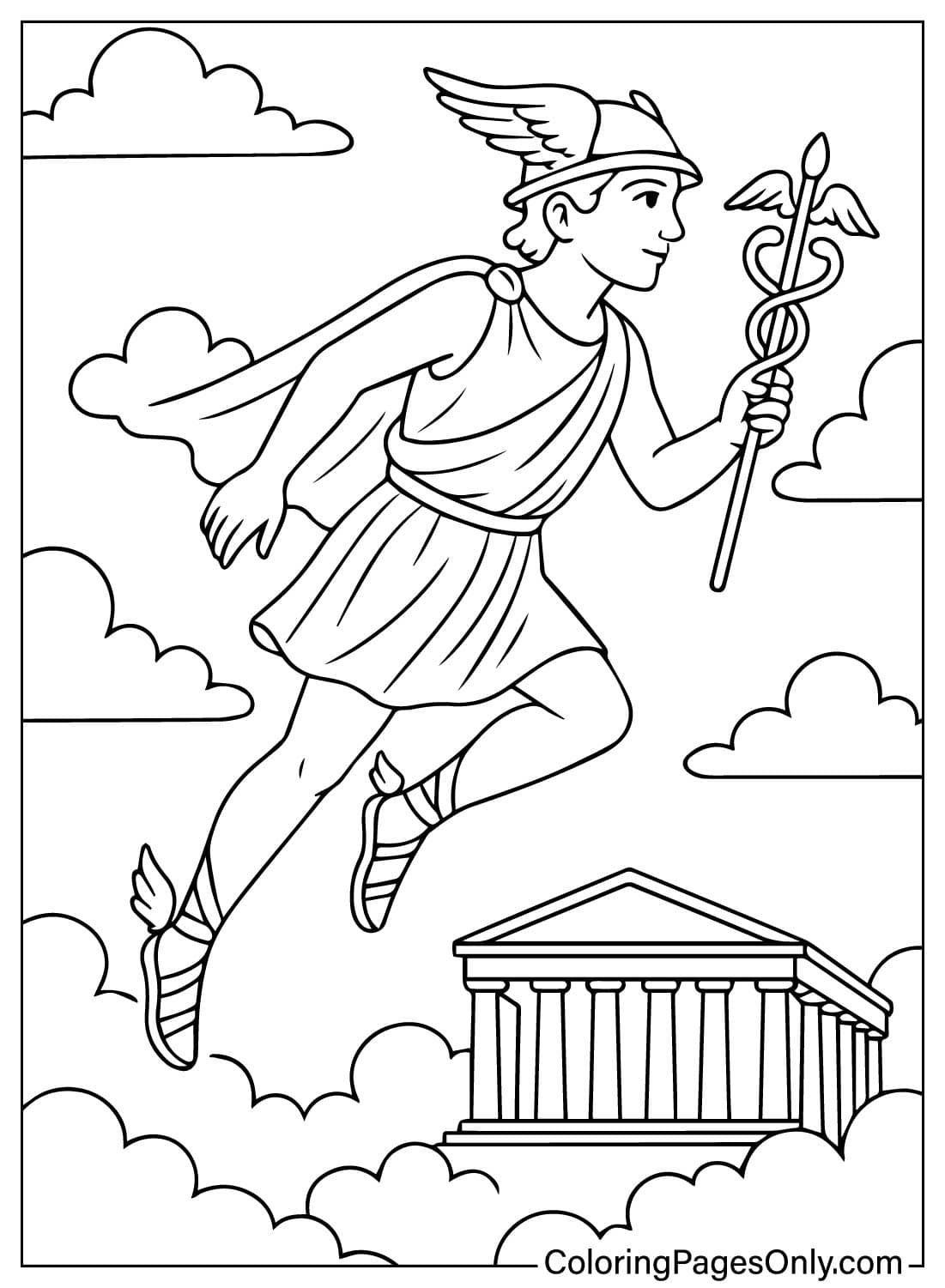
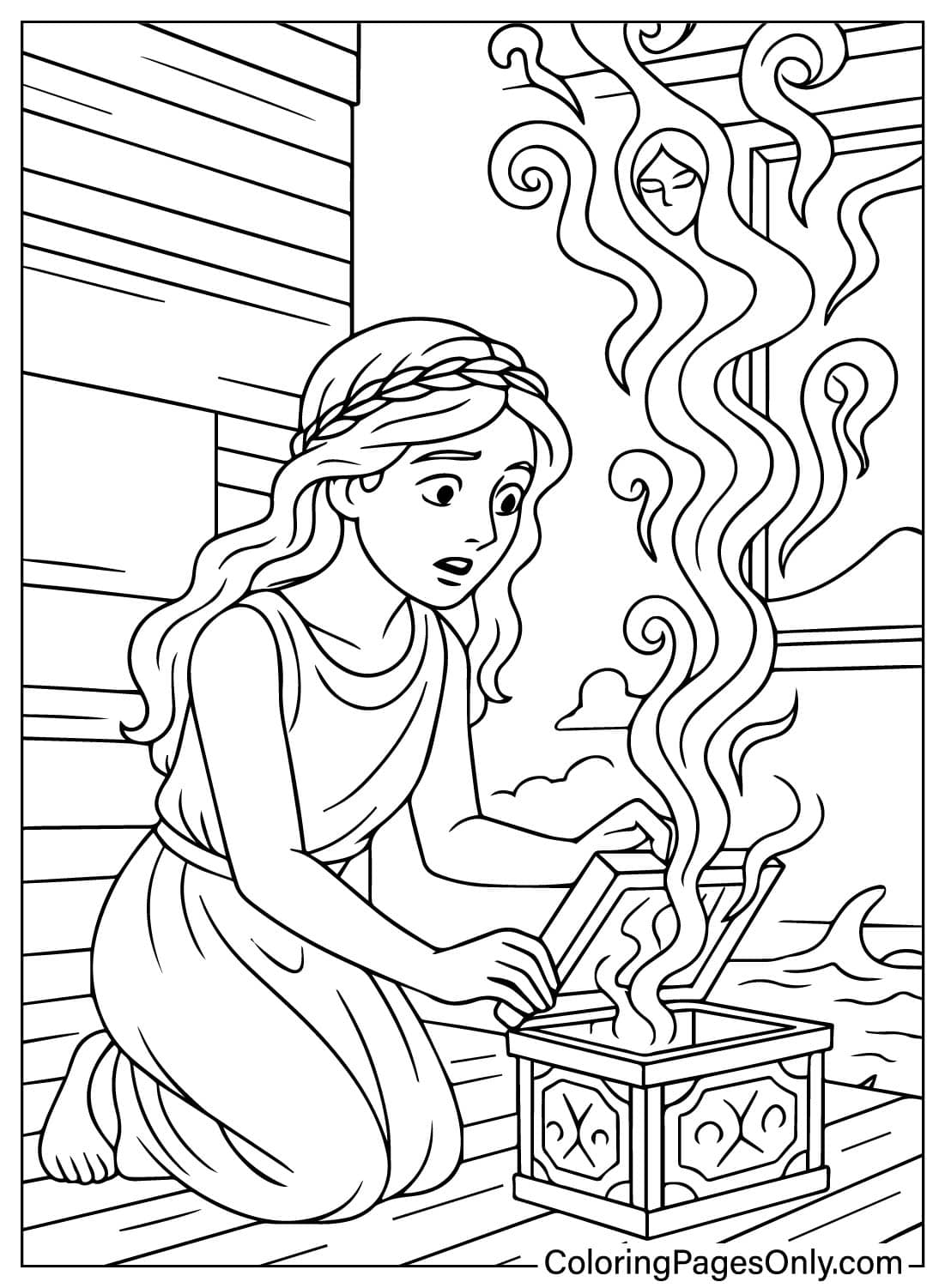
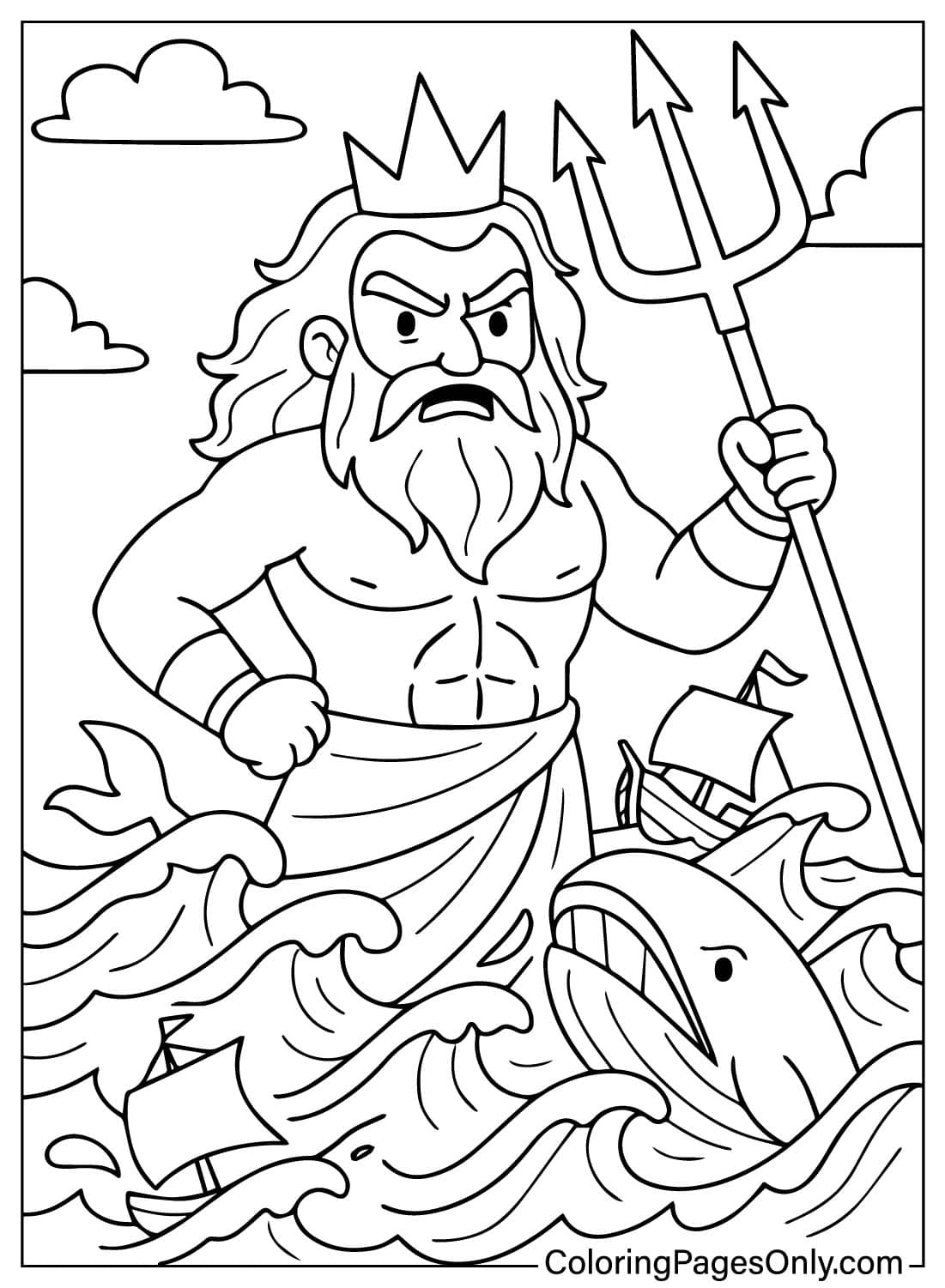
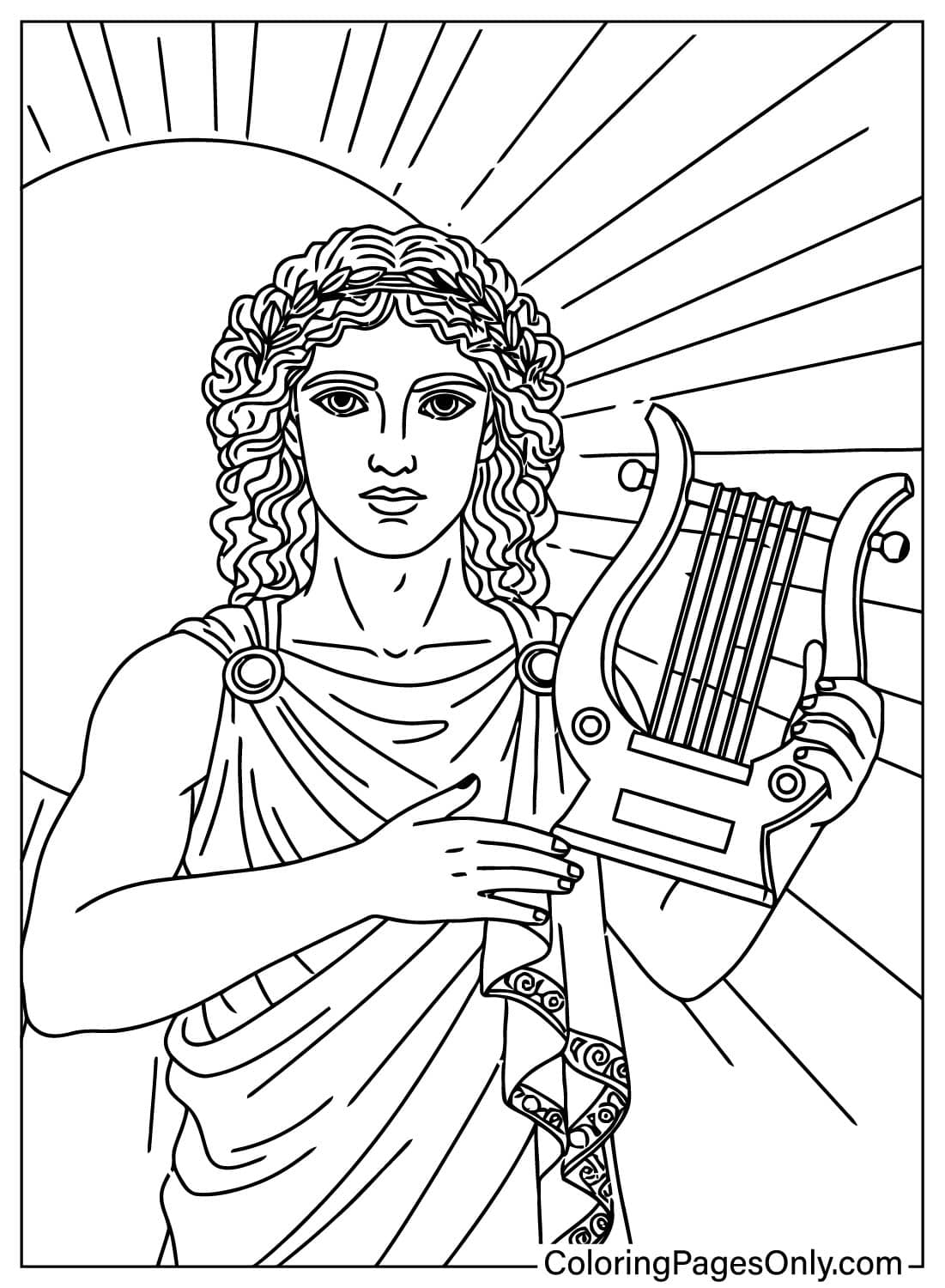
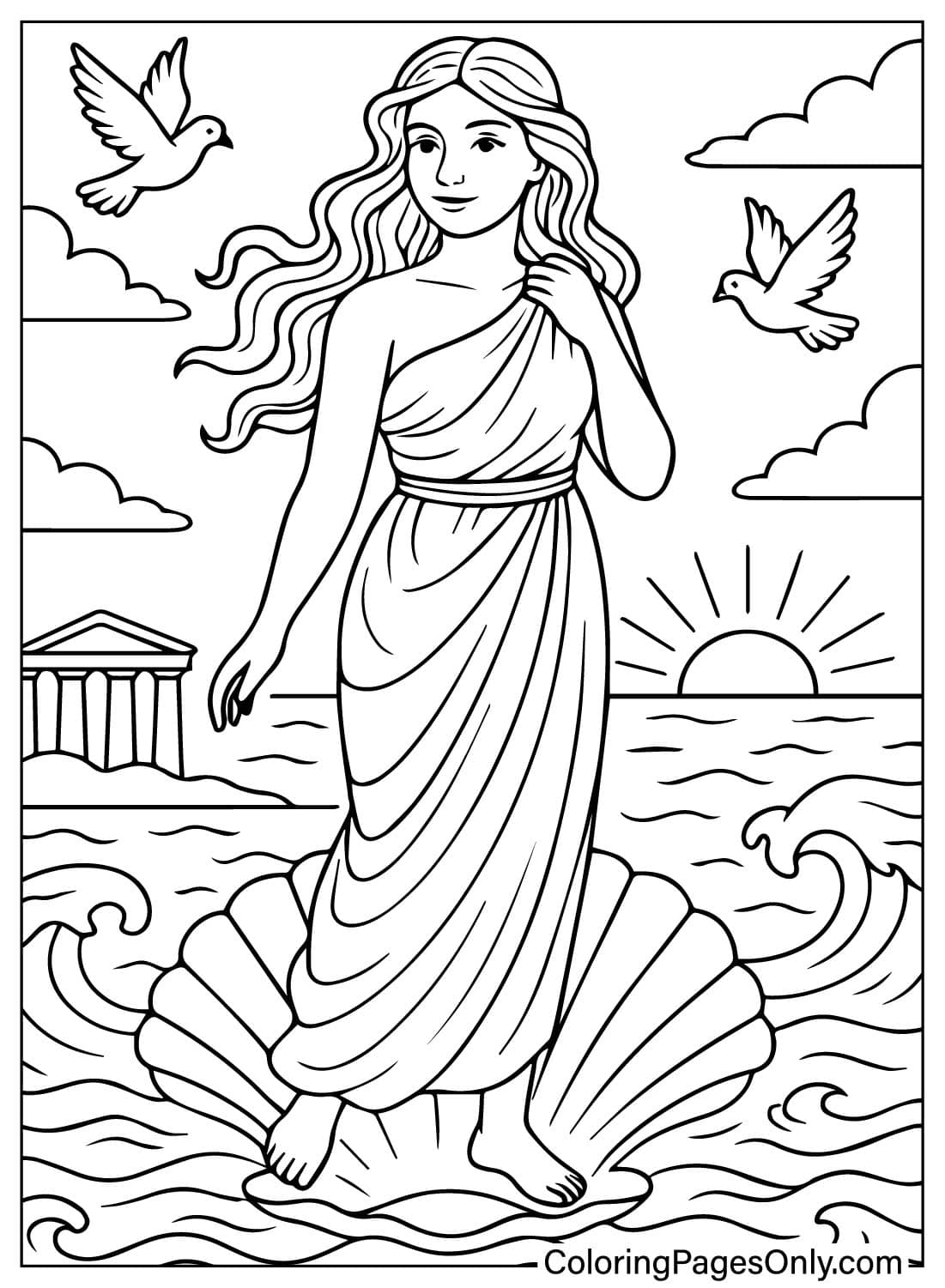
Thirteen pages, the largest group in the set, feature Greek gods and mythological scenes, including Zeus, Poseidon, Athena, Aphrodite, Apollo, and the myths of Perseus and Medusa and Pandora’s box. Color suggestion: keep each god’s traditional attributes clear, Zeus’s thunderbolt in a bright gold, Poseidon’s trident in sea blues, so each figure stays instantly recognizable.
Architecture and City Life
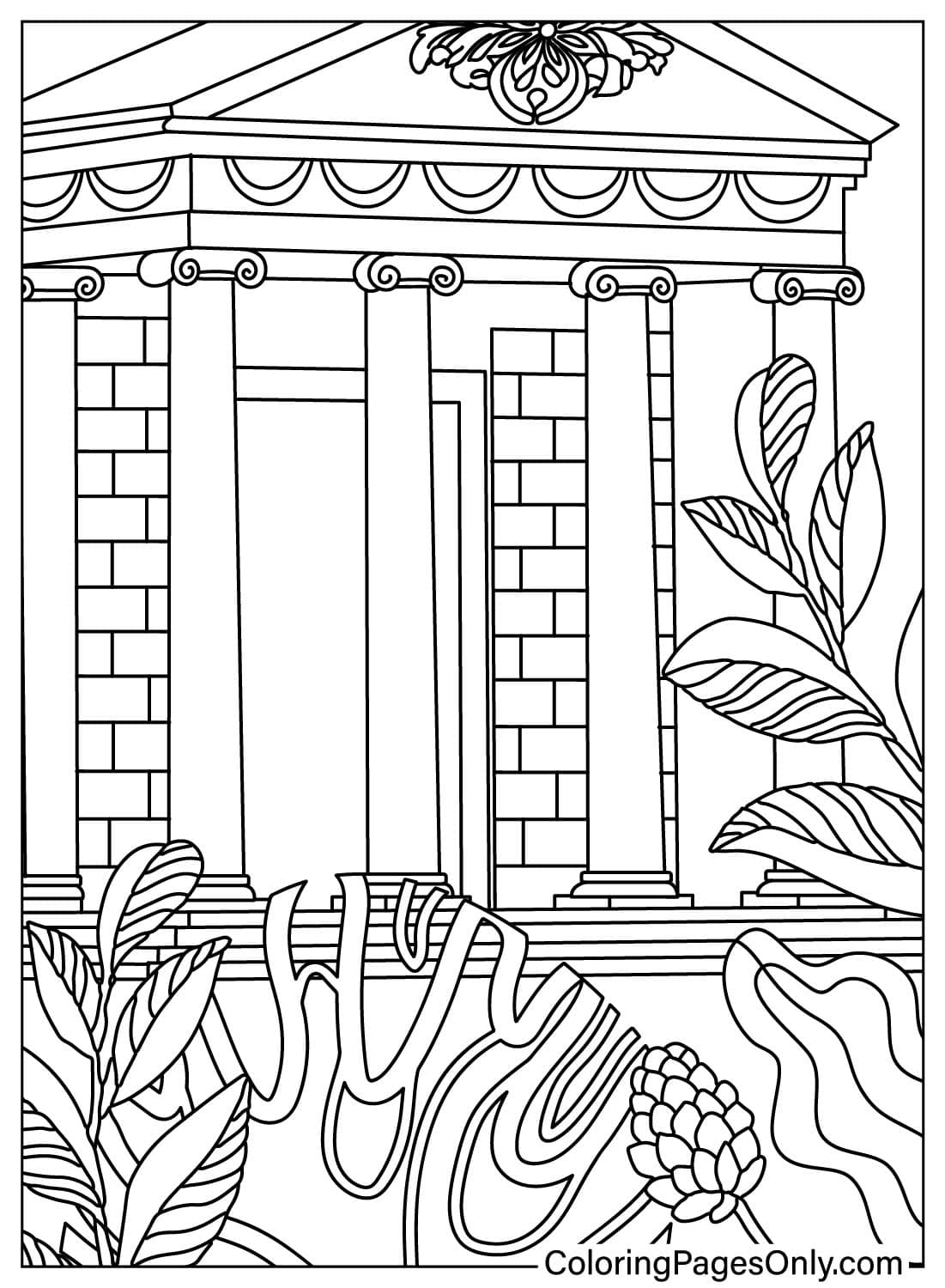
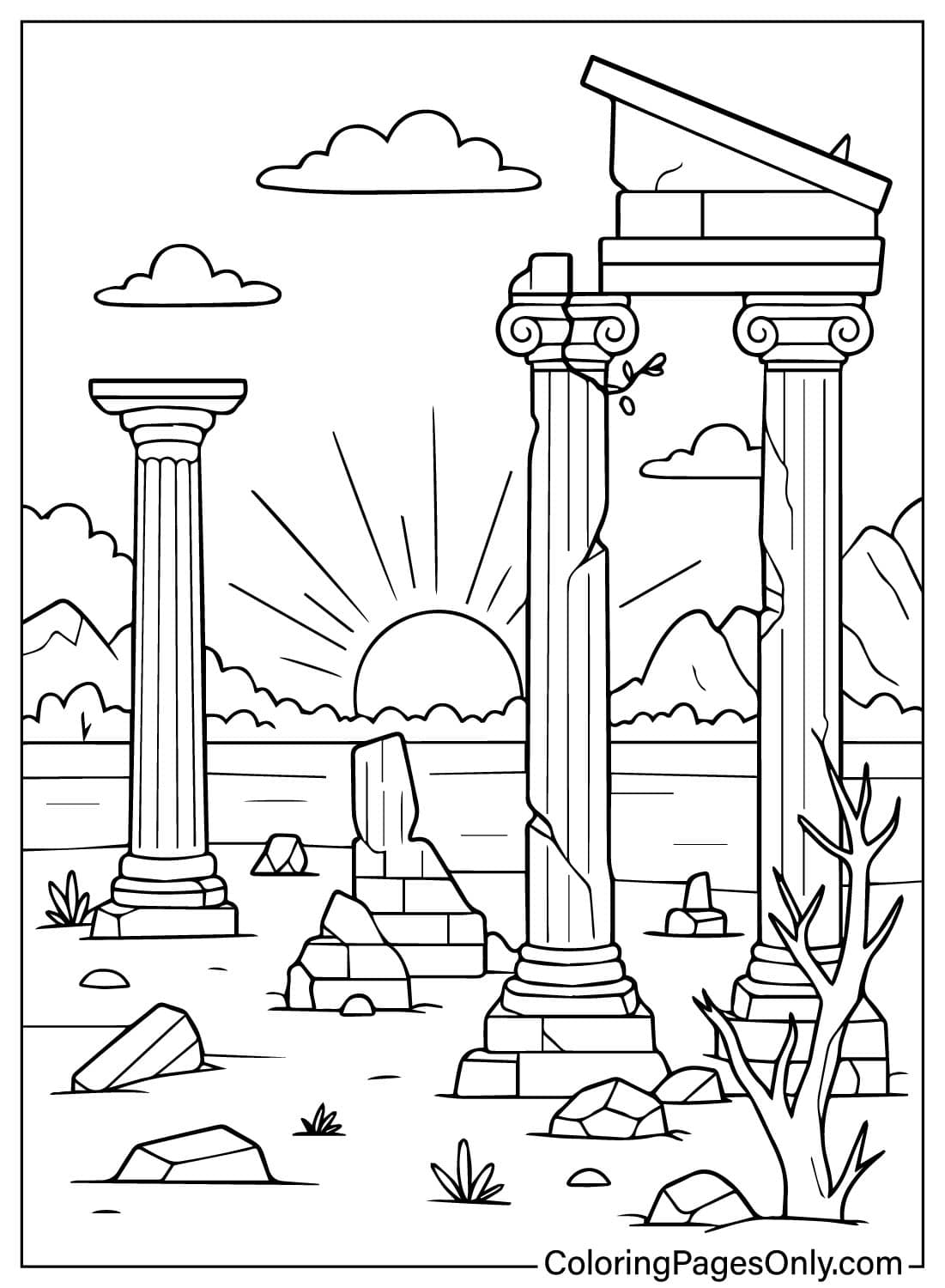
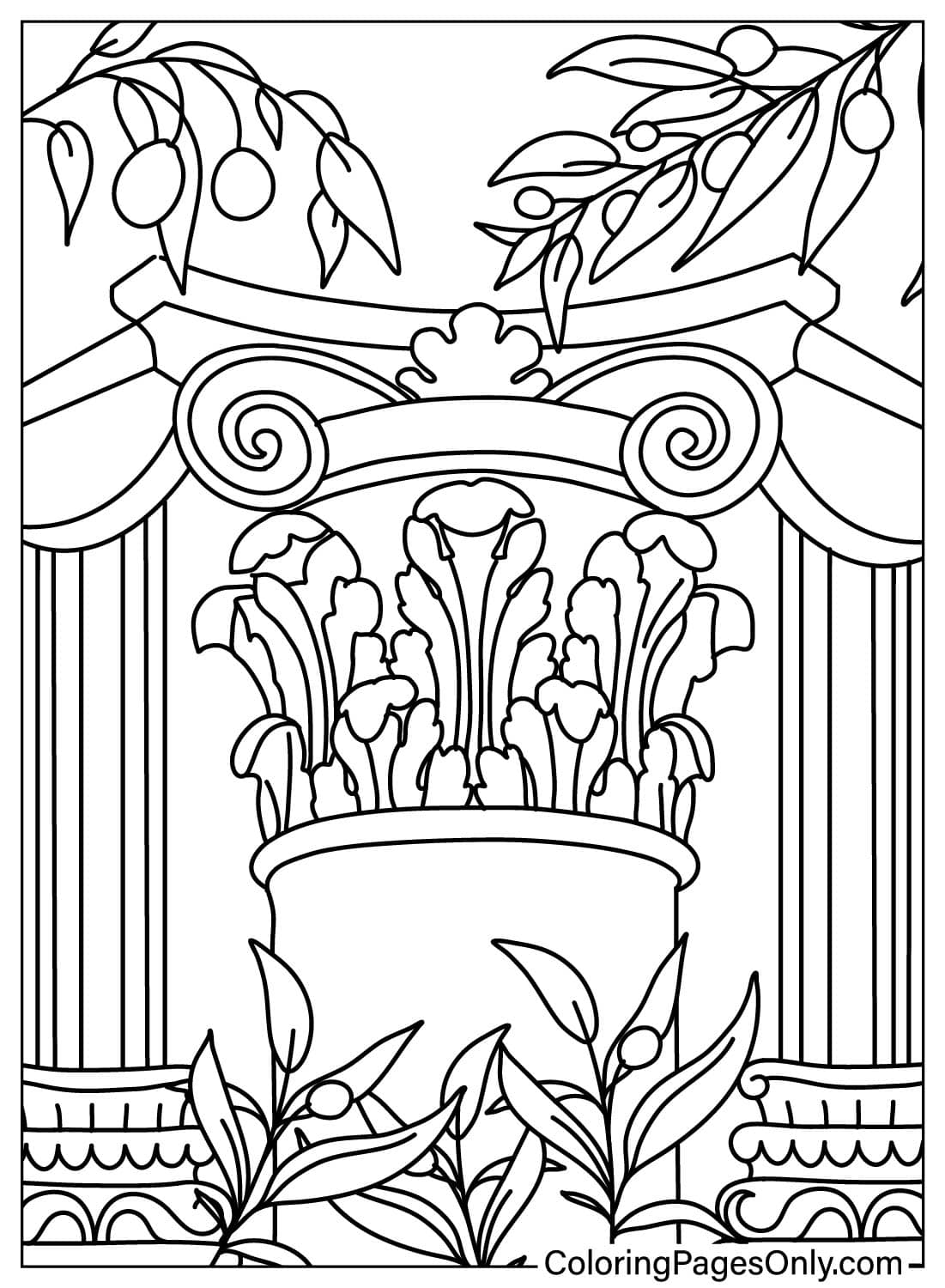
Six pages show the built environment of ancient Greece, including the Parthenon, the Athenian Agora marketplace, classical columns, and a hippodrome scene. Color suggestion: use warm cream and white tones for marble structures, with terracotta accents for roof tiles and pottery details.
Philosophy, Culture, and the Arts
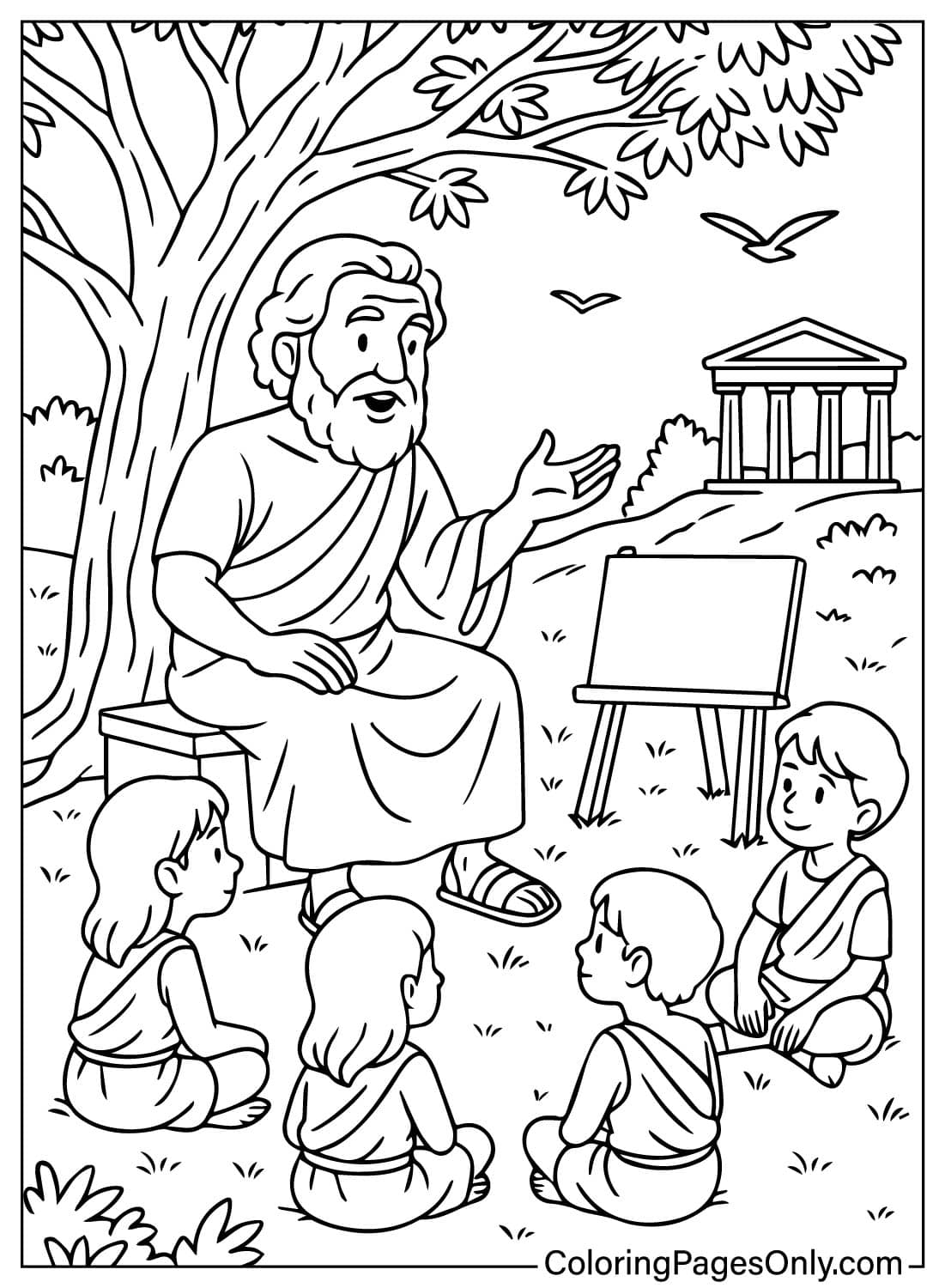
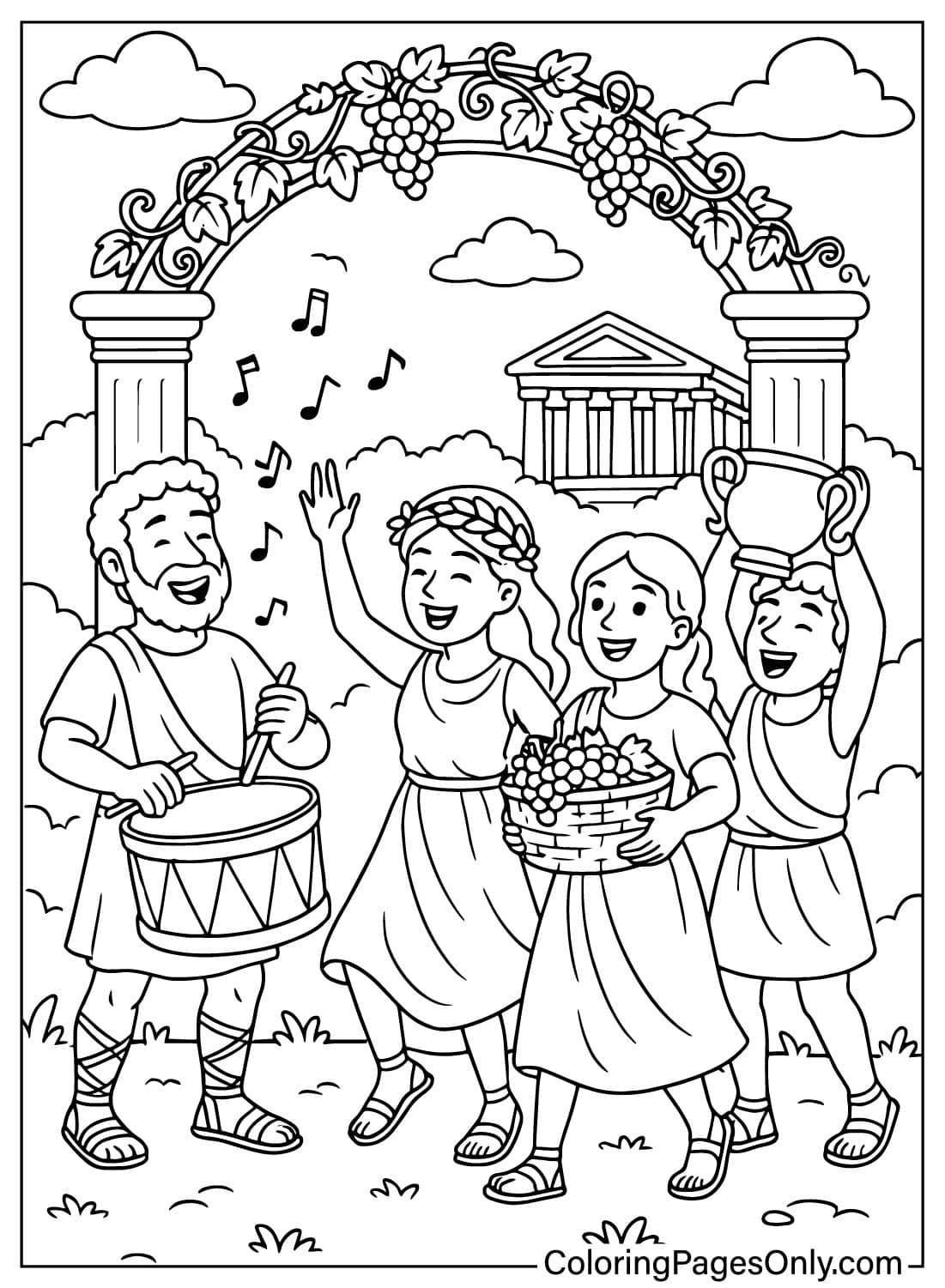
Nine pages cover the intellectual and cultural side of ancient Greece, including philosophers like Socrates and mathematicians like Pythagoras, alongside music, poetry, and festival scenes. Color suggestion: keep robes and togas in muted, natural tones, since these figures are meant to read as thoughtful and dignified rather than flashy.
Warriors and Everyday Learning Scenes
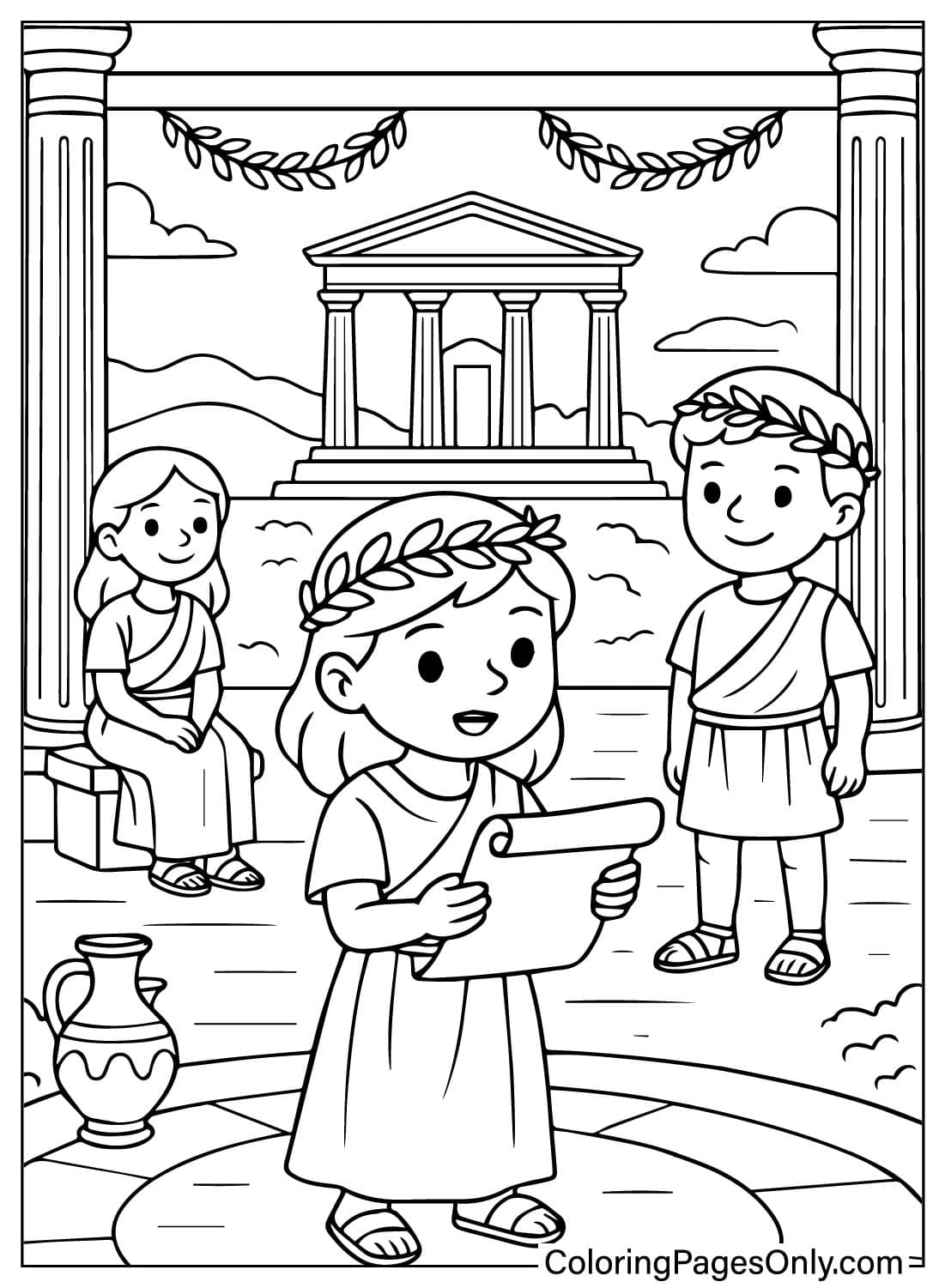
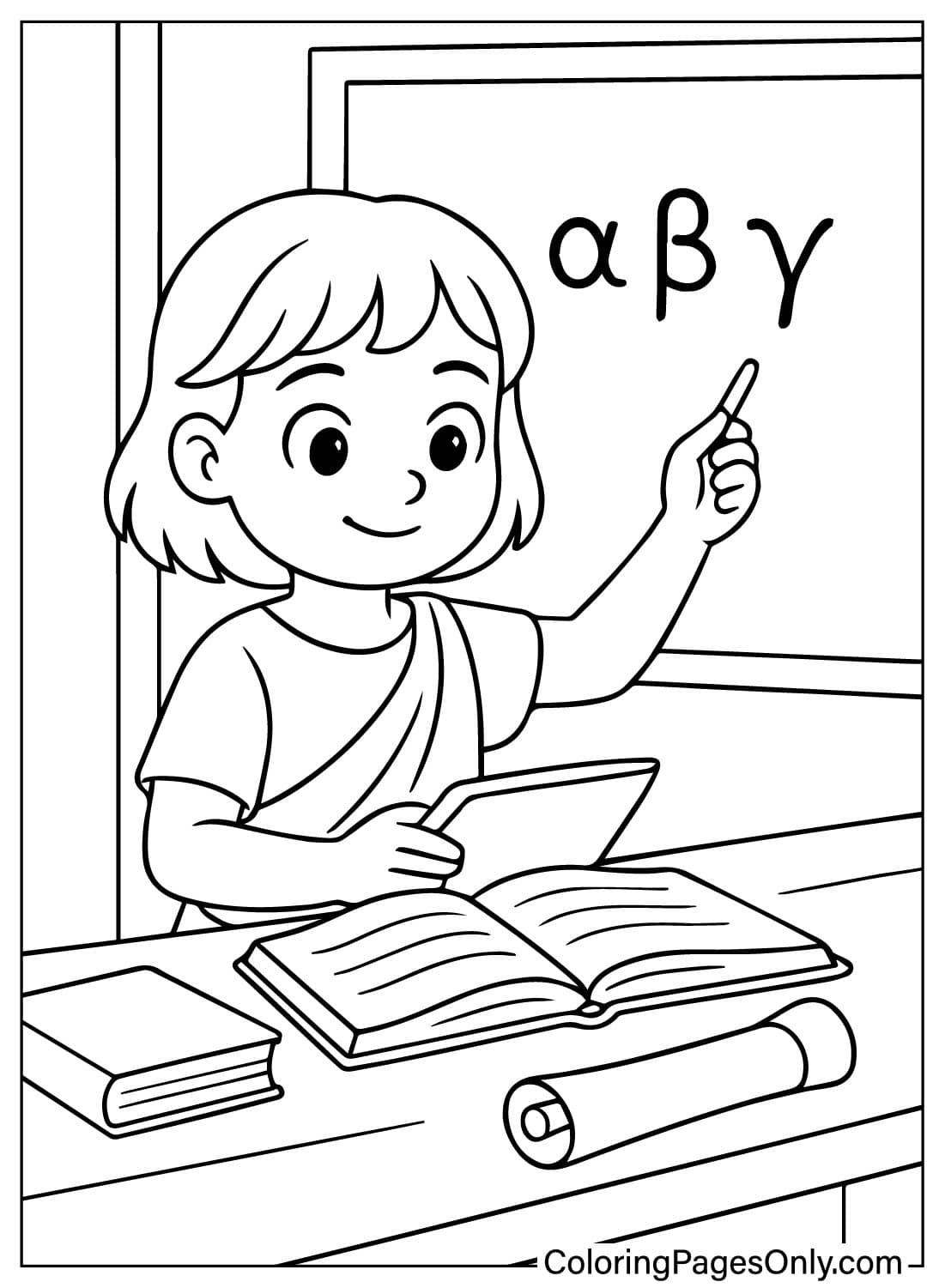
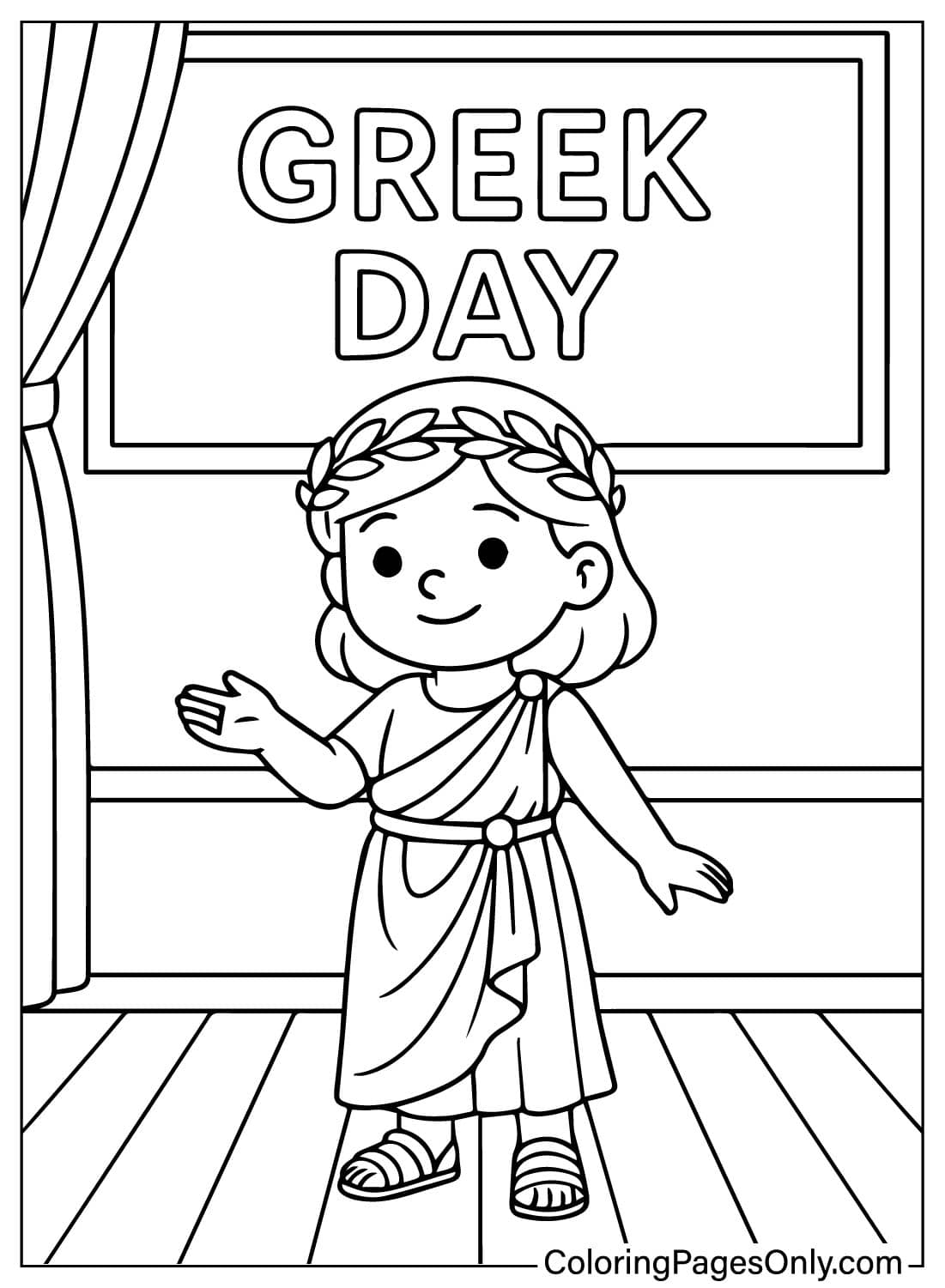
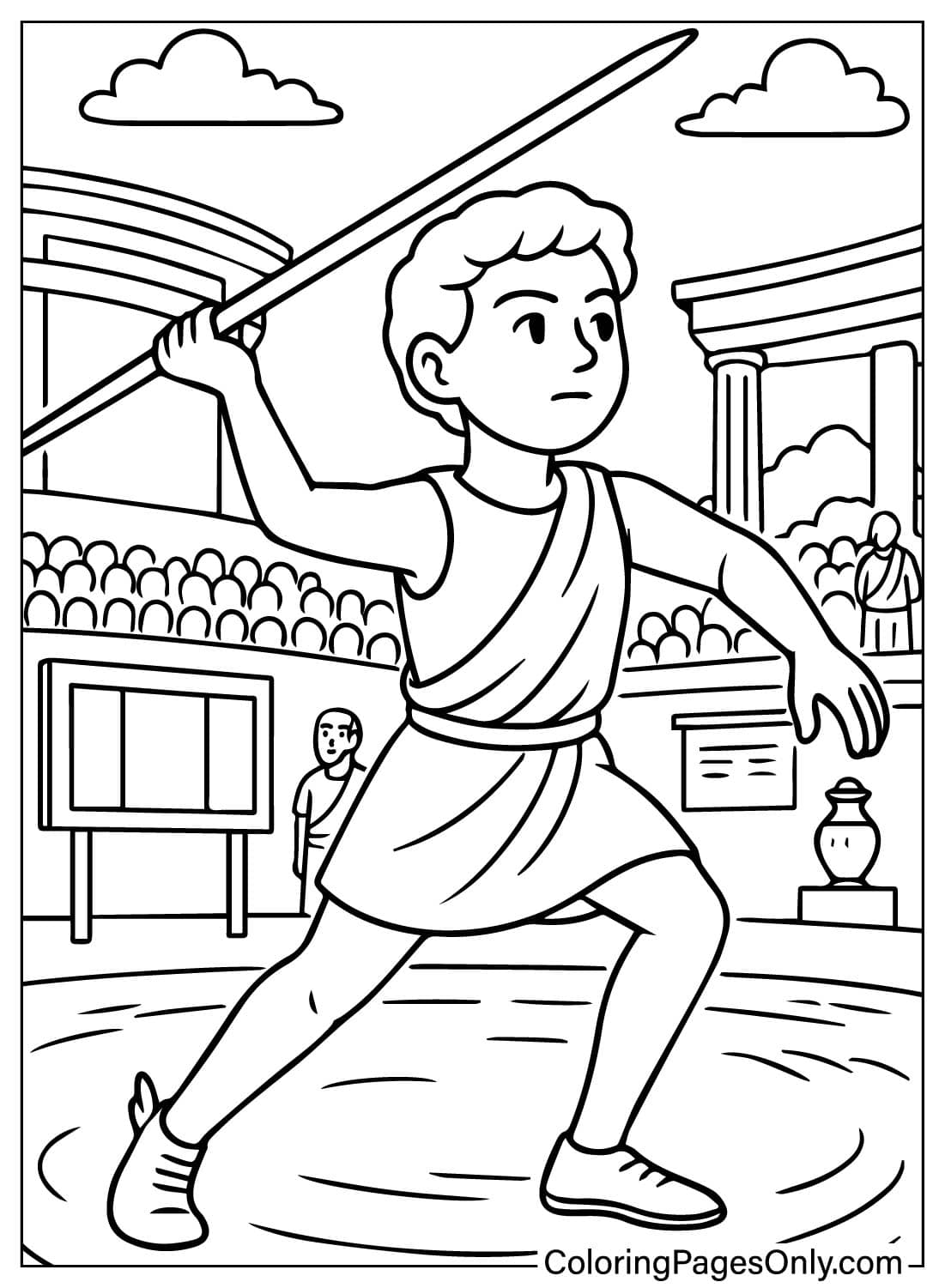
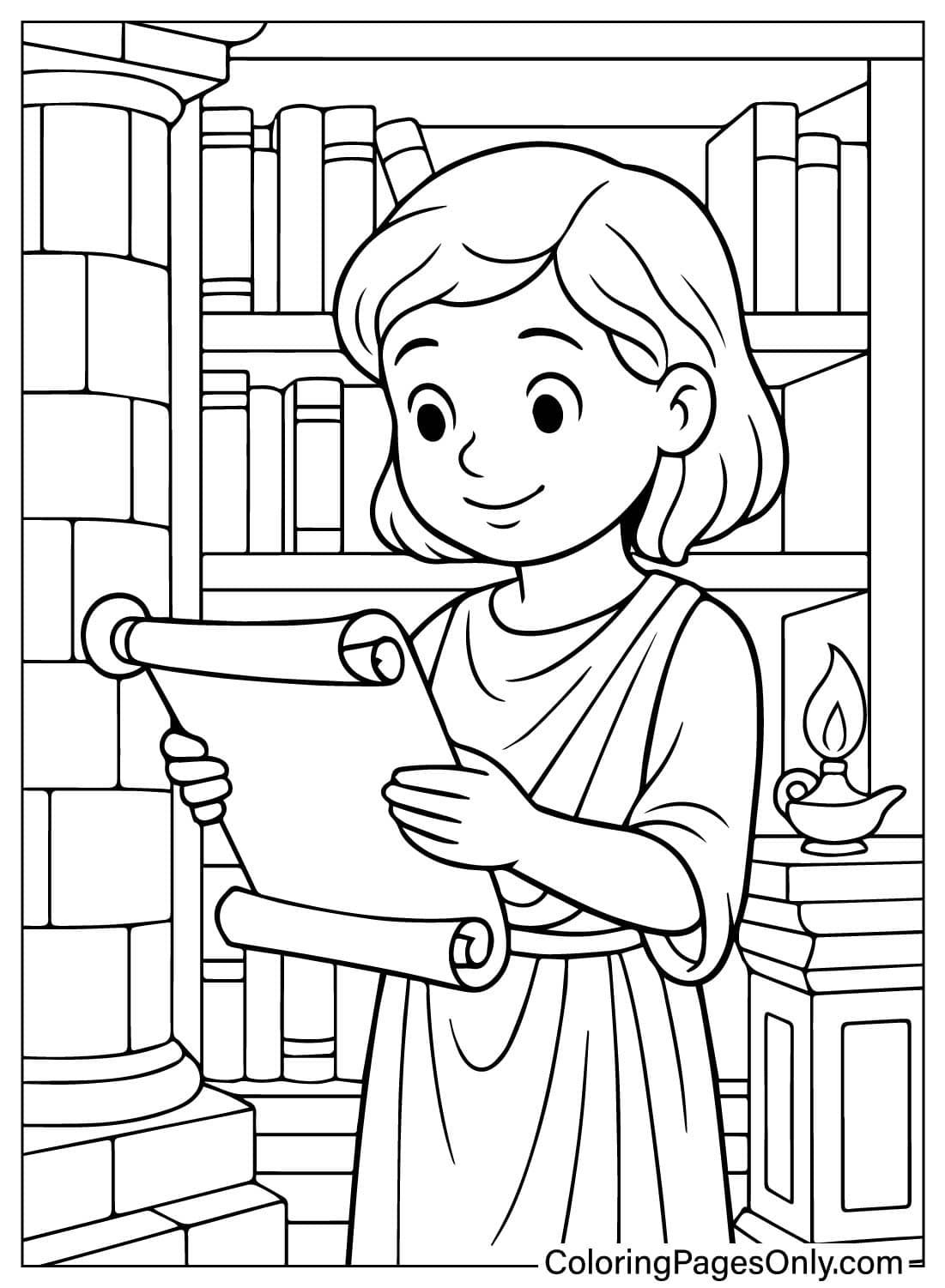
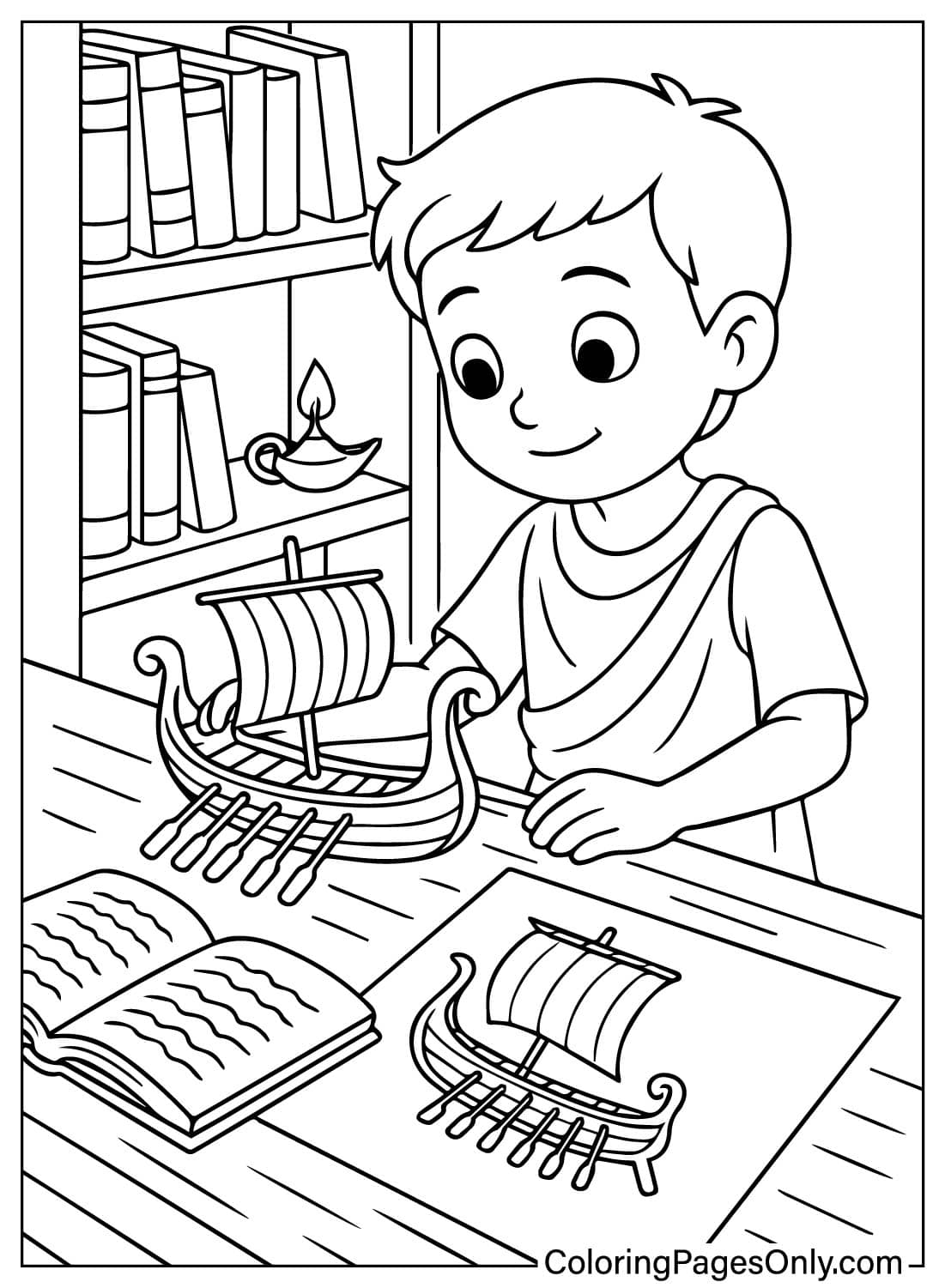
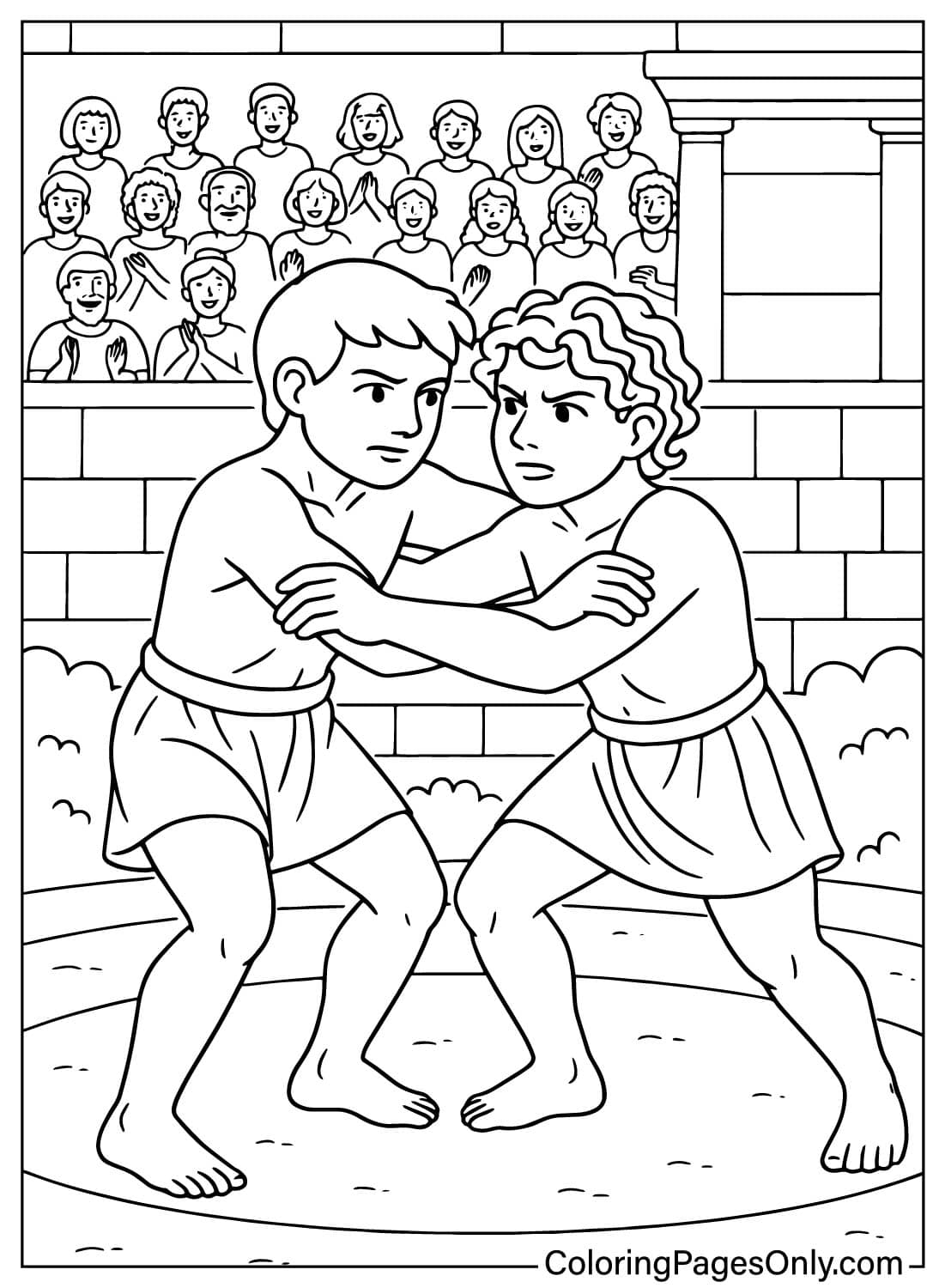
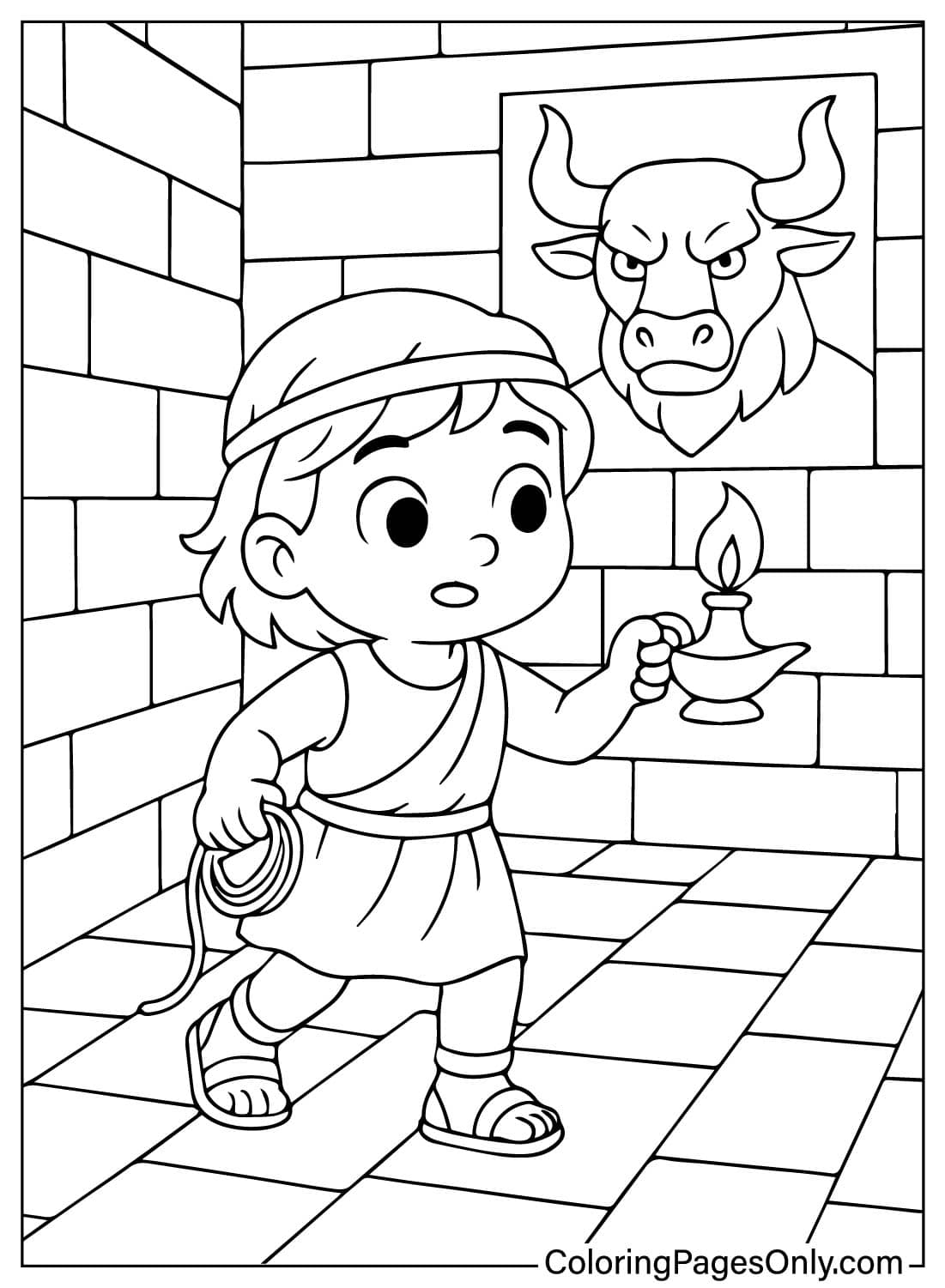
Seven pages round out the set with a Greek warrior, javelin and wrestling scenes, and several pages showing a child engaging with Greek history and culture, from writing the Greek alphabet to building a model trireme. Color suggestion: use bronze and leather tones for warrior armor, and let the child-focused pages use a brighter, more playful palette to distinguish them from the historical scenes.
What Ancient Greece Coloring Pages Do
A hands-on entry point into a foundational civilization. Because ancient Greece shaped so much of Western art, philosophy, and government, these pages give students a visual, memorable way to connect with figures and concepts they’ll encounter again throughout their education.
Fine motor practice with architectural and mythological detail. The American Academy of Pediatrics identifies fine motor skill development as a core benefit of structured coloring for children ages 2 through 7, and the fluted columns and layered robes across this set give more precise practice than a simpler subject.
A ready-made classroom or homeschool resource. Because the collection spans mythology, architecture, philosophy, and daily life, it pairs naturally with a broader history unit, giving teachers and parents a visual anchor for a wide range of ancient Greece topics.
A calm, focused activity. Research published in the Art Therapy Journal in 2005 found that structured coloring sessions were associated with a measurable reduction in reported anxiety. Working through a detailed historical scene offers a satisfying, low-pressure way to unwind while still engaging with real content.
How to Color Ancient Greece Pages Well
- Marble architecture: Use Crayola White or Cream as a base, with light Timberwolf shading in the column grooves to suggest weathered stone.
- Gods and goddesses: Keep each figure’s traditional colors consistent, gold for Zeus’s thunderbolt, deep blue for Poseidon’s trident and sea elements, so they stay recognizable across the collection.
- Robes and togas: Use Crayola White, Sepia, or muted earth tones, layering in folds with slightly darker shading to give the fabric a draped, realistic look.
- Warrior armor: Bronze and Crayola Copper work well for shields and armor, with a darker Sepia for leather straps and sandals.
- Pottery and vases: Terracotta orange with black detailing captures the classic look of ancient Greek ceramics.
- Child-focused pages: Use brighter, more playful colors here than on the historical and mythological pages, since these scenes are meant to feel approachable rather than solemn.
5 Creative Craft Ideas With Ancient Greece Coloring Pages
1. Mini Mythology Booklet
Color several of the gods and mythology pages, staple them together, and add a short caption under each describing the figure to build a simple mythology booklet.
2. History Wall Display
Color a set of pages spanning gods, architecture, and daily life, then arrange them together on a wall or bulletin board to build a simple Ancient Greece history display.
3. Character Bookmark
Color a favorite portrait, trim it to a narrow strip, and cover it with clear tape or a laminate sheet to make a simple, durable bookmark.
4. Greek Vase Craft
Color the vase page, cut around the outline, and mount it on a paper plate or cylinder shape to create a simple 3D display piece inspired by ancient pottery.
5. Timeline Poster
Color several pages representing different aspects of ancient Greek life, arrange them chronologically or thematically, and label each to build a simple classroom timeline poster.
Frequently Asked Questions
What are Ancient Greece coloring pages?
Free printable designs of Greek gods, architecture, philosophy, and daily life. This collection has 35 pages available as PDF downloads or online coloring, with no account required.
When was the Parthenon built?
The Parthenon was built between 447 and 432 BCE on the Acropolis of Athens, commissioned under the statesman Pericles.
Who was the Parthenon dedicated to?
The Parthenon was dedicated to Athena, the patron goddess of Athens, and originally housed a colossal statue of her.
When did the Olympic Games begin?
The ancient Olympic Games began in 776 BCE at Olympia, held every four years as part of a religious festival honoring Zeus.
What was a trireme?
A trireme was an ancient Greek warship powered by three rows of rowers, considered one of the most advanced naval vessels of its time.
What was the Agora?
The Agora was the central public marketplace and gathering space in an ancient Greek city, used for commerce, politics, and social life.
What age group are these pages best suited for?
The child-focused activity pages suit children as young as five, while the more detailed mythology and philosophy pages work well for older students studying ancient history.
Can these pages be used for a history or classroom lesson?
Yes. The mix of mythology, architecture, philosophy, and daily life makes this set a strong visual companion to an ancient Greece history unit at home or in the classroom.
Start Coloring
Download any page by clicking the design. No account, email, or payment is required. Pages print directly from the browser at full resolution or open in the online coloring tool for screen use. Share finished pages on Facebook or Pinterest using the share buttons at the top of each design page.