
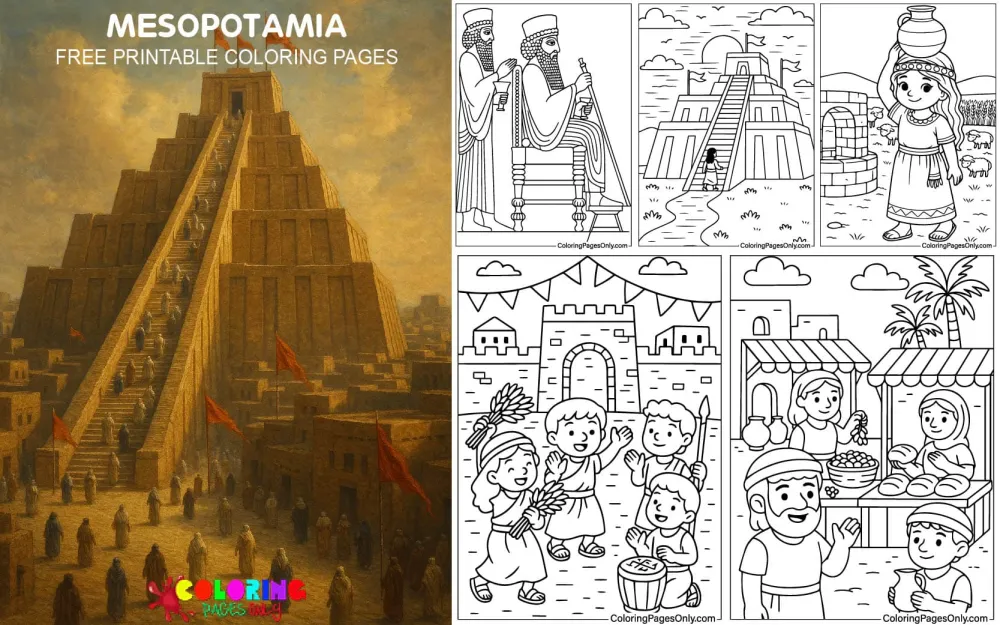
Free Mesopotamia Coloring Pages: 35 printable PDF designs covering ancient Mesopotamia, from Sumerian gods and cuneiform writing to daily life, trade, and the region’s later Babylonian, Assyrian, and Akkadian civilizations. Every page can be downloaded as a PDF to print or colored online in the browser, with no account required.
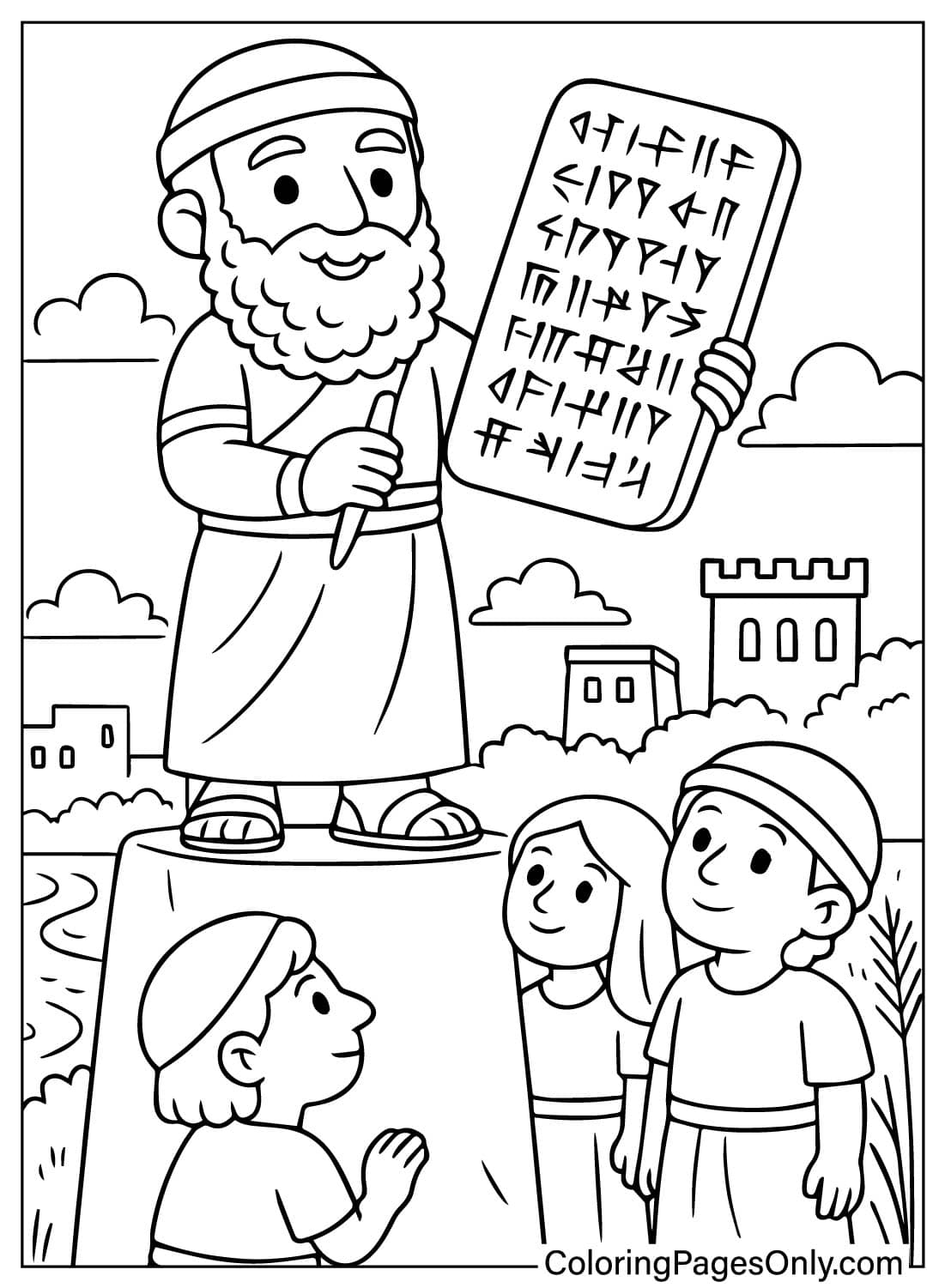
Cuneiform, widely regarded as the world’s earliest writing system, was developed by the Sumerians in southern Mesopotamia near the end of the fourth millennium BCE. Scribes pressed a reed stylus into soft clay tablets to create the wedge-shaped marks that give the script its name, drawn from the Latin word cuneus, meaning wedge. What began as simple pictographs for recording trade and administrative records gradually developed into a full writing system used across multiple Mesopotamian civilizations for thousands of years.
With 35 pages spanning Sumerian religion, daily life, trade, and the region’s later empires, the set gives colorists a broad, historically grounded introduction to one of the world’s earliest civilizations.
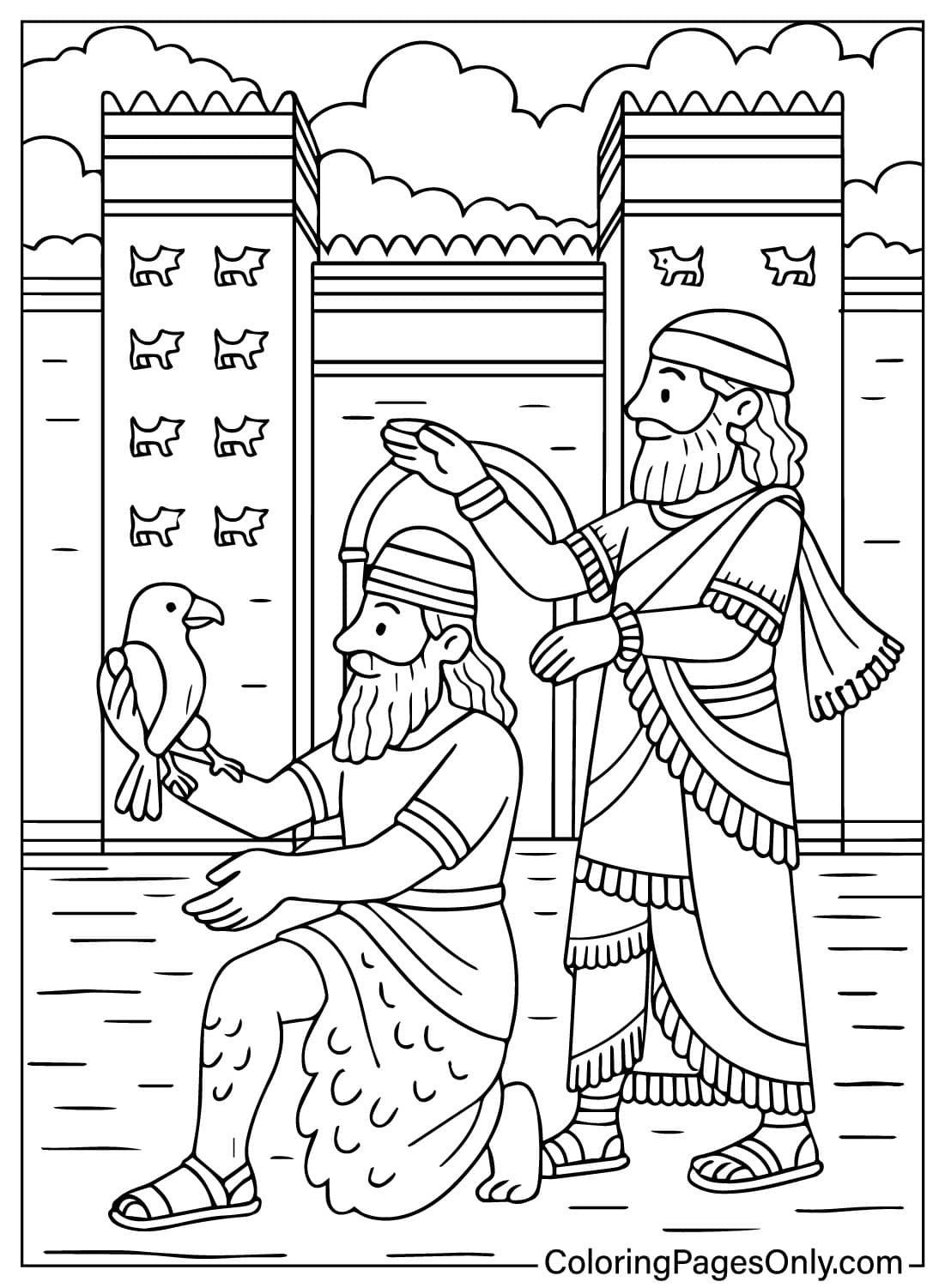
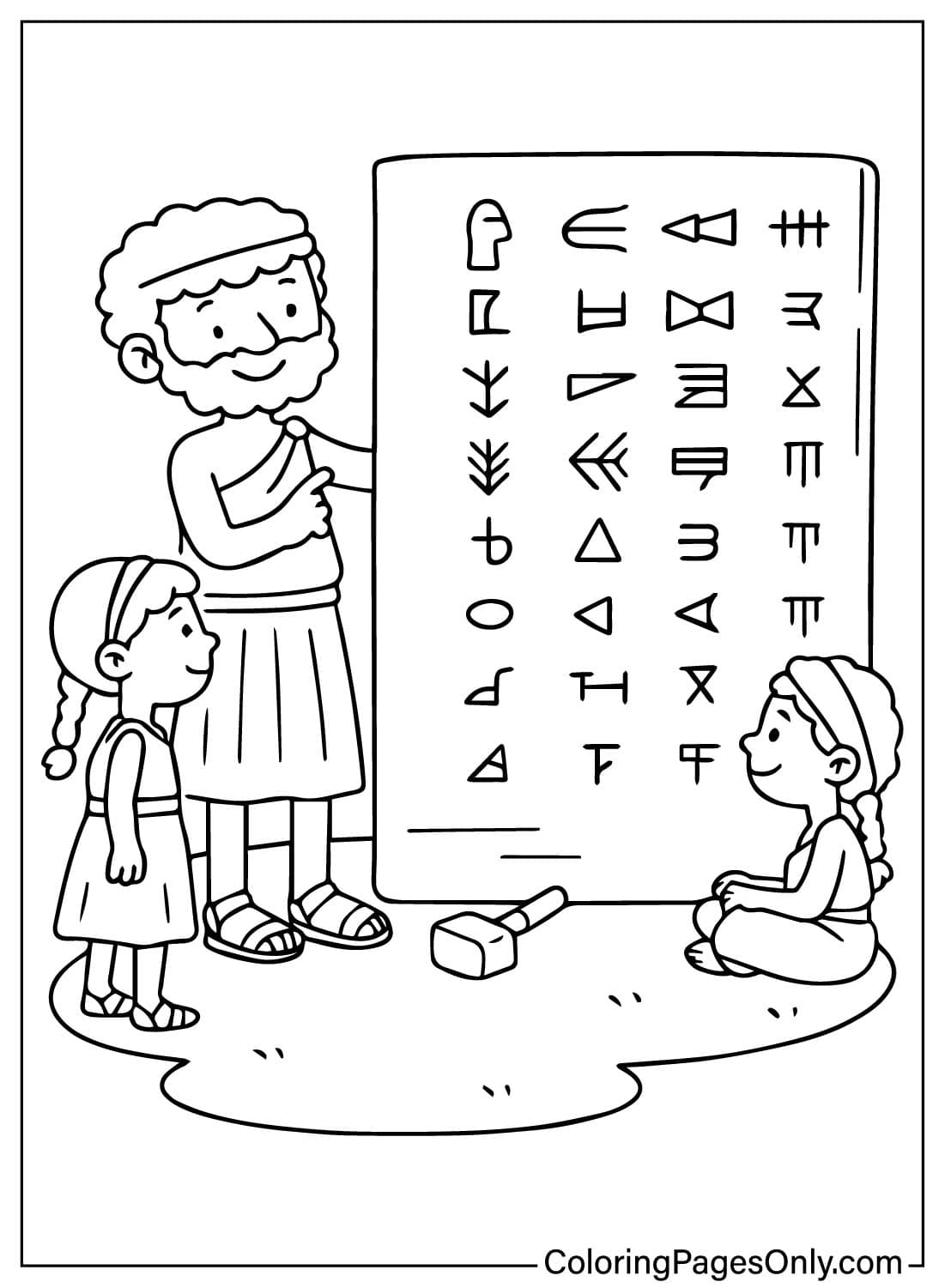
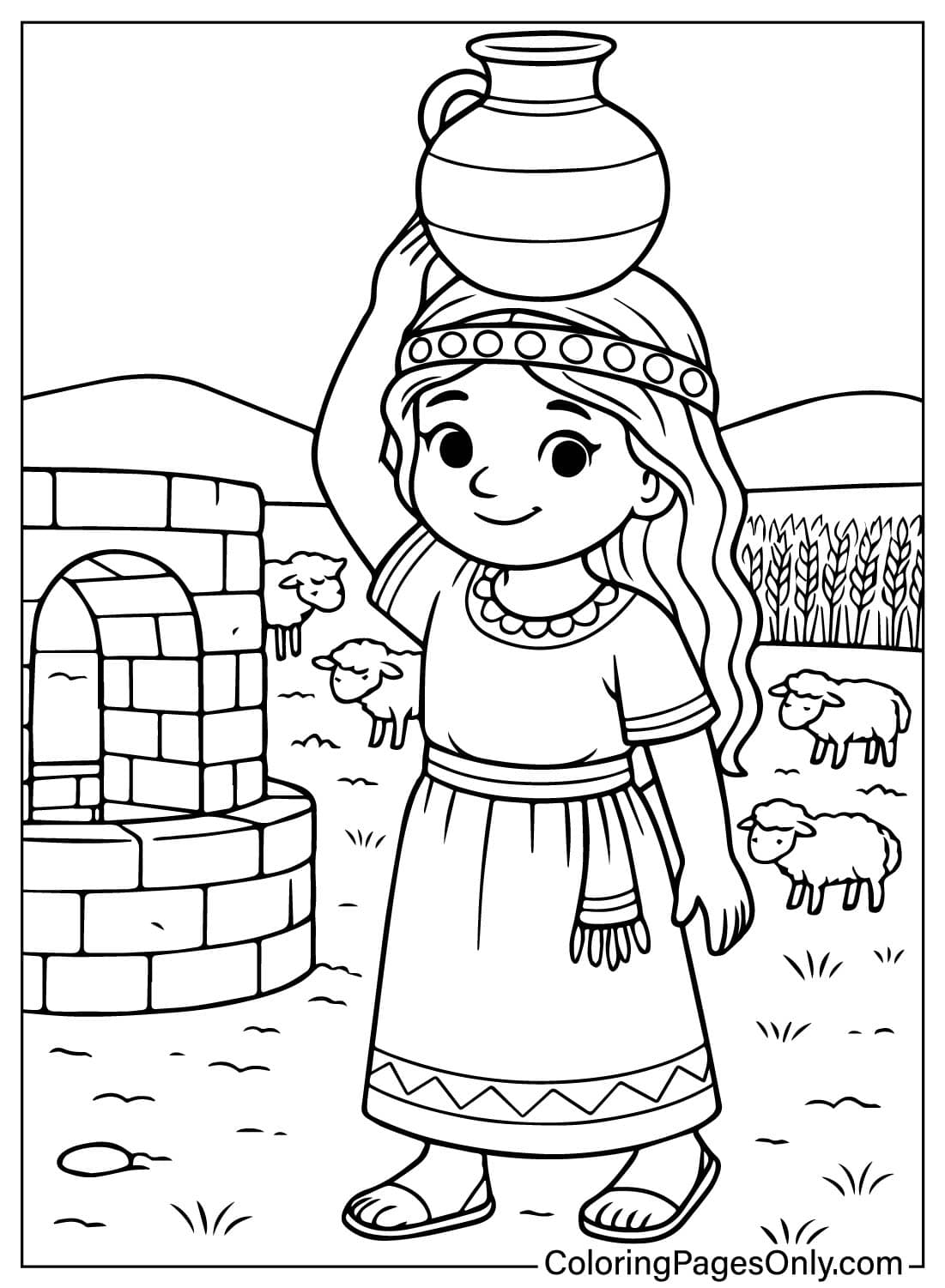
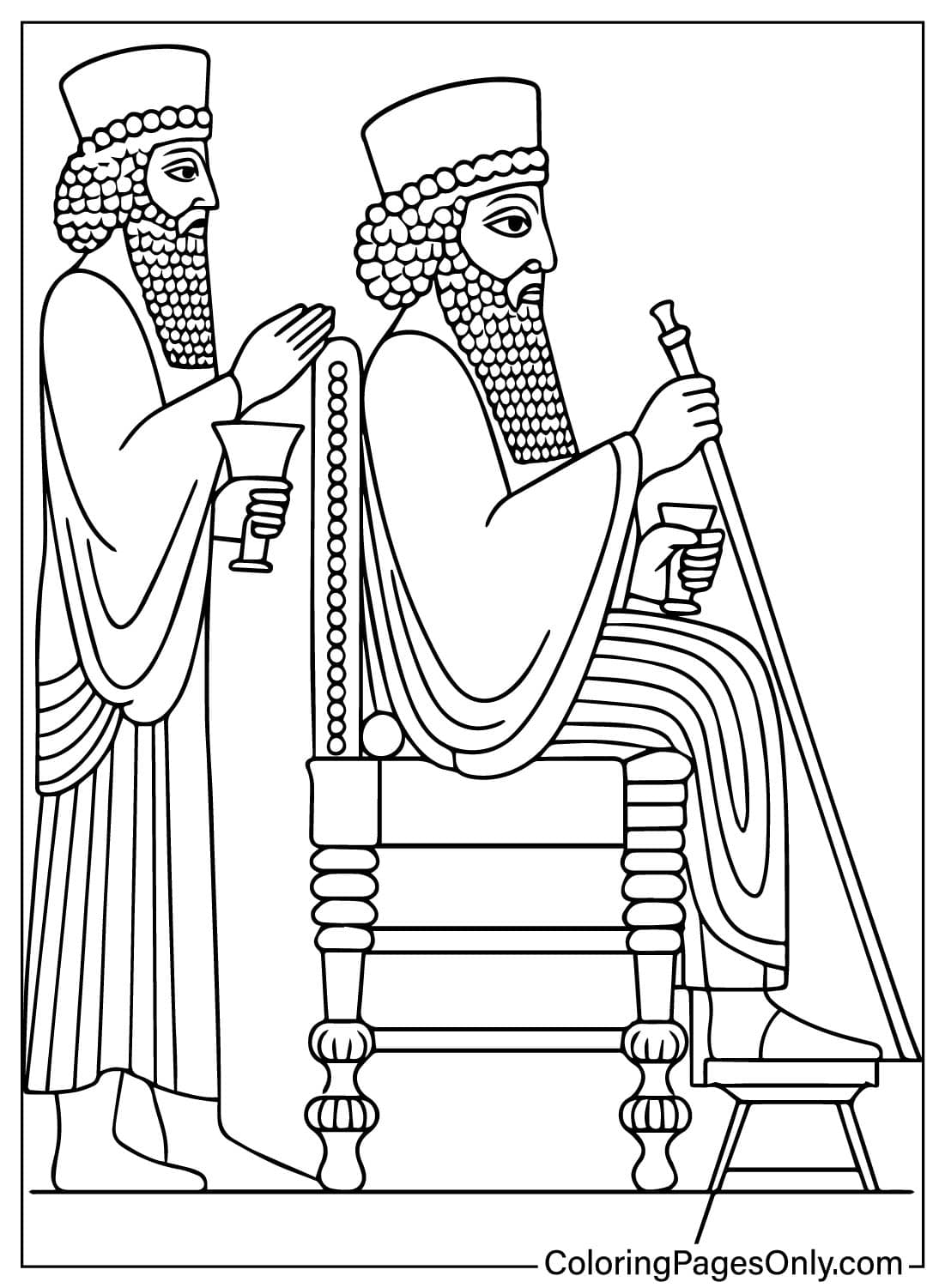
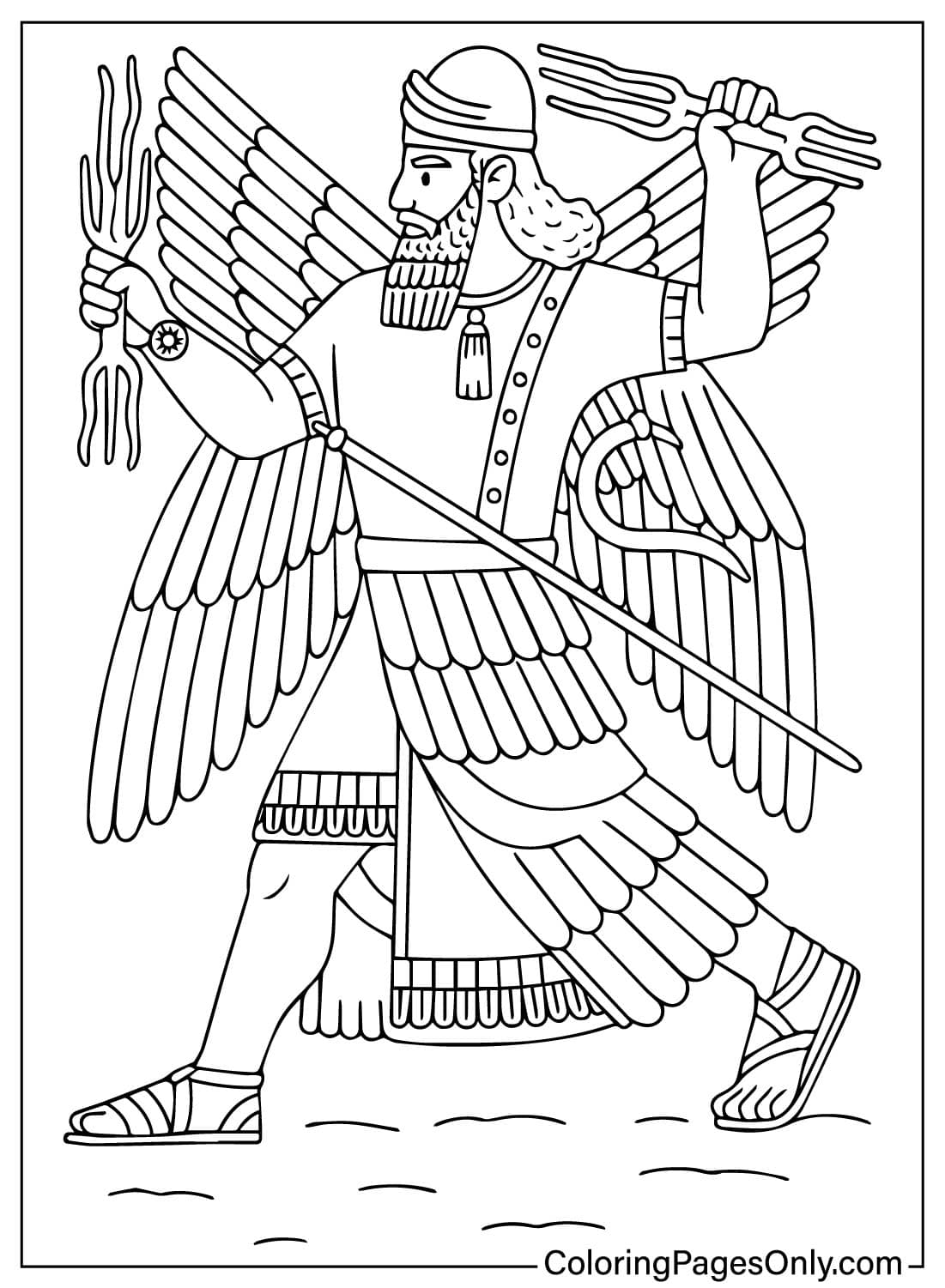
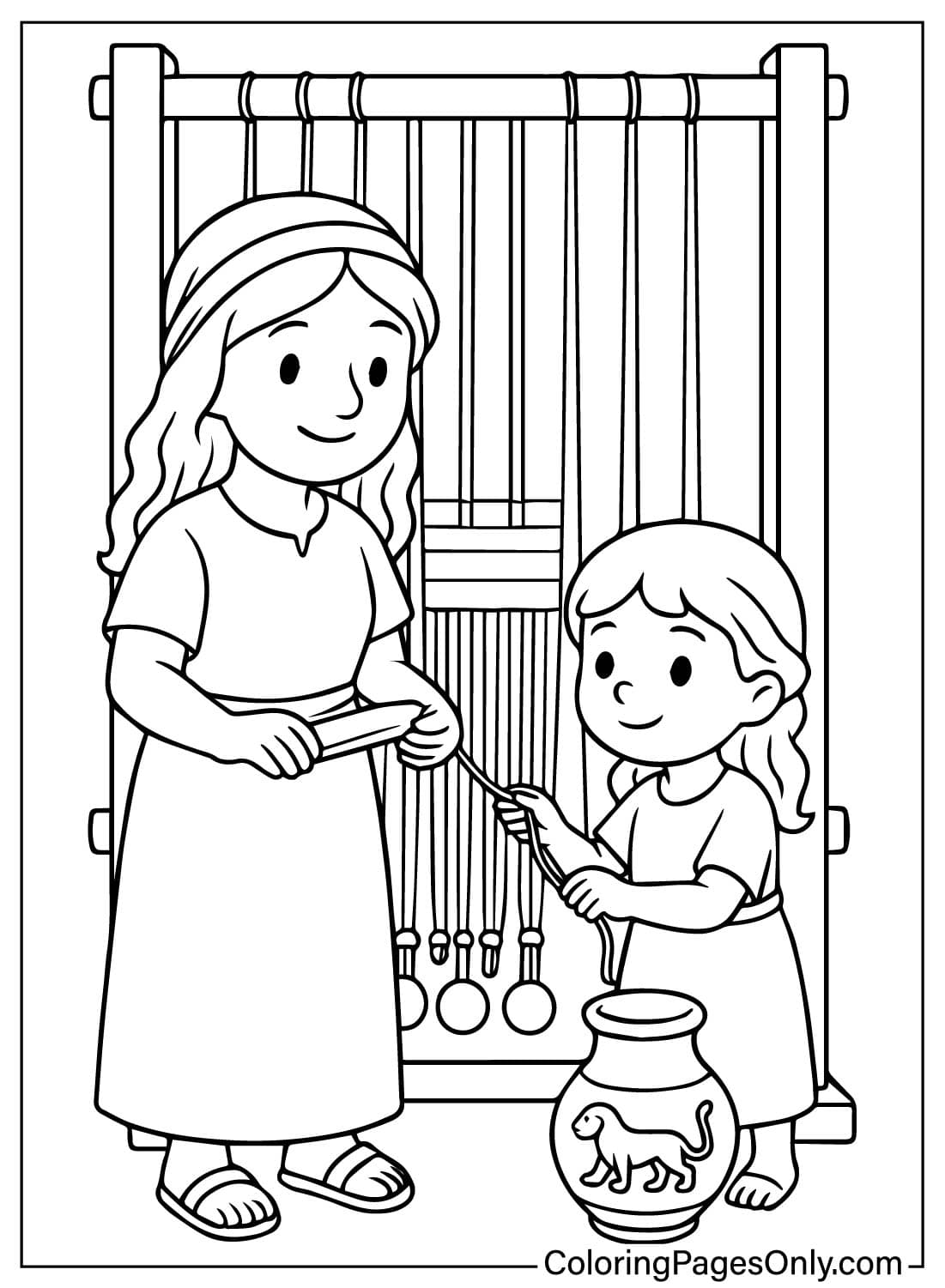
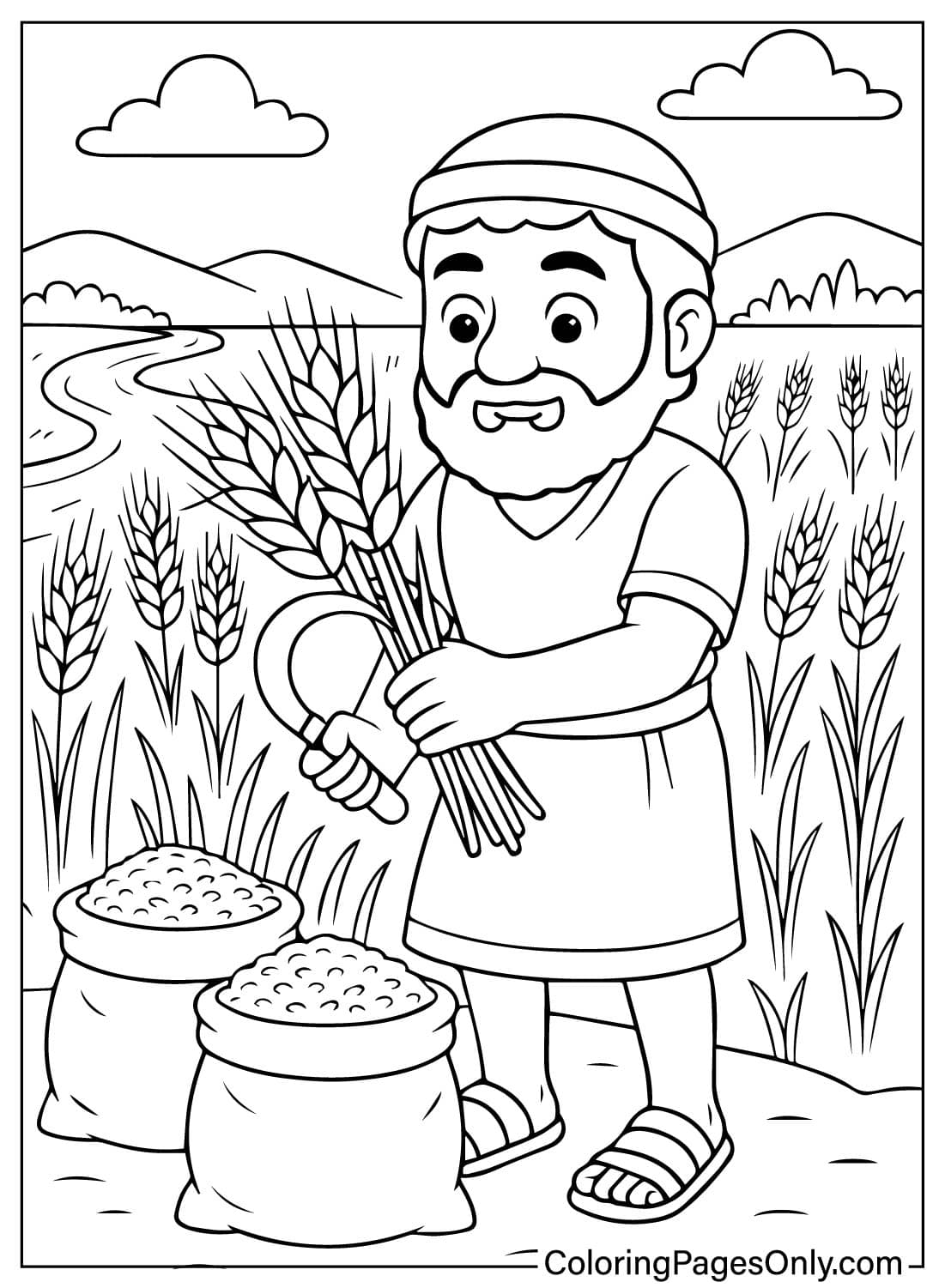
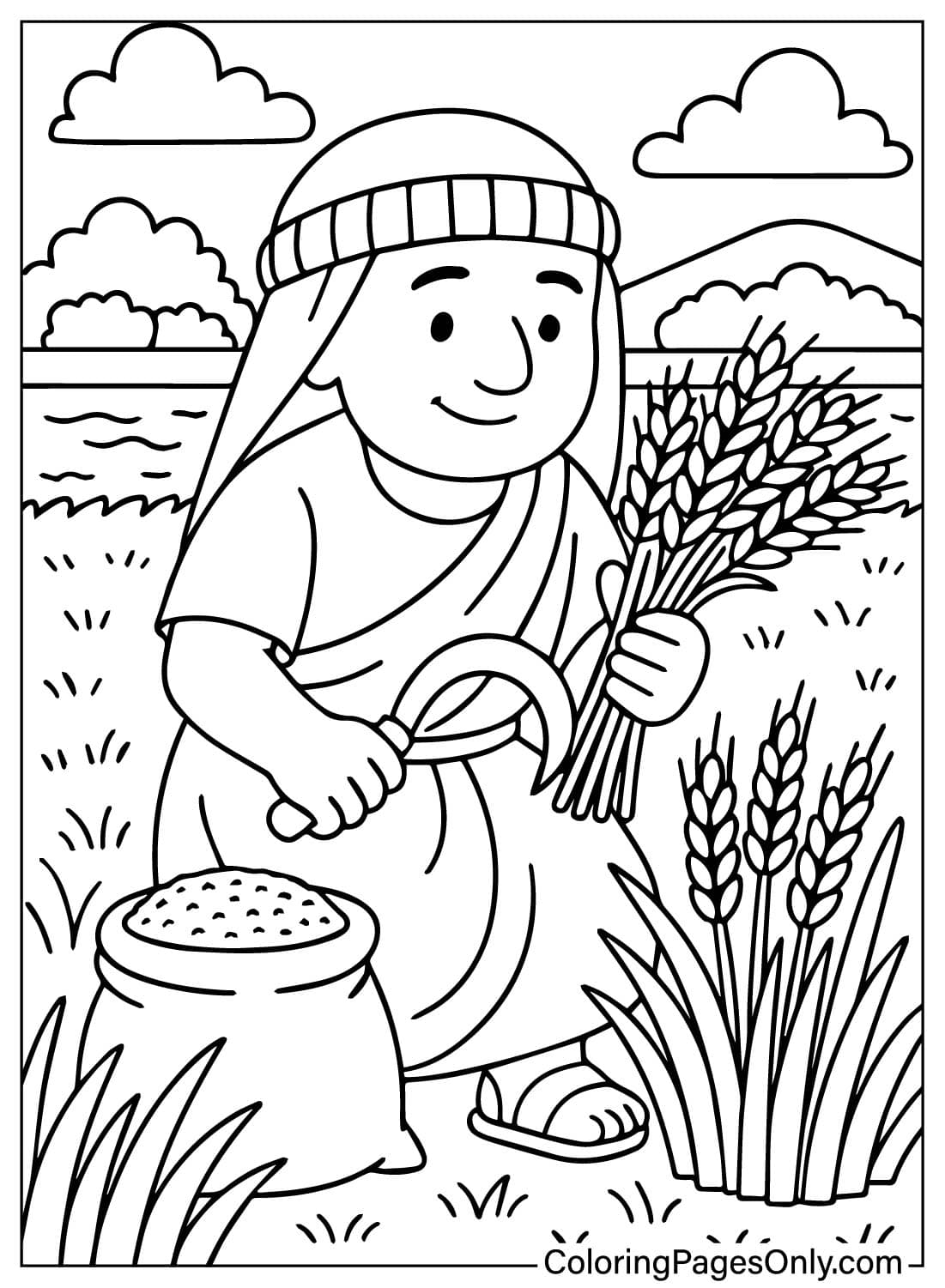
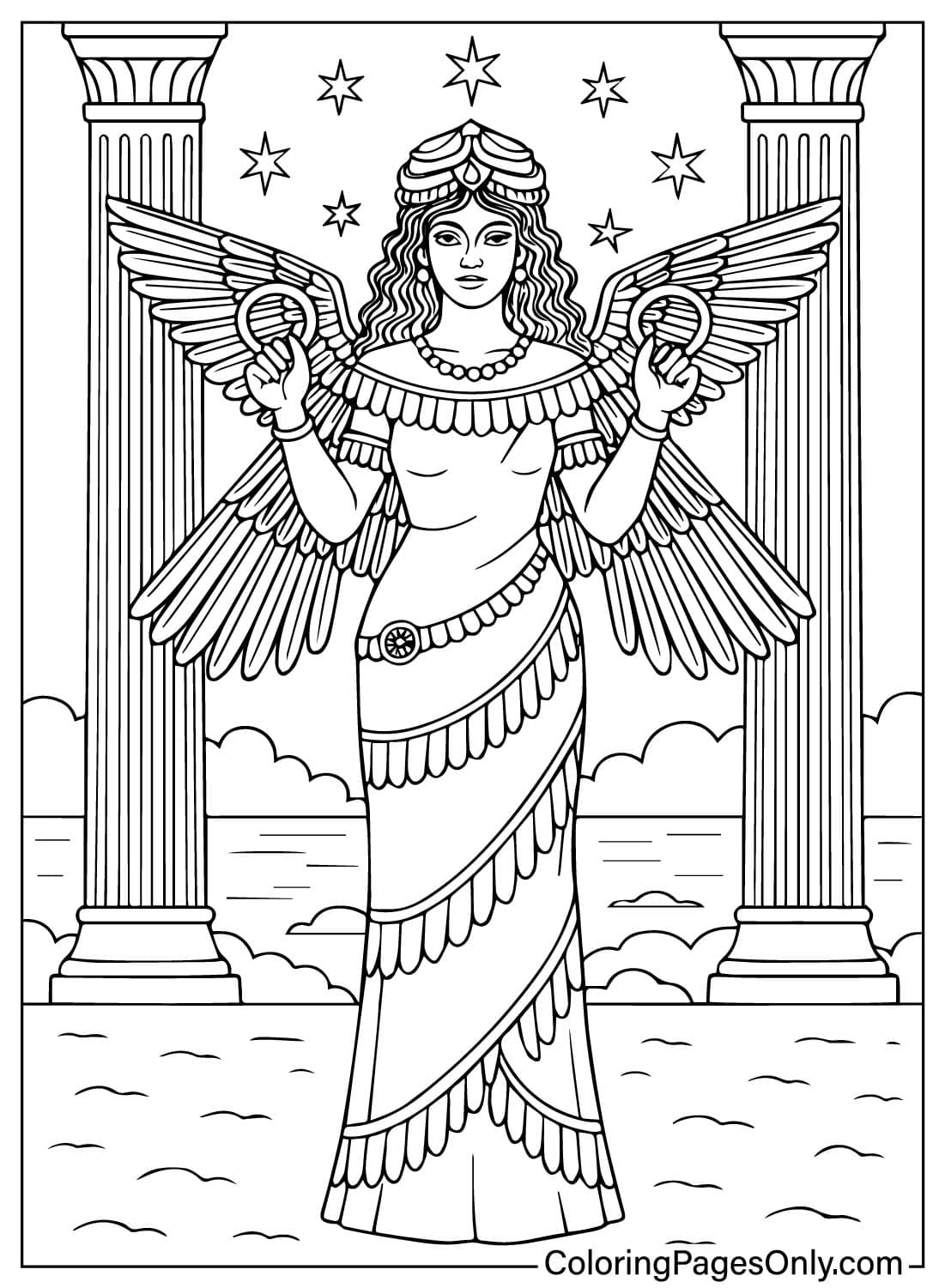
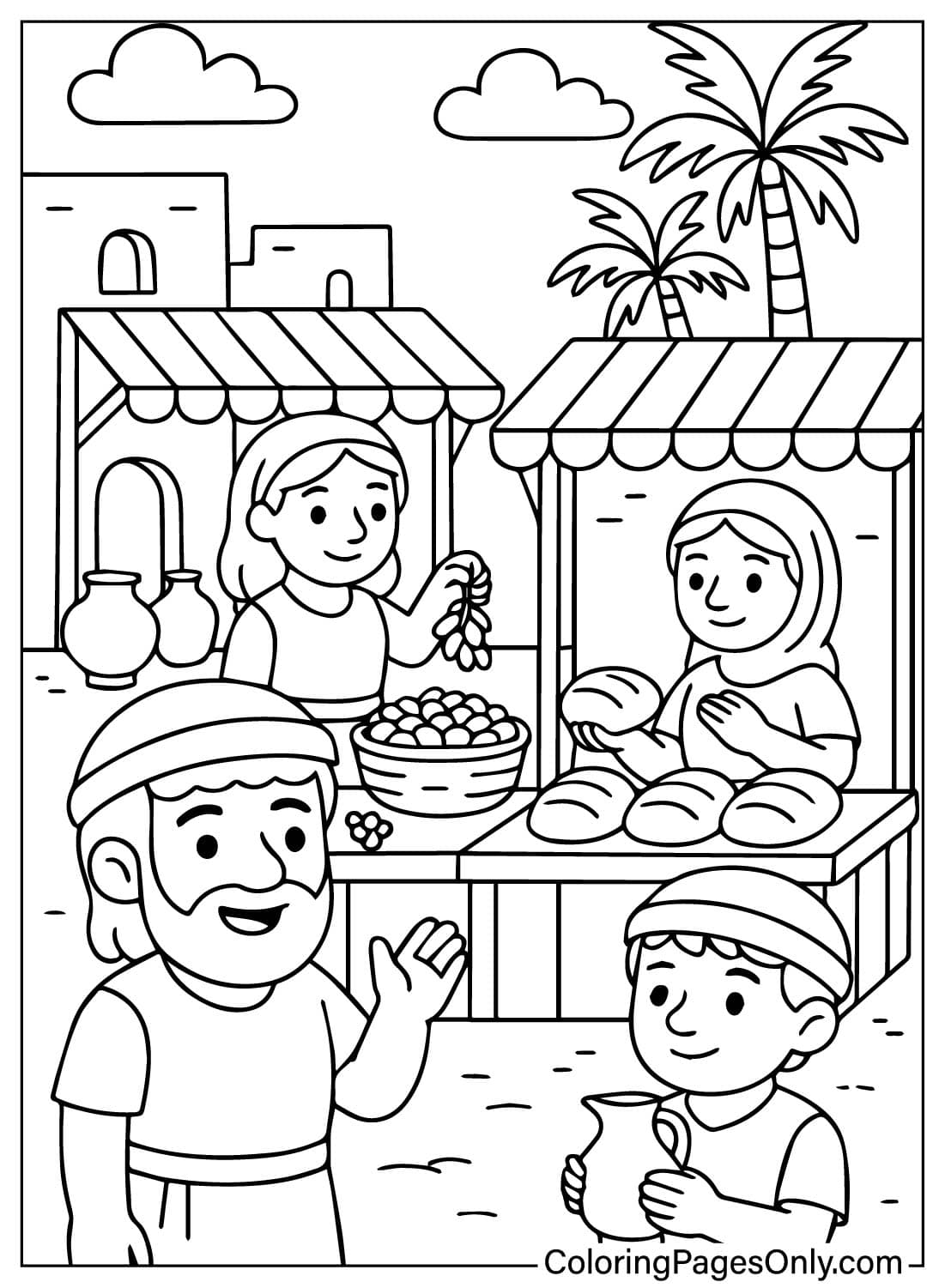
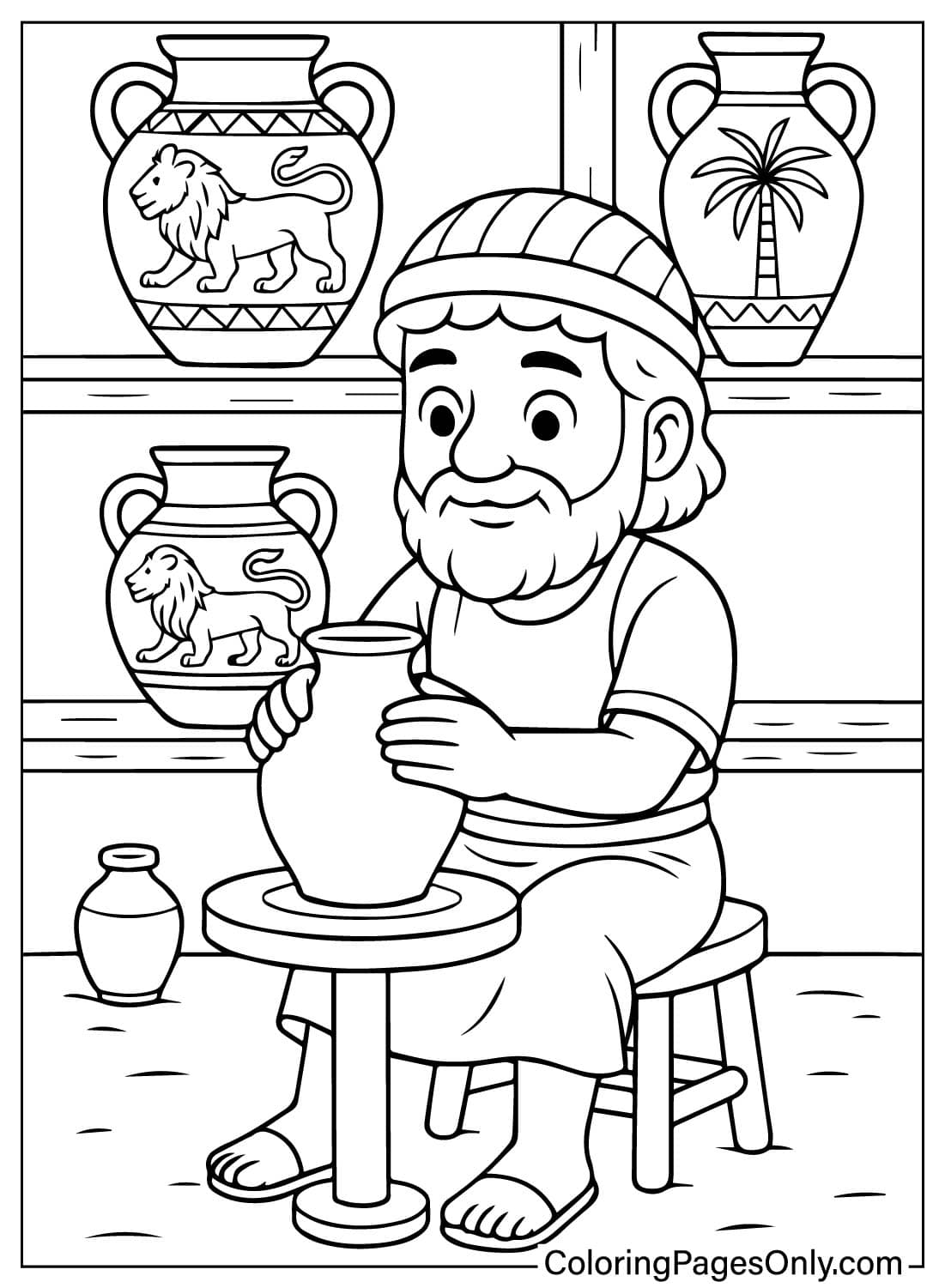
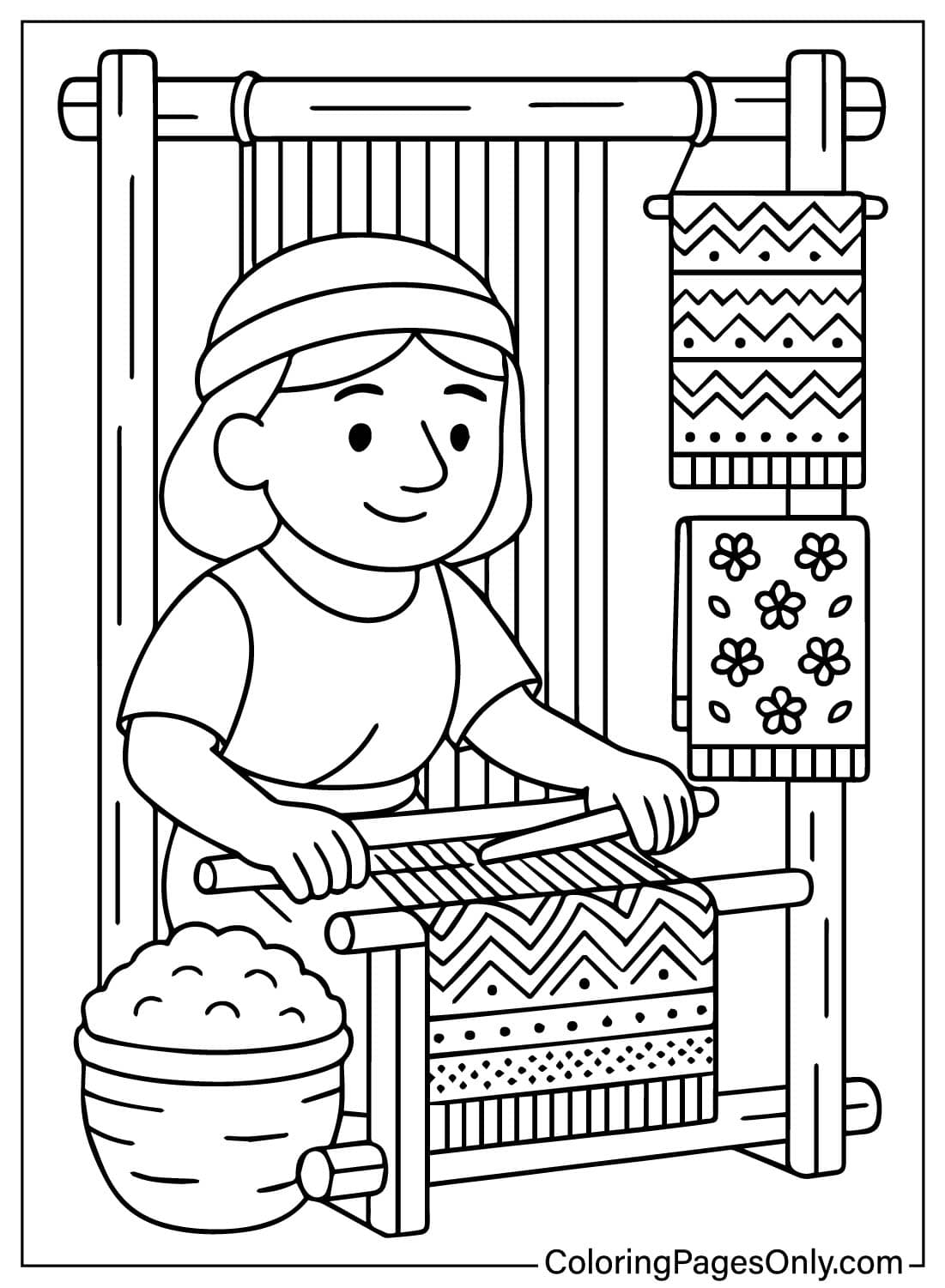
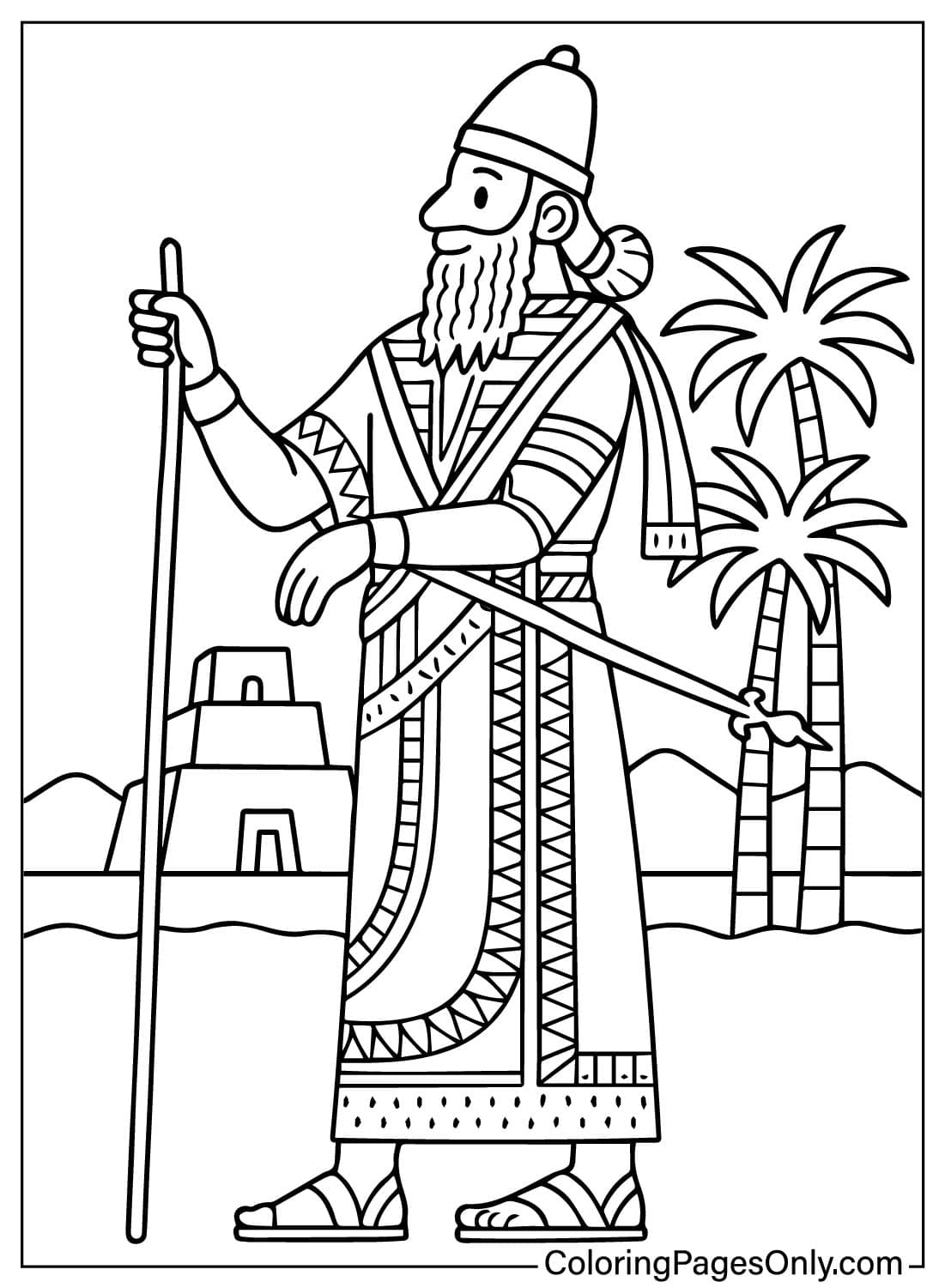
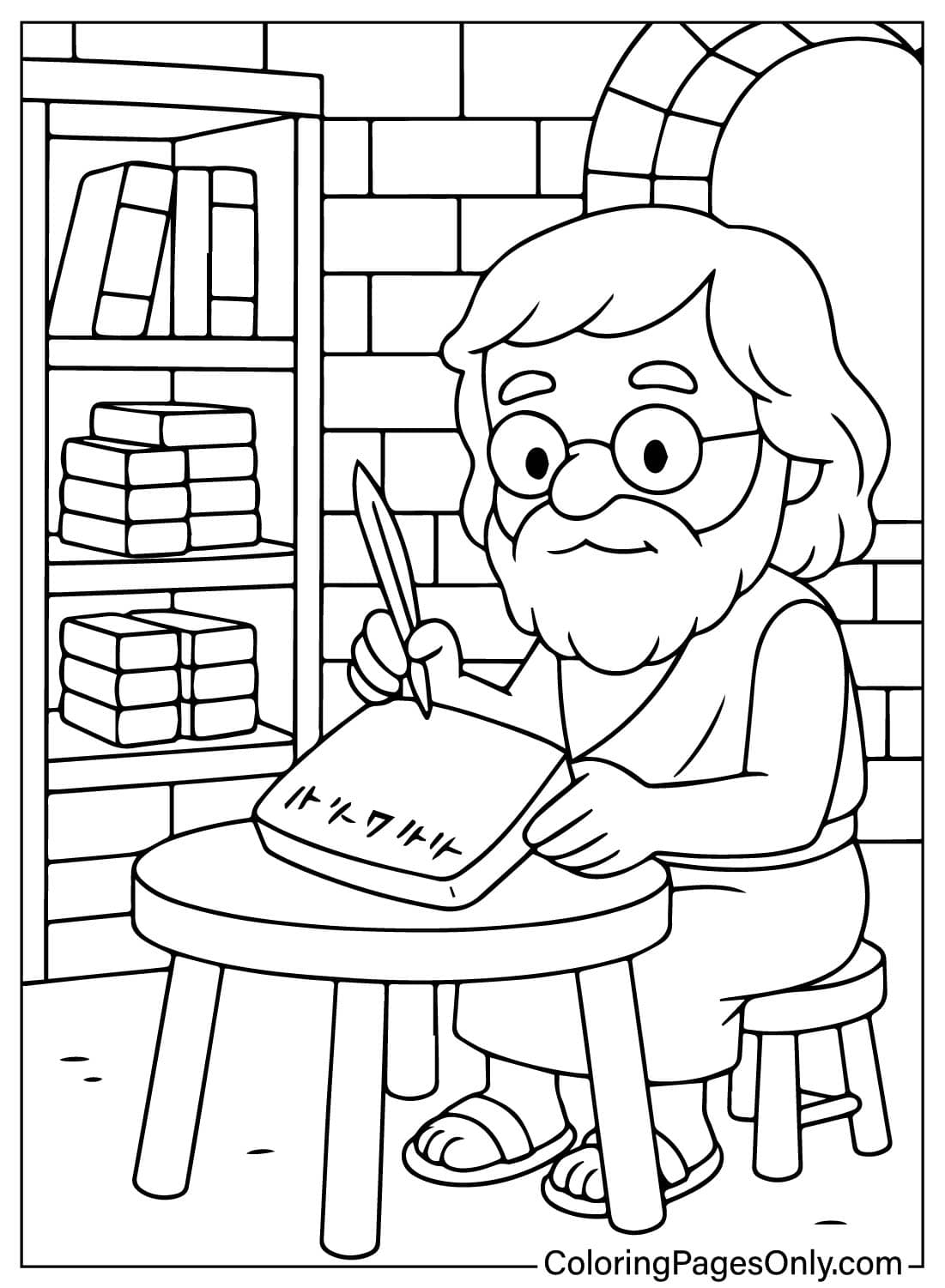
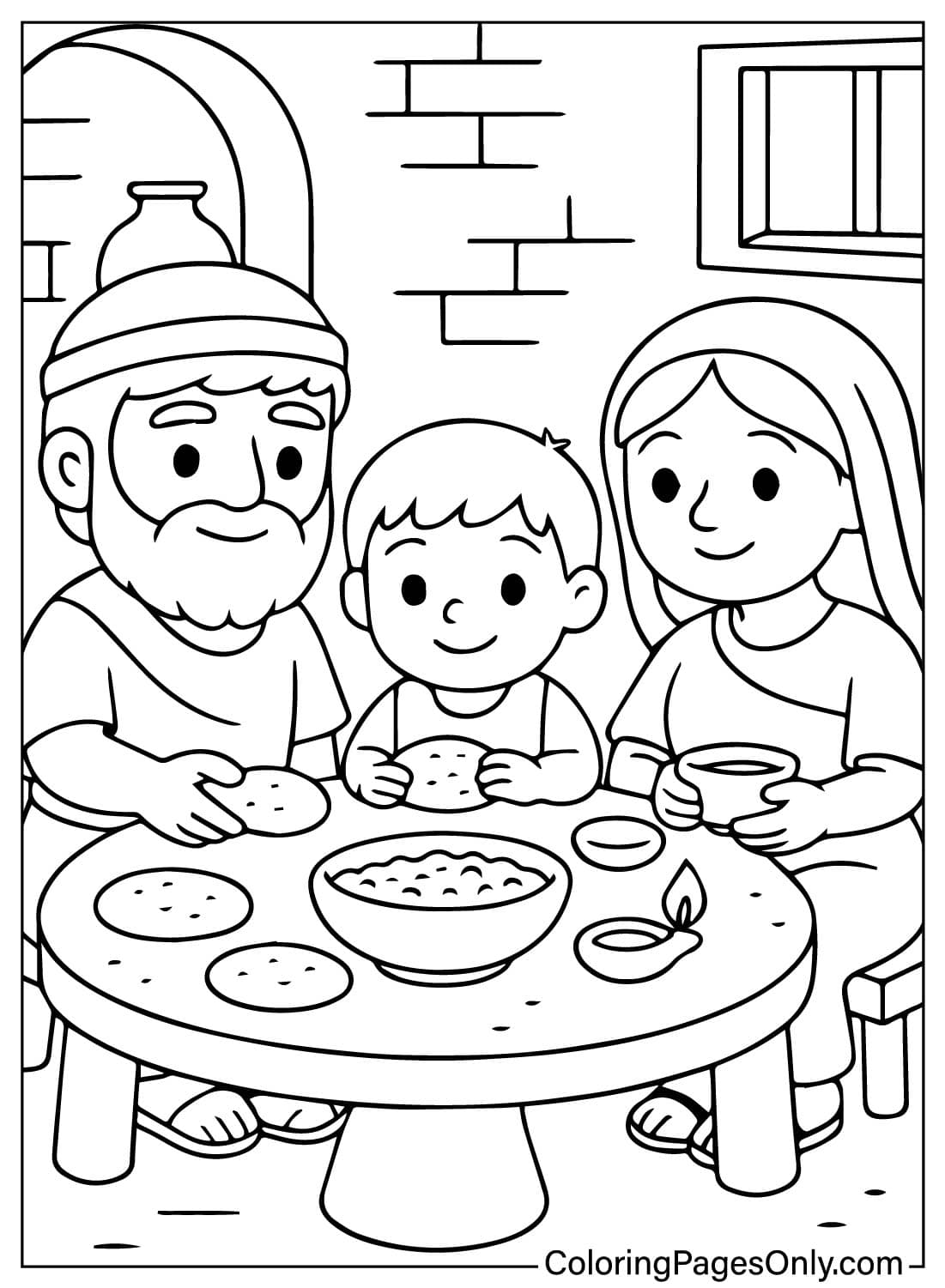
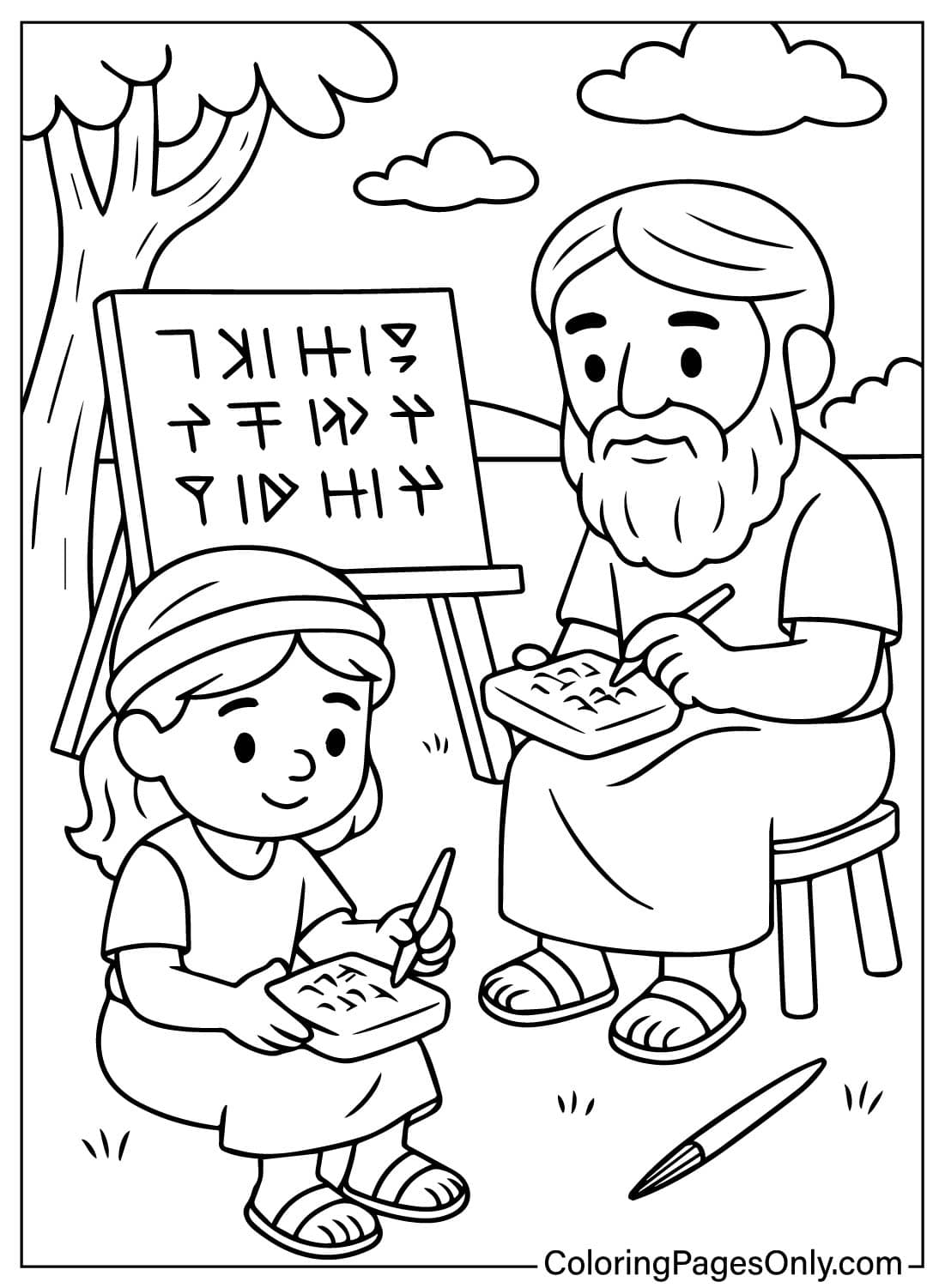
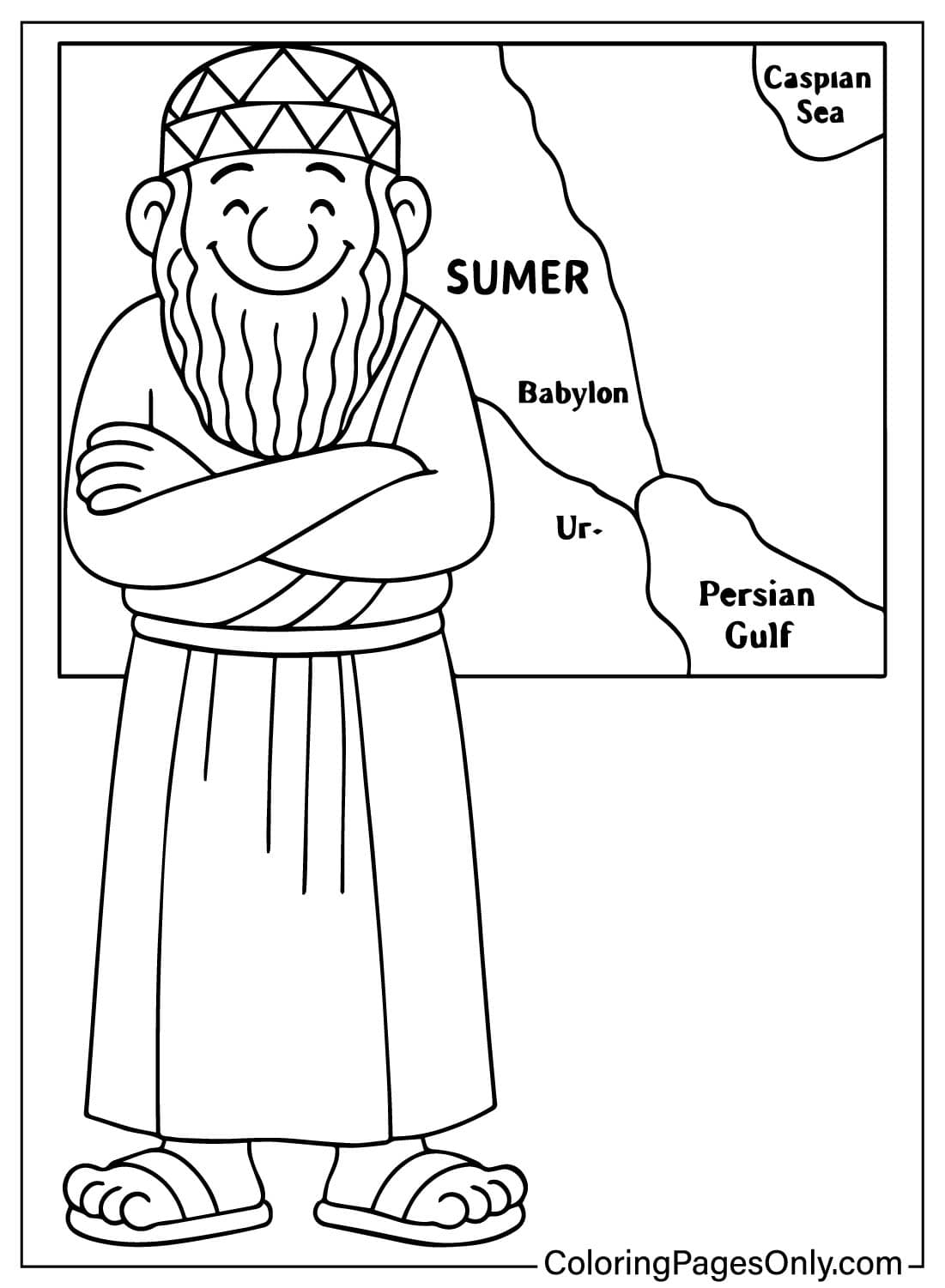
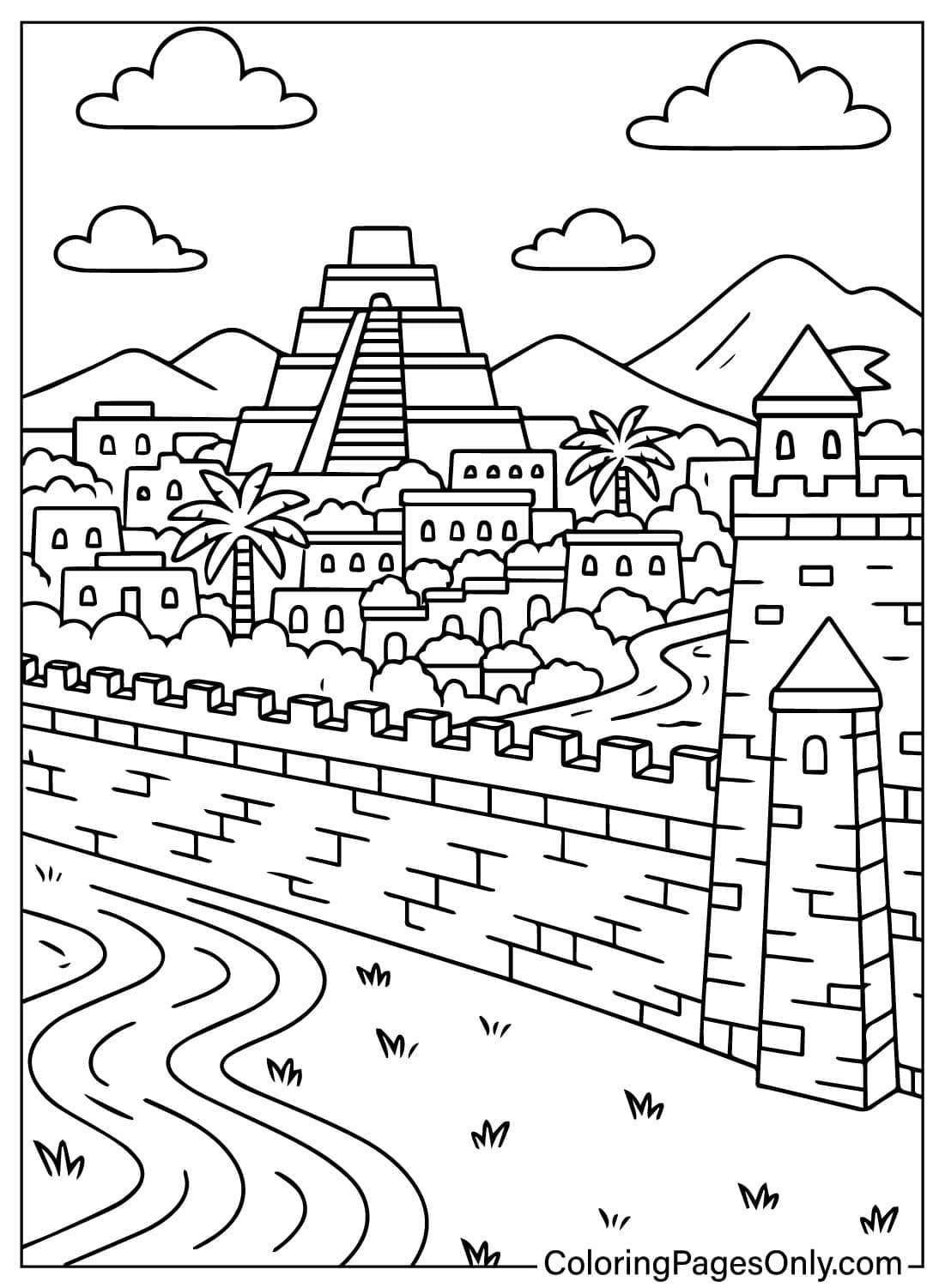

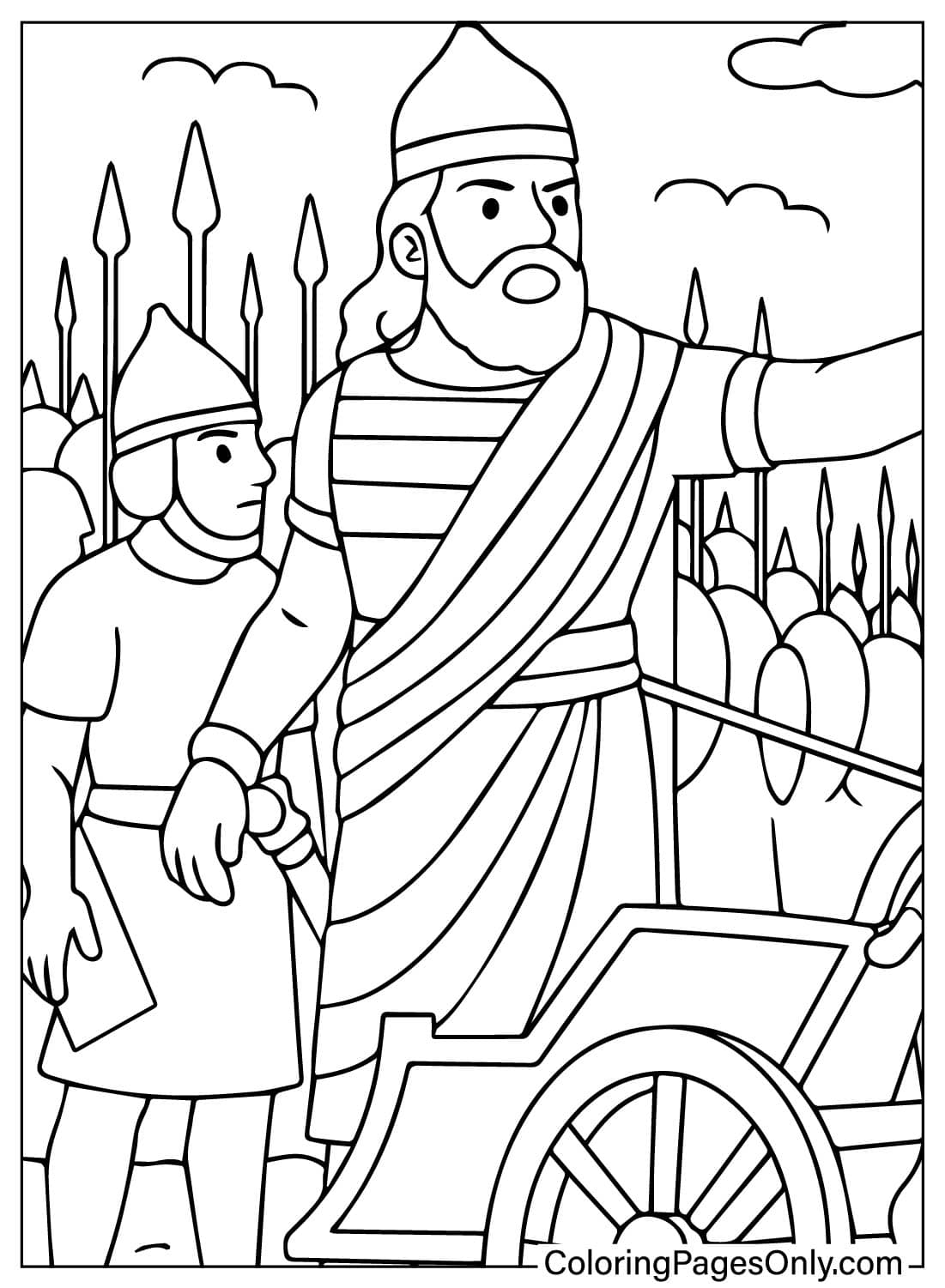
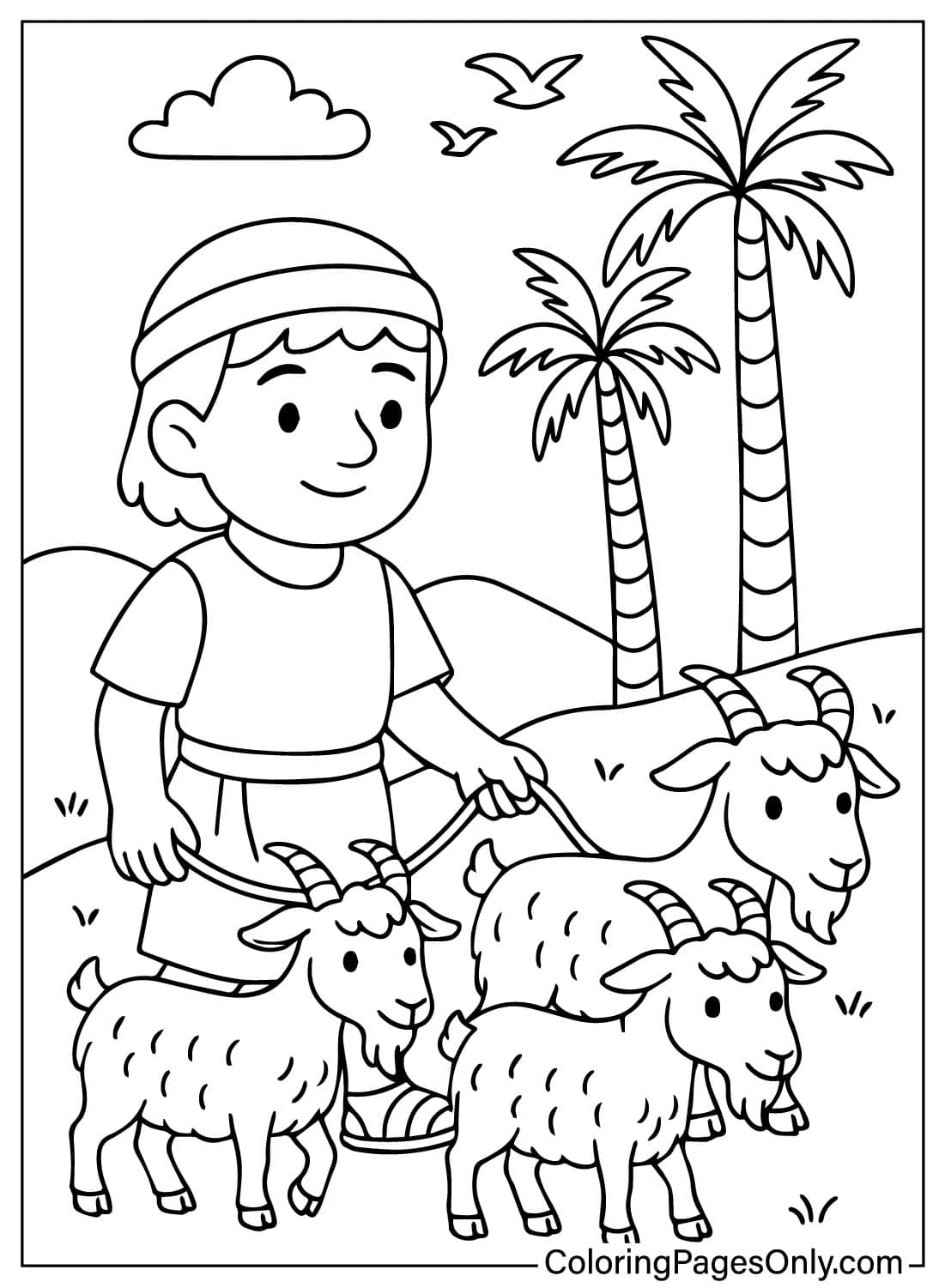
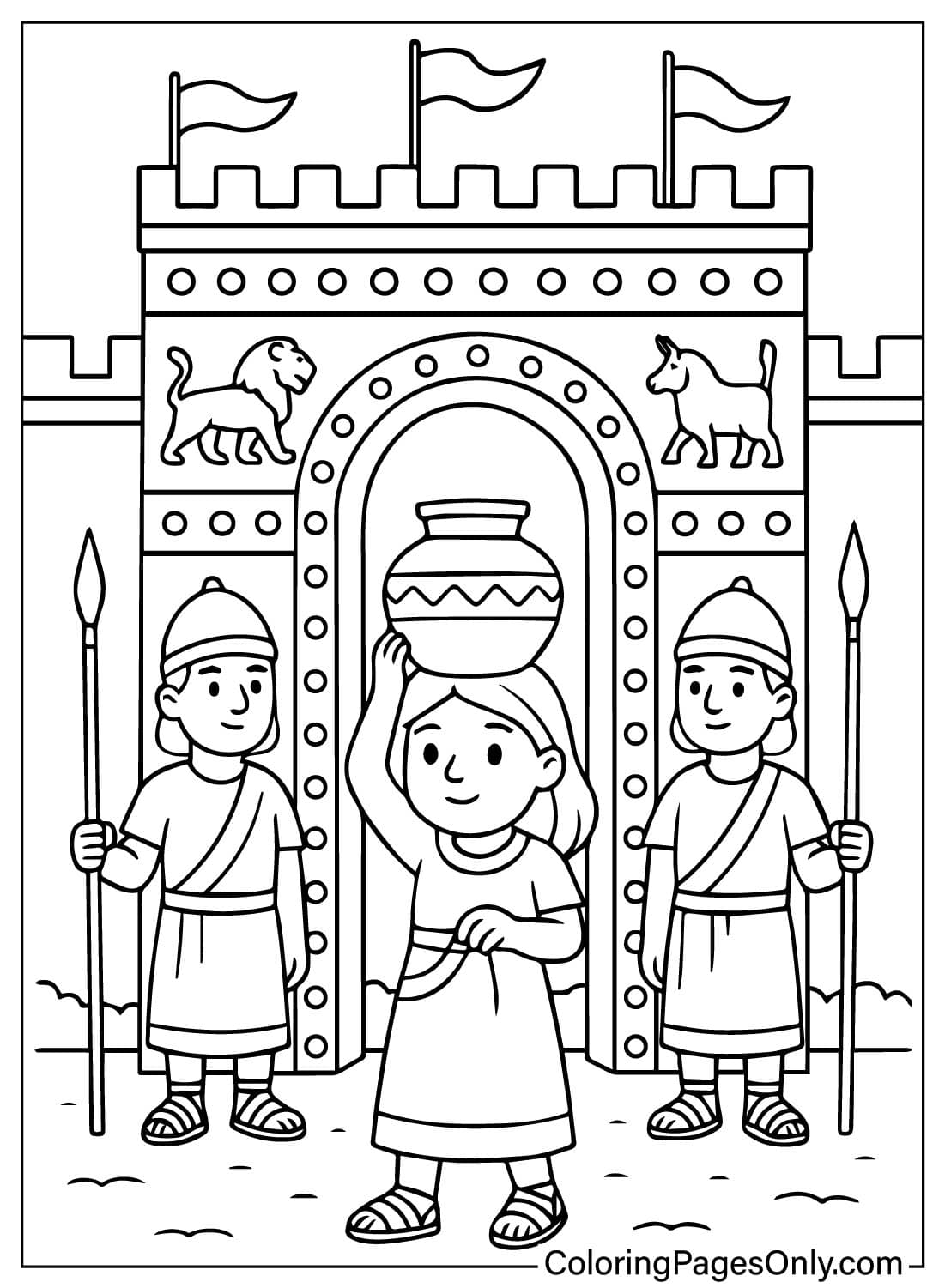
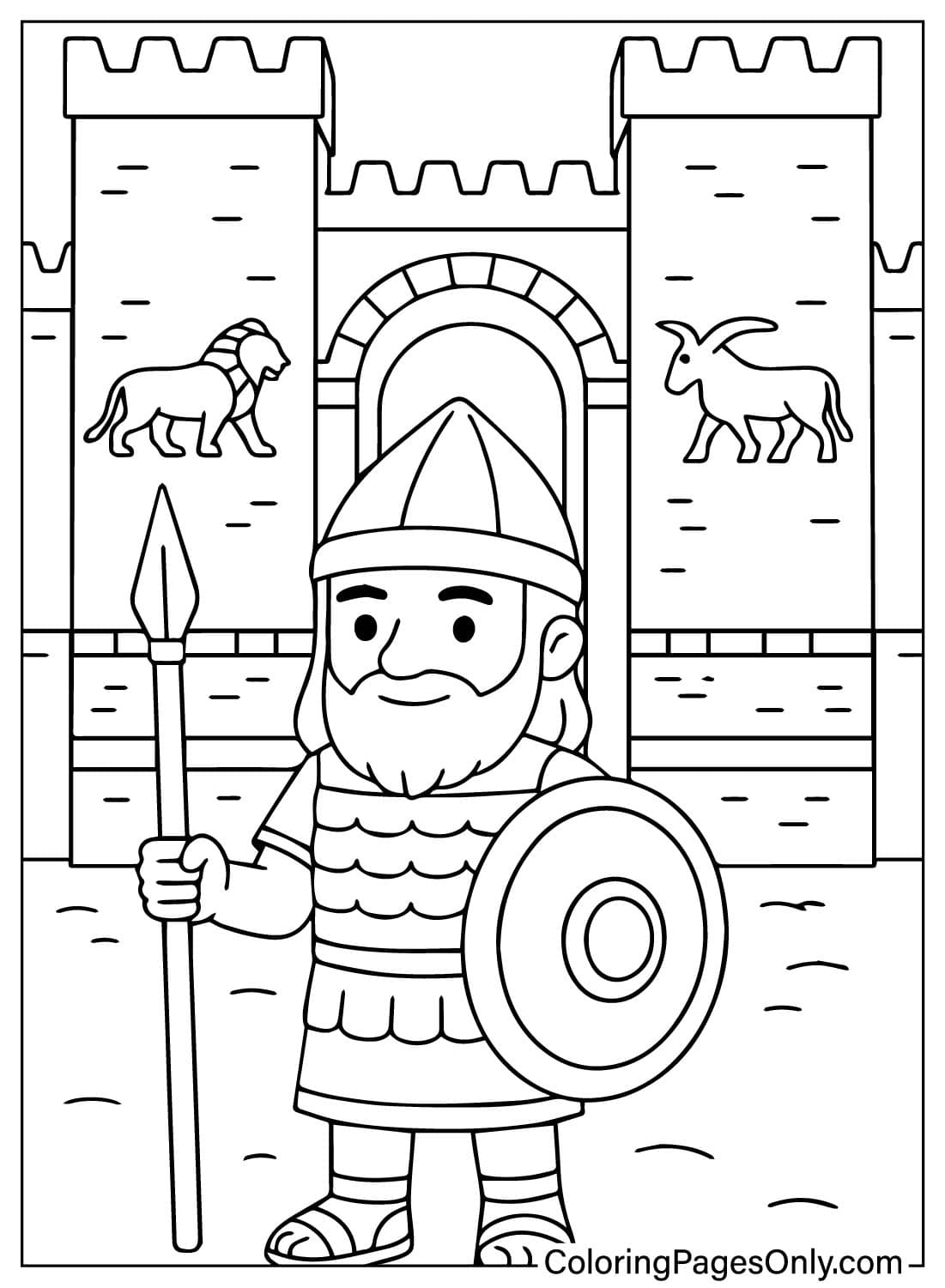
What Is Inside This Collection
The 35 pages are grouped by theme, from Sumerian religion and writing through daily life and the region’s later empires.
Sumerian Culture and Religion
Five pages focus on Sumerian civilization specifically, including a temple priest, a woman carrying a jar, a writing tablet, and Enlil, one of the chief gods of the Sumerian pantheon.
Writing and Learning
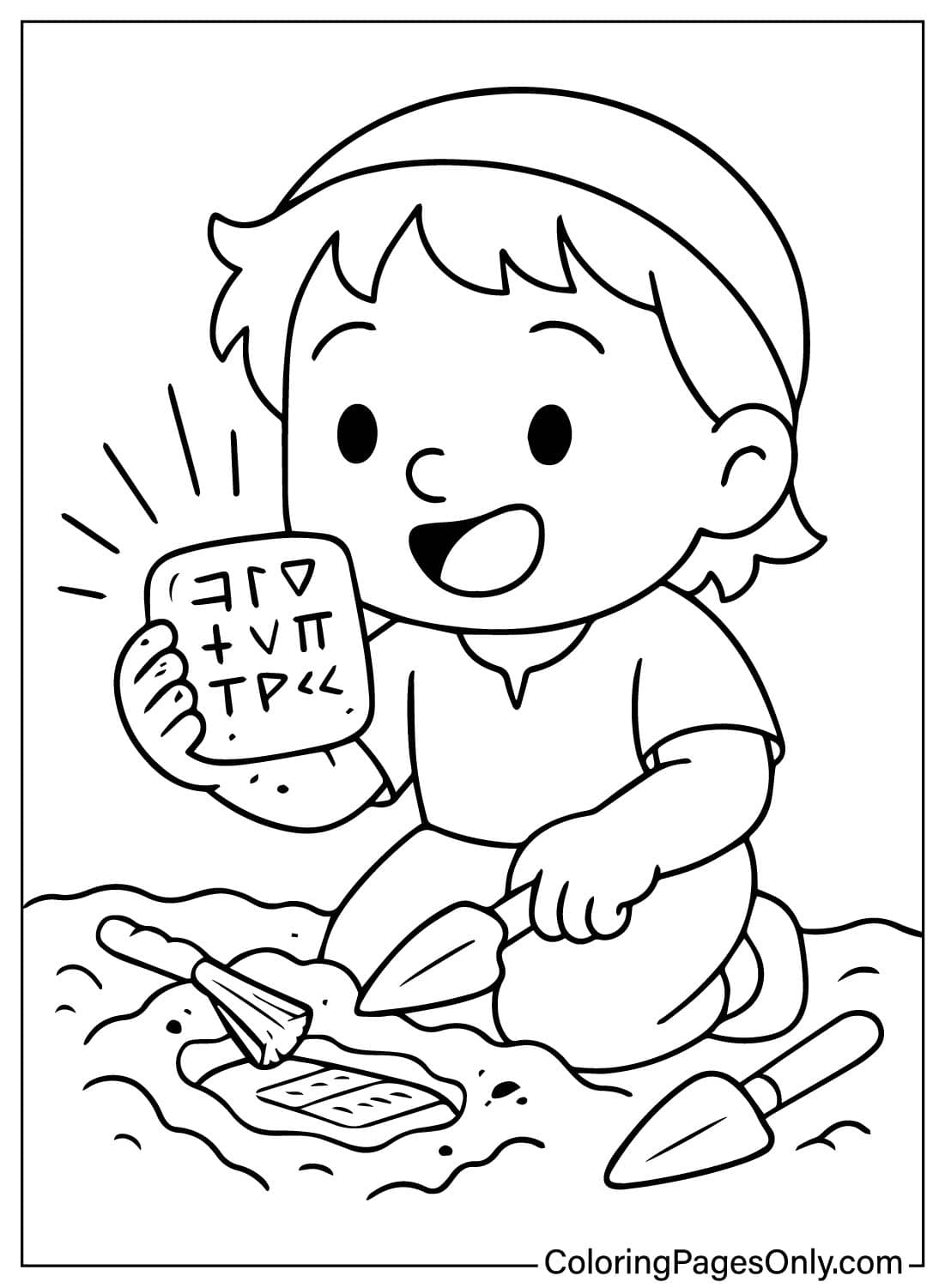
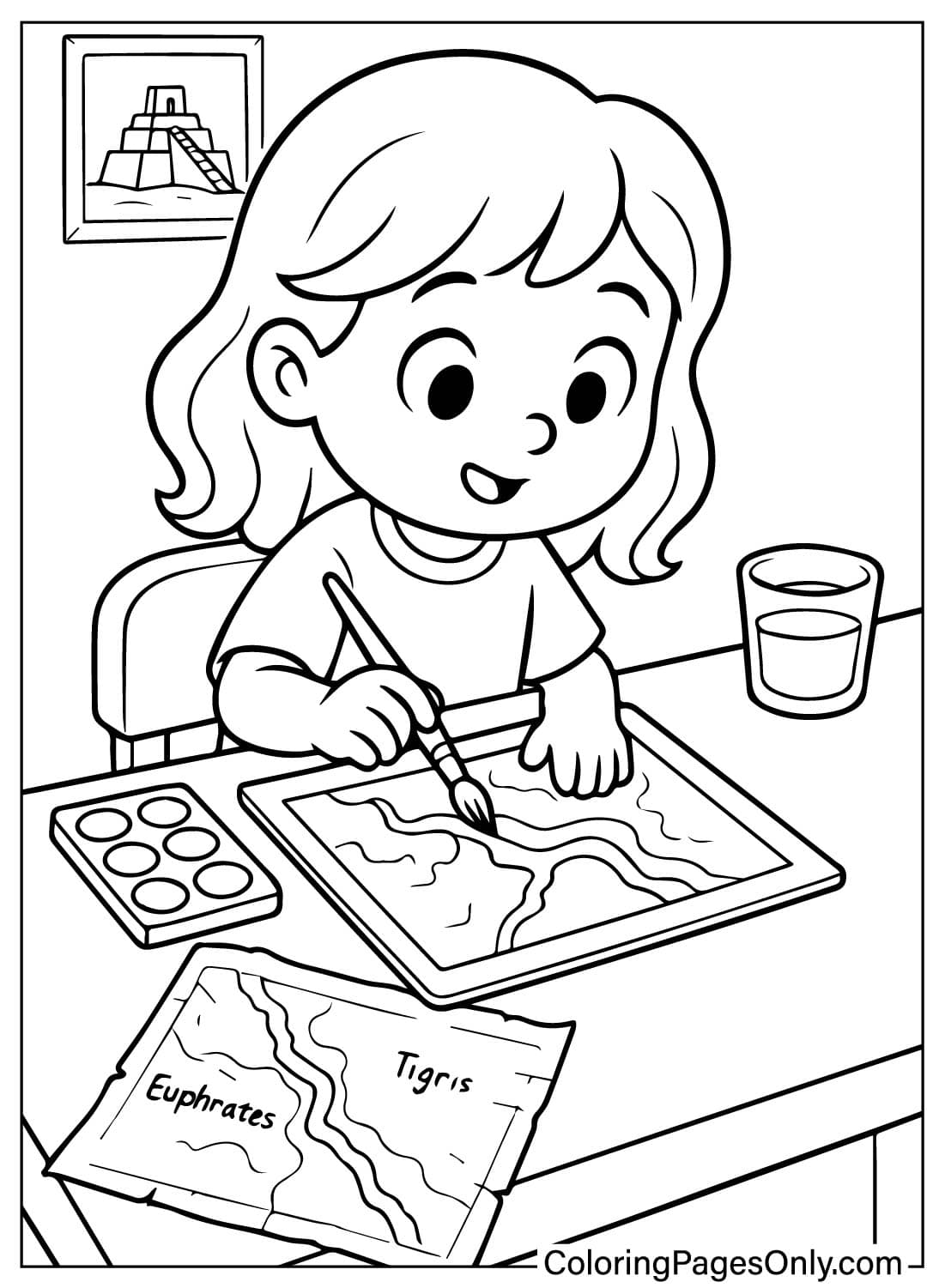
Five pages center on cuneiform writing itself, including clay tablets and scenes of a child learning to write, giving this set a direct connection to the world’s earliest recorded writing system.
Daily Life and Trade
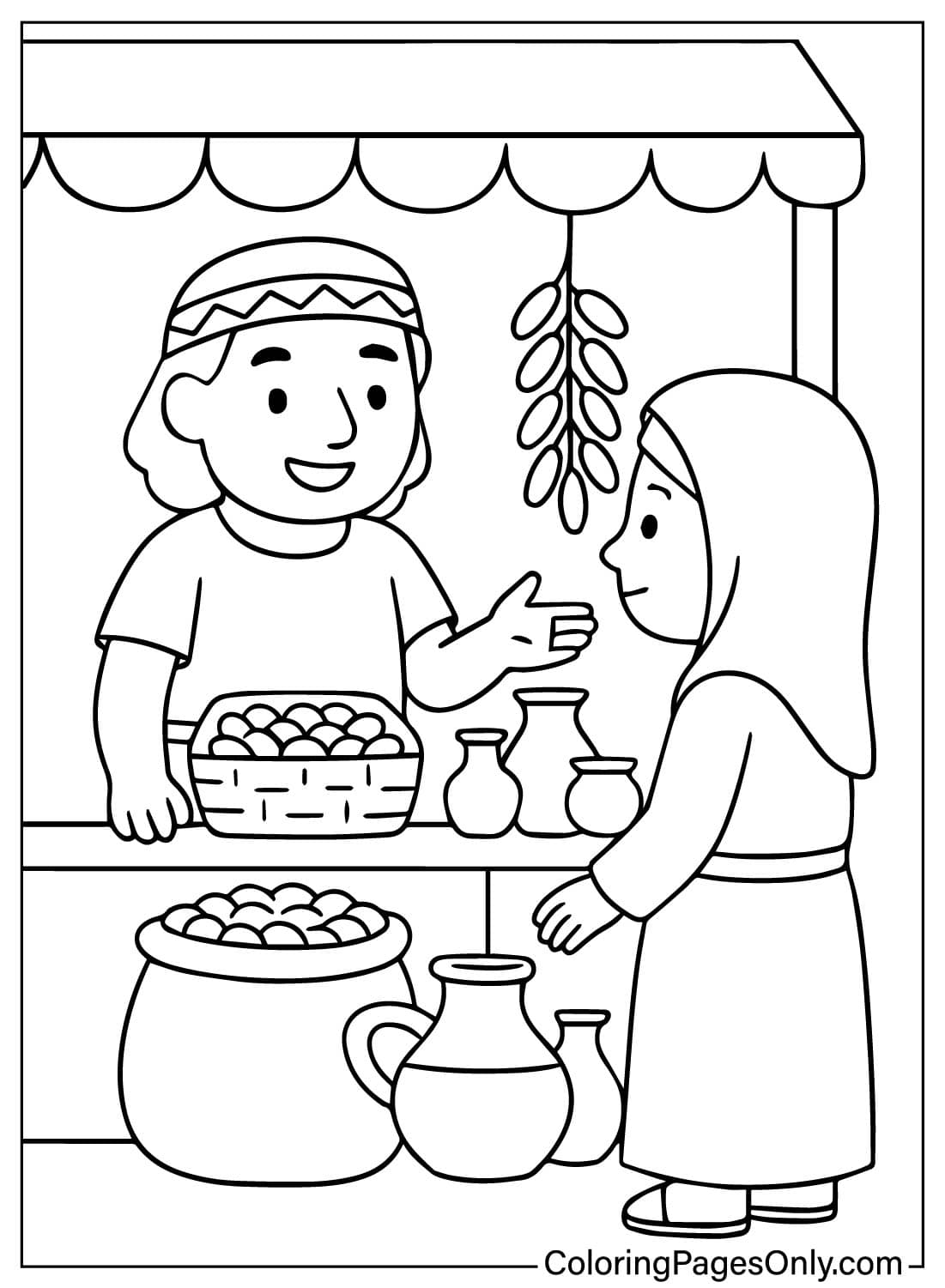
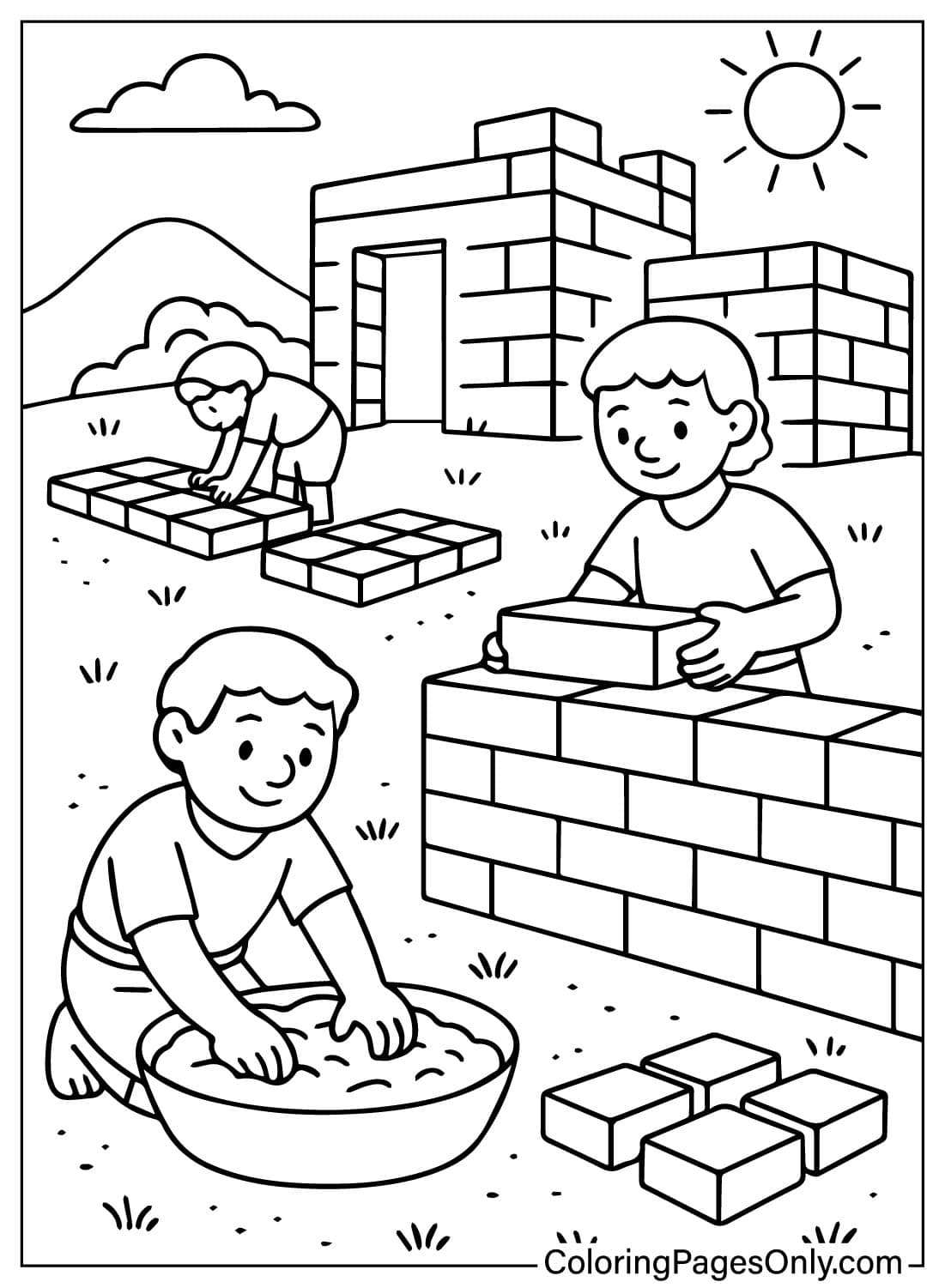
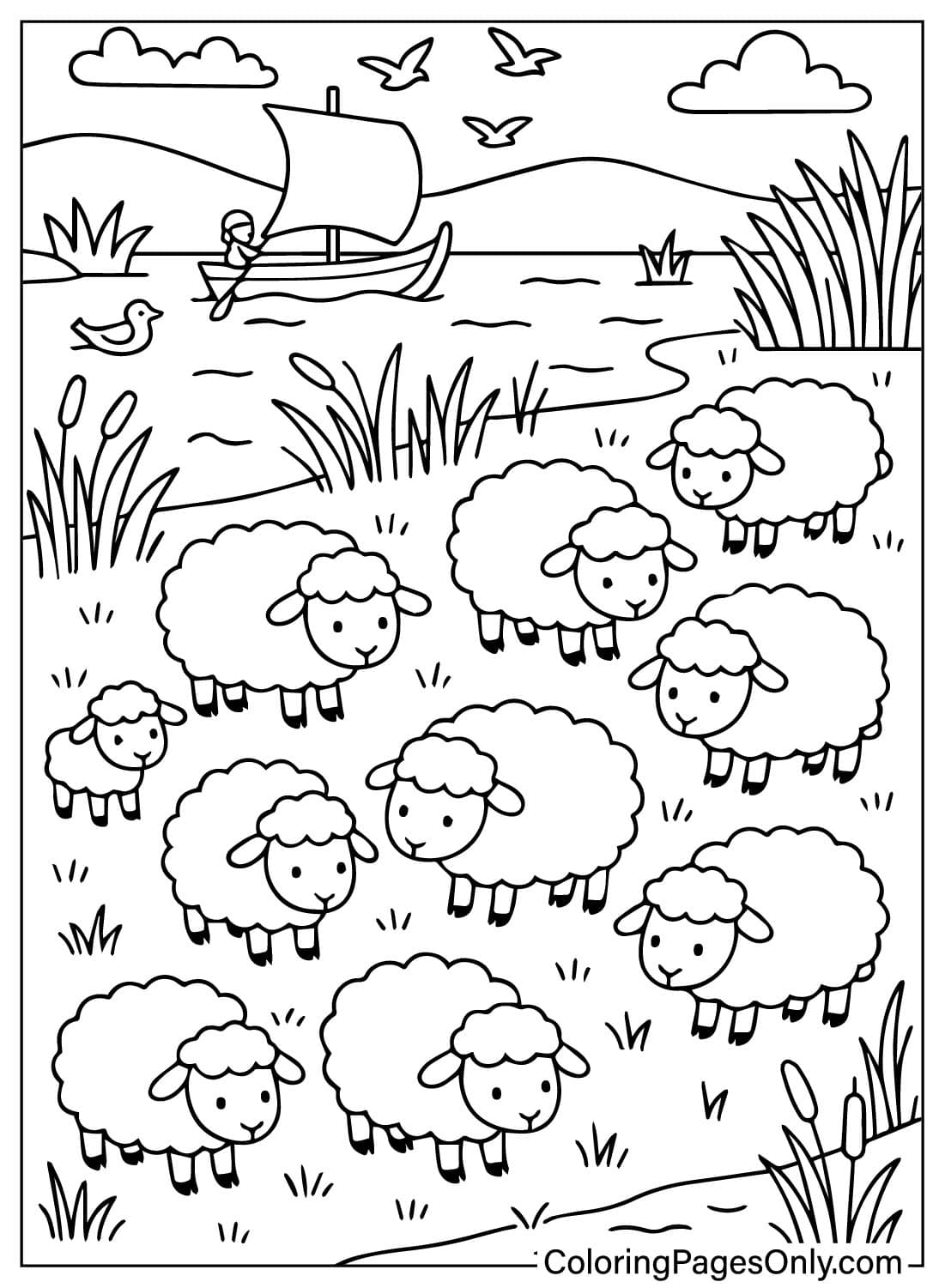
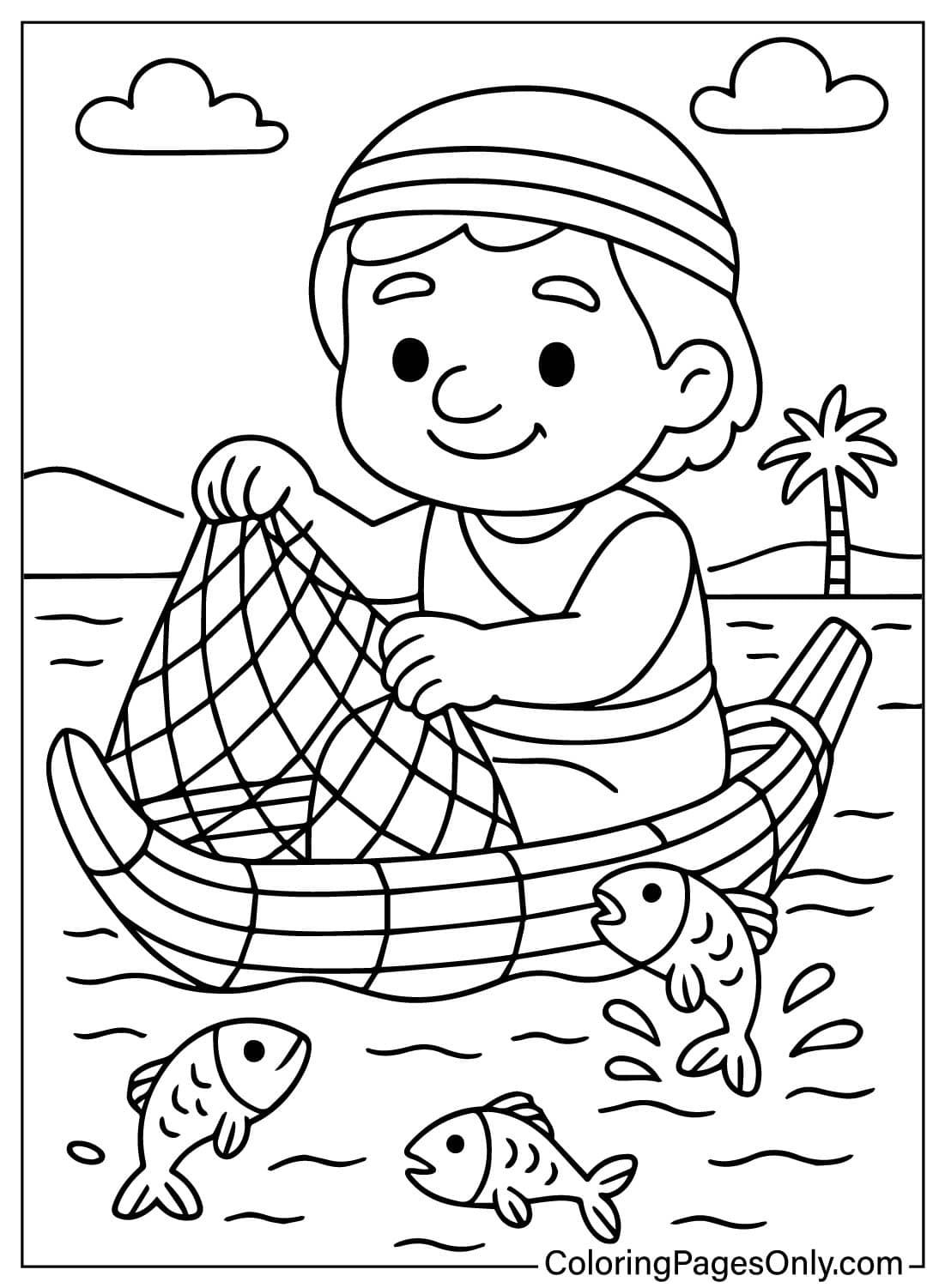
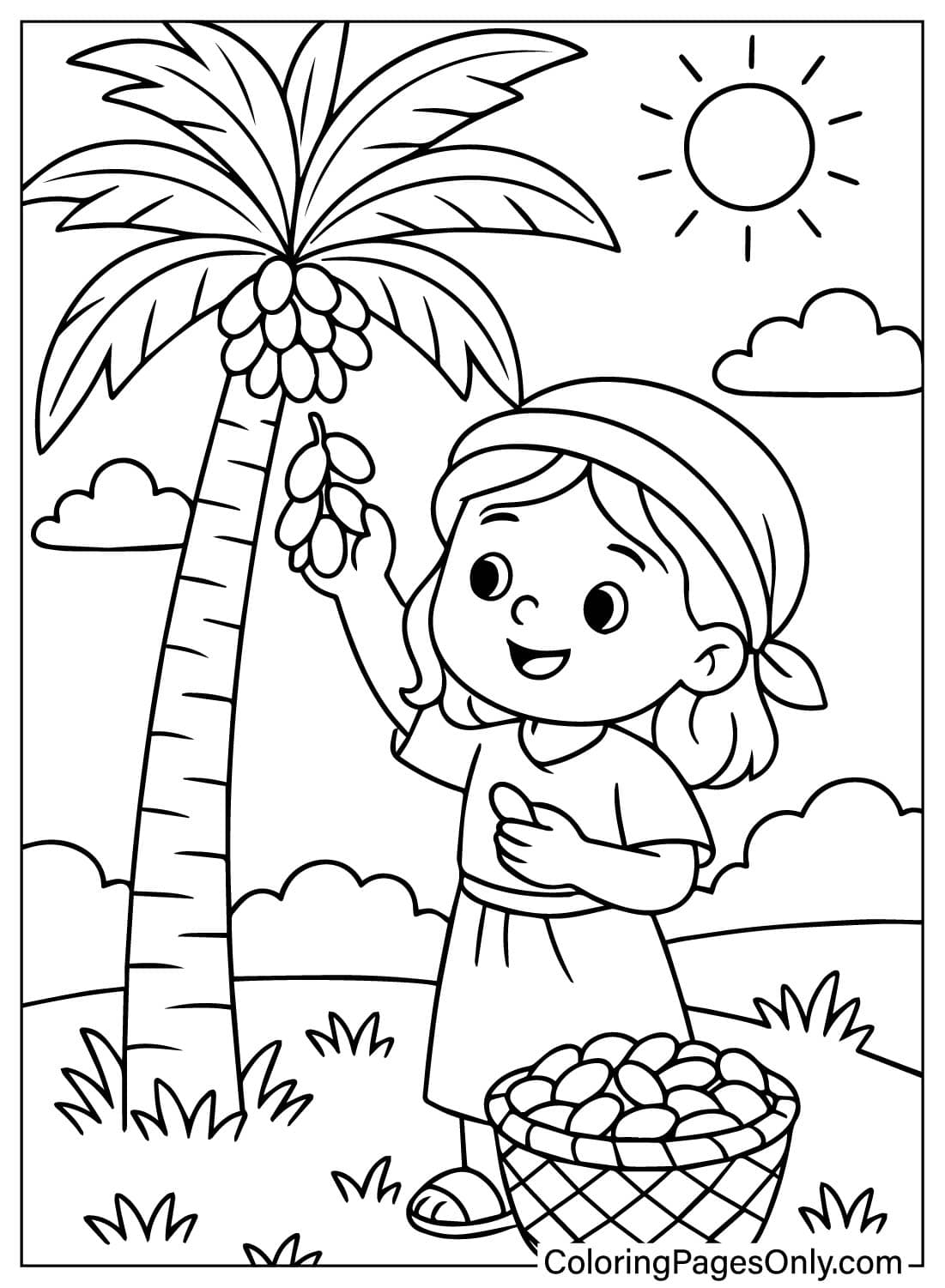
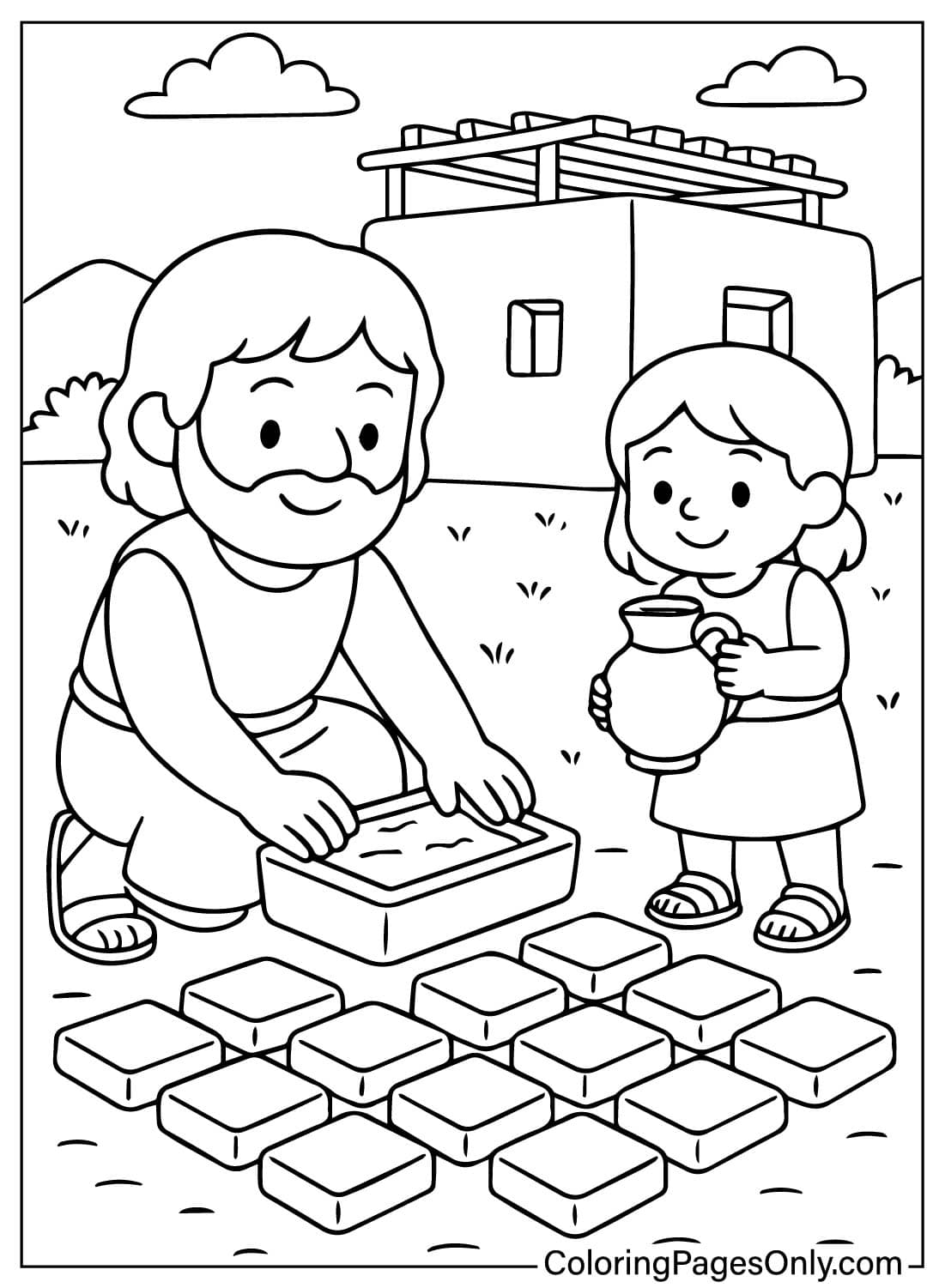
Fifteen pages depict everyday activities across Mesopotamian society: farming, fishing, pottery making, weaving, jewelry crafting, marketplace scenes, construction, and family life, making this the largest and most varied group in the collection.
Military, Cities, and Later Empires
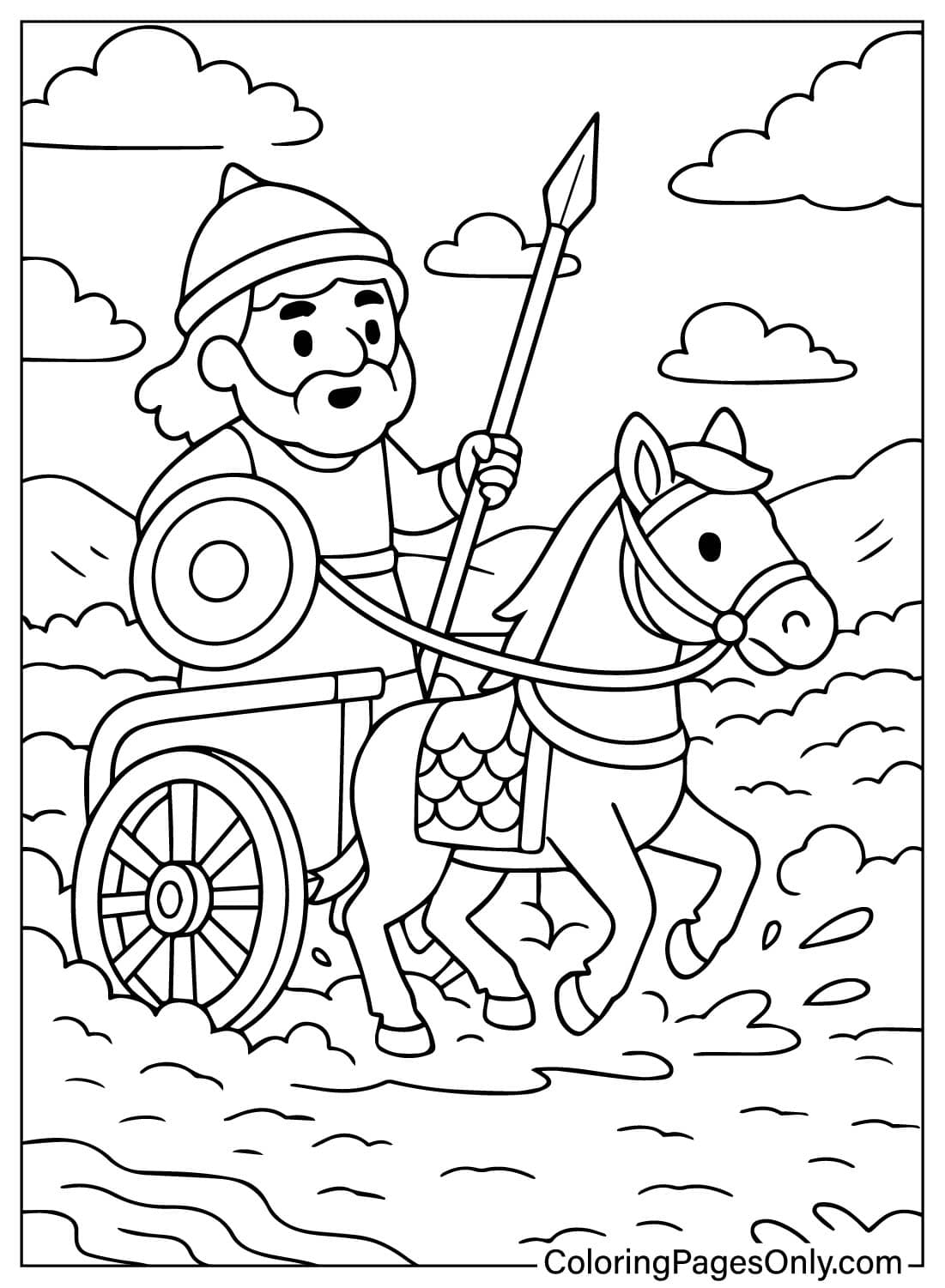
Eight pages cover the region’s military history and its succession of major civilizations, including Assyrian and Akkadian warriors, war chariots, city scenes, and Babylon’s Tower of Babel.
Astronomy and Holidays
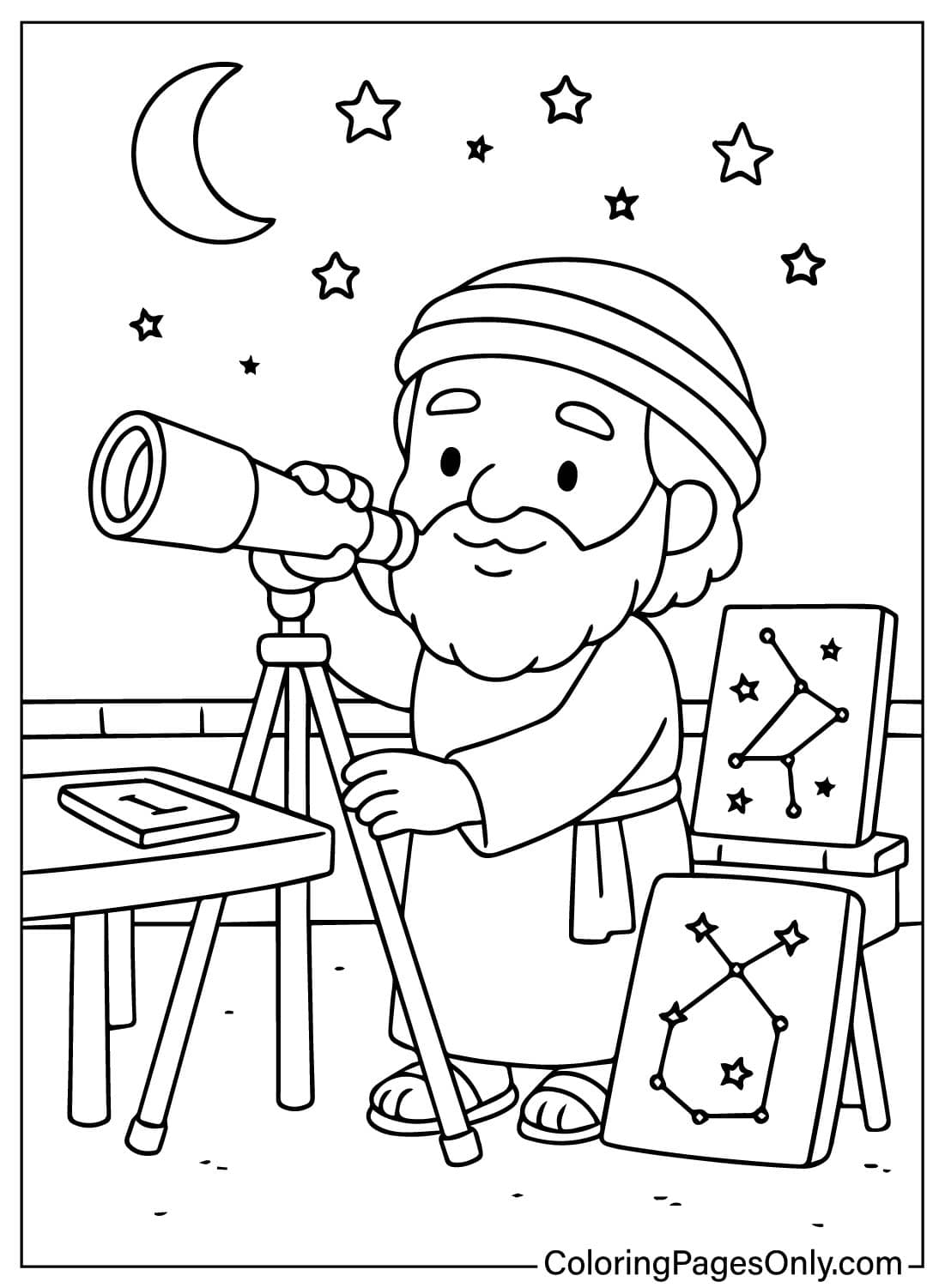
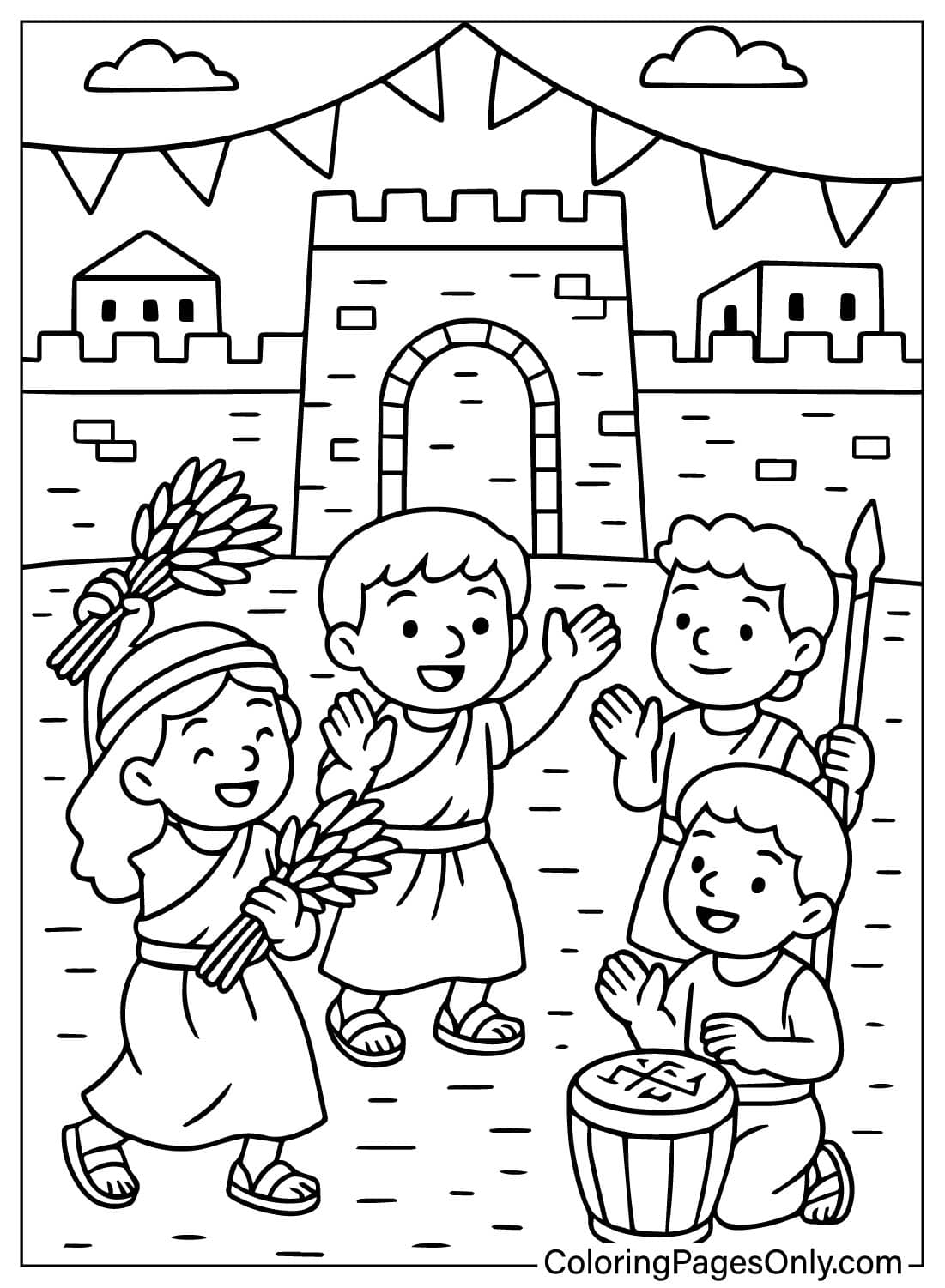
The remaining two pages cover a Mesopotamian astronomer and a page depicting regional holidays, rounding out the set with a glimpse of intellectual and cultural life beyond daily labor.
What Mesopotamia Coloring Pages Do
Fine motor development. The American Academy of Pediatrics identifies fine motor skill development as a core benefit of structured coloring for children ages 2 through 7. The small wedge-shaped cuneiform marks on the writing tablet pages call for careful, controlled strokes that build the same hand control used in early handwriting.
A visual way to connect writing today to writing’s origins. Because cuneiform is widely considered the world’s first writing system, coloring these tablet pages gives a child a concrete, historically grounded way to think about how writing itself began, tracing a direct line back roughly five thousand years.
Anxiety reduction through focus. A 2005 study in the Art Therapy Journal documented measurable reductions in anxiety following structured coloring sessions. The repeated architectural patterns on the ziggurat and city pages give colorists a steady, absorbing detail to settle into.
Introduces multiple civilizations within one region. Since this collection spans Sumerian, Akkadian, Babylonian, and Assyrian material rather than treating Mesopotamia as a single culture, it offers a specific opportunity to notice how one region can be home to a succession of distinct civilizations over time, each with its own art and military style.
How to Color Mesopotamia Pages Well
- Cuneiform tablets: a warm Crayola Tan or Sepia for the clay, with the wedge marks left slightly darker or shaded to make the writing stand out against the tablet’s surface.
- Ziggurats and mudbrick buildings: layered Crayola Tan and Sand tones for the stepped structure, since real ziggurats were built from sun-dried mudbrick.
- Sumerian clothing: simple, undyed Crayola Beige or off-white fabric, reflecting the wool and linen most commonly worn in the region.
- Assyrian and Akkadian warriors: Crayola Bronze or Copper for armor and weapons, with a deep Crayola Brown for leather straps and sandals.
- Jewelry and decorative pages: Crayola Gold and Turquoise, two materials genuinely prized in Mesopotamian craftsmanship and trade.
- Astronomer and sky-related pages: deep Crayola Navy or Midnight Blue for the night sky, a fitting backdrop for a civilization known for tracking celestial movements.
5 Creative Craft Ideas With Mesopotamia Coloring Pages
1. Cuneiform Code-Breaking Game
Color a cuneiform tablet page, assign each symbol a simple meaning, and challenge a friend to decode a short message written using the same system.
2. Mesopotamia Timeline Display
Color a Sumerian page, a Babylonian page, and an Assyrian or Akkadian page, mount them in order on a wall, and label each with its approximate era.
3. Clay Tablet Craft
Color a tablet-themed page, then press a similar design into a small slab of air-dry clay to create a three-dimensional companion piece to the coloring page.
4. Ziggurat Diorama
Color a ziggurat or city page, cut it out, and stand it upright on a simple paper landscape with drawn-on river lines for the Tigris and Euphrates.
5. Mesopotamia Fact Cards
Color four or five pages, trim them to card size, and write one verified fact about that scene or civilization on the back for a simple matching or quiz game.
Frequently Asked Questions
What are Mesopotamia coloring pages?
Free printable and online designs featuring ancient Mesopotamian civilization, intended for personal, educational, and non-commercial use.
What is cuneiform, and who invented it?
The world’s earliest known writing system, developed by the Sumerians in southern Mesopotamia near the end of the fourth millennium BCE, was made by pressing a reed stylus into clay tablets.
Were Sumerians, Akkadians, Babylonians, and Assyrians all the same civilization?
No. They were distinct civilizations that rose and fell across the same broader Mesopotamian region over different periods of history.
Who was Enlil?
One of the chief gods in the Sumerian pantheon, associated with wind and air.
What is a ziggurat?
A stepped temple structure built from mudbrick, used for religious purposes in several ancient Mesopotamian cities.
Is the Tower of Babel page based on a real structure?
It references a Babylonian temple tradition associated with the biblical Tower of Babel story, tied to real ziggurat architecture from the region.
Are Mesopotamia coloring pages suitable for young children?
Yes. The simpler daily life pages work well for younger children, while the more detailed writing and military pages suit older kids studying ancient history.
Can Mesopotamia coloring pages be colored online, or only printed?
Both. Every design can be downloaded as a PDF for printing at home or opened directly in the online coloring tool for use on a phone, tablet, or computer.
Start Coloring
Download any page by clicking the design. No account, email, or payment is required. Pages print directly from the browser at full resolution or open in the online coloring tool for screen use. Share finished pages on Facebook or Pinterest with the share buttons at the top of each design page.