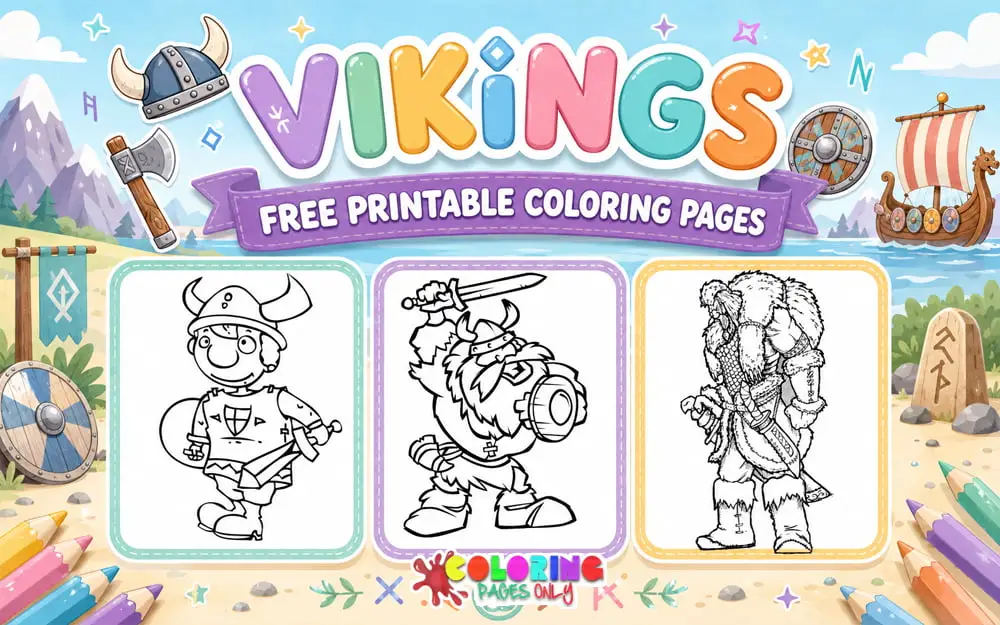
Vikings coloring pages: 24+ free printable PDF designs covering Viking warriors, longships, helmets, shields, and historical scenes, including Leif Erikson’s arrival in North America. Every page is free to download as a PDF or color in the browser, with no account required.
Vikings were Norse seafarers from Scandinavia who raided, traded, and explored across Europe, the North Atlantic, and North America roughly between 793 and 1100 CE. At their furthest reach, they established settlements in Iceland, Greenland, and what is now Newfoundland, Canada, roughly 500 years before Christopher Columbus crossed the Atlantic.
These pages suit children studying Norse or medieval history, adults who enjoy historical illustration, fans of Viking mythology and culture, and anyone looking for a history-category coloring set with both realistic and cartoon-style options.
The set mixes realistic historical illustrations with cartoon-style pages, which means the coloring approach changes depending on the page: iron-grey armor and weathered wood for the historical pages, bright bold fills for the cartoon ones.
Quick Answer
Vikings coloring pages are a free set of 24+ printable PDFs and browser-based sheets covering Norse warriors, longships, equipment, and historical scenes from the Viking Age.
Best for: children studying Norse history, medieval history enthusiasts, and anyone looking for a history-focused coloring set with both realistic and cartoon options
Formats: printable PDF and online coloring
Popular pages: Viking warriors, Viking ship, Leif Erikson, Viking helmet, and Viking shield
Creative uses: a Viking warrior study, a longship fleet, a Norse explorer historical pair, and a materials display
What’s Inside Vikings Coloring Pages
The set covers four main subject areas: warriors in combat, ships, equipment, and historical scenes, plus three cartoon-style pages.
Warriors and Combat Pages
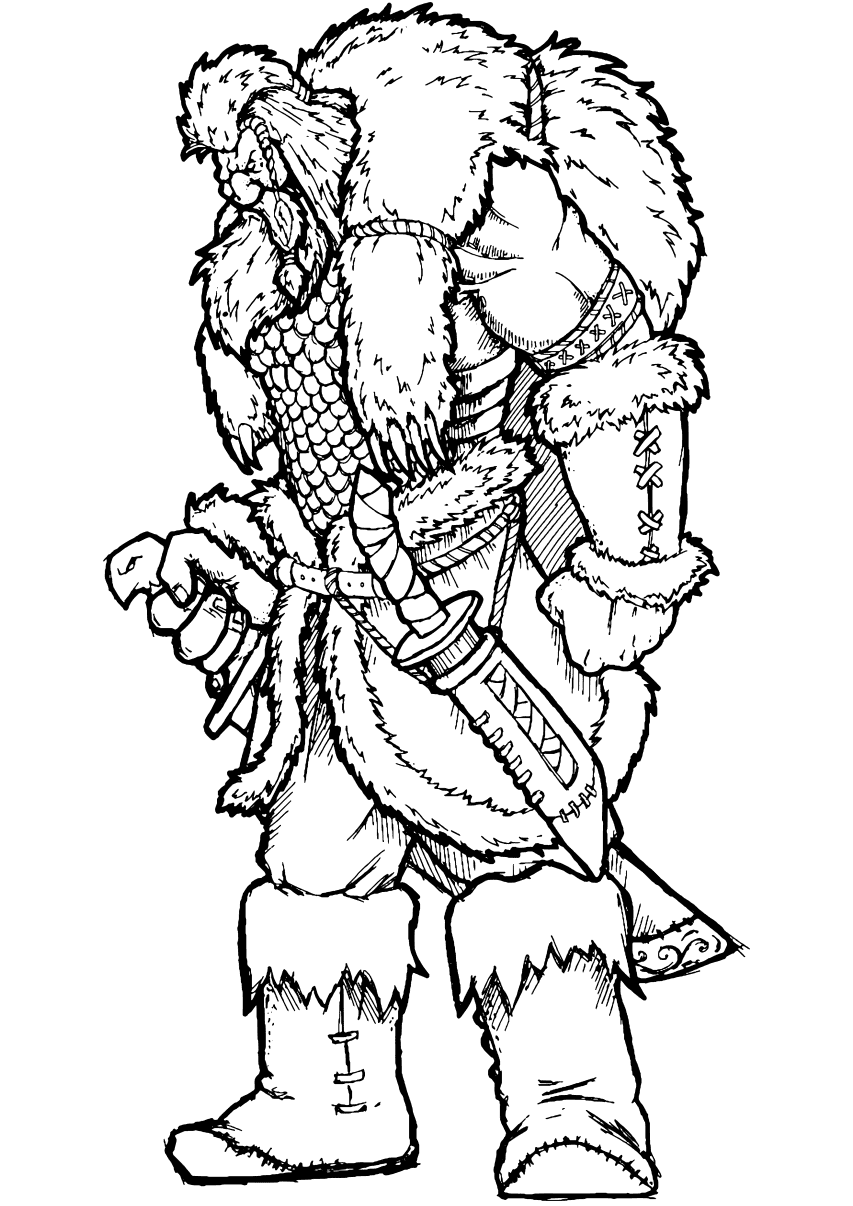
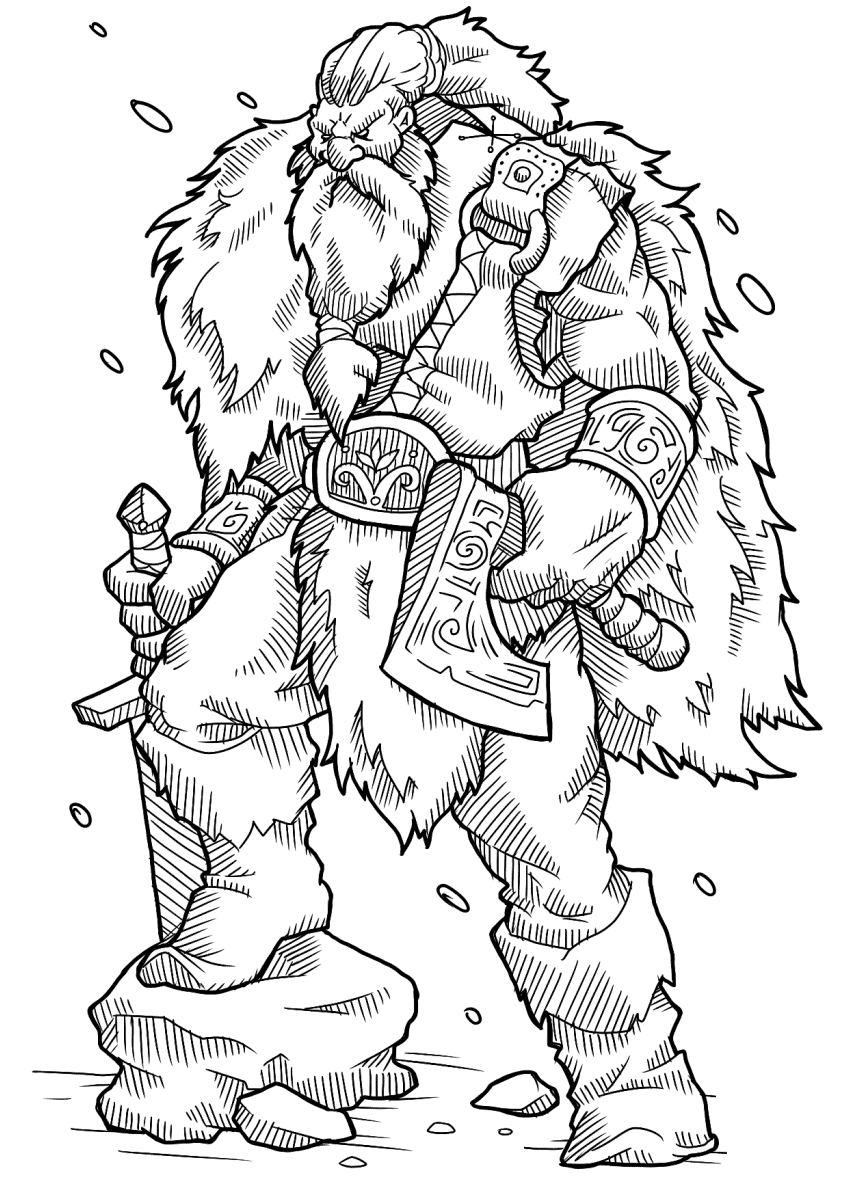
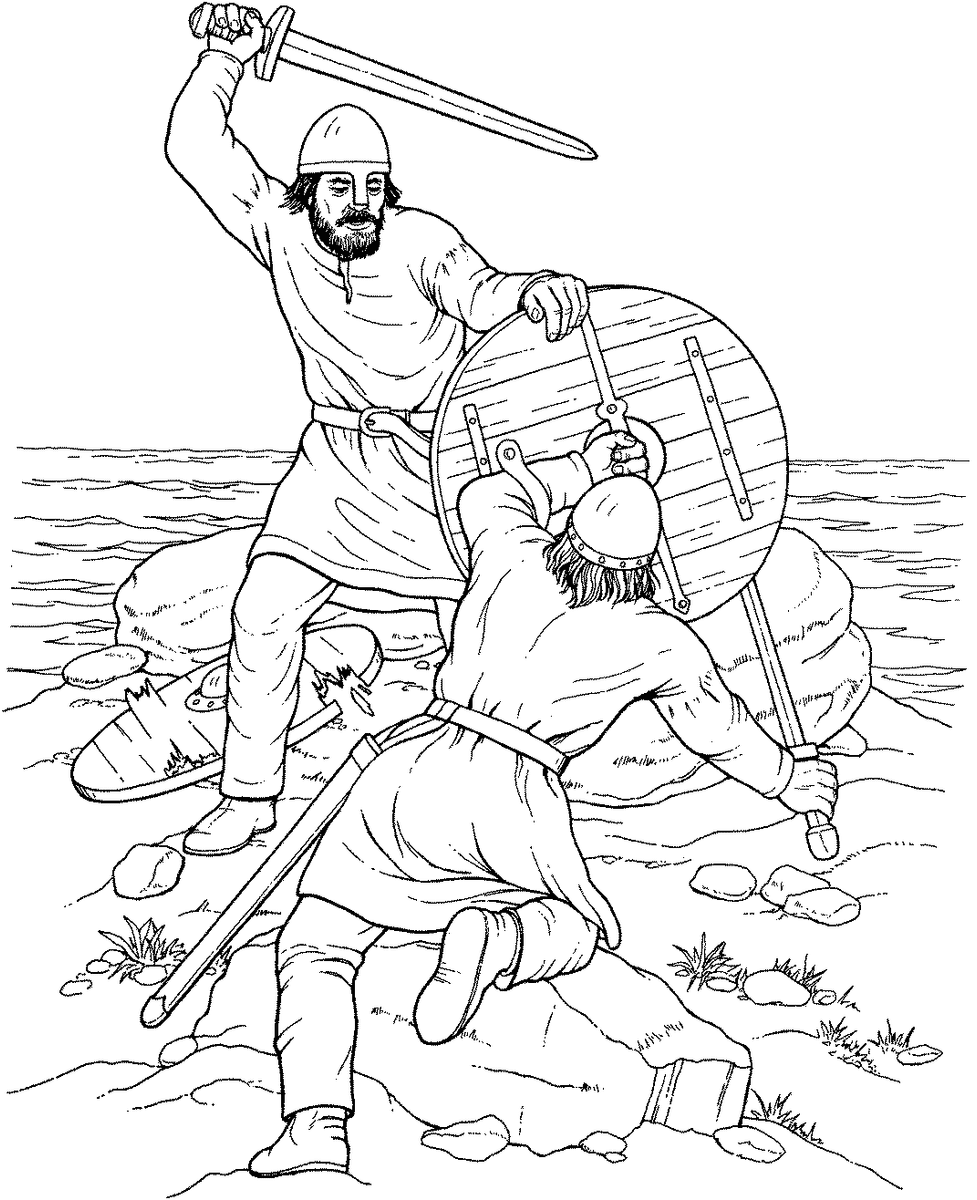
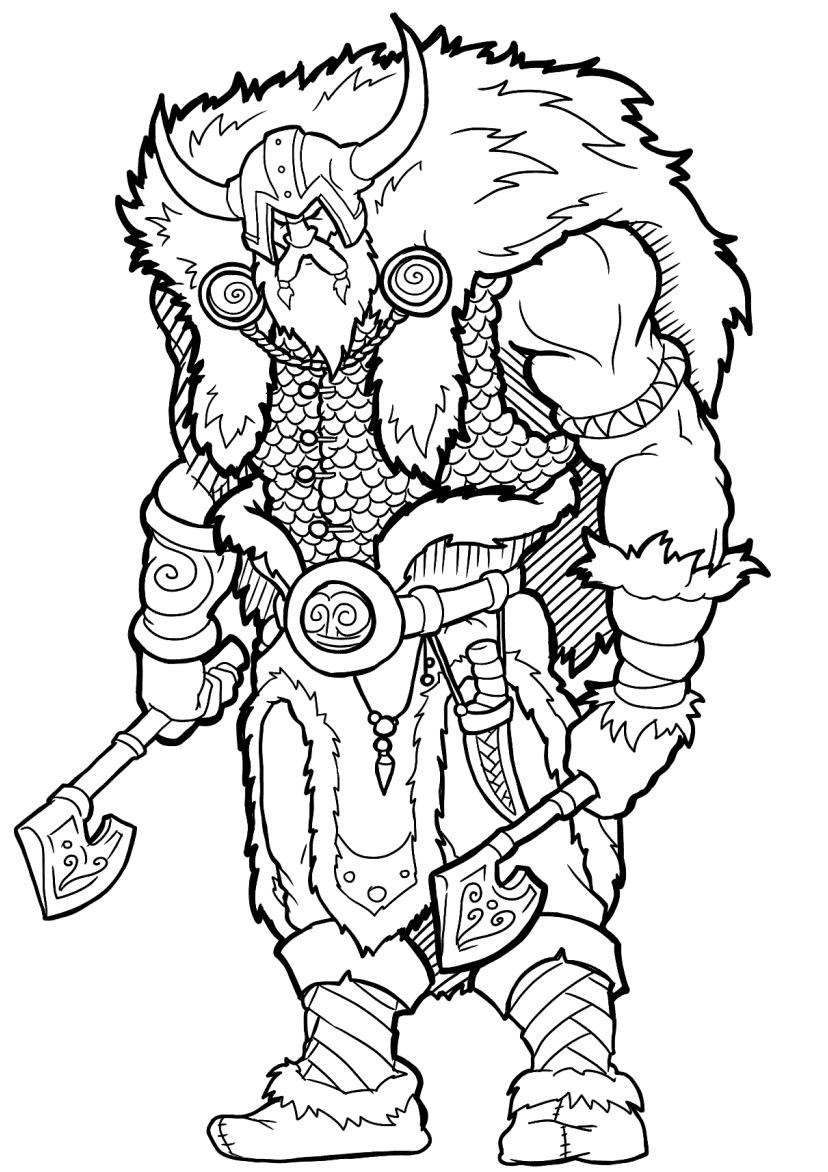
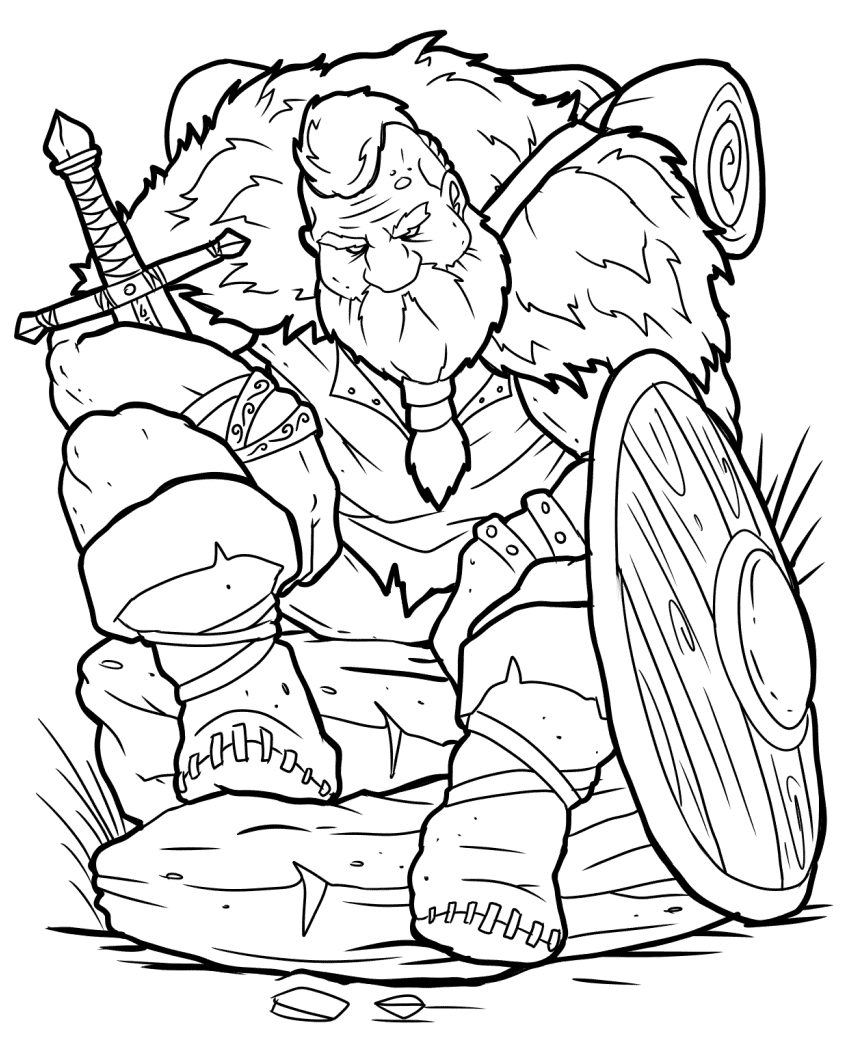
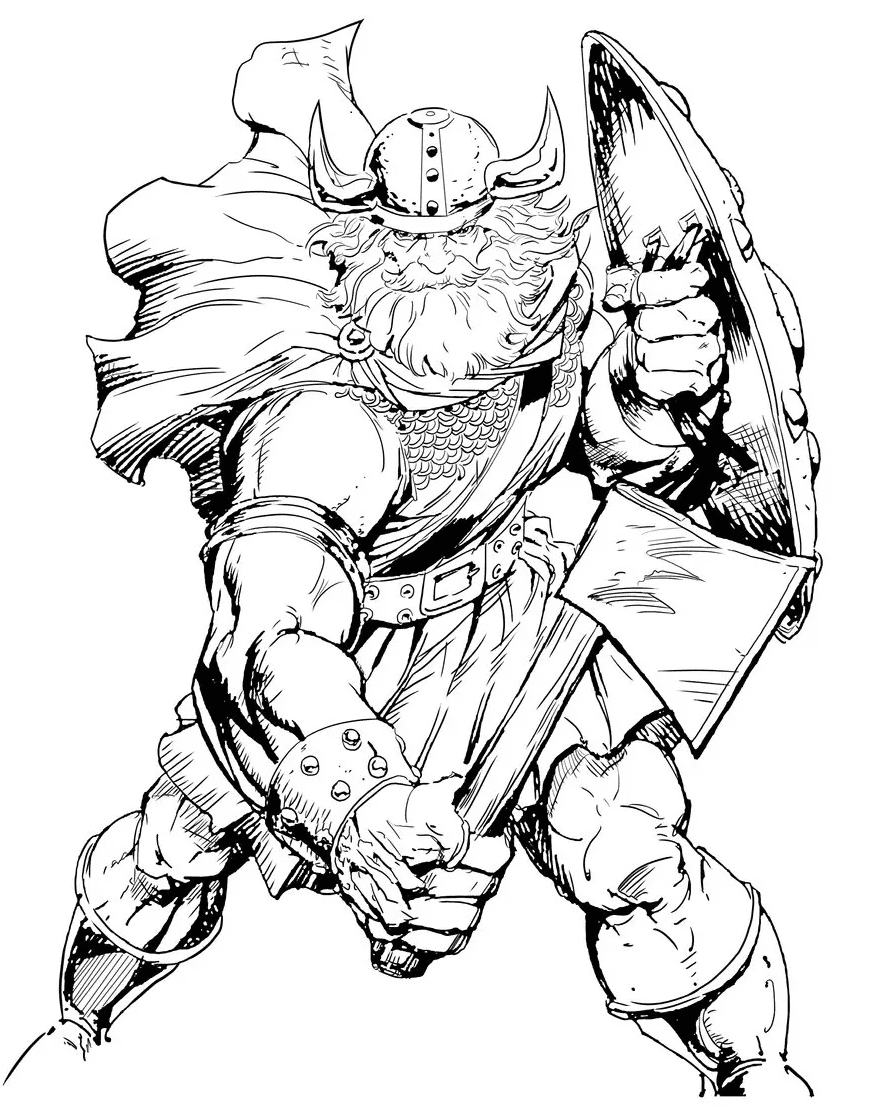
Ten pages depict Viking warriors in combat and standing poses, covering the full range of Viking weapons and armor.
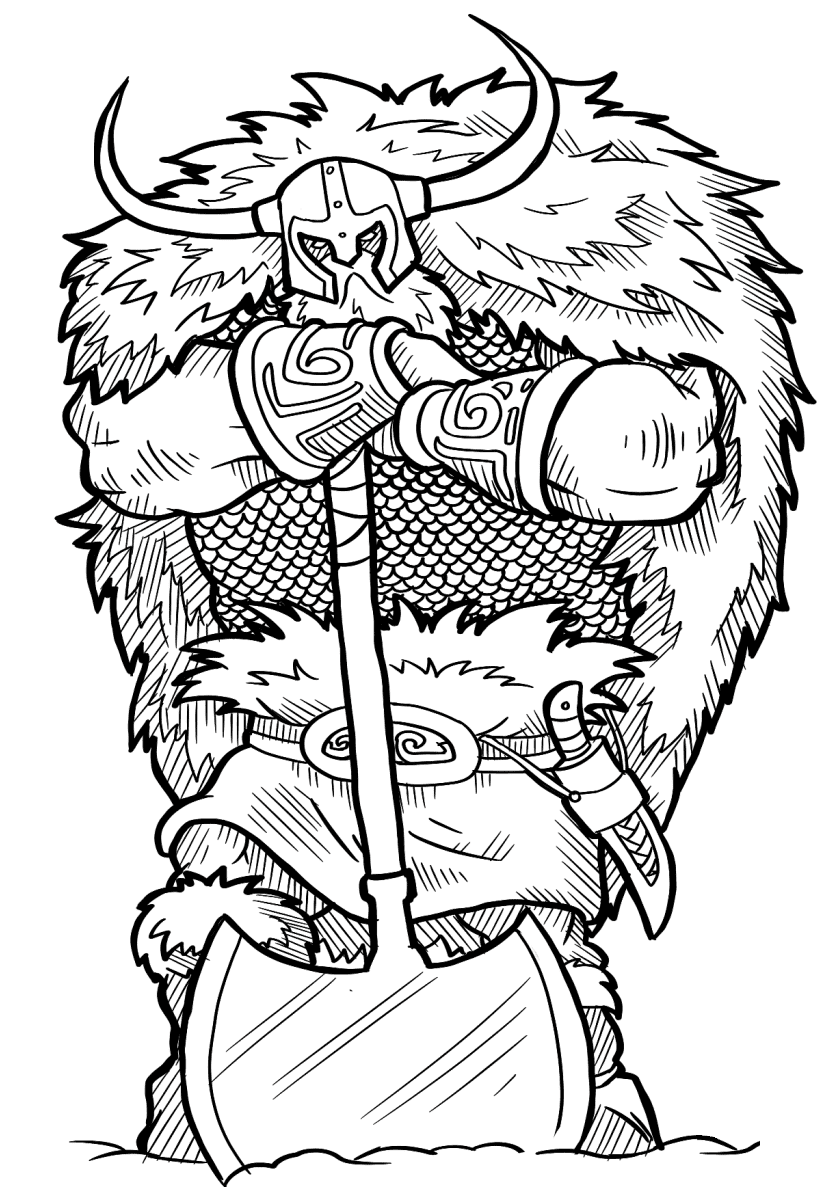
Coloring warriors: the dominant material in Viking warrior design is iron. Chainmail, helmets, and sword blades are all iron or steel, which reads as a medium grey with a slight cool blue undertone rather than bright silver. Worn iron shows darker grey-brown at the edges where rust begins. Leather (straps, belts, scabbards, and padding under mail) is warm tan to dark brown. Viking tunics and trousers were typically made of undyed wool in off-white, cream, natural brown, or grey. Dyed cloth was available but expensive: woad produced a muted blue, madder root produced a dull red, and weld produced a yellow. These plant-based dyes produce muted, earthy tones rather than vivid primaries.
Coloring shields: Viking shields were round with a central iron boss. The face was typically divided into sections, commonly two or four wedge-shaped segments, painted in contrasting colors. Red and yellow were common combinations, as were black and white, or blue and white. The iron boss at the center matches the grey of the armor.
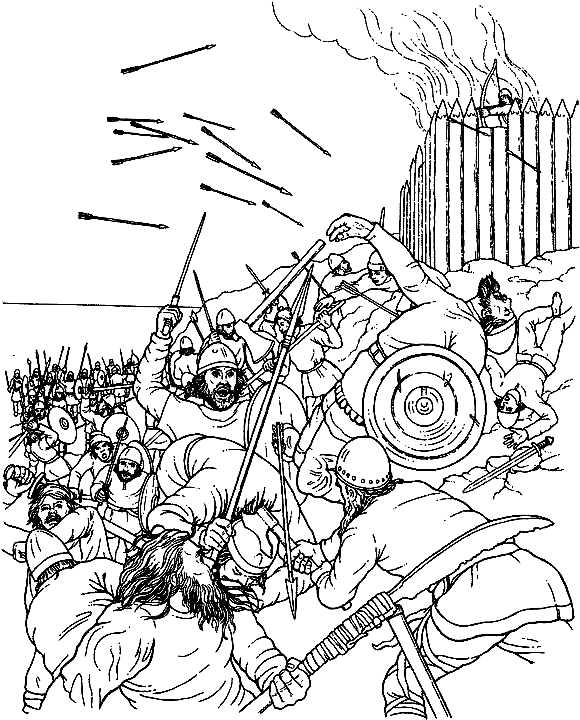
Coloring the fight scenes: the fire pages layer from warm yellow-white at the center through orange to deeper red at the edges. Smoke is grey with warm undertones. The burning structure behind the fighters reads as dark brown planking visible through the smoke.
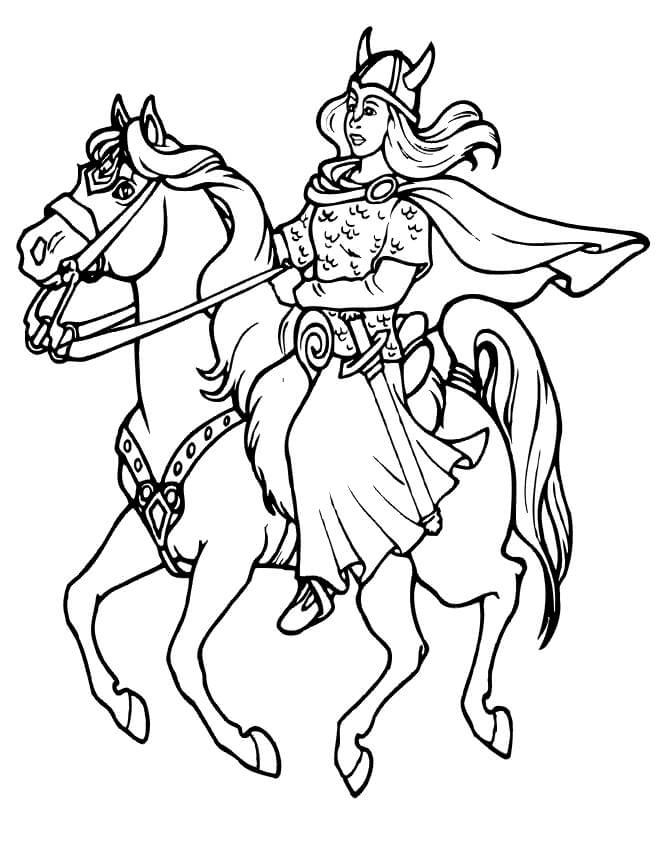
Viking on Horse: horses in Viking Age Scandinavia were small, sturdy breeds, typically bay (warm brown with black mane), grey, or dun (pale sandy-yellow). The rider follows the same iron-and-wool palette as the other warrior pages.
Ships and the Sea
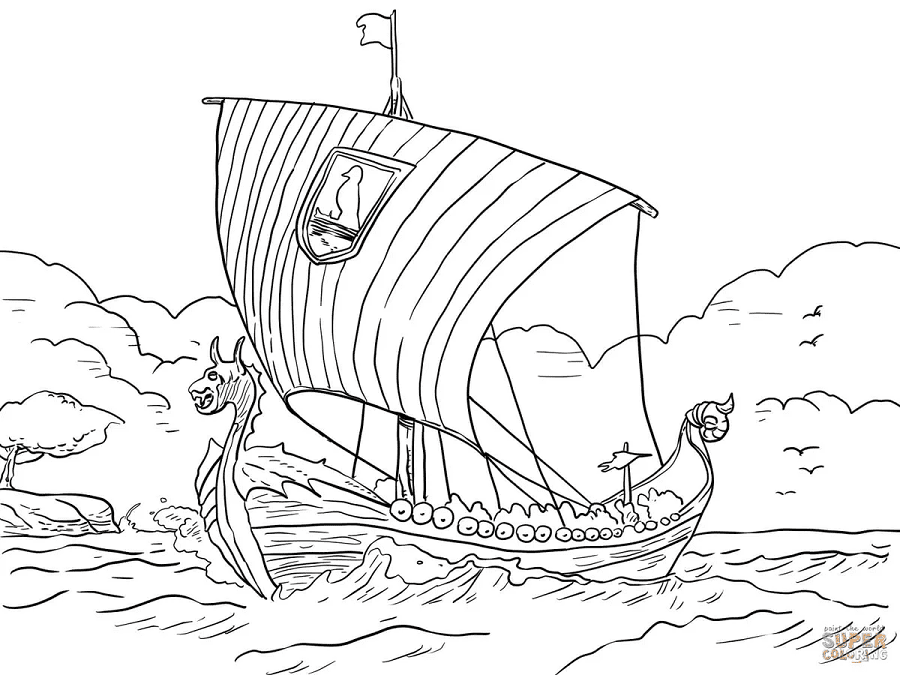
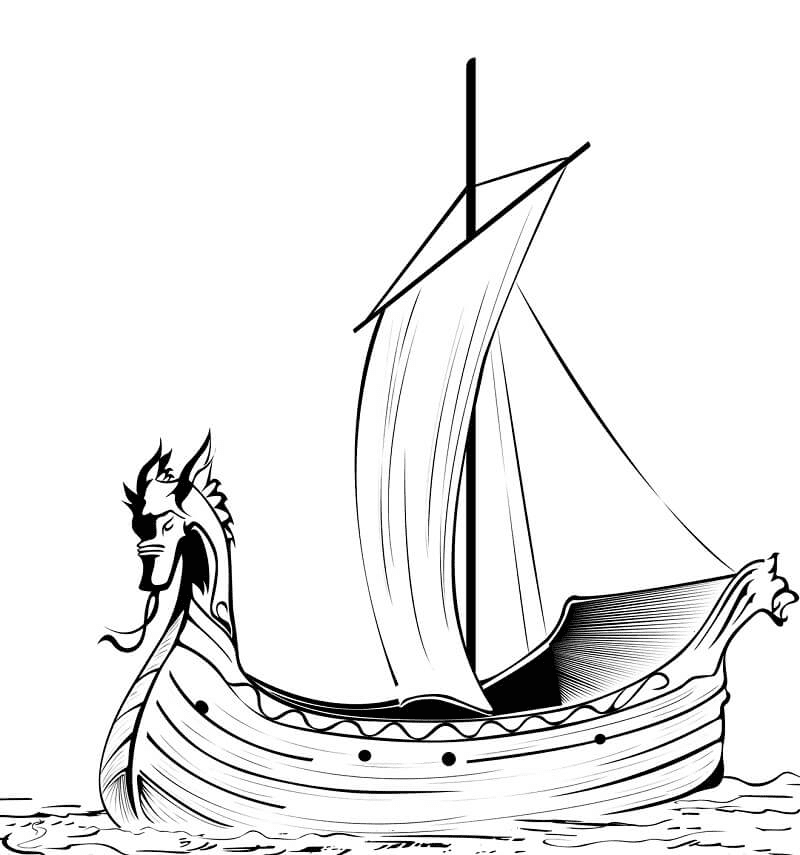
Five pages depict Viking vessels at sea.
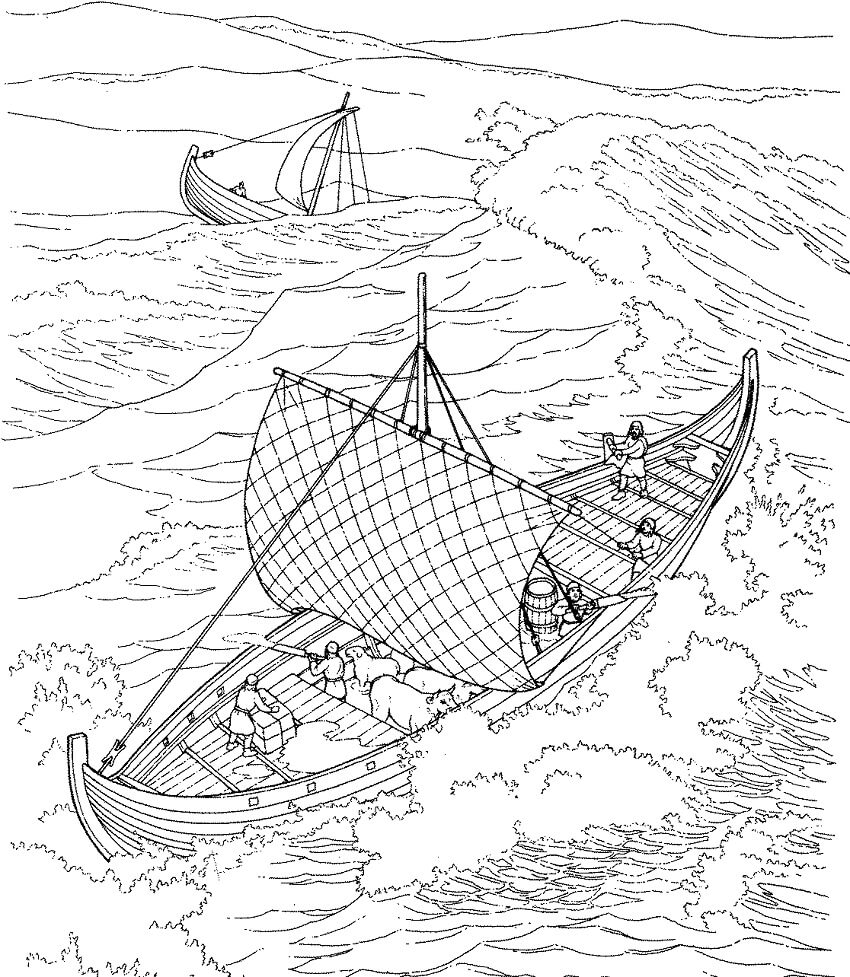
Coloring Viking longships: the hull of a Viking longship was built from overlapping planks of oak, which produces a warm, dark brown. The planks were sealed with tarred rope or animal hair, giving the hull darker brown-black lines between the plank edges. The oars and deck boards are the same medium-warm brown as the hull but slightly lighter. The sail, when present, was typically dyed in stripes or a simple pattern: red and white, or ochre-yellow and undyed white, were common combinations. The dragon or serpent prow carving, when visible, was often painted in dark red or ochre.
Coloring the sea: the North Atlantic and North Sea that Viking longships crossed is a cold, deep water. It reads best in a dark blue-grey or deep blue-green rather than the tropical blue of Caribbean scenes. On overcast days, the water reflects the grey sky and turns almost black at the horizon.
Equipment Pages
Three pages focus on close-up Viking equipment.
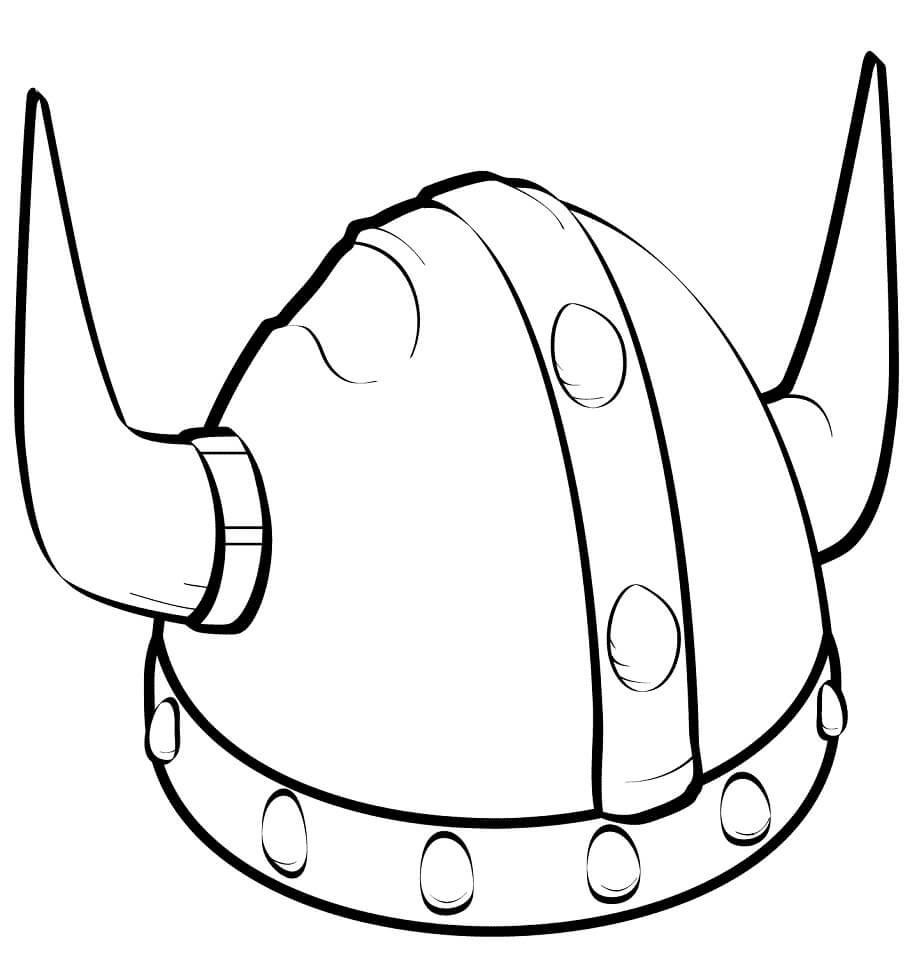
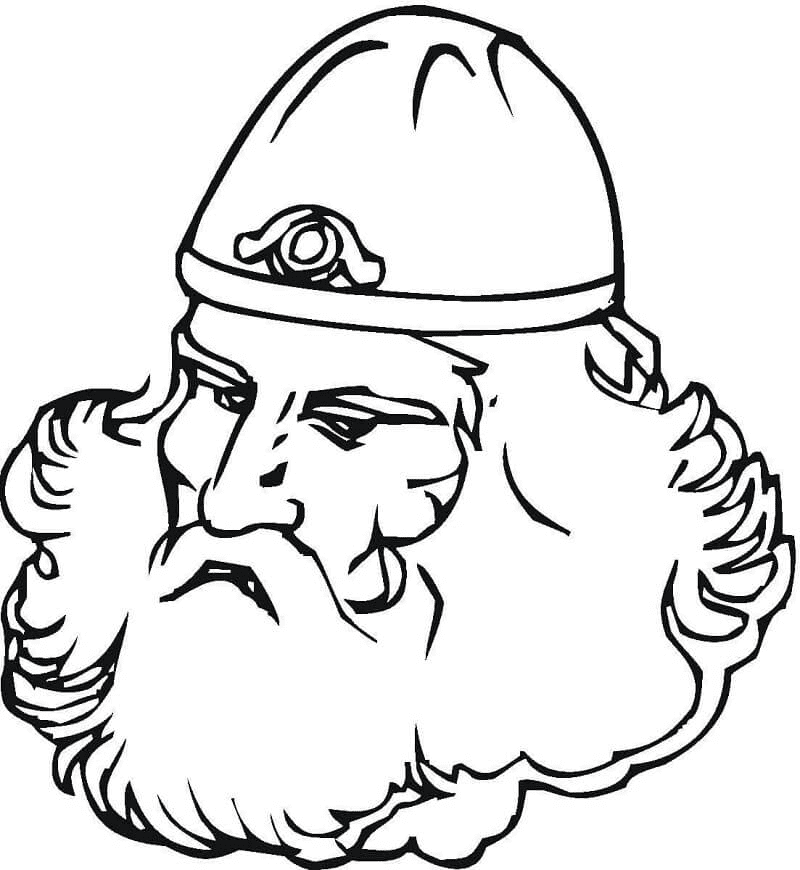
Coloring the Viking helmet: the most historically accurate Viking helmet is a rounded iron cap with a nose guard, not the horned design seen in cartoons and popular culture. If the page shows a plain, rounded helmet, color it in medium grey-blue iron, slightly darker at the nose guard and around the rim. The interior lining would have been leather padding in warm tan or brown.
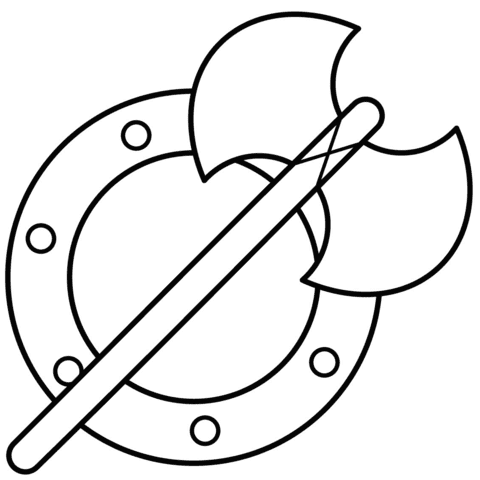
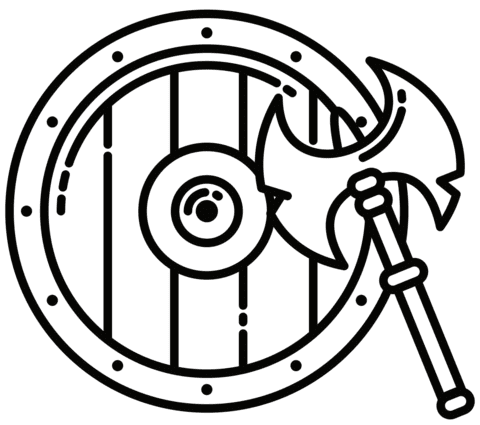
Coloring Viking shields: the shield face is wood, painted in segments as described in the warrior section. The iron boss is grey. The rim was often bound in leather or rawhide, adding a warm tan or brown border. An axe resting against or mounted on the shield introduces the same iron-grey blade and a wooden handle in warm brown.
Leif Erikson and Historical Scenes
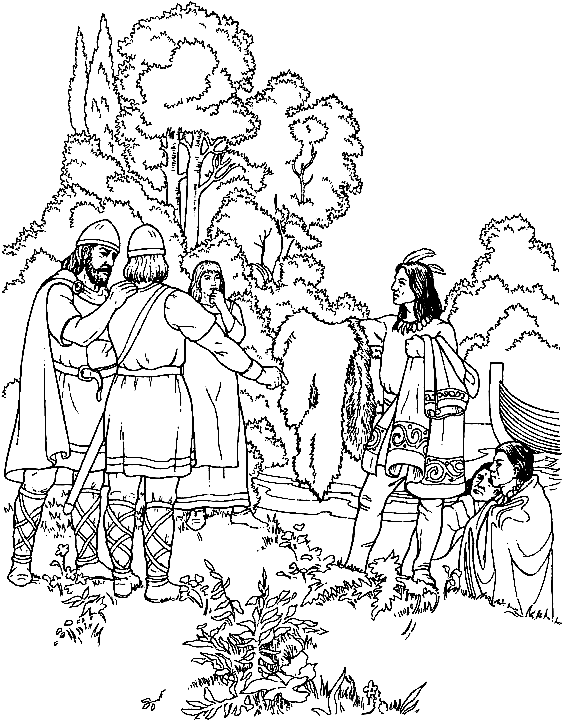
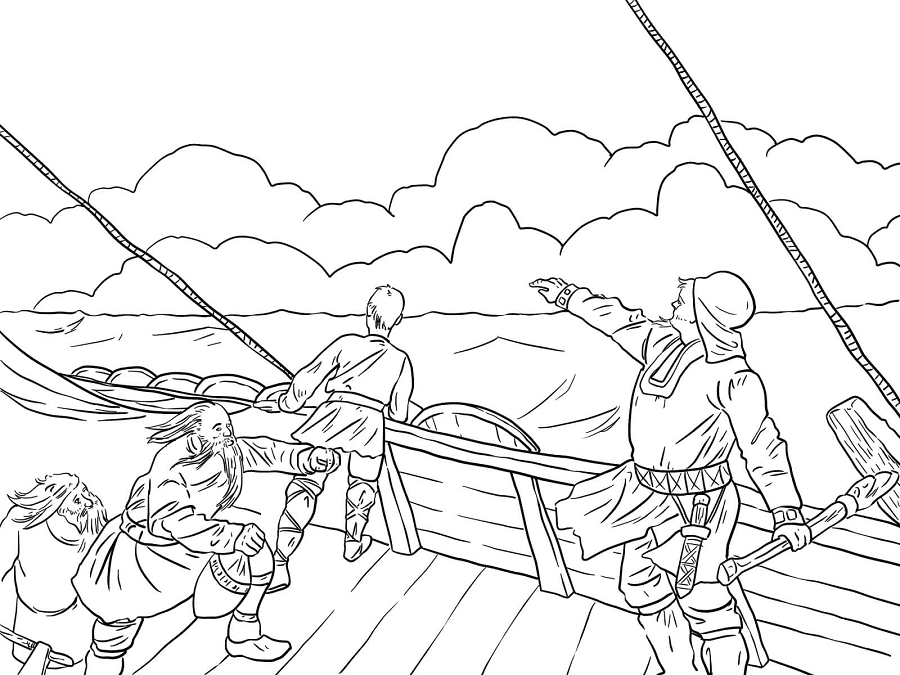
Three pages depict specific historical events: Leif Erikson, Leif Erikson Discovers North America, and Indians are Offering Gifts to Vikings.
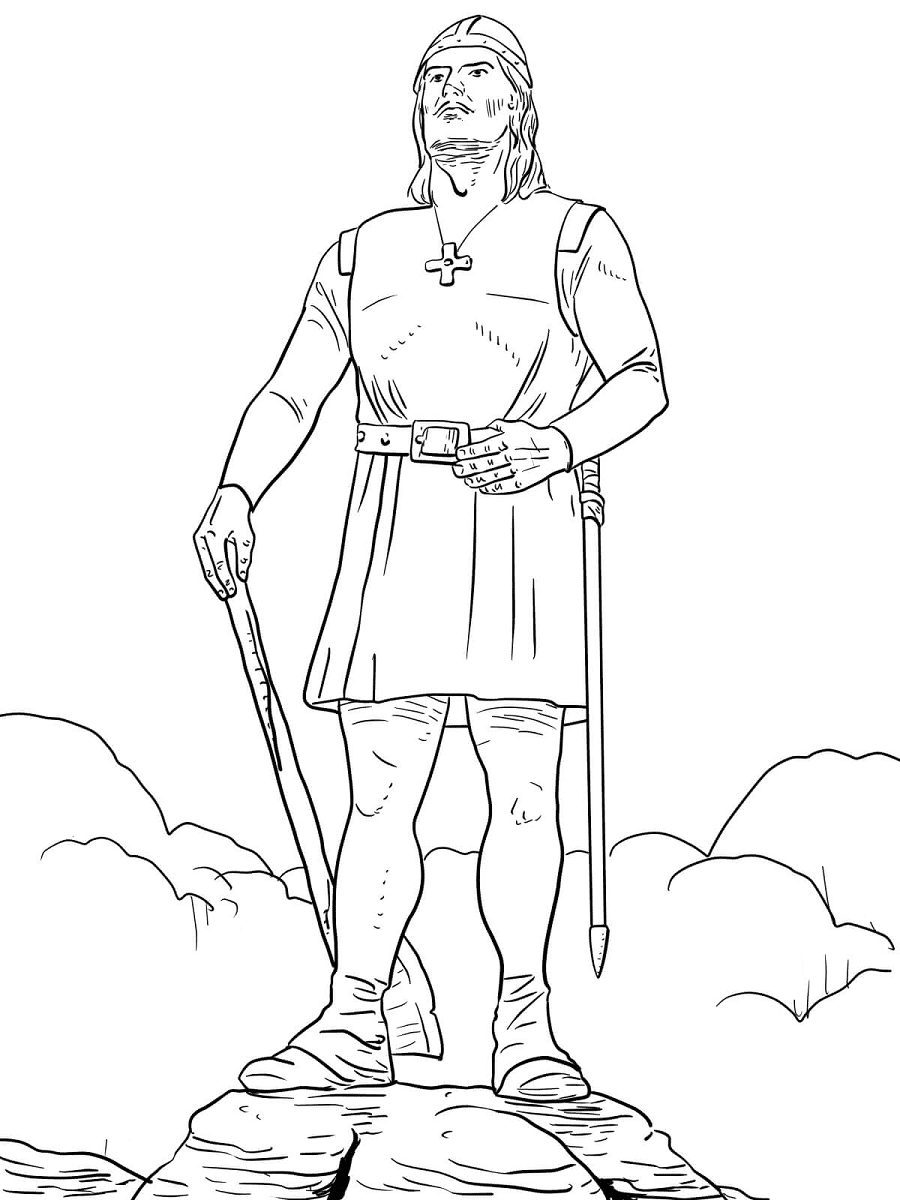
Coloring Leif Erikson: the Leif Erikson pages show the Norse explorer in full Norse gear: an iron helmet, chainmail or leather armor, and a cloak. The landscape background on the Discover North America page would be the coast of Newfoundland, Canada: dark evergreen forest, grey-brown rocky shoreline, and cold grey-blue North Atlantic water.
Coloring the gift-giving scene: this page depicts the Norse explorers and the Indigenous peoples known in the sagas as Skraelings. The two groups have distinct palettes: the Viking figures use the iron-grey and wool-earth tones of the warrior pages. The Indigenous figures wear warm tan-brown tanned hide with plant or mineral-based dye accents in earthy reds, yellows, and greens.
Cartoon and Miscellaneous Pages
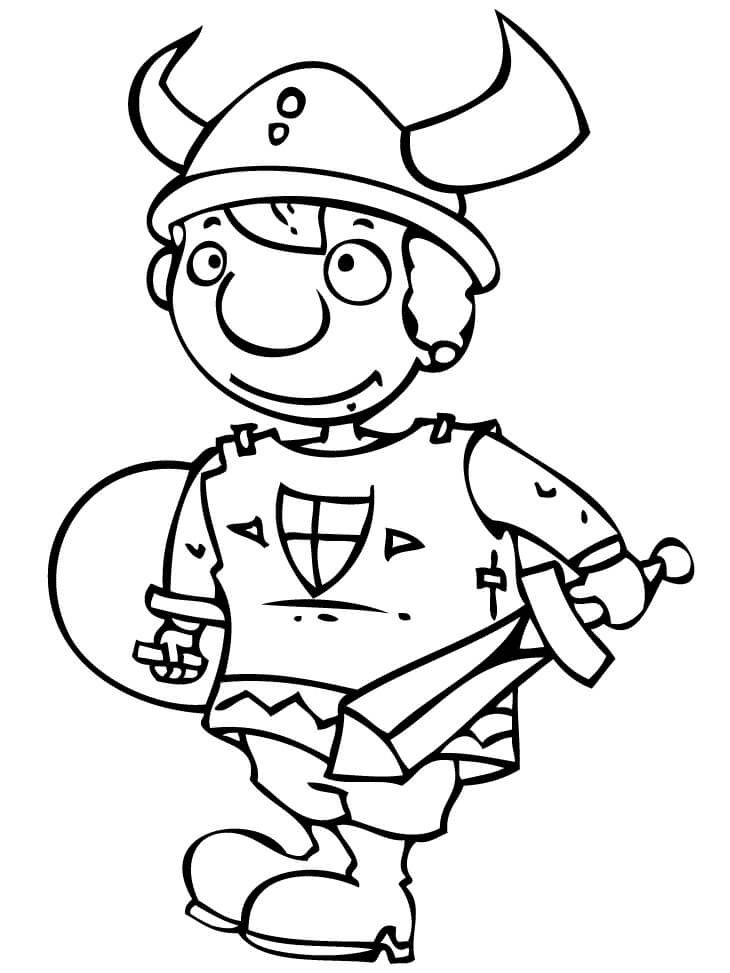
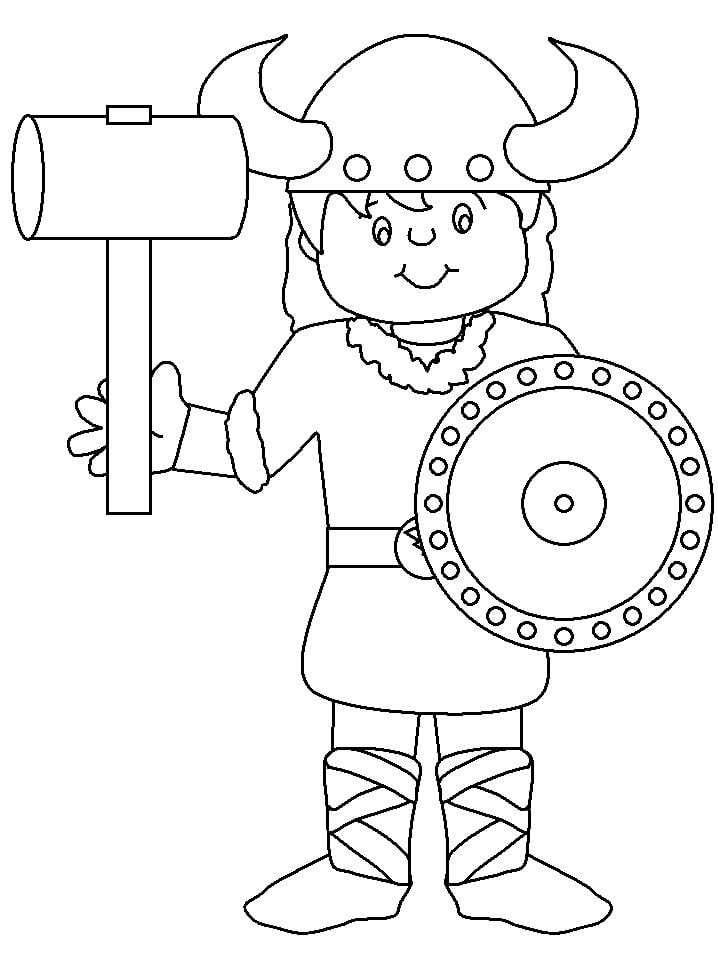
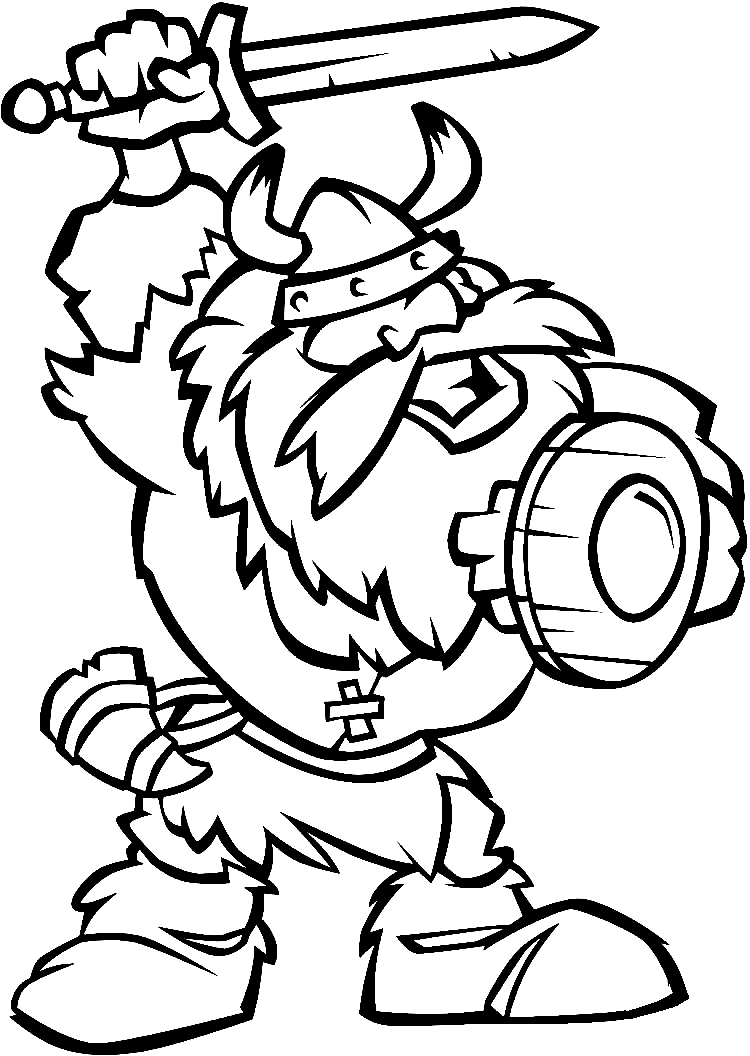
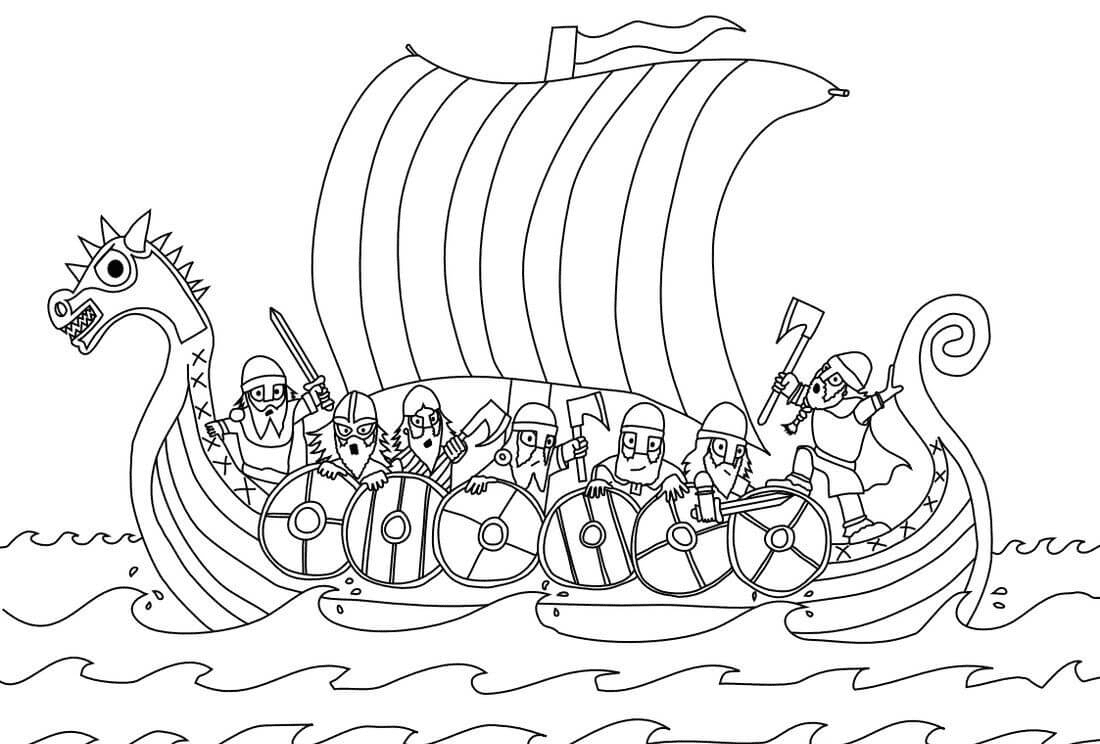
Three pages take a lighter approach: Little Viking, Funny Viking, and Cartoon Viking with Sword.
These pages use simplified, rounded forms and work with bright, bold fills rather than the muted historical palette of the realistic pages. Little Viking and Funny Viking suit younger children or anyone who wants a less detailed coloring experience. The Cartoon Viking with Sword uses simplified armor shapes that read well in flat primary colors.
Printable PDF and Online Vikings Coloring Pages
The detailed historical illustrations (Leif Erikson Discovers North America, Fight in a Burning Village, Longship Viking Sea Vessel) reward printing for close background and detail work. The cartoon pages and the equipment close-ups work well on screen.
What These Pages Do
Vikings did not wear horned helmets. This is one of the most persistent historical myths in popular culture, and it shapes what most people expect to see when they pick up a Viking coloring page.
Only one complete Viking Age helmet has ever been found with the skull intact: the Gjermundbu helmet, excavated in 1943 in Ringerike, Norway. It is a plain, rounded iron cap with a nose guard and a small eye-and-nose protector. No horns. Horned helmets did exist in ancient Scandinavia, but they were ceremonial Bronze Age artifacts from roughly 900 BCE, more than a thousand years before the Viking Age began. The horn-helmet image spread in the 19th century through Romantic-era paintings and opera costume design, particularly Carl Emil Doepler’s 1876 costumes for Wagner’s Ring cycle, and was later cemented by cartoons.
This matters directly for the coloring pages. The Viking Helmet page shows a functional iron helmet, not a fantasy prop. The longship pages show dark-hulled working vessels. The warrior pages show grey-brown iron and earthy wool, not polished silver and bright primary colors. The historical pages in this set are accurate precisely where the popular image of Vikings is not.
The AAP notes that coloring activities paired with accurate historical context support children’s history learning by anchoring visual information to factual content, making historical details more memorable than text alone.
Art therapy practitioners note that earth-toned, muted historical palettes provide a different coloring experience from bright cartoon sets, one that many older children and adults find calmer and more meditative, as the limited palette range requires more attention to value and texture than to color selection.
How to Color Vikings Coloring Pages
Iron is grey with a blue undertone, not silver. The most common mistake on warrior pages is coloring metal too bright. Real worn iron is a medium blue-grey that darkens toward brown-rust at the edges. Keeping metal slightly darker and cooler than you might instinctively choose makes the warriors read as authentic rather than fantastical.
Use two or three tones for wood, not one. Longship hulls, shield faces, axe handles, and deck boards are all wood, but they vary: the outer hull planks are dark from tar and weather, the cut surfaces of fresh wood are lighter and warmer, and the oar shafts sit between the two. Using one flat brown for everything loses this texture.
The sea for Viking pages is dark and cold. North Atlantic water is not tropical blue. A deep grey-blue or dark blue-green keeps the longship pages historically grounded. The darker the water, the more the ship’s warm brown hull stands out.
Cartoon pages need brighter fills than the historical ones. Little Viking, Funny Viking, and Cartoon Viking with Sword are designed in a lighter style and fight against the historical palette. Give them bold, fully saturated colors that match their cartoon aesthetic rather than trying to apply the muted historical tones.
5 Creative Craft Ideas with Vikings Coloring Pages
Viking Age Warrior Study
Color the Viking with Axe and Shield page using an accurate historical palette: medium blue-grey iron for the helmet and mail, warm tan or natural cream for the tunic, and a red-and-yellow divided shield face.
One page, one complete Viking warrior in accurate historical colors. Takes about fifteen minutes.
Longship Fleet
Color all three ship pages (Viking Ship, Viking Boats, Longship Viking Sea Vessel) with consistent dark-hulled longships against a cold dark blue-grey sea. Display as a fleet set.
Three pages, one consistent maritime palette. Takes about twenty minutes.
Leif Erikson Historical Pair
Color the Leif Erikson and Leif Erikson Discovers North America pages as a matched pair, keeping his armor and clothing identical across both and adding the Canadian coastal landscape to the second page.
One explorer, two scenes, one consistent character palette. Takes about twenty minutes.
Cartoon versus Historical Comparison
Color the Cartoon Viking with Sword in bright primary colors, then color the Viking Warrior page in accurate muted historical tones. Display side by side as a myth-versus-history comparison.
Two pages, two completely different palette approaches to the same subject. Takes about fifteen minutes.
Equipment Set
Color the Viking Helmet, Viking Shield with Axe, and Viking Shield and Axe pages as a matching equipment display, keeping all iron elements the same grey-blue and all wood elements in the same warm brown.
Three pages, one unified material palette. Takes about fifteen minutes.
FAQ About Vikings Coloring Pages
Are these Vikings coloring pages free, and can I color them online?
Yes. Every page is free, with no account, email, or payment required. Download the PDF to print at home, or open it in the online coloring tool to color on screen.
Who were the Vikings?
Vikings were Norse seafarers from Scandinavia who raided, traded, and explored across Europe, the North Atlantic, and North America roughly between 793 and 1100 CE. The Viking Age is typically dated from the raid on the monastery at Lindisfarne, England, in 793, to the Norman Conquest of England in 1066. At their furthest reach, Viking explorers established settlements in Iceland, Greenland, and Newfoundland, Canada.
Did Vikings really wear horned helmets?
No. Only one complete Viking Age helmet has ever been found with the skull intact, the Gjermundbu helmet, excavated in Norway in 1943, and it has no horns. It is a plain, rounded iron cap with a nose guard. Horned helmets existed in ancient Scandinavia but were ceremonial Bronze Age items from roughly 900 BCE, more than a thousand years before the Viking Age. The horned-helmet image became widespread in the 19th century through Romantic paintings and opera costume design.
Who was Leif Erikson?
Leif Erikson was a Norse explorer who reached North America around 1000 CE, approximately 500 years before Christopher Columbus’s 1492 voyage. He established a settlement at what is now L’Anse aux Meadows in Newfoundland, Canada, confirmed by archaeological excavation in the 1960s. Leif Erikson Day is observed on October 9 in the United States.
What did real Viking helmets look like?
The Gjermundbu helmet, the only complete Viking Age helmet found in Norway, is a rounded iron cap with a riveted construction and a curved nose guard extending from the brow. It has no horns, plumes, or decorative additions. It was a functional piece of combat armor built for protection rather than appearance.
What colors did Vikings use?
Viking clothing was made from wool and linen. Undyed wool was off-white, cream, or natural grey-brown. Plant-based dyes produced muted tones: woad made a dull blue, madder root made a muted red, and weld made a yellow. Bright, vivid colors were rare and expensive. Their iron armor and weapons were grey-blue, and their wooden ships were dark brown, often tarred for waterproofing.
Are these official Vikings coloring pages?
No. These are original coloring sheets created for personal and educational use and are not affiliated with any specific television series, film, or game featuring Vikings.
What age group are these pages best suited for?
Vikings coloring pages suit a wide age range. The cartoon pages (Little Viking, Funny Viking) are accessible for children aged 4 and up. The detailed historical scenes and equipment pages are better suited to children aged 7 and up, and the historical accuracy makes them useful for school projects at any elementary level.
Start Coloring
Download any page by clicking the design. No account, email, or payment is required. Pages print directly from the browser at full resolution or open in the online coloring tool for screen use. Share finished pages on Facebook or Pinterest using the share buttons at the top of each design page.