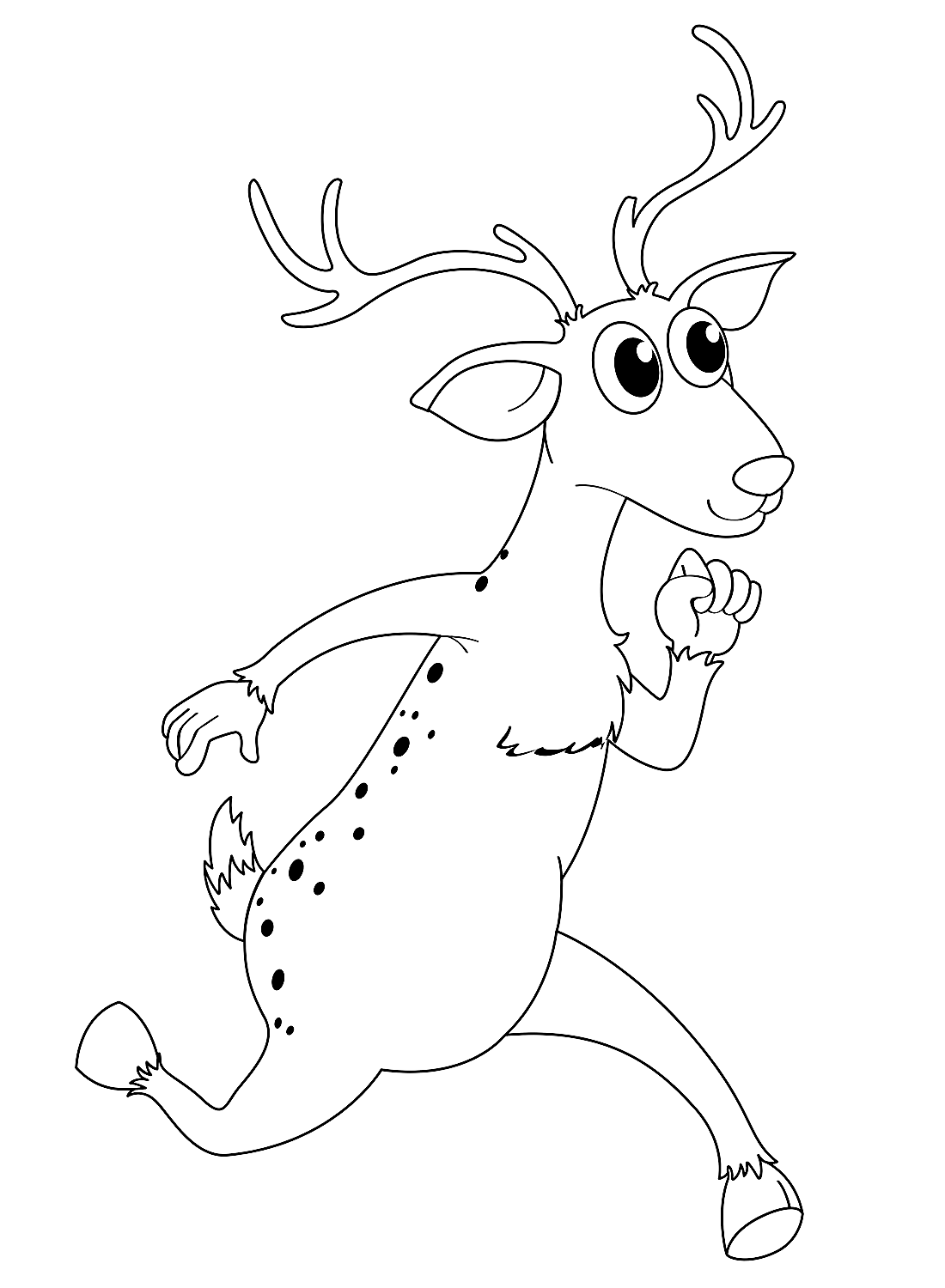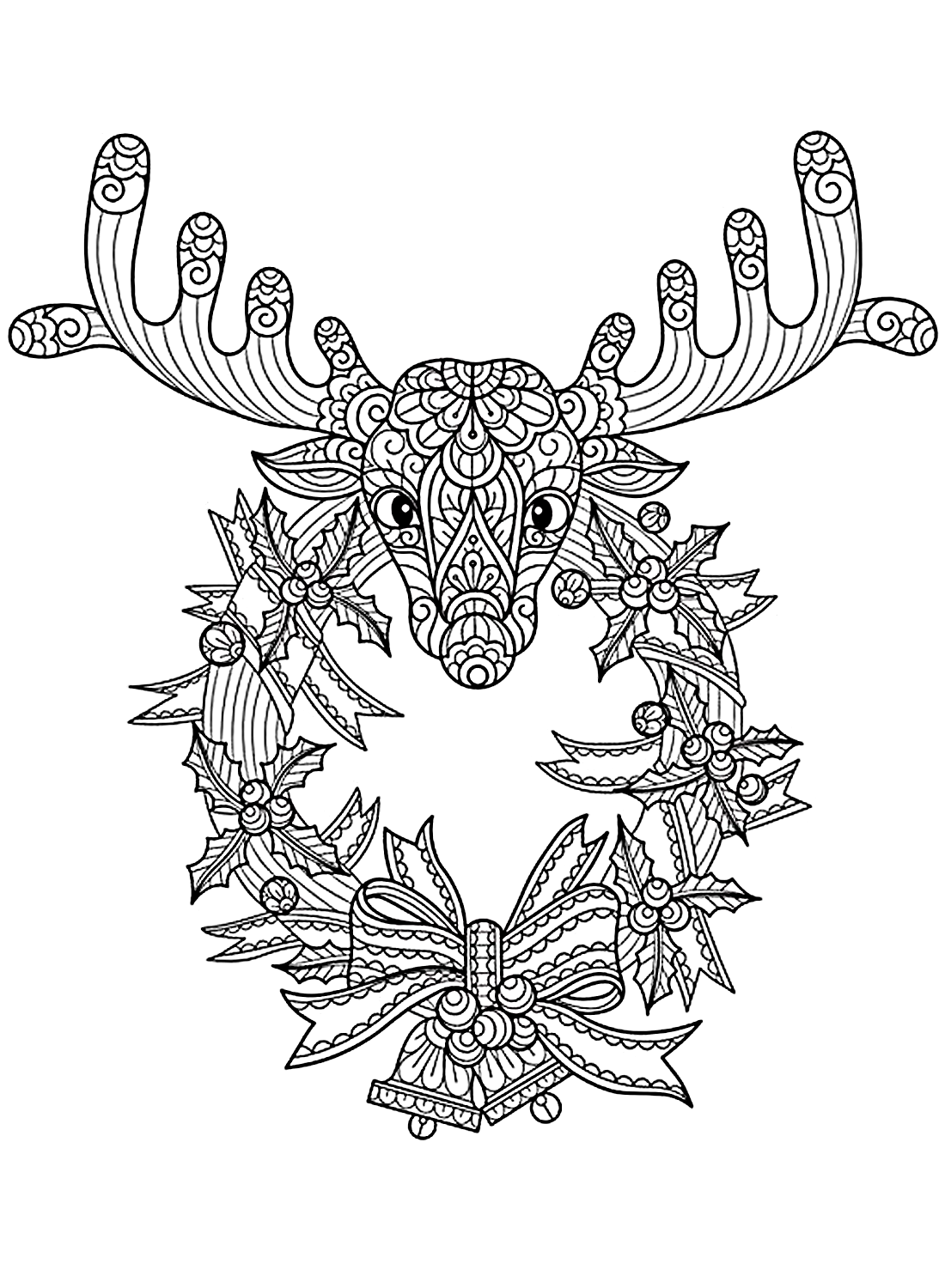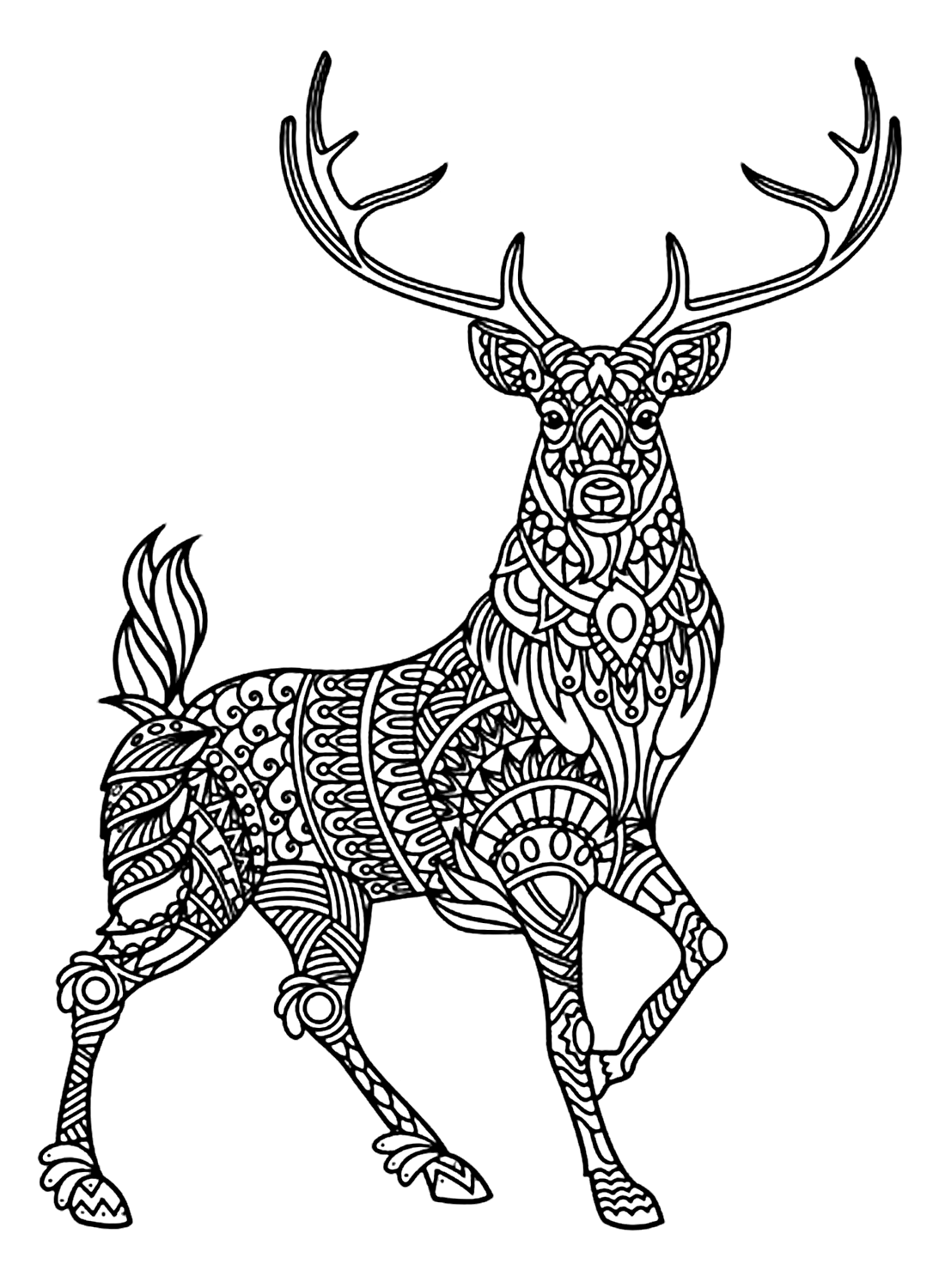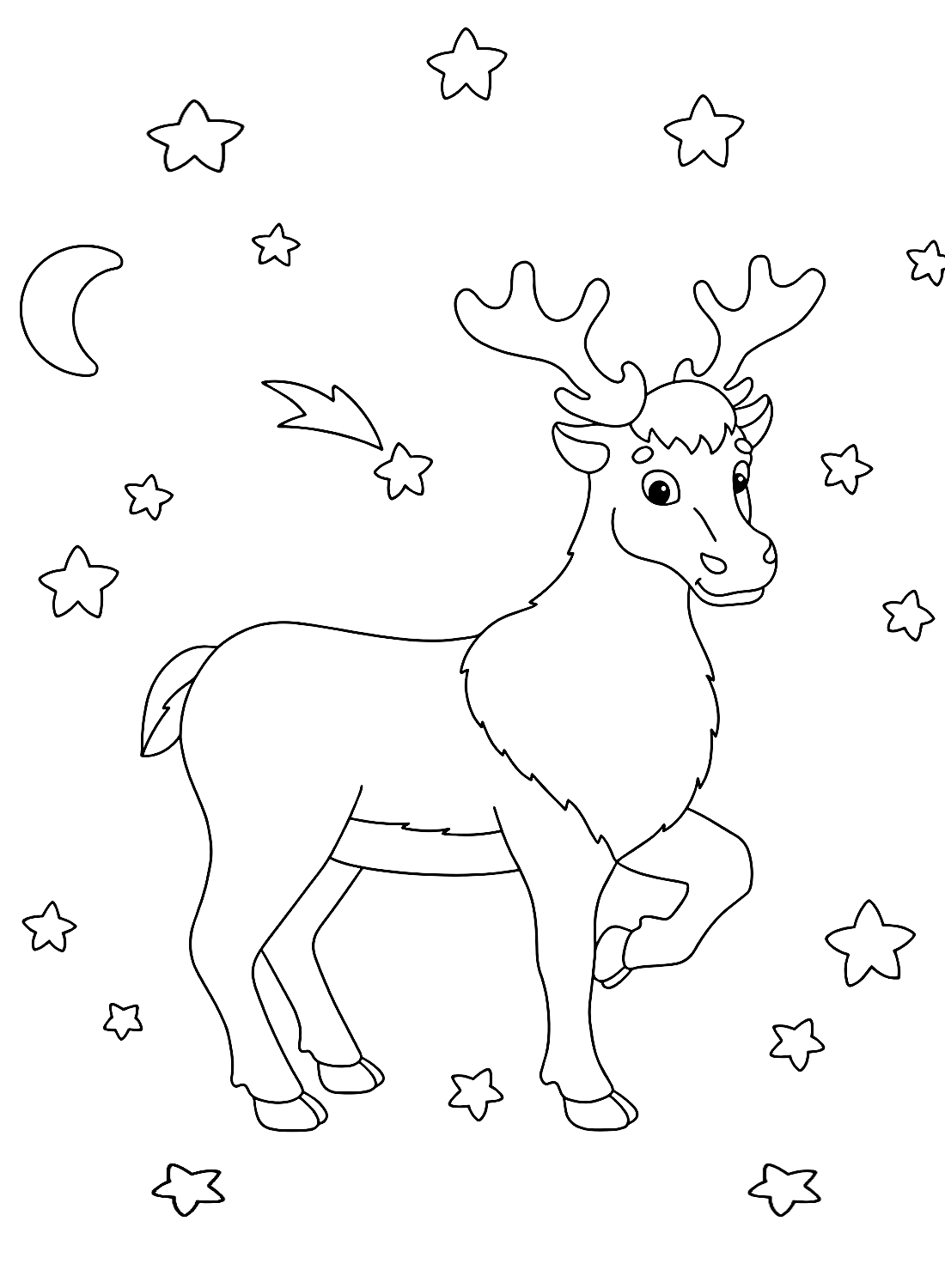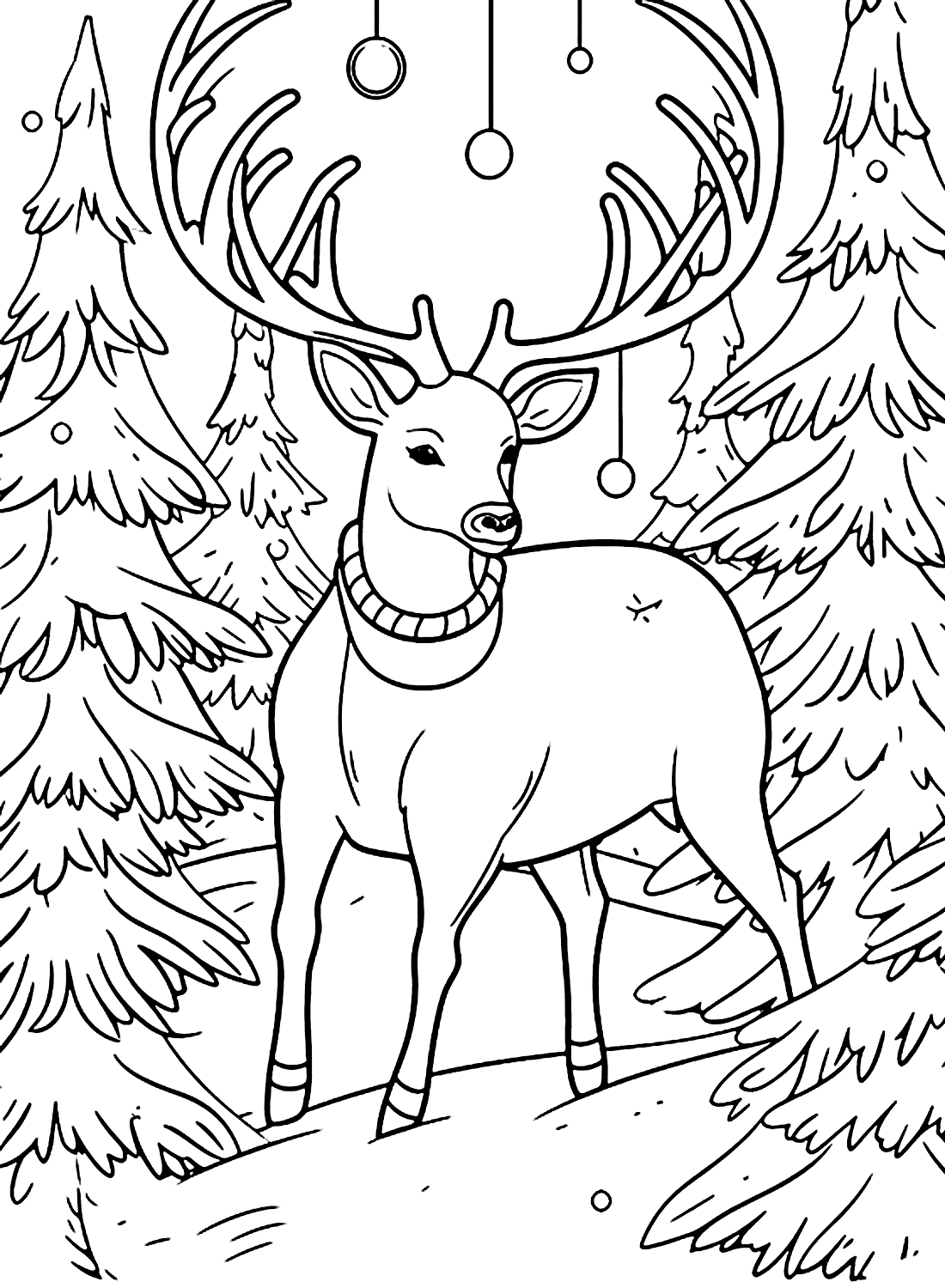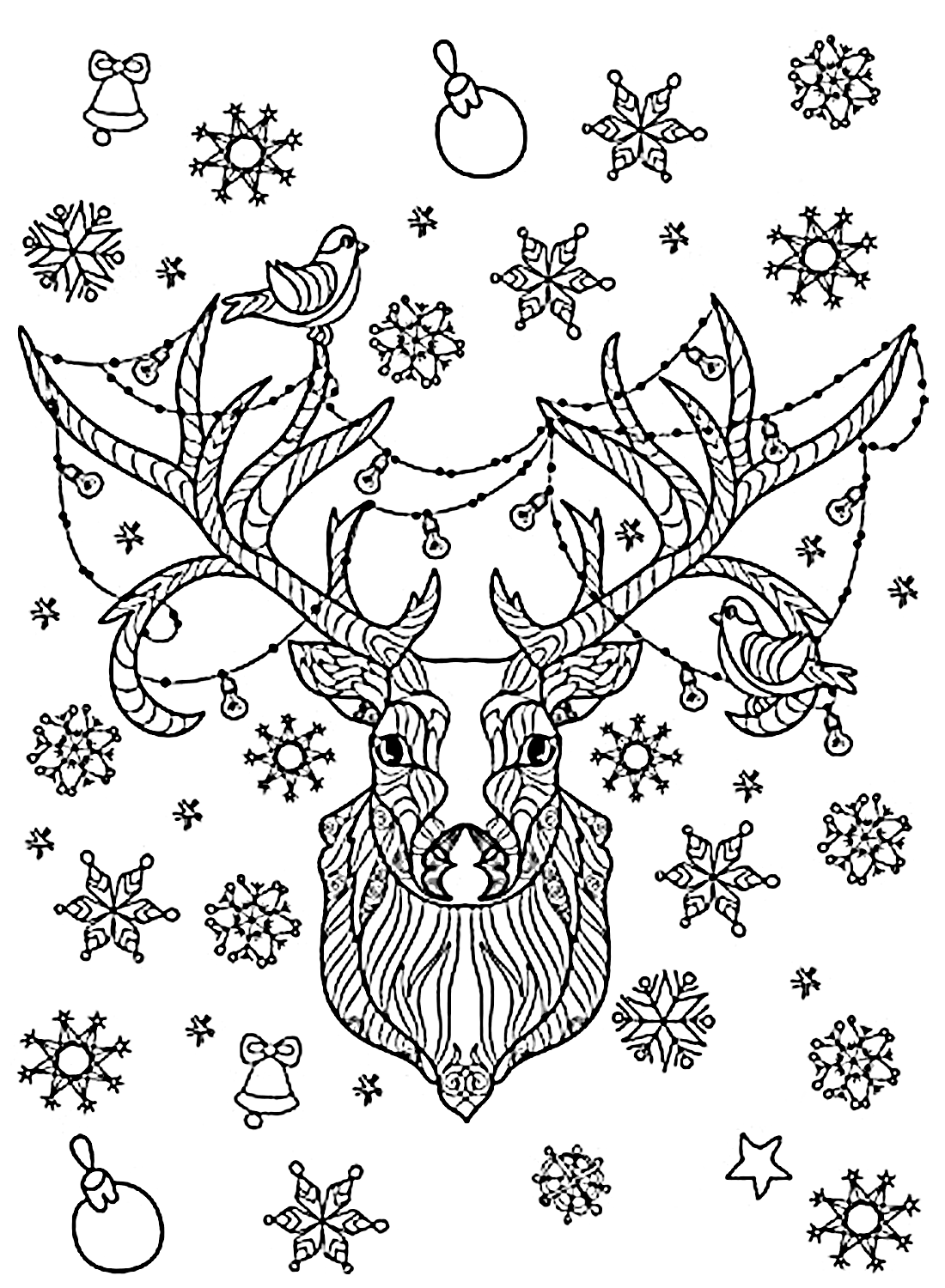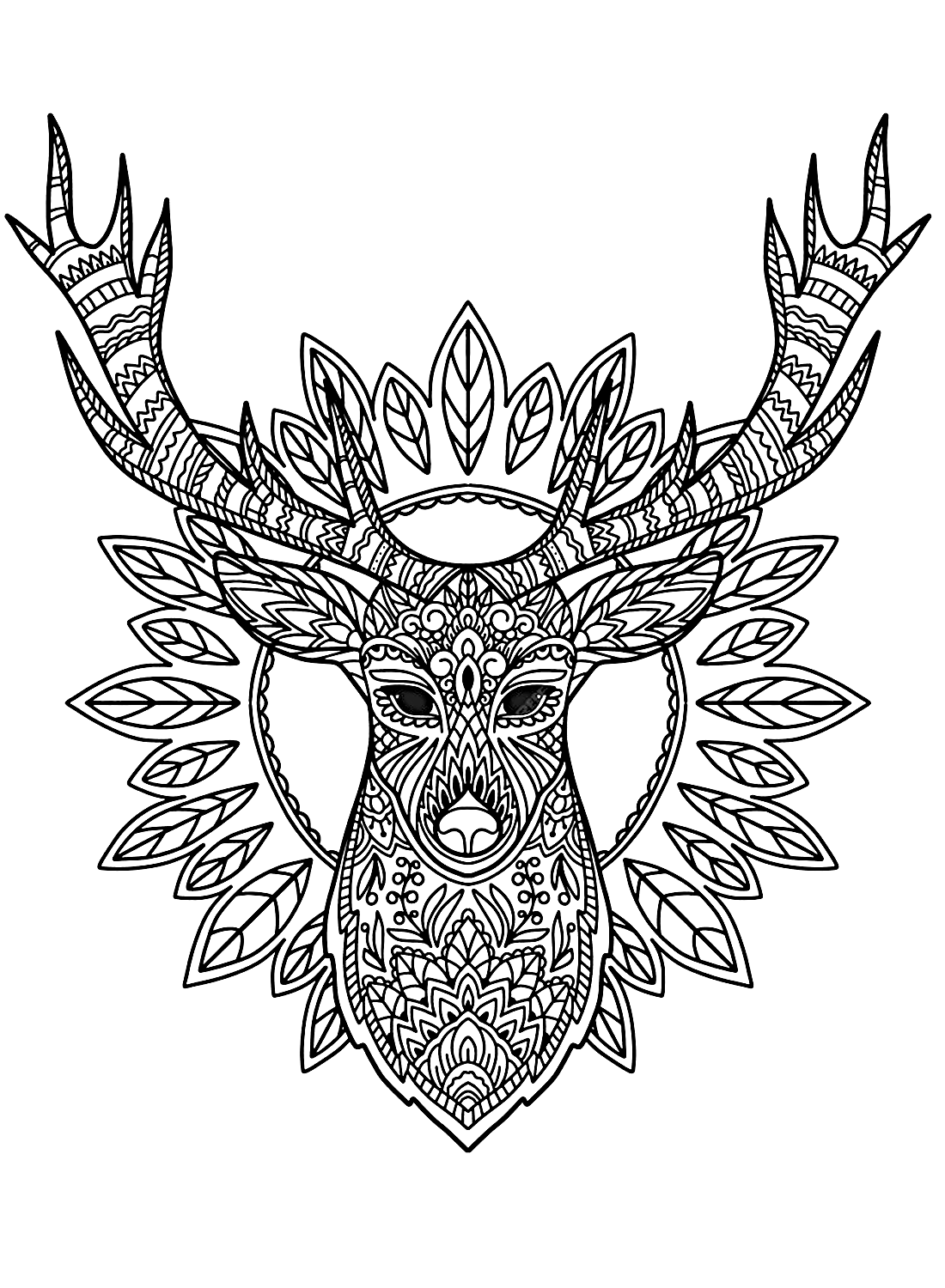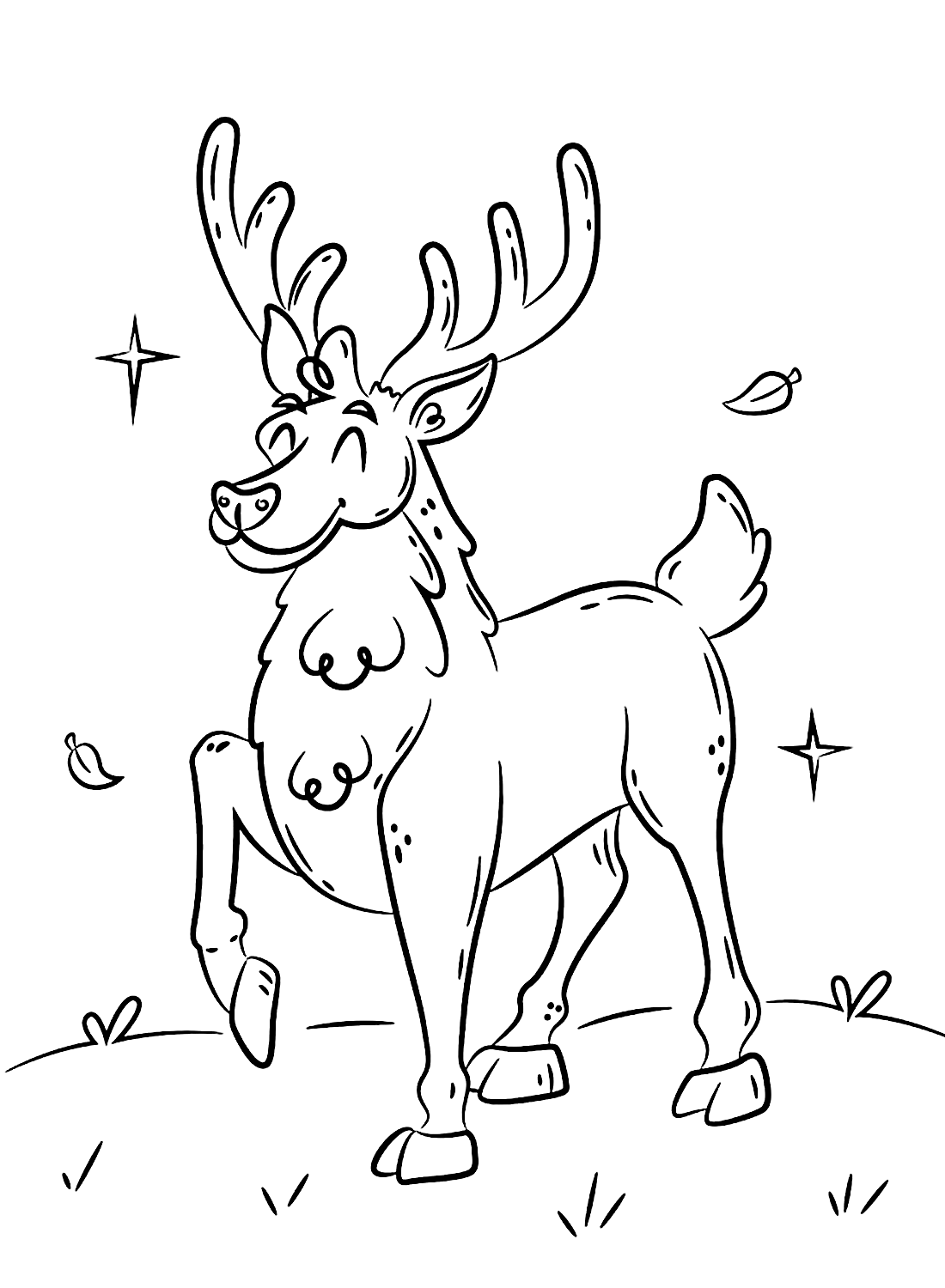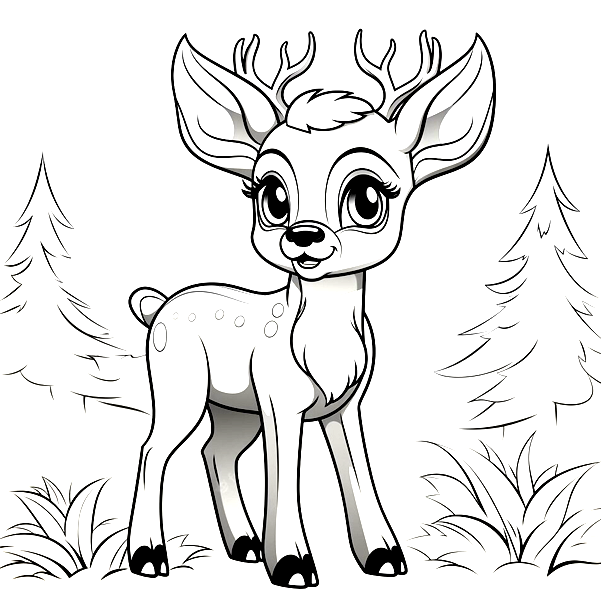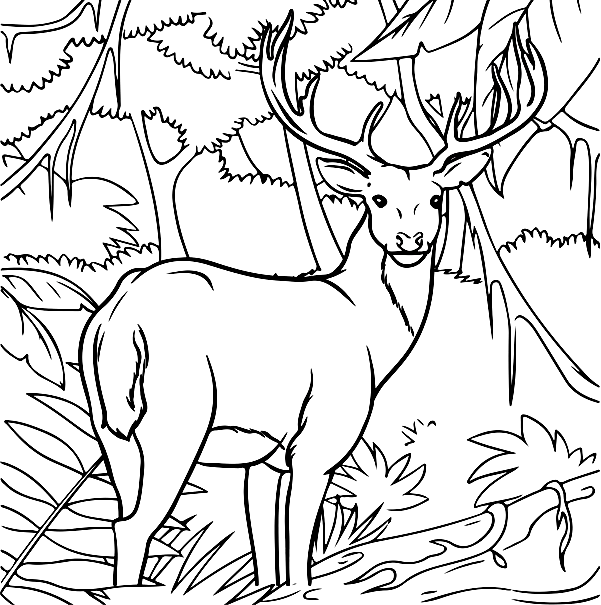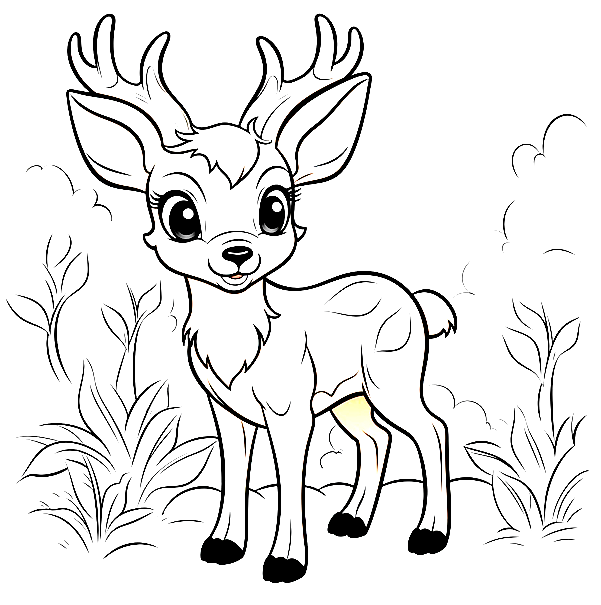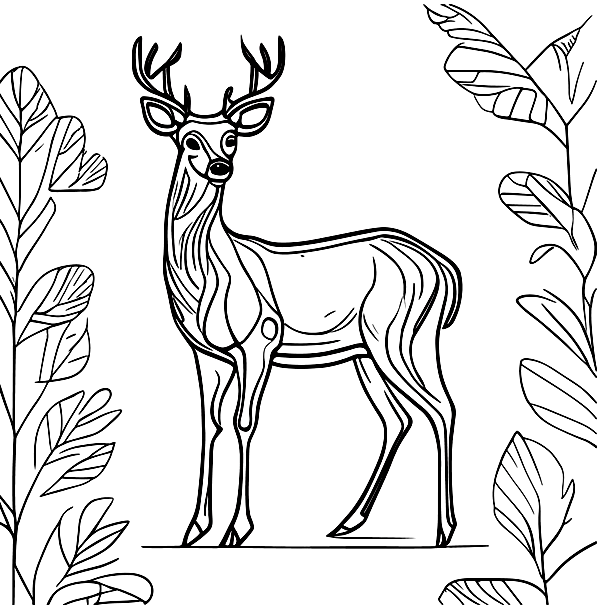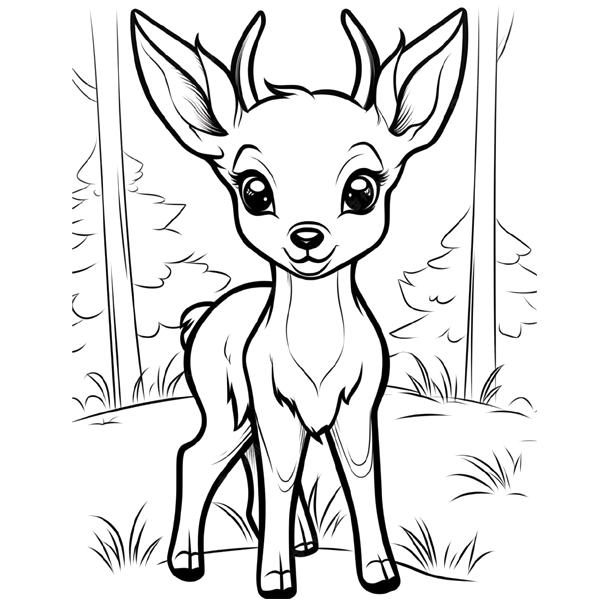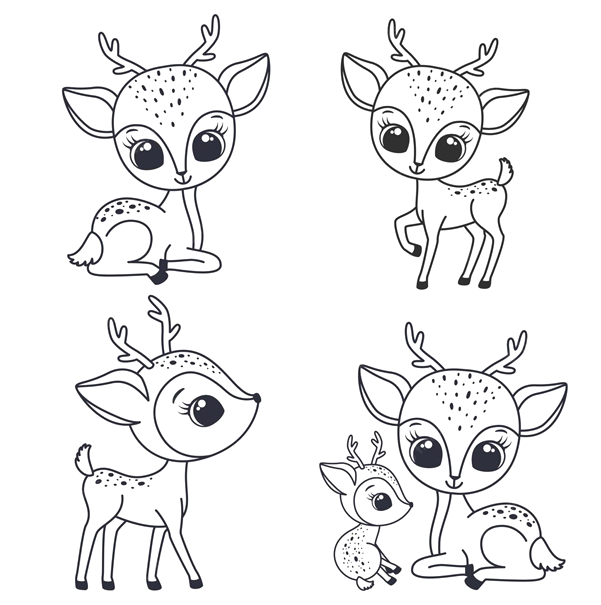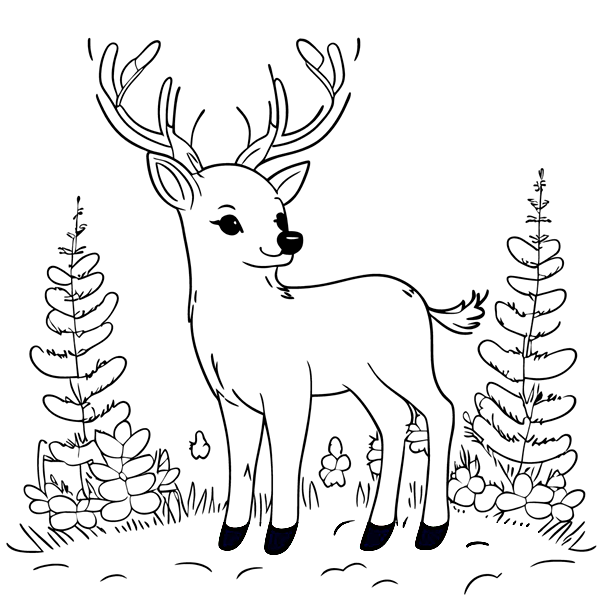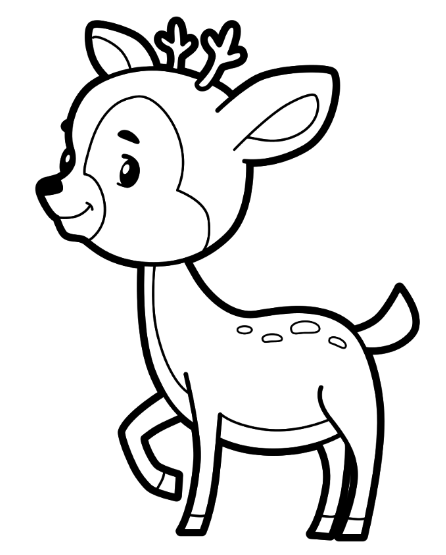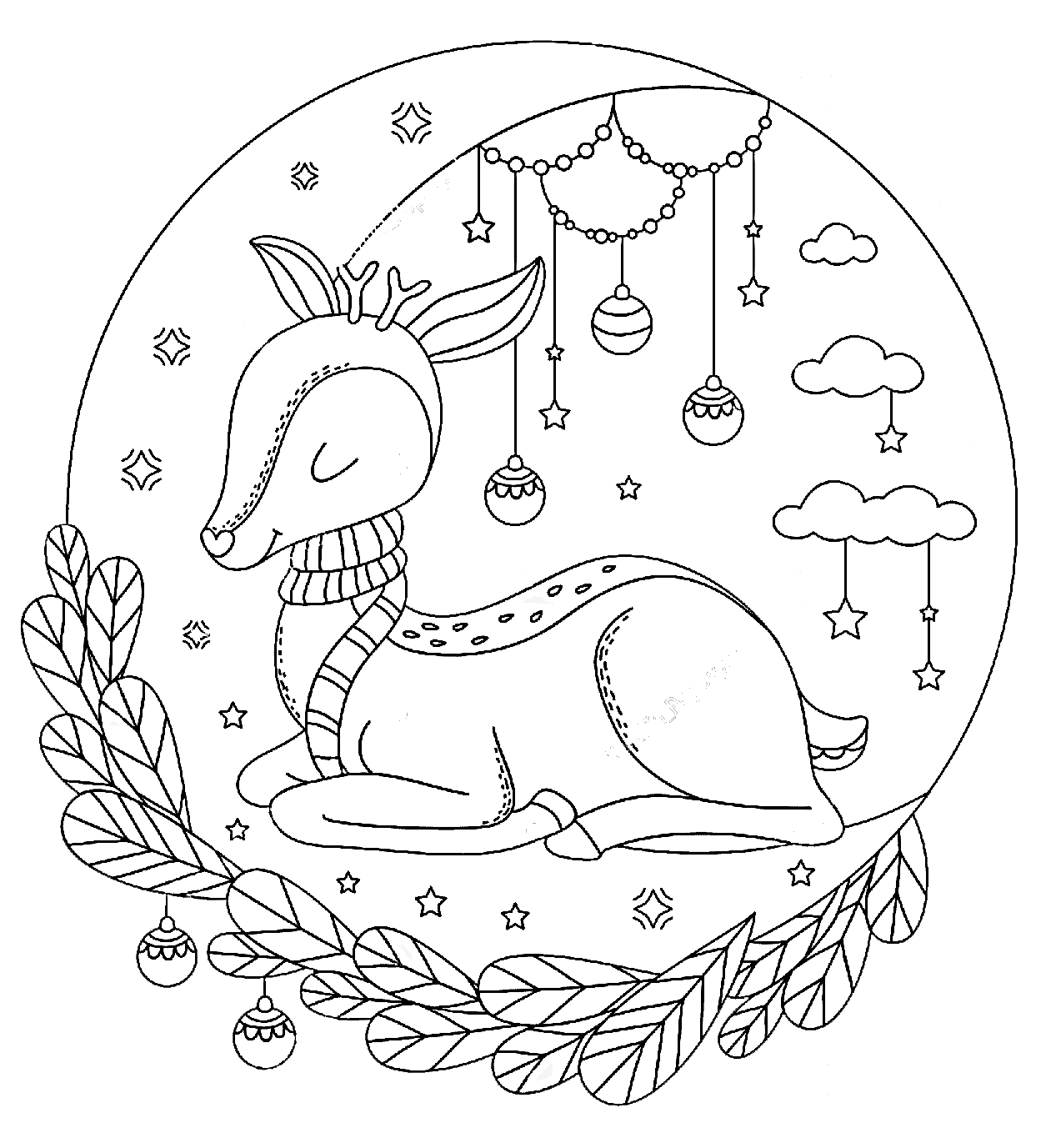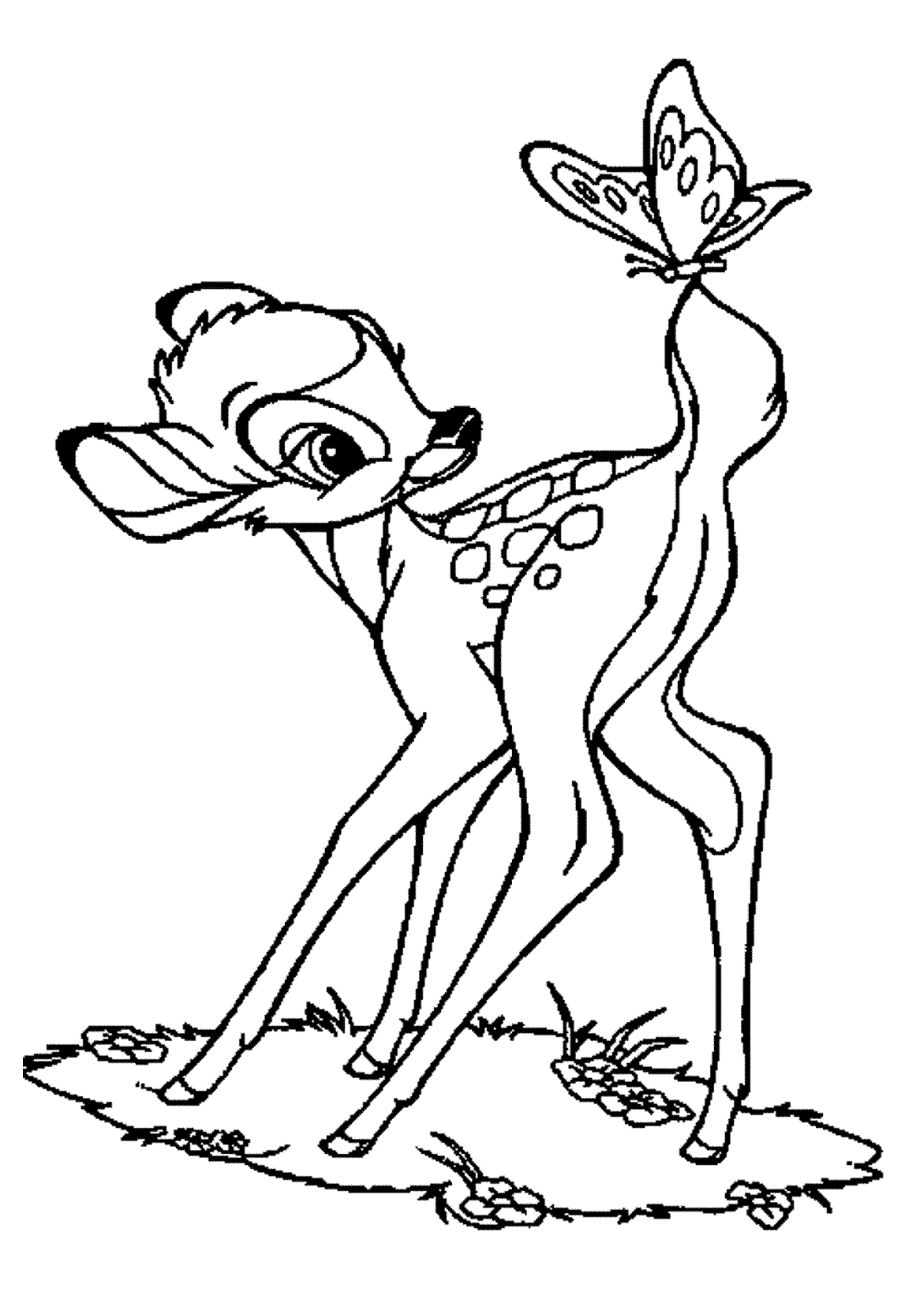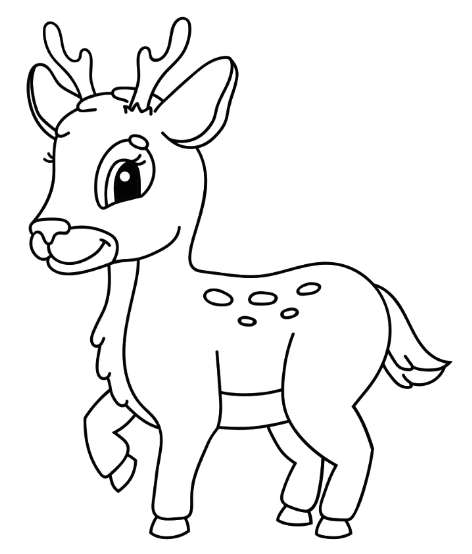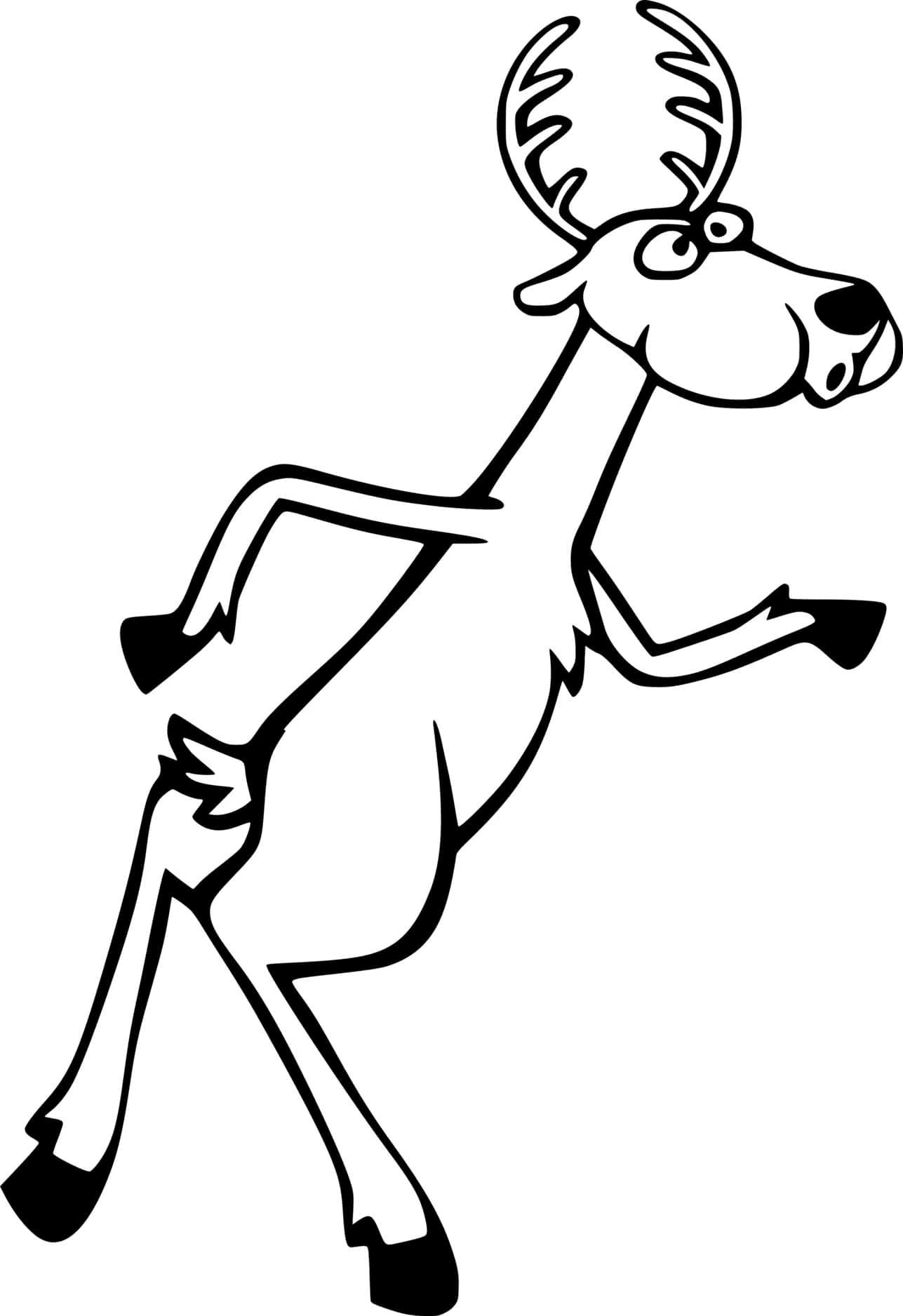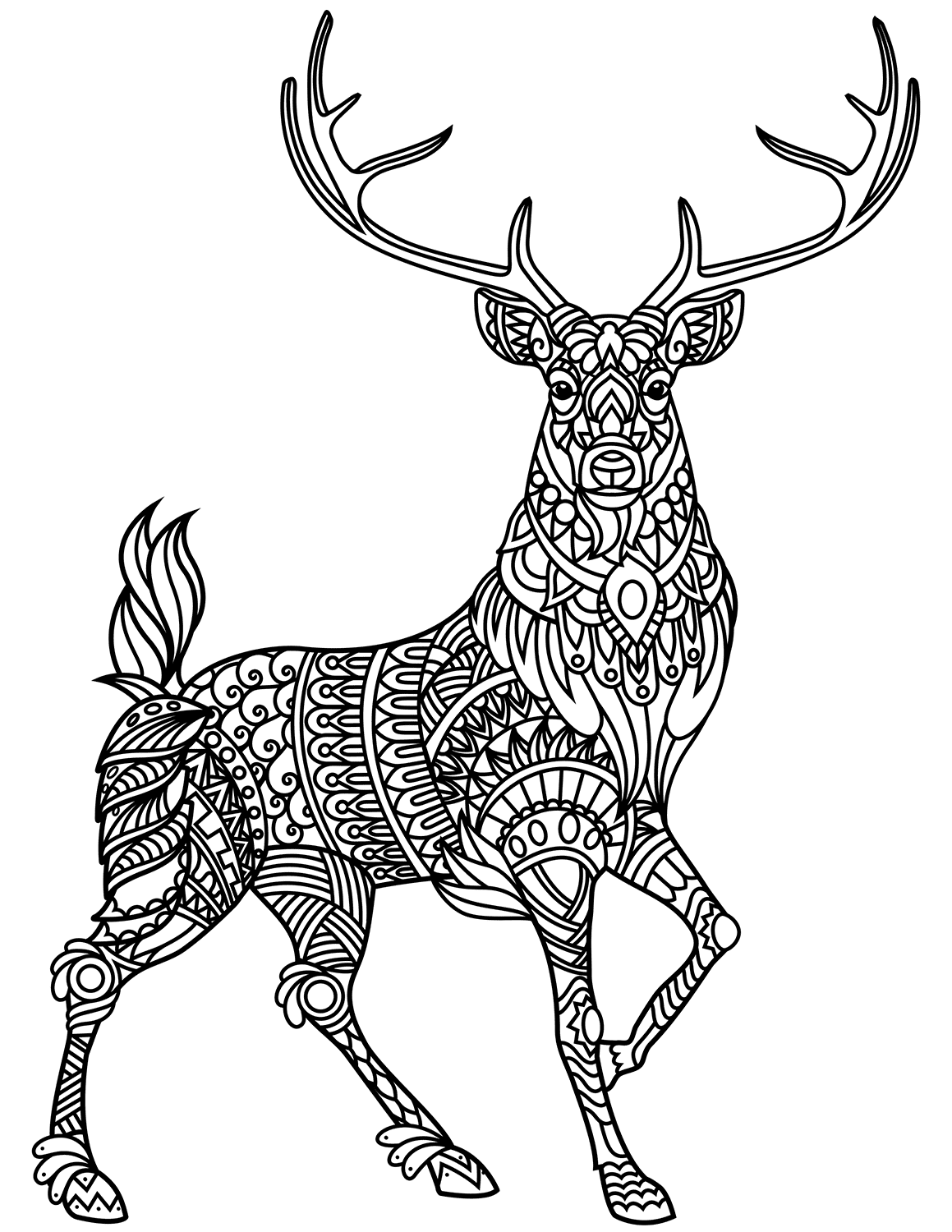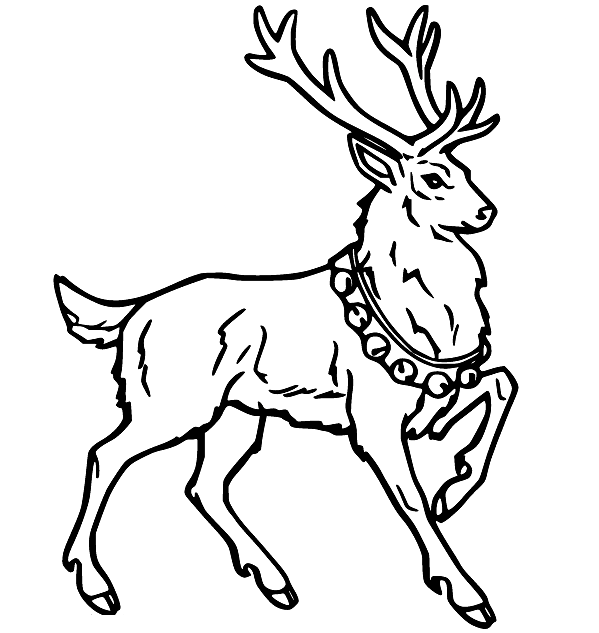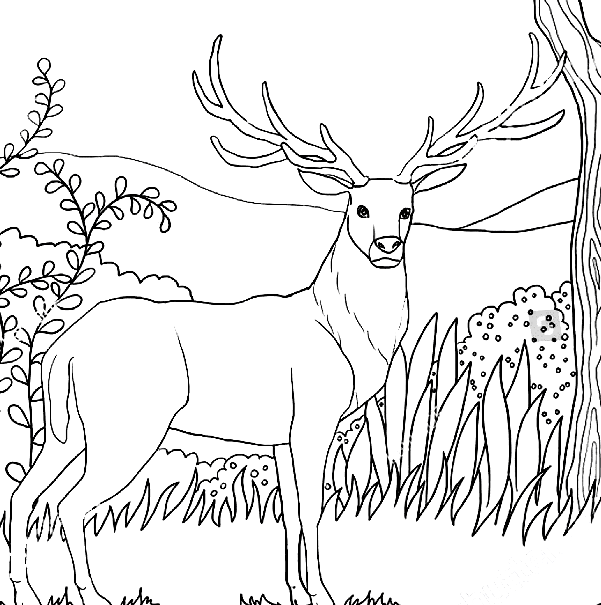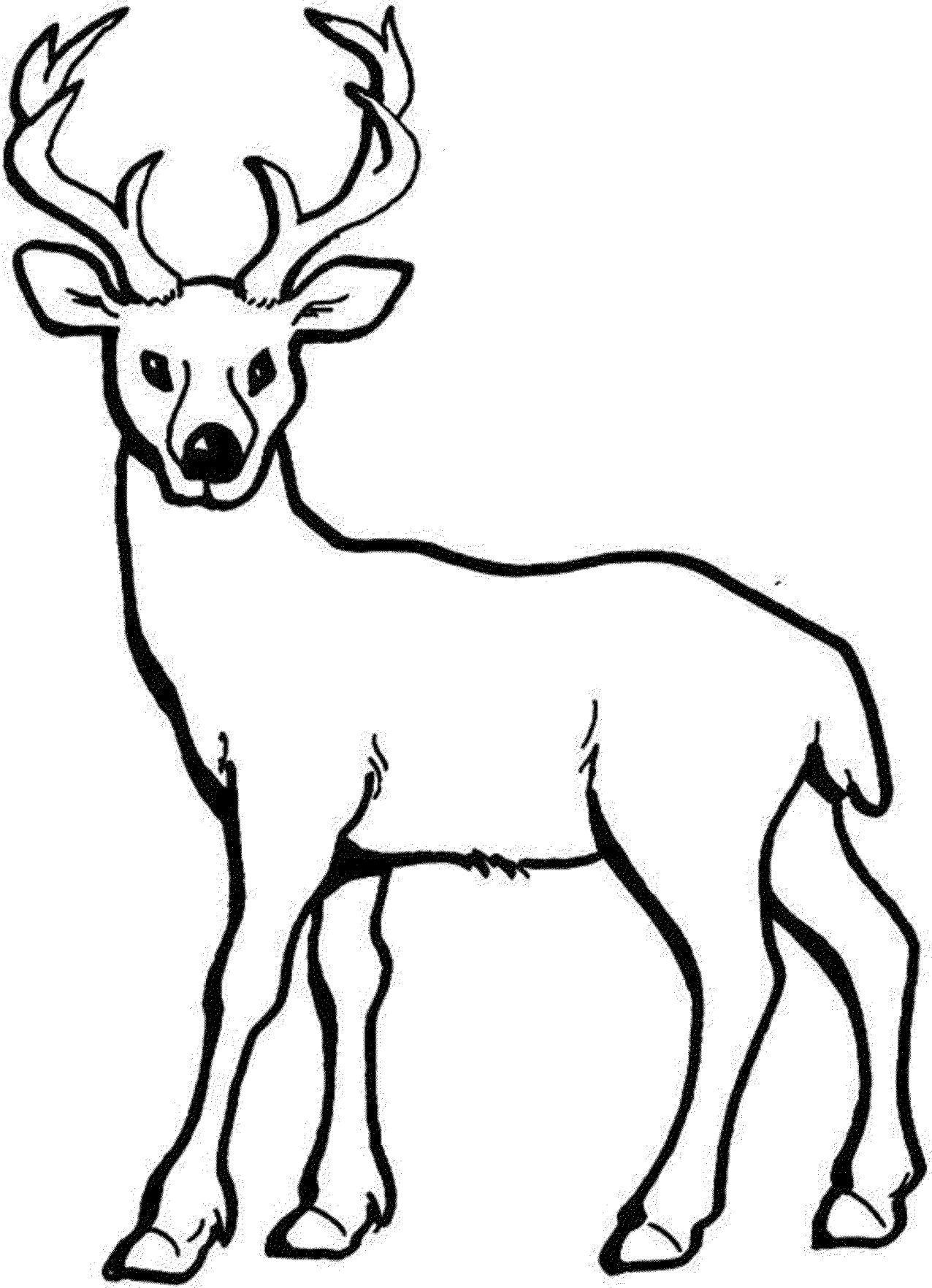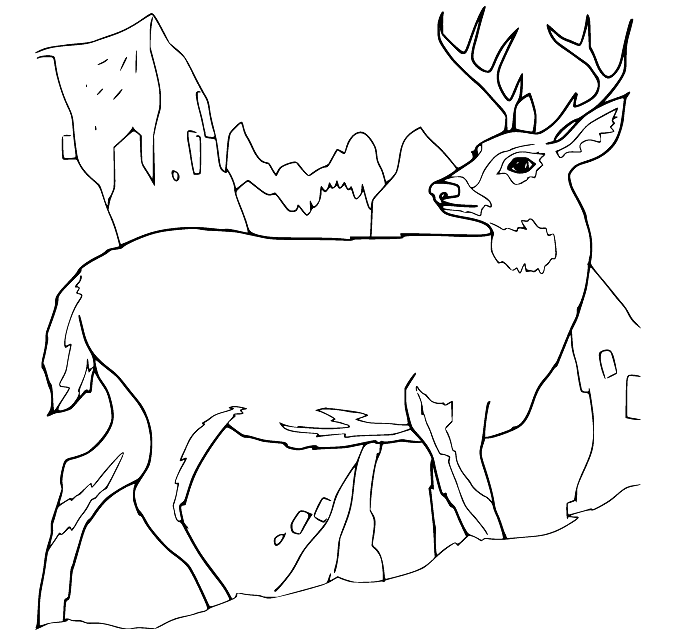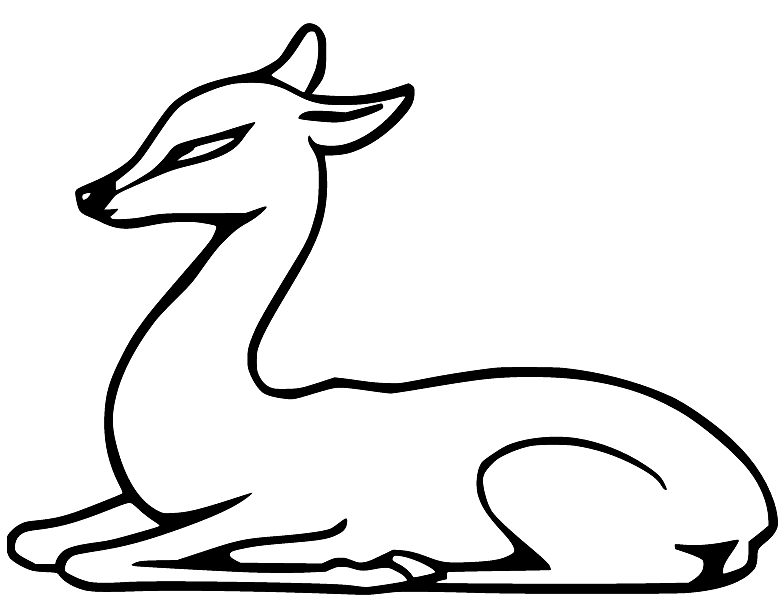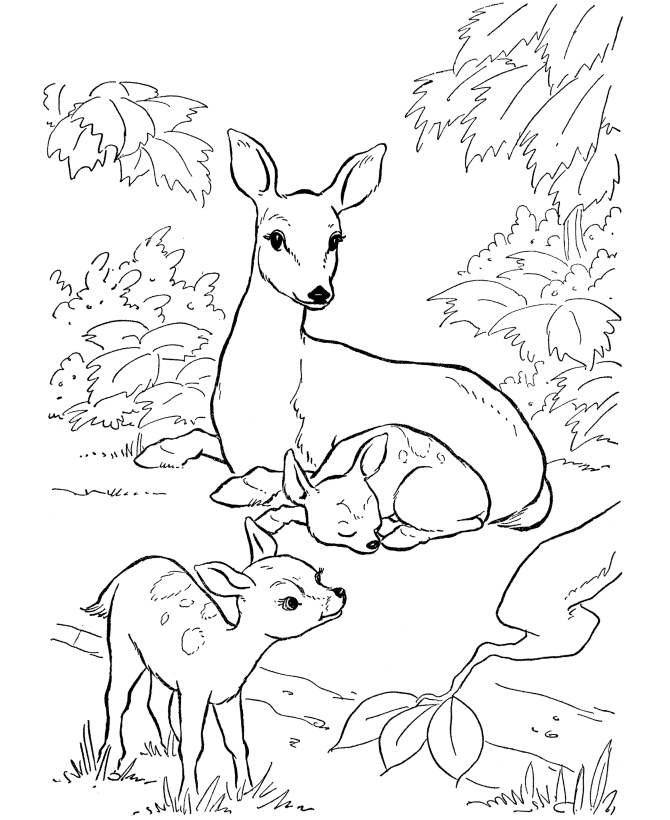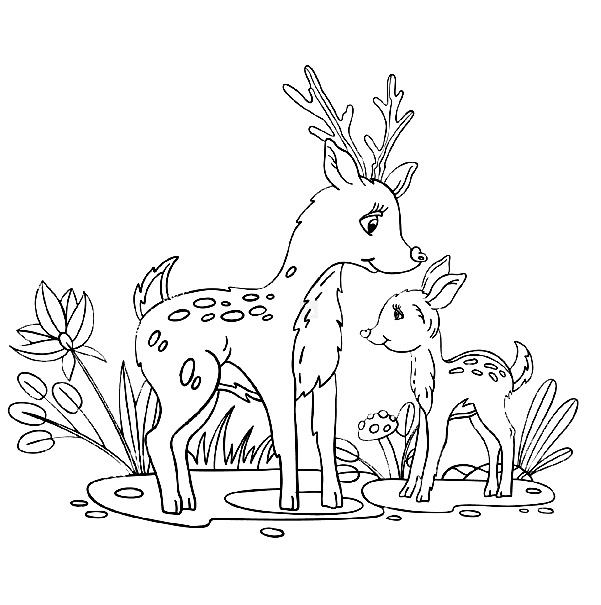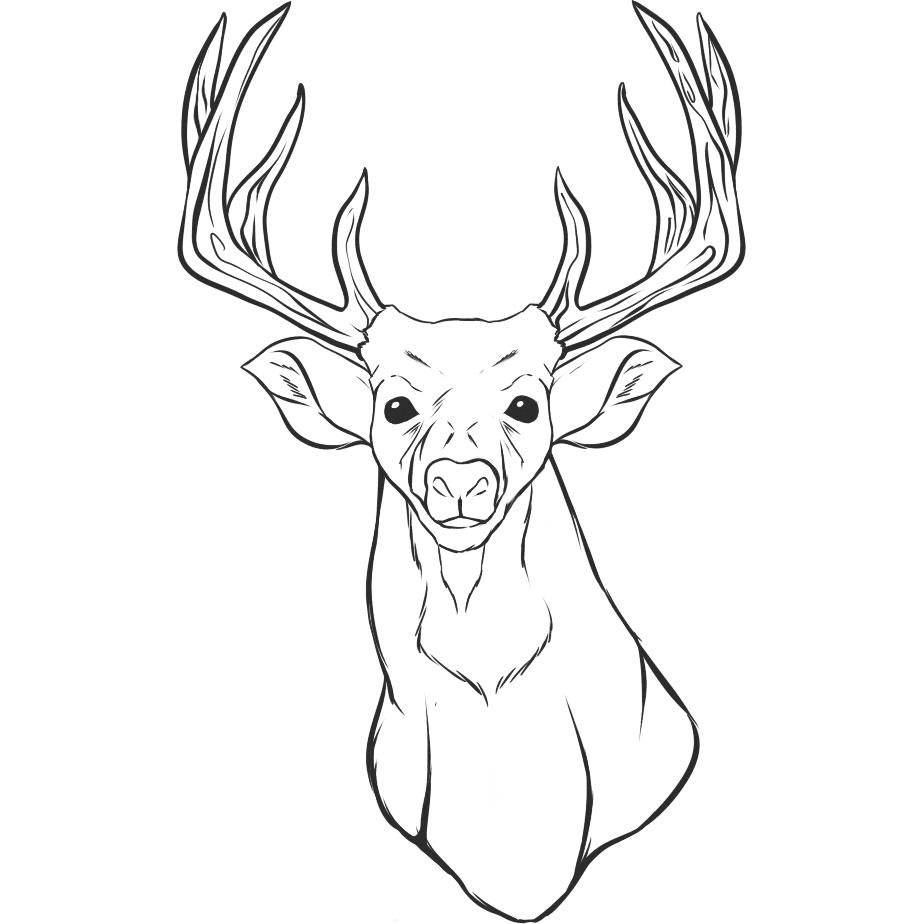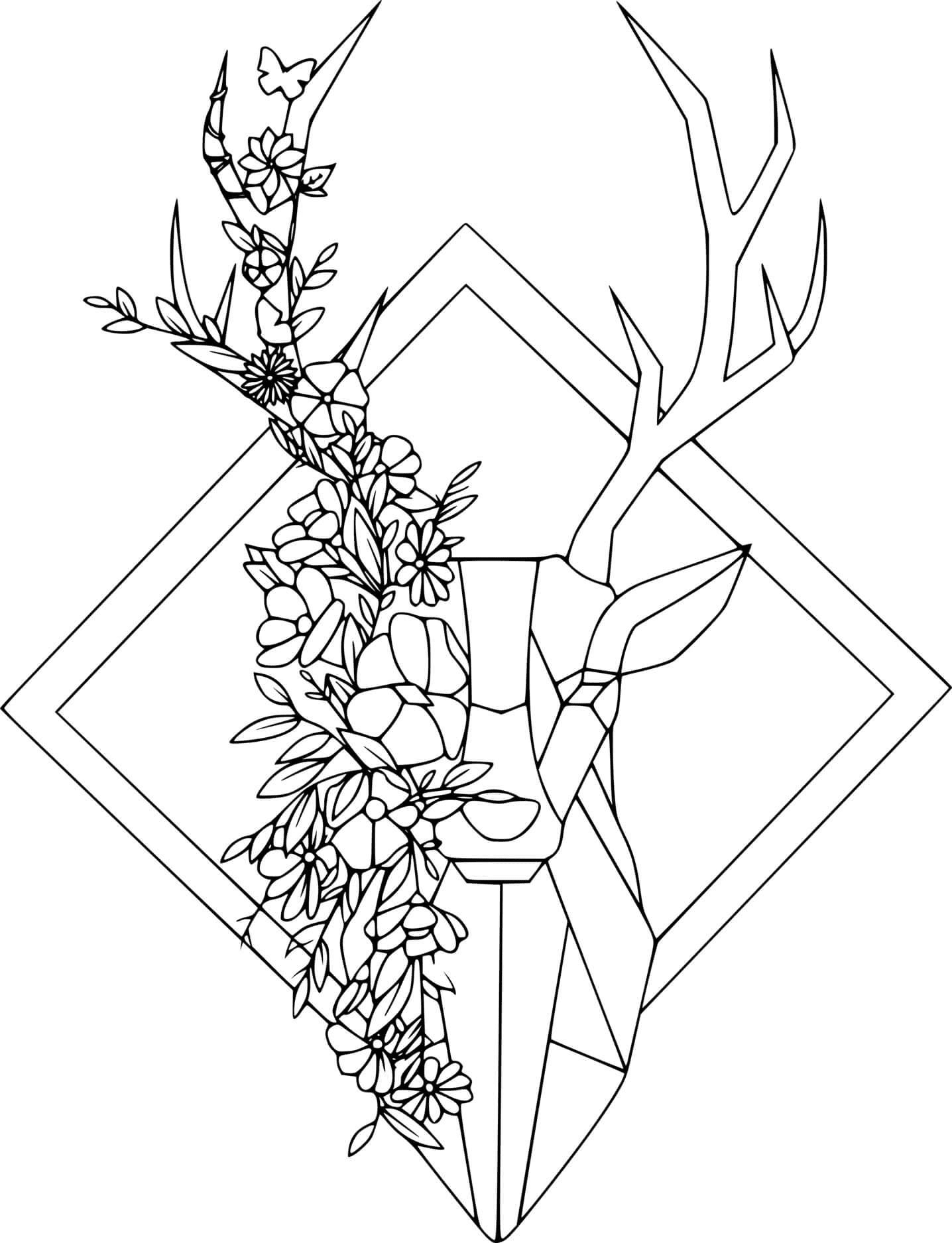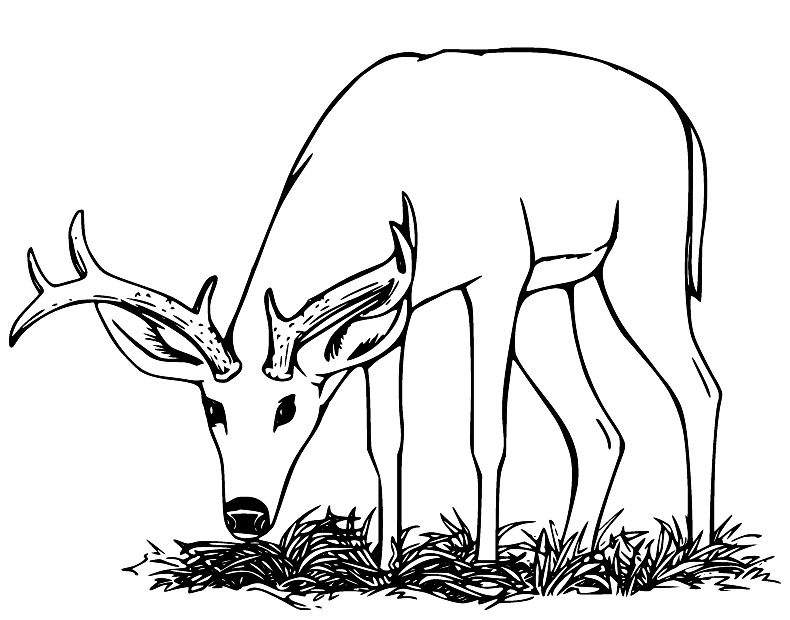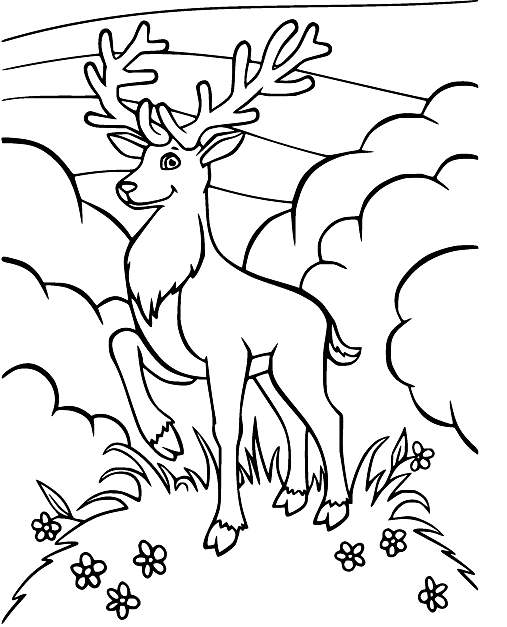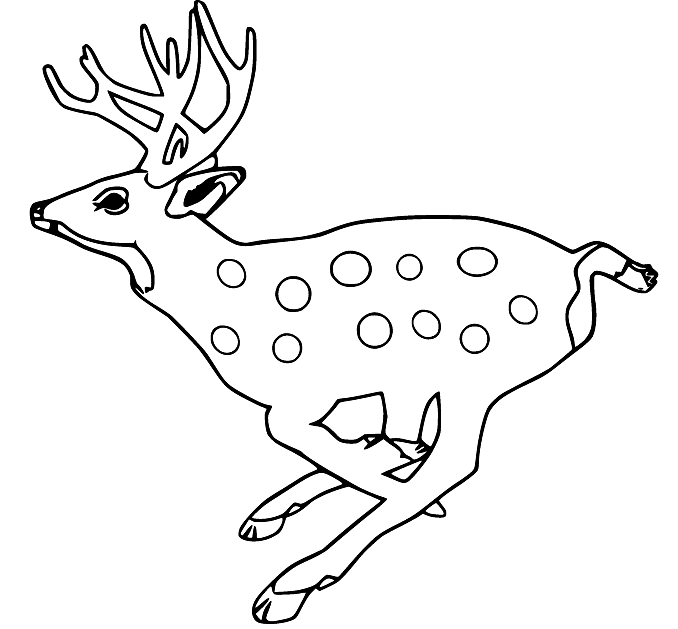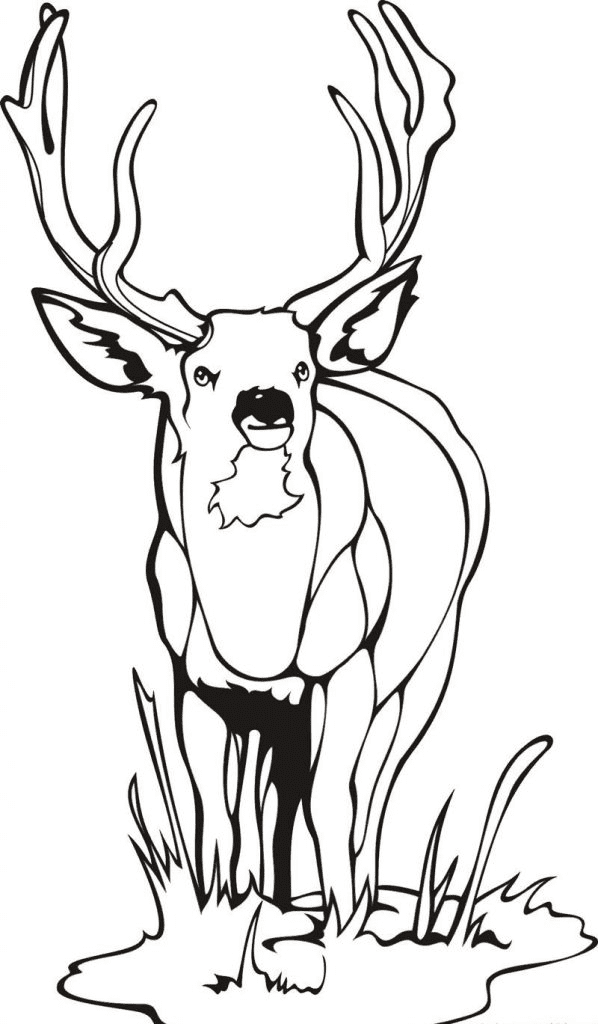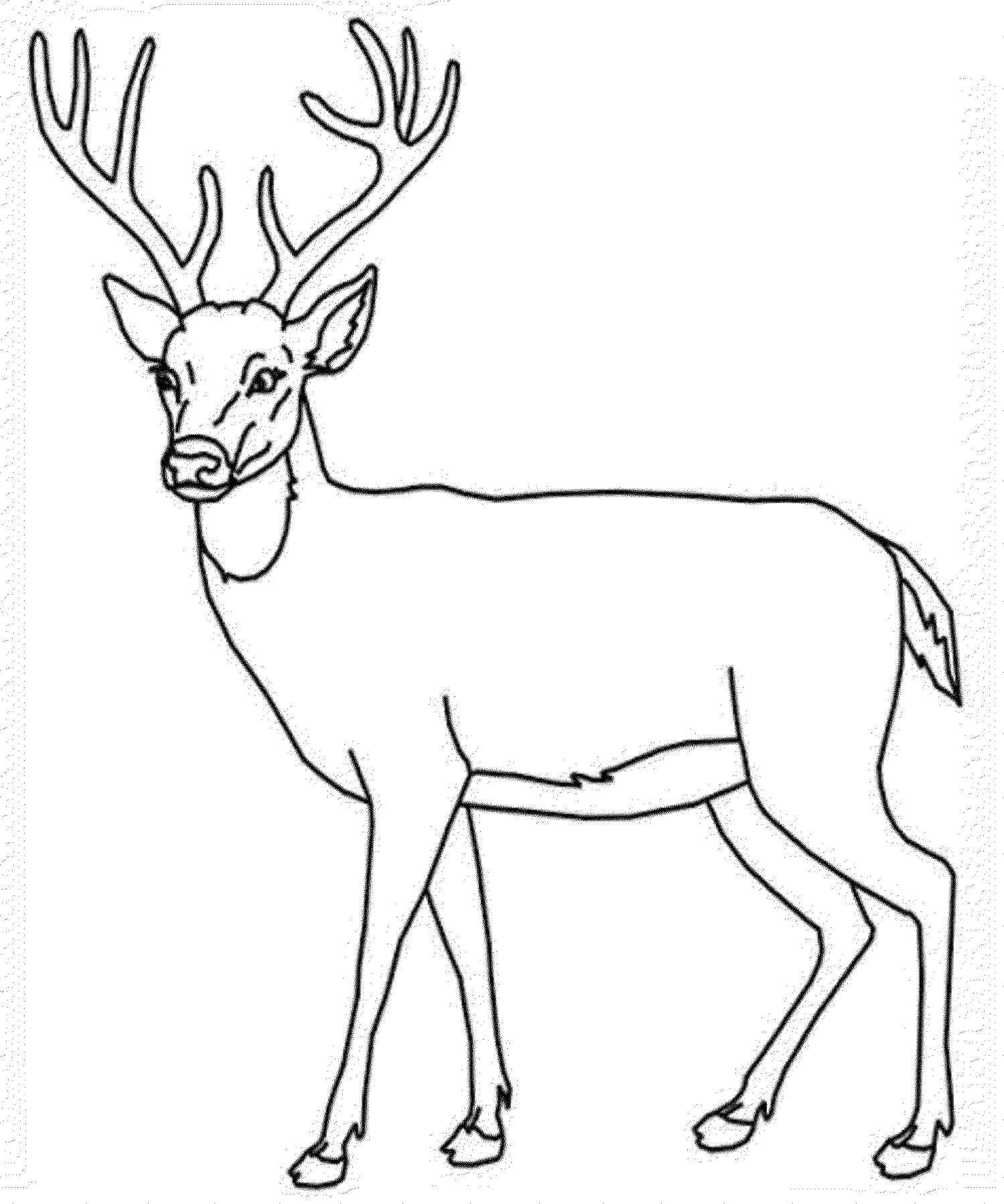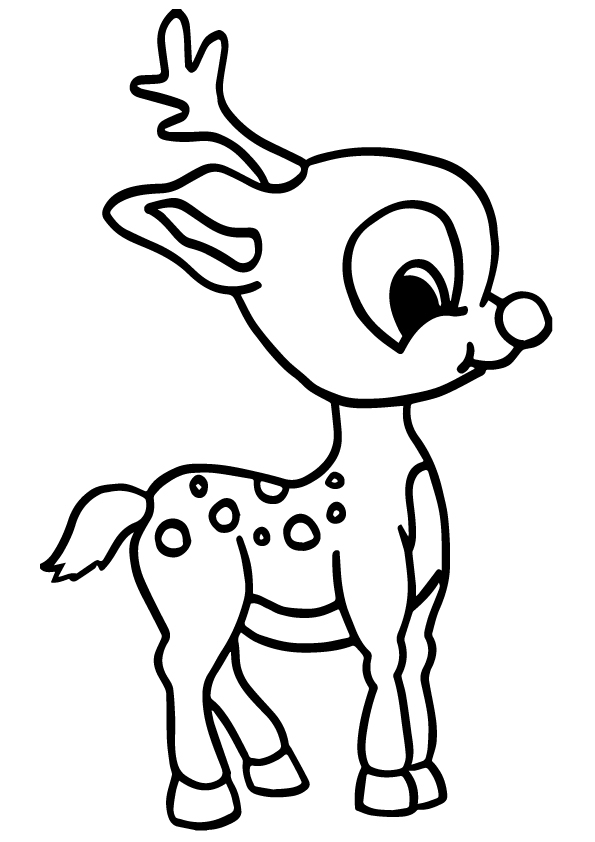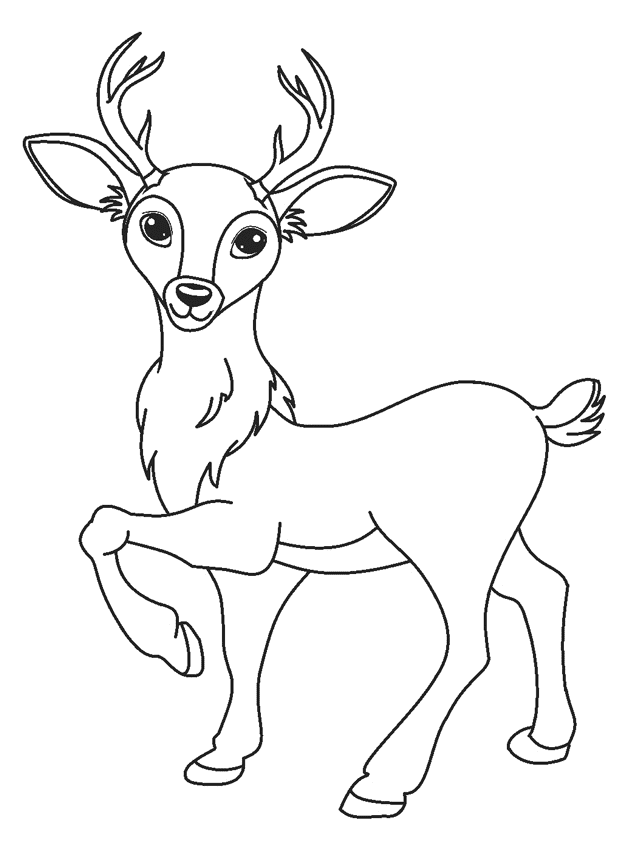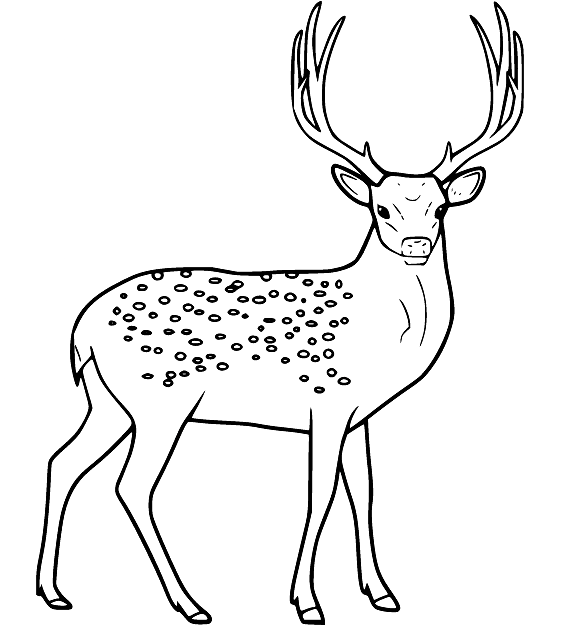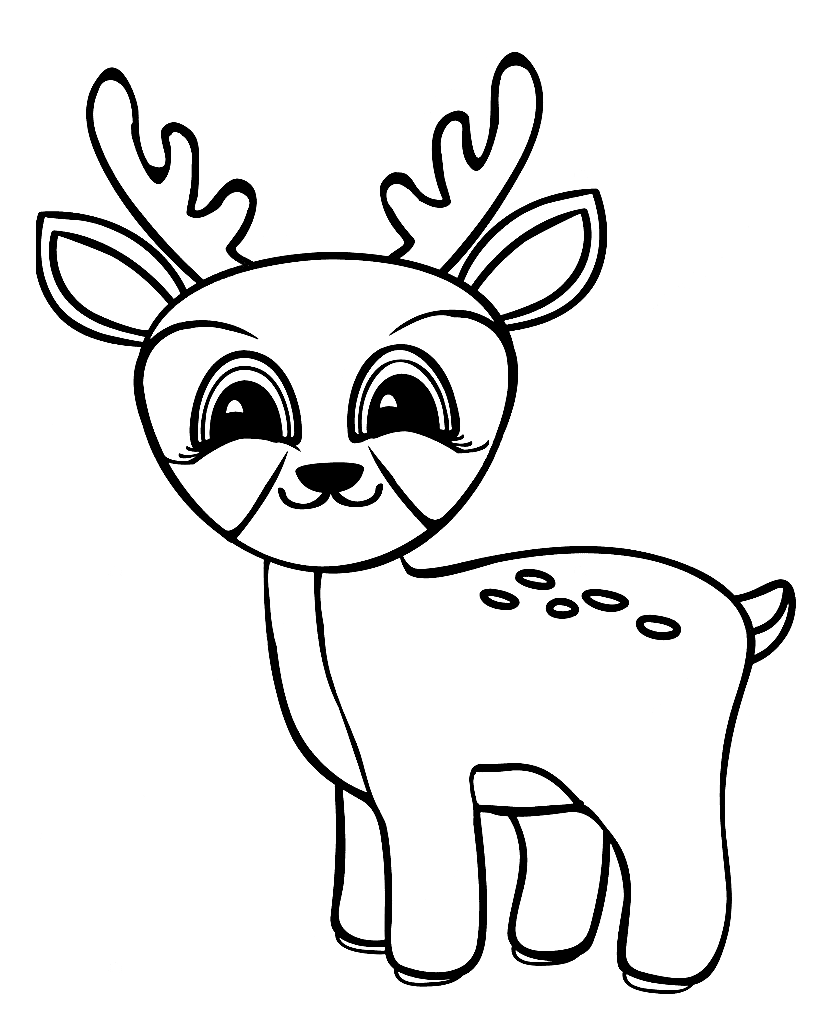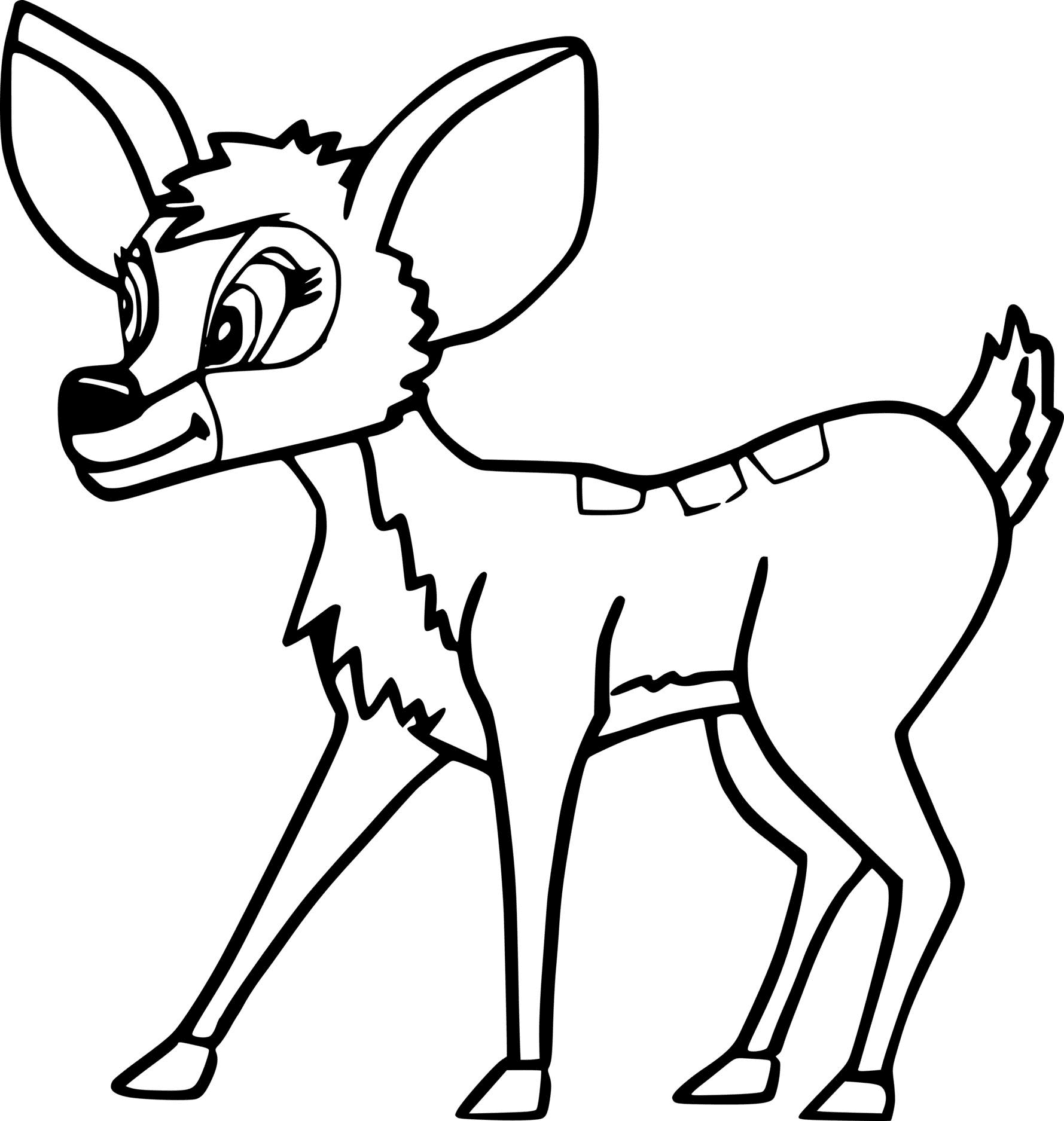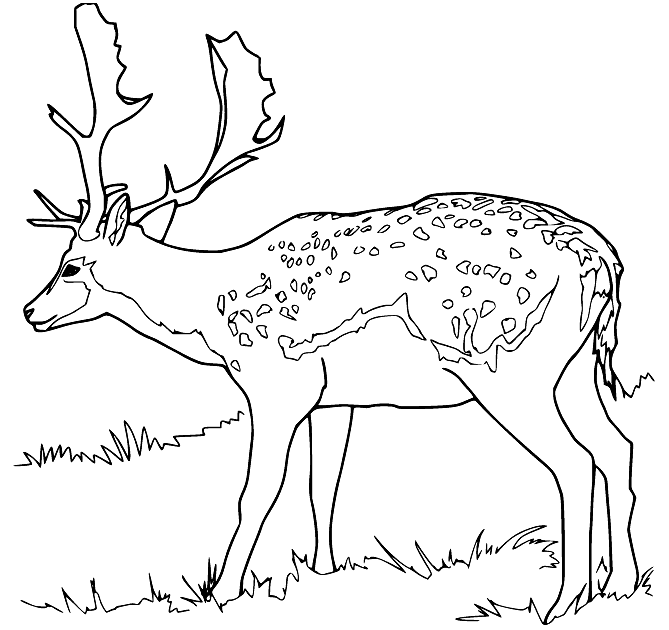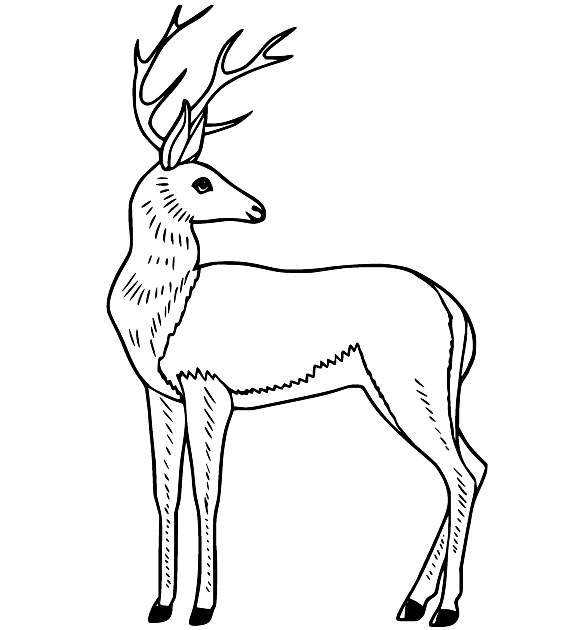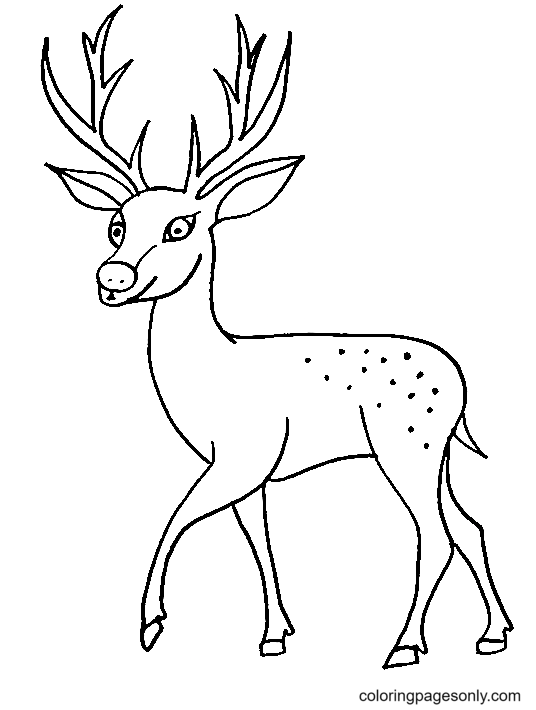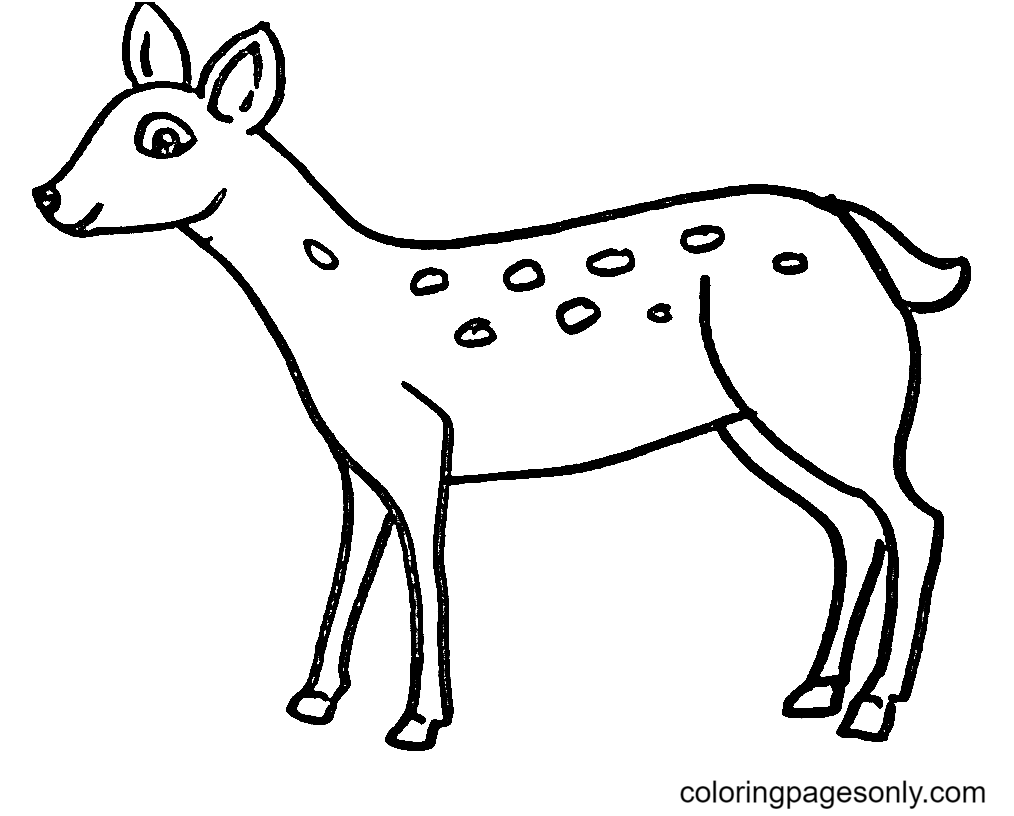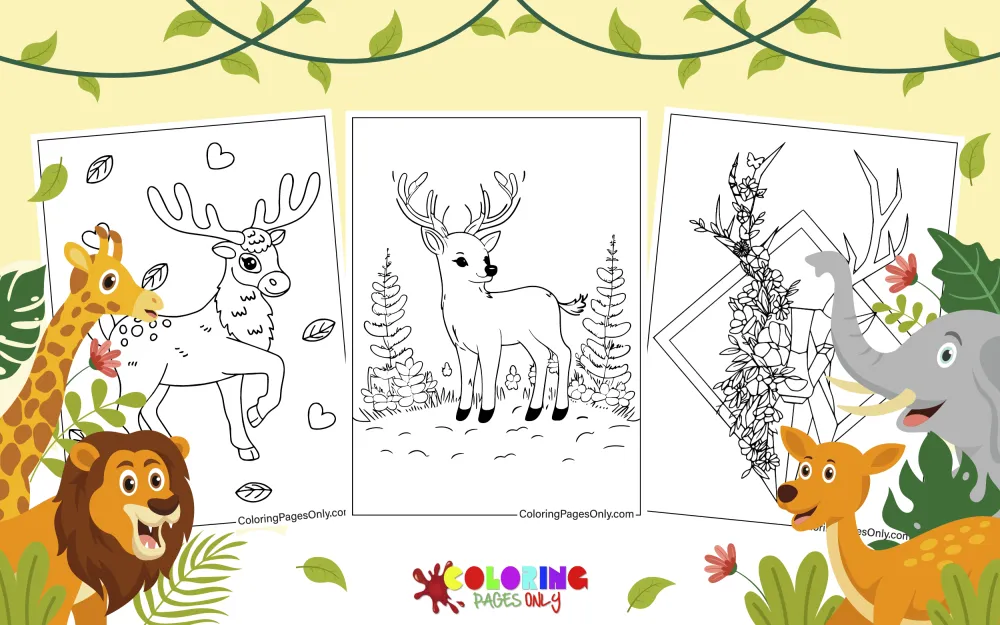
Free deer coloring pages: 80+ pages featuring white-tailed bucks with full antler racks in forest settings, spotted fawns curled in meadow grass, does in alert listening poses, deer families with buck, doe, and fawn together, reindeer in winter compositions, stag portrait studies showing antler structure detail, deer silhouettes at sunset, deer in autumn leaf settings, realistic wildlife drawings alongside cartoon and kawaii-style deer faces, mandala-style deer art with botanical borders, and the full visual vocabulary of one of wildlife illustration’s most consistently depicted and most widely distributed mammal families. All free, printable PDFs and online coloring for wildlife enthusiasts of all ages.
Deer belong to the family Cervidae within the order Artiodactyla (even-toed ungulates). The family contains approximately 43 to 50 living species, depending on the classification system used, organized across two major subfamilies: Cervinae (primarily Old World deer, including red deer, sika, and fallow deer) and Capreolinae (including New World deer such as white-tailed deer, mule deer, moose, and reindeer/caribou). Cervidae are found on every continent except Antarctica and Australia, making them among the most geographically widespread of all large mammal families.
The white-tailed deer (Odocoileus virginianus) is the most widely recognized deer species in North America, with an estimated population of 25 to 30 million individuals across the United States. The species occupies an extraordinary range of habitats from boreal forest through subtropical regions and has adapted more completely to suburban and agricultural environments than almost any other wild ungulate species of comparable size. The reindeer (Rangifer tarandus) is the only deer species in which both males and females regularly grow antlers.
These 80+ free pages at ColoringPagesOnly.com cover the full visual range of the deer family. All free, PDF or PNG, print or color online.
What’s Inside
White-Tailed Deer: Buck with Full Rack Pages
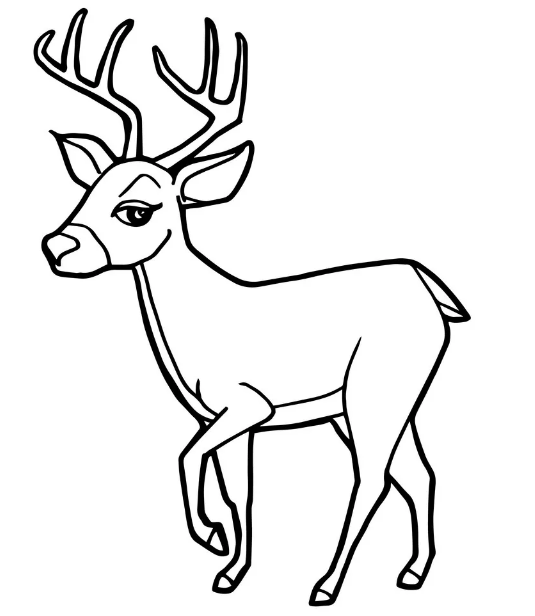
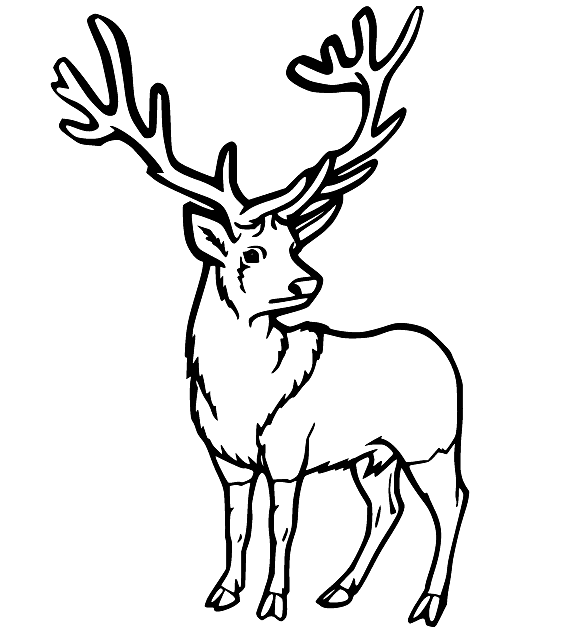
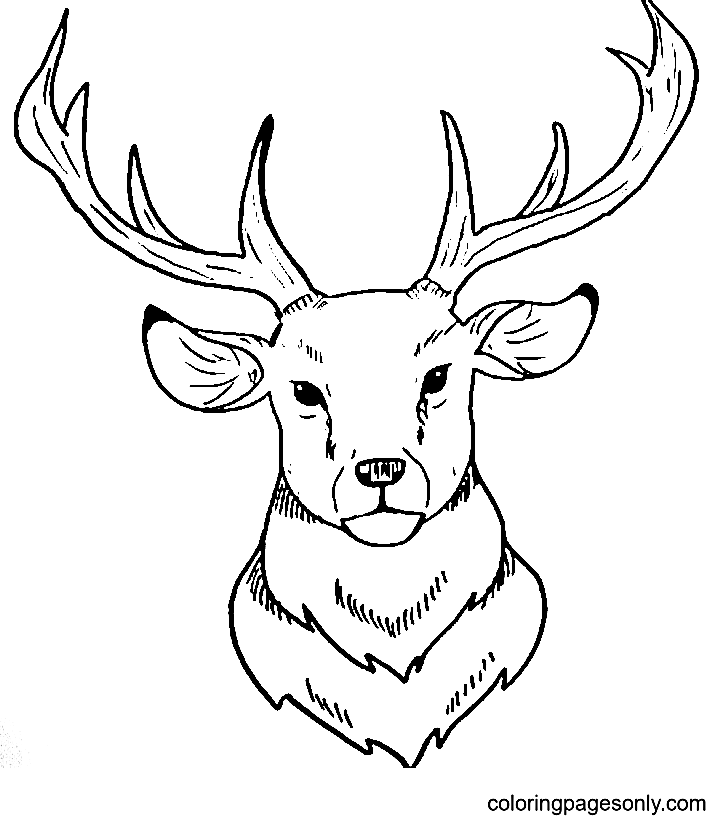
The white-tailed buck in full antler is wildlife illustration’s most quintessentially North American image: a mature male deer standing alert at the forest edge, head raised, ears forward, the full rack of antlers rising above his head in the specific architecture that has made antler imagery one of the most reproduced natural forms in visual culture.
Antlers are among the fastest-growing tissues in the animal kingdom, capable of growing at rates up to 1 inch (2.5 centimeters) per day in mature bucks during the growth season. They grow from permanent bony bases called pedicles on the skull and are initially covered in velvet: a soft skin rich in blood vessels and nerves that supplies the nutrients for the rapid growth process. When growth is complete, the velvet dries, loses its blood supply, and the buck removes it by rubbing against trees and shrubs, sometimes producing the dramatic reddish streaking of blood on fresh antlers that wildlife photographers document in late summer.
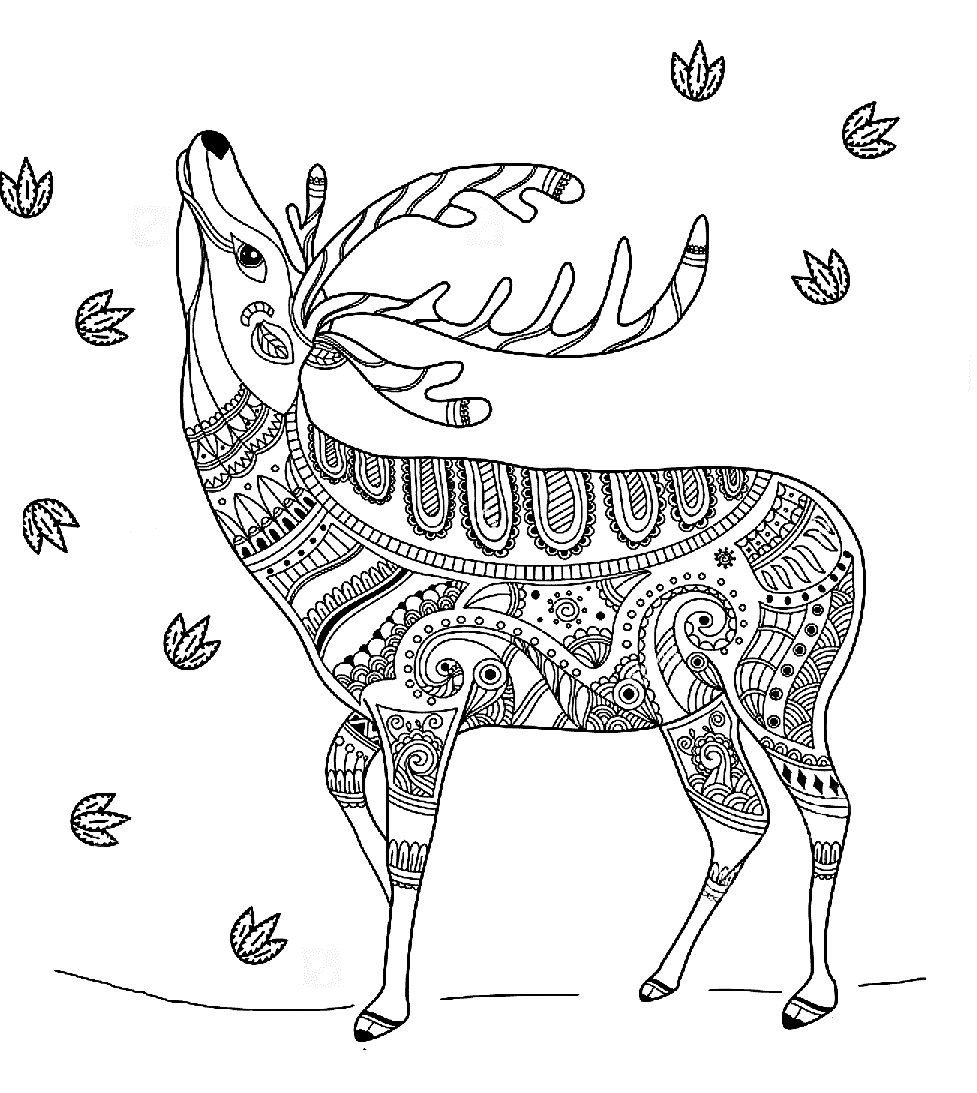
The antler’s architecture follows consistent rules across white-tailed deer: the main beam curves outward and forward from the pedicle, with individual tines (points) rising from the beam. The number of tines and the overall spread and mass of the rack increase with the deer’s age and nutritional status. Trophy-rated racks are judged by scoring systems (including the Boone and Crockett Club system, established in 1887) that measure beam length, tine length, inside spread, and mass at specific beam positions.
Coloring buck portrait pages: The coat in summer is warm reddish-brown or tawny-brown at full, warm saturation. The belly, inner legs, throat, and the underside of the tail are clean white or very pale cream. The face shows warm tan-brown with a slightly lighter area around the muzzle and eyes. The nose is dark brown-grey. The antlers are warm tan-brown to grey-brown: not white and not dark, but the specific warm-medium tone of dried bone. The velvet-covered antlers (if the page shows the growth phase) are darker and slightly reddish-brown, suggesting the living skin.
Spotted Fawn Pages
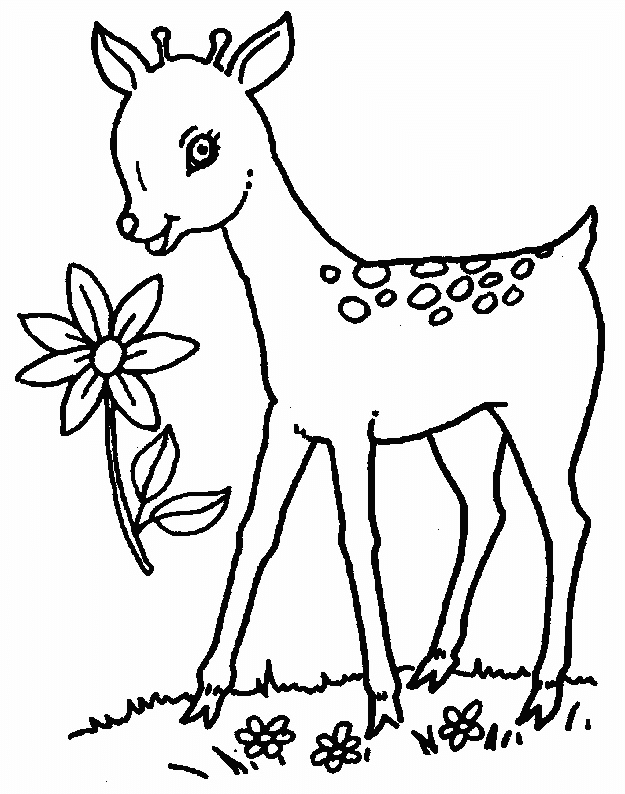
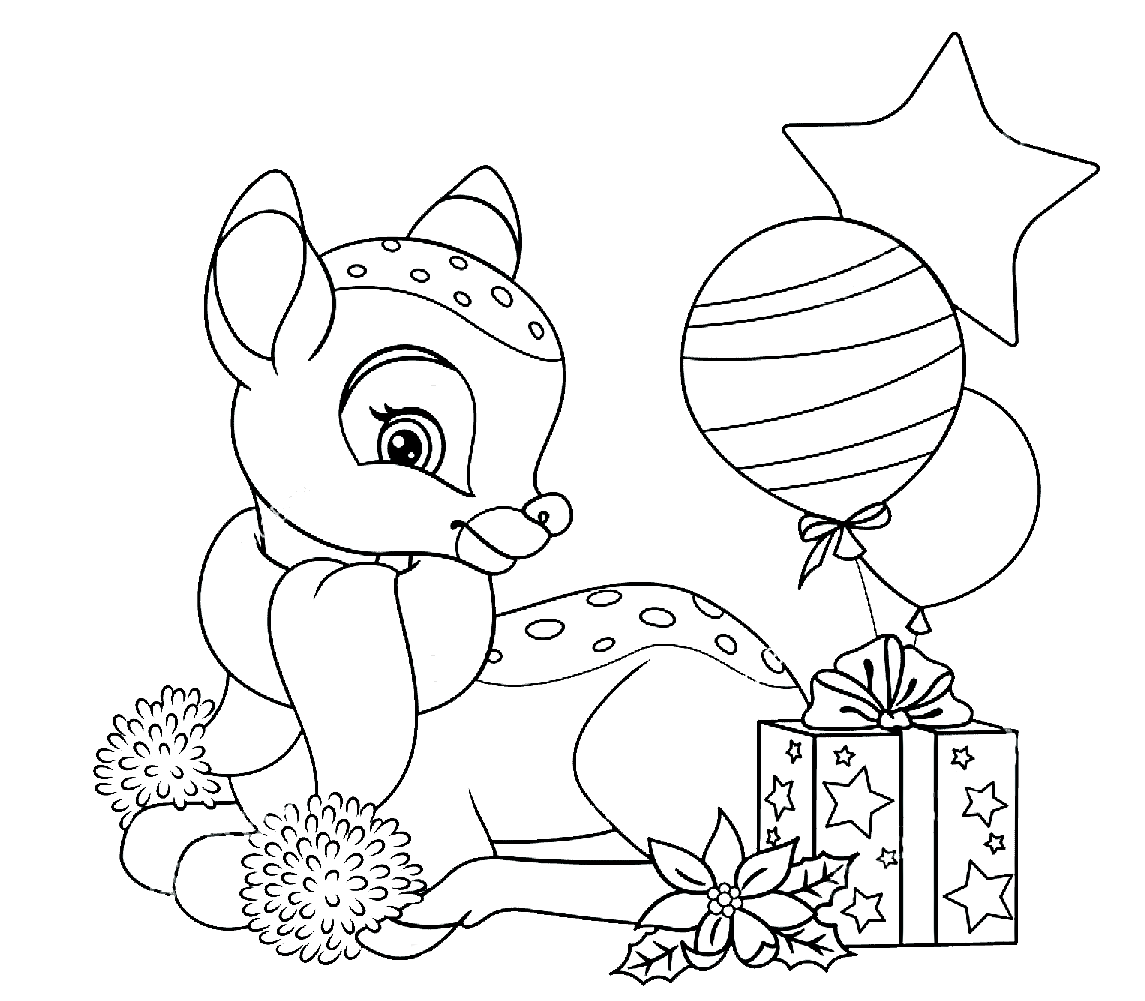
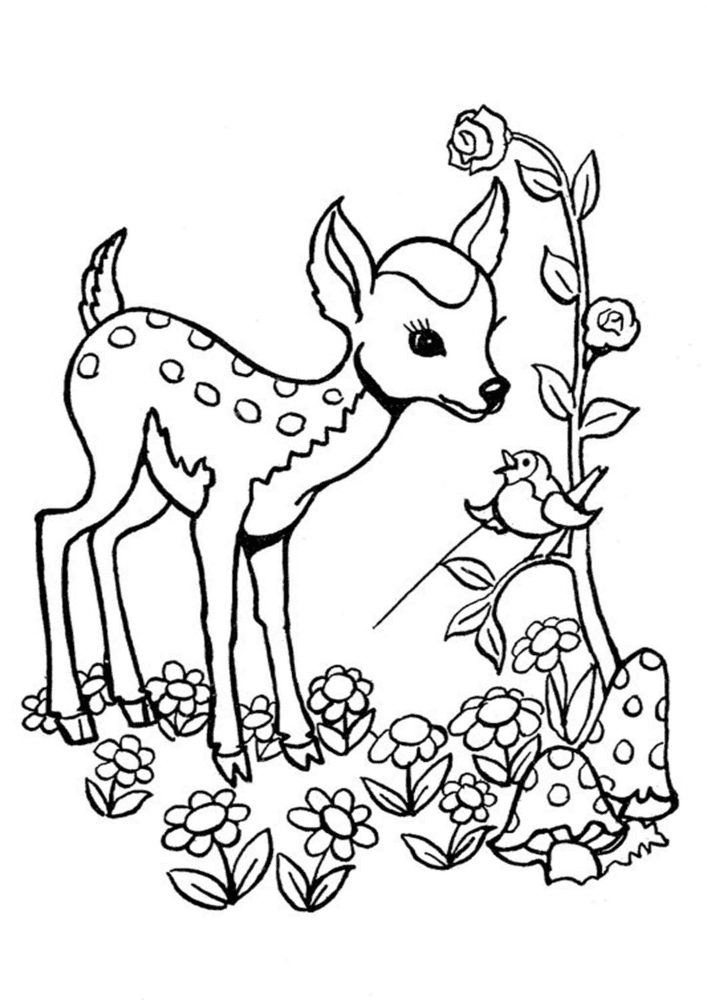
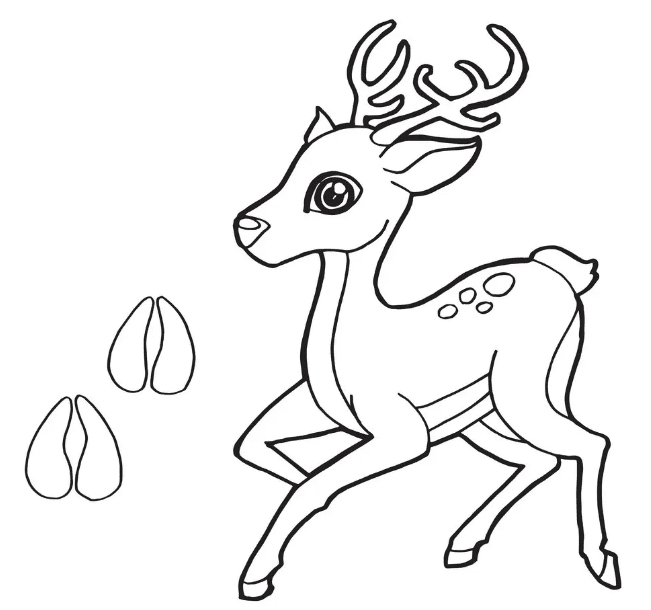
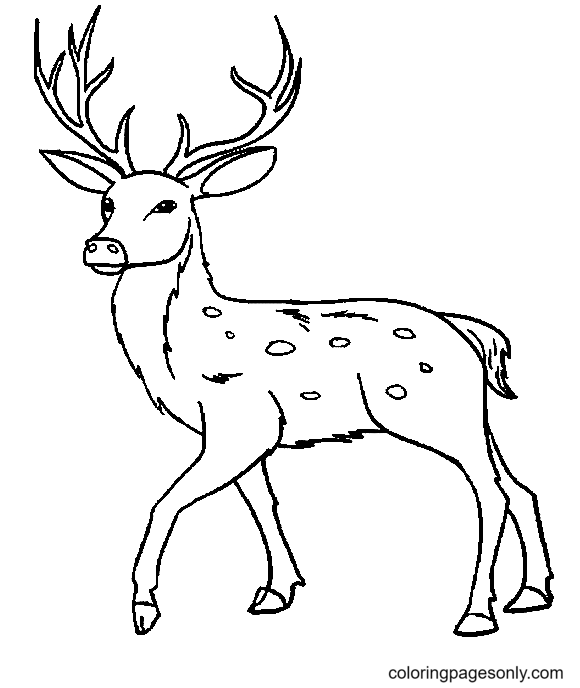
Fawns are born in spring, primarily in May and June in North America, and carry one of wildlife’s most immediately effective camouflage patterns: rows of white spots against the reddish-brown summer coat, which break up the fawn’s outline in the dappled light that filters through vegetation to the forest floor. The spot pattern is not random but follows consistent rows along the fawn’s back and sides, with additional spots on the rump.
The fawn’s camouflage strategy involves more than color: fawns produce minimal scent in their first days of life and lie motionless when danger approaches rather than attempting to flee. The behavior is calibrated to exploit the spot pattern’s effectiveness: a perfectly still spotted fawn on a forest floor is genuinely difficult to distinguish from the surrounding pattern of light and shadow. This camouflage fades within the first three to four months of life as the uniform tawny winter coat replaces the spotted summer coat.
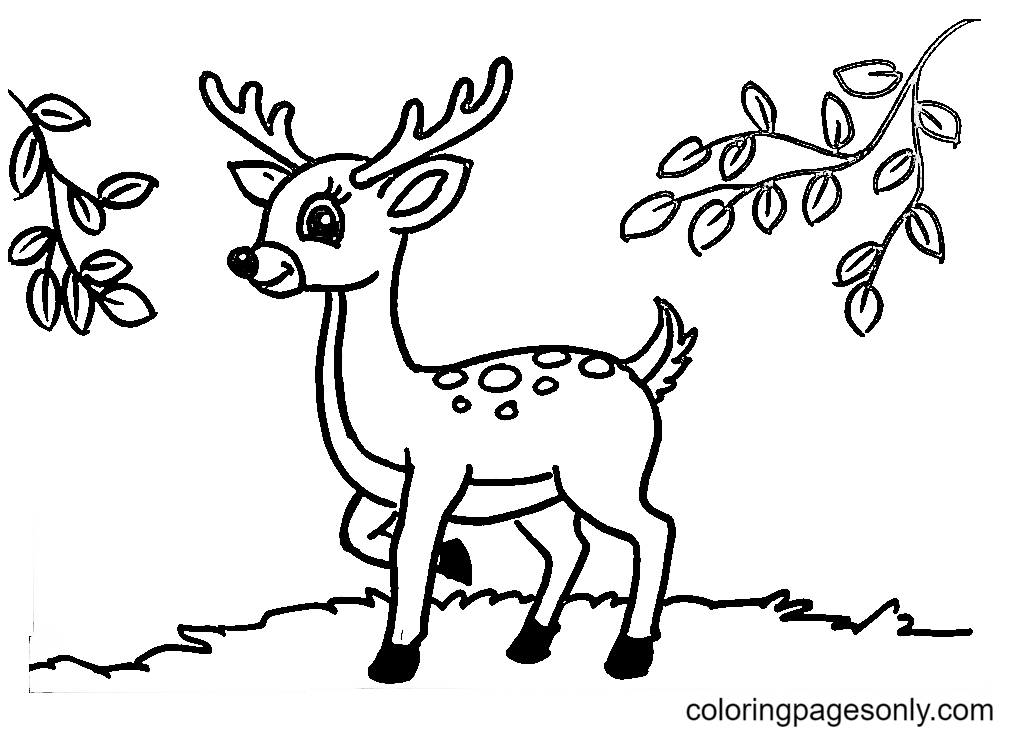
Fawn pages are the collection’s most emotionally resonant for young colorists: the combination of large eyes, rounded proportions, and the vulnerability of the small form curled in vegetation produces an immediate emotional response that makes fawn pages among the most consistently popular in any wildlife coloring collection.
Coloring fawn pages: The base coat is warm reddish-brown, slightly more vivid and warmer than the adult’s coat, applied across all body surfaces. The white spots are applied over the base coat: small, irregular oval shapes arranged in rows along the spine and flanks. Apply the spots as clean white or very pale cream over the fully applied reddish-brown base. The belly and inner surfaces are pale cream. The eyes are large, warm, dark brown with a white highlight dot. The nose is dark brown. The spots should be applied after the base coat is fully in place.
Doe Portrait Pages
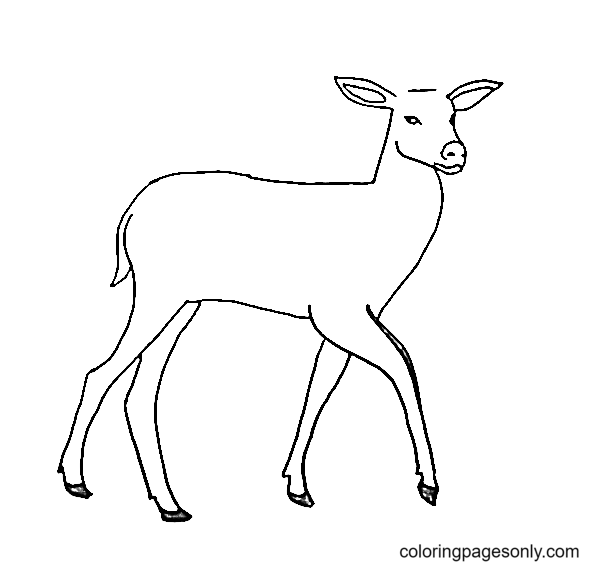
The doe (female white-tailed deer) typically does not grow antlers, which gives her a profile defined by the elegance of her head shape rather than the structural complexity of antler architecture. Doe pages show the large, leaf-shaped ears in their characteristic position: one ear forward, one rotated to the side, or both aimed at the direction of a potential sound. The ears are the doe’s most expressive facial feature and the most important coloring element after the coat itself.
The doe in alert posture, head raised and ears forward, is one of wildlife photography’s most frequently captured deer images: the specific quality of attention in the large ears, the wide-set eyes, and the slightly raised chin as she assesses a potential threat communicates a level of sensory engagement that the deer’s biology supports. Deer have approximately 297 degrees of vision around their head due to the lateral placement of their eyes, and their hearing is sensitive across a frequency range extending well above the human range.
Coloring doe portrait pages: The coat uses the same warm reddish-brown as the buck, but the doe’s build is slightly lighter and more refined. The large ears show warm tan-brown on the outer surface with a paler, slightly pink-cream inner ear surface where the sparse hair over the ear’s inner skin shows through. The large eyes are very dark, warm brown with a white highlight. The nose is the darkest element: dark charcoal grey-brown.
Reindeer Pages
Reindeer (Rangifer tarandus) are the deer family’s most culturally significant species in contemporary popular culture, primarily through their association with Christmas folklore and specifically with the eight named reindeer of Clement Clarke Moore’s 1823 poem “A Visit from St. Nicholas” (more commonly known as “‘Twas the Night Before Christmas”): Dasher, Dancer, Prancer, Vixen, Comet, Cupid, Donner, and Blitzen. A ninth reindeer, Rudolph, was created by Robert L. May in 1939 for a story commissioned by the American department store chain Montgomery Ward.
Biologically, reindeer are distinctive within Cervidae for several reasons. Both males and females grow antlers, making them the only deer species with this characteristic (females of most other species either do not grow antlers or grow them less frequently and to a smaller size). Their hooves are broad and rounded, functioning as snowshoes in deep snow and as paddles in water during river crossings. Their fur traps air in hollow shafts for insulation. They make some of the longest terrestrial migrations of any land animal, with some caribou populations (the North American term for the same species) traveling up to 3,000 miles (4,800 kilometers) in a single year.
Coloring reindeer pages: Reindeer have a more varied coat than white-tailed deer: the main body is warm medium brown-grey, the neck is often significantly lighter (almost white or pale cream in some individuals, particularly in northern populations), and the rump patch is white. The nose, in canonical reindeer, is dark grey-brown in realistic depictions. Rudolph’s red nose, if depicted, is vivid, warm red applied to the nose area with a very slight glow effect around it.
Moose Pages
The moose (Alces alces) is the largest member of the deer family, with mature males reaching shoulder heights of up to 6.9 feet (2.1 meters) and weights up to 1,580 pounds (720 kilograms). The moose’s physical proportions are dramatically different from the gracile white-tailed deer: the shoulders are high and humped, the legs are extremely long relative to the body (an adaptation for wading in water and walking through deep snow), the face is distinctively long with a large, overhanging nose and the characteristic dewlap (a pendant flap of skin beneath the throat called the “bell”), and the antlers of mature bulls are palmate (broad and flat rather than beam-and-tine).
The specific flat, palm-like spread of mature bull moose antlers is the design element most immediately distinguishing them from other North American deer. The palmation (the flat, hand-like broadening of the antler’s surface) can span up to 6.2 feet (1.9 meters) across in record-sized individuals.
Coloring moose pages: The coat is very dark: near-black or very dark charcoal-brown across most of the body, with slightly lighter warm brown on the face and the undersides of the legs. The moose is significantly darker than the white-tailed deer in its coat color. The palmate antlers are the same warm tan-grey-brown as other deer antlers, but broader and flatter. The nose area is large and slightly lighter, with warm brown skin, than the surrounding face.
Forest Environment Setting Pages
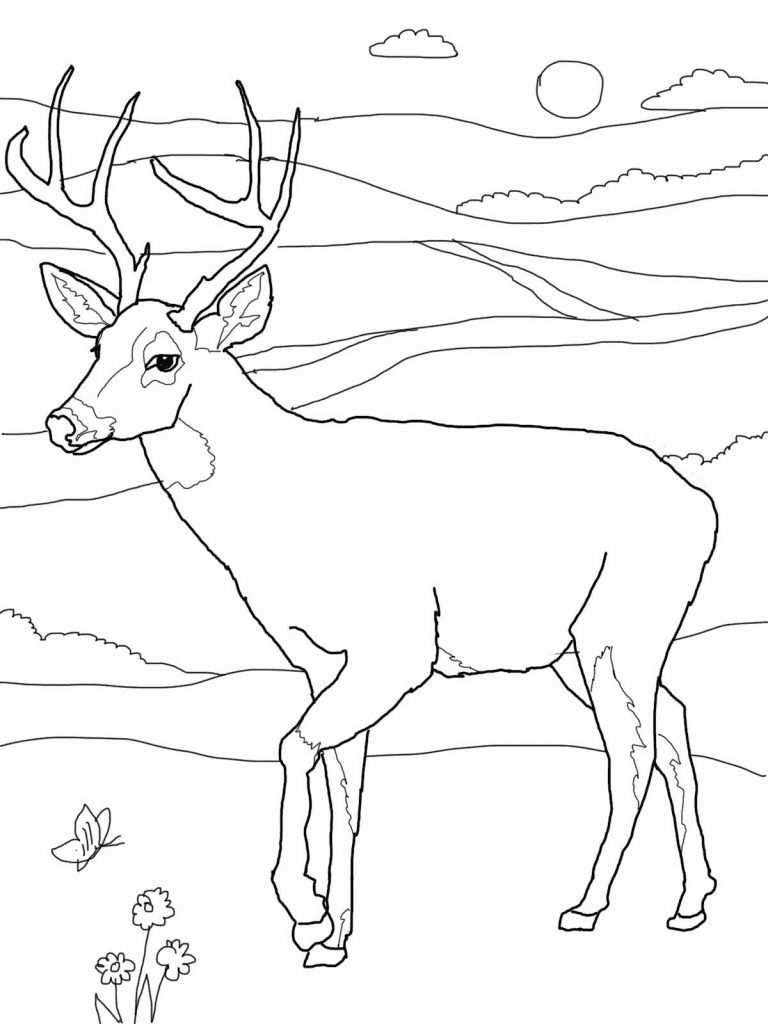
Pages placing deer within their forest habitat contexts show the full range of environments deer occupy: deciduous forest with autumn leaf coverage, coniferous forest with snow on the branches, meadow edge habitat where forest meets open grassland, riparian (streamside) habitat, and suburban edge environments where deer have adapted to proximity to human development.
Autumn forest pages are among the collection’s most chromatically rich: the deer’s warm reddish-brown coat against the orange, red, yellow, and brown of turning deciduous leaves creates a composition dominated by the warm end of the color spectrum, with the deer’s color harmonizing with rather than contrasting with the seasonal setting.
Coloring forest setting pages: Deciduous forest uses a range of greens in summer (bright yellow-green for sunlit leaves, medium cool green for shaded areas) or a range of warm autumn colors in fall (vivid orange, warm yellow, deep red-orange, and the specific dark warm brown of dead leaves). Coniferous forest uses dark blue-green for the evergreen needles, slightly lighter medium green for the newer growth at branch tips, and very dark green or near-black for the deep shadow areas within the canopy.
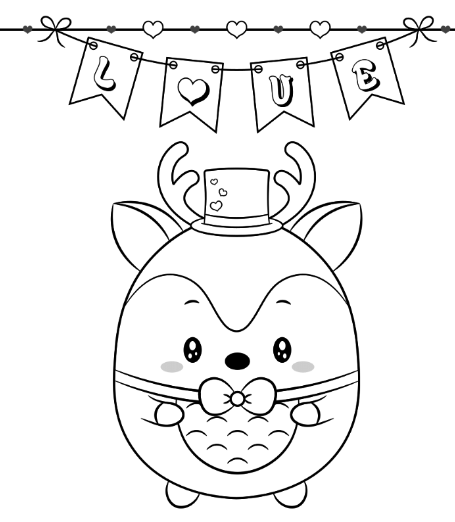
Cartoon and Kawaii Deer Pages
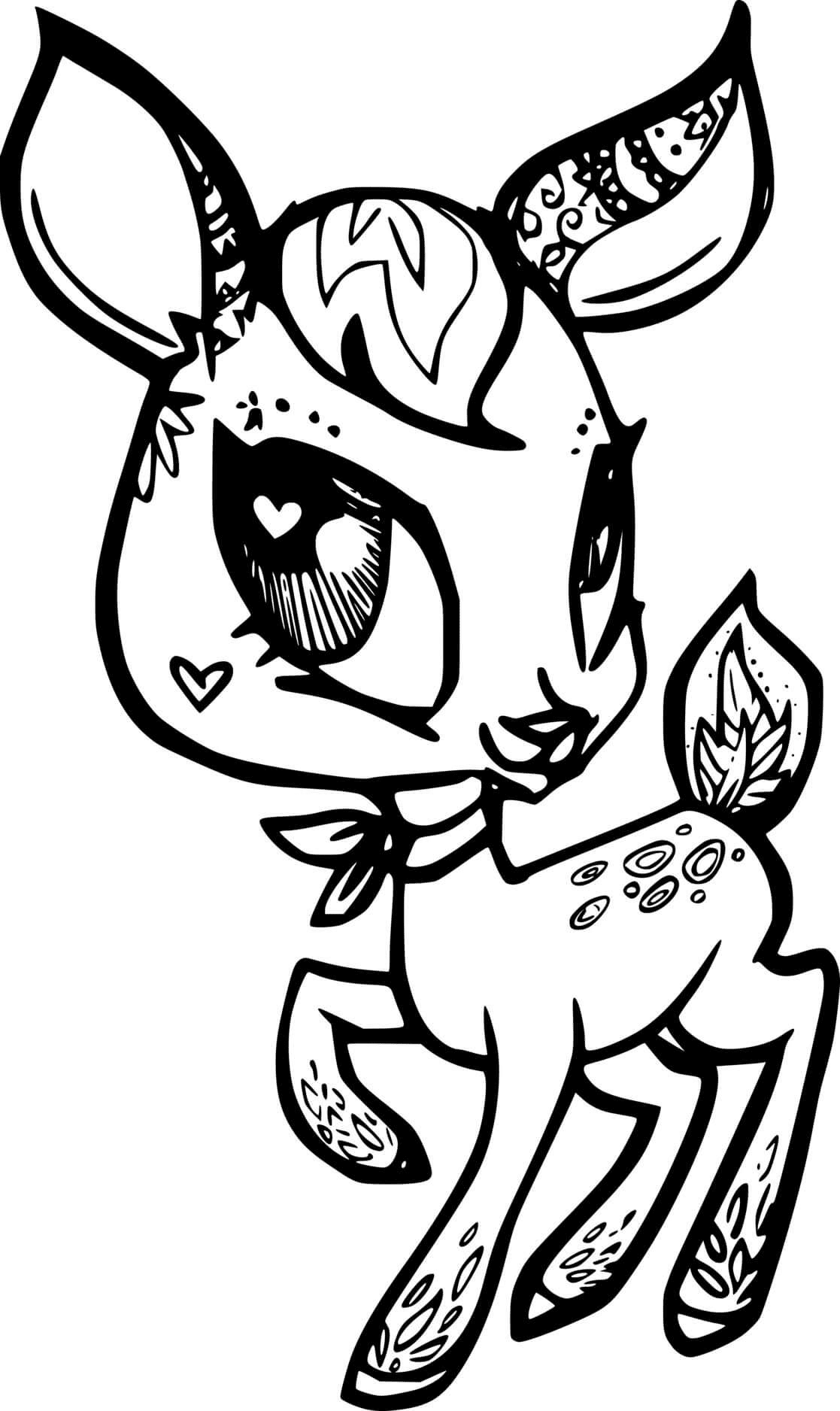
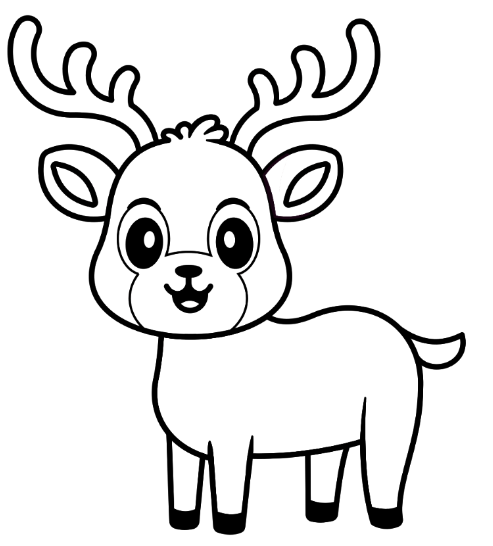
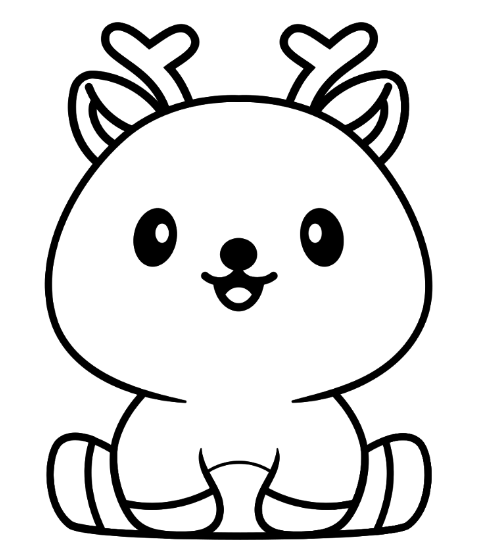
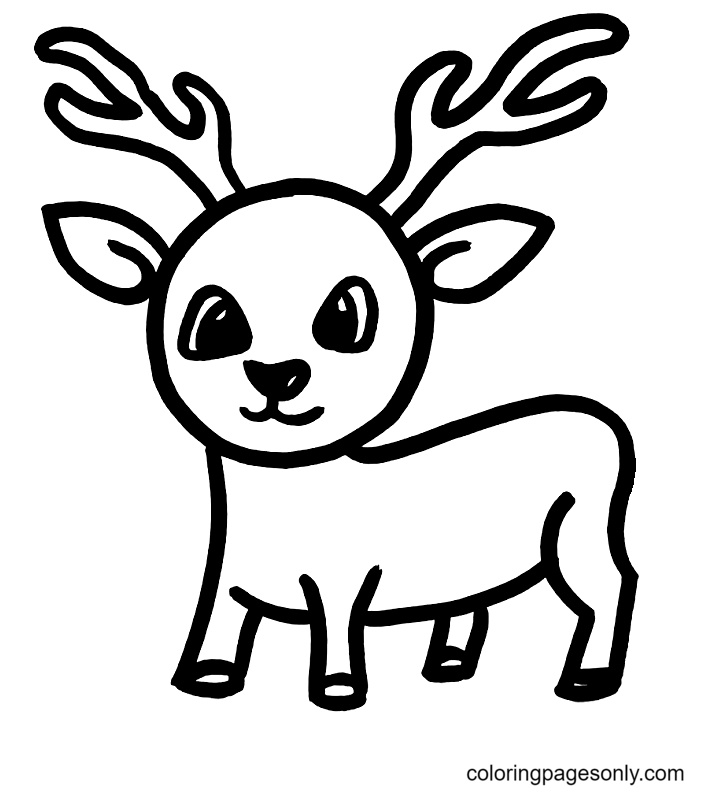
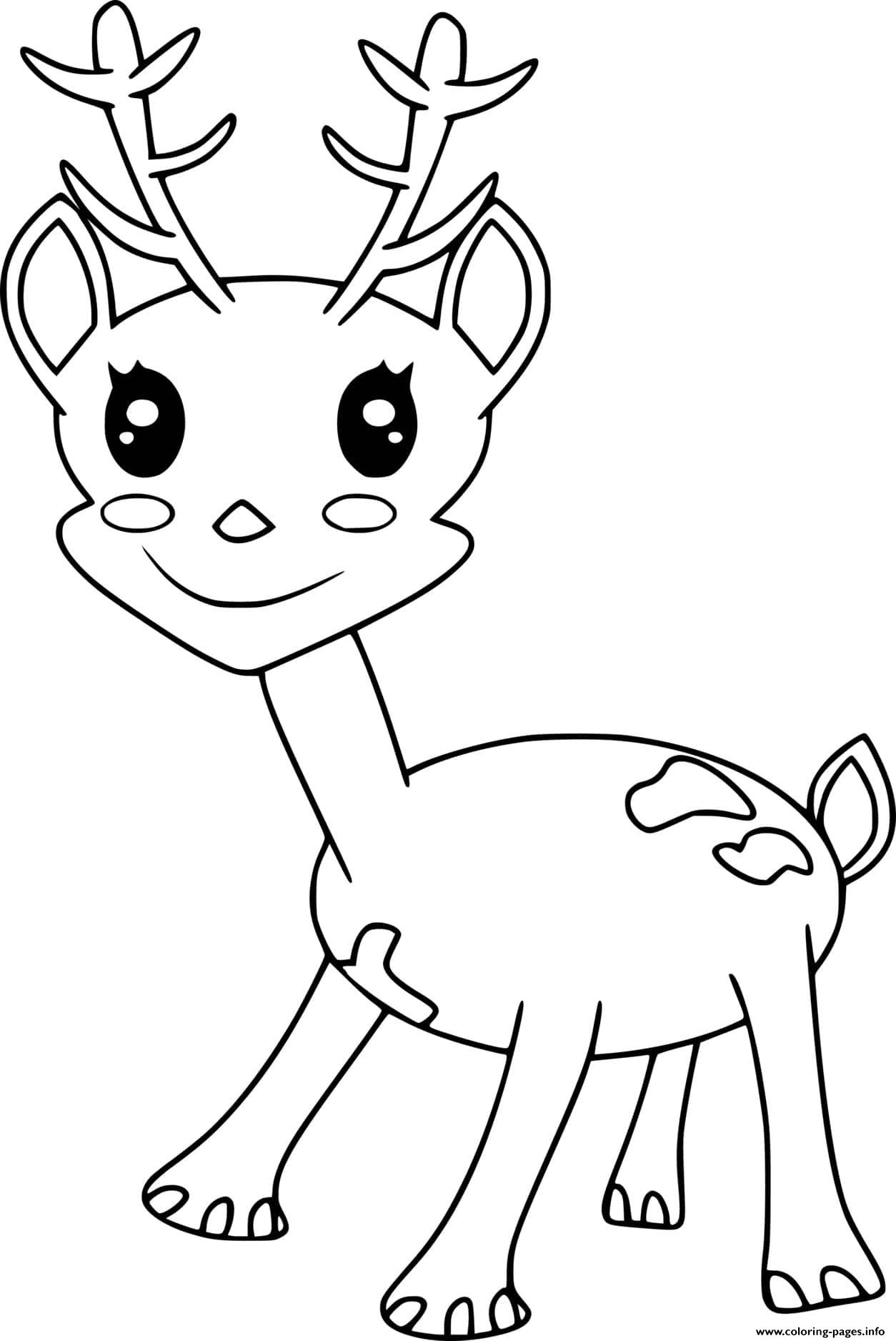
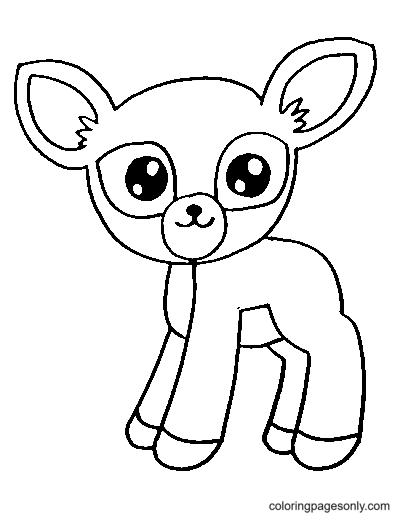
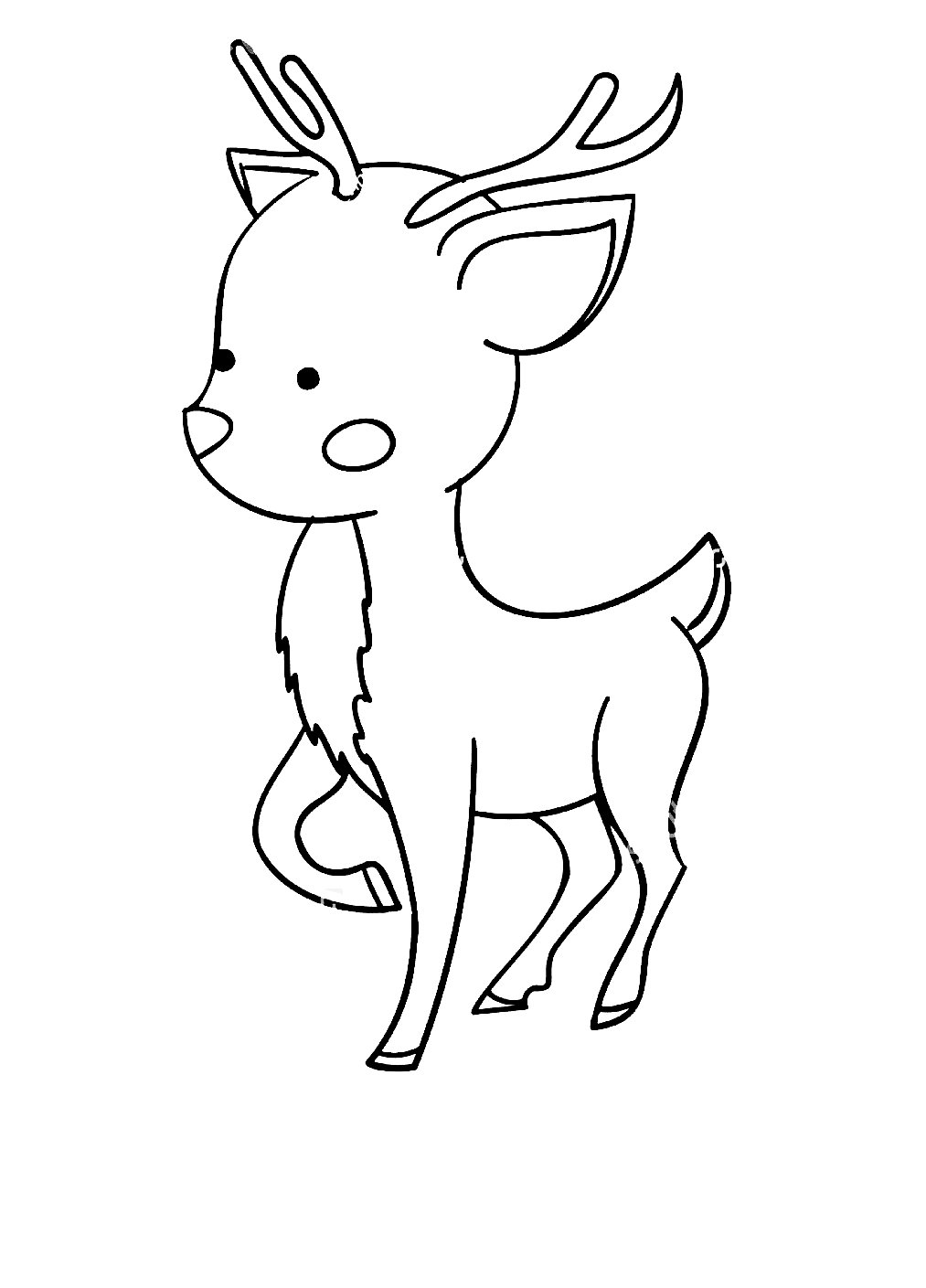
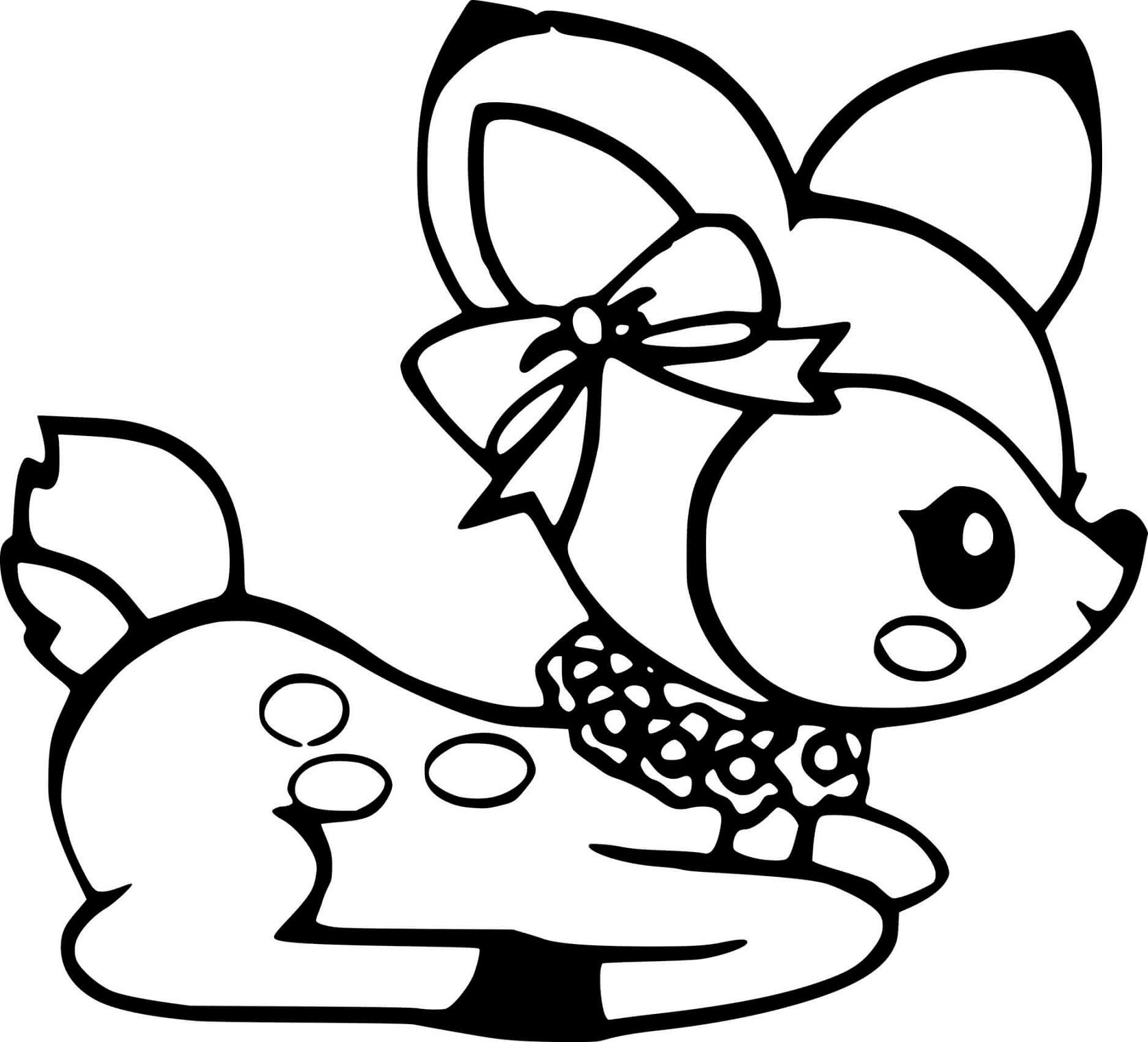
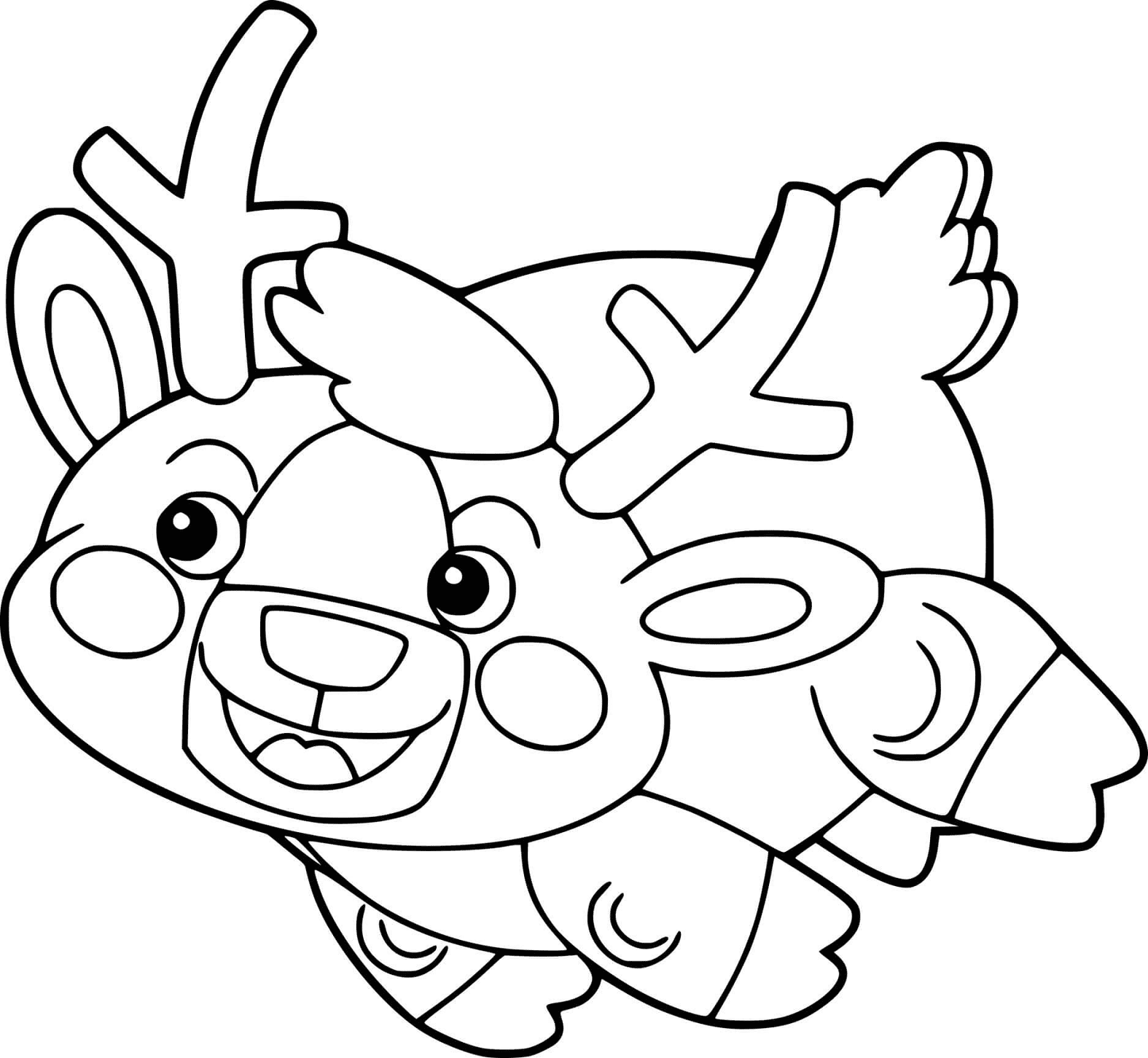
Cartoon and kawaii deer pages apply the standard exaggerated-features design vocabulary to the deer form: proportionally larger eyes, rounder head, simplified body proportions, and an expression of wide-eyed innocence that maps directly onto the deer’s natural appearance. The deer’s actual large eyes, positioned on the sides of its head for wide peripheral vision, are naturally much larger relative to the face than human eyes, which makes the cartoon exaggeration feel minimal: a cartoon deer with large eyes does not look dramatically different from the actual animal’s most visually expressive feature.
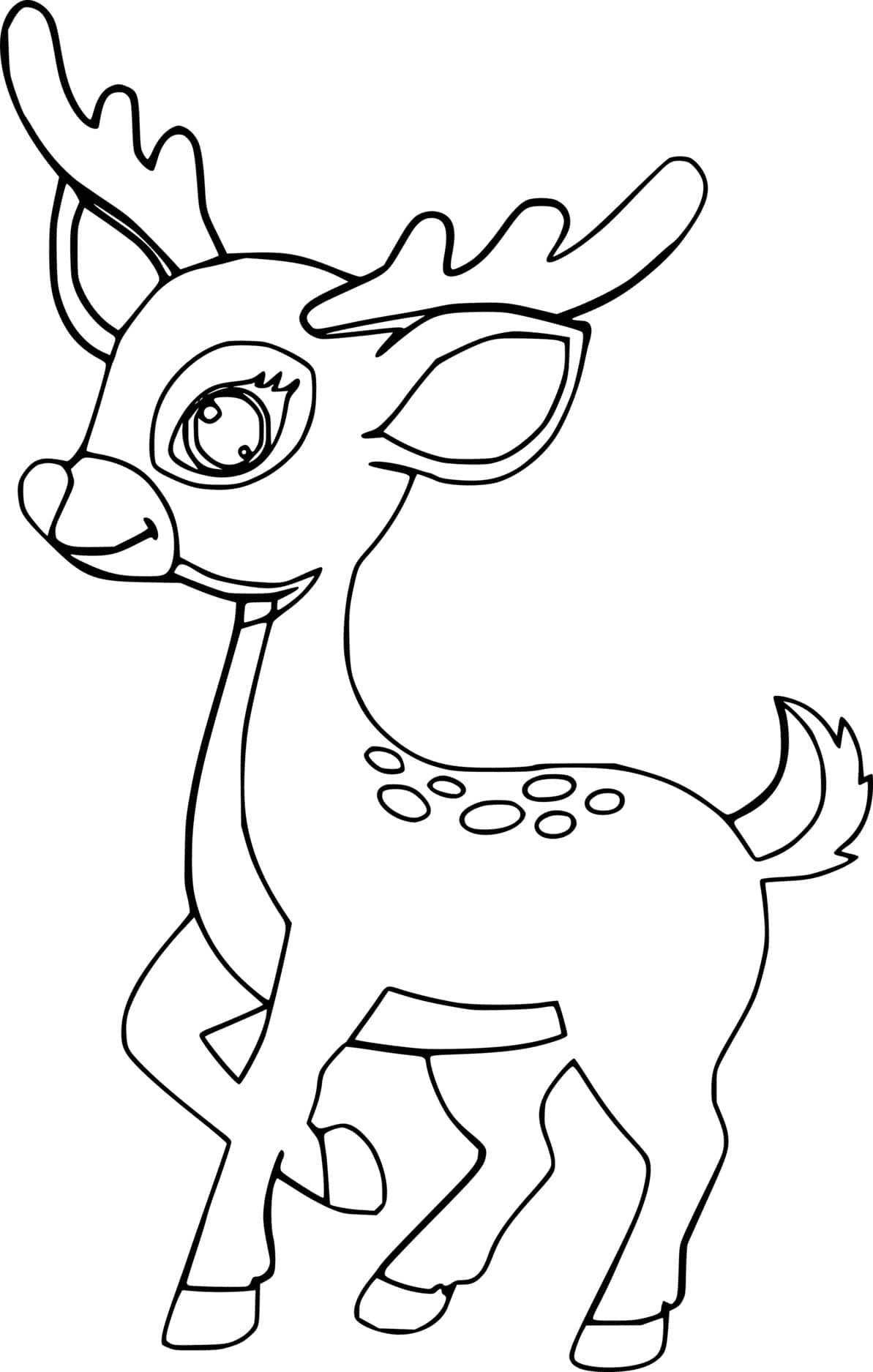
The cartoon fawn is the collection’s most immediately accessible page for the youngest colorists: rounded, simplified forms with clearly defined large color areas in warm brown-tan for the body and white for the belly and spots.
Coloring cartoon deer pages: The same warm reddish-brown for the body, vivid warm brown for the eye irises, and very pale cream for the belly and spot areas, but at slightly more vivid, more saturated levels than realistic depictions. The eyes are proportionally larger than the realistic deer page. They should receive careful highlight rendering: a large white highlight dot at the upper corner of each eye, with warm dark brown iris and near-black pupil.
What These Pages Do
The deer family’s presence in human visual culture extends at least 30,000 years: Upper Paleolithic cave paintings at sites including Lascaux (France), Altamira (Spain), and Chauvet (France) depict deer species prominently, establishing them as among the first subjects of sustained human artistic attention. This documented visual tradition connects the coloring pages in this collection to one of the deepest continuous subjects in human artistic practice.
The spotted fawn coat pattern is one of the most studied examples of background-matching camouflage in mammal biology. Research on the fawn’s spot distribution and its relationship to forest floor light patterns has been published in wildlife biology journals, including the Journal of Mammalogy and Wildlife Society Bulletin, documenting how the spot pattern’s specific geometry and spacing optimizes its disruptive effect against the specific light patterns of deciduous forest understory. Understanding this allows a child coloring a fawn to engage with the biological precision behind the visual they are reproducing.
The American Academy of Pediatrics identifies fine motor skill development as a key childhood milestone throughout early childhood. The antler’s complex branch-and-tine structure, the fawn’s carefully distributed spot pattern, the forest environment’s layered foliage rendering, and the fur direction technique for realistic coat quality all provide sustained fine motor challenge across the collection’s full age range. The 2005 Art Therapy Journal study on structured coloring and anxiety reduction applies throughout, with forest wildlife pages carrying the specific calming quality associated with natural environment imagery in structured coloring research.
The deer family’s appearance across multiple holiday and seasonal contexts (fawns in spring, stags in autumn, reindeer in winter) makes this collection one of the most year-round-relevant wildlife coloring subjects.
How to Color These Pages Well
The summer deer coat is a warm, vivid reddish-brown that should not drift toward orange or gray. The most common error on deer pages is applying a brown that reads as too orange (approaching a fox color) or too cool-grey (approaching a donkey color). Deer summer coat is the specific warm reddish-brown sometimes called “fawn” or “tawny”: it has both warmth (from red) and depth (from brown) without approaching either orange or grey. Apply it at full coverage across all main body surfaces. If the available brown is too orange, add a small amount of darker brown. If it reads as too grey or cool, add a small amount of warm red.
The white belly and inner surfaces require a clean break from the brown body coat. The white underside of the white-tailed deer is not a gradual transition from brown to white but a relatively clear boundary along the belly, inner leg, and throat. Apply the white or very pale cream to these areas first, keeping the boundary between brown and white reasonably clean. A very subtle blended transition at the exact edge can suggest the natural softening of the coat boundary without losing the visual distinction between the two areas.
Antler color is warm tan-grey-brown, not white and not dark. The most common antler error is using either bright white (which makes antlers look like painted wood rather than bone) or very dark brown (which reads as horn rather than dried bone). Apply a warm medium tan-grey: slightly warm (with a yellow-brown undertone), medium in value, and matte in quality. Shadow areas on the underside of each beam and along the inner curves of the tines use a slightly deeper version of the same tone. The tine tips are the lightest point: the sharpest, most pointed element of the antler, receiving the lightest version of the antler tone.
The spot pattern on fawn pages requires the base coat to be fully complete before spots are added. Apply the reddish-brown base coat across every body surface at full coverage. Only after the base is complete and even should the white spots be applied. Use a white or very pale cream, applied carefully in irregular oval shapes. The spots are not perfectly round circles: they are slightly elongated and slightly irregular, more organic than geometric. Apply them in rows along the spine and flanks, following the pattern in the reference page. Do not apply spots to the head, legs, or belly: spots appear only on the back and sides.
Forest background foliage uses at least three distinct green tones applied in layers. A single flat green applied across all vegetation in a forest setting reads as wallpaper rather than as living woodland. Apply a bright yellow-green for the most sunlit, most forward leaves. Apply a medium cool green for the main mid-ground foliage. Apply a dark blue-green or near-black for the deepest shadow areas within the canopy. The three layers of green, applied with the lightest tones forward and the darkest tones backward and into shadow, create the specific visual depth of a real forest environment.
5 Creative Craft Ideas
The Antler Growth Timeline
Antlers grow from spring through late summer, with white-tailed deer bucks capable of growing an entire rack in approximately 90 to 150 days. At peak growth rates, this represents the fastest tissue growth recorded in mammals: up to 1 inch (2.5 centimeters) per day. The velvet-covered growing antler is living tissue; the fully grown, velvet-shed antler is dead bone, shed entirely after the rut and regrown the following spring.
Print four copies of a buck portrait page. Color the first showing velvet-covered antlers in darker, slightly reddish-brown (the velvet skin phase). Color the second showing the velvet being rubbed off (reddish streaking on partially exposed antler). Color the third showing the fully grown, polished antler in canonical warm tan-grey. Color the fourth showing an older buck in late winter with shed antlers (just the pedicle stumps).
Mount in sequence: “Antler growth cycle. Spring: velvet begins. One antler: up to 1 inch per day. Late summer: velvet dries and is shed. Fall: rut. Winter: antlers drop. Spring: cycle begins again. The fastest tissue growth recorded in mammals.”
The Fawn Camouflage Study
Wildlife biologists have studied the white-tailed fawn’s spot pattern as one of mammal camouflage’s most effective designs. Researchers at institutions including the University of Georgia’s Deer Research Program have documented that the spot pattern specifically mimics the scale and distribution of dappled sunlight on deciduous forest floors, with the spot spacing calibrated to the typical size and spacing of light patches on the forest floor in summer.
Print a spotted fawn page. Before applying any color, study the spot pattern and its arrangement. Apply the warm reddish-brown base coat. Apply the white spots in their documented row pattern.
On the backing card: “Cervus virginianus fawn spot pattern. Function: background-matching camouflage against dappled forest floor light. Spot distribution: rows along dorsal spine and flanks. Fawn behavior: motionless when danger approaches. Scent production in the first days: minimal. The spots disappear in 3-4 months as the fawn grows. Upper Paleolithic cave painters at Lascaux (~17,000 BP) depicted spotted deer. The fawn has been this exact color since at least that long.”
The Nara Sacred Deer Page
At Japan’s Tōdai-ji temple in the city of Nara, sika deer (Cervus nippon) have roamed freely since the 8th century CE. They were traditionally considered divine messengers of the Shinto gods, and their killing was a capital offense until 1637. Today, approximately 1,200 deer roam freely through Nara Park, bowing to visitors who offer them rice crackers (shika senbei). The deer learned to bow after observing humans doing so, a documented example of behavioral learning from human contact.
Print the most elegant deer portrait page in the collection. Color it in the sika deer’s summer spotted coat: lighter reddish-brown with white spots that, unlike the fawn’s spots, are retained in both sexes through adulthood.
On the backing card: “Sika deer (Cervus nippon). Nara Park, Nara, Japan. Sacred to Kasuga Grand Shrine since the 8th century CE. Population: approximately 1,200 deer in Nara Park. The killing of a deer was a capital offense in Japan until 1637. Current behavior: the Nara deer bow to visitors who offer rice crackers (shika senbei). The bowing: learned from observing humans. 8th century to present: the same deer, the same park, the same temple.”
The Reindeer Names Page
The eight reindeer in Clement Clarke Moore’s “A Visit from St. Nicholas” (first published December 23, 1823) are Dasher, Dancer, Prancer, Vixen, Comet, Cupid, Donner (originally “Dunder”), and Blitzen (originally “Blixem”). “Dunder” and “Blixem” are Dutch words for thunder and lightning, respectively. Rudolph was added in 1939 through Robert L. May’s story written for the Montgomery Ward department store chain.
Print a reindeer page. Color in the warm grey-brown tones of a realistic reindeer with a pale cream neck and white rump patch.
On the backing card, draw a simple sleigh and eight reindeer positions labeled with each name, plus Rudolph at the front. Add: “Original eight reindeer: ‘A Visit from St. Nicholas,’ Clement Clarke Moore. First published December 23, 1823. ‘Dunder’ and ‘Blixem’: Dutch for thunder and lightning. Rudolph: created by Robert L. May for Montgomery Ward, 1939. Rudolph the Red-Nosed Reindeer song: Johnny Marks, 1949. Reindeer biology: the only deer species where both males and females regularly grow antlers. Nose color (realistic): dark grey-brown. Rudolph’s nose: see above.”
The Deer Family Portrait
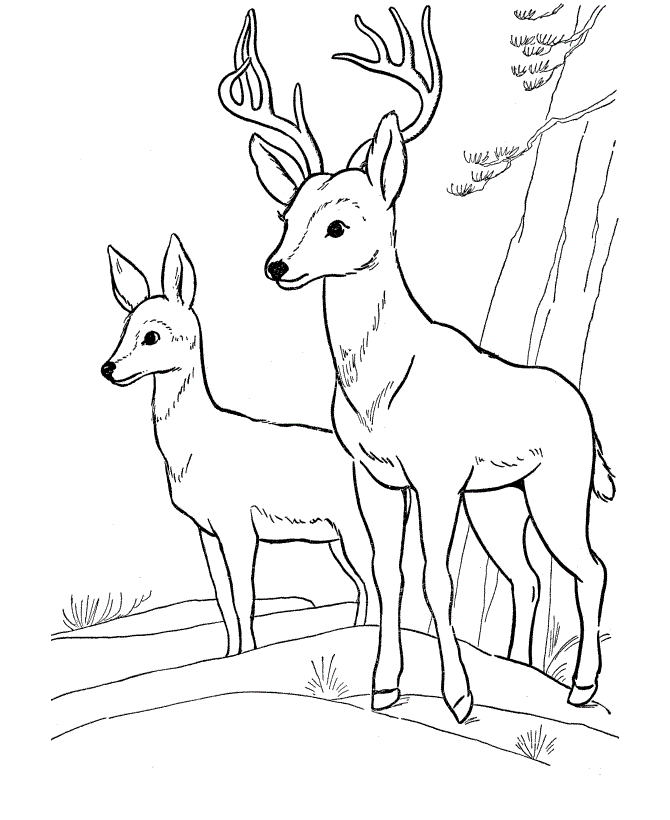
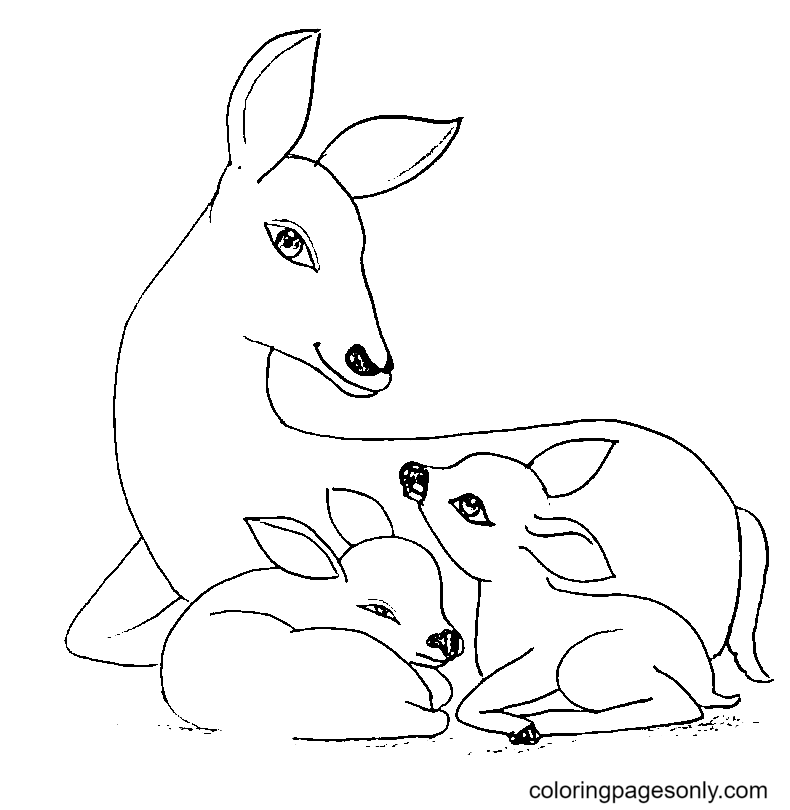
A white-tailed deer family typically consists of a mature doe, her fawn (or twin fawns: white-tailed does frequently have twins), and occasionally a yearling doe from the previous year. Mature bucks are solitary for most of the year, and associate with does only during the autumn rut (mating season). The family unit the public most often imagines (buck, doe, and fawn together) is not the typical year-round configuration, but does occur seasonally.
Print a buck page, a doe page, and a fawn page. Color the buck in a full warm reddish-brown summer coat with an antler rack in warm tan-grey. Color the doe in the same warm reddish-brown but slightly in build and without antlers. Color the fawn in reddish-brown with a careful white spot pattern.
Mount all three: “White-tailed deer family. Buck: solitary most of the year. Associates with does during the rut (October-November, North America). Doe: raises fawns as primary caregiver. Fawn: born May-June. Walking within hours of birth. Spotted coat: 3-4 months. The spotted coat fades when the fawn no longer needs it. The deer’s sense of smell: its primary predator-detection system. The deer’s eyes: 297 degrees of peripheral vision.”
Frequently Asked Questions
What is a deer, and how many species exist? Deer belong to the family Cervidae within the order Artiodactyla (even-toed ungulates), which also includes cattle, pigs, camels, and hippopotamuses. The deer family contains approximately 43 to 50 living species, depending on the classification system used, found on every continent except Antarctica and Australia. The family is divided into two major subfamilies: Cervinae (Old World deer, including red deer, sika deer, and fallow deer) and Capreolinae (including North American deer such as white-tailed deer, mule deer, and caribou/reindeer, as well as moose and roe deer). The smallest deer is the southern pudu (Pudu puda) of South America, which weighs approximately 15 to 18 pounds (7 to 8 kilograms). The largest is the moose (Alces alces), with males reaching up to 1,580 pounds (720 kilograms).
How do antlers grow, and why do deer have them? Antlers are bony structures that grow from permanent pedicles (bony bases) on the skull of most male deer species, with reindeer and caribou being the primary exceptions, where females also grow antlers. They are among the fastest-growing tissues in the animal kingdom, capable of growing at rates up to 1 inch (2.5 centimeters) per day in mature males during the growth season. Growing antlers are covered in velvet, a skin rich in blood vessels and nerves that supplies the nutrients required for rapid growth. When growth is complete, the velvet dries and is shed as the deer rubs against trees and vegetation. Antlers are shed annually after the rut (mating season) and regrown the following spring. They function primarily as competitive tools in male-to-male competition for mating rights, with larger, more complex antlers typically correlating with dominant social status.
What are the differences between a buck, a doe, and a fawn? In deer terminology, “buck” typically refers to an adult male deer, “doe” refers to an adult female, and “fawn” refers to a juvenile deer in its first year of life. (Note: In moose, the male is called a “bull,” and the female is called a “cow.”) Bucks of most North American species grow antlers seasonally, which is the most visible physical distinction from does. Does are typically slightly smaller than bucks of the same species. Fawns of most North American species are born with a spotted coat (white spots on reddish-brown background) that provides camouflage against forest floor light patterns; these spots disappear within the first three to four months as the fawn’s coat transitions to the uniform adult coloration.
Why do fawns have spots, and when do they disappear? Fawn spots are a form of background-matching camouflage: the white spots on the reddish-brown coat mimic the pattern of dappled sunlight on a deciduous forest floor, making a motionless fawn difficult to distinguish from its surroundings. Fawns also minimize scent production in their first days of life and instinctively freeze rather than run when danger approaches, maximizing the effectiveness of their camouflage. The uniform reddish-brown adult summer coat replaces the spotted coat within approximately three to four months of birth. By this time, fawns have grown large enough and fast enough to rely on speed rather than camouflage for escape from predators. In most North American deer species, adults do not retain spots. The fallow deer (Dama dama) of Europe and Asia is an exception: adults retain spots through their summer coat.
What is the difference between caribou and reindeer? Caribou and reindeer are the same species: Rangifer tarandus. “Caribou” refers to wild populations in North America, while “reindeer” refers to domesticated populations or wild populations in Europe and Asia (Scandinavia, Russia, etc.). Reindeer have been domesticated by Arctic and subarctic peoples, particularly the Sami of Scandinavia and various Siberian peoples, for transport, food, clothing, and milk for thousands of years. Both caribou and reindeer are distinctive among deer for having antlers in both sexes: females grow antlers regularly, though typically smaller than males. Reindeer make some of the longest terrestrial migrations of any land animal, with some North American caribou populations traveling up to 3,000 miles (4,800 kilometers) annually between summer and winter ranges.
Why are white-tailed deer so commonly depicted in wildlife art? The white-tailed deer (Odocoileus virginianus) is the most widely distributed and most frequently encountered large wild mammal in North America, with a population estimated at 25 to 30 million individuals across the United States. Its adaptability has allowed it to thrive in suburban and agricultural environments alongside human development, making it one of the most commonly observed wild animals by the general public. Its visual appeal, combining graceful proportions, large expressive eyes, the dramatic antler architecture of mature bucks, and the endearing spotted fawn pattern, makes it a natural subject for wildlife illustration. The species has also been culturally significant to Indigenous peoples throughout its range for tens of thousands of years, and it appears prominently in North American popular culture from Bambi (1942) through contemporary hunting and wildlife management culture.
What age group are these pages best suited for? Deer coloring pages serve a particularly wide age range. The simplest cartoon and kawaii-style deer face pages, with large areas and rounded simplified forms, are accessible from ages two and three, where the animal’s familiar large-eyed appearance immediately engages young colorists. The spotted fawn pages, with the careful spot pattern placement over the warm body base, are most rewarding from ages four to eight, providing a motivating challenge for developing fine motor skills. The realistic adult deer portrait pages with antler structure, fur direction technique, and complex forest environment backgrounds are most engaging for ages seven and up. Adult wildlife art enthusiasts find the most detailed stag portrait pages, the forest atmosphere compositions, and the seasonal setting pages most satisfying for sustained coloring sessions.
Browse the full collection at ColoringPagesOnly.com. All 80+ pages free, no sign-up, PDF or PNG, print or color online.
Upper Paleolithic humans at Lascaux, approximately 17,000 years ago, painted deer on cave walls in France. They used ochre and charcoal, and the specific shapes of the rock face to give their images volume. The animals they painted included stags in full rack, does in profile, and the specific alert posture that has not changed in the intervening years.
The white-tailed deer standing at a forest edge, ears forward, head raised, has been approximately this color and this shape for tens of thousands of years. The spotted fawn has been using the same camouflage design for the same length of time.
Pick up your warm reddish-brown. The body goes first at full coverage. Pick up your white or pale cream for the belly and the inner ears. The spots on the fawn go last, applied over the completed reddish-brown base in irregular oval rows. The antler is warm tan-grey-brown: not white, not dark, the specific matte tone of dried bone.
Share your work on Facebook and Pinterest and tag #Coloringpagesonly. The antler growth timeline and the fawn camouflage study pages are particularly worth sharing.
Color the warm reddish-brown. Apply the spots in rows. The fawn has been this color since before recorded history. The pattern works.