Iguana Coloring Pages
 By:
Jennifer Thoa - Content Editor & Designer
Updated:
By:
Jennifer Thoa - Content Editor & Designer
Updated:
Free Iguana Coloring Pages: 31 printable PDF designs featuring iguanas in their tropical habitat, cute and expressive portraits, and general printable sheets. Each page can be downloaded as a PDF to print or colored online in the browser.
Iguanas are large, herbivorous lizards native to Central and South America and the Caribbean, with the green iguana being the most widespread species. Iguanas communicate largely through body language rather than sound, using head bobs, slow bowing, and their dewlap, the flap of skin under the chin, to signal territory, greeting, or agitation to other iguanas. A faster head sway or an extended dewlap paired with tail lashing usually signals aggression, while a slow, deliberate bow is more often a greeting. One especially striking relative, the blue iguana, is found only on Grand Cayman in the Cayman Islands and was considered functionally extinct in the wild by 2002 before a dedicated recovery program helped its status improve from critically endangered to endangered by 2012.
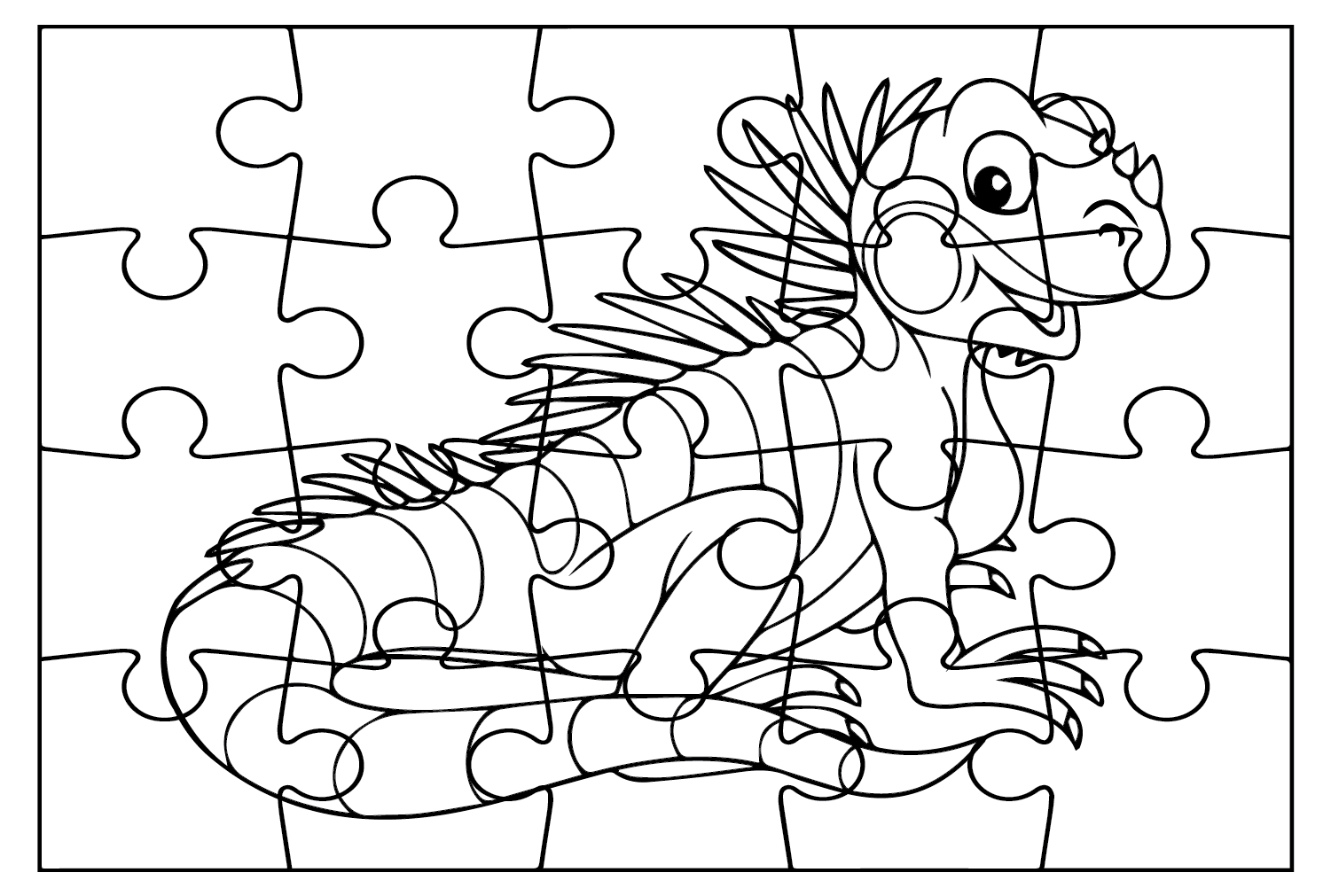
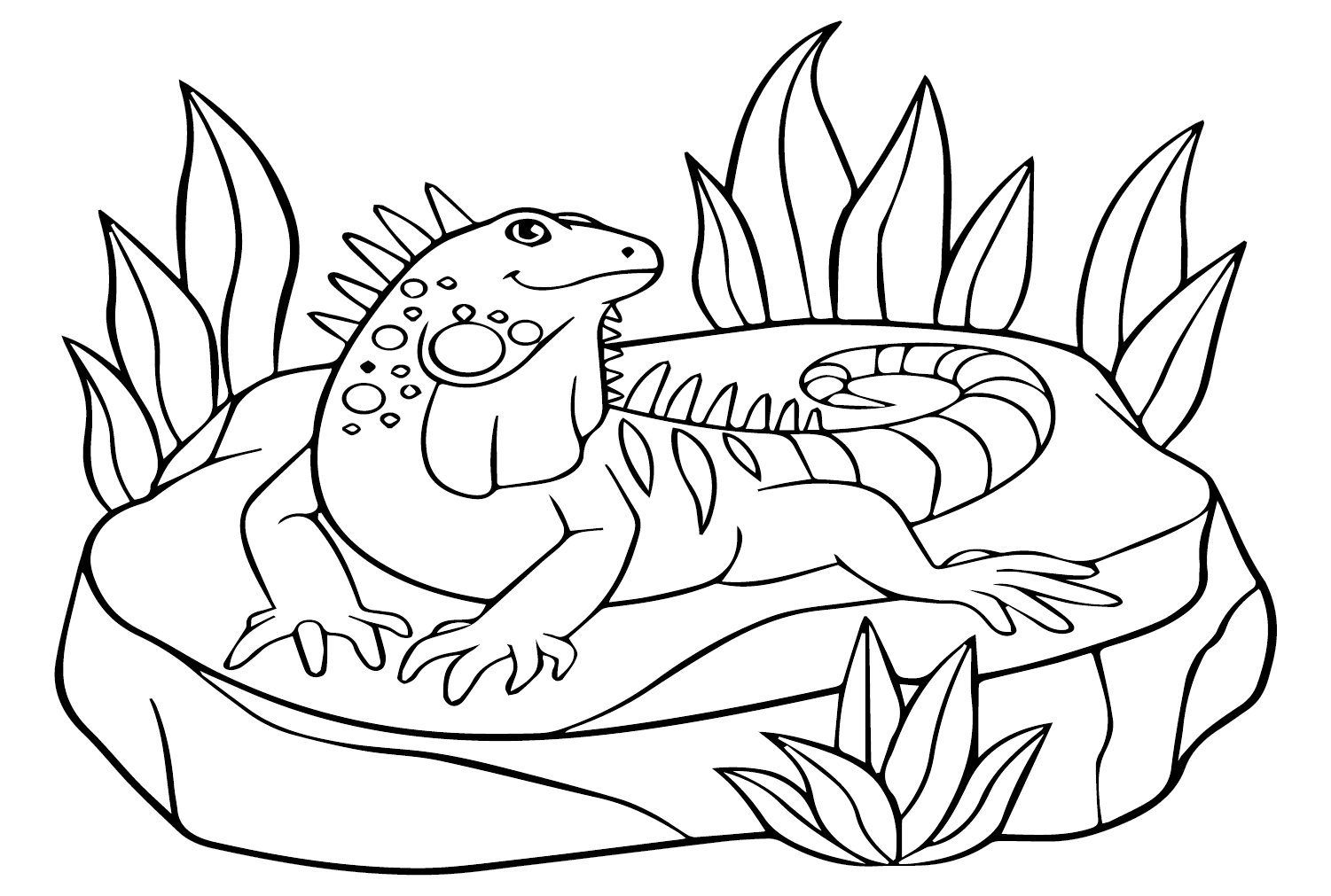
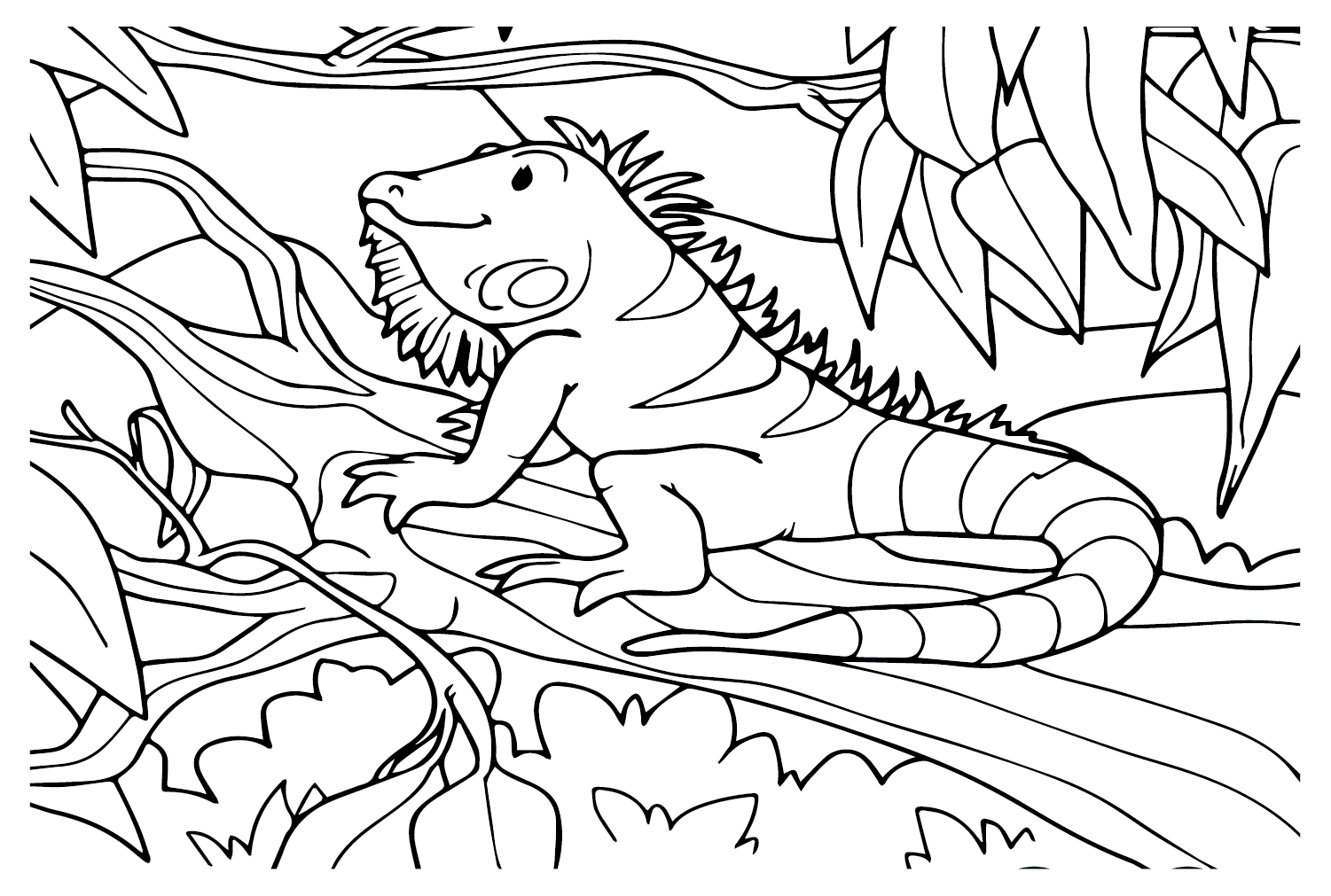
This collection spans 31 pages, split between iguanas in their habitat, cute and expressive portraits, and general printable sheets. The coloring angle ranges from simple, standalone outlines to more detailed scenes with branches and foliage.

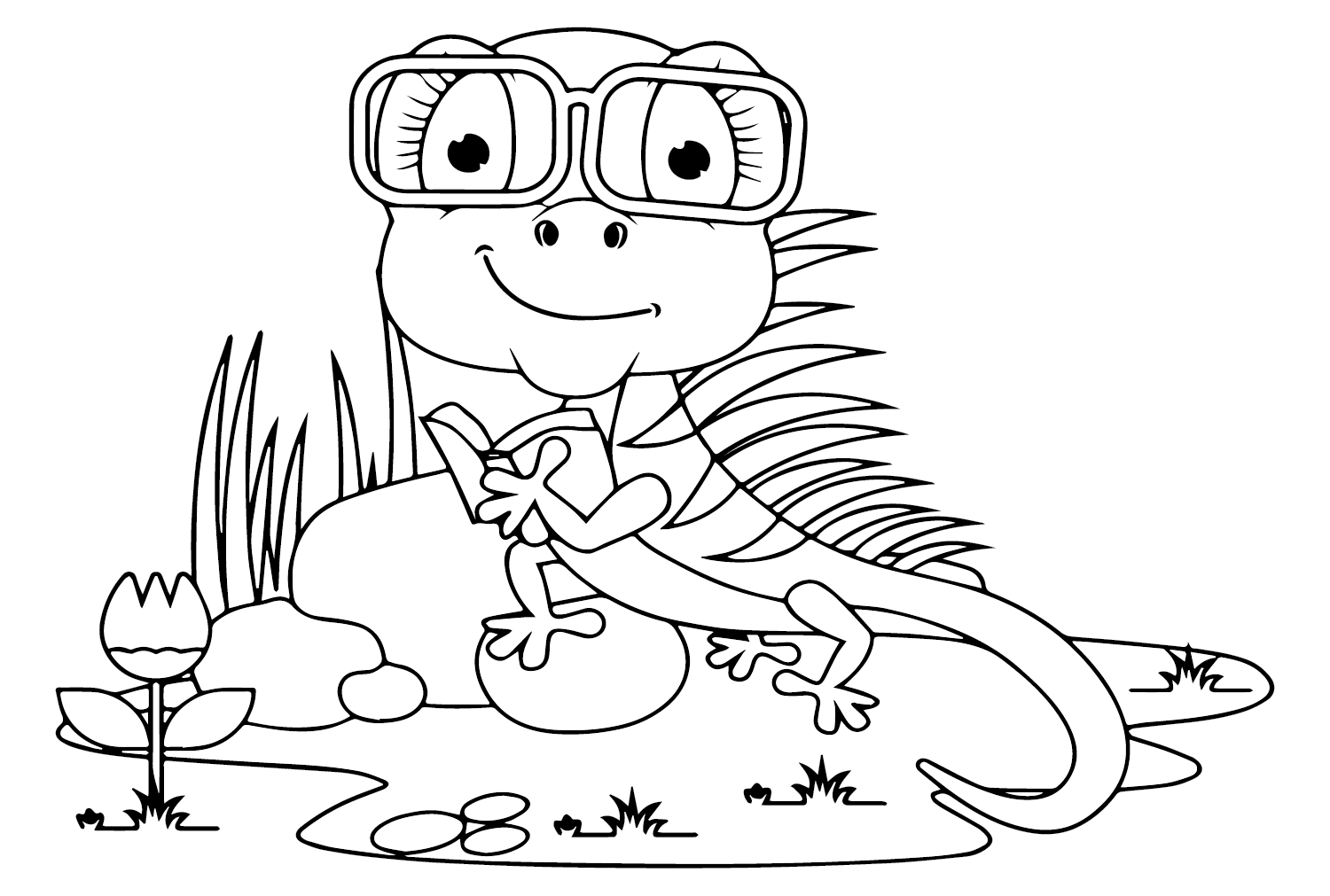
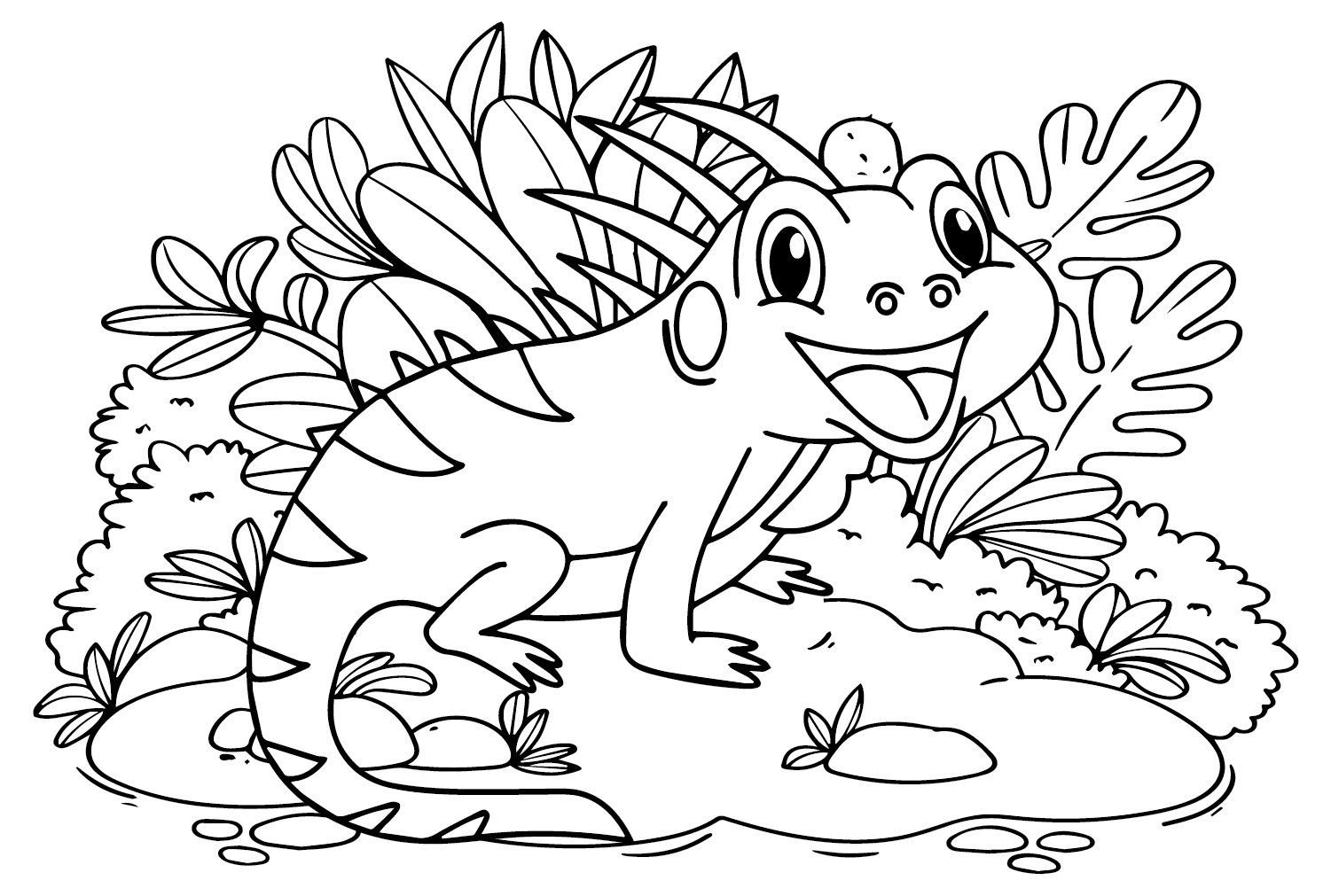
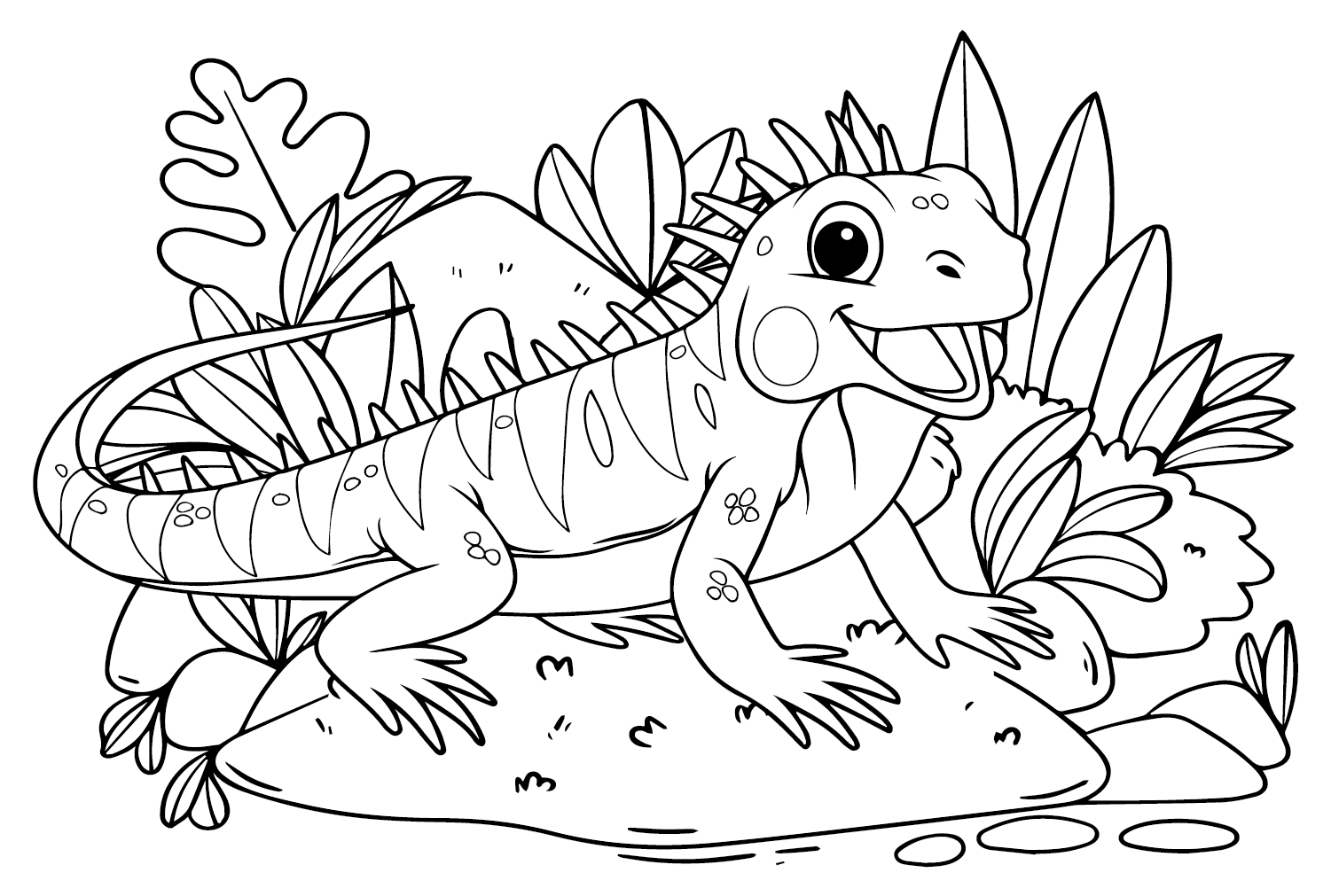
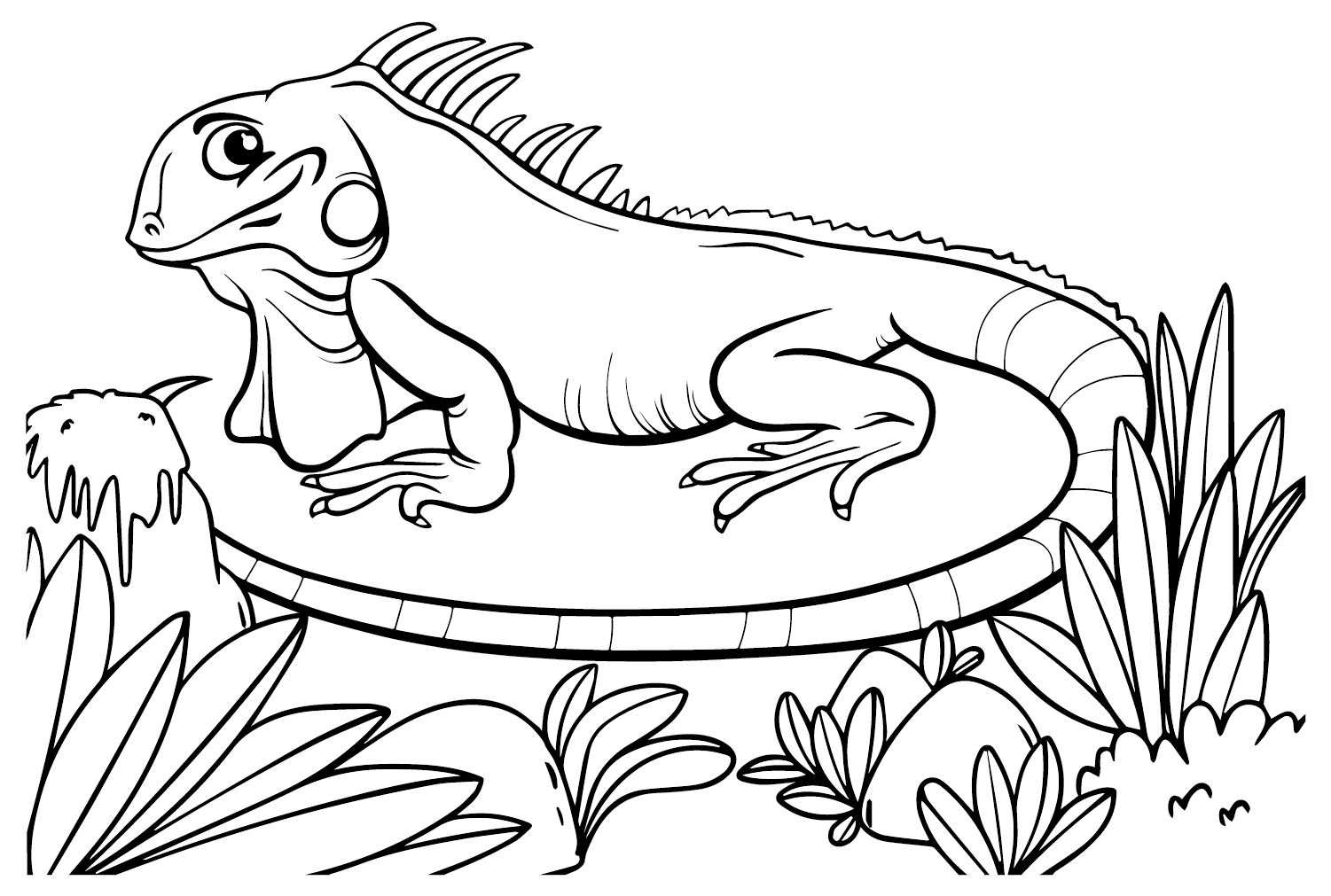
What’s Inside This Collection
The 31 designs group into three categories, from iguanas in their habitat to general printable sheets.
Iguanas in Their Habitat
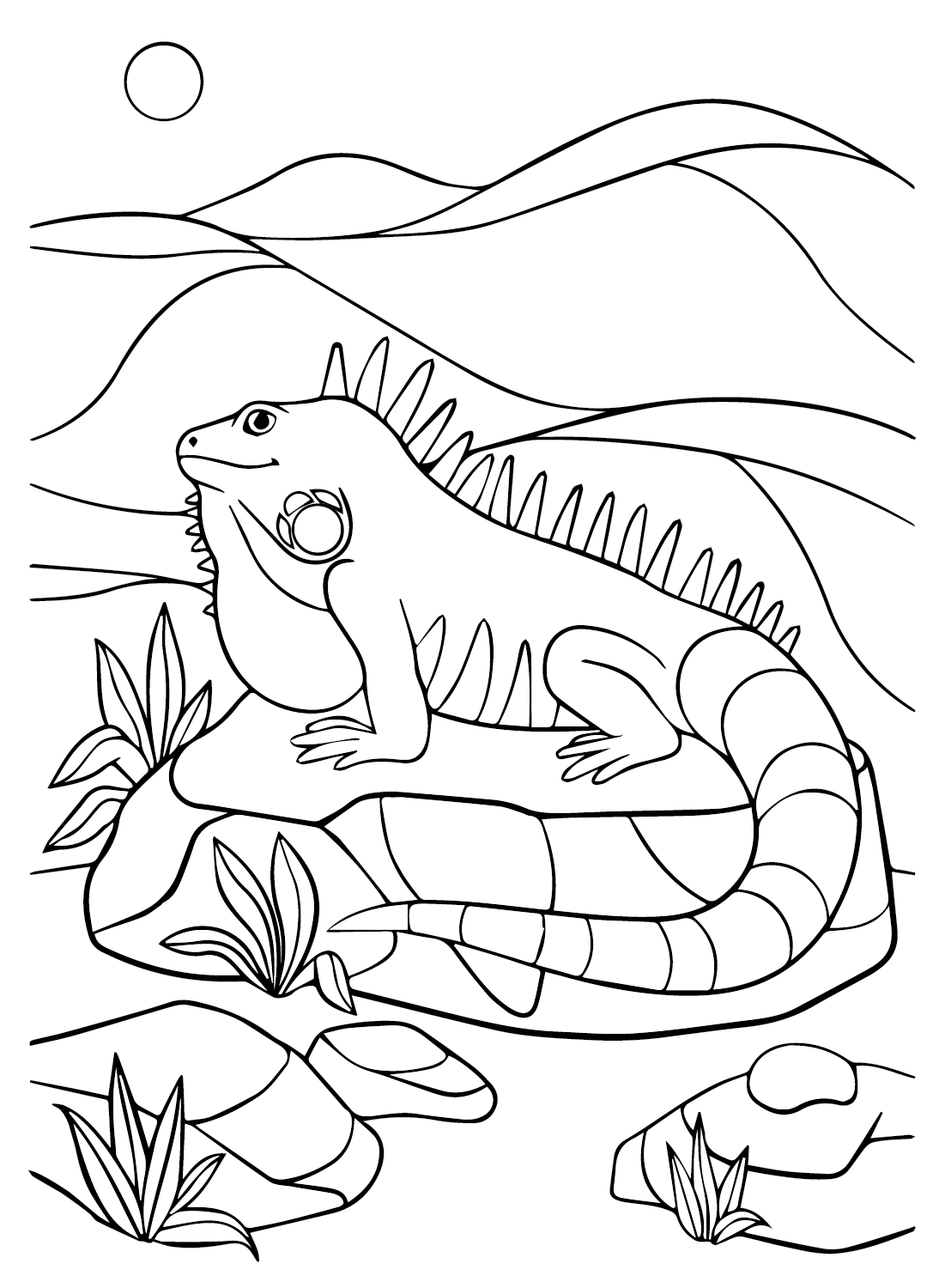
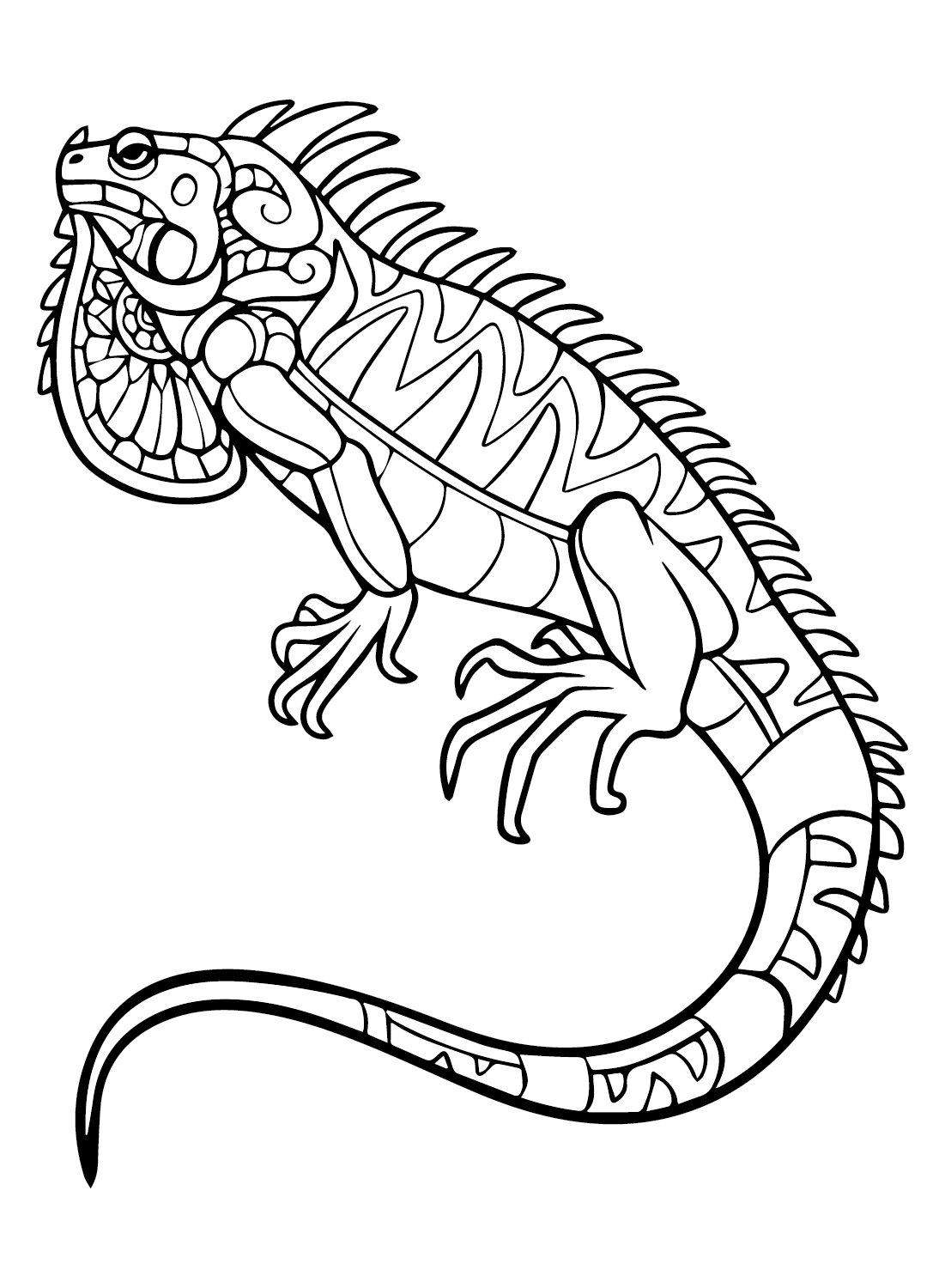
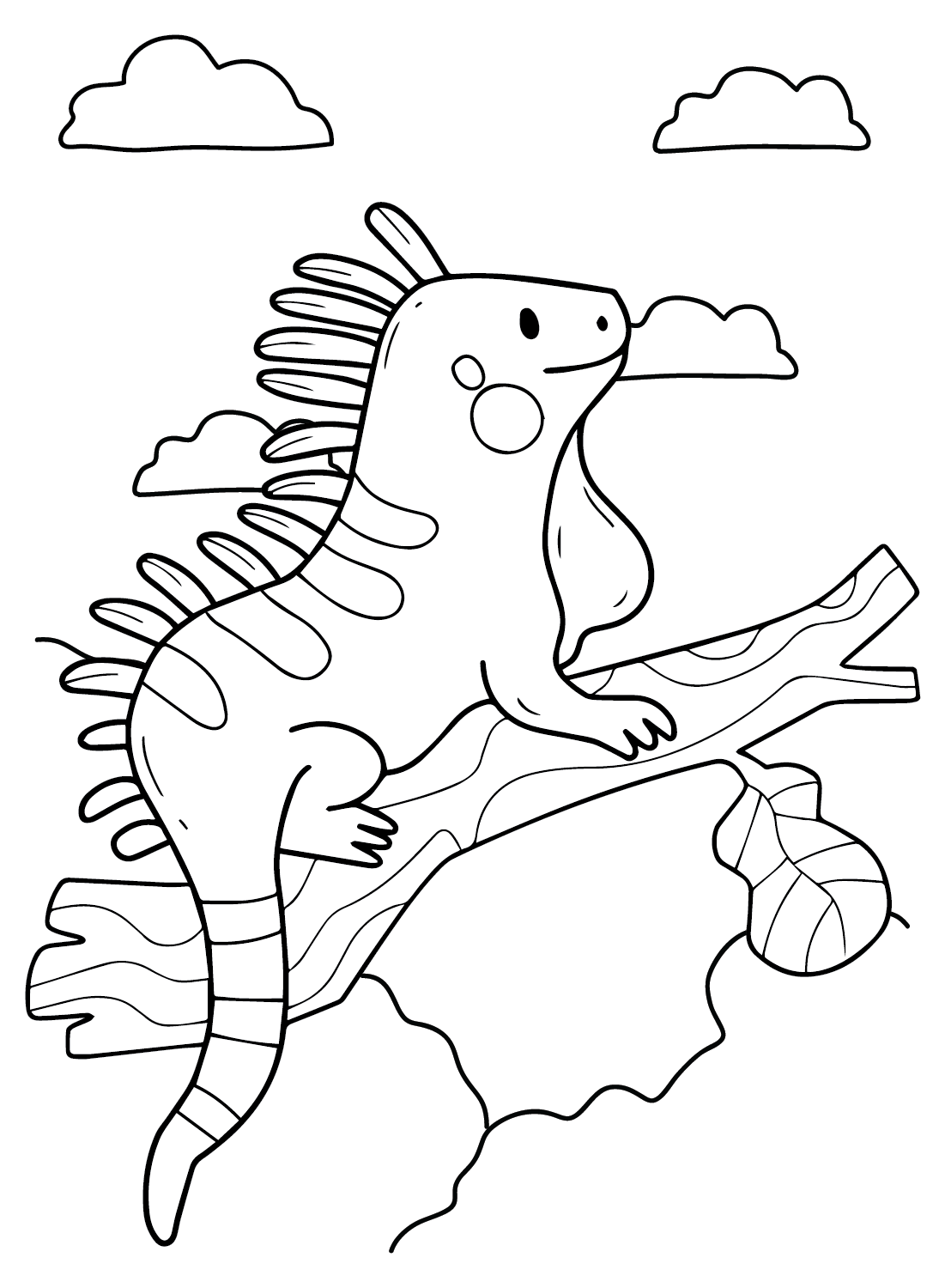
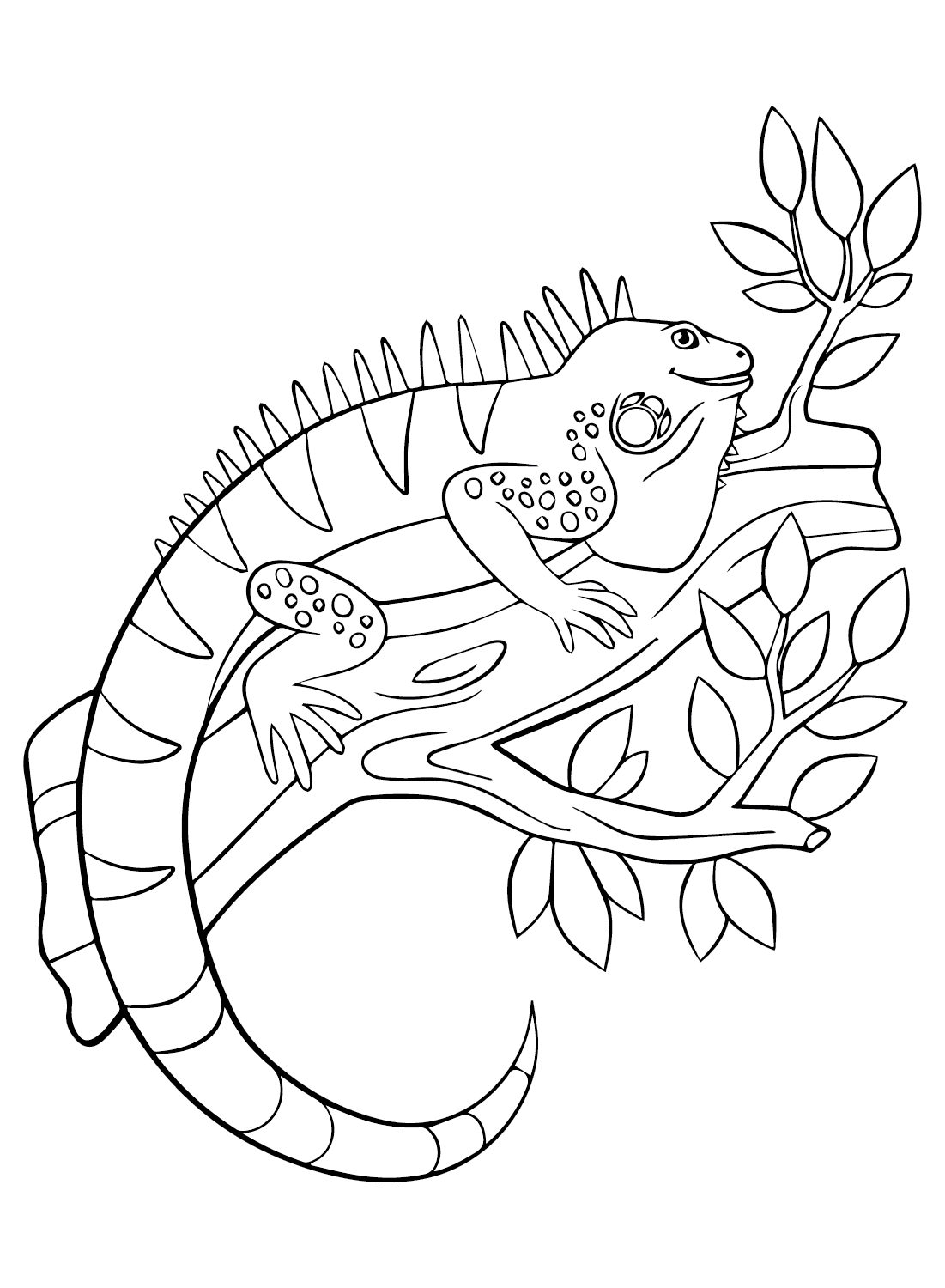
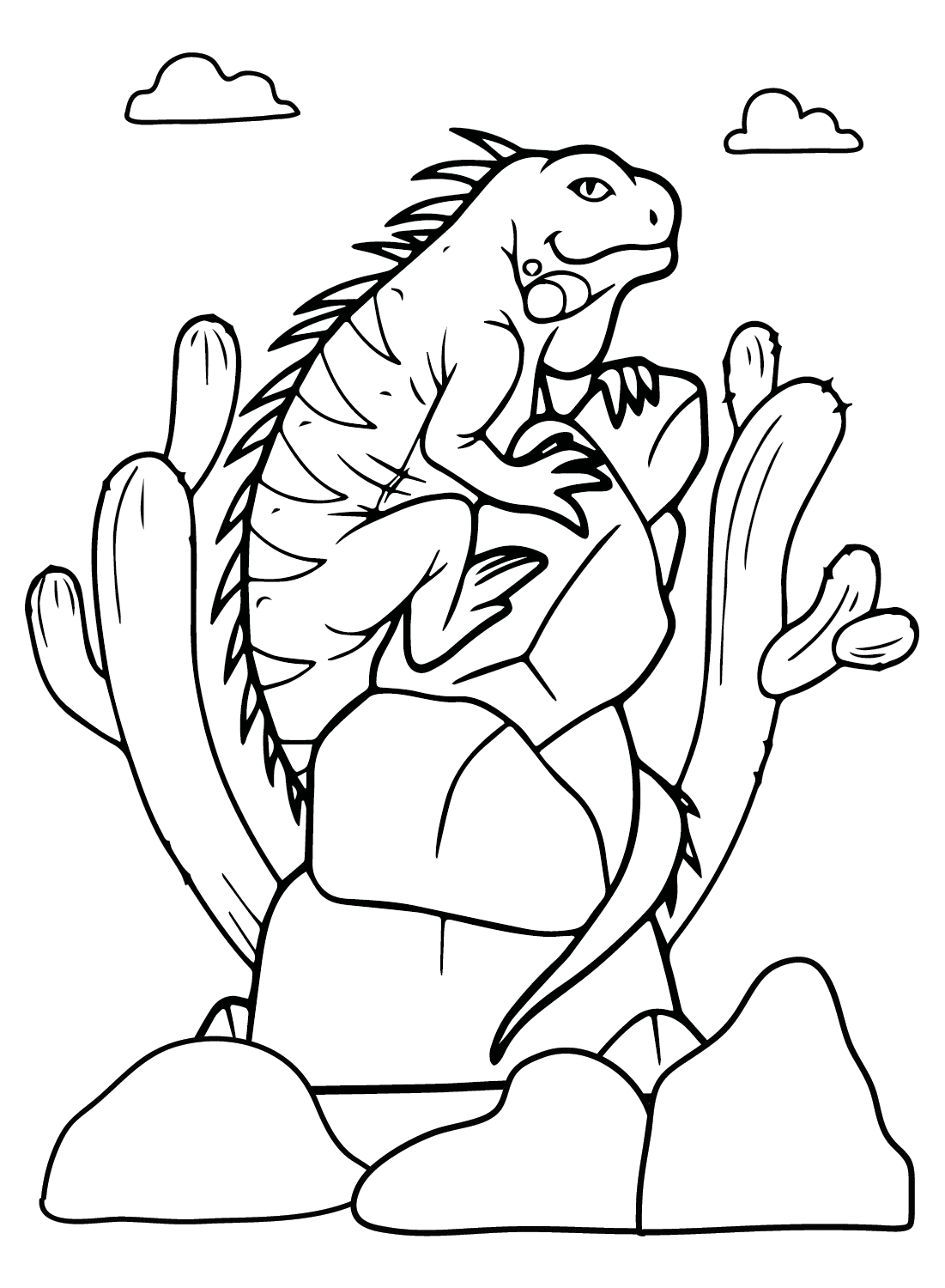
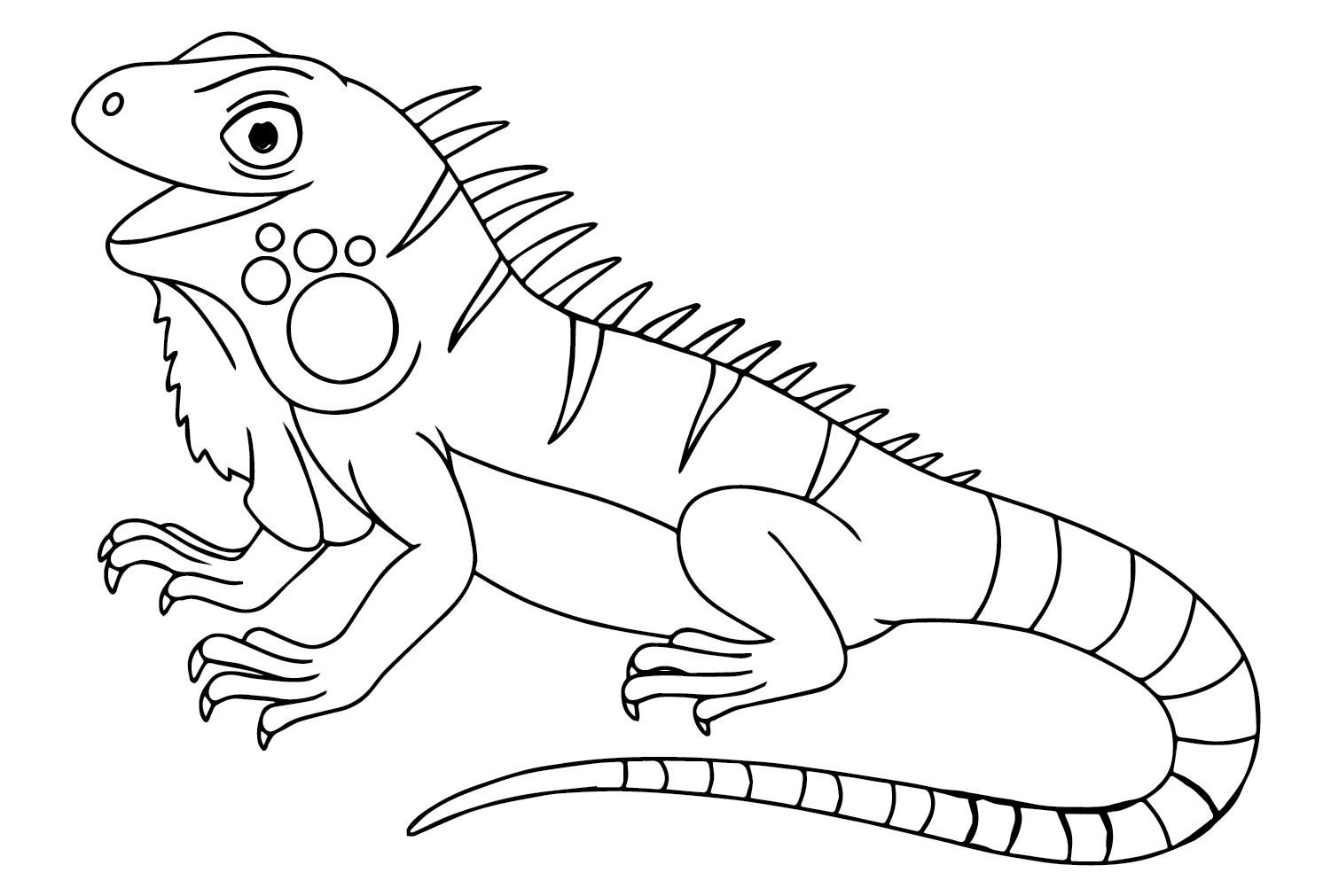
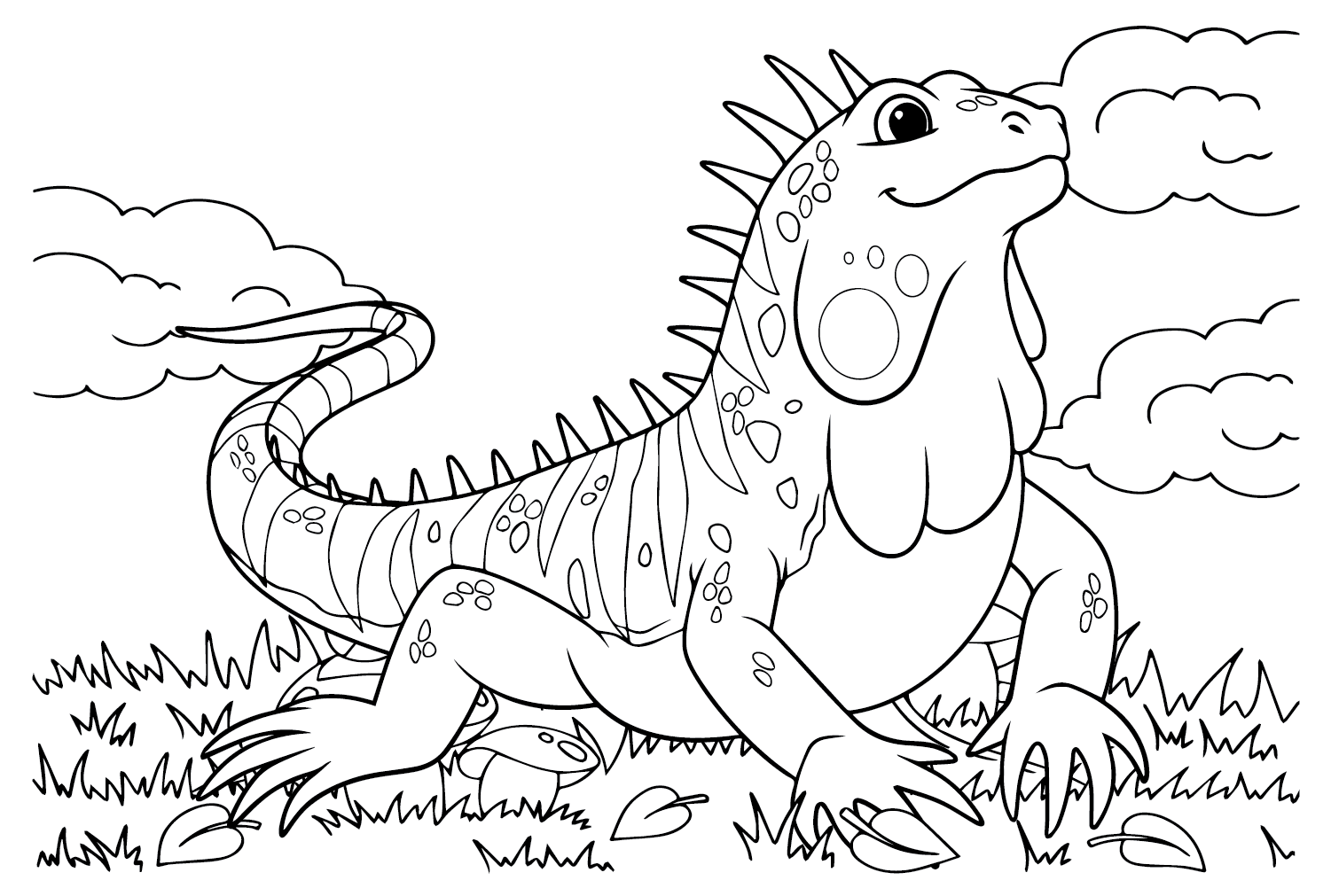
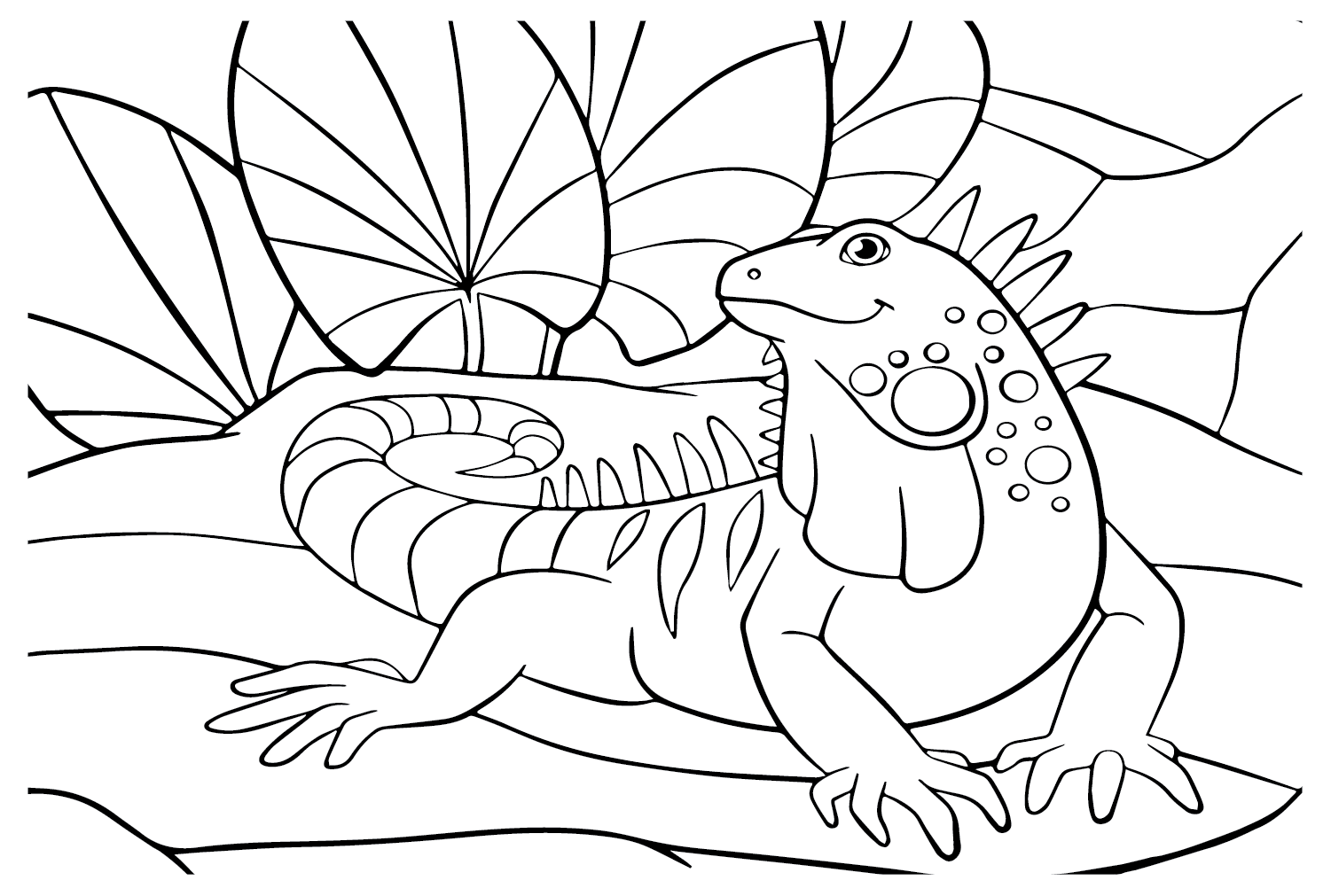
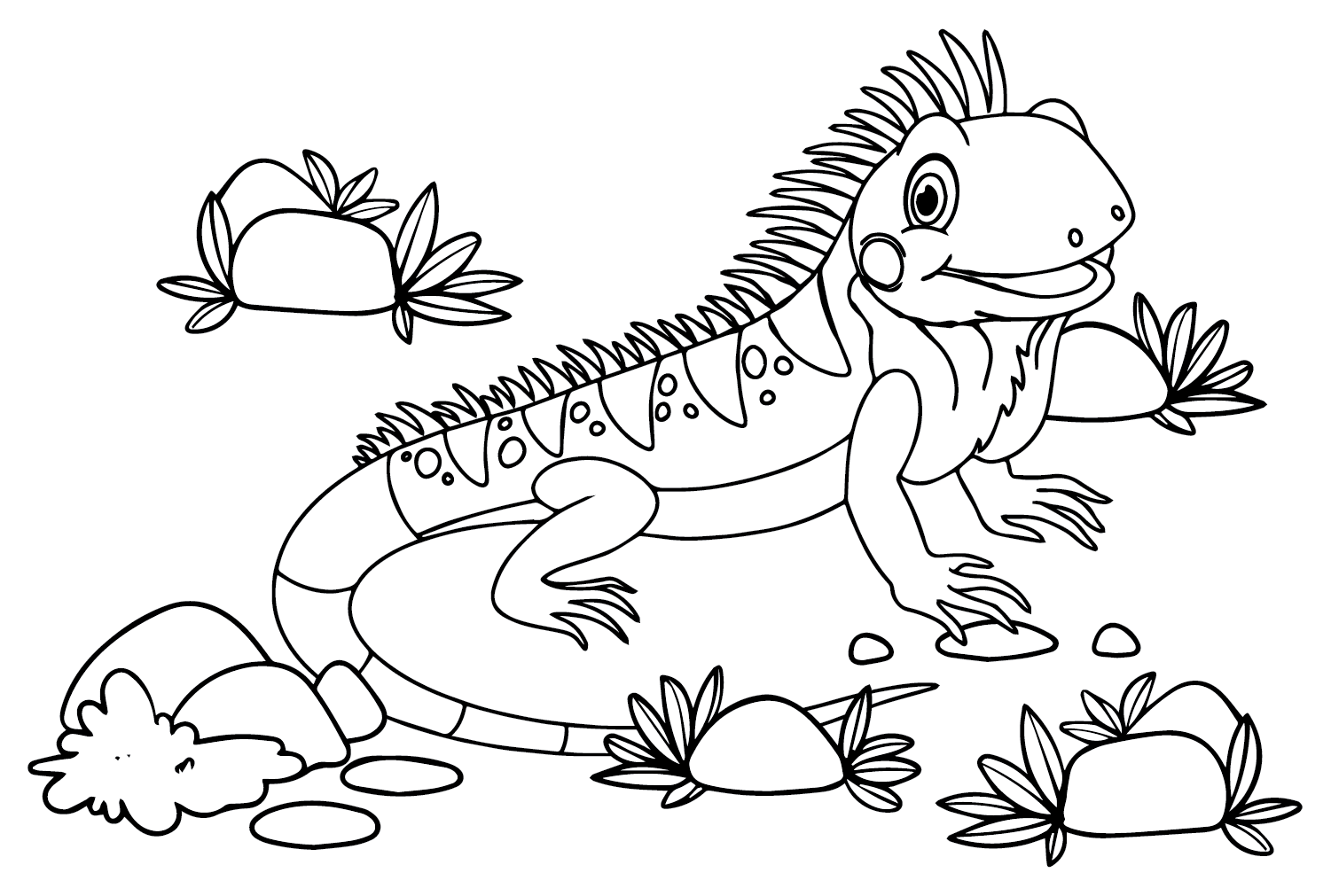
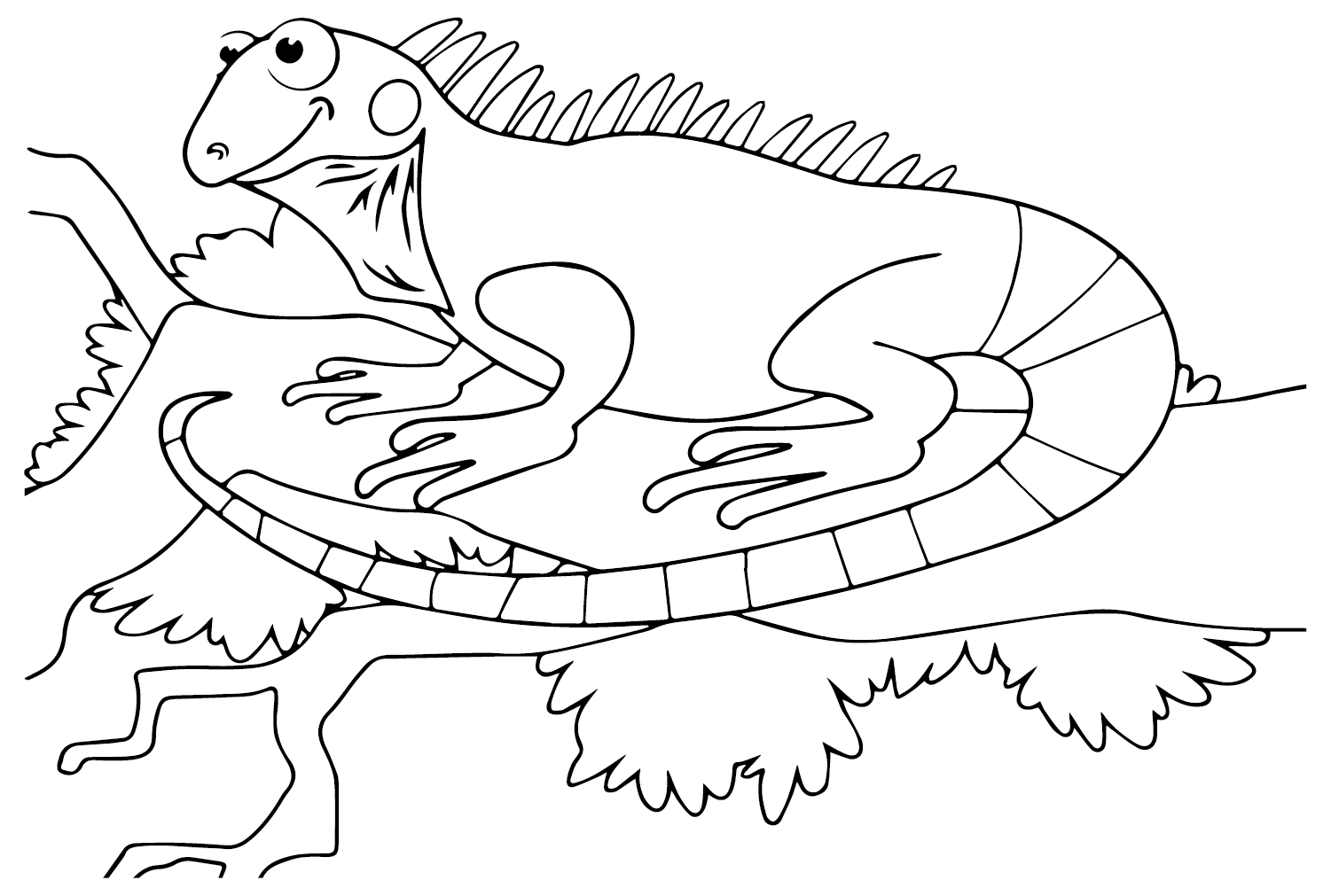
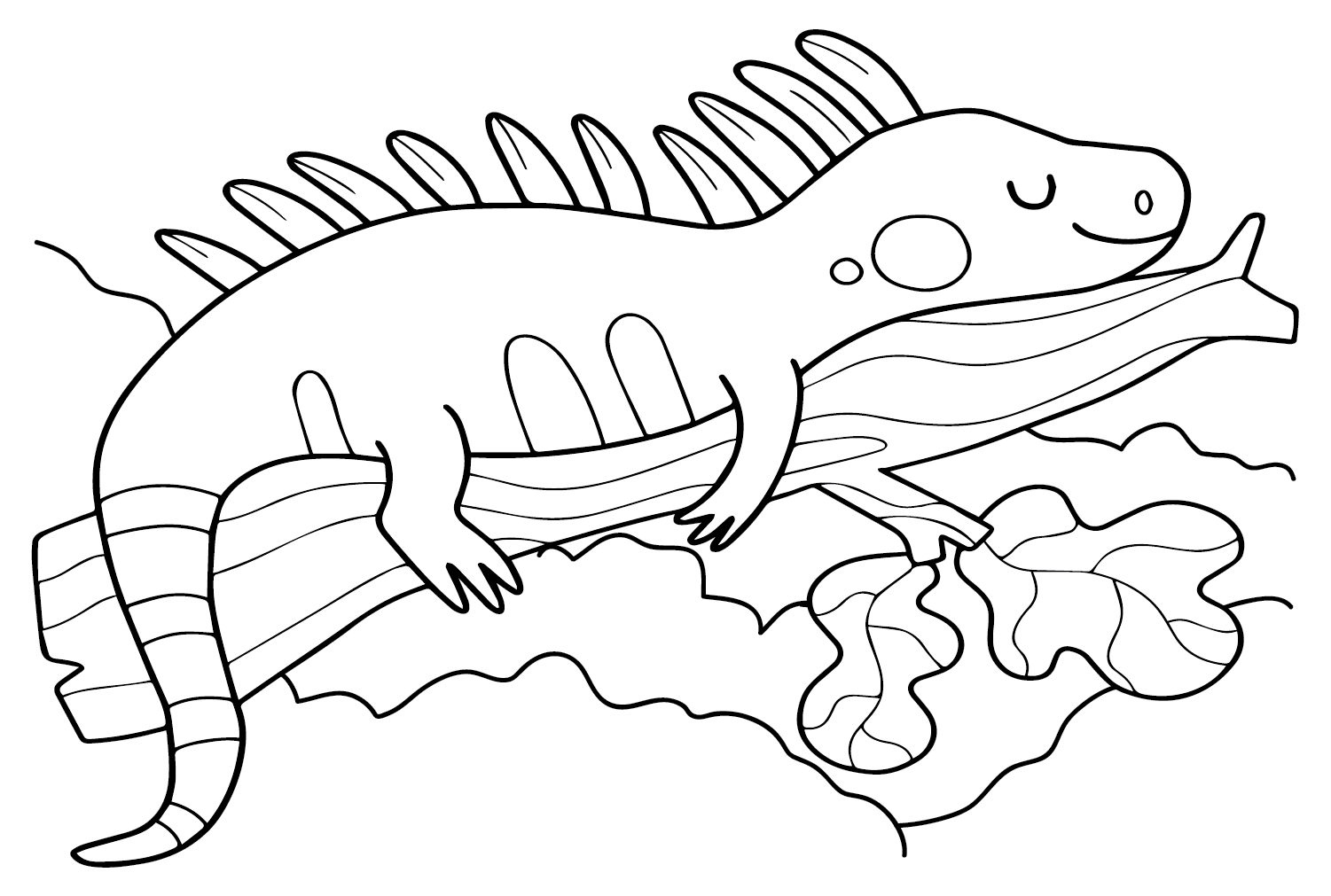
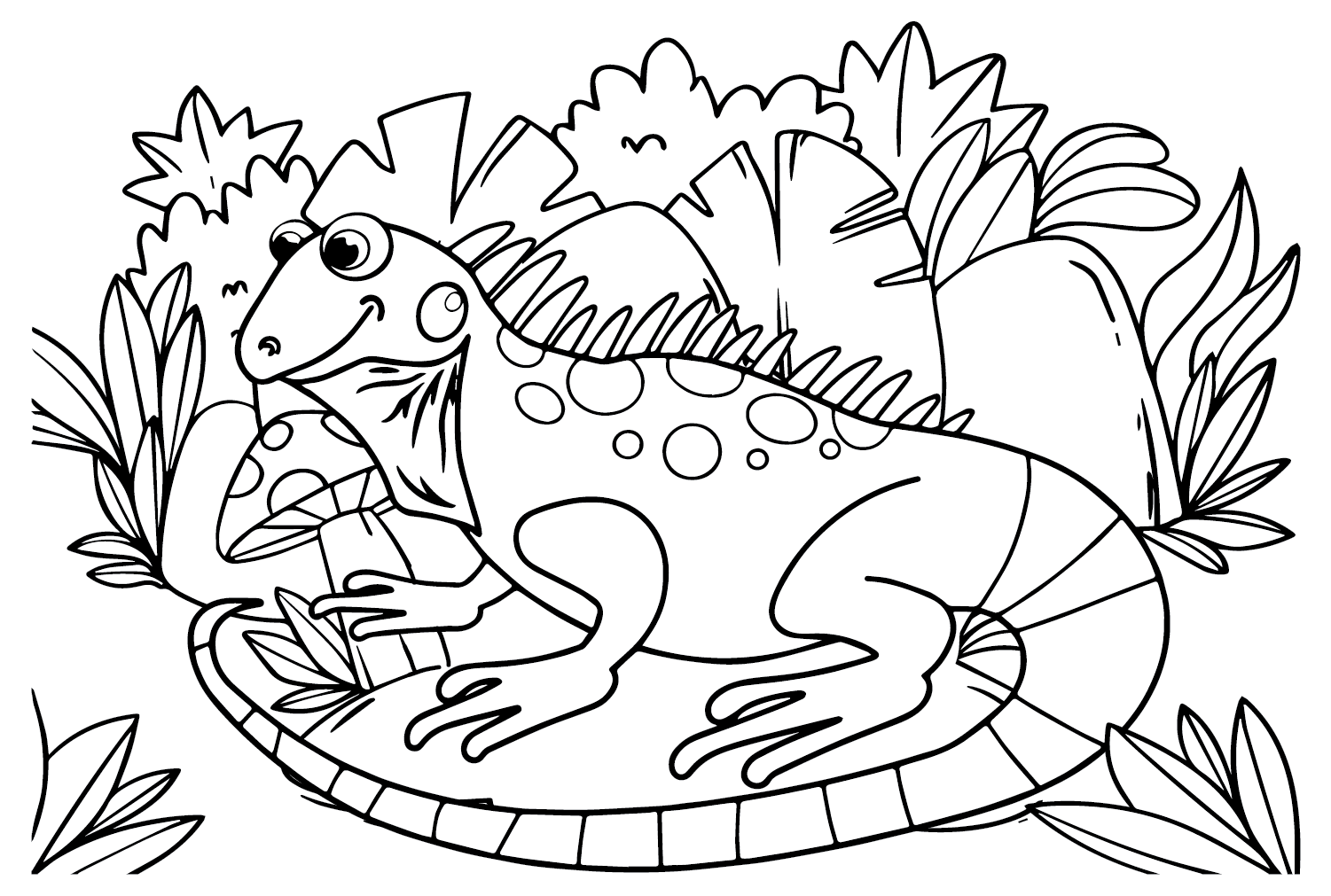
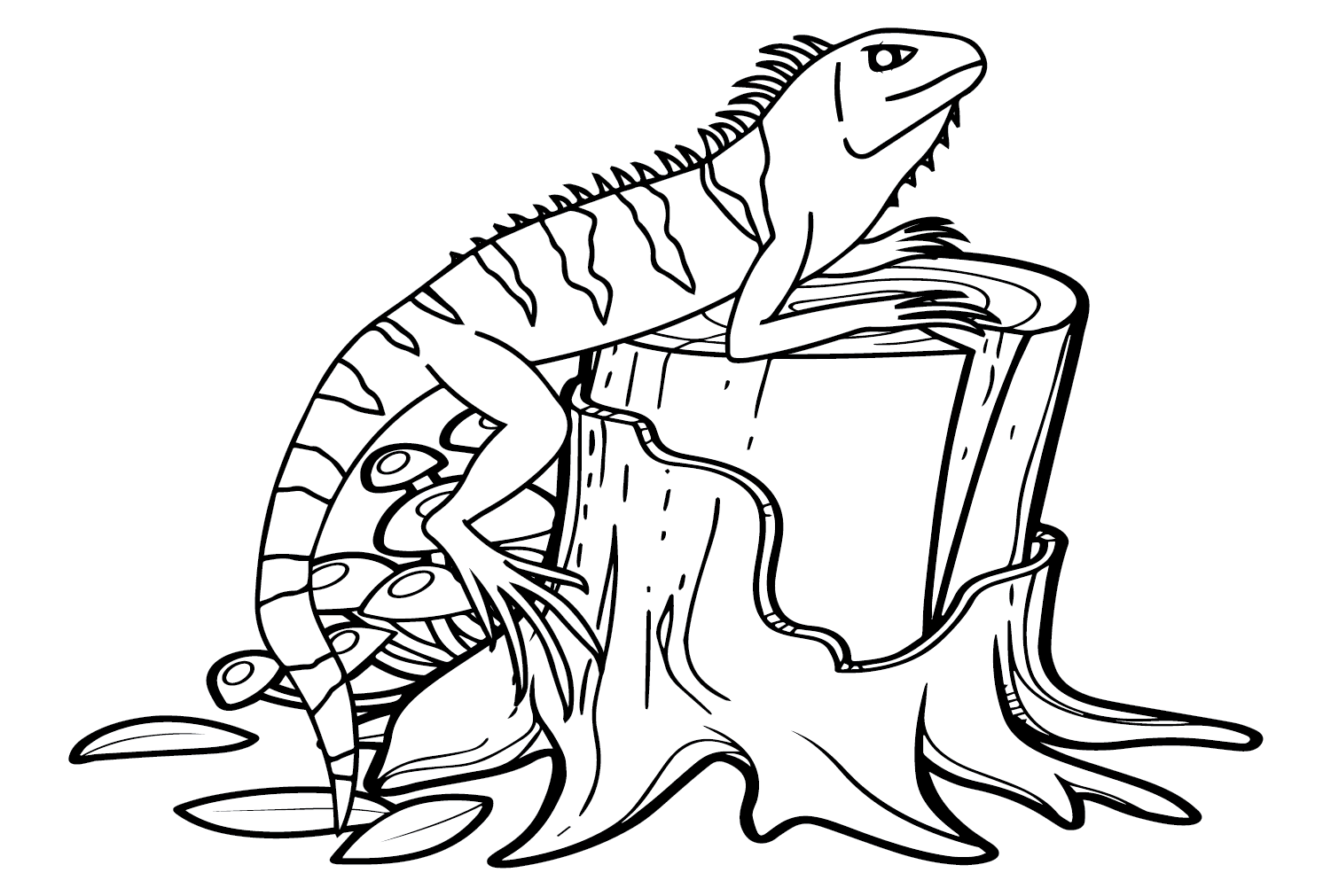
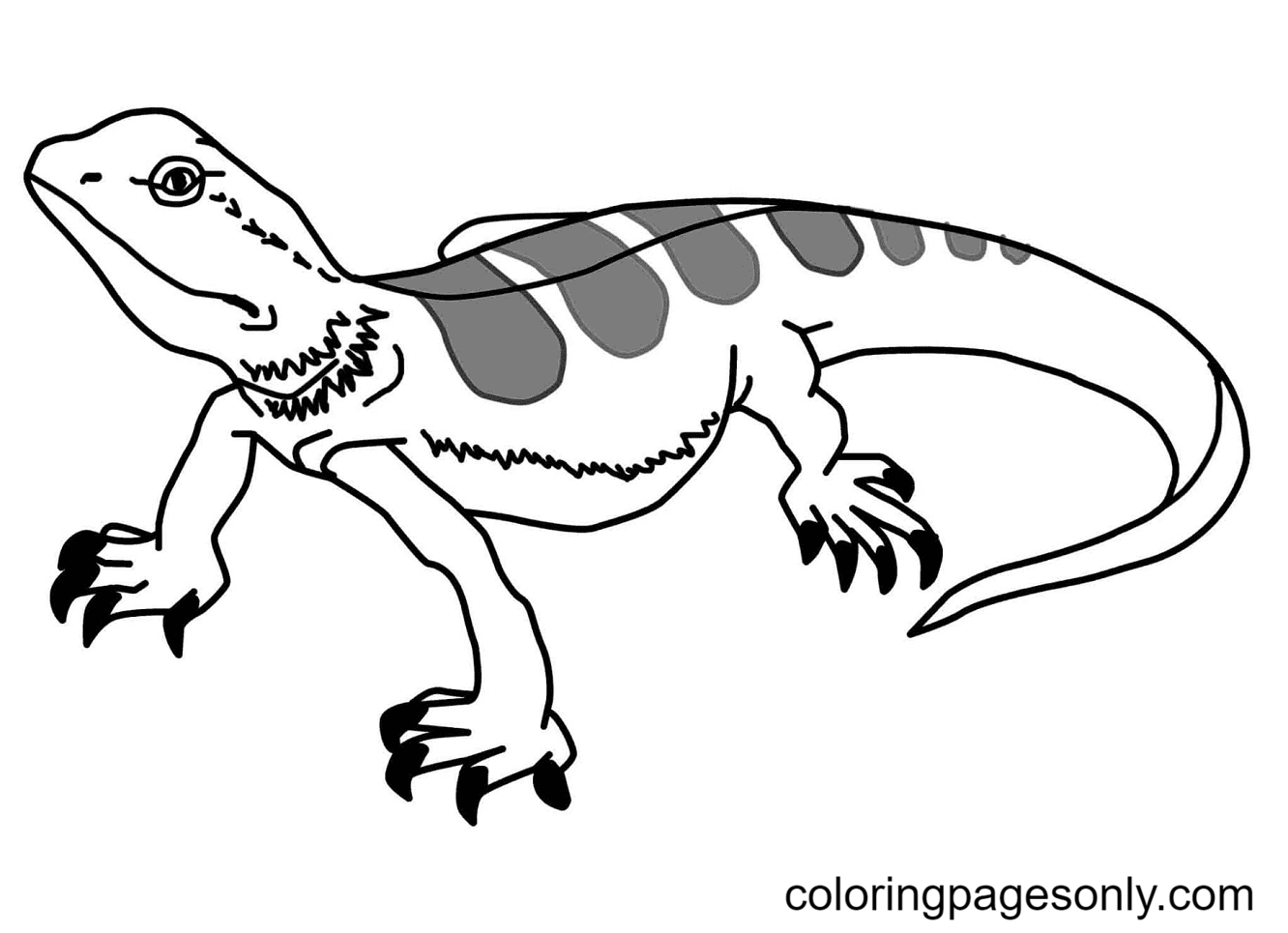
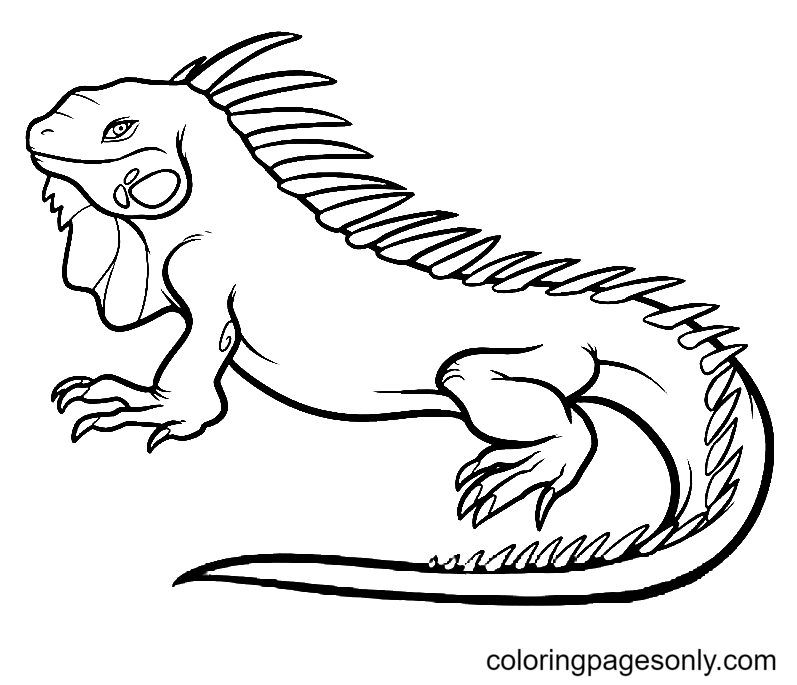
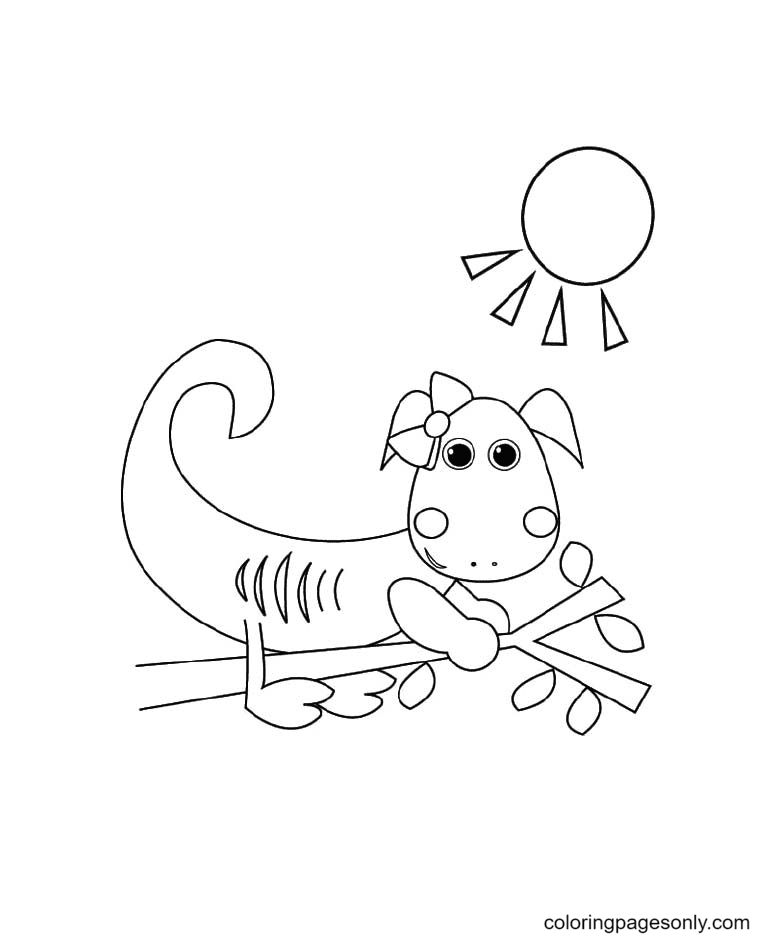
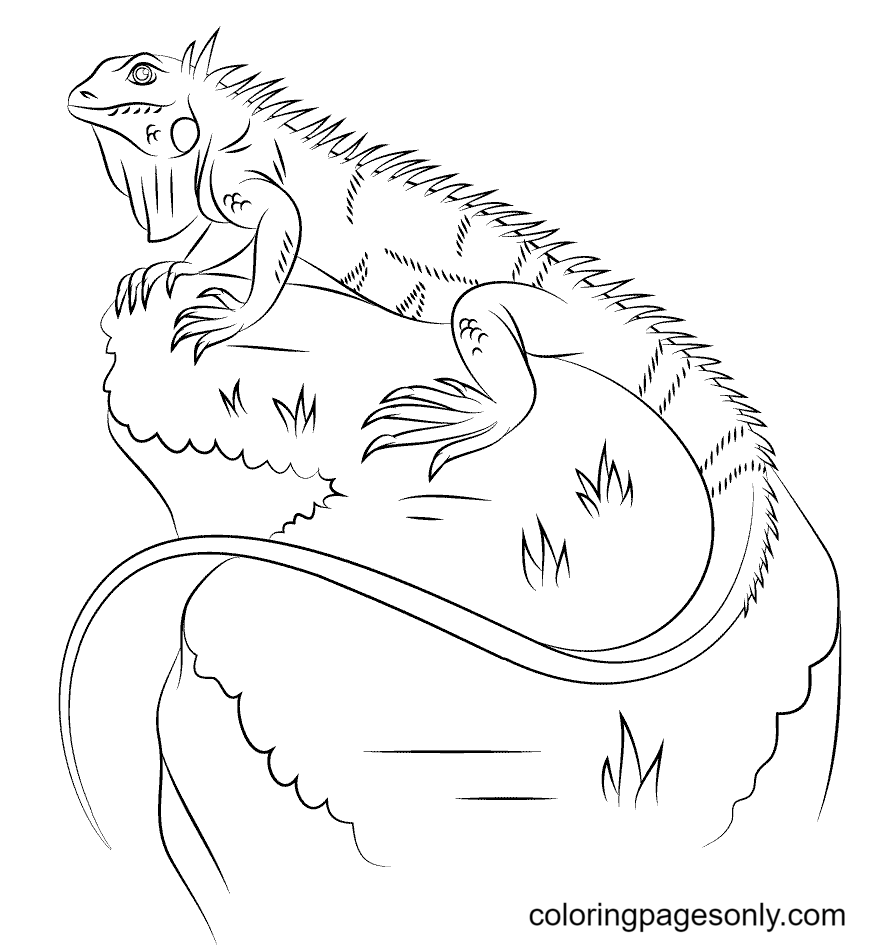
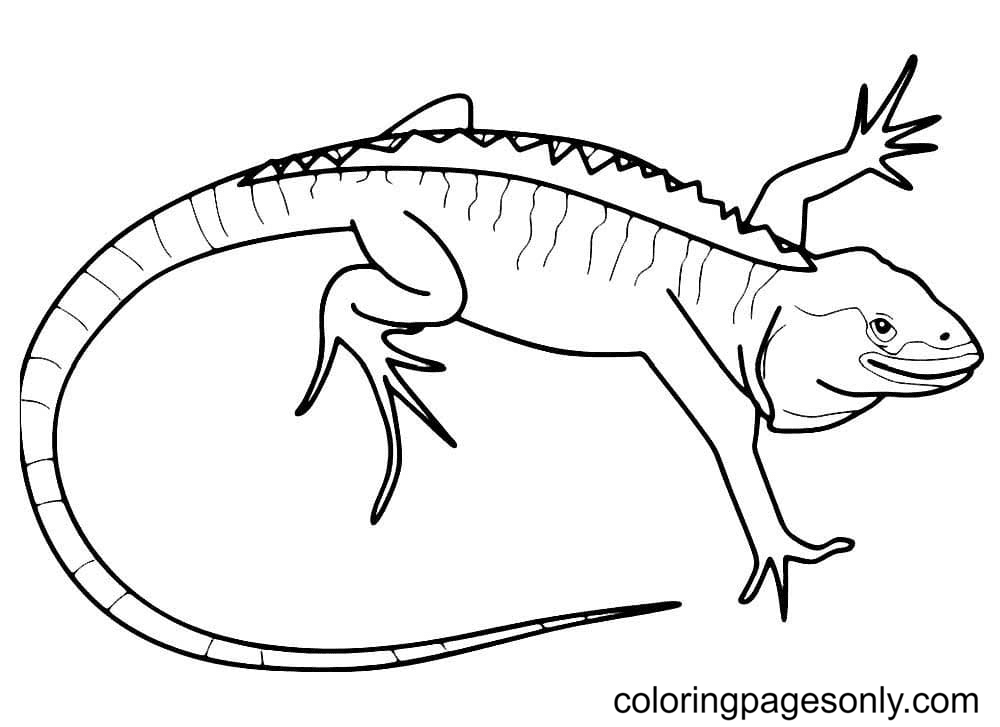
Four pages show iguanas in a natural setting, basking in the sun or gripping a branch with their sharp claws. Warm greens for the body paired with browns for branches and rocks work well here, reflecting the tropical settings iguanas call home.
Cute and Expressive Portraits
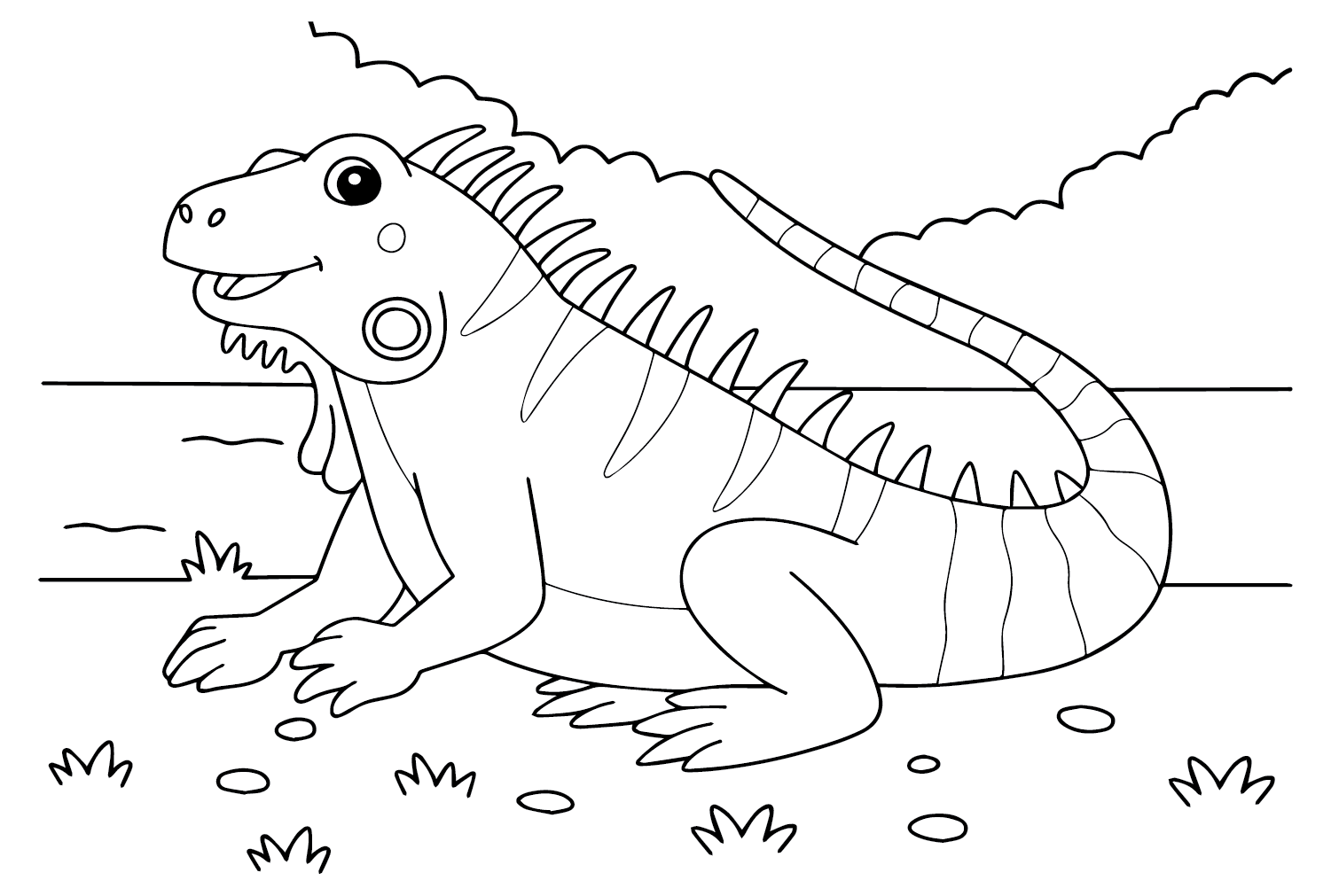
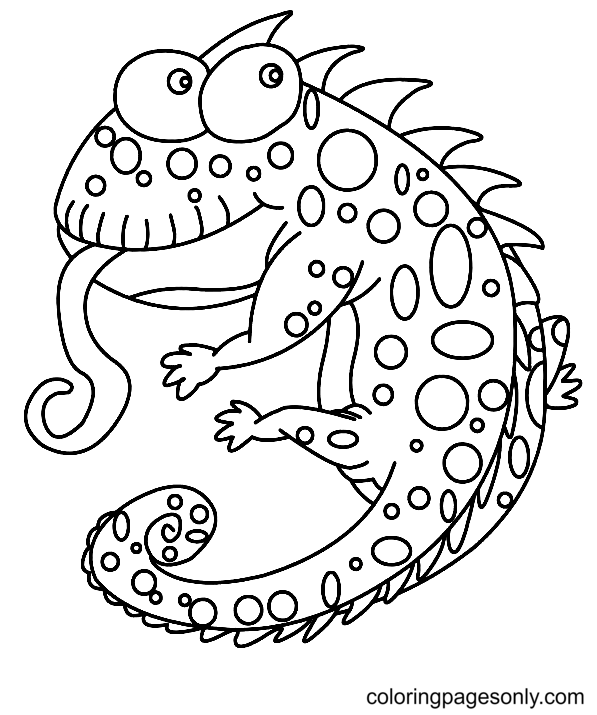
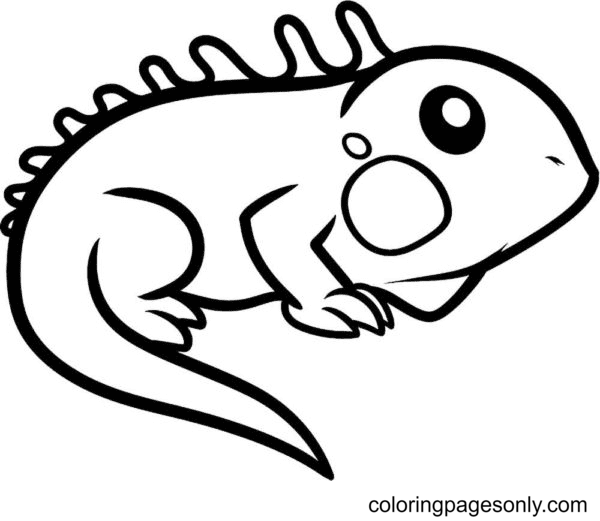
Eight pages give iguanas a playful, cartoon-style personality, from a wide grin to a graceful pose. Bright greens and blues suit these friendlier designs well, since real iguanas can appear in a range of natural colors beyond classic green.
Printable and General Sheets
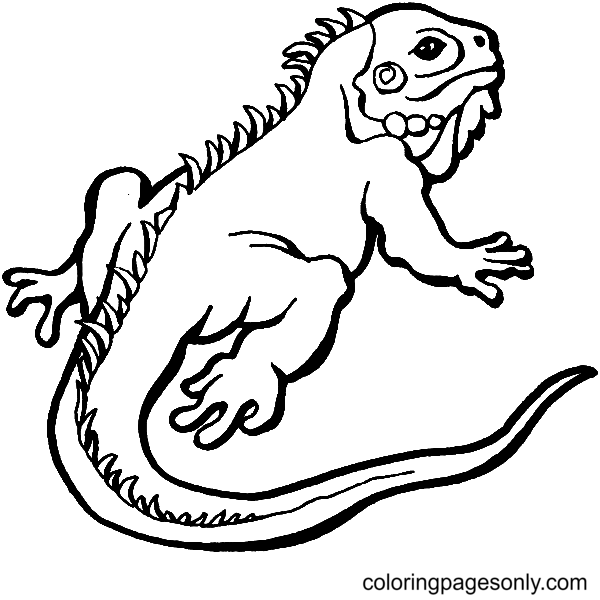
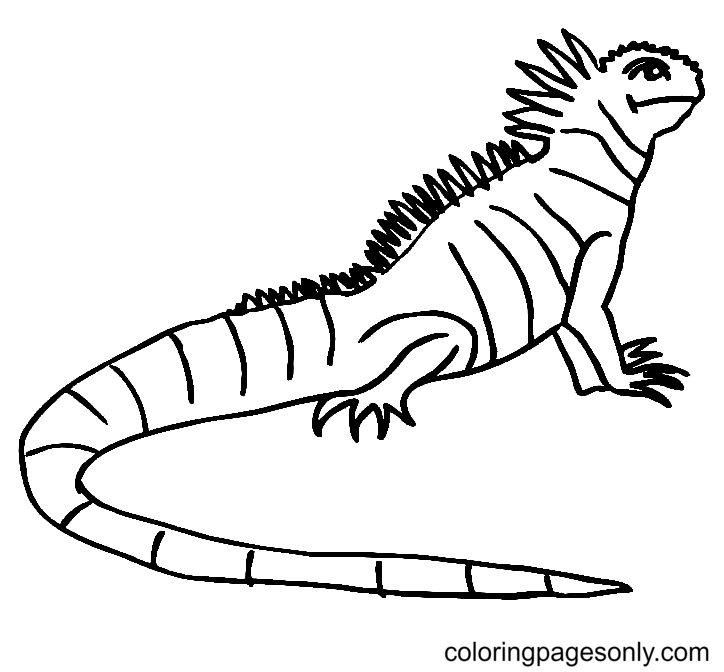
Nineteen pages are sized for a quick, single-session print, most featuring a standalone iguana outline. Two or three solid colors are enough here since the outlines are simple.
What Iguana Coloring Pages Do
Careful strokes for spiny ridges and scaled skin. Filling in the row of spines along an iguana’s back or the texture of its scaled skin without crossing the lines calls for controlled, contained pencil movement, and the American Academy of Pediatrics points to this kind of precise coloring as a way to build fine motor skills in children between ages 2 and 7.
A window into an unusual form of animal communication. Since iguanas rely on head bobs and dewlap displays instead of sound to communicate, coloring an iguana page can lead naturally into a conversation about the many different ways animals send messages to each other.
A steady, repeatable rhythm. A 2005 study published in the Art Therapy Journal recorded measurable drops in anxiety among participants who completed structured coloring sessions, and the detailed, textured shapes of an iguana design offer that same steady, low-pressure task.
Practice with layered, textured shading. An iguana’s spiny ridge and scaled skin naturally invite layered coloring, giving colorists a structured way to practice building texture with two or three shades within a single connected shape.
How to Color Iguana Coloring Pages Well
- Body: Use a warm Green as the classic base color, though real iguanas can also appear in shades of blue, gray, or turquoise, depending on the design.
- Spines and ridges: Color the row of spines along the back a slightly darker or lighter shade than the body to help this feature stand out clearly.
- Dewlap: The flap of skin under the chin can be colored a touch lighter or pinker than the rest of the body, since this area often shows a different tone in real iguanas.
- Claws: Keep the sharp claws a light gray or tan, distinct from the body color, since this detail helps convey the iguana’s climbing ability.
- Eyes: A small, round eye in brown or dark gray adds a sharp, alert feature without requiring extra detail.
- Branches and foliage: Warm browns for branches and a range of greens for leaves work well in habitat scenes, keeping the background slightly muted so the iguana remains the focal point.
5 Creative Craft Ideas With Iguana Coloring Pages
1. Branch Display Craft
Color an iguana page, cut it out, and attach it to a real or artificial branch with tape or a paper clip for a simple 3D display.
2. Bookmark
Trim a small colored iguana design to size, laminate or cover with clear tape, and punch a hole for ribbon to make a durable reading bookmark.
3. Rainforest Scene Collage
Color several iguana and habitat-themed pages, cut them out, and arrange them together on a poster board to build a full tropical scene.
4. Reptile Fact Card
Color an iguana page, write a fact about iguanas on the back, and use it as a simple flash card for at-home or classroom learning.
5. Greeting Card
Fold cardstock in half, mount a small colored iguana design on the front, and write a message inside for a birthday or nature-themed card.
Frequently Asked Questions
What are iguana coloring pages?
Iguana coloring pages are printable line-art designs featuring iguanas in their tropical habitat, cute and expressive portraits, and general printable sheets. This collection includes 31 free designs available as PDFs or online coloring.
Where are iguanas found in the wild?
Iguanas are native to Central and South America and the Caribbean, with the green iguana being the most widespread species across this range.
How do iguanas communicate?
Iguanas communicate mainly through body language rather than sound, using head bobs, slow bowing, and their dewlap, the flap of skin under the chin, to signal territory, greeting, or agitation.
What is the rarest type of iguana?
The blue iguana, found only on Grand Cayman in the Cayman Islands, is one of the rarer iguana species. It was considered functionally extinct in the wild by 2002, before conservation efforts helped its status improve to endangered by 2012.
What do iguanas eat?
Iguanas are herbivorous, feeding mainly on leaves, flowers, and fruit, and this diet also plays a role in dispersing seeds within their native habitats.
Why do iguanas have spines along their backs?
The row of spines along an iguana’s back and tail is a natural feature of the species, helping give the animal its distinctive silhouette and adding a layer of physical deterrence against predators.
Are iguana coloring pages suitable for young children?
Yes. The simple, printable designs in this collection use bold, uncluttered outlines suited to preschool and early elementary colorists, while the more detailed habitat scenes work well for older children.
What colors work best for an iguana?
Warm green is the classic choice, though real iguanas also appear in shades of blue, gray, and turquoise, so any of these work well depending on the design.
Start Coloring
Download any page by clicking the design. No account, email, or payment is required. Pages print directly from the browser at full resolution or open in the online coloring tool for screen use. Share finished pages on Facebook or Pinterest with the share buttons at the top of each design page.