Math Symbols & Concepts Coloring Pages
 By:
Charlotte Taylor - Content Writer
Updated:
By:
Charlotte Taylor - Content Writer
Updated:
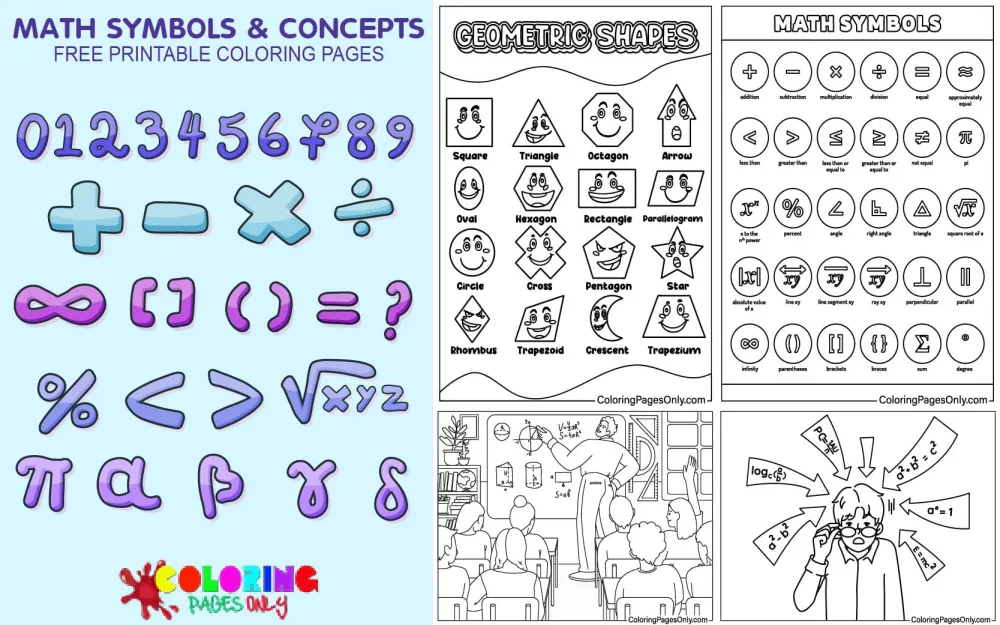
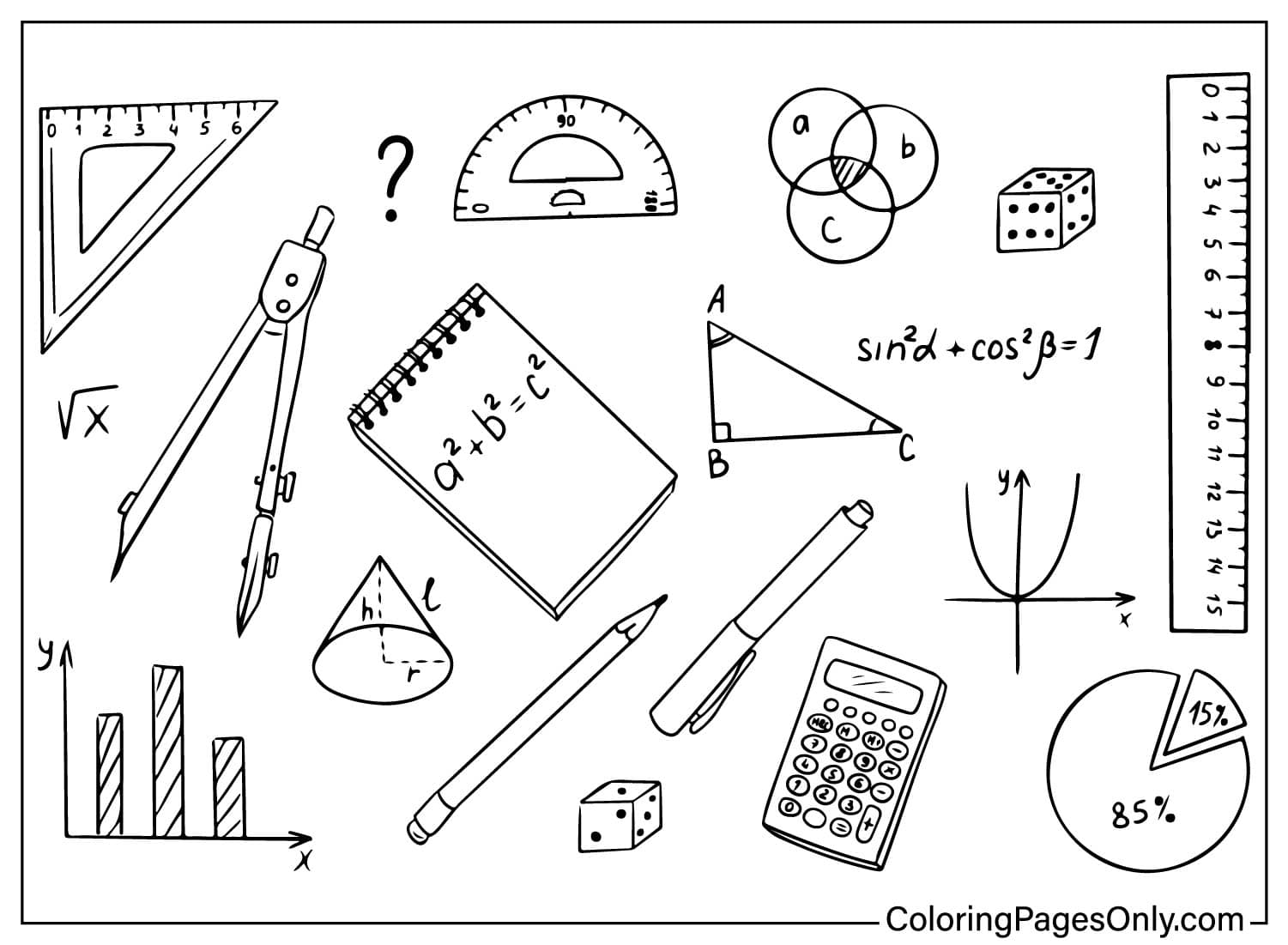
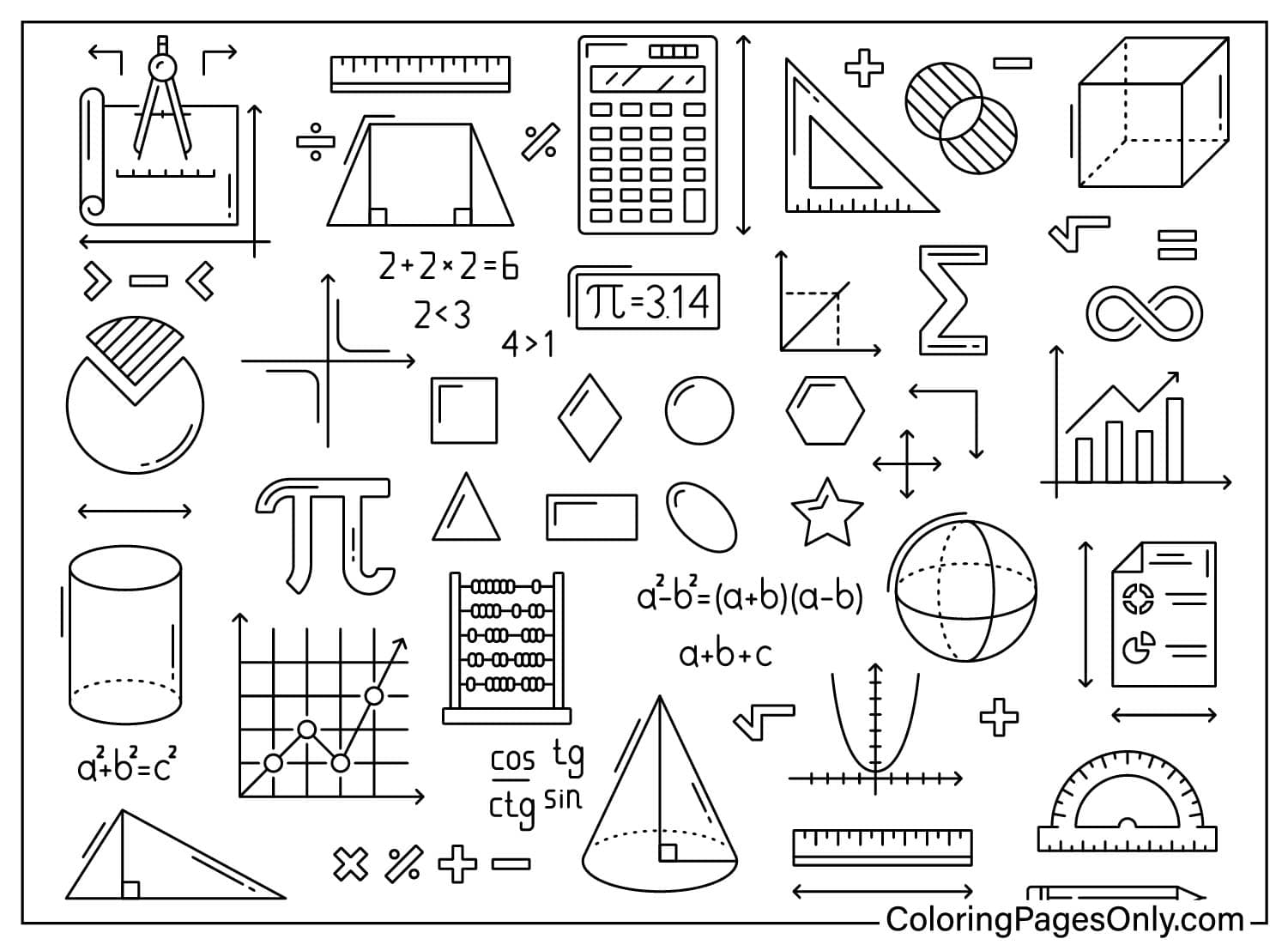
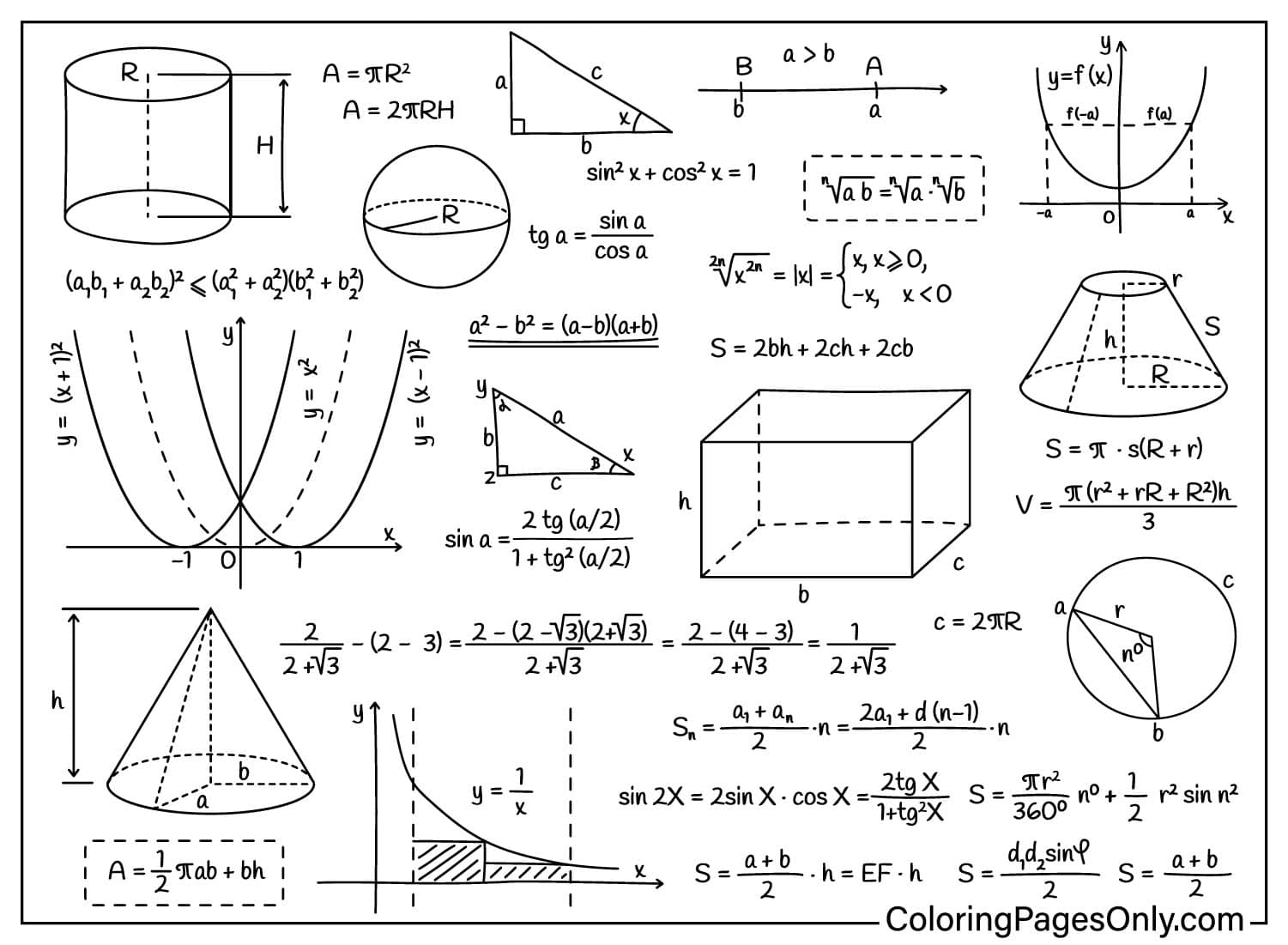
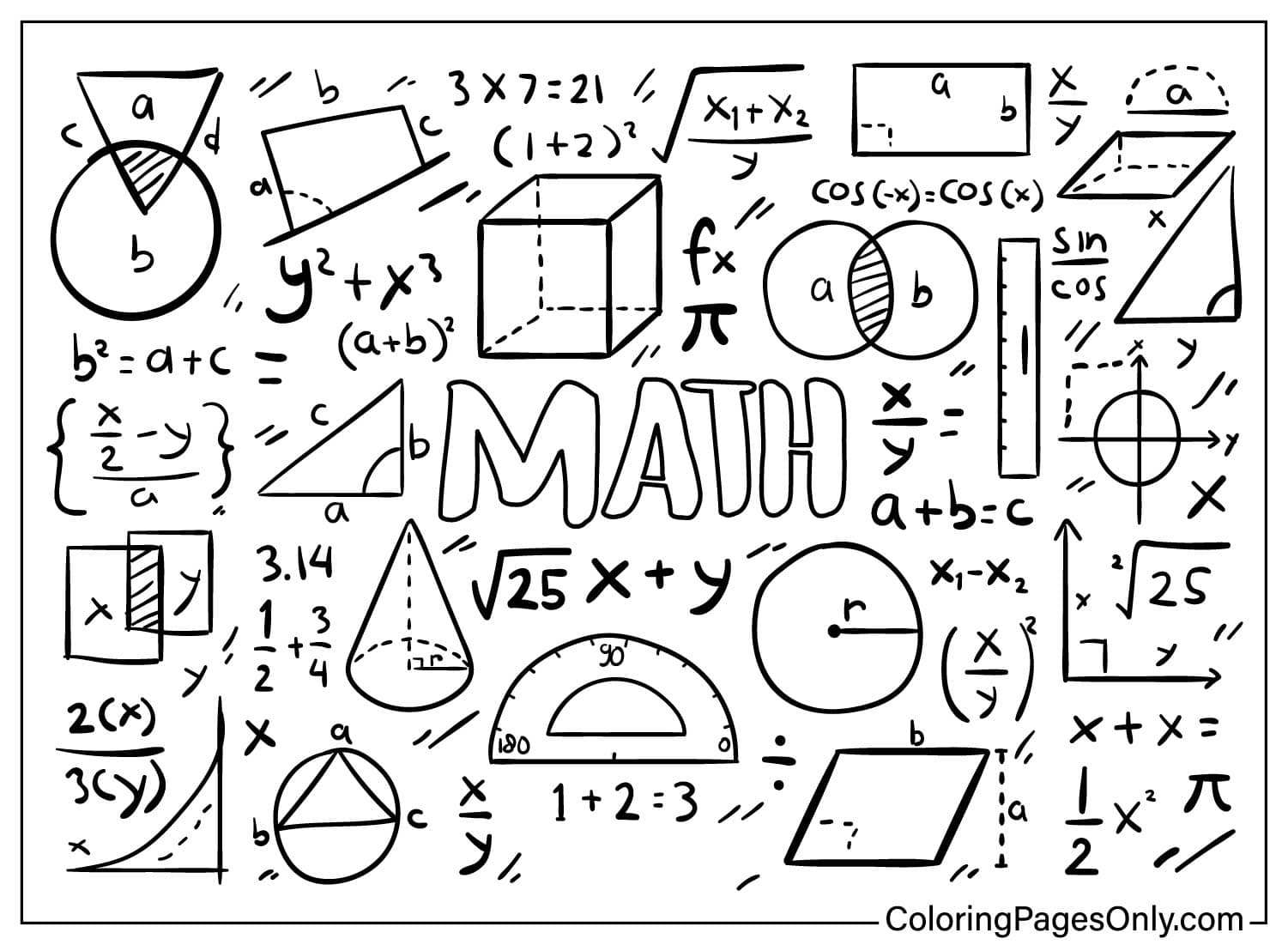
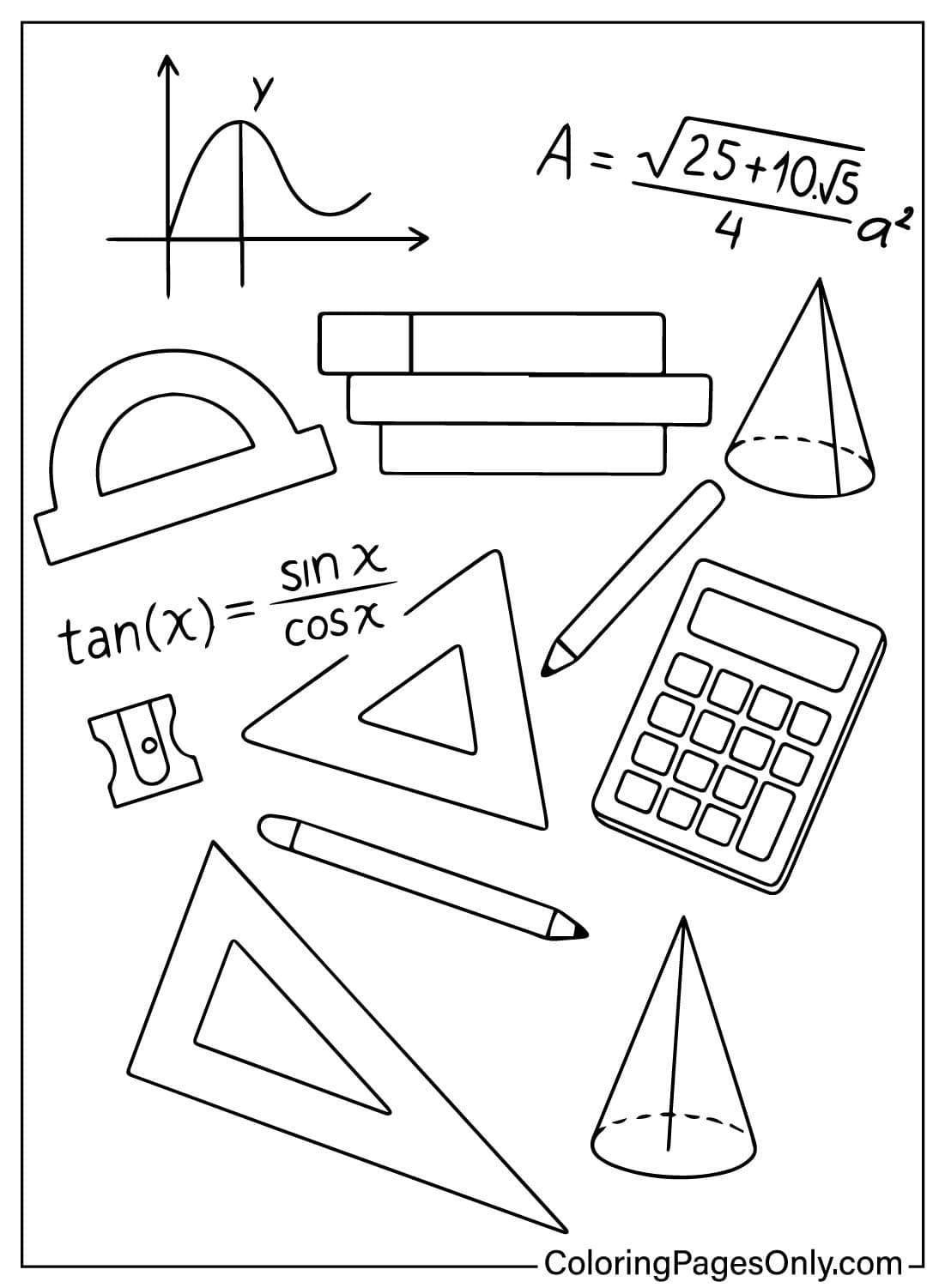
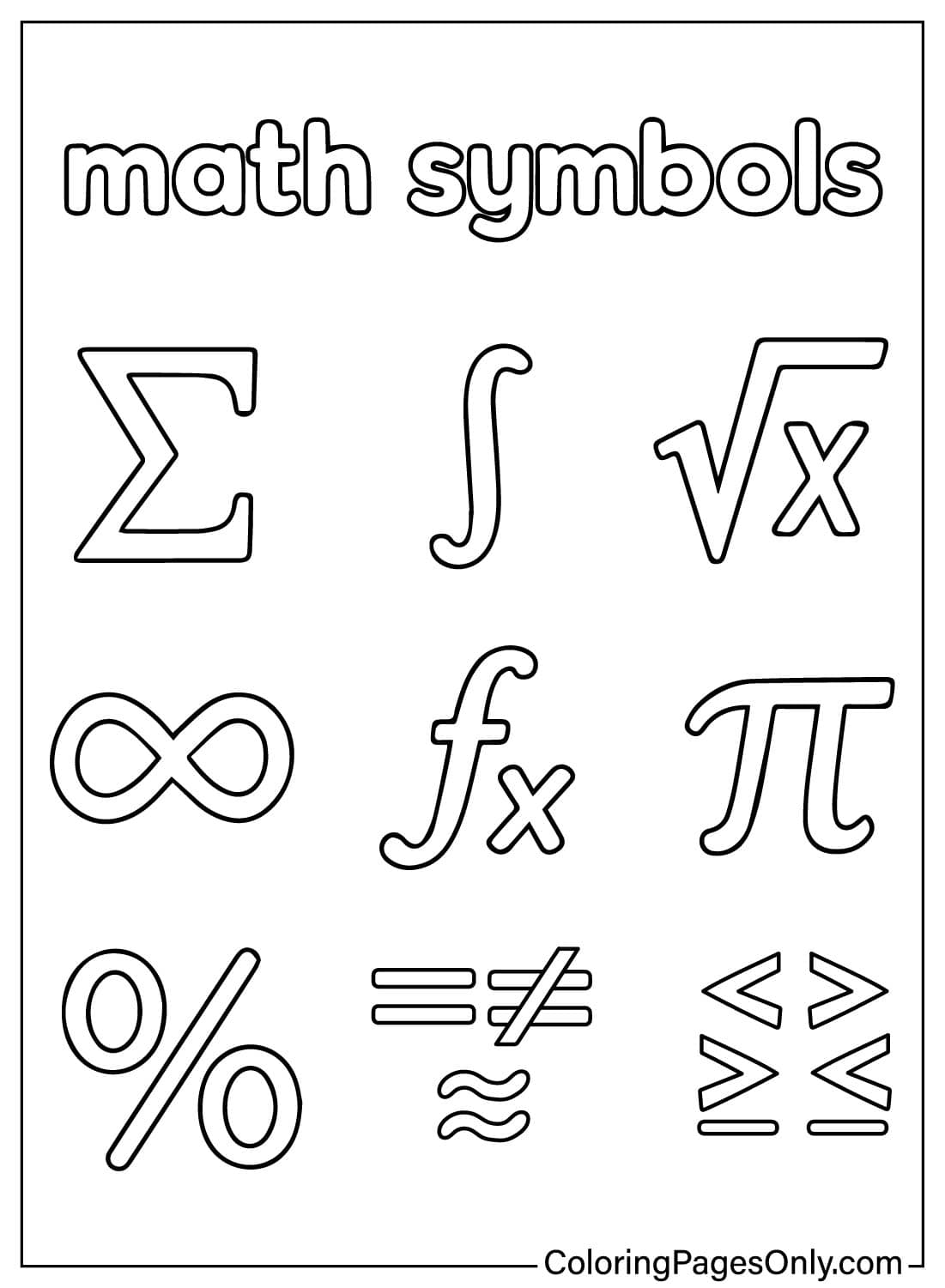
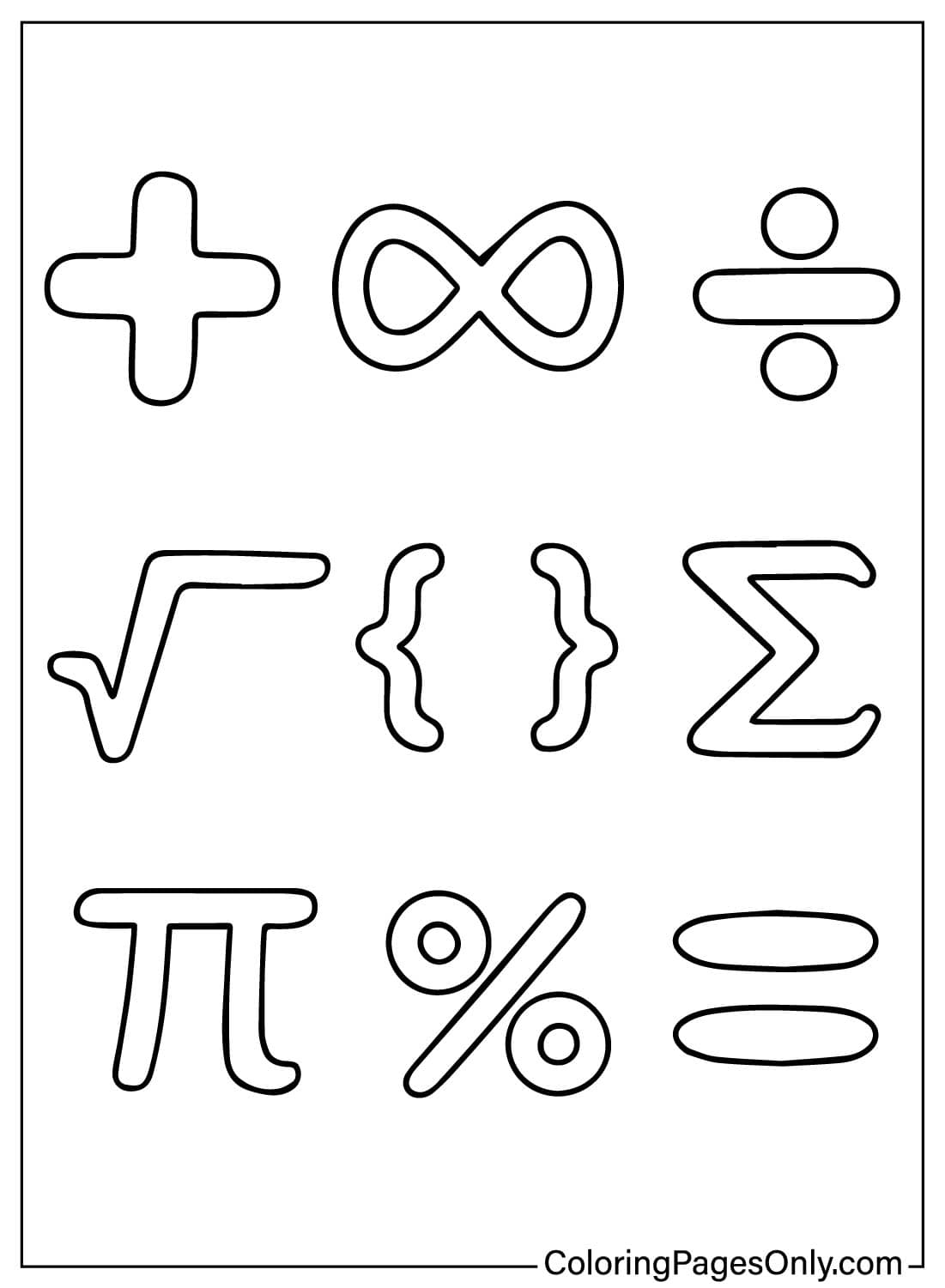
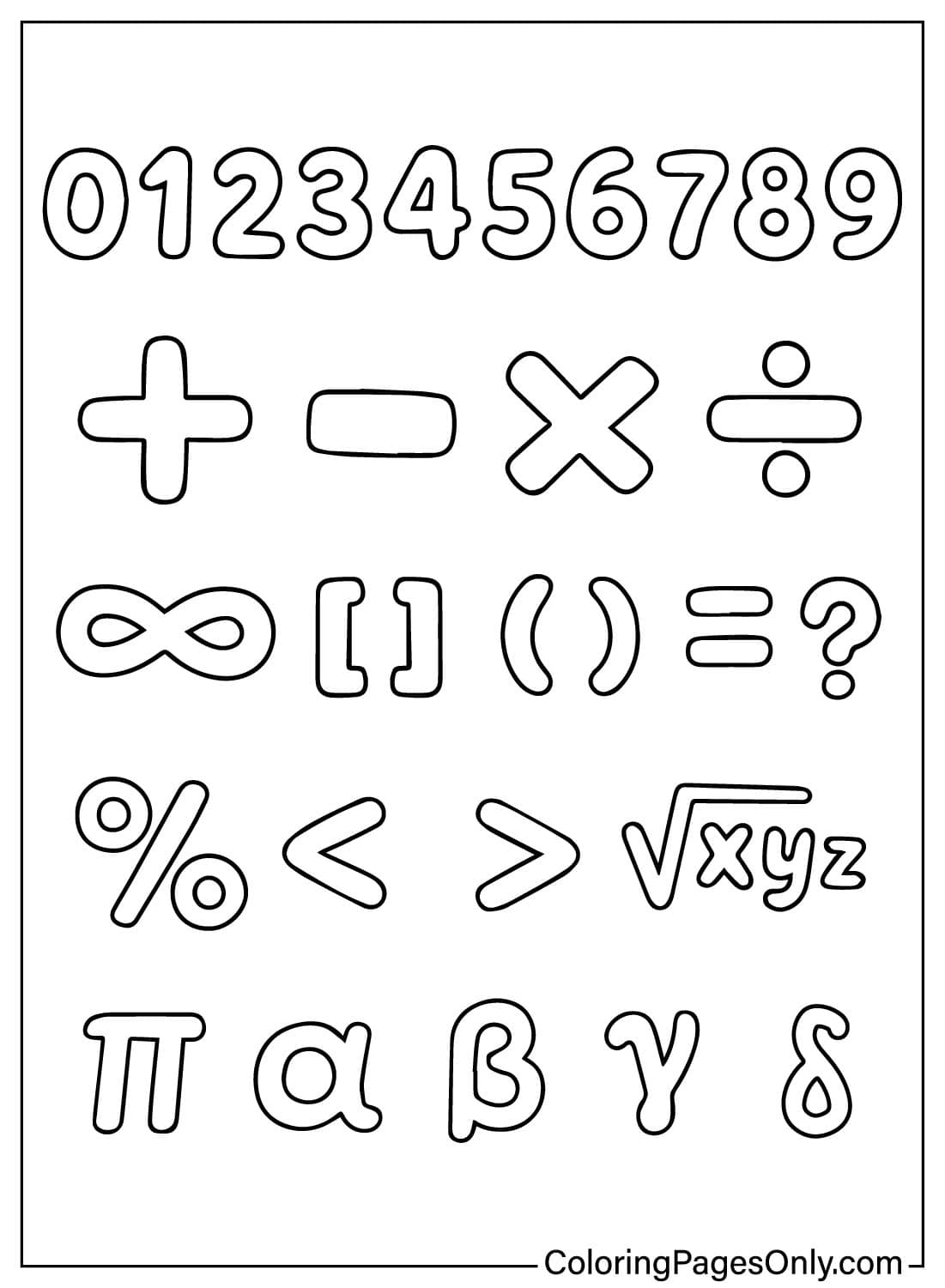
Free Math Symbols & Concepts Coloring Pages: 33 printable PDF designs featuring plus and minus signs, equals signs, greater-than and less-than arrows, geometric shapes, and cheerful classroom scenes of students and teachers working through problems on the board.
Every one of these symbols had an inventor. For most of history, mathematicians wrote their problems out in words. The plus and minus signs first appeared in print in 1489, in a German arithmetic book by Johannes Widmann, where they marked extra or missing goods in a merchant’s stock. In 1557, the Welsh physician Robert Recorde introduced the equals sign in The Whetstone of Witte, explaining that he chose two parallel lines because nothing could be more equal. Other symbols followed over the next two centuries, including the division sign in 1659 and the Greek letter pi for the circle constant in 1706.
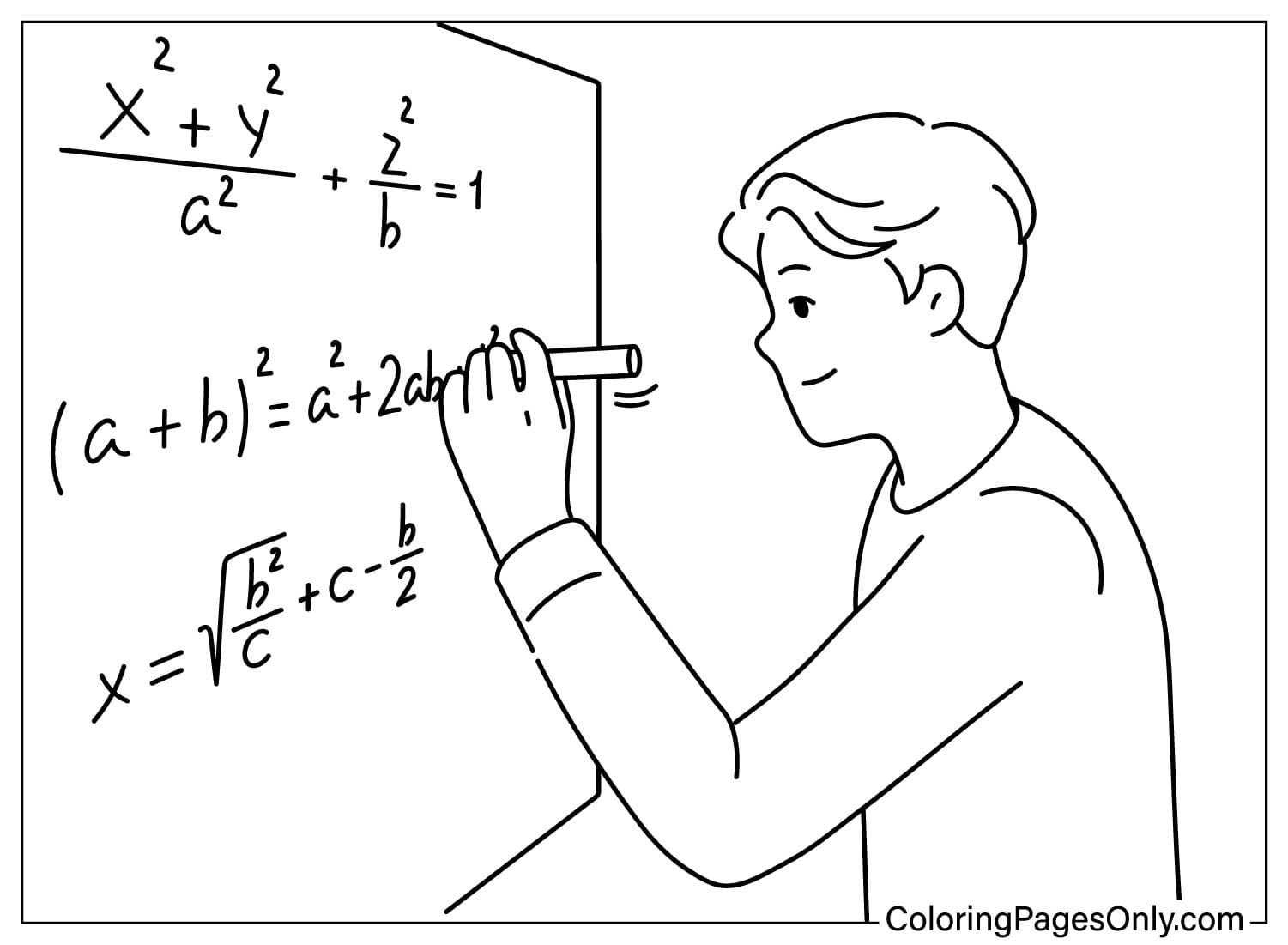
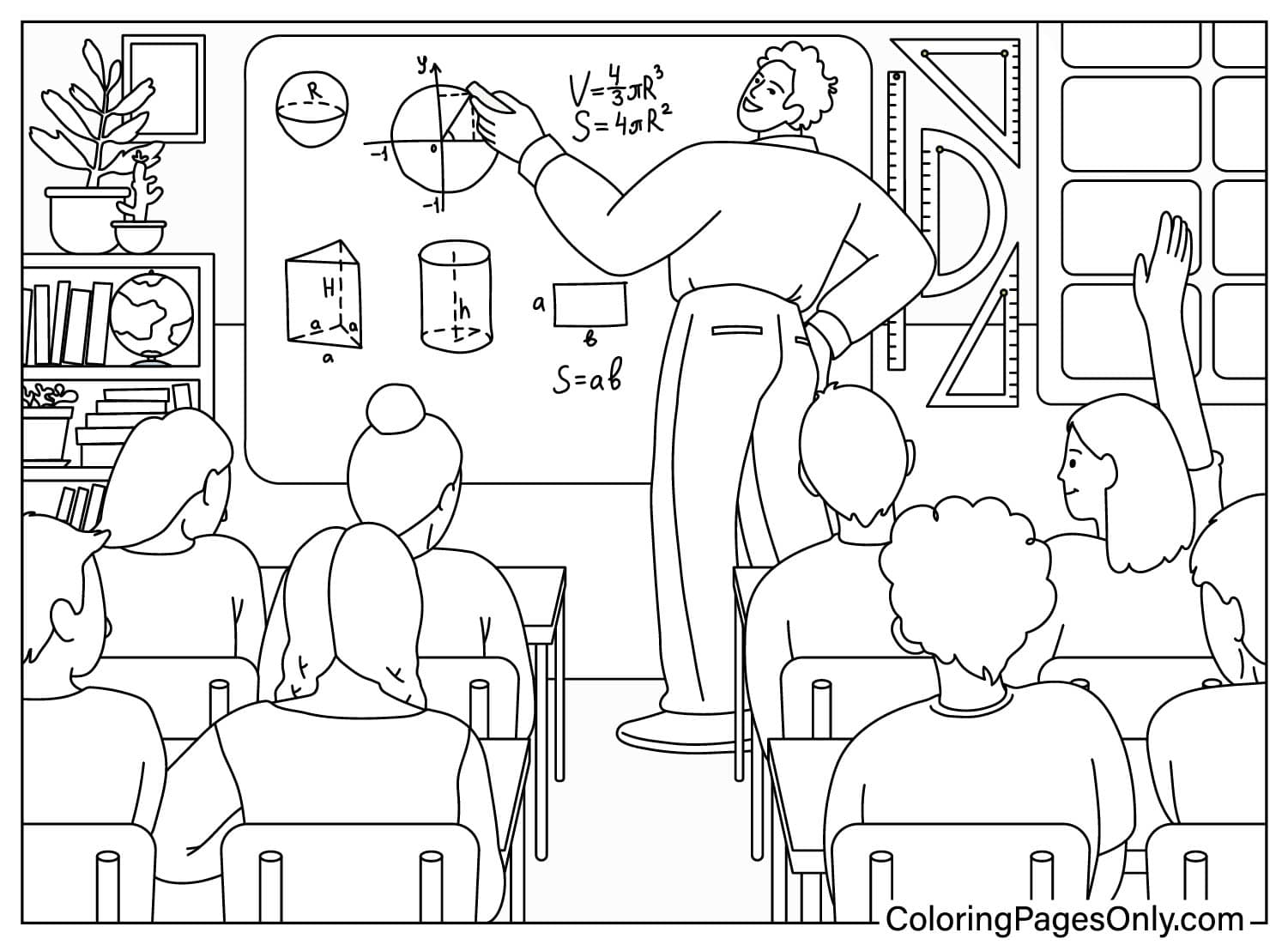
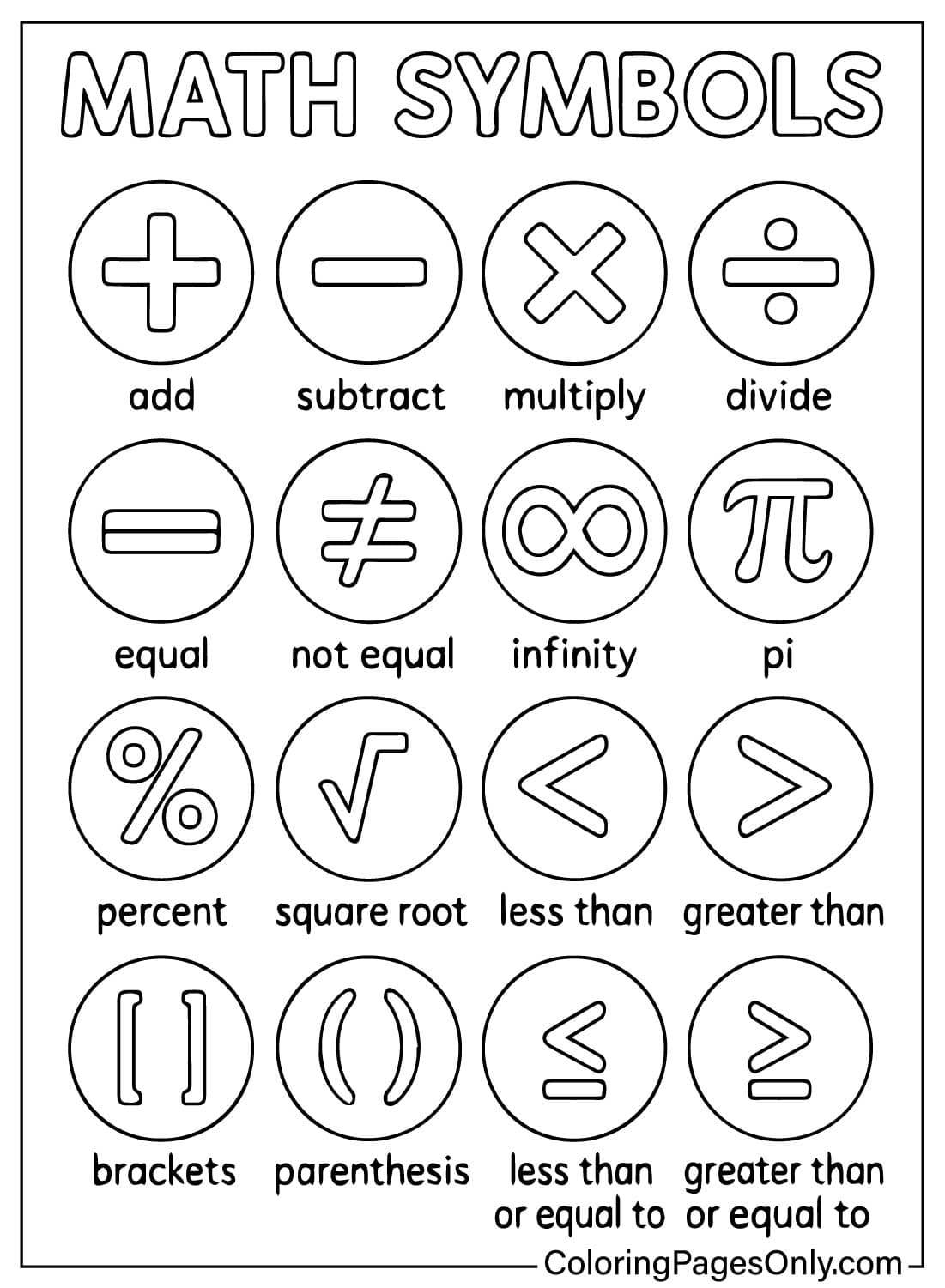
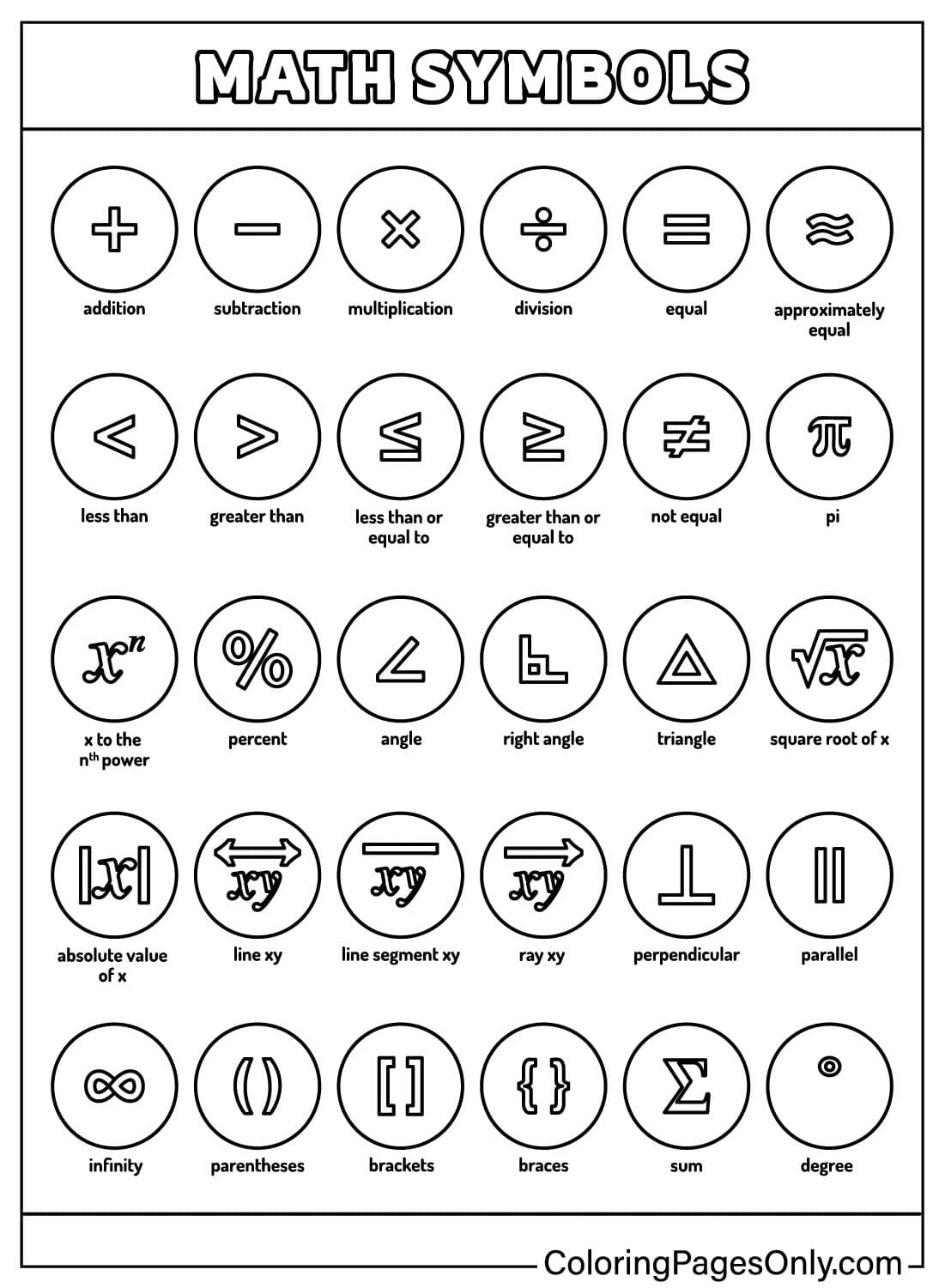
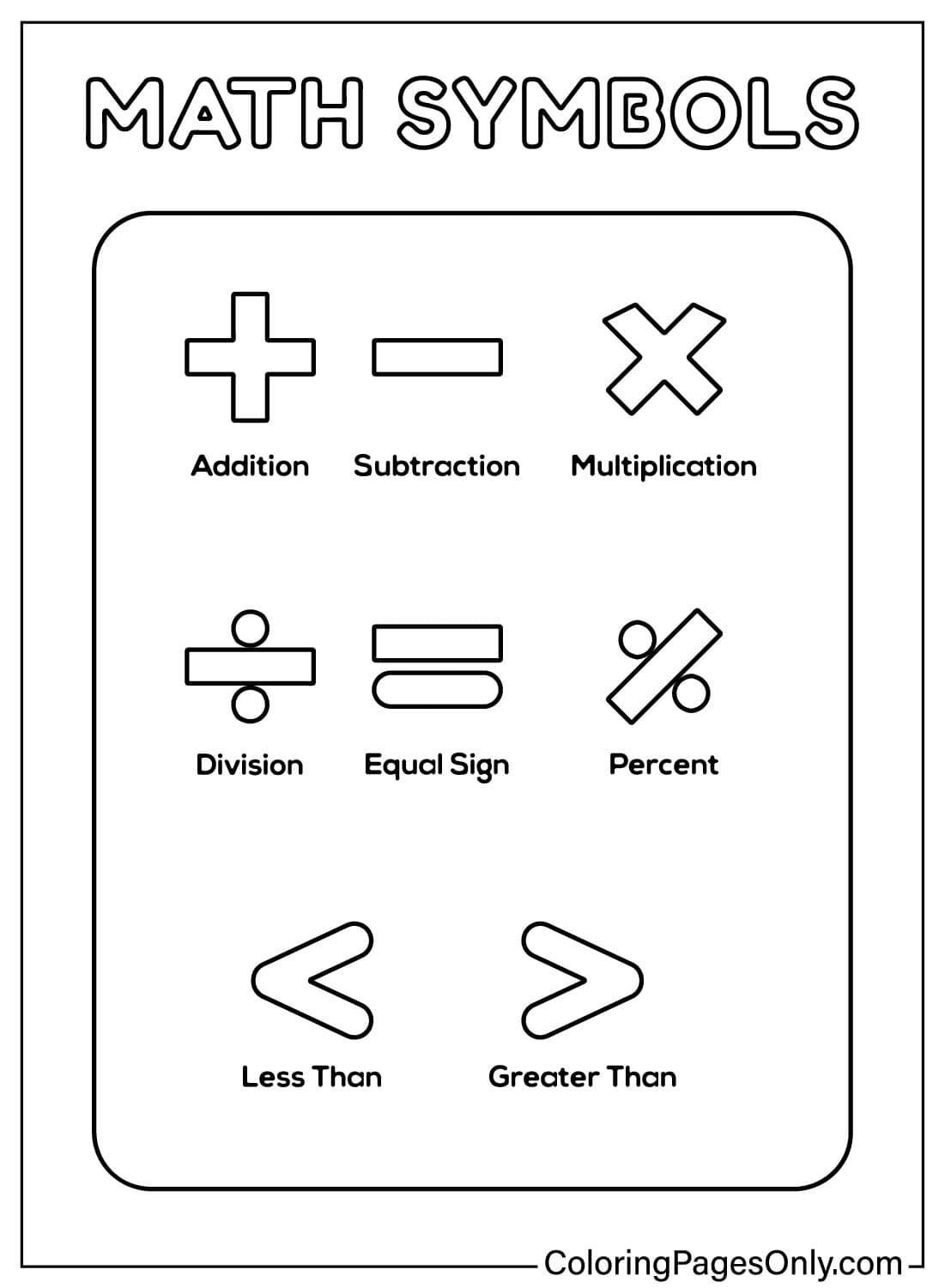
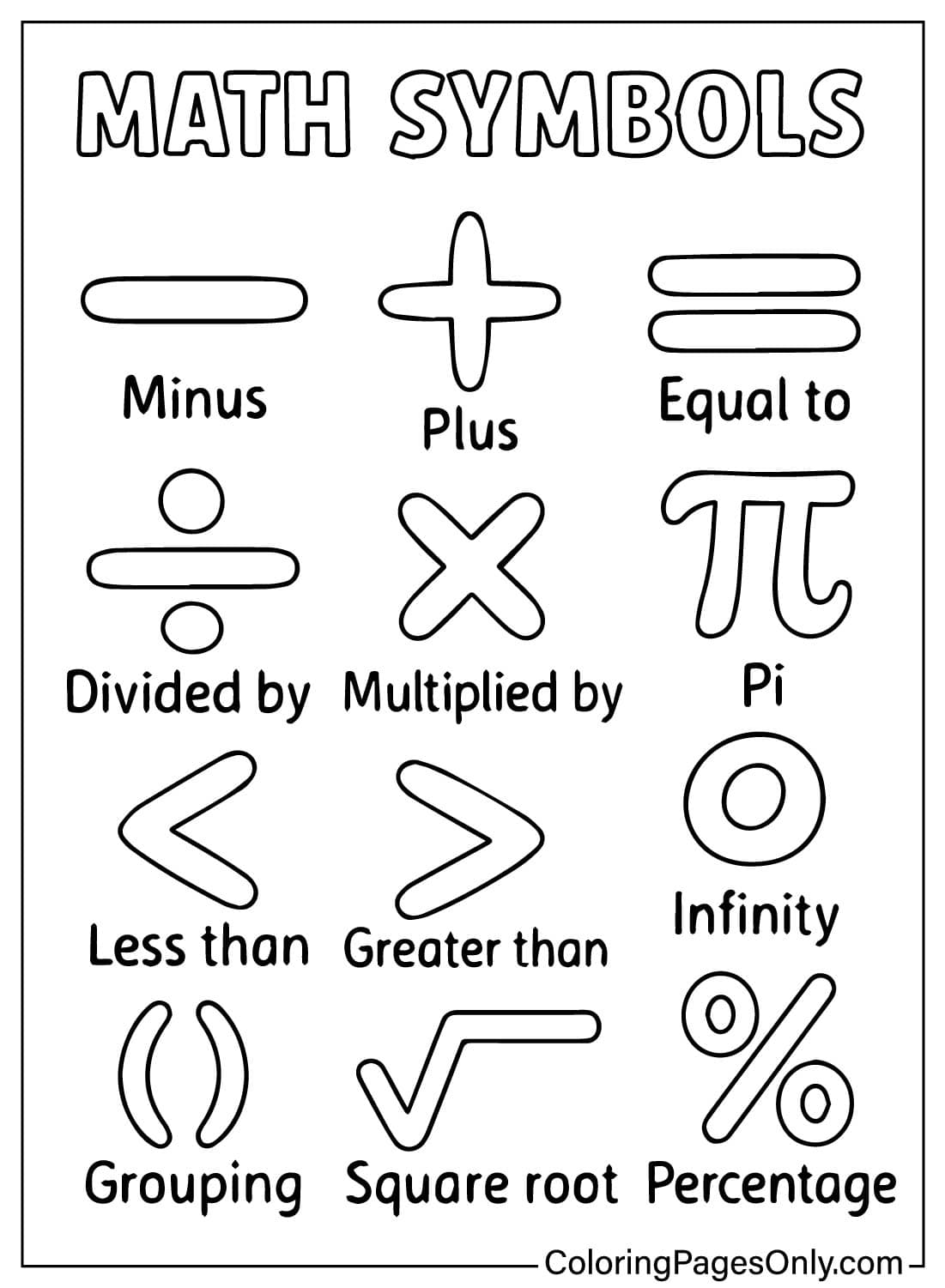
These pages turn that visual language into something children can explore with color. Some show the symbols large and bold, others group them into reference charts, and several place them inside lively classroom scenes, so young learners see how the signs work together in real problems.
What’s Inside This Collection
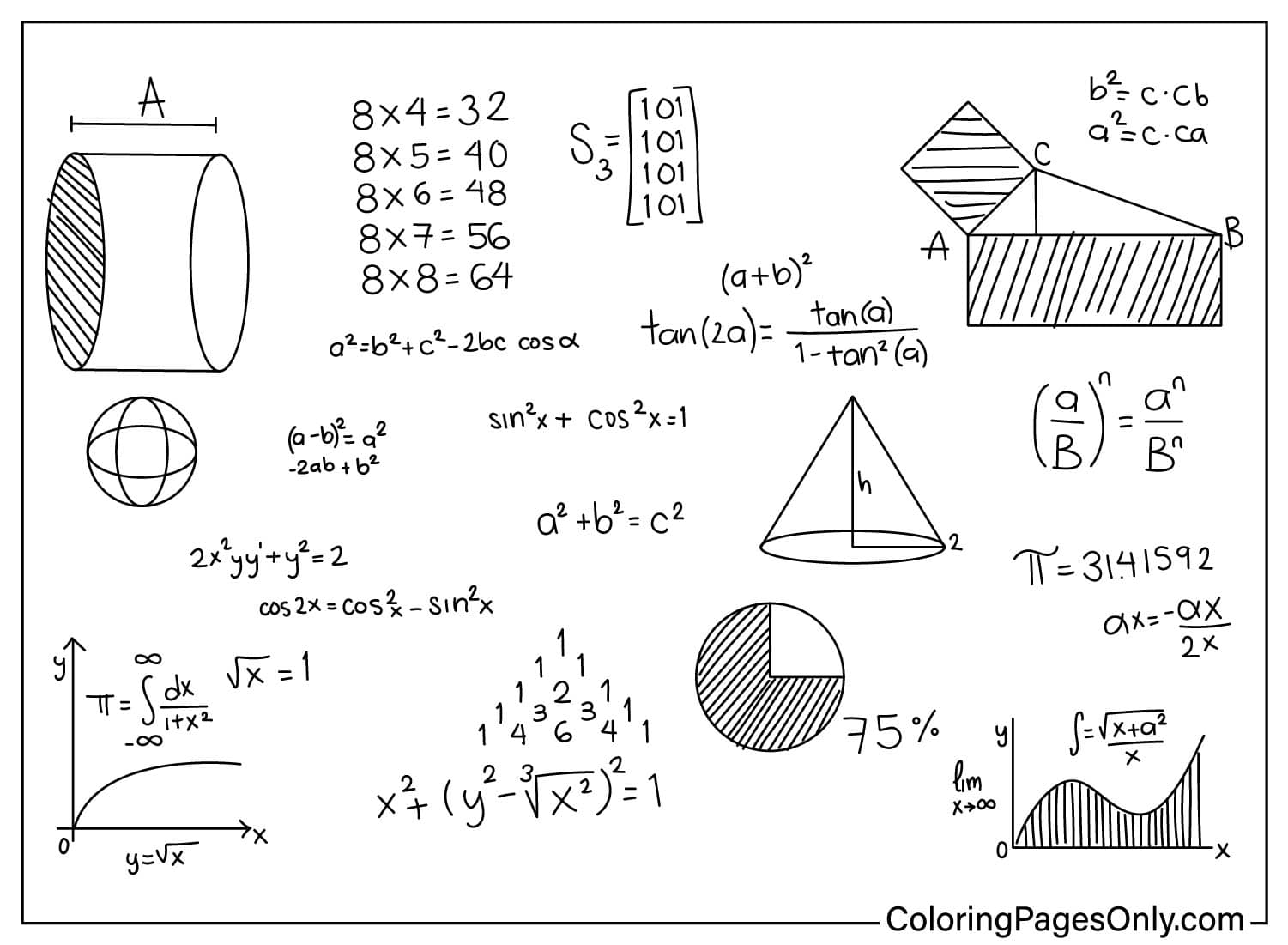
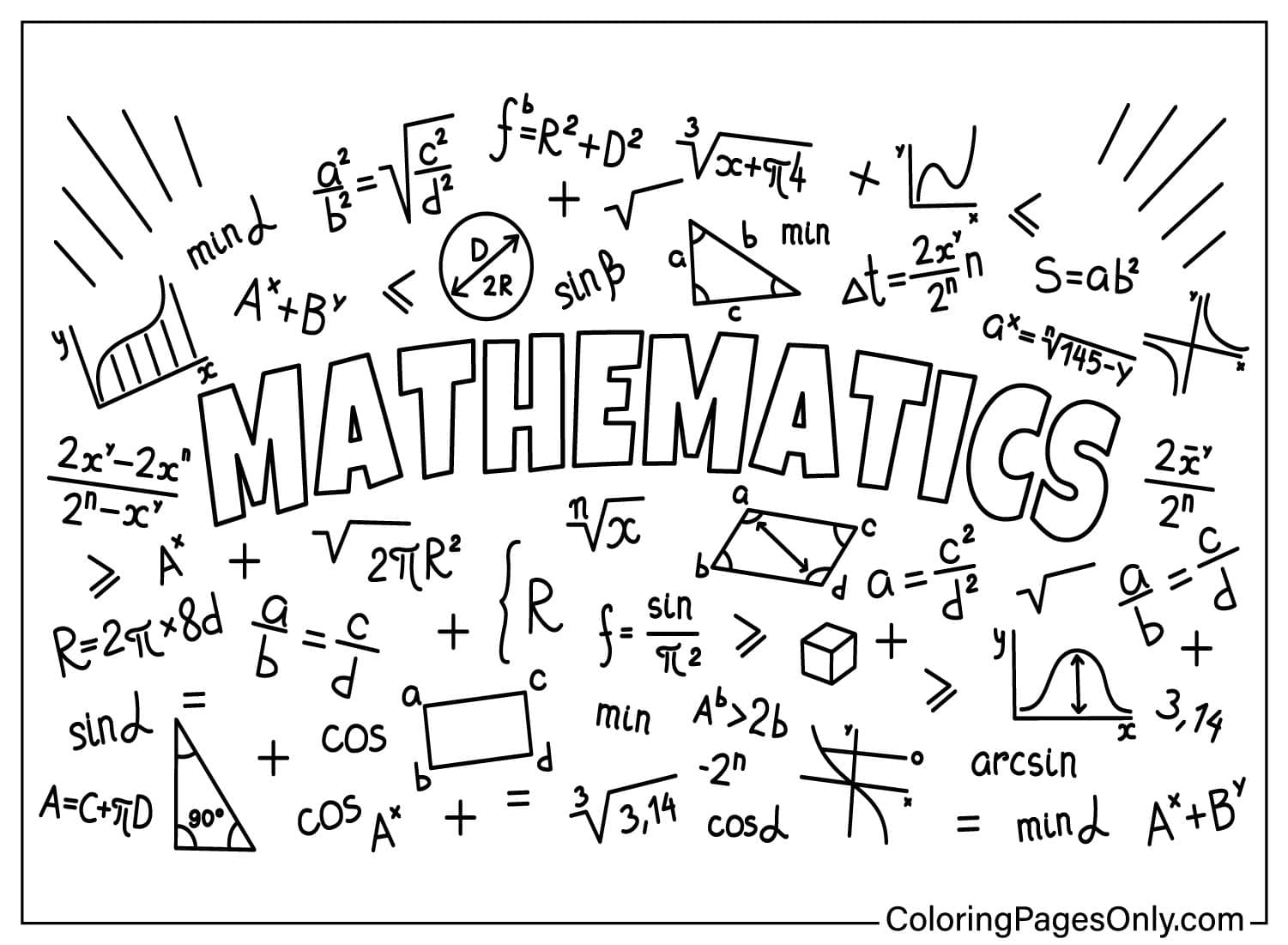
The designs move from simple symbol sheets to busy classroom scenes and a few challenging concept pages.
Basic and Easy Symbol Pages
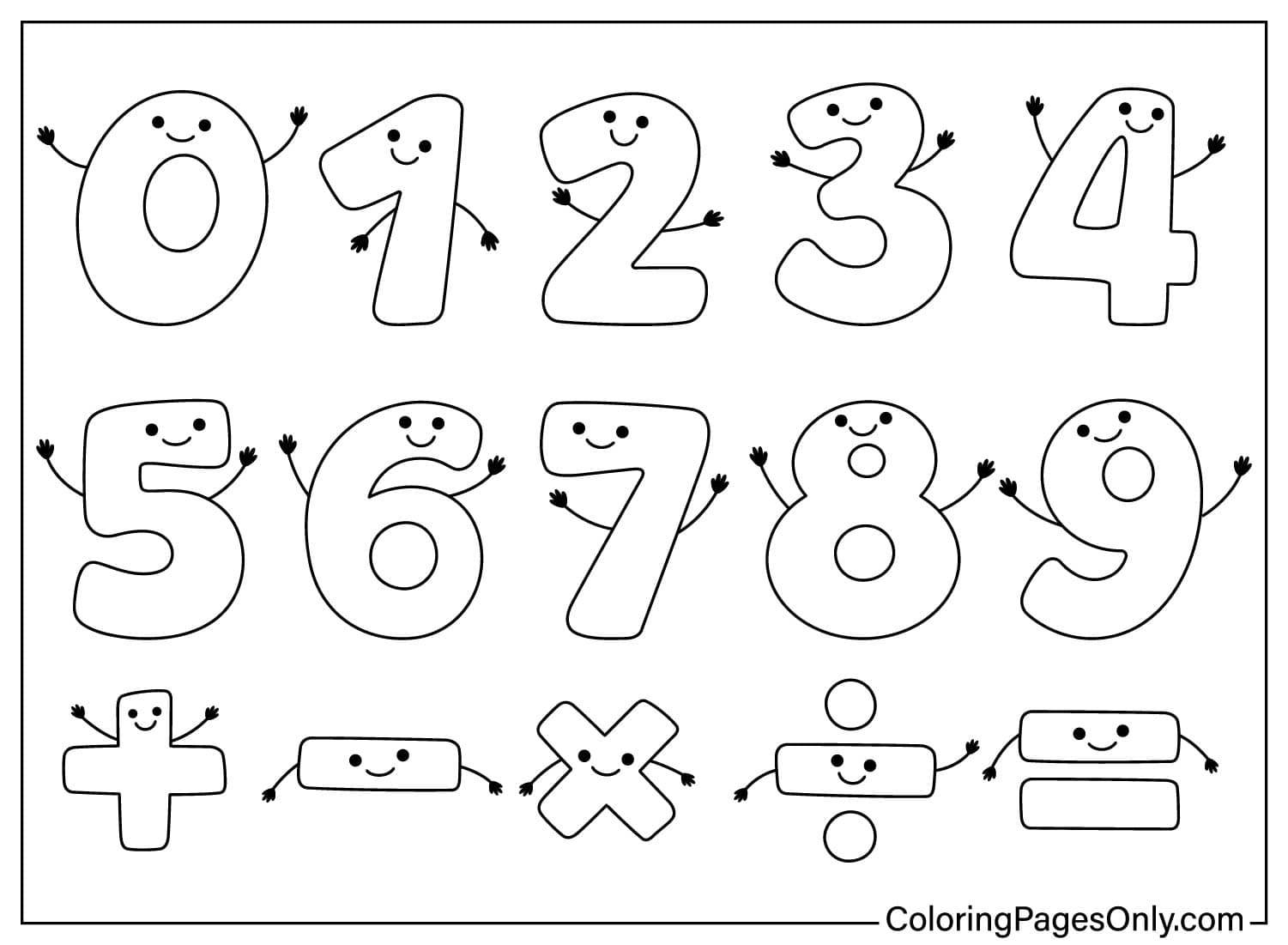
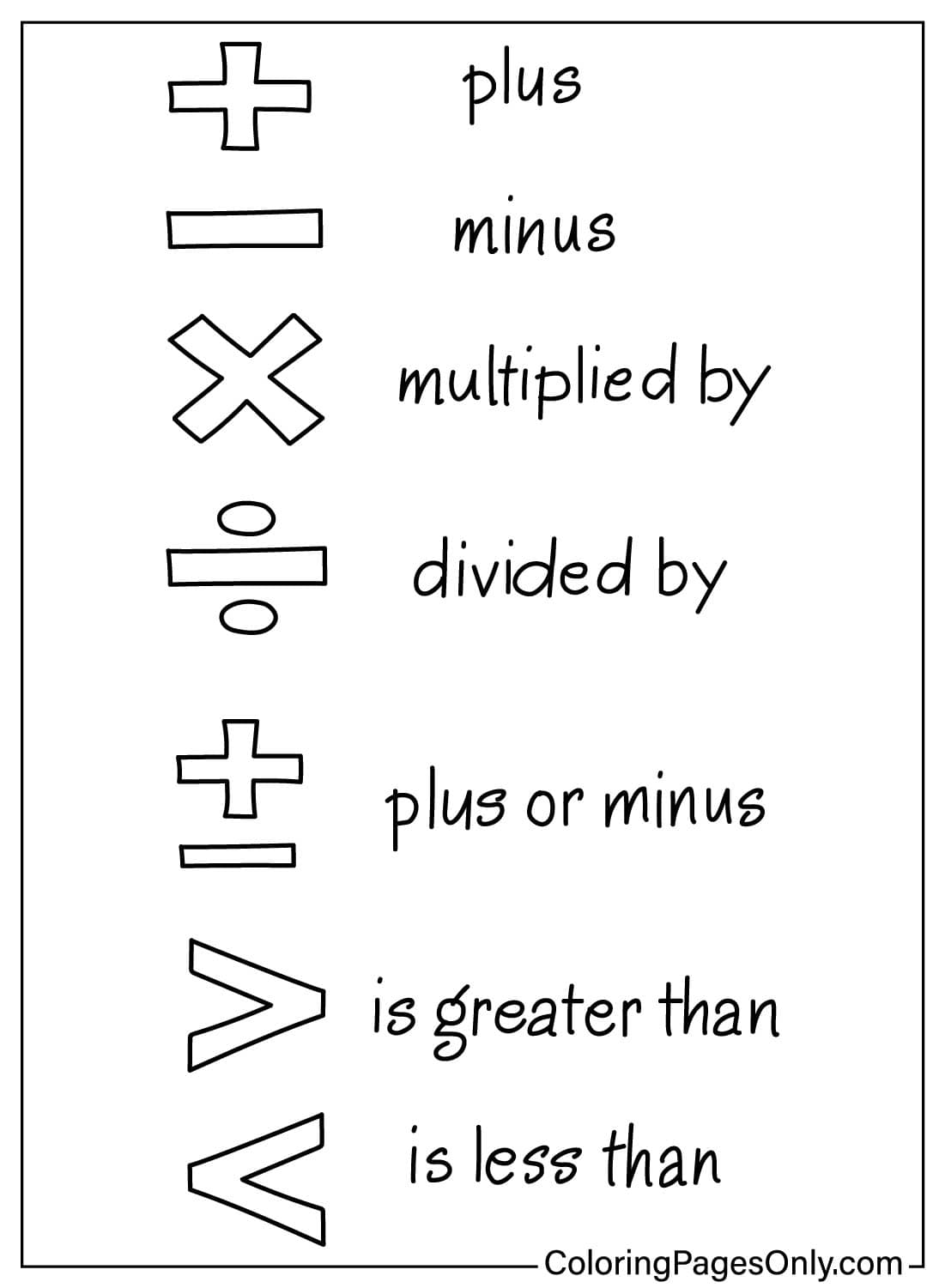
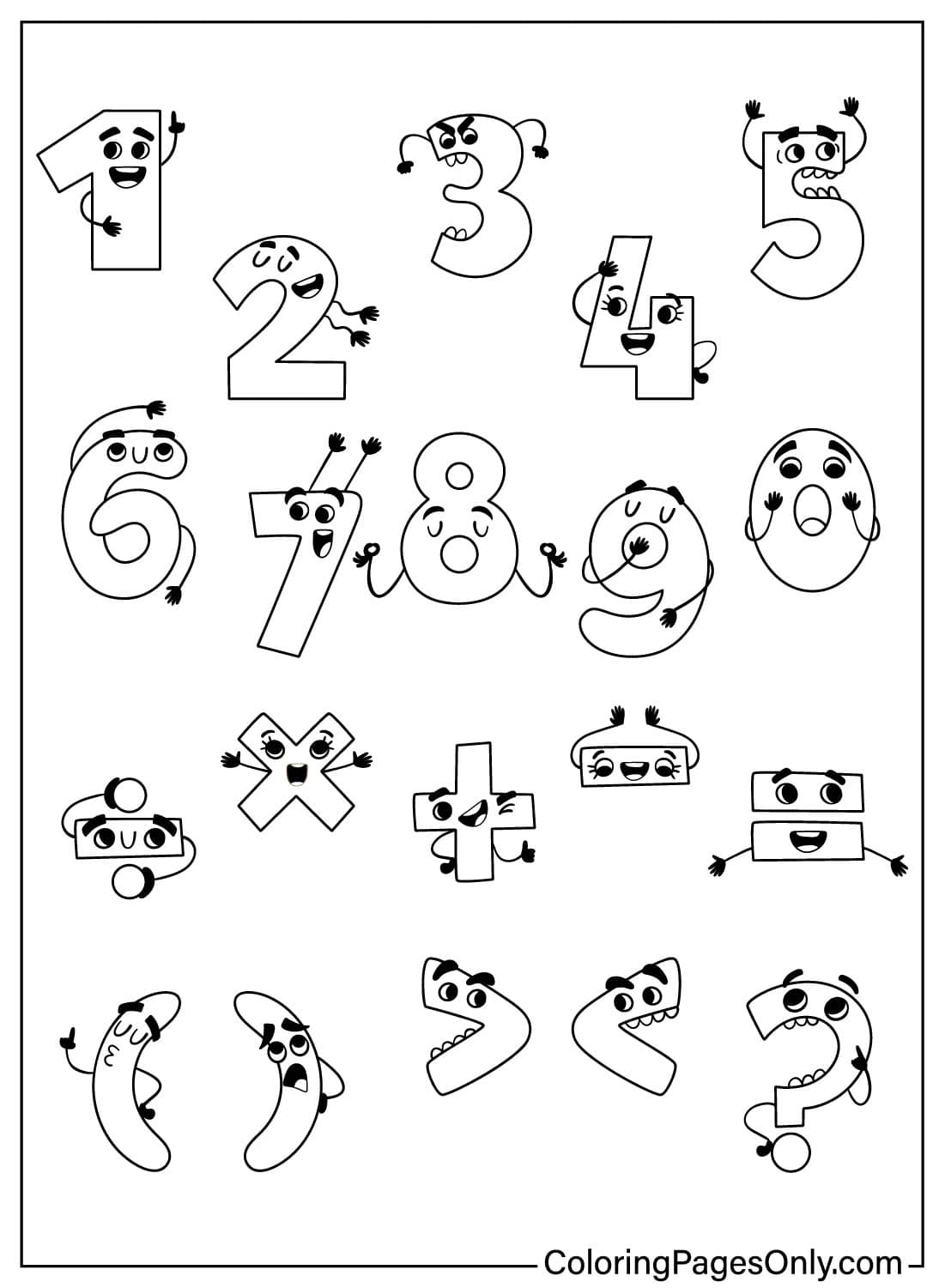
Big, clear drawings of the plus, minus, and equals signs make an ideal starting point for kindergarten and first grade. Using one bright color per symbol helps children link each sign to its job.
Symbol Charts and Reference Sheets
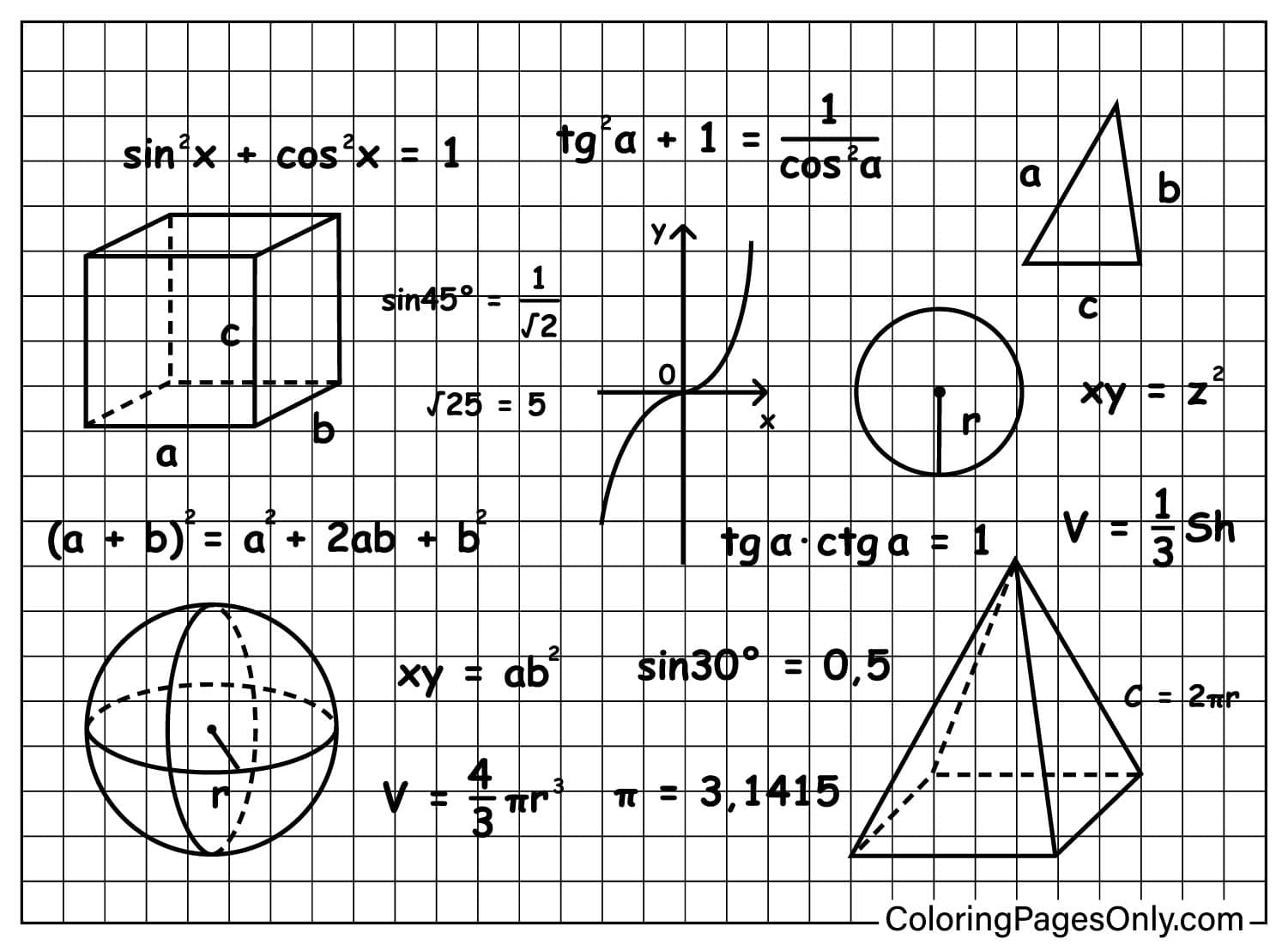
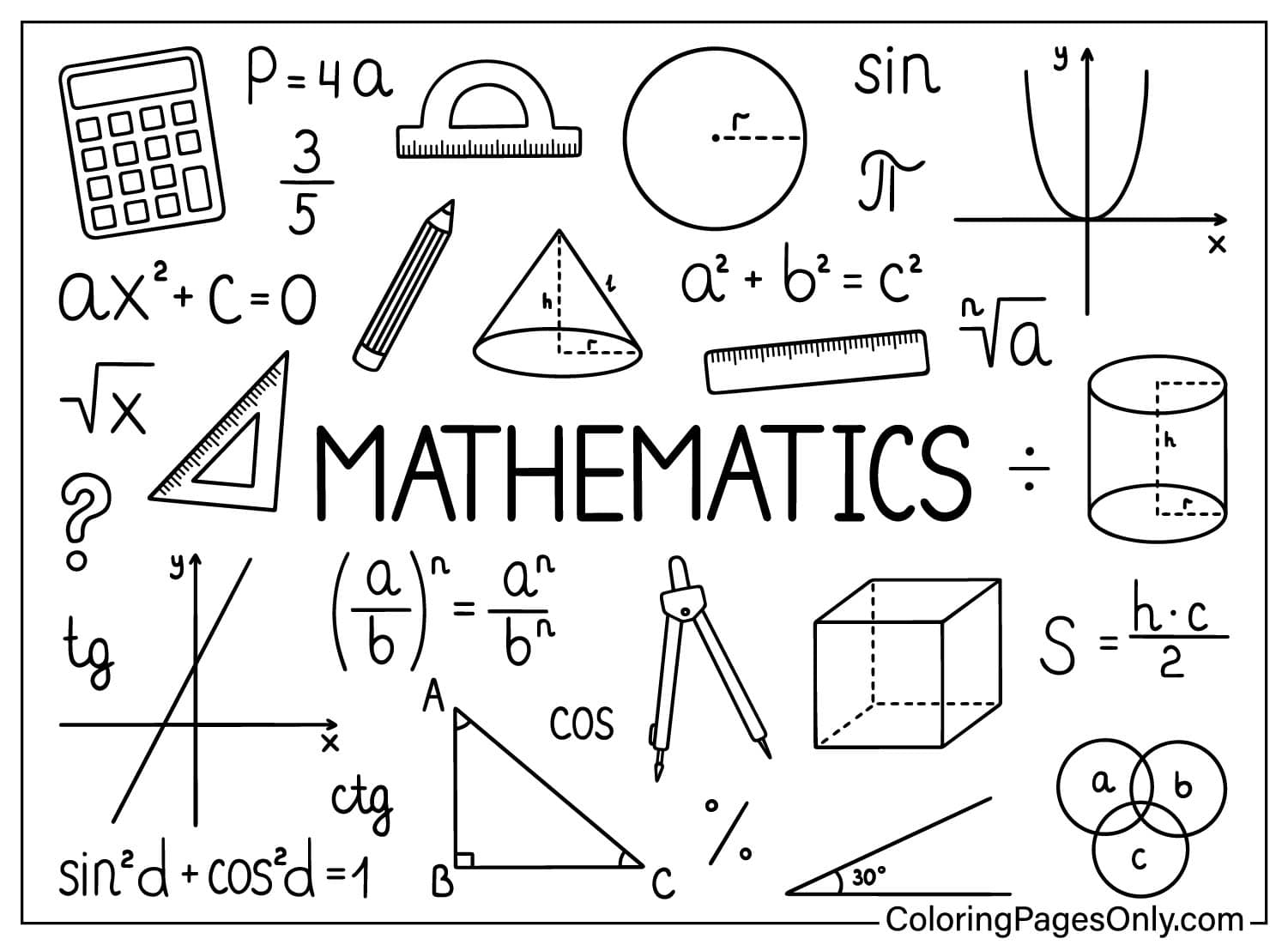
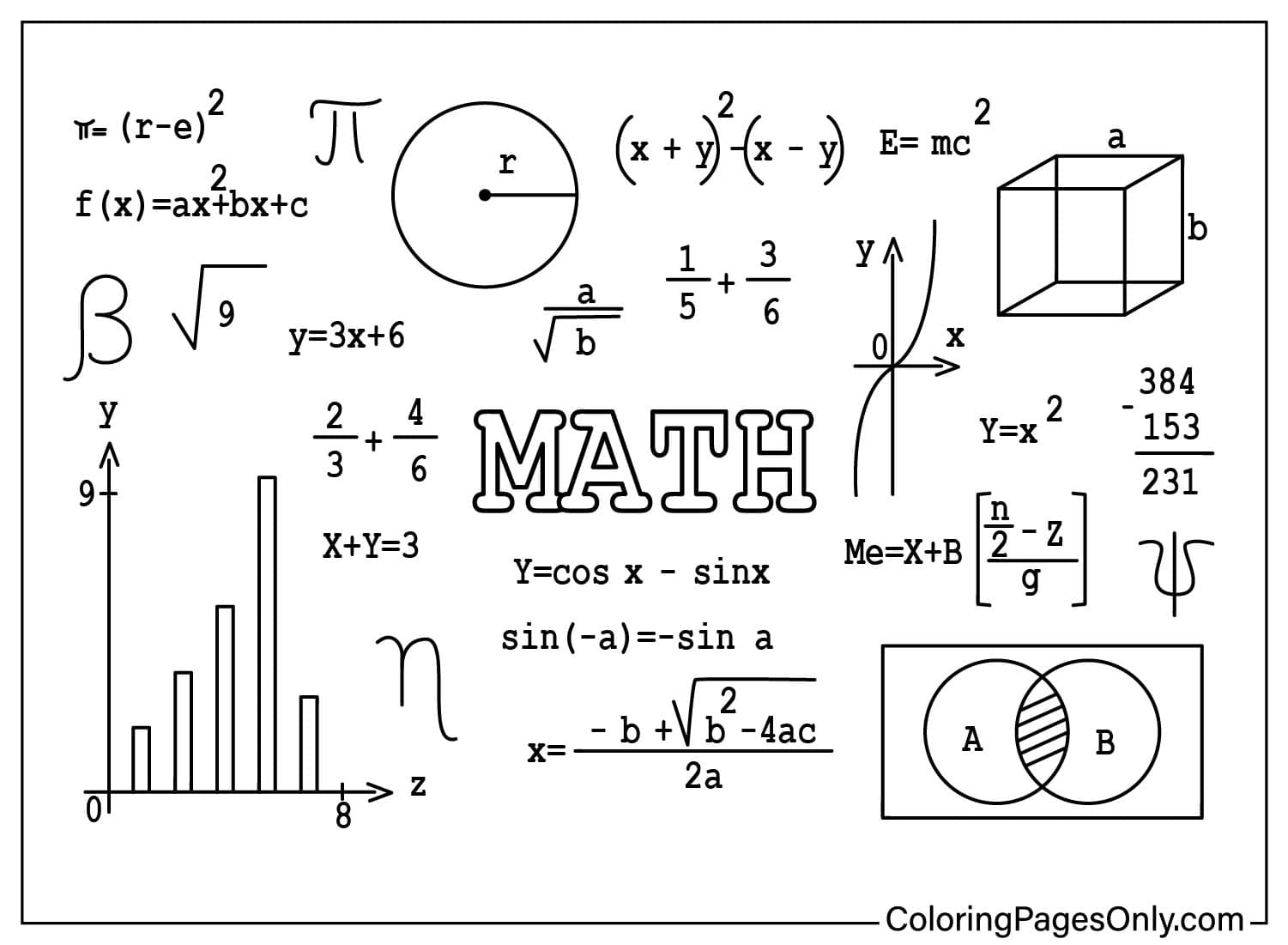
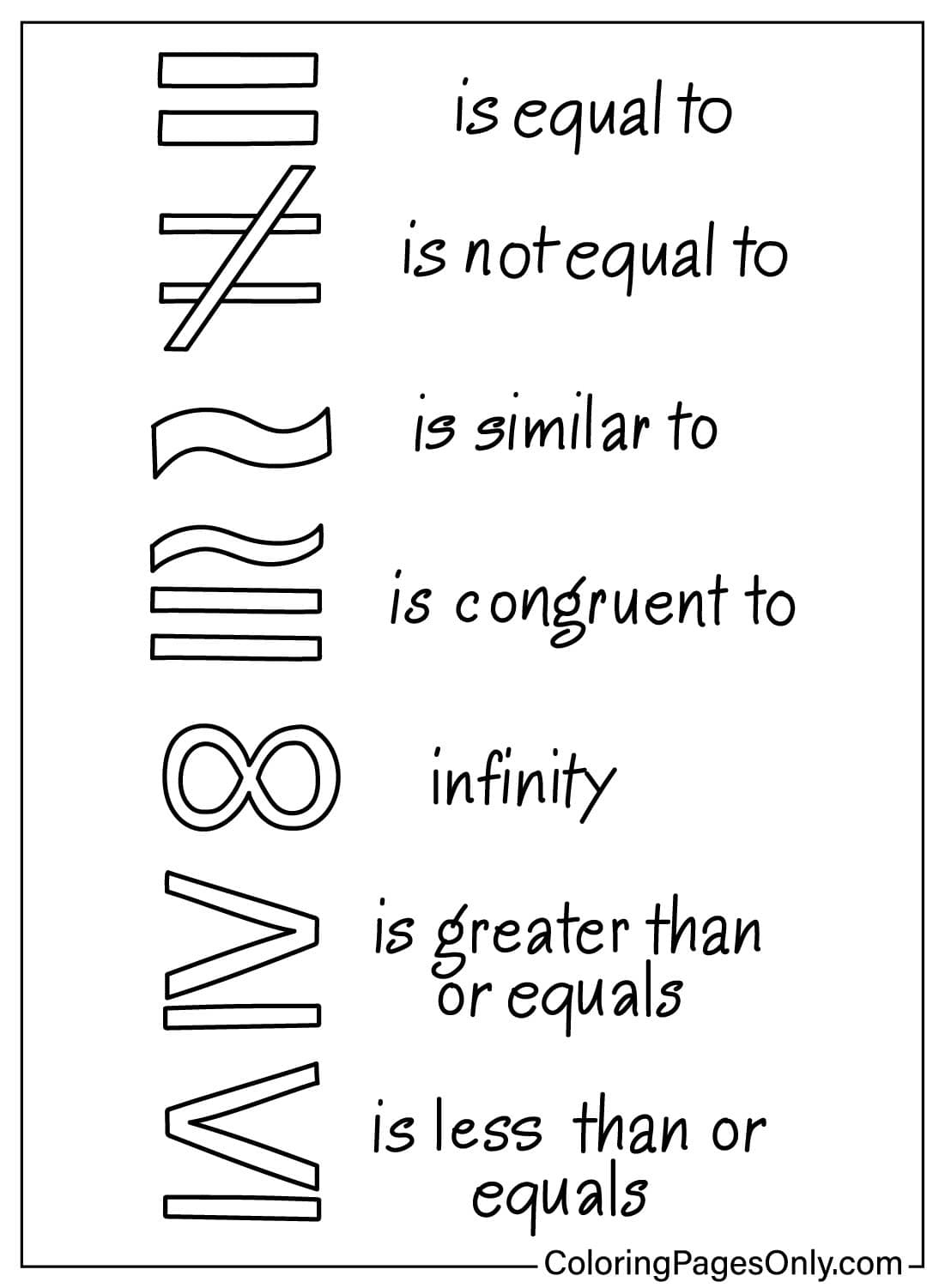
Several pages gather many operators and comparison signs in one layout, much like a poster on a classroom wall. Coloring each family of symbols in its own shade turns the page into a handy study guide.
Classroom and Study Scenes
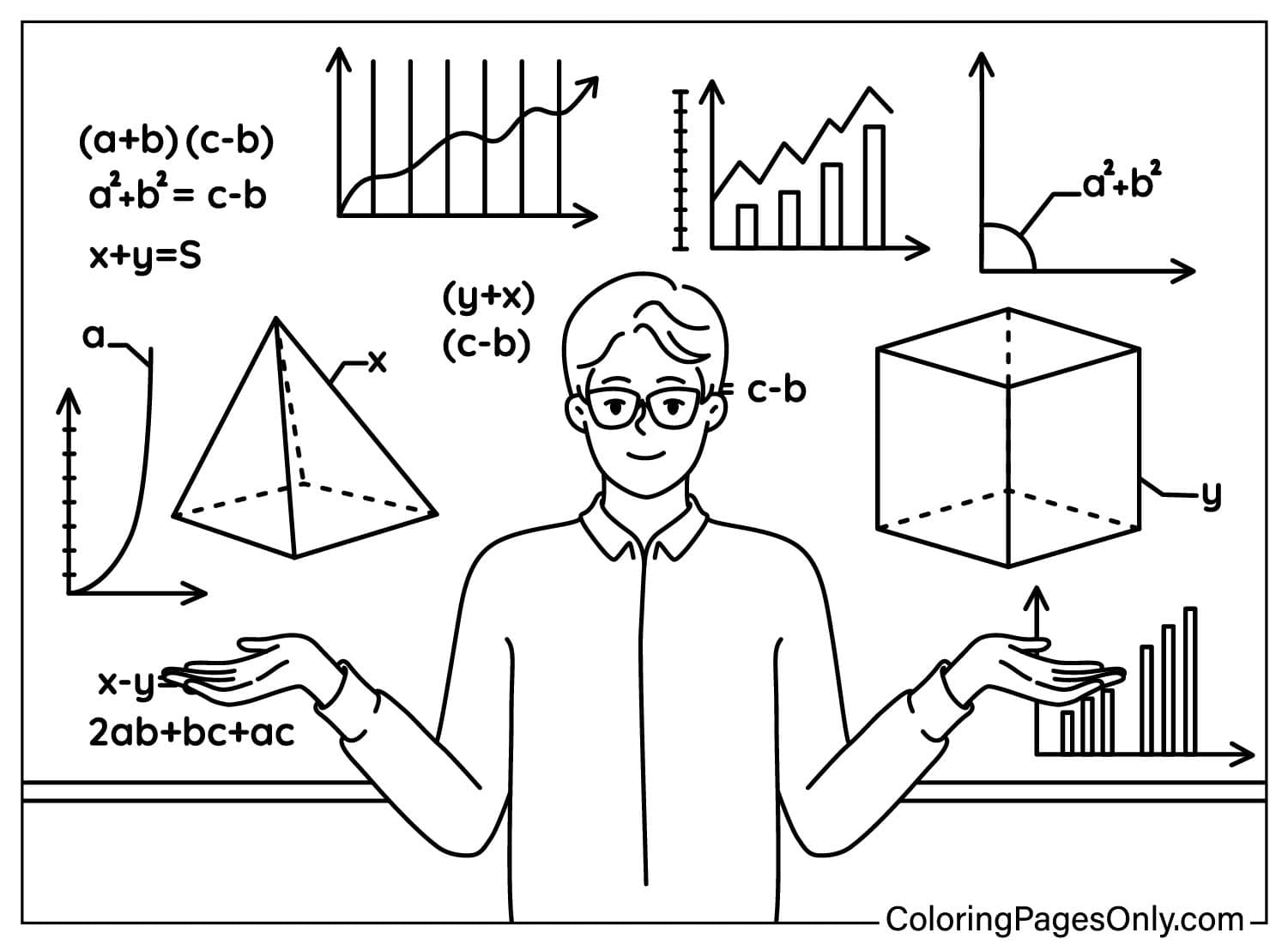
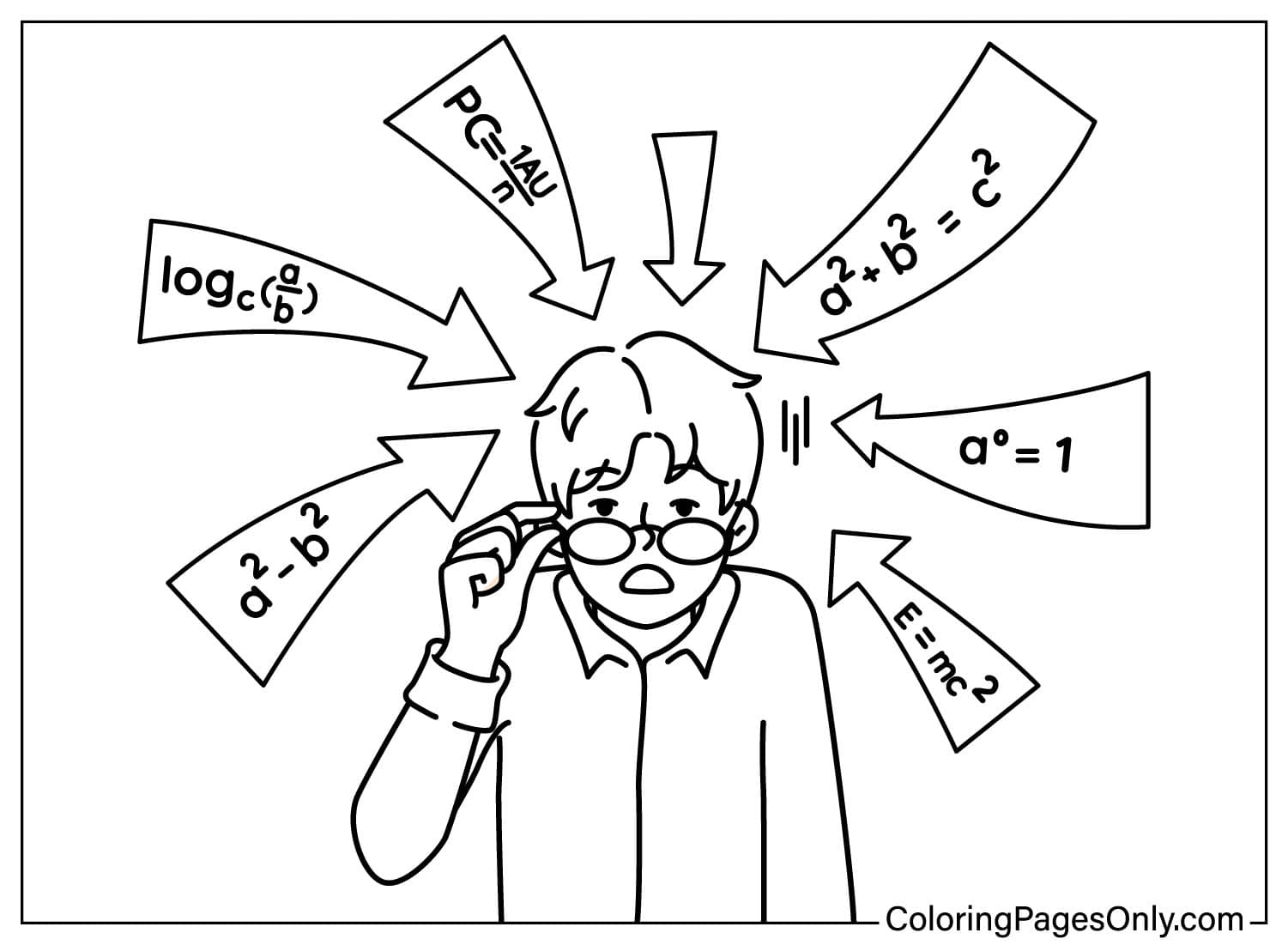
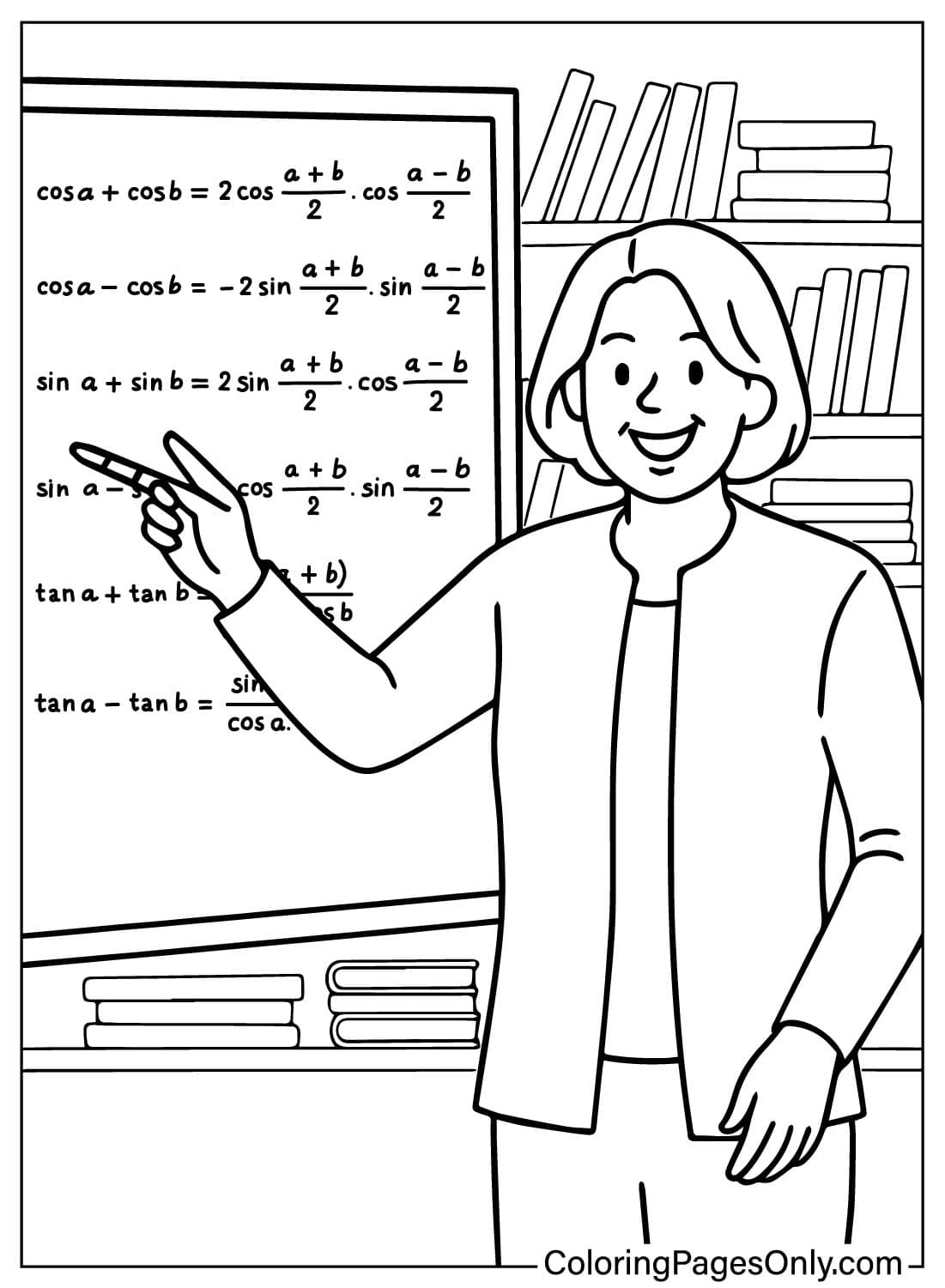
Students at desks, a teacher at the board, and kids surrounded by floating numbers bring the subject to life. Warm colors on the people and cooler tones on the walls and chalkboard keep the math symbols easy to read.
Shapes and Geometry
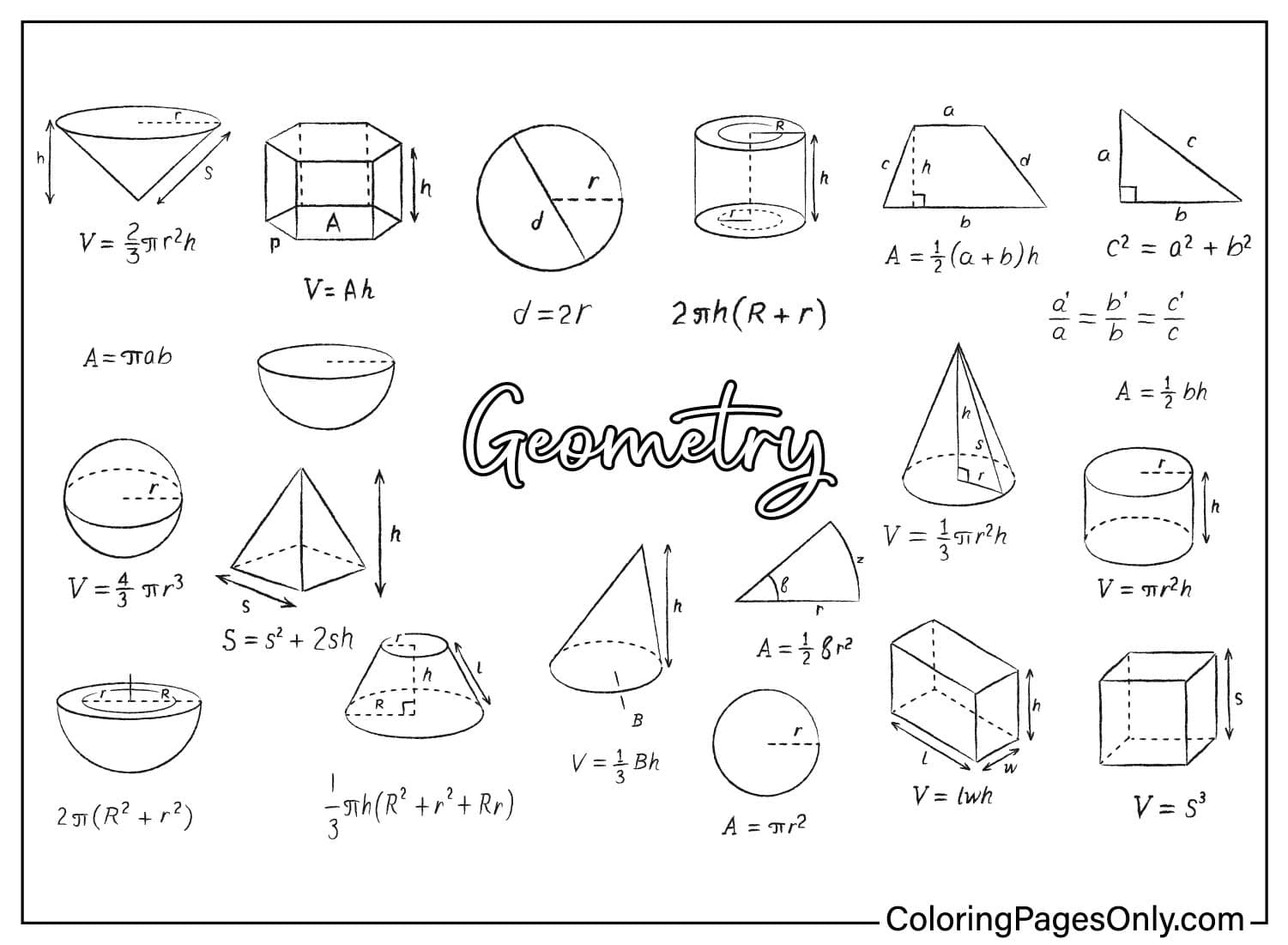
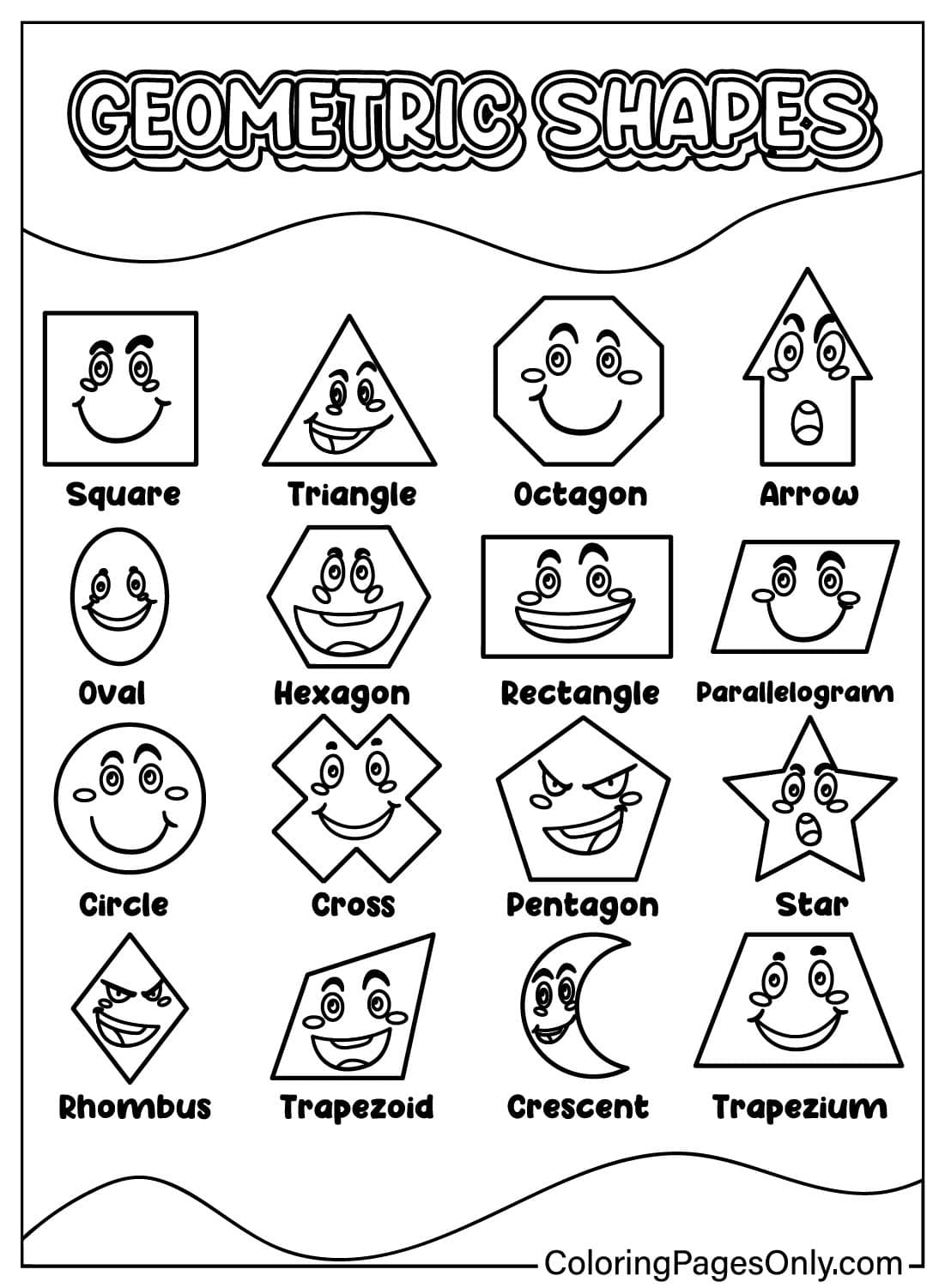
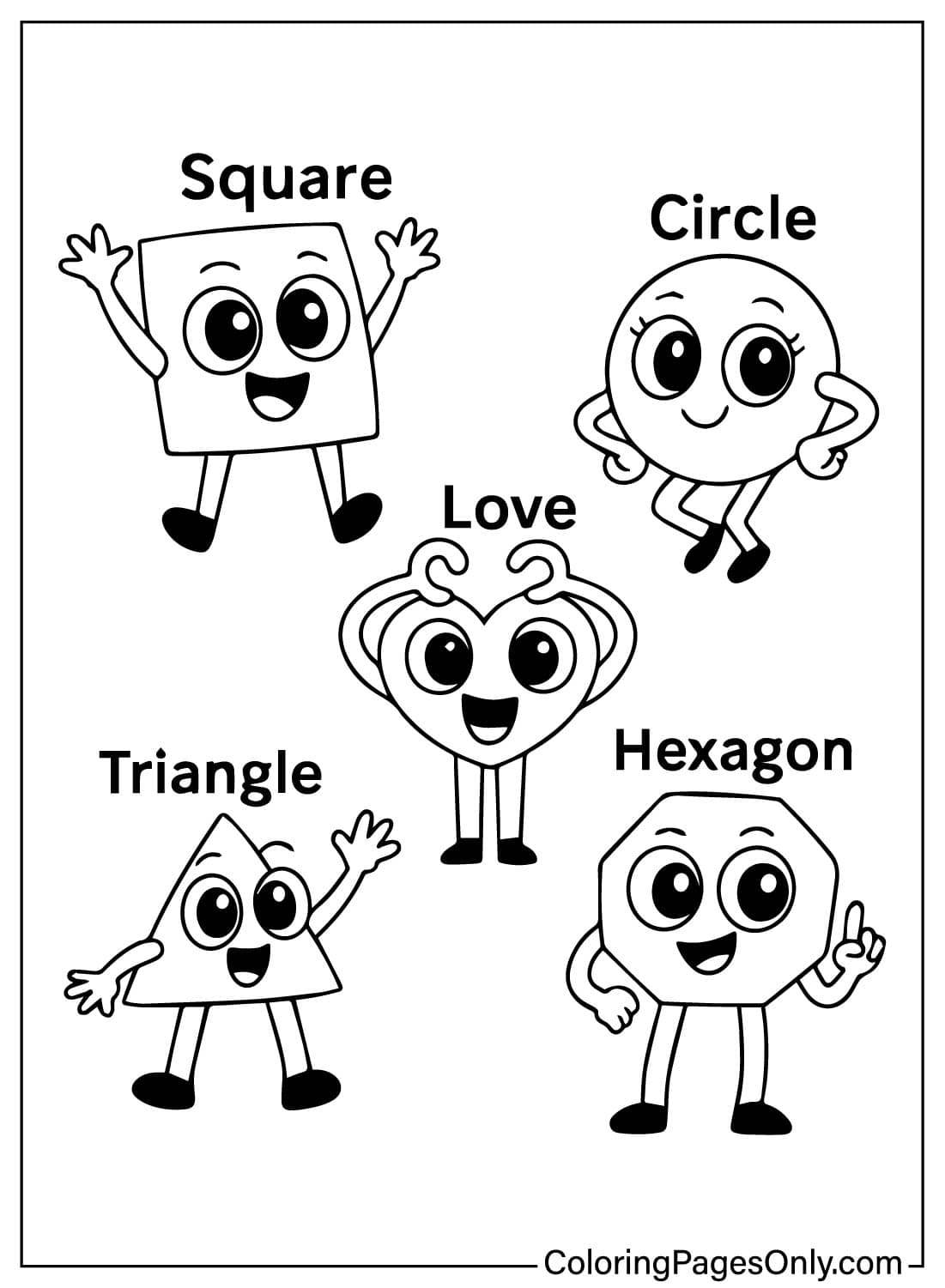
Triangles, circles, squares, and other shapes appear on dedicated sheets and mixed in with symbols. Filling each shape with a different color reinforces its name and number of sides.
Challenging Concept Pages
A handful of designs pack in more advanced notation and dense layouts for older students. They make good review pages for upper elementary and middle school.
What Math Symbols & Concepts Coloring Pages Do
Making symbols familiar before the math gets hard. Children who can recognize signs instantly have more attention left for solving the problem itself. Slowly coloring a large equals sign or a greater-than arrow builds that quick recognition.
Showing that math has a history. Learning that real people invented these signs, often to save time, helps children see mathematics as a human creation rather than a set of rules from nowhere.
Controlled lines and neat shapes. Straight edges, parallel bars, and small dots call for careful strokes. The American Academy of Pediatrics links activities like these to the fine motor growth children build between ages 2 and 7, the same control they need for writing numbers neatly.
A lower-stress way into math. For kids who tense up at worksheets, coloring offers a gentler entry point. A 2005 Art Therapy Journal study measured reduced anxiety after structured coloring sessions, which can make the next math lesson feel less intimidating.
How to Color Math Symbols & Concepts Coloring Pages Well
- Color-code by type: Use warm colors like Red and Orange for operators (+, −, ×, ÷) and cool colors like Blue and Green for comparison signs (=, <, >).
- Keep the equals sign even: Color both bars of the equals sign with the same color and pressure, since the symbol is all about balance.
- Bold symbol, light background: Make symbols the darkest part of the page so they stand out from decorative backgrounds.
- One color per shape: On geometry pages, give each shape its own color to match its name, like a Yellow triangle and a Blue circle.
- Chalkboard contrast: In classroom scenes, color the board dark green or black and leave the written math white or pale yellow.
- Gold for special symbols: Try a warm Goldenrod for pi or infinity to make those famous symbols feel special.
5 Creative Craft Ideas With Math Symbols & Concepts Coloring Pages
1. Symbol Inventor Cards
Color individual symbols, cut them into cards, and write the inventor’s name and year on the back, such as Robert Recorde and 1557 for the equals sign.
2. Math Word Wall
Color a reference chart page and hang it near a homework space so the symbols are always in view.
3. Symbol Scavenger Hunt
Take a colored chart around the house or grocery store and check off each symbol when you spot it on a sign, receipt, or package.
4. Equation Garland
Color large numbers and symbols, cut them out, and string them together to spell simple equations like 3 + 4 = 7 across a window.
5. Math History Timeline
Draw a long line on paper from 1400 to 1750 and glue colored symbols at the years they were first used.
Frequently Asked Questions
What are Math Symbols & Concepts Coloring Pages?
Printable designs of math signs, shapes, reference charts, and classroom scenes that help children get comfortable with the language of mathematics. There are 33 free pages.
Who invented the equals sign?
Robert Recorde, a Welsh physician and mathematician, introduced it in 1557 in The Whetstone of Witte. He picked two parallel lines because he felt no two things could be more equal.
When were the plus and minus signs first used?
They first appeared in print in 1489 in an arithmetic book by German mathematician Johannes Widmann, originally to show surplus and shortage in trade.
Who introduced the symbol pi?
William Jones first used the Greek letter pi for the circle ratio in 1706. It became standard after Leonhard Euler adopted it in the 1730s.
How can kids remember greater than and less than?
The open side of the symbol always faces the bigger number, as if it wants to eat the larger amount.
Are there shapes in this collection?
Yes. Several pages include triangles, squares, circles, and other shapes, often alongside math symbols.
Which grade levels fit these pages?
The easy symbol pages suit ages 4 to 7, while the charts, classroom scenes, and concept pages work well for students up to middle school.
Can teachers use these pages in class?
Yes. They work as math center activities, early-finisher tasks, bulletin board displays, or warm-ups before a lesson on operations.
Start Coloring
Start with the plus and equals signs for a young learner, or pick a symbol chart for a student heading into multiplication and division. Keep a finished chart near the homework table for quick reference. Share a colorful math corner with other families and teachers on Pinterest, or show off a completed chart on Facebook.